EZCast Just Turned Every Phone Into a Professional Camera Monitor

Monitoring a camera feed used to require either hovering behind the viewfinder or investing in a dedicated wireless video system with separate transmitters, receivers, and field monitors. For solo content creators, small production teams, and anyone shooting interviews or tutorials with limited gear, that kind of setup has always felt disproportionate to the task. The gap between “professional monitoring” and “just squinting at the back of the camera” remained stubbornly wide.

EZCast’s CamCast CT-1 is a compact wireless transmitter designed to sit on top of any HDMI-equipped camera, from mirrorless bodies and DSLRs to action cams and camcorders. Once connected, it broadcasts a live 1080p 60fps feed over 5GHz Wi-Fi to up to four iOS or Android devices simultaneously. EZCast has spent over a decade building wireless display and screen-mirroring technology for offices and classrooms, and the CamCast is their first product built specifically for cameras, applying that signal distribution expertise to a production context.

Designer: EZCast

Click Here to Buy Now: $129 $239 ($110 off). Hurry, only a few units left!

The device itself is small enough to mount on a camera hot shoe or gimbal arm, with included adapters for both horizontal and vertical orientation. A built-in OLED screen displays connection details, and pairing happens through a QR code scan that takes roughly three seconds. Power comes from either a standard NP-F battery, the same type used across countless cinema accessories, or a USB-C connection at 5V/3A. That dual-power flexibility means a battery for mobility on location or a simple cable for longer, stationary shoots where runtime matters more.

1

Beyond passive monitoring, the companion CamCast app lets users save takes directly to their phone, review footage instantly, and share clips without ever pulling a memory card from the camera. For a two-person crew shooting a wedding, for instance, the second operator can watch the main camera’s composition from across the venue on a phone while managing their own setup. A makeup artist can confirm framing before the talent walks on set. Four people watching the same live feed, all from devices they already carry, collapses a communication problem that traditionally required dedicated hardware to solve.

What separates the CamCast CT-1 from a basic wireless HDMI sender, though, is the built-in PTP camera control. From the app on a phone or tablet, users can adjust shutter speed, ISO, color temperature, and aperture, and even navigate through camera menus remotely. Consider a camera mounted on an overhead rig for a cooking tutorial, or locked onto a gimbal for a tracking shot. Physically reaching the camera to change a setting interrupts the flow of a shoot. Being able to tweak exposure or white balance from a phone across the room changes how a solo creator or small team interacts with their gear.

1

The CamCast CT-1 also has a UVC output, which means it can connect directly to a laptop or desktop and function as a capture card. For livestreamers, educators, or anyone running a webinar, this removes an entire piece of hardware from the signal chain. One device handles wireless monitoring to phones and wired streaming output to a computer at the same time, which is a lot of functions packed into something that weighs less than most on-camera microphones.

1

Picture a YouTuber who films with a mirrorless camera on a tripod across the room. Right now, checking framing or adjusting settings means walking over, making a change, walking back, and repeating until it looks right. With the CamCast mounted on that camera, the phone becomes both the monitor and the remote control. An instructor recording a craft tutorial gets the same benefit, turning their tablet into a live preview without needing cables snaking across the workspace or an expensive field monitor clamped to a light stand.

Rather than building another monitor or another receiver, EZCast built a bridge between cameras and the screens people already own. That redistribution of function, turning four phones into four production monitors through a single transmitter, might be the more interesting design move in a category still dominated by expensive, single-purpose hardware.

Click Here to Buy Now: $129 $239 ($110 off). Hurry, only a few units left!

The post EZCast Just Turned Every Phone Into a Professional Camera Monitor first appeared on Yanko Design.

EZCast Just Turned Every Phone Into a Professional Camera Monitor

Monitoring a camera feed used to require either hovering behind the viewfinder or investing in a dedicated wireless video system with separate transmitters, receivers, and field monitors. For solo content creators, small production teams, and anyone shooting interviews or tutorials with limited gear, that kind of setup has always felt disproportionate to the task. The gap between “professional monitoring” and “just squinting at the back of the camera” remained stubbornly wide.

EZCast’s CamCast CT-1 is a compact wireless transmitter designed to sit on top of any HDMI-equipped camera, from mirrorless bodies and DSLRs to action cams and camcorders. Once connected, it broadcasts a live 1080p 60fps feed over 5GHz Wi-Fi to up to four iOS or Android devices simultaneously. EZCast has spent over a decade building wireless display and screen-mirroring technology for offices and classrooms, and the CamCast is their first product built specifically for cameras, applying that signal distribution expertise to a production context.

Designer: EZCast

Click Here to Buy Now: $129 $239 ($110 off). Hurry, only a few units left!
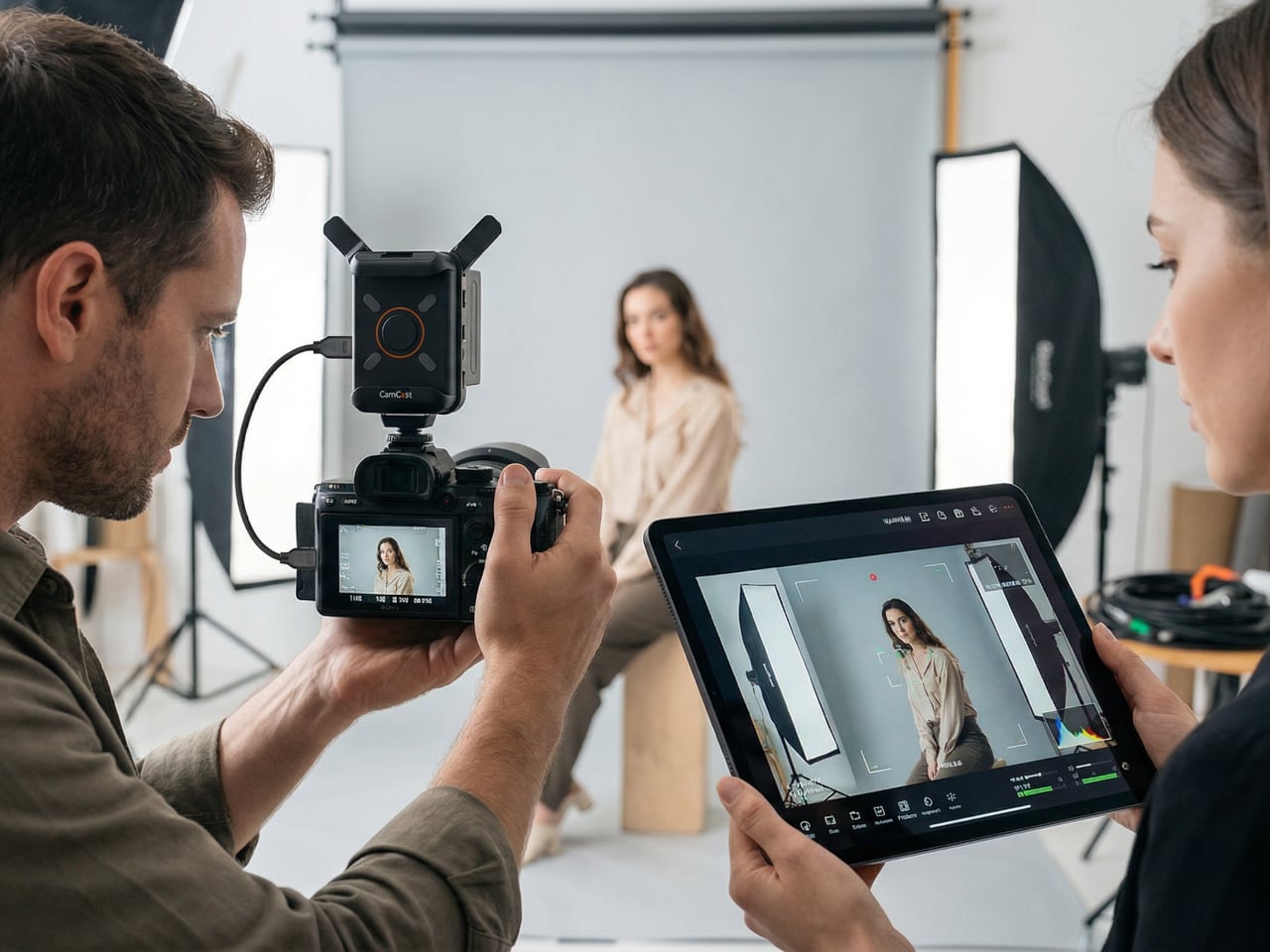
The device itself is small enough to mount on a camera hot shoe or gimbal arm, with included adapters for both horizontal and vertical orientation. A built-in OLED screen displays connection details, and pairing happens through a QR code scan that takes roughly three seconds. Power comes from either a standard NP-F battery, the same type used across countless cinema accessories, or a USB-C connection at 5V/3A. That dual-power flexibility means a battery for mobility on location or a simple cable for longer, stationary shoots where runtime matters more.

1

Beyond passive monitoring, the companion CamCast app lets users save takes directly to their phone, review footage instantly, and share clips without ever pulling a memory card from the camera. For a two-person crew shooting a wedding, for instance, the second operator can watch the main camera’s composition from across the venue on a phone while managing their own setup. A makeup artist can confirm framing before the talent walks on set. Four people watching the same live feed, all from devices they already carry, collapses a communication problem that traditionally required dedicated hardware to solve.
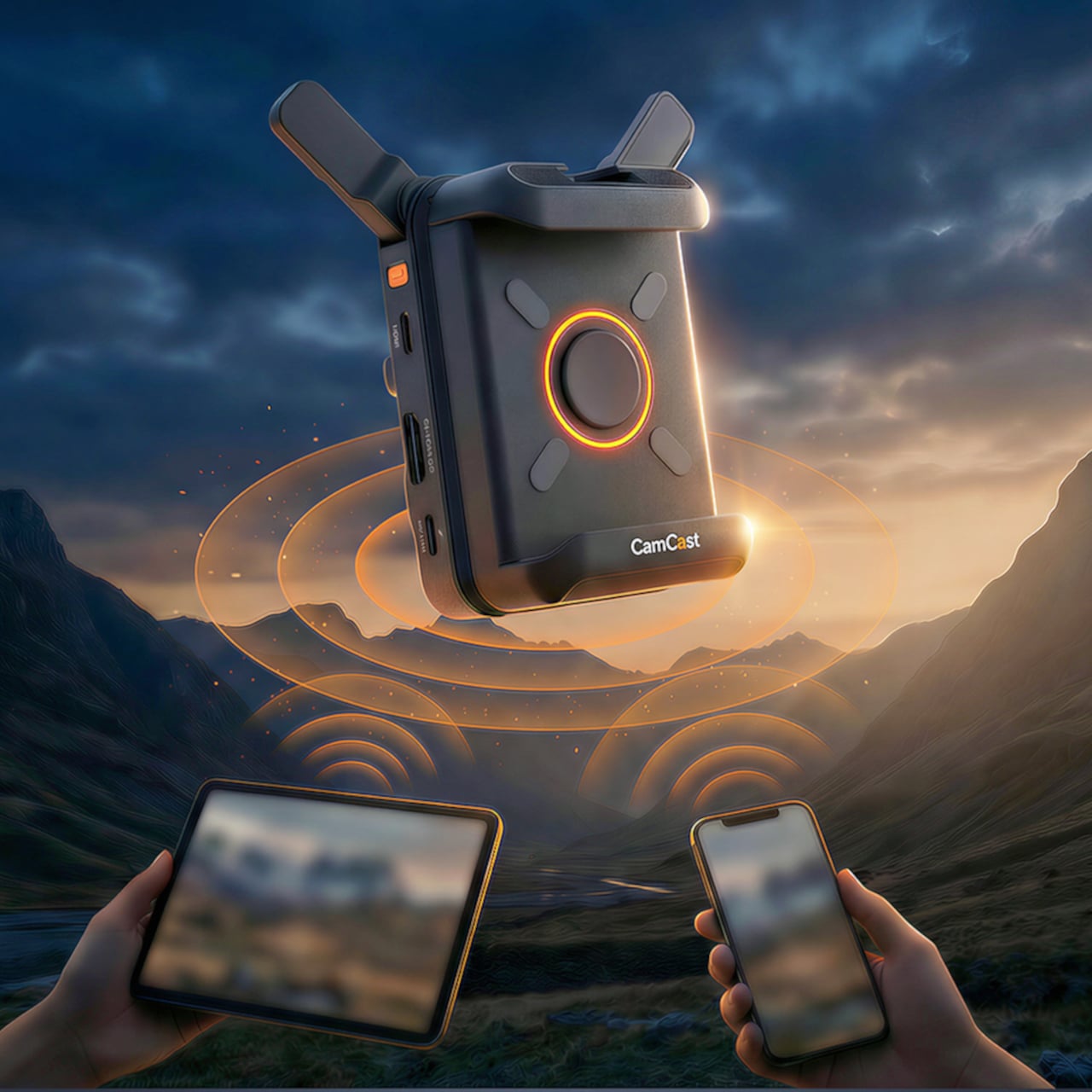

What separates the CamCast CT-1 from a basic wireless HDMI sender, though, is the built-in PTP camera control. From the app on a phone or tablet, users can adjust shutter speed, ISO, color temperature, and aperture, and even navigate through camera menus remotely. Consider a camera mounted on an overhead rig for a cooking tutorial, or locked onto a gimbal for a tracking shot. Physically reaching the camera to change a setting interrupts the flow of a shoot. Being able to tweak exposure or white balance from a phone across the room changes how a solo creator or small team interacts with their gear.

1

The CamCast CT-1 also has a UVC output, which means it can connect directly to a laptop or desktop and function as a capture card. For livestreamers, educators, or anyone running a webinar, this removes an entire piece of hardware from the signal chain. One device handles wireless monitoring to phones and wired streaming output to a computer at the same time, which is a lot of functions packed into something that weighs less than most on-camera microphones.

1

Picture a YouTuber who films with a mirrorless camera on a tripod across the room. Right now, checking framing or adjusting settings means walking over, making a change, walking back, and repeating until it looks right. With the CamCast mounted on that camera, the phone becomes both the monitor and the remote control. An instructor recording a craft tutorial gets the same benefit, turning their tablet into a live preview without needing cables snaking across the workspace or an expensive field monitor clamped to a light stand.

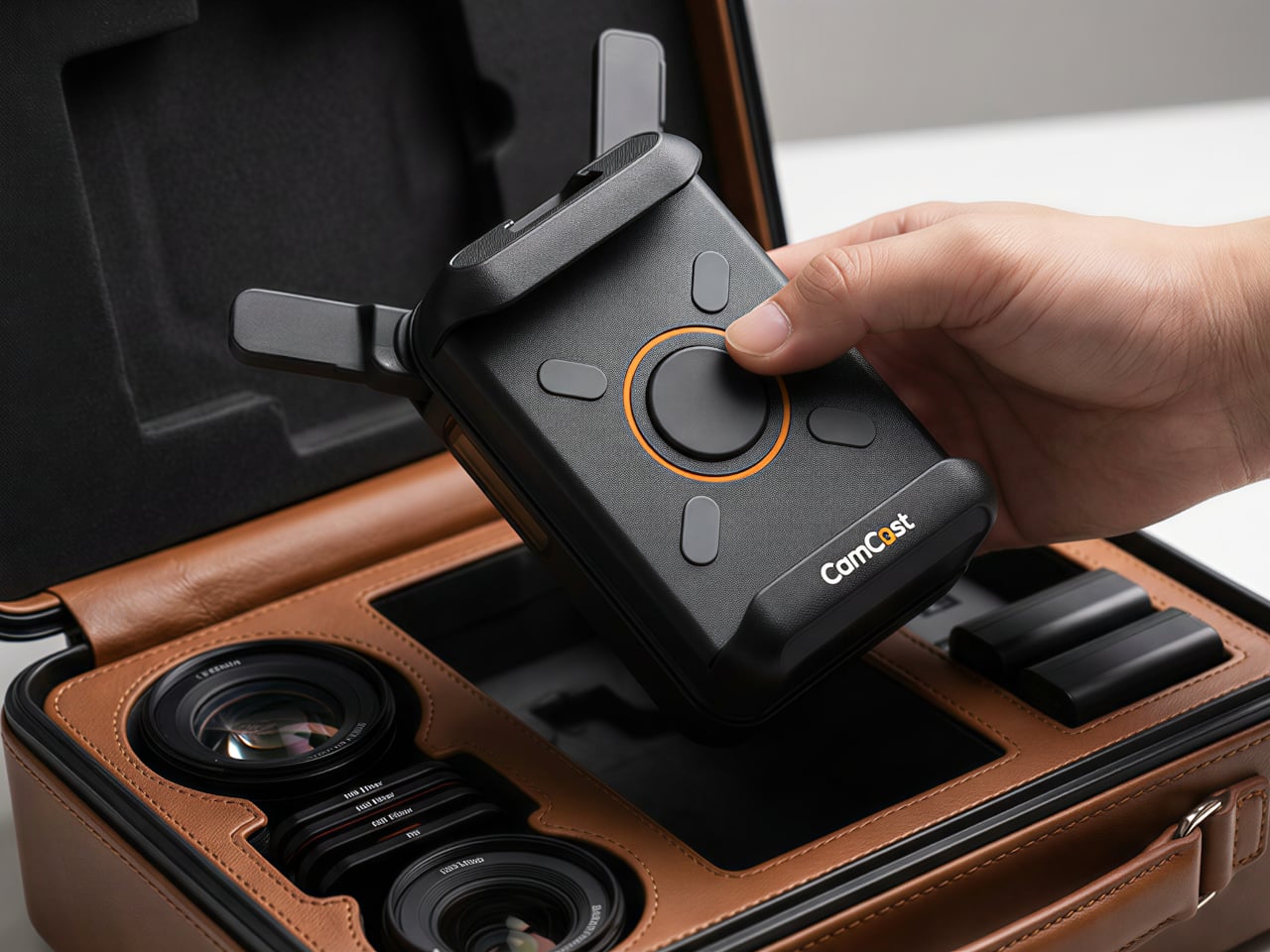
Rather than building another monitor or another receiver, EZCast built a bridge between cameras and the screens people already own. That redistribution of function, turning four phones into four production monitors through a single transmitter, might be the more interesting design move in a category still dominated by expensive, single-purpose hardware.

Click Here to Buy Now: $129 $239 ($110 off). Hurry, only a few units left!

The post EZCast Just Turned Every Phone Into a Professional Camera Monitor first appeared on Yanko Design.


EZCast Just Turned Every Phone Into a Professional Camera Monitor

Monitoring a camera feed used to require either hovering behind the viewfinder or investing in a dedicated wireless video system with separate transmitters, receivers, and field monitors. For solo content creators, small production teams, and anyone shooting interviews or tutorials with limited gear, that kind of setup has always felt disproportionate to the task. The gap between “professional monitoring” and “just squinting at the back of the camera” remained stubbornly wide.

EZCast’s CamCast CT-1 is a compact wireless transmitter designed to sit on top of any HDMI-equipped camera, from mirrorless bodies and DSLRs to action cams and camcorders. Once connected, it broadcasts a live 1080p 60fps feed over 5GHz Wi-Fi to up to four iOS or Android devices simultaneously. EZCast has spent over a decade building wireless display and screen-mirroring technology for offices and classrooms, and the CamCast is their first product built specifically for cameras, applying that signal distribution expertise to a production context.

Designer: EZCast

Click Here to Buy Now: $129 $239 ($110 off). Hurry, only a few units left!

The device itself is small enough to mount on a camera hot shoe or gimbal arm, with included adapters for both horizontal and vertical orientation. A built-in OLED screen displays connection details, and pairing happens through a QR code scan that takes roughly three seconds. Power comes from either a standard NP-F battery, the same type used across countless cinema accessories, or a USB-C connection at 5V/3A. That dual-power flexibility means a battery for mobility on location or a simple cable for longer, stationary shoots where runtime matters more.

1

Beyond passive monitoring, the companion CamCast app lets users save takes directly to their phone, review footage instantly, and share clips without ever pulling a memory card from the camera. For a two-person crew shooting a wedding, for instance, the second operator can watch the main camera’s composition from across the venue on a phone while managing their own setup. A makeup artist can confirm framing before the talent walks on set. Four people watching the same live feed, all from devices they already carry, collapses a communication problem that traditionally required dedicated hardware to solve.

What separates the CamCast CT-1 from a basic wireless HDMI sender, though, is the built-in PTP camera control. From the app on a phone or tablet, users can adjust shutter speed, ISO, color temperature, and aperture, and even navigate through camera menus remotely. Consider a camera mounted on an overhead rig for a cooking tutorial, or locked onto a gimbal for a tracking shot. Physically reaching the camera to change a setting interrupts the flow of a shoot. Being able to tweak exposure or white balance from a phone across the room changes how a solo creator or small team interacts with their gear.

1

The CamCast CT-1 also has a UVC output, which means it can connect directly to a laptop or desktop and function as a capture card. For livestreamers, educators, or anyone running a webinar, this removes an entire piece of hardware from the signal chain. One device handles wireless monitoring to phones and wired streaming output to a computer at the same time, which is a lot of functions packed into something that weighs less than most on-camera microphones.

1

Picture a YouTuber who films with a mirrorless camera on a tripod across the room. Right now, checking framing or adjusting settings means walking over, making a change, walking back, and repeating until it looks right. With the CamCast mounted on that camera, the phone becomes both the monitor and the remote control. An instructor recording a craft tutorial gets the same benefit, turning their tablet into a live preview without needing cables snaking across the workspace or an expensive field monitor clamped to a light stand.

Rather than building another monitor or another receiver, EZCast built a bridge between cameras and the screens people already own. That redistribution of function, turning four phones into four production monitors through a single transmitter, might be the more interesting design move in a category still dominated by expensive, single-purpose hardware.

Click Here to Buy Now: $129 $239 ($110 off). Hurry, only a few units left!

The post EZCast Just Turned Every Phone Into a Professional Camera Monitor first appeared on Yanko Design.

EZCast Just Turned Every Phone Into a Professional Camera Monitor

Monitoring a camera feed used to require either hovering behind the viewfinder or investing in a dedicated wireless video system with separate transmitters, receivers, and field monitors. For solo content creators, small production teams, and anyone shooting interviews or tutorials with limited gear, that kind of setup has always felt disproportionate to the task. The gap between “professional monitoring” and “just squinting at the back of the camera” remained stubbornly wide.

EZCast’s CamCast CT-1 is a compact wireless transmitter designed to sit on top of any HDMI-equipped camera, from mirrorless bodies and DSLRs to action cams and camcorders. Once connected, it broadcasts a live 1080p 60fps feed over 5GHz Wi-Fi to up to four iOS or Android devices simultaneously. EZCast has spent over a decade building wireless display and screen-mirroring technology for offices and classrooms, and the CamCast is their first product built specifically for cameras, applying that signal distribution expertise to a production context.

Designer: EZCast

Click Here to Buy Now: $129 $239 ($110 off). Hurry, only a few units left!

The device itself is small enough to mount on a camera hot shoe or gimbal arm, with included adapters for both horizontal and vertical orientation. A built-in OLED screen displays connection details, and pairing happens through a QR code scan that takes roughly three seconds. Power comes from either a standard NP-F battery, the same type used across countless cinema accessories, or a USB-C connection at 5V/3A. That dual-power flexibility means a battery for mobility on location or a simple cable for longer, stationary shoots where runtime matters more.

1

Beyond passive monitoring, the companion CamCast app lets users save takes directly to their phone, review footage instantly, and share clips without ever pulling a memory card from the camera. For a two-person crew shooting a wedding, for instance, the second operator can watch the main camera’s composition from across the venue on a phone while managing their own setup. A makeup artist can confirm framing before the talent walks on set. Four people watching the same live feed, all from devices they already carry, collapses a communication problem that traditionally required dedicated hardware to solve.

What separates the CamCast CT-1 from a basic wireless HDMI sender, though, is the built-in PTP camera control. From the app on a phone or tablet, users can adjust shutter speed, ISO, color temperature, and aperture, and even navigate through camera menus remotely. Consider a camera mounted on an overhead rig for a cooking tutorial, or locked onto a gimbal for a tracking shot. Physically reaching the camera to change a setting interrupts the flow of a shoot. Being able to tweak exposure or white balance from a phone across the room changes how a solo creator or small team interacts with their gear.

1

The CamCast CT-1 also has a UVC output, which means it can connect directly to a laptop or desktop and function as a capture card. For livestreamers, educators, or anyone running a webinar, this removes an entire piece of hardware from the signal chain. One device handles wireless monitoring to phones and wired streaming output to a computer at the same time, which is a lot of functions packed into something that weighs less than most on-camera microphones.

1

Picture a YouTuber who films with a mirrorless camera on a tripod across the room. Right now, checking framing or adjusting settings means walking over, making a change, walking back, and repeating until it looks right. With the CamCast mounted on that camera, the phone becomes both the monitor and the remote control. An instructor recording a craft tutorial gets the same benefit, turning their tablet into a live preview without needing cables snaking across the workspace or an expensive field monitor clamped to a light stand.

Rather than building another monitor or another receiver, EZCast built a bridge between cameras and the screens people already own. That redistribution of function, turning four phones into four production monitors through a single transmitter, might be the more interesting design move in a category still dominated by expensive, single-purpose hardware.

Click Here to Buy Now: $129 $239 ($110 off). Hurry, only a few units left!

The post EZCast Just Turned Every Phone Into a Professional Camera Monitor first appeared on Yanko Design.

Swiss Brand ‘On’ Just Built a $280 Running Shoe Using Robots in 3 Minutes

Most running shoes are Frankenstein jobs. Twenty, thirty pieces of fabric cut, stitched, layered, and glued together by human hands on a factory line. It’s been done that way for decades, and for the most part, nobody questioned it. On just did.

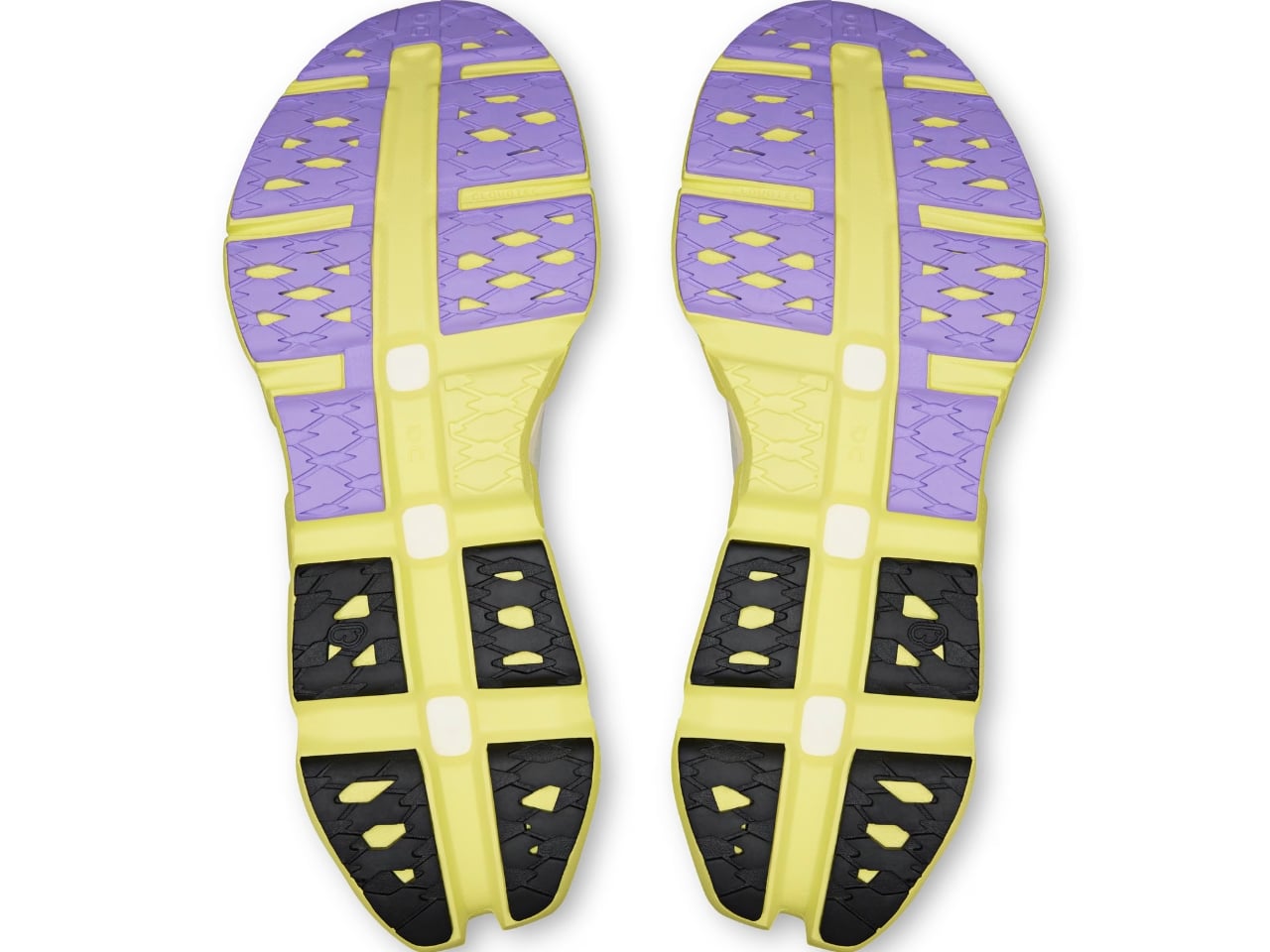
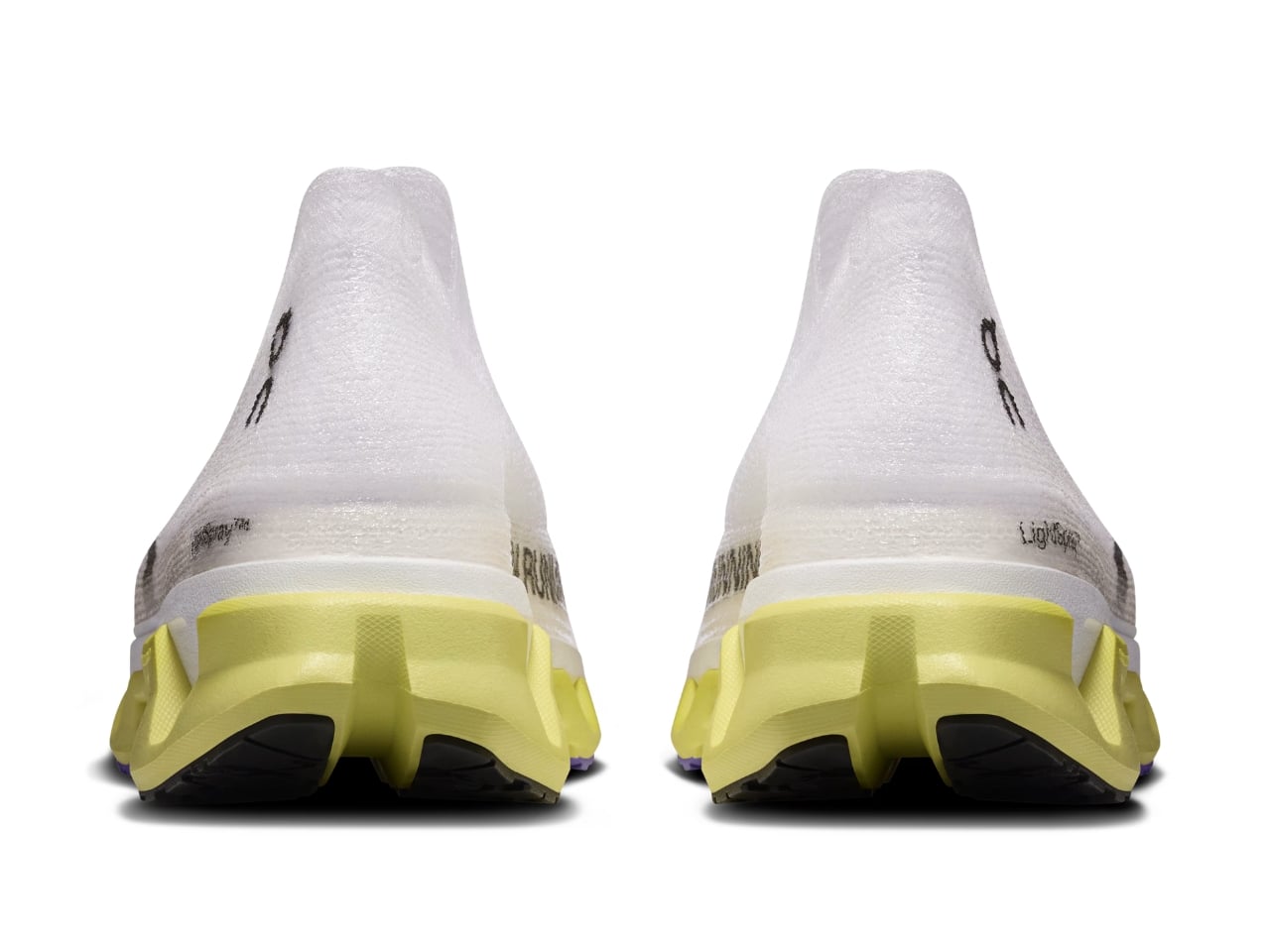
The Swiss brand’s new LightSpray Cloudmonster 3 Hyper doesn’t have a traditional upper. Instead, a robotic arm sprays a single continuous filament onto a foot-shaped mold, and in about three minutes, the entire upper is formed. No seams. No laces. No glue. The result bonds directly to the midsole through thermal fusing, and the whole shoe is made from just eight components. For context, a typical performance runner uses somewhere between 30 and 50. That’s not an incremental improvement. That’s a fundamentally different way to build a shoe.

Designer: On

On first debuted LightSpray in 2024, when marathon runner Hellen Obiri wore a prototype to win the Boston Marathon. Back then it was a single robotic unit in Zurich, a proof of concept more than a production method. Now the brand has opened a second factory near Busan, South Korea, housing 32 robots and boosting production capacity 30 times over. The technology has gone from lab curiosity to something you can actually buy, and that shift matters more than the shoe itself.

What makes the Cloudmonster 3 Hyper interesting as a design object is the tension between its upper and its sole. On top, you get this gossamer, almost skeletal spray-on structure that looks like it was grown rather than assembled. Below, there’s a massive stack of Helion HF hyper foam sitting on CloudTec cushioning geometry. Minimal above, maximal below. It’s a deliberate contrast, and it works visually in a way that most performance shoes don’t even attempt.

On co-founder Caspar Coppetti has said it’s what a shoe from Apple would look like, and while that comparison gets thrown around too loosely in consumer products, here it actually tracks. The Limelight/Bloom colorway, with its white upper, black branding, and yellow tooling, has that same kind of restrained confidence.

There are real performance implications, too. At 205 grams for a men’s US 8.5, it’s roughly 90 grams lighter than the standard Cloudmonster 3. That’s a significant gap for a max-cushion trainer. On deliberately skipped a carbon plate in the midsole, which is a choice that goes against the current arms race in performance footwear. The reasoning is sound: plates are great for race-day propulsion, but for training shoes built around long runs and high mileage, they can actually fatigue legs faster. The plateless design, combined with enhanced rocker geometry, is meant to keep your legs fresher over sustained efforts. It’s a shoe that asks you to trust the foam instead of the hardware.

The sustainability angle is worth noting without overstating. Eight components instead of dozens means less material waste and a simpler path to recyclability. On claims up to 75% lower CO₂ emissions for the upper compared to its other racing shoes. No running shoe is carbon-neutral, but the LightSpray approach at least moves in the right direction by simplifying what needs to be disassembled and reclaimed at end of life.

I do think there are legitimate questions about the laceless design. A form-fitting sprayed upper is a beautiful engineering solution, but it puts enormous pressure on the sock system and the structure itself to keep the foot locked down during dynamic movement. On includes an Elite Run Sock High Hyper with each pair, which is a smart acknowledgment that the shoe and sock need to function as a system. But runners with wider feet or higher arches should probably try these on before committing $280.

That price point is notable. It’s $90 more than the standard Cloudmonster 3 and $60 above the Cloudmonster 3 Hyper. You’re paying a premium for the LightSpray construction, and whether that premium is justified depends on how much you value the weight savings and the novelty of the technology. For some runners, that will be an easy yes. For others, the standard Hyper at $220 might be the smarter buy.

What excites me about this release isn’t really the shoe, though. It’s what it represents. The footwear industry has spent years competing on foam compounds and plate configurations, essentially tweaking the same fundamental construction methods. On is asking a different question entirely: what if the way we build the shoe is the innovation? A robot, a mold, three minutes, eight pieces. That’s a compelling answer, and I suspect the rest of the industry is paying very close attention.

The LightSpray Cloudmonster 3 Hyper drops March 5 in North America through On’s website and retail stores, with a global release following on April 16. It’s priced at $280.

The post Swiss Brand ‘On’ Just Built a $280 Running Shoe Using Robots in 3 Minutes first appeared on Yanko Design.

New 2 World Trade Center Will Rise 1,226 Feet Over Manhattan, Finally Completing the Post-9/11 Rebuild

It has been almost 25 years since the September 11 attacks forever changed the skyline of Lower Manhattan, and now the rebuilding of the World Trade Center campus is entering its final stretch. The last major commercial tower on the site, 2 World Trade Center, is expected to break ground in spring 2026 and wrap up construction by 2031. American Express has committed to making the building its new corporate headquarters.

Getting to this point hasn’t been simple. British firm Foster + Partners was originally hired to design the tower, only to be replaced by Bjarke Ingels Group, which put forward a striking terraced concept. That plan was eventually scrapped, and Foster + Partners was brought back to start fresh. The result, based on recently released renderings, is a broad rectangular tower sheathed in glass, with three open-air terraces and six landscaped corner gardens woven into the facade to bring some greenery to an otherwise sleek profile.

Designer: Foster + Partners

The tower will rise to 1,226 feet, comfortably placing it in the supertall category and making it roughly the 11th-tallest building in the United States. It won’t overtake its famous neighbor, though. One World Trade Center still holds the title of the country’s tallest at a symbolically chosen 1,776 feet. Inside, the building will offer close to two million square feet of usable space across 55 stories, with the bulk of that dedicated to offices. When fully occupied, it could house around 10,000 workers.

Specifics are still thin at this early stage, but American Express has said the tower will incorporate smart building technology and energy-efficient systems. The project is also targeting LEED certification, which has become something of a baseline expectation for major commercial developments in recent years.

Kevin O’Toole, Chairman of the Port Authority of New York and New Jersey, called the project a meaningful milestone, both for the campus and for the surrounding region. He pointed to the tower’s role in reinforcing the World Trade Center as one of the country’s most important centers of commerce and transportation, and acknowledged just how much sustained effort it takes to deliver projects on this scale.

Silverstein Properties, the development firm that has overseen much of the site’s post 9/11 transformation, is once again at the helm. When the building finally opens its doors in 2031, it will effectively close the book on one of the most ambitious and emotionally significant urban rebuilding efforts in modern history. More than anything, it will stand as a reminder of what New York City is capable of when it commits to moving forward.

The post New 2 World Trade Center Will Rise 1,226 Feet Over Manhattan, Finally Completing the Post-9/11 Rebuild first appeared on Yanko Design.

This Ruler Holds Paper, Guides Your Blade, and Forgives Shaky Hands

I’ve been staring at these renders for a while now, and I keep coming back to one line from the project page: “A cutting-aid tool designed for the human hand as it actually trembles.” That’s not marketing copy. That’s a design philosophy most product designers never arrive at.

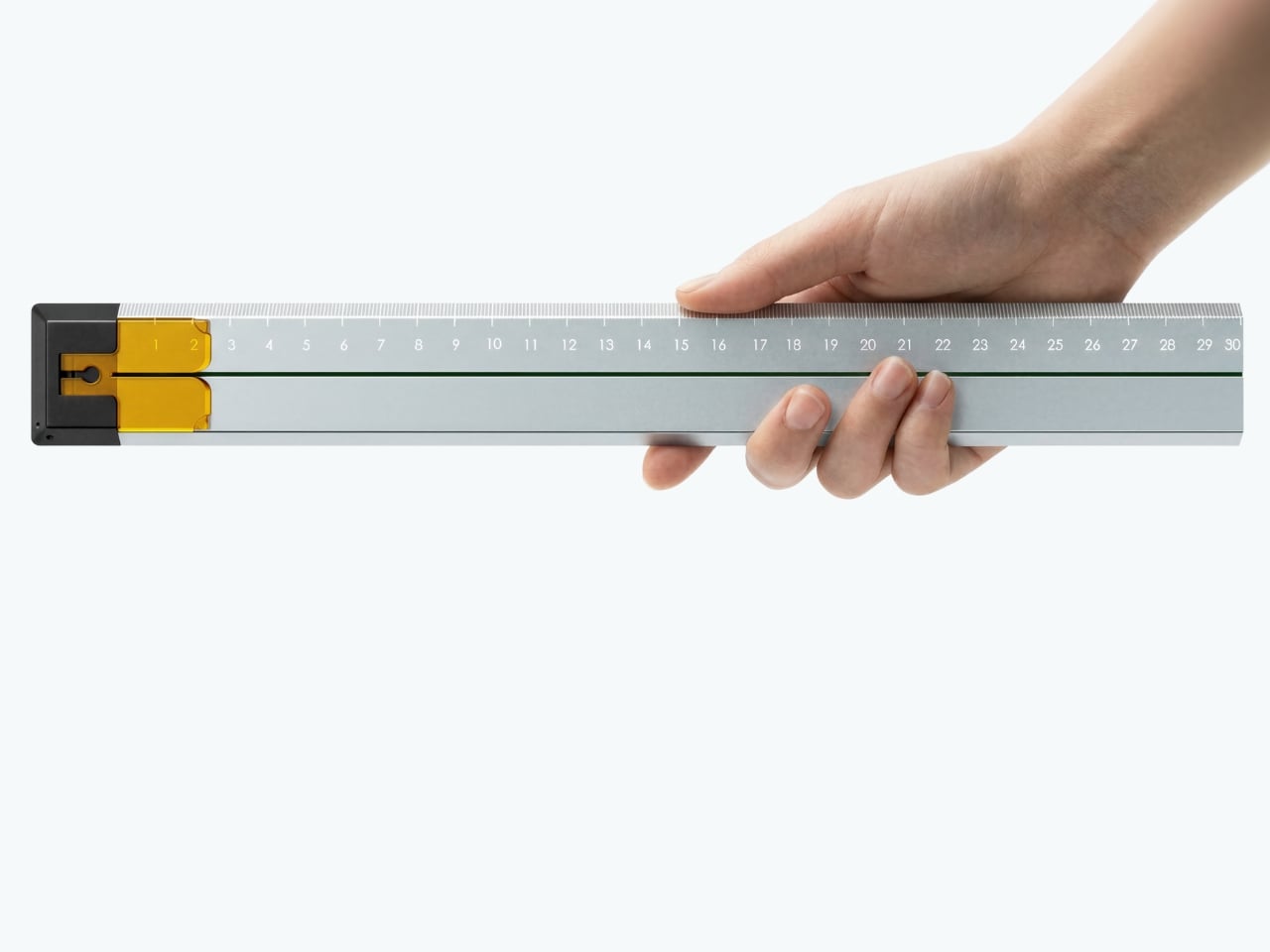
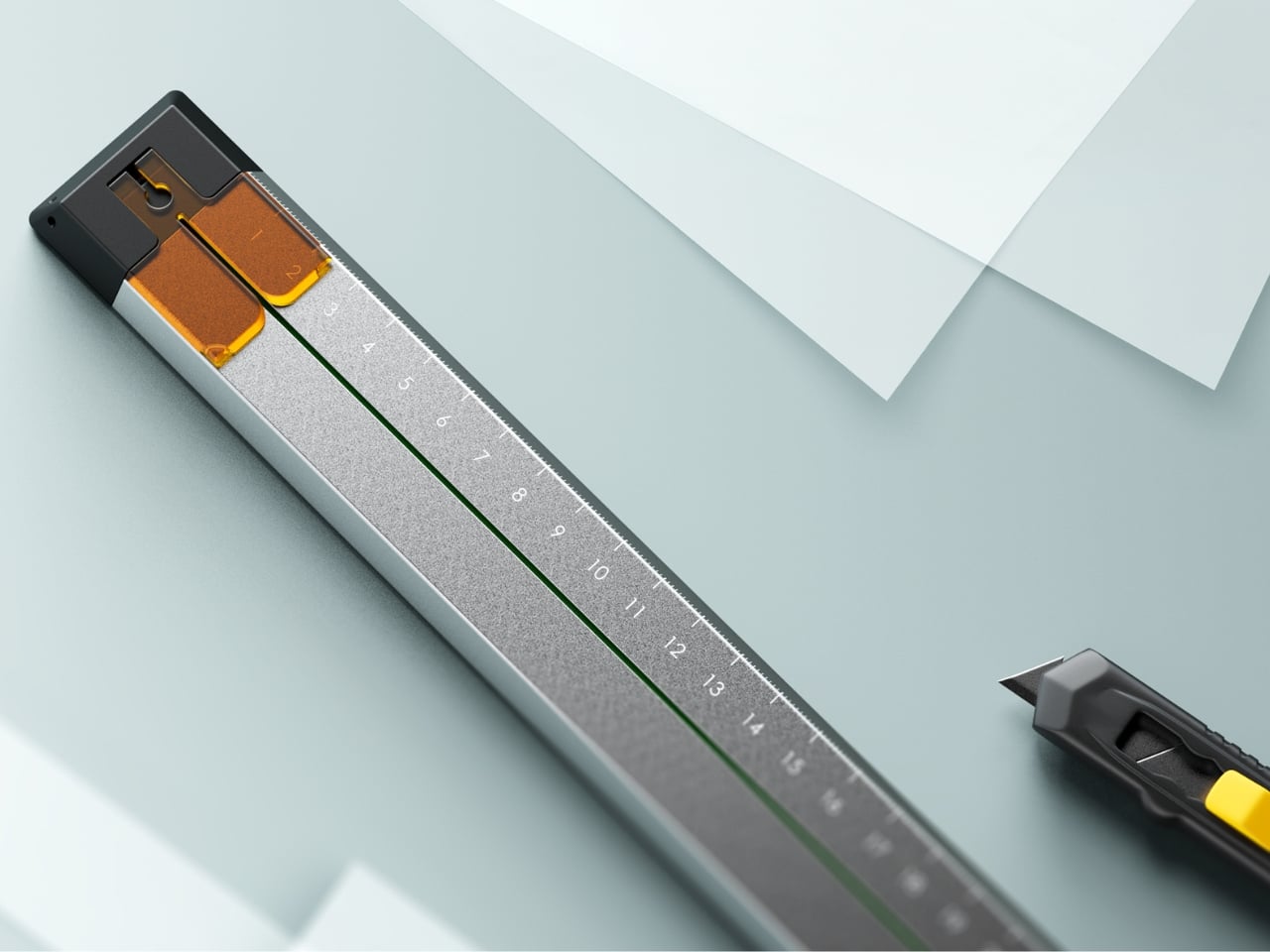
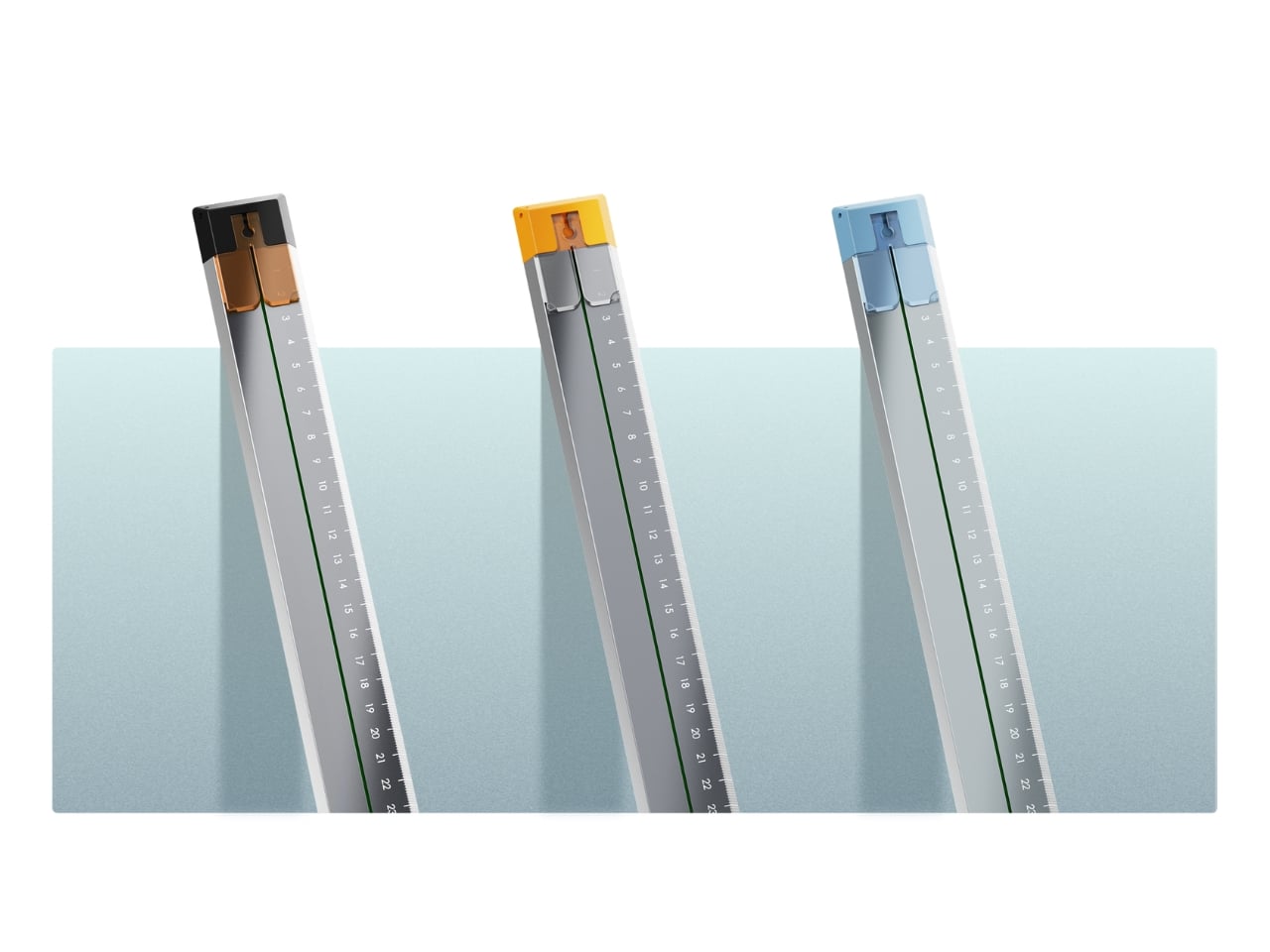
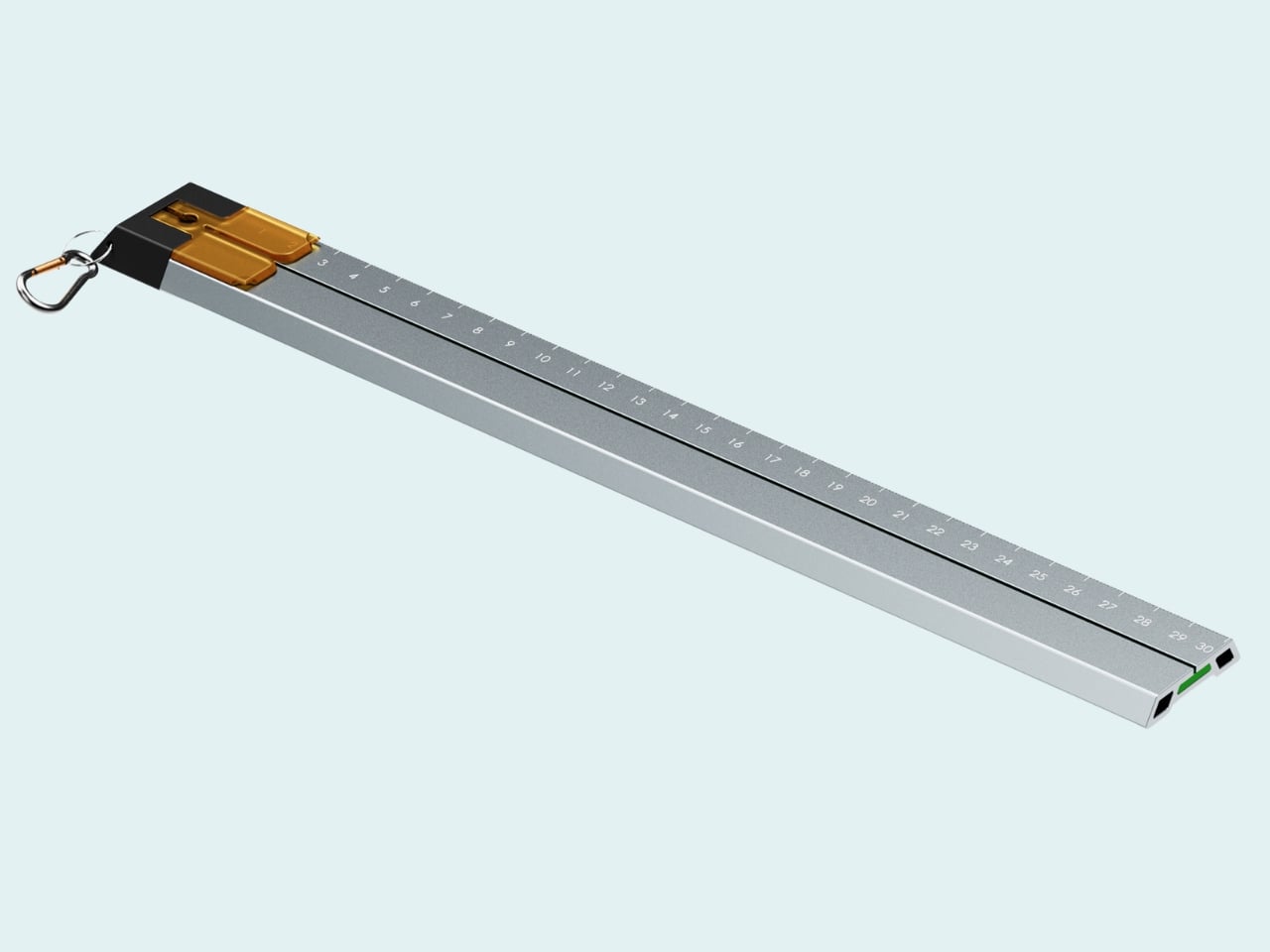
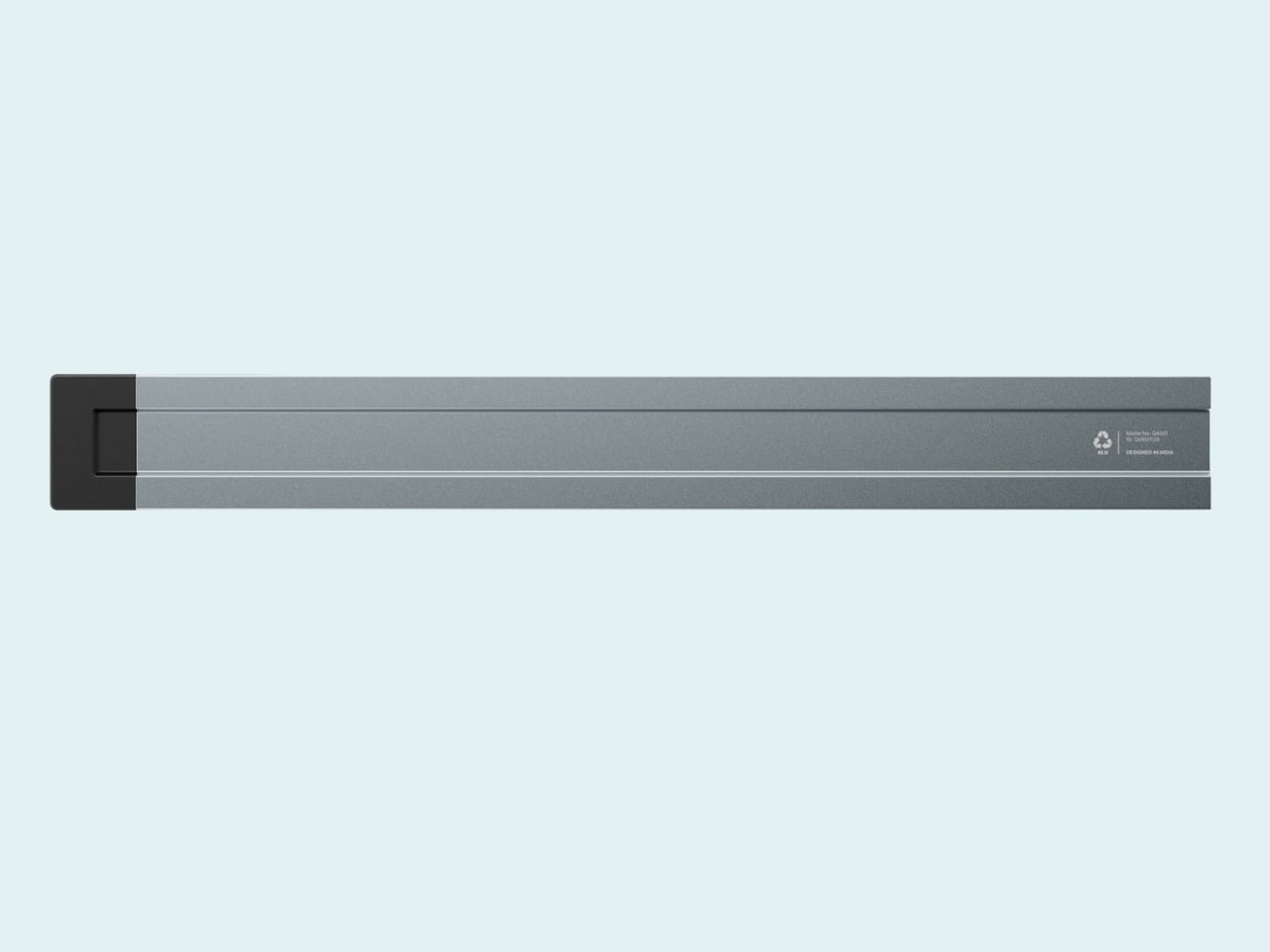
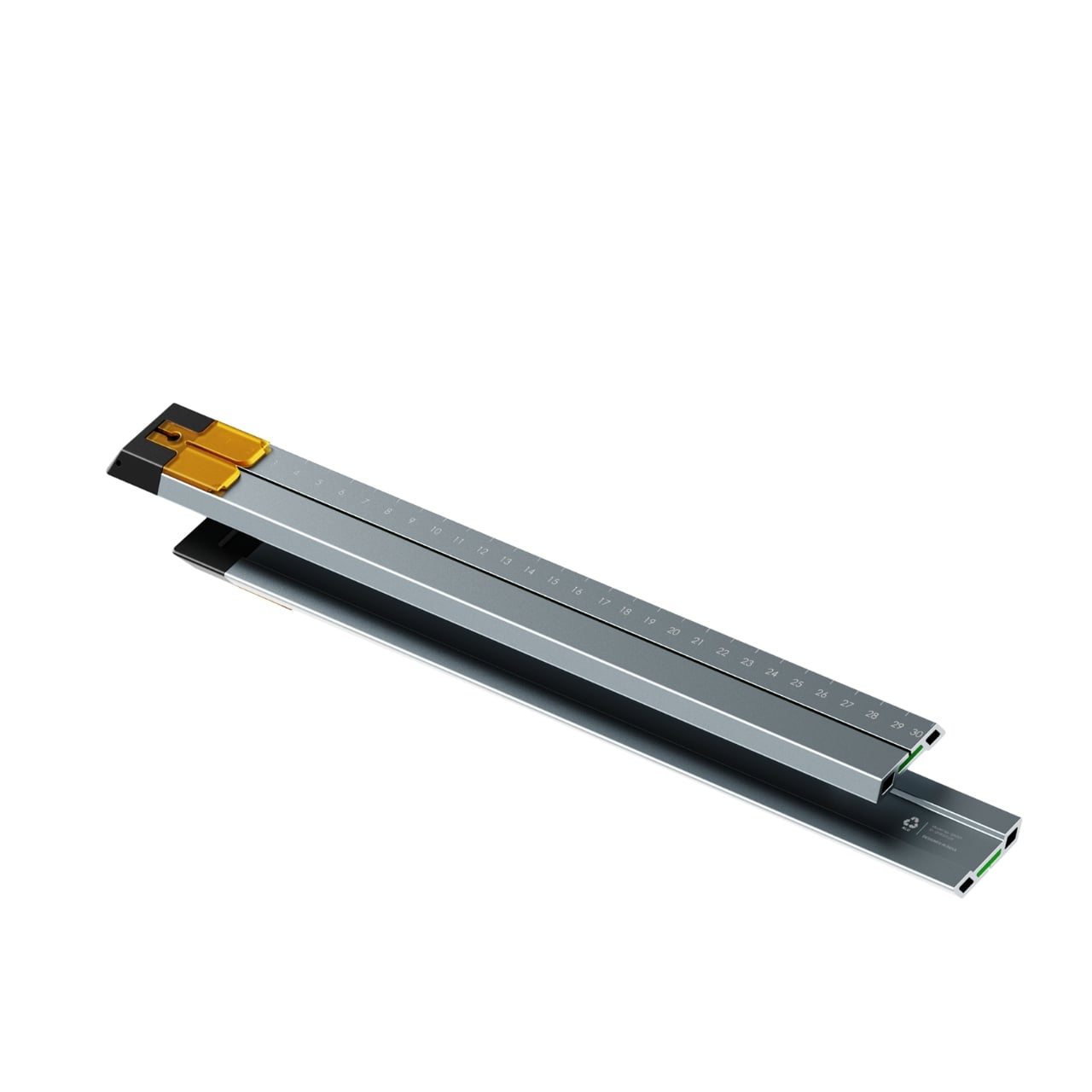
Quiver is a concept by Tunir Maity, a designer based in Noida, India, and it’s one of the most thoughtful pieces of industrial design I’ve come across recently. On the surface, it looks like a premium aluminum ruler with a built-in paper guide and blade channel. Sleek, minimal, the kind of object that would look good on a studio desk. But what makes it interesting isn’t how it looks. It’s what it admits about you.

Designer: Tunir Maity

Most cutting tools are designed as if you’re a surgeon. Steady hands, perfect pressure, ideal lighting, infinite patience. The reality is different. You’re hunched over a desk, eyeballing a line, gripping too hard because you’re afraid of slipping. The paper moves. The blade drifts. You end up with a cut that’s close enough but never quite right. It’s a small failure, the kind you shrug off, but it accumulates into a quiet resentment of a task that should be simple.

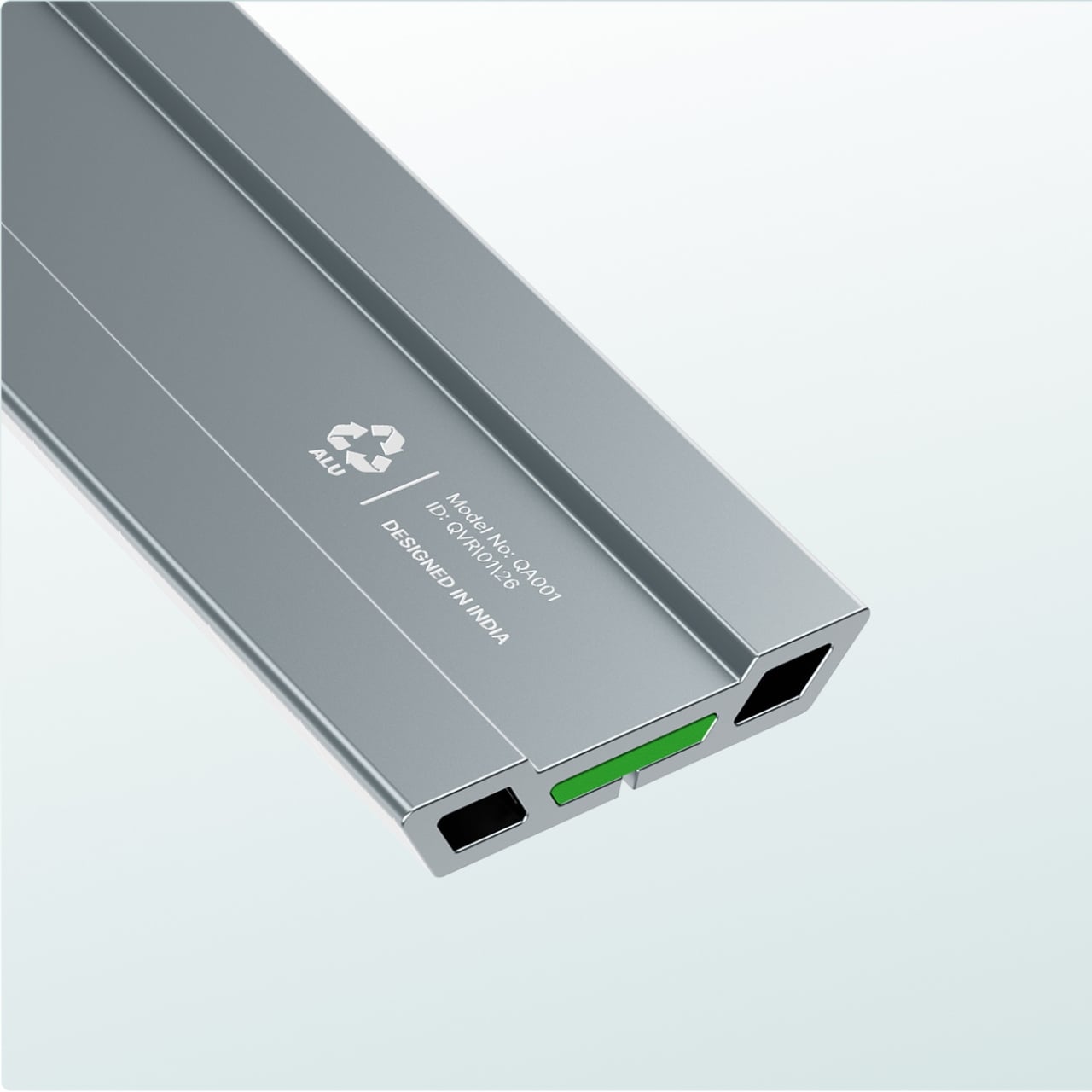
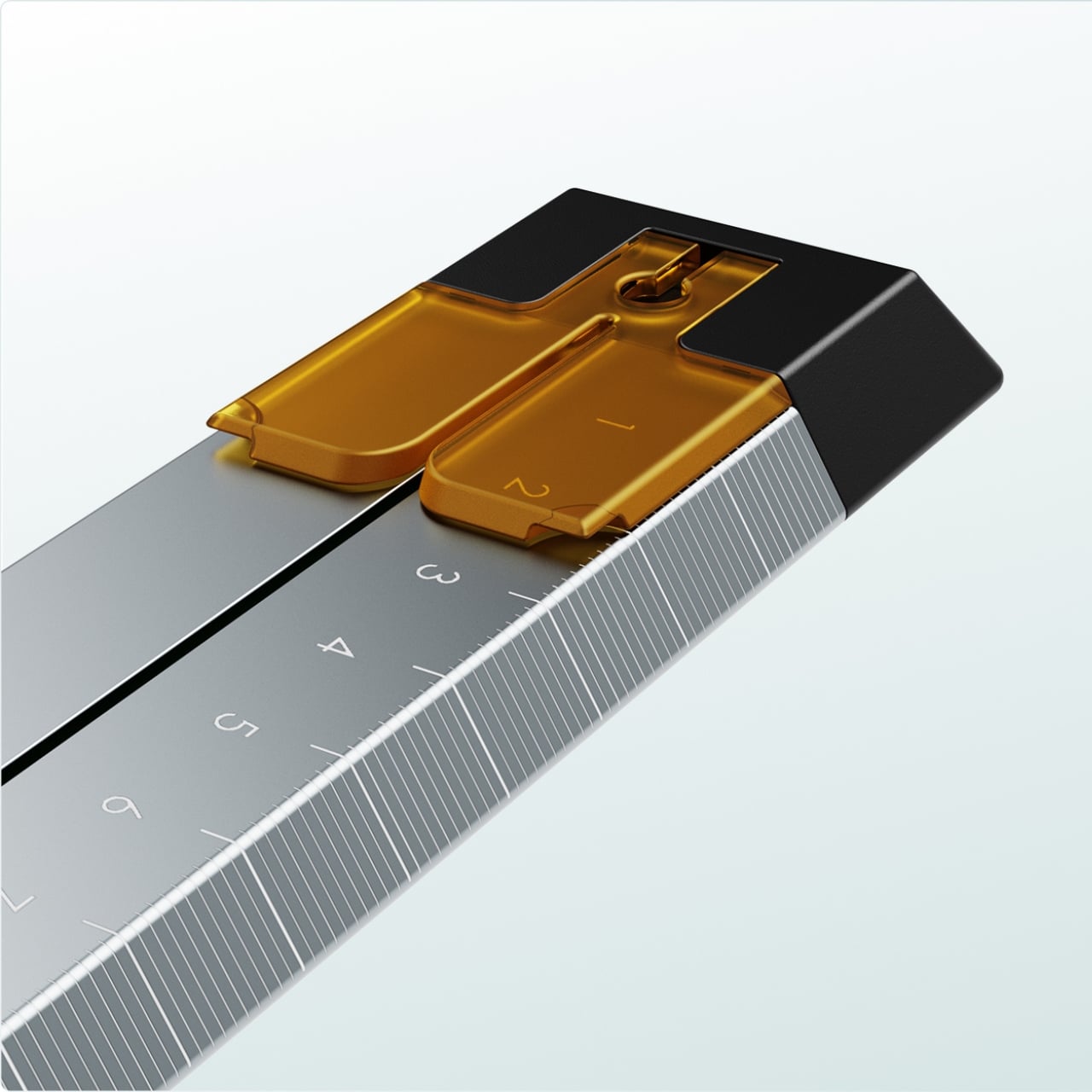
Quiver’s approach is to stop pretending the problem is you. The tool has a clip mechanism that holds paper in place, a slit that guides your blade in a straight line, and a weight distribution that favors the cutting end so you don’t have to press as hard. The whole thing is made from anodized aluminum with recyclable plastic components, designed for over 300 cuts and years of daily use. There’s even a carabiner attachment so you can clip it to a bag, which is a nice touch for anyone who actually uses tools instead of just collecting them.

What I find compelling about this project isn’t any single feature. It’s the framing. The name “Quiver” carries a double meaning that I think is genuinely clever without being precious about it. There’s the archery sense, that moment of readiness before you release, and there’s the literal quiver of a human hand. Most designers would pick one meaning and run with it. Maity holds both, and that tension is where the design lives.

There’s a broader conversation here about inclusive design that I think Quiver speaks to without ever using the term. When you design for trembling hands, you’re not just designing for people with motor difficulties or arthritis. You’re designing for everyone who’s ever been tired, rushed, cold, nervous, or just not that precise. That’s all of us, at different moments. The best accessible design has always worked this way. Curb cuts were designed for wheelchairs and ended up helping everyone with strollers, luggage, or sore knees. OXO Good Grips started as kitchen tools for people with arthritis and became the standard for comfortable design. Quiver fits into that lineage. It’s not a medical device or an accommodation. It’s just a better tool that happens to respect the full range of human capability.

I also appreciate that it comes in multiple colorways. The amber, yellow, and blue clip variants shown in the renders suggest this is meant to be a personal object, not just a utility. That matters. Tools you choose tend to be tools you use.

Is it perfect? It’s a concept, so there are open questions. How does the blade channel handle thicker materials? What’s the learning curve for the clip mechanism? Would the weight feel different after an hour of continuous use? These are manufacturing questions, not design ones, and they don’t diminish what Maity has accomplished here at the conceptual level.

What stays with me is the generosity of the premise. So much of product design starts from a place of optimization, making you faster, more efficient, more precise. Quiver starts from a place of acceptance. Your hands shake. That’s fine. Let’s work with that. In a design landscape obsessed with eliminating human imperfection, there’s something quietly radical about a tool that says your imperfection was the brief all along.

The post This Ruler Holds Paper, Guides Your Blade, and Forgives Shaky Hands first appeared on Yanko Design.

Trump orders federal agencies to drop Anthropic services amid Pentagon feud

President Donald Trump has ordered all US government agencies to stop using Claude and other Anthropic services, escalating an already volatile feud between the Department of Defense and company over AI safeguards. Taking to Truth Social on Friday afternoon, the president said there would be a six-month phase out period for federal agencies, including the Defense Department, to migrate off of Anthropic's products. 

“The Leftwing nut jobs at Anthropic have made a DISASTROUS MISTAKE trying to STRONG-ARM the Department of War, and force them to obey their Terms of Service instead of our Constitution,” the president wrote. “Anthropic better get their act together, and be helpful during this phase out period, or I will use the Full Power of the Presidency to make them comply, with major civil and criminal consequences to follow.”  

Before today, US Defense Secretary Pete Hegseth had threatened to label Anthropic a “supply chain risk” if it did not agree to withdraw safeguards that insist Claude not be used for mass surveillance against Americans or in fully autonomous weapons. In a post on X published after President Trump’s statement, Hegseth said he was “directing the Department of War to designate Anthropic a Supply-Chain Risk to National Security. Effective immediately, no contractor, supplier, or partner that does business with the United States military may conduct any commercial activity with Anthropic.”

Anthropic did not immediately respond to Engadget's comment request. Earlier in the day, a spokesperson for the company said the contract Anthropic received after CEO Dario Amodei outlined Anthropic's position made “virtually no progress” on preventing the outlined misuses.

"New language framed as a compromise was paired with legalese that would allow those safeguards to be disregarded at will. Despite DOW's recent public statements, these narrow safeguards have been the crux of our negotiations for months," the spokesperson said. "We remain ready to continue talks and committed to operational continuity for the Department and America's warfighters." 

Advocacy groups like the Center for Democracy and Technology (CDT) quickly came out against the president’s threats. “This action sets a dangerous precedent. It chills private companies’ ability to engage frankly with the government about appropriate uses of their technology, which is especially important in national security settings that so often have reduced public visibility,” said CDT President and CEO Alexandra Givens, in a statement shared with Engadget. “These threats undermine the integrity of the innovation ecosystem, distort market incentives and normalize an expansive view of executive power that should worry Americans all across the political spectrum.”

For now, it appears the AI industry is united behind Anthropic. On Friday, hundreds of Google and OpenAI employees signed an open letter urging their companies to stand in "solidarity" with the lab. According to an internal memo seen by Axios, OpenAI CEO Sam Altman said the ChatGPT maker would draw the same red line as Anthropic.  

In a blog post published late on Friday, Anthropic vowed to “challenge any supply chain risk designation in court,” and assured its customers that only work related to the Defense Department would be affected. The company's full statement is available here, an excerpt is below:

Designating Anthropic as a supply chain risk would be an unprecedented action—one historically reserved for US adversaries, never before publicly applied to an American company. We are deeply saddened by these developments. As the first frontier AI company to deploy models in the US government’s classified networks, Anthropic has supported American warfighters since June 2024 and has every intention of continuing to do so.

We believe this designation would both be legally unsound and set a dangerous precedent for any American company that negotiates with the government.

No amount of intimidation or punishment from the Department of War will change our position on mass domestic surveillance or fully autonomous weapons. We will challenge any supply chain risk designation in court.

Update, February 27, 9PM ET: This story was updated twice after publish. First at 6PM ET to include a link to and quotes from Hegseth about the designation of Anthropic as a supply chain risk. Later, a quote from Anthropic was added, along with a link to the company’s blog post on the subject.

This article originally appeared on Engadget at https://www.engadget.com/ai/trump-orders-federal-agencies-to-drop-anthropic-services-amid-pentagon-feud-222029306.html?src=rss

FCC approves the merger of cable giants Cox and Charter

The Federal Communications Commission has given the go ahead for two of the US' biggest cable providers, Charter Communications and Cox Communications, to merge. Charter announced its intention to acquire Cox for $34.5 billion in May 2025, with specific plans to inherit Cox's managed IT, commercial fiber and cloud businesses, while folding the company's residential cable service into a subsidiary.

“By approving this deal, the FCC ensures big wins for Americans," FCC Chairman Brendan Carr said in a statement. "This deal means that jobs are coming back to America that had been shipped overseas. It means that modern, high-speed networks will get built out in more communities across rural America. And it means that customers will get access to lower priced plans. On top of this, the deal enshrines protections against DEI discrimination."

The FCC claims that Charter plans to invest "billions" to upgrade its network following the closure of the deal, leading to "faster broadband and lower prices." The company's "Rural Construction Initiative" will also extend those improvements to rural states lacking in consistent internet service, a project the FCC was heavily invested in during the Biden administration, but has been pulling back from since President Donald Trump appointed Carr. The FCC also claims Charter will onshore jobs currently handled off-shore by Cox employees and commit to "new safeguards to protect against DEI discrimination," which essentially amounts to hiring, recruiting and promoting employees based on "skills, qualifications, and experience."

While Carr's FCC paints a rosy picture of Charter's acquisition, history has provided multiple examples of mergers having the opposite effect on jobs and pricing. For example, redundancies created when T-Mobile merged with Sprint in 2020 led to a wave of layoffs at the carrier. And funnily enough in 2018, not long after Charter's merger with Time Warner Cable was approved by the FCC, the company raised prices on its Spectrum service by over $91 a year. 

The FCC's obsession with diversity, equity and inclusion as part of the deal is stranger, if only because it appears to fall outside of the commission's purpose of maintaining fair competition in the telecommunications industry. It does fit with other mergers the FCC has approved under Carr, however. Skydance's acquisition of Paramount was approved in 2025 under the condition it wouldn't establish any DEI programs.

This article originally appeared on Engadget at https://www.engadget.com/big-tech/fcc-approves-the-merger-of-cable-giants-cox-and-charter-230258865.html?src=rss

What If Artists Designed Wi-Fi Routers?

A Wi-fi router has to hands-down be one of the ugliest appliances to be placed in a modern home. Sure, your thermostat can be concealed, your purifier can be hidden away when not in use, your home gym can fit under your bed. But the Wi-Fi router can’t be moved without some serious repercussions for performance. The router, by virtue of how it works, HAS to be kept in an open environment so it can broadcast the Wi-fi signal everywhere efficiently.

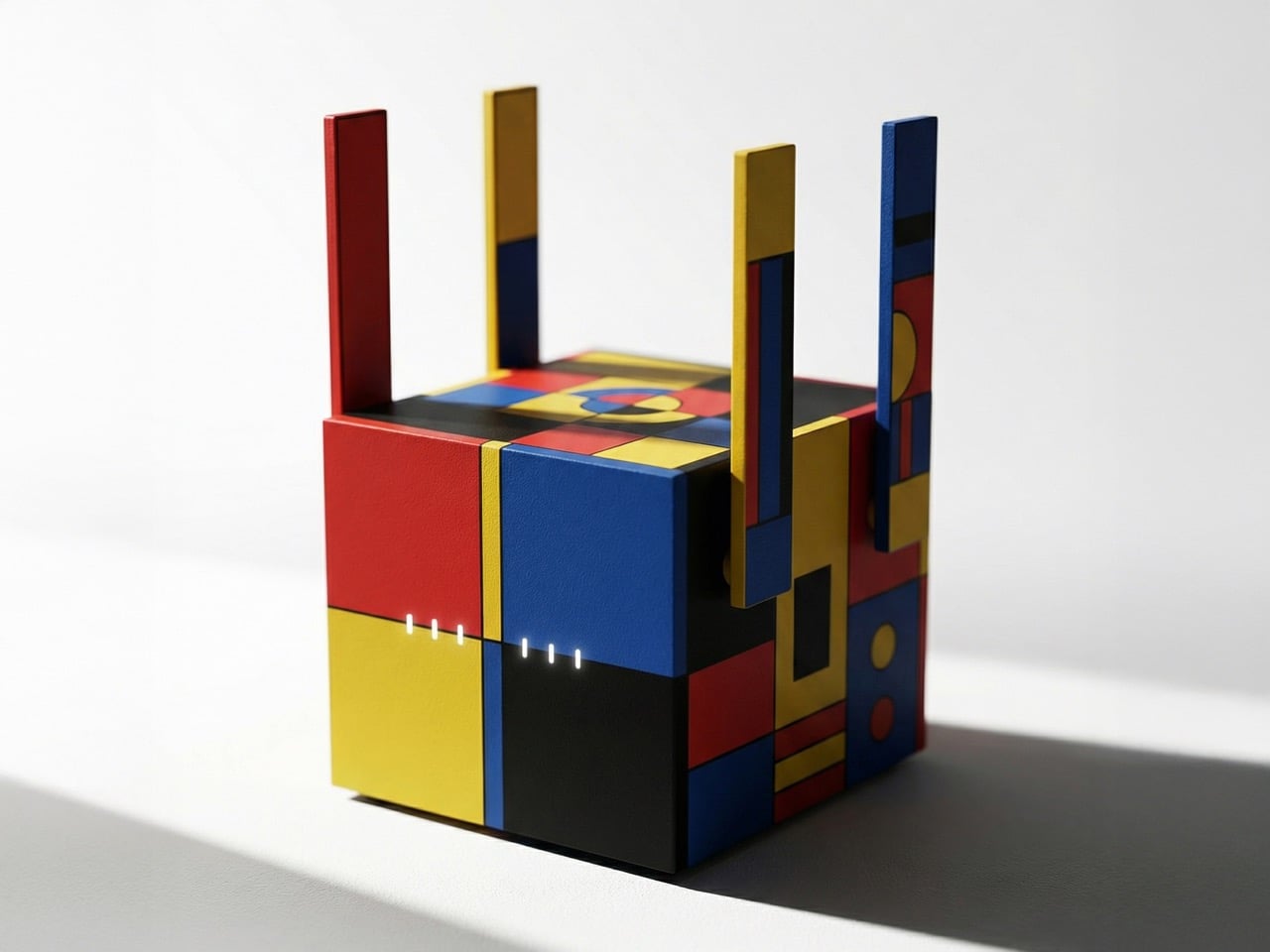
That being said, hardly any companies actually spend time thinking about how home-based Wi-fi should look. Companies like Google and Apple worked fairly hard to ensure their smart speakers fit well into interior spaces, but your router is still this alien-looking device with angular forms, black plastic, blinking lights, and antennas shooting out in every direction looking like a large bug ready to strike. So Cosin Design asks a simple question – what if we merged the worlds of router design with modern art?

Designer: Cosin Design

These Mondrian Routers treat the router’s surface as a canvas for modern art. Inspired by the abstract artwork of Piet Mondrian, the routers translate the geometric artpieces of the Dutch painter onto the plastic appliance’s otherwise cold, boring, and frankly unsightly surfaces. Black or white plastic wasn’t meant for modern homes, especially homes filled with color, texture, and life. Given how routers are almost always centrally located and mounted on walls or placed on high tabletops, visible to every one, Cosin Design’s routers at least try to make a visual statement through art.

Would I put such a router in my house? In fact, this project is an invitation to companies like ASUS, D-Link, Netgear, TP-Link, and others to at least experiment with unique artworks and form factors that delight instead of displease. Huawei launched a beautiful lava-lamp-inspired Wi-fi router just at the end of last year, and it really goes to show how something as essential as an internet connectivity device can speak the language of home decor, instead of looking like something meant to be hidden in a server room.

The post What If Artists Designed Wi-Fi Routers? first appeared on Yanko Design.