This Kid-Safe Drone Looks Like a Frog and Hides Spinning Blades

Most consumer drones look and feel intimidating to a child. They’re loud, angular, full of exposed propellers, and packed with complex controls adults barely understand. Kids want to see the world from above, but parents see spinning blades and fragile arms that cost too much to replace. The mix of fascination and fear turns what could be fun into something closer to borrowing a grown-up’s expensive, breakable toy.

Aeroleap is a kid-friendly drone concept that tries to lower that barrier. Designed for children aged six to twelve, it uses soft, organic form language and clear visual cues to communicate safety and balance. The design draws inspiration from a frog’s stance, so the drone feels stable and approachable rather than mechanical or aggressive, more like a small creature ready to hop than a tiny aircraft ready to crash.

Designer: Anuja Deshpande
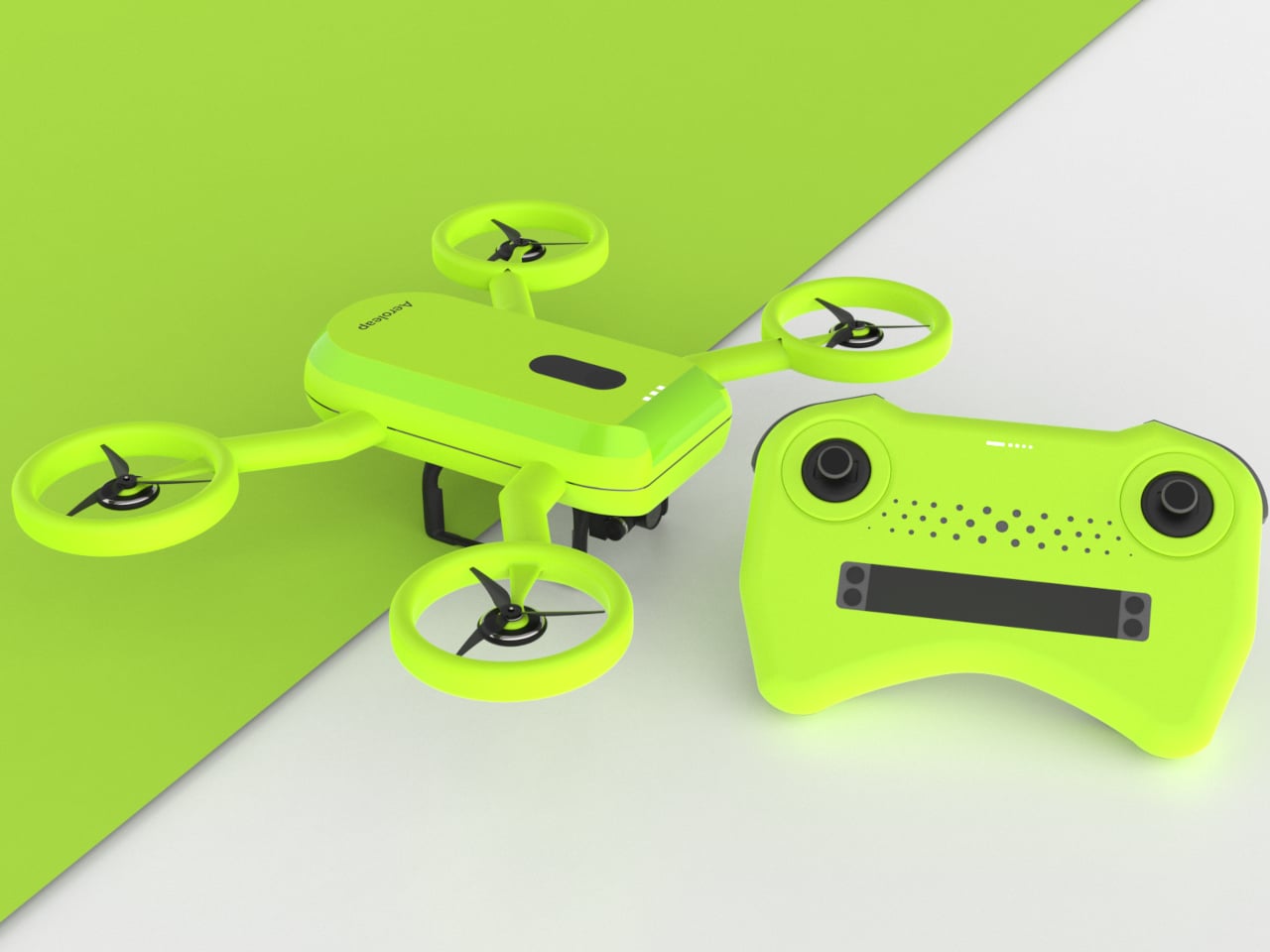
A child in a backyard holds a controller that feels like a gamepad, watching a bright green drone lift off without exposed blades buzzing near fingers. The integrated propeller rings and rounded body make it clear where it’s safe to touch, and the frog-like stance on the ground helps it read as balanced and ready, not twitchy or fragile like hobby drones that need constant correction just to hover.
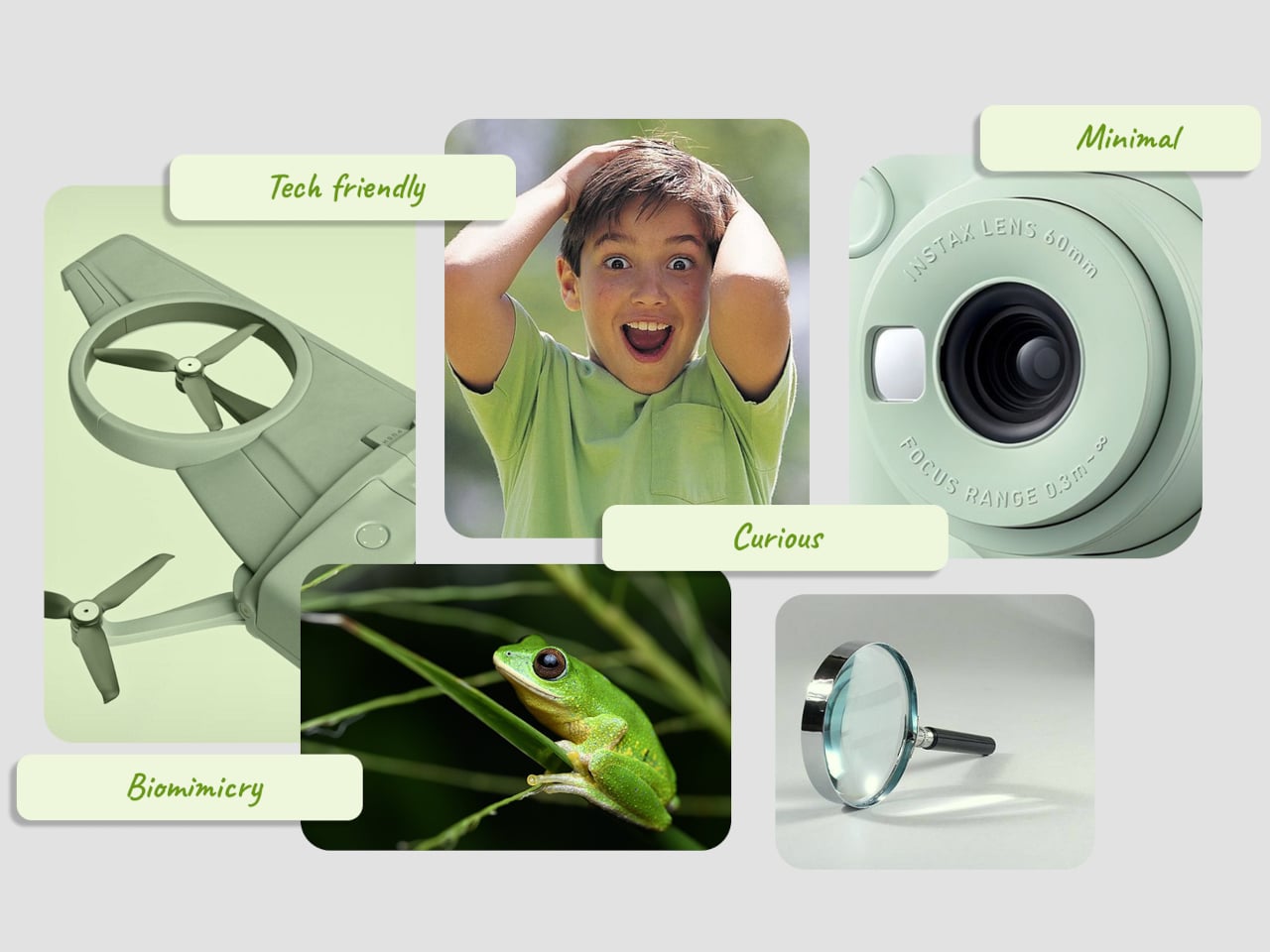
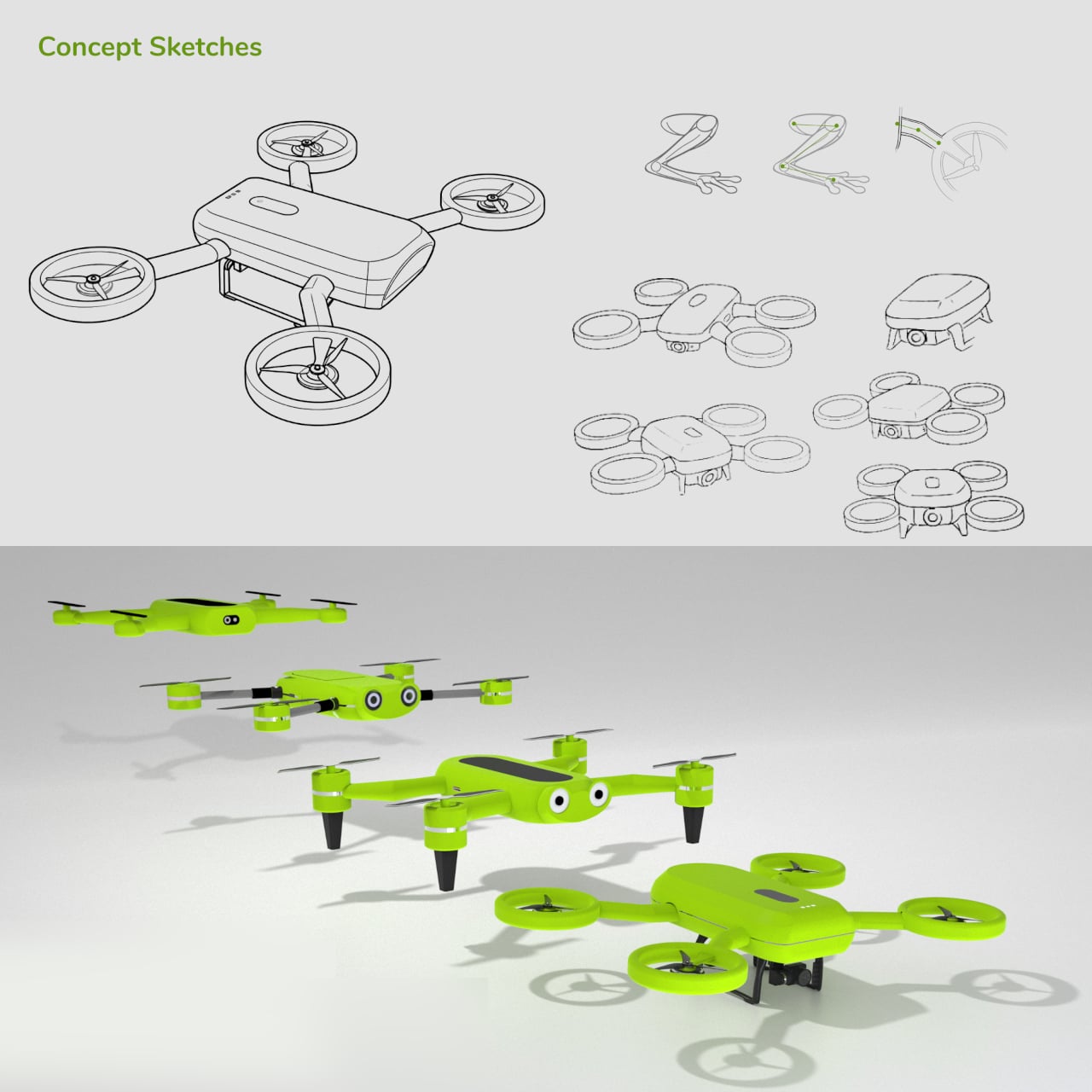
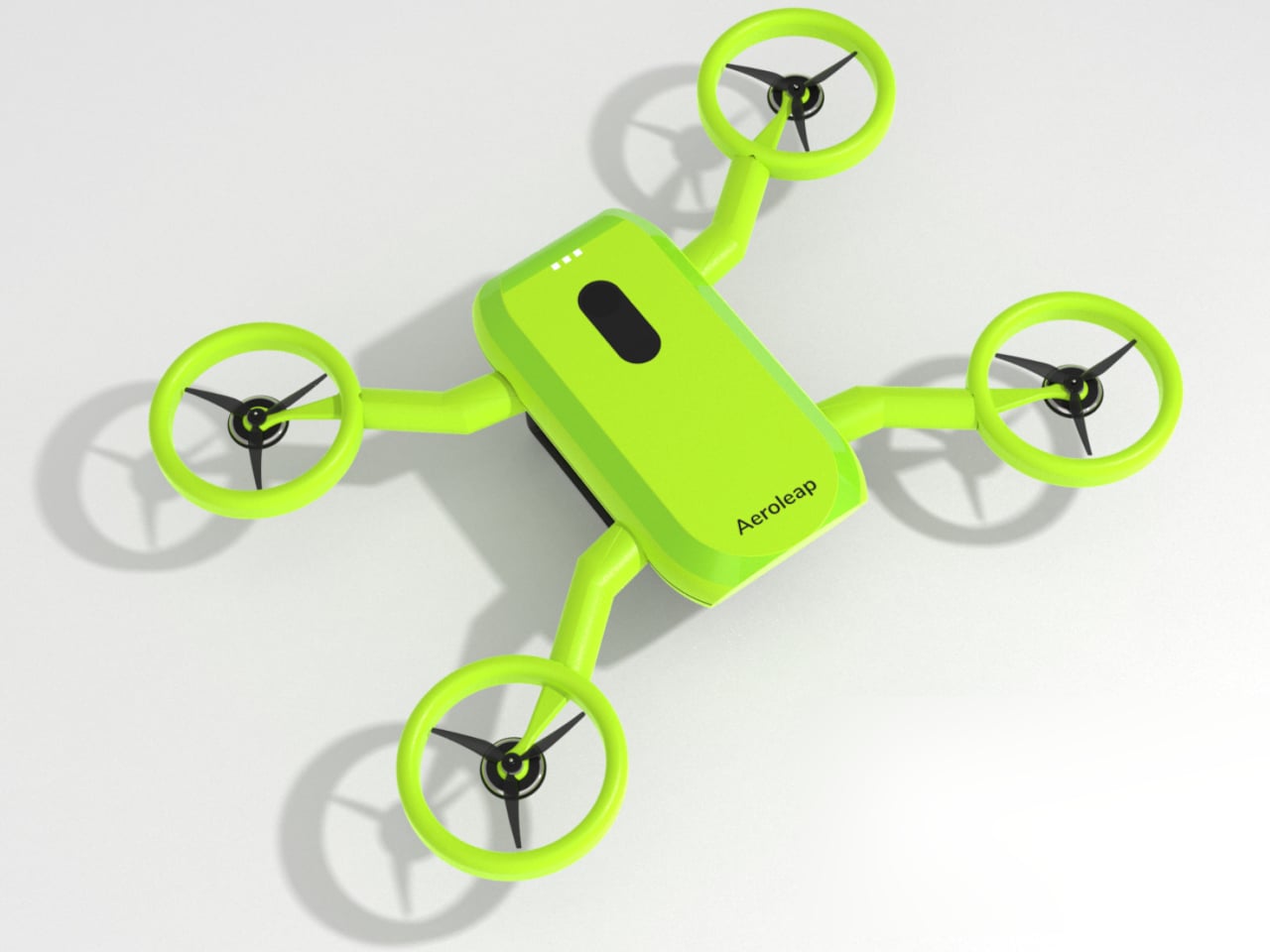
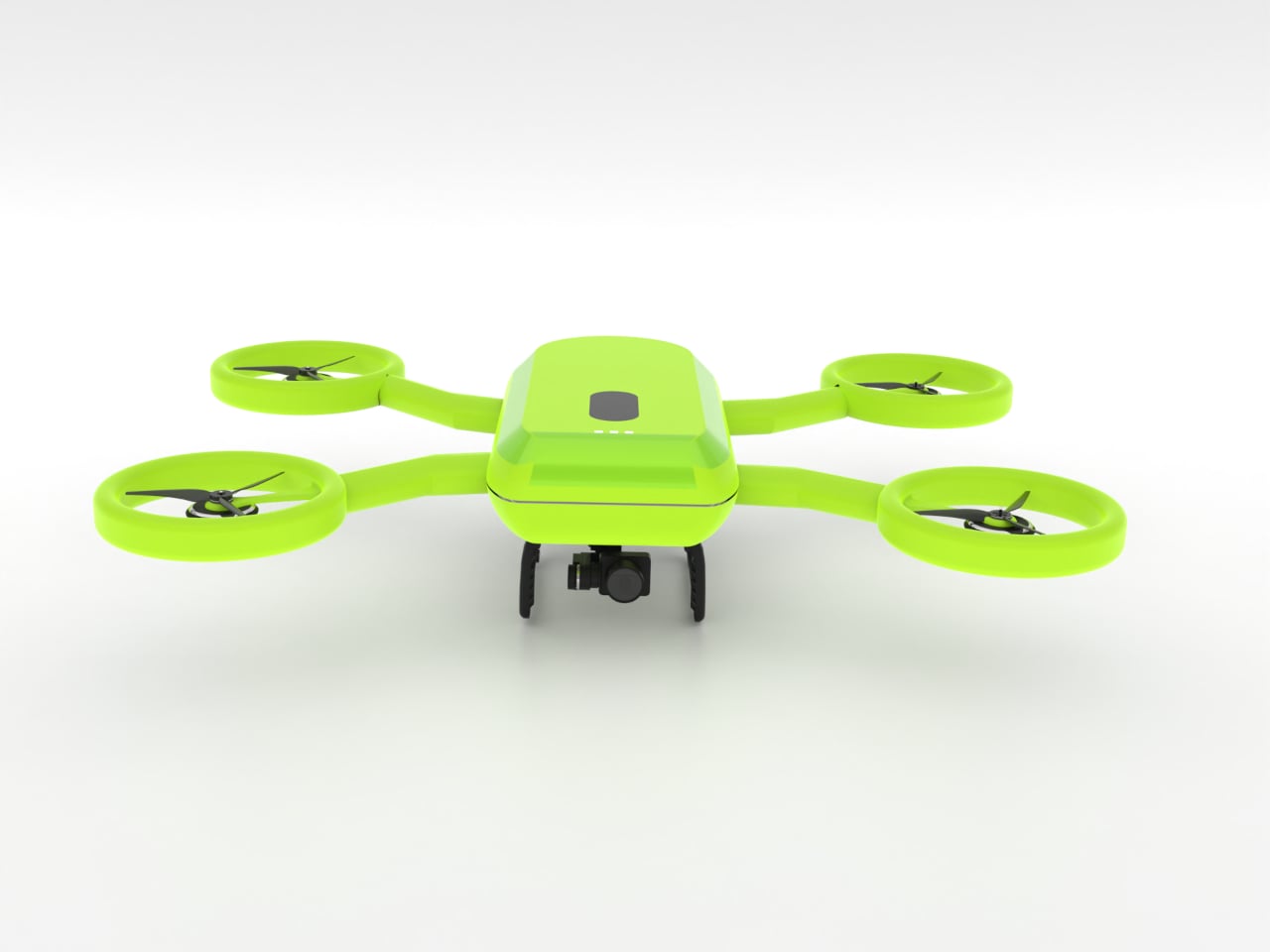
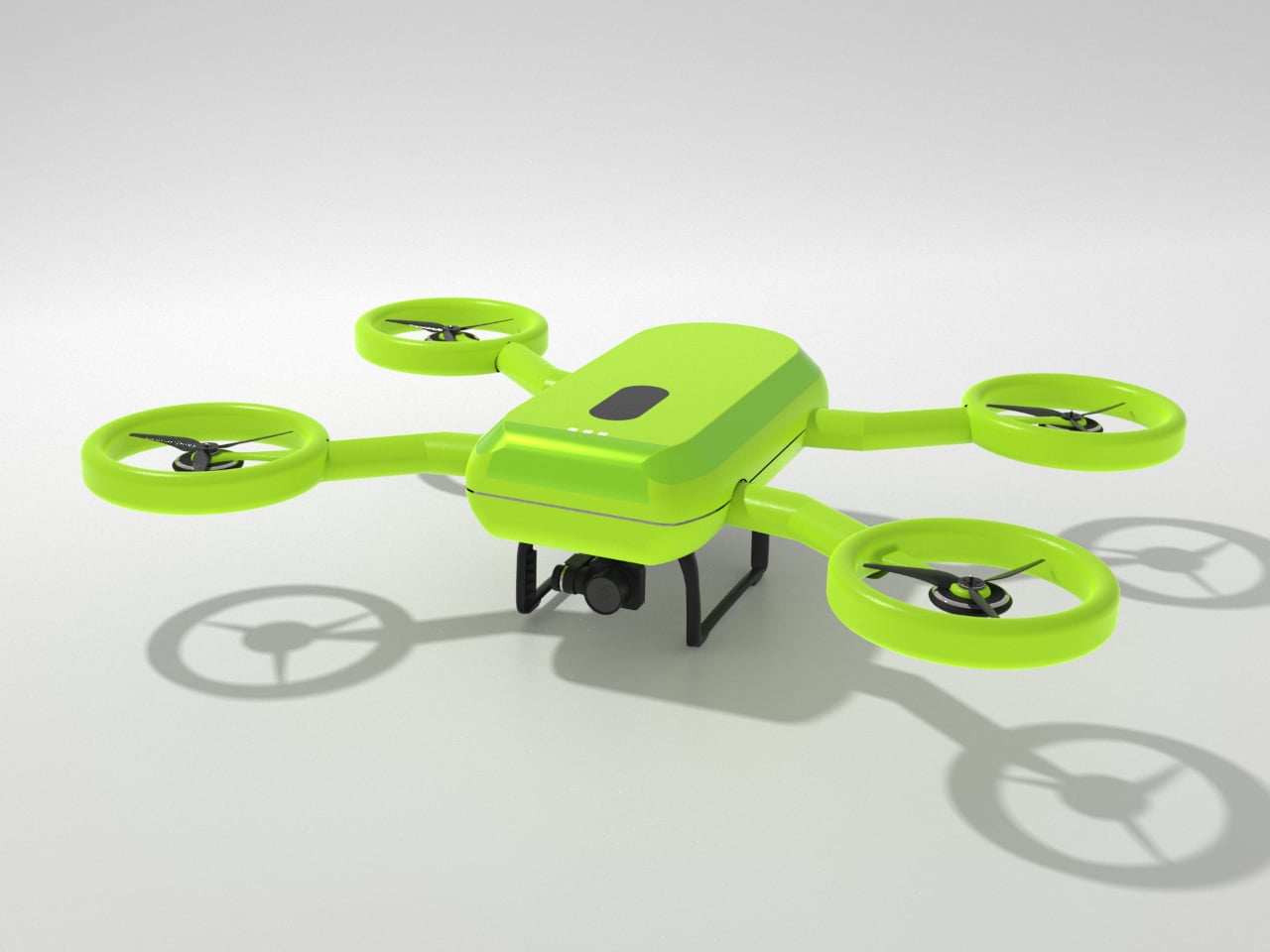
The frog metaphor shows up in the geometry. A central body sits low with four limbs ending in circular rings that fully enclose the propellers. Those rings add protection during low-height play, reducing injury risk and damage when the drone bumps into walls or trees. The rounded guards and soft transitions do the safety work without needing extra cages or add-on bumpers that make everything heavier.
The interaction layer stays simple. A controller holds a phone that shows a live camera view from the drone, focusing on essentials like battery and connection. The physical controls stay familiar and tactile, so kids get the thrill of seeing their surroundings from above while parents can glance at the same feed. Nobody has to decode a cockpit full of tiny icons just to enjoy a short flight.
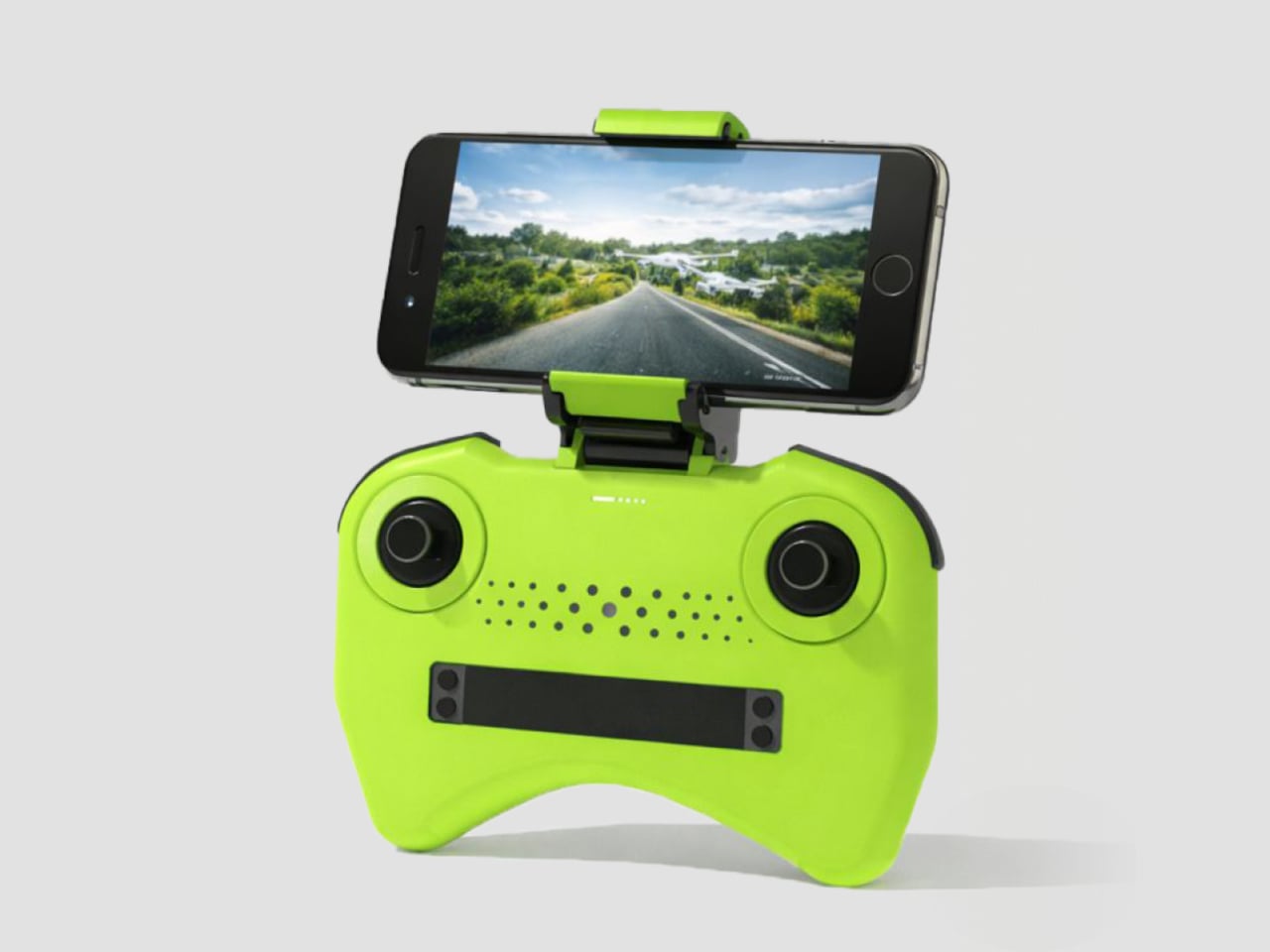
The project is grounded in research with kids, parents, and tech educators, who all flagged fragile builds, complex controls, and unsafe-feeling devices as major turn-offs. Aeroleap responds by keeping functionality simple and robust, focusing on how the product is held and understood at first glance instead of layering on autonomous modes that might confuse more than they help when you’re nine years old.

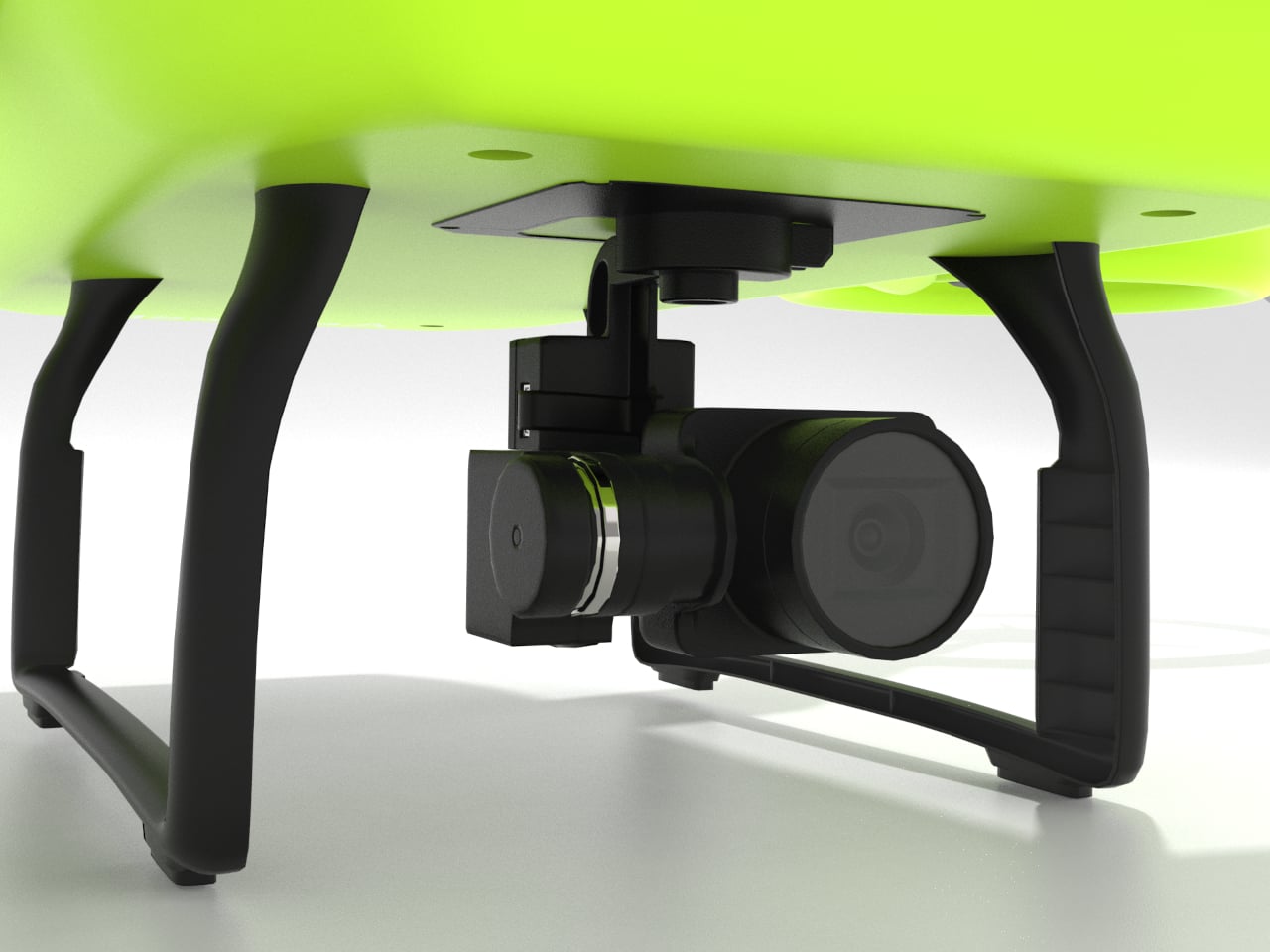
Aeroleap explores how industrial design alone can shape a child’s confidence around new technology. By softening the form, enclosing the dangerous bits, and making the controller feel familiar, it invites kids to be curious about flight without scaring parents off. Sometimes the difference between intimidating and inviting isn’t a feature list but the way an object looks and moves the first time you meet it, and a drone shaped like a friendly frog feels like it’s already smiling before it leaves the ground.


The post This Kid-Safe Drone Looks Like a Frog and Hides Spinning Blades first appeared on Yanko Design.
TikTok US launches a local feed that leverages a user’s exact location

TikTok US just launched a local feed for users to "get the inside scoop on must-try restaurants, shops, museums and events." This is done by leveraging the exact location of people that are using the app and comes after a change in the platform's terms of service that says the app can do just that. The platform's terms of service used to note that it could collect approximate locations, but the sale to US investors looks to have changed that to precise locations.

This is an opt-in feature, despite the app potentially collecting this data whether the feed is activated or not. The feed is set to "off" by default, but can be changed via a trip to settings.

The local feed doesn't show your neighbors or people you might vibe with to help solve that pesky loneliness epidemic. Instead, it prioritizes local businesses and will highlight nearby events, shopping suggestions and restaurants to try.

The feed.
TikTok

This looks to be part of a broader push to attract small businesses to the app, both as content producers and as advertisers. As TechCrunch notes, this could also help insulate the company from future regulation and increased scrutiny, as it could point to the many small businesses that rely on its services. 

TikTok states that over 7.5 million businesses use the platform in the US to reach customers. However, this data is sourced from an Oxford Economics report from before a group of investors finalized a deal for the US version of the app.

Supporting local businesses is a noble goal, but users will have to consider whether or not the value of a dedicated feed is worth the privacy risk. Oracle is a prominent investor in the new American TikTok, and company founder Larry Ellison once said "citizens will be on their best behavior" when they are being constantly surveilled.

This local feed isn't exactly a new idea. TikTok has been trying something similar in Europe since the tail-end of last year. It has shown up in the UK, France, Italy and Germany.

This article originally appeared on Engadget at https://www.engadget.com/big-tech/tiktok-us-launches-a-local-feed-that-leverages-a-users-exact-location-170651916.html?src=rss

Netflix is reportedly filming the Stranger Things Broadway show this week

Though the original series is very much done, Netflix is going to squeeze as much juice out of Stranger Things as it can. The company is said to be filming the Broadway production of Stranger Things: The First Shadow so it can offer up a recording on its streaming service.

Several public performances were canceled this week to accommodate filming, according to The Hollywood Reporter. They'll recommence on February 15. Filming is taking place before the original Broadway cast leaves the production next month. 

Stranger Things: The First Shadow opened in New York City last year after debuting in London in 2023. It’s been a critical and commercial success, and it has won multiple Tony Awards. The play is a canonical prequel to Stranger Things and it fills in more of the backstory of Henry Creel, who becomes Vecna. The show's final season digs into his past too.

Netflix hasn't indicated when it will start streaming a recording of the play. This was inevitably going to happen at some point, though. Netflix has been busy expanding the Stranger Things universe with spin-off shows, such as the animated series Stranger Things: Tales From ‘85 (which will start streaming on April 23). A documentary that shows how Stranger Things: The First Shadow came together hit the streaming service last year.

This article originally appeared on Engadget at https://www.engadget.com/entertainment/tv-movies/netflix-is-reportedly-filming-the-stranger-things-broadway-show-this-week-165243046.html?src=rss

This Japanese House Hides From the Street, Opens to the Sea

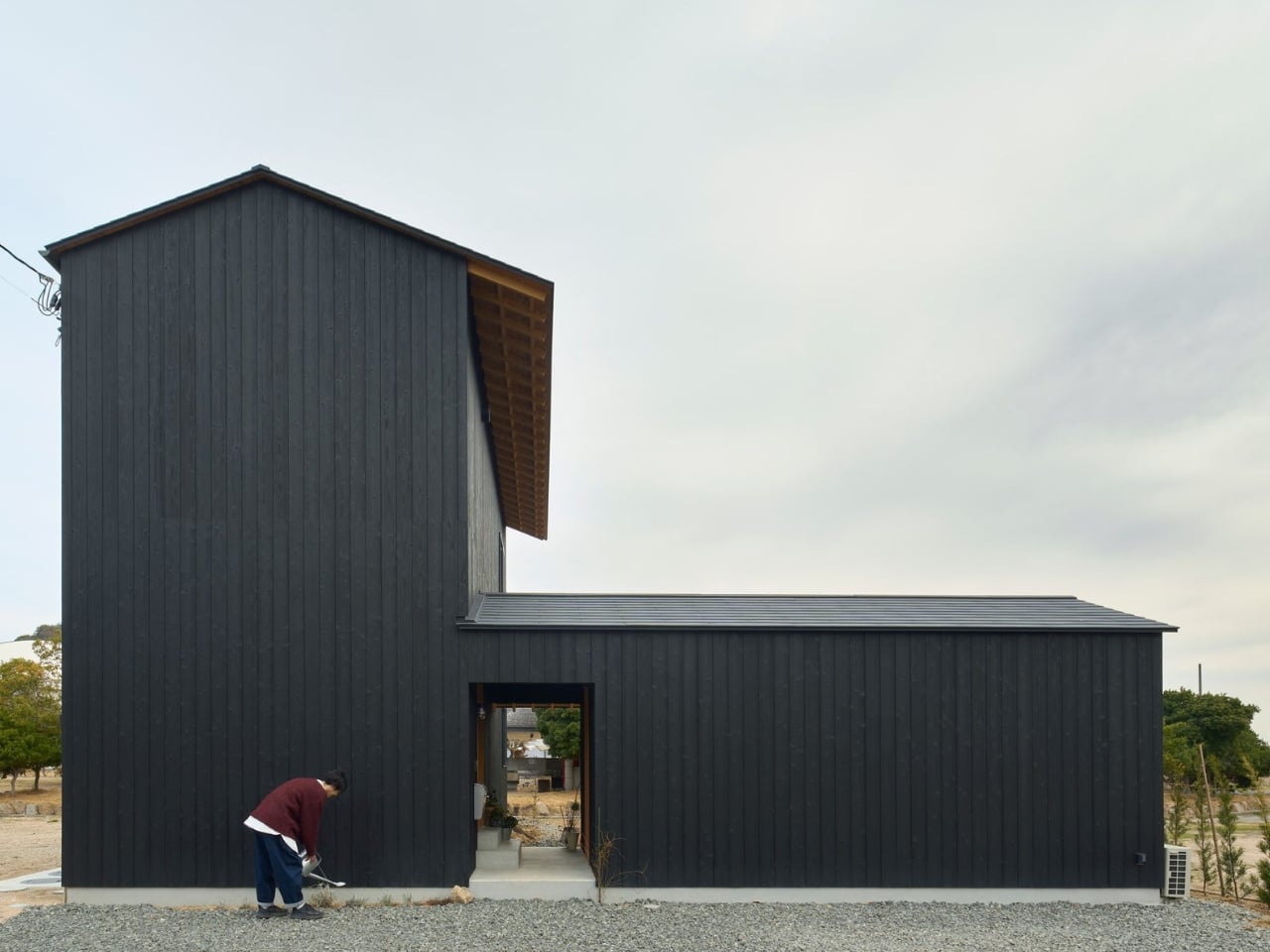
Sometimes the best architecture knows when to turn away. UK studio Denizen Works just completed their first project in Japan, and it does exactly that. The House in Onomichi presents an almost entirely blank facade to the street, creating what founder Murray Kerr calls an “enigmatic quality.” But this isn’t architecture being rude. It’s architecture understanding that privacy can be the ultimate luxury.

The clients are a couple who spent years living in London before deciding to return to Japan for a quieter life. What they wanted wasn’t just a house but a private sanctuary, and Denizen Works delivered by looking backward and forward at the same time. The design references traditional Japanese residential arrangements while feeling completely contemporary, which is the sweet spot where the best cultural translations happen.

Designer: Denizen Works

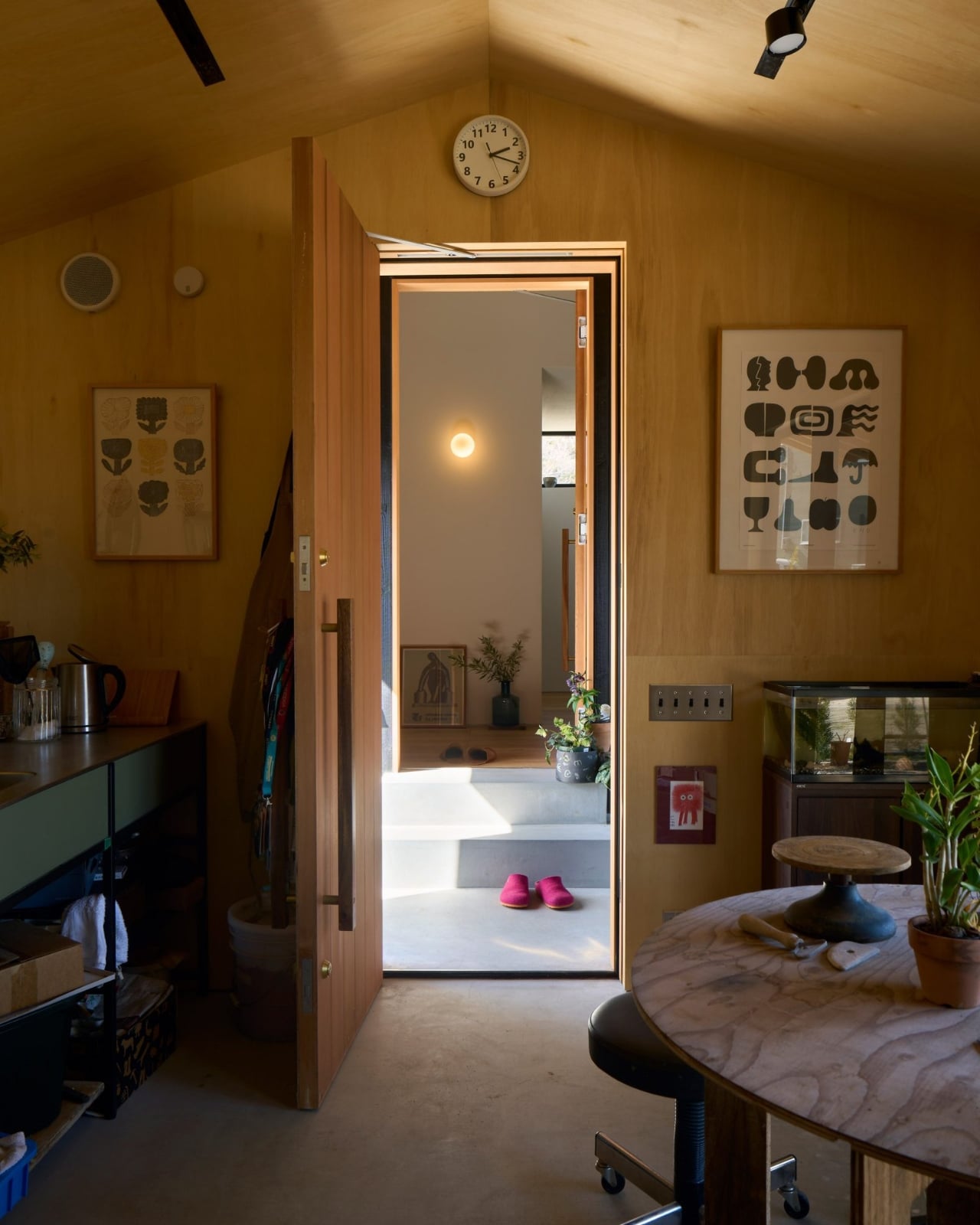
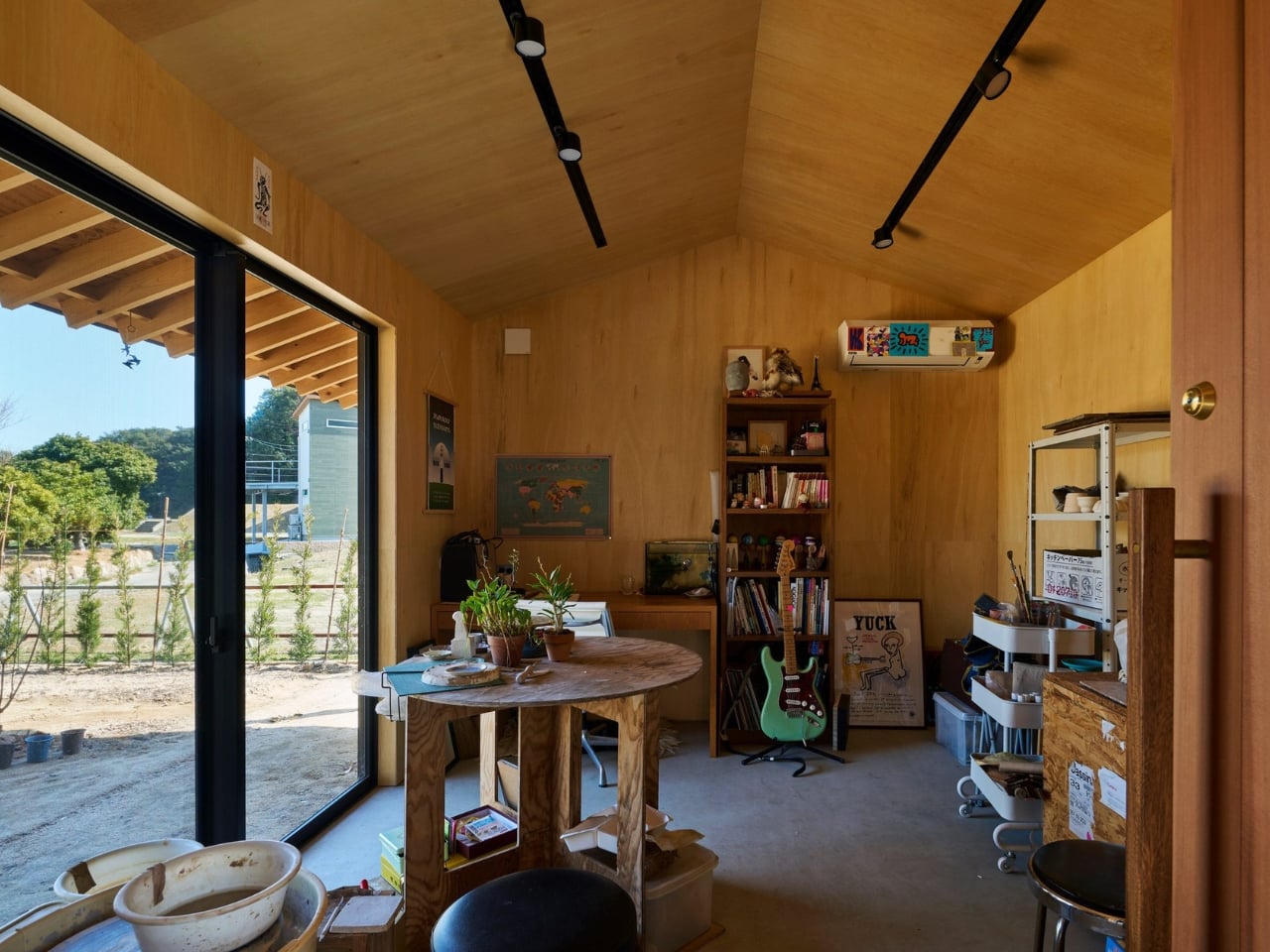
The house is split into two distinct structures connected by a covered entrance walkway. There’s a two-storey main house containing a single bedroom, and a single-storey studio that extends from it, partially enclosing a small garden. This arrangement follows the traditional Japanese concept of Omoya and Hanare, which translates roughly to main house and annexe. In this case, the separation creates a clear division between living and working, which anyone who has tried to work from home during the past few years knows is absolutely essential for sanity.

The real star of the show is the cladding. Both structures are wrapped in vertical burnt-timber Yakisugi, a traditional Japanese technique that involves charring wood to preserve it. The result is a deep black finish that’s both protective and beautiful. Yakisugi has been having a moment in contemporary architecture, but here it feels completely appropriate rather than trendy. The technique originated in Japan centuries ago, and using it for a house in Onomichi creates a visual conversation between old and new.

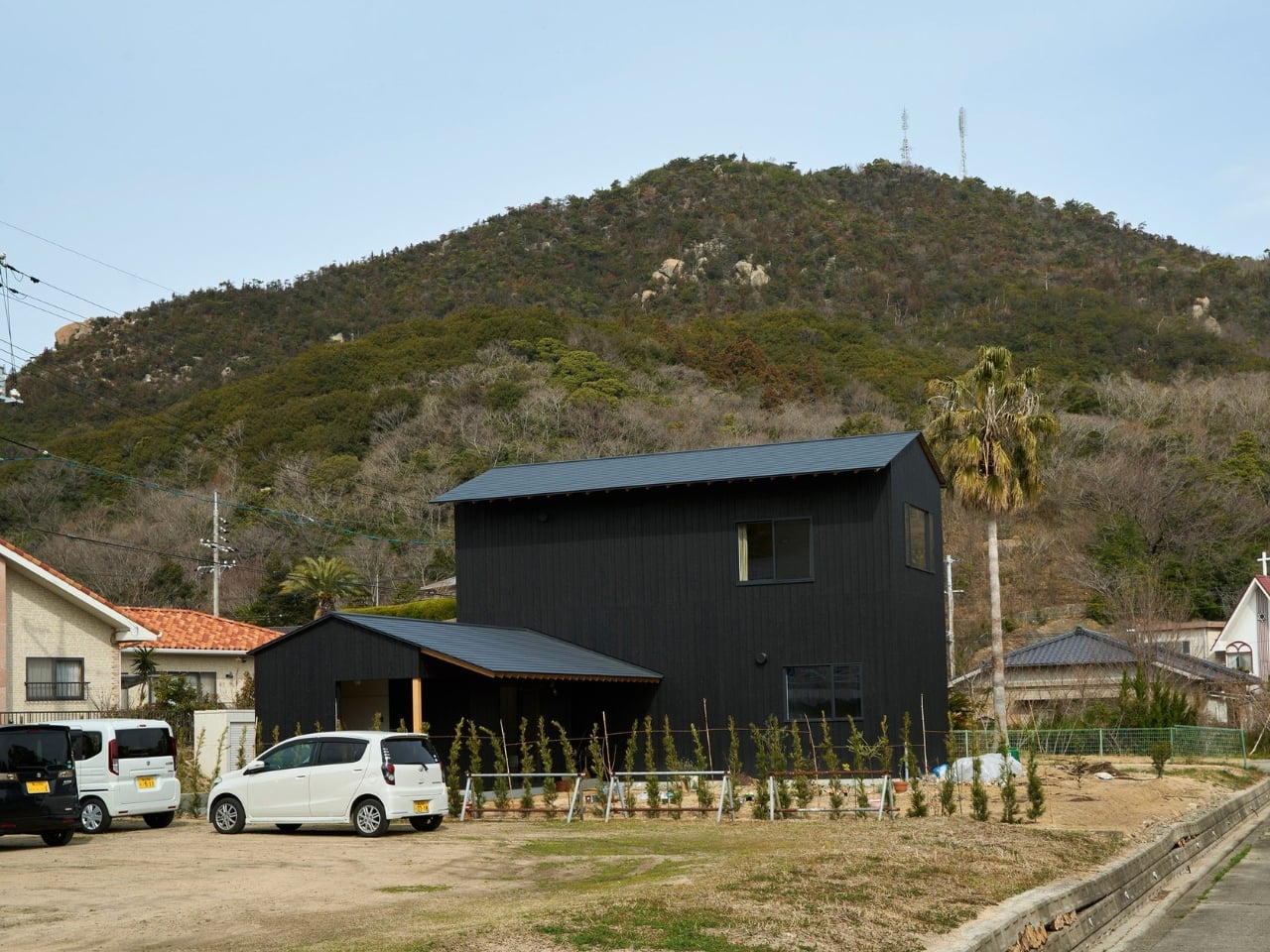
What makes this project particularly interesting is how it handles the relationship between inside and outside. The street-facing side might be closed off, but the other side opens up completely to capture views of the Setonaikai islands. It’s a classic move in Japanese architecture, this idea of creating a private world within a public context. The garden, small as it might be, becomes a buffer zone that allows the interior to breathe without sacrificing the sense of enclosure.

The collaboration aspect deserves attention too. Denizen Works worked with Tokyo-based Take Architects on the project, and you can see how that partnership allowed a UK studio to navigate the complexities of building in Japan while still maintaining their design vision. Cross-cultural architectural collaborations can sometimes feel like compromise stacked on compromise, but this one seems to have found genuine synthesis.

For a practice known for their thoughtful residential work in the UK, this first Japanese project shows that good architecture can translate across cultures when it’s rooted in understanding rather than imposition. The clients wanted calm, privacy, and a connection to place. They got a house that uses traditional materials and spatial concepts but doesn’t feel like it’s playing dress-up. The burnt timber will weather and age, the garden will grow in, and the whole thing will settle into its context over time.

There’s something appealing about architecture that doesn’t shout. In an era where so much residential design seems desperate for Instagram likes, a house that presents a closed face to the street and saves its drama for private moments feels almost radical. The blank facade isn’t about being mysterious for the sake of it. It’s about creating the conditions for a specific kind of life, one where the views of the Setonaikai islands matter more than the views from the street.

This is Denizen Works understanding that when clients say they want calm, they mean it. And sometimes the best way to achieve that is to build a beautiful wall and focus all the energy on what happens behind it.

The post This Japanese House Hides From the Street, Opens to the Sea first appeared on Yanko Design.

Samsung Galaxy S26 Ultra Leaks: Inside the New ‘Privacy Display’ and 16GB RAM Upgrades Coming Feb. 25

Samsung Galaxy S26 Ultra Leaks: Inside the New ‘Privacy Display’ and 16GB RAM Upgrades Coming Feb. 25 Samsung Galaxy S26 Ultra showcasing its elegant two-tone design

The Samsung Galaxy S26 Ultra represents a significant step forward in the evolution of flagship smartphones, combining advanced technology, refined aesthetics, and practical enhancements. By building on the strengths of its predecessor, the S26 Ultra introduces subtle yet impactful updates that improve usability, performance, and design. The video below from TechTalkTV provides more insights into […]

The post Samsung Galaxy S26 Ultra Leaks: Inside the New ‘Privacy Display’ and 16GB RAM Upgrades Coming Feb. 25 appeared first on Geeky Gadgets.

Posted in Uncategorized

Uber Eats’ new Cart Assistant feature is an AI hack for your grocery shopping

If there’s any area of your life that you might be willing to introduce more AI into, it’s likely something as mundane as grocery shopping. That’s what Uber is betting on with its new AI-powered feature in the Uber Eats app.

Cart Assistant lets you "build grocery baskets faster and with less effort" by using AI to automatically fill your basket with items included on your shopping list. To use it, you search for a supported grocery store on the home screen of the app and tap the new Cart Assistant icon that appears at the top of the screen.

From there, you can either manually type out a shopping list or upload a photo of a handwritten one, and Cart Assistant will fetch your requested items and add them to your basket. A screenshot of ingredients needed for a recipe will also suffice.

Uber says its AI assistant will factor in availability before selecting an item and will also display prices and any available promotions. If you don’t want something it recommends, you can delete or swap it for something else. Anything you forgot to add in the original list can be added later, and if you’ve purchased something in the past, these familiar items will be prioritized so you’re less likely to need to make changes. Uber advises users that the new shopping feature is in beta right now, so might not perform perfectly. 

Cart Assistant is the latest development in the gradual AI-ification of Uber Eats. Last summer, Uber added a suite of new features to the app, including AI-enhanced food images, AI menu descriptions and AI summaries or restaurant reviews.

This article originally appeared on Engadget at https://www.engadget.com/ai/uber-eats-new-cart-assistant-feature-is-an-ai-hack-for-your-grocery-shopping-145733478.html?src=rss

This Concept Fixes the Logitech Litra Glow’s Biggest Problems

Logitech’s Litra Glow sits on top of monitors as a small plastic square with no case, no real protection, and controls you reach over your screen to adjust. Creators toss them into backpacks wrapped in T‑shirts, or bolt them to third‑party arms that make the whole setup bulkier and less portable than the light intended. It works well enough at a desk, but it travels poorly and feels awkward the moment you move it.

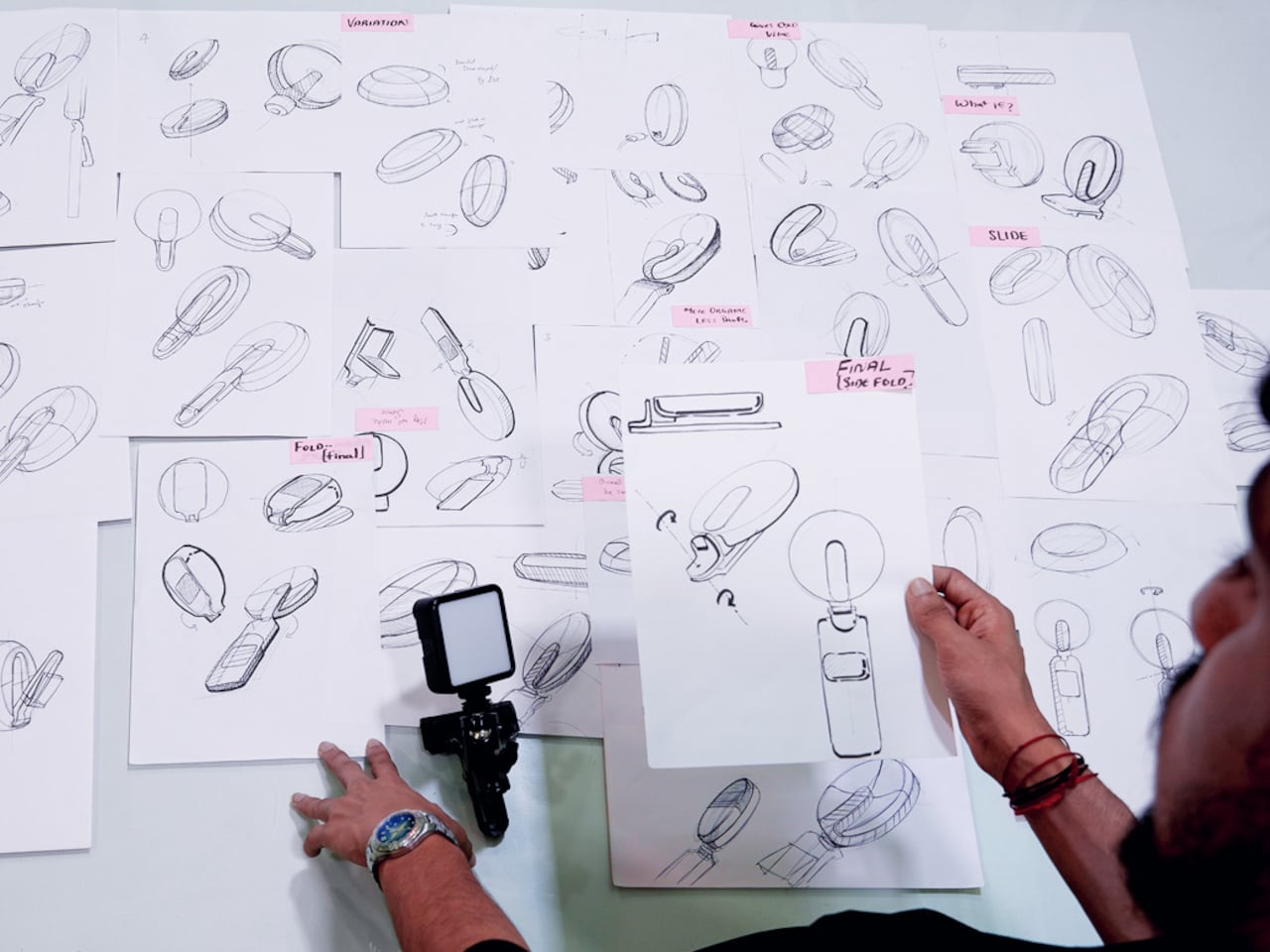
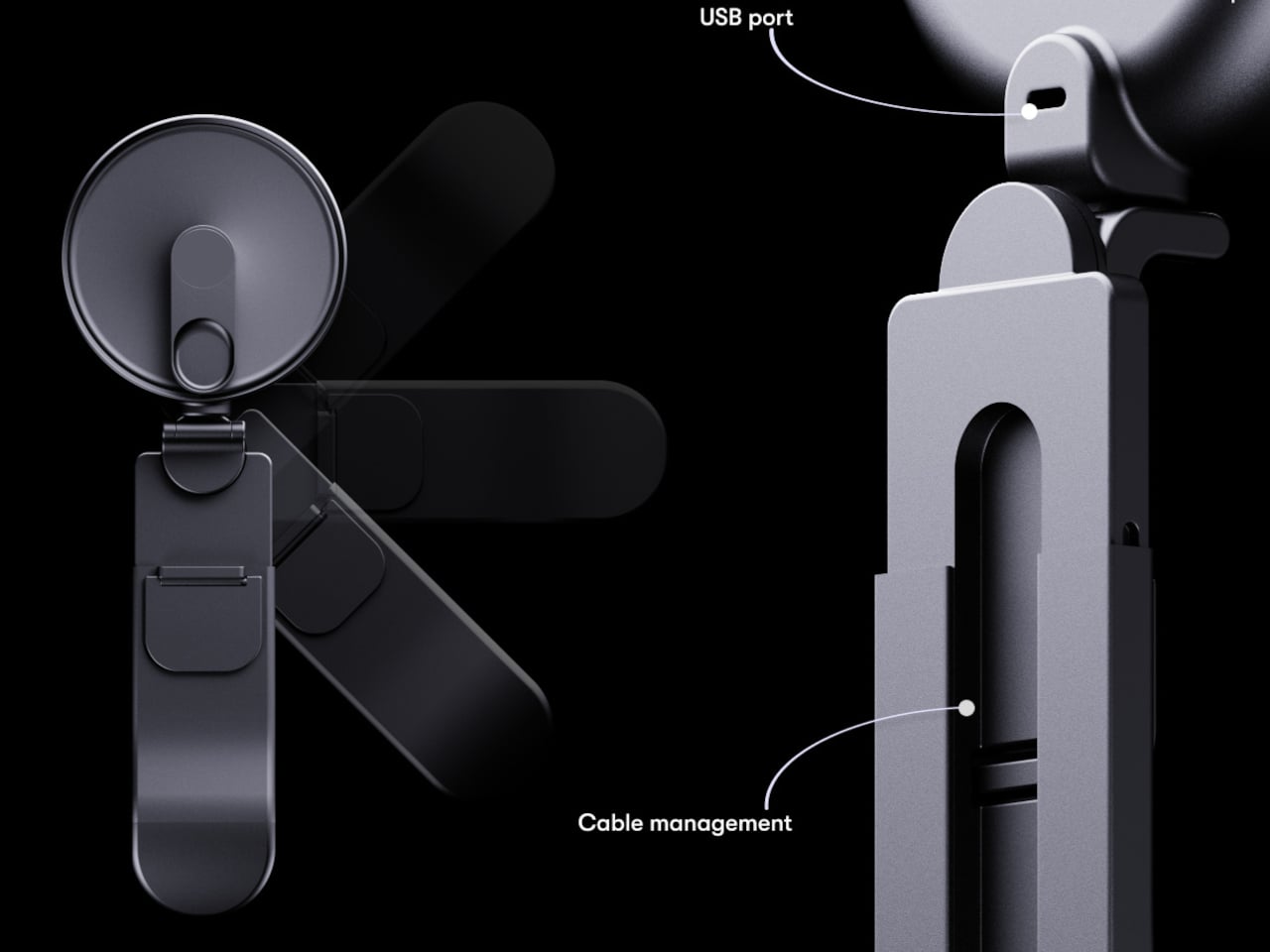
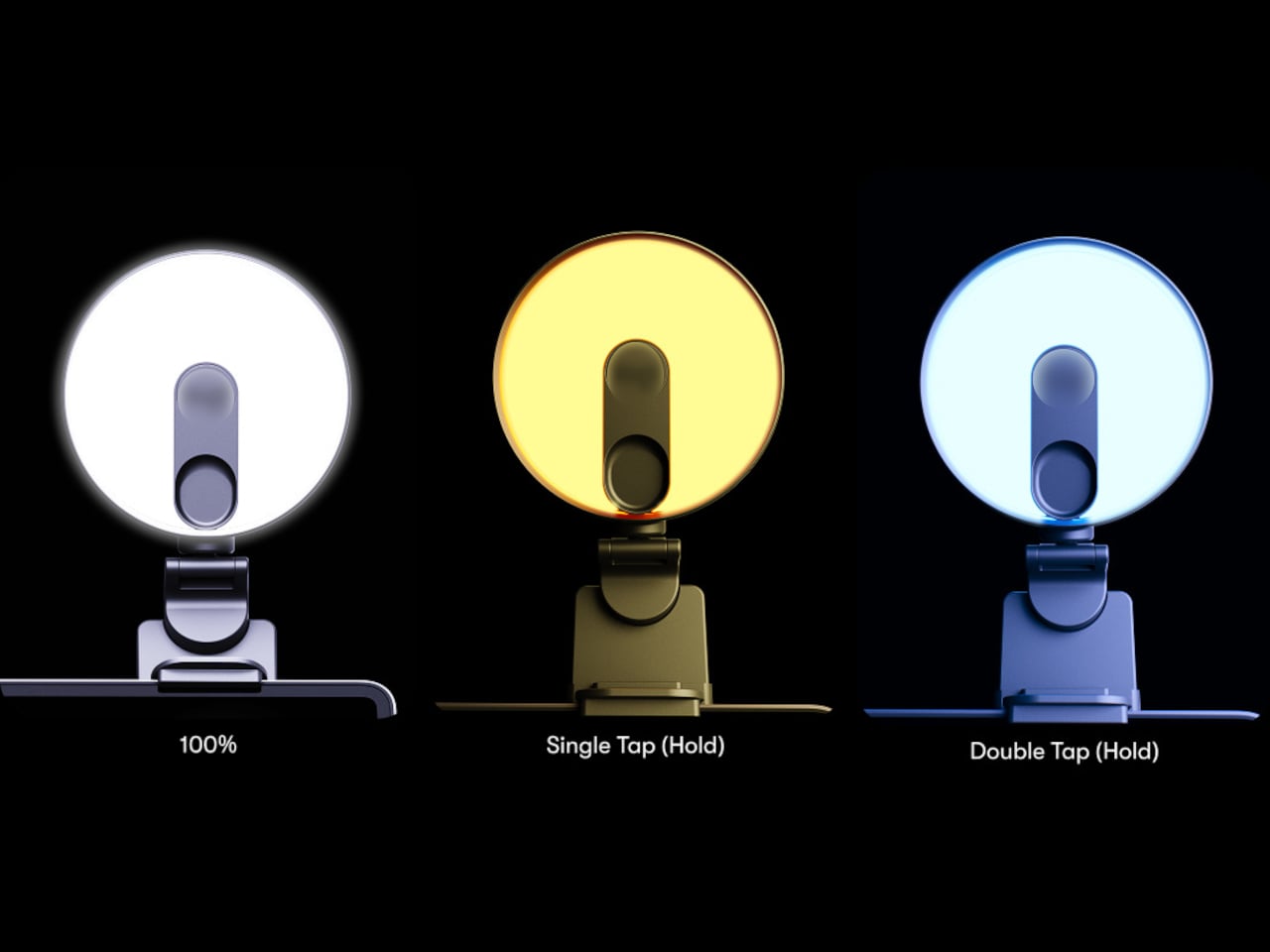
Athul Krishnav’s Logitech Litraglow concept asks what a more travel‑friendly, ergonomically sane version could look like. The student project keeps the idea of a compact, soft light for creators but turns it into a circular head on an integrated clamp and handle, with built‑in rotation, tilt, and protection. It behaves more like a proper tool than a naked accessory needing extra hardware just to stay safe in transit.

Designer: Athul Krishnav

Picture a streamer packing a bag for a trip, sliding the circular Litraglow into a sleeve without worrying about scratching the diffuser or snapping the mount. At the destination, they clamp it to a laptop lid, shelf, or tripod, rotate the head to frame their face, and tilt it precisely without wrestling with a separate arm or stand that adds weight and friction to every adjustment.

The concept builds 360‑degree rotation and smooth tilt into the head and stem, so you can swing the light from one angle to another mid‑call or mid‑shoot without loosening knobs or repositioning the whole clamp. It’s the difference between nudging a spotlight with your fingers and re‑rigging a mini studio every time you change posture or move your camera, which happens more often once you start shooting anywhere other than a fixed desk.

The rotary control dial at the base of the head has simple icons for off, low, and higher brightness, plus tap‑and‑hold gestures for color temperature. You can reach up, feel one control, and know what it’ll do without hunting for tiny buttons on the back. In the middle of a live session, that low cognitive load matters more than a long feature list nobody remembers under pressure.

Of course, the circular head, soft edges, and subtle “logi” branding pull from Logitech’s existing design language, so the light looks at home next to MX mice and keyboards instead of like a random third‑party gadget. Neutral color options keep it from stealing focus on camera, and the integrated clamp and handle mean you aren’t adding another mismatched piece of hardware to an already crowded desk or backpack.

The Litraglow concept doesn’t reinvent lighting but just fixes the small, annoying things around it: the lack of a case, an awkward reach, and clumsy mounts. For creators who live out of backpacks and shoot in whatever corner they can find, a light that travels safely, clamps cleanly, and adjusts with one hand is the kind of quiet upgrade that makes more difference than another spec bump or lumen count increase.

The post This Concept Fixes the Logitech Litra Glow’s Biggest Problems first appeared on Yanko Design.

DIY $60 Quadruped Robot : Build a Custom Walker That Actually Feels Alive

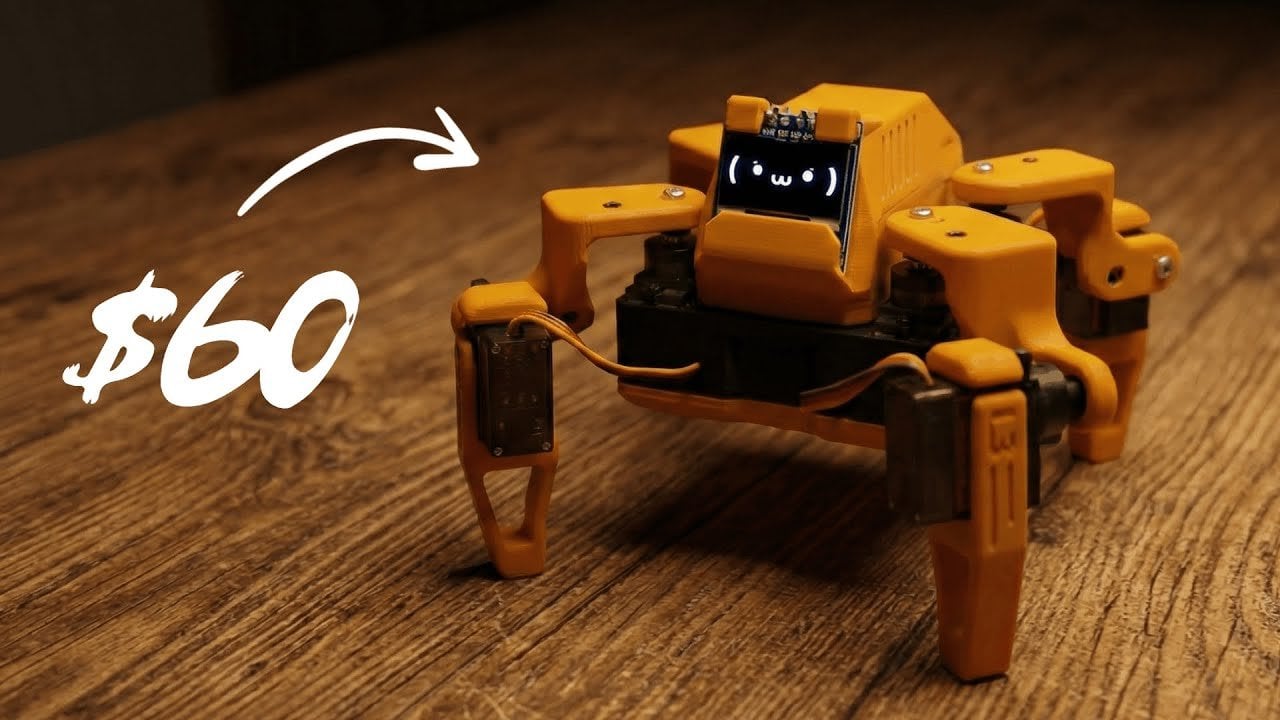
DIY $60 Quadruped Robot : Build a Custom Walker That Actually Feels Alive Close view of the ESP32 S2 Mini board inside the chassis, wired to eight micro servos for movement.

Have you ever dreamed of building your own walking robot but felt overwhelmed by the complexity or cost? Dorian Todd explores how the Sesame Project makes robotics more accessible than ever, offering a step-by-step approach to creating a tiny, four-legged robot from scratch. With just $50–$60 and some basic materials, you can bring this expressive, […]

The post DIY $60 Quadruped Robot : Build a Custom Walker That Actually Feels Alive appeared first on Geeky Gadgets.

Posted in Uncategorized

iPhone Fold Leaks: How Apple Squeezed a Massive 5,500mAh Battery Into Its Thinnest Design Ever

iPhone Fold Leaks: How Apple Squeezed a Massive 5,500mAh Battery Into Its Thinnest Design Ever Foldable iPhone showcasing advanced battery life and innovation

Apple is reportedly preparing to launch its first foldable iPhone, a development that could significantly influence the foldable smartphone market. Leaks and industry speculation suggest the company is working to address persistent challenges in foldable technology, such as battery life, durability, and usability. By focusing on these critical areas, Apple may set a new benchmark, […]

The post iPhone Fold Leaks: How Apple Squeezed a Massive 5,500mAh Battery Into Its Thinnest Design Ever appeared first on Geeky Gadgets.

Posted in Uncategorized

Pokemon Pokopia is so damn cozy

Pokémon Pokopia can be described as a pocket monster-themed take on Animal Crossing with a hint of Stardew Valley thrown in for good measure. And if you're like me, that alone is probably enough to sell you on the game. However, after getting a chance to play a preview of it for around half an hour, it became immediately clear that the game's coziness levels are off the charts, but it also offers some fun twists on the genre.

Co-developed by The Pokémon Company, GAME FREAK and KOEI TECMO, instead of playing as a generic trainer, you take control of a lonely Ditto who wakes up in a cave only to be greeted by Professor Tangrowth, the last surviving inhabitant of what used to be a bustling town. While the professor might look like an extra-large version of the original pokémon with glasses, its role is to guide you as you rebuild and hopefully repopulate the surrounding area.

One of the best things about Pokopia is actually being able to talk to the other 'mons.
Nintendo

As a Ditto, you naturally have the ability to transform into other Pokémon, though the process is sort of incomplete, meaning you can only learn one skill from the monsters you befriend instead of their entire moveset like in the mainline games. This is where the first twist on the traditional life sim comes in. Instead of crafting them or earning money to buy tools, you can transform into other Pokémon (like Lapras or Dragonite) to use their abilities to traverse obstacles or shape the world around you. For example, turning into a Squirtle lets you shoot a water gun that will revitalize dry patches or thirsty plants, while transforming into a Scyther lets you slice through objects similar to the HM Cut. 

From there, you can use these skills to do things like create clusters of shrubs that will serve as homes for other Pokémon, allowing you to entice fellow creatures to return to the once desolate landscape. Another twist I really appreciate is that after appearing, new monsters will give you quests or just hang out. They will even talk and respond, and I don't mean like the 8-bit cries from other Pokémon games. They speak in full sentences, which is a wonderful departure from previous titles that really gives you the feeling that you're making friends and rebuilding a community instead of just being on a crusade to catch them all. 

The Stardew Valley part of the equation comes into play after you leave the first tutorial area and you come upon an abandoned Pokémon Center that's in dire need of a renovation. You can do things like collect materials and do more quests to clean up the area to eventually turn the building in the heart of the town. Unfortunately, that's where my preview ended, aside from quickly hopping into a multiplayer session where I was able to see a much more developed village, complete with multiple buildings, roads and benches. You know, all the sorts of things you used to furnish and decorate your island with in Animal Crossing. 

This gave me a nice glimpse at just how many things you can build in Pokopia and how easy it is to visit other people's towns. However, it didn't answer some of my bigger questions about the game, like what's the deal with Peakychu and Mosslax, whom we've seen before in previous trailers. Are they just one-off versions of existing ‘mons with unusual typings (i.e. ghost and grass) only for this game, or are they going to be a bigger part of the Pokémon world going forward? Perhaps more importantly, it was hard to tell if there will be any sort of PVE content like The Mines or Skull Cavern in Stardew Valley. I'm really hoping there is because it seems like Ditto's abilities could translate quite seamlessly to spelunking or battling your way through dungeons in search of rare items or building materials. 

I love how derpy Ditto looks when it transforms into other Pokémon.
Nintendo

That said, just being able to build a community of friendly monsters while injecting life back into a forgotten town has good vibes radiating from every corner. So if you need a super cozy game to keep you busy this winter/spring, Pokémon Pokopia is shaping up to be the digital version of a fluffy blanket and a cup of hot chocolate filled to the brim with all of your favorite 'mons. 

Pokémon Pokopia is available for pre-order now, with official sales slated for March 5.

This article originally appeared on Engadget at https://www.engadget.com/gaming/nintendo/pokemon-pokopia-is-so-damn-cozy-140000954.html?src=rss