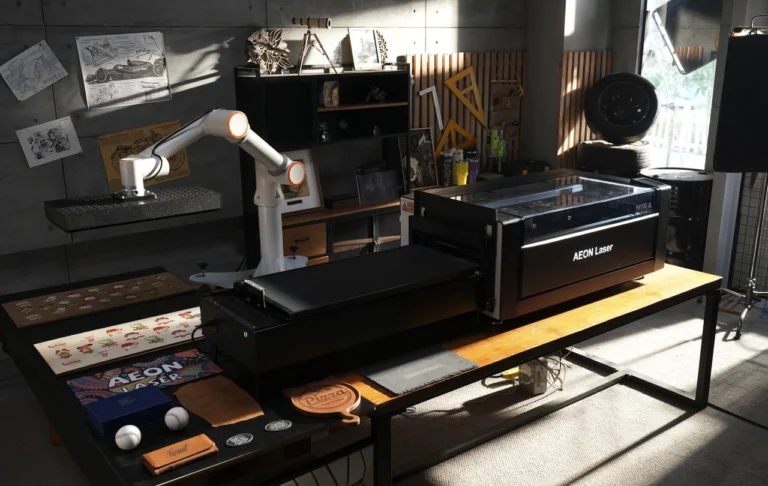
The AEON MIRA X Series is making an impressive impact on Kickstarter, attracting significant backing from makers, creative professionals, and businesses looking for powerful laser cutting and engraving technology. The crowdfunding campaign has already surpassed its original $30,000 funding target by a substantial margin, demonstrating strong early interest in AEON Laser’s latest generation of high-performance […]
Measure twice, cut once is solid advice that skips a few steps. Somewhere between the measuring and the cutting you also need a pencil, a square, a knife, and usually a level, and they are never in the same place. Every maker knows the shuffle of patting down pockets for a stub of graphite. It is the least glamorous part of any project, and nobody has bothered to design around it. MakerPi did.
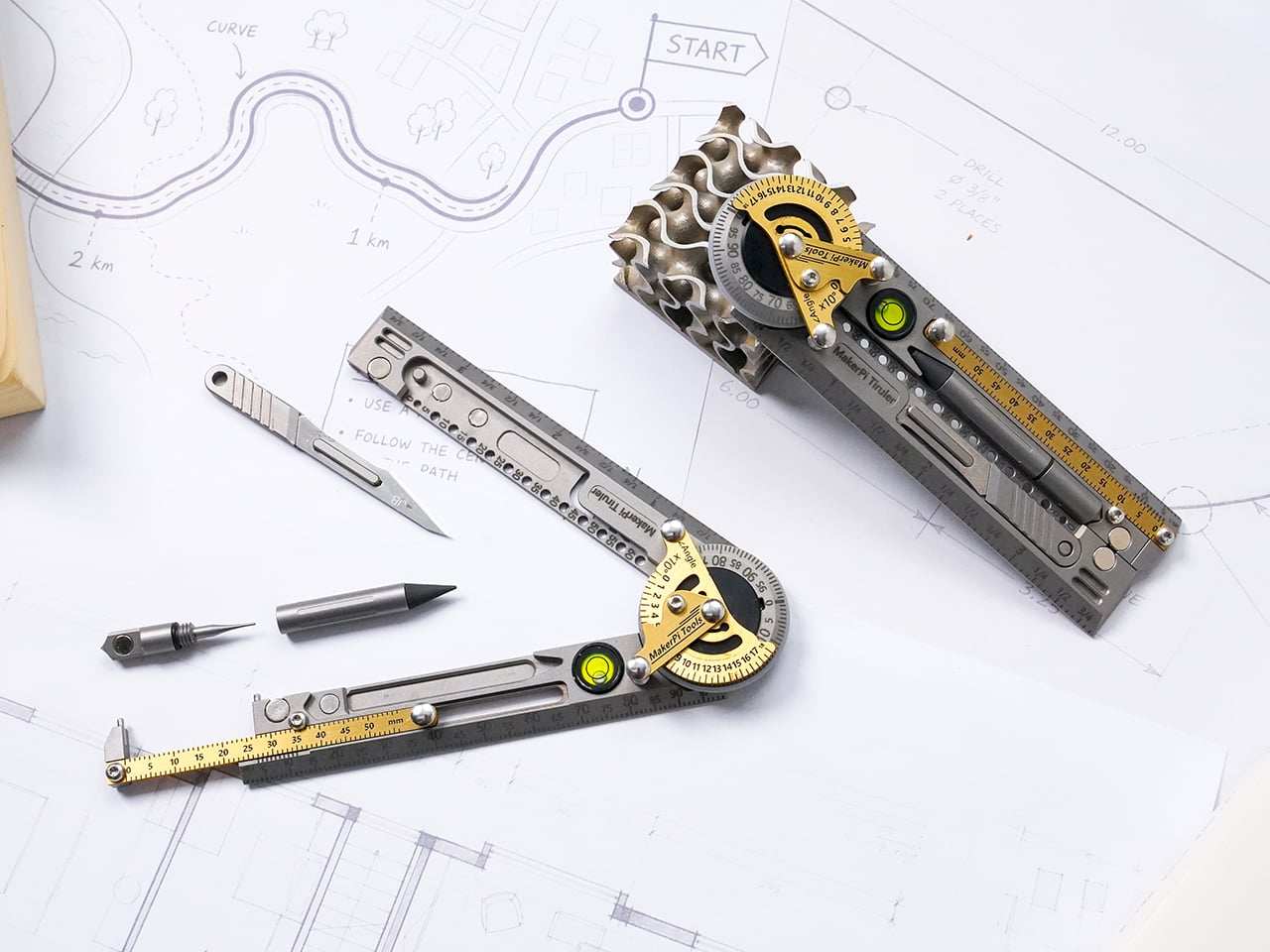
The Tiruler 2.0 is a folding ruler from MakerPi in Hong Kong, built from Grade 5 titanium and brass. Its two 3.94-inch (10 cm) arms carry a magnetic pencil, a magnetic knife, a pocket caliper, a curve-measuring wheel, and a bubble level. A row of holes along one arm turns it into a compass, which is a party trick I did not expect from a ruler. The hinge also stops at 45, 90, and 180 degrees. All of it comes to 2.2 ounces (63.3 g), a little more than a large egg.
Most of the Tiruler 2.0 is Grade 5 titanium, the Ti-6Al-4V alloy aerospace engineers rely on, shaped into two folding arms. Brass scale plates add the warm gold you see against the gray metal. One arm reads metric and the other reads imperial by default, which ends the mental conversion game. All-metric and all-imperial versions are offered for people who live in one system. Titanium also resists corrosion, so a tool that rides in a pocket or a bag should wear well.
The scale markings are now chemically etched and filled with black ink. The original Tiruler laser-engraved its brass scales, and users found some marks hard to read once grime built up. MakerPi made the change after feedback on that first version. The result is crisp, high-contrast numbers that read well from different angles. It is a technique familiar from instrument dials, and I like seeing it on a pocket tool. A ruler you cannot read is a stick.
Angle stops, a curve wheel, and a caliper that reads to 0.1 mm
The pivot end of the Tiruler 2.0 handles angles and curves. A brass dial measures an angle and lets you draw it directly, with stops at 45, 90, and 180 degrees so common corners click into place. The same end works as a measuring wheel, where one full rotation equals 3.94 inches (100 mm). A click sounds each time the wheel passes zero. For anything longer, you count the clicks and add the current reading, which is old-school arithmetic that works fine on a bottle or a bike frame.
The pocket caliper slides out of an arm and reads down to 0.1 mm using a vernier-style scale. Pierre Vernier published that clever scale back in 1631, and it still works the same way. Outside measurements cover cylinders, bottle caps, rings, and model parts. New this generation are inside measurements, taken with two 1.5 mm pins across a range of 0.12 to 2.17 inches (3 to 55 mm). You add 3 mm to the brass scale reading, so 11 mm becomes 14 mm, a small tax that still beats a trip to the toolbox.
A magnetic pencil that doubles as a compass, plus a blade
The pencil sits in a magnetic slot and pulls out with no latch to fight. Its replaceable everlasting tip is water-resistant and needs no sharpening. Unscrew the top and a fine pin appears, which works as a SIM ejector, a toothpick, a tiny hole punch, or a pick for small parts. That same pin is the pivot for the compass function. Plant it, drop the pencil into one of the holes along the arm, and rotate the ruler around it, with the scale telling you the circle size. I love it when one small part gets two jobs.
The knife lives in its own magnetic slot, backed by an extra retention feature so it stays put when the tool gets shaken or carried around. It accepts standard #11 scalpel blades, so replacements are cheap and easy to find. Paper, cardstock, and tape are the intended targets. MakerPi says plainly that it does not replace a dedicated cutting tool, which I appreciate. Measuring, marking, and slicing along the same edge without setting anything down is the point.
Glow tubes, engraving, and what it costs
A bubble level is built in, handy for installation, positioning, and model making. Two mounting holes take tritium tubes or glass glow tubes, which makes the tool easy to spot in dim light. Tritium glows continuously without charging, while glass tubes charge under UV light and slowly fade. There is also an optional engraving area that takes up to 20 characters, ideal for a name or a mark. A genuine leather case is available as an add-on for protection and storage.
Early pricing for the Tiruler 2.0 starts at $99, against a planned retail price of $148. The default build pairs a metric arm with an imperial arm, and all-metric or all-imperial versions are available. Each unit includes the magnetic pencil and knife, while the leather case, glow tubes, and custom engraving are optional add-ons. MakerPi ships worldwide and import and export taxes are already baked into the price, so US buyers should not face a customs bill. Shipping is expected to begin in March 2027.
Xiaomi is assembling your desk one cheap piece at a time. First came the monitors, from 24-inch office panels to 4K gaming screens. In July, the Mijia Monitor Light Bar 2 arrived to perch on top of them for about $39. Now Redmi, Xiaomi’s budget sub-brand, has launched the piece that holds the whole thing up, a monitor arm with a hidden cable channel for roughly $42. At this rate, a Xiaomi standing desk is probably already sitting in a spreadsheet somewhere.
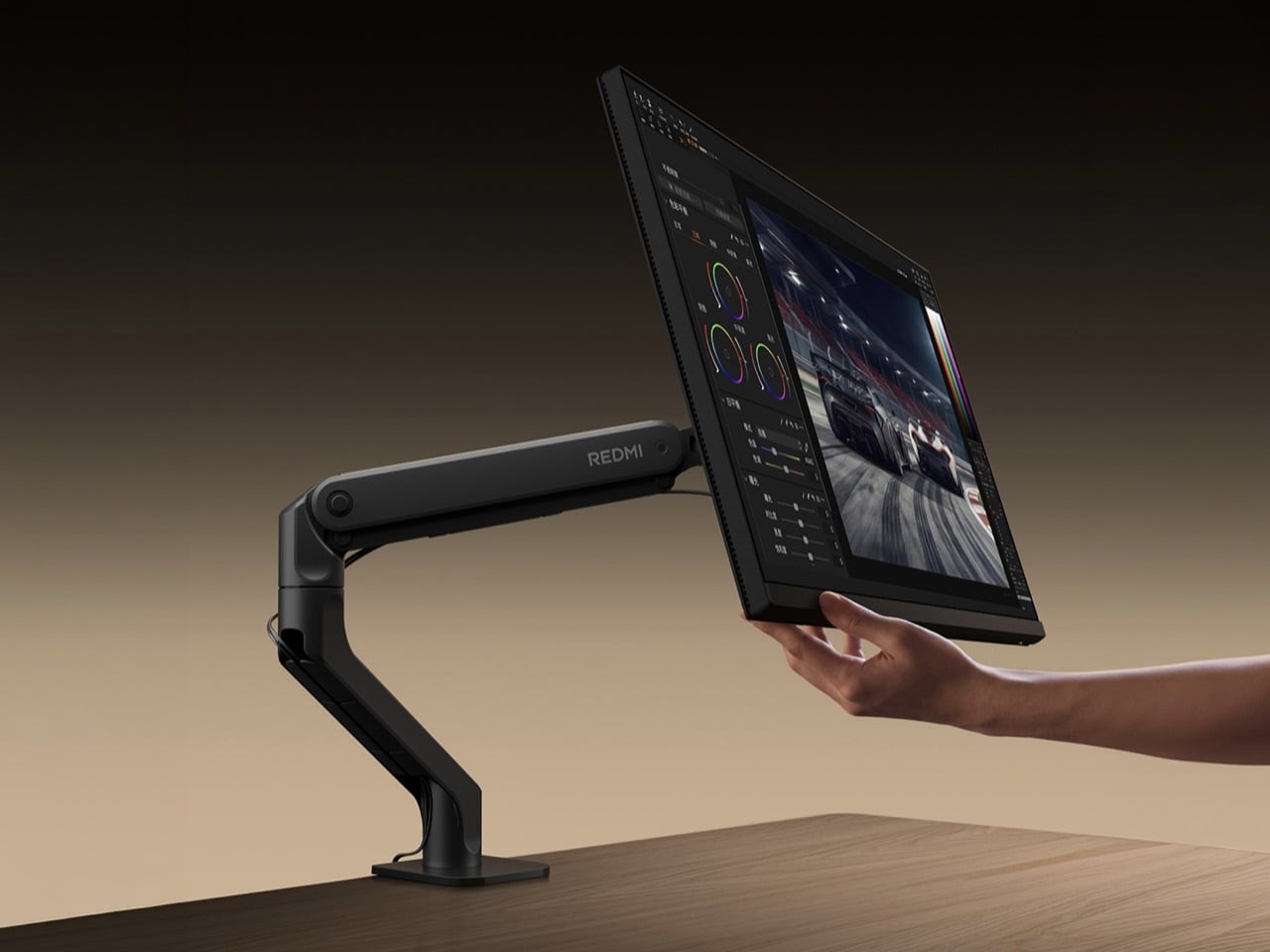
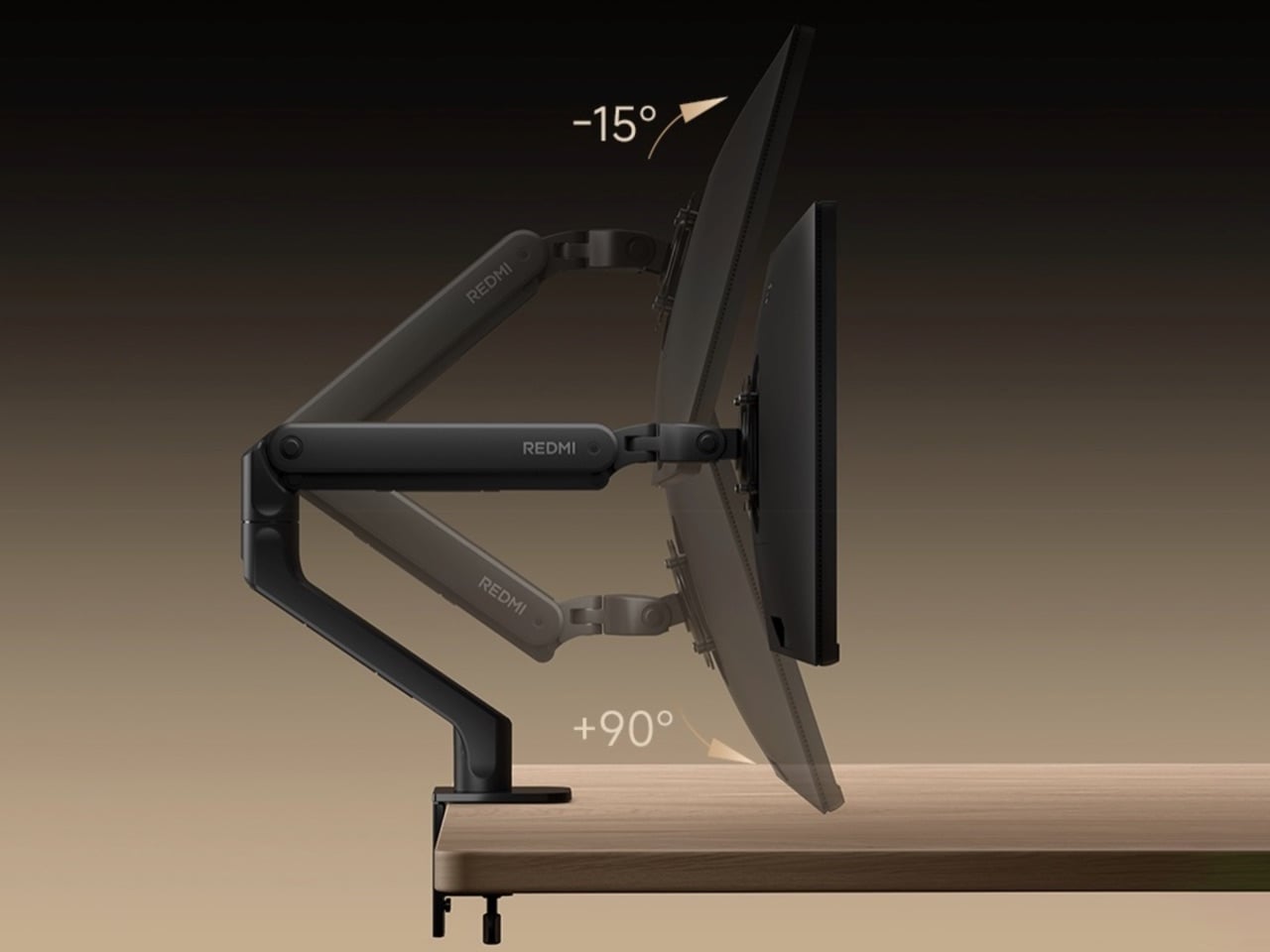
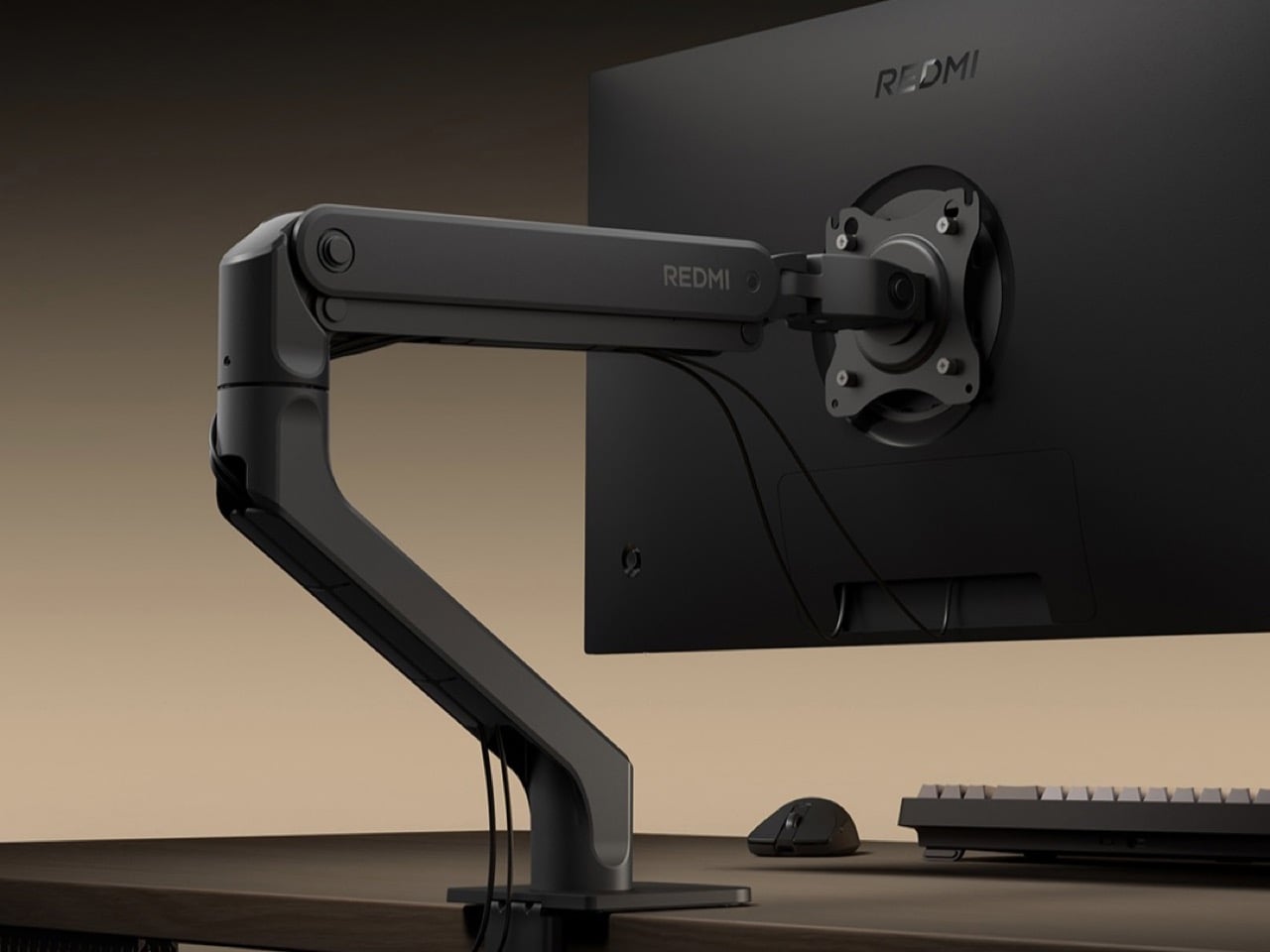
The Redmi Monitor Arm went on sale October 12 on Xiaomi Youpin for ¥299 (about $42), and Xiaomi has not announced a US release. It holds screens up to 34 inches, and the body is 3mm aluminum alloy. Xiaomi’s pitch is that cables tuck inside the arm, so your desk shows a single post. A five-year replacement guarantee comes along for the ride, which is a lot of faith at this price. If you have ever fought a monitor arm and zip ties in the same evening, you can see the appeal.
A load range that starts at 4.2 pounds
Redmi rates the arm for 4.2 to 19.8 pounds (1.9 to 9 kg), and the low end is the interesting part. An arm tuned for a heavy screen will push a light one skyward, so a 1.9 kg floor suits the featherweight office panels Xiaomi itself sells. At the other end, 17173 notes a loaded 34-inch ultrawide lands around 8 kg, so the 9 kg ceiling has room. Anything heavier, or anything past 34 inches, needs a different arm. Check your panel’s spec sheet before you click buy.
The lift comes from a dual-spring design, with springs on both sides firing together so the force stays even through the whole 11.8 inches (30 cm) of height travel. Xiaomi says it survived 30,000 test cycles. Chinese outlet Kuai Keji worked that out to about 20 years of use at four adjustments a day, which is a lot of standing up and sitting down. The listing cites a Chinese utility model patent, a lighter registration than a full invention patent. Redmi adds a separate tilt-force adjustment at the VESA head to go after screen sag
Cable routing that hides the mess, mostly
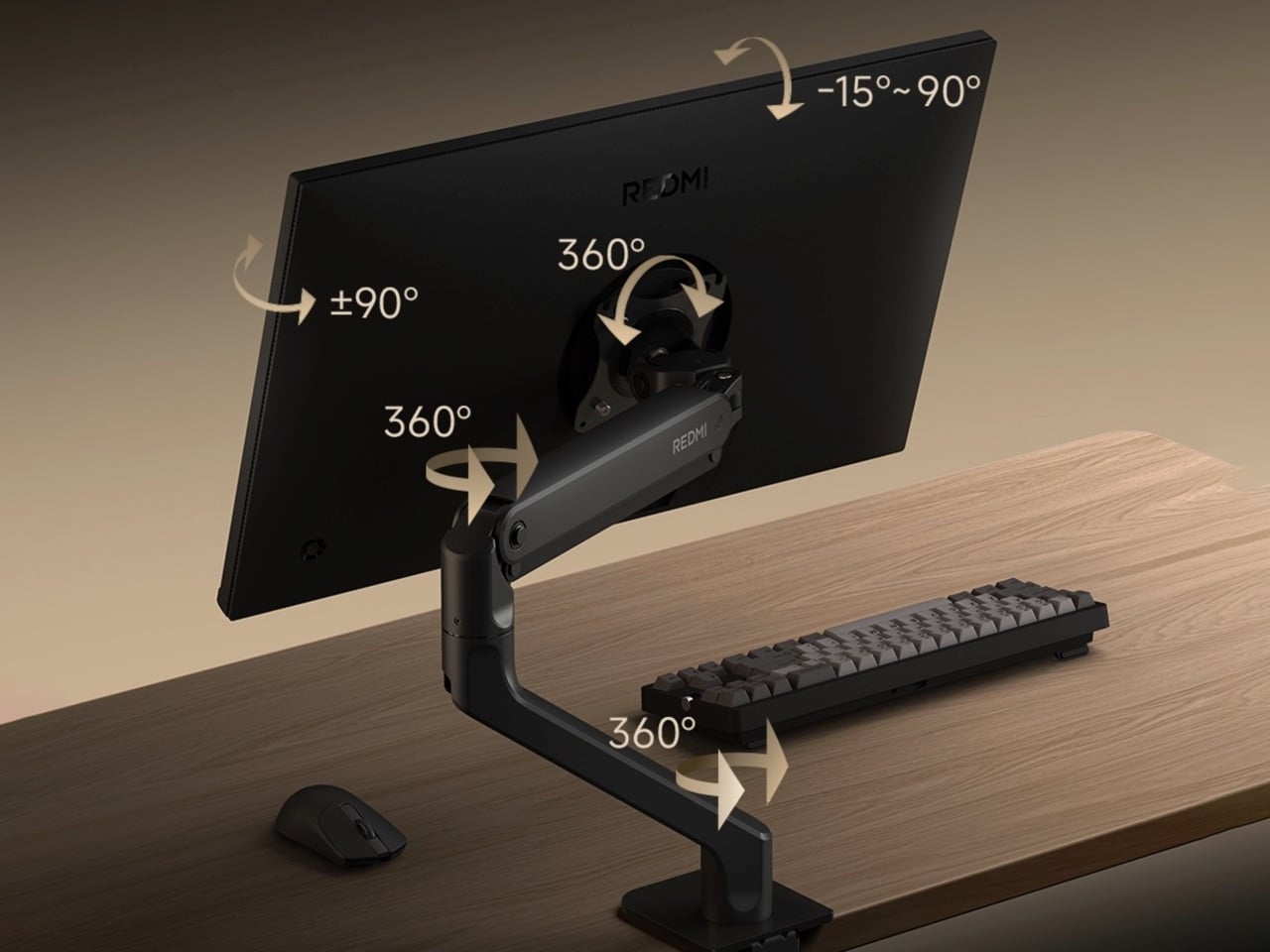
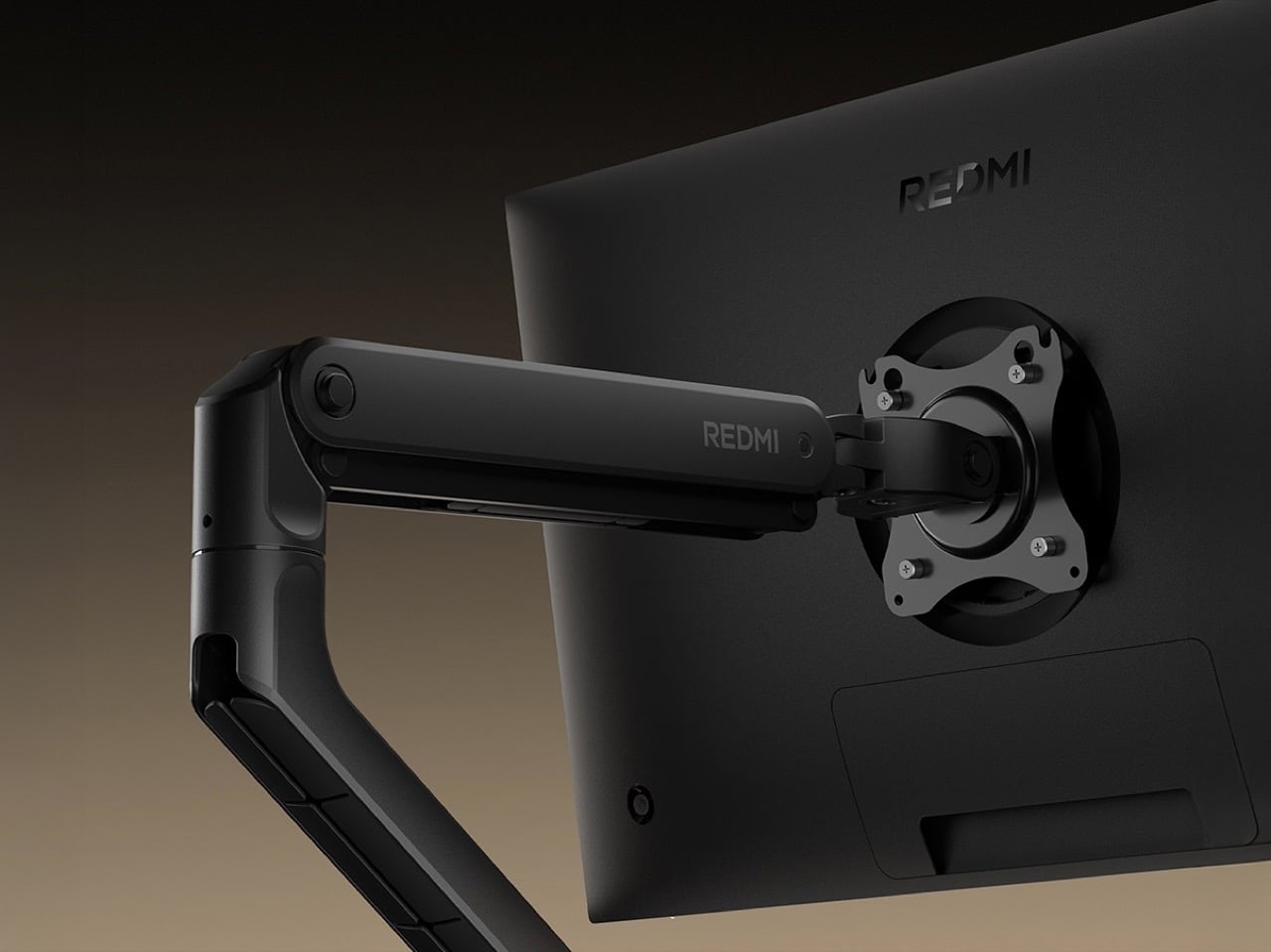
Redmi’s renders show cables running through a channel beneath the arm and down the riser. Only the clamp stays visible on the desk. It echoes the trick behind Calvin Lien’s Console Desk concept, which hid its cabling inside the desk’s spine so the surface stayed clean. The arm adds reach to that job, with 17.1 inches (43.5 cm) of front-to-back travel and a 360-degree screen rotation. The promo shots still show a little cable curling out near the VESA plate, which is fair, because a moving screen needs slack somewhere.
Six years ago, Redmi’s first PC monitor, the Display 1A, launched with nothing to hide its cables, a gap a Polish review called out at the time. Concealed routing is now a headline feature on the company’s own product page. That tells you where desk setups have gone. A channel in the arm means the monitor’s cables follow one path instead of dangling in every direction. Redmi’s version is far simpler than a full desk rebuild, and it only has to live inside one arm.
The ¥299 price and China-only availability
The arm costs ¥299 in China (about $42) and went on sale October 12 through Xiaomi Youpin. The listing shows a struck-through ¥499, but Youpin’s fine print calls that a reference price, so read ¥299 as a launch price rather than a markdown. Notebookcheck points out that pricier ergonomic arms can run up to $350 in the US, which makes $42 look like a typo. A five-year replace-instead-of-repair guarantee comes with it, though the full terms are not spelled out on the page. The currency conversion is approximate.
Compatibility looks friendly, since the VESA plate takes the 75x75mm and 100x100mm patterns that most monitors use. That is the same pair CORSAIR’s Platform:6 desk specs for the arms it ships with, so most panels should line up. Xiaomi has not published a clamp thickness range, so measure your desk edge before you get excited. There is no word on a global release, but Xiaomi often sends its accessories abroad later, sometimes wearing the Xiaomi name. The part holding your screen up has never been the exciting purchase, which is exactly why a $42 version is worth watching.
The Nordic Nook gives its occupants two places to step outside without making either one a trip downstairs. Built by South Carolina’s Sweet-Haus Tiny Cabin Company, this 400-square-foot park model pairs a private bedroom with an open living area and porches at both ends. It’s an available cabin model rather than a concept, with a layout that favors settling in over packing up.
A monoslope roof gives the exterior its defining line, extending over the outdoor spaces. Sweet-Haus specifies LP SmartSide siding, metal roofing, and Trex decking, with optional porch heating. The porches offer somewhere to sit beyond the enclosed footprint, though their usefulness still depends on the weather. Two outdoor spaces also give the bedroom its own exit rather than routing every trip through the living room.
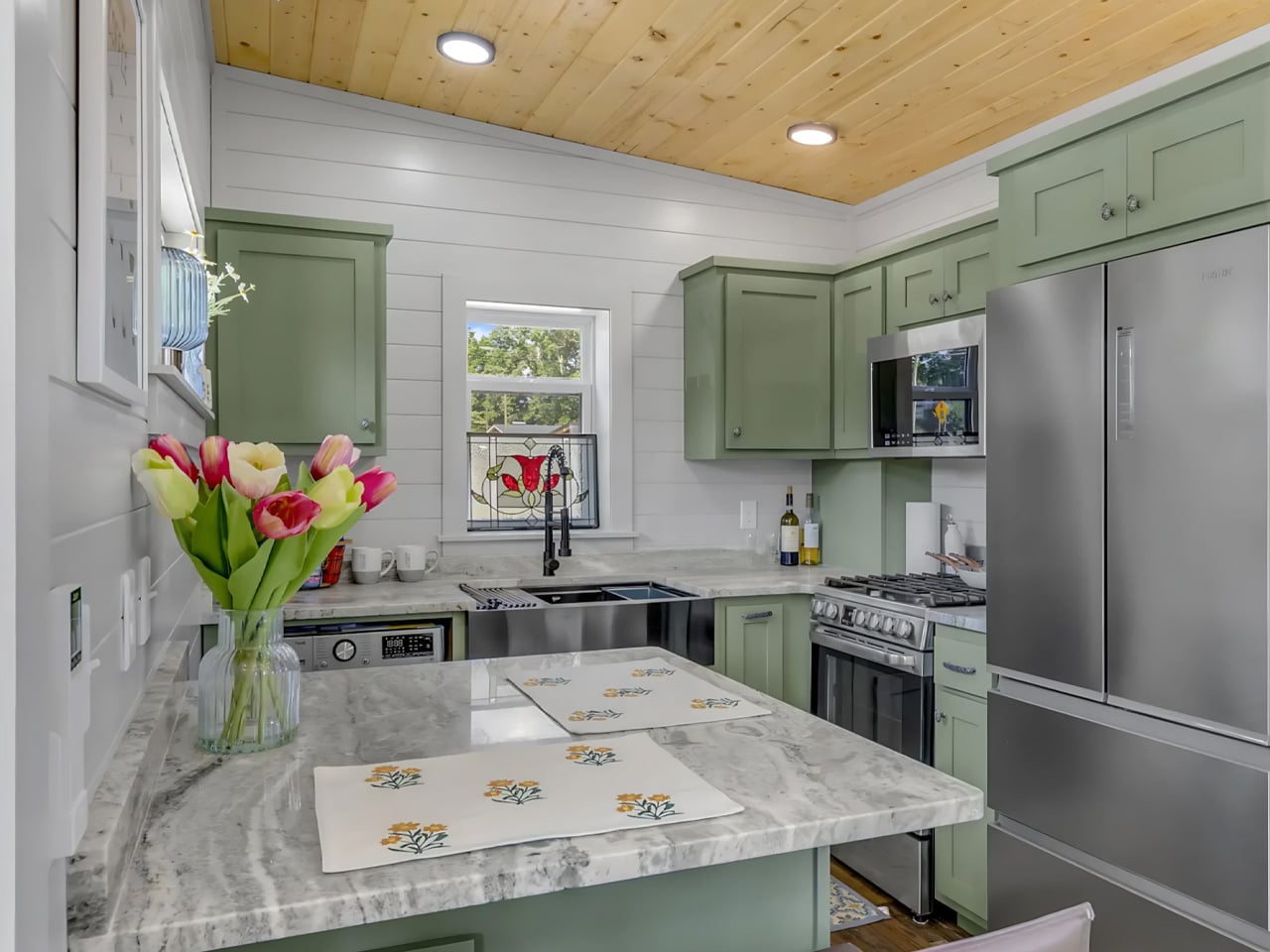
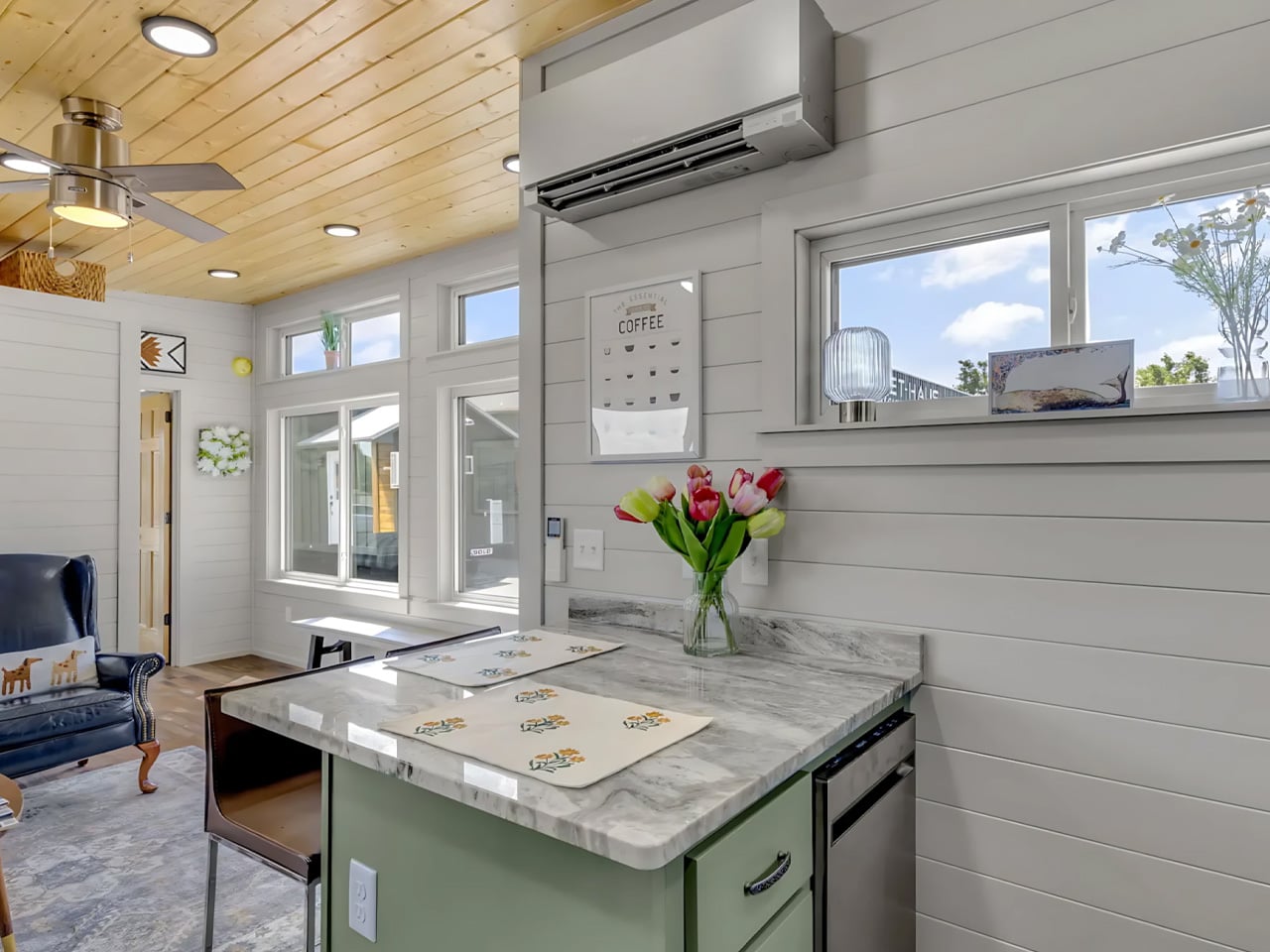
Inside, the pictured finish scheme is more domestic than rustic. Muted green cabinetry sits against white horizontal wall paneling, while a wood ceiling supplies the strongest natural texture. Stainless steel appliances interrupt the softer palette without overwhelming it. Cabinetry reaches above the microwave and refrigerator, using the upper wall for storage while leaving the adjacent seating area visually open. The room has color without becoming busy.
The kitchen makes a substantial commitment to everyday cooking. Its equipment includes an oven, four-burner propane stove, microwave, refrigerator/freezer, dishwasher, and a large stainless steel sink. Granite counters and custom cabinetry complete the arrangement, while a breakfast bar seats two. That combination leaves fewer kitchen tasks dependent on improvised workarounds, although the shared cooking and living space means meal preparation remains part of the room’s activity.
The central lounge accommodates a sofa, armchair, and coffee table, with a ceiling fan overhead. Beyond it, the bedroom keeps sleeping on the main floor, with standing headroom, storage, and a sliding glass door opening onto the smaller porch. There’s no sleeping loft to climb into. The bathroom includes a walk-in shower, vanity, and flushing toilet, concentrating the essential facilities without borrowing space from an upstairs sleeping platform.
Sweet-Haus lists a two-zone mini-split system and low-emissivity, argon-filled windows among the standard specifications. Those details establish the equipment package, not independently measured comfort or energy performance. The more immediately legible benefit is spatial: a separate bedroom allows someone to retreat while the main room stays usable. In a home this size, that modest separation can matter more than another decorative flourish or clever folding surface.
The Nordic Nook starts at $137,000, with finishes and upgrades affecting the price. Sweet-Haus also lists a completed example at Trout Stream Cabins for $167,500 plus lot rent, a useful distinction between buying the model and buying a placed home. Its appeal lies in retaining familiar routines within a smaller interior: cooking with proper appliances, sleeping without a ladder, and having another place to sit outside.
Because I like to experiment with my coffee (for myself for now and not for others), I have a lot of different coffee tools at home. But that also means I have a lot of different sizes of mugs and tumblers. Not all of them fit or are perfect for some of the tools that I use. Coffee drippers are one of the easiest tools to use, but sometimes I don’t want the dripper itself to rest on the rim of the cup or mug that I’m using. It would be nice to have something that is easily adjustable, and that’s where this coffee set from Japan comes in.
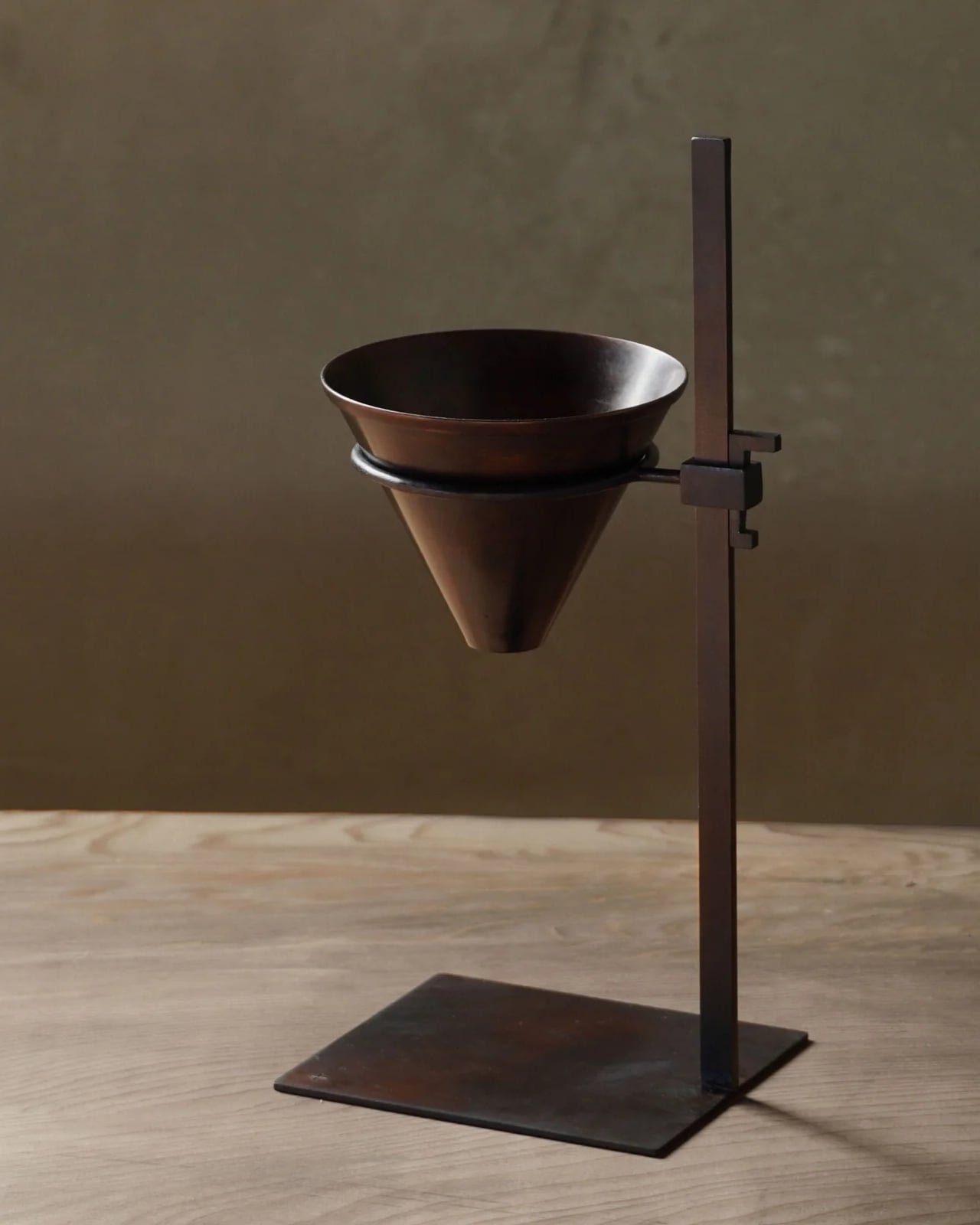
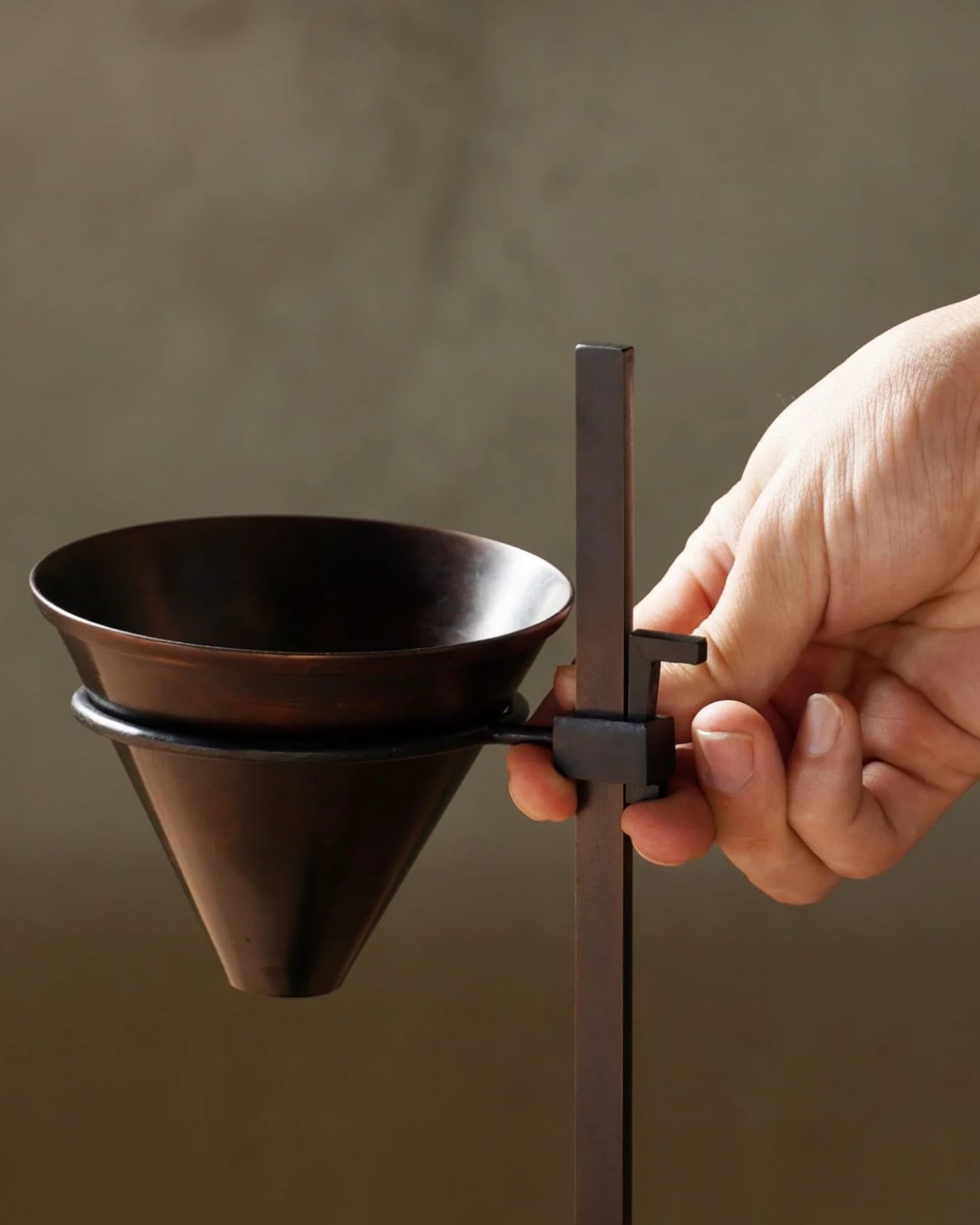
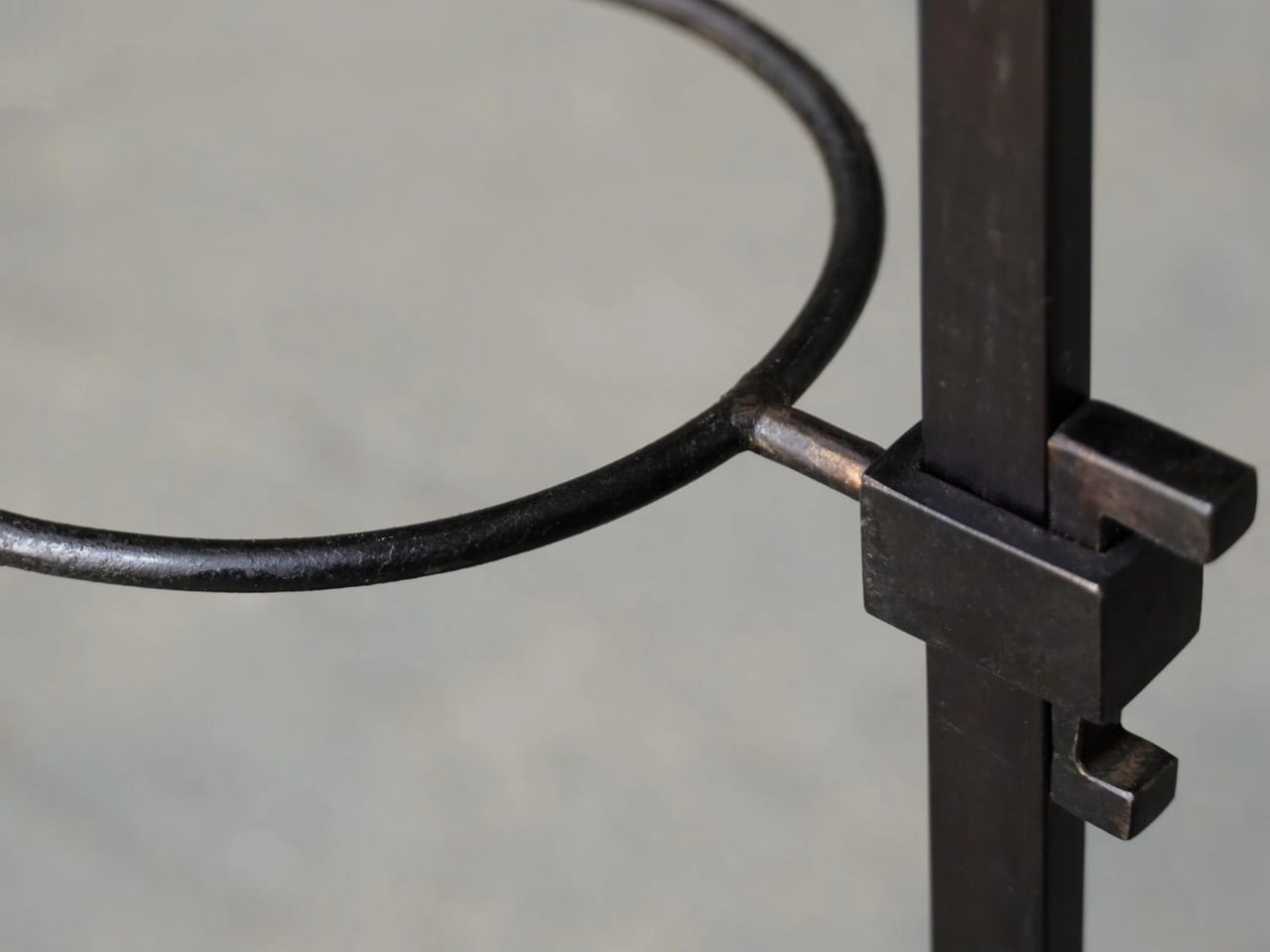
The Wedge Coffee Dripper Set by Totetsu Ironworks not only looks great on your kitchen counter but also gives you the freedom to adjust the height of the dripper itself. It has a wedge-operated height adjustment mechanism that lets you make room for different vessels beneath the cone, within the stand’s available clearance.
The mechanism to adjust your dripper is not trying to hide itself. It’s part of the beauty of the set, and the arrangement looks pretty straightforward in the maker’s photos. The support ring connects to a collar around the vertical post, and the wedge itself is beside it. Releasing the wedge allows you to reposition the support, while inserting it secures the assembly at the selected height. The cone rests in a circular support above the base, so it doesn’t need to sit on your cup’s rim. The small wedge gives the otherwise simple frame a detail worth noticing.
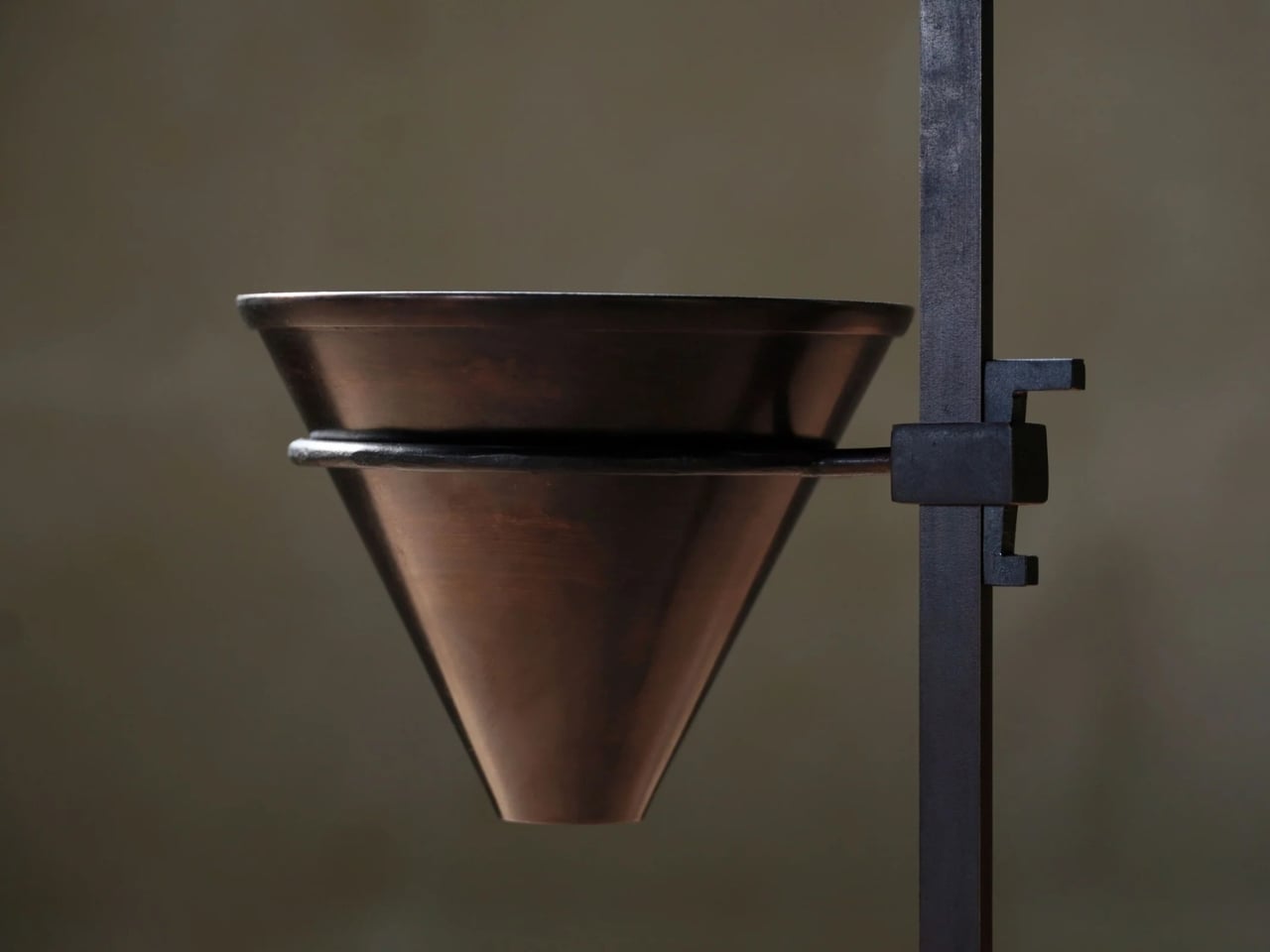
The cone is made from stainless steel, while the stand uses iron. Both are finished with baked-on Japanese lacquer, known as urushi, which gives the set its dark-brown appearance. In the photos, the cone has a warmer brown tone, with the support looking darker and more textured. The open space underneath the cone is part of the silhouette, and the entire frame is minimalist but adds a certain personality to your coffee counter, so you don’t need to hide it away when it’s not in use. The flat base and slender upright keep the structure visually simple without concealing how it works.
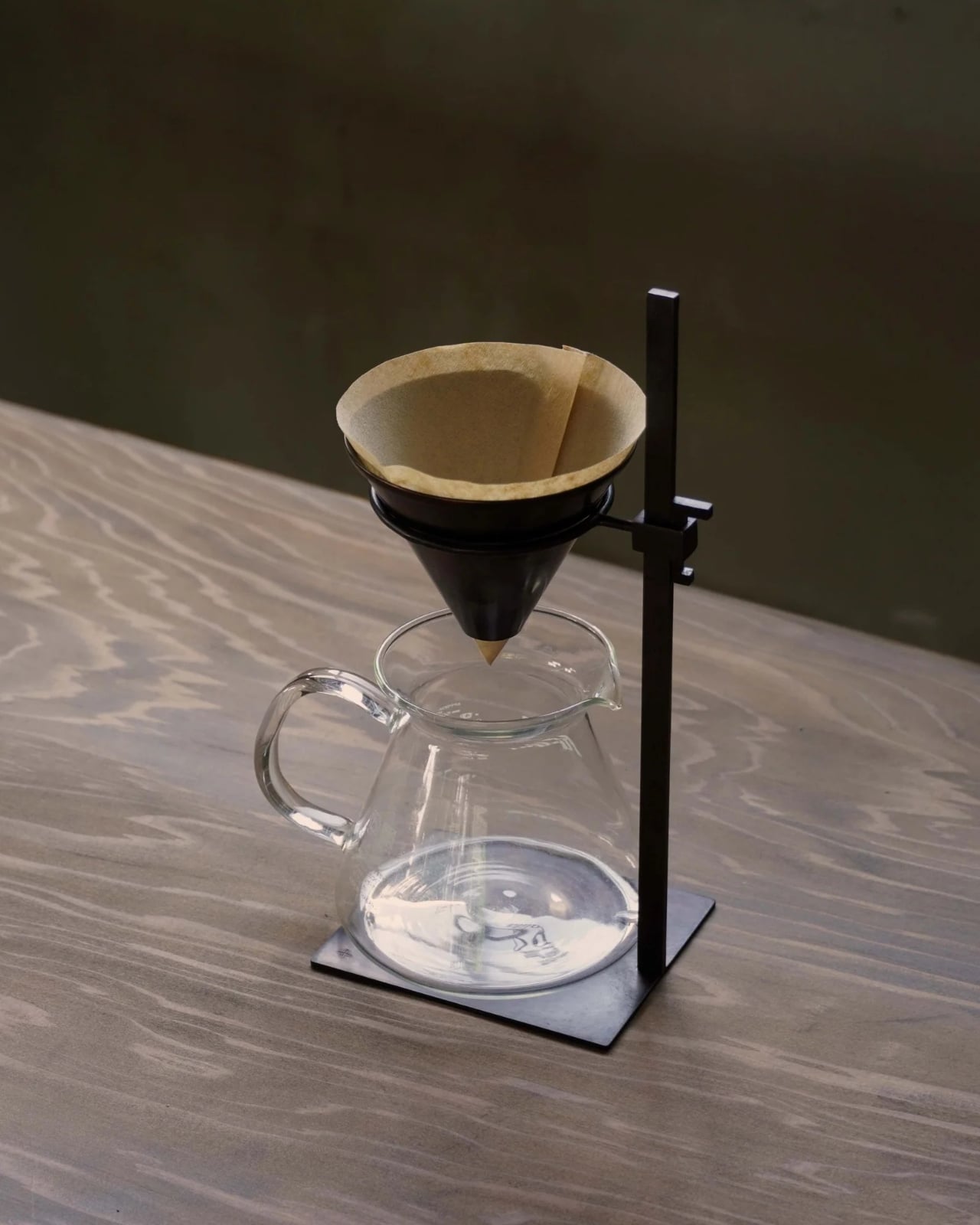
For someone with a collection of different cups, separating the dripper from the receiving vessel is the useful part. The maker shows the set positioned over a glass coffee server, with space between its opening and the cone. You’re adjusting the support to accommodate what’s underneath it rather than relying on the vessel’s rim. That doesn’t mean every tall tumbler will fit, though; the maker doesn’t publish the maximum usable clearance.
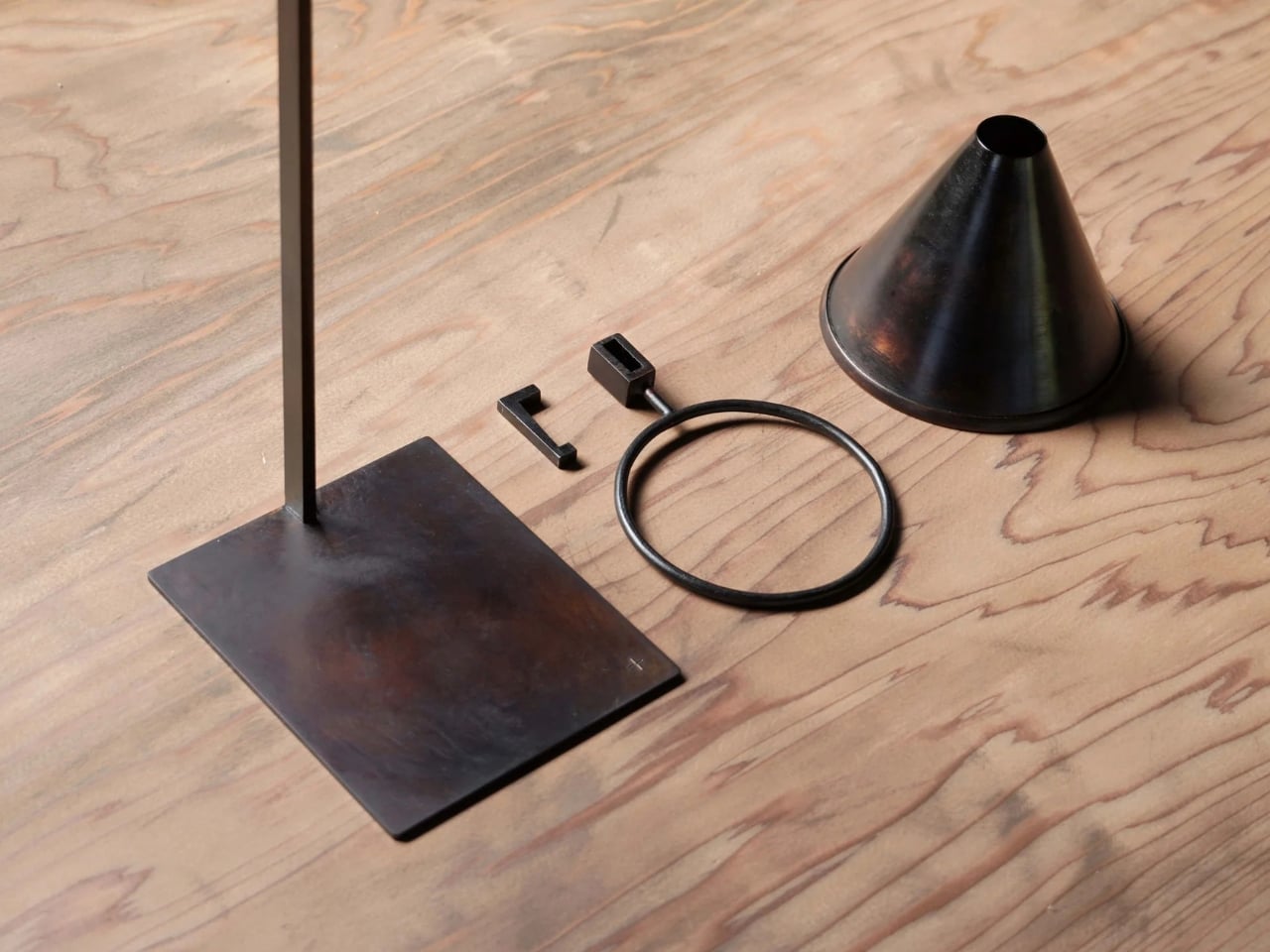
The cone also lifts out of the support ring, as shown in the disassembled product photo, so you can handle it separately when cleaning. And although the dripper is stainless steel, this isn’t a filter-free mesh brewer. The maker’s setup uses a paper filter inside the cone. It’s worth keeping that distinction in mind if you’re looking to move away from paper filters entirely.
The lacquer finish does come with some care instructions. Totetsu recommends washing the dripper with dish soap and a soft sponge, avoiding metal scouring pads or other abrasive tools that could scratch the surface. The stand should be wiped with a damp cloth and dried immediately. The maker also recommends periodically applying oil or beeswax to the iron. That’s a little more upkeep to consider if you prefer coffee equipment that requires very little attention between brews.
For me, the appeal would be having another way to arrange my coffee setup without choosing a mug just because it fits a particular dripper. I wouldn’t expect an adjustable stand alone to make my coffee taste better, but I do like the idea of a tool whose workings are visible. The question is whether that flexibility earns another piece of equipment a place on my already busy counter.