Alleged fraudster got $10 million in royalties using robots to stream AI-made music

A North Carolina man is facing fraud charges after allegedly uploading hundreds of thousands of AI-generated songs to streaming services and using bots to play them billions of times. Michael Smith is said to have received over $10 million in royalties since 2017 via the scheme.

Smith, 52, was arrested on Wednesday. An indictment [PDF] that was unsealed the same day accuses him of using the bots to steal royalty payments from platforms including Spotify, Apple Music and Amazon Music. Smith has been charged with wire fraud conspiracy, wire fraud and money laundering conspiracy. Each count carries a maximum sentence of 20 years in prison. The US Attorney's Office for the Southern District of New York says this is its first criminal case that concerns the use of bots to artificially inflate music streaming numbers. 

Prosecutors accused Smith of creating thousands of bots to stream the songs. At first, he was said to have uploaded his own music to the streaming services, but realized that his catalog wasn't big enough to produce a large sum of royalties. After other efforts didn't pan out, he's said to have turned to AI-generated music in 2018.

According to the indictment, Smith began working with two unnamed co-conspirators — the CEO of an AI music company and a music promoter — to create hundreds of thousands of songs using AI. In exchange for a cut of revenue, the CEO allegedly provided thousands of tracks per week to Smith, who is said to have randomly generated song titles and artist names for the audio files.

Smith is accused of lying to streaming services by providing phony names and other fake account details while setting up the bots, and by agreeing to rules that ban streaming manipulation. According to the indictment, he deceived streaming services by making it seem the bot accounts were legit when in fact they "were hard coded to stream Smith’s music billions of times." Smith allegedly attempted to cover his tracks by using dummy email addresses and VPNs, while telling his co-conspirators to be “undetectable.”

"Michael Smith fraudulently streamed songs created with artificial intelligence billions of times in order to steal royalties," US Attorney Damian Williams said in a statement. "Through his brazen fraud scheme, Smith stole millions in royalties that should have been paid to musicians, songwriters, and other rights holders whose songs were legitimately streamed."

The case of Smith is in stark contrast to a musician The New York Times profiled earlier this year. Matt Farley has written, recorded and uploaded tens of thousands of songs to streaming services about anything and everything people might search for, from celebrities and marriage proposals to many tunes about poop. Some songs are just a few seconds long, but the practice seems to be entirely above board. He's said to have earned around $200,000 from his music in 2023.

This article originally appeared on Engadget at https://www.engadget.com/entertainment/streaming/alleged-fraudster-got-10-million-in-royalties-using-robots-to-stream-ai-made-music-162944343.html?src=rss


Google’s Gemini-powered photo search arrives in early access

Google’s AI-powered Photos upgrades are beginning to trickle in. Ask Photos, the Gemini-powered chatbot that lets you get ultra-specific and conversational with your photo searches, is launching in early access for select users in the US. In addition, the improved search for more descriptive Google Photos queries begins rolling out today for all English-speaking users.

The upgraded search in Google Photos lets you use more descriptive queries. For example, while you could have searched for “lake” before, you can now enter “kayaking on a lake surrounded by mountains.” Or, instead of merely searching for your friend Alice, you can go with “Alice and me laughing.” The idea is to make it easier to narrow things down as our cloud-based photo libraries grow.

Ask Photos, the Google Photos chatbot the company revealed at I/O in May, takes that further. Powered by Gemini, it adds a new tab at the bottom of the Photos app that lets you ask about anything in your library using natural language.

Google provided examples like “Show me the best photo from each national park I’ve visited,” which uses location data to scour your park photos and some subjective robot judgment to determine a favorite. Other examples the company provided include “What did we eat at the hotel in Stanley?” and “Where did we camp last time we went to Yosemite?”

Like other chatbot features, Ask Photos can respond to follow-up prompts. So, if it misses the mark the first time, you can ask it to tweak its parameters and give it another go.

Google says your Photos data will never be used for advertising. Although humans may review queries, they’ll be disconnected from your Google account, so the reviewers won’t know who typed the input. Real people won’t review Ask Google’s answers, including photos or videos, unless you provide feedback or (only in rare cases, according to the company) to address abuse.

If you’re in the US, you can sign up for the waitlist to try to get early access to Ask Photos starting today. Meanwhile, Google Photos’ more descriptive search powers are now beginning to roll out for English-speaking users on Android and iOS.

This article originally appeared on Engadget at https://www.engadget.com/ai/googles-gemini-powered-photo-search-arrives-in-early-access-160041679.html?src=rss

Panasonic just returned to the US market with new OLED and Mini-LED TVs

Panasonic TVs have been missing from the US market for over a decade, which is odd because, well, the company makes good stuff. In any event, our national nightmare is over. The Japanese electronics giant just released a bunch of new televisions for US customers.

The releases break down into two lines of OLED displays and another line of Mini-LED TVs. The televisions range in size from 55 to 85 inches and they’ve all been designed and developed in Japan. As expected, all of the TVs boast a 4K resolution, to showcase Panasonic’s “outstanding picture quality.”

Panasonic has also teamed up with Amazon for these displays. Each model comes with Fire TV built in. This partnership likely gave Panasonic an easy way to add an America-friendly UI into the mix, being as how the company’s been missing from these shores for ten years.

A Panasonic TV showing Fire TV.
Panasonic/Amazon

Why come back now? The company says it was “driven to re-enter the US by a strong belief in the unmet demand for their televisions, particularly among consumers seeking the highest possible picture quality.” That’s just corporate mumbo jumbo, but the real reason is likely one word that rhymes with “shmoney.” The US is a huge market.

Though Panasonic’s TVs have been absent for ten years, the company has maintained an active presence in America. It sells a bunch of well-regarded standalone cameras and is building a giant EV battery plant in Kansas.

The company’s new TVs are available to order right now, though it looks like shipments won’t go out until September 16. Prices range from $1,300 to $3,200, depending on the model and size.

This article originally appeared on Engadget at https://www.engadget.com/home/home-theater/panasonic-just-returned-to-the-us-market-with-new-oled-and-mini-led-tvs-152614684.html?src=rss

Sony’s MDR-M1 studio headphones offer an audio and comfort upgrade over the MDR-7506

Sony's MDR-7506 headphones have become a go-to option for recording studios and creators. The set of cans are only $100 and they offer crisp, clean sound so you know exactly what your audience is going to hear. Today, the company announced a more robust option for studio headphones, the MDR-M1, that has a slightly updated design, new drivers, wider frequency range and improved bass response. 

Inside, the MDR-M1 packs newly developed drivers capable of frequency response of 5Hz – 80kHz. Sony explains that this ultra-wide range is crucial for things like subtle details in various recorded sound sources (Dolby Atmos and 360 Reality Audio especially). More specifically, the drivers here have a soft edge for those super low frequencies and a hard dome shape for accurate reproduction in the ultra-high range. There's also a "tuned port" on the outside of the ear cups, or Beat Response Control as Sony calls it, that provides the ventilation needed for improved low frequency control. That component works in tandem with an optimized diaphragm for "very tight bass response," according to the company. 

"In recording sessions, it is important to care what musicians or singers are listening to when they play or sing," explained Akihiro Nishimura, an engineer at Power Station at Berklee NYC who worked with Sony to develop these headphones. "MDR-M1 gives you the same impression of listening in a control room headphone, which makes it easier to create music by listening to each other."

Sony's latest studio headphones offer a big upgrade over the popular MDR-7506.
Sony

These are closed-back headphones, so you won't have to worry about sound leakage or ambient noise creeping in. Sony enhanced the replaceable ear pads for both increased comfort and better noise isolation. It also reduced the overall weight compared to the 7506, which means longer recording sessions shouldn't be as much of a burden. The MDR-M1 will come with two detachable cables with machined aluminum connections, one that has a stereo mini-plug and plug adapter (stereo mini to stereo standard) and the other a shorter option for connecting to various professional gear. Sony also took care to make the MDR-M1 more durable, as they're like to get dropped or flung around a studio or other recording and editing environments. 

The MDR-M1 is available for preorder now for $250, a significant increase over the MDR-7506. If open-back headphones are more your thing for recording and editing, the MDR-MV1 carries a similar spec sheet to this new model. But, the price tag is even higher at $400. 

This article originally appeared on Engadget at https://www.engadget.com/audio/headphones/sonys-mdr-m1-studio-headphones-offer-an-audio-and-comfort-upgrade-over-the-mdr-7506-150052628.html?src=rss

Lenovo’s Auto Twist concept laptop has a lid that can swivel and bow down at your command

Last year, Lenovo showed off a fantastically futuristic concept gadget called Project Crystal, which was the world’s first laptop to feature a transparent MicroLED display. But today, in what has become a tradition for Lenovo during IFA, the company is back with yet another demo notebook, this time equipped with a motorized rotating hinge.

Dubbed the Auto Twist AI PC, Lenovo’s latest concept looks almost exactly like a traditional clamshell when closed. However, with a simple voice command, its lid raises automatically and rotates into practically any position — even all the way around into tablet mode. While there is no official pricing, or even plans to bring the device to full production just yet, Lenovo says the Auto Twist is designed to provide enhanced adaptability, improved ergonomics and possibly better security. But for now, the company’s main goal is simply to see what environments or use cases might be able to best take advantage of a laptop with this kind of novel design.

Thanks to built-in object tracking, for example, the Auto Twist can move its display and follow people as they walk around a room, which could be very helpful when making presentations. It can also detect a person’s body, and possibly even their posture, before moving its display into the best position to reduce fatigue or strain. 

An animated photo showing the Lenovo Auto Twist laptop's screen swiveling almost 360 degrees on its hinge, then folding down when its display is facing out. In the end, the lid is flat on top of the keyboard with its screen facing up.
Sam Rutherford for Engadget

Alternatively, the laptop can detect when it’s not being used and then close its own lid to prevent unwanted users from gaining access. And while the Auto Twist’s AI tag feels a bit spurious, Lenovo hopes the laptop will be able to do many of these things on its own or through simple natural language voice control (the laptop currently supports commands to transform into laptop mode, clamshell mode and more).

After seeing it in person, the most immediate use case that came to my mind was in POS (point-of-sale) payment terminals. Here, employees often have to manually flip a screen around so that the customer can see their total or add in things like a tip. Granted, the Auto Twist does seem like overkill in that situation considering how easy it is to rotate a screen around the old-fashioned way with your hands a basic hinge. And at least from what I saw, the built-in motor wasn’t quite as smooth as you’d probably want for commercial applications. But, it is an interesting idea with potential for high-end luxury outlets.

Then there’s just the fun of it. During my demo, I watched as the Auto Twist played a clip of a dancer as its motorized hinge attempted to make its display match the person’s movements. I also saw the laptop swivel its display horizontally to present an ultra-wide panoramic photo in a more engaging way. Additionally, while other bleeding-edge tech like laptops with foldable displays suffer from a ton of added weight and bulk, the rotating servo on Lenovo’s latest concept is relatively unobtrusive and there isn’t a huge impact on the device’s overall portability.

An animated photo showing the Lenovo Auto Twist laptop concept, where its screen slowly flips up on its own. A ballerina dances onscreen, almost in tandem with the device's movement. The screen rotates about 45 degrees so it's diagonally across the keyboard below, then bows down slightly as the ballerina bows too.
Sam Rutherford for Engadget

So while it remains to be seen how useful the Auto Twist really is or what it might turn into down the line, I appreciate that Lenovo is still trying to come up with new ways to evolve the classic clamshell laptop.

This article originally appeared on Engadget at https://www.engadget.com/computing/laptops/lenovos-auto-twist-concept-laptop-has-a-lid-that-can-swivel-and-bow-down-at-your-command-150022971.html?src=rss

Lenovo Brings AI Innovation For All with Intel Lunar Lake and Snapdragon X Plus Laptops

AI is no longer just for swapping faces, erasing unwanted people from photos, or generating images and text that can have you questioning people’s sanity. While those can be fun, they hardly show what the technology is capable of. AI is now becoming part and parcel of the computing experience, optimizing tasks, understanding and summarizing your files, and, of course, answering your questions, but you will need and want hardware that can actually support those functions in an efficient and private manner. At IFA 2024, Lenovo is unveiling a wide range of computers that deliver this kind of power using the next generation of AI processors, helping the brand push toward its goal of leading the AI Devices Era.

Designer: Lenovo

Lenovo Aura Edition: Intel Core Ultra Series 2

Working together with Intel for years, Lenovo launches its new Aura Edition laptops, leveraging the power of AI not just to deliver smarter features but to change the way people use their computers. Smart Modes, for example, can adapt to users’ needs and habits, reducing distractions when they need to work, activating stronger security measures when connecting to public Wi-Fi, or simply reminding them to take breaks at certain intervals. These features are powered by Intel’s new Core Ultra Series 2 processors, delivering improved NPU performance up to 48 TOPS (Tera/Trillion Operations Per Second).

The ThinkPad X1 Carbon Gen 13 Aura Edition offers a business-class design and experience that the ThinkPad brand is famed for. A 14-inch 2.8K OLED Dolby Vision screen delivers crisp and vibrant images, while the 57-watt battery promises almost a full day of use before you need to plug in. In addition to a large Haptic TouchPad, the laptop integrates the iconic three-button TrackPoint for a familiar and comfortable experience that fans have come to expect from this line of pro laptops.

In addition to AI upgrades, the ThinkPad X1 Carbon Gen 13 Aura Edition also steps up its sustainability game, boasting a customer-replaceable battery design, 90% recycled magnesium for the C cover, and the complete absence of plastics from the packaging. The ThinkPad X1 Carbon Gen 13 Aura Edition will be available starting in November with an expected starting price of $1,999.

The 15-inch Lenovo Yoga Slim 7i Aura Edition brings those same Intel-powered AI capabilities to Lenovo’s line of content creation laptops. Designed with creative professionals in mind, the 15-inch 2.8K 120Hz OLED screen and 70Wh battery offer the performance, high-fidelity visuals, and all-day uptime that these discerning users need to get their jobs done anywhere they go. Expected to be available starting this month, the Lenovo Yoga Slim 7i Aura Edition will start at $1,299.

Versatility and Portability: Snapdragon X Plus

With the Snapdragon X processors, Qualcomm is bringing its battle-tested performance and battery efficiency from smartphones and tablets to Windows PCs. The Snapdragon X Plus further expands that thrust with a selection of Copilot+ laptops and tablets for every user, tier, and budget. With an 8-core chip and a neural processing unit delivering 45 AI TOPS performance, these new Lenovo computers make AI and long battery life accessible to more consumers.

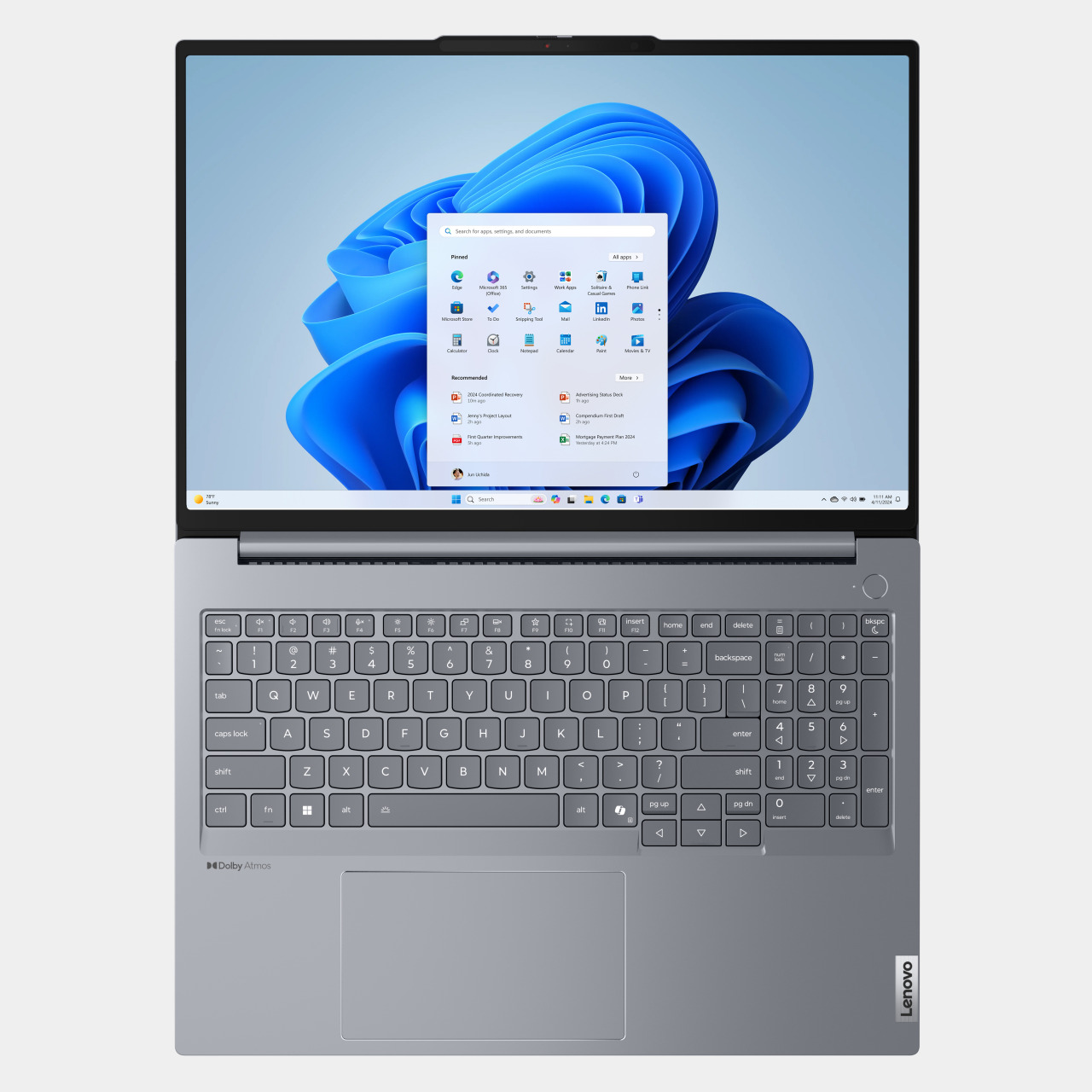
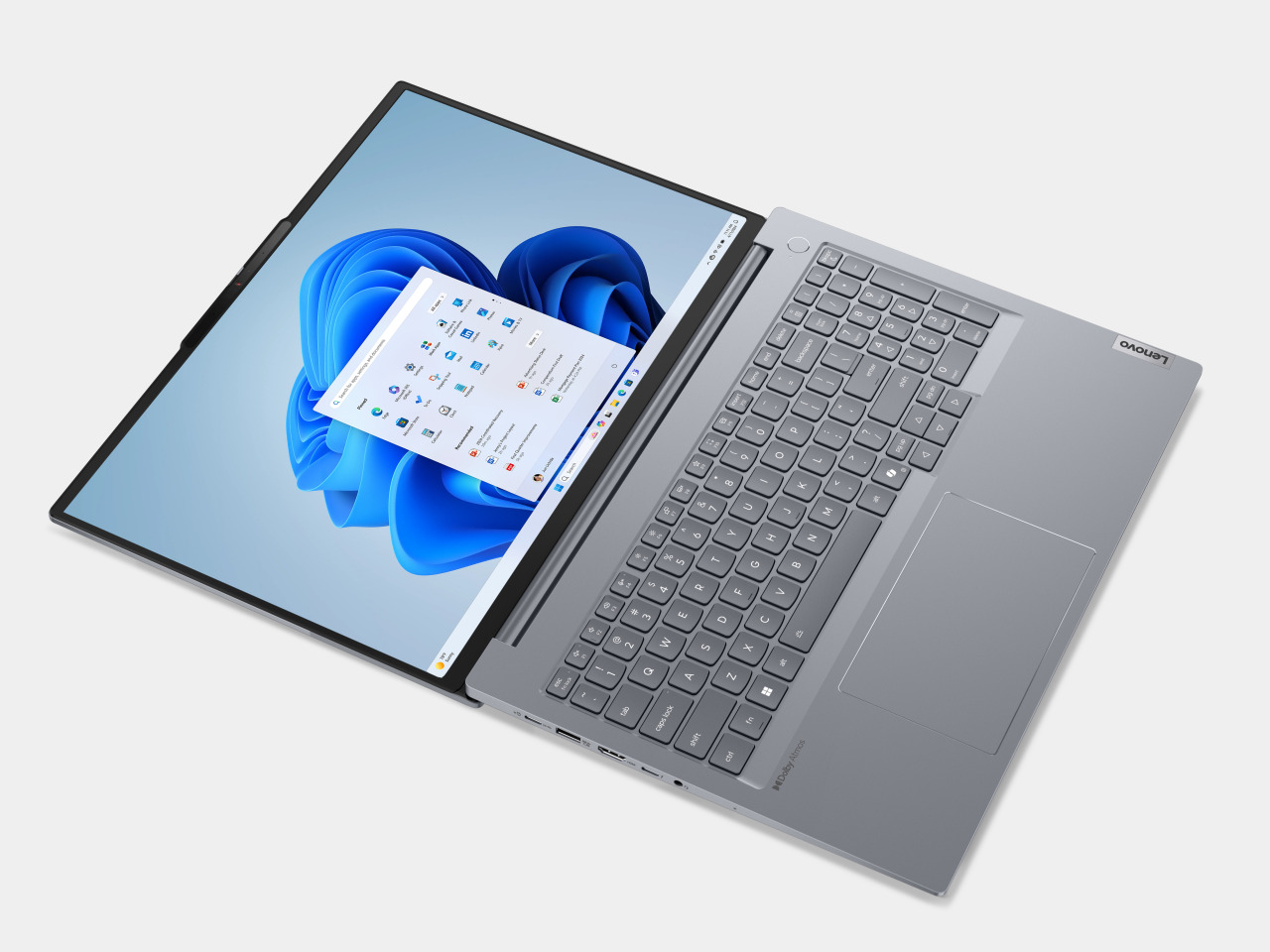
The new ThinkBook 16 Gen 7 with Snapdragon X Plus combines AI chops with a multi-day battery life and a chic, modern design that’s only 16mm thin. It brings AI processing for business applications, on-device AI assistance, and AI-improved camera imaging to on-the-go professionals who need a reliable computer that can survive being away from a wall socket for a day or two. Starting at only $799, the ThinkBook 16 Gen 7 offers an affordable option to all the powerful yet pricey AI computers arriving this year, without compromising on the quality of the experience.

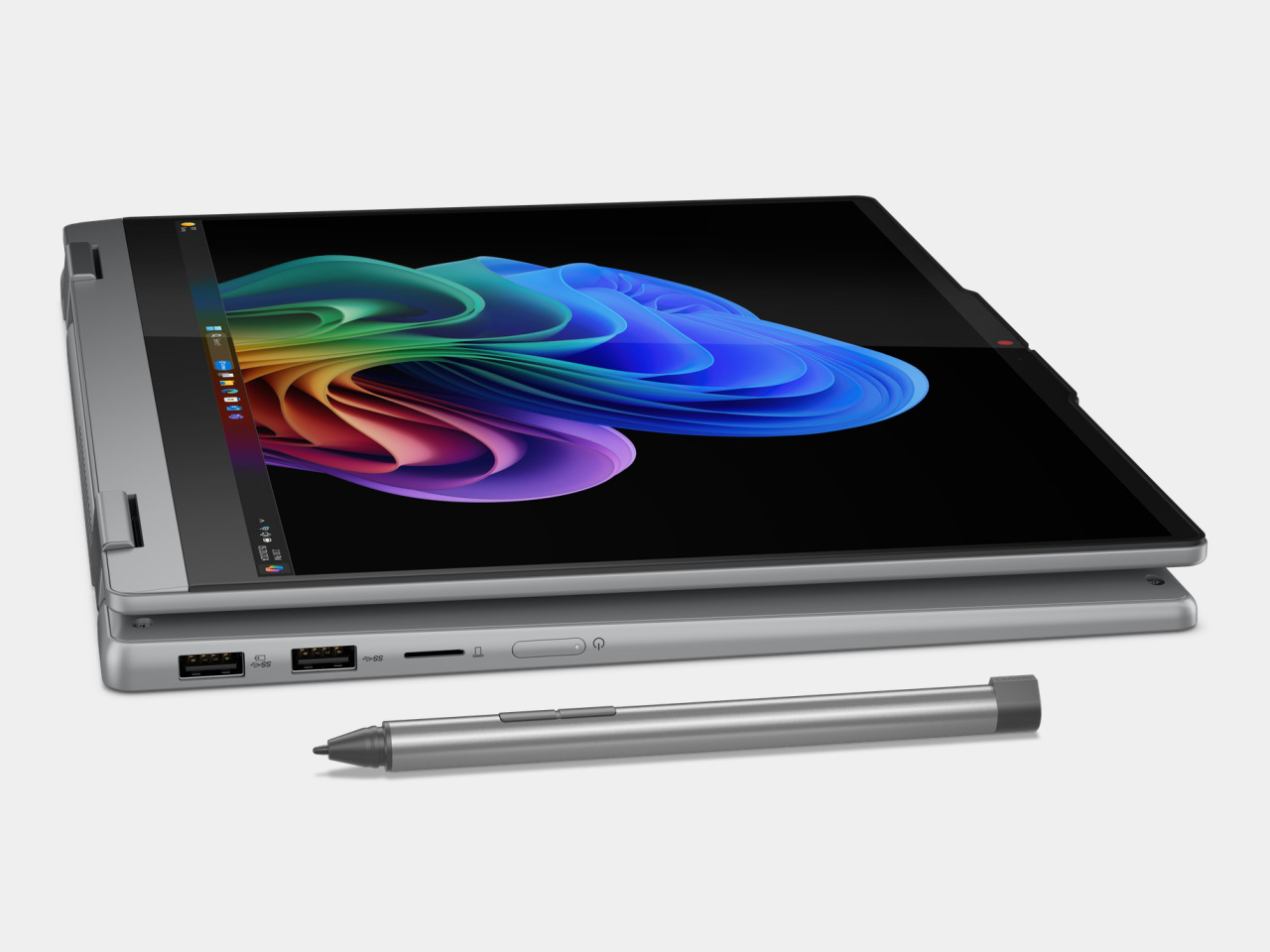
The Lenovo IdeaPad 5x 2-in-1 convertible laptop put the Snapdragon X Plus to work in a more familiar setting. Switching between laptop, tent, and tablet modes, the laptop’s 14-inch 16:10 WUXGA OLED touch display delivers the crisp visuals that creative professionals and multimedia enthusiasts require. As a computer made to be carried around, it boasts MIL-STD-810H certification and a metal A-cover to make sure it can keep up with you. Available in October, the Lenovo IdeaPad 5x 2-in-1 (14″, 9) will have a starting price of $849, again putting it within easy reach of highly mobile professionals.

The post Lenovo Brings AI Innovation For All with Intel Lunar Lake and Snapdragon X Plus Laptops first appeared on Yanko Design.

Lenovo announces new Aura edition laptops

Lenovo has just revealed its latest lineup of laptops at IFA Berlin. The standouts seem to be Aura editions of the ThinkPad X1 Carbon Gen 13 and Yoga Slim 7i. The Aura software, which is the result of a collaboration with Intel, can quickly shift these machines into various modes to optimize for specific tasks, like safe internet browsing, better video call quality or distraction-free work.

Lenovo Aura UI
Lenovo

The ThinkPad X1 Carbon Gen 13 Aura Edition, It’s a 14-inch laptop with a 16:10 2.8K (2880x1800) OLED display and a refresh rate of 120Hz. It also has DisplayHDR True Black 500 certification and reaches 400 nits of brightness. The CPU is an Intel Core Ultra 9, and the Intel Arc Xe2 GPU handles graphics. The battery is rated at 57Wh and is a replaceable unit.

The Yoga Slim 7i Aura Edition is larger at 15.3 inches and also has a screen resolution of 2.8K. The display can be an OLED or LCD touch panel, with a refresh rate of 120Hz and brightness of 500 nits. An Intel Core Ultra 7 processor powers this laptop and uses integrated graphics. With a battery life of 70Wh, it should last all day for web browsing and streaming video content.

Another laptop to look out for is the IdeaPad 5x 2-in-1. It's equipped with a Qualcomm Snapdragon X Plus 8-core processor and integrated Adreno GPU. The 14-inch WUXGA (1920x1200) OLED screen can reach 400 nits of brightness, and the battery is rated at 57Wh. Best of all, the whole package only costs about $850.

The Yoga Pro 7, IdeaPad Slim 5x and the 13- and 15-inch IdeaPad Slim 5s are among the new arrivals as well, but unfortunately, these models won’t be available in the US.

This article originally appeared on Engadget at https://www.engadget.com/computing/laptops/lenovo-announces-new-aura-edition-laptops-150005439.html?src=rss

UK competition watchdog opens Ticketmaster probe after Oasis ticket debacle

The UK’s competition watchdog has opened a formal investigation into Ticketmaster after tickets for Oasis' reunion shows went on sale last weekend. The Competition and Markets Authority said it will look into the company’s dynamic pricing practice and whether it broke consumer law.

Dynamic pricing involves a business adjusting prices based on shifting market conditions, such as demand. Airlines are among those that use the model.

Some Oasis fans who tried desperately to get tickets for the band’s first shows in 16 years waited for hours in Ticketmaster’s virtual queues. When they were finally able to buy tickets, some found that they were two or three times more expensive than they may have expected due to dynamic pricing. With Ticketmaster often giving customers mere moments to complete a purchase after tickets are in their cart, fans were faced with having to make a snap decision about paying significantly more than they’d anticipated.

The CMA will look into the pressure of that ticking clock on consumers' purchasing decisions. It will also attempt to determine if Ticketmaster conducted “unfair commercial practices” that are banned under the Consumer Protection from Unfair Trading Regulations Act 2008. Moreover, the watchdog will investigate whether customers were provided with “clear and timely information to explain that the tickets could be subject to so-called ‘dynamic pricing’ with prices changing depending on demand, and how this would operate, including the price they would pay for any tickets purchased.”

The CMA notes that while dynamic pricing isn’t inherently illegal under UK law, ticket sales platforms have to be transparent with customers, and provide clear and accurate details about how much they need to pay. The watchdog said that the practice could breach consumer protection or competition law in certain cases.

Oasis criticized the use of dynamic pricing for the band's long-awaited reunion gigs. "It needs to be made clear that Oasis leave decisions on ticketing and pricing entirely to their promoters and management," the band said in a statement. It claimed to have no "awareness that dynamic pricing was going to be used." Other high-profile artists — including Taylor Swift, Ed Sheeran and The Cure — have opted out of using dynamic pricing for recent shows.

Following the scramble for Oasis tickets, the UK government has pledged to look at dynamic pricing as part of a consultation into the secondary-ticket market this fall. In the US, the Justice Department and many state and district attorneys general filed an antitrust suit in a bid to break up Ticketmaster owner Live Nation. They claim it holds a monopoly over the live entertainment industry. Ticketmaster was also the victim of a cyber attack this year in which hackers obtained the personal information of 560 million customers.

This article originally appeared on Engadget at https://www.engadget.com/big-tech/uk-competition-watchdog-opens-ticketmaster-probe-after-oasis-ticket-debacle-143233958.html?src=rss

YubiKey vulnerability will let attackers clone the authentication device

NinjaLab, a security research company, has discovered a vulnerability that would allow bad actors to clone YubiKeys. As the company has explained in a security advisory, NinjaLab found a vulnerability in the cryptographic library used in the YubiKey 5 Series. In particular, it found a cryptographic flaw in the microcontroller, which the security researchers described as something that "generates/stores secrets and then execute cryptographic operations" for security devices like bank cards and FIDO hardware tokens. YubiKeys are the most well-known FIDO authentication keys, and they're supposed to make accounts more secure, since users would have to plug it into their computers before they could log in. 

The researchers explained how they discovered the vulnerability because they found an open platform based on Infineon's cryptographic library, which Yubico uses. They confirmed that all YubiKey 5 models can be cloned, and they also said that the vulnerability isn't limited to the brand though they've yet to try and clone other devices.

That vulnerability has apparently gone unnoticed for 14 years, but just because it has now come to light doesn't mean anybody can exploit it to clone YubiKeys. To start with, bad actors will need to have physical access to the token they want to copy. Then, they have to take it apart and use expensive equipment, including an oscilloscope, to "perform electromagnetic side-channel measurements" needed to analyze the token. In the researchers' paper, they said their setup cost them around $11,000 and that using more advanced oscilloscopes could raise the setup's cost to $33,000. In addition, attackers might still need their target's PINs, passwords or biometrics to be able to access specific accounts. 

Bottom line is that users part of government agencies or anybody handling very, very sensitive documents that could make them espionage targets would have to be very careful with their keys. For ordinary users, as researchers wrote in their paper, "it is still safer to use YubiKey or other impacted products as FIDO hardware authentication token to sign in to applications rather than not using one."

This article originally appeared on Engadget at https://www.engadget.com/cybersecurity/yubikey-vulnerability-will-let-attackers-clone-the-authentication-device-143049198.html?src=rss

Even the NSA now has a podcast

Well, it's official: everyone has a podcast. Today, the NSA launched No Such Podcast, a nod to the entity's nickname, No Such Agency, back when its mere existence was classified. The NSA bills the podcast as bringing "people to the table from across the agency to discuss our role as a combat support agency, our foreign signals intelligence and cybersecurity missions, and so much more. NSA is known as home to the world's greatest codemakers and codebreakers — their stories are now being decoded."

However, the podcast is far from Edward Snowden-level sharing. The NSA's chief of strategic communications, Sara Siegle, is quick to add that some of the agency's work is too sensitive to discuss. This podcast will be a platform to tell "more" stories while sharing expertise and highlighting government officials.

No Such Podcast is available on YouTube and wherever you regularly get your podcasts. The NSA published two episodes on launch day, with the first focusing on cybersecurity and the other detailing the agency's role in finding Osama Bin Laden. The NSA will release six more episodes weekly through mid-October.

This article originally appeared on Engadget at https://www.engadget.com/entertainment/even-the-nsa-now-has-a-podcast-140028493.html?src=rss