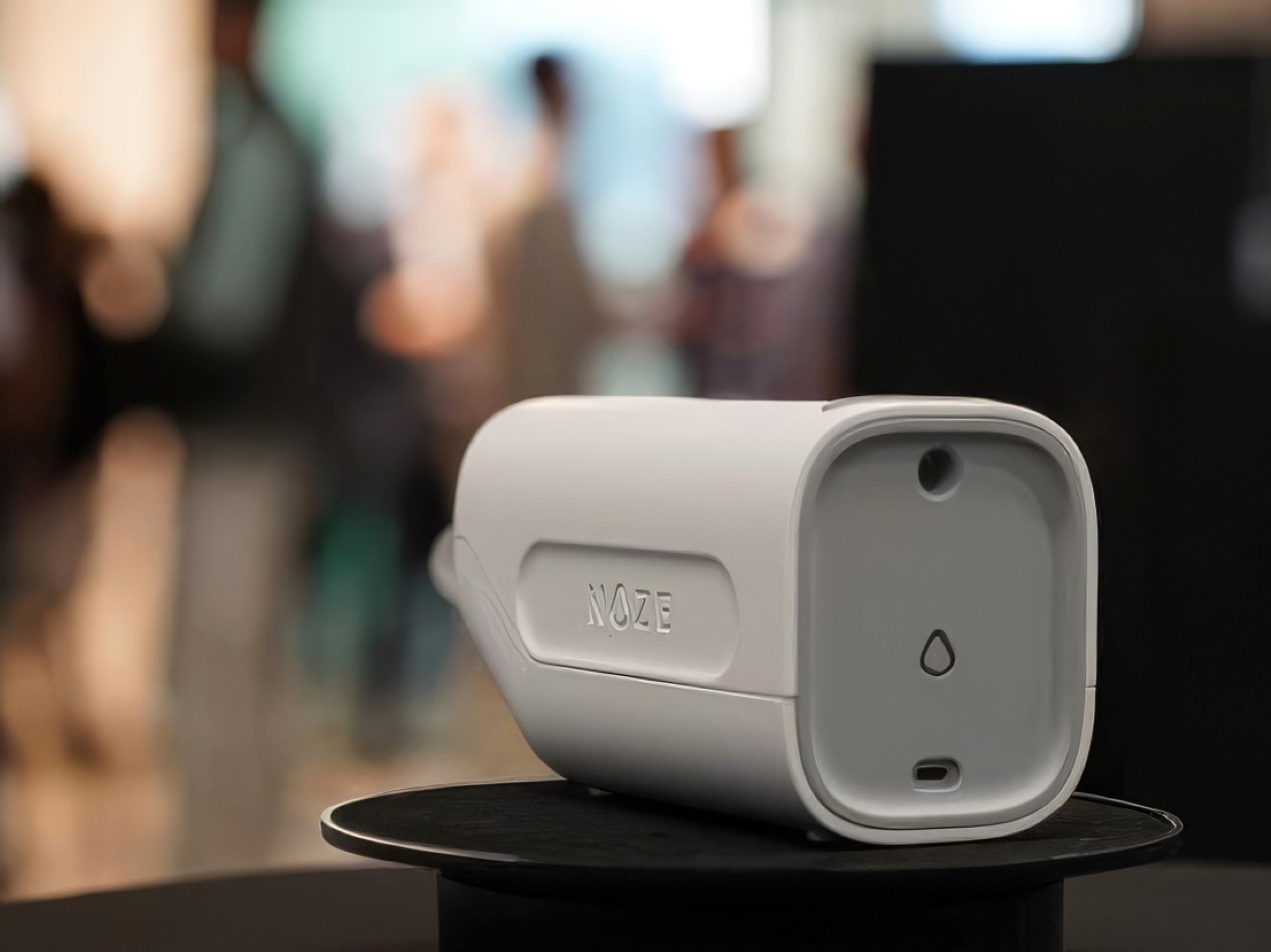
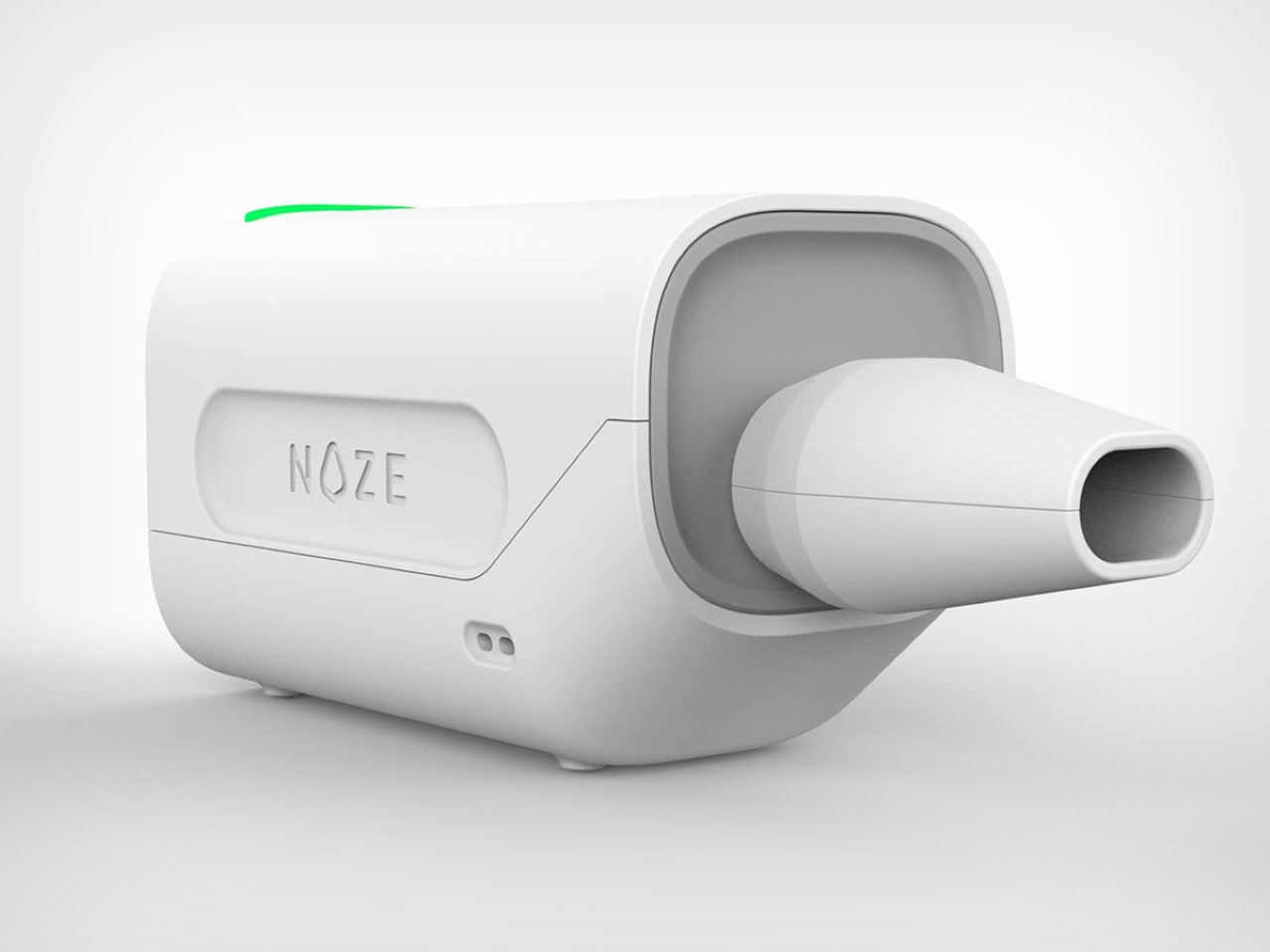
Humans breathe approximately 25,000 times a day, yet within each breath lies untapped health data that a Canada-based promising startup aims to decode with their innovative handheld device. Meet the DiagNoze, a portable diagnostic tool can ‘smell’ diseases simply by analyzing your breath. The device reads volatile organic compounds (VOCs) in exhaled air, identifying biomarkers for various conditions including tuberculosis (TB). By identifying these compounds with impressive accuracy, DiagNoze offers real-time, portable diagnostics that are accessible almost anywhere, addressing critical healthcare gaps in both developed and underserved regions. The device integrates next-generation machine intelligence with NASA-derived sensor technology, delivering quick and cost-effective health insights where traditional diagnostics fall short due to high costs and slow processing.
While the most common use of breathalyzers has been to detect alcohol levels, this device can identify diseases simply by scanning your breath.
DiagNoze’s compact design and ease of use make it a practical solution for healthcare settings with limited resources. In regions where access to timely testing is scarce, the device’s rapid diagnostics can lead to earlier interventions, improving patient outcomes and reducing the spread of diseases. The company’s mission received a significant boost through additional funding from the Bill & Melinda Gates Foundation, bringing their total grant to $1.8 million. This investment will support a clinical study aimed at using DiagNoze to detect TB in high-burden countries, directly contributing to global efforts to curb the spread of this deadly disease, which claims 1.3 million lives annually.
Looking ahead, Noze envisions DiagNoze becoming a staple in everyday healthcare, where real-time health monitoring is as routine as a checkup. The device’s ability to offer actionable insights from a simple breath could revolutionize diagnostics, moving us toward a proactive healthcare model focused on prevention and early detection… quite literally a breath of fresh air in the medical industry, if you ask me!
If you own an Amazon Echo Show 8 Photos edition, be prepared for your device to start showing ads. According to emails posted by customers on Reddit and Threads and first reported by The Verge, Amazon will discontinue its PhotosPlus subscription feature that let people upload and display their own pictures on the Echo Show 8.
Reddit/amazonecho
PhotosPlus subscriptions will end on September 12 and Amazon will end support for the photo feature on September 23. Instead, affected customers will have to upload their photos to Amazon Photos with 25 GB of storage and learn to live with the ads on their home screen.
The feature, which costs $2 a month, let users upload their own photos for display on the Echo Show 8’s home screen turning the voice and touch controlled screen device into a digital picture frame. The screen would rotate the owners’ photos every 30 seconds, a feature that could be left on indefinitely (or as long as it could last on its chargeable battery).
Any mention of the PhotosPlus subscription has been removed from Amazon’s website. The Amazon Echo Show 8 Photos Edition is also no longer for sale.
Amazon has seen some major struggles with Alexa devices. The Wall Street Journal reported last month that Alexa lost Amazon more than $25 billion from 2017 to 2021. Amazon has tried to recoup some of those losses by eliminating bonuses to Alexa developers. The tech giant is also reportedly working on an advanced version of Alexa known as “Remarkable Alexa” that could come with a monthly subscription fee.
This article originally appeared on Engadget at https://www.engadget.com/big-tech/amazon-will-discontinue-the-echo-show-8-photos-editions-main-reason-for-existing-210045966.html?src=rss
Urwerk is celebrating the 10th anniversary of the EMC series this year with the release of 10 limited edition pieces that are made out of fuselage pieces of the Lockheed SR-71 “Blackbird” aircraft. Hence, the naming convention “EMC SR-71” which pays homage to the mechanical precision of the famous timepiece that allows the wearer to adjust the mechanical precision offset by the small environment irregularities over time.
The exclusive masterpiece is made in collaboration with aerospace and lifestyle brand Dreamland. This timepiece has been on the idea sheet for as long as four years – back when watch designer Jason Sarkoyan and aeronautical engineer Dr. Roman Sperl inaugurated the Dreamland brand.
The idea of the Urwerk EMC SR-71 materialized when Dreamland got hold of the SR-71 fuselage’s titanium alloy parts. For this limited edition run, the composite of aluminum, vanadium, silicon, iron, and molybdenum metals is melted to create the folding crank handle of the built-in generator of the watch. The timepiece embraces the angular style of EMC watches to replicate the look of reconnaissance aircraft cockpit instrument panels. Urwerk uses the trusted in-house Caliber UR-EMC manual-wind movement (at 28,800vph frequency) that is a traditional Swiss lever escapement combined with an integrated timing machine. Thus, the watch has a power reserve of 80 hours before needing another cranking. The raw feel of the SR-71 is apparent from the four screws securing the case back.
The matte finish SR-71 has a dial measuring 47.55mm wide by 17.58mm thick, with a profile of 49.57mm in the lug-to-lug direction. The dials indicate the hours, minutes and seconds counter in the bottom right corner. The top left corner dial shows the amount of deviation in movement that can be actuated over a period of time. The power reserve of the watch is indicated by a small arc-shaped register on the left-hand side. Adjacent is a larger arc showing the δ performance indicator.
Olive green Velcro-style straps of the timepiece are mounted to the articulated lugs, unlike other conventional watches. The upper frame and the directional arrow for the generator crank are finished in bright yellow to go with the instrument panel theme. Since the 30-meter water-resistant Urwerk EMC SR-71 entangles Blackbird’s eventful history and carries actual parts from the spy aircraft, the $175,000 price makes complete sense!
A new Zombies mode is headed to Call of Duty: Black Ops 6. A new cinematic trailer released on Friday shows that the DLC will take players to a small town called Liberty Falls infested with the running dead.
The trailer starts in a picturesque piece of America with an old-timey song setting the tone. Then everything goes to hell and our unnamed hero wakes up in a post-apocalyptic world from what was just a nightmare all along. He receives a bulletin that the running dead are on their way so he picks up a shock rifle to start popping off some zombies’ tops. The big reveal at the end features some kind of menacing villain that feels like a cross between ZAX from Fallout 76 and GLaDOS from the Portal games.
This is just a premature judgment based on the trailer but it looks and sounds a lot like Fallout, another game that takes place in a world where humanity ends and mutant humans roam the landscape.
There’s no official wide release date for Black Ops 6’s Zombies DLC or any indication that it will or won’t be available when the game launches on October 25. The first gameplay footage of the Liberty Falls maps and story mode will premiere on August 28 at Call of Duty NEXT in Washington DC. Open beta access will start on August 30. Call of Duty: Black Ops 6 will also be available on Xbox Game Pass on launch day.
This article originally appeared on Engadget at https://www.engadget.com/gaming/the-trailer-for-call-of-duty-black-ops-6s-zombies-dlc-has-risen-191550462.html?src=rss
The cold-rolled stainless steel alloy gives the Cybertruck resistance against any bumps, furious kicks, or stone pelting that would bust any other vehicle. That makes the futureproof truck the perfect candidate for a military-grade upgrade. Archimedes Defense has these ambitions for Tesla’s tough EV off-roader as they have teamed up with Unplugged Performance (upgrade kit and component maker for law enforcement agencies) to create the aftermarket Sting kit to bump up the durability and functionality of Cybertruck.
Archimedes Defense supplies American agencies with high-performance generators, and it’s not surprising the kit comes with a front-mounted Genset generator capable of running on diesel, biodiesel and even jet fuel. The single-piston generator has a charging rate of 125 kW, so that the EV can be fully topped up anywhere, anytime.
This wild modification for the Cybertruck will come in three variants – Sting Baja, Sting Protector and Sting APC tailored for intense off-roading, a heightened level of protection from gunshots, or defense against IED and mine protection respectively. Thus, making the Hunk tailored for a civilian or military upgrade with incremental levels of modifications. What’s common to all these versions are large off-road tires, large antennas mounted on the rear and fog lamps. The doors have been reinforced which reduces the size of the windows.
First up the sting Baja version adds the Up Invincible off-road package for improved performance with the lightweight aviation-derived 800V Genset that charges the truck, as well, as any other vehicle in need. It is equipped with Tesla’s Starlink connectivity and a receiver mounted on the bed.
Then there’s the Sting Protector version suited for the wealthy that adds to the Baja’s capabilities for moderate threat environments. The bolt-on package of the Sting Protector adds an extra layer of steel so that it can even take on 7.62mm assault rifle rounds. It can be bought with or without the Genset depending on the needs.
The best out of them all is the Sting APC variant with the armored protection for defense. It gets upgraded bolt-on, bolt-off external offset steel and ceramic plating for protection against 14.5 mm machine gun rounds, IEDs and mines. It also gives the buyer the option to mount the add-on generator for doubling the range.
According to Archimedes Defense, the aftermarket kit is available for $500 reservations and the actual price of the base variants is speculated to be $40,000. The APC version will be available in late 2025, while the Baja variant will be available a little earlier.
Meta has canceled its plans for a long-rumored mixed-reality headset that was intended to compete with the Apple Vision Pro, according to reporting by The Information. The company told employees at Reality Labs to stop working on the device after a product review meeting attended by CEO Mark Zuckerberg, as cited by Meta staffers.
The headset was internally referred to as La Jolla and was reportedly supposed to release in 2027. This mixed-reality device was allegedly heads and shoulders above the Quest 3, with ultra-crisp micro OLED displays. This is the same display technology used in the Apple Vision Pro.
Reporting indicates that a major sticking point was cost. The team wanted to get the device under $1,000, but those micro OLED panels don’t come cheap. The Vision Pro, after all, is $3,500.
Another likely reason the premium device got canned is that, well, there might not be that much hunger for expensive headsets. The Vision Pro’s sales have been sluggish and Meta’s own pre-existing high-end headset, the Quest Pro, was widely ridiculed for coming in with a $1,500 price tag.
It’s important to note that this doesn’t mean Meta is abandoning VR and MR devices. It’s just putting the kibosh on one expensive, high-end headset. There are plenty of rumors out there that a Quest 4 is coming, alongside a more budget-friendly version of the Quest 3. Meta is also reportedly prepping some new AR glasses that will likely be shown off at the next Connect event on September 25.
The CTO of Meta, Andrew Bosworth, echoed the above sentiment. He wrote on Threads that the company has "many prototypes in development at all times" and that "decisions like this happen all the time."
The company is, however, shifting its strategy a little bit. Beyond canceling the aforementioned headset, Meta’s been trying to license its XR software to third-party hardware makers. The platform, which is called Horizon OS, might be licensed to Indian tech giant Jio as an opening move in this gambit. A deal with LG, however, fell through.
It’s always possible that the company will revive the concept of a high-end headset in the future, once the space gets more consumer traction. In the meantime, the Quest 4 will reportedly hit store shelves in 2026.
This article originally appeared on Engadget at https://www.engadget.com/ar-vr/meta-has-reportedly-killed-its-apple-vision-pro-competitor-184446962.html?src=rss
Microsoft announced it will host a special conference in September to discuss the lessons and security measures the industry can take away from the CrowdStrike computer shutdown in July. The Windows Endpoint Security Ecosystem Summit is scheduled for September 10 at Microsoft’s Redmond, WA headquarters.
The event will feature representatives from Microsoft, CrowdStrike and other cyber and computer security companies. The participants will explore changes in industry practices and the use of applications that can prevent future computer shutdowns.
An executive who spoke to CNBC anonymously says one of the talking points of the conference will address the use of applications that rely more on Windows’ user mode instead of kernel mode. The July outage occurred because Crowdstrike’s agent operated in kernel mode in which the central processing unit gives software total access to a system’s resources and hardware. Applications in user mode are more isolated so they can’t bring down other systems.
The attendees will also discuss implementing eBPF technology into systems to check programs without triggering system wide crashes. The conference will also feature discussions on the use of safer programming languages such as Rust, an alternative to programming languages such as C or C++.
CrowdStrike blamed faulty testing software included in an update as the cause of the crash that shut down 8.5 million Windows machines starting on July 19. The shutdown causes blue screens of death for systems for banks, airlines and businesses around the world.
This article originally appeared on Engadget at https://www.engadget.com/cybersecurity/microsoft-will-host-a-security-conference-after-the-crowdstrike-shutdown-172119101.html?src=rss
Designed for the Hope Village, this upcoming community center in Tanzania features a mindblowing 3D-printed design. Instead of being constructed from layered concrete like typical 3D-printed projects, the walls will be built using locally sourced soil. Designed by Hassell in collaboration with the Australian-based charity foundation One Heart, the community center is part of an expansive plan to offer housing, childcare, school, and skills training to young girls in Kibaha, eastern Tanzania.
“The Hope Village community hall design seeks to create a beautiful, functional, safe, and uplifting environment that provides both hope and education for vulnerable girls,” says Mark Loughnan, Principal, and Head of Design at Hassell. “The hall is a welcoming space that creates an innovative central activity hub connecting with its surrounding environment. The design and building process for the hall aims to engage the community and provide ongoing opportunities for local participation and education throughout construction.”
The community center is designed to be pretty complex, and it includes walls that are made using soil sourced within 25 km of the site and a WASP 3D printer. The center will be printed using a clay-based earthen mixture, released from a nozzle in layers. The walls will be reinforced with a thin wire mesh between layers.
As you enter the community center, you are welcomed by a massive open floor plan that perfectly suits the local climate. It includes a limited number of columns to support flexibility. A central steel beam was constructed to be the structural spine of the center, and it supports a roof built from locally sourced timber sections. The roof is equipped with cladding made from readily available corrugated metal sheet panels, which keeps the project budget-friendly. The project also includes the Institute for Advanced Architecture of Catalonia, IAAC, and Clarke Hopkins Clarke.
Even if you're not a student, you can still take advantage of the many back to school sales out there. As we do each Friday, we searched around to see if any of the tech we've previously covered and recommend is currently on sale. We spotted the lowest price yet on the 9th-generation iPad — it may be discontinued, but $200 for a capable Apple tablet is still a sweet deal. Our current favorite wireless headphones, the Sony WH-1000XM5 are back down to their July Prime Day price. And Amazon is throwing in a free smart bulb on top of discounted prices for a number of its Echo speakers and displays. Here are the best tech deals from this week that you can still get today.
This article originally appeared on Engadget at https://www.engadget.com/deals/the-9th-gen-ipad-is-cheaper-than-ever-at-199-plus-the-rest-of-this-weeks-best-tech-deals-170600479.html?src=rss
The 28-year-old founders of TollBit, a New York-based startup that is all of six months old, think we’re living in the “Napster days” of AI. Just like people of a certain generation downloaded digital music, companies are ripping off vast swaths of the internet without paying the rights holders. They want TollBit to be the iTunes of the AI world.
“It’s kind of the Wild West right now,” Olivia Joslin, the company’s co-founder and chief operating officer, told Engadget in an interview. “We want to make it easier for AI companies to pay for the data they need.” Their idea is simple: create a marketplace that connects AI companies that need access to fresh, high-quality data to the publishers who actually spend money creating it.
AI companies have, indeed, only recently started paying for (some of) the data they need from news publishers. OpenAI kicked off an arms race at the end of 2022, but it was only a year ago that the company signed the first of its many licensing deals with the Associated Press. Later that year, OpenAI announced a partnership with German publisher Axel Springer, which operates Business Insider and Politico in the US. Multiple publishers including Vox, the Financial Times, News Corp and TIME, have since signed deals with OpenAI and Google.
But that still leaves countless other publishers and creators out in the cold — without the option to strike this Faustian Bargain even if they want to. This is the “long tail” of publishers that TollBit wants to target.
“Powerful AI models already exist and they have already been trained,” Toshit Panigrahi, TollBit’s co-founder and CEO told Engadget. “And right now, there are thousands of applications just taking these existing models off the shelves. What they need is fresh content. But right now, there’s no infrastructure — neither for them to buy it, nor for content-makers to sell it in a way that is seamless.”
Both Joslin and Panigrahi weren’t particularly knowledgeable about the media industry. But they both knew how online marketplaces and platforms operated – they were colleagues at Toast, a platform that lets restaurants manage billing and reservations. Panigrahi watched both the deals — and the lawsuits — pile up in the AI sector, then called on Joslin.
Their early conversations were about RAG, which stands for Retrieval-Augmented Generation in the AI world. With RAG, AI models first look up information from specific databases (like the scrapable portions of the internet) and use that information to synthesize a response instead of simply relying on training data. Services like ChatGPT don’t know current home prices, or the latest news. Instead, they fetch that data, typically by looking at websites. That absence of fresh data is why AI chatbots are often stumped by queries about breaking news events — if they don’t scrape the latest data, they simply can’t keep up.
“We thought that using content for RAG was something fundamentally different than using it for training,” said Panigrahi.
TollBit
By some estimations, RAG is the future of search engines. More and more, people are asking questions on the internet and expecting complete answers in return instead of a list of blue links. In just over a year, startups like Perplexity, backed by Jess Bezos and NVIDIA among others, have burst onto the scene with ambitions of taking on Google. Even OpenAI has plans to someday let ChatGPT become your search engine. In response, Google has sprung into action — it now culls relevant information from search results and presents it as a coherent answer at the top of the results page, a feature it calls AI Overviews. (It doesn’t always work well, but is seemingly here to stay).
The rise of RAG-based search engines has publishers shaking in their boots. After all, who would make money if AI reads the internet for us? After Google rolled out AI Overviews earlier this year, at least one report estimated that publishers would lose more than $2 billion in ad revenue because fewer people would have a reason to visit their websites. “AI companies need continuous access to high quality content and data too,” said Joslin, “but if you don’t figure out some economic model here, there will be no incentive for anyone to create content, and that’ll be the end of AI applications too.”
Instead of cutting one-off checks, TollBit’s model aims to compensate publishers on an ongoing basis. Hypothetically, if someone’s content was used in a thousand AI-generated answers, they would get paid a thousand times at a price that they set and which they can change on the fly.
Each time an AI company accesses fresh data from a publisher through TollBit, it can pay a small fee set by the publisher that Panigrahi and Joslin think should be roughly equivalent to whatever a traditional page view would have made the publisher. And the platform can also block AI companies who haven’t signed up from accessing publishers’ data.
So far, the founders claim to have onboarded a hundred publishers and are in pilots with three AI companies since TollBit launched in February. They refused to reveal which publishers or AI companies had signed on so far, citing confidentiality clauses, but did not deny speaking with OpenAI, Anthropic, Google and Meta. So far, they say that no money has changed hands between AI companies and publishers on their platform.
TollBit
Until that happens, their model is still a giant hypothetical — although one that investors have so far poured $7 million into. TollBit’s investors include Sunflower Capital, Lerer Hippeau, Operator Collective, AIX and Liquid 2 Ventures, and more investors are currently “pounding down their door,” Joslin claimed. In April, TollBit also brought on Campbell Brown as a senior adviser, a former television anchor who previously acted as Meta’s head of news partnerships for the better part of a decade.
In spite of some high-profile lawsuits, AI companies are still scraping the internet for free and largely getting away with it. Why would they have any incentive to actually pay publishers for this data? There are three big reasons, the founders say: more websites are taking steps to prevent their content from being scraped ever since generative AI went mainstream, which means that scraping the web is getting harder and more expensive; no one wants to deal with ongoing copyright lawsuits; and, crucially, being able to easily pay for content on an as-needed basis lets AI companies tap into smaller and more niche publications because it isn’t possible to strike individual licensing deals with every single website. Joslin also pointed out that multiple TollBit investors have also invested in AI companies which they worry might face litigation for using content without permission.
Getting AI companies to pay for content could provide a recurring revenue stream for not just large publishers but to potentially anyone who publishes anything online. Last month, Perplexity — which was accused of illegally scraping content from Forbes, Wired and Condé Nast — launched a Publishers’ Program under which it plans to share a cut of any revenue it earns with publishers if it uses their content to generate answers with AI. The success of the program, however, hinges on how much money Perplexity makes when it introduces ads in the app later this year. Like Tollbit, it's another complete hypothetical.
“Our thesis with TollBit is that if you lose a page view today, you should be compensated for it immediately rather than a few years after when a tech company figures out its ads program,” said Panigrahi about Perplexity’s initiative.
Despite all the existing licensing deals and technical advances, AI-powered chatbots still make for terrible news sources. They still make up facts and confidently conjure up entire links to stories that don’t actually exist. But technology companies are now stuffing AI chatbots in every crevice they can, which means that many people will still get their news from one of these products in the not-so-distant future.
A more cynical take on TollBit’s premise is that the startup is effectively offering hush money to publishers whose work is more likely than not to be sausaged into misinformation. Its founders, naturally, don’t agree with the characterization. “We are careful about the AI partners we onboard,” Panigrahi said. “These companies are very mindful about the quality of input material and correctness of responses. We’re seeing that paying for content – even nominal amounts – creates incentive to respect the raw inputs into their systems instead of treating it as a free, replaceable commodity.”
This article originally appeared on Engadget at https://www.engadget.com/ai/this-startup-wants-to-be-the-itunes-of-ai-content-licensing-162942714.html?src=rss