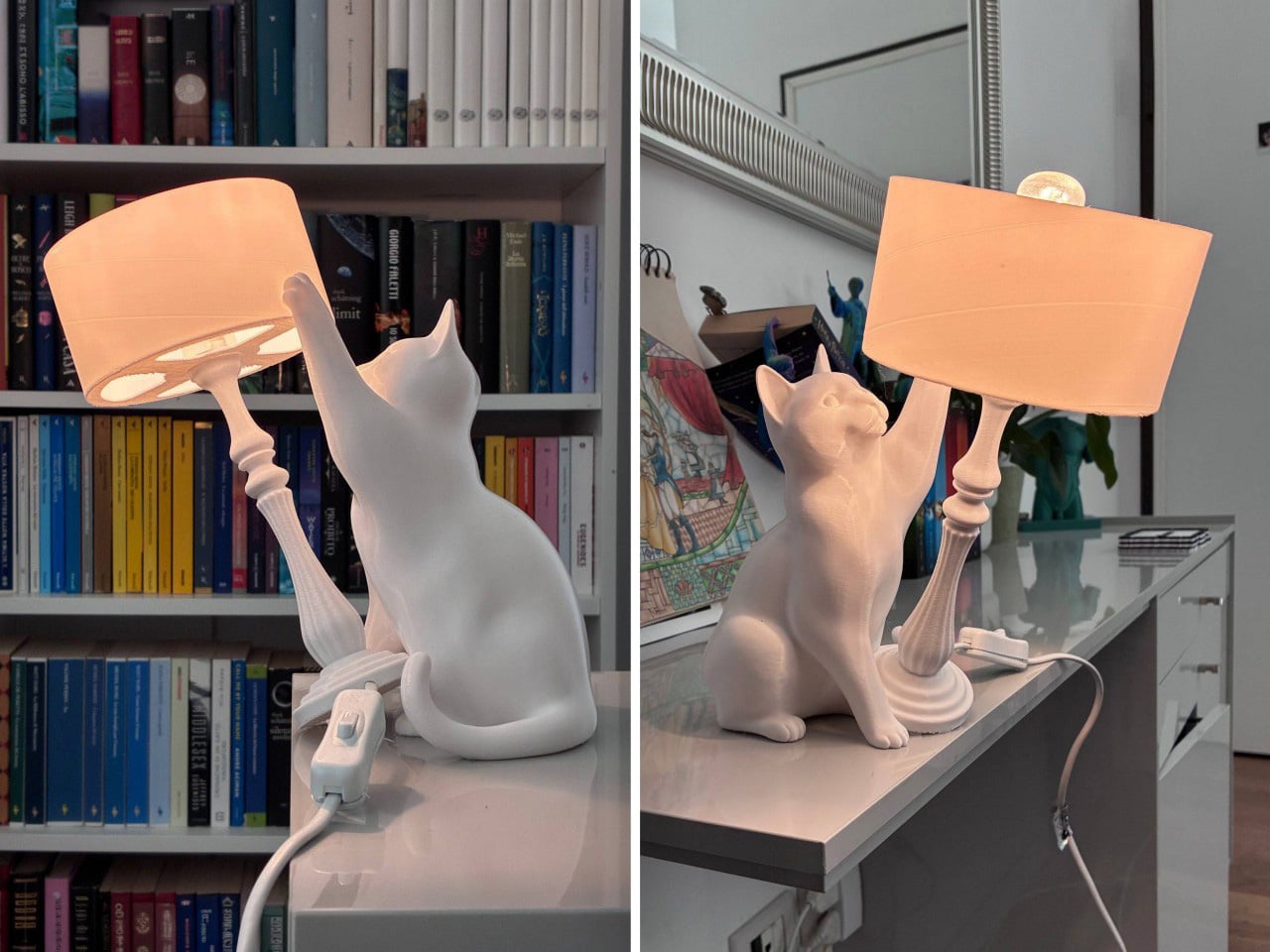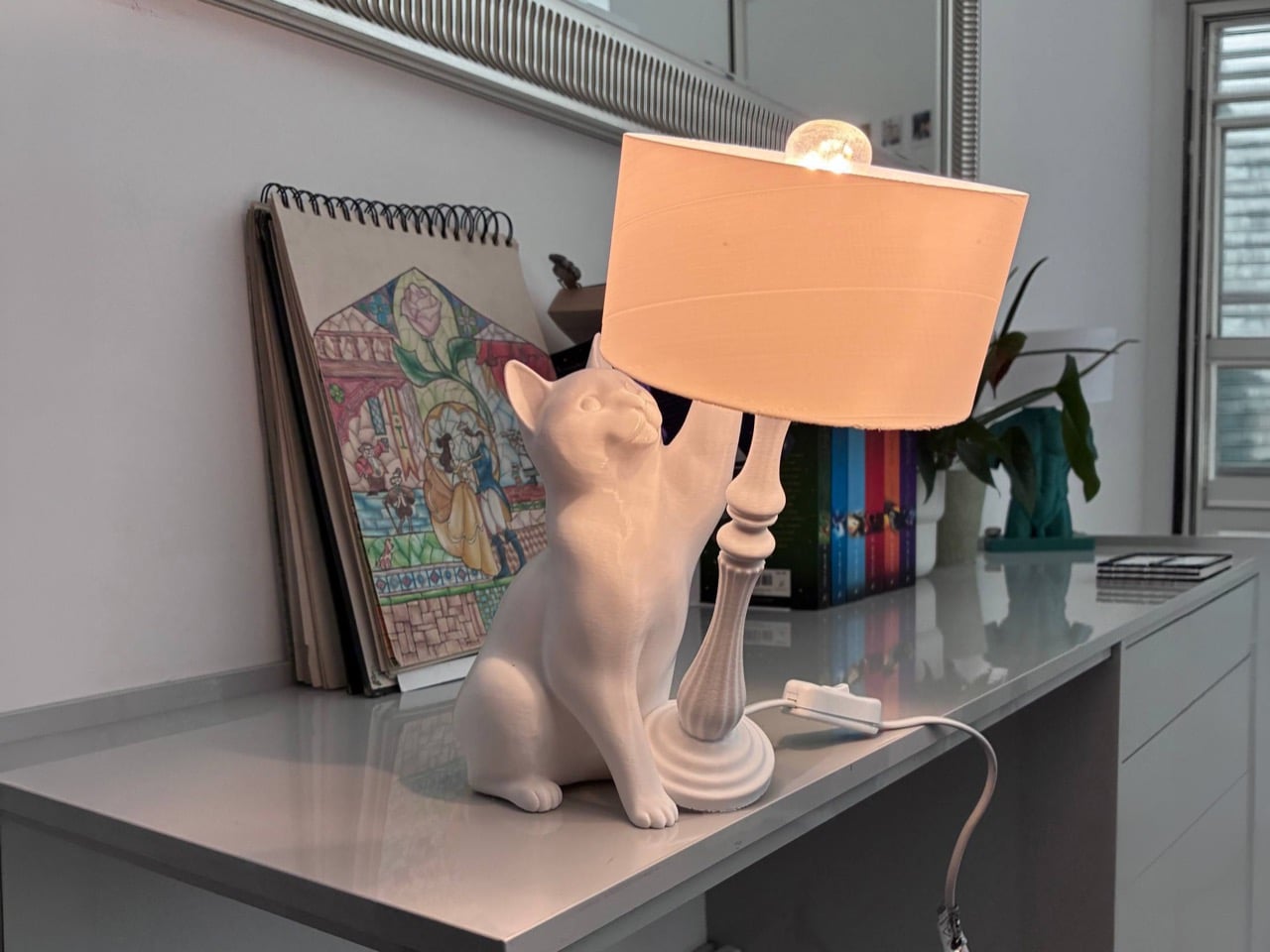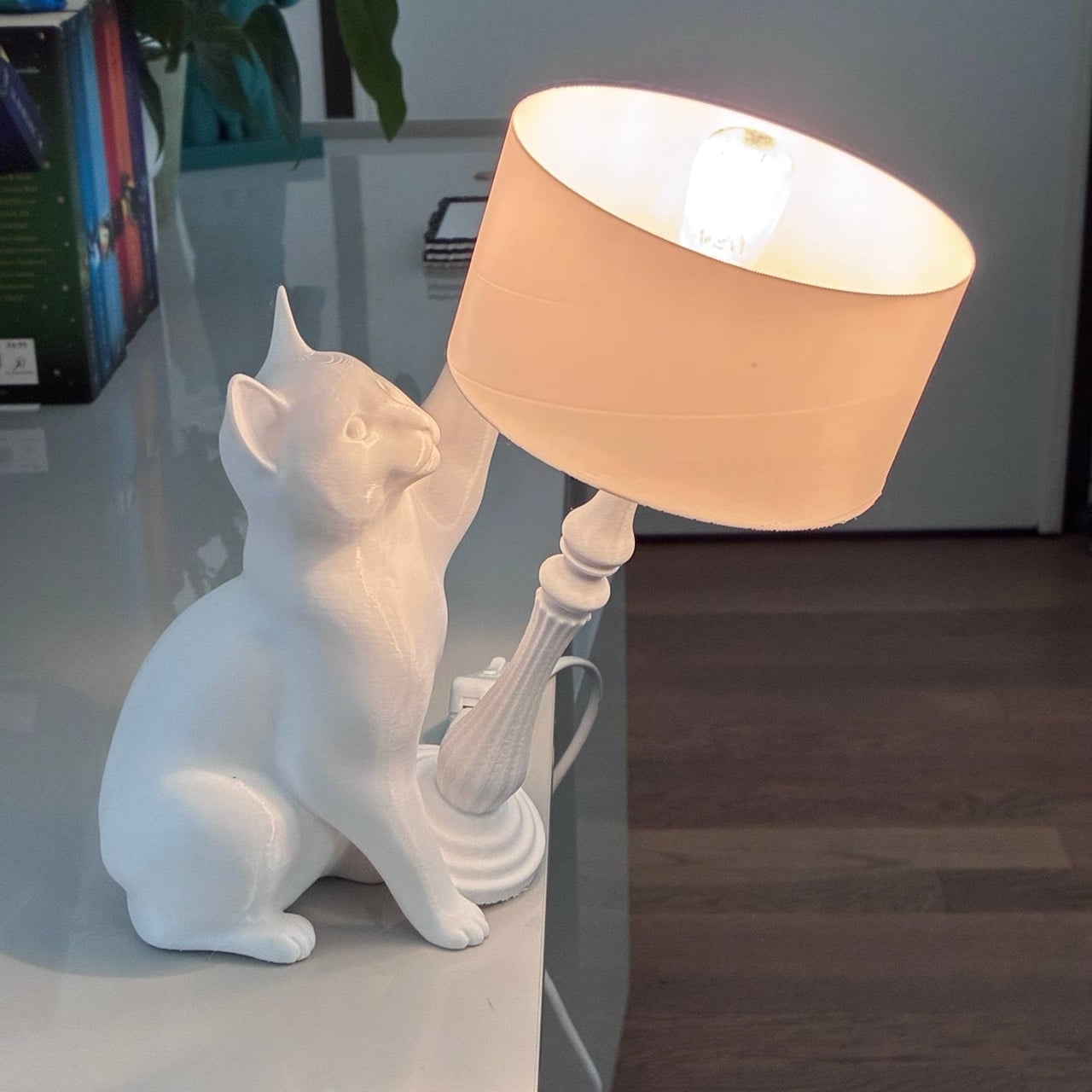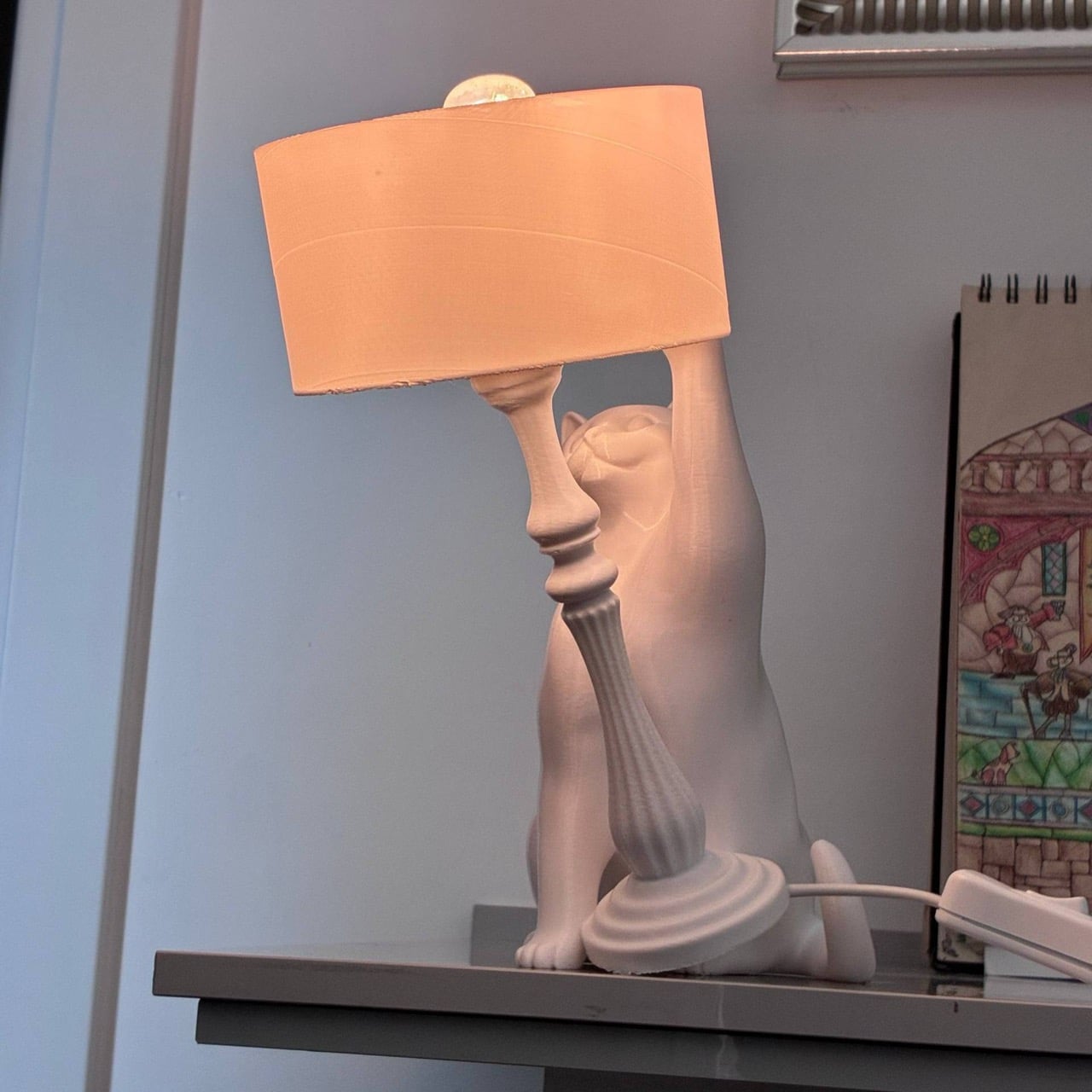
Palm-like floor lamp mix 3D printed and handmade elements in a surreal design

Most floor lamps are designed with modern home interiors in mind, whether they come in minimalist forms or industrial aesthetics. Even those with more organic curves and shapes offset that with metallic materials or finishes that still make them look at home in the majority of modern interior designs available today.

Of course, those aren’t the only options, and this strange-looking floor lamp puts a different spin on nature-inspired design. Made from clay but shaped like tree trunks, these lamps put an almost otherworldly vibe to a space as if you stepped into a parallel world with alien colors and unusual shapes.

Designers: Ana Milena Hernández Palacios, Christophe Penasse (Masquespacio)

Lamps don’t just give light; they can also change the ambiance of a space. With the right design combined with a themed interior, a living room can become a cinema, a spa, or even a jungle. Some have designs intended to fade into the background, while others capture your attention, imagination, and envy. While most lamps are made from a combination of metal, plastic, and sometimes glass, those are definitely not the only options available.

It might be named after a flower, but the Ceramic Blossom floor lamps stand tall like trees. In fact, if you’re familiar with the grooves on the trunk of a palm tree, you might even mistake these lamps for one, except for the fact that they come in colors other than earthy tones, giving them an alien vibe. The lighting part itself is enclosed in a white dome, adding to that otherworldly aura.

The lamp isn’t made from wood either and is constructed using a combination of traditional and modern techniques. The core of the “trunk” is 3D printed from clay, while the petal-like protrusions are carefully made by hand. These are assembled together before they’re fired to give it a glazed finish. The body is made in segments rather than as a whole and then simply stacked together.

The Ceramic Blossom lamp can definitely stand on its own, becoming a point of interest in any room motif. That said, it is perhaps best used in an interior with nature-inspired design and indoor plants, especially large, leafy plants. This gives an image of walking into a fantasy world, capturing your imagination and perhaps even inspiring your mind.

The post Palm-like floor lamp mix 3D printed and handmade elements in a surreal design first appeared on Yanko Design.
This 3D-Printed city car is AI-assisted emotional companion for city rides

Automatic transmission cars were good, self-driving EVs even better, and now ones that can console you on a bad mood day are god sent. Yes, this is the future of mobility that’s upon us and the Robo-EV by PIX Moving Team is the living example.

The micro car envisioned for choked city mobility is completely 3D-printed out in one piece making it structurally strong and easy to manufacture for commercial use. The Switzerland-based company has crafted a prototype of this bold vision and we are impressed.

Designer: PIX Moving Team

The real-time manufacturing processes employed in manufacturing this four-wheeler make way for complex component manufacturing, ease of customization, and of course modularity of use. There are other benefits as well including lightweight yet robust chassis and frame. The team used basalt composite to make the suspension ultra-reliable minus any bells or whistles. Even the wheel arches are made from 3D-printed metal.

Its real USP lies in the smart technology embedded on the inside. Robo-EV comes with an AI system that can detect the mood and tone of the driver in real-time. Based on the data, the intelligent car can provide emotional support via its large language model. The interaction can be two-way as the car’s voice system also functions as a voice assistant. In a way, you won’t need a buddy on long trips when you’ll be driving this Swiss EV on the roads.

Robo-EV touts regenerative braking adding to its reserve of battery power, and extending the total range. PIX Moving Team tested the two-seater vehicle on the road and the results have not yet been shared with media houses. The electric vehicle of the future is targeted primarily towards ridesharing and public transport domains. More than that it gives a clear vision of what the future of city transportation will be like.

The post This 3D-Printed city car is AI-assisted emotional companion for city rides first appeared on Yanko Design.
3D printed chess pawns transform into queens thanks to magnets and springs

Chess is a game that has existed for centuries, and it hasn’t really changed much during that time, especially in recent decades. The rules of the game are pretty much the same, which includes “power-ups” that were invented way before the term even showed up in video games. Of course, these moves don’t require any special piece outside of what’s already included in the entire set, but that doesn’t mean we can’t do anything to spruce it up.

This rather elaborate 3D printed design, for example, solves the practical problem of how to represent a pawn that has reached the opposite end and “evolved” into a queen. Sure, you can just try to remember which is which, but wouldn’t it be easier if you had spare queen pieces instead? Better yet, why not just literally evolve the pawn instead, keeping the chess set simple, relatively?

Designer: Works By Design

“Queening” is what happens when a pawn is crowned and gains the queen’s large movement powers when it reaches the opposite end of the board. In some cases, when your queen has already been captured, you can simply swap out the pieces. But what if your queen is still there or, by some stroke of luck, you have two pawns that become queens?

This form-changing pawn is one solution that utilizes 3D printing, springs, magnets, and a rather complicated internal design. The challenge was to take a regular-sized pawn and have it not only expand to the size of a queen but also exhibit its features, particularly its flared crown. If you’ve ever watched Transformers, then you might get the idea more or less.

The design underwent several iterations, particularly with the spring mechanism that holds the pieces together and then pushes them out to expand. In the end, the simpler version won out, though the final pawn size was definitely larger than normal. Fortunately, it still fits within international standards, so it probably won’t be contested in an official match.

The 3D-printed pawn uses magnets in its feet to trigger the expansion mechanism, so placing it on any metal surface, like the back row of this custom-made chess board, would make it spring into action, so to speak. It’s definitely a convoluted design for a rather simple problem, but it also adds a bit of excitement and thrill to the game, becoming a goal of its own in addition to actually winning the match.

The post 3D printed chess pawns transform into queens thanks to magnets and springs first appeared on Yanko Design.
Make your own Steam Deck handheld gaming PC using a modular laptop

Handheld gaming devices are quite the fad these days, especially now that major PC makers have all joined the bandwagon. Although we’re reaching a point where all internal specs are becoming identical, there’s still a variety of designs and features available. Just like laptops, however, these designs are fixed and you can only select from what others have already made.

Embodying the spirit of desktop computers, this latest DIY project enables you to build your own Steam Deck clone, presuming you have the parts and skills to assemble one. Unlike other configurations, however, this isn’t relying on some low-power computer like the Raspberry Pi but instead leans on the power provided by a modular laptop design.

Designer: Beth Le

There is no shortage of mods and projects to build custom handheld PCs, whether for gaming or light computing, but the majority of these use small but under-powered single-board computers or SBCs. These are cheap, easy to cram into small shells, but will hardly be able to play any games outside of retro emulators. The problem is that there isn’t an SBC powerful enough to support that use case.

That’s where the Framework modular laptop comes in. Thanks to its modular design, it is possible to actually purchase the mainboard of such a powerful computer, and the 13-inch variant happens to be an adequate size to stuff inside a 3D-printed gaming handheld shell. Although it doesn’t exactly have gaming-worthy specs, it’s still powerful enough to run some AAA games with low settings.

The Beth Deck, which is the name for this hot new build-it-yourself handheld PC, doesn’t stop there. It also uses a matching Framework 13 battery and many off-the-shelf parts. Everything that can’t be bought can be 3D printed, and the claim is that you barely need to solder anything. You could almost say it’s like playing with LEGO, except with computer parts instead of bricks.

It’s not the perfect handheld design, of course, since the Framework 13 mainboard isn’t designed for that purpose. It does, however, reveal the possibilities available with such a modular component available for as low as $199. It might even inspire other designs that customize not just the appearance but also the controls. After all, if you can easily make a Steam Deck clone, why stop at being just a Steam Deck clone?

The post Make your own Steam Deck handheld gaming PC using a modular laptop first appeared on Yanko Design.
3D Printed lamps made from cornstarch plastic exude cute candy-like vibes

3D printing has truly revolutionized the design and production industry, giving anyone the power to create almost any form they can think of. That revolution, however, came at a price to the environment, increasing the use of plastic material even further. Thankfully, there has been some significant pushback and changes in this young industry, as different kinds of material become printer-compatible, including food, metal, or even wood. There are even attempts at using alternative source materials for plastic, like this playful 3D-printed lamp that uses a base that you might have never thought of: corn starch.

Designers: Alexandre Touguet, Lise Rissel

Of the many types of materials used for 3D printing, PLY or polylactic acid plastic is one of the most popular. Unlike most plastics that are made from petroleum, this thermoplastic uses organic material, in this case, corn starch. This gives PLA a more sustainable character, although sometimes minimally so. It is biodegradable, but only under specific conditions that aren’t always easy to meet naturally.

It’s still a step in the right direction, nonetheless, especially since it opens the doors to more interesting designs when used in 3D printing. ALT Light is one such example, using 3D printing to bring not only light but also a joyful atmosphere to any space. Although its design might be possible to execute using traditional manufacturing processes and harmful plastic, the product demonstrates the economic and environmental benefits of a more sustainable approach to design and production centered around 3D printing.

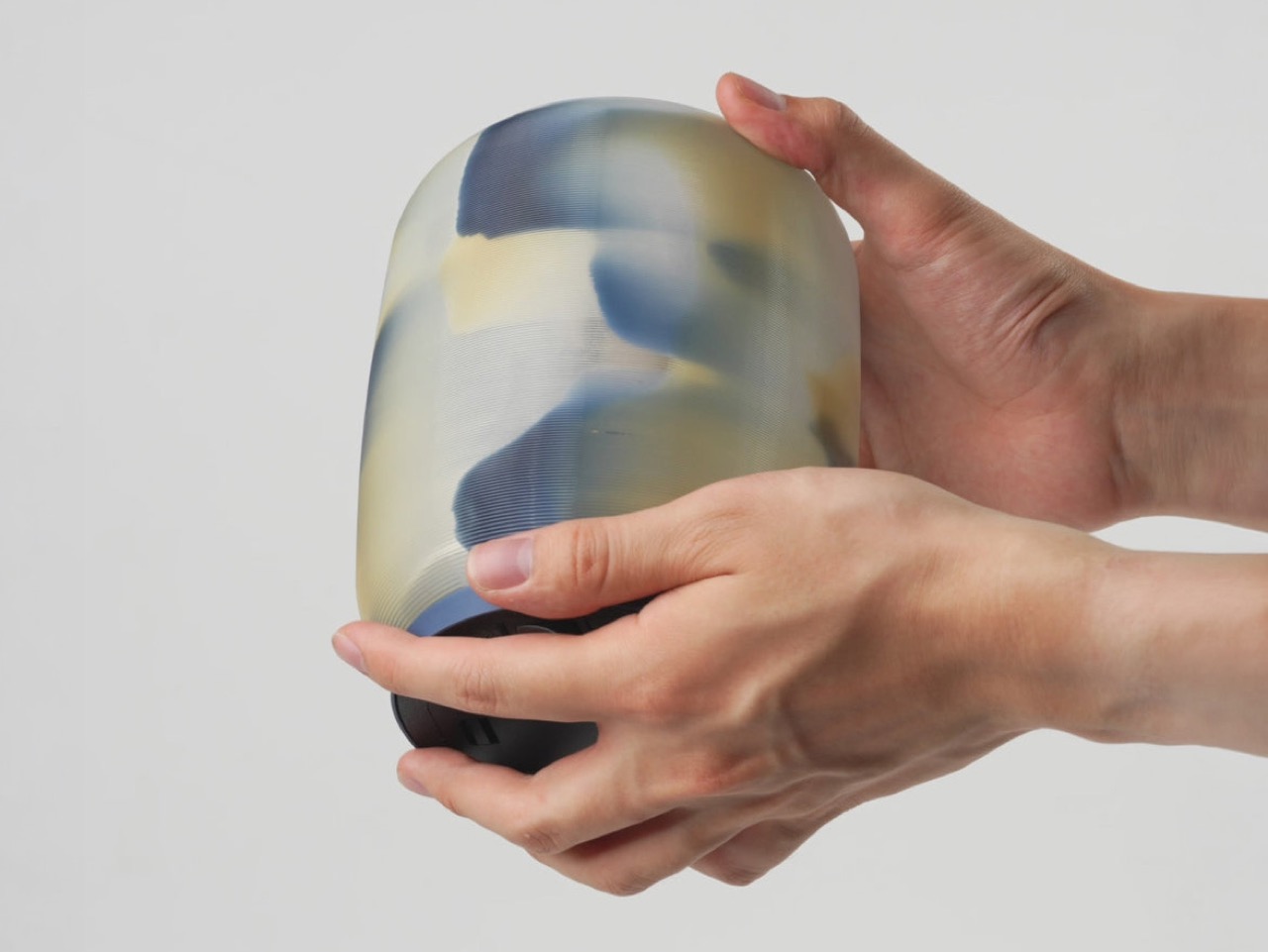
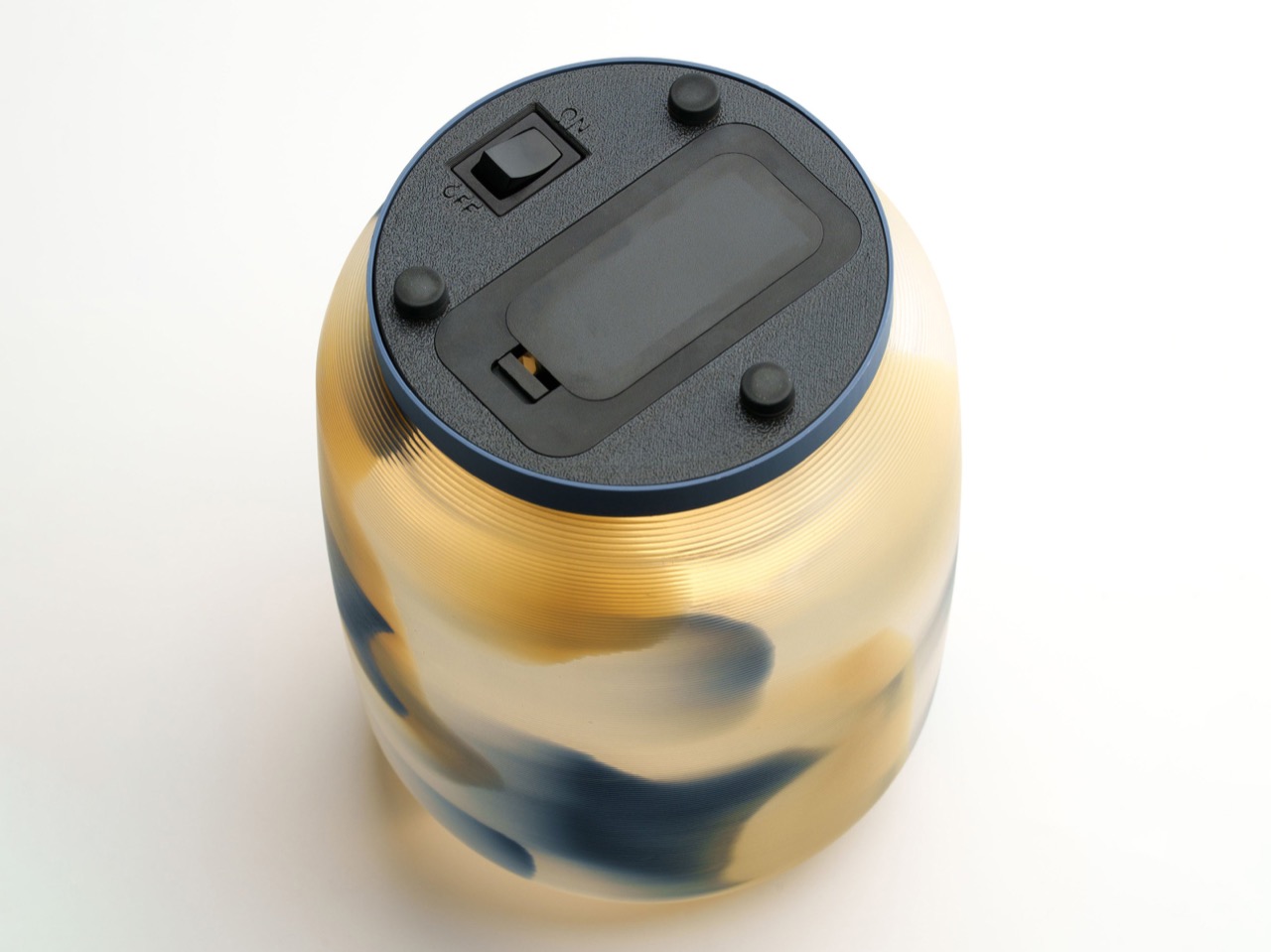
ALT Light starts from the bottom with a normal rectangular block, if you could call a block with vertical ridges “normal” in the first place. As you lift your eyes, higher, you are the block seems to flare open, creating the semblance of a traditional conical lampshade. It stops halfway through this transformation, though, creating a sense of instability and dynamism simply through forms, as if the lampshade is trying to break free from its confines.

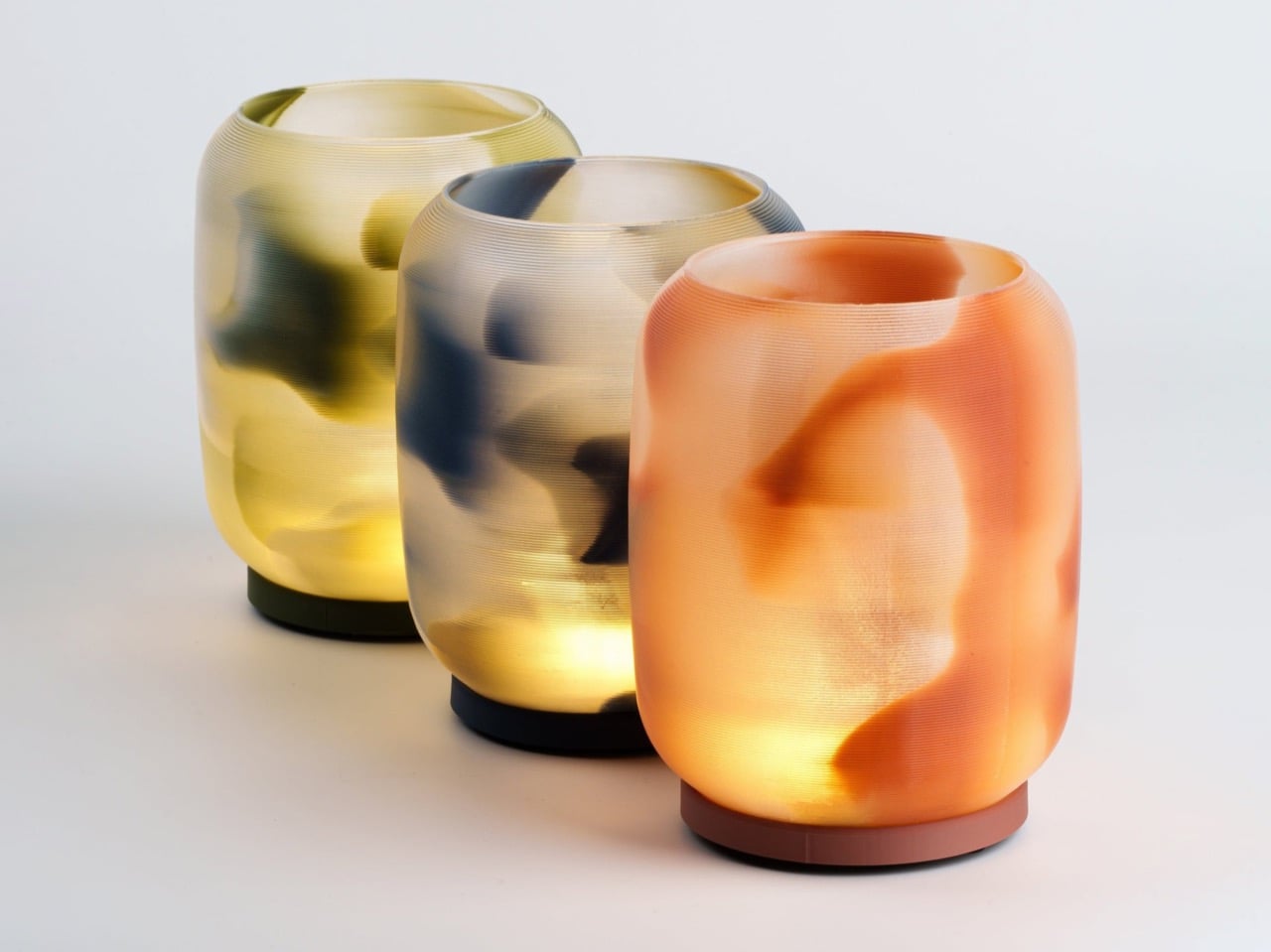
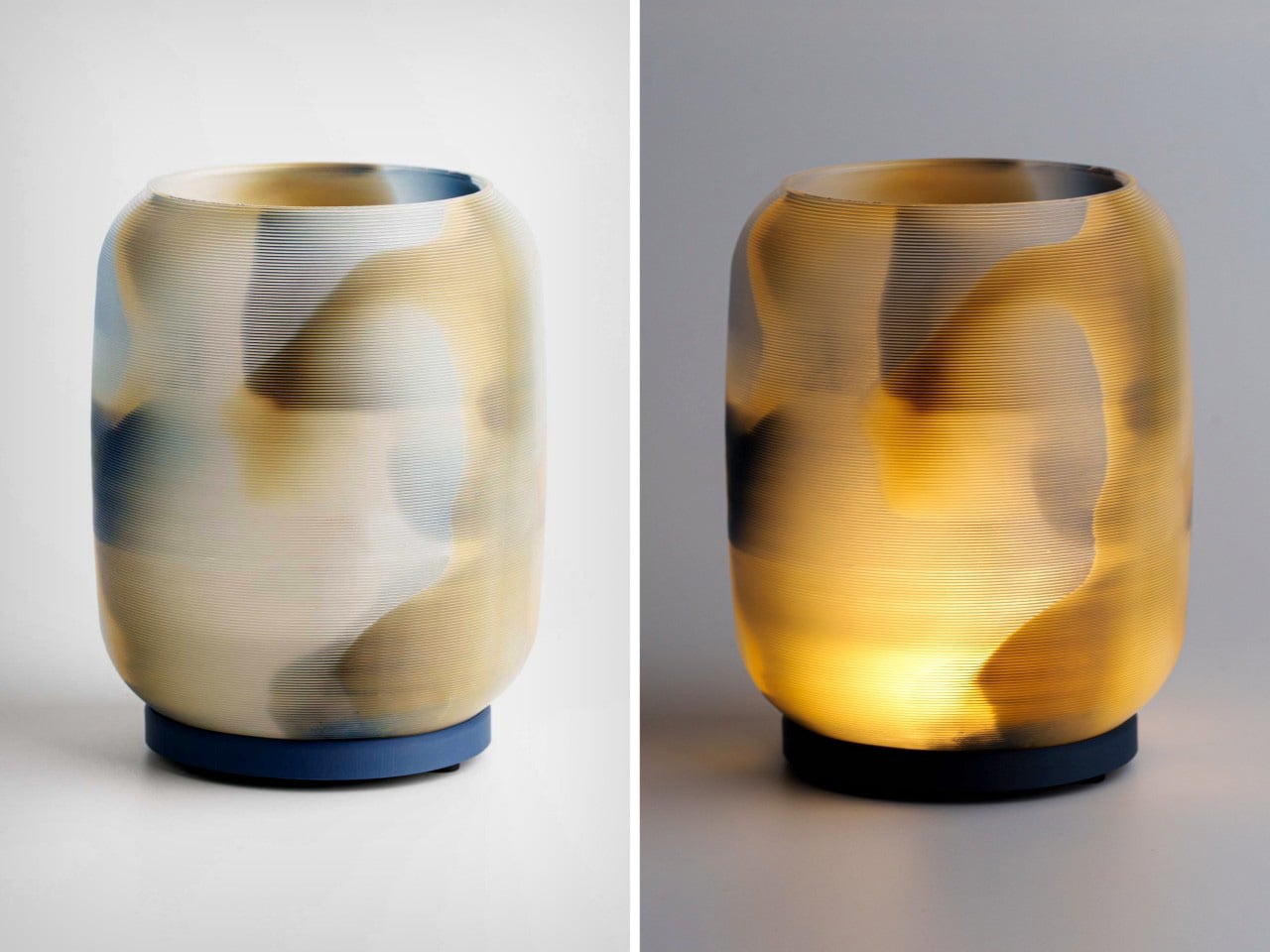
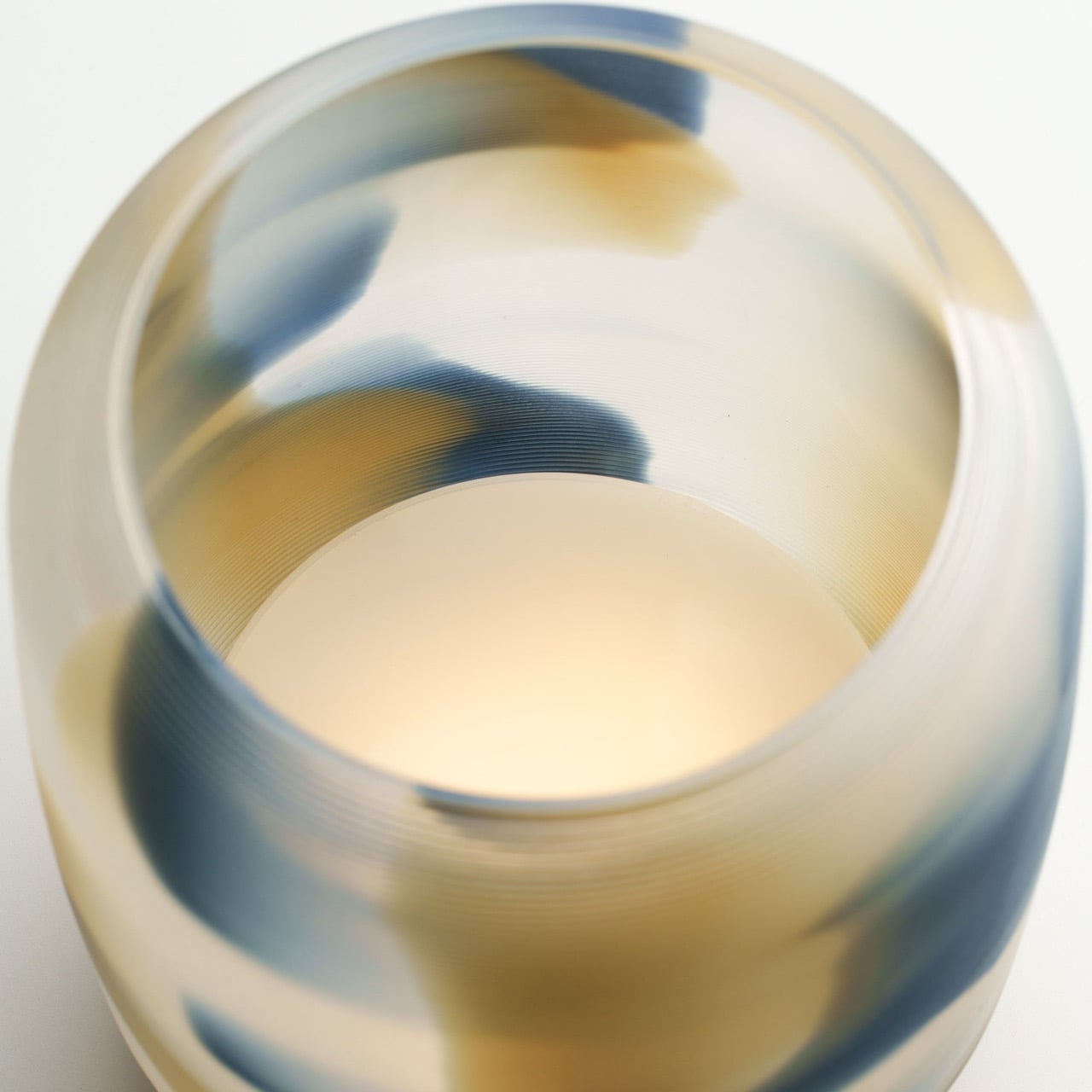
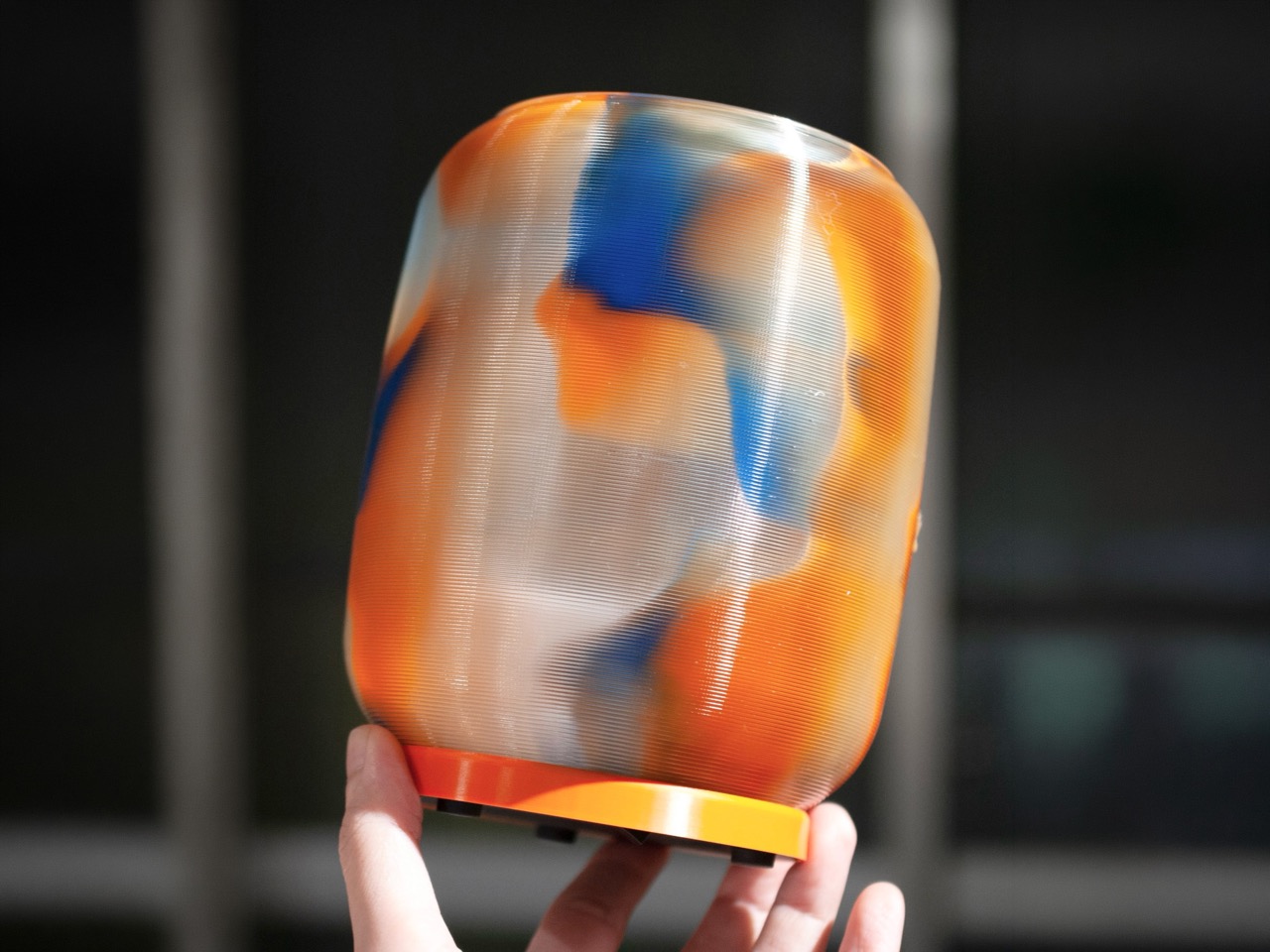
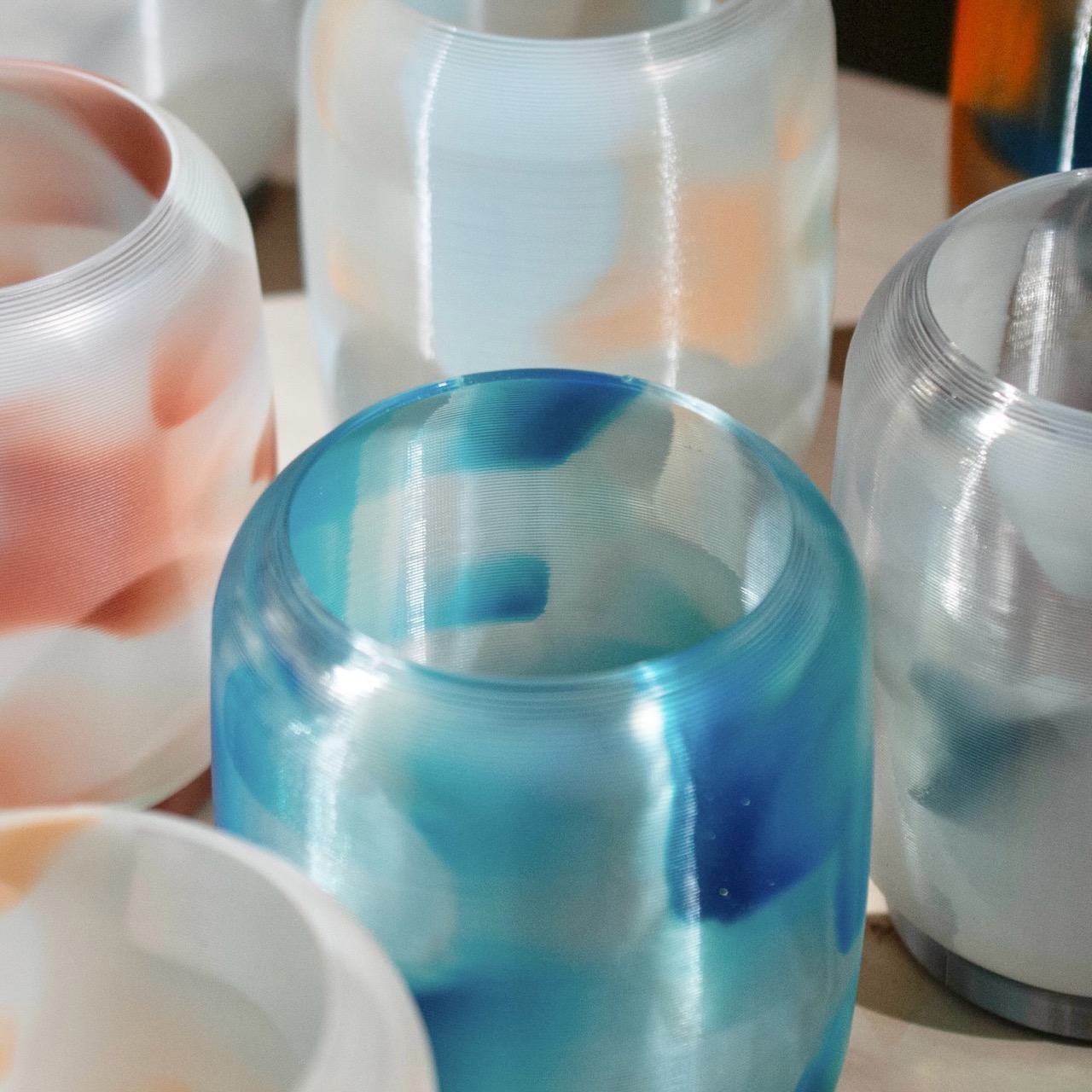
The lamp can come in different combinations of colors for the base and the lampshade. The transparent top gives it a jelly-like appearance, while the translucent version is like hard candy. The ribbed surface does more than just make the forms look interesting, they also create an interplay of light and shadow that mesmerizes the viewers. In addition to their unique designs, these lamps are all made in order to cut down on material waste, and each creation has minute imperfections that give each ALT Light lamp its own unique character.

The post 3D Printed lamps made from cornstarch plastic exude cute candy-like vibes first appeared on Yanko Design.
This Retro iPhone Case turns it into a Makeshift Old Windows PC with Clippy and Internet Explorer

Quite literally the opposite of Back to the Future, this iPhone 16 Pro case is more like “Forward to the Past”.

When you buy a phone, chances are you spring for a case immediately for one of two reasons – to either protect your phone, or to personalize it. However, Printables user Retron Print may have invented a new reason to add a case to your phone. Meet the iPhone Retro Case – a case that takes your cutting-edge smartphone and transforms it into a marvel of old-school technology. The two-part case sandwiches your phone in between, turning it into an old-timey CRT monitor (albeit with a functional main camera and dynamic island). To complement the case’s old-school design, Retron Print also equipped the phone with a retro home screen and custom icons and widgets. Although I’d personally love to have the iPhone stick to a Macintosh-based system, this one is unabashedly Windows, with a non-functional Clippy icon on the screen. Quite a downgrade from Siri and Apple Intelligence, no?

Designer: Retron Print

The beauty of the case is that it justifies every aspect of its retro design without compromise. Look at monitors from times of yore and they often had thick, chunky bezels. While most monitors came with a ‘chin’ which would either house a floppy disk reader or just control buttons, this retro case shifts the asymmetric chin to the side, with front-facing buttons that actually work. Built cleverly into the case’s mechanism are buttons that face forwards, but trigger the action and volume buttons on the side of the iPhone. The detailing’s prebuilt into the case’s design, and all you need to really do is 3D print and then assemble.

On the front, the case features an oval frame reminiscent of old CRT monitors, although it doesn’t obstruct the screen in any way. It’s a small but meaningful detail that gives the case a distinctly vintage vibe. Around the back, long, deep grooves evoke the look of classic desktop computers and also provide better grip. These thoughtful design elements ensure that while the case embraces nostalgia, it still offers the user a modern experience with improved functionality and tactile appeal. Meanwhile, speaker systems are accounted for too, with slots on the top and bottom that let you listen to audio from your iPhone.

When it comes to color options, Retron Print suggests using filament in shades like sandy beige, gray, or light brown to fully capture the retro essence. These muted tones are reminiscent of the classic electronics from decades past, enhancing the nostalgic appeal. This attention to detail extends to the print process itself. The case’s front and back panels are best printed on a textured print plate, adding an extra dimension to the overall look and feel, while the buttons should be printed on a smooth plate to maintain their tactile nature.

For those eager to bring a bit of retro flair to their iPhone, the case is available for iPhone 14 and iPhone 15 models. You can purchase the STL files for just $10 on Printables.com and print the case yourself, although this just includes the retro case’s 3D files and not the wallpaper and app icons. When it comes to color options, Retron Print suggests using filament in shades like sandy beige, gray, or light brown to fully capture the retro essence. These muted tones are reminiscent of the classic electronics from decades past, enhancing the nostalgic appeal.

However, commercial use of this model is restricted. To sell prints of this design, users must become a member of the Retron Print Commercial Club, ensuring that the creator, AndrzejG, receives credit and support for their work. This stipulation ensures that while the model is available for personal use, it remains protected against unauthorized distribution.

The post This Retro iPhone Case turns it into a Makeshift Old Windows PC with Clippy and Internet Explorer first appeared on Yanko Design.
PUMA Teams Up With A$AP Rocky to debut the Dragon-inspired 3D-Printed Mostro Shoe

They say your fashion choices are a reflection of your inner self. If that’s true, these shoes easily help channel your inner beast. Designed as a collaboration between rapper A$AP Rocky and PUMA, the Mostro 3.D is the latest in the partnership between the two. Not just your average shoe, the Mostro 3.D redefines the conventional, pushing the boundaries of design with a ferocity that commands attention. Drawing inspiration from the synergy of music, art, and technology, this collaboration elevates sneaker culture to new heights. Forget traditional aesthetics; this is all about unleashing the unexpected. With its red and black colorway, and the fiesty, scaly design achieved by 3D printing, the Mostro tries to grab eyeballs in ways that high fashion usually does – by being so audaciously different that you’re sure to make a statement.

Designers: A$AP Rocky & PUMA

Central to the Mostro 3.D’s allure is its groundbreaking use of 3D printing technology. Crafted through an advanced resin-based process, the shoe boasts a level of intricacy previously unattainable with conventional methods. This innovation translates into an arrestingly detailed silhouette, replete with audacious spikes that echo a futuristic, almost otherworldly presence. The sleek slip-on design serves not just as a convenience but as an aesthetic declaration of defiance against the norm. The gradient of black and red, achieved through a meticulous airbrush technique, becomes a dynamic canvas, capturing the essence of movement and transformation. Here, technology and artistry coexist in a harmonious dance, each pushing the other to create something truly transformative.

A$AP Rocky brings his raw, urban edge, infusing the project with an authenticity that resonates deeply with the streets. Conversely, PUMA’s legacy of innovation and its embrace of modern technology find a perfect playground in these shoes. It’s a meeting of rebellious spirit and technical prowess, culminating in footwear that’s as much about narrative as it is about aesthetics. Together, they craft more than a product—they create a voice that speaks to a new generation of fashion-forward thinkers. This is where music’s pulse meets the precision of advanced technology, resulting in an offering that truly transcends the ordinary.

The Mostro 3.D’s spiky, audacious design powerfully mirrors the trail Kanye West blazed with his Yeezy line, where footwear feels more like a wild artifact than a mere shoe. Channeling an almost primal vibe, these kicks tap into a non-human aesthetic that’s as captivating as it is rebellious. Imagine a creature from the Cambrian era, its unique form resurrected through cutting-edge 3D printing technology. Both A$AP Rocky and PUMA have seized this evolutionary inspiration, crafting a shoe that seems to pulse with life—a piece of wearable art that feels plucked from an ancient world, yet firmly planted in the future. This is more than just a nod to Yeezy’s avant-garde essence; it’s an evolution, inviting you to embrace a style that’s fiercely instinctual and utterly groundbreaking.

The Mostro 3.D captures a zeitgeist where fashion is not just about appearance but about identity and the courage to stand apart. These shoes are not just worn; they are unleashed—an anthem for those unafraid to make a statement. By challenging conventional means of design and production, A$AP Rocky and PUMA give us not only a glimpse into the future of footwear but also an invitation to take part in it. With the Mostro 3.D, the boundary between fashion and innovation blurs, offering us a tantalizing vision of what’s to come. Welcome to a new era of design where the only limit is imagination.

The post PUMA Teams Up With A$AP Rocky to debut the Dragon-inspired 3D-Printed Mostro Shoe first appeared on Yanko Design.
Spherical table lamp adds a beautiful playful touch to an everyday object

Lamps are the most common lighting fixture in our home, and they present the biggest opportunity to change the ambiance using thoughtful design. Some lamps are elaborate and luxurious, bordering on art masterpieces, while others are minimal to the point of disappearing from view. Lamps don’t just bring light to a room but also certain emotions like joy, energy, or fun. This lamp design, for example, tries to visually recreate the phenomenon of a ball colliding with a sheet of material, creating a playful mixture of uncommon forms, warm colors, and a simple yet impactful design that adds a little flavor to any shelf, table, or living space.

Designer: Lidia Gomez

There is probably nothing more playful than a ball. Its spherical kind introduces a form of instability that makes it wobble and roll unless something stands in its path. Both kids and adults alike love playing with balls, rolling them, throwing them, and even making them bounce. The playful “bonk” sound that this bouncing action makes is just as fun, which is why some kids just can’t stop doing it even after being scolded repeatedly.

The Bonk table lamp design brings that imagery to common everyday appliances, transforming it into something like a living and dynamic object. Its form, with the ball half sunken into what seems to be a sheet of fabric, captures and freezes that moment, creating a visual tension between movement and stillness, action and rest. It creates an interesting aesthetic on its own, and an almost eerie appearance once you turn the lamp on in the dark.

Almost like its shape, Bonk also balances its cheerful disposition with a more subdued color palette. Tiger Orange, Sand, Sunrise Yellow, and Stone convey warmth yet still remain subtle and almost understated. It creates a juxtaposition of design elements that is a perfect metaphor for the symmetrical yet unbalanced form of a ball. It combines all these into a design that will fit perfectly inside modern homes, regardless of the interior motif.

Bonk is also a design that’s a bit in touch with nature, even if indirectly. It can be 3D printed using FDM technology and utilizing PLA, a more renewable and sustainable form of plastic in wide use with this production method. Simple, striking, and sustainable, Bonk tries to challenge the status quo of home decor design where these elements can come together in a harmonious composition that not only brings light to your space but also sparks joy in your life.

The post Spherical table lamp adds a beautiful playful touch to an everyday object first appeared on Yanko Design.
Dieter Rams-inspired iPhone Standby Mode Dock comes from an alternate timeline

Have you ever wondered what would happen if two people from different time periods or locations met and worked together? Short of breaking the laws of time and space, we can only take a guess based on the works and ideas they left behind, though some “what if” collaborations feel more natural than others. The legendary industrial designer Dieter Rams, for example, has influenced generations of designers, some of whom became legends themselves and even carried on the spirit of his design philosophy. Perhaps nowhere is this association more pronounced than in the Ive-era Apple designs, particularly those that embraced minimalism to their very core. We might not need to imagine what a Rams-Ive collab would look like based on this rather simple yet intriguing iPhone dock that utilizes Standby Mode to become a modern version of the Braun DN 40 alarm clock that Rams designed.

Designer: Scott Yu-Jan x OVERWERK

Although probably best known for his Ten Principles of Good Design, Dieter Rams’ industrial designs not only became Braun products but also served as the inspiration for the likes of the original Apple iPod or the first Sony Walkman. His designs espoused a “less but better” philosophy, a foundation of modern minimalism, and among them was the DN 40 electronic, a funnel-shaped alarm clock that, as you might have guessed, did that and only that. There are dozens of alarm clocks today, of course, including an iPhone if you charge it horizontally to activate Standby Mode.

Inspired by this concept, musician OVERWERK created an initial prototype that simply housed a circular iPhone MagSafe charger to hold the phone at a specific angle similar to Rams’ design. It was basic, functional, and a bit cumbersome and wasteful. To take out the iPhone that sits flush inside the body, you have to press on one end of the phone to raise the opposite end and then pry it out. The rest of the clock’s chassis also held no purpose since there were no electronics to put in there as well.

Working together with designer and YouTuber Scott Yu-Jan, the design took an interesting turn and, thus, the iPhone DN 40 Dock was born. Two simple yet crucial changes were made to the original design, including adding an ejection button at the top that pushes the iPhone forward, detaching it from the MagSafe charger. Yu-Jan also added a space for the small Apple Watch MagSafe charger underneath the top cover at the back, allowing you to charge your AirPods on top. As a bonus, charging the AirPods case has a satisfying feeling when you simply put it down on top of the clock and it slides into place thanks to the power of magnets.

The result of this collaboration between two modern-day designers is a design object that feels like a collaboration between Rams and Ive, two designers with great respect for one another but never got the chance to work together. It has the minimalism of the original DN 40 clock but is made even simpler because you only need an iPhone and MagSafe chargers. You do need a 3D printer to make your own, though, and you might need to modify the design since this was made specifically for an iPhone 15 Pro. Fortunately, the design files are freely available so anyone can now have their own Rams-inspired iPhone Alarm Clock by their bed or desk.

The post Dieter Rams-inspired iPhone Standby Mode Dock comes from an alternate timeline first appeared on Yanko Design.
Easy-to-use Toybox 3D printer lets kids learn, design, and print their own toys

If you’re an aspiring engineer or simply a hobbyist, you can find a 3D printer for your needs. But there aren’t many options for kids. What if there was a toy (3D printer) that could allow children, and concerned parents, to print their own toys, like they want, and as instantly as possible? Seems like a dream? Not anymore!

On showcase at the ongoing IFA Berlin, the Toybox 3D printer is a one-touch operable 3D printer for kids to design and print their toys. If you have been wanting to get your engineering-minded child a perfect birthday present that could align with his aspirations, the Toybox is definitely what you want. The easy-to-use 3D printer is developed for entertainment purposes, but it does the job of teaching and introducing kids to the idea of printing.

Designer: Toybox

A toy that makes toys; the Toybox is a fun toy for kids that even the adults wouldn’t mind using. The simple design of the printer comes with an onboard on/off button, a print bed, and a feeding slot wherein goes one end of PLA -non-toxic and corn-based plastic – roll, which is the printer’s food and the material it uses to print various outputs. PLA comes in a range of colors, so no matter the toy you are printing, you can do it with matching colors.

Children can print intuitive toys from a rich selection of options and content on the Toybox app. A child simply browses through an ever-increasing catalog of toys, find what they want to print, and hit print. To create their own toys on the fly, kids can connect the printer to their smartphone or tablet and build one object after the other.

The fun with Toybox is not limited to its library of content. Users have the option to import toy or object models from other platforms along with 1.75mm PLA filament of their liking if the sustainable, kid-friendly ones from Toybox are not interesting enough. Content from other platforms can be imported to the Toybox in STL, OBJ, and gCode formats. Then, with thousands of amazing toys available for print on Toybox and many more you can add from other places, this 3D printer will never give your kids the chance to get bored.

The post Easy-to-use Toybox 3D printer lets kids learn, design, and print their own toys first appeared on Yanko Design.