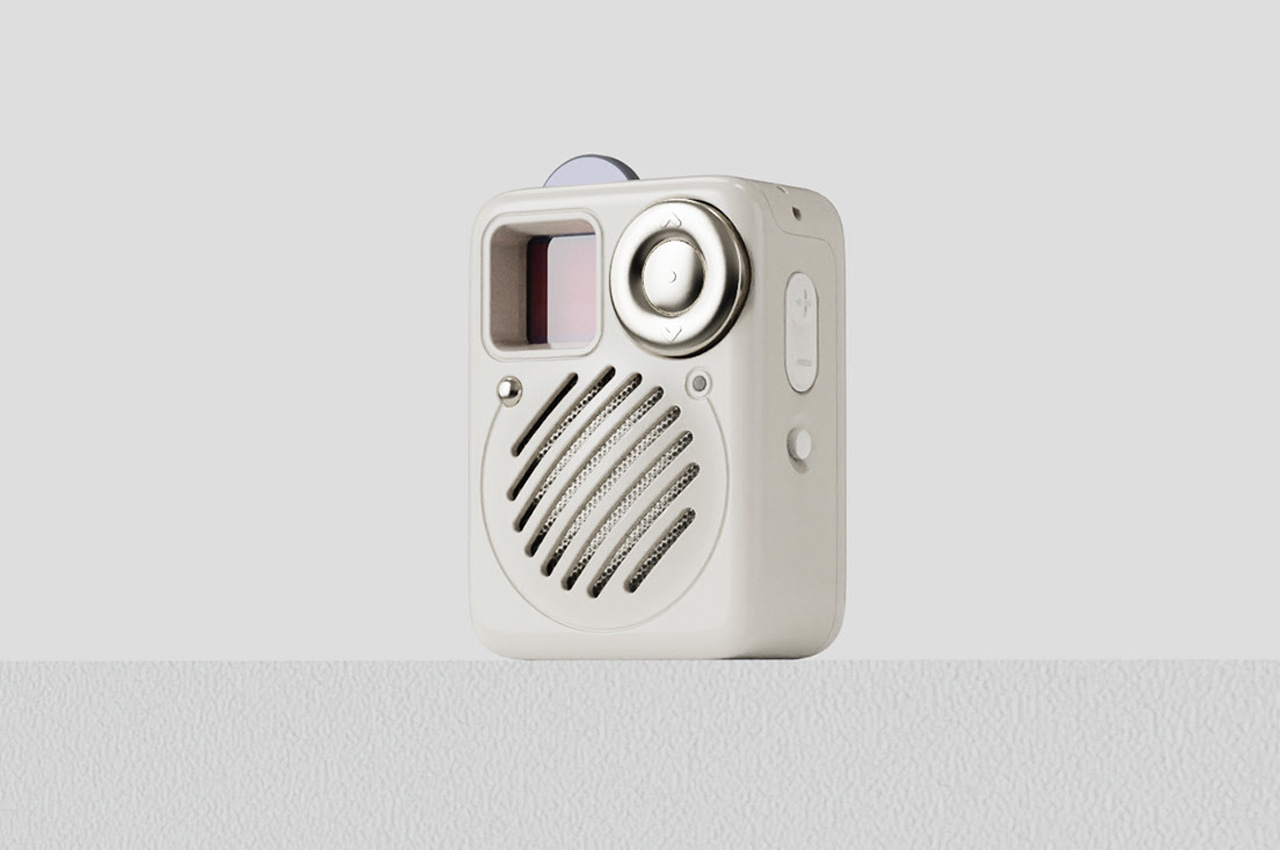
Chishu 2X is a modern granny designed to read bedtime stories to your tiny tots

‘There is no friend as loyal as a book,’ but the benefits of reading and the entire idea of owning books are taking a back seat nowadays. The shift of entertainment forms to digital speeds has made our free time busier and immersed our reading hours in reels. The biggest sufferers of this neglect and transformation are kids who remain devoid of bedtime stories and instead are fixated on the screens, swiping through reels and videos with little quality to improve concentration or cultivate the habit of reading.

Taking advantage of all the benefits of reading is essentially impossible going forward. Of course, some parents have managed to keep the routine of reading bedtime stories to their kids; it’s really not a norm anymore. Chishu audiobook player was idealized to help children relive the losing charm of someone reading stories in bed to them. And following the humble recognition of the concept, it is now reimagined with new colors and approach.

Designer: Chanie Liao
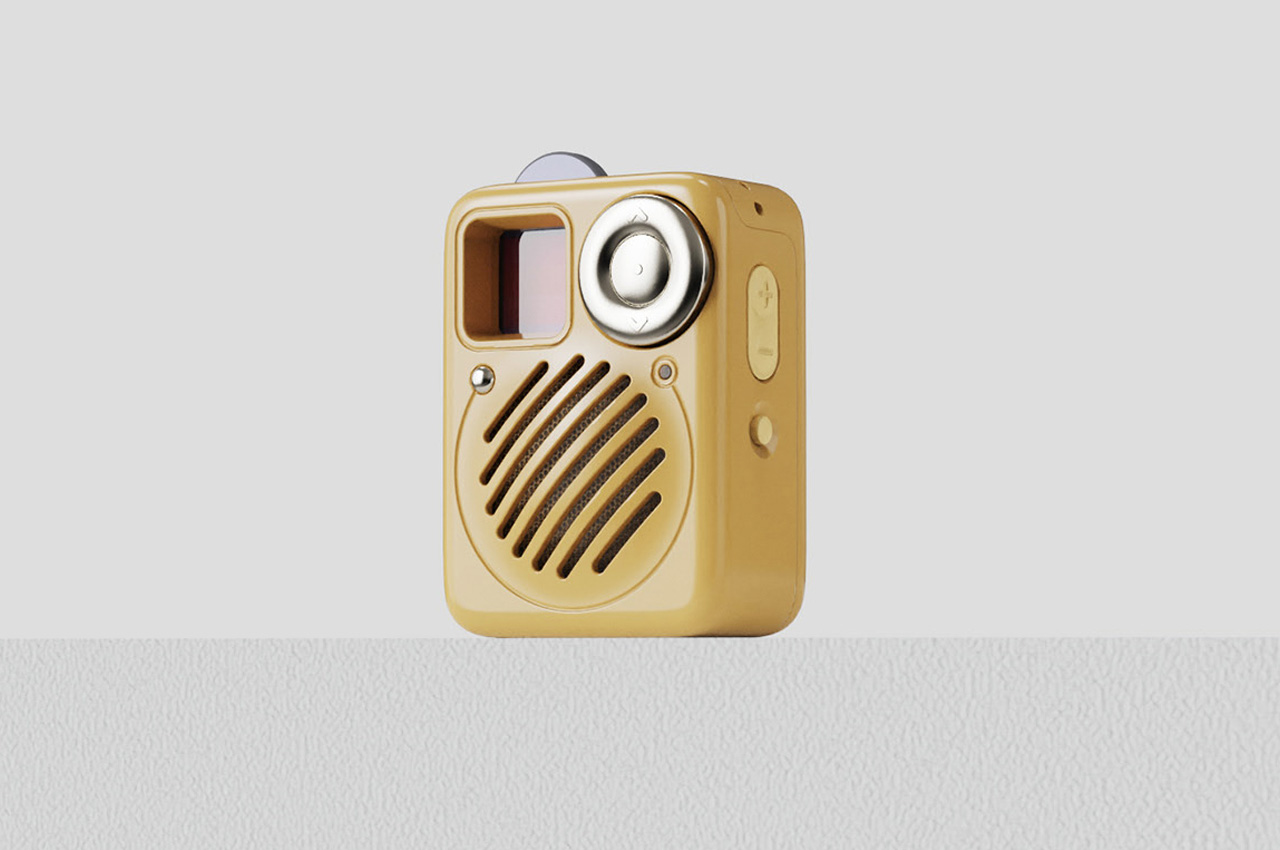
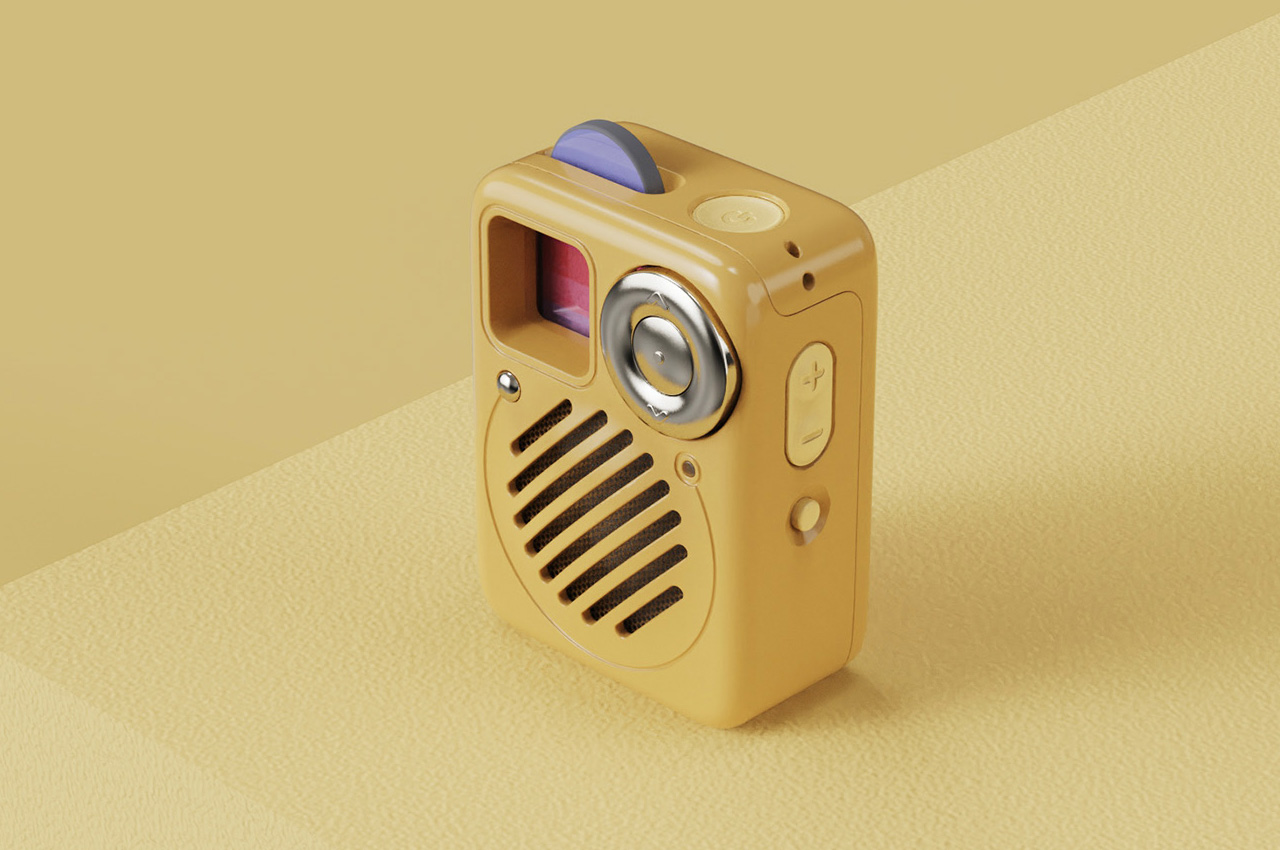
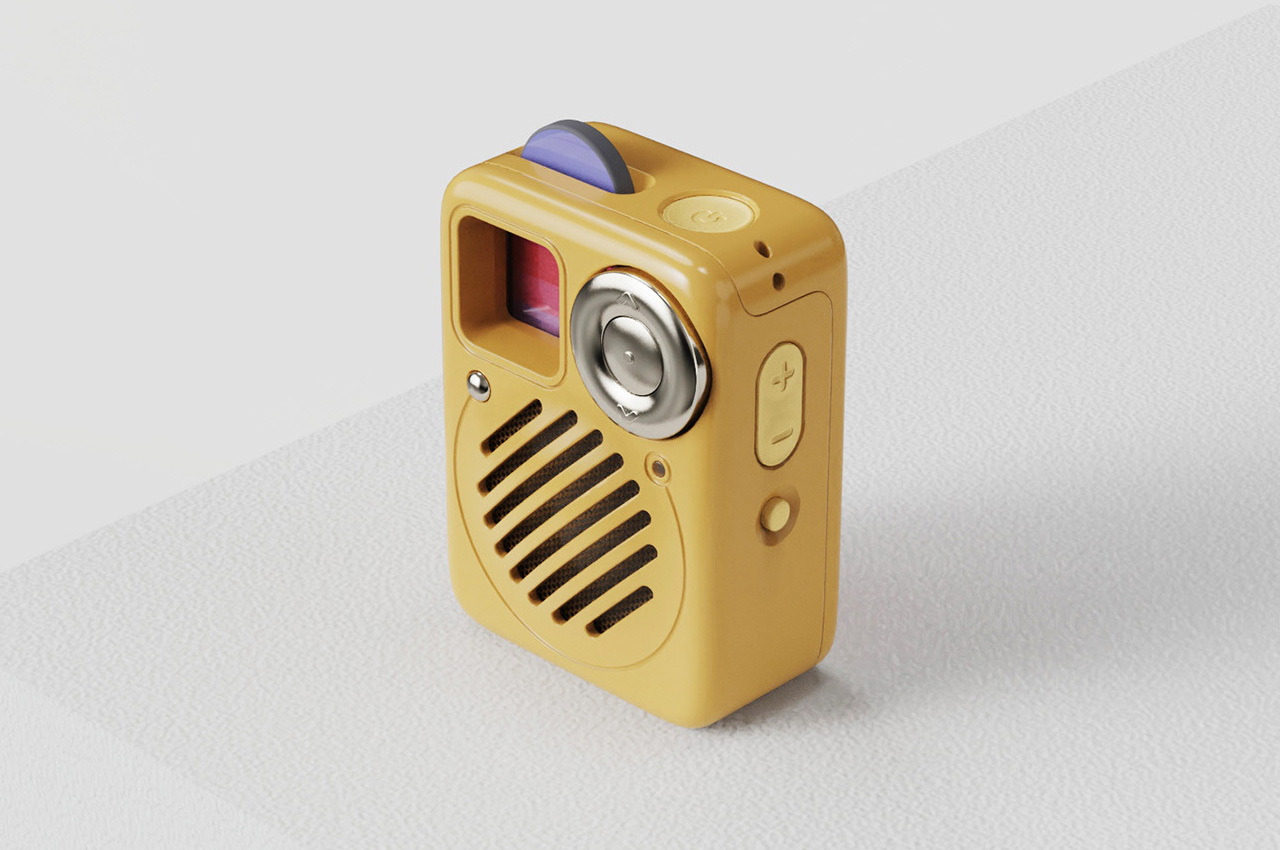
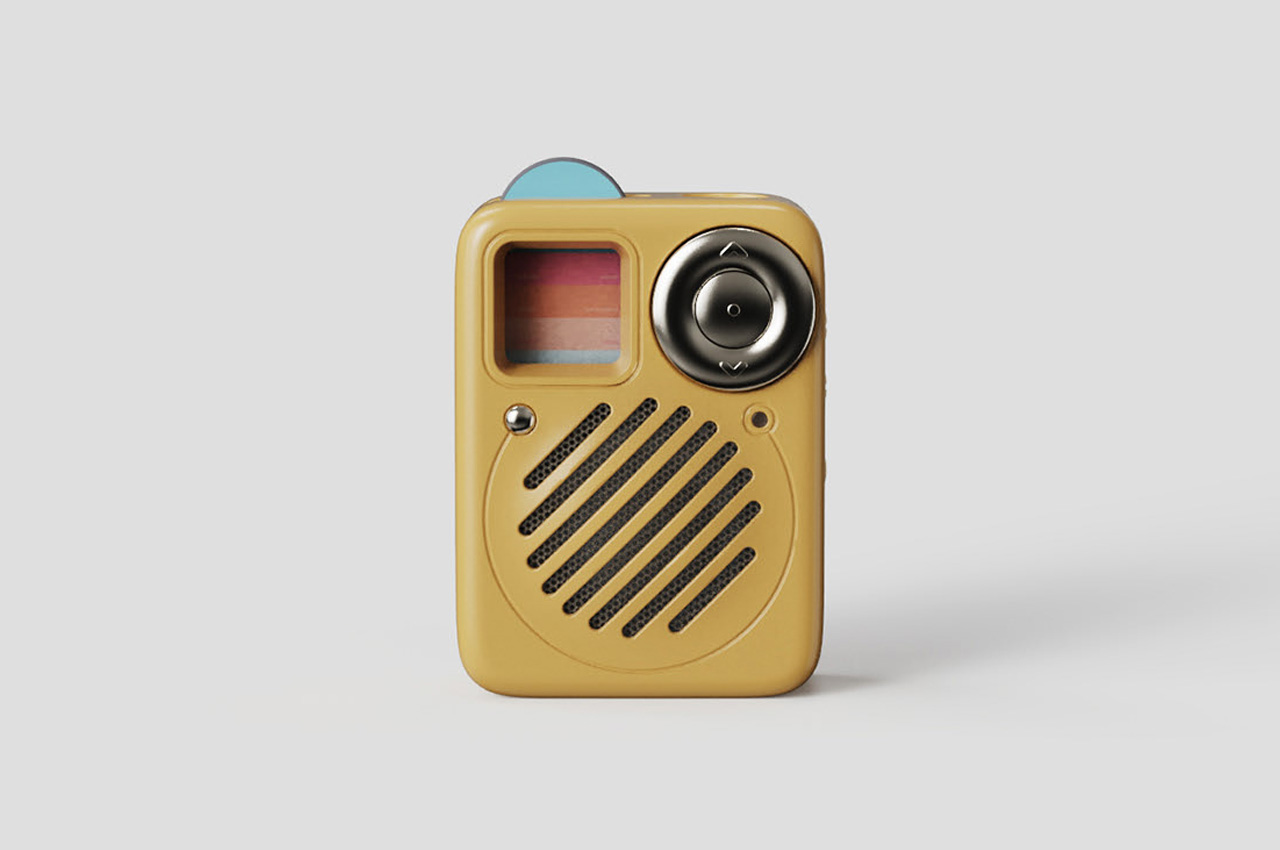
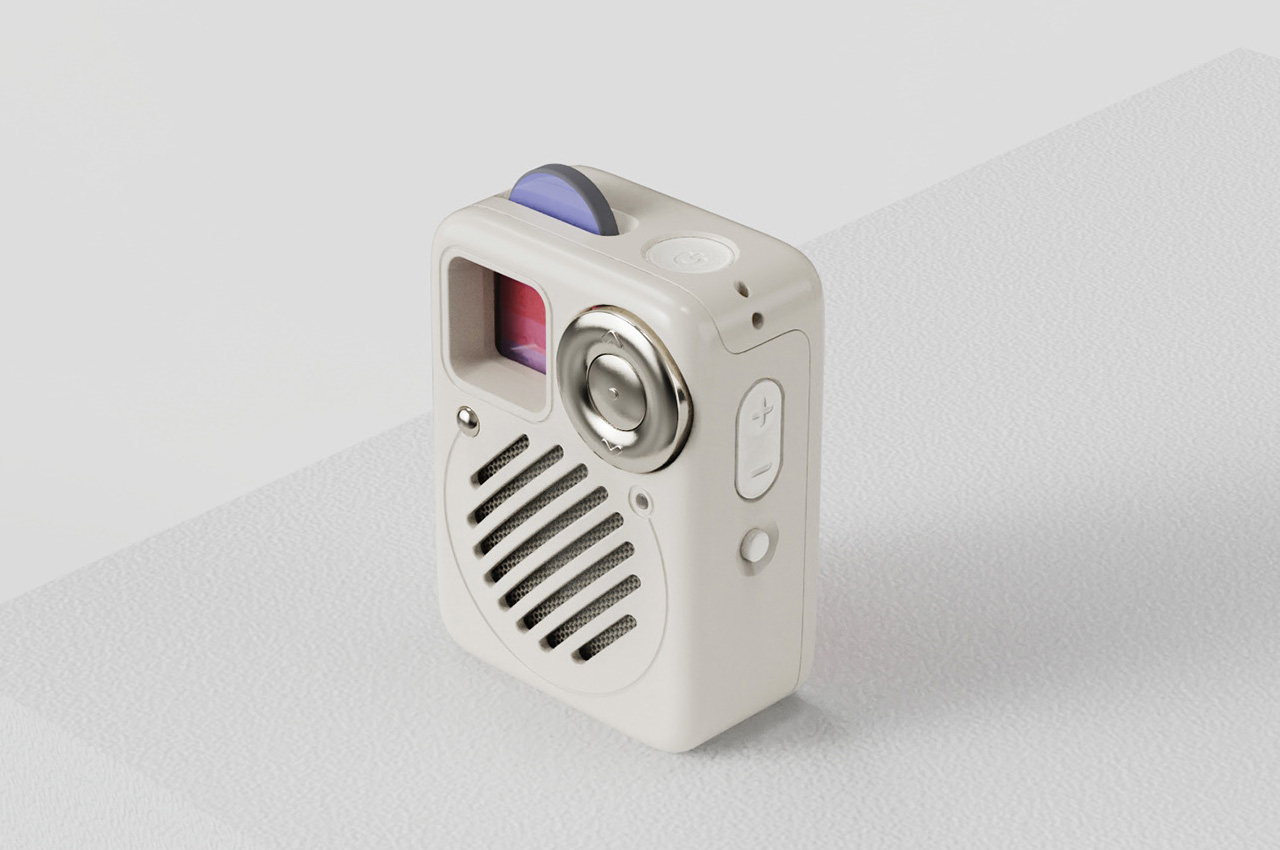
Enter Chishu 2X audiobook player, a humble, handy device that wants to improve children’s concentration and cultivate in them the habit of listening to books, at least. The pocket-sized player, equipped with a specially designed story card, is tailored for children below the age of 12. A child can insert the card in a dedicated slot, tune the player to their audio liking, and play the story content while being engrossed in some secondary activity or playing.
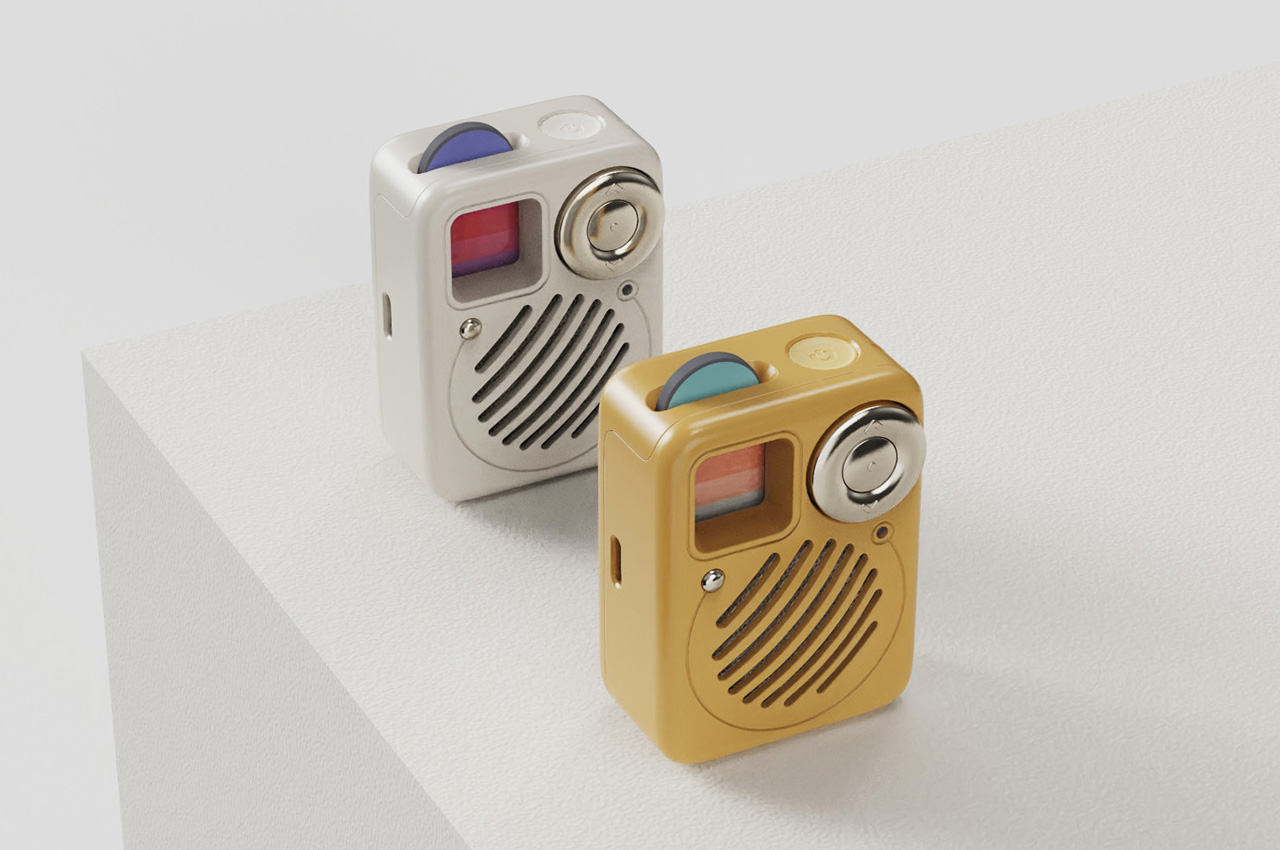
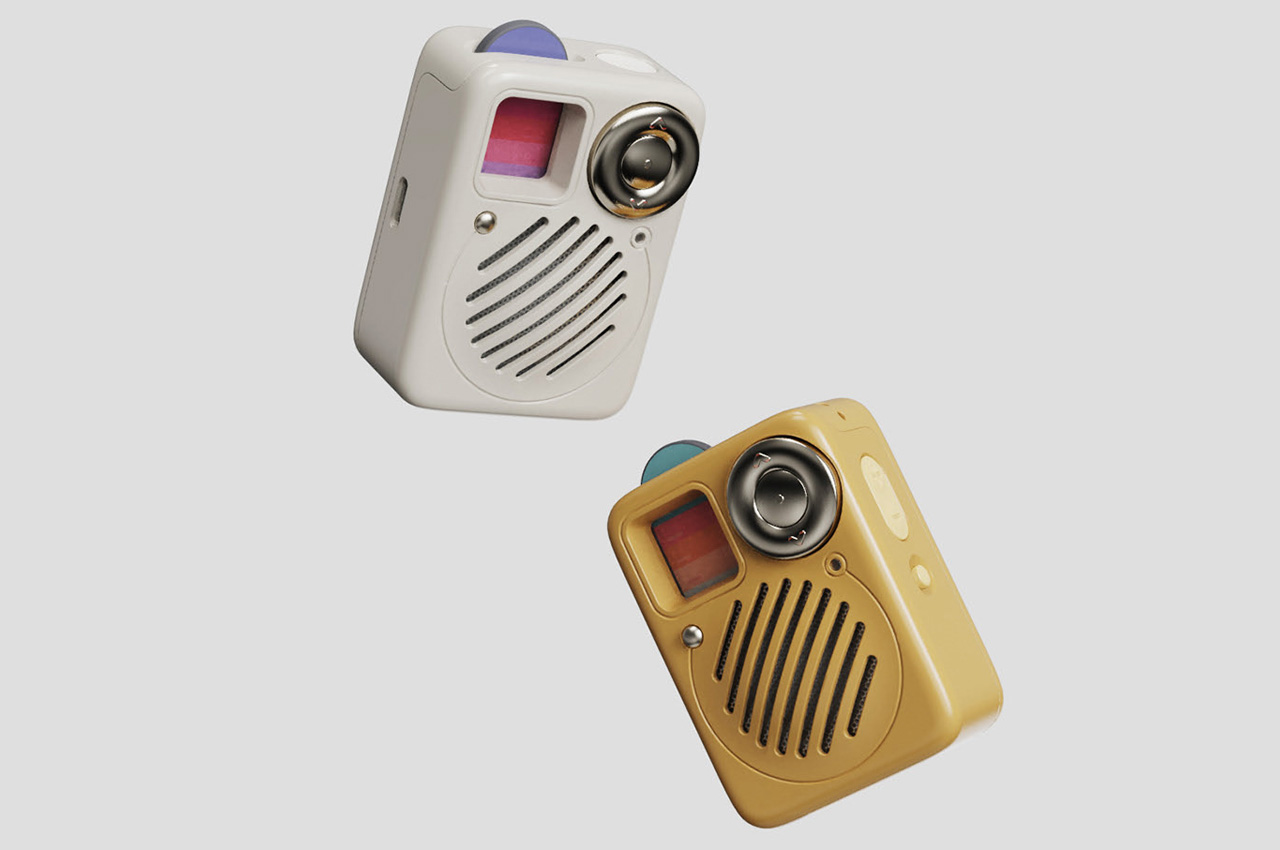
The curved, interactive design of the Chishu 2X shortens the distance between children and the audiobook player, making it their storyteller capable of ‘immersing them in the world of stories’ at an early age. To make it more adaptable amid the little ones, the device comes in various base colors. However, each functional area on the device – the story card slot; volume rocker; skip next knob; and the speaker grill – all come in different color options, making the entire package fun to hold and playful to interact with.
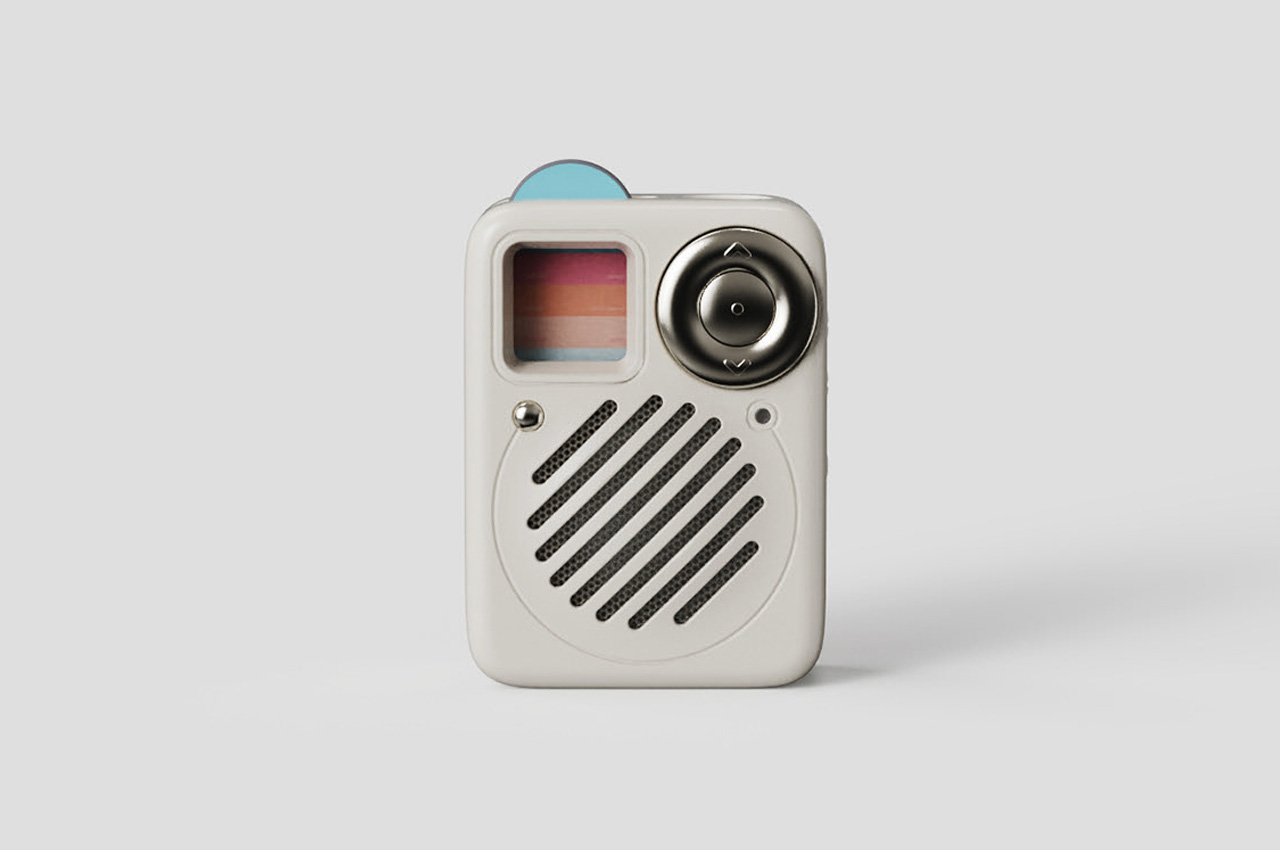
Taking of interaction; the little window display in the top right, where the story card slots in from the top, kids can keep tab on the story they’re listening to. The speaker system of the new Chishu 2X has been upgraded and embedded within a lighter and more drop-resistant molded metal body, rendering the device suitable even for older children and young adults to explore.
The post Chishu 2X is a modern granny designed to read bedtime stories to your tiny tots first appeared on Yanko Design.

This Skinny Home In New Delhi Is Brought To Life By A Colorful Mural Spanning Multiple Floors

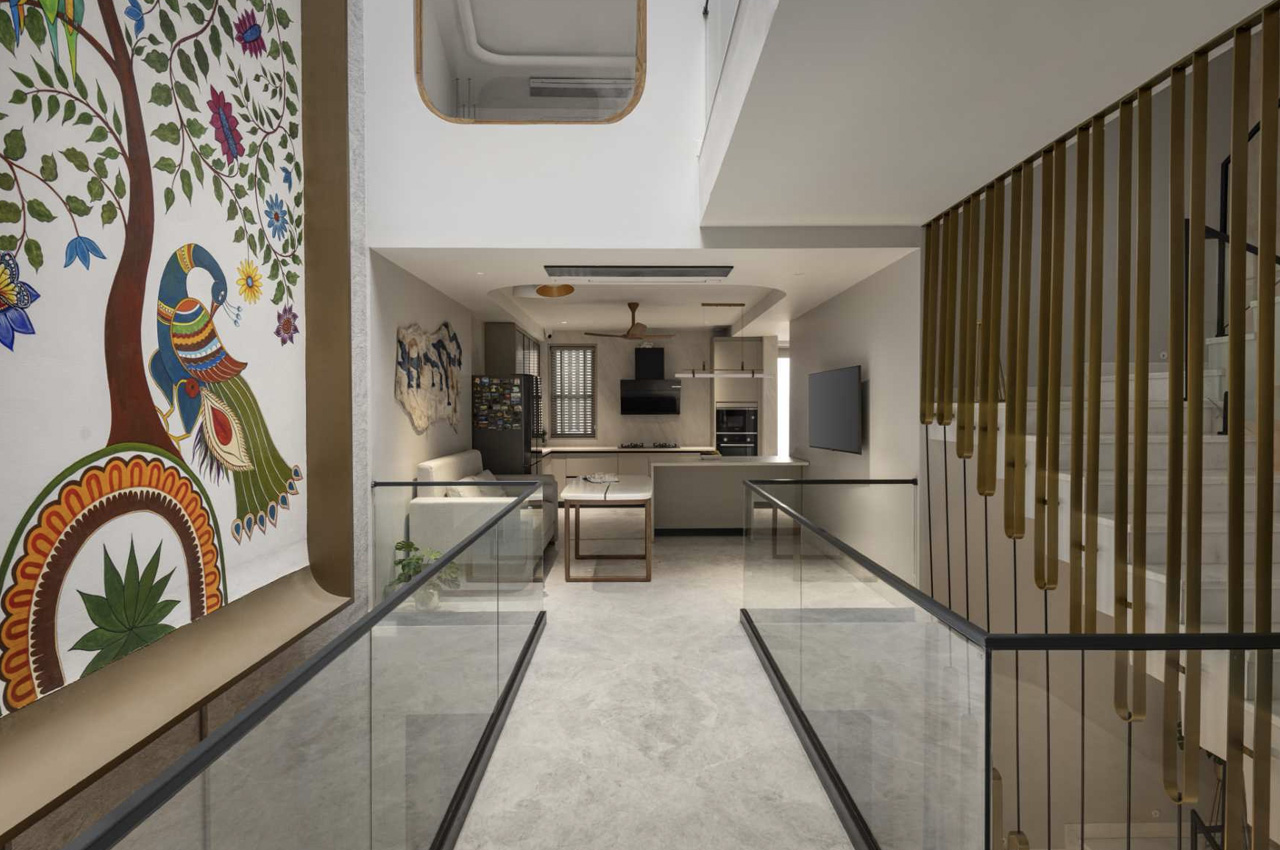
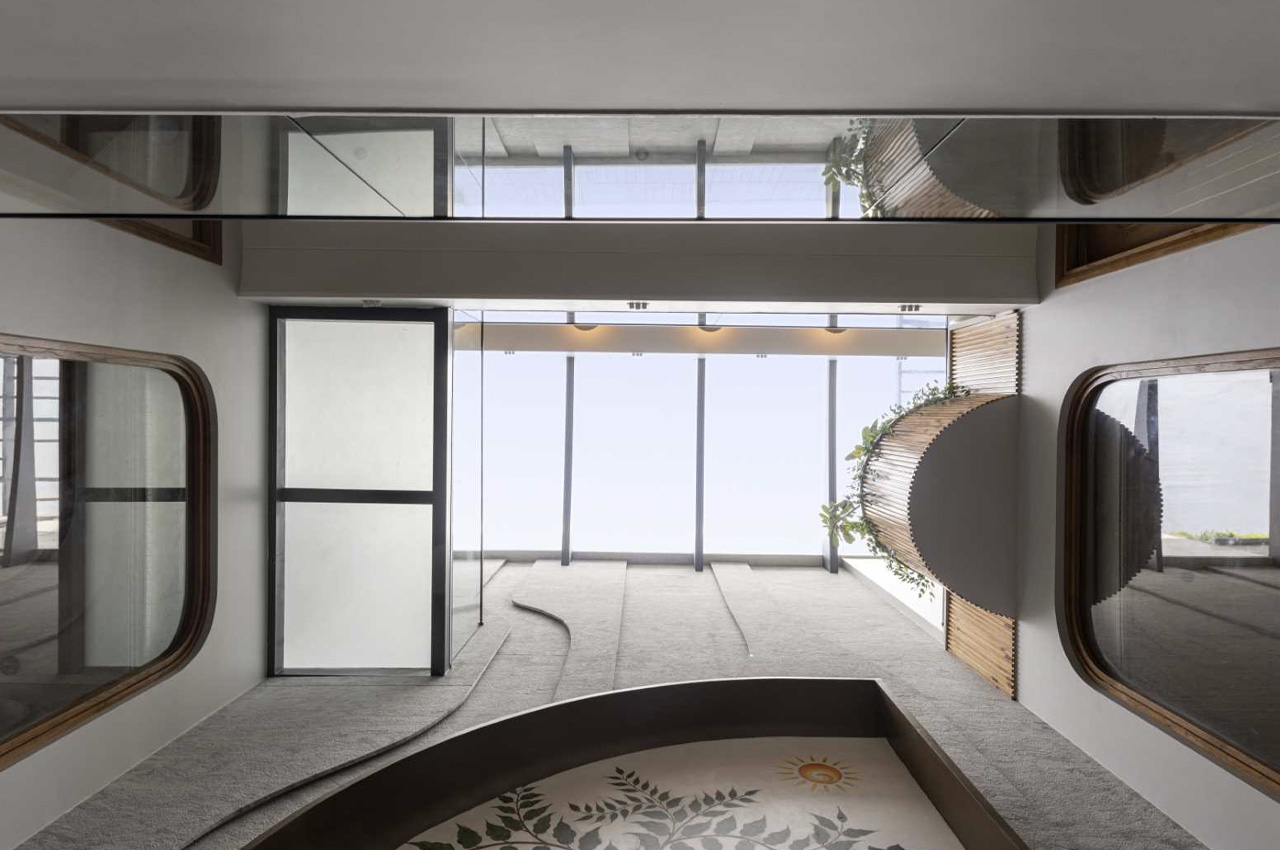
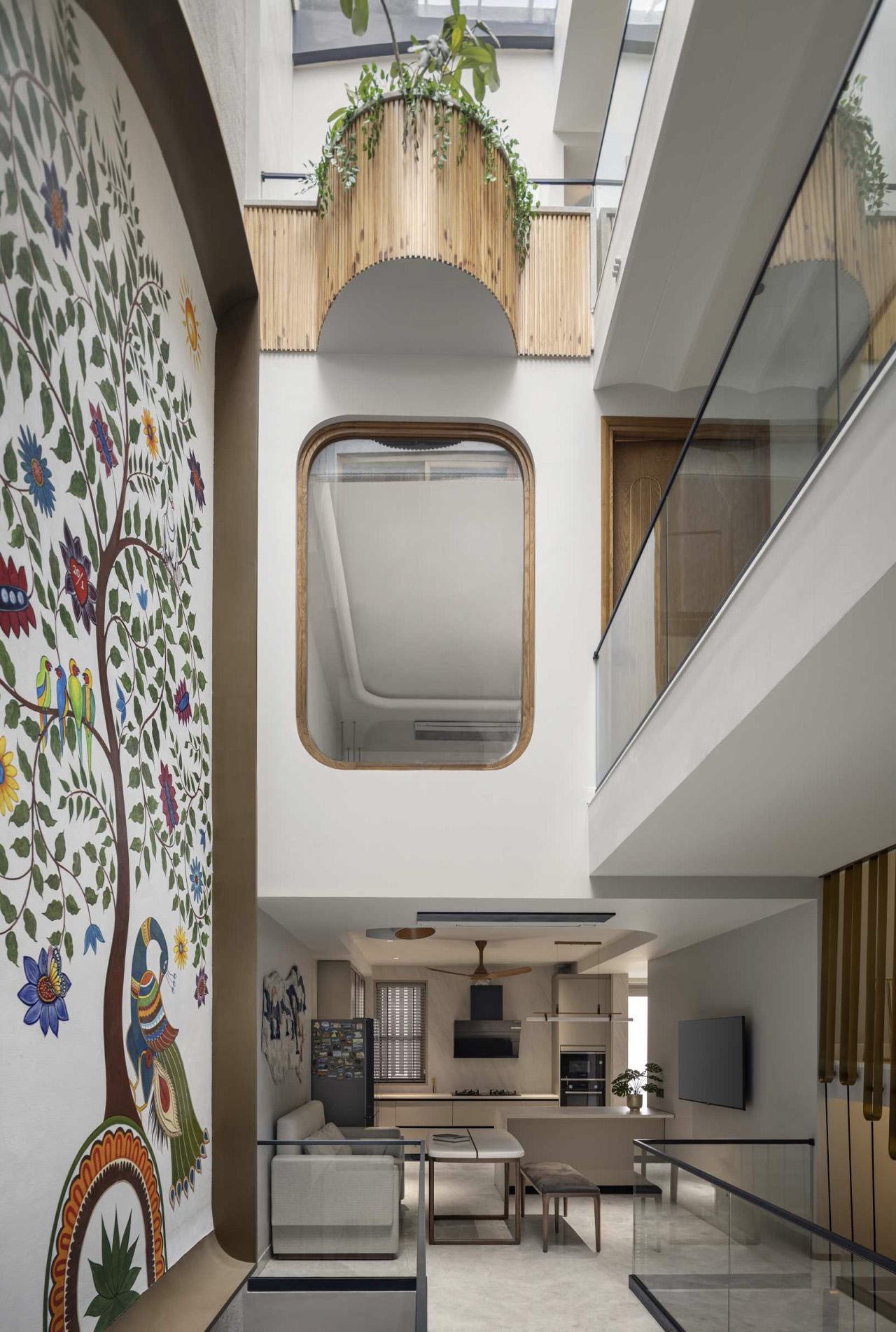
Designed by Spaces Architects@KA, this tall and narrow home in the streets of New Delhi, India has a unique and mesmerizing element to it. The home includes a large wall mural. This beautiful mural is the focal point of the home, and it covers multiple floors. Spanning through various stories, the mural occupies a significant space in the house, letting the work of art be beautifully integrated with the living space, while also holding a powerful place of its own.

Designer: Spaces Architects@KA

The colorful mural includes a tree with leaves, flowers, and birds. The home is adorned with interior walkways which offer unobstructed and clear views of the mural. Visitors can peacefully admire and gaze at the work of art. The delightful mural adds color and spark to an otherwise pretty neutral home, with a skylight offering natural lighting to the entire area. With the natural light falling artfully and gently on the mural, it creates an interesting effect, adding an other-worldly appeal to the home.

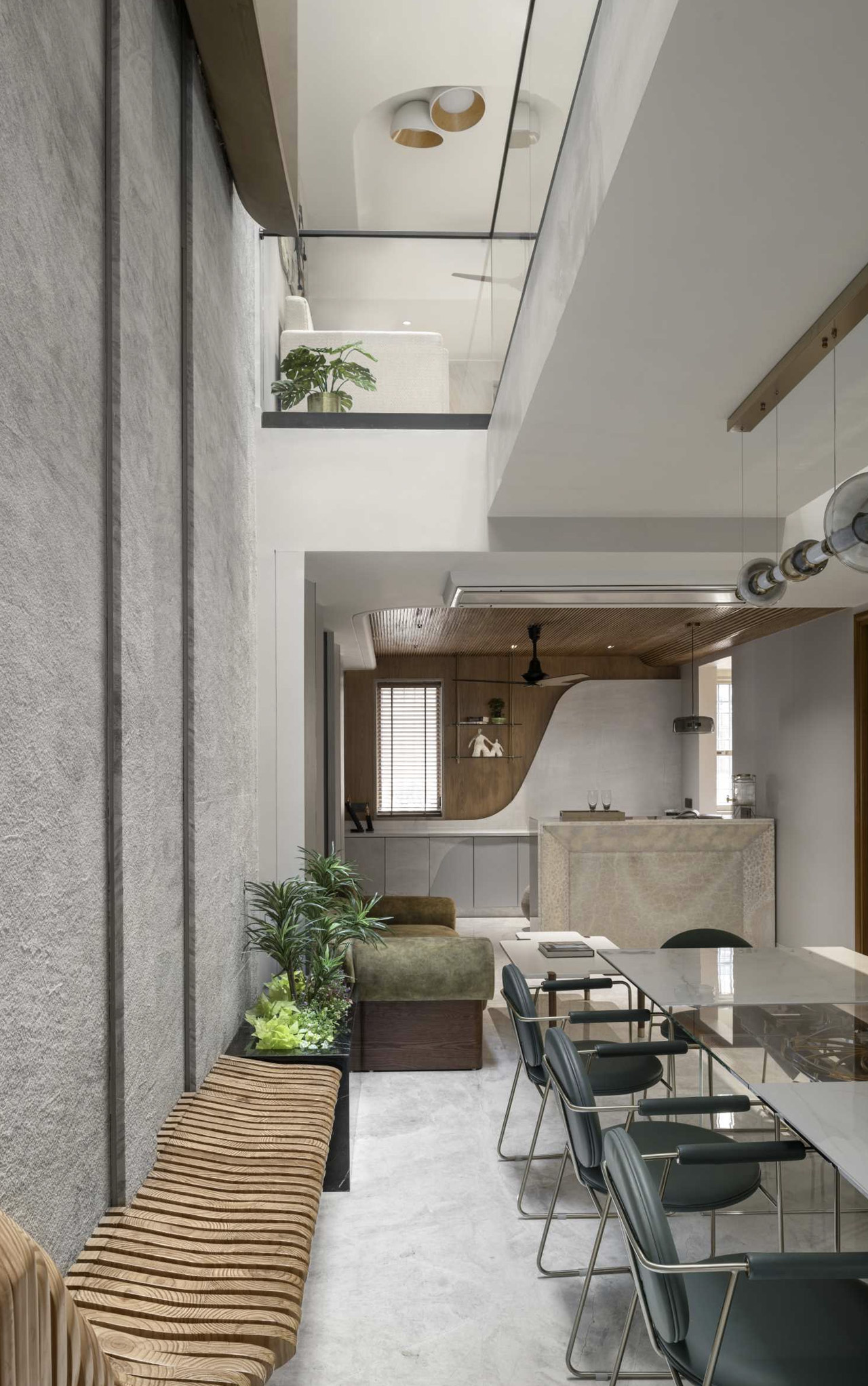
As you walk around the rest of the home, you are welcomed by a comfy space that is designed for a family of five. This spacious home has been tucked away inside a small and narrow site that measures 19 feet by 59 feet. The ground floor of the home can be used to host formal engagements as it includes a lounge, bar, and dining. The wall is lined by a sculptural wood bench, with the dining area softly transitioning into the lounge and bar space. The home also includes a formal living room.

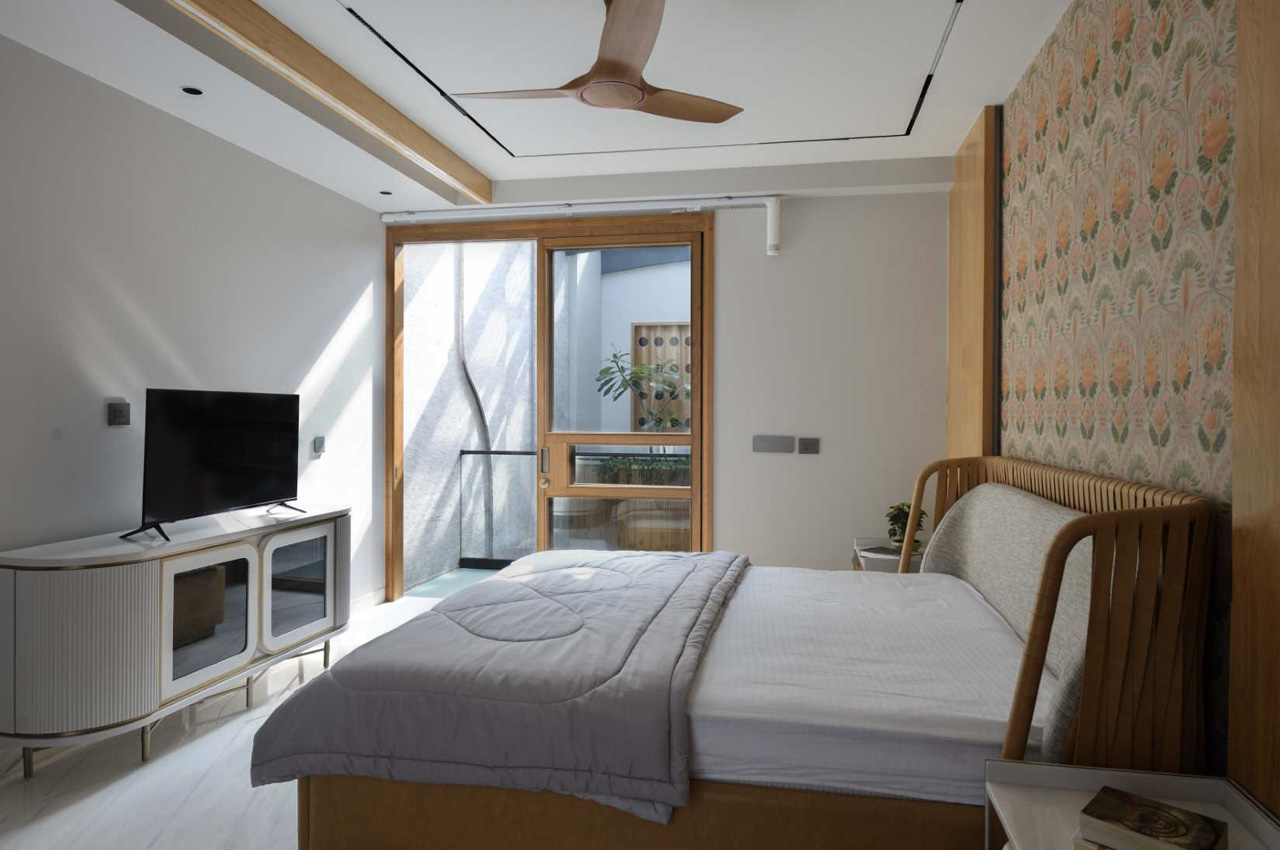
The first floor of the home accommodates a bedroom with an en-suite bathroom, a kitchen, and a puja space for daily prayers and reflection. This floor was designed to meet the needs of the homeowner’s father. The bedroom is accentuated with gold accents, much like the bathroom. The bedroom also includes an artistic section of the wall. Patterned floor tiles and wallpaper mark the puja room. Cut-outs have been dispersed throughout the home to offer cross ventilation, which allows fresh air to breeze through the home quite naturally. The skylight besides offering access to sunlight, also cuts down the dependency on artificial lighting during the daytime.


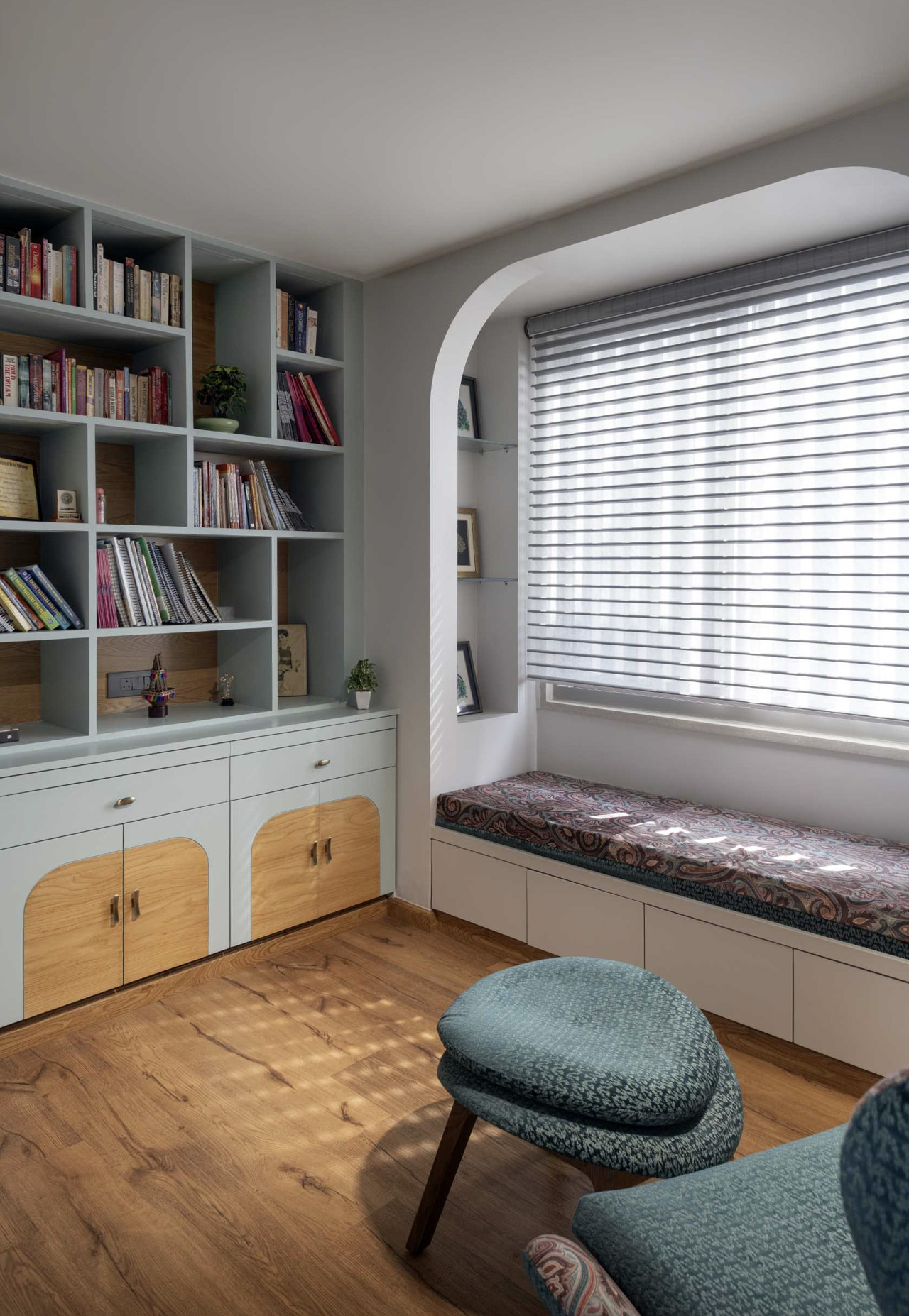
The second floor of the home is designed for the two daughters. The bedrooms are a direct reflection of their personalities, aspirations, and requirements, paving the way for some individuality inside a collective family home. The third floor is for the homeowners, and this space includes a bedroom, an en-suite bathroom, and a study with a window seat.

The post This Skinny Home In New Delhi Is Brought To Life By A Colorful Mural Spanning Multiple Floors first appeared on Yanko Design.

Apple ‘Let Loose’ Media Event Hints at new iPad Updates and More

Apple has a knack for igniting curiosity with its creative event teasers. This year, they’ve captivated us with an image of a hand holding an Apple Pencil, set against a backdrop shaped by an imaginative Apple logo, which has led to widespread speculation about potential iPad updates. I, along with other members of the media, was invited to tune into Apple’s “special event” on May 7th at 7 AM PST. We’re keen to see if products like the 2021 iPad Mini and the 2015 Magic Trackpad 3, still on the market and recently spotlighted by my colleague, will receive updates. The event, intriguingly named “Let Loose,” promises to possibly reveal these changes, all under the iconic Apple logo that creatively hints at what’s to come.

Designer: Apple

iPad Pro 12.9-inch (6th generation) with Magic Keyboard

I’m betting that new iPad models being announced at the event will sport a larger 13-inch display while maintaining the sleek size and form factor we’re used to. The Pro model could really impress with a larger OLED screen, especially if they shift the front-facing camera to a horizontal layout. While we’re on the topic of design, I’m hoping for a stronger yet lighter build using titanium, and it wouldn’t hurt to slim down the thickness by 25% while upping the battery life. On the performance front, these new iPads are expected to be powered by the M3 chipset.

iPad Pro 12.9-inch (6th generation) with Magic Keyboard

I really like the current Apple Pencil, but it wouldn’t hurt for Apple to give us something even more eye-catching. As for the Magic Keyboard, the design is great, but the first row of keys tends to get blocked by the iPad, and the trackpad feels too cramped for comfort. Thinking back to my titanium wish list, wouldn’t it be wild if Apple used titanium in a redesigned Magic Keyboard? That would definitely lighten the load when paired up. But coming back to reality, an aluminum build with a redesigned key layout and a larger trackpad would be more than welcome. And let’s not forget about giving the new iPad Pro some MagSafe compatibility. Just think of the endless accessories that could turn it into a dream machine for creatives and professionals alike.

iPad Mini 6th Gen (2021)

Apple could potentially make subtle upgrades to the iPad Air and iPad mini or even discontinue the latter. One speculation is a larger 12.9-inch size iPad Air in addition to the 11-inch model. On the peripheral side, it’s unlikely that Apple will update the other products on Sarang’s list.

The post Apple ‘Let Loose’ Media Event Hints at new iPad Updates and More first appeared on Yanko Design.
The world’s leading AI companies pledge to protect the safety of children online

Leading artificial intelligence companies including OpenAI, Microsoft, Google, Meta and others have jointly pledged to prevent their AI tools from being used to exploit children and generate child sexual abuse material (CSAM). The initiative was led by child-safety group Thorn and All Tech Is Human, a non-profit focused on responsible tech.

The pledges from AI companies, Thorn said, “set a groundbreaking precedent for the industry and represent a significant leap in efforts to defend children from sexual abuse as a feature with generative AI unfolds.” The goal of the initiative is to prevent the creation of sexually explicit material involving children and take it off social media platforms and search engines. More than 104 million files of suspected child sexual abuse material were reported in the US in 2023 alone, Thorn says. In the absence of collective action, generative AI is poised to make this problem worse and overwhelm law enforcement agencies that are already struggling to identify genuine victims.

On Tuesday, Thorn and All Tech Is Human released a new paper titled “Safety by Design for Generative AI: Preventing Child Sexual Abuse” that outlines strategies and lays out recommendations for companies that build AI tools, search engines, social media platforms, hosting companies and developers to take steps to prevent generative AI from being used to harm children.

One of the recommendations, for instance, asks companies to choose data sets used to train AI models carefully and avoid ones only only containing instances of CSAM but also adult sexual content altogether because of generative AI’s propensity to combine the two concepts. Thorn is also asking social media platforms and search engines to remove links to websites and apps that let people “nudity” images of children, thus creating new AI-generated child sexual abuse material online. A flood of AI-generated CSAM, according to the paper, will make identifying genuine victims of child sexual abuse more difficult by increasing the “haystack problem” — an reference to the amount of content that law enforcement agencies must current sift through.

“This project was intended to make abundantly clear that you don’t need to throw up your hands,” Thorn’s vice president of data science Rebecca Portnoff told the Wall Street Journal. “We want to be able to change the course of this technology to where the existing harms of this technology get cut off at the knees.”

Some companies, Portnoff said, had already agreed to separate images, video and audio that involved children from data sets containing adult content to prevent their models from combining the two. Others also add watermarks to identify AI-generated content, but the method isn’t foolproof — watermarks and metadata can be easily removed.

This article originally appeared on Engadget at https://www.engadget.com/the-worlds-leading-ai-companies-pledge-to-protect-the-safety-of-children-online-213558797.html?src=rss

Tesla previews ride-hailing experience ahead of August robotaxi unveil

Tesla has shown off a preview of an upcoming ride-hailing feature in its app ahead of an August robotaxi unveiling. The company released mock-ups of the upcoming feature, which showed the ability to “summon” a ride from the Tesla app.

The company didn’t offer many details about how it would work, but images show Uber-like functionality, with the ability to remotely set the car’s temperature ahead of its arrival. Tesla CEO Elon Musk announced earlier this month that the company would unveil its long-promised robotaxis August 8.

Tesla has been promising a self-driving ride hailing service for years, with Musk promising the company’s robotaxi would start picking up riders back in 2019. For now, it’s unclear exactly when such a service might launch. “We are currently working on ride-hailing functionality that will be available in the future,” the company wrote in its latest earnings report. “We believe the Tesla software experience is best-in-class across all our products, and plan to seamlessly layer ride-hailing into the Tesla App.”

The update was shared in Tesla’s first-quarter earnings report for 2024. The automaker reported a revenue decline of 9 percent from last year, its steepest loss in more than a decade.

During a call with investors, Musk suggested the ride hailing service, which he referred to as "Cyber Cab," would function like “some combination of Airbnb and Uber,” so Tesla owners could choose to make their vehicles part of the service. “There'll be some number of cars that Tesla owns itself and operates in the fleet,” Musk said. “There'll be a bunch of cars where they're owned by the end user, but that end user can add or subtract their car to the fleet whenever they want. And they can decide if they want to only let the car be used by friends and family, or only by five star users, or by anyone.”

This article originally appeared on Engadget at https://www.engadget.com/tesla-previews-ride-hailing-experience-ahead-of-august-robotaxi-unveil-212738199.html?src=rss

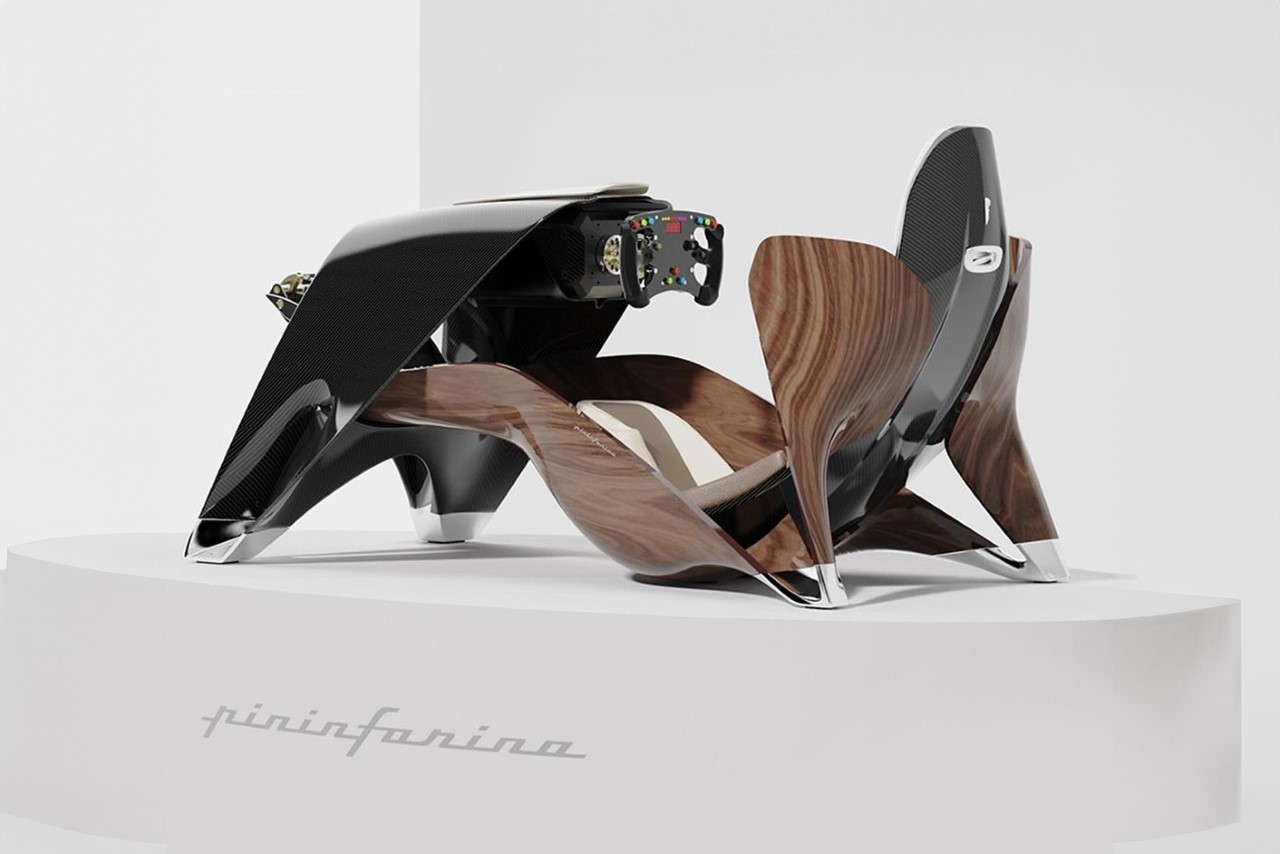
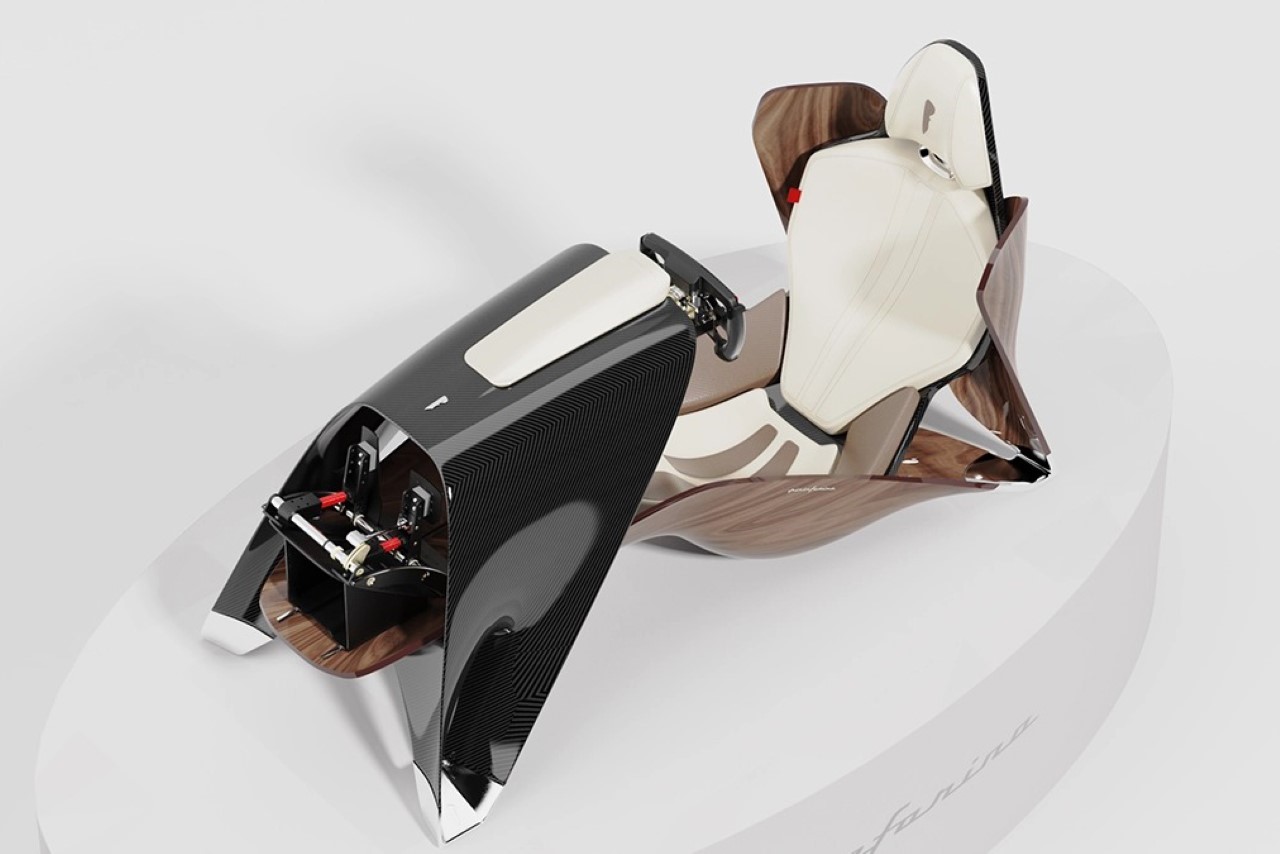
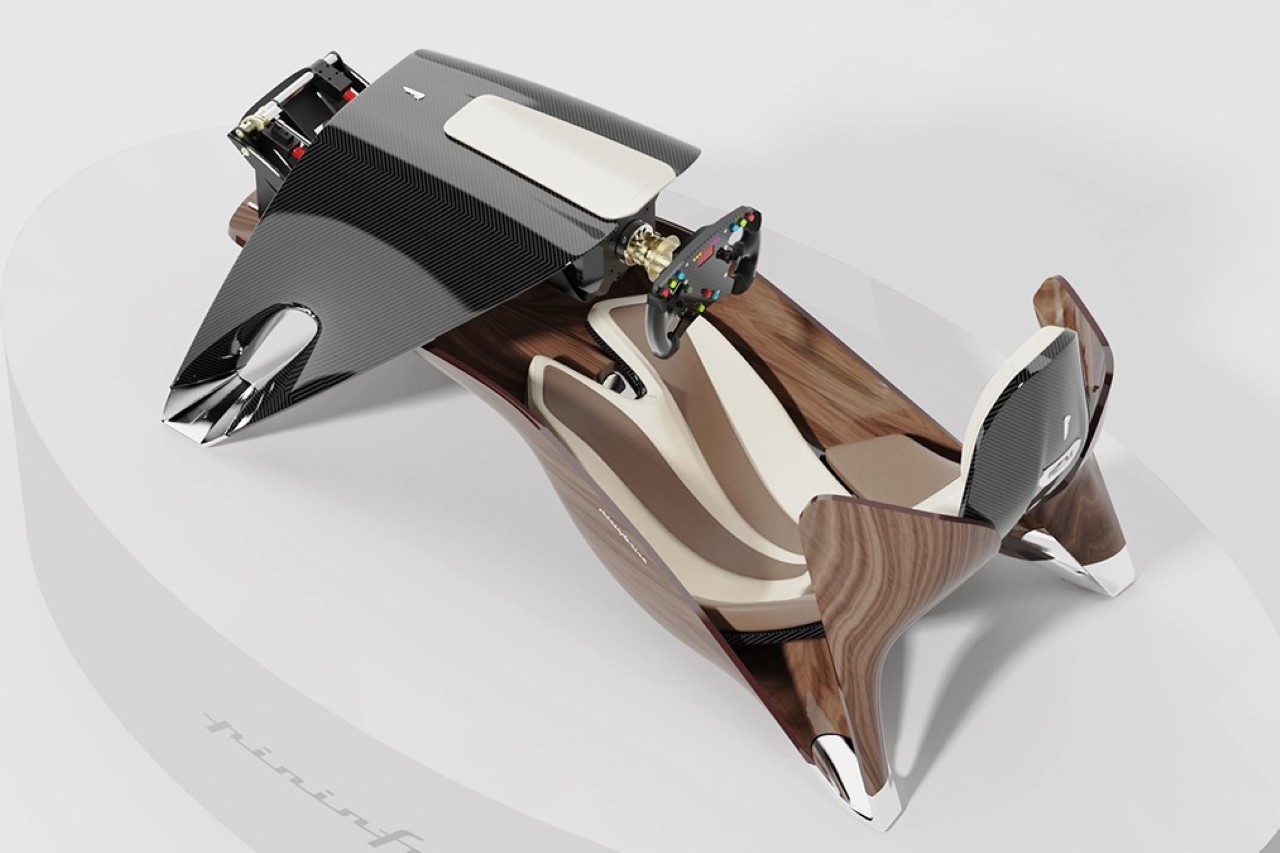
This Pininfarina Racing Rig Concept might be the most Gorgeous Simulator Setup ever made

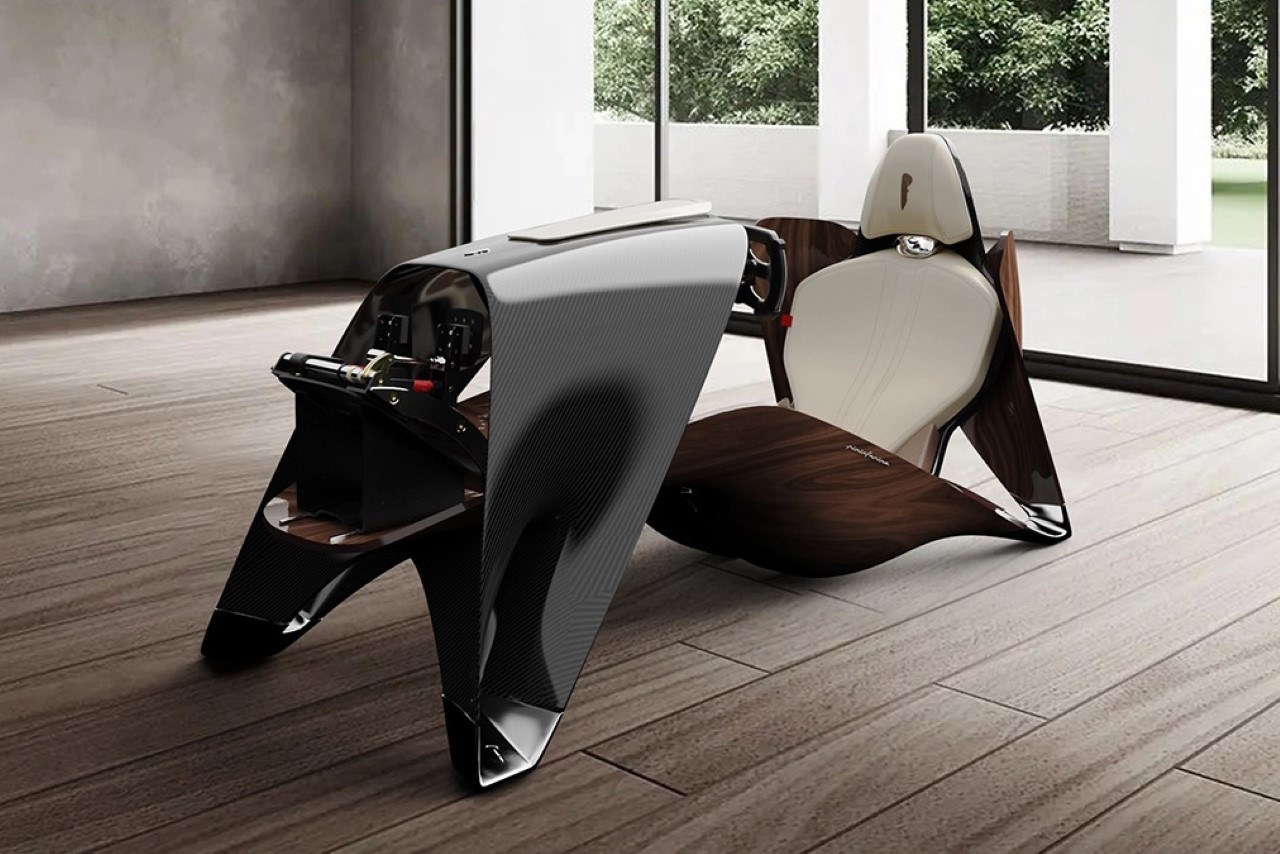
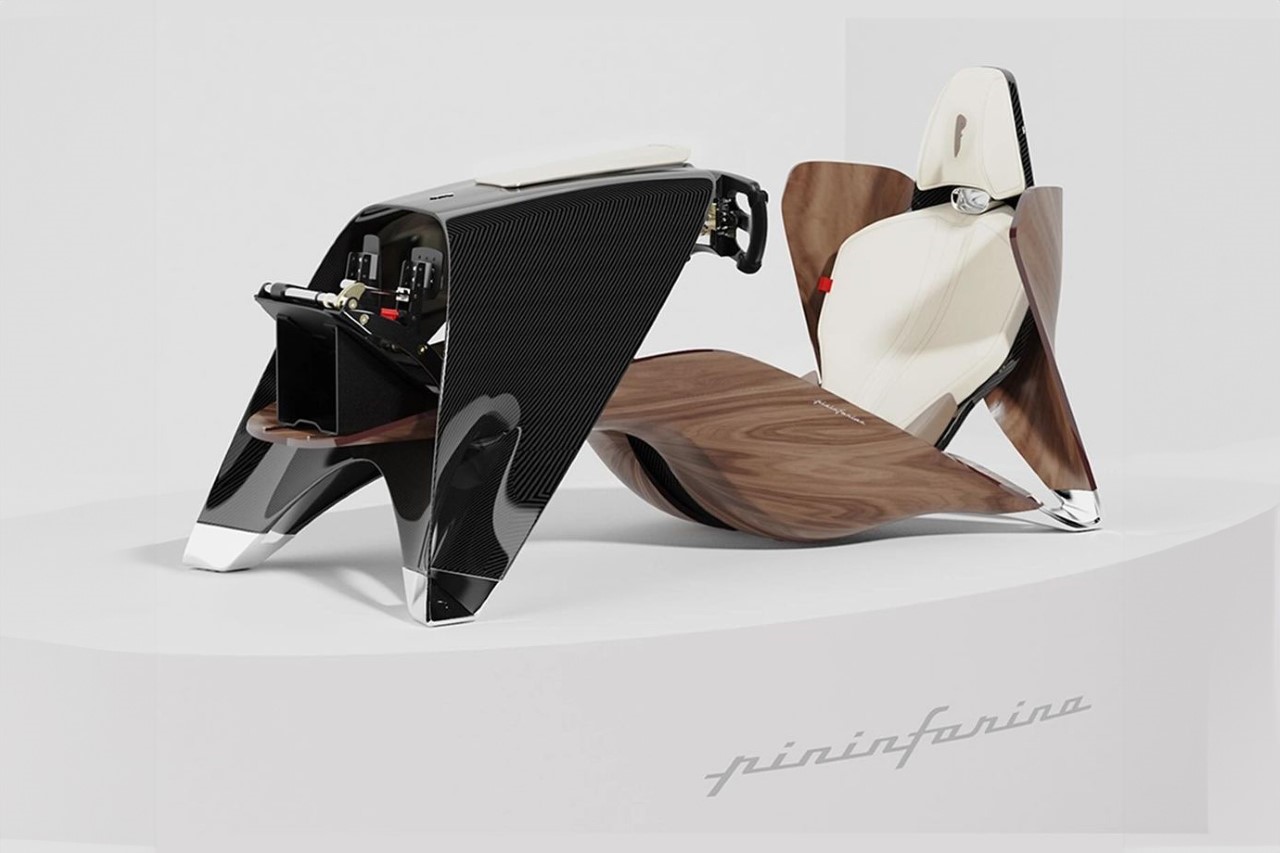
The problem with racing simulator rigs are that they aren’t designed by automotive designers, they’re designed by gamers. Most sim-racers are fairly utilitarian looking, with an almost bare-basics cockpit-inspired design focusing on real-world feel. The most aesthetic part is almost always the driver’s seat, and everything else looks like a naked chassis. Not the Pininfarina Formula though… designed by Fabio Bilotta, this concept piece brings the world of automotive art and gaming together to create a rig so unique it’ll garner stares the same way a hypercar does.

Designer: Fabio Bilotta

The Pininfarina Formula combines sleek aesthetics with user-centered functionality. Paying homage to the iconic shape of the Istanbul Air Traffic Control Tower, it embodies a blend of sophistication and dynamism. The secret to the Pininfarina Formula’s sculptural beauty lies in its meticulous material selection. Carbon fiber offers a perfect balance of strength and lightness, while reinforced plywood ensures long-lasting durability. Stainless steel adds a touch of class, and genuine leather elevates the experience with a luxurious feel.

The Pininfarina Formula models itself ergonomically on Formula 1 cars, positioning the user’s feet at shoulder height for optimal control and mimicking the posture of professional racers. But it doesn’t stop there. The setup is designed to adapt to individual needs. The pedal sledge and steering wheel housing are both fully adjustable, allowing users of all heights and preferences to find their perfect racing position.

Whether you prefer the immersive world of virtual reality or the classic experience of a traditional screen, the Pininfarina Formula caters to your taste. Its adaptable design seamlessly integrates with different gaming setups, ensuring you can enjoy your favorite racing titles in the way that suits you best. The setup comes without a wheel or pedals, giving you the ability to attach your own, based on your preferences as well as your budget… although if you’re splurging on a Pininfarina-inspired rig, is money really an object for you?!

Images via Automotive Design Planet

The post This Pininfarina Racing Rig Concept might be the most Gorgeous Simulator Setup ever made first appeared on Yanko Design.

Roland’s mobile podcasting studio gives you a mic and streaming app for $140

Roland has a new on-the-go podcasting setup with an eye-catching price. The company’s Go:Podcast studio includes a USB condenser mic (with support for four polar patterns) and a companion app that can stream to platforms like YouTube, Twitch and Facebook.

The company describes the Go:Podcast as “the simplest way to do high-quality live streaming with a mobile device.” For $140, you get the USB microphone and access to the companion app (iOS and Android), which supports live streaming, including dual-camera setups. The latter can work simultaneously with your smartphone’s front and back cameras, or you can pair a second “satellite” camera to complement your phone’s. It also supports wireless screen sharing for things like live-streaming mobile gameplay.

The microphone’s polar pattern options include cardioid (best for one person speaking), omni (multi-directional) and stereo (best for two people or musical performances). A fourth option lets you flip the stereo channels to match your video.

Product marketing photo for the Rode Go:Podcast mobile studio. At center is a desktop microphone, and it's flanked by two smartphones on mini tripods (showing the podcast video on their screens) and a pair of headphones.
Roland

Somewhat confusingly, many of Roland’s product photos (like the one above) show a mini smartphone tripod and V-Moda headphones alongside the mic, but those accessories aren’t included. A Roland spokesperson clarified to Engadget that those were meant to illustrate an example of a complete mobile podcasting system with the mic and app at its center.

The Go:Podcast app includes perks like overlaying text and images, playing video clips and audio tracks, picture-in-picture and split screen. It has free-to-use background music tracks (which hopefully sound better than I imagine) along with stock photos and videos.

Roland’s $140 Go:Podcast studio will arrive in early May. You can learn more (and look out for more specific availability as its launch date approaches) at Roland’s website.

This article originally appeared on Engadget at https://www.engadget.com/rolands-mobile-podcasting-studio-gives-you-a-mic-and-streaming-app-for-140-193359879.html?src=rss

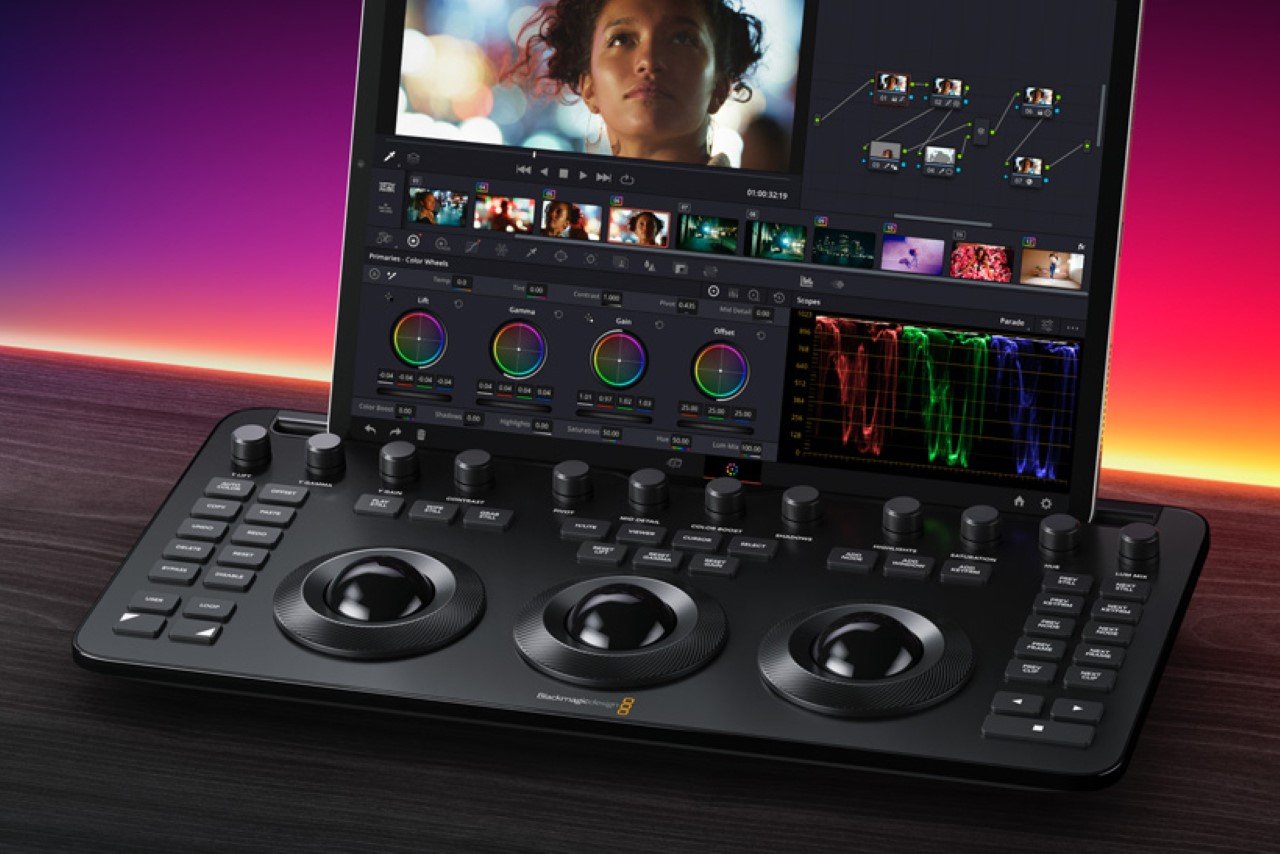
DaVinci Resolve’s latest Micro Control Panel turns your Apple iPad Pro into a full-fledged studio

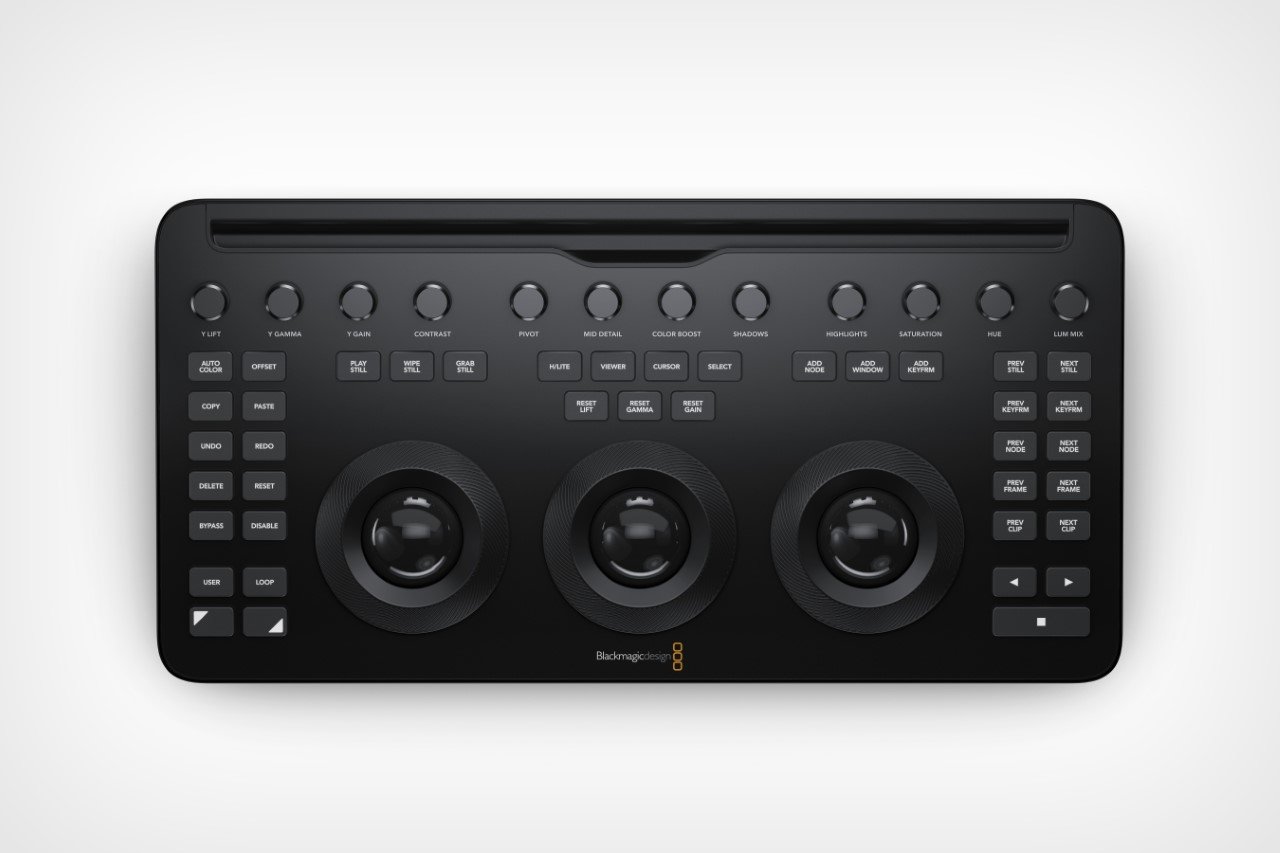
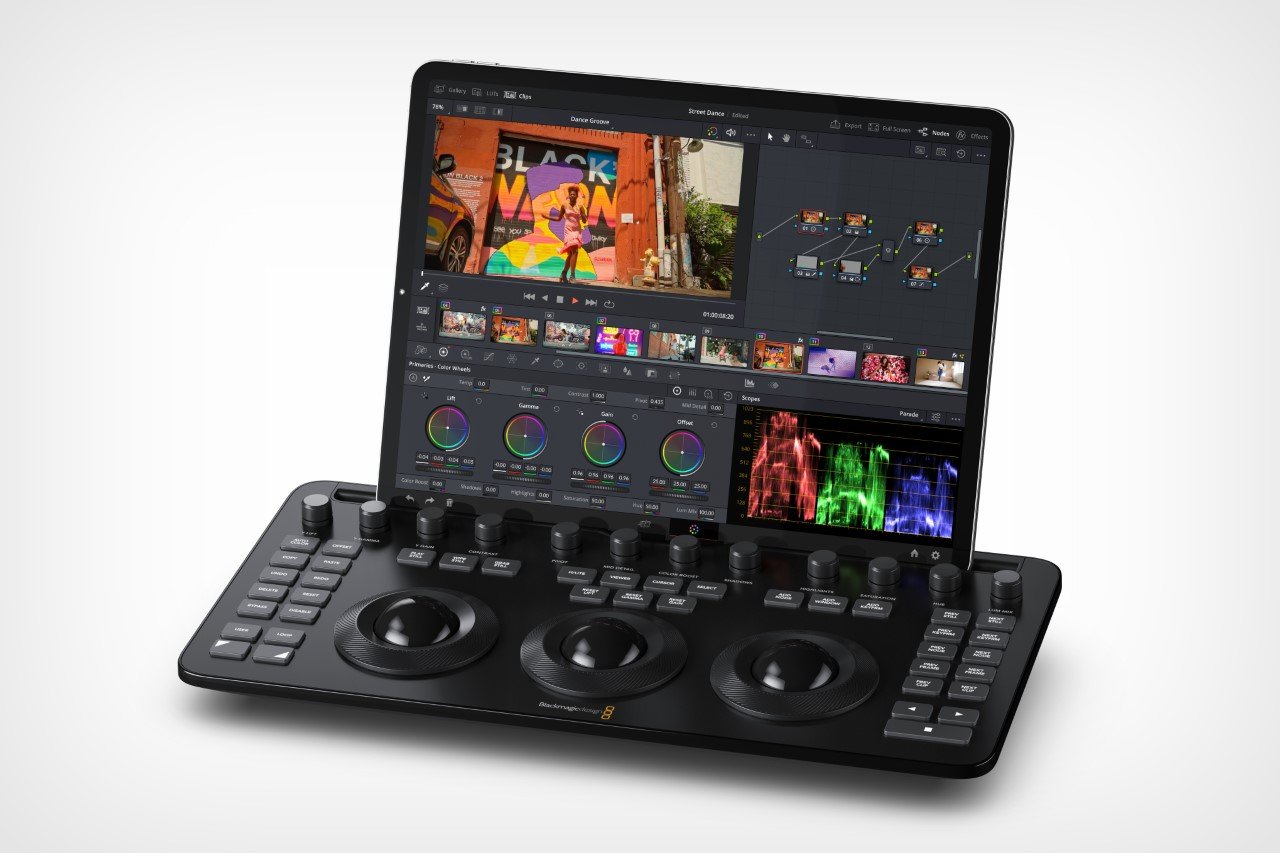
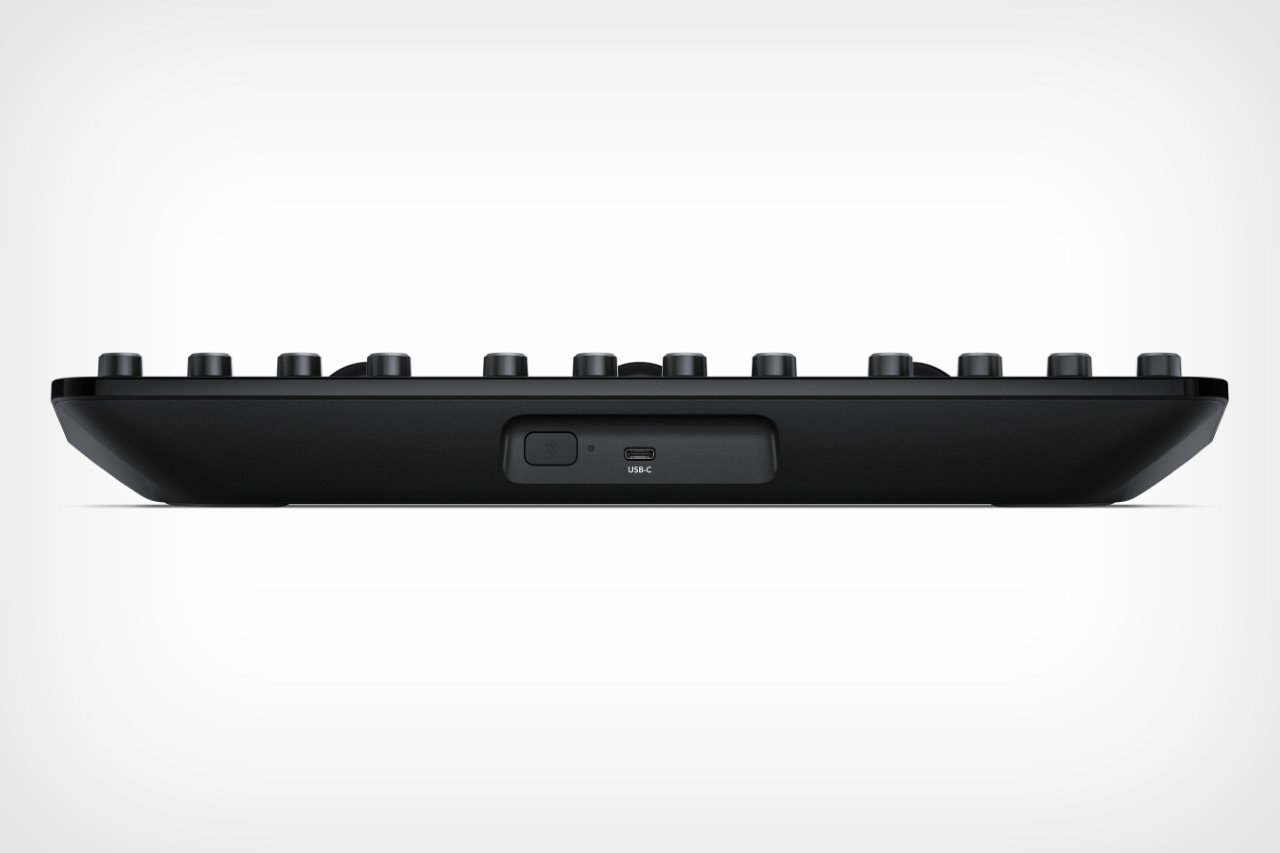
Just in time for Apple’s May 7th event, Blackmagic announced the Micro Control Panel, a tiny, keyboard-sized controller that takes your iPad color grading to a whole new level. Dock your latest iPad Pro in the Micro Control Panel, fire up the DaVinci Resolve app, and this tiny rig rivals most color-grading setups. Designed for professional as well as novice videographers and unveiled at NAB 2024 this year, the new portable control panel features a mounting slot for an Apple iPad Pro, an internal battery, supports both Bluetooth and USB-C connections, and boasts an affordable $495 price tag.

Designer: Blackmagic

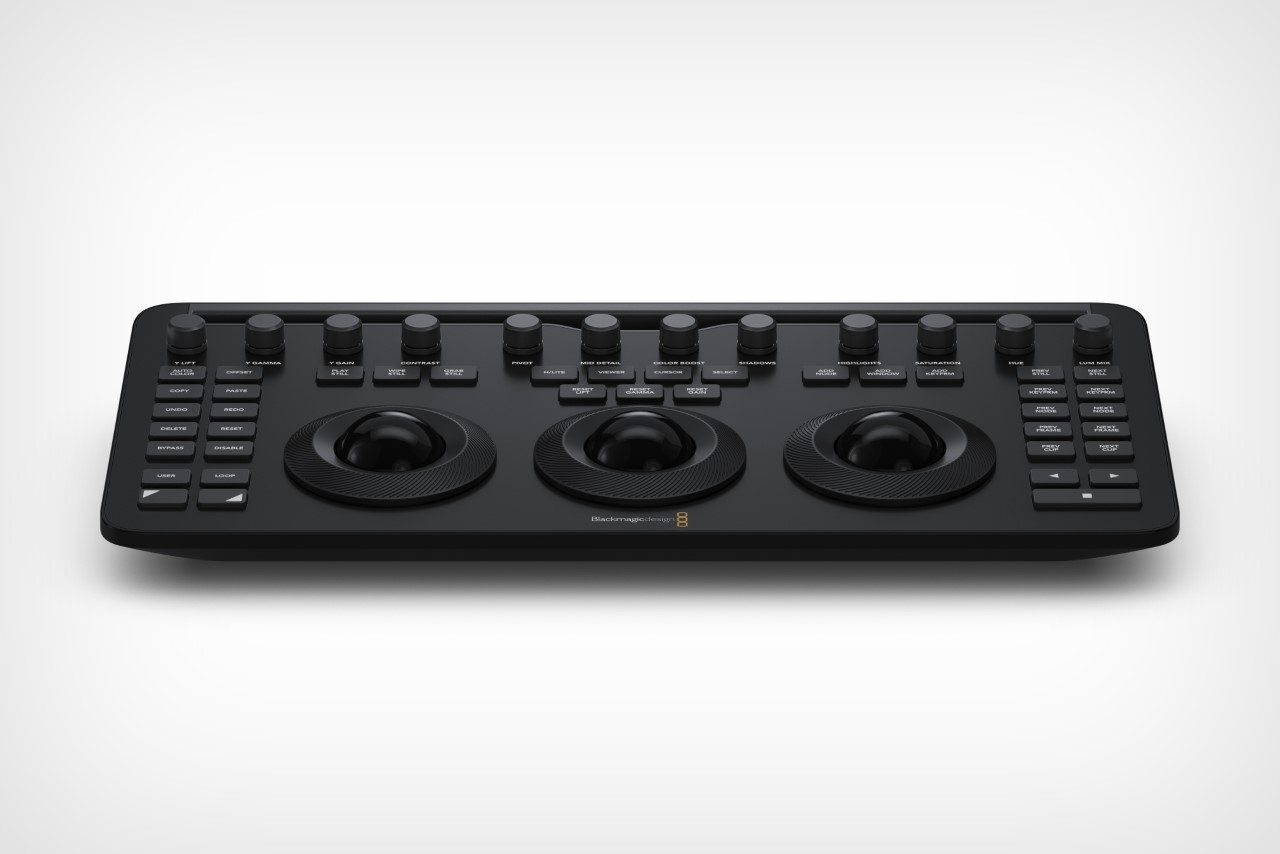
Standing out for its portability, the DaVinci Resolve Micro Color Panel is roughly the size of a keyboard. Don’t be fooled by its size, though. This panel packs a punch with high-quality trackballs and machined knobs for precise control over color correction. Whether you’re adjusting shadows, highlights, or saturation, the tactile feedback provided by these controls allows for nuanced fine-tuning.

Beyond color correction, the panel offers a range of transport and grading controls conveniently positioned around the edges. With these buttons at your fingertips, you can navigate your project timeline, set stills, and execute other commands with ease, significantly speeding up your workflow. Notably, some of these controls were previously exclusive to the larger DaVinci Resolve Mini and Advanced panels.

For existing DaVinci Resolve users, the Micro Color Panel offers a familiar feel. The trackballs boast a similar professional design, and the shift keys mimic the layout of higher-end panels. This ensures a smooth transition for experienced colorists while offering a user-friendly introduction for beginners.

An exciting feature for creators on the go is the integrated battery and Bluetooth connectivity. Ditch the cables and achieve wireless control over your color grading suite. This makes the Micro Color Panel ideal for location shoots or editing suites with limited space. But don’t worry, traditionalists can still connect via USB-C if desired.

The biggest perk might be the price tag. At $495, the DaVinci Resolve Micro Color Panel is significantly more affordable than its larger counterparts. This opens the door for a wider range of editors and colorists to experience the power of dedicated control panels and take their creative output to the next level.

The post DaVinci Resolve’s latest Micro Control Panel turns your Apple iPad Pro into a full-fledged studio first appeared on Yanko Design.
Ray-Ban Meta smart glasses do the AI thing without a projector or subscription

The Ray-Ban Meta smart glasses have been something of a pleasant surprise. They make videos, take photos, livestream and act as an adequate replacement for headphones, all while looking like a normal pair of sunglasses. However, everyone’s been waiting for the addition of multimodal AI after early access testing began in January. Now it’s here.

What is multimodal AI? Simply put, it’s a toolset that allows an AI assistant to process multiple types of information, including photos, videos, text and audio. It’s an AI that can view and understand the world around you in real time. This is the underlying concept behind Humane’s maligned AI Pin. Meta’s version is more conservative with its promises and, honestly, we came away impressed during our initial hands-on.

Here’s how it works. The glasses have a camera and five microphones, acting as the AI’s eyes and ears. With this in mind, you can ask the glasses to describe anything you are looking at. Do you want to know a dog’s breed before you go up and give it a good pet? Just ask the glasses. Meta says it can also read signs in different languages, which is great for traveling. We enjoyed exclaiming “Hey Meta, look at this and tell me what it says” and listening as it did just that. There’s even a landmark identification feature, though that wasn’t available to test.

There are some other potential use case scenarios, like staring at loose ingredients on a kitchen counter and asking the AI to whip up a relevant recipe. However, we need a few weeks of real people running the tech through its paces to gauge what it's actually good at. Real-time translation is going to be something of a killer app, particularly for tourists, but here's hoping it keeps the hallucinations to a minimum. Mark Zuckerberg has shown the AI picking out clothes for him to wear but, come on, that’s about as pie in the sky as it gets.

Multimodal AI wasn’t the only update for the smart glasses announced today. Meta revealed hands-free video call integration with WhatsApp and Messenger. There are also some new frame designs for the fashion-conscious. These new styles can be fitted with prescription lenses and are available for preorder right now. The Ray-Ban Meta smart glasses start at $300, which isn’t chump change but is certainly better than $700 for a clunky pin.

This article originally appeared on Engadget at https://www.engadget.com/ray-ban-meta-smart-glasses-do-the-ai-thing-without-a-projector-or-subscription-175403559.html?src=rss