Lisbon’s Iconic Bica Funicular Railway gets a stunning 2997-brick LEGO recreation

Anyone who’s visited Portugal has undoubtedly encountered the Ascendor da Bica… either in person or through a postcard, a fridge magnet, or perhaps a tourist recommendation. The Ascendor da Bica is more than just a mode of transportation; it’s a vibrant thread woven into the fabric of Lisbon’s identity. Christened “The Bica Funicular,” it scales the steep hills of the Bica district with a unique charm. LEGO builder Peter_Designs’ creation reflects this spirit faithfully. The tram itself is a marvel of LEGO engineering, built at a 20.5-degree angle to mirror the real tram’s ingenious solution to conquer Lisbon’s challenging topography. This intricate build utilizes 2997 pieces (with 773 being dedicated to the cart alone), ensuring not only structural stability but also a remarkably accurate representation of the tram’s distinctive design.

Designer: Peter_Designs

The set extends beyond the meticulously crafted tram, offering a delightful recreation of the surrounding cityscape. With a staggering 2224 pieces dedicated just to the scenery, the build incorporates colorful buildings in a style reminiscent of Lisbon’s architecture. A detailed platform completes the scene, providing the perfect stage to display the tram in all its glory. The total piece count reaches a substantial 2997, promising a rewarding and immersive building experience for LEGO enthusiasts of all ages.

But the Ascensor da Bica’s appeal transcends its impressive brickwork. This set offers a unique opportunity to add a historical landmark with a touch of whimsy to your LEGO world. Imagine this iconic tram, painstakingly recreated in LEGO form, gracefully navigating the slopes of your existing LEGO City. The set even includes functional tracks, allowing you to integrate the tram seamlessly into your cityscape and transport minifigures (not included) on a scenic journey, just like their real-life counterparts.

Peter_Designs’ motivation behind this creation is evident – a love for Lisbon and a passion for LEGO. Their design choices reflect a deep appreciation for the city’s charm and the Ascensor da Bica’s undeniable appeal. Whether you’ve had the pleasure of wandering Lisbon’s cobbled streets and marveling at the Bica Funicular, or simply dream of visiting this vibrant city someday, this set offers a delightful way to celebrate Portugal’s rich heritage and experience the magic of Lisbon from the comfort of your home.

The Ascensor da Bica LEGO Ideas project is currently in the crucial stage of garnering support from the LEGO community. With enough votes from passionate LEGO enthusiasts like yourself, this little piece of Lisbon could become a reality for LEGO fans worldwide. Imagine gifting this set to a friend who has fond memories of Lisbon, or displaying it proudly in your home – a constant reminder of the beauty and ingenuity that LEGO bricks can bring to life! Head down to the LEGO Ideas website if you want to vote for the LEGO Ascensor da Bica.

The post Lisbon’s Iconic Bica Funicular Railway gets a stunning 2997-brick LEGO recreation first appeared on Yanko Design.
Revolutionary Three-Wheel Electric Trike is like a Car with Joysticks and Pedal-Powered Battery

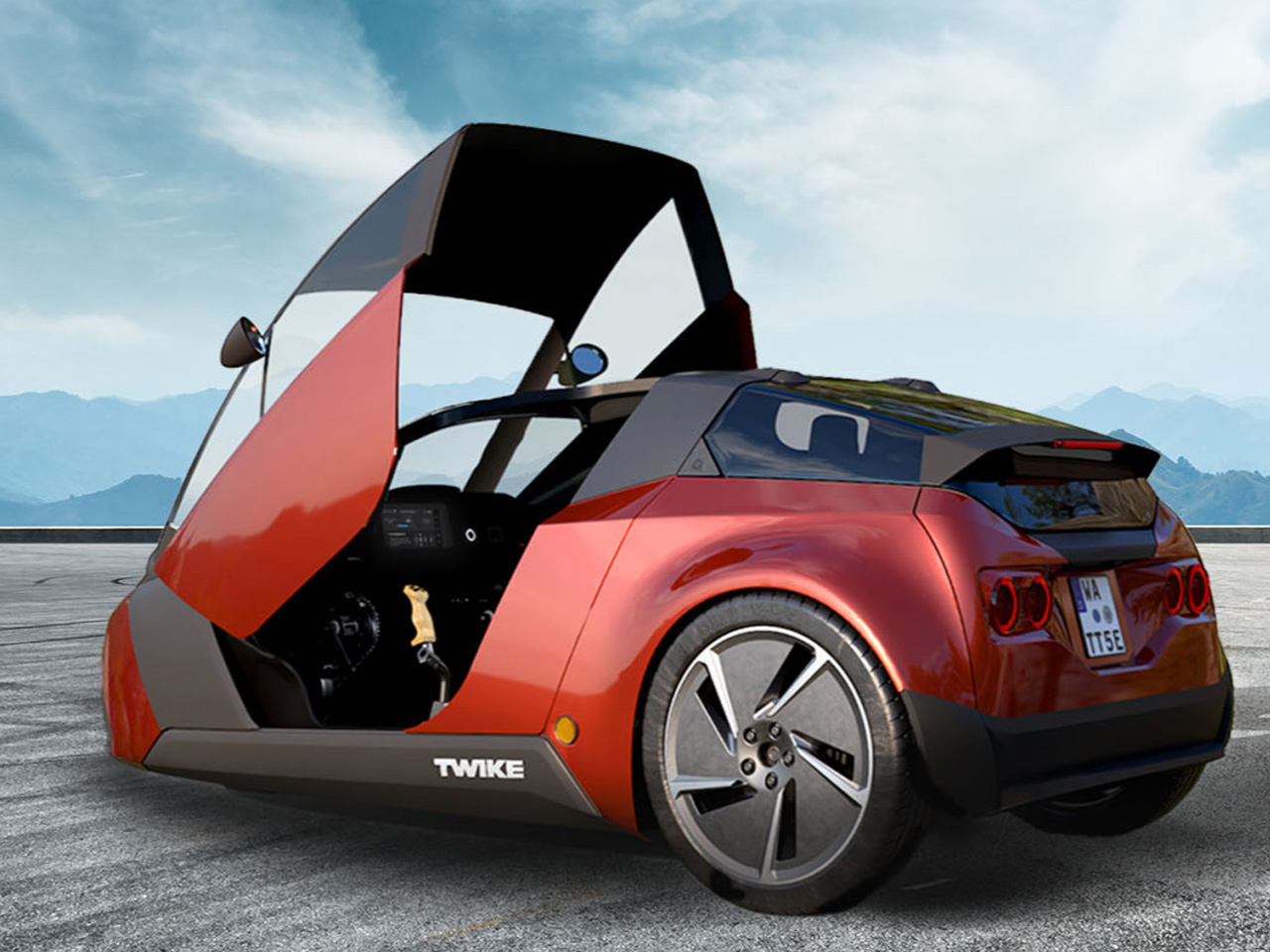
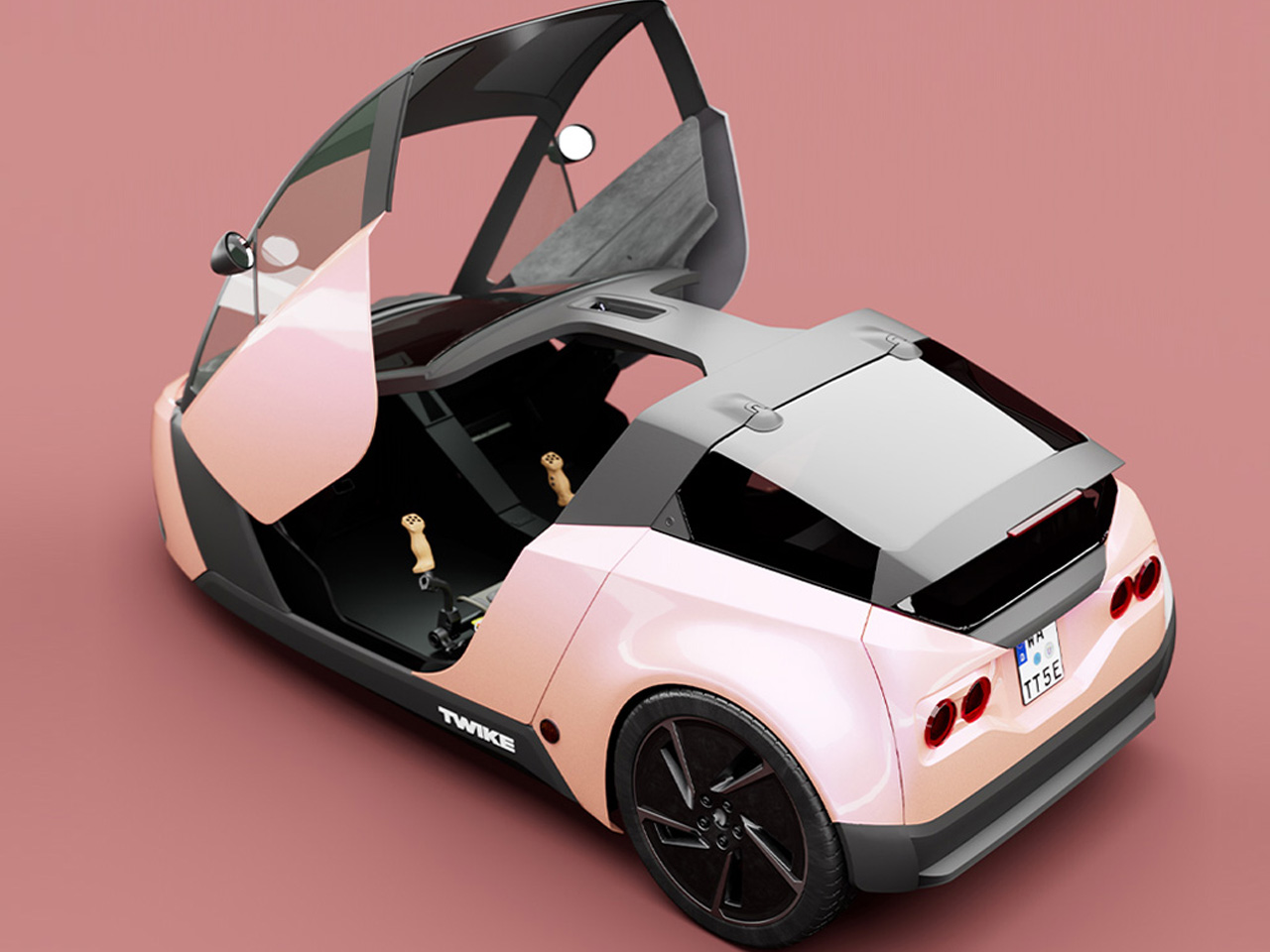
The world of mobility is evolving rapidly. After electric cars and e-bikes, make way for Twike: an electric bike designed like a car and driven using joysticks, reminiscent of old arcade games. This is not fiction but a continuous endeavor by automaker TWIKE GmbH to create a human-powered hybrid vehicle aimed at providing a sustainable mode of transportation. The German manufacturer of battery-powered electric vehicles is introducing a drivable model of the electric car-bike, the Twike 5.

The Twike 5 is a pedal hybrid vehicle designed for those who pursue conscious consumption and a sustainable lifestyle. It is a three-wheel trike, with one wheel in the front and two at the back, combining an electric motor with a pedal drive. This two-seat trike weighs 600 kilograms and can reach top speeds of up to 190 kilometers per hour.

Designer: TWIKE GmbH

Range is a significant concern with electric vehicles. The Twike 5 can travel up to 500 kilometers on a single charge. The range can be extended by pedaling, which powers the battery and decreases its consumption. The pilot (as the company refers to the rider) can use two joysticks to turn left or right: pushing the right joystick forward turns right, and pushing the left joystick forward turns left. Leaving the joysticks untouched steers the Twike 5 straight. Buttons on top of the joysticks allow the pilot to control the lights, horn, wipers, and direction signals, among other functions.

As mentioned, this velomobile-style electric trike does not have a steering wheel, instead, there is a pair of joysticks on the side of the pilot to steer the vehicle in drive mode. The rider can shift to pedals in order to save power and simultaneously charge the battery, which is now 15 times better than the TWIKE’s previous variant of the e-trike. The Twike 3 like the Twike 5 accommodated two people and had similar interior configuration, but lacked the top speed, which was limited to just 85 km/h.

A few notches up from its sibling, the Twike 5, is in the testing phase for now. The Twike community – comprising people who actually want to drive it – has been testing “to see how it handles and how well everything works together.” The feedback is being used to perfect the Twike 5’s interior, exterior, and the overall riding experience. Twike 5, according to the users is a stable three-wheel electric vehicle, safe to make sharp turns, and even to drive on bumpy roads. It is likely to go into production this year, but the construction will be limited to 500 units. Since it will be delivered to community members – who have contributed toward its development – in a specially devised ranking system, you can try your luck by pre-ordering one right now!

The post Revolutionary Three-Wheel Electric Trike is like a Car with Joysticks and Pedal-Powered Battery first appeared on Yanko Design.
NASCAR’s first electric racecar prototype lacks the roar of a V8 engine

Formula-1 and NASCAR are the two top names in circuit racing Motorsports with the responsibility to lessen carbon emissions in the future. Formula-1 has already started working on sustainable fuels that have minimal environmental impact. They even have Formula-E dedicated to clean racing. Now, NASCAR has shown its intent to go all-electric by the year 2035.

Last weekend they revealed their first ever prototype electric racecar at the Chicago Street Race. The $1.5 million crossover developed in association with ABB, Chevrolet, Ford and Toyota is a part of the NASCAR Impact program. According to NASCAR’s head of sustainability Riley Nelson, the series wants to explore the interest of fans in electric racing and its future. The prototype has only been driven by NASCAR driver David Ragan and he has some interesting insights to share.

Designer: NASCAR

David explored the car’s limit at the Martinsville Speedway in Virginia and was just two-tenths away from the average time of a V8-powered NASCAR racer. Even though the electric racer has twice the acceleration and impressive braking ability, the overall weight limits it on the corners where it cannot carry more speed. The champion racer did admit though that he could have taken it faster, but the aim right now is to derive as many test results as possible and not necessarily risk damaging any hardware.

The electric racecar built on a modified Next Gen chassis is powered by three STARD UHP 6-Phase motors one at the front and two at the rear. They feed the powertrain capable of generating 1,000 kW peak output. The motors get their power from a liquid-cooled 78 kWh battery. To get more juice, the car employs regenerative braking to convert the kinetic energy of braking on turns into extra power.

Sustainable qualities are not just limited to the powertrain, as the All-Wheel Drive car has a body made out of sustainable flax-based composite material. Other components of the racer including the steering wheel, suspension, brakes and wheels are all salvaged from a 2022 NASCAR Cup Series car. Just like any other electric vehicle, this monster doesn’t roar when compared to a gas-powered V8. That element will only have to be artificially added in the form of sound coming from an exterior speaker.

The post NASCAR’s first electric racecar prototype lacks the roar of a V8 engine first appeared on Yanko Design.
This electric foiling boat has exceptionally good range, smooth riding experience and luxe interiors

Last year Swedish boat maker Candela announced its partnership with Polestar to create a special edition hydrofoil boat that would be hard to challenge. The vision has met fruition in the form of Candela C-8 Powered by Polestar. This electric boat is a major upgrade over the C-7 and challenges other similar makers with its unique proposition.

The boat employs advanced hydrofoil technology to reduce the drag by exposing a minimum of the hull area to the water. This results in 8 percent less energy consumption as compared to conventional electric boats hitting the horizon. This ultimately results in extending the range – 57 nautical miles at a cruising speed of 22 knots. Driving it around at a top speed of 30 knots will decrease the range, still, it will be better than other options. As per Candela, the numbers are almost two times better than electric boats and even compare well with the combustion engine counterparts.

Designer: Candela and Polestar

What Polestar brings to the equation are the 69 kWh batteries along with the DC fast charging for quick juicing up. The 8-seater boat can also be charged with Polestar’s 11 kW three-phase AC charging port. According to Candela’s founder and CEO Gustav Hasselskog, the C8 makes it possible to travel to destinations previously only “reachable by combustion engine boats. The Candela C-8 powered by Polestar marks a significant breakthrough for electrification at sea.”

The electric boat is well within the 50 nautical miles excursion range stated by research done with boaters. So, you could go from Sweden to Finland in just one day, or traverse the whole French Riviera in mere hours. The option is cost-effective as well due to its premium range as stated by the maker. Teaming up with Polestar for the advanced batteries is the best decision for both. The shared goal will make it possible to transition to a sustainable future.

As for the looks, the electric boat scores very high with multiple shades of grey across the face. It might be unconventional but stylish nonetheless. The boat’s cabin is beautifully tailored and the seat’s upholstered for a premium feel for the riders – something akin to high-end automobiles. Coming at $450,000 the electric boat can be bought in carbon fiber hardtop or completely open version.

The post This electric foiling boat has exceptionally good range, smooth riding experience and luxe interiors first appeared on Yanko Design.
This transparent Volkswagen ID 3 is born to rock Japanese night drifting scene

It’s one thing seeing a transparent Nothing phone and completely another when it’s a car. Looking something straight out of the Marvel universe, this cool Volkswagen ID 3 EV is a custom sedan you don’t want to ride if you prefer privacy.

The car originally owned by a Chinese automobile influencer Dog Bro Fast Dog has been customized to have a see-through form achieved with modding that seems absolutely bonkers. It’s not every day that you come across a transparent car on the streets. To complete the distinct appeal of the VW ID 3, LED lighting has been put to good use.

Designer: Fast Dog

The Chinese automotive influencer draws his inspiration from the Nothing Phone (not surprising) which traversed normal conventions to create a mobile device that stands out from the crowd when it comes to pure form factor. The idea was good but executing it to achieve the desired look is another challenge altogether. Major sections of the vehicle were cut out including the door panels and plastic bumpers. They were replaced with vacuum-formed transparent plastic to achieve the see-through look of the clear acrylic panels.

The C-pillars and other structurally important parts of the frame were kept intact but etched with circuit boards and working computer fans to maintain the futuristic theme and aesthetics. Surprises don’t end there as the interiors are a cool little world on their own. The white theme carries the clean theme to the inside. There’s a racing seat for the driver and the passenger seat is replaced with a secondary battery for those extra 18 odd miles and feeding the power-hungry electronics.

The influencer has one more surprise in there, a PlayStation 5 console complete with a gaming setup including dual monitors, desks and an acrylic rack for all the peripherals in the rear section. The gaming setup is for real to enjoy as the influencer managed to fit a gaming chair in there too.

This is one of the craziest car modifications we’ve seen in a long time and the coolest without a doubt. A perfect show-stopper for the Japanese drifting scene in the dark hours!

The post This transparent Volkswagen ID 3 is born to rock Japanese night drifting scene first appeared on Yanko Design.
This transparent Volkswagen ID 3 is born to rock Japanese night drifting scene

It’s one thing seeing a transparent Nothing phone and completely another when it’s a car. Looking something straight out of the Marvel universe, this cool Volkswagen ID 3 EV is a custom sedan you don’t want to ride if you prefer privacy.

The car originally owned by a Chinese automobile influencer Dog Bro Fast Dog has been customized to have a see-through form achieved with modding that seems absolutely bonkers. It’s not every day that you come across a transparent car on the streets. To complete the distinct appeal of the VW ID 3, LED lighting has been put to good use.

Designer: Fast Dog

The Chinese automotive influencer draws his inspiration from the Nothing Phone (not surprising) which traversed normal conventions to create a mobile device that stands out from the crowd when it comes to pure form factor. The idea was good but executing it to achieve the desired look is another challenge altogether. Major sections of the vehicle were cut out including the door panels and plastic bumpers. They were replaced with vacuum-formed transparent plastic to achieve the see-through look of the clear acrylic panels.

The C-pillars and other structurally important parts of the frame were kept intact but etched with circuit boards and working computer fans to maintain the futuristic theme and aesthetics. Surprises don’t end there as the interiors are a cool little world on their own. The white theme carries the clean theme to the inside. There’s a racing seat for the driver and the passenger seat is replaced with a secondary battery for those extra 18 odd miles and feeding the power-hungry electronics.

The influencer has one more surprise in there, a PlayStation 5 console complete with a gaming setup including dual monitors, desks and an acrylic rack for all the peripherals in the rear section. The gaming setup is for real to enjoy as the influencer managed to fit a gaming chair in there too.

This is one of the craziest car modifications we’ve seen in a long time and the coolest without a doubt. A perfect show-stopper for the Japanese drifting scene in the dark hours!

The post This transparent Volkswagen ID 3 is born to rock Japanese night drifting scene first appeared on Yanko Design.
This Wheel-less Bicycle replaces the Rubber Tire with multiple Sandals and the results are… surprising

Sergii Gordieiev is well known for his unique creations, showcasing his DIYs on the YouTube channel ‘The Q’ for people who love things out of the box. The wheel-less bicycle and square-wheeled ride are the prime examples. His love for customizing an ordinary bicycle is not going to fade away soon, as the slipper bicycle proves it all right.

As weird as it sounds, wait until you see the full video transcript. Sergii manages to slap the tarmac with this unusual ride one slipper at a time and that trippy sound is so irritatingly addictive. Everything apart, the level of detail and the amount of creative intent that the DIYer brings to each of his DIYs is worth appreciating. What next is he going to do with a bicycle is anybody’s guess, but for now, enjoy this one.

Designer: Sergii Gordieiev

On first look, it seems the slippers will wear out from all the spanking on the road but there are 14 metal cutouts to take all the weight and contact force when the bicycle is paddled forward. These metal cutouts become the base for an outrageous-looking set of wheels for an adult bike. Both the wheel frames are designed from scratch with meticulous cutting and molding of the metal. Thereafter the wheels are attached to the bicycle frame.

The final step involves sliding on the rubber slippers onto each of these metal struts. Sergii fits each of the wheels with 12 yellow slippers and two black slippers to create a contrasting look when the wheels turn. The best thing about his creations is that no matter how much non-functional the bikes look, they glide on the road beyond anyone’s expectations. This one is no different as he takes a casual ride in the park to onlookers’ amazement.


The post This Wheel-less Bicycle replaces the Rubber Tire with multiple Sandals and the results are… surprising first appeared on Yanko Design.
Wing-like car key fob concept promises a more ergonomic design for future drivers

The vast majority of design concepts for future cars unsurprisingly revolve around the more exciting parts of the experience, from hands-free autonomous driving to hotel-like cabins to quiet, efficient, and eco-friendly engines. Of course, those aren’t the only parts of the driving experience, which starts and ends with drivers getting in and out of the car. Oftentimes, that part is presented as a keyless activity that either relies simply on the touch of a finger or the tap of a smartphone screen. It might be quick and efficient, but not exactly satisfying or meaningful. This concept tries to attack the problem from a different angle, retaining the tactile joy of a physical key fob while improving not only the features but even the comfort of using one.

Designer: Zander De Beer

A dedicated car key fob might sound unnecessary today in an age of smartphone apps, but having a distinct and direct device you can easily use is still far more convenient, not to mention faster, than fumbling around with a smartphone and its dozens of apps. It gets the job done without fuss, but it’s not exactly a memorable or even pleasant experience. Neither is its design the most inspiring accessory for a car, especially the sleek and sophisticated vehicles of the future.

This concept for a new kind of car key fob thinks outside the box and adopts a shape unlike any other fob. Instead of a small disc or teardrop-shaped piece of plastic, it looks to the aerodynamic form of an airplane wing or car spoiler for inspiration, promising a more ergonomic design that you can comfortably hold in your hand. It almost looks like a lighter, with one side tapering sharply to a single edge.

More than just a change in shape, however, this car key fob concept also offers a slight change in functionality. There are still buttons for typical actions like remotely locking and unlocking the car, starting or killing the engine, and even blowing the horn. What’s new is a large dial on top that you turn to set the temperature inside so that it will be as toasty or as cold as you want by the time you enter. This dial has a large display on its top surface to clearly show the current temperature so that you can adjust it accordingly.

The design tries to comply with Deiter Ram’s famous principles of design, though there are still some details that it leaves out in this current iteration. Knowing which buttons map to which actions, for example, could be a matter of guesswork and muscle memory as there are no clear indicators on them, not even embossed symbols that let you blindly press them. There’s also the question of whether the design, ergonomic as it might claim to be, is actually convenient to carry around due to its size and unique shape. Either way, it’s an interesting thought experiment that challenges the presumption that car owners of the future won’t even want physical key fobs like this.

The post Wing-like car key fob concept promises a more ergonomic design for future drivers first appeared on Yanko Design.
Pure x McLaren Special Edition e-scooter stylizes the future of e-mobility

McLaren is currently in an intense dog fight on the track and on the paddock with Red Bull as tensions are rising between star drivers Max and Lando. You as a fan, have the opportunity to own a special edition electric scooter to root for the underdog. Yes, we are talking of an official McLaren edition e-scooter developed by Pure Electric.

The Britan-based company founded in 2018 is in hot pursuit of building the best electric scooter on the planet is owned by Adam Norris (Lando’s father) and the collab is not surprising. Coming on the back of another successful venture between the two brands, this e-scooter is based on the popular Advance+ model.

Designer: Pure Electric and McLaren

Pure Electric is 100 percent focused on just one goal, which is to build an e-scooter that changes the complexion of urban transport for good. The foldable commuter gets a bump up in electric motor power and a better range for this special edition version in the signature papaya color and the deep black finish. The e-scooter delivers 710 watts of peak power for better acceleration and much better performance on ascending hills. The range of 31 miles on a single full charge is reassuring if you’ll commute the city in one go.

The all-weather-proof ride comes with an IP65 rating and has 10-inch puncture-proof tires to complement the sturdy frame. Just like the Pure Advance+ model, the Pure x McLaren Special Edition has a natural forward-facing stance for a stable and comfortable riding experience. McLaren’s expertise comes from the valued design approach that’s honed by sharp aesthetics and a deeper knowledge of how hybrid powertrains work.

According to Adam who’s set the company on a success path, the partnership further cements the future of e-mobility, reflecting the engineering and design ethos. Pure x McLaren Special Edition scooters are all set to be available on July 4 in the aforementioned color options. Also, keep in mind, that there’s an Ayrton Senna anniversary edition e-scooter draped in the Brazilian flag skin released just a few months ago.


The post Pure x McLaren Special Edition e-scooter stylizes the future of e-mobility first appeared on Yanko Design.
Modified Mercedes-Benz Sprinter van doubles into a 5-Person Camper with Bunk Beds

If you have been wanting a custom-built van home for your journeys around the US, Beachside Custom Vans has delivered 2024 AWD Mercedes-Benz Sprinter-based Fam Van: a van home for a family of five to travel together. A van that can accommodate five people seems a cramped-up idea that no one would want to invest in. At least, that was my perception in the beginning. But the way the Mercedes-Benz Sprinter, comprising a 170″ wheelbase, has been configured, I have a different take. When you reach the end of this article, I’m sure you will have a revised perception as well.
Atlantic Beach, Florida-based Beachside Custom Vans is known for designing van homes that rival tiny houses. The vans are custom-built for people, in a manner they want, to make life on the road smooth, comfortable, and feature-packed. These Mercedes-Benz Sprinter-based vans, including the Fam Van, are designed with accessories inside and an exterior that catches the eye at first glimpse.

Designer: Beachside Custom Vans

Offering seating and sleeping space for five people, along with a full kitchen, toilet, and enough storage sections; the Beachside Custom Vans’ Fam Van is a superior option for any adventure family. The exterior of the van is delivered in ceramic-coated gray and blue dual-tone. Its suspensions and wheel rims along with all-terrain tires facilitate off-the-road travel.

Even when the Sprinter is custom-designed for adventures off the road. It is not entirely off-grid. The van home is provided with 200 Ah batteries, a 3,000 W inverter, but there are no solar panels (presumably you should get it as an addon, if you may). Inside, the Fam Van is pretty spacious and open with oak plywood cabinetry marine vinyl flooring, grey upholstered wall paneling, and white ceiling with strip LED lights.

The front portion of the van home has seating for the family comprising the driving seat and a bench for other passengers. Overhead is a shelf featuring the van’s heater control panel and a touchscreen monitor. Moving back on the passenger side is the kitchen that features a white countertop, white subway-tiled backsplash, a countertop with a fold-away table, sink, fridge compartment, a pull-out pantry, and under-sink and overhead cabinets for storage.

The water of the Beachside Custom Vans family van home is managed by a 28-gallon freshwater tank and a 5-gallon graywater storage, which can be emptied appropriately on the press of a button. Opposite the kitchen are two large closets for storage along with a slide-out section for the dry-flush toilet. If you’re thinking of how to wash up and bathe; opening the two rear doors you can access an outdoor shower. Here a large drawer also slides out which you can use for various requirements, including keeping your gear.

When the day is over and the family wants to dine and retire, there is a dinette with a pair of benches and tables that can transform into a bed. The main queen-size bed hangs down from the ceiling, leaving good headroom for the sleepers on the couch below. The entire van home conversion is possible for $75,000.

The post Modified Mercedes-Benz Sprinter van doubles into a 5-Person Camper with Bunk Beds first appeared on Yanko Design.