Ferrari SF90 Stradale PHEV has already set the platform for future electric vehicles coming from the house of the Italian automotive giant. The three electric motors mated to the V8 internal combustion engine of the sports car give it a maximum output of 1000cv. Going fully electric will be one of the major goals for Ferrari, and they’ve promised one is coming in the fourth quarter of 2025.
What this EV will look like or exactly be (supercar, sportscar, roadster, or hypercar) is not exactly clear. What is known so far from the filed patents by the Italian marque is the indication of a two-seater sports car that will have a rear mid-engine layout for it to have a lower stance resulting in better aerodynamics. Although it is just one calculated guess we have got just the right concept to build on this speculation.
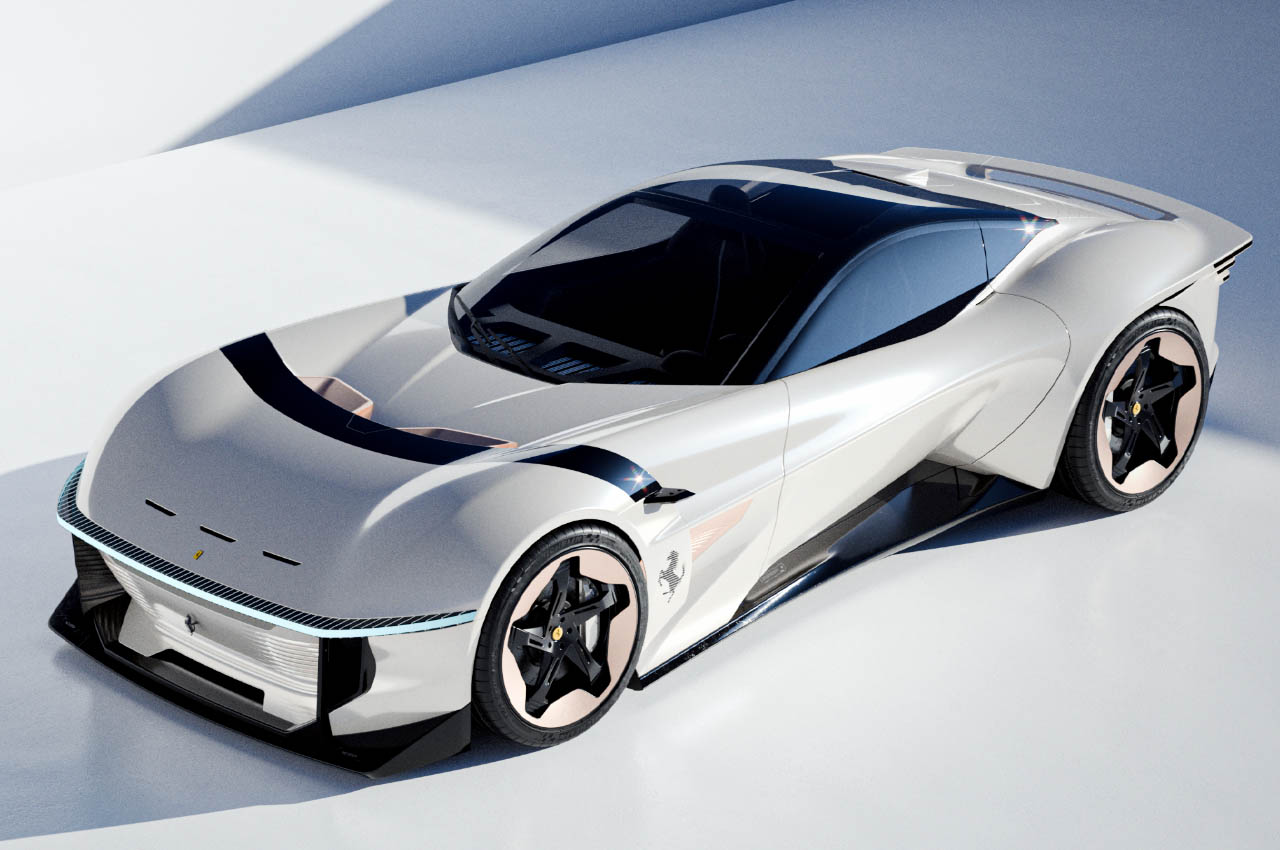
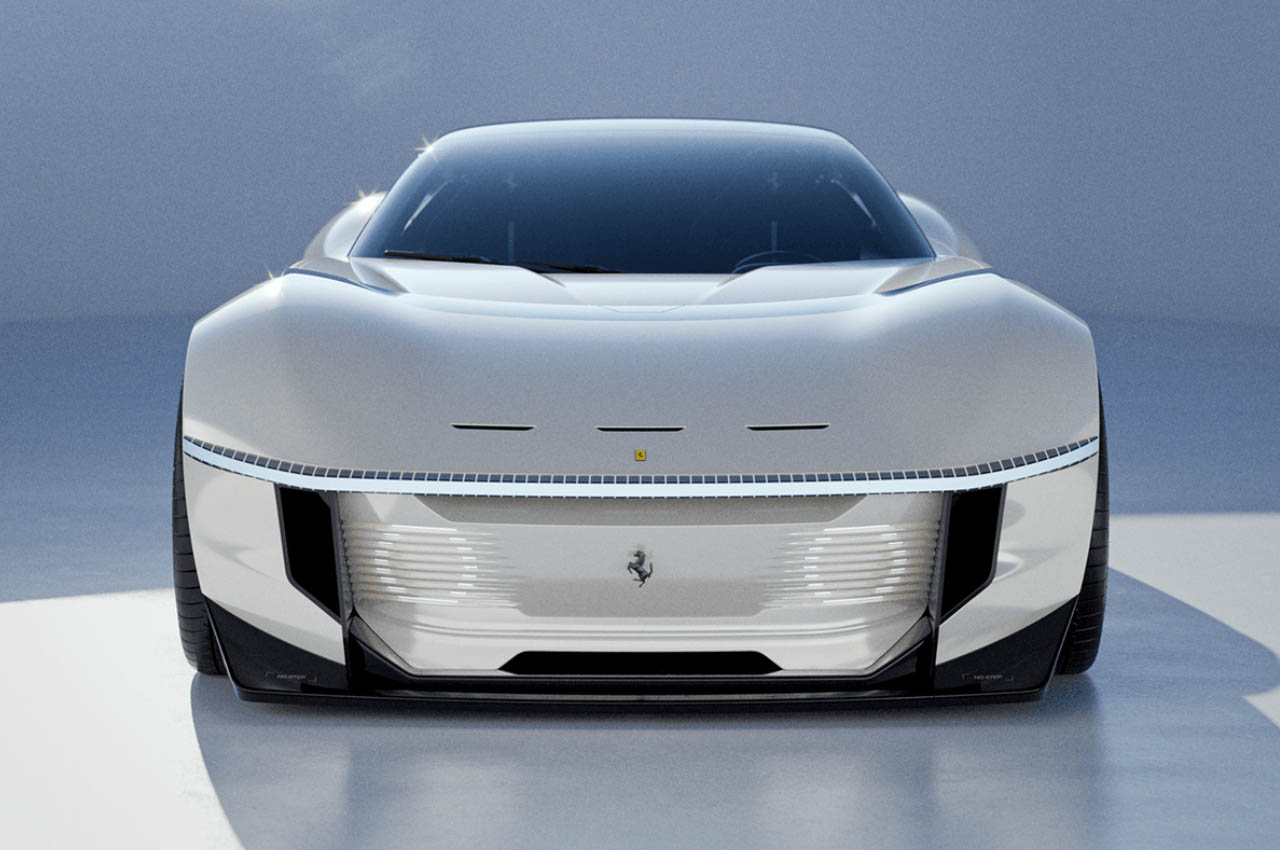
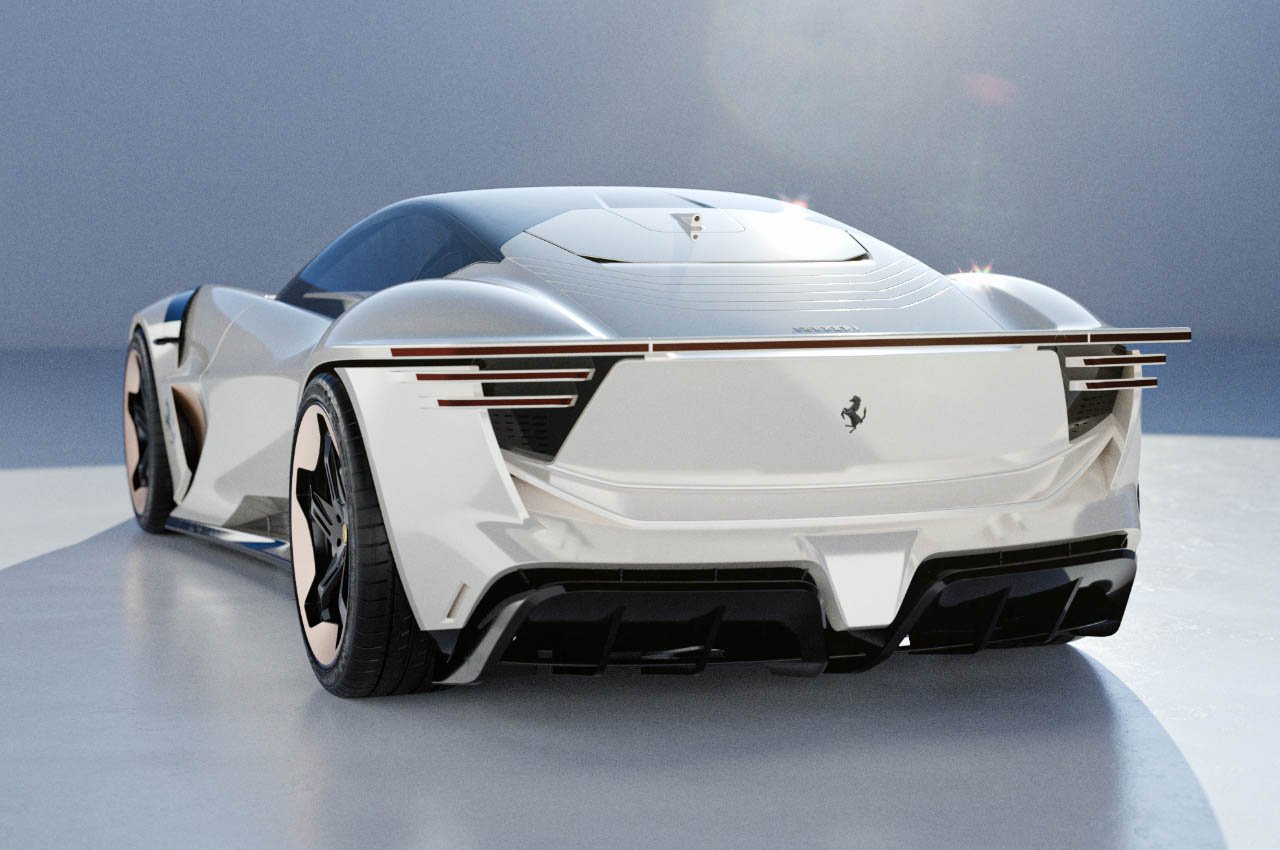
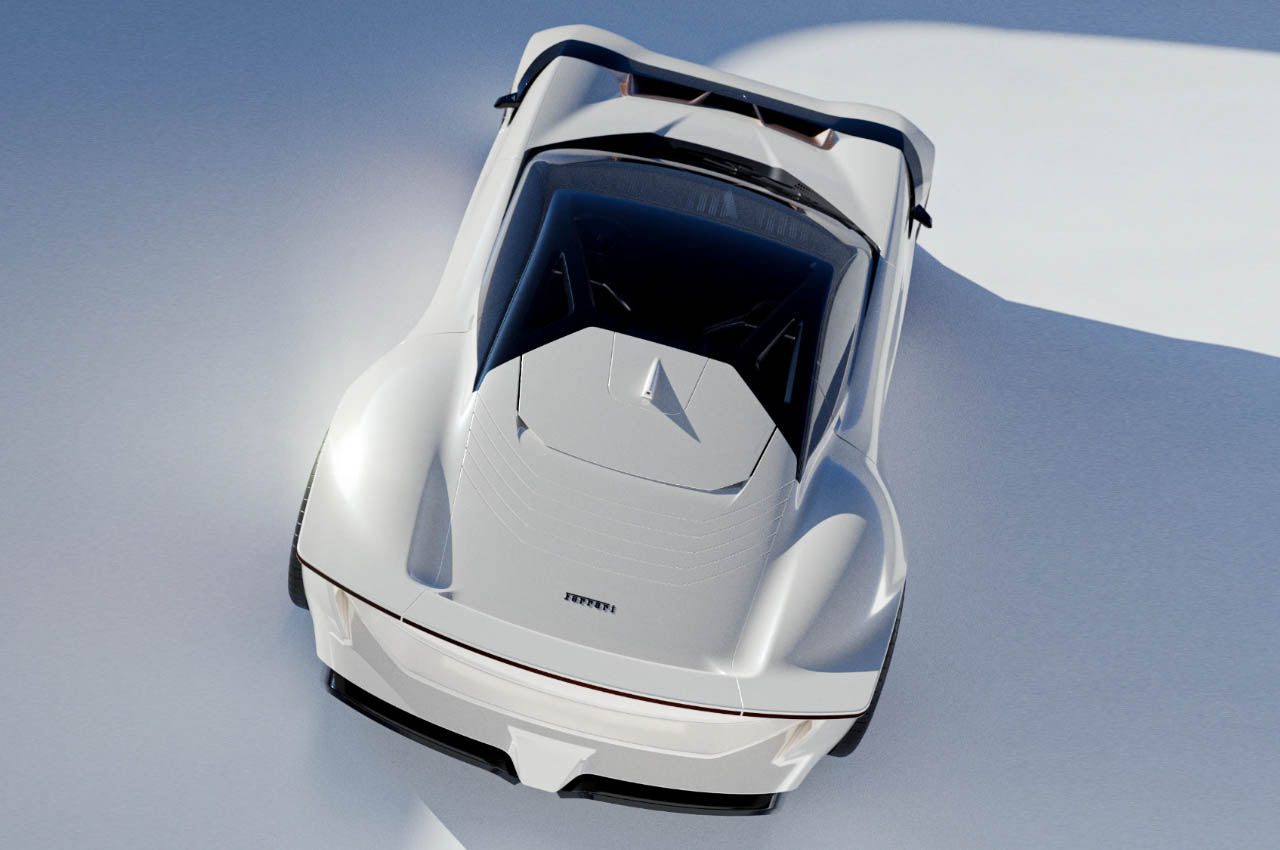
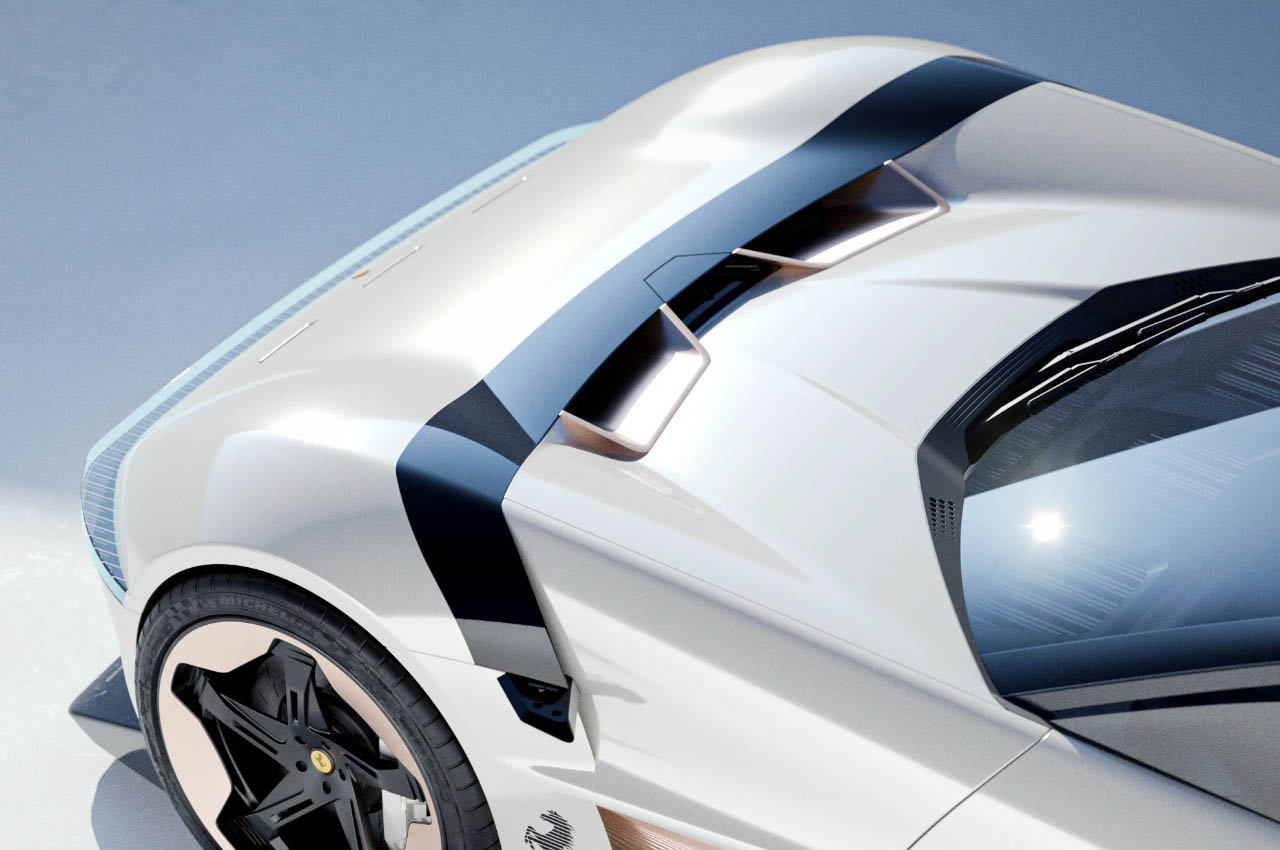
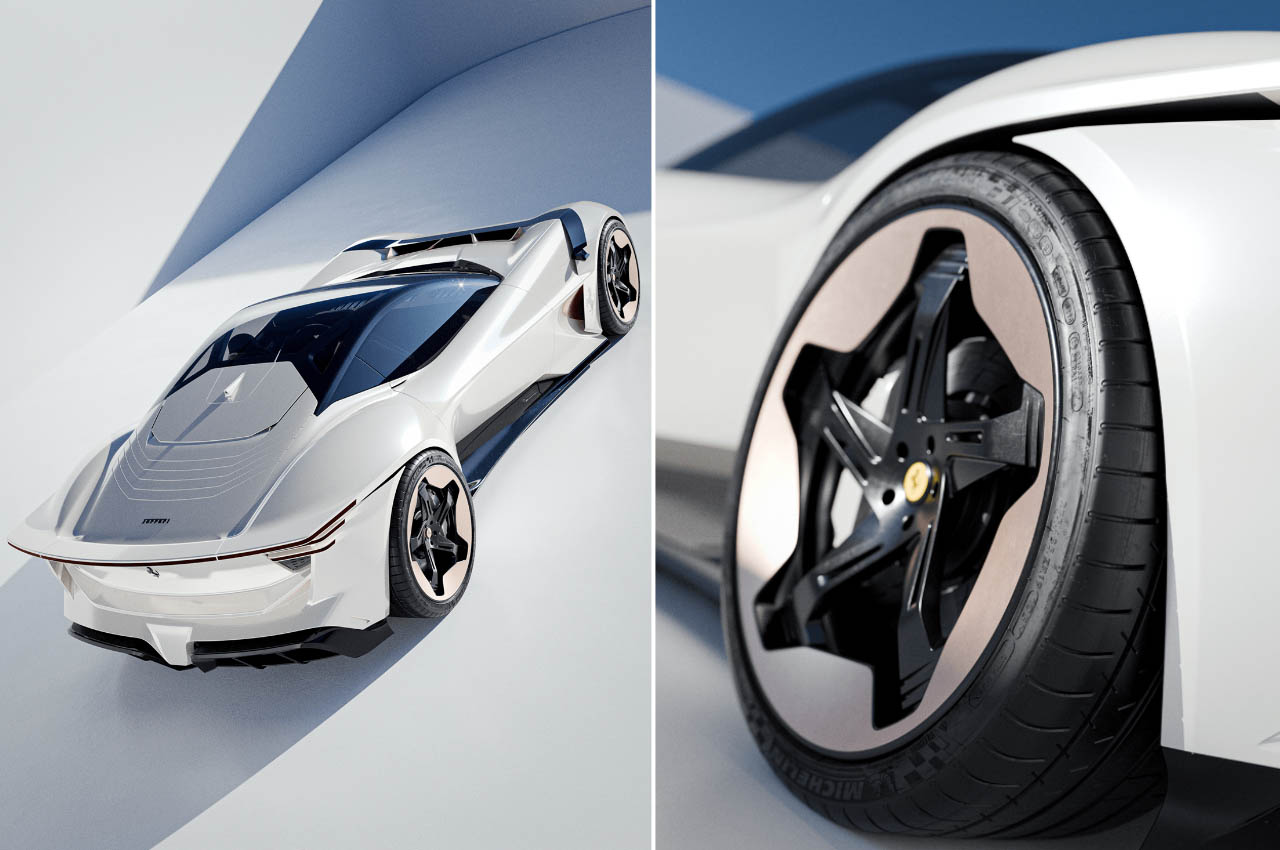
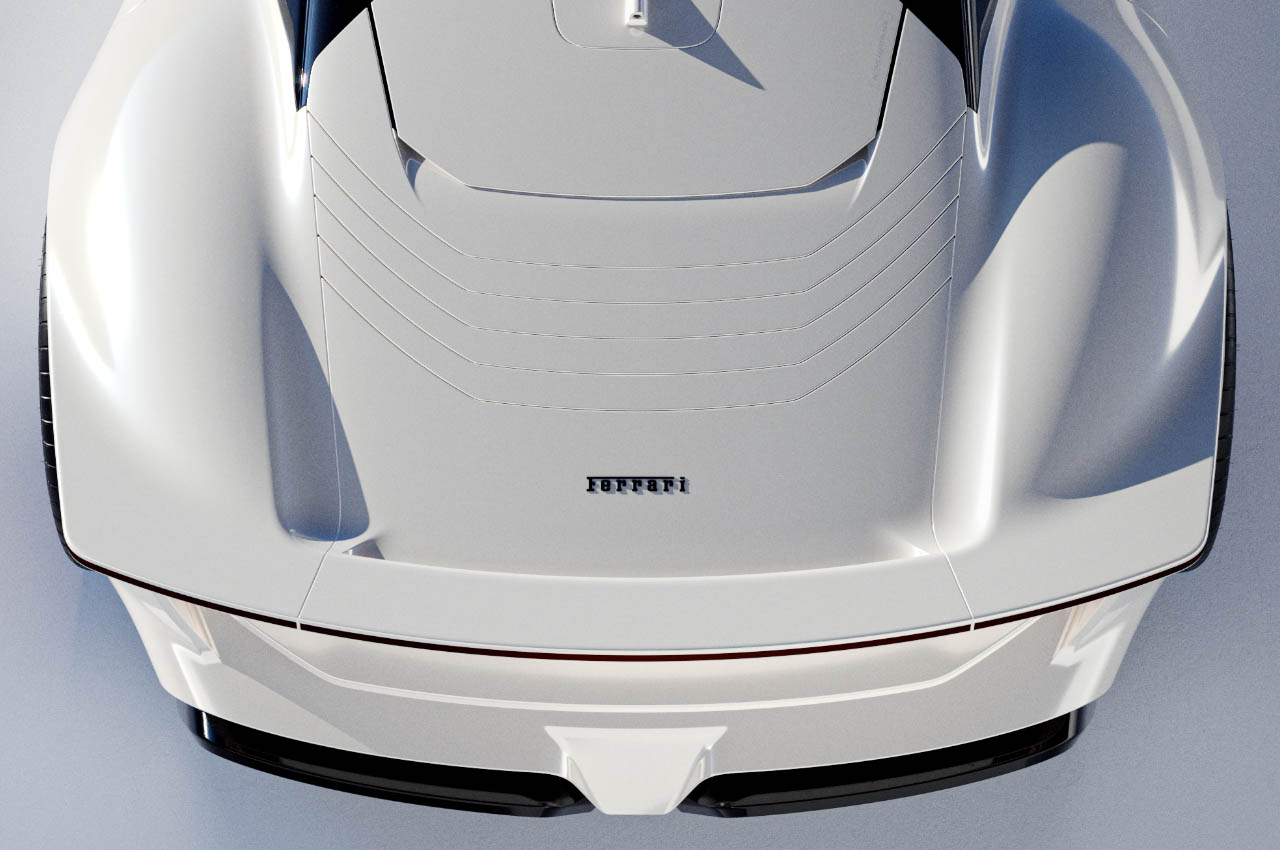
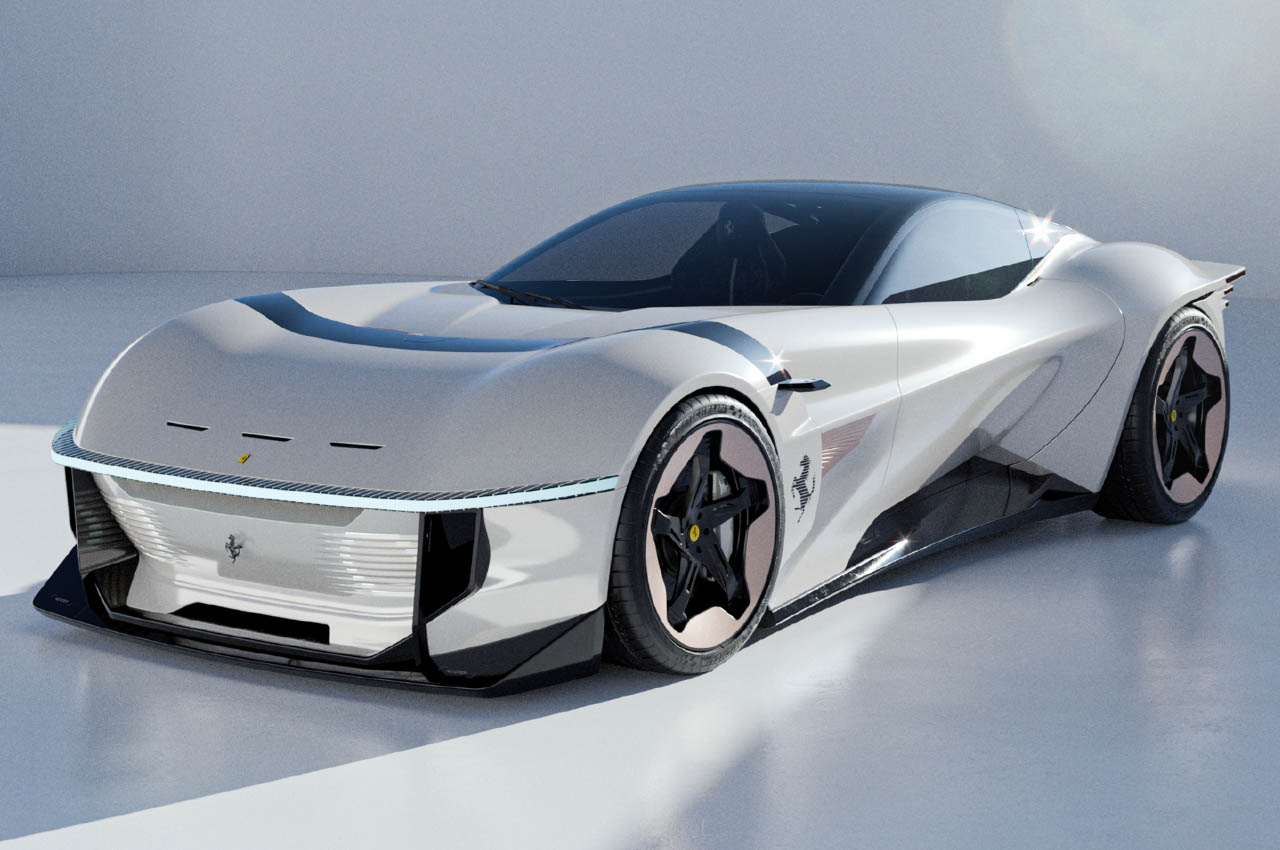
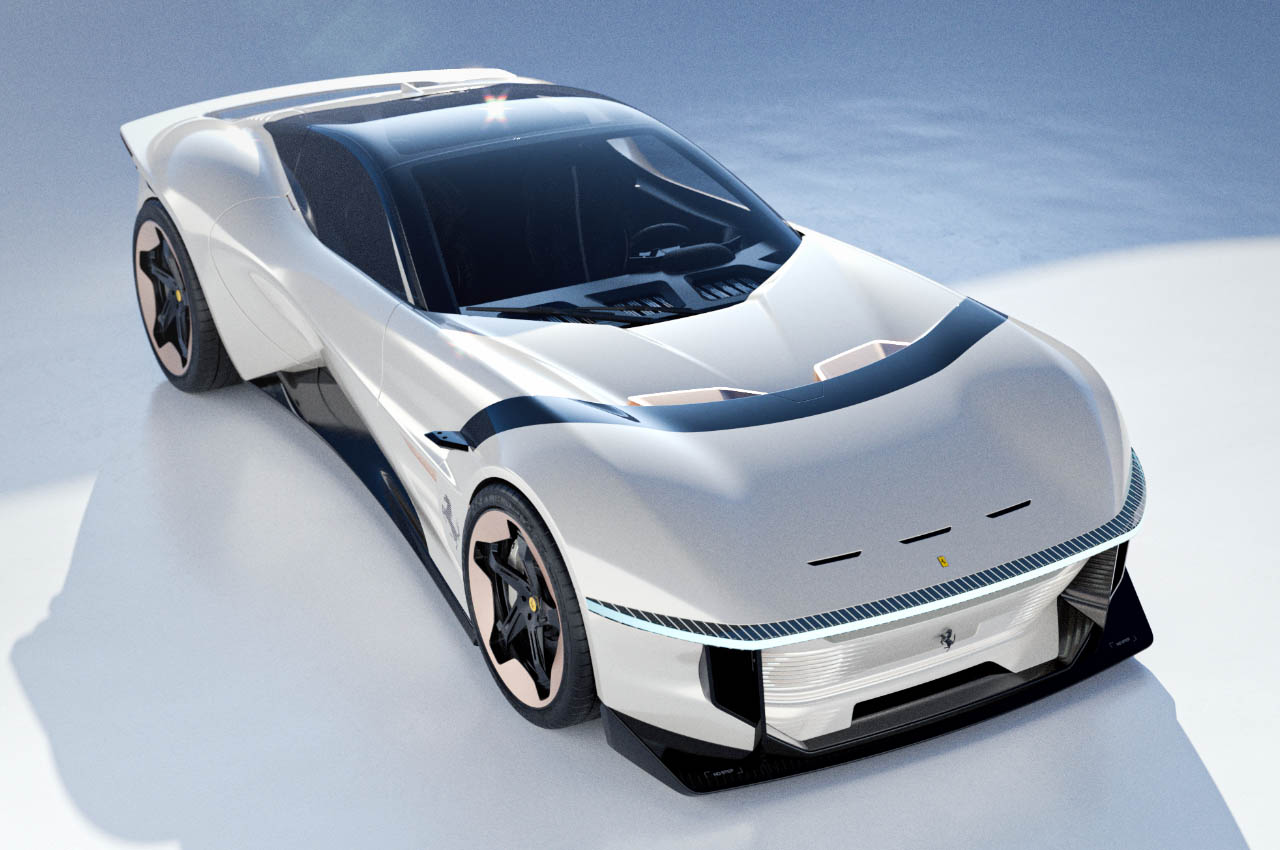
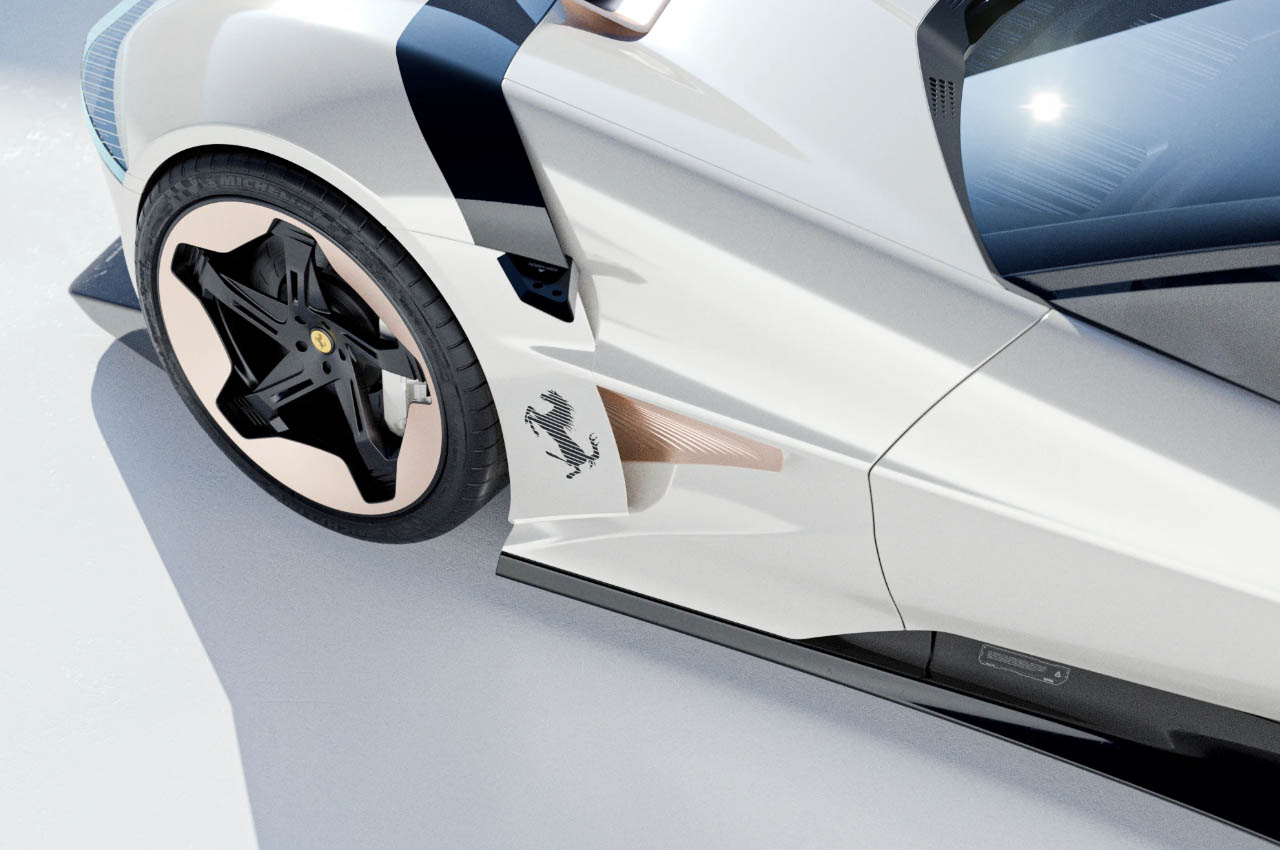
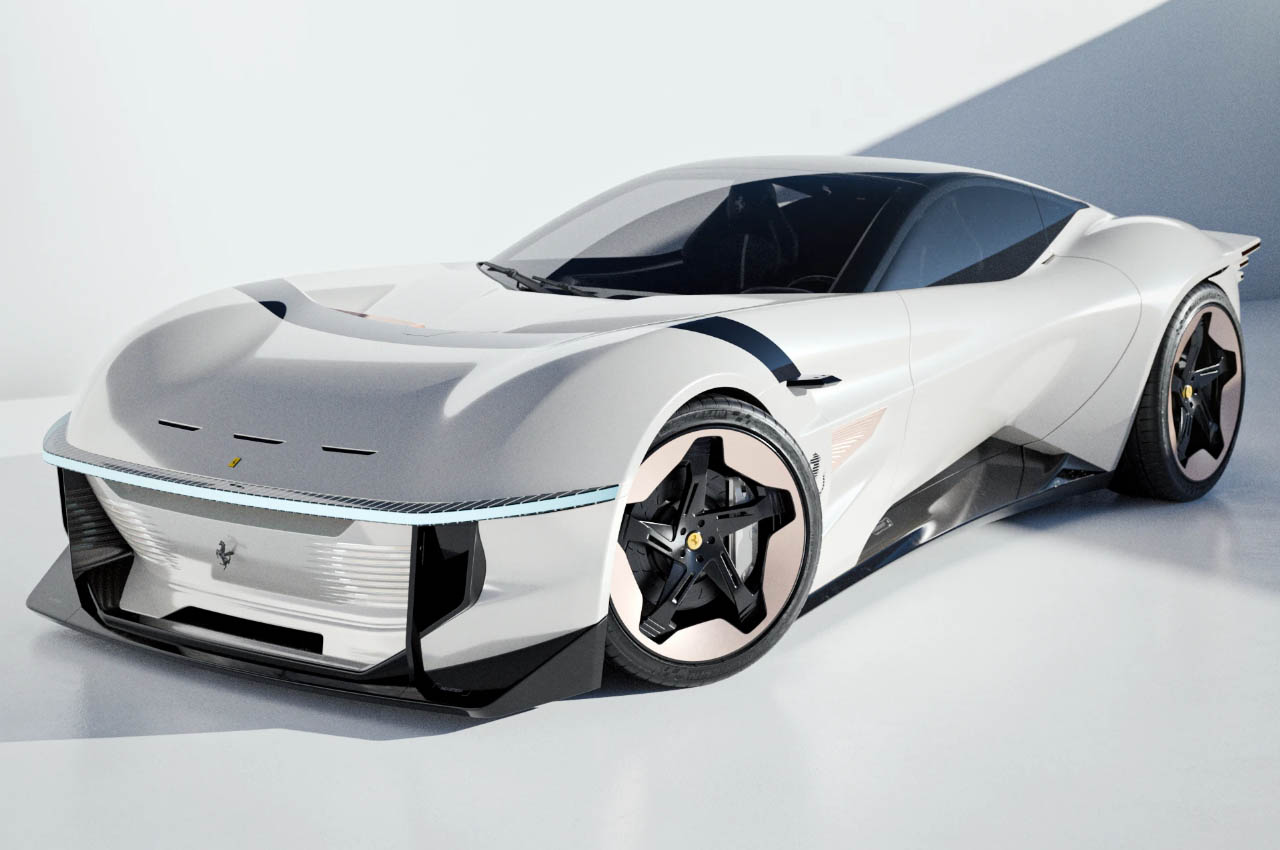
This is the Ferrari Alto ANGEL two-seater roadster concept that fits right in the puzzle board of what the Ferrari EV 2025 could be. The ride has a low ground clearance, the signature brand silhouette, flowing aerodynamic design and a rear that is most definitely a prancing horse loaded with ample electric power. The hourglass shape running from the front of the EV to the rear gives it a definition that’s evoking. The air intakes on the hood and the side pods further add dynamism to this Ferrari concept.
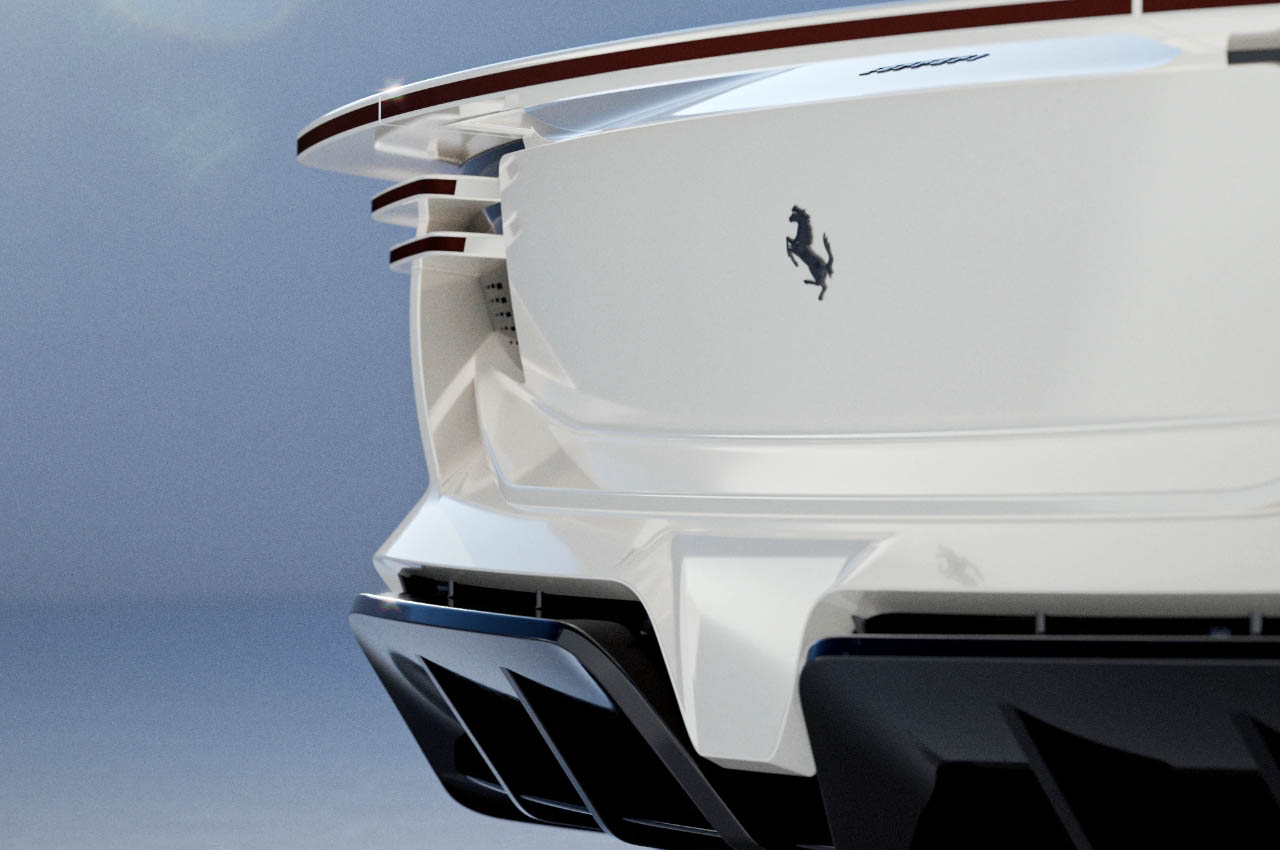
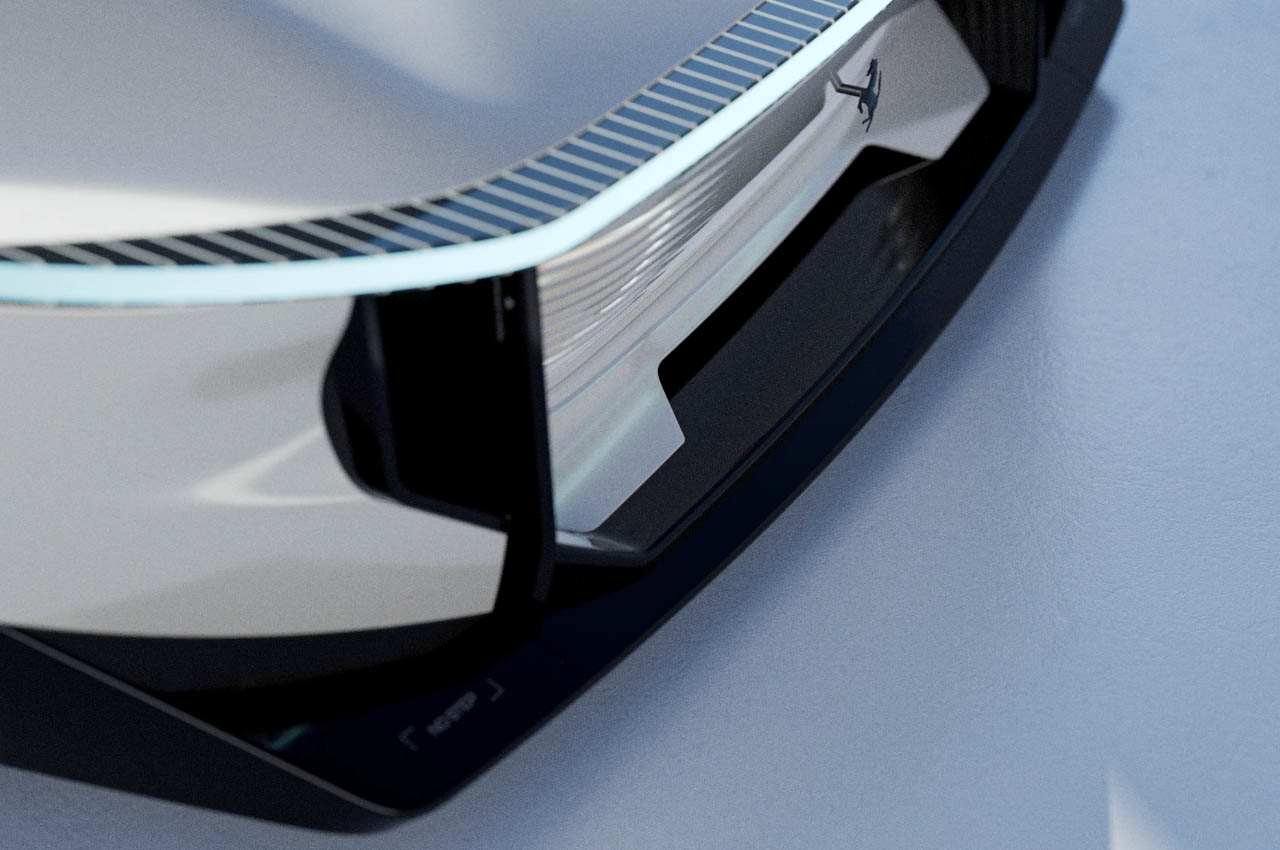
The panoramic windshield flows to the back with a geometric body panel with a shark fin fusing the two. The cool sea-green headlights run right across the front section that has a futuristic grille right beneath it. The rear has a similar flowing silhouette of brake lights integrated right across the spoiler and continuing with two light bars at both ends. Those wheels are very muscular, loaded on industrial-themed rims that look absolutely dope.
I’m drooling all over this Ferrari EV roadster and if the real thing looks anything close to this it’ll be a big hit. Compare it against the likes of the Tesla Roadster, Pininfarina Battista, Maserati GranTurismo Folgore or Lamborghini Terzo Millenio; and every time my heart will say the Ferrari Alto ANGEL!
Given how building relationships and meeting partners is all about swiping right or left in today’s day and age, actually making connections the old-school way can be a bit challenging… daunting even. But fear not, because DateNest is here to change the game! Imagine cozying up in a nest-like space, away from the hustle and bustle of noisy bars and awkward coffee dates. Sounds promising, right? Well, that’s exactly what DateNest offers—a fresh take on dating that’s all about comfort, authenticity, and adventure.
Designed by an Indian transportation designer who believes that transportation is more than just getting from A to B—it’s an opportunity to create unforgettable experiences. With DateNest, he’s combined practical engineering with creative design to give us a dating experience like no other.
So, what makes DateNest so special? It’s an interesting conceptual collaboration between Airbnb and Bumble, two big names in the world of travel and dating apps. With DateNest, you get to ditch the cliché date spots and explore unique settings instead. You can share a meal in someone’s cozy home, embark on a city adventure, or escape to a charming Airbnb for a romantic getaway. It all depends on what excites you because you get to choose your adventure and the choice can sometimes potentially even be a deal breaker when going on a date.
But DateNest isn’t just about the places you go—it’s about the vibe too. Imagine soft lighting, warm colors, and fragrances that make you feel like you’re wrapped in a blanket of coziness. Inspired by nature, the design embraces the concept of “Warmcore,” enveloping participants in a cocoon of comfort and allure DateNest aims to create a romantic atmosphere that’ll make your heart flutter.
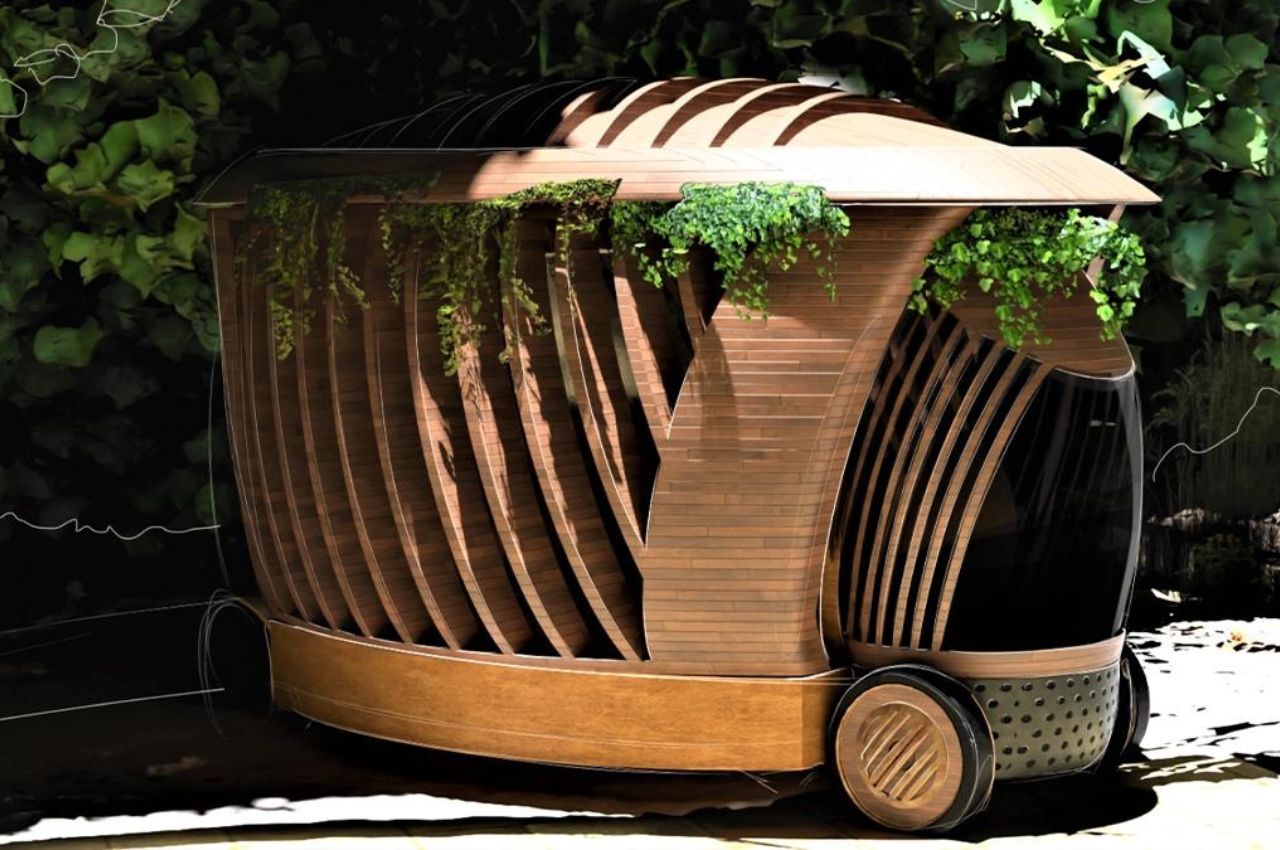
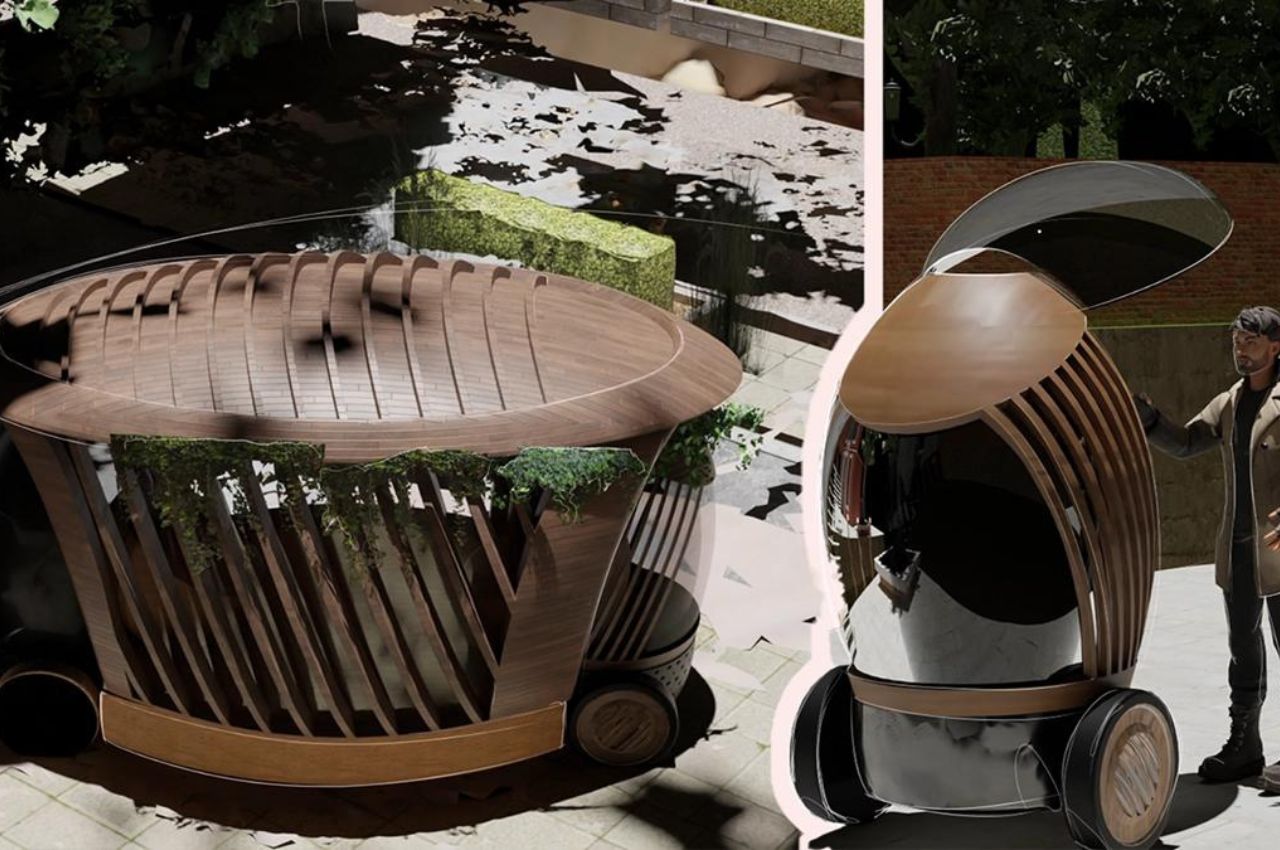
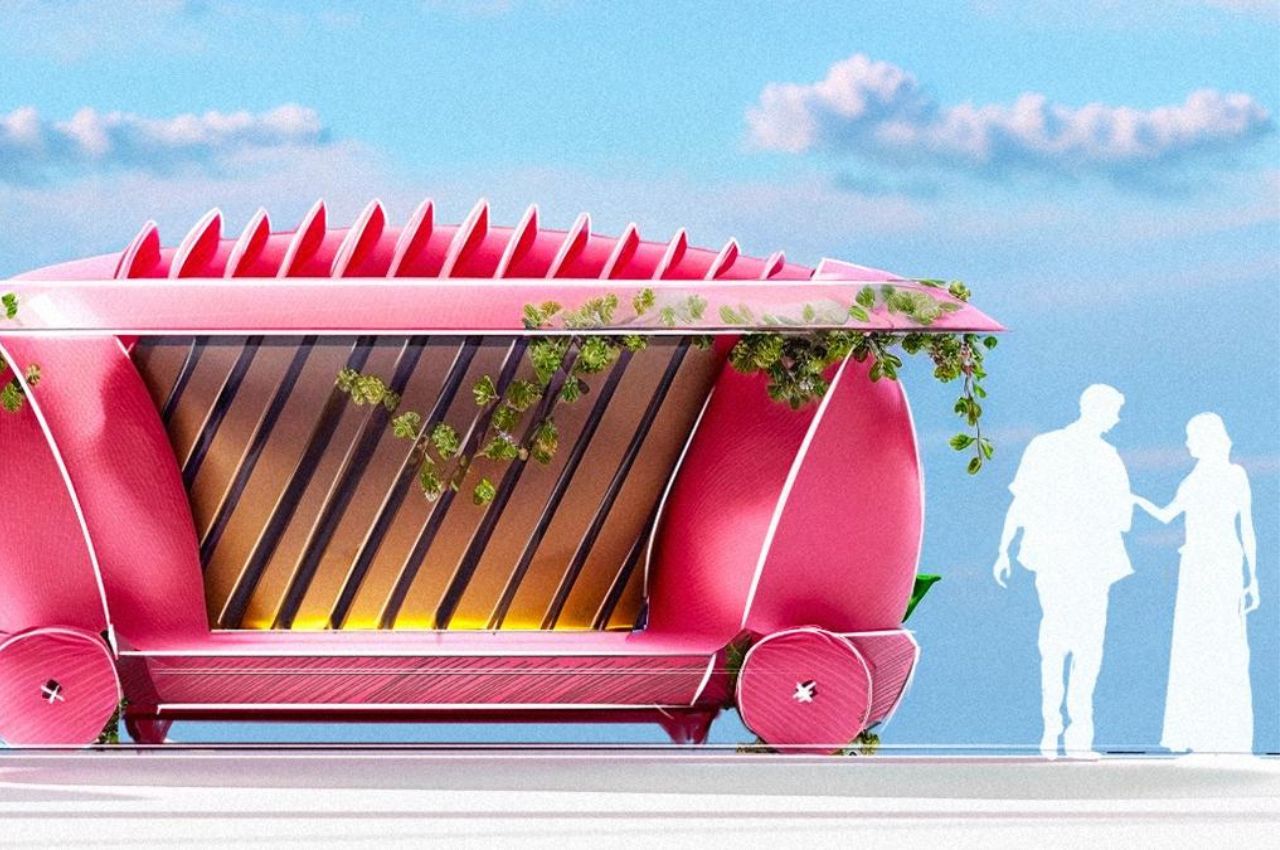
The Mobile Pods and Dating Suites are the stars of the show! These are like your own little love cocoon, designed for intimate conversations and shared moments. The Mobile Pods, which look like fancy dining chairs, get attached to your designated private suite, where you’ll find everything set up for a magical date night. Think soft lights, comfy seats, and a vibe that screams romance. The suite reminds me of Cinderella’s caravan, I mean what could be more mystical for the romance to sparkle, right?
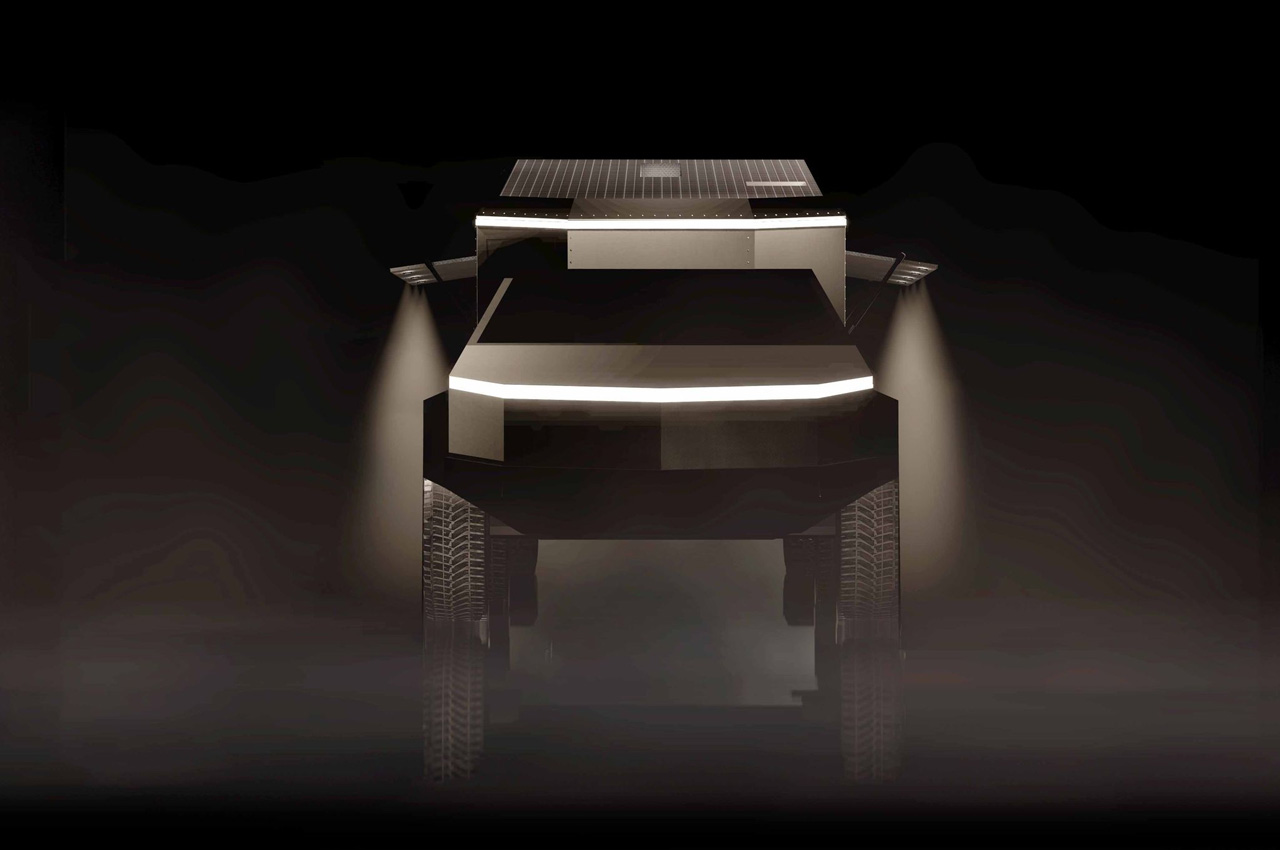
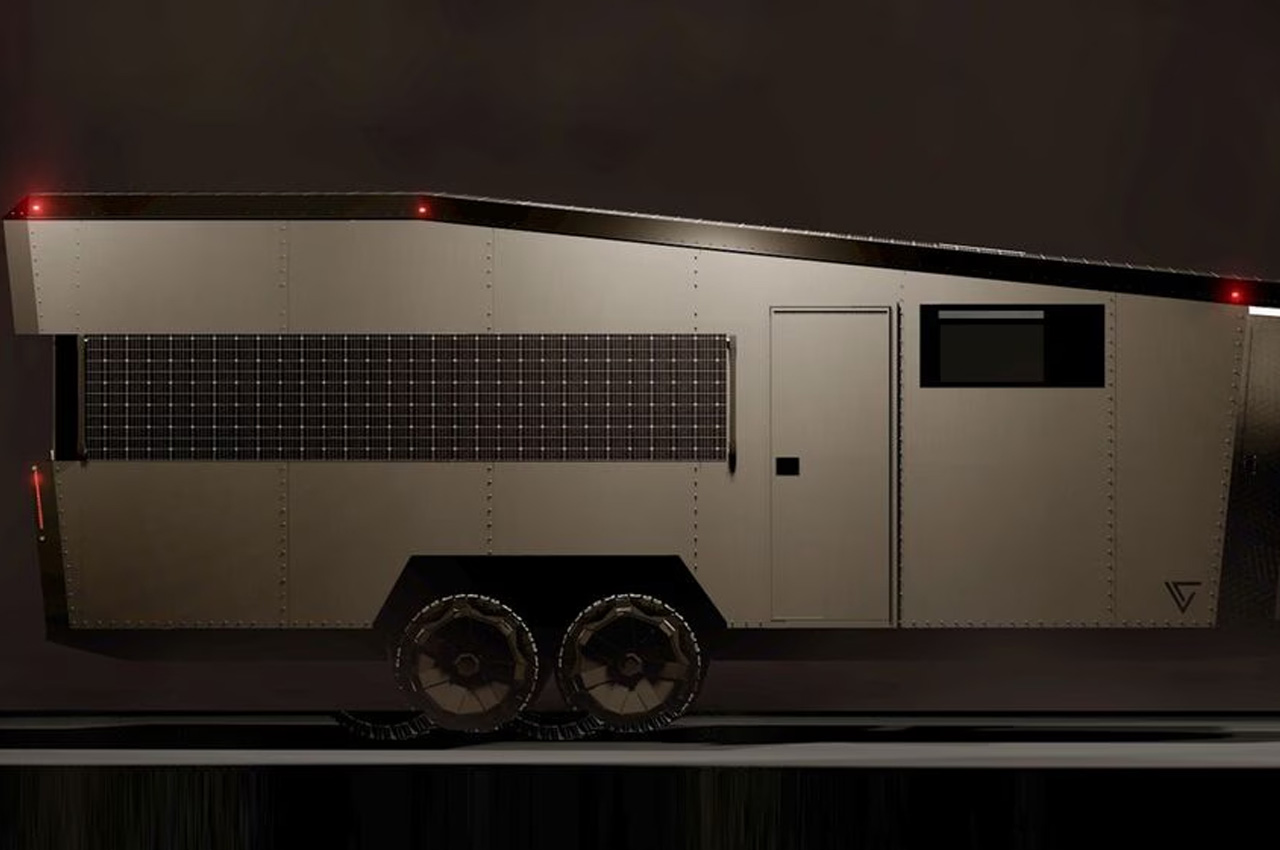
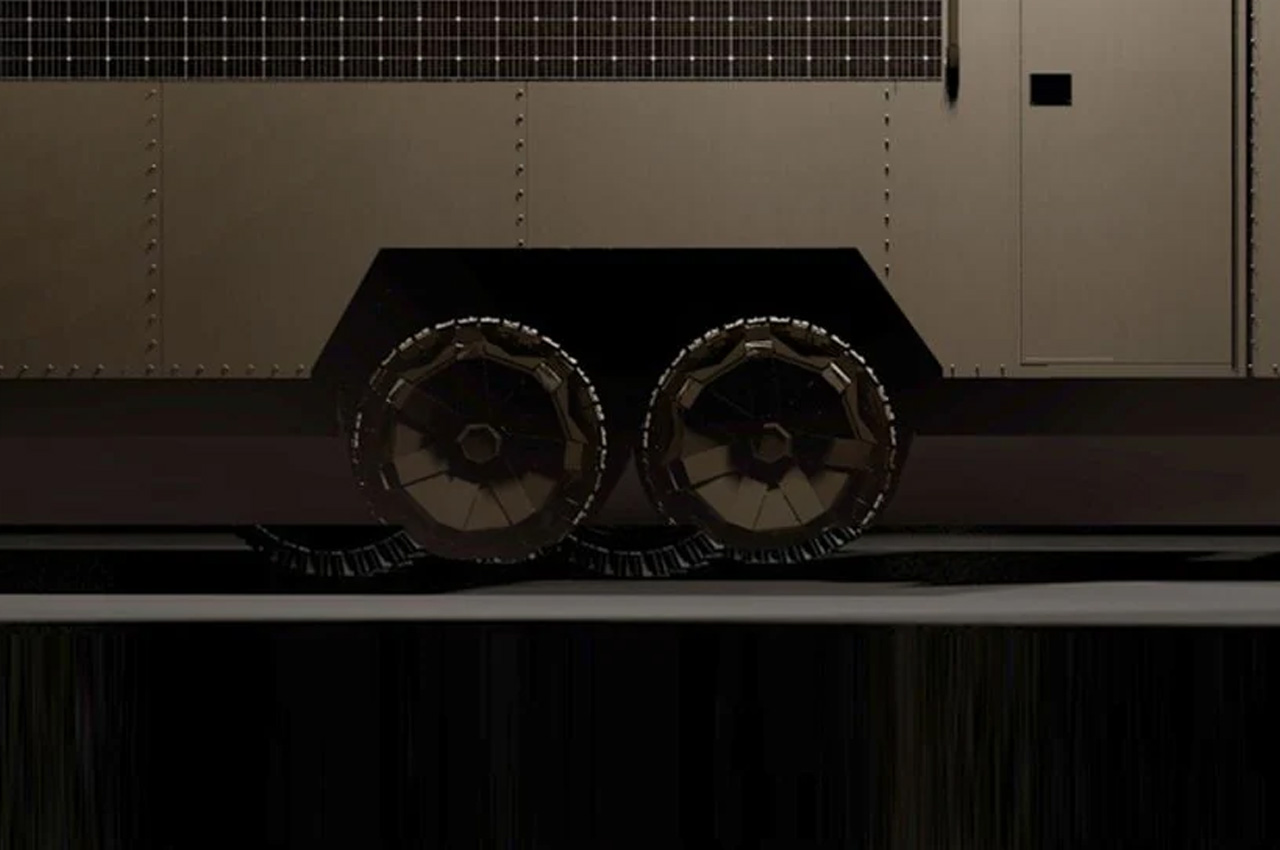
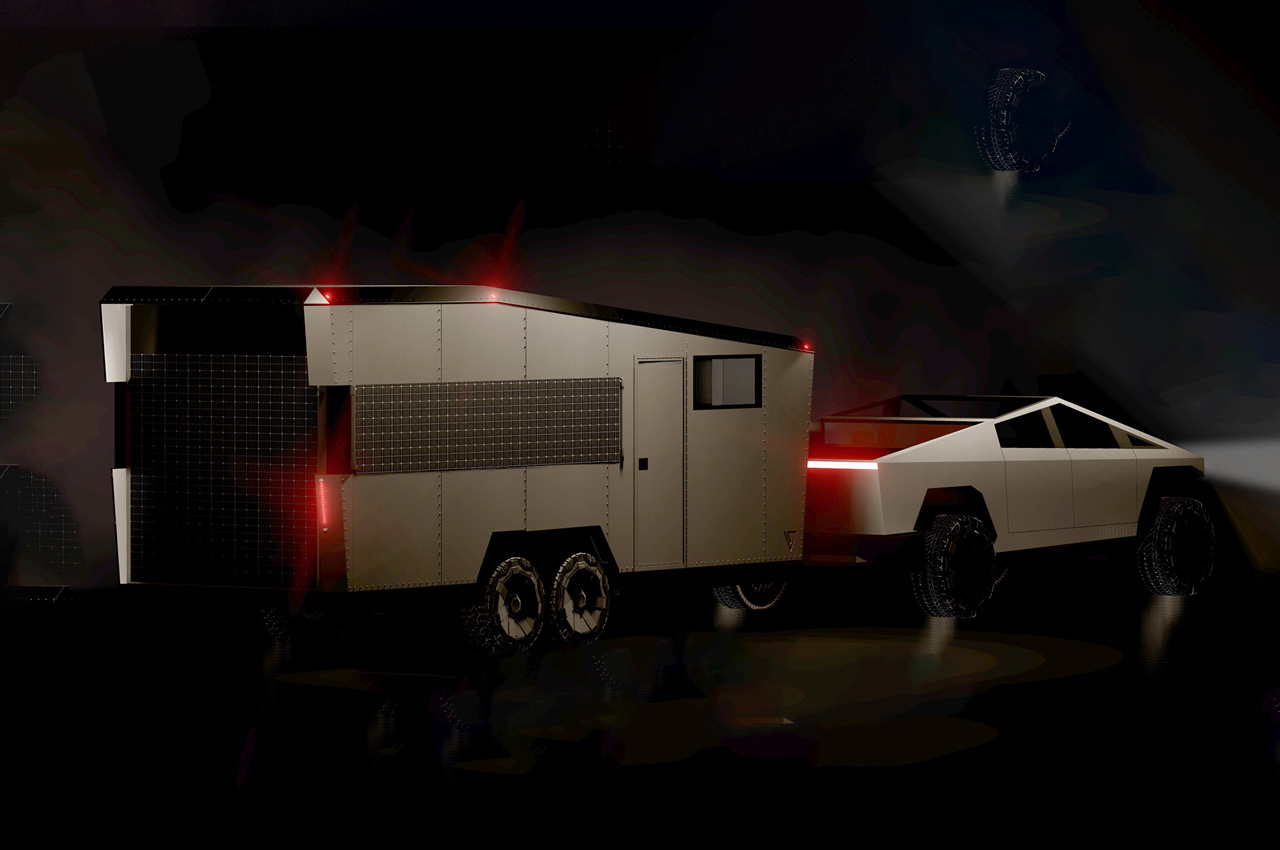
After the Cybertruck-compatible camping tents and interesting tracks that can convert the Tesla’s fancy pickup into a snowmobile, it’s now time for the CyberTrailer to shine. A Living Vehicle’s camping solution to tow behind the impressive Cybertruck, the trailer is not only similar by name, in fact, it resembles the Tesla pickup truck in more ways than the angular design inspiration.
The camping trailer by the California-based specialist, Living Vehicle, isn’t really all set to hit the road from the word go, but it is ready to offer glimpses of the near future. The future of completely off-grid camping, where an electric trailer can be your home for an extended time in the wilderness.
The Californian trailer builder has been in the business of developing off-grid luxury experiences for some time now. Whether you talk about the HD 24 or the HD 30, these ultimate campers are built from marine-grade materials making the luxury in the travel trailer possible. If you’re a stark believer, you can expect the similar construction pattern and luxury features of the predecessors to flow into the dramatically enticing CyberTrailer.
Of course, what the CyberTrailer is made from, or what it packs inside, or how much backup its power generators provide, is not outrightly informed by Living Vehicle at the point of writing, but the company has made some interesting revelations. For instance, the travel trailer is designed to promote independent camping in nature far from RV parks and random charging stations.
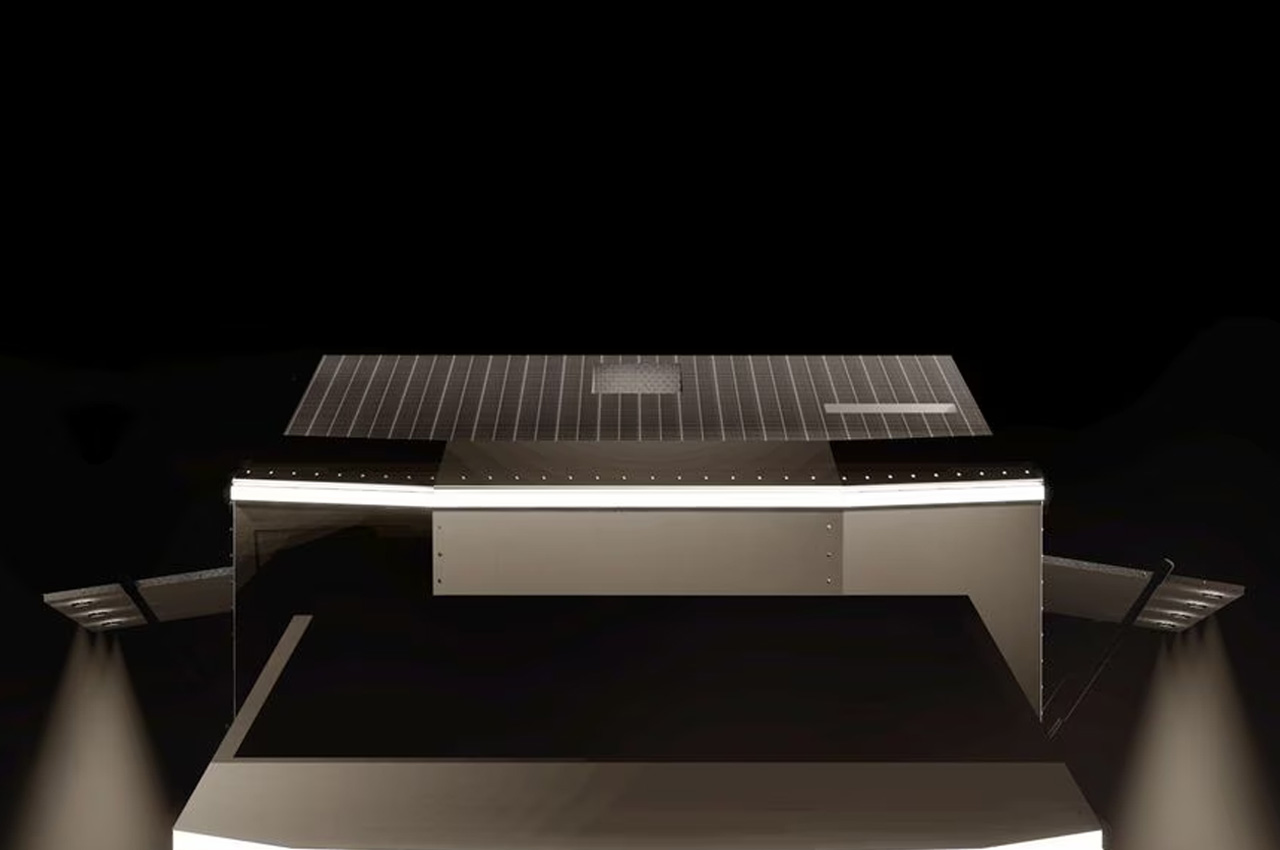
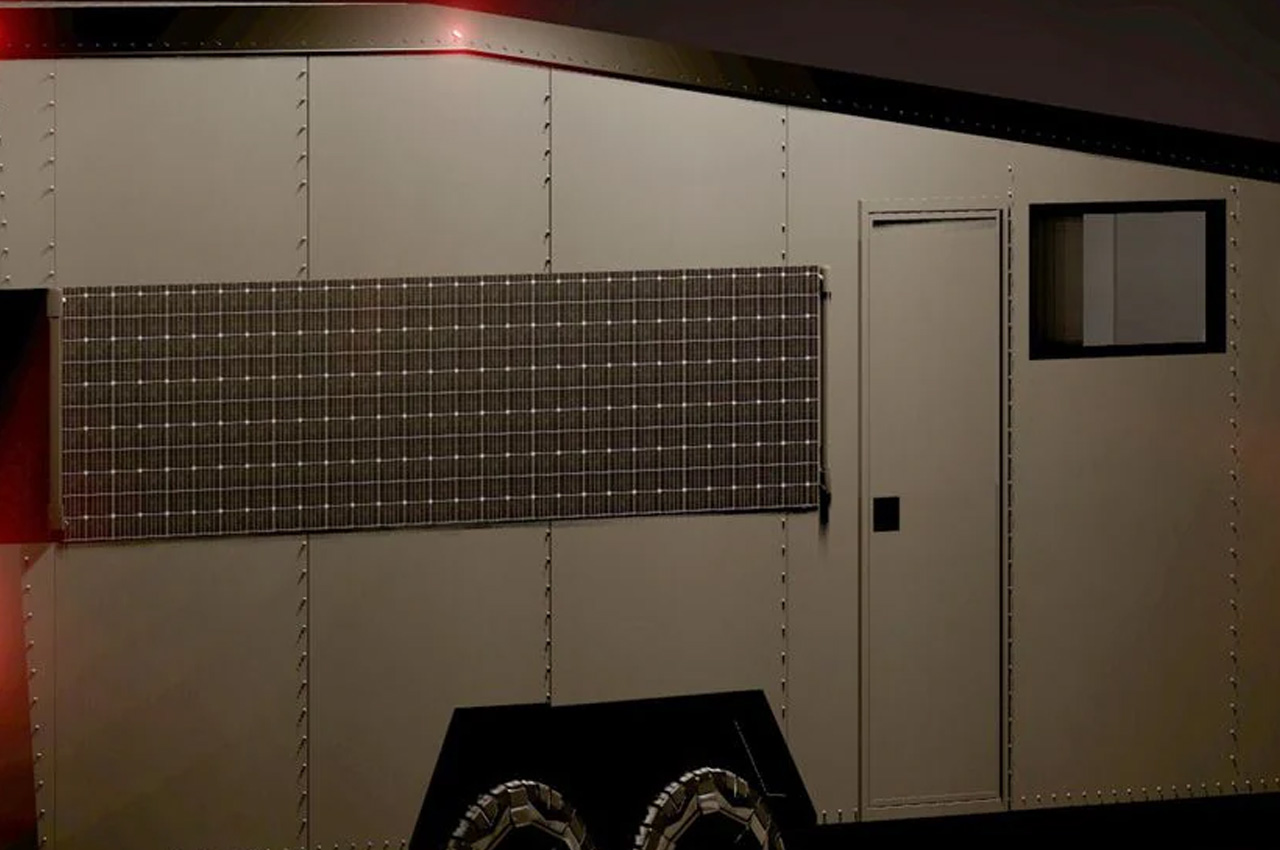
So, the CyberTrailer is a self-sufficient off-grid home on wheels with its ability to run all the appliances and electronic components through self-generated power from onboard solar panels. When needed, even power back the towing electric vehicle, and generate its own water from thin air, courtesy the water-air generator that can fill up its freshwater tank as you ride.
Embodying the features to reduce range anxiety, while extending off-grid adventure time; the trailer is fashioned to be towed behind a Cybertruck, but it can even be hauled by “F-150 Lightning, Rivian R1-T, or any conventional gas or diesel half-ton truck,” the company informs. At this point, perhaps, this is all that Living Vehicle shares about the CyberTrailer. If that’s good enough for you to bet your buck, you can reserve your model at the company website against a $100 refundable deposit. When it eventually launches, it will retail for upward of $175,000.
We don’t usually come by rooftop tents with collapsible hard-body exterior. It’s not because manufacturers are not giving it heed – the truth is, we are seeing a few pop up every now and then – it is because the fabric exterior still remains a preferred choice for its wide variety of advantages including construction convenience, lightweight composition, and effortless packing and unpacking.
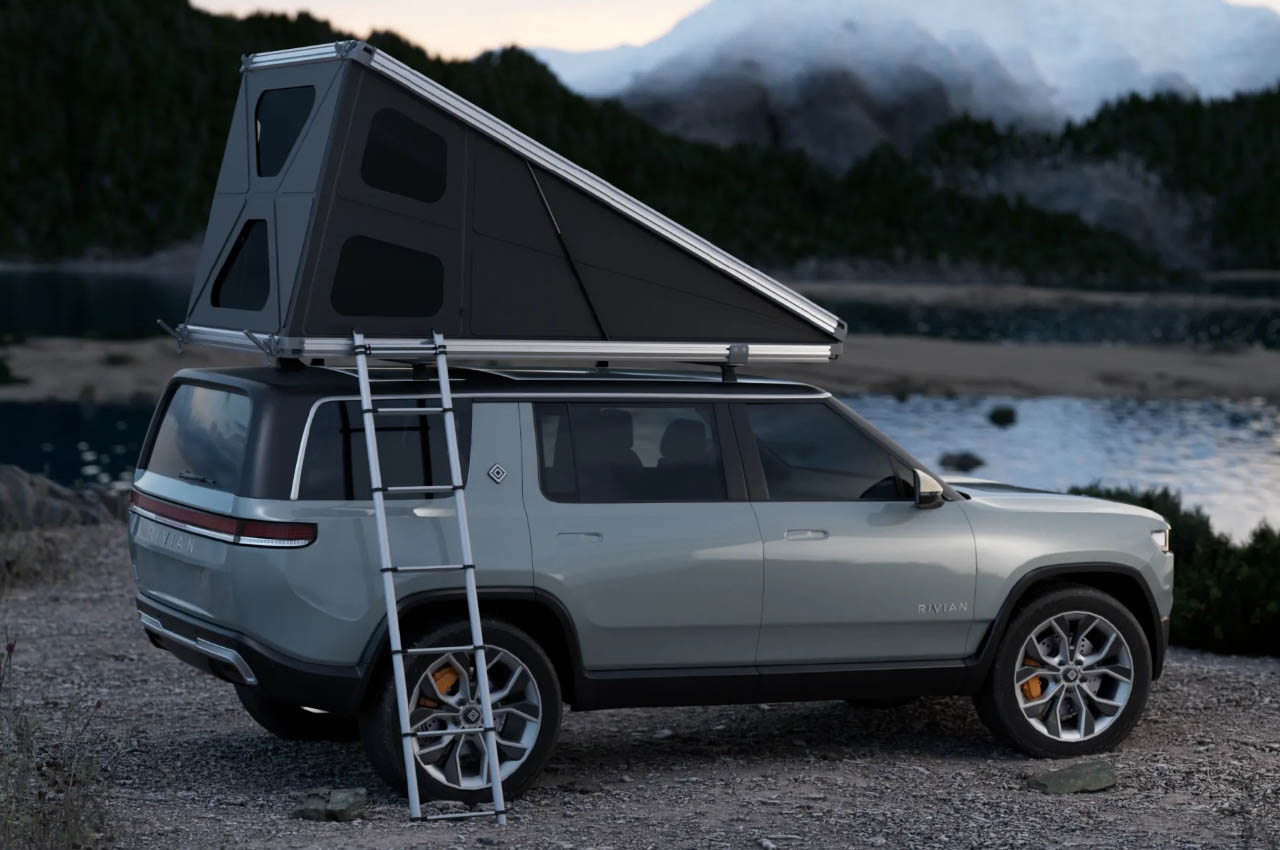
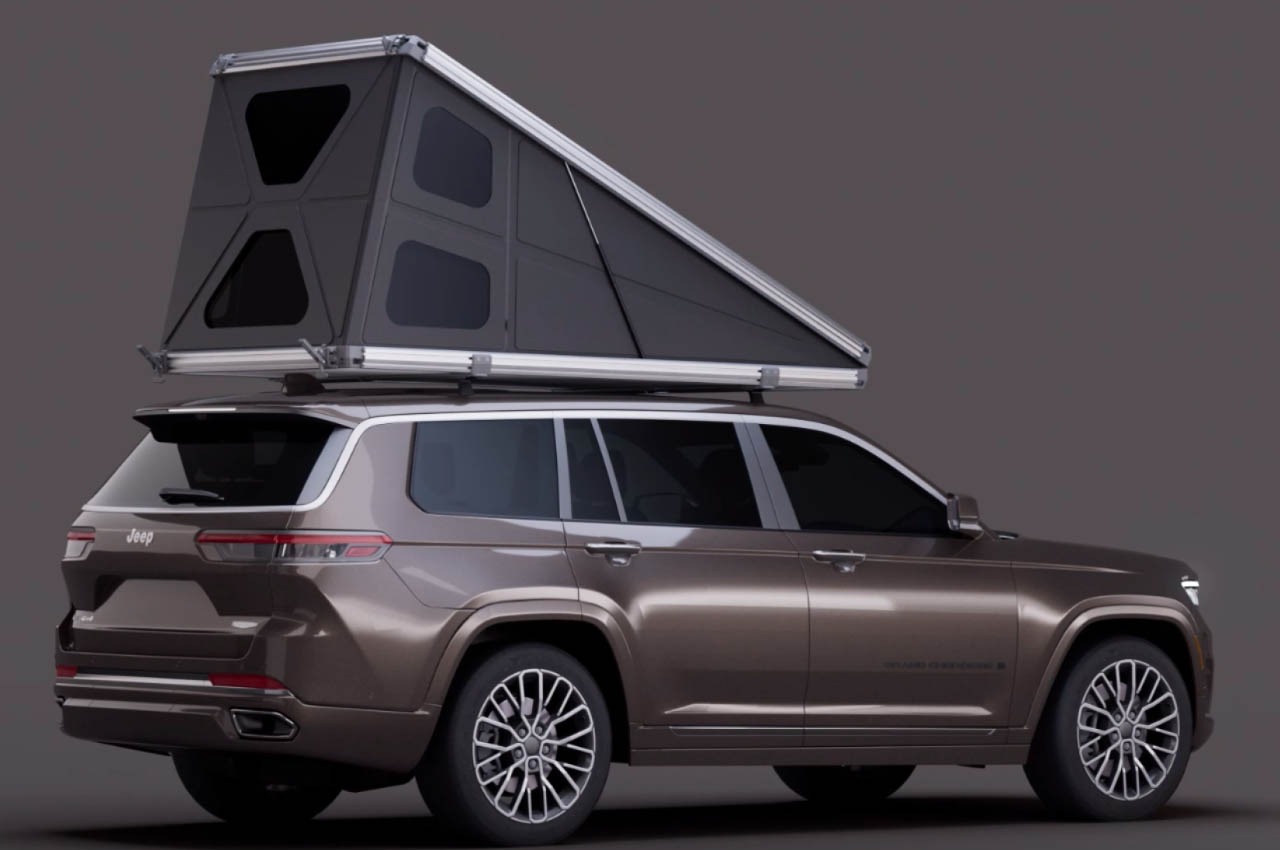
As iterated, some rooftop tent manufacturers are steadily aligning their allegiance with cleverly engineered materials to deliver hard-walled tents that ride well on top of your SUV. These tents have not found mass adoption yet for two reasons: they tend to add weight to the car’s ride and have a price tag almost twice of what a fabric-walled rooftop tent would cost. Unlike the traditional hard-wall tents, HardSider, is flipping the tide with HardTent: Rooftop tent designed specifically for SUV, which comes with a place to rest inside a robust wall protection offering sound insulation and protection against the elements at a fraction of the cost of any similar RTT in the category.
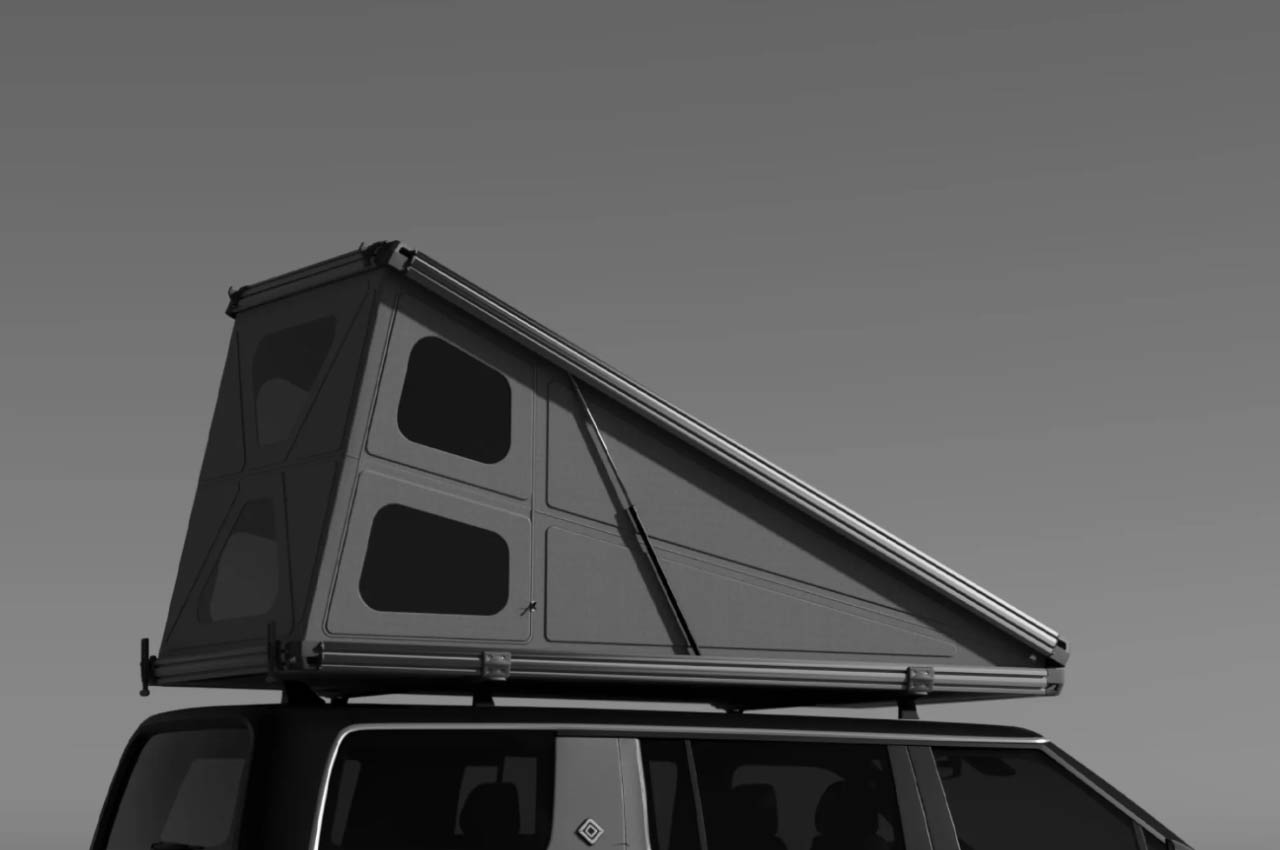
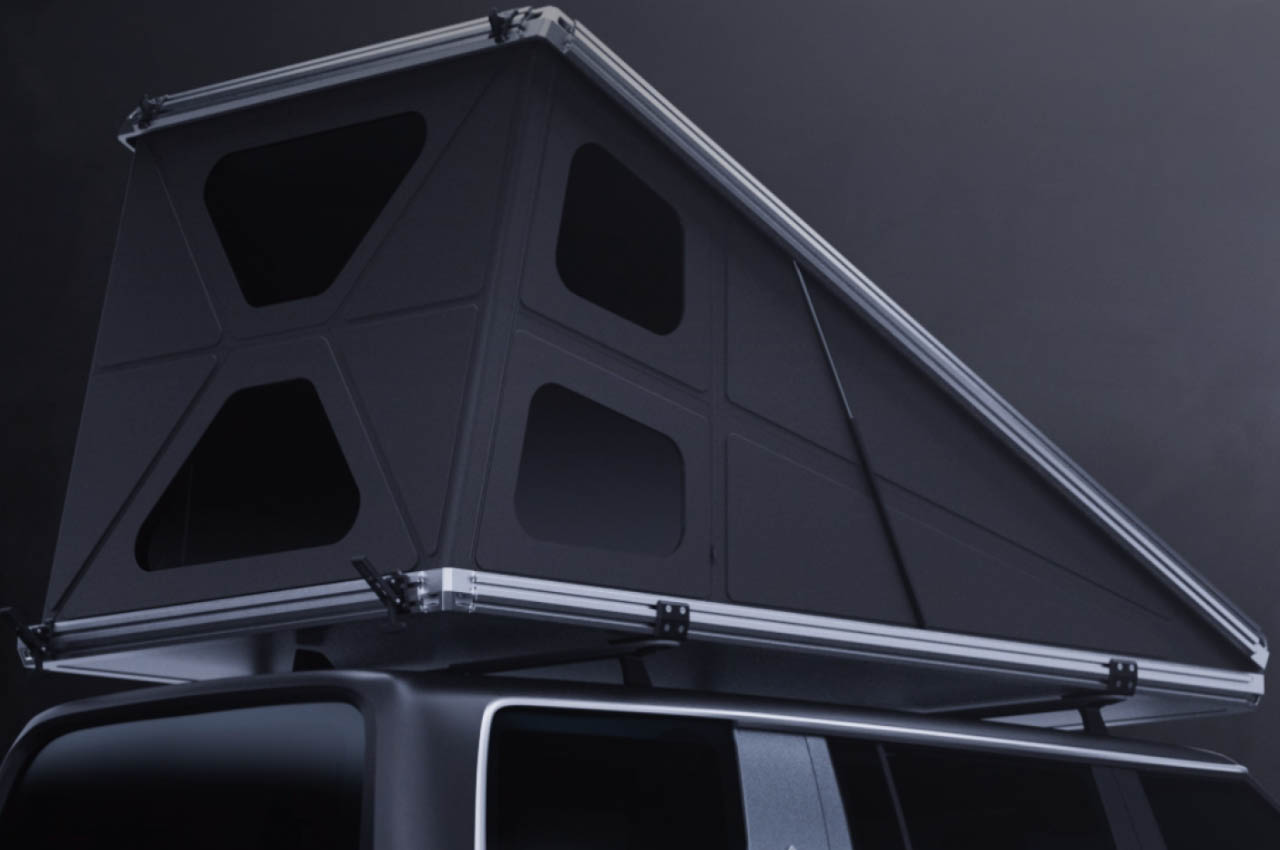
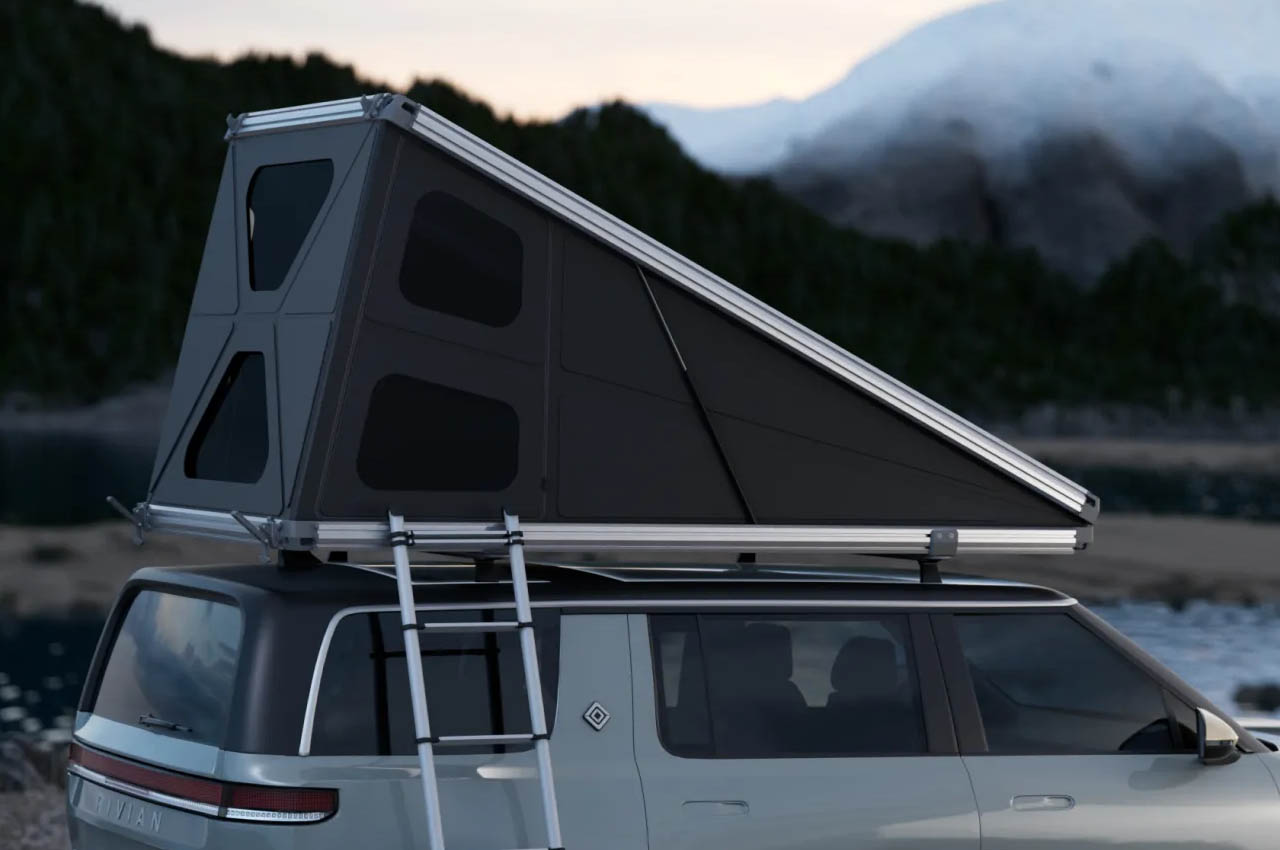
HardSider, the company focused on ‘reigniting the deep connection between people and the great outdoors,’ has perfected the hard-walled rooftop tent with an origami-inspired pop-up mechanism featuring solid walls on all three sides (owing to its triangular open design). The hard-walled rooftop tent erects in seconds with all the walls lifting off the roof quickly and cleanly as a fabric-walled RTT. Its dual air intake system helps circulate fresh air throughout the interior, while a custom ladder is provided for access into the tent.
These properties are made possible because of its construction. The hard-walls of the HardTent are made from rigid honeycomb composite and provided with laminated waterproof insulation offering an all-season RTT to sit atop any compatible vehicle, preferably an SUV. To that accord, HardTent is sleek on the road and spacious when unfolded. Its interior has a full-size – 52 x 90 in – mattress with enough width to sleep a couple and still have some length for a furry companion to accommodate. And your SUV would barely feel the difference (with this RTT), opening up many new opportunities for you to explore.
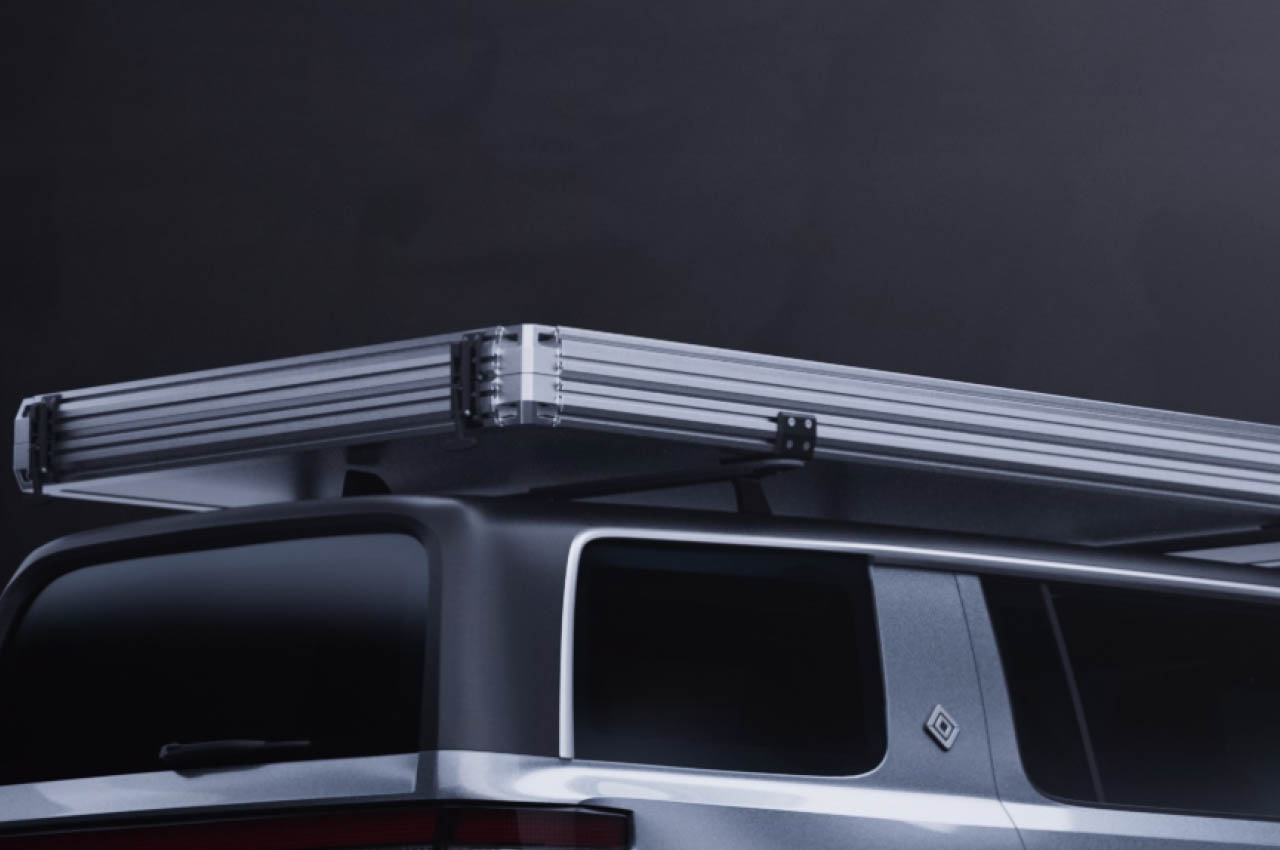
Measuring a good 96 inches in length, the HardSider’s rooftop tent is only 7 inches tall when closed. Its low profile makes driving with this 200 lb RTT effortless for the SUV or any compatible vehicle that can handle the weight. And when you decide to change your vehicle, the HardTent rooftop tent can uninstall and move to your new ride. All this for an asking price of only $6,000, which is pricier than the canvas walled counterparts, but conveniently priced otherwise in its own category.
Mercedes-Benz as an automotive icon has set the tone for the 21st century with supercars like AMG GT and the CLA concept. The German marque has pushed the limits of automotive technology, design aesthetics and luxurious comfort for purists who desire nothing but the best with the least strings attached.
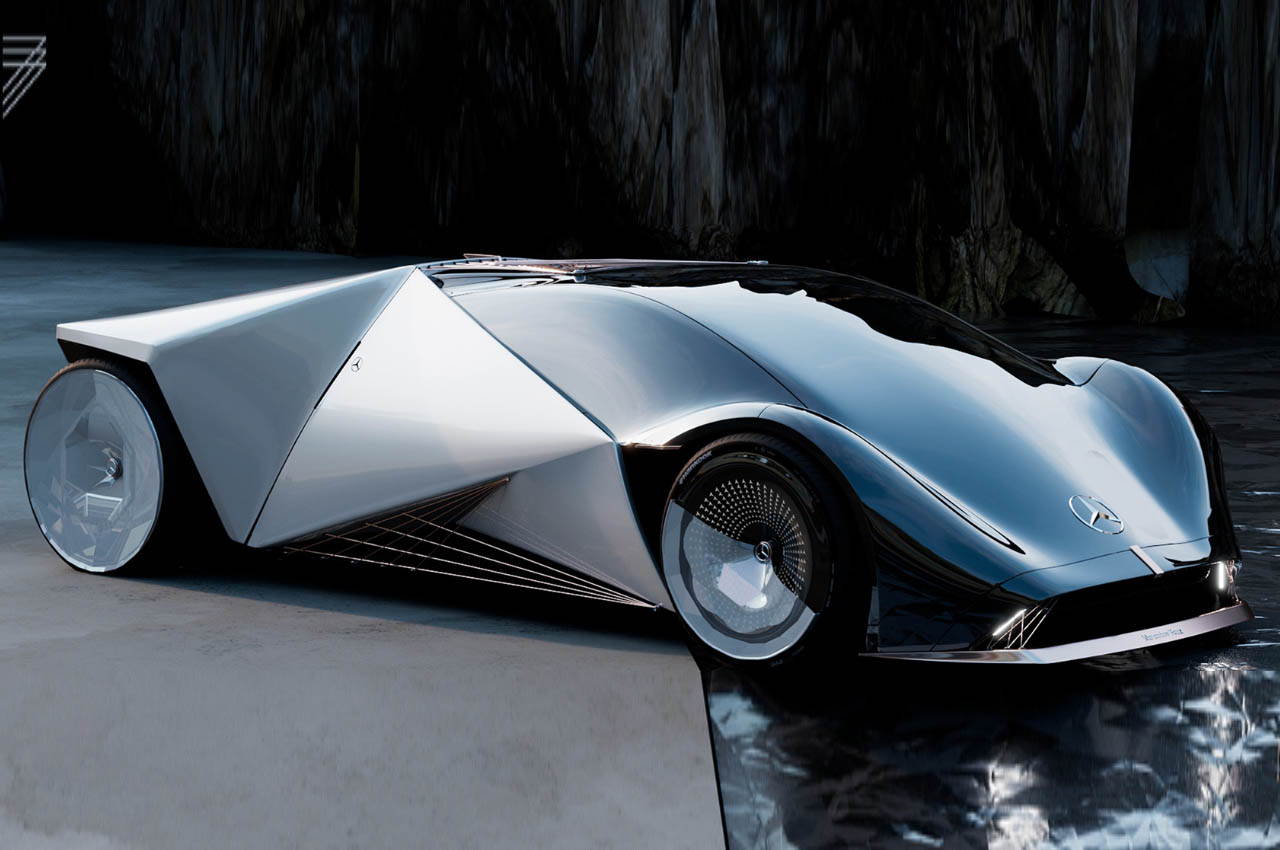
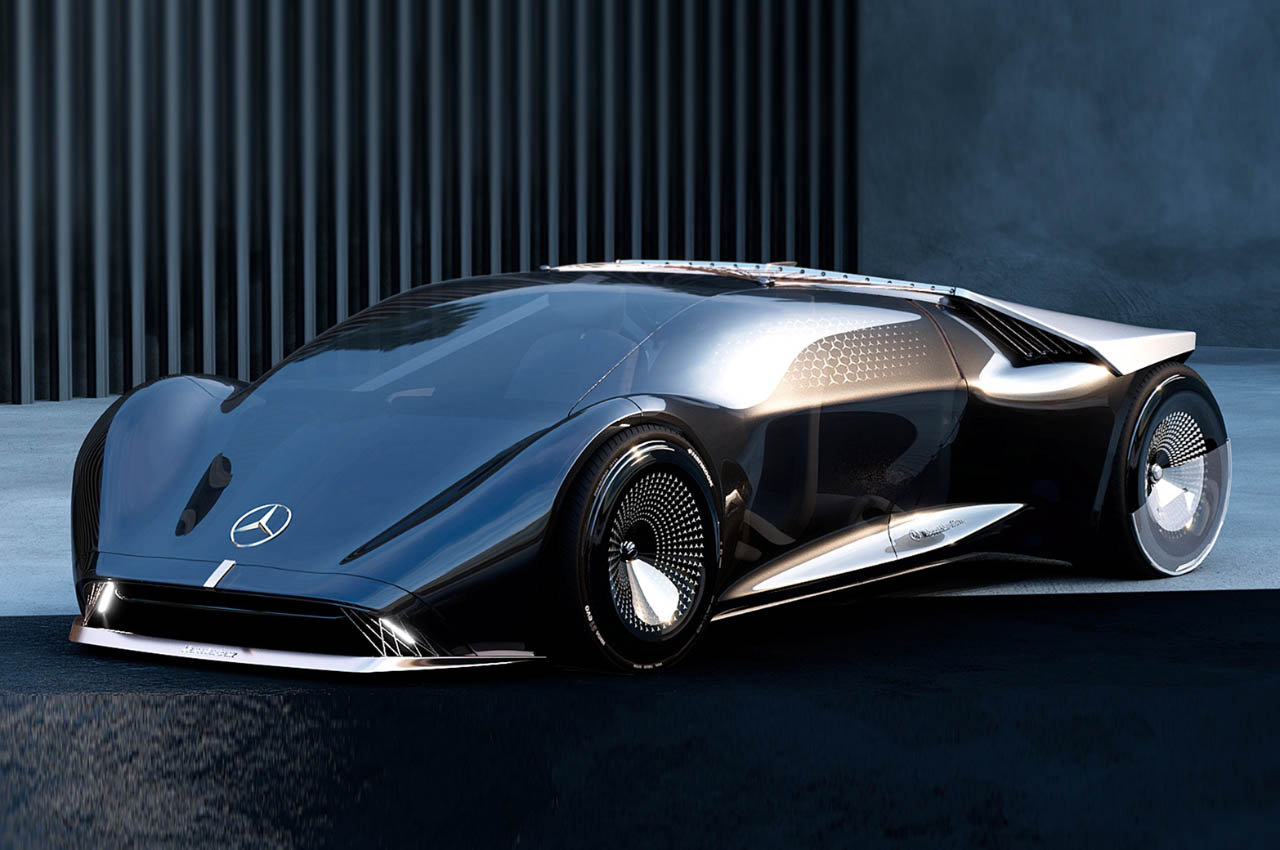
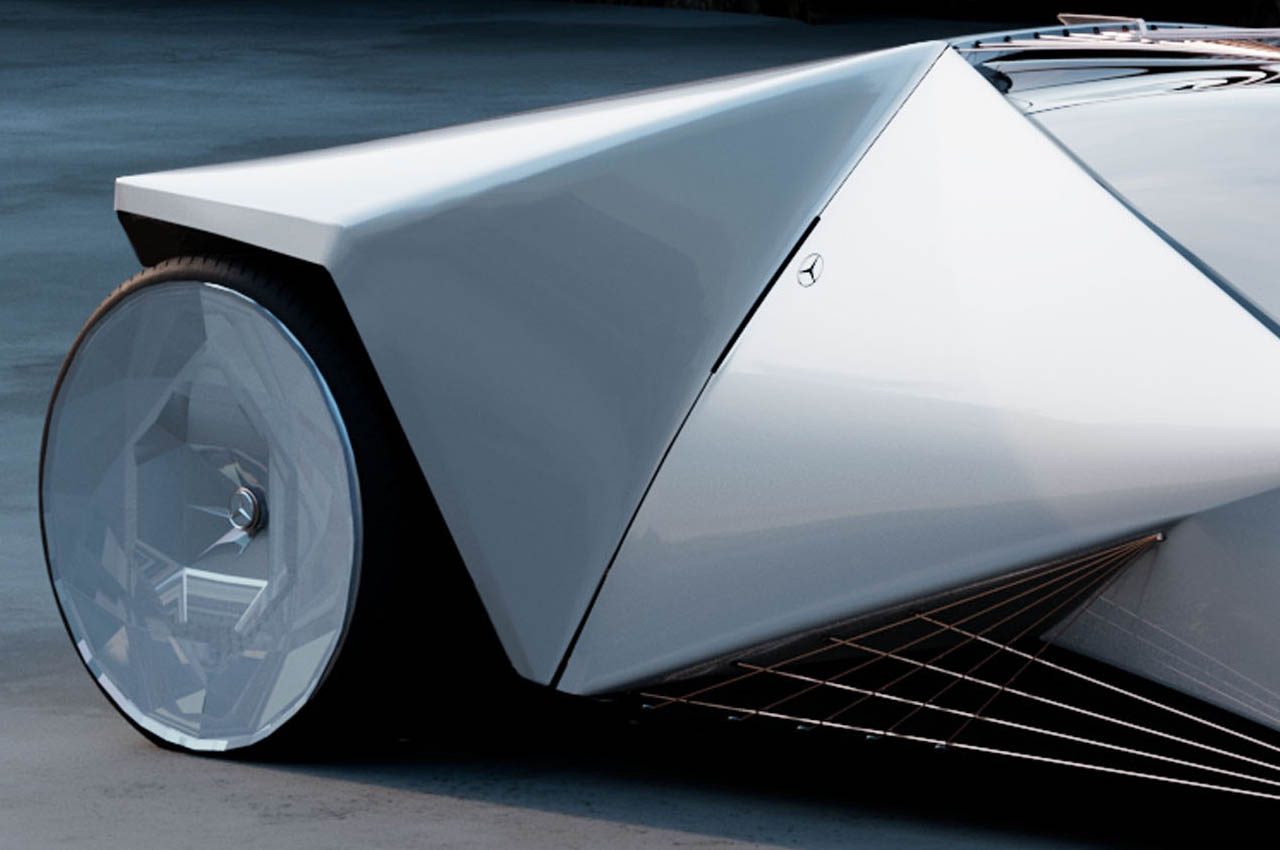
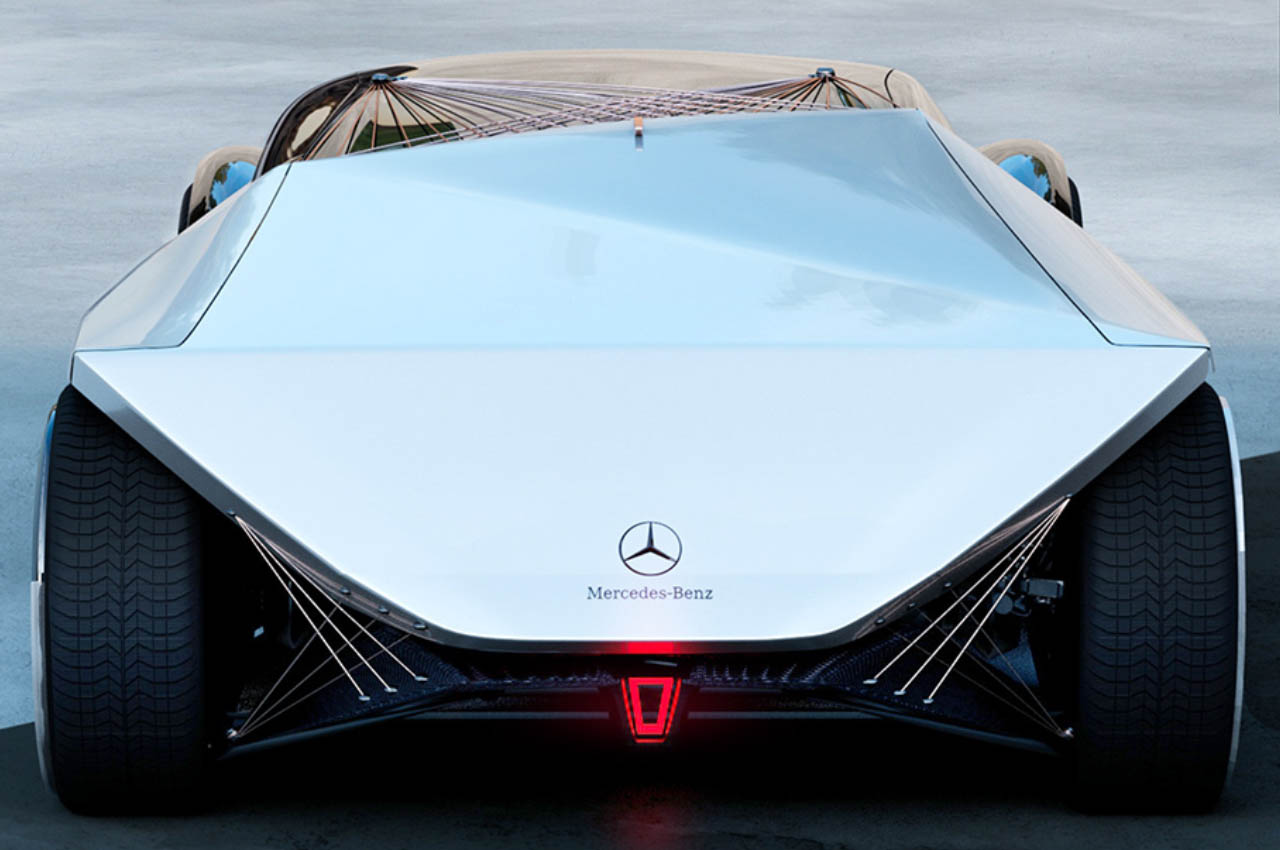
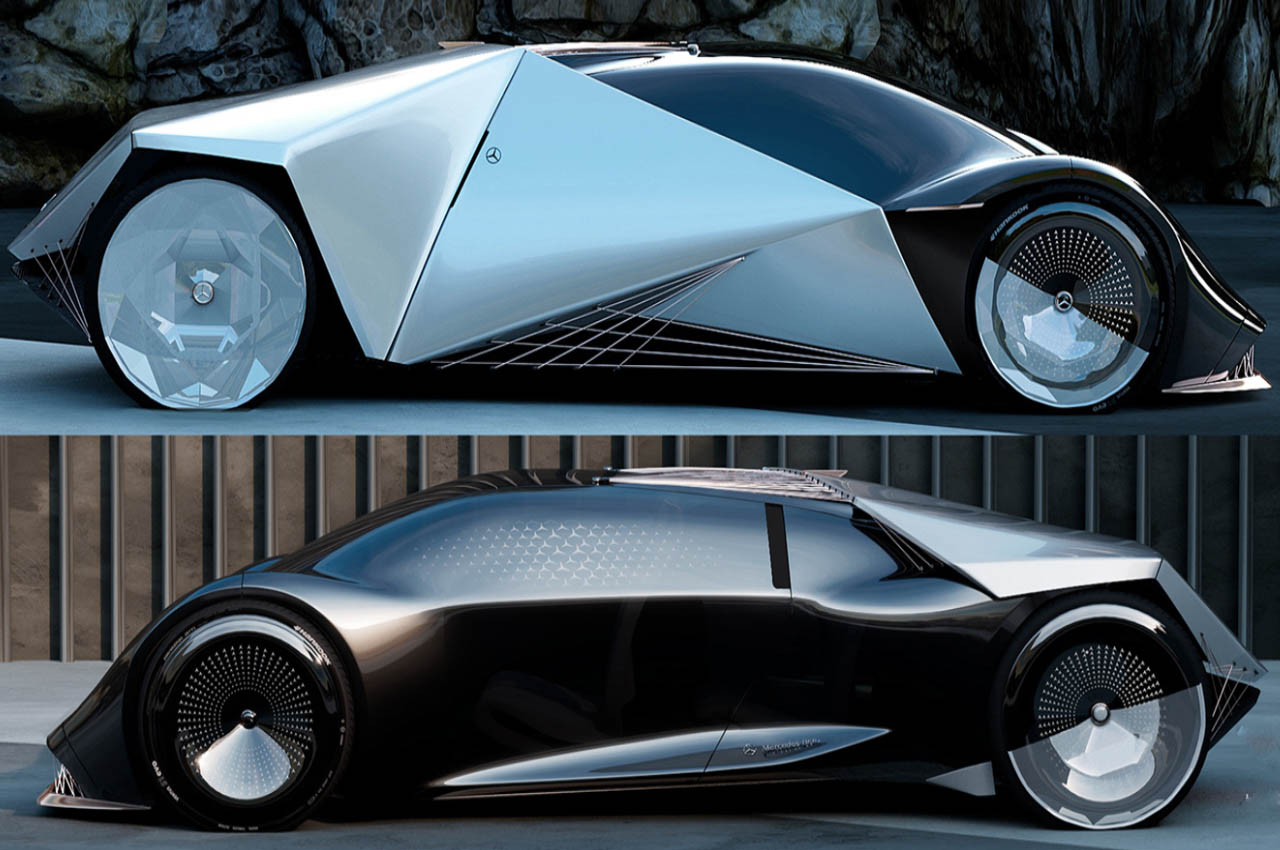
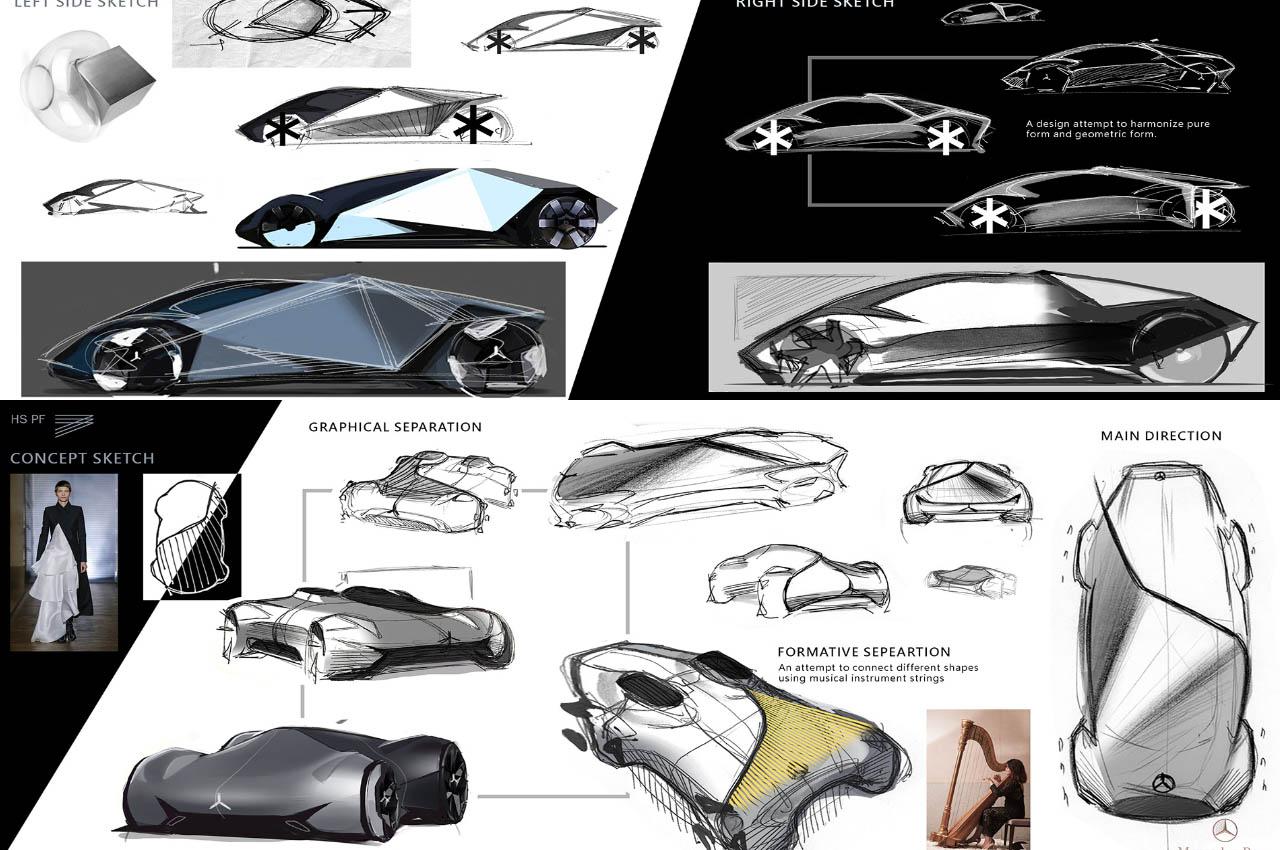
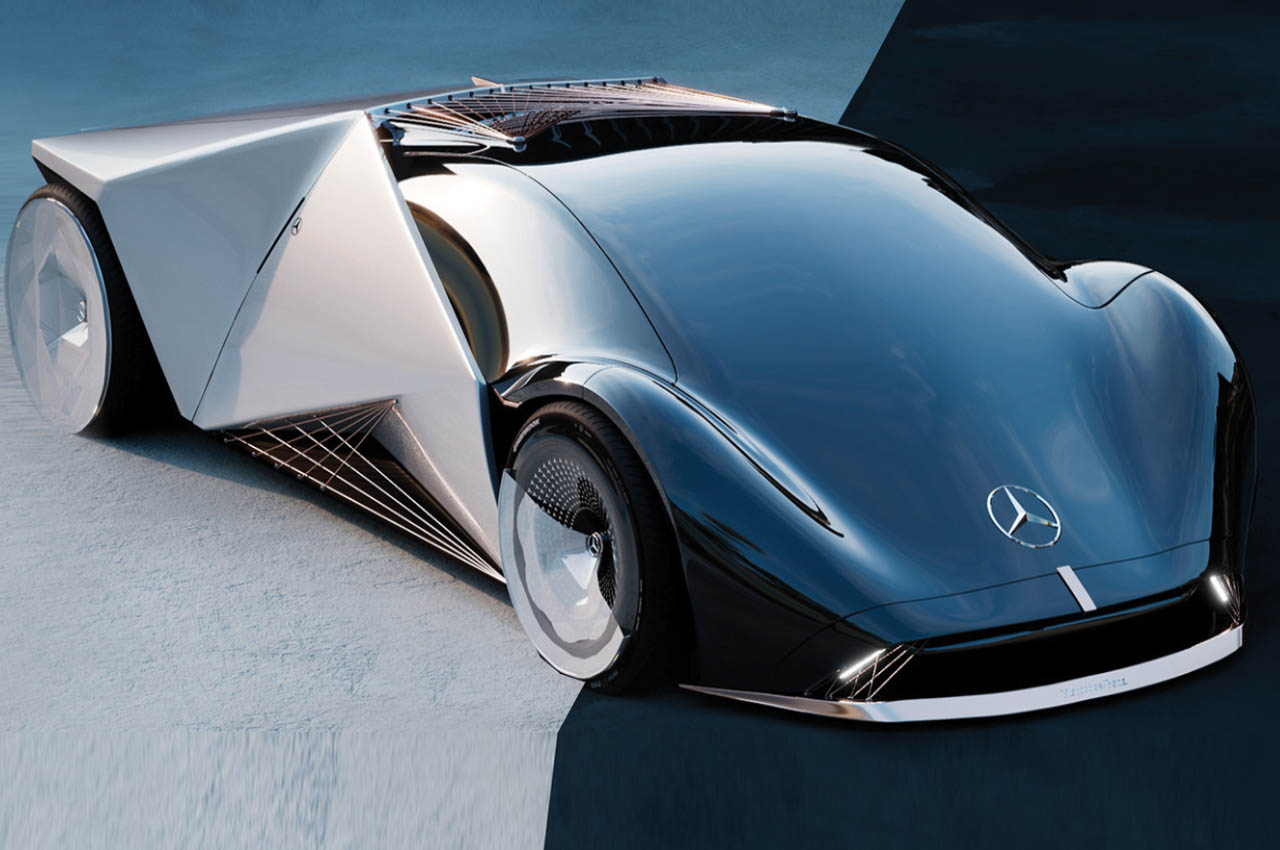
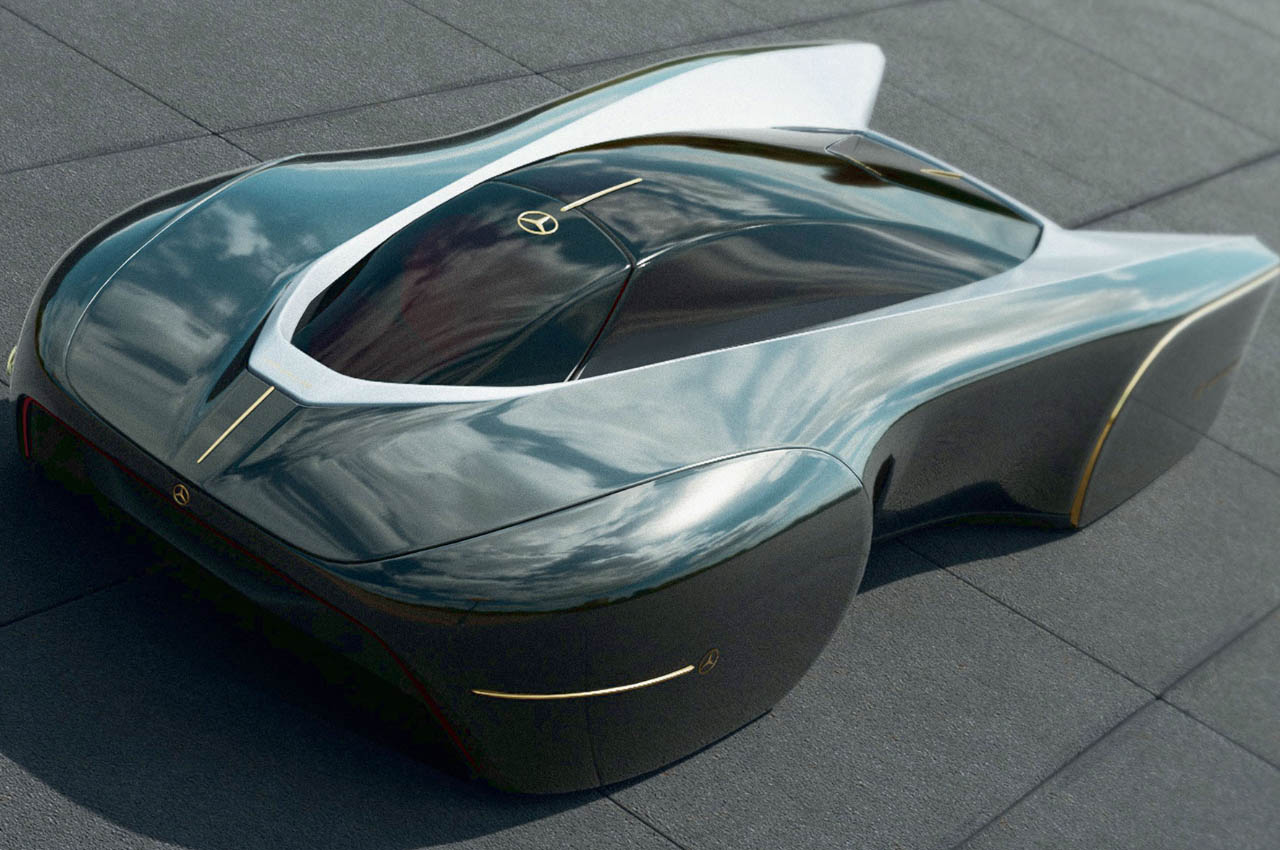
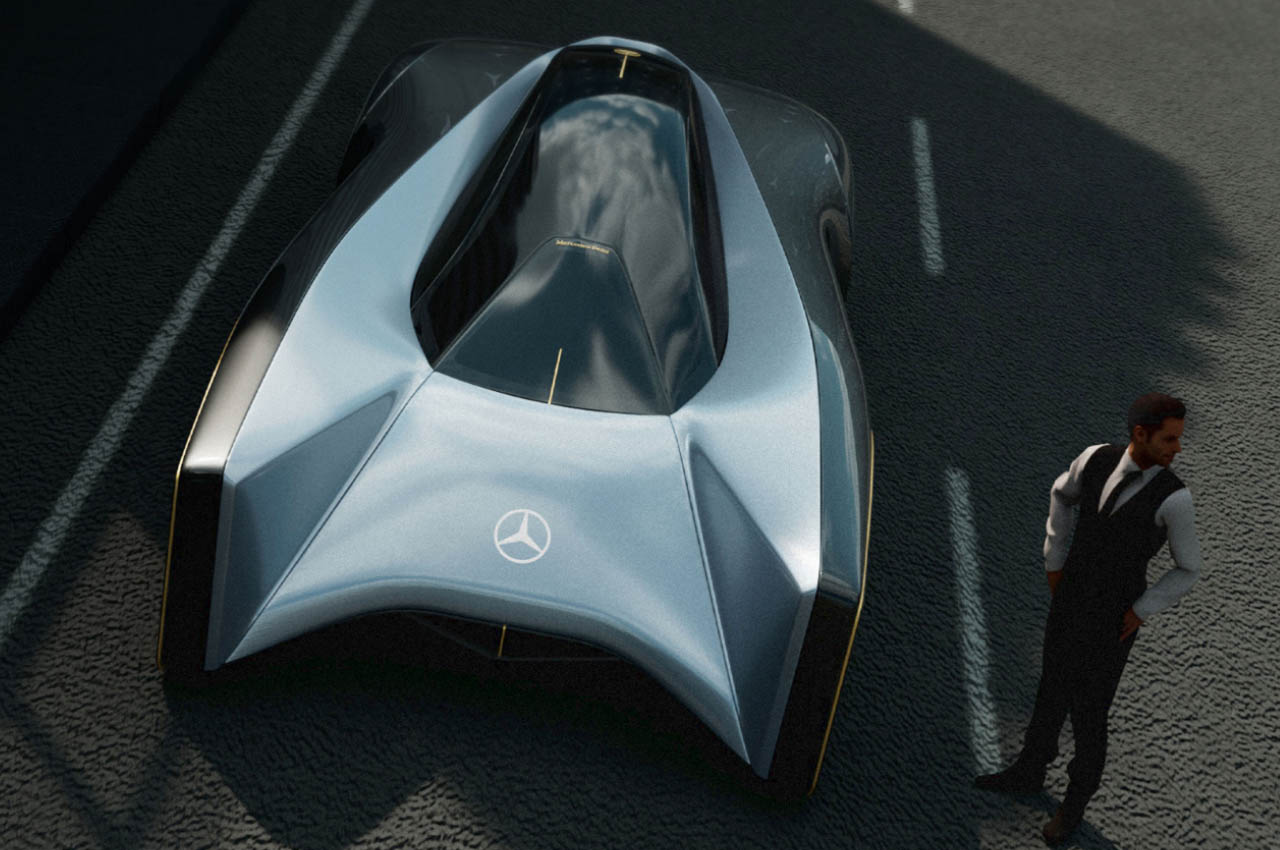
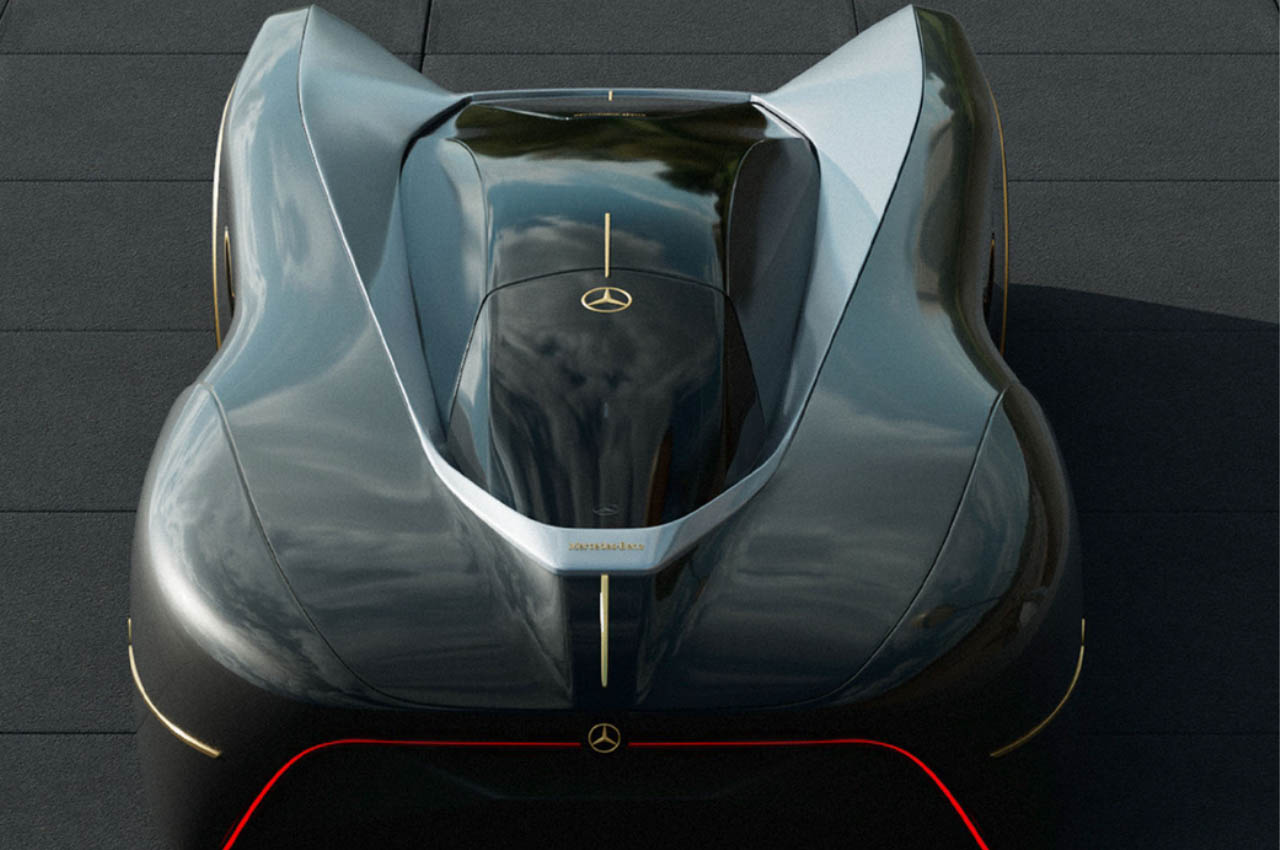
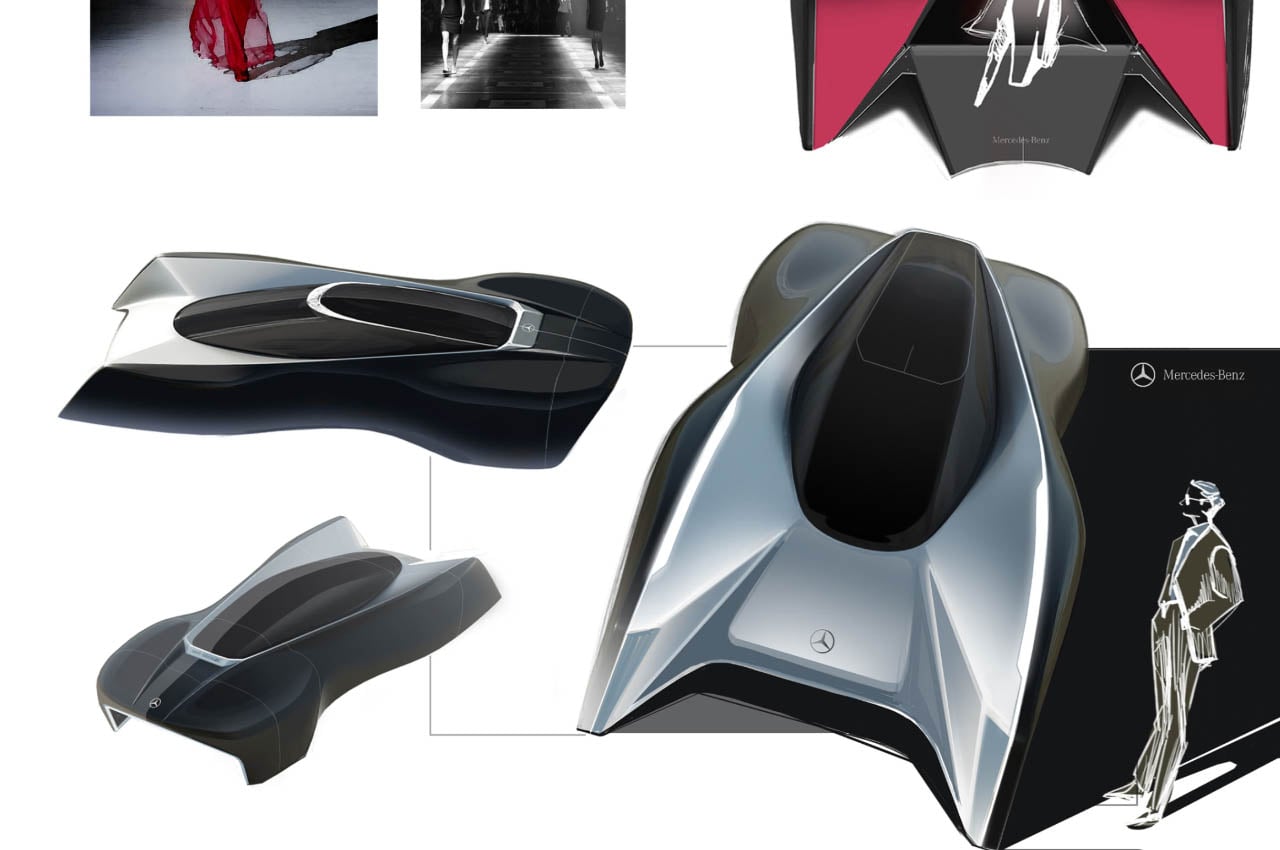
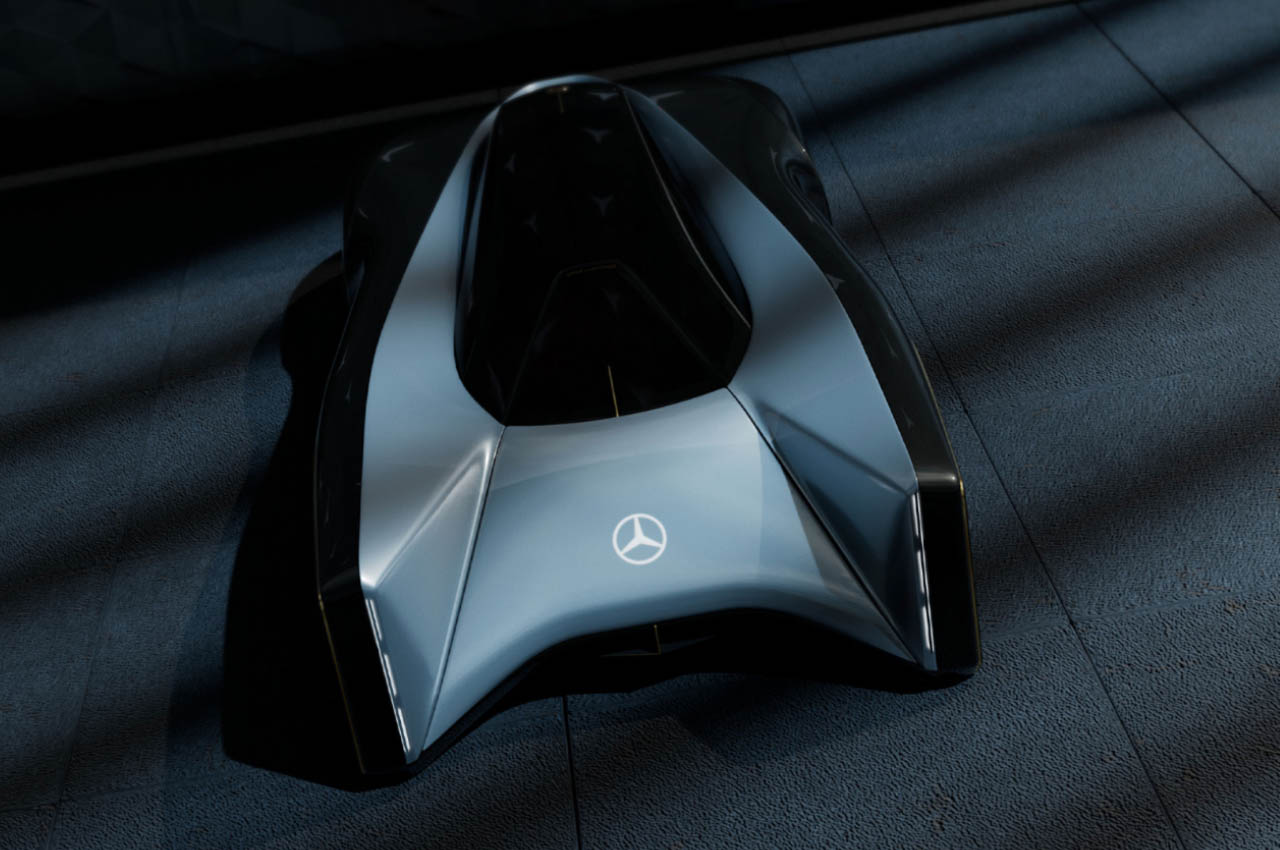
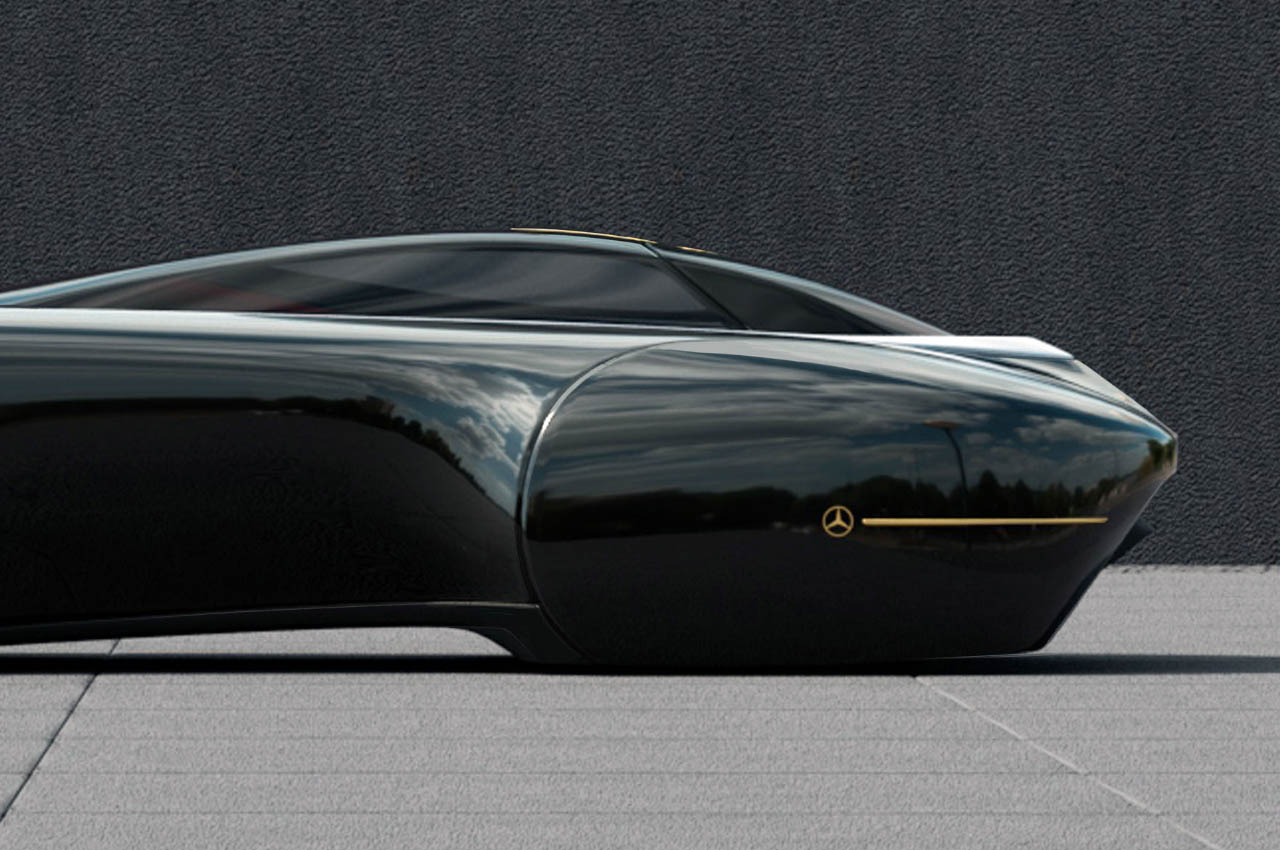
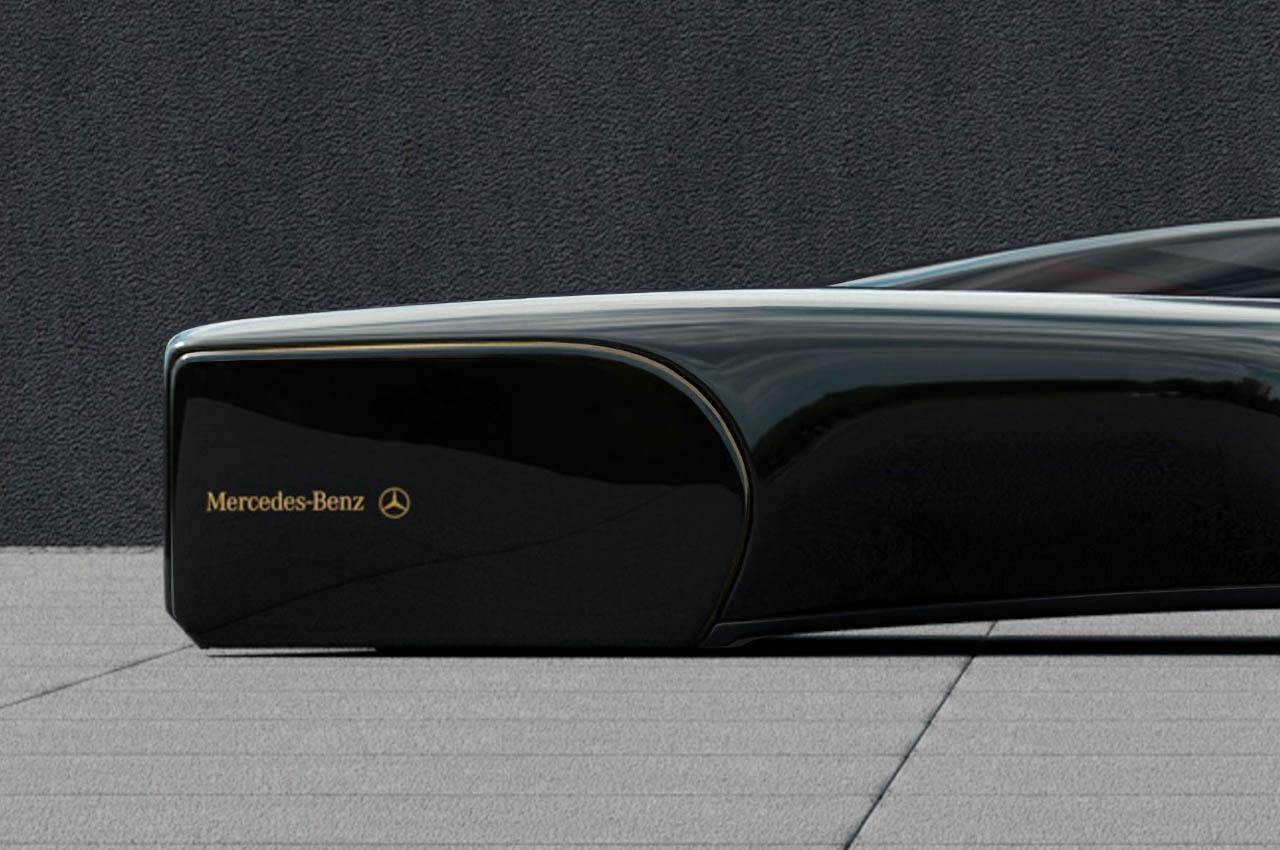
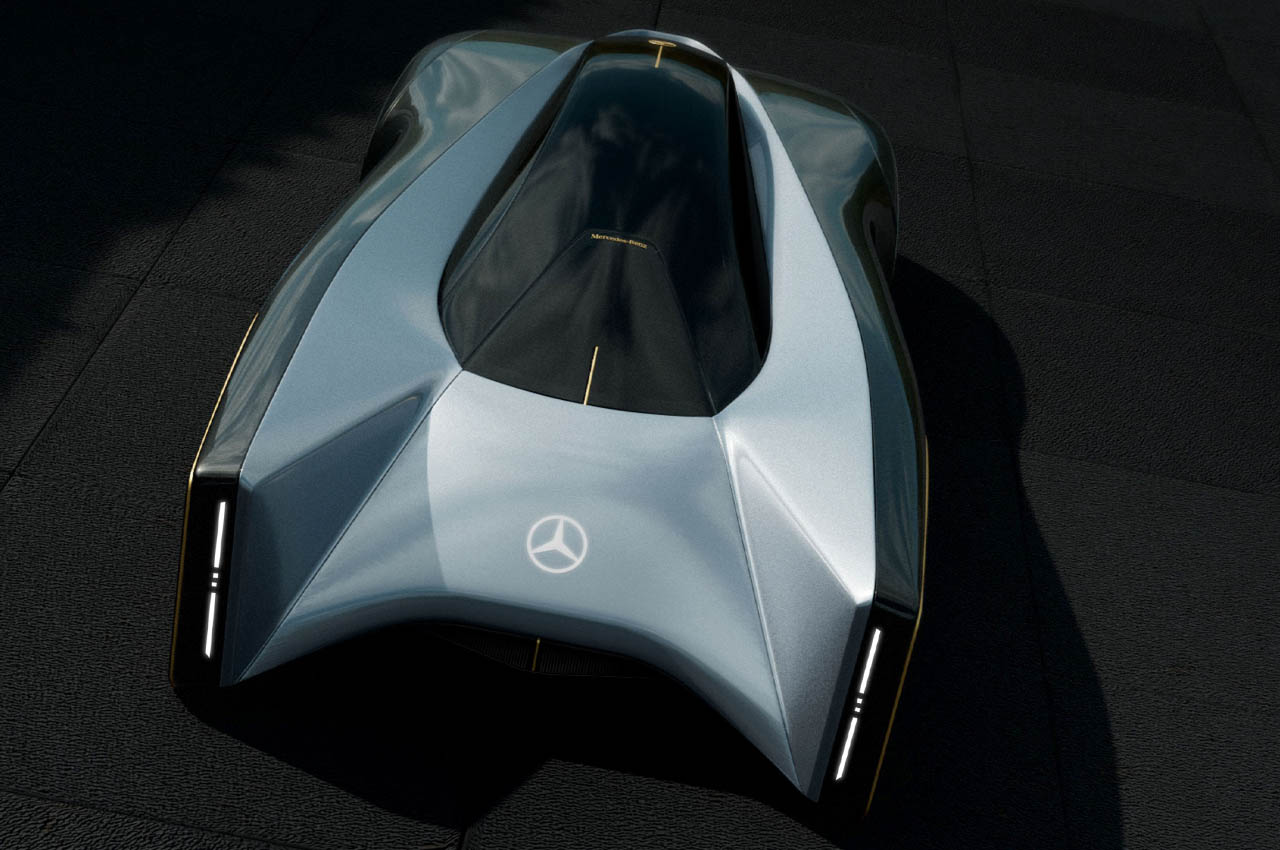
Lately, we had a fancy for wild concepts like the Dresscode which is inspired by the smooth silhouettes of a classy suit and now we’ve tripped over another Mercedes-Benz supercar concept that derives inspiration from the beauty of silent luxury. This core idea is combined with the shapes of musical instruments (a Harp to be precise) to create a concept that harmonizes the pure and geometric form. Thus the namesake, Mercedes-Benz Harp!
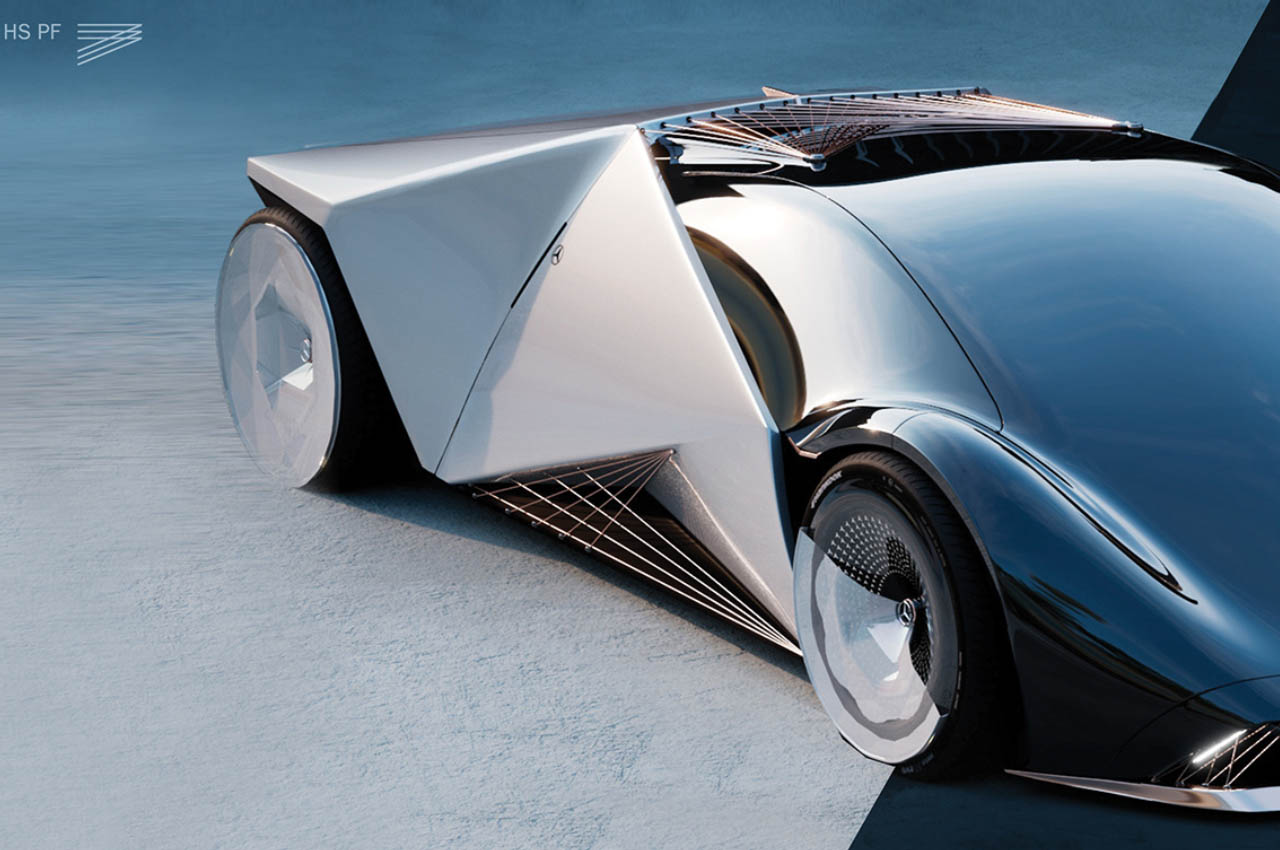
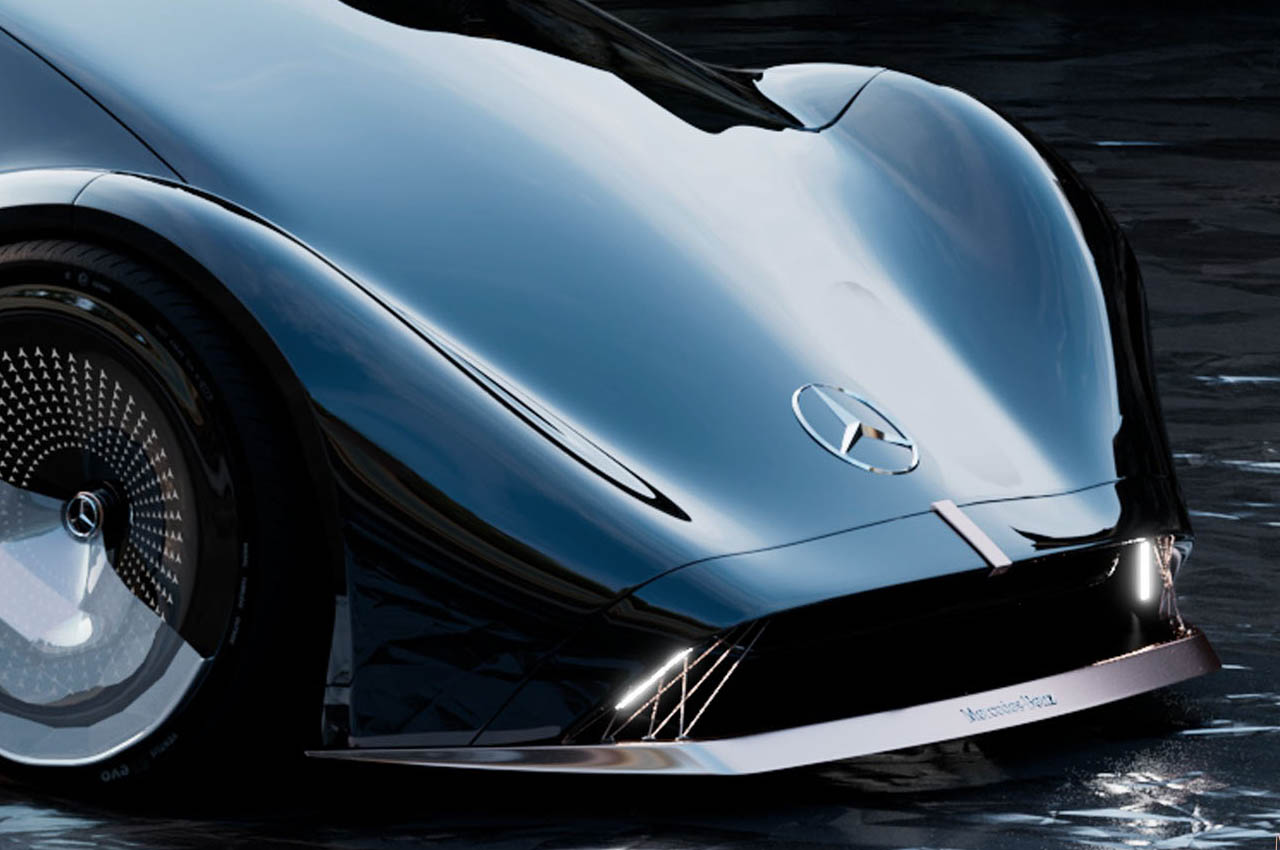
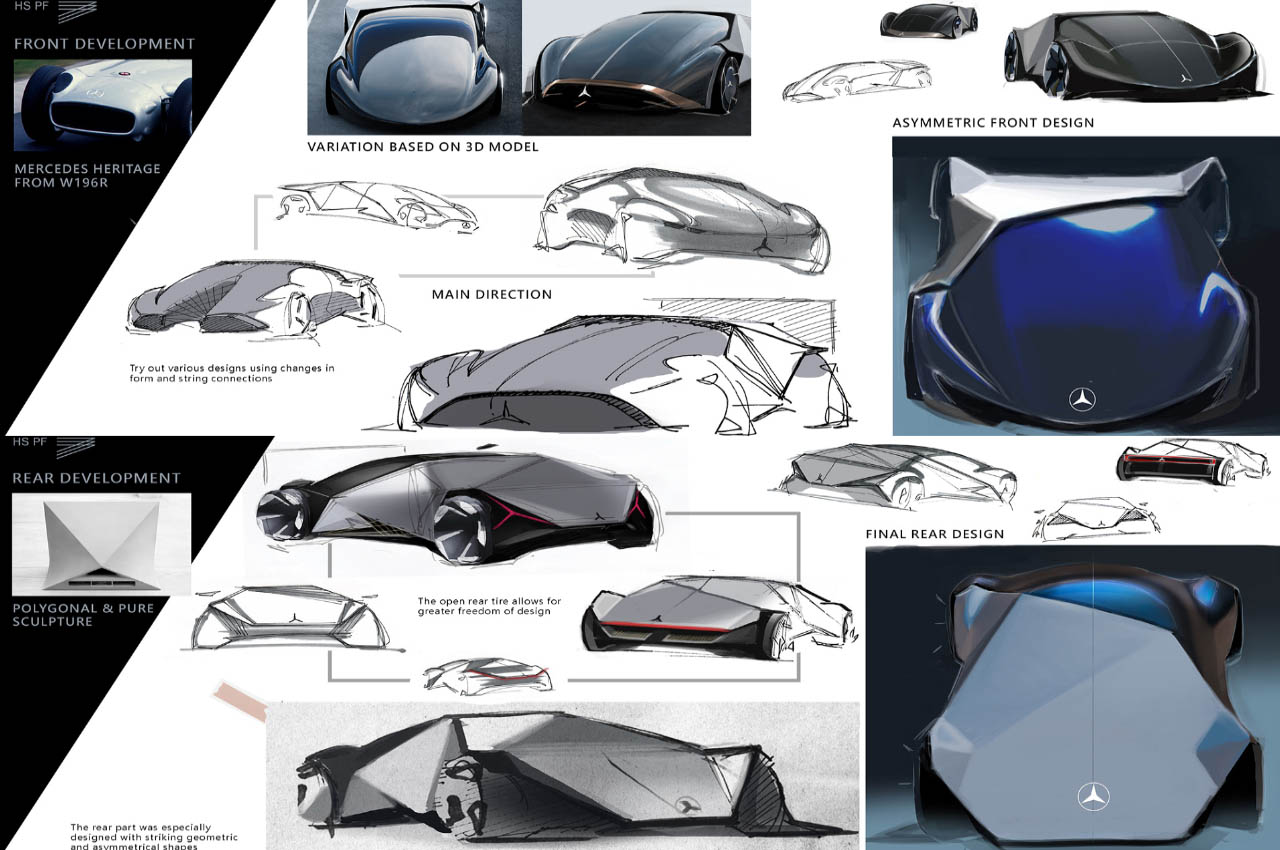
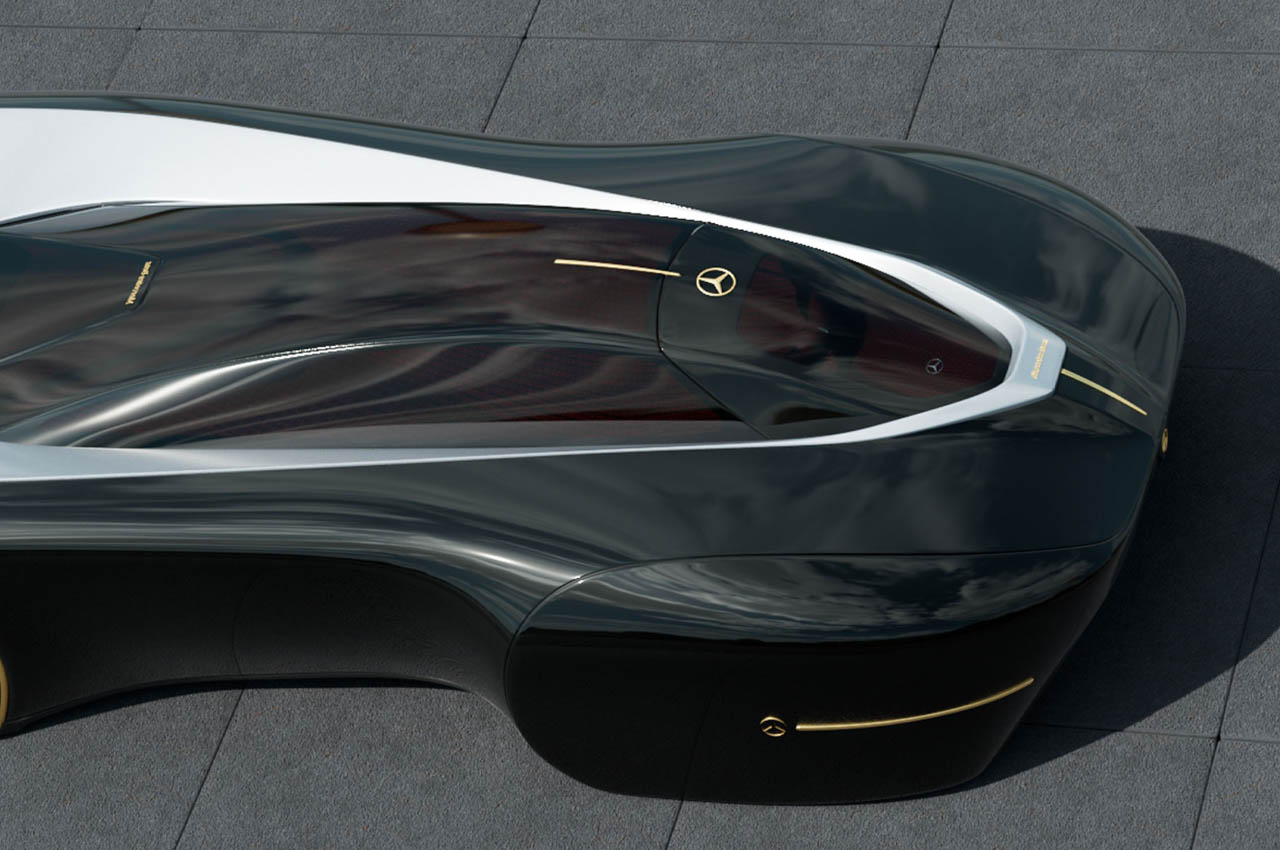
The front of the concept Mercedes car is inspired by the W196R Formula-1 racing car developed for the 1954 and 1955 seasons. Of course, the front grille is not that open and is streamlined along the front seam for a more modern aesthetic look. This is combined with the asymmetric windshield panel to the rear which has a polygon and pure sculpture shape. The contrast between the contoured front and the sharp rear gives the HARP a distinct persona. It’s just like a god-like figure draped in the most beautiful costume.
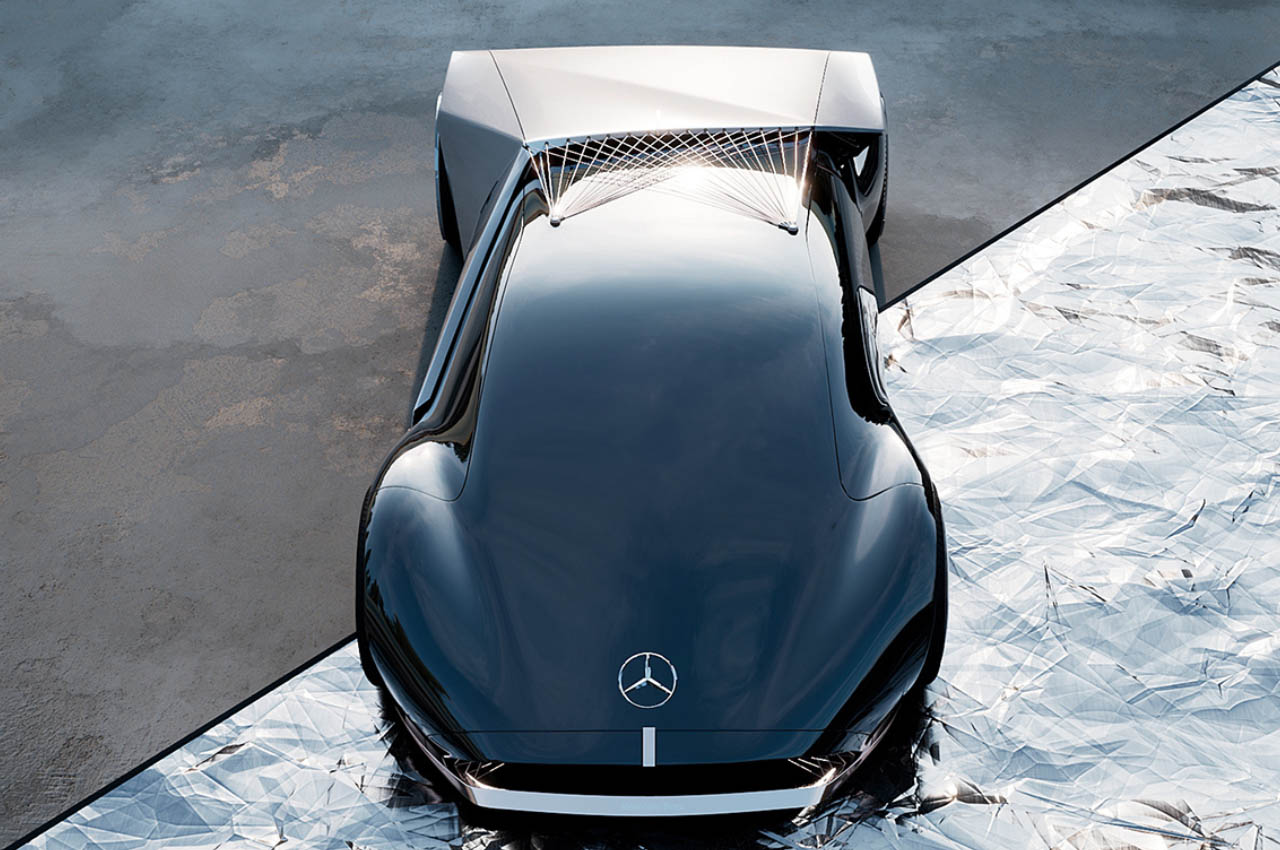
The way those strings are aligned with the rear explains the asymmetric shape of the rear which when viewed from the top looks like a Harp in motion. Even the rear lights are shaped like strings which I think should trickle down to a real car coming from Mercedes Benz. Moving on to the interiors, they have two contrasting sections – a silent compartment for people who seek solitude and an open compartment for people who want to socialize.
The Mercedes-Benz Harp concept is an interesting take on silent luxury, artist forms and the pleasure of driving. And yes, I almost forgot to mention the contrasting color hues of matte silver and glossy black!
Here at YD, we’re always coming across super cool and powerful automotive designs, but somehow the conceptual ones seem to take the cake. And we’ve really encountered some amazing automotive designs recently Each automotive design was cutthroat and innovative, bringing in something that we don’t usually see in the market. From killer speed to dashing good looks, to impenetrable safety standards, every automotive we featured at YD broke some design barrier for us, and hopefully, they did the same for you as well. Hence, we’ve curated a collection of automotive designs that we feel were the best of the lot. Each of these drool-worthy automobile concepts is mercilessly pushing the boundaries of the automotive industry.
1. Diode
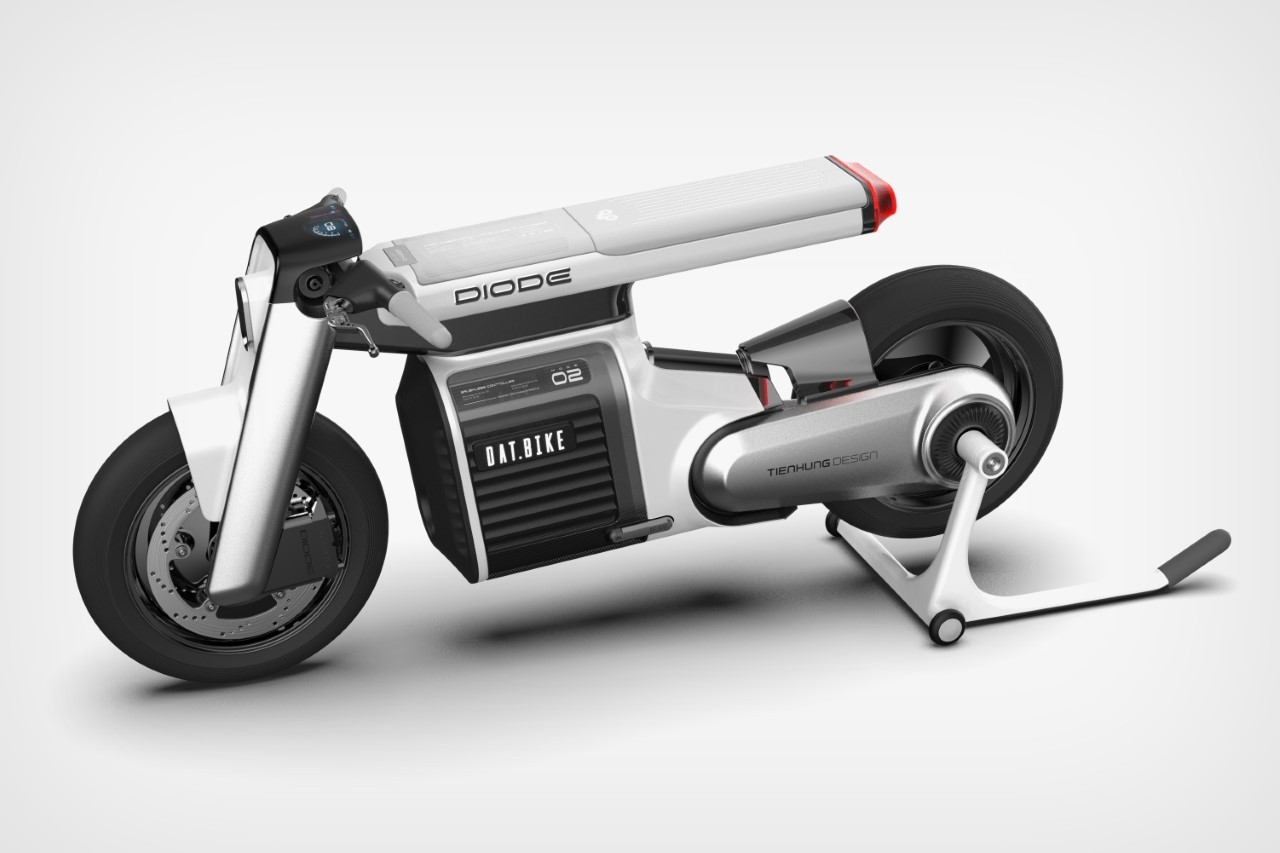
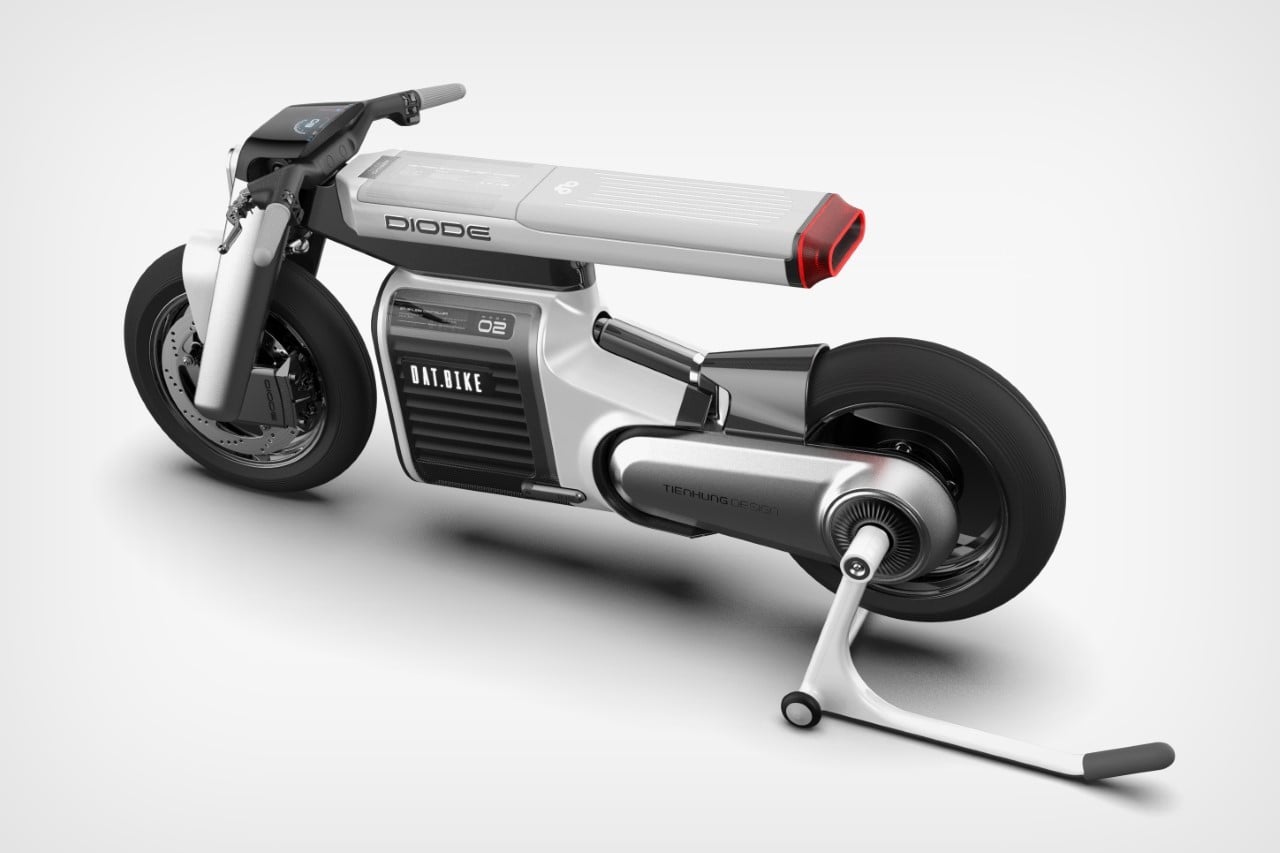
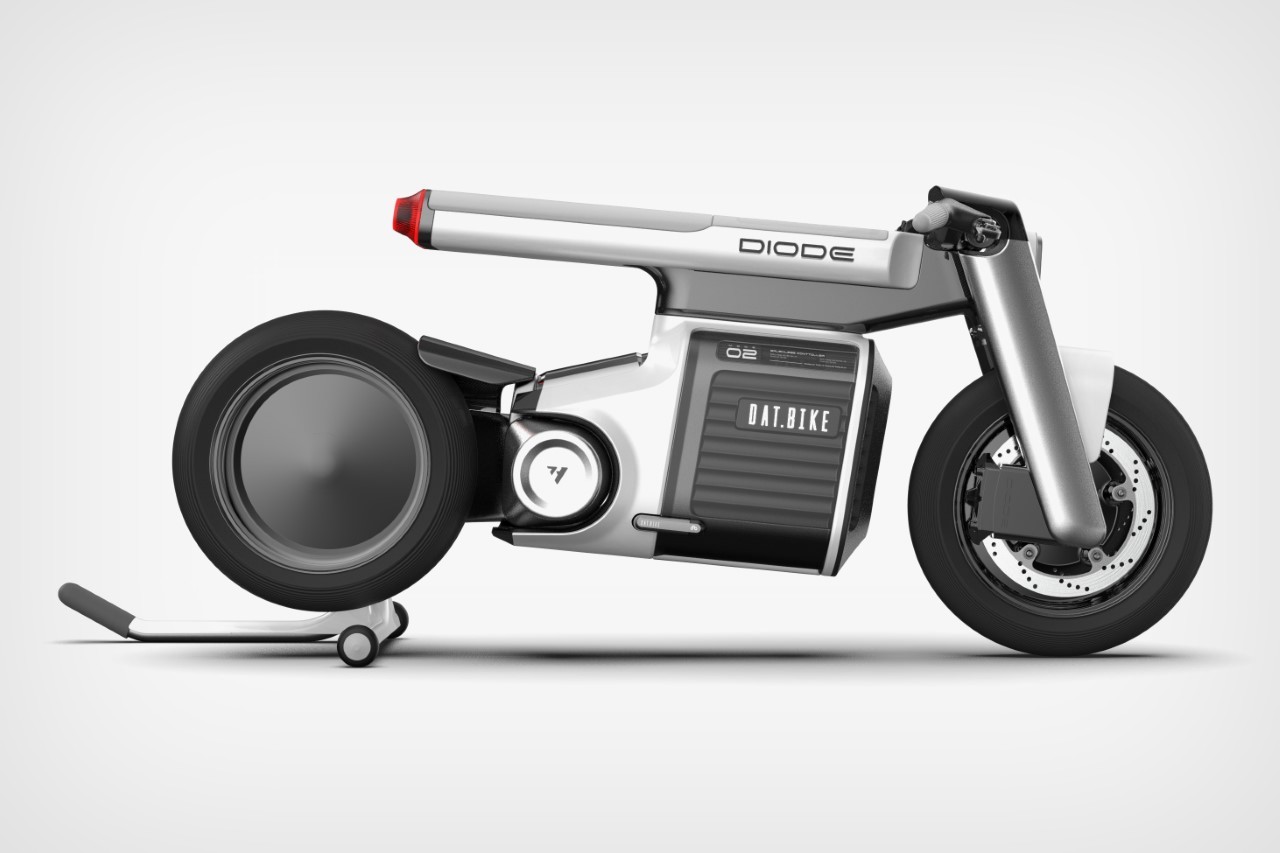
Dubbed Diode, this visually intriguing e-bike concept is created by Tien Hung, and it features a super cool neo-minimalistic design that celebrates the future of the electric power train. The bike has an aesthetic which is almost invisible, except for one singular horizontal pillar, which runs gently from the dashboard to the taillight, accentuated by a massive battery module underneath it. The bike is also equipped with a powerful rear-wheel drivetrain and a comfy seat.
2. Polestar 8
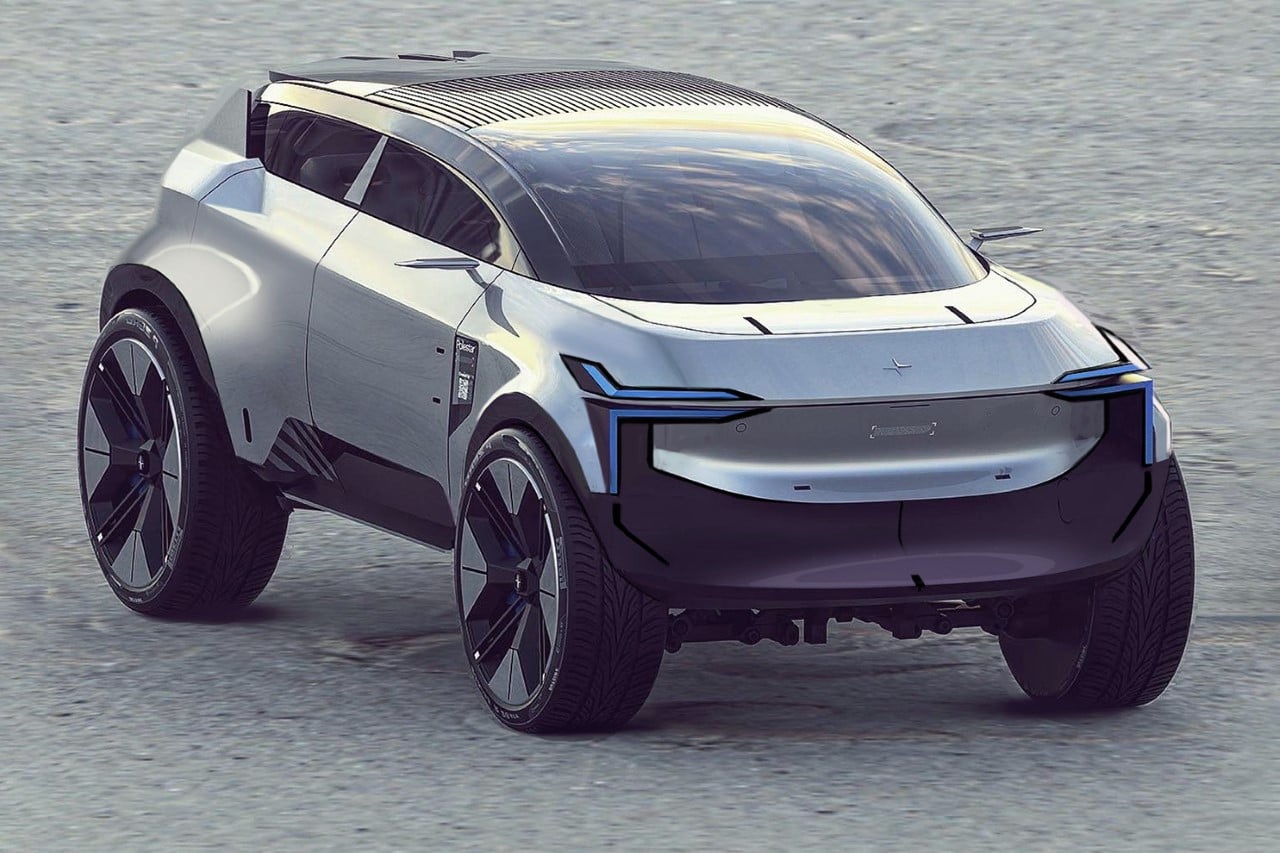
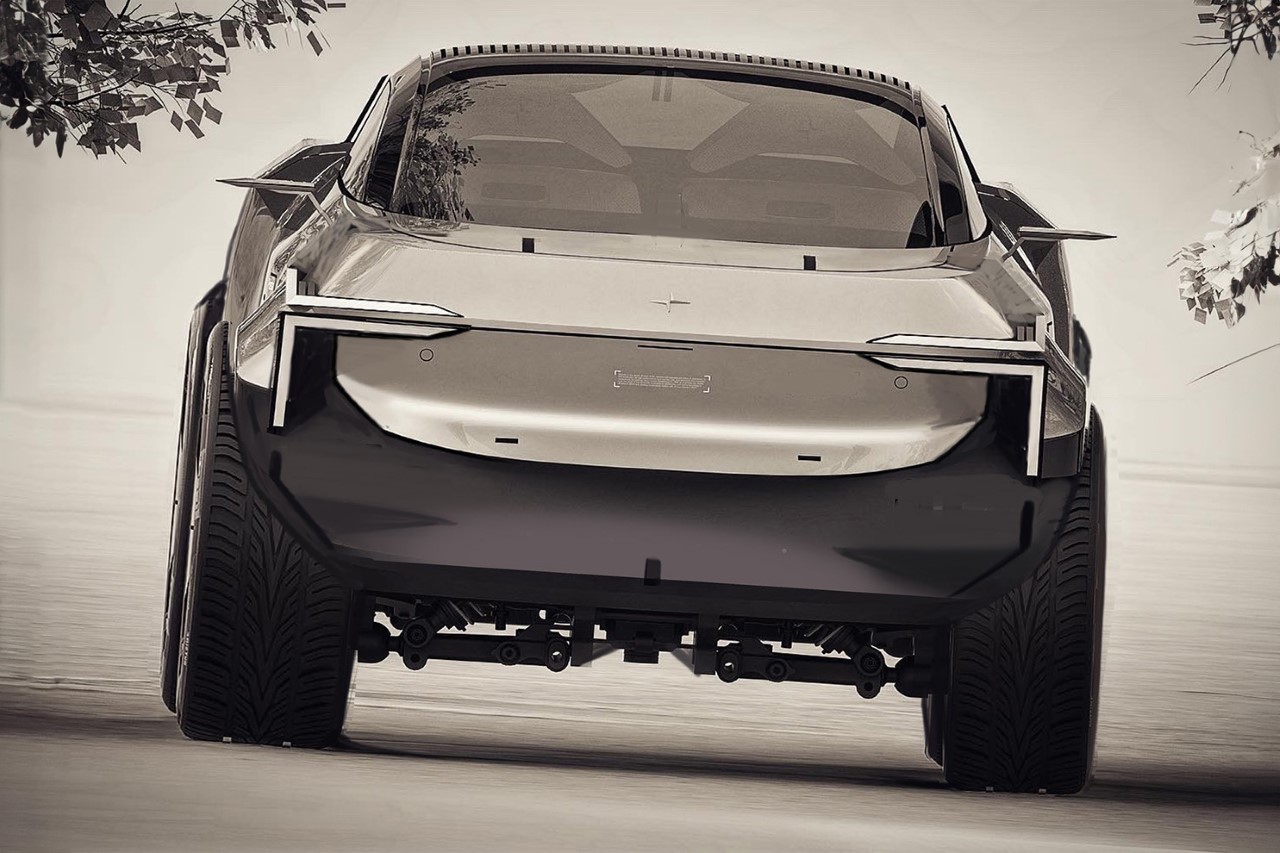
Designed by Turin-based Salvatore Ville – this is the Polestar 8. It is an SUV concept that beautifully embraces minimalism but with an interesting twist. Vurin imparted the car with a powerful and dominating silhouette, instead of only clean surfaces. This menacing automotive looks like the Polestar 3 on steroids! It features a wider and more brutish design. It does maintain a clean design but with a more roguish personality.
3. Mercedes-Benz Dresscode
The Mercedes-Benz Dresscode is the epitome of iconic luxury and encapsulates it through the shapes of collars and rich volumes and of a formal dress. If you observe the hypercar, you’ll notice that it mimics the form of a white shirt with a tie on top, and a black jacket placed over it. The white sections serve as the shirt with the edged surfaces, while the black body that covers the car reminds you of a jacket. The doors have been created to resemble the process of taking off a suit!
4. Palladio
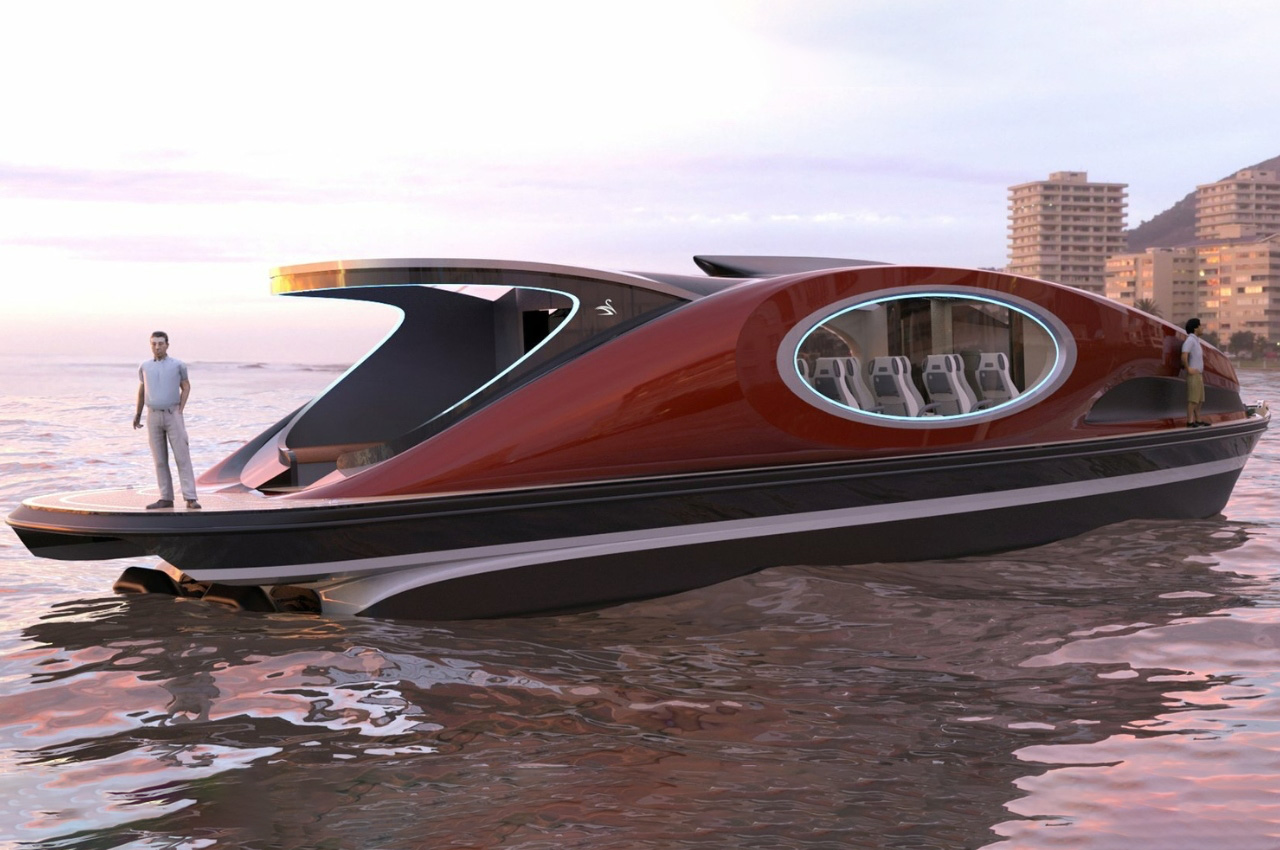
Dubbed Palladio, this concept for a hybrid yacht is designed to be ultra-light and can speed up to 55 knots maximum. It looks straight out of a sci-fi movie set in water and features a futuristic, mouth-shaped, avant-garde design that gives the impression that a pod is cruising through the waters. The yacht is made from carbon fiber propelled via twin Castoldi jets, and powered by two FTP engines.
5. H-Box
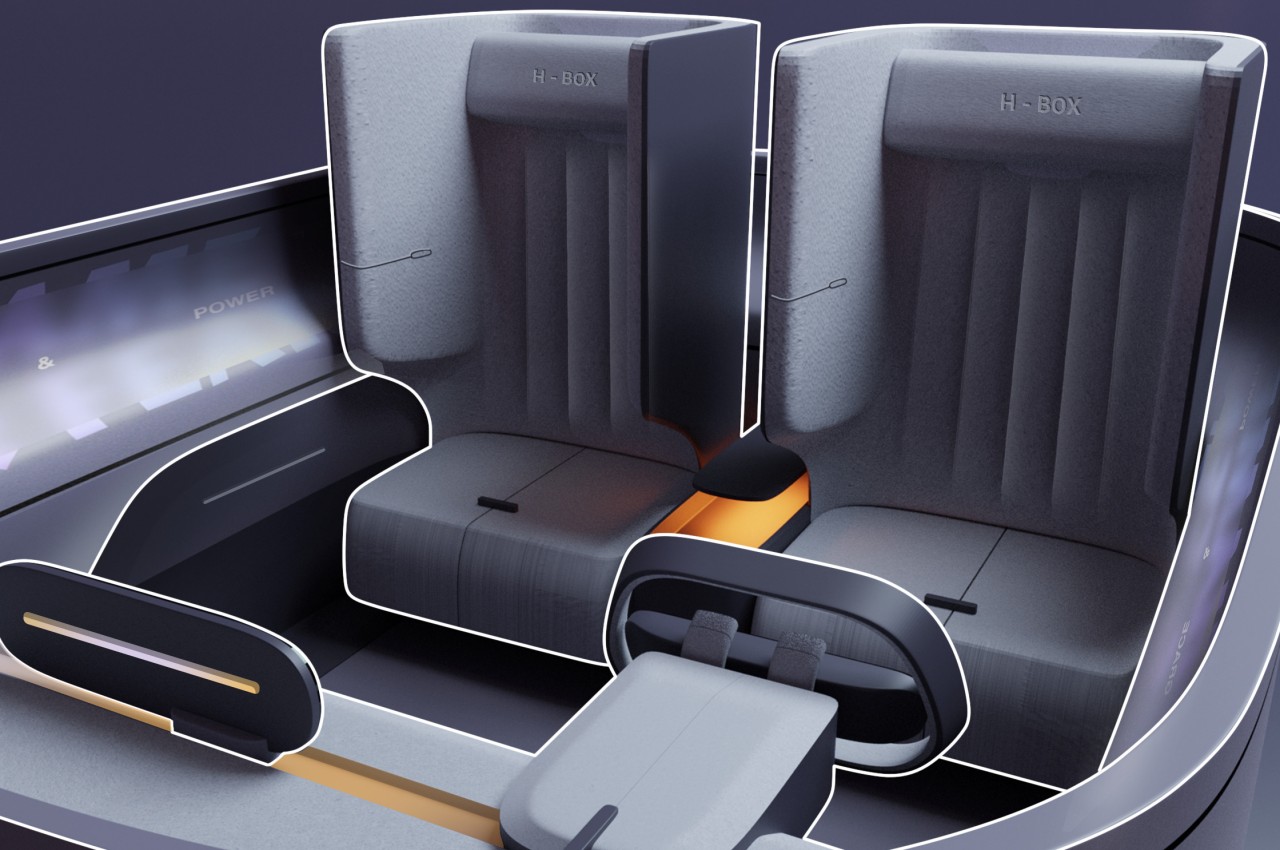
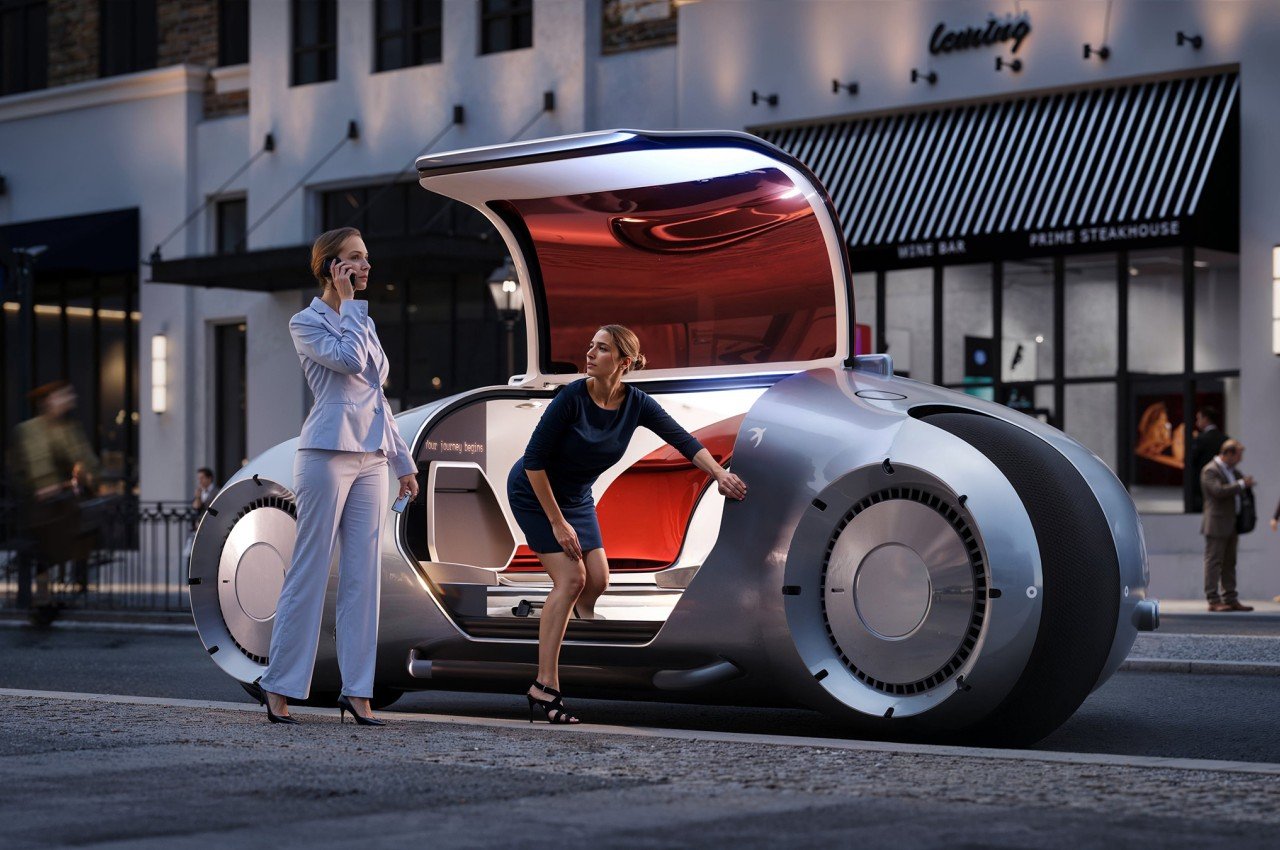
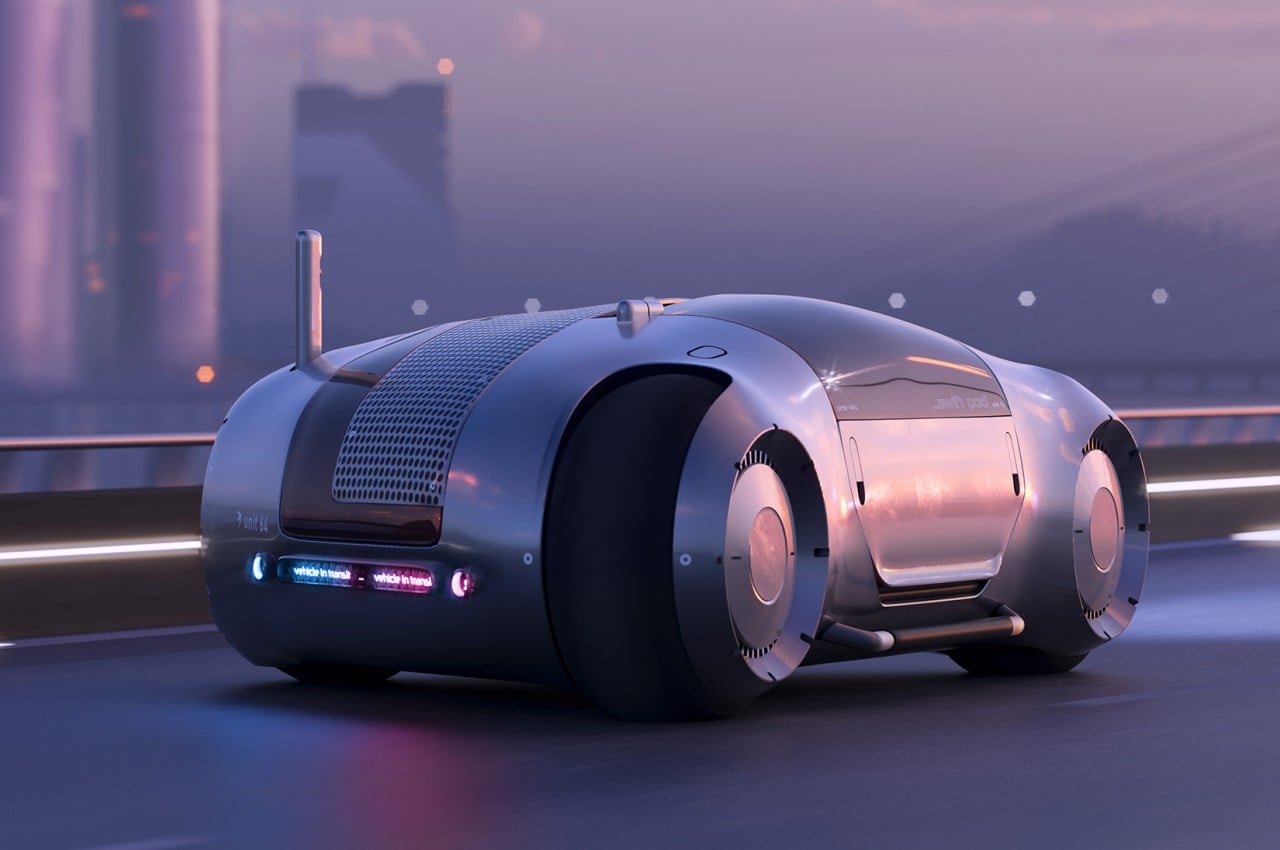
Dubbed the H-Box, this conceptual automotive design converts a car into a box-like machine. It is a two-seater model with chairs that are placed at the back of the cabin. However, you still need to pay attention to the manual control form in this car, unlike most self-driving automotive concepts. The driver’s seat can be moved forward to handle the steering if needed. This creates an even bigger gap between the two seats, which is great for two people who want their own space in the car.
6. Swift Pod
The Swift Pod looks like a massive motorcycle that stands on two wheels only! And this innovative automotive has such a unique shape to hold two adult-sized beds inside, one on each side of the triangle. Besides having two beds, it also houses two chairs, amenities, and the vehicle’s hardware and different bits. This is a fascinating mode of transport that lets you sleep through your commute or journey if you wish to.
7. MOQBA
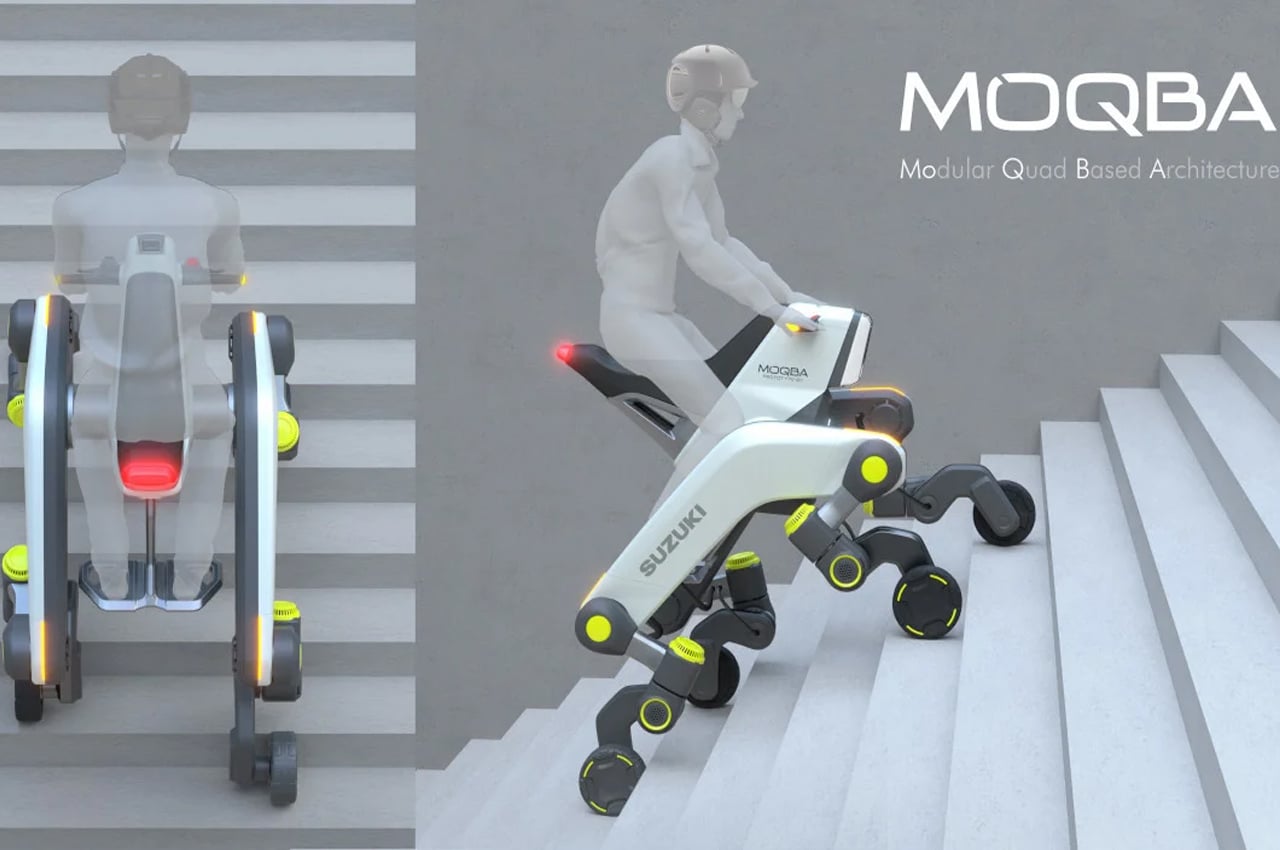
Named MOQBA, this innovative conceptual design is a dynamic mix of a bike and an e-scooter. This fascinating automotive can climb stairs! It was created to be a next-gen mobility ride for users who may have difficulty with mobility. You can ride this unconventional automotive on four independent legs with wheel extensions. The MOQBA is intended to be a one-of-a-kind and exceptional mini mecha of the future.
8. BMW Motorrad CH4 Superbike
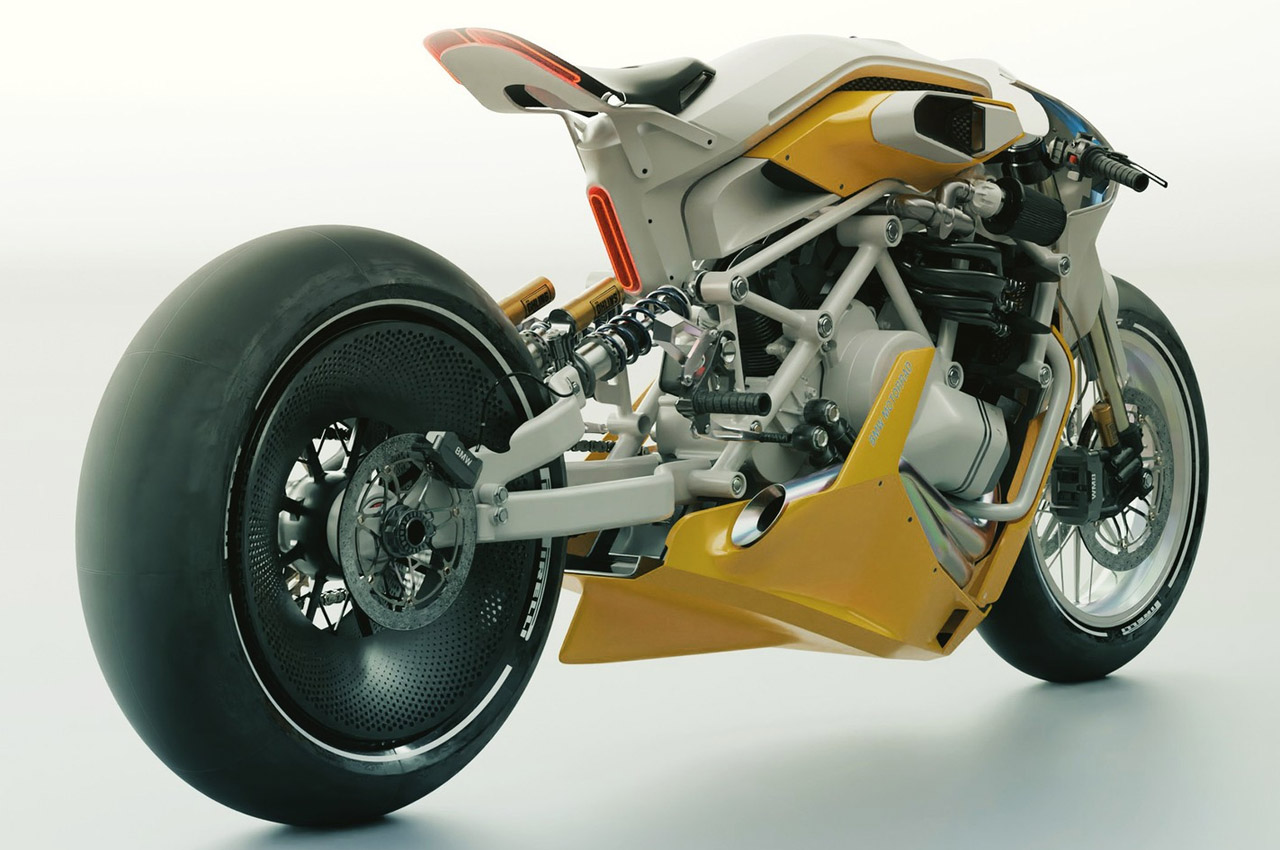
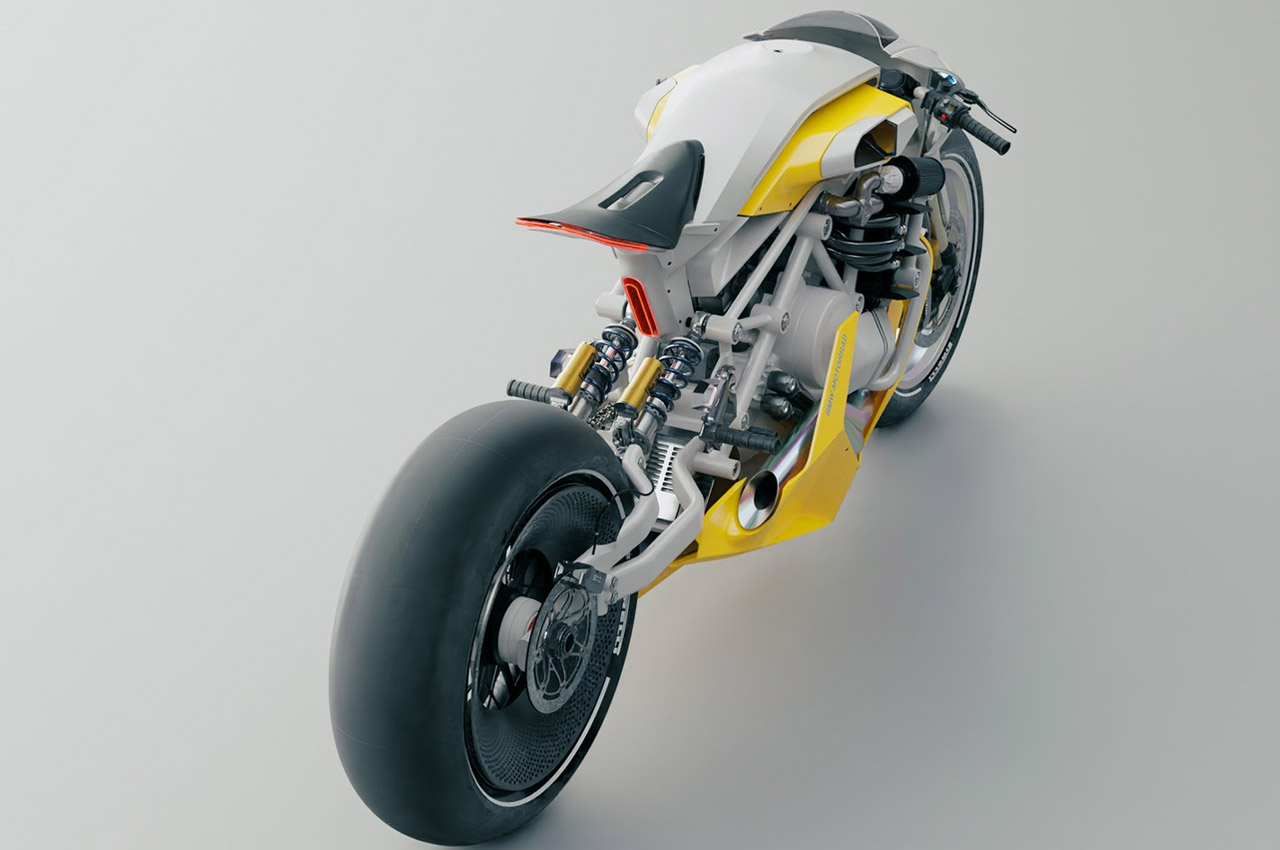
Called the BMW Motorrad CH4 Superbike – this exceptional café racer is designed by Sabino Leerentvled, and it is a ride fit for Tony Stark and his quests to take on the bad guys. The superbike has an aerodynamic geometric shape and big fat wheels which offer it a high-speed adrenaline rush. The bike truly has a massive Tony Stark influence, and it would look amazing zipping through the crowded streets in pursuit of the bad guys.
9. Apple iCar
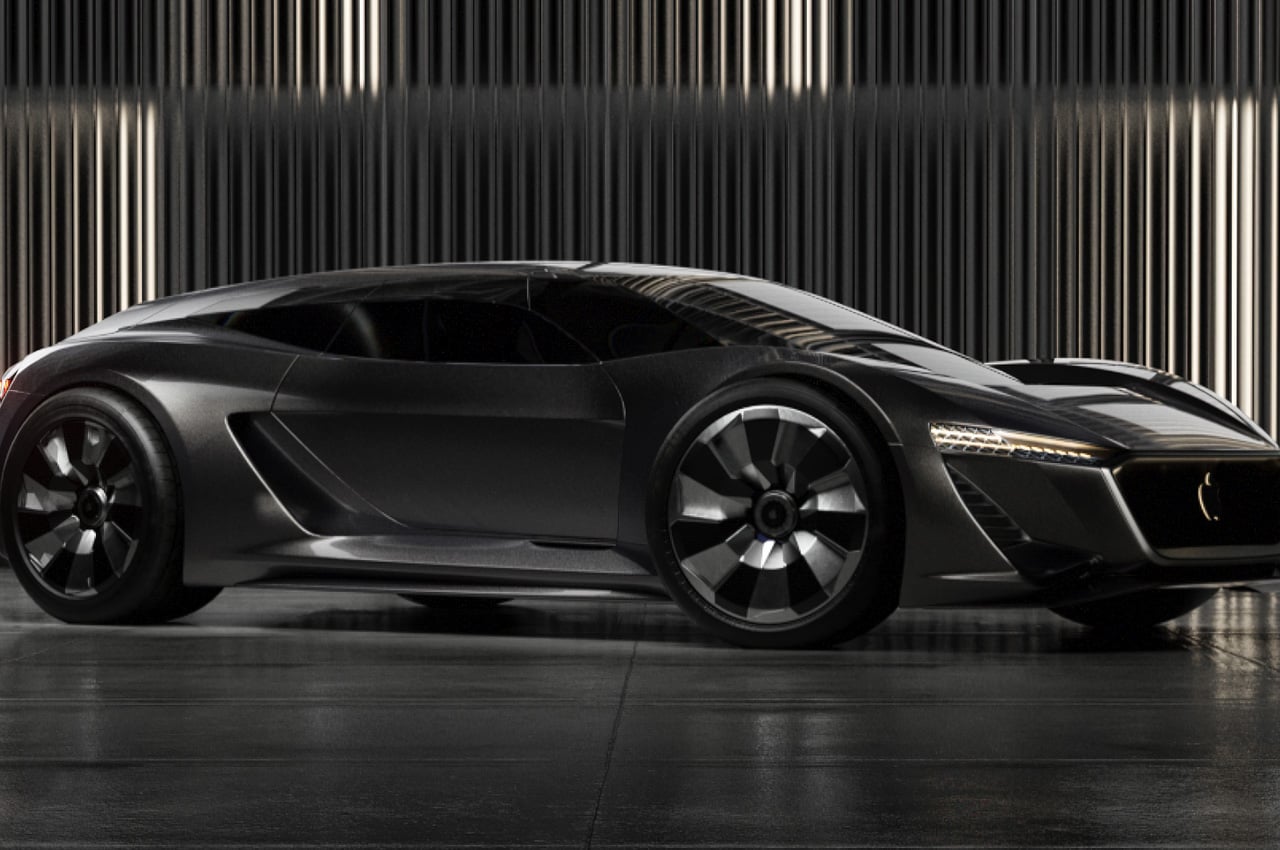
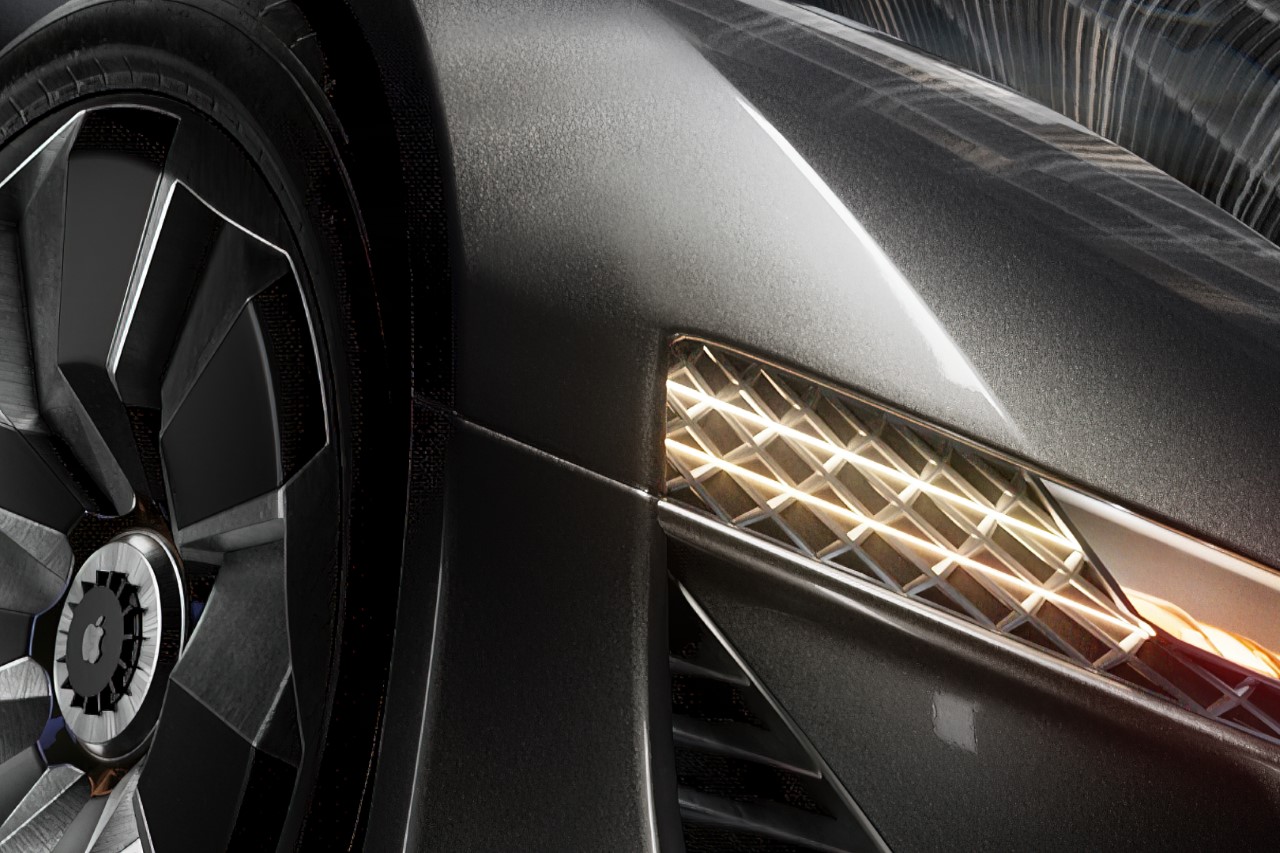
Dubbed the Apple iCar – this conceptual automotive concept has a luxurious supercar-inspired appeal to it. It has influences of the Audi R8 and the lesser-known Lamborghini Asterion in the iCar. The automotive has an aggressive, speedy silhouette, stunning headlights and taillights, and a rounded back. It features an Apple logo on the front, and each wheel is equipped with stunning rims with the Apple logos on them.
10. Yamaev’s Scooter Concept
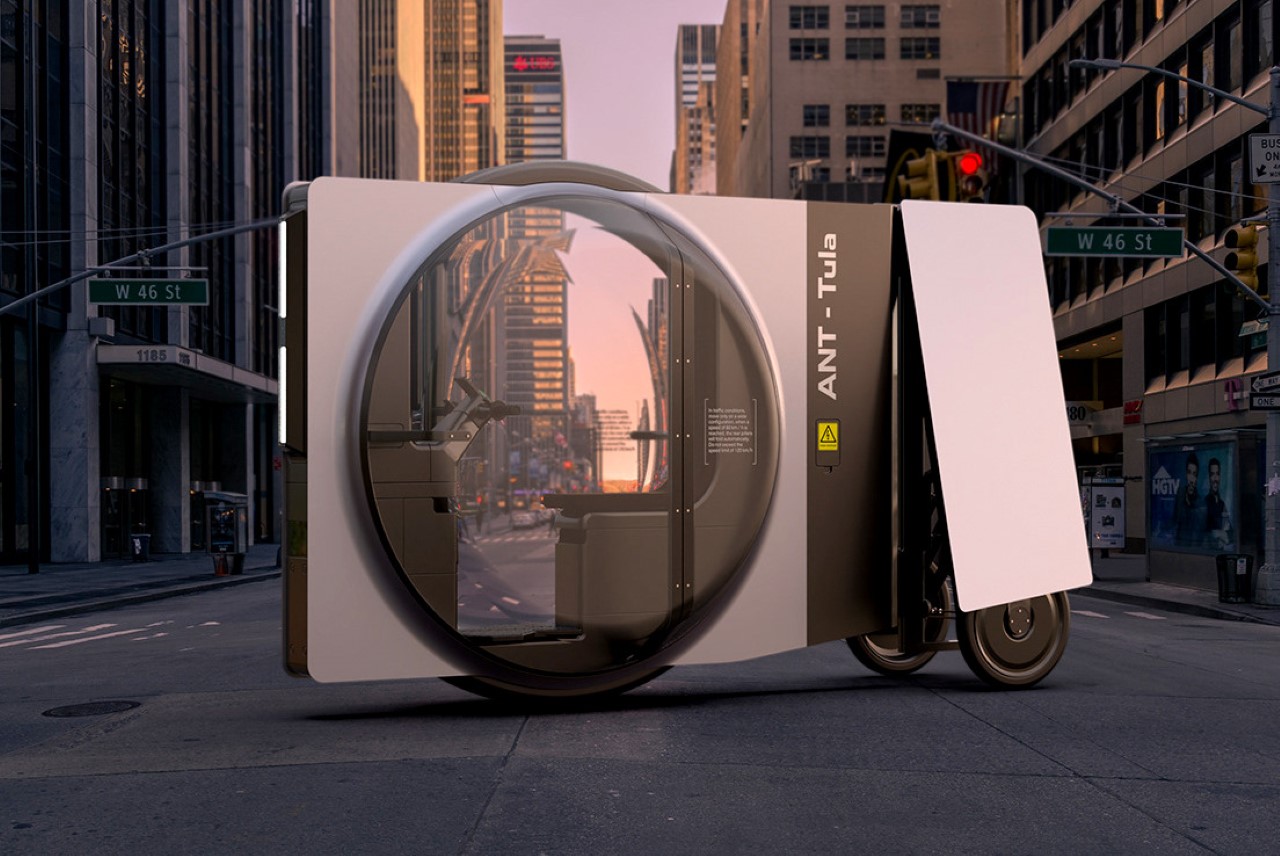
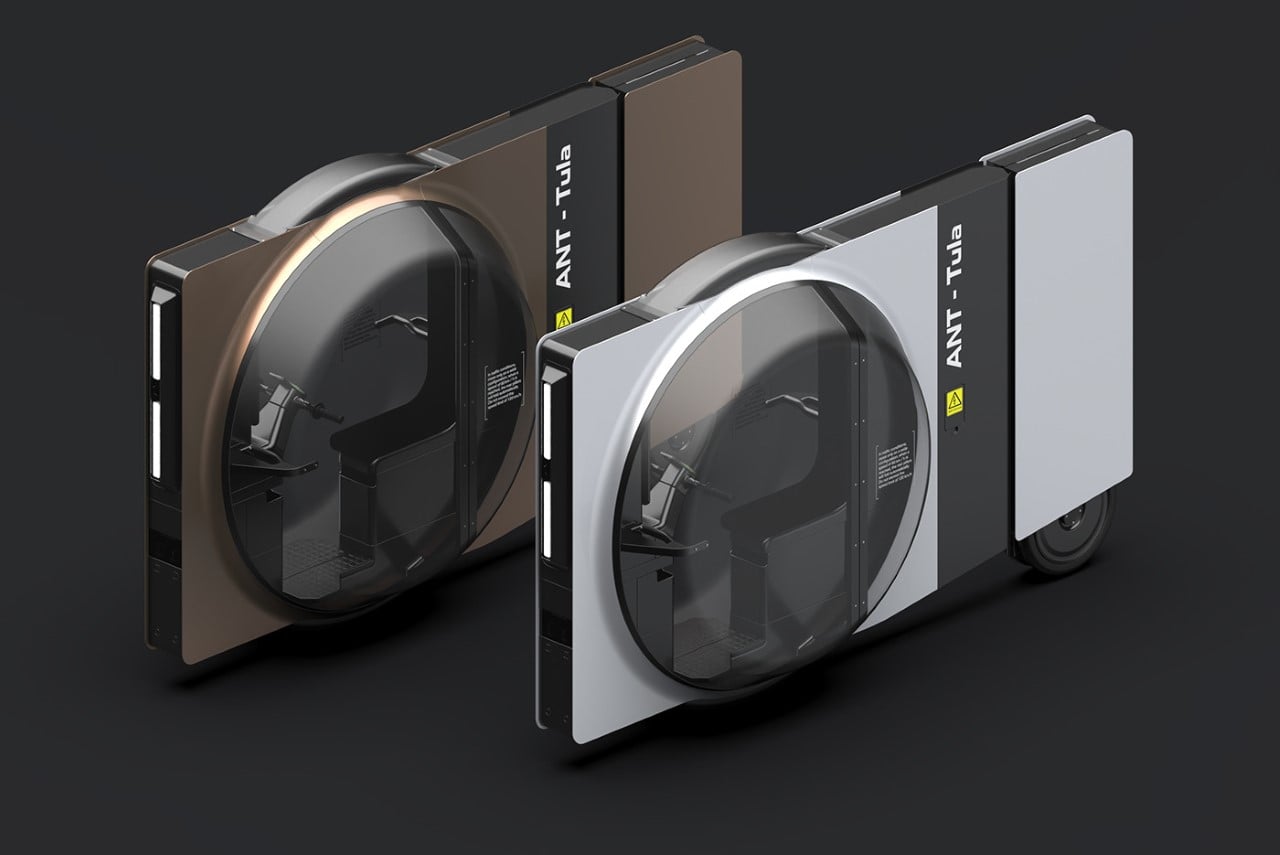
This tricycle scooter concept is made up of a unique rectangular side profile that gently pierces through the air, in the same manner a credit card would swipe through a payment machine. The scooter also features a wheel setup with a large front wheel which covers the scooter’s transparent cockpit. The cockpit is bubble-shaped, and it has two rear wheels which separate at lower speeds to provide stability. The wheels also combine at higher speeds for maneuverability.
Earlier this year, Dutch Drone Gods, in partnership with Red Bull, unveiled the World’s Fastest Drone that went head-to-head with Max Verstappen behind the wheel of an F1 car. With a top speed of 350km/h, that drone held the title for barely a few months before YouTuber Luke Maximo Bell decided to challenge it.
Taking on the entire design and R&D team of Red Bull Racing, Bell managed to 3D-print a drone that was nearly 50% faster, hitting high speeds of 500km/h (310mph) and setting a new record, verified by the team at Guinness Book of World Records. The video above captures Bell’s entire journey, from prototype to building to tuning, and finally FPV footage of the world’s fastest drone. To think that one YouTuber with a BambuLabs printer managed to outpace a drone built out of carbon fiber by the elites at Red Bull Racing known for manufacturing the world’s leading F1 cars…
Designer: Luke Maximo Bell
Bell’s design process was a reiteration of one of his older drones named Peregreen, which could hit speeds of up to 400km/h. If you look at the shape of the drone you’ll quickly realise how even Red Bull and DDG opted for a similar format. The drone isn’t your average quadcopter or even FPV racer. Instead, it has a missile-style design with propellers at the bottom that give it an eVTOL style ability to vertically take off, tilt forward to race ahead, and then land vertically too.
The backbone of Peregreen 2’s success lies in its meticulous design and the use of high-quality materials. The frame, constructed from carbon fiber, was chosen for its exceptional strength and wide availability. Custom frames were precision-cut using a CNC machine at Flying Robot in Cape Town. Despite initial setbacks with incorrect mounting hole dimensions, which required manual adjustments, the final product was a high-precision, robust frame capable of withstanding the rigors of high-speed flight. Building on data from the original Peregreen, Bell and his father (who helped build the original Peregreen) selected larger motors, propellers, and batteries. However, this brought a new set of challenges. The initial batteries overheated, reaching temperatures above 130°C, leading to failures. Additionally, the motor wires were not thick enough, causing them to overheat and even catch fire during bench tests. After extensive testing and adjustments, the team switched to thicker wires and sourced new batteries that maintained a stable temperature below 80°C. These changes were crucial in ensuring the drone could operate at high speeds without the risk of overheating or component failure.
A cheap reliable way to test aerodynamics, simply hold it outside a car’s window!
Aerodynamics played a pivotal role in the drone’s performance. Initial designs faced stability issues at high speeds, necessitating extensive experimentation with tail lengths and fin sizes. The goal was to achieve a stable flight profile with a low drag coefficient. By creating and testing various models (often by simply 3D printing them and holding them out of a car window at high speeds), the team eventually found a configuration that provided the necessary stability. This iterative process of refinement led to a design that not only looked sleek but also performed exceptionally well in high-speed conditions. The final aerodynamic model was a testament to the team’s dedication to optimizing every aspect of the drone’s performance.
Once a drone’s built, its performance needs to be tuned by programming all its components to work in sync so that there isn’t a malfunction in the sky. Despite several initial failures during test flights, the team sought the expertise of Chris Raser, a renowned FPV drone specialist. His insights and detailed tuning guides were instrumental in resolving stability issues and fine-tuning the drone’s flight characteristics. This collaborative approach underscored the importance of seeking specialized knowledge and continuously learning from each phase of the project. The resulting improvements were significant, allowing the drone to perform high-speed maneuvers with precision and reliability.
The testing phase was rigorous and demanding, marked by numerous iterations and rebuilds. The drone was 3D printed using the Bambu Lab X1 Carbon printer, which proved to be an excellent tool for creating precise and durable components. Through a series of high-speed runs, the Peregreen 2 eventually achieved speeds of 500 km/h, a milestone that underscored the success of the design and engineering efforts. This achievement was officially recognized by Guinness, solidifying the team’s place in the record books.
Beyond setting a world record, the Peregreen 2 project also focused on capturing stunning cinematic footage. By incorporating a new open canopy for the camera (shown below), the team was able to obtain clear, distortion-free shots. The Insta360 Go 3 camera, known for its small size and lightweight, was integral in capturing high-speed footage. The drone’s performance in endurance tests was equally impressive, managing a flight of 7.5 km at an average speed of 180 km/h. These accomplishments highlight the drone’s versatility and potential for various applications.
Mercedes-Benz has been a name synonym for panache and luxury ever since it was first established in 1926. Headquartered in Stuttgart, Germany, the automotive giant has set the bar high for four-wheelers of the present and the future world. The AMG GT introduced in 2014 is still one of the most liked supercars in the industry and Concept VISION AVTR is setting the precedence for electric cars of the future already.
While the brand is one of the few big names inclined towards electric concept designs, it is understandable how many concept designers gravitate towards the Mercedes name for building their imaginative four wheels that could someday actually land them at one of the renowned brand’s design nests. The Mercedes-Benz Dresscode is one such iteration that has a unique take on what a British hypercar of the future could be like.
The design direction of the car interprets iconic luxury through the shapes of collar and rich volumes of a formal dress. If you look closely the hypercar adapts the form of a white shirt with a tie on top and a black jacket layered over it. Yes, the white sections represent the shirt with edged surfaces while the black body wraps the entire car in a large volume reminiscent of a jacket. The rear of the vehicle is like the back of a person wearing a suit – simple and chic. Unlike other supercars having luxurious gull-winged doors (or scissor doors) which can be tricky to get in and out, the Dresscode concept has doors designed to feel like the process of taking off a suit which is elegant and easy.
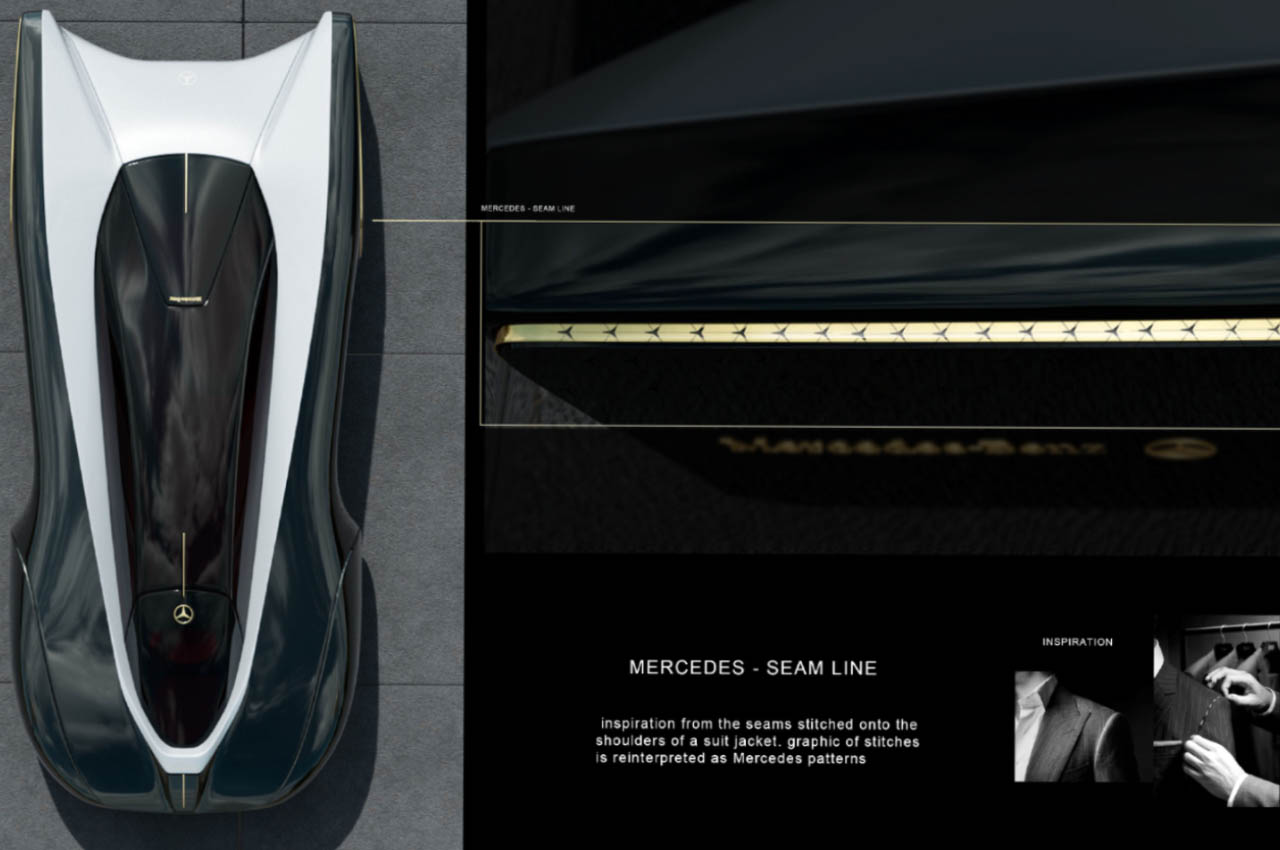
The side profile of the car is inspired by the seam lines on the shoulder of a jacket, wherein the lines flow from the front to the rear. Those wheel parts are rotatable through these lines. Also, the seam stitches on the shoulder of a suit jacket are reinterpreted as Mercedes patterns on the hypercar. In a true sense, this is a tailored Mercedes concept maintaining an aggressive yet elegant stance with its dynamic shape.
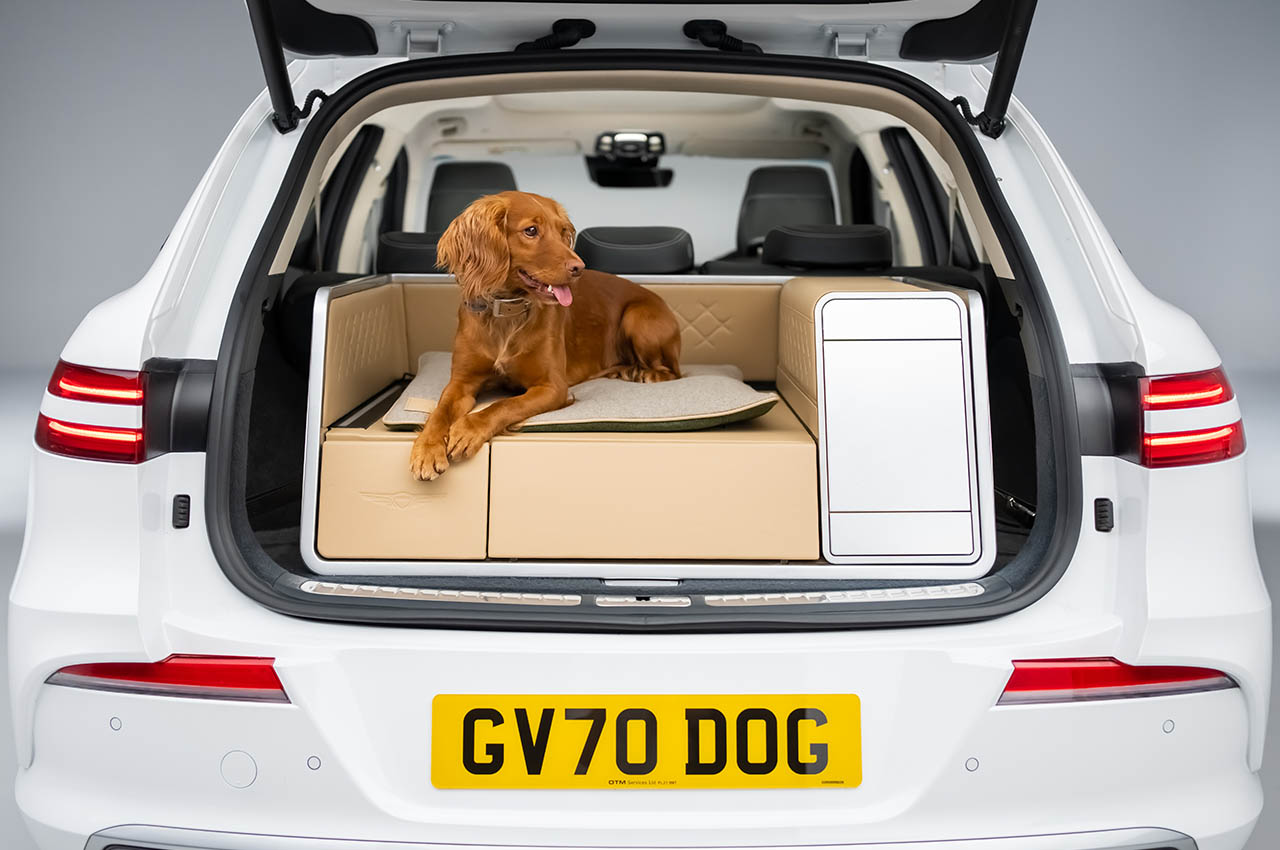
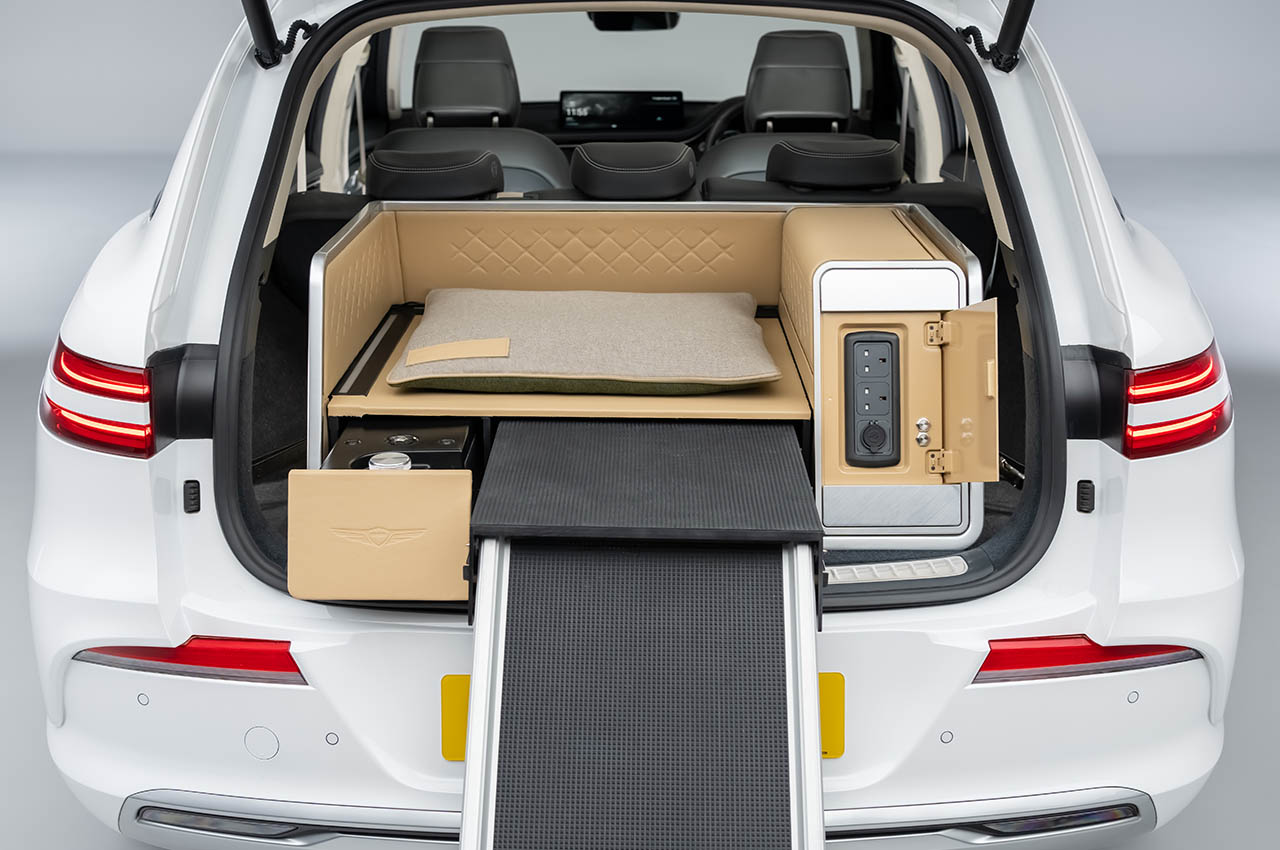
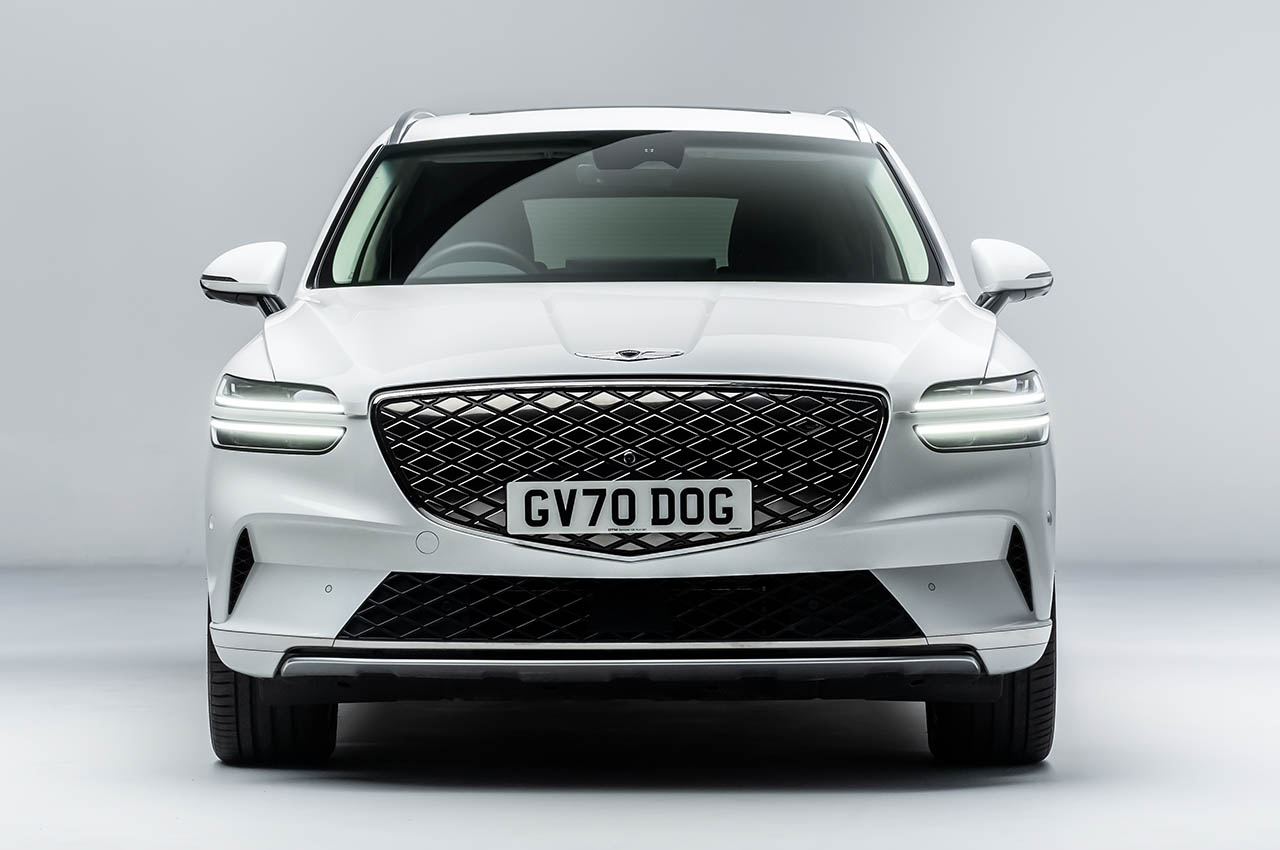
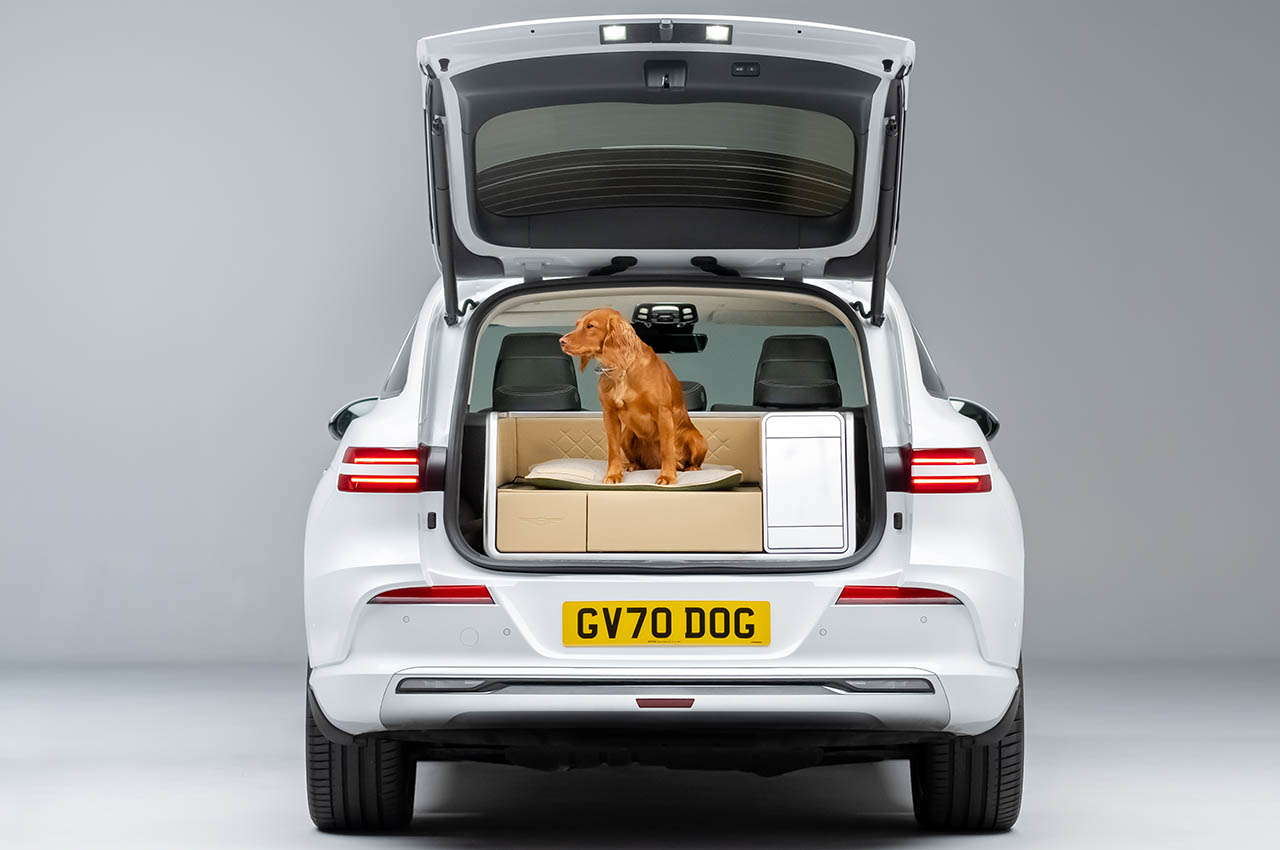
Max tells me; being a celeb dog is not an easy thing. You have to dress up well, eat without spilling or slurping, have trimmed nails, clean paws, and be at your best behavior at all times. Ah, poor doggo! After all the made-up life throughout the day, Max deserves the ultimate relaxation and time of his own during traveling, he says. Luxury automaker Genesis seems to have heard his woof and has created an ultimate dog-friendly space exclusively to fit in the boot of the Electrified GV70. This is what Max would’ve always needed. A dedicated area to himself that would take care of his before, during, and after travel needs.
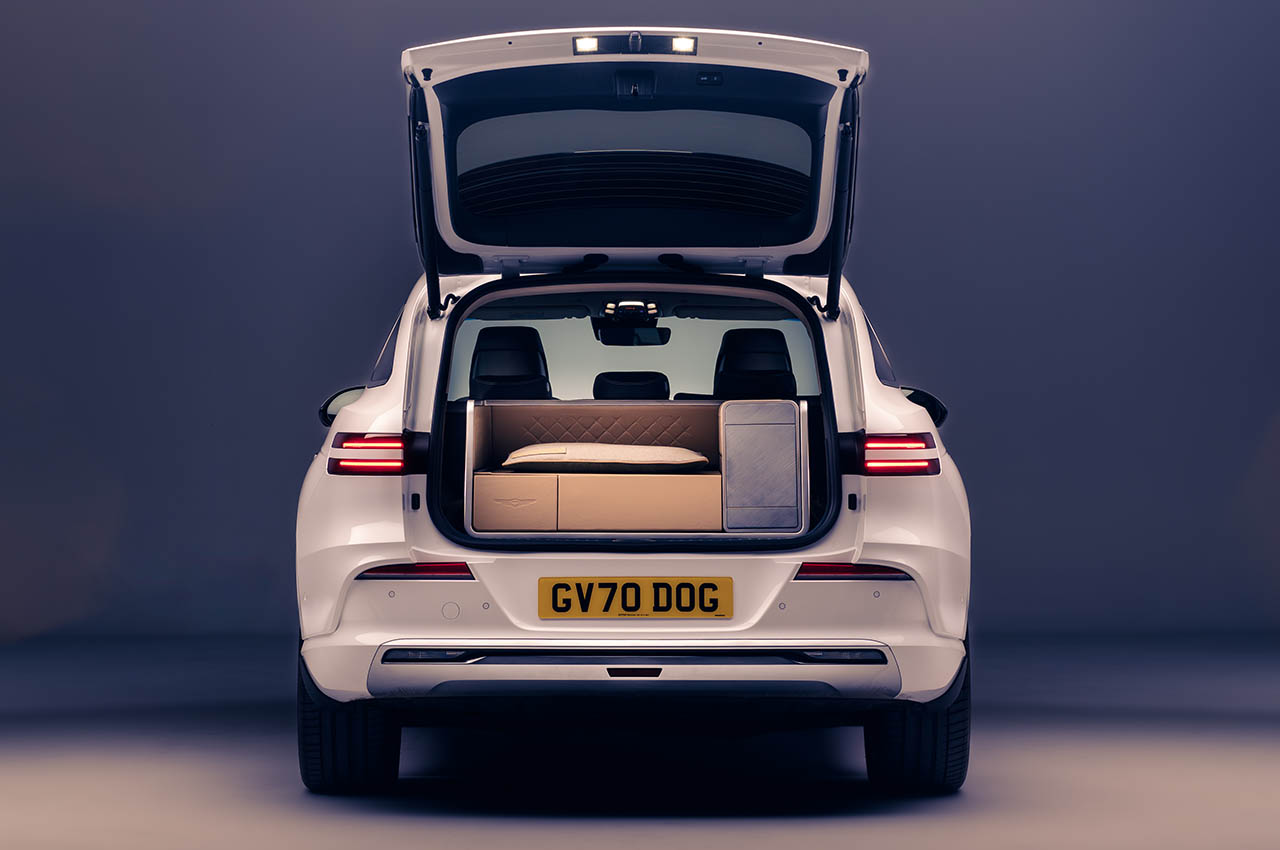
The Genesis X Dog concept is primarily meant to allow the four-legged friend to relax with all the possible amenities inside it or at the paw’s reach. Along with the comfortable ride of its Electrified GV70, the interesting dog module allows the pooch to have a relaxed me time, drenched in the luxuries of a cozy bed, ambient lighting, and Bluetooth audio system.
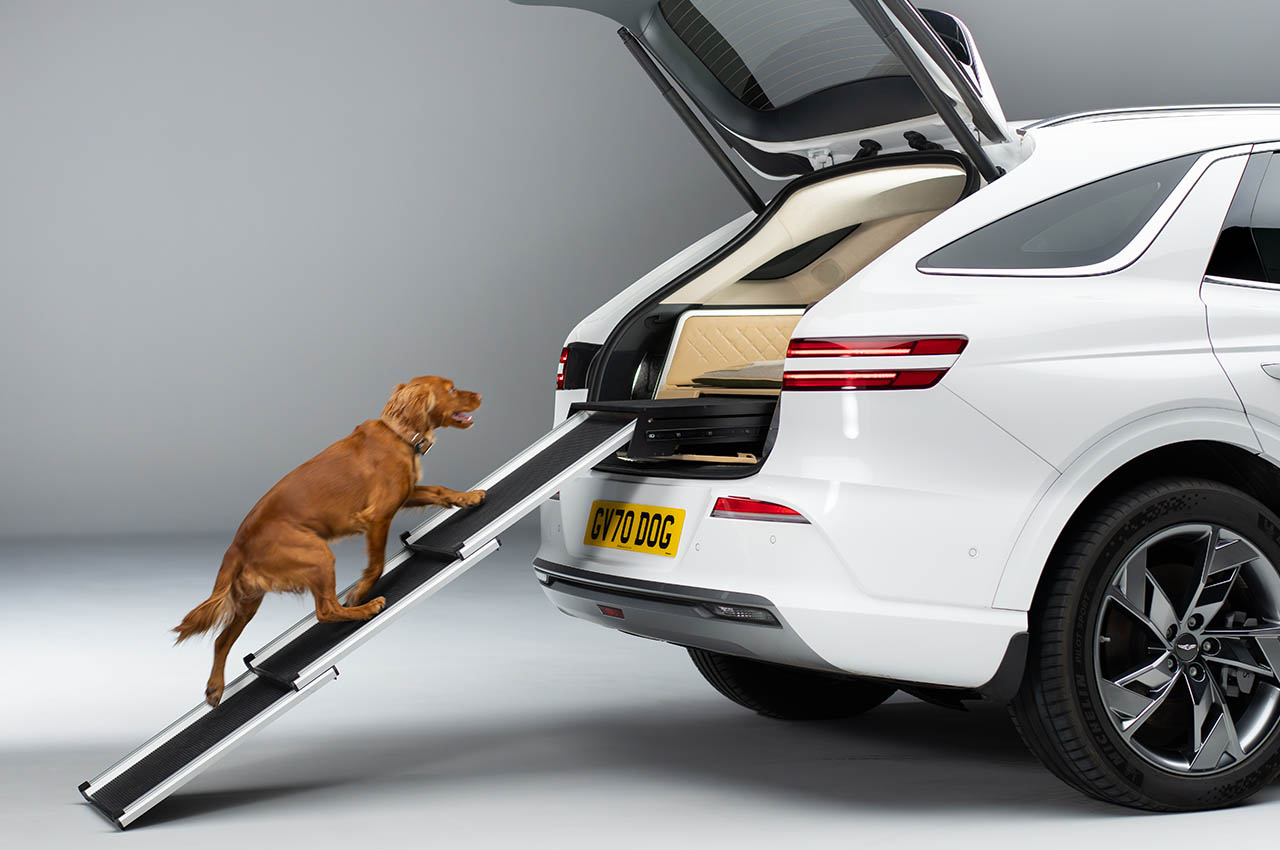
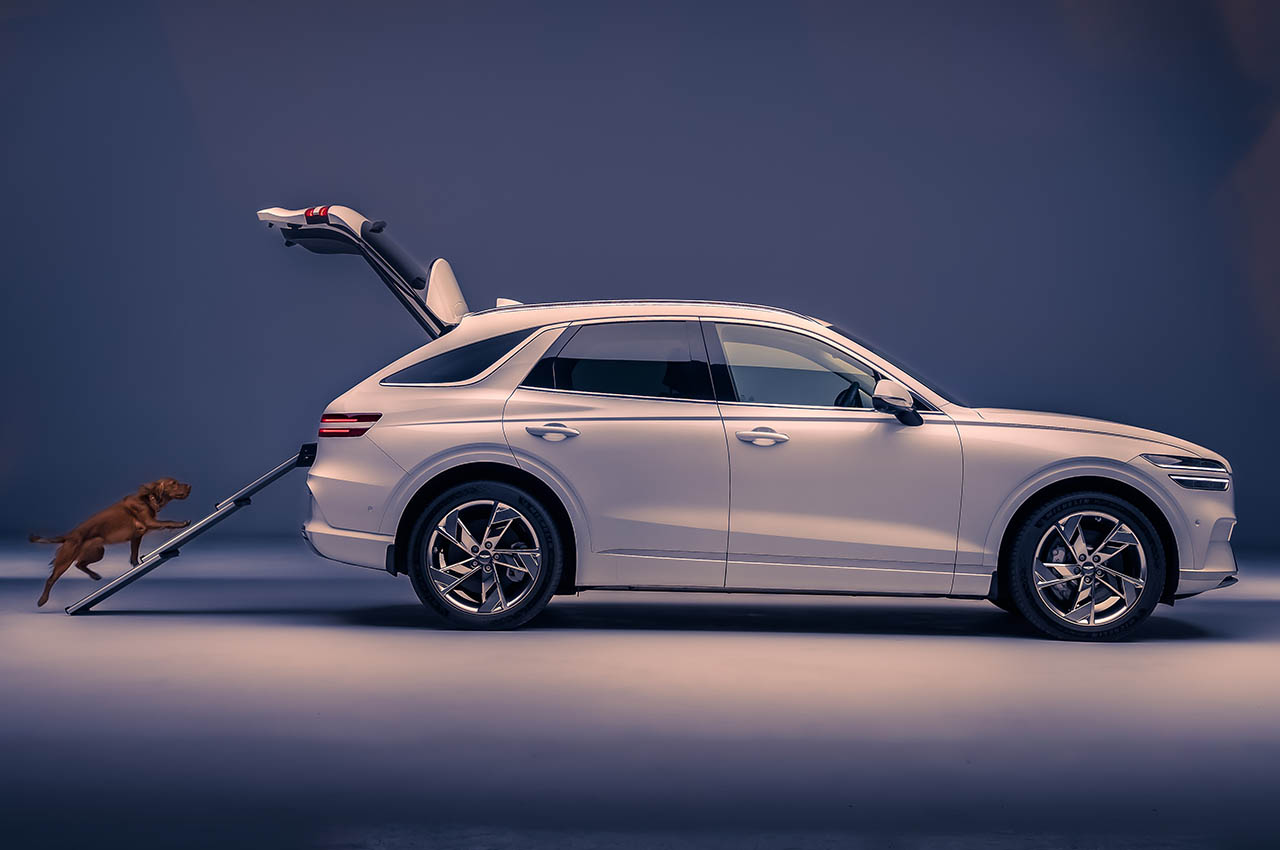
A lightweight, retractable aluminum and carbon fiber ramp has been designed to provide easy access for the dog into the luxury crate resting in the boot of the Electrified GV70. Sitting there, the dog can feel as special as their owners while on the road with all the range of exclusive accessories and equipment at their disposal.
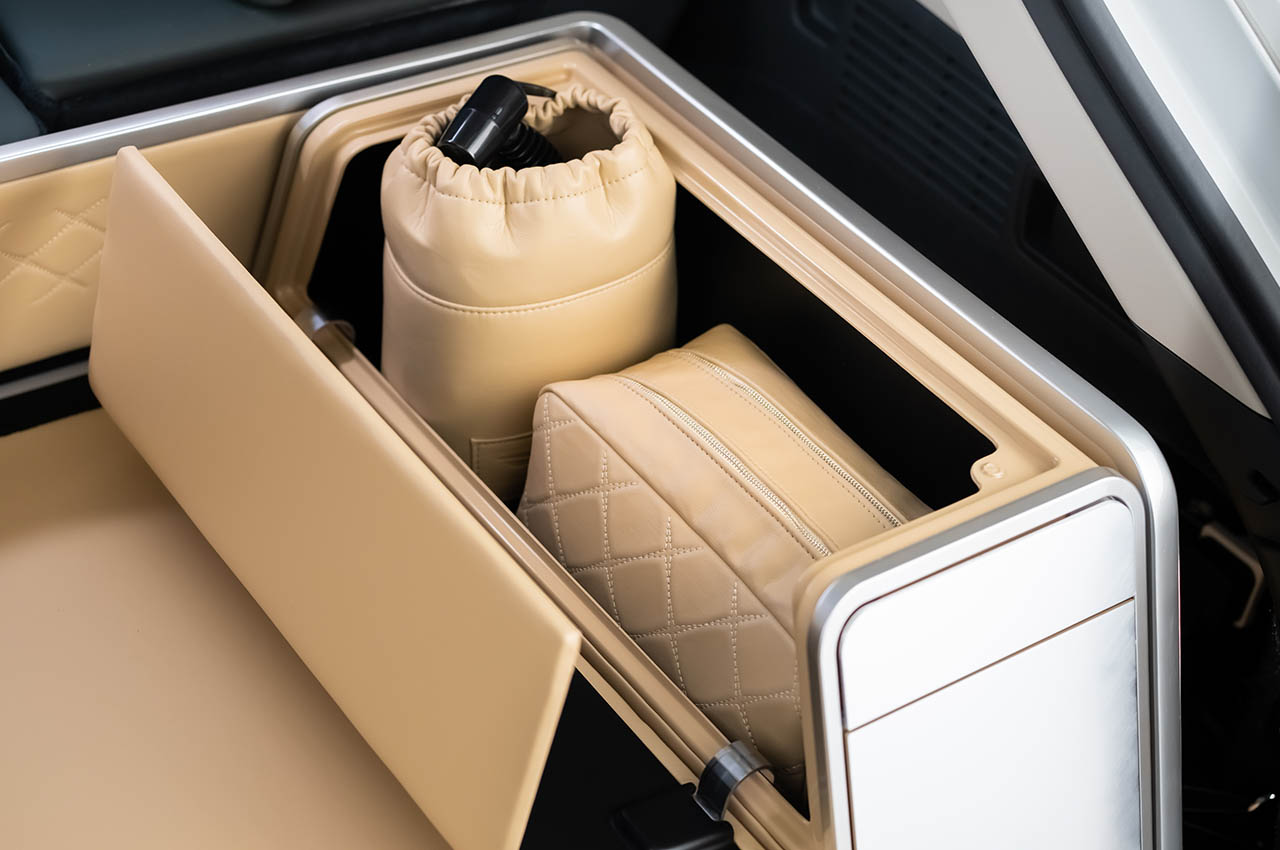
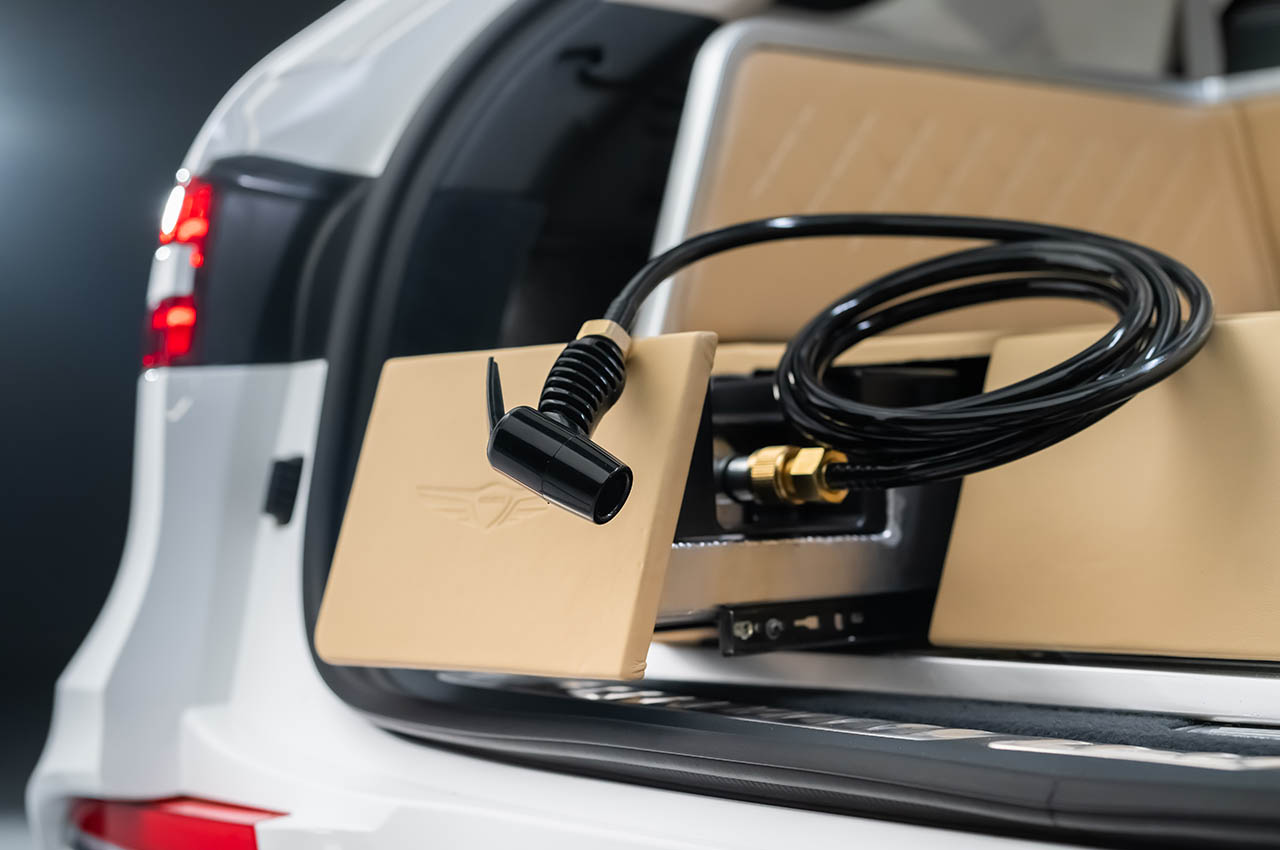
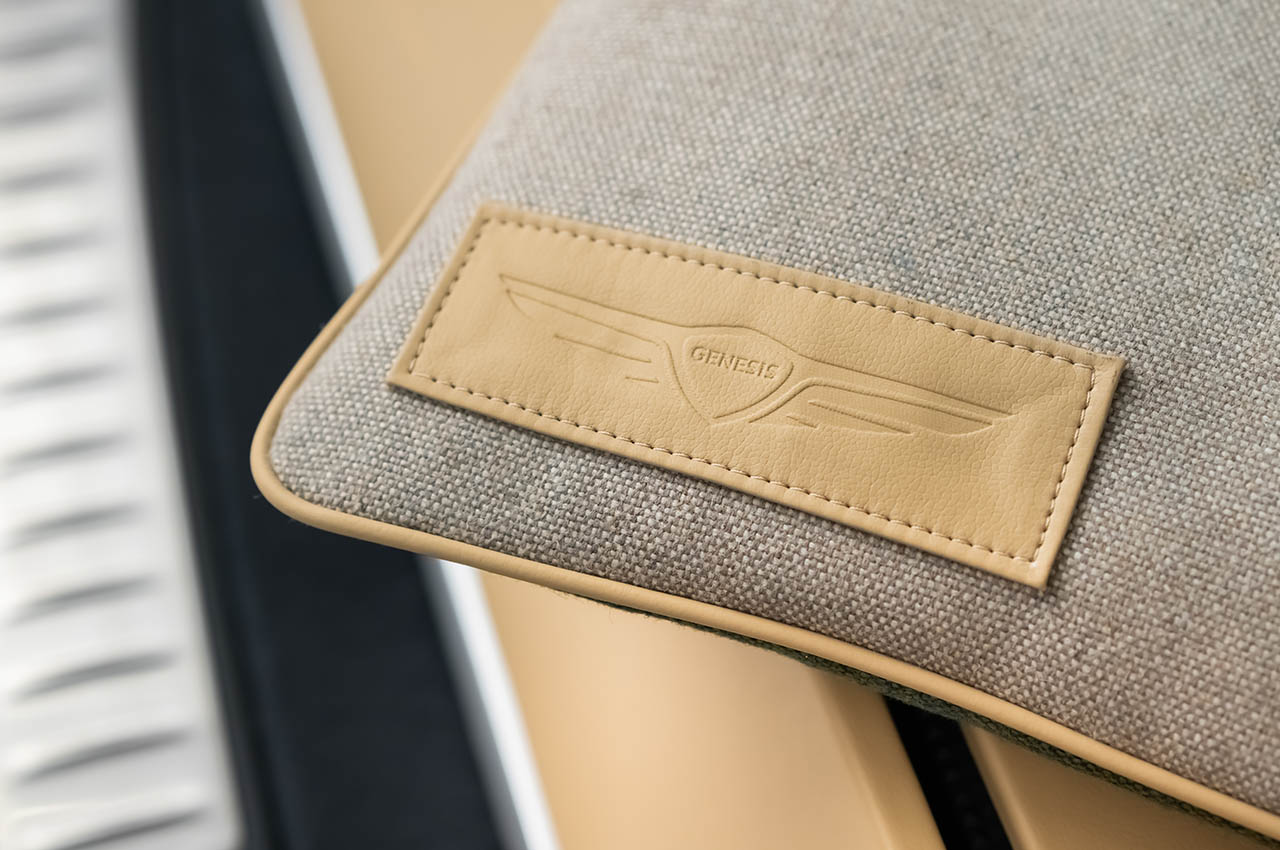
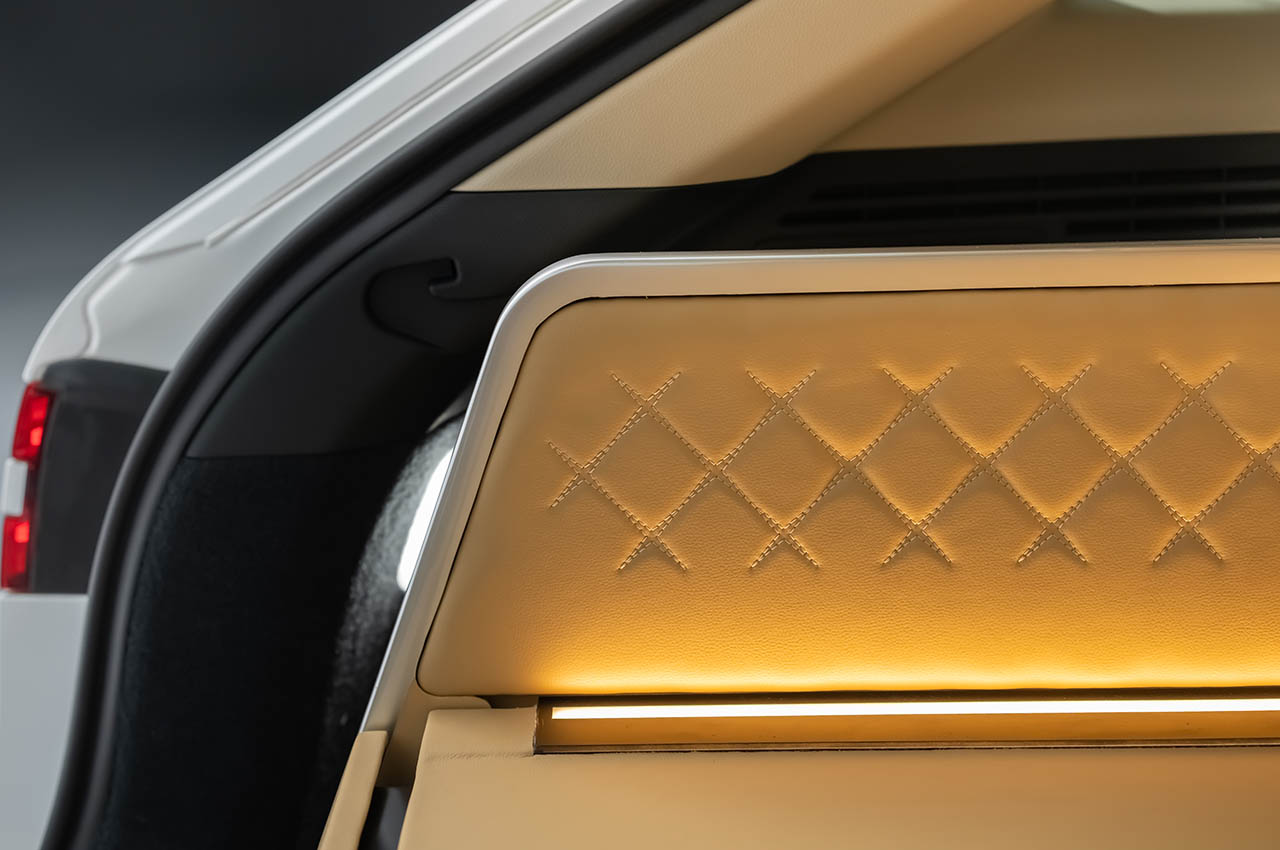
Matching with the interior of the Genesis electric, the Genesis X Dog Concept has quilted vegan leather sidewalls and comes with bespoke features including a heated dog bed, Bluetooth audio system, ambient lighting with the pull-out ramp facilitating entry and exit. More interesting here is the built-in electric shower (attached to a six-liter pressurized water tank) with a hairdryer for the pooch to clean up after her muddy adventures.
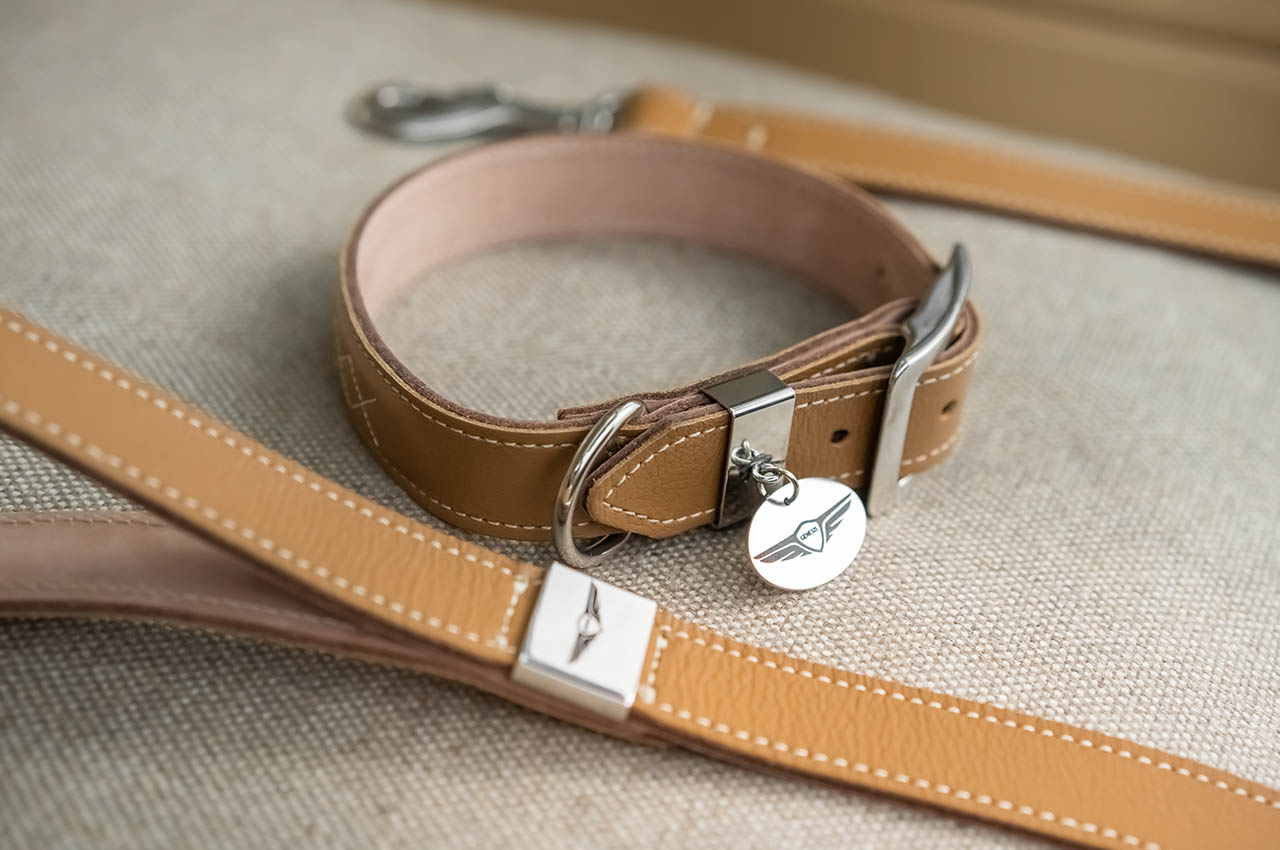
To ensure the time within the Genesis X Dog Concept is as comfortable and personalized as possible for the dog, it features an anti-skid surface, a safety lock mechanism comprising two straps on the sides, a safety harness and a leather dog collar. Before you start believing in the luxury and willing to inculcate it into your pooch’s lifestyle, this is just a concept that Genesis would be displaying in its select studios between 9 May and 5 June.
LEGO and cool cars have a long-standing relationship that gravitates toward kids as well as grown-ups. The Speed Champions Sets address the craving for every generation to build their loved cars from scratch in LEGO form. The LEGO Mercedes-AMG W14 F1 car is one of my favorite because I love the sport so much.
The number of sets available for every kind of motorhead is increasing in this collection and the Mercedes brand keeps calling us back to the LEGO world. The German automaker has revealed the LEGO version of two of its most acclaimed cars for speed enthusiasts and avid off-roaders. Yes, I’m talking about the AMG 63 G-Wagon SUV and the AMG SL63 convertible roadster. The kit can be ordered June 1 onwards for a price of $50 which is an absolute steal if you are a collector.
The two performance cars come in a kit with 2 driver minifigures as a part of the LEGO Speed Champions line. Combined the two cars have a total of 808 pieces that when put together for weekend fun, turn into the G Wagon in black and the SL 63 roadster in yellow. Of course, the color distinction will help you out in separating the pieces if you happen to mix them up. The LEGO car models boast authentic design details adapted from real-life models. Attention to detail has been paid to the front grilles, hoods and interiors complete in the Mercedes livery.
This pack comes with the printed building instructions if you want to go old school, or via the app that’ll guide you step-by-step to bring the G Wagon and convertible roadster to life. Since there are two cars in the set, the size of each one is a bit smaller than the other individual Speed Champions collection. Standing tall at 2.5 inches the AMG G 63 LEGO car measures 7 inches long and 3 inches wide. Parked on your living room shelf or the geeky desk, these two LEGO collectibles could be easily mistaken for a toy car but you know the deeper truth!