5 Memorial Day Outdoor Gadgets That Make Every Camping Trip Feel Engineered in Japan

Memorial Day weekend is when the campsite gets its first real test of the year. The gear you pack either earns its place or takes up space. This year, a handful of outdoor gadgets are shifting the conversation, designs so considered, so precise in their logic, they feel lifted straight from a Tokyo design studio. Each one solves a familiar outdoor problem in a way you didn’t see coming.

What unites these five objects is a shared commitment to intentionality, the Japanese idea that a well-made thing should do its job beautifully, without fanfare or waste. Whether it’s a lantern that turns like a toy or a fire pit engineered around combustion science, these gadgets carry a point of view. Not here to impress on a spec sheet. Just here to make the long weekend feel properly planned.

1. RetroWave 7-in-1 Radio

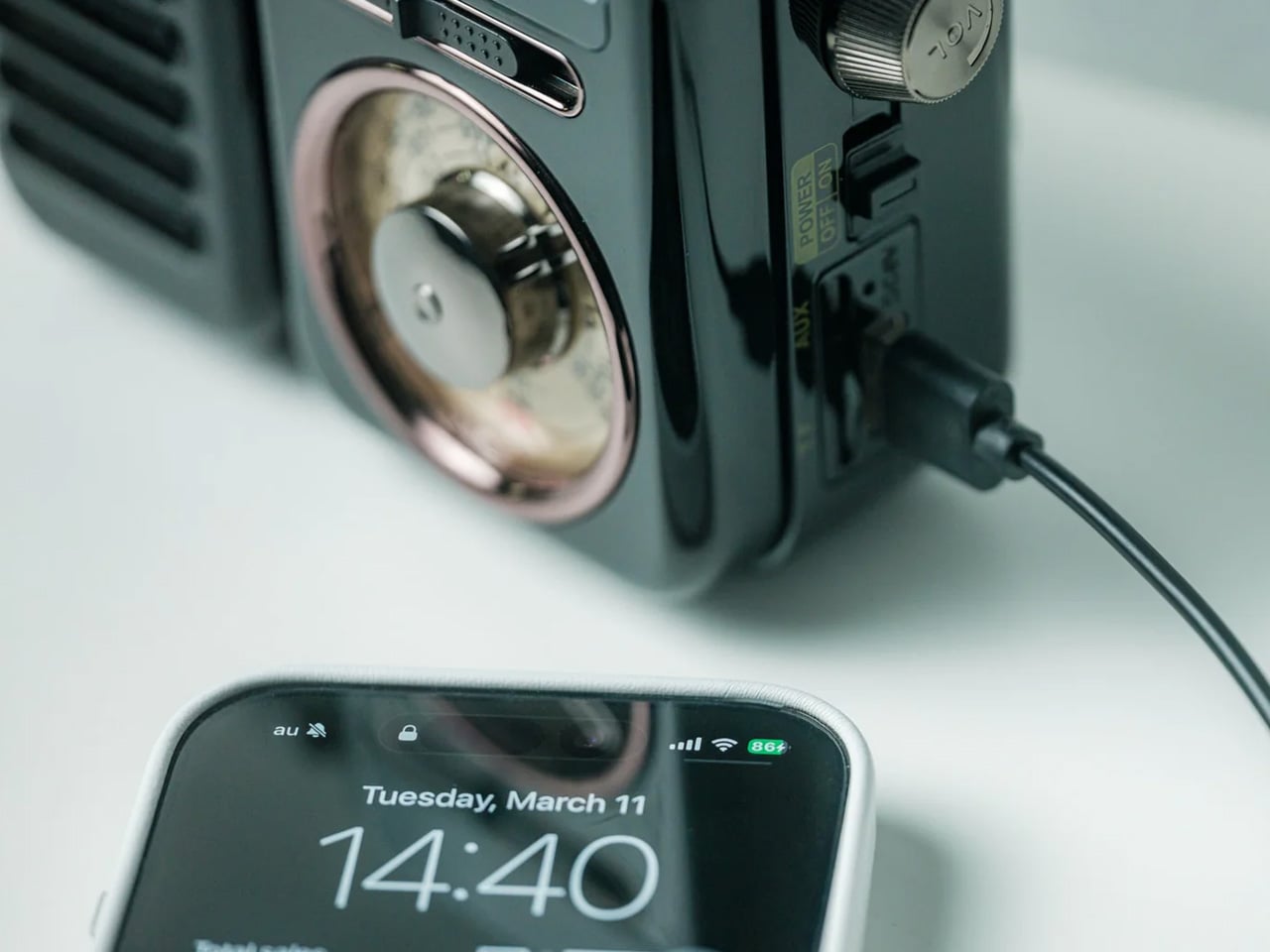
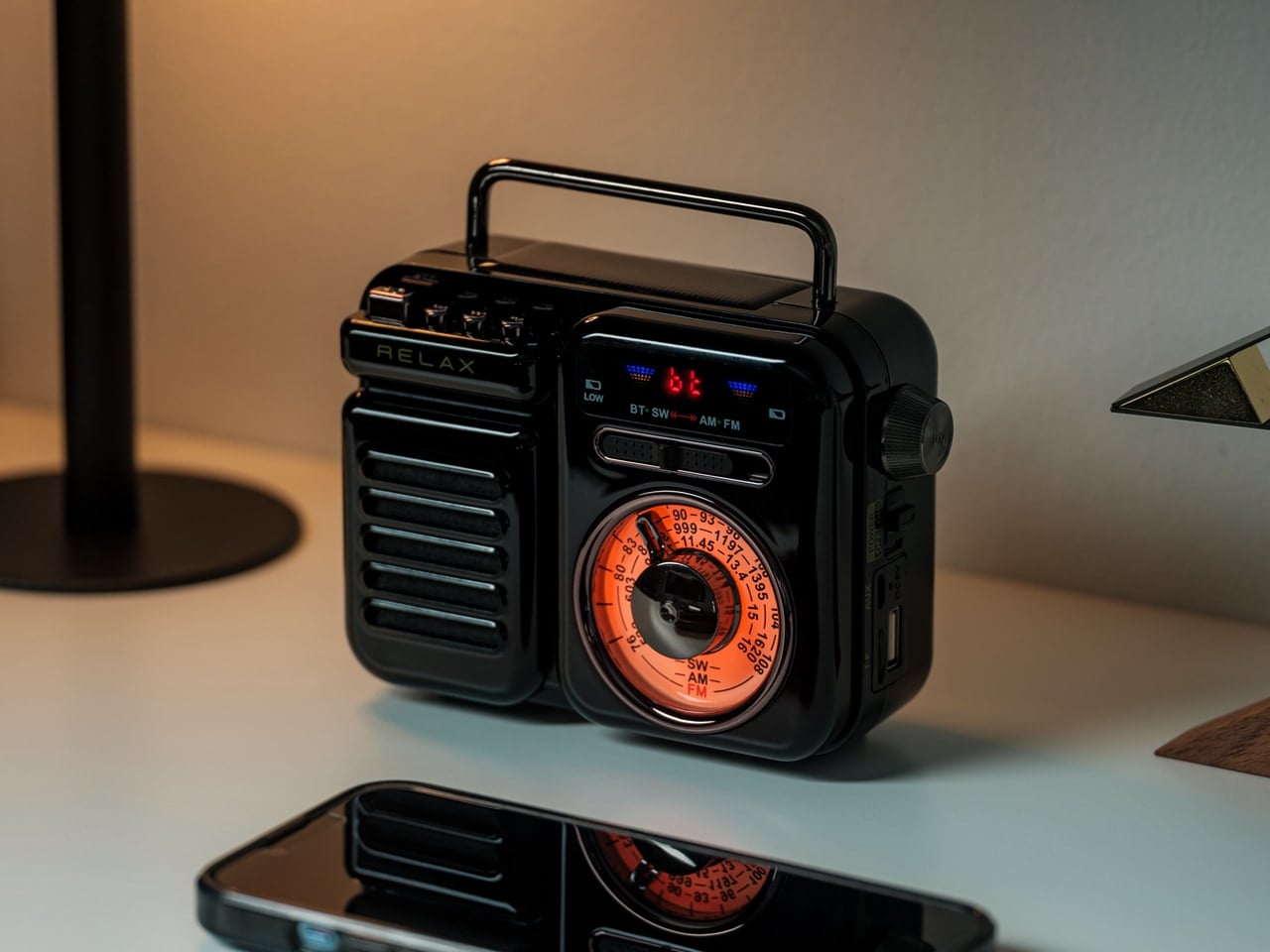
There’s a radio sitting somewhere in Japanese design history that directly inspired this one. The RetroWave 7-in-1 Radio arrives with a tactile tuning dial, a warm housing drawn from mid-20th century aesthetics, and the kind of visual restraint that makes a thing look inevitable. Behind the retro face is a 7-in-1 device handling AM, FM, and shortwave reception, Bluetooth streaming, a built-in flashlight, SOS alarm, power bank charging, and a 2000mAh battery that tops up via hand-crank or solar panel.

The 8W speaker punches with enough warmth to soundtrack a campfire properly, and the 20-hour radio battery life means it runs through a full weekend without reaching for a cable. Two colorways — black and warm gray — make it look as good on a picnic blanket as it sounds in the open air. It’s the rare object that solves the problems you forgot to plan for: music, emergency signaling, phone power, and light, all from one compact, beautiful thing.

Click Here to Buy Now: $89.00

What We Like

  • The 7-in-1 function set means it replaces multiple items in your pack — flashlight, emergency radio, portable charger, and speaker all collapse into a single carry-anywhere device with one well-resolved retro form that earns its weight every time.
  • The retro Japanese design with a tactile tuning dial doesn’t look like survival gear. It looks like a piece you’d buy for the living room, which means it earns a permanent spot in the gear bag rather than getting quietly left behind on the shelf.

What We Dislike

  • Bluetooth battery life tops out at approximately 5 hours at 75% volume, meaning a full camp day of wireless streaming will require a recharge — the solar panel helps, but cloud cover changes that math quickly.
  • The compact body keeps it packable, but the speaker volume has a ceiling that wide-open outdoor settings can expose, especially once the campfire gets going and conversation picks up.

2. Twist Camping Lantern
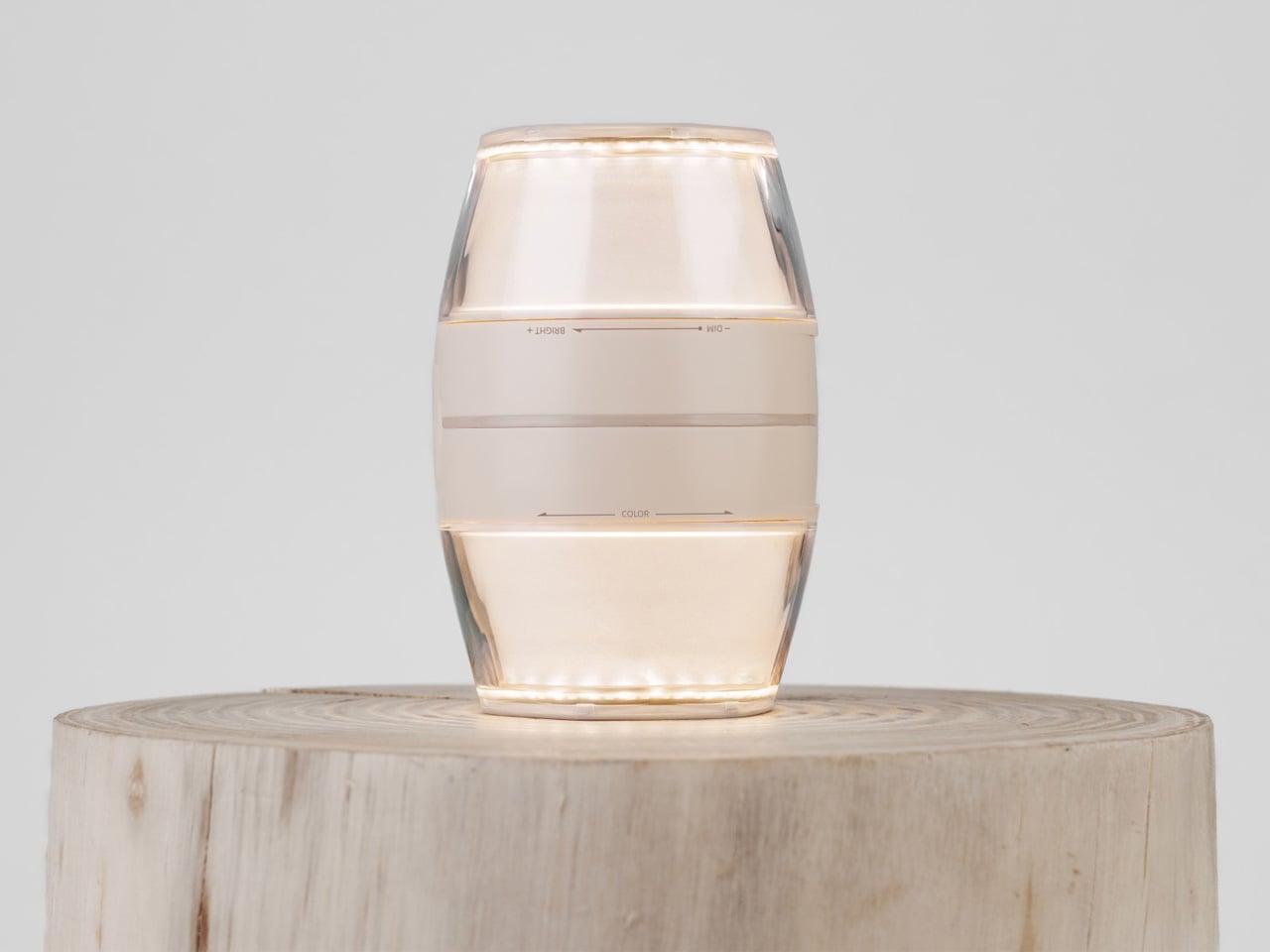
Small beige LED lamp lit with a warm glow, sitting on a round wooden stump.

Cream wireless over-ear headphones resting on a wooden stump against a pale background.

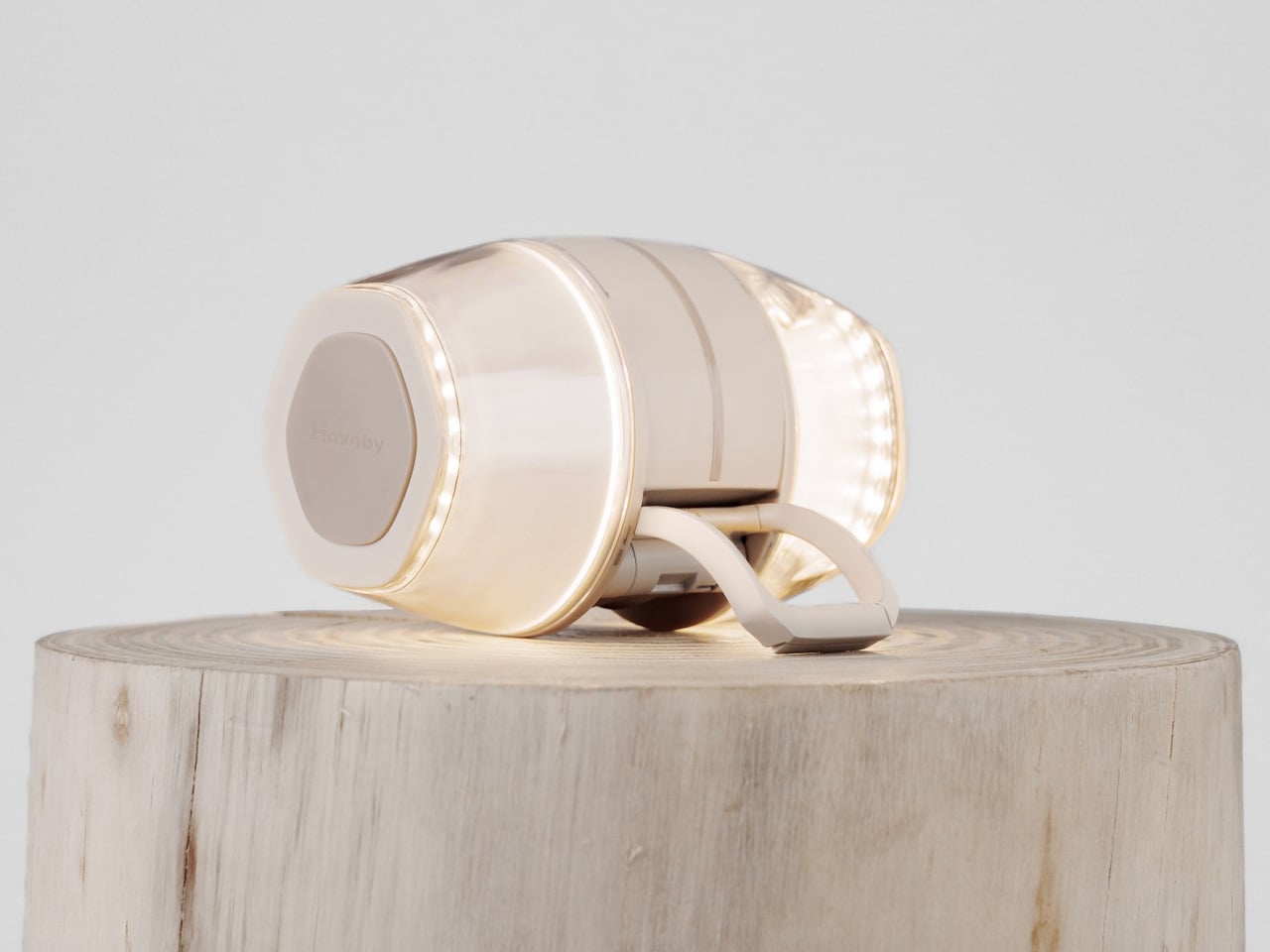
When designer iu Llong looked to Japanese gashapon vending machines for inspiration — those capsule toy dispensers that make cracking open a prize feel like a small ceremony — the result was a camping lantern that turns on exactly the way a gashapon opens: with a satisfying twist. Built for Havnby as two cones joined at the base, the single twist mechanism adjusts both brightness and color temperature, dialing from cool white all the way down to a warm red.

The Twist Lantern packs a 10,000mAh rechargeable lithium battery into a compact form that weighs around 410 grams and charges fully in under three hours via USB-C. Its runtime stretches from 3.8 hours at full brightness to an impressive 70 hours on its lowest setting — enough for an extended weekend. The waterproofing and built-in magnetic mount mean it handles rain and hangs wherever you need it. For a lantern, it’s remarkably thoughtful. For a design object, it’s immediately recognizable.

What We Like

  • The gashapon-inspired twist interaction makes operating this lantern something you’ll actually look forward to — the kind of satisfying physical gesture that cheap pushbutton camp lights have never managed to replicate across years of trying.
  • A 70-hour runtime on its lowest setting is exceptional for any rechargeable camping lantern, meaning you can leave home without calculating whether the battery will outlast the trip or quietly die at hour three.

What We Dislike

  • At 520 lumens, the Twist Lantern is optimized for ambiance and intimate spaces — it sets a tent mood beautifully but won’t flood a large group campsite the way a high-output utility lantern would.
  • The twin-cone form factor, while visually striking, is less stackable in a tightly packed gear bag than a more conventional cylindrical lantern design, which may require some creative packing on longer trips.

3. Iam Sauna
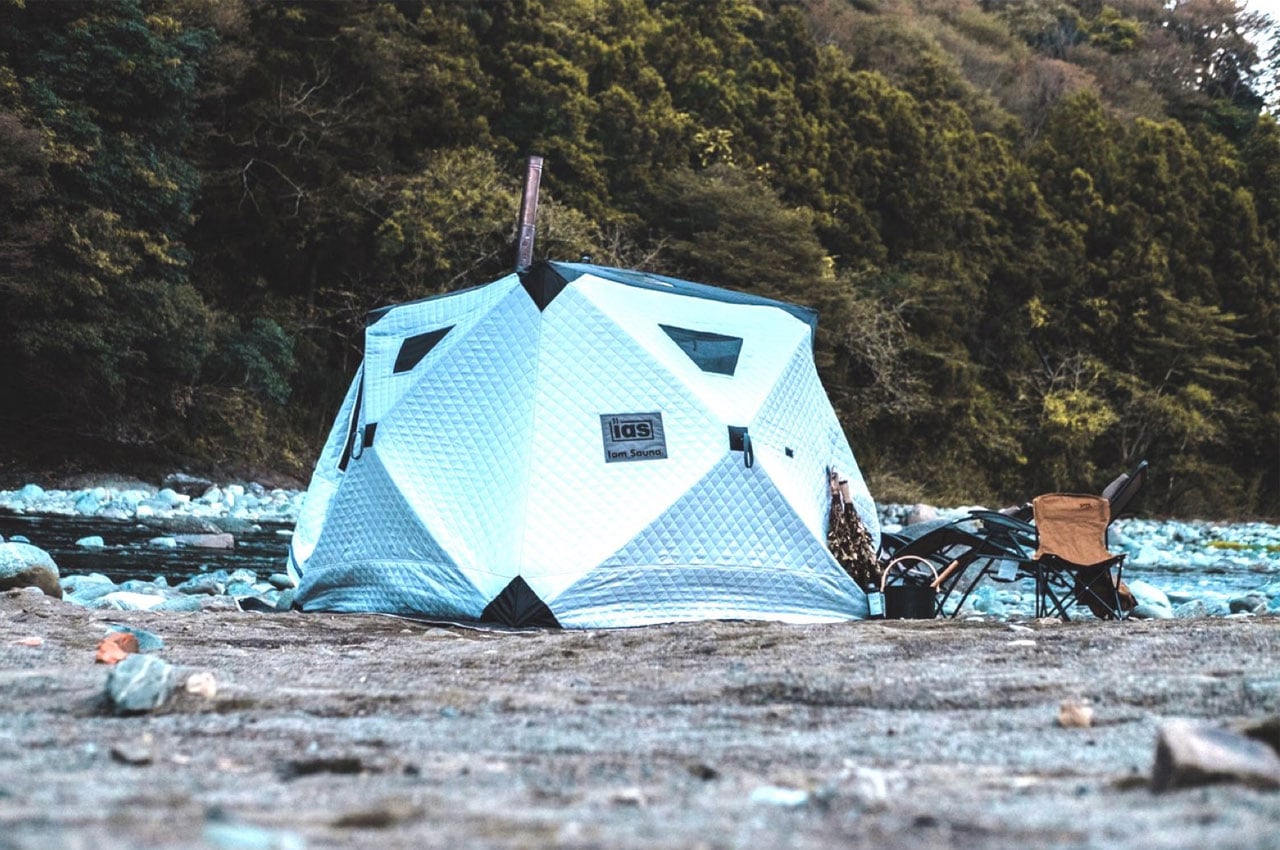
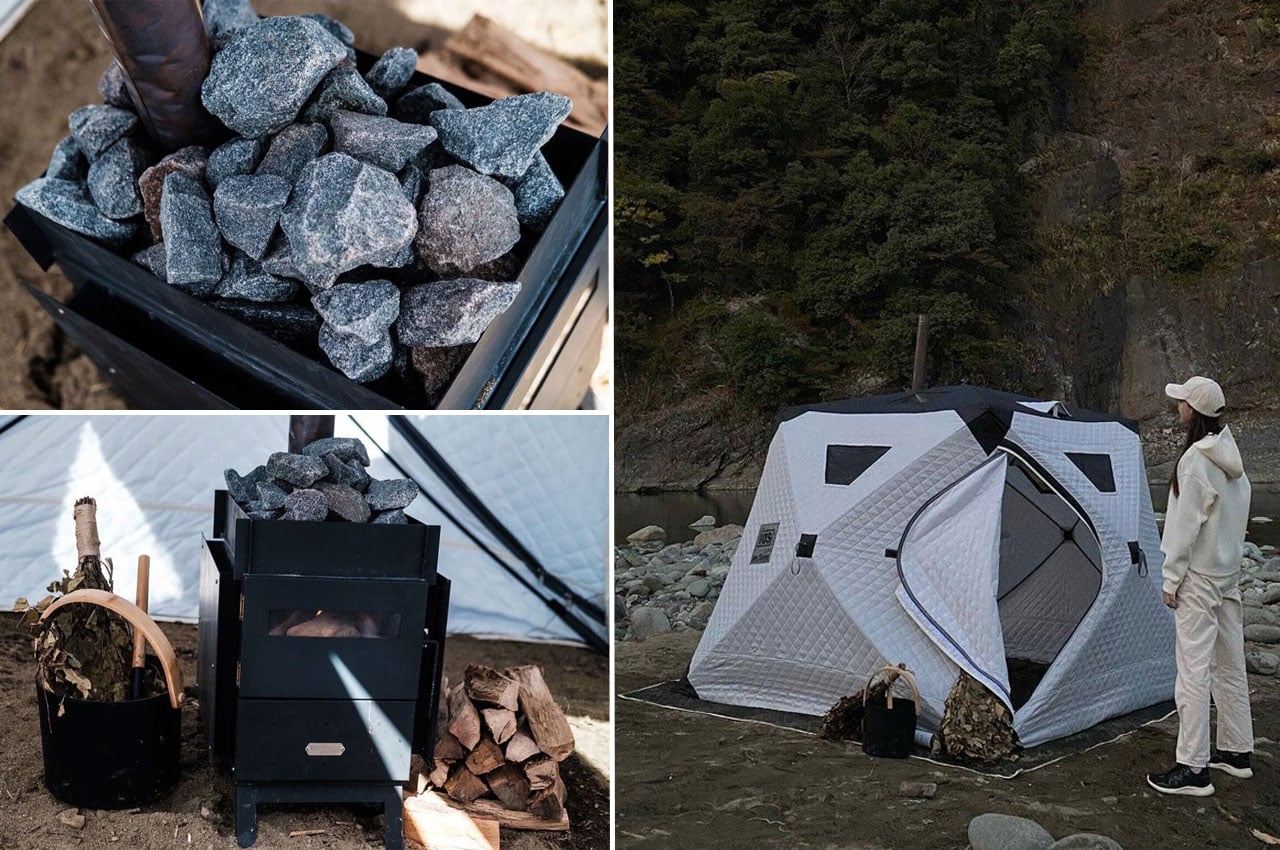
Iam Sauna is a portable sauna, genuinely made portable. The tent-style unit measures 220cm x 220cm x 185cm, accommodates up to six people, and is built from heat-insulating cotton material designed to trap steam and hold warmth in cold outdoor conditions. The included Tanzawa wood-burning stove is iron-built with folding legs, a heat-resistant glass window, and a removable guard plate where sauna stones stack neatly on top. Setup takes under a minute — one person, four pull tabs.

The panoramic windows along the upper section of the tent are a quiet design decision that separates this from any other portable sauna concept. Heat the stove, settle in, and you can watch stars or the tree canopy while your body does exactly what it came outdoors to do. Whether recovering after a full day of hiking or committing to a Saturday evening ritual by the lake, Iam Sauna delivers the restorative experience that used to require a fixed structure.

What We Like

  • A single person can collapse and set up the full tent structure in under 60 seconds, which means the sauna arrives at the campsite as a realistic option rather than a logistical project that gets quietly abandoned at the trailhead.
  • Panoramic windows at the top of the structure keep you visually connected to the outdoor environment while you’re inside — a design detail that makes the experience feel like it genuinely belongs in the wilderness, not in a hotel spa.

What We Dislike

  • The Tanzawa iron stove weighs approximately 18kg on its own, which adds meaningful carry weight to an otherwise packable system, effectively making Iam Sauna more of a car-camping or van-camping solution than a true backpacking option.
  • The wood-burning heat source requires sourcing fuel on-site or carrying it in, which introduces a variable that a gas or electric alternative would eliminate for weekend campers who prefer to pack light and plan less.

4. Airflow 8-Panel Fire Pit
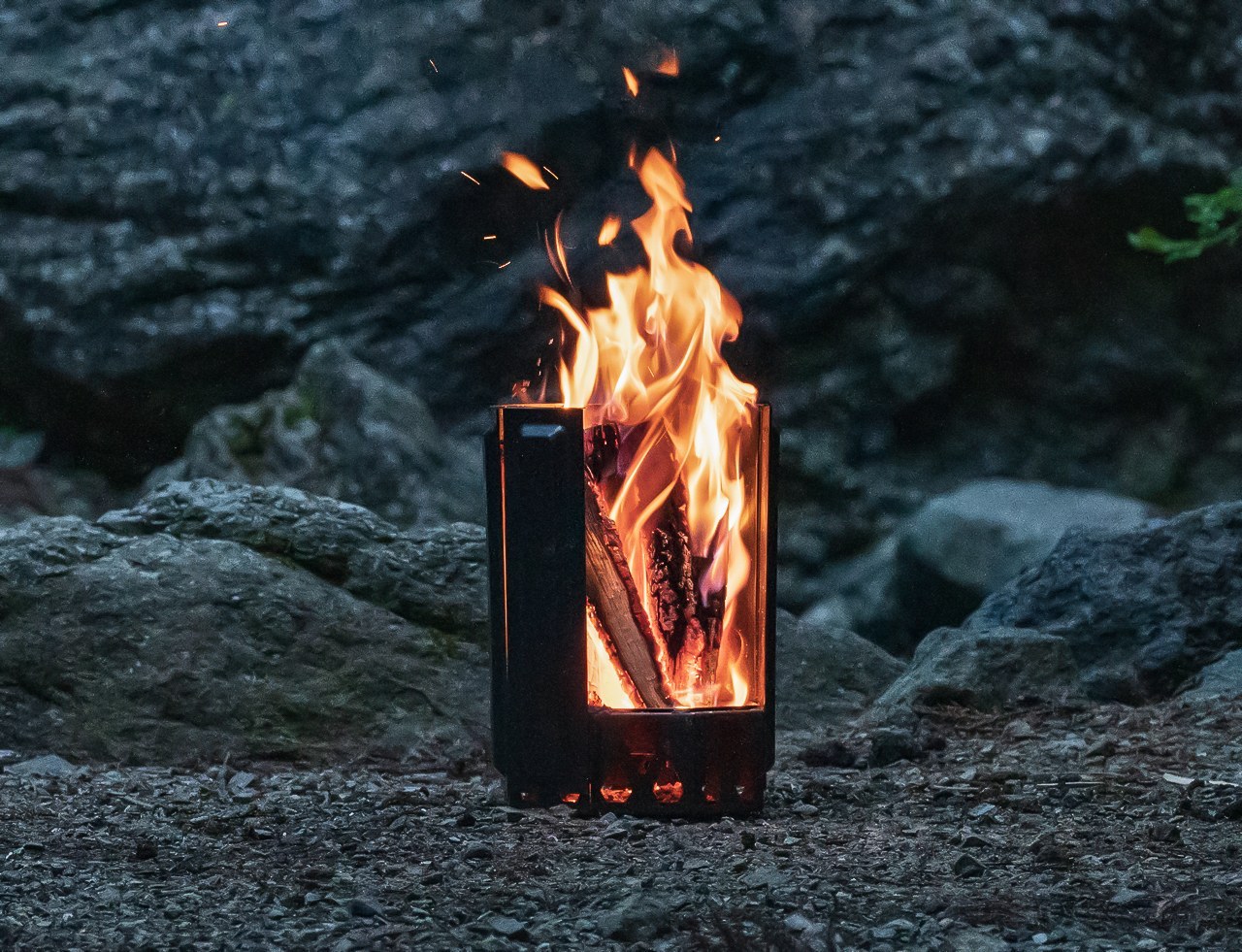
Japanese company UM spent decades in metal processing before arriving at the Airflow 8-Panel Fire Pit, and that deep material knowledge shows clearly. Eight removable panels form an octagonal cylinder optimized for secondary combustion. Holes at the base of each panel channel fresh air directly to the wood for primary combustion. As that air heats up, it rises through the double-walled cavity and exits at the top, creating secondary combustion that burns wood more completely and produces significantly less smoke.

The exterior panels are removable, meaning fire intensity is adjustable — pull one or two off and the fire breathes differently. The interior uses corrosion-resistant stainless steel designed to age into a natural patina, while exterior panels take the punishment a campsite delivers. A grill grate attachment turns it into a cooking platform without altering the fire pit’s core logic. Ash falls and collects at the base. Cleanup is minimal. It’s a piece of engineering that makes fire feel considered.

Click Here to Buy Now: $325

What We Like

  • The secondary combustion system is a genuine engineering achievement at this size — the smoke reduction is physics, not a marketing claim, and it makes extended campfire evenings significantly more comfortable for everyone sitting around it without constantly shifting to dodge the drift.
  • The modular panel system means the fire pit packs down smaller than its assembled footprint suggests, making it more portable than traditional bowl-style designs that share its output and heat radius.

What We Dislike

  • Assembling eight individual panels before the fire can be lit adds more steps to the startup process than a campfire usually demands — a minor friction, but one that registers in the dark or in rain when fumbling with separate components feels less intuitive.
  • The cooking grill grate is sold as an optional add-on rather than included in the base package, which feels like a missed opportunity given that cooking over fire is the most obvious secondary use case for every campsite fire pit.

5. Haori Cup
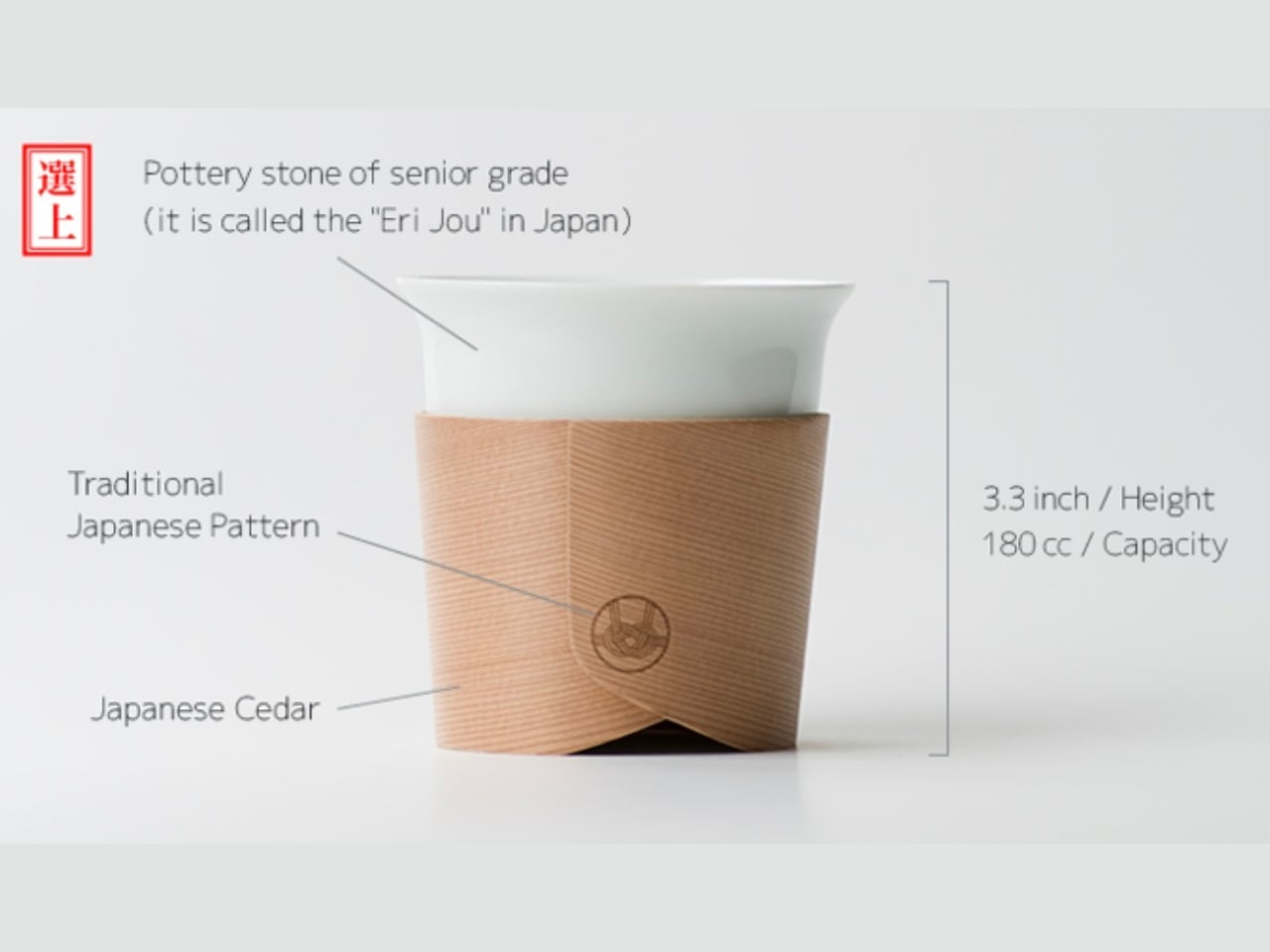
When designer Tomoya Nasuda set out to revive Hakata Magemono — the 400-year-old Japanese craft of hand-bending thin cedar into curved forms — he built the Haori Cup from a single piece of Japanese cedar. The result is a vessel that holds warmth from the inside and transfers almost none to your hands, because cedar insulates naturally. Available in several colorways, including the “Sakura” edition, every cup is handmade and shaped by grain patterns unique to that piece of wood.

The cedar lends a whisper of fragrance to each sip — a clean, forest quality that doesn’t compete with the coffee, just frames it. Bring the Haori Cup camping, and something specific happens. Holding warm coffee in a vessel bent from a single piece of Japanese cedar, sitting among trees not unlike the ones that made it, that’s the kind of moment you came outside for. It’s lightweight, it carries centuries of craft, and it makes the morning feel intentional.

What We Like

  • Reviving the 400-year-old Hakata Magemono craft means every Haori Cup is genuinely one of a kind — no two grain patterns are the same, and that individuality gives it a value that mass-produced camping vessels with identical stamped forms simply cannot offer.
  • Cedar’s natural thermal insulation keeps drinks warm without heating the exterior surface of the cup, meaning you can hold a freshly poured coffee comfortably without burning your hands — a straightforward material advantage with quietly elegant results in practice.

What We Dislike

  • Cedar is not dishwasher-safe and requires careful hand cleaning followed by thorough drying, which is a manageable routine at home but adds genuine friction when you’re washing up at a campsite with limited water and fading daylight.
  • As a handcrafted artisan object rooted in centuries-old technique, the Haori Cup carries a premium price that may be difficult to justify for a purpose as unpredictable as outdoor camping, where the risk of a dropped cup on river rock is never zero.

The Best Camping Gear Doesn’t Add More — It Gets Everything Right

Five products, five different problems, each solved with a rigor that feels less like product design and more like pure philosophy. That’s what Japanese design does at its best: it doesn’t add features to justify a price. It removes everything unnecessary, then makes whatever’s left feel like the only possible answer. That’s the standard these objects hold, and it makes everything else at the campsite feel slightly underdressed by comparison.

The best gear for Memorial Day isn’t the most technical. It’s the most considered. A radio that earns its campfire seat. A lantern that makes switching on a light feel like an occasion. A fire pit engineered so you don’t think about combustion. A sauna you carry in and a cup that turns coffee into a ceremony. Pack these five, and the weekend will be more than just a long one.

The post 5 Memorial Day Outdoor Gadgets That Make Every Camping Trip Feel Engineered in Japan first appeared on Yanko Design.
A Pencil Sharpener Inspired This Brilliant Camping Cutlery Tool

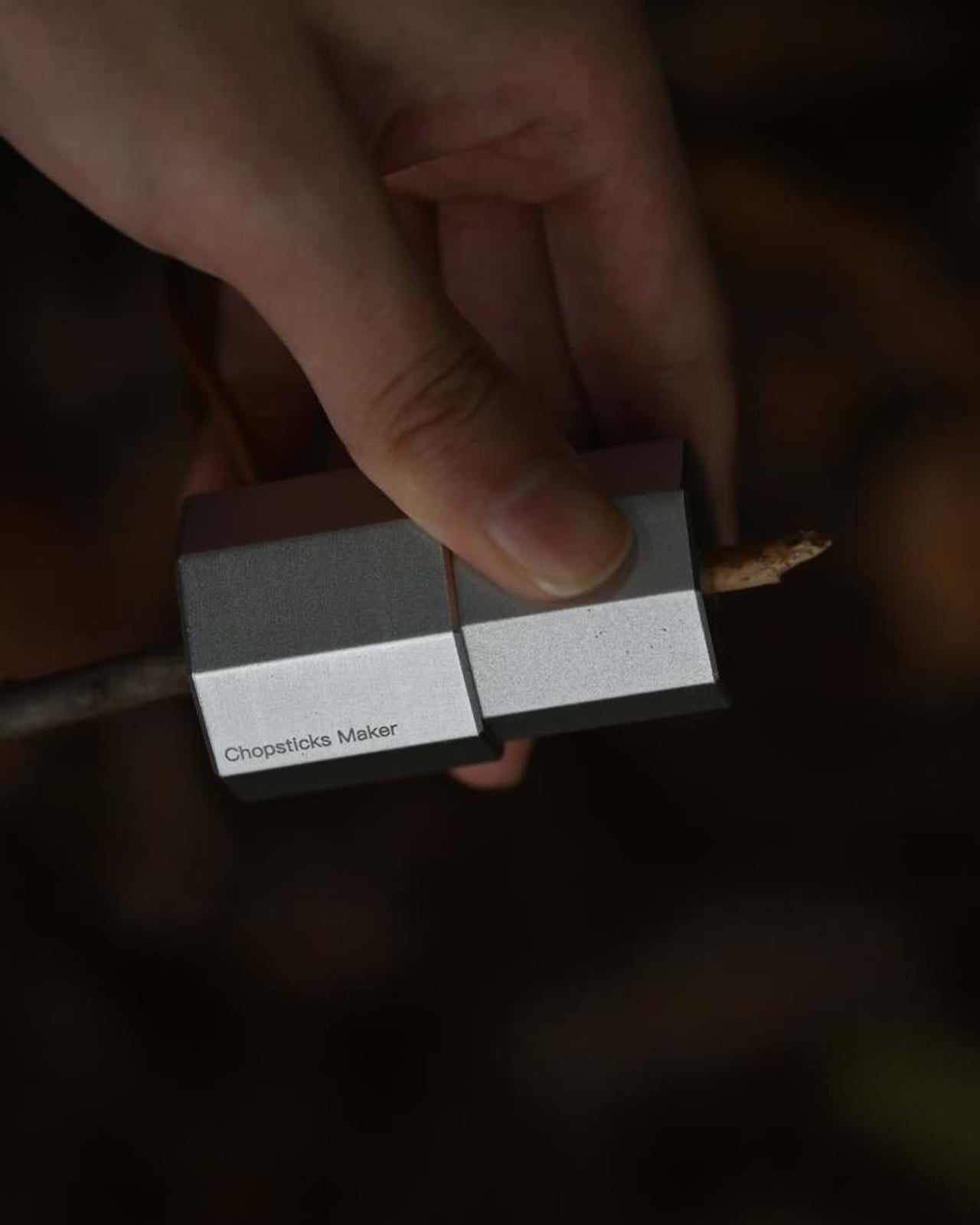
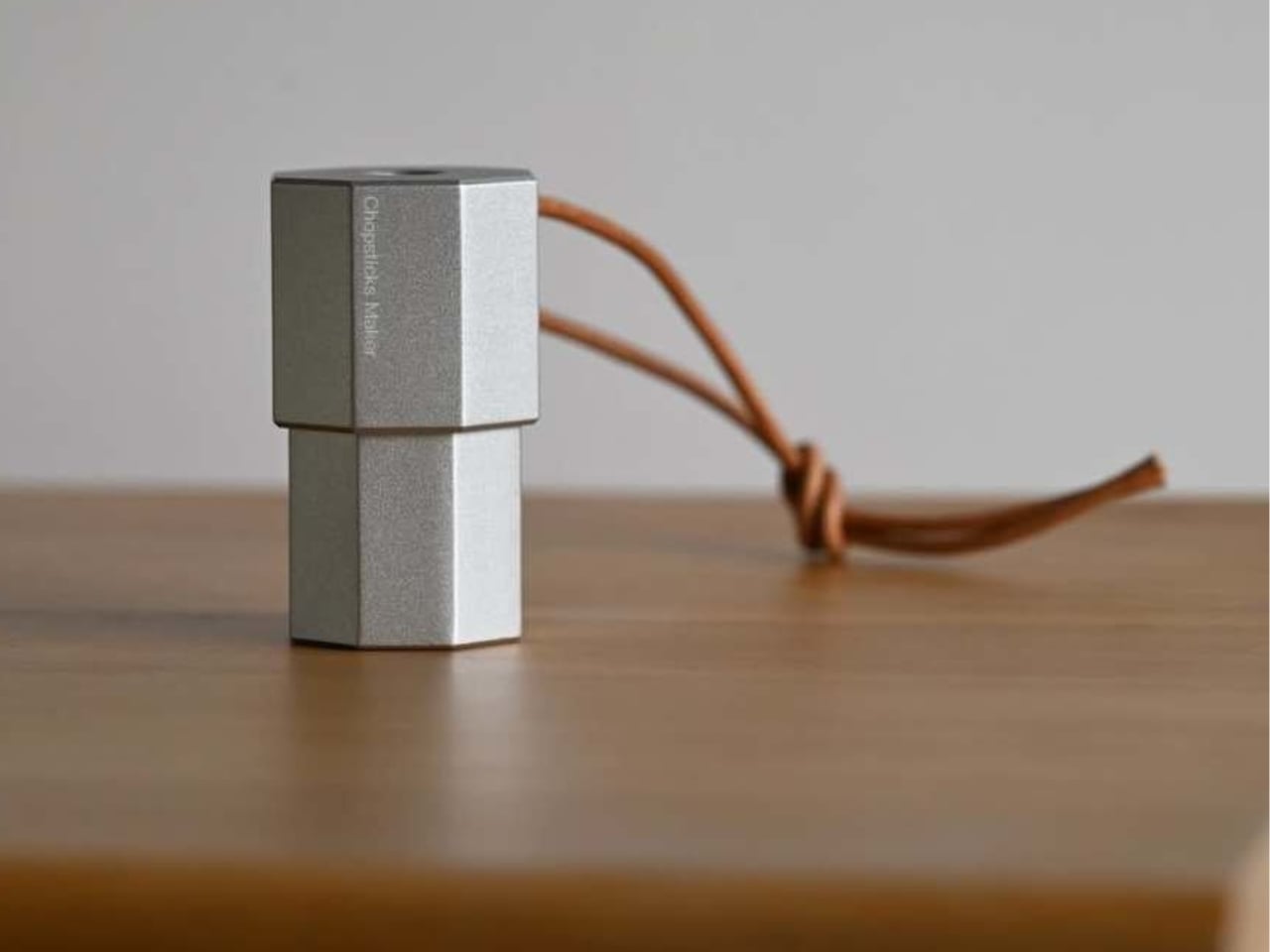
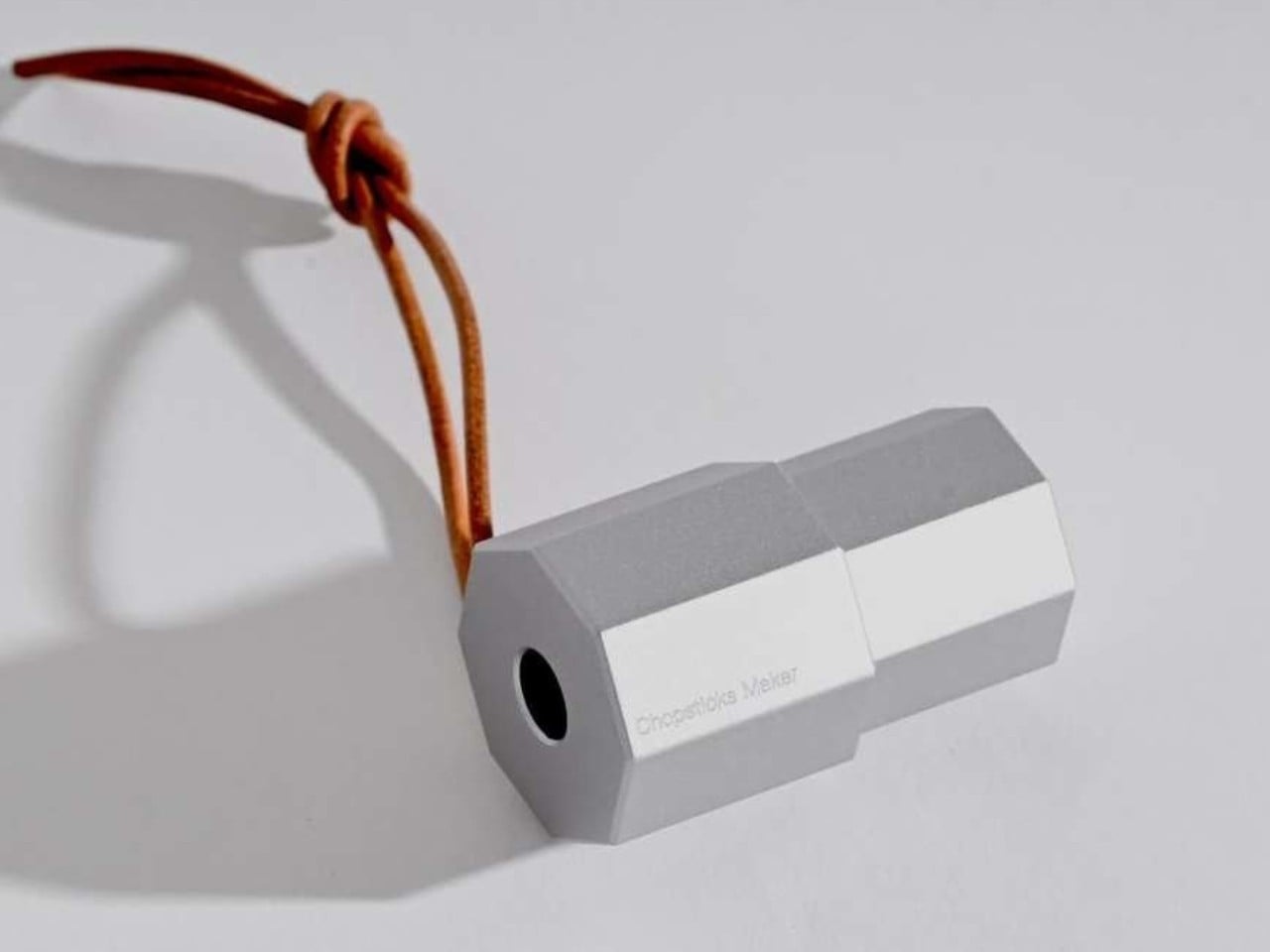
There are probably times when you’re in desperate need of chopsticks when you’re camping out or somewhere where you don’t have access to it. Well apparently now you’ll be able to make your own, as long as there are pieces of wood around you. I’ve seen a lot of clever camping gear over the years, but the Chopsticks Maker by Mario Tsai stopped me mid-scroll in a way most design objects don’t. It’s such a simple idea that you almost feel embarrassed for not thinking of it yourself.

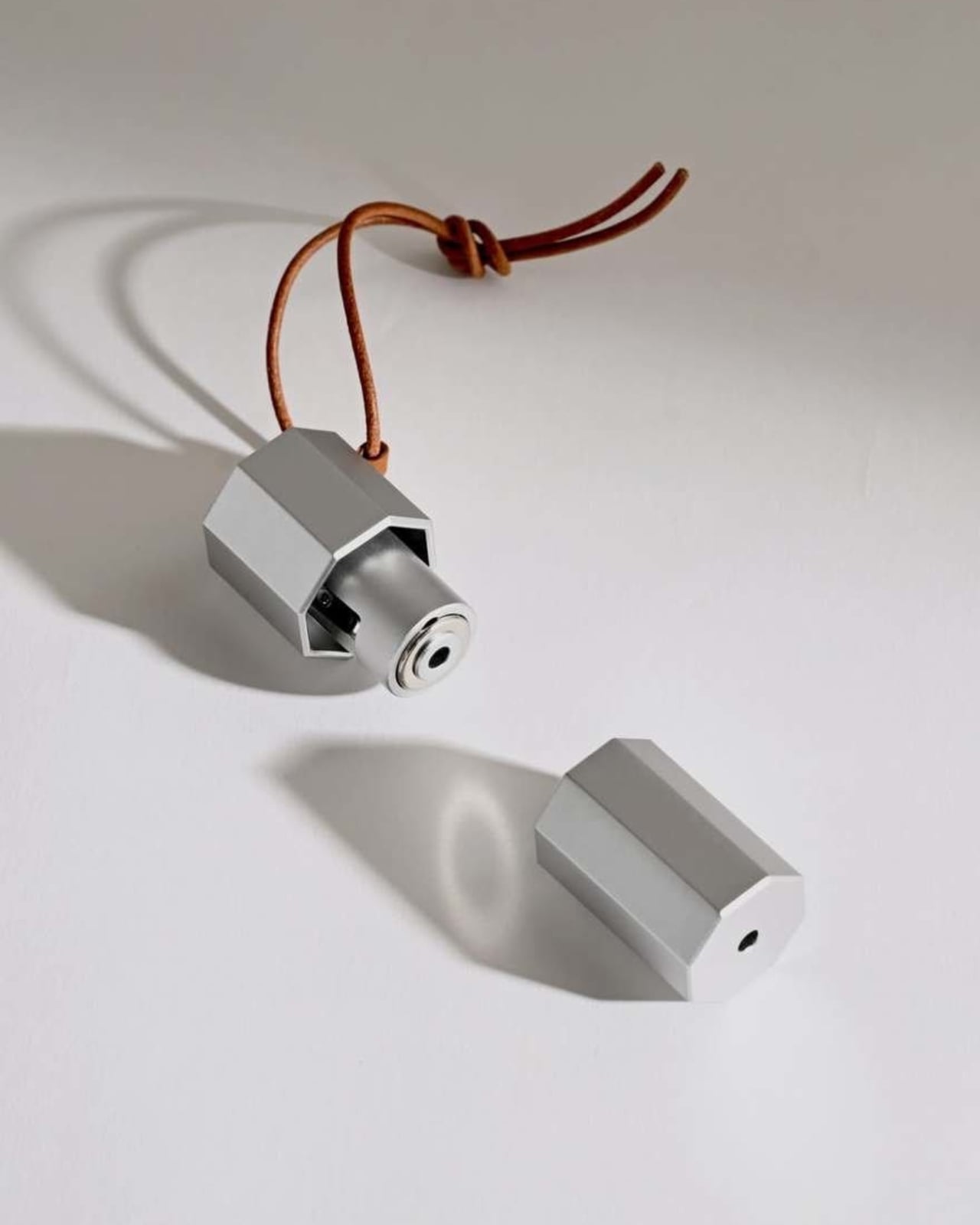
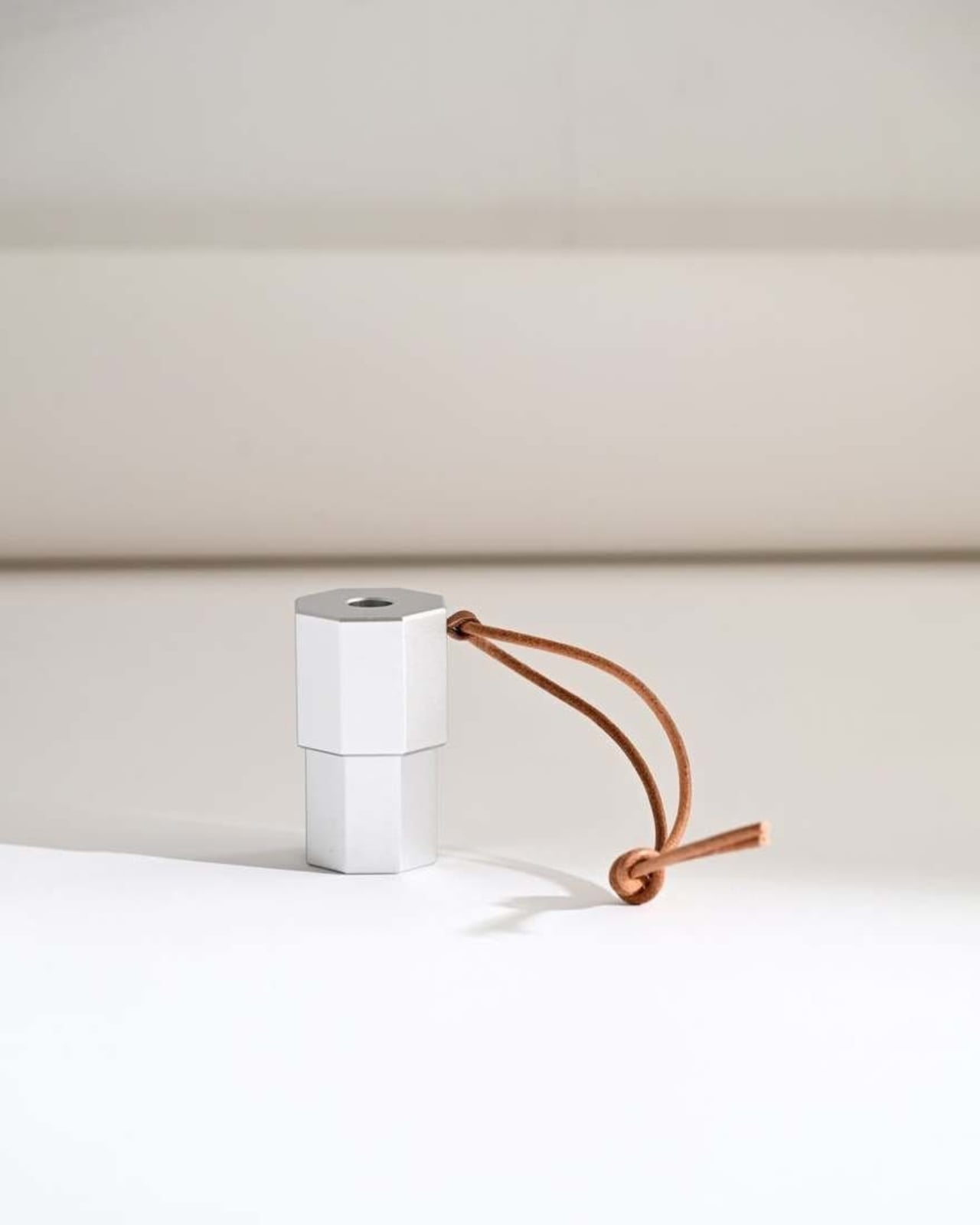
The concept is exactly what it sounds like. The Chopsticks Maker is a miniature portable tool that lets you carve chopsticks out of twigs found at a campsite. You feed a stick into the device, turn it, and out comes a pair of chopsticks, shaped and ready to use. You eat your meal, leave the utensils on the ground, and they biodegrade. No waste, no washing up, no plastic rattling around at the bottom of your pack. Just a tiny tool, the forest floor, and dinner.

Designer: Mario Tsai

What makes the design particularly satisfying is where Tsai found his inspiration. The Chopsticks Maker is a direct reinterpretation of the humble pencil sharpener. That’s a beautiful design move. The pencil sharpener is one of those objects so ordinary it’s practically invisible, and yet its mechanics are perfectly suited to transforming a raw stick into something shaped and functional. Tsai took that overlooked tool and asked what else it could do. The answer turned out to be surprisingly elegant.

Tsai is a Shanghai-based industrial designer known for work that tends to be thoughtful rather than flashy. The Chopsticks Maker was presented at Milan Design Week 2026, where it appeared as part of a broader project exploring chopsticks as cultural objects. The project borrowed its guiding philosophy from the old proverb: give a man a fish and you feed him for a day, teach a man to fish and you feed him for a lifetime. The Chopsticks Maker reframes that idea around something as basic as cutlery. You don’t need to pack utensils. You just need to know how to make them.

That principle, self-reliance through tools rather than stuff, is quietly radical in a market flooded with gear that promises to solve every outdoor problem by adding more weight to your bag. The best camping products I’ve come across are the ones that give you a skill or a method, not just a gadget. The Chopsticks Maker fits that description well. It’s lightweight, it requires nothing except whatever the ground around you offers, and the byproduct, the wood shavings, can even double as kindling for starting a fire. Someone spotted that in the comments when the project was shared online, and it’s the kind of observation that makes a well-considered object feel even more complete.

I’ll admit there’s a practical question hanging over it. Not every campsite offers the right kind of wood. Hardwood twigs will produce sturdier chopsticks; softer, pithy stems might not hold up mid-meal. And chopsticks do require some coordination. I can imagine plenty of people trying this out for the first time around a campfire and spending more time chasing noodles than eating them. But that’s also kind of the point, isn’t it? Part of what makes outdoor cooking memorable is the improvisation, the slight inconvenience, the small triumph of a meal made with whatever you had on hand.

The Chopsticks Maker doesn’t pretend to replace your fork. It offers a different relationship with the tools you eat with, one that’s rooted in resourcefulness rather than convenience. And at a moment when the outdoor industry keeps defaulting to titanium and synthetic and ultra-engineered everything, a device that points you back toward a tree branch feels like a genuine statement.

It also says something interesting about design itself. The best ideas don’t always come from inventing something new. Sometimes they come from looking at an object that’s been sitting on your desk since primary school and asking what it might become. Mario Tsai looked at a pencil sharpener and saw cutlery. That’s the kind of thinking that tends to produce work worth paying attention to.

The post A Pencil Sharpener Inspired This Brilliant Camping Cutlery Tool first appeared on Yanko Design.

8 Memorial Day Weekend Gadgets for the Man Who’d Rather Be Outside

The campsite is not a compromise. For a certain kind of person, the space between the trees gets the same deliberate attention as a living room — gear chosen for how it looks before dawn and how it performs after midnight. Memorial Day weekend is the season’s first real test of that instinct. These eight products are for the man who sets up camp with the same consideration he’d give a well-arranged shelf.

None of these are impulse buys. They’re the objects that earn a permanent spot in the pack — things you reach for every trip, not things that get forgotten in the garage. The sequence here runs from what you carry in your pocket, a titanium cylinder that glows for a quarter century without a battery, to what you use to cut the final rope of the night. A full campsite, deliberately assembled.

1. NoxTi

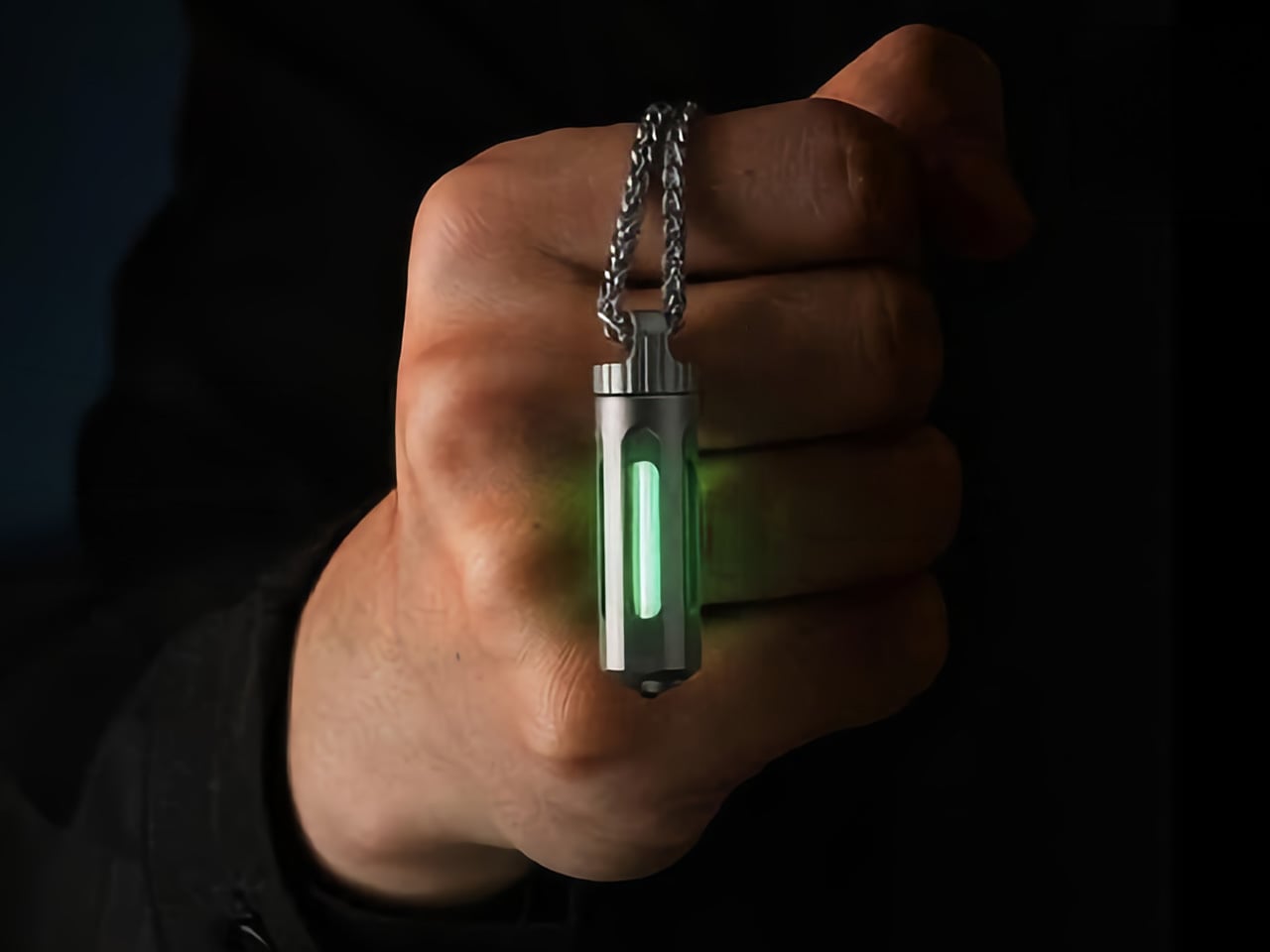
The NoxTi is a 45mm titanium cylinder that glows in the dark for 25 years without a battery, a charge, or any maintenance beyond replacing the tritium vial when it eventually dims two decades from now. The physics are not LED and not phosphorescent. Tritium is a radioactive isotope whose decay generates light continuously — the same principle behind military watch lume and nuclear exit signs. Xedge has machined this process into something that lives on your keychain.

The body is Grade 5 titanium — Ti-6Al-4V, the aerospace alloy — CNC-machined to tight tolerances with two silicone O-rings securing a quartz-protected vial that transmits 92% of available light. A ceramic-tipped glass breaker sits at one end. At 10.7 grams, it registers on the keychain the way a quality key does: present but not intrusive. Six color options run from Ice Blue to Sunset Orange. At camp, it tells you exactly where your keys are without reaching for your phone. That is the entire point.

What We Like:

  • Twenty-five years of continuous glow with zero batteries is a design achievement no other consumer lighting product can match
  • CNC-machined Grade 5 titanium with a field-replaceable vial system makes this effectively a permanent carry object
  • Six colorway options mean it reads as a design choice, not a utility clip

What We Dislike:

  • The glow is intentionally faint — it’s an orientation tool, not a navigation light, and expecting it to illuminate a path is a misreading of what it is

2. RetroWave 7-in-1 Radio

The RetroWave is seven things in one body: AM/FM/NOAA weather radio, Bluetooth speaker, USB charger, flashlight, reading lamp, SOS beacon, and clock. What makes it relevant for this list isn’t the feature count — it’s the form. The body is warm, compact, and tactile in a way that most multi-function gadgets simply aren’t. It looks like something discovered in a well-curated mountain cabin rather than panic-bought before a storm. That quality of looking chosen rather than grabbed is the distinction that matters here.

The hand-crank and solar charging panel mean the RetroWave can generate its own power, shifting it from a convenience item to a genuine piece of off-grid infrastructure. Up to 20 hours of radio playback on a full charge gives you a real entertainment window across the whole weekend. At $89, it sits at exactly the right price for a camp staple — the kind of thing that earns a permanent place in the bag because removing it would feel like forgetting something essential.

Click Here to Buy Now: $89.00

What We Like:

  • Hand-crank and solar charging make this fully self-sufficient — no cables, no wall outlet, no dependency on a power bank that itself needs charging
  • The warm retro form makes it the one piece of gear on the table that reads as a design decision rather than a utility purchase
  • NOAA weather radio is genuinely useful emergency infrastructure, not a gimmick

What We Dislike:

  • The Bluetooth speaker is functional, but won’t satisfy audiophiles

3. Haven Spectre

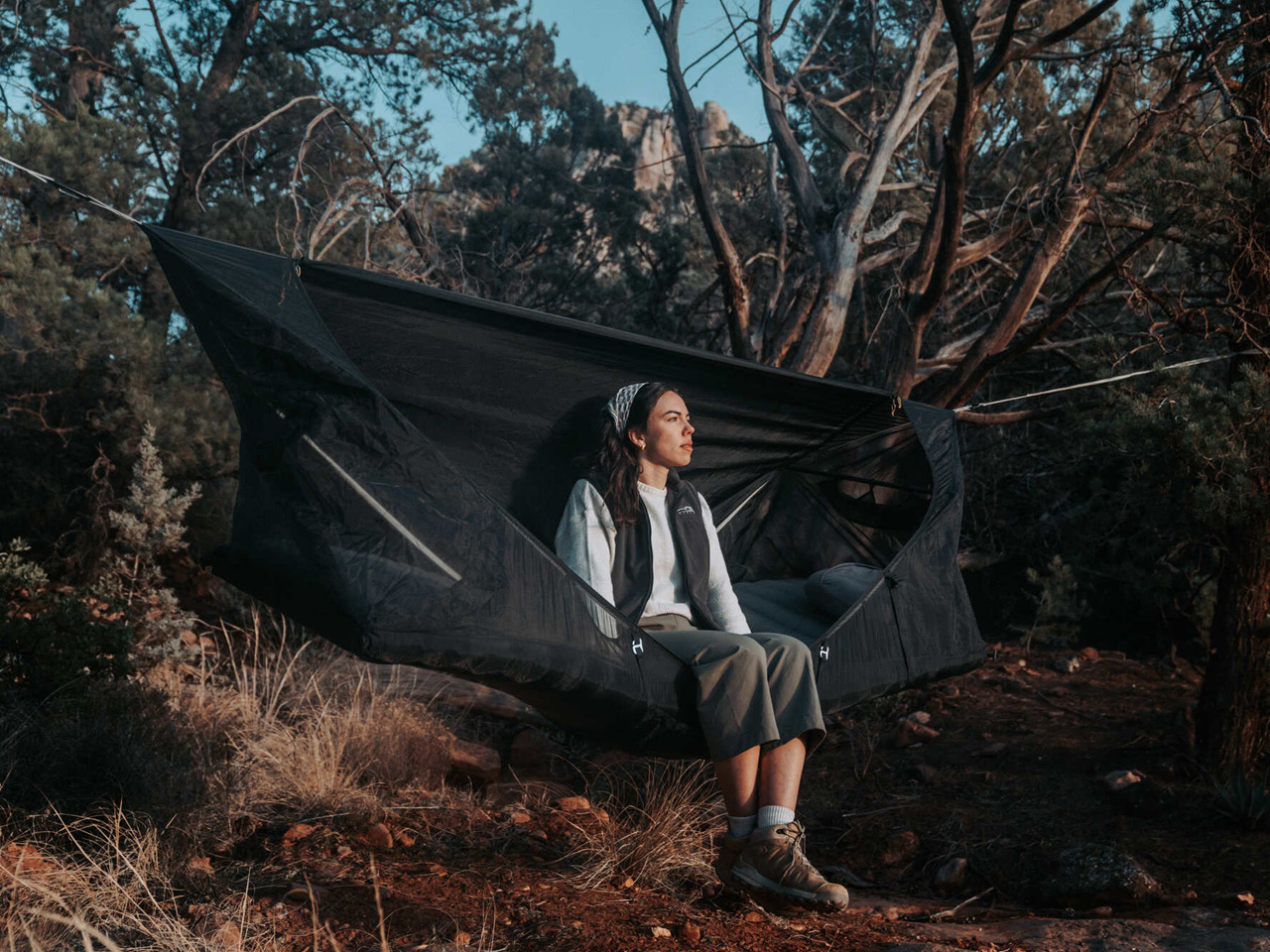
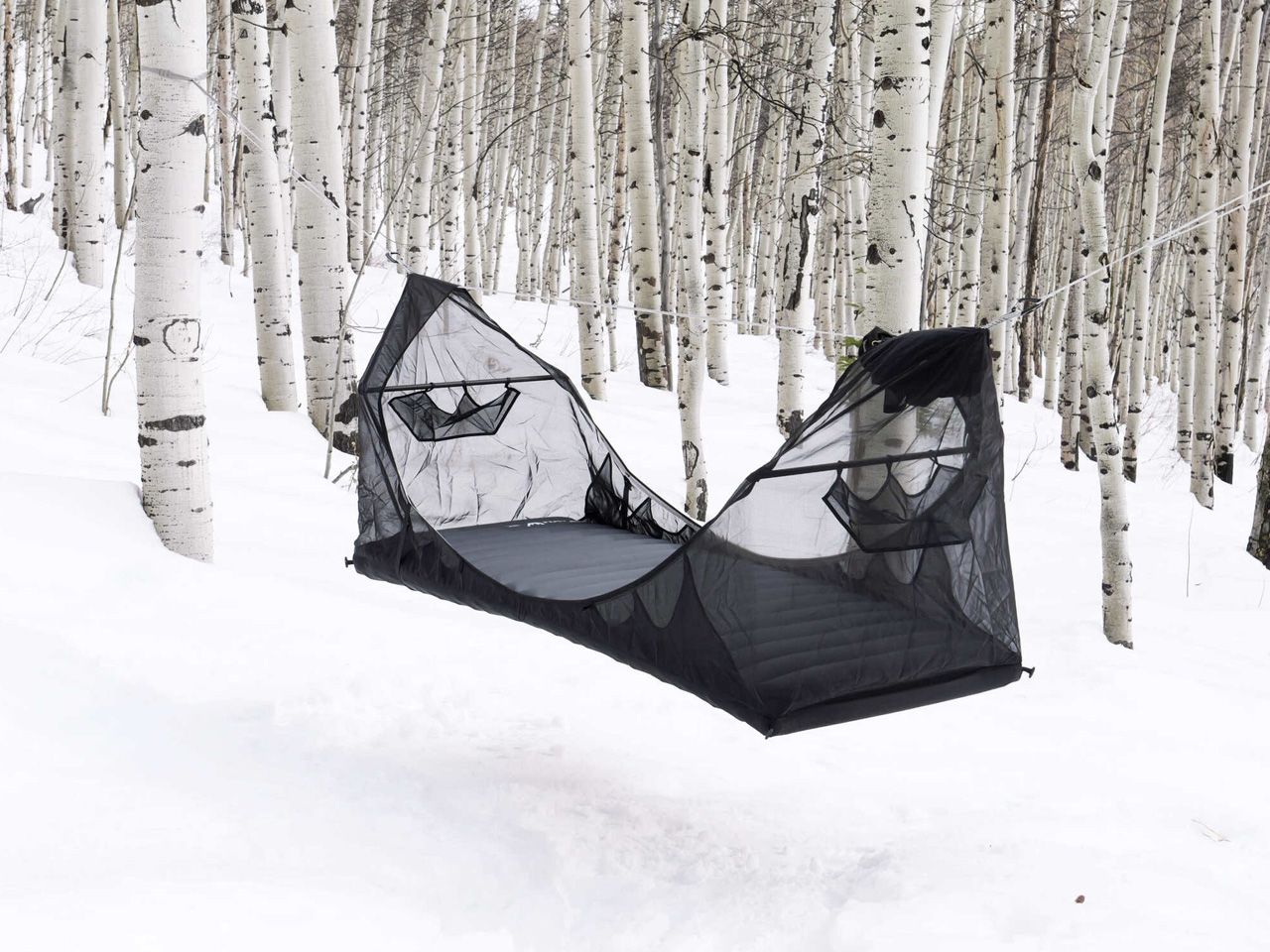
The Haven Spectre solves the problem every hammock sleeper knows: the banana curve. Traditional hammocks fold your body into a shape your lumbar tolerates for an hour and resents for the rest of the trip. The Spectre uses carbon fiber spreader bars and Monolite mesh panels to hold you flat — the same sleep position as a proper bed, suspended between two trees. At 4 pounds 4 ounces for the full kit, it’s lighter than most sleeping bags at a fraction of the pack footprint.

The Spectre includes a Silpoly rainfly, interior mesh pockets, an internal ridgeline for hanging gear, and an external sling for footwear. The mesh walls give you a full 360-degree view of wherever you’ve camped, which is either the point or not — the Spectre doesn’t decide that for you. Haven prices this from $485 with a 285-pound weight capacity and a packed size of 16 by 7 by 5 inches. For the man who considers where he sleeps as carefully as where he sits, this is the right answer to the right question.

What We Like:

  • Carbon fiber spreader bars deliver a genuinely flat sleep position that no conventional hammock can replicate — this is the difference between sleeping in a hammock and sleeping on one
  • The full kit, coming in under 4.5 pounds, is a meaningful spec for anyone packing in on foot
  • 360-degree mesh walls make wherever you camp feel worth waking up inside

What We Dislike:

  • From $485, this is the most expensive item on the list and reflects a very specific solution to a very specific problem — it’s not the entry point for casual hammock camping
  • Setup requires two trees at appropriate spacing, which means the terrain selects you as much as you select it

4. All-in-One Grill

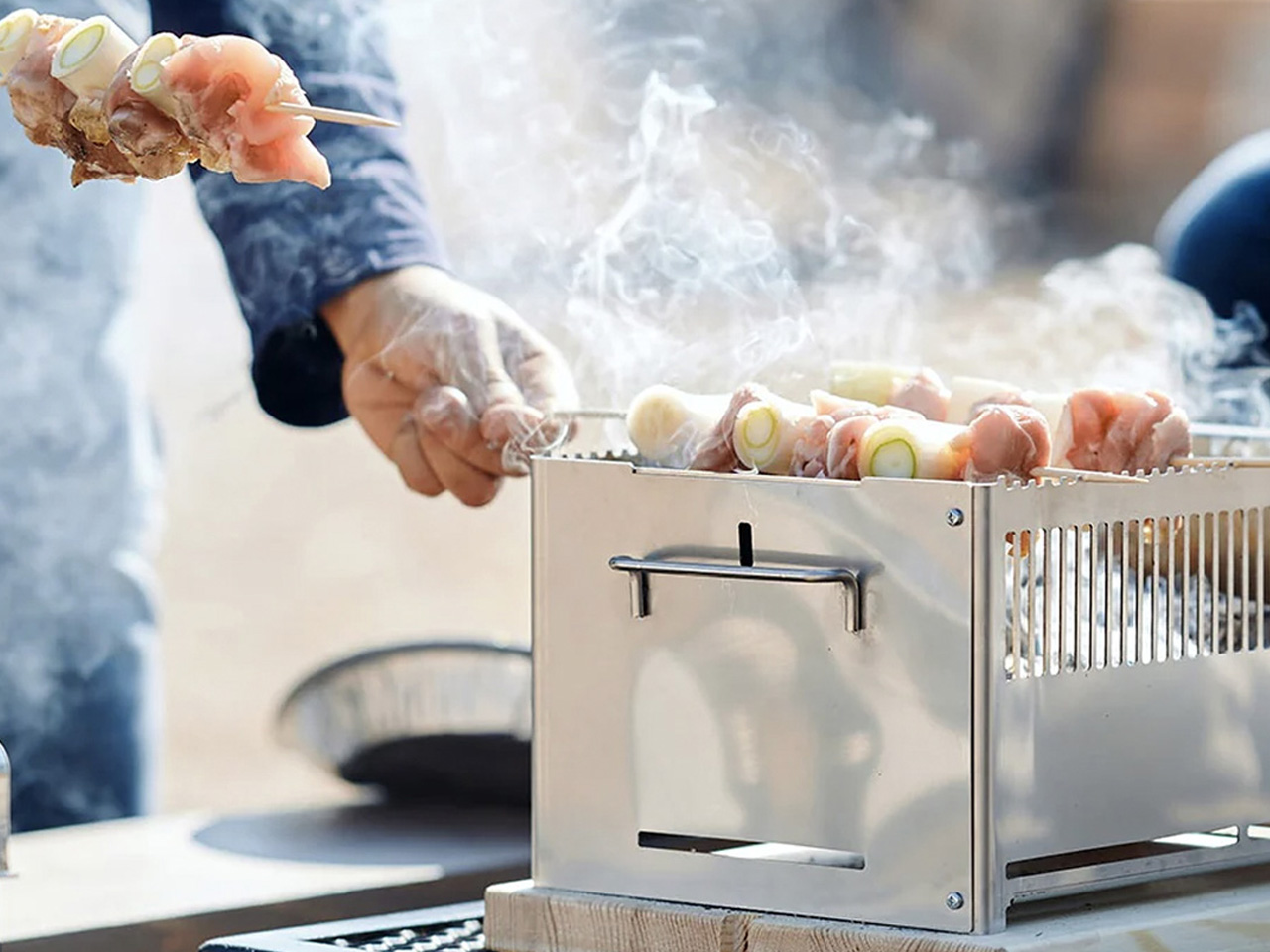
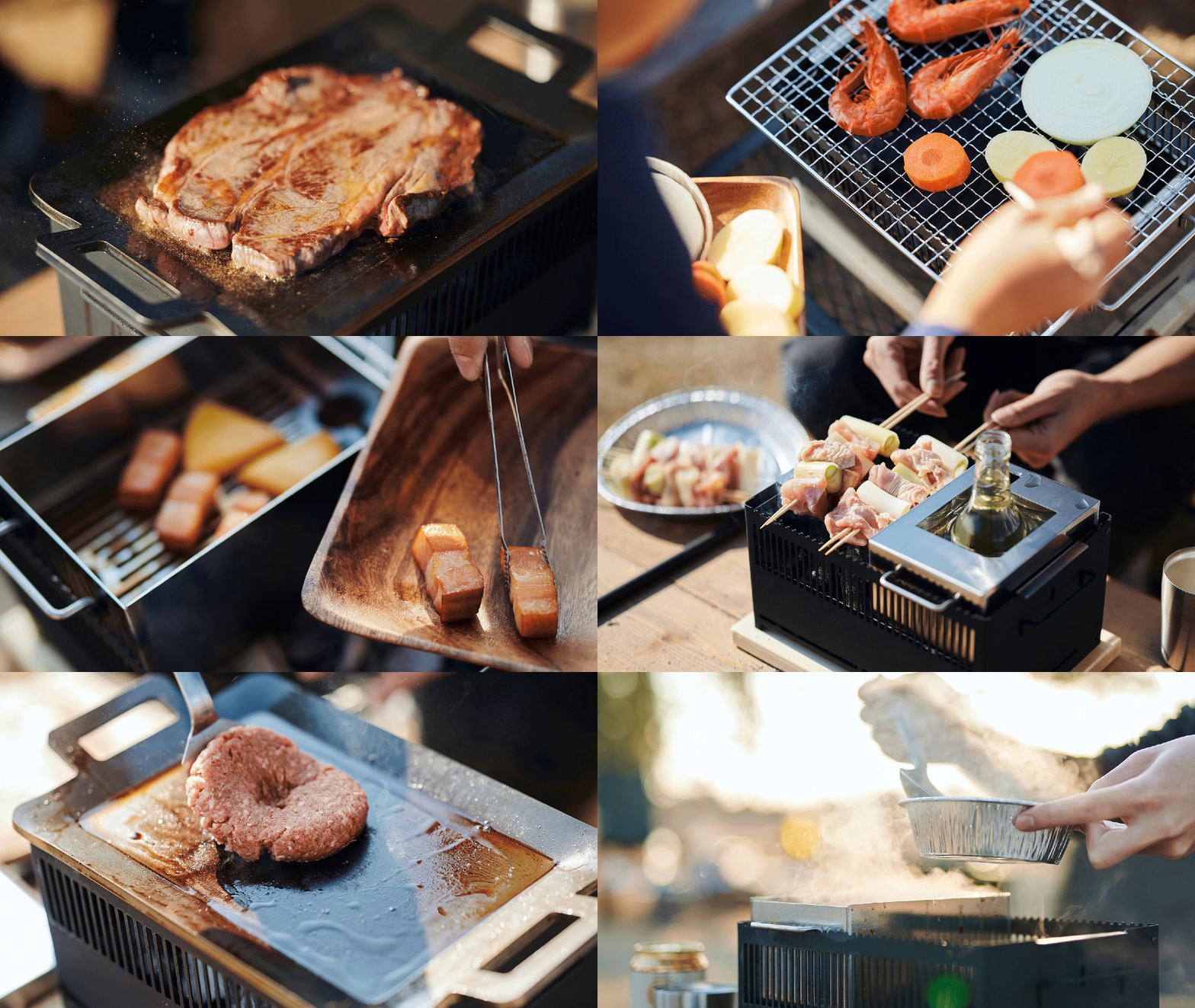
The All-in-One Grill is made in Japan from stainless steel, and it carries that origin in its proportions. This is not a portable grill that apologizes for being portable — the construction is taut, the lines are clean, and the 11.8-inch base feels proportioned rather than compromised. It functions as a grill, a pot, and a smoker through a modular lid system, which means the same object that handles your morning eggs can be doing low-and-slow work by mid-afternoon. That’s a significant range for one piece of equipment.

At $449, this is the investment piece of the list, and it earns that position through longevity rather than novelty. Stainless steel built to Japanese manufacturing standards doesn’t warp, doesn’t corrode, and doesn’t develop the hot spots that ruin cheaper grills after a single season. The thick plate grill net and included pot lid for steaming and smoking mean you’re not returning for accessories down the line. Compact enough for a car boot, deliberate enough for a kitchen shelf once camping season ends.

Click Here to Buy Now: $449

What We Like:

  • Three distinct cooking modes — grilling, pot cooking, and smoking — from a single compact body is the kind of functional intelligence that makes you question why other portable grills are built the way they are
  • Japanese stainless steel construction is built for decades of use, not seasons
  • The proportions are clean enough that this sits on a kitchen counter without embarrassment when camping season ends

What We Dislike:

  • The compact dimensions are ideal for two; feeding a larger group requires patience between rounds and a considered approach to sequencing what cooks when

5. Olight Baton 4

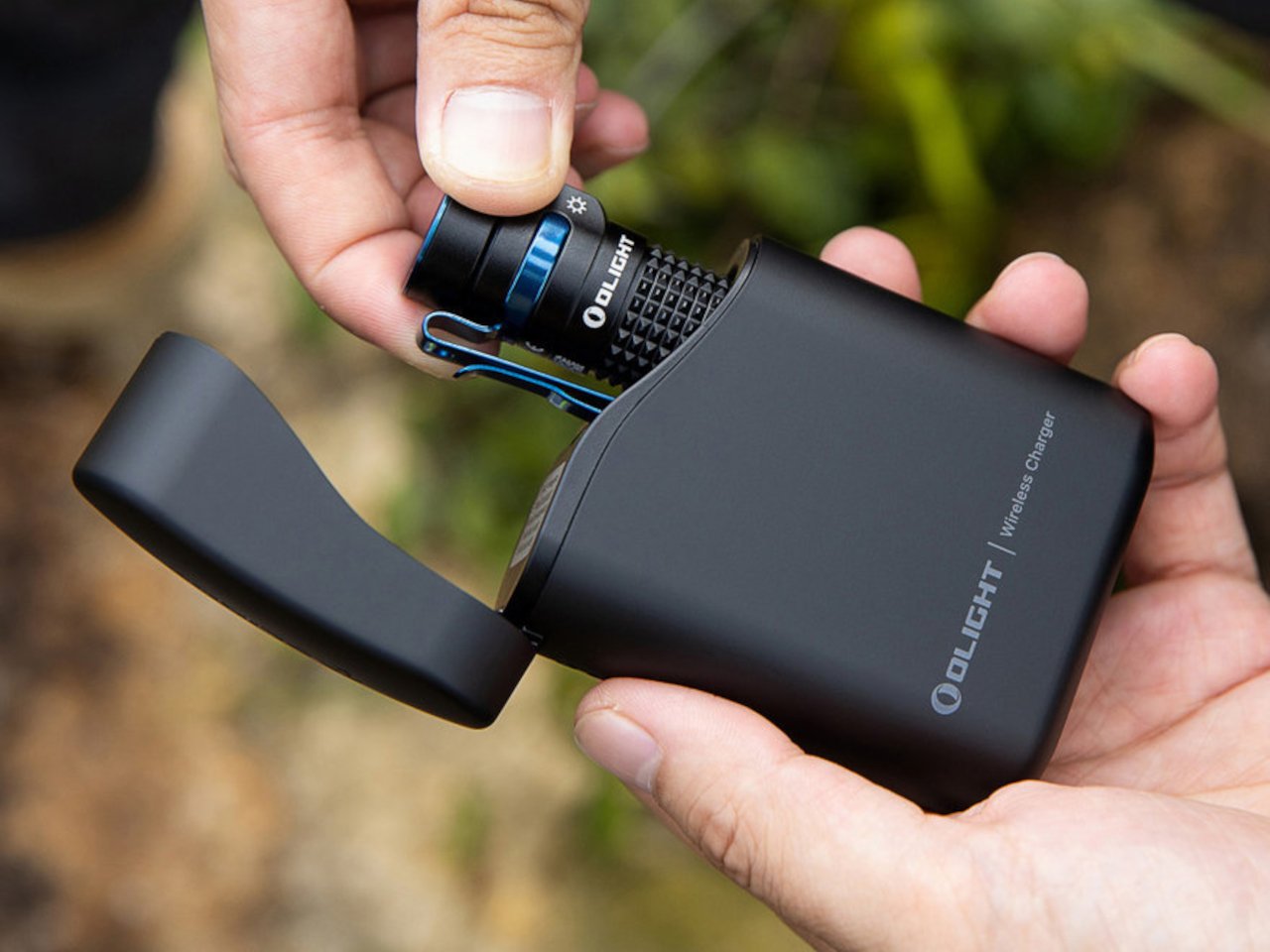
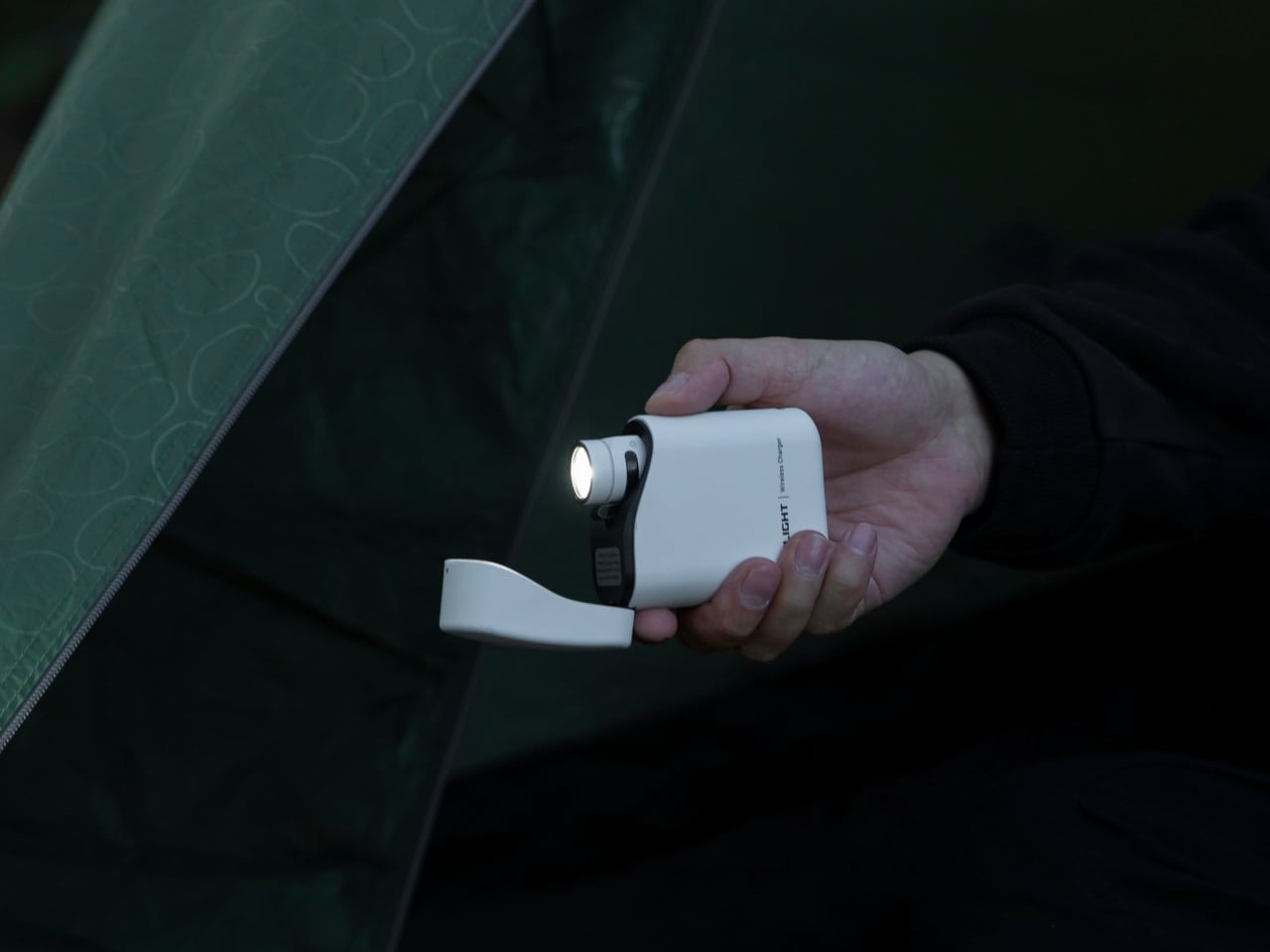
The campsite flashlight is the object most people under-invest in, and the one they most regret the moment the sun drops. The Olight Baton 4 is the correction to that habit. At 1,300 lumens from a body not much larger than a lighter, it puts out more light than most people realize is possible at this price. The magnetic charging case doubles as a 5,000mAh power bank, meaning the Baton arrives at the campsite charged and stays that way across the full weekend without drama.

What earns the Baton 4 its place here over cheaper alternatives is Olight’s attention to the carry experience. The clip sits deep in the pocket, the button has a deliberate texture that works with gloves, and the machined body feels significantly more expensive than $54.99. Five brightness modes cover everything from reading in a tent to lighting a path fifty meters out in total darkness. It disappears into your pocket until the moment it becomes the most important thing at your site.

What We Like:

  • 1,300 lumens from a body small enough to forget about until needed is a remarkable engineering result at this price
  • The charging case solving two problems — storage and backup power — with one purchase is exactly the kind of design thinking that creates long-term loyalty
  • Five brightness modes mean the Baton handles reading light and trail light from the same pocket object

What We Dislike:

  • The charging case adds bulk that doesn’t sit comfortably alongside the light in a single pocket — you carry them separately or leave the case in the bag
  • USB-C charging is reserved for the newer Pro model; the base Baton 4 uses a proprietary magnetic connector

6. Stanley Perfect Pour Over Brew Set

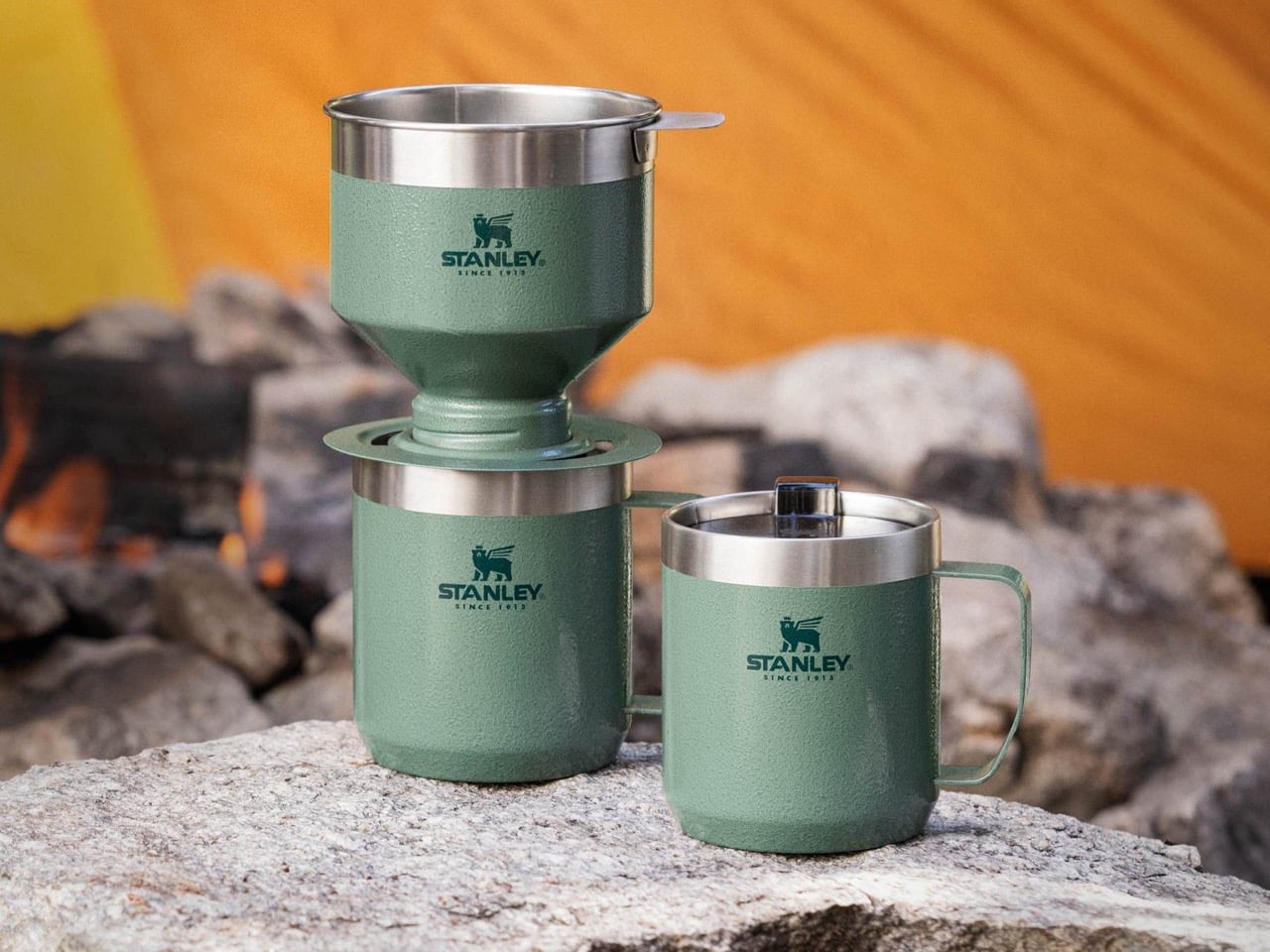
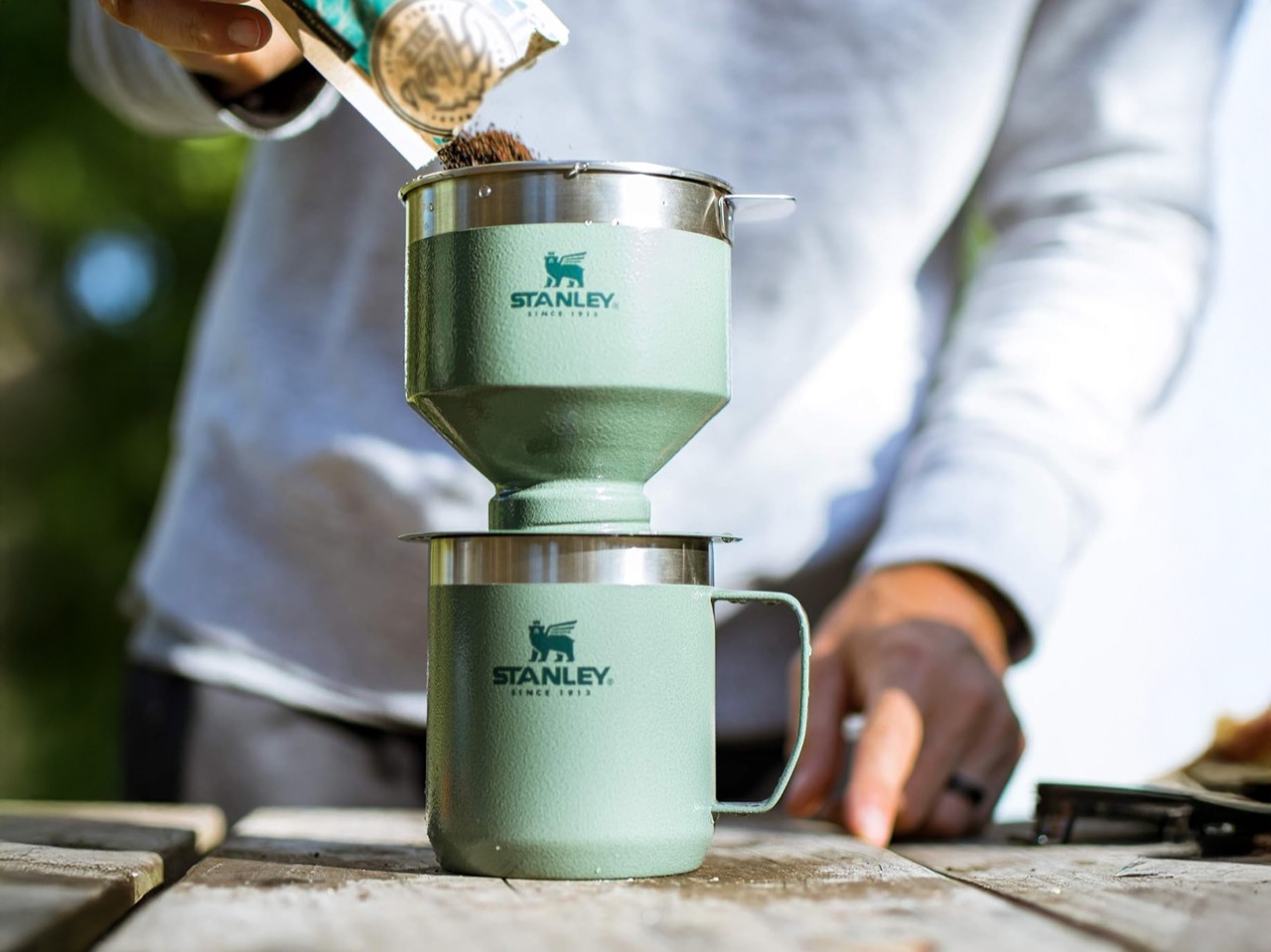
The Pour Over Brew Set strips the morning ritual down to its essentials: a stainless steel cone filter, a cup base that doubles as your vessel, and nothing disposable. No paper filters, no waste, no fragile glass sitting at risk on a folding table. You grind your beans, pour your water, and the coffee lands in a Stanley cup ready for the day. The whole thing stacks into itself, making it one of the most compact brewing systems available for outdoor use.

What separates this from the sea of portable coffee gadgets is Stanley’s refusal to compromise the cup. The base isn’t an afterthought — it’s the same vacuum-insulated construction as the tumblers the brand built its reputation on. Your coffee stays genuinely hot for hours, which matters less at a kitchen counter and considerably more at a campsite at 6 am with the temperature still in the low thirties. At $79.99, it’s one of the most honest objects on this list: built to last, built to be used every single morning.

What We Like:

  • The metal cone filter eliminates disposables — no paper filters, no emergency store runs mid-trip
  • The vacuum-insulated base keeps coffee hot well past the pour, which at altitude and in cold morning air is less a luxury than a necessity
  • The whole system stacks into itself with nothing left over — it’s one of the tidiest pack-and-go brewing solutions available

What We Dislike:

  • This is a single-cup system — group camping requires multiple sequential pours, and the output speed depends heavily on grind size, which takes some practice to dial in correctly
  • It’s a ritual for one, not a breakfast solution for four

7. CIVIVI Button Lock Elementum II

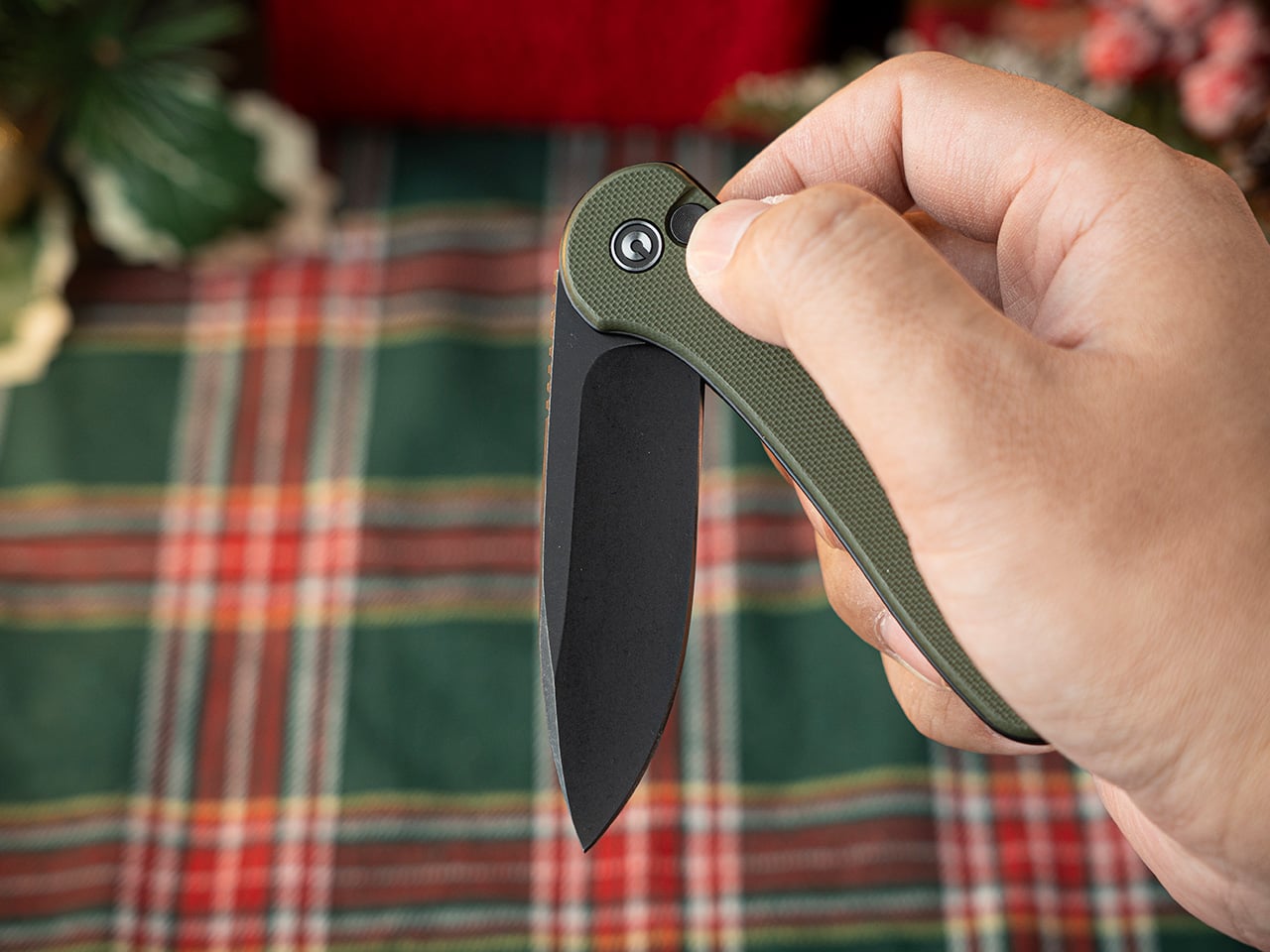
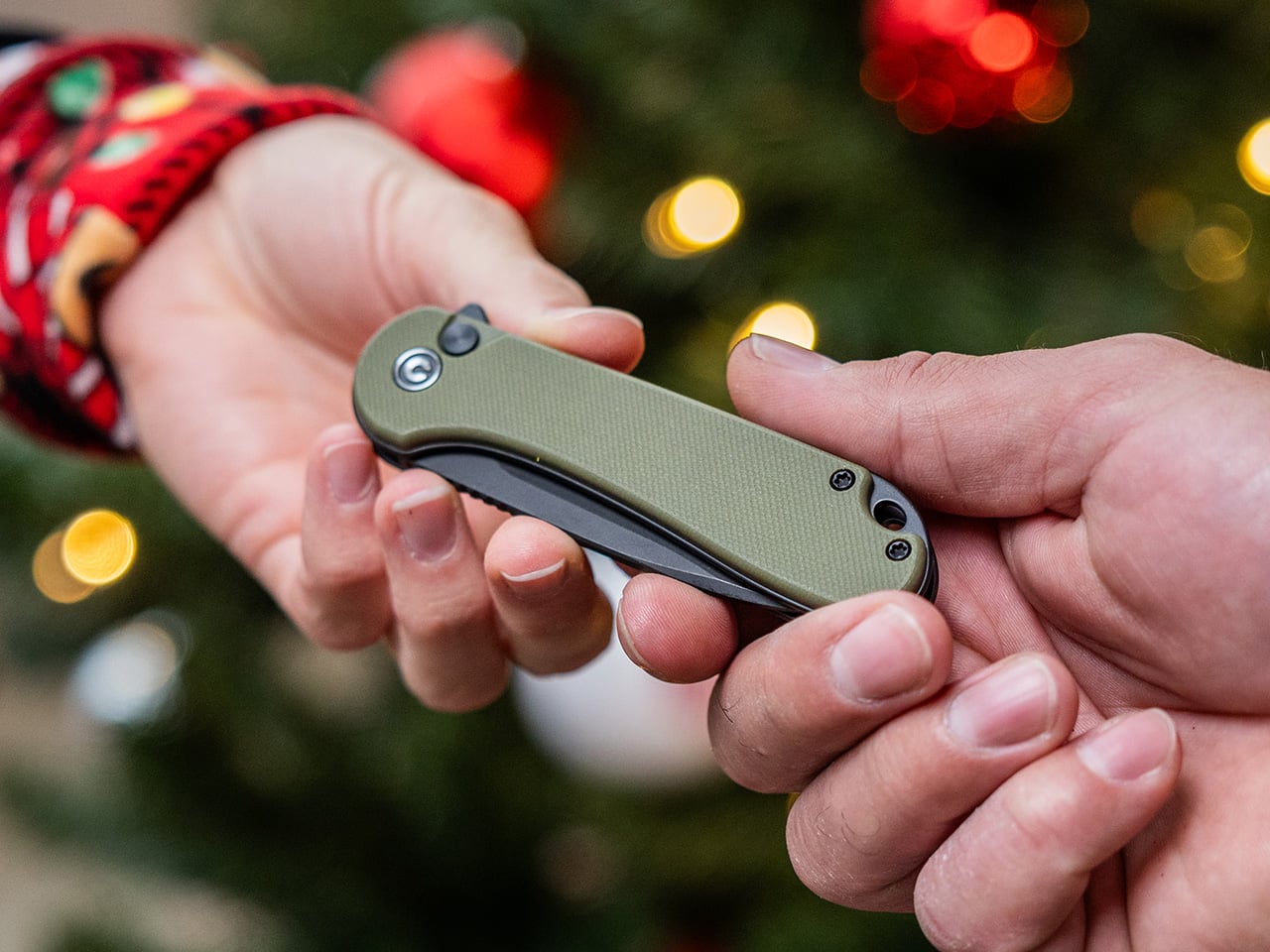
A camp knife earns its place not through drama but through frequency: the rope that needs cutting, the package that won’t open, the branch that wants trimming. The Elementum II handles all of that without demanding attention. At 3.12 ounces with a 3-inch Nitro-V steel blade, it carries like it isn’t there until the moment you need it. The button lock opens single-handed — a detail that sounds minor until you’re holding something else with the other hand.

CIVIVI’s design language is where this knife punches well above its price point. The G10 handle scales sit flush against titanium-anodized liners, and the overall profile is lean enough to disappear in a front pocket without printing. Nitro-V holds an edge longer than the VG-10 steel found in knives twice the cost.

What We Like:

  • The button lock deploys cleanly one-handed every time, and the deep-carry clip keeps the knife invisible in a pocket without shifting during a full day of activity
  • Nitro-V edge retention is genuinely better than anything in this price bracket has any right to deliver
  • The slim profile and anodized liner finish make this look like a $150 knife in hand

What We Dislike:

  • At 3 inches, the blade sits at the shorter end for heavier camp tasks — batoning or breaking down larger cuts of food will show its limits quickly
  • G10 color options are conservative for a knife that otherwise looks this considered

8. Marshall Kilburn III

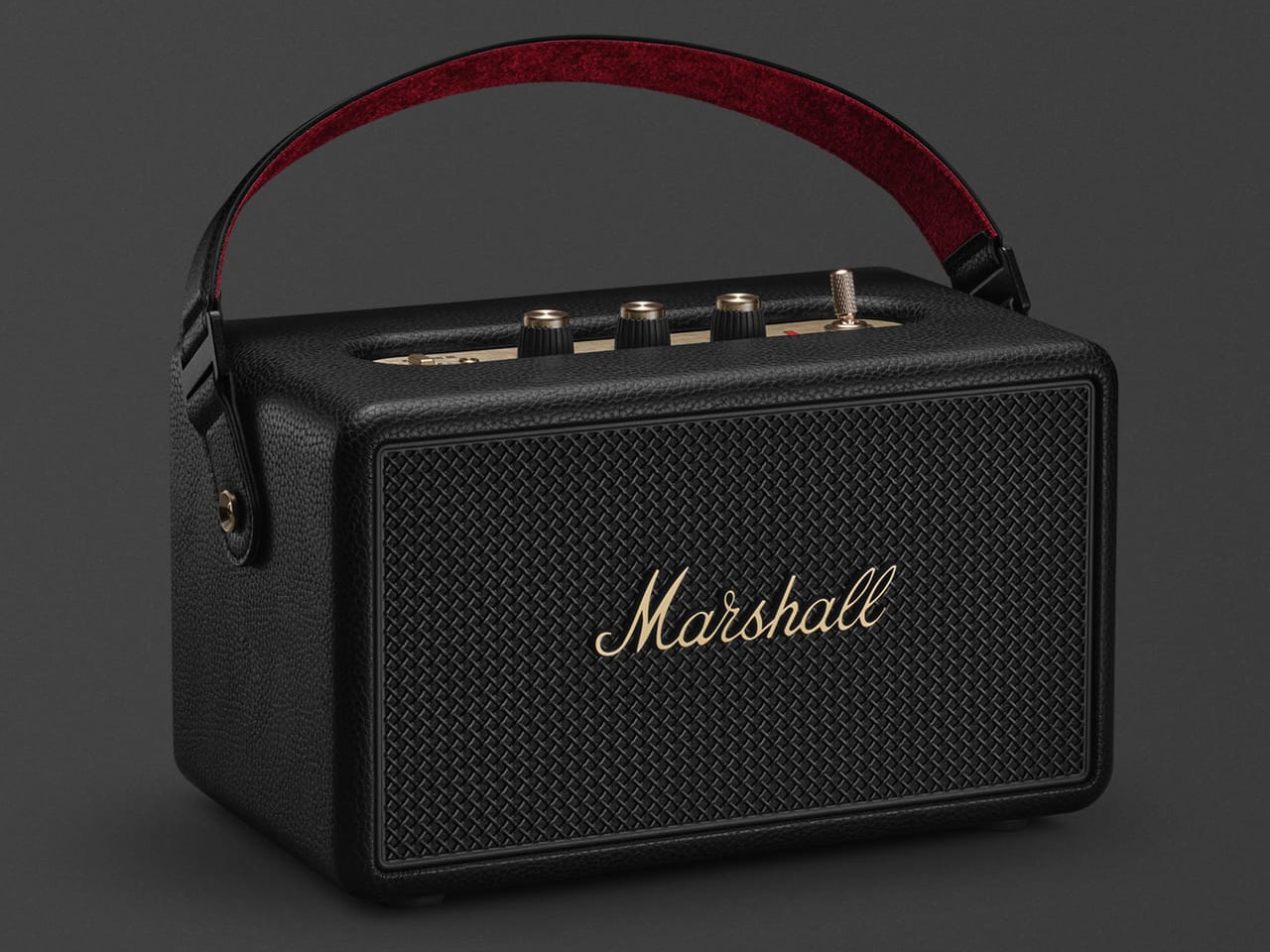
The Kilburn III is what happens when a speaker brand takes outdoor audio seriously without abandoning the aesthetic identity that made it recognizable. The guitar amp proportions, the gold script logo, the herringbone strap — these aren’t cosmetic decisions bolted onto a utility product. They’re what make the Kilburn the speaker people leave sitting on the picnic table rather than packing back into a bag. At 40 hours of battery life, you don’t need to manage it across a long weekend. It simply plays.

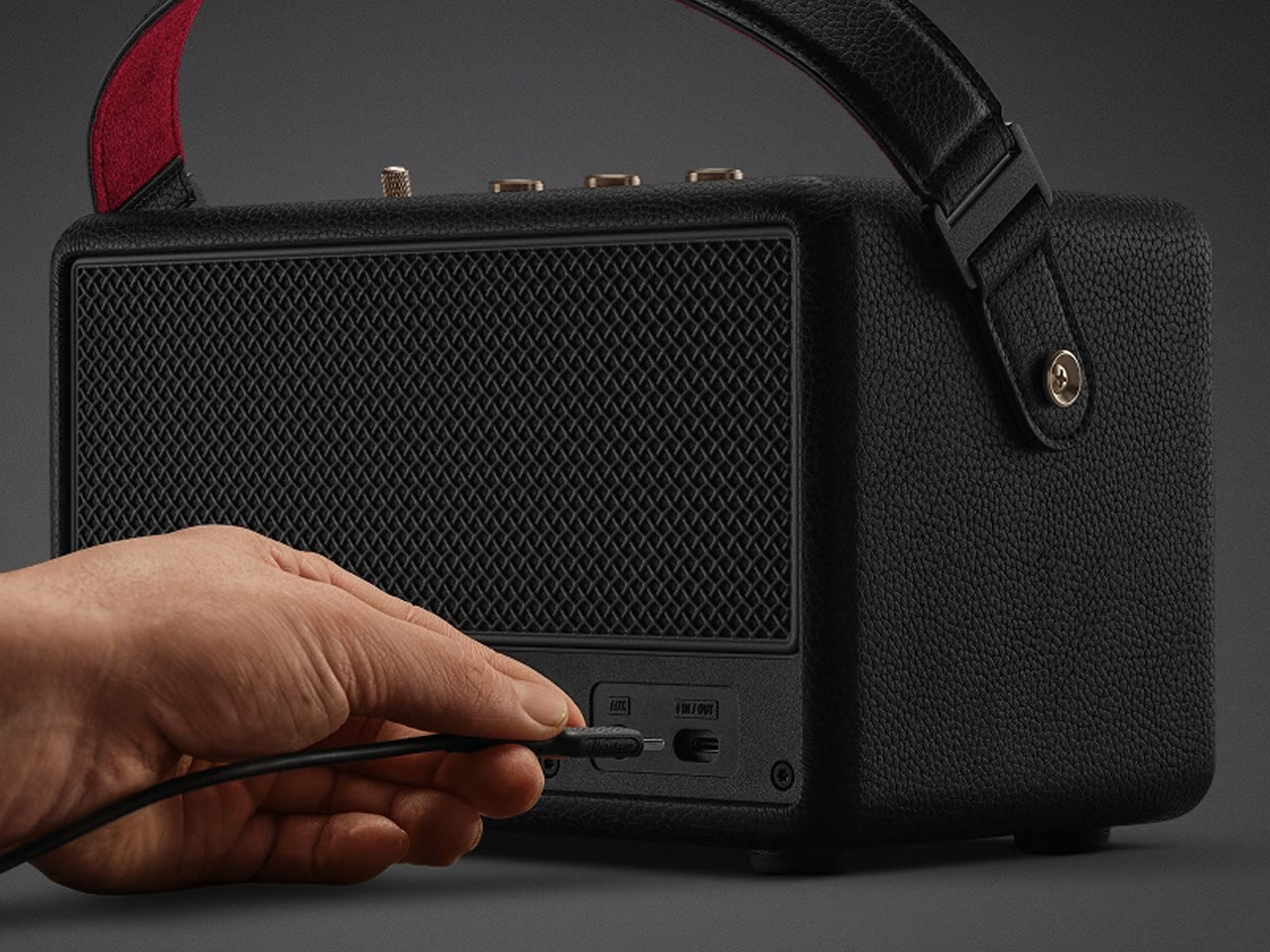
Where the RetroWave Radio earns its place through versatility, seven functions, self-sufficient power, and emergency utility, the Kilburn earns its place through one thing done exceptionally well. If music is the reason you’re packing a speaker at all, this is the one that justifies the weight. The Kilburn III adds reverse charging to its feature set, meaning it can top up your phone or flashlight from its own battery, a practical outdoor function that speakers at this price point rarely bother to include. The sound is tuned for open space rather than indoor rooms: the wider the environment, the more the Kilburn opens up and fills it.

What We Like:

  • Forty hours of battery across a weekend means you set it down Friday afternoon and don’t think about charging it until Monday
  • Reverse charging turns the speaker into backup power for other gear — a thoughtful outdoor feature that makes the price easier to justify
  • The design holds up on a picnic table the way it does on a shelf — it looks like it belongs wherever you put it

What We Dislike:

  • At 2.6 kilograms, the Kilburn III is a car-camping speaker — backpackers need not apply
  • The $379.99 price demands a committed relationship with good outdoor audio; this is not the speaker you buy casually

Pack Well, Camp Better

The best campsite doesn’t happen by accident. It’s the result of eight or ten or twenty decisions made before you leave the driveway — what you bring, how it’s designed, and whether the sum of those choices creates something that feels assembled with genuine intention. Every product on this list earns its place through that logic: not because it has the most features or the most impressive spec sheet, but because it’s worth carrying, worth using, and worth looking at.

Memorial Day weekend is three days. That’s enough time for coffee at dawn, a full day over the grill, an evening of music around a fire, and a night spent flat in a hammock looking at whatever sky you drove to find. These objects exist to make those three days feel less like roughing it and more like the kind of life you’d choose if you designed one deliberately. Pack well.

The post 8 Memorial Day Weekend Gadgets for the Man Who’d Rather Be Outside first appeared on Yanko Design.

Oil Pipes That People Actually Want To Sit On And Socialize

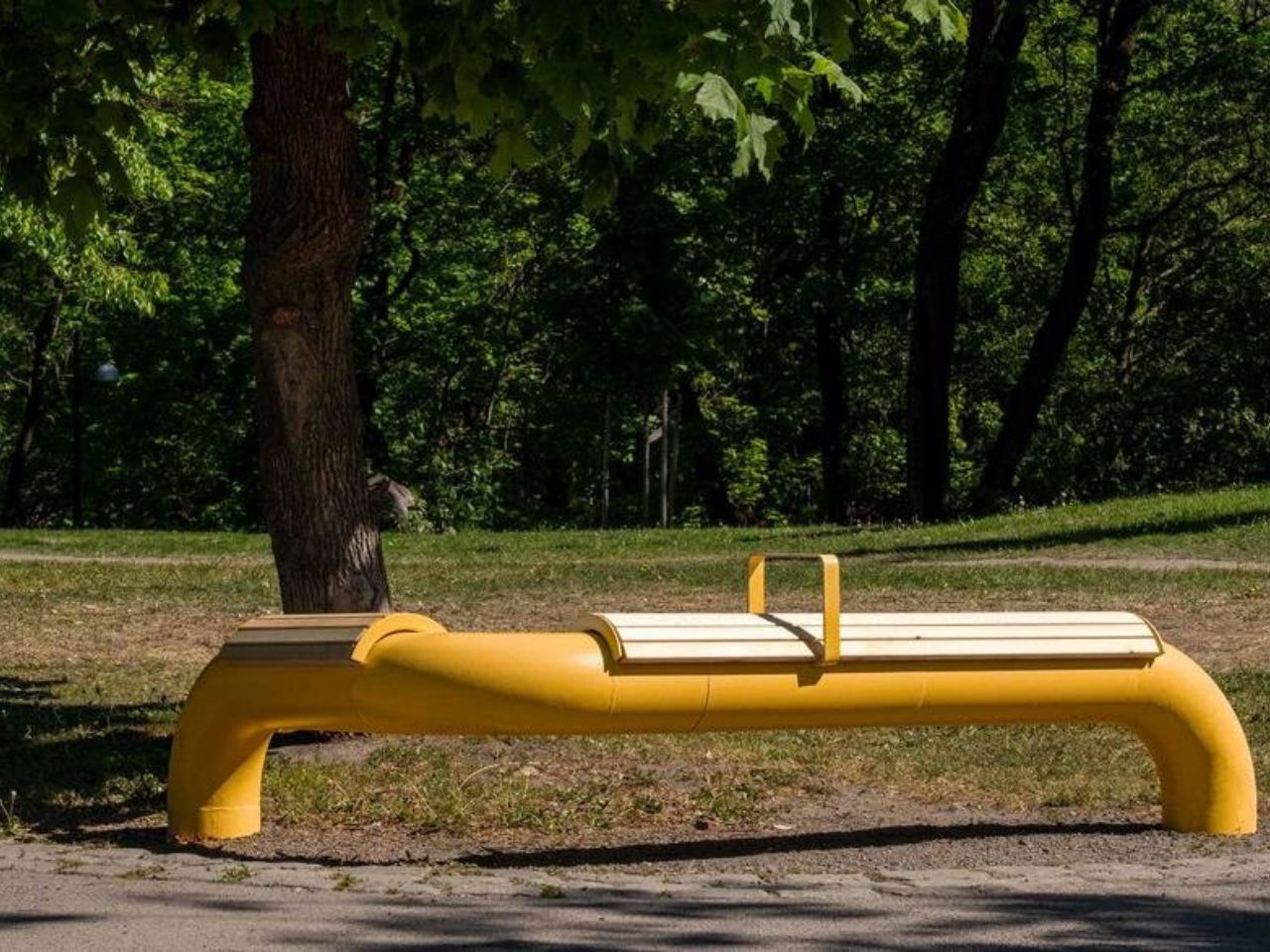
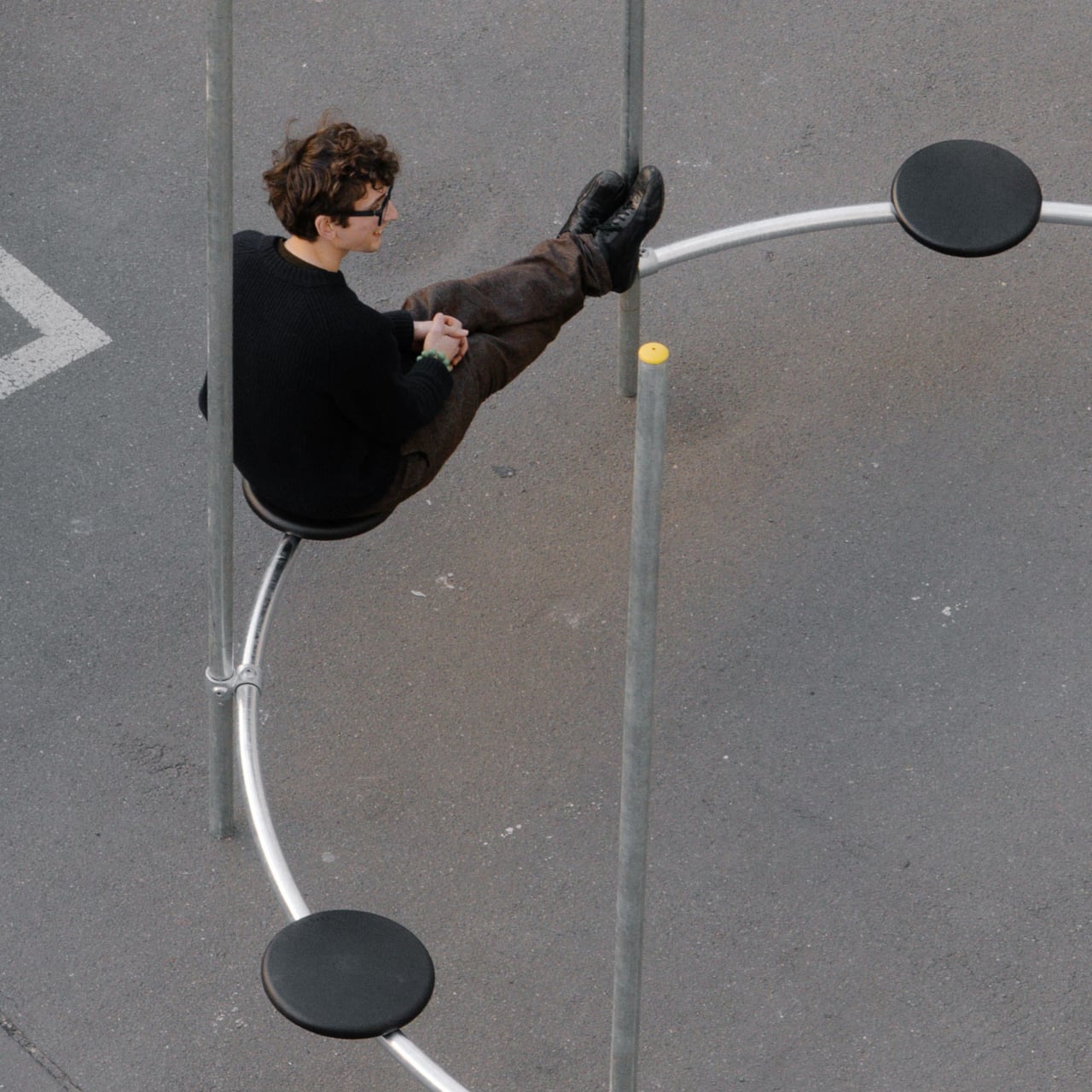
Norway is a nation shaped by oil. Its wealth, its global standing, and much of its infrastructure are rooted in extraction. But what is striking about the Venture seating system is not just what it is made of, but what it represents. A material once tied to industry and scale is quietly redirected toward something deeply human.

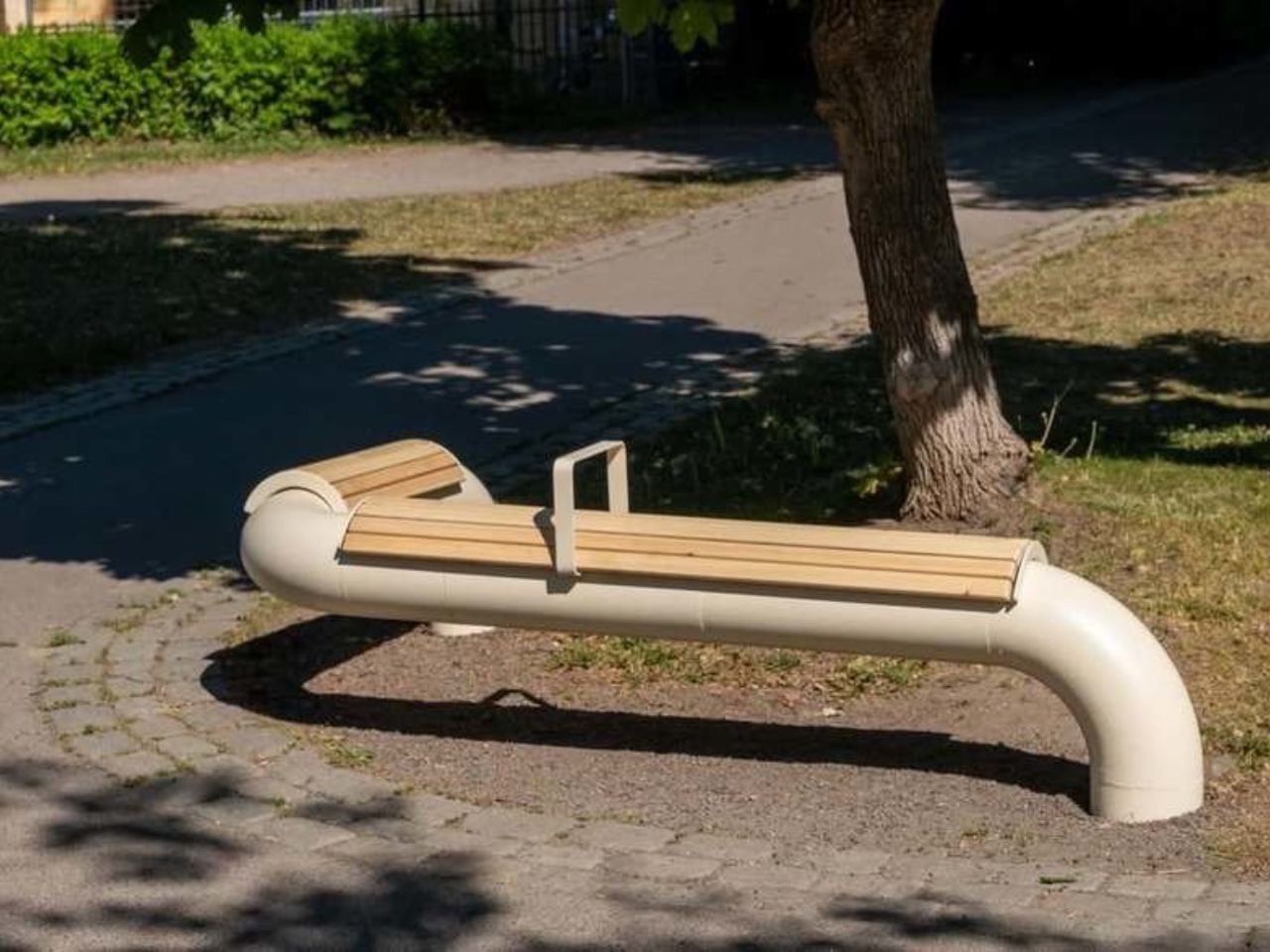
Designed by Jens-Egil Nysæther and Line Mari Sørra of Lije Studio, Venture repurposes 6.3 mm thick steel tubing used in the oil industry and transforms it into a public seating system. The gesture feels simple at first glance. Curved and straight pipes are joined together and topped with smooth wooden saddles. But the design does something more subtle. It reframes how we relate to space, to objects, and to each other.

Designer: Lije Studio (Jens‑Egil Nysæther and Line Mari Sørra)

At the core of the project is the idea of proxemics, introduced by Edward T. Hall. It is the study of how distance shapes human interaction. Instead of forcing a fixed posture or direction, Venture removes instruction altogether. There are no backs. No obvious front. No single correct way to sit. The object does not dictate behavior. It invites interpretation.

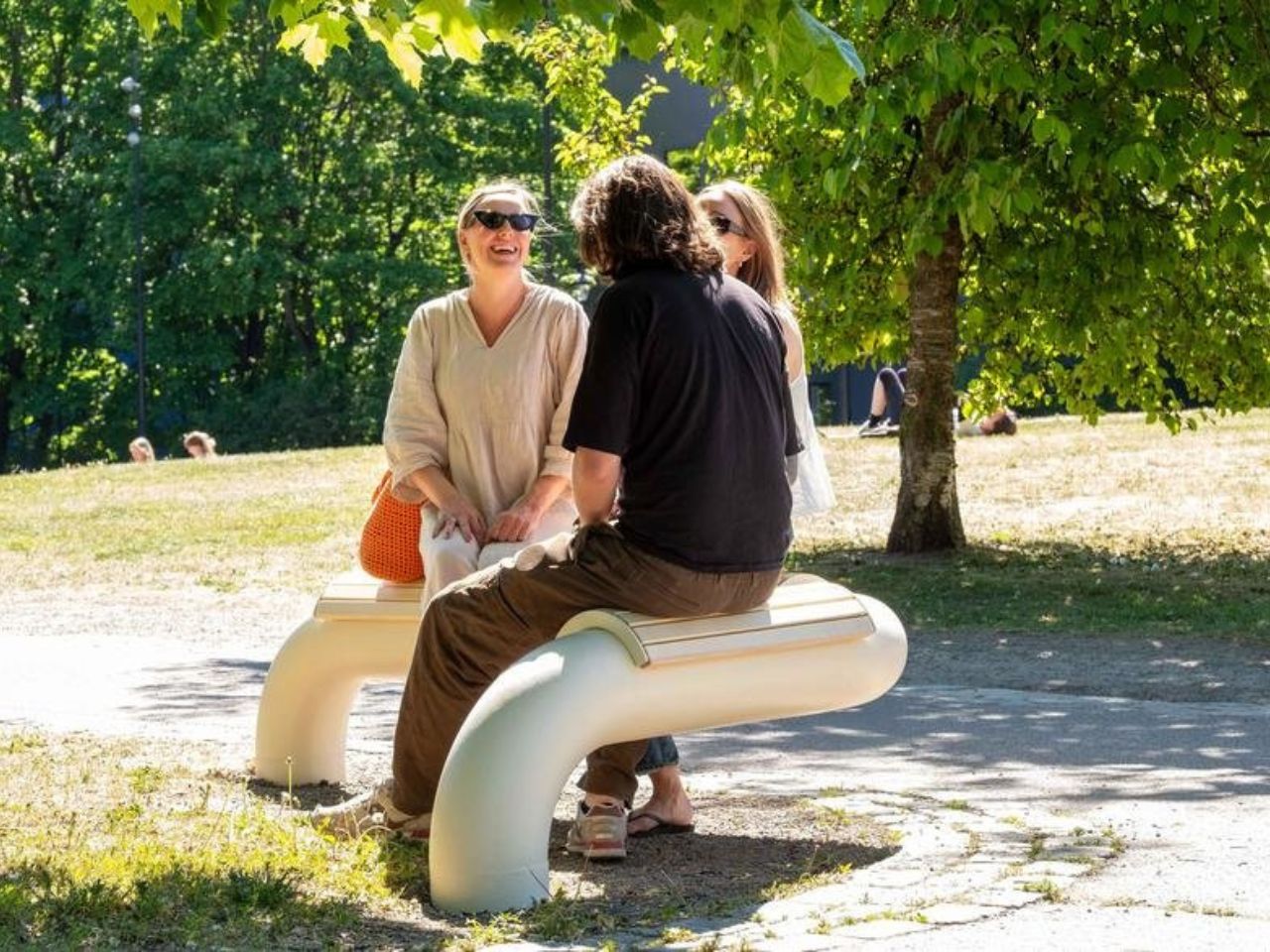
This is where the project becomes particularly interesting. Public seating is often designed with control in mind. Benches align bodies, regulate posture, and define how long one should stay. Venture does the opposite. It allows ambiguity. A person can sit facing outward, disengaged from others. Or turn inward, becoming part of a shared moment. It supports solitude without isolation and togetherness without obligation.

The modularity of the system further expands this idea. Developed in dialogue with landscape architects, the design adapts to different environments rather than imposing itself on them. It can stretch across a plaza, cluster into smaller social pockets, or exist as a sculptural standalone piece. It does not behave like furniture alone. It behaves like infrastructure for interaction.

Material contrast plays a quiet but powerful role. The steel retains its industrial clarity. It is direct, almost unapologetic in its origin. The wooden saddles soften this experience, introducing warmth and tactility. Together, they create a balance between familiarity and surprise. You recognize the material, but you engage with it differently.

There is also a larger cultural shift embedded within the project. Urban spaces today are increasingly focused on encouraging participation. People already sit on edges, lean against railings, and gather wherever they can. These informal behaviors reveal a gap between how spaces are designed and how they are actually used. Venture does not try to correct this behavior. It legitimizes it. By making seating more open and less prescriptive, it amplifies what people naturally do.

What makes the system compelling is not just its sustainability or its modular logic. It is the redefinition of value. Steel that once moved oil now supports conversation. Infrastructure, once built for extraction, now enables connection. The object shifts from serving systems of production to serving systems of people.

The post Oil Pipes That People Actually Want To Sit On And Socialize first appeared on Yanko Design.

Konstantin Grcic Just Turned Scaffolding Poles Into Public Seating for €98

Temporary seating at public events, pop-ups, and outdoor markets rarely gets much design attention. Most options are folding chairs that feel flimsy, plastic stackers that hurt after ten minutes, or nothing at all, leaving people to lean against walls or perch on ledges. The infrastructure to support proper seating is usually already there, but nobody’s done much with it. Scaffolding poles, for instance, are practically everywhere.

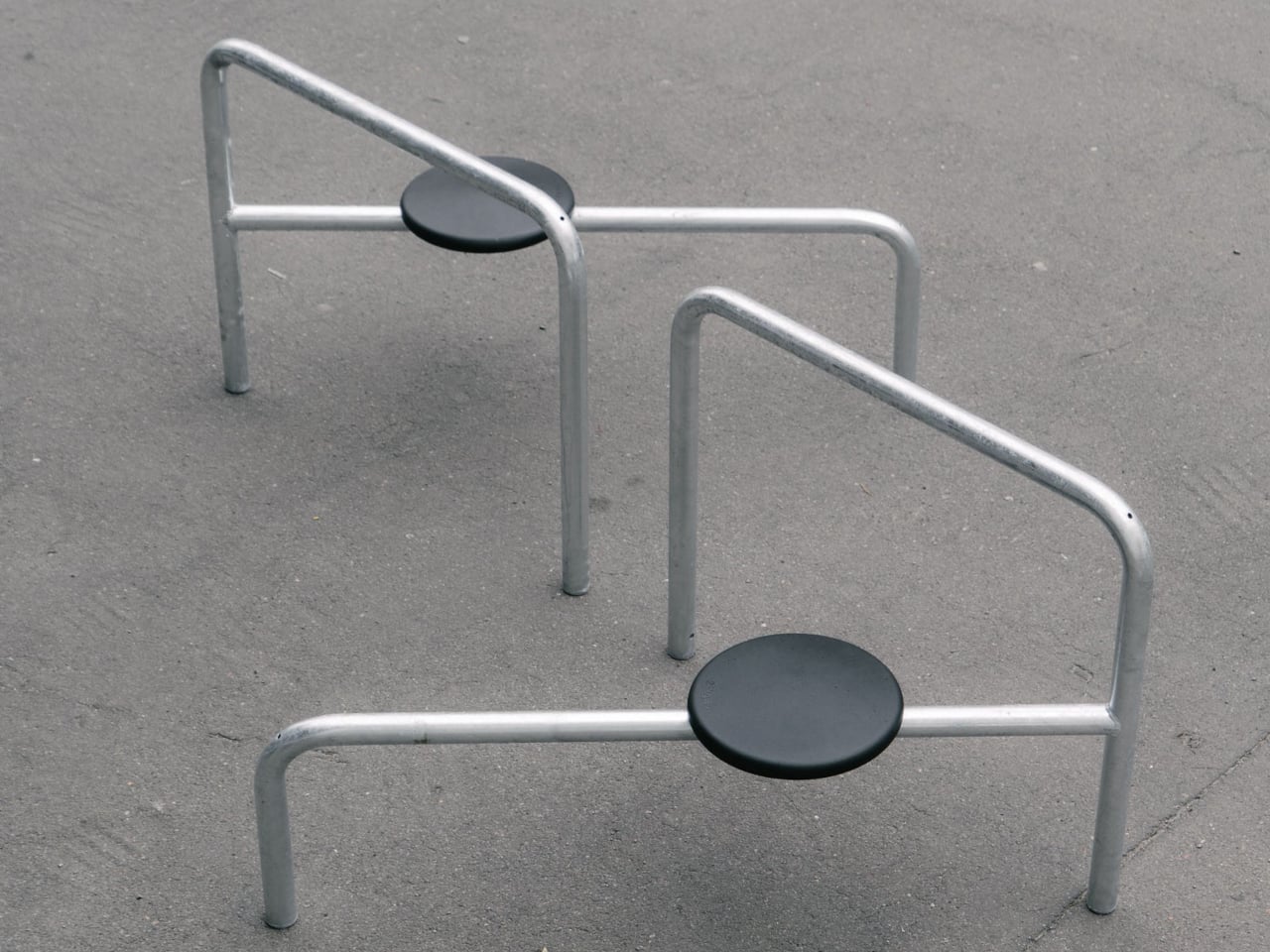
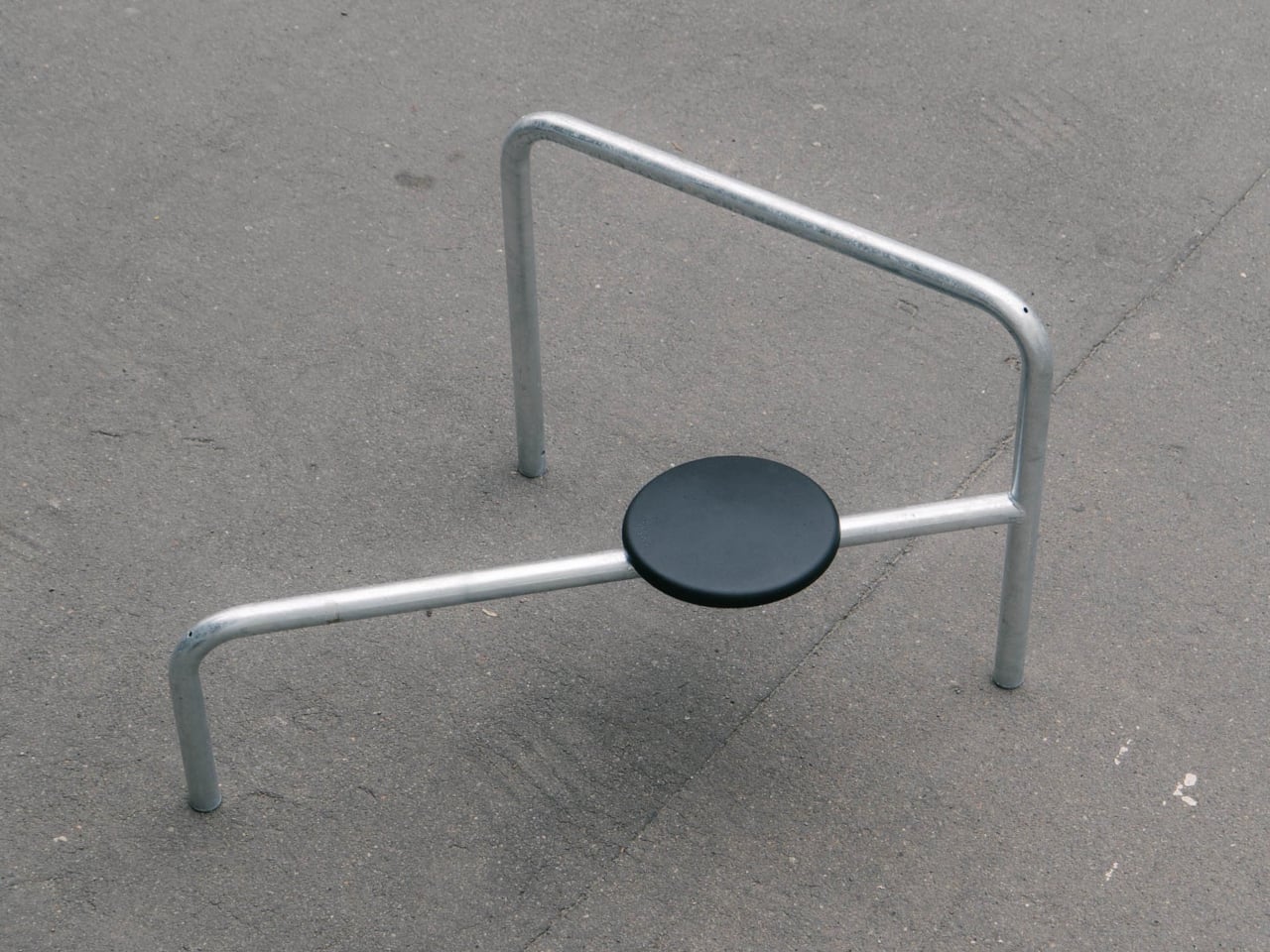
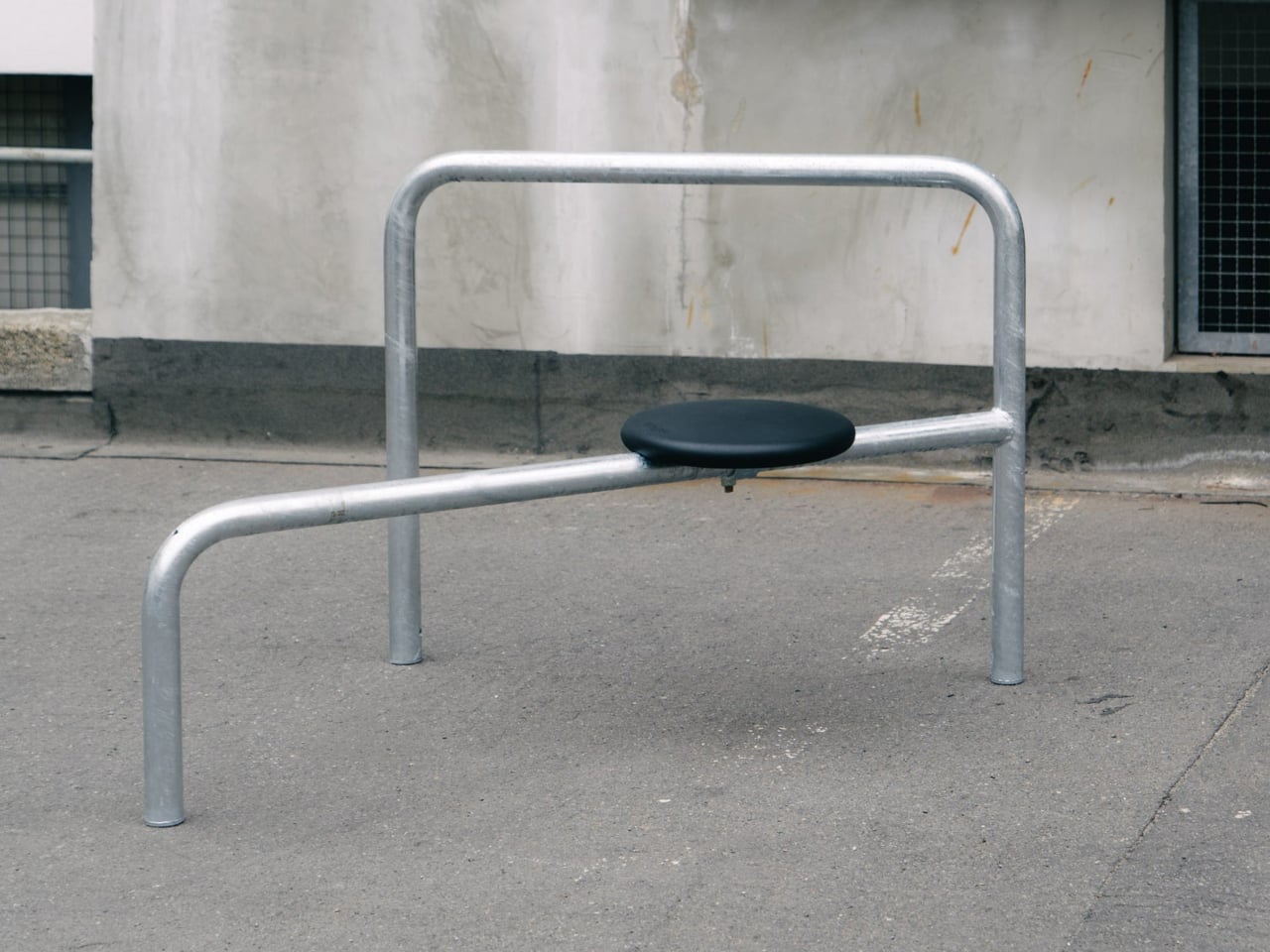
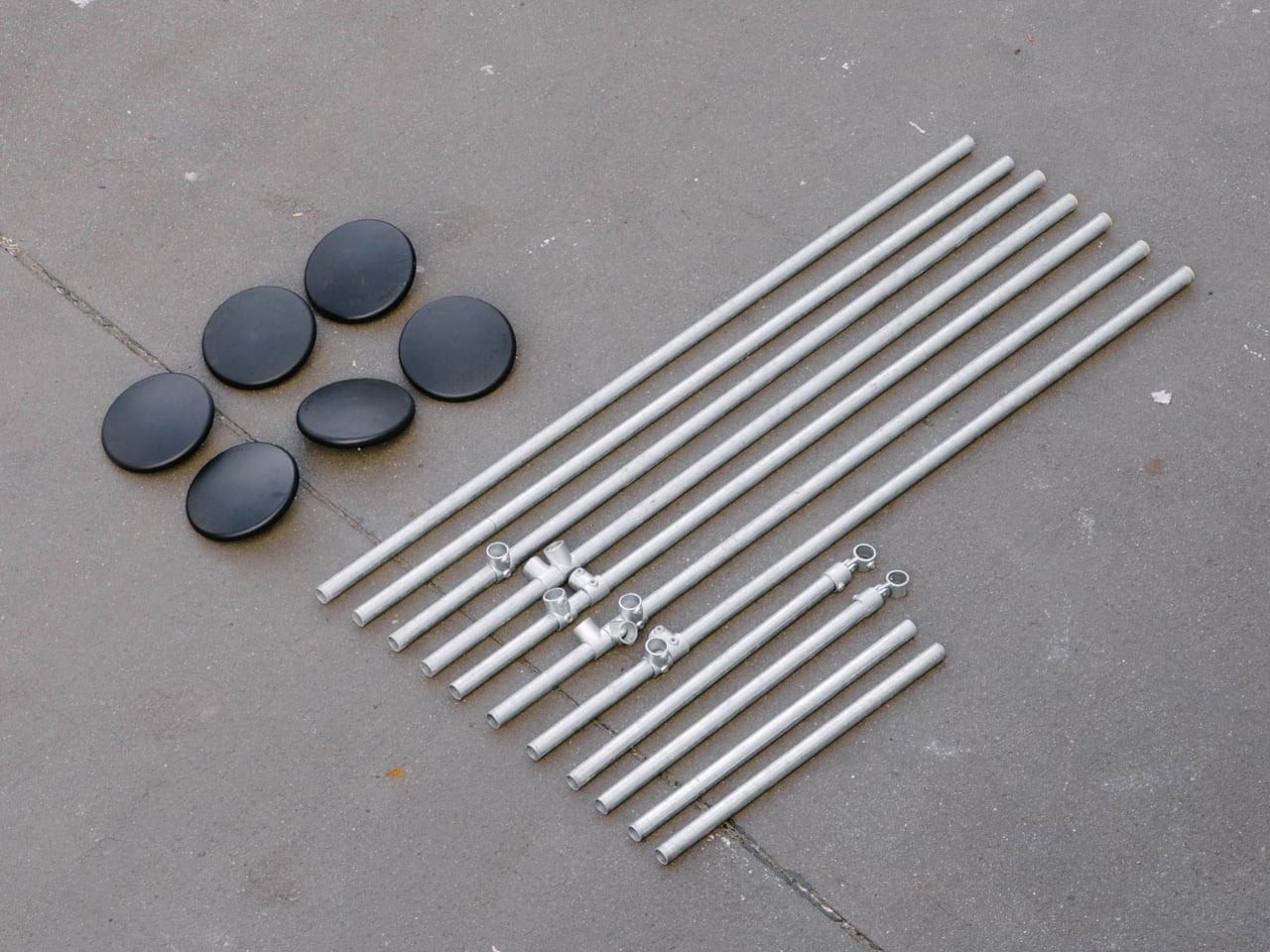
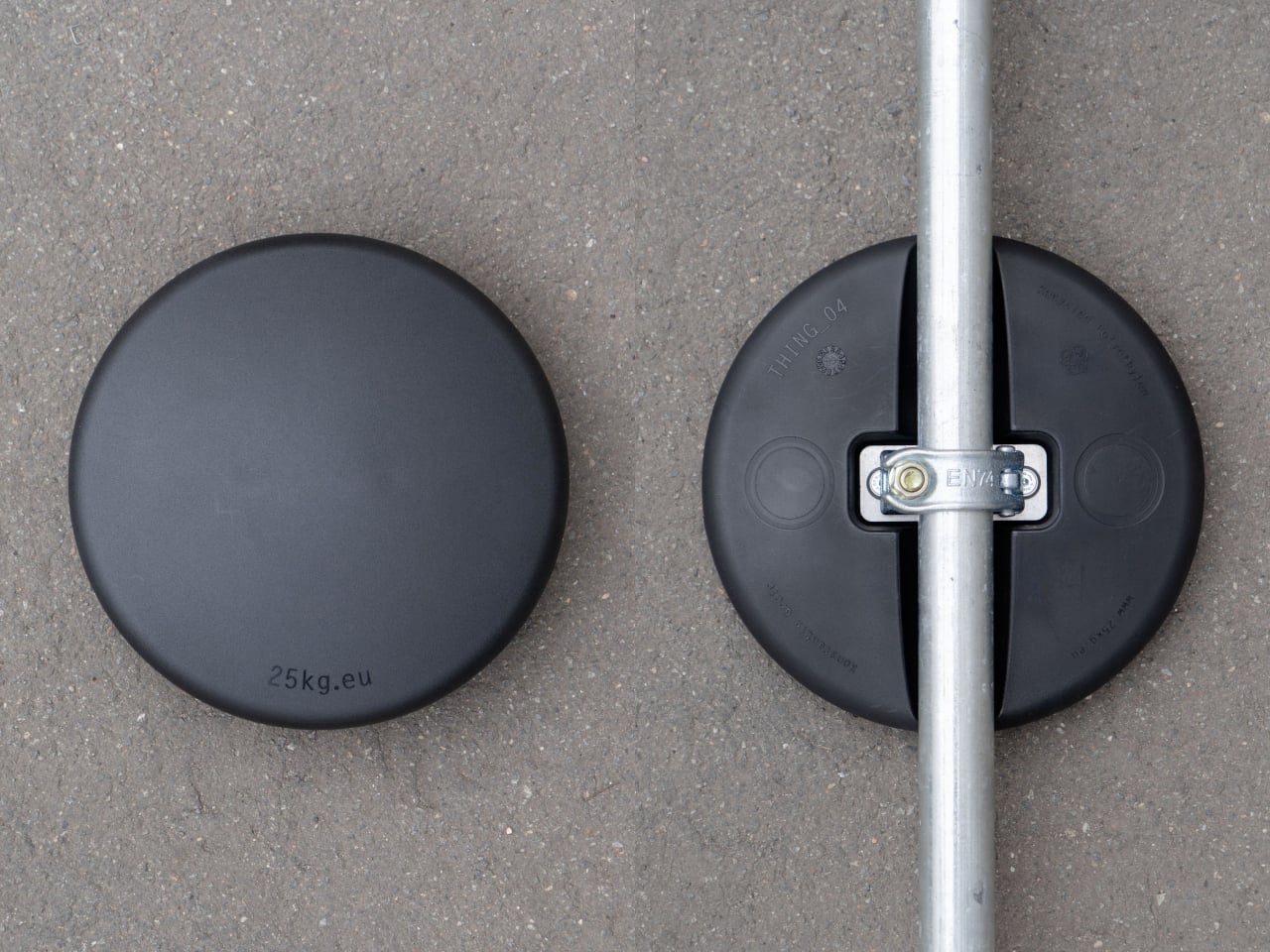
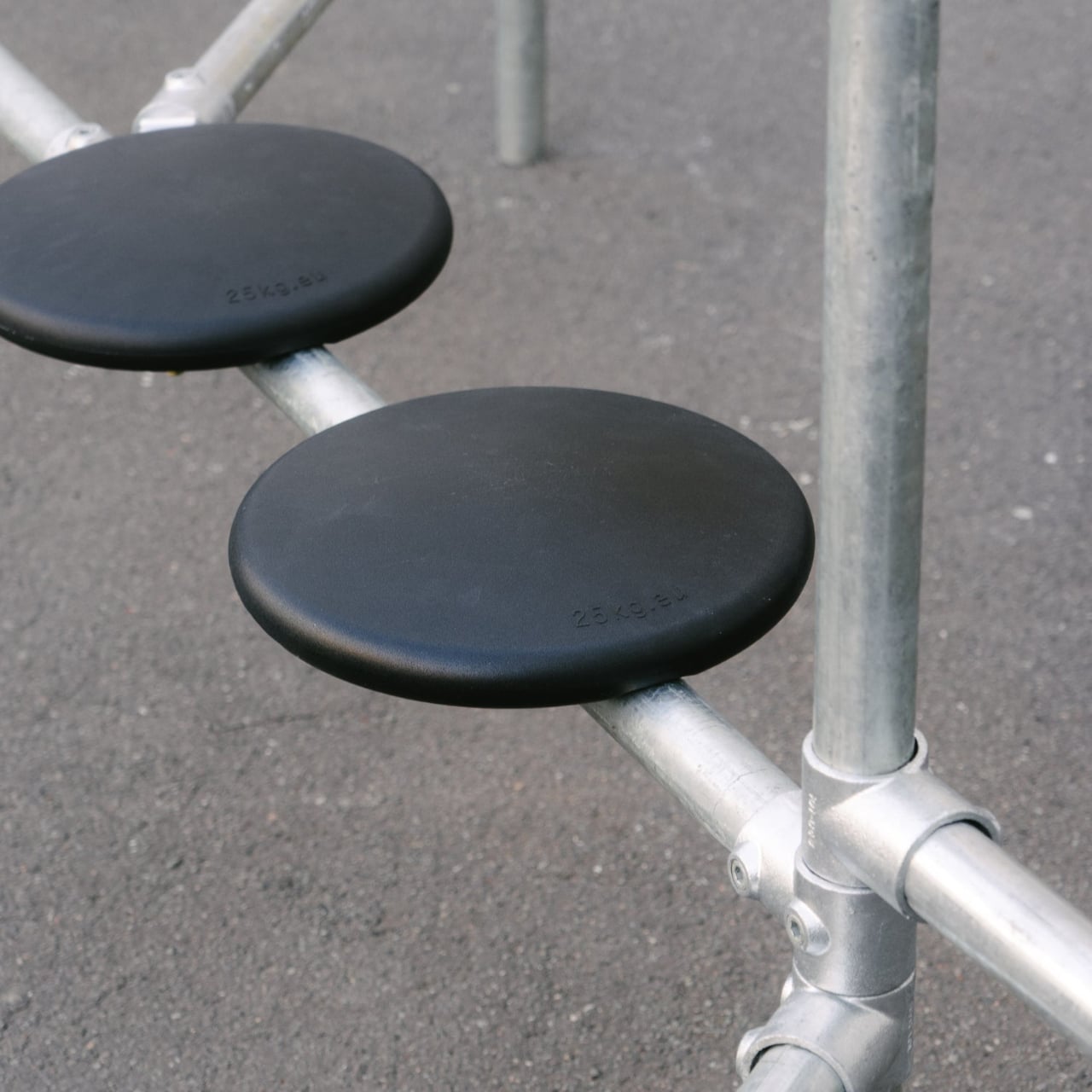
That’s the thinking Konstantin Grcic builds on with THING_04, the latest from his Berlin-based label 25kg. It’s a rotationally moulded seat disc made from 100% post-industrial polypropylene, sized to clamp onto standard scaffolding poles. No floor anchors, no complicated assembly, no special tools required. Clip it on, and it’s ready to sit on. The simplicity is almost disarming for something that solves a problem you didn’t know had a solution.

Designer: Konstantin Grcic

At just 33cm x 33cm x 12cm and 2.1kg, THING_04 is light enough to carry in one hand to wherever you need it. Rotational moulding gives it a seamless, hollow shell tough enough for both indoor and outdoor conditions. Galvanized steel and stainless steel hardware handle the clamping, securing the disc firmly onto a pole without any permanent modifications to the structure it’s attached to.

Think of a weekend street market where vendors have already rigged up scaffolding overhead for shade or signage. THING_04 clips onto those poles and turns them into a row of seats for shoppers who’d otherwise be stuck standing. Or a pop-up event where the rigging doubles as a temporary grandstand. The design doesn’t ask the environment to change. It makes the most of what’s already there.

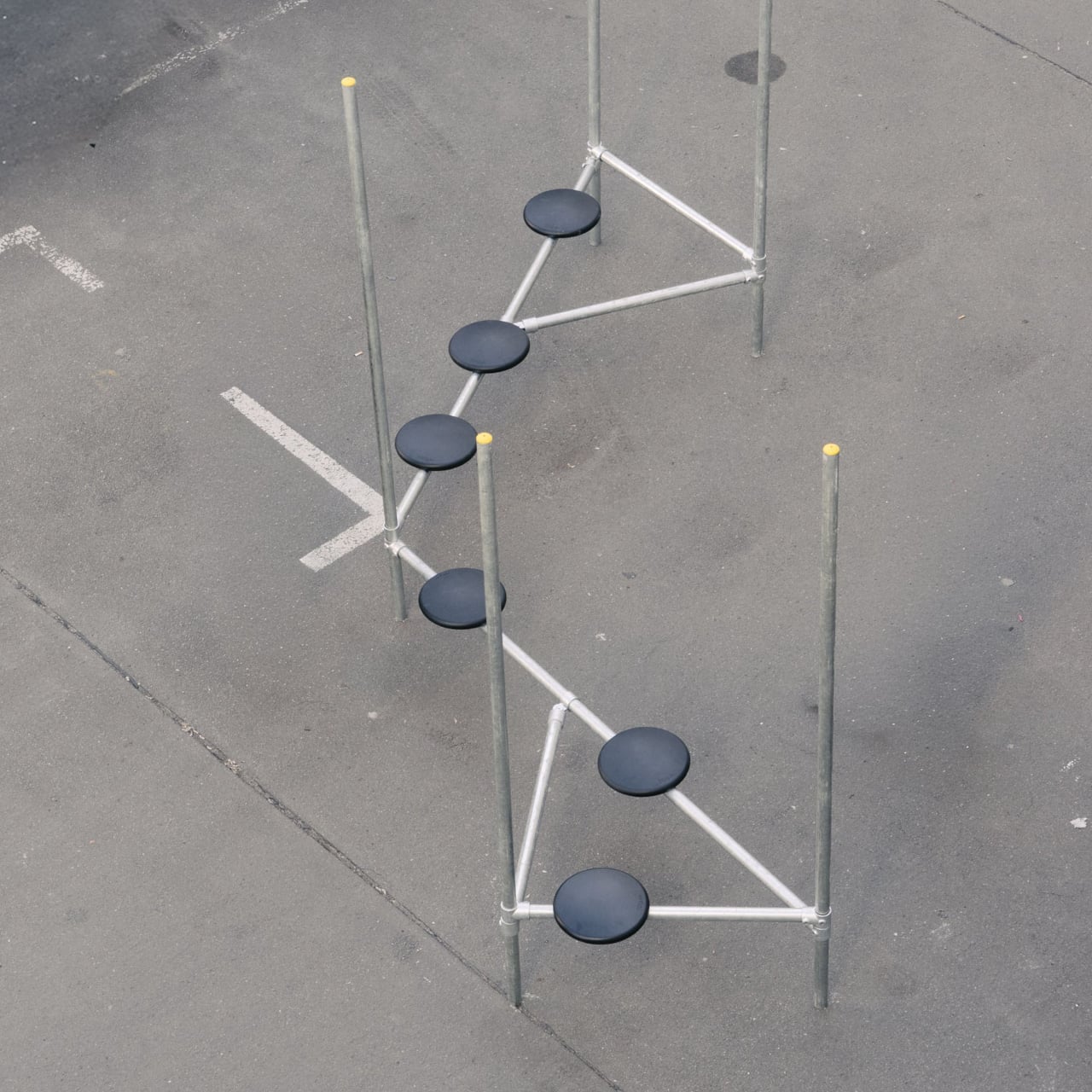
For spots that don’t have any scaffolding in place, there’s the THING_04.u. It comes as a set with a dedicated galvanized steel tubular frame, available with one seat or two. Grcic calls it raw, freestanding, territorial, which is a surprisingly apt description for a public seat that doesn’t need anything to lean on. A plaza, a lobby, a courtyard: it holds its own wherever you put it.

Then there’s the THING_04.x, which scales the concept into a full modular system. More seats, larger structures, and a wider range of configurations make it suitable for everything from temporary events to permanent public installations. It’s available to buy or rent, in predefined setups or custom arrangements on request. The kind of flexibility that event organizers and architects don’t typically expect from a single seating object.

THING_04 fits squarely into what 25kg was built for. The label is Grcic’s own platform for experimentation, where the brief is to start from raw, industrial materials and see how far design can stretch with minimal intervention. Each release is a THING built from these same principles: the stainless steel stool, the lava stone chair, and now this seat disc. None of them wastes a move.

The individual seat retails at €98, rotationally moulded in Germany to the standard the concept demands. It’s a fair price for a piece of seating you can clip onto a scaffolding pole at a pop-up, then carry to the next one. There are scaffolding poles on practically every street in European cities, and most of them have never had a seat to offer. THING_04 changes that.

The post Konstantin Grcic Just Turned Scaffolding Poles Into Public Seating for €98 first appeared on Yanko Design.

Stop Buying a Separate RV Heater. This 16,000 BTU RV Air Conditioner Does Both

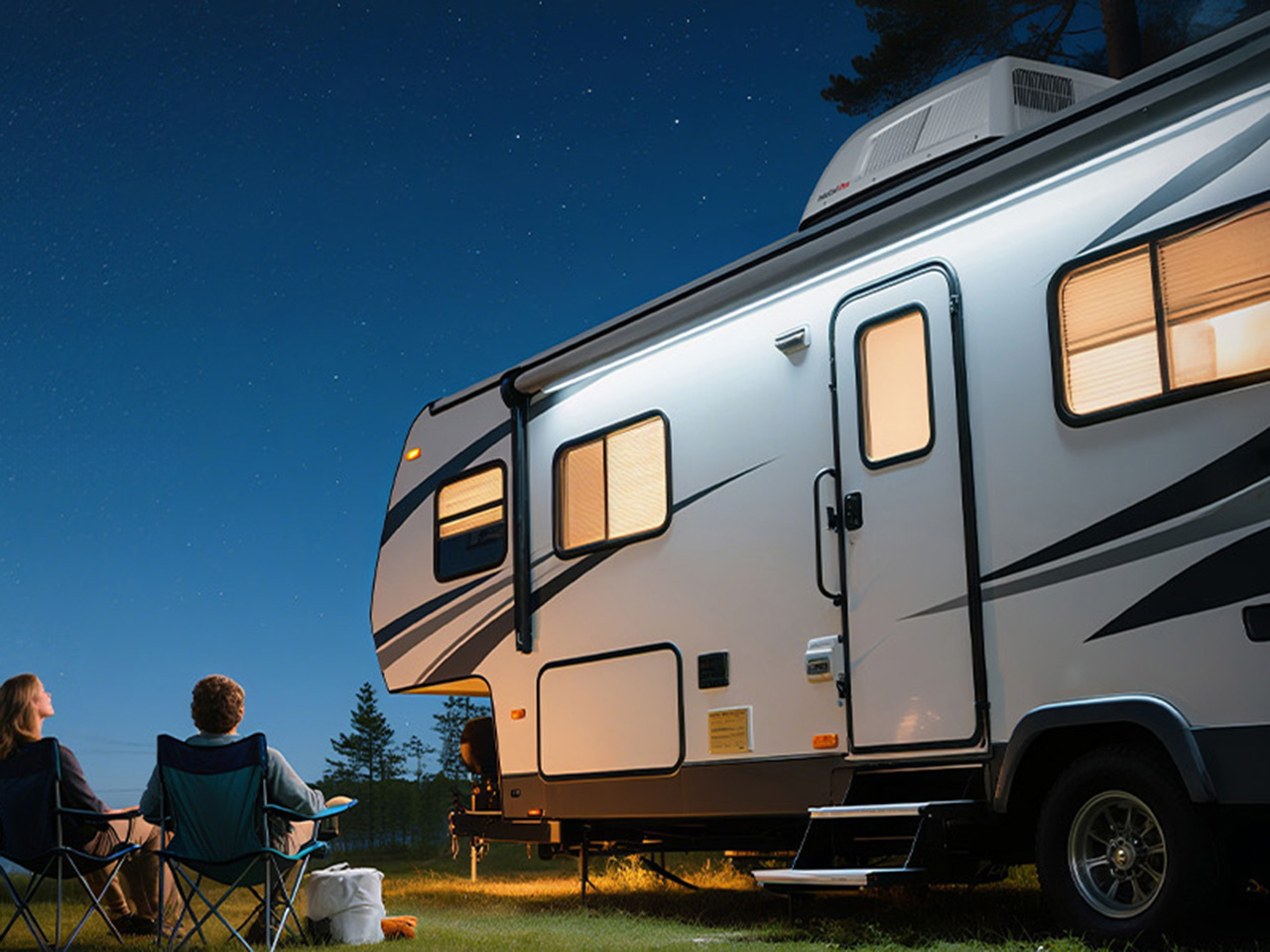
There’s a moment every RV owner knows: you’ve been hiking all day in 95-degree heat, you’re covered in dust and questionable decisions, and you open the door to your trailer expecting relief. Instead, you get a wall of stagnant air that somehow feels hotter than outside. Your rooftop AC has been running for three hours and achieved exactly nothing. The problem isn’t usually the BTU rating on paper. Most 13,500 or 15,000 BTU units can theoretically cool the space. The problem is airflow distribution, compressor efficiency under load, and the reality that your RV is essentially a greenhouse on wheels with minimal insulation and windows everywhere. By the time cooled air reaches the back bedroom, it’s already been defeated by physics.

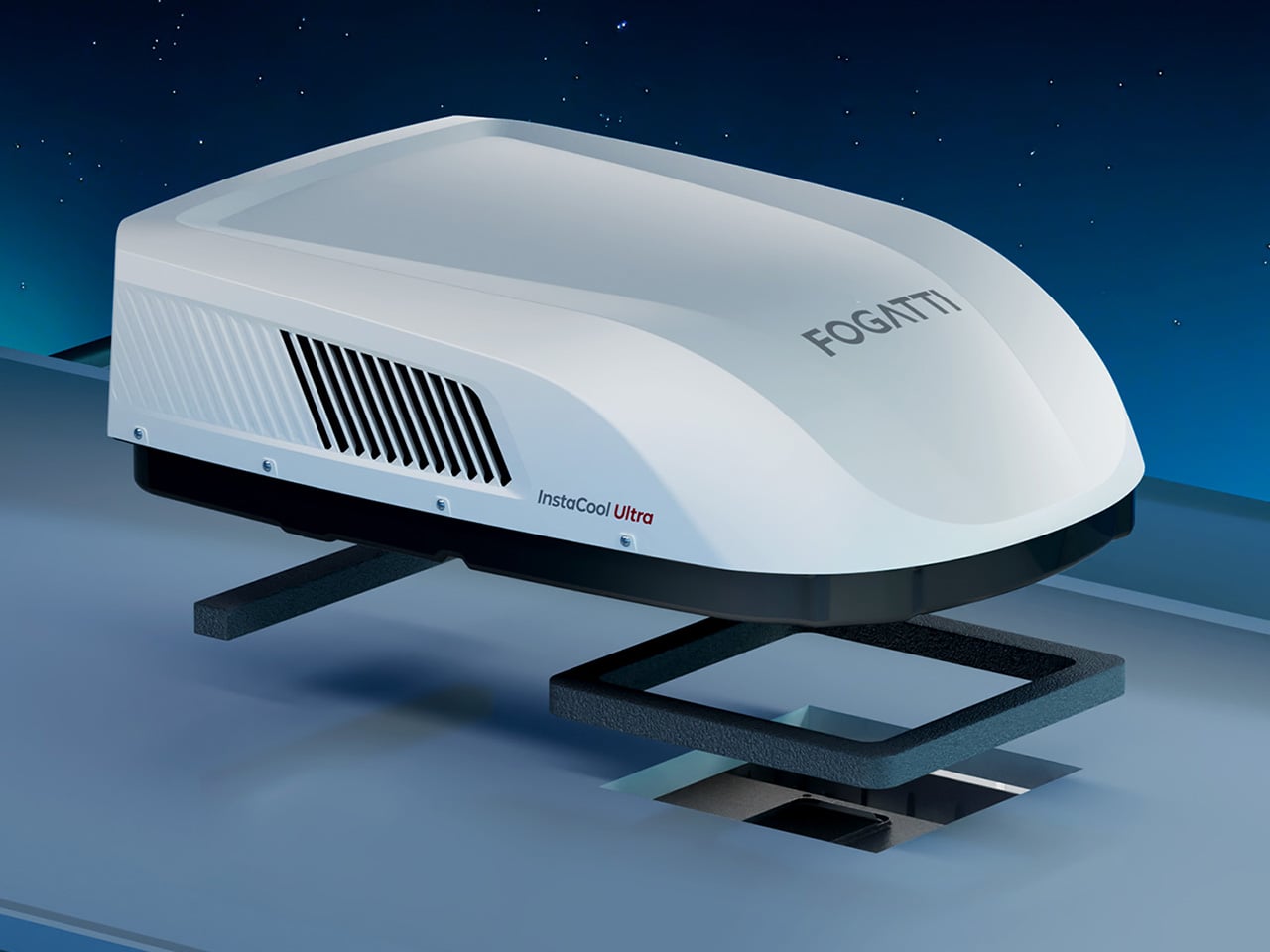
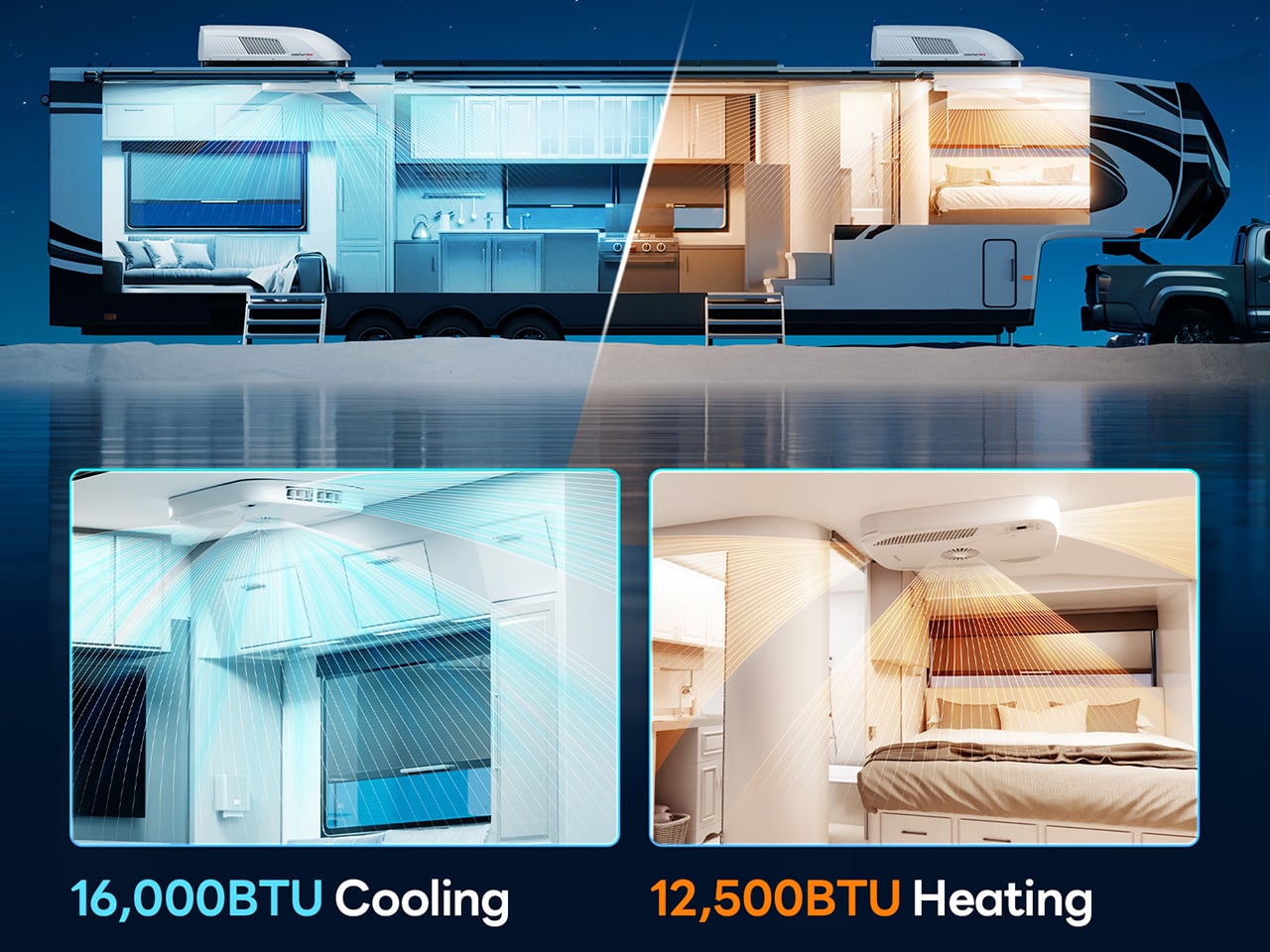
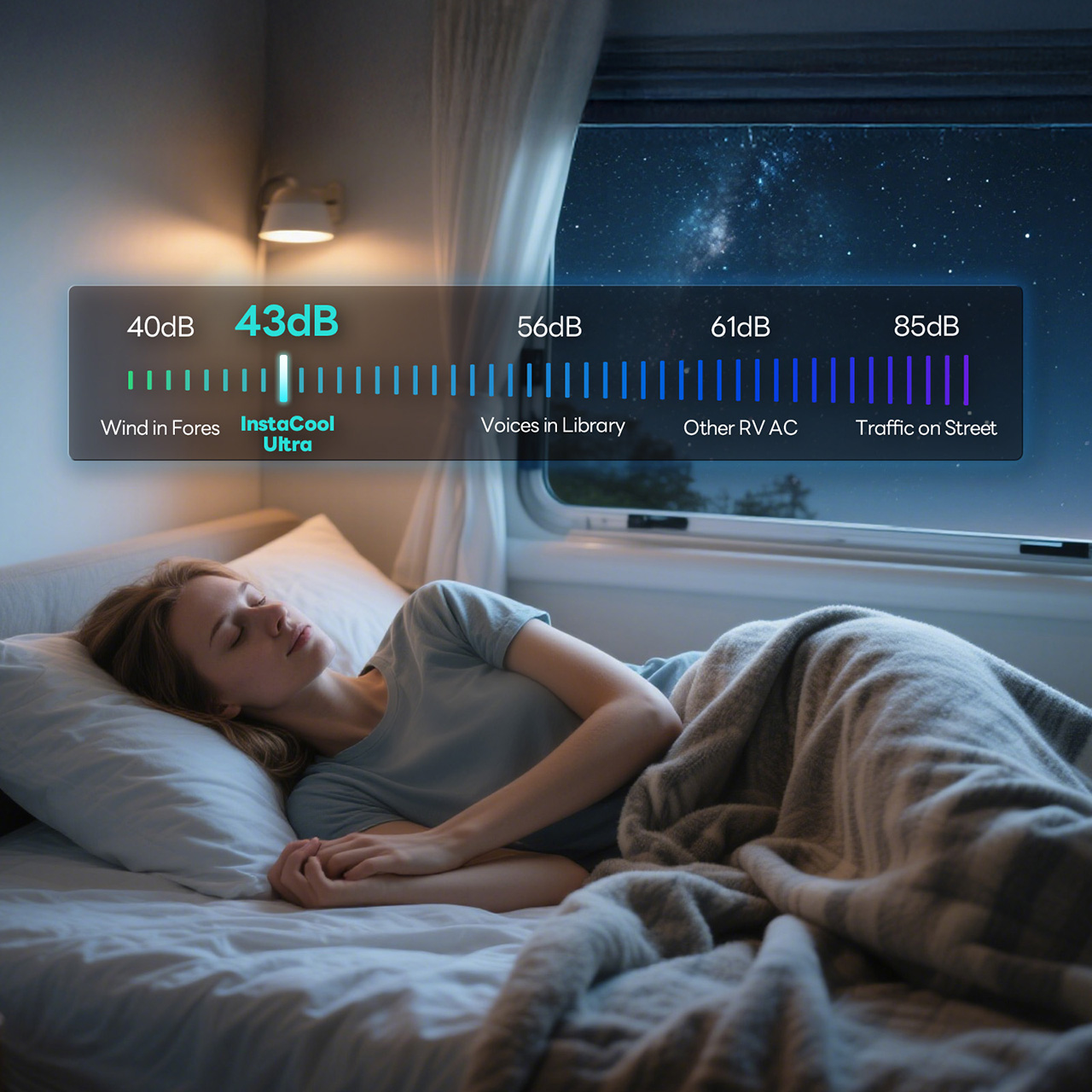
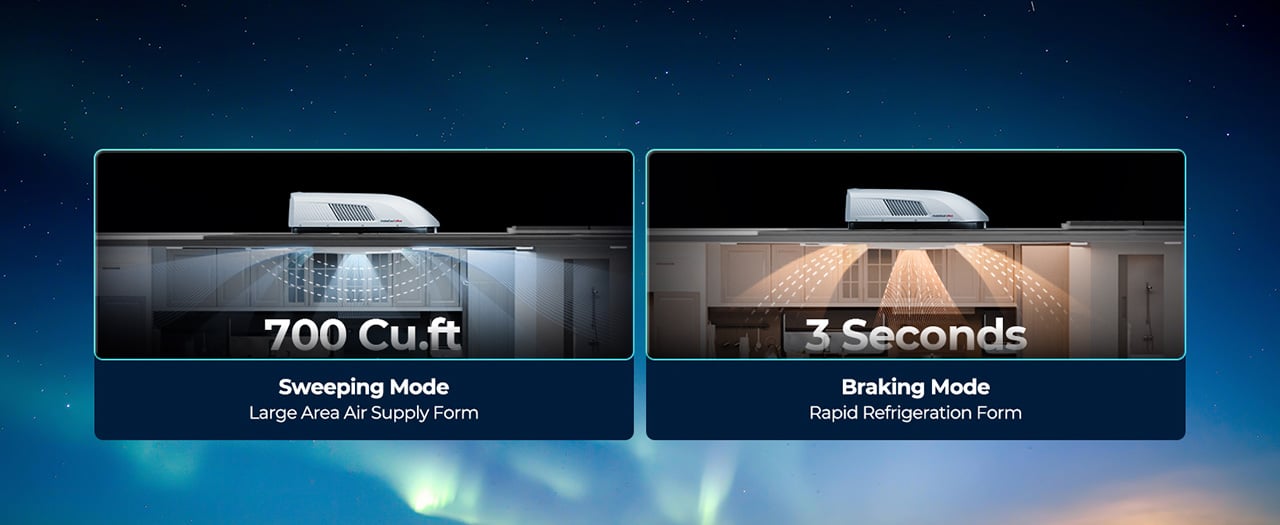
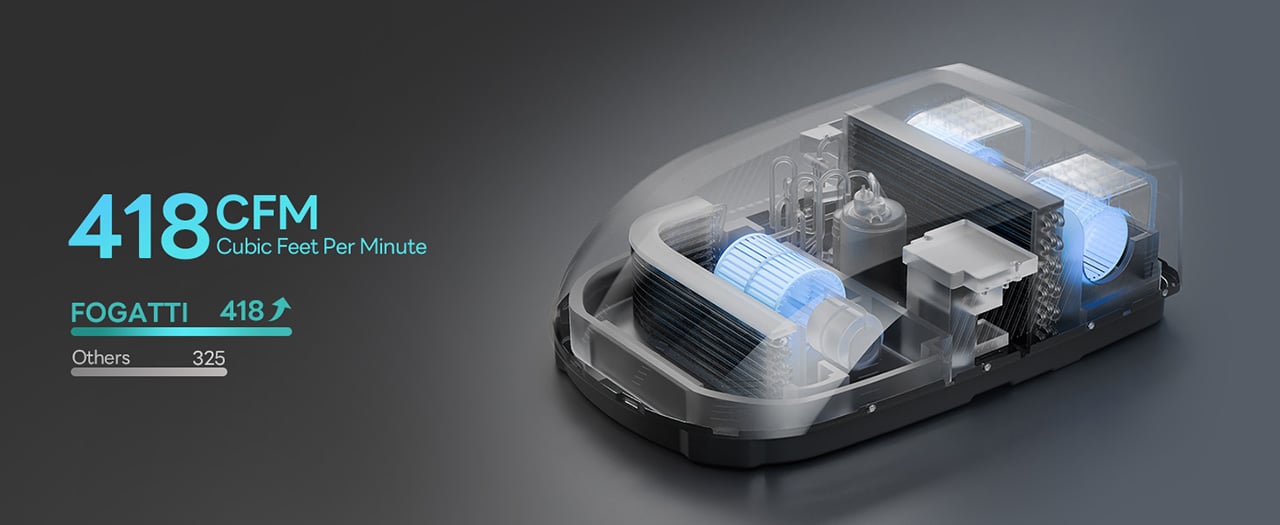
FOGATTI’s InstaCool Ultra approaches this with 418 CFM of airflow pushed through dual synchronous motors that sweep 85 degrees, creating whole-RV coverage in roughly 4 minutes according to the company. The 16,000 BTU cooling capacity targets spaces up to 600 square feet, which translates to RVs up to 36 feet long. The unit doubles as a heat pump delivering 12,500 BTU of warmth, giving it legitimate four-season capability without installing separate heating hardware. Heat pumps move thermal energy rather than creating it, which makes them roughly 3-4 times more efficient than resistance heating. The 9.2cc high-displacement compressor achieves an 11.8 EER rating (the Department of Energy considers anything above 10.7 high efficiency), operates at 43 decibels, and fits standard 14.25-inch roof openings without modification. At $1,399 (down from $1,759), it undercuts premium units while outspeccing budget alternatives.

Designer: FOGATTI

Click Here to Buy Now: $1299.99 $1759.99 ($460 off). Hurry, deal ends in 48-hours! Website Link Here.

The heat pump architecture sits at the center of what makes this unit different from the Coleman-Mach and Dometic systems that dominate most RV roofs. Traditional RV climate control treats heating and cooling as separate problems requiring separate solutions. The InstaCool Ultra runs a reversible refrigerant cycle, which means the same compressor and heat exchanger hardware that cools in July also heats in October. The system operates across an ambient temperature range from 23°F to 115°F, covering most of the continental United States outside of genuine Arctic expeditions or desert extremes that would make you question your life choices anyway.

The airflow system uses dual synchronous motors driving three fans to push 418 CFM through the cabin. For context, most 15,000 BTU RV air conditioners move 325-350 CFM. The extra volume comes from the triple-fan configuration rather than just running the motors harder, which keeps noise down while increasing air circulation. The motors drive an 85-degree sweep mechanism that oscillates the airflow rather than blasting it straight down in a single column. You can also lock the vents in place for targeted cooling when you want maximum airflow in one zone.

The reversible heat pump system automatically switches between cooling and heating modes, using compressor-based thermal transfer rather than combustion-based heating. Five segments run during milder conditions or when you’re just maintaining temperature overnight. This variable output prevents the temperature swings you get with single-stage systems that either blast full power or shut off entirely. The heat pump delivers 12,500 BTU of heating capacity, which sounds less impressive than the 16,000 BTU cooling until you account for the efficiency difference. A heat pump operating at a 3.4 coefficient of performance moves 3.4 watts of thermal energy for every watt of electricity consumed. Resistance heaters convert electricity to heat at a 1:1 ratio.

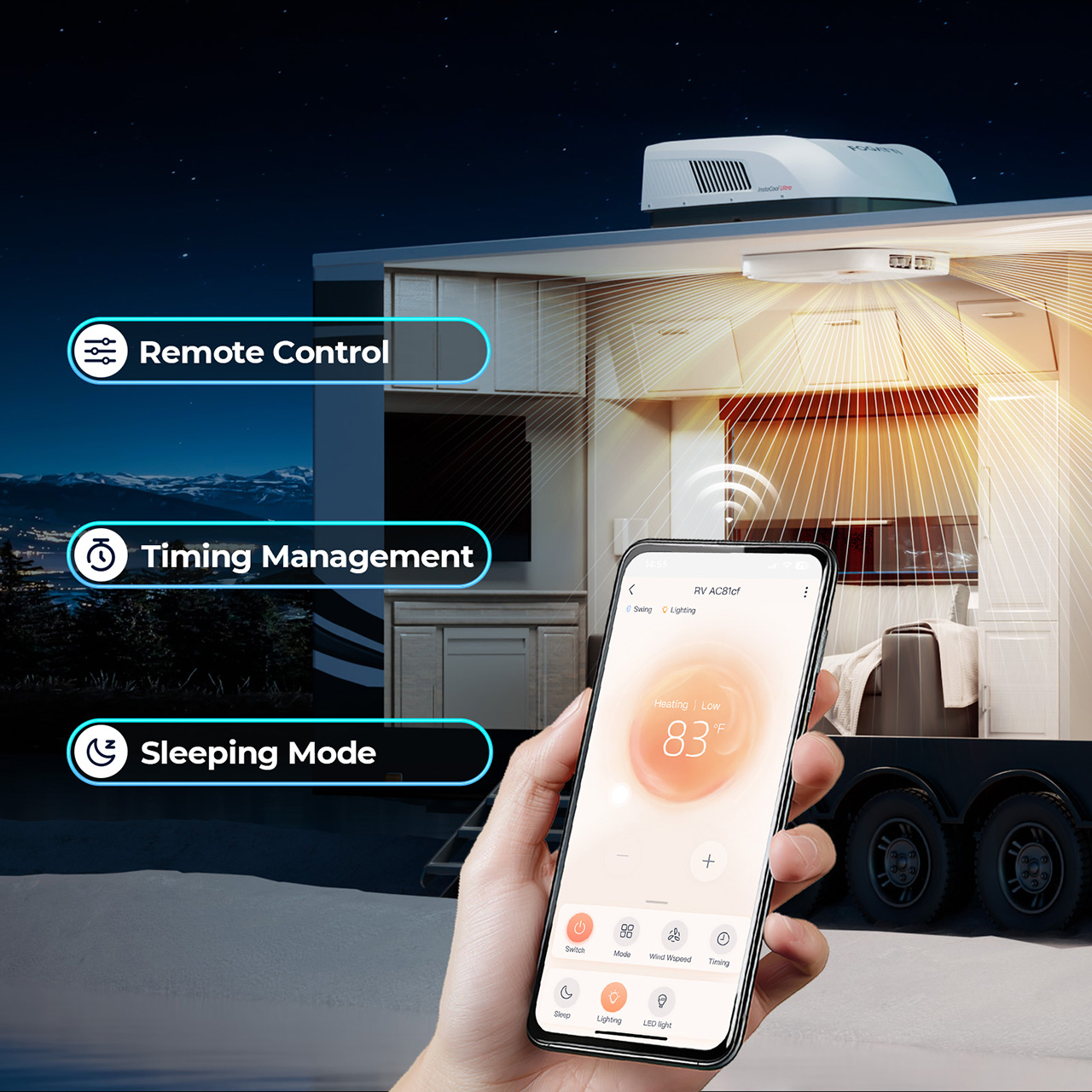
The control ecosystem offers three entry points: a physical remote, a touchscreen ADB panel mounted inside the RV, and a WiFi-connected smartphone app. The app lets you pre-cool or pre-heat the RV before you return from a day hike, which sounds like a luxury feature until you experience stepping into a 72°F trailer after spending six hours in the sun at Arches National Park.

The physical installation targets the standard 14.25-inch by 14.25-inch roof cutout that Coleman, Dometic, and Furrion units use, which means most RVers can swap this in as a direct replacement without modifying the roof structure. The streamlined profile measures 12.2 inches tall, which keeps it in low-profile territory. For comparison, the Dometic Brisk II sits around 14 inches tall, and the Coleman-Mach 15 runs closer to 13.5 inches. Those couple of inches determine whether you clear that 13-foot bridge on the backroad to your favorite dispersed campsite.

The 43-decibel noise rating puts this in the quiet category for RV air conditioners. Coleman-Mach units typically run 65-72 decibels. Dometic’s quieter models hit 50-59 decibels. The InstaCool Ultra’s 43-decibel claim would make it one of the quietest rooftop units available, though that figure likely represents the lowest speed setting rather than full-power operation.

The InstaCool Ultra ships for $1,399, down from the original $1,759 price point. That positions it between budget-tier units from Advent or RecPro (which run $700-900) and premium models from Dometic’s FreshJet or GE’s Profile series (which approach $1,400-1,600). The unit currently ships in white, fitting standard non-ducted installations. What you’re really buying here is year-round climate control without installing two separate systems or draining your battery bank every time the temperature drops. Heat pump, real airflow, quiet operation, and an efficiency rating that lets you boondock longer. For RVers chasing fall colors in the Rockies or spring wildflowers in the desert, that combination finally exists at a price that doesn’t require financing.

Click Here to Buy Now: $1299.99 $1759.99 ($460 off). Hurry, deal ends in 48-hours! Website Link Here.

The post Stop Buying a Separate RV Heater. This 16,000 BTU RV Air Conditioner Does Both first appeared on Yanko Design.

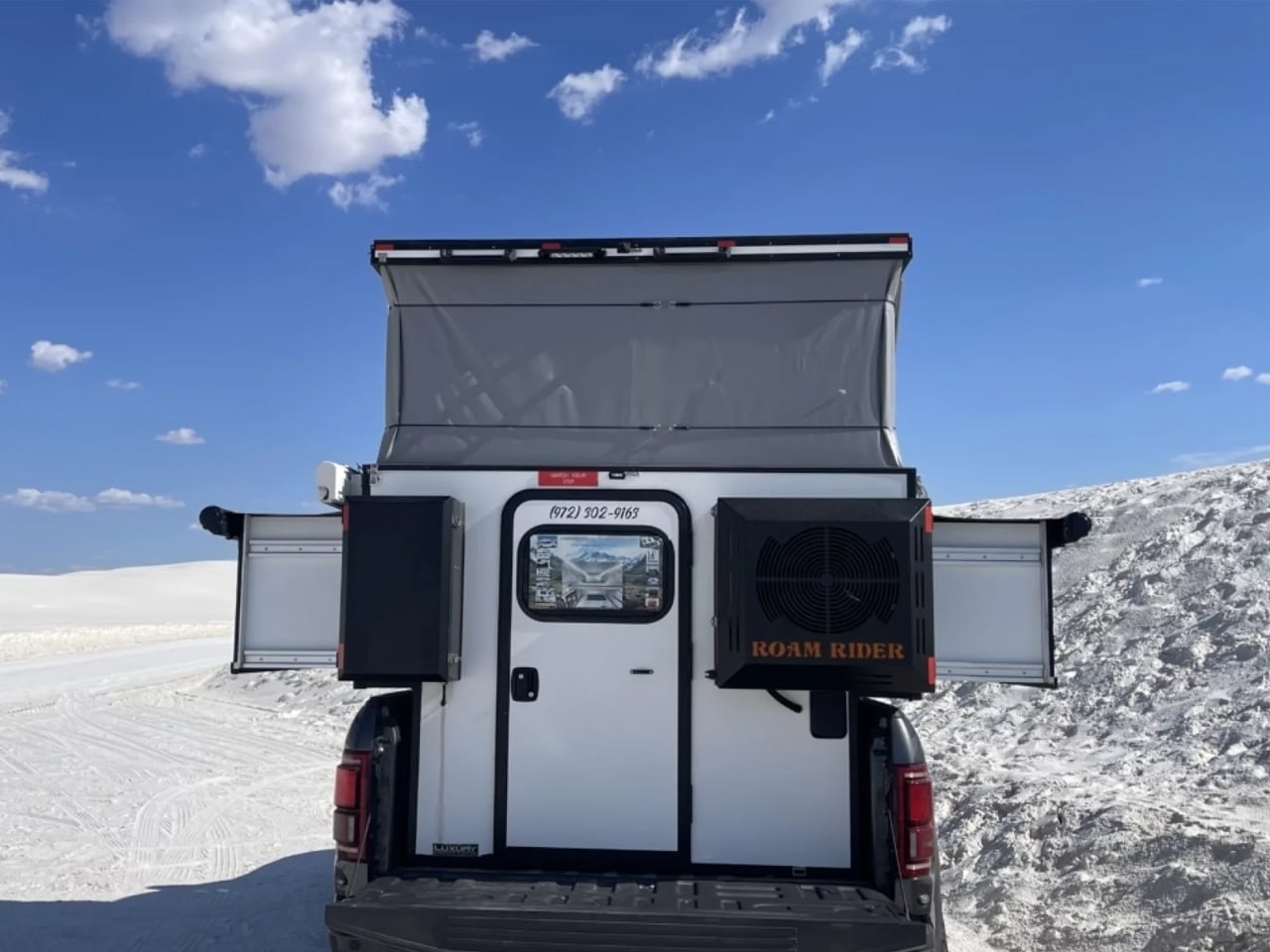
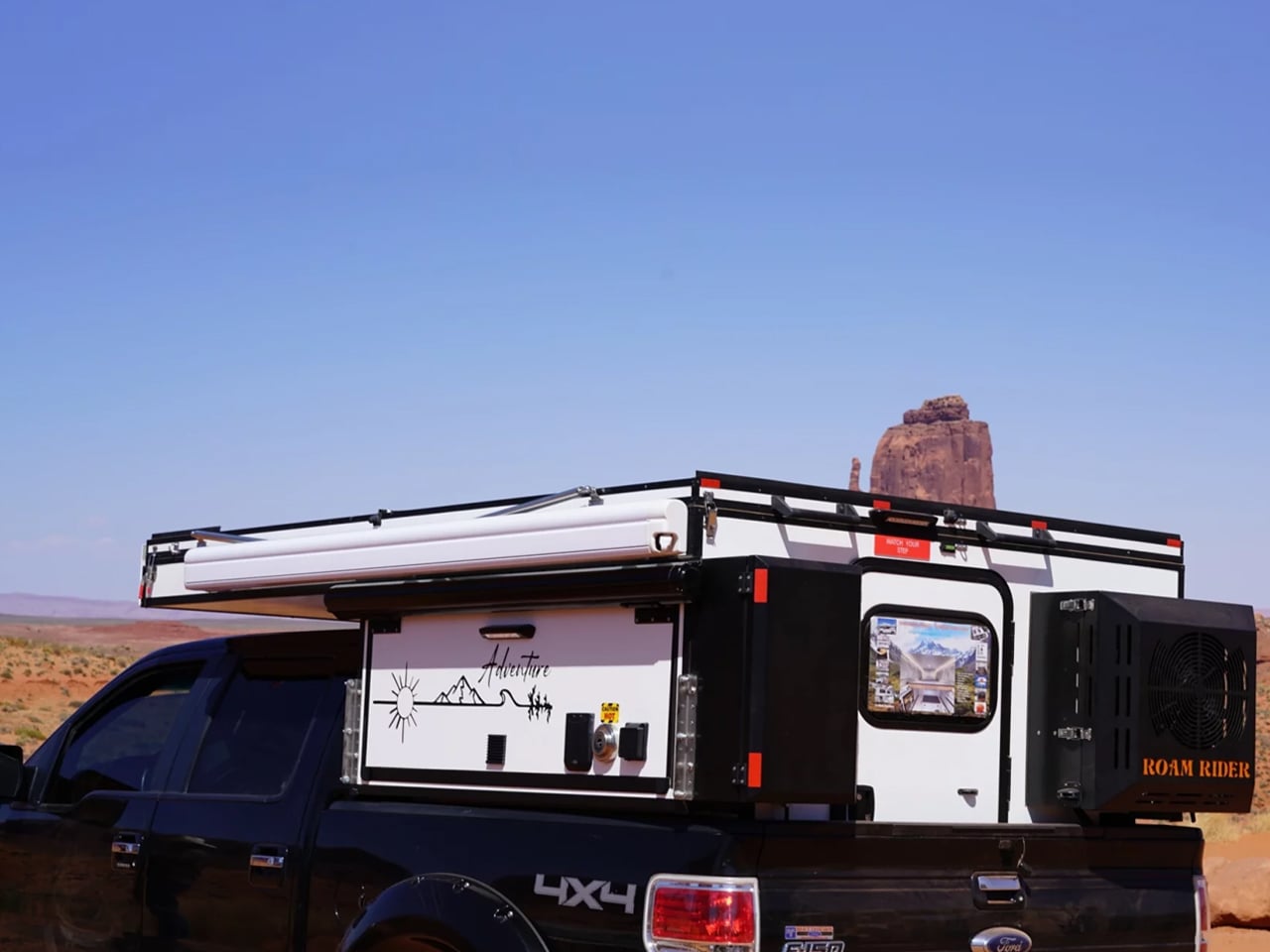
Roam Rider SL pickup camper pops up to create headroom, slides on both sides for more living space

Silver pickup truck with a mounted rooftop tent in a desert at sunset, blue sky.

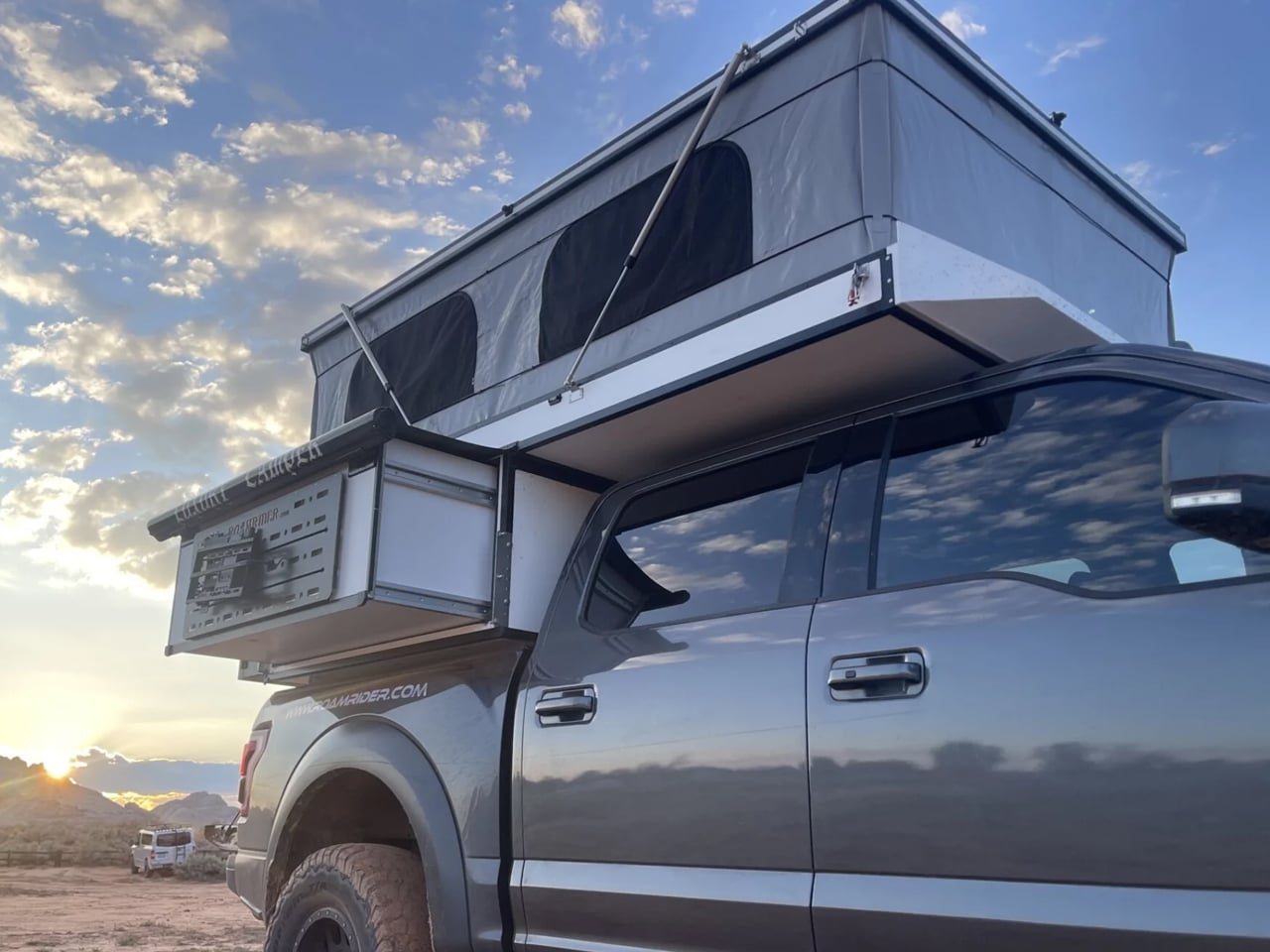
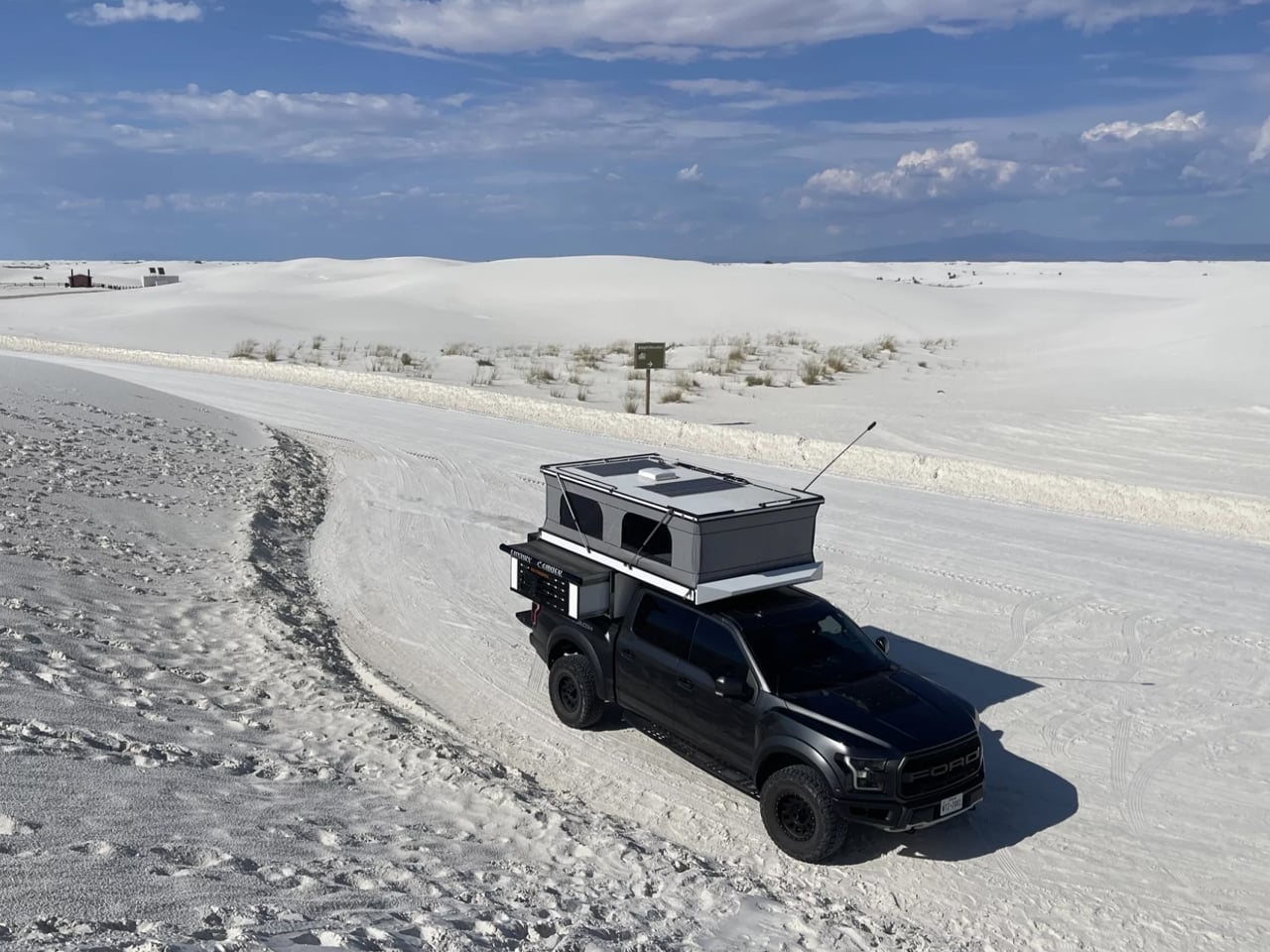
There are pickup campers that extend outwards or those that pop-up. Now there is a third kind. The Roam Rider – an off-grid camper – that pops up to create headroom, and slides out (on either side) to increase the living space. Along with serious off-grid power capacity, the fascinating truck camper is also designed for all-season comfort. So, you can camp in the remotest location without having to worry about power and amenities, or having to give up your living convenience.

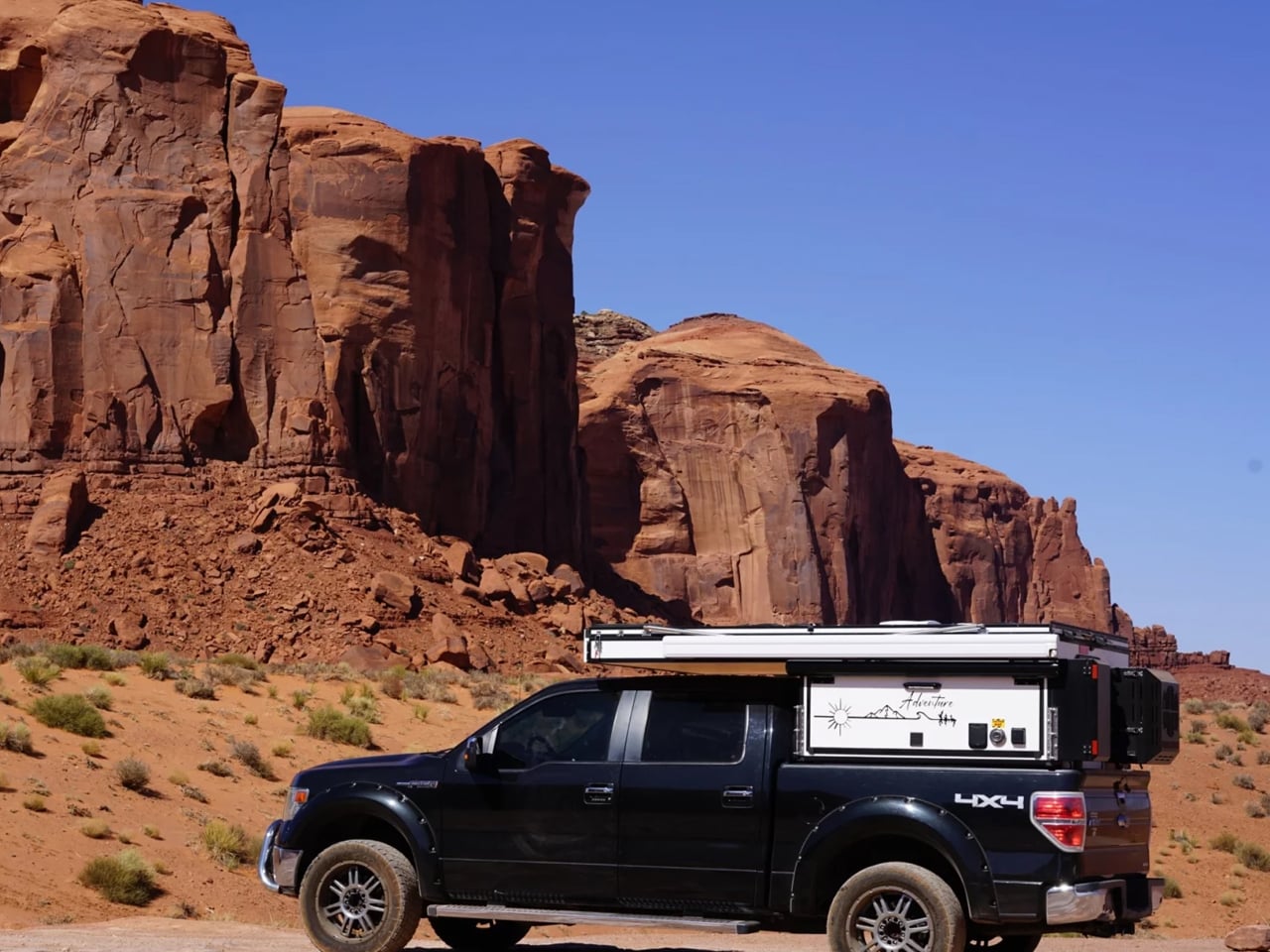
A twin-slide pop-up pickup camper, the Roam Rider SL, is designed primarily to sit atop 5-foot 6 inches truck bed. The company offers a customization option to tailor it to your truck bed requirements. The camper in its ready size measures roughly 12 ft long, 6 ft wide, and 5 ft high.

Designer: Roam Rider

Black pickup truck with a rooftop camper parked in a desert landscape of red rock formations under a blue sky.

White pickup with a raised rooftop tent against a bright blue sky and white snow dunes behind.

With an empty weight of 1,300 lbs, the Roam Rider SL is built in McKinney, TX, as an integral part of the company’s tough yet comfortable truck campers’ portfolio, made for real adventures. For its durability, the camper features an aluminum and fiberglass exterior, and XPS foam sheets sandwiched for insulation. Placed atop a truck bed, the Roam Rider SL feels snug. One can access the brightly lit interior of the camper through its rear entry door.

Camper van interior with white marble-look cabinets, a small fridge and drawer, grey cushioned seating, and quilted insulation above windows; compact kitchenette area on right side.

Camper van bedroom area with a raised wooden bed frame, grey mattress, and quilted silver insulation walls with side windows behind pleated blinds.

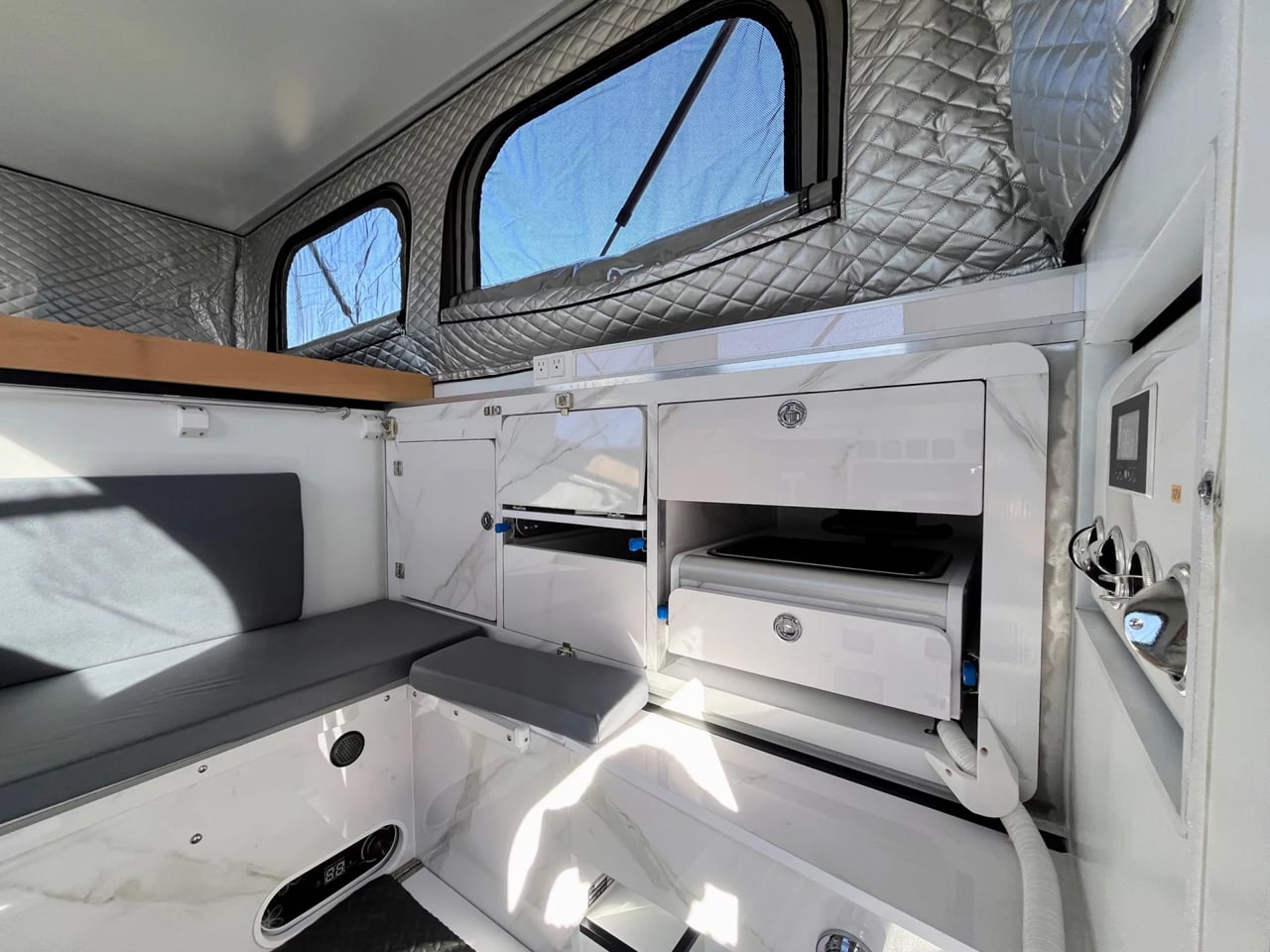
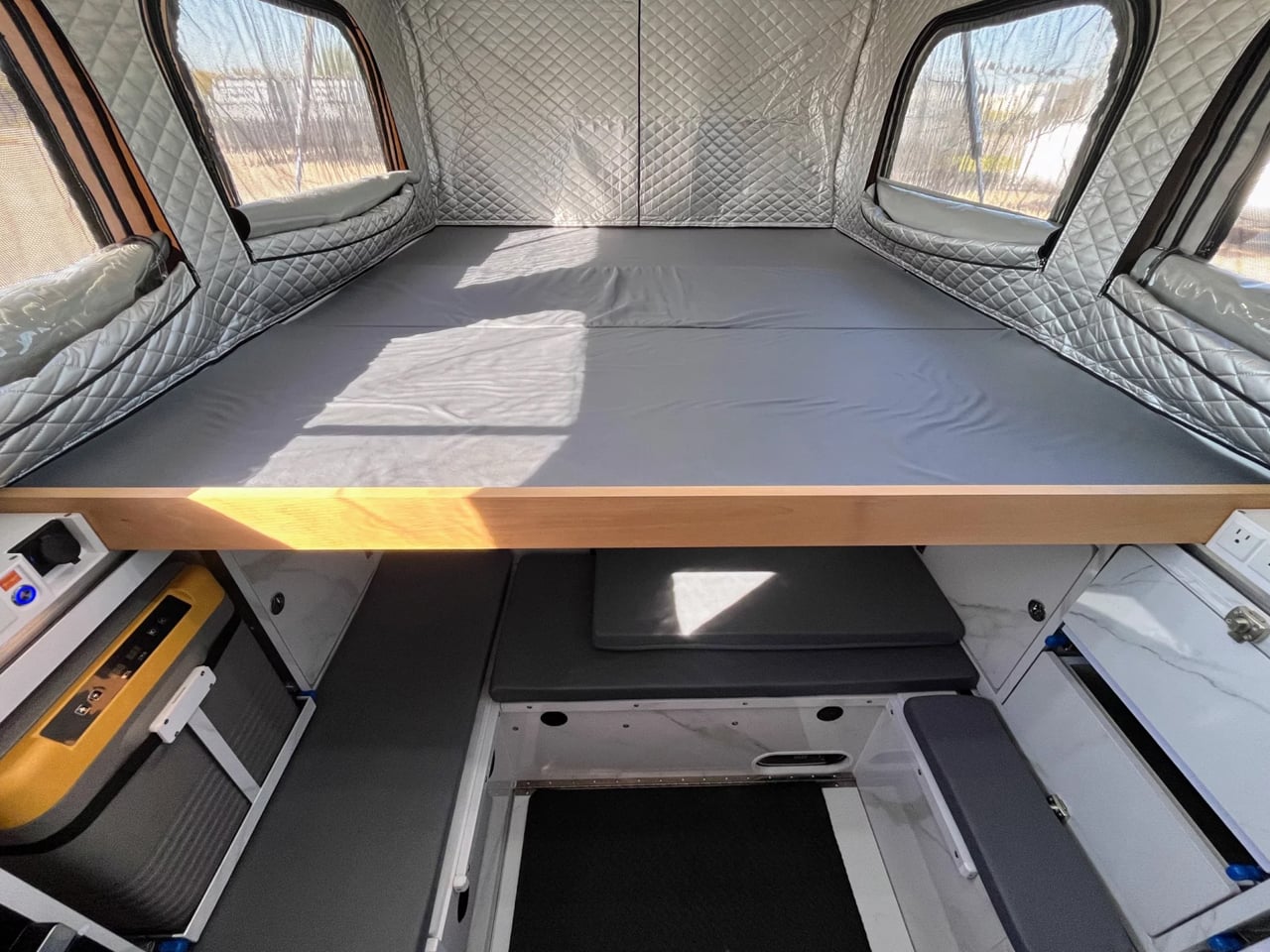
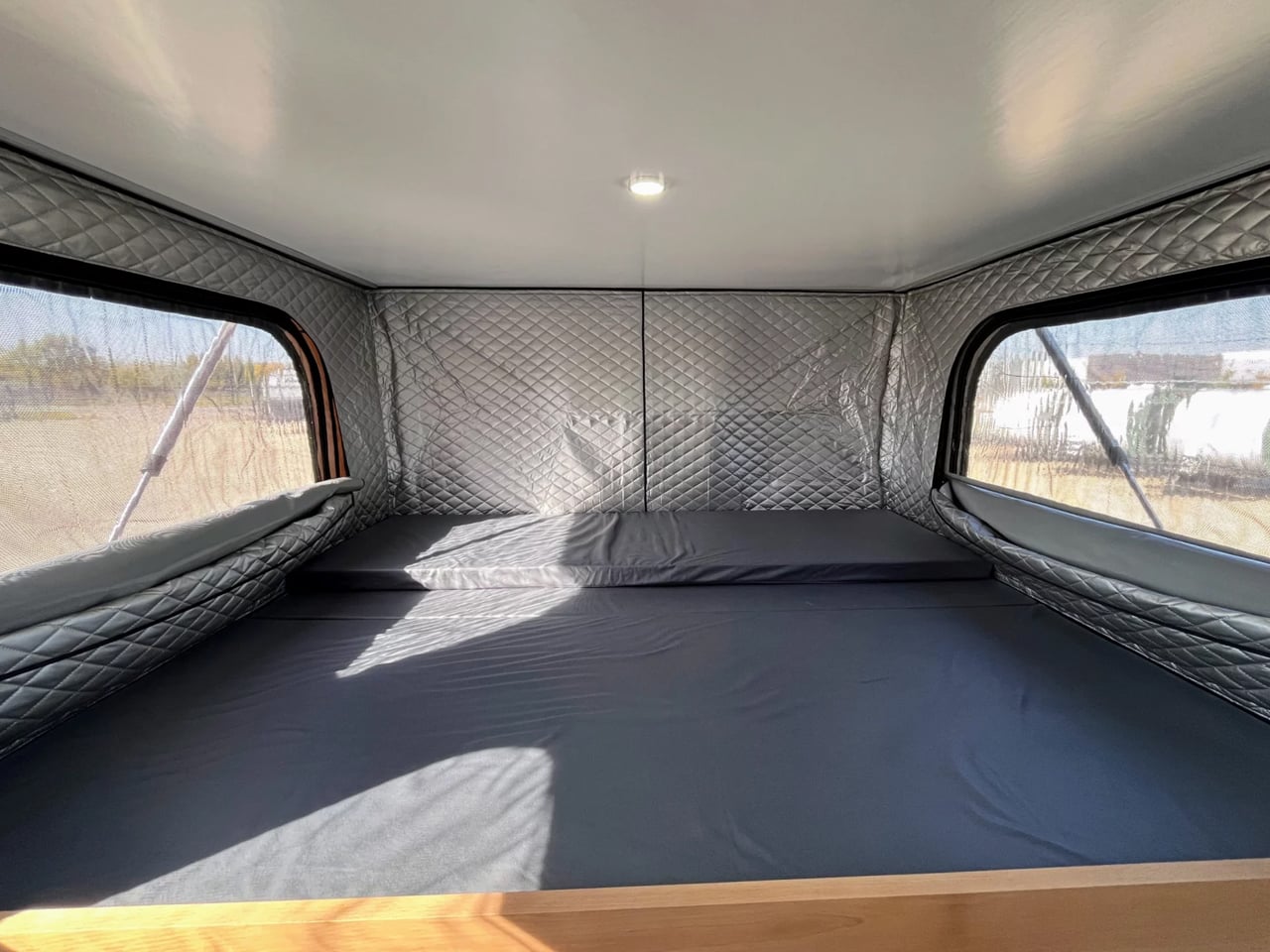
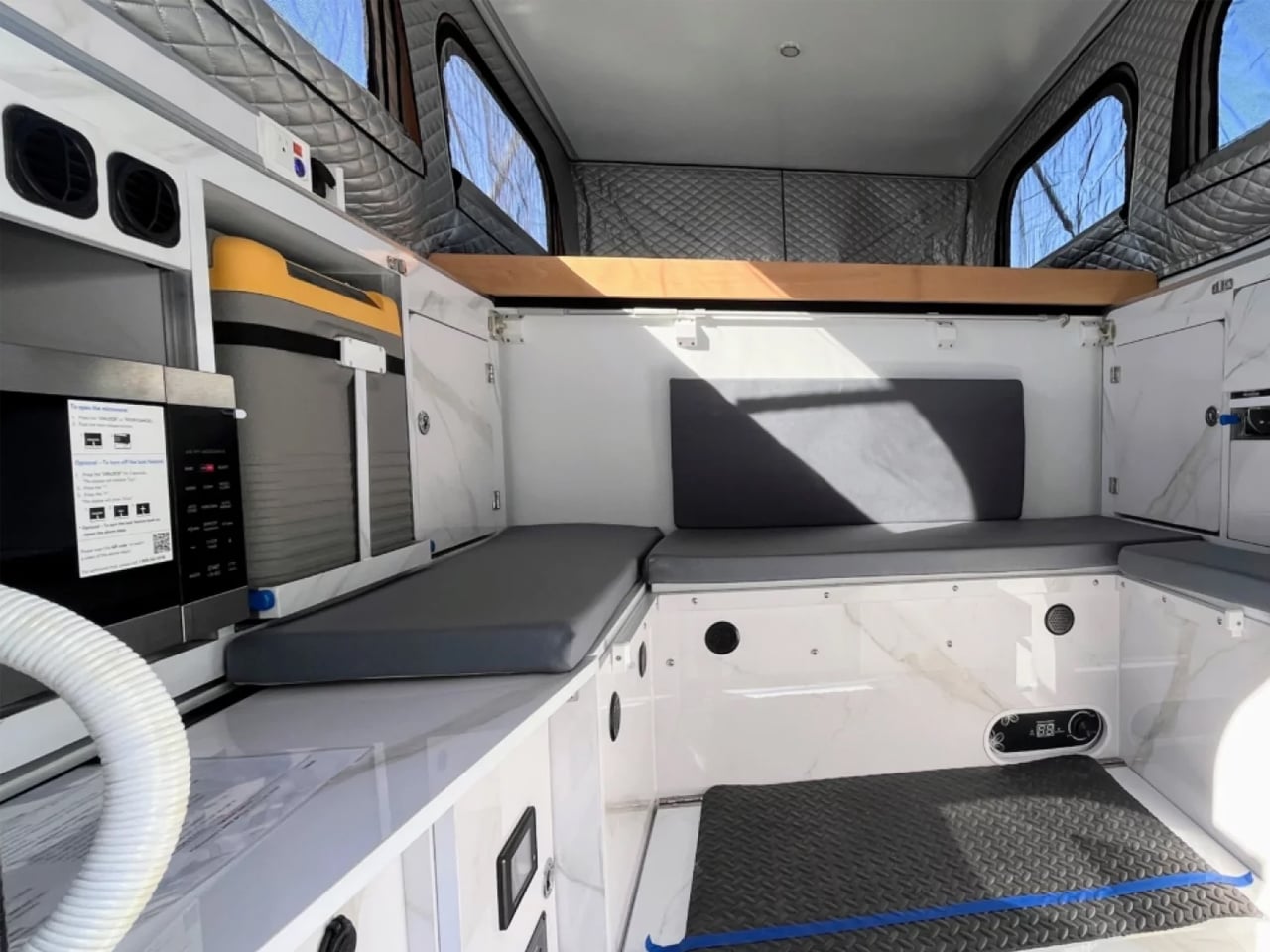
The natural lighting inside is ensured by a couple of mesh windows on each side of the pop-up camper. The pop-up roof itself is made of canvas and is supported by four stainless gas struts. The entire cabin from the walls to ceiling is insulated, while the eventful twin slide-out on either side gives the Roam Rider SL a unique vibe. It is complemented by sliding shelves and converting furniture, which easily adapt to the changing environment created by the camper’s sides sliding in and out.

Aircraft galley with a small induction cooktop, sink, and pull-out counter for food prep and meals.

Cozy camper van sleeping area with padded silver quilted walls, a wide gray mattress, and windows on both sides.

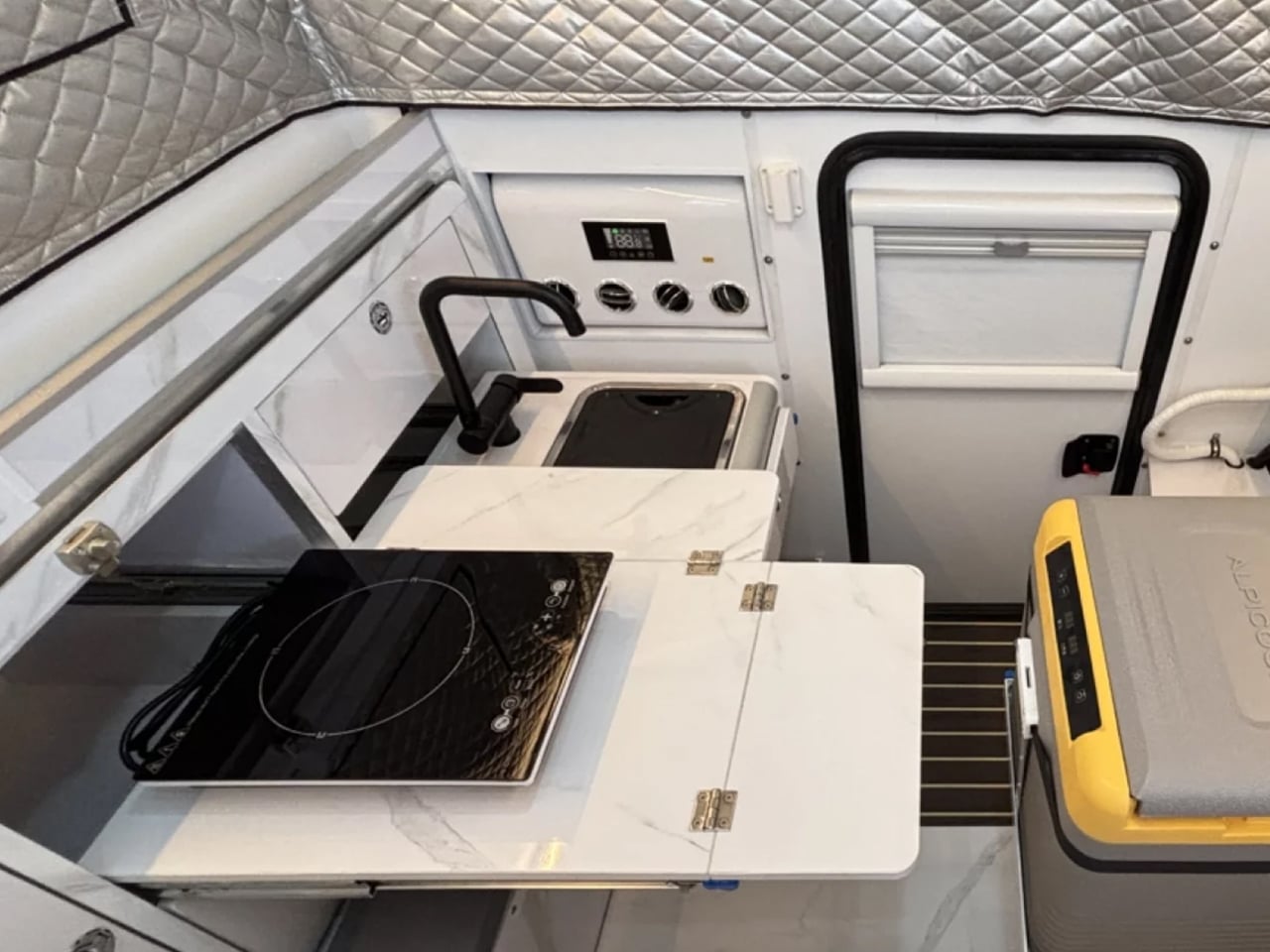
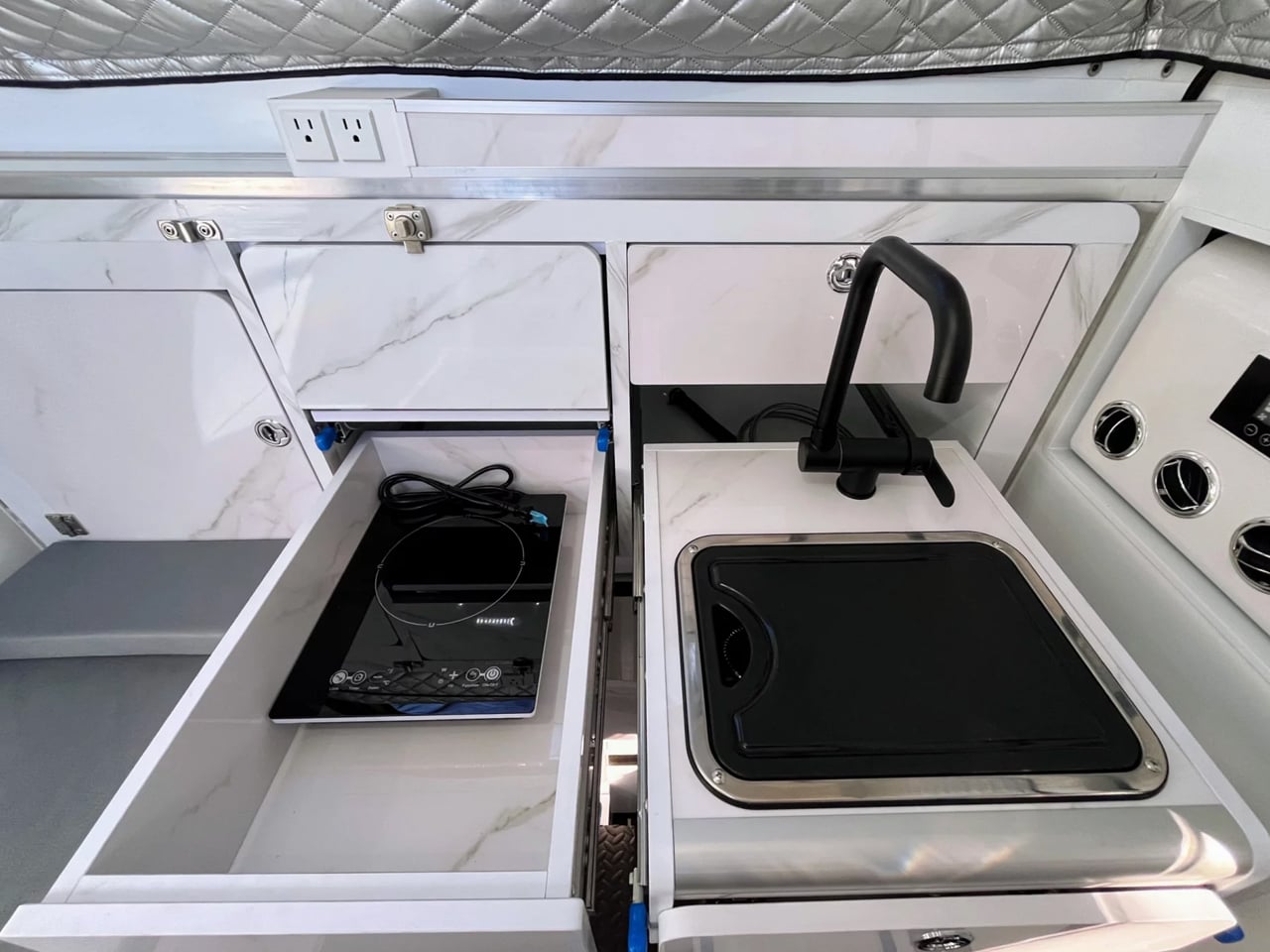
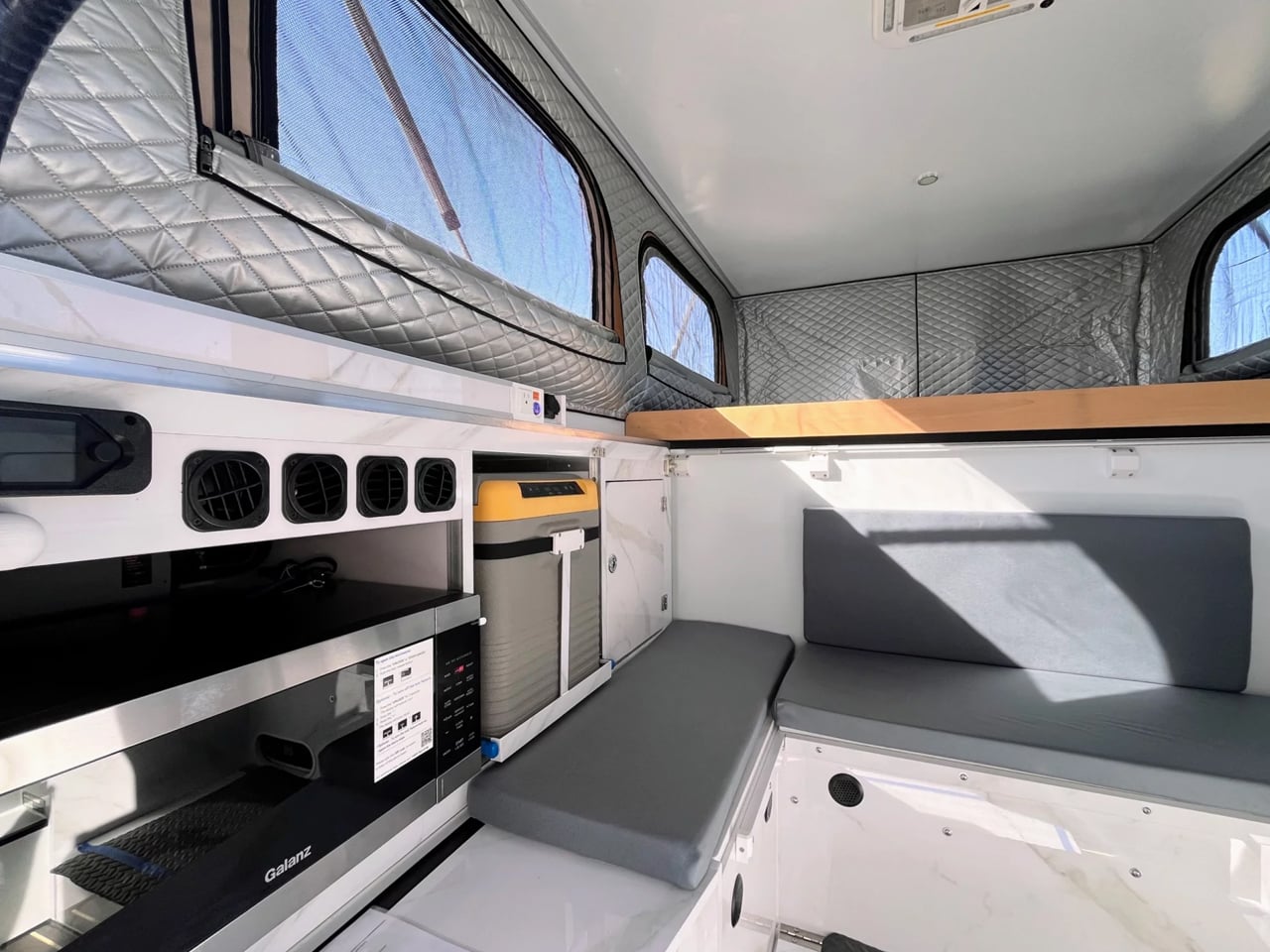
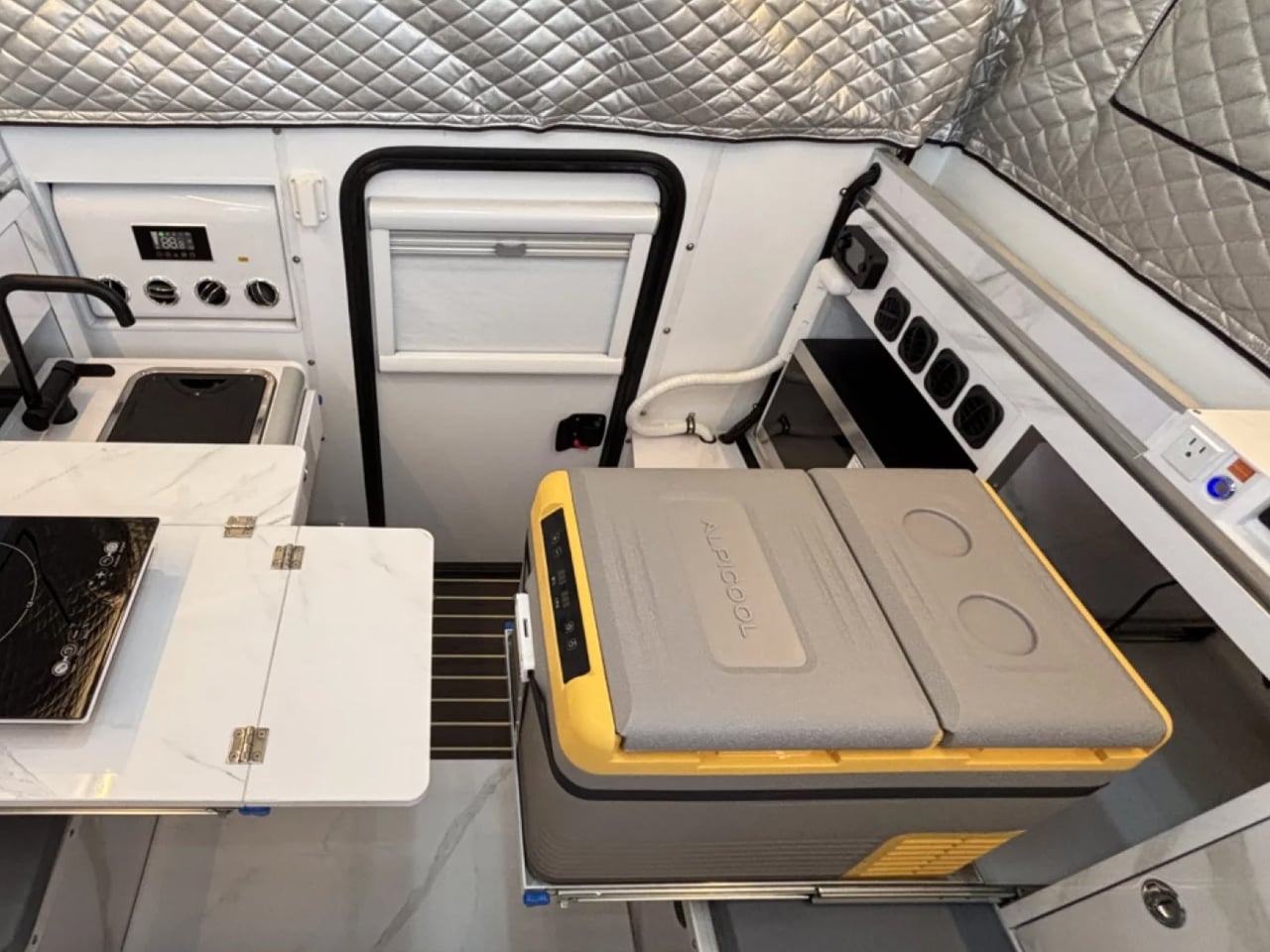
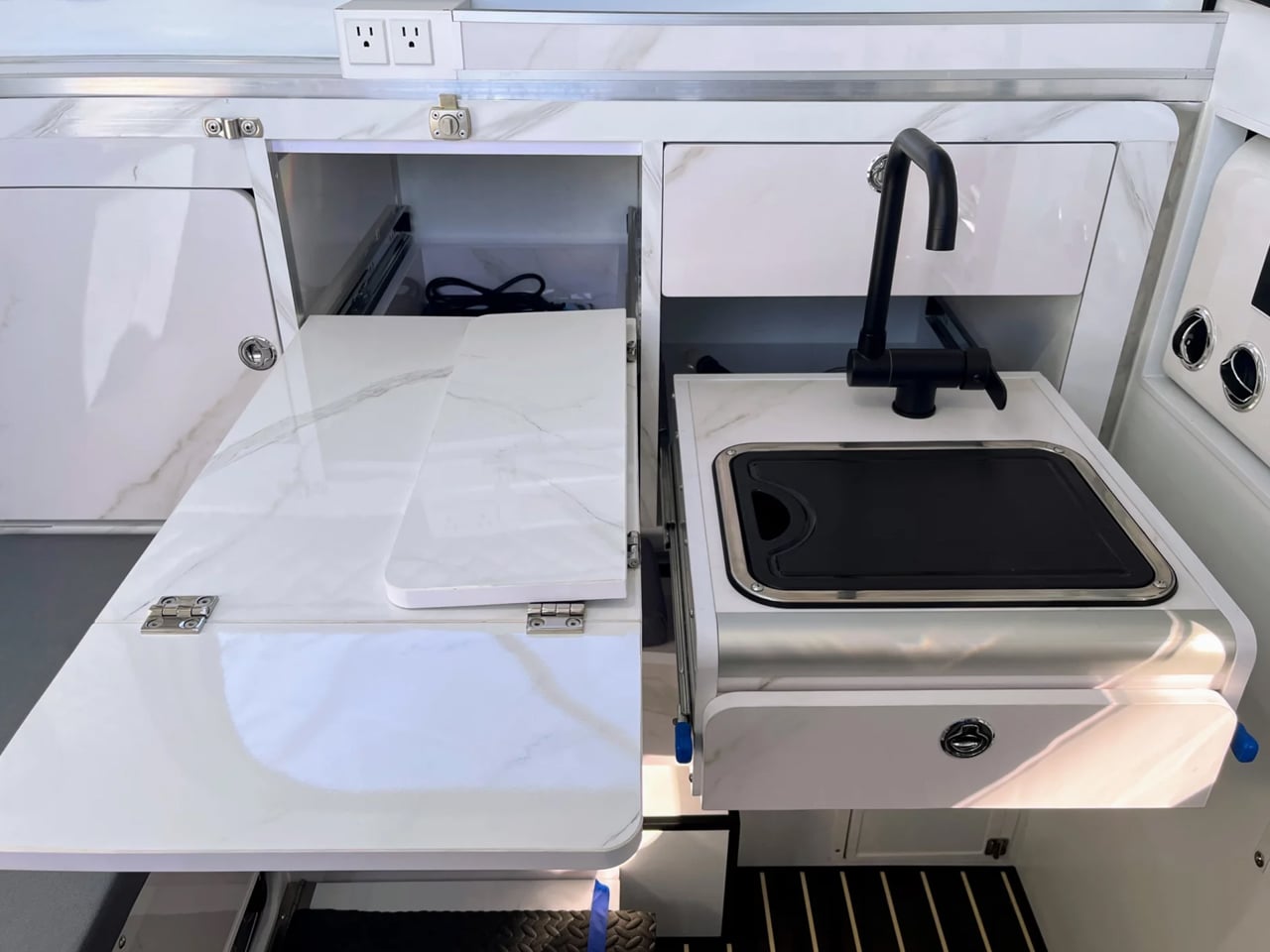
The Roam Rider SL has an interesting living environment, which is provided with a capable kitchen setup complete with appliances and amenities. The kitchen space has a 1500-watt induction cooktop sitting on a drop-down table, while a 12V dual zone refrigerator features on a sliding tray. The slide-out sink and folding faucet take care of the cleaning needs, and a 24-gallon freshwater tank onboard provides the needed water. An adjacent pull-out dining cum work table is where the prepared food is consumed.

Compact galley aboard a boat or RV with marble counters, a pull-out induction cooktop in a drawer, and a black gooseneck faucet over a sink.

Interior of a compact camper van with a kitchenette, grey cushioned seating, and quilted aluminum walls around windows.

The cabin is designed for sleeping up to 3 campers conveniently. The main slide-out bed can fit a couple, while the second, convertible bed can sleep one person. During the day, the single-person bed becomes a cushioned sitting area for up to four people. You can find multiple storage options inside the Roam Rider SL. Two slide-in cabinets, two drawers, a floor storage box, and a vertical storage box.

Interior of a compact vehicle bathroom with dark wood plank flooring, a white sliding door, and a blue-lit control panel on the right.

Interior of a modern ambulance with white cabinets, gray cushions, quilted walls, and a black textured floor

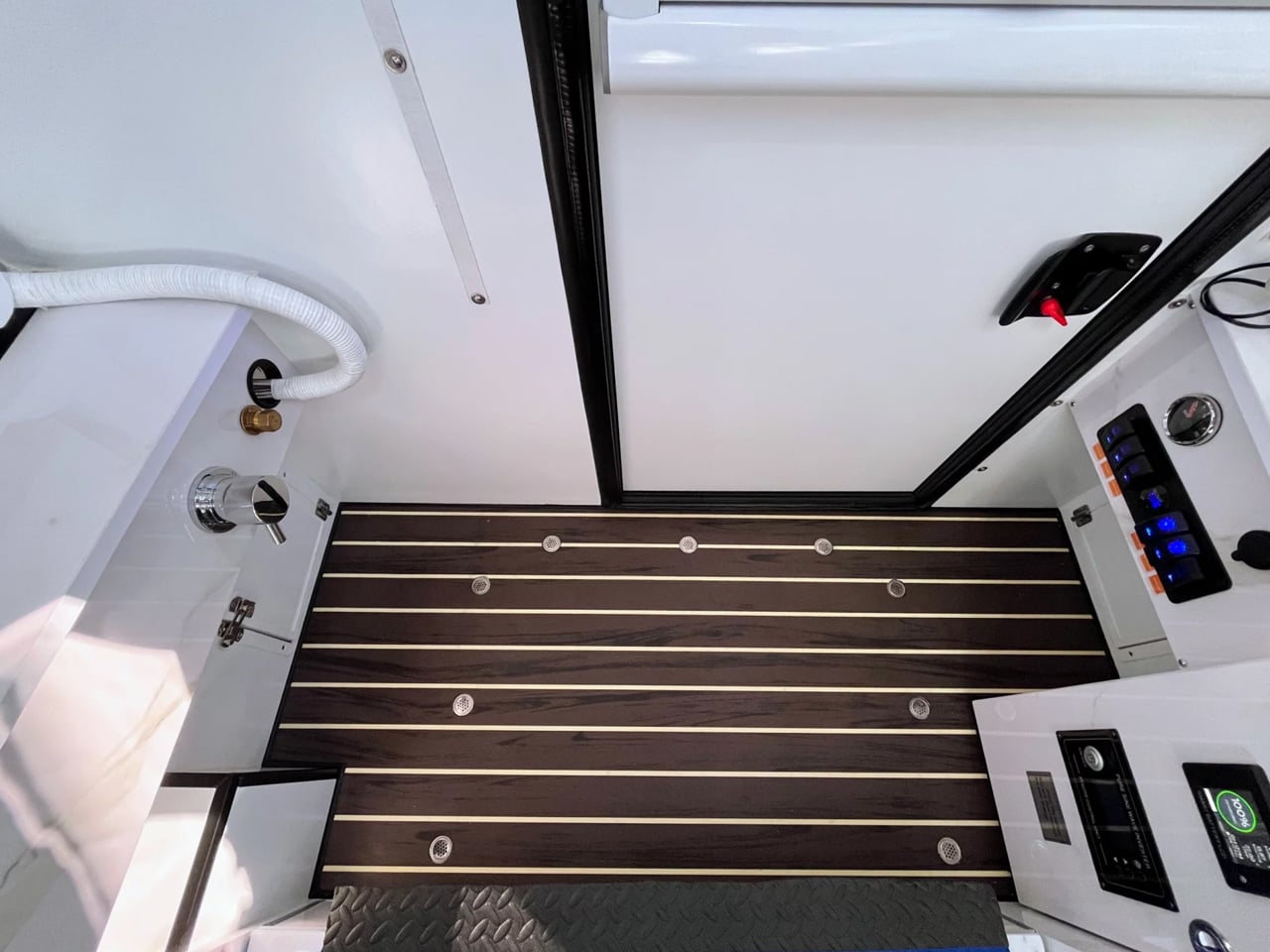
The camper is made for all-season adventures with a 7500BTU air conditioner and a 17,000 BTU diesel heater. A 4.8-gallon external diesel fuel tank is mounted on the back, which can provide fuel to the heater when you’re on an extended holiday in the winter. The camper is provided with a showering system, but there is no mention of a portable toilet inclusion. Though we learn that it features a 400Ah LiFePO4 lithium battery, paired with 320W solar panels. It also features a 3000-watt pure sine inverter, all for a starting price of $29,995.

Black Ford pickup with a rooftop tent parked on white sand dunes under a blue sky, a desert campsite setup on the vehicle's bed.

Camper van kitchenette with a fold-out marble counter, sink, stove, and a yellow Alpicool portable cooler on the floor beside the counter.

White marble galley with a fold-out counter extension, open storage underneath, and a built-in grill with a black gooseneck faucet on the right side.

Black pickup truck carrying a white camper shell with rooftop gear in a desert landscape, rock formation in the distance


The post Roam Rider SL pickup camper pops up to create headroom, slides on both sides for more living space first appeared on Yanko Design.

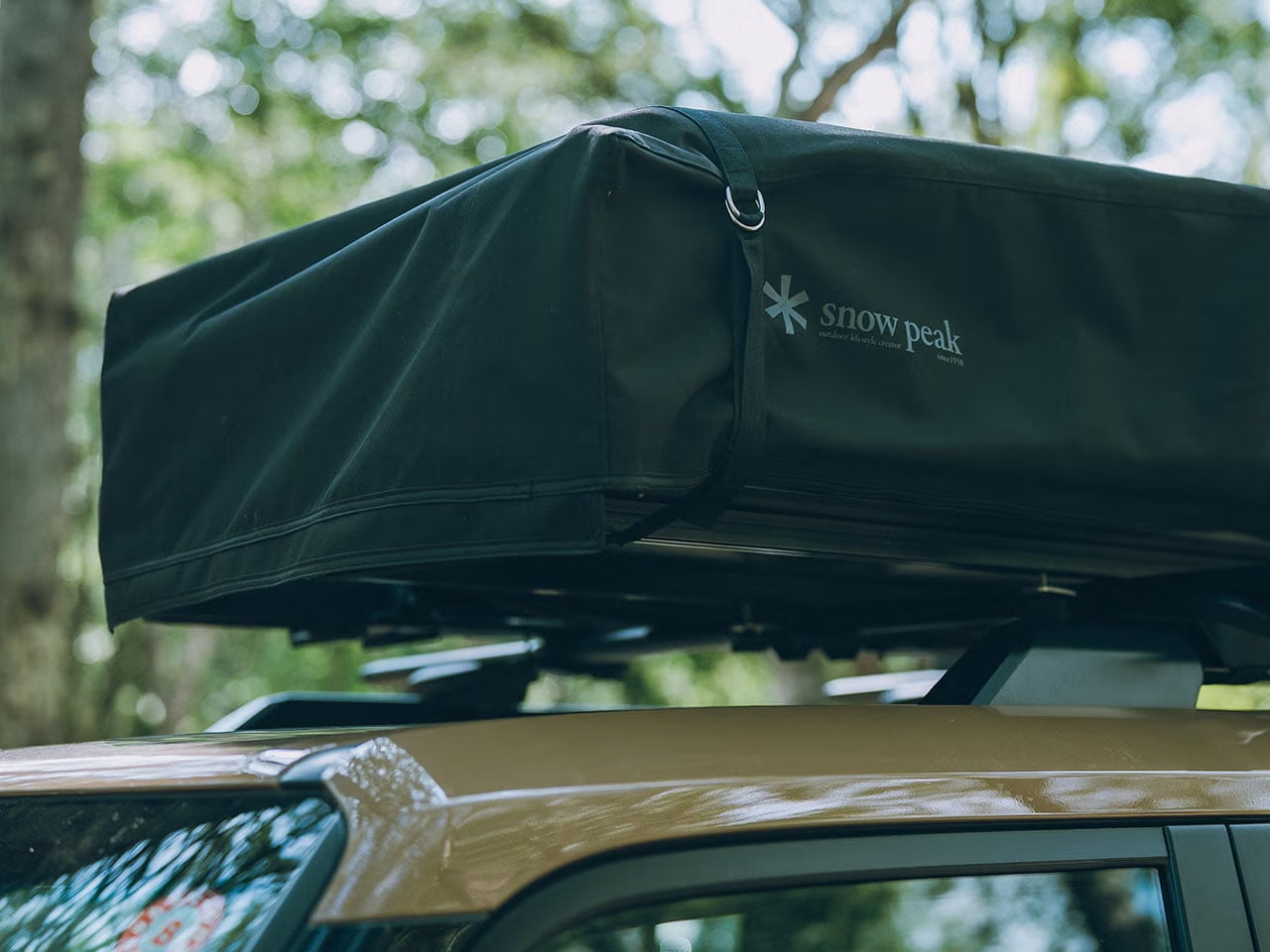
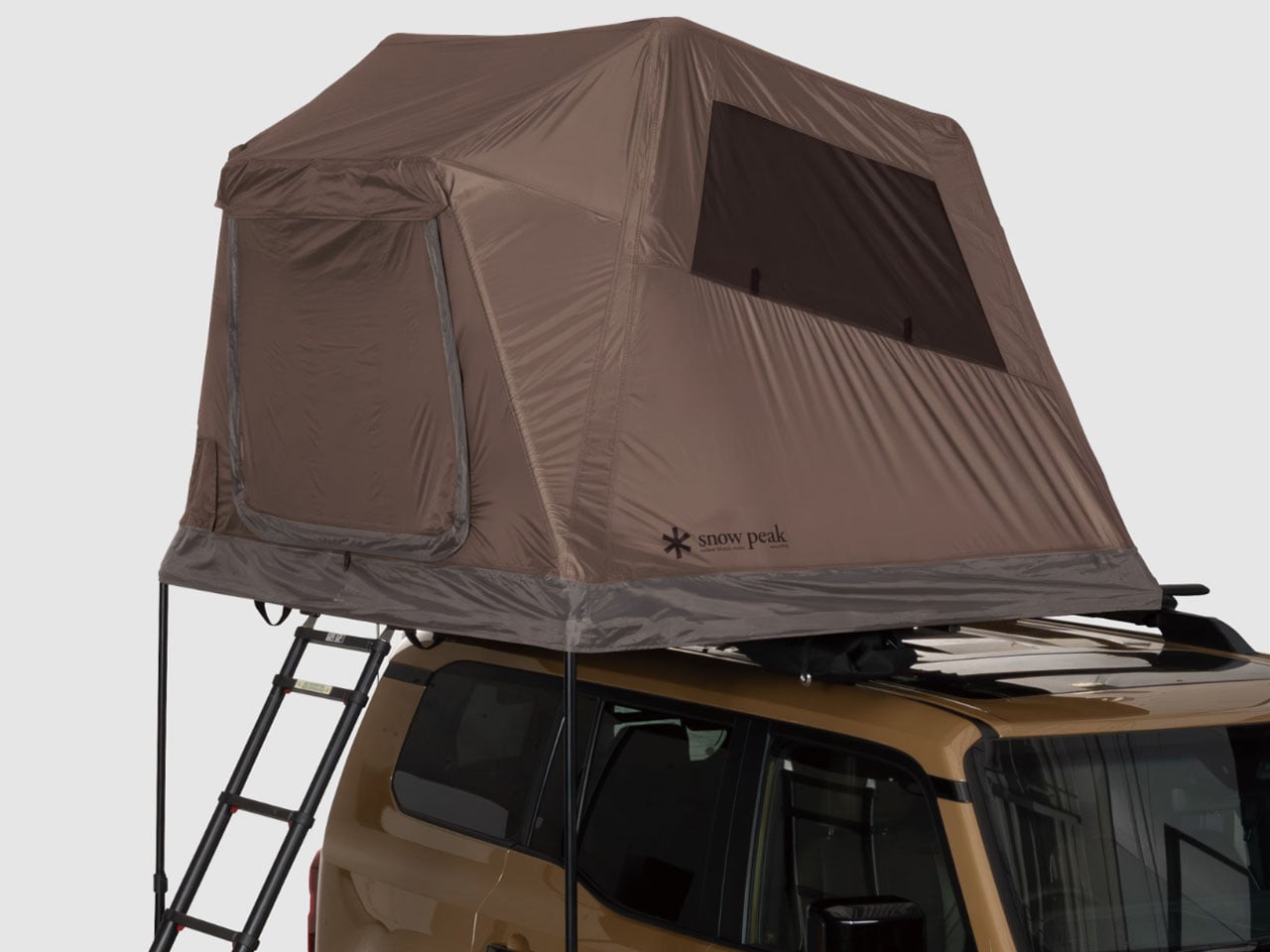
Snow Peak’s Inflatable Field Rise Rooftop Tent Sets Up in Minutes

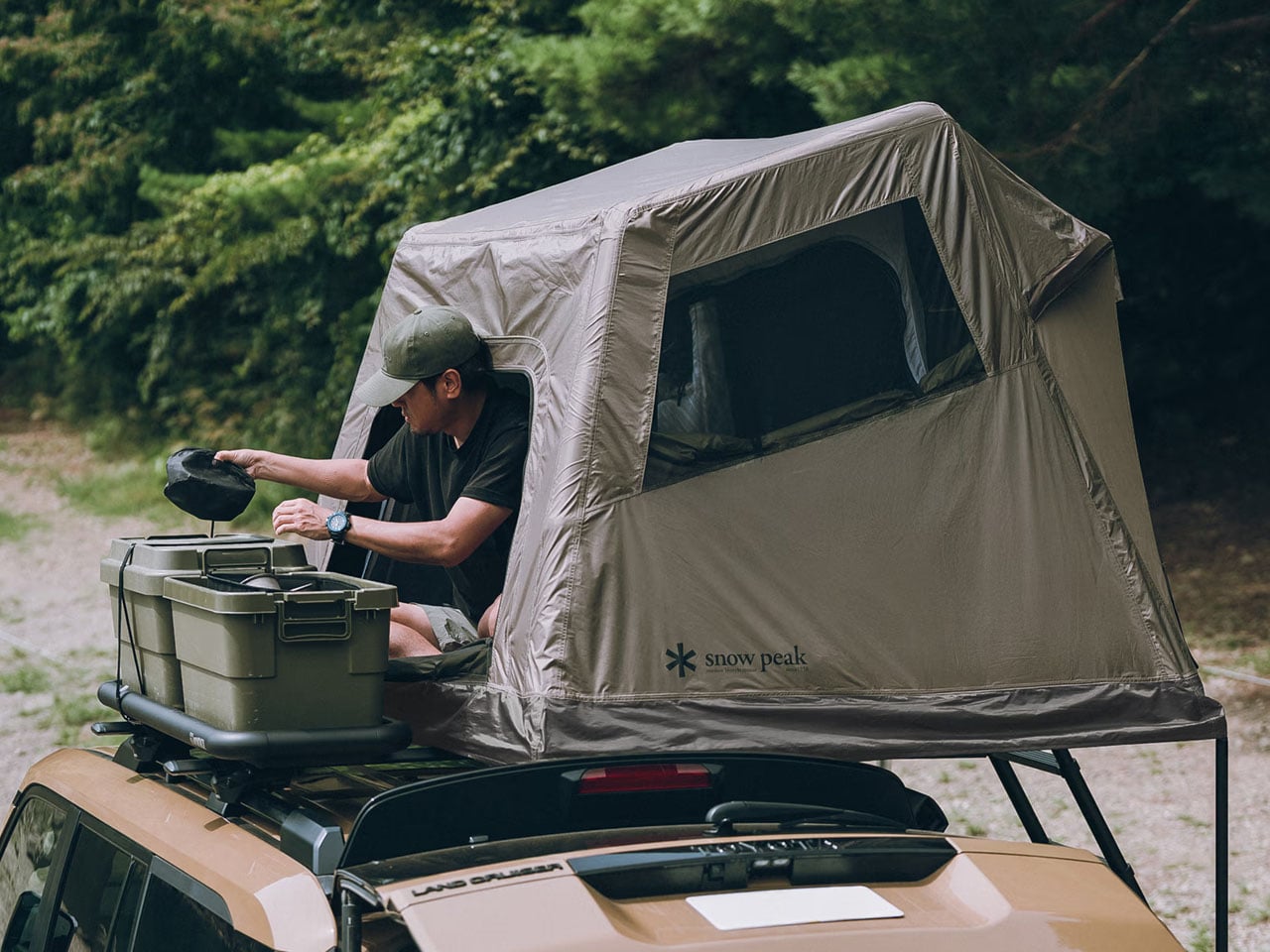
The rooftop tent market is already a saturated one. When you think there is little scope for more innovation in design, someone proves us wrong. This time, it is the Japanese Snow Peak, which has released a rooftop tent with inflatable frames and a design to complement your outdoorsy style.

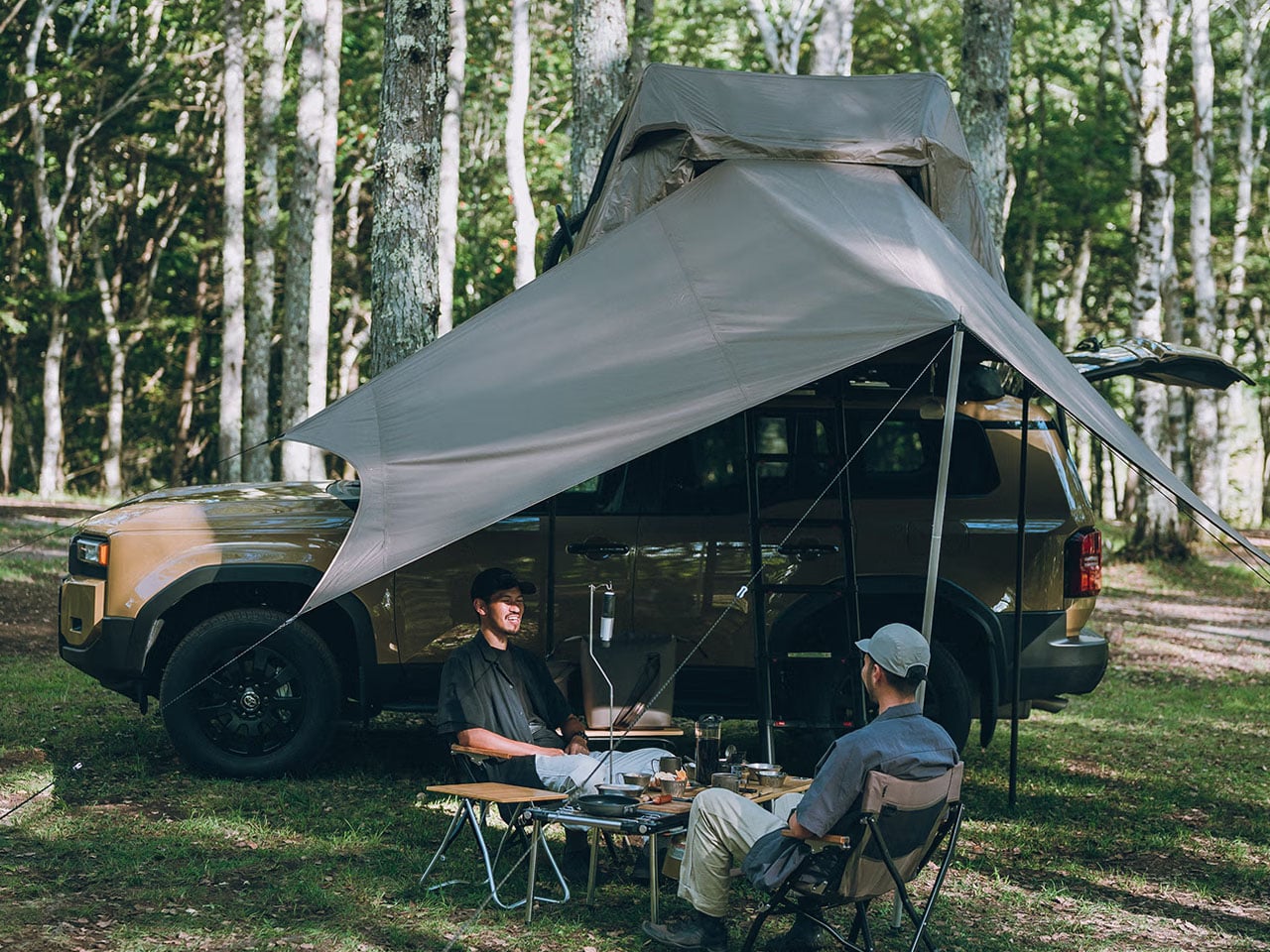
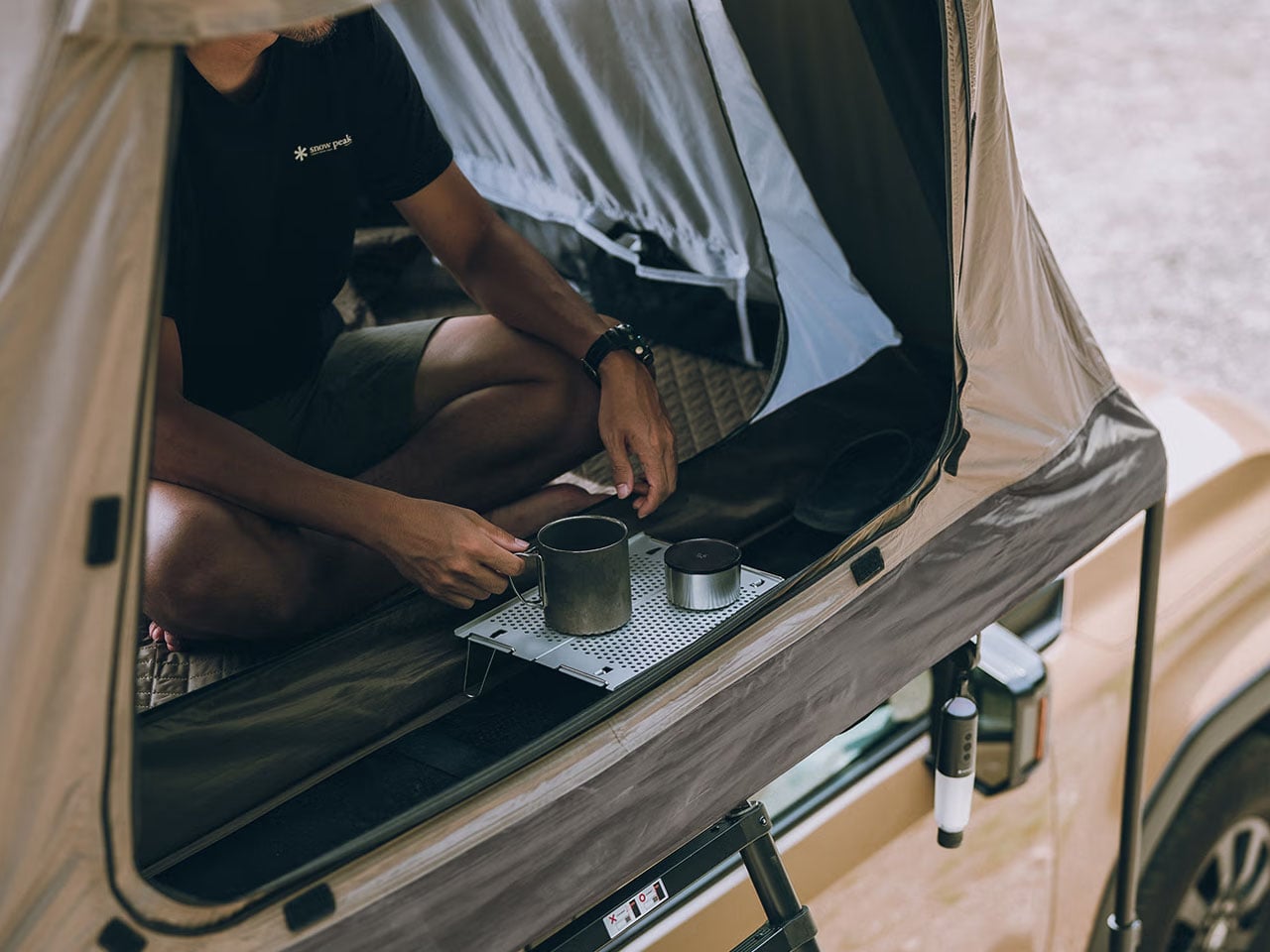
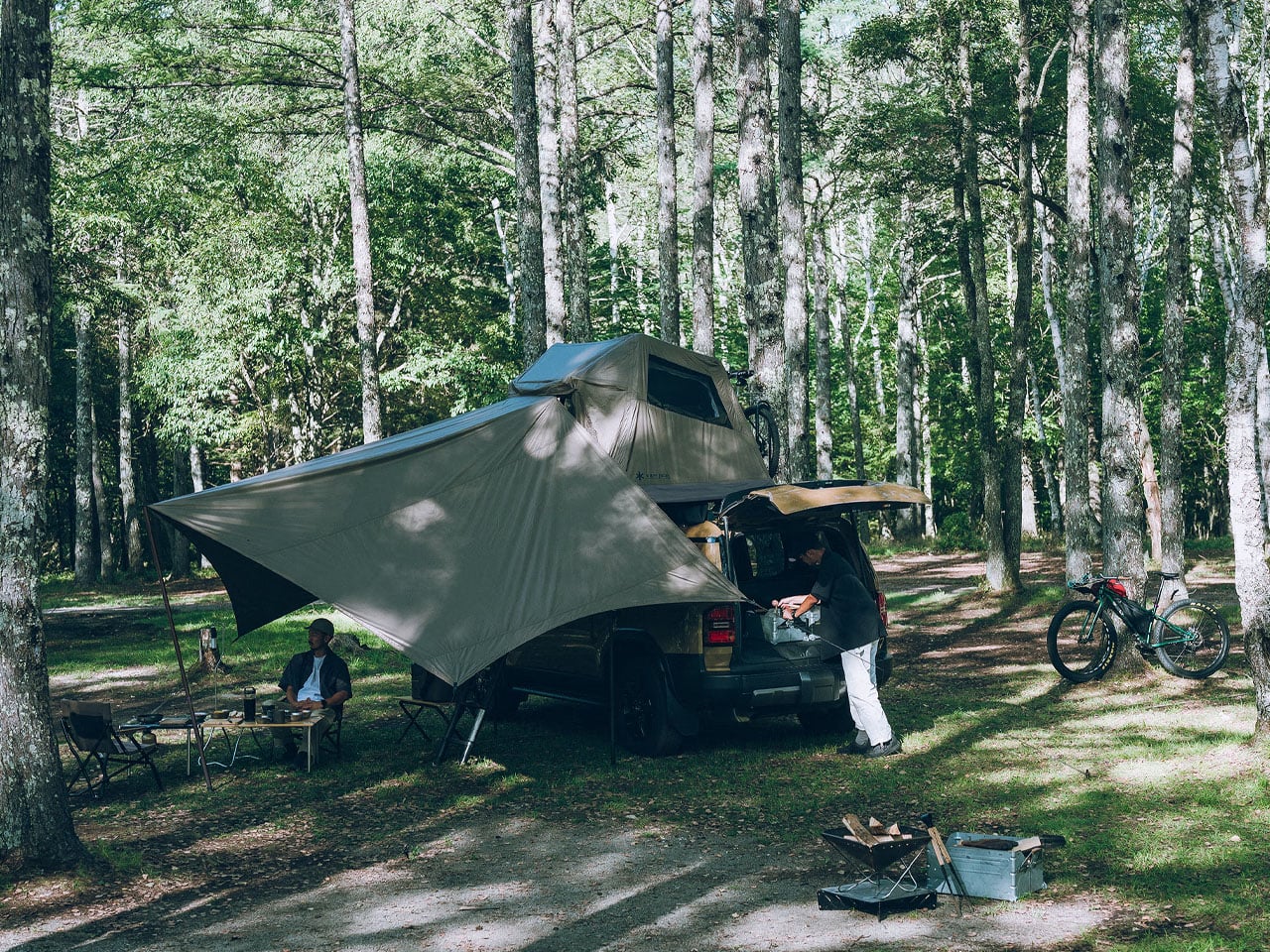
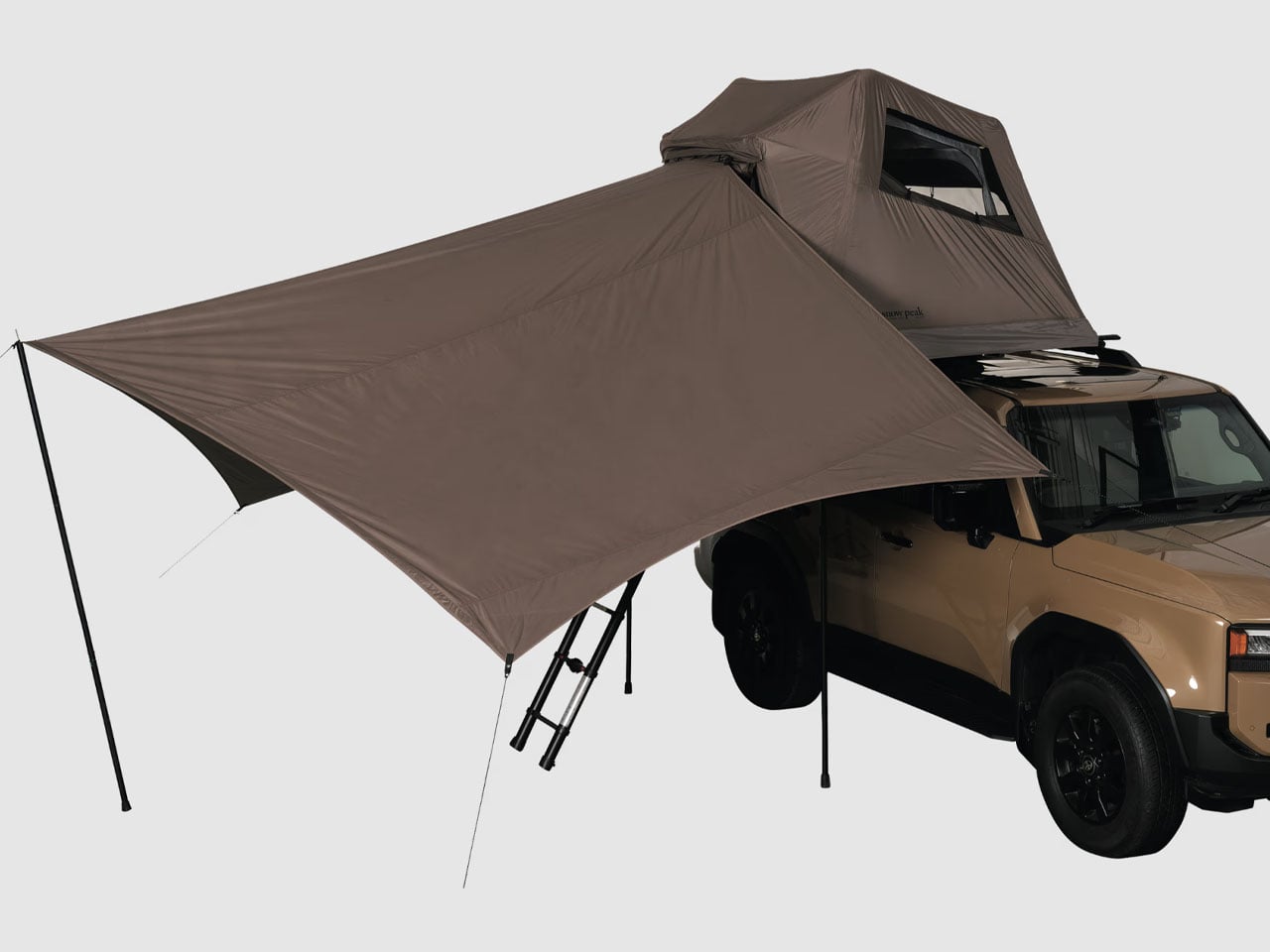
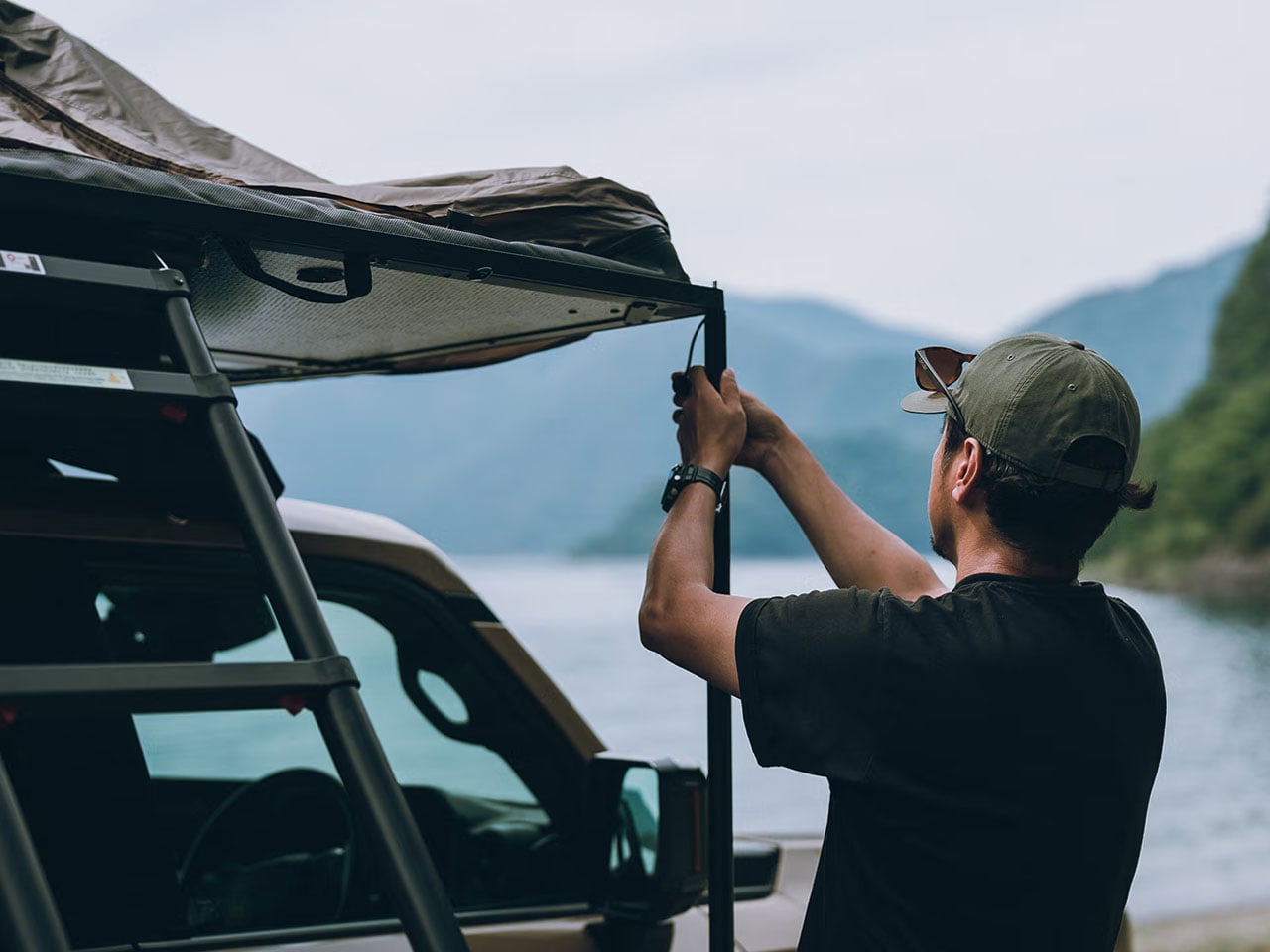
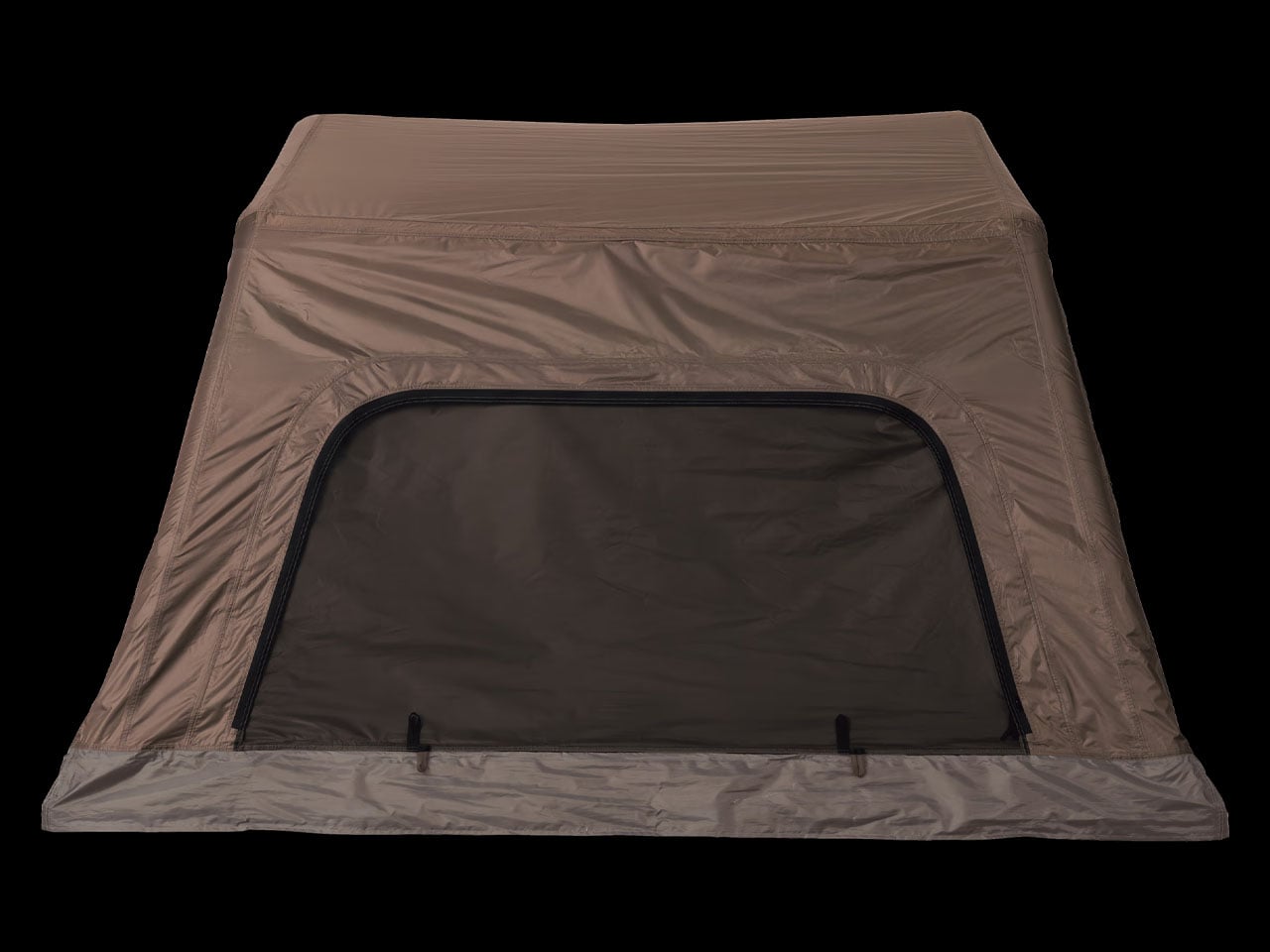
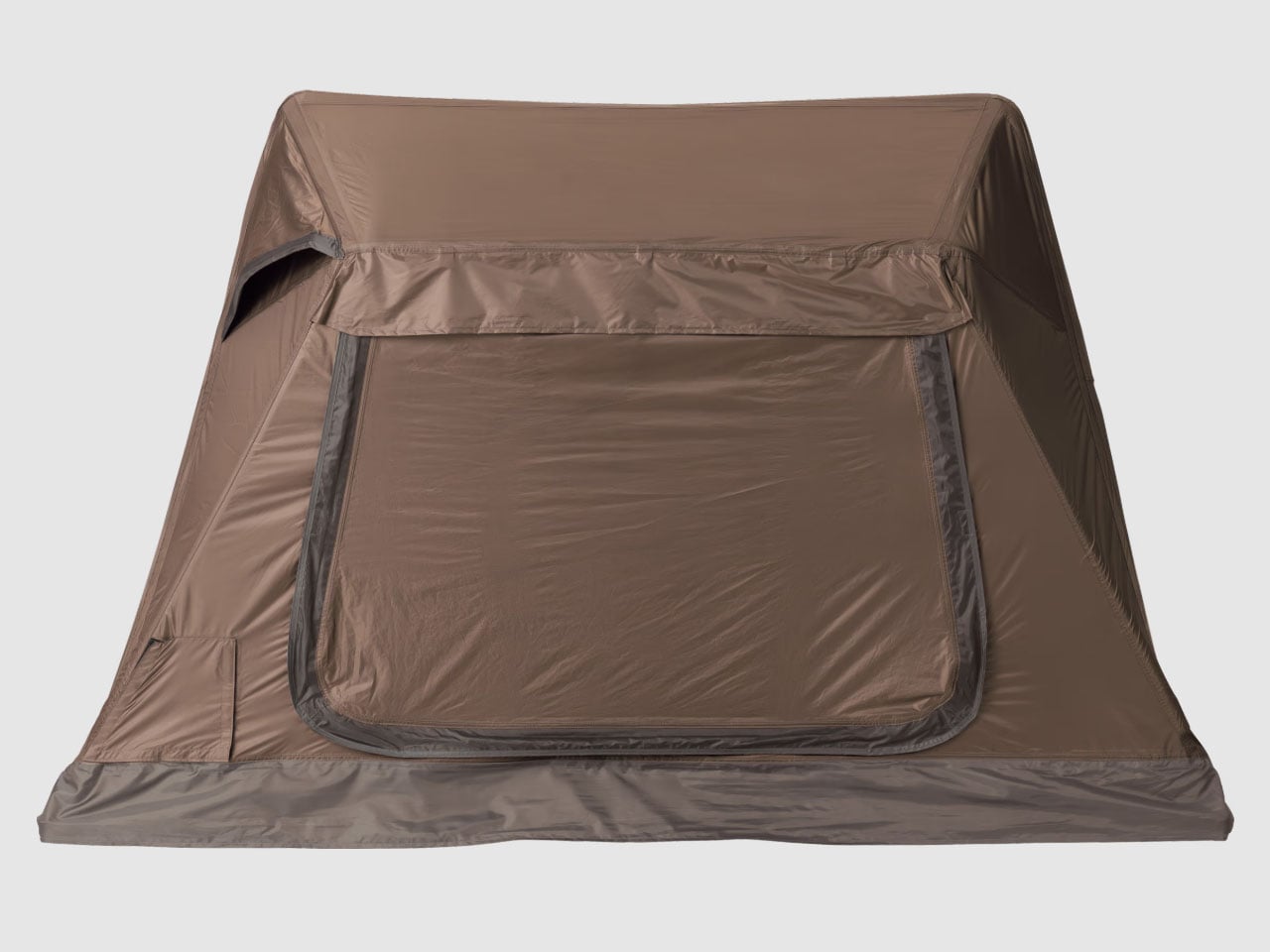
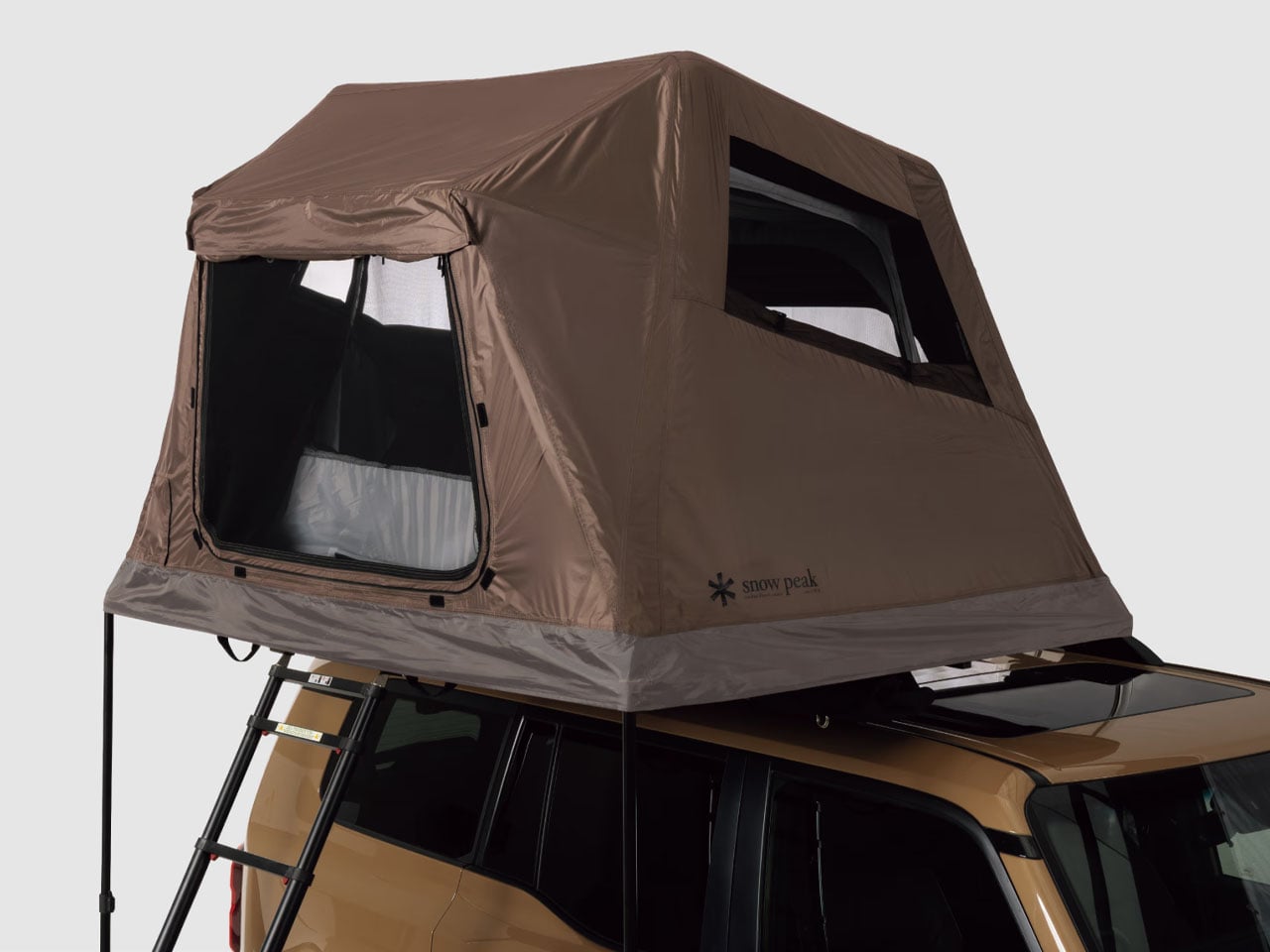
Dubbed the Snow Peak Field Rise RTT, it features entry doors on either side. The tent is designed with all-weather protection and has an awning spreading across from its base to provide the users with cover for outdoor fun during camping. Designed for more than camping, the tent is created with a self-supporting frame, which when inflated with air, provides a robust structure.

Designer: Snow Peak

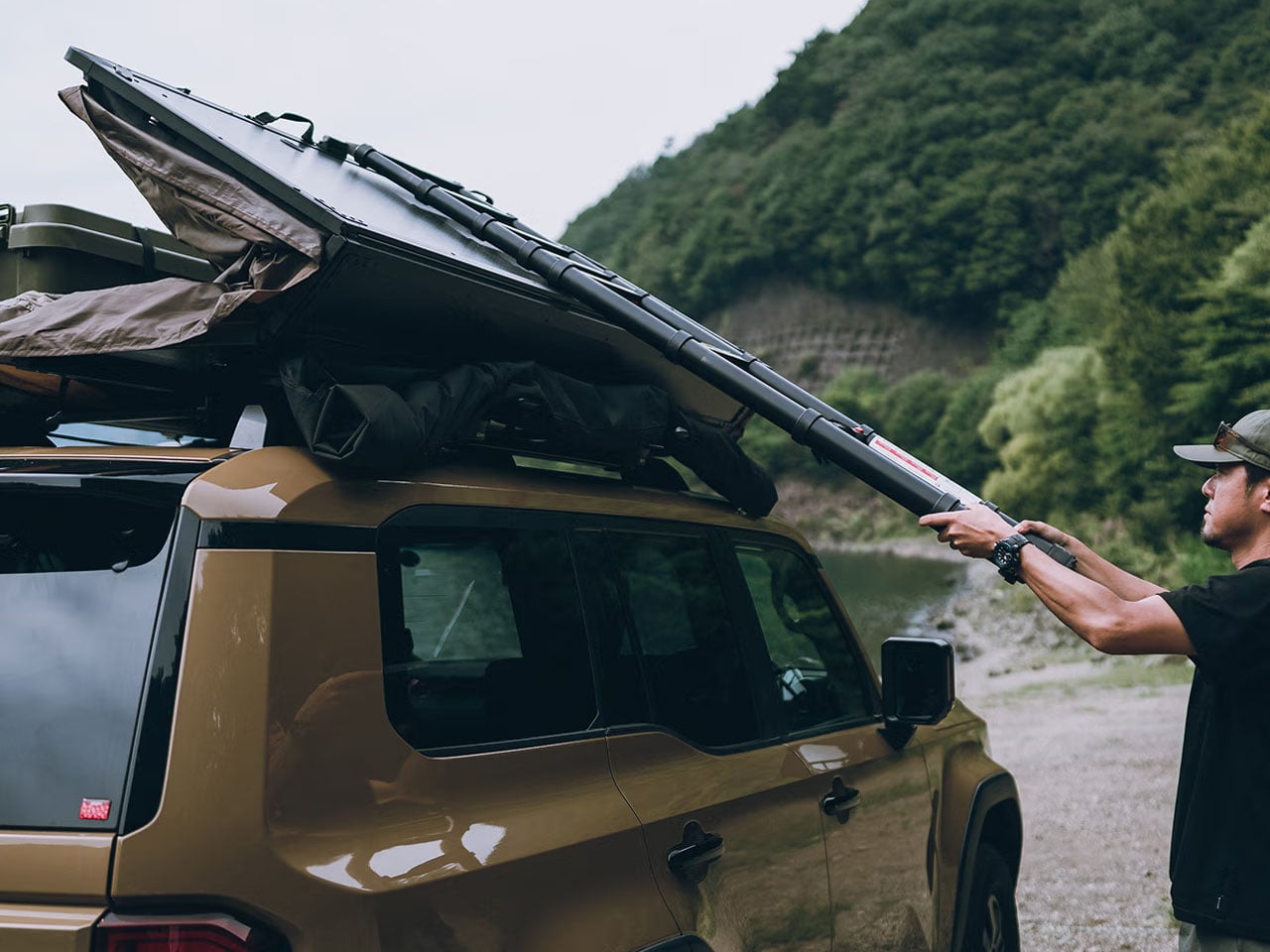
The tent body made from an air frame does not require assembly or disassembly. The entire thing is just plug and play, so everything from setup to takedown can be done quickly. The compact two-person design of the Field Rise also ensures that the manufacturer has kept the tent lightweight with the universal approach of mounting onto almost all types of vehicles.

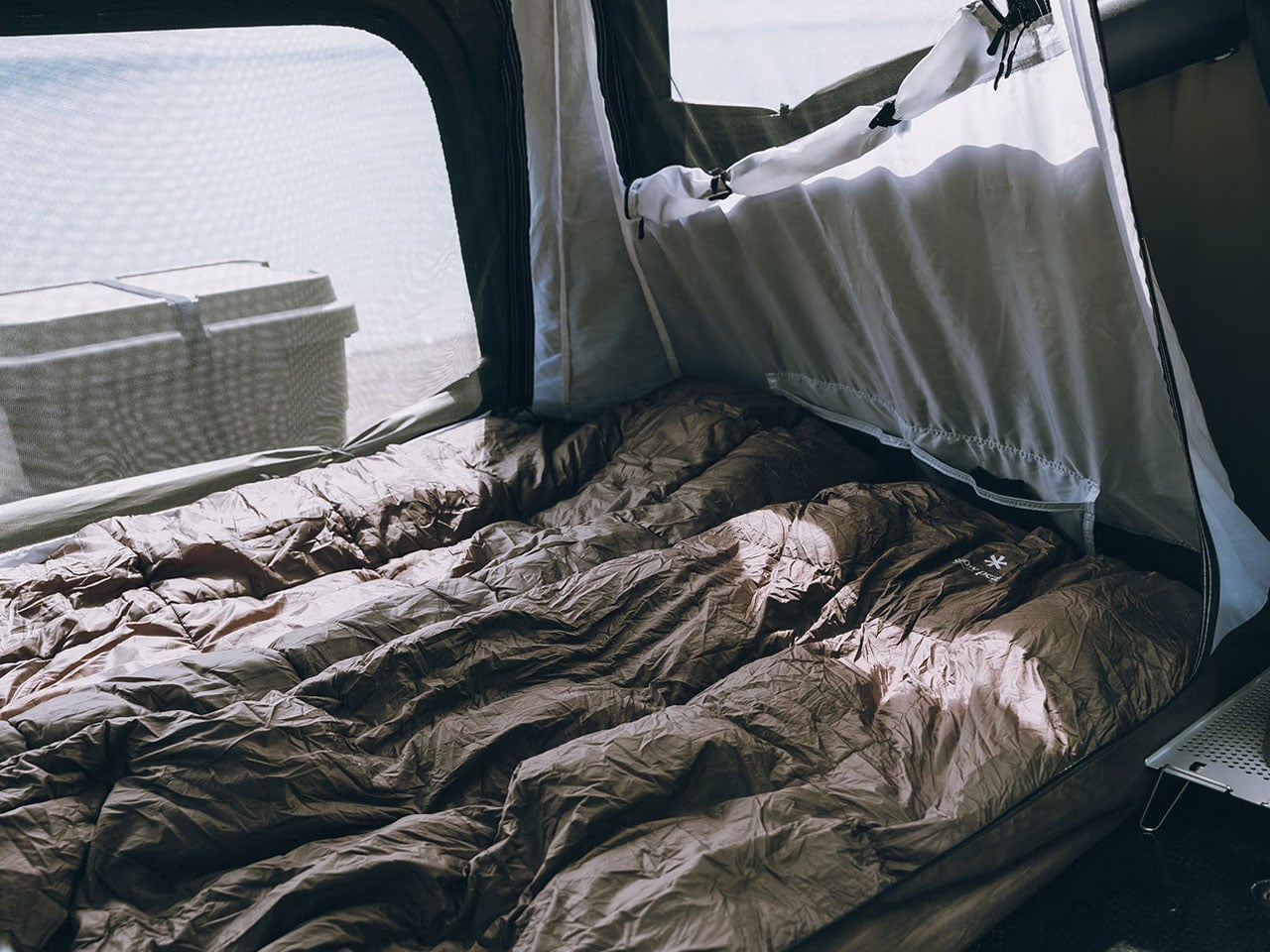
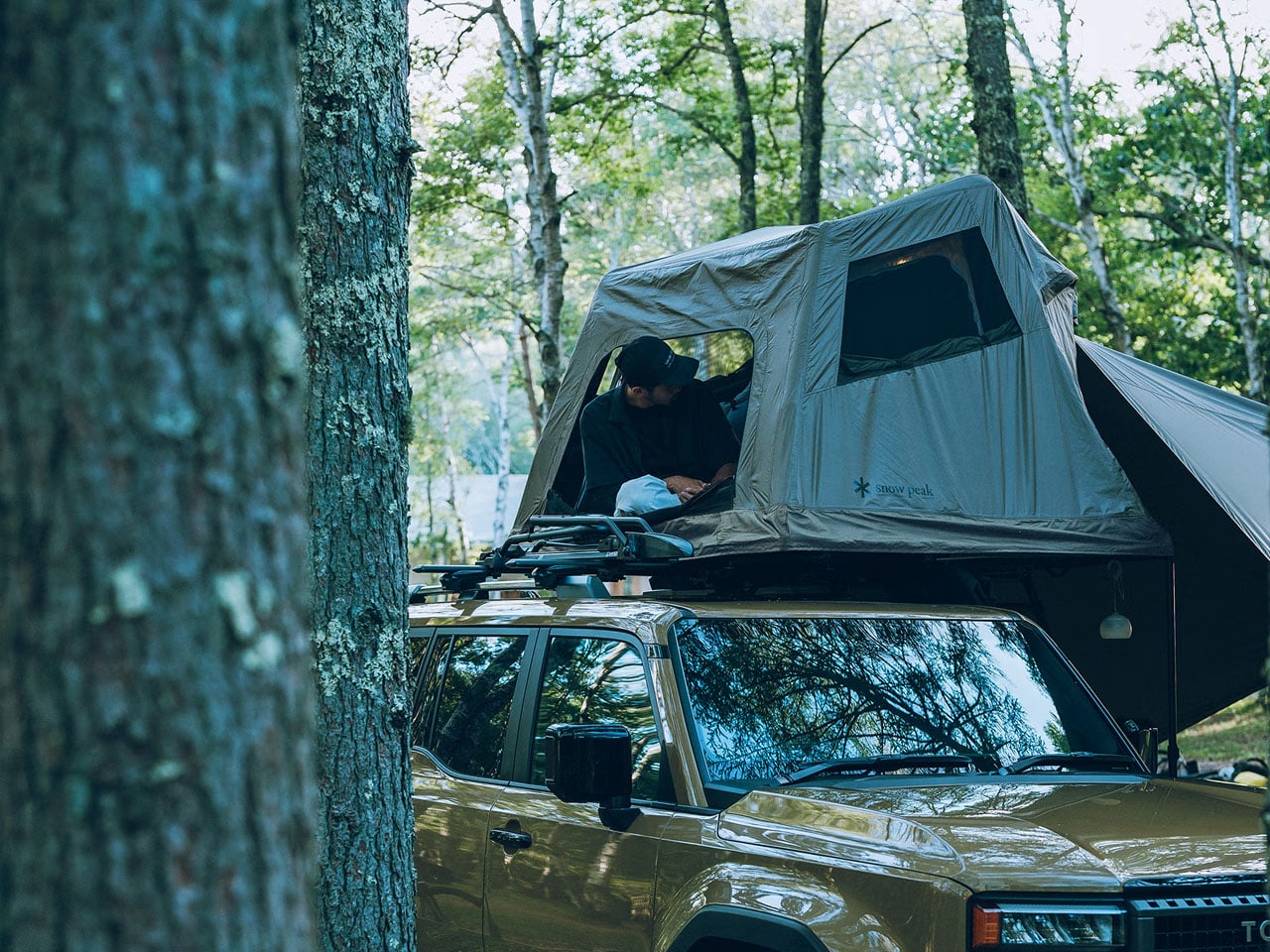
Conceptualized and created with the idea to allow each inhabitant to enjoy outdoor activities to their heart’s content, the rooftop tent has been created with a double-walled structure to suit Japan’s climate and distinct seasons, from hot summers to cold winter days. It is also designed to be resistant to wind and rain, allowing the users to spend time inside the Fire Rise in peace, regardless of the weather.

By saving you the time spent in setting up and taking down the rooftop tent, the Fire Rise RTT is designed to help you increase the time you spend enjoying activities and relaxing in nature. The tent’s large entrances allow easy access into the mudroom first up, which is (according to Japanese style-living) designed to keep the interiors clean. It is ideally placed at the entrance to make it easy to take off and put on shoes, while the inner tent serves as a separate space with a comfortable two-person sleeping area.

This is not the first tent from Snow Peak, in fact, we have seen a land shelter from the outdoor living solutions brand, which has also created an insulated poncho to redefine solo camping. Where the rooftop tent differs is its sail-like awning with telescopic support poles, which help extend the living area for the residents. Considering all that canvas has to be folded back down, you would expect that the tent will take up a lot of space when packed. In fact, it is designed with the idea of multi-day excursions in mind, leaving you space to do more.

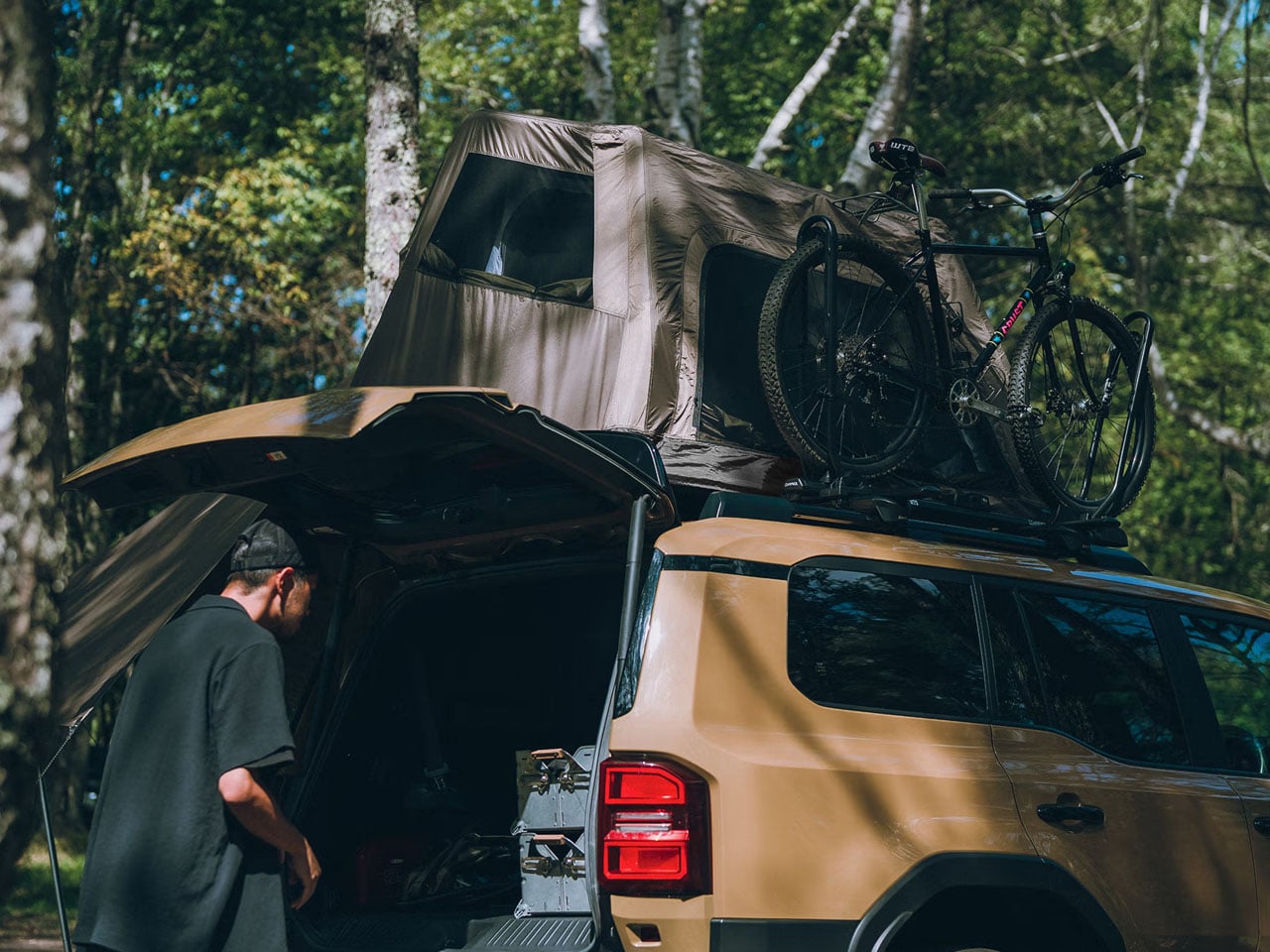
Interestingly, the rooftop tent packs up into a size, only half of a Toyota Land Cruiser, leaving space for a bike or a space cargo basket to go onto the roof alongside. The Snow Peak Field Rise, with its wide doors on both sides of the vehicle and two windows on the front and rear, is expected to go on sale in Japan in the coming months, starting at ¥396,000 (approximately $2,500). There is no word on whether or not the Field Rise will be made available in North America.

The post Snow Peak’s Inflatable Field Rise Rooftop Tent Sets Up in Minutes first appeared on Yanko Design.

5 Camp Cookware Pieces Designed So Well They Make You Rethink Why You Have a Kitchen

The kitchen is a room we’ve quietly spent decades over-engineering. Cabinets for single gadgets, appliances stacked on counters, and entire drawers reserved for tasks that should take two minutes. We’ve built elaborate infrastructure around the simple act of feeding ourselves and rarely stop to question it. Then you spend a weekend outdoors, cooking over a campfire with one heavy pan, and the meal somehow tastes better than anything you’ve made at home all month.

That feeling isn’t accidental. Constraint clarifies. The best outdoor cookware designers understand the most compelling brief isn’t to make it do everything — it’s to make it do exactly what’s needed, beautifully, with nothing extra. A new generation of camp cooking tools is built around that premise. They grill, bake, brew, and prep with a precision that makes you look at your kitchen counter and wonder if you’ve been overcomplicating things all along.

1. All-in-One Grill

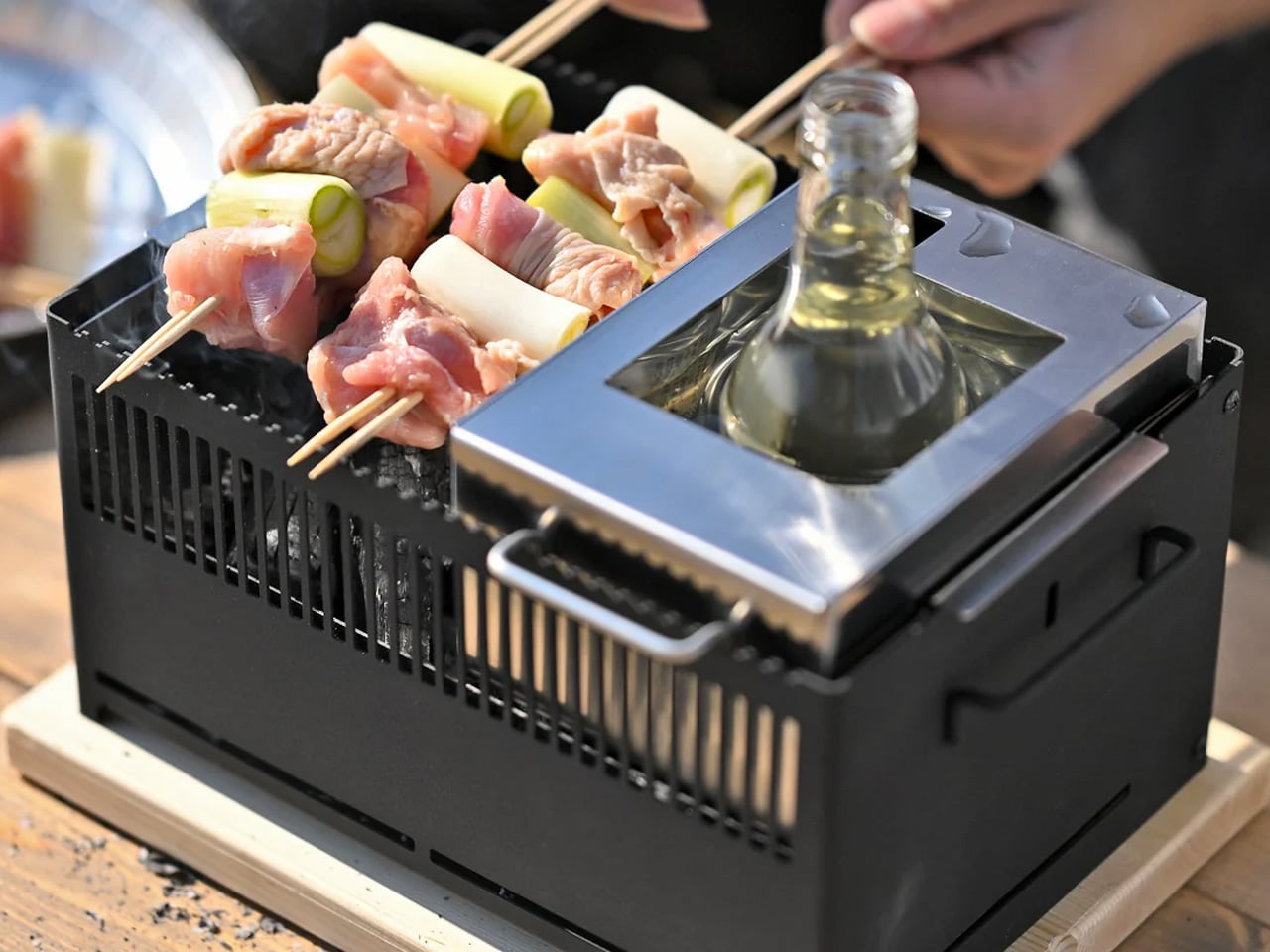
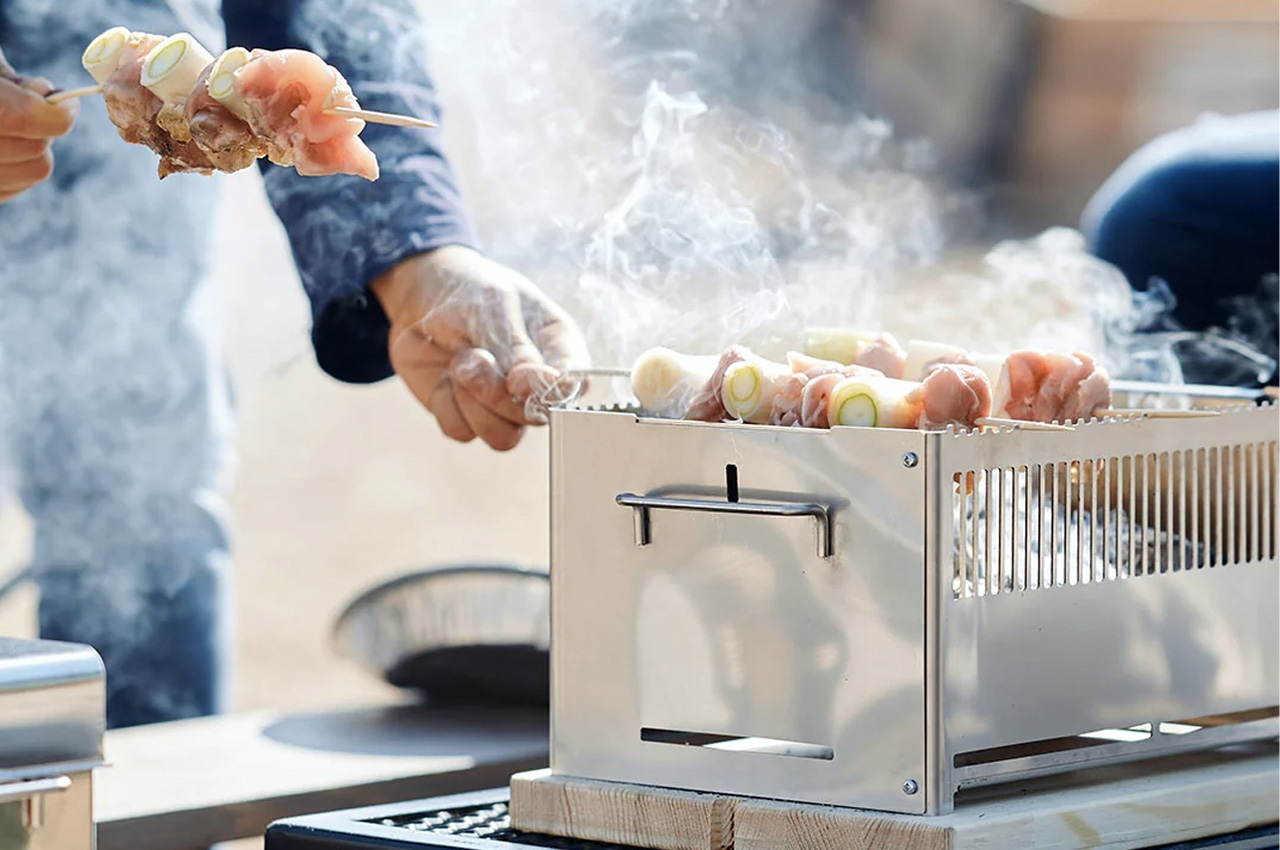
Most outdoor cooking setups force a decision before the fire even gets going. Grill or smoke. Sear or steam. Bring the cast iron or pack light and sacrifice flavor. The modular tabletop grill refuses that trade-off entirely, and the refusal is engineered rather than wishful. Built around a system of interchangeable parts, it supports six distinct cooking methods: barbecuing, frying, grilling, steaming, smoking, and stewing, all in a single compact form that sits comfortably on any outdoor table. There’s even a dedicated upright bottle-warming module built into the system, designed to keep mulled wine or any warm drink at the right temperature while the rest of the meal comes together. It’s the kind of considered detail that separates a well-designed product from a merely well-made product.

The real test of modular cookware isn’t how it performs when assembled. It’s how it behaves when the meal is over. This grill passes. Each component breaks away cleanly for individual cleaning, so the mess that accumulates during a barbecue session doesn’t accumulate permanently. The compact footprint means it fits on a picnic table, a rooftop ledge, or a tailgate without demanding more space than it deserves. For families who want the flexibility of a full outdoor kitchen setup without the bulk of hauling multiple pieces of equipment, this is the rare product that actually delivers on the “all-in-one” label instead of just claiming it.

Click Here to Buy Now: $449

What We Like:

  • Six cooking modes supported by one compact, tabletop-scale modular system
  • Designed to disassemble cleanly, making post-meal cleaning genuinely manageable

What We Dislike:

  • Multiple individual components mean more small parts to account for when packing
  • Tabletop-only format limits usability on uneven or unprepared outdoor surfaces

2. Ember

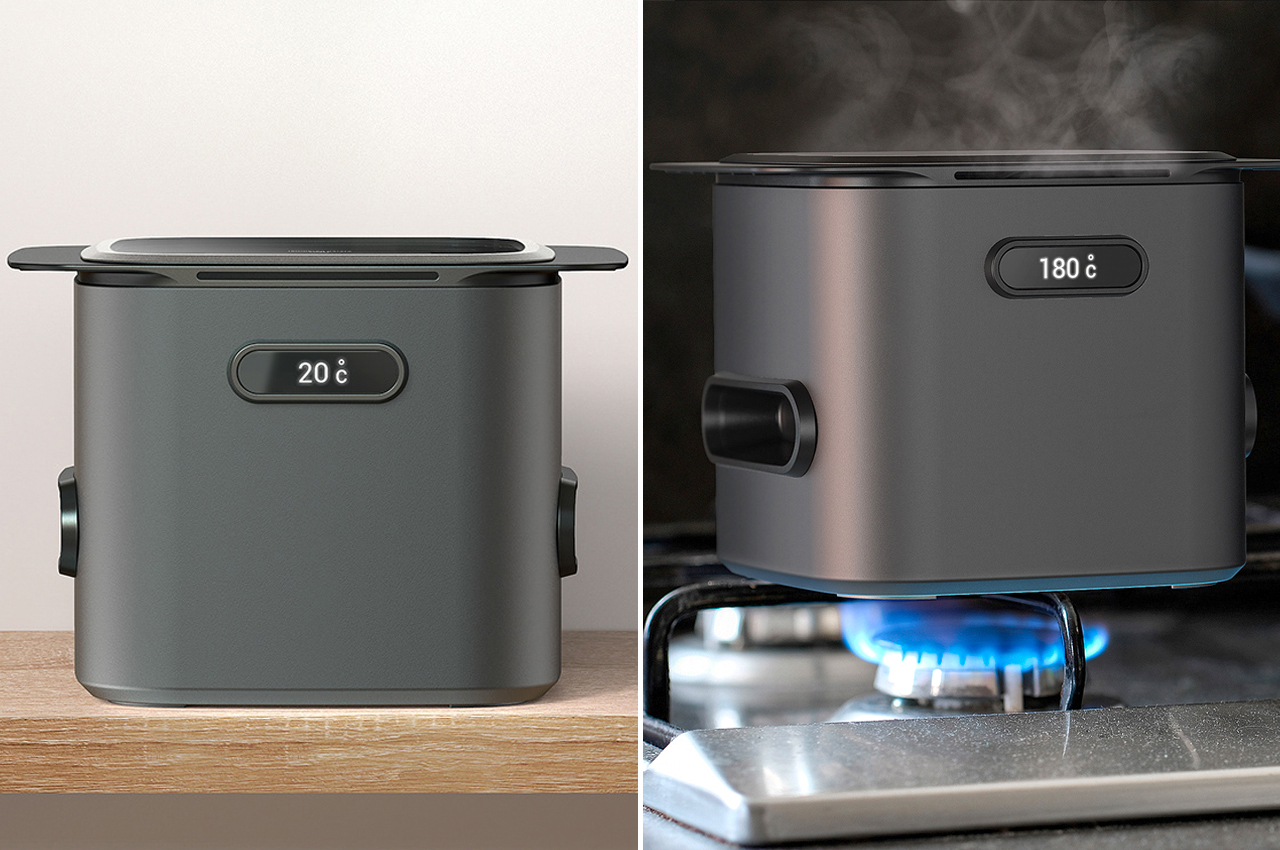
Baking at a campsite is one of those ideas that sounds aspirational until you try to figure out the logistics. An oven requires electricity, a Dutch oven requires constant attention, and something usually burns regardless. The Ember, a conceptual portable oven, approaches the problem from a different angle entirely. Designed to rest directly on a stove’s open flame without any electrical input, it channels heat through a carefully engineered interior path: up through the corners, where it bounces off the glass lid and bakes from above, while a central opening draws heat in to bake evenly from below. The mechanism is elegant in its simplicity, producing thorough and even results in a form factor you can carry in a bag.

The design works as well in a small apartment kitchen as it does at a campsite, which is exactly the kind of cross-context thinking that makes it genuinely useful rather than a novelty. Place it on the counter stove, fill the interior baking container, close the glass lid, and let the heat do its work. The transparent lid lets you monitor progress without lifting it and disrupting the thermal cycle inside. For people living in compact spaces with a stove but no built-in oven, or for campers tired of eating food that doesn’t reflect the effort they put into the trip, Ember reframes what modest equipment is actually capable of producing.

What We Like:

  • No electricity required, performs on any open flame or standard stove burner
  • Portable and compact enough to function as a practical oven replacement in small kitchens

What We Dislike:

  • Currently a design concept and not yet available for purchase or commercial production
  • Compact interior dimensions limit the scale and variety of baked goods per session

3. Compact Modular Grill Plate

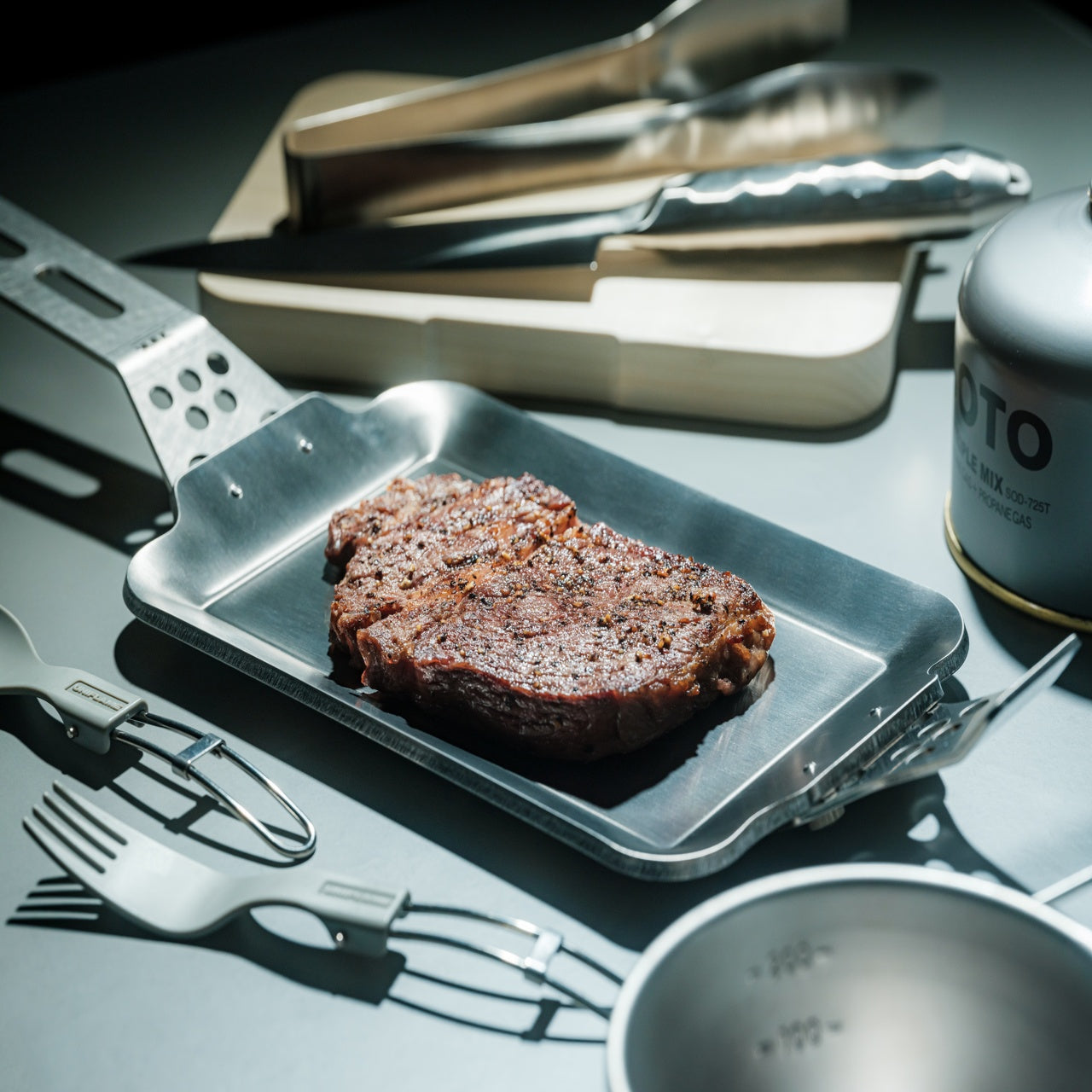
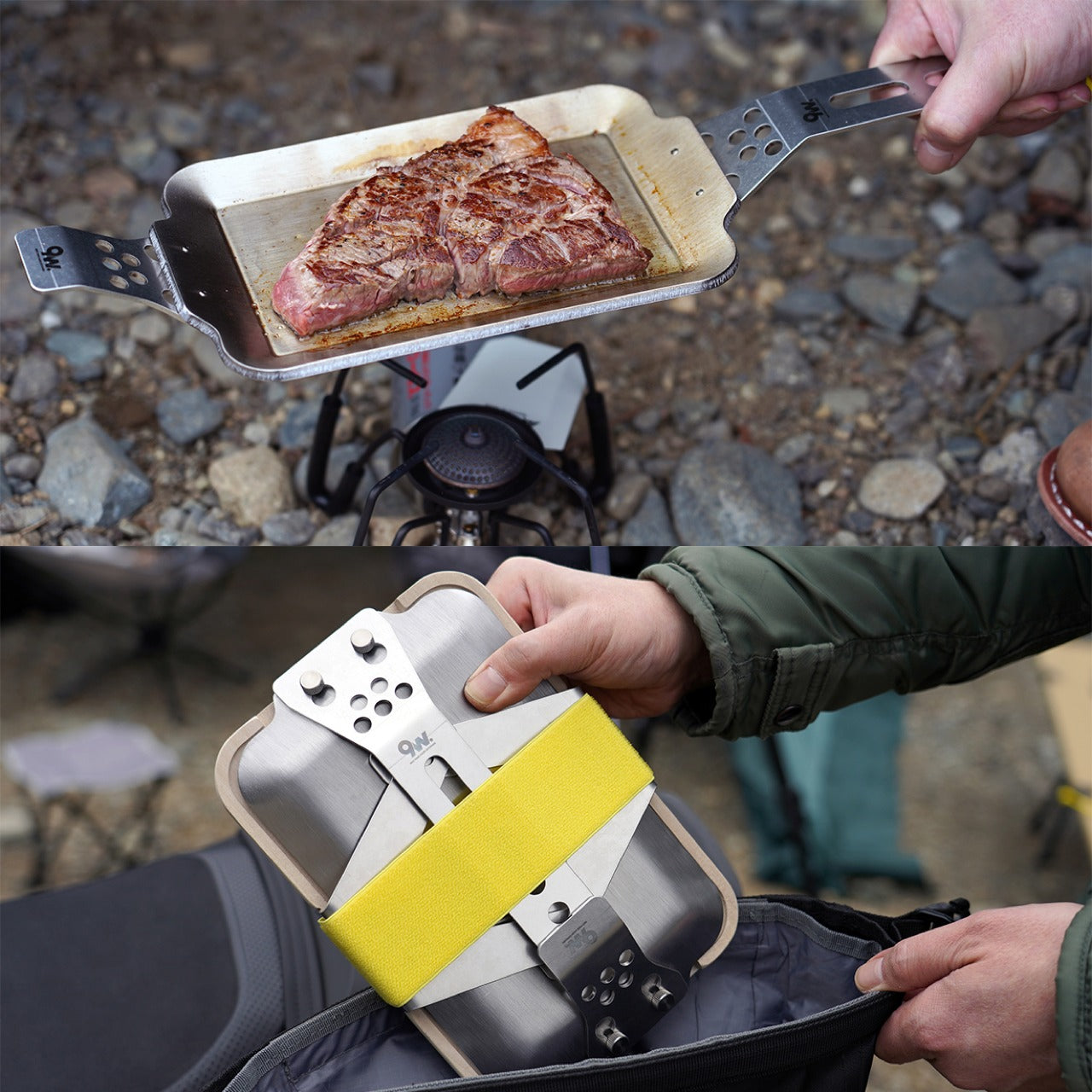
The performance gap between home cooking and camp cooking almost always comes down to heat. Home ranges, especially induction, give you precision and evenness that a campfire or portable gas burner rarely matches. This three-layer steel grill plate addresses that imbalance directly, using its layered construction to distribute heat uniformly across every centimeter of the cooking surface. Cold spots become a non-issue. Overcooking one edge while the other stays raw becomes a non-issue. What you get instead is the kind of consistent, controlled sear that produces steaks with proper crust formation, vegetables that caramelize instead of steam, and an outdoor cooking experience that stops feeling like a workaround and starts feeling intentional.

The handle system extends the design thinking past the cooking surface itself. Handles swap out depending on your setup, with different grips for different situations, and are removed entirely when it’s time to clean and pack. Everything compresses into a slim form that slides into a bag or a kitchen drawer with equal ease — the kind of dual-life functionality most camp gear fails to achieve. The broad heat source compatibility, spanning open campfire, gas burner, and induction, means this plate doesn’t become a single-context tool. It leaves the campsite with you and keeps earning its place at every meal, every day.

Click Here to Buy Now: $100.00

What We Like:

  • Three-layer steel construction delivers uniform heat and consistently juicy cooking results
  • Compatible with campfire, gas burner, and induction equally, with no limitations by heat source

What We Dislike:

  • Multi-layer steel adds measurable weight over single-layer lightweight camp alternatives
  • The swappable handle mechanism can feel fiddly when hands are wet or cold in the field

4. GoSun Brew Solar-Powered Portable Coffee Maker

There’s a reason a lot of people don’t camp, and it usually reveals itself sometime around 6 am. Coffee, or the prospect of starting a morning without it, is more powerful than most people want to admit. GoSun’s portable brewer confronts that problem with a design that removes every dependency between you and a decent cup. A 130W heater fused with an integrated French press, housed inside a double-insulated mug, turns the entire brewing process into a single self-contained act. Heat, brew, drink: nothing else needed, no separate kettle, no open flame, no gas, no grid power. The energy comes from a solar-powered bank that GoSun designed alongside the brewer, meaning as long as the sun cooperates, you’re completely in business.

The process is simple enough to manage in a pre-caffeinated state, which is ultimately the real design test. Plug the flask into the solar bank, heat for ten minutes, wait for the auto shut-off and LED indicator to confirm readiness, add coffee grounds, steep, and drink. The leak-proof lid makes it functional on a trail without worrying about what ends up inside a bag or a jacket pocket. Double insulation keeps the brew warm for hours after you’ve moved on from the campsite. GoSun built this for people who love the outdoors but draw a hard line at sacrificing the small rituals that make a morning feel worth starting, and that specific kind of stubbornness tends to produce the best product ideas.

What We Like:

  • Heats, brews, and insulates in a single mug, with no supporting equipment required
  • Solar-powered means zero dependency on gas, fuel, lighters, or electrical outlets

What We Dislike:

  • Solar bank performance is weather-dependent, and heavy cloud cover reduces reliable function
  • 15-minute brew time requires planning and is not suited for rushed mornings

5.

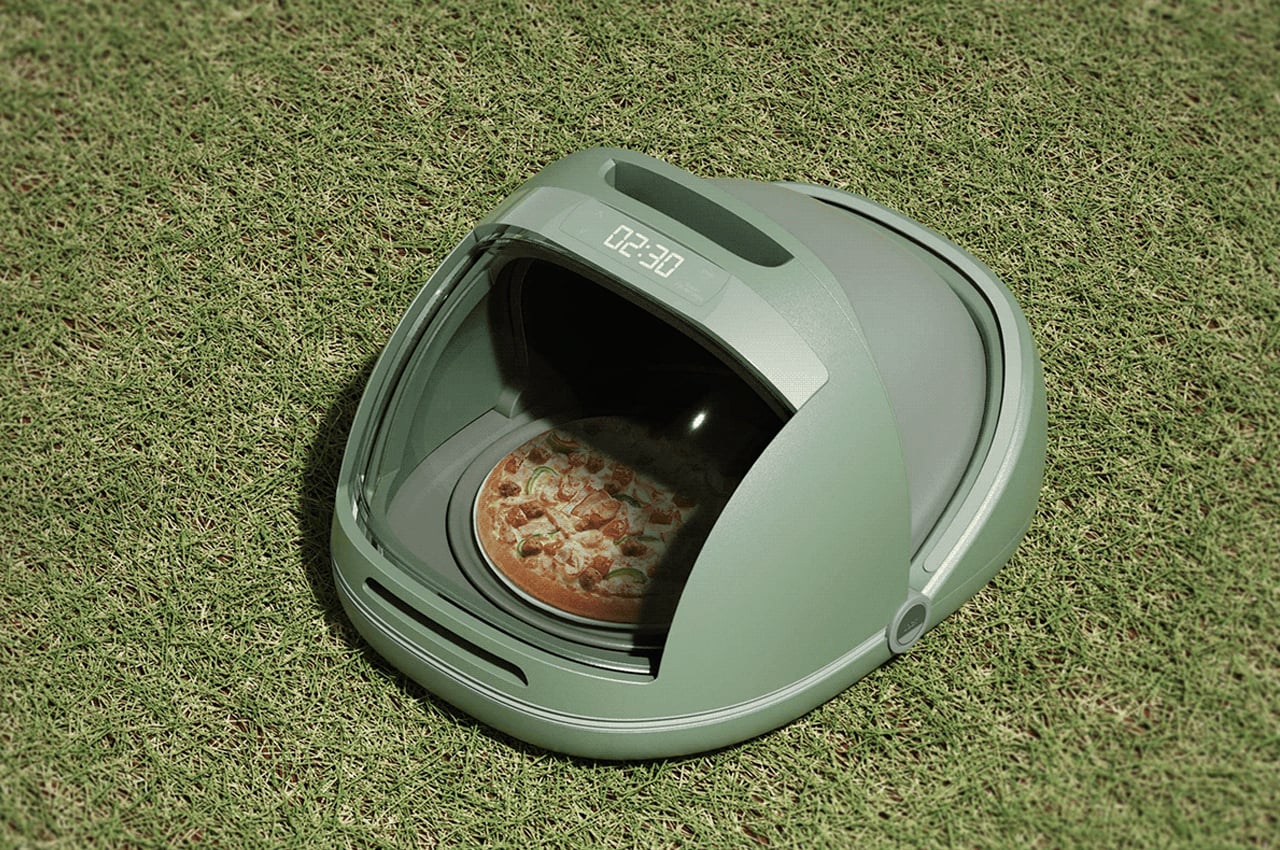
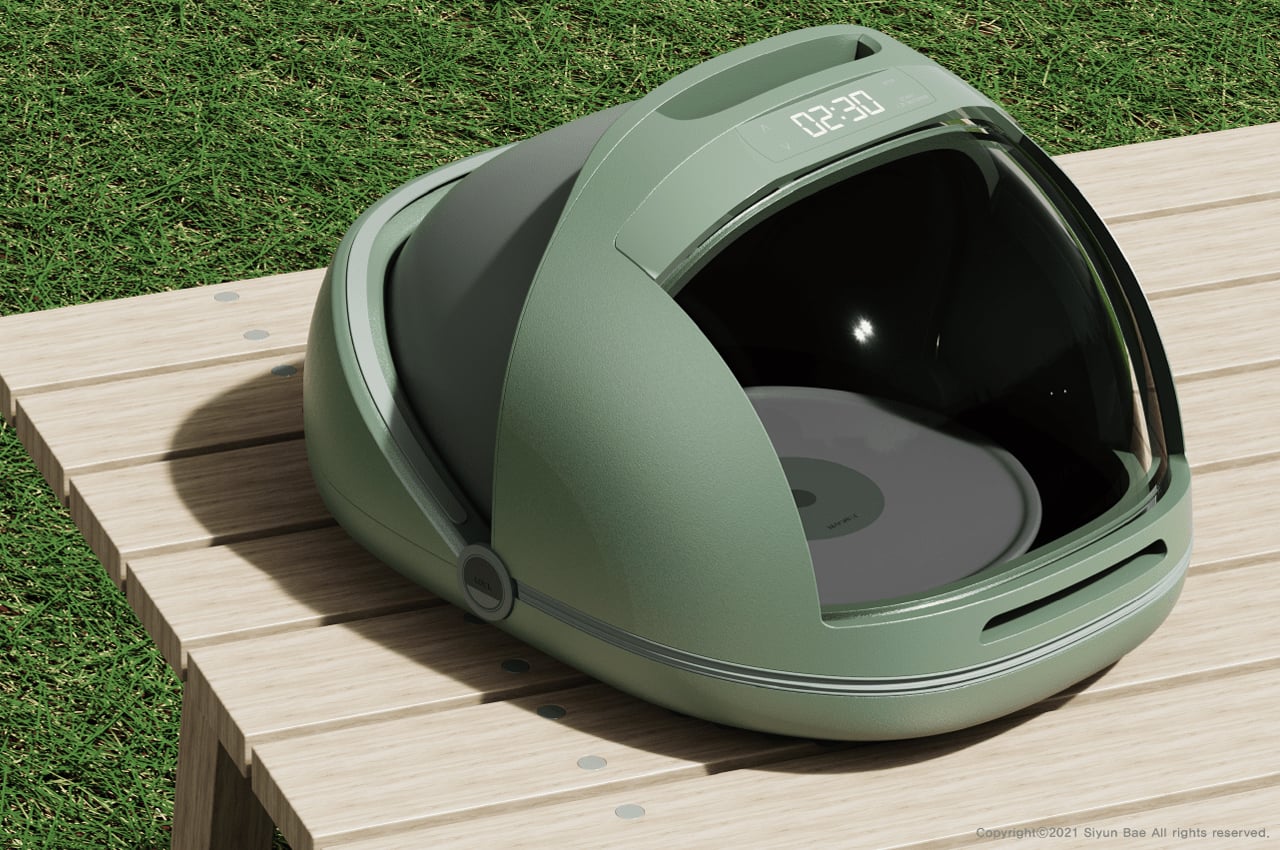
The temptation to plug a standard microwave into your vehicle’s power outlet is understandable until the battery drains flat and the car refuses to start. Campo solves that problem by building the power source directly into the unit. Its integrated rechargeable battery means no continuous draw from your vehicle, no cables running across a campsite, and no dependency on a running engine just to reheat a meal. You carry it by the handle the same way you’d carry a helmet, set it down on any flat surface, and you’re ready to cook immediately, wherever you happen to be.

The design language borrows from two distinct references — the rounded curves of an Apple Watch and the visual logic of a portable EV battery — merging them into a form that feels considered rather than accidental. The visor-style lid rolls up via a handle that doubles as a timer display, then locks flat against the unit for secure transport. Inside, a magnetically fastened plate holds food in place during cooking. A locking mechanism on the side secures the handle in both the open and closed positions, ensuring nothing shifts in transit. The nature-friendly color palette completes a product that looks as deliberate as it performs.

What We Like:

  • Self-contained rechargeable battery eliminates any dependency on vehicle power or external outlets
  • Helmet-inspired form with a rolling lid and integrated timer handle makes operation genuinely intuitive

What We Dislike:

  • Battery capacity will limit total cooking time before a recharge becomes necessary on longer trips
  • Microwave cooking at a campsite may not suit purists who prefer flame-based outdoor cooking methods

The Best Camp Kitchen Is the One That Fits in a Bag

What these five designs share isn’t a category or a price point. It’s a philosophy built on doing more with less, prioritizing performance, portability, and purpose over novelty. Each piece removes a layer of complexity from cooking without asking you to sacrifice quality or flavor. That’s harder to solve than it sounds, and the designers who crack it tend to produce tools that outlast trends and stay in rotation for years.

The campsite is just where these tools earn their name first. The modular grill handles six cooking methods, the grill plate works on any heat source, the Ember bakes without electricity, GoSun Brew runs on sunlight, and the Campo microwaves entirely off its own battery. Each returns to daily life without skipping a beat. The best outdoor gear doesn’t stay outdoors. It comes home and continues to perform long after the tents are packed away.

The post 5 Camp Cookware Pieces Designed So Well They Make You Rethink Why You Have a Kitchen first appeared on Yanko Design.
This $599 ‘Swiss-Army’ Android Tablet Has a Built-In Projector, Night Vision, and a Laser Rangefinder

At some point in the last decade, the iPad became the default answer to the question of what a tablet should be. Thin, light, polished, dependent on a case ecosystem to survive a one-meter drop onto carpet. It is an extraordinary device for a very specific kind of person living a very specific kind of life. The 8849 Tank Pad Ultra exists in a parallel universe where the design brief started with entirely different questions, ones involving concrete floors, dark confined spaces, and the need to project a floor plan onto a wall without finding an electrical outlet first.

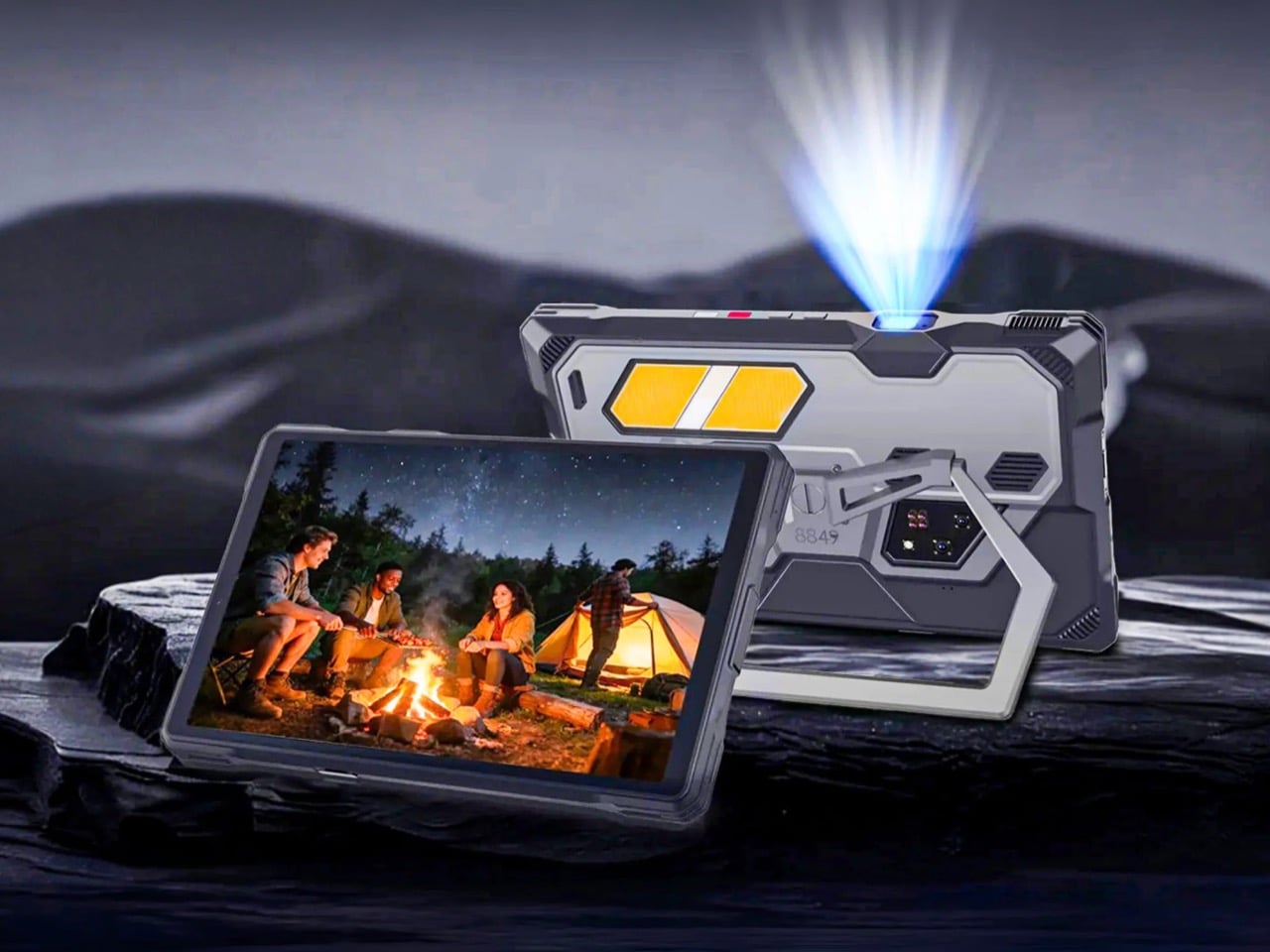
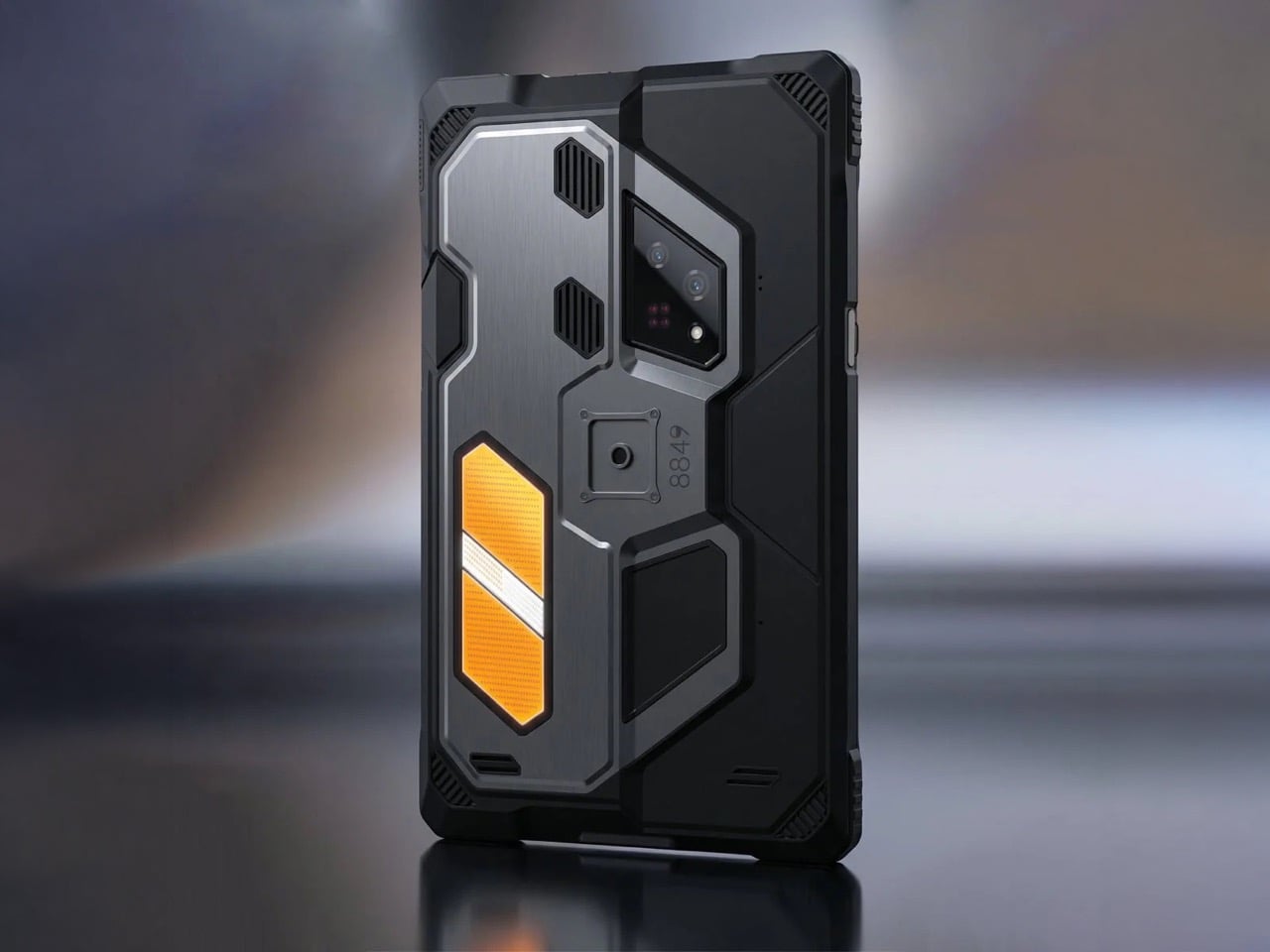
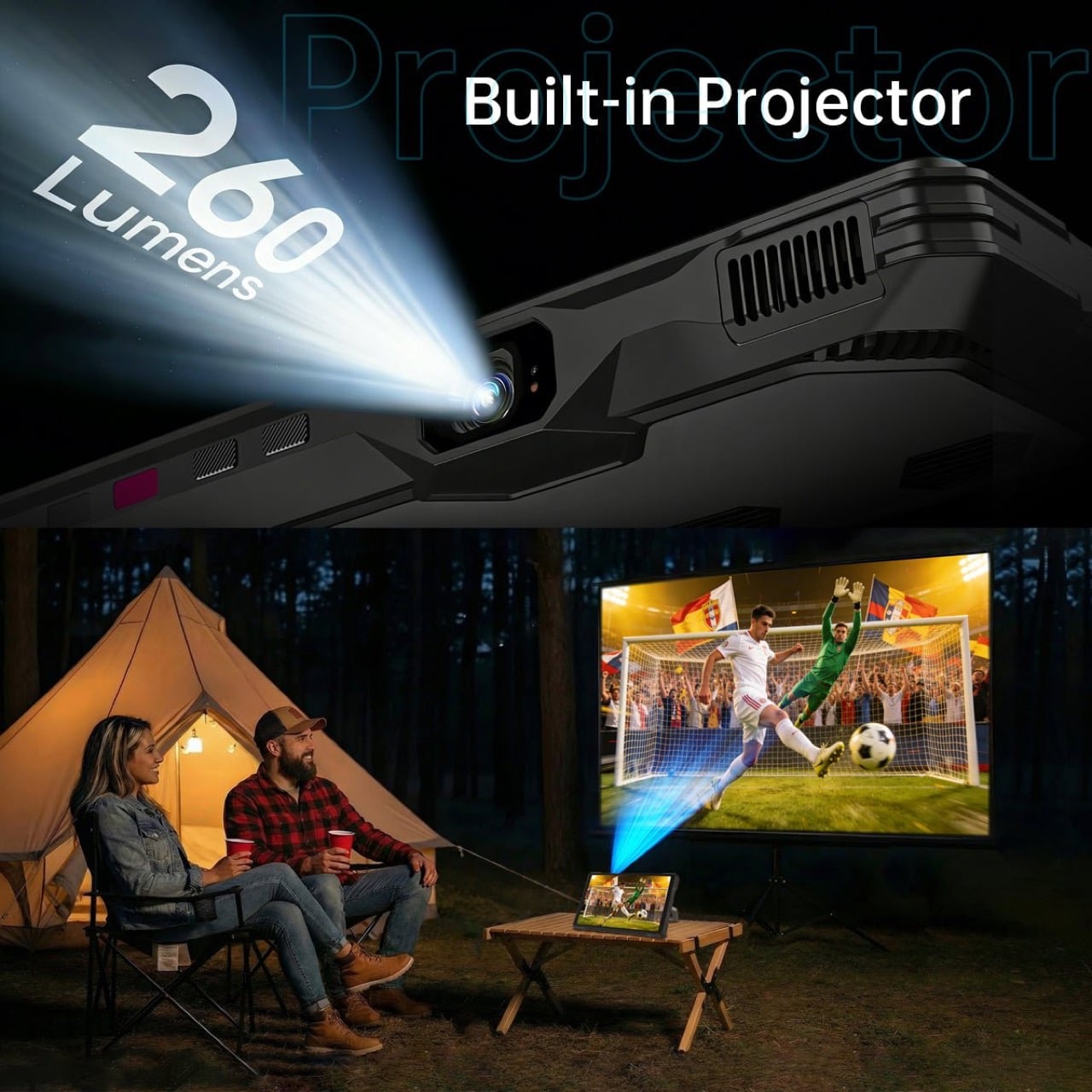
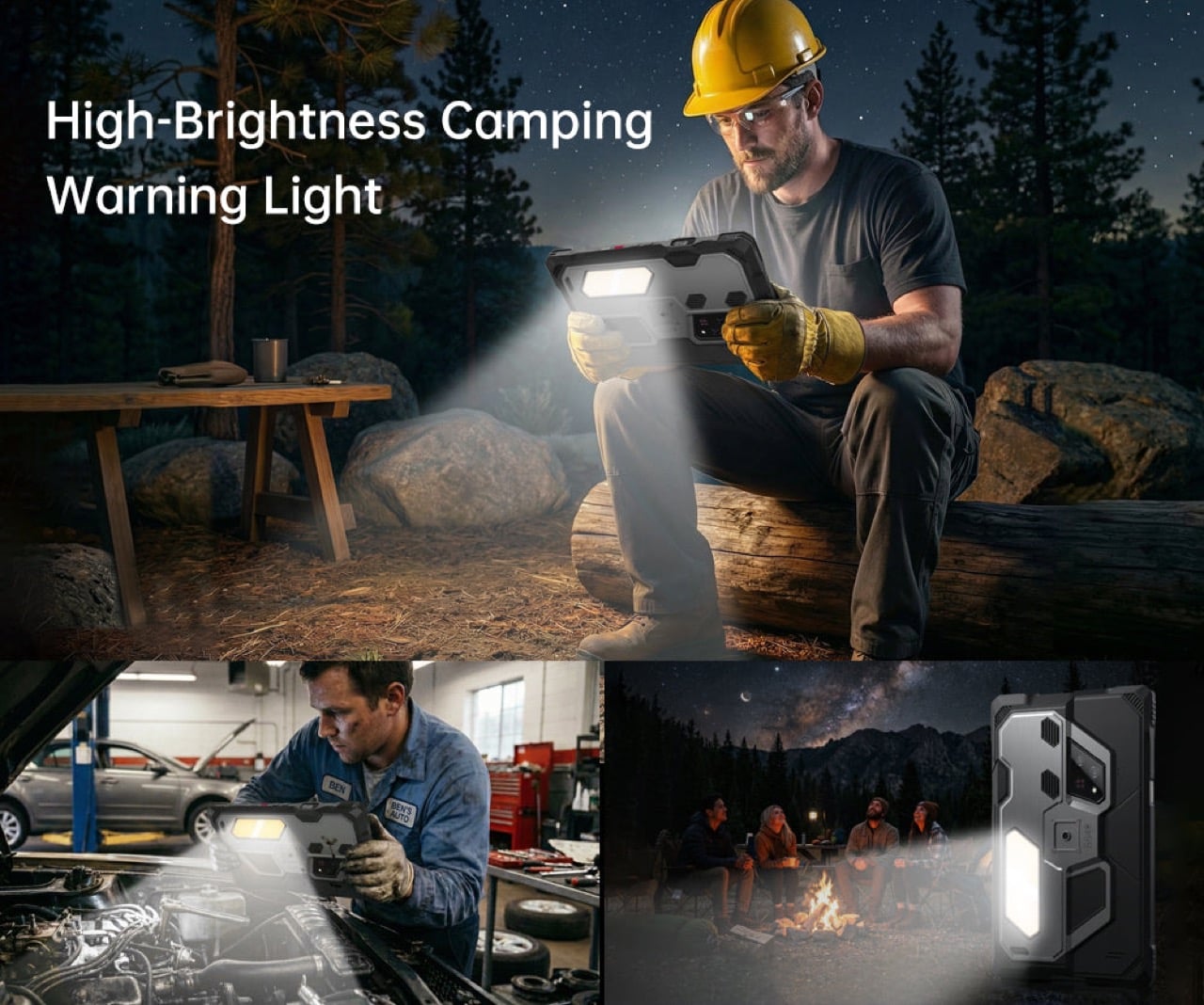
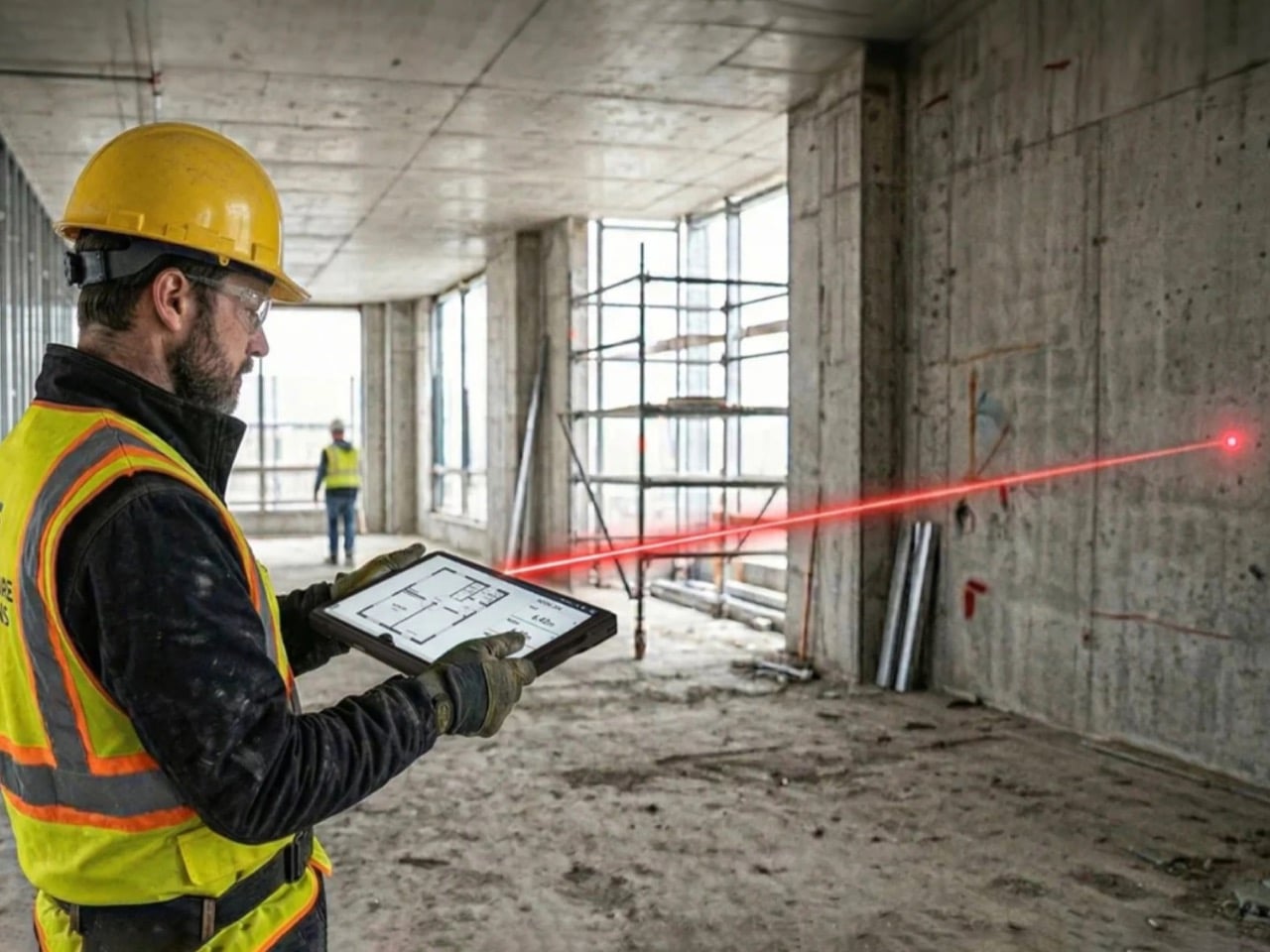
The Tank Pad Ultra is a 1,345-gram Android tablet with a 260-lumen 1080p DLP projector, a 64MP night vision camera, a 4-meter laser rangefinder, IP68 and IP69K waterproofing, and a 23,400 mAh battery that charges at 66W. It runs on a MediaTek Dimensity 8200 chip with 5G connectivity at up to 4.67 Gbps and up to 32GB of RAM. It costs $599, which is less than a base iPad Pro and considerably less than the sum of its individual parts if you tried to buy each capability as a dedicated tool.

Designer: 8849 Tech

The projector is the headline feature, and 8849 has earned the right to lead with it. They introduced the world’s first 5G rugged tablet with a built-in DLP projector back in 2024, at a modest 100 lumens and 854×480 resolution. Blackview then pushed the category to 1080p. The Tank Pad Ultra answers with 260 lumens and full 1920×1080 resolution, with auto-focus calibrating across a 0.5 to 4-meter throw range. That is a meaningful jump, and for impromptu field presentations, collaborative site reviews, or a legitimate movie night at a remote campsite, it is the kind of feature that collapses several gear bags into one. Whether it holds up in daylight is a harder question. Portable projectors with significantly higher lumen counts routinely struggle against ambient light, and 8849’s own claims here should be treated with the healthy skepticism that any manufacturer’s daylight projection demo deserves.
The night vision camera is the second feature that genuinely earns its place. A 64MP OV64B sensor paired with infrared LEDs means the Tank Pad Ultra can document a dark crawl space, a machinery inspection in a poorly lit industrial unit, or a nighttime search operation without a separate imaging rig. The 50MP Sony IMX766 main camera handles daylight shooting with a sensor large enough to produce genuinely usable imagery, and the 32MP front camera is more than adequate for video calls from the field. Three cameras at these resolutions in a rugged device at this price point is not something the category has managed before, and it matters for the professionals most likely to reach for this thing.

The laser rangefinder and dual-frequency L1/L5 GPS round out what 8849 is calling a field multi-tool, and this is where the Swiss Army Knife analogy earns its keep and also reveals its limits. A Swiss Army Knife is a triumph of consolidation and a set of tools that are each good enough for casual use but rarely the first choice of someone whose livelihood depends on that specific function. The Tank Pad Ultra’s rangefinder tops out at 4 meters, which covers room-scale measurements comfortably but will not satisfy a surveyor. The GPS dual-frequency support is genuinely impressive for a tablet and will outperform most consumer devices in dense urban canyons or tree cover, but dedicated mapping hardware it is not. For the overlander, the small construction crew, or the facilities manager doing rounds, these are additive capabilities that remove friction. For the specialist, they are conversation starters.

Equipped with a 23,400 mAh battery with 66W fast charging, 8849 is offering multi-day endurance on normal usage cycles, with a full charge arriving in around two hours. Reverse charging via USB-C means the Tank Pad Ultra can serve as a power bank for other devices, which on a remote job site is a genuinely practical consideration. Heavy projector use will eat into that endurance significantly, as DLP projection is power-hungry by nature, but 8849’s claim of multi-day field life under standard workloads is credible given the battery capacity. The device also packs more than 20 built-in utility tools, from a bubble level to a pressure gauge to a noise meter, which feel like software cherries on top of a hardware sundae rather than core reasons to buy.

At $599, the Tank Pad Ultra sits in a pricing sweet spot that undercuts the iPad Pro while offering a capability set no iPad would ever pursue. It will not replace a Leica rangefinder, a Fluke thermal camera, or a Panasonic Toughbook in the hands of someone whose professional life depends on that specific tool performing at its absolute ceiling. What it does is give a broad category of field workers, outdoor professionals, and genuinely curious tech enthusiasts a single device that covers an extraordinary amount of ground without requiring a separate bag for the accessories. You can find the Tank Pad Ultra on 8849’s website right now, and the spec sheet alone is worth ten minutes of your afternoon.

The post This $599 ‘Swiss-Army’ Android Tablet Has a Built-In Projector, Night Vision, and a Laser Rangefinder first appeared on Yanko Design.