Every New AirPods Feature Added to the iOS 27 Public Beta

Every New AirPods Feature Added to the iOS 27 Public Beta AirPods

The release of iOS 27 public beta brings a host of updates for AirPods, focusing on improved usability, deeper customization, and seamless integration across Apple’s ecosystem. Whether you’re an audiophile or a casual listener, these enhancements are designed to elevate your audio experience. Below is a detailed look at the most notable changes and features […]

The post Every New AirPods Feature Added to the iOS 27 Public Beta appeared first on Geeky Gadgets.

Posted in Uncategorized

Complete Guide to Installing iOS 27 Public Beta On Your iPhone

Complete Guide to Installing iOS 27 Public Beta On Your iPhone An iPhone displaying the iOS 27 public beta installation screen

Apple has officially released the first public beta of iOS 27, offering you an early opportunity to explore the next version of its operating system. This public beta aligns closely with Developer Beta 3 in terms of features and stability, providing a glimpse into what’s coming before the full release expected in September. However, as […]

The post Complete Guide to Installing iOS 27 Public Beta On Your iPhone appeared first on Geeky Gadgets.

Posted in Uncategorized

Leaked First Real Life Look at the Samsung Galaxy Z Fold 8 Ultra

Leaked First Real Life Look at the Samsung Galaxy Z Fold 8 Ultra A real-life look at the Samsung Galaxy Z Fold 8 Ultra in a violet color finish.

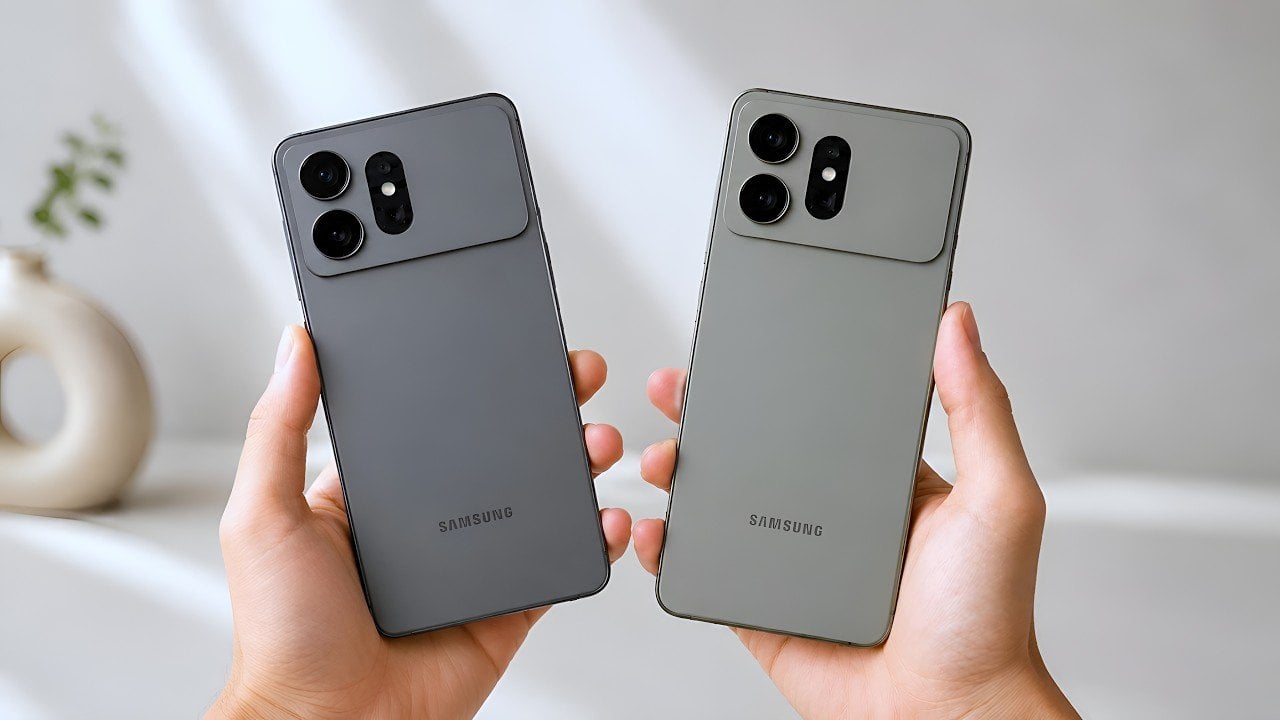
Samsung has officially unveiled the Galaxy Z Fold 8 Ultra, showcasing its latest advancements in foldable smartphone technology. Through carefully crafted marketing materials, the company has highlighted the device’s refined design, enhanced usability, and innovative features. As the newest addition to Samsung’s foldable lineup, the Z Fold 8 Ultra introduces meaningful upgrades, including an anti-reflective […]

The post Leaked First Real Life Look at the Samsung Galaxy Z Fold 8 Ultra appeared first on Geeky Gadgets.

Posted in Uncategorized

See-Through Speaker with a 21.5-inch Transparent Display Turns Your Songs Into Lyric Videos

Bang & Olufsen perfected the idea of audio equipment as art, creating speakers so sculptural and beautiful they demand to be looked at long before they are ever heard. This approach turned hi-fi systems into statement pieces, architectural elements that shape a room’s aesthetic just as much as they fill it with sound. The price for such artistry, however, often places it in the realm of museum-worthy gallery objects. A new design is taking a similar run at that “look at me” audio philosophy, finding its visual hook through an entirely different and arguably more dynamic method, without the five-figure price tag.

The MorningBlues SonicGlass A1 achieves its visual identity through engineered transparency. Instead of relying on exotic woods or polished aluminum, its beauty comes from revealing the inner workings of sound itself. The speaker’s main diaphragm is a sheet of clear glass, letting you watch the physical driver move and vibrate with the music. This turns the hardware into a performance, a living object that makes sound tangible. MorningBlues calls this “Visualized Music” – a vision where sound, lyrics, motion, and visuals become part of one unified experience rather than separate elements. It’s a clever way to create a decorative speaker that feels both technical and artistic, designed for people who appreciate seeing how their favorite things work.

Designer: MorningBlues

Click Here to Buy Now: $646 $999 (35% off). Hurry, only 7/395 left! Raised over $794,000.

This focus on a meaningful visual is a refreshing change of pace. We are, after all, intensely visual creatures. For decades, speaker companies have tried to give our eyes something to do while we listen, but the solutions have been uniformly uninspired. We’ve been served an endless buffet of dancing digital equalizers and pulsing RGB lights that flash along to the beat. These features feel disconnected from the soul of the music, reducing a complex song to a simple, repetitive light show. The SonicGlass A1 offers something far more compelling because it taps into the most human element of any track: the story.

It’s basically captions for your music, an idea so immediately brilliant it’s a wonder it took this long to happen. Let’s be honest, almost nobody watches movies anymore without subtitles. Between mumbled dialogue and our own fractured attention spans, seeing the words has become essential. The SonicGlass A1 applies that same logic to listening. It uses its 21.5-inch transparent display to make lyrics appear to float in mid-air, animating and shifting with the rhythm and mood of the song. You can finally catch that one line you’ve been mishearing for years or appreciate the poetry of a verse without breaking the spell to look at your phone.

The real magic here is that the display isn’t just a screen sitting behind glass; the glass is the speaker. The entire front panel is an ultra-thin German Schott glass diaphragm, which vibrates to create sound. This panel is moved by a powerful neodymium magnetic system, turning the whole assembly into a transparent driver. It’s a remarkable piece of acoustic engineering that makes the visual effect feel earned, not tacked on. The transparency goes beyond just the surface, revealing the acoustic movement behind every note and creating a direct, physical link between what you hear and what you see.

This commitment to engineering extends to the audio quality. Inside the sealed enclosure are dual 4-inch full-range drivers powered by a pair of 80W Class-D amplifiers, delivering clean, room-filling stereo sound. The design prioritizes clarity and a balanced, natural reproduction, ensuring vocals are crisp and instruments feel distinct. It also features three different tuning modes, allowing you to tailor the sound profile to your room or your mood. It’s a system designed to prove that a speaker built around a visual novelty can also be a genuinely capable piece of hi-fi equipment.

While the speaker is a stunning object on its own, its personality is shaped through the MorningBlues smartphone app. This is the creative command center where you control the entire visual experience. The app’s “Lyric Lab” lets you customize the fonts, effects, and animations of the floating lyrics, tailoring them to your exact taste. It’s also where you can access the more futuristic AI features, like generating a music video for a favorite song or using a Face Swap tool to put yourself in the performance. For quieter moments, the app lets you display personal photos and videos or choose from a library of mindful meditation scenes, turning the speaker into a dynamic digital canvas.

If the app is the creative hub, the optional Music Hub is the tactile command deck for your entire audio ecosystem. This physical controller is a serious piece of kit, designed to manage your listening experience with dedicated controls. It features a prominent vocal removal button that instantly preps any song for karaoke. More impressively, it acts as a bridge to your existing audio gear, allowing you to pair the SonicGlass A1 with up to three other Bluetooth speakers from any brand. With its own enhanced audio decoding, the Hub ensures all connected speakers sound their best while giving you a single, elegant interface to control your multi-room setup.

This transforms the speaker from a standalone device into a social centerpiece. The combination of easy vocal removal and synchronized lyrics makes it an incredibly fun and intuitive karaoke machine. It’s an artful object for your daily listening, a conversation-starting decor piece when it’s quiet, and an interactive entertainment system when you have friends over. It’s one of the few devices that feels equally at home providing background music for a quiet evening or being the main event at a party.

The standard retail price for the SonicGlass A1 Lyric Speaker is $999. For its launch, MorningBlues is offering a super early bird price of $649. Several bundles are also available to build out a more complete system. A Stereo Pair of two speakers is offered at $1,299, down from a retail of $1,998. The Smart Audio Bundle, which includes one speaker and the Music Hub controller, is available for $849. For those looking to go all-in on the social features, a Karaoke Special bundle includes the speaker, the Music Hub, and a microphone for $879.

Click Here to Buy Now: $646 $999 (35% off). Hurry, only 7/395 left! Raised over $794,000.

The post See-Through Speaker with a 21.5-inch Transparent Display Turns Your Songs Into Lyric Videos first appeared on Yanko Design.

The Open-Source Printer With No Ink Locks Now Has a Prototype

Nearly a year after Open Tools first introduced the idea, the Paris-based startup has released its first video of a working prototype of the Open Printer, a fully open-source inkjet that prints in both monochrome and full color. For a project that’s been generating buzz since its Crowd Supply debut in 2025, actually watching the thing print is a meaningful moment. Concepts are easy. Hardware is hard.

That said, the prototype arriving is only part of the story. Pricing hasn’t been confirmed, a shipping timeline hasn’t been locked in, and print speed figures are still undisclosed. So while the milestone is real, it’s also a reminder that the road from working prototype to finished product is rarely a short one. Still, the fact that the machine exists and functions is worth paying attention to, because what Open Tools is trying to do is genuinely unusual in a category that has spent decades doing the opposite.

Designer: Open Tools

Most of us have a complicated relationship with our printers. Not a love-hate situation so much as a hostage situation. The ink runs dry, and suddenly you’re buying a cartridge that costs more than the printer itself, only to get a pop-up warning that it’s been chipped to stop you from refilling it. It is, when you think about it, a strange arrangement to just accept. And yet, for decades, we have.

The Open Printer is built as a direct response to that. No proprietary drivers. No cartridge DRM locking you to a single brand. No subscription fees or ink-monitoring systems quietly draining your wallet. It runs on a Raspberry Pi Zero W, uses refillable HP cartridges with no digital restrictions attached, and connects to Windows, macOS, Linux, Android, and iOS through CUPS, an open-source print server. The whole point is that once you own it, you actually own it.

The design has a refreshingly honest quality to it. It’s modular, built from standard mechanical components, and comes either as a self-assembly kit or pre-assembled. It can sit on a desktop or mount to a wall. You can even 3D print custom parts and choose from different color finishes. These feel like small details, but they collectively signal something: the people behind this actually considered the user as someone with preferences and agency, rather than a recurring revenue stream.

Open Tools has released the project under Creative Commons BY-NC-SA 4.0 licensing, which means you can use, share, and modify it freely for non-commercial purposes. There has been debate in open-source communities about whether this fully qualifies under the strictest definitions of “open source,” and that’s a legitimate conversation. The non-commercial clause does limit what some users can do with it. But for a hardware startup trying to build something sustainable while keeping it genuinely accessible, the approach is at least pointed in the right direction. The project has also been nominated for a French Design Award in two categories, which suggests the idea is resonating well beyond just the maker community.

Printing might feel like a solved problem, so mundane it barely registers as a design category worth getting excited about. But the fact that it has become so reliably frustrating and expensive is itself a design failure, one that’s been normalized so gradually that most people stopped questioning it. We just assumed that’s what printers are.

The working prototype doesn’t change the industry overnight, and there are still plenty of unknowns before anyone can actually order one. But it does prove the concept is more than a crowdfunding pitch. For a project asking people to imagine a printer that works for them instead of against them, that’s not nothing.

The post The Open-Source Printer With No Ink Locks Now Has a Prototype first appeared on Yanko Design.

Snøhetta’s Theodore Roosevelt Presidential Library Looks Like It Was Carved From the Badlands Themselves

Some buildings sit on a landscape, and then there are buildings that seem to belong to it. The Theodore Roosevelt Presidential Library, designed by Oslo and New York-based studio Snøhetta, is firmly the latter. Rising from the dramatic terrain of Medora, North Dakota — just outside the boundaries of Theodore Roosevelt National Park — the structure feels less like architecture imposed on the land and more like something the Badlands quietly exhaled.

Snøhetta won the international design competition for the project in 2020, and it is easy to understand why. The firm has long demonstrated a rare ability to make monumental buildings feel humble, from the Oslo Opera House, where the roof doubles as a public plaza, to the National September 11 Memorial Museum in New York. With TRPL, the challenge was different: how do you honor a president whose greatest legacy was the preservation of wild land, without contradicting that legacy with your building?

Designer: Snøhetta

Their answer was to look at the geology beneath their feet. The Badlands are a study in layered time — striated buttes, eroded canyons, and sedimentary formations that read like pages of a very old book. The library’s form echoes this language directly. The building’s curving silhouette mirrors the surrounding ridgelines, and its material palette draws from the warm ochres and earth tones of the regional rock. From certain angles, the structure practically dissolves into the horizon.

The interior logic follows the same idea. Visitors move through the building in a sequence meant to mirror Roosevelt’s own relationship with the West — arriving from the cultivated, ordered world and gradually moving deeper into something wilder and more elemental. The spatial progression is deliberate, cinematic, and designed to make the surrounding landscape the dominant feature at every turn. Windows are positioned not just for light but for framing: a specific butte, a stretch of prairie, a sky that goes on longer than feels reasonable.

Beyond the architecture, TRPL is positioned to become the first net-zero presidential library in the United States. Solar energy, geothermal systems, and a building envelope optimized for the extreme temperature swings of North Dakota all contribute to that goal. The commitment feels right for a library honoring a man who signed into protection of over 230 million acres of public land.

What Snøhetta has designed here is not a monument to power. It is something quieter and, ultimately, more resonant: a building that asks you to look past it, toward the land Roosevelt spent his life trying to protect. In a genre prone to grandeur for its own sake, that restraint is the most radical design choice of all.

The post Snøhetta’s Theodore Roosevelt Presidential Library Looks Like It Was Carved From the Badlands Themselves first appeared on Yanko Design.
The Fortune Teller Just Got an AI Upgrade and It Knows Too Much

Remember the movie Big? Tom Hanks, the carnival Zoltar machine, a kid who just wanted to grow up overnight. That film had a way of making wish-granting feel both magical and slightly unsettling, because the machine didn’t really know you. It just read the room and gave you what you asked for. Now, almost four decades later, Australian art and technology studio ENESS has built something that does the same thing but with significantly more data points, and the result is one of the more thought-provoking design pieces to come out of the 2026 festival circuit.

HP*ATM, which stands for Human Psyche AI Teller Machine, debuted at Illuminate Adelaide 2026 as part of an exhibition called Automation Bias. It looks exactly like what you’d expect from an old ATM, boxy and vintage, with colored buttons and a telephone handset forming part of the interface. But instead of dispensing cash, it dispenses something far more personal: a psychological reading based on your face, your palm, and a series of choices you make in the moment. ENESS founder Nimrod Weis drew direct inspiration from the Zoltar machine in Big, and the connection makes complete sense once you’re standing in front of it.

Designer: ENESS

The premise is deceptively simple. You walk up, you consent (the screen literally asks, which is already more than most apps do), and the machine reads you. It analyzes your face and your palm, processes your button selections, and produces what the studio calls a “lyrical psychological reading.” You get a portrait of yourself, filtered through AI. And maybe that portrait is accurate. Maybe it’s not. But the more interesting question is: does it even matter? The moment you step up and say yes, you’ve already told the machine something about yourself.

That’s exactly the territory ENESS is navigating here, and they do it in a way that feels playful rather than preachy. The installation isn’t trying to scare you about AI. It’s asking you to notice something you’re already doing in your daily life, handing over intimate data to systems that claim to understand you, often without the ceremony of a formal machine with colored buttons formally asking for your consent. The irony is that HP*ATM might be the most transparent AI interaction many people have ever had, because at least it’s honest about what it’s doing.

There’s a layer of humor baked into the whole thing, which is very much part of ENESS’ design language. The vintage ATM aesthetic is a deliberate choice. Weis has said the installation is meant to remind visitors that current AI systems might eventually look as dated as cash machines and landline phones. That’s a point worth sitting with. The technologies we currently regard with either reverence or a low-grade anxiety tend to look a lot less intimidating in hindsight, and ENESS is nudging you toward that perspective while you’re still in the middle of it all.

The act of not participating also becomes part of the artwork, and that’s where the piece gets genuinely interesting. If you walk up and decide not to engage, that choice still belongs to the installation. The machine doesn’t require you to perform for it, but it does invite you to think about why you’d hesitate. Why would you say no to an AI reading your face when you’ve already handed that same data to your phone, your laptop camera, and roughly half the apps you downloaded last year without bothering to read the terms? The answer probably says more about you than the machine ever could. The question isn’t rhetorical. It’s just honest.

HP*ATM runs through August 30, 2026, at FutureJuice in Adelaide, Australia. If you happen to be near it, stepping up to that machine and choosing yes or no is probably more thought-provoking than most things you’ll do on your phone that day. And if you’re not in Adelaide, the work still travels with you, because the questions it raises don’t stay in the gallery. They follow you home.

The post The Fortune Teller Just Got an AI Upgrade and It Knows Too Much first appeared on Yanko Design.