Meet the Ambra: Where Compact Living Meets Genuine Affordability

TinyKiwi.house has created something refreshingly honest in the Ambra tiny home. While the tiny house movement has evolved into a realm of increasingly elaborate and expensive builds, this Romanian company took a different approach. Their smallest model strips away the excess and focuses on what matters: delivering a functional, beautiful home for two people in just 161 square feet. The Ambra stands as proof that downsizing doesn’t mean compromising on quality or livability.

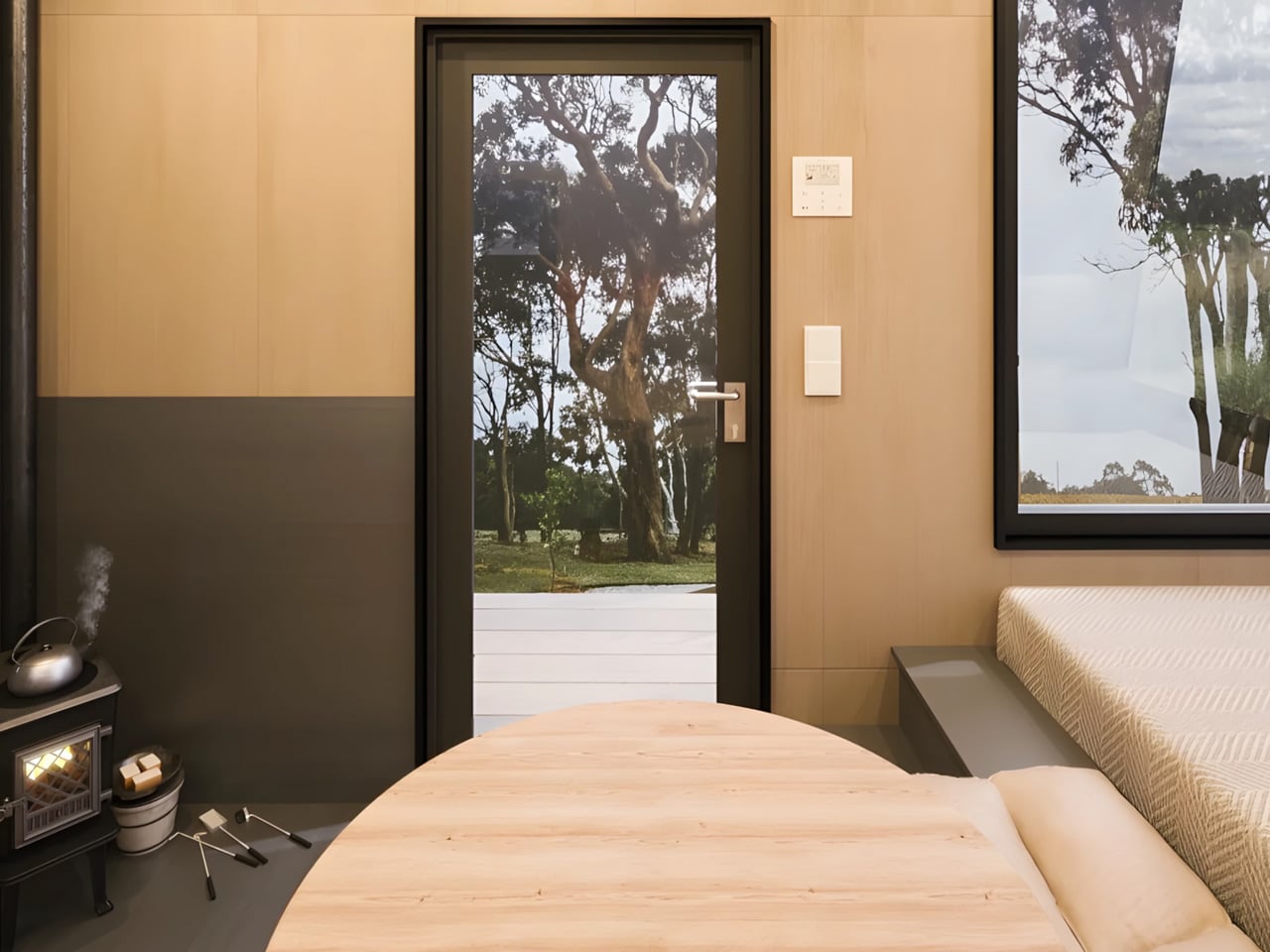
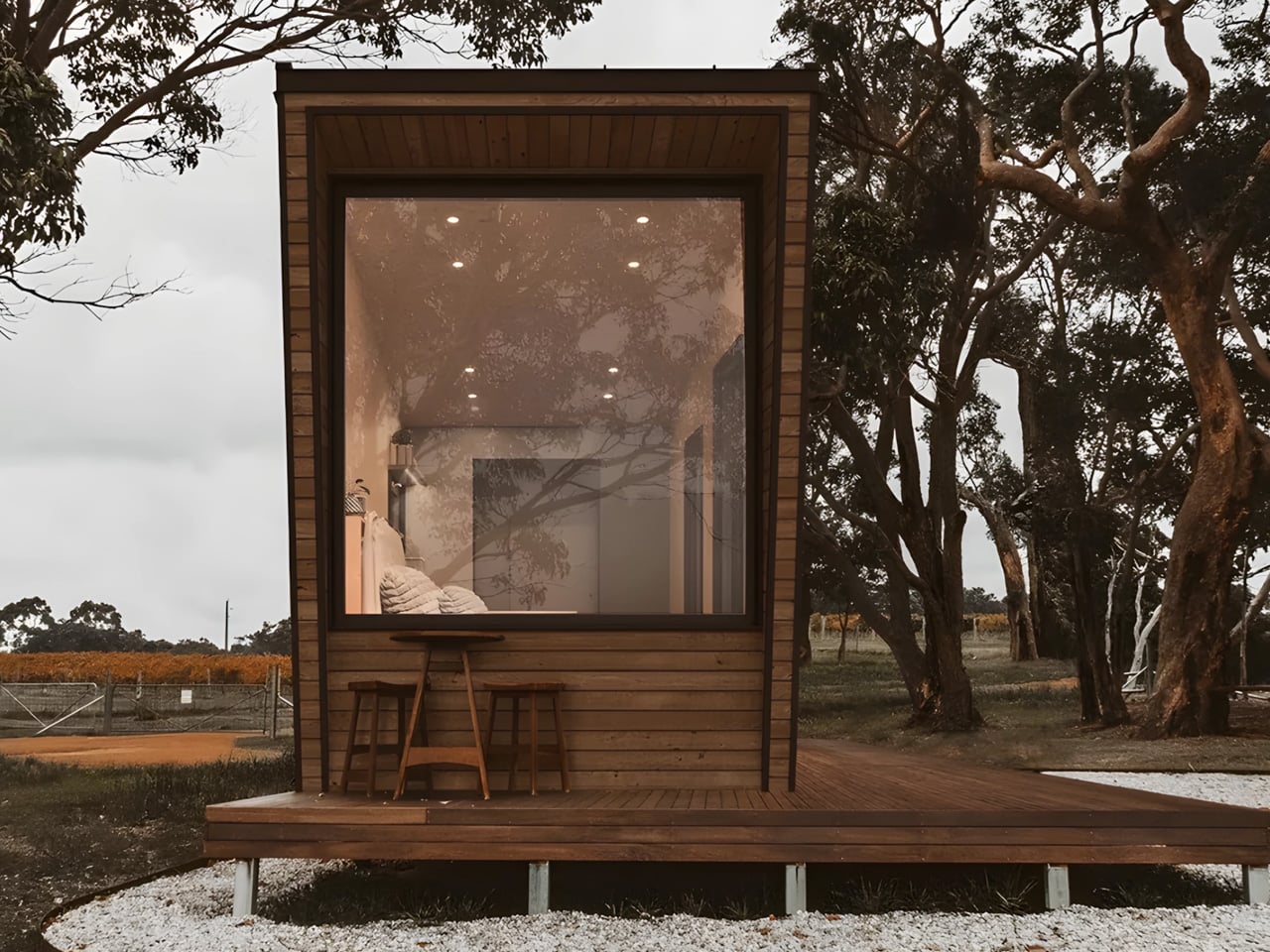
The Ambra’s exterior immediately catches attention with its generous glazing. A panoramic window dominates the facade, flooding the compact interior with natural light throughout the day. This design choice transforms what could feel cramped into an airy, open space that connects occupants with their surroundings. The clean lines and modern aesthetic prove that affordability doesn’t require sacrificing visual appeal. The thoughtful placement of windows creates a sense of spaciousness that defies the home’s modest footprint.

Designer: TinyKiwi.house

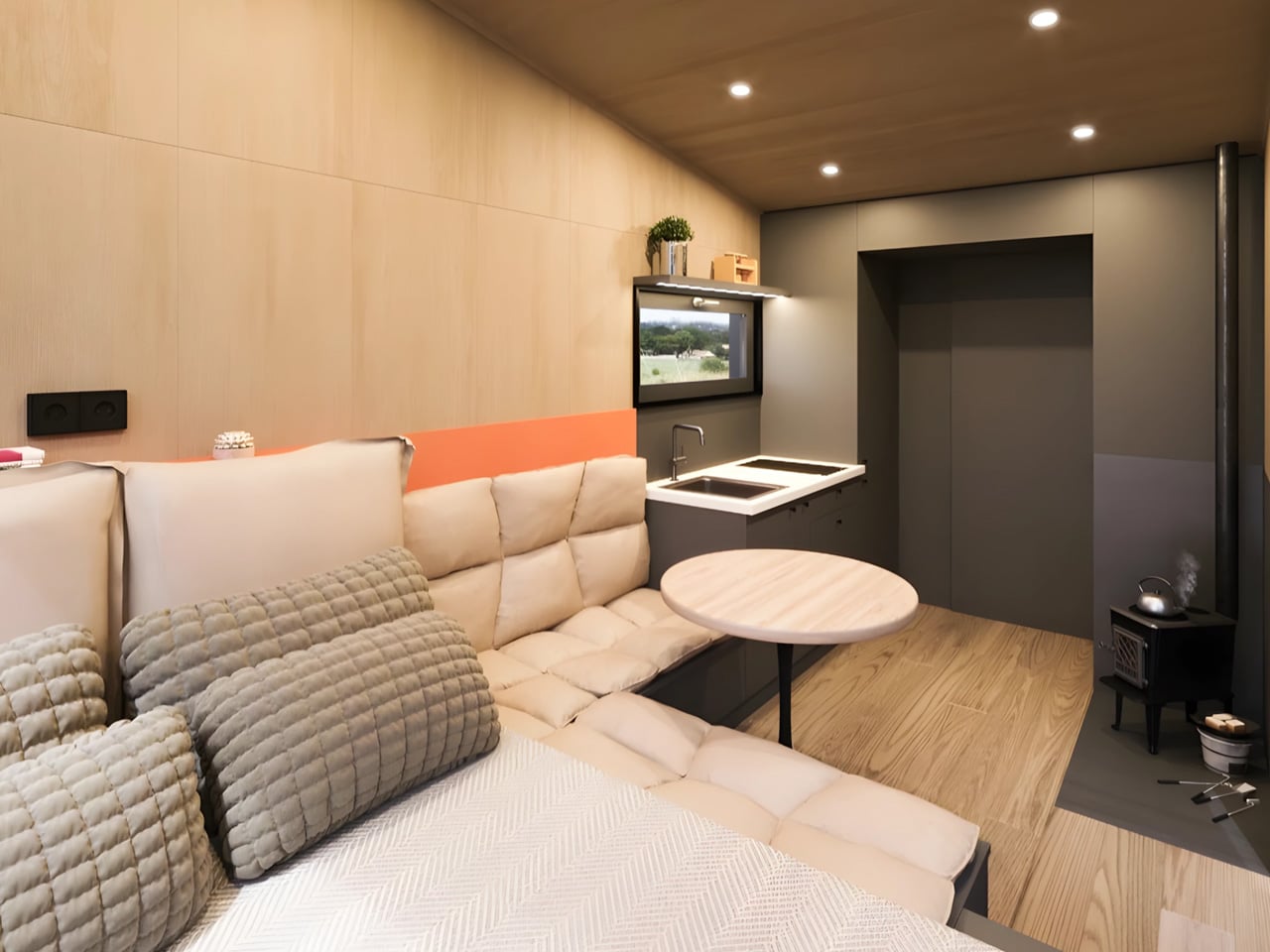
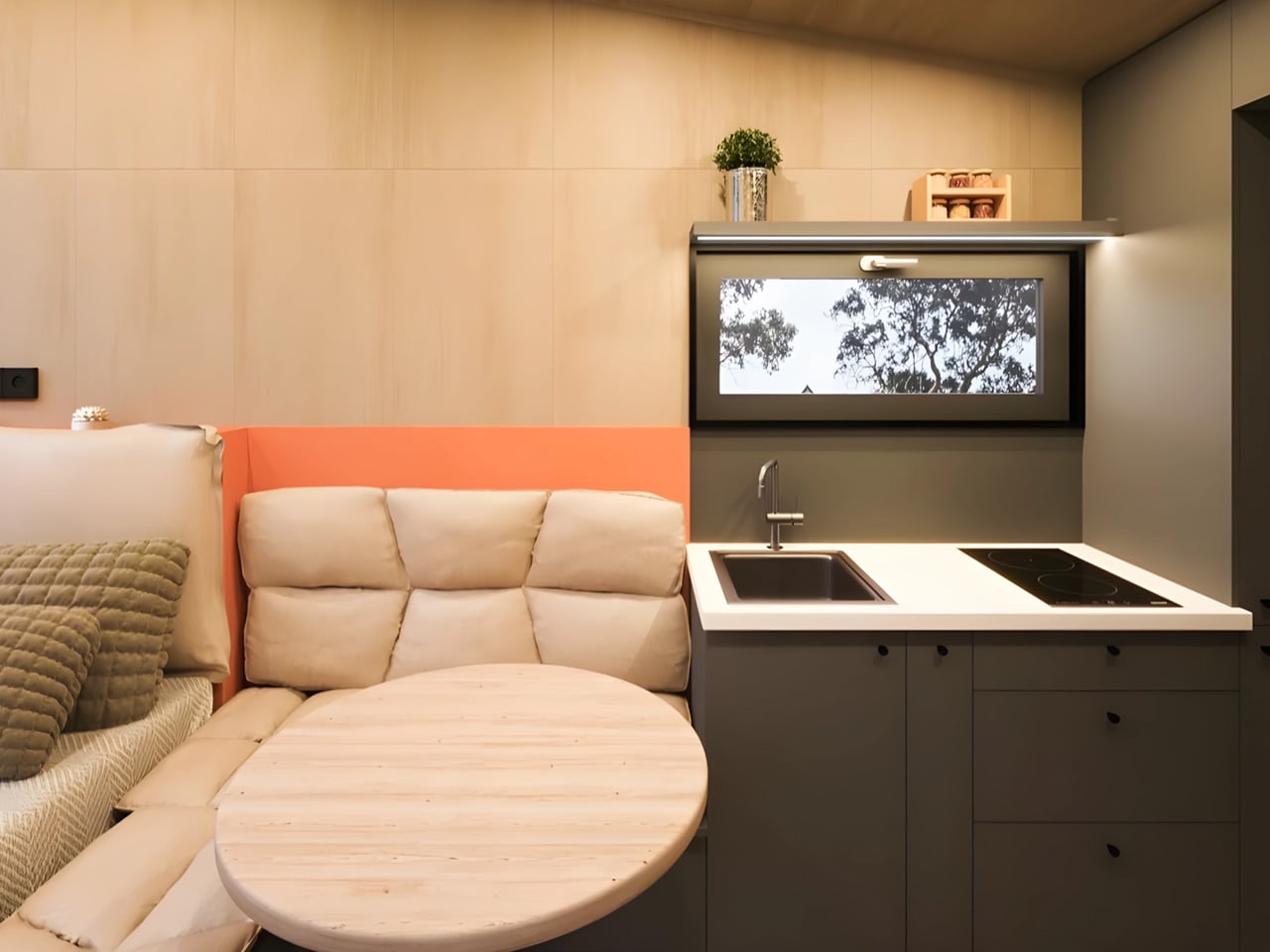
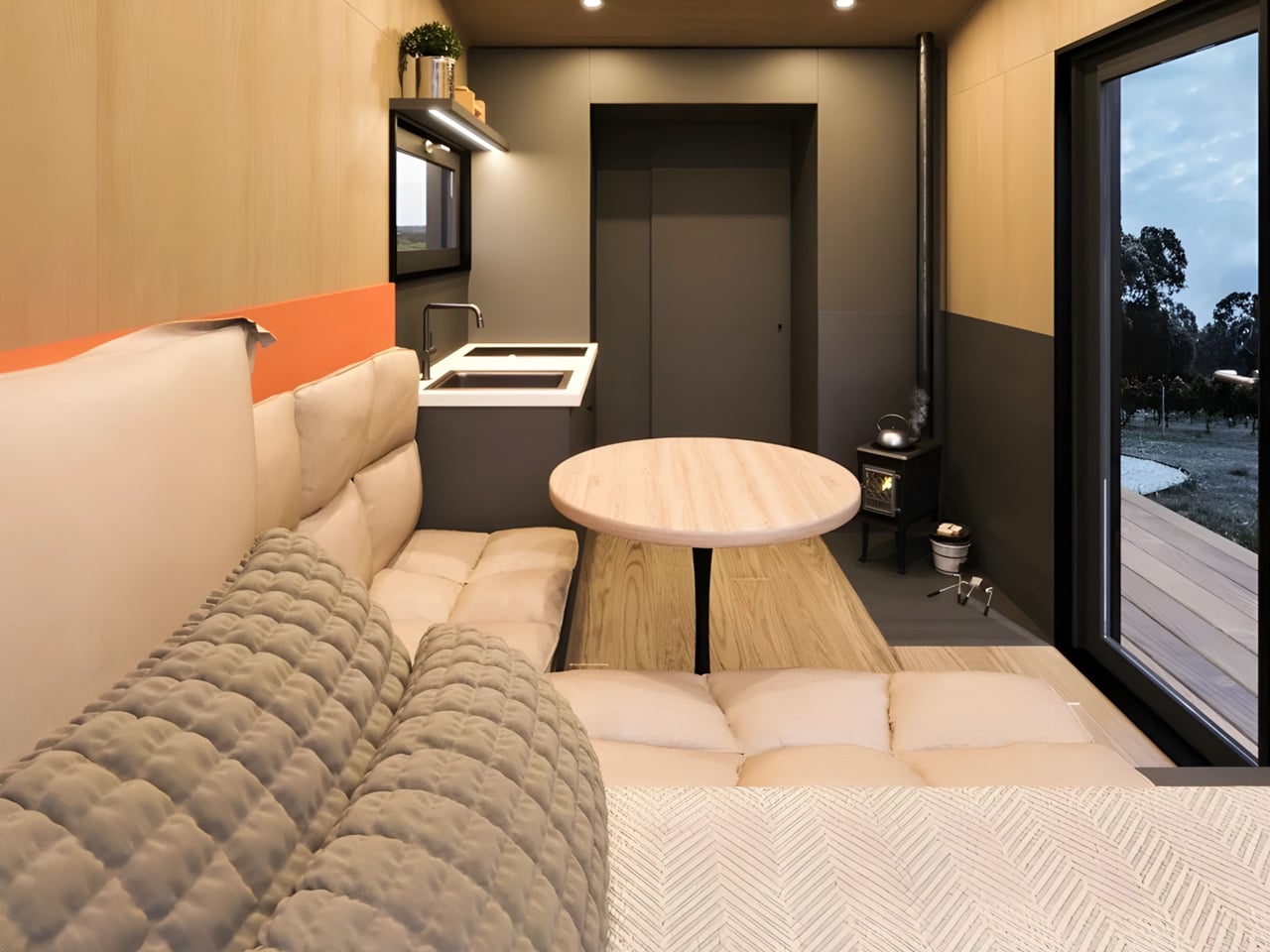
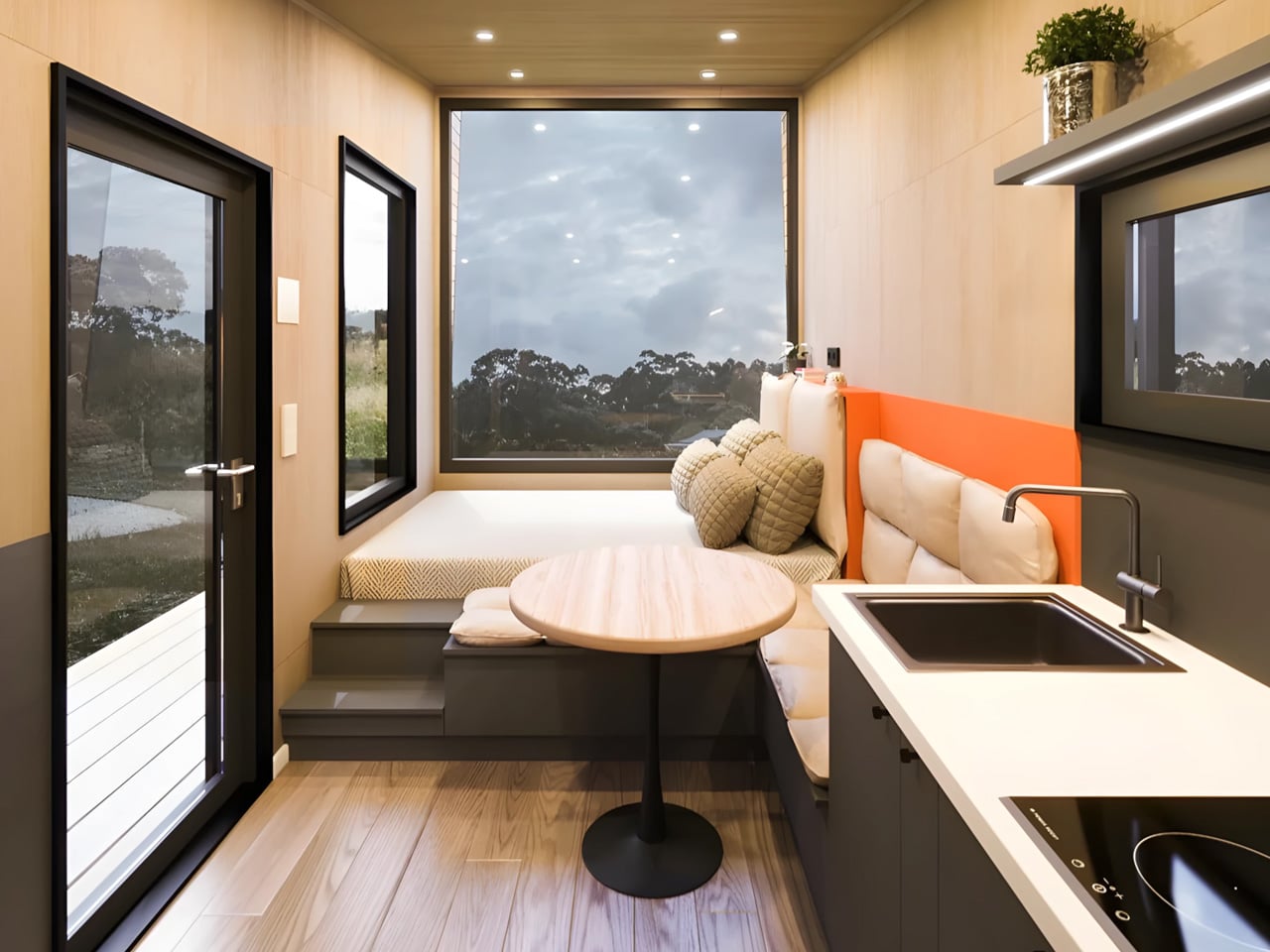
Step inside, and the intelligent layout becomes apparent. Every square inch serves a purpose without feeling cluttered or compromised. The space flows seamlessly from the kitchen area into the living zone, where a double bed anchors the room. A small seating area and dining table provide spots for relaxation and meals, ensuring residents have dedicated spaces for different activities. The bathroom occupies its own discrete section, maintaining privacy within the open floor plan. A wood stove adds both warmth and a cozy focal point that elevates the home beyond basic shelter into genuine comfort.

What sets the Ambra apart is its remarkable versatility combined with professional craftsmanship. Buyers can choose to mount it on a trailer chassis, creating a mobile retreat perfect for those seeking location independence and the freedom to relocate. Alternatively, it works beautifully as a stationary dwelling on a permanent foundation for those wanting a fixed address. TinyKiwi.house brings professional architectural and interior design expertise to each build, with attention to detail showing in the refined finishes and smart space planning. The single-level layout eliminates the loft sleeping arrangements common in many tiny homes, making it more accessible and easier to live in daily. No climbing ladders to bed after a long day.

The price point makes the Ambra particularly compelling in today’s housing market. Starting at €32,000 (roughly $37,000), it delivers move-in ready living at a fraction of what many tiny homes command. The company offers customization options too, allowing buyers to tailor the layout and aesthetics to their preferences while maintaining the core efficient design. This micro-home speaks directly to couples looking to minimize their ecological footprint and embrace a lifestyle centered on freedom and connection with nature. The compact footprint means lower utility costs, reduced environmental impact, and less time spent on maintenance. More time for living, less for managing possessions and space you don’t really need.

The Ambra represents what tiny living should be: accessible, functional, and genuinely small without apology. It’s not trying to be a traditional house shrunk down with all the complexity that entails. Instead, it embraces its compact nature and works with it rather than against it, creating harmony between space and purpose. For anyone feeling overwhelmed by housing costs or the burden of maintaining larger spaces, this tiny home offers a viable alternative that doesn’t feel like settling. TinyKiwi.house proves that beauty, simplicity, and freedom can coexist at an attainable price point, making minimalist living accessible to more people than ever before.


The post Meet the Ambra: Where Compact Living Meets Genuine Affordability first appeared on Yanko Design.

2025 Audi Q5 TFSI quattro Prestige Review: Evolution as a Design Strategy

PROS:


  • Interior material quality exceeds what the segment typically delivers

  • Screen integration feels intentional rather than bolted on afterward

  • Adaptive air suspension transforms ride character between driving modes

  • Acoustic glass creates genuinely quiet cabin at highway speeds

  • Real exhaust outlets signal design honesty throughout the vehicle

CONS:


  • Rearward visibility compromised by styling choices and roofline rake

  • No hands-free liftgate gesture system like competitors offer

RATINGS:

AESTHETICS
ERGONOMICS
PERFORMANCE
SUSTAINABILITY / REPAIRABILITY
VALUE FOR MONEY

EDITOR'S QUOTE:

Evolution as philosophy: when restraint becomes the boldest design choice.

I spent a week with the third-generation Audi Q5 Prestige in Tambora Gray Metallic, and what struck me first was not any single feature but the accumulation of considered choices. Built on Volkswagen Group’s Premium Platform Combustion architecture with a turbocharged 2.0-liter TFSI four-cylinder producing 261 horsepower and 273 lb-ft of torque, this compact luxury SUV occupies familiar territory at $63,290 as tested. The design decisions embedded in its surfaces, proportions, and material selections tell a more nuanced story. The Q5 represents what happens when a manufacturer chooses careful iteration over spectacle.

Designer: Audi

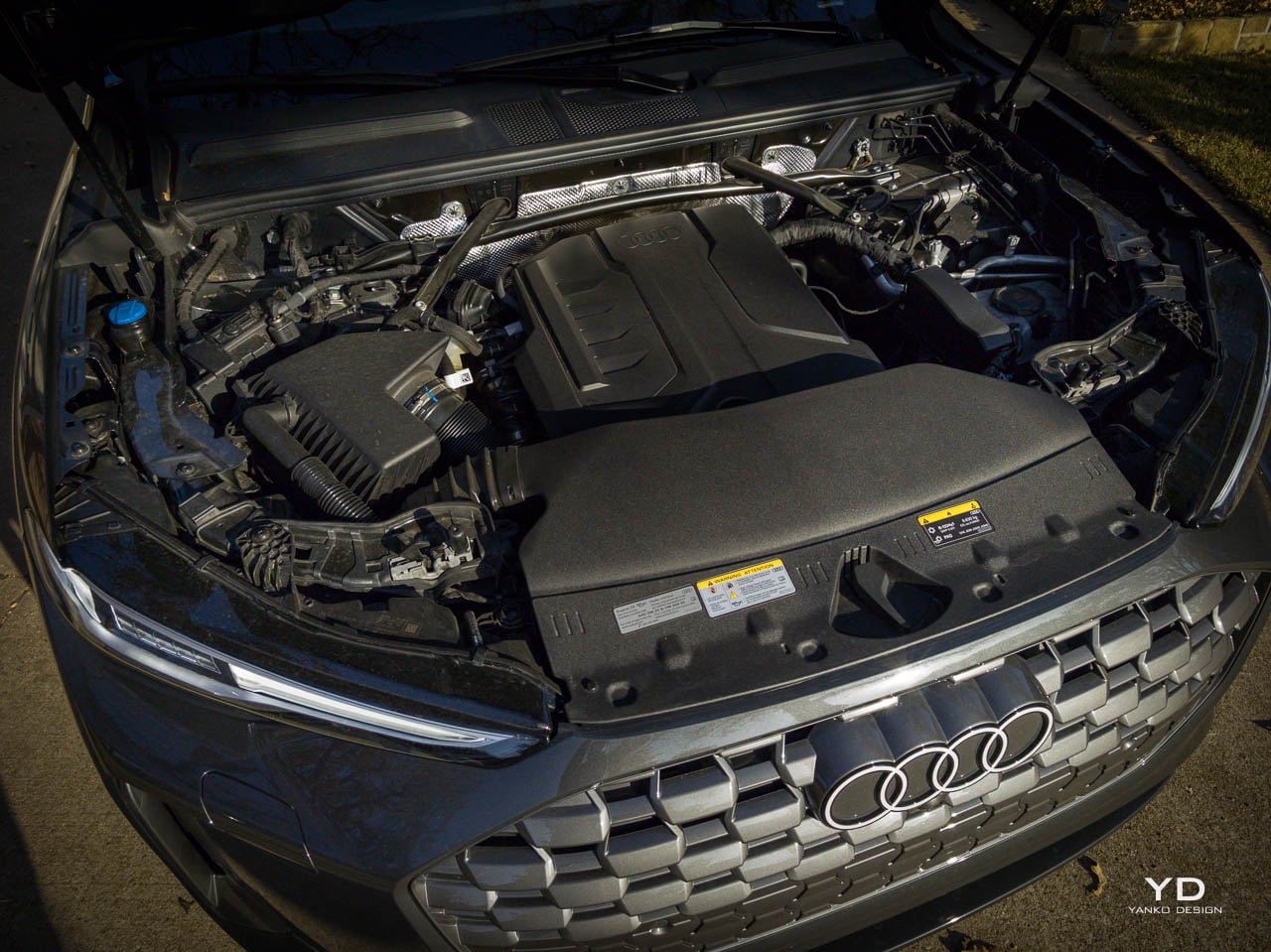
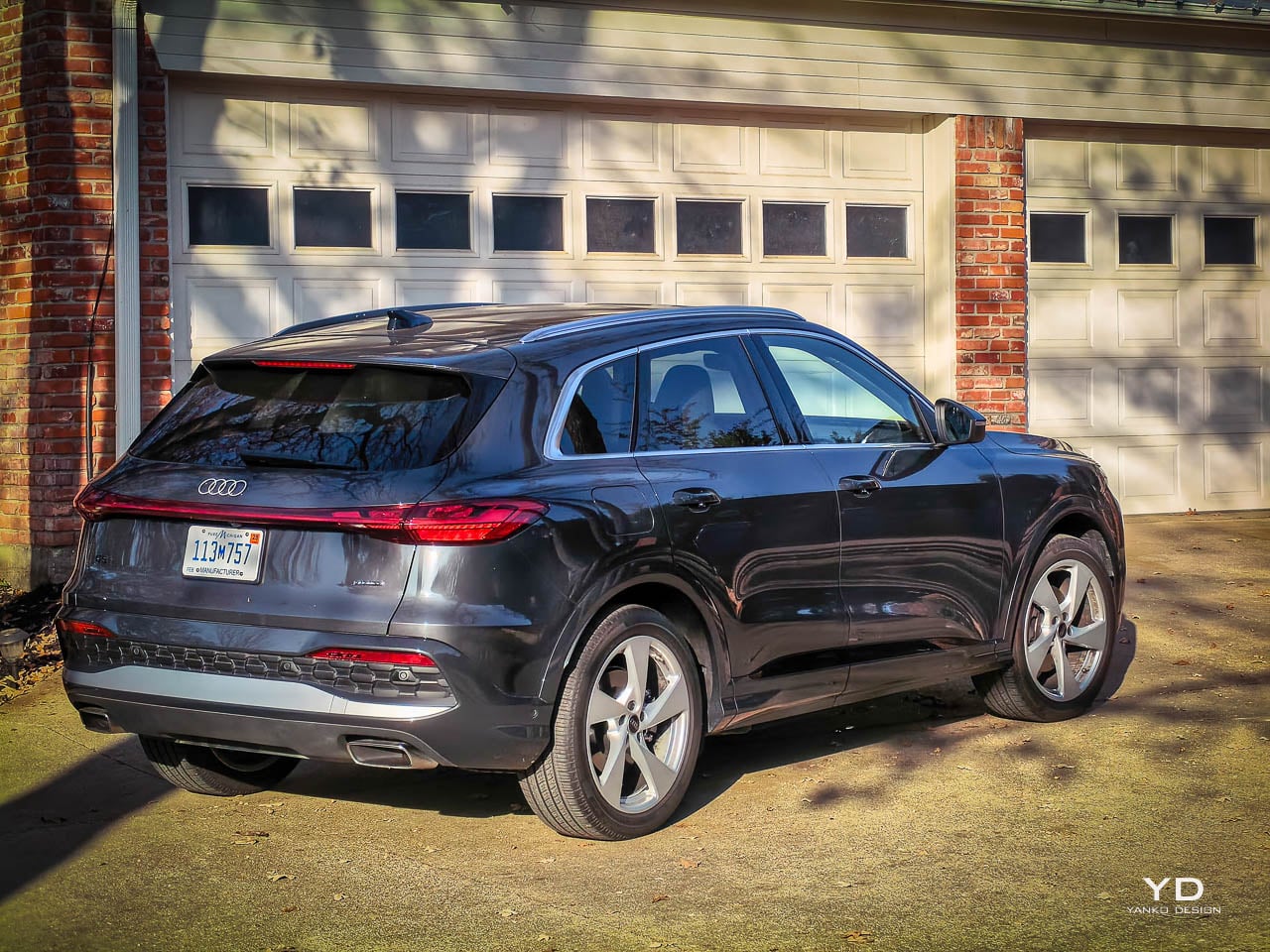
What distinguishes this generation from its predecessor is not a single dramatic gesture but rather an accumulation of details that reveal themselves over days rather than minutes, over highway miles rather than showroom walks, over lived experience rather than specification comparisons. The raked silhouette borrows visual vocabulary from the larger Q7, establishing family resemblance without direct mimicry. Panel gaps have tightened to tolerances that reward close inspection. The decorative exhaust finishers have been replaced with genuine rectangular outlets, a small change that signals larger philosophical shifts about authenticity in automotive design. These aren’t features that demand attention at first glance. They’re details that accumulate into a stance that reads as resolved rather than aggressive, as confident rather than desperate to impress, as the work of engineers and designers who understood that restraint requires more discipline than excess.

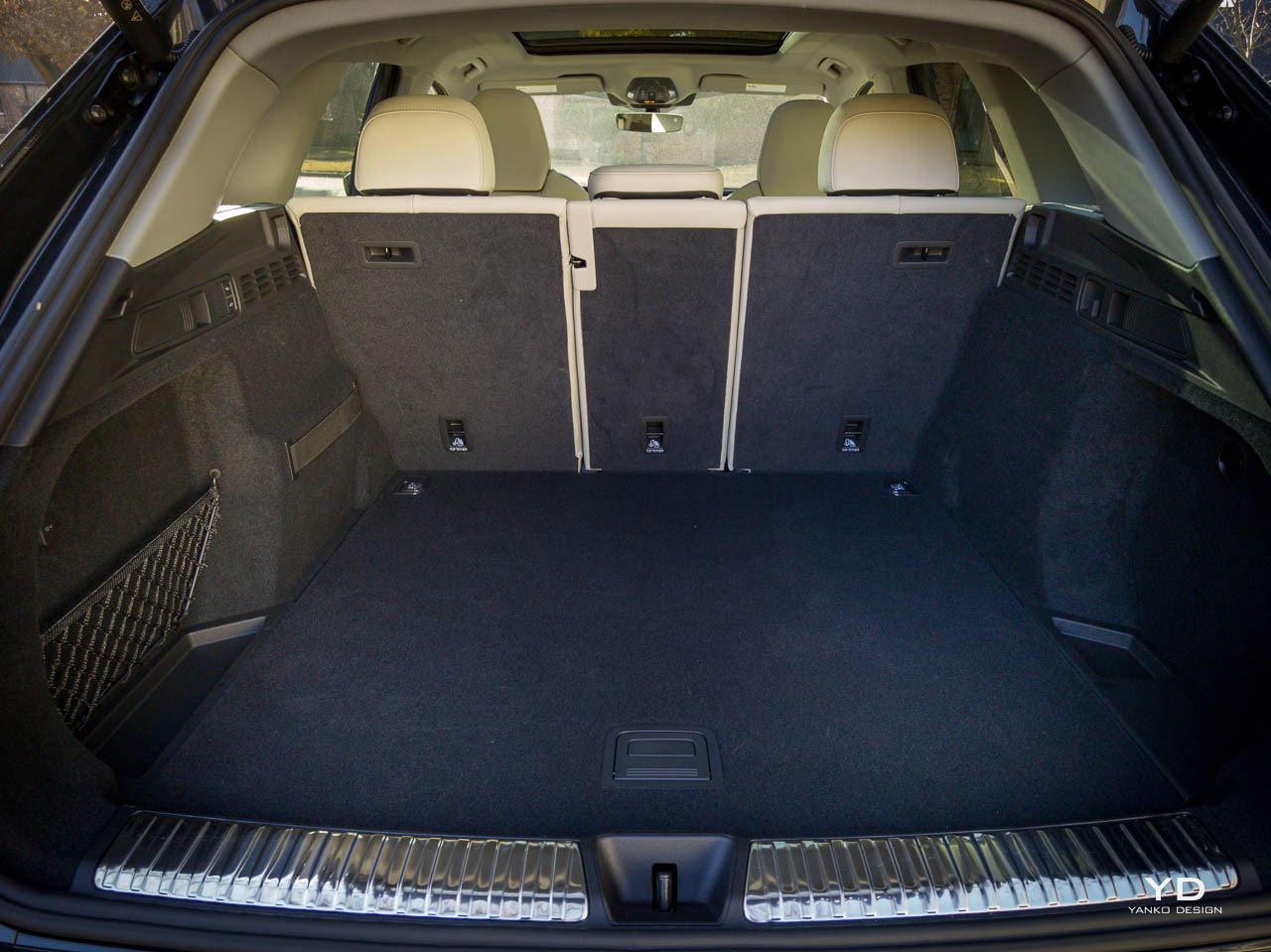
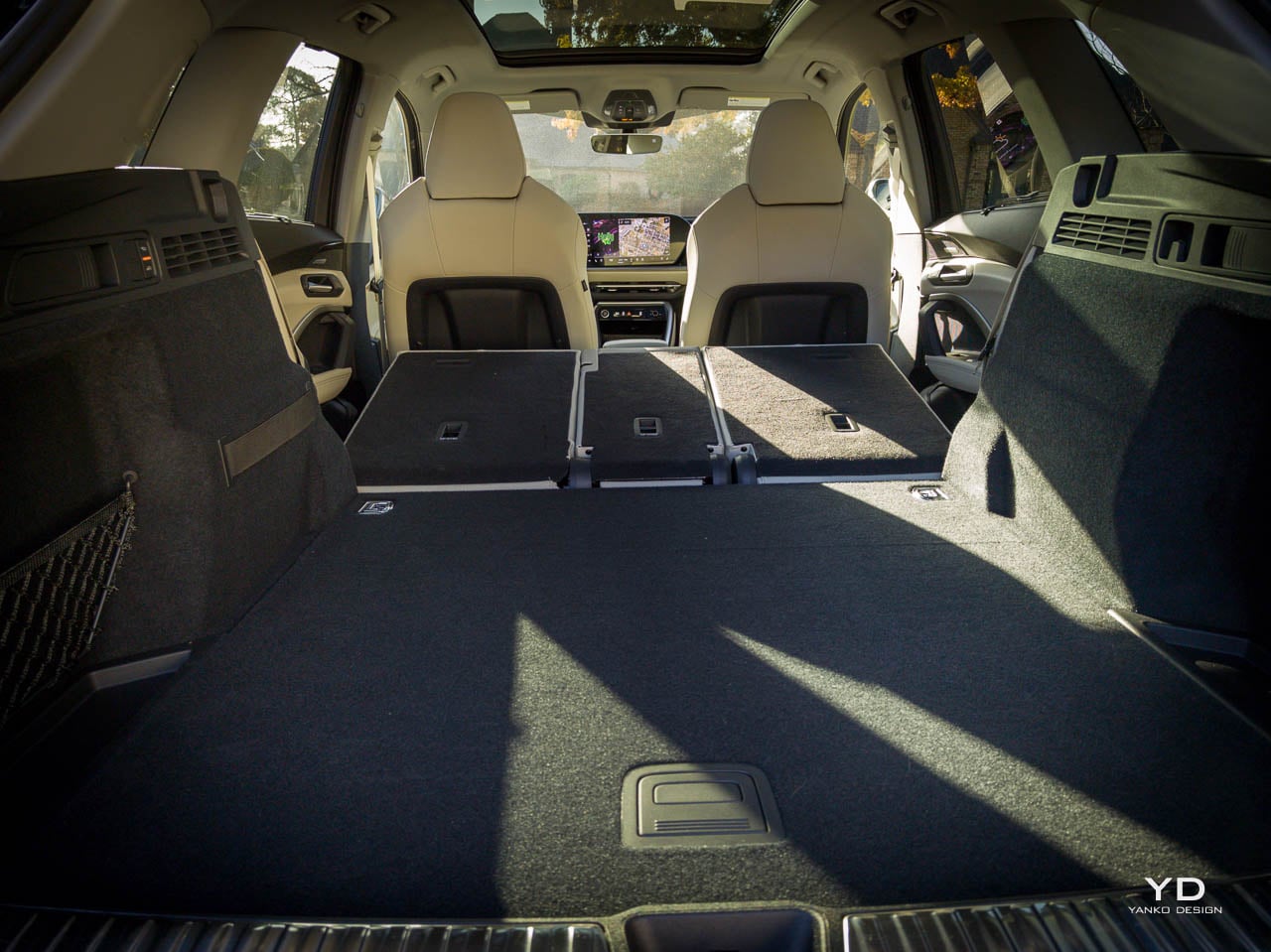
The vehicle’s proportions establish its intent before any specification sheet is consulted. Wheelbase dimensions remain close to the previous generation, but cargo volume has expanded to 56.9 cubic feet with rear seats folded, a gain of 2.8 cubic feet. That’s design as problem-solving.

Exterior Form Language

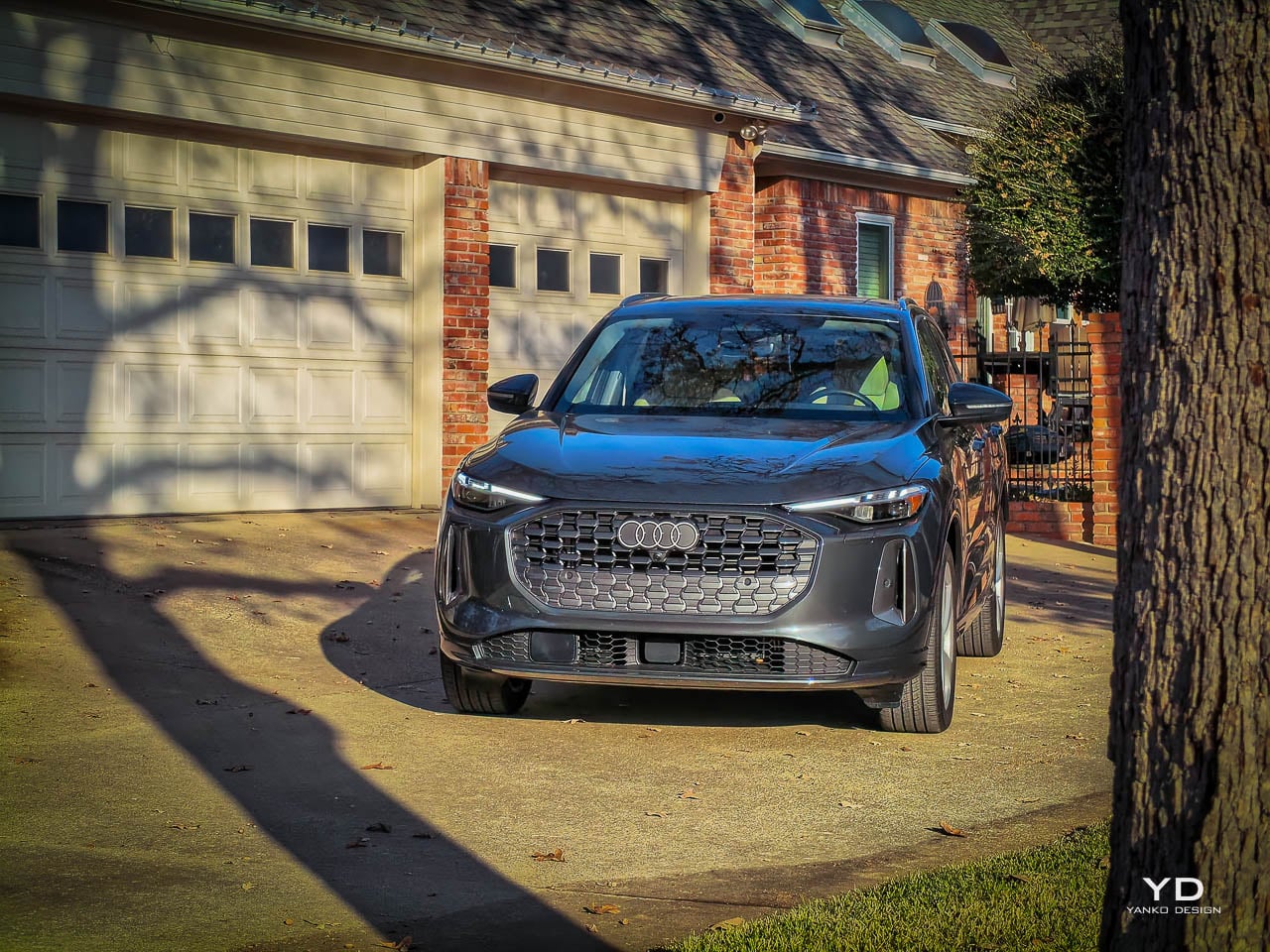
The singleframe grille anchors the front fascia with a presence that has become signature Audi vocabulary, wider and higher than before, flanked by functional air curtains that channel airflow along the body sides, reduce turbulence around the front wheels, and contribute measurably to the 25 mpg combined fuel economy figure while adding horizontal emphasis to the front that grounds the vehicle’s face as the LED lighting signatures lift the eye upward, creating a tension between opposing visual forces that produces dynamism without chaos. In person, the Tambora Gray Metallic finish shifts subtly between cool silver and warm graphite depending on the light, a $595 option that flatters the Q5’s surfacing without demanding attention, revealing the gentle curves of the fender flares and the controlled tension of door panel surfacing in ways that more dramatic colors would overwhelm. I walked around this vehicle at least a dozen times during my week with it, and each angle revealed something slightly different about how Audi’s design team approached the challenge of updating a successful shape without losing what made it work.

That’s restraint as design strategy.

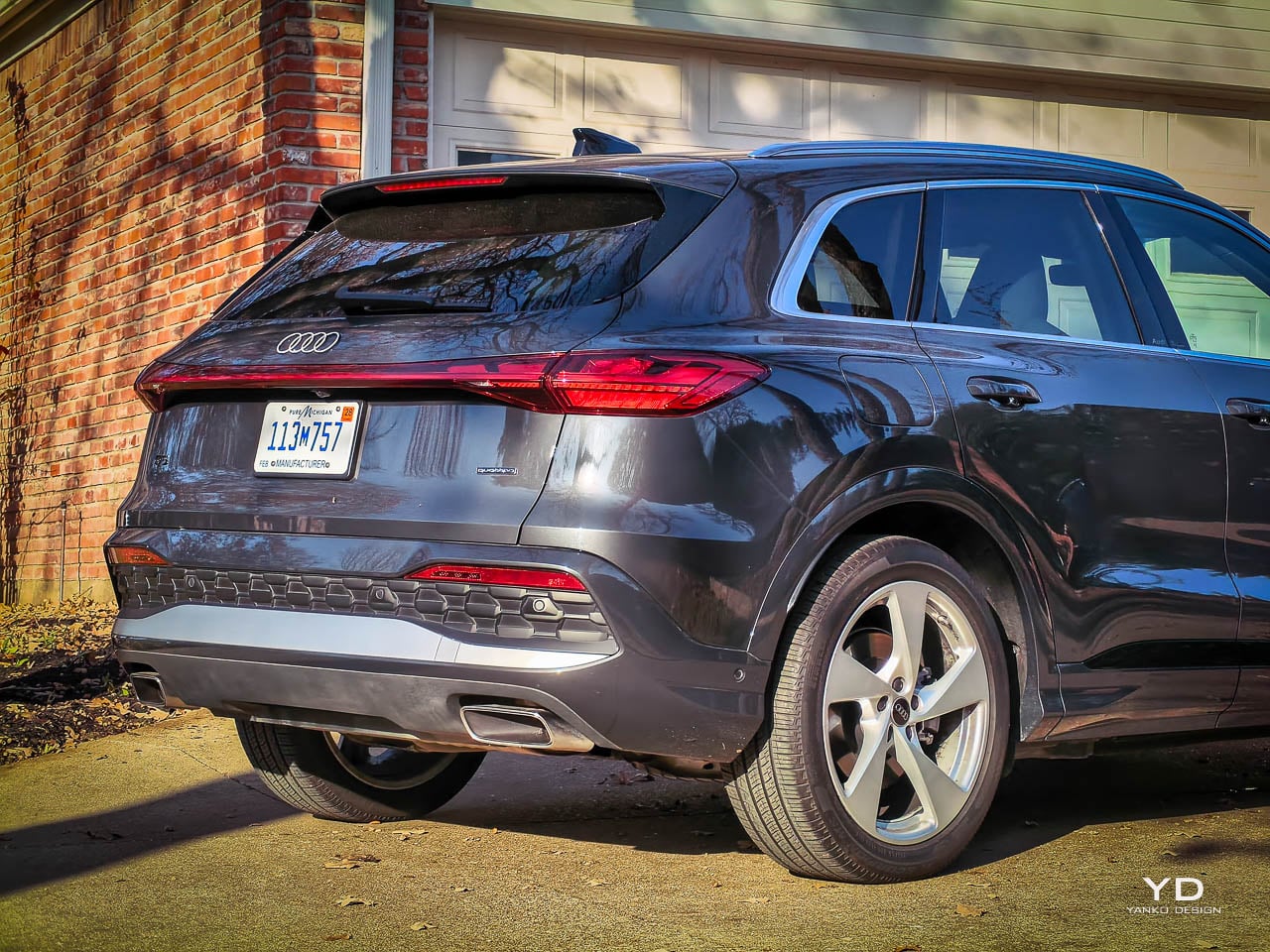
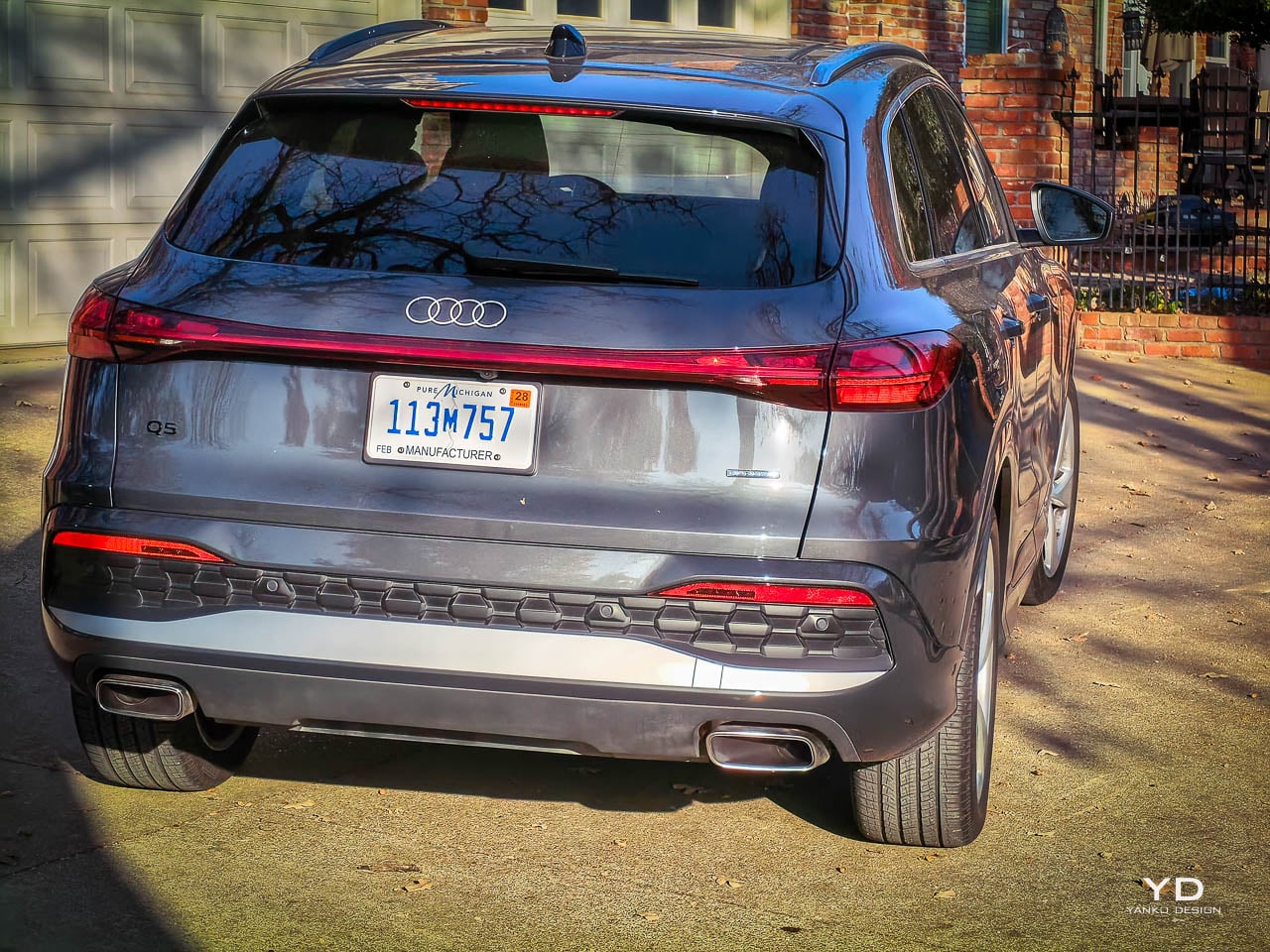
The Prestige trim’s LED headlights plus with eight digital DRL signatures represent a departure from the notion that headlights are merely functional, allowing personalization within boundaries that maintain brand coherence, while the digital OLED taillights transform the vehicle’s nighttime presence entirely with a full-width light bar and dynamic animation sequences that other drivers will notice before they recognize the Audi badges. Front and rear lighting can now express personality. You can choose character, but the character stays on-brand, never straying into the visual vocabulary of competitors or aftermarket modifications.

The shoulder line carries through the side profile without interruption, a decision that prioritizes visual length over sculptural drama, that trusts the basic proportions to create interest rather than relying on creases and vents and stamped-in details that would only compete for attention. Where competitors might break this line, the Q5 maintains continuity. The 20-inch 5-arm design wheels from the $800 optional wheel package fill the arches convincingly, and the roofline’s rake creates forward momentum even at rest, suggesting capability without the aggressive stance that defines sportier alternatives.

Real exhaust outlets replace the decorative finishers of the outgoing model, communicating mechanical honesty in a market where many competitors still rely on chrome trim pieces that hide the actual exhaust routing somewhere underneath the bumper, a detail that speaks to broader shifts in automotive design thinking about authenticity versus theater, about what we show versus what actually exists, about whether buyers notice or care about such distinctions and what it says about a brand that assumes they do. The previous generation’s false tips suggested performance that the actual exhaust system didn’t support. What you see is what exists. Light catches the fender flares and door panels in ways that reveal gentle curves rather than aggressive angles, while the 12-volt mild hybrid system recovers energy during deceleration invisibly, feeding it back into the electrical architecture that powers the countless systems modern buyers expect, the design absorbing the technology rather than announcing it, integrating engineering advances into surfaces that look simpler than they are.

Interior Architecture

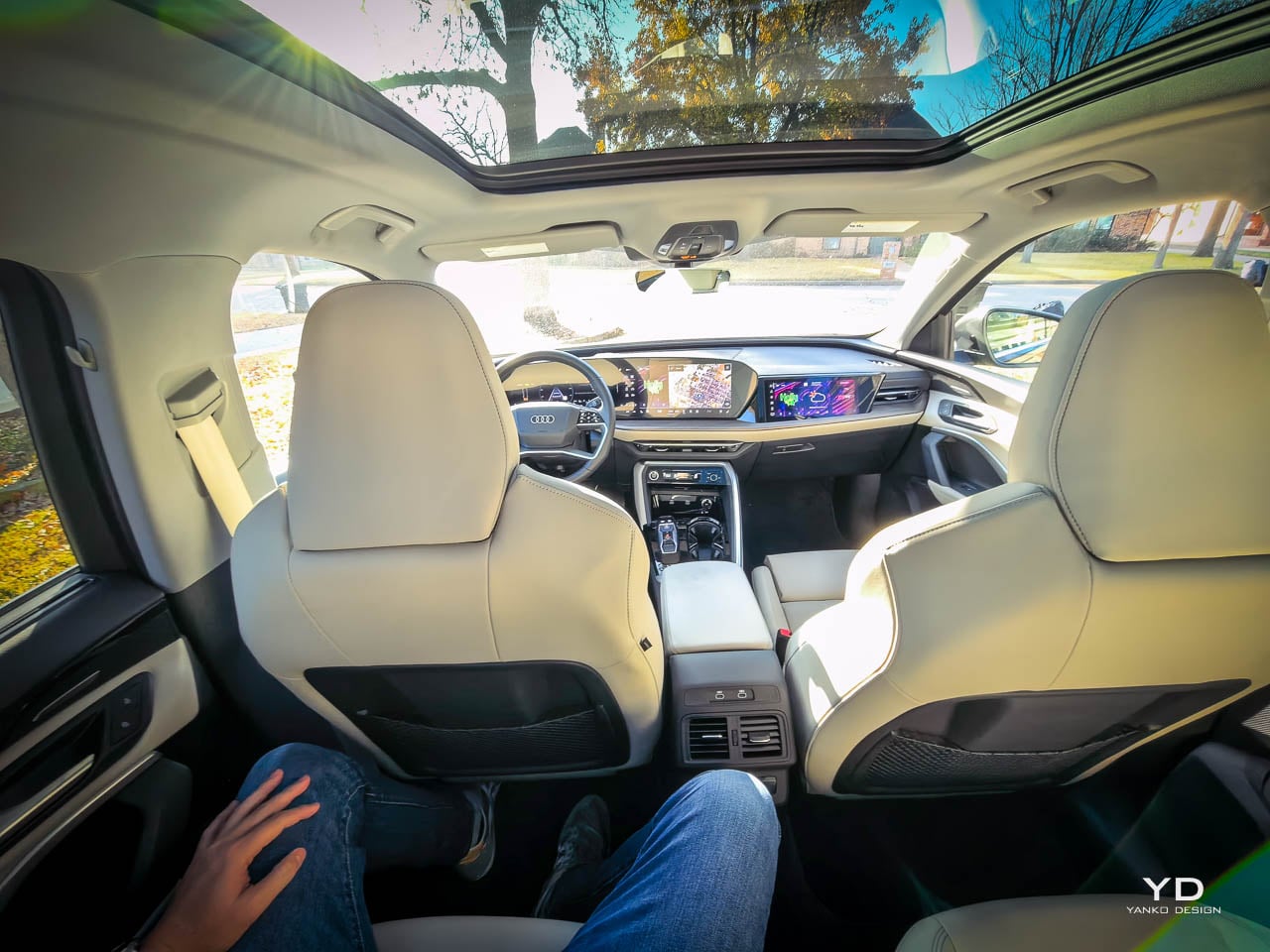
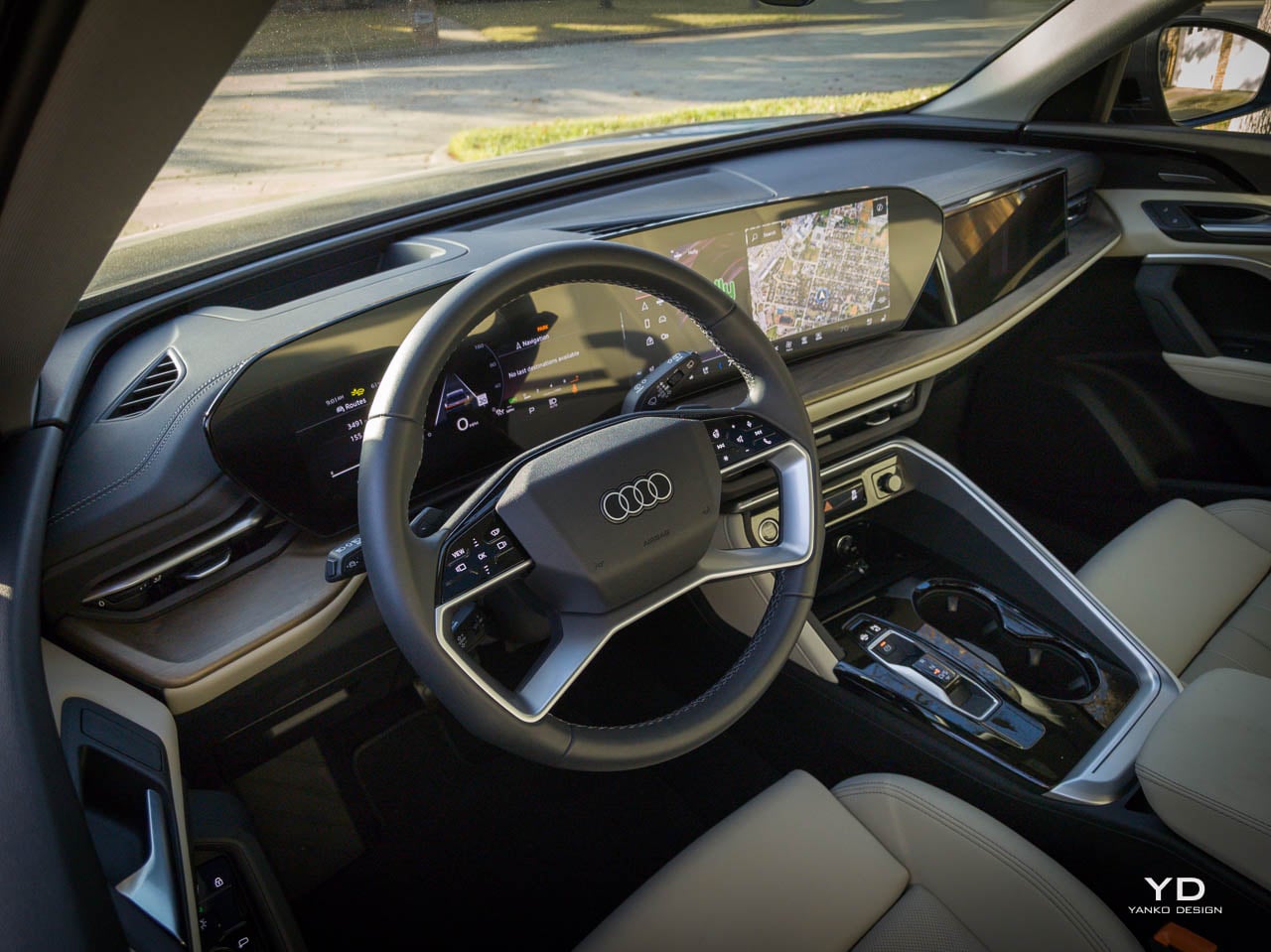
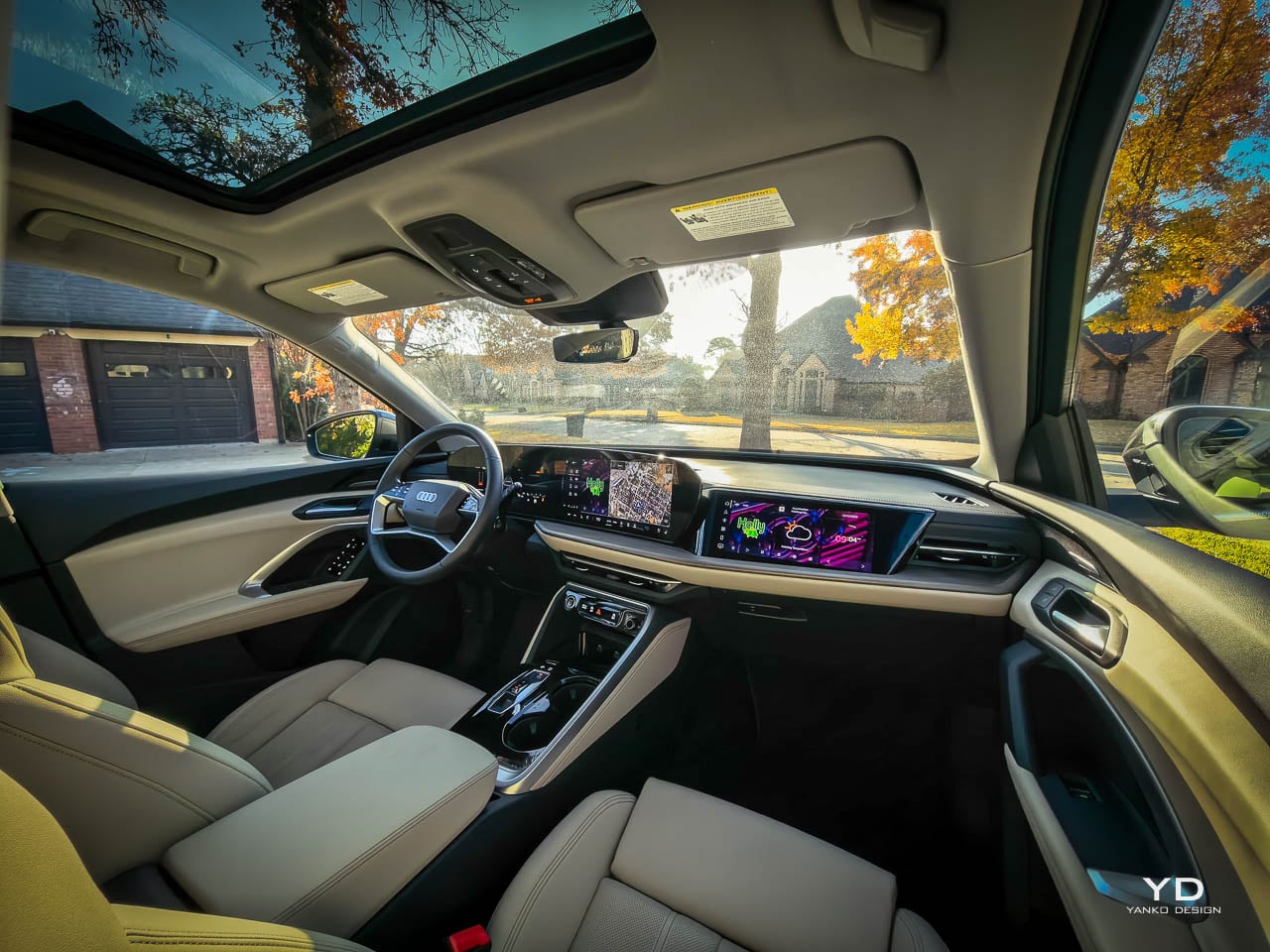
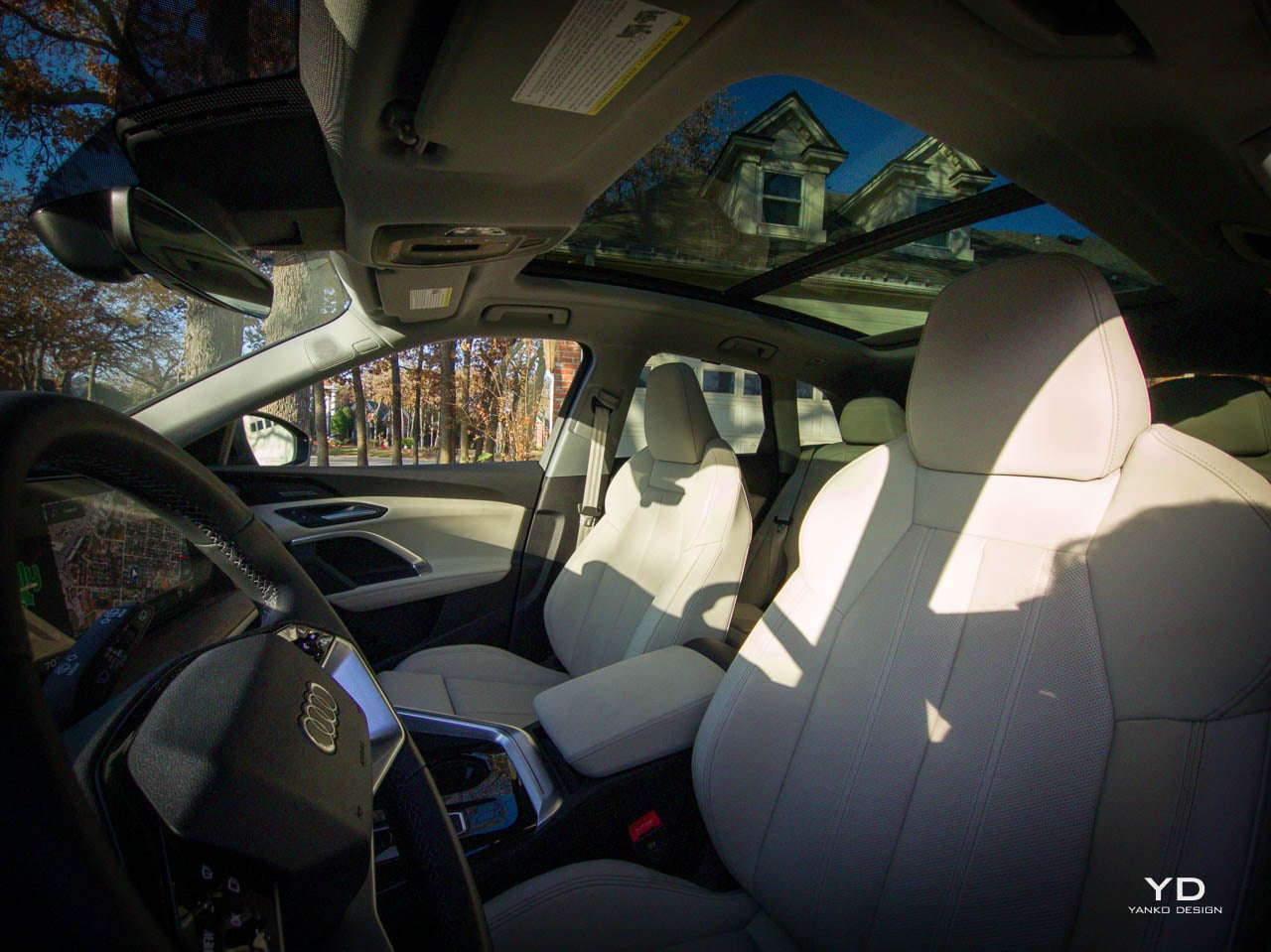
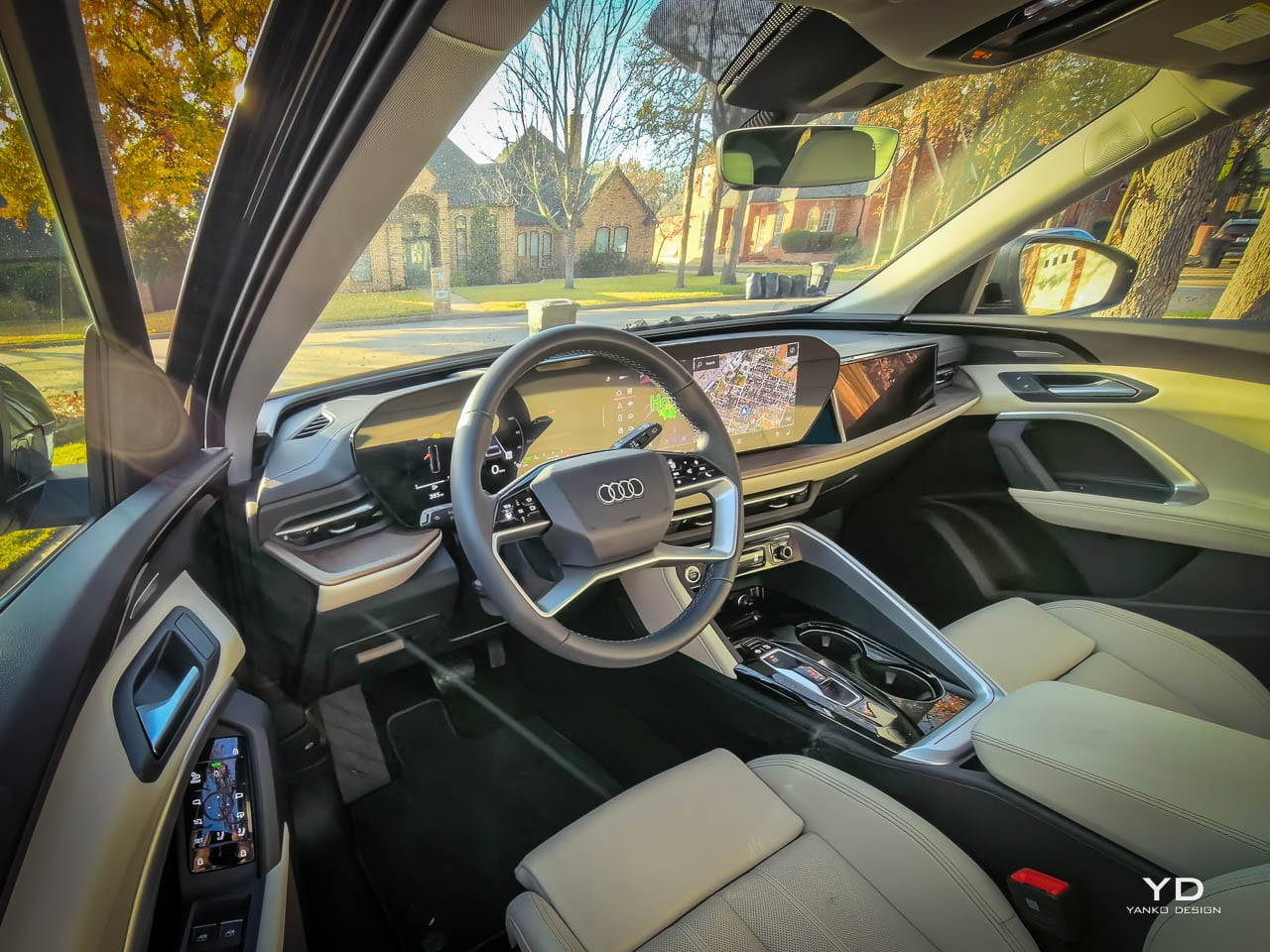
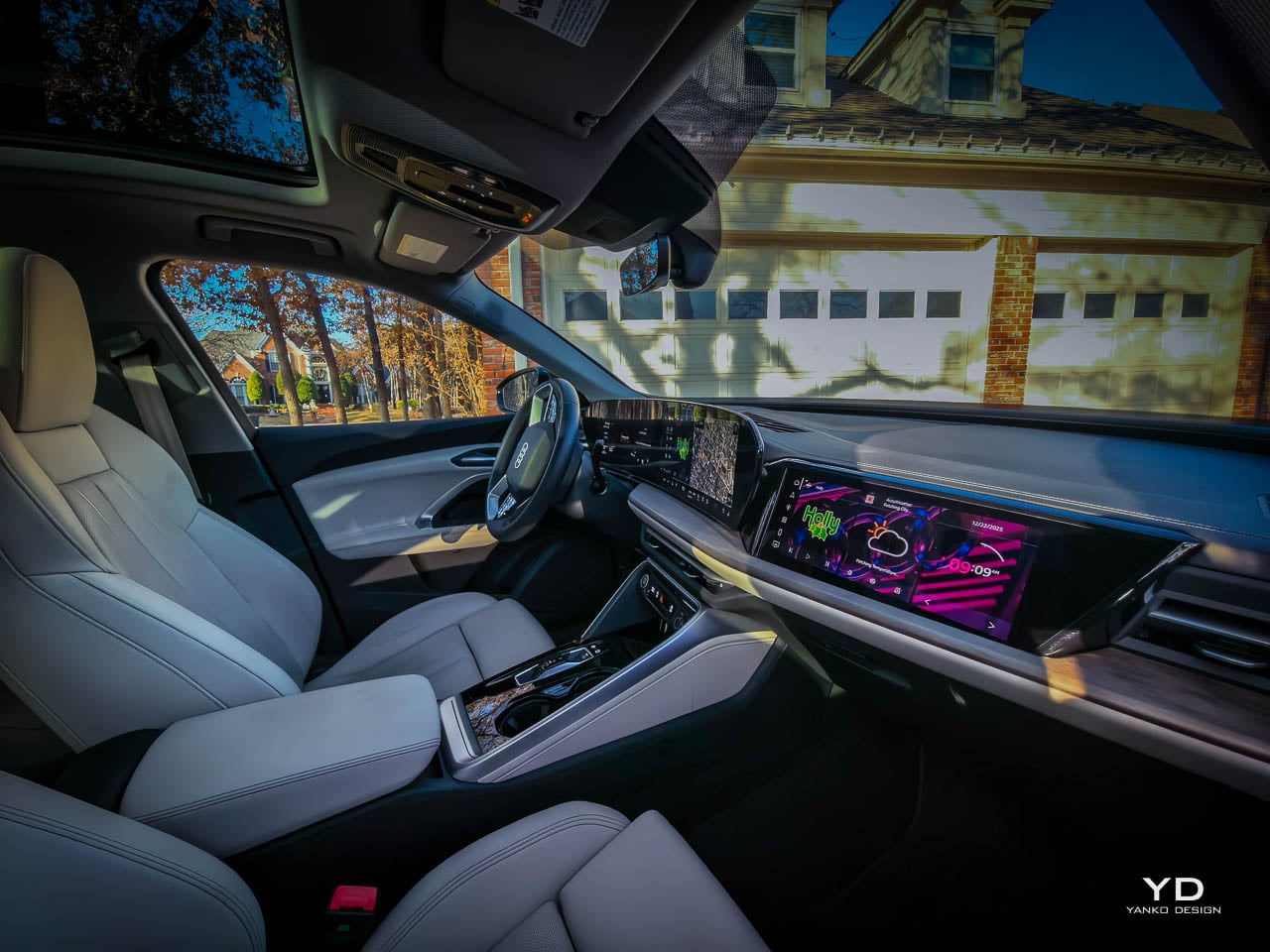
The cabin represents the most significant departure from the previous generation. Sliding into the Pearl Beige interior for the first time, you notice the difference immediately. Where the predecessor was criticized for visual austerity, the new interior addresses this through layered materials and deliberate contrast.

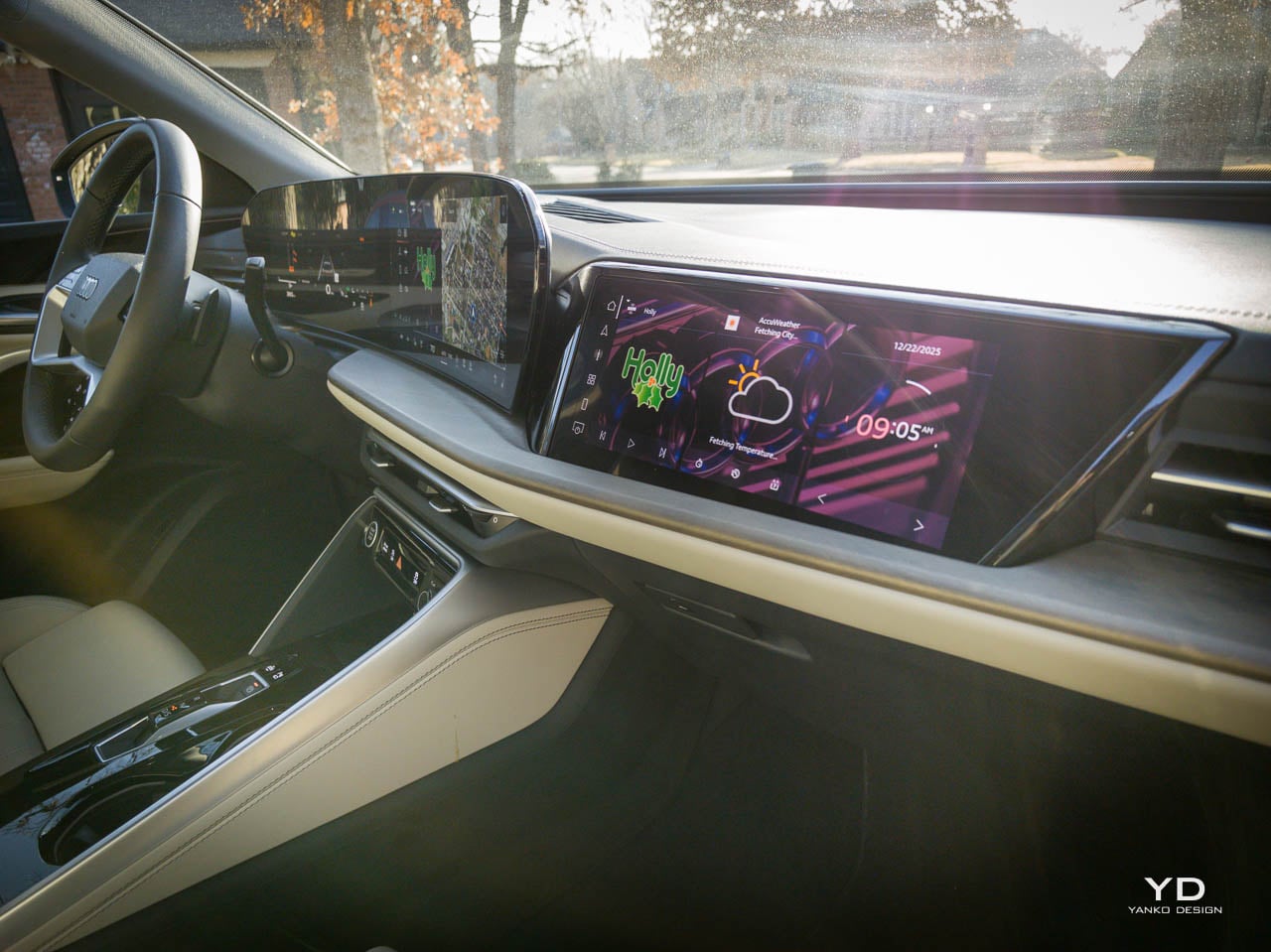
The 14.5-inch MMI touch display dominates the center stack with a presence that might overwhelm in lesser integrations, but here it sits within the dashboard architecture rather than perched atop it like an afterthought, paired with the 11.9-inch Audi virtual cockpit plus that renders navigation and vehicle information with the kind of clarity and customization that once defined luxury flagships, while the Prestige package adds a 10.9-inch MMI passenger display that allows front passengers to manage navigation or entertainment without distracting the driver, though I found myself wondering whether the additional screen complexity serves real needs or simply provides another differentiator on specification sheets that buyers compare without understanding what they actually want. Screen integration matters more than screen dimensions. Too many competitors treat displays as afterthoughts, floating tablets stuck to dashboards designed before touchscreens became standard. Here, the screens belong, and that belonging required more engineering effort than simply making them larger.

The driver’s position establishes immediate relationship to the controls. Power tilt-and-telescopic steering allows precise positioning. The head-up display projects information directly into the sightline. Tri-zone climate control divides the cabin into manageable thermal territories. These are ergonomic solutions dressed in premium materials.

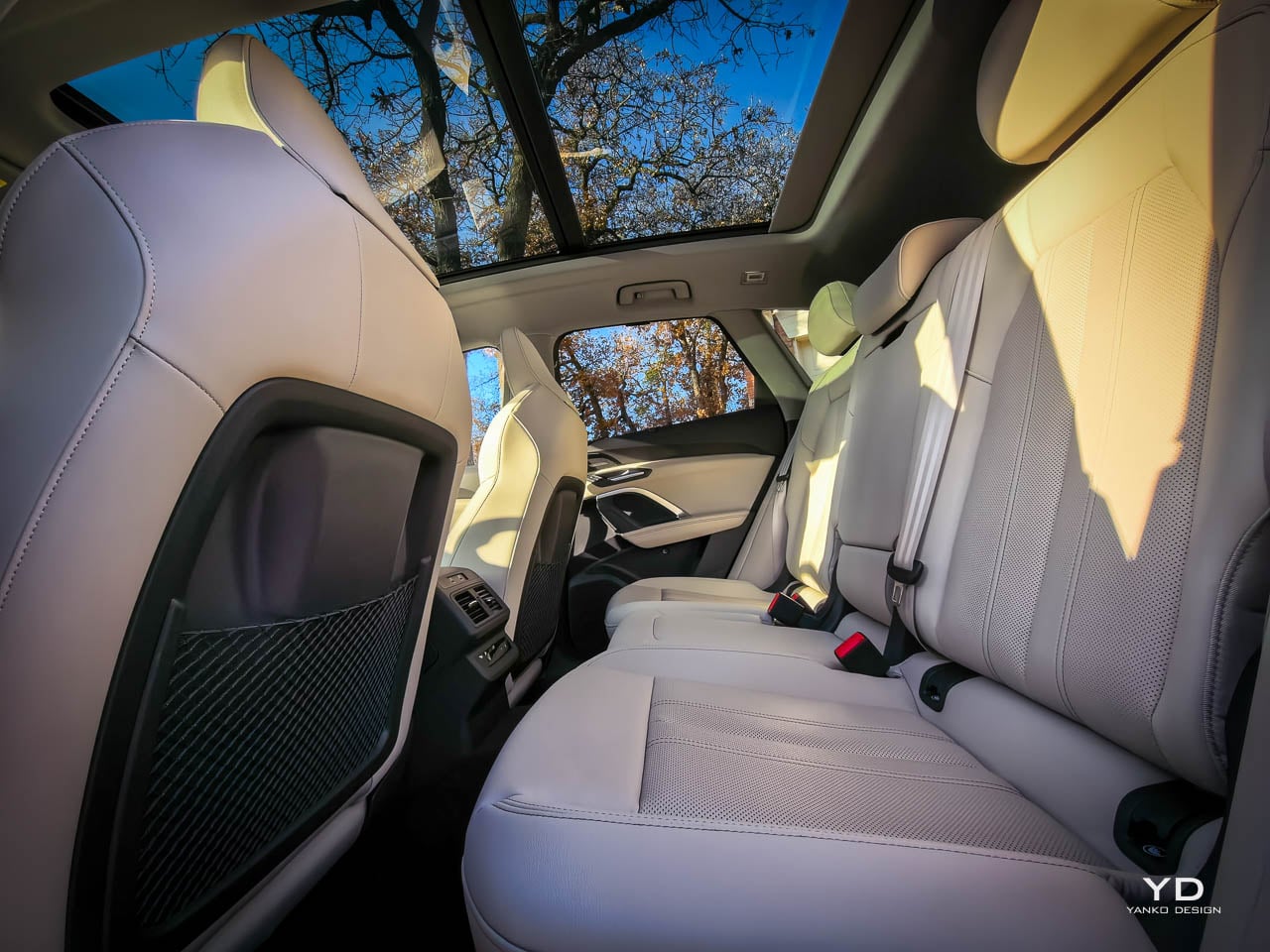
Rear seat architecture employs a 40/20/40 split-folding configuration with sliding capability. The center section folds independently. This configuration solves real-world problems.

Storage solutions throughout the cabin demonstrate attention to daily use patterns, expanding door bins and reorganized center console compartments creating a space that feels designed by people who actually load groceries and manage coffee cups during commutes rather than by stylists optimizing photography angles, while the LED interior lighting pro package adds atmosphere without distraction, touching surfaces that matter at night, transforming the Pearl Beige leather into warmer tones under ambient illumination that makes the cabin feel like a different space after dark, more intimate, more considered, without requiring any adjustment from the driver beyond the simple act of driving into evening.

Material Composition

Material selection in the Q5 follows a hierarchy of touch frequency that allocates budget where it matters most to perceived quality, soft-touch plastics yielding appropriately under pressure on surfaces that hands contact regularly, leather wrapping appearing where fingers rest during normal driving, metal accents providing cool contrast to warmer materials, while lower surfaces that are seen but rarely touched employ more practical materials that clean easily and resist the wear that comes from thousands of entries and exits, from muddy shoes in winter and sandy feet in summer, from the accumulated debris of lives actually lived in vehicles rather than merely photographed in them. This graduated approach represents mature design thinking.

Run a hand across the dashboard, and you feel seams, grain, the subtle undulation of material stretched over structure.

Technology Integration

The MMI interface operates through that 14.5-inch touchscreen with a responsiveness that has improved markedly from previous generations, haptic feedback providing confirmation of inputs, menu structures reorganized to reduce navigation depth for common functions, Apple CarPlay and Android Auto integration appearing as expected equipment alongside smartphone mirroring that handles the connection without the lag that plagues some competitors, while navigation through the MMI Navigation plus system renders on either the center screen or the Virtual Cockpit depending on preference, allowing drivers to keep route guidance in their primary sightline rather than glancing repeatedly toward the center stack. The system works. It doesn’t delight, but it doesn’t frustrate either, which may be the more important achievement.

Driver assistance helps without replacing. Adaptive cruise assist maintains distance. Lane-keeping provides gentle input. Blind-spot monitoring illuminates warnings where they belong.

The Bang & Olufsen sound system with 3D sound represents the kind of feature that separates luxury from mainstream, speaker placement optimized for the cabin’s acoustic properties, resulting sound quality rewarding careful listening with spatial depth that the 3D processing enhances without artificiality, dialogue in podcasts and calls maintaining clarity at any volume level, bass response that never overwhelms or distorts, treble that sparkles without harshness, and an overall presentation that treats sound as part of the ownership experience rather than as a checkbox on a features list, though whether the additional cost over the standard Audi sound system justifies itself depends on how much time you spend with music versus podcasts versus phone calls versus the blessed silence that the acoustic front door glass enables.

That’s considered acoustic engineering. Not afterthought. Not badge upgrade.

Powertrain Character

The 2.0-liter turbocharged TFSI four-cylinder delivers 261 horsepower through a seven-speed S tronic dual-clutch transmission with standard quattro all-wheel drive, acceleration to 60 mph arriving in approximately 5.7 seconds. Quick enough to merge confidently. Not so aggressive that the Q5 pretends it’s something else.

The throttle response sharpens noticeably in Dynamic mode, and you feel the adaptive air suspension firm up within the first few corners, the brake pedal maintaining consistent firmness through repeated stops rather than going soft the way some competitors do when you start pushing harder than normal driving requires, which builds confidence when you find yourself on twisting roads that the Q5 wasn’t explicitly designed for but handles with more composure than its luxury SUV positioning might suggest, the steering weighting up appropriately, the body roll decreasing to levels that keep passengers comfortable rather than alarmed, the overall character shifting from relaxed cruiser to willing partner in ways that feel genuine rather than programmed, the 12-volt mild hybrid system contributing invisibly by recovering energy during deceleration and allowing the engine to shut down earlier during coasting and restart with less perceptible vibration than previous generations managed. Road surface changes come through the floor clearly enough to tell you about grip conditions without intruding on comfort.

Comfort mode isolates. Dynamic mode engages. The vehicle accommodates different moods.

Daily Reality

The quiet cabin emerges from engineering investments that never appear on feature lists, the Prestige’s acoustic front door glass joining sound-deadening materials lining the firewall and floor, upgraded door seals creating tighter barriers against road and wind noise, the panoramic sunroof’s surprisingly effective isolation preventing the drumming that open glass surfaces often produce at highway speeds, all of it combining to create a space where conversation happens at normal volume, where phone calls require no raised voice, where the outside world maintains a respectful distance, where you can think clearly during commutes that would exhaust you in lesser vehicles.

I fit a carry-on, camera bag, and weekend groceries back there without much fuss.

Cargo capacity numbers tell only part of the story, the 56.9 cubic feet available with rear seats folded accommodating large items in theory while the cargo floor’s height and liftgate opening dimensions determine what actually fits in practice, the Q5 managing these secondary measurements well with a floor sitting at reasonable height for loading, an opening wide enough to accept furniture and sporting equipment without excessive maneuvering, a power liftgate that operates with sufficient speed that waiting never feels burdensome, though I wished for a hands-free gesture system that competitors offer, the kind of feature you don’t appreciate until you approach with arms full and discover that someone else’s design team thought further ahead about your actual usage patterns.

The mild hybrid system represents the kind of engineering that never announces itself, recovering energy during deceleration and feeding it back into electrical systems that power climate control, screens, and driver assistance without drawing from the primary powertrain. The 12-volt architecture operates beneath conscious awareness, its presence detectable only in the slightly smoother restart behavior after traffic stops and the fractionally quicker throttle response during initial acceleration. Audi has chosen integration over declaration, embedding efficiency gains into the driving experience rather than celebrating them with dashboard displays or efficiency modes that remind you constantly of their existence.

Visibility from the driver’s seat balances the rakish roofline against practical sightline needs, rearward vision compromised somewhat by styling priorities, the top view camera system compensating effectively during parking maneuvers with its overhead perspective, the ventilated front sport seats proving their worth during warmer days, the side mirrors sized appropriately, the A-pillars intruding less than some competitors, the overall sense being adequate rather than exceptional outward vision, a common trade-off in the segment that the Q5 navigates without distinguishing itself positively or negatively, simply accepting the compromise that modern design priorities impose on driver awareness in exchange for the sleeker proportions that buyers say they want when surveyed about preference and prove they want by opening their wallets.

The ventilated seats earned their keep. The head-up display reduced my glances away from the road. The adaptive cruise made highway miles disappear.

Competitive Context

The compact luxury SUV segment has become perhaps the most contested territory in the automotive market, with the BMW X3 emphasizing driving dynamics, the Mercedes-Benz GLC projecting traditional luxury, the Lexus NX offering advanced hybrid technology, and the Volvo XC60 pursuing Scandinavian restraint, all targeting similar buyers with similar vehicles at similar price points, differentiating through philosophy rather than fundamental capability, through brand values rather than objective superiority, through heritage and design language rather than measurable advantages that would make one choice clearly correct and the others clearly wrong.

Buyers who prioritize sharp handling find the BMW more engaging. Those seeking hybrid efficiency examine the Lexus.

At $63,290 as tested, this Prestige-trimmed Q5 with the 20-inch wheel package enters territory where buyer expectations rise accordingly, the base Q5 starting at $52,200 before destination, the $8,400 Prestige package adding adaptive air suspension, head-up display, digital OLED taillights, panoramic sunroof, ventilated seats, and the Bang & Olufsen 3D sound system among extensive equipment, creating a vehicle that competes not only against segment rivals but against entry-level offerings from Porsche and higher-trim vehicles from mainstream luxury brands, forcing buyers to consider what they actually value and whether the Audi badge, the Virtual Cockpit interface, the specific execution of materials and technology justifies choosing this over alternatives that might offer more in one area while offering less in others.

Who Should Buy This

The Q5 Prestige suits buyers who have arrived, not those announcing their arrival. It rewards those who appreciate quality construction over attention-seeking design, who prefer refinement to drama, and who’ll notice the material choices and ergonomic solutions that accumulate into daily satisfaction. This isn’t a vehicle for people still trying to prove something.

If you want sharp handling, the BMW X3 will engage you more directly. If you want the most advanced hybrid technology, the Lexus NX deserves serious consideration. If you want Scandinavian minimalism, the Volvo XC60 delivers that aesthetic more purely. The Q5 Prestige targets those who want competence across all dimensions rather than excellence in any single one, those who value the cumulative effect of many good decisions over a few dramatic gestures.

Design Verdict

Audi has chosen evolution over revolution with this third-generation Q5, and the choice reflects confidence in the existing formula rather than desperation to change perception, the design improvements real but subtle in ways that require time to appreciate fully, better proportions becoming apparent only when parked beside the previous generation, more honest details revealing themselves only to those who look closely at exhaust outlets and lighting signatures and panel fit, richer interior materials rewarding touch rather than just sight, more advanced technology integrated more thoughtfully into an architecture that anticipates where drivers will look and reach rather than simply adding screens to surfaces that accommodate them.

I think the Q5 makes one of the stronger cases in this segment for quiet competence over dramatic gesture. Whether that philosophy connects depends on what buyers seek.

The post 2025 Audi Q5 TFSI quattro Prestige Review: Evolution as a Design Strategy first appeared on Yanko Design.

This Cute AI Robot Just Turned Your Car Into a 4G Hotspot

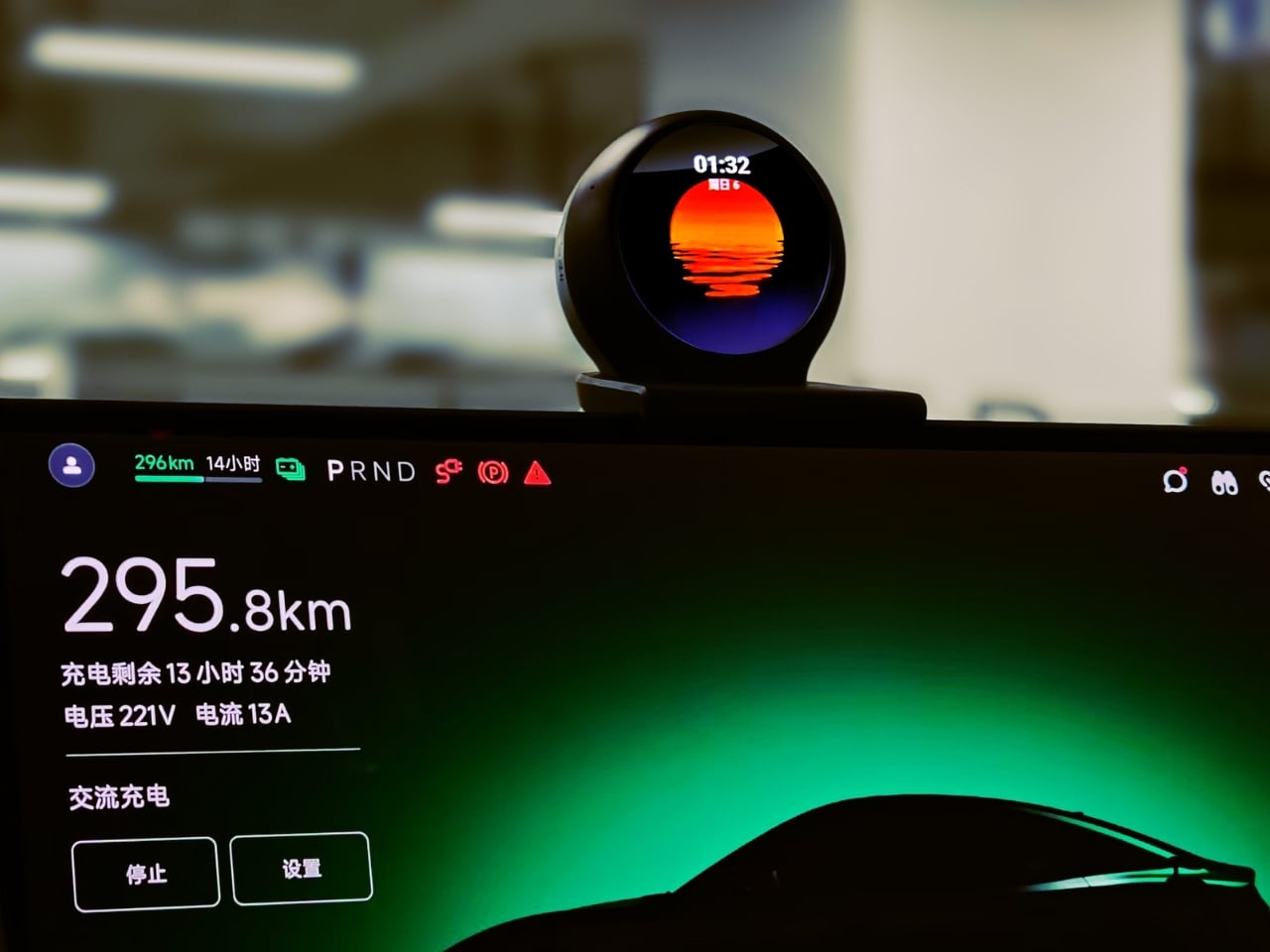
Picture this: you slide into your car, and instead of being greeted by cold, silent technology, there’s a little spherical companion perched on your dashboard, ready to chat. That’s TOOOONY, and it’s rethinking what it means to have tech in your vehicle.

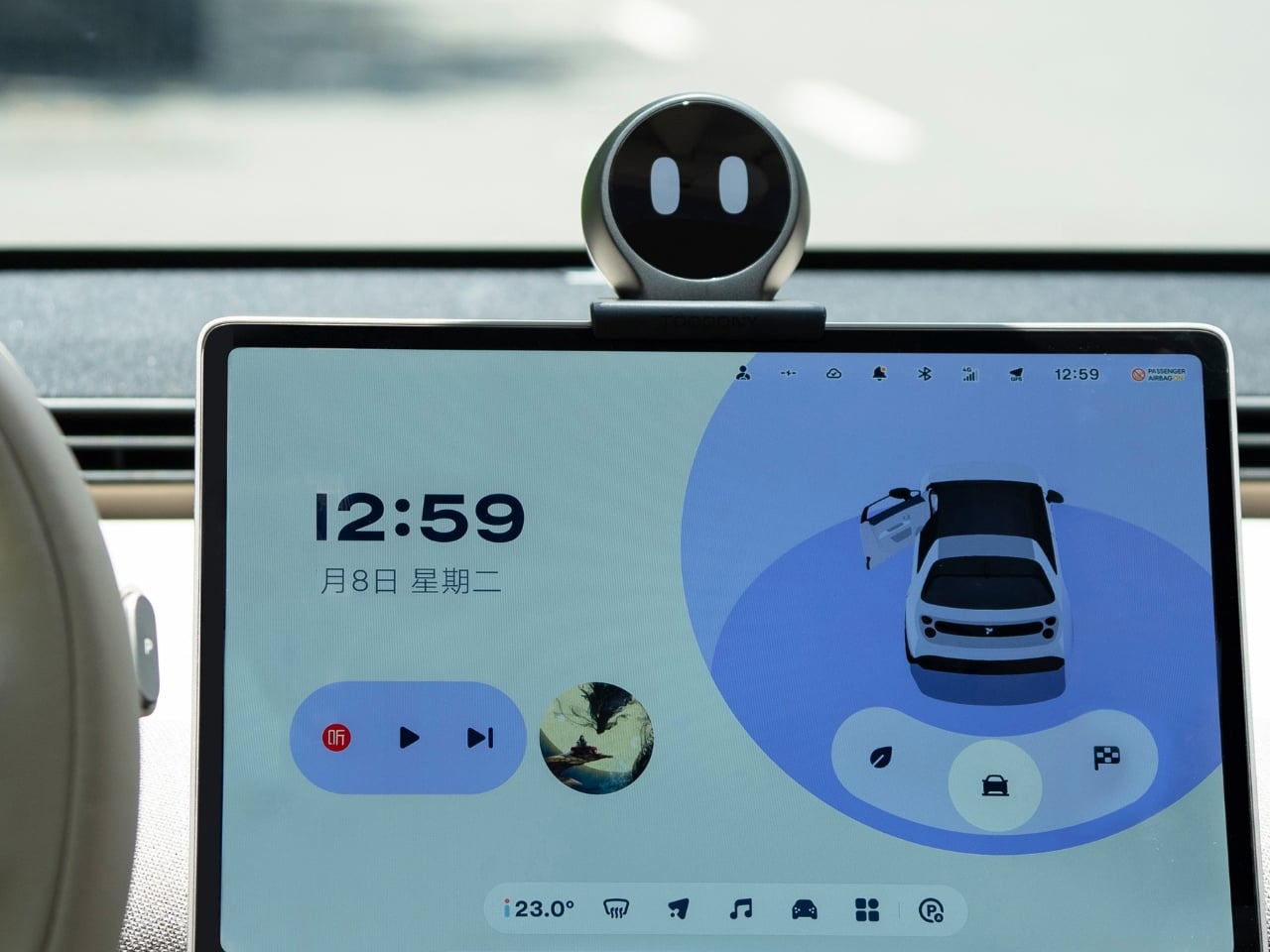
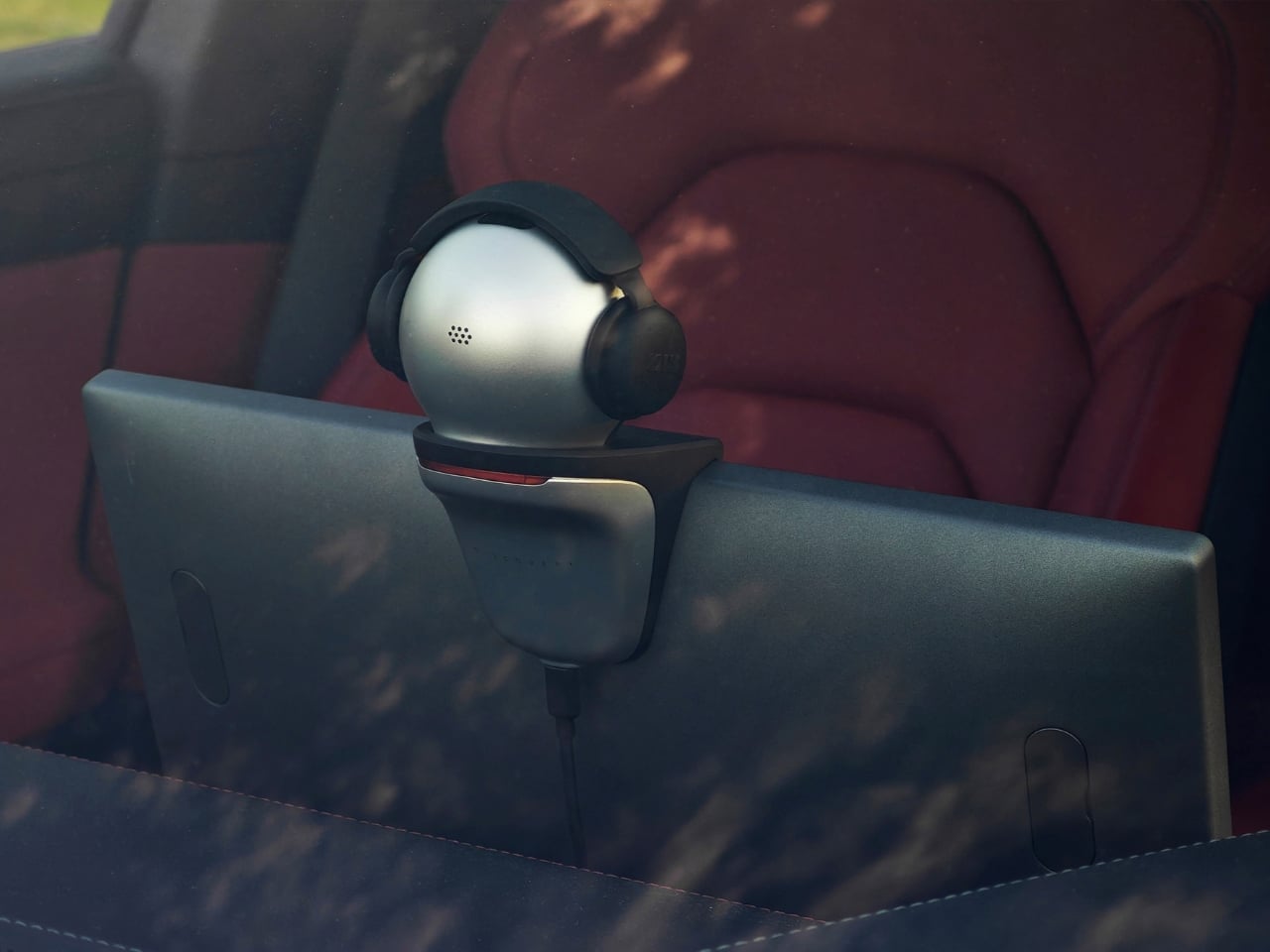
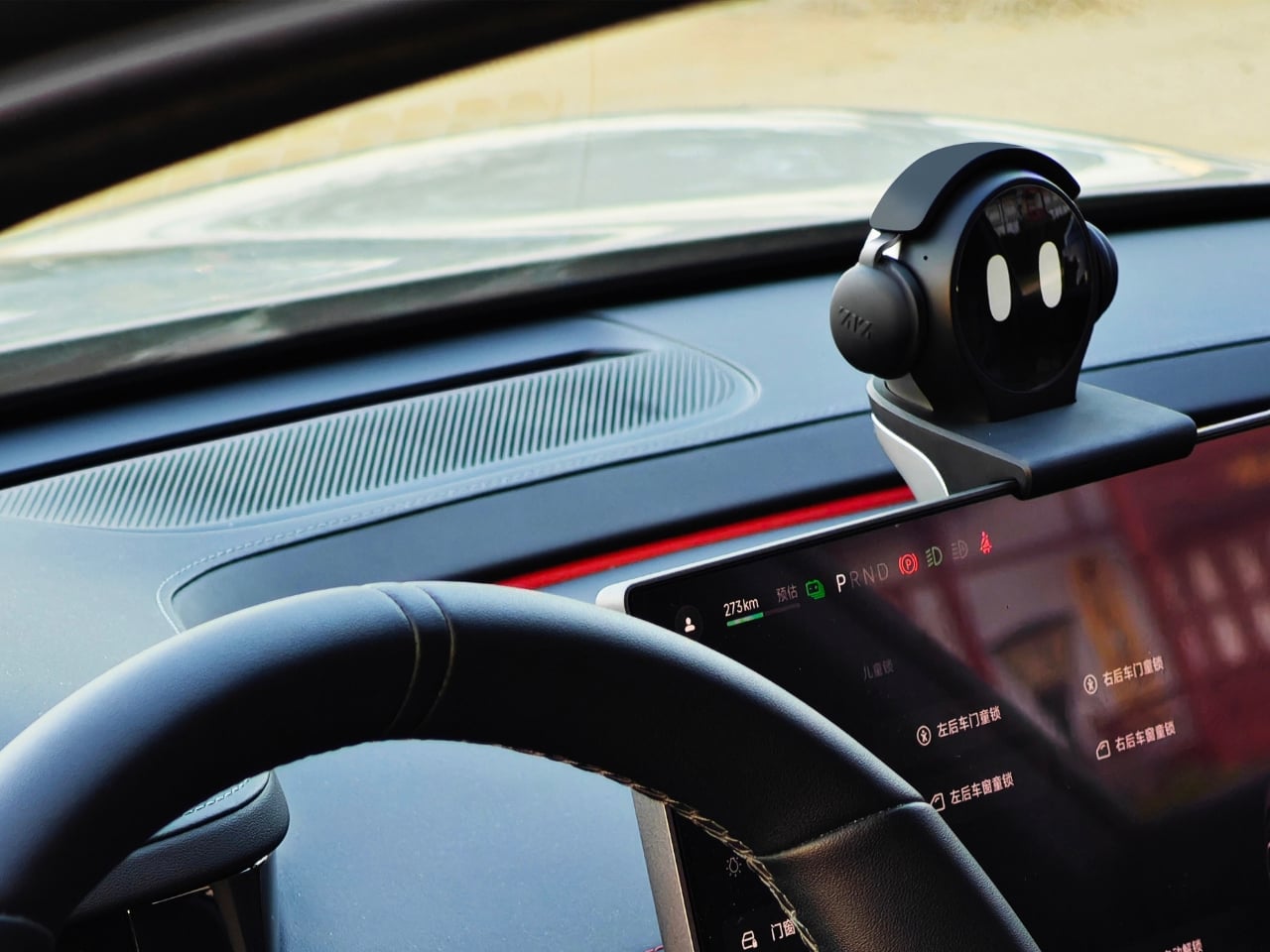
At first glance, Toooony looks like it escaped from a Pixar film. It’s got this perfectly round head with big, expressive eyes that light up on its circular screen, and honestly, you can’t help but smile when you see it. The design team at ZIZ Intelligent Manufacturing, led by Junjia Yang, Yang Shen, Yanan Liu, and Ruilin Niu, clearly understood something crucial: if you’re going to spend hours in your car, your tech companion should feel like an actual companion, not just another gadget bolted to your dashboard.

Designers: Junjia Yang, Yang Shen, Yanan Liu, Ruilin Niu

But Toooony isn’t just sitting there looking cute. This little robot is packed with functionality that genuinely changes how you interact with your vehicle. The anthropomorphic AI dialogue system means you can actually have conversations with it, not just bark commands. It responds to voice, recognizes touch, and here’s where it gets interesting: it features “tap-to-interact” functionality that lets you communicate with other Toooony users on the road.

Think about that for a second. We’ve all had those moments driving where we wish we could easily communicate with another car. Maybe it’s a friendly wave, sharing traffic info, or just acknowledging a fellow road tripper. Toooony makes this possible through LoRa near-field encrypted communication, positioning itself as the world’s first cross-brand non-contact travel social device. You can connect with other drivers without switching car brands or fumbling with apps, all while keeping your communication secure and encrypted.

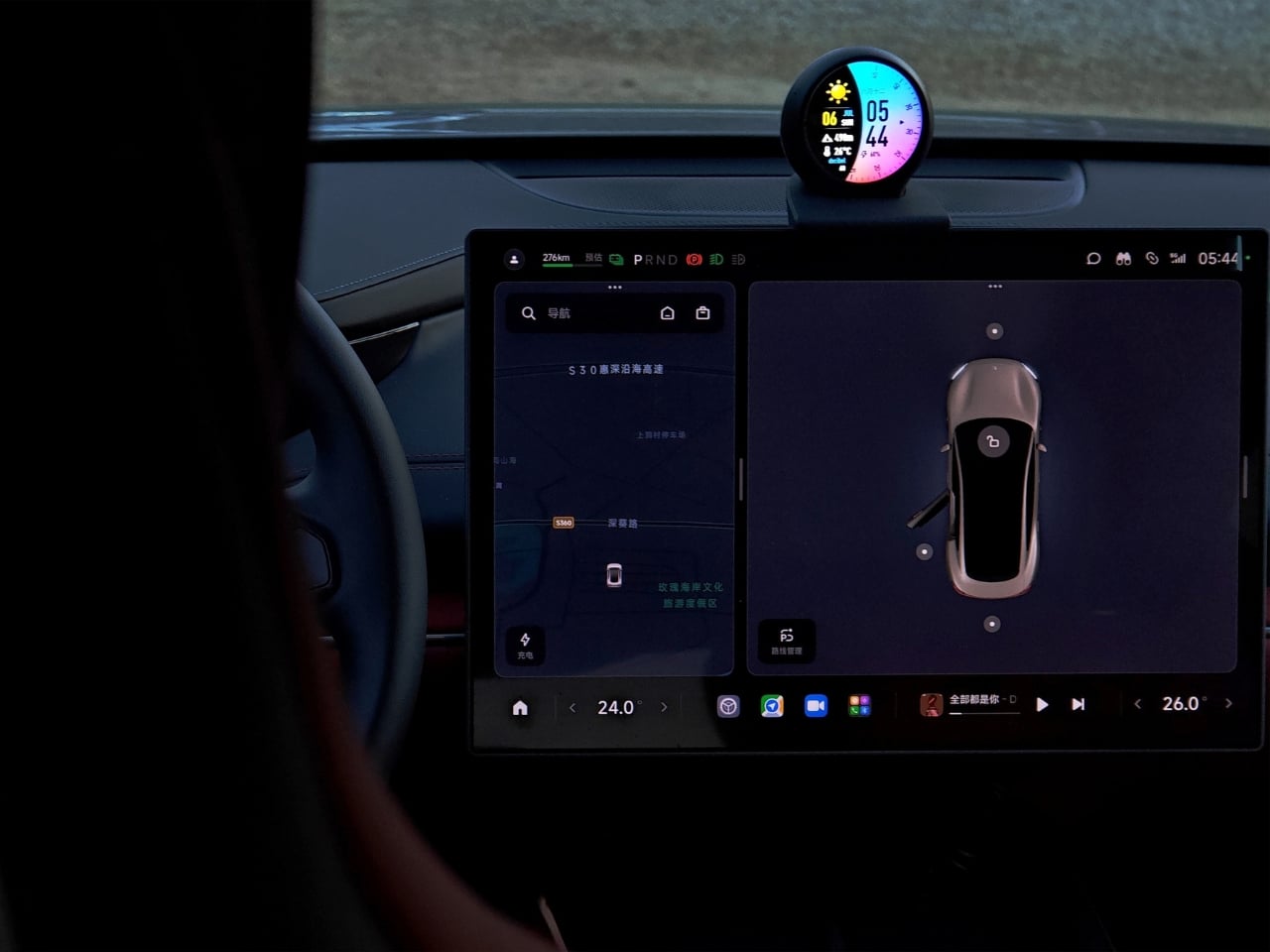
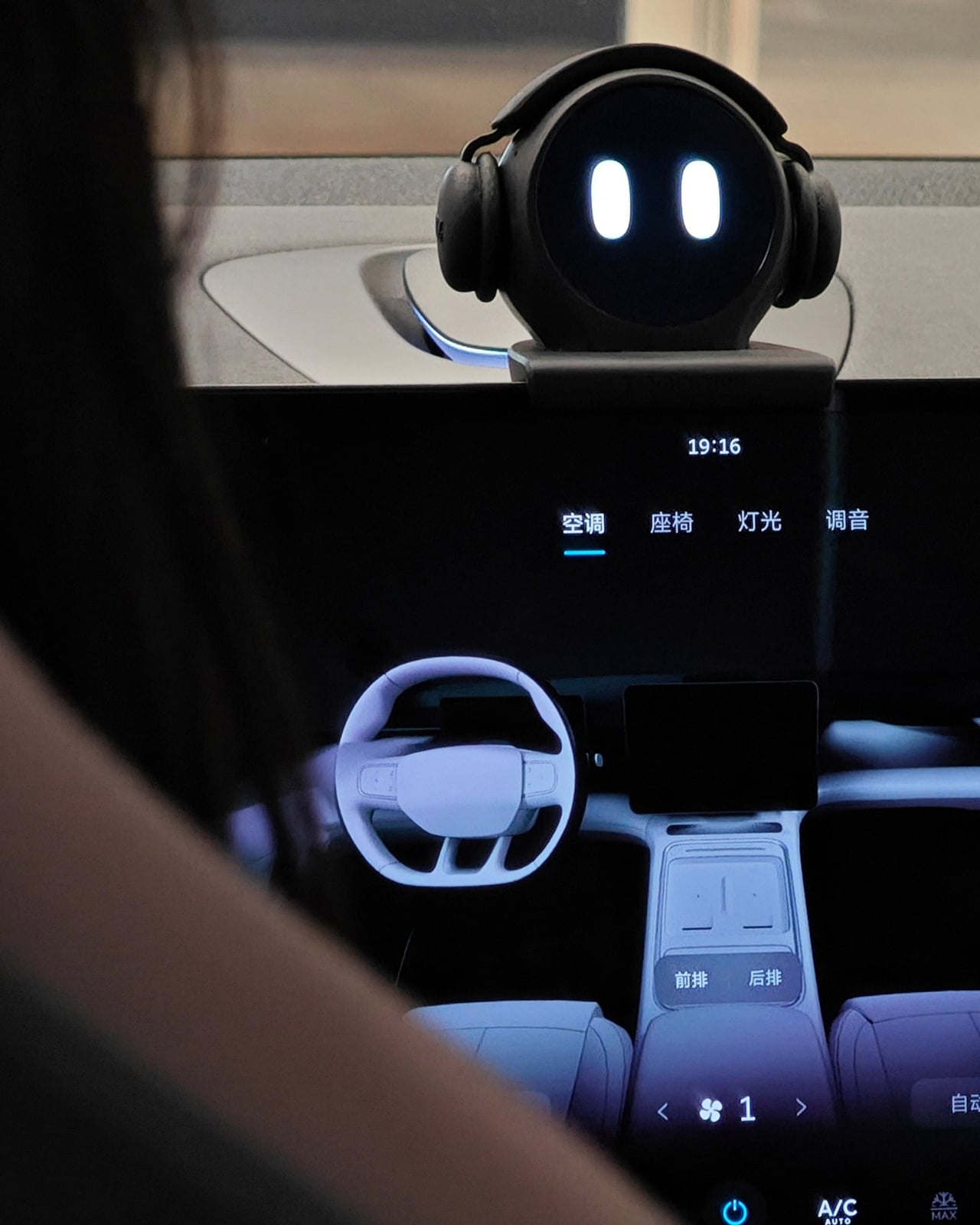
The circular screen serves as Toooony’s face and information hub, displaying a variety of customizable watch faces. One minute it might show you the weather with a sunset reflection, the next it’s displaying your vehicle stats or just giving you those cheerful cartoon eyes that make even traffic jams slightly more bearable. The screen adapts to different contexts, whether you need navigation info, want to control your music, or just need a visual companion during your commute.

What really sets it apart is how it blends personality with practical features. Built-in lighting creates ambiance and provides visual feedback, while the sound system handles everything from navigation prompts to music. The expressions change based on what’s happening, giving you emotional cues that feel natural rather than robotic. When you’re low on battery, the device might look concerned. Hit the road after a long day? It might greet you with a cheerful face that genuinely makes you feel less alone.

Then there’s the connectivity piece. Toooony isn’t just another Bluetooth speaker pretending to be smart. It’s equipped with 4G capability and can transform into a stable mobile hotspot that covers your entire vehicle. This means passengers can stream, work, or browse without draining phone data plans, and the connection stays consistent because it’s not relying on your phone’s tethering. For families on road trips or remote workers who treat their car like a mobile office, this feature alone justifies the device’s existence. The cross-device communication capability extends beyond just car-to-car interaction. It can sync with your other devices, creating a seamless tech ecosystem that follows you from home to vehicle and beyond. That playlist you were listening to in your living room? Toooony picks it up. Calendar reminders? They’ll pop up on that circular screen at the right time.

What makes Toooony particularly clever is that it’s designed as a customizable physical robot. This isn’t one of those “smart assistants” that’s just a speaker with lights. It’s an actual presence in your car with physical character. You can personalize its responses, change its watch faces to match your mood or aesthetic, and over time, it genuinely starts to feel like your driving buddy rather than just another piece of car tech.

The form factor matters too. Toooony sits on your dashboard without being intrusive, positioned where you can see it but it doesn’t block your view. The spherical design with what appears to be little headphone-like elements gives it this endearing character that makes sense in a vehicle environment. It’s friendly tech that doesn’t demand your attention but is there when you need it. The device brings a human touch to the driving experience when usually it seems like it’s designed by engineers for engineers. It’s functional without being cold, smart without being intimidating, and connected without being creepy. Sometimes the best innovations aren’t about cramming in more features but about making technology feel like it actually belongs in our lives. Toooony gets that balance right.

The post This Cute AI Robot Just Turned Your Car Into a 4G Hotspot first appeared on Yanko Design.

New York State will require warning labels on social media platforms

The State of New York will now require social media platforms to display warning labels similar to those found on cigarettes. The bill was passed by the New York Legislature in June and signed into law by Gov. Kathy Hochul on Friday. It will apply to any platforms that feature infinite scrolling, auto-play, like counts or algorithmic feeds. The labels will caution those on the platform about potential harm to young users' mental health.

Social media companies will be required to display these warning labels when a user first interacts with any of the features the state considers predatory. The warning will also be displayed periodically after that interaction. 

"Keeping New Yorkers safe has been my top priority since taking office, and that includes protecting our kids from the potential harms of social media features that encourage excessive use," Gov. Hochul said in a statement. The law will apply when any of these platforms are being accessed from New York. Gov. Hochul also signed two bills into law last year aimed at protecting kids from social media.

Concerns over the mental health effects of social media platforms on younger users have been mounting and government bodies have been increasingly taking action. A bill similar to the one in New York has been proposed in California. This year Australia became the first nation to ban social media for children, with Denmark soon to follow.

Last year the US surgeon general said social media should come with warning labels and highlighted data associating social media use with increased anxiety and depression in youth. The risks of social media use on children's mental health are multifactorial and are still being studied.

We've reached out to Meta, Snap and TikTok for comment and will update if we hear back. 

This article originally appeared on Engadget at https://www.engadget.com/social-media/new-york-state-will-require-warning-labels-on-social-media-platforms-210306716.html?src=rss

This Blade-Like eVTOL Makes the Cybertruck Look Like A Child’s Sketch

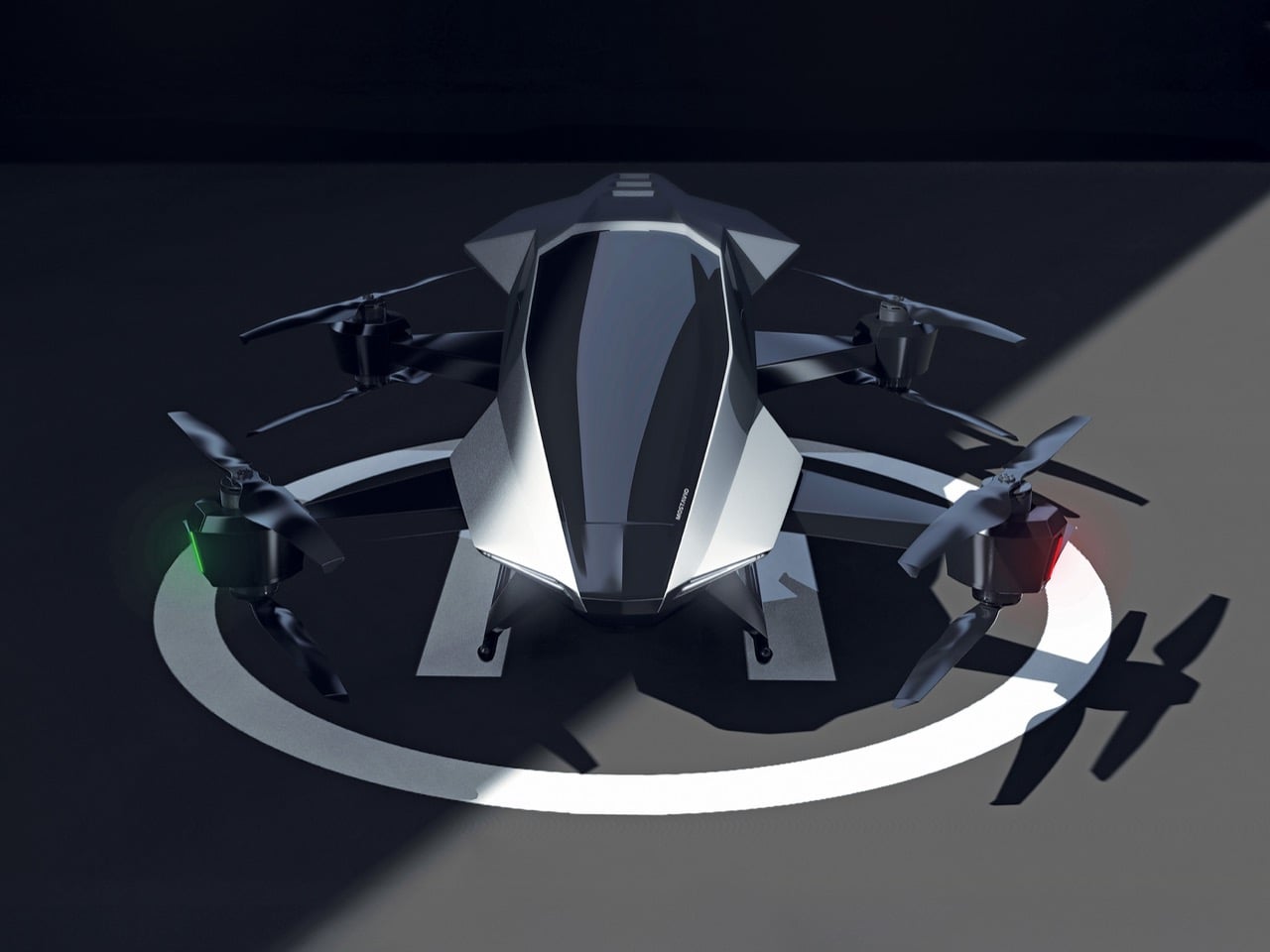
Flying cars have been vaporware for so long that most concepts blur together into the same generic pod-on-rotors aesthetic. Then MOSTAVIO’s MX1 lands in your feed, and suddenly you’re reminded why great industrial design still matters. The angular, almost origami-like bodywork earned this Toronto startup the 2025 Red Dot Award: Design Concept, validating what your eyes already know. Unlike the Cybertruck’s deliberately unfinished brutalism, the MX1 feels thought through to the last crease. Every facet serves both form and function, channeling the legendary design philosophy of masters like Giugiaro and Gandini.

The single-seat cockpit opens like a fighter jet, the panoramic window stretches wide for an unobstructed view, and the whole package sits on co-axial rotors that look more like sculptural elements than utilitarian hardware. MOSTAVIO wrapped these features in composite bodywork that appears to shift in the light, aggressive yet refined. The VR-based autonomous control system means you don’t need a pilot’s license to appreciate what they’ve built here, just an appreciation for design that refuses to compromise. This is what happens when someone actually cares about making future mobility look like it belongs in the future.

Designer: MOSTAVIO

What makes the angularity work here, where other attempts have failed, is the controlled complexity of the surfacing. The body isn’t made of simple, flat planes. Look at the way light travels across the fuselage in the photos; you can see subtle curvature and tension in every facet, creating highlights that define the form. This is sophisticated stuff, the kind of surfacing you see on a Lamborghini, where every crease is intentional and contributes to the whole. It’s a design that looks like it was sculpted, not just extruded. The result is a visual language that feels lightweight, technical, and incredibly sharp, like a high-end piece of architectural hardware given flight.

That design discipline extends to the integration of functional parts. The co-axial rotor arms blend into the body with carefully managed fillets, making them feel like organic extensions of the main form instead of bolted-on appendages. The canopy shut-lines follow the body creases perfectly, and the single rear light is tucked neatly into the tail. This is the hard part of vehicle design, where engineers and designers usually fight to a clumsy compromise. Here, it feels like the designers won. They took the necessary components of a quadcopter and made them integral to the aesthetic, creating a cohesive object that looks right from every angle.

Of course, winning a Red Dot for a concept is the design world’s equivalent of getting a screenplay optioned. It doesn’t mean the movie is getting made tomorrow, but it confirms the script is brilliant. So before you get your wallet out, know that the MX1 is a proof-of-concept. You can’t buy one. Its job is to attract attention, secure funding, and serve as a design study for a future 2-3 passenger vehicle that MOSTAVIO plans to develop. It’s a physical mission statement, a declaration of intent. And as far as intentions go, this one is about as compelling as it gets. We’ll be watching.

The post This Blade-Like eVTOL Makes the Cybertruck Look Like A Child’s Sketch first appeared on Yanko Design.

What we listened to in 2025

If streaming services’ year-in-review campaigns have shown us anything, it’s that we’ve spent a staggering amount of time drowning out the hum of everyday life with music, podcasts and audio series. And with some incredible new releases this year, we were really eatin’ good. Here are some of the Engadget team’s favorite things we listened to in 2025.

Spiritbox - Tsunami Sea

I became aware of Spiritbox in late 2024 shortly before the band dropped its latest album, Tsunami Sea. At the time, I was in a deep Sleep Token phase, and I don’t remember how I stumbled upon Spiritbox, but I’m sure glad I did. Not knowing anything about the band, I initially thought it had two singers: one for clean vocals and another for the harsh, guttural screams. 

Well, I was wrong. Vocalist Courtney LaPlante handles it all, and she is a force of nature. After learning of a new band, I do what any self-respecting music nerd does: I looked up live videos of them on YouTube. The way LaPlante seamlessly transitions from airy, ambient singing to some of the best growls you’ll hear in metal music is effortless. And after seeing Spiritbox live in person earlier in December, I can attest to her ability to consistently nail both vocal styles for the entirety of an hour-long set. 

My infatuation with Spiritbox isn’t just with the vocalist though. Guitarist Mike Stringer, LaPlante’s husband, also has a lot of unique abilities to offer. Stringer’s use of noise and whammy effects in his riffs create a signature style, not to mention his mix of nu-metal, djent and metalcore sensibilities. He also has some of the thickest guitar tones I’ve ever heard live, and I was mesmerized for the full set. Stringer’s guitar work on Tsunami Sea is a prime example of a  unique musician at the height of his powers. 

Tsunami Sea takes you on a ride. The first two tracks are all-out ragers, and after a slight respite in “Perfect Soul” and “Keep Sweet,” the album’s best song comes fifth. I’ve heard LaPlante dedicate it to “all the people I love to fucking hate,” and it’s clearly written about her enemies. It’s also the perfect example of what this band is capable of. It’s three minutes of LaPlante’s screams interlaced with plenty of Stringer’s trademark guitar work. 

The rest of the album showcases the band’s ability to blend dynamics, with “No Loss, No Love” and “Ride The Wave” providing the highlights on the back half of the record. The album’s title track is a great vehicle for LaPlante’s clean vocals, serving as the introduction to the album’s second act. If you’ve been enamored with Sleep Token this year like I have, give Spiritbox a go — you won’t be sorry you did. — Billy Steele, Deputy Editor, Reviews

Bandsplain

I didn’t discover Bandsplain in 2025, but I definitely listened to it more than any other podcast in terms of total time spent. Sure, that’s because most episodes are over three hours long, but I digress. Host Yasi Salek does a deep dive on “cult bands and iconic artists” to… ahem, bandsplain why people love them. There’s a deep catalog of back episodes, so there’s sure to be an in-depth analysis of a band you’re familiar with. But even if you think you know an artist, I’m willing to bet Salek will divulge parts of the story you weren’t aware of. 

Jimmy Eat World’s Clarity is a top 5 all-timer for me, and Salek had plenty to offer about the narrative around that album I didn’t know. Her grunge series from 2024 was a history lesson I wish I’d had in middle school when I first discovered Soundgarden, Pearl Jam, Alice in Chains and the rest of the lot. An older episode about Nine Inch Nails served as the primer for me seeing the band live for the first time in September. And that’s the thing about the show: the back catalog holds up. If you’re waiting for the next installment to drop, there’s certainly something in the archives you’ll enjoy. 

No shade to Salek’s colleagues at The Ringer, but the best episodes of Bandsplain are when the guest is a musician. Thursday front man Geoff Rickly was excellent on that Nine Inch Nails episode, and Death Cab for Cutie singer Ben Gibbard had me on the edge of my seat when he was on to discuss The La’s — a band I’d never heard of before. I’d also highly recommend the episodes on Oasis and the more recent one on Alanis Morissette. But, really, you can’t go wrong starting from anywhere on the episode list. — B.S.

Lucy Dacus - Forever is a Feeling 

I remember being a teenager and hearing from an adult that they did not religiously seek out, research, evaluate and introduce new bands and songs into their lives as if all existence would cease without the life-sustaining energy of new music. I was confused, concerned and damn sure that wouldn’t happen to me. 

You know where this story goes: Job. Kid. House. Spouse. Pets that will die if I don’t feed, walk, play with and/or medicate them. I allow the algorithm to feed me new songs but rarely does something stick, so I end up listening to tracks I bonded with in my teens and twenties. 

This year, Blossom & Bones, a three-day music festival in Ghost Ranch, New Mexico, managed to push through the churn and lodge new music into my brain. Along with my kid and some friends, I camped among some of the most beautiful landscapes imaginable and ambled over to the stage each evening for performances by Santigold, Ani DiFranco and about a dozen more. 

Lucy Dacus, one third of the indie group Boygenius, did a one-hour set with plenty of songs from her latest album Forever is a Feeling. Hearing the songs for the first time, I felt like I’d been listening to them for years. Lilting harmonies and layered strings create a lovely backdrop for Dacus’s velvet voice, but there’s a sharpness to her observations about relationships, rejection and sex. I’ve been looping the album ever since. — Amy Skorheim, Senior Reporter, Buying Advice

Blanco White - “So Certain” (single)

Early on the last concert of the day at that same festival, Blanco White took the stage. People were aimlessly milling about and the sun hadn’t yet set. Kids were playing on the lawn and the smell from the food trucks was intense, but I was enrapt by the four people on stage. The sad violin and strummy guitars floated with the hand-beat drum out into the red hills. The music sounded like I felt: rooted and wrapped in the harsh beauty of the desert and I was really glad to take that home with me. — A.S.

Martian Revolution 

If you're as big a nerd as I am, you might know that Leo Tolstoy didn't consider War and Peace to be a novel. The story is what most people read for, but in the author's mind, all the drama was a parable to illustrate his grand theory of history.

Over the last year, history podcaster Mike Duncan has accomplished a similar feat using a medium Tolstoy never imagined. Duncan's Revolutions podcast has covered ten different revolutionary upheavals across history, starting with the English Civil War and ending with the Russian Revolution. After wrapping up the Bolsheviks, Duncan took a few episodes to suggest a grand theory of how revolutions unfold. For a while, it seemed like that was all we'd get. Then, in the middle of 2024, he started posting original sci-fi — without any indication that this tale, which followed future Martians revolting against their corporate overlords on Earth, was in any way different from the previous ten seasons.

Part of what makes the Martian Revolution so excellent is Duncan's deadpan delivery. He never once breaks character. He rattles off lists of fictional sources, apologizes for inaccuracies in prior episodes, and introduces made-up historical figures with the same gravity he once used to mention George Washington or Simon Bolivar. If you're a fan of Revolutions, you'll have a blast recognizing character archetypes. (Mabel Dore is the Liberal Noble! Timothy Werner is the Man of Blood!)

But the podcast is great even if you've never listened to an episode of Revolutions. It has an excellent grasp of character and a sense of inevitable tragedy, but with moments of joy leavened throughout. I certainly hope we don't wind up in the megacorp-ruled future of the podcast, but if we do, it'll be a great consolation if it eventually turns out the way Duncan imagines. — Sam Chapman, Senior Writer

Ron Gallo - Checkmate 

My favorite artists are ones that surprise me, and Ron Gallo is a master of reinvention. He's dabbled in absurdist punk, psychedelia, garage rock, Beatles-tinged pop and, now, stripped-down acoustic music. This is not a genre I am typically a fan of, Elliott Smith withstanding, but Checkmate is something special. His lyrical prowess is off the charts here, trading his usual wordplay for simple and emotionally-gutting truisms about life, love and, well, the end of the world. 

Of course, the lyrics wouldn't work if the songs weren't good. The songs are very good. The title track is just about the perfect love song, with a primary hook that gets lost in your head for weeks. Other tracks offer hints of Mac DeMarco, Dan Fogelberg, Kevin Morby and just about everyone else who has crafted great songs on an acoustic guitar. It's fitting that Gallo has found a home on the label Kill Rock Stars, which released so much of Elliott Smith's work back in the day. As an aside, Gallo regularly posts songs about current events on TikTok and other social media platforms, which are worth checking out if you like stuff like Jesse Welles. — Lawrence Bonk, Contributing Reporter

De La Soul - Cabin in the Sky

There have been hip-hop albums that explored the finality and tragedy of death, but not many that truly tackled spirituality and long-term grief. De La Soul has done just that, following the passing of founding member Trugoy the Dove. This album serves as a final testament of sorts for Trugoy, as he's heavily featured throughout. In that way, Cabin in the Sky is reminiscent of A Tribe Called Quest's 2016 masterpiece We Got It from Here... Thank You 4 Your Service, which followed the death of rapper Phife Dawg. 

Like Tribe's modern classic, Cabin in the Sky is filled with absolute bangers. It features standout beats by DJ Premier, Pete Rock, Trugoy, Jake One and others. The rhymes are great and all three primary De La members are given time to shine. Guest rappers like Common and Nas got the memo, delivering some of their most memorable verses in years. Heck, even Giancarlo Esposito is on board as the narrator. Some reviewers have dinged this album for being too long but, come on, that's like complaining there's too much pizza. It's De La Soul. — L.B.

FKA twigs - Eusexua

This was a really good year for new music IMO, so much that I've been finding it pretty difficult to think back and settle on my favorite releases. But, FKA twigs' Eusexua undeniably did some heavy lifting for me, pretty much carrying me through the first six or so months of the year without much competition, and I've circled right back to it as the year closes. It's an album that somehow seems to meet every vibe. It'll have you in club mode and ready for a night of sweaty, filthy dancing in under three minutes, or feeling bright and upbeat like a midday walk on the first day of spring — yet it still hits when you're having a good ol' car cry. 

"Girl Feels Good" is for sure one of my most-played songs of the year, followed closely by "Eusexua," "Perfect Stranger," "Keep It, Hold It" and "Striptease." If ever I can't decide what I'm in the mood to listen to, I throw this album on and it doesn't disappoint. — Cheyenne MacDonald, Weekend Editor

Faetooth - Labyrinthine 

Faetooth's sophomore album, Labyrinthine, is face-melting, melancholic perfection. The band describes its sound as "fairy doom," but don't let that first word fool you into thinking it isn't heavy as hell. Labyrinthine goes unbelievably hard, and will have you feeling like you're eternally wandering a cursed bog, surrounded by the wailing of the unfortunate souls who came before you. Don't believe me? Put on "White Noise." This is really an album that should be enjoyed in its entirety, though, and I can't individually name half the songs on it because I tend to just keep the whole thing playing on rotation. — C.M. 

Orville Peck - Appaloosa 

This EP is truly a testament to my ability to run my obsessions into the ground, because it only came out in mid-November and somehow landed on my most-listened wrapup for the end of the year… which was released some two weeks later. It's front-loaded with its strongest songs, a powerful and kind of haunting trio that just flows beautifully from one into the other: "Dreaded Sundown," to "Drift Away" into "Atchafalaya" (ft. Noah Cyrus). As a fan of musicals, I also loved the inclusion of "Maybe This Time," a cover from Cabaret, especially since I was pretty bummed to have missed Peck's stint as the Emcee in Cabaret on Broadway this summer. — C.M.

Case 63 

I got into an audio series kick this year, and dove into shows like Unicorn Girl, Stalked! and more. But none of the dramatized fiction I listened to in 2025 had me hooked like Case 63. Setting aside that it’s voice-acted by A-listers Julianne Moore and Oscar Isaac, which is a phenomenal pairing that won me over on star power alone. The best thing about Case 63 is its storytelling. 

Moore stars as a psychologist, meeting Isaac for the first time in a prison interview. Isaac has been claiming to be a traveler of sorts, and through recorded sessions and voice notes, we hear his side of the story, as well as her reactions and ultimate involvement in the adventures. Every step of the way, particularly in the beginning, there is clear explanation as to why the exchange is being recorded. It isn’t necessary, but it’s helpful in my buying into the realism of the story. 

It isn’t just the method and technical aspects of the storytelling, of course. Narratively, Case 63 is a gripping ride, and thanks to its short episodes, it’s easy to binge really quickly. There is certainly a generous use of cliffhangers to help speed things along, but I found myself eager to devour the entire series in one commute. The story continued to linger in my mind days after I finished both existing seasons, and I’m hoping the new one drops soon. If you’re looking for a quick and easy sci-fi audio series, do not miss Case 63. — Cherlynn Low, Managing Editor

Secure Love 

I spent a lot of time this year trying to learn more about my attachment style and how it shows up in all the relationships in my life. Between Stephanie Rigg’s On Attachment podcast, the TV show Couples Therapy and all the books on the topic of attachment styles, trauma and more, I’ve consumed them all. And while they’ve all been helpful in different ways, one podcast stuck out to me this year. It’s hosted by Julie Menanno, MA, LMFT, LCPC, creator of the @TheSecureRelationship account on Instagram and the author of Secure Love: Create a relationship that lasts a lifetime. 

You can probably tell from that introduction what Menanno’s work is all about. Relationships, from the lens of attachment styles. The Secure Love Podcast doesn’t just re-deliver the same information we’ve seen published across various media and platforms, though. Each season of the podcast (it’s partway through the second as of this writing) sees Menanno work with one couple through their negative cycles, using somatic practices to help each partner understand their emotions, triggers and reactions. Because we’re listening to real people talk about real-life happenings, it’s not only easy to relate, but listeners often see themselves in these scenarios. At the start of each episode, too, Menanno reads out or plays notes from the audience, and you can see how fellow listeners have reacted. 

This season, for example, my friend and some other listeners seemed to really dislike Brian, the anxious male partner in this season’s pair. While I’ve certainly found some of Brian’s ways of speaking borderline offensive, I had a lot more sympathy for him as I started seeing his traits in my loved ones. I also started to identify with his partner Bethany, who Menanno typed as having an avoidant attachment style. 

As I listened to Bethany and Brian describe the reasons they got into fights and explain where they were coming from, suddenly it felt like the world made sense. I saw similar patterns and reasonings in my own relationship, as well as those of my parents, relatives and friends. 

It is slightly voyeuristic to listen to something so intimate, of course, but Menanno makes it all educational rather than just entertaining. She gently interrupts parts of each episode to tell the audience why she asks certain questions or what she’s attempting to achieve by asking Brian or Bethany to sit with their difficult feelings. 

I found her method familiar, as I recently started working with a somatic coach whose approach is similar to Menanno’s, which is rooted in emotion-focused therapy (EFT). Staying with uncomfortable feelings makes me want to jump out of my skin, but being able to endure them, question why they arise and then understand where they come from is crucial to helping uncover the thinking that causes them. Sometimes they’re the result of flawed logic, catastrophic thinking or a simple lack of context, but often they’re very reasonable reactions. 

If you’re looking to understand yourself and your emotions a bit better, or just want to get an idea of what EFT or couples therapy sounds like, I can’t recommend The Secure Love Podcast highly enough. — C.L.

This article originally appeared on Engadget at https://www.engadget.com/entertainment/music/what-we-listened-to-in-2025-201308584.html?src=rss
This 2025 Award-Winner Solved the One Thing Thermal Pots Get Wrong

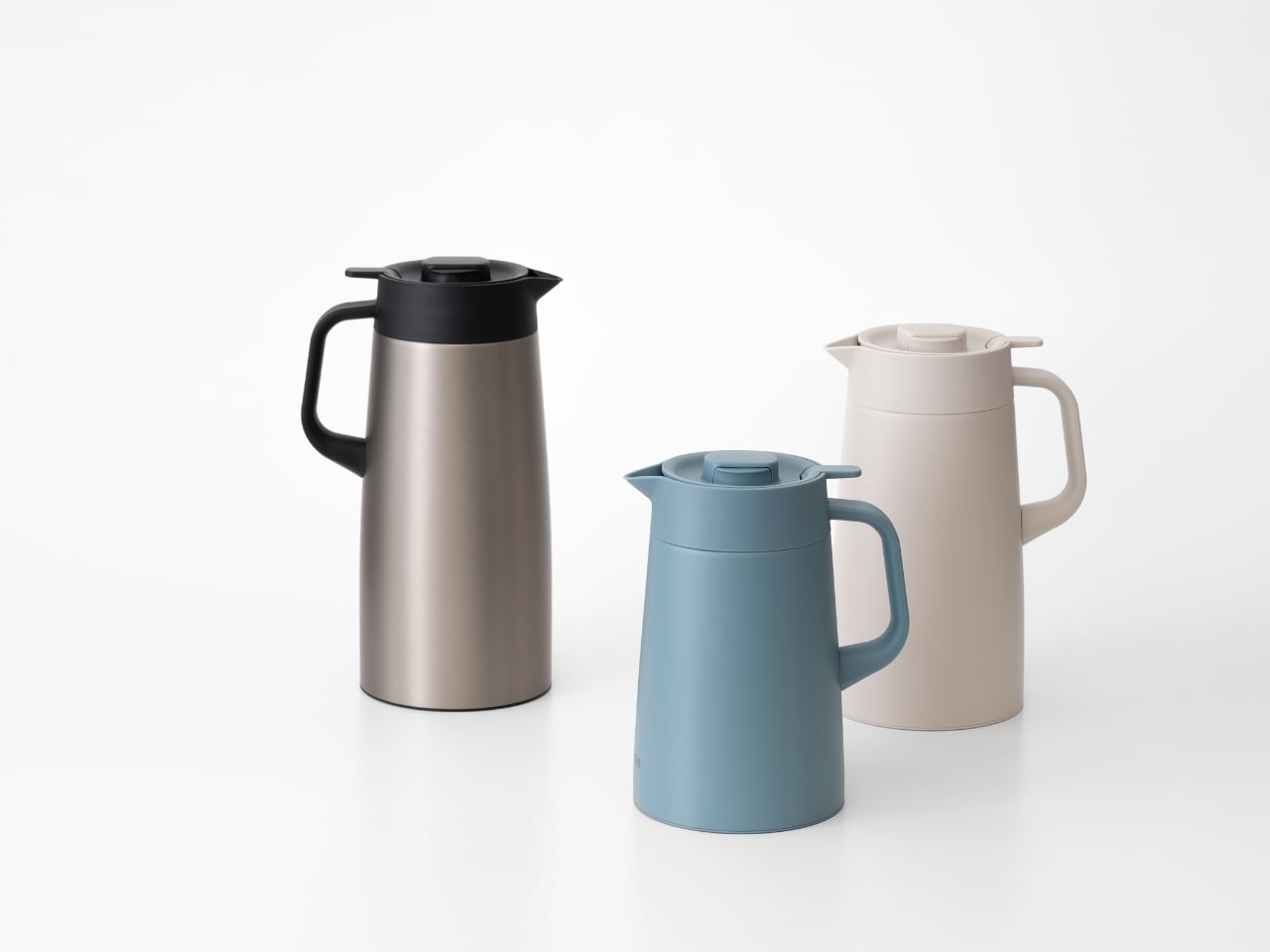
There’s something deeply satisfying about a product that just works. Not in a flashy, look-at-me kind of way, but in that quiet, thoughtful manner where every detail clicks into place. That’s exactly what Doogdesign Inc. has achieved with their Vacuum Insulated Pot PWR, a redesign for Tiger Corporation that recently earned a 2025 Good Design Award.

At first glance, it might seem like just another thermal pot. But here’s where things get interesting. This isn’t a fresh concept pulled from thin air but rather a thoughtful evolution of Tiger’s previous PWO model. The designers at Doogdesign, an Osaka-based studio founded by Kazuya Koike, took on the challenge of addressing real-world frustrations that users had been living with for years.

Designer: Doogdesign Inc

Think about the last time you struggled with a stubborn lid or fumbled with an awkward lever while trying to pour your second cup of tea. Those little moments of friction add up. The PWR tackles exactly these pain points, transforming daily annoyances into seamless interactions. Through extensive prototyping and adjustments, the team refined the lever and lid mechanism until attachment and detachment could happen with just a light touch. It’s the kind of improvement that sounds simple until you realize how much testing and iteration goes into making something feel effortless.

But functionality alone doesn’t make great design. What sets this pot apart is how it balances practical usability with visual grace. The lid features a smooth, curved form that plays beautifully with light and shadow, evoking the quiet presence of fine tableware. There’s an understated elegance here that doesn’t scream for attention but somehow makes your kitchen counter look a little more put-together.

The design philosophy becomes clear when you examine the details. This is about more than just keeping beverages hot (though the vacuum insulation handles that job brilliantly). It’s about creating an object that belongs on your everyday table, something you’re happy to see sitting out rather than hiding away in a cupboard. The stainless steel construction speaks to durability and longevity, while the refined aesthetic ensures it won’t clash with your interior choices, whether you lean minimalist or eclectic.

One of the smartest moves? Offering three size options at 1.2L, 1.6L, and 2.0L. This versatility means whether you’re brewing tea for yourself on a quiet afternoon or hosting a small gathering, there’s a PWR that fits your needs without forcing you to compromise. It’s the kind of practical thinking that shows the designers actually considered how people live, not just how products photograph.

The recognition from the Good Design Award 2025 isn’t just industry back-patting. These accolades matter because they signal that experts in the field recognize when someone has genuinely moved the needle on product design. In a market flooded with thermal containers that prioritize either pure function or pure aesthetics, finding one that nails both deserves acknowledgment.

What makes this project particularly fascinating from a design perspective is how it demonstrates the value of iteration. Redesigning an existing product requires a different kind of creativity than starting from scratch. You’re working within established constraints, user expectations, and manufacturing realities. Yet Doogdesign managed to identify the friction points and address them without losing what made the original concept valuable in the first place.

If you’re someone who appreciates when form follows function without sacrificing beauty, or if you’ve ever caught yourself thinking “there has to be a better way to do this” while using everyday objects, the Vacuum Insulated Pot PWR is a perfect example of what happens when designers listen. It’s not trying to reinvent hot beverage storage. It’s just making it notably, measurably better, which might be the most refreshing approach of all.

The post This 2025 Award-Winner Solved the One Thing Thermal Pots Get Wrong first appeared on Yanko Design.

You may soon be able to change your Gmail address

A Google support page in Hindi says the ability to change your Gmail address is on the way. The feature would allow you to replace your current @gmail.com address with another. Your old address would remain active as an alias on the account, and all your data would stick around, unaffected.

The support page (translated) says that "the ability to change your Google Account email address is gradually rolling out to all users." The change was first spotted on a Google Pixel forum on Telegram and was first reported in the press by 9to5Google.

Google hasn't made a formal announcement about the change. The English version of the support page still says you usually can't change your @gmail.com address. Up to this point, Google has only allowed address changes for non-gmail.com addresses.

Engadget reached out to Google for confirmation. We'll update this story if we hear back.

When the feature (presumably) rolls out broadly, you'll change it through your account settings. Sign in to your Google account, then go to Manage your Google account > Personal info > Google Account email. If you don't see the option to change it, then you'll have to wait.

This article originally appeared on Engadget at https://www.engadget.com/computing/you-may-soon-be-able-to-change-your-gmail-address-165633905.html?src=rss
LG announces line of premium gaming monitors that offer 5K visuals

LG has revealed a new lineup of gaming monitors just ahead of CES. The UltraGear evo displays offer 5K visuals. Many incorporate on-device AI upscaling, taking some of the burden away from the GPU. 

LG says the tech will let consumers skip out on some card upgrades. This could end up being extremely beneficial because the AI boom has been impacting GPU prices.

A monitor.
LG

There are three displays in the lineup so far, with more to come down the line. There's a 39-inch OLED (39GX950B) that includes the aforementioned AI upscaling to 5K, but also algorithms for scene optimization and sound. The company says this will "refine images and audio performance for a more immersive audiovisual experience."

This monitor can easily switch from the standard resolution with a refresh rate of 165Hz to a much zippier WFHD resolution with a refresh rate of 330Hz. This is supported by a 0.03ms response time. It's curved with a 21:9 aspect ratio.

A display.
LG

There's also a 27-inch MiniLED (27GM950B) in the lineup. This display has been "designed to dramatically improve blooming control", which is done by minimizing halo effects and stuffing in 2,304 local dimming zones. LG promises it "preserves fine details across bright and dark scenes alike."

This one features AI algorithms for upscaling to 5K, scene optimization and sound. It can also switch between 165Hz at 5K and 330Hz at QHD, with a 1ms response time. The screen boasts a peak brightness of 1,250 nits.

A display.
LG

Finally, there's the beastly 52-inch (52G930B) large-format gaming display. You didn't read that wrong. This is a 52-inch gaming monitor. This 5K display offers a speedy 240Hz refresh rate. The 1000R curvature wraps around the peripheral, which should be great for flying sims and stuff like that.

LG hasn't released any information as to when we'll be able to get our mitts on these displays, or how much they will cost. With all the tech on offer, it's likely they'll cost a pretty penny.

This article originally appeared on Engadget at https://www.engadget.com/computing/accessories/lg-announces-line-of-premium-gaming-monitors-that-offer-5k-visuals-165224945.html?src=rss
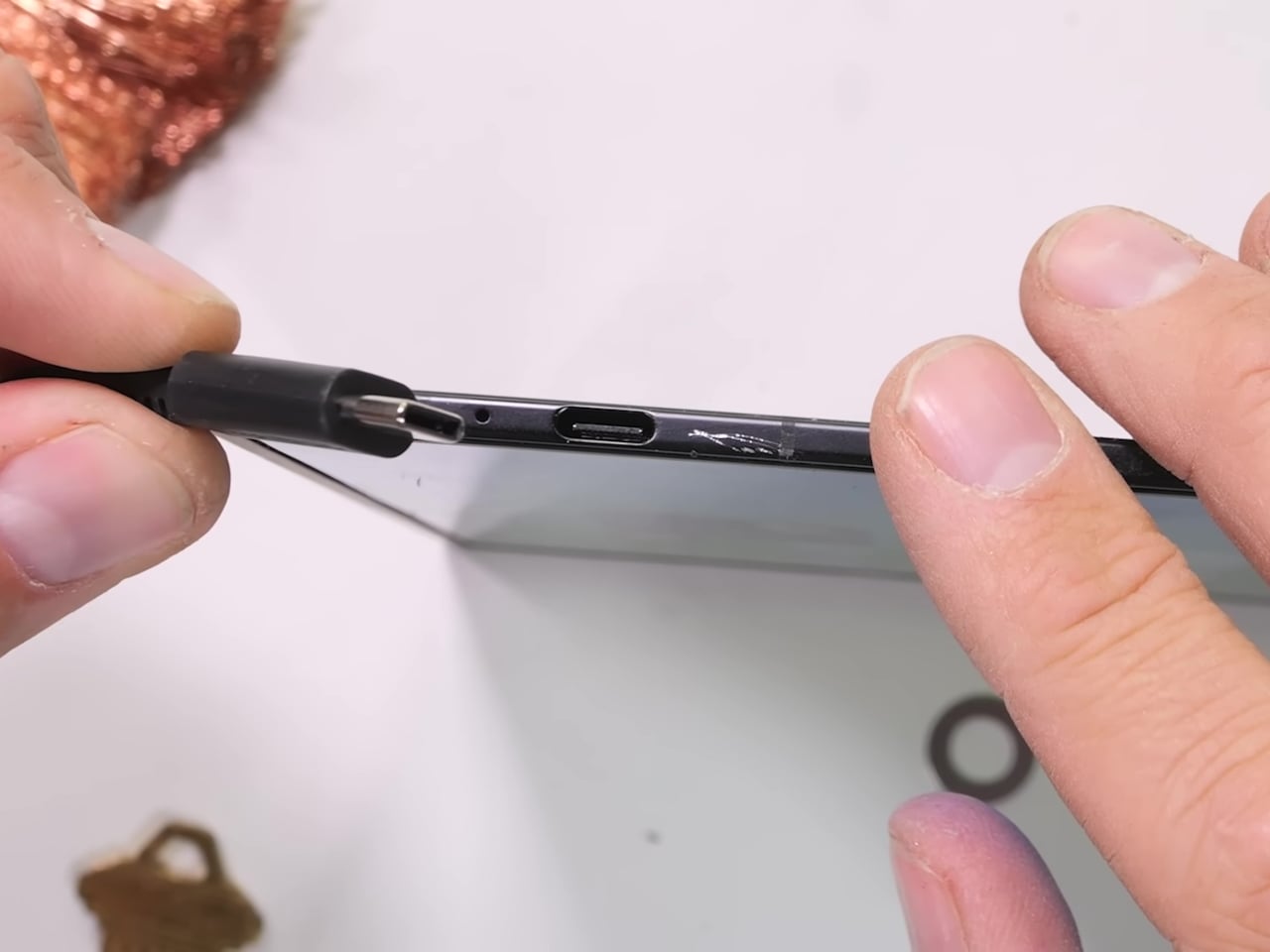
Galaxy Z Trifold Durability Test Reveals 3.9mm Trade-Offs

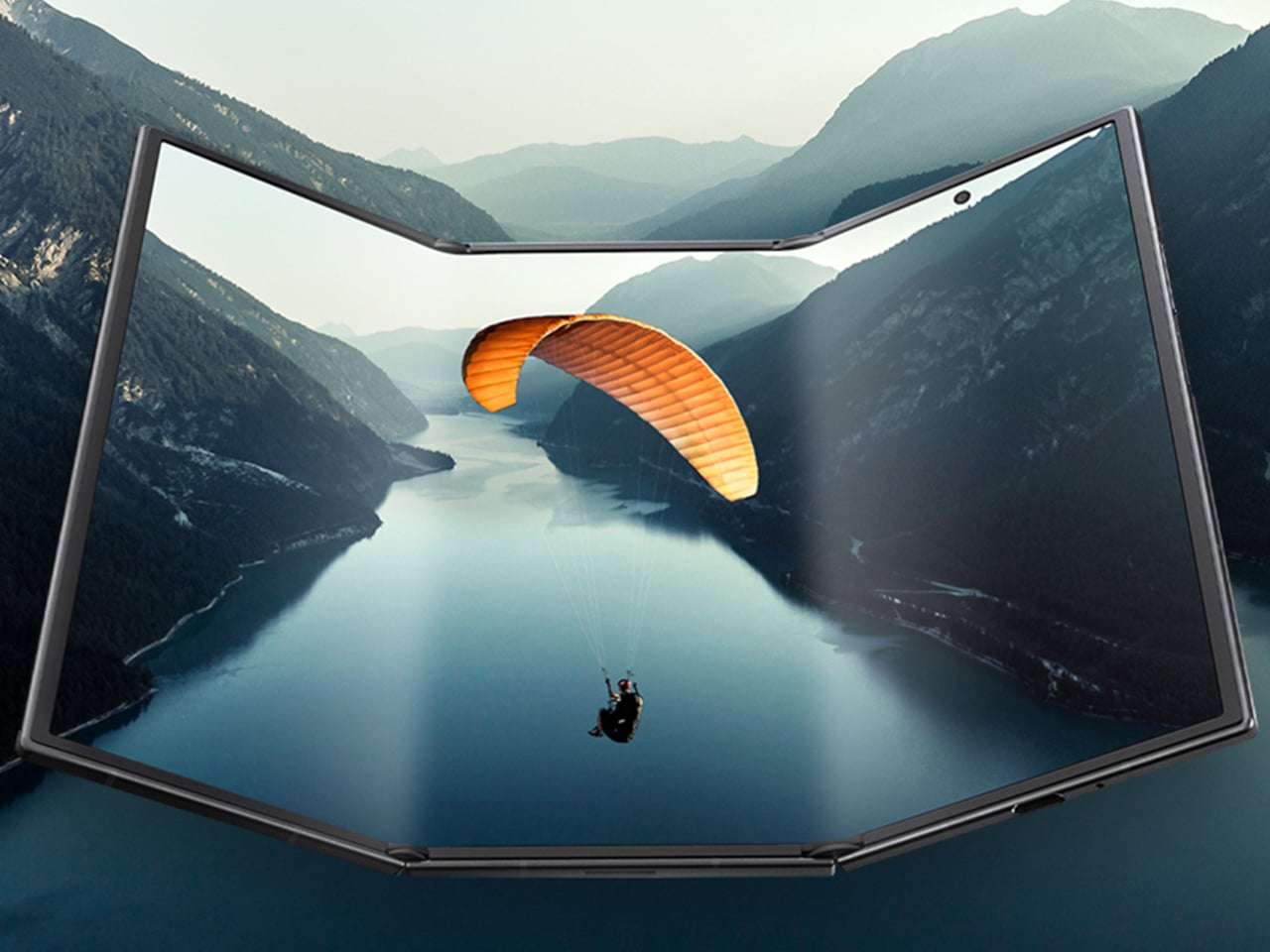
Seven years of Galaxy Z Fold and Flip experiments led to Samsung’s wildest form factor yet, a phone that folds twice into a 10‑inch tablet. Before anyone can trust a device like that, it has to survive more than a marketing reel. JerryRigEverything’s durability test became the unofficial reality check for the Galaxy Z Trifold, showing how far Samsung pushed the engineering and where those limits start to bite back.

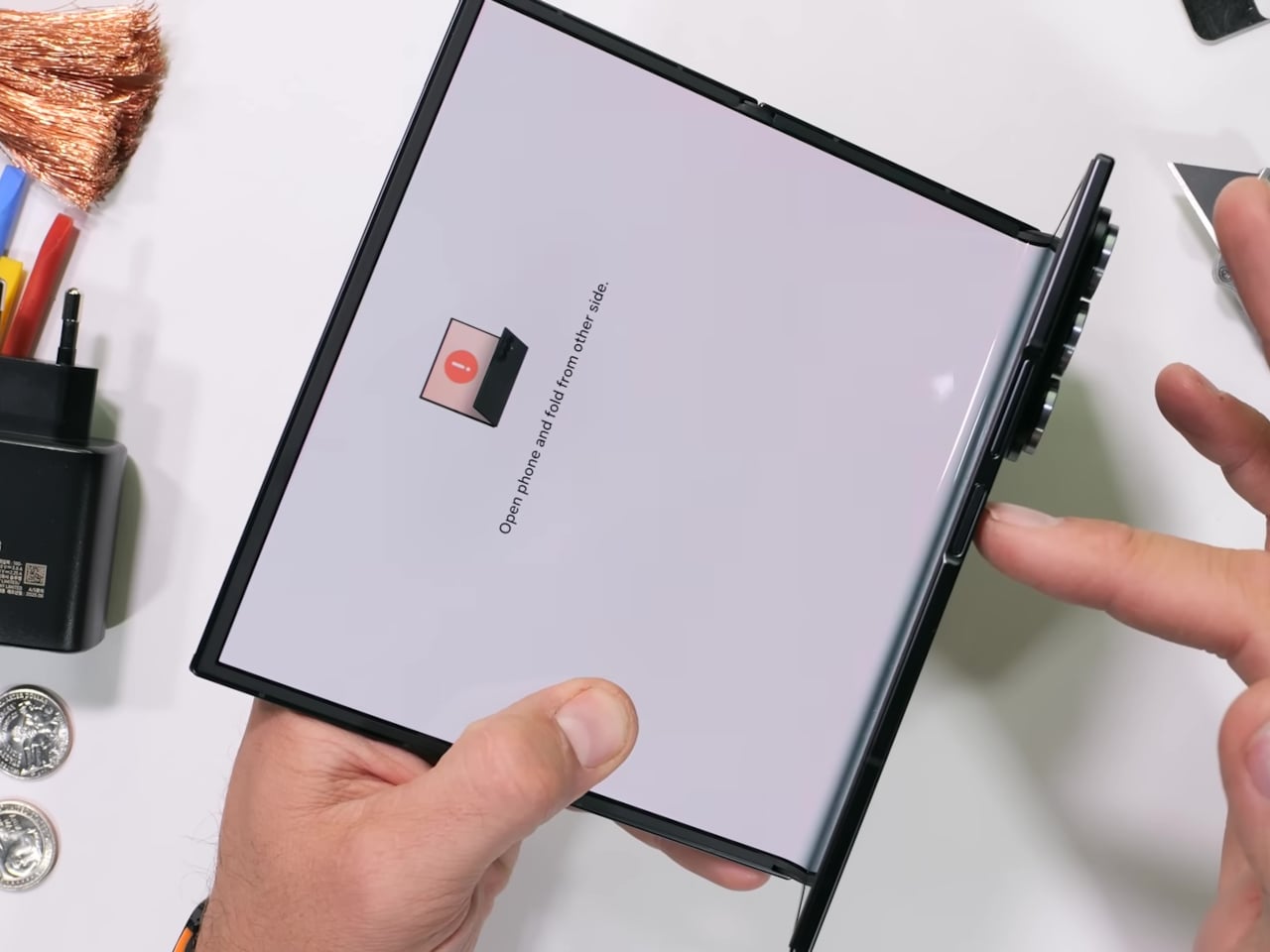
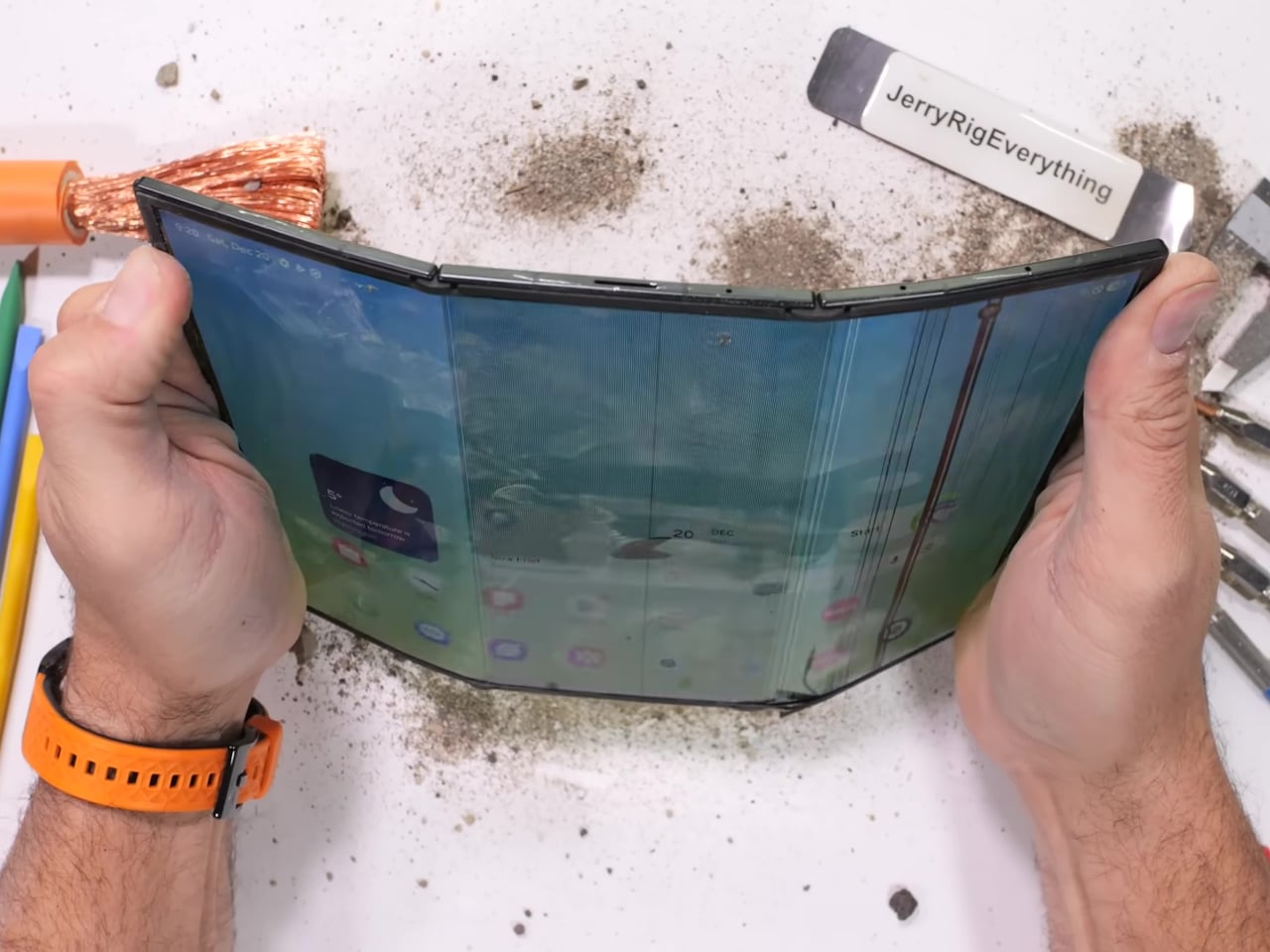
Zack Nelson’s standard protocol is scratch, burn, dust, and bend, and the Galaxy Z Trifold greets you with a wall of warnings about not peeling films and folding in a specific order. If you close the wrong flap first, the phone vibrates and flashes red, a sign that the folding choreography is tightly constrained, even if it does not break immediately. The device is smart enough to know when you are stressing it incorrectly.

Designer: Samsung (via Zack Nelson/JerryRigEverything)

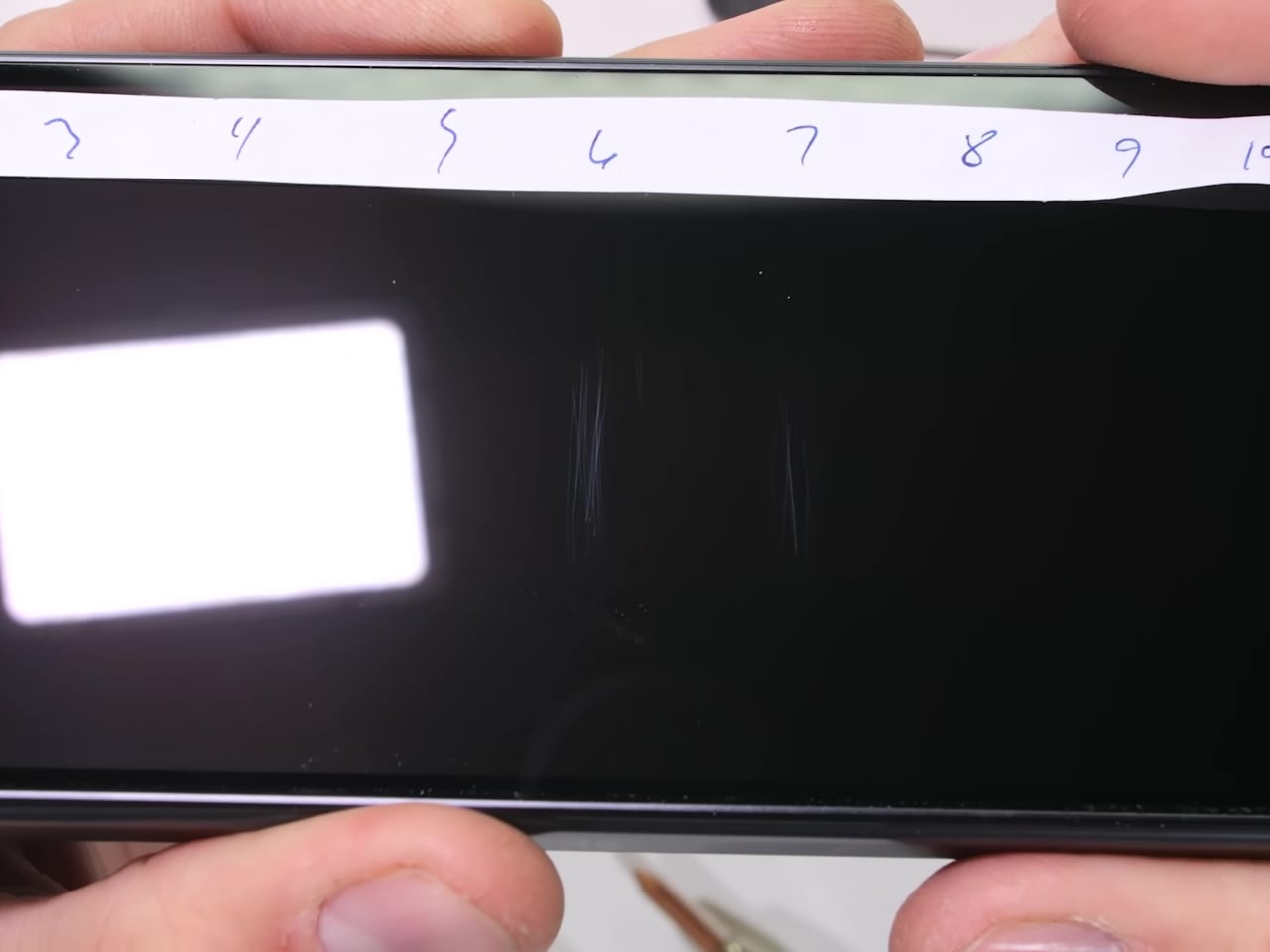
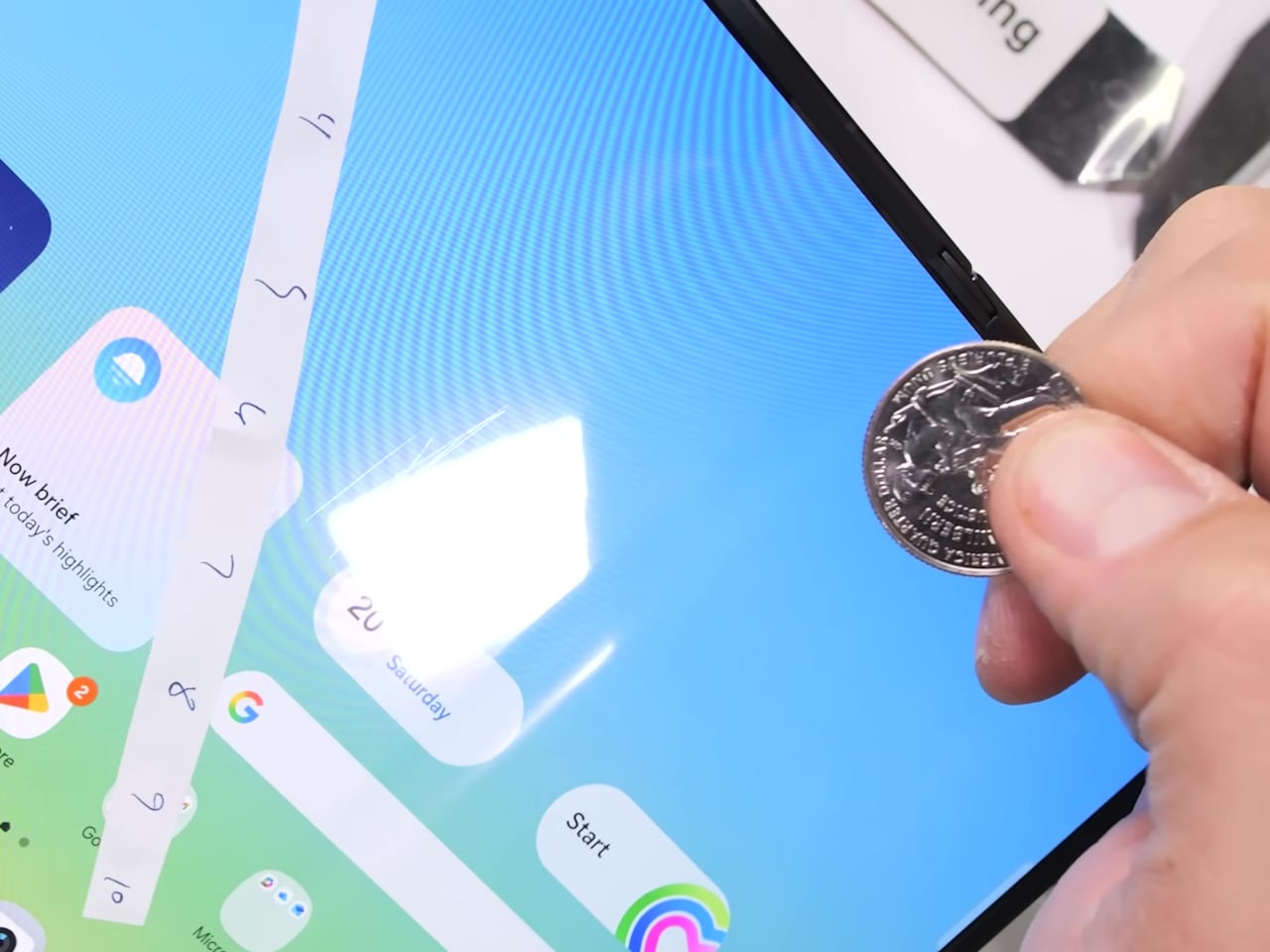
The outer cover screen behaves like other flagships, scratching at Mohs level 6 with deeper grooves at 7, while the inner flexible display still marks at level 2 with deeper damage at 3. The burn test shows the outer OLED lasting around 17 seconds under flame and the inner panel about 10, reinforcing that ultra‑thin glass and plastic stacks remain fragile, even in this latest generation, which is less a Samsung problem and more a physics problem.


The phone carries an IP48 rating, which sounds reassuring until fine dust is sprinkled into the hinge area and folding begins. The immediate grinding noises make it clear that particles can still get into the mechanism and between layers. The device survives the moment, but the test underlines that a tri‑fold with exposed hinge gaps is best kept away from beaches, workshops, or pockets full of grit.

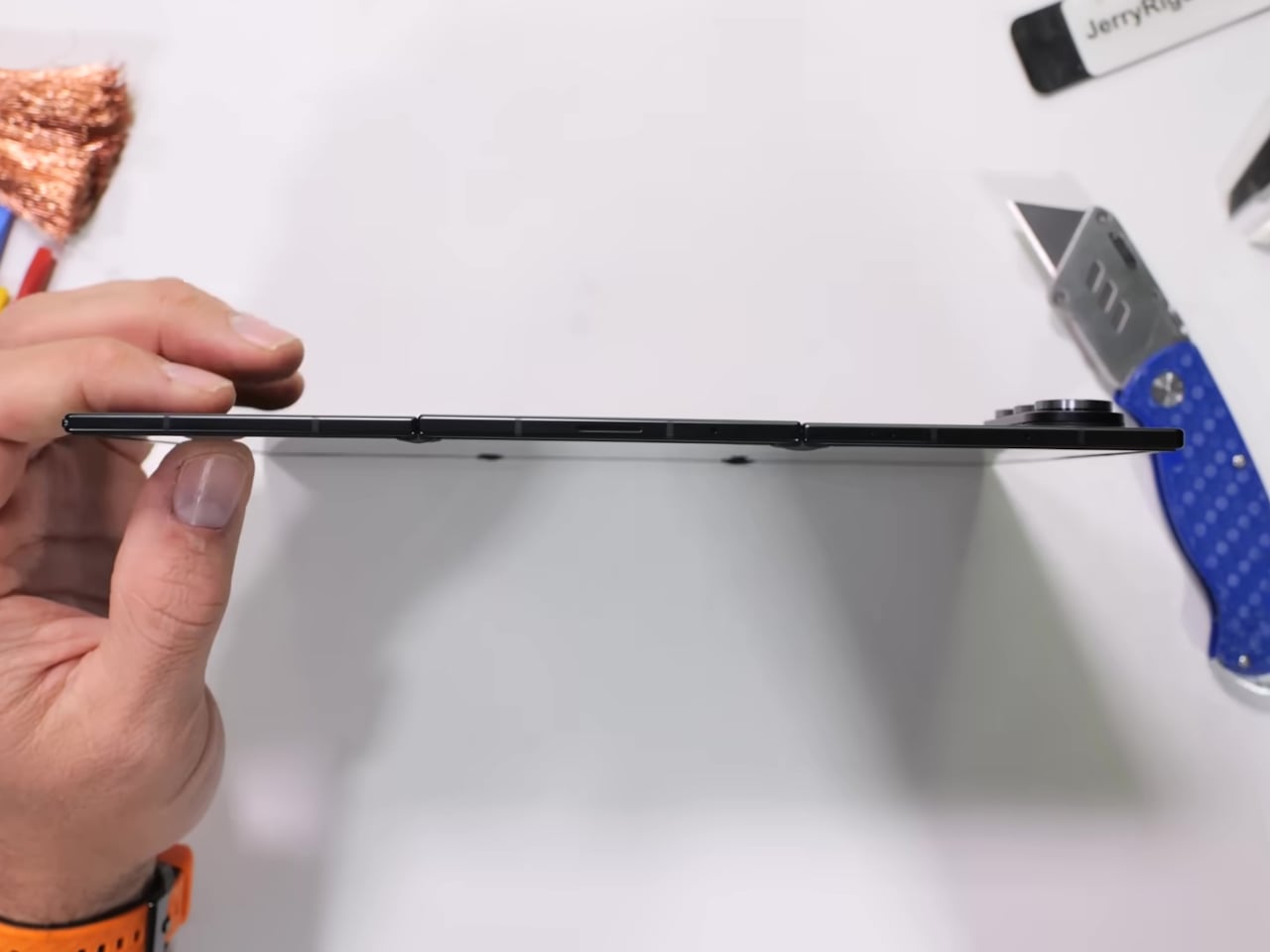
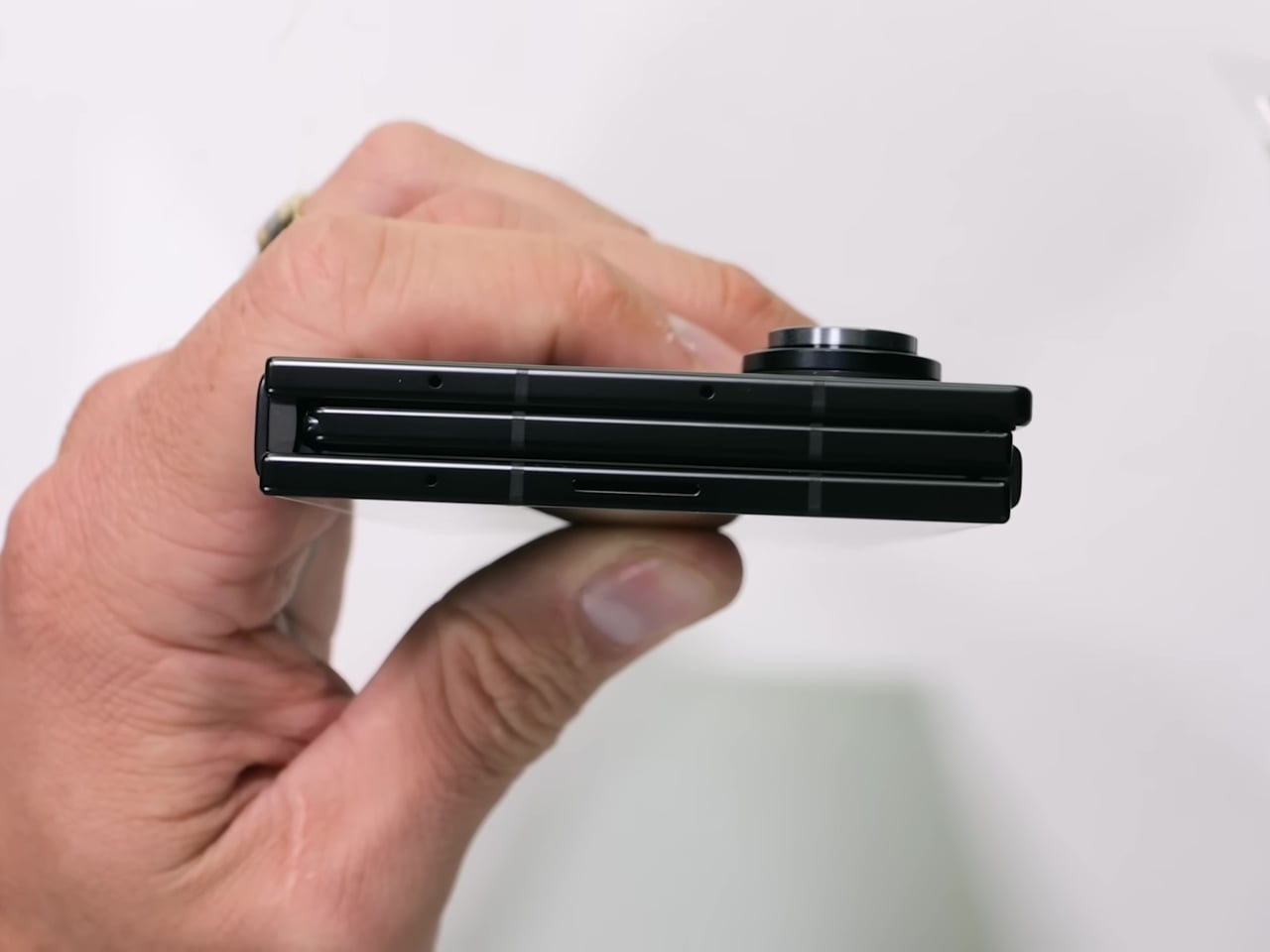
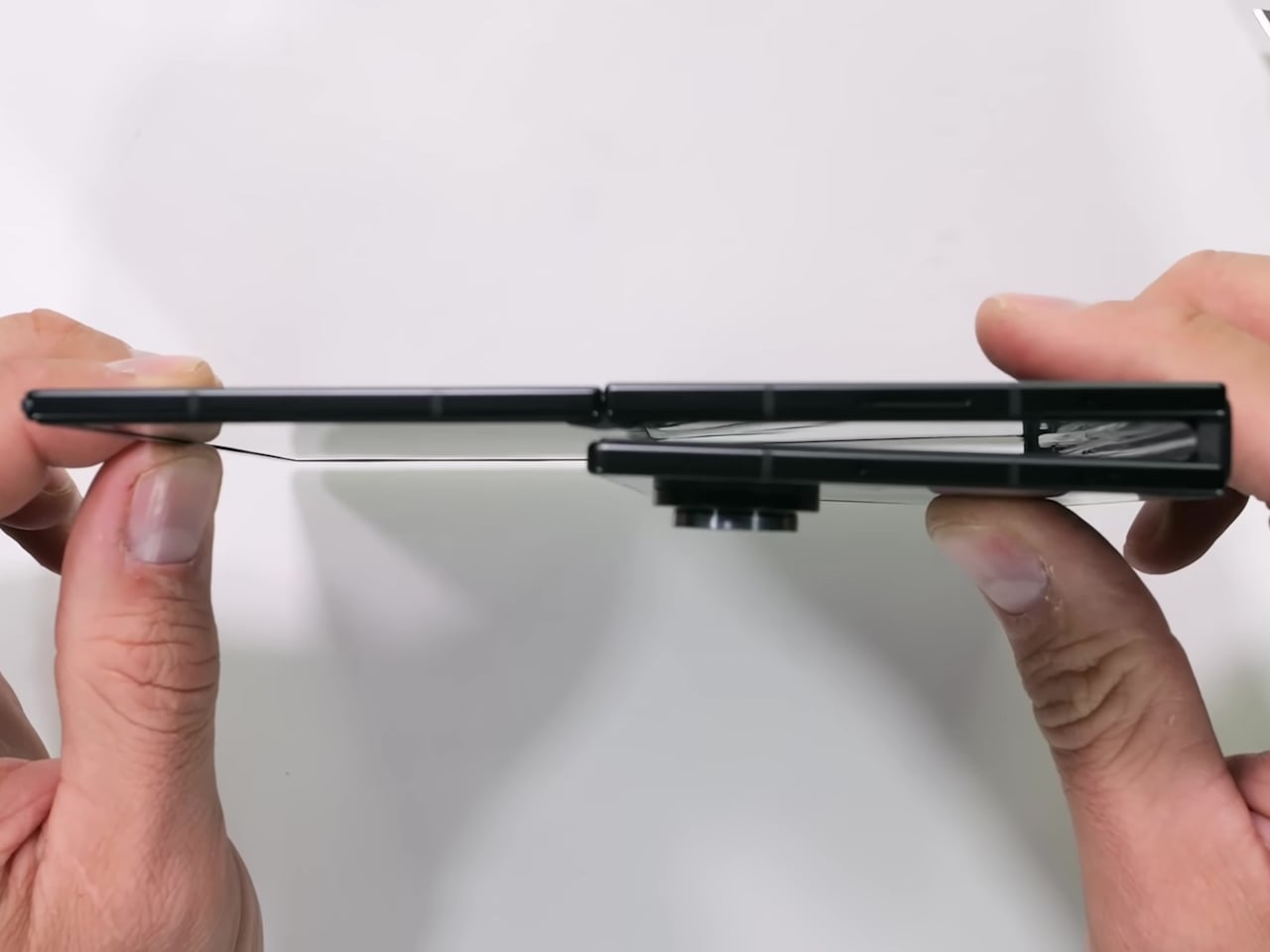
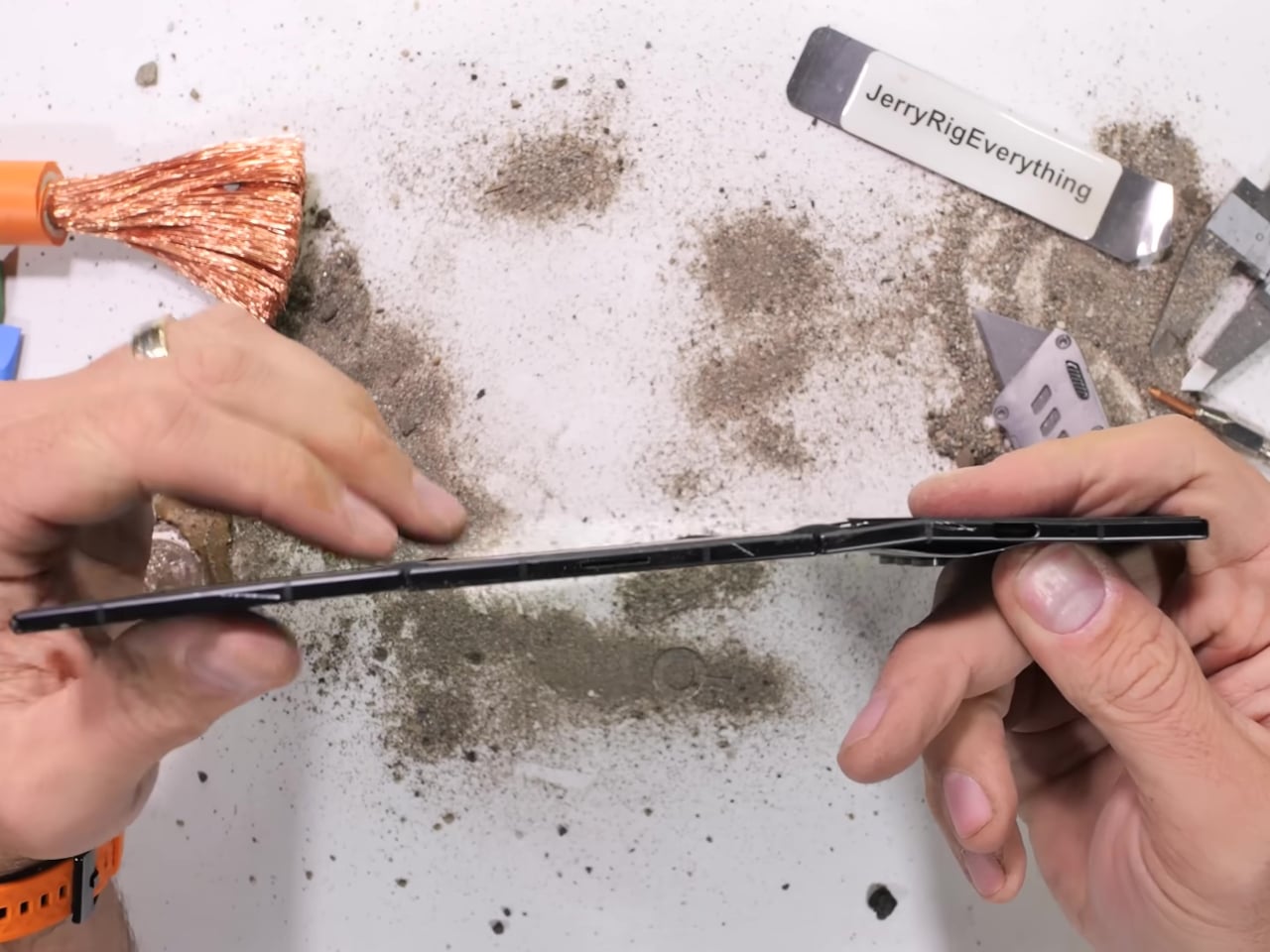
The defining moment is the bend test. When force is applied in the opposite direction to the intended fold, the Galaxy Z Trifold’s frame buckles with an audible crack, making it the first Samsung phone to fail this particular test. The central spine is around 3.9 mm at its thinnest, significantly slimmer than many ultra‑thin phones, and the hinges themselves hold while the aluminium frame gives way, showing that Samsung prioritised compactness over reverse‑bend resistance.

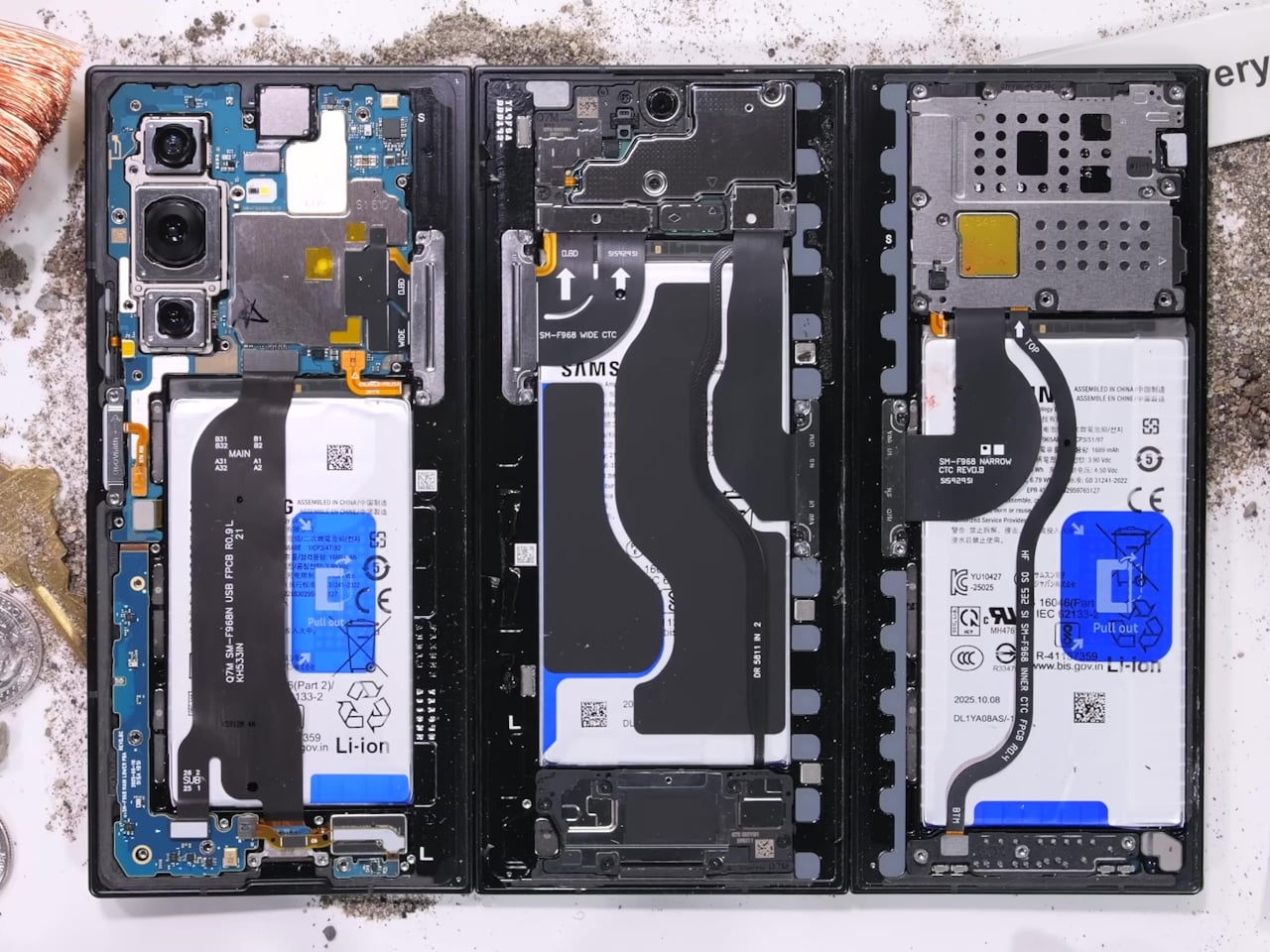
The teardown reveals three separate batteries spread across the three segments, totalling about 5,600 mAh, so thin that even using pull tabs to remove them risks bending and puncturing. A 200 MP main camera, a 10 MP telephoto with OIS, and reliance on the aluminium frame for heat dissipation rather than a complex cooling system all point to thinness and packaging as top priorities, which makes sense when the goal is pocketability.

The Galaxy Z Trifold is an engineering statement that proves a pocketable tri‑fold tablet is possible, and JerryRigEverything’s test shows the trade‑offs of that ambition. Inner screens remain soft, dust remains a threat, and a 3.9 mm spine will not forgive a wrong bend. As a first draft of a radically new category, it achieves something impressive while accepting vulnerabilities that future iterations will likely address with slightly thicker frames and better sealing, once the core mechanics are proven and refinement can begin.

The post Galaxy Z Trifold Durability Test Reveals 3.9mm Trade-Offs first appeared on Yanko Design.