For the last several years, the premium smartphone camera has been a story about software eating hardware. Google’s computational photography turned mediocre sensors into benchmark toppers. Samsung’s AI processing chased detail out of dark scenes that the lens glass alone could never recover. Apple built the Photonic Engine specifically to run post-capture processing at speeds no competitor could match. The results have been genuinely impressive across the board. They have also been, at a fundamental level, a workaround.
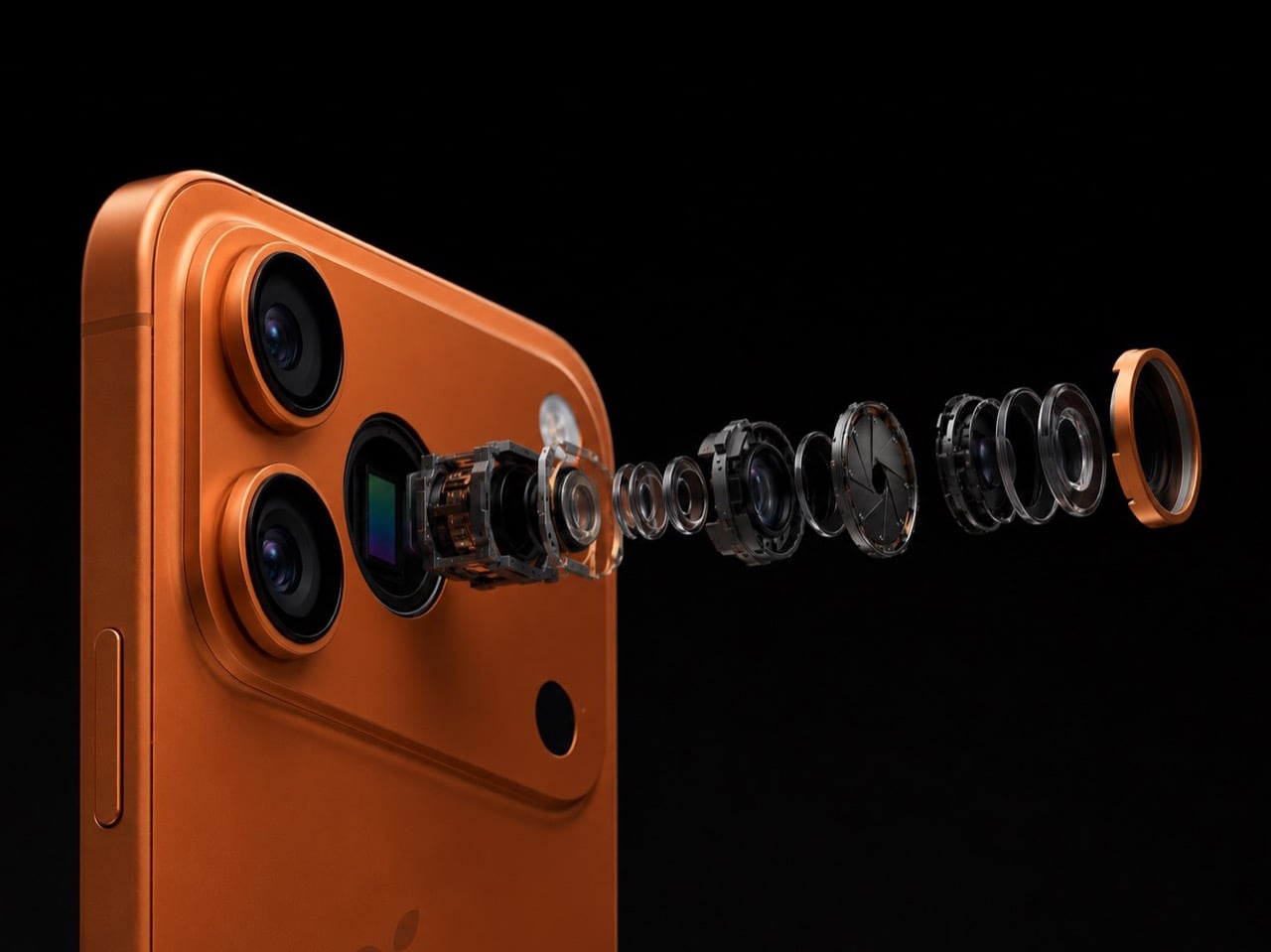
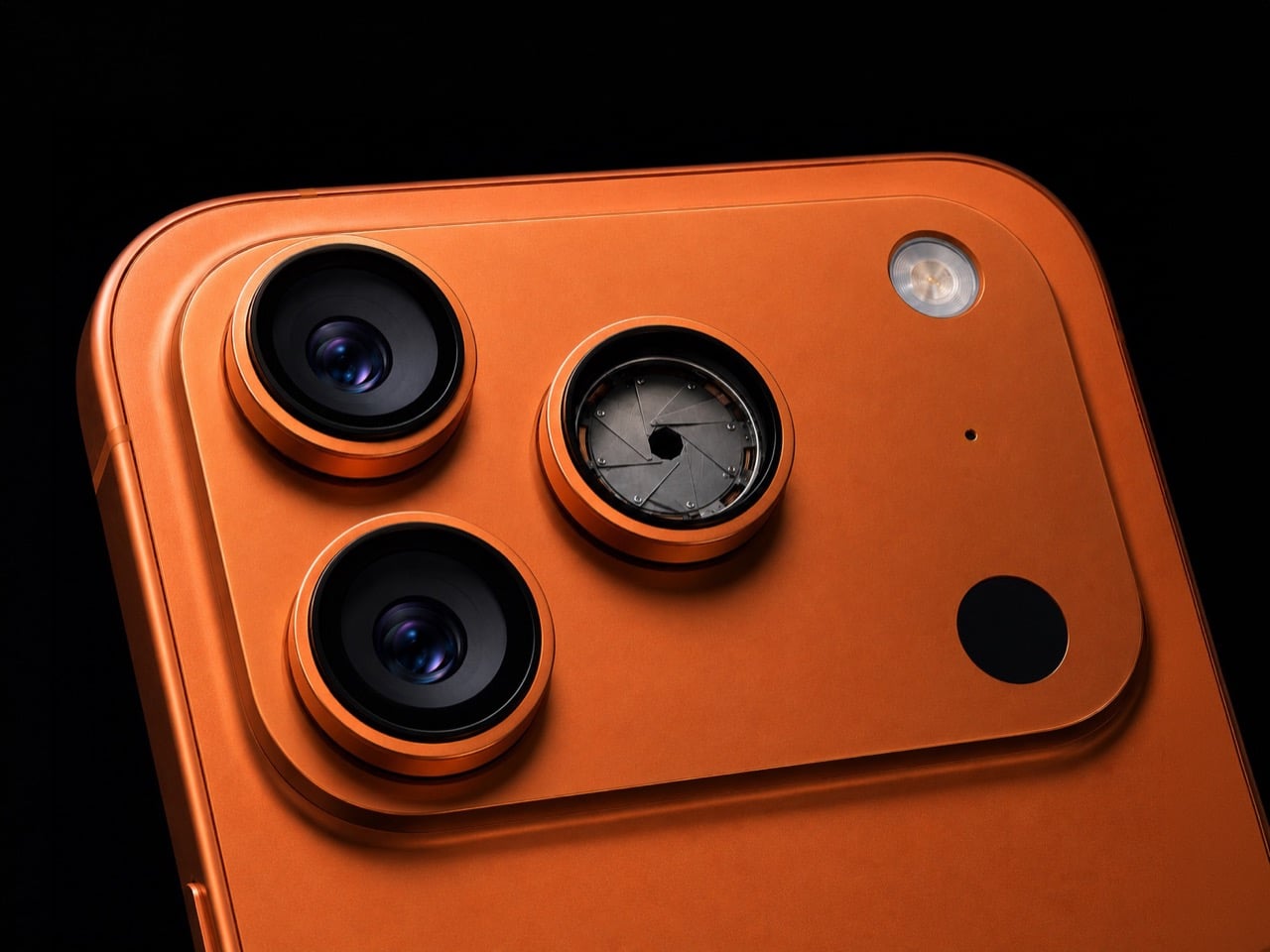
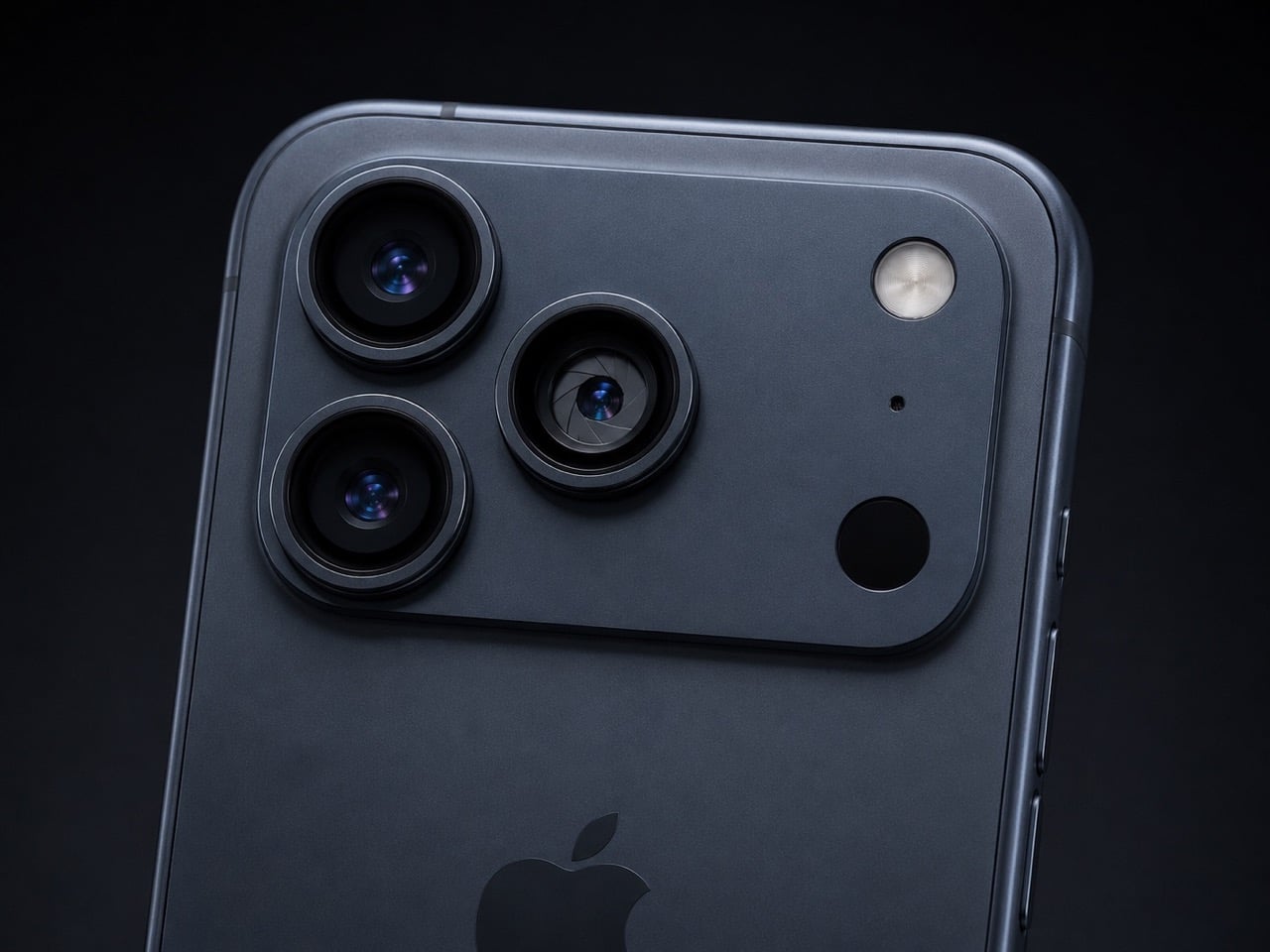
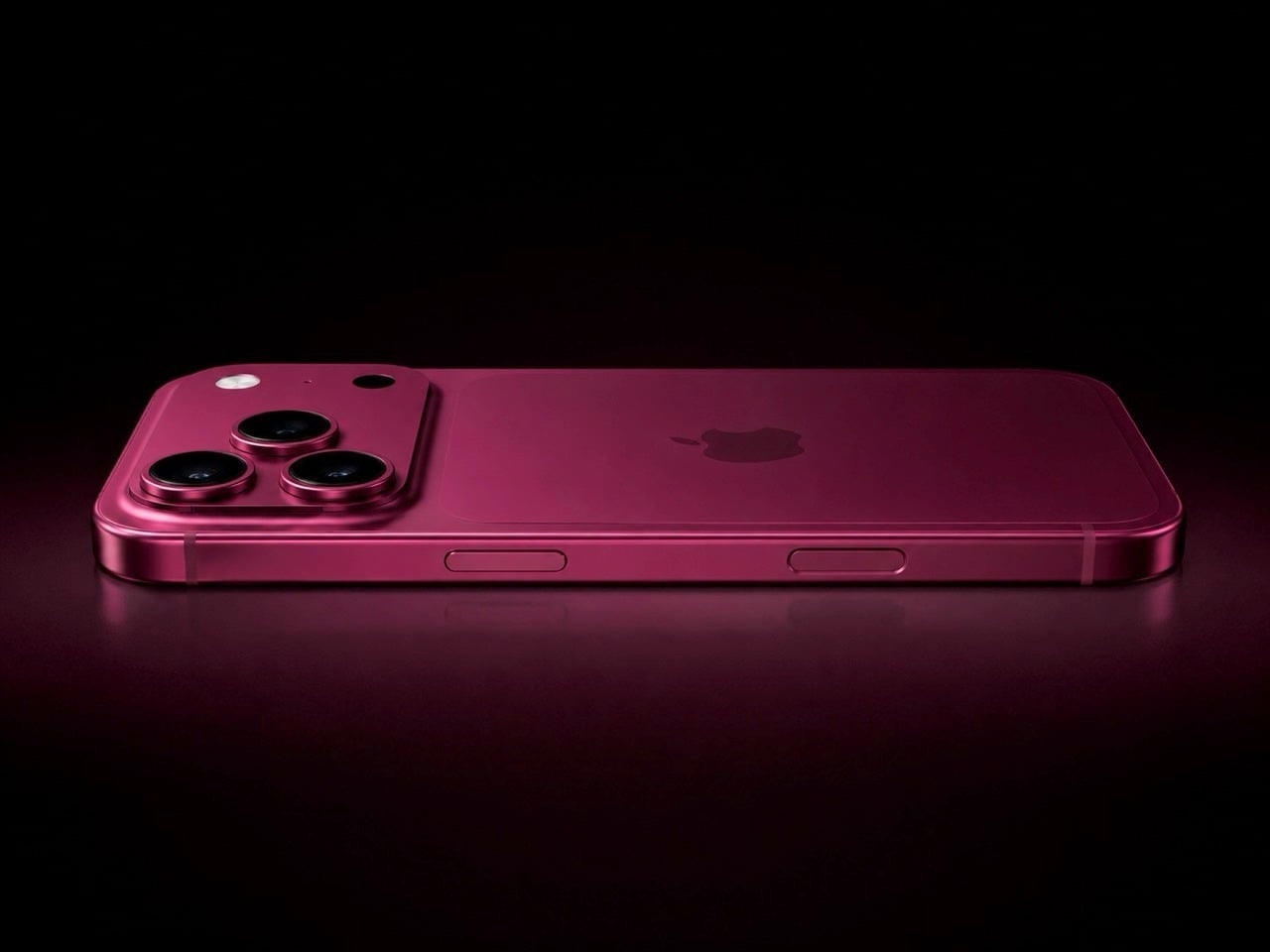
Leaked supply chain data from April points toward Apple choosing a different approach for the iPhone 18 Pro Max: a mechanical iris, physical aperture blades, the kind of variable light control that photographers have relied on since the nineteenth century. Chinese component supplier Sunny Optical has already entered production on the actuators that make the system work, turning what analyst Ming-Chi Kuo first flagged in December 2024 into a confirmed hardware reality. The rest of the 2026 leak picture, the 2nm A20 Pro chip, under-display Face ID, and the Dark Cherry colorway we detailed last week, all reads differently once you understand that Apple is building around mechanical principles, with algorithms serving the physics rather than substituting for it.
Designer: Apple
Samsung attempted this exact feature with the Galaxy S9 and S9+ in 2018, building a diaphragm that toggled between f/1.4 and f/4.0 across eight discrete steps, then dropped it entirely from the Galaxy S10 the following year without explanation. First-hand testing at the time found inconsistent results, portrait artifacts, and a setting so buried in the menus that most users shooting in auto mode never engaged it deliberately. The engineering problem is formidable: fitting moving aperture blades, their actuators, and the mechanical tolerances those blades require into a camera stack measured in single-digit millimeters is a precision manufacturing challenge of a different category than any software update can address. Apple commissioning Sunny Optical specifically for custom actuator production, with that production already underway, signals a more deliberate, supply-chain-integrated approach to the problem. Something changed between 2018 and now at the component level that makes this viable where Samsung could not make it reliable at scale.
Every iPhone Pro from the 14 through the 17 has shot at a fixed f/1.78, the lens always wide open, with software compensating for everything the hardware cannot adjust. Leaks point to a range spanning f/1.6 to f/22 on the 18 Pro Max, meaning optically controlled exposure for the first time in the Pro line’s history. Stopping down in bright conditions eliminates the overexposure that Apple’s current tonemapping corrects after capture, and a physical aperture produces depth-of-field falloff curves around hair and translucent fabric that computational bokeh gets wrong often enough to notice. The A20 Pro chip on TSMC’s 2nm process, with RAM integrated directly onto the same wafer as the CPU, GPU, and Neural Engine, delivers the projected 30% efficiency gain that makes running simultaneous mechanical and computational systems sustainable at the battery level. Apple is accepting a thicker chassis and a heavier phone, projected at around 8.8mm and 240 to 243 grams, to pay for all of it.
Several things the current leak record cannot answer will determine how much of the mechanical iris matters in real-world use. The number of aperture blades is unconfirmed, and that figure directly shapes bokeh quality, with more blades producing a rounder, optically cleaner out-of-focus shape. Repairability is a genuine concern, since moving parts inside a camera module that already carries one of Apple’s steeper service costs introduces a new failure mode into an expensive component. Blade longevity over years of daily shooting has surfaced in none of the supply chain reporting, and that is the kind of question only a full product lifecycle can answer. What September will reveal is whether Apple has resolved the reliability problem that ended Samsung’s attempt in 2018, and whether physics can now outperform the algorithms that have defined the camera conversation for a decade.
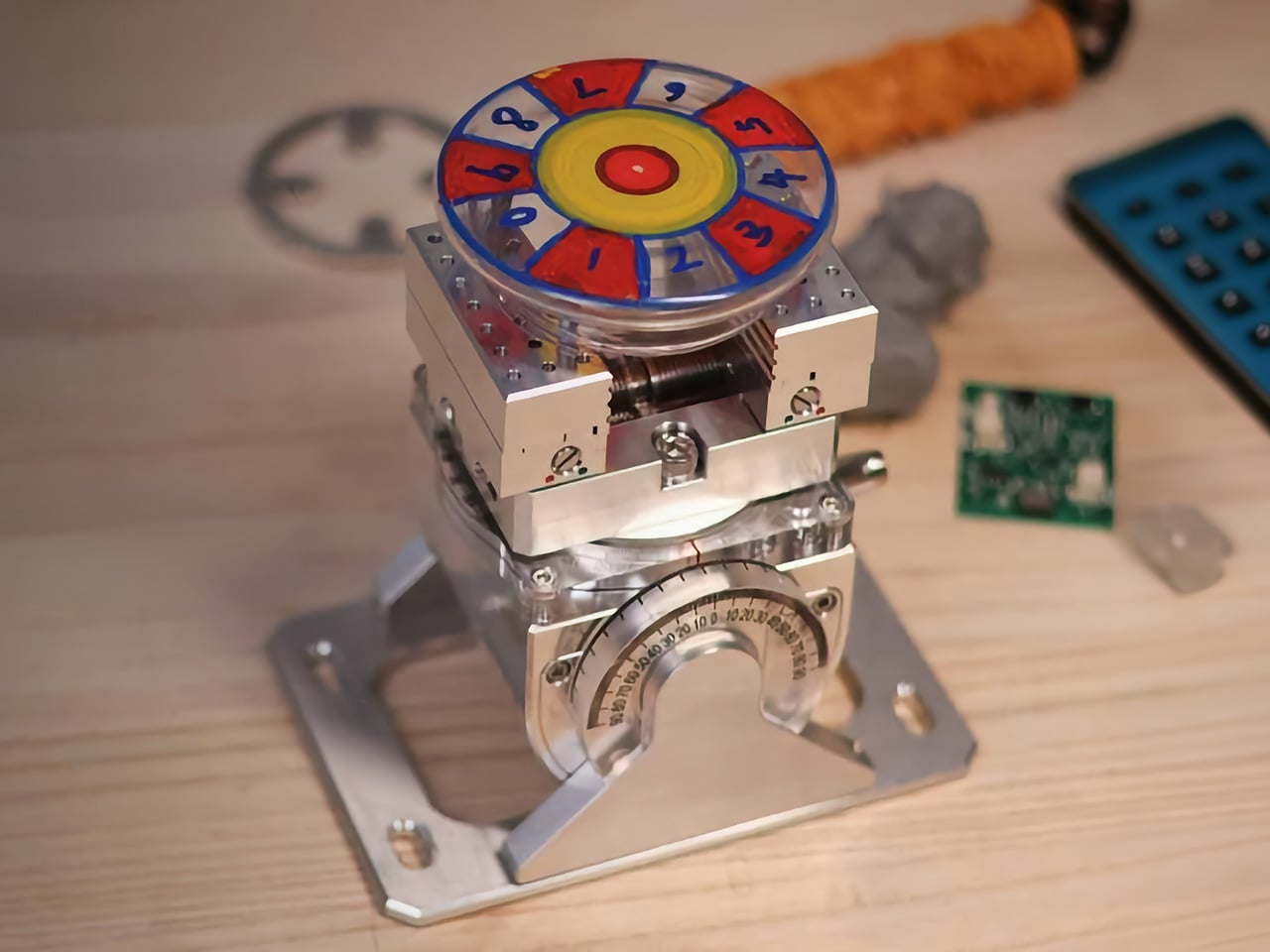
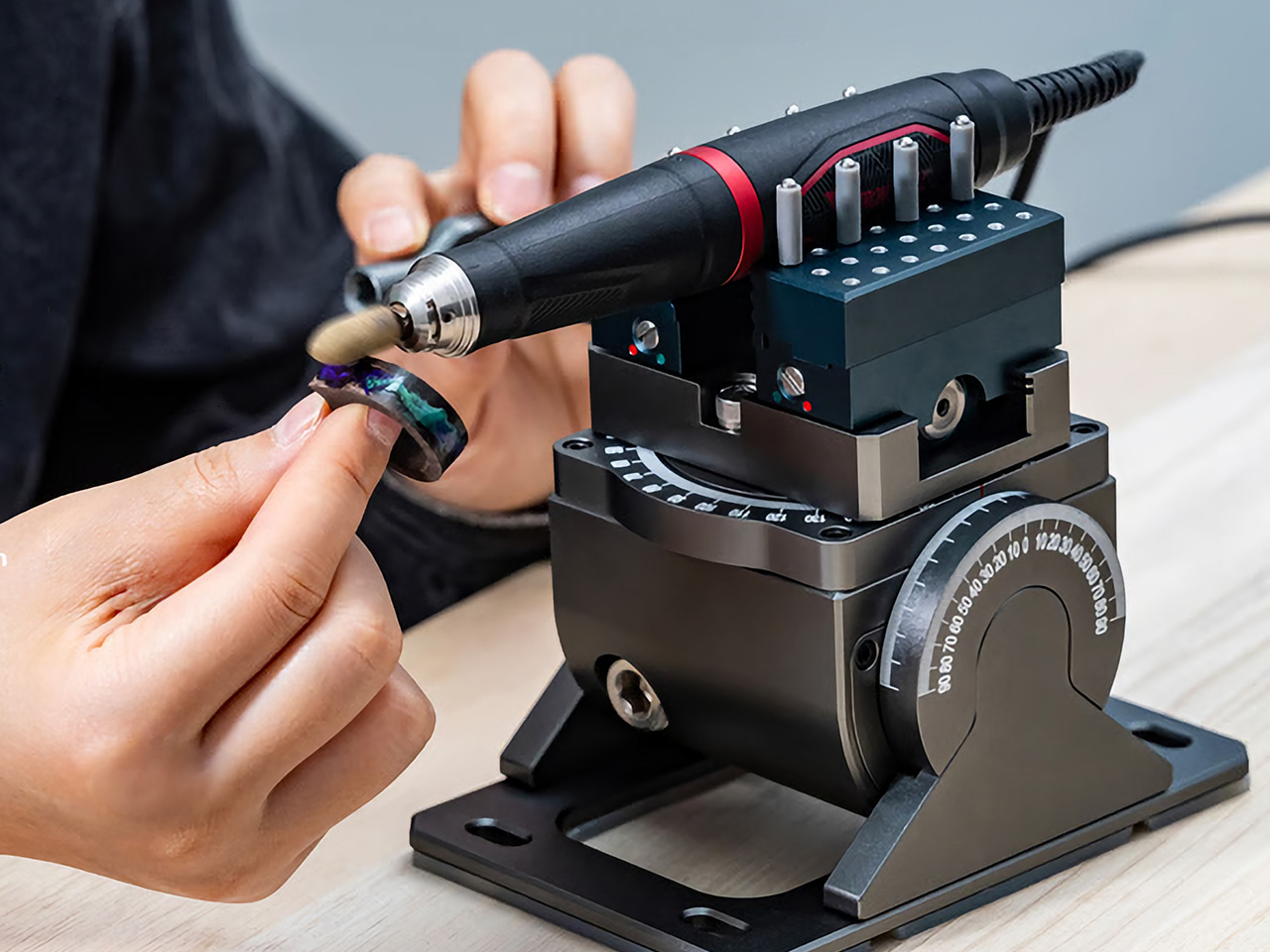
Bench vises have long been built around one assumption: the work stays put, and the maker adapts. AxiGlide inverts that. With full 360-degree rotation paired with a tilt base that moves from horizontal toward vertical, it creates a workspace where the object turns, angles, and aligns with far less interruption. The rhythm of making changes the moment you stop compensating for the tool.
AxiGlide offers free-spin motion for fluid handling, a 60-position indexed system for repeatable 6-degree steps, and a full-lock mode for rigid support during demanding tasks. The modular jaw system adds another layer of versatility, with options for flat, irregular, hard, and delicate surfaces. Starting at $398 for the Standard version and $449 for the Precision model, it positions itself as a serious upgrade for detail-heavy bench work where angle, access, and control define the outcome.
Mode selection is controlled by a three-position switch with spring-loaded detents, and a light flick is all it takes to move between behaviors. Free-spin mode lets the vise flow with your touch, the tilt base housing a precision-machined spindle that allows rotation without directional limits or angular constraints. This makes the AxiGlide a responsive rotary platform, ideal for drawing smooth curves, wrapping, winding, or any continuous motion that benefits from fluid rotation. Set it to a comfortable working incline, secure your workpiece, then rotate it freely back and forth to explore any angle. Whether you’re painting, carving, assembling, or simply inspecting details from different perspectives, the free mode gives uninterrupted access to every orientation.
When fully locked, AxiGlide transforms into a fixed vise system, creating a solid, single-position hold that delivers rock-solid stability for demanding tasks. The system can be oriented freely before locking, so you get a way to freeze any chosen angle. Whether it’s angled drilling, off-axis assembly, or precise carving, AxiGlide enables you to secure the workpiece at the position that best matches the task at hand, with uncompromising strength and confidence. VogueMech positions this as the mode for maximum rigidity when force or precision drilling comes into play. Lock the angle you need, apply force, and the vise holds without creep or shift.
Beneath the turntable sits a 60-position indexed disc, dividing the full rotation into precise 6-degree increments and engaging with a spring-loaded column. When the switch is set to the half-locked state, AxiGlide creates consistent tactile detents as you turn it. Each click corresponds to an exact angular step, delivering mechanical precision through touch rather than visual alignment. Precision becomes something you feel, especially in tasks that require repeating orientations, segmentation, symmetry, or mirrored alignment. The half-lock can also serve as a damping support for the turntable, making every adjustment feel controlled with no sudden drops, no jerky motion, and no repeating need to loosen or tighten locks the way ball joints demand.
The tilt axis is equipped with a preloaded brake that applies consistent pressure to the tilt shaft, providing smooth, controlled resistance throughout the tilt motion range. Together, the damping support on both axes makes AxiGlide a reliable third hand to hold something top-heavy while maintaining flexibility, positioned exactly where you need it so it stays there when your hand is off. No loosening, adjusting, and relocking; no interruptions in workflow. Just focus on the minutest details of your workpiece at any critical angle, especially when your hands are occupied with other tools. The tool becomes an extension of your movement rather than a step in the process.
The jaw system is modular and designed to expand the vise’s range across materials and project types. Standard equipment includes pin jaws that can be adjusted and reconfigured to better match the shape and needs of your workpiece. Pins come in three heights (10mm, 15mm, 20mm), each available in sets of eight, and you can place them where you need them for irregular or custom profiles. Add-on jaws are available separately and adapt to different materials and shapes: parallel jaws for flat surfaces, fractal jaws for irregular objects (a nod to MetMo’s influence in the space), aluminum material for hard metal parts, and PEEK panels for delicate parts. With a modular jaw system and possible future expandability, AxiGlide evolves with your projects, giving you one system that can serve jewelry work, hand engraving, circuit assembly, cloisonné painting, filing, model photography, and fine-detail finishing tasks.
The AxiGlide body is made from 6061 aluminum alloy, while key load-bearing and motion-critical components are made from 410 stainless steel. This combination balances structural strength, functional performance, weight, and manufacturing cost, ensuring the design is practical to manufacture and faithfully deliver in its intended form. The unit weighs 2,200g (4.9 lbs) and measures 150mm wide by 100mm deep at its base, rising to 135mm in height. AxiGlide is available in two versions: Standard and Precision. Both versions share the same material types, use scenarios, jaw options, core machining processes, and overall build quality. The differences come down to several specific upgrades according to VogueMech. The Standard comes in five color options: Gray, Blue, Red, Green, and Metal. The Precision edition is offered in DLC black and matte olive-gray, with additional mechanical refinements that enhance smoothness and tolerances.
The Standard edition starts at a discounted $239 for earlybird backers and includes the vise body, tilt turntable base, pin jaws with sets of 10mm, 15mm, and 20mm pins (eight of each). The Precision edition is priced at a discounted $279 and includes the same package plus a screw rod driver and upgraded internal components. Add-on accessories are available separately, including a screw rod driver for $12, parallel jaws in PEEK material for $24, parallel jaws in aluminum for $24, fractal jaws for $58, and PEEK teeth for fractal jaws at $36. Shipping costs vary by region: $28 for Japan, United States, European Union, United Kingdom, China, South Korea, Canada, and Australia; $45 for other countries and regions. Buyers only pay shipping when the AxiGlide vise is ready, allowing VogueMech to provide accurate rates based on location and selected package. Production begins in July 2026, with all orders expected to ship by September 2026.
There is a generation of people for whom Hybrid Theory was the first album that felt like it was speaking directly to them. Released in October 2000, it arrived at that particular moment in adolescence when you needed music to be loud and honest and a little bit angry, and Linkin Park delivered all three in a single package. “Crawling,” “Papercut,” “One Step Closer,” “In the End,” four of the twelve tracks became radio staples, which is a hit rate almost nobody achieves on a debut record. The album went Diamond in the US and sold 27 million copies globally, which means a lot of people apparently had that same feeling.
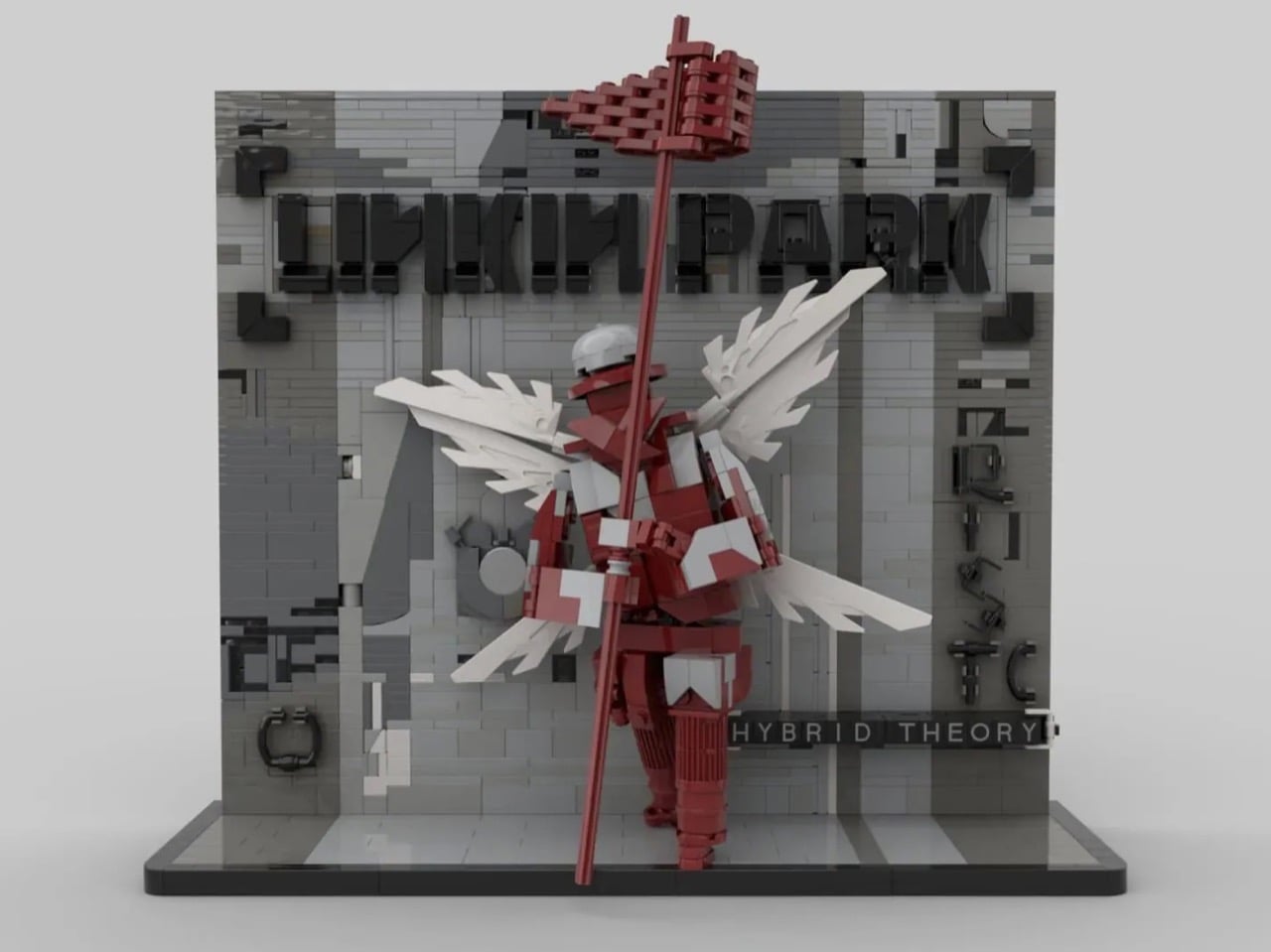
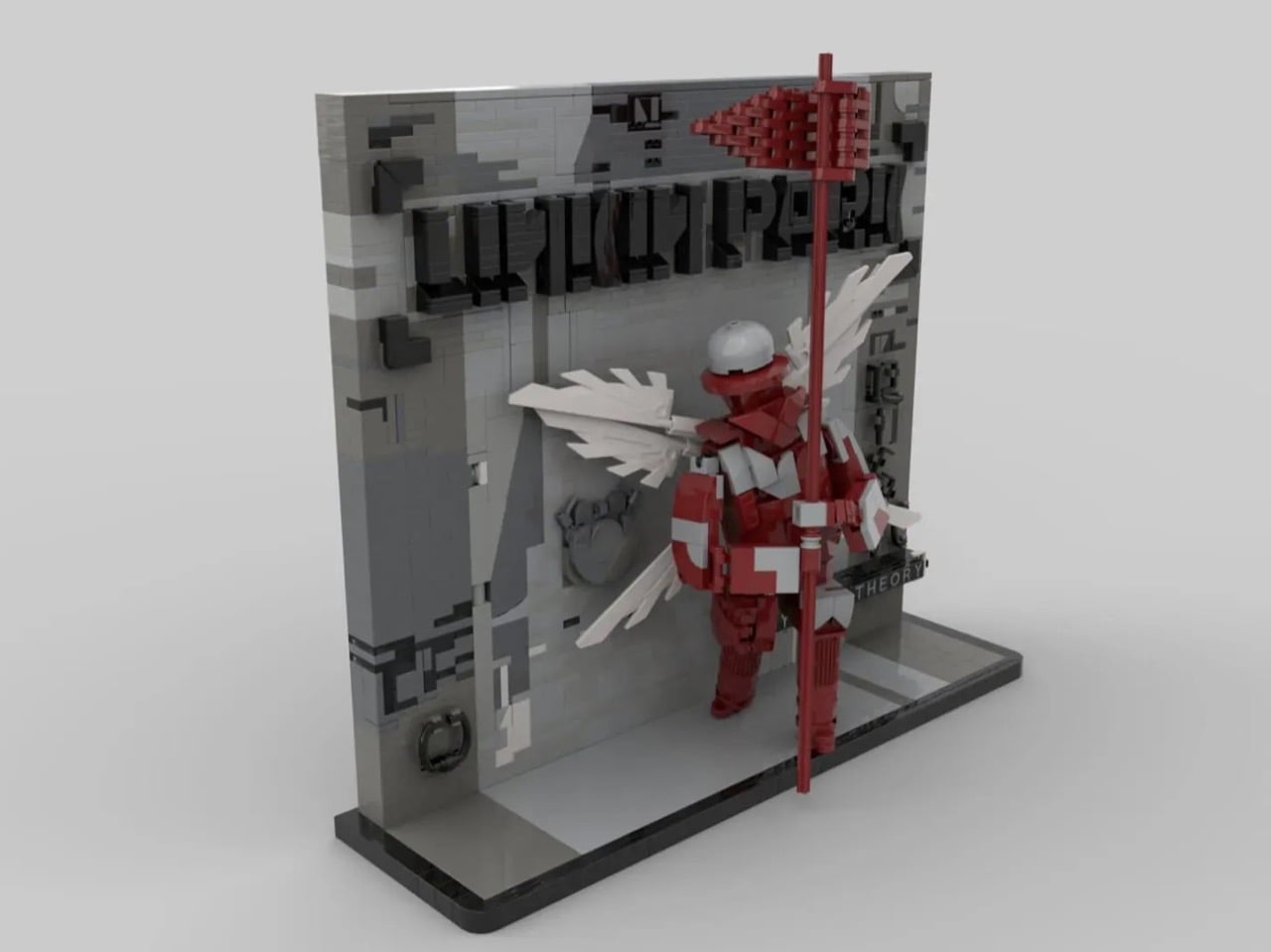
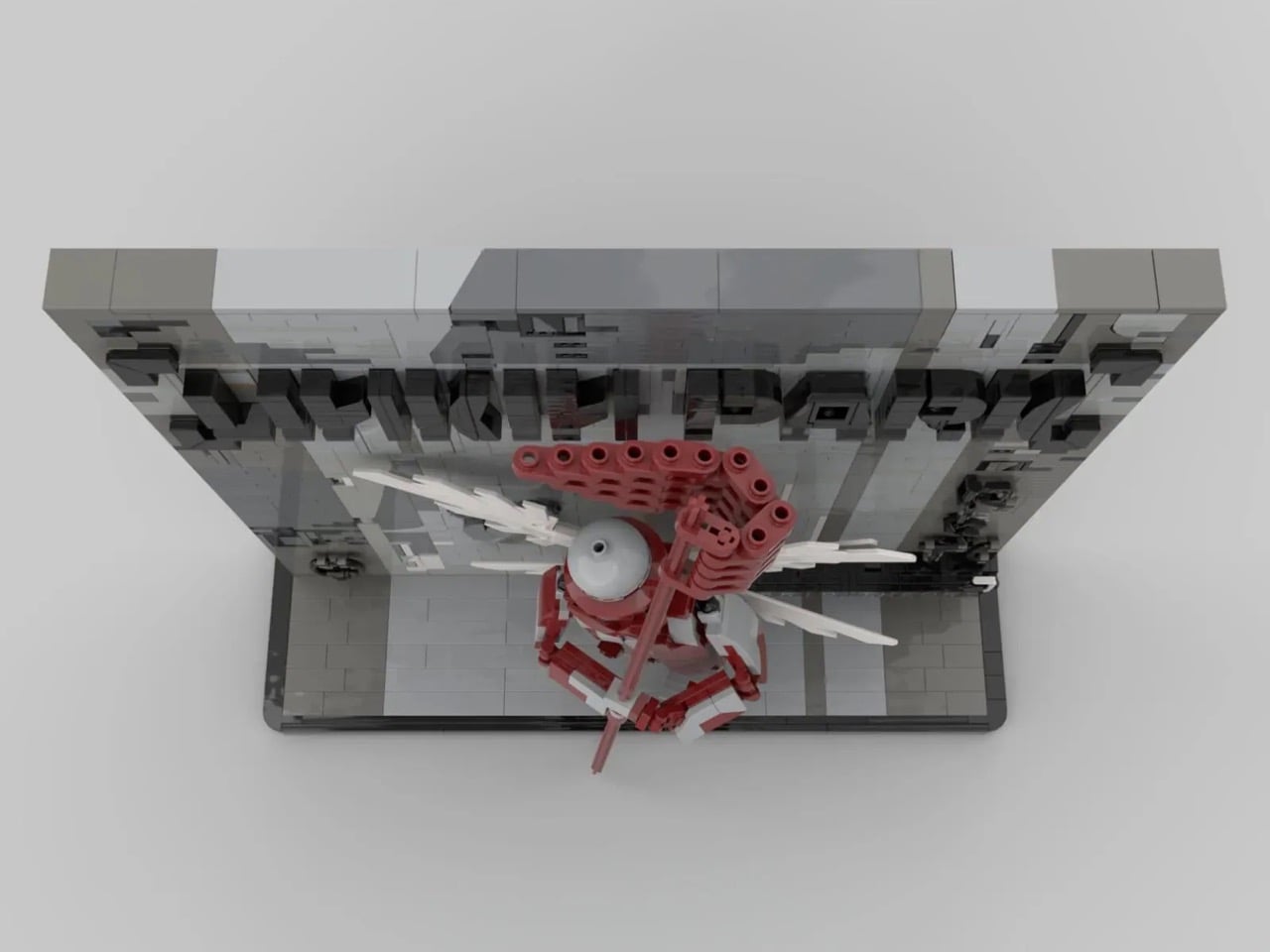
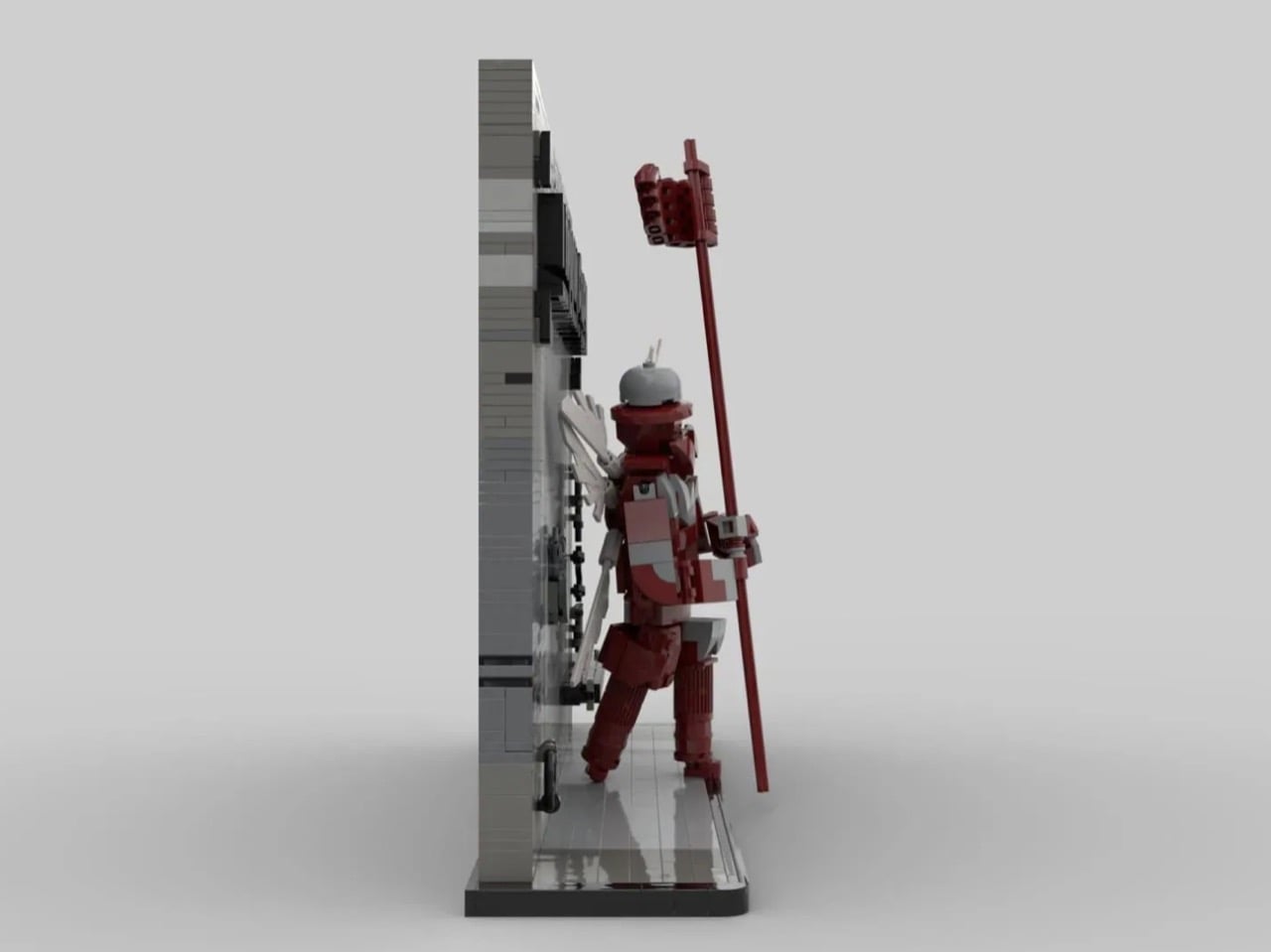
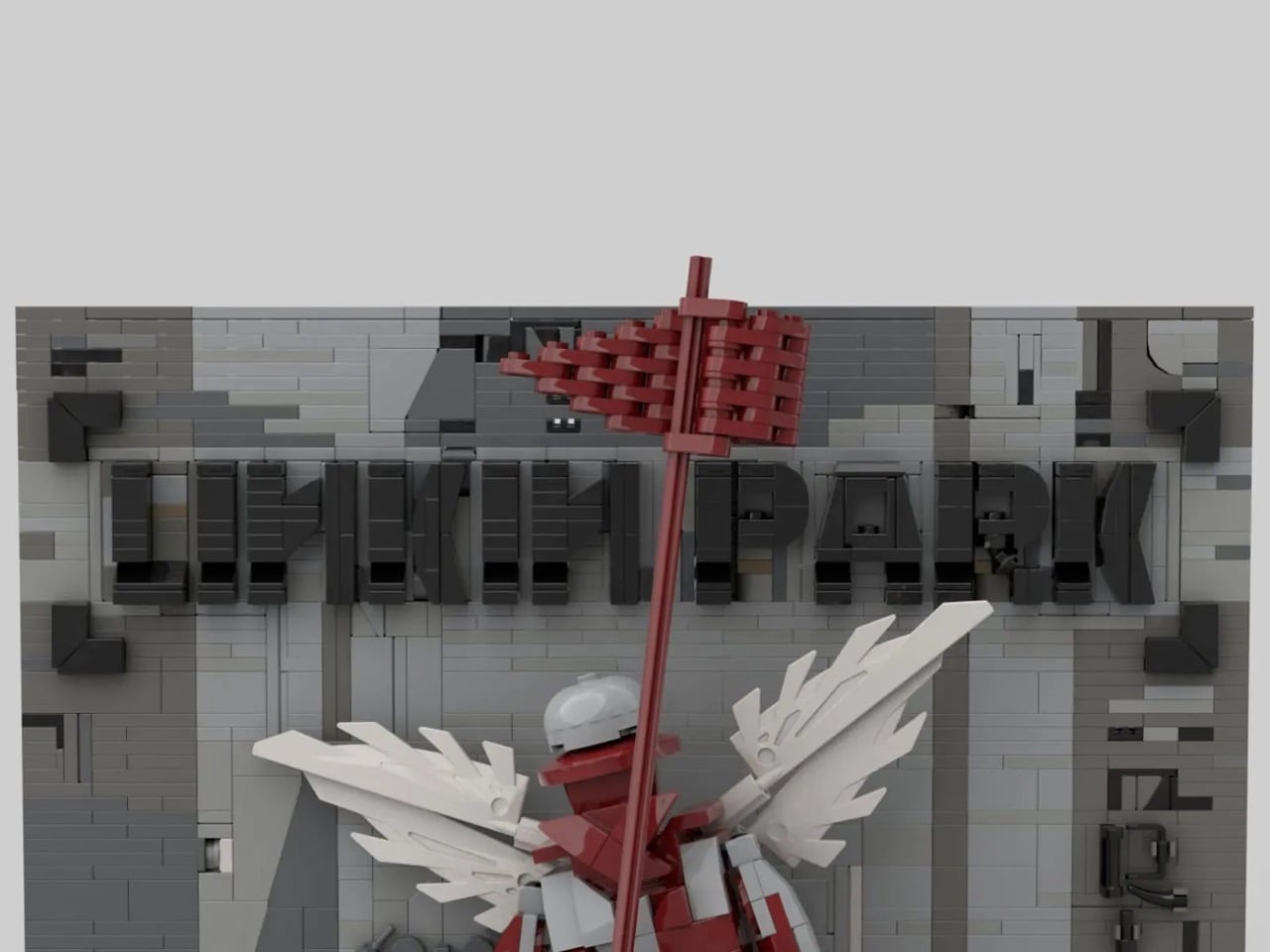
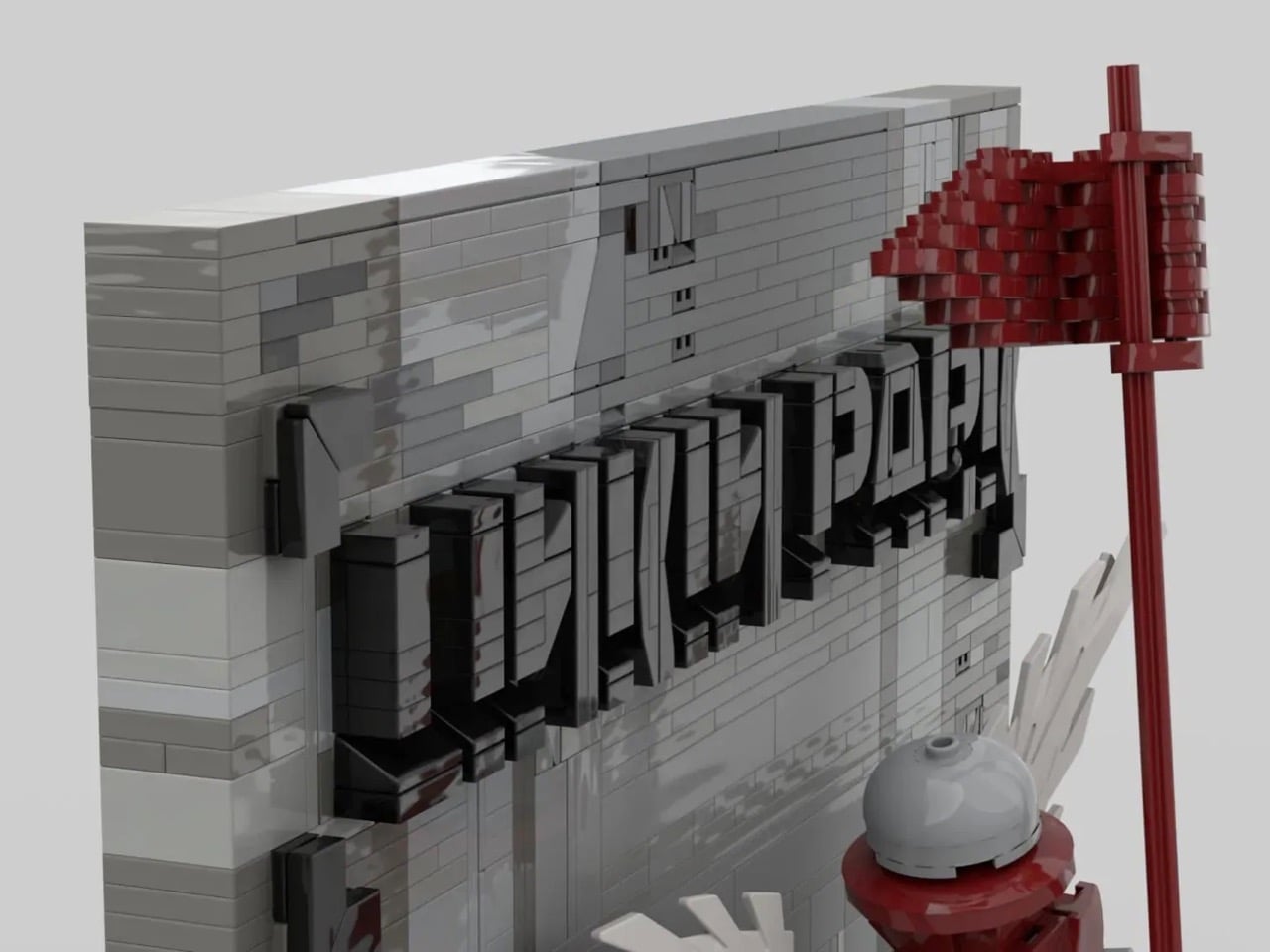
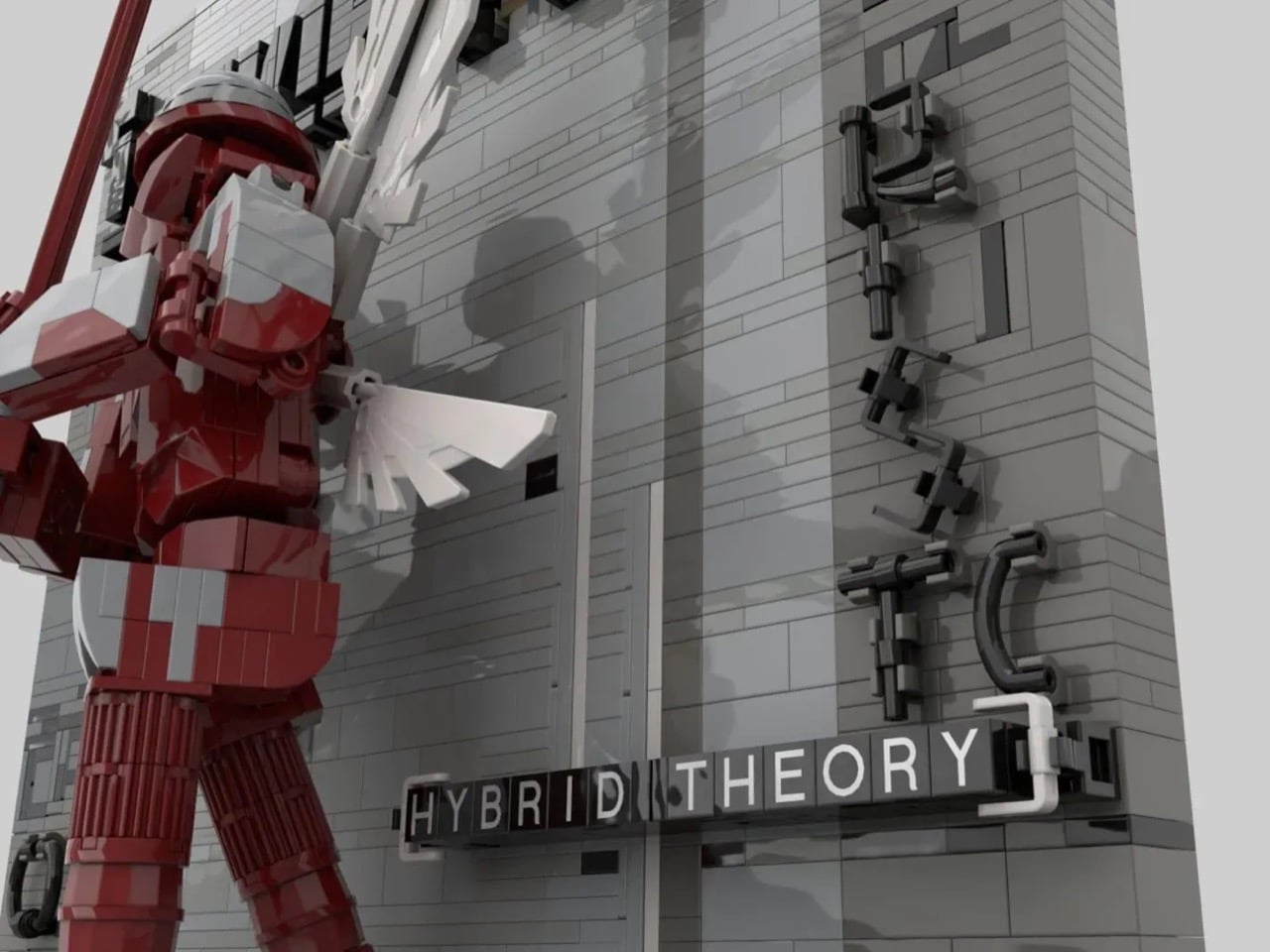
LEGO builder Zihnisinir_61 is clearly among them. His LEGO Ideas submission recreates the album’s cover art as a freestanding 3D display piece, with the Winged Herald soldier front and center, wings spread, flag held high, backed by a grey paneled wall with the Linkin Park name raised in chunky extruded lettering. With the 26th anniversary of the album approaching, the timing feels right, and the build feels personal in the way the best fan-made creations always do.
Designer: Zihnisinir_61
Here’s something a lot of LP fans don’t know. Mike Shinoda designed the artwork himself, and the Winged Herald was a deliberate visual metaphor: the armored, battle-worn body representing the album’s hard edges, and the fragile dragonfly wings representing its softer, more vulnerable core. Chester Bennington described the soldier as the visual equivalent of what Linkin Park was doing sonically, blending aggression and tenderness into something genuinely new. That the band had to fight their own label president to even release the record, with Chester recalling they were “literally the last item on the priority list, below even getting the toilets cleaned,” makes the Herald’s defiant stance feel even more apt in retrospect.
Zihnisinir_61 captures all of that in brick form with real conviction. The Herald figure is built in dark red with articulated white wings that fan out from the torso using layered plates and angled elements, and the flag atop the staff is constructed from a latticed cluster of red bricks that actually reads as a tattered, wind-caught banner rather than a flat rectangular tile. My favorite detail, though, is the lettering. The “Linkin Park” text is built in 3D-extruded dark grey bricks, standing proud off the backing panel using SNOT (Studs Not On Top) techniques that give each letter genuine depth and shadow. It nails the stencil-graffiti aesthetic of the original without resorting to stickers or printed tiles. The “Hybrid Theory” text along the lower section is handled with the same care, rendered in clean printed-style lettering that anchors the composition.
The overall color palette, cool greys for the backdrop, dark red for the Herald, white for the wings, sticks faithfully to the source material while translating naturally into LEGO’s parts library. The build reads immediately from across a room, which is exactly what good album art does.
The MOC is currently gathering votes on the LEGO Ideas platform, where fan submissions need 10,000 supporters to trigger an official review by LEGO’s internal team and a shot at becoming a real retail set. You can head to the LEGO Ideas page here to cast your vote.
There is a reason professional bakers spray water into their ovens right before a loaf goes in. Steam in the early stages of baking keeps the crust elastic long enough for the bread to fully rise before it sets, and then as the moisture burns off, the outside crisps up hard and crackly while the inside stays open and soft. Xiaomi applied that same principle to an air fryer, which sounds obvious in hindsight but somehow took the entire appliance industry a decade to get around to trying. The result is the Mijia Smart Air Fryer Pro Steam and Bake Edition, a 6.5-liter machine that launched on Youpin in March for around $80.
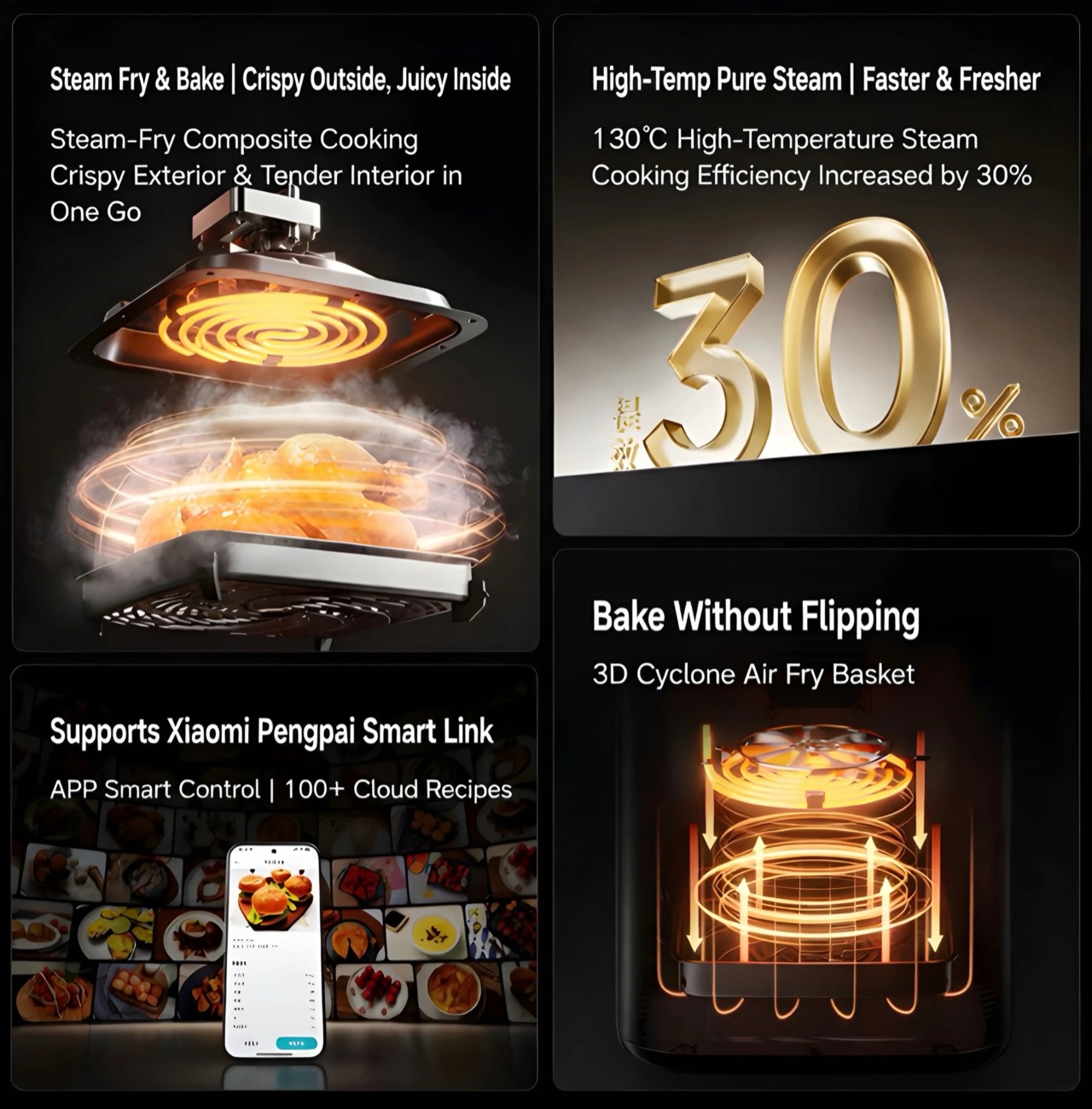
We covered Smeg’s steam-equipped air fryer concept out of Milan Design Week back in April, and the reaction told us something useful: people are genuinely ready for this idea. The hardware behind Xiaomi’s take is straightforward but well thought out. A 1.5-liter water tank sits on top of the unit and feeds a 900W steam generator capable of reaching 130 degrees Celsius, with enough output to run seven continuous dishes before needing a refill. Combined with a conventional 1,850W heating element and a 360-degree hot air circulation system, you get a machine that can switch between dry heat and humid heat within the same cooking cycle. The 304 stainless steel interior handles the moisture without corroding, and the fluorine-free non-stick basket makes cleanup considerably less painful than you might expect from something that gets regularly steamed.
Designer: Xiaomi
Steam-fry and sous vide are the two modes that actually push past what any conventional air fryer can do, rather than just relabeling the same hot-air cycle with a fancier name. Steam-fry layers humid and dry heat in sequence, holding just enough moisture in the chamber to slow surface dehydration while the heat pushes deeper into the food, which is exactly how you get chicken wings that crack rather than just brown. The sous vide mode holds a low, stable temperature over a long period using the water tank as its medium, something a dry-heat machine physically cannot fake its way through. The full temperature range runs from 30 to 230 degrees Celsius with NTC precise control, which in practice means the same machine handles yogurt fermentation at the low end and a proper sear at the high end, a spread that no single-mode appliance on its own can match.
A 234mm horizontal interior sounds like a spec sheet abstraction until you realize it fits a whole chicken, 24 wings, or nine steamed buns in a single load, and the dual-layer rack splits that cavity between two dishes cooking simultaneously at different heights without either one stealing heat from the other. The 1,850W heating element drives the hot air side of things hard enough to cut sausage cooking time to eight minutes versus the twenty-odd you’d wait in a conventional oven, and the 360-degree circulation keeps that heat moving evenly rather than pooling at one side of the basket. Scheduling a cook 24 hours out through Mi Home, or pulling from a library of over 100 cloud recipes, means dinner can be running before you’ve even thought about what you want to eat. The OLED interactive knob handles everything manually for anyone who’d rather just twist a dial than pull out a phone, which is the kind of small considered detail that keeps a smart appliance from feeling like a chore.
The Mijia Pro is crowdfunding in China at 559 yuan, around $81, with a planned retail price of 749 yuan, roughly $109. Smeg’s steam air fryer, by contrast, is a concept with no confirmed price and a launch window no earlier than late 2026. Dreame’s Feast DS50, which takes a different approach to the same problem through dual-zone independent airflow rather than steam, is priced at $229 for its North American launch. Xiaomi is delivering a technically comparable answer to the same cooking challenge at a fraction of that price, in a machine that is already shipping in China and building toward a global rollout. The steam air fryer category is real, it has momentum, and the most affordable entry point currently has a Xiaomi logo on it
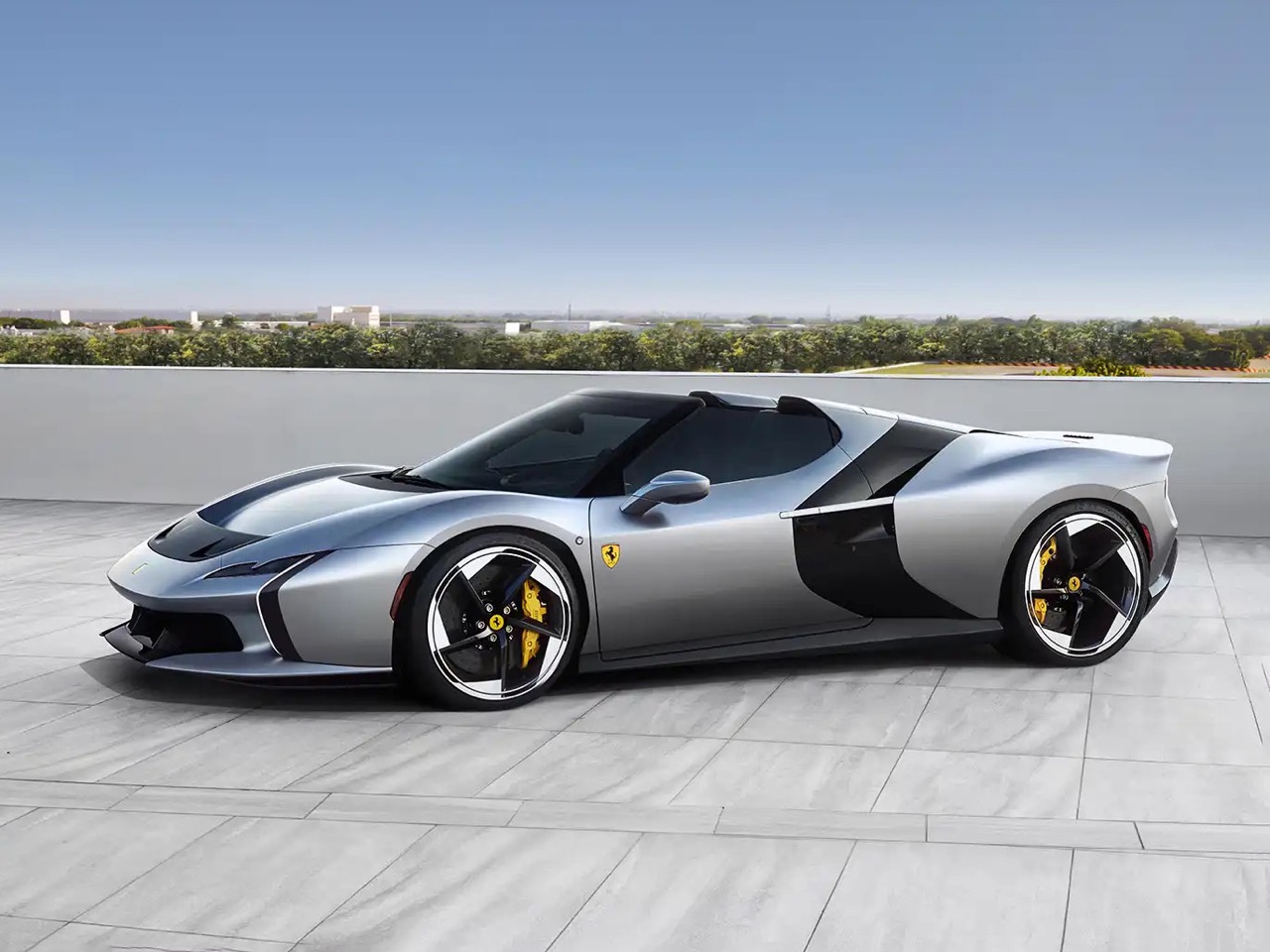
Two Ferraris arrived within months of each other in early 2026, and they could not be more different in what they represent. The Luce, Ferrari’s first EV, debuted its interior in February, designed by Jony Ive and Marc Newson’s LoveFrom studio, all Gorilla Glass panels, pivoting OLED displays, and a key fob that docks into the center console like a miniature iPhone. CEO Benedetto Vigna defended the outside collaboration by saying Ferrari needed people with the experience to prove that electric does not have to mean screen-dominated, which is a reasonable argument until you consider that Ferrari’s own designers have been doing exactly that, beautifully, for decades. The HC25 is what those designers produced at the same moment, for a single client, using the last non-hybrid V8 spider platform the brand will ever build.
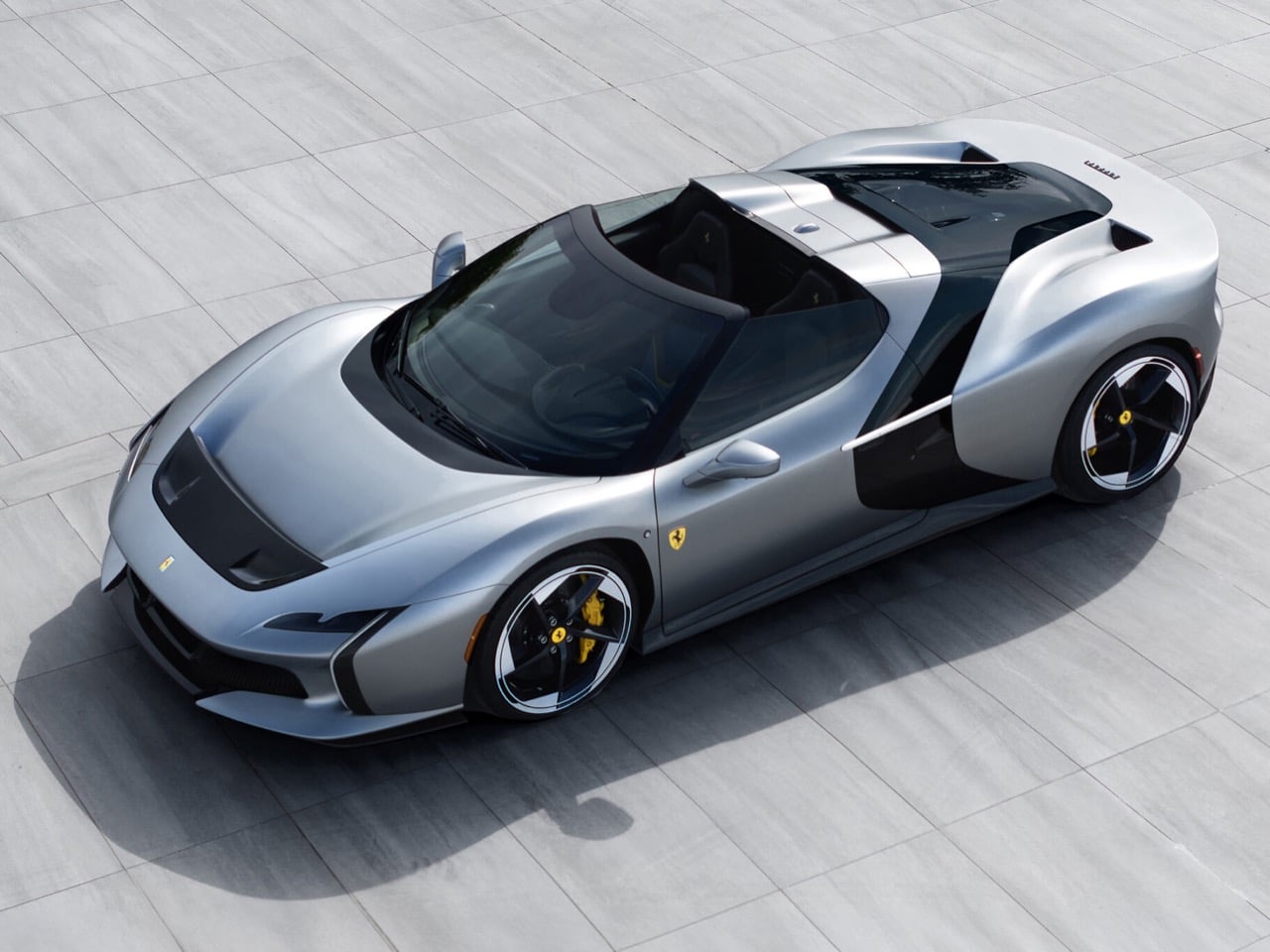
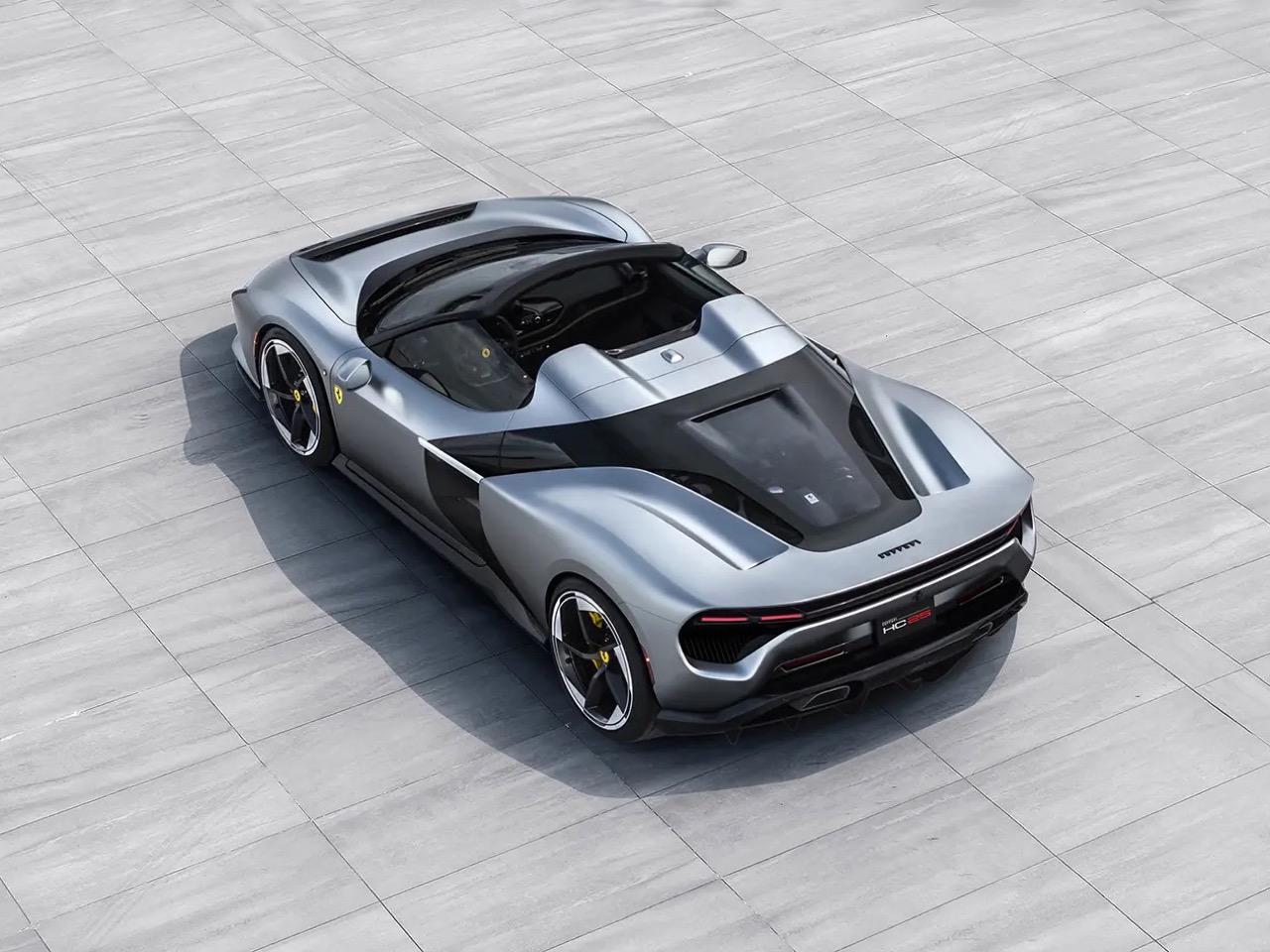
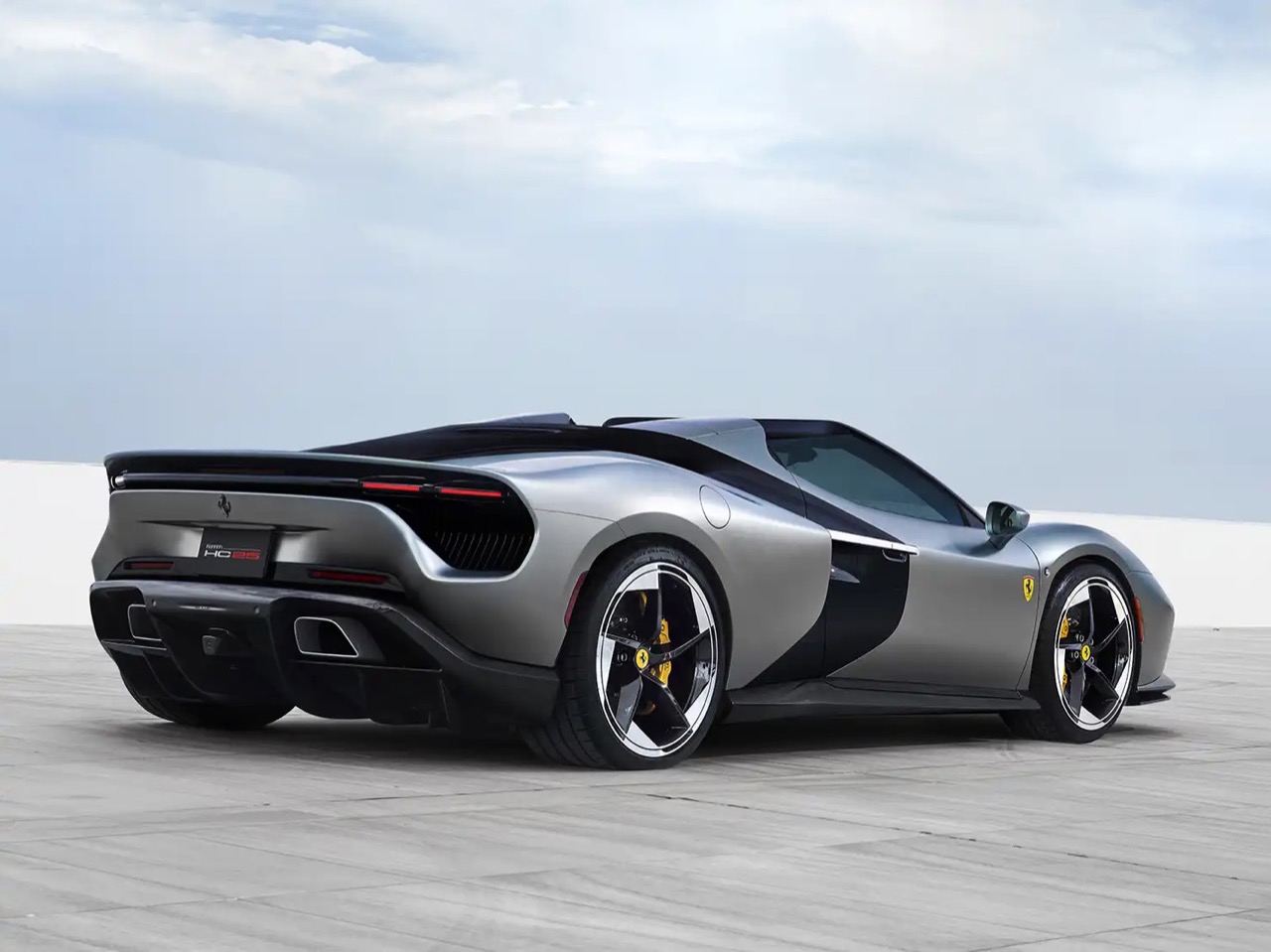
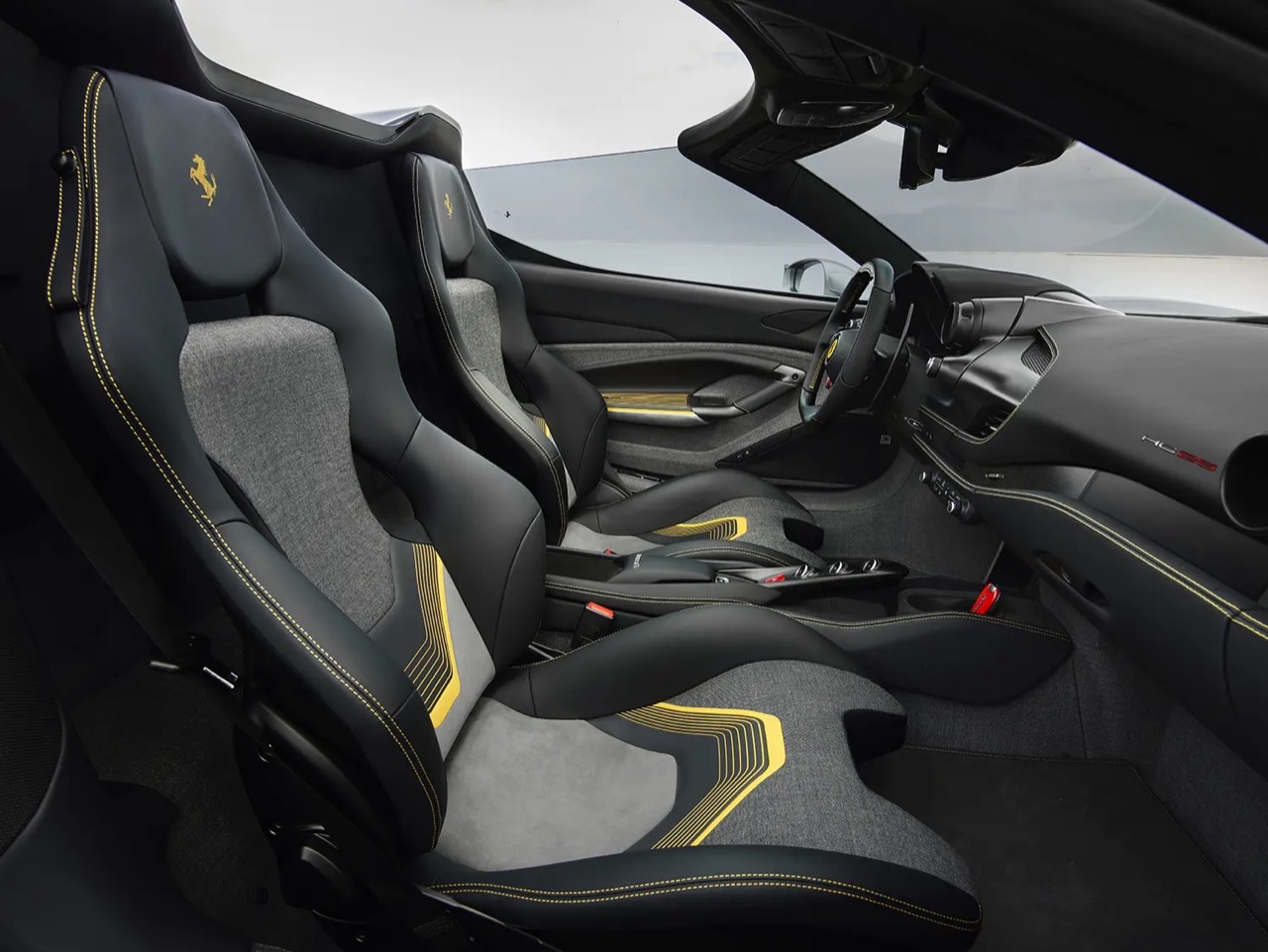
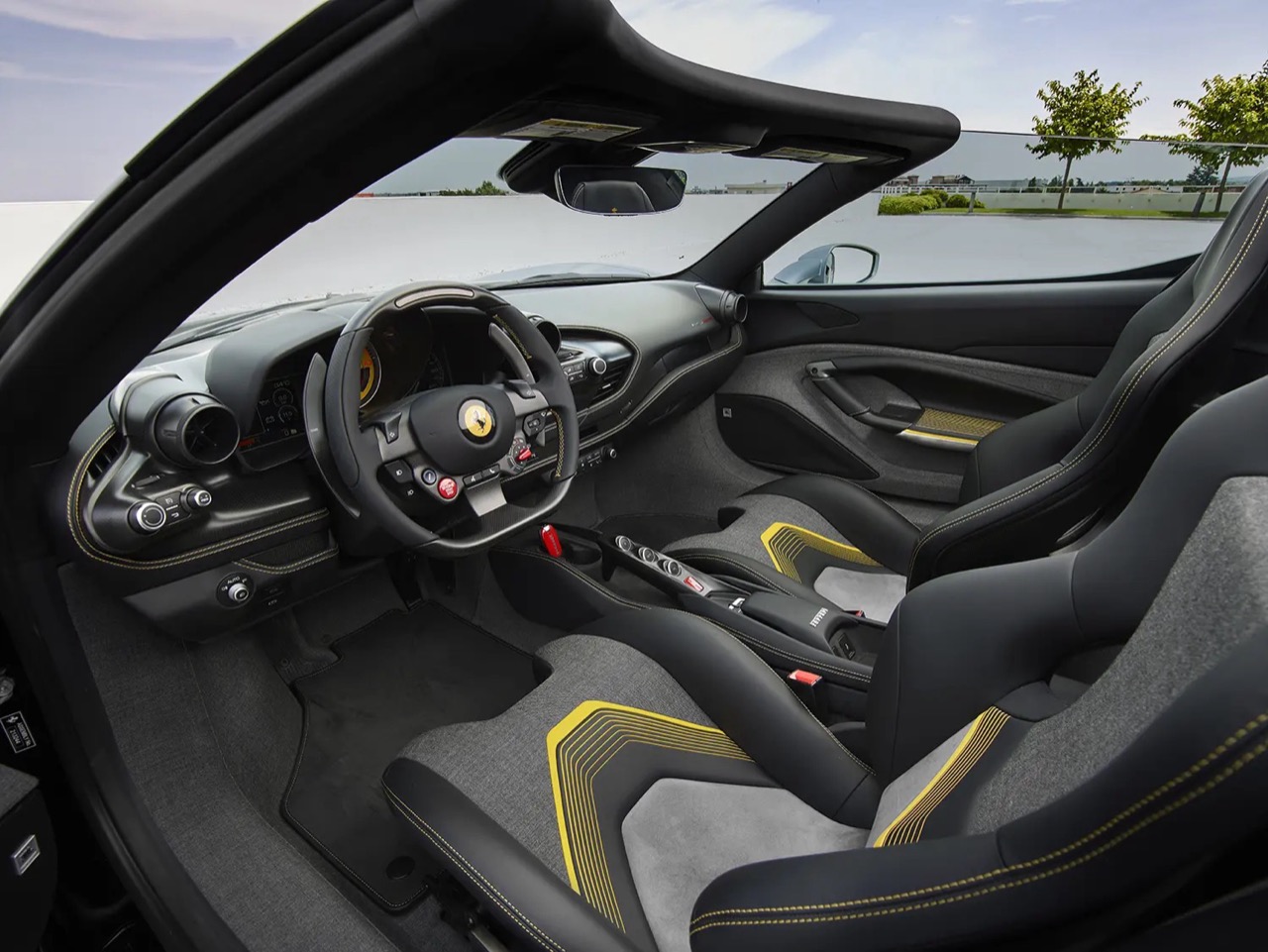
Unveiled at the Circuit of the Americas by Flavio Manzoni’s Ferrari Design Studio, the HC25 is formally part of the Special Projects One-Off programme, a two-year collaboration between Maranello and one unnamed client who wanted the F8 Spider’s 710-hp twin-turbo V8 reimagined in a body that spoke the brand’s new formal language. The result is 4,758mm of matte Moonlight Grey bodywork, a three-dimensional glossy black central band housing the cooling intakes, bespoke headlamps using LED modules never before fitted to any Ferrari, and an interior that Manzoni’s team designed themselves: grey technical fabric, yellow-stitched leather, physical paddle shifters, analogue warmth. Put the HC25 and the Luce side by side and you are looking at a brand mid-transition, one foot in the cockpit of everything it has always been, one foot somewhere Jony Ive is leading it.
Designer: Flavio Manzoni (Ferrari Design Studio)
The organizing idea of the HC25’s exterior is that black band, and once you see what it does structurally you cannot unsee it. It begins at the base of the rear wheels, sweeps forward with an arrow-like momentum, curves up and over the door, where it conceals a handle milled from a single block of aluminum, then dissolves into the dramatically raked engine screen at the rear. The band houses the radiator air intakes and routes powertrain heat extraction, so every millimeter of it is functional, thermal management rendered as pure form. It divides the matte grey body into two distinct sculptural volumes, front and rear, that read as separate masses held in tension by this single binding element. The car appears to be moving at standstill, which is either a cliché or a genuine design achievement depending on whether the surfacing actually earns it. Here, it does.
The bespoke headlamps feature one-of-a-kind lighting modules that have never appeared on any other car wearing the Prancing Horse badge. The lens profile is exceptionally slim with a central indentation that mirrors the split geometry of the rear lights, reinforcing the car’s dual-volume logic end to end. The DRLs adopt a vertical boomerang arrangement along the leading edge of the front wings, a first for Ferrari, and when lit the front of the car carries the focused, sharp-edged expression of the F80 rather than the softer face of the F8 it replaced. The five-spoke wheels complete the picture with a diamond-cut outer rim and a double-recessed groove that optically enlarges the diameter without adding physical size, a compositional trick borrowed directly from product design.
Inside, the cabin is a lightly evolved F8 Spider, and that is entirely the point. Grey technical fabric meets black leather across deeply bolstered sports seats, yellow graphics trace a boomerang shape across the upholstery that directly echoes the DRL signature outside, and the stitching matches the brake calipers and Prancing Horse badges in the same acid yellow. Physical paddle shifters. Analogue gauges. An HC25 badge on the passenger side of the dash that will mean nothing to anyone who does not already know what they are looking at, which is how bespoke Ferraris have always announced themselves. The yellow is the one chromatic frequency that detonates against the controlled grey and black palette, and it connects exterior to interior with the kind of material consistency that makes a car feel designed rather than assembled.
What the HC25 ultimately represents in Ferrari’s 2026 timeline is the clearest possible articulation of what Manzoni’s studio produces when it works entirely on its own terms. The Luce will be the car everyone talks about when Ferrari’s electric era is discussed, and Jony Ive’s name will be attached to that conversation for years. The HC25 exists for one person, carries no electrification, and will never be replicated. For a brand standing at the edge of its own reinvention, that kind of commission has a particular kind of gravity.
Zoom has won. Of all the specs that used to dominate camera phone conversations, optical reach is the one that stuck because it is the most visible and the most immediately felt. At any major live event, the phones come out and the zoom wars begin. Samsung loyalists will have their periscope lenses trained on the far end of the pitch. iPhone users will be framing tight, stable shots of the stage from the back row. FIFA 2026 is nearly here, and across dozens of stadiums and billions of shared clips, zoom will quietly be the deciding factor in whether those memories look spectacular or just… small.
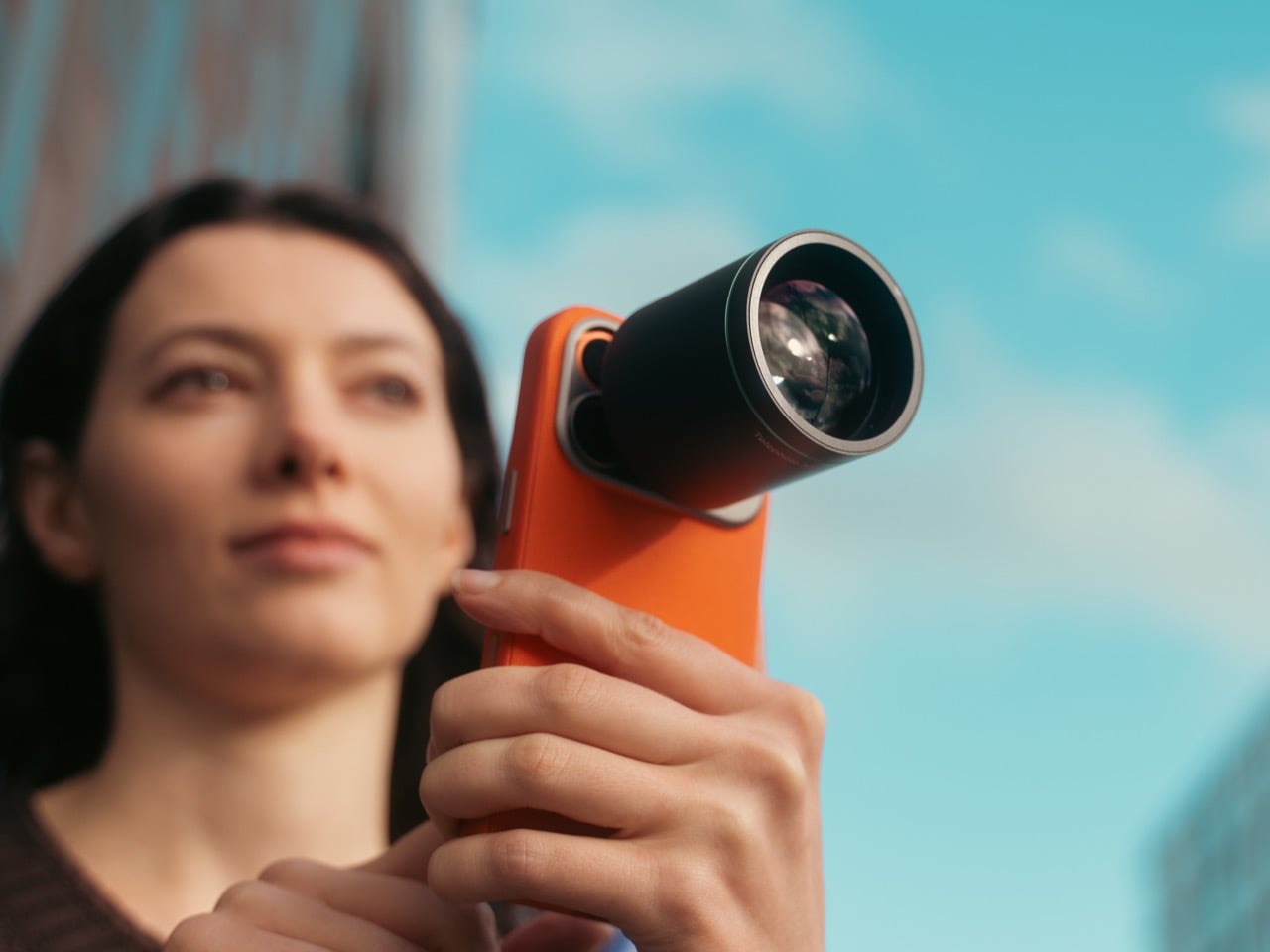
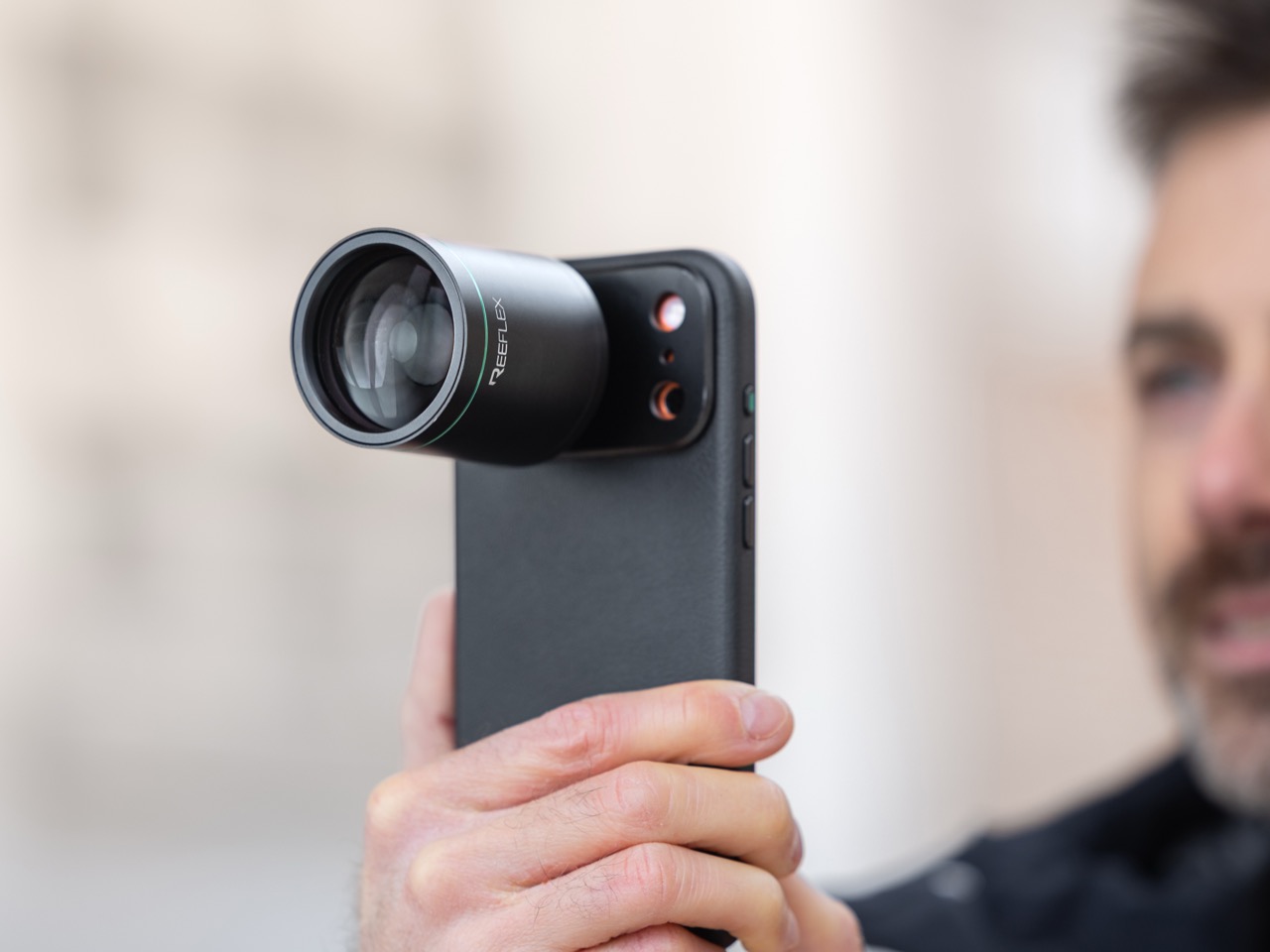
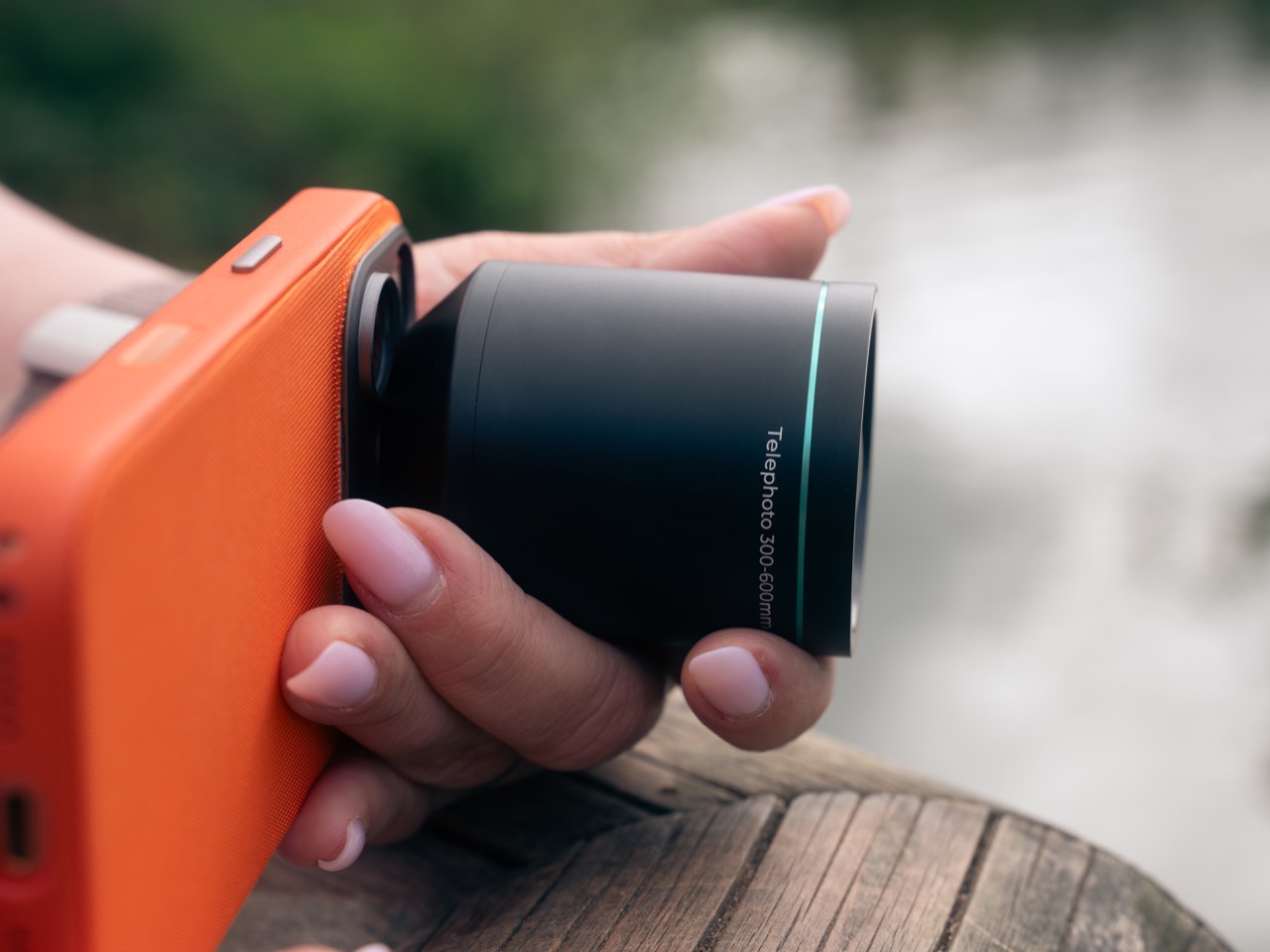
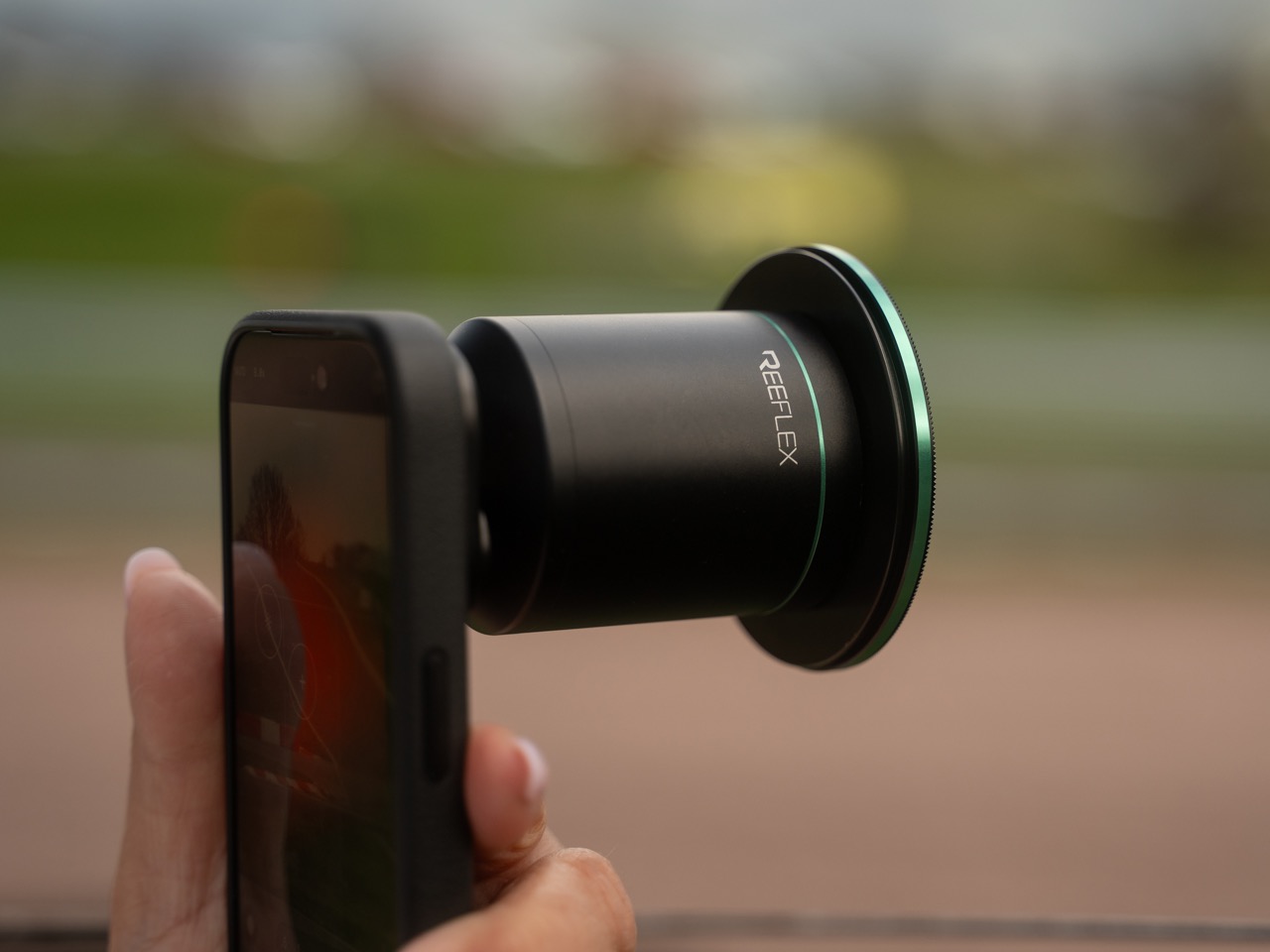
REEFLEX built the Ultra Telephoto 300-600mm for people who refuse to settle for small. Attaching to the telephoto camera of iPhone 17 Pro, Pro Max, and the Samsung S26 Ultra series, the lens compounds the phone’s native optical strength and extends it into a focal range, up to 600mm and 24x magnification, that genuinely belongs to another category of photography entirely.
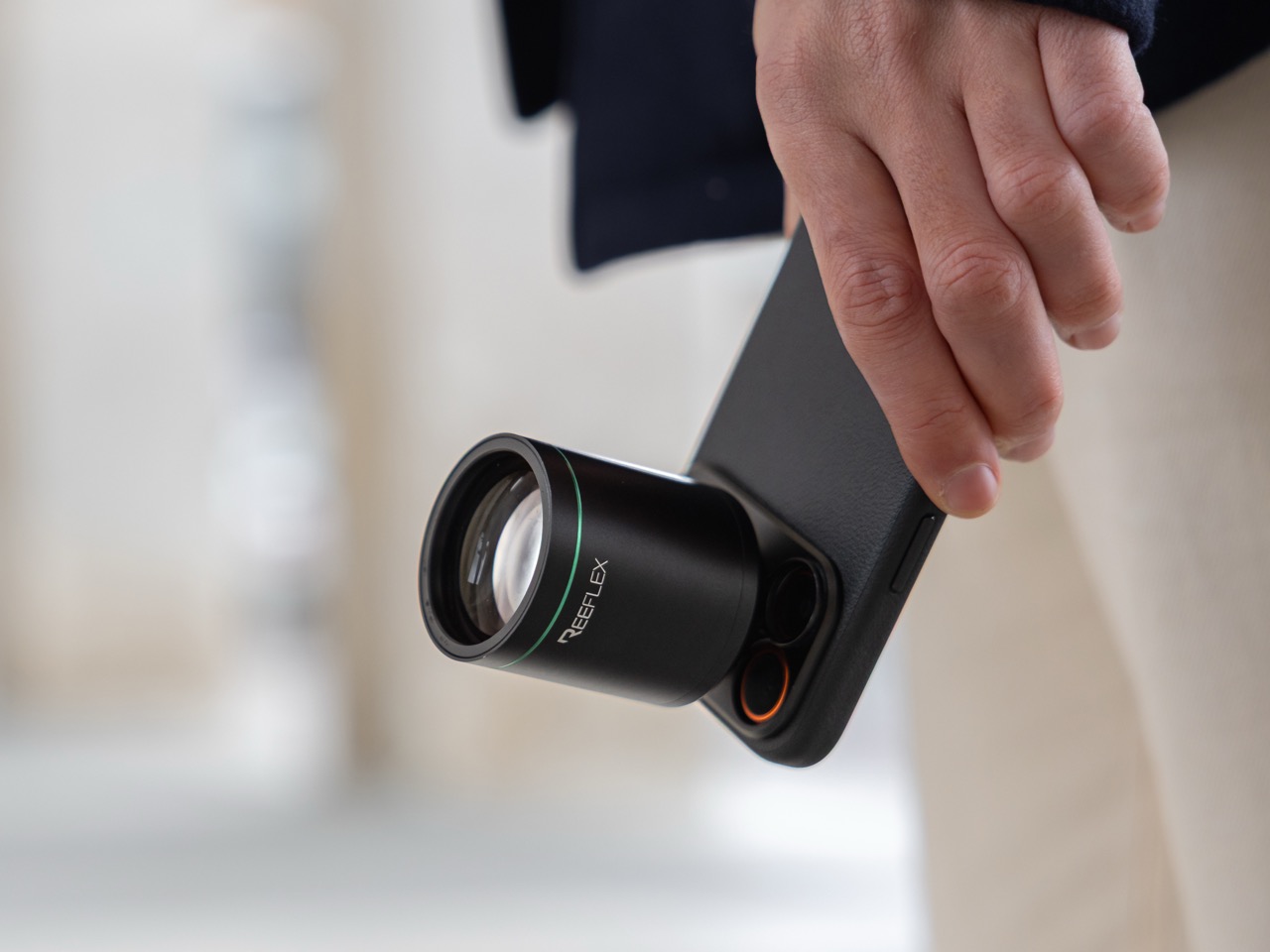
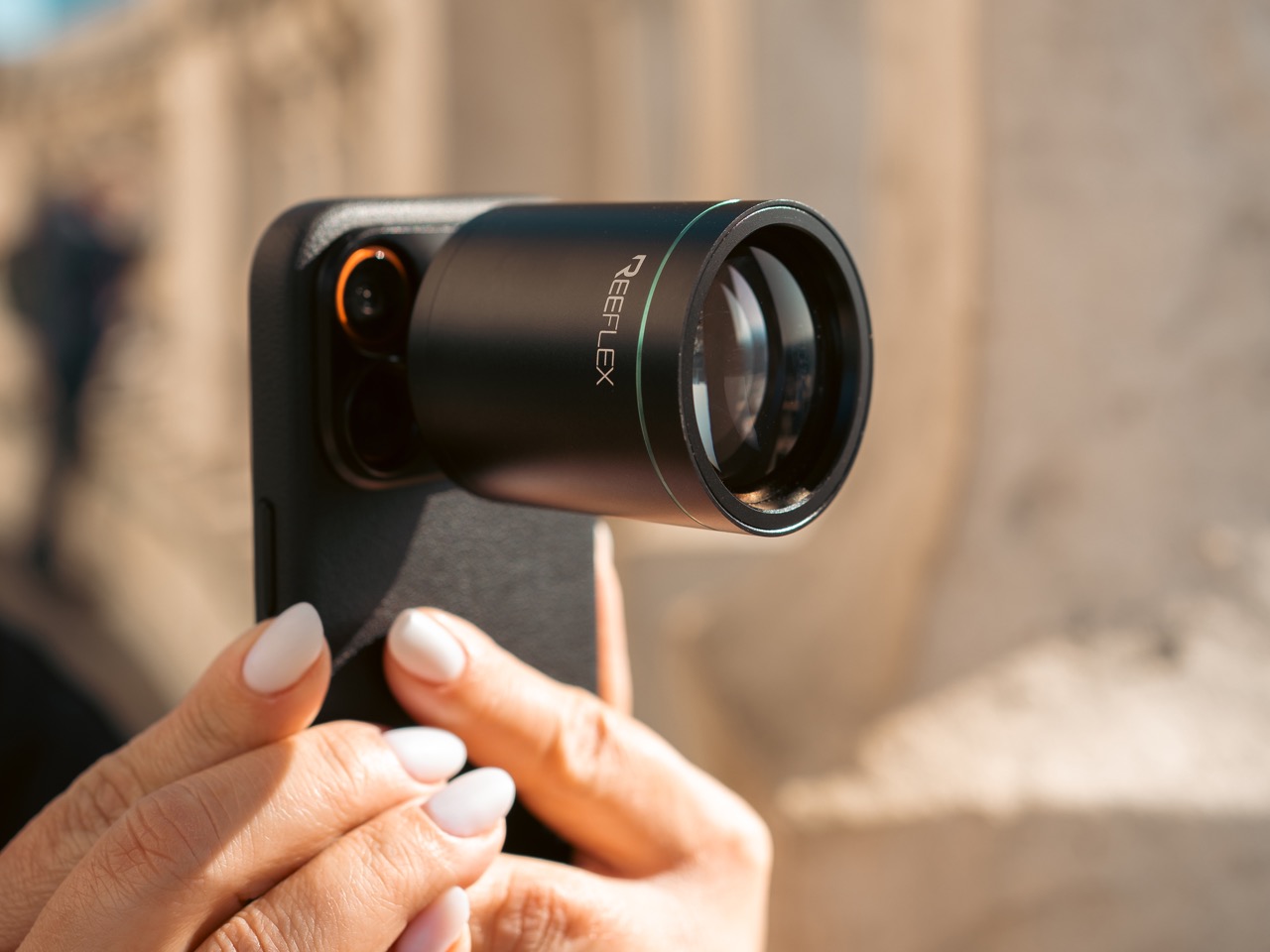
Most clip-on telephoto lenses grow forward in a long tube that looks great in renders but becomes a liability the moment you try to hold your phone steady. The weight pulls forward, the center of gravity shifts away from your grip, and at long focal lengths, that imbalance shows up as jitter in video and smeared detail in stills. REEFLEX went wide instead of long, packing everything into a compact cylinder that keeps the mass directly over your hand. Your wrist stays neutral, your grip stays firm, and the setup feels closer to holding a DSLR than balancing a makeshift telescope. That distinction matters enormously once you’re standing in a stadium trying to track a fast-moving subject.
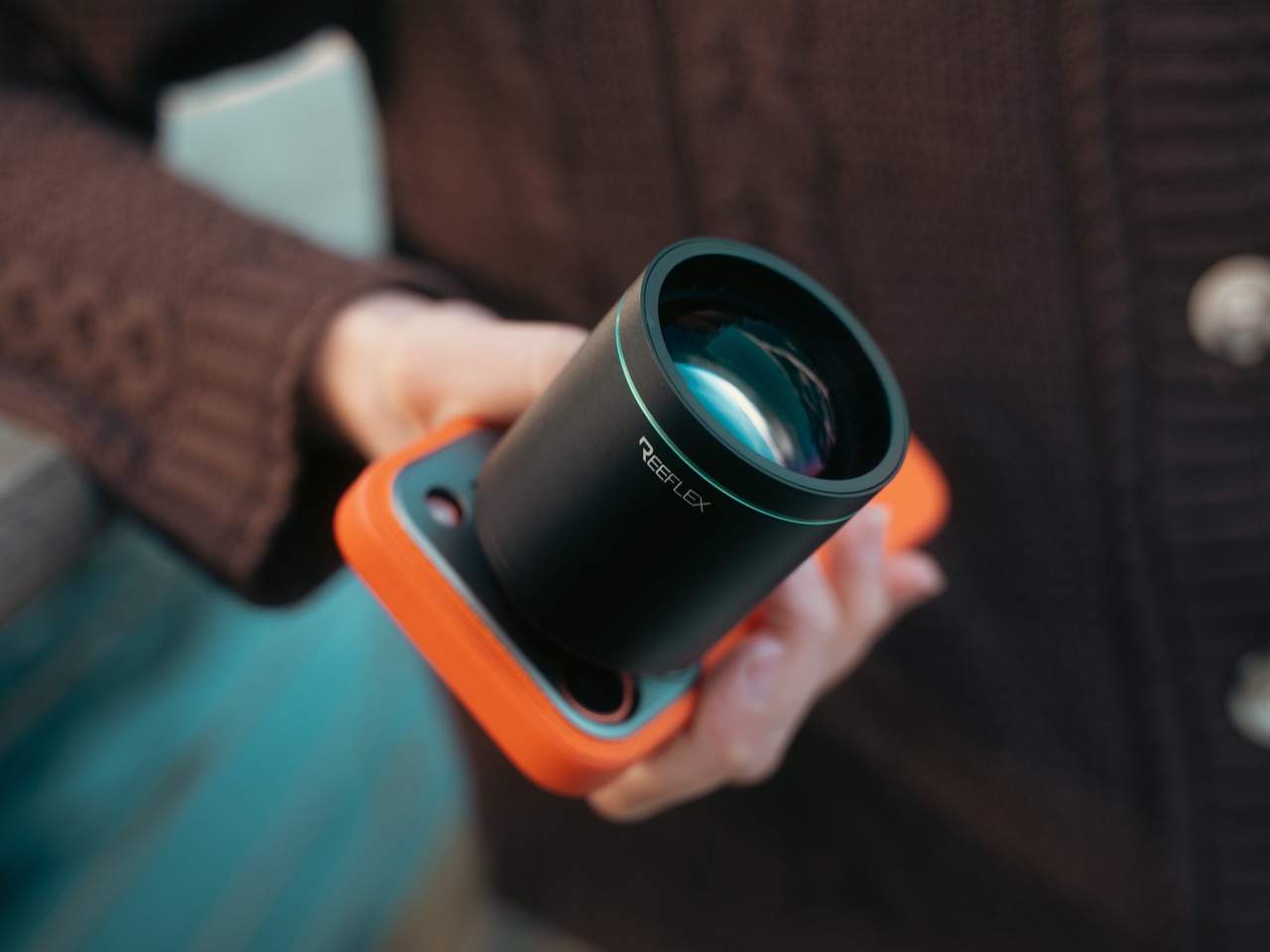
Machined from aerospace-grade aluminum, the body weighs 308 grams and holds its optical tolerances without adding unnecessary bulk. The glass inside is lanthanum, a material chosen specifically for its high refractive index. In practical terms, that means sharper resolving power, richer contrast, and far less color fringing along edges than standard glass can manage at these focal lengths. The optical formula runs four elements, one doublet and three singlets, tuned to work with the tetraprism telephoto cameras in current flagship phones rather than fighting against their characteristics. The matte black finish, the green accent ring around the barrel, and the large front element all contribute to something that looks and feels like a deliberate optical instrument.
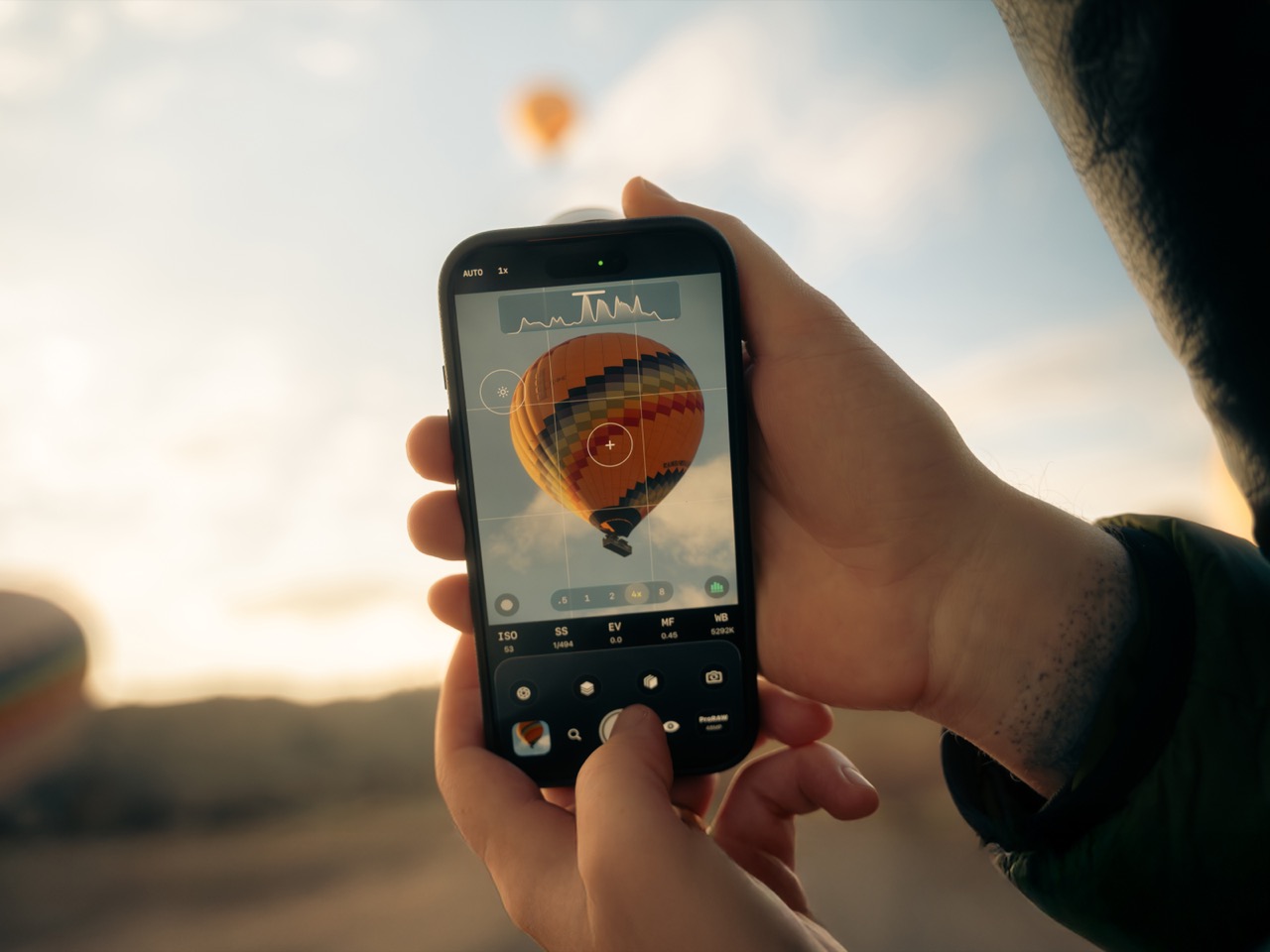
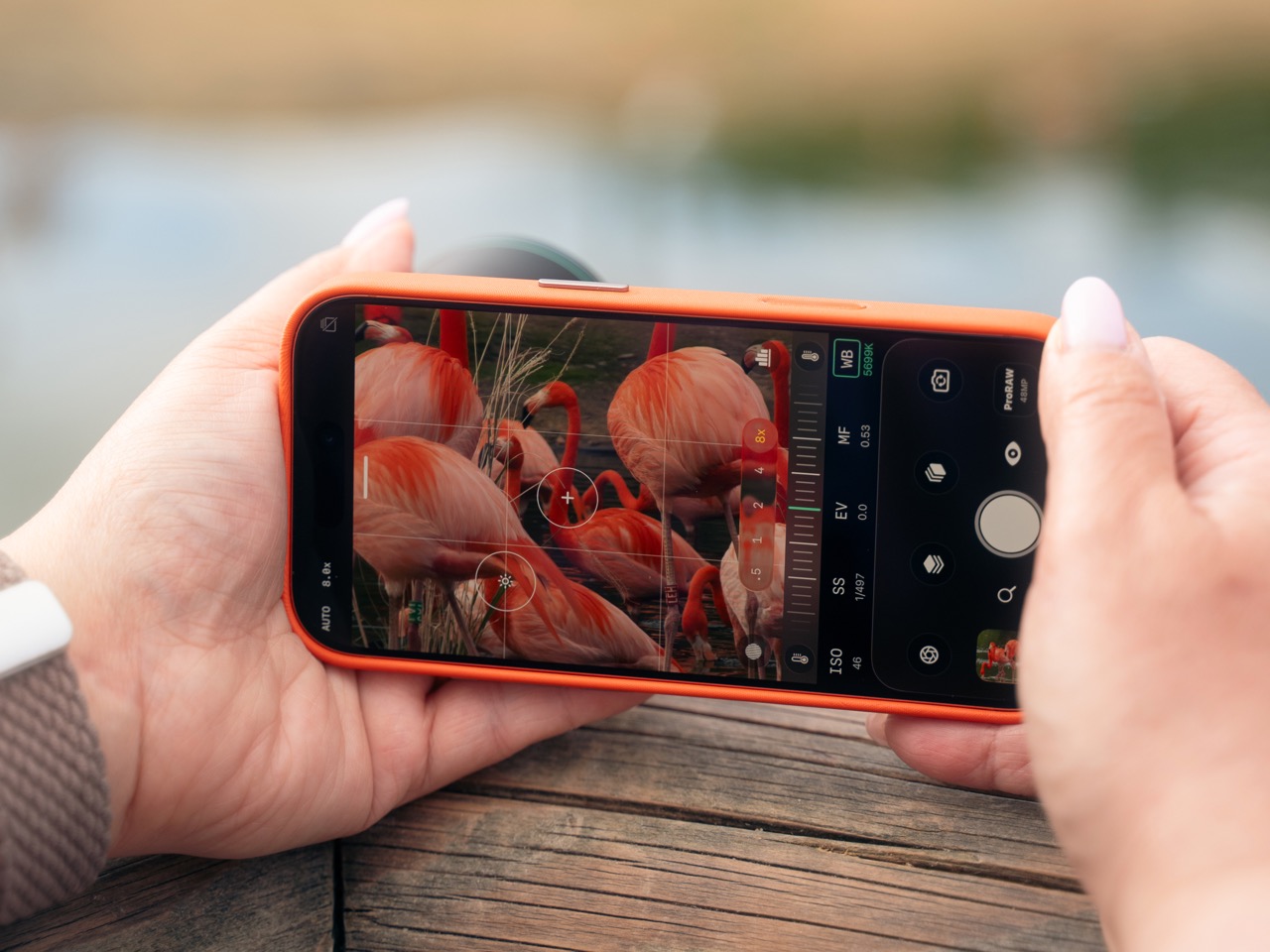
REEFLEX designed this lens specifically for the tetraprism telephoto systems introduced in the iPhone 17 Pro lineup and Samsung’s S26 Ultra series. Those cameras already deliver impressive native zoom performance, and the Ultra Telephoto 300-600mm takes that foundation and multiplies it. On iPhone 17 Pro and Pro Max, you get 24x magnification and a 600mm equivalent focal length. On Samsung S26, S25, and S24 Ultra, magnification reaches 30x with an equivalent focal length stretching to 660mm. For context, that is the kind of reach wildlife photographers use to capture birds without disturbing them, the kind of compression architectural photographers rely on to isolate distant details, and the kind of range that makes concerts and sports events feel immersive rather than distant.
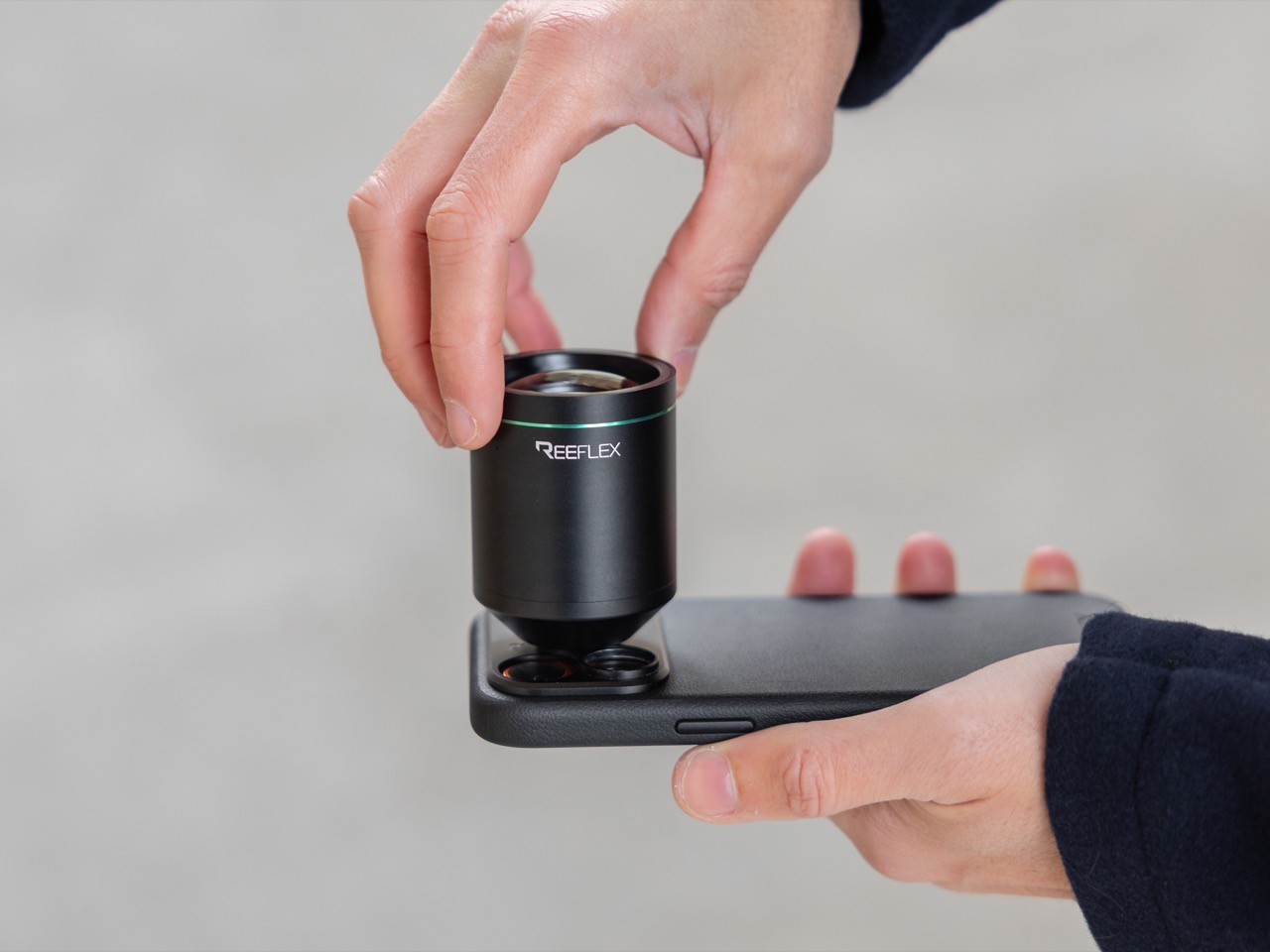
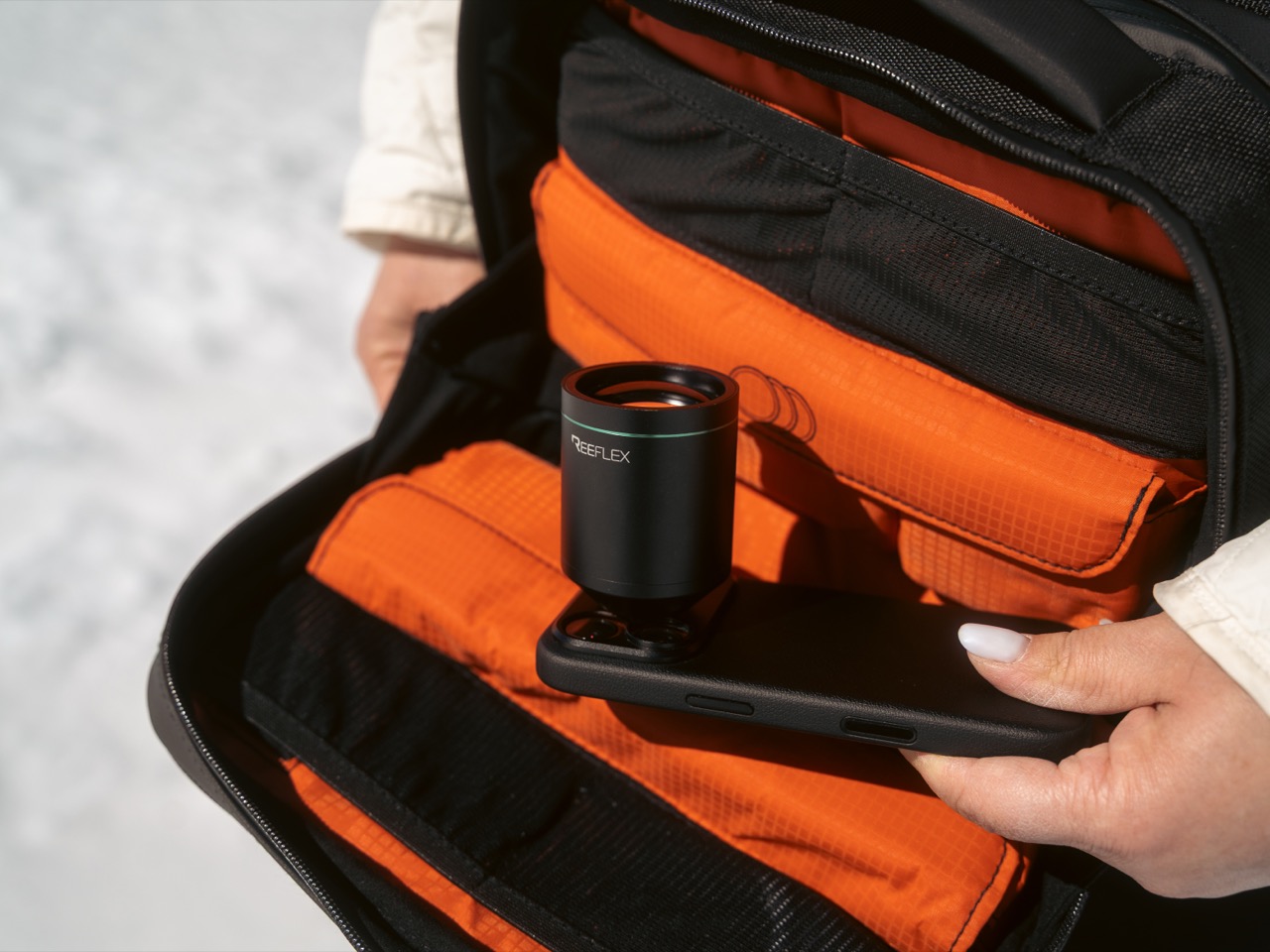
The lens mounts via a standard 17mm threaded connection that attaches to REEFLEX’s dedicated phone cases, which feature an integrated camera bumper designed to align perfectly with your phone’s telephoto lens. The threading ensures a secure, wobble-free connection, and the whole assembly stays compact enough to slip into a jacket pocket or small camera bag. REEFLEX also built in compatibility with their ReeMag magnetic accessory system, so you can stack filters, attach lens caps, and expand your creative toolkit without needing adapters or workarounds.
FIFA 2026 will be the first time many people realize just how limiting their phone’s native zoom really is. Sitting in the stands, even a few rows back from the pitch, most phone cameras will reduce the action to distant, flat shapes. The Ultra Telephoto 300-600mm changes that equation completely. You can isolate a player’s expression during a penalty kick, compress the depth of the field into a cinematic frame, and capture moments with the kind of detail that looks deliberately composed rather than accidentally caught. The same logic applies to concerts, where the stage often sits 50 meters or more from general admission, and wildlife, where getting close means ruining the shot.
The focus range starts at 6.8 meters and extends to infinity, which means you can use this lens for everything from isolating architectural details across a plaza to capturing the moon with surprising clarity. The lanthanum glass keeps distortion minimal and sharpness high even at the edges of the frame, and the compact form factor means you can shoot handheld without needing a tripod or gimbal for stability.
The Standard tier comes with the Ultra Telephoto 300-600mm lens and a phone case for $302, against a retail price of $441. The Ultra Tele + Super Tele Bundle adds the Super Telephoto 240mm and both macro add-ons (200mm and 300mm) alongside a phone case for $568, down from $849. The full Reeflex Ultra Set at $1859 (retail $2883) covers ten lenses spanning fisheye to ultra telephoto, a complete filter collection including fixed NDs from ND8 to ND64, variable NDs, a polarizer, and a black mist filter, plus filter adapters, a waterproof impact-resistant hard case, and a phone case.
Case options vary by device. iPhone 17 Pro and Pro Max users choose between Tech-Woven MagSafe or Leather MagSafe. iPhone 16, 15, and 14 Pro and Pro Max receive the Leather MagSafe version. Samsung S26, S25, S24, and S23 Ultra users get a Carbon case. Shipping begins June 2026, completing by early July.
Yanko Design’s Design Mindset podcast continues to carve out a thoughtful space for conversations around creativity, innovation, and the ideas shaping the future of design. Now at Episode 22, the weekly podcast is steadily building a strong voice of its own by focusing not just on finished products, but on the processes, philosophies, and experiments behind them. Powered by Zawa, this latest episode turns its attention to a fascinating tension in contemporary design: as AI becomes more embedded in creative workflows, where does human originality begin, and what happens when the most forward-looking idea starts with something as ancient as clay?
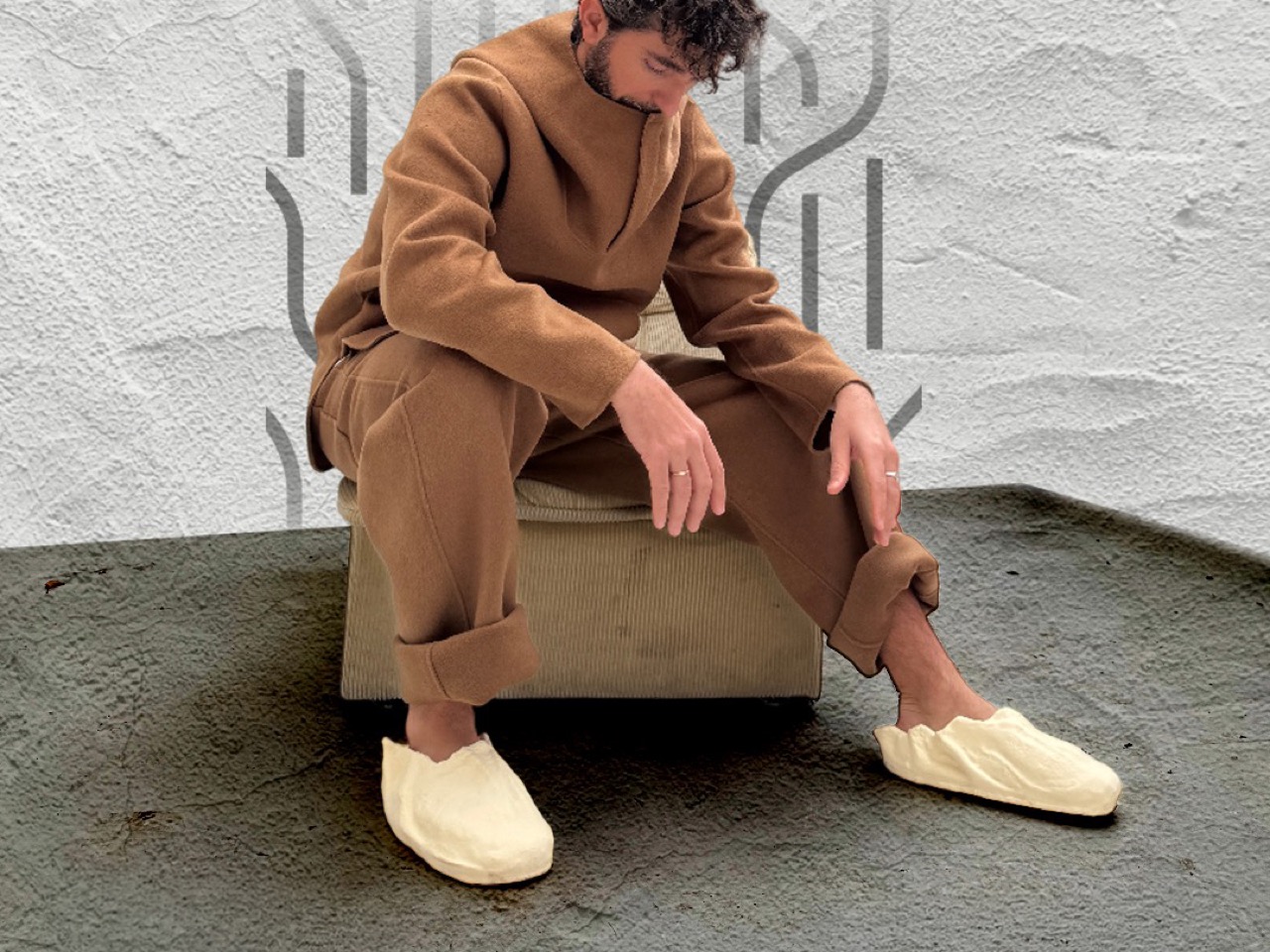
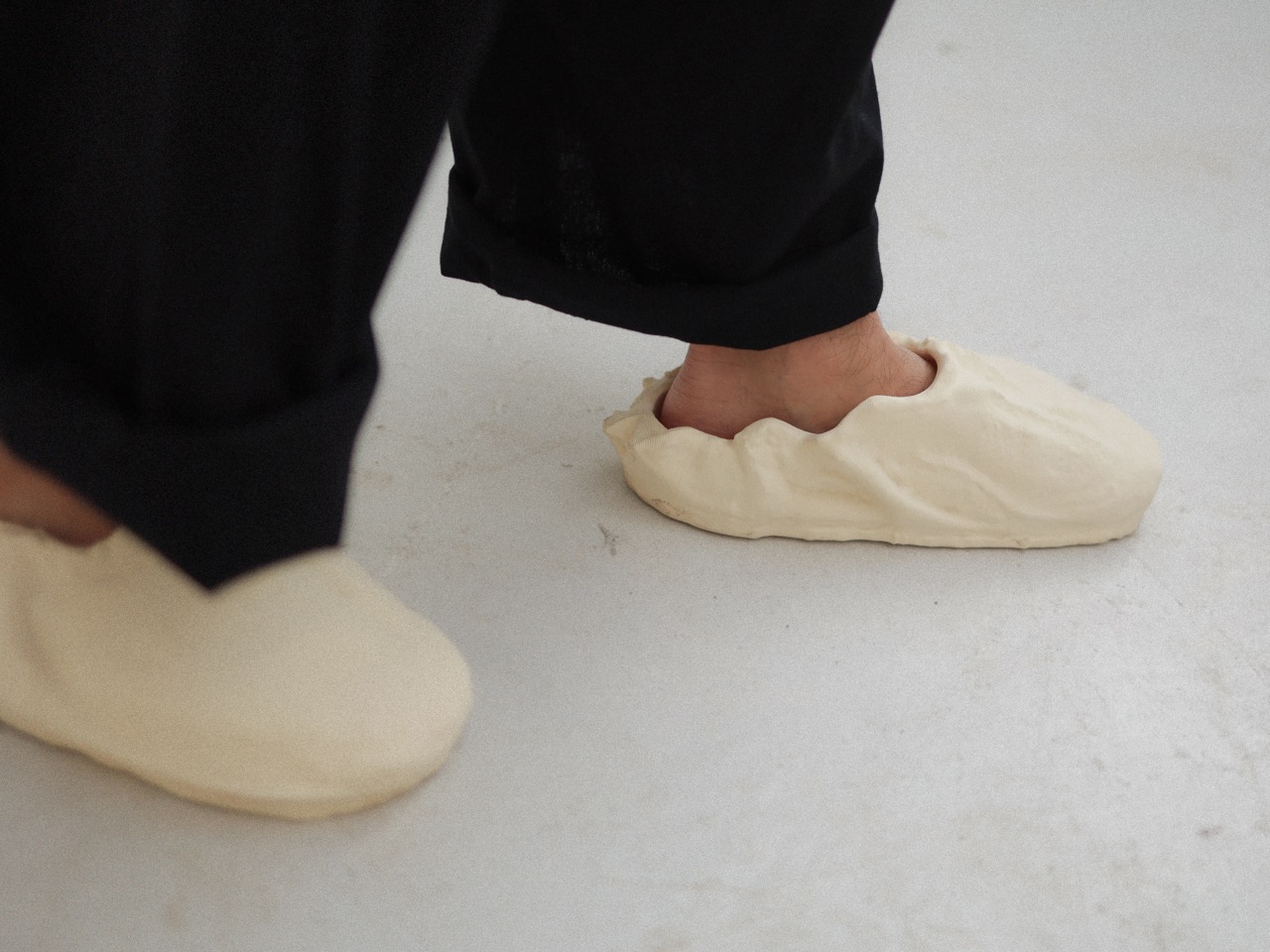
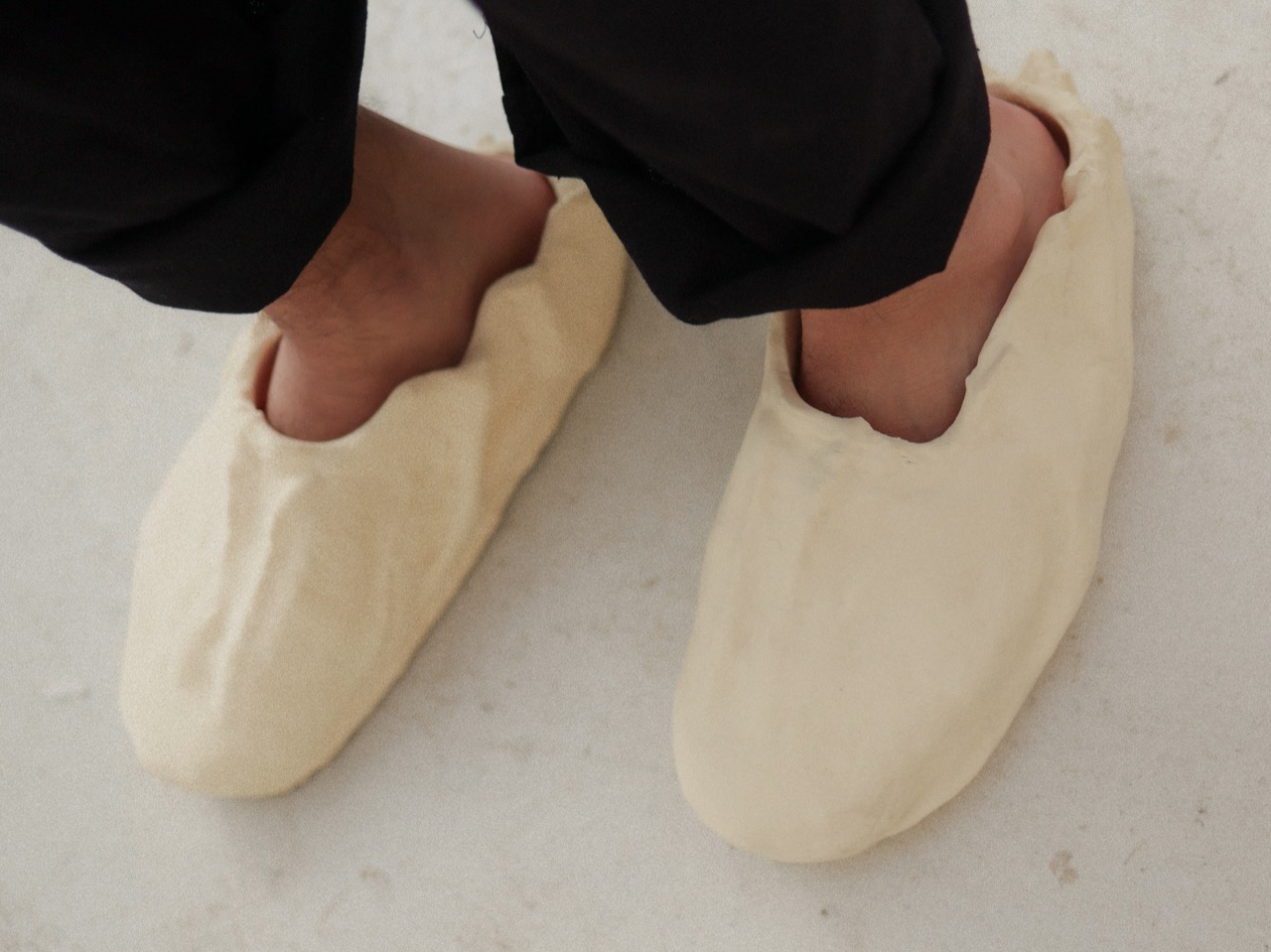
That question drives host Radhika Seth’s conversation with Ben Weiss, CEO of Syntilay, a company already known for pushing footwear into unfamiliar territory through AI, 3D printing, and custom-fit production. In this episode, Weiss unpacks the making of the Skin shoe, a project that began with artist Sebastian ErraZuriz sculpting directly around his foot before the form was scanned, translated, and turned into wearable footwear. The result is not just a new shoe, but a new argument for how design can begin, who gets to author it, and why technology may be most powerful when it supports human expression rather than replacing it.
The most striking part of the Skin shoe story is that it did not begin with a digital tool, a design brief, or a manufacturing constraint. It began with clay in the hands of an artist, and for Ben Weiss, that starting point changed everything about the outcome. As he explains, “People kept asking us, why start with clay? Why not just open a design software and begin, you know, kind of like the typical path for making shoes. And the answer is because a computer has an idea and some predetermined steps. But when you start with an art form, it’s entirely original.” That distinction becomes the foundation of the entire episode.
Weiss makes it clear that the goal was not simply to make a shoe in an unusual way. It was to let an artist enter footwear authentically, using his own medium and instincts instead of adapting to the usual industrial process. Sebastian ErraZuriz sculpted around his own foot in a w†ay that was, as Weiss describes it, “very free flowing,” with no predetermined expectations about what a shoe should look like. That is also why the final product feels less like a sneaker and more like something anatomical, intimate, and expressive, a piece of wearable sculpture rather than a conventional consumer product.
Turning Sculpture into a Wearable, Custom Fit Shoe
Once the clay sculpture was complete, Syntilay had to solve the difficult problem of turning a tactile, hand-made object into something that could actually be worn. Weiss acknowledges that some detail is always at risk in the translation from physical object to digital file, but preserving the original character of the sculpture was a key priority throughout. “Cause you lose some detailing, but you know you try to capture it as best as you can,” he says, before noting that the final printed shoe still retains much of the fine surface texture and hand-made quality of the original piece.
What makes the process especially interesting is that the artistic form is largely preserved on the outside, while most of the personalization happens on the inside. Using more than 5,000 data points captured from a phone scan or in-person fitting, Syntilay adjusts the internal geometry of the shoe to fit each customer’s foot without distorting the sculpture itself. Weiss explains, “The key is is not changing the outside structure that much so it distorts what the shoe looks like. In this case, what this piece of art looks like on your feet, um, and while also providing a good fit experience. So most of the changes are happening on the inside.” That balance between fidelity and function is what allows the shoe to remain art-led while still being wearable.
Ben Weiss on AI, Human Craft, and What Innovation Actually Means
Although the episode title sets up a contrast between clay and AI, Weiss is not arguing against technology. His view is more layered, and more useful, because he sees AI as a tool that can support creativity without becoming the sole source of it. “AI is going to be a great augmenter, um, maybe that’s not the best word, but a great kind of helper for humans,” he says. He goes on to describe a future in which designers sometimes use tools, sometimes choose not to, and build workflows based on what makes the most sense for the idea rather than on ideology alone.
That mindset also shapes how Syntilay positions itself as a brand. Weiss points out that the company has already explored highly automated footwear, but the Skin shoe takes the opposite route by placing the human hand at the very beginning of the process. For him, the bigger point is experimentation. Footwear, he argues, has become too comfortable with minor updates, surface-level collaborations, and familiar formulas. His response is blunt and memorable: “A lot of collaborations today are new embroidery on the shoe, different colors. It’s nice, But like when you can take an actual clay sculpture that somebody made around their foot and make it something you can wear. I mean that’s next level.” Innovation, in this framing, is not about choosing between AI and craft, but about creating conditions for truly new ideas to emerge.
Storytelling, Authorship, and Why the Human Element Still Matters
One of the strongest ideas in the conversation is that the Skin shoe is not just a design object, but a story that could only exist because of its human origin. Weiss sees that as increasingly important in a design landscape crowded with AI-generated outputs and endless visual sameness. “The story of the skin shoe is is a great story,” he says, pointing to the way Syntilay documents the journey from clay sculpture to 3D file to finished shoe. For him, storytelling is not decoration added after the fact, but a core part of how a product communicates meaning and builds resonance with people.
That same human-first logic also shapes how Weiss thinks about authorship. When asked who designed the shoe, he resists reducing it to one name, instead crediting both Sebastian, who created the sculpture, and Pablo, who translated the scan into a printable product. “So I would say it’s designed by two people,” he says, acknowledging that the future of artist-led footwear may depend on this kind of collaboration between conceptual creator and technical designer. He also notes that stories like these matter because they cannot simply be fabricated by a machine, adding that “storytelling is is a really significant moat because there are some stories that AI can just doesn’t have.” In other words, the human element is not just visible in the object, but embedded in the narrative around it.
Joe Foster’s Influence and Ben Weiss’s Bigger Design Philosophy
Another compelling layer in the episode is Weiss’s reflection on working with Joe Foster, Reebok’s cofounder, whose decades of experience have shaped the way Syntilay thinks about product. Weiss describes Foster as someone who still approaches design with energy, curiosity, and a strong belief that the work should remain enjoyable. But the deeper lesson comes from Foster’s idea of “vis tech,” or visible technology, the principle that innovation should not be hidden beneath the surface. Customers should be able to look at a product and immediately understand that it is doing something different. That philosophy clearly runs through Syntilay’s work, from the pod-based structure of other models to the unmistakably sculptural silhouette of Skin.
Weiss also shares a broader set of lessons that go beyond this one project. He admits that early on, he had not fully figured out how to optimize footwear for printing cost while balancing comfort, and that learning came through iteration rather than certainty. He is equally clear about what AI companies often get wrong when entering established creative fields, saying the most common mistake is “losing the authenticity and respecting the people that come before you.” Still, his most revealing line comes near the end of the episode, when he is asked to define the future of design. His answer is simple and sharp: “It’s about giving people more opportunities to design.” That may be the clearest summary of both the Skin shoe and Syntilay’s larger ambition, opening the category to artists, creators, and new forms of authorship that conventional design systems have historically left out.
Design Mindset drops every week on Yanko Design. Catch Episode 22 in full wherever you listen to podcasts.
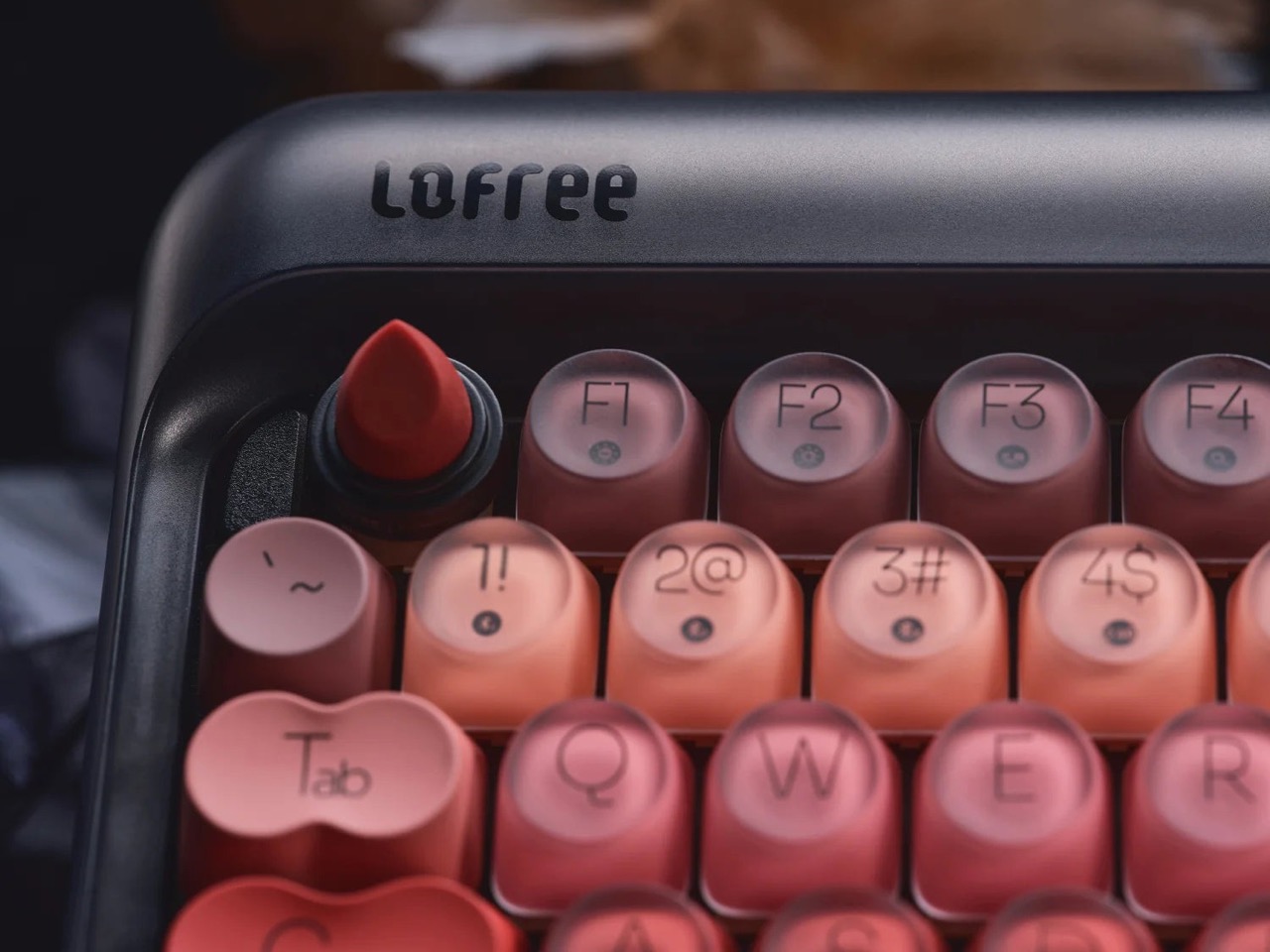
Your desk says something about you before you ever open your mouth. The monitor, the mug, the little objects arranged around your keyboard, they all add up to a portrait. And the keyboard sits dead center in that portrait, the most touched, most visible, most personal object in the whole setup. So why do most of them look like they were designed by someone who has never once cared about how a workspace feels?
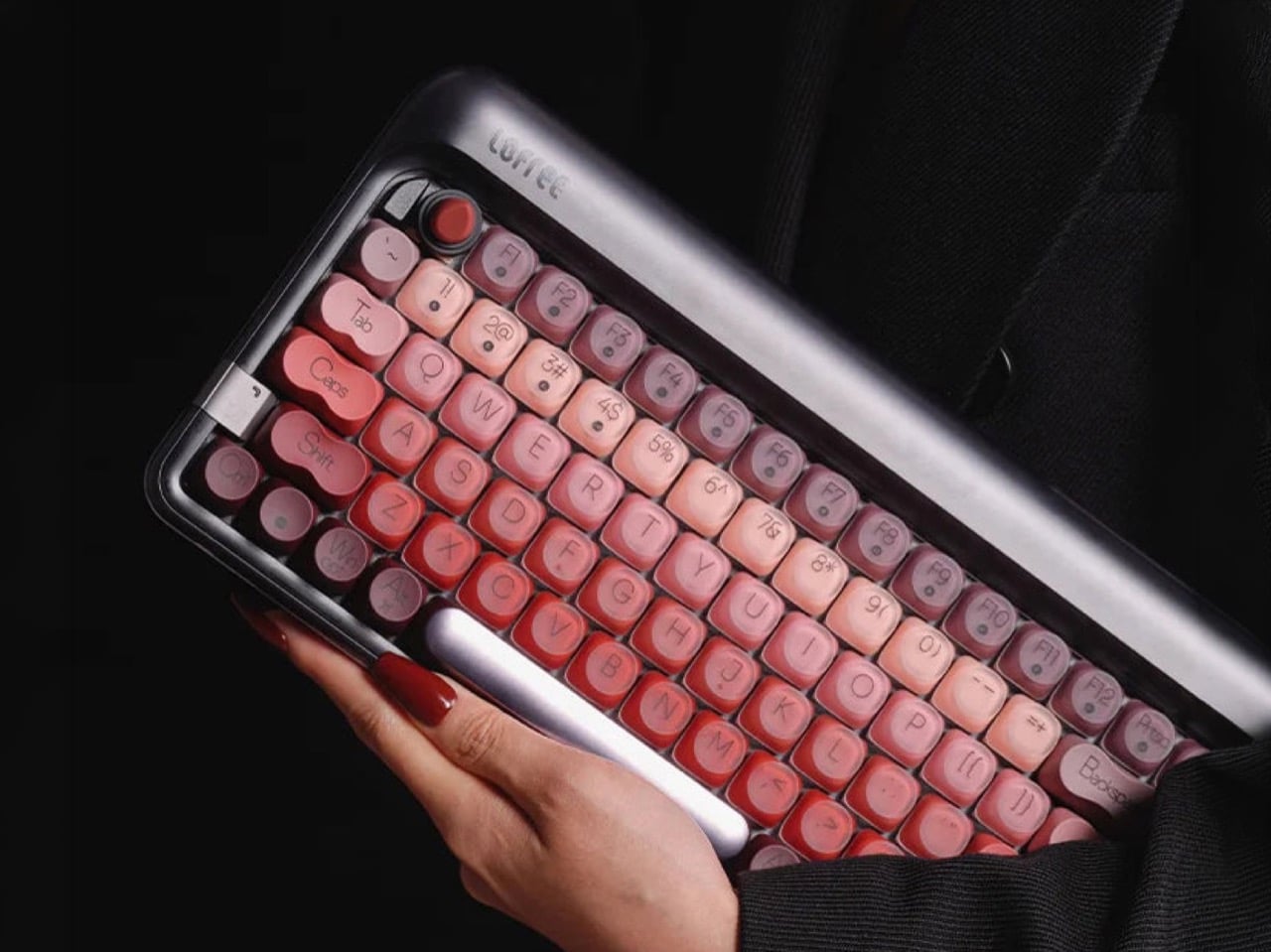
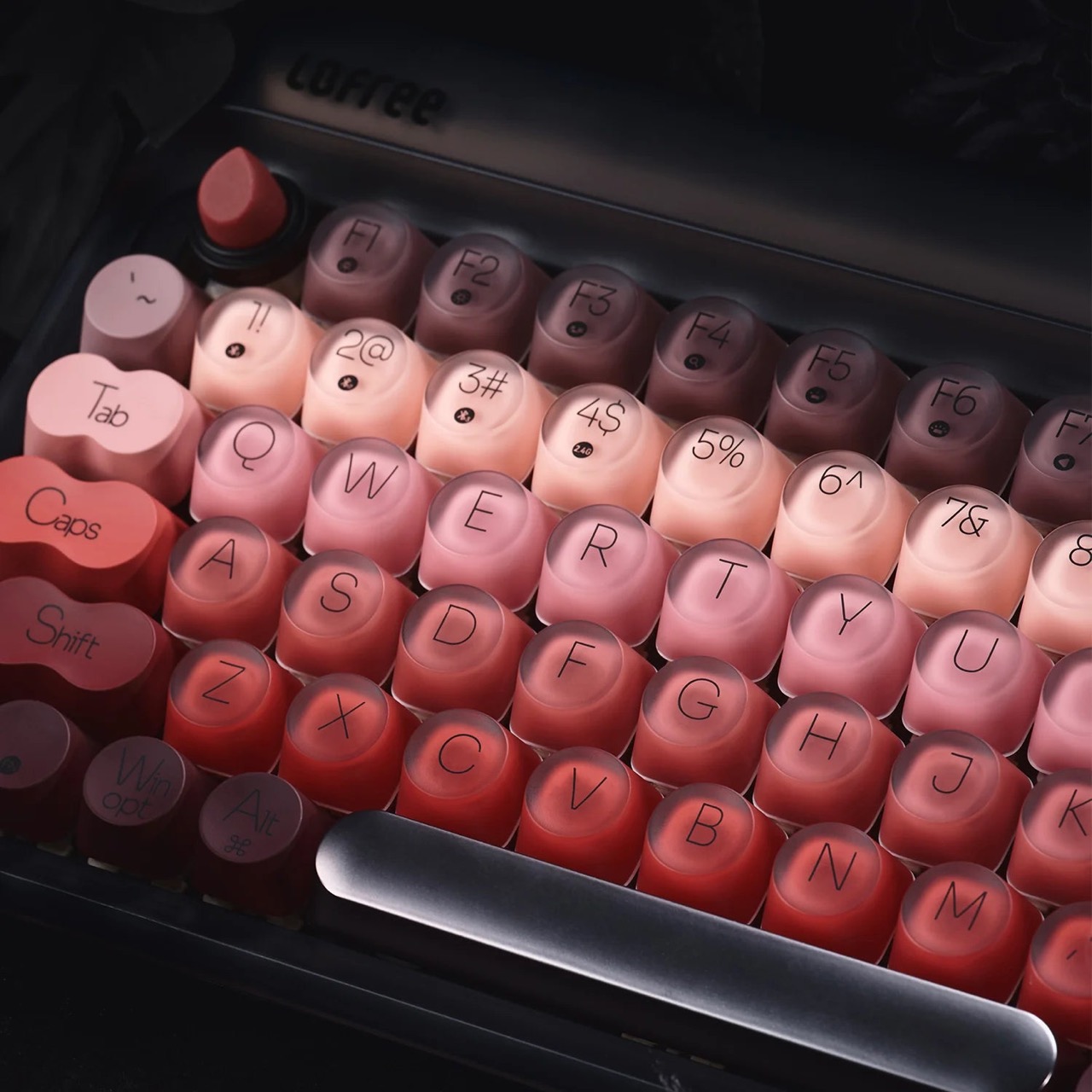
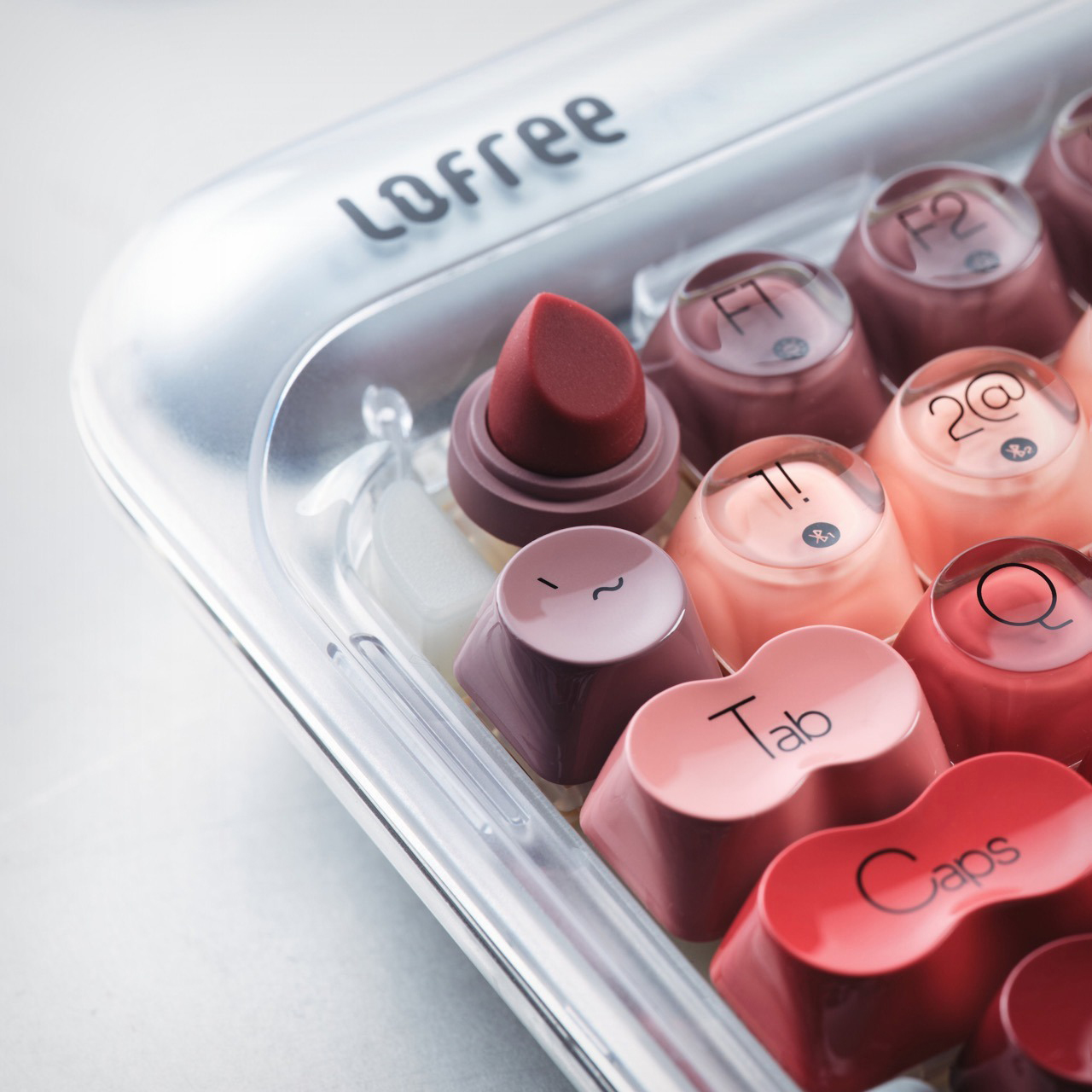
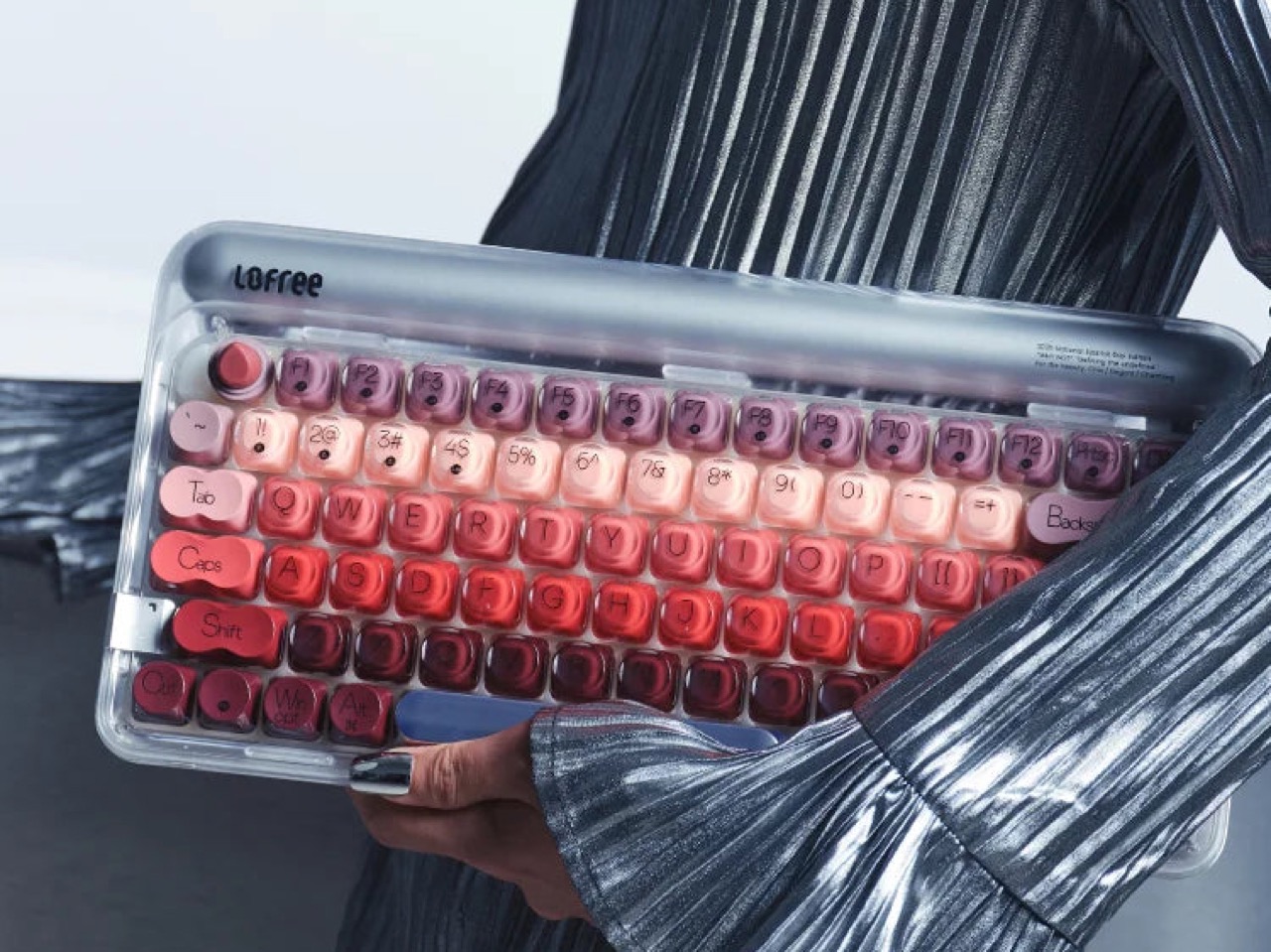
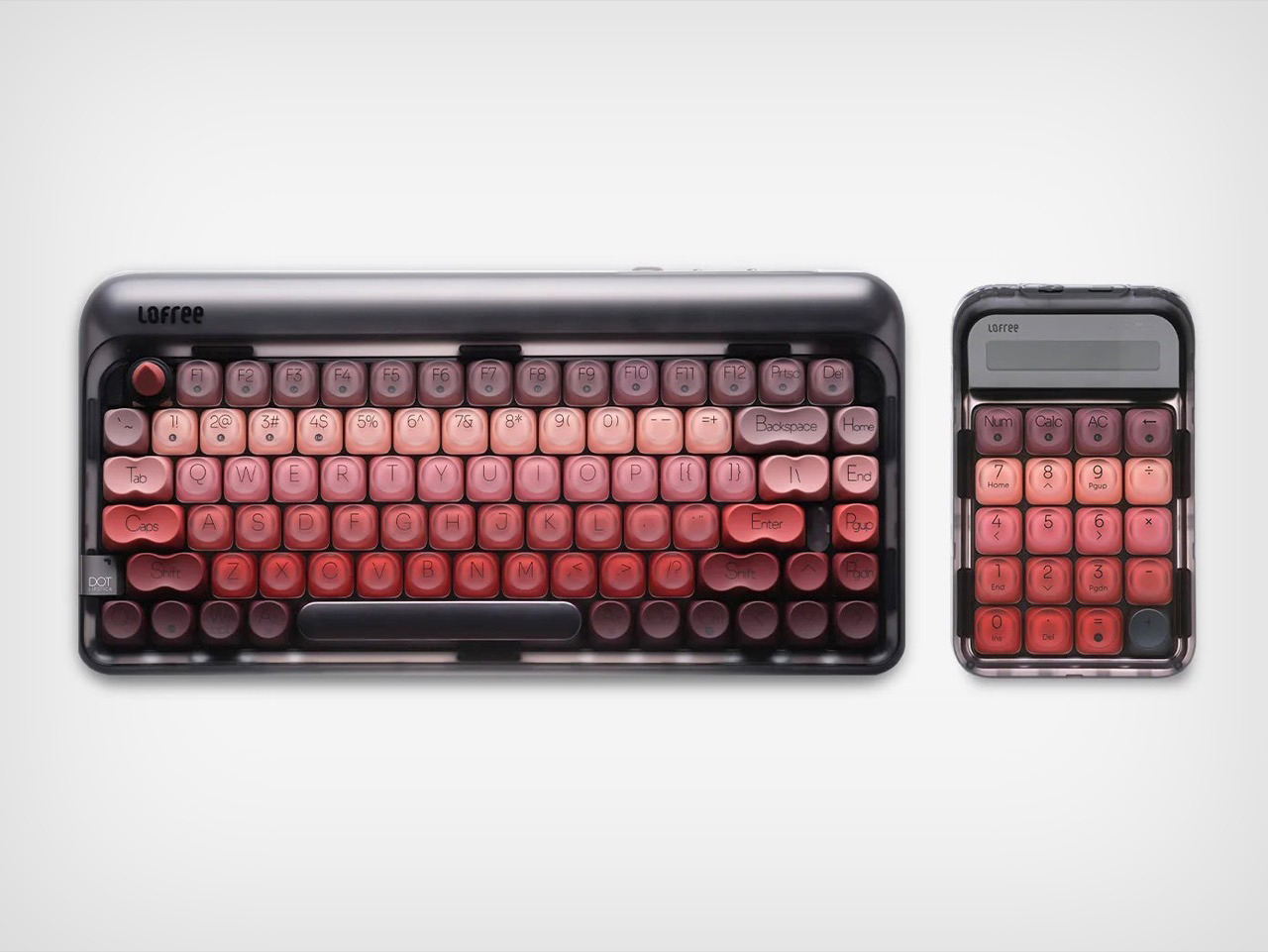
Lofree has been answering that question for years, building a catalog around the idea that a keyboard can carry genuine personality. The Lipstick is where that philosophy gets its boldest, most unapologetic expression yet. Five lipstick shades flowing across the keycaps in a deliberate ombre gradient, a sculptural lipstick-bullet ESC key rising from its cradle, and a gorgeous frosted transparent shell that puts the whole color story on display like jewelry in a glass case. It retails for $199 and is available now in Silver and Black directly from Lofree.
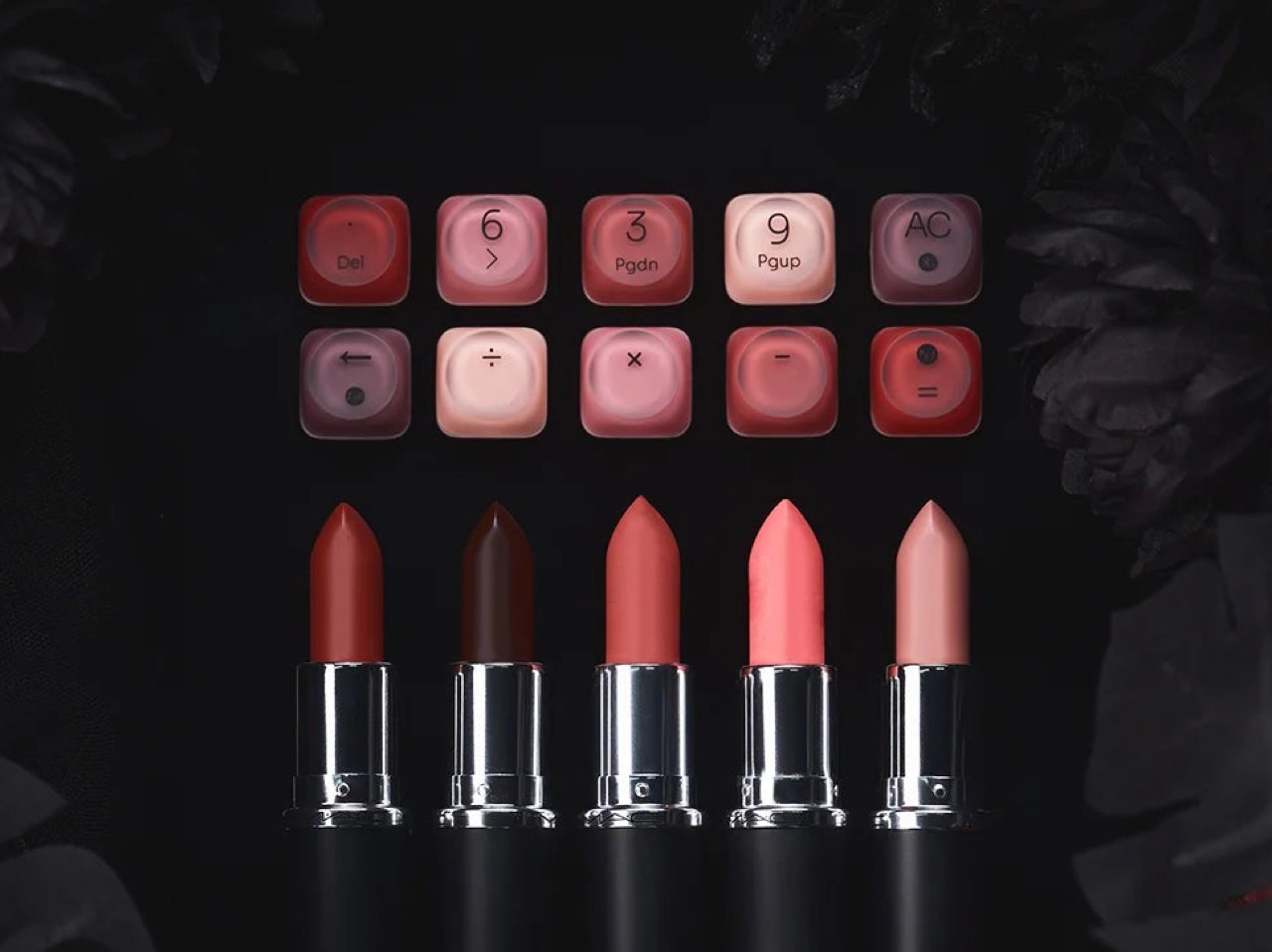
Never did I think the overlap between beauty and keyboards would exist so seamlessly. Lofree used dual-tone PBT keycaps to create that mystique that is each and every key, with a frosted outer shell revealing the hint of a hue underneath. Lofree didn’t scatter five themed shades arbitrarily across 84 keys. They sequenced them, running deep burgundy and wine tones from the left and right of the board through warm coral and brick red across the QWERTY row, then lightening into blush pink and dusty mauve as you move into the function row. The result reads like a makeup palette laid flat across your desk, a color story with a beginning, a middle, and an end. The keys on the extreme left and right (Tab, Caps Lock, Shift, Enter) are single-tone, giving you a direct look at the color while the rest of the row looks like actual samples of lipstick or nail paint that you’d feel like popping out to test. Pair this with the nail-job on your actual hands and you’ve got absolute art at work.
Lofree’s rounded, typewriter-inspired keycap profile has been a house signature since the original Block, and the Lipstick leans into it fully. That retro shape is clever because it mimics the cylindrical form of a lipstick tube at a miniature scale, which means the thematic reference lands in three dimensions rather than just through color. The ESC key pushes that logic to its natural conclusion, a fully sculpted lipstick bullet in matte red, sitting upright in a black cradle in the top left corner of the board. It physically protrudes above the surrounding keys, and when you see it in person, it has the quality of a very good joke told with a completely straight face. Clever without being loud about it.
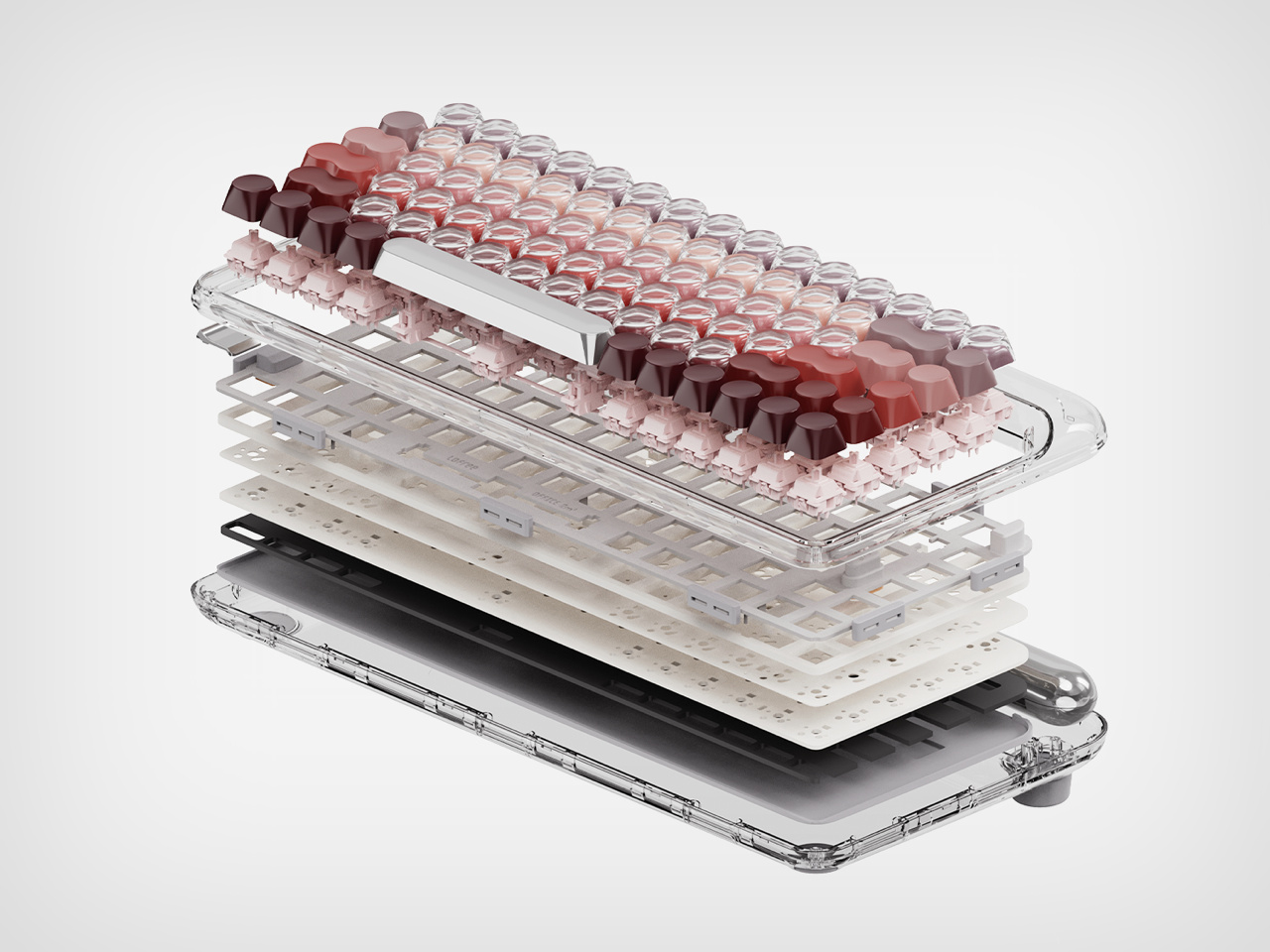
Under all of that, Lofree built a proper enthusiast keyboard. The Lipstick runs Lofree x Gateron linear switches with a 40g actuation force, hot-swappable and compatible with both 3-pin and 5-pin configurations, so you can retune the typing feel whenever you want without touching a soldering iron. A gasket mount structure absorbs the hard edges out of each keystroke, softening the acoustics and adding a slight cushioned rebound that makes extended typing sessions noticeably more comfortable than a standard tray mount board. The 1000Hz polling rate over both 2.4GHz wireless and USB-C wired connections keeps response times sharp, and a 4000mAh battery delivers up to 14 days of use with the backlight off, or 30 hours with all seven lighting effects running. The keys aren’t individually backlit, which is what you’d expect with dual-tone PBT caps, but rather the space between the keys lights up, giving you a look at the keyboard’s outline. Bluetooth 5.3 handles up to three paired devices simultaneously, with seamless switching across macOS, Windows, iOS, and Android.
Lofree also makes a matching Lipstick Wireless Numpad that carries the same gradient keycaps and frosted shell, available separately for anyone who wants the full spread across their desk. It connects via the same tri-mode system, so the two sit together without any friction. At $199 for the keyboard, the Lipstick sits at a price point where the spec sheet fully justifies the ask, and the design justifies everything else.
Rest in peace, minimalism. You were hated with a vengeance by every car owner forced to jab at a touchscreen just to change the AC. After years of dashboards flattening into glossy digital panes, Fang Cheng Bao’s Formula X swings the pendulum back with a cockpit full of physical mechanical buttons, a retractable steering wheel, integrated sport seats, and four-point harnesses that make driving feel tactile again. The formula is not complicated. Give the driver something real to touch.
Fang Cheng Bao, a BYD marque introduced in 2023 with rugged body-on-frame SUVs like the Bao 5, unveiled the Formula X at the 2026 Beijing Auto Show as the centerpiece of a new Formula sub-range that also includes the brand’s first-ever sedans. The supercar’s wraparound “battle cockpit” suggests a fresh design appetite for interfaces with texture, theater, and presence. General Manager Xiong Tianbo described the interior direction as “an all-new sporty intelligent cabin,” which undersells it considerably. The Formula X positions itself as the halo above a family of Formula S sedans Fang Cheng Bao also revealed in Beijing. Where the Bao series asked what an off-road SUV could be, the Formula X asks what an EV cockpit should feel like, and it answers with buttons.
Designer: Fang Cheng Bao
“Fangchengbao” translates directly to “formula leopard,” a name loaded with speed and precision that spent its first three years attached to body-on-frame off-road SUVs built on a proprietary platform called the DMO, or Dual Mode Off-road. The Bao 5 launched in late 2023 as a premium PHEV SUV roughly the size of a Land Rover Defender, followed by the larger Bao 8. Both vehicles were credible, capable, and about as far from supercar territory as a product can get. Fang Cheng Bao’s monthly sales were already growing over 200% year-on-year in early 2026, which means the brand pivoted from momentum, not desperation. The Formula X is Fang Cheng Bao finally catching up to its own name.
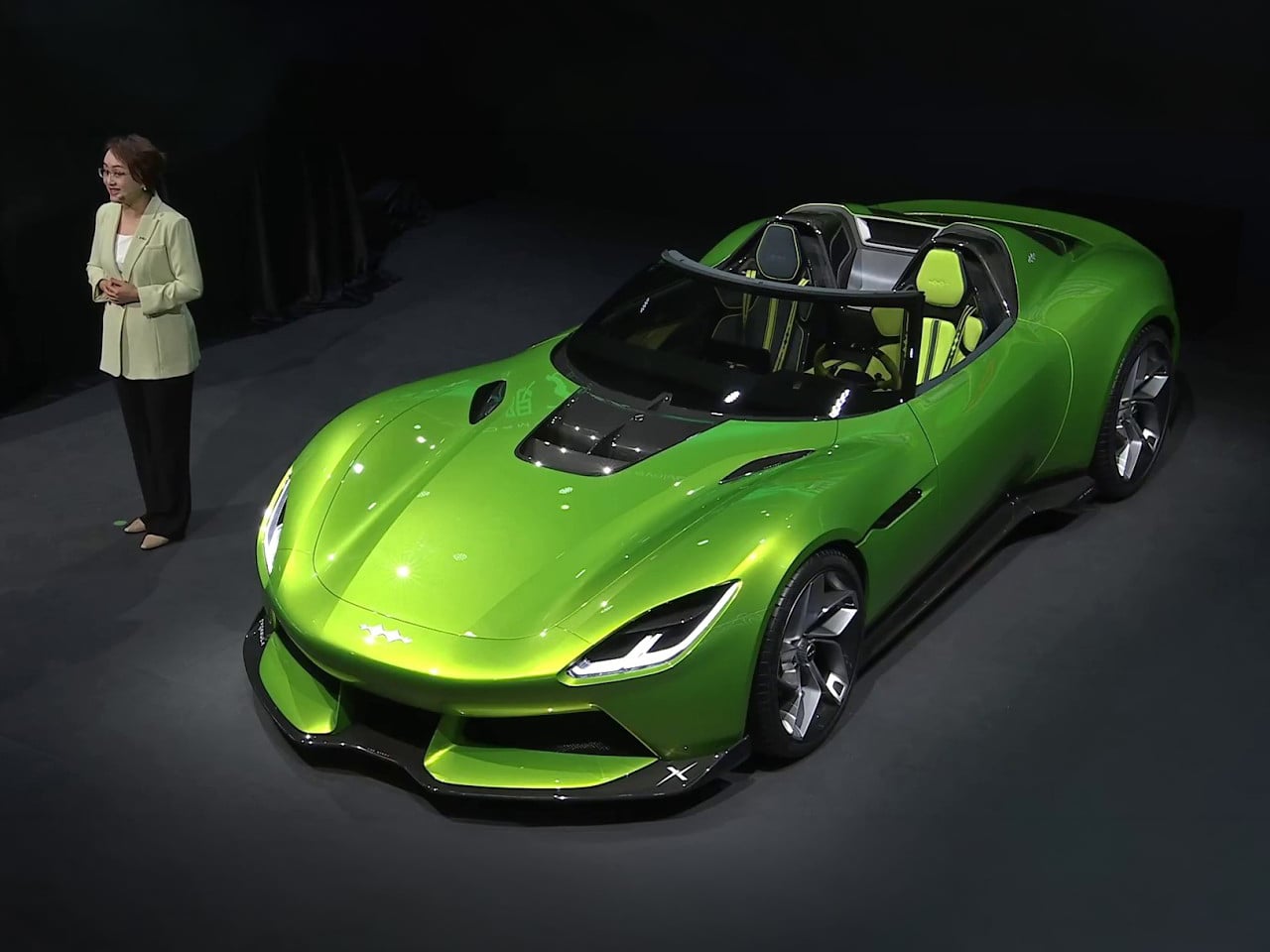
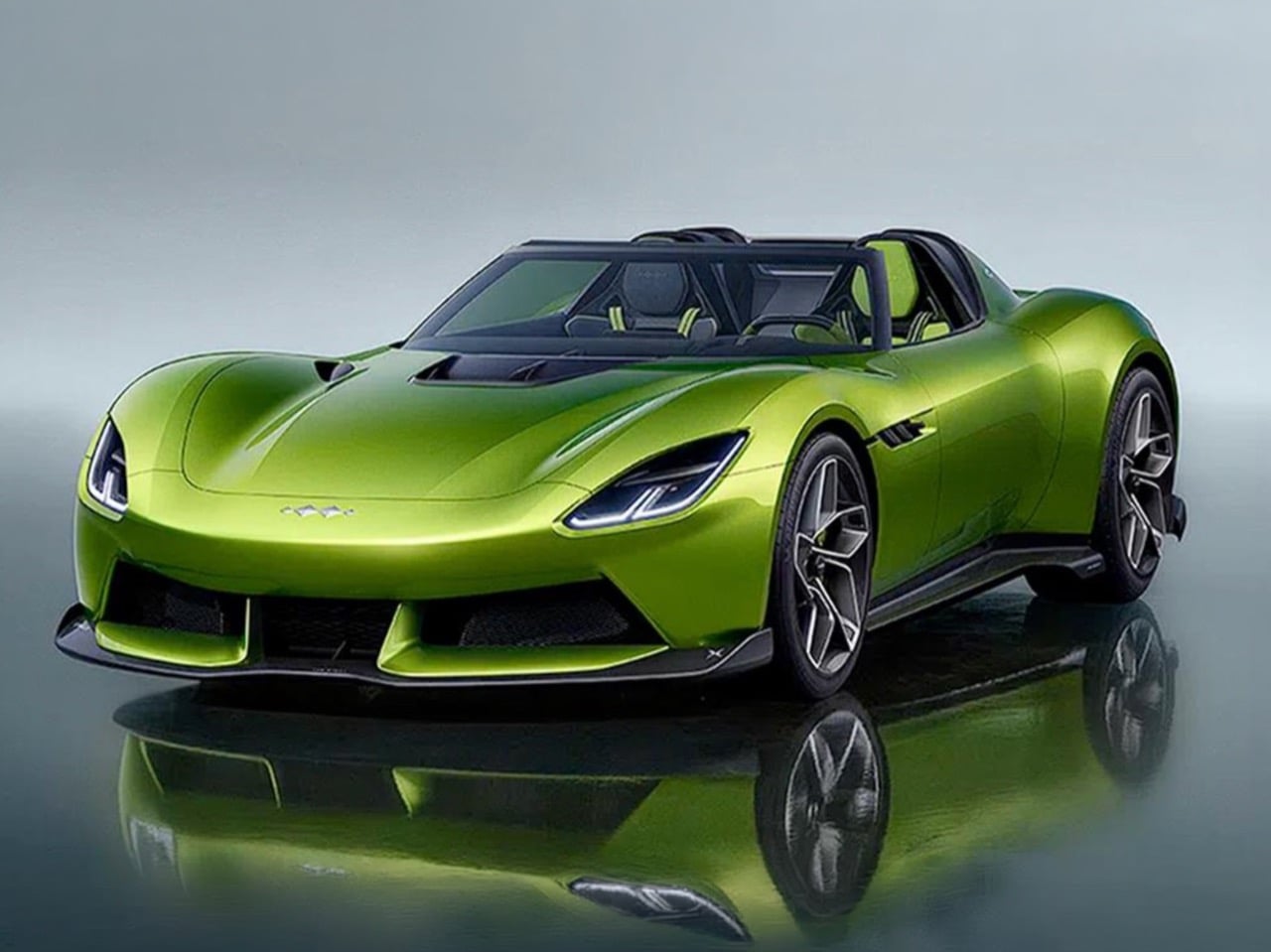
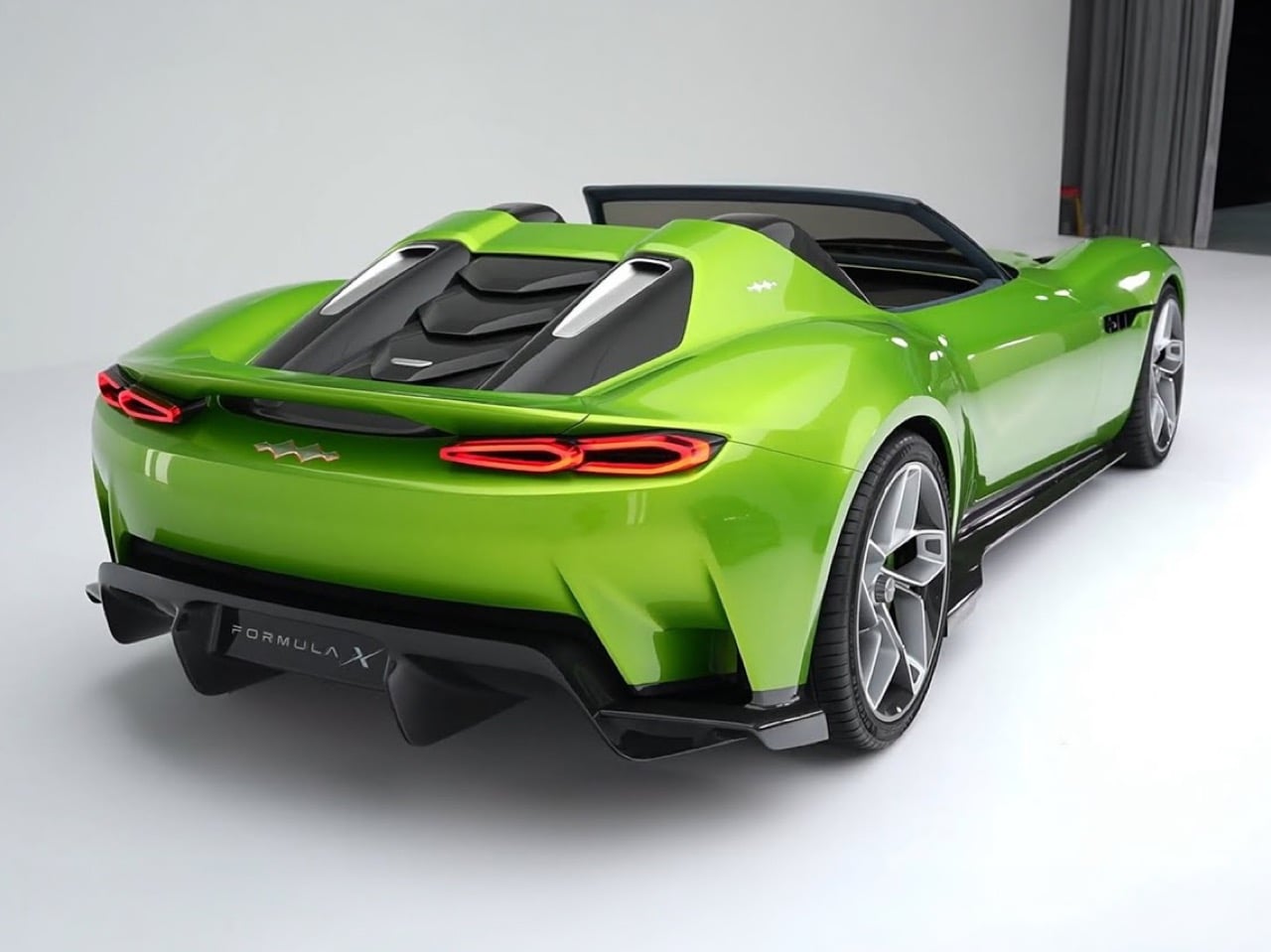
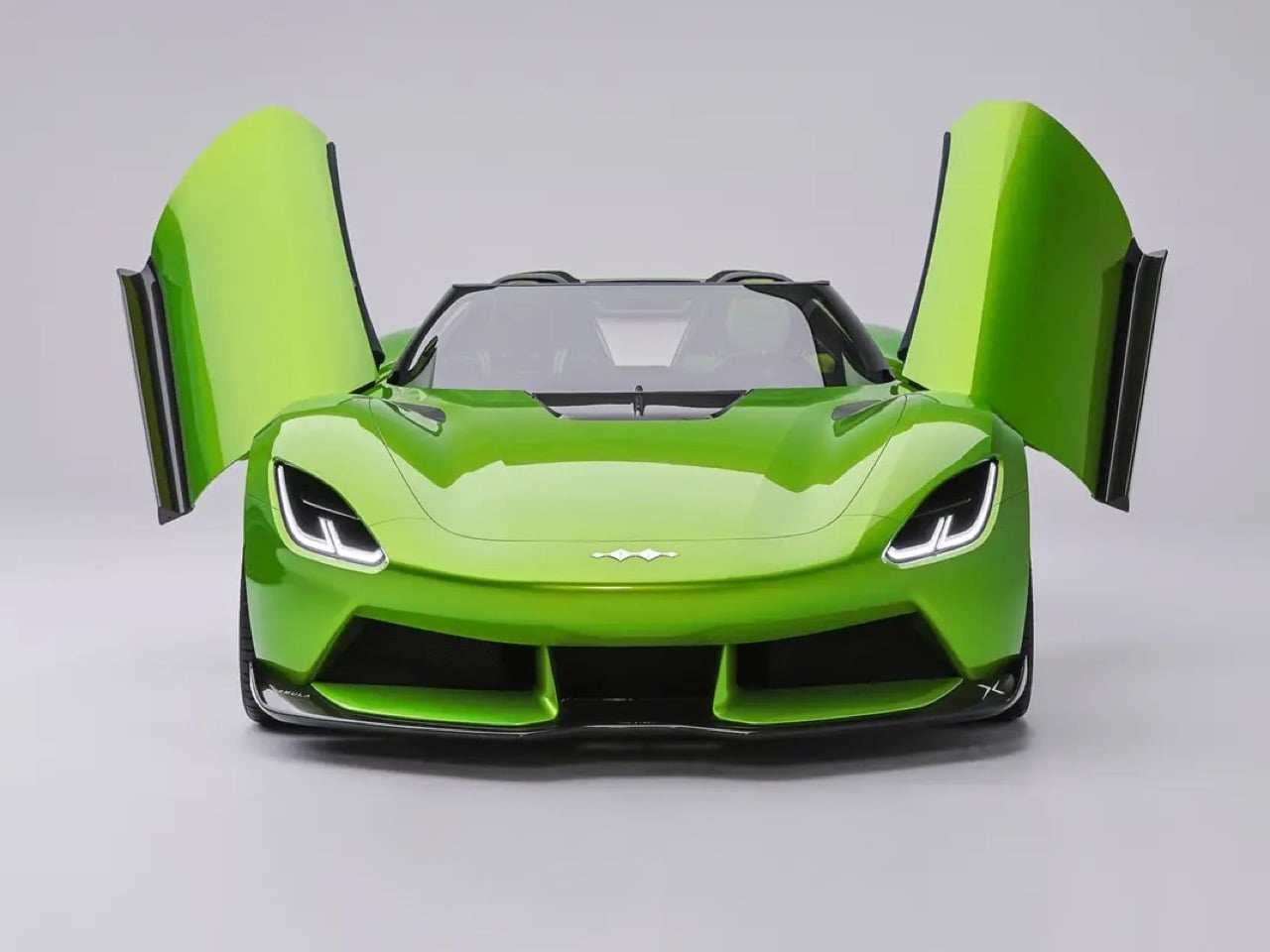
Sitting ankle-low to the ground, the Formula X presents a roofless carbon-fiber body that looks like someone stretched a predator’s silhouette over a racing tub. Six airflow channels and 19 vent openings distribute active aerodynamics across the exterior, giving the bodywork a technical density that reads as sculpture before it reads as engineering. The “Fengbao Eye” headlights up front and the Infinity Ring taillights at the rear establish a lighting signature Fang Cheng Bao is clearly positioning as the visual cornerstone of its new Formula design language. Doors open in a gull-wing and scissor configuration, the kind of theatrical entry ritual that turns a parking lot into a performance. A tri-motor setup delivers a combined 1,000 hp and 1,000 Nm of torque, numbers that once defined hypercar territory and now apparently define a production-intent show car from Shenzhen.
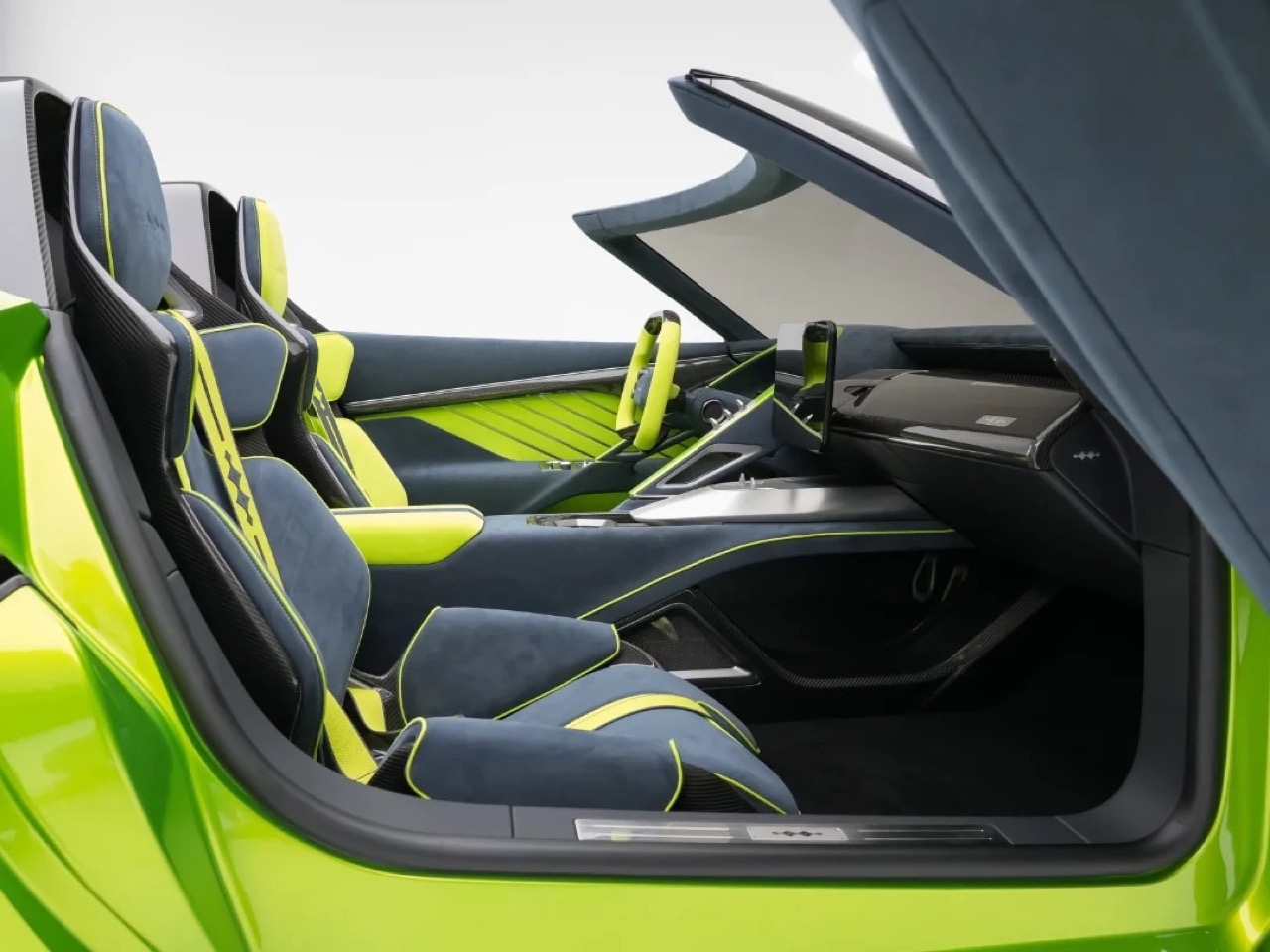
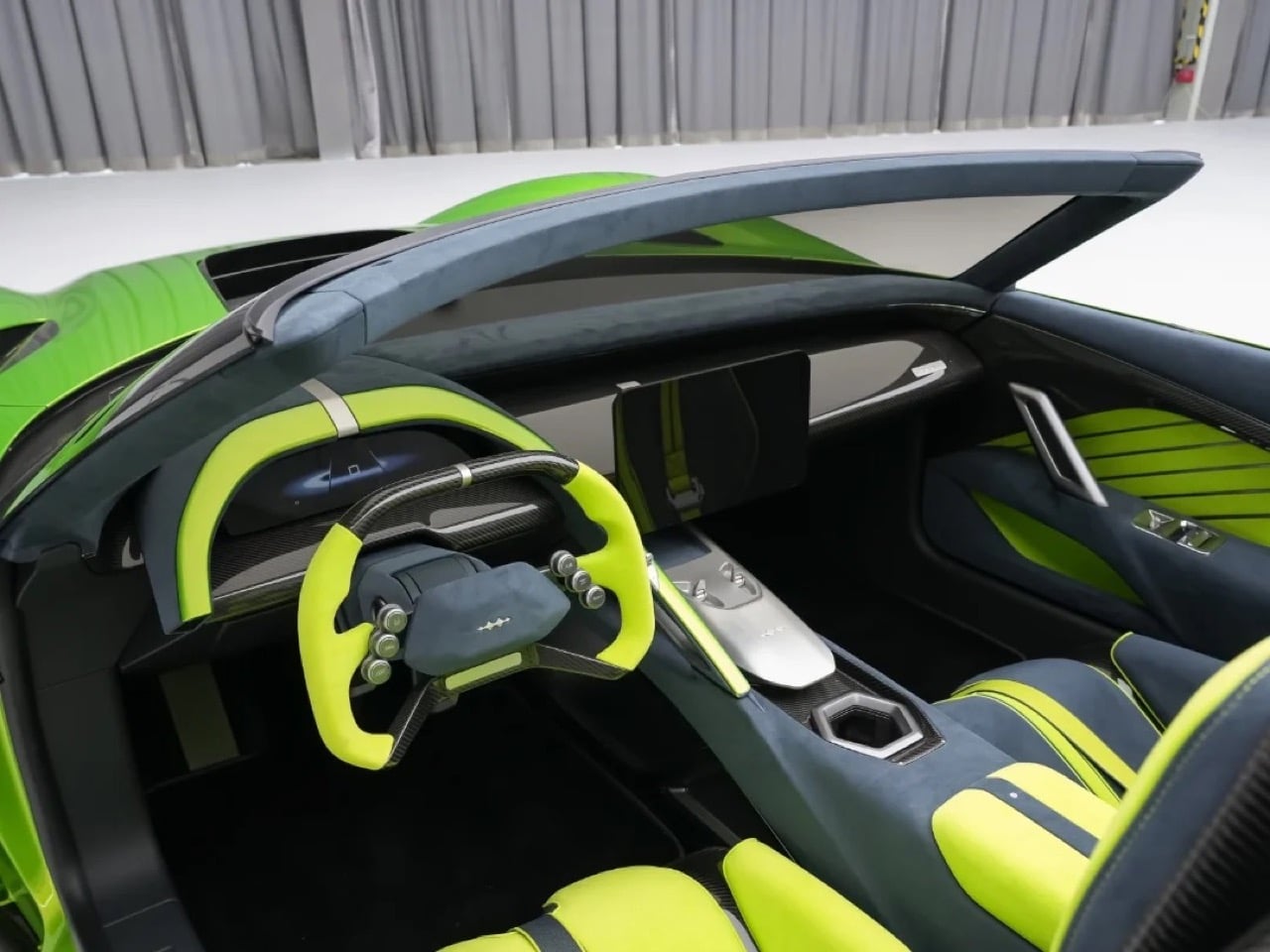
The wraparound “battle cockpit” ditches the screen-centric serenity of most EV flagships in favor of physical mechanical buttons, a retractable steering wheel, integrated sports seats with four-point racing harnesses, and a grey and green color scheme that feels like someone took a Le Mans prototype and gave it a luxury fit-out. The retractable steering wheel transforms a static interior element into a kinetic ritual, revealing itself on demand and making the act of sitting down feel ceremonial. Physical controls here signal that the driver’s hands, not a menu tree buried behind glass, are the primary interface. The four-point harnesses make the cabin feel shaped around a body in motion rather than around a pair of eyes pointed at a screen. This is a cockpit that demands physical participation, and that distinction carries real weight in 2026.
Spotify’s 20th anniversary rebrand traded flat iconography for a more dimensional, texturally rich visual identity, and it landed as a cultural signal because it captured something design had been quietly renegotiating for years. Minimalism, in its strictest form, conflated sophistication with invisibility, training users to expect interfaces that disappear rather than engage. On the automotive side, Jony Ive’s work with Ferrari on its interior direction has pointed the same way, moving back toward tactile driver-focused experiences and away from touchscreen dominance. What these moves share is a rediscovery of depth, texture, and physical legibility as luxury signals rather than signs of technological regression. The Formula X’s cockpit belongs squarely in that conversation, and the fact that it arrives from a brand that was selling off-road SUVs three years ago makes it a sharper cultural data point.
BYD confirmed the Formula X carries approximately 80% of the show car’s design into production, with a market launch targeted for 2027. I’m inclined to believe the cockpit philosophy survives even if some of the carbon theater gets value-engineered on the way to the factory floor. Read the Formula X alongside the Formula S sedans Fang Cheng Bao also unveiled in Beijing, and a consistent brand identity emerges: tactile, expressive, and built on the premise that premium design should communicate through form rather than through its own disappearance. The brand spent three years perfecting the capable, rugged SUV, then used a single auto show to rewrite what “formula leopard” was always supposed to mean. Shenzhen now has a supercar, and it came loaded with buttons.
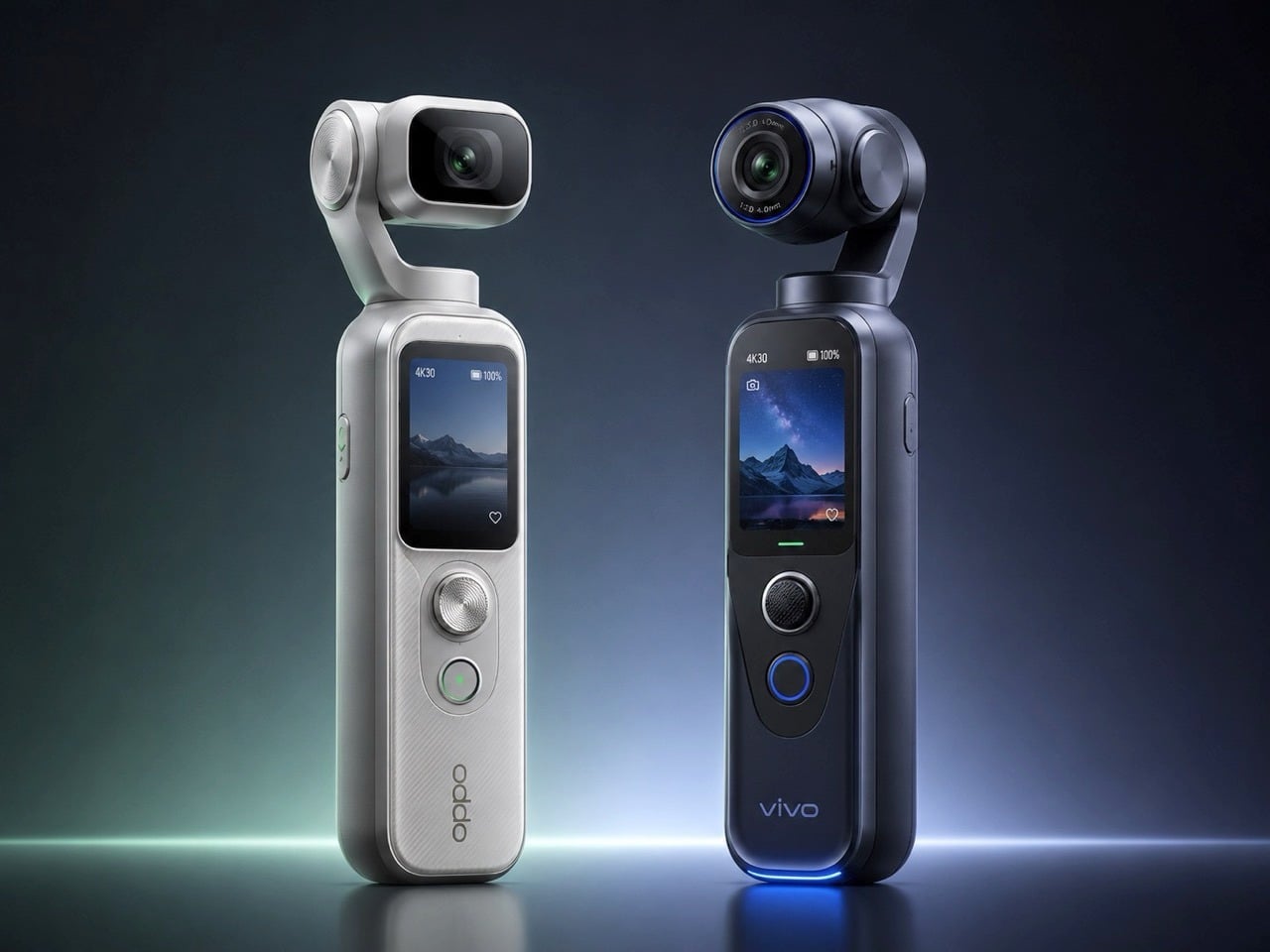
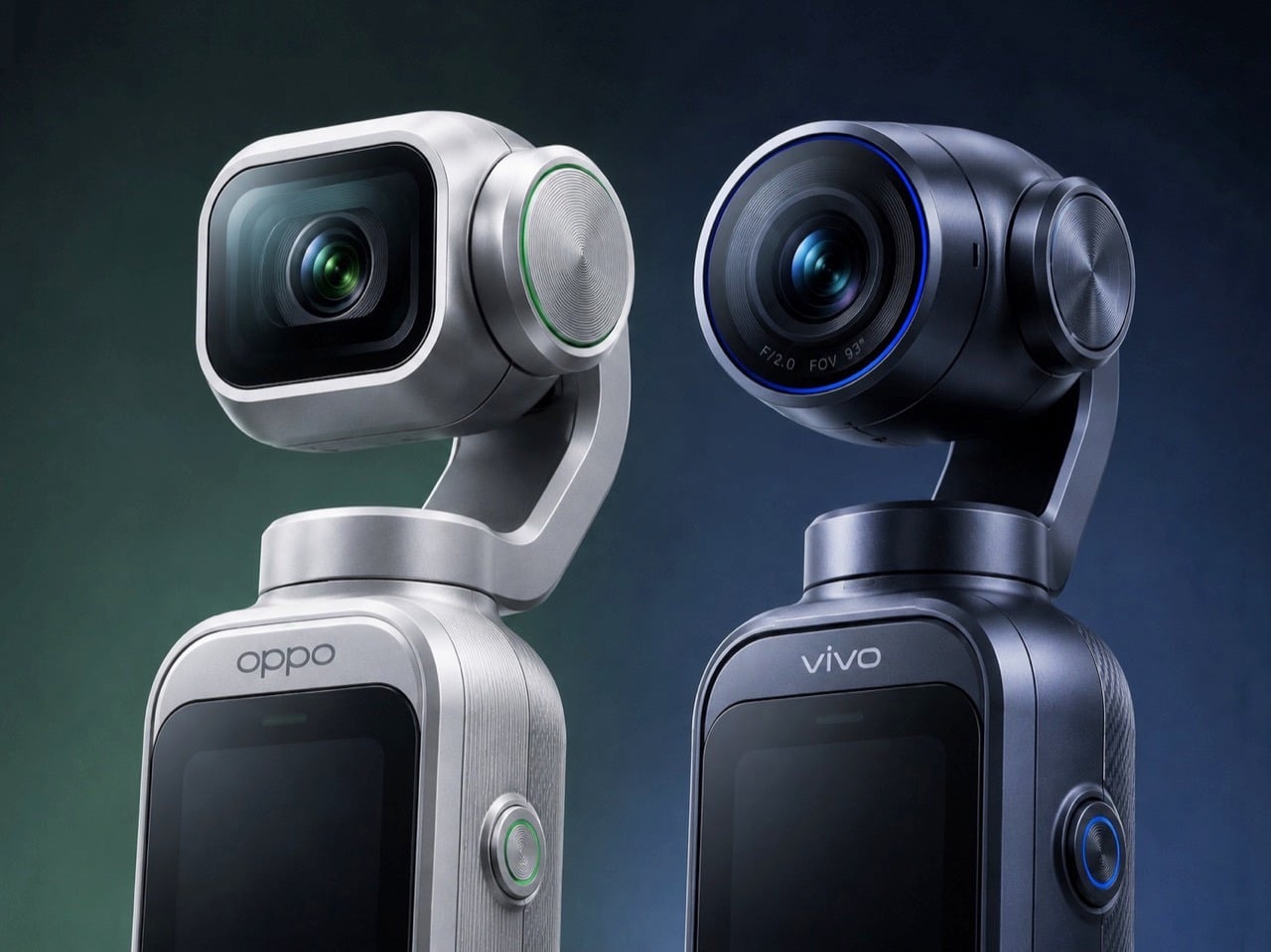
Somewhere inside BBK Electronics, two product teams are independently building the same camera. Oppo has a pocket gimbal codenamed “Fuyao” in development. Vivo has the “Vivo Pocket,” reportedly fitted with a 200MP Sony sensor, headed for a late 2026 launch. Whether BBK’s leadership views this as healthy internal competition or an organizational blind spot depends entirely on your read of how the conglomerate actually operates. What’s undeniable is that both devices are aimed squarely at the same target: DJI’s Osmo Pocket series, the device that has owned the pocket gimbal category for years.
The timing, whether coordinated or coincidental, lands at a genuinely vulnerable moment for DJI. Regulatory pressure in the US has made retailers and creators skittish about long-term investment in the DJI ecosystem, and Insta360, the most credible challenger until now, is going aggressively upmarket with its Leica-partnered Luna Ultra. That leaves a real gap in the premium-but-accessible bracket, and BBK, intentionally or otherwise, has two horses racing toward exactly that gap simultaneously.
Designers: Oppo & Vivo
AI Representational Concept
Oppo’s Fuyao centers on a 3-axis stabilized gimbal in a compact form factor, with the brand leaning heavily on its AI-driven video computational technology to bridge the gap between high-end smartphone imaging and dedicated vlogging hardware. That’s a credible pitch. Oppo’s Find X9 Ultra stuffed two 200MP cameras and a sophisticated computational pipeline into a phone chassis, so the engineering muscle is demonstrably there. The question is whether that expertise translates cleanly when the form factor constraints change and the buyer’s expectations are shaped by years of DJI’s famously polished shooting experience.
Vivo is taking a more overtly spec-aggressive approach, with its prototype packing a 1/1.1-inch Sony LYT-901 sensor capable of 200MP stills, a significant departure from the current gimbal camera standard of 1-inch sensors with lower megapixel counts. That sensor is the same one powering Vivo’s current flagship phones, which means the lossless zoom headroom and low-light performance should be genuinely competitive. Vivo is targeting DJI-level hardware quality, suggesting a premium build rather than a budget-friendly entry point, and content creators are reportedly already getting early units for testing.
The deeper strategic story here is what BBK is actually betting on. DJI’s regulatory headaches in the US aren’t going away quietly, and Insta360’s Luna Ultra, co-developed with Leica and priced accordingly, is drifting toward a buyer profile that everyday creators can’t comfortably afford. That middle ground, premium imaging credentials at a price that doesn’t require a business justification, is exactly where Oppo and Vivo are parking. Whether BBK planned this pincer movement or stumbled into it, the instinct is sound. The execution is all that’s left to prove.