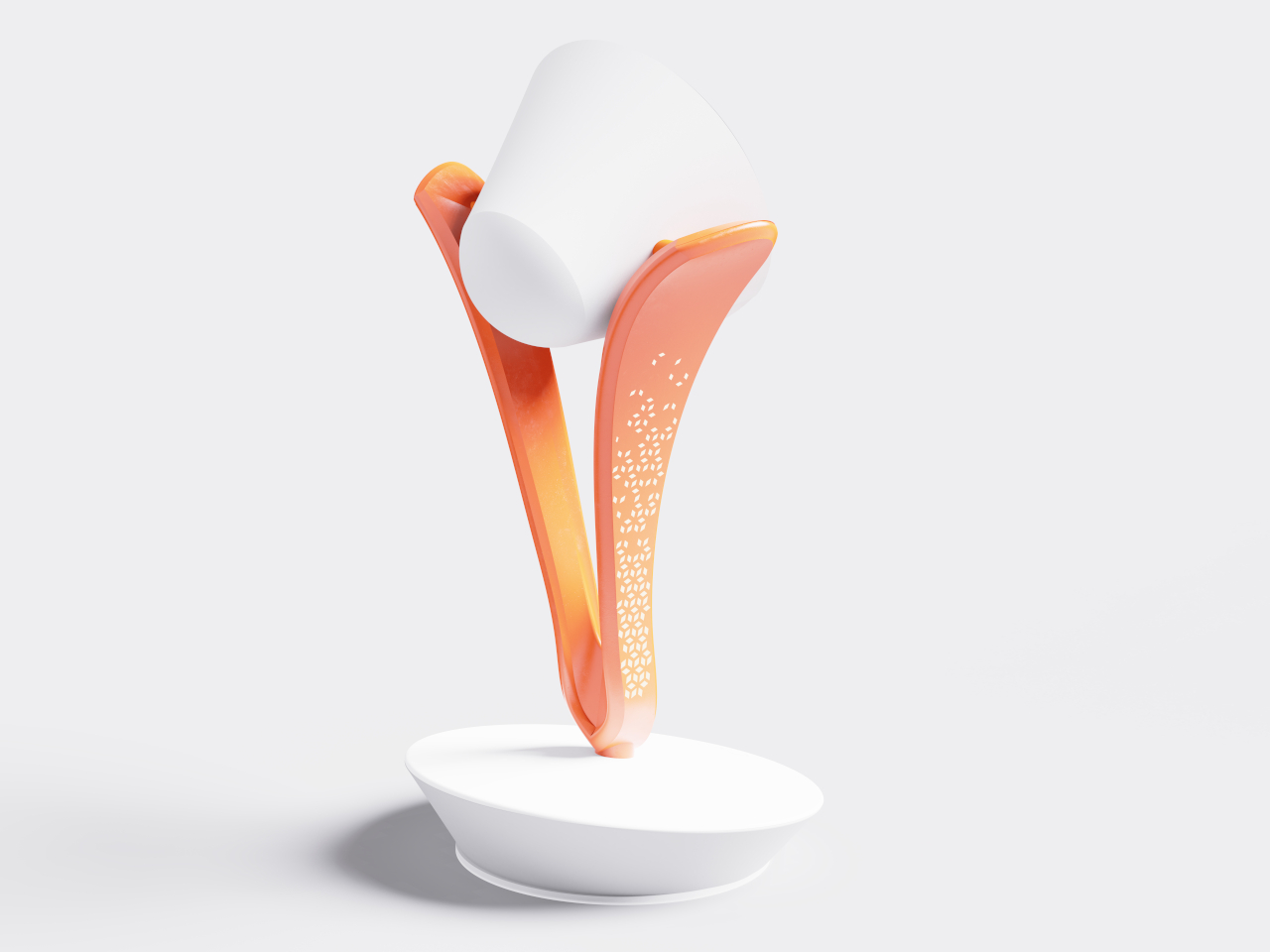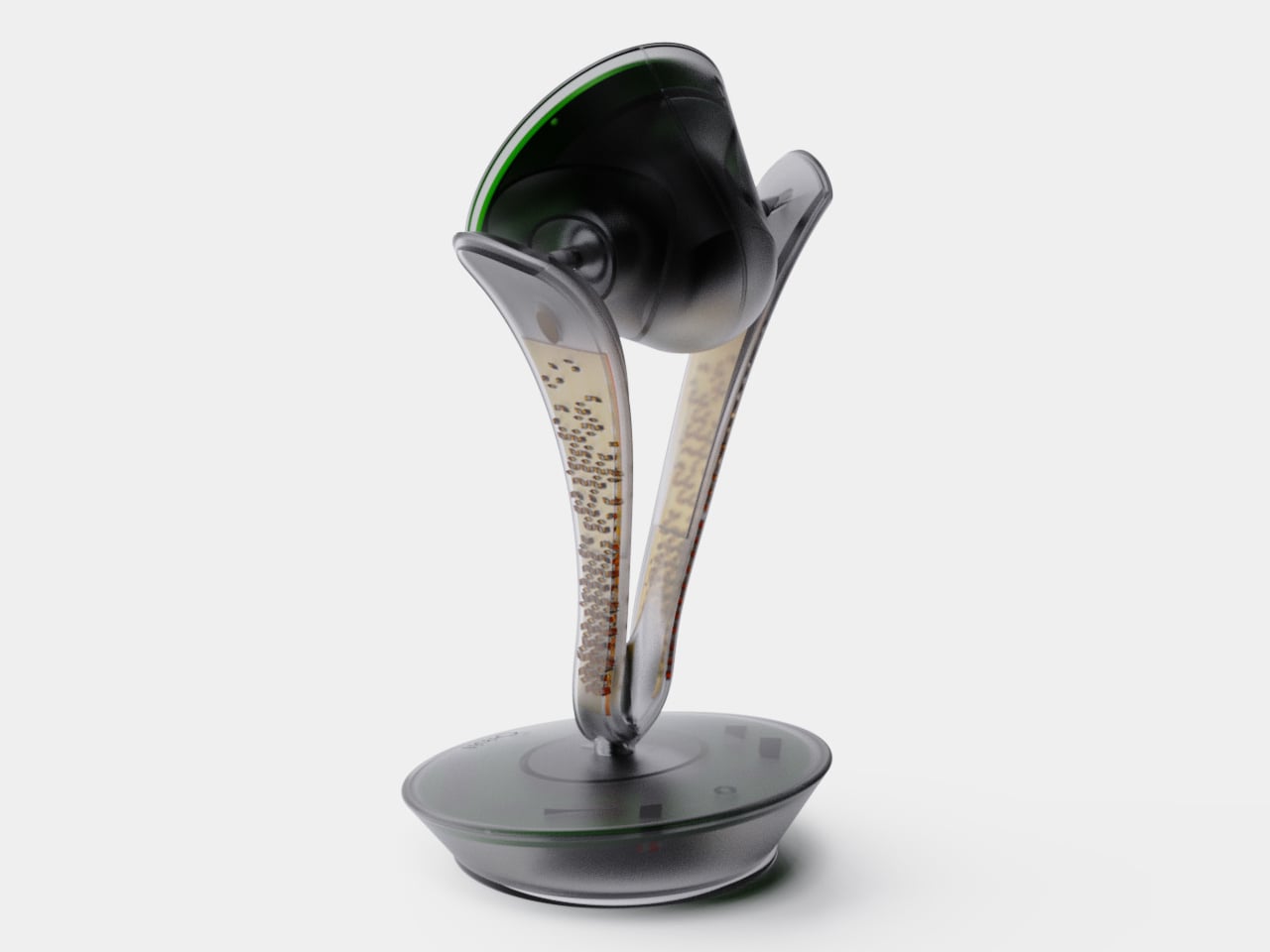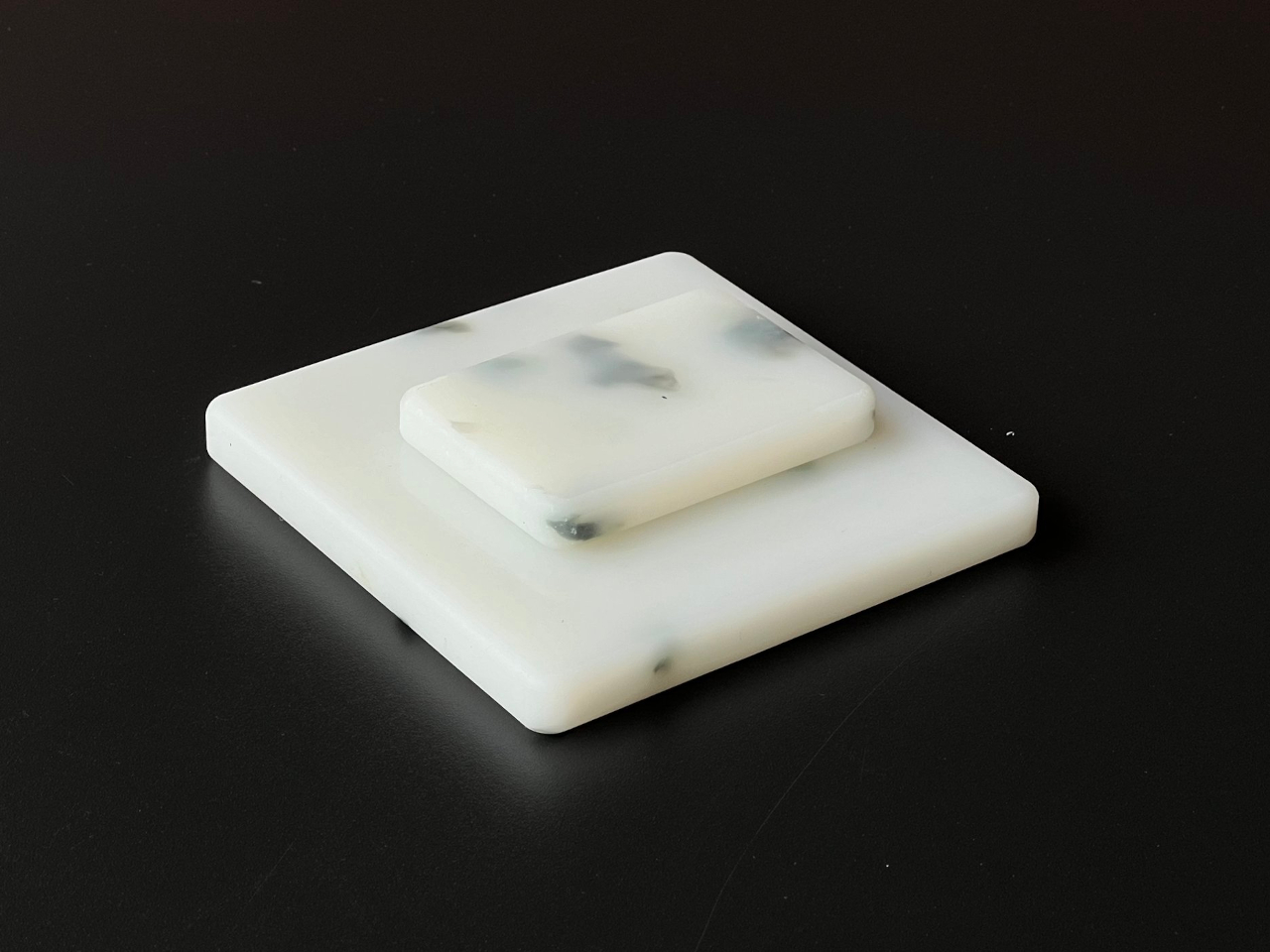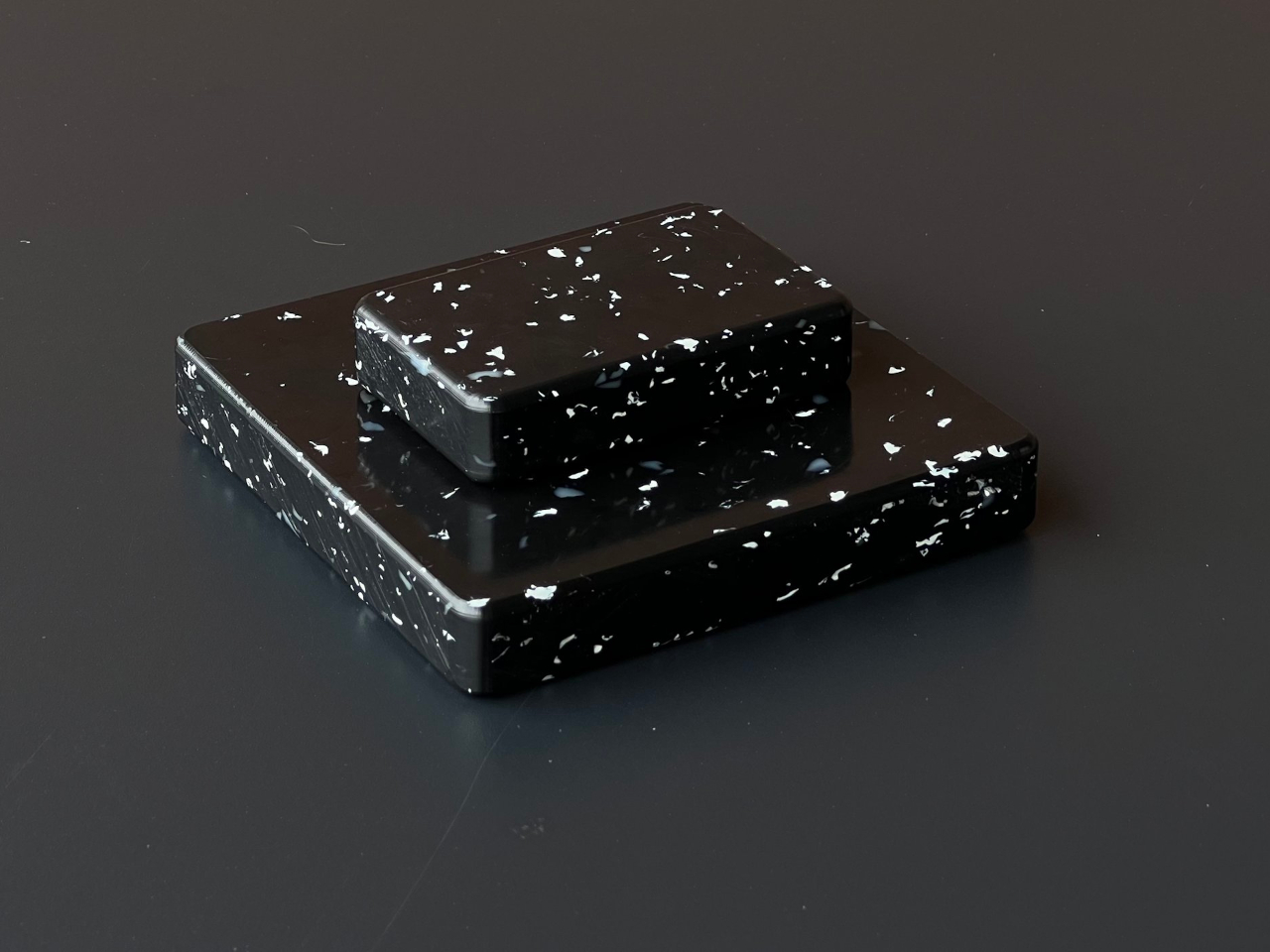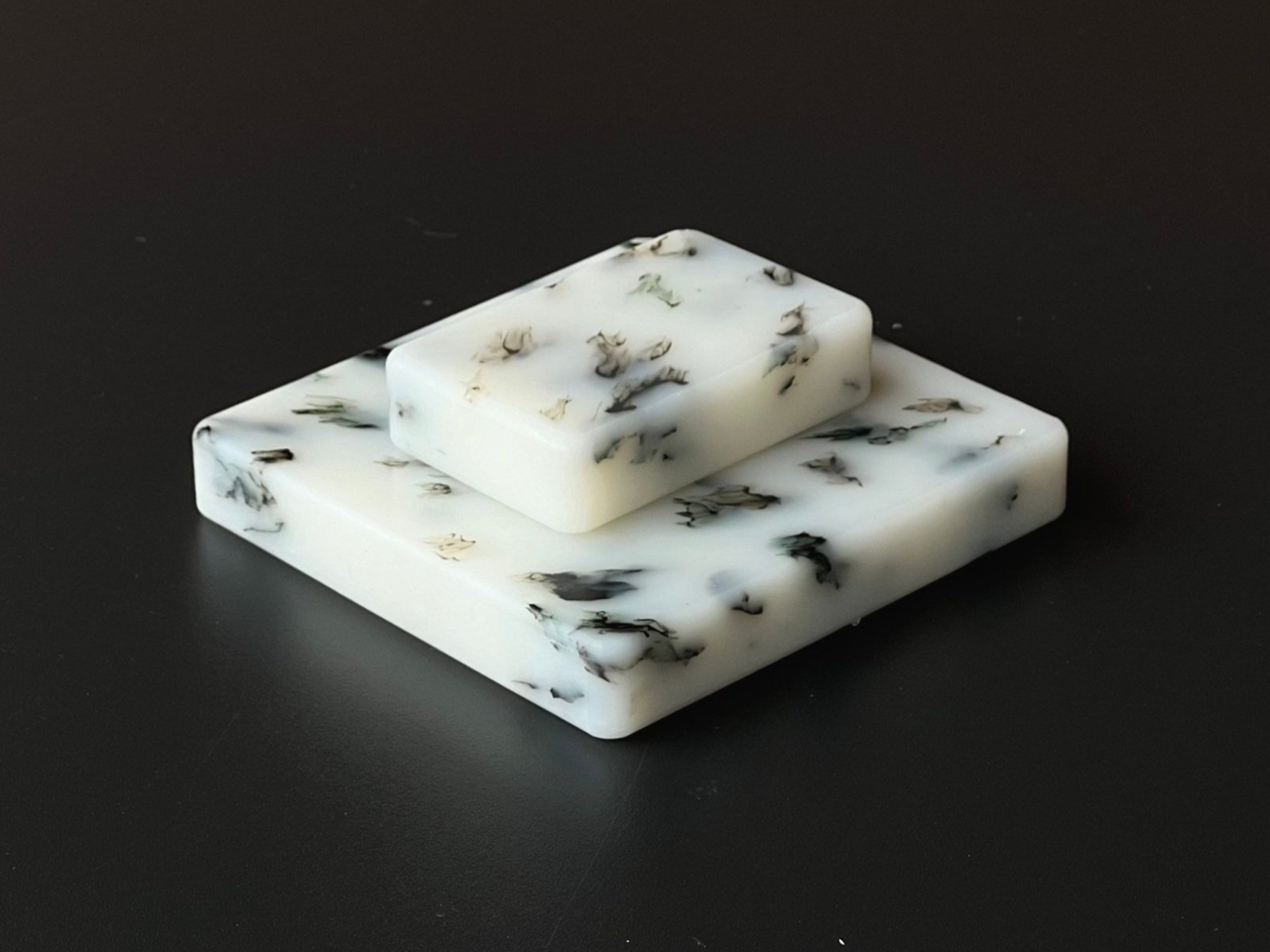
Sticky notes holder concept comes with a very tall panel for your notes

Although a lot of the world today revolves around digital documents and files, there are definitely plenty of people who still espouse analog systems, especially when it comes to taking notes and productivity. In fact, there are many productivity systems today that utilize paper notebooks or even sticky notes, better known as Post-its, though the latter are also notorious for creating a mess rather than helping you stay on top of things. Part of the problem is that sticky notes make it too easy to, well, stick these square pieces of paper anywhere, which means potentially losing them or ending up being more disorganized than ever. This Post-it Note Holder design concept tries to solve that by providing a space for all your sticky notes needs, including a place to stick them.

Designer: Liam de la Bedoyere

Sticky notes today come in different sizes and even shapes, but the colored square format remains the most popular because of its ease of use and space efficiency. It forces you to condense what you need to write down to the most essential pieces of information, and they often don’t take up too much space either. That is until you find your desk, your board, or even your computer monitor littered with these sticky squares, at which point they defeat the entire purpose of trying to keep your life in order.

This concept encapsulates a whole system designed around sticky notes so that you don’t have to work hard to keep everything in a single place. Of course, there’s the actual holder for keeping a stack of notes always ready to receive your scribbles, but there’s also a curve at the back to hold a pen, saving you from having to scramble for one just when you really need it. The most prominent part of this note holder, however, is the very tall and narrow board that rises from the holder. This serves as a more limited space for sticking your notes after you’ve written them.

The design is intentionally limited in space, which forces you to only stick the really important notes the same way sticky notes themselves force you to be concise and quick. At the same time, it still leaves plenty of room for flexibility and personal workflows, like arranging your notes in a literal hierarchy of importance. Or you could order the notes according to their urgency or due dates, watching the colored squares slowly march down as you complete your tasks.

The concept also has room for variations in design, like one that could be hung on a wall and has an inclined note holder for easier access to the pad. And for the truly disciplined Post-it user, the “base” configuration of note and pen holder still gives the convenience of having the essentials always ready when inspiration strikes. You just have to be sure you don’t fall back into the habit of sticking your notes everywhere and then forgetting where you put them after just a few hours.

The post Sticky notes holder concept comes with a very tall panel for your notes first appeared on Yanko Design.
Transform Your Cutting Experience with Scissors That Double as a Box Cutter

How much does it take to change the world? Some people would immediately think of literally big world-changing events, but it’s actually the little steps taken each day that gradually build up to make a longer-lasting difference. The same is true for design, where some of the most significant improvements don’t have to be drastic or even conspicuous. Little improvements here and there all add up to a whole new experience that turns an everyday tool into a delightful encounter each and every time. Case in point are these sleek scissors that look almost alien in their form, bringing just the right amount of design innovation that not only makes it seem like a piece of equipment from the future, it even makes using the simple tool a delightful quest as you snip, slice, and cut through your tasks every day.

Designer: NIKKEN

Click Here to Buy Now: $25 $29 (15% off at checkout). Hurry, deal ends in 48 hours!

The most distinctive thing about these sleek scissors is their form. The drop-shaped handle is something you’ll rarely see in scissors, but it’s a small change that makes plain, boring shears look a little more interesting. Especially when those handles are made from transparent resin that, together with the organic shape, gives the scissors a unique character not unlike alien spacecraft. Of course, that alone isn’t enough to elevate the status of the tool, and indeed its biggest benefits are from things you can’t see but can definitely feel.

Many people use scissors as makeshift box cutters with often disastrous results, forced to precariously hold the tool with the blades wide open. The smart SEKI-TEX scissors avoid this dangerous situation by using a simple yet ingenious sliding mechanism to push one of the blades forward just a little bit while still keeping the rest of the scissors closed. This lets you swiftly and safely cut through the adhesives keeping the box shut like you would with an actual box cutter. And when you’re done, simply slide the blade back to its original position to keep your fingers and hands safe.

Given that use case as well as many other uses of the scissors, there is a real concern that the blades will eventually get covered in sticky sludge from these adhesives. As before, the solution is both simple and clever, coating the blades with fluorine to stop the sticky substances from building up in the first place. Now a simple wipe every now and then is all that it will take to keep the blades always sharp and ready to cut through work tasks.

Such an innovative design doesn’t come from the future and is, in fact, well-rooted in the past. Crafted by expert knife makers from the swordsmith town of Seki in Japan, these scissors are made with meticulous attention to detail, yielding excellent sharpness married to an exquisite and almost organic design. Whether you’re cutting paper or opening boxes, these sleek scissors promise to not only make each task feel effortless, they also add a bit of excitement to your daily work.

Click Here to Buy Now: $25 $29 (15% off at checkout). Hurry, deal ends in 48 hours!

The post Transform Your Cutting Experience with Scissors That Double as a Box Cutter first appeared on Yanko Design.
Revolutionary coffee machine lets you make coffee exactly the way you want it

There might be jokes about being the golden brown fuel that runs the world, but coffee really has a special place in many people’s daily routines. Of course, that doesn’t mean everyone enjoys coffee in exactly the same way. There are people who are fine with quick instant coffee, much to the horror of connoisseurs, as long as they get their caffeine fix. Others, however, have developed very particular requirements to satisfy their taste buds as well. Different people also like different types of coffee, from espressos to drips to hot to cold, and sometimes even the same person likes different brews depending on their mood. It’s difficult to find one machine that can deliver all of those, especially for home use, but that’s exactly the kind of ground-breaking innovation that this revolutionary coffee machine offers, giving users full control over the brewing process so that they can have the coffee they want the way they want it.

Designer: Chris Chan

Click Here to Buy Now: $699 $1,399 ($700 off). Hurry, only 23/320 left! Raised over $500,000.

KUKU Maker uses centrifugal force to generate pressure, which makes it possible to maintain a stable extraction pressure throughout the extraction process, regardless of the state of other parameters.

Baristas make it look too easy, but there’s actually a science and an art to brewing the perfect cup of joe. It’s not just the grind size that affects the way coffee tastes but also variables like water temperature, extraction pressure, and more. Your run-of-the-mill coffee machine usually only has one or a few presets for these in order to simplify the process, but that also takes out much of the fun and the power away from true-blooded coffee lovers.

You have the flexibility to use ice water or room temperature water directly for extraction, or you can employ KUKU Maker to swiftly heat room temperature water to your desired temperature before initiating the extraction process.

Enter KUKU, a genius design that lets you have consistent traditional coffee when you need it as well as easy, customized brews when you want it, all thanks to a combination of cyclic extraction and centrifugal force. That flexibility comes from KUKU’s ability to let you be in control of those variables, namely extraction pressure, temperature, time, and, of course, grind size. And best of all, you don’t need to adjust all of those when you don’t want to. For example, you can preset temperature and pressure while only adjusting the grind size to anywhere between superfine to extra course. And if you happened to select the wrong grind size, you aren’t punished but are instead rewarded with a new flavor you might have never discovered on your own.

Room Temperature Espresso

The KUKU Maker is a multifunctional coffee device that can quickly make not only cold-brew coffee but also cold-brew espresso.

Unlike other coffee machines, KUKU uses centrifugal force to generate pressure, and thanks to an inductive brushless motor and intelligent control algorithms, you can precisely define how that happens. Go from normal atmospheric pressure to high pressure or from 3000 to 7000 RPM speeds in a snap, controlling this variable to meet your preferred brew’s requirements. The temperature of the water used during extraction also has a significant impact not only on the taste of the coffee but also on the aroma, and KUKU gives you the freedom to use whatever kind of water you need. Pour crushed ice or ice water for your icy cold beverages or get room temperature water heated to your preferred levels. With electromagnetic induction heating, it takes less than a minute to heat 60ml of water for an espresso and 4 minutes for 300ml of water for an Americano.

With all these powerful features, it comes as a pleasant surprise that you don’t have to be a veteran barista to use KUKU. Your favorite type of coffee is just a single toggle switch away or, if you prefer the hands-free approach, a few taps on the KUKU mobile app. You can even download recipes from the app and try out different profiles made by coffee experts and champions. And at the end of the day, you don’t have to stress over the mess thanks to an easy cleaning process that will help keep your machine in tip-top shape with very little work. Whether your caffeine fix is a cold-brew espresso or you find joy in expertly crafted recipes, the innovative KUKU coffee machine gives you all the control you need for the perfect cup and the flexibility to experiment and discover a whole new world of flavor in every brew.

Click Here to Buy Now: $699 $1,399 ($700 off). Hurry, only 23/320 left! Raised over $500,000.

The post Revolutionary coffee machine lets you make coffee exactly the way you want it first appeared on Yanko Design.

Sunflower-inspired speaker concept lets sound follow you wherever you go

Smart speakers are becoming a common sight in homes these days, even those that have yet to wander into the smart home category. They come in all shapes and sizes, but most of the designs have one thing in common. Given the design of drivers, they can only project sound in one direction, usually forward. You can have a 360-degree speaker, but that requires having more complicated hardware or a cylindrical design that has to be placed somewhere in the middle of the room to make sure the sound reaches you where you are. This concept design, however, offers a simpler but more interesting solution, taking a cue from one of Mother Nature’s more curious creations. This circular speaker turns to make sure that sound is sent in your direction, following you all the time just like a sunflower follows the sun.

Designer: Joon-Yeol Bae

In general, sound travels in the direction an emitter, such as a speaker, is facing. It can bounce off objects or spread a bit in a cone, but on its own, it will never change its forward direction. Omni-directional speakers solve this by having drivers that face multiple directions to cover all possible directions. While effective and a common practice these days, it also means multiplying the number of components used, raising the build cost. In some cases, it also requires that the speaker be placed in an open and unobstructed area of the room, which limits your interior design options.

Solros, named after “sunflower” in Swedish, is a concept that takes an unconventional approach. Employing the same technologies used by self-driving cars and robot vacuums, it can tell where you are and rotate its disc-shaped head to always face in your direction. It can even detect how near or far you are from the speaker and adjust its volume to compensate for the distance. This has the effect of making the sound feel like it’s always following you, wherever you go inside a space.

The speaker is also designed to blend into the background if you need it or become the center of attraction if you want it. Its minimalist design, which can be made available in beige, black, red, and green colors, makes it a perfect fit for almost any interior. Its graceful movements also minimize distractions while, at the same time, becoming a point of curiosity for visitors. Needless to say, it’s going to be a conversation starter, especially when the music starts to play.

As interesting as this design might be, it does raise the question of how effective it will be when there is more than one person in the room. LIDAR alone won’t be able to give priority to certain individuals, say the homeowner, and the speaker might end up getting confused and frozen in place instead of making sure its sound is sent in the right direction. Solros definitely makes the composition of a speaker a bit simpler, but the logic necessary to avoid a deadlock makes it a bit more complicated than a more straightforward 360-degree speaker.

The post Sunflower-inspired speaker concept lets sound follow you wherever you go first appeared on Yanko Design.
Odd laptop for creatives has a 7-inch tablet beside its keyboard

Laptops are extremely powerful machines designed to cater to a wide range of users, but some are designed to address the specific needs of a few. Bulky gaming laptops cram all the power possible in a portable machine, while a few “convertibles” straddle the fine line between laptop and tablet to offer artists and designers a digital tool for their work. This rather curious laptop seems to fall somewhere with the latter group, with a somewhat unique feature not found in any other laptop. Instead of the laptop screen supporting touch and pen input, it puts what is basically a 7-inch tablet to the right of the keyboard, offering a second screen that can also be used to write and draw on. Definitely an interesting proposition, but one that comes with too many caveats that make it less than ideal even for its target audience.

Designer: Topton

To be clear, this actually isn’t the first time this kind of distinctive design landed before our eyes. At CES 2022, Lenovo showed off the ThinkBook Plus Gen 3 with exactly that very feature. It positioned this design as the perfect solution for power multi-taskers, providing a second screen for showing information on the side, a digital pad for scribbling meeting notes, or a small canvas for drawing. Great on paper, but the implementation left plenty to be desired. Worse, its $2,000 price tag at the time of its launch made it something that only adventurous spirits would want to risk getting.

Lenovo ThinkPad Plus Gen 3

Lenovo ThinkPad Plus Gen 3

Chinese manufacturer Topton is trying to address one of those issues with the Topton L10, a 15.6-inch laptop with the exact same setup. It compresses the laptop’s keyboard and shoves it off to the left side to make room for a 7-inch touchscreen display that acts as a second monitor. And yes, it can work with a stylus, though it’s not clear whether it’s the same pressure-sensitive technology used by the likes of Wacom, a brand that digital creatives are very familiar with. Plus, you need to buy that stylus separately as well.

The biggest difference between the Lenovo original and this Topton L10 is the specs. You’re only getting an Intel Celeron N5095, one of the weakest from the chipmaker’s catalog, though also advertised to be more power efficient. And with 16GB of memory, it’s meeting only the minimum requirements for today’s creative software, not to mention limiting your multi-tasking capabilities. The display resolution of both screens is also a lot lower, which means it isn’t even good for doing art and design. It does have RGB backlights for the keyboard, stereo speakers, and a fingerprint scanner, features you wouldn’t expect from this price point, but last-gen Wi-Fi 5 and Bluetooth 4.2 also cap this computer’s potential.

As for that price point, the Topton L10 starts at $329 for a 128GB SSD drive, quite a ridiculously low amount of storage space these days, especially for a Windows 11 computer. The price tag might look tempting at first, but given the overall package, this unusual spin on the dual-screen laptop concept remains just a novelty that won’t be able to meet the high expectations that it sets up.

The post Odd laptop for creatives has a 7-inch tablet beside its keyboard first appeared on Yanko Design.

Raspberry Pi Water Cooling Kit is weird, cute, and probably overkill

While 3D printing blasted open the doors for creatives to bring their designs to life, the Raspberry Pi can be credited for empowering not just makers and modders but also a younger generation of budding engineers and scientists by giving them access to a cheap, small yet powerful computer. The single-board computer or SBC has become the basis for many electronics projects and DIY solutions, ranging from smart home security systems to out-of-this-world “cyberdeck” computers. The Raspberry Pi 5, the latest and so far most powerful model available, does have certain performance limits, but you can overclock its processor to really squeeze out all that you can, at the expense of overheating the board, of course. The tiny computer will then need some cooling system, but this particular kit tries to take lessons learned from desktop PCs and apply them in an effective but honestly comical manner.

Designer: seeed studio

Water cooling is a well-known solution used in desktop computers to prevent the system from overheating while keeping the processor operating at maximum efficiency. Of course, water doesn’t actually touch the sensitive electronics but draws heat away instead. Cool water travels toward the hotter areas while the heated water travels away from the hot spots and gets cooled by something like a fan. Given the space required to safely and effectively implement it, it’s no surprise that this system is usually only found on large desktop towers.

Compared to those gargantuan computers, the Raspberry Pi only has a fraction of the power but it can still be pushed to the limit by overclocking its CPU. The most common solutions in the market are small heat sinks and tiny fans that provide passive and active cooling, respectively, but some might feel that those just aren’t enough. For really power-hungry setups, this water cooling kit made especially for the Raspberry Pi 5 will probably suffice, if not actually excessive.

The Water Cooling Kit is easily more than five times the size of the small board computer, composed of a water tank and a large fan that cools down the hot water. This contraption is connected to a Raspberry Pi via two silicone hoses, one for hot water and another for cool water, with a radiator sitting on top of the Raspberry Pi’s processor. This kit supposedly halves the temperature of an overclocked Raspberry Pi 5 down to a toasty 37C, depending on the load.

But, yes, you will have to sacrifice a lot to have such a water-cooled Raspberry Pi, starting with the $120 price tag. While the kit can work with multiple Raspberry Pi boards to maximize the cooling efficiency, you’ll have to buy the extra hoses and radiators to make that work. You also definitely lose the Raspberry Pi’s biggest benefit, its small form factor that allows it to be used in almost any project imaginable. Then again, some of those projects do require pushing the small computer to its limit, at which point you might need something over-the-top like this.

The post Raspberry Pi Water Cooling Kit is weird, cute, and probably overkill first appeared on Yanko Design.
Suzuki Omnichord is back to offer a fun and interesting way to make music

When you think of musical instruments, you will probably first think of things like pianos and guitars. Electronic musical instruments, on the other hand, conjure up images of keyboards, electric guitars, and complicated synthesizers. Suzuki’s Omnichord, on the other hand, is an odd yet curious duck that stands somewhere in between these two extremes. First launched in 1981, this electronic device empowered anyone to make music or accompany a song even without previous musical experience or even reading notes. The Omnichord’s distinctive electronic sounds and novel design made it quite a hit, but the product faded into obscurity back in 1996. To commemorate its upcoming 40th anniversary, Suzuki decided to give today’s generation a taste of that unique experience with a new model that recreates the original so faithfully down to using the same analog circuits.

Designer: Suzuki

Imagine just pressing a few buttons and sliding your finger on a flat surface and then suddenly producing wonderful music. That’s pretty much the experience that the Suzuki Omnichord offered, presenting people, whether musically trained or not, the joys of creating music with ease and freedom. There are no wrong notes, just new harmonies and beats to be discovered and incorporated into your masterpiece. It’s like an adventure for novices but also a new territory for veterans who want to add a unique flavor to their music.

The new Suzuki Omnichord OM-108 tries to bring that 80s experience to the 21st century, reproducing the tonality that characterized that period while also adding modern features that cater to today’s more demanding audience. To accurately recreate the same tones of the OM-84, perhaps the most popular Omnichord ever released, Suzuki opted to go completely old school and apply the same analog circuitry that gave the original its distinctive electronic sounds. It also has that popular harp sensor or strumplate that lets you easily slide or tap your finger to produce the “notes” that will make up your music.

The new OM-108 model boasts 108 chords, hence the name, as well as many new functions, like a switch that changes the way chords and rhythms are played. There’s also a drum pad mode that turns the chord keys as well as the sturmplate itself into beats. And like with many modern electronic musical instruments, you can connect the Omnichord to external MIDI devices to mix tones to your heart’s delight. Plus, the built-in speaker can be turned on or off when you connect an external speaker, useful when you want to monitor your own sound during a live performance.

The Suzuki Omnichord OM-108 may look like a toy, but the unique sounds it lets you produce are pure joy, at least to fans of the electronica genre. Its revival coincides with the retro craze gripping many industries and is a perfect example of a design that manages to remain relevant decades after its last appearance. That said, you’ll have to wait a bit before you can get your hands on the newest Omnichord, as sales aren’t expected to start until July, with the price and market availability still unknown.

The post Suzuki Omnichord is back to offer a fun and interesting way to make music first appeared on Yanko Design.
Cheaper Samsung foldable phone might be on the horizon

Although foldable phones are now a hot topic in the smartphone industry, they are hardly the hottest-selling products in the market. There’s still significant pushback on buying these form-changing phones, partly because of durability concerns but mostly due to the price tags attached to them. There are more affordable foldable phones from brands like OPPO, Vivo, and OnePlus, but most people still look to Samsung as the golden standard for these devices, warranted or not. The Galaxy Z Flip clamshell style foldable almost fits the bill, costing almost as much as a high-end smartphone, but it also doesn’t embody the potential of foldable phones. For years now, there has been a lot of talk about Samsung launching a more affordable version of the Galaxy Z Fold, but nothing has come to pass yet. If industry rumors are correct this time, however, that cheaper Samsung foldable might finally hit the market really soon.

Designer: Samsung (via The Elec)

What makes a foldable phone more expensive than regular smartphones? Branding and R&D costs aside, the biggest cost in making these phones comes from the specialized hinges and, more importantly, the flexible displays. The latter alone can make up a huge chunk of the phone’s so-called build cost because of their low yield rates per production run, expensive materials, and expensive equipment used to put them all together. Finding a cheaper way to make these foldable screens without drastically downgrading their quality and durability could help drive down the prices of the final product.

According to sources in the industry, Samsung is close to achieving this objective by switching to a different method to produce the flexible display panels it uses for making its foldable phones. Without going too deep into the technical details, the insider tip claims that Samsung has found a more affordable process to make the bezels that will hide the circuitry of these foldable panels, which is apparently one of the reasons why these screens are expensive. This is the same process Samsung Display uses for iPhone screens, so there’s little concern about the quality, at least for regular rigid screens.

Making the flexible panel less costly will have a rippling effect that could help make it possible to save off some digits from the retail price as well. It’s not a done deal, though, especially if the cheaper displays turn out to also be less reliable. Furthermore, Samsung could also use the opportunity to add more features and upgrades to the foldable phone, offsetting the cost savings and keeping the product’s premium price tag in the end.

That said, it would definitely be in Samsung’s best interest to offer a more accessible foldable phone, especially the “regular” book-type Galaxy Z Fold. Its competitors have almost caught up to it with more affordable designs, and Samsung’s only advantage now is the weight of its brand in a very small number of exclusive features. When it comes to the foldable experience, however, some might even say that Samsung is the one trying to catch up, so any advantage, especially when it comes to price, will help it regain its lead.

The post Cheaper Samsung foldable phone might be on the horizon first appeared on Yanko Design.

Beautiful wireless charger concept reminds you to take some time off

Wireless chargers are all the rage these days, taking on different shapes, sizes, and functions. Some are simple flat beds for your phone and accessories to lie on, while others raise the design a bit higher, literally, with stands that magnetically hold your devices up. The one common trait that these products have is that they mostly lean towards minimalist design trends, which is good for keeping a clean and tidy look but bad for missed opportunities. Minimalist or not, that wireless charger will still take up some space on your desk or shelf, so why not let it serve another purpose, like this rather simple yet elegant desk clock that does more than just charge your phone; it also tells you to take a break and charge yourself as well.

Designer: Nihoy Lahiri

Although they still need to make contact with a flat surface, wireless chargers, especially the magnetic variety, opened up new possibilities for designs. No longer tied down by charging cables, the only limits are creativity, imagination, and, of course, the laws of physics and electronics. Transforming a charging pad into something that has use even when it’s not charging a phone is a smart way of making use of space, which is what Zenith tries to offer with a subtle spiritual purpose behind its design as well.

Even without a phone, Zenith already looks like a decorative piece that calls your attention not just to the actual clock but also to its design. The gentle curves of its body convey a more organic and less daunting image compared to something that looks completely angular and mechanical, like what many desk clocks look like. The translucent material makes the entire structure look ephemeral and almost mystical, adding to the spiritual character of the design.

The arch-shaped void at the bottom is where you will let your phone lie while it charges. The empty space is a perfect contrast to the roundness and whiteness of the clock above it. It’s a small version of a Yin Yang composition that further enhances the design’s otherworldly appeal. Zenith’s deeper message, however, goes beyond its aesthetic.

By combining a wireless charger with a timekeeping piece, people will be forced to look at the clock every time they lay down the phone to recharge. It visually nudges their mind to take stock of their own internal battery levels, giving them pause and practicing a little bit of mindfulness. With the clock positioned above the smartphone rather than the other way around, it gives a subtle reminder that time should have a higher importance in our lives than tools. It is the zenith, so to speak, that guides our lives, not the phones that, more often than not, send us on a downward spiral of distractions.

The post Beautiful wireless charger concept reminds you to take some time off first appeared on Yanko Design.

Beautiful wireless charger concept reminds you to take some time off

Wireless chargers are all the rage these days, taking on different shapes, sizes, and functions. Some are simple flat beds for your phone and accessories to lie on, while others raise the design a bit higher, literally, with stands that magnetically hold your devices up. The one common trait that these products have is that they mostly lean towards minimalist design trends, which is good for keeping a clean and tidy look but bad for missed opportunities. Minimalist or not, that wireless charger will still take up some space on your desk or shelf, so why not let it serve another purpose, like this rather simple yet elegant desk clock that does more than just charge your phone; it also tells you to take a break and charge yourself as well.

Designer: Nihoy Lahiri

Although they still need to make contact with a flat surface, wireless chargers, especially the magnetic variety, opened up new possibilities for designs. No longer tied down by charging cables, the only limits are creativity, imagination, and, of course, the laws of physics and electronics. Transforming a charging pad into something that has use even when it’s not charging a phone is a smart way of making use of space, which is what Zenith tries to offer with a subtle spiritual purpose behind its design as well.

Even without a phone, Zenith already looks like a decorative piece that calls your attention not just to the actual clock but also to its design. The gentle curves of its body convey a more organic and less daunting image compared to something that looks completely angular and mechanical, like what many desk clocks look like. The translucent material makes the entire structure look ephemeral and almost mystical, adding to the spiritual character of the design.
The arch-shaped void at the bottom is where you will let your phone lie while it charges. The empty space is a perfect contrast to the roundness and whiteness of the clock above it. It’s a small version of a Yin Yang composition that further enhances the design’s otherworldly appeal. Zenith’s deeper message, however, goes beyond its aesthetic.
By combining a wireless charger with a timekeeping piece, people will be forced to look at the clock every time they lay down the phone to recharge. It visually nudges their mind to take stock of their own internal battery levels, giving them pause and practicing a little bit of mindfulness. With the clock positioned above the smartphone rather than the other way around, it gives a subtle reminder that time should have a higher importance in our lives than tools. It is the zenith, so to speak, that guides our lives, not the phones that, more often than not, send us on a downward spiral of distractions.

The post Beautiful wireless charger concept reminds you to take some time off first appeared on Yanko Design.