5 New LEGO Star Wars Smart Play Sets: Here’s What You Actually Get

Anyone who knows a Star Wars fan or is a fan themselves know that they are almost always collectors. They will collect anything from toys, clothes, shoes, and all other collectibles. LEGO is launching eight new Star Wars Smart Play sets in March 2026, bringing iconic ships and scenes from the original trilogy to life with interactive technology. But not all sets are created equal, and understanding the difference could save you from some serious buyer’s remorse.

The Smart Play system revolves around a battery-powered Smart Brick that responds to movement, recognizes special minifigures, and triggers sounds and effects. LEGO has split the lineup into two tiers: All-in-One Sets that include everything you need, and Compatible Sets that require you to buy the Smart Brick separately. Five of the eight new sets fall into that second category, including the headlining Millennium Falcon.

Designer: LEGO

The 885-piece Millennium Falcon ($99.99) is the marquee Compatible Set, recreating the galaxy’s most famous smuggling vessel. The build features a spot for the Smart Brick directly behind the cockpit, with a lever that interacts with the brick’s light sensor to trigger sounds and effects. It includes Smart Minifigures of Han Solo, Luke Skywalker, Chewbacca, and C-3PO, each embedded with RFID chips that the brick can detect and respond to with character-specific reactions. Without the brick, though, you’re left with a well-designed but completely analog LEGO set.

The 666-piece Mos Eisley Cantina ($79.99) recreates the cantina scene where Han shot first (or second, depending on which edit you believe). This Compatible Set lets you build the grungy spaceport tavern complete with Smart Minifigures and Tags that would trigger appropriate sound effects and character interactions when paired with a Smart Brick. It’s one of the more detailed environment builds in the lineup.

On the smaller end, Luke’s Landspeeder ($39.99) offers an entry point into the Compatible Sets. While piece count hasn’t been officially disclosed, this desert transport vehicle should be a quick build that still includes Smart Minifigures. The AT-ST Endor Attack ($49.99) brings the imposing Imperial walker to life, presumably with motion-activated sounds when you stomp it across your floor.

Yoda’s Hut and Jedi Training ($69.99) recreates Luke’s training on Dagobah. This Compatible Set likely includes Yoda, Luke, and R2-D2 as Smart Minifigures, with the potential for the brick to trigger Yoda’s iconic backwards speech patterns and training sequences.

To actually activate any of these Compatible Sets, you need one of three All-in-One Sets that include the crucial Smart Brick and charger. Darth Vader’s TIE Fighter ($69.99) is the most affordable entry point, packaging the brick with the Dark Lord’s personal starfighter. This set comes with its own Smart Minifigures and functions perfectly as a standalone experience.

Luke’s Red Five X-wing ($89.99) is another All-in-One option, building the Rebel starfighter that destroyed the Death Star. This set includes the Smart Brick, charger, and X-wing-specific Smart Minifigures. The brick can detect when you’re flying the ship or positioning it for attack runs, responding with appropriate sound effects.

The premium All-in-One Set is the Throne Room Duel & A-wing ($139.99), which packages two builds in one: the climactic Emperor’s throne room scene and a Rebel A-wing starfighter. This set gives you the most bang for your buck if you’re investing in the Smart Play ecosystem, since you get diverse building experiences and the essential Smart Brick.

The Smart Brick itself works across all these sets. You can detach it from Vader’s TIE Fighter and snap it into the Millennium Falcon, instantly activating all the interactive features. Each Smart Minifigure has a unique personality programmed into its chip, so bringing Han Solo close to the brick triggers different reactions than placing Darth Vader there.

The fragmented approach means building a Smart Play collection requires careful planning. If you want the Millennium Falcon with full functionality, you’re looking at a minimum $170 investment (the Falcon plus the cheapest All-in-One Set). For completists wanting all eight sets, that’s a significant commitment, though you technically only need one Smart Brick to rotate between builds.

The sets all launch March 1, 2026, recreating some of the most memorable moments from the original Star Wars trilogy. Whether the Smart Play system becomes a must-have innovation or a forgotten gimmick will depend on how well these interactive features enhance the core building and playing experience. For now, just make sure you know whether you’re buying a Compatible Set or an All-in-One Set, because that small distinction makes all the difference.

The post 5 New LEGO Star Wars Smart Play Sets: Here’s What You Actually Get first appeared on Yanko Design.

5 New LEGO Star Wars Smart Play Sets: Here’s What You Actually Get

Anyone who knows a Star Wars fan or is a fan themselves know that they are almost always collectors. They will collect anything from toys, clothes, shoes, and all other collectibles. LEGO is launching eight new Star Wars Smart Play sets in March 2026, bringing iconic ships and scenes from the original trilogy to life with interactive technology. But not all sets are created equal, and understanding the difference could save you from some serious buyer’s remorse.

The Smart Play system revolves around a battery-powered Smart Brick that responds to movement, recognizes special minifigures, and triggers sounds and effects. LEGO has split the lineup into two tiers: All-in-One Sets that include everything you need, and Compatible Sets that require you to buy the Smart Brick separately. Five of the eight new sets fall into that second category, including the headlining Millennium Falcon.

Designer: LEGO

The 885-piece Millennium Falcon ($99.99) is the marquee Compatible Set, recreating the galaxy’s most famous smuggling vessel. The build features a spot for the Smart Brick directly behind the cockpit, with a lever that interacts with the brick’s light sensor to trigger sounds and effects. It includes Smart Minifigures of Han Solo, Luke Skywalker, Chewbacca, and C-3PO, each embedded with RFID chips that the brick can detect and respond to with character-specific reactions. Without the brick, though, you’re left with a well-designed but completely analog LEGO set.

The 666-piece Mos Eisley Cantina ($79.99) recreates the cantina scene where Han shot first (or second, depending on which edit you believe). This Compatible Set lets you build the grungy spaceport tavern complete with Smart Minifigures and Tags that would trigger appropriate sound effects and character interactions when paired with a Smart Brick. It’s one of the more detailed environment builds in the lineup.

On the smaller end, Luke’s Landspeeder ($39.99) offers an entry point into the Compatible Sets. While piece count hasn’t been officially disclosed, this desert transport vehicle should be a quick build that still includes Smart Minifigures. The AT-ST Endor Attack ($49.99) brings the imposing Imperial walker to life, presumably with motion-activated sounds when you stomp it across your floor.

Yoda’s Hut and Jedi Training ($69.99) recreates Luke’s training on Dagobah. This Compatible Set likely includes Yoda, Luke, and R2-D2 as Smart Minifigures, with the potential for the brick to trigger Yoda’s iconic backwards speech patterns and training sequences.

To actually activate any of these Compatible Sets, you need one of three All-in-One Sets that include the crucial Smart Brick and charger. Darth Vader’s TIE Fighter ($69.99) is the most affordable entry point, packaging the brick with the Dark Lord’s personal starfighter. This set comes with its own Smart Minifigures and functions perfectly as a standalone experience.

Luke’s Red Five X-wing ($89.99) is another All-in-One option, building the Rebel starfighter that destroyed the Death Star. This set includes the Smart Brick, charger, and X-wing-specific Smart Minifigures. The brick can detect when you’re flying the ship or positioning it for attack runs, responding with appropriate sound effects.

The premium All-in-One Set is the Throne Room Duel & A-wing ($139.99), which packages two builds in one: the climactic Emperor’s throne room scene and a Rebel A-wing starfighter. This set gives you the most bang for your buck if you’re investing in the Smart Play ecosystem, since you get diverse building experiences and the essential Smart Brick.

The Smart Brick itself works across all these sets. You can detach it from Vader’s TIE Fighter and snap it into the Millennium Falcon, instantly activating all the interactive features. Each Smart Minifigure has a unique personality programmed into its chip, so bringing Han Solo close to the brick triggers different reactions than placing Darth Vader there.

The fragmented approach means building a Smart Play collection requires careful planning. If you want the Millennium Falcon with full functionality, you’re looking at a minimum $170 investment (the Falcon plus the cheapest All-in-One Set). For completists wanting all eight sets, that’s a significant commitment, though you technically only need one Smart Brick to rotate between builds.

The sets all launch March 1, 2026, recreating some of the most memorable moments from the original Star Wars trilogy. Whether the Smart Play system becomes a must-have innovation or a forgotten gimmick will depend on how well these interactive features enhance the core building and playing experience. For now, just make sure you know whether you’re buying a Compatible Set or an All-in-One Set, because that small distinction makes all the difference.

The post 5 New LEGO Star Wars Smart Play Sets: Here’s What You Actually Get first appeared on Yanko Design.

This $350 Dyson Air Purifier Borrowed Tech From Jet Engines

There’s something oddly satisfying about watching a company completely reinvent its own playbook. Dyson has built its reputation on that bladeless Air Multiplier technology, the kind of innovation that made you stop and think, “Wait, how does that even work?” But with the HushJet Compact Purifier, the brand is taking a totally different approach, drawing inspiration from an unexpected source: jet engines.

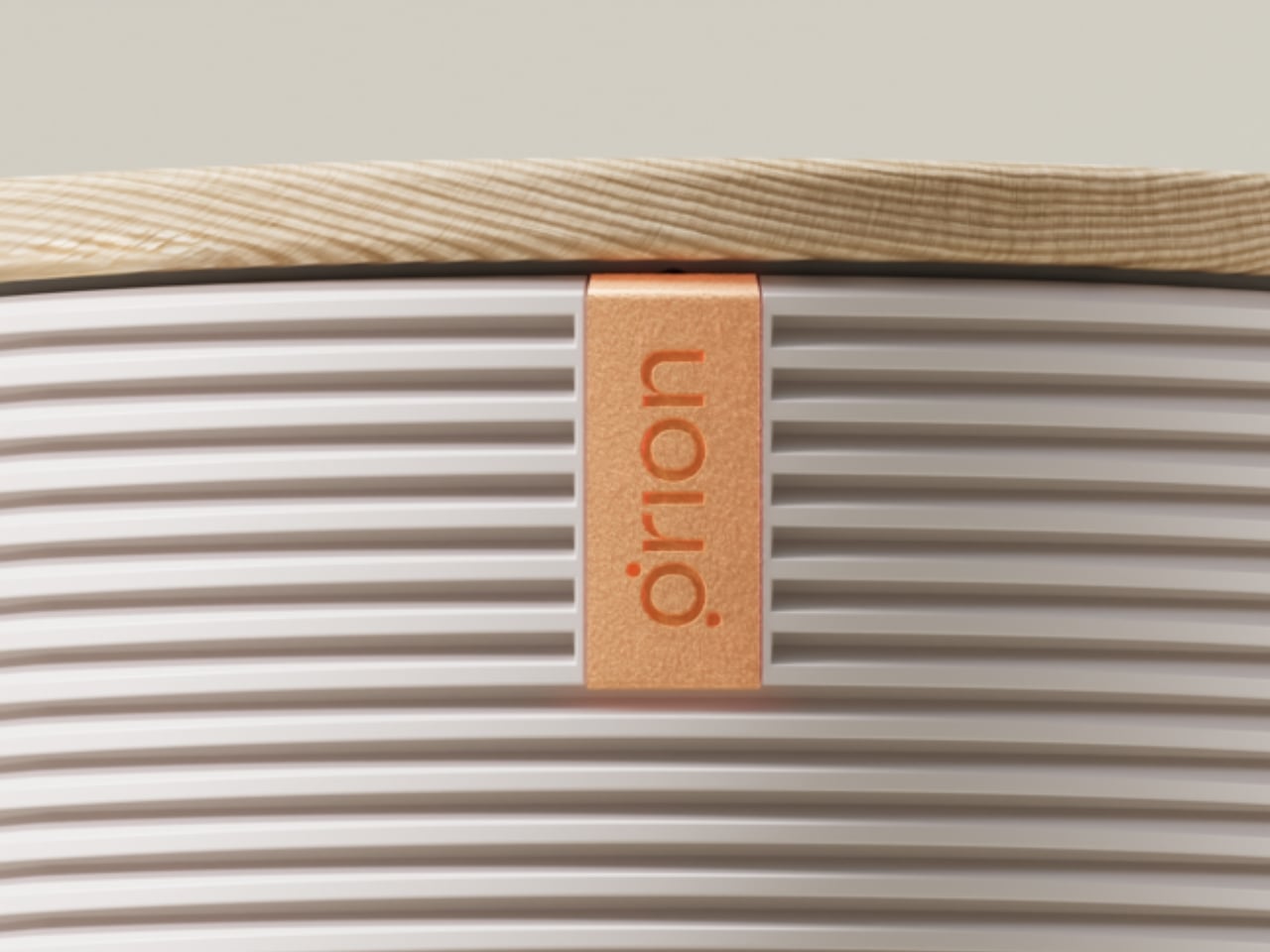
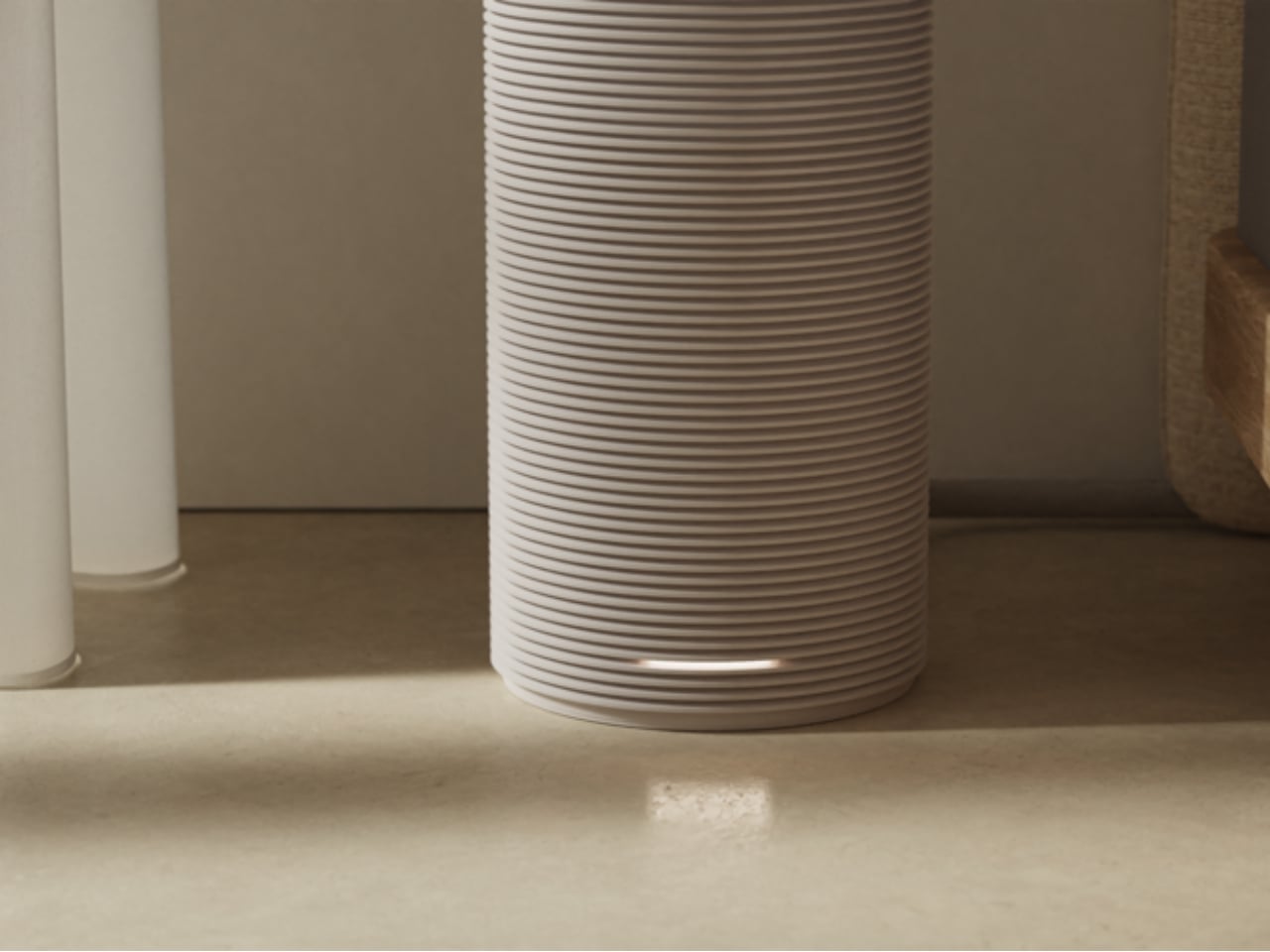
This little machine marks a departure from what we’ve come to expect from Dyson’s air purifiers. Instead of that signature circular opening, you get a star-shaped nozzle that looks like it belongs in an aerospace engineering lab. It’s not just for show, though. That unique design channels high-velocity airflow while keeping things whisper-quiet, hitting just 24 decibels in night mode. For context, that’s quieter than your average library and about the same volume as someone whispering sweet nothings into your ear.

Designer: Dyson

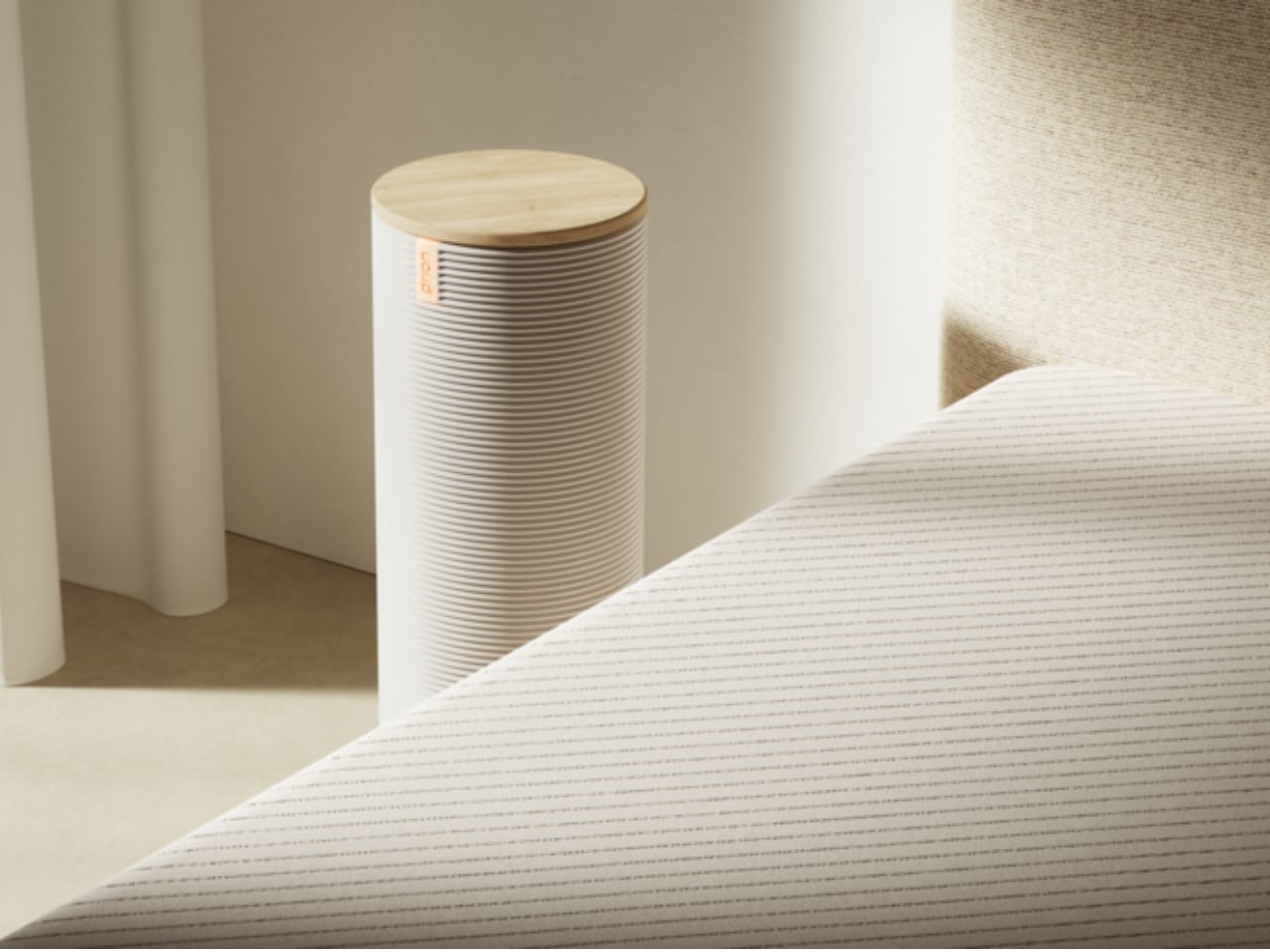
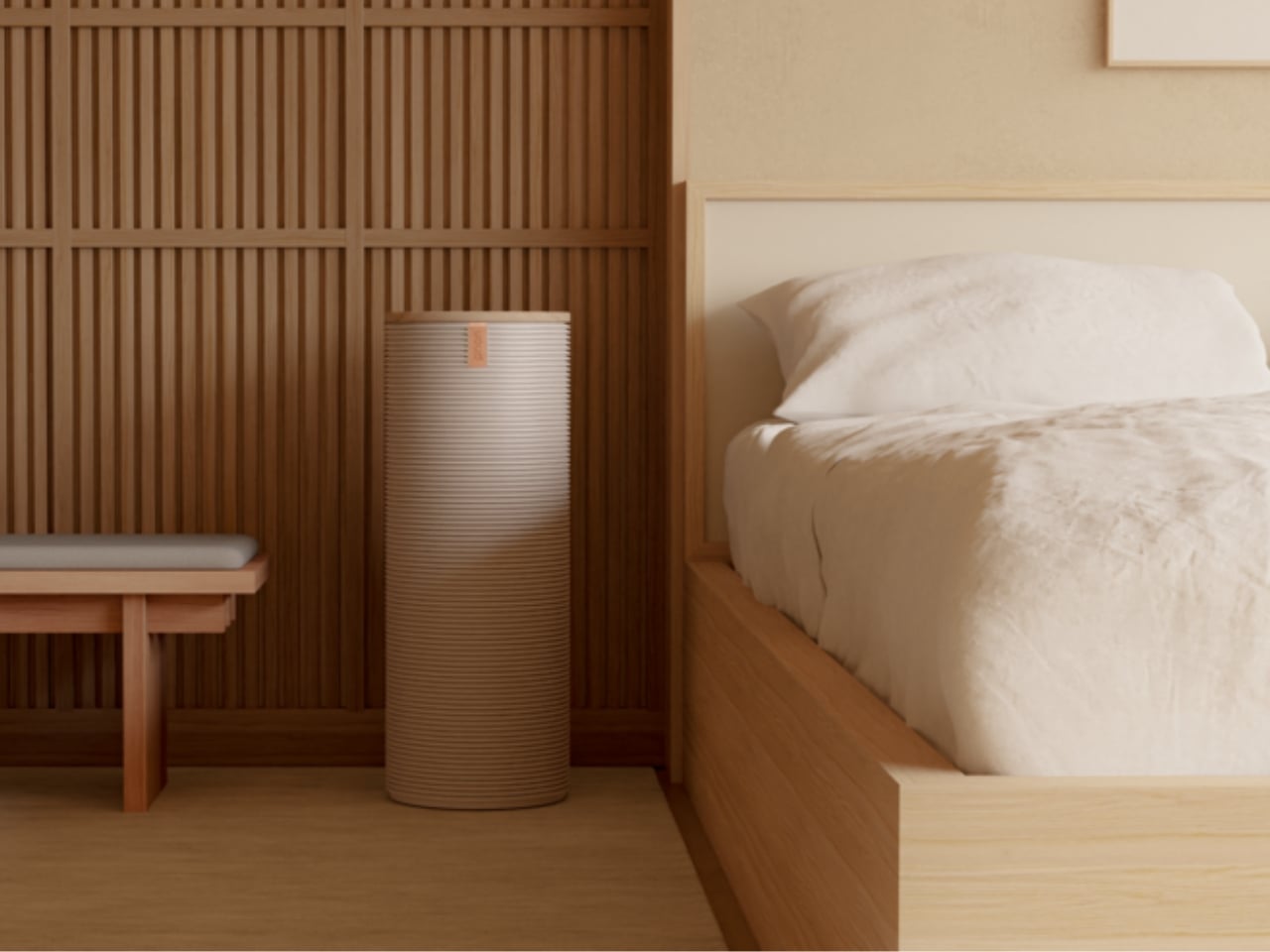
The HushJet measures 18.5 inches tall and just over 9 inches in diameter, weighing in at a manageable 7 pounds. It’s genuinely compact, the kind of appliance that can slip into a corner of your bedroom or perch on a kitchen counter without demanding attention. But don’t let the small footprint fool you. This purifier can handle rooms up to 203 square feet, making it perfectly suited for bedrooms, home offices, or cozy apartments.

What really sets the HushJet apart is its new filtration system. The electrostatic filter captures 99.97% of particles as small as 0.3 microns, including the usual suspects like pollen, dust, and pet dander. If you’ve got pets at home, this matters more than you might think. Those microscopic skin cells and protein particles from Fluffy’s grooming sessions become airborne allergens, and the HushJet’s activated carbon layer tackles both the dander and the inevitable pet odors.

Here’s where things get interesting from a sustainability standpoint. The electrostatic filter lasts up to five years, which is five times longer than previous Dyson filters. That means fewer replacements, less waste, and one less thing to remember on your shopping list. The filter uses less material while being more energy efficient, a win across the board for anyone trying to lighten their environmental footprint.

The technology powering this thing is genuinely clever. Dyson’s engineers borrowed aerodynamic principles from jet engines to create that focused stream of purified air. The star-shaped nozzle reduces turbulence and attenuates sound waves from the high-speed compressor, which is how they achieved that library-quiet operation. The whole system is fully sealed, meaning the nasty stuff it captures stays trapped inside rather than escaping back into your breathing space.

Smart features come standard. The built-in sensors monitor air quality in real time, automatically adjusting performance based on what’s floating around your room. You can also control everything through the MyDyson app, tweaking settings from your phone or setting schedules so the purifier runs only when you need it. That auto mode is particularly useful for energy efficiency, since the machine only kicks into gear when pollution levels actually warrant it.

The HushJet comes in two color options: Black/Teal and White/Silver. Both have that sleek, minimalist aesthetic Dyson is known for, the kind of design that doesn’t scream “appliance” but instead quietly complements your space. At $349.99, it sits at the higher end of the compact purifier market, though the combination of performance, filter longevity, and that jet-engine-inspired engineering might justify the price tag for air quality enthusiasts.

For anyone dealing with allergies, the HushJet makes a solid case for itself. By pulling pollen, dust, and other allergens out of circulation, it can help reduce those annoying symptoms like sniffles, scratchy throats, and itchy eyes that tend to worsen at night. Better air quality translates to better sleep, which is something most of us could use more of.

What Dyson has done here is take everything they learned from years of air purification technology and compress it into a surprisingly powerful package. The jet engine inspiration isn’t just a marketing gimmick. It’s a fundamental rethinking of how to move air efficiently and quietly in a small space. Whether you’re sensitive to noise, short on square footage, or just appreciate clever engineering, the HushJet Compact Purifier delivers on its promise to be small but mighty.

The post This $350 Dyson Air Purifier Borrowed Tech From Jet Engines first appeared on Yanko Design.

This 3-in-1 Cleaning Robot Fits in a Backpack

There’s something quietly revolutionary happening in the world of workplace maintenance, and it comes in a surprisingly sleek package. Meet Pulito, a cleaning system designed by Yilmaz Salman that’s challenging everything we thought we knew about keeping shared spaces spotless.

Most cleaning robots feel like expensive toys that promise the moon and deliver, well, a slightly cleaner floor. Pulito takes a completely different approach. Instead of being just another gadget you buy and forget about, it’s designed as a subscription-based service that actually makes sense for how modern workplaces function. Think of it less as a product and more as a cleaning partner that shows up ready to work.

Designer: Yilmaz Salman

What makes Pulito different is its three-pronged strategy for tackling workplace hygiene. The main unit houses a continuous air filtration system that quietly works away at improving indoor air quality while everything else happens around it. This isn’t just about appearances. We spend so much time indoors now, and air quality has become one of those invisible factors that affects how we feel and work without us even realizing it.

Then there’s the autonomous floor cleaning component, a detachable unit that handles the vacuuming and wiping without anyone needing to babysit it. It’s the kind of set-it-and-forget-it functionality that actually lives up to the promise. The robot navigates work areas independently, freeing up cleaning staff to focus on tasks that genuinely need a human touch.

And that’s where the third element comes in. Pulito includes an integrated storage drawer filled with specialized window cleaning tools designed for staff to use. Rather than trying to automate absolutely everything (because let’s be real, robot window washers still have a ways to go), it embraces a hybrid model where technology and human expertise work together. It’s a refreshingly honest approach to design that acknowledges the limitations of automation while maximizing its strengths.

The business model behind Pulito is just as thoughtful as the design itself. The rental service approach taps into the growing circular economy movement, where ownership matters less than access and sustainability. Recent projections suggest the service robot sector could hit $175 billion by 2030, and rental models are proving to increase operational convenience by 83% and sustainability by 76%. Those aren’t just impressive numbers. They represent a fundamental shift in how businesses think about equipment and resources.

For facility managers and business owners, the subscription model solves one of the biggest headaches with commercial cleaning equipment: the massive upfront cost and the inevitable maintenance nightmares. With Pulito, you’re essentially renting a service that includes the hardware, updates, and support. When something breaks or needs upgrading, it’s not your problem to solve. That’s a game changer for smaller businesses or startups that need professional-grade cleaning solutions without the capital investment.

The portability factor deserves attention too. Pulito’s main body features an ergonomic strap system that lets cleaning personnel carry it like a high-tech backpack between different zones. Look at those product shots of someone wearing it while navigating between buildings. It’s almost futuristic, transforming cleaning staff into something that feels more like tech-equipped professionals than traditional janitorial workers. There’s dignity in that design choice.

Aesthetically, Pulito doesn’t look like your typical cleaning equipment. The textured grey finish with those lime green accents feels contemporary without trying too hard. The perforated details on the air filtration unit give it an industrial-chic vibe that wouldn’t look out of place in a design-forward coworking space or a tech startup’s headquarters. It’s the kind of object you wouldn’t feel embarrassed to have sitting in your office lobby.

What Salman has created with Pulito is bigger than just another cleaning robot. It’s a complete rethinking of workplace hygiene infrastructure for the modern era. By combining autonomous technology, human collaboration, accessible pricing through subscriptions, and genuinely thoughtful industrial design, Pulito represents where facility management might actually be headed. Not a future where robots do everything, but one where smart design makes both human workers and automated systems more effective together.

The post This 3-in-1 Cleaning Robot Fits in a Backpack first appeared on Yanko Design.

Canyon’s Hexagon Charger Makes Wireless Charging Actually Cool

When you think about wireless chargers, your mind probably goes straight to flat discs or boring black rectangles scattered across your desk. But VLND Studio just flipped that script with their Wireless Charging Station for Canyon, and the design world took notice. This isn’t just another tech accessory pretending to be minimal. It’s a genuine rethinking of how charging stations can look and function.

The Hexagon 310, as it’s officially called, is part of Canyon’s newly introduced Hexagon series. What makes it stand out? That distinctive hexagonal smartphone charging pad that gives the whole station its name and personality. While most charging stations try to disappear into your space, this one demands to be seen, but in the best possible way. It’s sculptural without being pretentious, technical without feeling cold.

Designer: VLND Studio

VLND Studio’s approach here is refreshingly practical. The 3-in-1 station delivers 15 watts of rapid charging power, which means your devices actually charge quickly instead of just sitting there looking pretty. The hexagonal shape isn’t just about aesthetics either. It creates structured storage areas that guide where you place your devices, reducing that annoying fumbling around trying to find the sweet spot for wireless charging. The geometry actually helps with alignment and optimizes the limited real estate on your desk or nightstand.

Let’s talk about what you’re getting functionally. The station charges three devices simultaneously using a Qi magnetic connection that’s compatible with Apple devices. Canyon includes a 20W adapter with changeable EU and UK plugs, so you’re covered whether you’re in London or Lisbon. There are LED indicators and backlighting, plus four types of protection (over-current, over-voltage, over-temperature, and foreign object detection) built in, because nobody wants their phone turning into a hand warmer.

The Red Dot jury was particularly impressed by how the symmetrical geometry unites functional organization with what they called “distinctly futuristic aesthetics.” That’s design-speak for saying it looks like it belongs in a tech enthusiast’s setup without trying too hard. The compact design ensures stability on any surface, and those rounded edges and soft curves give it an approachable, almost friendly presence.

What’s interesting about this collaboration is that Canyon, typically known for more budget-conscious tech accessories, partnered with VLND Studio to create something that punches way above its weight class design-wise. The in-house team at Canyon (including designers Vladlens Zabelskis, Elena Alekseeva, Dmitry Romanenko, Ilya Koloskov, Vladislav Olinov, and Igor Volkov) brought their engineering expertise, while VLND Studio clearly pushed the aesthetic boundaries.

The color options show restraint in the best way. You can choose from light grey with an orange accent, cool grey with blue, or an all-black version with green. That pop of color in the vertical support column adds just enough visual interest without overwhelming the minimalist vibe. It’s the kind of detail that makes you smile when you notice it but doesn’t scream for attention.

Canyon describes the Hexagon 310 as exemplifying their core vision: designing tech products that are as intelligent as they are visually compelling. That might sound like marketing fluff, but when you look at the actual product, it tracks. This charging station does more than organize your devices. It brings a little bit of joy to the mundane task of keeping your gadgets powered up.

For design enthusiasts and tech lovers alike, the Hexagon 310 represents something we don’t see enough of: everyday objects that work brilliantly while also being genuinely interesting to look at. VLND Studio and Canyon proved that wireless chargers don’t have to be afterthoughts in your space. Sometimes, they can be conversation starters.

The post Canyon’s Hexagon Charger Makes Wireless Charging Actually Cool first appeared on Yanko Design.

This 3D-Printed Roof Is Saving 2,000-Year-Old Roman Tombs

There’s something beautiful about watching cutting-edge technology come to the rescue of ancient artifacts. At the Archaeological Complex of Carmona in Spain, architects Juan Carlos Gómez de Cózar and Manuel Ordóñez Martín have created a stunning example of this intersection by designing a 3D-printed canopy that protects Roman tombs while barely making its presence known.

The project tackles a challenge that archaeologists face worldwide: how do you preserve delicate historical sites without turning them into enclosed museum pieces? These Roman tombs have survived centuries, but exposure to the elements continues to threaten their integrity. The solution needed to be protective yet unobtrusive, functional yet respectful of the site’s historical significance.

Designers: Juan Carlos Gómez de Cózar and Manuel Ordóñez Martín (photography by Jesús Granada)

What makes this canopy special isn’t just that it uses 3D printing technology, though that’s certainly impressive. It’s the way the designers thought about the entire system. Rather than simply throwing a roof over the tombs and calling it a day, they created what’s essentially a climate-control system disguised as architecture.

The canopy features a double-layer envelope that does way more than keep rain off ancient stone. Built into this roof are ventilation and air extraction components that actively regulate temperature and humidity. Think of it like a thermostat for history, maintaining the stable conditions these tombs need to survive another few centuries. The system works passively, meaning it doesn’t require constant energy input to function, which is both environmentally smart and practical for a site that needs long-term, low-maintenance protection.

From a design perspective, the structure manages to be both present and invisible. The architects minimized the number of supports needed, creating an open, continuous space above the tombs rather than a forest of columns that would obstruct views and interrupt the spatial experience of the site. When you’re standing there, you get shelter and the tombs get protection, but the visual focus remains on the archaeology, not the modern intervention.

The use of 3D printing technology opens up possibilities that traditional construction methods can’t match. The canopy’s components could be fabricated with complex geometries optimized for both structural efficiency and environmental performance. This level of customization would be prohibitively expensive or simply impossible using conventional building techniques. Plus, the printing process allows for precision and repeatability, ensuring each element fits together exactly as designed.

Another thoughtful touch is that the entire system is reversible. This might not sound exciting, but it’s actually a big deal in heritage conservation. The principle of reversibility means that if better technology comes along, or if the site’s needs change, this intervention can be removed without damaging the original tombs. It’s a humble approach to design, acknowledging that today’s cutting-edge solution might be tomorrow’s outdated method.

This project sits at a fascinating crossroads of disciplines. It required archaeological expertise to understand the site’s needs, architectural skill to design an elegant solution, engineering knowledge to make it structurally sound, and technological savvy to leverage 3D printing capabilities. The fact that two PhD architects pulled this together speaks to the increasingly interdisciplinary nature of modern design work.

For anyone interested in how technology shapes our relationship with the past, this canopy offers a compelling case study. It proves that preservation doesn’t have to mean freezing things in time or hiding them away. Instead, smart design can create conditions where ancient sites remain accessible and experiential while getting the protection they need.

As 3D printing technology becomes more accessible and sophisticated, we’ll likely see more projects like this one. The ability to create custom, site-specific solutions for complex problems is exactly what heritage sites need. These tombs in Carmona are getting a second chance at longevity, wrapped in a protective embrace that honors both their ancient origins and our modern capabilities.

The post This 3D-Printed Roof Is Saving 2,000-Year-Old Roman Tombs first appeared on Yanko Design.

Rain, Light, and Lunch: Inside Ubud’s Circular Bamboo Oasis

There is a moment at Juna Ubud when you forget whether you’re indoors or out. You’re sitting at your table, the air is soft, the light is filtered, and above you a circular bamboo roof seems to hover, tiered like a rice terrace in the sky. Somewhere overhead, rain is quietly being choreographed.

Designed by Pablo Luna Studio, Juna is a Balinese restaurant that treats climate as its main collaborator. The building is essentially a circle, pulled open and layered so light, air, and water can move through it with almost theatrical precision.

Designer: Pablo Luna Studio

Instead of a heavy roof that just keeps weather out, Juna’s canopy funnels rain toward a central point. The tiers step and vent toward the middle, so water is guided inward while views and breezes stay open at eye level. The effect is part stadium, part shrine, part sci‑fi pavilion. You feel sheltered but not sealed.

At the core sits a courtyard with a pond and lush planting, the kind of green pocket that makes you slow down whether you meant to or not. This is where that carefully collected rain completes the story, feeding a micro‑landscape that cools the air and mirrors the roof above. It is climate control as choreography: water falls, air flows, light shifts, and the architecture simply sets the stage.

The structure itself is a study in how “natural” can still feel sharply designed. A forest of bamboo arches and A‑frames defines the dining space, but the geometry is crisp, almost graphic. The bamboo isn’t rustic background texture; it behaves like a drawn line, tracing curves, spans, and thresholds. Look closely and you see intricate joinery, where each connection feels both handcrafted and engineered.

On top of that bamboo skeleton, the roof is finished with ulin wood shingles, crafted by local artisans. The shingles give the whole volume a tactile, scaled surface, like a creature that has grown here over time. Near the center, a skylight made from clear panels sits on a steel frame that has been finished to visually melt into the bamboo, keeping the roof watertight without breaking the illusion of an all‑natural canopy.

For a restaurant, all of this could have turned into spectacle. Instead, the architecture mostly frames what’s around it. The site is on an elevated stretch of Ubud, with views westward over a river and rice fields. The building doesn’t compete with that; it edits it. Open sides and carefully placed arches direct your sightlines out toward the landscape, so a casual glance from your seat becomes a composed view.

What’s interesting here for anyone into design is how Juna feels like a quiet rebuttal to the glass‑box global aesthetic. This is not a sealed, air‑conditioned capsule that dominates its plot. It rides the existing contours and leans on passive strategies: shade from the broad roof, cross‑ventilation through the open sides, evaporative cooling from the central pond. The “technology” is mostly physics, material intelligence, and local craft.

Yet the project doesn’t romanticize tradition. The hybrid of bamboo, steel, engineered skylight panels, and carefully detailed shingles is a reminder that sustainable architecture today is rarely about going backward. It is about stacking old knowledge and new tools until they click into something that feels both inevitable and fresh. There is also a social scale question that Juna answers with surprising clarity. The circular plan pulls people into a shared field of view, but the layered roof and arches break the space down into more intimate pockets. You’re aware of the room as a whole, yet your table still feels like its own scene. For a restaurant, that balance is gold: collective energy without the food‑court vibe.

Juna fits into a growing fascination with eco‑spectacle spaces, the kinds of venues that show up endlessly in travel reels and architecture feeds. But what makes it more than a backdrop is that the photogenic moves are doing real work. The halo of bamboo, the stepped roof, the reflection of the pond, the dappled light; all of it is performance with purpose, tuned to climate, craft, and comfort. If you’re into design, this is a case study in how a single strong gesture a circle in plan, a ring in section, a crown in elevation can carry an entire project. If you lean more toward tech, it is a reminder that sometimes the smartest system is the one that requires no app, no interface, no instructions. Just gravity, airflow, and a roof that knows what to do when it rains.

The post Rain, Light, and Lunch: Inside Ubud’s Circular Bamboo Oasis first appeared on Yanko Design.

Lotte E&C Just Turned 5 Eggs Into the Welcome Gift You’ll Use

There’s something refreshing about a company that doesn’t just slap their logo on a tote bag and call it customer appreciation. SWNA Office’s Earth’s Hatch kit for Lotte E&C proves that welcome gifts can be more than forgettable tchotchkes collecting dust in a drawer. This is design that actually thinks about the person receiving it, and what they might genuinely need in their daily life.

The kit arrives in a birdhouse-shaped package made from pulp paper, the kind that feels substantial in your hands. Strip away the paper band, and inside you’ll find five egg-shaped magnetic objects nestled in protective pulp packaging. The whole experience feels deliberate, like opening something that was designed to be opened, not just shipped.

Designer: SWNA Office

But here’s where it gets interesting. Those five eggs aren’t just decorative items you’ll stash away and forget. Each one serves a specific purpose at the threshold of your home, that chaotic zone where packages pile up and keys mysteriously vanish. One egg contains a ceramic-blade box cutter for safely slicing through Amazon deliveries. Others function as magnetic hooks and holders, perfect for hanging access cards, food waste sorting tags, car keys, or that shoehorn you’re always hunting for when you’re already late.

The egg shape itself is surprisingly smart from a user experience perspective. It’s soft and rounded, fitting comfortably in your palm. The scale feels just right, not so small that it’s fiddly, but not so large that it dominates your door. There’s a gentle familiarity to holding an egg, even one made from recycled plastic. It’s a form we all understand instinctively.

The birdhouse package transforms into a refillable tissue holder after you’ve unpacked everything. The circular opening on the side isn’t just aesthetic; it’s functional, letting you see at a glance when you’re running low. Made from vegan leather, it brings a soft contrast to the stone-like texture of the eggs. The eagle motif threading through both the eggs and the “nest” creates visual continuity that feels intentional rather than gimmicky.

What makes this project worth paying attention to is how it handles sustainability without being preachy. Sure, the eggs are made from recycled plastic and the case uses vegan leather, but the kit doesn’t stop at material choices. It’s designed to make eco-friendly living more manageable. That box cutter with the ceramic blade helps you break down boxes properly for recycling. The sorting tools encourage proper waste management. The kit isn’t just made sustainably; it helps you live more sustainably.

This is where corporate gifting usually fails. Most welcome packages are essentially branded advertising that recipients tolerate. Earth’s Hatch flips that script by centering utility. The magnetic feature is particularly clever because it solves a real problem. How many times have you frantically searched for your keys or access card? Now they have a dedicated spot right by your door, held by these smooth, tactile objects that are actually pleasant to interact with daily.

The name itself, Earth’s Hatch, captures what Lotte E&C seems to be going for with their “safe planet project.” It’s about emergence, about something new coming into being. The eagle egg symbolism reinforces that idea of potential and care. Eagles are protective of their eggs, just as we should be protective of the planet. It’s a bit poetic for a construction company, but that’s precisely what makes it memorable.

SWNA Office managed to create something that works on multiple levels. At first glance, it’s a beautiful object with its muted, speckled surface that photographs gorgeously in that minimalist product photography style we’ve all become accustomed to. But it doesn’t rely solely on aesthetics. The design holds up in actual use, which is rarer than it should be.

What this project really demonstrates is that thoughtful design can elevate even something as mundane as organizational tools and tissue holders. By connecting form, function, and meaning, Earth’s Hatch becomes more than a welcome kit. It’s a physical manifestation of a company’s values, something recipients will actually use and remember. That’s the kind of design that deserves attention.

The post Lotte E&C Just Turned 5 Eggs Into the Welcome Gift You’ll Use first appeared on Yanko Design.

This $129 Bag Lets You Play Music Without Opening It

There’s something fascinating about watching a tech company obsess over the mundane. While most electronics brands treat bags as afterthoughts (slap a logo on generic nylon, call it a day), Teenage Engineering went ahead and designed a shoulder bag that’s as thoughtful as their cult-favorite synthesizers. The Field OB-4 shoulder bag isn’t trying to be your everything bag, and that specificity is precisely what makes it interesting.

Built primarily to carry the OB-4 Magic Radio, this $129 shoulder bag features a mesh front panel that lets you play music while your device stays tucked inside. Think about that for a second. Most bags are designed to protect and conceal. This one wants you to use what’s inside without ever taking it out. It’s the kind of detail that separates product design from problem-solving.

Designer: Teenage Engineering

The construction tells you everything about Teenage Engineering’s priorities. The shell uses tear and abrasion-resistant nylon 66 with a fire retardant treatment and PU backing for water repellency (1500 mm rating on the black version, 3000 mm on the white). These aren’t vanity specs. They’re the materials you’d find on technical outdoor gear, applied to something that’ll probably spend more time on subway cars than mountain trails. It’s overbuilt in the best possible way.

The bag features a roll-down covered opening that gives you variable capacity depending on what you’re carrying. There’s an internal pocket for your everyday small items (keys, wallet, that tangle of earbuds you swear you’ll organize someday). The back pocket uses hook-and-loop closure and is specifically sized for cables and the Ortho remote. Again, that specificity. Teenage Engineering could have made generic pockets, but they measured their own accessories and built compartments around them. You can wear it crossbody style or grab the side handle for hand-carry mode. The adjustability matters because context shifts throughout your day. Crossbody when you’re navigating crowds, hand-carry when you’re sitting at a cafe. The bag adapts rather than forcing you to commit to one carrying style.

What’s compelling here is how Teenage Engineering approaches accessories. This isn’t merchandising. It’s extension of philosophy. The same company that makes the OP-1 synthesizer (a device that prioritizes tactile joy and visual clarity) isn’t going to phone in a bag design. They’re known for products that look like nothing else on the market, that Dieter Rams-meets-Nintendo aesthetic that either clicks with you immediately or leaves you cold. The Field OB-4 shoulder bag comes in black or white, maintaining that minimal color palette Teenage Engineering loves. Custom-made aluminum hardware and YKK EXCELLA zippers keep everything smooth and reliable. These are components you’d find on high-end luggage, the kind of details most people won’t notice until they’ve used cheaper alternatives.

Is this bag essential? Absolutely not. You could carry an OB-4 in any number of generic shoulder bags. But you’d lose the mesh front functionality. You’d lose the precise pocket sizing. You’d lose that feeling of using a complete system where everything has been considered. Teenage Engineering has always existed in this interesting space where consumer electronics meet design objects. Their products cost more than alternatives because they’re selling coherence, not just capability. The Field OB-4 shoulder bag extends that logic into accessories. It’s designed for people who already bought into the ecosystem, who appreciate when someone sweats the details nobody asked them to perfect.

At $129, it’s positioned as a premium accessory, not an impulse add-on. That pricing filters for the audience who gets it, who understands why you’d spend serious money on a bag for a portable speaker. It’s the same crowd that bought the OB-4 in the first place, people who could’ve gotten a Bluetooth speaker for fifty bucks but wanted something with personality instead. Whether you need this bag depends entirely on whether you value design specificity over universal functionality. For the right person, this is exactly what they’ve been looking for. For everyone else, it’s an interesting case study in how far product design can go when companies refuse to take shortcuts.

The post This $129 Bag Lets You Play Music Without Opening It first appeared on Yanko Design.

The Cutest (or Creepiest) Coffee Maker You’ll Ever Own

One of the things that is on my soon to buy for this year is a moka pot. I’ve been intrigued about this Italian way of brewing an espresso-like coffee through steam pressure. It’s obviously cheaper than an actual espresso machine and some coffee lovers have said that it tastes even better since it’s a more “natural” way of pulling the espresso shot. There are some interesting colors out there but the design has remained relatively the same. It’s like when you see one moka pot, you’ve seen them all.

This product concept by Davide Bozzo wants to reimagine the iconic Moka pot and turn it into something both functional and whimsical. The MOKY blurs the line between industrial design and art collectible as it is designed to look like the Tin Man is brewing your coffee for you.

Designer: Davide Bozzo

The pot’s design is that of a metallic figure sitting down and just waiting to be steamed to give you the perfect cup. It comes complete with a face and limbs which may freak some people out or which some may find really cute, depending on how you feel about anthropomorphic objects.

While it looks cute or scary, it still comes from authentic Italian design heritage with its fresh, modern metallic aesthetic. This combination of the metallic soul and the modern reinterpretation means it’s something that’s meant to be displayed and not hidden in your cabinet, even when you’re not brewing a cup.

What makes MOKY particularly interesting is how it taps into the growing art toy market. If you’ve been following design trends lately, you’ve probably noticed how collectible designer toys have exploded in popularity. These pieces aren’t just for kids or hardcore collectors anymore. They’ve become legitimate design objects that sit comfortably on shelves next to books, plants, and other carefully curated décor items. MOKY fits perfectly into this space because it offers something most art toys don’t: actual functionality.

Think about it. Most collectible figures just sit there looking pretty, which is fine, but MOKY actually does something. Every morning when you brew your coffee, you’re interacting with your art piece. It becomes part of your daily ritual, which creates a deeper connection to the object than something that just gathers dust on a shelf. There’s something really special about design that serves multiple purposes, especially when it does both jobs so well.

The fact that it’s designed in Milan also adds another layer of credibility. Milan isn’t just any city. It’s the global capital of design, home to some of the world’s most prestigious design schools and the famous Milan Design Week. When something comes from Milan, it carries a certain weight, a promise that real thought and expertise went into its creation. Davide Bozzo isn’t just slapping a face on a coffee maker and calling it art. He’s taking a beloved cultural icon and genuinely reimagining it for a new generation of design enthusiasts.

For collectors, MOKY represents something truly unique in a market that’s often saturated with similar concepts. It’s not another vinyl figure of a popular character. It’s not a recolor of an existing design. It’s a fresh take on something familiar, which is exactly what makes great design collectibles so appealing. You get the joy of recognition combined with the thrill of discovery. Plus, as coffee culture continues to thrive and people invest more in their home brewing setups, pieces like MOKY become conversation starters that bridge multiple interests.


Whether MOKY ever makes it to production remains to be seen, but as a concept, it perfectly captures where design is heading: playful, functional, collectible, and unafraid to reimagine the classics. It proves that even the most traditional objects can be transformed into something that makes you smile every morning while still honoring what made them special in the first place. And honestly, isn’t that exactly what good design should do?

The post The Cutest (or Creepiest) Coffee Maker You’ll Ever Own first appeared on Yanko Design.