Balmuda Just Made the Humidifier You’ll Actually Display

Let’s be honest: most humidifiers are not so visually pleasant. They’re the appliances we hide in corners, tuck behind furniture, or banish to the bedroom where guests won’t see them. But what if a humidifier was so stunning you’d actually want to show it off? Enter the Balmuda Rain, a Japanese design marvel that’s making us completely rethink what a functional appliance can look like.

The moment you see the Balmuda Rain, you know something’s different. Standing at just over 14 inches tall with a perfectly square footprint, this humidifier looks more like a sculptural vase than a household appliance. And that’s entirely intentional. The Japanese design company Balmuda has built its reputation on transforming everyday objects into things of beauty, and with the Rain, they’ve truly outdone themselves.

Designer: Balmuda

But here’s where it gets really interesting. Most humidifiers make you wrestle with a detachable tank, carrying it back and forth to the sink, water dripping everywhere. The Rain throws that entire concept out the window. Instead, it features a revolutionary tankless design. You simply pour water directly into the top, like you’re filling a vase with fresh flowers. It’s such an elegant solution that you’ll wonder why no one thought of it sooner. The 5-liter capacity means you’re not constantly refilling it, and a subtle LED display lets you know when it’s running low.

Now, before you think this is all style and no substance, let me tell you about what’s happening inside this beauty. The Rain isn’t just humidifying your air; it’s actually purifying it too. A multi-layer filtration system works quietly in the background, with an enzyme pre-filter that captures dust and viruses, plus a silver ion cartridge for antibacterial protection. It uses natural evaporation technology rather than ultrasonic misting, which means no white dust settling on your furniture and a much more energy-efficient operation.

The performance is genuinely impressive. With five adjustable levels, the Rain can push out up to 600 ml of moisture per hour, easily handling rooms up to 28 square meters. There’s an automatic mode that maintains ideal humidity levels between 40 and 60 percent, which is exactly where you want to be for healthy skin and respiratory comfort. In testing, it took just 30 minutes to bring a dry 40-square-meter room from 35% to a comfortable 50% humidity.

The interface is beautifully simple. A circular control ring lets you adjust settings, and you can customize everything from display brightness to speaker volume. There’s even a child safety lock for households with curious little ones. The display automatically dims when you’re not using it, so it won’t light up your bedroom at night. Maintenance is surprisingly easy too. The main filter gets cleaned with warm water and household items like citric acid and baking soda. The enzyme pre-filter just needs a quick vacuum, and the silver ion cartridge rinses under running water. No complicated procedures or expensive replacement parts to track down.

Here’s the thing about the Balmuda Rain: it represents a shift in how we think about the objects in our homes. We’re moving past the era of purely utilitarian appliances that we tolerate because we need them. Instead, we’re seeing a new generation of products that refuse to compromise, offering both exceptional functionality and genuine aesthetic value. Yes, the Rain comes with a premium price tag. But for design enthusiasts, tech lovers, and anyone who believes their space should reflect their taste, it’s an investment in daily delight. This is an object you’ll use every winter and still appreciate five years from now. It won’t feel dated or look tired because good design is timeless. The Balmuda Rain proves that we don’t have to choose between form and function. We can have both, elegantly integrated into one beautiful package. And honestly? That’s exactly what our homes deserve.

The post Balmuda Just Made the Humidifier You’ll Actually Display first appeared on Yanko Design.
This Smart Tea Cup Wants You to Actually Enjoy Your Tea

Here’s something you probably haven’t thought about today: when was the last time you actually paid attention while drinking tea? If you’re like most of us, you’re probably scrolling through your phone, answering emails, or binge-watching something while your tea gets cold on the side table. Tea has become background noise in our lives, something we consume rather than experience. Which is kind of ironic, considering tea ceremonies have been about mindfulness and presence for centuries.

Enter SoundSip, a design project by Aanya Jain that’s trying to bring back the ritual of tea drinking in a way that feels fresh and modern. And it does this through something unexpected: sound. The concept is beautifully simple. SoundSip is a ceramic tea cup with a hidden trick. When you hold it, it plays a soft, ambient soundscape. Put it down, and the sound pauses. Pick it up again, and it continues exactly where it left off. There are no buttons to press, no screens to swipe, no apps to download. Just you, your tea, and a cup that responds to your touch.

Designer: Aanya Jain

What makes this interesting is how the sound actually works. It’s not just random ambient noise or generic meditation music. The soundscape is designed to mirror the journey of drinking tea itself. It starts chaotic, busy, layered with competing sounds that feel restless and overwhelming. Sound familiar? That’s basically how most of our days feel. But as you continue holding the cup and sipping your tea, the sound gradually shifts. It becomes calmer, more spacious, eventually settling into white noise, what the designer calls “the sound of silence.” It’s a clever bit of emotional design. The sound isn’t just decoration; it’s guiding you through a transition from stress to stillness. You’re not being told to relax, you’re being gently led there through your own experience of holding and sipping.

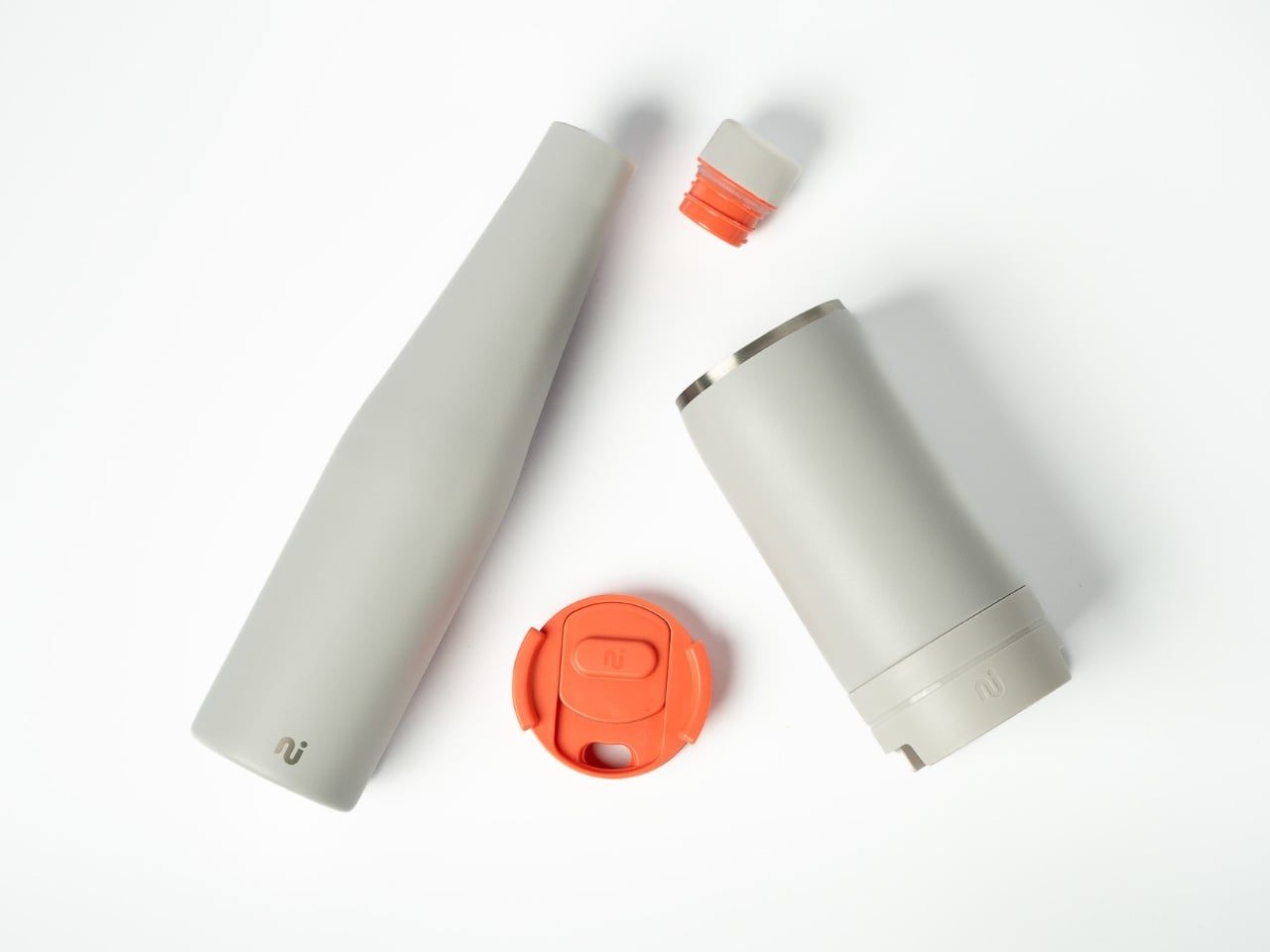
The physical design backs this up beautifully. The cup itself has that warm, tactile quality that makes you actually want to hold it. There’s subtle texture, a satisfying weight, and even a small ridge near the rim that catches drips. These aren’t flashy features, but they show a thoughtfulness about the actual experience of using the object. The electronics live in a detachable magnetic module underneath the cup, so you can clean the cup properly without worrying about destroying the tech. Smart, practical, and invisible when it needs to be.

What I find most compelling about SoundSip is how it pushes back against the way we usually think about smart objects. Most connected products are about adding features, notifications, data, more information. SoundSip does the opposite. It uses technology to create less distraction, not more. There’s no connectivity, no data tracking how many ounces you drank or reminding you to stay hydrated. It’s tech in service of presence rather than productivity. This feels particularly relevant right now, when we’re all drowning in apps that promise to make us more mindful but end up being just another thing demanding our attention. SoundSip sidesteps that trap entirely. The interaction is purely tactile and auditory. Your hands know what to do. There’s no learning curve, no manual, no setup process.

Of course, SoundSip isn’t going to solve our collective attention crisis. One cup can’t undo the grip that screens and notifications have on our daily lives. But it does something important: it shows that design can create moments of pause without being preachy about it. It doesn’t lecture you about self-care or productivity. It just makes the simple act of drinking tea a little more worth your attention. Everything seems to be optimized for efficiency right now, where even our downtime gets gamified and tracked. So there’s something quietly radical about a cup that just wants you to slow down and listen. Not to a podcast or playlist, but to the sound of yourself shifting from noise to stillness, one sip at a time.

The post This Smart Tea Cup Wants You to Actually Enjoy Your Tea first appeared on Yanko Design.
This $995 Printer Turns Your Voice Into Braille Labels

Picture this: you’re helping your grandmother organize her medicine cabinet, but she’s visually impaired. Those prescription bottles all look identical to her touch. You want to help, but learning Braille isn’t exactly something you picked up over coffee. Now imagine pulling out a compact printer, speaking into your phone, and watching as sticky Braille labels emerge, ready to paste onto each bottle. That’s the beautiful simplicity behind Mangoslab’s Nemonic Dot printer, unveiled at CES 2026.

This isn’t just another gadget trying to solve a problem nobody has. It’s a genuinely thoughtful piece of design that bridges the gap between those who want to help and those who need it. The Nemonic Dot is roughly the size of a stack of drink coasters, a plastic square about 4.5 inches wide and 2 inches thick that connects wirelessly to your smartphone. What makes it special isn’t its size, though. It’s what happens when you open the companion app and simply talk to it.

Designer: MangosLab

The magic lies in the voice interface. You speak a word into the app, and it converts your speech into text, then translates that text into Braille, and finally prints it onto a peel-and-stick strip. No Braille keyboard required. No special training needed. Just your voice and a desire to make someone’s daily life a little easier. It’s the kind of intuitive design that makes you wonder why nobody thought of it sooner.

Mangoslab, which spun off from Samsung’s internal C-Lab research department years ago, originally made their name with a cute sticky note printer. But they’ve evolved that concept into something with real social impact. Traditional Braille label makers cost upward of $1,250 and require users to type directly in Braille using specialized keyboards. The Nemonic Dot comes in under $1,000 and eliminates that learning curve entirely.

What’s particularly clever is how the device handles multiple languages and Braille standards. Because here’s something most people don’t realize: Braille isn’t universal. French Braille differs from English Braille, and there are both six-dot and eight-dot standards to navigate. The Nemonic Dot handles all of this through software translation, meaning it can adapt as standards evolve or when you need to switch between languages. The printer uses electric currents to move ball pins up and down, embossing uniform dots that are 0.6 millimeters high, meeting international standards for tactile readability.

The real-world applications are endlessly practical. Salt and pepper shakers that actually tell you which is which. Spice jars in the pantry. Light switches around the house. Medication bottles in the bathroom cabinet. These are everyday objects that most of us take for granted, but for someone with visual impairment, they represent small daily frustrations that add up. The Nemonic Dot turns those frustrations into solved problems, one sticky label at a time.

What I find most compelling about this design is how it shifts the power dynamic in accessibility. Usually, adaptive technology requires the person with a disability to do all the learning and adapting. But the Nemonic Dot is explicitly designed for friends and family members to use on behalf of their visually impaired loved ones. It’s a recognition that accessibility isn’t just about the end user, it’s about creating ecosystems of support that are easy for everyone to participate in.

The printer runs on battery power or an AC adapter, making it genuinely portable. When your label is finished printing, you press a button on top to trim the strip, and you’re done. The whole process takes seconds. There’s something refreshing about technology that doesn’t try to overcomplicate things. In an era of smart everything and AI everything, the Nemonic Dot does one thing exceptionally well: it turns spoken words into tactile information.

This is inclusive design at its best. Not flashy, not trying to reinvent the wheel, just thoughtfully addressing a genuine need with elegant simplicity. It’s a reminder that the most impactful innovations aren’t always the ones with the most features or the biggest screens. Sometimes they’re the ones that quietly remove barriers and make life just a bit more navigable for everyone.

The post This $995 Printer Turns Your Voice Into Braille Labels first appeared on Yanko Design.
This $18,000 Holographic Display Needs No Glasses to See 3D Videos

Do you remember that scene from Minority Report when Tom Cruise’s character was walking around and there were 3D hologram ads being served to him after scanning his eyeballs? You might think we’re decades away from this, but the technology is actually already being developed. Well, we still won’t get that kind of personalized marketing just yet, but the holographic structure of these displays may already be here sooner than we thought.

The Hololuminescent™ Display (HLD) is a revolutionary razor-thin holographic display that transforms standard 2D video content into three-dimensional, spatial experiences. Basically, it can display virtual space from your ordinary videos to make it seem like the people, products, and characters in them are floating in mid-air on the display screen. So those scenes from sci-fi movies with hologram videos in public spaces won’t be sci-fi anymore in the very near future.

Designer: Looking Glass

The HLD has a built-in holographic layer inside the LCD/OLED panels that creates what they call a “holographic volume.” There’s a 16″ model that is perfect for your desktop or counter, and there’s an 86″ model that can be used in retail stores, public installations, and as signage. It has an ultra-slim design, so you can display it anywhere you could put a regular 2D screen. It uses patented technology (with some patents still pending) for both the hardware and software, with worldwide protection.

Unlike some of the VR/AR devices out there, this one doesn’t need any glasses or additional devices. Viewers can experience these 3D holograms with just their naked eyes, making it completely accessible and barrier-free. What’s more, it can transform standard 2D videos into holographic displays, so you don’t need to pay for expensive 3D modeling or complex production pipelines. Of course, there may probably still be some expense involved in optimizing these videos, but it will likely not be as expensive as the usual methods.

There are many uses for this kind of device. For retail stores, it can be used to catch passersby’s attention without blocking sightlines. Imagine walking past a storefront and seeing a gorgeous piece of jewelry or a designer handbag floating in the air, rotating to show every exquisite detail. Point-of-sale displays can also now be more dynamic if you have this holographic display, potentially increasing customer engagement and dwell time.

For collectors, this opens up fascinating possibilities. Imagine showcasing your most prized collectibles, whether it’s limited edition art, rare figurines, or vintage fashion pieces, in holographic format. You could create a digital gallery that brings your collection to life in ways traditional display cases never could. The technology could revolutionize how we preserve and share precious memories too, transforming video messages from loved ones into immersive, lifelike experiences.

This display is also incredibly useful for remote presentations, brand experiences, and entertainment venues. Since it works under normal lighting conditions (no dark rooms required), it’s also perfect for outdoor public spaces like bus shelters, museum installations, and trade show booths.

The 86″ model is currently priced at $18,000 (down from $20,000) and is set to ship in Spring 2026. While that might seem steep for individual consumers right now, early adoption by businesses and institutions will likely drive innovation and eventually make smaller, more affordable versions available for home use.

What’s truly exciting is that we’re witnessing the birth of an entirely new display category. The Hololuminescent™ Display bridges the gap between our current flat-screen world and the immersive future we’ve only seen in movies. As the technology matures and becomes more accessible, we might soon find ourselves surrounded by holographic displays in our daily lives, from shopping malls to our living rooms. The future of visual communication is literally taking shape before our eyes, and it’s more tangible than we ever imagined.

The post This $18,000 Holographic Display Needs No Glasses to See 3D Videos first appeared on Yanko Design.
Samsung’s Retro OLED Cassette and Turntable Concepts Are Pure Nostalgia

If you’ve lived long enough on this earth, you probably sometimes still long for those days when music was tangible. Whether you experienced putting in a cassette tape or placing a vinyl record on your turntable or even plopping in a CD, you probably miss the sound and feel of “physical music”. That’s why we have several devices that are banking on this nostalgia factor and it seems like Samsung is not immune to this trend.

Samsung Display has unveiled two intriguing concept devices at the ongoing CES 2026: the AI OLED Cassette and the AI OLED Turntable. While they’re not yet products that you can actually buy tomorrow, this “creative flex” for their circular OLED technology may inspire other manufacturers or even get Samsung to actually produce it or something similar in the future.

Designer: Samsung Display

The AI OLED Cassette is a throwback for those who experienced this kind of music back in the day. It takes the classic tape deck design and turns it into a smart speaker with two tiny 1.5-inch circular OLED displays. They’re in that place where the spinning reels used to be, since this isn’t exactly a cassette player. On the left, you get the playback controls and on the right side, you get a digital waveform or equalizer. Both screens are touch-sensitive, letting you interact directly with the device without constantly reaching for your phone.

It’s not just a usual Bluetooth speaker, though, as you get AI-powered music recommendations built into the device. That means you can discover new music, select what you want to hear, and control everything directly on the cassette itself. You get a touchscreen display as well so you don’t need an external device to control it. This standalone functionality sets it apart from traditional Bluetooth speakers that rely heavily on phone connectivity. There’s also a lozenge-shaped display that doubles as a virtual tuning dial, adding another layer of interaction that feels surprisingly intuitive for something so retro-inspired.

Going further back in the nostalgia trip, the AI OLED Turntable is a 13.4-inch circular OLED touchscreen that looks like an actual vinyl turntable. The turntable display can actually display images and videos to add to the ambience in your space while playing the tunes. Imagine hosting friends and having your turntable show ambient visuals that match the vibe of your playlist. It’s part music player, part art installation, part conversation starter. The large circular display becomes the centerpiece of whatever room you place it in, commanding attention in a way that most modern tech tries to avoid.

AI OLED Bot

These two device concepts actually blur the line between technology and home decor, standing out from the usual, minimalist smart speakers that are on the market. By embracing retro aesthetics and then adding cutting-edge OLED technology, they turn these functional devices into design statements as well, letting them blend into your living space while giving you the music that you want at a particular time.

The timing couldn’t be better either. We’re living through a massive vinyl resurgence, with record sales hitting levels not seen since the 1990s. Cassette tapes are even making a comeback among collectors and indie musicians. There’s clearly an appetite for music experiences that feel more intentional, more physical, more there. Samsung seems to understand that people don’t just want convenience anymore. They want connection to their music and their spaces.

However, before you start dreaming about these devices adorning your living room, remember that they’re still concept devices and may never be manufactured by Samsung Display. These showcases are essentially Samsung demonstrating what’s possible with their circular OLED technology and showing other manufacturers what could be built. They might never produce these exact products themselves.

RGB OLEDoS Headset

Still, as concepts, they’re a vision for how technology can exist while still celebrating personality and nostalgia, rather than generic, robotic looks. Whether you’re a design enthusiast who appreciates the aesthetic, a tech geek fascinated by flexible OLED displays, or a pop culture lover drawn to the retro vibes, there’s something genuinely appealing about these devices. Sometimes the best concepts aren’t about predicting the future. They’re about reimagining how the past and present can play together.

The post Samsung’s Retro OLED Cassette and Turntable Concepts Are Pure Nostalgia first appeared on Yanko Design.
IKEA’s Viral Donut Lamp Just Got a $100 Smart Upgrade

Whenever I pass by IKEA, one of the things that always catches my eye are their minimalist lamps (well, a lot of their items are minimalist of course). They look simple, elegant, and something that would fit right into my space. Probably one of their most popular lamps is the VARMBLIXT donut lamp designed by renowned Dutch artist Sabine Marcelis, which is, as its name suggests, a donut-shaped lamp.

Now this lamp is seeing a 2026 upgrade with the new VARMBLIXT smart donut lamp that still keeps the popular sculptural but playful form intact but adds a smarter component. The light now radiates from the inside with its matte finish instead of the previous version where external light reflected and bounced off on its glossy surface. This shift from glossy to matte white glass fundamentally changes how you experience the lamp – instead of being a reflective object, it becomes a glowing light source that creates ambiance from within.

Designer: Sabine Marcelis for IKEA

The difference in the design, specifically the material, allows the lamp to create a different atmospheric experience. For those that love more colorful ambience lighting, you now get 12 preset colors that were personally curated by the designer herself. The colors also transition smoothly through the different hues so that there is no abrupt change to your environment. You get different temperatures of white light to glowing amber and warm red to soft pink to cool lavender and turquoise to gentle yellow tones and finally back to white light. Marcelis designed these transitions to be subtle and natural, so the shifts feel organic rather than jarring.

When you connect the lamp to the IKEA Home Smart app through DIRIGERA, you get the “full colour spectrum with more than 40 shades” to play with, giving you even more control over your lighting mood. The VARMBLIXT lamp comes with the BILRESA remote so you can start cycling through the colors without any complicated setup. But it is built on the Matter standard so you can integrate it with your smart home system including Apple Home, Siri, and other compatible platforms.

Just like the original donut lamp, you can use this smart version as a table lamp or you can also mount it on your wall if you need this to be part of your wall decor. You get flexibility on how you want this sculptural piece to be displayed in your space, whether to blend in with your aesthetic or to be the centerpiece decoration while providing ambient light. At $99.99, it hits that sweet spot of designer quality at an accessible price point.

IKEA is also launching a VARMBLIXT smart pendant lamp which focuses mostly on how white light can move from cool daylight to the yellow glow that mimics candles when it gets darker. Its design is a cluster of curved tubes made from frosted white glass that creates a sculptural presence even when turned off. When illuminated, those frosted tubes transform into a magical piece of light engineering, casting a soft, diffused glow. You can also use it with the included remote or connect it to your smart home system. The pendant is priced at $149.99.

Both lamps will be available starting in April 2026, and they represent more than just a product upgrade. They’re part of IKEA’s ongoing collaboration with Sabine Marcelis, with another collection already planned for 2027. For collectors and design enthusiasts, this makes the VARMBLIXT pieces part of an evolving story worth following.

What I love most about these smart upgrades is that IKEA didn’t sacrifice the design integrity that made these lamps iconic in the first place. They’ve simply enhanced what was already working beautifully, adding functionality that feels intuitive rather than overwhelming. Whether you’re drawn to the playful personality of the donut lamp or the refined elegance of the pendant, both pieces prove that smart lighting can be sculptural, affordable, and genuinely beautiful.

The post IKEA’s Viral Donut Lamp Just Got a $100 Smart Upgrade first appeared on Yanko Design.
This 4K Bird Feeder Captures Hummingbirds at 120fps in Slow Motion

A few years back, I had to bring some members of a birding community around the place I was working at that time. I got to experience firsthand what it is that they actually do. And while I probably would not take up birding as a hobby, it is indeed interesting to observe, take pictures, and talk about all those birds out in the wild with people who were super into it.

The Birdfy Hum Bloom was just unveiled at the ongoing CES 2026, and it’s something that will definitely interest those who are into birding, specifically hummingbirds. It’s a bird feeder that also doubles as a camera to capture the natural artistry of these birds in full 4K motion. This device seems to be a game-changer for hummingbird lovers as well as a place for said birds to rest and get fed while still enjoying their natural habitat.

Designer: Birdfy

In the eyes of the hummingbird, the Hum Bloom looks like a regular bird feeder where they can rest and get their nectar from. But it actually sports an 8-megapixel camera that is able to capture 4K video at 20fps. You can switch it to slow-motion mode to get a more magical 120 frames per second so you can see the hummingbird’s mesmerizing wing movements in stunning detail. They say even traditional cameras cannot do this with the hummingbirds that flap their wings between 50 to 80 times per second when hovering.

This device also comes with Birdfy’s OrniSense AI technology, which is able to recognize over 150 hummingbird species (TIL that there are that many hummingbird species). You’ll only get notifications on your connected device when the motion sensors detect hummingbirds in flight, and you won’t get alerts every time it senses movement, unless it’s the aforementioned birds.

Don’t worry though, as this bird feeder isn’t just a gadget with a camera. The hourglass-inspired shape and floral color choices mimic actual flowers that naturally attract the hummingbirds. It’s not just backyard decoration but “a revolutionary smart feeder for discovery.” It also has nectar level sensors so you get alerted when you need to refill it and also notifies you when you need to refresh it. The flower-inspired design makes it easy to refill compared to traditional feeders. You won’t get pesky unwanted visitors as it also has a built-in ant moat to keep them away.

The Hum Bloom goes beyond aesthetics with its leak prevention system, ensuring your patio or deck stays clean and the nectar stays where it belongs which is inside the feeder. One of the most thoughtful features is the integrated solar panel with battery backup. This means you don’t have to worry about constantly charging or replacing batteries, which is especially important since hummingbirds are most active during daylight hours when the solar panel is working at its best.

Through the Birdfy mobile app, you can access all your footage, create clips of your favorite moments, and learn detailed information about the species visiting your feeder. It’s like having a personal hummingbird documentary studio right in your backyard. The AI doesn’t just identify the birds; it provides educational content so you can learn more about these fascinating creatures.

The device is expected to launch in Q2 of 2026, though pricing hasn’t been announced yet. Given its advanced features and premium positioning, it will likely be a significant investment, but for serious hummingbird enthusiasts and nature lovers, the unique capabilities may well justify the cost.

Thinking back to my time with that birding community, I now realize how much they would have appreciated technology like this. Birding requires patience, the right timing, and often expensive camera equipment to capture quality images. The Hum Bloom eliminates much of that complexity as it does the waiting for you, captures the perfect moments automatically, and requires minimal maintenance thanks to its smart sensors and solar power. Whether you’re a seasoned birder, a nature photography enthusiast, or simply someone who enjoys watching wildlife from the comfort of home, the Birdfy Hum Bloom represents an exciting intersection of technology and nature.

The post This 4K Bird Feeder Captures Hummingbirds at 120fps in Slow Motion first appeared on Yanko Design.

Razer’s Project AVA Brings Holographic AI Companions to Your Desk

Remember watching sci-fi movies as a kid and dreaming about the day you’d have your own holographic assistant? Well, that future just arrived, and it’s cuter than we ever imagined. Razer unveiled Project AVA at CES 2026, and honestly, it’s giving us all the futuristic vibes we didn’t know we needed.

Picture this: a sleek cylindrical device sitting on your desk, projecting a 5.5-inch animated 3D hologram that actually talks to you, learns your habits, and becomes your daily companion. It sounds like something straight out of a Black Mirror episode, but in the best possible way.

Designer: Razer

What makes Project AVA so fascinating isn’t just the holographic technology itself (though let’s be real, that’s pretty spectacular). It’s how Razer has reimagined what AI companionship could look like in our physical spaces. Unlike Siri hiding in your phone or Alexa trapped in a speaker, AVA exists as a visible presence on your desk. She has facial expressions, tracks eye movement, and her lips actually sync when she talks. It’s the kind of detail that transforms a gadget into something that feels surprisingly alive.

The personality customization is where things get really interesting. You can choose from different avatars, each with their own distinct personality. There’s Kira, an anime-style character perfect for gaming enthusiasts. There’s Zane for those wanting a more professional vibe. And then, in what might be the most genius collaboration ever, there’s an avatar modeled after League of Legends legend Lee “Faker” Sang-hyeok, plus characters from Sword Art Online. Razer clearly understands its audience, and they’re leaning hard into gaming and anime culture in the best way possible.

But here’s what really sets AVA apart: she’s powered by xAI’s Grok engine, which gives her some seriously sophisticated AI capabilities. This isn’t just a voice assistant that sets timers and plays music. AVA learns from your interactions and evolves her personality based on how you communicate with her. She can help organize your schedule, brainstorm creative projects, analyze data, and even provide real-time gaming coaching by actually watching your screen and offering strategic advice.

The gaming features deserve special attention because they’re genuinely innovative. Through what Razer calls “PC Vision Mode,” AVA can analyze your gameplay in real-time and offer coaching tips. Before you worry, Razer has been clear that AVA is designed as a coach and trainer, not an automated playing tool, so she won’t get you banned from competitive games. She’s more like having a knowledgeable friend watching over your shoulder, offering helpful suggestions.

From a design perspective, the cylindrical unit houses impressive tech: dual far-field microphones, an HD camera with ambient light sensors, and of course, Razer’s signature Chroma RGB lighting because aesthetics matter. The device connects to your Windows PC via USB-C, ensuring the high-bandwidth data transfer needed for those real-time features to work smoothly.

What’s particularly clever about Project AVA is how it addresses something we’ve all experienced with traditional AI assistants: the disconnect. When you’re talking to a voice in a speaker, it feels transactional. But when there’s a holographic character making eye contact and responding with facial expressions, the interaction becomes more engaging and, dare I say, more human.

Razer is calling AVA a “Friend for Life,” which might sound like marketing hyperbole, but it hints at something bigger happening in tech culture. We’re moving beyond thinking about AI as tools and starting to explore how they might serve as companions in our daily lives. It’s a fascinating cultural shift that raises interesting questions about how we’ll interact with technology in the coming years.

For anyone interested in being part of this next wave of AI innovation, reservations are open now for a $20 deposit, with the device expected to launch in late 2026. Whether you’re a tech enthusiast, a collector of innovative gadgets, or just someone who’s always wanted their own holographic companion, Project AVA represents something genuinely new in the consumer tech space.

The post Razer’s Project AVA Brings Holographic AI Companions to Your Desk first appeared on Yanko Design.
SanDisk Just Made USB Drives Look Like Whistles and Crayons

Remember when USB flash drives were just boring little rectangles you’d inevitably lose in your bag? The younger ones who have gotten used to cloud storage or just sending files on messaging services probably don’t even know what flash drives are. Over the last years, they haven’t really been relevant or needed or even interesting especially since they just practically look the same.

Well, SanDisk just tossed that playbook out the window. The storage giant is bringing some serious whimsy to the tech world with two collections that prove functional doesn’t have to mean forgettable. I haven’t used flash drives for some time now but seeing these new designs makes me want to get them and think about what I should actually store in them. Or maybe I can even just get them as a bag charm if I don’t really need them.

Designer: Sandisk

First up is something that’ll have soccer fans doing a double-take. SanDisk has launched an officially licensed FIFA World Cup 2026 collection, and the star of the lineup is a USB-C flash drive shaped like a referee’s whistle. Yes, you read that right. These aren’t just novelty items either. They pack up to 128GB of storage and boast speeds of up to 300MB/s, so you can actually use them to store all those nail-biting match moments and victory celebrations.

The FIFA collection comes in multiple editions celebrating the three host countries: USA, Canada, and Mexico, plus a Global Edition and a premium Gold Edition. Each design draws inspiration from the unique culture of its respective country, turning these drives into collectible pieces that go beyond basic storage. It’s the kind of thing that makes you wonder why more tech companies aren’t having this much fun with their products.

But SanDisk didn’t stop at sports memorabilia. They’ve also teamed up with Crayola to create something that might just be even more delightful: crayon-shaped USB-C flash drives. And we’re not talking about generic crayon shapes here. These drives come in actual Crayola colors with real names like Mango Tango, Cerulean Blue, Electric Lime, and Vivid Violet.

The Crayola collaboration is particularly clever because it bridges the gap between nostalgia and practicality. These adorable drives offer up to 256GB of storage, making them perfect for students, creatives, or anyone who wants their tech to spark a little joy. The drives even come with a three-month subscription to the Crayola Create & Play app and access to Crayola Thinking Sheets, which adds an extra layer of value beyond the hardware itself.

What’s fascinating about both collections is how they challenge the notion that tech needs to look “professional” or minimalist to be taken seriously. There’s been this long-standing assumption in the tech industry that sleek, understated design is the only way forward. But SanDisk is betting that people actually want products that reflect their personalities and interests.

The whistle-shaped FIFA drives are particularly genius from a design standpoint. They come with a lanyard attachment, so you can literally wear them around your neck at matches or viewing parties. It’s functional (you won’t lose it), thematic (referees wear whistles), and conversation-starting all at once. That’s the kind of thoughtful design that makes products memorable.

Similarly, the Crayola drives tap into something deeper than just aesthetics. Crayons represent creativity, childhood wonder, and the freedom to express yourself. By transforming that iconic shape into a storage device, SanDisk is sending a message: your digital creations deserve the same colorful treatment as your physical ones.

Both collections also demonstrate smart licensing partnerships. FIFA World Cup 2026 is one of the biggest sporting events on the planet, and Crayola is an instantly recognizable brand with nearly universal positive associations. These aren’t random collaborations. They’re strategic moves that connect technology with cultural moments and beloved brands. From a practical standpoint, these drives deliver the specs you’d expect from SanDisk. USB-C connectivity means they work seamlessly with modern devices, from smartphones to laptops. The SanDisk Memory Zone app makes organizing and backing up files straightforward. They’re real, functional products that just happen to look fantastic on your desk or in your pocket.

The post SanDisk Just Made USB Drives Look Like Whistles and Crayons first appeared on Yanko Design.
Emerson Just Built the Air Fryer That Actually Listens to You

One of the goals for this year is to cook more, and my good ol’ air fryer should play a huge role in this as I’m also trying to be healthier. However, preparing the ingredients while operating the device can sometimes be a little challenging and messy, to say the least. I sometimes wish that my air fryer could actually just listen to what I want it to do instead of me trying to figure out everything manually.

Emerson is trying to solve that problem with their SmartVoice 10QT 6-in-1 Air Fryer and its game-changing feature: true voice control. The device has more than 1,000 preset voice commands, which make it easier for you to just tell the air fryer what it is you’re cooking, and it helps you figure out how it should be cooked. Having this in your kitchen will bring convenience to a whole other level.

Designer: Emerson

The SmartVoice Technology built into this allows you to use natural conversation. You can say things like “Hey air fryer, cook pork chops” or “Hey air fryer, increase temperature” without having to memorize the exact syntax you need for it to follow you. It is a 6-in-1 device as you can also bake, roast, broil, reheat, and dehydrate all sorts of food and dishes in there, aside from air frying, of course. There are also voice prompts that will remind you to shake or flip your food if the recipe calls for it.

Another standout feature of this device is that all your voice commands are handled directly on the device. There are no cloud servers or background monitoring involved, which should satisfy those who are concerned with privacy and data collection. It is also a literal plug-and-play device, so there should be no frustrating setup issues, or so they claim. Reality can sometimes be different, but hopefully, it is as advertised.

This SmartVoice air fryer should suit large households as it has a capacity of 10 quarts, which should be able to hold up to 10 pounds of food. It is able to recognize more than a hundred different foods, so you don’t need to constantly check on temperature and times. If you prefer the usual button approach, the appliance also has 12 touch presets. It also has preheat settings to ensure optimal cooking conditions even before you start cooking. The 1,700-watt power output ensures your food cooks quickly and evenly, while the nonstick basket makes cleanup a breeze. The device weighs 14.46 pounds, giving it a sturdy presence on your countertop without being impossible to move when needed.

What makes this air fryer truly special is how it fits into your real cooking routine. Picture this: you’re marinating chicken with messy hands, your phone is across the room, and you suddenly remember you need to adjust the temperature. Instead of washing your hands, drying them, and fumbling with buttons, you simply speak your command. It’s that seamless integration into your workflow that makes voice control more than just a gimmick as it becomes genuinely useful.

For busy parents juggling multiple tasks, this is a game-changer. You can monitor your cooking while helping kids with homework, folding laundry, or prepping the next dish. For anyone with mobility challenges or arthritis that makes pressing small buttons difficult, voice control offers newfound independence in the kitchen. And for multitaskers who are always moving between counters, the ability to control your appliance from anywhere in the kitchen is liberating.

Priced at $169.99, the Emerson SmartVoice Air Fryer sits in the mid-range category for large-capacity air fryers. However, when you consider that you’re getting six cooking functions, genuine offline voice control (not just app-based controls), and a family-sized capacity, the value proposition becomes quite compelling. Many smart appliances require subscriptions or constant connectivity; this one simply works out of the box.

The Emerson SmartVoice 10QT 6-in-1 Air Fryer represents a thoughtful approach to smart kitchen technology. Instead of adding complexity for complexity’s sake, it addresses real pain points that home cooks face daily. Whether you’re trying to eat healthier, cook more efficiently, or simply make your time in the kitchen more enjoyable, this voice-activated marvel might just be the cooking companion you’ve been waiting for. If you’ve been on the fence about smart kitchen appliances because of privacy concerns or setup hassles, this offline, plug-and-play solution could finally change your mind.

The post Emerson Just Built the Air Fryer That Actually Listens to You first appeared on Yanko Design.