MVRDV’s Timber Pavilion Revives a City’s Forgotten Identity

There’s something magical about architecture that doubles as a love letter to a place. MVRDV just pulled this off in Chiayi, Taiwan, with a temporary pavilion that’s less about showing off and more about remembering what made this city special in the first place.

Picture this: Chiayi is celebrating its 321st birthday, and instead of a generic party tent, the city gets a timber structure that tells the story of its forgotten identity as Taiwan’s wood capital. Over 6,000 historic timber buildings still dot this city, remnants of an era when Chiayi thrived on forestry and woodcraft, yet most residents have lost touch with that heritage.

Designer: MVRDV (Photos by Shephotoerd)

Enter Wooden Wonders, a pavilion that sits right across from city hall and functions as what the architects call an “urban living room.” It’s an apt description. The structure wraps around a central courtyard, creating an intimate gathering space that feels both public and personal. Think of it as the architectural equivalent of pulling up a chair and asking someone to tell you their life story.

What makes this project fascinating is how MVRDV approached the design. Instead of imposing their signature style, they went full detective mode, studying the city’s existing timber buildings to understand the local architectural DNA. What they found was beautifully eclectic: diagonal cuts that emphasize street corners, ornamental rooflines with decorative flourishes, a mix of time periods and influences all woven together. These elements became the blueprint for the pavilion’s perimeter structure, making the new building feel like it grew organically from Chiayi’s architectural family tree.

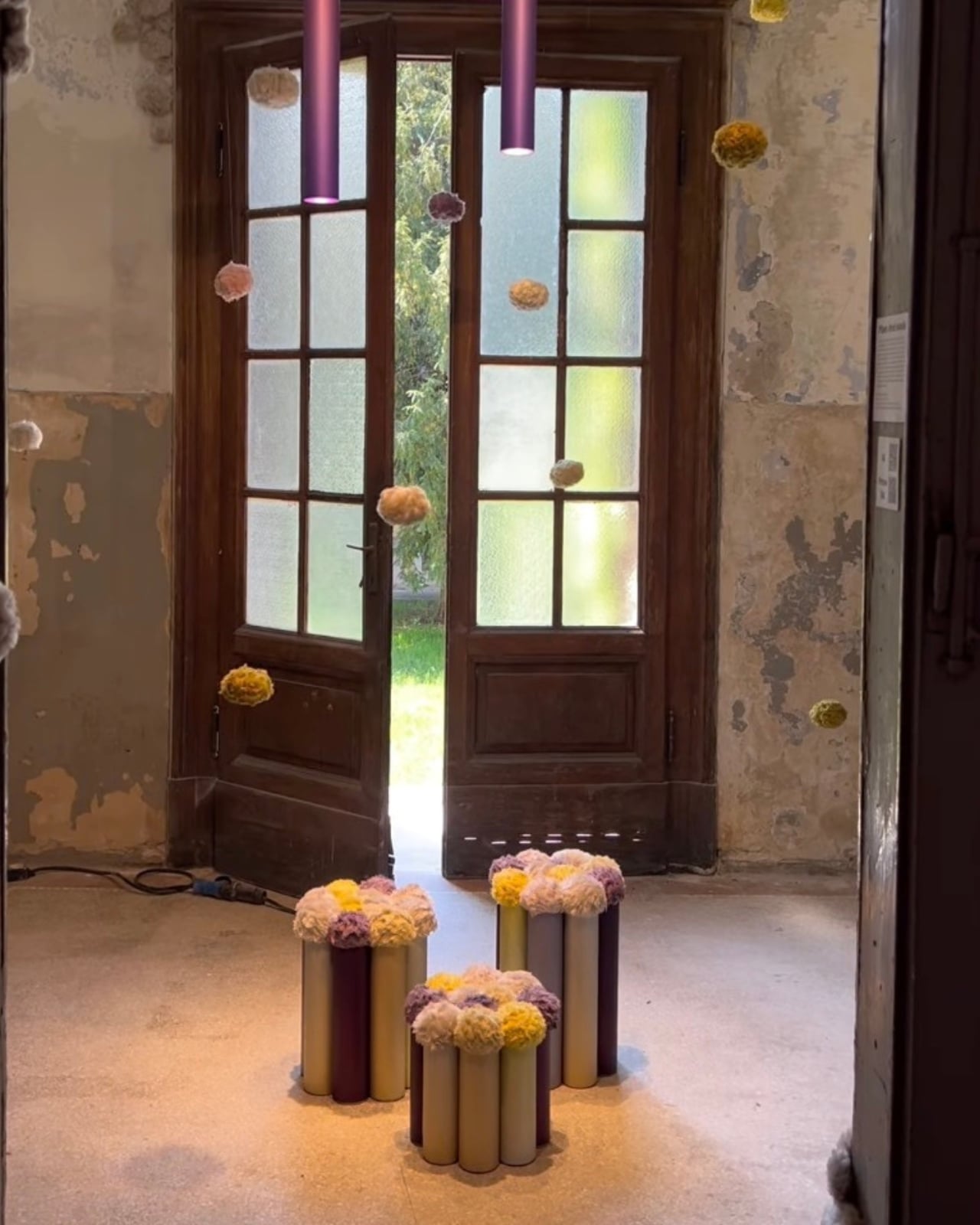
Inside, the exhibition takes visitors on a journey through wood’s past, present, and future. Pastel-colored gateways (a softer touch than you’d expect from an architecture exhibition) guide people through different zones. There’s a forest-themed area exploring how timber is grown and harvested, and “the workshop,” which celebrates the historic craftsmanship that once defined the region. The exhibition doesn’t just look backward, though. It also positions Chiayi alongside global timber leaders like Norway and New Zealand, showing how engineered timber can bridge traditional culture and contemporary construction.

The timing of this project couldn’t be more relevant. MVRDV founding partner Jacob van Rijs nails it when he says Chiayi’s timber story mirrors a global shift in how we think about building materials. Wood went from practical and abundant to “old-fashioned” when concrete and steel took over. But the climate crisis has flipped the script again. Wood stores carbon; concrete and steel release massive amounts of it into the atmosphere. Add decades of innovation in engineered timber techniques, and suddenly wood isn’t just nostalgic, it’s the future.

In Taiwan specifically, this conversation takes on extra weight. Many people there view timber as less reliable or reputable compared to modern materials, and seismic regulations make working with existing buildings challenging. So this pavilion isn’t just celebrating heritage, it’s making a bold argument about sustainability and what’s possible when you look at old materials with new eyes. The two-story main hall on the north side is where this vision gets practical. Visitors can contribute ideas for Chiayi’s urban development and its potential future as Taiwan’s “Wood Capital.” It’s participatory architecture at its best, a space that doesn’t just talk at people but invites them into the conversation about what their city could become.

What I love about Wooden Wonders is how it manages to be both specific and universal. Yes, it’s deeply rooted in Chiayi’s particular history and architecture. But it also speaks to something bigger: how cities can honor their past while building a more sustainable future. How materials that were once dismissed can become solutions to our most pressing problems. How good design can create space for community and conversation.

The pavilion is only up through December 28, making it a fleeting moment in the city’s long history. But maybe that’s fitting. Sometimes the most powerful statements are temporary ones, just present long enough to remind us what we’ve forgotten and inspire us to imagine what comes next.

The post MVRDV’s Timber Pavilion Revives a City’s Forgotten Identity first appeared on Yanko Design.

This $1,299 Heater Costs 75% Less to Run Than Propane

Since I live in a tropical country, I’ve never truly experienced a winter season. So I really can’t relate when I see people huddled in front of a fire, trying to get a modicum of warmth. But I can just imagine how terribly cold it can get during these times and while most of the time you’d just want to stay indoors, you do need to spend some time out on your porch or background every once in a while.

Look, most patio heaters are basically expensive lawn ornaments that happen to produce a tiny bubble of warmth if you stand directly underneath them while wearing a parka. The Timber Stoves Revere Patio Heater is not that. This American-made beast is more like a seven-foot tall sculpture that moonlights as a radiant heating powerhouse, and honestly, it’s about time someone figured out how to make outdoor heating both beautiful and brutally effective.

Designer: Timber Stoves

Let’s start with what makes this thing fascinating from a design perspective. At 84 inches tall and wrapped entirely in stainless steel, the Revere looks like something that belongs in a modern art museum or a very chic industrial loft. But here’s where it gets interesting: this heater requires absolutely zero electricity. The entire operation runs on gravity and thermodynamics, using wood pellets that feed down into a firepot where the draft from the stovepipe creates an almost hypnotic flame behind those generous 7.5 by 14.5 inch viewing windows. It’s basically engineering theater, and you get to watch it through the glass while staying warm.

The pellet system is where Timber Stoves really shows its cards. While everyone else is fussing with propane tanks and dealing with that distinctive smell, the Revere chomps through wood pellets at roughly a quarter of the operating cost of propane while producing double the BTUs. We’re talking 90,000 BTUs of heat radiating out in a 12-foot circle, which means you’re actually warm from head to toe rather than just getting that weird sensation where your face is hot but your back is freezing. The hopper holds 25 pounds of pellets, so you’re not constantly babysitting the thing. Fill it up, let gravity do its job, and go back to being the host who actually enjoys their own party.

Now let’s talk about what happens when you use this thing regularly. The stainless steel body doesn’t just sit there looking pretty. As the Revere heats up over multiple uses, the metal begins developing these incredible patina colors: gold, purple, blue, and green. It’s like the heater is keeping a visual diary of every fire you’ve lit, every conversation you’ve had around it. Some design objects try desperately to stay pristine forever. The Revere embraces the passage of time and looks better for it.

The engineering nerd stuff matters too. That firepot at the heart of the operation? It’s crafted from a high-temperature stainless steel alloy designed to handle up to 2,100 degrees Fahrenheit, and it’s rated for approximately 1,000 hours of use before you need to think about replacement. Most outdoor equipment starts showing its age after a season or two, but Timber Stoves built this thing to last through years of entertaining, late-night conversations, and those random Wednesday evenings when you just want to sit outside with a book.

The virtually smokeless operation deserves its own paragraph because it’s a game changer. Wood pellets burn clean, which means you’re not standing in a cloud of smoke trying to remember which way the wind was blowing when you started the fire. You don’t smell like a campfire afterward unless you want to. And because everything is contained within that stainless steel body with an enclosed flame, you get all the ambiance of a traditional fire without the constant worry about sparks.

There’s something refreshingly analog about the controls too. No app to download, no Bluetooth connection that drops out randomly. You’ve got a key for easy shut-off and a damper dial that lets you adjust the temperature by up to 250 degrees. Turn it up, turn it down, walk away if you need to. The heater just keeps doing its job. The Revere weighs 75 pounds, which sounds heavy until you realize it means this thing isn’t going anywhere in a windstorm. It’s substantial, grounded, the kind of outdoor equipment that feels permanent even though it’s technically portable. At $1,299, it’s not an impulse purchase, but here’s the thing about investing in good outdoor gear: it fundamentally changes how you use your space.

Suddenly those fall evenings extend later into the season. Winter gatherings move outside. You’re not held hostage by the weather forecast anymore. The Revere turns patios, decks, and backyards into year-round destinations rather than seasonal amenities. And unlike trendy outdoor furniture that’ll be dated in three years, this is a piece of functional design that’ll still look modern a decade from now, just with better patina colors.

The post This $1,299 Heater Costs 75% Less to Run Than Propane first appeared on Yanko Design.

Floating Cities Might Actually Save Us (And They’re Gorgeous)

You know that feeling when you see a design concept that makes you go “wait, is this for real?” That’s exactly what happened when I came across Novasis, a floating platform project by designer Mohsen Laei that just won the Grand Prix Architecture and Innovation Award for the Sea 2025. And honestly? It’s not just another futuristic pipe dream. This thing might actually change how we think about living with our oceans.

Here’s what makes Novasis so compelling. It’s a scalable floating structure that tackles three massive problems at once: climate change, resource scarcity, and marine ecosystem collapse. Unlike those dystopian visions of humans abandoning land because we’ve wrecked it, this platform is designed for genuine coexistence with the ocean. It cultivates algae on a massive scale, produces renewable energy, creates freshwater, and helps restore marine life, all while being modular, recyclable, and energy independent.

Designer: Mohsen Laei

Let’s talk about the algae part, because it’s actually the star of the show. The platform uses floating and submerged nets made from recycled PET to grow both macro and microalgae. Why does this matter? Algae is ridiculously versatile. It can be turned into biofuel, food supplements, pharmaceuticals, and even carbon-neutral materials. Plus, algae cultivation naturally absorbs carbon dioxide from the atmosphere, making this a genuinely climate-positive system. We’re talking about a design that doesn’t just minimize harm but actually reverses it.

The structure itself is stunning in a practical way. Picture a circular floating platform with a central dome and perimeter walkway that organizes movement across the space. It’s designed to support research facilities, recreational areas, and even habitation. Freshwater gets produced through rainwater harvesting combined with solar and wave-powered desalination, meaning the whole thing functions as a self-sufficient ecosystem. No need to pipe in resources from mainland infrastructure.

What I find most exciting about Novasis is how it reimagines what “development” can look like in coastal and open-ocean contexts. Traditional marine construction tends to be either extractive (oil rigs, commercial fishing) or leisure-focused (luxury resorts, cruise ships). This platform flips that script entirely. It’s designed to be revenue-generating through biomass production and renewable energy, making it economically viable without requiring grants or subsidies.

Laei isn’t new to ambitious ocean-based concepts either. Back in 2021, he proposed Wind Island, another floating structure that combined wind, water, and solar power with residential and research spaces. That project used flag-like blades around a central tower to capture wind energy while creating shade and cooling for the platform below. You can see the evolution of his thinking from that earlier concept to Novasis, where the focus has sharpened on ecosystem restoration and practical resource production.

The timing couldn’t be more relevant. Floating solar farms have been gaining traction as a renewable energy solution, particularly because they preserve land for other uses and can actually help clean nutrient-polluted water. But most floating renewable projects focus on just one function. Novasis integrates multiple systems into one cohesive platform, which makes it far more resilient and useful.

Critics might call this concept too ambitious or unrealistic, but I’d argue we’re past the point where playing it safe makes sense. Our oceans are warming, acidifying, and losing biodiversity at terrifying rates. Coastal cities face rising seas and freshwater shortages. We need solutions that are as complex and interconnected as the problems we’ve created. Novasis offers exactly that: a model for how humans might actually contribute to ocean health rather than just taking from it.

The best part? Because the system is modular, it can scale up or down depending on location and need. Small coastal communities could deploy a single unit. Larger installations could connect multiple platforms into floating networks. The design adapts rather than demanding a one-size-fits-all approach.

I’m genuinely curious to see where this goes. Will we see a working prototype in the next few years? Will governments and private investors recognize the potential here? For now, Novasis stands as proof that design can be both beautiful and functionally revolutionary, that we can build infrastructure that heals rather than harms. And in a world that desperately needs both hope and practical solutions, that feels like something worth getting excited about.

The post Floating Cities Might Actually Save Us (And They’re Gorgeous) first appeared on Yanko Design.
This Cutlery Set Celebrates the Machine That Made It

There’s something inherently rebellious about celebrating the process instead of hiding it. But most products are still designed to look effortlessly smooth, polished to perfection, and stripped of any trace of how they came to be. Atelier Andy Carson’s G-Code flatware takes the opposite approach. This cutlery set doesn’t just acknowledge its manufacturing origins, it flaunts them.

The name itself is a clever nod to the digital backbone of modern production. G-code is the programming language that tells CNC machines exactly where to cut, mill, and carve. It’s the invisible blueprint that translates design into reality, one precise coordinate at a time. By naming this flatware collection after that very code, Australian-based designer Andy Carson and his collaborator Sam Collett are making a bold statement: the machine is not just a tool, it’s part of the story.

Designer: Atelier Andy Carson

You can see that story in every angle of these pieces. Each implement in the set, a knife, fork, and spoon, is milled from solid stainless steel bar stock. There’s no stamping, no casting, no traditional manufacturing shortcuts that would smooth away the evidence of creation. Instead, what you get are geometric forms with crisp edges, flat planes, and subtle facets that catch the light in unexpected ways.

The aesthetic is unapologetically industrial, yet somehow it doesn’t feel cold or impersonal. The handles are rectangular and minimalist, tapering slightly as they extend toward the functional end. The fork features an intriguing angular bend that adds sculptural interest while maintaining perfect balance. The spoon’s oval head sits atop its geometric handle like a carefully considered punctuation mark. Even the knife, with its serrated edge, feels more like a piece of architecture than a simple eating utensil.

What makes this design particularly smart is how form and function work together so seamlessly. The weighted handles aren’t just about aesthetics or that satisfying heft you feel when you pick one up. They serve a practical purpose, ensuring that the head of each utensil hovers above the table surface when you set it down. It’s a thoughtful touch that addresses hygiene without requiring a separate knife rest or worrying about sauce staining your tablecloth. This approach challenges the conventions of how cutlery is typically made and what it’s supposed to look like. Most flatware relies on stamping or casting to achieve smooth, anonymous forms that disappear into the background of a meal. G-Code does the opposite. It asks to be noticed, to be appreciated not just as a functional object but as a celebration of precision manufacturing.

There’s a broader conversation happening here about honesty in design. In an era when so much of what we consume is mass-produced but styled to look artisanal, G-Code takes the reverse path. It’s a product that embraces its machined origins and turns them into a virtue. The flat surfaces, the geometric precision, the visible traces of the milling process, these aren’t flaws to be hidden. They’re features to be celebrated.

The monochromatic photography that accompanies the project only reinforces this philosophy. Shot against dark gray backgrounds, the flatware pieces stand like monoliths, their shadows as carefully composed as the objects themselves. The lighting emphasizes every edge, every transition from one plane to another, revealing the complexity within apparent simplicity. It’s worth noting that this isn’t just an exercise in theoretical design. These pieces are meant to be used, held, experienced. The matte finish on the stainless steel provides just enough grip without feeling rough. The proportions are calibrated for comfort. The balance point of each piece feels natural in your hand.

In a design landscape often dominated by either hyper-ornamentation or bland minimalism, G-Code carves out its own territory. It proves that celebrating manufacturing processes doesn’t mean sacrificing elegance, and that industrial aesthetics can coexist with everyday functionality. It’s flatware that makes you think about how things are made, why certain choices matter, and what it means when a designer decides to show their work rather than hide it. For anyone who appreciates when form, function, and manufacturing philosophy align perfectly, G-Code is a masterclass in intentional design. It’s proof that sometimes the most interesting stories are told not by what we conceal, but by what we choose to reveal.

The post This Cutlery Set Celebrates the Machine That Made It first appeared on Yanko Design.

Breitling Just Made the Astro Boy Watch Every 90s Kid Wanted

Sometimes the best collaborations are the ones you never saw coming. Swiss watchmaker Breitling just dropped a timepiece that pairs aviation-grade engineering with a 1950s Japanese robot boy, and somehow, it works brilliantly.

The Avenger B01 Chronograph 44 Astro Boy Limited Edition brings together two worlds that seem miles apart: the technical precision of luxury Swiss watchmaking and the retro-futuristic charm of one of manga’s most iconic characters. Created by the legendary Osamu Tezuka in 1952, Astro Boy embodies optimism about technology and the future, which makes this partnership with Breitling’s pilot-focused Avenger line oddly perfect.

Designer: Breitling

Let’s talk about what makes this watch special. The dial is a vibrant yellow that immediately catches your eye, chosen specifically to echo the fiery thrust of Astro Boy’s signature rocket boots. Against this sunny backdrop, three contrasting black sub-dials create visual depth and drama. But the real star of the show appears on the 9 o’clock sub-dial, where Astro Boy himself is rendered in mid-leap, complete with his spiky hair, those famous red boots, and an expression of pure determination.

Flip the watch over and you’ll find another surprise. The sapphire case back reveals both a playful portrait of Astro Boy and the impressive Breitling Manufacture Caliber 01, a COSC-certified movement that offers a 70-hour power reserve. It’s this kind of detail that shows Breitling isn’t just slapping a cartoon character on a watch and calling it a day. The technical specs hold their own: column-wheel control, vertical clutch for precise chronograph engagement, and all the performance you’d expect from an Avenger. The watch itself is housed in a robust 44mm stainless steel case with square pushers and a screw-locked crown, offering 300 meters of water resistance. It’s paired with a rugged black military leather strap that keeps the overall aesthetic grounded and functional, preventing the watch from tipping too far into novelty territory.

This collaboration works because both Breitling and Astro Boy share DNA rooted in pushing boundaries. The Avenger line was built for pilots and adventurers, people who need tools they can trust in demanding conditions. Astro Boy, meanwhile, represented a hopeful vision of how technology could make the world better. When you look at it that way, a robot boy with rocket-powered flight feels like a natural mascot for a pilot’s chronograph.

Of course, exclusivity is part of the appeal. Breitling is only making 99 pieces, each individually engraved with “ONE OF 99.” The watch comes packaged in a specially designed Astro Boy collector’s box, turning the whole package into something that transcends just being a timepiece. It’s a collectible that bridges generations, appealing to vintage manga fans, watch enthusiasts, and anyone who appreciates when two iconic brands take creative risks together. There’s one catch: this limited edition is exclusively available through Breitling’s website and boutiques in Hong Kong, Mainland China, and Macau. That regional focus makes sense given Astro Boy’s massive cultural footprint in Asia, but it also means fans elsewhere might have to work a bit harder to get their hands on one.

What’s refreshing about this collaboration is how it balances playfulness with craftsmanship. Pop culture watch collaborations can sometimes feel like cash grabs, but this feels considered. The yellow dial isn’t garish; it’s bold and confident. Astro Boy’s inclusion feels integrated rather than tacked on. Even the red-tipped chronograph seconds hand ties back to the character’s iconic color palette. Breitling has proven that heritage brands can embrace pop culture without losing their identity. The Avenger B01 Chronograph 44 Astro Boy Limited Edition manages to honor both the technical excellence that defines Swiss watchmaking and the imaginative spirit of Tezuka’s creation. It’s a watch that doesn’t take itself too seriously while still delivering serious horological goods.

For 99 lucky collectors, this timepiece offers something rare: a conversation starter that also happens to be a genuinely impressive chronograph. And in a market flooded with safe choices and predictable designs, that kind of bold creativity deserves a round of applause.

The post Breitling Just Made the Astro Boy Watch Every 90s Kid Wanted first appeared on Yanko Design.

Your Unplayable CD Collection Just Got a $2,000 Solution

Remember when we all decided CDs were dead? When we shoved those jewel cases into storage bins and declared ourselves streaming converts, convinced that digital files and algorithm-curated playlists were the future? Here’s the embarrassing part: I have a stack of CDs sitting on my shelf right now with absolutely no way to play them. And I’m not alone. People are still buying CDs, especially in the K-pop world where physical albums are part of the whole experience, complete with photo cards, posters, and elaborate packaging. We’re collecting music we can’t even listen to properly. Pro-Ject Audio’s new CD Box RS2 Tube might actually fix that problem, and honestly, it’s making me want to finally do something about my unplayable collection.

This isn’t some nostalgic throwback designed to capitalize on retro vibes. Pro-Ject built this thing with the kind of serious engineering usually reserved for audiophile turntables. The Austrian company’s latest entry in their top-tier RS2 line is a top-loading CD player with a fully balanced tube output stage, featuring two premium E88CC vacuum tubes that add warmth and fluidity to digital playback. Think of it as the vinyl listening experience but for your CDs. You know that organic, emotionally engaging sound that makes you actually feel the music instead of just hearing it? That’s what these tubes are doing to your digital audio.

Designer: Pro-Ject Audio

What makes this particularly interesting is the SUOS DM-3381 Red Book drive at its core. This isn’t just any CD mechanism thrown into a pretty case. SUOS-HiFi, which used to be StreamUnlimited Optical Storage, was founded by former Philips CD engineers based near Vienna. These are literally some of the people who helped invent CD technology in the first place. The drive uses a BlueTiger CD-88 servo with predictive algorithms that can maintain accurate data retrieval even when your discs are scratched or less than pristine. We’ve all got a few of those CDs that have seen better days, right?

The integrated Texas Instruments PCM1796 DAC is where things get even more interesting. This means the CD Box RS2 Tube can connect directly to any amplifier with analog inputs without needing a separate digital-to-analog converter. The DAC operates in a fully differential configuration and feeds straight into that balanced tube output stage for maximum signal integrity. You get both XLR balanced outputs and single-ended RCA connections, each with its own dedicated output stage, so you can run both simultaneously without any impedance issues. And if you’re the type who already has a favorite external DAC, there are optical and coaxial digital outputs too.

The build quality is exactly what you’d expect from a product in this range. The entire chassis is precision-machined from aluminum, available in either silver or black finishes, and it’s absolutely gorgeous. The top-loading design means you actually get to interact with your music in a tactile way that tapping a screen just can’t match. There’s something satisfying about placing a disc on the magnetic clamp and watching it load. The big LCD display shows track information and CD-text when available, and it comes with a full aluminum remote control that feels substantial in your hand.

Power delivery matters for any high-end audio component, and Pro-Ject addressed this by using an external power supply to keep transformer noise away from the tube circuitry. For those who want to go even further down the rabbit hole, the player is compatible with Pro-Ject’s Power Box RS2 Sources linear power supply upgrade, which can improve soundstage depth and background silence.

What’s really striking about the CD Box RS2 Tube is how it positions physical media not as obsolete technology but as a deliberate choice for people who care about how music sounds and feels. The resurgence of CD collecting, particularly driven by fandoms like K-pop where physical albums are collectible art objects, proves that people still want to own their music. There’s something to be said for building a curated collection that reflects your actual taste rather than what an algorithm thinks you should like. And if you’re going to own CDs, why not finally be able to play them through something that does them justice?

The CD Box RS2 Tube is set to arrive at UK and EU dealers this month, priced at £1,749 or €1,900. US pricing hasn’t been announced yet, but it’s clearly positioned as a premium product for people who take their listening seriously. Maybe it’s time those of us with unplayed CD collections finally gave them the player they deserve.

The post Your Unplayable CD Collection Just Got a $2,000 Solution first appeared on Yanko Design.
When Fashion Becomes a Safety Net: The Jacket That’s a Tent

What if your jacket could save your life? Not in the metaphorical sense, but literally. Tokyo-based fashion student Yoon Myat Su Lin has designed something that sounds like it belongs in a sci-fi movie but is rooted in very real human need. It’s called Shelter Wear, and it’s exactly what it sounds like: a wearable garment that transforms into a functional tent.

The concept didn’t come from a design studio brainstorm or a trendy pitch deck. It came from memory and trauma. Yoon experienced an earthquake in Myanmar, where she witnessed people suddenly displaced, left scrambling for safety without any temporary shelter. That image stuck with her. She started thinking differently about what clothing could do, beyond looking cool or expressing identity.

Designer: Yoon Myat Su Lin

What if the thing you’re already wearing could become the thing you desperately need? And that’s where Shelter Wear gets interesting. It challenges the entire idea of what fashion is supposed to be. We’re used to clothes being decorative, seasonal, expressive. But Yoon flips that script. She’s asking: why can’t a garment be infrastructure? Why can’t your outfit double as your emergency kit?

When you first look at Shelter Wear, it reads as a structured, utilitarian vest. Think sleeveless outerwear with a high protective collar and some seriously intentional paneling. It’s got that techwear aesthetic, the kind of thing you’d see on someone who’s into urban exploration or just really likes pockets. But here’s where it gets wild: those sleeves? They’re detachable backpacks. You’re literally wearing your storage.

Then comes the transformation. Unclip a few buckles, unfold the structure, and suddenly you’re inside a triangular tent that expands around your body. It’s not a gimmick or a prototype that barely works in controlled conditions. It’s a legitimate shelter that offers protection when everything else has failed. The tent resembles a wide skirt when worn, blending into the garment’s silhouette until you actually need it.

This isn’t about camping trips or festival fashion. This is crisis design. It’s for the moments when help hasn’t arrived yet, when infrastructure has collapsed, when all you have is what’s on your body. In those first critical hours after a disaster, traditional emergency supplies might be inaccessible. But if you’re already wearing your shelter, you’ve bought yourself time and safety. Yoon drew inspiration from designer Aojie Yang, who also works in the space of functional, transformative fashion. But where some conceptual designs feel distant from real application, Shelter Wear feels grounded. It’s portable without being bulky. It’s practical without sacrificing design integrity. And it makes you rethink the relationship between body and architecture.

Because that’s really what this is about. The body as the first architecture. When buildings fall, when homes are destroyed, your body remains. Shelter Wear treats that body as a moving site of refuge. It’s a radical reframing of what clothing infrastructure can mean in vulnerable communities. The design also won the YKK Special Prize at the 25th YKK Fastening Award, which makes sense when you think about the engineering involved. This isn’t just fabric and good intentions. It’s ripstop materials, strategic folding mechanisms, and fasteners that need to hold up under actual emergency conditions.

But beyond the technical specs, Shelter Wear is a gesture of solidarity. It acknowledges that displacement is real, that climate disasters are increasing, that millions of people worldwide face housing insecurity. Instead of looking away, Yoon designed toward that reality. Does it solve homelessness? No. Will it prevent earthquakes? Obviously not. But it does something equally important: it expands our imagination of what design can do. It proves that fashion students in Tokyo are thinking about Myanmar earthquakes, about refugee crises, about what happens when safety disappears. And they’re making things that might actually help. That’s the power of design when it refuses to just be decorative. When it insists on being useful, urgent, and human.

The post When Fashion Becomes a Safety Net: The Jacket That’s a Tent first appeared on Yanko Design.
This 9mm Wireless Charger Just Made Power Banks Obsolete

You know that moment when your phone hits 10% and you’re nowhere near an outlet? We’ve all been there, frantically searching for a charging cable while our phone gasps its last breath. Power banks were supposed to solve this problem, but let’s be honest, carrying around a chunky brick in your bag never felt like the solution we actually wanted.

Enter ALMA, the wireless charger from Addition that’s basically saying “sorry, traditional power banks, your time is up.” This isn’t just another tech accessory trying to make its way into your everyday carry. It’s a genuinely thoughtful rethink of what portable power should look and feel like in 2025.

Designer: Addition

Here’s what makes ALMA different. First, it’s shaped like a slim oval that measures just 9mm thick. That means it actually slips into your jacket pocket or clutch without creating an awkward bulge. Compare that to the standard rectangular power bank that feels like you’re lugging around a paperweight, and you start to see why this matters.

But the real magic is in how it works. ALMA charges wirelessly and gets charged wirelessly too. Think about that for a second. No more hunting for the right cable, no more tangled cords at the bottom of your bag. You just place ALMA on the back of your phone when you need juice, and when ALMA needs recharging, you drop it on any Qi-compatible charging pad. The whole experience is designed around eliminating friction, which is exactly what good design should do.

The aluminum body gives it a quality feel that separates it from the usual plastic gadgets cluttering our lives. Addition offers 17 different designs across three finishes (black, champagne, rose gold, and silver), so you can pick something that actually matches your aesthetic rather than settling for boring black box number 47. What’s really clever is the packaging. The keepsake box ALMA comes in isn’t just pretty, it doubles as a charging pad. So you’re not buying another single-purpose accessory that ends up in a drawer. The box earns its keep on your nightstand or desk as a functional part of the ecosystem.

Robert Louey, Addition’s chief design officer, said they wanted everyday tech to feel like seven-star hospitality. That might sound a bit dramatic, but when you consider how much of our interaction with technology feels clunky and frustrating, aiming for that level of seamlessness makes sense. The oval shape isn’t just for looks. It’s designed to rest naturally in your palm, creating that satisfying tactile experience that Apple perfected with their products.

Under that sleek exterior, ALMA packs some serious innovation. It uses a custom round lithium-ion battery (the first of its kind for this application) and custom internal components to achieve that impossibly thin profile. LED indicators show you the charge status at a glance: one light means 1% to 33%, two lights mean 34% to 66%, and so on up to four lights at 96% to 100%. Simple, intuitive, no guesswork.

ALMA works with any Qi-enabled device, so whether you’re team iPhone, Samsung Galaxy, Google Pixel, or even rocking wireless AirPods, you’re covered. That universality matters in a world where we’re constantly switching devices or sharing chargers with friends who have different phones. At $85 for one or $170 for a set of two, ALMA isn’t exactly impulse-purchase territory. But here’s the thing: when you factor in what you’re actually getting, a beautifully designed object that solves a daily annoyance, eliminates cable clutter, and happens to be customizable, the price starts making more sense. This is clearly positioning itself as the luxury option in a sea of generic alternatives.

Addition is a female-founded company launched by Laura Schwab, who has decades of experience with luxury brands like Jaguar Land Rover and Aston Martin Lagonda. That pedigree shows in the attention to detail and the understanding that design isn’t just about how something looks, it’s about how it makes you feel when you use it.

A lot of tech accessories now are afterthoughts, designed purely for function with zero consideration for aesthetics. But ALMA represents something refreshing. It’s technology that doesn’t apologize for wanting to be beautiful. It’s portable power that doesn’t make you feel like you’re carrying around emergency equipment. It’s the wireless charger that finally delivers on the promise of being truly wireless.

The post This 9mm Wireless Charger Just Made Power Banks Obsolete first appeared on Yanko Design.

This Designer Just Built the Sleep Device Insomniacs Always Wanted

We’ve all been there. It’s 2:47 AM, and you’re staring at your ceiling, mentally calculating how many hours of sleep you’ll get if you fall asleep right now. Spoiler alert: that math never helps. Designer JeJun Park clearly understands this universal struggle, because Re:M tackles the insomnia problem from a completely fresh angle.

At first glance, Re:M looks like it wandered out of a minimalist’s dream. It’s got that soft baby blue finish that feels calming just to look at, and an oval speaker face that tilts upward like it’s ready to have a conversation with you. But here’s where it gets interesting. This isn’t just another white noise machine or smart alarm clock trying to do everything at once. It’s what Park calls a “sleep care object,” which is honestly a much better way to think about it.

Designer: JeJun Park

Create your own Aesthetic Render: Download KeyShot Studio Right Now!

The most brilliant design choice? Those numbers you obsessively check at 3 AM? Gone. Instead of a traditional clock face with digits taunting you about lost sleep, Re:M shows time through just a simple dot for the hour and a line for minutes. It sounds almost too minimal, but that’s exactly the point. When you’re not fixating on the exact time, you stop doing that awful mental math about your dwindling sleep window. You just… let go. The clock becomes ambient, flowing, present but not demanding your attention.

The whole device is built around this philosophy of removing anxiety triggers. Those aluminum dome speakers aren’t just there to look pretty (though they definitely do). They pump out everything from white noise to nature sounds, creating an audio cocoon that blocks out the neighbor’s dog or street traffic. You know that feeling when you’re camping and the gentle sounds of a stream or rustling leaves just knock you out? That’s what Re:M is going for, minus the mosquitoes and uncomfortable sleeping bag.

What really sets this apart from other sleep gadgets is how thoughtfully Park has considered every interaction. Notice there’s basically one button on the entire device? That’s because all the fiddly controls live in the companion app. You’re not fumbling with multiple buttons in the dark or accidentally blasting sound at full volume. The power button is tucked discreetly out of sight, and that side dial handles volume adjustments with precision that touchscreens could never match. It connects via Bluetooth, so you can fine-tune everything from your phone during the day, then just tap the device to turn it on at night.

Even the wake-up experience got a redesign. Instead of a jarring alarm, Re:M gradually increases both nature sounds and a gentle brightening light. It’s like having a sunrise on your nightstand, coaxing you awake instead of startling you into consciousness. Anyone who’s ever been jolted awake by a blaring alarm knows how that sets the tone for your entire day. The practical touches are there too. USB-C charging means you can power it with the same cable as your phone or laptop, and a small LED dot tells you the charging status without being intrusive. The device stands on a stable base with subtle grip pads, so it’s not going anywhere if you reach for it groggily at night.

What I really appreciate about Re:M is that it doesn’t try to be everything to everyone. It’s not tracking your REM cycles, syncing with seventeen other devices, or promising to revolutionize your entire life. It’s simply designed to help you fall asleep more easily and wake up more gently. That singular focus feels almost revolutionary when every product seems to wants to be your all-in-one solution. Park has created something that addresses a real problem (we’re all sleeping terribly) with thoughtful design rather than more technology. Re:M proves that sometimes the best solution isn’t adding features, but carefully removing the things that stress us out. And honestly? In our overstimulated, always-on world, that might be the most innovative thing of all.

The post This Designer Just Built the Sleep Device Insomniacs Always Wanted first appeared on Yanko Design.
This EDC Grinder Makes Every Coffee an Adventure

For years, the manual coffee grinder was a necessary evil. If you wanted the freshest, best-tasting cup outside of a cafe, you had to accept a bulky plastic device or a fragile piece of glass and wood. These tools often felt clumsy, lacking the refinement and durability that modern consumers have come to expect from their high-use items.
Enter the VSSL Java G25, a manual coffee grinder that doesn’t just promise a better cup; it promises a better, more rugged, and far more stylish experience. It represents a shift in thinking, elevating the grinding process from a tedious chore to an enjoyable, tactile ritual. Truth be told, I still can’t figure out the grind settings on most of the complicated, dials-and-knobs grinders that I see in the market. I probably would love to learn all these things, even if there are supposedly 50 distinct settings. The G25 somehow makes the learning curve feel like part of the adventure, a welcome challenge to master a finely tuned instrument.

Designer: VSSL

VSSL, a company known for building essential survival and gear kits into handsome, nearly indestructible canisters, has applied that same obsessive engineering mindset to the coffee ritual. Their design philosophy is clear: utility should never compromise aesthetics, and durability is non-negotiable. The result is a device that feels less like a kitchen tool and more like high-end outdoor equipment you’d find clipped to a mountaineer’s pack. Constructed from 6061 machined aircraft grade aluminum and 304 food-grade stainless steel, this grinder is built for abuse, making it equally at home on a clean, granite kitchen countertop or a cold, granite mountain outcrop. Its sleek, black cylindrical form factor is compact, ergonomic, and unapologetically cool, fitting perfectly into the gear aesthetic that dominates modern tech and design circles. It’s a piece of gear you want to show off.

But the G25’s appeal extends far beyond its rugged good looks and durable exterior. Inside that resilient shell lies the heart of a true barista tool, engineered for uncompromising performance. The quest for the perfect grind is a core obsession in the coffee world because flavor extraction is utterly dependent on particle size consistency. VSSL delivered this crucial consistency by incorporating high carbon 420 stainless steel conical burrs stabilized by dual bearings. This is the hardware that ensures the particle size of your coffee grounds is uniform—the single biggest factor in extracting a delicious, balanced flavor without the bitterness of fines or the sourness of boulders. For those of us who appreciate precision engineering, the detail of dual bearings stabilizing the central axle is paramount; it’s the mechanical assurance of quality.

Crucially, the G25 offers 50 distinct grind settings. This level of granular control is usually reserved for professional-grade electric models that take up half your countertop. Having 50 click adjustments means the user can dial in the perfect setting for literally any brewing method. Whether you are aiming for the coarse texture required for a full-immersion French press, the near-powder fine consistency for a demanding espresso shot, the medium grit for a precise pour over, or anything in between, a quick, audible adjustment is all it takes. This expansive range eliminates the guesswork and the frustration of inferior grinders, transforming the often-frustrating manual grind into a satisfyingly accurate and repeatable process.

The features engineered specifically for portability truly elevate this grinder into a must-have piece of everyday tech. The handle, which expands during use to increase leverage and make the grind effortless even for light roasts, quickly retracts and cleverly doubles as a secure, locking carabiner. This isn’t just a convenient detail; it is a profound design choice that signals the product’s dual purpose: serious quality both at home and on the move. The magnetic integration keeps the grinder knob securely attached within the catch when stored, and a quick push-release top cap allows fast access to the 30-gram bean hopper—enough capacity to fuel a substantial morning ritual. Measuring only 6.3 inches long with a neat two-inch diameter, the entire unit is designed to nest seamlessly with popular travel brewing systems like the AeroPress Go.

The VSSL Java G25 is a beautiful merging of two powerful cultural trends: the rising demand for specialty, quality, at-home coffee, and the desire for durable, highly designed, and adventure-ready gear. It speaks directly to the person who refuses to compromise on quality, whether they are settling into their home office for the day or setting out for a weekend in the wild. It’s more than just a grinder; it’s an essential, beautifully executed piece of modern carry that promises a perfect cup, no matter where you are.

The post This EDC Grinder Makes Every Coffee an Adventure first appeared on Yanko Design.