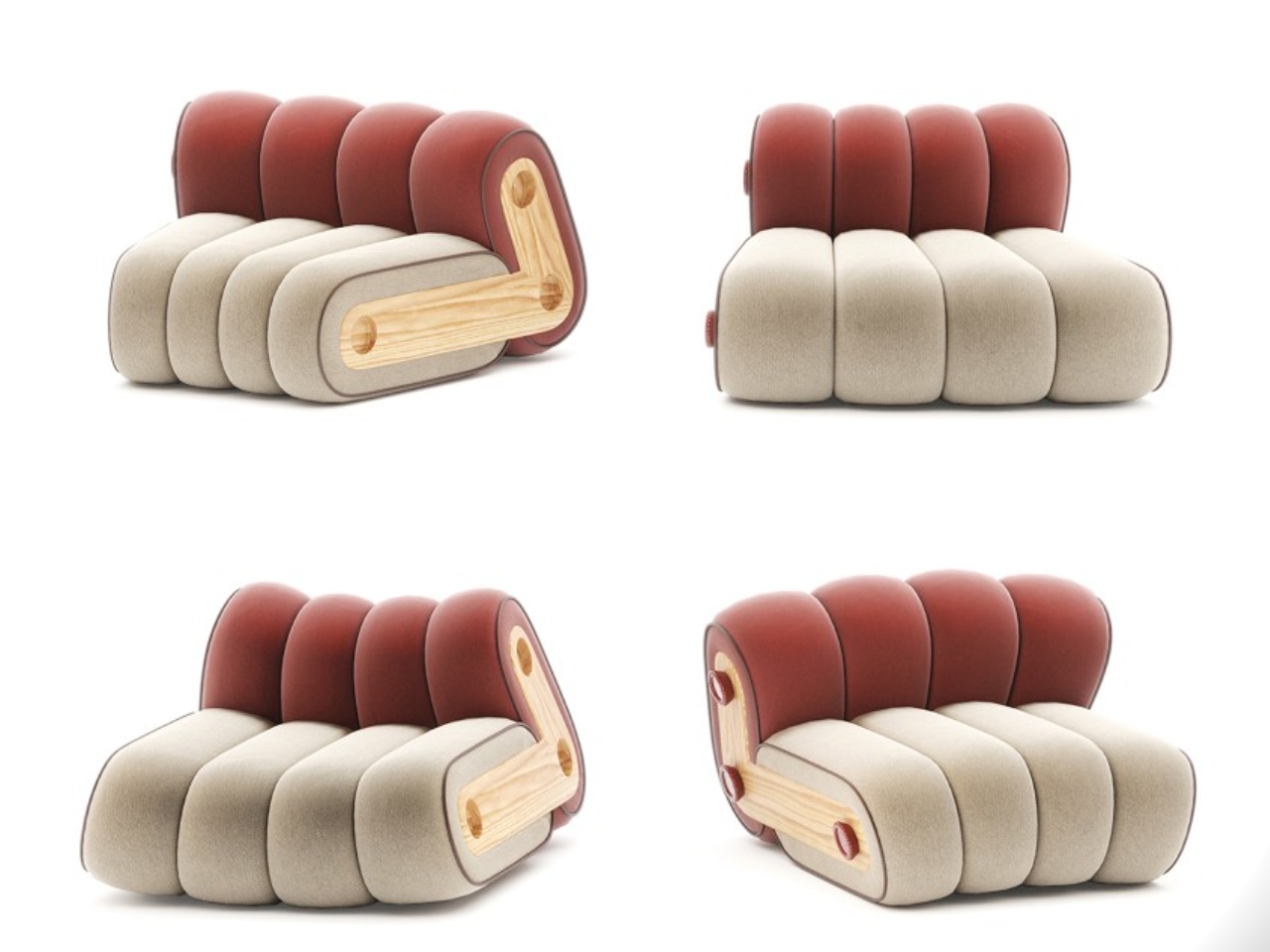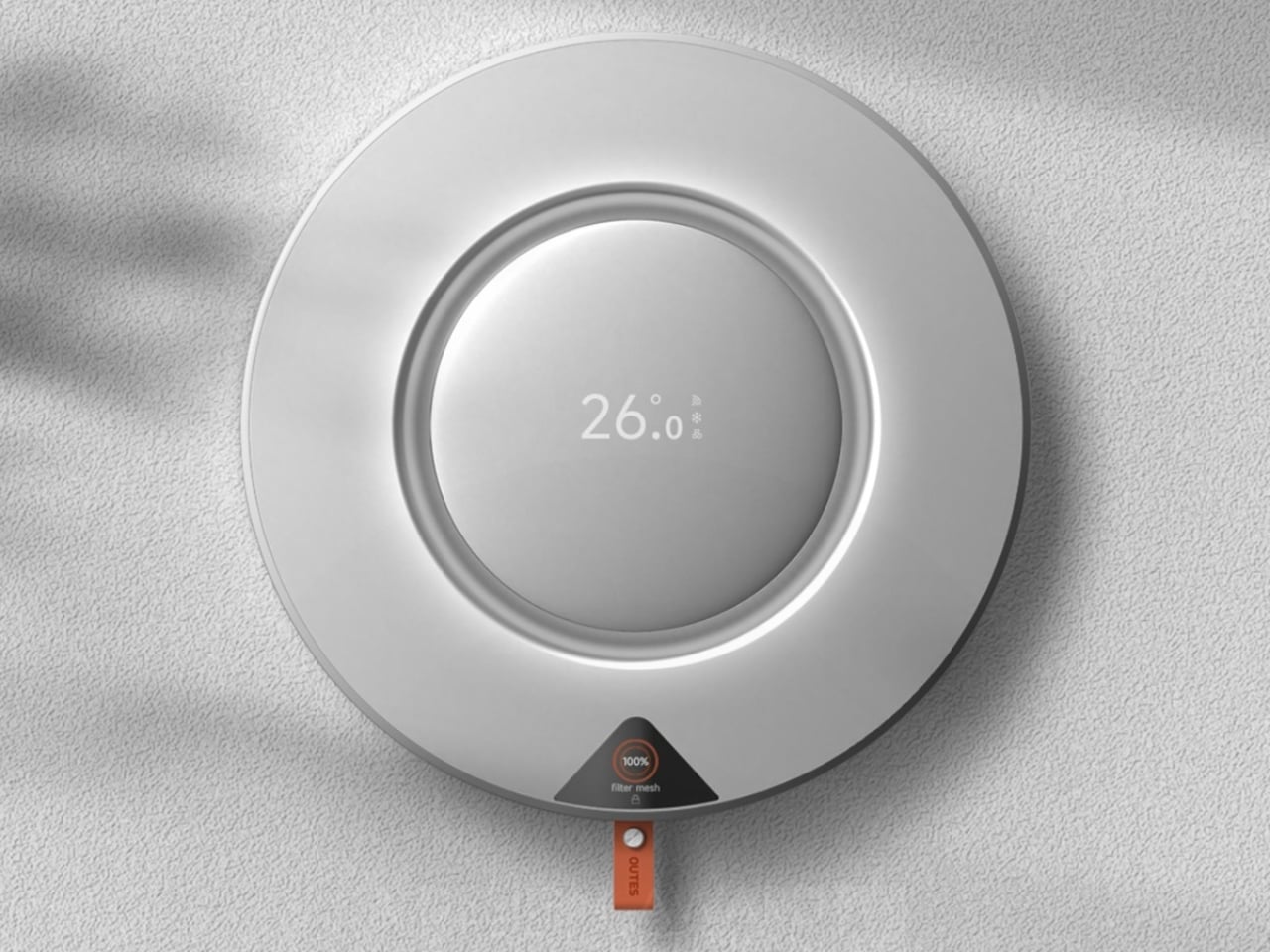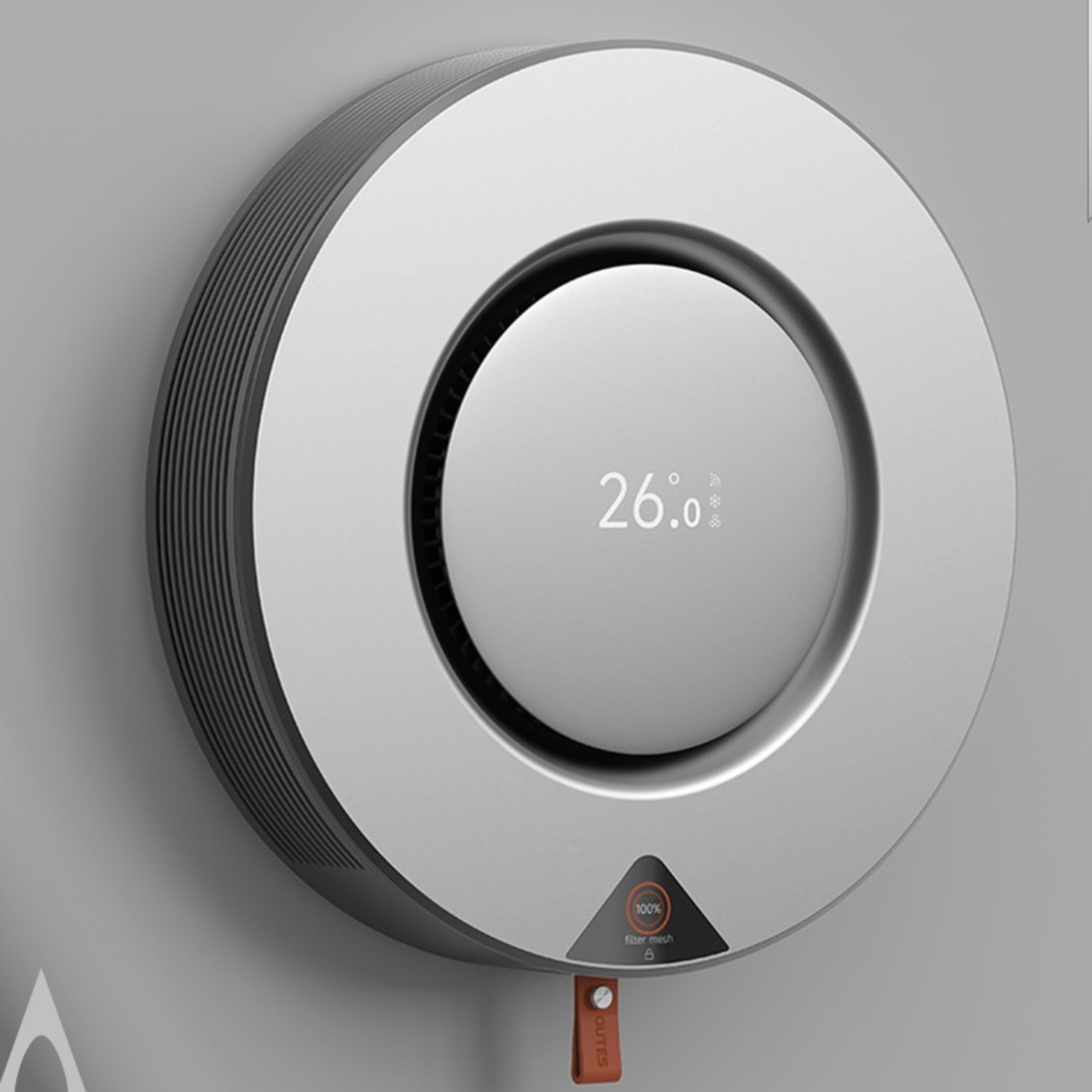
Air drying rack can make your clothes smell nice and your room look pretty

One of the most annoying smells I can think of are clothes that dried indoors and did not get any air circulation. That musty smell can be suffocating, even if the clothes were actually cleaned upon washing. Those living in houses or condo units that do not have proper airing space for wet clothes may be familiar with this smell. But what if you can have a drying rack that not only helps your wet clothes dry but also add a pleasing scent to it even as it’s not actually aired outdoors?

Designer: Seungbin Lee

This is the idea behind Air Blossom, a concept for an air drying rack for those living in single households that don’t have proper air circulation. It lets your clothes dry while getting rid of the musky smell that comes from drying indoors through scent filters that are part of the drying process. Aside from this fragrant innovation, the rack can also turn into a display when not in use. Clothes drying on a rack are not the most aesthetically pleasing sight but afterwards, you can turn the rack into a piece of art in the background of your space.

On the surface, it looks like a folding table when not used for anything. When you unfold it and lock it down, it turns into an air drying rack that can is able to rotate your clothes as they dry. There is a filter on the side where you can put your preferred scent so your clothes will not have that dried inside musty smell. When you fold it up and want to use it as a display, the “blinds” close together to form a photo or a painting. It’s unclear if the image and the scent can be customized or if you have to choose from the different options available.

The photo renders show the air drying rack in different pastel colors so maybe you can choose from the one that can fit your home. As someone who lives alone and barely does any clothes washing but maybe still needs it every once in a while, something like this can come in handy.

The post Air drying rack can make your clothes smell nice and your room look pretty first appeared on Yanko Design.
Palais de Tokyo artisanal objects are open-ended art and functional pieces

When it comes to furniture and accessories, most people probably look for things that are functional rather than just decorative. Of course it would be nice if it can be both but for those that are more concerned about budget and usage, then the former is more important. But there are also products that serve more as decoration or art pieces that also has a secondary function as an actual piece of furniture or accessory that you can use.

Designer: Aequo Design

The OBJ Collection from the Palais de Tokyo is one of those that are derivative products that look more like art pieces that belong in an actual museum. They were commissioned to present the essence of the modern and contemporary art museum into miniature artwork that can still serve some function if the user so wishes to use them. But their purpose or function are actually “open-ended” so it’s up to the user to use them whichever way they want, therefore making them part of the creative process.

For example, the travertine stairs sees several blocks put together as “stairs” so you can use them as a candle holder, bookends, or whatever else you can use it for. The Zinc container, which is made from actual zinc pipes, can serve as a flower vase, pen holder, or even just as a design for your desk if you’re into the aluminum aesthetic. There are other things in the collection like concrete columns, powder coated rod, and a stainless steel pin, which you can use whichever way you want.

The design company says that there are two levels of reading the objects in the OBJ Collection. The first is to your “memory of the place”, which probably means how you interacted with the artwork in the Palais de Tokyo. The second level is where the function of the object comes in. It would be interesting how they will actually be used by people who buy these artisanal pieces.

The post Palais de Tokyo artisanal objects are open-ended art and functional pieces first appeared on Yanko Design.
Eco-friendly coffee pod brand pairs product with sustainable packaging

As a regular (addicted) coffee drinker, I use different methods to get my caffeine fix. Most of the time I just use a good ole coffee brewer but when I need a sort-of espresso fix, my coffee pod machine is the most convenient way since I don’t have an actual espresso machine. However we know that this isn’t the most environmentally-friendly way to consume coffee. But we’re seeing several brands come up with a more sustainable way forward for the k-cup industry.

Designer: Zenpack for Cambio

Cambio Roasters is one such brand that came up with organic coffee pods that were made up of just two materials: #5 polypropylene plastic and aluminum. But they didn’t want to just stop with the pods but come up with sustainable packaging as well. Zenpack created this container with eco-friendly materials that can serve also as a mini recycling bin for the pods before you bring them to the actual recycling bin.

The container is made from molded pulp with added vertical ribs to give it more structure. It is able to hold 10 pods both for when it is shipped and for when you want to hold your used pods. Even the label is sustainable as it’s a glue-free belly band with a tear strip. All of the elements of this packaging can be thrown into a larger receptacle recycling bin. The container can also be used as a temporary compost bin for your coffee grounds and other kitchen scraps.

With people becoming more conscious with how they consume products, it is good that more sustainable brands are emerging. We stan these brands that not only think of their main products but also their packaging, which can sometimes get lost in the shuffle.

The post Eco-friendly coffee pod brand pairs product with sustainable packaging first appeared on Yanko Design.
Sustainable tabletop smoker adds to your dinner aesthetic

If you’re having a dinner party and you need to smoke some of your food like meats, vegetables, fish, cheese, and nuts, you probably will have to do it outdoors. But if you don’t have space to do actual smoking and you just have your table as your space, then that can be a problem (or you might have to just change your menu). There are options out there for table smokers but not all of them are convenient or emit minimal smoke or worse, they can make your food a bit charred.

Designer: Guillaume Bloget

The Cloche table smoker may be the solution to that particular problem. It uses aromatic plants and wood chips as your smoker so that the food you’re cold smoking will still be able to retain their original flavors but this time with a smoky note added to it. It can also serve as part of your dining table decoration as its beech and stainless steel aesthetic can add to the atmosphere of your meal. You can create a ritual out of arranging the food, lighting the fire, then putting it out and presenting the food for eating.

Using it seems pretty easy on paper. You place the ingredients on the metal part and then put the aromatic plants or pine needles on the hearth. You can use matches or a blowtorch to light your “fireplace” then close the smoker with the beech cover. The fire will be put out once you put the cover on (hopefully). After 30 minutes, you can lift the cover and then start consuming whatever it is you were cold smoking. You will still get some residual smoke but hopefully not to make anyone cough or choke.

Having a table smoker like this can help alleviate the pressure of having an actual smoking grill if you just need to cook a bit of food for your party. But of course this is assuming you’re just having a few guests over since the Cloche table smoker is a bit small. If you’re not using it, it can also just be part of your table decoration or a food container.

The post Sustainable tabletop smoker adds to your dinner aesthetic first appeared on Yanko Design.
Rimowa and La Marzocco partner to create the most stylish espresso machine

Coffee machines and luggage aren’t necessarily two things that you think of that go together. Sure, when you travel, you get to experience different kinds of coffee places but you don’t necessarily lug around all your coffee paraphernalia. Well, some people actually do, but they’re the exception. When it comes to design though, coffee machines and expensive luggage aren’t really that distant so it’s interesting to see what a collaboration between two brands of those categories would look like.

Designer: Rimowa x La Marzocco

Look no further as we’re getting a Rimowa x La Marzocco Linea Mini coffee machine that brings the best of both worlds into a limited edition product. The exterior features the classic aluminum groove look and silver steel that we’re used to seeing in Rimowa suitcases but this time it’s used in the Linea Mini, a professional-grade kitchen-scaled espresso machine. Most of the parts of this machine are crafted from anodized aluminum. In fact, each of the machines are handcrafted for around 40 hours in Florence, Italy. The grooved panels were actually built in the Rimowa factory in Cologne and then assembled and installed by hand in La Marzocco’s workshop.

When it comes to features, it’s your typical espresso machine that can give you your much needed caffeine fix. Only this one has more style because of the addition of Rimowa’s signature look to what’s already a pretty stylish La Marzocco aesthetic. Both of them have their branding on the base and the frame of the machine. The minimalist aluminum feel plus the bespoke accents like the hot water tap and knobs gives off a very high-end Italian coffee shop vibe.

The Rimowa x La Marzocco Linea Mini was displayed at the recently concluded Milan Design Week. You can apparently already pre-order the machine although it’s not indicated how much and where you can actually place your order. Because these two brands are coming together, expect that the price to own a stylish espresso machine will be steep.

The post Rimowa and La Marzocco partner to create the most stylish espresso machine first appeared on Yanko Design.

Pringles collaborates with Crocs for unique footwear, accessories, new flavor

I’m one of those people who will probably never wear a pair of Crocs (it’s a preference thing). But, I will probably always be interested as to what brand they will collaborate with next. We’ve seen some pretty interesting (weird) partnerships with Fruit Loops, 7-Eleven, General Mills ceereals, and even high-end fashion brand Balenciaga. So we’re not really surprised if they partner with the most unlikely brands, particularly food products. If you’re a couch potato, then this latest special edition Crocs are for you.

Designer: Crocs

The Pringles x Crocs collection is the first time that the former is going into the footwear business with this collaboration with the latter. Not only do you get three different Pringles-inspired footwear designs, there is also a new limited-edition Crocs-inspired Pringles flavor: watermelon chili lime (which is apparently a fusion of sweet, spicy, and tangy) And of course, for those who collect those cutsey charms you can attach to your Crocs, there are Pringles-themed Jibbitz charms.

If you want to bring your Pringles snacks around but you don’t have a bag or even a pocket, the Pringles x Crocs Classic Crush Boot has a custom holster where you can store the grab and go variant of your favorite potato snack. The boots has the classic Pringles-red on top and a “stacked crisp heel”. If you’re more into the classic, you have the Pringles x Crocs Classic Clogs which has Mr. P’s signature mustache as the strap and four mix and match colors (red and orange, blue and green).

Probably if I was forced to wear a pair of Crocs, their sliders would be my choice. There is also a Pringles x Crocs Classic Slides which sports the retro black-and-white Mr. P design, still with his styling mustache. There are also five Jibbitz charms to collect: Mr. P with a red bowtie, a 3D winking Mr. P, a can of Pringles Original and a can of Pringles Sour Cream & Onion, and a minimalist Pringles crisp. If you’re a fan of either brands, then this is your sign to get some of these to add to your collection.

The post Pringles collaborates with Crocs for unique footwear, accessories, new flavor first appeared on Yanko Design.

Junya Ishigami turns “tougher” materials into light and airy furniture

When you think of furniture made from materials like rattan, wood, leather, and steel, it evokes ideas mostly of sturdiness and toughness. And most of the designs we see seem to have varying degrees of rigidness and structure. You don’t normally associate adjectives like airiness, lightness, or delicacy with those that use these unless they’re mixed together with other materials that add something new to the design and the actual product.

Designer: Junya Ishigami

Japanese architect Junya Igashami has a design language that veers more towards simple, elegant, and delicate pieces. With his newest furniture series presented by Belgian gallery Maniera, he is still able to maintain this aesthetic but this time using the aforementioned “harder” materials: rattan, wood, leather, steel, and with the addition of glass materials as well. The designer used thin lines as a common theme for the various pieces so that you get a light and refreshing reimagination of the materials used for the furniture line.

The Ame low glass table seems to slightly float off the floor with its stainless steel and glass structure while the Maru-Shikaku Atelier table adds a rattan element. The Ame Isu line has different chairs including a rocking chair, a caster chair, a zaisu chair, and a “regular” chair and all of them use stainless steel with rattan, leather, or wire. The Bou Light fixtures include a table lamp and a pendant while the Ami Kabe line has small and large partitions.

This entire furniture line will be on exhibit at the Parc of the Villa Bagatti Valsecchi at the Milan Design Week until April 21. Some of the pieces included were actually created for projects like the House & Restaurant in the city of Ube in Japan (Zaisu chair and Ame low glass table) and the still being constructed House project where Ishigami’s mother will eventually reside (atelier table and other chairs).

The post Junya Ishigami turns “tougher” materials into light and airy furniture first appeared on Yanko Design.
Digital nomads can live and work in self-sufficient mobile home

One of the advantages of people who can work remotely (digital marketers, writers, virtual assistants, etc) is that they can work from literally anywhere. As long as there’s internet and a power source for when their devices run out of juice eventually, these digital nomads have the freedom to set up shop wherever they are and to live in things like mobile homes. We’re seeing a lot of products and concepts targeting this segment and I for one am very interested to see these come to life.

Designer: Institute for Advanced Architecture of Catalonia (IAAC)

The Mobile Catalyst, nicknamed MOCA, was developed by masteral students from IAAC. Not only is it a perfect space for those that want to work while staying anywhere with a view but it is also an experiment into sustainable and self-sufficient habitat with a digital twist. It is basically a 5.4 meter long, 2.4 meter wide, and 3.6 meter high minimalist space that gives you the basic necessities of living. Its interior is made from dowel-laminated timber produced at the IAAC itself but sustainably harvested of course.

The front part of this mobile home has the basic amenities you would need to live in it like a kitchen, toilet and shower, and electric and water systems. In the middle and the back part is the space that can be turned into an office, a meeting area, a library, a recreation room, or even a space for small events. If you need privacy or partitions and also protection from different weather conditions, there are glass doors and a water-resistant cotton fabric that slides or folds with a pulley. There are also two beds on its “mezzanine” floor and you can reach it through a movable ladder.

And of course since MOCA is designed to be sustainable, you have three light-flexible mono-crystalline solar panels on the roof and LED strips as an interior lining. The house can run on its own for around 24 hours before it needs recharging. Water is also self-sufficient as the system stores, filters, and returns the shower water into reusable water. The entire mobile home is built with digital nomads in mind so they can live, work, and play anywhere they want, as long as the trailer can move and fit in that area.

The post Digital nomads can live and work in self-sufficient mobile home first appeared on Yanko Design.
Lamp posts become EV charging stations in innovative startup concept

Having an electronic vehicle is becoming a bit more common, although still not as prevalent as we would like it to be. There are a lot of reasons why some are still hesitant about adapting to this more eco-friendly kind of cars. Aside from the price tag, charging your vehicle overnight is still not as easy especially if you don’t have a garage or driveway. You have to look for charging stations near your place but you probably won’t be able to do your charging overnight. A startup aims to solve that problem by utilizing trusty old lamposts.

Designer: Voltpost

Since street lamposts are pretty common, this New York City startup is proposing to retrofit these existing lamposts and use them to charge electric vehicles. They designed a shroud that will cover the lower part of the lamposts and inside you have various cables and electronic devices to juice up the cars that need them. You have retractable cables that can anchor up to eight feet off the ground and a hand level charger dock. It is also modular and can be installed in an hour and can be repaired easily.

For newbies to the EV game, charging your car here is as easy as plug and play. There’s an app where you can oversee the charging of your vehicle and it is also where you will pay for the service. You can also use it to reserve your spot in case you know the schedule when you need to recharge your vehicle and you don’t want to compete with other EV owners. Even the installation of these chargers on the lamposts is pretty easy and takes just an hour based on their initial tests.

Voltpost has finished a test with the New York City Department of Transportation and they are currently in different stages of development with other cities specifically Chicago, Detroit, and New York. This is something that will be pretty useful to encourage more people to switch to EVs, especially if they don’t have space in their houses to do their own charging. We look forward to the day when EVs are as common as hybrid or regular cars and having a more convenient way to power up is a step towards that.

The post Lamp posts become EV charging stations in innovative startup concept first appeared on Yanko Design.
Japanese-inspired furniture line is made from recyclable, colorful fabric

There are pieces of furniture that serve their purpose in your living space even if they’re not always that well-designed. Then there are those that you don’t really understand what they’re for but they’re just so pretty or fits into your aesthetic that you just know you need to have them. Of course if those pieces are also sustainable and eco-friendly, that’s a great bonus. Well, it would also be great if they can actually do what they’re supposed to do while looking pretty and saving the earth.

Designer: Nendo for Paola Lenti

Italian furniture brand Paola Lenti unveiled their collaboration with Japanese design firm Nendo at the Milan Design Week. The Hanara-shi series of furnishings and complements look like art pieces at first glance. Their shapes and designs are inspired by Japanese culture of course, specifically the cherry trees that are starting to be in full bloom in Japan right now. There’s also some inspiration from ancient samurai armours if you look closely at the fabrics and patterns.

While their colors are really attractive and eye-catching, I couldn’t figure out at first what they were supposed to be. But upon closer inspection (of the photos and the website), there are suspended lamps, baskets, floor lamps, armchairs, and poufs/ottomans included in the collection. The fabric used is Maris mesh which is recyclable and made from 100% polypropylene waterproof material. Unlike other furniture which starts from the design, this one started from showing the fabric that they will be designing and that’s when the ideas started to flow.


Since the material is rigid, marbled in colour but textured, flexible, and malleable, they were able to fold and wrap them on themselves to create this line of products. There are of course welded elements to put them all together but the main star of this Hanara-shi series is definitely the fabric and how they designed it to create these pieces of furniture. The upholstery and inlays used are also recovered cutoffs from previous processes so you can say that not only are they beautiful but they’re also friendly to the earth.

The post Japanese-inspired furniture line is made from recyclable, colorful fabric first appeared on Yanko Design.