The 65-inch LG C3 OLED TV is 48 percent off via Woot, which brings the price down to $1,298. That’s a savings of around $1,200 on the well-regarded OLED panel. There’s one major caveat. This deal is for today only, or until the stock runs out. To that end, there’s a limit of one per customer, but that’s probably not a huge deal unless you’re in the process of furnishing a mansion or something.
The LG C3 OLED is considered one of the best TVs for gaming, and with good reason. We loved this television’s high contrast and the deep blacks on offer. We also praised the low input lag, increased motion response and wide array of appropriate viewing angles. It follows HDR guidelines, works with all the major VRR formats and has four HDMI 2.1 ports that are capable of outputting 4K 120Hz with a gaming console or PC.
It supports all the major HDR standards, including Dolby Vision. This TV is available in sizes up to 83-inches, but the larger models aren’t on sale. I use a 65-inch OLED, though not this one, and it’s plenty big enough for TV and gaming.
Despite being a dang good value, this isn’t a perfect television. The WOLED panel doesn’t get quite as bright as a QD-OLED like the Samsung S90C. Also, it doesn’t support a 144Hz refresh rate, which could be a dealbreaker to picky PC gamers. Still, the price is definitely right. Just make sure you pick this up sooner rather than later.
This article originally appeared on Engadget at https://www.engadget.com/the-65-inch-lg-c3-oled-tv-is-nearly-half-off-for-today-only-152153420.html?src=rss
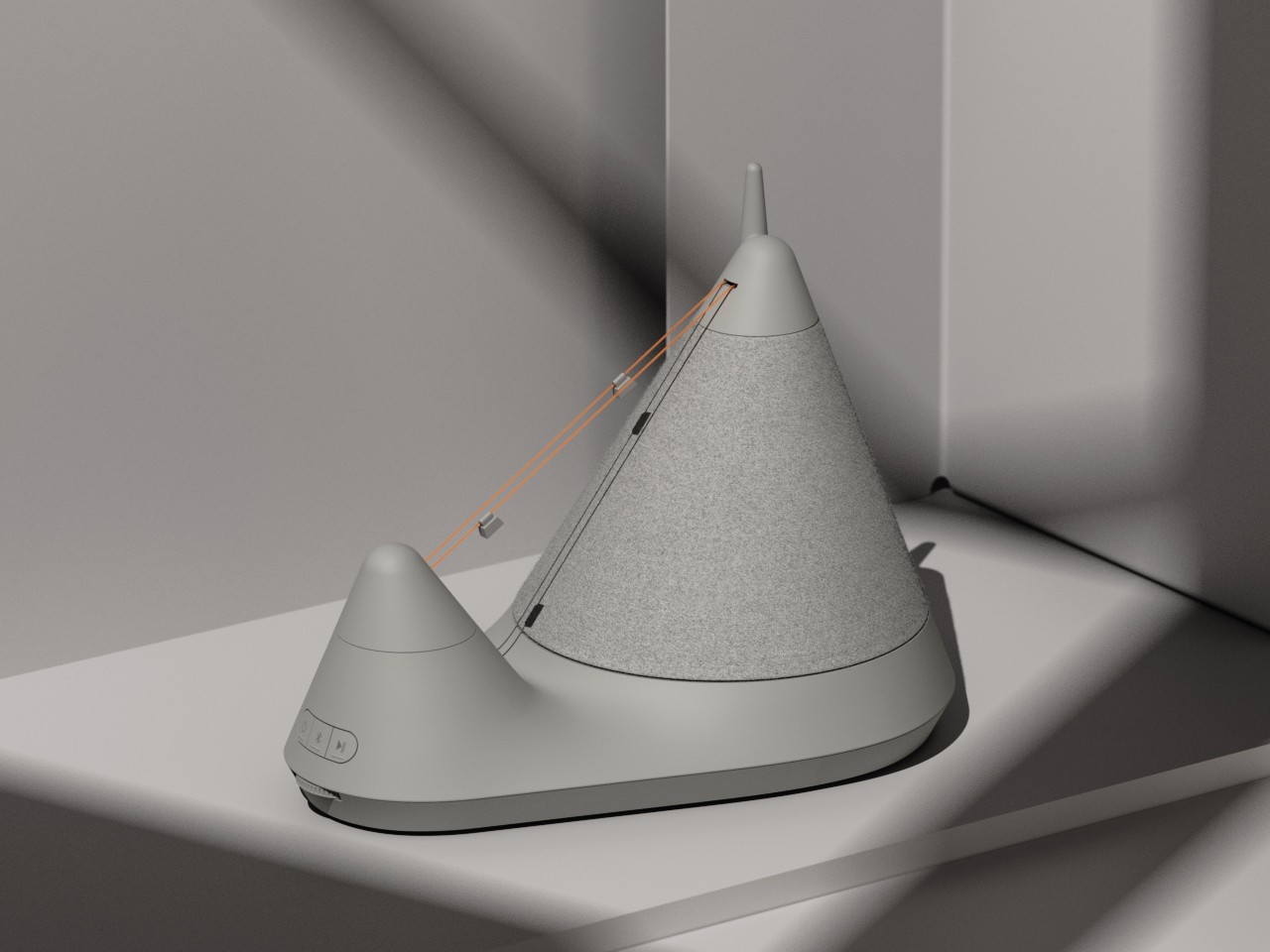
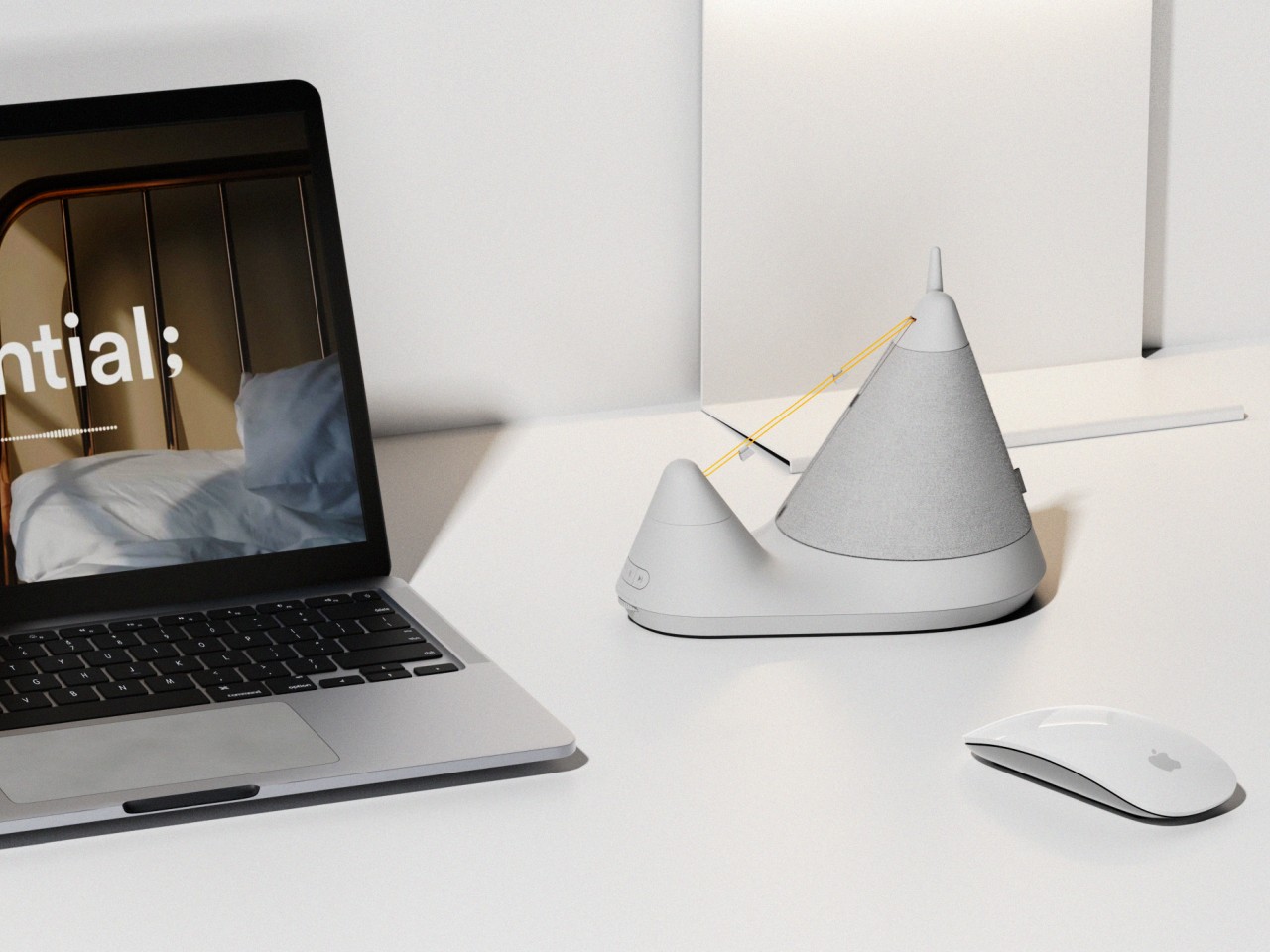
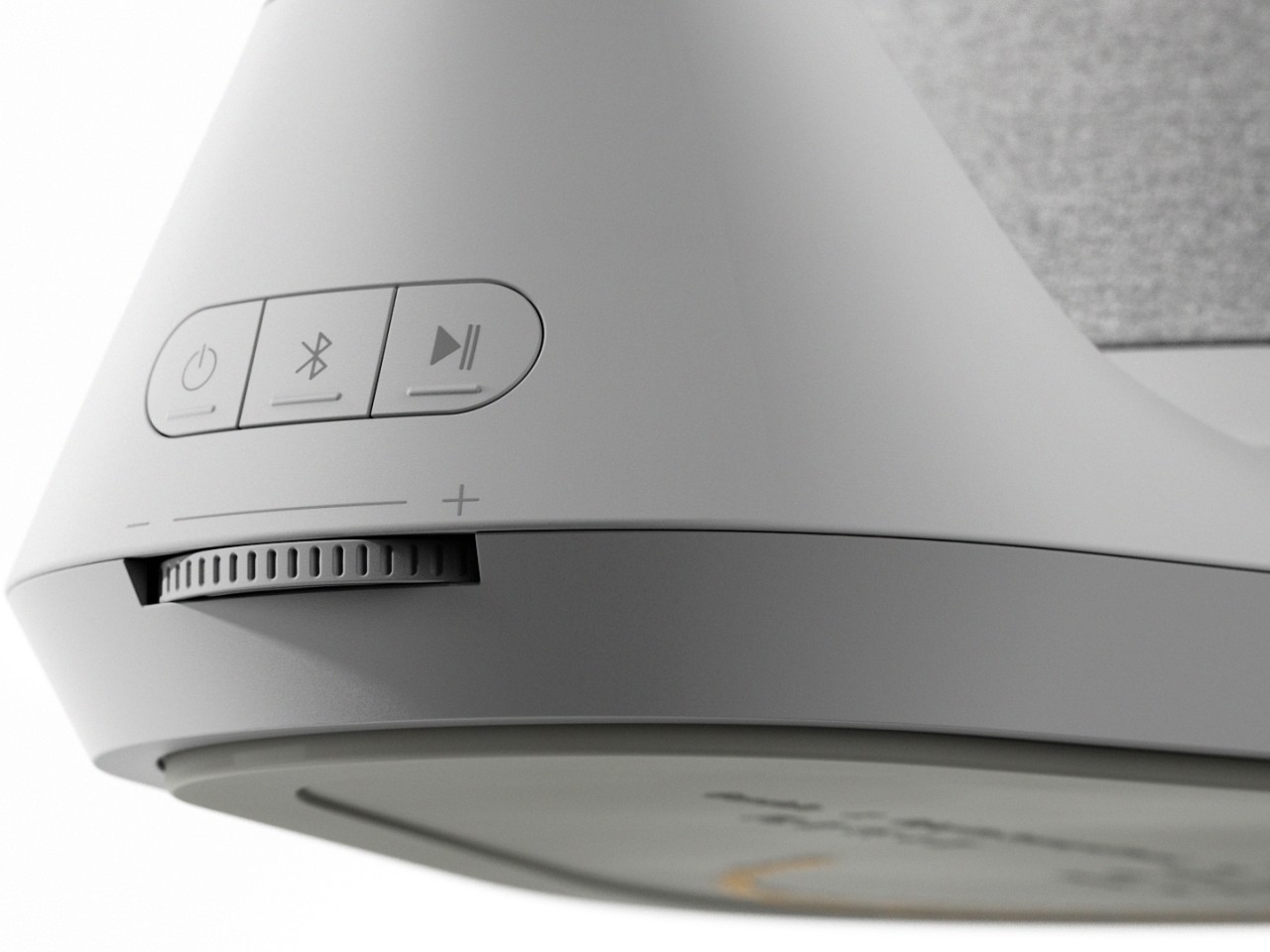
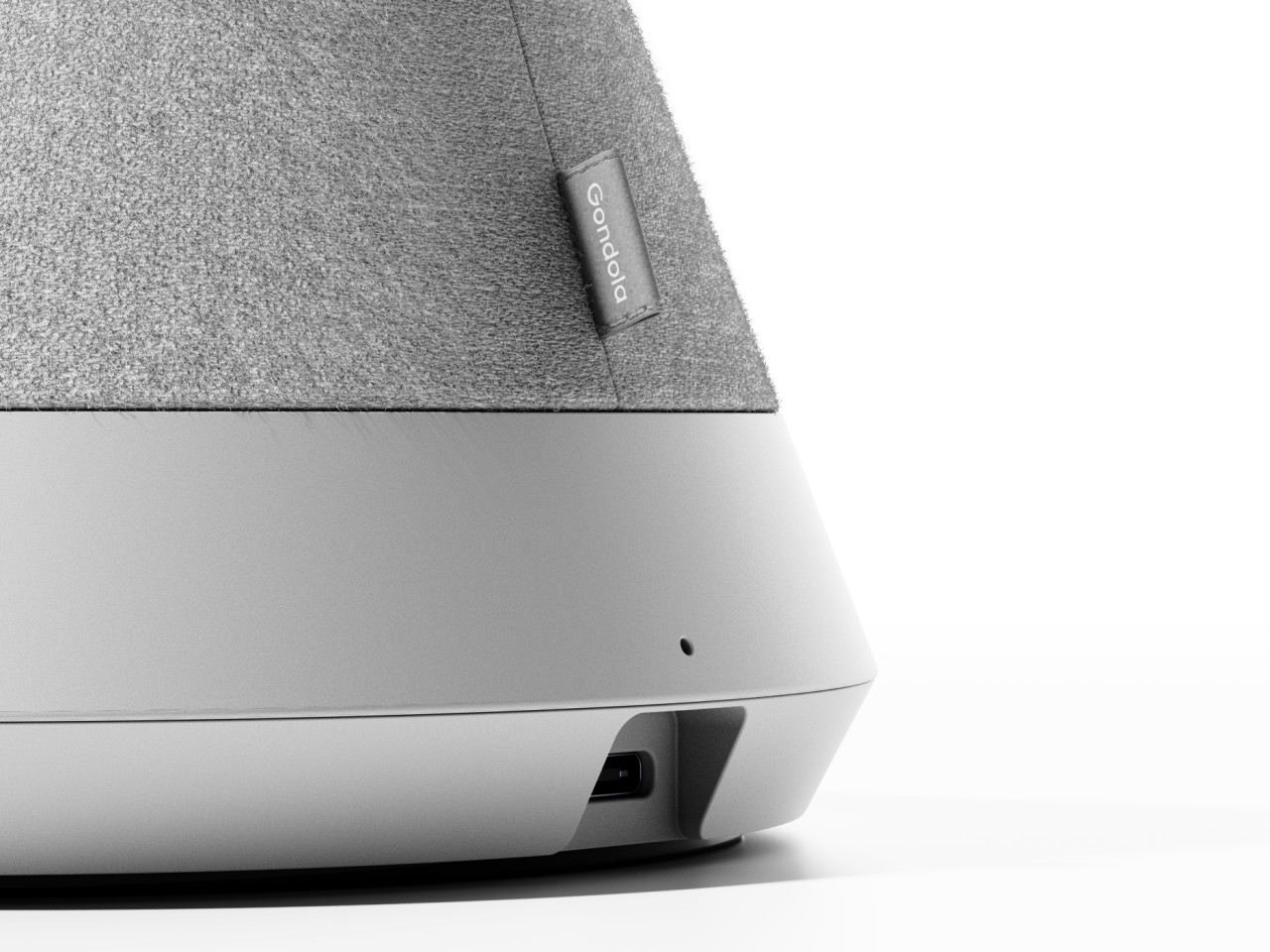
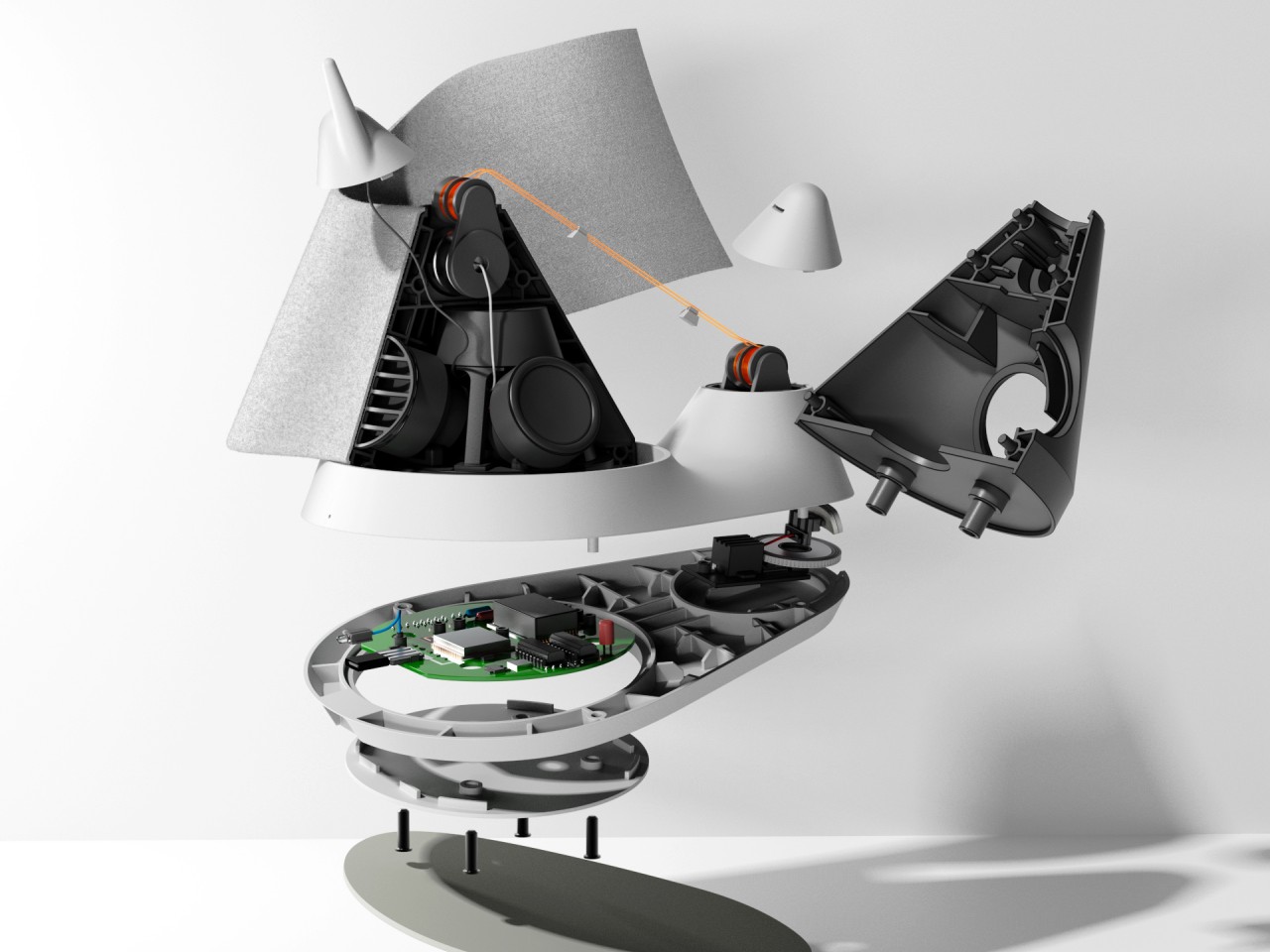
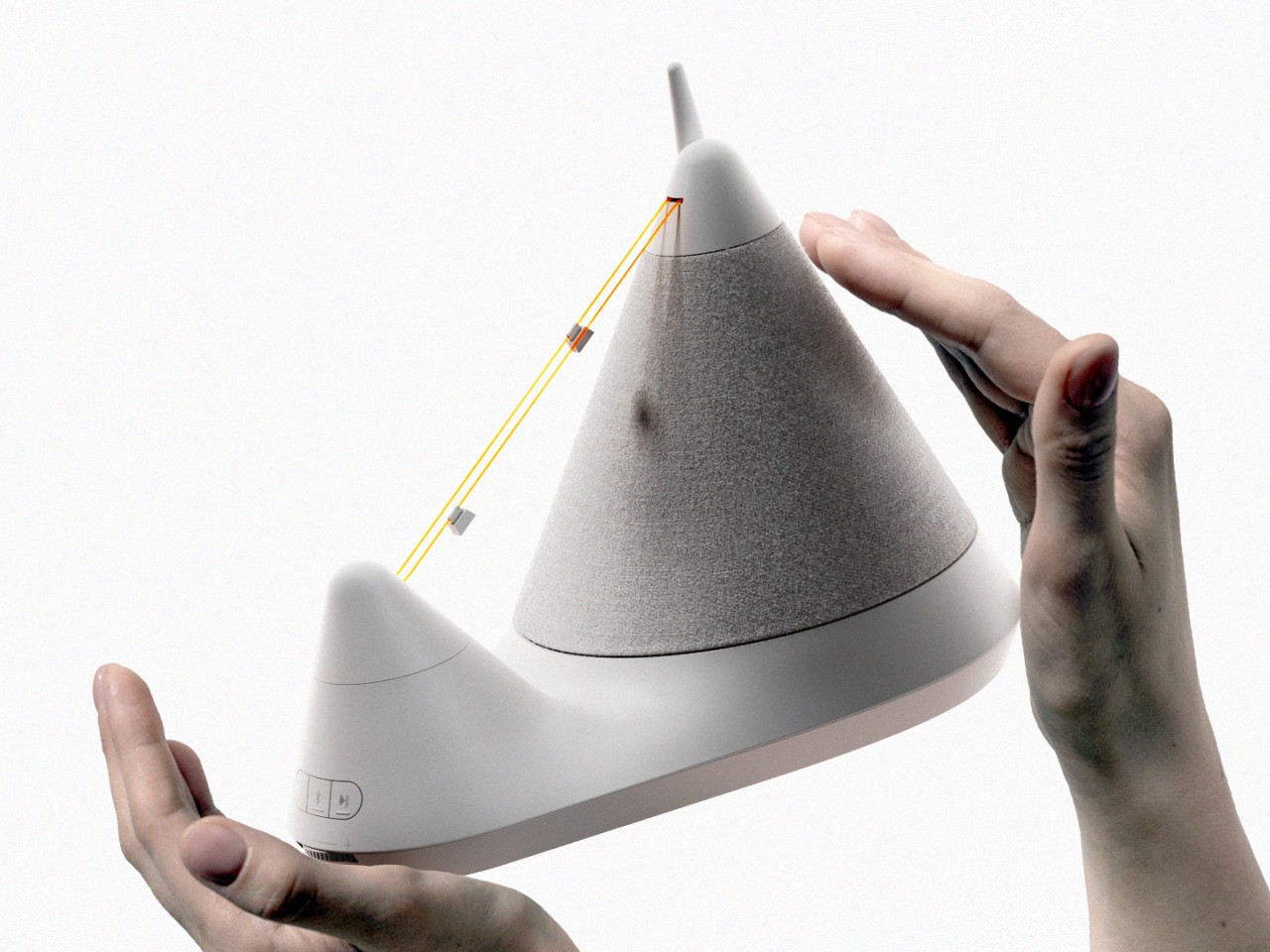
Wireless speakers are a dime a dozen these days, and they come in a wide variety of forms, ranging from rugged tubes to glamorous art objects. The ones that are meant to stay indoors often hide their physical controls or do away with them completely in order to blend in with the rest of the room’s decor. Many don’t even have displays so you can’t view information at a glance without having to pick up your phone and unlock it. It doesn’t have to be an “either-or” situation, however, and you can maintain a speaker’s analog simplicity and beauty while still providing a useful visual, as this concept design for a travel-inspired Bluetooth speaker demonstrates.
Designer: Sungmin Hwang
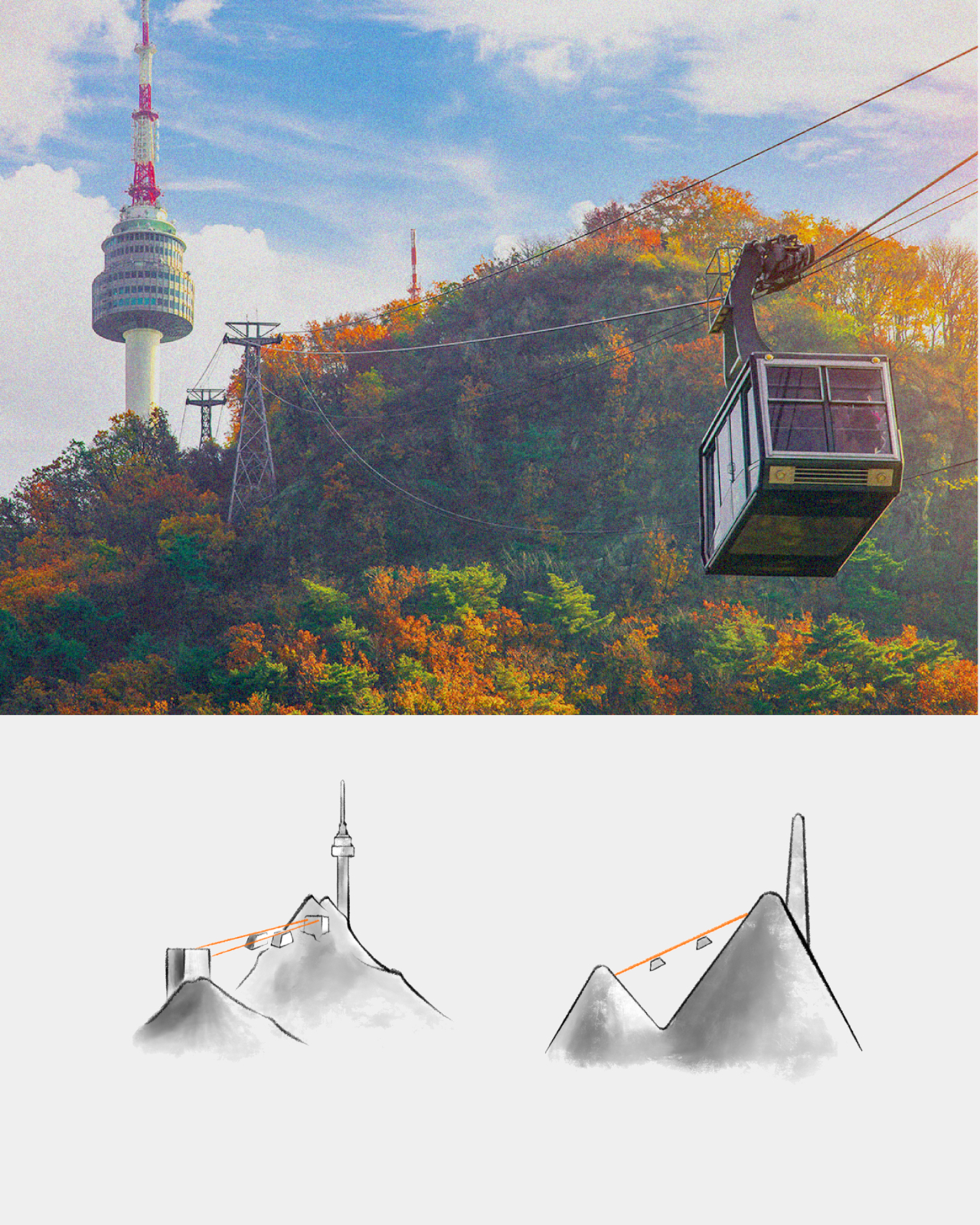
Truth be told, a gondola lift is probably the last thing you’d associate with music. Also known as cable cars, these compact boxes carry a small group of passengers from one height to another, allowing them to see the journey from a completely different perspective. It adds a sense of wonder and awe, and maybe even a bit of thrill, as you slowly make your way to your destination, which is often on the top of a mountain or tower.
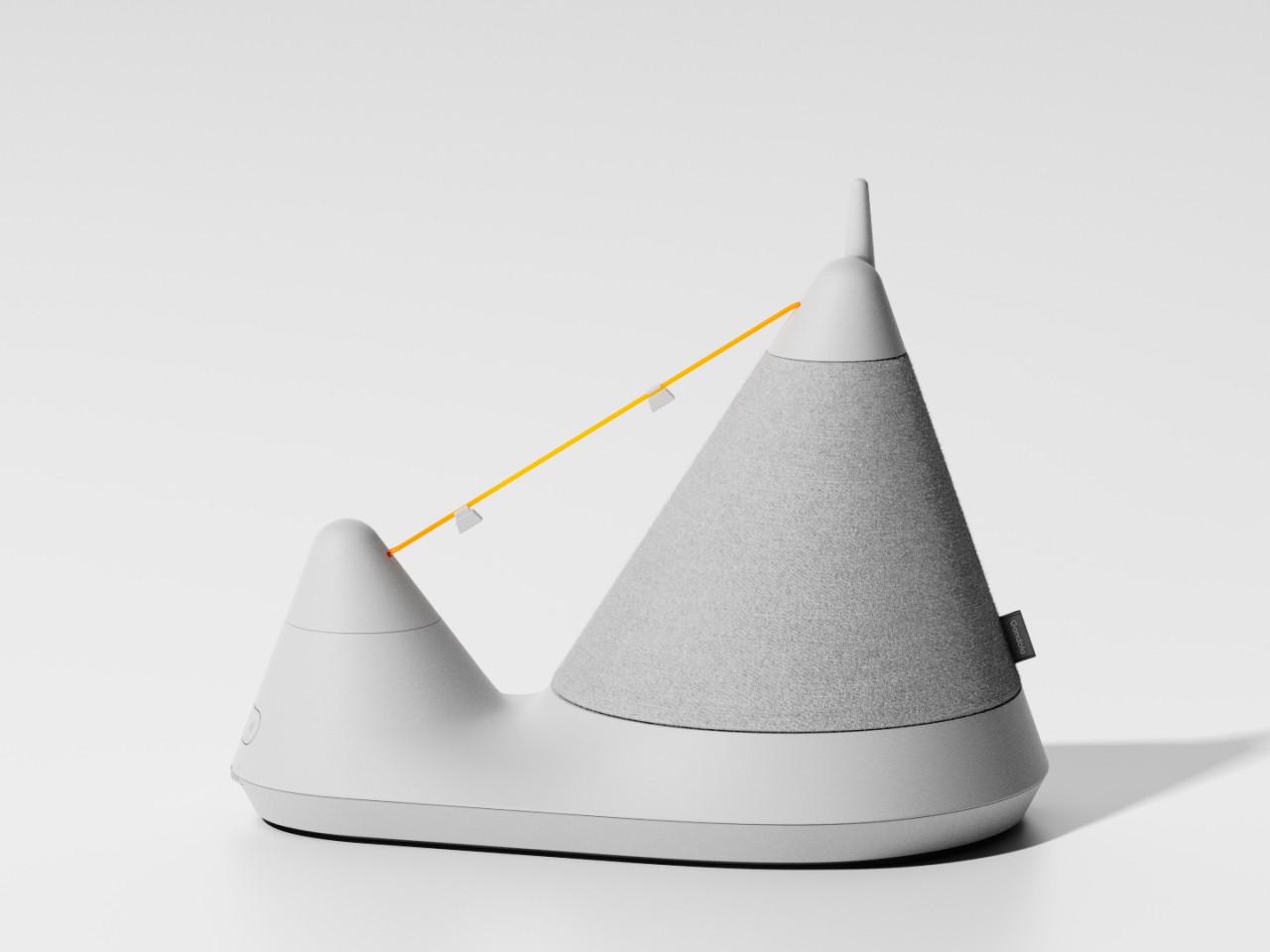
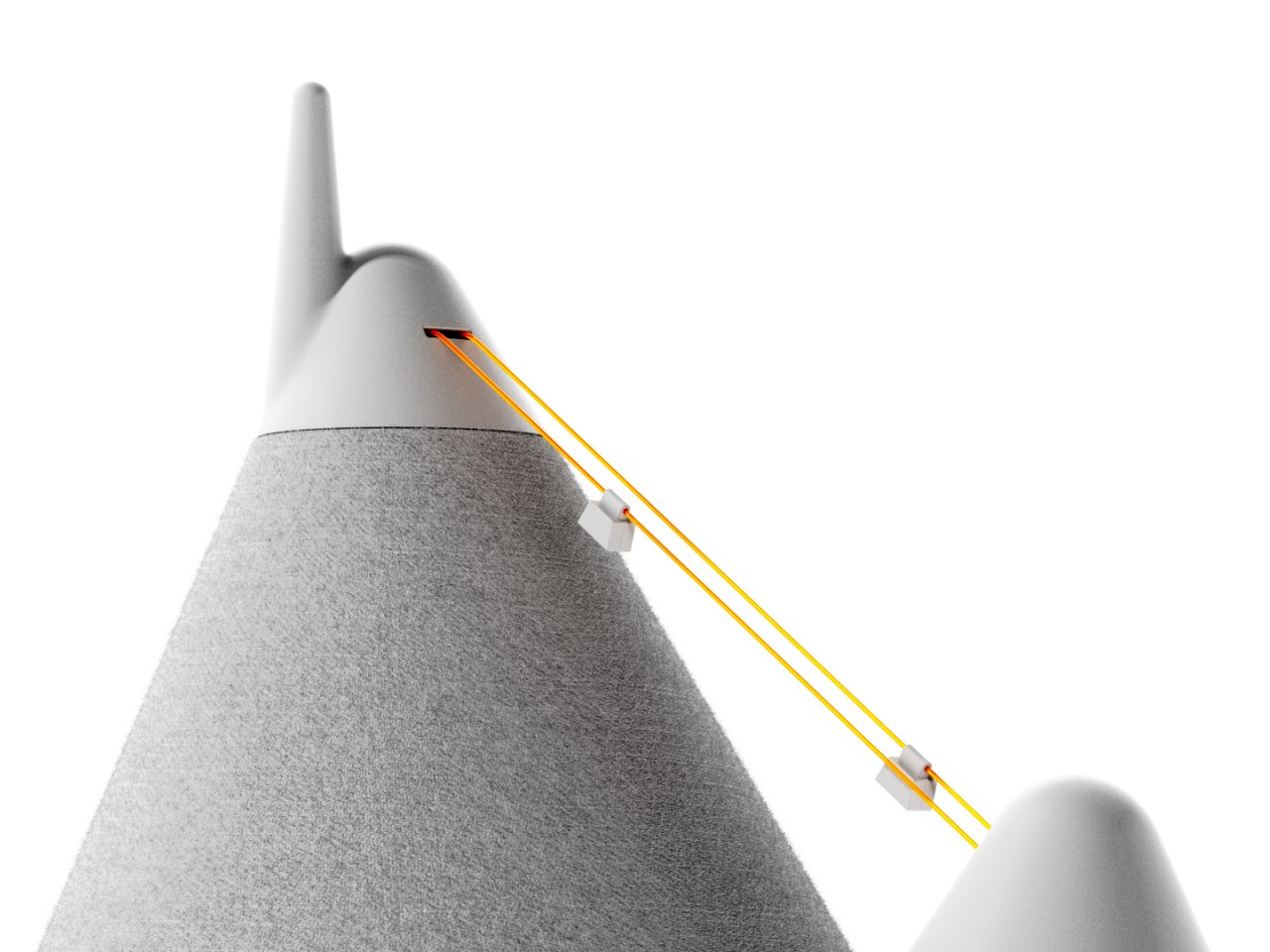
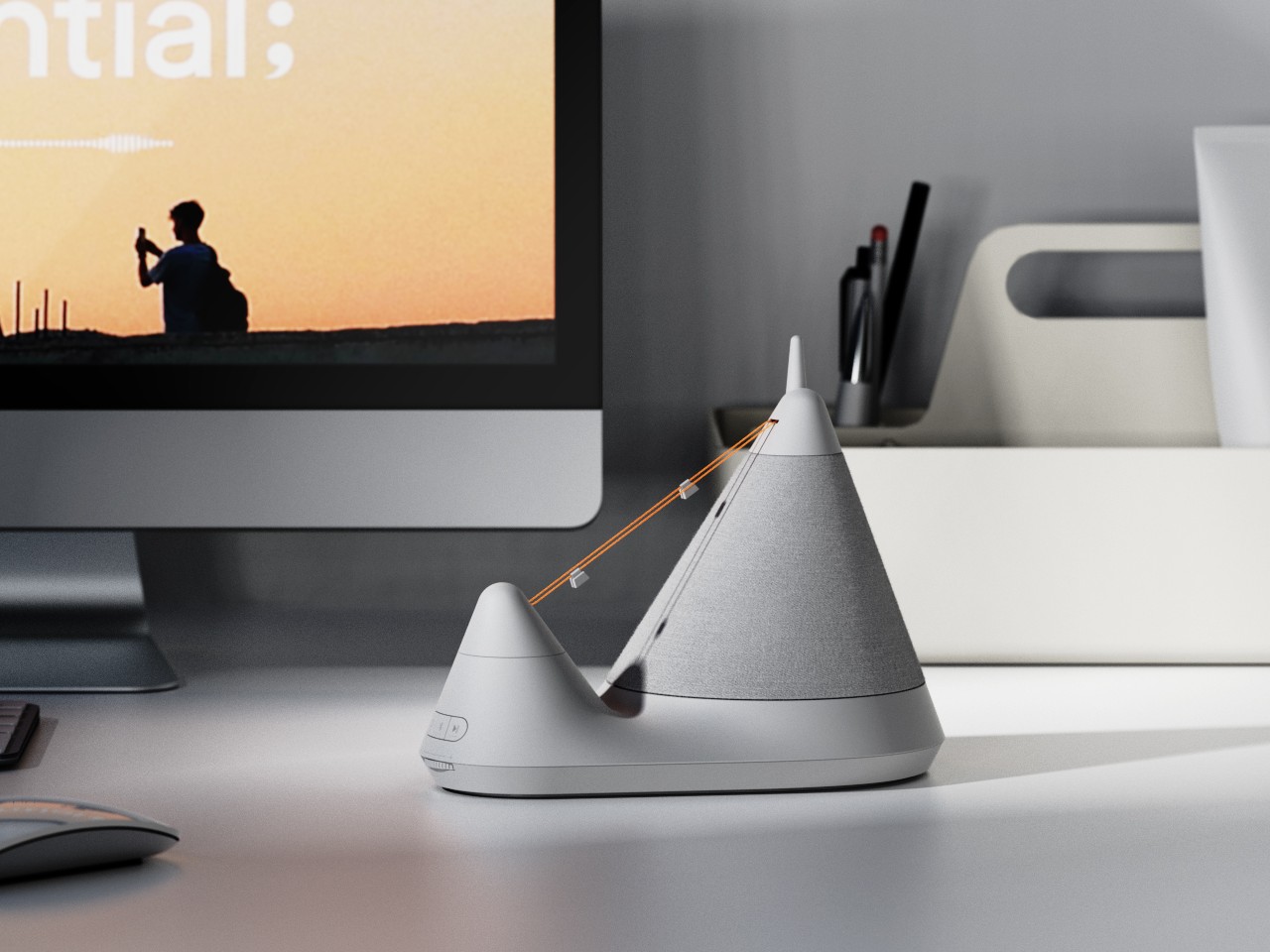
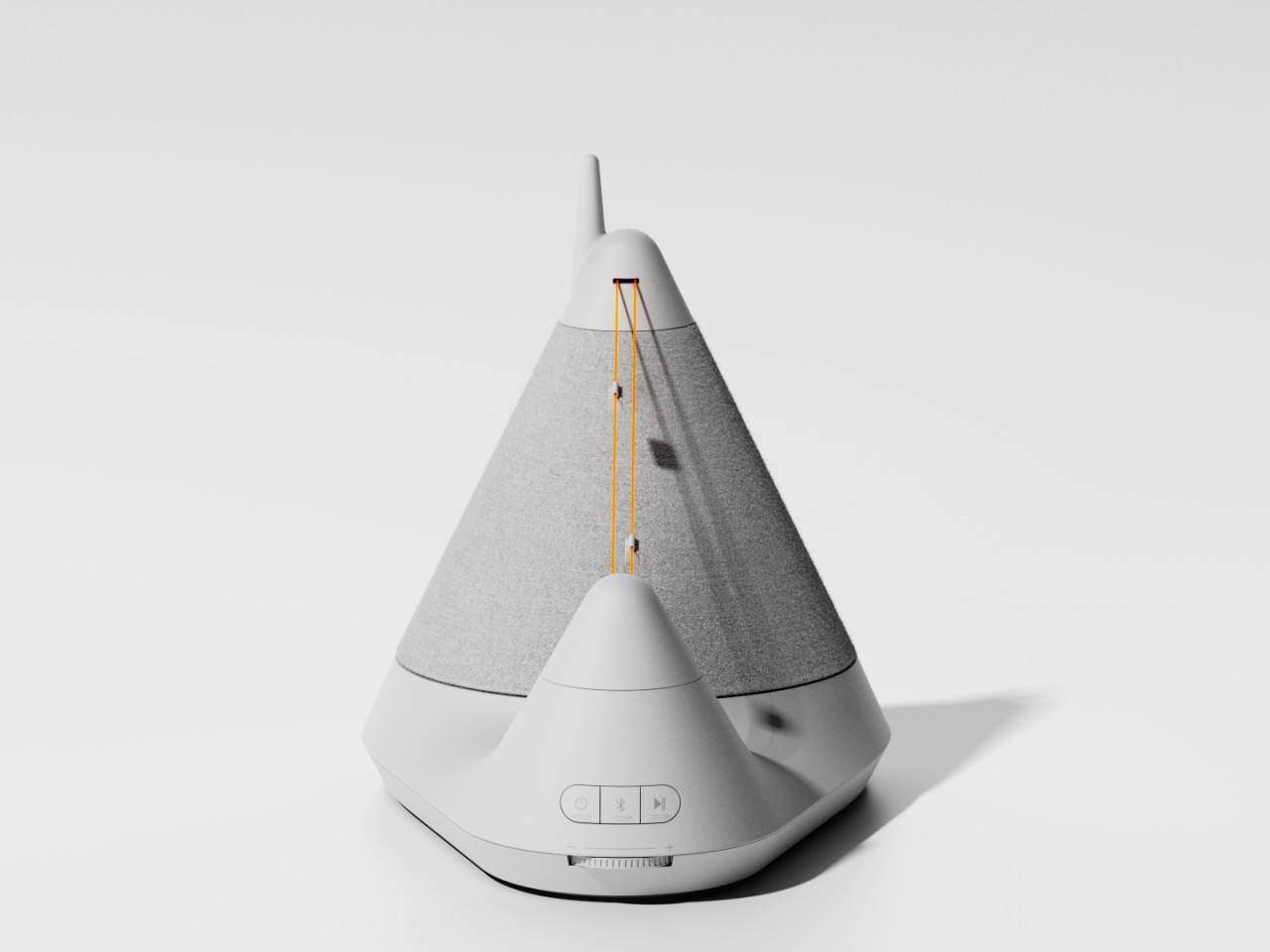
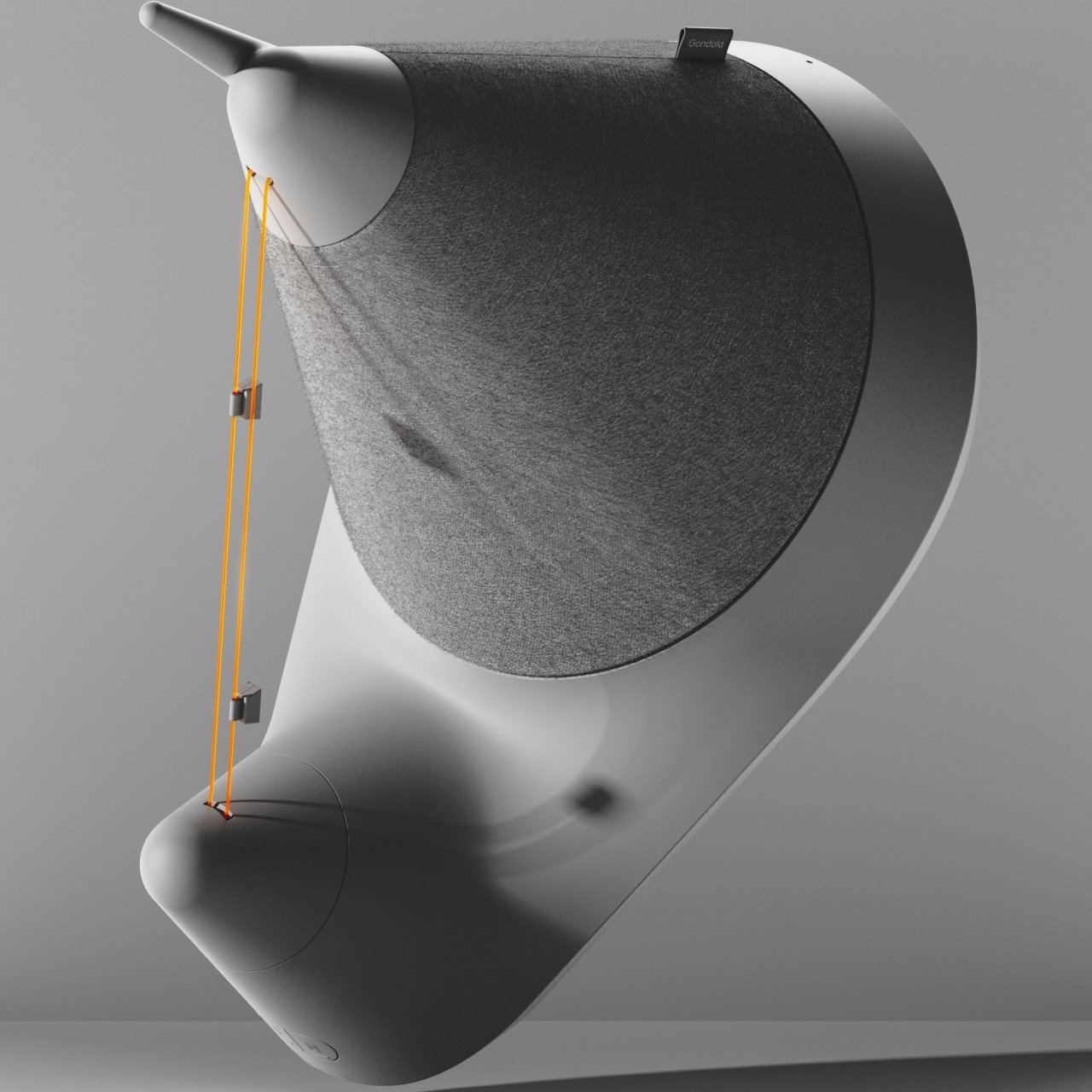
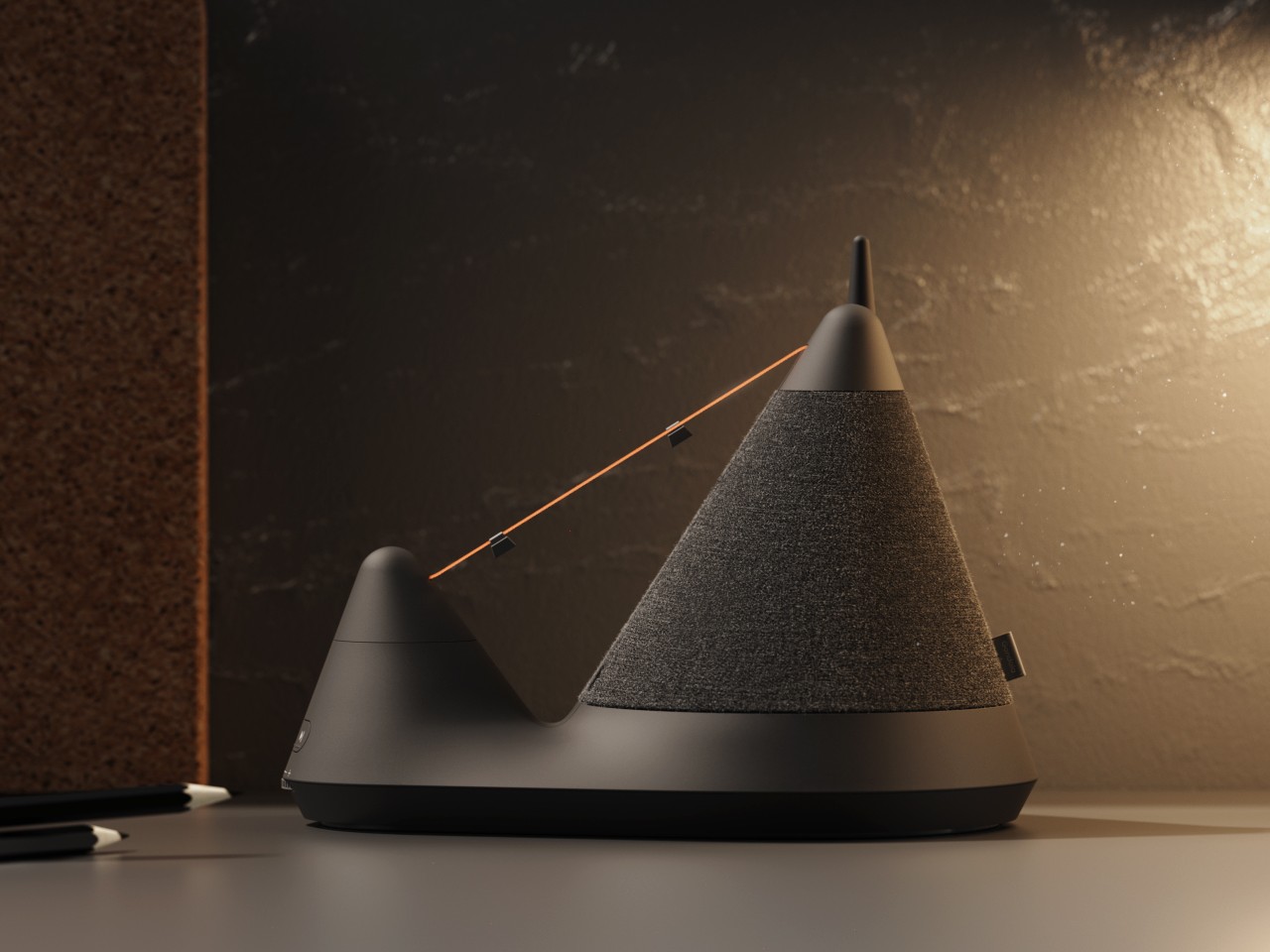
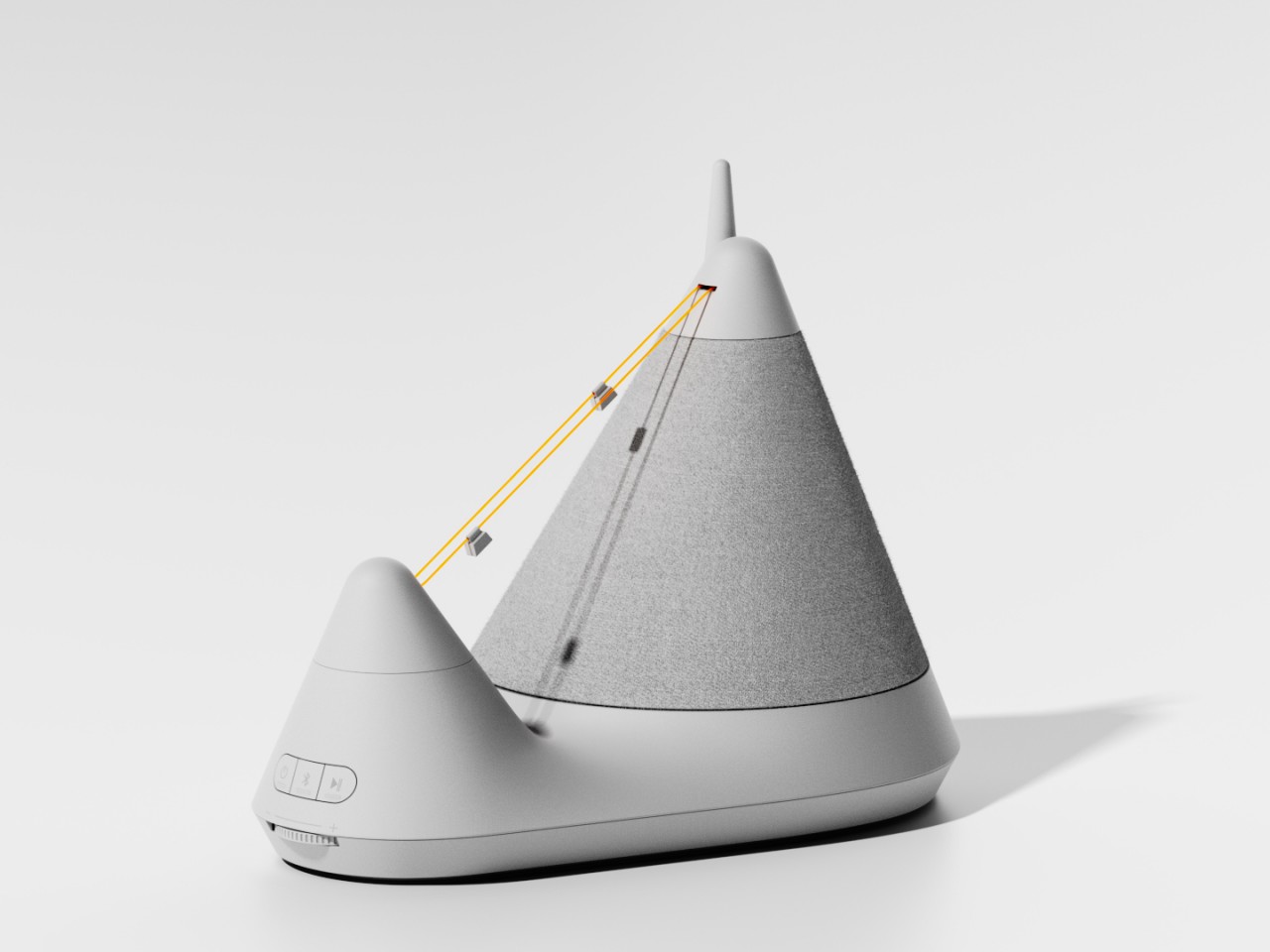
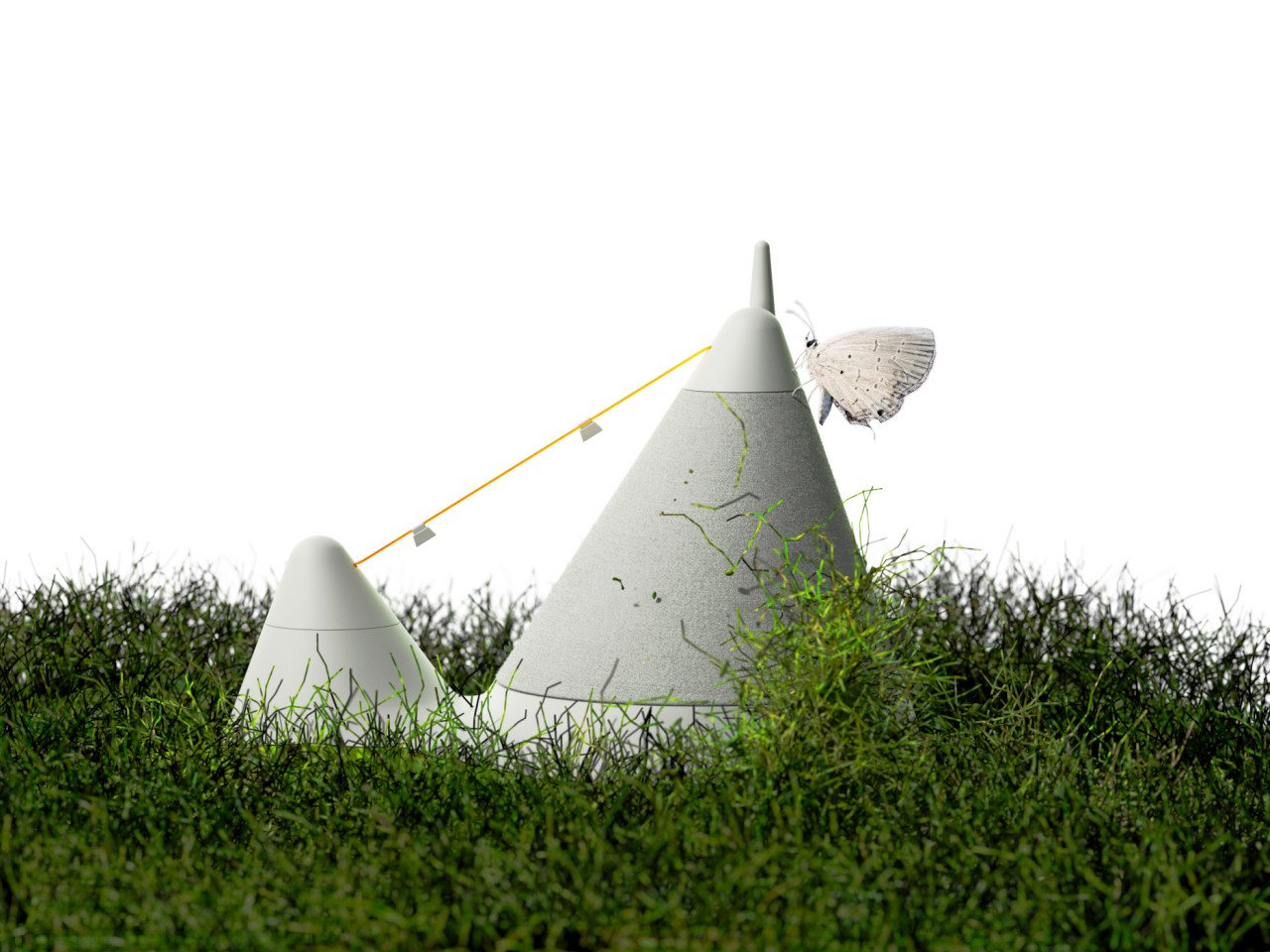
That’s the association that the Gondola Bluetooth speaker design concept makes between playing music and the journey, both of which take you into exciting new worlds that feel different from your current situation. The speaker’s design is specifically inspired by the cable car system that goes to and from Korea’s famous Namsan Tower, a magical journey even for frequent visitors. The two ends of the speaker house cones, one of which is significantly taller and represents Mount Namsan where the tower stands. This cone is actually the speaker, which diverges from the conventional cylindrical form of Bluetooth speakers
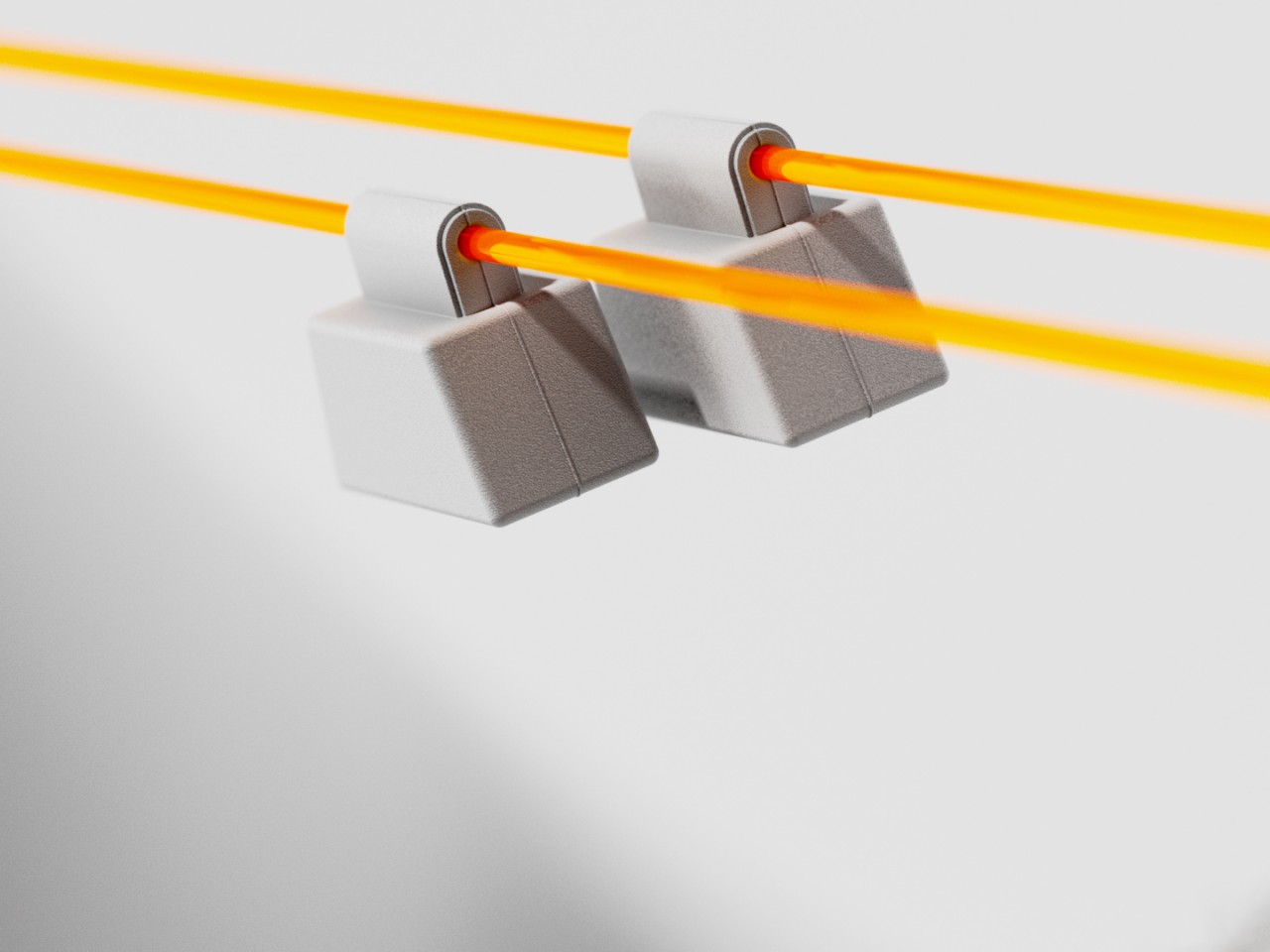
Connecting these two points are two fishing lines representing the cables of the gondola lift. Two tiny modules move back and forth between these lines, which represents the speaker’s main gimmick. The movement of these miniature gondolas syncs with the playback time of the current track playing on the speaker, giving a visual representation of the digital progress bar found in most music apps. This mechanism allows the user to see how far along the music is even without looking at their phones. Admittedly, not many people probably do that anyway, but the movement of gondolas still creates an almost magical atmosphere that could surface joyful memories of travels and adventures.
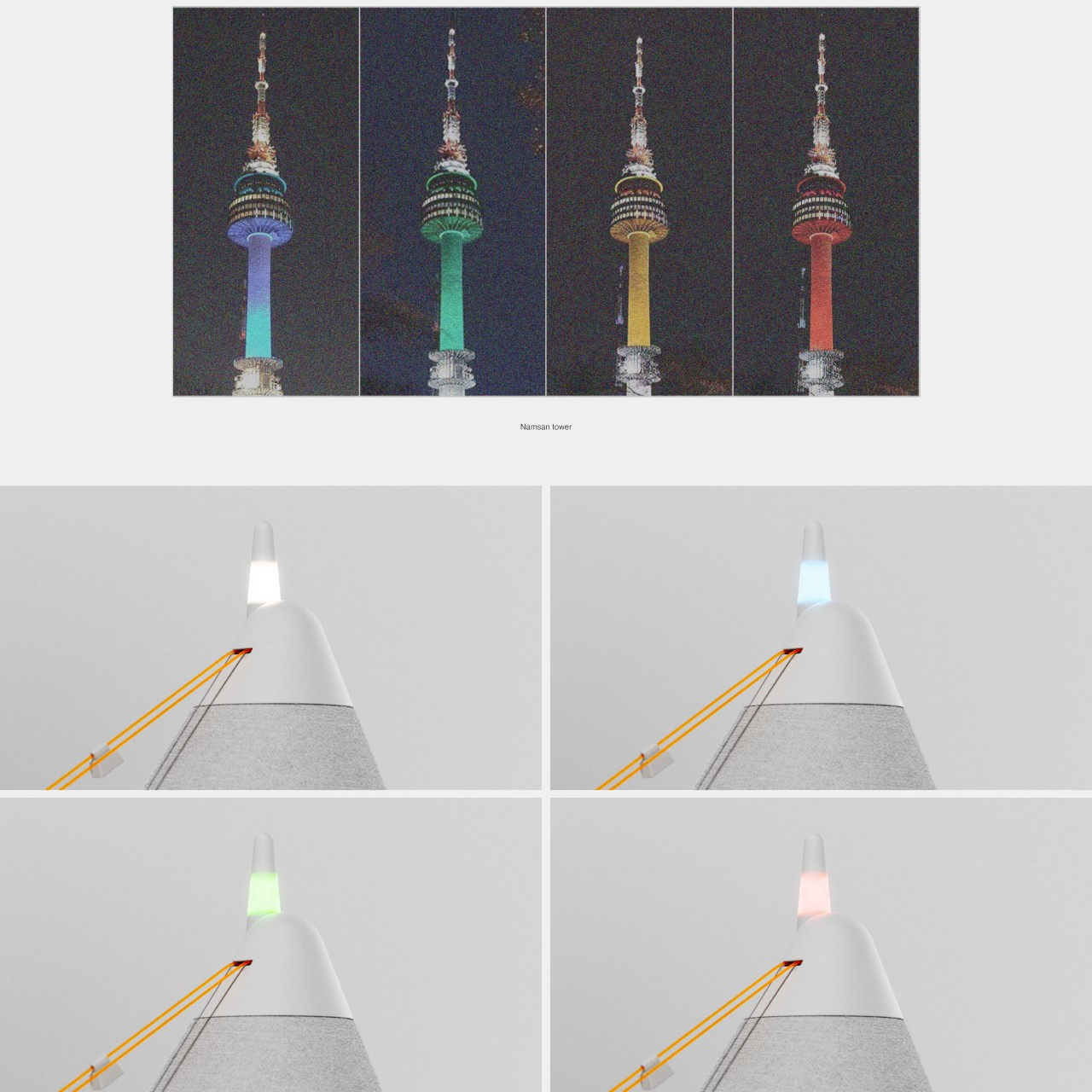
The Gondola speaker concept pays tribute to the Namsan Tower in another way. The small conical stub on top of the speaker has an LED light that changes color depending on the state of the speaker, signifying things like pairing, playing, battery level, and the like. It’s definitely an interesting idea that shows relevant information without relying on screens, integrating such controls into the theme of the design in a seamless and beautiful manner.
NASA's Perseverance rover has been collecting samples from Mars since 2021, but one of its most recently collected rocks could help it achieve its goal of finding evidence of ancient life on the planet. Nicknamed Cheyava Falls after the tallest waterfall in the Grand Canyon, the 3.2 feet by 2 feet sample contains "chemical signatures and structures" that could've been formed by ancient microbial life from billions of years ago.
Perseverance collected the rock on July 21 from what was once a Martian river valley carved by flowing water long ago. The sample, which you can see in close up below and from afar at the center of the image above, exhibits large white calcium sulfate veins running along its length. They indicate that water did run through the rock at one point.
More importantly, it contains millimeter-size marks that look like "leopard spots" all over its central reddish band. On our planet, those spots could form on sedimentary terrestrial rocks when there are chemical reactions that turn hematite, one of the minerals responsible for Mars' reddish color, to white. Those reactions can release iron and phosphate, which could've served as an energy source for microbes.
The rover's Planetary Instrument for X-ray Lithochemistry (PIXL) tool already determined that the black rings around the spots contain iron and phosphate. However, that doesn't automatically mean that the rock truly did serve as a host for ancient microbes.
NASA/JPL-Caltech/MSSS
The spots could've been formed by non-biological processes, and that's something scientists will have to figure out. "We cannot say right now that we have discovered life on Mars,” Katie Stack Morgan, the deputy project scientist, said. "But what we are saying is that we have a potential biosignature, which is a set of features that could have a biological origin but do need further study and more data."
NASA still has to bring back the samples Perseverance had collected to our planet, including Cheyava Falls. As The New York Times notes, the Mars Sample Return mission is years behind schedule and would not be able to bring back rocks from the red planet until 2040 instead of in the early 2030's like originally planned. NASA recently asked aerospace companies for alternative solutions on how to get the samples to Earth much sooner and will finance their studies due later this year. Scientists will also have to conduct extensive testing to rule out contamination and non-biological processes, as well as other possible explanations for how the leopard spots had formed, before they can proclaim that they're indeed evidence of ancient Martian life.
This article originally appeared on Engadget at https://www.engadget.com/nasas-perseverance-rover-found-a-rock-on-mars-that-could-indicate-ancient-life-150006064.html?src=rss
Apple has joined several other tech companies in agreeing to abide by voluntary AI safeguards laid out by the Biden administration. Those who make the pledge have committed to abide by eight guidelines related to safety, security and social responsibility, including flagging societal risks such as biases; testing for vulnerabilities, watermarking AI-generated images and audio; and sharing trust and safety details with the government and other companies.
Amazon, Google, Microsoft and OpenAI were among the initial adoptees of the pact, which the White House announced last July. The voluntary agreement, which is not enforceable, will expire after Congress passes laws to regulate AI.
Since the guidelines were announced, Apple unveiled a suite of AI-powered features under the umbrella name of Apple Intelligence. The tools will work across the company's key devices and are set to start rolling out in the coming months. As part of that push, Apple has teamed up with OpenAI to incorporate ChatGPT into Apple Intelligence. In joining the voluntary code of practice, Apple may be hoping to ward off regulatory scrutiny of its AI tools.
Although President Joe Biden has talked up the potential benefits of AI, he has warned of the dangers posed by the technology as well. His administration has been clear that it wants AI companies to develop their tech in a responsible manner.
Meanwhile, the White House said in a statement that federal agencies have met all of the 270-day targets laid out in a sweeping Executive Order related to AI that Biden issued last October. The EO covers issues such as safety and security measures, as well as reporting and data transparency schemes. The White House says that agencies have met all the stipulated deadlines to date.
This article originally appeared on Engadget at https://www.engadget.com/apple-agrees-to-stick-by-biden-administrations-voluntary-ai-safeguards-144653327.html?src=rss
A grand jury in Kansas City has indicted Rim Jong Hyok, a North Korean intelligence operative who allegedly used ransomware to attack health providers' systems in the US, according to AP News. The State Department said Rim is part of a group called Andariel that's controlled by the North Korean intelligence agency, the Reconnaissance General Bureau. Rim is not in the US government's custody. The agency is now offering a $10 million reward for information that would lead to his location or the location of a foreign operative who "engages in certain malicious cyber activities against US critical infrastructure."
A Kansas medical center alerted the FBI about an attack that blocked personnel's access to patient files and lab test results, as well as prevented them from operating hospital equipment with their computers, was back in 2021. It's a common MO of Rim's Andariel group, which would infiltrate a computer system and infect it with Maui ransomware. The group would then ask their target for payment and would threaten to release sensitive information if they don't pay up. In the Kansas hospital's case, the group demanded a ransom in Bitcoin worth $100,000 within 48 hours. The group allegedly used the money it gets to buy more computers and servers to fund more cyberattacks.
The FBI, the Cybersecurity and Infrastructure Security Agency (CISA) and the Department of the Treasury issued a joint cybersecurity warning in the midst of Andariel's attacks on healthcare providers in 2022. "The North Korean state-sponsored cyber actors likely assume healthcare organizations are willing to pay ransoms because these organizations provide services that are critical to human life and health," they wrote. Federal investigators said they followed the ransom the Kansas medical center paid across blockchains and found that someone had transferred the Bitcoin to an address belonging to two Hong Kong nationals. Based on the court documents seen by AP, the money was then transferred to a Chinese bank and withdrawn from an ATM in China close to the Sino-Korean Friendship Bridge connecting the country to North Korea.
Andariel and Rim are being accused of infiltrating 17 entities across 11 states, including four defense contractors, two US Air Force bases and NASA. The group was reportedly able to stay in NASA's computer system for three months and steal 17 gigabytes of classified information. During one of its operations that targeted a US defense contractor in November 2022, the State Department said the group was also able to extract over 30 gigabytes of data that include information on the material used in US military aircraft and satellites.
This article originally appeared on Engadget at https://www.engadget.com/north-korean-who-used-ransomware-to-attack-us-healthcare-providers-has-been-indicted-140008610.html?src=rss
Xiaomi is best known for its consumer electronics products, but now they want to try their hand at the highly competitive performance electric vehicle market. Yes, you read that right, the Chinese OEM has debuted a tri-motor prototype version of the SU7 EV called the SU7 Ultra. Its automotive wing, Xiaomi Automobile was founded in September 2021 and the first ever BEV launched in late 2023.
The high-performance SU7 Ultra generates a combined output of 1,527 hp from its three-motor powertrain. That results in an acceleration of 0-62 mph in just 1.97 and a top speed of 217 mph. The EV is under development right now and Xiaomi promises to set the official lap time at the Nürburgring racetrack in October.
This performance EV looks quite similar to the Porsche Taycan Turbo GT, and aims to beat the 7:05:298 minutes lap record at the famous German track by the Rimac Nevera. We cannot bet against that as one of the modes in the all-wheel drive SU7 Max can generate 664 hp and 618 lbs of torque for blazing fast take-off from a standing position. The aero package on the car helps keep it glued to the ground with 4,700 pounds of downforce for superior turning and top speed. The performance EV is equipped with AP Racing high-performance brake calipers and motor reverse braking for deceleration force over 2.36G, for late braking capabilities while being blazing fast on straights.
With an eye on peak performance every little addition or change matters. The SU7 Ultra therefore gets carbon fiber for most of its body parts to reduce the overall weight to 4,400 pounds. We are expecting a good balance between the power-to-weight ratio to extract maximum performance on the tarmac. Xiaomi has not revealed any other details so far, but we assume it’ll be fitted with at least a 130 kWh or 150 kWh capacity battery. The car should also get a rapid charging feature to achieve a full charge in under half an hour. When the car will go on sale is also unclear but we can expect it to challenge lap records at many race circuits in the coming year.
I don’t expect much from a device as small as a ring. There’s no room for a lot of hardware, so it only really needs to do a few things well. A sleep tracker that doesn’t get in the way of, well, sleeping, is my holy grail, and smart rings are a tantalizing option. Samsung’s Galaxy Ring promises to monitor my slumber and log my daily activity, and do so comfortably and unobtrusively, all for $400. That’s $100 more than its closest competitor, the Oura Ring, though the latter charges an additional $6 a month to use its software. Oura has been around for over five years, and in that time, it has developed more sophisticated ways to deliver insights to its customers, while Samsung is just starting. But for a debut effort, the Galaxy Ring has been a surprisingly informative health-tracking device for those with compatible Samsung phones.
The Galaxy Ring’s weight and design
Of all the wearables available, rings are among the smallest and lightest. My Galaxy Ring is a size seven, which is the third tiniest Samsung makes. That puts it at about 2.3 grams, or just under 0.1 ounces light, which is about half the 4 to 6 grams that Oura’s rings weigh, depending on their size.
Thanks to that lack of weight and the device’s slim profile, I barely feel it on my finger when trying to fall asleep, which, for a sensitive sleeper like me, is a huge deal. The only thing that sometimes bothers me are the red and green LEDs flashing in my dark bedroom, but they’re not so bright to keep me up after I close my eyes.
I’m extremely finicky, and don’t like wearing a ring when my hands are even the slightest bit wet, so I frequently took the wearable off. But if you’re less sensitive than me, you’ll be happy to know the Galaxy Ring will survive soap and running water. I wore it while washing my hands a few times, taking the ring off afterwards for my fingers to fully dry. When I eventually put the device back on after having applied lotion and sunscreen, I was happy to see that the creams did not get in the way of its sensors getting readings.
Because I frequently took the ring on and off, I did have mini panic attacks a few times when I thought it fell out of my pocket. Thankfully, in those situations, I was able to use Samsung’s location-tracking app to see that it wasn’t too far away and was likely in my pants. The problem with the ring’s lack of components, though, is that I can’t play an audible alarm to help find it.
That absence of features is a compromise I’m happy to make in exchange for the Galaxy Ring’s barely-there footprint. What Samsung does offer here also feels good enough for a basic health tracker, though it does pale in comparison to the competition.
Sam Rutherford for Engadget
The Galaxy Ring as a sleep tracker
I’ve mostly used the Galaxy Ring to track my sleep and general activity, since it doesn’t log any workout beyond walking and running. For the most part, all I really have to do with the ring is make sure I place it on my index finger, where it fits more snugly than the middle. This helps ensure my blood oxygen readings are accurate, or I end up with numbers that are wildly low.
Beyond that, I spent most of my testing time on Samsung’s Wear and Health apps, poring over my sleep data. We’ve come a long way since the early days where Fitbits only looked at the duration of your rest, guessing based on how still you are whether you’ve fallen asleep. These days, using your heart rate to determine whether you’re in REM or deep sleep is table stakes, and on that front Samsung delivers as expected.
Sam Rutherford for Engadget
I obviously can’t tell you what stages I’m in as I sleep, but I did like that Samsung not only presents the data clearly, but also adds helpful context. It tells me why it’s important to have time in the REM zone, and whether 11 minutes in deep sleep was enough for recovery. The app also helps me understand how I compare to other people, without me having to navigate to a separate app or browser. I did find that the Ring noted accurately what times I fell asleep and awoke, and even logged a midday nap in the app (though it didn’t show sleep cycle data for that period).
It took a few days, but once a baseline was established, the Galaxy Ring started telling me what my skin temperature was throughout the night, highlighting my peak and lowest numbers. I’ve been pleasantly surprised to find that my coldest temperature to date has been on one night in Singapore, which goes against my assumption that the local heat and humidity would affect these readings.
It’s been mollifying to see that my stats seem normal, although my blood oxygen levels have varied wildly depending on which finger I wear the ring on. It’s even gone as low as 76 percent, which would be concerning, but I’ve stopped caring much about that section of my sleep insights, since it seems my review unit might be a little loose.
You don’t have to spend as much time as I do digging into the numbers — Samsung, like most other modern sleep-tracking services, will assign a sleep score to tell you how well you slept. There are also graphs to help you understand your trends at a glance.
It’s important to note that Samsung said the energy score, sleep tracking and Wellness Tips features are based on Galaxy AI, meaning they’ll require a Galaxy phone, Samsung Health app and Samsung account to work.
Sam Rutherford for Engadget
The Galaxy Ring as an activity tracker
Samsung’s ring might not track a wide variety of exercises, but the data it does gather is surprisingly comprehensive. I was fully expecting the walks it automatically detected to only show me basic stats like duration and, perhaps, step count. But it actually presented my average speed, cadence, heart rate, heart rate zones, calories burned and distance traveled too.
I’m pretty impressed, but I must point out that Oura offers a Workout heart rate feature that lets you manually start and end heart-rate tracking sessions from your phone. It also automatically detects at least 40 different activities, including yardwork, cycling, snowboarding, horseback riding and HIIT. Oura also frequently adds new metrics like cardiovascular age and capacity, as well as experimental features like Symptom Radar to guess when you might not be feeling well. It’s ahead of Samsung in the game here and seems to be fighting to keep that gap open. I guess if you’re going to pay an extra $6 a month, you better get a significantly superior service.
In my experience, both Samsung and Oura are fairly accurate at tracking activity. In the last few days, I’ve been surprised to see the Galaxy Ring had tracked pretty much every time I went with my parents to a nearby hawker center, even though the walks only took fewer than 10 minutes. Compared to the Apple Watch Series 9 I usually wear, Samsung is more likely to include a short trip in its app’s activity log, which was not only more rewarding but also felt like a more complete picture of my day.
Sam Rutherford for Engadget
My problems with Samsung Health
One area where the Galaxy Ring (and rings in general) falls short of smartwatches is in delivering any sort of notification. As an activity tracker, this is mainly a problem when it comes to pushing stand reminders. Both Samsung and Oura will serve alerts on your phone when you’ve been stationary for too long, prompting you to get up and move. Wristworn wearables typically buzz and tell you on the screen, and it’s a lot harder to miss or ignore them. I’ve definitely had a few days where I was in an editing or writing hole and only noticed numerous alerts to move hours later when I looked at my Galaxy phone.
This isn’t a major problem, and is another small tradeoff I’m happy to accept since the Ring is so small. But I do have two specific complaints for Samsung, and they both pertain to the app. My first issue is the confusing interface for automatic activity detection. When you go into the Ring’s settings to enable this (which is unfortunately not turned on by default), you’ll see the words “Activities to detect” under a tinier label called “Auto detect workouts.” Next to the larger font is a grayed out toggle that turns blue when you slide it to the right.
Pushing this switch on didn’t actually enable the feature. Tapping on the words “Activities to detect” brought me into a different page with rows for “Walking” and “Running,” each accompanied by their own toggles. You’ll also have to press each of these activities to go into another page and turn on location tracking. Because of this, I spent my first few days with the Galaxy Ring confused why my walks weren’t being logged, despite having turned on the main toggle. A better layout with improved organization that requires fewer taps and pages would really help here.
My other gripe is a more specific situation. As I’m concurrently testing the Galaxy Watch Ultra, the information collected by that smartwatch is also considered by Samsung Health when calculating my energy score. This is actually a good thing, as I’d prefer to use a Galaxy Watch to log my gym sessions and rely on the ring everywhere else. But because the Galaxy Watch Ultra is so inaccurate when it’s not being worn, it actually recorded random workout sessions, like two bike rides that I never took. This caused the Health app to think I had overexerted myself and it ended up recommending I take it super easy the next day, when in reality I had done very little.
Yes, I can manually delete these entries, but when I’m busy and just want to glance at my energy score, this causes confusion. Why was my score so low? Did I somehow sleep poorly? I can already imagine hypochondriacs spiraling if they didn’t know what happened.
Luckily, Samsung clearly labels at the bottom of each workout record which device detected the activity. This is unlikely to be a huge problem unless you have both the Galaxy Ring and Watch like I do, and is something that seems easy enough to fix.
Sam Rutherford for Engadget
The Galaxy Ring’s battery life
Samsung says the Galaxy Ring can deliver “continuous usage” for up to seven days, and in my experience that’s fairly accurate. But you’ll have to be able to tolerate seeing the battery levels drop all the way to zero to get the full week. In the two weeks or so that I’ve worn the ring, it consistently dropped to under 20 percent by day six, and would basically die on day seven.
Charging the device’s 18mAh battery shouldn’t take too long. Samsung says 30 minutes will get you 40 percent of the way, and when I placed the Ring in its case for about 5 minutes, it went up by two percent. If I hadn’t been trying to gauge its battery life for this review, I would probably have recharged it any time I wasn’t wearing it, and likely wouldn’t have ever run out of juice.
Other issues
For its debut smart ring, Samsung’s delivered a satisfactory product that mostly delivers. Compared to the Oura ring, the Galaxy Ring is perfunctory. The main bonus Samsung had over the competition is its double pinch gesture, that can dismiss alarms or remotely launch the camera on your Samsung phone. I wasn’t able to test this feature because I tested the Ring with a Galaxy S24, and it’s only compatible with the Galaxy Z Fold 6 and Z Flip 6. Samsung says double-pinch functionality is coming to the S24 lineup soon.
Unlike the Oura ring, Samsung’s wearable doesn’t work with iPhones, though rumors are rife that iOS support is coming. For now, if you’re in Apple’s ecosystem you won’t be able to use the Galaxy Ring. Those who use a Samsung phone are more likely to appreciate the Galaxy Ring most. Other integrations like Find My and Samsung Health are available to anyone that installs the SmartThings app and has a Samsung account.
Wrap-up
Though the Galaxy Ring is fairly basic at the moment, it seems to have a lot of potential. Samsung needs to continue to invest in research to expand the insights it could deliver with the limited set of data the ring collects. Given the company’s history with bringing new features to its watches, Health app and the Z series of foldable phones so far, it might just do that. If you’re happy to spend $400 on a low-profile wearable sleep tracker that also logs your walks or runs, the Galaxy Ring will do the job.
This article originally appeared on Engadget at https://www.engadget.com/samsung-galaxy-ring-review-a-bit-basic-a-bit-pricey-130034811.html?src=rss
Apple's well-specked 14-inch MacBook Pro with an M3 Pro chip, 18GB of memory and 512GB of storage is on sale for the lowest price we've seen yet at Amazon. You can pick one up for $1,699, a savings of $300 (15 percent) and the lowest price we've seen to date on this particular model. We're also seeing discounts across the board on various 14-inch and 16-inch MacBook Pros.
Ad we noted in our review, Apple's MacBook Pro is one of the best ultraportables you can buy today thanks to the fast and efficient M3 Pro chip, gorgeous 14-inch screen, useful port selection and excellent keyboard and trackpad. It's particularly strong for content creation thanks to real-time decoding of commonly-used pro video formats — a feature missing on many PC laptops.
One issue we had with the MacBook Pro is that updates to the processor, RAM or storage add a lot to the price, and those things are important for video or photo editing. That makes this model a particularly good deal, because it's already well-equipped with 18GB of unified memory and an M3 Pro processor.
If you don't need the M3 Pro's horsepower, the 14-inch MacBook Pro with an M3 chip is on sale for $1,749 and nets you 16GB of RAM and 1TB of storage. Or, if your budget doesn't permit that, the 8GB/512GB M3 model is available for $1,399 or $200 off.
You can also grab a 16-inch M3 Pro model with 18GB of RAM and 512GB of storage for $2,249, a savings of $200 (10 percent) over the list price. Another great deal is on the 16-inch M3 Max model with 36GB of memory and 1TB of storage at $3,099, or $400 off.
This article originally appeared on Engadget at https://www.engadget.com/apples-14-inch-macbook-pro-laptop-with-an-m3-pro-chip-is-300-off-at-amazon-123042013.html?src=rss
Yesterday's Gran Turismo 7 game update 1.49 introduced all-new physics that have added extra realism and generally improved gameplay. However, the change is also causing some bizarre problems in specific situations, making cars bounce violently or just get hurled into the air.
The physics updates are generally positive, adding "more natural cornering physics and acceleration/deceleration stability levels," according to the developer. Similar changes to tire physics and steering allow a more challenging and rewarding driving experience overall.
However, some bugs appear to have crept in as well, according to gtplanet and posts on Reddit's r/granturismo. High-horsepower vehicles, often with engine swaps and extreme suspension settings, are literally flying, bouncing or intersecting with the ground, according to multiple (hilarious) videos.
The problem appears to happen when cars try to accelerate from low speeds, and mostly affects cars under AI control. It also happens during dynamic "Scapes Movies" scenes designed to show off landscapes from cars operated at slow speeds by AI. It's even been seen in GT Auto's garages.
It's clearly a weird z-axis programming bug, but Gran Turismo's team is aware of the issue and working on it. "We are now aware of the following issue in the 1.49 Update released on July 25: Car Physics Simulation — Unintended vehicle behavior is produced when a particular car setting is set within Car Settings," devs said in a post on X. A fix should be ready soon, so enjoy the comedy while it lasts.
This article originally appeared on Engadget at https://www.engadget.com/gran-tourismo-7s-more-realistic-physics-update-is-launching-cars-into-orbit-120045578.html?src=rss
Life can get hectic nd work can be super exhausting, which can be brutal for our mental health. Taking care of our mental well-being has never been more essential, considering how chaotic life can get. As much as we tend to pay attention to our physical well-being, it’s time to do the same for our mental health. Meditation can really help you unwind, release stress, and create an overall tranquil mindset. Although if you’re anything like me, sitting still without a single thought in your head can seem damn near impossible! Hence we’ve curated a collection of innovative gadgets to help you master the art of meditation, or simply take care of your mental well-being.
1. Japanese Lantern Candle
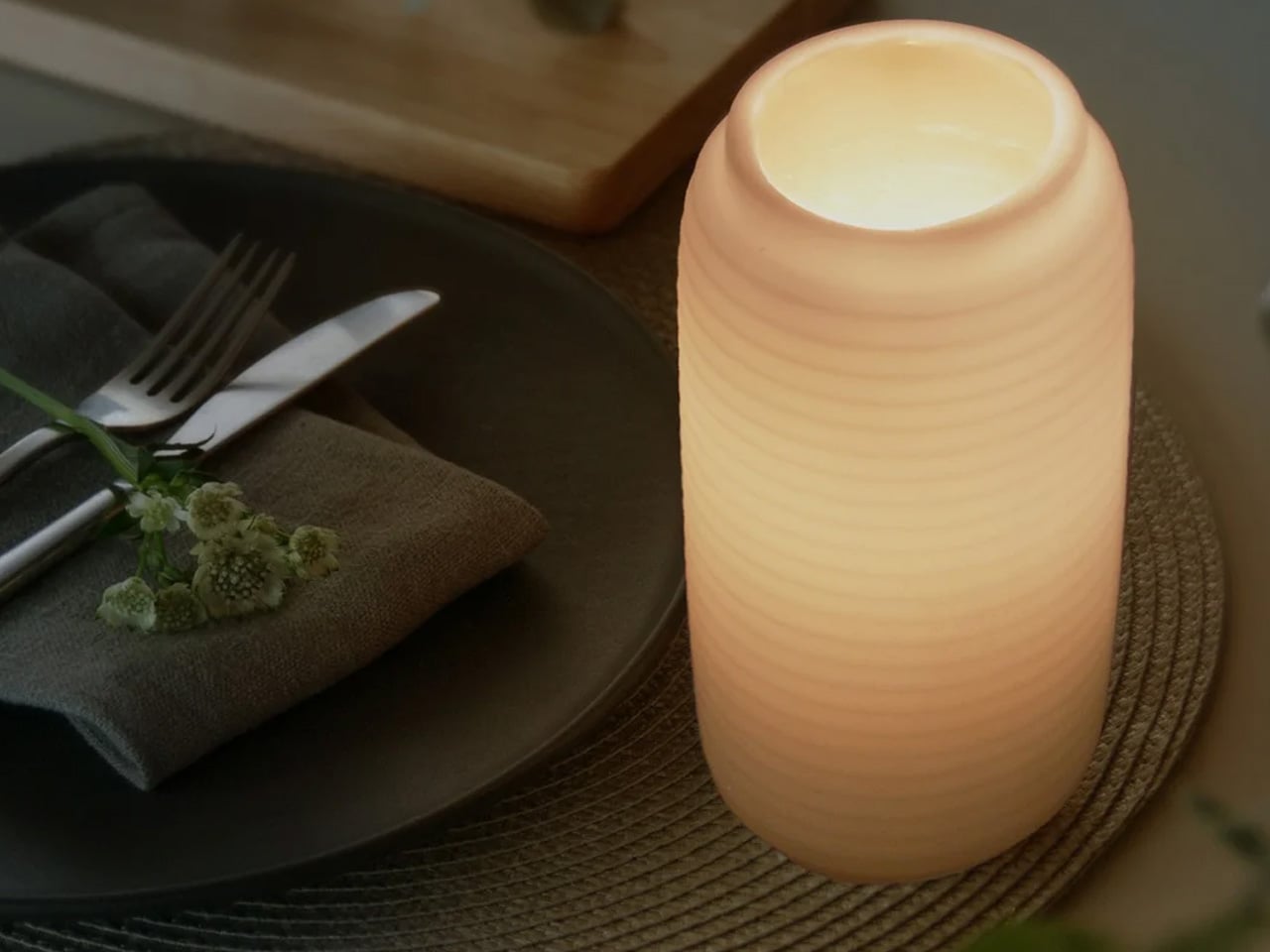
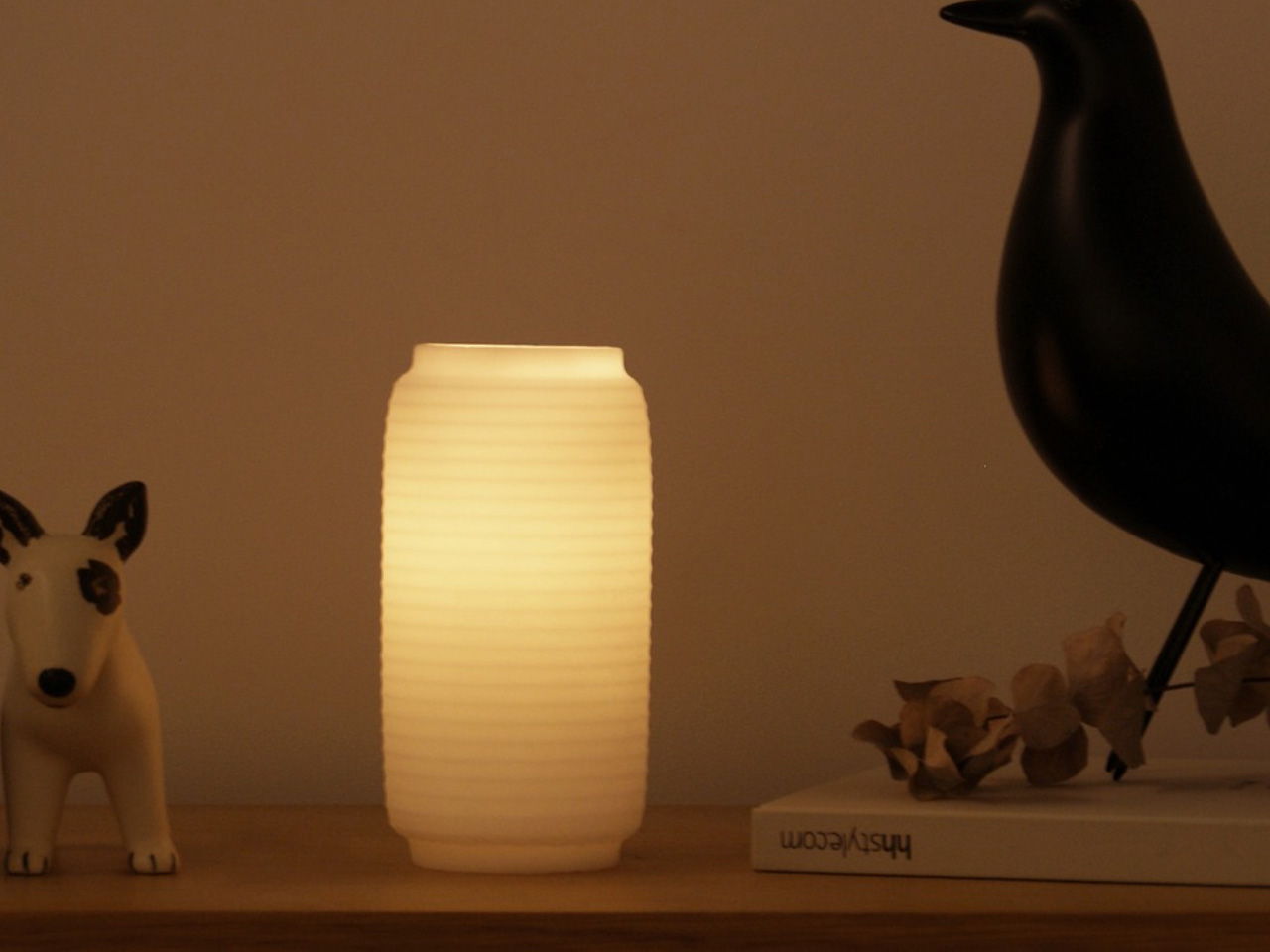
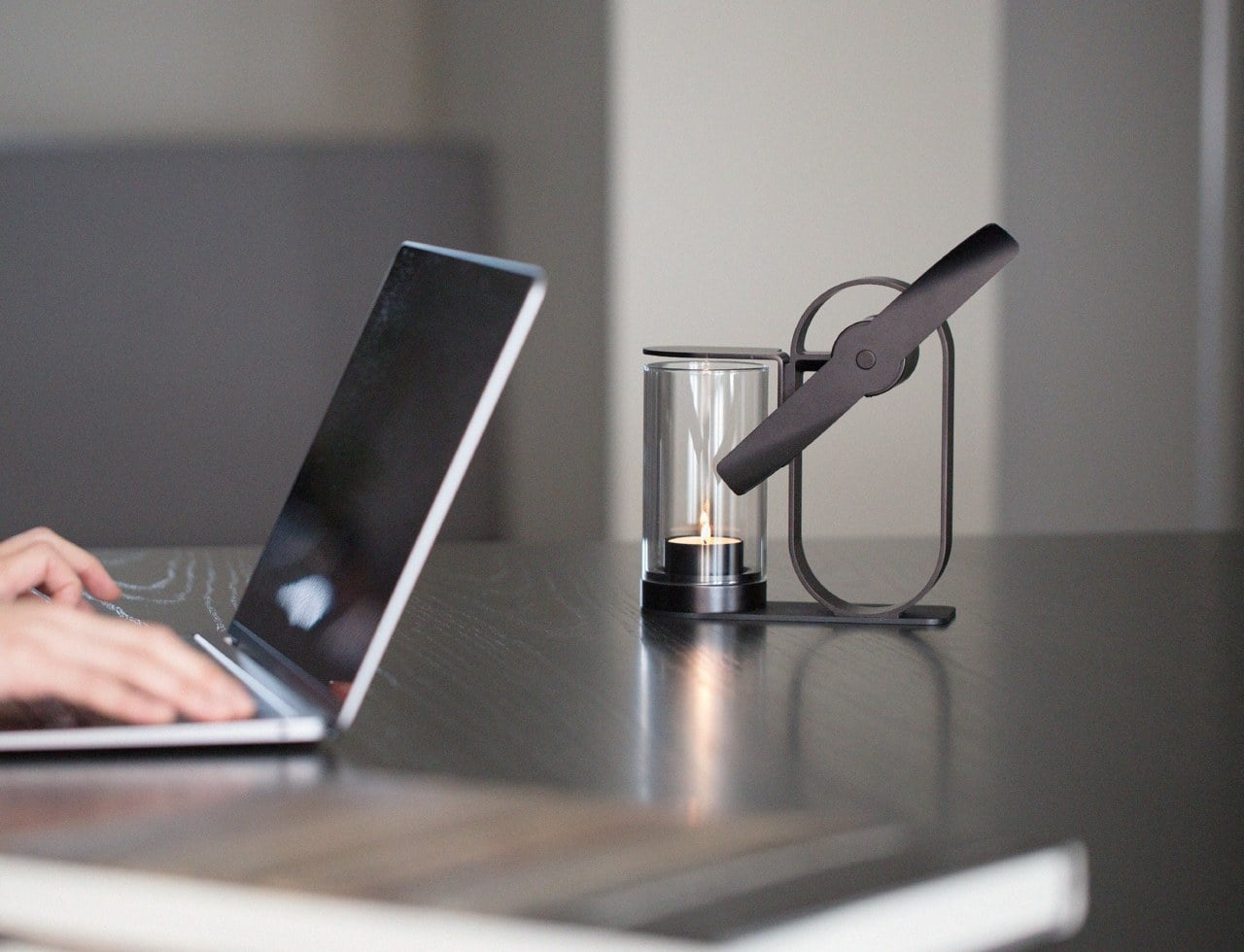
Called the Japanese lantern candle, this unique little candle is inspired by the Japanese ‘chouchin’ lantern and is amped with an intriguing pillowy shape. The lantern is a must-have for your bedroom, helping you unwind after a long day at work, and letting you relax.
The lantern candle offers a contemporary and lovely take on an iconic Japanese design, and it features a minimalist design that allows it to effortlessly merge with any modern living space. It radiates a relaxing glow, which helps you feel at ease, and enter a meditative state.
What we like
The wax is non-melting, it forms a lovely clarity on the candle
What we dislike
The candle is a fire hazard, so you need to use it carefully around kids and pets
2. Decima
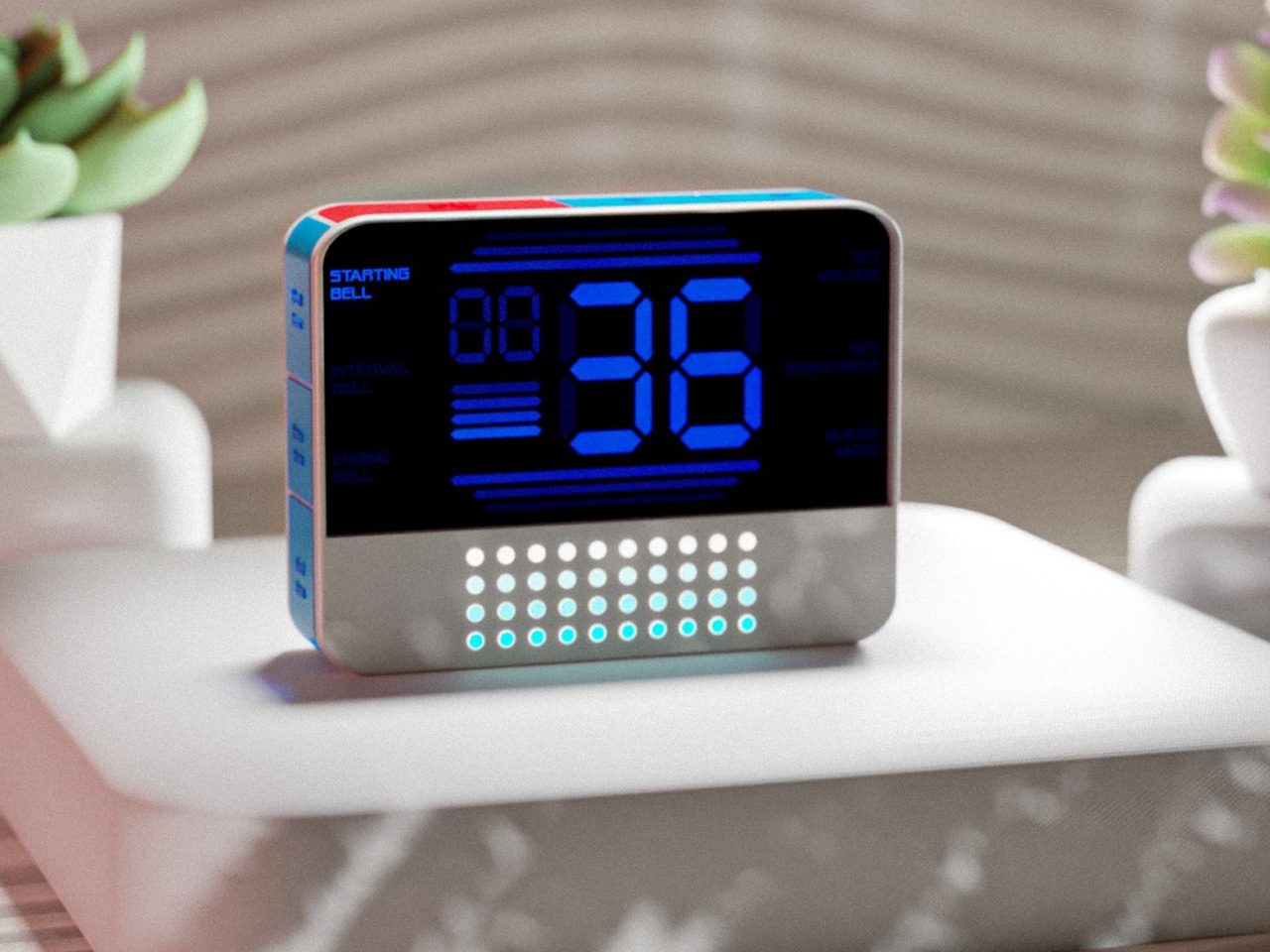
Called Decima – this timer has been designed specifically for meditation. Much like any timer, you need to set the duration of the time, and the interval of the reminders. And unlike typical analog timers, you can set the bell tones, volume, and brightness of the display. It even has a guided mode to show you how to do things.
Why is it noteworthy?
This timer provides various functions through easy-to-use buttons on the sides and the top of the device. It also includes an LDC display on the front which shows the time, and other useful info like the current mode or setting you are in. The LED lighting shines through the front grille.
What we like
The device looks quite visually interesting
You don’t need to use your smartphone for a timer
What we dislike
It is a concept, so the final product may differ
3. ASMR Zen Ball
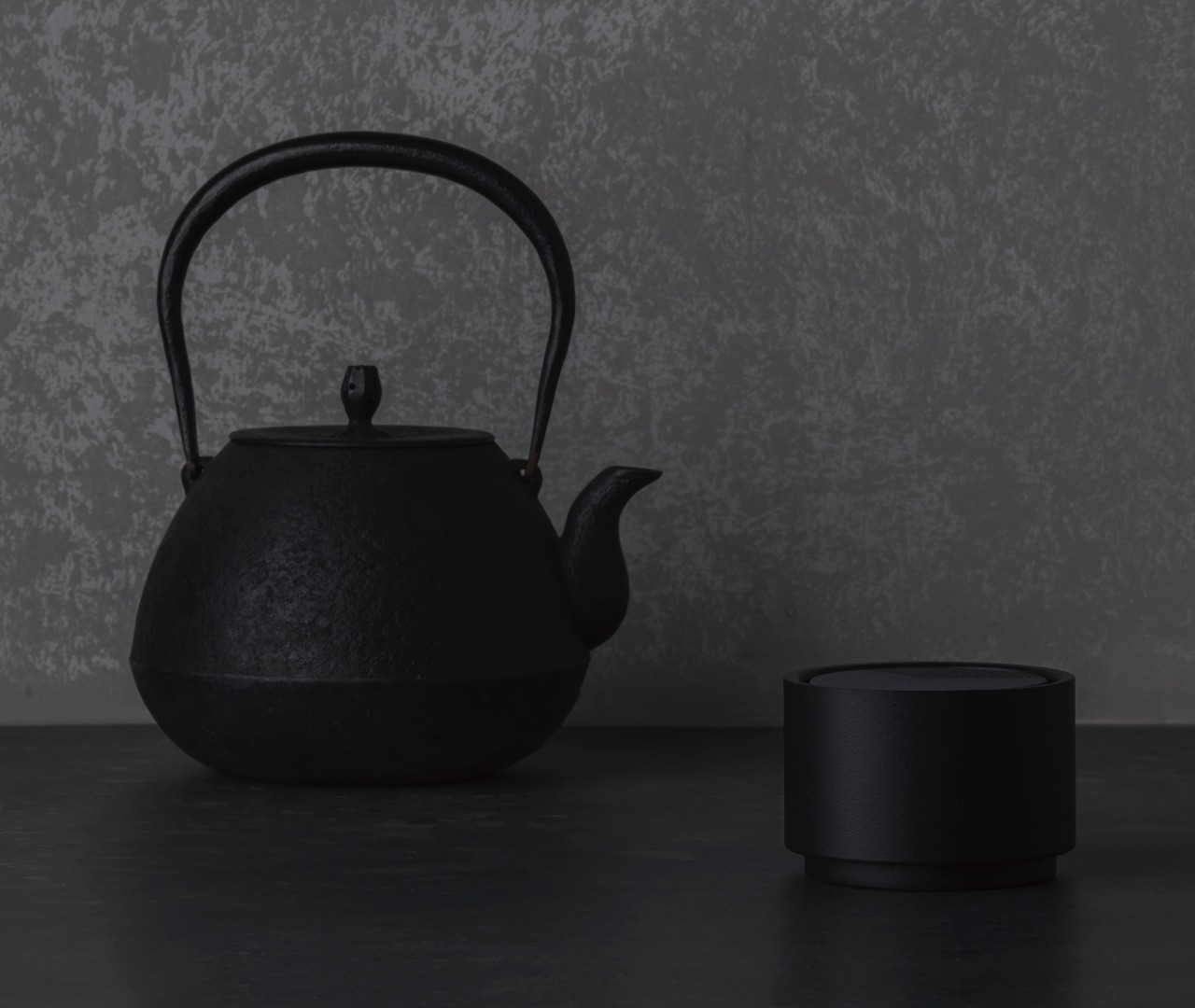
Called the ASMR Zen Ball, it merges natural and engineered elements to form a space-inspired design that offers a calming and relaxing experience to its users. The tiny product features a meteorite-inspired porous surface which serves as a great absorbent surface for your aroma oils.
The Zen Ball is made from genuine volcanic stone and matte aluminum alloy, which lets it double up as a fidget toy, creating an interactive experience, where users can connect with the natural energy of the earth.
What we like
Functions as a fidget toy, which offers sensory stimulation
What we dislike
The ball could get rolling due to accidental bumps when not attached to its base
4. Stress-Free Aroma Diffuser
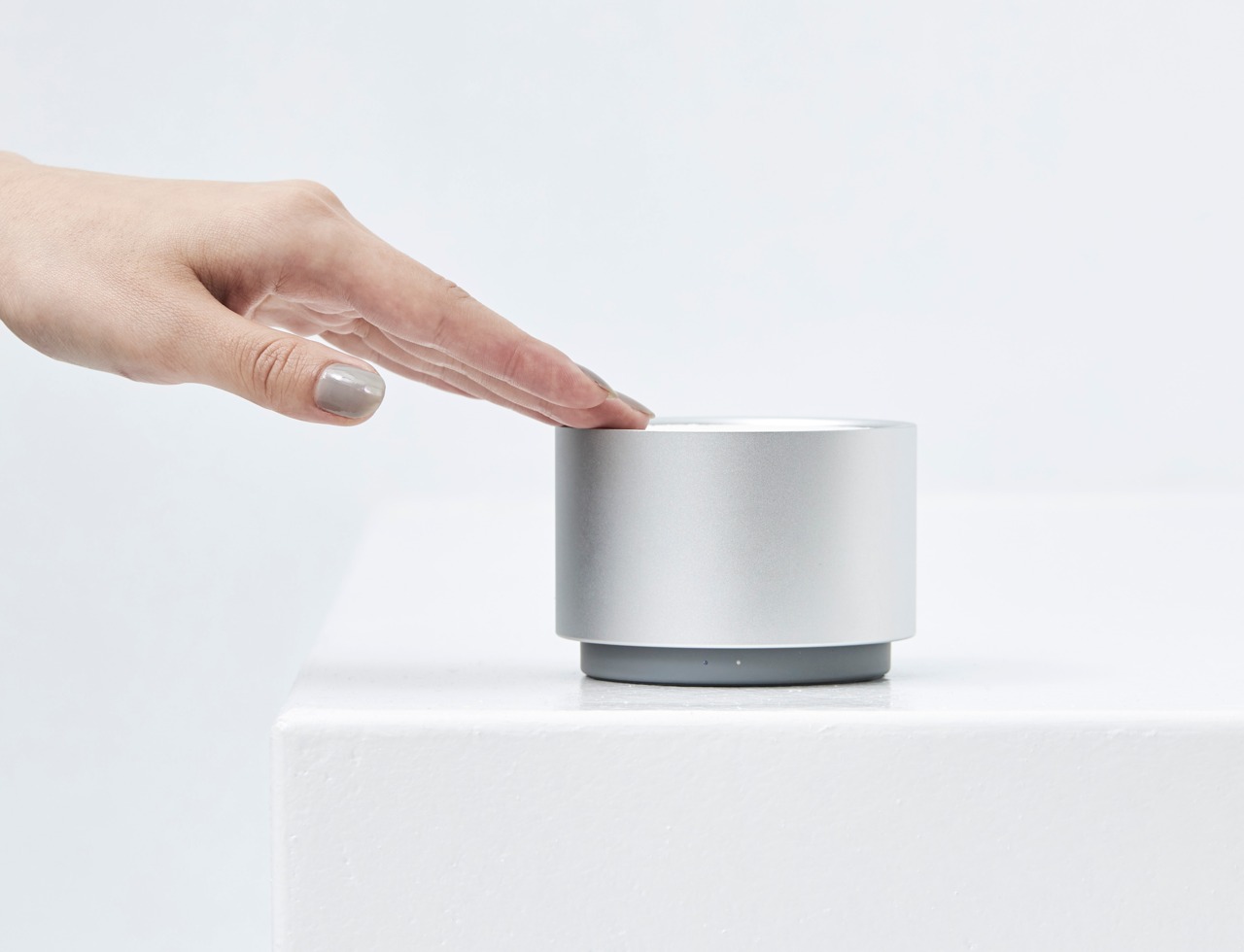
Called the Stress-free Aroma Diffuser, this little diffuser lets you sit back and relax while breathing in an excellent mix of aromatic blends. It can soothe your mind, and help you meditate and unwind after a long day at work. You can play some calming music, and relax with the Stress-free Aroma Diffuser.
It lets out a gentle breeze, which disperses the aroma evenly and lets you relax. The diffuser is equipped with a porcelain filter which absorbs the oils to offer a long-lasting experience.
What we like
The base is polished and provides an interesting contrast to the organic-looking porcelain disc, letting it function as an elegant decoration piece
What we dislike
Looks easily breakable and fragile, so it must be handled with care
5. Mendi
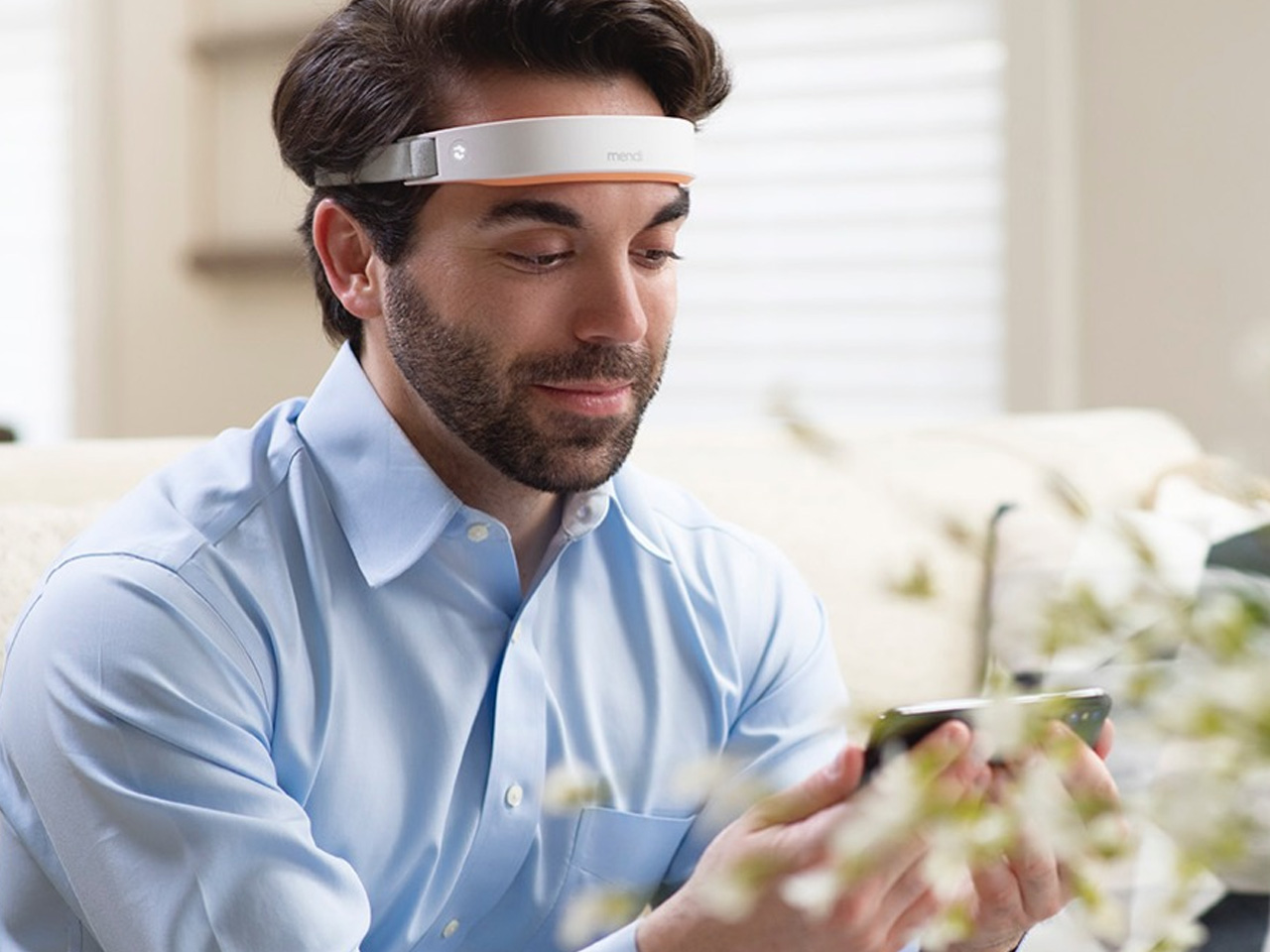
Called Mendi, this product is designed to be gym equipment for your brain. It trains your brain and also measures your progress along the way for you. It helps you be mindful, manage stress better, and also elevates your mental and physical performance at work, or while playing some sport.
Why is it noteworthy?
Mendi is designed to sit on your head, looking like a slim and nifty headband. It is equipped with a bunch of sensors under the sleek exterior, and it can be used to measure brain activity, oxygenation, and blood flow as well. You can pair it with an app, to help you go through various brain exercises.
What we like
Tracks your brain’s activity, and helps you use your mind by engaging in focus-building games
What we dislike
6. Miniature Bonfire Wood Diffuser Set
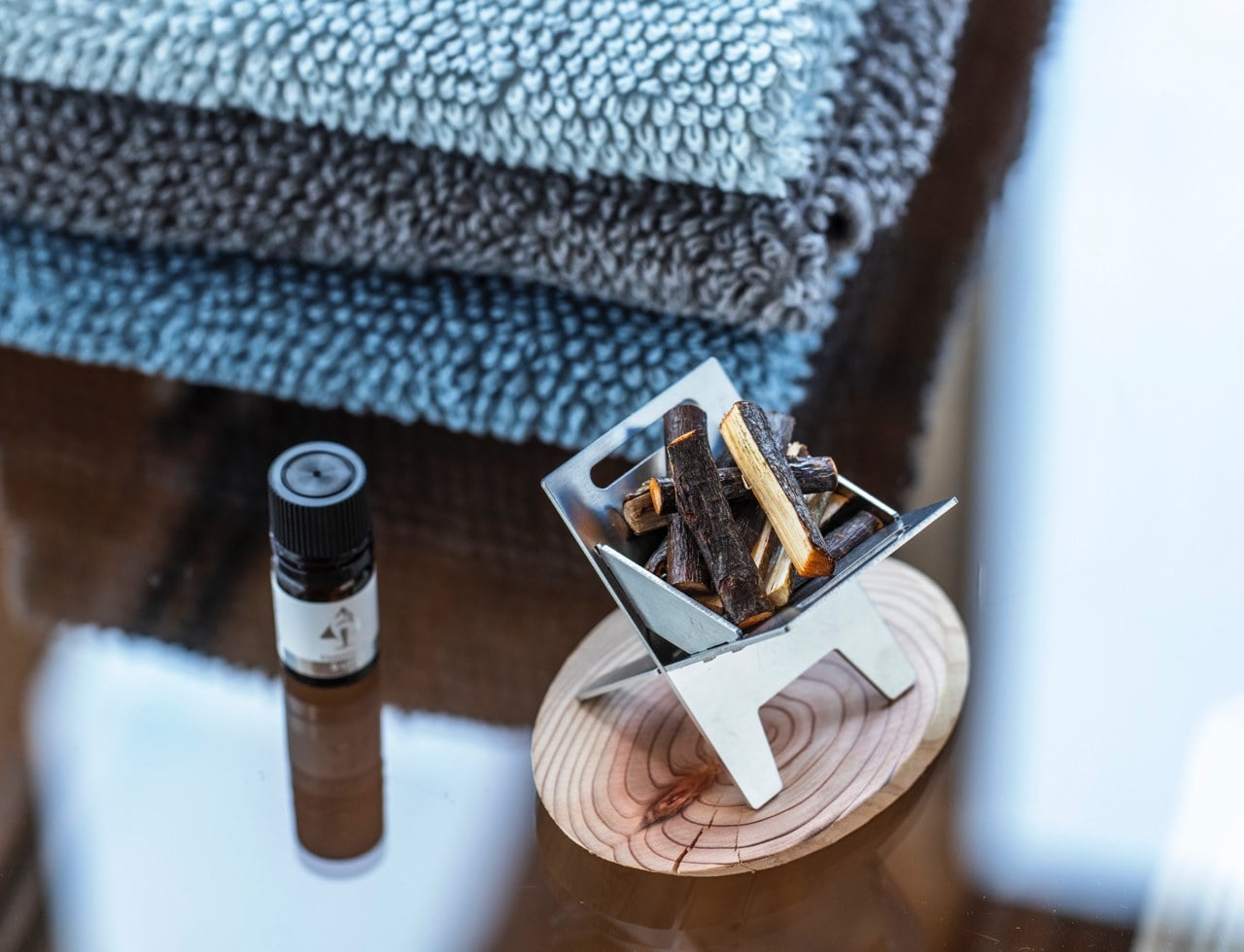
Called the Miniature Bonfire Wood Diffuser Set, this diffuser recreates the lovely experience of a pretty outdoor fire. It captures the various scents, and smells of a memorable outdoor fire, but within the comfort of your own home. You can enjoy a fire without using a massive outdoor fire.
The wood for the diffuser is collected from branches that were initially meant to be thrown away. It provides a distinct warm smoky smell, creating a calm and relaxing environment for users.
What we like
The diffuser can be used as a heating or cooking stool
What we dislike
Needs small pieces of wood, can’t be used with larger pieces of wood
7. Battery-free Aroma Diffuser
If you feel like meditating or unwinding, then you need to get your hands on the battery-free aroma diffuser. With this diffuser, you can take a deep and relaxing breath without actually harming the environment. As you use this battery-free aroma diffuser, you can harness the power of a single candle.
The diffuser doesn’t need any batteries or external power source to operate. You can use the heat of a single candle to spread the lovely scents. It is made from sustainable materials, and features a minimal and eco-friendly design philosophy.
What we like
Made from recyclable materials
Compatible with all kinds of essential oils
What we dislike
As the diffuser lacks electric controls, it is tough to adjust the intensity of the aroma
8. Rin Harmony Incense Holder
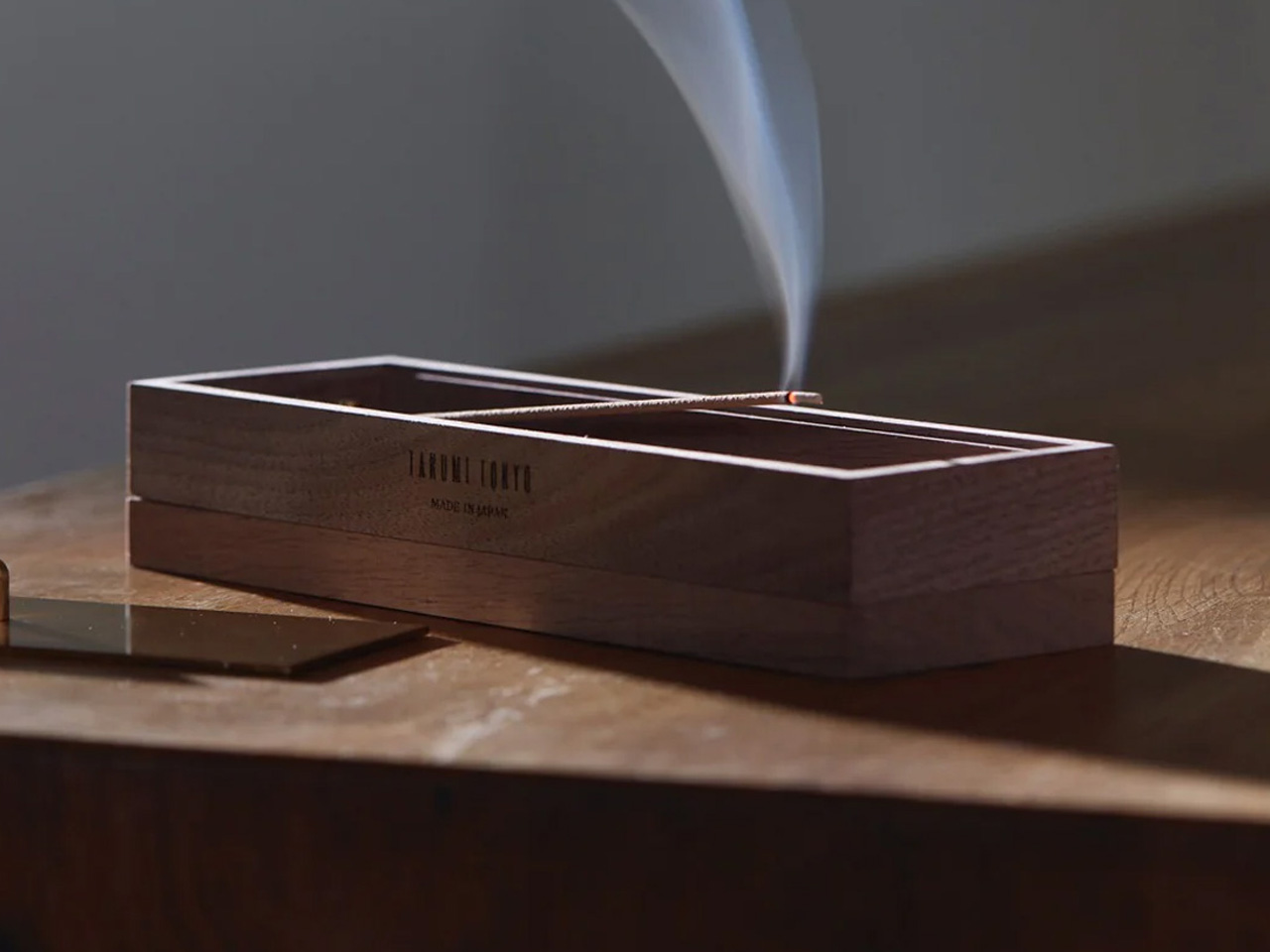
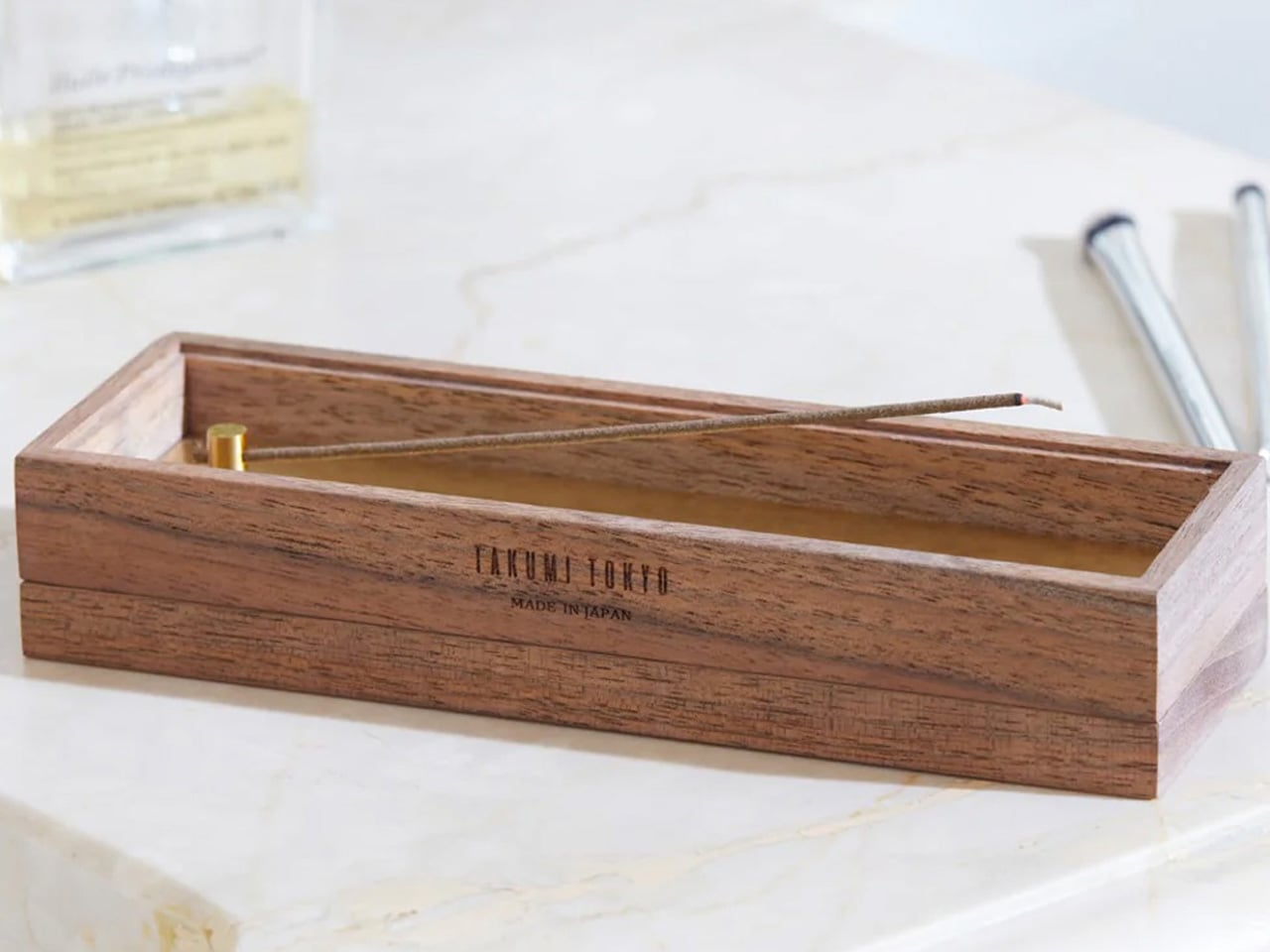
Called the Rin Harmony Incense Holder, this incense holder lets you enjoy the smoky aroma of your favorite incense stick. It helps you calm down, irrespective of where you are. It is made from natural walnut wood, and also functions as a storage space for the incense sticks.
It serves as a safe space to hold the lit stick, and even has a matching cover that lets you snuff out the flame, while ensuring the ashes don’t fly around.
What we like
Serves as a dual-functional design with a minimal form
Excellent companion for your calming exercises and meditation
What we dislike
Only one incense to be lit at a time, so the reach of the aroma is limited
9. Hsu’s Lamp
This innovative lamp was designed to be more than just a source of illumination. It was designed to be an appliance that helps you establish and maintain a healthy sleeping pattern. It includes recommended light levels for varied pre-bedtime activities such as watching TV, meditating, or even reading.
Why is it noteworthy?
You can adjust the lightness/darkness through the lamp, helping you wind down easily after a long day at work. You can also set up a timer for when you want the light to go off.
What we like
The lamp is flexible – it can be used during the day as a desk lamp as well
What we dislike
It is a conceptual design, so we don’t know how well it will translate into a tangible product
10. VOL.
Called VOL., you can wear this smart high-neck color anywhere and everywhere when you need some privacy and personal space in a public setting. You can wear the collar every day, or as and when needed. You can also wear it as a simple collar or cowl, and it is described as “comfortable, stylish, and easy to use” and based on the photo renders, it seems to be that.
Why is it noteworthy?
When you need some privacy in a public space, or if you need to evaluate your current mental health status, you can instantly zip up the collar, and get a temporary break from the chaotic outside world.
What we like
Equipped with a microphone to help you communicate with someone at the moment
What we dislike
Users may feel conscious wearing it in public, but it will take some time to get used to it