Threads is testing the option for users to put a 24-hour expiration timer on their posts, after which the post and all replies would disappear, Stories-style. A spokesperson confirmed to TechCrunch that the feature is being tested among a group of users after it was first spotted earlier this summer by developer Alessandro Paluzzi. It sounds a lot like pre-X Twitter’s Fleets, which didn’t exactly catch on. But, the ephemeral format could save habitual post-deleters some trouble.
It comes a few months after Instagram head Adam Mosseri shared that Threads was experimenting with auto-archiving. That optional feature would let users designate a date for their posts to be hidden from the feed. But Threads users in the past have indicated that they largely aren’t into the idea of automatic archiving, and such a feature hasn’t yet shown up on a wider scale. Threads hit the 200 million user mark at the beginning of August, and recently introduced an analytics tool called Insights for users — particularly those with large followings — to keep track of their account’s performance. Meta also said the option to schedule posts is on the way.
This article originally appeared on Engadget at https://www.engadget.com/social-media/threads-is-testing-disappearing-posts-that-expire-after-24-hours-211329320.html?src=rss
Advancements in technology, material science, and processes have taken man’s production capabilities to a whole new level. However, with advanced manufacturing, traditional craftsmanship and values have been left by the wayside, sometimes forgotten, and other times discarded as if they were no longer important or were even counterproductive to progress. Of course, this couldn’t be further from the truth, as there will always be elements of traditional crafts and modern tooling that could be mixed in an elegant way. Such is the premise behind this rather striking lamp, highlighting not only the beauty of traditional, handmade crafts but also promoting the culture and the livelihood that also grow alongside it.
Handmade products are admittedly not suitable for mass production. As many have realized by now, however, not everything has to be mass-produced in the first place. Simple, everyday items might be fine with generic and standardized designs, but in exchange for speed and ease of manufacturing, they often lack personality, depth, and impact. Fortunately, you don’t always have to go to either extreme and find some middle ground that showcases the strengths of both methods.
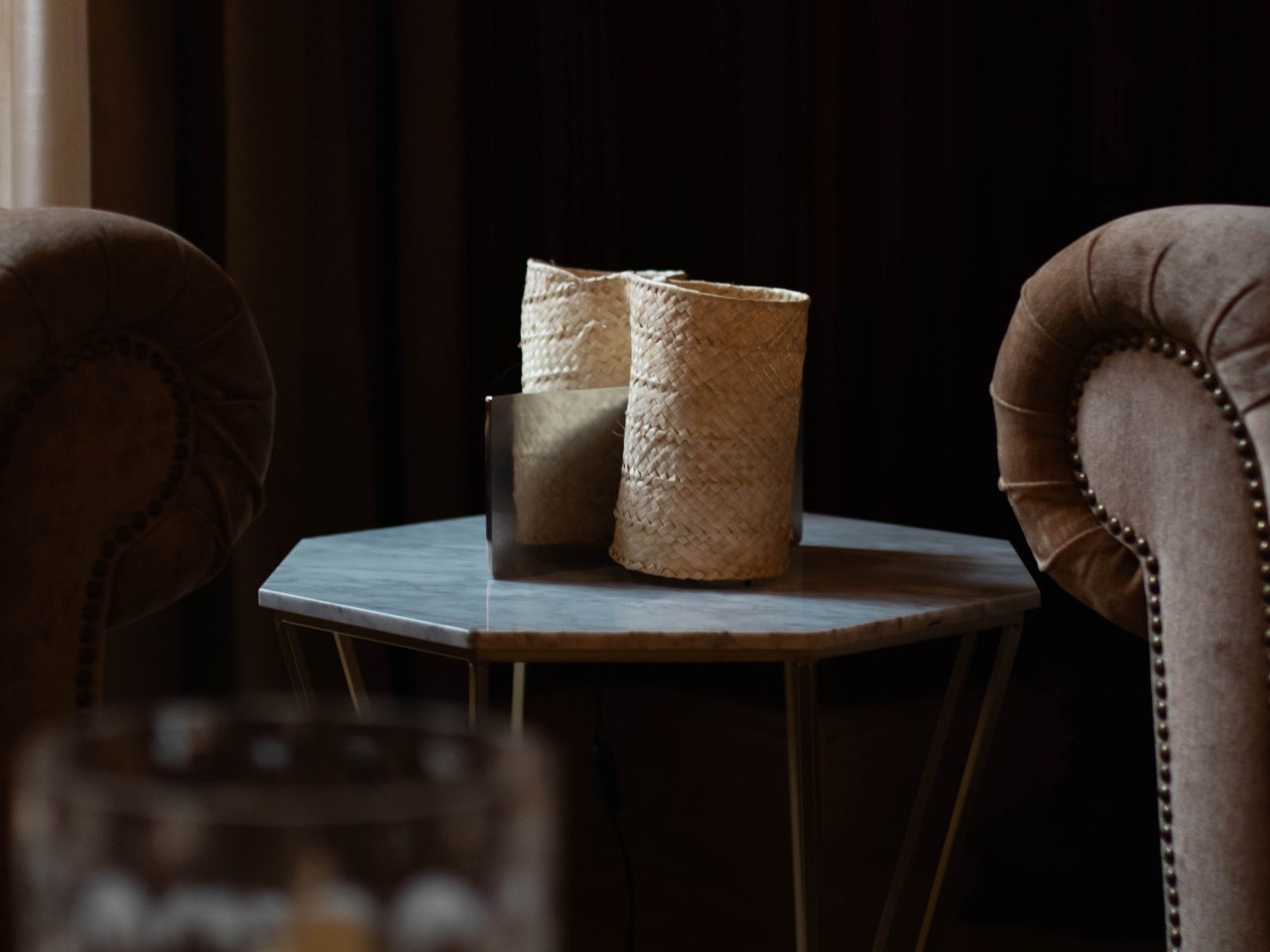
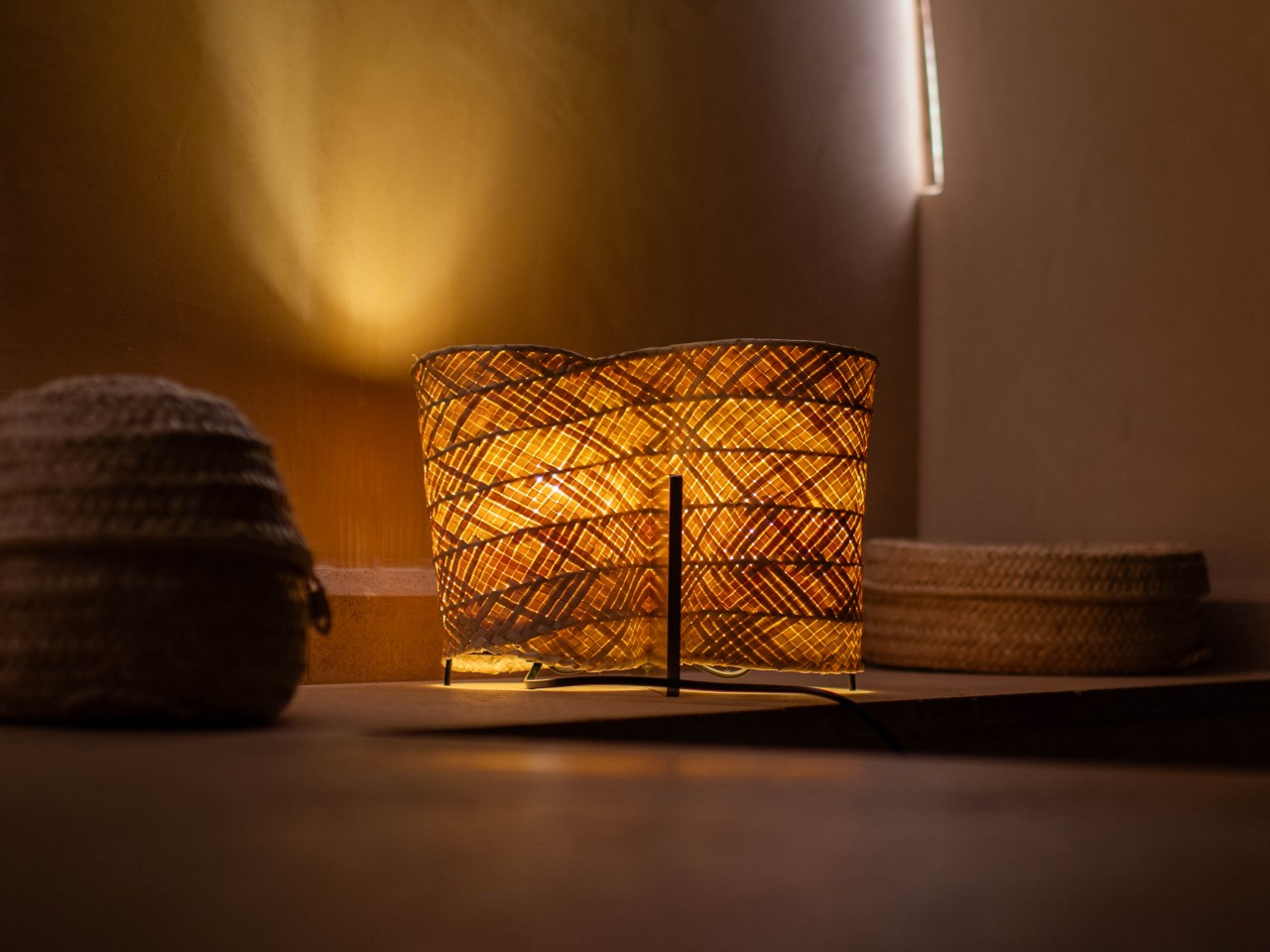
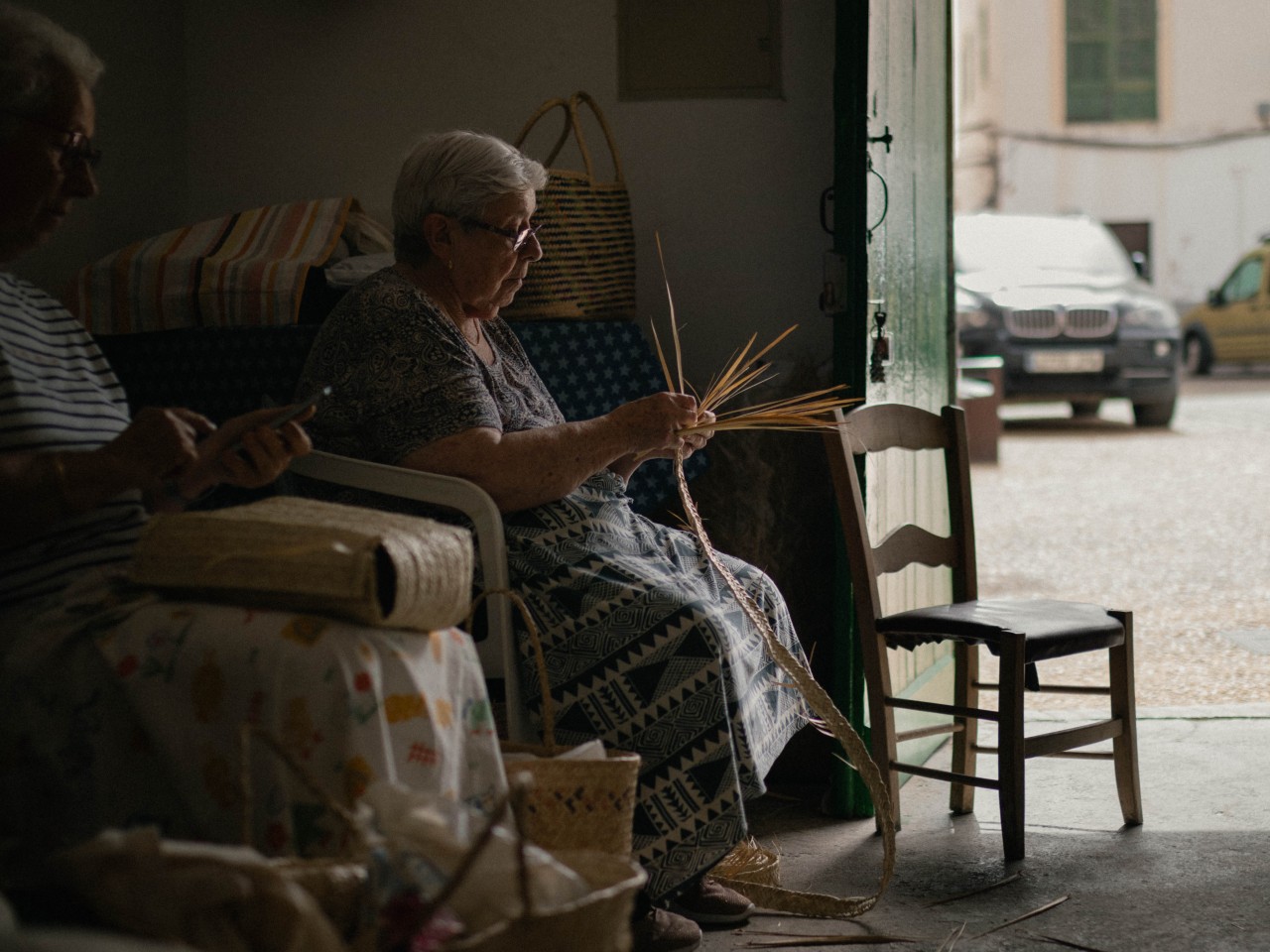
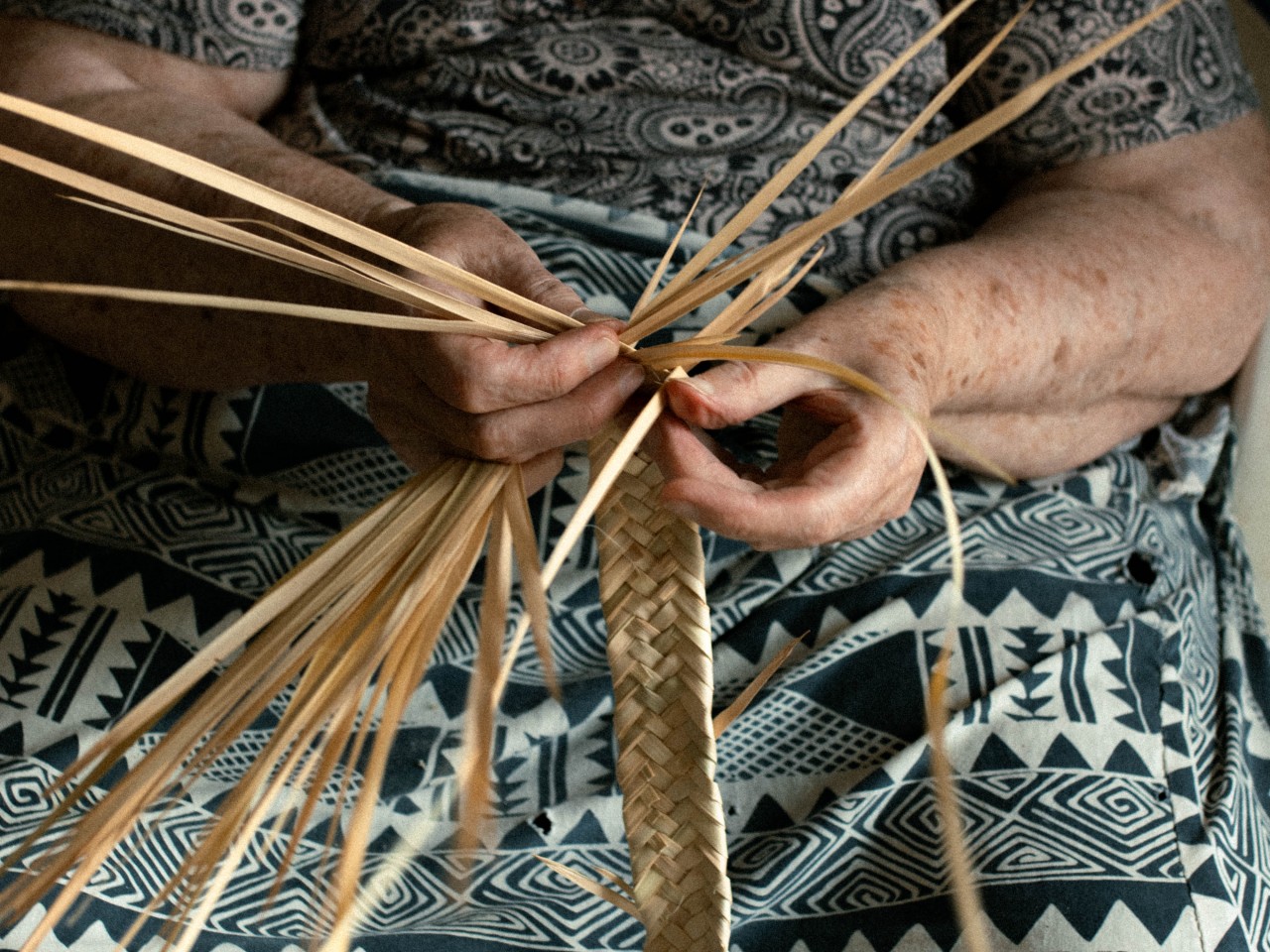
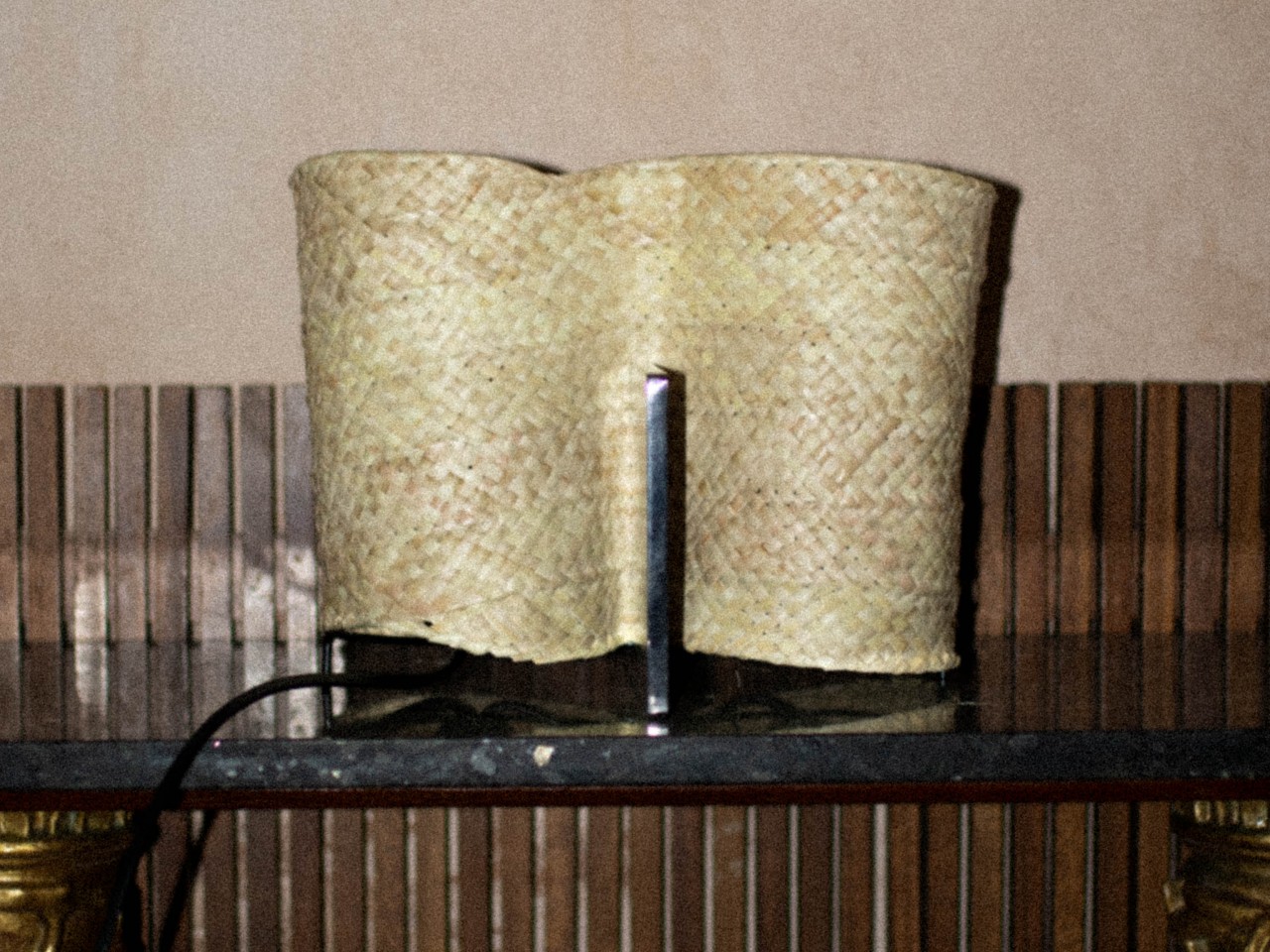
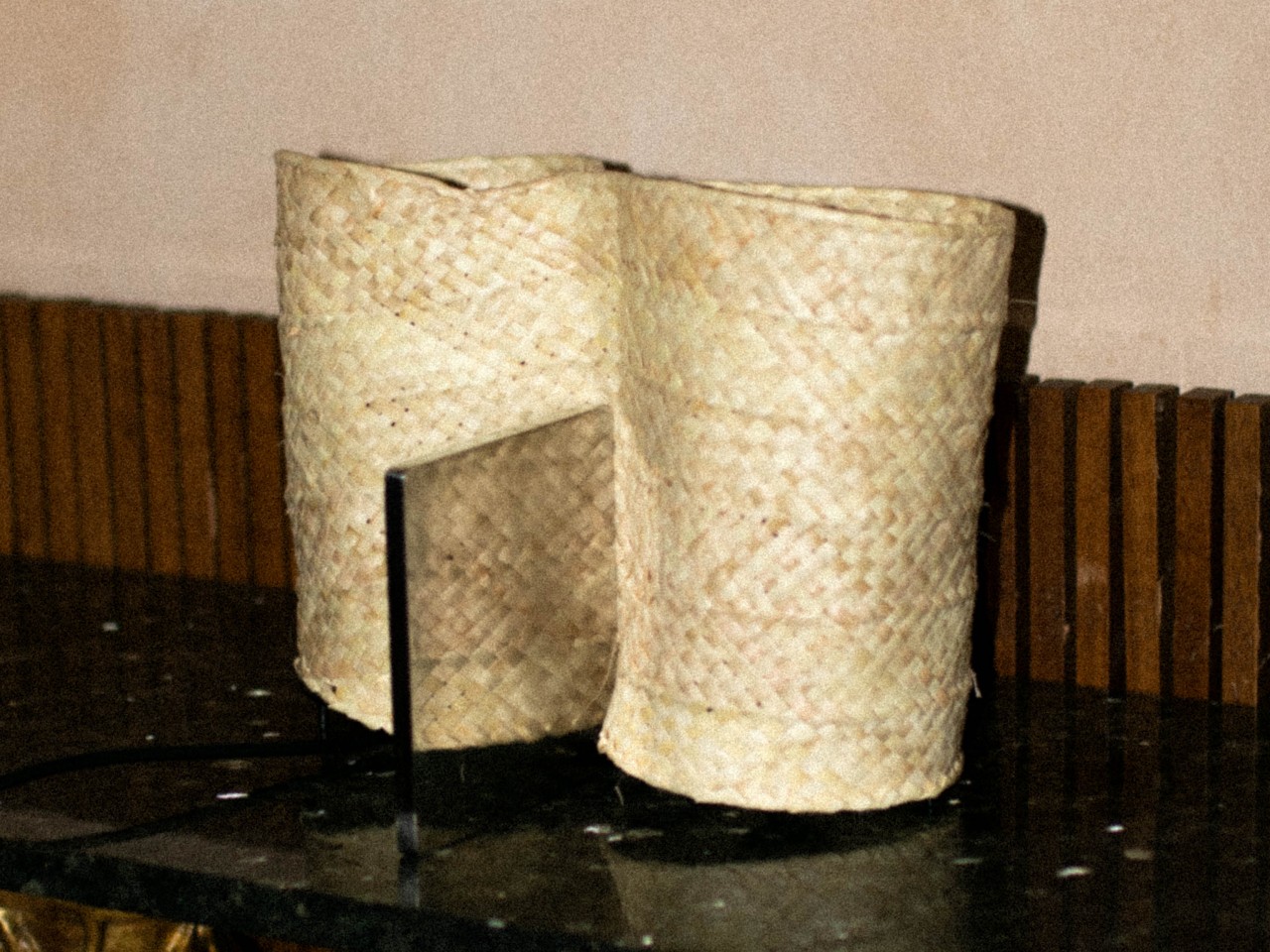
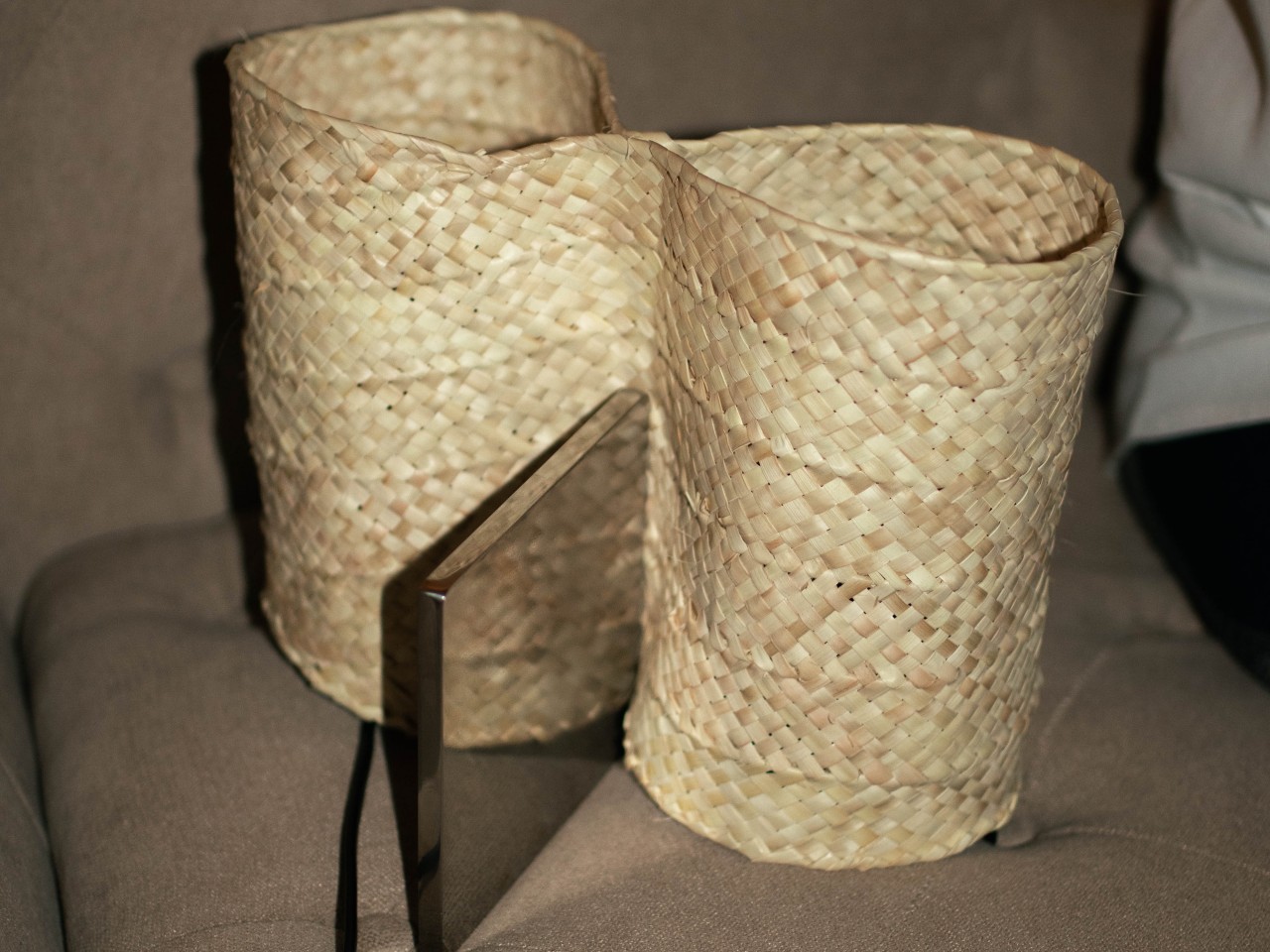
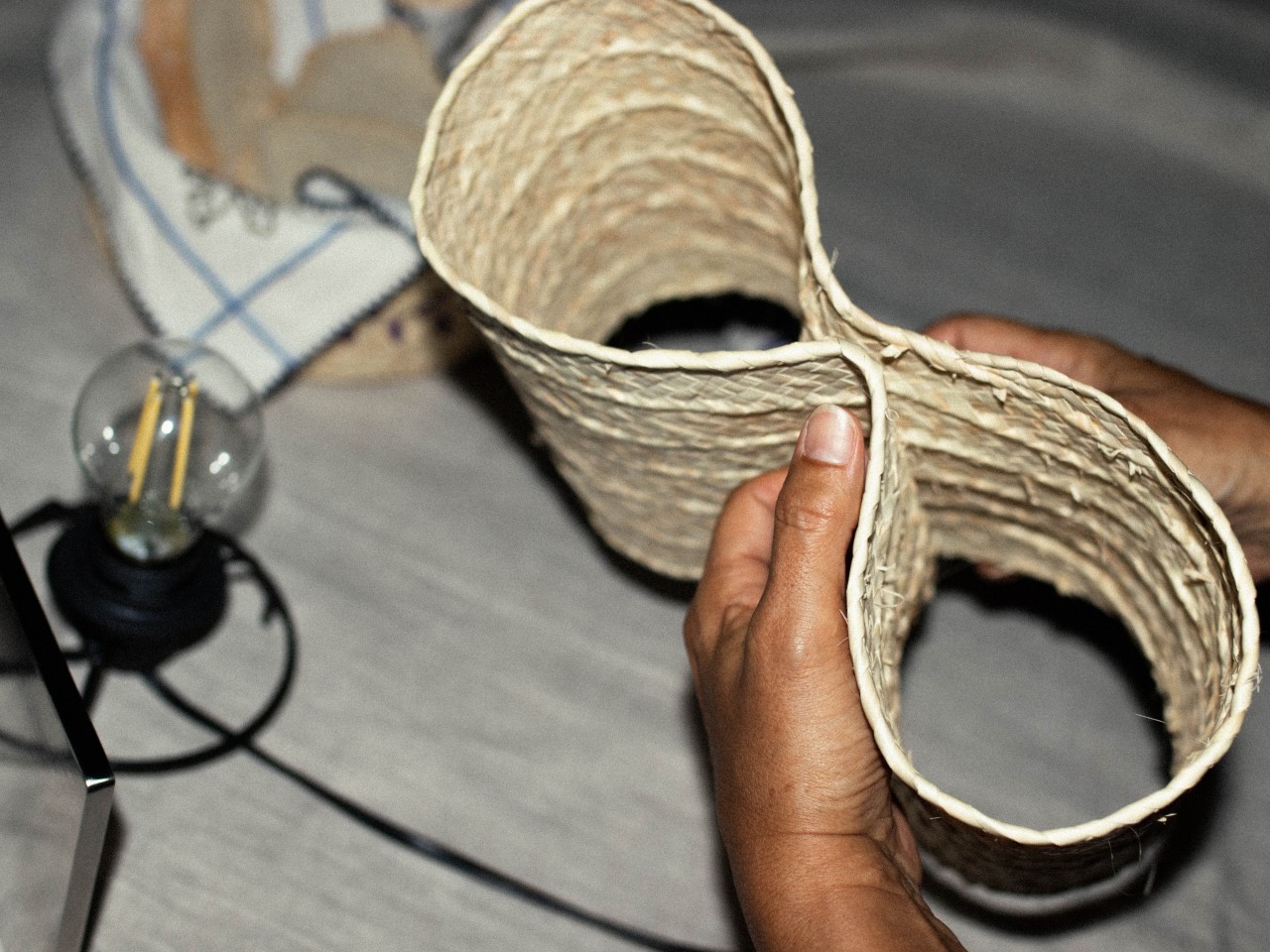
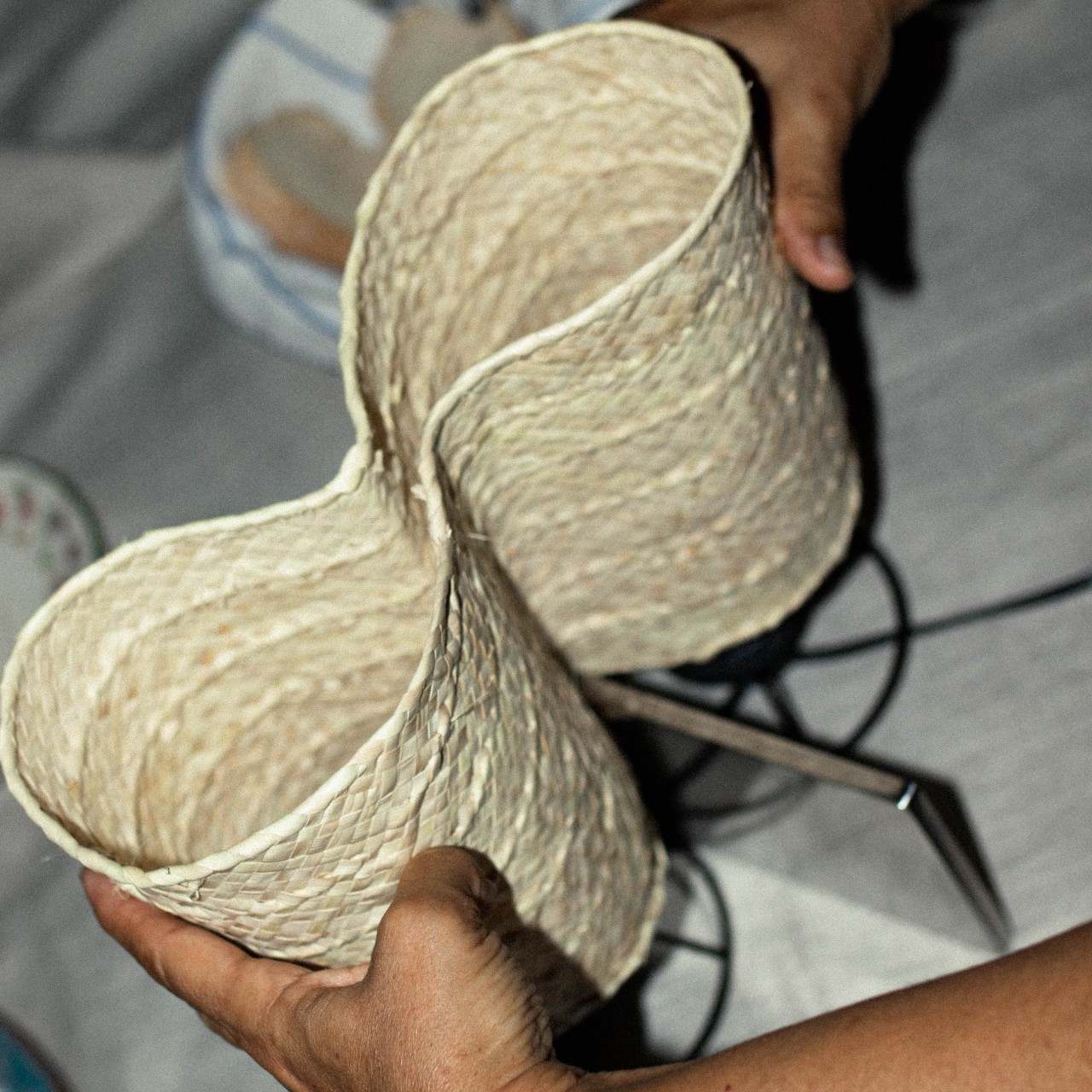
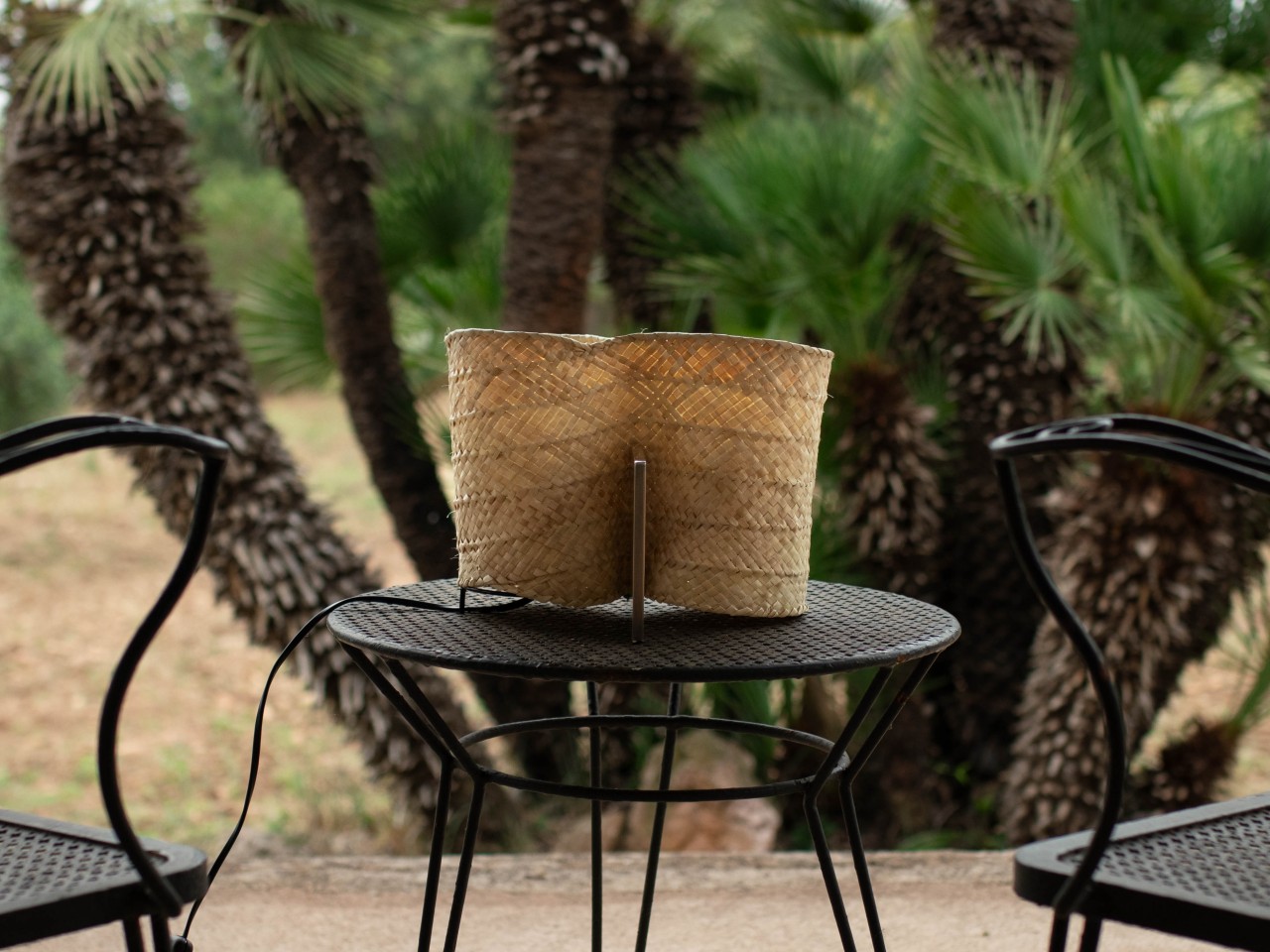
Catalina is a lamp design that does exactly this by combining ordinary lamp electronics and foundations with a lampshade that’s meticulously woven by hand. Specifically, it uses palmetto leaves and traditional weaving techniques called “llata” from Mallorca on one of Spain’s Balearic Islands. Unsurprisingly, this technique is passed down through generations and is mostly done by the women of the locale, a practice whose existence is being threatened by the rise of mass-produced furniture and lighting.
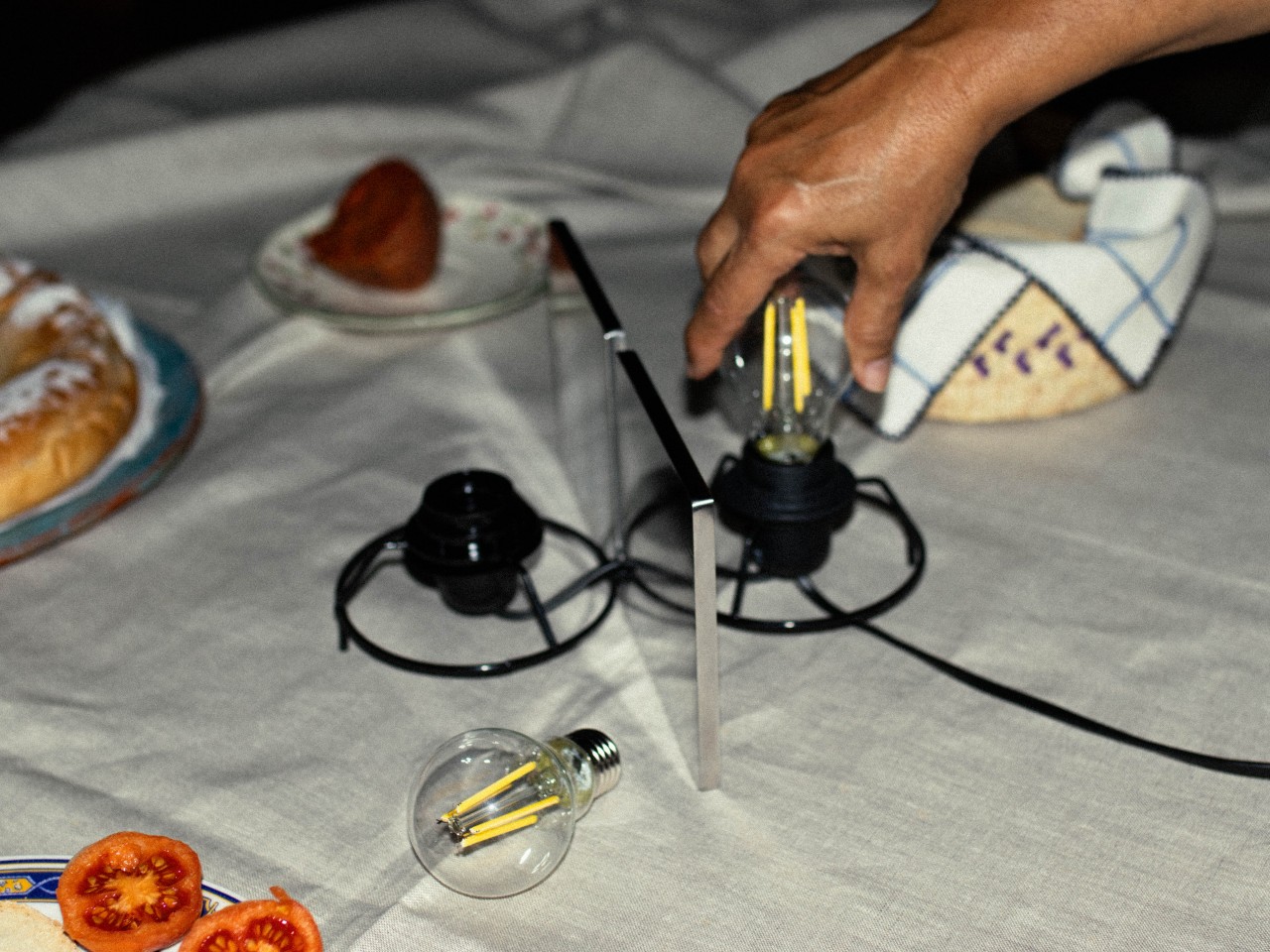
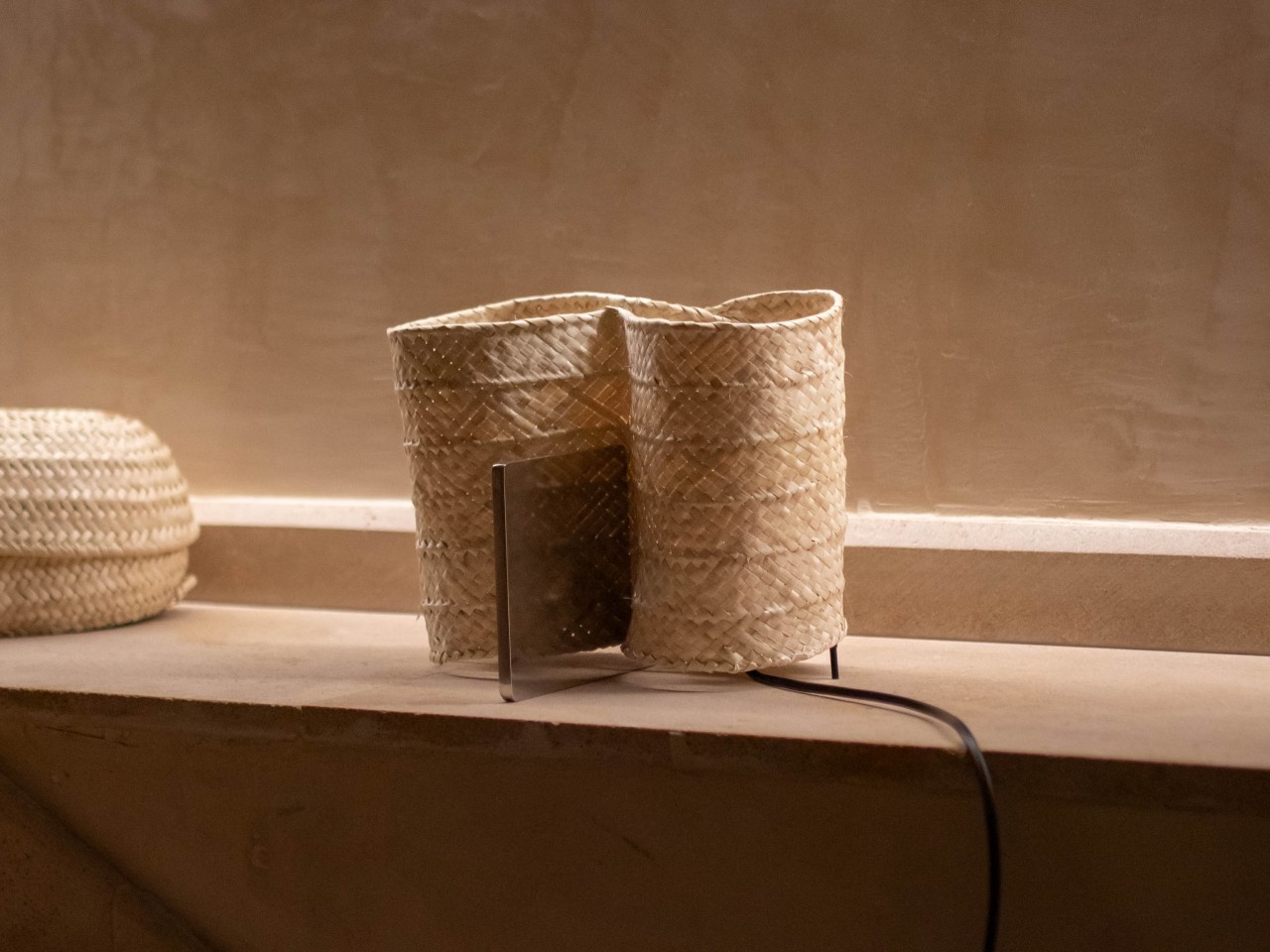
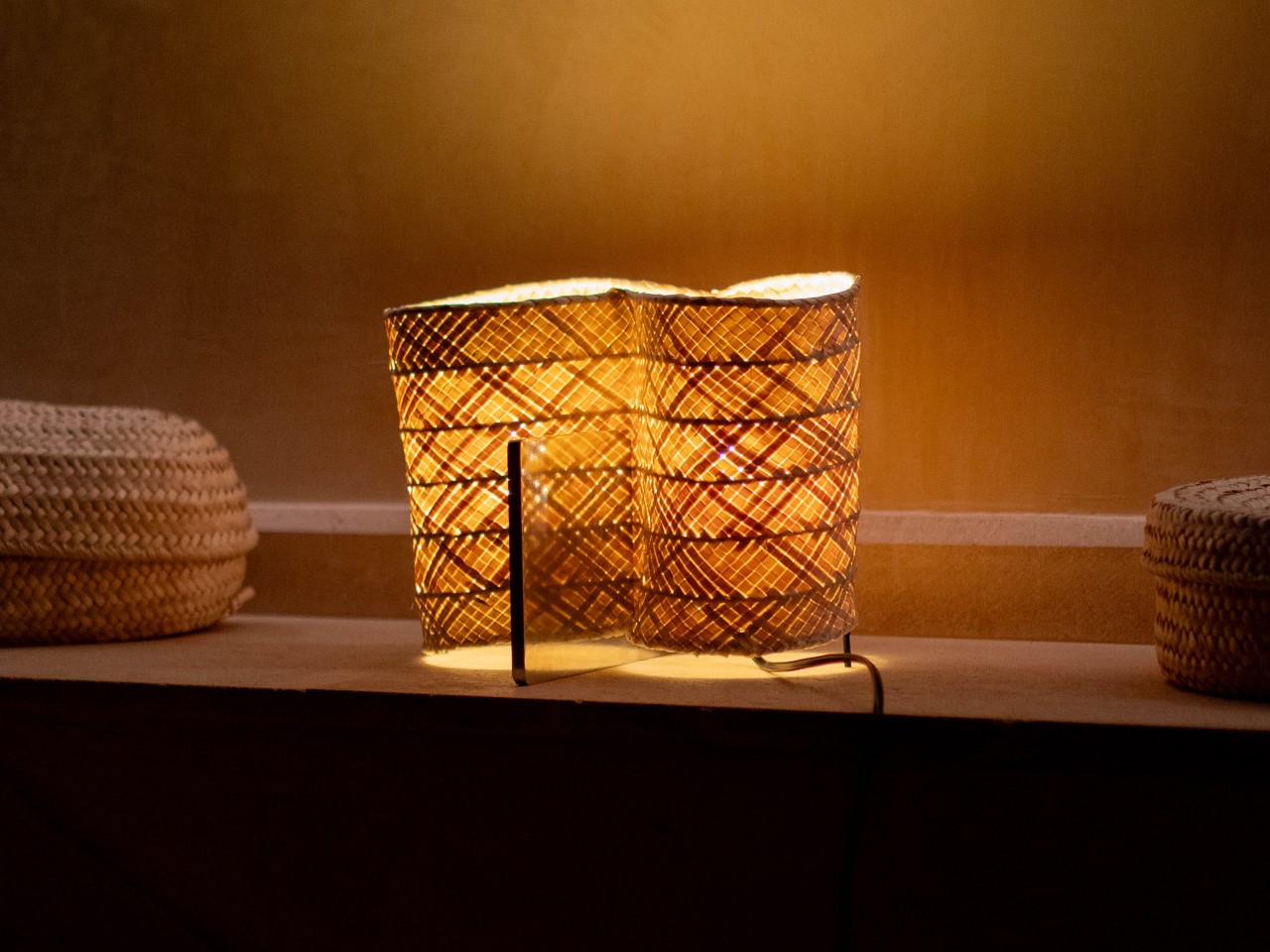
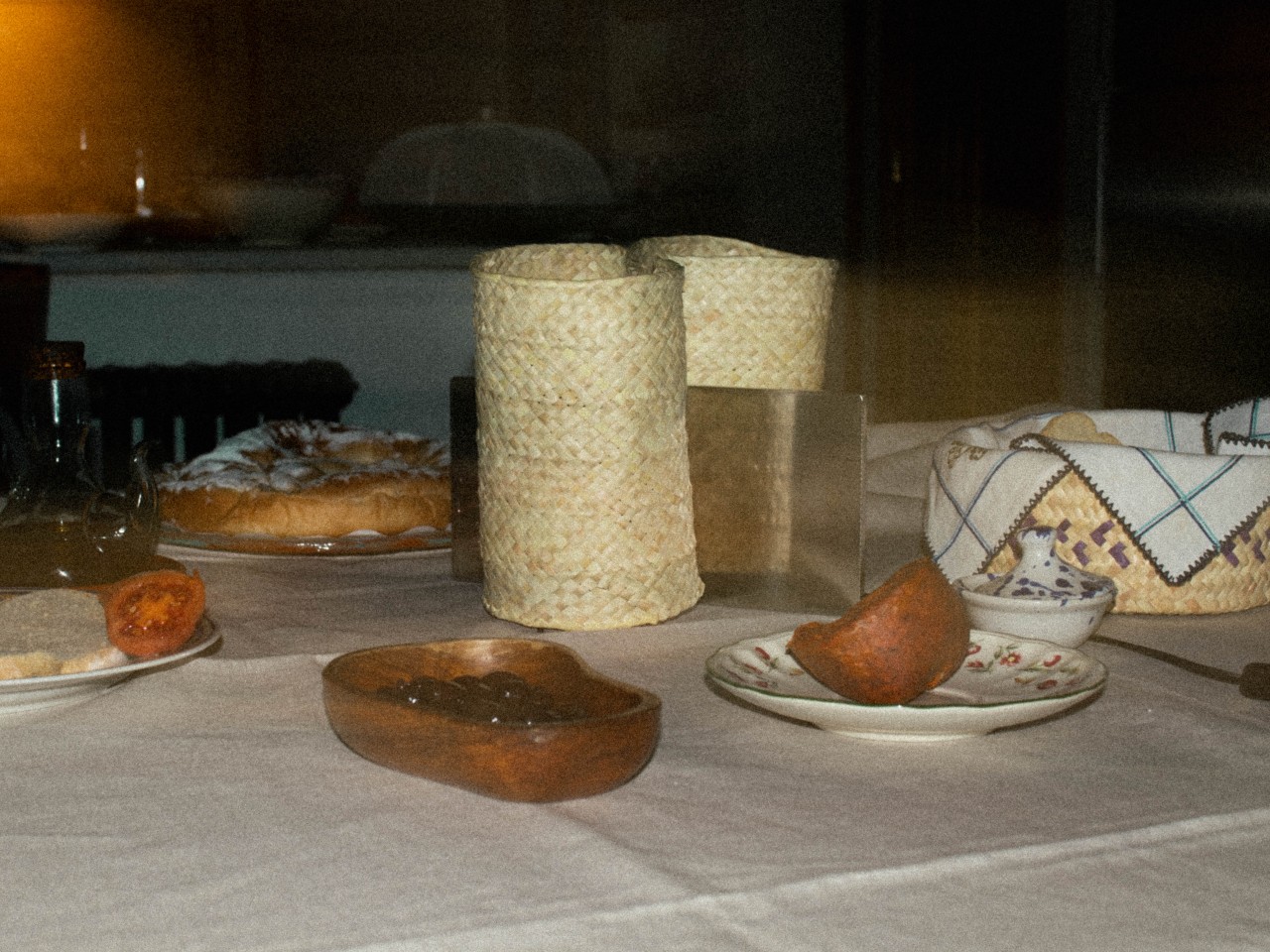
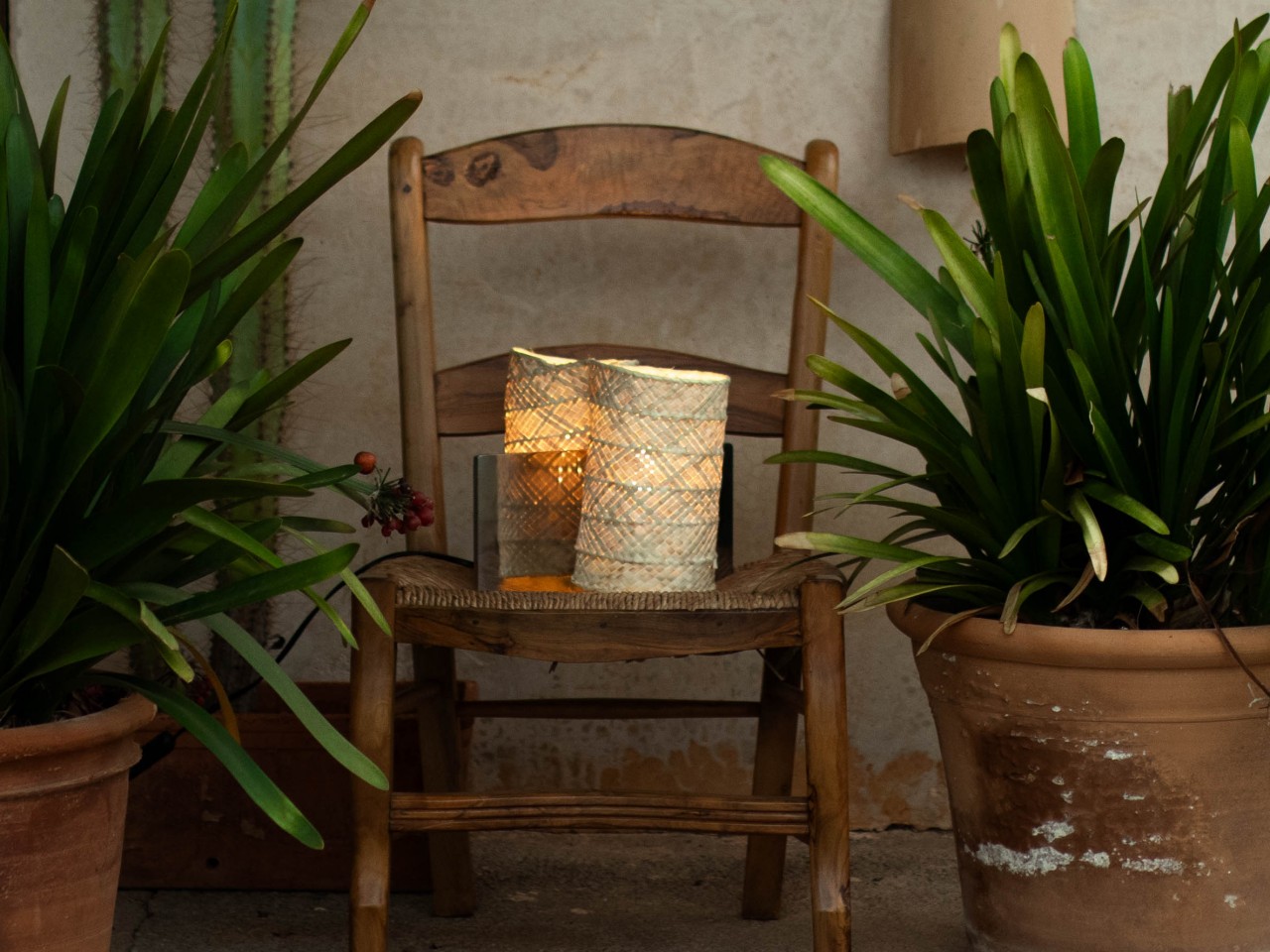
This lamp, however, illustrates the beauty that can come from the melding of past and present. The woven palm leaves form two cylindrical shapes in the form of an eight that encloses two bulbs inside each space. A gap between the two circles is filled by a transparent sheet of glass or fiberglass, serving as a diffuser for the light. The effect is a serene glow that passes through the weave like an otherworldly light.
Lamps like Catalina take time to make and are often more expensive because of the labor involved. That, however, also makes the design more special, giving it a unique character similar to a limited edition product. And unlike factory-made lampshades, these handwoven materials will have differences and imperfections, flaws that become selling points exactly because they are different from any other lamp from the same product line.
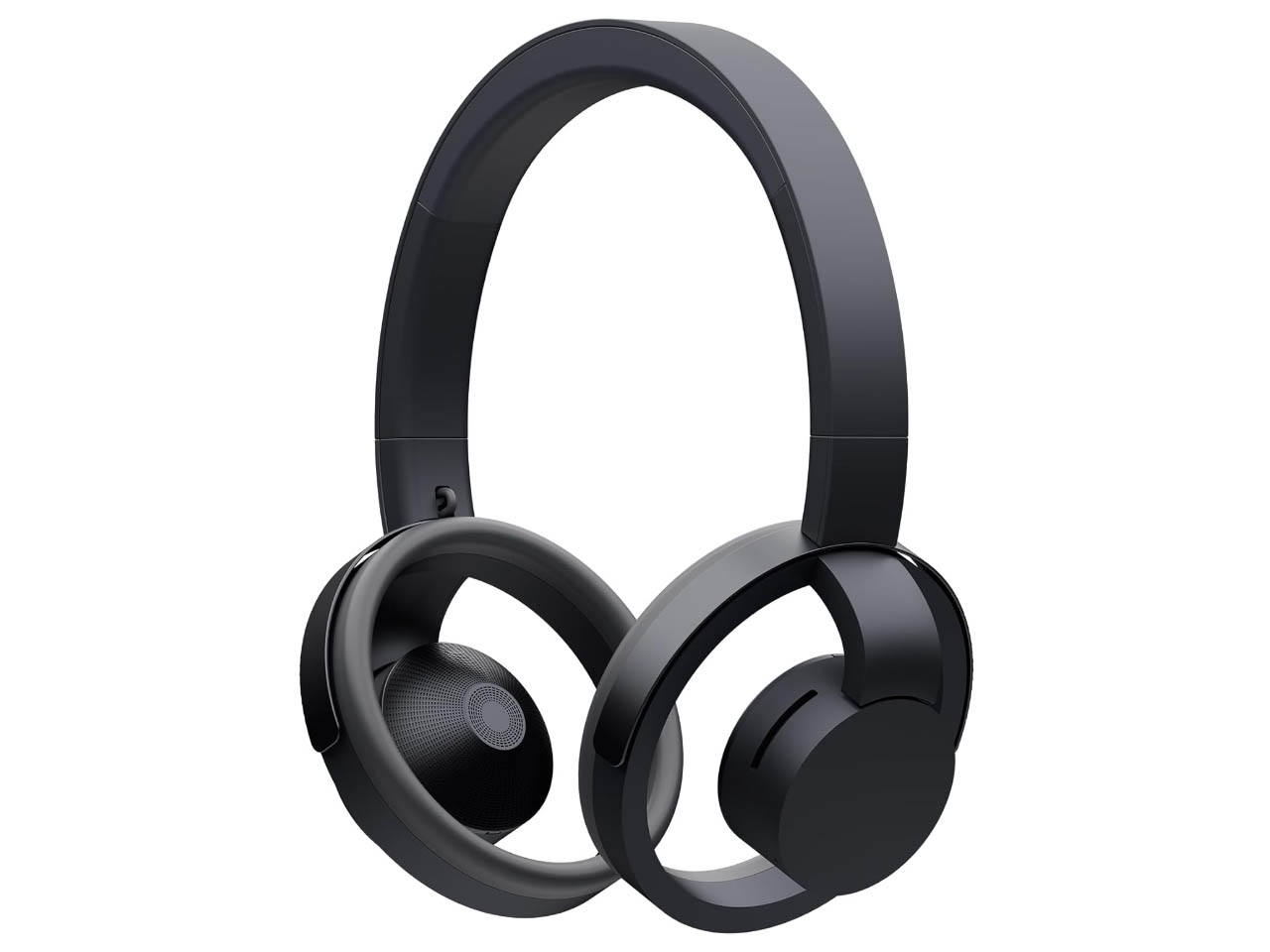
Open-ear headphones have garnered a lot of interest lately because of their better-sounding acoustics, lesser pressure on the ears and the ability to listen to the outside world. All these features are very handy when traveling or commuting when you need to be aware of the ambient noises around you. That way you never miss out on any transit announcements or vehicles passing by on the road.
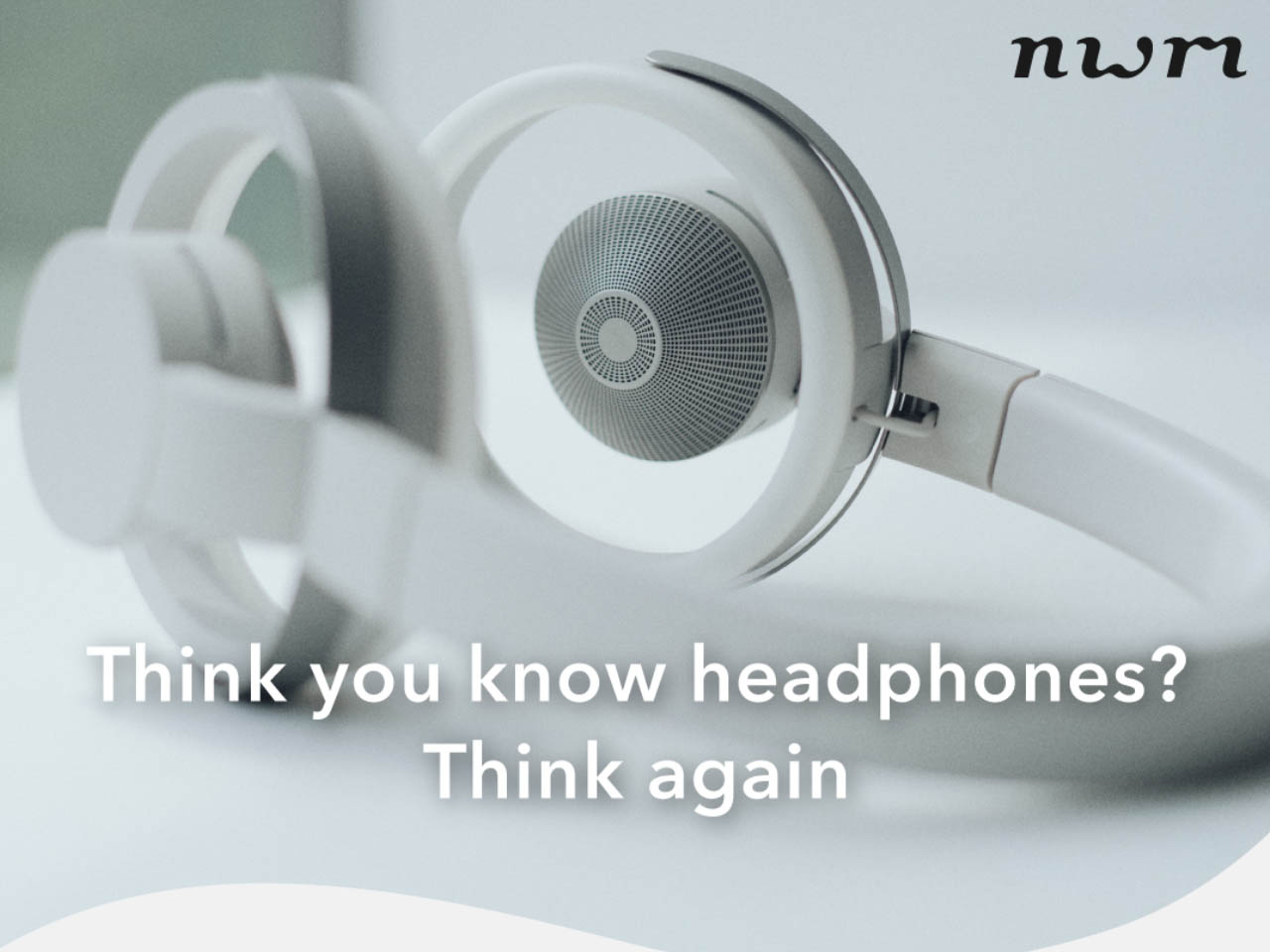
More commonly known as open-back headphones, the options are plenty but finding the one that keeps your music in focus without any sound leaks is important. NTT sonority wants your search to end with its nwm ONE open-ear headphones that employ a deeply researched noise suppression tech dubbed Personalized Sound Zone (PSZ) for next-gen sound.
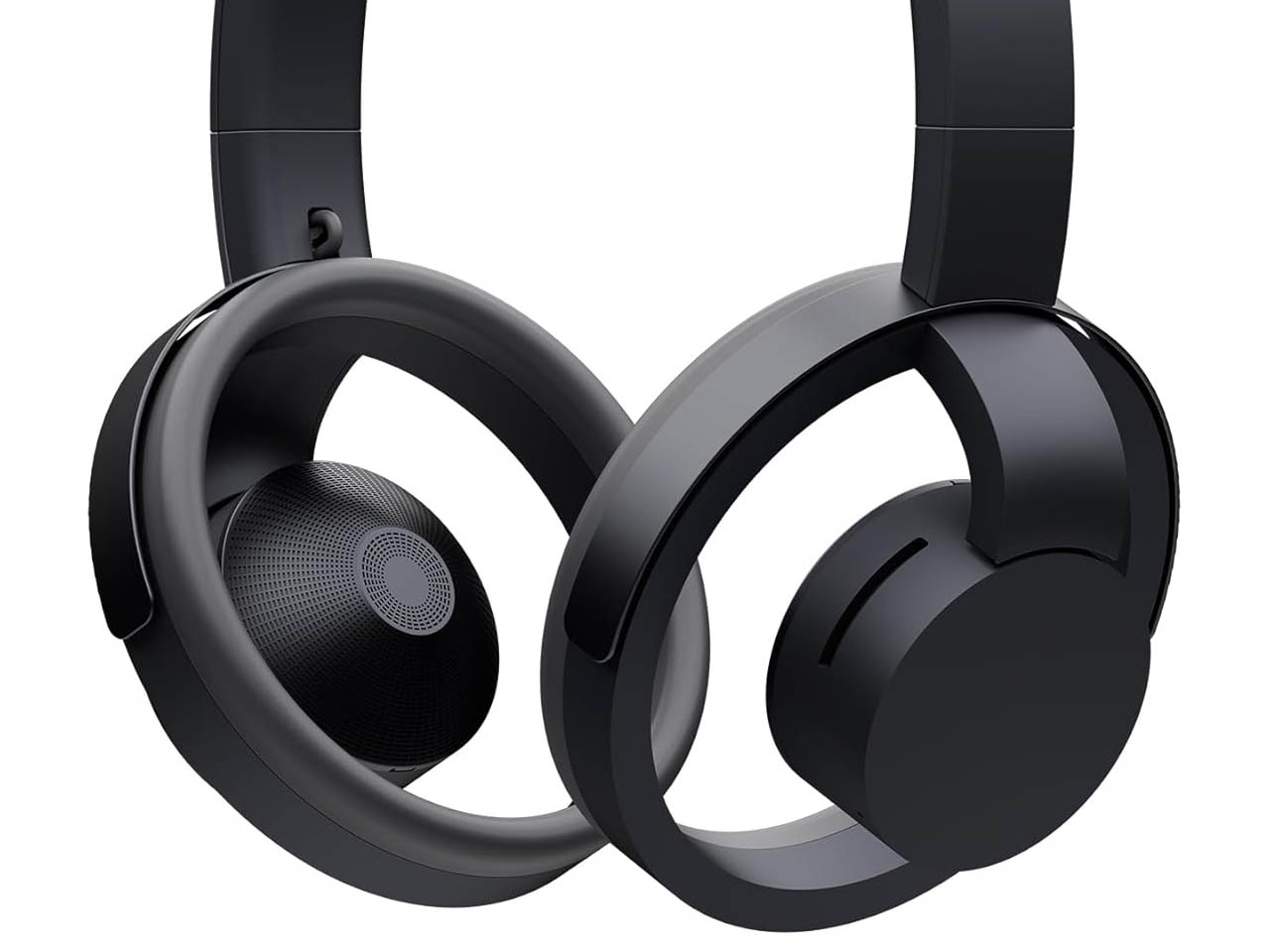
The headphones have 2-way drivers – a 35mm main driver for pristine audio in your ears and a smaller 12mm driver to cancel out unwanted ambient sounds to minimize sound leakage. Together they work to amplify the high and low frequency sounds to create a perfect balance between a high-quality audio listening cocoon and audible peripheral sounds that are important. In conjunction with the PSZ, there’s the Magic Focus Voice technology with advanced beamforming tech to accurately focus on anyone talking to you, and the Spectral Filtering to diffuse other noises that are not important.
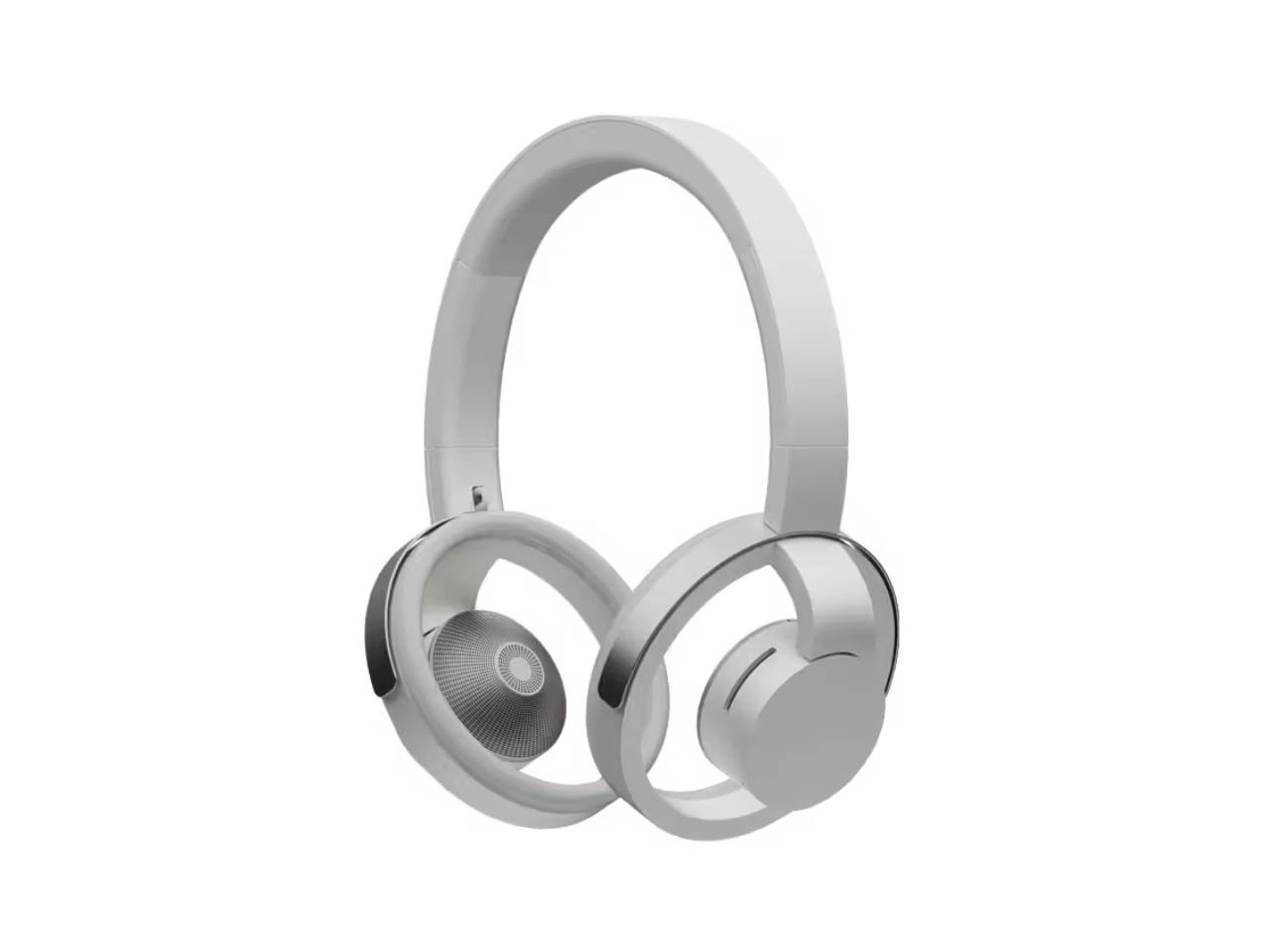
All these technologies are developed in-house by the NTT Computer & Data Science Laboratories resulting in a next level three-sixty degree sound that’s comparable to surround sound speakers. It goes without saying that no matter how much technology is stuffed into headphones if they are not comfortable, lightweight and aesthetically pleasing, the whole purpose is defied. Thankfully nwm ONE open-ear headphones don’t disappoint with their sleek form that sits on any ears without being uncomfortable after long sessions of listening.
They weigh just 6.5 ounces and clamp onto your head and ears without any uncomfortable pressure. The promise of these open-ear headphones seems good on paper but how they’ll perform in real life and justify their price of $299 remains to be seen. However, we are confident the pair of cans will live up to their claims and become a daily driver for many audio lovers!
After more than two months of tests and discussions, NASA has decided that astronauts Butch Wilmore and Suni Williams will come home in February 2025 on a SpaceX Crew Dragon, and the Boeing Starliner they flew to the International Space Station on in June will return uncrewed. In a press conference on Saturday, Steve Stich, manager for NASA's Commercial Crew Program, said “there was too much uncertainty” around the predictions for Starliner’s thrusters to move forward with a crewed return flight.
The plan now is that Starliner’s first crew will return with SpaceX’s Crew-9, which is scheduled to launch to the ISS at the end of September. Crew-9 was initially supposed to carry four crew members, but will instead have to go ahead with two, so as to make room for Wilmore and Williams on the way back. That spacecraft is being reconfigured with seats for the two astronauts, and Dragon spacesuits will be added to its cargo for them to wear home. By the time Wilmore and Williams depart, the duo will have been on the space station for about eight months. The Starliner flight test was only supposed to last a little over a week.
The next step is to get Starliner ready for undocking and wrap up as an uncrewed flight test. The agency plans to conduct the second part of its readiness review for the process this coming week, and expects undocking to take place around early next month. “We are changing the separation sequence that we planned and we will review those aspects at the readiness review,” Stich said. “We’re going to go with a simplified separation technique to get away from the station a little more quickly.”
The issue with Starliner’s thrusters has been “very complex,” Stich said, and their performance has been “challenging to predict.” Without being able to accurately predict how the thrusters would perform from undocking through the deorbit burn, the potential risks for the astronauts were just too high, he explained.
“We have had mistakes in the past,” said NASA Administrator Bill Nelson. “We have lost two space shuttles as a result of there not being a culture in which information can come forward.” With that context looming over the discussions, he said, “We have been very solicitous of all of our employees that if you have some objection, you come forward. Spaceflight is risky, even at its safest and and its most routine, and a test flight by its nature is neither safe nor routine. And so the decision to keep Butch and Suni aboard the International Space Station and bring the Boeing Starliner home uncrewed is the result of a commitment to safety.”
This article originally appeared on Engadget at https://www.engadget.com/science/space/starliner-astronauts-will-come-home-in-february-on-a-spacex-crew-dragon-173008021.html?src=rss
It’s seemed like everyone this summer has been talking about Valve’s in-development MOBA shooter, Deadlock, except Valve itself. Thousands of people have reportedly played it, some of whom have leaked screenshots and gameplay footage. But Valve has remained silent on the subject. Now, the company has finally confirmed the game’s existence with an official Steam page, which notes that Deadlock “is in early development” and in the hands of playtesters. Unfortunately, that’s about it for the details.
Deadlock is still only available to play via invitation. There’s no release date or even release window on the page, and the 22-second teaser it includes isn’t particularly enlightening. But now that Valve is finally acknowledging this thing publicly, we could see more about it soon. Back in May, YouTuber Tyler McVicker, who has long reported on Valve, described Deadlock as what’s “meant to be Valve's next major competitive game. The next Counter-Strike. The next Dota.”
This article originally appeared on Engadget at https://www.engadget.com/gaming/valve-finally-confirms-its-next-game-deadlock-with-a-bare-bones-steam-page-162836953.html?src=rss
Meta has blocked WhatsApp accounts involved in "a small cluster of likely social engineering activity" on the service. In its report, it has revealed that it traced the activity to APT42 (also called UNC788 and Mint Sandstorm), which the FBI previously linked to a phishing campaign that targeted members of the Trump and Harris camps. The company said that the suspicious activity on WhatsApp "attempted to target individuals in Israel, Palestine, Iran, the United States and the UK." It also seemed to have focused on political and diplomatic officials, which included people associated with both presidential candidates.
The bad actors on WhatsApp pretended to be technical support representatives from AOL, Google, Yahoo and Microsoft, though Meta didn't say how they tried to compromise their targets' accounts. Some of those targets reported the activity to the company, which compelled it to start an investigation. Meta said it believes the perpetrators' efforts were unsuccessful and that it has not seen any evidence that the targets' accounts had been compromised. It still reported the malicious activity to law enforcement, though, and shared information with both presidential campaigns.
Earlier this month, Google also published a report detailing how APT42 has been targeting high-profile users in Israel and the US for years. The company said it observed "unsuccessful attempts" to compromise the "accounts of individuals affiliated with President Biden, Vice President Harris and former President Trump." While Google described APT42's attacks as "unsuccessful," the group had successfully infiltrated the account of at least one high-profile victim: Roger Stone, who is a close political confidante of Trump. The FBI previously reported that he had fallen victim to the phishing emails sent by the Iranian hackers, who then used his account to send more phishing emails to his contacts.
This article originally appeared on Engadget at https://www.engadget.com/cybersecurity/meta-took-down-whatsapp-accounts-connected-to-iranian-hackers-targeting-the-us-election-140039124.html?src=rss
One Btn Bosses does exactly what it says in the tin, but there's more to this tongue-in-cheek bullet-hell boss rush than you initially might suspect. You play as a small ship that moves along tracks and battles a string of bosses (quite literally, as you're fighting your way through the ranks of a peculiar corporation). The only real control you have at your disposal is a single button.
While the visual language draws from Asteroids, it plays a bit like Vampire Survivors, in that your weapon auto fires at your enemy but your agency is even more limited as you can't move wherever you want. At first, pressing the button will reverse your ship’s direction as you try to avoid attacks (generally, you can take damage three times before you lose a fight). But going the other way means slowing down both your movement and the firing rate. That adds a fun wrinkle to figuring out your approach: play it as safe as possible and take longer to defeat an enemy, or go high risk and try to win as quickly as possible so you can soar up the leaderboard.
As you progress, you’ll unlock different weapons and movement abilities, as well as different color schemes. You can choose your loadout for each round. On the movement front, you might opt to hold the button to dash through enemy attacks without incurring damage or keep it pressed down to build up speed and accelerate in the other direction. In terms of dealing damage, you might opt for a laser that grows more powerful as you pick up sparks or a pickup weapon that only fires when you run across an item on the track. Experiment to figure out works best for you.
Along with the campaign, there's a separate roguelite mode called Rifts & Developments that randomizes enemy attacks and layouts (it's possible to memorize the attacks in campaign levels). Here, you have a total of three lives and they aren't replenished between rounds unless you choose an upgrade that lets you do so. Nothing carries back over from the roguelite mode to the campaign except for XP, so if you're stuck on a boss and you're close to unlocking a new weapon, you can switch over to earn some juicy experience to expand your arsenal.
One Btn Bosses is tough, but it never feels unfair. The enemy attacks are as clear as day thanks to the clean art direction. I haven't felt that I've been boxed in between enemy attacks so that losing a life was inevitable — to my eye, all the damage I've sustained was my own fault.
In a weird way, One Btn Bosses kind of reminds me of the early days of Twitter, in that one could only be creative on that platform within the confines of a single 140-character message. The limitation that the studio, Midnight Munchies, placed on itself here forced the developers to come up with inventive ways of keeping One Btn Bosses engaging throughout its duration.
One side note: this is one of the first batch of games that received backing from Outersloth, a side project of Among Us developer Innersloth. The whole idea behind Outersloth is to offer indie developers an alternative funding model and to help "fun, original and clever games get made." One Btn Bosses definitely fits the brief.
One Btn Bosses is out on Steam now.
This article originally appeared on Engadget at https://www.engadget.com/gaming/pc/one-btn-bosses-gets-a-ton-of-mileage-from-single-button-gameplay-140025604.html?src=rss
Apple recebntly releases iOS 18 beta 7, bringing with it a multitude of refinements that address lingering issues from previous versions while bolstering overall performance and battery life. As anticipation builds for the official release of iOS 18, expected to drop sometime in mid to late September, possibly around the 16th. The video below from […]
Although bricks are commonly associated with exterior construction, they find versatile applications indoors and in landscape design. Their aesthetic appeal, versatility, and cost-effectiveness make them a standout choice for interior and exterior design. From structural elements to decorative features, bricks transcend their traditional role, offering aesthetic and functional benefits. Here are some modern applications of bricks in the realm of architectural, interiors, and landscape design.
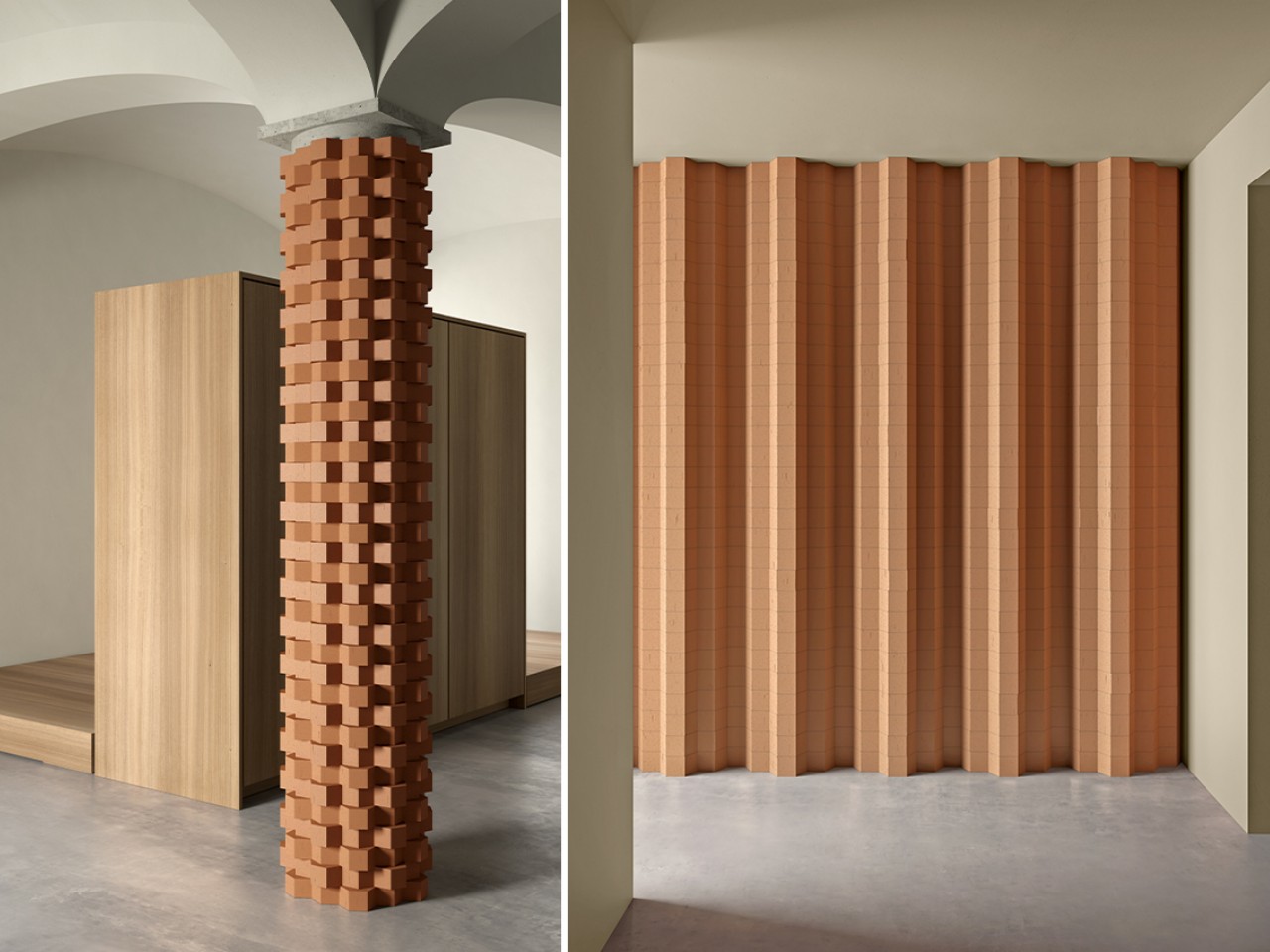
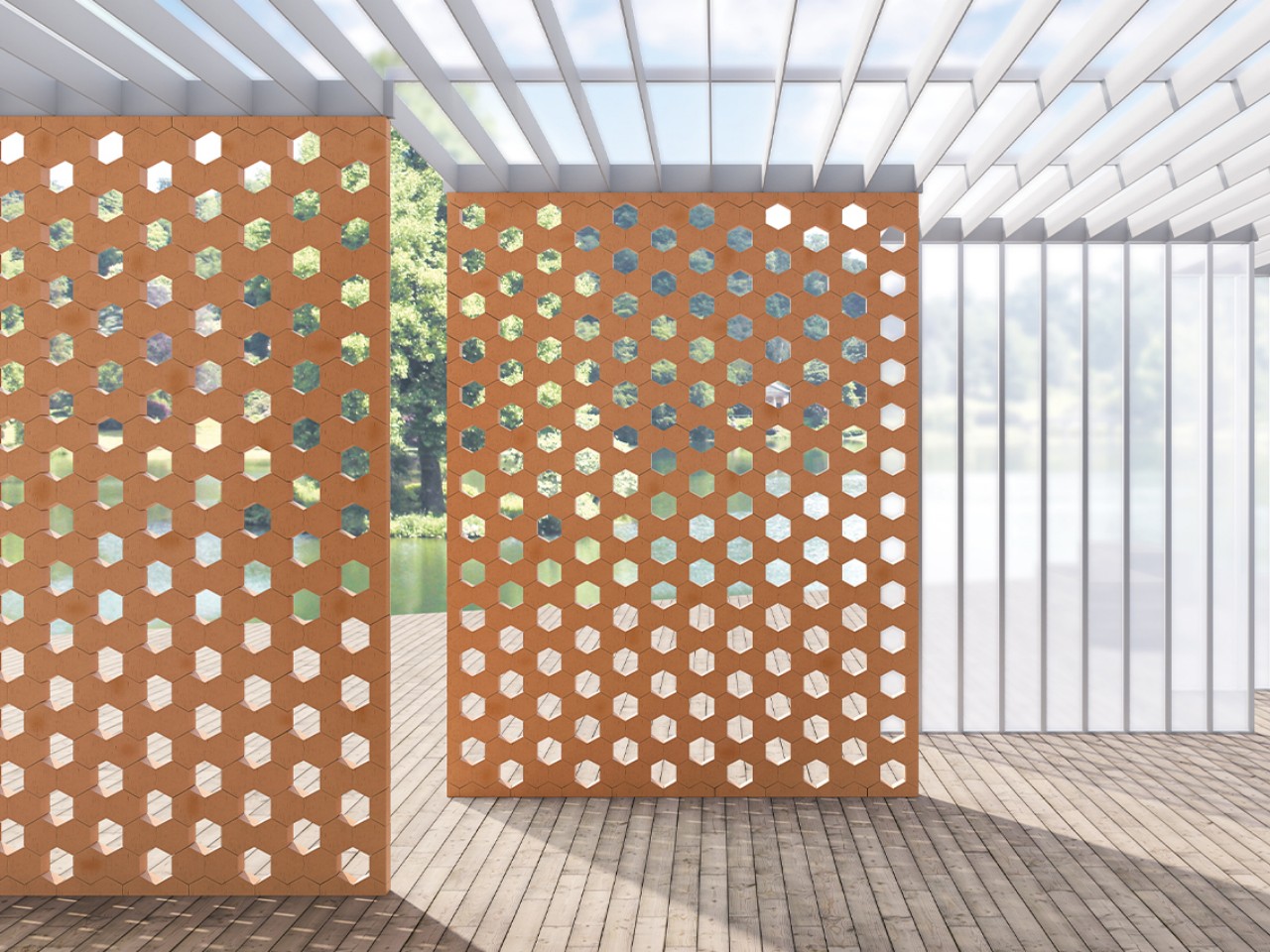
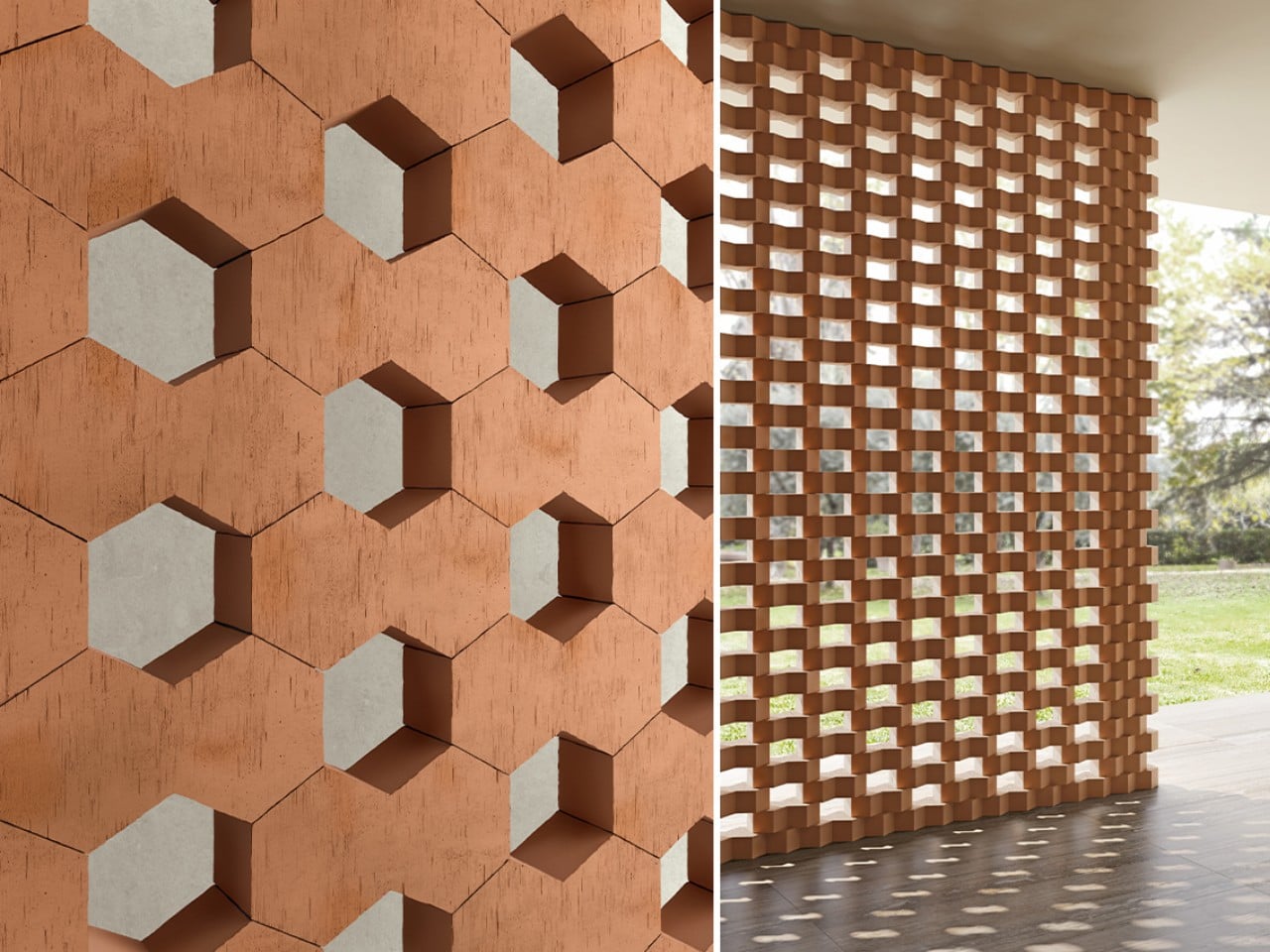
Inspired by the intricate structure of beehives, Mutina, a pioneering ceramics company collaborating with top designers, introduced the Hives collection. Designed by Konstantin Grcic, these hexagonal terracotta bricks redefine traditional brick-building, offering infinite configurations for interior furnishings and architectural projects. Each brick, resembling two merged hexagons, facilitates dynamic versatility; vertically, they create semi-open structures with open cavities, while horizontally, they form undulating facades for columns and counters. Crafted in 13×22.5x7cm size, the Hives bricks combine functionality with durability, boasting impressive thermal and acoustic properties. Utilizing artisanal extrusion techniques, each brick is unique, maintaining an organic structure and a soothing orange glow, exemplifying Mutina’s commitment to innovative and sustainable ceramic design.
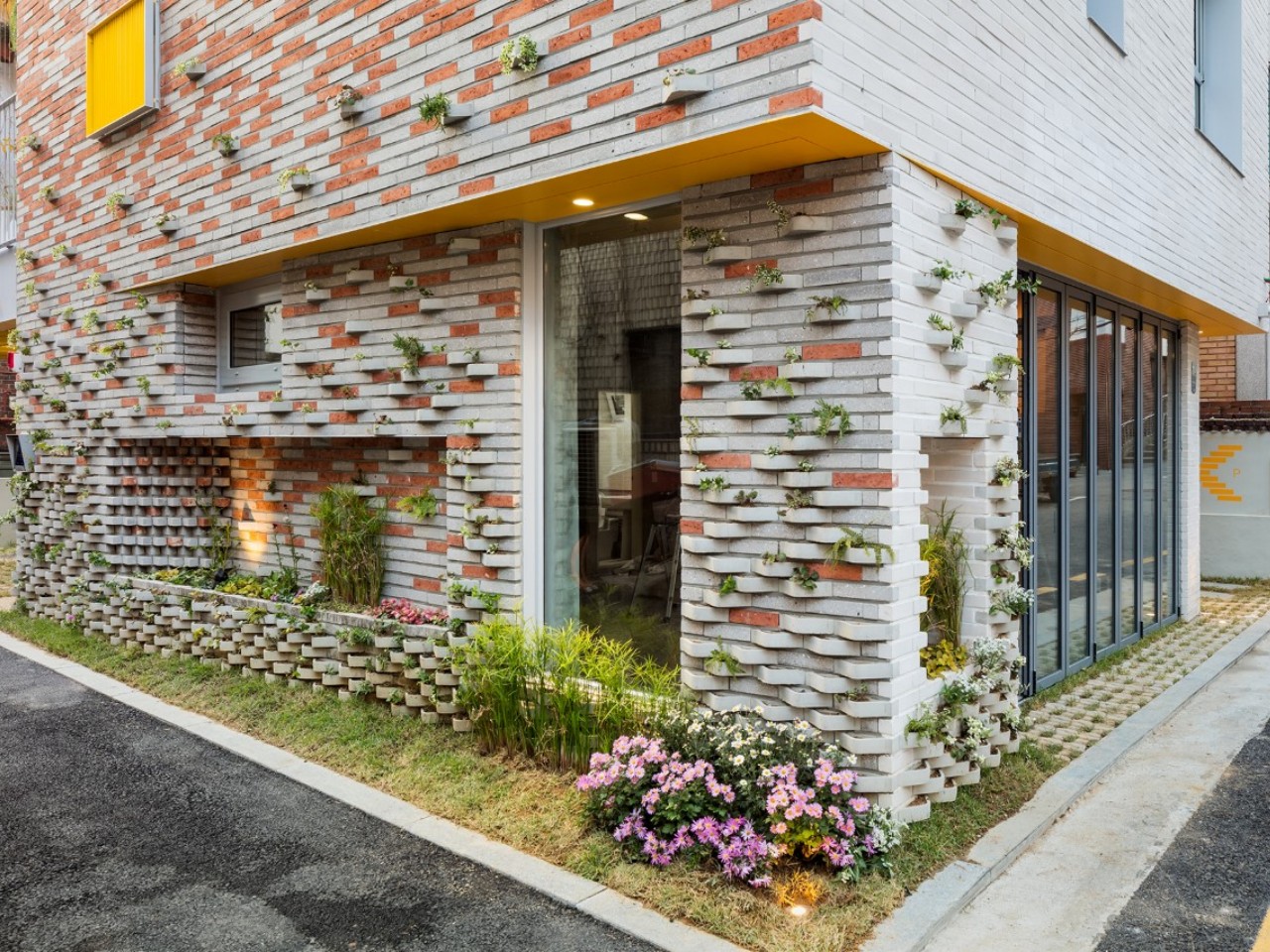
Crafted by OA-Lab, the ‘Alley House’ in Seoul, South Korea, innovatively incorporates greenery into its brick facade. Utilizing a stretcher bond pattern, the lower floor features uniquely designed bricks serving as planters. These protruding bricks create shelves for planting, enhancing the building’s exterior with a vertical garden. Their concrete composition ensures durability and containment for plants, while their density on the ground level facilitates easy watering. Ideal for smaller plants, they add a charming touch of green against the building’s white and red color scheme.
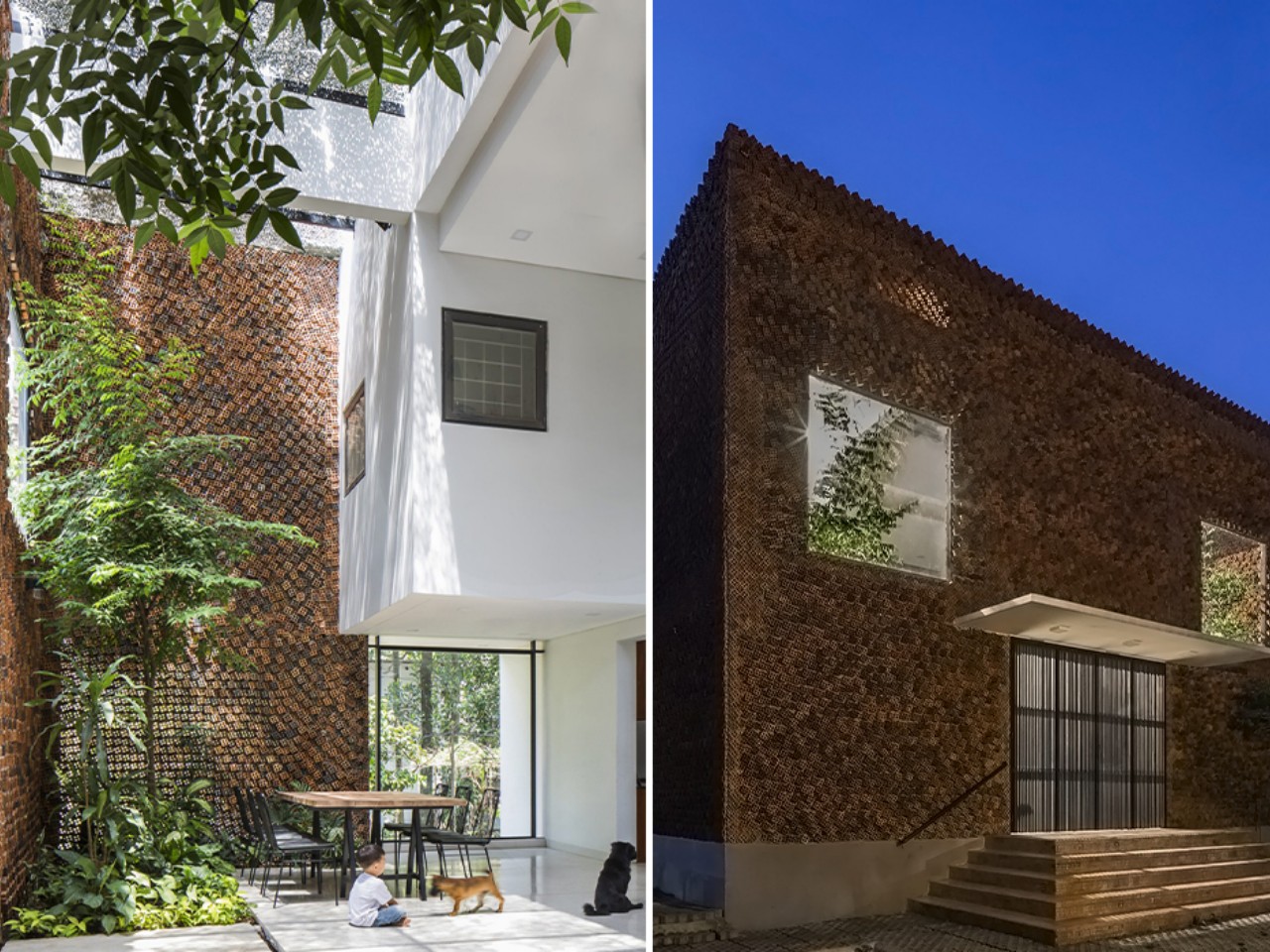
This innovative Wall House design by CTA Creative Architects in Bien Hoa, Vietnam, employs hole-punctured bricks to enhance indoor air quality and promote natural ventilation and illumination. Salvaged from nearby building sites, these bricks are strategically punctuated to allow fresh air and light into the living spaces. The irregular arrangement of burnt and blackened bricks adds texture and depth to the exterior, while tiered steps mimic the brick pattern, creating a visually striking entrance. Surrounding greenery improves air quality and contrasts beautifully with the brick tones. Large windows and a glass roof maximize natural light, enhancing the spaciousness of the interior. Simple materials like exposed-aggregate concrete and dark wood complement the design, while a stylish black-metal staircase adds functionality and aesthetic appeal.
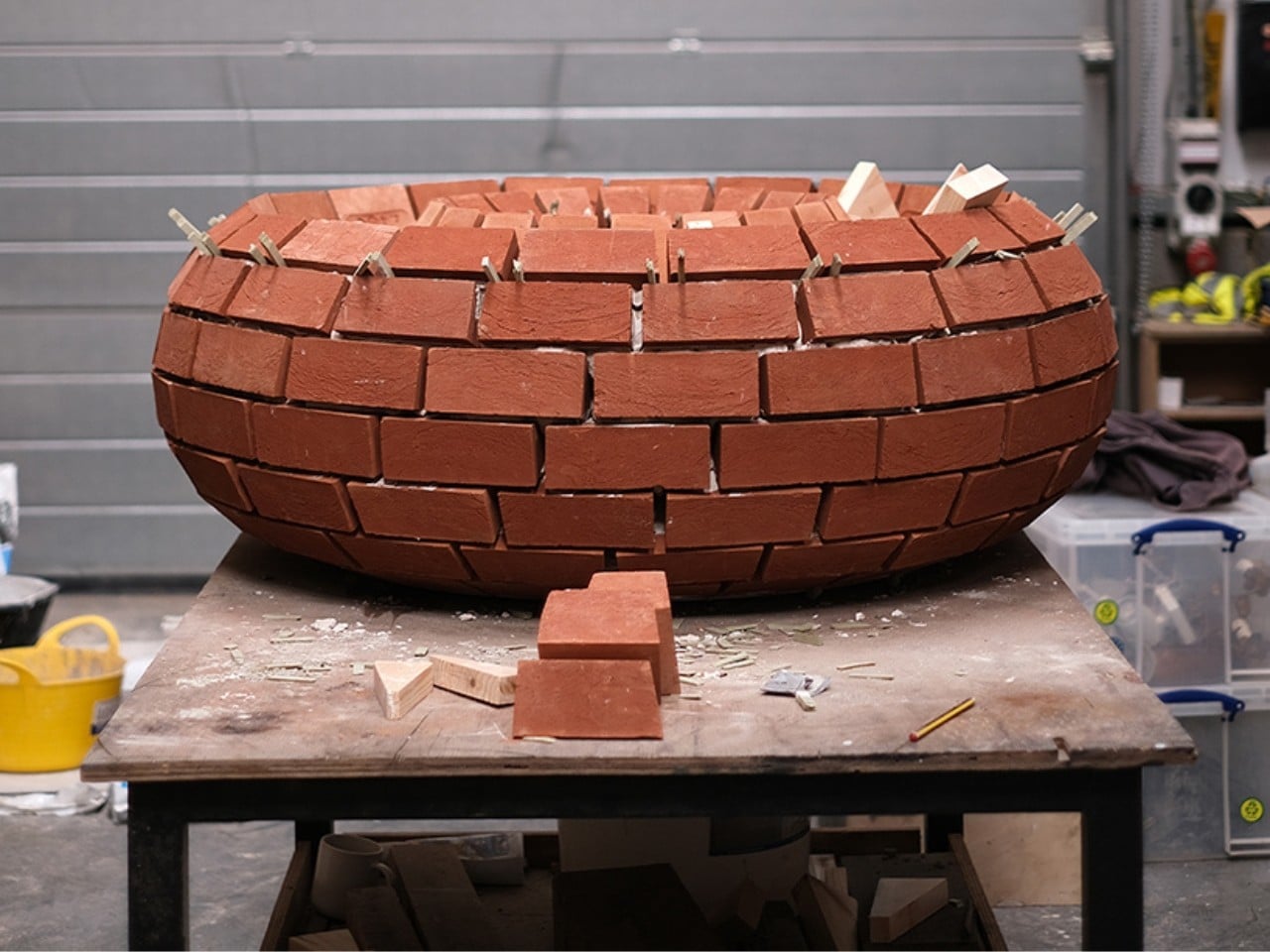
At London’s historic Royal Albert Wharf, repurposed bricks have been used to design the unique round bench FLOAT. Blending seamlessly into its maritime surroundings, it resembles a decorative element while offering seating. Crafted from traditional handmade clay bricks stacked in a brick-like design, it evokes the dockside architecture. The curved shape mimics the wharf’s edge, inviting visitors to sit and enjoy the view. Despite its unconventional material and rounded form, FLOAT adds an intriguing touch to the wharf’s ambiance.
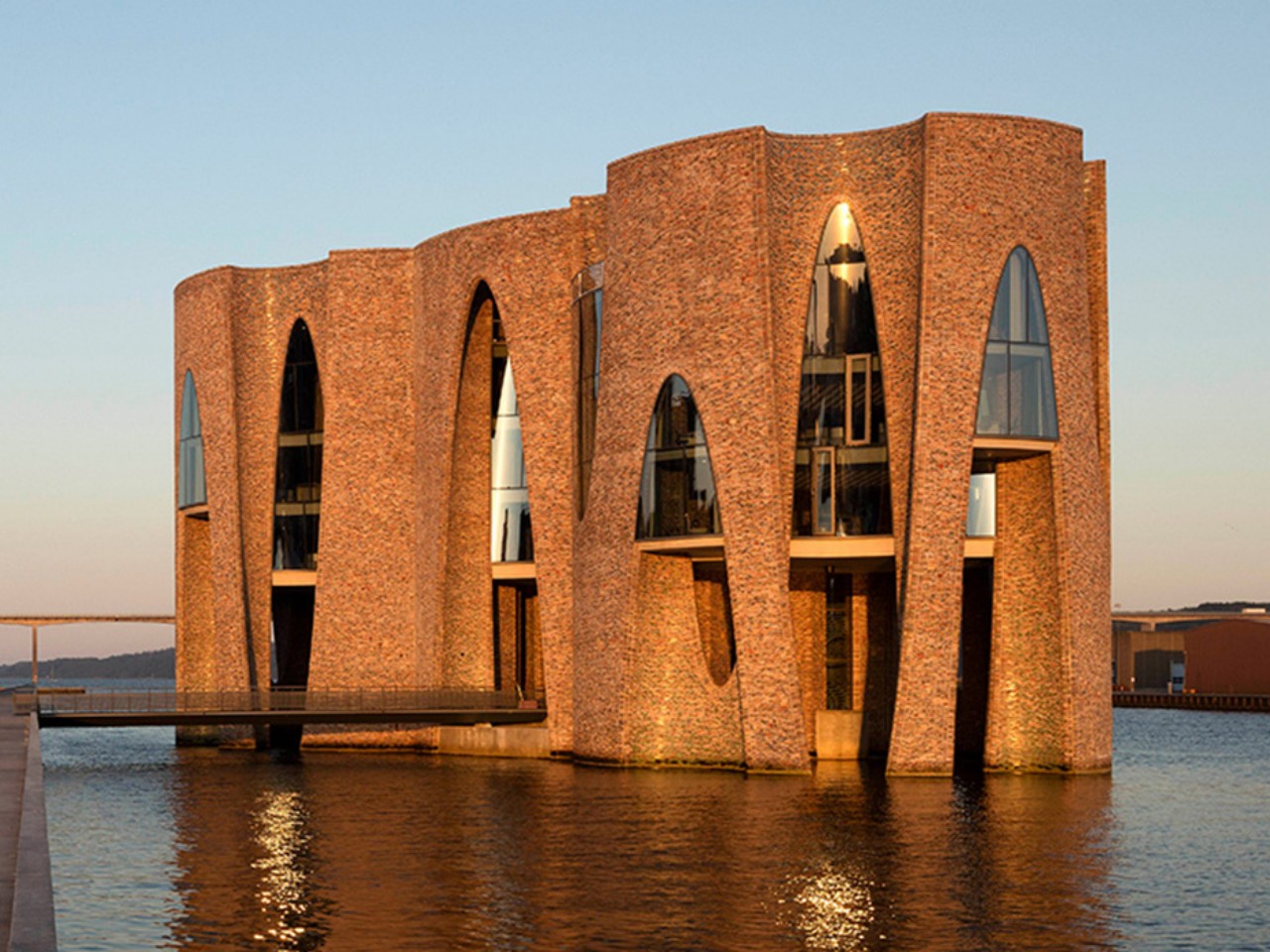
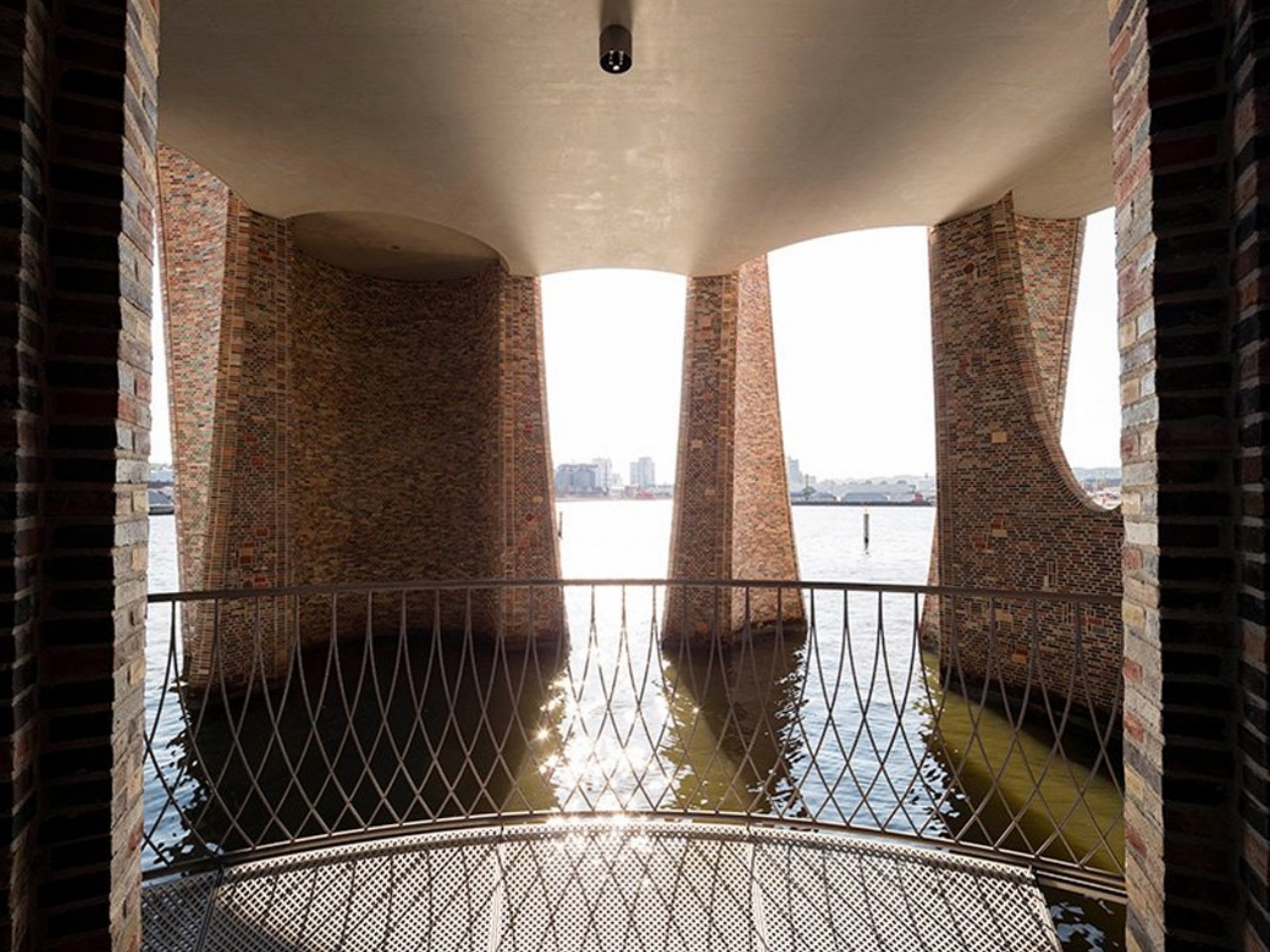
The Fjord House is a stunning architectural marvel by Studio Olafur Eliasson. Crafted with rustic bricks, this innovative design seamlessly merges tradition with modernity. Its curved walls evoke a sense of fluidity and dynamism, creating a captivating presence in any environment. The timeless charm and contemporary allure of the Fjord House, are a true testament to the fusion of art and architecture.
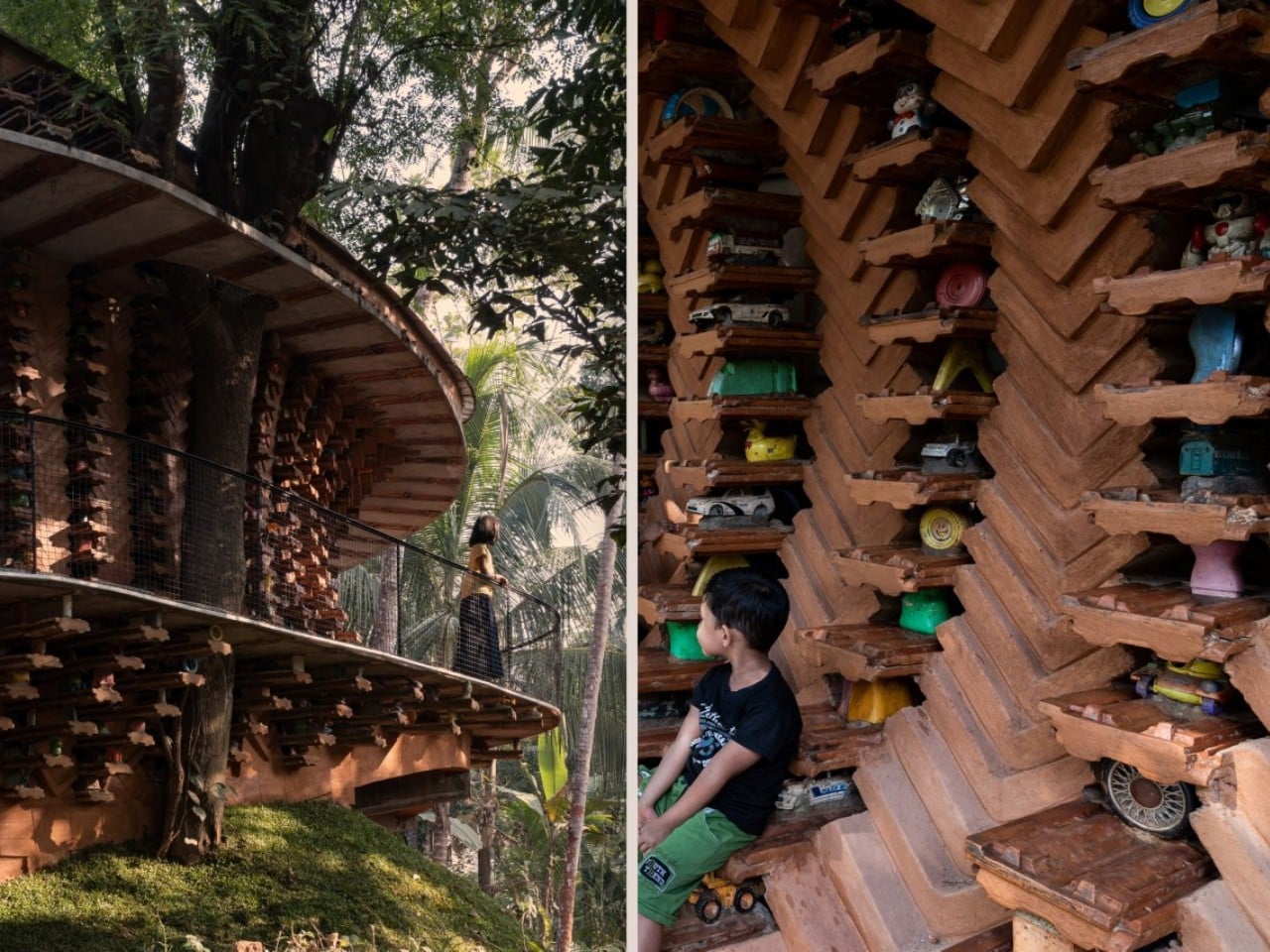
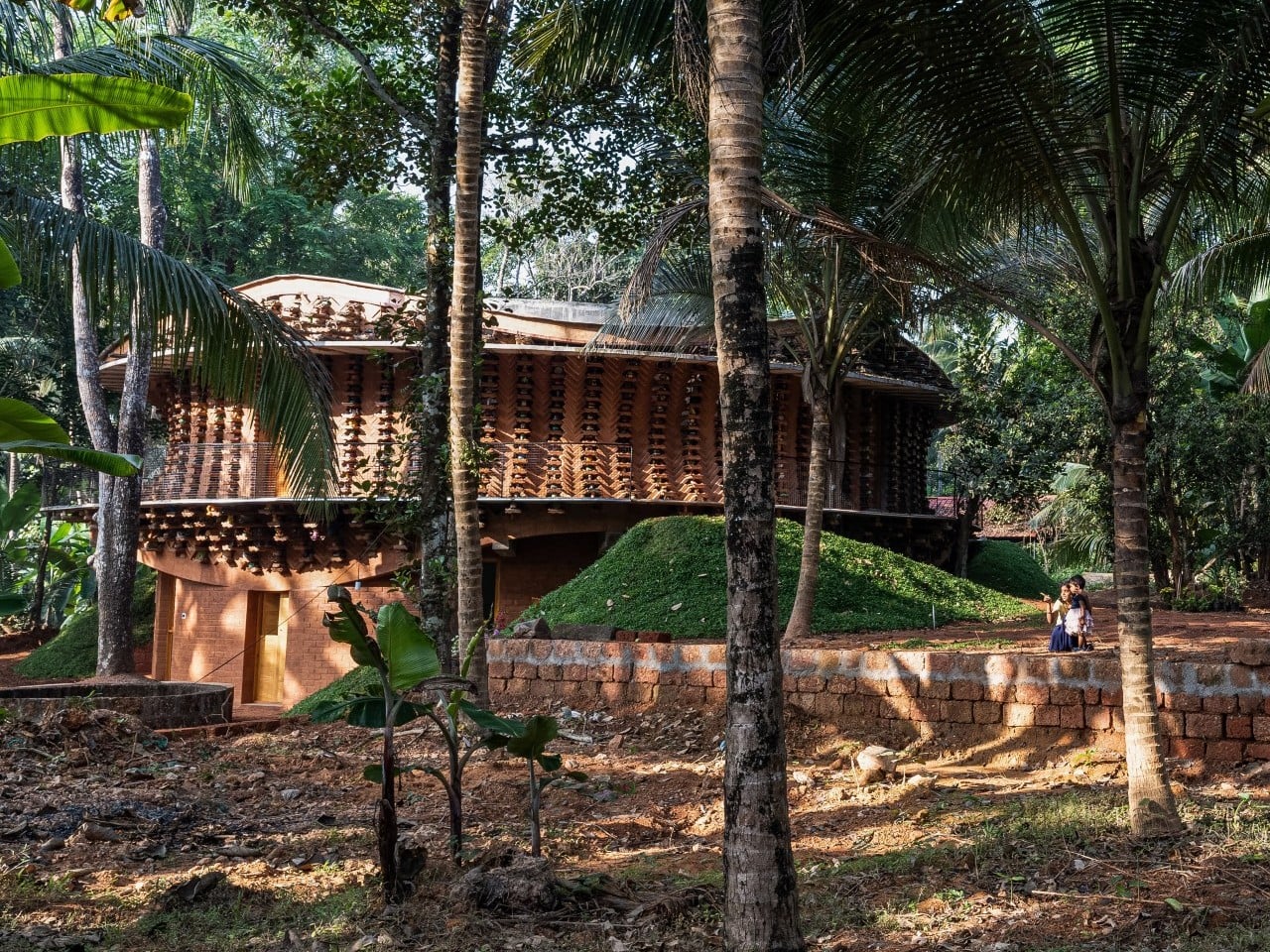
Toy Storey, a sustainable circular dwelling by Wallmakers India, headed by Vinu Daniel, creatively incorporates 6,200 discarded toys into its walls, transforming them into unique decorations. Beyond construction, architecture expresses cultural, social, and environmental concerns, as demonstrated in this groundbreaking project nestled in Kerala’s landscapes. It’s more than a home; it’s a tribute to nostalgia, childhood, and eco-awareness. Through repurposing toys as structural elements and decorative features, Toy Storey prompts reflection on consumption habits, while its design seamlessly blends with its surroundings. The interiors foster community living with individual privacy, featuring translucent screens, a central courtyard, and innovative ventilation. Toy Storey challenges norms, advocating sustainability and creativity by giving discarded items new meaning.
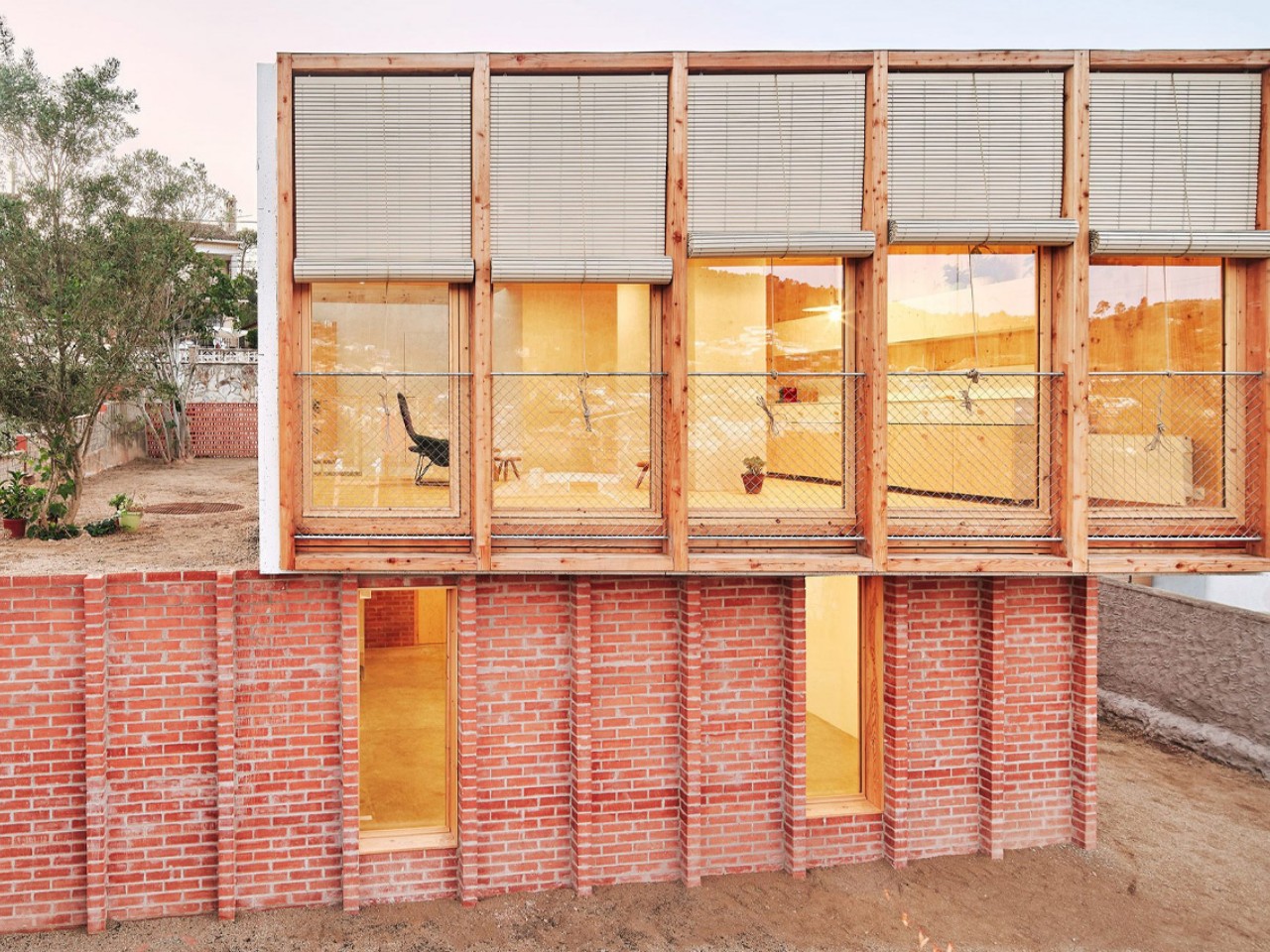
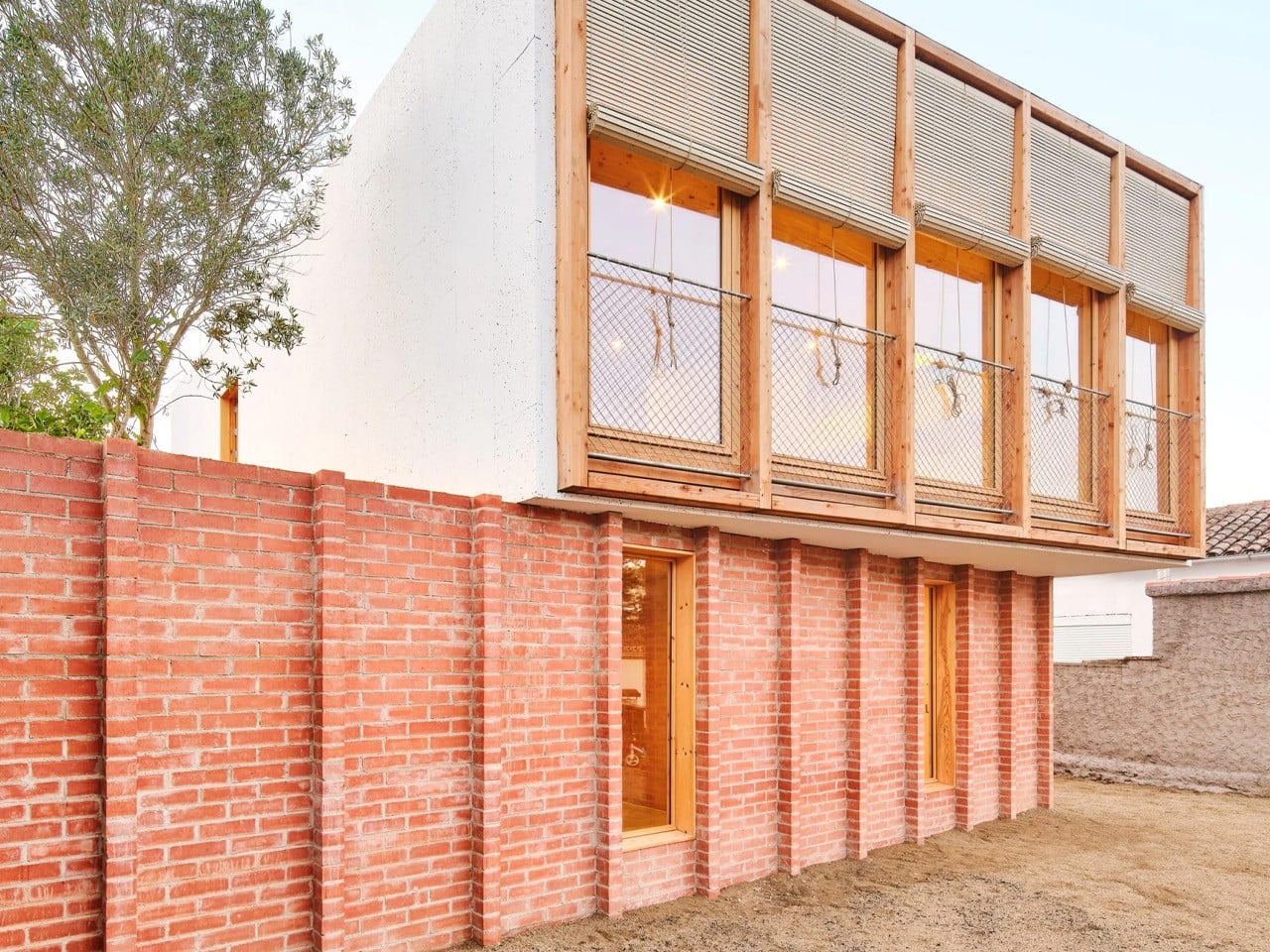
Spanish firm Agora Arquitectura transformed a neglected brick structure near Barcelona into the ‘House on a Brick Base’, initially home to a tool shed and a small red-brick building. The latter was refurbished and extended, integrating two perpendicular brick walls supporting the timber dwelling. External brick staircases and a perimeter wall were added. Sustainable materials like prefabricated cross-laminated timber and whitewashed cork were used. Co-founder Joan Casals Pañella described the project as an homage to traditional building methods. The studio fully renovated the brick building and expanded it across the terrain. Co-founder Joan Casals Pañella characterized the project as a tribute to traditional construction techniques, integrating two perpendicular brick walls into the structure to support the timber dwelling above. Additionally, a perimeter wall of perforated brick and exterior brick staircases were seamlessly incorporated to link various levels of the building within the sloping landscape.
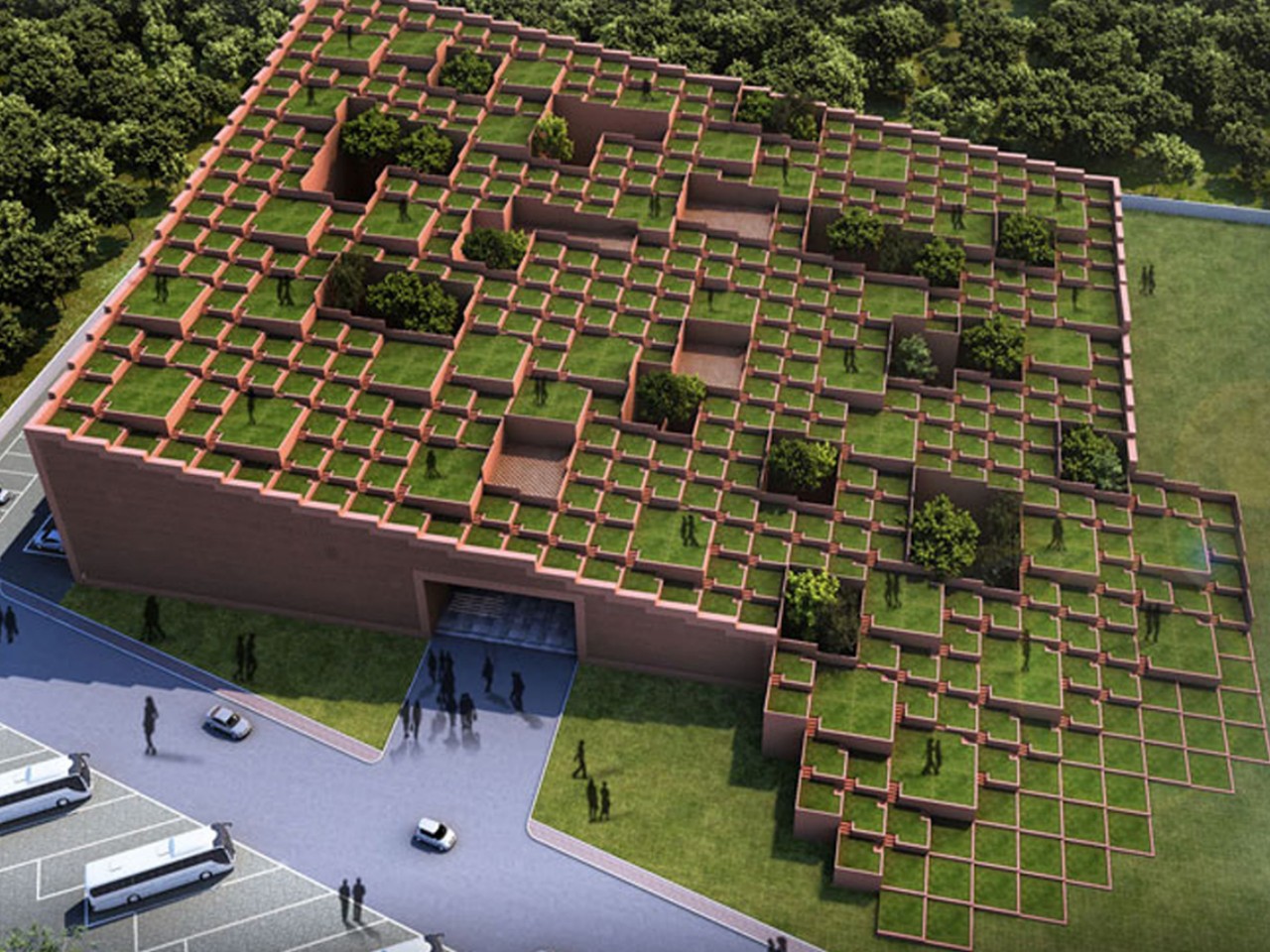
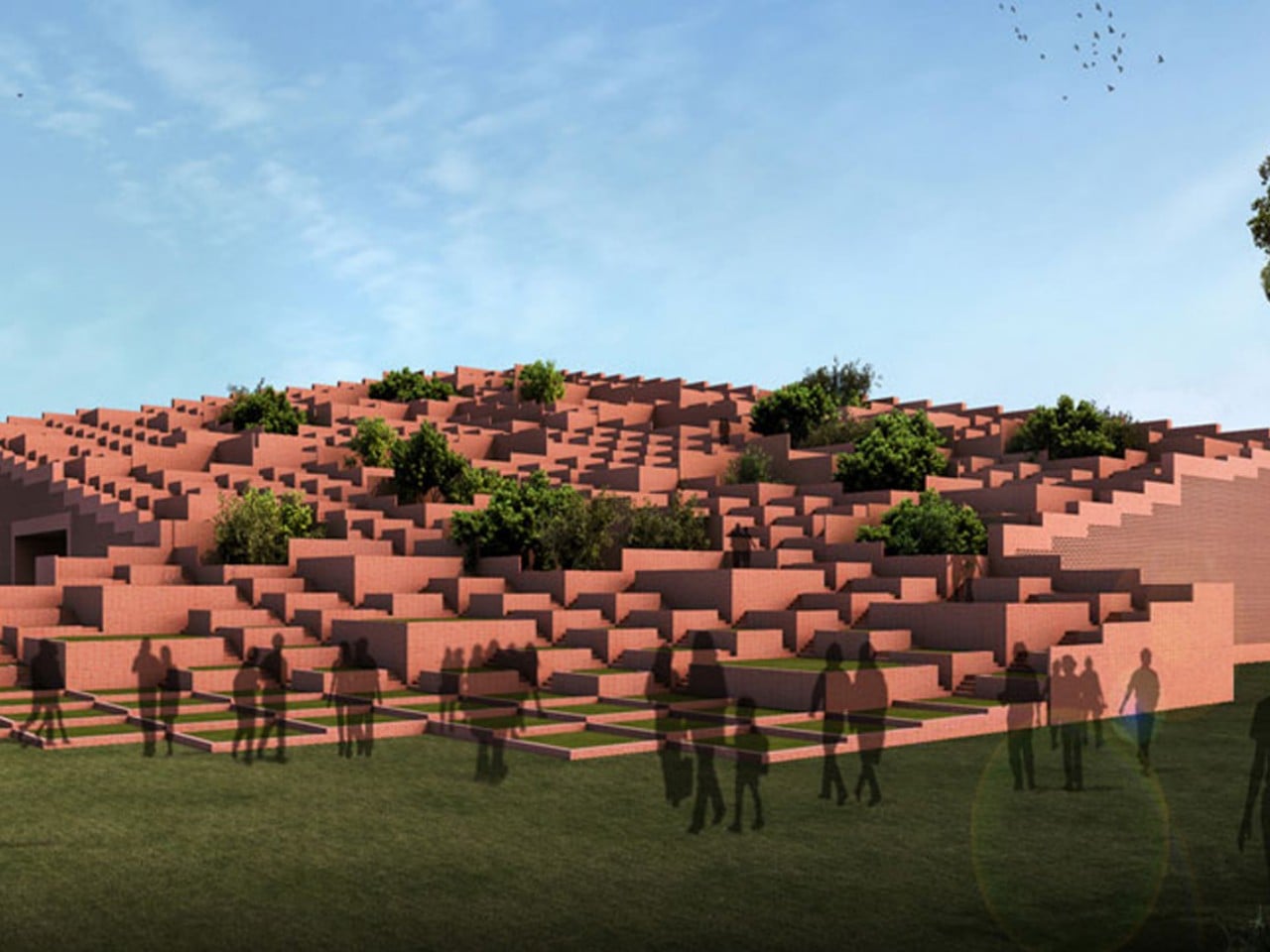
Prestige University, designed by Sanjay Puri Architects in Indore, India, embodies a fusion of organic architecture and sustainable building practices. Featuring staggered green terraces ascending towards a 20-meter apex, the design optimizes natural resources and climate. Inspired by traditional Indian architecture, the structure leverages the local environment for energy efficiency. The terraces allow fractured sunlight and ventilation, while a 20-meter tall brick screen mitigates heat absorption, particularly on the east, west, and south sides. The ground level accommodates administrative offices, an auditorium, and a cafeteria, with first-floor library rooms connected by an internal bridge reminiscent of Colosseum tunnels. Multi-tiered brick terraces offer recreational spaces, with facilities including a library, cafeteria, and seminar halls nestled beneath.
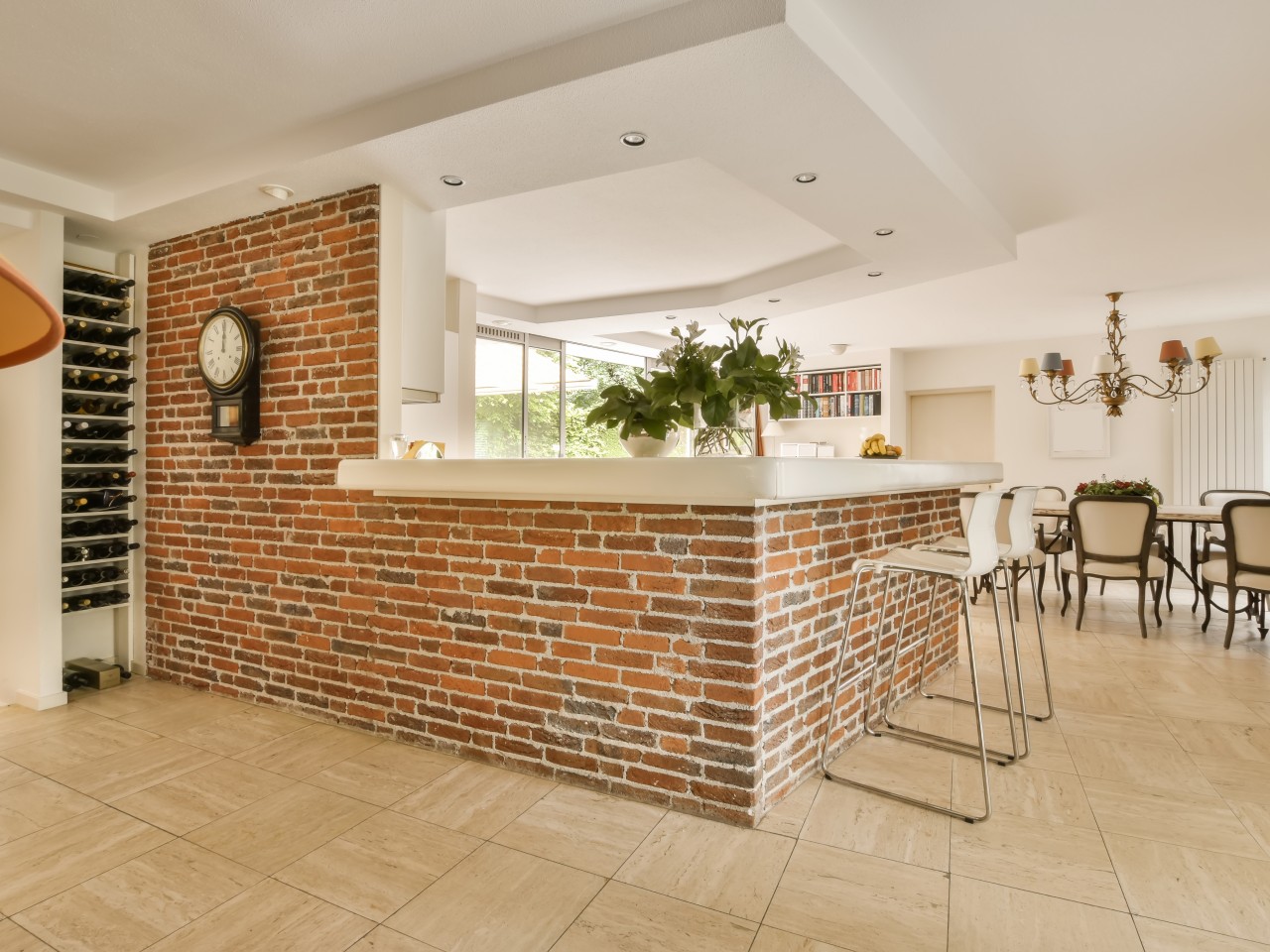
In this minimalist interior design, a brick wall demarcates the open-plan kitchen from the rest of the space. The L-shaped kitchen island transforms into a breakfast counter with tall chairs. It becomes the focal point of the open-plan home while a drop ceiling further reinforces the position of the kitchen island.
By subtle variations in elevation or intricate arrangements, one can craft diverse 3D patterns. This approach adds visual interest and imbues the space with an organic texture and ambiance to the interiors and exteriors.
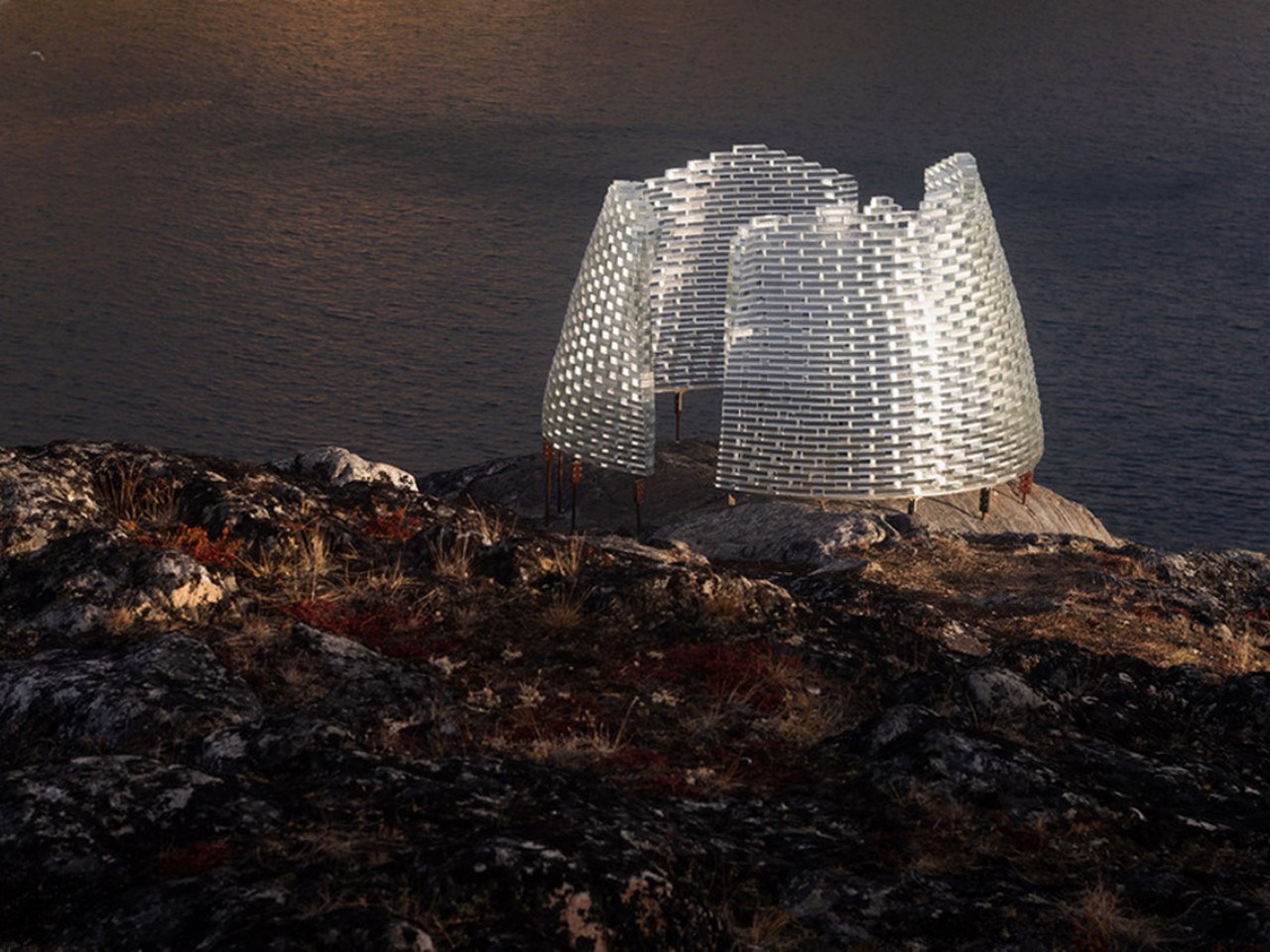
Seeking inspiration from Greenland’s indigenous culture, this translucent public installation is crafted from glass bricks. The Qaammat Fjeld Pavilion, designed by Konstantin Ikonomidis, nestles between two fjords in Sarfannguit, Greenland. Traditional building methods were used by Ikonomidis to anchor the structure to rocky terrain, forming two semi-circular structures atop horizontal bars. Collaborating with Wonderglass, glass bricks reflect the surrounding landscape, offering changing vistas as seasons evolve, while also casting crystalline shadows and light displays with the sun’s movement.
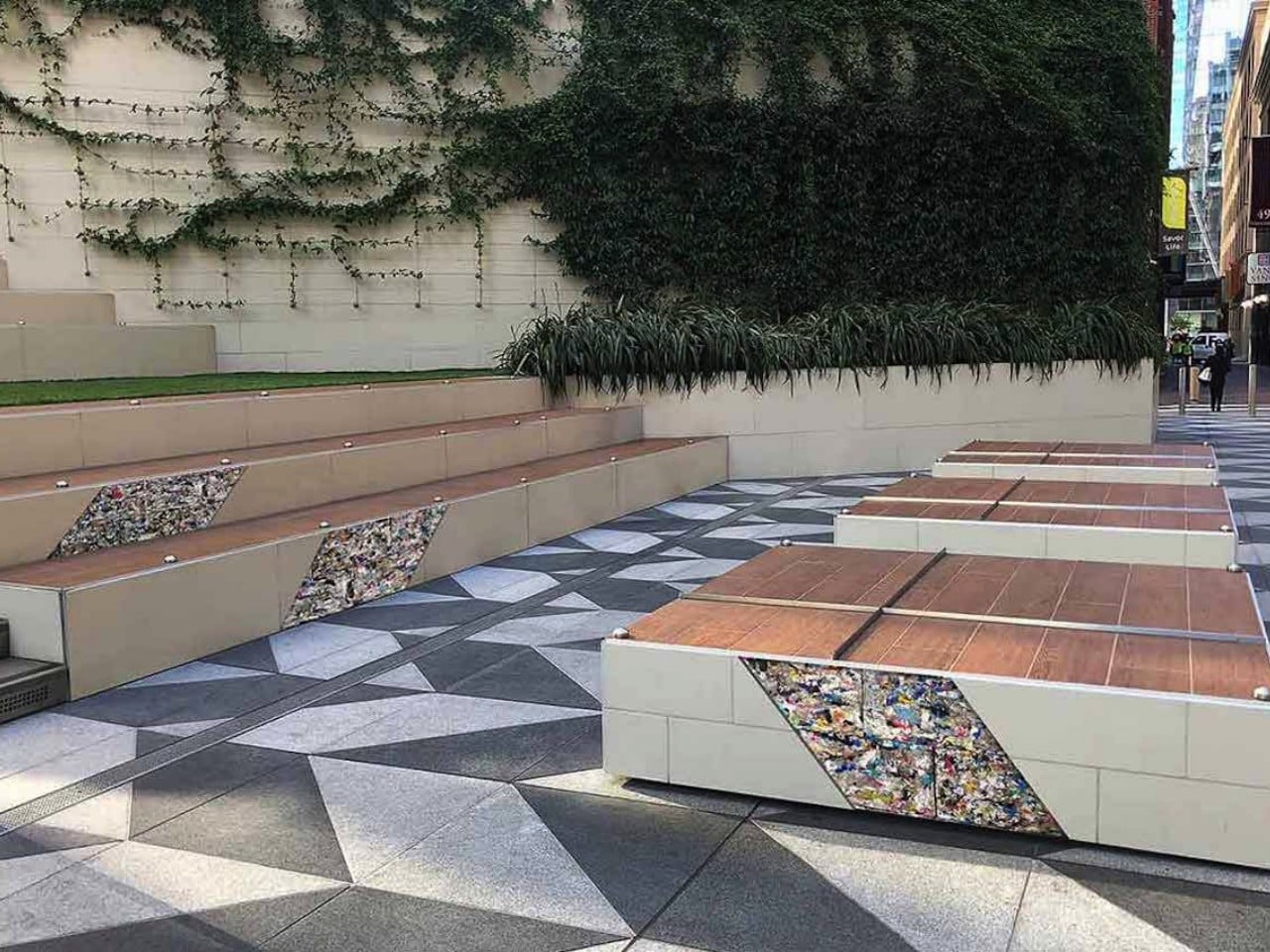
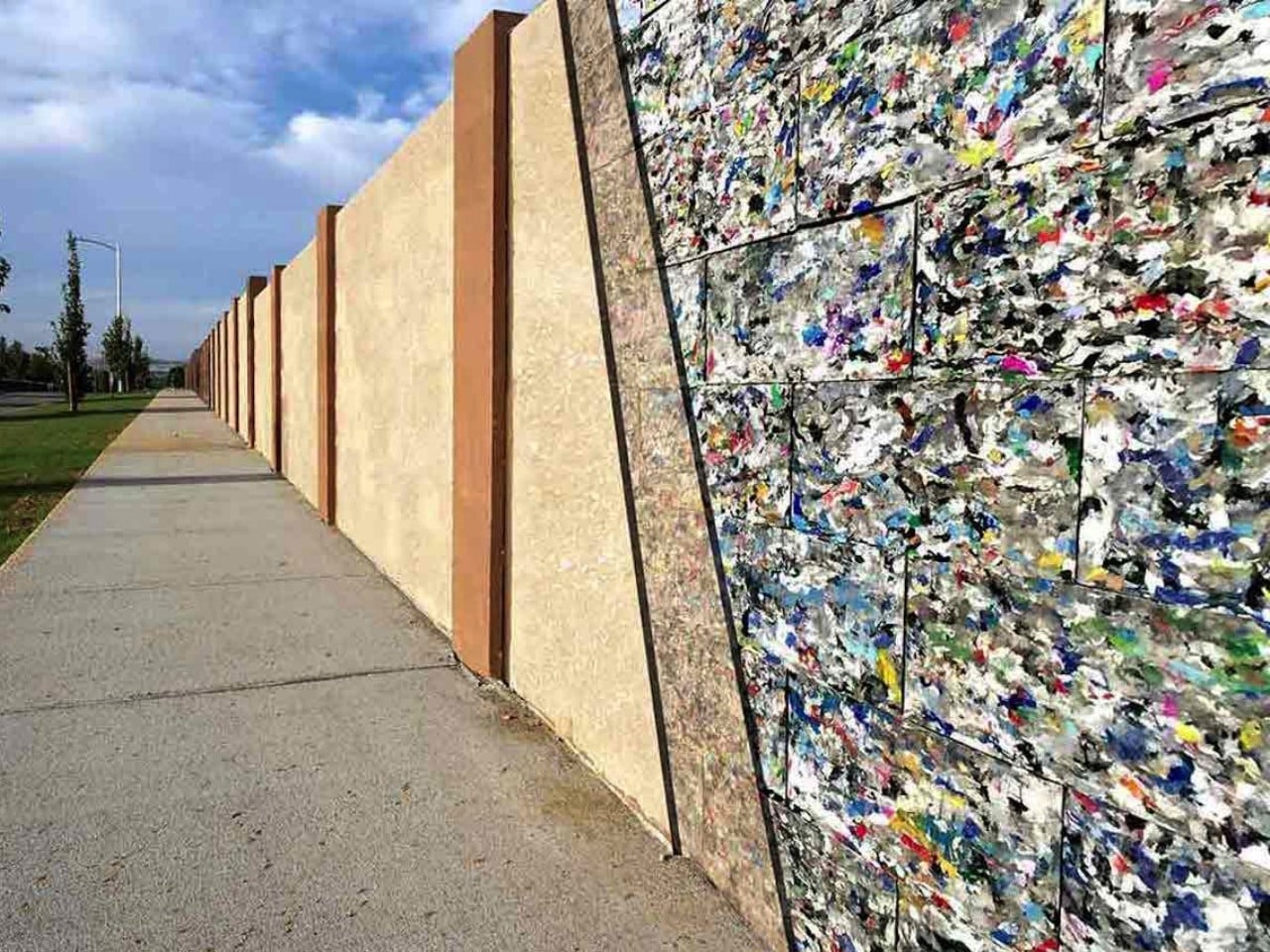
ByFusion’s initiative, reminiscent of Wall-E’s garbage cubes, introduces ByBlock, an eco-friendly construction material crafted from repurposed plastic and nonrecyclables. Through steam compression, these materials are transformed into versatile forms suitable for basic structures like fences or terraces. ByBlocks, produced with the patented Blockers technology, eliminates the need for cleaning or sorting, offering a sustainable solution to waste reduction. This innovation not only repurposes plastic waste but also holds potential for diverse construction applications, facilitating global environmental cleanup efforts.
In the world of health and fitness tracking, two apps stand out: Google Fit and Samsung Health. Both offer a wide range of features designed to help you monitor and improve your overall well-being. While they share many similarities, there are also notable differences that may influence your choice between the two. The video below rovides an in-depth […]