Losing your wallet, passport, or bag is a universal frustration that can turn a busy day or a big trip into a scramble of retracing steps and hoping for a miracle to happen in your favor. Most tracking cards promise peace of mind, but end up bulking up your wallet like a small pebble wedged between your cards or running out of battery just when you need them most during critical moments when losing something could ruin your plans.
The Slimca HERE 2 is a rethink of what a tracker card can be for modern life and daily carry needs. At just 1.3mm thick, it’s as slim as a credit card, bends without breaking under pressure, and works with both Apple Find My and Android Find Hub seamlessly across platforms. It’s a tracker designed to disappear into your daily life completely until you need it, then spring into action when it matters most.
Imagine rushing through airport security, your mind on deadlines and gate changes, when you realize your wallet isn’t in your pocket anymore. That sinking feeling hits, but your phone buzzes with an alert from the Slimca HERE 2, telling you exactly where you left it. No panic, no frantic backtracking through three terminals—just a quick glance at your phone and a confident walk back to the checkpoint where you set it down.
Slimca HERE 2 is crafted from mirror-finish 304 stainless steel, giving it a premium look and the resilience to flex up to 15 degrees without snapping under pressure from daily use. Slip it into a wallet slot next to your debit cards, tuck it behind your passport in a travel pouch, or drop it in a bag’s hidden pocket, and it vanishes completely without a trace. No bulge, no awkward fit, just seamless integration with your essentials.
Unlike plastic trackers that crack or warp over time from repeated stress, HERE 2’s steel body shrugs off pressure from sitting on hard surfaces, bending when you squeeze into tight spaces, or getting jostled in crowded subways during rush hour. The minimalist face features a single button for playing a sound when you need to locate it, a charging light for battery status, and subtle gold or silver branding that keeps the look clean and timeless.
One of the biggest innovations of the Slimca HERE 2 is the USB-C port ingeniously integrated into its 1.3mm frame, allowing for easy, direct charging with any standard cable you already own for other devices. A single charge lasts up to five months, and the battery supports 100 cycles. The rechargeable design and stainless steel construction make Slimca HERE 2 a sustainable choice for conscious consumers who care about reducing waste while ensuring that their tracker is always ready for the next adventure.
Slimca HERE 2 is one of the only tracker cards to support both Apple Find My and Android Find Hub networks, so you’re covered no matter what phone you use or switch to in the future. Pair it with your device in seconds, and you’ll get instant notifications if you leave your wallet or bag behind at a coffee shop, plus the ability to play a sound to help you find it when it’s nearby but hidden.
For travelers who’ve had their luggage separated from them, students who lose their wallets between classes, and anyone who values peace of mind without carrying bulky gadgets, HERE 2’s blend of durability and discretion solves real problems elegantly. The tracker becomes invisible until the moment you need it, then delivers exactly what you need without fuss or complicated apps. And when you do need to bring it out, the HERE 2’s mirror-polished steel and impossibly slim profile make it as much a design object as a tech accessory worth showing off.
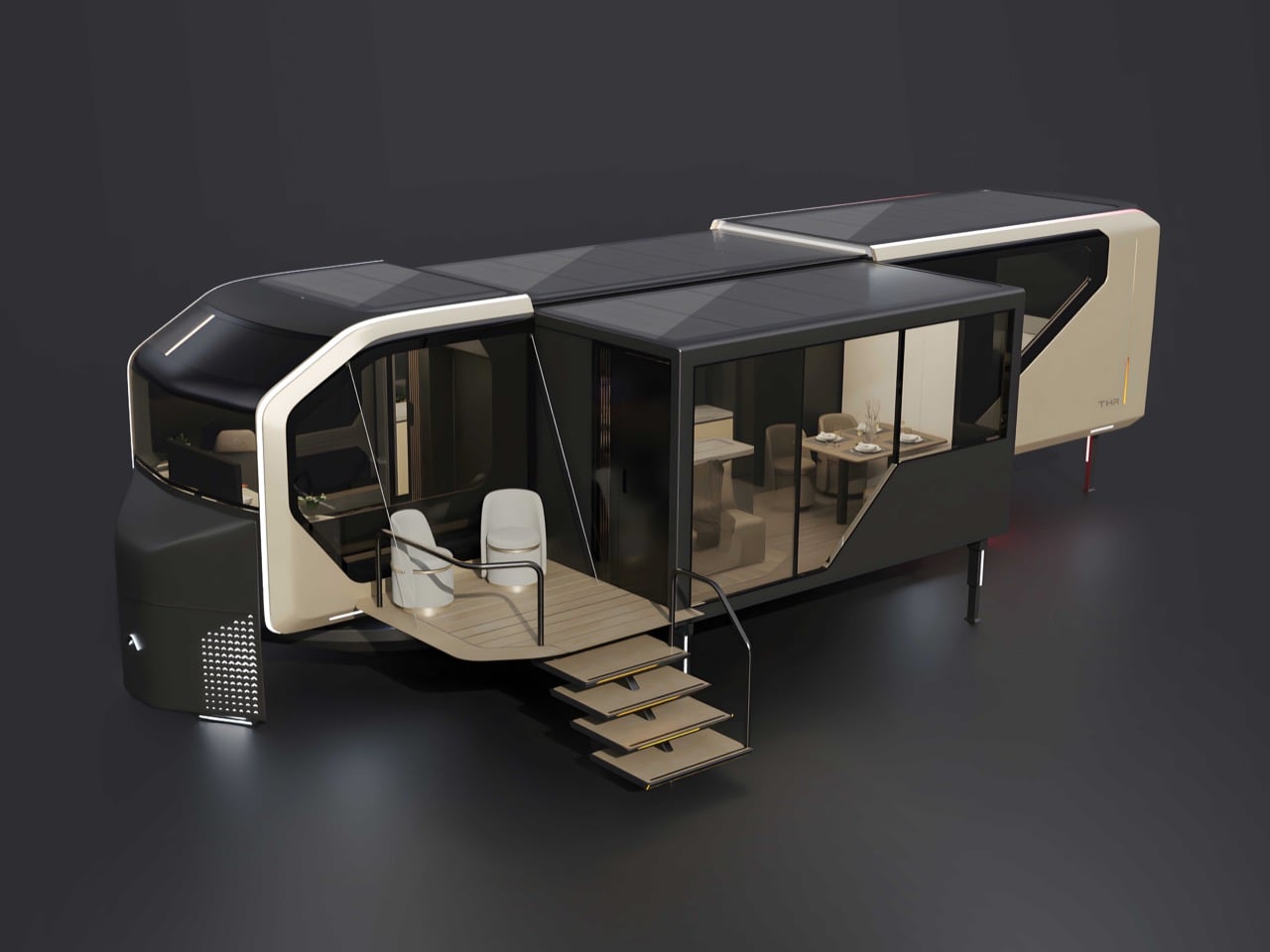
Pininfarina’s design legacy spans eight decades of automotive excellence, but the firm has increasingly turned its attention to spaces people inhabit rather than just vehicles they drive. The AI Transformer Home series marks the studio’s most ambitious exploration of that territory yet: modular, expandable dwellings that treat mobility as a core feature instead of an afterthought. Working with AC Future, Pininfarina applied its signature approach to proportion, surface treatment, and user experience, creating homes that look equally compelling whether compressed for travel or expanded for living.
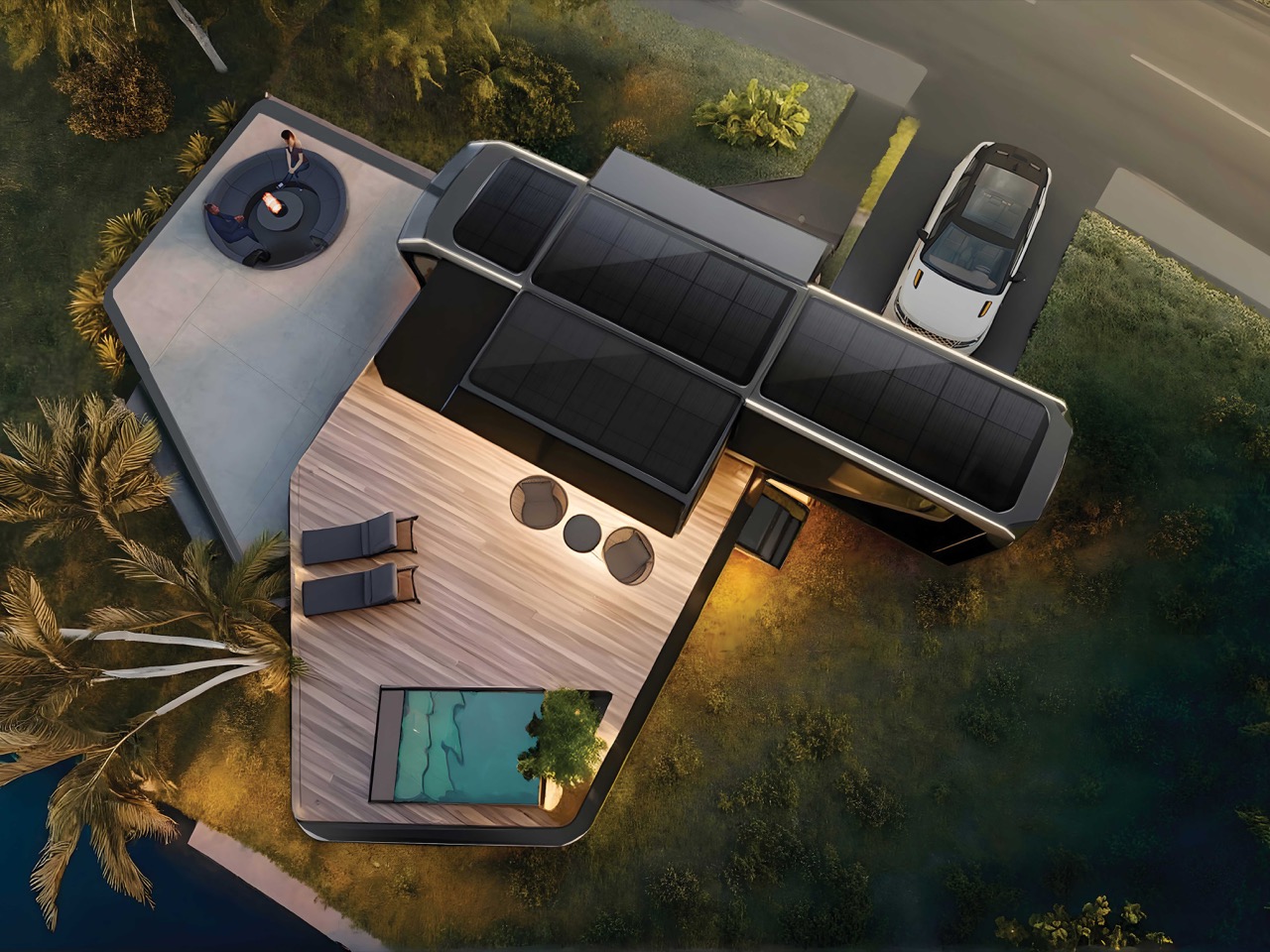
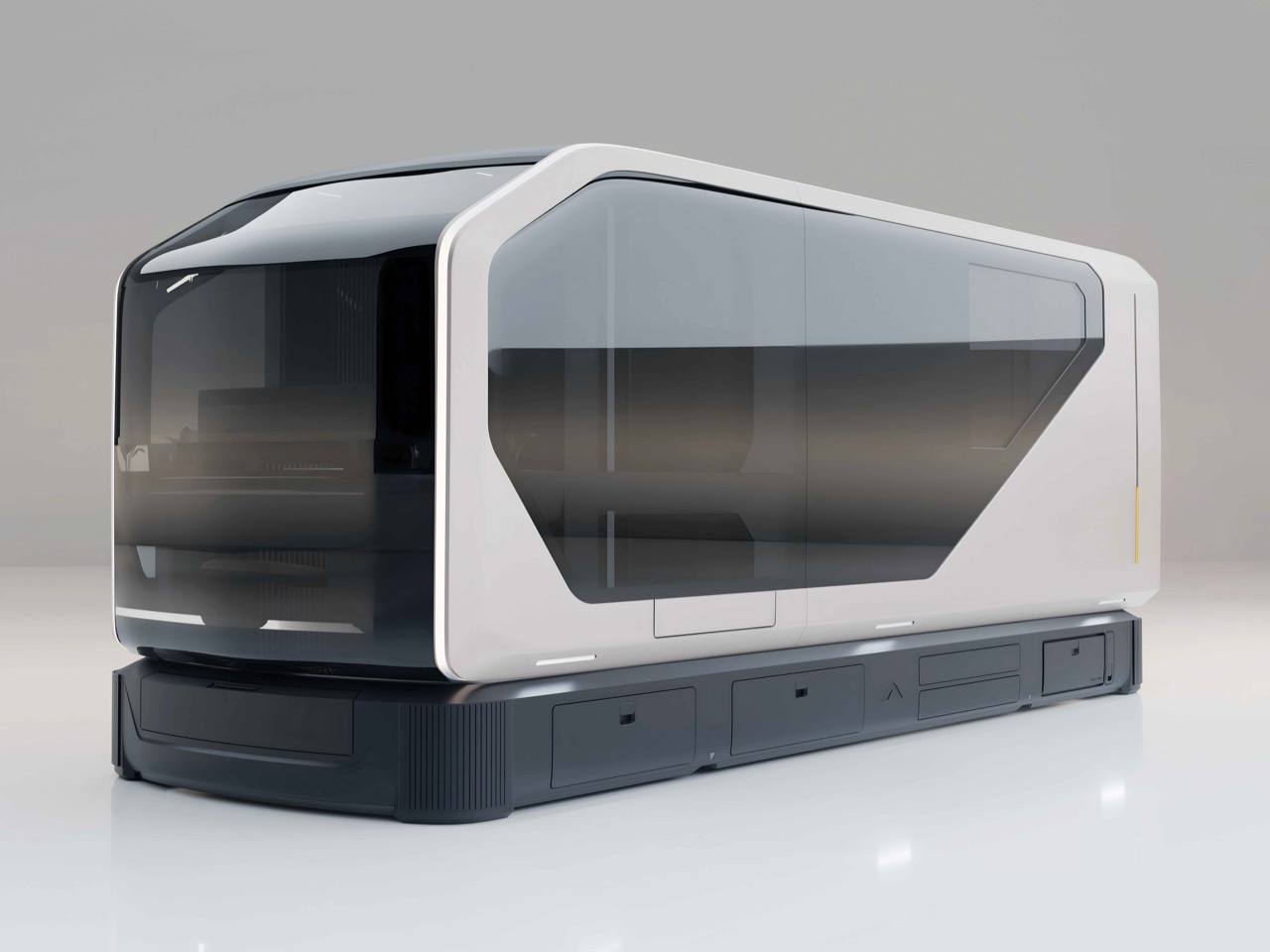
The three models share a flexible platform but serve distinct use cases. The AI-THu functions as a 400-square-foot smart ADU, ideal for backyard installations or temporary deployments. The AI-THt eliminates the driving cabin entirely, relying on patented expansion technology to maximize interior volume when towed to a destination. The AI-THd combines both worlds, offering self-contained mobility with EV or diesel power and three-sided expansion that converts a compact motorhome into a surprisingly spacious residence. All three earned the 2025 Red Dot Design Concept Award, validating their blend of engineering innovation and aesthetic refinement.
Designer: Pininfarina for AC Future
That drivable AI-THd is the one that really grabs your attention, because it’s a direct shot across the bow of the entire luxury RV market. The specs are wild. It expands on three sides to create a 400-square-foot living space from a vehicle that starts at 26 feet long. AC Future is quoting a starting price of $328,000, which puts it in direct competition with high-end Class A motorhomes and premium Airstream trailers. The key difference is that a traditional RV’s slide-outs give you a few extra feet of width, while this thing nearly doubles its physical footprint. Its cockpit even converts into a separate room, a clever use of space that most motorhomes completely waste once parked.
This whole concept hinges on the expansion mechanism, which is far more sophisticated than a simple slide-out. The AI-THt trailer, without a cab to worry about, is the purest expression of this technology. It’s a 24-foot towable box that unfolds into a legitimate small apartment. You are seeing a level of mechanical articulation that feels more like something from a sci-fi movie than a product you can actually reserve. The engineering challenge is immense: you have to manage plumbing, electrical, and structural integrity across moving walls and floors. AC Future’s patented system seems to have solved this, creating a rigid and fully insulated living space that deploys in minutes.
Beyond the mechanical wizardry, the off-grid capability is what pushes this into a new category. The homes are equipped with solar awnings that deploy during expansion and an atmospheric water generation system that literally pulls drinking water from the air. An onboard AI manages these resources, learning your habits to predict power and water needs, so you aren’t constantly checking gauges. This is true self-sufficiency, allowing for extended periods off-grid without sacrificing the comforts of a modern home, like a full-size kitchen and dual-zone climate control. It’s a closed-loop living system on wheels.
So who is actually buying this? The price tag puts it out of reach for the average van-lifer, and its high-tech complexity might intimidate the traditional RV crowd. AC Future is likely targeting a niche market of affluent digital nomads, tech entrepreneurs, and design aficionados who want a mobile base of operations that reflects their aesthetic and technological values. This is less a vehicle for visiting national parks and more a statement piece for living and working wherever you want. It’s a halo product, designed to showcase what’s possible when you fuse automotive design with smart architecture, pushing the entire industry to think beyond the beige fiberglass box.
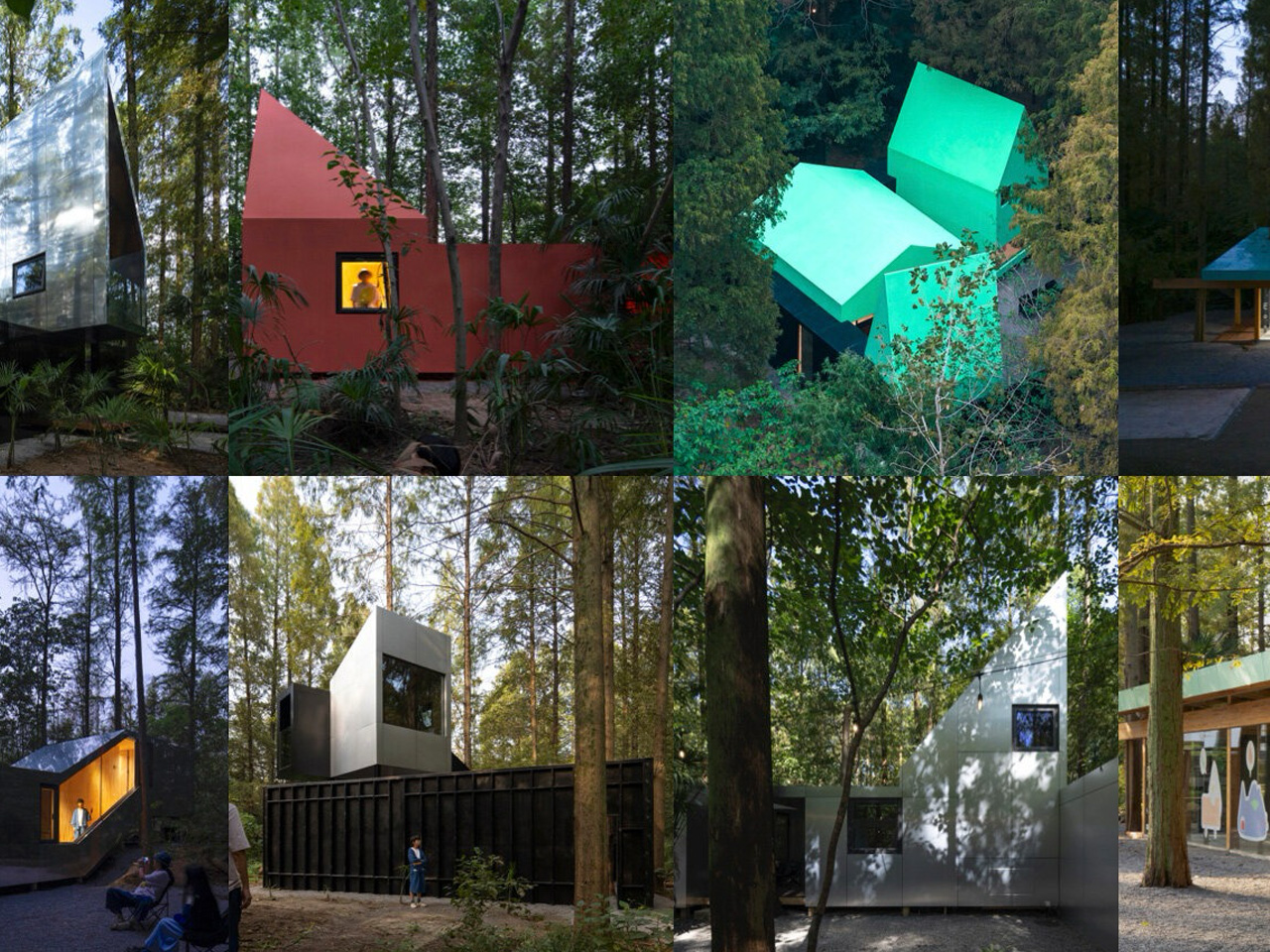
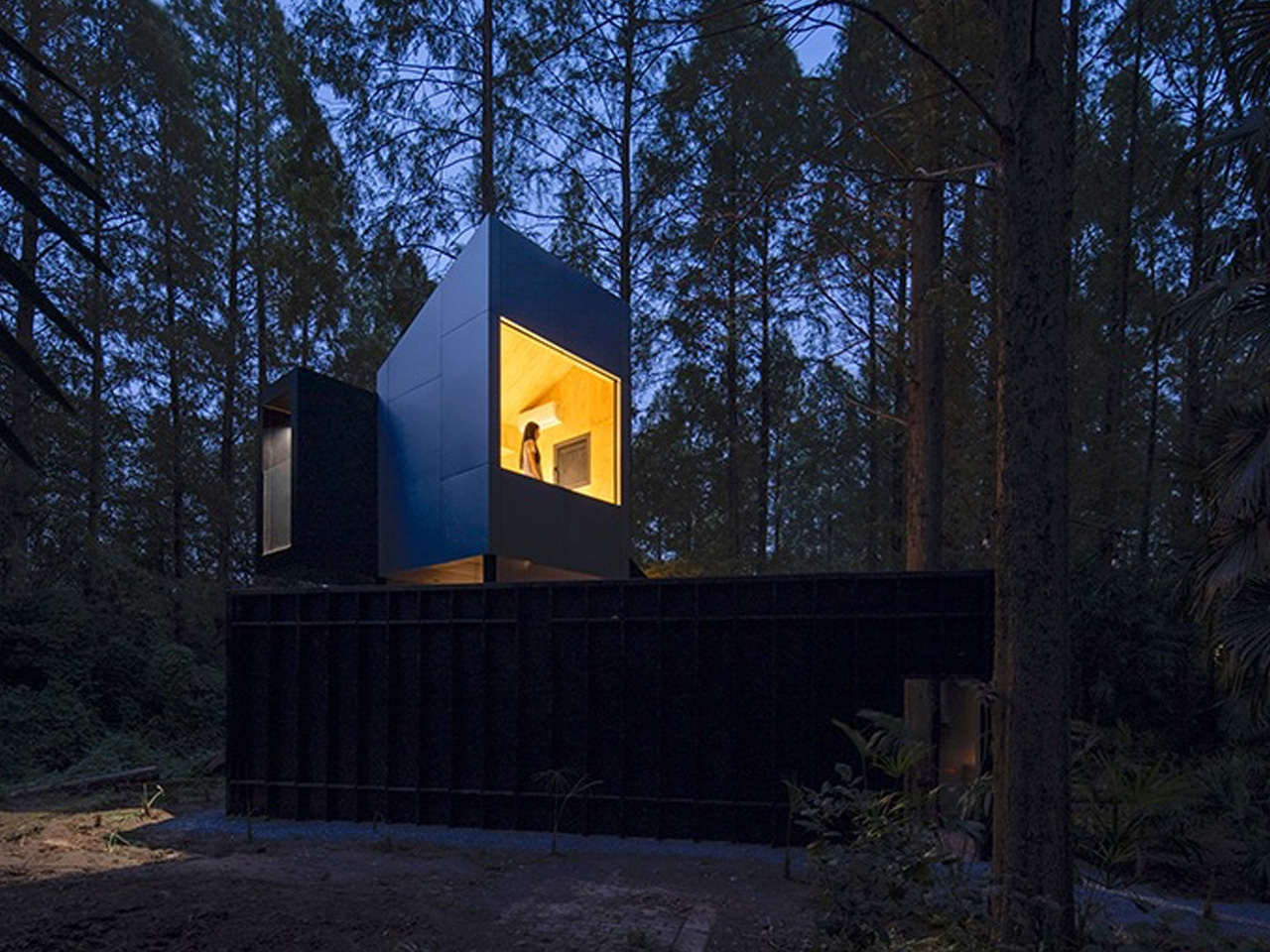
Deep in Wuhan’s Dongxihu District, there’s a metasequoia forest where migratory birds gather, and something extraordinary has taken root among the ancient trees. Secret Camp isn’t your typical forest retreat. This collaboration between United Investment Merryda Hotel Management Group and Wiki World has created something that feels part accommodation, part art installation, and entirely magical. More than a dozen treehouses rise through the canopy on Cihui Street, each one carefully positioned so that not a single existing tree was harmed in the process.
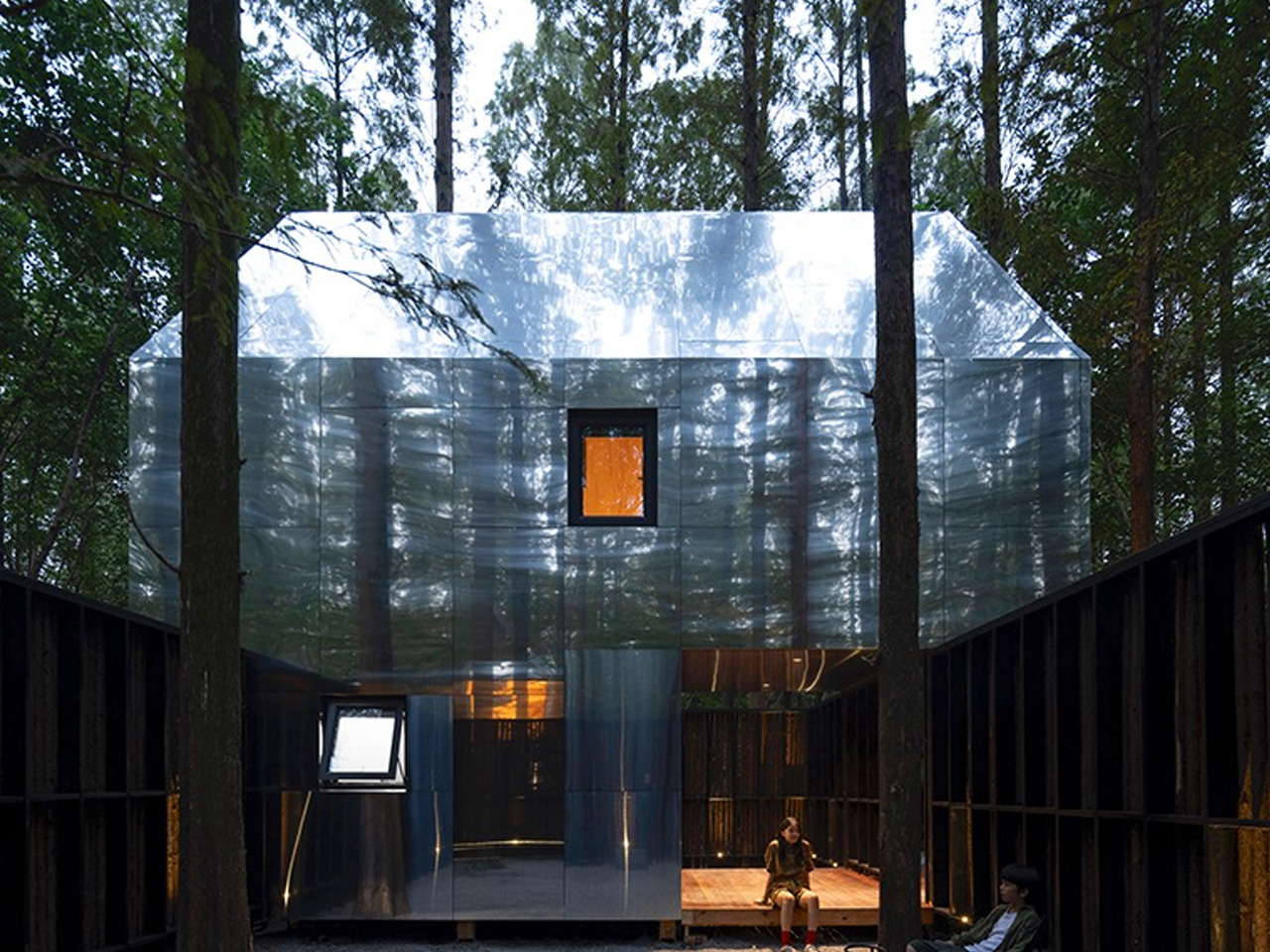
The whole project sprang from Wiki World’s Wiki Building School initiative, which sounds academic but is really about pushing the boundaries of how we live alongside nature. Each treehouse has its own personality and tells a different story. Time Machine gleams with futuristic silver that catches sunlight through the leaves. Nomadic Land feels like a cozy capsule for temporary wanderers. Playground brings out your inner child with circulation paths that weave playfully around branches. Then there’s Daydream, which uses mirrored cladding to virtually disappear into the forest, and Red Windmill, standing bold and bright as a beacon in the green canopy. Unicorn takes the vertical route with its loft design and silver panels that hint at mythical stories.
Designer: United Investment Merryda Hotel Management Group & Wiki World
What makes this place special isn’t just the whimsical names or striking designs. The creators drew inspiration directly from the forest itself – local birds, scattered seeds, the organic forms that nature creates without any human input. Every structure sits on elevated timber platforms, leaving the forest floor completely untouched. No paved paths, no manicured landscaping, just the raw beauty of the woodland ecosystem doing what it does best. This approach embodies Wiki World’s “Build Small, Dream Big” philosophy, proving that you can live comfortably without dominating your environment.
But Secret Camp goes beyond just providing a place to sleep among the trees. It transforms the entire forest into an open-air gallery where art happens naturally. Throughout the year, temporary installations pop up, workshops gather creative minds, and exhibitions celebrate the relationship between humans and wildlife. The Forest Reception becomes a buzzing hub where visitors make birdhouses, study natural materials, and participate in projects that blur the lines between accommodation and education. There’s even a Sino-French Construction Festival that brings together people passionate about sustainable building and small-scale living.
The technical side reveals just how seriously they take environmental responsibility. Every structure uses glued laminated timber that’s digitally modeled for precision, then prefabricated off-site to minimize forest disruption during construction. The modular design centers around a clever 2-meter-wide concept that allows for variation while keeping efficiency high. Hand-fired carbonized wood panels give each cabin its natural finish and weather resistance, while small metal joints make everything completely reversible – these treehouses could be disassembled and moved without leaving a trace.
This elevated approach means zero ground contact and zero artificial landscaping, letting the forest maintain its natural rhythms while humans get to experience life in the canopy. Secret Camp proves that sustainable tourism doesn’t have to mean roughing it or compromising on creativity. Instead, it shows how thoughtful design can actually enhance natural settings, creating spaces that engage all your senses while treading incredibly lightly on the earth. It’s accommodation that makes you more aware of the environment, not less.
The Rodecaster series of podcast mixers have become a mainstay among audio creatives. Last year, the company expanded the line with its first multimedia model — the Rodecaster Video. It was a more niche proposition, aimed at streamers, video podcasters and live producers, and, at $1,200, people with deeper pockets. Today, Rode returns with the Rodecaster Video S (RCV-S), a streamlined version that offers much of the same functionality for less than half the cost of the original ($499).
If you currently use Ecamm Live, OBS, a Stream Deck, a Rodecaster Pro/Duo, a video capture card or Blackmagic Atem type switcher, then there’s a good chance the RCV-S does something, or many things, useful to you. Maybe it can replace all those products, some of them or enhance your workflow. It’s a little complicated, but within that complication is a lot of versatility.
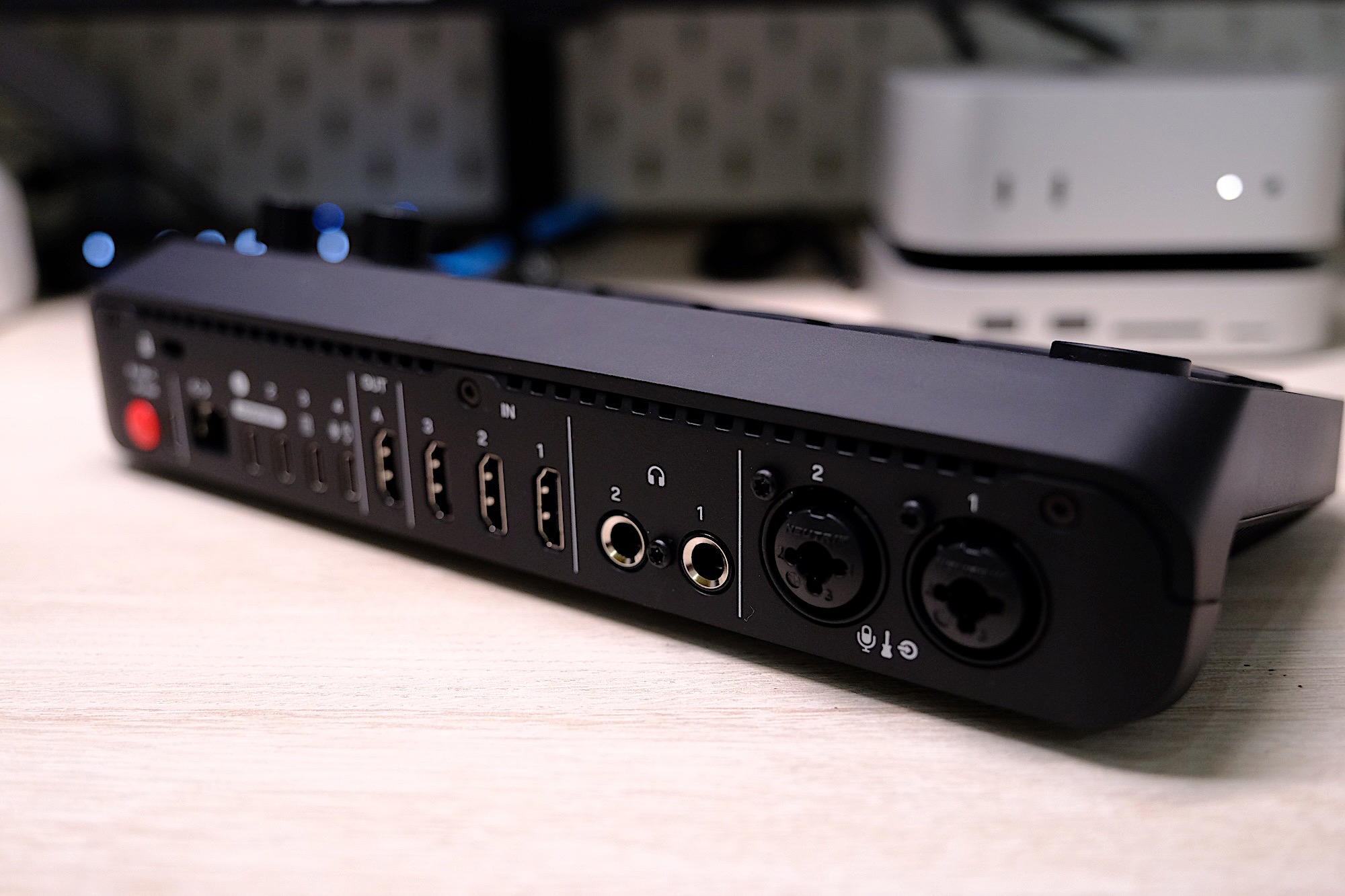
With three HDMI inputs, one USB webcam/mic input and up to four NDI/wireless camera inputs, video is clearly the focus here. But there are also two XLR/Combo ports for studio microphones and instruments and the option to connect up to two of Rode’s wireless lav mics (such as the Wireless Go) directly without the need for a receiver. The RCV-S, like Blackmagic’s popular Atem Mini, outputs over HDMI at 1080p/60 (no 4K) or can be used over USB as a virtual camera just like you’d find in Zoom or Teams.
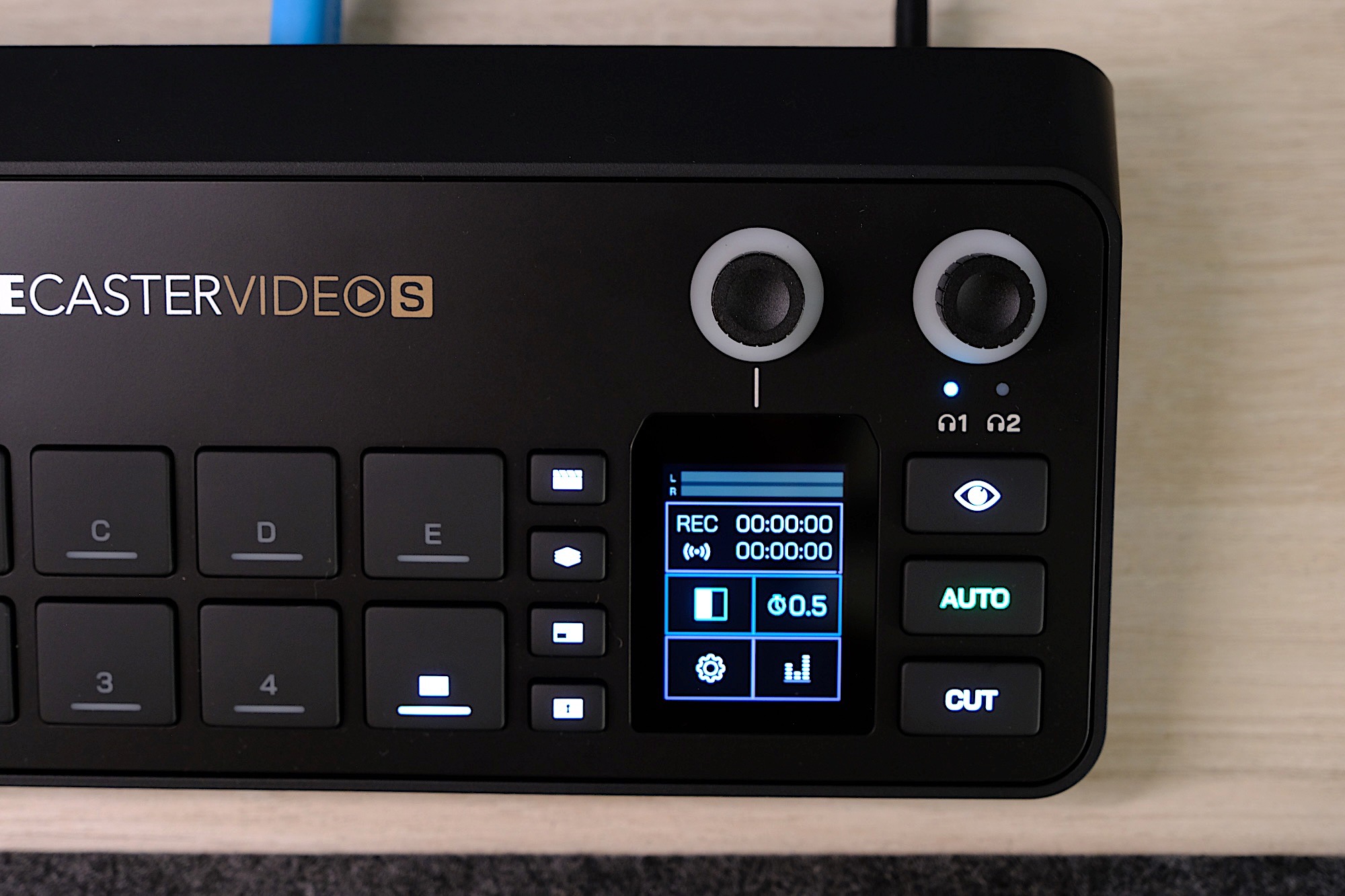
Unlike the Rodecaster Pro or Duo, there are no faders; instead, there are two rows of pads for switching between video sources and scenes. There’s 20GB of onboard storage for media — such as overlays, graphics and audio/video clips — and you can record shows directly onto USB hard-drives or stream natively to Twitch, YouTube and other platforms via RTMP/S. There’s a lot going on, and how you want to use it all is largely up to you. While the RCV-S leans more toward “live” productions such as streaming or podcasts, you can use it for conventional YouTube-style video production, depending on your workflow or video preferences.
Rodecaster Video versus Rodecaster Video S
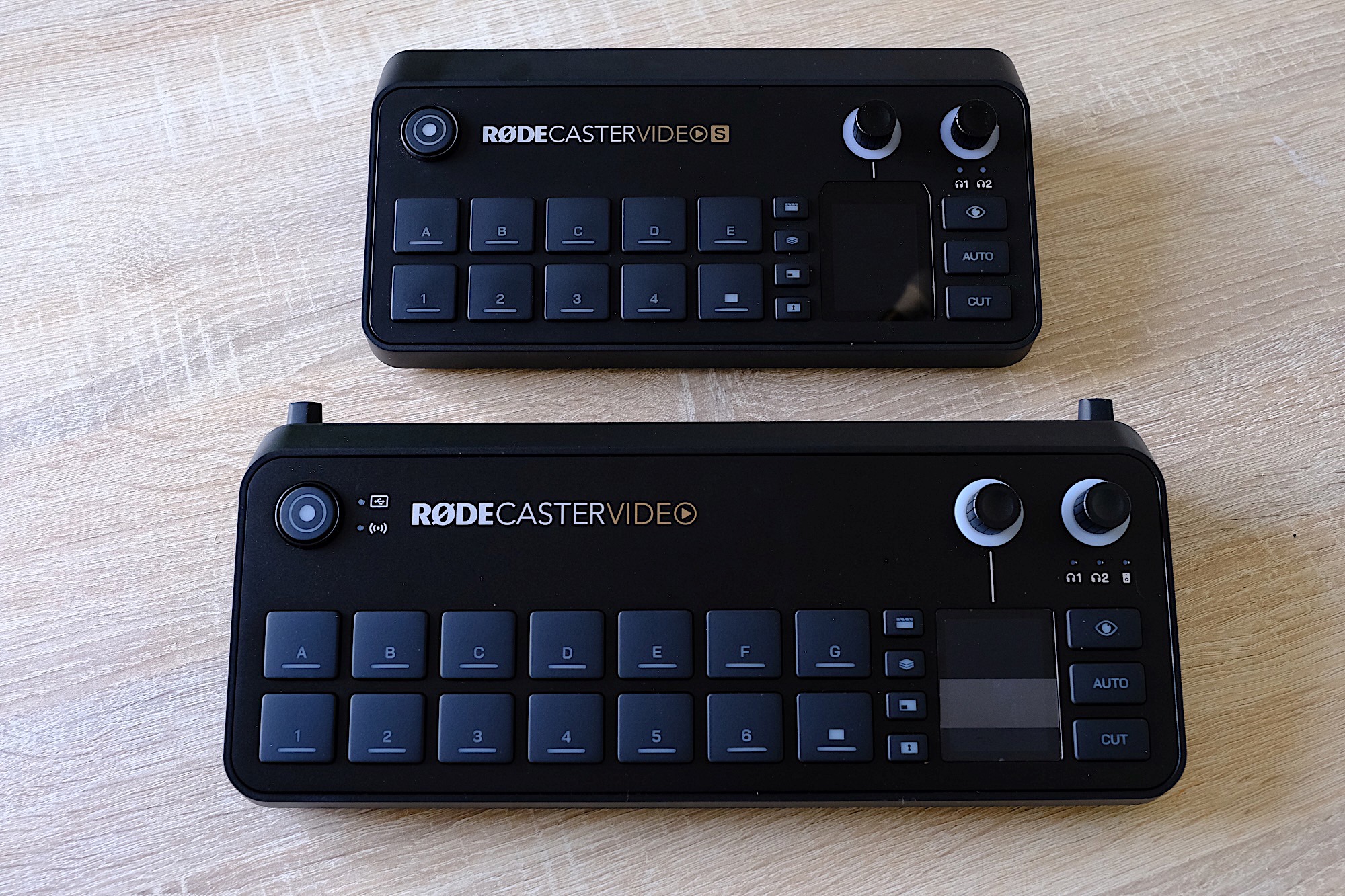
The huge price difference between the original Rodecaster Video and the new S model might lead you to expect some serious feature trimming this time around, but Rode’s garden shears have been fairly kind. Most notably, the number of sources you can connect has been reduced from six to four. Meanwhile, the number of “scenes” you can create is now five, down from seven. As mentioned above, there are three HDMI inputs, not four, and only one USB webcam/mic input, down from two on the original. There are still nine channels of audio with two headphone outputs, but the line outputs on the original are no longer here. The SD card slot for media has also been removed in favor of internal storage. In short, there’s a little bit less connectivity, but not enough for it to feel hobbled, especially for the more casual users this is clearly aimed at.
In-use
At its most basic, the RCV-S is an all-in-one video switcher. You don’t need to connect it to a PC, just plug in your video and audio sources and you can jump between them in real time with a choice of transitions. For a more polished production you can create “scenes” via the menu with a selection of layouts for multiple cameras, picture-in-picture and so on. That could be two talking heads for a podcast, overlaying your web camera on top of your gameplay or a top-down camera mixed with a different perspective for cooking tutorials or presentations.
You can create scenes directly on the device in advance or live via templates, but things get a lot easier and more creative when you use Rode’s companion Rodecaster app. Here, you’ll find a “scene creator” tool that’s both visual and intuitive, plus it has the option to make custom layouts where you can freely resize and place all your different media wherever you want, add borders or rounded corners and so on.
While the main pads are primarily for switching between sources and scenes, they can also trigger media — pre-made video clips, overlays and graphics, for example. You can assign media to them without reducing the number of sources/scenes that are available to switch between, just tap the Media/Overlay button to temporarily change the functionality of the pads. You can also set up chromakey/green screening directly on the device or via the Rodecaster App, too.
Once you have everything set up, you can directly record output onto a USB SSD, again, without the need for a PC. There’s even the option to record only the main output (“program”) or a multi-track version which will export a recording of every input as a separate file that you can edit as you see fit. This is helpful if you’re using apps like Adobe Premier or Davinci Resolve. If you shoot multi-camera dance tutorials, for example, you can jump between your main and wide camera and then to a close up without having to hunt-down the right part from each file you recorded on different memory cards.
Rode recently updated the Rodecaster Video firmware to add support for up to four “NDI” wireless cameras as additional sources. Typically these are remote or security-style cameras, but Rode’s Capture mobile app also supports NDI streaming, meaning you can use your phone wirelessly as another camera that you can switch to, which is particularly useful. Though do note, the Rodecaster Video will need to be hard-wired to your router on the same network as your phone for this to work.
Audio
The Rodecaster Video S handles audio and video with ease.
James Trew for Engadget
While the RCV-S offers nine audio tracks, it’s fair to say it isn’t really designed for live audio mixing in the pure sense since there are no faders. Instead, you have to access different channels via the menu on a small display and a dial — It’s a lot of hunting and pecking. If you’re connected to a PC, the Rodecaster app does offer a software mixer with faders though, which makes adjusting levels on the fly much easier.
The good news is that some voice enhancement tools, such as Depth, Sparkle and Punch have been carried over from the Rodecaster Pro/Duo, giving you a little more fine-grained control over how you or your guests sound.
There’s a slight drawback when using the RCV-S as a standalone unit, in that you need to physically push the buttons to change the scene, which might not be ideal if you’re trying to make a polished recording or can’t always be near the console. Thankfully, Rode has a solution in “auto switching.” I’m mentioning it here, in the audio section, as the RCV-S can switch cameras based on which one has the strongest audio or based on user-defined priority. Typically, that would be whoever is talking in a podcast, but it could also be in-game sound or when you switch to playing a musical instrument.
Auto switching works well, but it’s not quite dependable enough to rely on for full autonomy in a professional environment — say while recording a panel at a conference — but it solves a problem if you’re on your own, and it could at least save some time in a casual podcast situation.
Things to consider
The Rodecaster Video S (top) vs. The Rodecaster Video (bottom)
James Trew for Engadget
It’s clear that the RCV-S, despite having fewer inputs than the original Rodecaster Video, is still quite a complex, open-ended tool. If you already have a streaming setup you like and the software and interfaces you need, then the appeal of the RCV-S will be down to whether it can do what you need more efficiently. For live video production, it’s an easier sell, as there aren’t many all-in-one devices to compete with it that can be used standalone.
For example, Blackmagic’s Atem series is incredibly popular, and until now, had the advantage on price with the Mini Pro costing just $330. Even the Mini Pro ISO ($550) that exports multi-track video was half the price of the original Rodecaster Video. The RCV-S now offers comparable connectivity, onboard recording, more expansive audio features and multi-track export for $50 less.
For general content creators it’s a little trickier. As someone that makes YouTube videos, the appeal to me is the chance to consolidate a few devices into one and remove some friction in my recordings. Right now, I have a Rodecaster Duo handling my audio, a capture card for my main camera and I swap out that camera for a smaller one if I am shooting top-down footage or need a second angle. That means I have several different devices on my desk, and I’m constantly doing a dance of unplugging things and juggling media or different recordings before I get everything ready to edit.
The Rodecaster Video S has a tiny display for menus and settings.
James Trew for Engadget
With the RCV-S I can ditch my standalone capture card and permanently leave multiple cameras connected to the Rodecaster so that they are ready to go at any time. I can even remove the Rodecaster Duo and bring it back out again on the occasions I need more immediate control over multiple sources of audio (which is sometimes, but not often). The appeal in my case is fewer devices on my desk, and the ability to record multi-camera video without having to set up every shot, every single time, which saves significant time that I can then use to actually get more work done.
There are, of course, some limitations. Not least of all is the lack of 4K. I’m still inclined to record on camera for my primary shot to ensure I still have a 4K copy for YouTube and then use the Rodecaster Video S for everything else, but as a small creator, convenience and flexibility is very appealing. For streamers and live video production, the Rodecaster Video S is a very capable tool that offers a wide range of functionality for an accessible price that will no doubt become the central hub for many creators.
The real kicker here is the price. Let’s be clear, $500 is still significant money. But at less than half the price of the original Rodecaster with decent connectivity and basically the same functionality, it's an easy recommendation to those who were holding off based on price alone. Likewise, if you’re just starting out with content creation and need something with solid video credentials and audio chops, Rode makes a good case for itself with the Rodecaster Video S.
This article originally appeared on Engadget at https://www.engadget.com/general/rodecaster-video-s-review-compact-and-comprehensive-video-production-230000221.html?src=rss
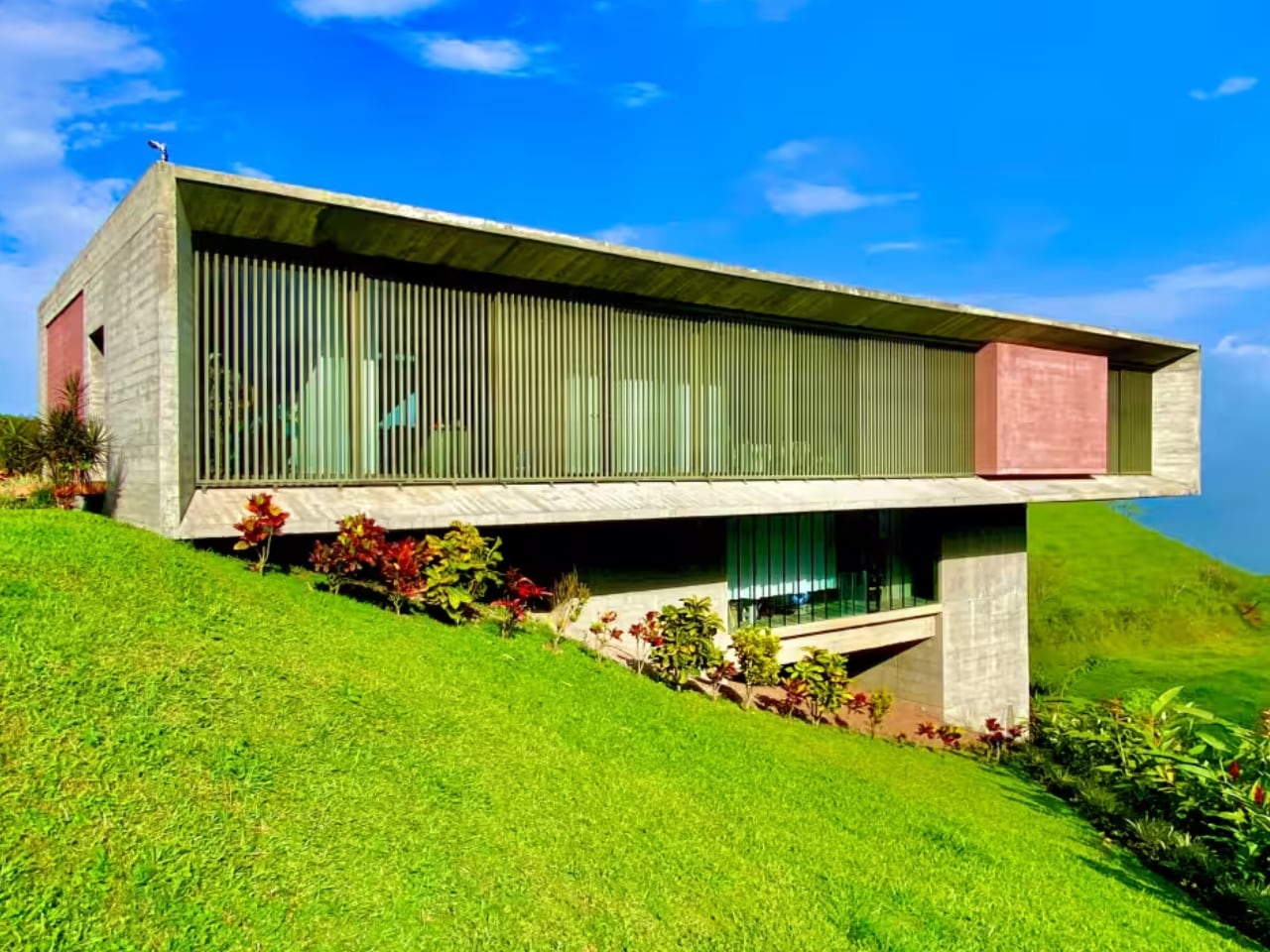
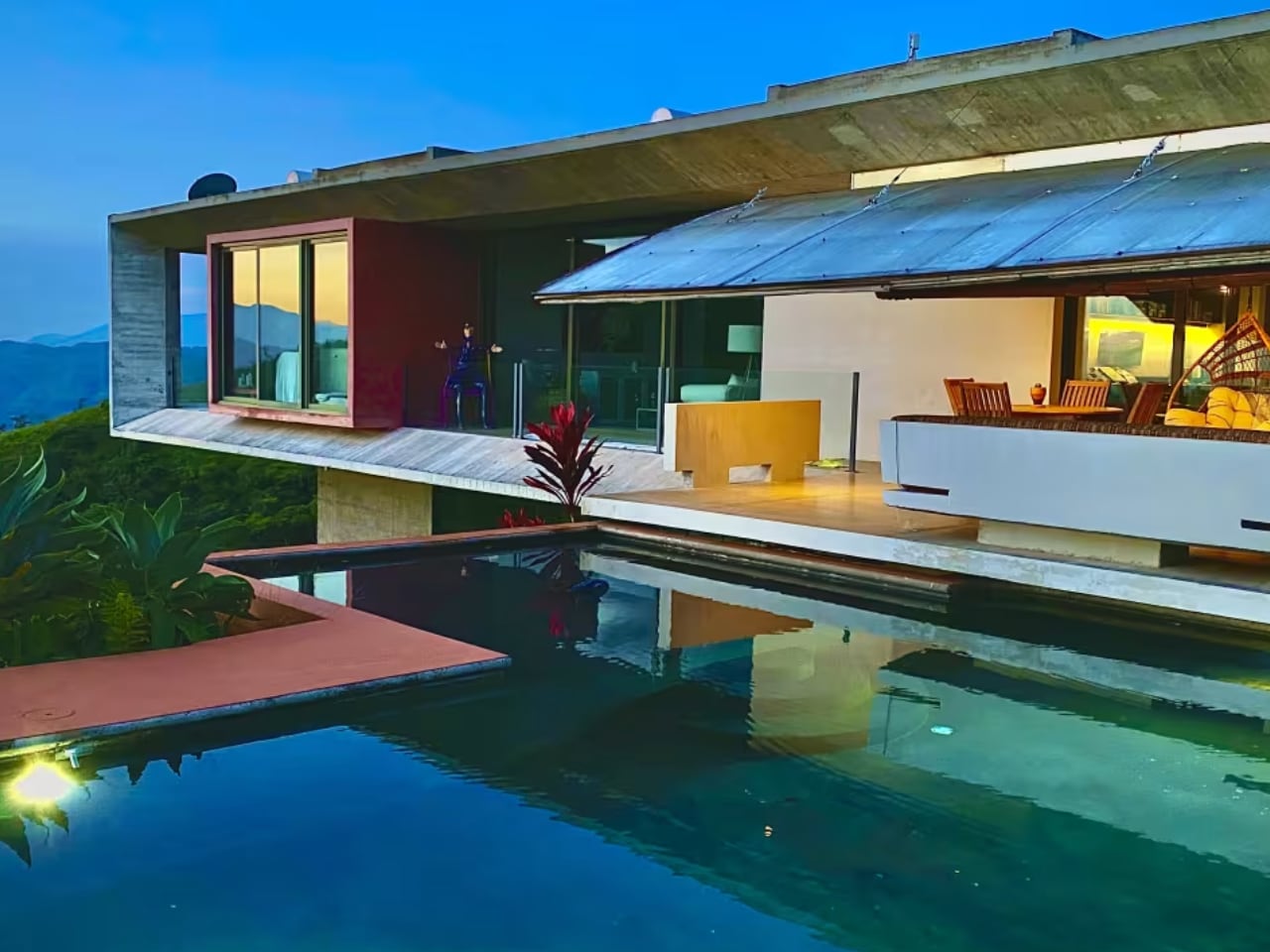
When a National Geographic photographer designs his sanctuary, the lens doesn’t disappear. John Dessarzin’s Brutalist compound in Atenas, Costa Rica, frames the jungle like a permanent viewfinder: all concrete, steel, and calculated sightlines. Perched on a cliff bordering a protected bird sanctuary in the Central Valley, the 2017 residence rejects the neoclassical templates that dominate the region in favor of raw materiality and seismic resilience.
Designer: John Dessarzin
Dessarzin collaborated with noted Costa Rican architect Jaime Rouillon to create a cantilevered complex that includes a two-bedroom main house and three guest villas. The property, now listed at $2.195 million as Dessarzin relocates to Portugal, stands as a study in what happens when photographic composition dictates architectural form. There are no visible neighbors, no decorative flourishes, no concessions to tropical vernacular. Only exposed concrete, industrial glass, and the unfiltered sounds of the jungle.
This isn’t architecture that accommodates the landscape. It’s architecture that isolates and amplifies it.
Material Honesty on Unstable Ground
Rouillon’s design philosophy centers on “honesty to materials,” and here that principle translates to a building with zero wood: only poured concrete, metals, and glass.
The decision wasn’t purely aesthetic. Costa Rica sits on the Pacific Ring of Fire, where seismic activity demands structural rigor. Shear walls anchor the main house to the cliff face, distributing lateral forces through a foundation designed to absorb rather than resist movement. The cantilevered upper level, which houses the primary living space and infinity pool, floats above the slope without appearing precarious. It’s a balancing act that requires precise engineering hidden within minimalist form.
John Dessarzin
Rouillon, whose portfolio includes high-end custom residences like Casa Val and Casa Las Olas, brings a postmodern sensibility to Costa Rican site conditions. His work fuses horizontality with floating roof planes, creating compositions that read as sculptural objects rather than shelters.
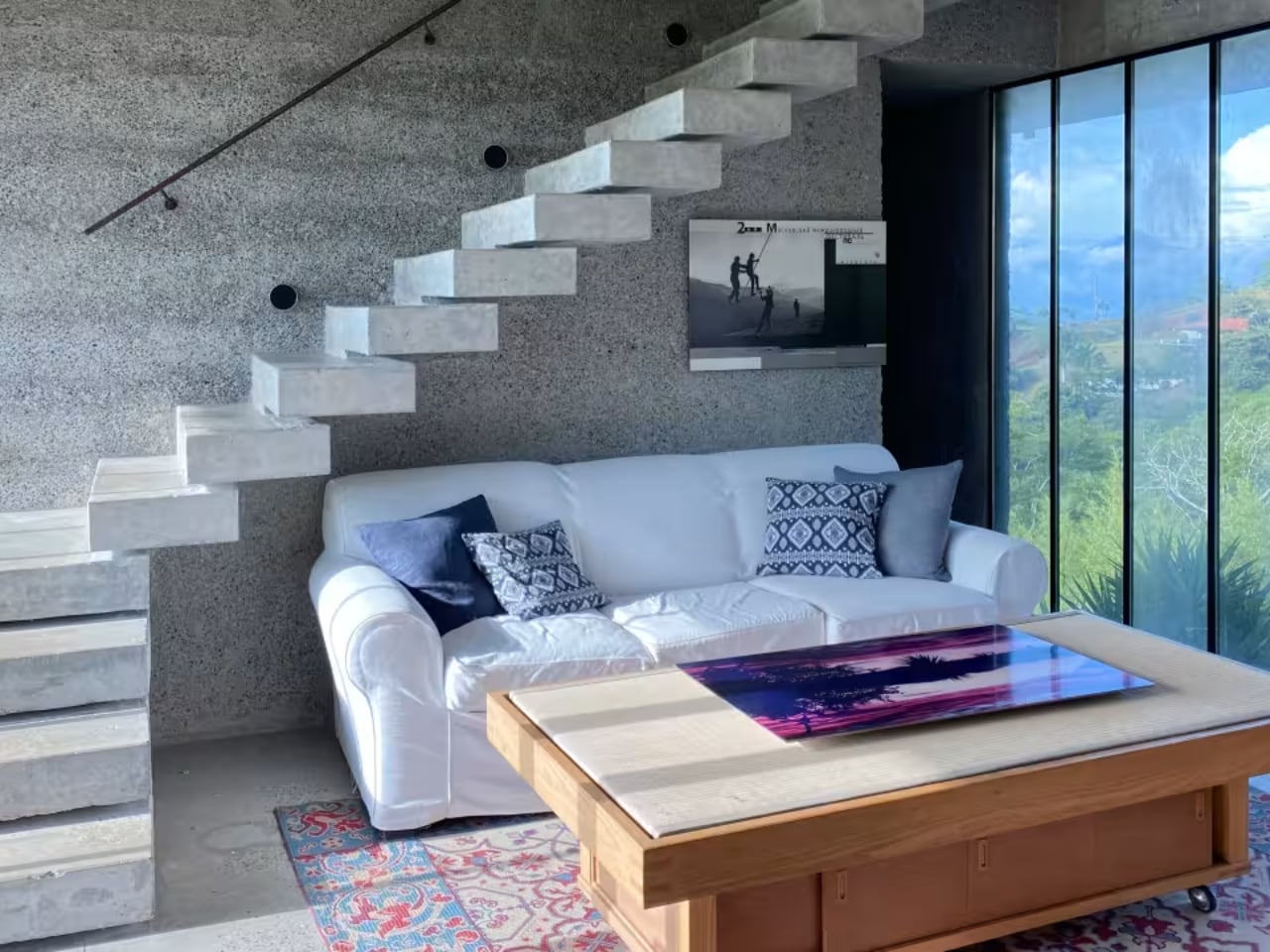
In Dessarzin’s compound, that approach manifests as a series of stacked volumes that step down the hillside, each level offering unobstructed views toward the Central Valley. The exposed concrete weathers visibly, accumulating stains and patina that reinforce the material’s permanence rather than diminish it. The textural contrast between raw concrete and industrial glazing establishes the visual language. There are no mediating elements: no stucco cladding, no painted surfaces, no decorative screens. Every material performs its structural role without cosmetic enhancement.
The result feels less like a residence and more like infrastructure repurposed for habitation. Which aligns with Dessarzin’s stated goal: a space that prioritizes utility and sensory immersion over comfort signaling.
What distinguishes Rouillon’s execution here is the restraint. Brutalism often tips into heaviness, where mass becomes oppressive. This design maintains lightness through proportion and transparency, using glass expanses to dissolve boundaries between interior and exterior while the concrete frame remains legible.
Spatial Choreography Across Elevation
The main house organizes two bedrooms across vertical zones: an upstairs primary suite and a downstairs guest suite, with a dedicated office studio that once served Dessarzin’s photography practice.
The upper level opens onto a patio and infinity pool, both positioned to eliminate sightlines to neighboring properties. The spatial logic prioritizes controlled exposure: maximizing connection to the sanctuary while maintaining seclusion from the surrounding development. Circulation between levels feels deliberate, with each transition offering reframed views of the canopy and valley below.
John Dessarzin
Dessarzin added three guest villas to support Airbnb operations. A three-bedroom, two-bath unit for families. A studio villa with en-suite for couples. A compact one-bedroom casita at the entrance for solo travelers. The villas operate independently from the main house, distributed across the hillside to preserve privacy while sharing access to the broader landscape.
This fragmentation (separating program into discrete volumes rather than consolidating under a single roof) amplifies the sense of inhabiting terrain rather than a building. The design avoids conventional hierarchies. There’s no grand entrance sequence, no central courtyard organizing movement. Instead, pathways and terraces establish a loose network where orientation depends on topography and view corridors.
It’s a composition that privileges wandering over procession.
The Photographer’s Eye Encoded in Concrete
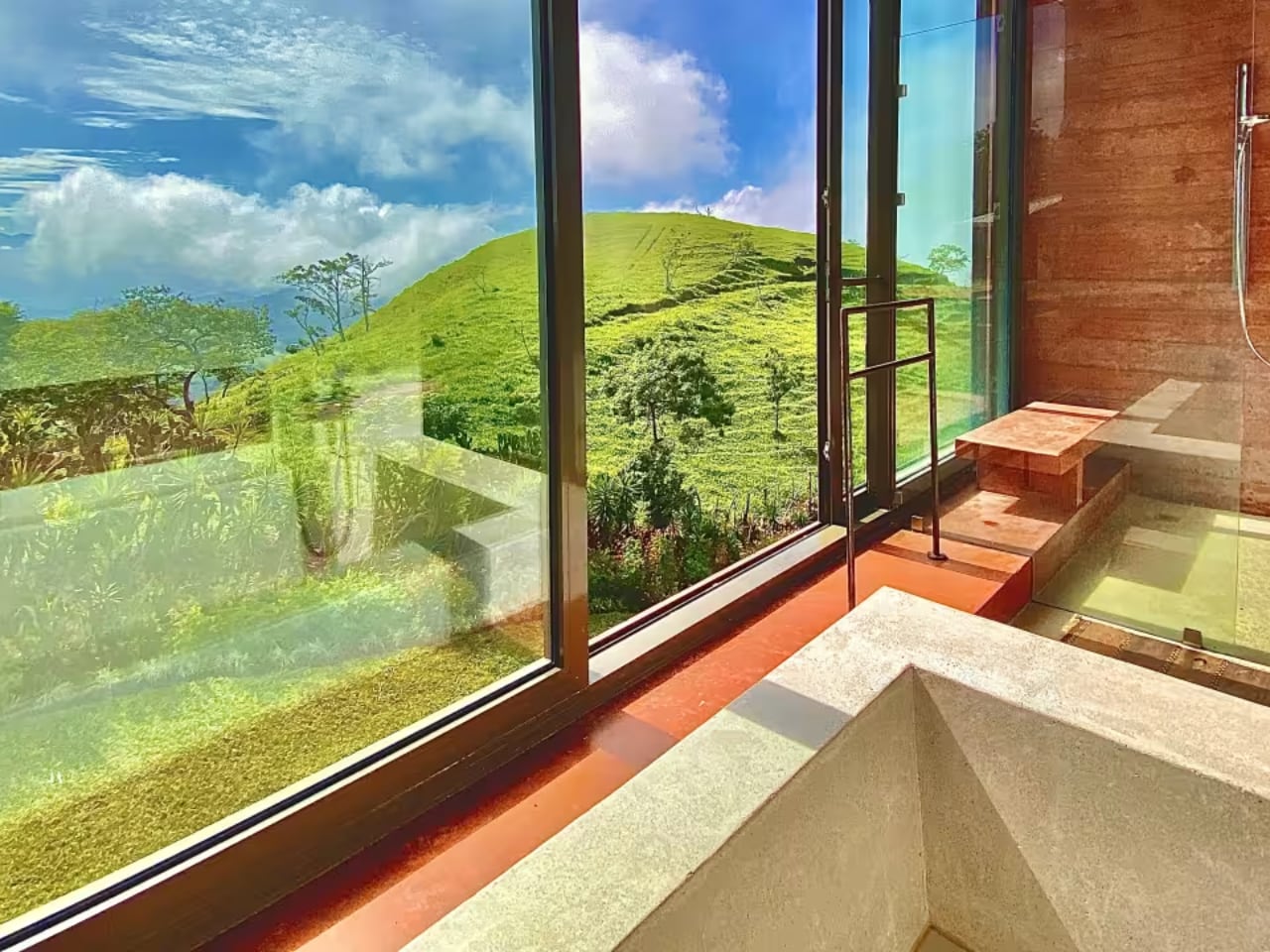
Dessarzin’s National Geographic background permeates the spatial organization. Every major window functions as a framing device, isolating specific landscape elements: a particular tree canopy, a slice of valley, a section of sky, all with the precision of a telephoto lens. The infinity pool acts as a foreground element that extends the visual plane toward the horizon, a technique borrowed from photographic composition where layered depth creates dimensionality. Rouillon’s horizontal roof planes reinforce this effect, establishing strong lines that guide the eye outward rather than upward.
The prioritization of light follows photographic logic. Morning sun illuminates the primary suite, while afternoon light floods the upper living area and pool terrace.
Dessarzin positioned glazing to capture specific solar angles throughout the year, treating daylight as a variable input that changes the character of each space across seasons. Shadows from the concrete structure migrate across interior surfaces, creating time-based patterns that wouldn’t exist in a conventionally finished building. The house operates as a light meter calibrated to tropical latitude, where extreme brightness and deep shade occur simultaneously.
Dessarzin describes the surrounding homes as “nothing special.” The dismissal is rooted in their reliance on neoclassical templates that ignore site-specific conditions. His residence rejects that imported vocabulary entirely, opting for a design language that foregrounds geology, climate, and ecological context.
The contrast is stark. Where neighbors deploy columns and arches, Dessarzin’s compound presents unadorned planes and cantilevers. It’s an architectural critique delivered through form rather than rhetoric, arguing that luxury in this setting means unmediated access to the landscape, not decorative reassurance.
The design also acknowledges the owner’s eventual absence. Dessarzin built the property to function as both personal sanctuary and rental asset, structuring the villas to generate income independent of his occupancy. Now, as he relocates to Portugal, the compound transitions from lived project to market commodity. That shift underscores a broader tension: can architecture this specifically calibrated to one person’s vision maintain its integrity under different ownership?
Lifestyle Economics and the Expat Market
Atenas attracts expats from the US, Canada, Germany, and the Netherlands, drawn by climate, cost of living, and proximity to San Jose’s international airport (40 minutes) and Pacific beaches (one hour).
Dessarzin’s decision to sell reflects rising operational costs and the demands of managing Airbnb rentals. The property functions as both retreat and business, and those roles don’t always align.
Maintenance for an all-concrete structure in tropical humidity requires specialized attention, and the remote location limits service access. The $2.195 million asking price positions the compound within Costa Rica’s luxury market, where architectural distinction commands premiums. For design-focused buyers, the property offers a rare synthesis: earthquake-proof engineering, Brutalist materiality, and immersive access to protected nature.
The trade-off is operational complexity and aesthetic uncompromising. This isn’t a turnkey residence that adapts easily to diverse tastes. It’s a fixed statement that rewards occupants who share Dessarzin’s priorities or are willing to engage the architecture on its own terms.
Paramount+ is making some changes that will make its streaming service get more to watch. During Paramount's earnings report today, the company announced that it will increase the subscription prices for Paramount+ in the US during the first quarter of 2026. Price hikes were also announced today for viewers in Canada and Australia. The new pricing was not shared, but a dollar or two more per month has become the standard change. Considering most streaming services jack their prices every year or two, the news was probably inevitable; the last increase for Paramount+ was back in June 2024. But today's announcement also revealed that Paramount+ will no longer offer free trials, which is a common practice for most digital entertainment subscriptions.
The changes appear to be part of a reassessment of the Paramount+ finances. The company's approach to increase long-term profitability "includes shifting away from certain hard bundles and low-margin subscriptions, reducing investment in select international markets without a clear path to sufficient scale, retiring free trials, and reviewing discount practices."
These new moves follow Skydance's acquisition of Paramount over the summer, an $8 billion purchase which received regulatory approval after some pretty scuzzy interactions with FCC Chairman Brendan Carr.
This article originally appeared on Engadget at https://www.engadget.com/entertainment/streaming/paramount-is-getting-a-price-hike-and-ending-free-trials-231146302.html?src=rss
Rode is today launching the Rodecaster Video S, a smaller and cheaper version of its existing all-in-one production console. The Rodecaster Video is targeted at professionals and environments regularly producing multi-camera content. The S, meanwhile, is aimed at bedroom streamers, video podcasters and other indie creators with more modest production needs. Consequently, the focus here is on trimming down unnecessary features to get the price to a more reasonable $500.
Rode
It’s easy to spot the differences by sight alone, since the hardware is smaller than its bigger sibling. It’s got fewer input and scene buttons, and is clad in plastic, rater than metal, since it probably won’t need to be moved around a lot. The number of HDMI inputs/outputs drops from 4/2 on the original to 3/1 here, and there’s only one multi-function USB-C port. Similarly, there’s only two headphone outputs here, and you’ll only get 24GB internal storage rather than the microSD-card slot found on the original.
The Rodecaster Video S is available to pre-order today, with units expected to ship across December, depending on your territory.
This article originally appeared on Engadget at https://www.engadget.com/entertainment/streaming/rodes-rodecaster-video-s-is-a-smaller-cheaper-production-console-for-creators-230052793.html?src=rss
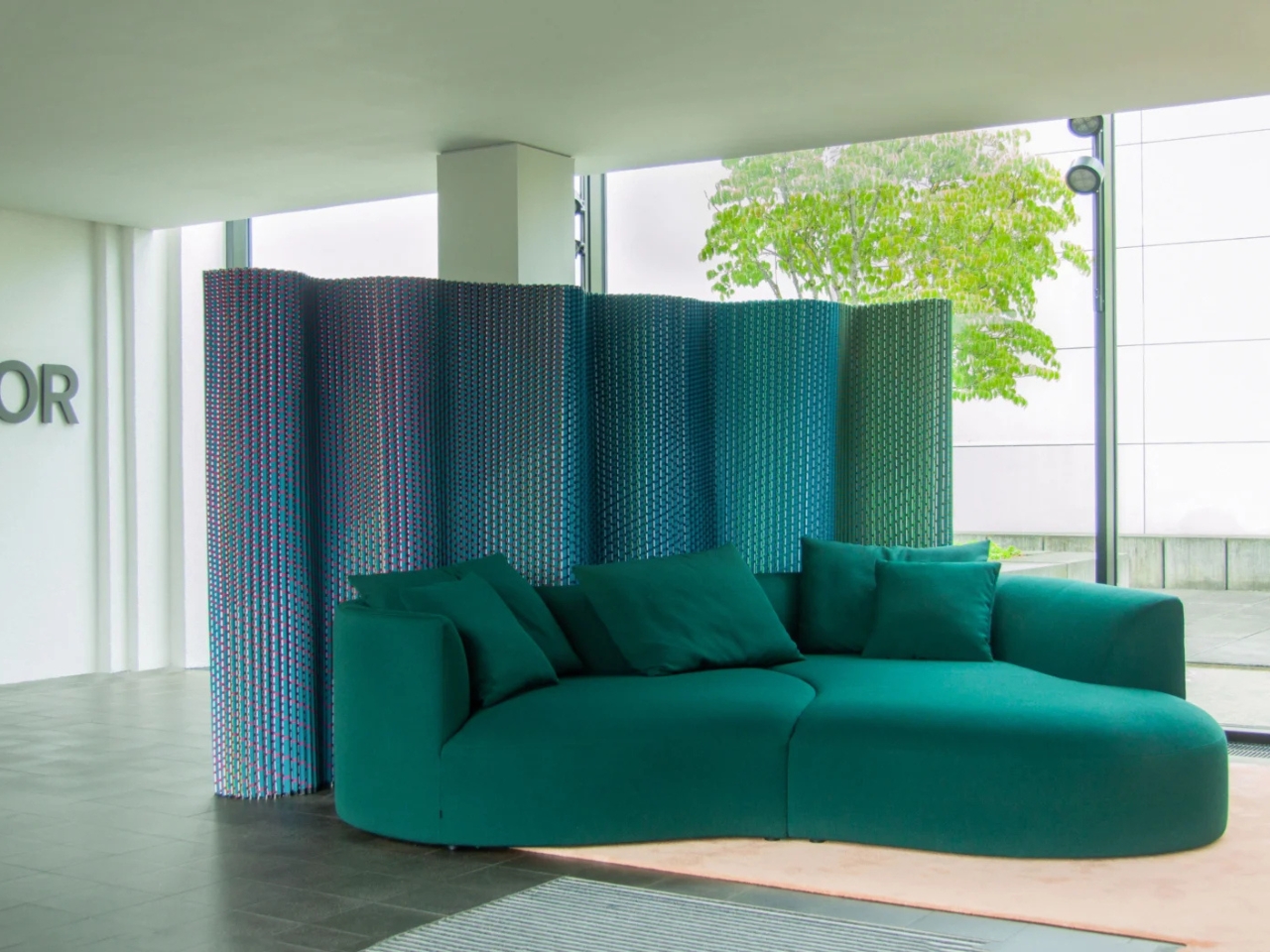
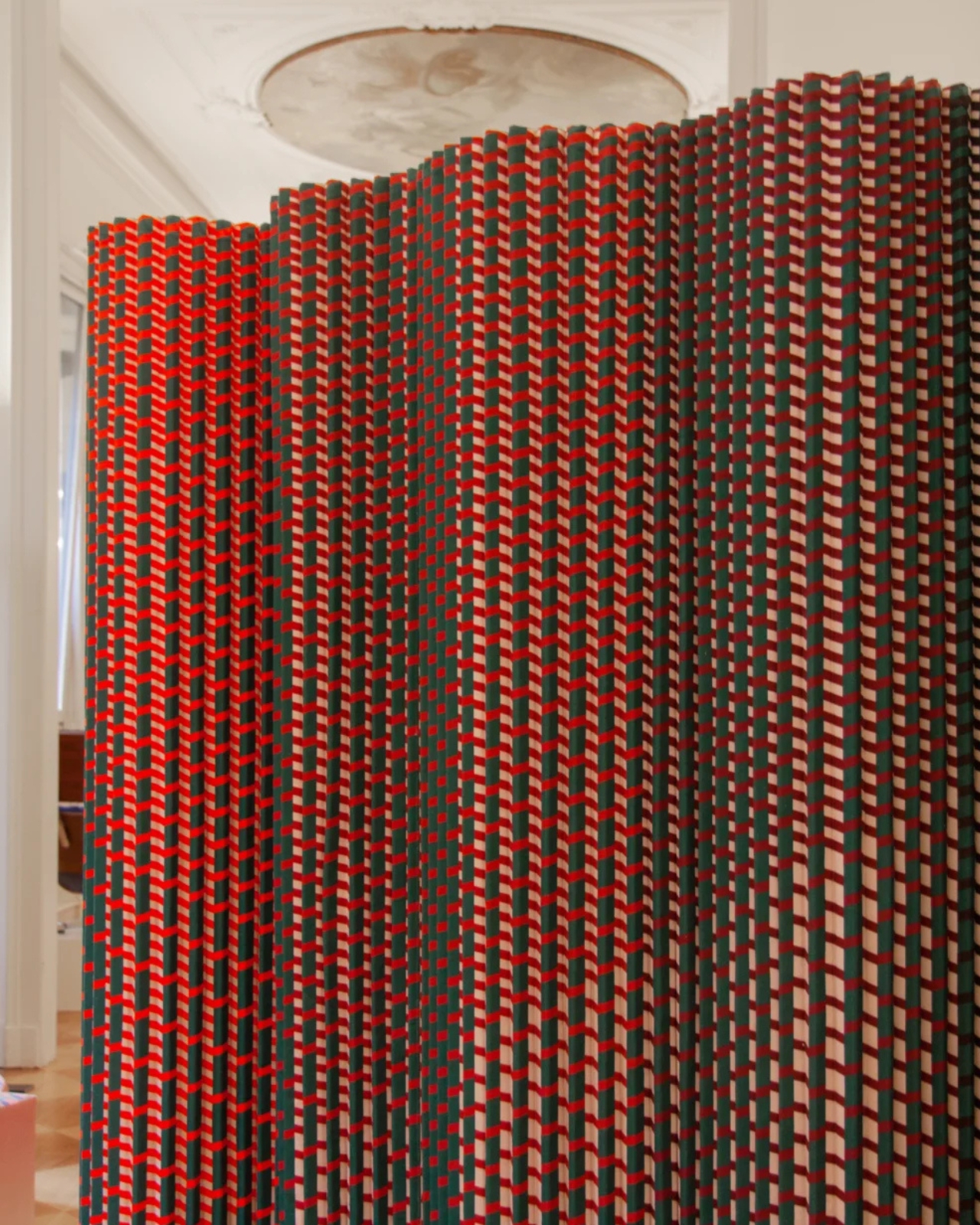
Have you ever looked at a piece of fabric and wondered what would happen if you gave it superpowers? That’s essentially what Dutch design studio Luis Marie did with their latest creation, Plissade, a room divider that’s turning heads for being completely, wonderfully, all about textiles.
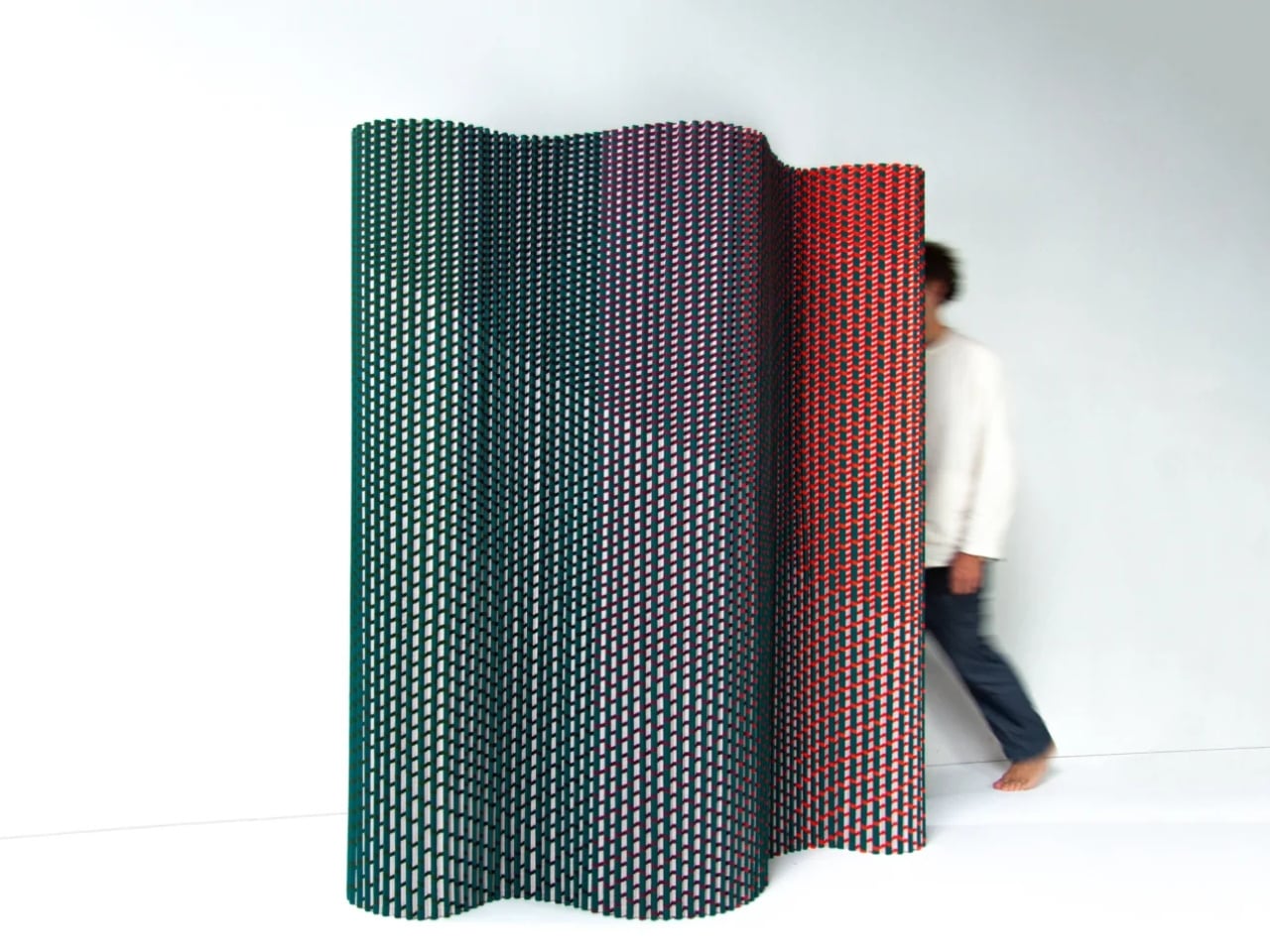
Here’s the thing about room dividers: they’re usually pretty predictable. You’ve got your folding screens, your sliding panels, your wooden frames with some fabric stretched across them. They do the job, sure, but they’re not exactly exciting. Plissade, on the other hand, ditches the traditional playbook entirely. Instead of relying on rigid frames or heavy materials, this sculptural partition stands on its own through the power of pleating alone.
The designers behind this clever piece, Fenna van der Klei and Patricio Nusselder, drew inspiration from the traditional craft of textile pleating, where fabric is carefully folded to create different shapes and volumes. It’s the same technique that gives your favorite pleated skirt its structure or adds dimension to fancy curtains. But here, pleating isn’t just decorative. It’s doing all the heavy lifting, quite literally. The folds are engineered in a way that gives the divider enough rigidity to stand upright without any additional support, which is pretty remarkable when you think about it.
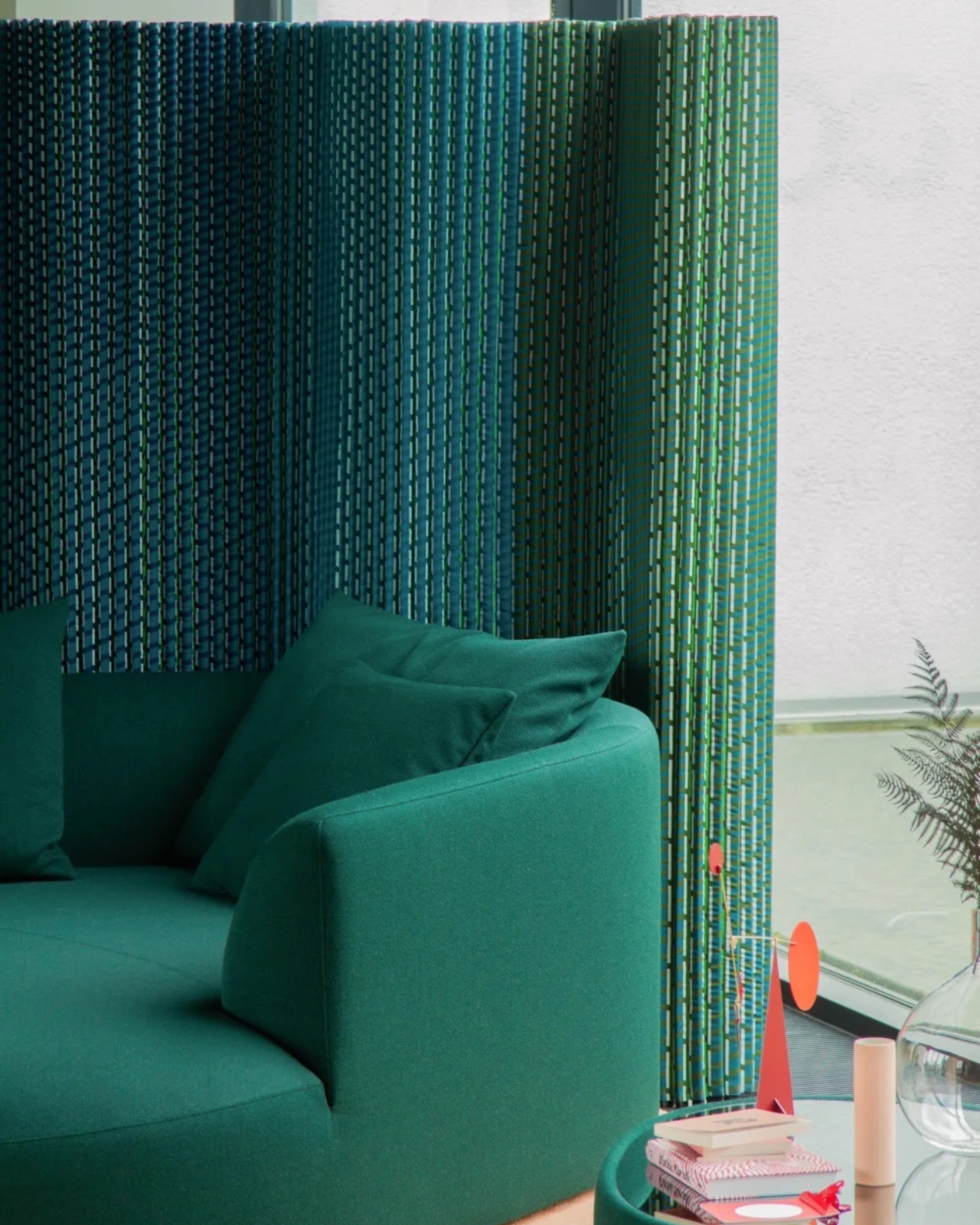
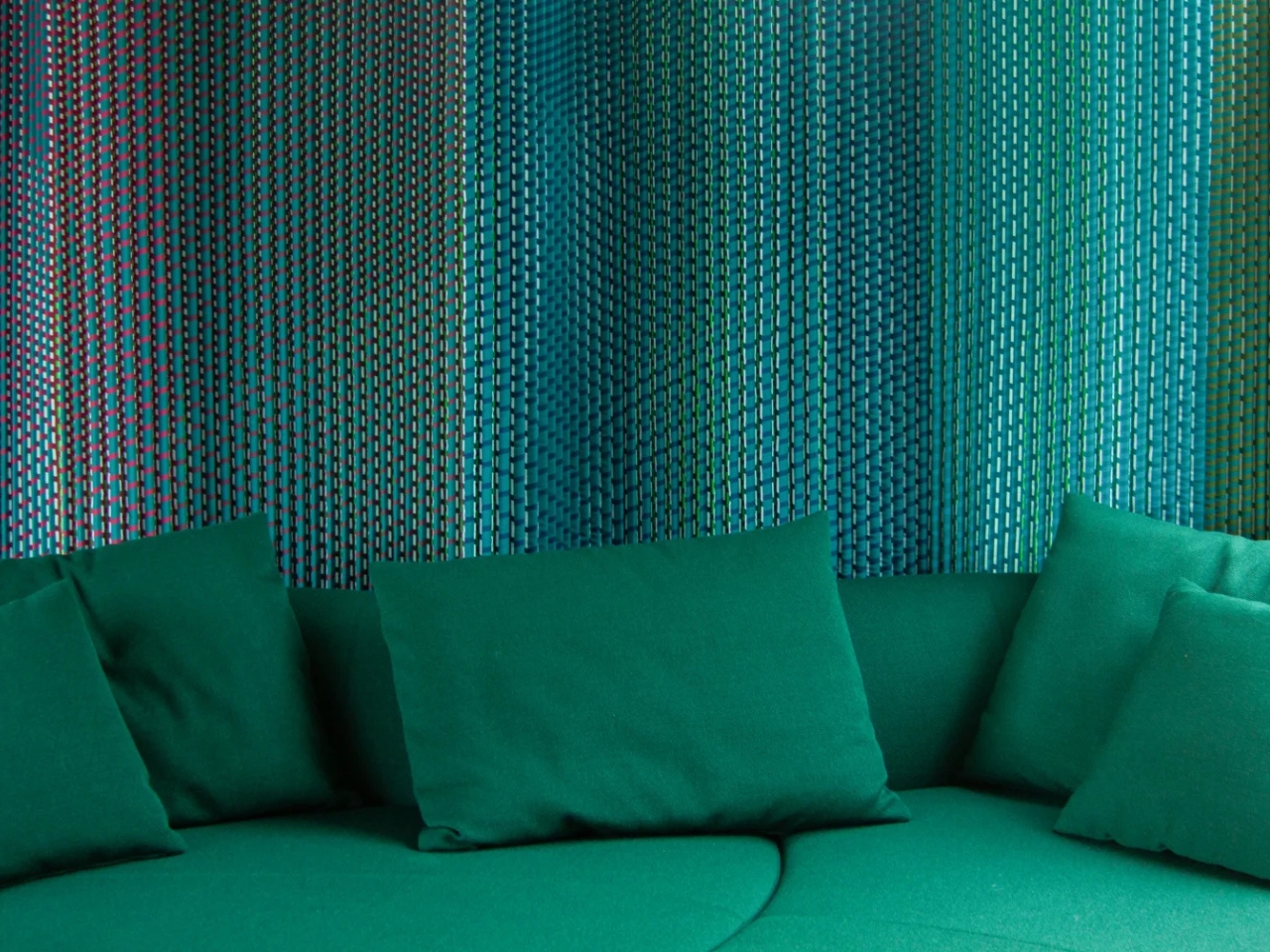
What makes Plissade even more interesting is what it’s made from. The inner layer consists of felt created from recycled post-consumer polyester clothing. Yes, that means your old t-shirts and jeans could theoretically have a second life as sound-absorbing room dividers. The outer layer features woven textile made from recycled polyester yarns. So not only is this piece solving the age-old problem of dividing space in style, it’s also addressing our growing waste problem in a tangible way.
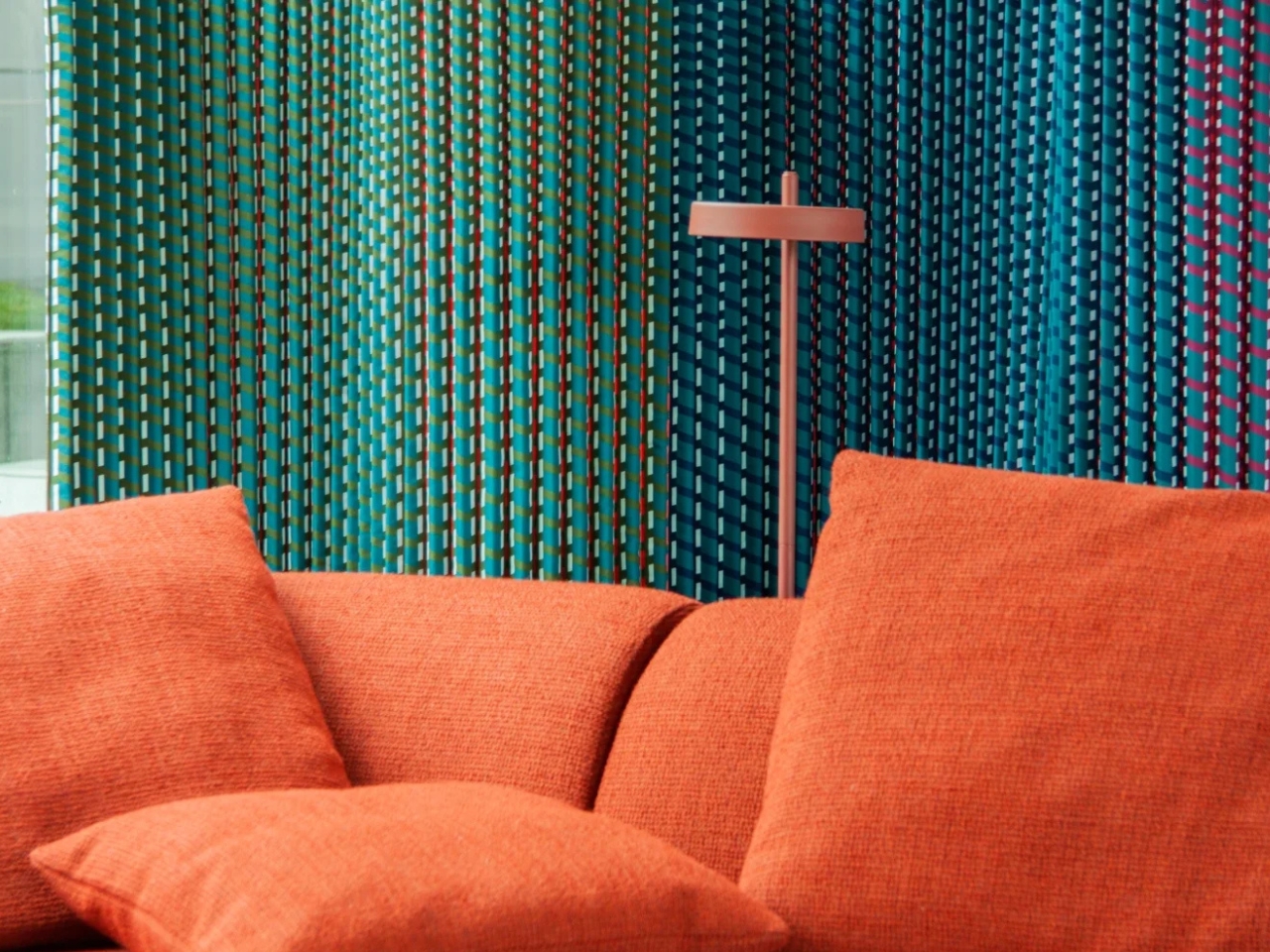
The acoustic properties are another bonus feature that makes Plissade particularly relevant for our modern living situations. With more people working from home and living in open-plan spaces, the need for flexible sound management has never been greater. Those pleated layers of textile don’t just look sculptural, they actually absorb sound, creating little pockets of acoustic privacy without the permanence of walls.
And then there’s the visual impact. Luis Marie offers Plissade in vibrant colors that create optical illusions reminiscent of gem facets. The way light plays across those pleated surfaces changes depending on your viewing angle, making the divider feel alive and dynamic. It’s the kind of design detail that transforms a functional object into something you actually want to look at. In a world where so much of our stuff is just background noise, having a piece that demands attention in the best way possible feels refreshing.
What Luis Marie has really done here is challenge our assumptions about what textiles can do. We’re used to thinking of fabric as something that needs support, something that drapes and folds because it’s soft and pliable. But Plissade proves that with the right engineering and understanding of material properties, textiles can be structural, functional, and beautiful all at once. For anyone who loves the intersection of old techniques and new applications, this room divider is a fascinating case study. It takes centuries-old pleating knowledge and applies it to solve very current problems: flexible space division, sound absorption, sustainable material use, and visual interest in our homes and workspaces.
Whether you’re dealing with a studio apartment that needs better zoning, an office that could use some acoustic help, or you simply appreciate design that makes you think twice about material possibilities, Plissade offers something genuinely fresh. It’s a reminder that sometimes the most innovative solutions come from looking at traditional crafts through a contemporary lens and asking, “What if we pushed this further?”
Google is continuing to push its Gemini AI assistant into as many of its products as possible. The latest to get the treatment is Google TV Streamer, where Gemini for TV will begin rolling out today and over the coming weeks. The Google TV Streamer had a few minor AI features when we reviewed the hardware, but this new voice-controlled application of Google's Gemini is more robust. It can offer suggestions for viewing based on the preferences of whoever is watching or provide additional context for the content playing.
We knew from The Android Show this spring that Google was planning to bring Gemini to additional platforms, including televisions. A lot of those plans have been coming to fruition in the final quarter of 2025; for instance, last month Google opened early access to Gemini for Home, which brings a specially-designed AI assistant to its Google Home smart speaker hardware.
This article originally appeared on Engadget at https://www.engadget.com/ai/gemini-for-tv-is-rolling-out-to-the-google-tv-streamer-220448361.html?src=rss
Next year will see the end arrive for two of Facebook's external social plugins. The platform's Like button and Share button for third-party websites will be discontinued on February 10, 2026. The blog post from Meta explains that site admins shouldn't have to take any additional steps as a result of the change, although they can choose to remove the plugins before the discontinue date. Any remaining plugins will "gracefully degrade," which sounds much more dramatic than what will actually happen, which is that they'll render as a 0x0 invisible element.
Ending support for these features marks the end of an era for Meta and Facebook. External Like and Share buttons were introduced in 2010. The tools were promoted as ways for sites to generate more traffic through the social network, which was a major way that people shared and saw articles at that time. The company's official line is that the plugins "reflect an earlier era of web development, and their usage has naturally declined as the digital landscape has evolved." But Facebook also plays a much smaller role in the broader Meta business operation than it once did, and anecdotally, it's less common to see sites running only integrations with a single social network.
Update, November 10, 2025, 4:45PM ET: Corrected the original release date for the plugins.
This article originally appeared on Engadget at https://www.engadget.com/meta-is-killing-off-the-external-facebook-like-button-205207354.html?src=rss