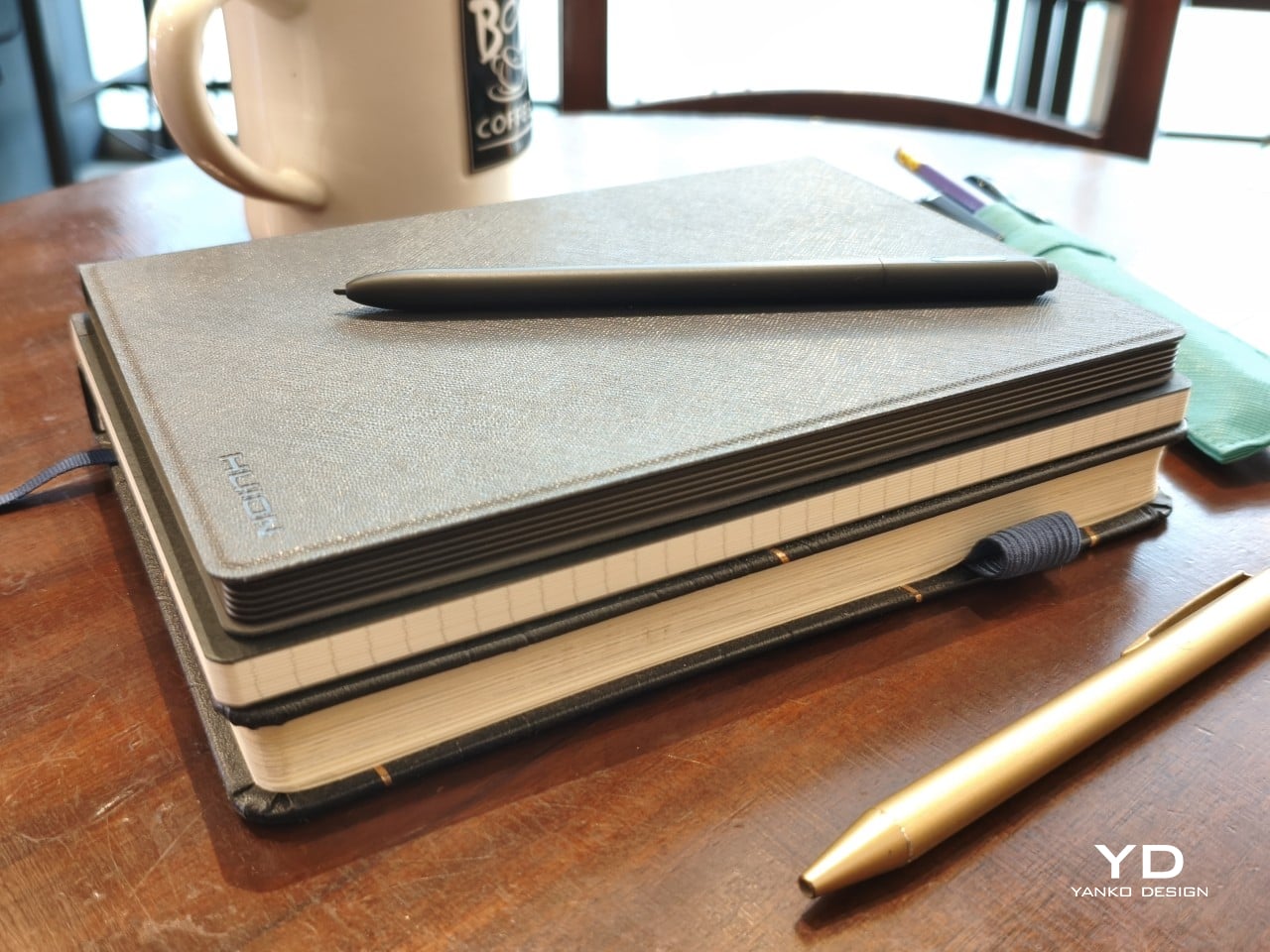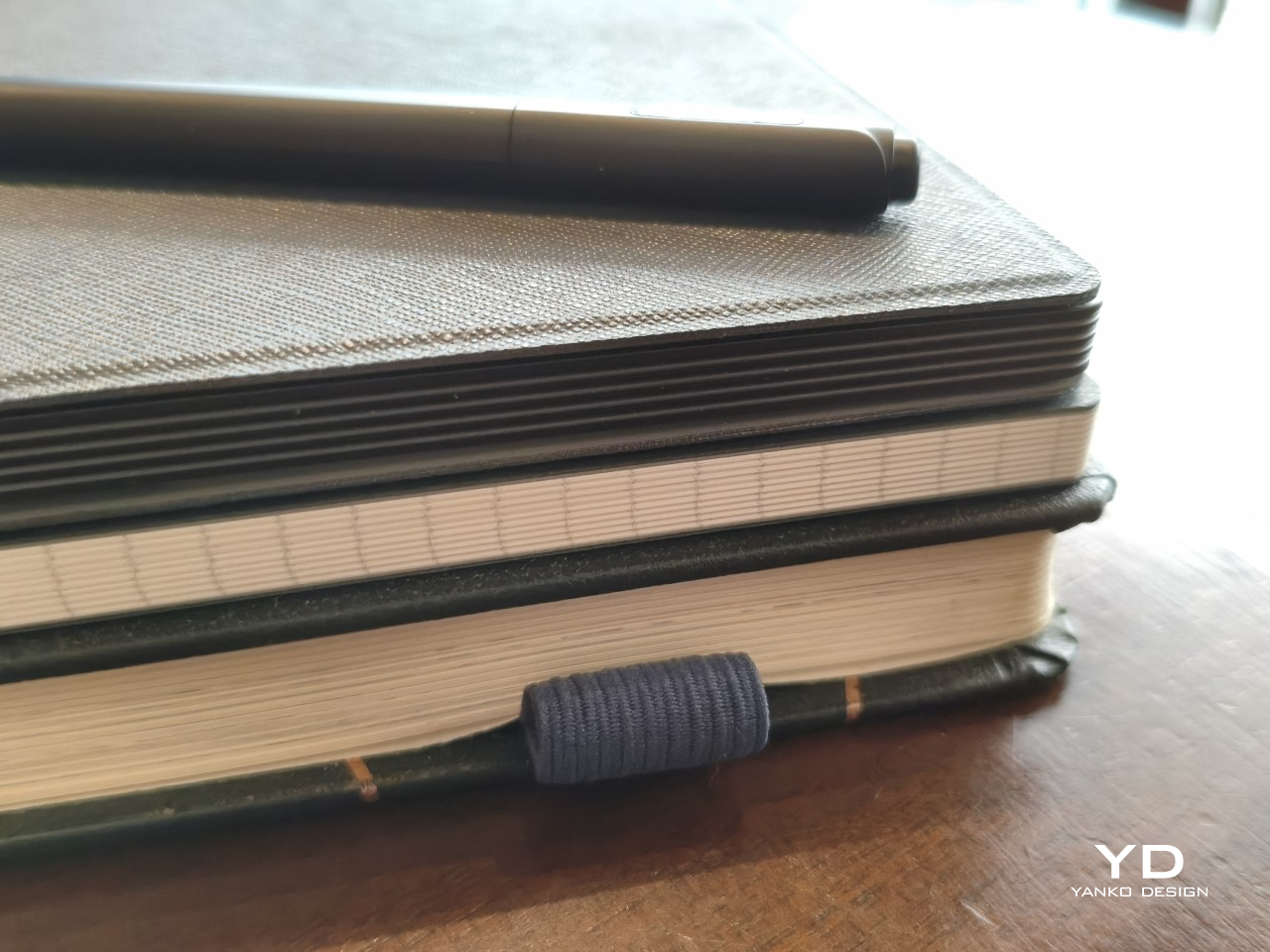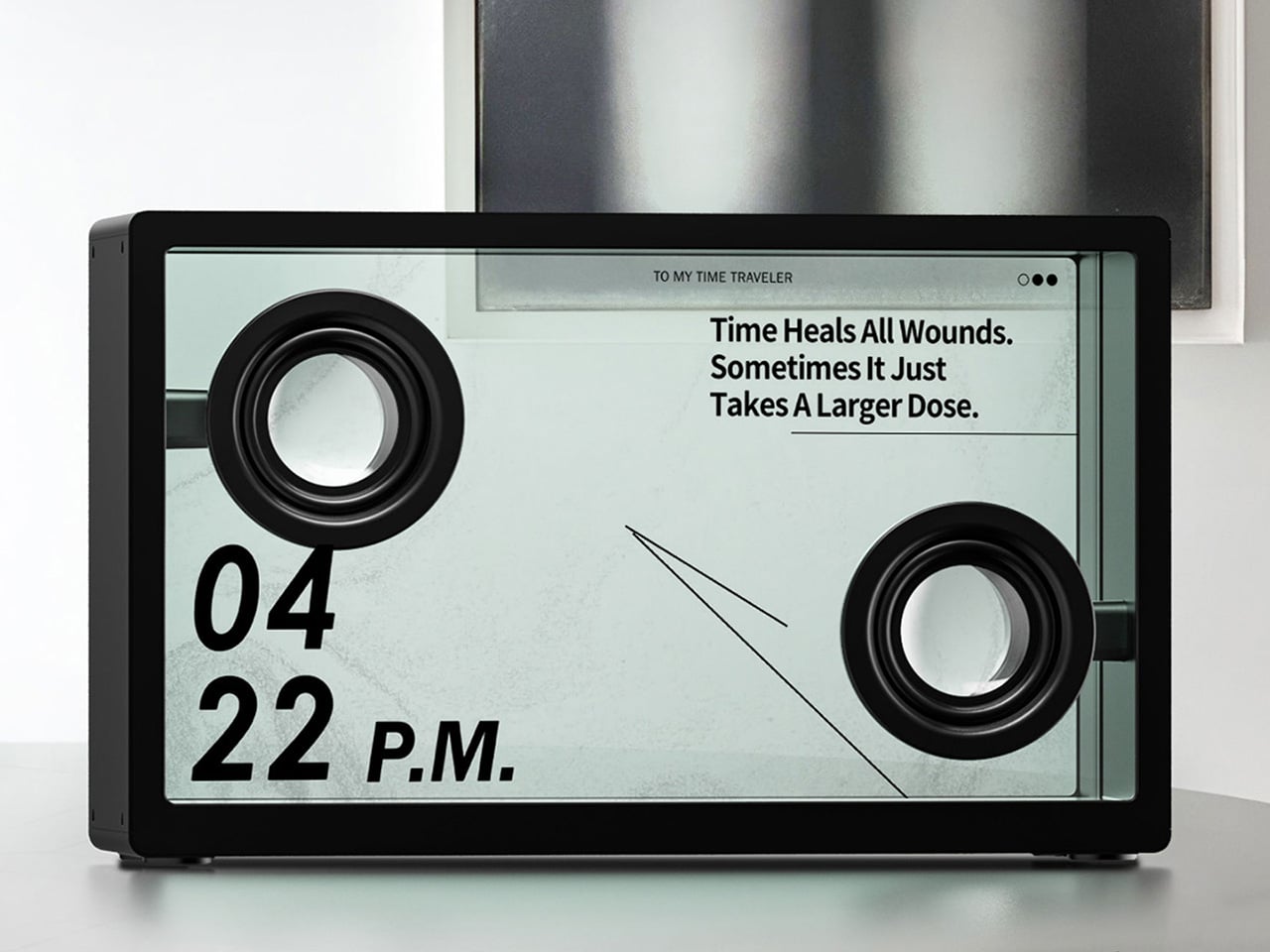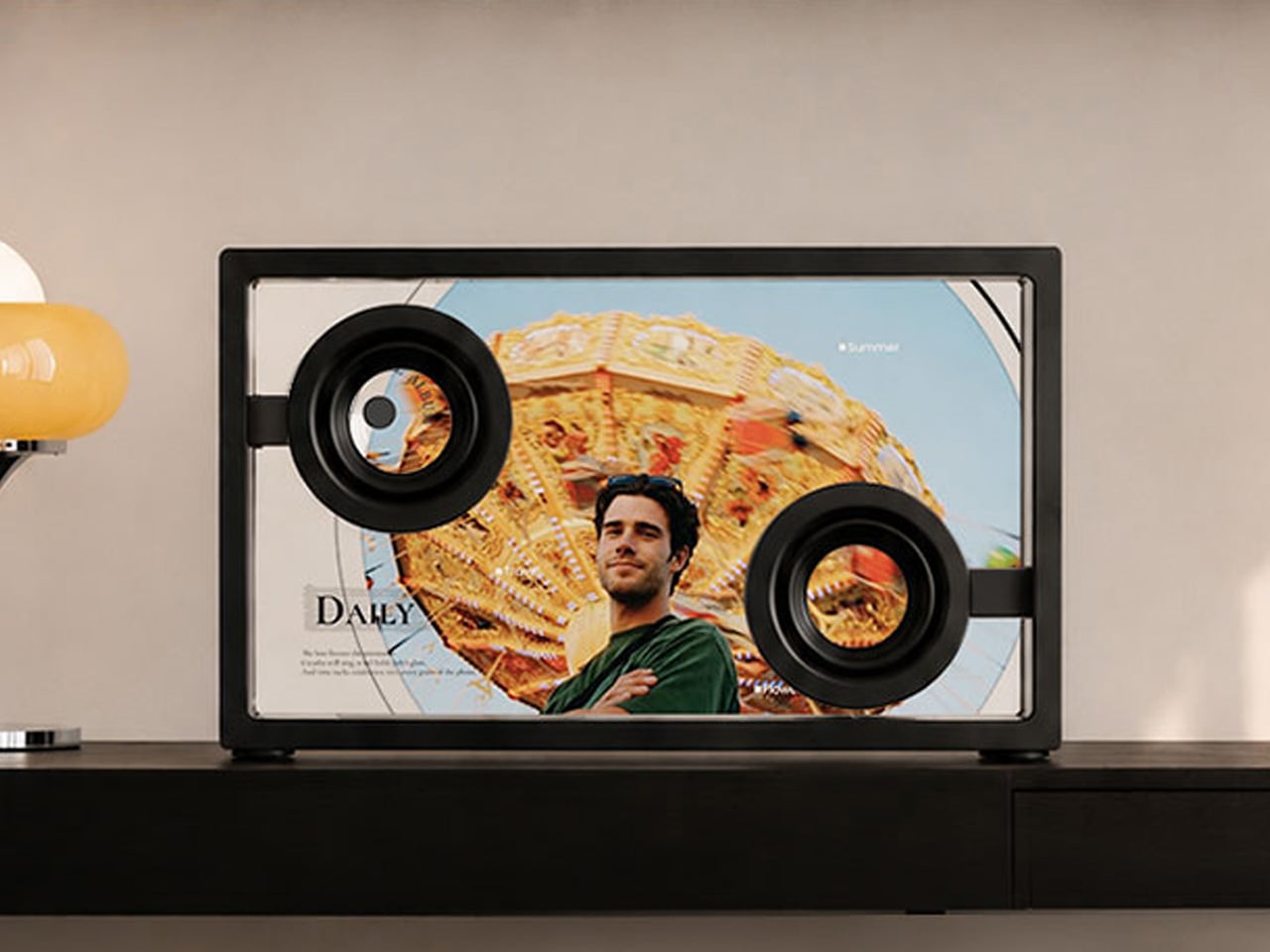
The EDC Pen Reinvented: Lumink’s Titanium Fountain Pen Folds, Writes, and Lasts a Lifetime

Pocket pens usually ask for compromise. Full size fountain pens usually ask for commitment. Lumink tries to bridge that divide with a titanium body that collapses to pocket size and unfolds into a full-length pen in seconds. The silhouette is crisp and faceted, with a restrained metallic finish that reads as precision tool before it reads as stationery. It is a concept that feels immediately relevant in a world where everyday tools are expected to be portable, tactile, and visually disciplined.

Much of its appeal comes from how clearly the design serves the use case. The faceted barrel prevents rolling and sharpens the pen’s visual identity, the milled titanium clip reinforces its EDC credentials, and the airtight chamber speaks directly to the realities of carrying a fountain pen on the move. Grade 5 titanium gives the body a durability-to-weight ratio that very few materials can match at this scale. Paired with a German Schmidt nib, the whole package feels engineered around readiness and repeat use. Those choices position Lumink at the intersection of EDC gear and serious writing instruments, which is a tighter niche than it sounds.

Designer: EyeQ

Click Here to Buy Now: $69 $99 (30% off). Hurry, only 16/120 left! Raised over $108,000.

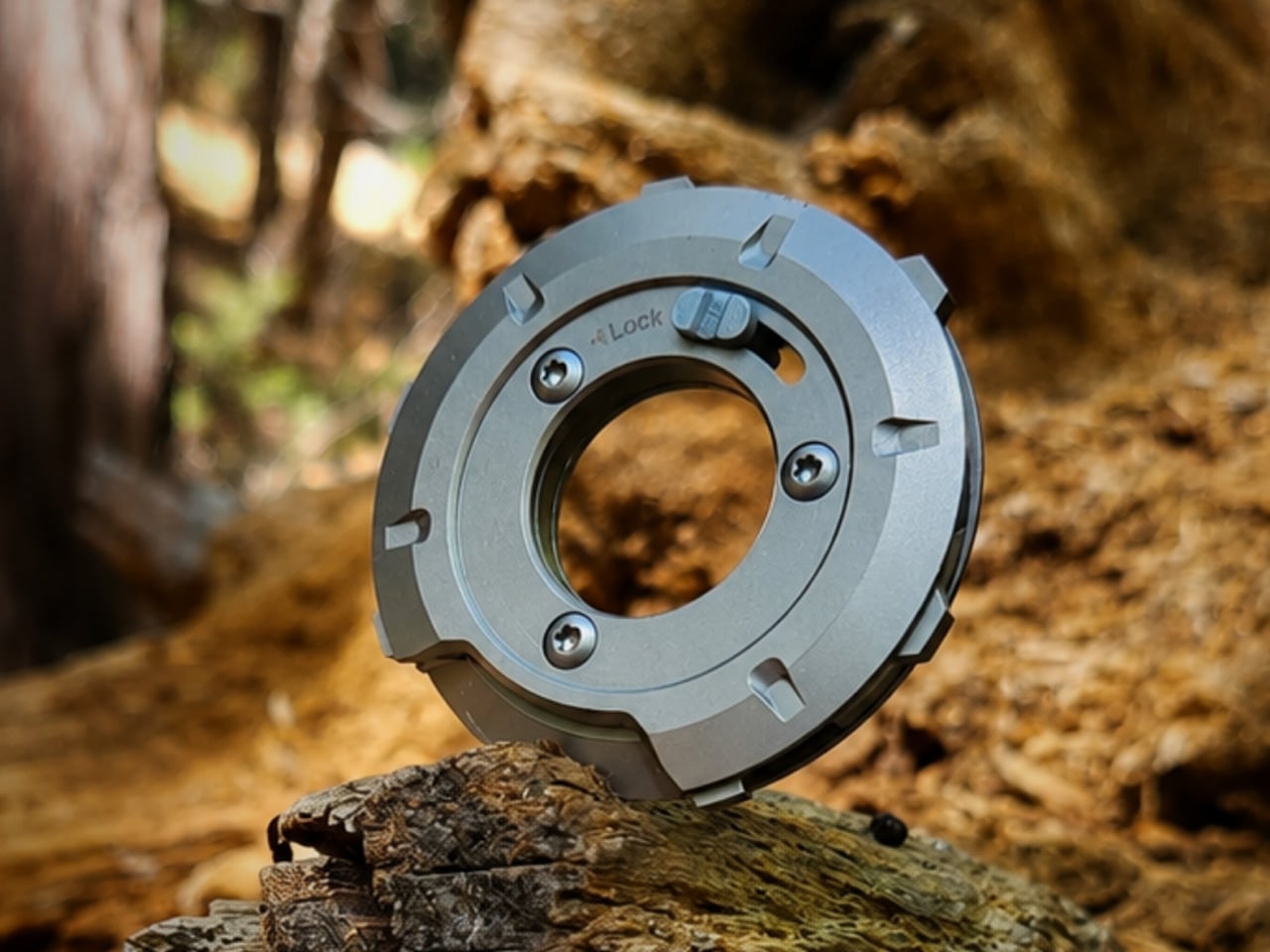
The folding mechanism itself is the main event. It’s not a simple cap that posts on the back; the rear section threads onto the pen, extending the body from a stubby 3.8 inches (96mm) to a very comfortable 5.51 inches (140mm). That pivot point, accented with a brass ring, creates a satisfying mechanical action that feels both precise and robust. This kind of transformability is what draws people to well-made gear. It turns the simple act of preparing to write into a small, tactile ritual, giving the object a character that a static pen, however beautiful, just can’t replicate.

Grade 5 titanium, formally Ti-6Al-4V, produces tensile strength around 950 MPa at a density of 4.43 g/cm3. For non-nerds, it means that it’s harder than steel, while being roughly 40-45% lighter. Aerospace and orthopedic implant manufacturers rely on the same alloy, which tells you the performance tier. Applied to a pen, that combination should produce a carry object that feels substantive in hand without adding real burden to a pocket. Besides, Aluminum dents easily, Titanium resists any form of damage. EyeQ says the Lumink should last you a 100 years. The material, the mechanism, the craftsmanship, it’s all designed to withstand a century of sustained use.

Carrying a fountain pen daily has historically meant accepting certain risks: leaked ink, dried-out nibs, and the grim experience of a pressure-driven blowout mid-flight. Lumink’s threaded isolation system addresses those by sealing the nib section from the reservoir during transport, creating an airtight chamber. The logic is sound: threaded seals operate in environments far more demanding than a shirt pocket. The entire pen is made from metal – not a single plastic part, no glue, nothing that even hints at cost-cutting.

Even the clip uses metal, and features a construction that’s about as carefully considered as the design itself. The clip sits perfectly straight, aligning vertically with the pen to the point of obsessiveness. The reason? Absolute balance. The pen shouldn’t look or feel un-balanced – it should project the confidence that it expects from you, as you use it to write or sign documents. A ball-shaped ceramic insert in the pen clip holds onto book covers, pads, or shirt pockets confidently too, without damaging anything. Slide it into your pocket and the ceramic insert glides smoothly along the fabric, without creasing or damaging it. Meanwhile the clip itself is made from the same titanium as the pen, which means it’ll never bend, warp, or break.

A fancy body is nothing if the writing experience falls flat, so anchoring the pen with a German Schmidt nib was a solid decision. Schmidt is a known quantity in the pen world, a reliable manufacturer whose nibs are used in countless pens far more expensive than this one. It’s the equivalent of a boutique car builder using a proven, well-regarded engine. The nibs are standard, replaceable, and available independently… which means even after a 100 years, you should find yourself with access to more nibs that you can swap in or out whenever you need. The pen’s designed to resist aging.

The three available finishes each cater to a different aesthetic: a raw Sandblasted Titanium for purists, a warm Anodized Gold, and a stealthy PVD Matte Black. The Physical Vapor Deposition coating on the black variant is notably harder than the titanium itself, offering serious scratch resistance, while the sandblasted finish is designed to develop a natural patina with use over time. Early bird pledge tiers started around the $65 mark. You are, after all, paying for Grade 5 Titanium along with Schmidt refills, beyond just the fact that this pen is designed and engineered to perfection. The $65 package includes the pen itself, the Schmidt nib, and a Schneider ink cartridge. You could spring extra for custom engraving, or opt for EyeQ’s leather sleeve for the pen. Personally, a pen that gorgeous shouldn’t be sheathed. It should be flaunted, fidgeted with, and frankly, turned into a heirloom for the next few generations.

Click Here to Buy Now: $69 $99 (30% off). Hurry, only 16/120 left! Raised over $108,000.

The post The EDC Pen Reinvented: Lumink’s Titanium Fountain Pen Folds, Writes, and Lasts a Lifetime first appeared on Yanko Design.

5 Best Spring Gadgets That Are Taking Over Every Tech-Savvy Student’s Wishlist

Spring changes the way students think about their tools. The semester finds its stride, the days stretch longer, and the quiet audit of what is actually working versus what has simply been tolerated becomes impossible to defer. For tech-savvy students, this impulse is never casual. It turns into a deliberate reckoning with every device in the bag, every cable on the desk, and every piece of hardware that earns or fails to earn its place in a schedule already running at capacity.

Most gadget guides aim too low. They recycle the same categories, suggest the predictable safe picks, and miss the specific texture of what a tech-savvy student’s day actually looks like in spring. Tools that genuinely serve that day are portable without sacrifice, precisely designed, and specific enough in their purpose to feel built for the exact problem they solve. The wishlists circulating among students who think carefully about design land on exactly that — and every product here was chosen to reflect it.

1. OrigamiSwift Folding Mouse

The mouse is the peripheral that students consistently overlook until a trackpad fails them mid-session. The OrigamiSwift changes that calculation. Drawing on origami’s structural logic, this Bluetooth 5.2 mouse collapses flat and springs into a full-sized ergonomic device in under 0.5 seconds. At 40 grams and 0.18 inches thin when folded, it disappears into a jacket pocket without adding noticeable weight. Soft-click buttons suit shared study spaces, and a USB-C battery sustains three months on a single charge.

For students moving between a library desk, a café table, and a campus bench in one afternoon, this is the mouse that travels without being noticed until needed. Compatible across Mac, Windows, Android, and iPadOS, it works equally on a personal laptop and a shared lab machine with no additional setup. The ergonomic form handles extended sessions without fatiguing the wrist, turning a recurring compromise into a peripheral that finally earns its place.

Click Here to Buy Now: $85.00

What We Like:

  • Folds to 0.18 inches and 40 grams, fitting into a jacket pocket without adding meaningful bulk to the daily carry
  • Three-month USB-C battery life removes it entirely from the weekly charging routine, so one less thing to think about

What We Dislike:

  • Bluetooth-only connectivity limits use on older shared desktops or lab machines that lack wireless support
  • The folding mechanism takes a brief adjustment period for students accustomed to the immediate grip of a conventional fixed-body mouse

2. Xiaomi UltraThin Magnetic Power Bank 5000 15W

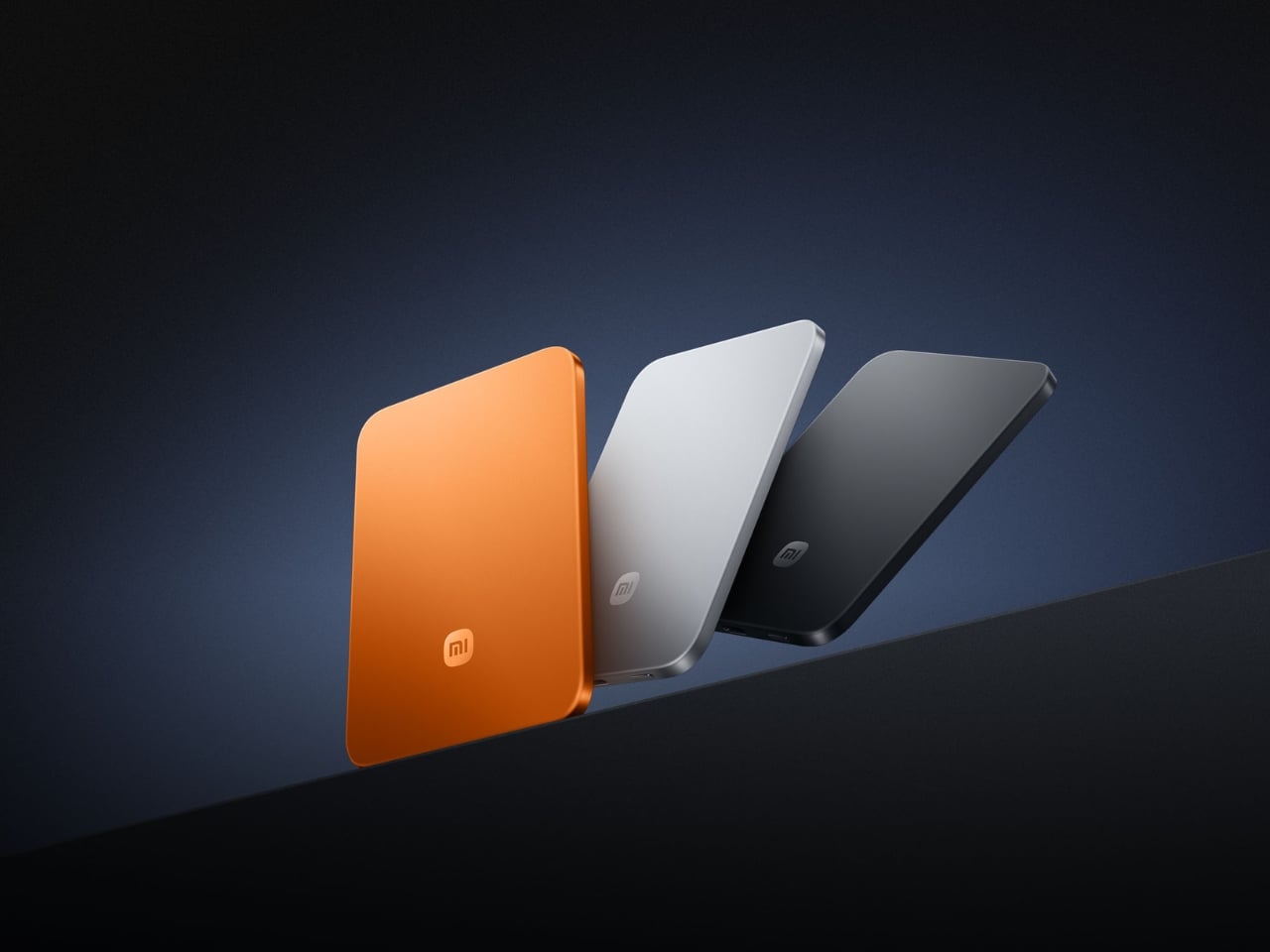
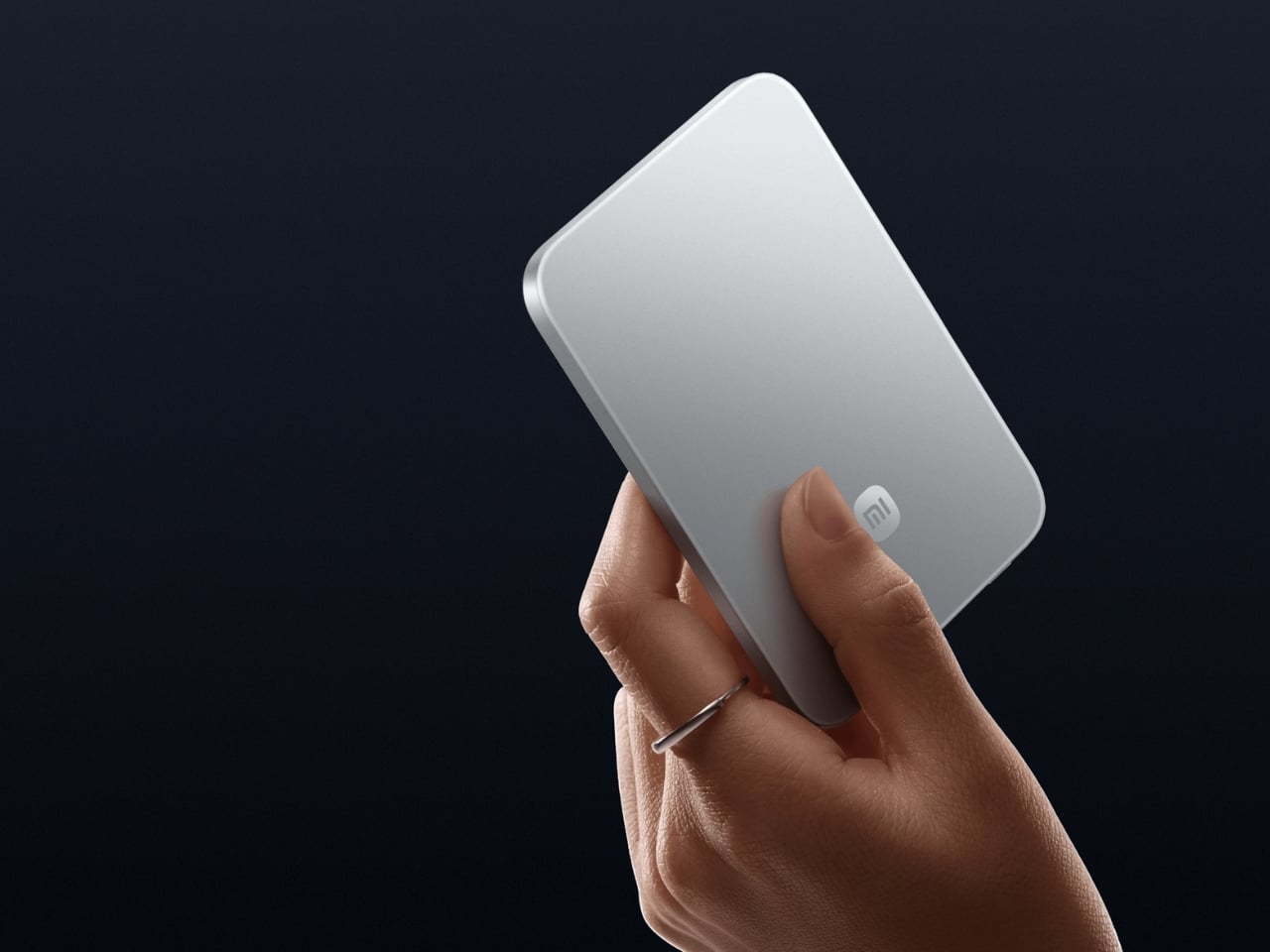
Power banks occupy a strange design dead zone. Most work as promised and are forgotten the moment they enter a bag. The Xiaomi UltraThin Magnetic Power Bank 5000 15W reframes the category. At 6mm thin — slimmer than any current smartphone — it holds 5,000mAh inside an aluminum alloy shell. Silicon-carbon battery chemistry with 16% silicon content enables higher energy density without expanding the footprint, and a fire-resistant fiberglass rear surface manages heat during wireless charging.

This solves the persistent problem of the charging backup that stays home because it feels too heavy to justify. At 6mm, it sits magnetically against a compatible phone and delivers 15W wirelessly while moving between buildings, sitting through a lecture, or waiting at a transit platform. No cable between bank and phone, no rummaging for the right end. It sits in a pocket as an extension of the device rather than a separate burden to manage throughout the day.

What We Like:

  • Silicon-carbon chemistry achieves 5,000mAh within a 6mm profile, making it the thinnest power bank available at this capacity tier
  • Magnetic cable-free attachment delivers 15W wirelessly while the phone stays pocketed between classes, with zero management required

What We Dislike:

  • 5,000mAh covers roughly one full smartphone charge, which falls short on heavy-use days involving continuous navigation, recording, and streaming
  • Magnetic wireless charging is limited to compatible phone models, restricting the cable-free feature for students outside that ecosystem

3. HubKey Gen2

The average student laptop setup involves a quiet accumulation of compromises: a dongle for the display, a separate hub for ports, a cable for audio, and none of it cohering. The HubKey Gen2 addresses this from a single USB-C connection. An 11-in-1 hub in a compact cube, it adds two HDMI ports, each capable of driving a 4K display at 60Hz, four fully customizable physical shortcut keys, and a central control knob that handles everyday actions without navigating software menus.

Spreading a research document across two 4K panels changes the quality of a work session in ways only understood from the inside. Reference material stays open while the draft stays active. Code and documentation share the same eyeline. The shortcut keys reduce the cognitive overhead of memorizing keyboard combinations, and the central knob delivers volume control with tactile immediacy that no software slider replicates. For students working across design, development, or video, this cube earns its place on day one.

What We Like:

  • Dual 4K HDMI outputs at 60Hz each simultaneously expand a laptop into a proper two-monitor workstation from a single connection
  • Physical shortcut keys and a central control knob bring immediate, tactile control to routine tasks that software menus handle more slowly

What We Dislike:

  • Cube form factor suits a stationary desk, but does not pack into a travel bag as cleanly as a flat or cable-style hub alternative
  • Full 11-in-1 performance depends on the connected laptop’s USB-C port supporting the required power delivery and data bandwidth specifications

4. BraX open_slate

Almost every tablet arrives sealed, with decisions already made inside the chassis: fixed storage, an inaccessible battery, a software support window that closes on the manufacturer’s schedule. The BraX open_slate rejects that model. This 12-inch 2-in-1 includes an M.2 2280 slot for user-swappable storage, a replaceable 8,000mAh battery rated at 20 hours of runtime, and a 120Hz display driven by a MediaTek Genio 720 chip paired with either 8GB or 16GB of RAM.

The open_slate removes the most predictable frustration of the tablet ownership cycle: the moment a device slows enough to become an obstacle, and the only available response is full replacement. Swappable storage means a capacity upgrade takes an afternoon. A user-replaceable battery means two years of student use does not write off the entire device. For students making a deliberate, multi-year investment in one tablet, this is currently the only option making that argument with hardware to back it.

What We Like:

  • User-replaceable M.2 storage and battery extend the device’s usable lifespan well beyond the typical two-to-three year sealed-tablet replacement cycle
  • A 20-hour claimed battery runtime on a 120Hz display covers a full academic day without requiring a charge mid-session

What We Dislike:

  • MediaTek Genio 720 is a capable mid-range chip, but it is not suited for students with intensive video rendering or compute-heavy creative workloads
  • The open modular hardware requires a degree of technical confidence that students coming from fully managed, sealed device ecosystems may need time to build

5. Battery-Free Amplifying iSpeakers

The Battery-Free Amplifying iSpeakers operate on a principle that is easy to underestimate until the sound fills the room. A smartphone sits in the machined Duralumin cradle, and sound waves are directed and amplified through the chamber without any electrical input. The body is the same aluminum alloy used in aircraft construction, chosen for its vibration resistance and acoustic properties. Chamber proportions were developed using the golden ratio, a structural decision that shapes the internal acoustic geometry deliberately.

No charging reminder, no Bluetooth pairing, no firmware update mid-session. A phone in the cradle and the room shifts immediately, audio gaining presence and warmth that a phone speaker lying flat on a desk cannot approach. For study sessions running on focus music, ambient sound, or a lecture replay, the difference registers in seconds. Duralumin handles daily movement without showing wear, and because it operates entirely outside the electrical ecosystem, it performs identically in ten years as it does today.

Click Here to Buy Now: $179.00

What We Like:

  • Zero power requirement means no charging, no battery degradation, and no dependency on any cable or power source at any point
  • Aircraft-grade Duralumin construction delivers acoustic quality and physical durability that holds across years of regular daily use without deterioration

What We Dislike:

  • Passive acoustic amplification improves meaningfully on bare phone speaker output, but cannot match the volume or bass depth of even entry-level powered speakers
  • Cradle sizing is optimized for specific smartphone dimensions, and compatibility may vary with larger phones or thick protective cases

The Setup That Actually Works for You

The five products here do not share a category, price point, or use case. What they share is design precision that addresses real daily friction rather than just performing a feature list. A wishlist built on that standard holds up across the full stretch of any semester. These are tools chosen because someone thought carefully about the problem first, and that clarity comes through every time you reach for one.

Spring is short. It moves quickly from the first warm afternoon to the last exam, and the tools you work with shape how much of that time goes toward actual output. The difference between owning something well-considered and tolerating what came with freshman year becomes obvious around week ten. Choosing now means spending the rest of the semester working with something that performs exactly the way a well-chosen tool should.

The post 5 Best Spring Gadgets That Are Taking Over Every Tech-Savvy Student’s Wishlist first appeared on Yanko Design.

7 Easter Tech Gifts for Him So Good They’ll Sell Out Before April 5


Easter arrives on April 5, giving you ten days to find something that doesn’t feel purchased in panic. The candy basket is covered. What makes the morning memorable is the object that makes him pause because the thing in his hands is worth looking at. These seven picks aren’t pulled from a generic roundup — they’re designed objects built with enough conviction that engineering and aesthetics arrive at the same answer

None of these need an explanation on the card. Some ship immediately; others are in production with lead times worth checking before checkout. Shop products move quickly during gift windows, and objects like this rarely wait for last-minute decisions. Order now, check shipping windows, and show up April 5 with something he didn’t know to ask for — which is the only kind of gift worth giving.

1. GPD Win 5 Gaming Handheld

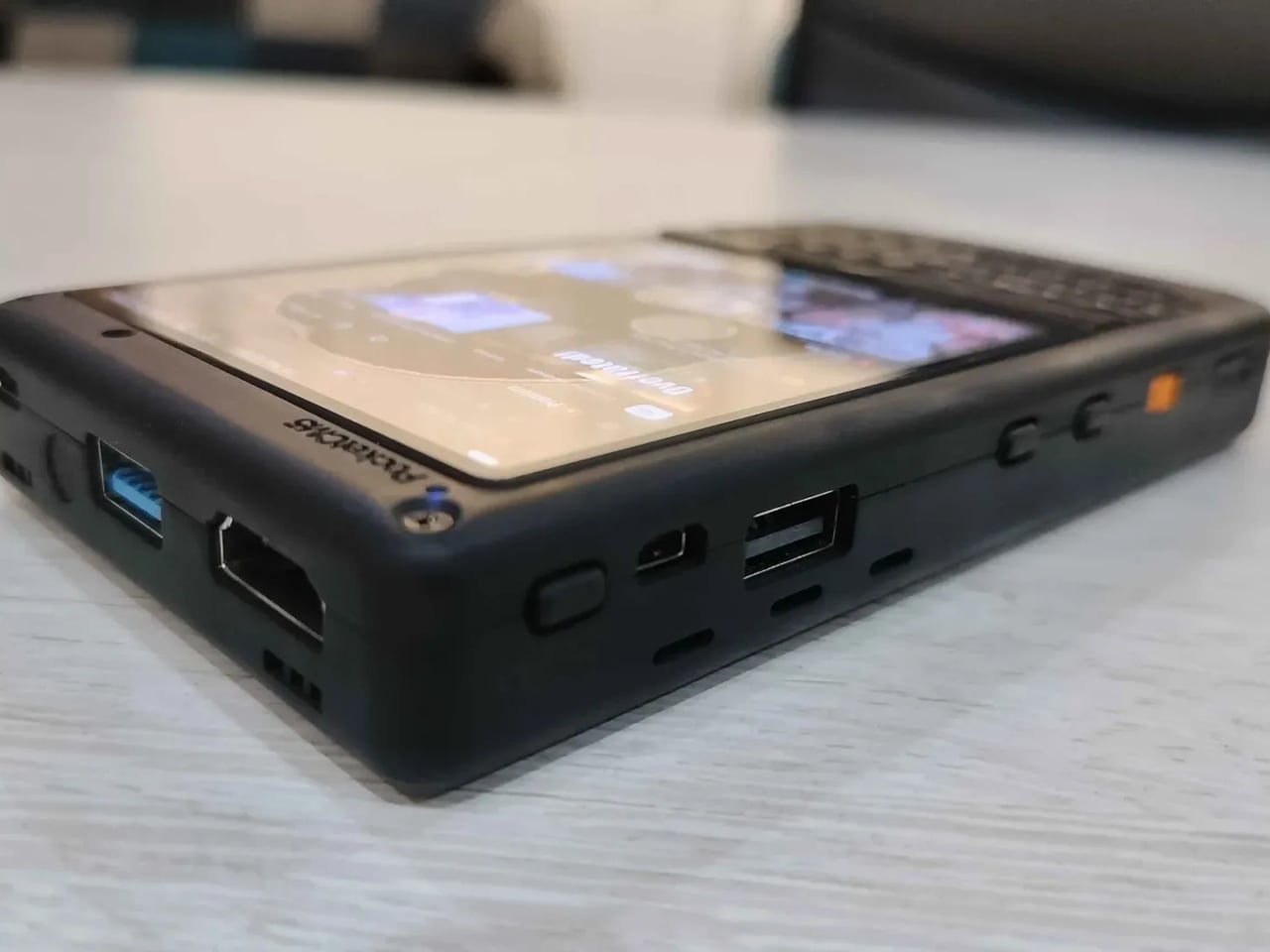
The PSP’s silhouette never really died — it just kept getting more ambitious inside. The GPD Win 5 takes the wide landscape layout we’ve known for twenty years and fills it with an AMD Ryzen AI Max 395 processor and a full terabyte of storage — a desktop-level decision wrapped inside a handheld form. The result is a device that plays any PC game at settings no portable console would dare suggest.

The engineering required to keep it running is written directly onto the chassis. Quad heat pipe cooling, a proprietary Mini SSD slot, hall effect triggers, and a detachable 80Wh battery extend sessions well beyond what the internal cell could manage. The 7-inch 16:9 display sits centered between capacitive joysticks with zero deadzone in a layout that feels immediately familiar. This is not a gaming device that compromises on performance — it refuses to.

What We Like

  • The AMD Ryzen AI Max 395 delivers genuine desktop-class performance from a body that still fits in a bag
  • Hall effect triggers and capacitive joysticks with zero deadzone give it a precision edge over every portable console alternative

What We Dislike

  • The thickness and thermal venting make it visually dense — this is not a subtle object
  • The price positions it well above impulse territory, narrowing its natural audience considerably

2. Side A Cassette Speaker

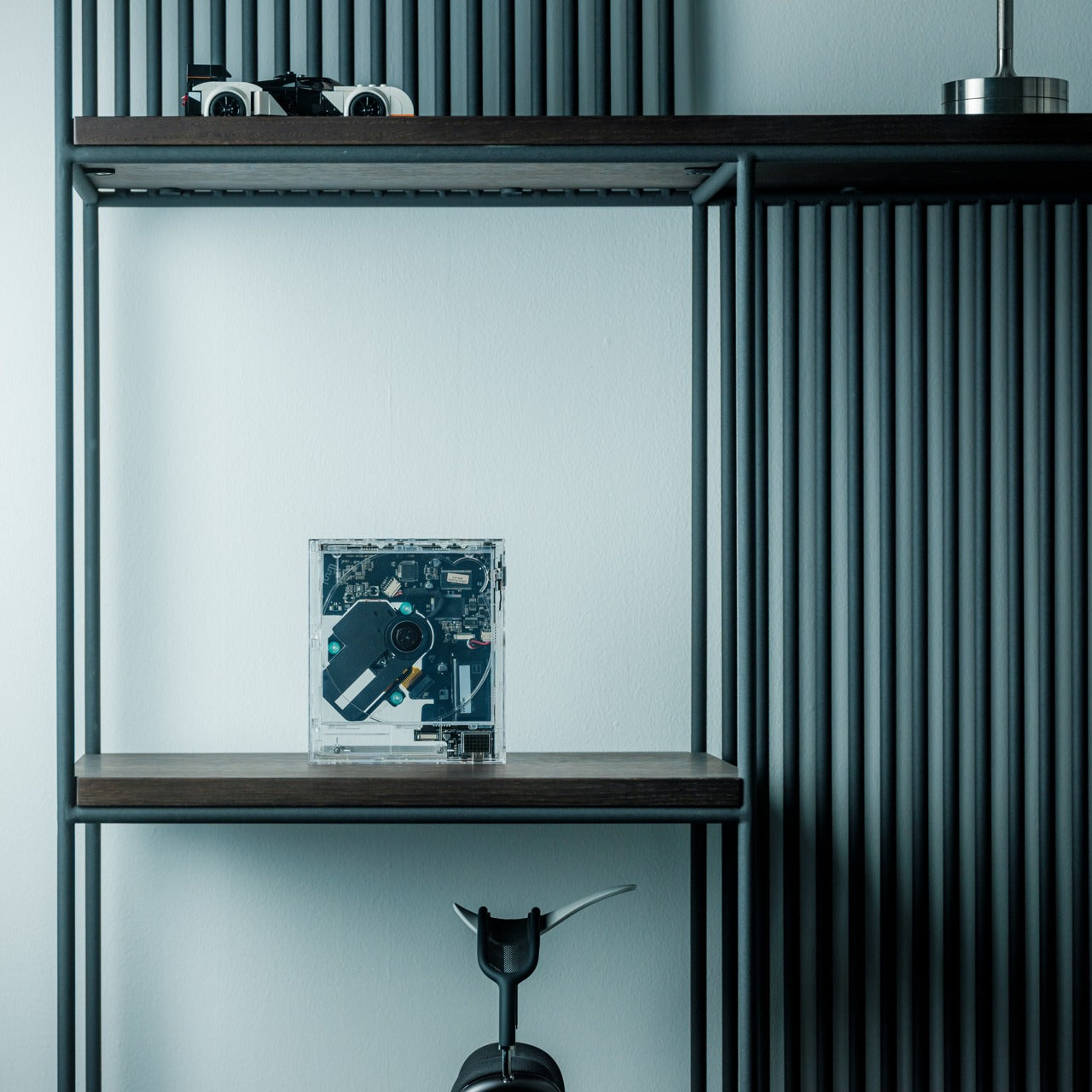
Everything about the Side A Cassette Speaker is designed to make you pick it up. The transparent shell exposes its mechanics the way a skeleton watch exposes its movement — not to perform engineering, but to invite curiosity. The cassette form is faithful enough to earn a double-take and modern enough to pair via Bluetooth 5.3 without cognitive dissonance. It looks like a mixtape from 1997 and sounds like something bought this year.

For under fifty dollars, it streams wirelessly, supports microSD offline playback, and delivers warm-tuned sound that rewards the retro framing rather than undermining it. The clear case doubles as a stand, which means it sits upright on a desk looking intentional rather than abandoned. This is the gift that earns visible placement — the kind of object someone keeps out not because they have to, but because it says something about the shelf it lives on.

Click Here to Buy Now: $49.00

What We Like

  • The transparent cassette shell creates instant visual storytelling before it’s even switched on
  • At under $50, it’s the most accessible pick on the list — approachable price, zero sense of compromise

What We Dislike

  • The smaller cabinet limits low-end response — bass is present, but won’t satisfy anyone comparing it to a full-size speaker
  • Best suited for near-field listening; it won’t carry sound convincingly across a large room

3. RingConn Gen 2 Smart Ring

The RingConn Gen 2 makes the case that wearable health tracking never needed to live on your wrist. It’s a ring — thinner and lighter than its predecessor — that runs 10 to 12 days on a single charge and tracks sleep, heart rate, and respiratory variations through AI analysis, claiming 90.7% accuracy in identifying sleep risk events. No subscription. No display competing for attention. Just a slim band doing quiet overnight work.

The appeal for someone who refuses a smartwatch is genuine. There’s no screen to check, no notification buzzing against the wrist, no social permission for the device to interrupt your day. The AI sleep tracking surfaces insights about breathing patterns and nighttime respiratory variations that standard fitness bands don’t reach with the same depth. It tracks without performing the act of tracking, which is its entire design philosophy. Wear it and forget it is the point.

What We Like

  • A 10 to 12-day battery life removes the nightly charging ritual that makes most wearables feel like obligations
  • AI-powered sleep insights with no subscription fees eliminate both the friction and the ongoing cost

What We Dislike

  • Sizing matters significantly for a ring — gifting one requires knowing the recipient’s ring size in advance
  • The value of the health data depends entirely on the wearer engaging with the insights it surfaces

4. Soundcore Sleep Earbuds

Sleep earbuds have always been a comfort problem disguised as an audio problem. Soundcore’s answer involves 3D ergonomic shaping built around the concha cavity’s actual geometry, an Air Wing hollow structure that distributes contact pressure across a wider surface area, and a stacked charging pin architecture that repositions hardware away from the ear entirely. The result is an earbud designed to be forgotten during use — not because it lacks presence, but because its presence feels like nothing.

Noise blocking keeps external sound out while a soft audio profile handles whatever you use to fall asleep. The Air Wing’s flexibility adapts across different ear shapes rather than demanding the ear adapt to it — the distinction that separates earbuds built for sleeping from earbuds people merely attempt to sleep in. For anyone whose sleep is light or interrupted, this is the category of gift that earns its place by how someone feels the next morning.

What We Like

  • The 3D ergonomic shaping and hollow Air Wing design solve the pressure and slippage problems that have historically made sleep earbuds impractical
  • Stacked charging pin architecture removes the most common comfort complaint in the category without sacrificing charging functionality

What We Dislike

  • Fit is deeply individual — what disappears for one person may still feel present for another, depending on ear geometry
  • Noise blocking effectiveness varies with ear canal shape and the sleep position someone naturally defaults to

5. Unix UX-1519 NEOM Power Bank

Power banks exist in a visual category that design has largely abandoned — they are rectangles. The Unix UX-1519 NEOM is still a rectangle, but it looks like it was designed at the same meeting as the rest of your gear rather than found in an airport convenience store. The industrial finish, considered proportions, and built-in Type-C carry loop cable elevate it into an object worth keeping visible rather than buried at the bottom of a bag.

Under that exterior sits a 10,000mAh cell delivering 22.5W fast charging, dual output ports for simultaneous device charging, and the S-Power smart chipset managing stable discharge throughout each session. The cable that serves as a carry loop supports 12V output, pulling fast charging performance through the same thing you grip to retrieve it. That level of integration — where every detail earns its presence — is what separates this from the generic category it technically belongs to.

What We Like

  • The built-in Type-C carry loop cable is the kind of small detail that makes the whole object feel more considered than anything at this price point
  • 22.5W fast charging with dual output and smart chipset management handles the functionality without any concessions

What We Dislike

  • At 10,000mAh, larger capacity banks will outlast it across multi-day travel without wall access
  • The industrial aesthetic is confident and specific — some will read it as premium, others as heavy-handed

6. JMGO N1 Ultra 4K Laser Projector

The JMGO N1 Ultra solves the problem that has historically made projectors aspirational rather than practical: setup. The gimbal tilts automatically, focus locks without a hand on the lens, keystoning corrects itself, and obstacle detection keeps the image where it belongs. At 2800 ISO lumens from RGB triple-color laser optics, it works in a lit room, which means it lives in a living room without requiring the space to be reorganized before every use.

The color accuracy from tricolor laser projection has a saturation and richness that lamp projectors simply cannot reach. HDMI 2.1 with eARC handles connectivity, and 20W dual speakers with Dolby Digital Plus and 45Hz bass extension fill a room without requiring a separate soundbar. This is a projector for people who want cinema at home without the ceremony of installing one. Point it at a wall, let it calibrate in seconds, and the room becomes something else entirely.

What We Like

  • The smart adaptive system handles focus, keystone correction, and brightness automatically — setup takes seconds, not an evening of calibration
  • RGB triple-color laser at 2800 ISO lumens performs in ambient light, removing any requirement to design a room around it

What We Dislike

  • The price positions it as a considered purchase rather than a spontaneous gift — it requires a genuinely enthusiastic recipient
  • The gimbal and automated systems add complexity that may feel like more setup than expected for buyers anticipating a simple plug-in experience

7. Rolling World Clock

Not every great tech gift has a circuit board inside it. The Rolling World Clock is a 12-sided dodecahedron that tells global time through the simplest possible mechanism: roll it to a city face, read the single hand. London, Tokyo, New York, Shanghai, Sydney, and seven more time zones are built into its geometry. For anyone navigating remote work across multiple cities, this solves a daily frustration through pure physical design.

What earns it a place on a tech gift list is exactly that clarity of purpose. Most remote workers live inside four different time zone tabs, a world clock widget, and a mental arithmetic habit they never asked for. The Rolling World Clock replaces all of that with an object you can hold. Roll it to a city face and a single hand tells the time there — no toggling between apps, no unlocking a screen. It sits on the desk between the monitor and the coffee, available in black and white, and asks nothing from you except the decision to pick it up. Sometimes the most considered technology is the kind that gets out of your way entirely.

Click Here to Buy Now: $49.00

What We Like

  • The 12-sided dodecahedron form solves a genuinely common remote work problem — global time tracking — through tactile physical interaction rather than another screen
  • The fully analog mechanism means no charging, no setup, and no interface to learn — it works the moment it lands on a desk

What We Dislike

  • Coverage is limited to 12 major cities — travelers or remote workers operating in less-represented time zones will find gaps
  • The single-hand display reads cleanly, but requires a moment of orientation for anyone unfamiliar with the face layout

The Gift That Earns Its Place Before He Opens It

Seven products, seven completely different problems solved. A gaming handheld that refuses to compromise on desktop performance. A cassette speaker that makes Bluetooth feel like something worth displaying. A smart ring tracking sleep from a finger. Earbuds engineered around the geometry of the ear rather than against it. A power bank that looks like it belongs with the rest of your gear. A projector that sets itself up. A dodecahedron that tells time in twelve cities without asking anything of you.

The best gifts don’t need wrapping to communicate their value — they do it the moment someone picks them up. Each of these objects was built with a specific person in mind, which means the person who receives one will feel that immediately. Check shipping windows before checkout, move quickly on anything with limited stock, and resist the instinct to wait. April 5 has a way of arriving before the decision gets made.

The post 7 Easter Tech Gifts for Him So Good They’ll Sell Out Before April 5 first appeared on Yanko Design.

70 Mile Range, 110 Nm of Torque, and a One-Click Wheelie. Meet the AOTOS Flux X26

The road to electric adoption has always needed two things, logic and emotion. Logic is easy to find in March 2026, with petrol prices climbing high enough to make every refill feel faintly offensive. Emotion is harder to engineer, yet it matters just as much. People want efficiency, but they also want acceleration, style, and the small thrill of riding something that feels alive beneath them. The products that close the gap between those two instincts are the ones worth paying attention to.

The AOTOS Flux X26 enters that landscape with a compelling mix of utility, performance, and fun. A claimed 70 mile range, from city streets to desert trails, supports daily commuting and longer urban detours. A 0 to 20 mph time of 4.9 seconds gives it a brisk, responsive character. The one click wheelie function adds an unmistakably playful edge, with specialized motion control algorithms allowing riders to safely experience one-wheel maneuvers at the touch of a button. AOTOS launched the Flux X26 on Kickstarter this March, positioning it as the officially recognized world’s first wheelie capable light electric moto.

Designer: AOTOS

Click Here to Buy Now: $1199 $1699 (29% off). Hurry, only 85/100 left! Raised over $498,000.

The frame completely abandons round, retro shapes in favor of a sleek, one-piece aluminum alloy construction with sharp, parametric lines. That futuristic mecha design philosophy extends from the physical vehicle to the retail space, app interface, and packaging. The ambient lighting system adds presence in urban environments at night without reading as decorative afterthought. The overall silhouette sits closer to a motocross bike than a commuter bicycle, which fits well with the fact that the Flux X26’s designed for those impromptu adventure-trips and thrill-chasing weekends, aside from being your reliable weekday in-city commuter.

The Pro variant delivers 2000W of peak power at a 1500W rated output (the regular version offers 1200W of peak power, rated for 750W output), strictly Class 2 compliant for legal road use, paired with 110Nm of instant torque that enables it to climb steep gradients up to 25% with ease. From a standstill, it hits 20 mph in 4.9 seconds, translating to immediately responsive performance in city traffic and on open trails. The one click wheelie function uses proprietary motion control algorithms that cut the physical effort required by roughly 20%, making the maneuver genuinely accessible. The Class 2 rating keeps the X26 street legal across most US states while the peak output covers the off road brief. Both variants share 20×4.0 inch fat tires, dual hydraulic suspension, and hydraulic disc brakes front and rear.

AOTOS built FLUX OS, a proprietary intelligent ecosystem that treats the Flux X26 as a mobile terminal, featuring triple anti theft security through integrated wireless connection and GPS, sensorless unlocking, and a high definition TFT smart screen. Through frequent OTA updates, the Flux X26 functions as a living device that evolves over time, improving after purchase rather than arriving as a fixed product. The 5.5 inch full color TFT display handles speed, ride mode, range, warnings, and GPS positioning, with turn by turn navigation synced from the rider’s phone. The Pro variant adds 4G connectivity alongside Bluetooth, giving the bike a live data link independent of the rider’s phone range. Both tiers benefit from the same software architecture, with the Pro carrying the more robust hardware layer on top.

An oversized battery provides a 70 mile exploration radius, from city streets to desert trails, putting the X26 at the more capable end of its category for the price. Urban riders cover the majority of their weekly riding without a midday recharge, and for weekend exploration the radius reaches distances that feel genuinely adventurous. The battery holds an IPX7 water resistance rating on the Pro variant, with IPX5 covering the rest of the vehicle. AOTOS backs ownership with over 100 after sales service points across the United States, adhering to strict Class 2 and safety certifications. The 330 lb maximum load capacity confirms the X26 as a serious daily use machine.

Super Early Bird Kickstarter pricing opens at $1,199 for the standard Flux X26 and $1,599 for the Pro, against MSRPs of $1,699 and $2,299 respectively. First units are scheduled to ship in May 2026, a window tight enough to signal genuine production readiness. The X26 Pro was shown at CES 2026 in Las Vegas ahead of the campaign, putting the hardware in front of an audience that scrutinizes product claims closely. Founded in 2016, AOTOS has built its core R&D team from engineers specializing in motion control, AI algorithms, and smart systems. At this price, with a design that commits fully to its aesthetic and a fully fledged software that just gets better with time thanks to OTA updates, the Flux X26 is one of the more innovatively gorgeous electric two wheelers on Kickstarter right now.

Click Here to Buy Now: $1199 $1699 (29% off). Hurry, only 85/100 left! Raised over $498,000.

The post 70 Mile Range, 110 Nm of Torque, and a One-Click Wheelie. Meet the AOTOS Flux X26 first appeared on Yanko Design.
5 Best Waterdrop Filter Systems for Spring 2026, From Renters to Full Family Kitchens

The water coming out of your tap has traveled through infrastructure that, in many American cities, predates the internet by several decades. Municipal treatment plants catch most of what they’re supposed to catch, but aging pipes, PFAS compounds from industrial and agricultural runoff, and lead from corroding plumbing each leave their own signature in what eventually fills your glass. Two people living thirty miles apart can have genuinely different water problems, and the solution that works perfectly in one kitchen may be entirely wrong for the other. Spring tends to be when many families actually act on this, a natural reset point where the habits and home conditions worth changing finally get real attention.

Waterdrop Filter has spent the better part of the last decade building a filtration lineup that treats water quality as a variable, not a constant. Five of their systems are currently on sale on Amazon through March 31st, spanning the full range of how people actually live: renters who can’t drill into cabinets, families running a high-demand kitchen with PFAS and lead on their radar, people who want their minerals preserved, and anyone who wants instant hot filtered water without the plumbing commitment. Each one is built around a different problem, and this guide helps narrow down which one is built around yours.

Waterdrop Filter G3P800 Tankless RO System: The Under-Sink Performer That Stays Out of Sight

For families thinking seriously about what’s actually in their water this spring, the G3P800 is where Waterdrop Filter’s under-sink lineup earns its bestseller status. The concerns driving most of those conversations, PFAS compounds, lead from aging pipes, chlorine byproducts, are precisely what this system addresses. Its 10-stage RO filtration achieves 98% PFOA reduction, 99% PFOS, and over 99% lead, numbers that carry particular weight for households with infants, pregnant women, or elderly members. NSF/ANSI certifications across standards 42, 53, 58, and 372 back those claims with third-party verification. The tankless design reclaims 50 to 70 percent of under-sink cabinet space, and the UV sterilization stage catches bacteria and viruses that even a high-precision RO membrane cannot address alone.

At 800 gallons per day, the G3P800 handles the full rhythm of a busy family kitchen, from drinking water and cooking to coffee and baby formula preparation. A brushed nickel smart faucet displays real-time TDS readings and filter status at a glance, keeping the system legible without demanding attention. The 3:1 pure-to-drain ratio reflects a genuine shift in responsible RO design, producing meaningfully less drain water than older systems. Spring tends to be the moment families finally act on water quality concerns sitting in the back of their minds, and the G3P800 meets that decision with something durable, rigorously certified, and quietly capable of handling daily household demand for years.

Click Here to Buy Now: $699 $999 (30% off). Hurry, deal ends in 48-hours! Website Here.

Waterdrop Filter X12 RO System: The Flagship That Puts Minerals Back Where They Belong

Where the G3P800 is built for families who want serious filtration at serious capacity, the X12 is for those willing to push further. At 1,200 gallons per day across 11 stages of precision RO filtration, it represents Waterdrop Filter’s most complete answer to the growing list of contaminants giving health-conscious households pause this spring. The PFAS reduction figures here are among the strongest in the lineup, achieving 98.88% PFOA and 98.97% PFOS reduction, alongside a greater than 99.87% lead reduction rate. Certified against NSF/ANSI standards 58 and 372, the X12 carries the kind of third-party verification that families with infants or elderly members look for before trusting a system with daily drinking water and formula preparation.

What genuinely separates the X12 from most flagship RO systems is what it does after filtration. Reverse osmosis at this level of thoroughness strips water down comprehensively, which is where the built-in alkaline mineralization stage earns its place. Calcium and magnesium are reintroduced post-filtration, supporting bone health over time and restoring the balanced, naturally mineral-rich character that makes water taste the way good water should. For families prioritizing both purity and nutritional quality, particularly those with growing children, that combination is difficult to replicate elsewhere. The smart digital faucet handles real-time TDS monitoring and filter life tracking with the same quiet intelligence found across the range. Spring health resets tend to go deeper for some households, and the X12 is designed for exactly that level of commitment.

Click Here to Buy Now: $854.05 $1299 (34.2% off). Use code YKSPRING26 during checkout. Hurry, deal ends in 48-hours! Website Here.

Waterdrop Filter DLG-P: Serious PFAS Protection Without the Installation Headache

The conversation around PFAS and lead tends to center on high-capacity RO systems, and for good reason. But the reality of how many people actually live, in rentals, in first homes, in apartments where permanent under-sink modifications are off the table, means that access to serious water filtration has historically required commitment that many households simply couldn’t meet. The DLG-P is Waterdrop Filter’s answer to that gap. It installs in around three minutes without specialist tools, routes filtered water through an innovative dual-outlet design serving both a dedicated drinking faucet and the main kitchen tap, and achieves 99.7% PFOA and 99.6% PFOS reduction that rivals systems at considerably higher price points. For renters prioritizing PFAS protection this spring, those numbers reframe what budget-friendly filtration can actually deliver.

The system reduces chlorine, fluoride, sediment, and odors across its filtration stages, covering contaminants that affect daily drinking water quality in the most direct ways. A smart filter life indicator removes guesswork from maintenance, flagging replacement needs before performance drops. Filter cartridge replacement takes around three seconds, keeping upkeep genuinely frictionless for fast-paced households where the water filter is expected to work reliably in the background. The black finish gives it a contemporary presence that holds up in modern kitchen environments, and the compact footprint respects the limited under-sink space that comes with rental kitchens. For those who have looked at the G3P800 or X12 with interest but need a solution that fits a different budget and living situation, the DLG-P covers more ground than its entry price suggests.

Click Here to Buy Now: $91.19 $119.99 (24% off). Use code YKSPRING26 during checkout. Hurry, deal ends in 48-hours! Website Here.

Waterdrop Filter TSU: The Case for Filtration That Knows When to Stop

Not every household is starting from the same water quality baseline. In homes where municipal supply is reasonably clean but carrying chlorine taste, sediment, bacteria, and trace heavy metals like lead, deploying a full reverse osmosis system is a longer route than necessary. The TSU operates on that logic. Its 0.01-micron ultrafiltration membrane reduces 99.9% of bacteria, intercepts rust, sediment, fluoride, and heavy metals including lead, while leaving the water’s natural mineral content completely intact. Where the X12 reintroduces calcium and magnesium through a dedicated remineralization stage, the TSU simply never removes them, which for households with acceptable source water is both more efficient and more elegant.

What makes the TSU particularly compelling as a spring upgrade is what it doesn’t require. No electricity, no pump, zero wastewater, running entirely on standard water line pressure with nothing added to the utility bill. The 3-stage tankless system saves 50 to 70 percent of under-sink cabinet space. A brushed nickel dedicated faucet comes included, and the filter lifespan runs up to 24 months, meaning maintenance stays minimal across nearly two years. For busy families where easy installation and low ongoing upkeep matter as much as performance, the zero-waste design also reduces environmental impact and running costs over time. For households that want clean water supporting healthier spring routines without rebuilding their entire under-sink setup, the TSU makes a case that’s difficult to argue with.

Click Here to Buy Now: $123.99 $189.99 (34.7% off). Use code YANSPRING26 during checkout. Hurry, deal ends in 48-hours! Website Here.

Waterdrop Filter C1H: Countertop RO With a Trick Up Its Sleeve

Every system covered in this guide has required going under a sink. The C1H abandons that requirement entirely. It sits on the counter, plugs into a standard outlet, connects to a water source without drilling or permanent modification, and starts delivering six-stage reverse osmosis filtered water with no installation window and no landlord conversation. The 0.0001-micron RO membrane targets the same field of contaminants that motivates most spring filtration upgrades, including PFAS, chlorine, heavy metals, and TDS. The detachable tank design means it moves between a kitchen, an office, or a bedroom without friction, which matters for parents with young children or elderly family members who want safe, filtered water accessible across different rooms rather than anchored to a single tap.

The feature that sharpens the C1H’s appeal for spring routines is instant hot water delivered in three seconds across five adjustable temperature settings. Morning tea, pour-over coffee, baby formula, and quick meal preparation all lose the waiting step that a separate kettle introduces. A Favorite Mode remembers preferred temperature and volume combinations so the same result comes out consistently. Smart touch controls manage everything from volume selection to real-time TDS monitoring and filter life tracking. The 3:1 pure-to-drain ratio and a twelve-month filter lifespan keep both environmental impact and ongoing upkeep to a minimum. For households that have followed this guide and still need a solution on entirely different terms, the C1H closes that gap with confidence.

Click Here to Buy Now: $219 $279 (22% off). Hurry, deal ends in 48-hours! Website Here.

The post 5 Best Waterdrop Filter Systems for Spring 2026, From Renters to Full Family Kitchens first appeared on Yanko Design.
Your Carry-On Isn’t Ready for Cherry Blossom Season in Japan — These 9 Designs Are

Cherry blossom season in Japan is one of the shortest windows in the travel calendar. Full bloom in Tokyo peaks around March 26 to April 3. Kyoto follows a few days later. Each city holds its peak for roughly a week before the petals fall. The parks fill before sunrise. The trains are packed. The days move fast, and the light does not repeat. What you brought matters more than it usually does, because there is no second shot at the season and no nearby store stocking the specific things that make the difference between a fluid trip and a frustrating one. These nine designs were not built for airport shelves or generic packing lists. They were made to be used — on the flight over, under the trees, and everywhere in between.

1. Camera (1) — A Tactile Digicam for a Screen-Tired Generation

Camera (1) is a compact, metal-bodied camera with softly rounded corners, sized to slip into a pocket but solid enough to fill the hand with the right kind of weight. All the main controls live on one edge — shutter, a circular mode dial with a tiny glyph display, and a simple D-pad — reachable without shifting grip or navigating a touchscreen. Inspired by Nothing’s transparent, hardware-forward design language, it carries the confidence of a device that has thought carefully about how a person actually holds something. The rear display stays out of the way because it is designed to.

In Japan, during cherry blossom season, the light changes fast, and the best moments do not hold for a menu scroll. Petals falling across a stone lantern at Ueno. A crowded riverbank at golden hour along the Meguro. Camera (1) puts the full interaction in your fingers — twist the lens ring to frame, feel the shutter click, glance at the dial glyph to confirm mode. It encourages you to look at the scene rather than at the screen, which is the right priority when the thing in front of you is a path of blooming trees reflected in a temple pond.

What We Like

  • Single-edge control layout gives full shutter, mode, and navigation access in one hand without lifting your eyes from the scene
  • Pocketable metal body is carry-on ready and solid enough for full walking days across multiple cities

What We Dislike

  • Currently a concept design, meaning production availability and final specifications are not yet confirmed
  • No touchscreen requires an adjustment period for those accustomed to modern smartphone-style interfaces

2. StillFrame Headphones — Listening as a Physical Ritual

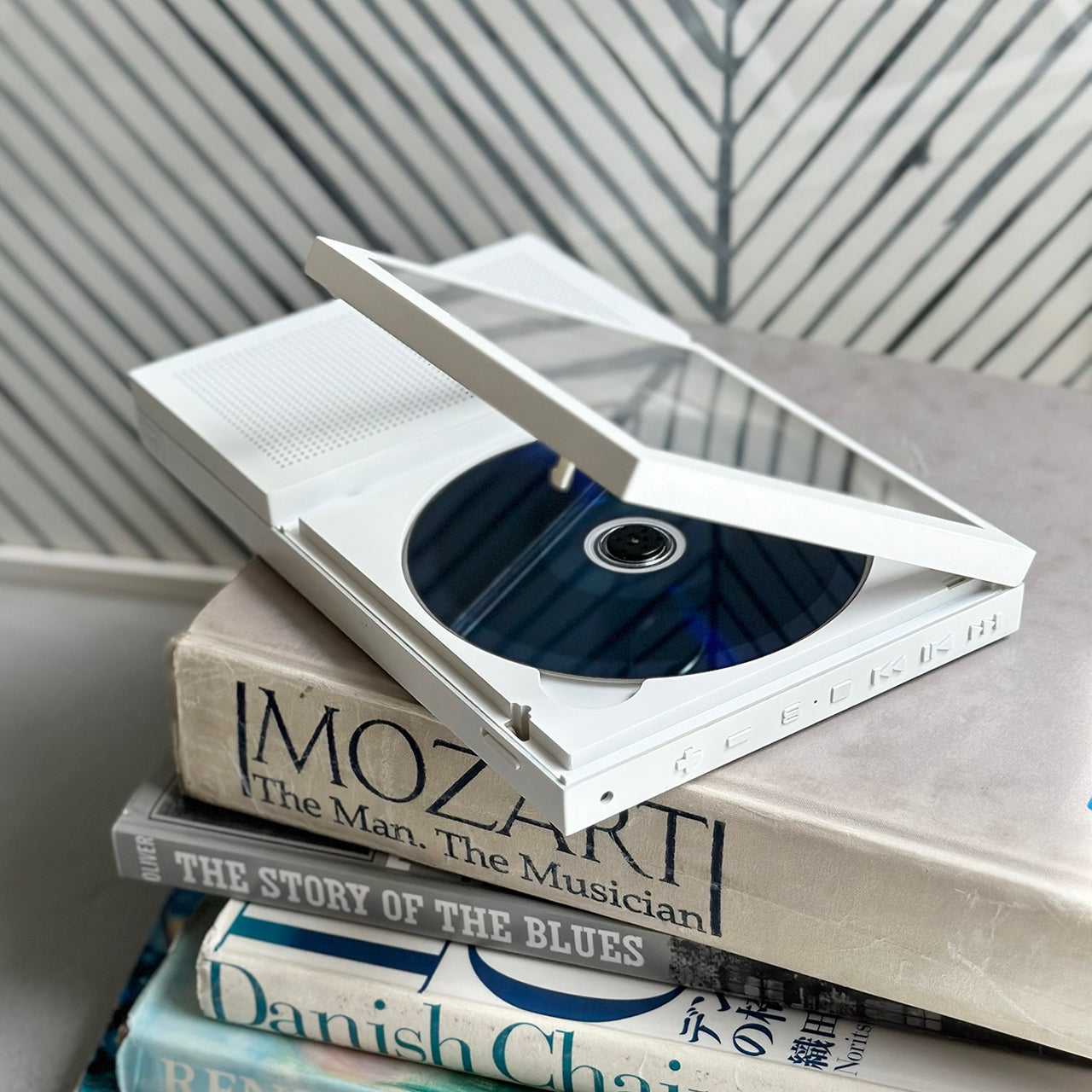
StillFrame wireless headphones are built around a specific idea: that listening should feel like something. The form echoes the quiet geometry of 80s and 90s CD hardware — measured proportions, nothing aggressive. The 40mm drivers deliver a wide, open soundstage that shapes quiet tracks into something more spatial, turning melodic textures into landscapes rather than noise. Noise-cancelling engages when the environment demands it. Transparency Mode opens the sound field when the world is worth hearing. Featherlight but full in the hand, it sits in quiet dialogue with a ClearFrame CD Player from a time when music had weight.

The flight to Tokyo runs roughly 14 hours from the US West Coast. Noise-cancelling carries you through the worst of the cabin without asking you to fight it. On the other side of that flight — on the Shinkansen between cities, in a ryokan at night with rain on a wooden roof, walking through a park where petals are already on the ground — Transparency Mode brings Japan back in without pulling the music out. Cherry blossom season moves at the pace of the trees, not the internet. StillFrame is designed for exactly that tempo.

Click Here to Buy Now: $245.00

What We Like

  • Noise cancelling and Transparency Mode cover the full range of environments a Japan trip demands, from the cabin to the temple garden
  • On-ear form is lighter and less fatiguing than over-ear alternatives across long travel days

What We Dislike

  • On-ear design provides less passive isolation than over-ear headphones in the noisiest cabin environments
  • Premium audio hardware adds a carefully packable item to a carry-on already optimized for volume

3, Benro Theta — The Tripod That Refuses to Compromise

The Benro Theta is a tripod that refuses to accept the standard trade-off between portability and capability. Rapid leg deployment, automatic leveling, remote camera control, automatic exposure adjustment, and livestreaming support — all in a package compact enough to carry into a city without rethinking your bag. It does not present itself as a scaled-down version of a better product. The engineering is serious, the footprint is small, and that combination requires actual design effort to achieve, rather than simply removing features until something fits in a daypack.

Sakura season in Japan is a photographer’s season, and the locations that make the best photographs require patience, positioning, and speed. Setting up at Maruyama Park in Kyoto before the light peaks, or along the Philosopher’s Path before the morning crowds arrive, leaves no room for a slow tripod. The Theta’s rapid leg deployment means seconds between pulling it out and having a steady frame. Remote camera control means a solo traveler can step into the shot. Carry-on compatible without the overhead bin negotiation that full-size tripods demand, it earns its space before you even land.

What We Like

  • Rapid leg deployment and automatic leveling cut setup time dramatically in crowded, fast-changing outdoor locations
  • Remote camera control gives a solo photographer full control over framing without being physically behind the viewfinder

What We Dislike

  • Smart Modules that extend the Theta’s full capability are excluded from the standard pack and sold separately, increasing the total cost
  • The depth of technical features may exceed what casual photographers need on a trip built around handheld shooting

4. TMB Modular Bottle — A Bottle That Adapts to the Day

The TMB Modular Bottle starts from a premise most hydration products avoid: no single bottle works equally well for a long-haul flight, a full city day, and a trail hike. The borosilicate glass interior preserves drink flavor without absorbing taste or odor — a genuine material distinction from the steel and plastic alternatives that dominate this category. A translucent mid-section gives a constant read on remaining liquid. Every component is designed to be replaced individually, so a worn exterior case or cracked cap becomes a five-minute fix rather than a full replacement.

Japan’s tap water is among the cleanest in the world, and refilling throughout cherry blossom season is both practical and culturally appropriate in a country with almost no public trash cans. The TMB Modular Bottle handles morning tea, a full afternoon of water, and whatever comes between, without carrying the previous drink into the next. Cherry blossom season means long days on foot across multiple neighborhoods — Yanaka to Ueno, Arashiyama to Gion — and a bottle designed to adapt to those hours without failing them earns its volume in the carry-on.

What We Like

  • Borosilicate glass interior preserves drink flavor completely, with none of the taste transfer found in steel or plastic alternatives
  • Modular construction means worn components can be individually swapped, extending the product’s useful life significantly

What We Dislike

  • Glass interior is heavier and requires more careful packing than steel alternatives on a long-haul flight
  • Multiple modular components mean more individual parts to track across a multi-city itinerary

5. AirTag Carabiner — The Lightest Peace of Mind in the Bag

The AirTag Carabiner is made from Duralumin composite alloy — the same material used in aircraft, spaceships, and boats — which makes its lightness feel like a technical achievement rather than a shortcut. It clips directly onto bag straps, handles, or umbrella loops and turns an Apple AirTag into a permanent part of the bag rather than a separate object to remember. Individually hand-crafted and available in treated alloy, untreated Brass, and Stainless Steel. The AirTag itself is not included, but the carabiner makes a strong case for buying one before the trip.

The cherry blossom season is the peak of tourism in Japan. Parks like Ueno and Shinjuku Gyoen draw enormous crowds through late March and early April, trains between cities run at capacity, and moving a bag through a country where getting lost requires a language you may not speak adds a layer of cognitive friction the trip does not need. One carabiner on the main bag strap. One on the umbrellas you will inevitably set down somewhere and nearly walk away from. The GPS network handles the rest. For a carry-on trip built around doing things rather than managing them, this is a small object with an outsized return.

Click Here to Buy Now: $129.00

What We Like

  • Aircraft-grade Duralumin composite alloy delivers structural reliability at a weight that adds nothing meaningful to the overall load
  • Clips onto existing bag hardware with no case, pouch, or added setup required

What We Dislike

  • Apple AirTag must be purchased separately, adding to the total cost of a complete tracking setup
  • Designed exclusively for AirTag, making it incompatible with other location tracker formats

6. PWR 27 — The Power Bank That Actually Keeps Up

The PWR 27 is a 27,000 mAh power bank with an AC outlet, rated at 99 wH — the maximum battery capacity permitted in carry-on luggage by the TSA and all international air regulations. It charges four devices simultaneously, carries an IP67 dust and waterproof rating, is drop-proof and crushproof to significant tolerances, and features integrated solar battery life extension, an industry first for an AC power bank. It does not ask you to choose between the capacity a long trip demands and the ability to board the plane with it.

Japan runs on apps: navigation, IC transit cards, real-time translation, camera apps, and the constant map-checking that moving between Tokyo, Kyoto, and Osaka requires. A full day of cherry blossom season in any major city will drain a phone twice before dinner. The PWR 27 handles all four devices at once and keeps working in the rain, which matters in a spring season known for sudden, wind-driven showers. Power banks that are smaller and lighter are easy to find. Power banks at this capacity that fly legally, survive getting soaked, and charge a laptop mid-Shinkansen are not.

What We Like

  • Maximum TSA-permitted capacity of 99 wH guarantees full legal compliance without any sacrifice in power availability
  • IP67 waterproofing and crushproof construction make it genuinely dependable in Japan’s unpredictable spring weather

What We Dislike

  • At 27,000 mAh, the physical weight is heavier than compact power banks, which registers across full walking days

7. Ori Frameless Umbrella — The World’s First Umbrella Without Ribs

The Ori umbrella was founded by MIT engineers and origami specialists. Its canopy structure uses the Miura fold — the same origami-derived engineering NASA deploys for spacecraft structures — which means there are no metal ribs, no fabric stretched over a frame, and no traditional failure point waiting for a windy Tuesday. The canopy itself becomes the structure. The result is a compact cylinder that stores like a pen and opens into a full umbrella. Billed as the world’s first frameless umbrella, the engineering behind that claim is real, and it shows in the form.

Spring in Japan brings unpredictable rain, and sakura season specifically delivers the kind of sudden gusts that destroy conventional folding umbrellas in minutes at the worst possible moment. The Ori’s frameless construction removes the single failure mode that makes cheap travel umbrellas frustrating and expensive ones still unreliable. The cylindrical form fits a jacket inner pocket or a bag side pocket that a standard folding umbrella profile cannot reach. Walking Philosopher’s Path in Kyoto in the rain while the petals come down around you is one of the better versions of that walk. Being dry enough to stay in it makes all the difference.

What We Like

  • Frameless, rib-free construction eliminates the primary failure point of conventional compact umbrellas in wind and heavy rain
  • Cylindrical form fits pockets and bag slots that standard folding umbrella profiles cannot reach

What We Dislike

  • As a newer product, long-term durability data for the origami-based canopy in sustained heavy rain remains limited
  • Premium engineering is reflected in a price point above standard compact travel umbrellas

8. Inseparable Notebook Pen — The Pen That Never Leaves the Book

The Inseparable pen is designed to live permanently attached to a notebook. A magnetic clip holds it flush against the cover. A built-in silencer makes the detachment and reattachment quiet rather than abrupt. The form is minimal, the grip is comfortable, and the ink flow is smooth — all by deliberate design choice. It does not compete with the notebook for attention. The goal from the start was a writing instrument that becomes an extension of the book itself, always within reach, never a separate thing to locate when the thought arrives and the moment is already passing.

Japan, during cherry blossom season, produces the kind of experiences worth writing rather than photographing. The name of the temple you want to return to. The smell of a specific lane in Yanaka at dusk. The precise quality of afternoon light through sakura petals at Shinjuku Gyoen. A notebook and a pen that are never separated mean nothing interrupts the move from thought to page. Packing a journal without a reliable pen attached to it is a half measure. The Inseparable pen completes it, quietly and without asking for any attention of its own.

Click Here to Buy Now: $19.95

What We Like

  • Magnetic clip keeps the pen permanently attached to the notebook, removing the friction of searching when the moment arrives
  • Minimalist form and smooth ink flow make it a genuine pleasure to use rather than simply a functional object

What We Dislike

  • Designed specifically as a notebook companion rather than a standalone pen, limiting its versatility as a general writing tool
  • Magnetic attachment performance may vary depending on the notebook cover material and thickness

9. CleanseBot — The Travel Robot That Sanitizes the Room You Sleep In

CleanseBot is a travel robot with 18 sensors and four UV-C lamps, designed to sanitize hotel surfaces autonomously. Independently tested to kill 99.99% of E. coli, it navigates across beds, desks, and surfaces without manual direction. The UV-C light extends its sanitation capability beyond contact surfaces to airborne pathogens. It is compact enough to carry in a standard travel bag and smart enough to complete a full sanitation cycle while you unpack, check tomorrow’s weather, and figure out which train to take to the morning blossom spots.

Cherry blossom season is the busiest tourism window in Japan. Hotels and guesthouses turn over quickly during peak weeks, with rooms running at capacity from late March through early April. The CleanseBot is not a paranoid product — it is a calibrated one. Running it across the bed and key surfaces takes two minutes of setup and leaves a room measurably cleaner than the one you walked into. For a trip across multiple accommodations in Tokyo, Kyoto, and Osaka, the reassurance compounds over time. Small, autonomous, and easy to forget once it has run its cycle, which is exactly the standard a good travel object should meet.

What We Like

  • UV-C sanitation, independently verified to eliminate 99.99% of E. coli, provides measurable assurance rather than theoretical comfort
  • Autonomous operation via 18 sensors requires no manual guidance, freeing you to settle in rather than direct the process

What We Dislike

  • Adds volume and weight to a carry-on already carefully balanced for a long-haul trip
  • Maximum sanitation effectiveness requires clear, unobstructed surface access, which limits performance on heavily layered or textured bedding

Pack Smart, Stay Present — The Only Packing Philosophy That Survives Sakura Season

Cherry blossom season does not wait. The bloom window is roughly a week in each city, and the days inside it move faster than any itinerary accounts for. The nine objects on this list were chosen because each one does a specific job well — and because none of them requires your attention to do it. The camera keeps your eyes on the scene. The headphones adapt to the environment without asking. The carabiner tracks your bag silently. The CleanseBot runs while you sleep. The Ori opens in a second and closes in another. Good carry-on packing for a trip like this is not about having everything — it is about bringing only what earns its space and then forgetting it is there. These nine do exactly that.

The post Your Carry-On Isn’t Ready for Cherry Blossom Season in Japan — These 9 Designs Are first appeared on Yanko Design.
The Shargeek 300 is a Cyberpunk-style Power Bank that can charge two MacBook Pros

Power banks have spent years being boring on purpose. Black rectangles, white rectangles, the occasional textured finish. The category settled into a kind of utilitarian invisibility, as if the industry collectively decided that anything carrying electrons should look like a bar of soap. SHARGE never got that memo. The Shargeek 300 looks like a prop from a near-future thriller, with transparent panels revealing glowing circuitry beneath, RGB light bars running along its flanks, and a CNC aluminum body that catches light the way expensive things tend to. It belongs on a desk you’d actually want to show people.

Founded in 2020, SHARGE built its identity around the conviction that charging hardware deserves the same design attention as the devices it powers. The original Shargeek 100, launched in 2021, was the proof of concept: a transparent, display-equipped power bank with DC charging that found a devoted audience almost immediately. The Shargeek 300 is what four years of that bet looks like fully cashed in. It pushes 300 watts of total output, enough to charge two 16-inch MacBook Pros simultaneously while still fast-charging a smartphone on a third port. The 24,000mAh battery lands at 86.4Wh, sitting just under the 100Wh threshold airlines enforce for carry-on batteries. Recharge time from flat to full is 75 minutes with a 140W input. The whole unit is roughly the size of a 330ml can of cola. SHARGE spent 40 months getting here, and the result makes most rivals in the category look underprepared.

Designer: Sharge

Click Here to Buy Now: $159 $199 ($40 off) Hurry! Only 6 days left.

That meticulous attention to detail is most obvious in the physical construction. The main body is a matte silver CNC aluminum frame, which is then given a 180-grit sandblasted, anodized finish for a smooth, premium feel. The company’s head of production is even quoted as personally comparing the feel of every unit to an iPhone to ensure they are equally premium. The signature transparent casing is not just a window, but a piece of safety equipment, made from V0 flame-retardant, UL94-certified polycarbonate that resists both scratches and heat. The dual RGB light bars are fully customizable, allowing users to adjust brightness, change colors, and cycle through effects via the onboard display, turning a functional object into a piece of personalized desk art.

Inside that striking shell is technology that sets a new benchmark for portable power. The Shargeek 300 is the first power bank to use the same Full-Tab Battery Cell technology pioneered by Tesla. This design significantly lowers internal resistance compared to conventional cells, a change that unlocks faster charging speeds, higher sustained output, and superior heat dissipation. This internal efficiency is the key to how a device this compact can safely manage a 300W total output without overheating or degrading quickly. The advanced battery structure results in a longer-lasting, more stable power source that can handle the demanding, continuous power draws required by high-performance laptops and other professional equipment, putting truly next-generation power in your hands.

This power is routed through a versatile array of four output ports designed to handle nearly any device. The stars of the show are the two USB-C ports, both of which support the Power Delivery 3.1 standard to deliver a massive 140W of power each. This is what allows the Shargeek 300 to simultaneously fast-charge two 16-inch MacBook Pros at their maximum charging speed. A third USB-A port provides up to 20W for legacy devices and smartphones. The fourth and most unique port is the adjustable DC barrel port, a feature carried over from the Shargeek 100. It now supports up to 140W and its voltage can be manually set between 5V and 28V, unlocking compatibility with a world of gear that USB-C cannot serve, from professional camera equipment to high-performance drones. The 24,000mAh capacity provides enough energy for approximately one full charge of a modern MacBook Pro, six charges for an iPhone 16 Pro, or two charges for an iPad Pro.

The user experience is managed through a 1.9-inch IPS display, which is 60% larger than the screen on the previous model. It provides a level of control that is unheard of in this category. Beyond showing real-time input and output wattage, the display allows you to monitor battery health, track charging cycles, and check internal temperatures. You can use it to precisely adjust the DC output voltage, set a custom welcome message, and configure the RGB lighting. This smart display transforms the power bank from a simple battery into an intelligent power hub. This intelligence extends to its handling of delicate electronics. A dedicated Low-current Mode ensures that devices like earbuds, smartwatches, and fitness trackers receive a safe, optimized charge, preventing the overcharging that can damage the small batteries in those devices.

This combination of raw power and intelligent control is backed by a comprehensive suite of safety features, including overvoltage, undervoltage, short-circuit, and real-time temperature protection. This commitment to safety extends to its travel-readiness. Crucially, the power bank’s 24,000mAh capacity is engineered to a rating of 86.4Wh, keeping it comfortably under the 100Wh limit imposed by airlines for carry-on luggage. This makes it one of the most powerful charging solutions that can be legally carried onto a plane, a critical detail for mobile professionals. The low standby power consumption is another practical benefit, allowing the Shargeek 300 to retain over 90% of its charge after 15 days of inactivity. For anyone who has pulled a power bank from a bag after weeks only to find it unexpectedly dead, this is a genuinely valuable feature.

The Shargeek 300 starts at $199 but is available at a discounted $159 price for earlybird backers. Cobble together $209 and you can get the power bank along with its companion Pixel 140W PD 3.1 wall charger from Sharge with its adorable pixel-matrix display. The Shargeek 300 comes with a 12-month warranty, and ships globally as early as May 2026.

Click Here to Buy Now: $159 $199 ($40 off) Hurry! Only 6 days left.

The post The Shargeek 300 is a Cyberpunk-style Power Bank that can charge two MacBook Pros first appeared on Yanko Design.

10 Best Camping Gadgets Every Design Snob Needs Before Spring Actually Convinces You to Go Outside

Spring has a particular gift for making the outdoors look better than it probably is. The light softens, the temperature edges toward reasonable, and suddenly your feed is full of tasteful campsite photos that edit out the bugs, the muddy boots, and the deeply average coffee. Before you know it, you’ve agreed to a trip you’re already half-regretting. The good news is that the gear world has kept pace with your standards.

The camping category has gone through a genuine design evolution. Products are emerging from studios that understand outdoor life not as a survival exercise but as an experience worth designing for, with the same intention brought to a well-made chair or a precision kitchen tool. From Red Dot Award-winning inflatable systems to solar-integrated shelters and Swiss-engineered portable toilets, the gap between what you’d use at home and what you’d bring into the wild has quietly narrowed. Whether you’re a committed skeptic being dragged to a campsite or a design-minded enthusiast who’s been waiting for gear worth owning, this list was made for you. Here are ten camping gadgets that earn their spot before spring makes you leave the house.

1. Olight Baton 4

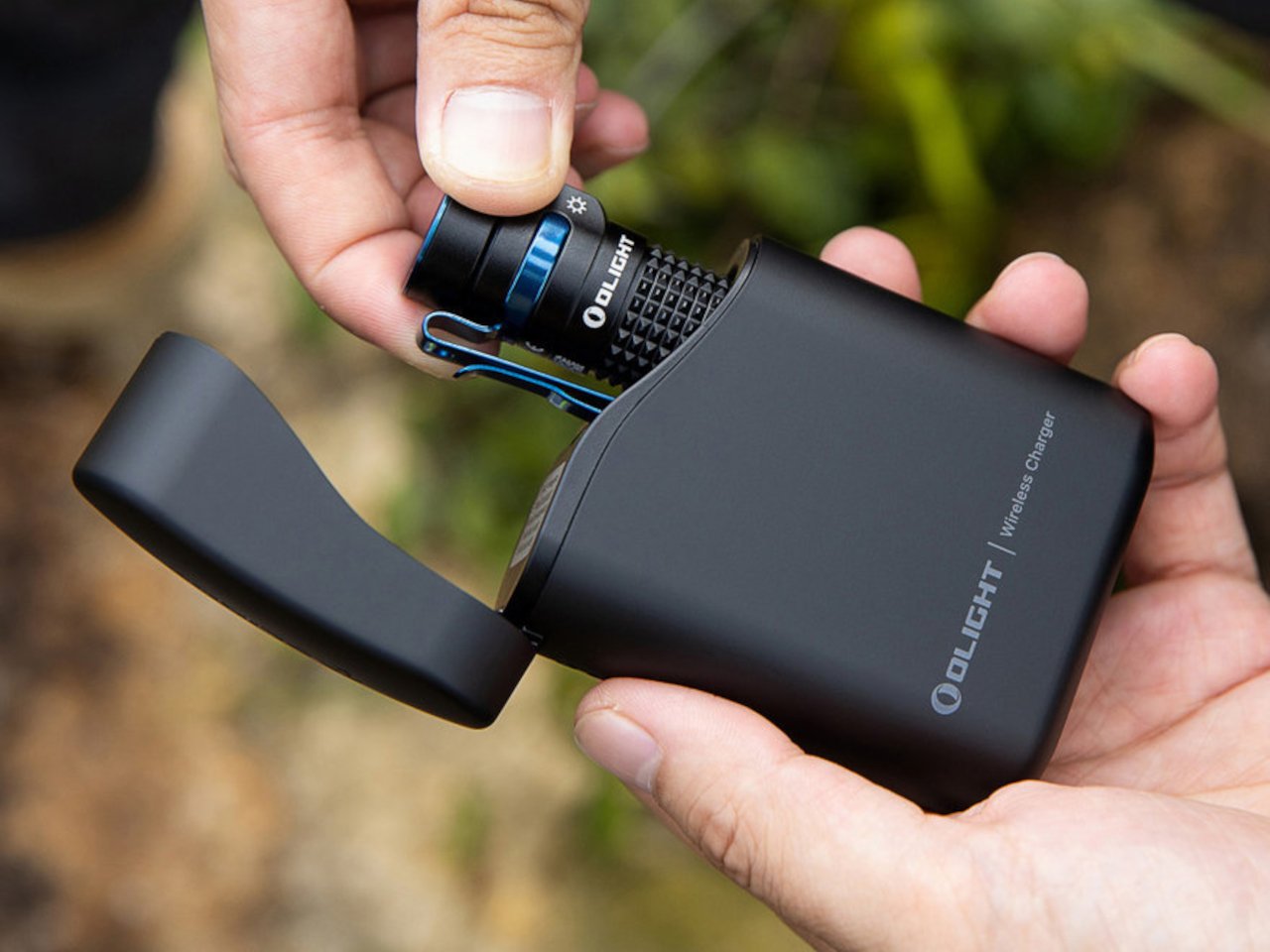
On paper, the Olight Baton 4 reads like a standard compact flashlight. The cylindrical body is familiar, the dimensions modest. Then you look closer: 1,300 lumens of output, a 170-meter throw, laser-microperforated LED indicators for brightness level and remaining battery, and a runtime of up to 30 days on a single charge. This is a flashlight that takes up almost no space in your pack and asks almost nothing in return. It is, in the most precise sense, a precision instrument that happens to fit in your palm.

The 5,000 mAh charging case is what turns the Baton 4 from a good EDC flashlight into something worth discussing. The flip-top lid operates with one hand, and the digital display button on the case shows remaining power at a glance. The detail that genuinely impresses is this: press that button and the flashlight activates while still seated in the case. No pulling it out, no fumbling in the dark. The case can fully charge the Baton 4 five times over, delivering a combined maximum runtime of 190 days. That is not a camping flashlight. That is a system.

What We Like:

  • 1,300 lumens and a 170-meter throw in a genuinely pocketable form factor
  • 5,000 mAh charging case activates the flashlight without removing it from the case

What We Dislike:

  • Proprietary charging system keeps compatibility within Olight’s own flashlight lineup
  • A custom battery cell cannot be used with standard bay chargers

2. Airflow 8-Panel Fire Pit

Most fire pits are passive objects. You build the fire, you manage the fire, you end the evening smelling like the fire. The Airflow Fire Pit operates on a different premise entirely. Built on years of metal processing expertise, it uses an eight-panel removable system to give you active, granular control over what the fire does. Adjust the panels, adjust the burn intensity. It’s a straightforward concept executed with enough precision that it genuinely changes how a campfire evening feels — less chore, more atmosphere.

The engineering behind it rewards a closer look. Each of the eight panels features strategically placed holes at the base that channel fresh air directly to the combustion source. That air heats as it rises through the double-walled panel cavity and exits through the top holes, creating secondary combustion. The result is a cleaner, more efficient burn with minimal smoke. When fully assembled, the panels form an eight-sided cylinder optimized for that combustion cycle. For anyone who has spent an evening squinting and repositioning to avoid the smoke, this fire pit is a considered answer to a genuinely annoying problem.

Click Here to Buy Now: $325.00

What We Like:

  • Eight-panel removable system lets you control fire intensity with precision
  • Secondary combustion design dramatically reduces smoke output for a cleaner burn

What We Dislike:

  • Panel assembly adds setup steps compared to a traditional open fire pit
  • Requires a flat, stable surface for proper panel alignment and stability

3. Solar-Powered Camping Tent with Integrated Air Conditioning

A tent that powers its own air conditioning sounds like design fiction until you see the Red Dot Award sitting beside it. Created by designers Zhong Xu, Li Baoyu, Pan Yiyuan, and Li Xueyan, this concept reimagines the tent as an active system rather than a passive shelter. The composite tarpaulin fabric functions as a solar energy collector — the very material protecting you from the elements simultaneously harvests energy from them. That integration isn’t bolted on as an afterthought. It is the entire design philosophy, and it is genuinely elegant.

What makes this tent compelling beyond the headline feature is how coherent the whole thing feels. The air conditioning system doesn’t look retrofitted or experimental — it emerges naturally from the tent’s own material logic. For anyone who has abandoned a summer camping trip because a nylon tent becomes an oven by nine in the morning, this represents a meaningful rethink of what outdoor shelter can actually do. The Red Dot recognition confirms the concept holds up under scrutiny. Summer camping just became a more reasonable conversation to have with yourself.

What We Like:

  • Tent fabric serves as a solar collector, requiring no external panels or power hookups
  • Red Dot Award recognition validates both its design integrity and conceptual ambition

What We Dislike:

  • Solar-dependent performance means cloud cover directly limits cooling capacity
  • Remains a concept design; real-world field performance data is not yet available

4. X1 Portable Toilet

Swiss company Clesana approached one of the least glamorous problems in outdoor living and solved it with the kind of precision engineering that country has built its reputation on. The X1 is a battery-powered portable toilet that collapses into a compact cube for transport and telescopes to full, household-equivalent height when deployed. It operates without water or chemicals, meaning no hookups, no messy maintenance, and no infrastructure dependencies. At 24 pounds with a built-in handle, one person can move it anywhere without assistance — a more significant achievement for this category than it sounds.

The intelligence of the X1 is in how it resolves the fundamental portable toilet dilemma: comfortable means large, and portable means small. Traditional products force you to choose one and live with the shortfall. The telescoping design refuses to compromise. Packed, it disappears into your vehicle’s cargo area without drama. Deployed, it delivers the same seated height as the toilet you use at home. That transition from cube to fully functional unit is the kind of deceptively simple solution that only appears obvious in hindsight — which is exactly the mark of well-executed design thinking.

What We Like:

  • Telescoping mechanism delivers full-height seated comfort from a compact, packed footprint
  • Chemical-free, waterless operation makes it genuinely usable anywhere off-grid

What We Dislike:

  • Battery dependency requires monitoring charge levels before and during extended trips
  • The 24-pound weight is manageable for car camping but prohibitive for trail backpacking

5. BlackoutBeam Tactical Flashlight

If the Olight Baton 4 is precision in a small package, the BlackoutBeam Tactical Flashlight is the same premise scaled up for situations where more is simply more. It delivers 2,300 lumens with a 300-meter throw and a 0.2-second response time — which means light appears before your brain has fully registered the need for it. The aluminum body is rated IP68 for water and dust resistance, putting submersion and hard impact well within its operational range. This is a flashlight designed for people who take conditions seriously rather than optimistically.

The industrial design holds up to its spec sheet. The form communicates capability without tipping into aggressive or overwrought territory, which is a line many tactical flashlights fail to walk. For camping specifically, a 300-meter throw transforms how you read a landscape after dark — whether you’re navigating back to a site, scanning a tree line, or assessing a trail ahead. The IP68 rating means you’re not managing this thing delicately when the weather turns. You focus on the situation rather than the tool, which is ultimately what well-designed gear makes possible.

Click Here to Buy Now: $89.00

What We Like:

  • 2,300 lumens and 300-meter throw deliver exceptional range for outdoor navigation
  • IP68-rated aluminum construction handles submersion, rain, and impact without complaint

What We Dislike:

  • Tactical performance level exceeds the practical needs of casual recreational campers
  • High-lumen output demands careful battery management on longer or multi-day outings

6. The Conqueror

Camping furniture has been stuck in an uncomfortable loop for decades: lightweight means flimsy, comfortable means heavy, and stylish remains an afterthought that nobody bothers with. The Conqueror, a Red Dot Award-winning concept from Ziel Home Furnishing Technology designer Wang Lan, exists in a loop entirely. Modular panels connect via sturdy buckles, inflate automatically, and reconfigure into a lounge, a table, or a seat without tools, without effort, and without the particular frustration of a folding chair that collapses mid-use. It’s outdoor furniture that actually respects the time and energy of the person using it.

What the Conqueror gets right is making comfort configurable rather than fixed. A product that becomes what the moment needs is fundamentally more useful than one that does one thing adequately. For a group camping setup, this translates to an adaptable social space that shifts from midday seating to evening lounge without repacking anything. For a solo camp, it means a single compact module that earns its spot in the vehicle. The buckle-and-inflate mechanism is intuitive enough that nobody needs to read instructions before using it — and that, quietly, is a design achievement in itself.

What We Like:

  • Modular configuration adapts from seating to table to lounge without repacking
  • Automatic inflation eliminates the setup frustration of traditional folding camp furniture

What We Dislike:

  • Inflatable construction carries a real puncture risk in rocky or rough terrain
  • The auto-inflation mechanism adds mechanical complexity compared to simpler folding options

7. Flextail Tiny Pump 2X

The Flextail Tiny Pump 2X is the kind of product that earns a permanent spot in your kit based purely on how many problems it quietly solves. Powered by AIR VORTECH technology, it reaches up to 4kPa of air pressure and 180 liters per minute of airflow — numbers that translate to fast, fuss-free inflation across a range of products. Five included nozzles cover the valve types you’re realistically going to encounter in the field, and the unit handles both inflation and deflation with equal competence. Small enough to forget about until you need it, useful enough that you’ll always bring it.

The dual-purpose design is what makes the Tiny Pump 2X more interesting than a standard camp inflator. Beyond mattresses and inflatable furniture, it pairs with vacuum storage bags to compress bulky items and reclaim up to 80% of storage space — making it genuinely useful even during the weeks between camping trips. For camp-specific use, inflating a full air mattress in a fraction of the time it takes by lung power is a quality-of-life improvement that is difficult to fully appreciate until you’ve experienced it. That’s the quiet case for tools that do more than their job description.

What We Like:

  • Five included nozzles provide broad compatibility across mattresses, floats, and furniture
  • Works with vacuum storage bags at home, extending usefulness well beyond the campsite

What We Dislike:

  • Peak airflow performance is optimized for Flextail’s own mattress lineup
  • Battery capacity may require recharging between back-to-back inflation sessions

8. All-in-One Grill

Camp cooking carries an undeserved reputation for mediocrity — burnt protein on a wobbly grate, cleanup that feels like a punishment, and a general sense that eating outdoors is something to tolerate rather than enjoy. The All-in-One Modular Grill was designed to dismantle that reputation directly. It covers six cooking methods — barbecuing, frying, grilling, steaming, smoking, and stewing — in a compact tabletop form that works on any flat surface. There’s even a dedicated module for warming bottles upright, which is the kind of specific, thoughtful feature that camping gear rarely gets right.

The design logic here centers on eliminating the friction that stops people from cooking ambitiously when they’re outside. Each module serves a specific function and slots together without the logistical anxiety of a full camp kitchen setup. Disassembly for cleanup is equally straightforward — no buried grime, no mystery components left in the bag. For anyone who has historically packed mediocre snacks out of sheer dread for the alternative, this grill reframes the camp meal as something worth giving actual attention to. Cooking well outdoors is mostly a gear problem, and this addresses it cleanly.

Click Here to Buy Now: $449.00

What We Like:

  • Six cooking methods in a single compact tabletop unit — genuinely versatile coverage
  • Modular construction disassembles easily for straightforward cleanup and transport

What We Dislike:

  • Individual modules require organized packing to prevent losing components in transit
  • Tabletop scale limits output for larger group cooking sessions

9. FoldiBox

The FoldiBox operates on a premise so simple it’s almost audacious: a completely flat sheet of food-grade silicone rubber that becomes a functional container in under a second. Fold two diagonal corners, let the magnetic attraction bring all four together, and you have a box. No snap-fit mechanisms that accumulate grime in their joints, no assembly steps, no latching drama. The Ag+ antibacterial formula sourced from Japan keeps it hygienic between uses, the heat resistance runs to 300°F, and the whole thing is dishwasher safe. Made in Taiwan with a clean, modern aesthetic — it’s the kind of object that makes you wonder why it took this long to exist.

The flat-to-form transition is the feature that matters most in a camping context. The FoldiBox registers as almost nothing in your pack until you pull it out, at which point it becomes whatever the moment calls for: a snack bowl, a prep surface, a container for small gear, a fruit bowl at the campsite table. The optional clear lid adds spill-proof capability and makes stacking possible. For a product with a near-zero packed footprint, the range of situations it handles with confidence is quietly impressive. That combination of simplicity and range is what good design looks like at its most restrained.

What We Like:

  • Folds completely flat for minimal pack space, sets up in under a second with no effort
  • Food-grade, heat-resistant, antibacterial silicone is dishwasher safe and effortless to maintain

What We Dislike:

  • Magnetic closure alone may not reliably contain liquids without the add-on clear lid
  • Volume capacity is modest compared to rigid containers of a similar packed dimension

10. BruTek Expedition Coffee Kit

For a particular kind of camper, the quality of the morning coffee isn’t a luxury detail — it’s a non-negotiable prerequisite for the entire trip being worth it. The BruTek Coffee Kit was designed for that person, and it takes the job seriously. Housed in an IGBC-certified bear-resistant aluminum case, it includes a 32-oz BruTrek French press, four mugs, an air-lockout coffee canister, and every accessory needed to brew genuinely good coffee in the field. It’s the rare piece of camp gear that doesn’t ask you to compromise the ritual in exchange for portability.

The military-grade case is the design detail that elevates the whole kit beyond a curated coffee bundle. It protects the contents from weather, impact, and wildlife — a combination of threats that most coffee equipment was never engineered to handle — while its stackable form makes transport efficient and organized. Whether you’re out solo or with three equally discerning companions, the kit scales cleanly. The act of brewing becomes something you actually look forward to rather than rush through in the cold morning air. That’s the quiet power of gear designed with real intention: it changes not just what you do, but how the whole experience feels.

What We Like:

  • IGBC-certified bear-resistant aluminum case protects against wildlife and the elements in one
  • Complete system — French press, four mugs, canister, accessories — requires absolutely nothing extra

What We Dislike:

  • Bulkier and heavier than minimalist pour-over setups built for ultralight packing
  • Best suited to car camping or base camp use rather than long-distance trail travel

The post 10 Best Camping Gadgets Every Design Snob Needs Before Spring Actually Convinces You to Go Outside first appeared on Yanko Design.
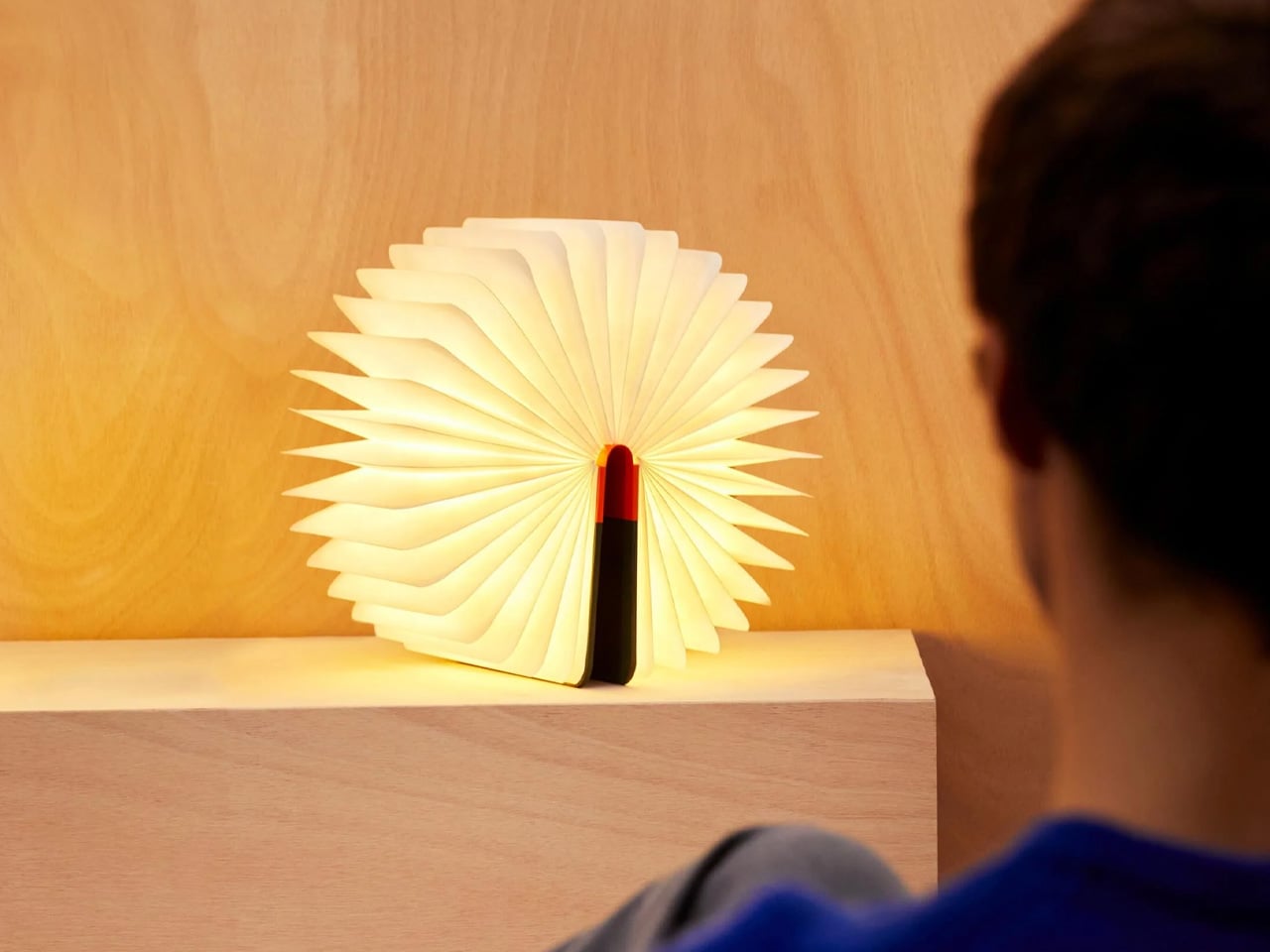
8 Best EDC Knives To Choose Based on Your Outdoor Personality

The gear people carry tends to reflect how they move through the world. A minimalist packs light and intentionally. A tactical thinker layers redundancy into every outing. A weekend adventurer just wants something dependable when the trail gets interesting. Knives fall into that same pattern, and picking the right one has less to do with blade length or steel grade than most people assume. It has everything to do with knowing who you are when you step outside.

Tekto has quietly built one of the more interesting EDC knife lineups available right now, spanning OTF automatics, side-opening folders, and premium button-lock builds. Their range runs from sub-2-inch pocket knives to full tactical folders with Zastava Arms collaborations, and the gap between those two endpoints tells you a lot about how wide the brand’s reach actually is. Seven of those knives, each matched to a distinct outdoor personality, make a strong case that the best EDC knife is simply the one built for the way you already carry yourself.

A3 Delta: The Tactician

“Always has a plan B, and a plan C.”

There is a type of person who checks their gear before leaving the house, not out of anxiety but out of habit. They might work in security or construction, or they might simply live by a readiness mindset refined over years of outdoor experience. The A3 Delta fits naturally into that carry philosophy. What makes it work for that person is the specific combination of automatic speed and deliberate safety design. When speed matters, the spring-activated side-opening mechanism delivers. When the knife needs to sit in a pocket for hours without incident, the button lock and safety switch handle that too.

A crimson red indicator on the rear signals when the blade is ready to fire, while a forward shift on the lock reinforces closure against accidental deployment. The blade runs 3.60 inches of titanium-coated D2 steel in a drop point profile, hardened to 60-62 Rockwell, a range that holds an edge through sustained working use. G10 and forged carbon handle scales keep things grippy without adding unnecessary bulk, though at 5.96 ounces this is a knife with real presence. Glass breaker, ambidextrous pocket clip, and lanyard hole round it out at $179.99.

Click Here to Buy Now: $153 $179.99 (15% off, use coupon code “YANKO”). Hurry, deal ends in 48-hours!

A5 Spry: The Backcountry Hunter

“Doesn’t talk about their gear. Just uses it.”

The A5 Spry suits the kind of outdoors person who values performance that shows up in the field rather than on a spec sheet screenshot. This is the backcountry hunter, the hard-use camper, the person who wants every tool in their pocket to feel fast, capable, and dependable under pressure. Its out-the-front automatic action gives it a clean, direct deployment style that fits someone who likes efficiency and precision in equal measure. The A5 Spry feels most at home with users who spend long days outside and want a knife that carries slim, draws quickly, and handles repeated tasks without fuss.

Tekto built the A5 Spry around a premium S35VN steel blade, a major step up for buyers who care about edge retention, toughness, and corrosion resistance. The blade measures 3.50 inches, and the precision-contoured handle is shaped for a secure, slip-free grip during active use. Its OTF thumb-slide mechanism keeps deployment quick and intuitive, while the overall profile stays compact, light, and easy to pocket for an automatic of this class. The design leans tactical, but the utility is broad enough for daily carry, trail work, and demanding outdoor use.

Click Here to Buy Now: $212.50 $249.99 (15% off, use coupon code “YANKO”). Hurry, deal ends in 48-hours!

F1 Alpha: The Pragmatic Workhorse

“Carries one knife, uses it for everything.”

The F1 Alpha lines up with the person who actually uses their knife throughout the day, whether that means campsite prep, cutting cordage, opening feed bags, or handling the small repetitive jobs that pile up outdoors. This is the pragmatic nomad, the weekend camper, the trades-minded carrier who values reliability over flash and prefers gear that earns its place through use. The F1 Alpha makes sense for someone who wants one knife to cover a wide range of situations without overthinking the choice. It has the kind of rugged, all-around personality that fits people who carry every day and expect their blade to move easily from routine chores to rougher tasks.

Its 3.1-inch blade is made from titanium-coated D2 steel with a fine edge and full flat grind, which gives it clean slicing ability and solid durability for repeated work. The liner lock keeps operation familiar and straightforward, while ceramic ball bearings help the knife open with quick, smooth action. Tekto also gives the F1 Alpha an ergonomic handle built for comfort and grip, plus a reversible deep-carry pocket clip for easy everyday carry. A glass breaker and lanyard hole add emergency and utility value, rounding out a folder designed to stay useful in real-world conditions.

Click Here to Buy Now: $119 $139.99 (15% off, use coupon code “YANKO”). Hurry, deal ends in 48-hours!

F2 Bravo: The Urban Professional

“Dresses well. Carries smart.”

The F2 Bravo is easy to picture in the pocket of someone who wants their EDC to feel intentional, refined, and easy to live with every day. This is the urban professional, the minimalist commuter, the person who appreciates good design and prefers gear that fits seamlessly into a polished routine. They still want utility, of course, but they are not looking for an oversized statement piece clipped to the pocket. The F2 Bravo works for someone who moves between desk, car, coffee shop, and weekend outing without ever needing to swap knives. It has the kind of clean, low-profile presence that suits a thoughtful daily carry style.

At just 2.4 ounces, the F2 Bravo is one of the lightest knives in Tekto’s lineup, which immediately makes it appealing for daily pocket carry. Its slim frame pairs with a titanium-coated D2 steel blade and a liner lock, giving it a straightforward build that stays practical without feeling bulky. The blade length sits in the sweet spot for everyday cutting tasks, while the handle comes in lightweight, durable materials like G10 and forged carbon. Tekto shaped the Bravo with a simpler, more refined silhouette than the chunkier Alpha or Charlie, which is exactly why it lands so well as a gentleman-style folder.

Click Here to Buy Now: $127.50 $149.99 (15% off, use coupon code “YANKO”). Hurry, deal ends in 48-hours!

F3 Charlie: The Heavy-Use Outdoorsman

“Puts every knife through its paces.”

The F3 Charlie belongs with the kind of person who expects a folder to do real work and never feels fully convinced by anything too slim, too polished, or too precious. This is the heavy-use outdoorsman, the rugged camper, the hunter who wants a knife that feels substantial in hand and ready for long days outside. They want grip, blade length, and confidence, especially when the task stops being light-duty. The F3 Charlie fits that mindset well because it carries like a folder but behaves like something built for harder use. It is the natural pick for someone who would rather have extra capability on hand than wish they had brought a bigger knife.

The design leans into that role with a 3.80-inch titanium-coated D2 steel blade, a button lock, and a larger overall frame than the rest of Tekto’s folding lineup. At 4.5 ounces, it still stays relatively light for its size, which gives it a nice balance between carry comfort and in-hand authority. Ceramic ball bearings help keep the action smooth, while the oversized blade and ergonomic handle contours support stronger cutting tasks and longer use sessions. G10 and forged carbon handle options add durability and grip, and the pocket clip and lanyard hole keep it practical for everyday field carry.

Click Here to Buy Now: $127.50 $149.99 (15% off, use coupon code “YANKO”). Hurry, deal ends in 48-hours!

F4 Echo: The Collector/Adventurer

“Appreciates the story behind the steel.”

The F4 Echo feels tailored to the person who wants their everyday carry to have character, heritage, and a little more presence than the average folder. This is the collector-adventurer, the gear enthusiast, the person who notices collaboration details and actually cares where a design language comes from. With its Zastava connection and more elevated finish, the Echo speaks to someone who enjoys utility but also values the narrative built into the object. It suits a user who might spend one weekend at the range and the next out on the trail, carrying the same knife because it satisfies both performance instincts and collector taste.

Tekto gave the F4 Echo a titanium-coated S35VN blade in a reverse tanto profile, which immediately places it near the premium end of the lineup. The button lock adds fast, easy operation, while the aluminum and G10 handle construction keeps the knife light without making it feel insubstantial. Design details tied to the Zastava collaboration give it a more distinctive visual identity, especially in the different colorways inspired by rifle heritage. The result is a folder that blends edge retention, corrosion resistance, and cutting strength with a look that feels deliberate and memorable.

Click Here to Buy Now: $170 $199.99 (15% off, use coupon code “YANKO”). Hurry, deal ends in 48-hours!

A3 Delta Mini: The Urban Minimalist

“Doesn’t need a big knife. Just needs the right one.”

The A3 Delta Mini fits the kind of person who wants automatic deployment and tactical confidence in a smaller, easier-carry package. This is the urban minimalist, the light-packing commuter, the outdoorsy type who still pays attention to pocket space and carry comfort. They want a knife that feels capable when called on, but never overbuilt for the rhythm of everyday life. The A3 Delta Mini works well for someone who likes the quick response and mechanical satisfaction of a side-opening automatic, yet prefers a tool that stays compact and controlled throughout the day. It feels like the right match for first-time automatic buyers too, especially those who want utility without stepping straight into full-size territory.

The Mini carries the same core design language as the larger Delta, including the button lock and safety switch that help manage automatic deployment with a little more peace of mind. Tekto positions it as a more compact version of the same spring-activated side-opening formula, giving users a smaller footprint without abandoning the tactical styling. That makes it easy to slip into lighter pockets, smaller carry setups, or daily routines where bulk becomes the first thing people notice. It is the Delta concept, trimmed down for users who value precision, portability, and quick access.

Click Here to Buy Now: $119 $139.99 (15% off, use coupon code “YANKO”). Hurry, deal ends in 48-hours!

A5 Spry Mini: The Stealthy Pocket Carrier

“Barely notices it’s there until they need it.”

The A5 Spry Mini makes the most sense for someone who wants their knife to disappear into a pocket and stay out of the way until the exact moment it is needed. This is the stealthy pocket carrier, the city dweller, the traveler, the person who values discretion as much as performance. They like the speed and clean action of an OTF automatic, but they do not want the size or visual presence that usually comes with that format. The Spry Mini suits people who keep their carry lean, efficient, and highly intentional, especially those who want a premium-feeling tool that can live comfortably in lighter clothing, smaller pockets, or minimalist setups.

Its appeal starts with scale. The blade measures 1.85 inches and the knife weighs about 2.15 ounces, which puts it firmly in micro-EDC territory while still preserving the quick thumb-slide deployment that defines the Spry line. Tekto equips it with S35VN steel and a titanium-coated blade, giving this compact automatic stronger edge retention and corrosion resistance than its size might suggest. The handle is contoured for grip and built to stay light, which helps the knife feel controlled and easy to carry throughout the day. For people in stricter markets, the sub-2-inch blade also gives it added relevance as a California-legal OTF option.

Click Here to Buy Now: $153 $179.99 (15% off, use coupon code “YANKO”). Hurry, deal ends in 48-hours!

The post 8 Best EDC Knives To Choose Based on Your Outdoor Personality first appeared on Yanko Design.
Gen Z Is Obsessed With These 5 Cassette-Era Gadgets & They Just Got a Full Design Upgrade for 2026

Something shifted in how people want to listen to music. Streaming gave everyone access to everything, and somewhere in that abundance, the experience got thinner. You stopped owning albums. You stopped reading liner notes or staring at cover art while the opening track played. The playlist just kept moving forward. That isn’t nostalgia talking. It’s a design problem, and one the cassette era solved without knowing it was solving anything.

The products worth paying attention to in 2026 absorbed the analog era’s lessons and built something genuinely new from them — better components, better battery life, cleaner construction. Cassette-era warmth, fully reengineered for a world that also has Bluetooth and USB-C. From a $49 speaker shaped exactly like a real mixtape to a 104-watt boombox covered by WIRED and Forbes at launch, each one makes a specific case for listening differently.

1. Side A Cassette Speaker

The cassette tape was always more than a format. It was an object you labeled by hand, kept in a glove compartment, or assembled specifically for someone who needed to hear certain songs in a certain order. The Side A Cassette Speaker takes that intimacy and wraps it around a Bluetooth speaker that earns a second look before it plays a note. Shaped faithfully like a real mixtape, transparent shell and Side A label intact, it sits in its clear case-turned-stand like a relic that also connects to your phone. At $49, it is the most honest nostalgia product in this category right now, because it commits to the premise completely rather than gesturing at it from a polite distance.

What keeps it practical day to day is how little it demands from you. Bluetooth 5.3 handles pairing, a microSD slot covers offline listening, and at 80 grams, it disappears into a jacket pocket without thought. Battery life runs six hours at maximum volume, and a full recharge takes two, which means it soundtracks a full workday and refuels overnight. The sound is tuned warm, which suits the object better than raw precision ever could. For anyone who spent time making mixtapes, or anyone who didn’t but understands why people did, this is the version of that feeling you can carry and actually hear in 2026 rather than only remember.

Click Here to Buy Now: $49.00

What We Like

  • Cassette-faithful design works as a display piece when it isn’t playing
  • Bluetooth 5.3 and a microSD slot give you two reliable ways to listen

What We Dislike

  • A single-driver setup won’t satisfy anyone looking for real volume or full-range sound
  • Only three units available at the time of writing

2. RetroWave 7-in-1 Radio

The boombox era was about more than cassette decks. It was about radios you could carry anywhere, tuning dials you could feel through your fingers, and sound that filled a room without asking permission first. The RetroWave 7-in-1 Radio captures that in a compact, Japanese-inspired frame. The tactile tuning dial, the warm retro casing, and AM/FM/shortwave reception give it the presence of something lifted from a 1984 shelf. It also streams Bluetooth, plays MP3s from USB or microSD, runs an LED flashlight, an SOS alarm, a hand-crank and solar charging, and a 2000mAh power bank that charges other devices when yours runs low. Seven functions in one object, packaged inside something that earns its place on a shelf every single day.

The seven functions working together are where the RetroWave earns its position in a 2026 home rather than a nostalgia market. Daily desk companion and off-grid emergency tool are roles that typically live in completely separate product categories, and the RetroWave collapses them into one object without obvious compromise on either side. The battery delivers up to 20 hours of radio time on a single charge. Solar and hand-crank inputs keep it running when the grid fails or the trail goes deeper than expected. At $89, it solves problems you haven’t had yet while looking precisely right sitting on a counter, a shelf, or inside a go-bag. That specific combination is considerably harder to design than it appears.

Click Here to Buy Now: $89.00

What We Like

  • Seven functions cover daily listening, emergency power, and off-grid communication in one device
  • AM/FM/shortwave reception works without any internet connection

What We Dislike

  • 8W speaker output is modest for anyone expecting outdoor or large-space sound
  • Solar charging acts as backup only and cannot fully recharge the battery independently

3. FiiO Echo Mini (Snowsky)

The Walkman moment was never really about audio quality. It was about having your music with you, completely yours, untouched by anyone else’s programming or curation. The FiiO Echo Mini, released under the Snowsky imprint, brings that feeling back in a form that looks exactly like a vintage cassette player from the outside and performs like a current hi-res audio device from the inside. Dual CS43131 DAC chips from Cirrus Logic handle the audio processing, earning it Hi-Res certification from the Japan Audio Society. The retro interface and cassette-player proportions are a direct reference to early Sony and Aiwa portables, down to the tactile controls and the way it sits in the palm of your hand.

Where the Echo Mini separates itself from the nostalgia-only tier is in what it can actually do for your listening. It supports FLAC, DSD, WAV, OGG, and other lossless formats, and accepts microSD cards up to 256GB, which means a library that would have filled an entire shelf of cassette cases in 1988 now fits in a slot smaller than your thumbnail. Dual headphone outputs and Bluetooth connectivity cover both wired and wireless listening from the same device. An independent power supply keeps the audio circuitry isolated from interference, which is the kind of engineering detail that doesn’t show up in the design but surfaces immediately in how it sounds. This is what a Walkman would have become if the engineers had forty more years to keep working on it.

What We Like

  • Dual DAC chips and Hi-Res certification deliver audio quality that the original Walkman never came close to
  • 256GB microSD support with multi-format lossless playback builds a serious portable library

What We Dislike

  • Playback-only with no recording function, which rules it out for anyone who wants to make tapes
  • The deliberate retro cassette aesthetic won’t suit every listener or every room

4. Retrospekt CP-81 Portable Cassette Player

The CP-81 is the cassette player that stopped trying to be a hi-fi device and leaned fully into being a cultural artifact, and somehow that turned out to be exactly right. The clear plastic body shows the mechanism in full, the controls are exactly where you expect them, and the included RFH-01 headphones with their orange foam cushions make the whole package feel like something pulled from a very specific and beloved corner of 1983. Sold at MoMA Design Store, Nordstrom, and Urban Outfitters, it has collaboration editions with Miffy, Peanuts, and Hello Kitty that treat the cassette player as a canvas rather than just a device. It has 4.8 stars across 174 reviews, which is noteworthy.

What grounds it is that it actually works as a cassette player, not just as a shelf piece. The CP-81 plays, fast-forwards, rewinds, and records, with a line-in microphone jack that most modern cassette players quietly dropped from the spec sheet. Power comes from two AA batteries or a USB-C input, so it runs on whatever you have available. The people who buy it tend to keep it out on a desk rather than in a drawer. That’s partly the design doing its job, and partly because a cassette player that looks this considered, at this price, with this many ways to use it, is genuinely hard to put away.

What We Like

  • Records as well as plays, with a microphone jack that makes line-in recording straightforward
  • USB-C and AA battery power options mean it works wherever you need it to

What We Dislike

  • The clear plastic body shows every fingerprint, which matters more than it should for something this tactile
  • Collaboration editions sell out quickly, and availability varies across retailers

5. We Are Rewind Curtis Boombox GB-001

The boombox never fully disappeared. It got quieter, more compact, and less certain of what it was trying to be. The We Are Rewind Curtis GB-001 has none of that uncertainty. At 19 inches wide and 15 pounds, it is a proper boombox in the original meaning of the word: something you carry by its full-width folding handle and set down in a room that then belongs to the music. Four hi-fi speakers, two Class D woofer amplifiers, and two tweeters, push 104 watts across a frequency response of 40 to 20,000Hz. The cassette deck plays and records. The guitar amp input takes a real guitar. These are functional commitments, not marketing features, and they give the GB-001 the same confidence the original boombox had before the category forgot what it was for.

What lifts the GB-001 beyond a premium nostalgia product is how fully it commits to every part of the premise. Bluetooth 5.4 covers streaming when the tapes run out. The backlit VU meters — the detail WIRED noted immediately in its January 2026 review and the first thing every Gen X person in the room points out without being asked — are deliberately and gloriously analog. Forbes covered the North American launch the same week. Techmoan put it on camera in December 2025. The coverage it has earned reflects what the product actually is. At $579, this is the most serious purchase on this list, and also the most direct one: if you want a boombox that means it, this is the only new boombox in 2026 that does.

What We Like

  • 104 watts across four hi-fi speakers produces real, room-filling sound rather than novelty volume
  • Cassette recorder and guitar amp input make it a functional, creative instrument, not only a playback device

What We Dislike

  • At $579, the full value rewards buyers who use the cassette deck regularly, not just Bluetooth
  • Battery life has been flagged across multiple reviews as shorter than expected for a unit of this size and price

The Cassette Era Didn’t Come Back. It Came Back Better.

None of these products asks you to give up modern life for a feeling. The Side A speaker pairs over Bluetooth. The RetroWave runs 20 hours without a socket. The Echo Mini carries a full lossless library on a card smaller than a thumbnail. The CD Cover Player hangs on a wall. The Curtis boombox records. The best version of the cassette era is the one being made right now.

What makes each worth the attention isn’t nostalgia as a pitch. It’s the specific design decision behind each object. A speaker shaped like a tape because that was the only honest form. A radio that belongs in a go-bag as much as on a shelf. A CD player that brings the artwork along. These are for people who want music to feel like something. That instinct is now being answered.

The post Gen Z Is Obsessed With These 5 Cassette-Era Gadgets & They Just Got a Full Design Upgrade for 2026 first appeared on Yanko Design.