Brunswick’s latest boats at CES 2026 feature edge AI, self-docking capabilities and solar power

If you've never docked a boat before, consider yourself lucky. There are plenty of popular TikTok channels devoted to shaming those who bring their craft back home clumsily or berth them with something less than finesse. Tricky crosswinds, unpredictable surf and even the jeers of passersby can make it a stressful experience at the best of times.

Brunswick, which owns more than 50 water-borne brands like Sea Ray, Bayliner and Mercury Marine, has a solution. It's demonstrating some self-docking tech called AutoCaptain at CES 2026 that makes this process a cinch, plus a fleet of other innovations that, in some cases, leave some of the smart cars on the show floor looking a bit remedial.

One of those technologies is edge AI. While in-car AI is an increasingly common feature, those agents are exclusively running remotely, relying on cellular connections to offload all the processing power required to drive a large language model.

Sadly, that won't always work on a boat.
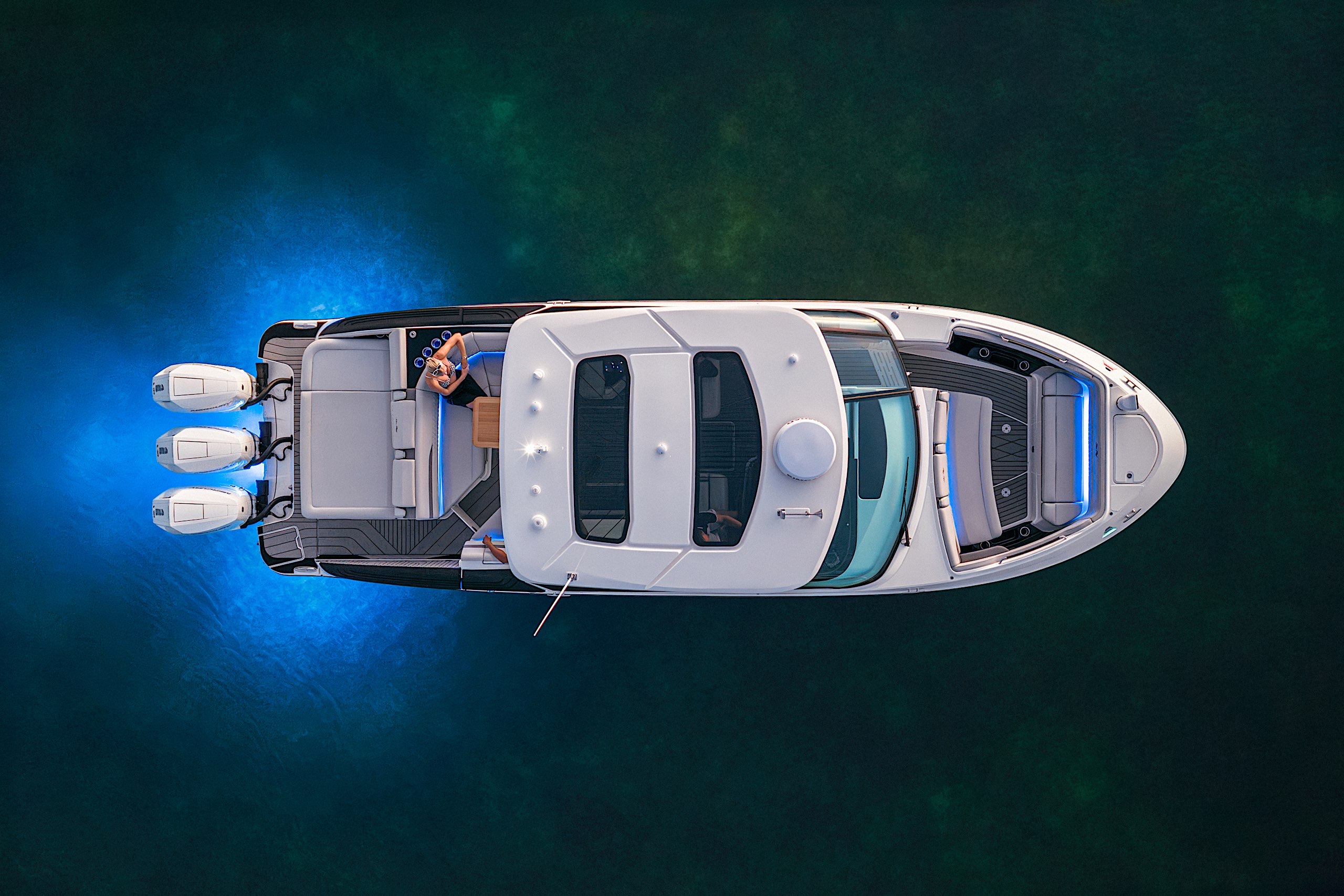
One of Brunswick's tech-equipped boats
Brunswick

"One of the things about AI for boats is you don't have connectivity, so there is some edge compute required," David M. Foulkes told me. He's chairman and CEO of Brunswick.

Many of the company's boats do have active cellular connectivity, but head far enough offshore, and you're on your own unless you're packing Starlink or the like.

To solve that, Brunswick is running advanced SoCs from NVIDIA and other providers that enable running a limited agent offline — on the edge, as it were. When offline, Misty, as the on-boat AI assistant is called, won't be able to make dinner reservations or craft a 3,000-word treatise on the history of America's relationship with Greenland. It can, however, help with navigation or boat settings.

"It'll help answer the kind of questions that you might need to take out a manual to understand and maybe act as an assistant to make your boating a bit smoother," Foulkes said.

When the company's smart boats are connected, they offer some degree of remote control. No, you can't drive it around the docks and freak out your pier-mates, but you can check on the boat remotely to make sure nobody's trying to stow away. You can even precondition it to get the cuddy cabin nice and cool before you come aboard.
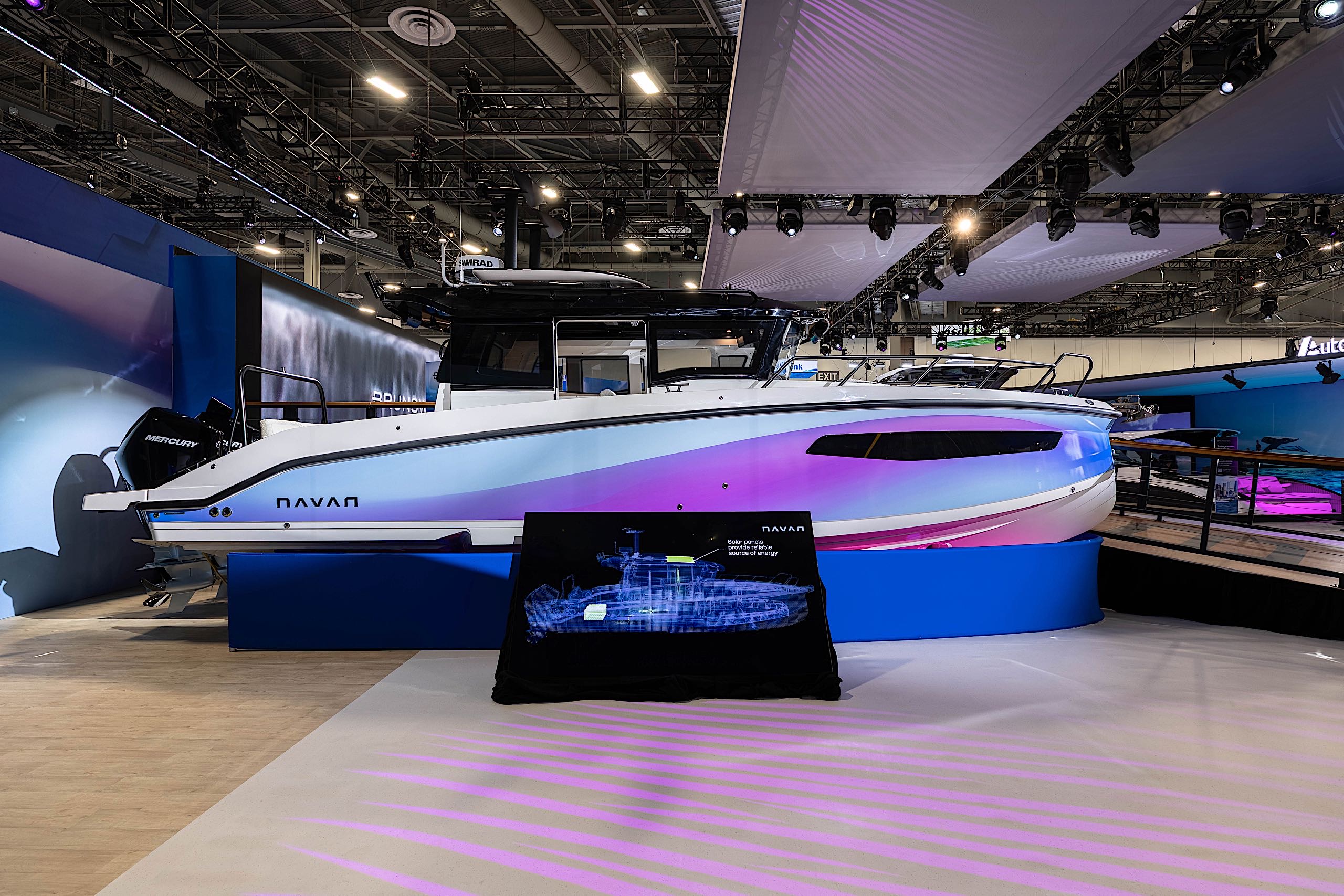
Navan C30
Navan C30

Power for that, and a variety of other onboard systems, can come from an integrated power system called Fathom, which has a lot in common with modern smart home tech. Solar panels on the roof (nicely disguised beneath a black mesh) collect power to recharge an onboard battery, with various sizes upwards of 30 kWh depending on the boat's size. That battery can also be recharged by the onboard motors, like the three 425-horsepower V10s the Sea Ray SLX 360 drydocked at the Brunswick booth at CES 2026.

The juice in that battery can then be used to power a variety of onboard systems, even charging a pair of electric hydrofoils, which another of the company's boats, called the Navan C30, had strapped on the roof.

You'll also find cameras on the roof of these boats. That's how the AutoCaptain feature works, numerous fisheye lenses scanning the water in every direction. Approach a pier and the AI assistant asks if you'd like some help docking. Just tap the button on the touchscreen, then kick back and let Misty do the driving.

Between automated docking, the in-cabin AI assistant and the smart power distribution system, Brunswick's boats offered some impressive tech. But then they'd have to, given the cost. The Sea Ray SLX 360 Outboard has a starting price of $586,000. The smaller Navan C30 is a rather more attainable, but still extreme, at $227,500. That’s still probably cheaper than hiring a real captain, though.

This article originally appeared on Engadget at https://www.engadget.com/transportation/brunswicks-latest-boats-at-ces-2026-feature-edge-ai-self-docking-capabilities-and-solar-power-185500213.html?src=rss

Niko is a robotic lift for people with limited mobility that doesn’t require a caregiver’s help

A startup called ReviMo has developed a robotic system that provides a way for people with limited mobility to lift and transfer themselves — like from a bed to a wheelchair, or to the toilet — without the assistance of a caregiver. ReviMo's Niko has two sets of arms: one that forms a "scooping seat" that slides underneath the person to lift them up, and the other encircling their torso and providing a backrest. It can be operated both by remote and using the controls on its dashboard. Niko in its current iteration can carry up to 250 pounds, but the team says it's working on a version that can support up to 400 pounds.

In addition to aiding in transfers, Niko can lift the rider to a standing level and offers retractable handlebars for support. It also has the potential to be a big help to caregivers, who in many cases assist with multiple transfers every day. Even in a situation where a person isn't able to operate it by themselves, Niko facilitates a transfer that requires much less physical exertion than today's common methods, like sling-based mechanical lift systems. At CES, founder Aleksandr Malaschenko gave a demonstration of its lifting capabilities, using it to scoop him up from a chair and bring him out into the aisle. 

Niko is designed to work with most wheelchairs and be compact enough to navigate small bathrooms. It can position a person right above a toilet, and there are disposable seat covers. The goal is to help people with limited ability achieve more independence.  

It is the kind of device that, if it delivers on its promises, could be a game-changer for people with limited mobility and paralysis, and their loved ones. My dad was diagnosed with ALS when I was a kid, and I learned how to operate a Hoyer lift by the time I was in middle school. This strikes me as something we would have really appreciated having around. Malaschenko has said the inspiration for the robotic system came from being a caregiver for his grandfather following a stroke. 

Niko will cost about $15,000, though the team said it's working to get it covered by insurance. The company is also offering lower prices for customers who sign up for one of its premium waitlists, and there are options to rent it for those who would only need a lift and transfer system temporarily. 

This article originally appeared on Engadget at https://www.engadget.com/transportation/niko-is-a-robotic-lift-for-people-with-limited-mobility-that-doesnt-require-a-caregivers-help-184500703.html?src=rss

Ubisoft is shutting down a studio 16 days after it unionized

Ubisoft is closing a Canadian studio just over two weeks after it unionized. In a dizzying claim, the company told GamesIndustry.biz that the closure of Ubisoft Halifax was part of "company-wide actions to streamline operations" and unrelated to the unionization.

On December 22, Ubisoft Halifax announced that 61 of its workers had joined the Game & Media Workers Guild of Canada. At the time, the studio's lead programmer, Jon Huffman, told CTV News that 73.8 percent of employees voted in favor of unionizing. Ominously in hindsight, he had described the decision as a "huge relief." The studio was working on mobile titles within the Rainbow Six and Assassin's Creed franchises.

Ubisoft's official statement framed the shutdown as part of a broader pattern of financial belt-tightening. "Over the past 24 months, Ubisoft has undertaken company-wide actions to streamline operations, improve efficiency, and reduce costs," the company said. "As part of this, Ubisoft has made the difficult decision to close its Halifax studio. 71 positions will be affected. We are committed to supporting all impacted team members during this transition with resources, including comprehensive severance packages and additional career assistance."

In October, Ubisoft announced that Massive Entertainment, developer of The Division series, Star Wars Outlaws and Avatar: Frontiers of Pandora, was offering buyouts to some employees. The company framed that move as a "voluntary career transition program." Over the past few years, Ubisoft has closed offices and laid off workers in San Francisco, London and Leamington. In 2024, the company's headcount dropped by eight percent.

This article originally appeared on Engadget at https://www.engadget.com/gaming/ubisoft-is-shutting-down-a-studio-16-days-after-it-unionized-183000983.html?src=rss

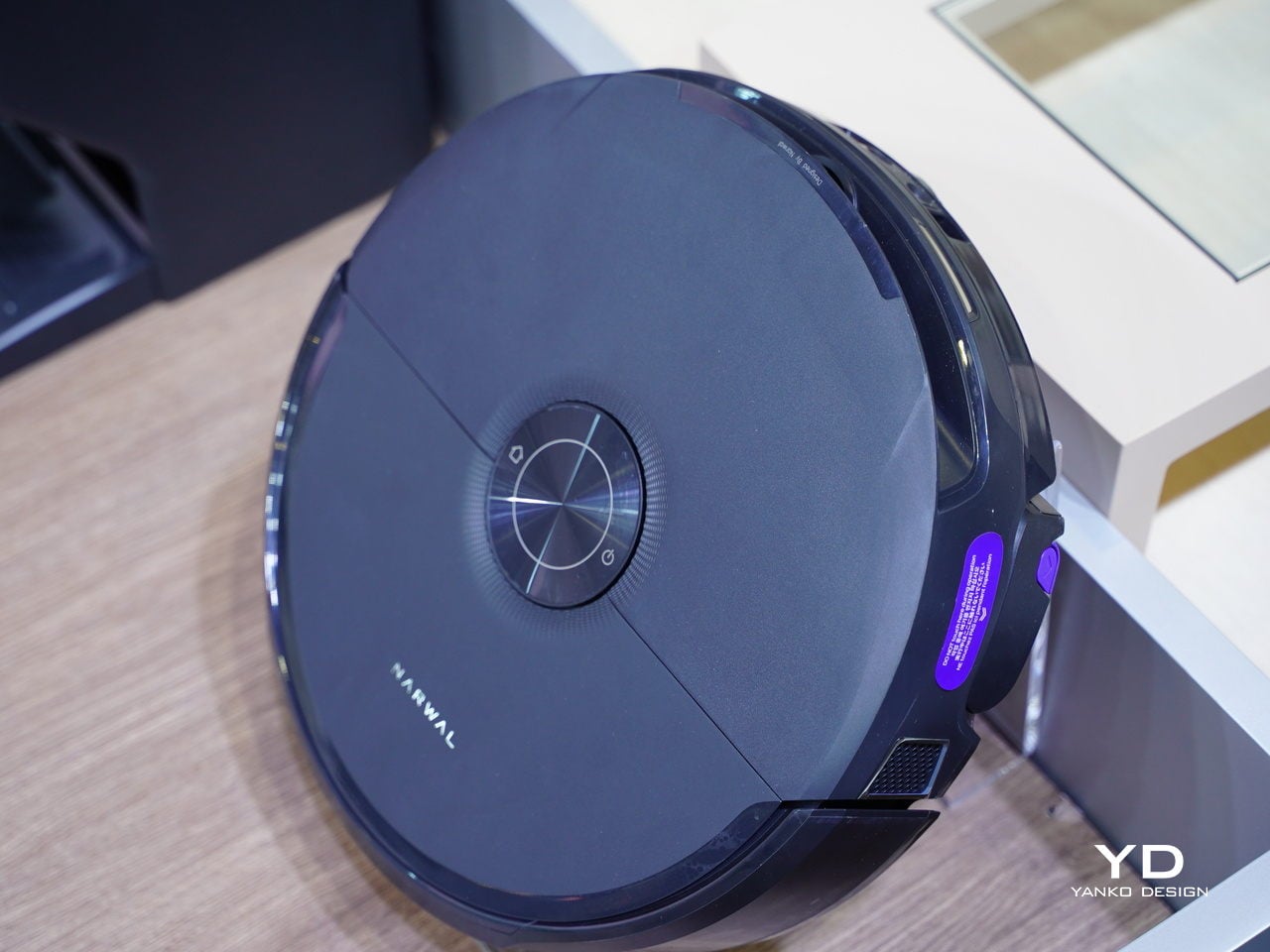
Narwal Flow 2 at CES 2026: Sees Everything, Cleans Smarter

Robot vacuums quietly went from novelty to background appliance, yet many still behave like polite bumper cars. They avoid walls, follow schedules, and send maps, but they do not really understand what they are seeing. A cable, a sock, and a pet toy often get the same treatment, which is why people still hover nearby during automatic cleaning runs, ready to intervene when the robot inevitably gets confused by something obvious.

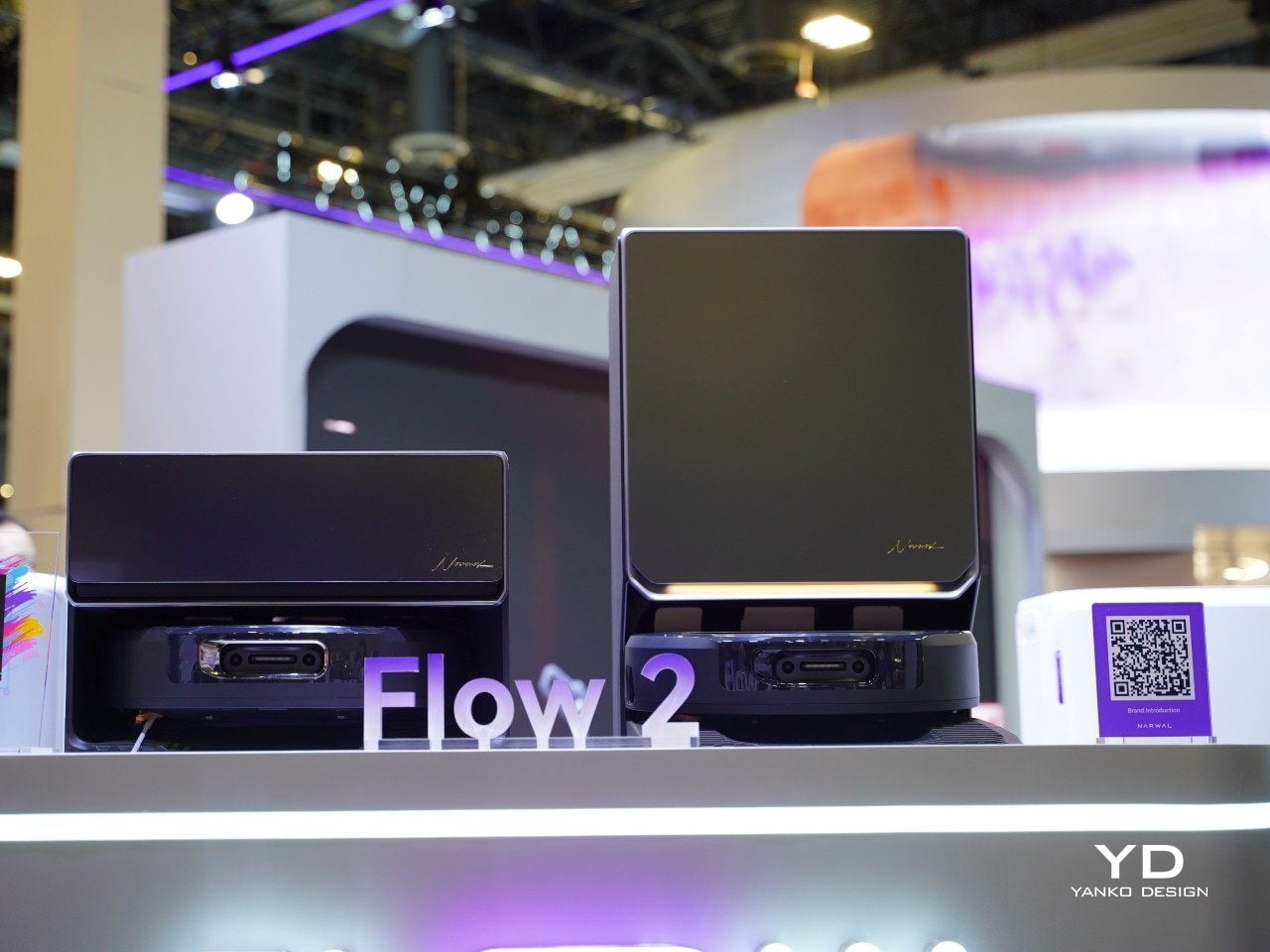
Narwal Flow 2 is the latest step in the brand’s attempt to build a robot that actually sees and decides. It builds on earlier DirtSense and dual-camera work, but now leans on a NarMind Pro autonomous system and a foundation-model brain to recognize unlimited objects, assign risk levels, and adjust both path and cleaning strategy. This is less about more suction and more about better judgment, the kind that changes behavior based on whether it is looking at a table leg, a pet bowl, or a crawling mat.

Designer: Narwal

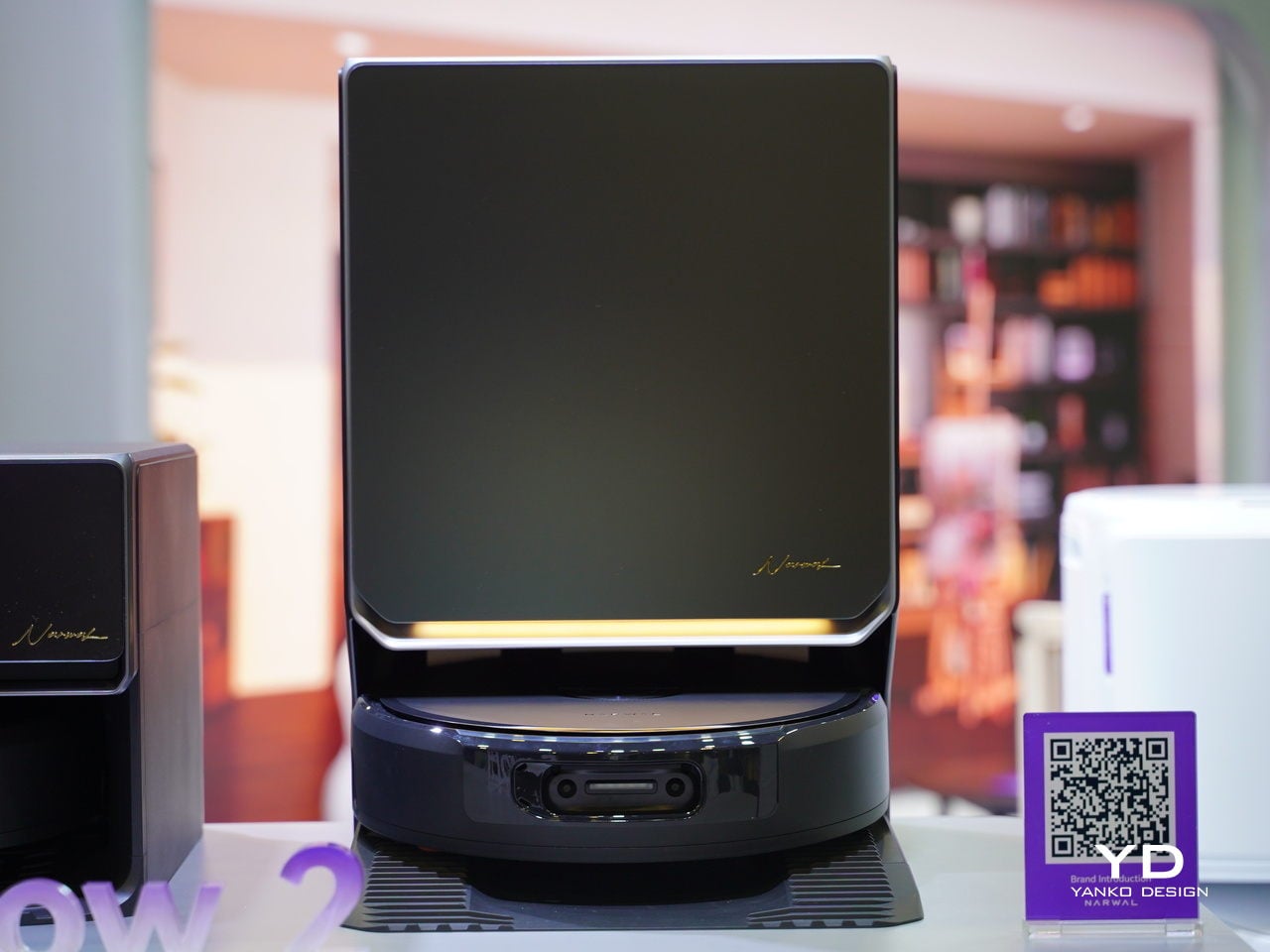
The 2026 flagship also adopts a brand-new design outlook, with a rational arc-form dock featuring a frosted glass panel on the front and easy-lift water tanks shaped for straight-up lifting. The integrated status light bar communicates through the frosted glass instead of scattered LEDs, giving the dock a more premium, sleek presence. It is designed to look less like an appliance you hide in a corner and more like a considered object that can live in visible spaces without visual friction.

A Robot That Sees and Decides

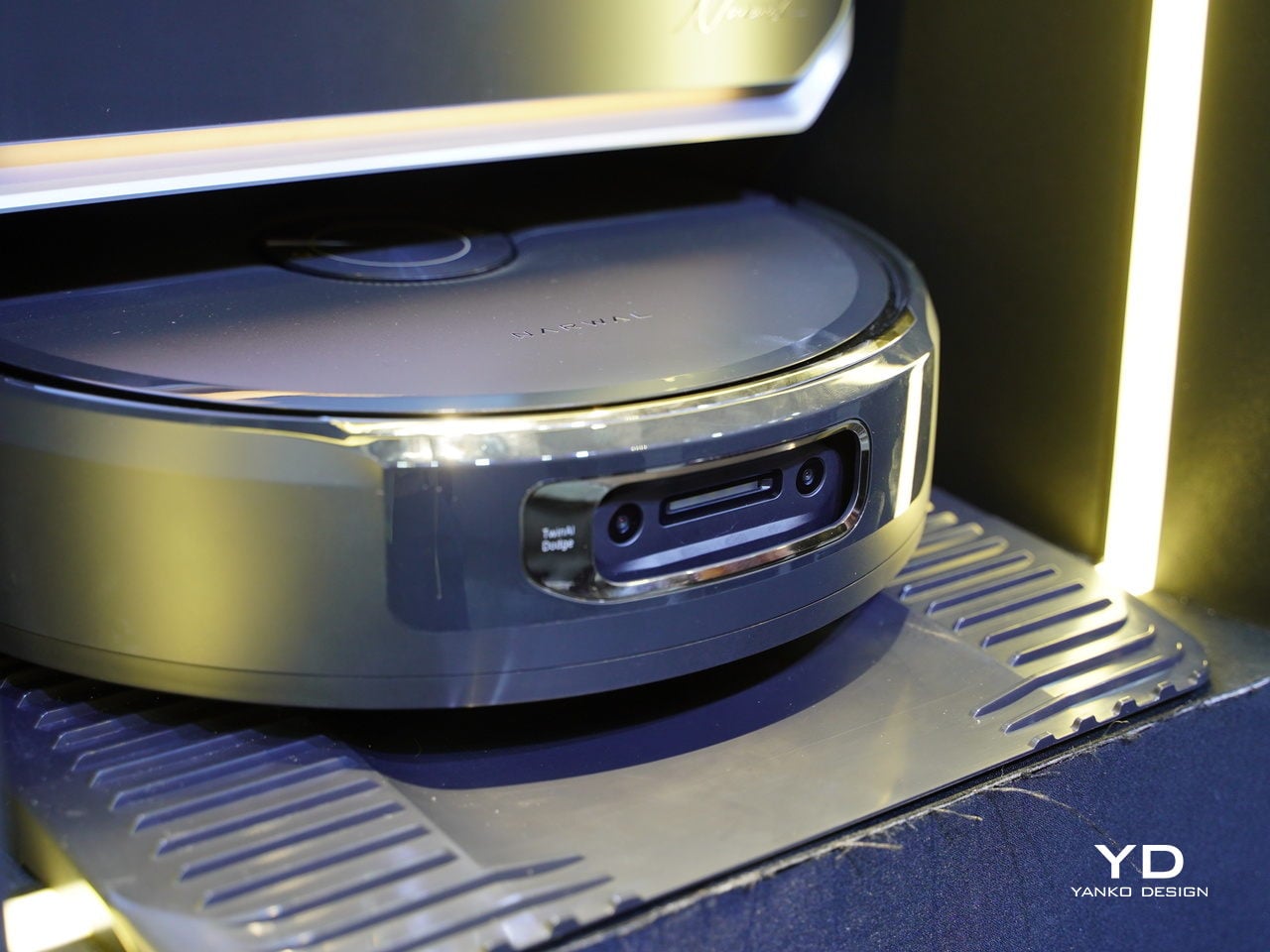
The Narwal Flow 2 uses dual RGB cameras and a VLA OmniVision model running on a 10 TOPS AI platform to capture 1.5 million data points per second. It categorizes objects as no-risk, low-risk, mid-risk, or high-risk, then adjusts distance and behavior accordingly. Walls invite close cleaning within 8 mm, pet bowls get 20 mm of space, and high-risk items like pet waste trigger a protective bypass at 70 mm.

Adaptive smart cleaning means Flow 2 uses different strategies for dry debris, wet spills, and heavy messes. Dual-direction mopping keeps the side brush from dragging dirty water into clean zones, with a reverse pass to protect the brush and a forward pass to lift stains. Cloud-based recognition feeds back into the model, so the robot becomes more tuned to a specific home over time, learning which corners collect dust and which zones need extra attention.

Living with Pets, Babies, and Busy Schedules

In Pet Care Mode, Flow 2 automatically identifies pet-active zones and adapts for deeper cleaning there, while treating pet bowls, beds, and toys as objects to avoid bumping or soaking. The same visual system that keeps it away from waste can be used to scan for a missing pet on command, turning the robot into a quiet scout when you are not home and want to make sure your dog is not locked in a bedroom.

Baby Care Mode shifts behavior around cribs and crawling mats. Flow 2 can drop into ultra-quiet mode near a sleeping baby, recognize toys left on the floor and nudge you to pick them up, and avoid rolling over dedicated play areas to keep them as clean as possible. The goal is not to replace parenting, but to make the robot feel like it understands which zones are more sensitive than others, adjusting volume and intensity without manual scheduling.

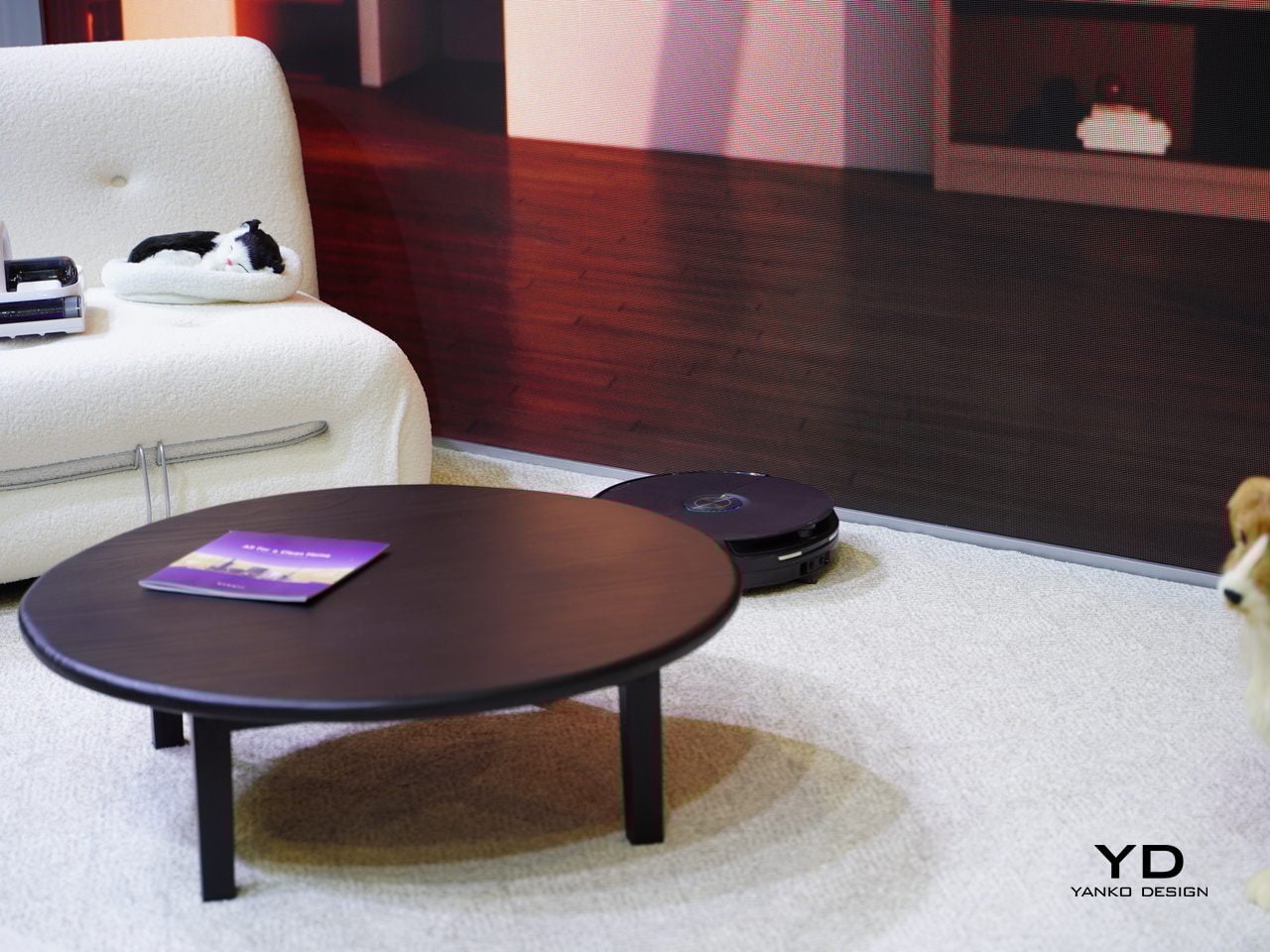
The updated dock and mapping round out the picture. TrueColor 3D mapping turns the home into a more intuitive map where you can tap rooms or furniture for targeted cleaning, while AI Floor Tag remembers floor types and zones. The all-in-one base station now uses a reusable dust bag and washable debris filter, along with hot-water self-cleaning and hot-air drying, so the system stays hygienic without filling a trash bag with single-use consumables every few weeks or emitting odors between runs.

Mopping That Stays Clean While It Cleans

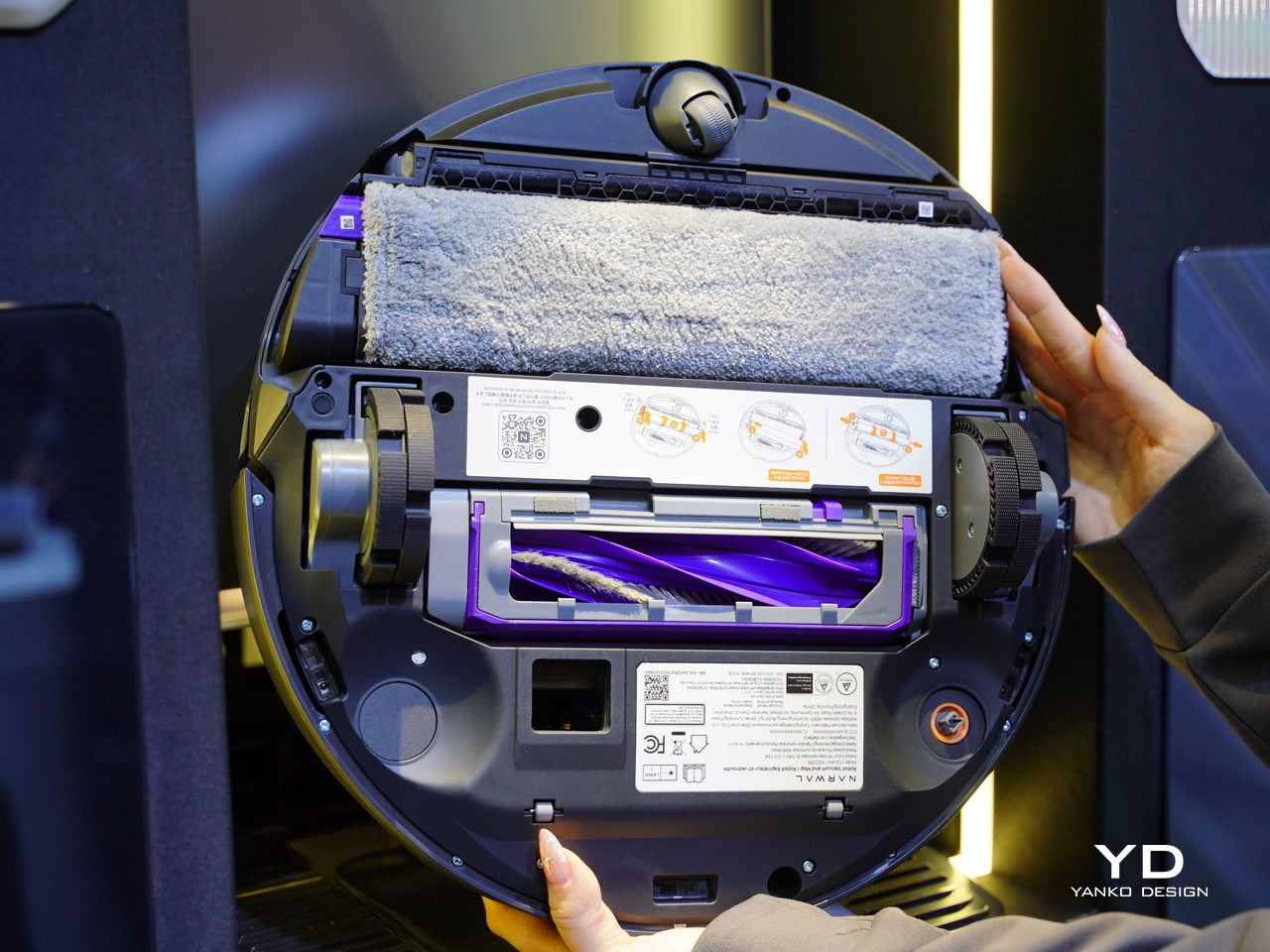
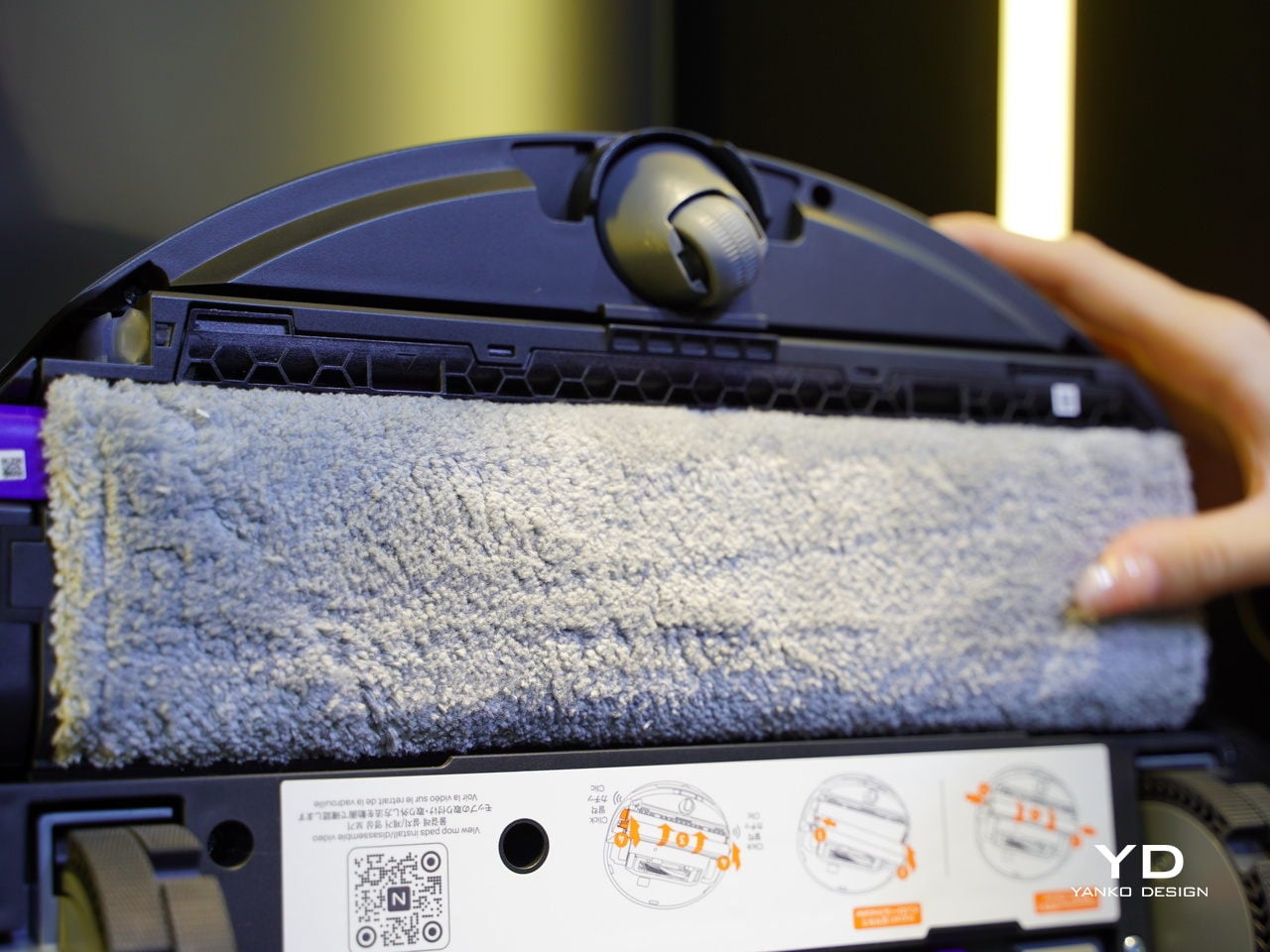
The FlowWash mopping system treats the mop like a moving track rather than a pair of pads. Sixteen angled nozzles continuously infuse the track with fresh water, while a reverse-rolling mop applies 12 N of downward pressure and 140 °F heat. A tight scraper presses against the fabric to strip away dirt in real time, so the surface touching the floor is constantly refreshed instead of slowly turning into a gray sponge you would not want to touch.

Wastewater extraction and storage, with a built-in stirrer in the dirty tank, prevents residue and odors from settling. That matters in homes where mopping is not just about dust, but about food spills, pet accidents, and whatever kids drag in from outside. The system is designed so that by the time Flow 2 returns to its dock, both the floor and the mop have been treated, not just one at the expense of the other.

On a mixed floor with tile in the kitchen and wood in the living room, Flow 2 can push harder and use hotter water on stubborn kitchen stains, then ease off as it moves into more delicate areas. EdgeReach capabilities let the track mop get within 0.19 in of walls and baseboards, reducing the need for manual follow-up with a traditional mop that you have to wring out by hand.

Beyond the Floor

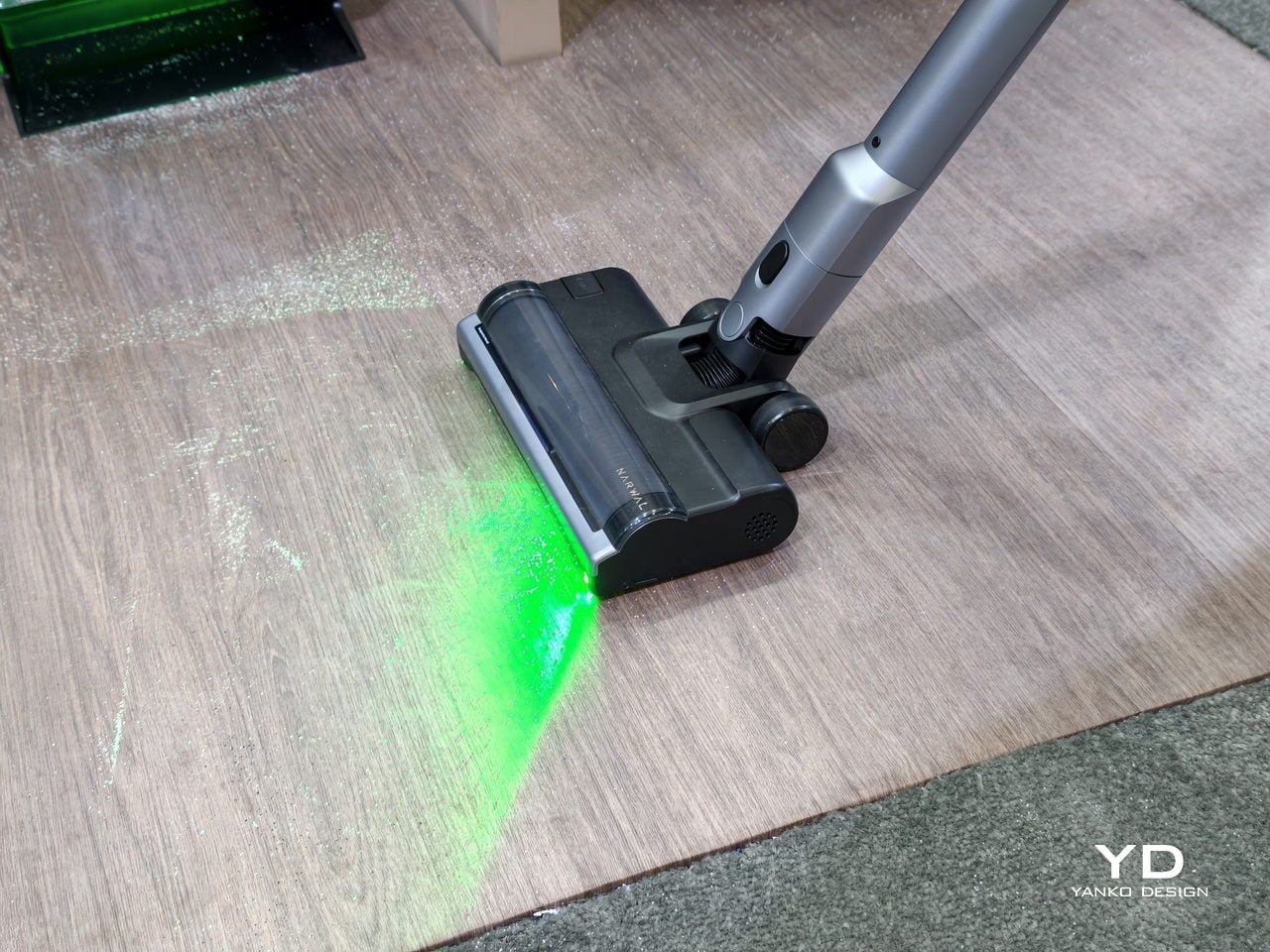
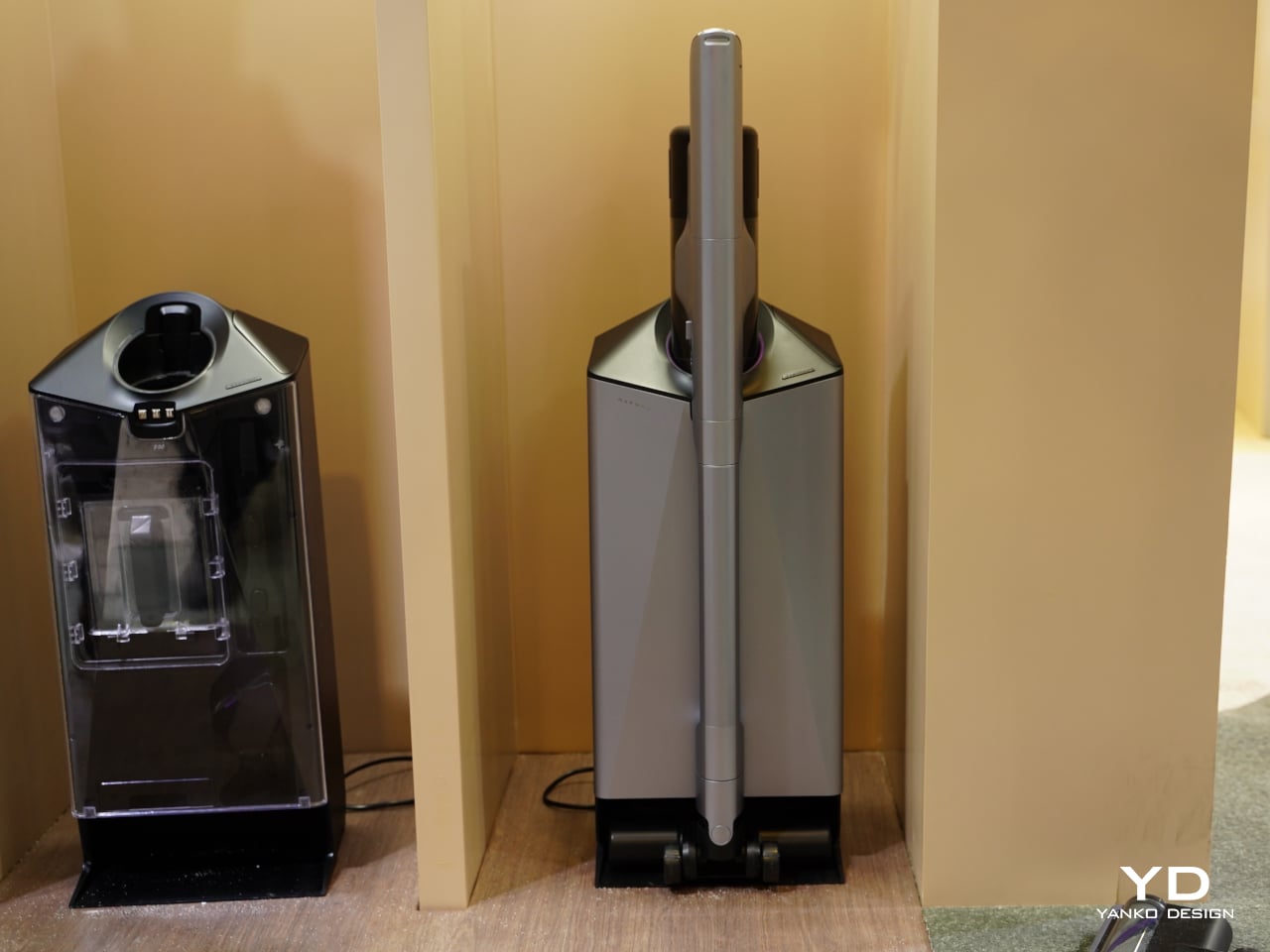
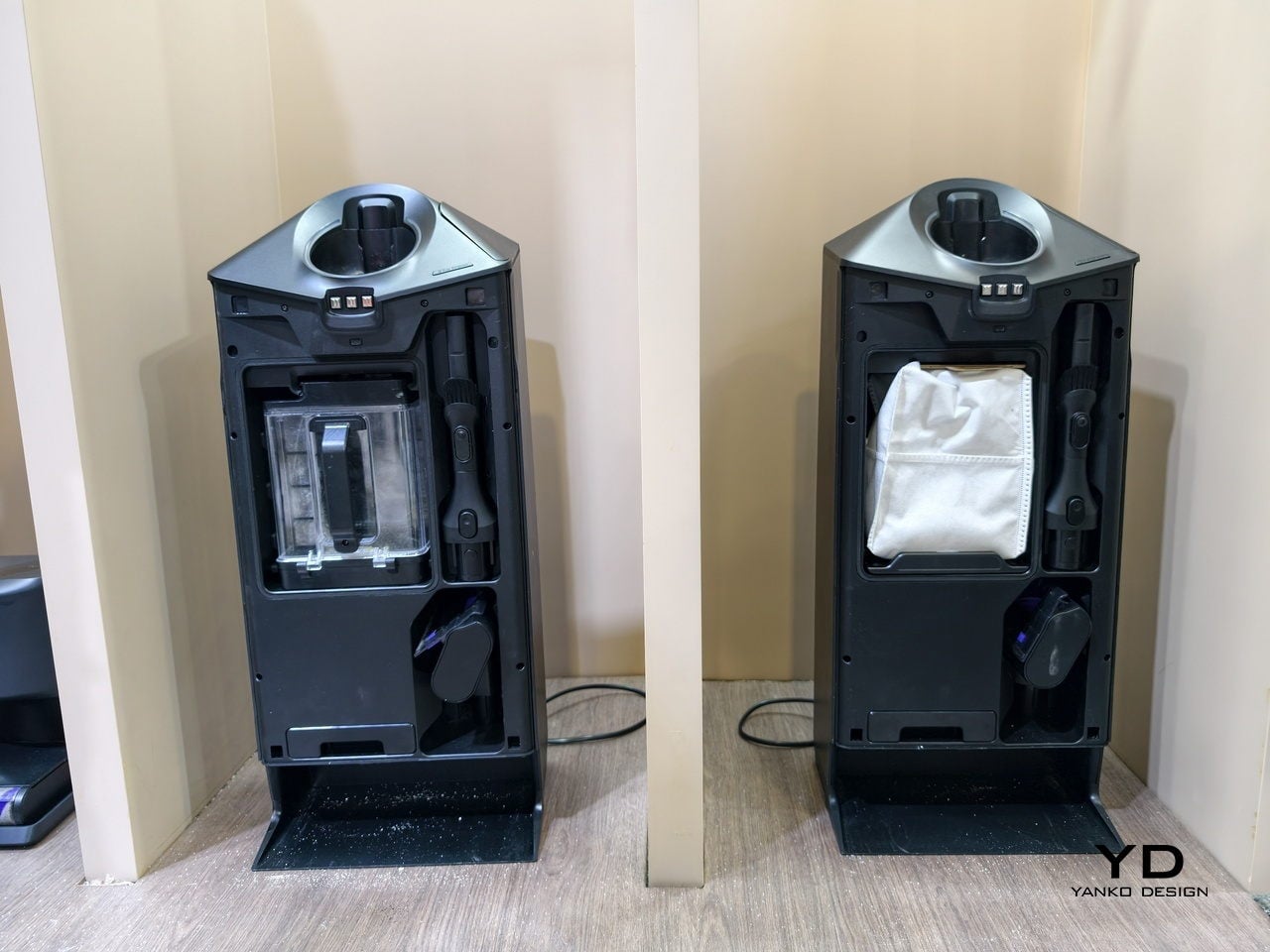
The Flow 2 is not the only thing Narwal is launching at CES 2026. The V50 Series cordless vacuum brings the same auto-empty, smart dirt detection philosophy to a stick form, with a compact dock that handles a 3.2qt dust bin, active dust scraping, and push-in charging. At 3.1lb with dual detachable batteries and 210 AW of suction, it combines CarpetFocus Mode and full-cycle de-tangling with a dirt-detection headlight and multi-cyclone H13 filtration, turning a handheld into something that feels almost as hands-free as a robot.

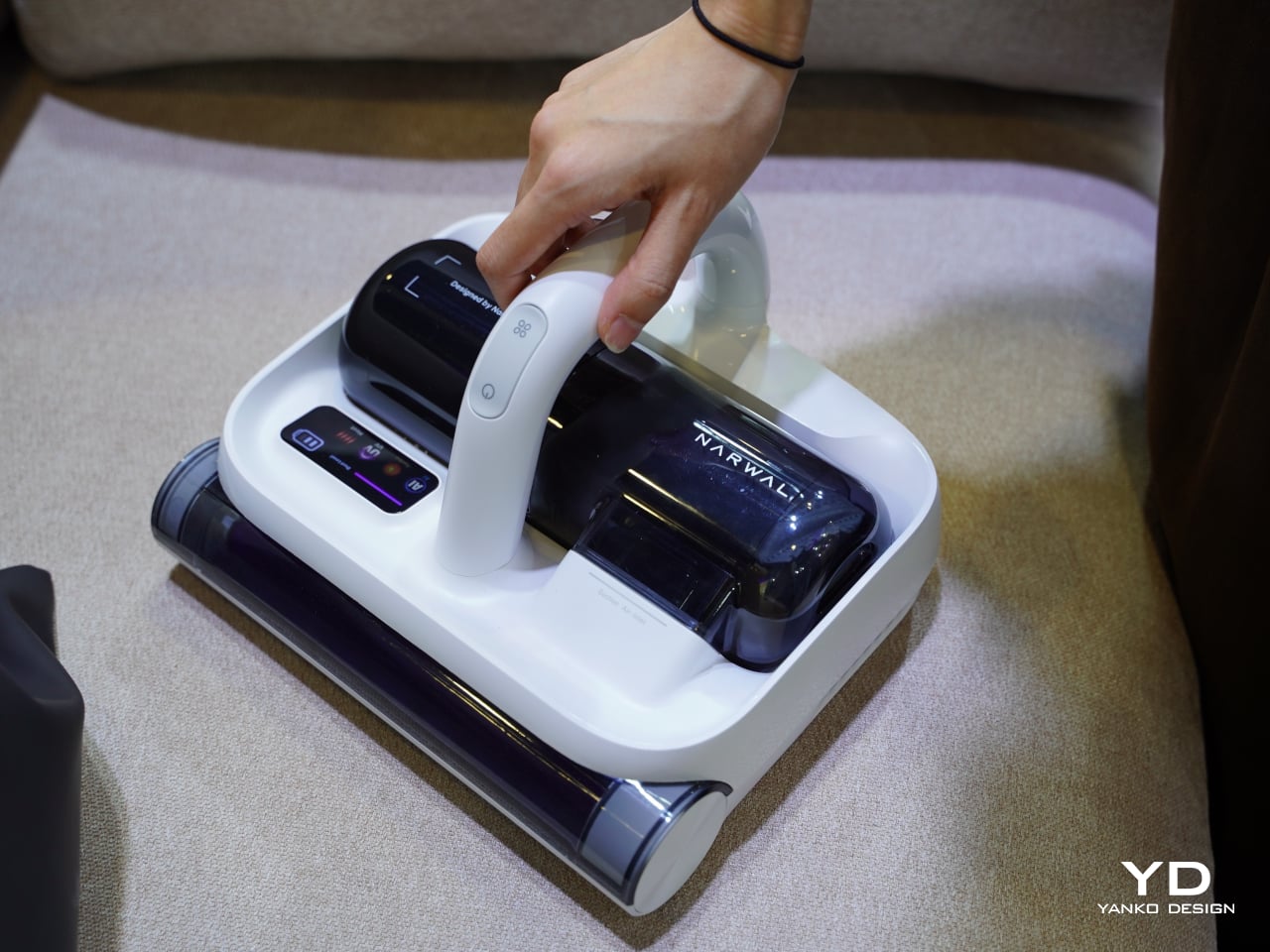
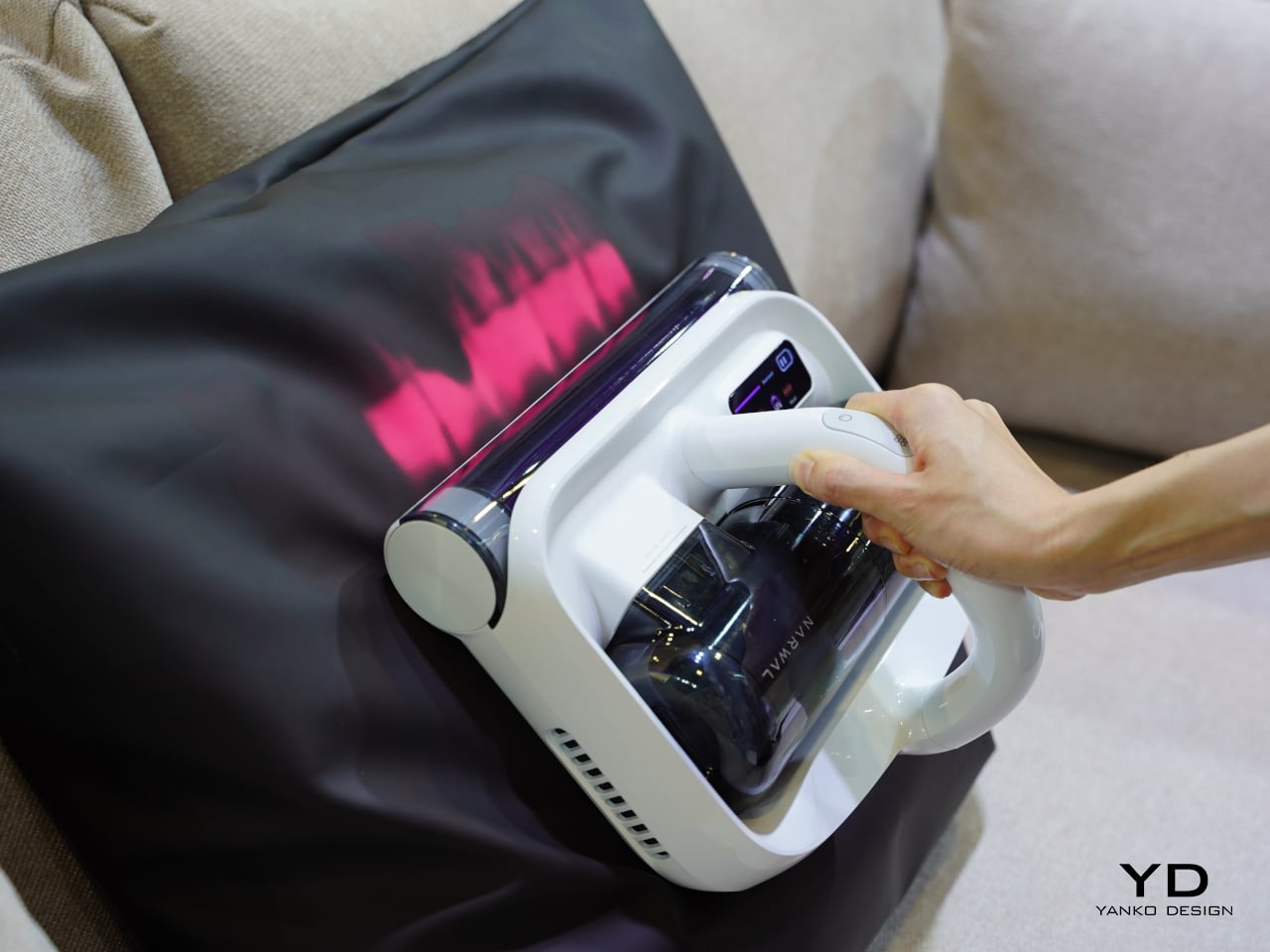
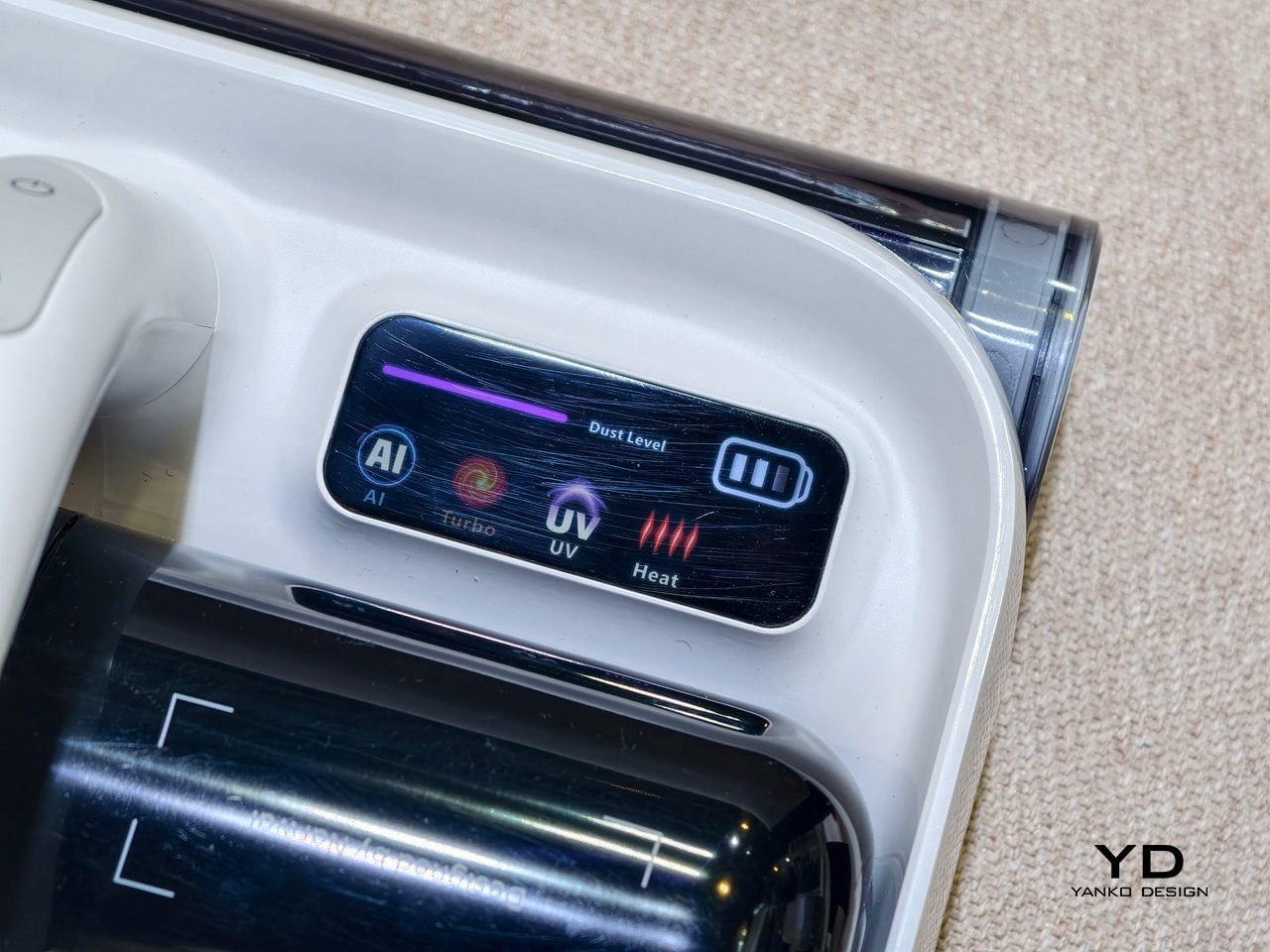
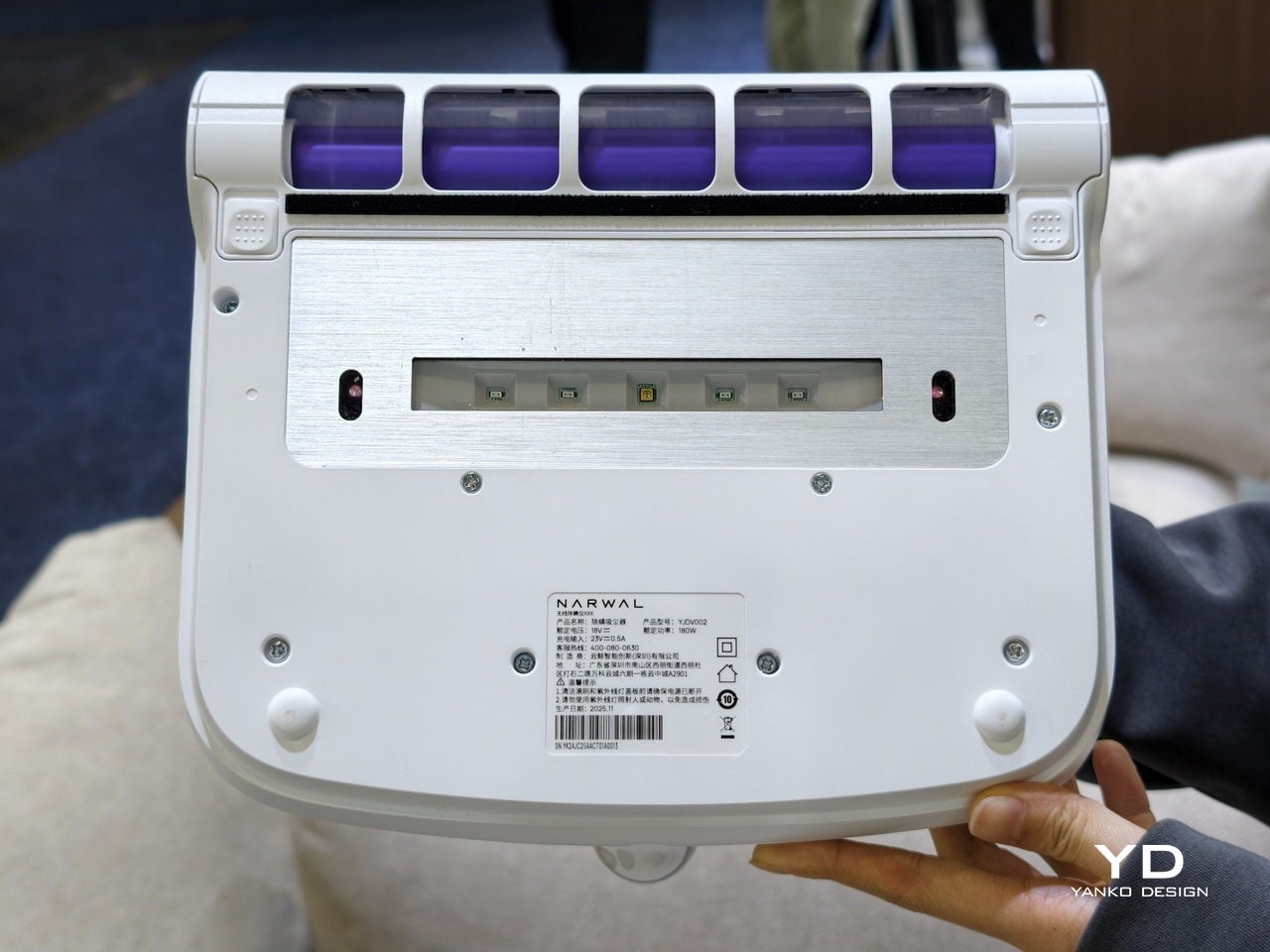
The U50 Series mattress vacuum targets a different corner of the home, using 137°F iron-heating, UVC sterilization, 60,000 taps per minute, and 16,000 Pa of suction to pull mites and allergens out of mattresses and upholstery. It weighs just 3.7lb and uses sealed, disposable dust bags with a transparent window, so you can treat beds and sofas without dealing with messy dust cups or touching what comes out. Together, V50 and U50 show Narwal extending its maintenance-free, AI-aware design language into spaces the robot cannot reach, keeping the entire home cleaner without multiplying the number of chores you actually have to do.

Narwal Flow 2: See Further, Think Deeper, Clean Smarter

Flow 2 is a sign that robot vacuums are finally moving from smart enough not to fall down the stairs to smart enough to adapt to how you live. It still has big suction numbers and a long spec sheet, but the interesting part is how it sees pets, babies, and messes differently, and how it keeps its own mop clean while it works. For a category that has been chasing power for years, that kind of judgment feels like the more meaningful upgrade, especially when the alternative is manually zoning a map and hoping the robot does not knock over a water bowl or wake up a napping toddler on its next routine pass.

The post Narwal Flow 2 at CES 2026: Sees Everything, Cleans Smarter first appeared on Yanko Design.

LG’s CLOiD robot can fold laundry and serve food… very slowly

When LG announced that it would demo a laundry-folding, chore-doing robot at CES 2026, I was immediately intrigued. For years, I've wandered the Las Vegas Convention Center halls and wondered when someone might create a robot that can tackle the mundane but useful tasks I despise like folding laundry. With CLOiD (pronounced like "Floyd"), LG has proven that this is theoretically possible, but probably not likely to happen any time soon. 

I went to the company's CES booth to watch its demonstration of CLOiD's abilities, which also include serving food, fetching objects and fitness coaching. During a very carefully choreographed 15-minute presentation, I watched CLOiD grab a carton of milk out of the fridge, put a croissant in an oven, sort and fold some laundry and grab a set of keys off a couch and hand them to the human presenter.

Throughout the demonstration, LG showed off how its own appliances can play along with the robot. When it rolled over to the fridge, the door automatically opened, as did the oven. When the LG-branded robot vacuum needed to move around a hamper, CLOiD helpfully cleared the path. But the robot also moved very slowly, which you can see in the highlight video below. 

The appliance maker is selling the setup as a part of its vision for a "zero labor home" where its appliances and, I guess, robotics technology can come together to take care of all your chores and household upkeep. Maybe I'm jaded from a decade of watching CES vaporware, but I left the slick demo thinking the concept is unlikely to amount to much anytime soon.

On one hand, it is exciting to see robots competently performing tasks that would actually be useful to most people. But this technology is still far from accessible. Even LG isn't making any firm commitments about CLOiD's future as anything more than a CES demo. The company has instead said that CLOiD is a signal of its interest in creating "home robots with practical functions" and "robotized appliances," like fridges with doors that can open automatically. 

That may be a more reasonable target for the company (and yet another way for LG to sell us more appliance upgrades). But it's still pretty far from anything approaching the fantasy of a "zero labor home."

This article originally appeared on Engadget at https://www.engadget.com/home/smart-home/lgs-cloid-robot-can-fold-laundry-and-serve-food-very-slowly-181902306.html?src=rss

These robotic sneakers gave me a surprising boost at CES

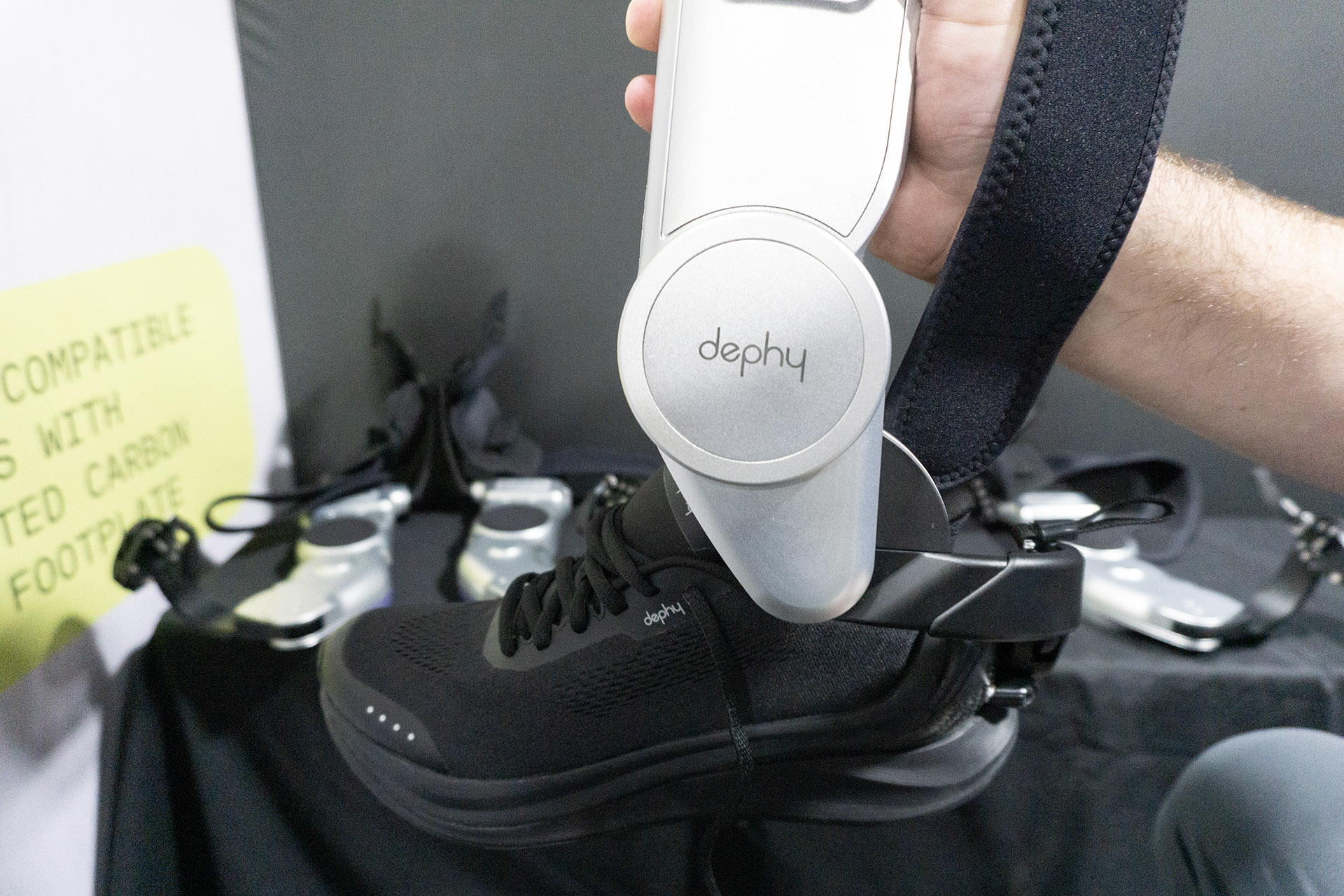
I'll admit that I've always kind of taken walking for granted. Other than a knee injury more than a decade ago, my ability to walk long distances has largely been limited only by my own choices. That's not the case for everyone, though. And robotics company Dephy has created a pair of robotic sneakers, called the Sidekick, that are meant to help people who want to walk more than their bodies might otherwise be capable of.

The system consists of two parts: an ankle-worn exoskeleton and a special pair of sneakers that attach to it. The exoskeleton hooks onto the back of the shoe and is secured with a strap around your calf. The battery powered device is equipped with sensors that can detect and adapt to the wearer's gait in order to deliver an extra "boost" with each step. 

The whole setup is pricey, at $4,500, but Dephy is betting that people who have "personal range anxiety" might be willing to pay for the extra confidence the Sidekick can provide. "This is a device that's kind of like [having] an extra calf muscle," Dephy CEO Luke Mooney told me. 

The Sidekick.
The Sidekick.
Karissa Bell for Engadget

I was able to take the Sidekick for a spin around the CES showfloor and it was a truly surprising sensation. The best way I can describe walking with the Sidekick powered on is that with every step forward there's a noticeable upward push from under your heel. It wasn't enough to throw me off balance, but it did feel a bit strange.

The Sidekick has adjustable power levels based on how much help you might need. At the highest level, it definitely felt unnecessarily pushy. The lower levels were still noticeable but felt less disruptive. I just felt… bouncy. Later, when Mooney turned off the power entirely, I noticed that my feet felt weirdly heavy in a way they hadn't just a few minutes before. 

Mooney was quick to tell me that I'm not Dephy's target demographic. "A lot of times people who are fit, or like athletes, actually struggle to adopt to the technology because their body's so in tune with how they move," he said. "Whereas folks who are not as physically active and fit, their body's ready to accept help."

The company's technology will be used in products more focused on athletic performance, however. Dephy has partnered with Nike on its upcoming robotic sneaker currently known as Project Amplify. Mooney declined to share details on the collaboration, but the shoemaker has claimed that some early testers have been able to improve their mile times by two minutes. 

I tried the Sidekick early in the day. Several hours later, though, when I was walking between the Las Vegas Conventions Center halls for the third or fourth time, I started thinking about those robotic sneakers again. I was getting close to 10,000 steps and hadn't sat down for hours. My feet were sore. I remembered that strange, bouncy boost and thought it sounded kind of nice.

This article originally appeared on Engadget at https://www.engadget.com/wearables/these-robotic-sneakers-gave-me-a-surprising-boost-at-ces-174500005.html?src=rss

Spotify now lets you share what you’re listening to in real time via chat

Spotify is rolling out more social features to keep people on the platform. It's adding a new tool to its messaging platform that lets users see what their friends and family members are listening to in real time.

Once activated, a user's listening activity will be displayed at the top of the chat. The other person in the chat can tap the bar to play a particular track, save it or react with an emoji. People can also, of course, comment directly to either praise or rag on the song selection.

There's another little addition to Spotify's messaging system. Users will now be able to invite chat participants to start a Jam, which is the app's collaborative listening feature. Premium users will find a "Jam" button in the top right corner, which sends an invite. This lets two people add tracks to a shared queue and listen together. Free users can join one of these sessions, but cannot initiate.

It's worth noting that the messaging platform is currently just a one-on-one affair. There's no option for a group chat, so users won't be able to spy on multiple people simultaneously. These tools are rolling out gradually for iOS and Android right now, but won't be broadly available for a few weeks.

This article originally appeared on Engadget at https://www.engadget.com/entertainment/music/spotify-now-lets-you-share-what-youre-listening-to-in-real-time-via-chat-173749120.html?src=rss

IKEA’s first CES appearance included a $6 Matter smart bulb

I know IKEA is all about small, efficient spaces, but their meeting room inside the Venetian during the company’s first-ever CES was the same size as my (not large) living room. Plenty of people were as excited as I was to see what the Swedish designers brought with them to the show and the room was thick with humans. A bowl full of BELÖNING bars helped ease my mounting claustrophobia and I was able to check out the new smart home lineup.

Like most things IKEA, the 21 Matter-compatible smart home devices are simple, sleek and silly affordable. They include a $6 smart bulb, an $8 smart plug, a $6 smart remote and a slew of home sensors. A slightly pricier ($15) globe bulb is a direct answer to my longstanding wish for more attractive (but affordable) smart bulbs.

One of my favorite of the new devices was the BILREA remote control. It’s a smooth, riverstone-like object that either comes with two simple buttons or a button and a scroll wheel. It pairs up with and controls IKEA’s smart devices and lamps but what I really love is the magnetic mount integrated into its body. You can either attach the remote to any ferrous surface or use the small metal chip and included adhesive to give the remote a home on a wall or elsewhere. Why have so few other companies come up with a way to neatly and simply organize these tiny yet crucial controllers?

The whole suite is Matter-compatible and, as such, it needs a hub to function. IKEA has its own, DIRIGERA, but, true to the Matter principles of interoperability, you can also use a Matter hub you already own. The new line of smart home devices should start showing up in IKEA stores and on its website sometime in January.

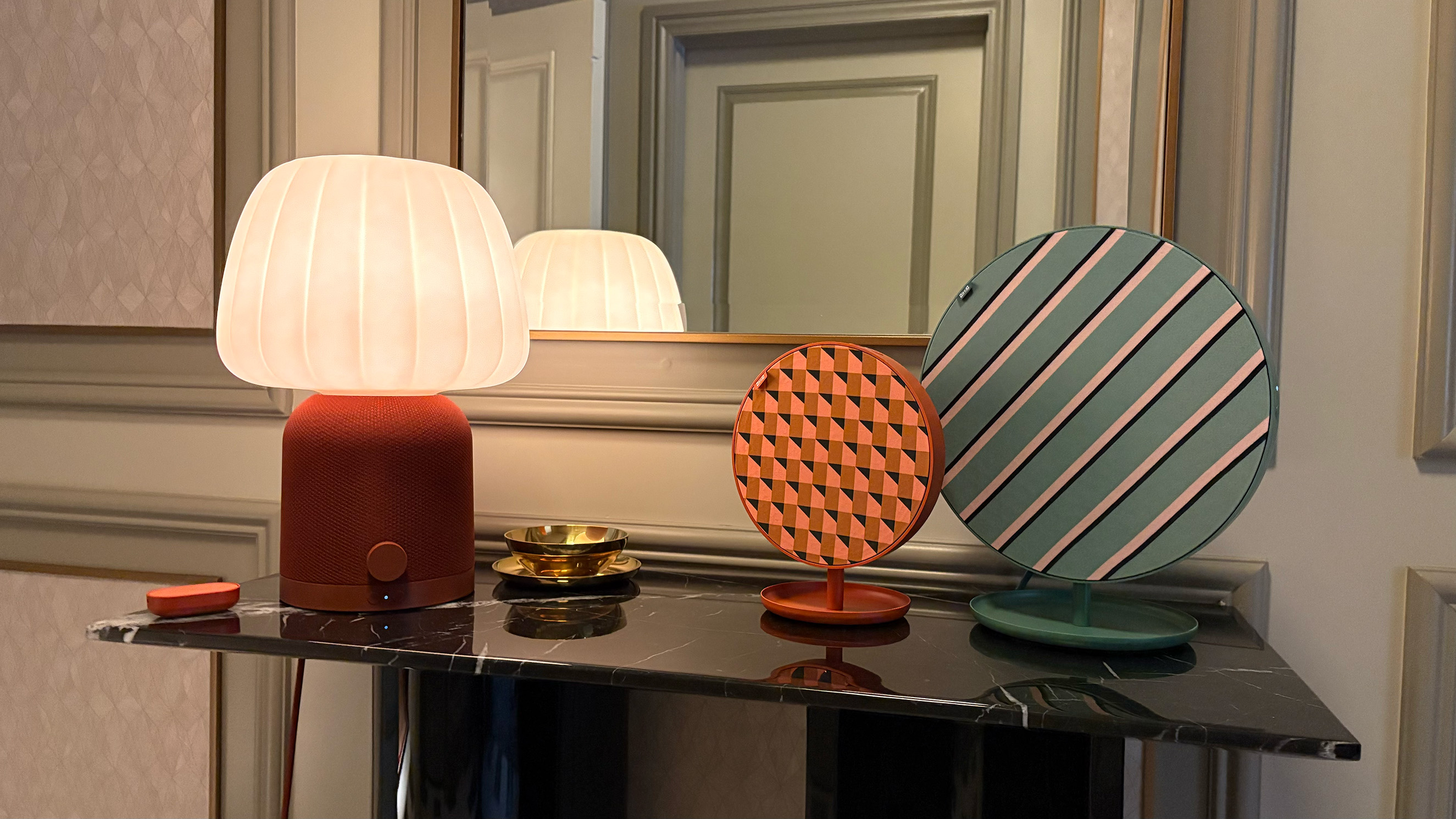
Lamps and speakers from the TEKLAN smart home collection.
Amy Skorheim for Engadget

Apart from the egalitarian and utilitarian items, the Swedish brand also brought a new collection of products, TEKLAN, designed in collaboration with designer and photographer Tekla Evelina Severin. These include circular Bluetooth speakers in color-saturated patterns and solids ranging from eight to 18 inches. There are also two new speaker lamps, called KULGLASS, that have glass lampshades inspired by soft serve ice cream. Those devices went on sale on January 1 this year.

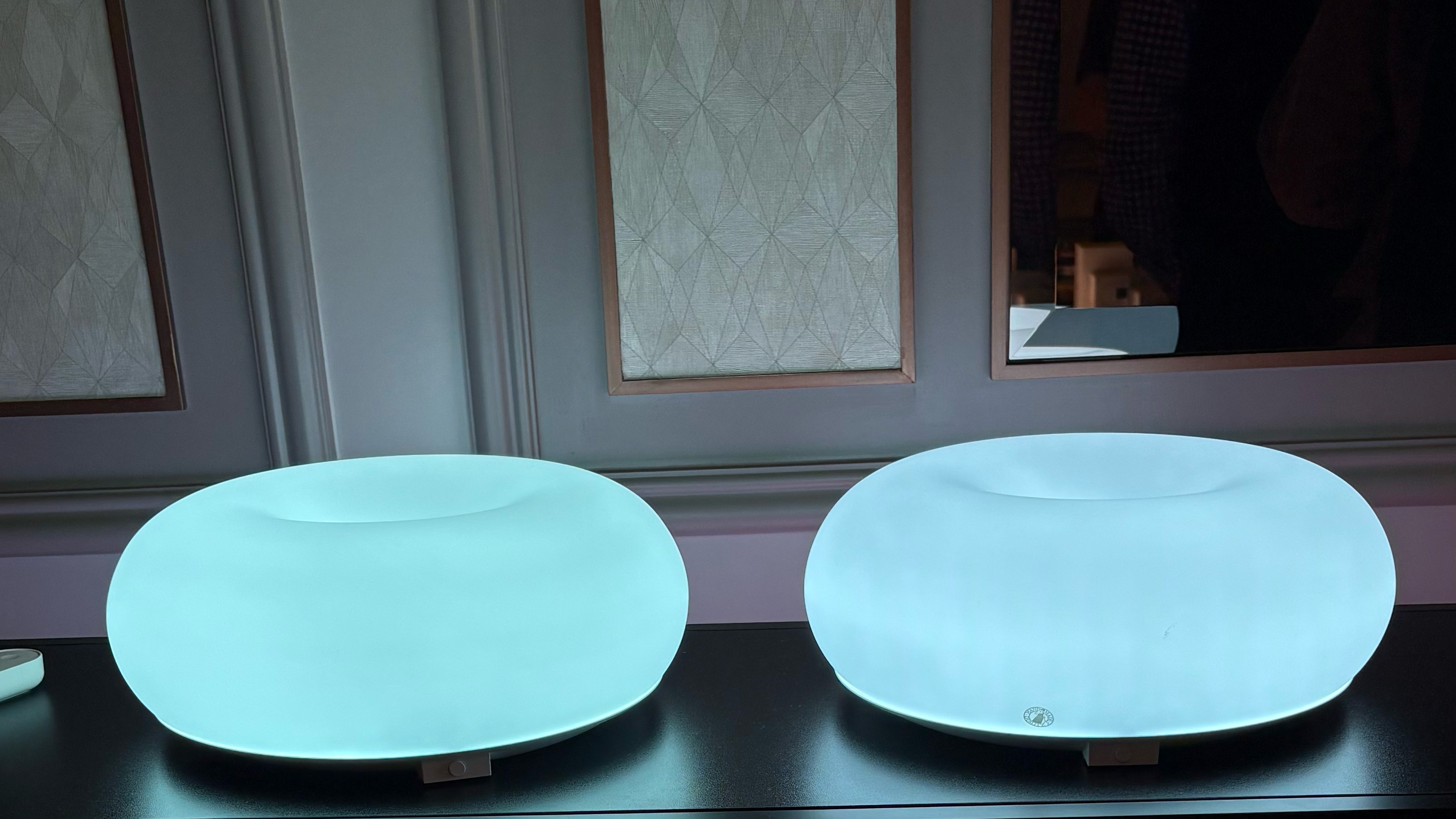
Finally, I made my way (three feet) over to the curious, donut-shaped lamps. This is the smart version of the store’s popular VARMBLIXT lamp that debuted three years ago. It’s controllable through the app or the remote I mentioned above and gently cycles through a rainbow of color patterns, shifting slowly from shade to shade. I got lost for a while watching it morph from white to pink to red and back again. For a moment I forgot I was wedged into a room too full of people. I figured those around me probably wanted a look at the lamp for themselves, so I took a longing glance back at the BELÖNING bowl and squeezed out of the room.

The popular VARMBLIXT donut lamp is now smart.
Amy Skorheim for Engadget

This article originally appeared on Engadget at https://www.engadget.com/home/smart-home/ikeas-first-ces-appearance-included-a-6-matter-smart-bulb-172623474.html?src=rss

AI-powered Razer Motoko headphones with 4k cameras do what smart glasses can

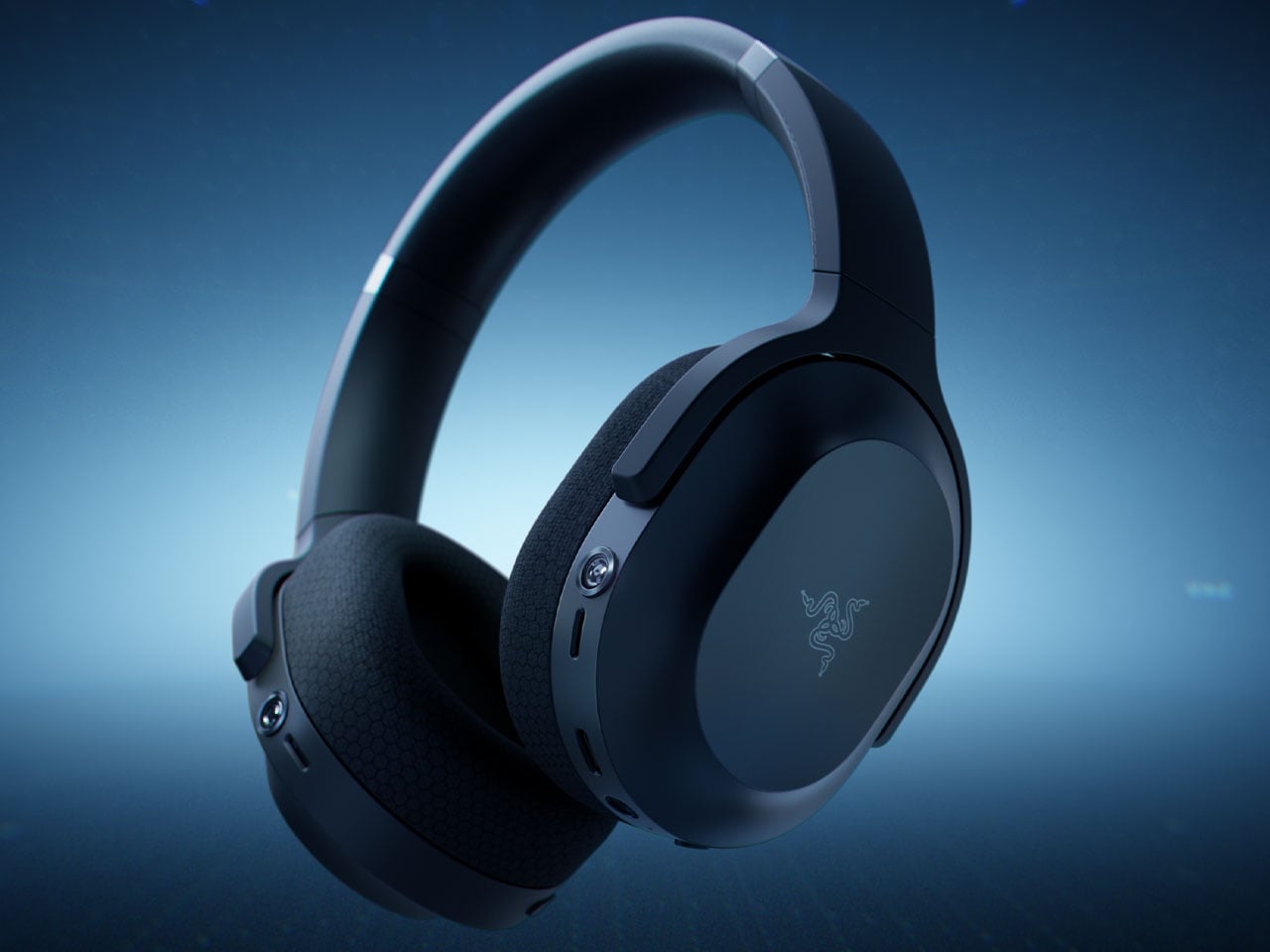
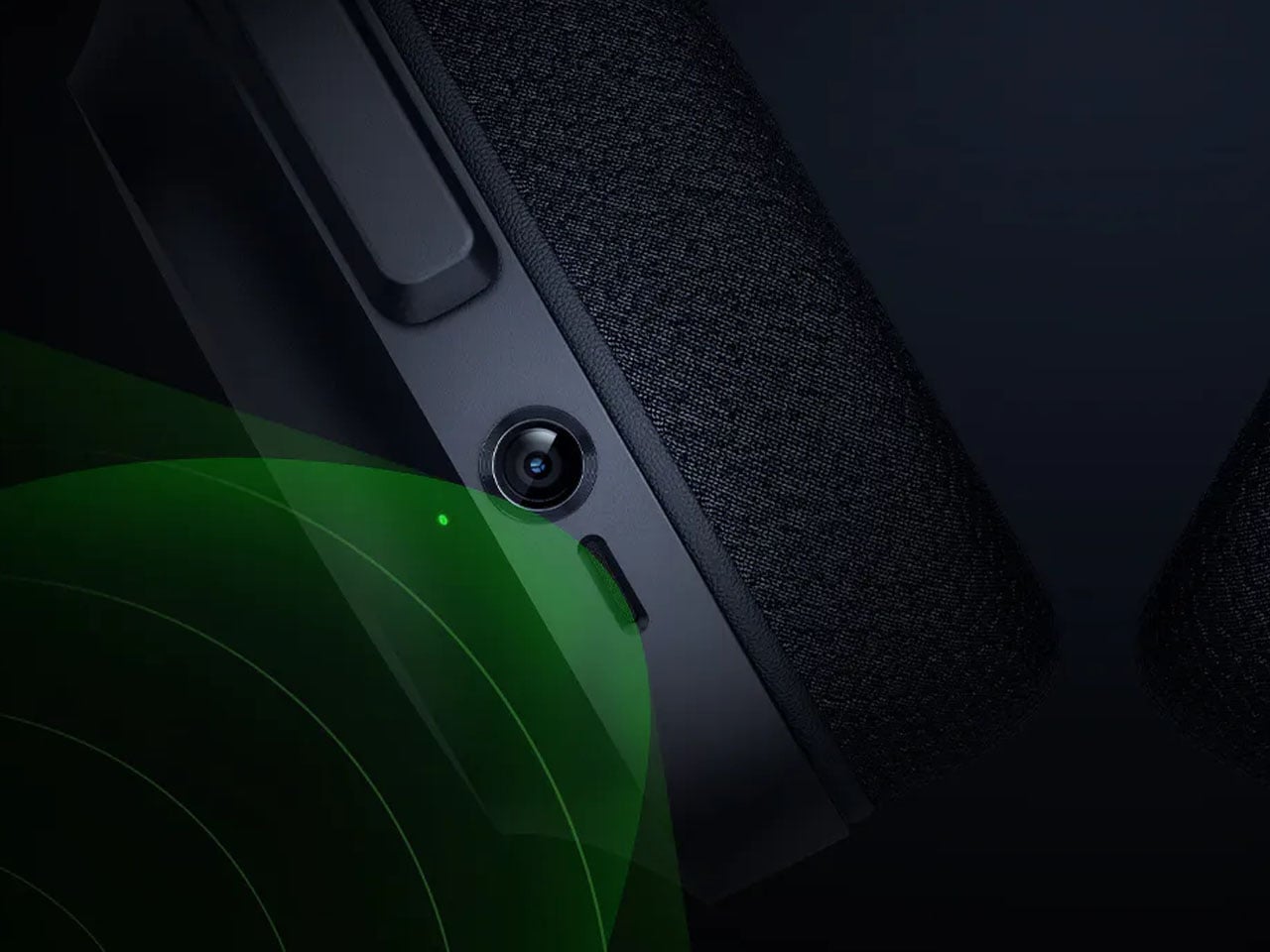
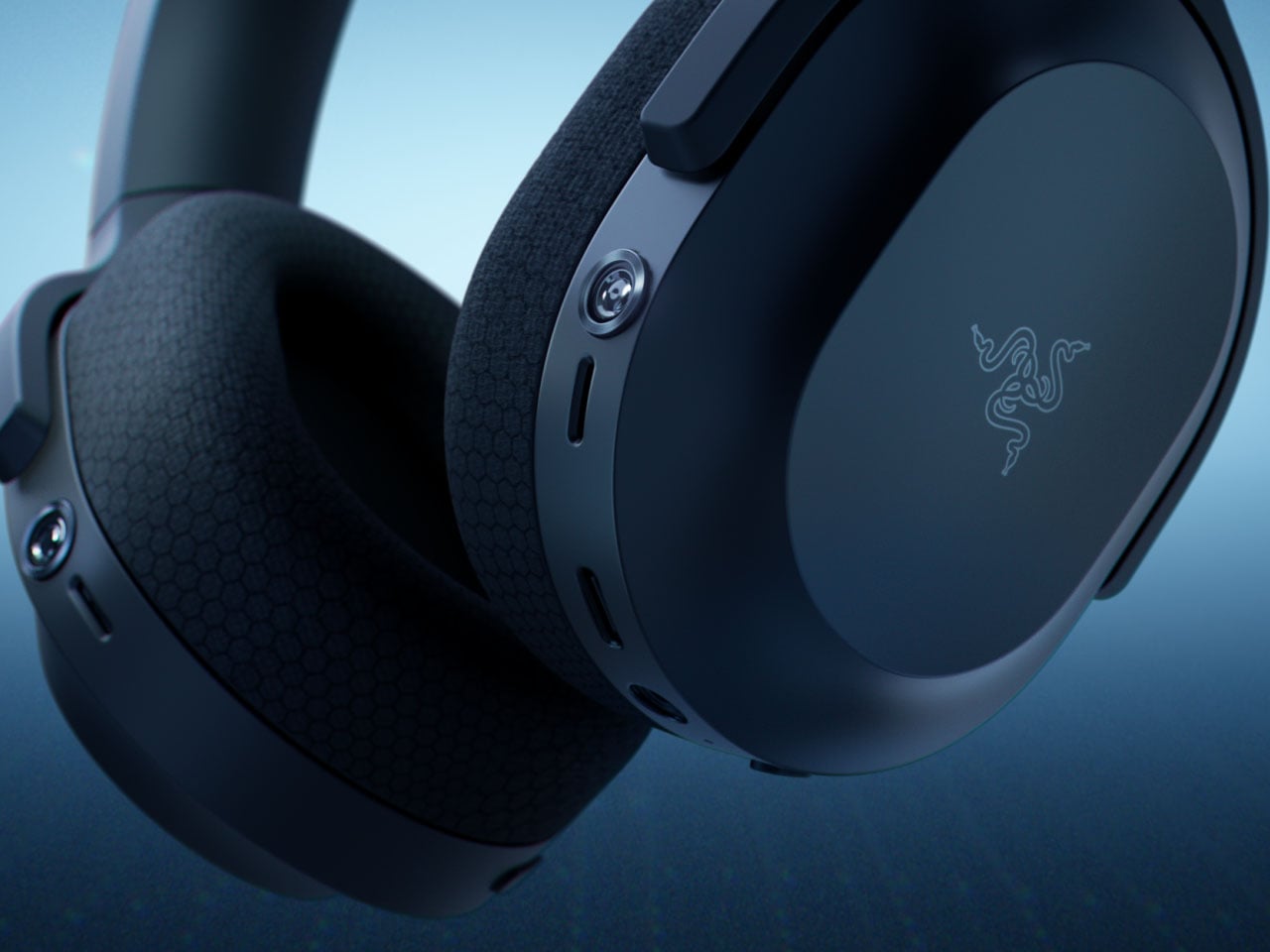
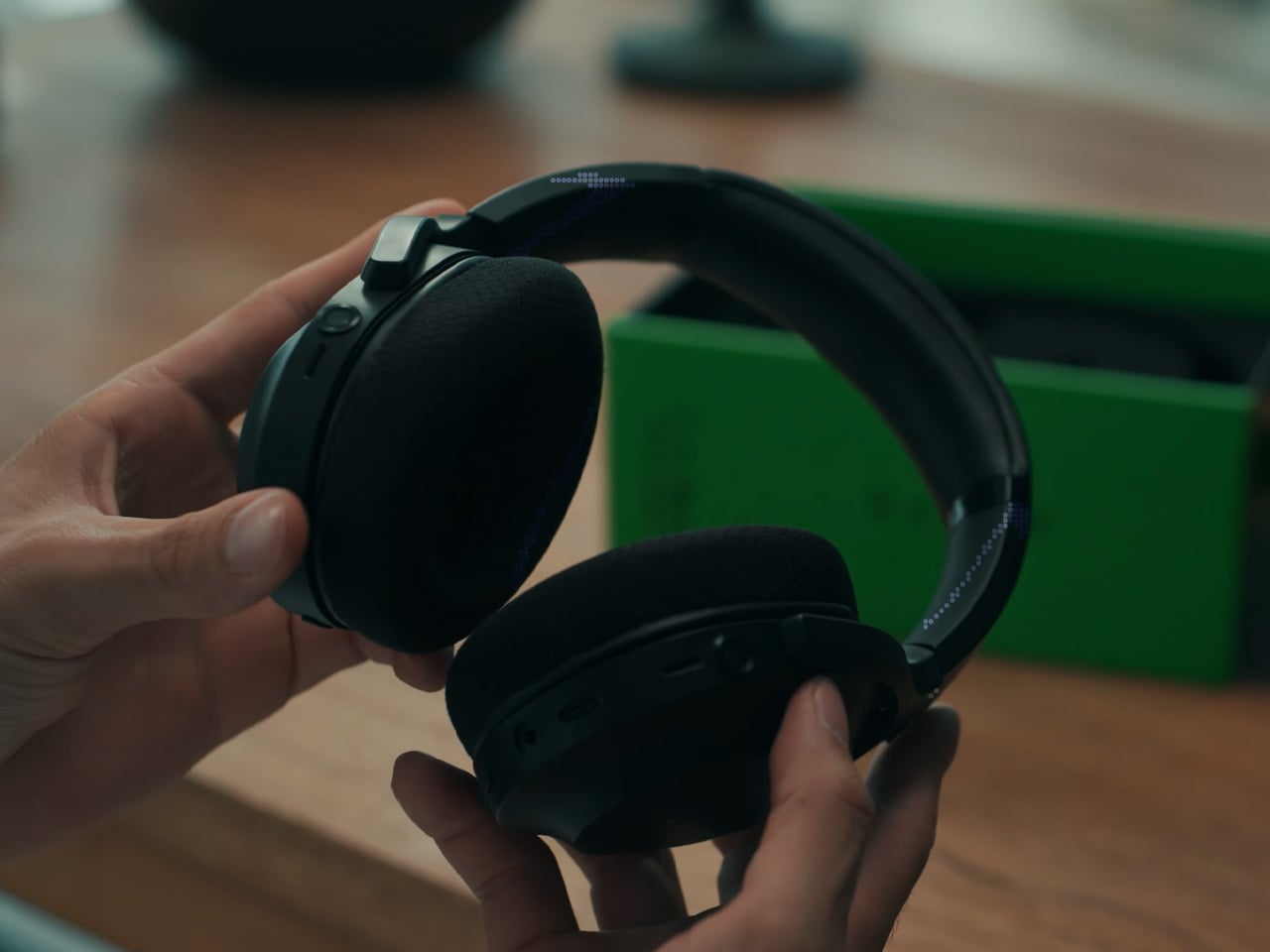
Every year at CES, Razer has some exciting tech on offer. This year is no different as they’ve come up with headphones that go beyond audio nirvana. Dubbed Project Motoko, the over-ear headphones are the next frontier of wearable AI, since they have eyes. Yes, the concept cans are loaded with a pair of Sony 4K cameras (with 12MP resolution), to make you ditch your smart glasses for good reason. Since most of us wear headphones more than smart glasses, this innovation makes complete sense.

AI is the name of the game at this year’s CES, even though we’ve seen cramming of machine learning technology in things where it makes no sense or is not useful at all. The Motoko headphones are different as they build on an accessory we already use a lot. The in-built cameras analyse the world around you, seeing what the user sees, in first-person view. They can do pretty much what other smart glasses can, and yes, they play ear-pleasing music when you need to zone out.

Designer: Razer

According to Nick Bourne, Global Head of Mobile Console Division, Razer, “By partnering with Qualcomm Technologies, we’re building a platform that enhances gameplay while transforming how technology integrates into everyday life. This is the next frontier for immersive experiences.”

Motoko headphones can do translations in real time, beam weather updates, provide navigation input, and a whole lot more. The biggest advantage Razer should be appreciated for compared to smart glasses is that the Motko can fetch information from multiple AI assistants, including Grok, Gemini, ChatGPT, Perplexity, and Meta. Most basic functions run on the headphones, like checking the calendar updates and schedules. For other deeply embedded tasks, you have to pair them with a phone or PC. For the most part, someone unassuming won’t be able to tell the difference between a normal pair of headphones and these.

The headphones are built on the Qualcomm Snapdragon platform, making them AI-powered in a real sense. You can recognize objects, track exercises, or even summarize information. The stereoscopic vision extends the field of view beyond the human peripheral vision capabilities. In combination with the audio input and the far-and-near field microphones, the headphones detect dialogue, voice commands, or ambient noises. Thereby, the headphones use all this data in machine learning applications, which ultimately assist the user in daily tasks, work, and, of course, gaming. Down the line, you could be using them for preparing meals in the kitchen, immersive AI guidance in strategy games, or translating in real-time when travelling abroad.

As per Ziad Asghar, SVP and GM of XR at Qualcomm Technologies, they are thrilled to work with Razer to push “AI wearable computing into a new era where intelligence, performance, and immersive experiences converge.” There is no word yet on the probable timeline for the release of the headphones, but they definitely are exciting tech to experiment with and use in daily life. The AI-assisted feature should work at a deeper level with the headphones, and it’ll be exciting to use them hands-on.

The post AI-powered Razer Motoko headphones with 4k cameras do what smart glasses can first appeared on Yanko Design.

Samsung says RAM costs will likely lead to price hikes soon

Samsung says AI data center-fueled RAM scarcity could raise the company's prices. Wonjin Lee, Samsung's global marketing leader, sounded the alarm in an interview with Bloomberg on Tuesday at CES 2026. As recently as early December, Samsung told Reuters that it was monitoring the market but wouldn't comment on pricing. So, the change of tune can be seen as a deliberate signal to soften the ground ahead of an official announcement.

"There's going to be issues around semiconductor supplies, and it's going to affect everyone," Samsung’s Lee said. "Prices are going up even as we speak. Obviously, we don't want to convey that burden to the consumers, but we're going to be at a point where we have to actually consider repricing our products."

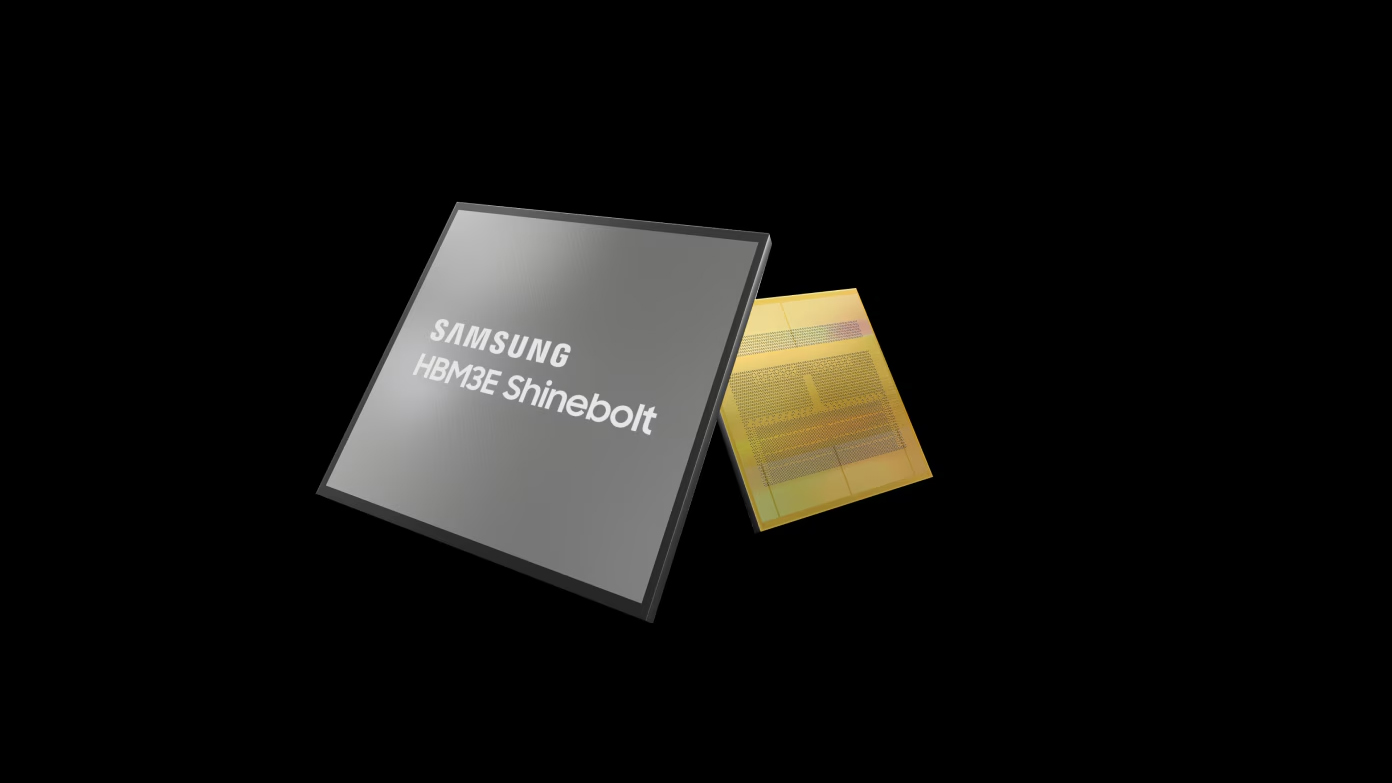
Marketing image of Samsung HBM RAM against a black background
Samsung appears to be softening the ground ahead of an official announcement.
Samsung

The global RAM shortage is the result of AI data centers gobbling up high-bandwidth memory. Memory manufacturers have shifted their output priorities to meet that demand, leading to a snowball effect where even the low-bandwidth RAM found in automobiles is affected.

"AI workloads are built around memory," Sanchit Vir Gogia, CEO of Greyhound Research, told NPR in late December. "AI has changed the nature of demand itself. Training and inference systems require large, persistent memory footprints, extreme bandwidth, and tight proximity to compute. You cannot dial this down without breaking performance."

It's been more than three years since ChatGPT launched and kicked off the AI craze. During that time, companies have hyped chatbots and other generative AI tools as a technology that will take us to the promised land, making life easier as machine learning automates our daily lives. It isn't yet clear if an AI bubble is set to burst, but some financial forecasters have sounded the alarm. Regardless, it's hard to see how consumers and workers are getting anything but the short end of the stick so far.

This article originally appeared on Engadget at https://www.engadget.com/ai/samsung-says-ram-costs-will-likely-lead-to-price-hikes-soon-170653524.html?src=rss