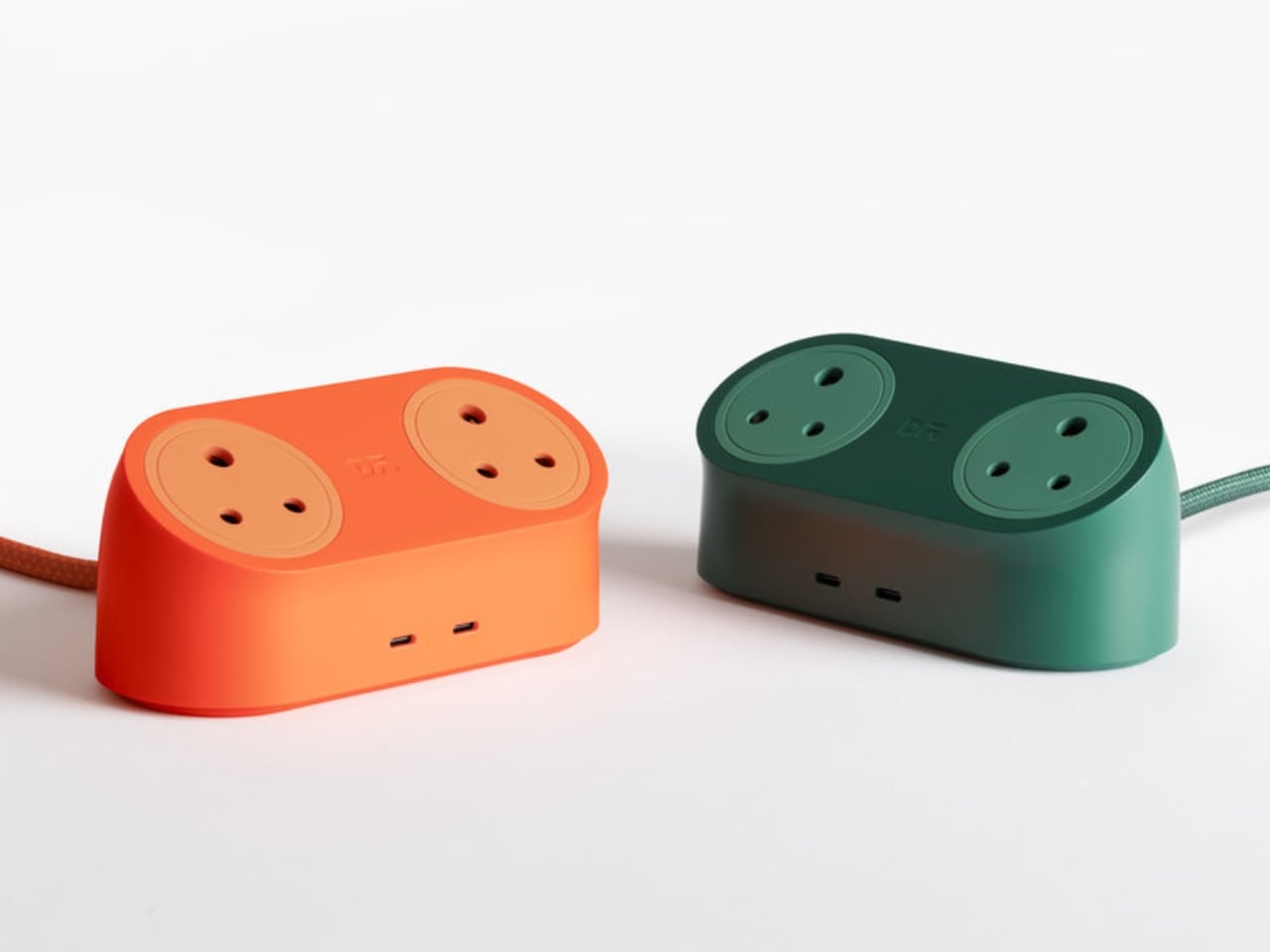
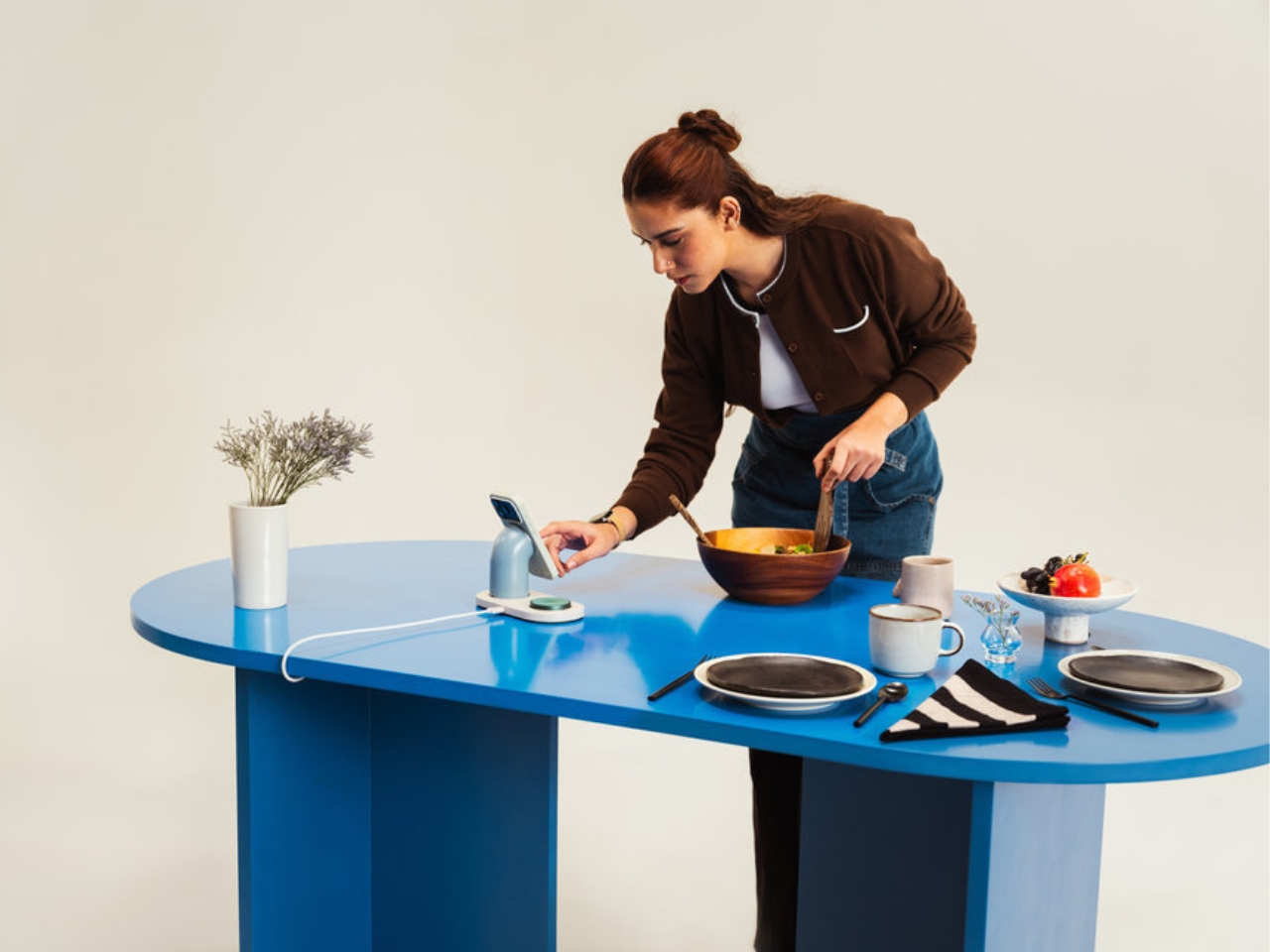
At some point, most of us stopped caring what our charging setup looks like. A tangle of cables here, a plastic brick there, maybe a few adapters scattered across the desk like tech confetti. It works, so why fuss? London-based design studio LAYER is making the case that we’ve been setting the bar way too low, and once you see Node and Loft, it’s pretty hard to disagree.
LAYER, the studio founded by award-winning British designer Benjamin Hubert, recently unveiled Node and Loft, a new family of charging products developed for lifestyle brand Daily Objects. The premise is simple but smart: what if your charging accessories actually looked like something you chose on purpose?
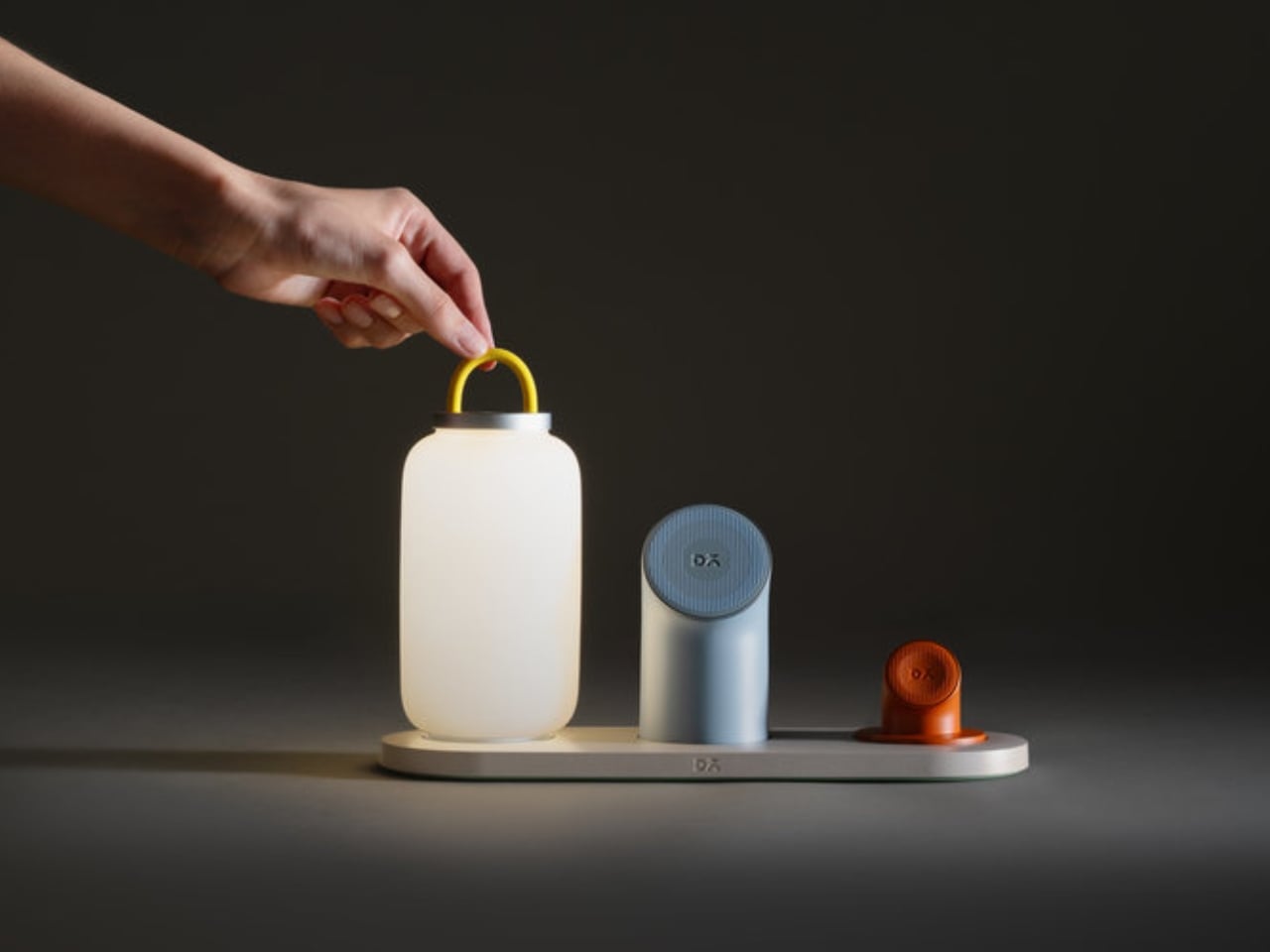
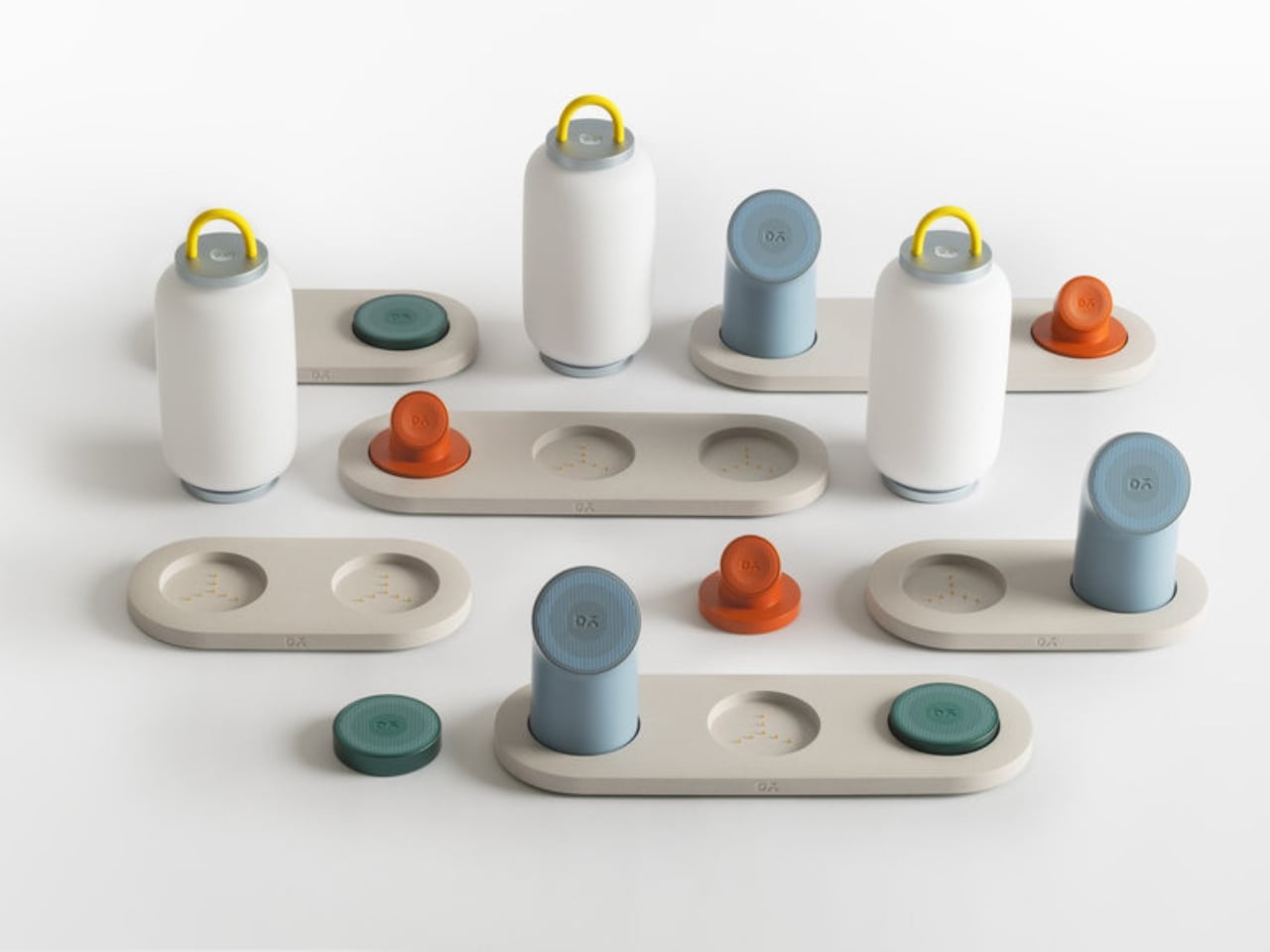
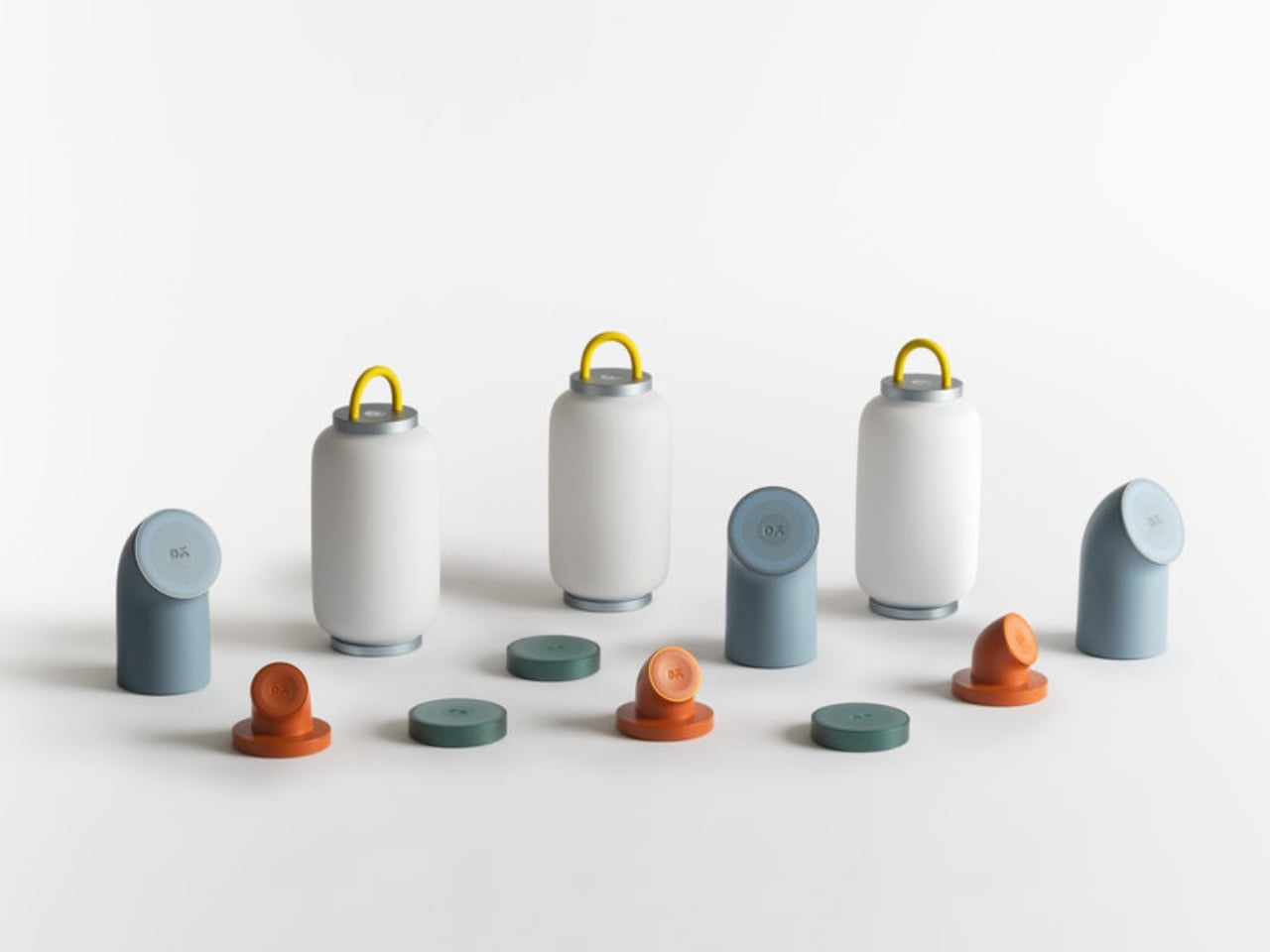
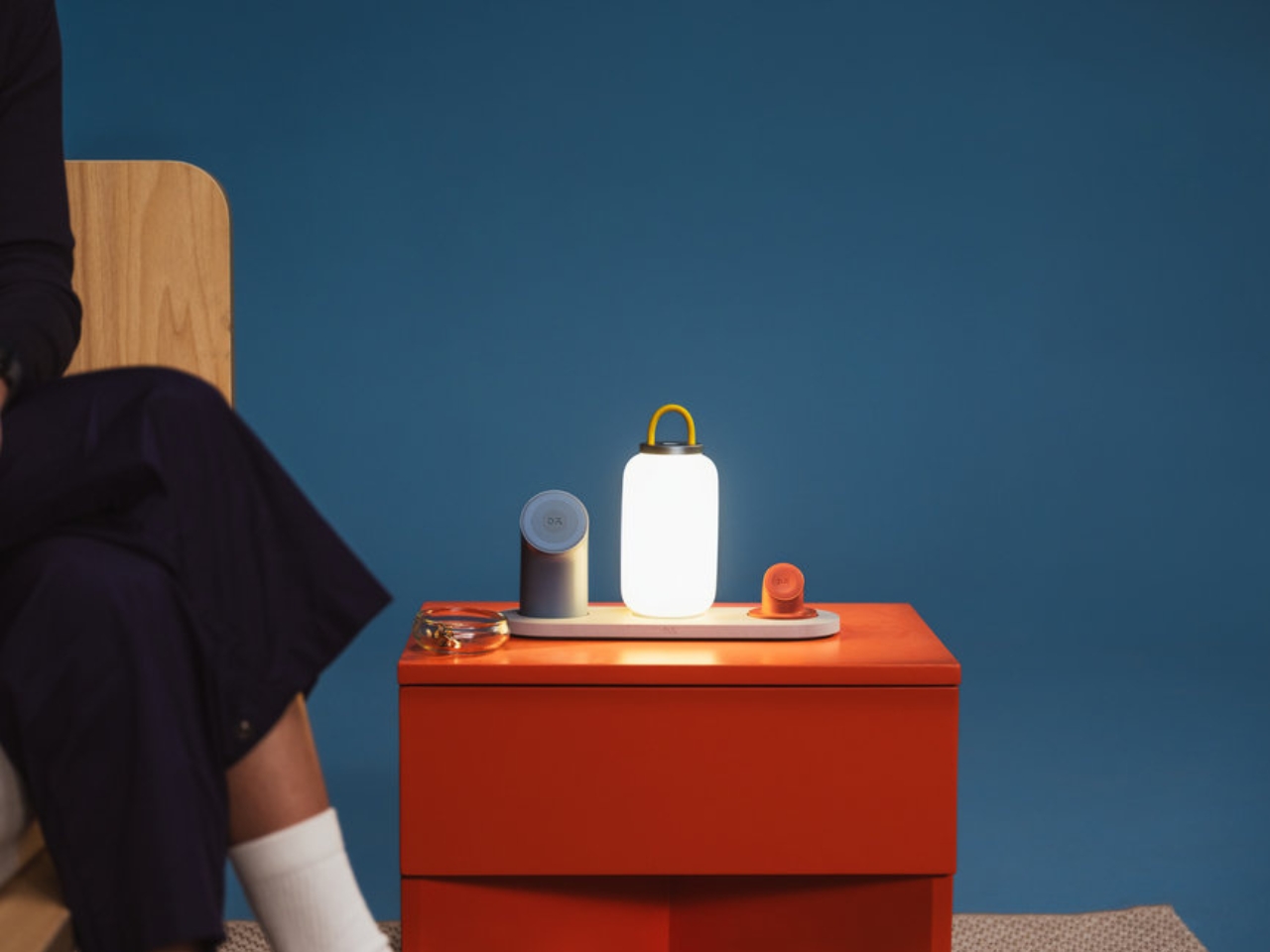
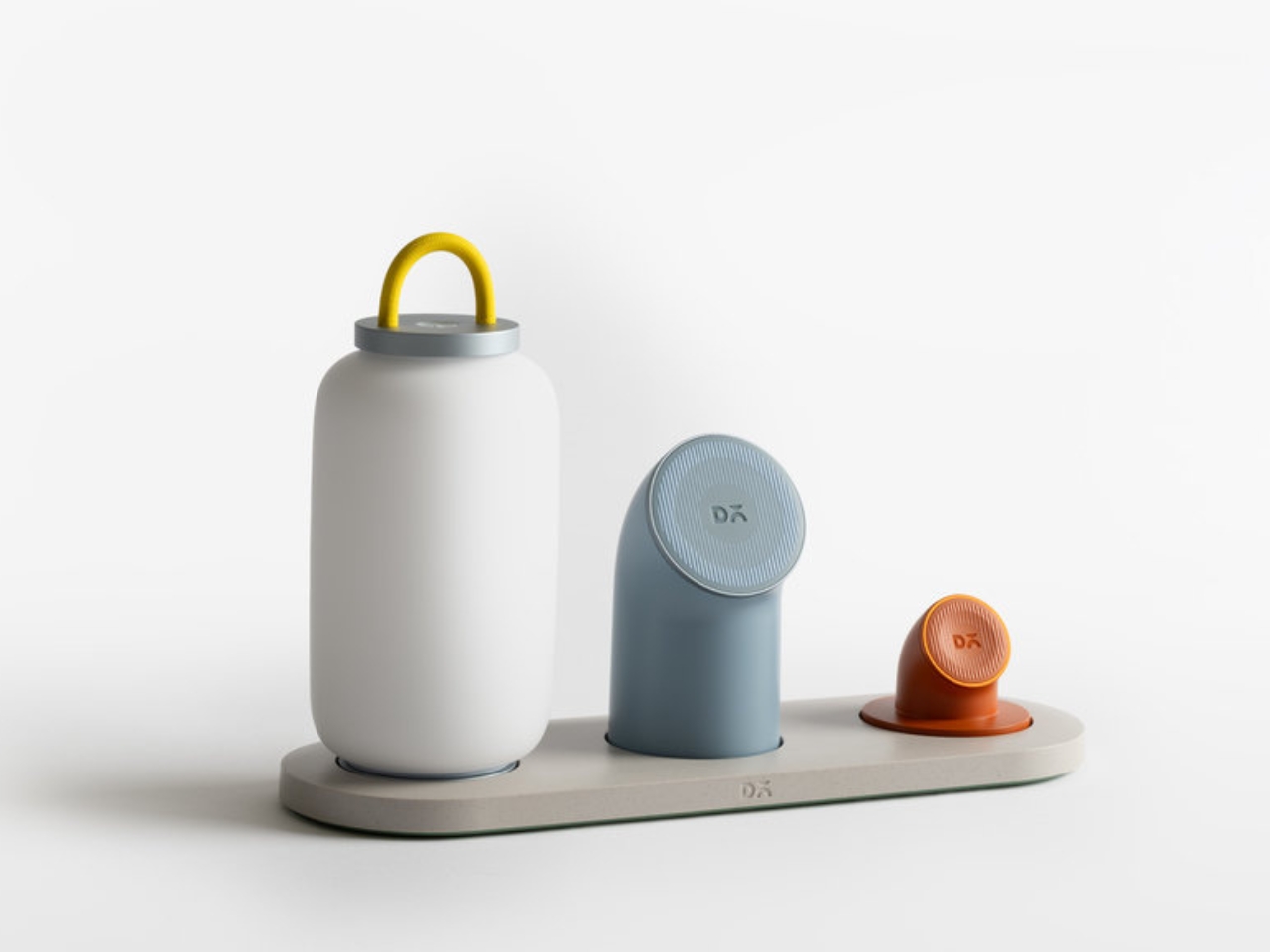
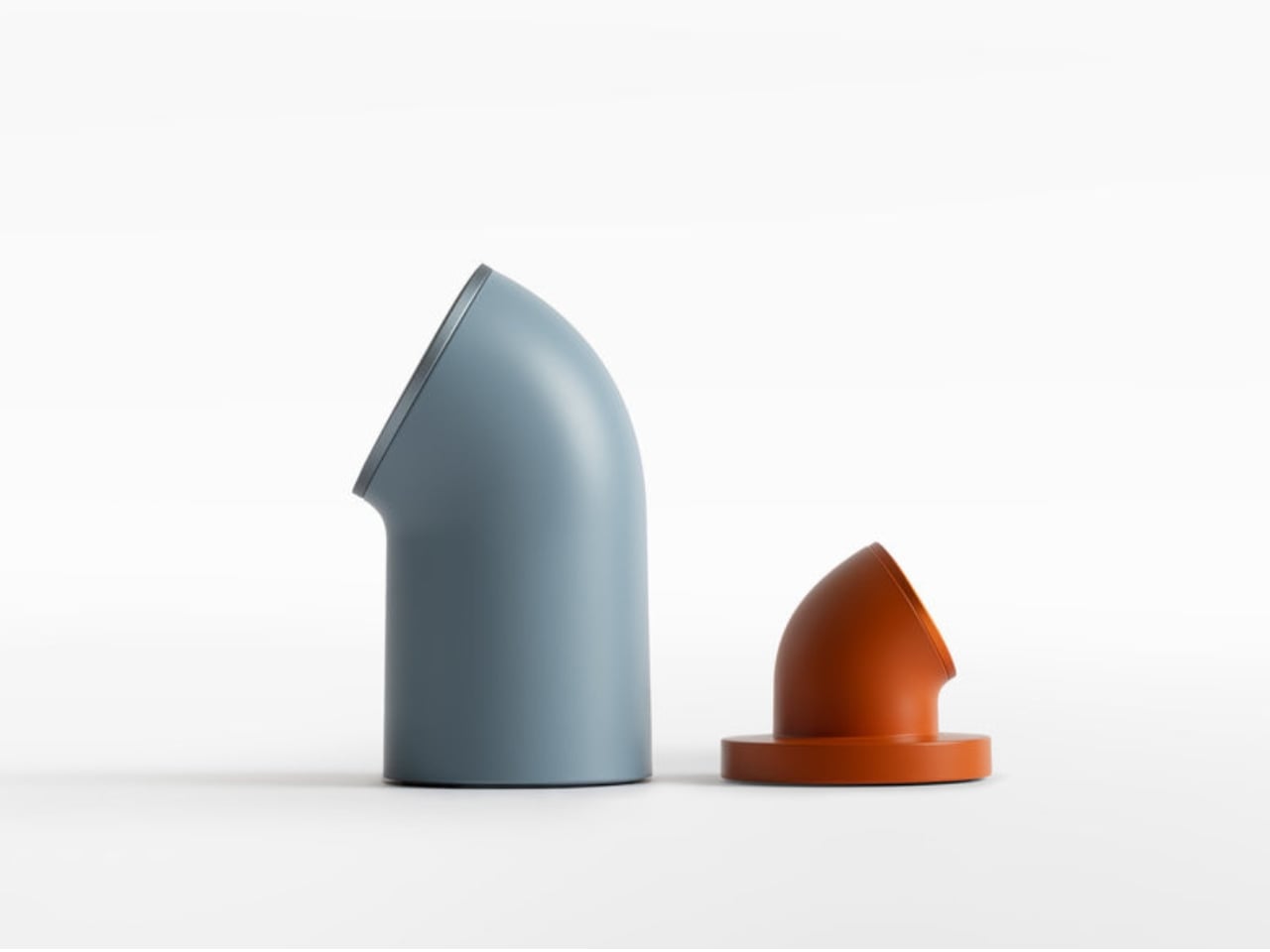
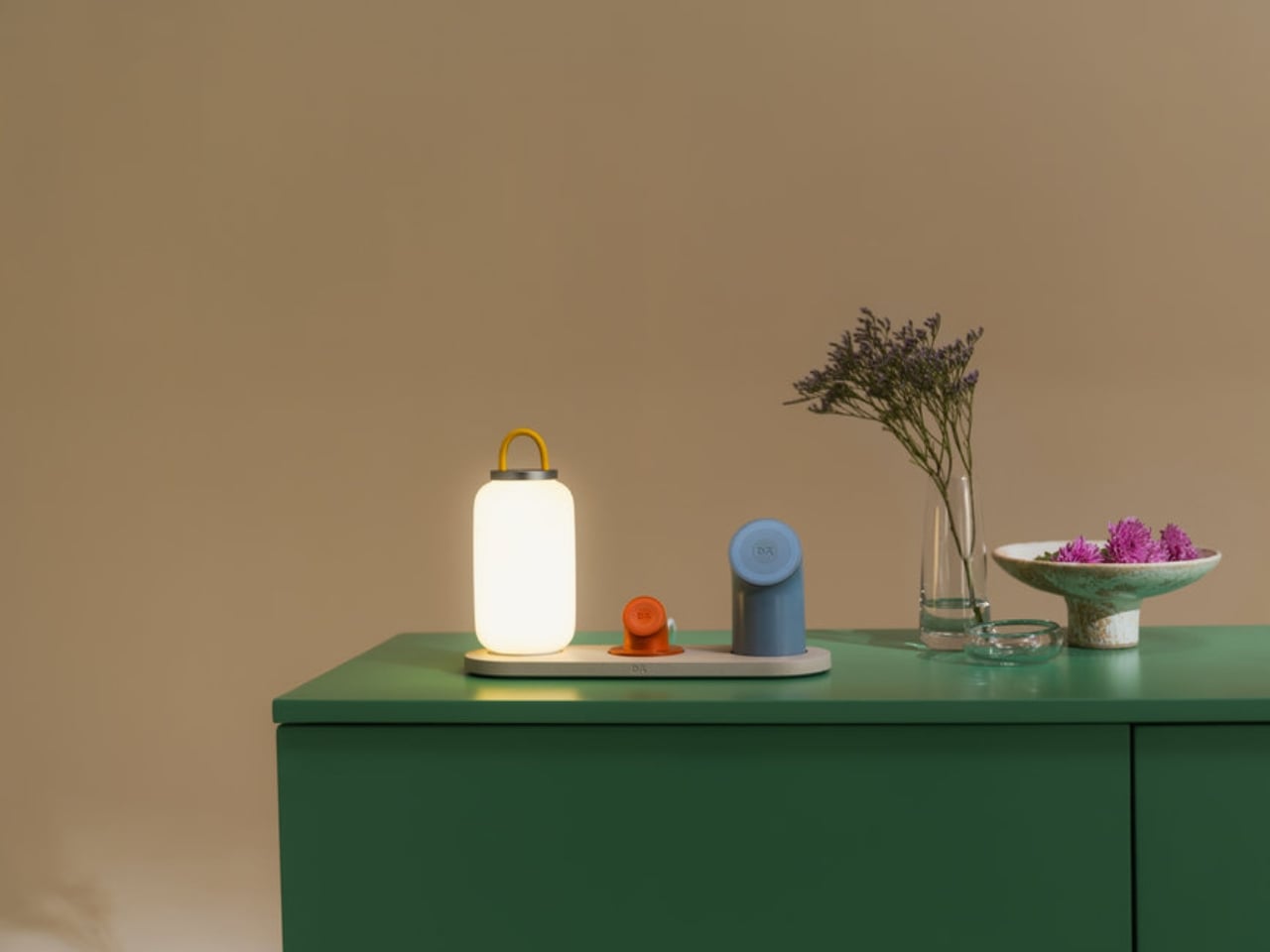
Node is the modular piece of the duo, and it’s genuinely clever. Built around a one-wire setup, it works as either a 2-in-1 or 3-in-1 dock, with four interchangeable modules to mix and match: a Wireless Charging Phone Stand, a Wireless Charging Disk, an Apple Watch Charging Stand, and a Portable Lamp. Each module clicks in when you need it at the desk and lifts off just as easily when you’re heading into a different room or packing a bag. The whole thing feels less like cable management and more like a system you’d actually enjoy using.
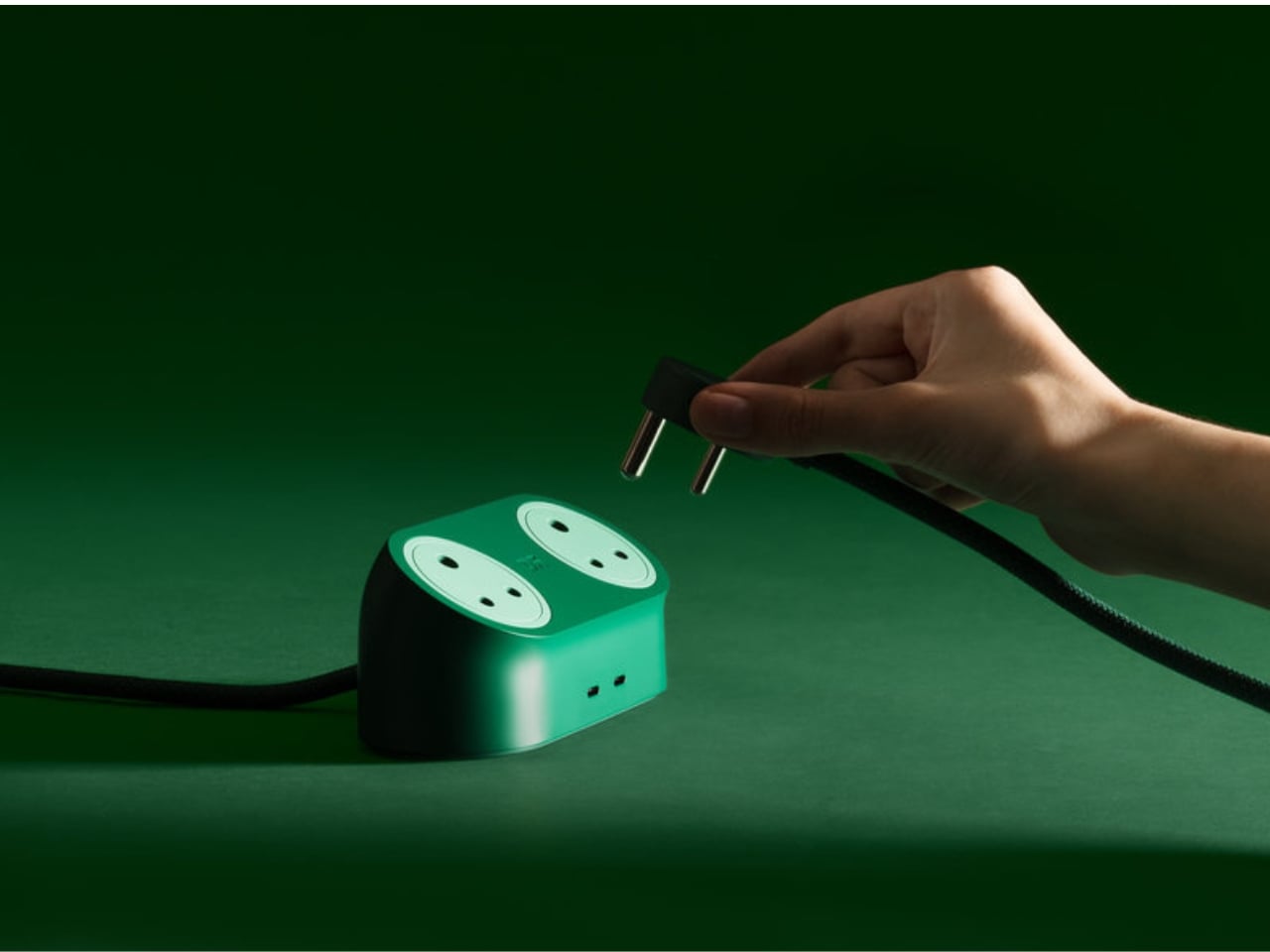
Loft, the other half of the collection, is a 65W charging station designed to sit on your desk without apology. It handles up to four devices at once, mains and USB-C included, all packed into a compact, sculptural form that looks far more intentional than what most charging stations have to offer. The silhouette is arched and minimal. The materials feel considered. It’s the kind of object you leave out because you want to, not because you forgot to tidy it away.
What LAYER has done here, and what makes this more than just another tech accessory launch, is commit fully to a design language rather than just a functional brief. Soft forms, arched silhouettes, tactile materials, a recurring circular charging motif: it all adds up to something cohesive. The goal isn’t just to make charging look prettier. It’s to make it feel like part of how you live, whether at a home desk, in a hotel room, or on a kitchen counter.
Hubert described charging as “one of the most repeated interactions in daily life, yet the products that enable it are often treated as background objects.” That observation is so obvious you’d think more designers would have acted on it sooner. The ugly charging block has been a design blind spot for years, and the solutions that have come before Node and Loft have largely fallen into two camps: clinical and all-white, or trying so hard to look “lifestyle” that they end up feeling performative. Node and Loft feel like neither. They feel like objects with actual personality.
For Daily Objects, an Indian lifestyle brand that’s been steadily building a reputation for design-forward tech accessories, collaborating with LAYER on this makes a lot of sense. The studio is known for a philosophy rooted in what Hubert calls humanising technology, taking things that usually feel cold or utilitarian and giving them warmth and presence. That’s a harder balance to strike than it sounds, especially in a category as commoditised as charging hardware. It’s a thread that runs consistently through LAYER’s work, and it’s very visible here.
The broader trend Node and Loft belong to is worth paying attention to. We’re moving away from the idea that tech accessories have to look like tech accessories. People are putting more thought into how objects feel in a space, not just how they function in one. The line between product design and interior design keeps getting blurrier, and collections like this one are a big reason why.
You probably don’t spend a lot of time thinking about where your charger lives on your desk. Node and Loft are betting that, given the right option, you might start.
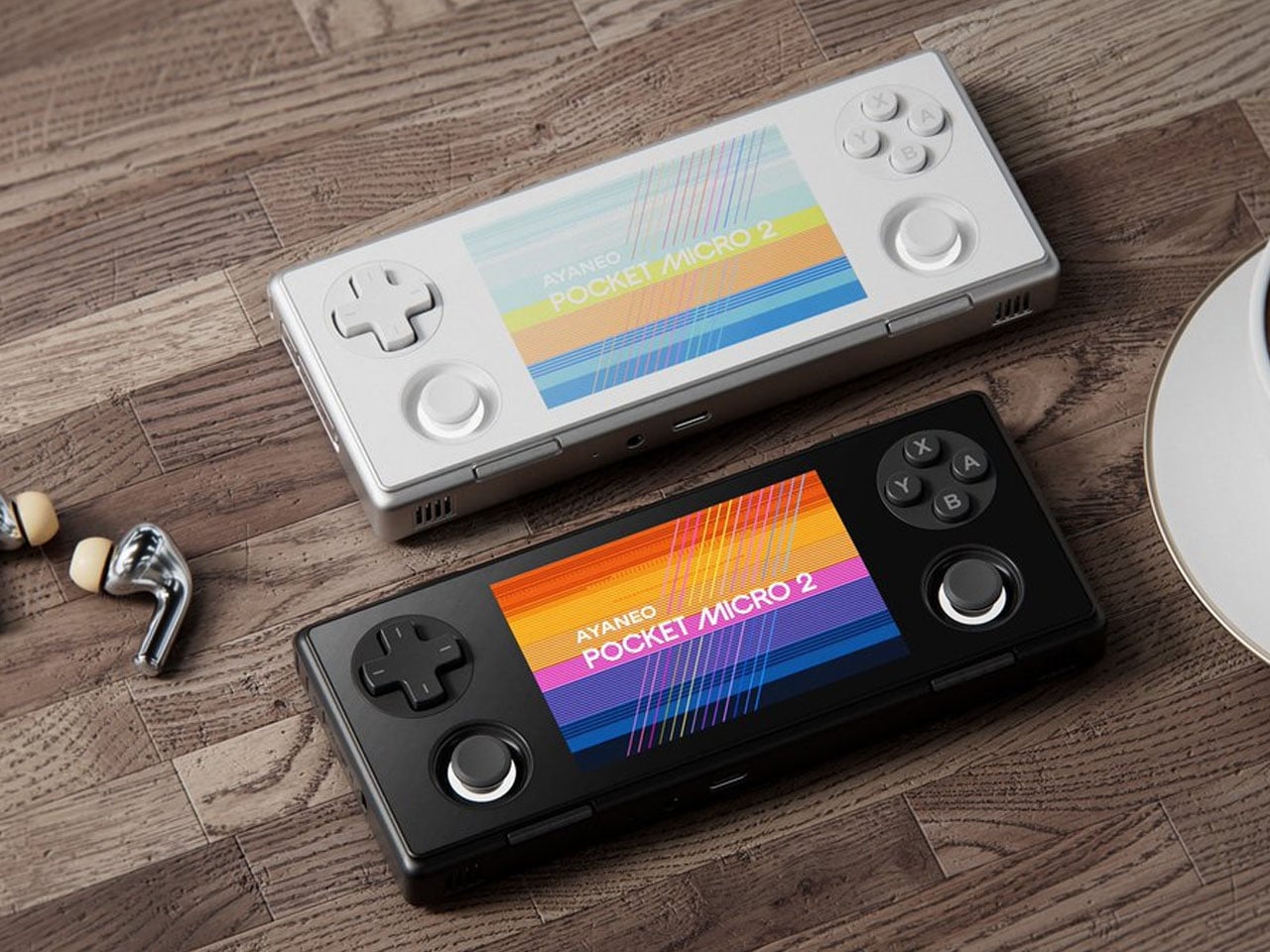
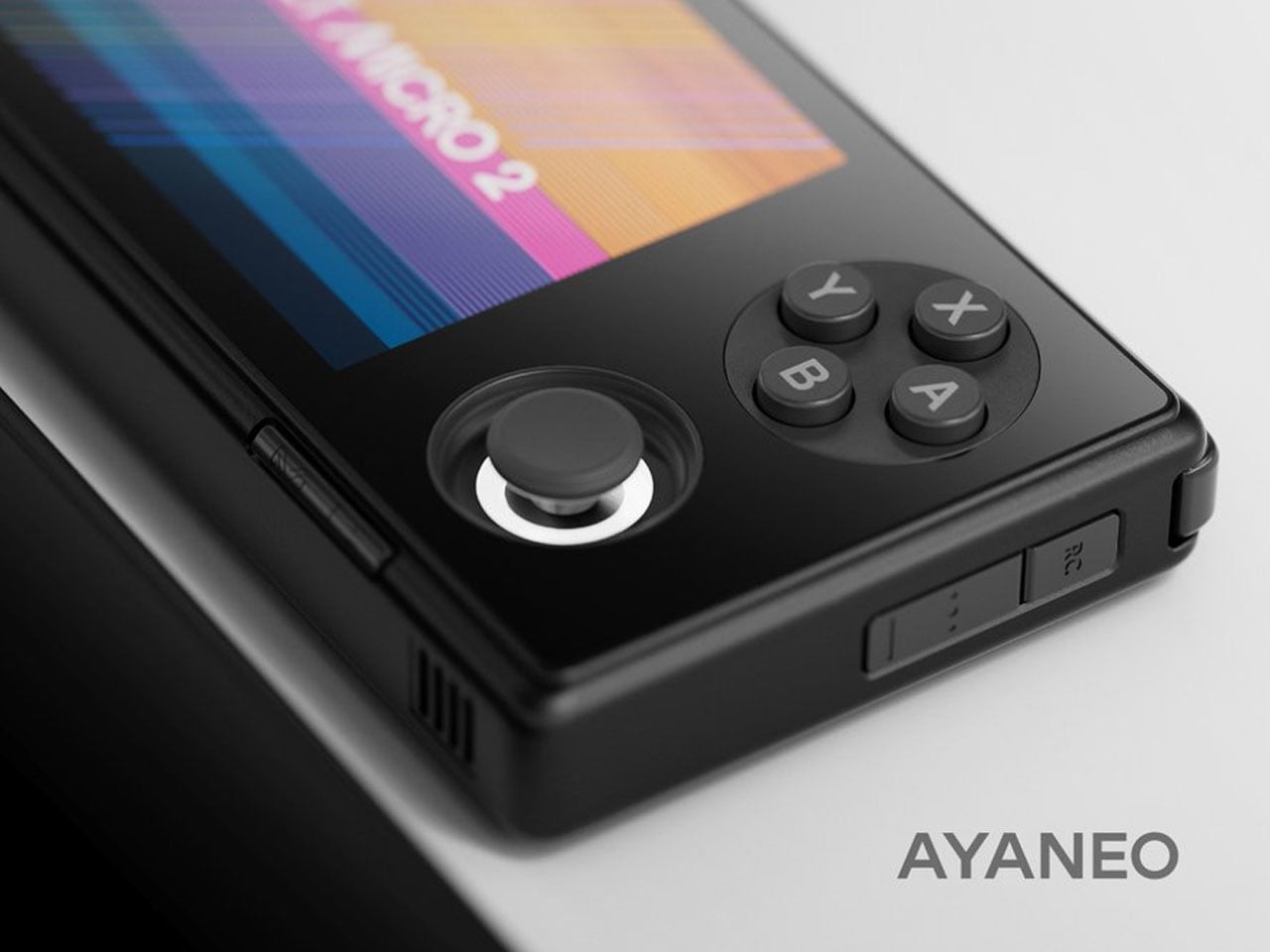
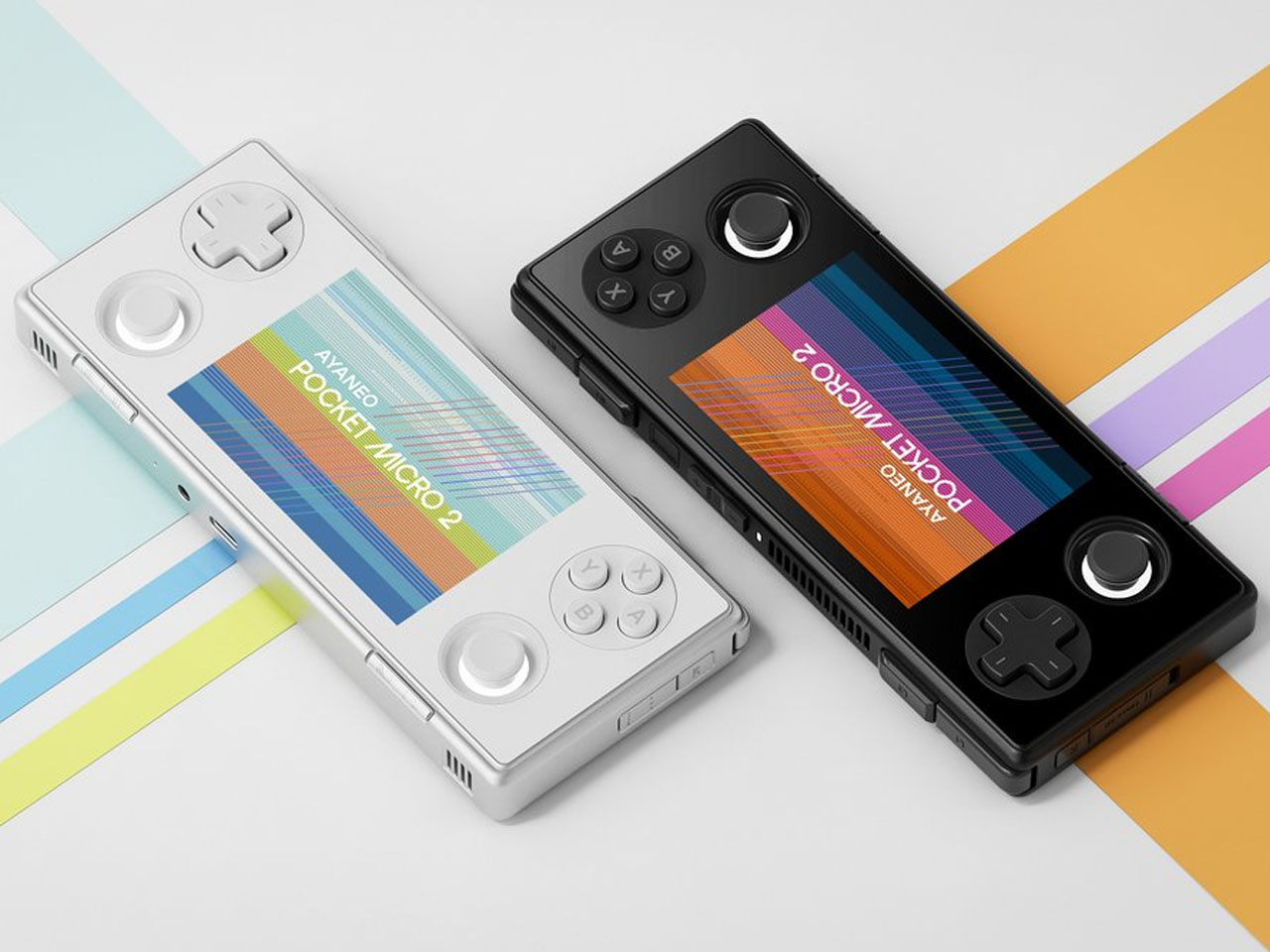
Ayaneo has a good foothold in the portable console gaming market with its versatile handhelds for every type of gamer. It wasn’t surprising that their upcoming Android-powered handheld was pretty much on the hype train and shrouded in speculative leaks for a few weeks. Now, the fog has finally cleared, and Ayaneo has teased the highly anticipated Pocket Micro 2 gaming handheld, poised to compete with Android devices from competitors like 8BitDo and Retroid.
The gaming handheld has been officially announced on the brand’s X channel, with some details still kept under wraps for later. This device will come in two classic color options: black and silver, indicating that the gadget is targeted towards more serious gamers.
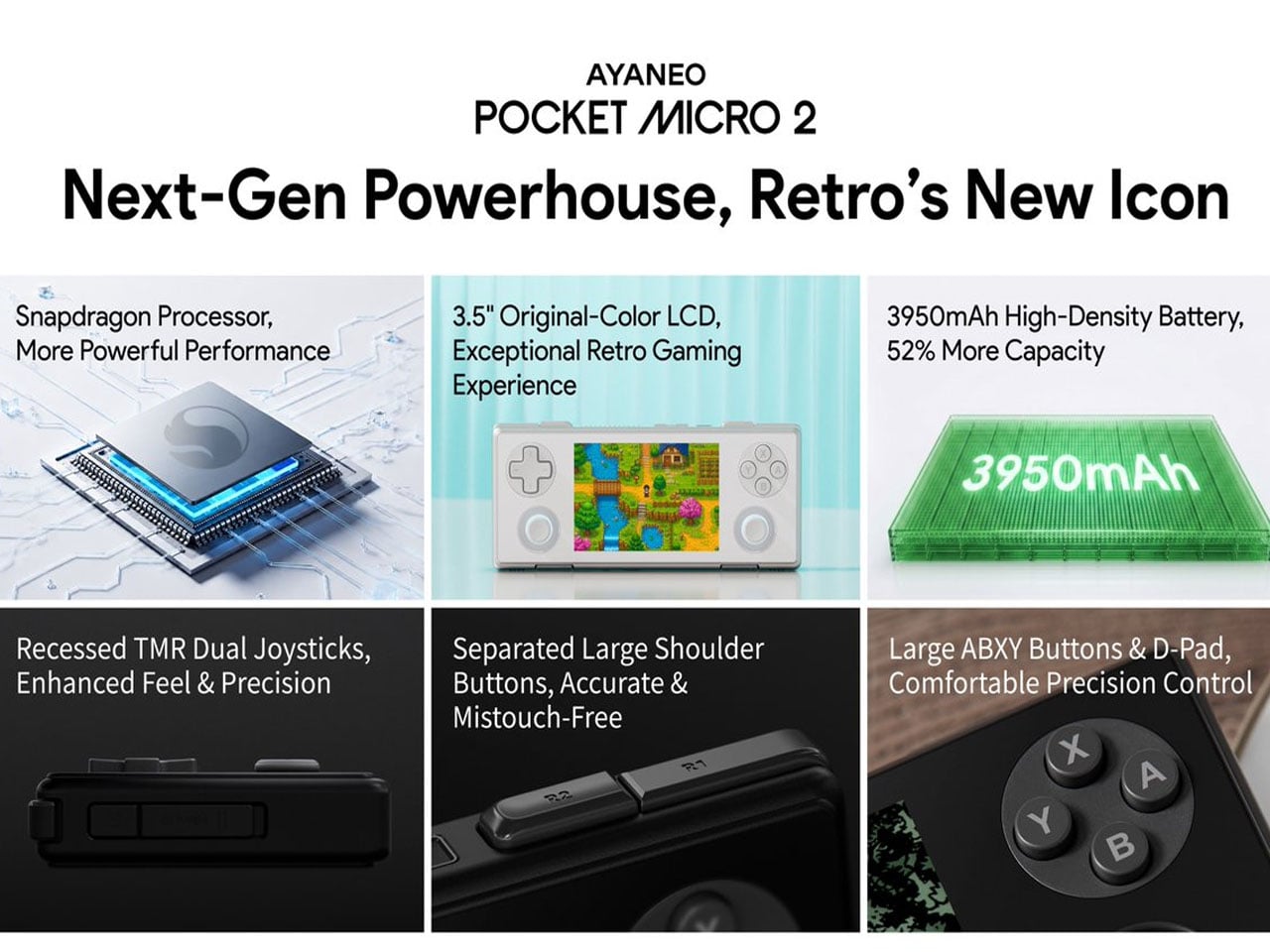
This device builds on the 3.5-inch screen Pocket Micro launched way back in 2024, powered by a MediaTek Helio G99 processor. The latest one has the updated joystick design based on the feedback given by the gamer community. The processing hardware also gets a good bump up for enjoying demanding titles, sans any lag. To keep the winning design going, the handheld has the same familiar rectangular form factor.
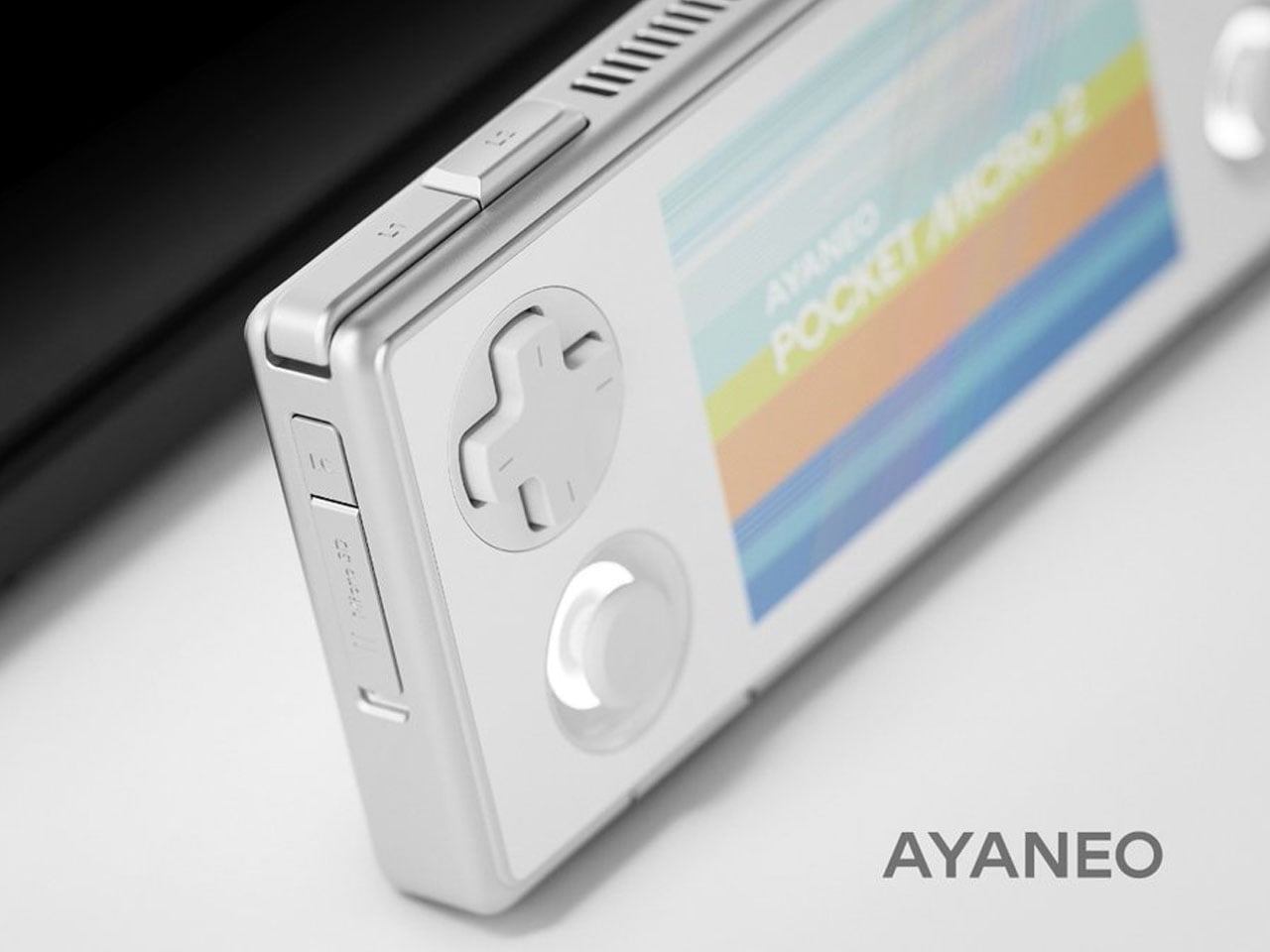
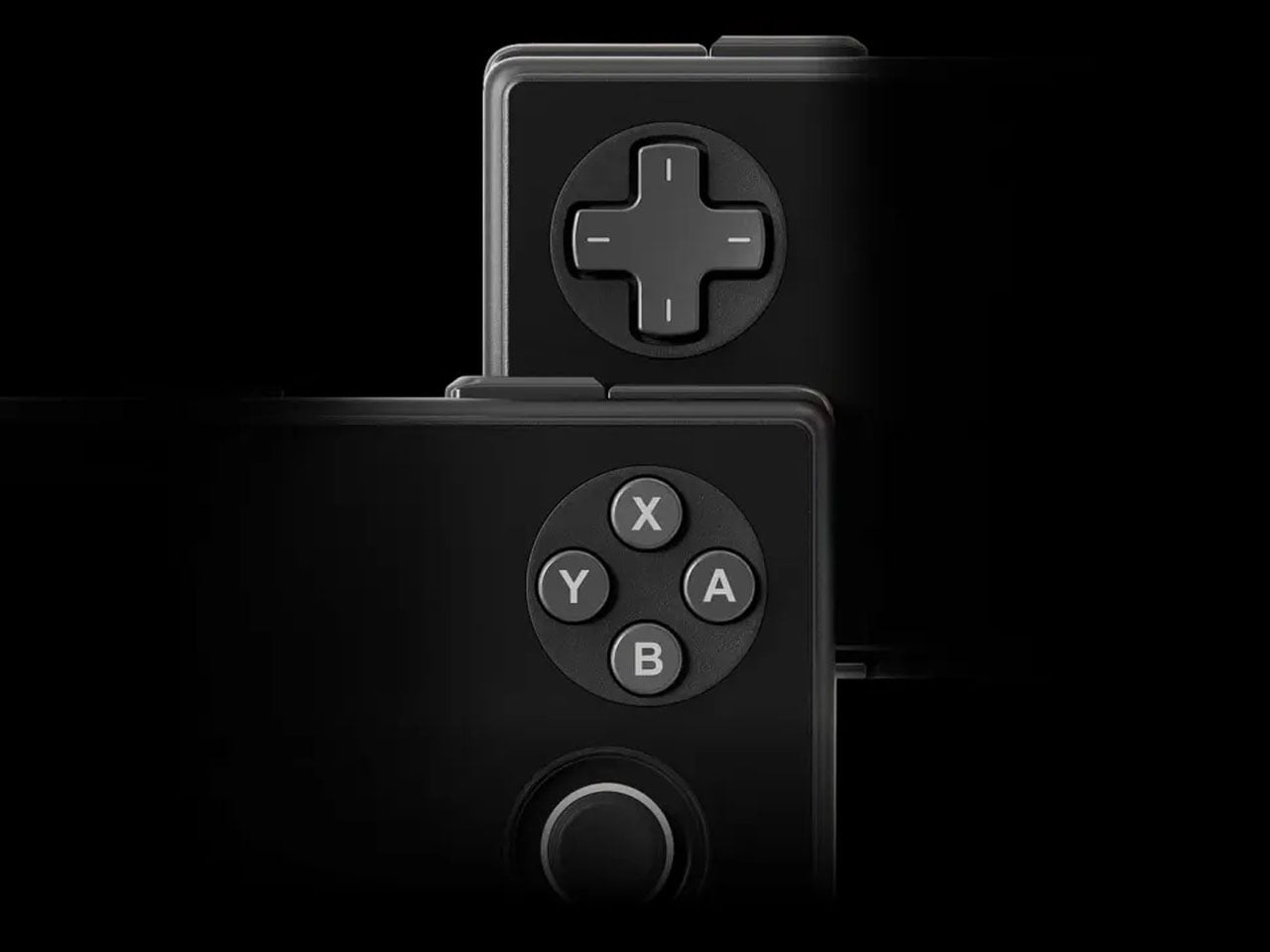
The official post clearly reveals the front section of the device, and more of the device is slated to come in a couple of days when the company reveals it fully in a livestream. Just like many other handhelds by Ayaneo, the Pocket Micro 2 also features a front glass panel with a borderless display and menu buttons on the chin that could be susceptible to accidental touches. Buttons on the handheld are fairly similar to the predecessor, albeit they’ve gone a little small compared to other handhelds.
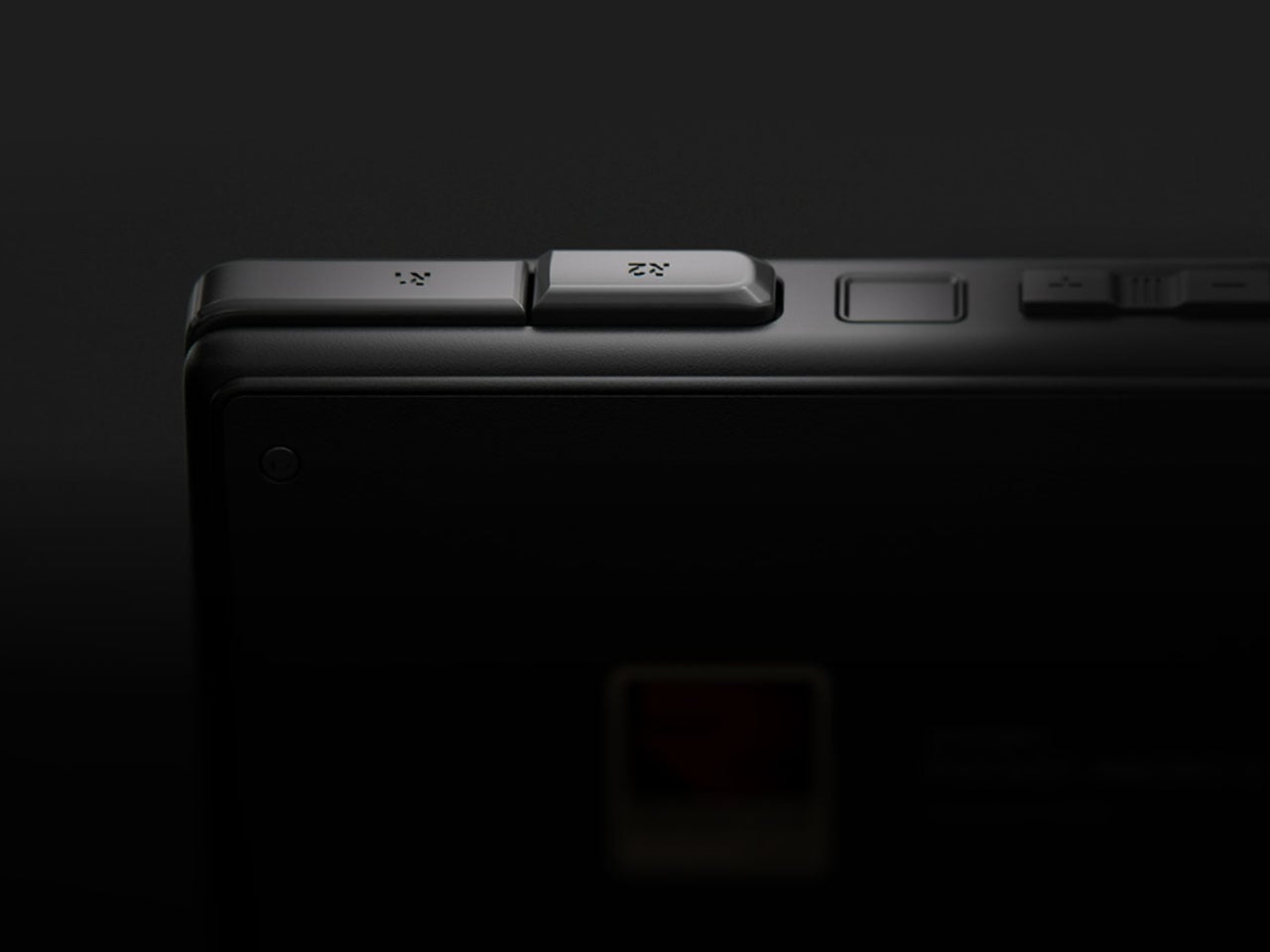
On the other hand, the analog sticks take the biggest design change, being recessed deeper into the device for better fused LED lighting and adaptability with customization. Those TMR recessed joysticks ensure there is no stick drifting at all for a more consistent gaming experience. Shoulder buttons on the handheld are slightly larger, along with the enhanced DPAD and action buttons for a better ergonomic feel and precise input. It’ll also get a larger 3,950mAh battery paired to an energy-efficient Snapdragon processor for longer gaming sessions. For connectivity, the Android gaming device has a 3.5 mm jack and a fully featured USB Type-C port.
We’ll have more on the specifications, pricing, and the official pre-order dates as soon as the live stream revelations are out in the open.
Most of us have made peace with ambient sound being a kind of elegant lie. The rain on your noise app isn’t real rain. It’s a carefully mastered recording, maybe spliced from a few different sessions, looped with enough craft that the seam is hard to find. It’s fine. It works. It gets you through the deadline or the insomnia or the open-plan office. But if you’ve ever listened long enough for the loop to reveal itself, you know the feeling: the spell breaks, and suddenly you’re just listening to a machine doing a trick. Mur Mur is trying to fix that, and the fix turns out to be a lot more interesting than I expected.
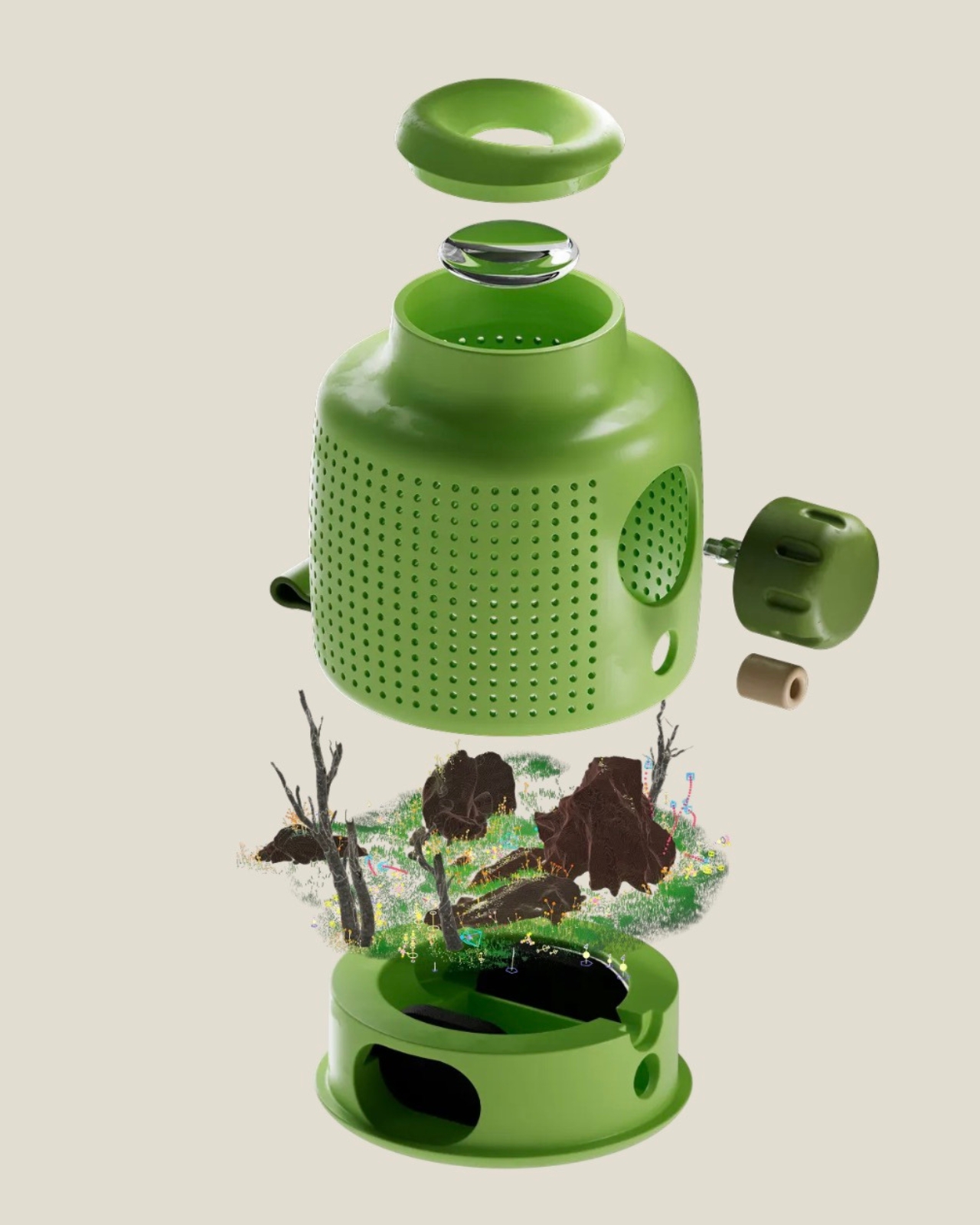
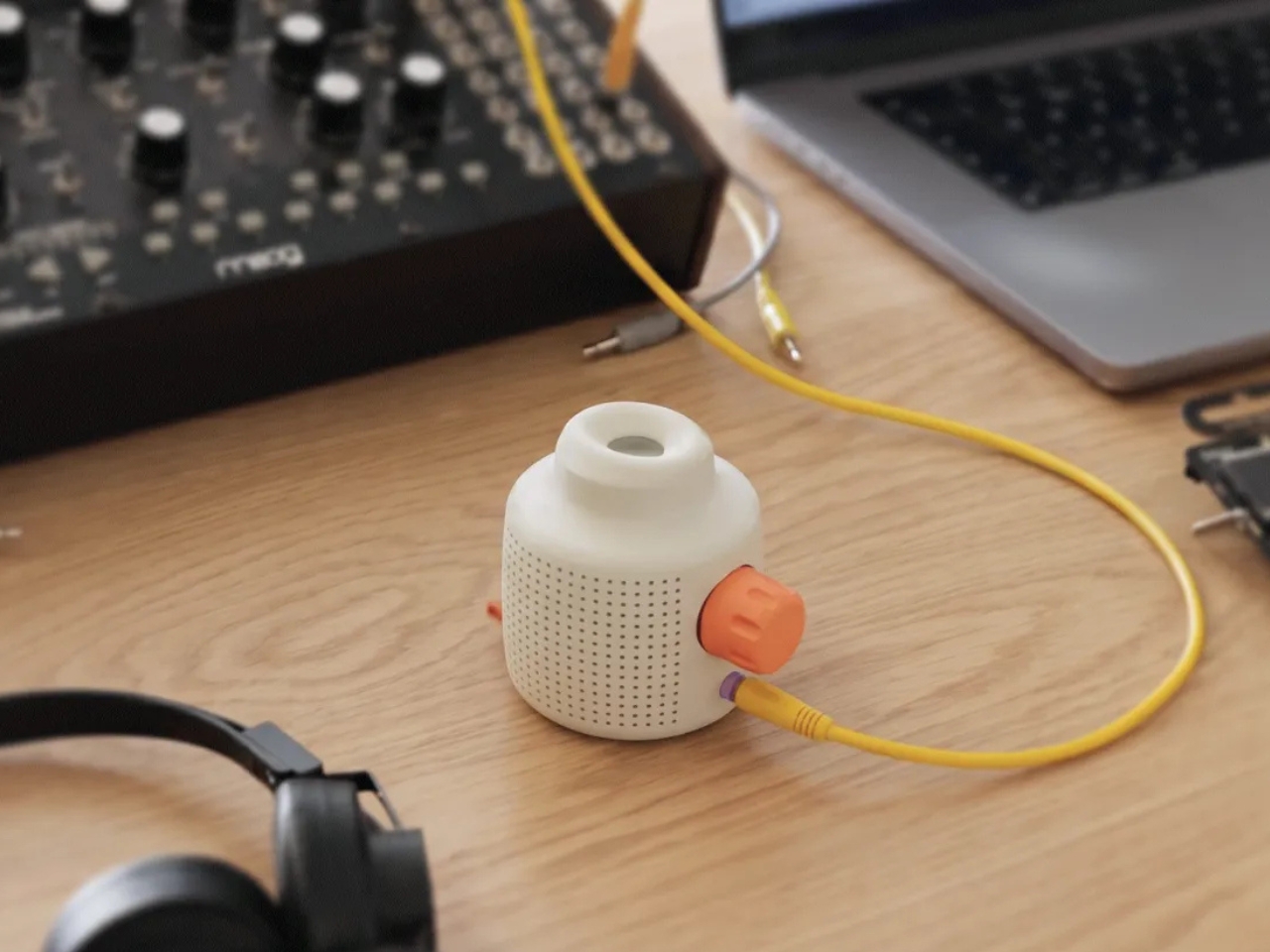
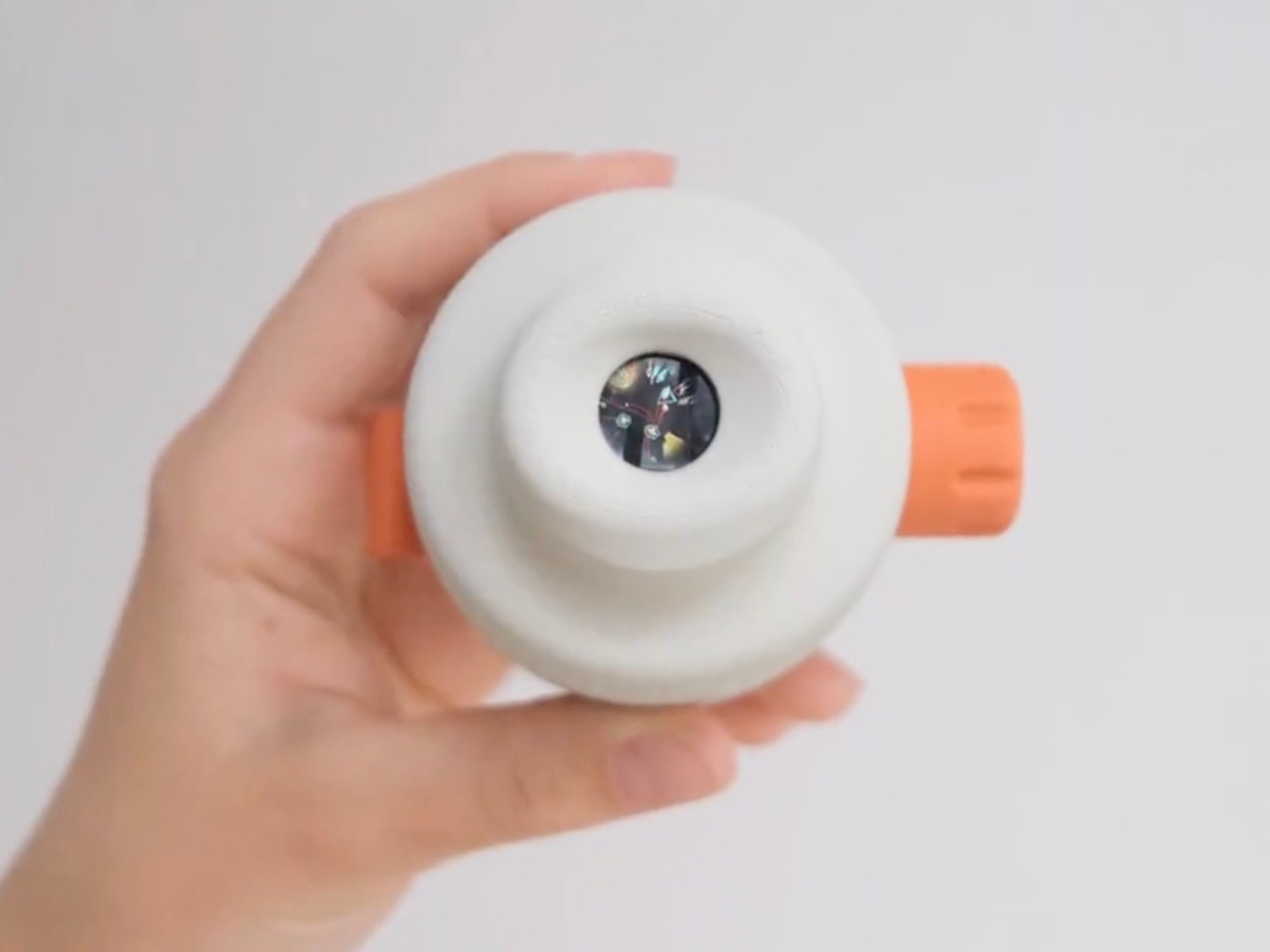
Designed by oio and mattering, two studios with very different but complementary practices, Mur Mur is a physical object (still in prototype) that holds a living, simulated world inside. Not a soundscape. Not a generative AI track. An actual world with terrain, weather, residents, and its own social rhythms. The sounds you hear are produced in real time as tiny digital agents move through their environment, interact with each other, and respond to whatever conditions are happening inside the simulation at that particular moment.
There are three worlds to choose from. The Block is a compact city, with the morning rush, delivery robots, pigeons, and street musicians all running their own routines. The Plot is a forest, layered with birdsong and crackling leaves and the occasional footsteps of a lost hiker. The Pond is a water ecosystem, paced by waves, fish, ducks, and boats passing through. Every world sounds distinct, which is the obvious part. What’s less obvious is that every world sounds different every time you listen, because the simulation underneath it keeps running whether you’re paying attention or not.
That detail matters more than it might seem. Mur Mur is not a product you control. You don’t press play, and you don’t press pause. The world inside it keeps going, and you either tune in or you don’t. The instruction on the site puts it plainly: don’t shake it, because there are living agents inside. It’s a funny thing to say about a piece of software, but it’s exactly the right way to describe what Mur Mur is actually doing.
The decision to build worlds rather than generate soundscapes was clearly a deliberate one. Generative AI audio has become its own crowded category, where you describe a mood or a setting and get back an endless ambient loop. oio and mattering went the other direction: instead of giving you a prompt box, they gave you a place. The result is a fundamentally different relationship with the object. You’re not commanding it. You’re sharing a space with it.
oio describes itself as a creative company on a quest to turn emerging technologies into an approachable, everyday reality, for humans and beyond. That description fits Mur Mur perfectly. Mattering works with art and advanced technology, translating emerging conditions into new creative languages. Their partners have ranged from IBM and Apple to Björk and Nike, a spread that tells you they don’t fit neatly into any single category.
As of now, the physical Mur Mur speakers don’t exist yet outside of a few prototypes the team made for themselves. But the worlds are already running, and you can stream them online via the radio they’ve built. There’s also a Max for Live patch that lets you route the sounds directly into Ableton, which opens up an obvious and exciting territory for musicians who want to work with living sound rather than recorded sound. They’re actively looking for hardware producers, musicians, and technologists to help bring it to scale.
I’ll admit that the idea of a sound object I can’t control would normally give me pause. But Mur Mur reframes that completely. The point is that you aren’t supposed to control it. The city doesn’t wait for you. The forest keeps going. The pond doesn’t care about your schedule. That’s not a design flaw. That’s the entire premise, and it’s one of the more compelling premises in recent design thinking.
Portability is the invisible hero of outdoor design. It’s why a multitool can replace a drawer full of hardware, why a folding chair feels like a luxury earned through engineering, and why a tent can create a private room from a bundle of fabric and poles. The outdoors asks every object the same blunt question: how much can you do without becoming a burden? The products that answer well become staples. The ones that don’t stay home.
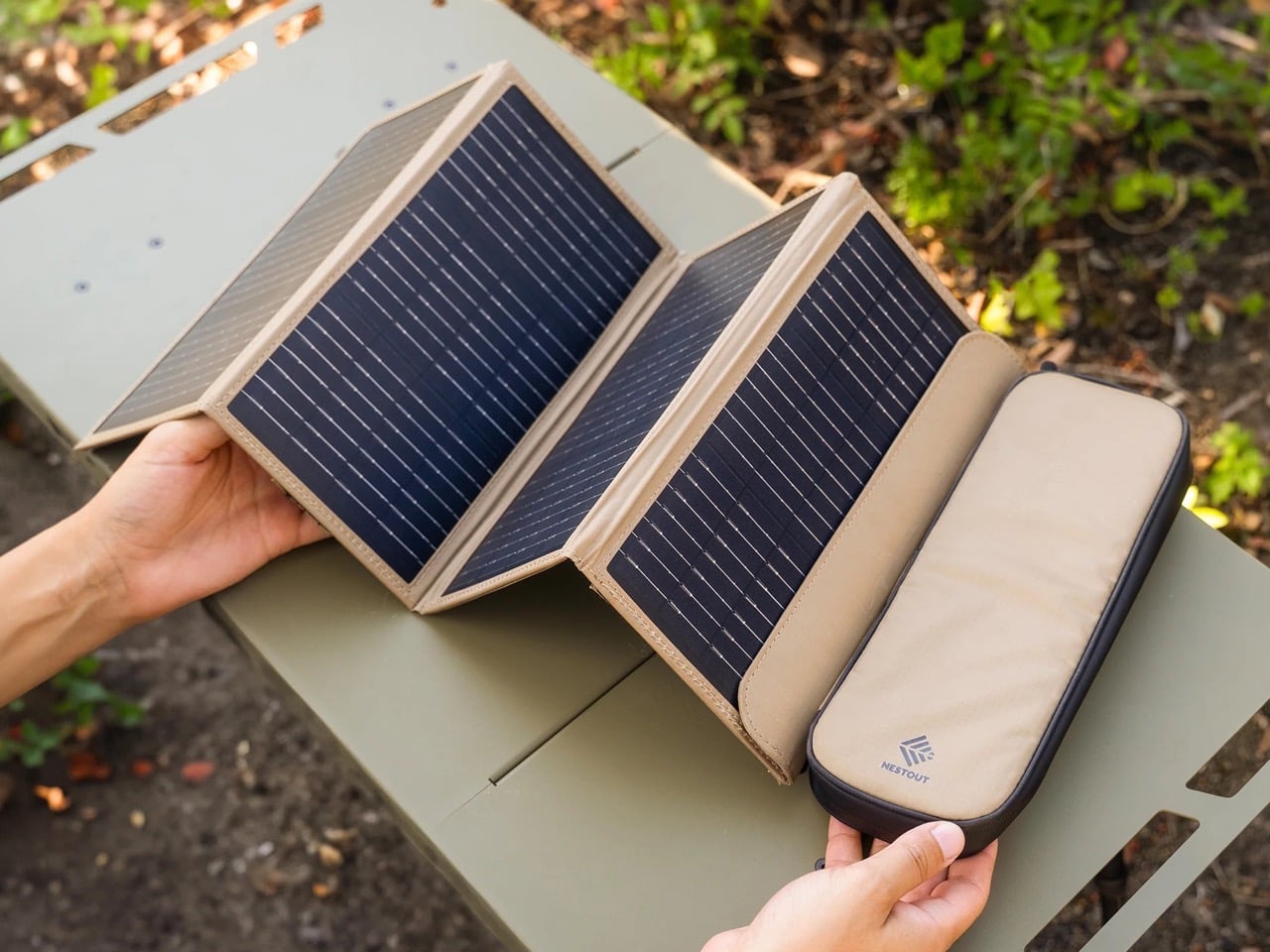
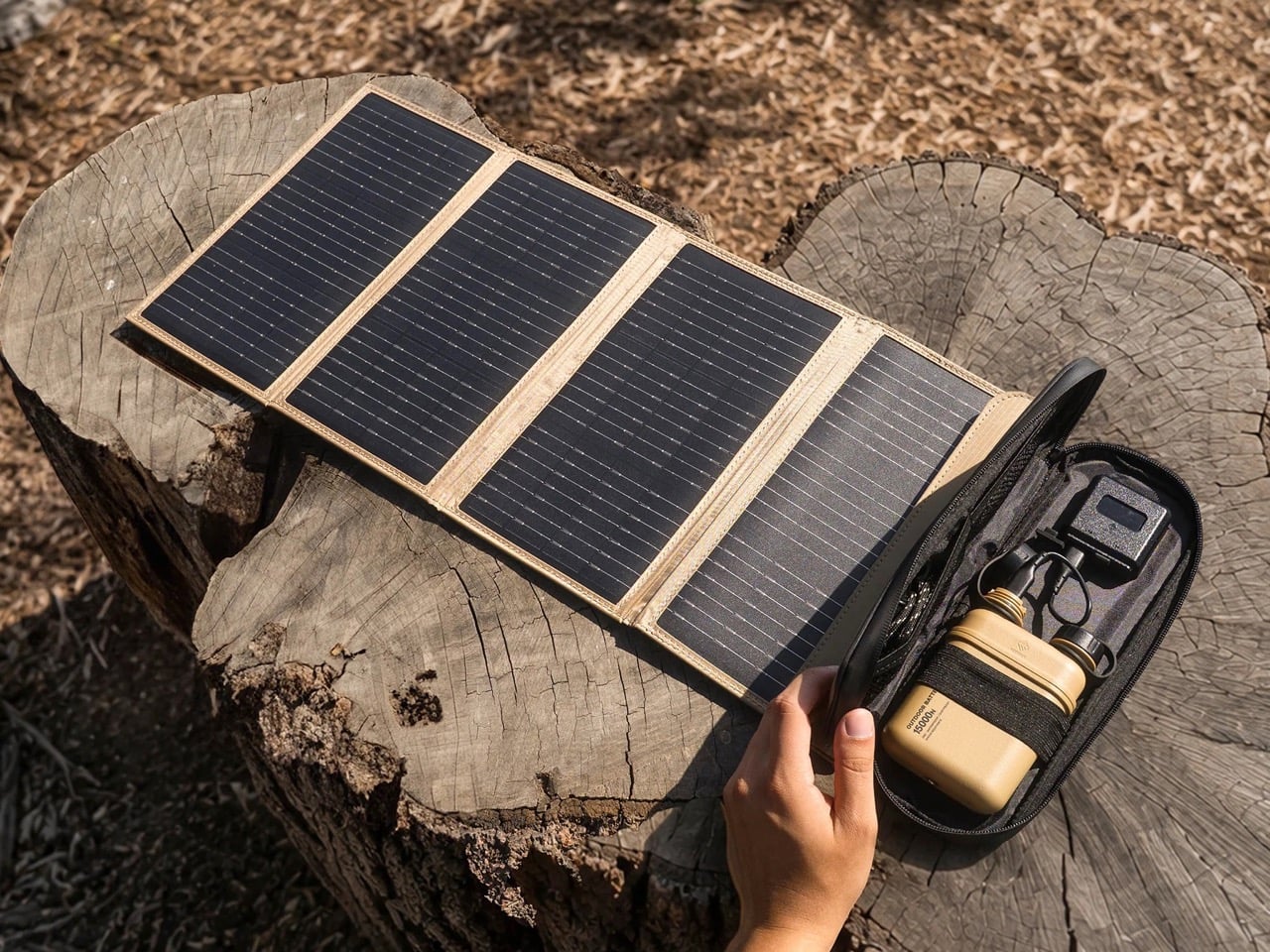
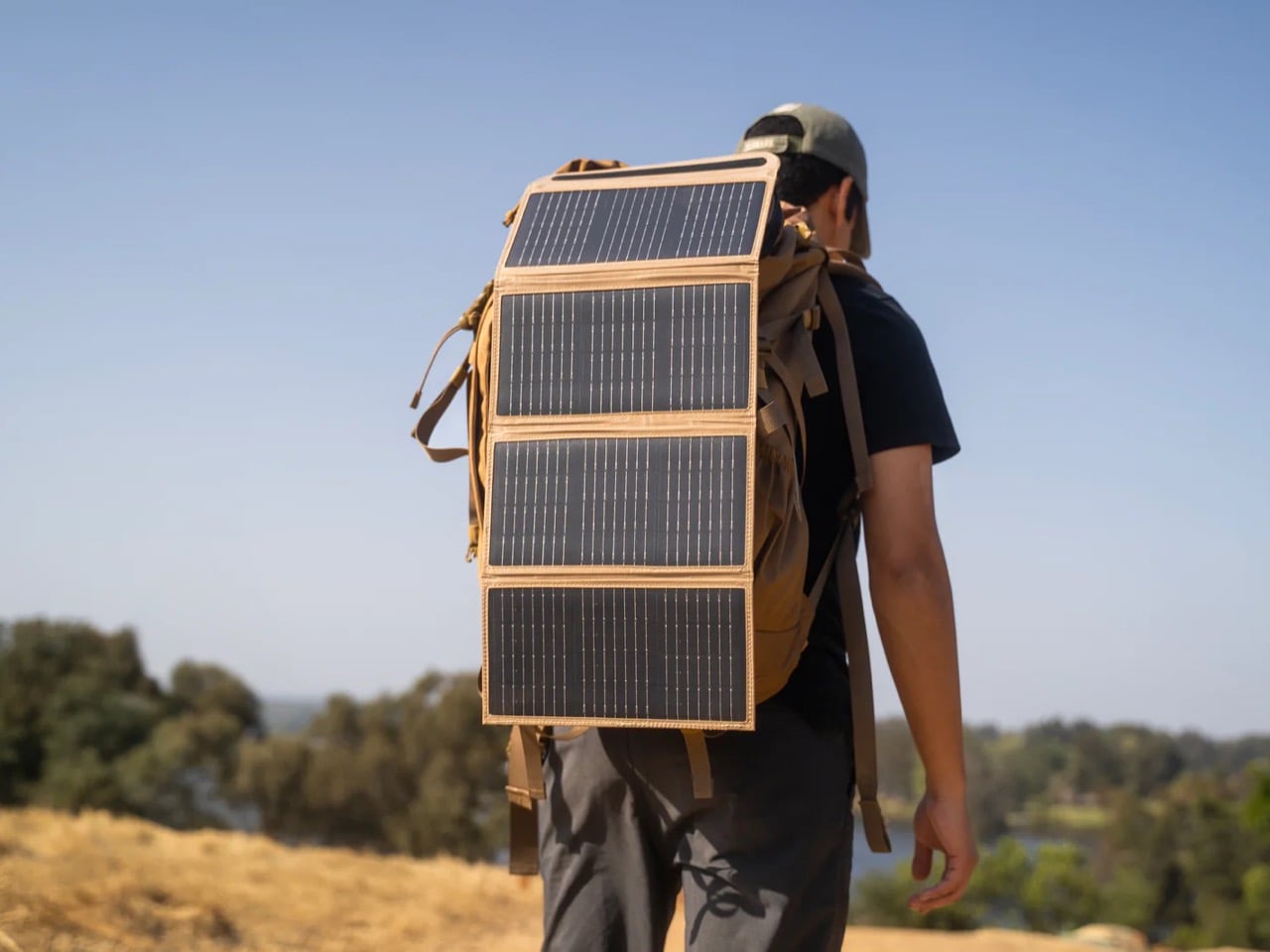
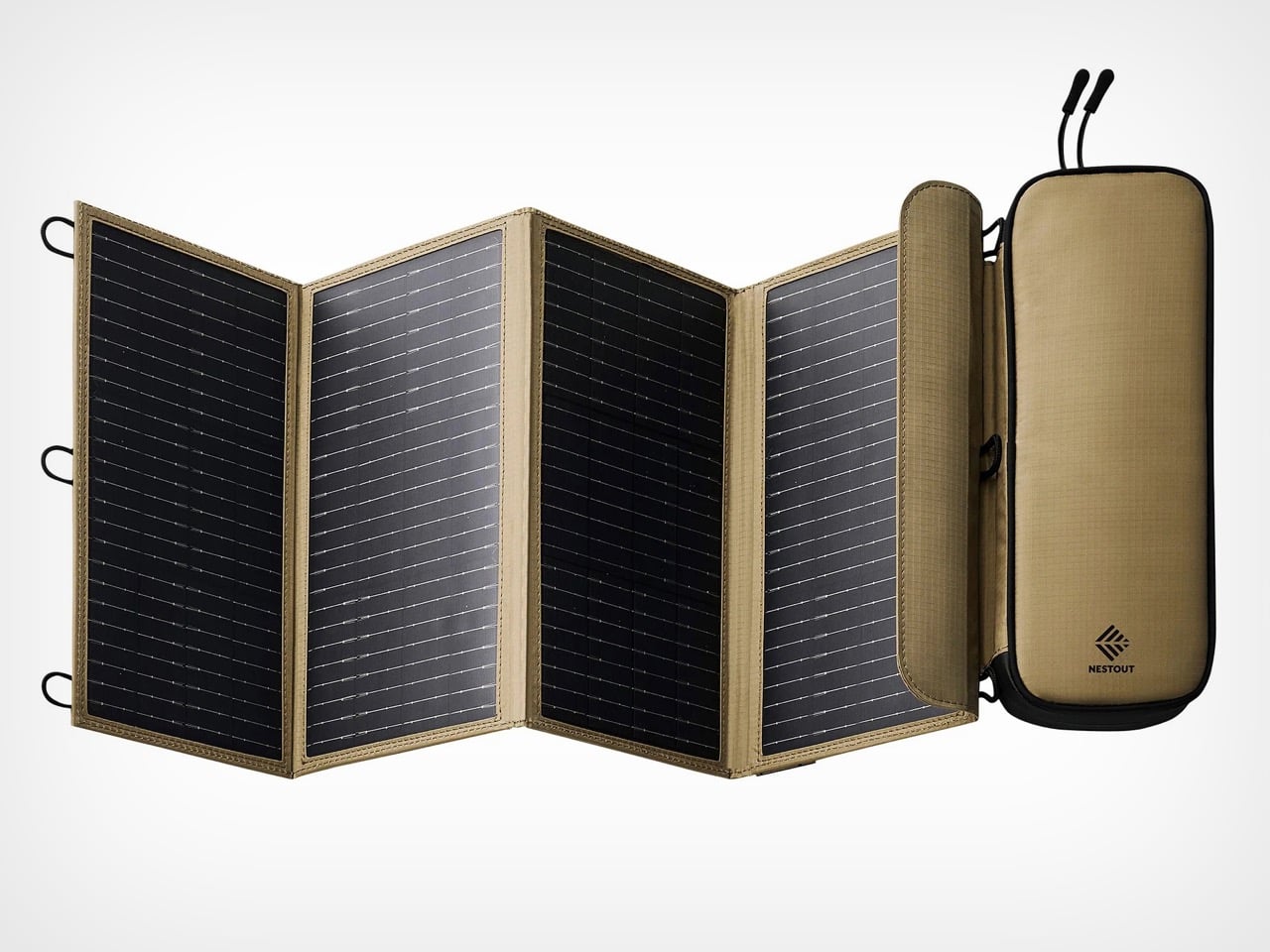
A folding solar panel answers that question in a very modern way. The NESTOUT 4-Panel Solar Charger takes a function that used to feel bulky and specialized and reshapes it into something that behaves like everyday camp gear. It folds into a compact carry format, keeps its system organized, and opens into a usable power solution wherever daylight is available. In the same way your stove, seat, and shelter have learned to collapse for the journey, this charger brings portable energy into the same neatly packed ecosystem.
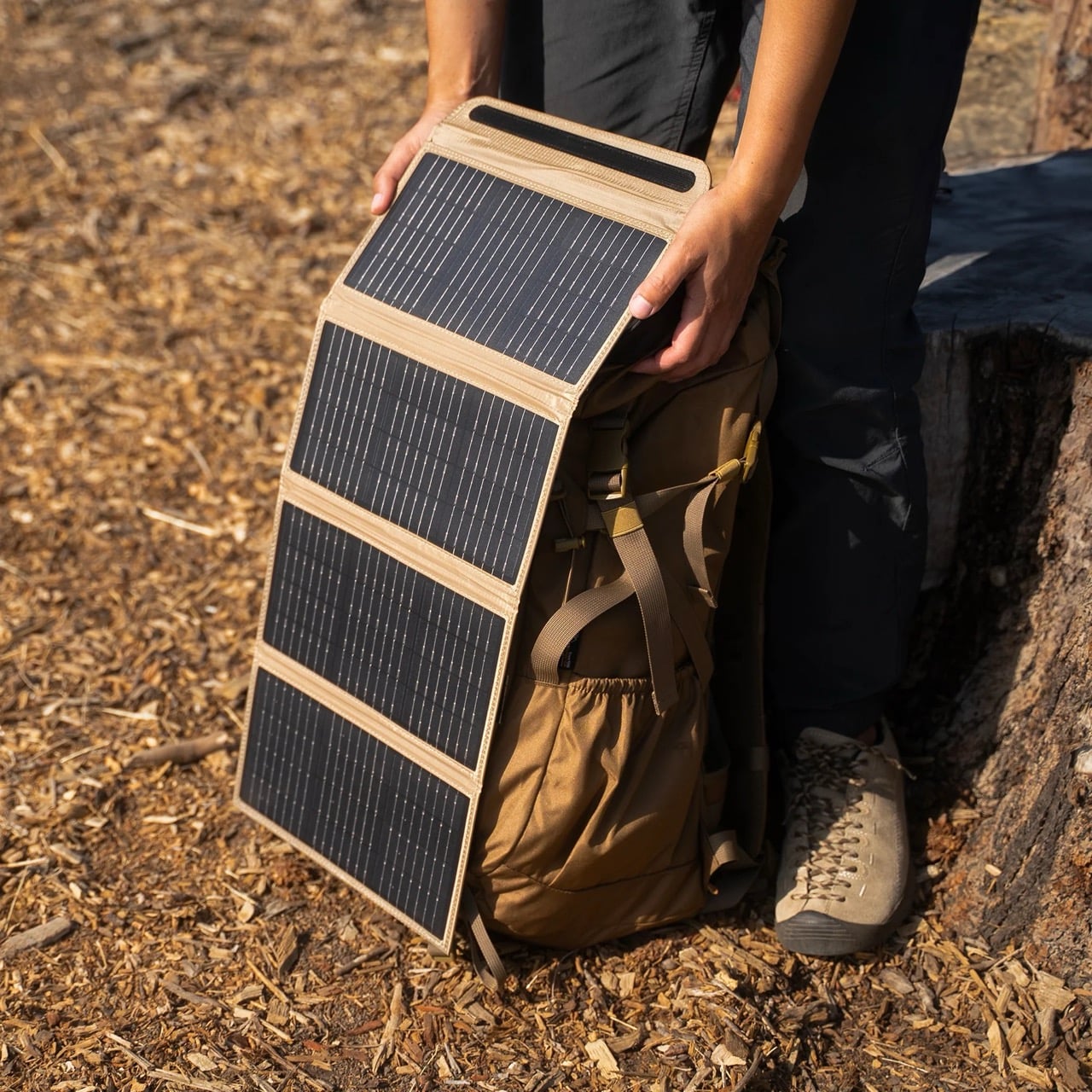
Its ripstop-style tan fabric border and backing speak a design dialect already fluent to anyone who has handled quality outdoor soft goods. It has more in common visually with a waxed canvas field kit or a durable tactical organizer than with the consumer electronics aisle, and that distance is clearly intentional. This is a Japanese product from Elecom’s NESTOUT sub-brand, and Japanese outdoor brands tend to understand that gear which looks like it belongs outdoors actually gets taken outdoors. The color palette, earthy, warm, and cohesive across every component, tells you that someone made a deliberate choice to prioritize belonging over visibility. A solar charger in generic black with off-the-shelf webbing would disappear into a pile of tech accessories; this one looks at home leaning against a pack on a sun-baked trail.
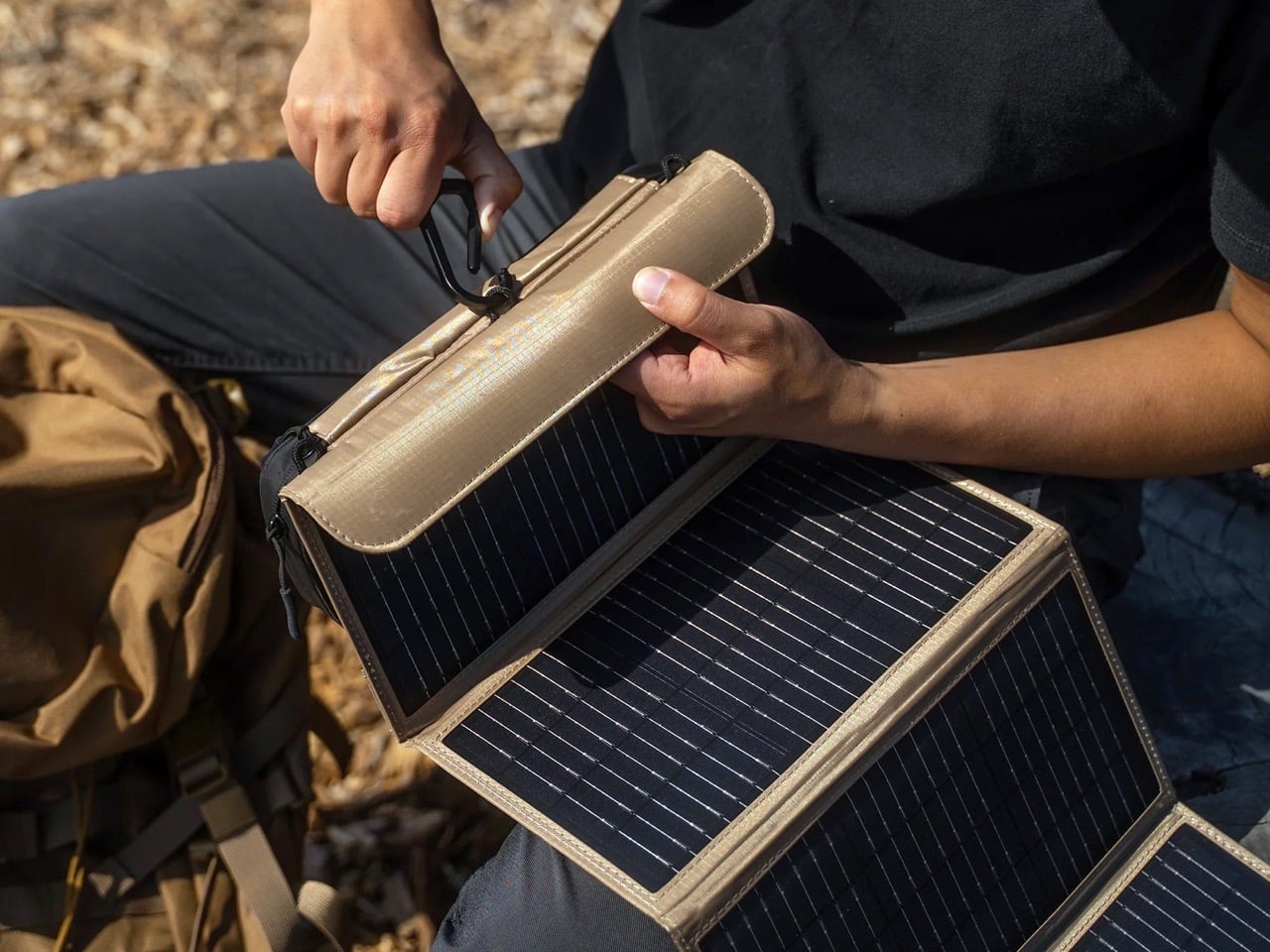
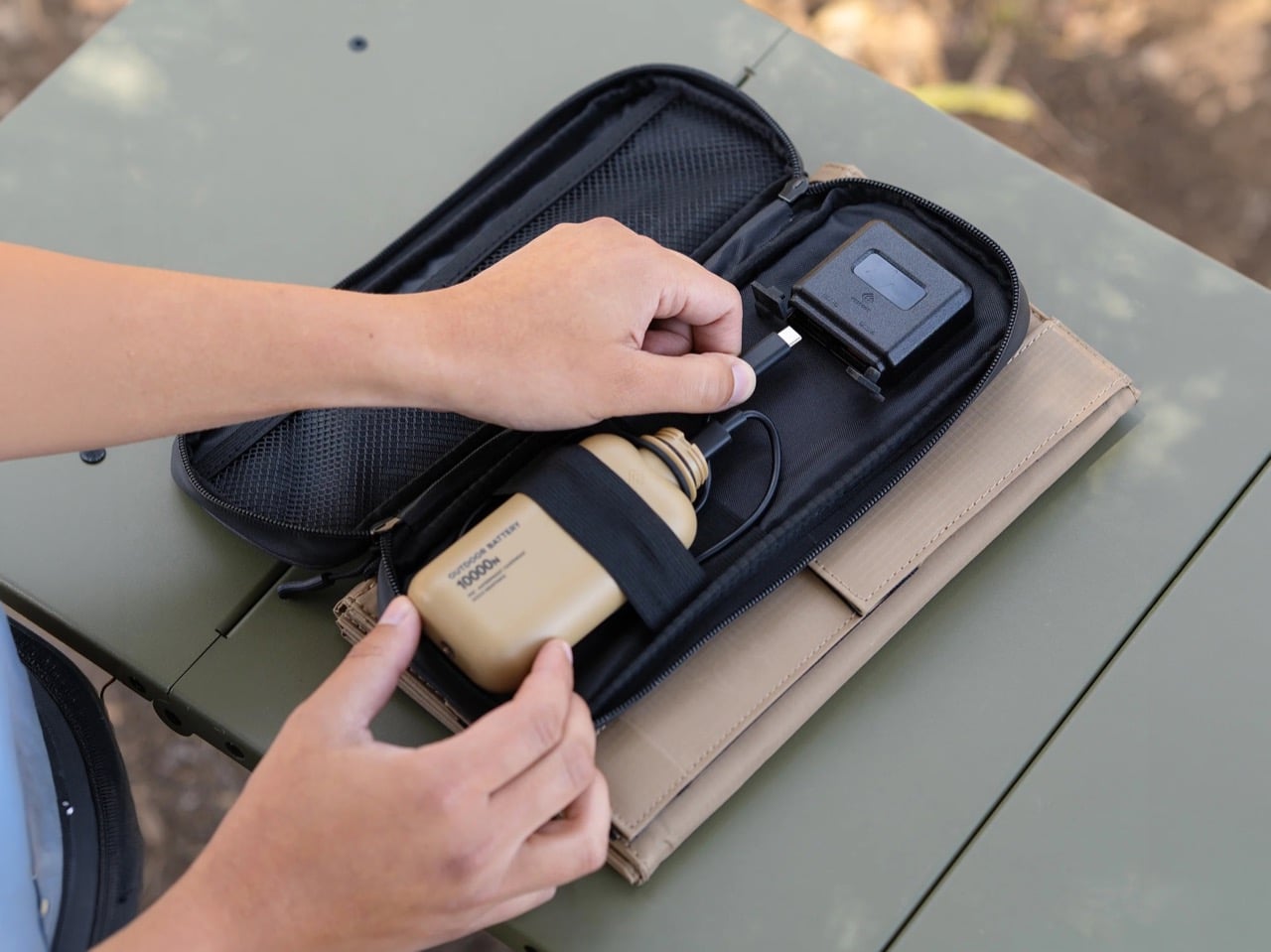
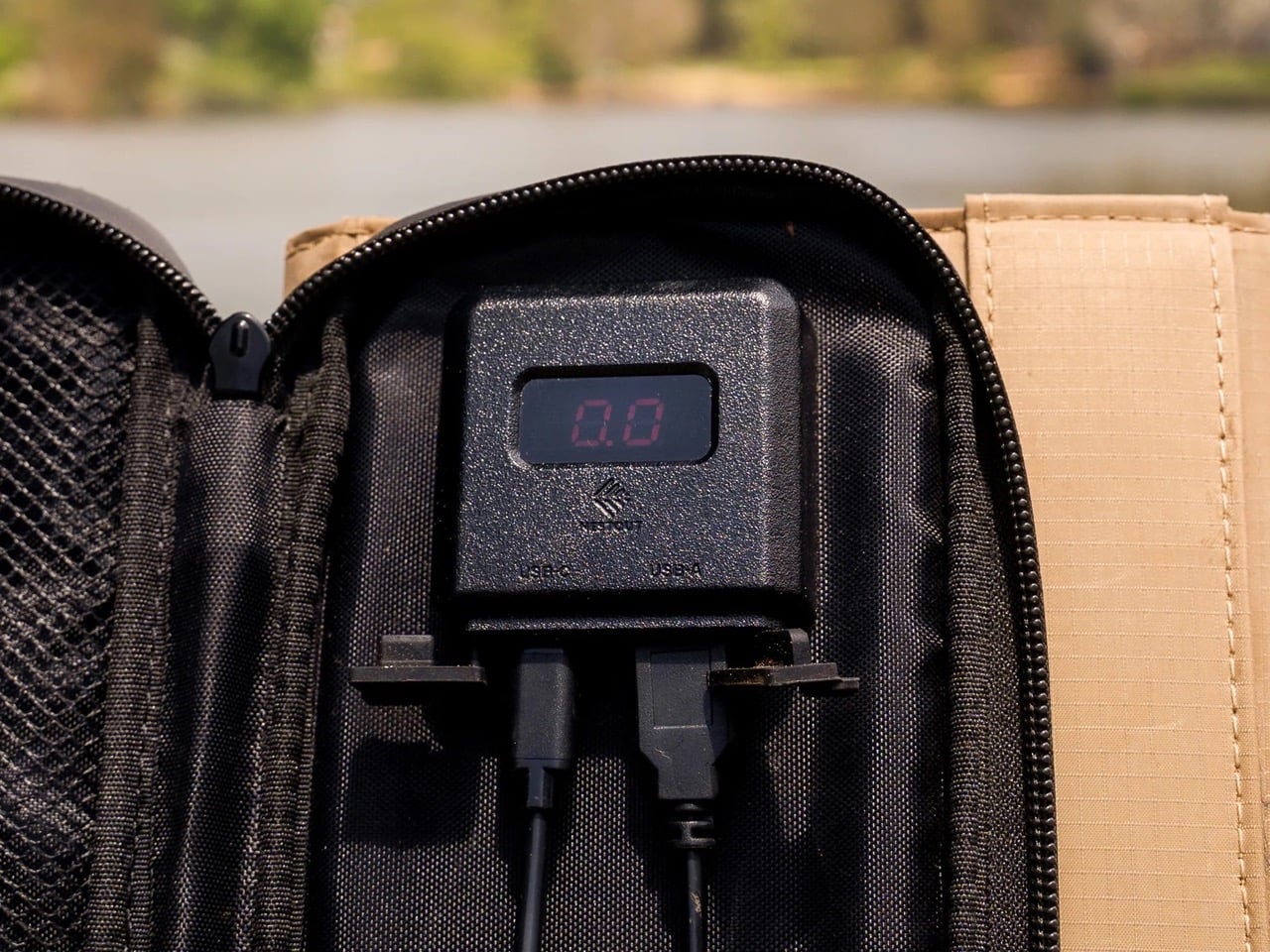
Every portable solar panel generates a secondary problem: what do you do with the regulator, the cables, and the battery bank that actually make the thing useful? Most competing products leave you to solve that on your own, resulting in the cable chaos that haunts every outdoor kit. NESTOUT builds the answer in. The semi-rigid zip pouch folded into the charger’s right side houses a solar regulator with an LED display showing real-time wattage output, cables nested in a mesh pocket, and enough room for the brand’s own 10,000 or 15,000 mAh battery banks. That integration transforms a panel-plus-accessories situation into a single self-contained unit, and it’s the kind of design decision that makes the difference between gear you manage and gear you simply use.
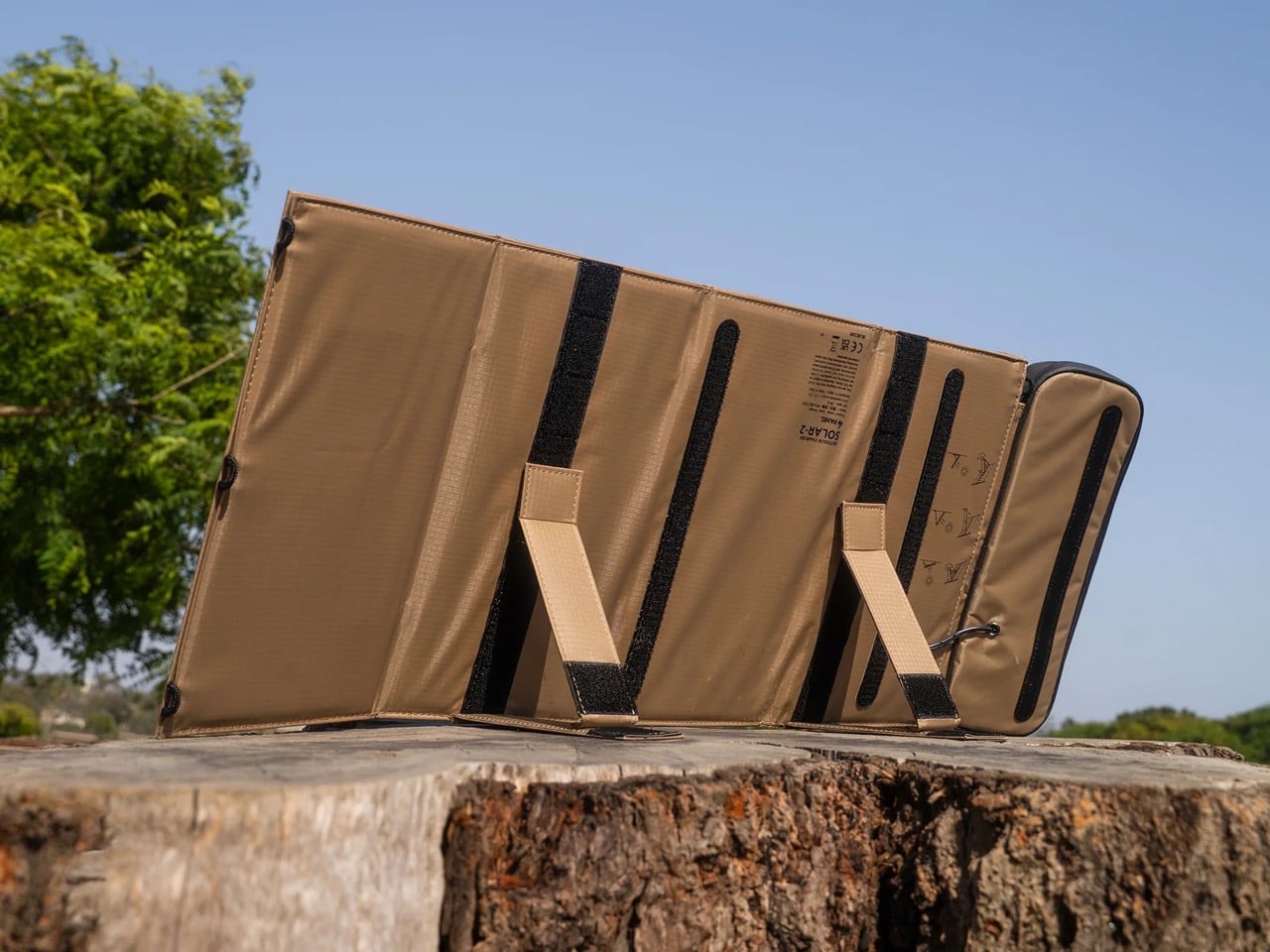
Unfolded, the four panels arrange themselves in an accordion geometry that has a quietly architectural quality. Each panel is roughly the same width, and the tan fabric hinges between them maintain even spacing, giving the whole surface a composed, deliberate rhythm rather than an improvised sprawl. Corner grommets and a carabiner loop at the top offer multiple deployment options: lean it against a pack, hang it from a branch or tent line, stake it toward the sun, or lay it flat across a warm rock. That variety acknowledges a fundamental truth about portable solar, namely that sunlight is directional, inconsistent, and rarely cooperative with a fixed setup.
Under the ETFE-coated glass panels sit Maxeon solar cells, widely regarded as among the most efficient technology available in portable solar applications. The 4-panel configuration generates up to 28 watts total, with each panel contributing roughly 7 watts under ideal conditions. Real-world output will be lower depending on angle, cloud cover, and ambient temperature, which is the honest reality of any portable solar product, but 28W is a genuinely useful ceiling for keeping phones, GPS units, and headlamps topped up through a full day outside. NESTOUT positions the charger as part of a broader outdoor charging ecosystem alongside its own rugged power banks, and the built-in regulator and storage pouch clearly reward buying into that system. It is an ecosystem product in the best sense: capable enough to work with anything that has a USB port, and cohesive enough to function beautifully alongside a NESTOUT battery bank.
For the people this charger is actually built for, the appeal is pretty straightforward. Outdoor gear has spent years learning how to fold, compress, and multitask, turning shelter, seating, cooking, and storage into portable systems that travel lightly and set up fast. Power has lagged behind that curve for a while, often split between oversized stations for parked setups and forgettable accessories for everyone else. The NESTOUT 4-Panel Solar Charger makes a strong case for a middle path. At $134.99, it brings solar charging into the same design language as the rest of your kit, compact when packed, useful when deployed, and easy to live with. That is why it makes sense for backpackers, tailgaters, anglers, hikers, and anyone whose outdoor setup depends on mobility. In a world where every essential has learned to collapse into a smarter, smaller format, portable power finally feels like it got the memo too.
The desk you work at shapes how the work itself feels. Most people know this in theory and ignore it in practice, assembling setups gradually — a keyboard from one order, a charger that just sort of ended up there, a clock that came with the apartment. Over time the surface accumulates rather than improves. The products on this list are different. Each one solved a specific problem clearly enough to make everything around it look like it needed reconsidering.
None of them cost more than $200. The constraint is intentional — this is not a list built around aspirational hardware, but around objects that earn their footprint through daily use rather than shelf presence. A folding mouse that ended the trade-off between portability and performance. A silent recorder that made an entire category of software feel unnecessary. A desk surface that finally stayed organized. Five products, one desk, a noticeably better setup.
1. Inseparable Notebook Pen
There is a specific frustration that comes with reaching for a pen and finding it has migrated. Not lost, just elsewhere — on the wrong side of the keyboard, inside a drawer that was never meant for it, somewhere between the last meeting and this one. The Inseparable Notebook Pen treats that as a design problem worth solving rather than a personal failing. A magnetic clip attaches the pen directly to the notebook cover so the two move as a single unit, staying together on the desk the same way they travel together in a bag.
What makes it worth noting alongside hardware that costs multiples of its $19.95 price is the standard it holds itself to. The gel ink flows smoothly, and the clip mechanism is solid, but the detail that earns it a place on a considered desk is the built-in silencer — a small component that softens the attach-and-detach motion into something quiet and deliberate. That level of finish on a $20 object is not accidental. It is the difference between a pen that gets used and one that gets replaced.
The magnetic clip keeps pen and notebook permanently paired, removing the low-grade friction of a misplaced writing tool from the daily routine entirely
A built-in silencer turns the attach-and-detach motion into a quiet, considered interaction — the kind of detail that signals a product was designed rather than just manufactured
What we dislike:
Works best as a system with its intended notebook, making it a less convincing standalone pen for anyone who writes across multiple formats or prefers a different paper weight
Gel ink cartridge replacement options are limited compared to more established pen systems, which matters once the initial ink runs out
2. HiDock H1 Lite
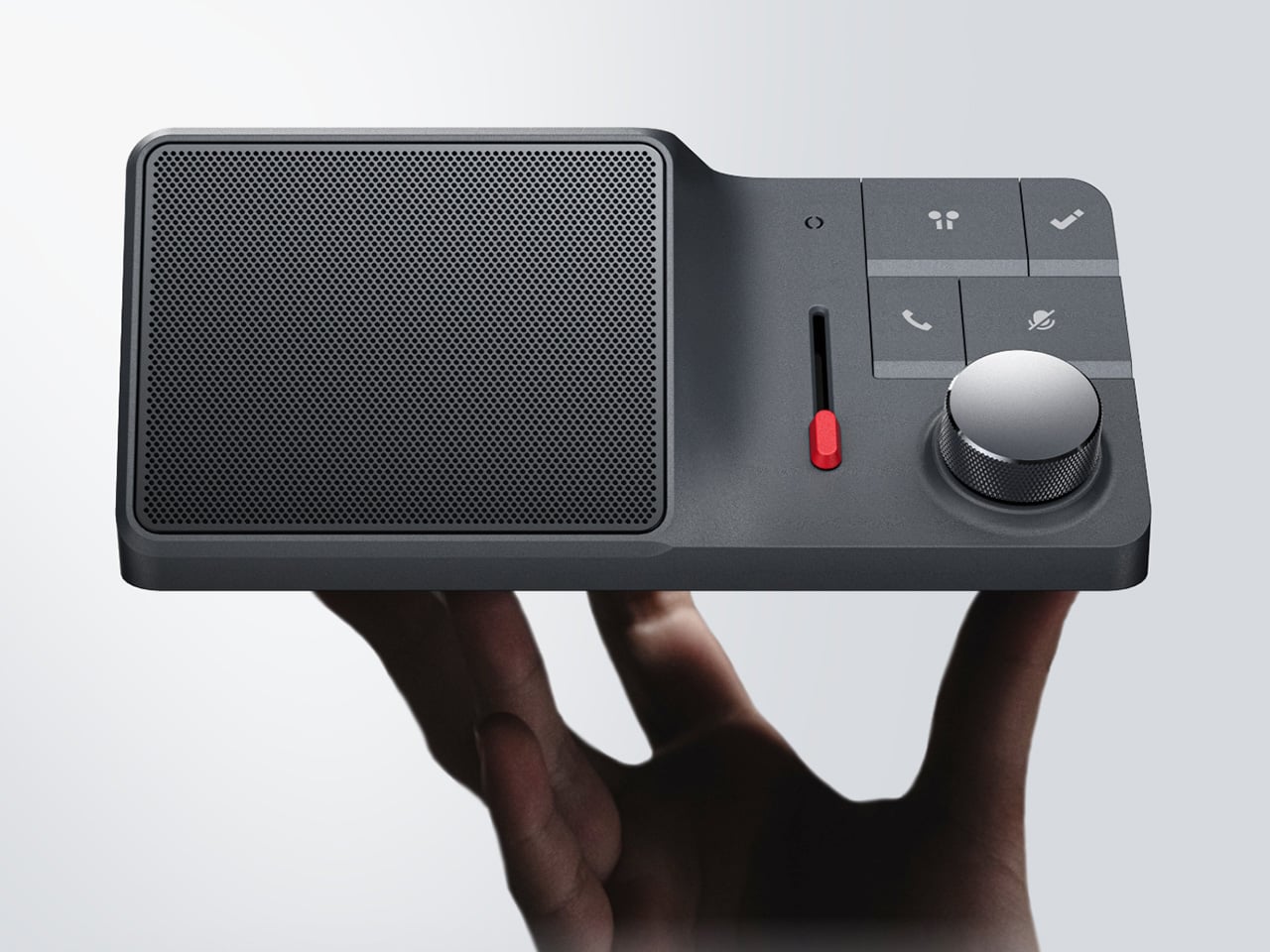
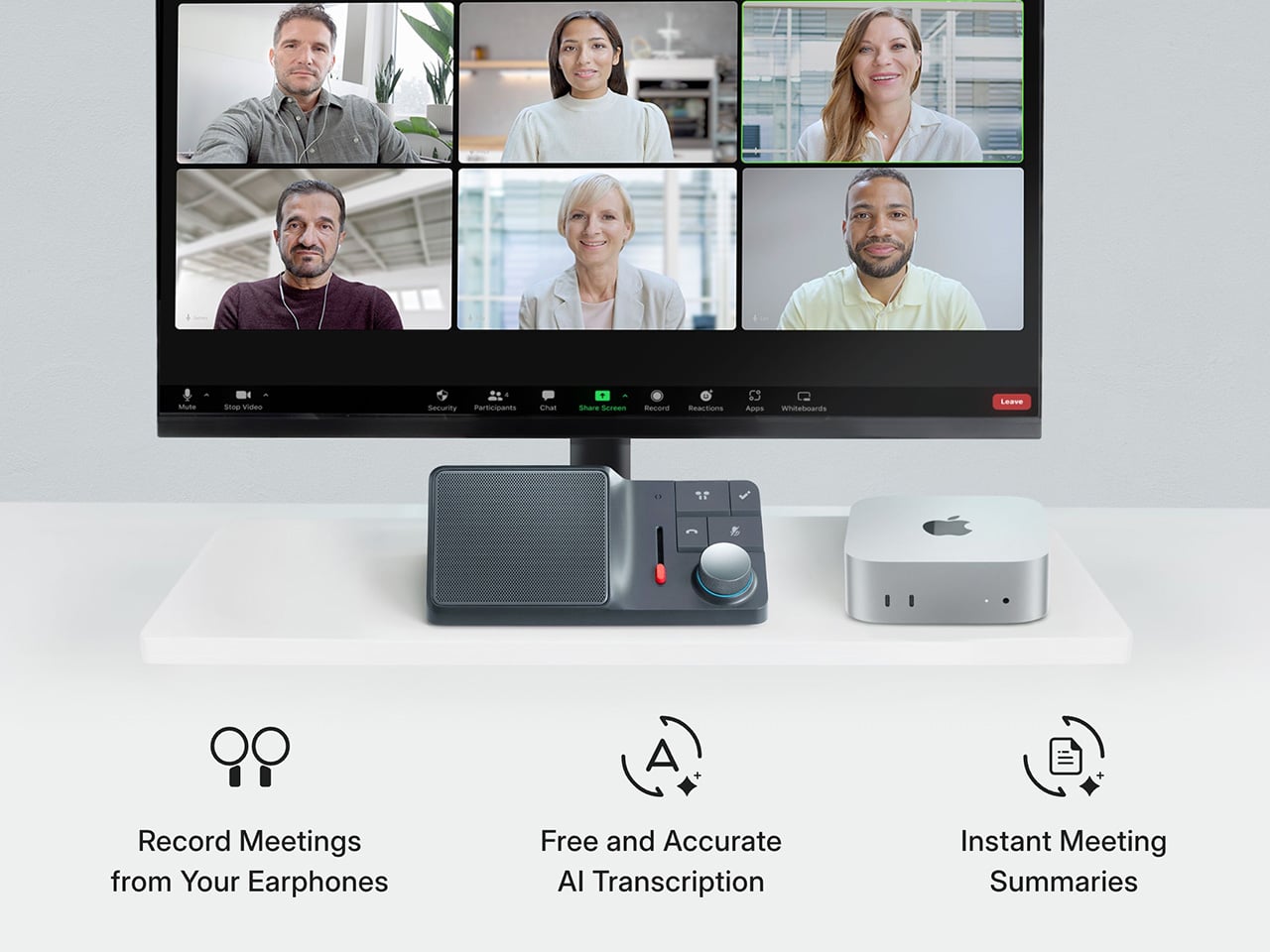
The AI meeting bot problem has a particular texture. It announces itself in the first thirty seconds of every call, dropping a notification into the chat that tells the room someone has outsourced their attention. The HiDock H1 Lite solves this without fanfare — a USB-C desktop audio controller and local recorder that captures meetings completely, both sides of the call, without adding a bot to the session, without cloud permissions, and without telling anyone it is running. You press record. The meeting continues. No announcement, no awkward acknowledgment, no subtext.
The feature that separates it from every other desk recorder is BlueCatch, which intercepts the two-way audio path from Bluetooth earphones so the full conversation is captured rather than just what the microphone picks up. Physical controls — a knob, a slider, a speaker — keep the interaction on the desk rather than inside another browser tab. It transcribes in multiple languages, runs a Call Mode for virtual meetings and a Room Mode for in-person sessions, and at $189 replaces a recurring software subscription with hardware that simply does the job and stays out of the way.
BlueCatch captures both sides of a Bluetooth earbud call locally, producing a full two-way transcript without a bot in the meeting or any platform permission being requested
Physical controls return a tactile dimension to meeting management that software tools have spent years trying and failing to replicate
What we dislike:
USB-C only makes it desk-bound, which limits its usefulness for anyone who moves between locations or works primarily from a laptop bag throughout the day
The AI transcription layer works well once configured, but reaching that point requires a setup investment before language preferences and summary formats feel fully dialed in
3. Satechi 3-in-1 Foldable Wireless Charging Stand with Qi2 25W
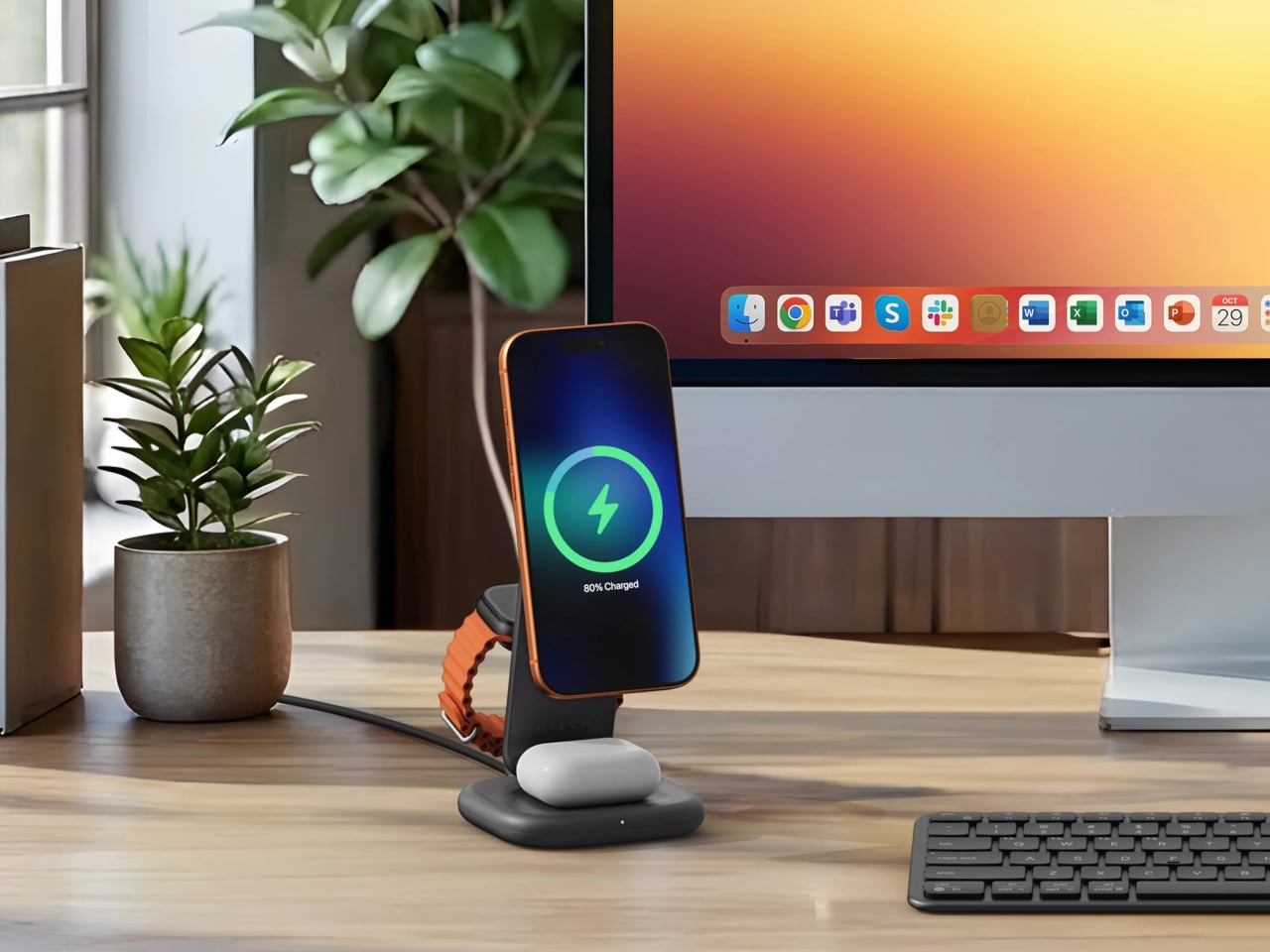
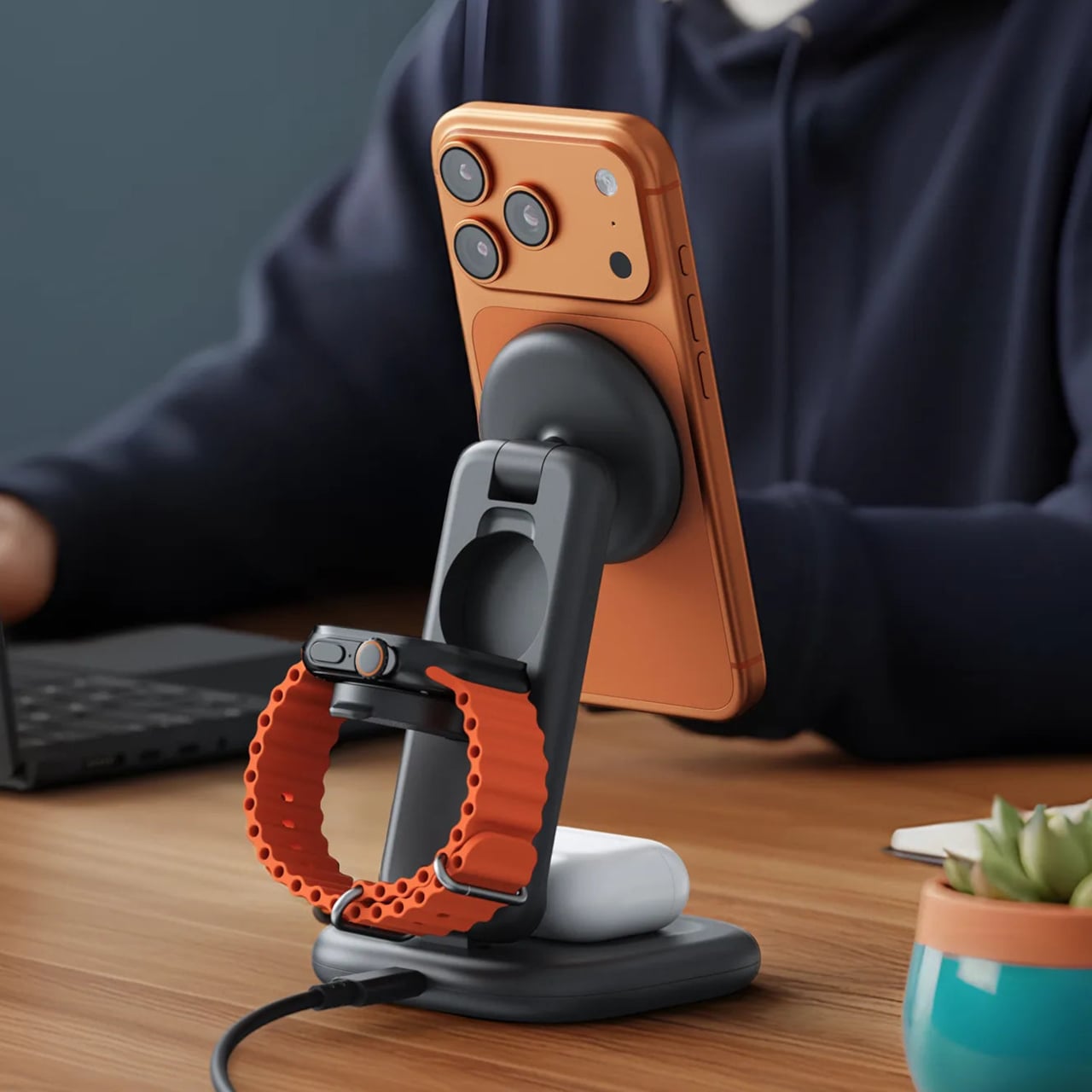
Wireless charging solved one problem and quietly created another. The iPhone pad, the Apple Watch puck, the AirPods tray — each device that joined the ecosystem added something to the nightstand or desk corner, until the cable-free promise was buried under a new kind of clutter. Satechi’s 3-in-1 Foldable Wireless Charging Stand with Qi2 25W clears all of it in one object. iPhone, Apple Watch (Series 7 and later, including Ultra and SE), and AirPods charge simultaneously from a single wall cable, with Qi2 magnetic alignment snapping the phone into position so off-center placement and lost wattage are no longer part of the routine.
The 25W ceiling is a genuine upgrade over the 15W limit that most MagSafe-compatible pads have been stuck at, and the Apple Watch arm carries MFi certification for fast charging. A 45W USB-C adapter ships in the box with US, EU, and UK plug heads — a small detail that matters significantly the first time you unpack in a different country without hunting for a separate travel adapter. At $129.99 in Space Black, the case rests on consolidation: three separate chargers replaced by one that folds flat for a carry-on and behaves identically away from home.
What we like:
Qi2 alignment combined with a 25W output for compatible iPhones represents the fastest wireless option available in the Apple accessory space at this price point
The foldable form and included multi-region adapter make the home desk setup and the hotel room setup identical, removing any need to pack or buy a separate charging solution
What we dislike:
Apple Watch fast charging is limited to Series 7 and newer, so users on older hardware will get standard charge speeds rather than the fast-charge performance the arm is capable of
The value proposition is strongest when all three devices are in use simultaneously — iPhone-only users will find more efficient options at a lower price
4. OrigamiSwift Folding Mouse
The folding mouse has been a category of compromise for years — compact in the bag, frustrating in use. The OrigamiSwift ends that exchange by treating the fold as a serious engineering challenge rather than a marketing hook. At 40 grams, it collapses to 4.5mm flat, thin enough to slip between the pages of a notebook without leaving a visible bump. On the desk, it unfolds in under half a second into a full-sized ergonomic shape that sits naturally in the hand, with tracking precision that has nothing to do with its size.
What earns it a top position here is the way it reframes the conversation around portability entirely. Portable does not have to mean diminished. The OrigamiSwift is as capable on a permanent desk as it is in a carry-on, which is rare in hardware built around constraints. The Bluetooth connection is reliable, the fold mechanism feels deliberately satisfying to complete, and at $85 it asks very little relative to what it returns. Some mice cost three times as much and offer less reason to reach for them.
Folds flat to 4.5mm, thin enough to travel between notebook pages, yet opens into a full-sized ergonomic form that never asks you to adapt your grip
The sub-half-second flip transforms the mouse from travel object to working tool in a single motion that still feels considered after weeks of daily use
What we dislike:
At 40 grams, the weight will feel unfamiliar to anyone coming from a heavier desktop mouse, and the adjustment takes a few days before it stops registering
Bluetooth-only connectivity rules out a wired fallback for tasks where even brief latency becomes friction
5. Orbitkey Desk Mat
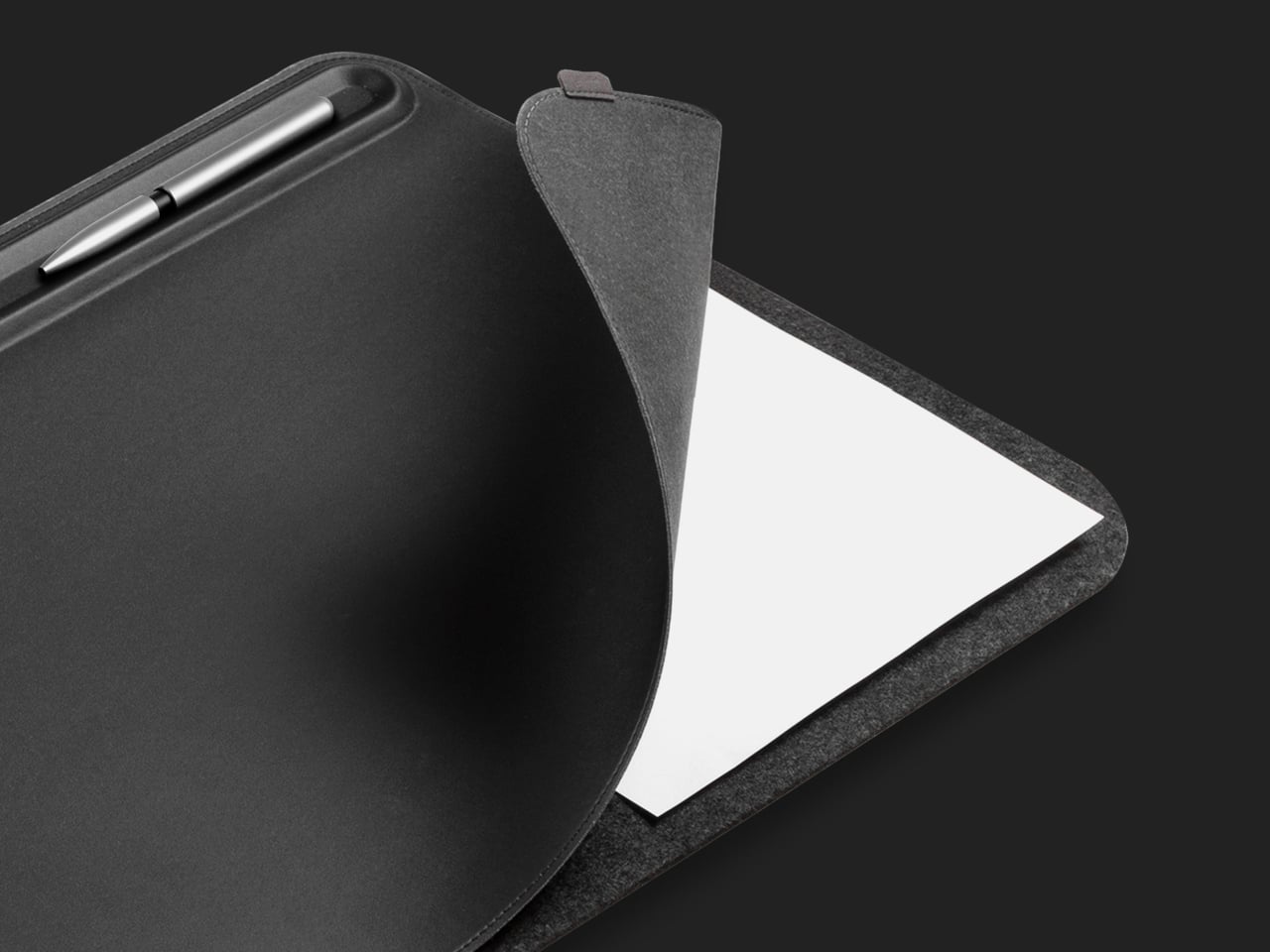
The desk mat is usually the last thing people buy and the first thing that changes how a setup feels. Orbitkey’s version is built on a premise most mats ignore: the surface does not just need better material; it needs a better system. Made from premium vegan leather over 100% recycled PET felt, available in Medium (686 x 373mm) and Large (896 x 423mm), it is water-repellent and wipes clean — the practical baseline. A quick-access toolbar along one edge gives pens, a stylus, and small accessories a fixed address without adding height or vertical clutter to the surface.
The detail that tips it from covering the desk to organizing it is the document hideaway, a sleeve beneath the top layer that keeps loose papers and sticky notes flat and within reach without leaving them visible. One edge pull, and they are back. A magnetic cable holder clips anywhere along the toolbar and adjusts as port locations change across different setups, keeping the charging lead from drifting toward the floor. It ships with a two-year warranty and a 30-day return window, which is the kind of confidence in materials that most desk accessories do not bother extending.
What we like:
The document hideaway removes paper clutter from the surface without removing papers from the desk, which turns out to be a more useful distinction than it sounds across a full working week
The magnetic cable holder moves freely along the toolbar, adapting to cable lengths and port positions rather than committing to one fixed anchor point
What we dislike:
The mat arrives rolled and takes a few days to lie completely flat — reverse-rolling handles most of it, but patience is part of the initial setup
The Medium size works well for compact single-monitor desks but may feel narrow for anyone running a wider multi-display configuration
Five Products, One Decision
A desk that works is not about spending more. It is about choosing things that each solve one real problem rather than approximate several. The Inseparable Notebook Pen keeps the one analog tool you still reach for exactly where it belongs. The OrigamiSwift removes the penalty from portability. The HiDock takes meeting capture back from the software layer. The Satechi ends the three-device charger pile. The Orbitkey gives the surface a structure it was always missing.
None of these objects ask for attention. They do their jobs and stay out of the way until needed, which is the version of design intelligence that actually holds up across a full working week. Five products, each under $200, that together produce a setup that feels chosen rather than assembled. That shift is the one worth paying for.
Most people know that outdoor air pollution is a problem, but indoor air quality rarely gets the same attention. The irony is that we spend roughly 90% of our lives indoors, often in well-insulated, tightly sealed homes where CO₂ builds up quietly and unnoticed. The result shows up as headaches, fatigue, poor sleep, and that vague sense of grogginess that’s easy to blame on everything except the air around you.
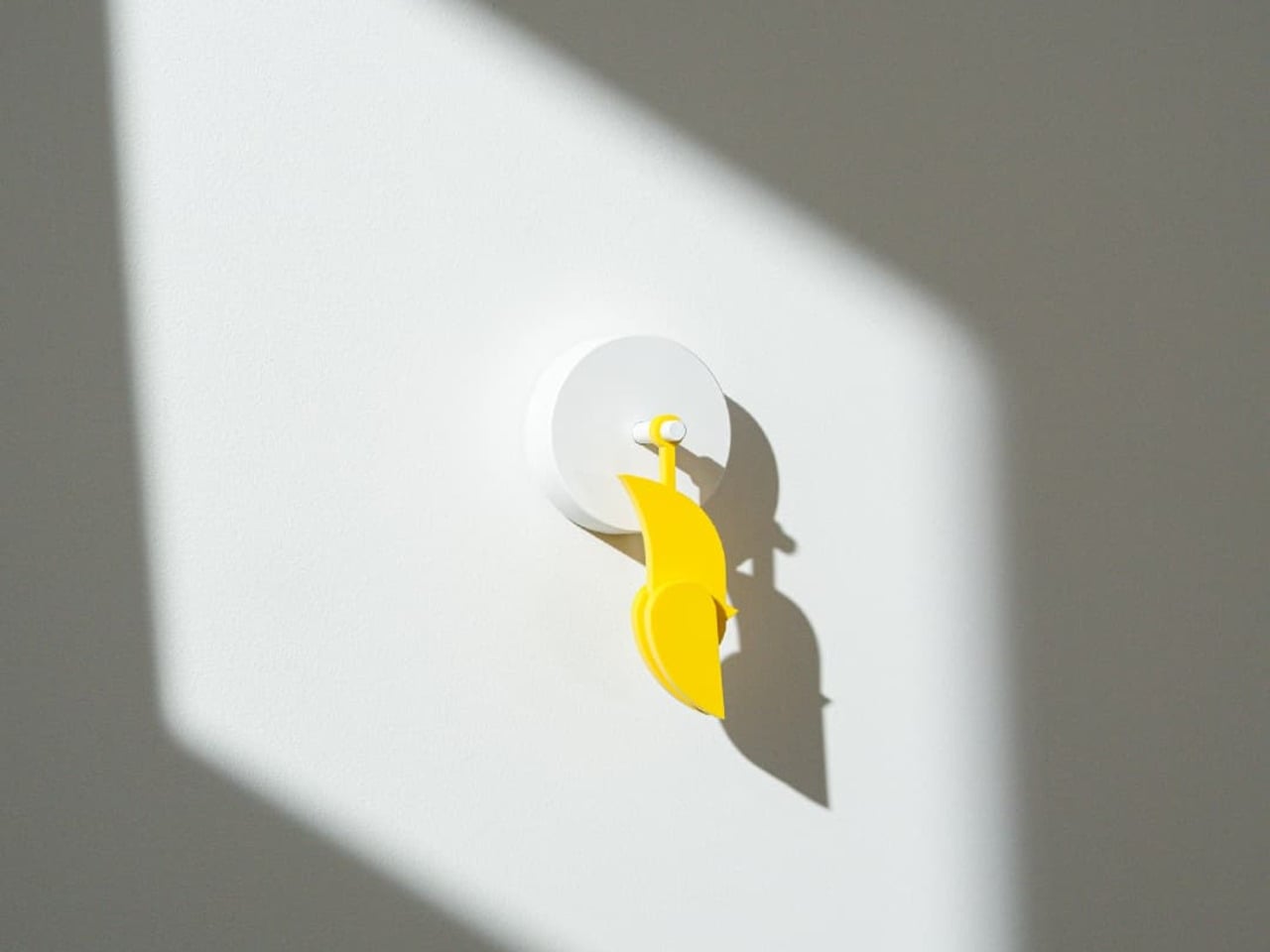
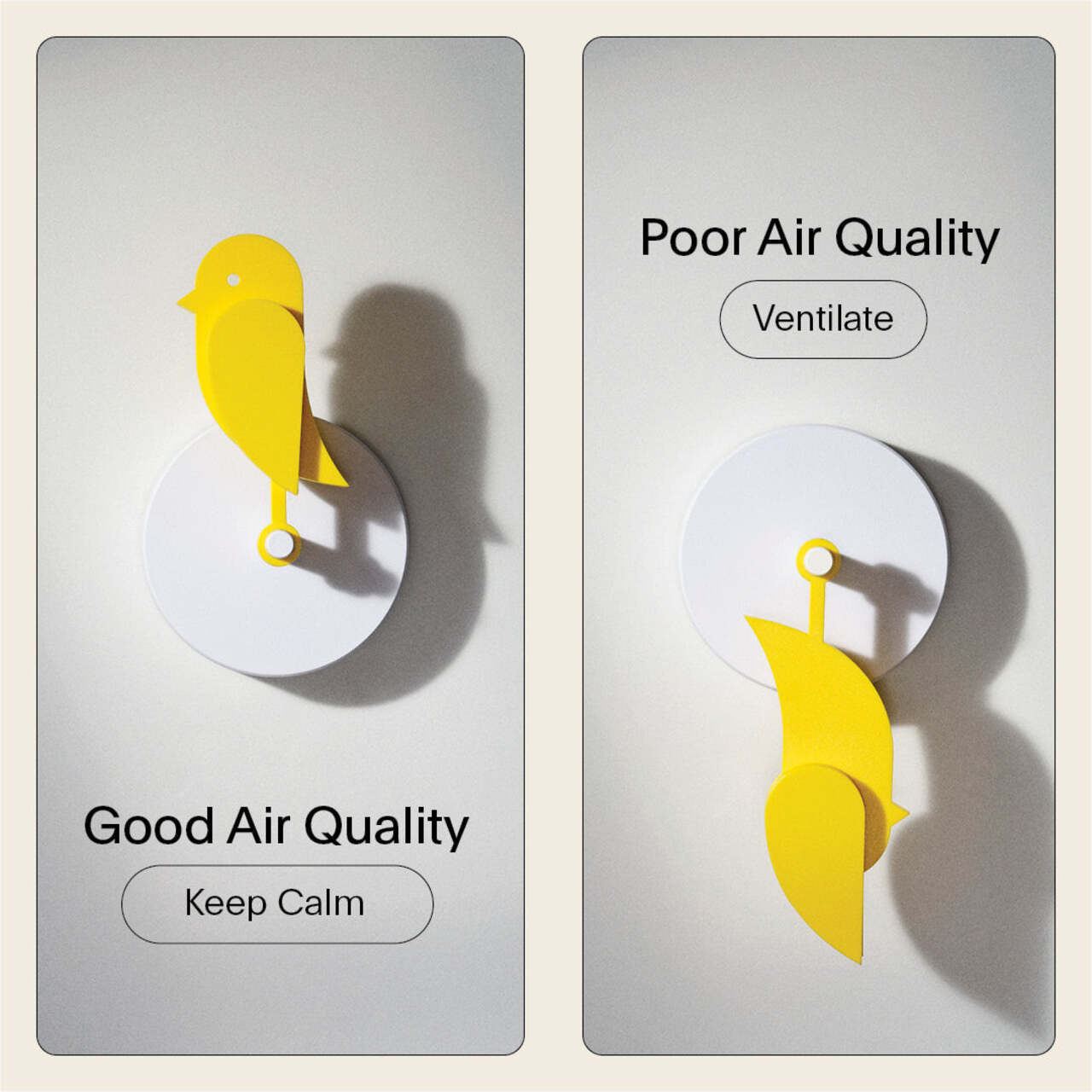
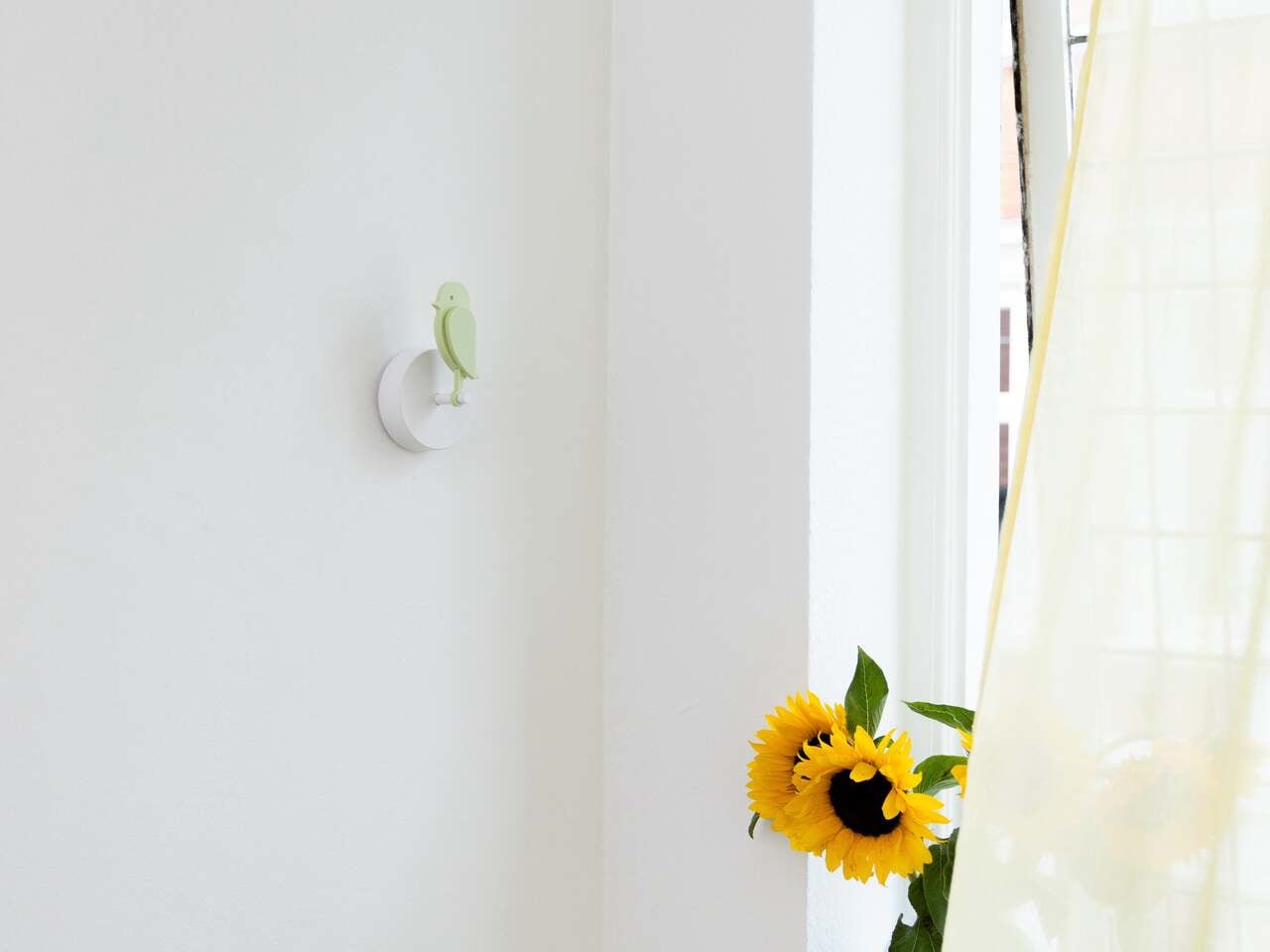
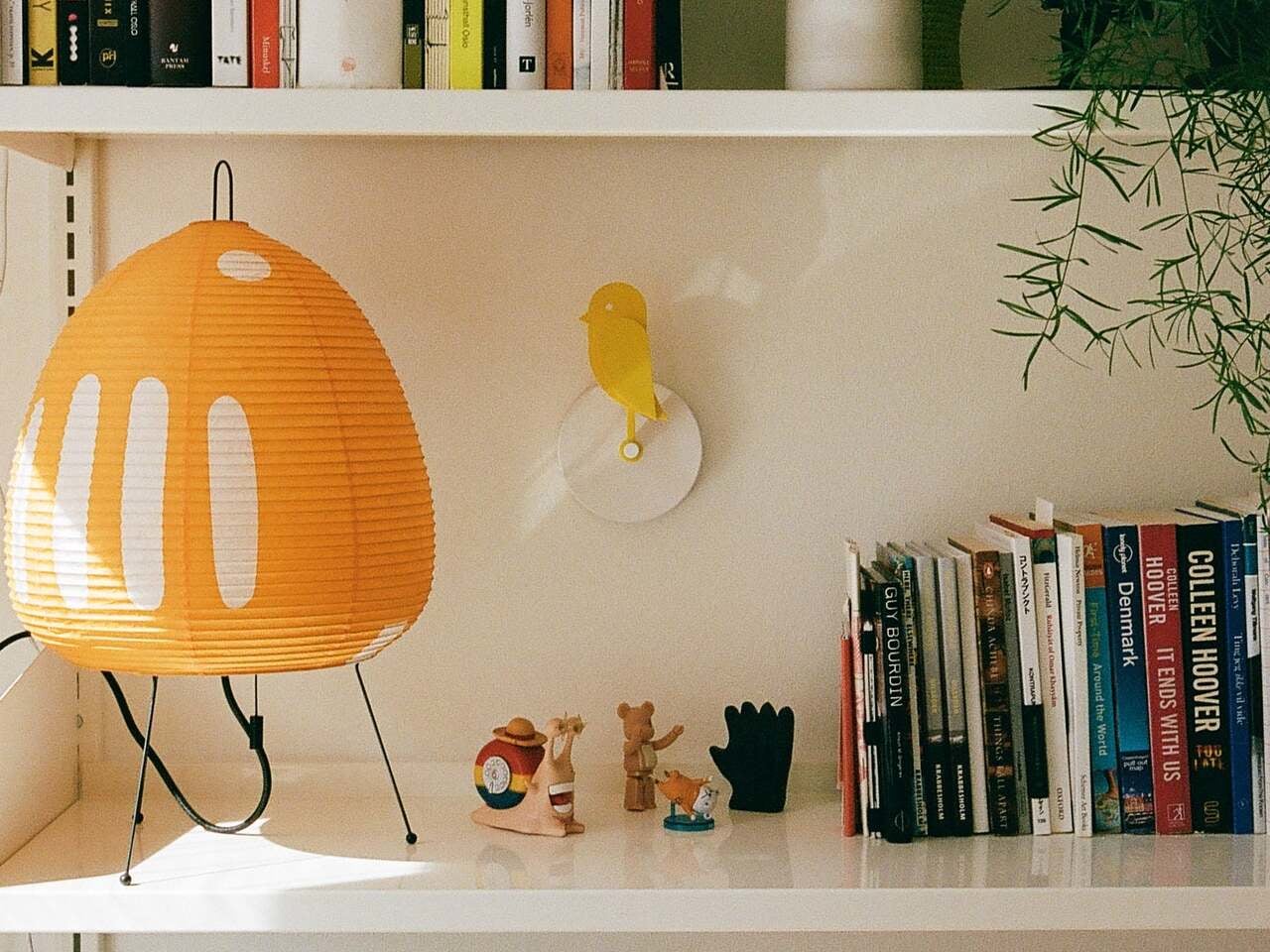
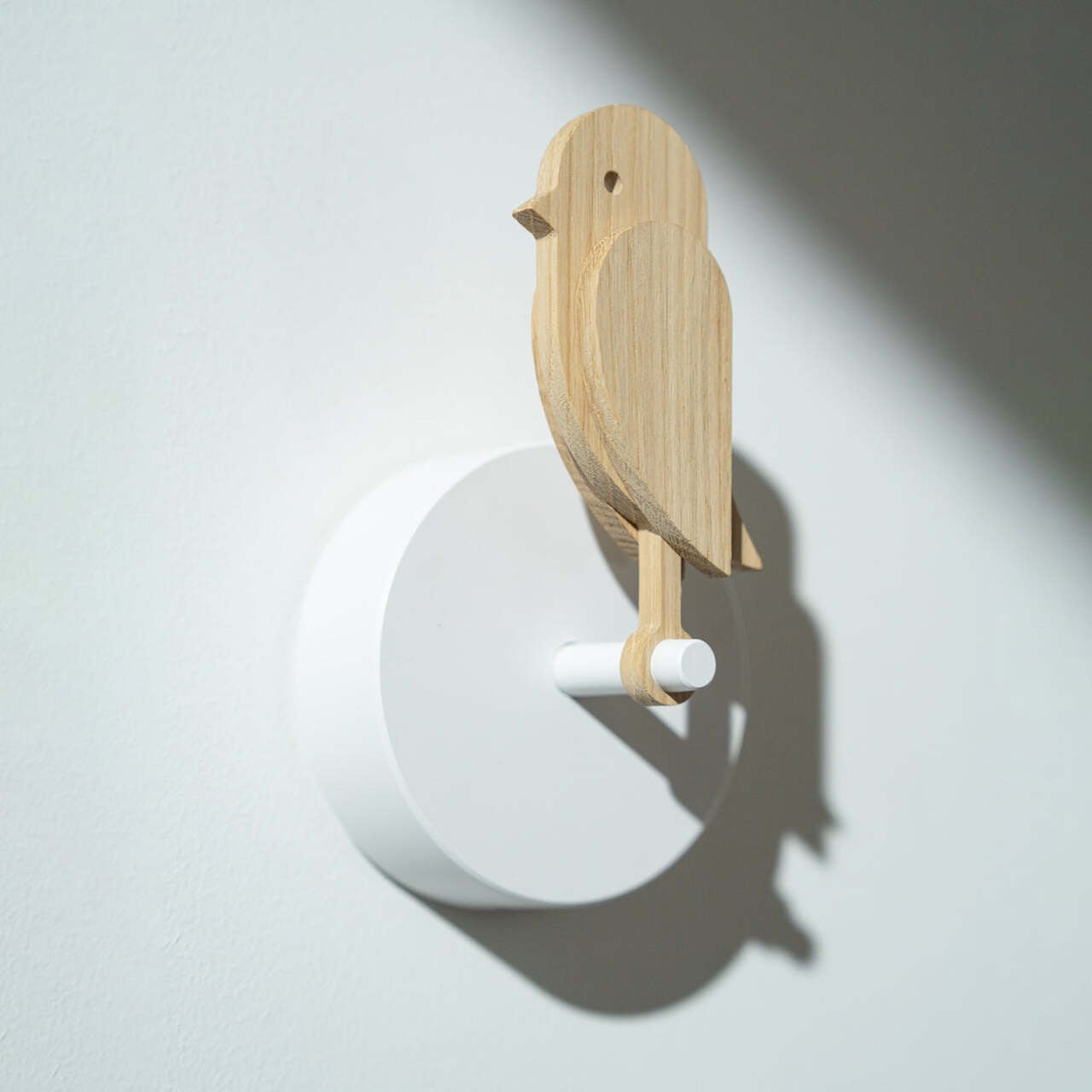
The Birdie 2.0 is a Danish-designed air quality monitor that takes a refreshingly straightforward approach to that invisible problem. It doesn’t display numbers, send phone notifications, or make any sound at all. Instead, it physically droops forward when the air in your room gets too stale, and stands back up once you’ve opened a window and things improve. The feedback loop is immediate, visual, and almost impossible to miss.
Designers: Andreas Kofoed Sørensen, Hans Høite Augustenborg (Birdie)
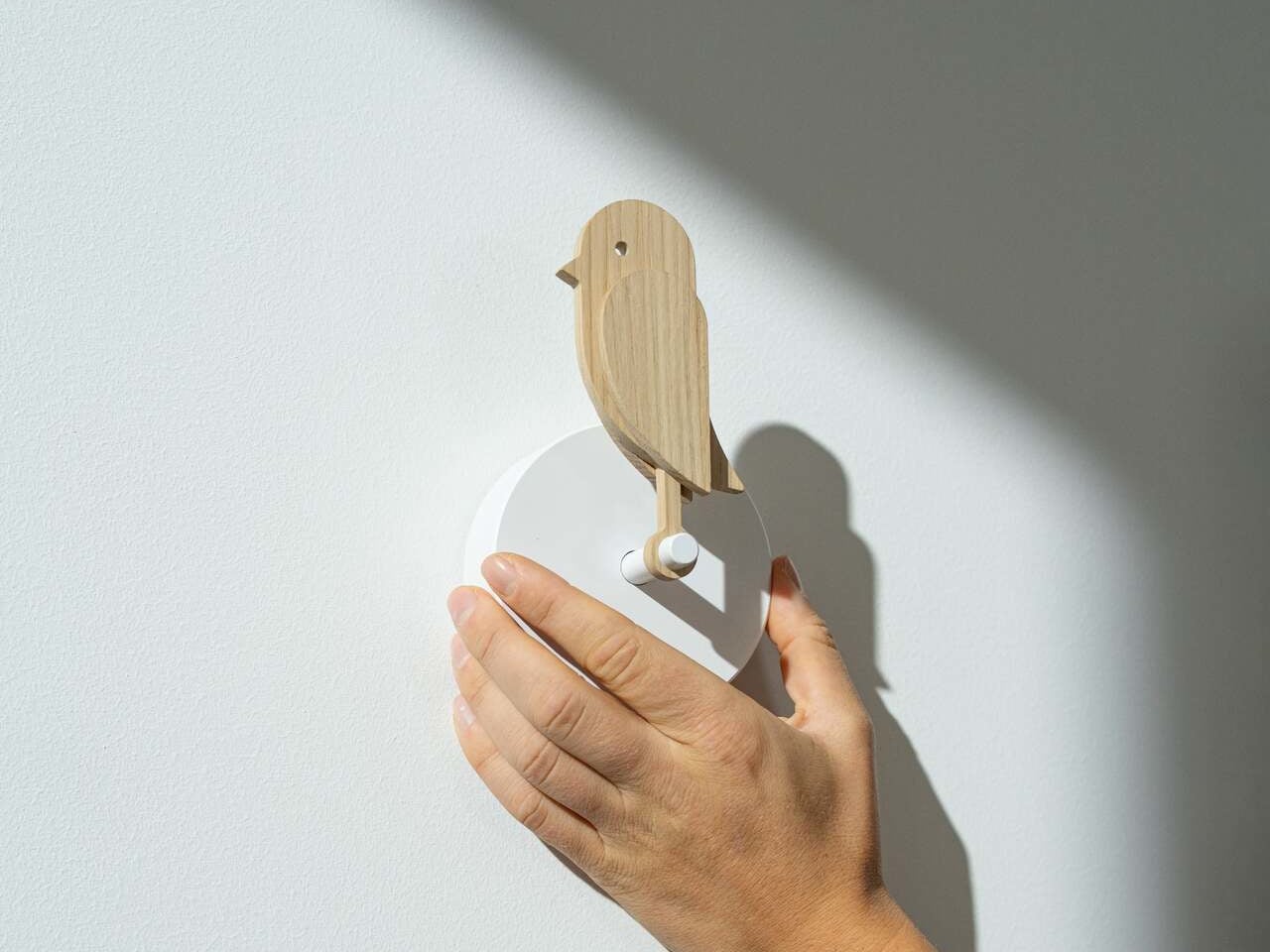
The concept is lifted directly from a piece of mining history. Coal miners used to carry canaries underground as a warning system: if the bird fainted, it was time to get out. Birdie follows the same logic, housing a Swiss-made Sensirion CO₂ sensor inside a small, bird-shaped form that lives on your wall. When CO₂ levels exceed 1,000 ppm, the figure tilts forward and stays that way until the air clears below 950 ppm, at which point it snaps back upright on its own.
The mechanics are simple but quietly well thought out. Birdie checks CO₂ levels every ten minutes while upright, and every two minutes once it has dropped, giving it faster feedback during the moments that actually matter. After returning to standing, it enters a two-hour cool-down period to preserve battery life, which lasts up to eight months on a single charge. It mounts to the wall with either a screw or a strip of 3M tape and needs nothing else to function.
The body is made from 70% post-consumer recycled plastic, which sits well with the minimal-intervention philosophy the product is built around. It comes with a USB-C charging cable and a wall mount in the box, and setup takes a few minutes at most. One unit covers rooms up to 100 m², though a separate one per floor or closed bedroom is recommended for multi-room coverage.
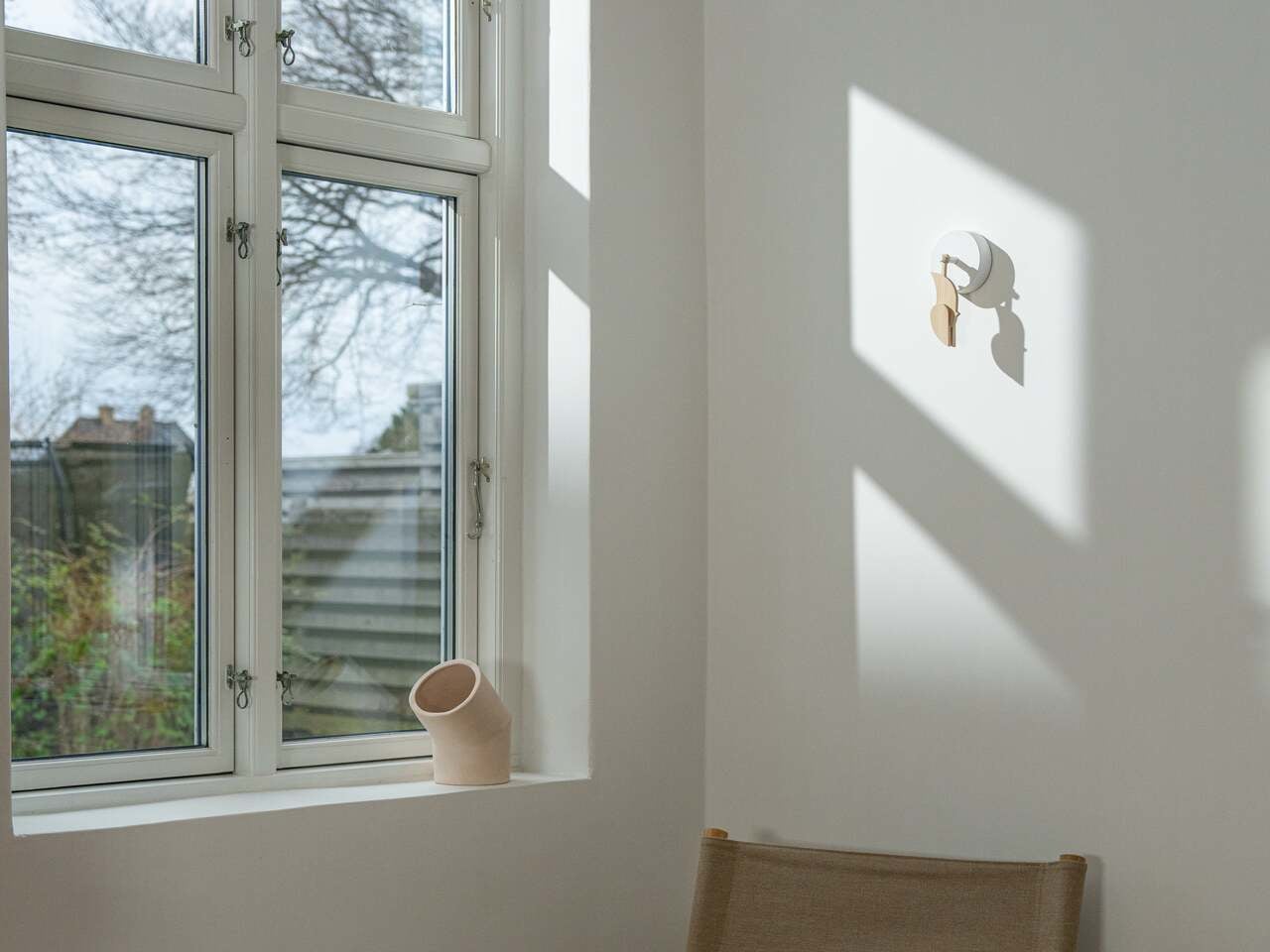
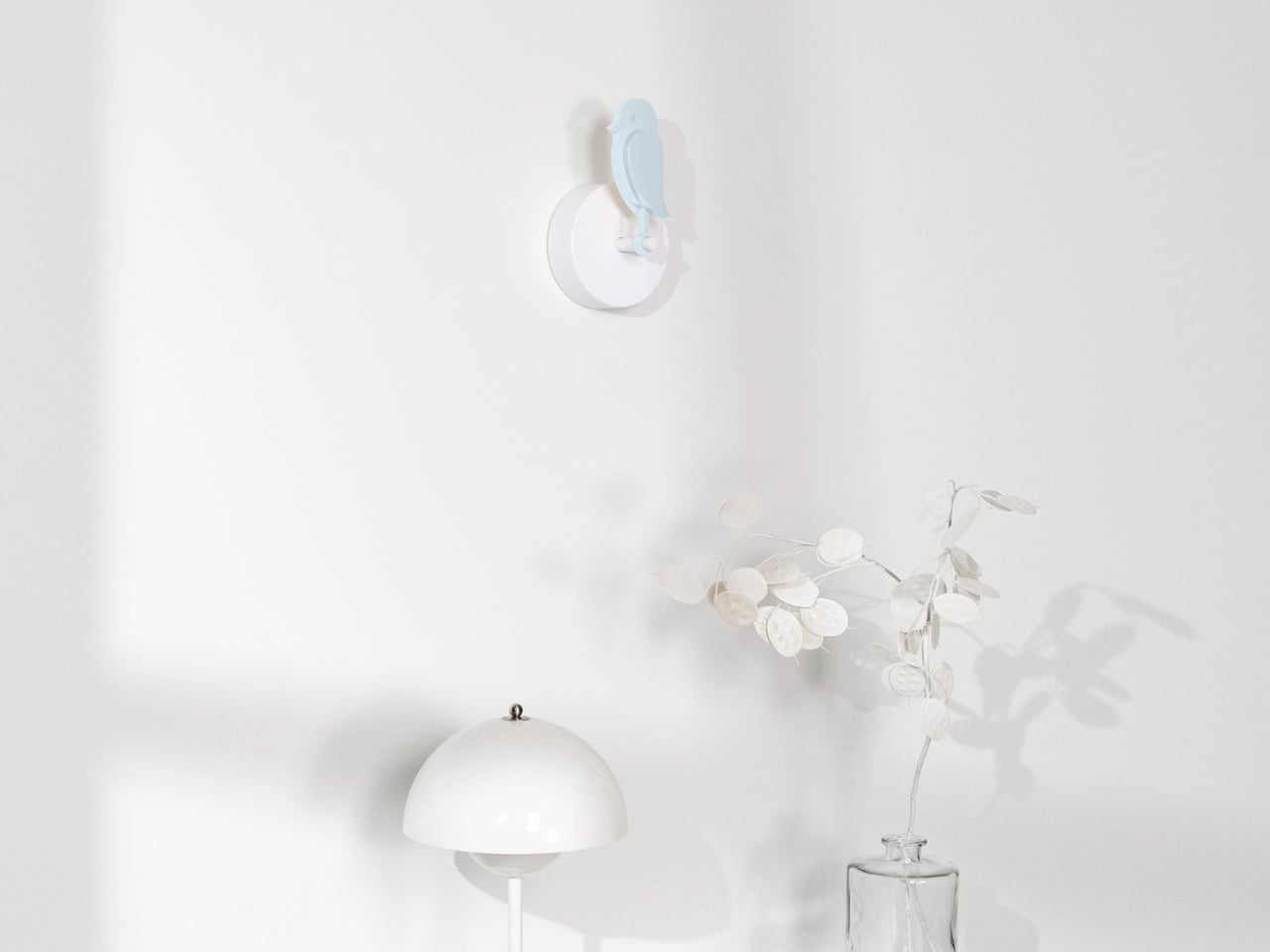
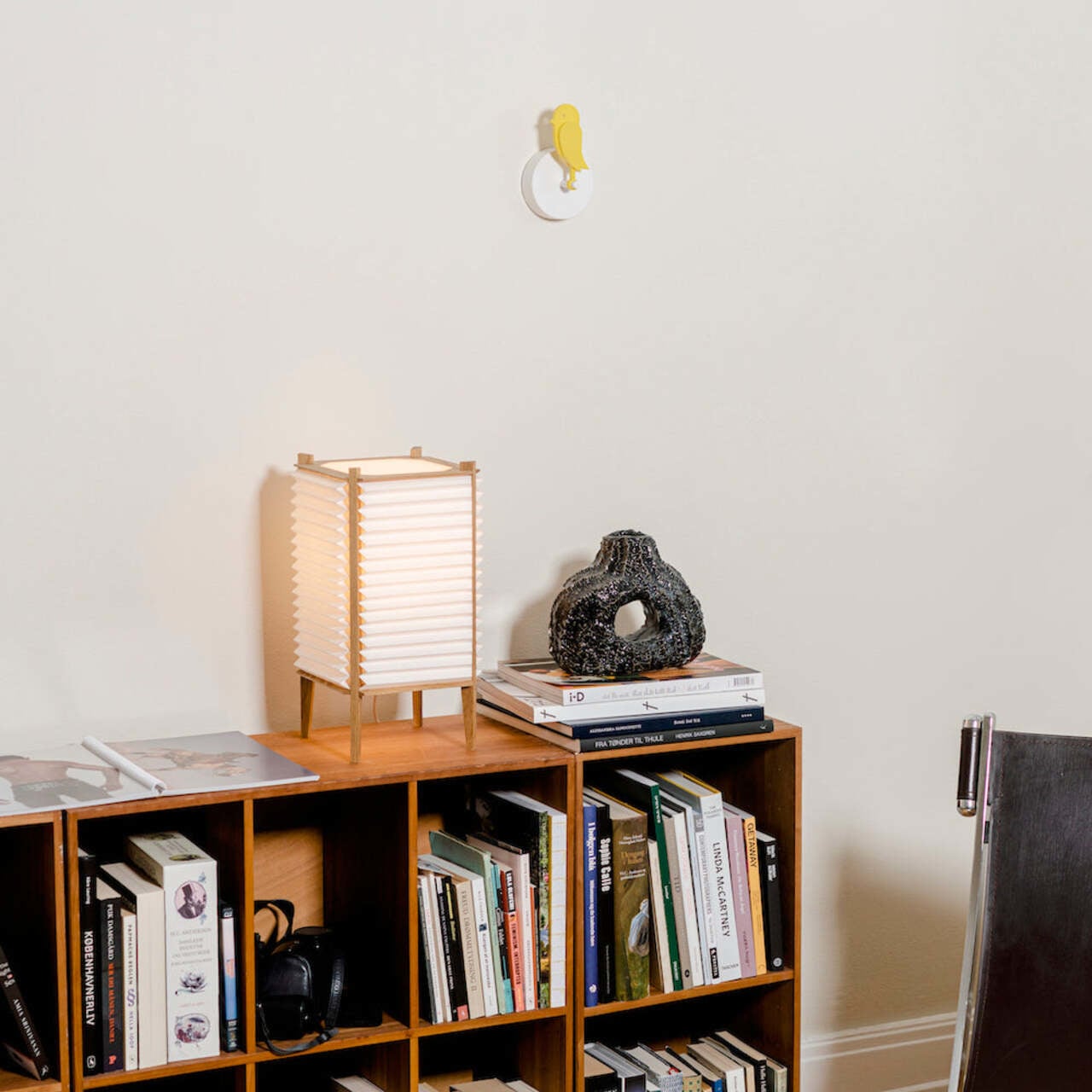
What makes it a particularly comfortable fit for the home is that it doesn’t feel like a gadget. There’s no screen competing for attention, no app to configure, and no blinking light to interpret. It’s a piece of Danish-designed wall art that happens to tell you when your living room needs to breathe. It also comes in several colorways, including the signature yellow and a subdued, earthy Dune, so it can blend into a room rather than dominate it.
Offices and classrooms are where the stakes tend to be highest. Concentration dips noticeably when CO₂ climbs, and in a shared space that doesn’t get ventilated between meetings or lessons, that decline can happen within an hour. Having something physical on the wall, rather than a number on a device that no one is checking, makes it much harder to ignore the problem.
Caring for elderly residents in a facility setting is one of the most demanding jobs in healthcare. Staff are stretched thin, emergencies don’t follow schedules, and the systems many facilities still rely on, from paper logs to fragmented call tools, create gaps that can have serious consequences. As populations age faster than care infrastructure can keep up, the pressure on care workers and the systems they depend on keeps mounting.
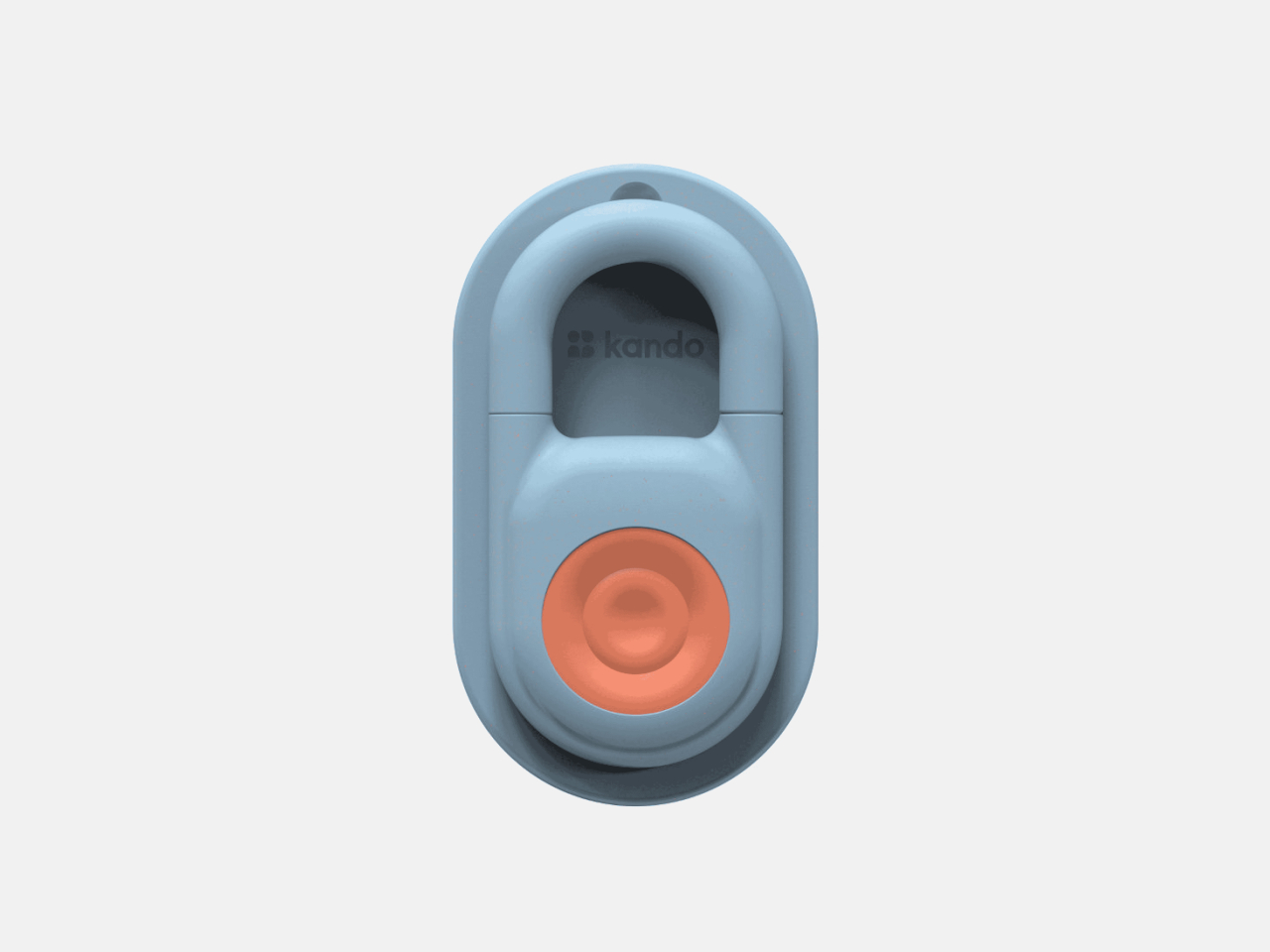
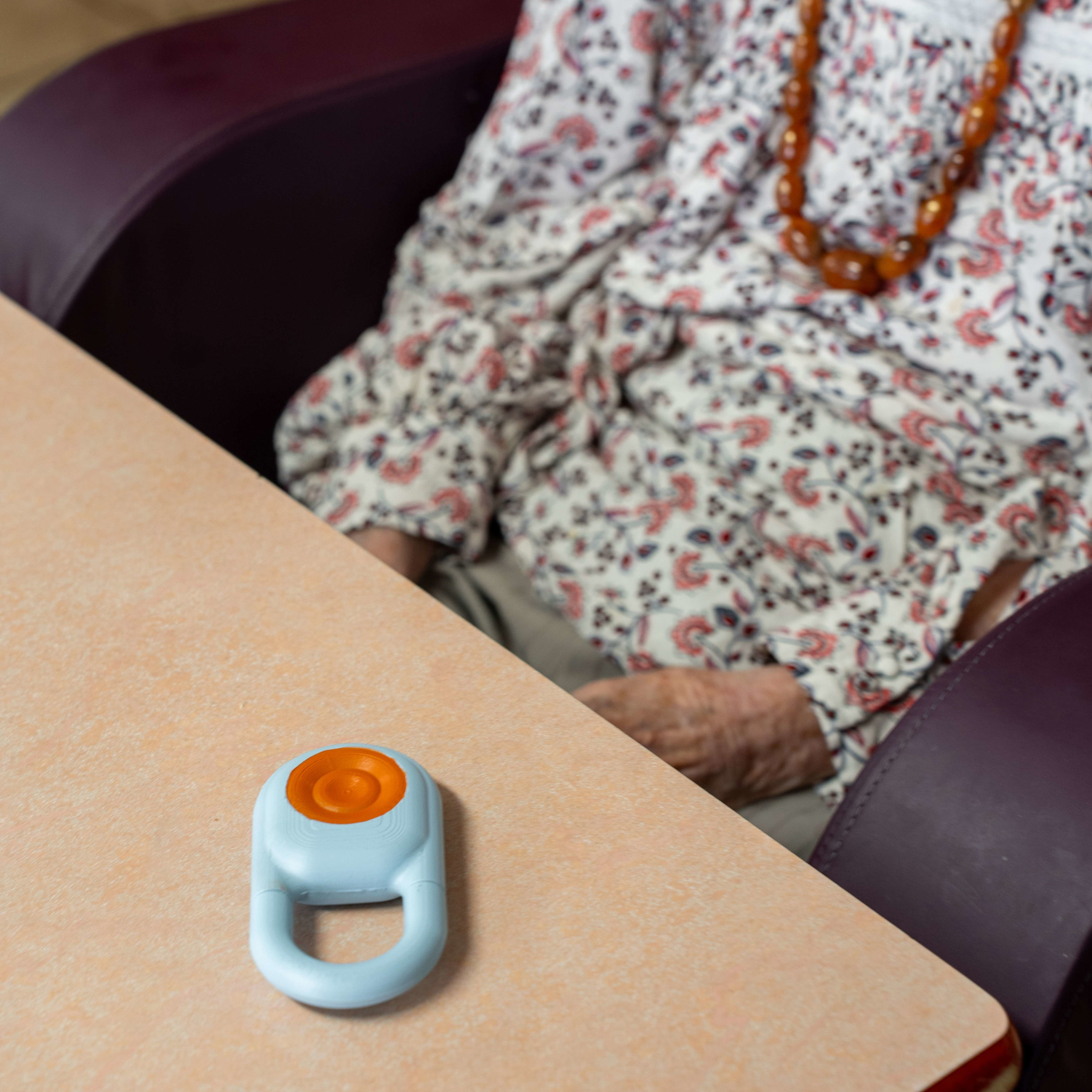
That’s the challenge Kando was designed around. Rather than layering another standalone app or device onto an already crowded workflow, it takes the form of three integrated hardware components that work together as a single connected care system. The pieces include a wearable button for residents, a wall-mounted box for the room, and central communication hubs that link the entire facility.
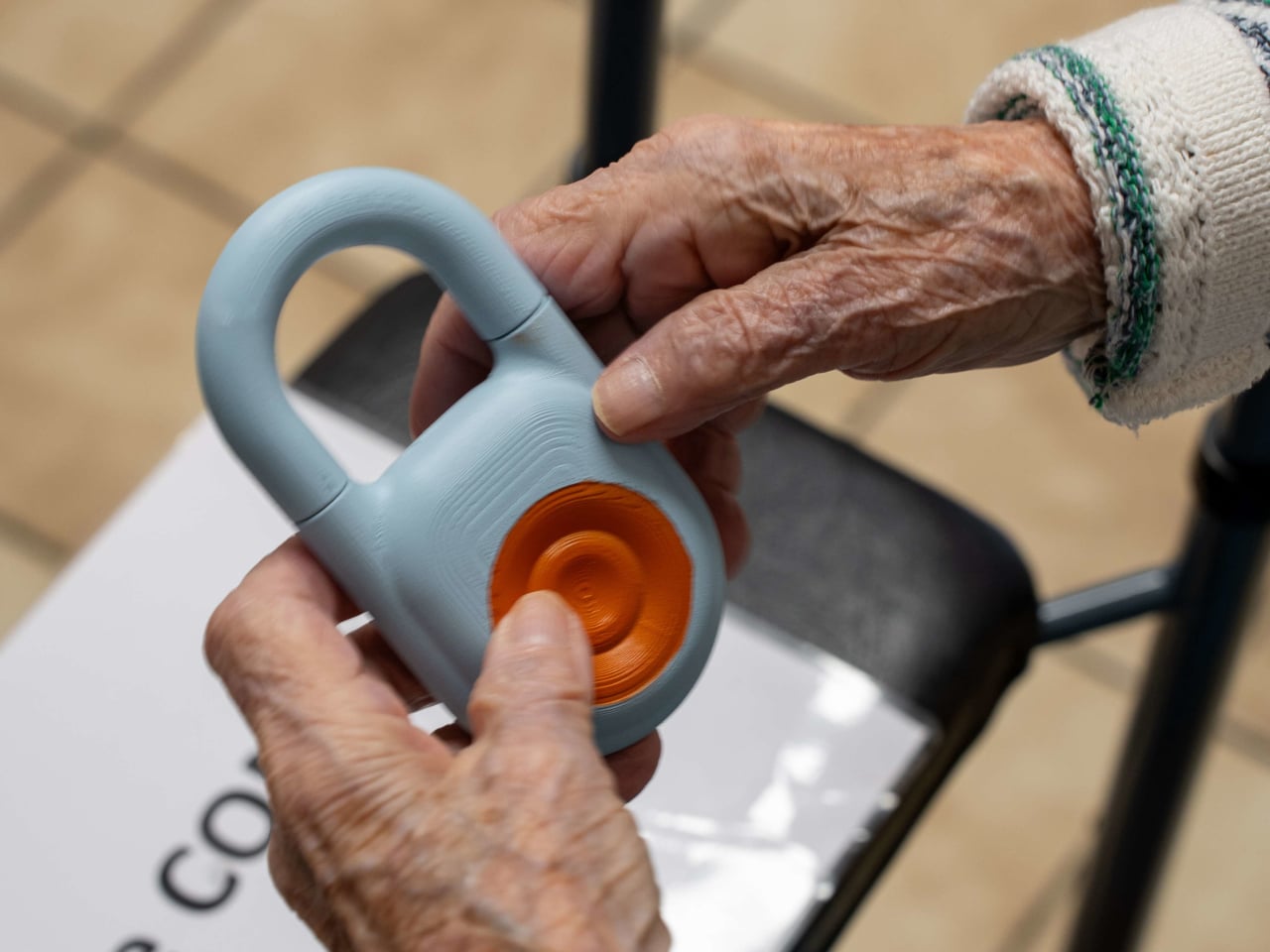
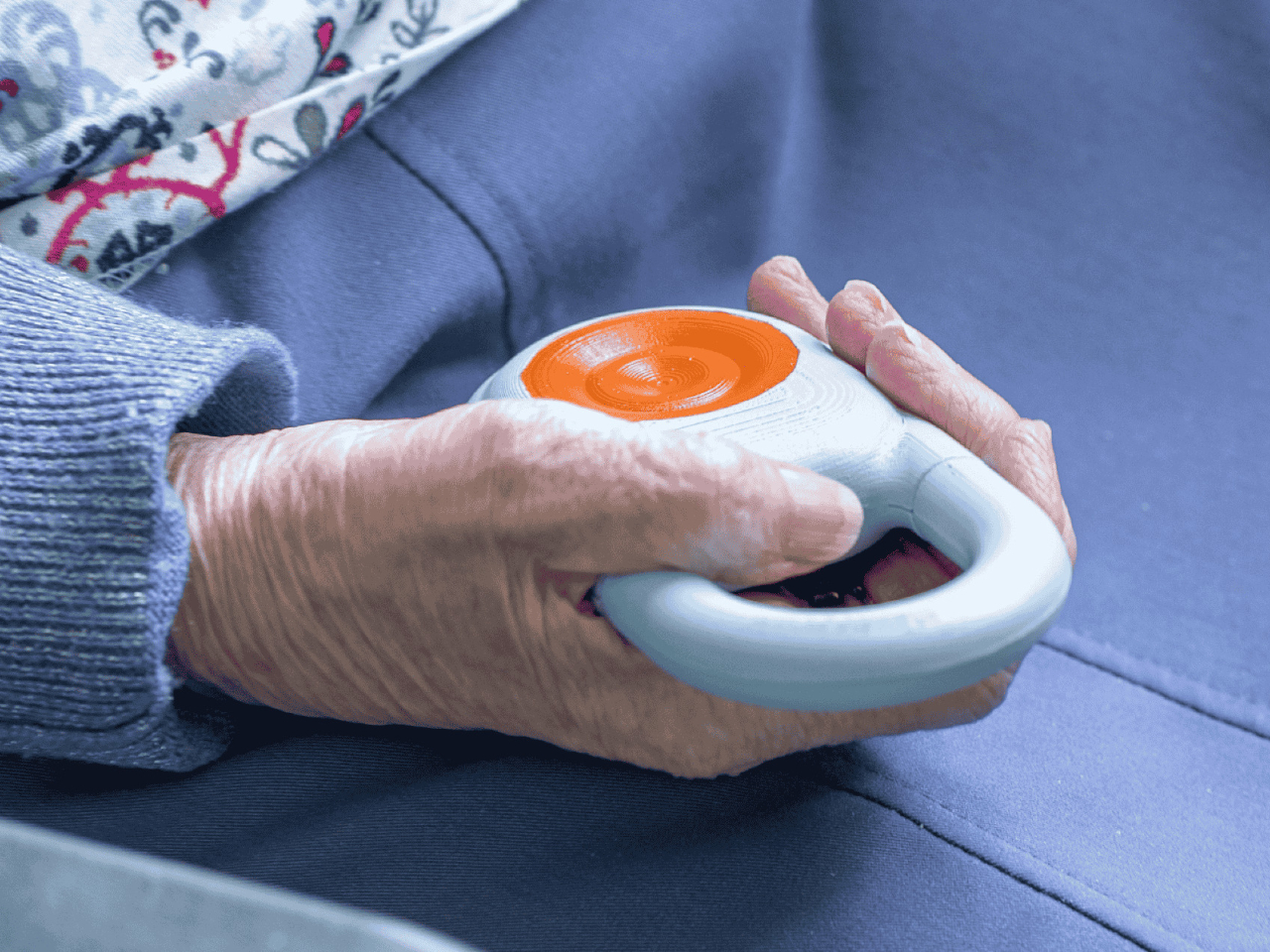
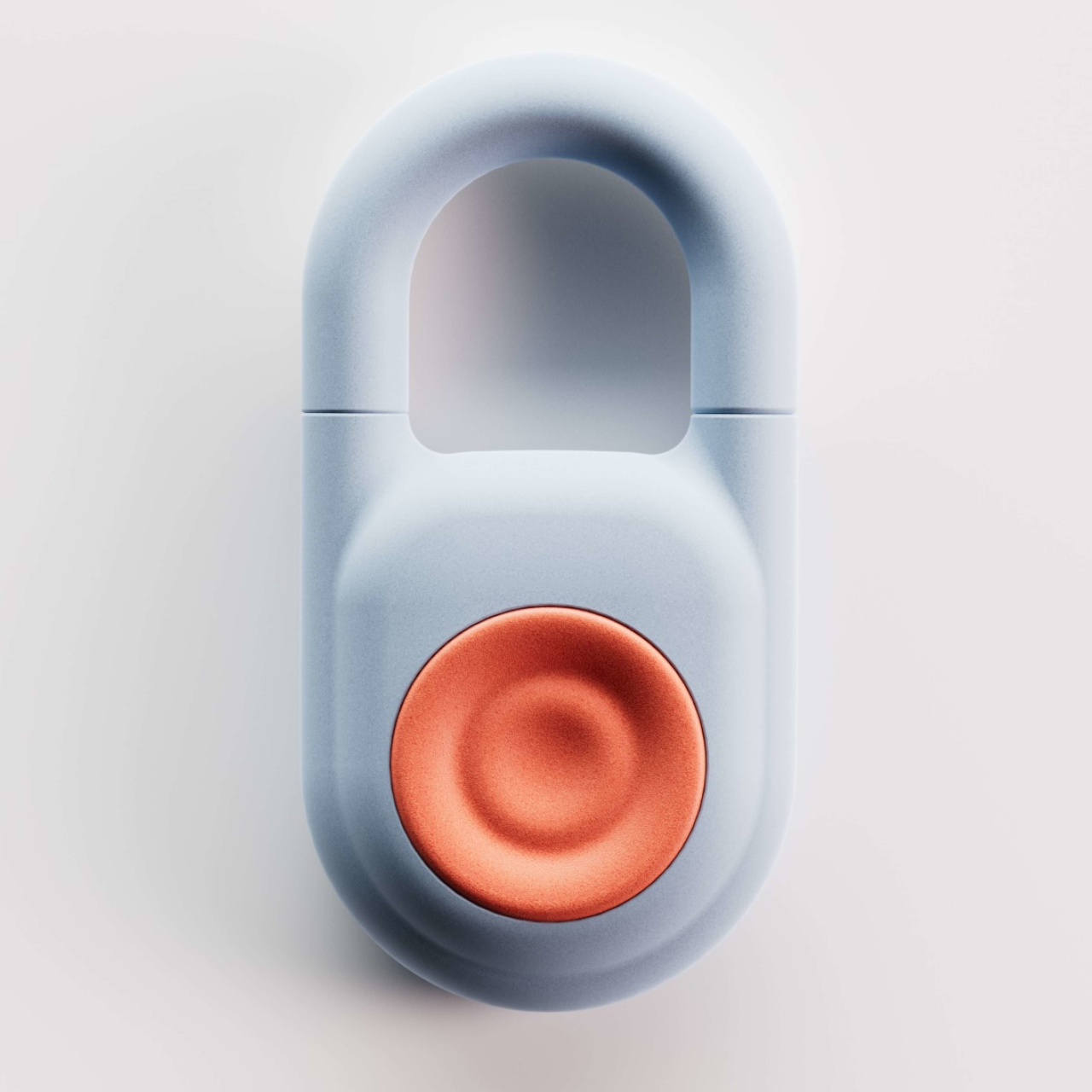
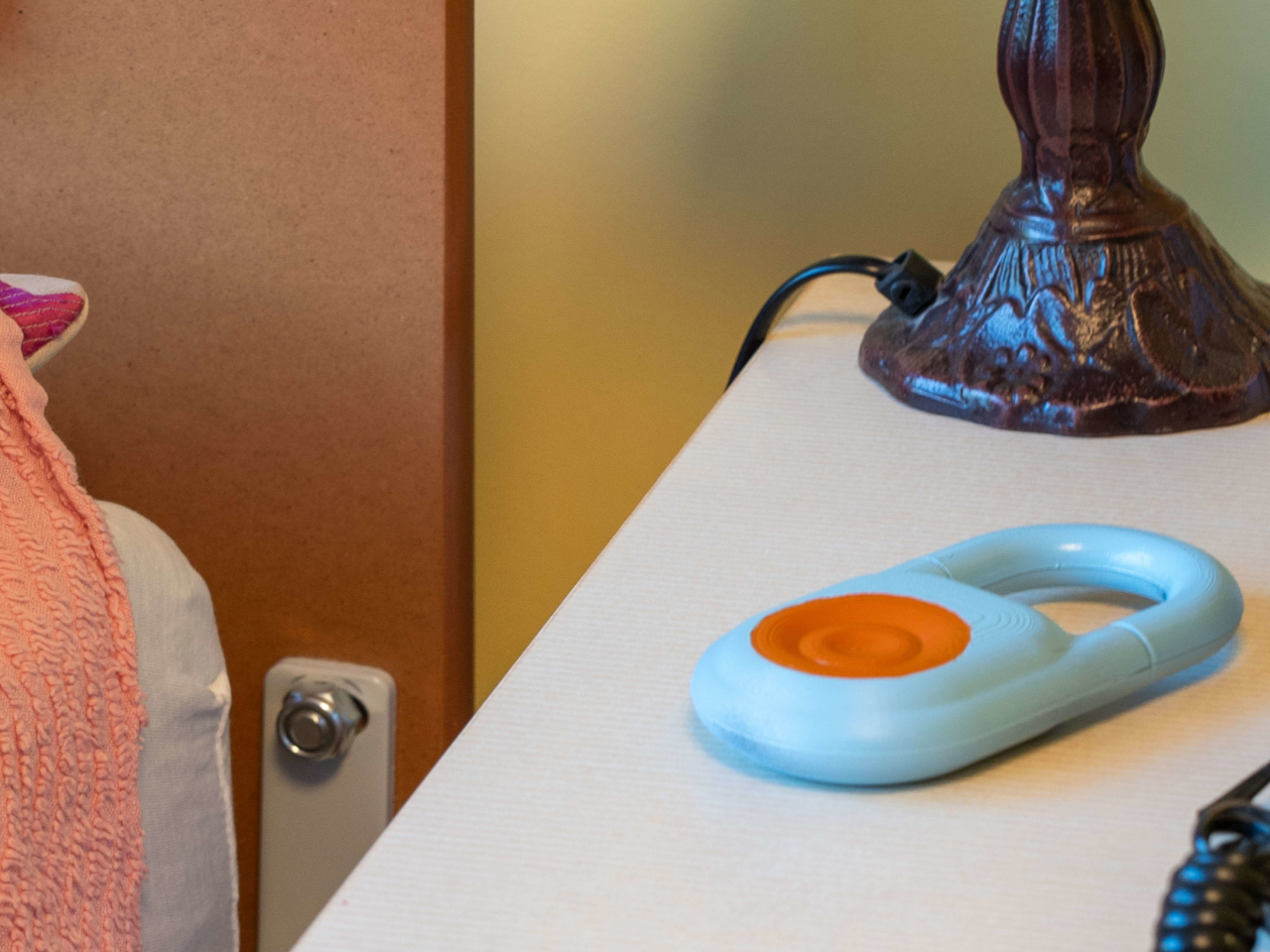
At the heart of the system is the Kando Button, a small wearable device that a resident clips onto their clothing or bed. It’s designed for simplicity: one touch triggers a request for help, confirmed immediately through both LED feedback and vibration, so the resident knows the signal went through. For someone who’s suddenly unwell or in distress, that instant confirmation matters.
Complementing the Button is the Kando Box, a wall-mounted unit that connects to the television already present in the resident’s room. Rather than adding a separate screen or terminal, it turns the TV into a visual communication interface between the resident and the care team. It’s a practical choice that keeps the environment familiar and avoids adding yet another unfamiliar device to the room.
Central hubs tie everything together, coordinating communication across the entire facility so that alerts don’t get lost between shifts. When a resident presses the Button, the information travels through a connected network rather than relying on a single staff member to notice and relay it. This end-to-end connection is what makes Kando a system rather than a collection of separate devices.
The practical outcomes add up for a facility dealing with dozens of residents and a care team that can’t be everywhere at once. Response times shorten. Paper-based documentation gives way to digital records, and over time, the operational costs tied to manual processes start to fall. For administrators, that combination of speed, accuracy, and efficiency is a genuinely compelling case.
What’s also worth noting is that Kando wasn’t designed with clinical functionality alone in mind. Every hardware decision carried a human weight too: it had to feel familiar and manageable in the hands of an elderly resident, not intimidating or cold. Medical technology often prioritizes technical function over the experience of the person it’s meant to serve, and this system tries to close that gap. The result is a system that clearly took the realities of a care environment seriously, not just from a technical standpoint but from a genuinely human one.
The home office used to mean a fixed address. A monitor you couldn’t move, a dock you couldn’t pack, a microphone that lived on one corner of a desk and stayed there. That arrangement made sense when remote work was the exception. Now that it’s the default for a significant portion of the workforce, the gear still hasn’t caught up with how people actually want to work.
These five products make a different argument. Each one is compact enough to slide into a standard laptop bag alongside your computer, and each one eliminates a specific piece of furniture or peripheral that used to anchor you to a single room. Together they cover the full surface area of a home office: display, input, audio, connectivity, and video. The café table, the hotel desk, the airport lounge seat — all of them become the office.
1. VitaLink Portable Keyboard + 4K Touchscreen
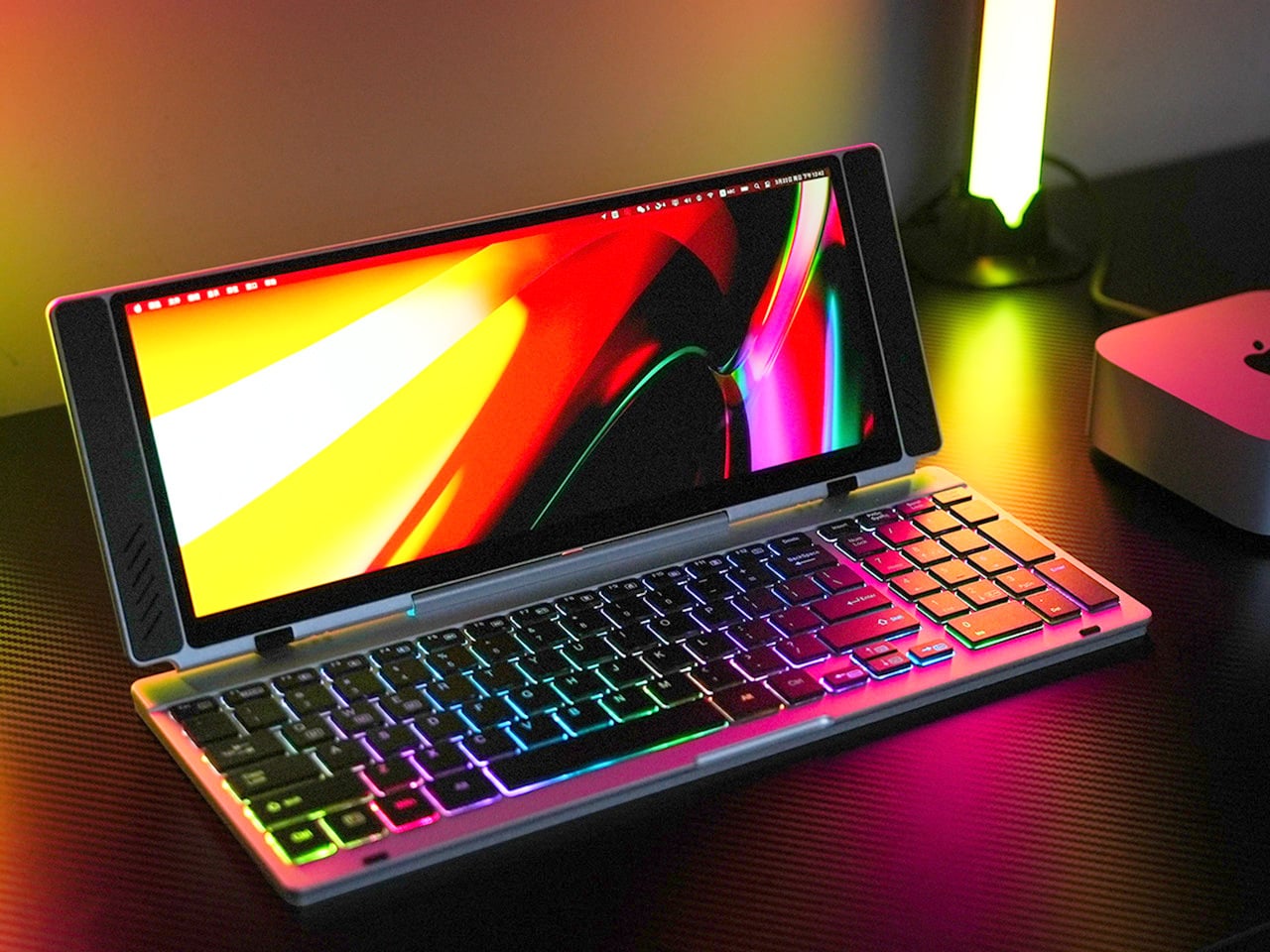
Closed, the VitaLink reads as a slim aluminum book, 20mm thick and roughly the footprint of a hardcover novel. Nothing on the outside hints at what’s inside. Open it at 180 degrees and a 13-inch, 3840×1600 touchscreen lifts above a full-width keyboard, the whole unit settling into a 34 by 15 centimeter footprint. That transformation from flat slab to dual-screen workspace is the core of the product’s appeal, and it holds up once you actually sit down with it for a full working session.
The screen runs at 298 pixels per inch, which puts it on par with Apple’s Retina displays and well above most portable monitors in this category. The 2.4:1 aspect ratio gives you enough horizontal span to run a document alongside a reference panel without either feeling squeezed. The keyboard uses 3.27mm key spacing and 0.8mm scissor switch travel, which makes extended writing feel deliberate rather than cramped. A single USB-C cable connects it to any laptop, tablet, or phone with no drivers required.
What we like
The 298 PPI display at this form factor is genuinely rare — text stays sharp and color-sensitive work is viable with 100% sRGB coverage across the full panel
Plug-and-play USB-C compatibility across Windows, macOS, Linux, Android, and even a Steam Deck means no adapter anxiety mid-trip
What we dislike
At 1,200 grams, it’s the heaviest item in this kit and will be noticeable in a shoulder bag after a few hours of walking
2. OrigamiSwift Mouse
The Origami Swift collapses flat when you’re done using it, taking up the kind of space that disappears into a bag pocket rather than demanding its own compartment. That folding mechanism draws from the same logic as the VitaLink: the product’s usefulness when open shouldn’t come at the cost of portability when closed. For anyone who has tried to fit a standard mouse into a travel bag and ended up compromising on both comfort and bag space, the design decision is immediately legible.
What makes the Origami Swift relevant to a mobile office setup specifically is that it doesn’t ask you to trade ergonomics for packability. A flat travel mouse is an easy product to design badly, the kind where you end up dragging your palm across a surface that was never shaped for sustained use. The Origami Swift’s folding structure means the grip geometry is restored when deployed, so a full day of work doesn’t leave your hand protesting by the afternoon.
The folding mechanism eliminates the usual compromise between travel-friendly dimensions and a proper hand grip during actual use
Works alongside the VitaLink’s built-in keyboard without competing for surface space when the display panel is fully unfolded
What we dislike
The folding hinge introduces a mechanical point of failure that a standard mouse simply doesn’t have, so long-term durability after daily packing and unpacking deserves attention
In dense café environments with Bluetooth congestion, wireless pairing can occasionally require a reconnect, which breaks flow at exactly the wrong moment
3. Satechi OntheGo Foldable Stand Hub
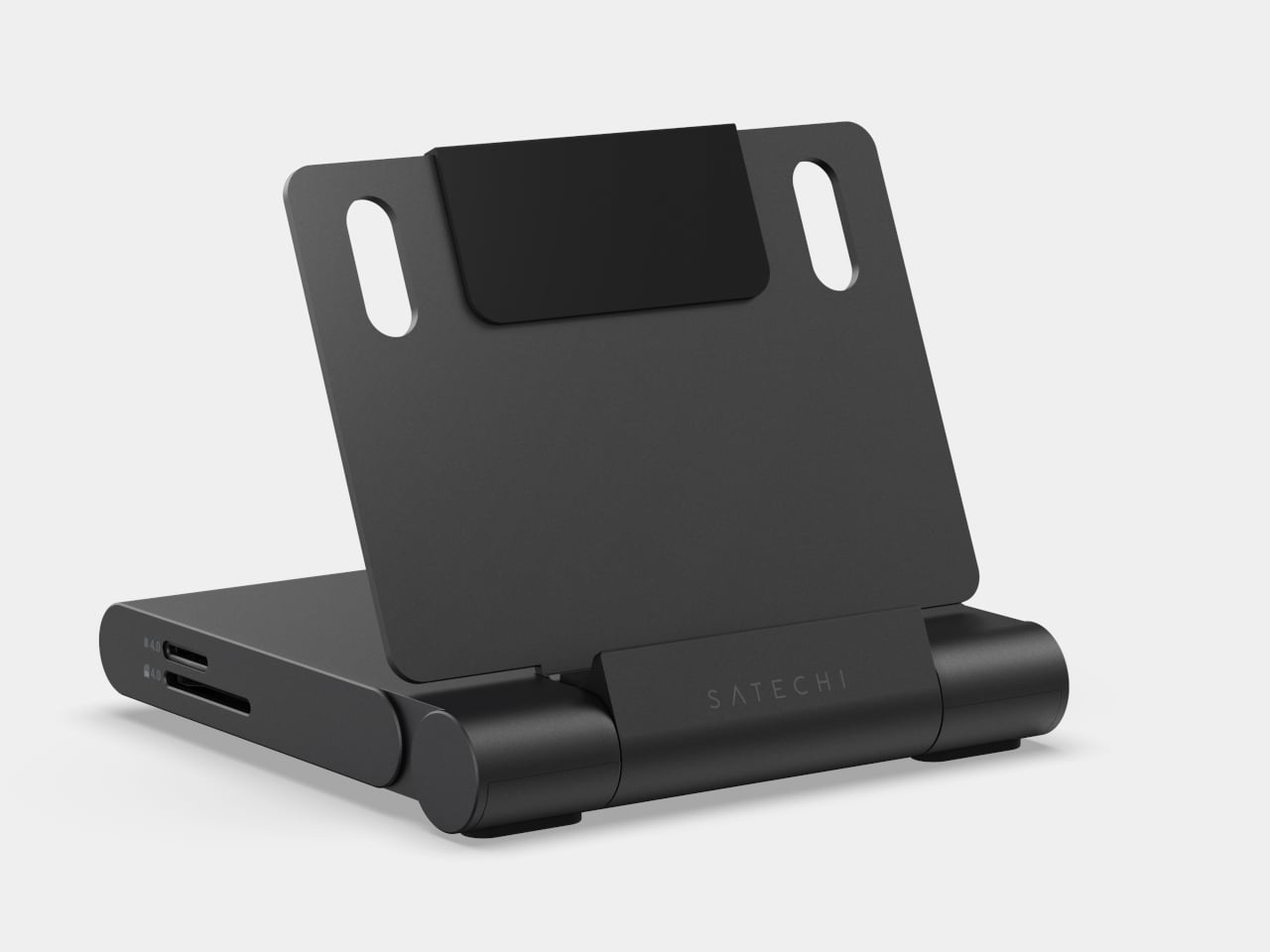
Four items in one is a claim most multi-function products make without fully earning, but the Satechi OntheGo Foldable Stand Hub earns it specifically. Folded flat at under 20mm and 187.5 grams, it contains a laptop stand, a USB-C dock, an SD card reader, and an HDMI output. A 17cm USB-C cable is built directly into its spine, so the hub comes alive the moment you unfold it and plug in, without a separate dongle, cable pouch, or adapter between you and a working setup.
The port selection is well-considered for the kind of work that actually happens on the road. HDMI 2.0 pushes a secondary display at 4K and 60Hz. The two 10Gbps data ports handle fast transfers without bottlenecking. The UHS-II card slots pull RAW files at up to 312 MB/s, which photographers working on location will feel immediately. The 100W USB-C passthrough keeps the host device fully charged through a heavy session, delivering 85W to the machine rather than sipping through a compromised power budget.
What we like
The stand and hub share one folded form factor, so you’re not choosing between an elevated screen angle and a full set of ports — both arrive in the same 187.5-gram object
100W passthrough with 85W delivered to the host is genuinely useful throughput; this is not a hub that throttles your laptop to keep the indicator lights on
What we dislike
The fixed 17cm cable length works well on a flat desk but becomes restrictive on configurations where the laptop sits further back or at an angle, leaving the hub’s placement feeling forced
iPad mini 2021 owners are limited to 5Gbps on the data ports due to the tablet’s own USB specification, not the hub’s
4. OBSBOT Tiny 3 4K PTZ Webcam
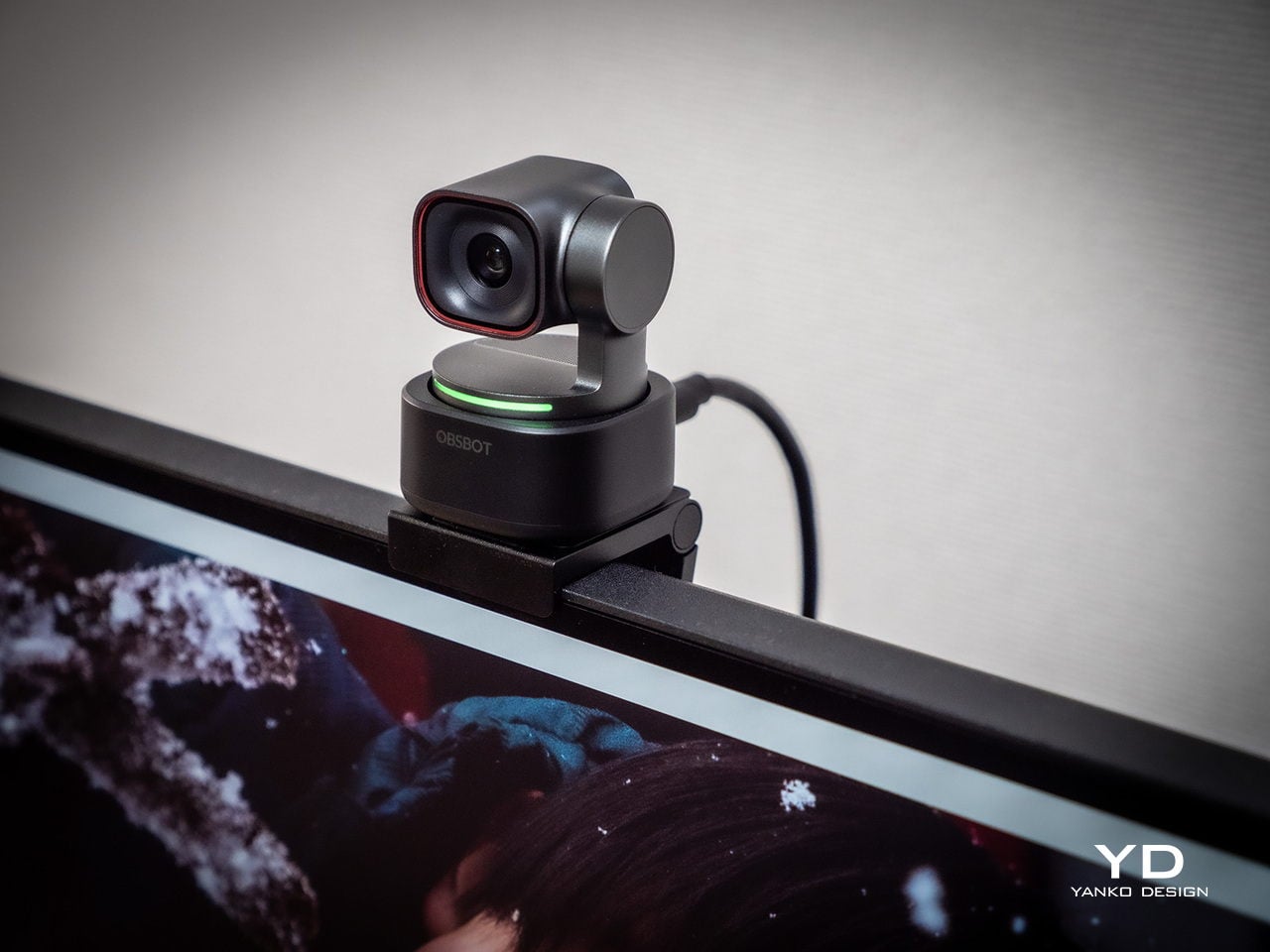
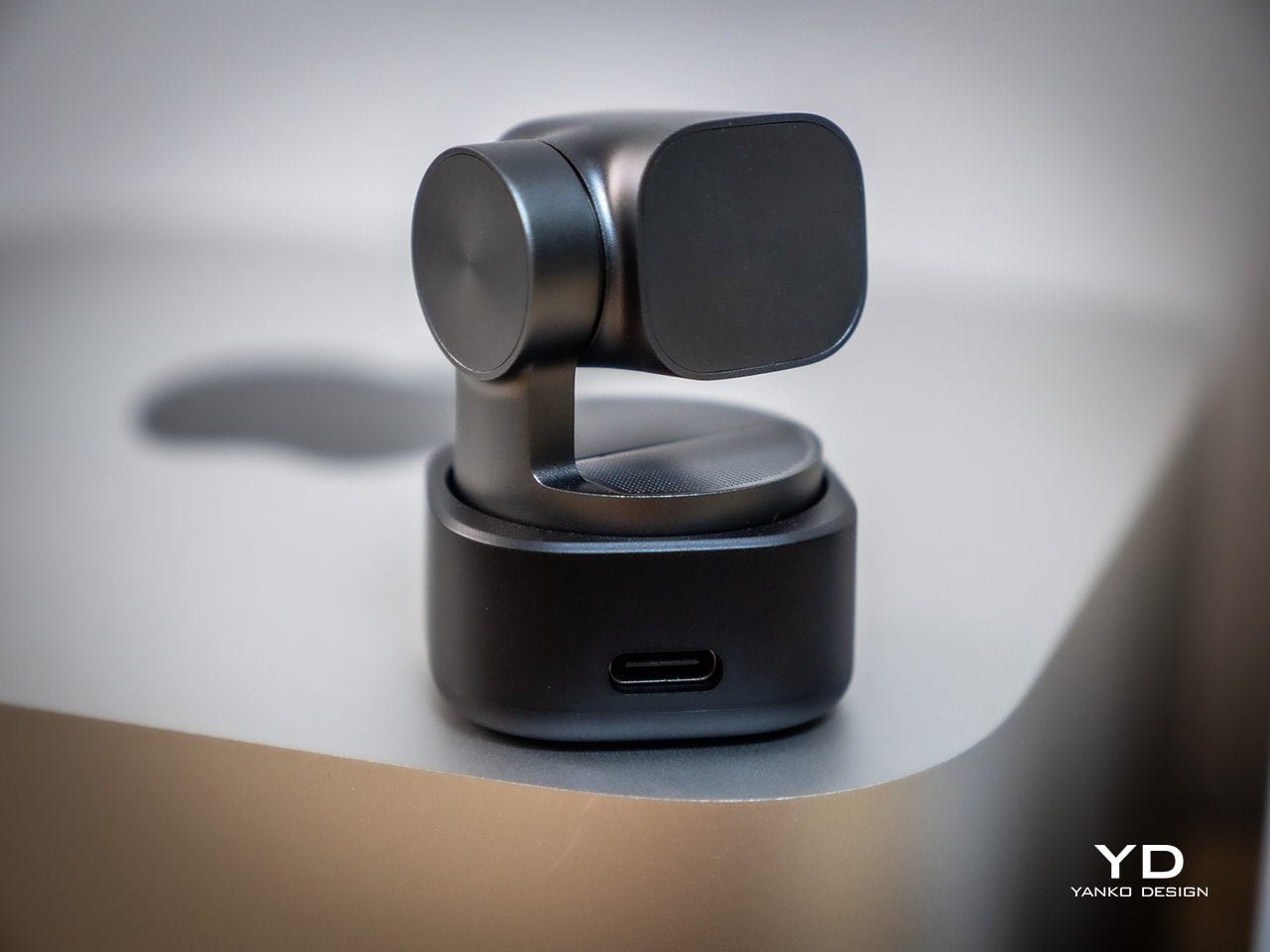
At 37 by 37 by 49 millimeters and 63 grams, the OBSBOT Tiny 3 occupies roughly the volume of a large die. Inside that footprint sits a 1/1.28-inch sensor, a 2-axis motorised gimbal, and a triple MEMS microphone array. That sensor size puts it closer to smartphone camera territory than the typical webcam chip, which shows up immediately in low-light performance and dynamic range. Plug it into a USB-C port, and it registers as a standard UVC device with no driver installation required.
The microphone system is where the Tiny 3 earns its place in this kit rather than just a streaming rig. Five discrete audio modes cover the full range of working scenarios: directional for solo calls, dual-directional for interviews, smart omni for meetings, and spatial audio for output that sounds like a room rather than a USB peripheral. The PTZ gimbal tracks at up to 120 degrees per second, so a full stand-up presentation or a pacing call stays in frame without any manual adjustment or reaching for a mouse mid-sentence.
What we like
Combining a 4K sensor, motorised PTZ tracking, and a proper multi-mode microphone array in one object eliminates the webcam-plus-USB-mic stack that clutters most remote setups
Voice commands and gesture control mean you can adjust framing mid-presentation without breaking the flow of what you’re saying or reaching across the desk
What we dislike
At $349, it’s the most expensive item in this kit, and the integrated design means the gimbal, sensor, and mic are one non-serviceable unit with no modular repair path
The depth of the companion app and the range of AI tracking modes and audio profiles takes real configuration time to dial in; arriving at a setup that matches your specific environment isn’t instant
5. Battery-Free Amplifying iSpeakers
A speaker that draws its power from the USB-C port it connects through doesn’t sound like a revelation until you’re three days into a trip and realize you haven’t thought about its battery once. The Battery-Free Speaker removes the recharge cycle that turns most portable audio into a management task. There’s no charge indicator to watch, no cable to find at the end of the night, no morning ritual of checking whether it has enough power to make it through a working session.
The positioning in this kit is about what it replaces rather than what it adds. A home office desk speaker is typically a separate purchase, a separate power cable, and a separate piece of real estate on the desk. This one draws power through the same USB-C ecosystem running the rest of the kit, meaning the entire audio and display setup resolves into a single cable chain. The sound output trades some low-end depth for a profile slim enough to travel without consequence, which is an honest and reasonable exchange.
Zero battery management means one fewer variable to track across a long travel day or a week-long work trip
The USB-C power draw integrates cleanly into the kit’s single-cable connectivity approach, keeping the desk surface clear
What we dislike
USB-powered audio output has physical limits on low-frequency response that a mains-powered desktop speaker doesn’t face
Sound quality is best understood as travel-grade rather than desktop-grade — this replaces the home office speaker in function, not in fidelity
The Office Is Wherever You Open the Bag
Put these five products in a bag and the total weight is manageable, the cost is meaningful but not irrational, and the capability covers the full surface area of a working office. The VitaLink provides the display and the keyboard. The Origami Swift handles precise input. The Satechi ties everything together with connectivity, stand geometry, and port access. The OBSBOT closes the loop on how you appear and sound on calls. The Battery-Free Speaker handles the rest of the room.
None of these products are compromises dressed up as solutions. Each one is designed for the specific constraints of a laptop bag, a single USB-C cable chain, and a working day that doesn’t start or end at the same desk. The home office used to follow you reluctantly on a work trip — a cable bag, a laptop, and a hope the hotel had a decent surface. This kit makes the case that it doesn’t have to.
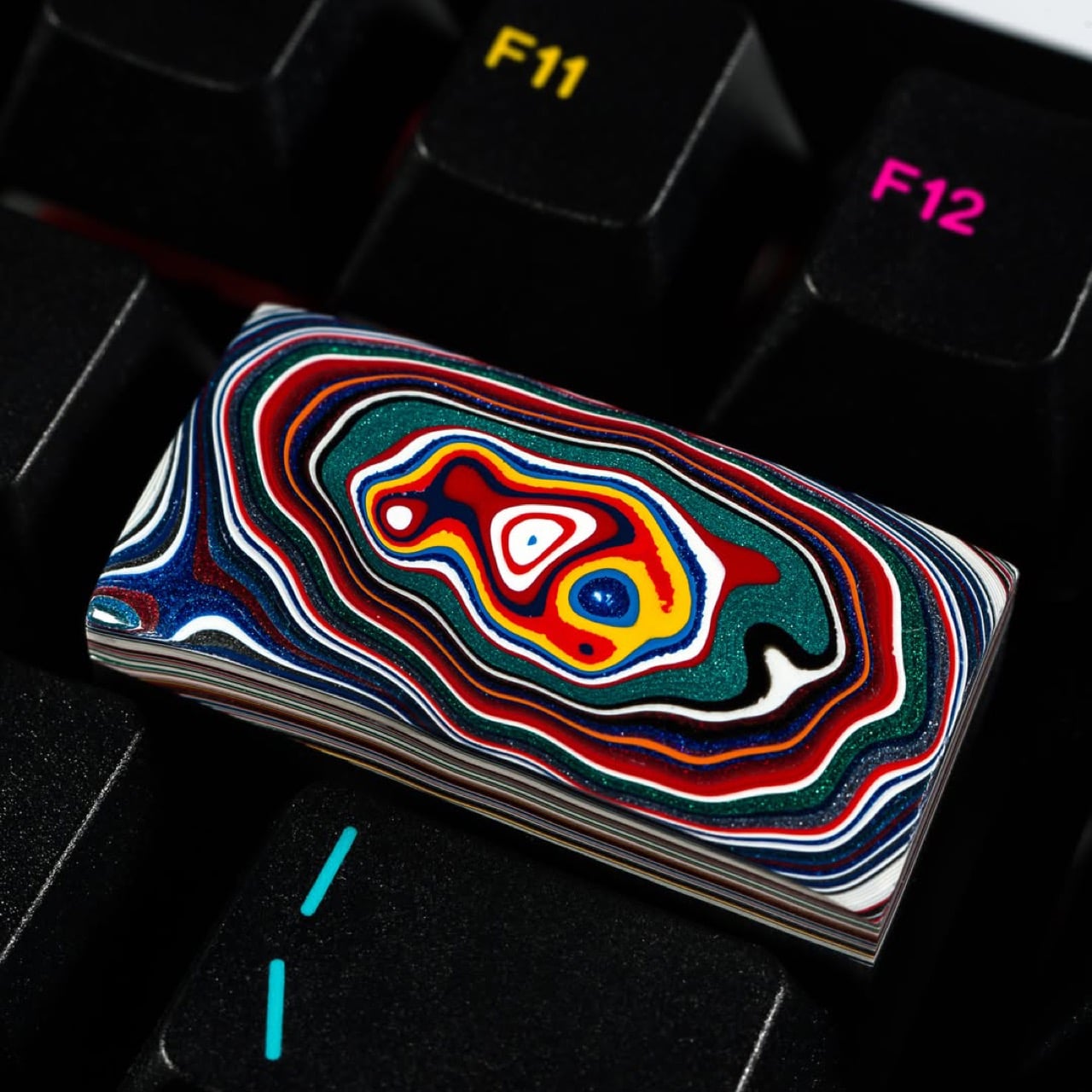
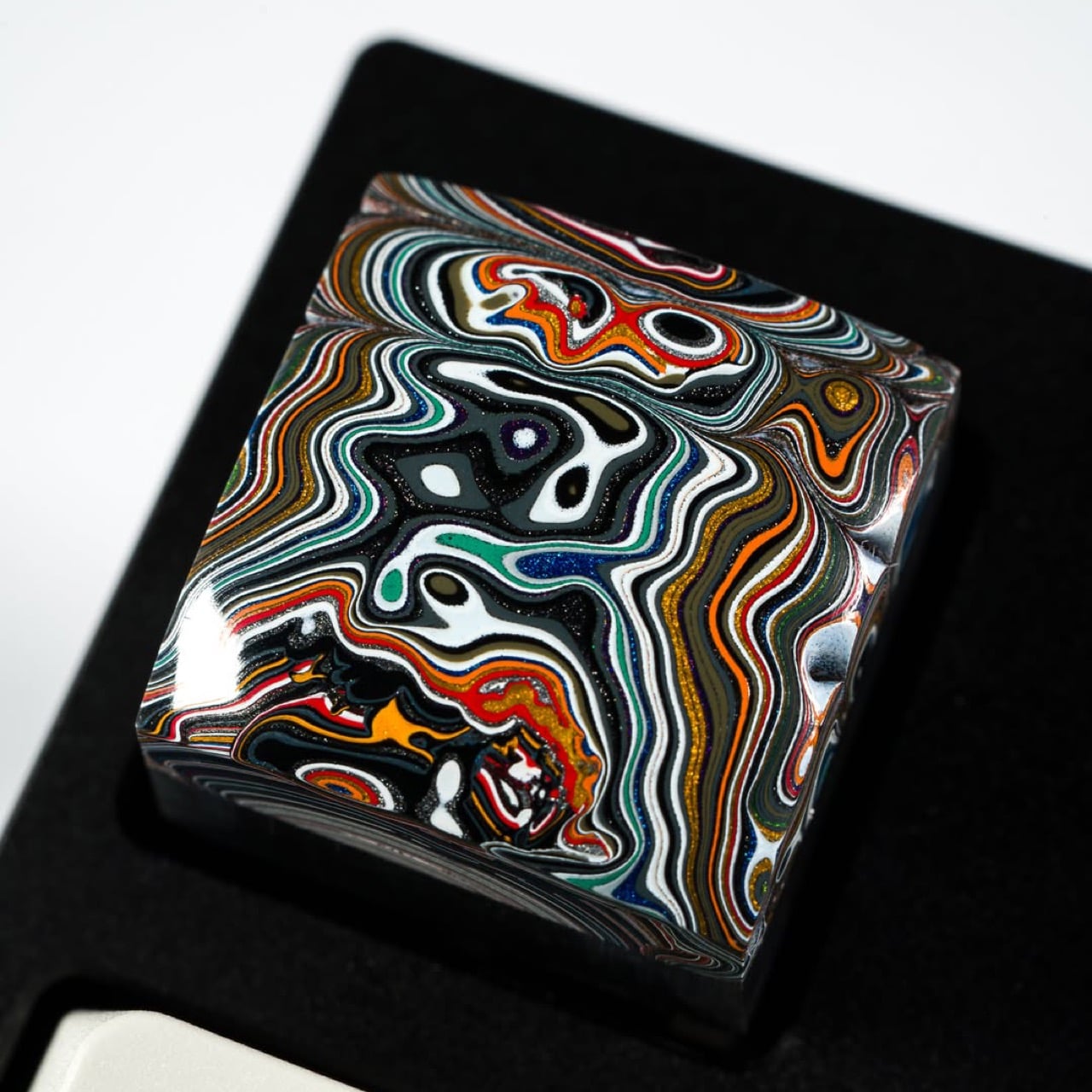
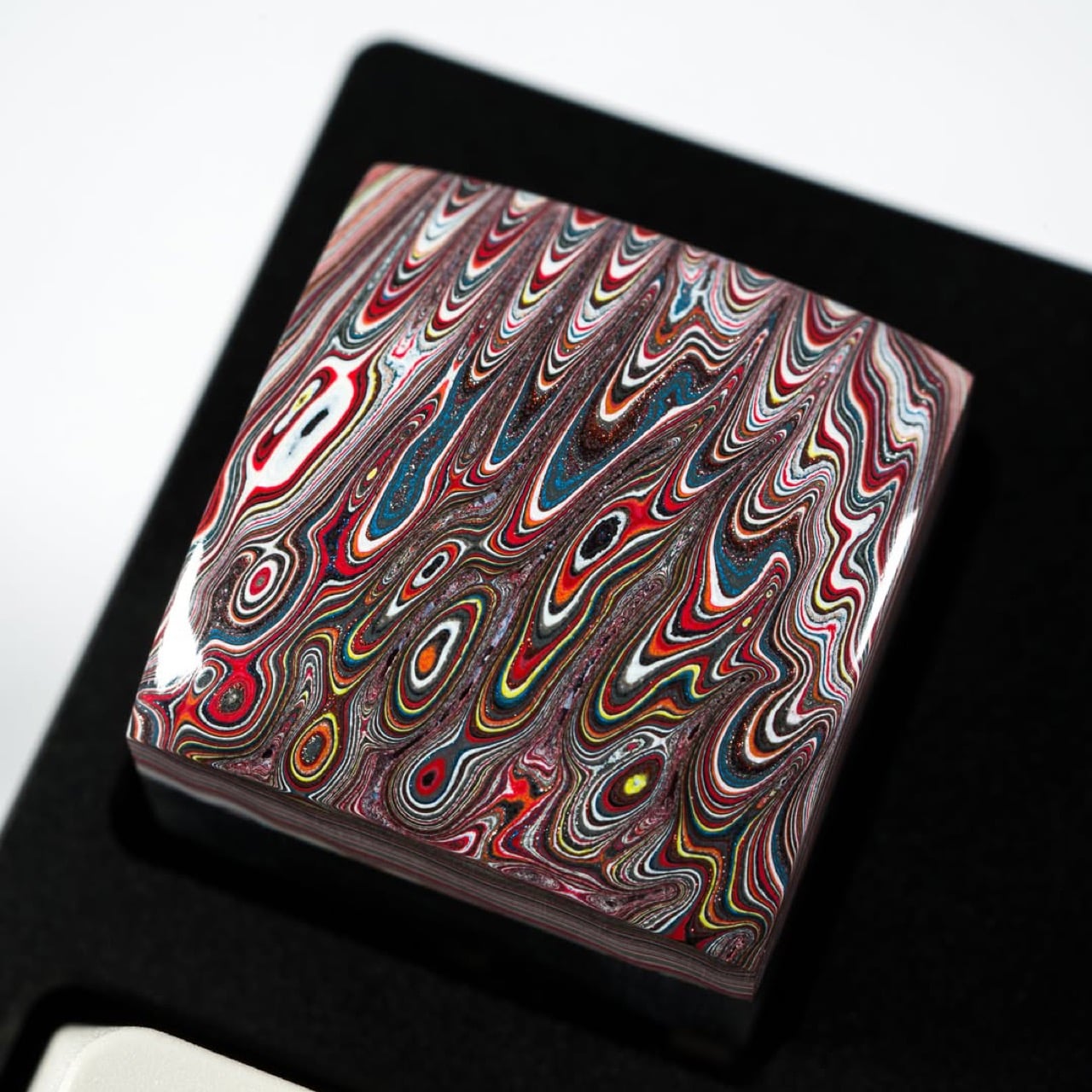
Every coat of paint on every car that ever rolled through an American assembly line left a ghost of itself somewhere. On the jigs, the racks, the fixtures that held body panels steady while the spray guns did their work, microscopic layers of overspray built up over years into something dense and multicolored and entirely unplanned. The auto industry called it waste. Lapidary artists eventually called it Fordite, and a small, obsessive collector community has been hunting it ever since.
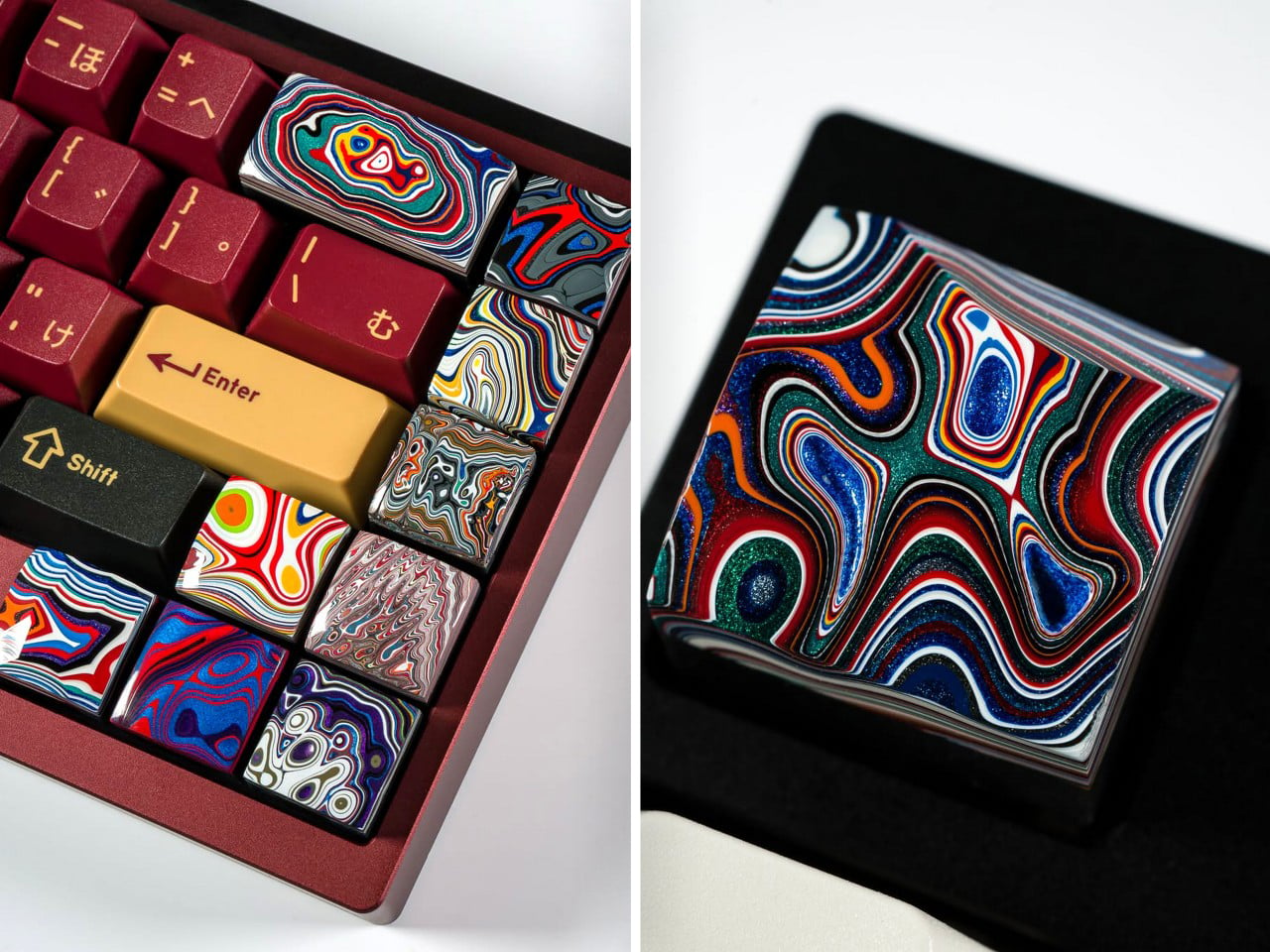
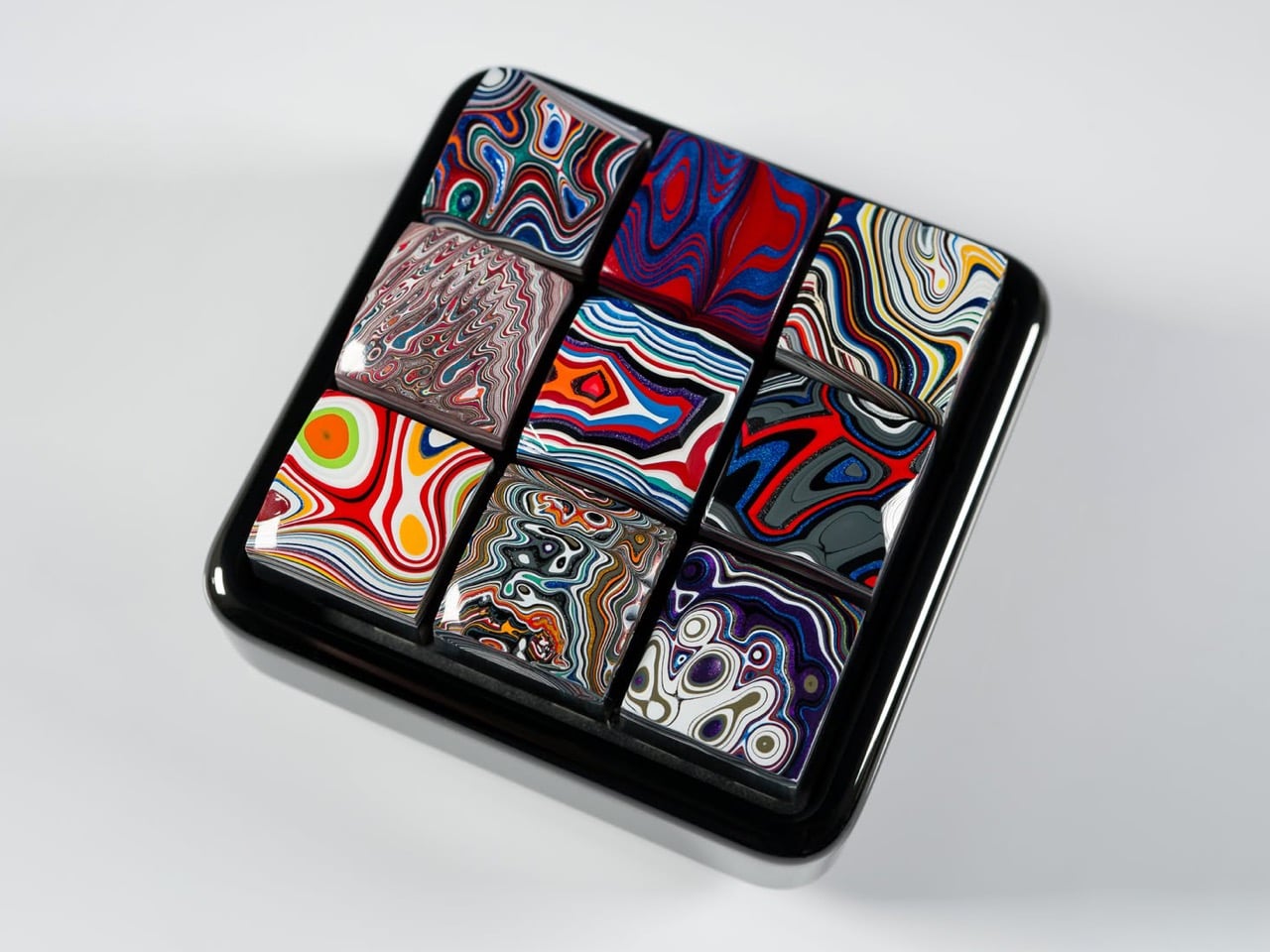
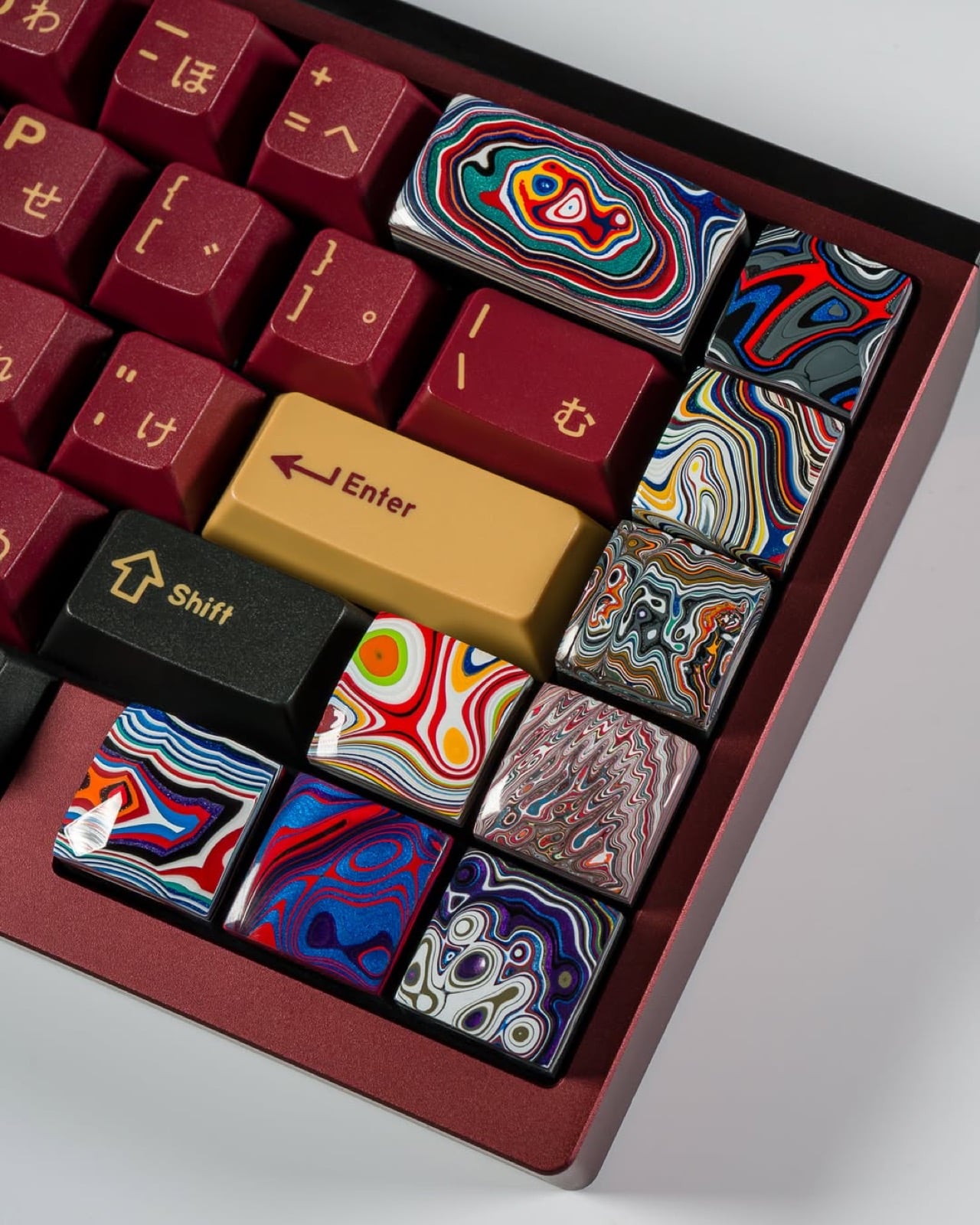
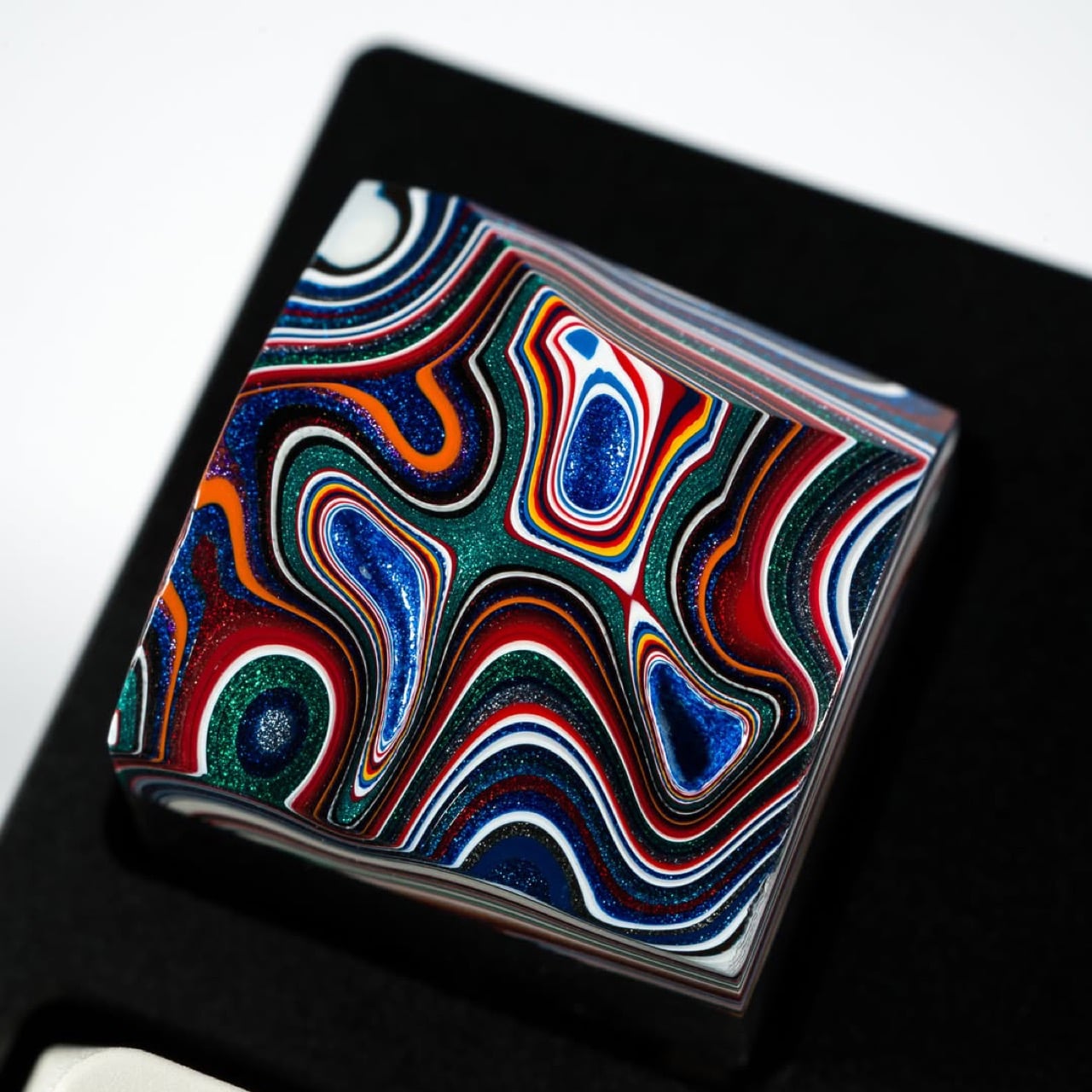
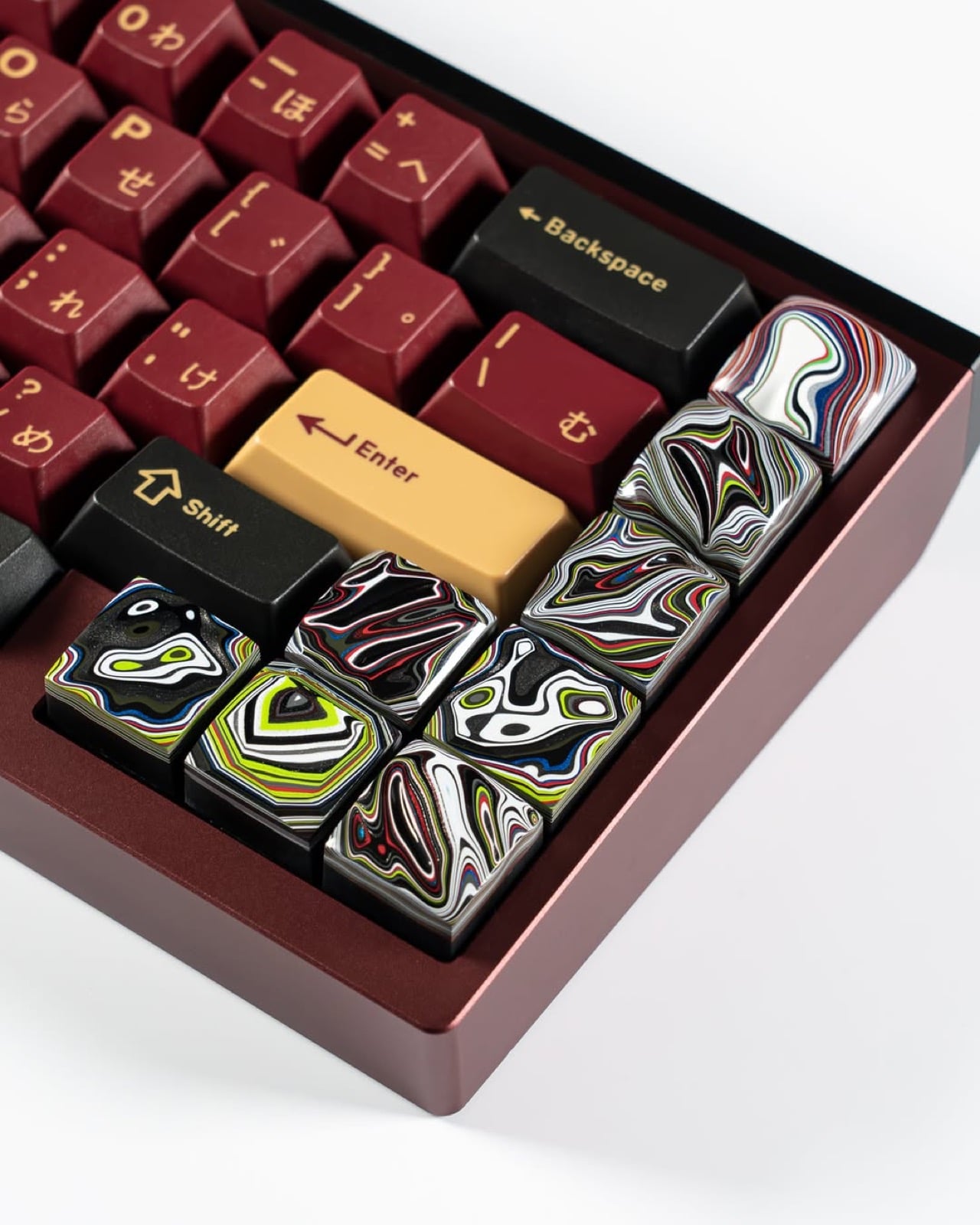
Carter Stay of Keycap Quarry is hunting it too, but with a different destination in mind. His Fordite keycap collection draws raw material from Ford, Jeep, Kenworth, and Corvette production sources, each bringing a distinct color palette shaped by decades of model-year decisions made by designers who never imagined their work ending up on a mechanical keyboard. Stay cuts, polishes, and stems each piece by hand, and the cross-sections that emerge look like nothing the artisan keycap world has produced before.
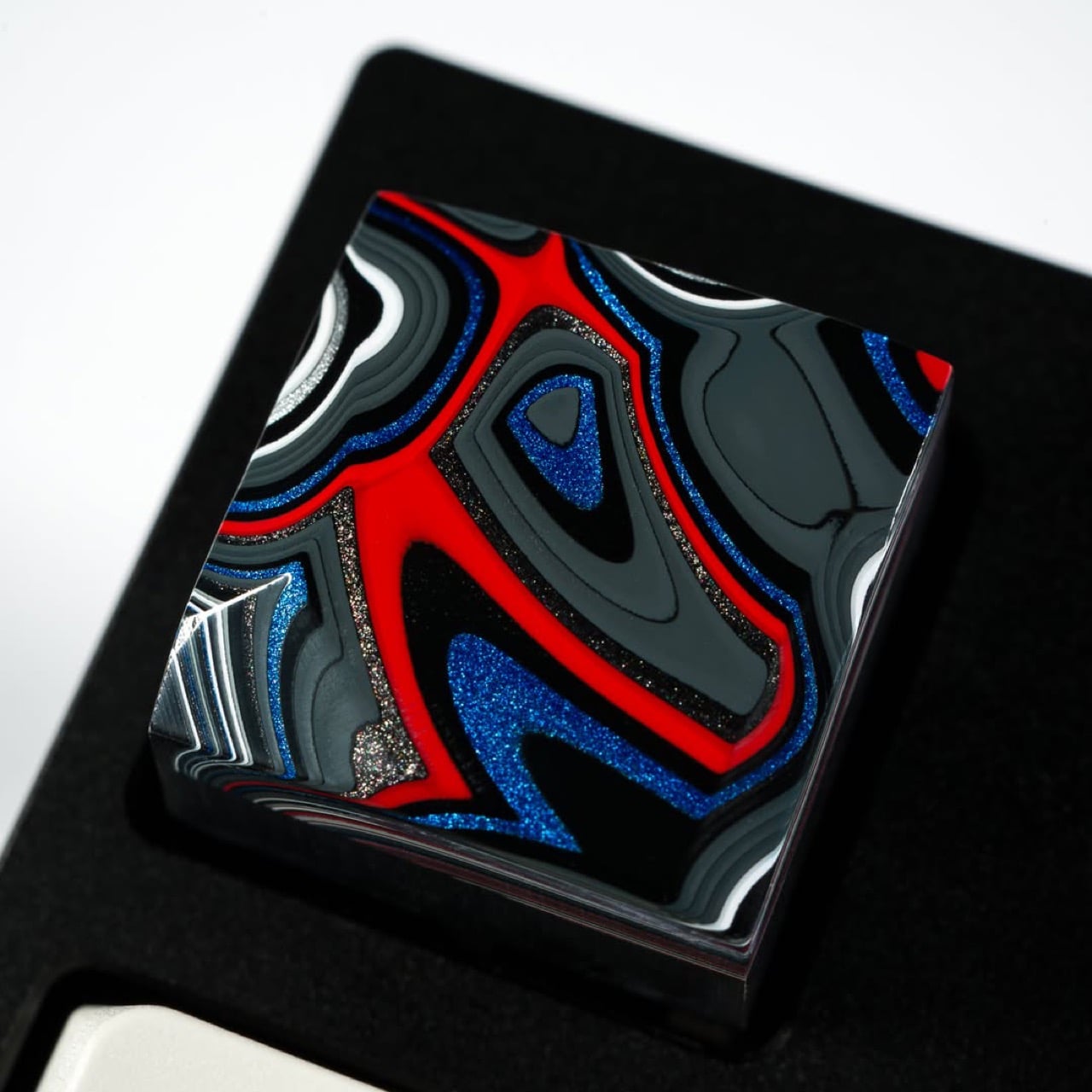
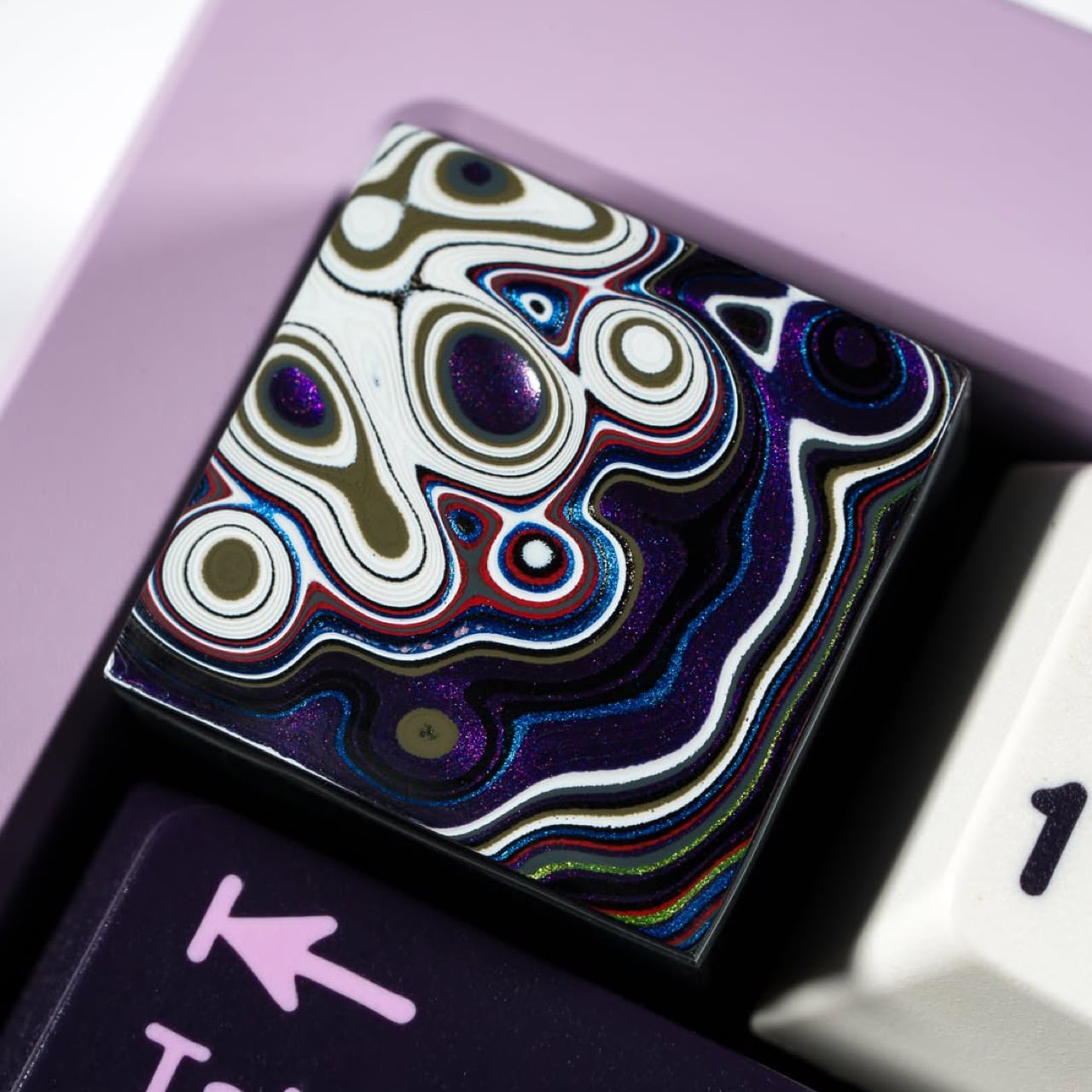
The striation pattern on every cap is a direct consequence of which assembly line the source block came from, how many model years it absorbed, and precisely where in the slab Stay’s saw made contact. A cut taken two millimeters in any direction produces an entirely different composition, which means every piece in this collection is unrepeatable by definition. No two caps share the same color sequencing, the same strata width, or the same relationship between the metallic flake layers and the solid paint coats sandwiching them. The material arrives pre-authored, and Stay’s job is to find the best cross-section hiding inside each block and liberate it with a polishing wheel.
The four source materials produce genuinely distinct visual identities, and spending time with the photos makes that difference legible. Ford stock tends toward broad sweeping color fields with strong primaries, bold and almost graphic when polished flat. Corvette material runs hotter, with tighter striations and a higher frequency of metallic flake layers that shift under different lighting conditions in a way that photographs can only partially capture. Kenworth, coming from commercial truck production rather than passenger vehicles, carries heavier industrial greys and blacks punctuated by surprising flashes of color that read almost like geological intrusions into an otherwise muted palette. Jeep stock sits between utilitarian and vivid, reflecting decades of a brand that never fully committed to either identity.
The glitter-fleck layers embedded throughout all four source materials are not decorative additions applied during the lapidary process. They are original automotive metallic paint, compressed in place over decades of production, and they give the polished surface a depth that shifts depending on the angle and intensity of the light hitting it. Under direct light the flake layers spark. Under diffuse light they recede into the surrounding color bands and let the striation geometry take over. A single cap can look like two completely different objects depending on where you position it on your desk, which is a property that puts these firmly in the category of objects worth owning rather than just admiring in photos.
The caps span 1U and 2U footprints on Cherry MX-compatible stems, and the pattern logic scales beautifully across both sizes. Stay’s ammonite fossil keycaps, which we covered recently, operated on the same material philosophy: source something with genuine embedded history, process it through lapidary craft, and let the object speak for itself. The Fordite collection takes that same instinct and points it at a completely different timeline, not 200 million years of geological compression but decades of American manufacturing muscle, model-year color decisions, and assembly line accumulation that nobody planned and everybody should want on their keyboard. The keycaps are already sold out, pretty much showing you how in-demand they are… However, Carter often ‘drops’ new caps on his website through announcements on Instagram, so be sure to give him a follow to stay in the loop.
Most 4th of July gifts end up on a shelf by August. The problem is rarely budget. It is that the average gift guide optimizes for novelty over usefulness, leaving the recipient with something impressive at unboxing and forgotten by Labor Day. The eight picks here work differently. Each one earns its place through daily utility, genuine design quality, or the kind of clever thinking that makes you wonder why it took this long to exist.
These are products built to be used outdoors, shared freely, and carried constantly. Every price is real, every product is available to order in time for July 4th, and every item fits the kind of man who appreciates design as much as function. That is a harder brief than it sounds. These eight cleared it.
1. RetroWave 7-in-1 Radio
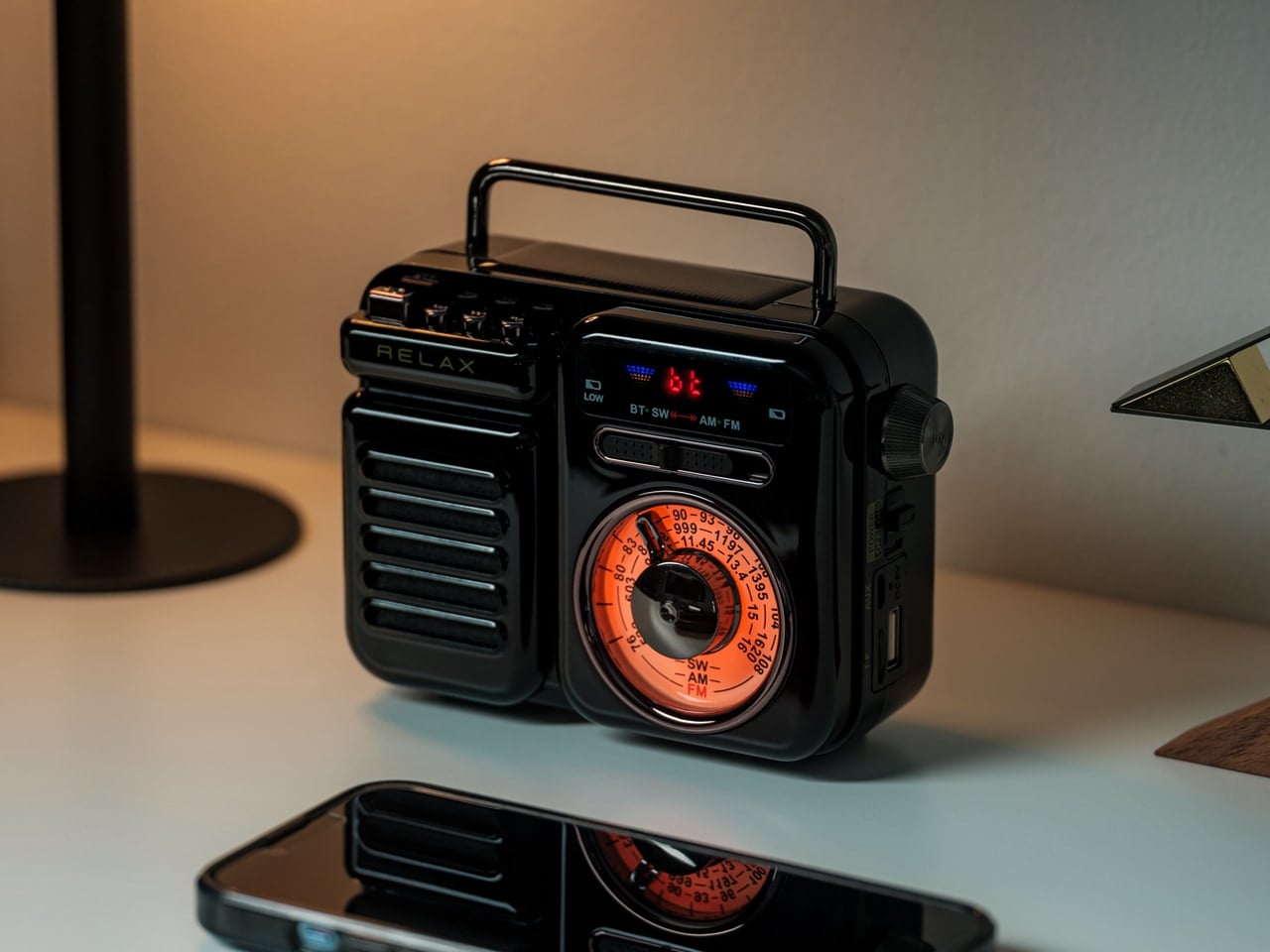
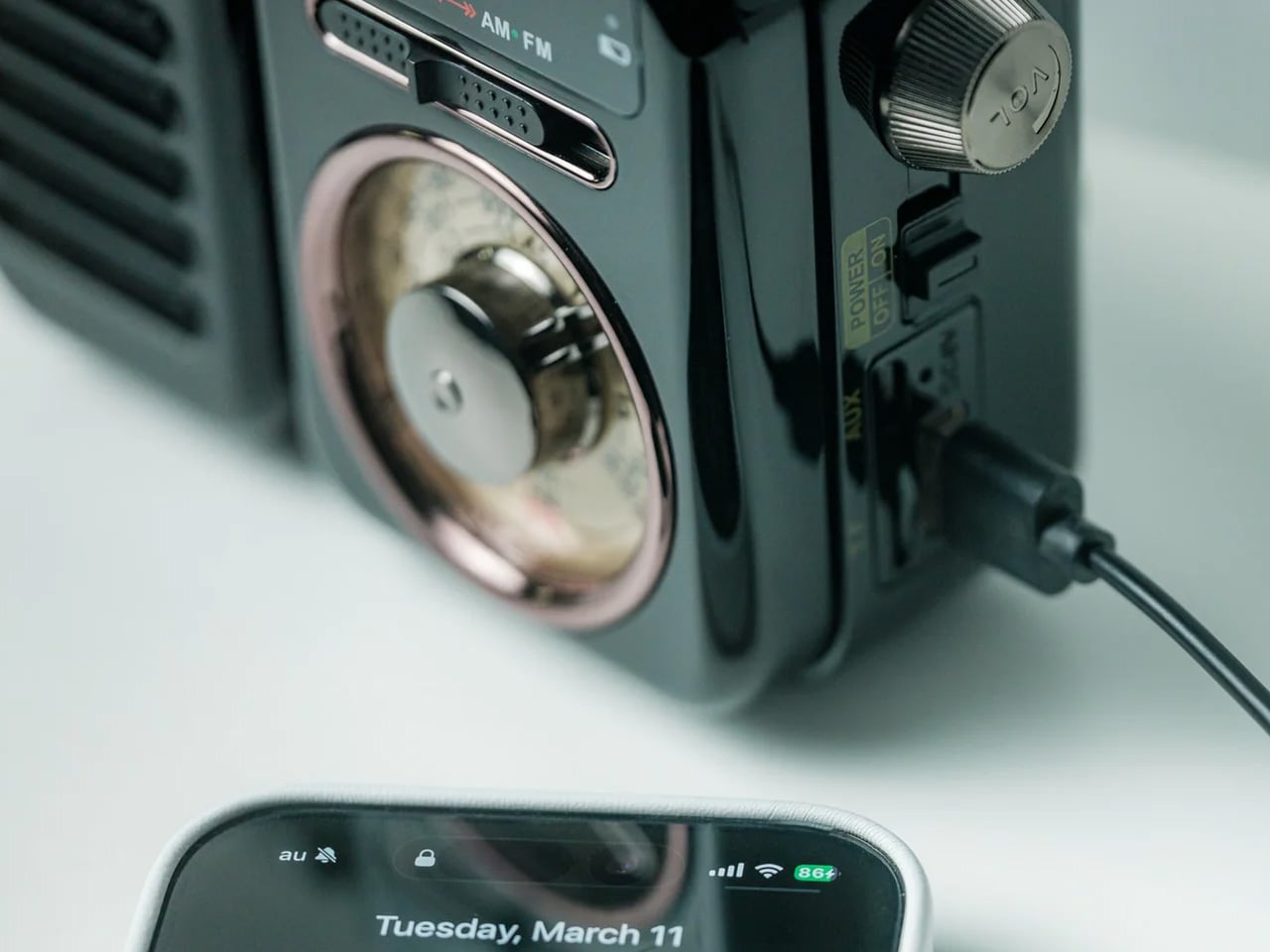
The RetroWave is not trying to be a smart speaker. That restraint is exactly what makes it work. At $89, it covers AM, FM, and shortwave reception alongside Bluetooth streaming, a built-in flashlight, a phone charging port, and a weather band — seven functions in a single object with a tactile analog tuning dial and enough visual warmth that it looks right sitting on a picnic table or a porch railing. It runs on battery or USB-C, which matters at any outdoor gathering where outlets are not a given.
What sets it apart from the wave of retro-styled Bluetooth speakers is that the RetroWave functions during a blackout. The weather band and hand-crank charging give it genuine emergency utility that most audio products ignore entirely. On a holiday weekend where fireworks, crowds, and summer storms converge, a radio that can do real work under pressure is a more interesting gift than another Spotify-only device with a personality made entirely of silicone and LED rings.
Seven-function range covers daily and emergency use without feeling cluttered
What we dislike:
The shortwave reception will delight a specific type of person and leave others indifferent
2. Anker Soundcore Boom 3i
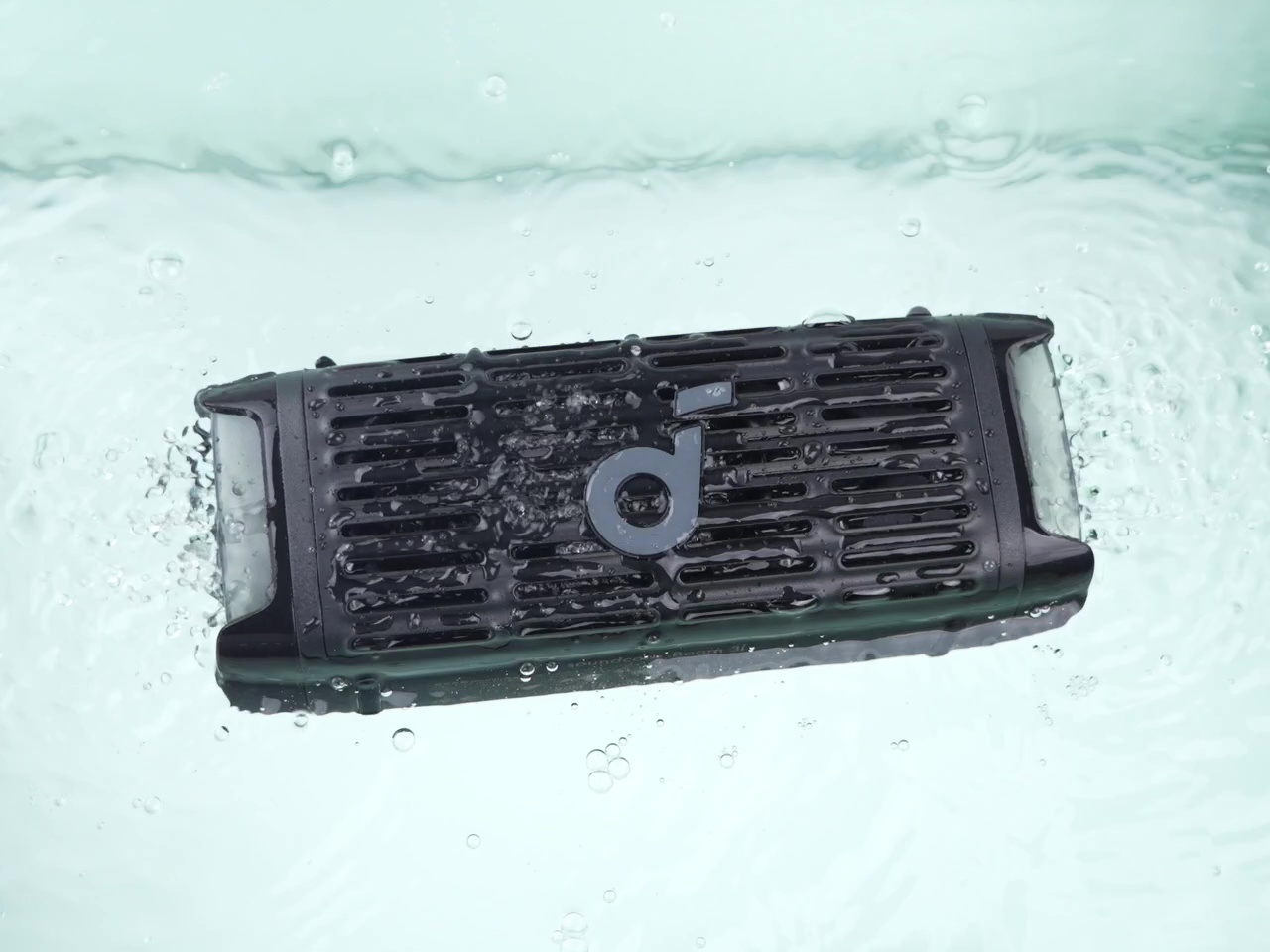
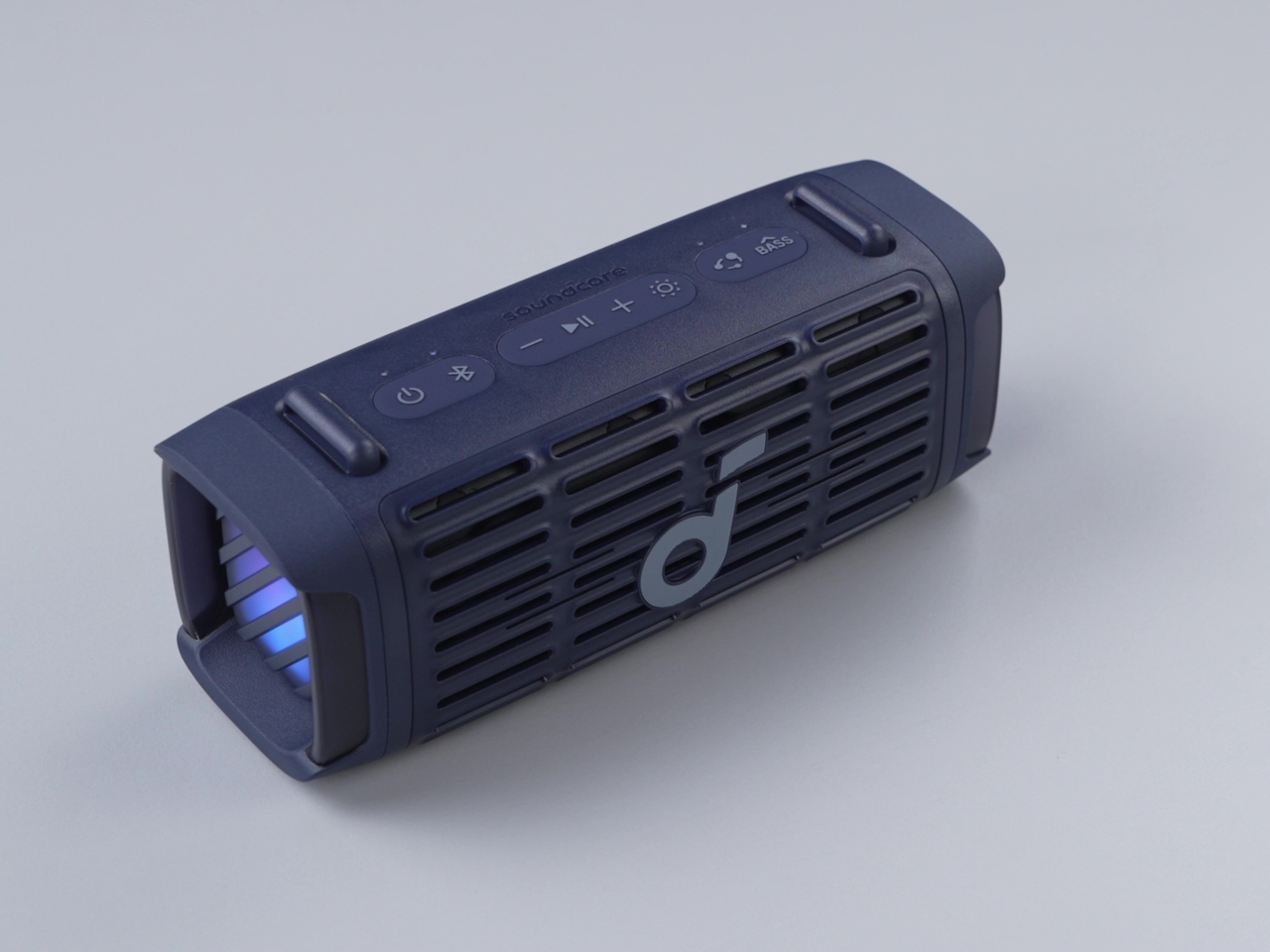
The Boom 3i was designed to survive the kind of afternoon that destroys other electronics. It floats on water. It shakes sand off its housing without clogging the drivers. The IP rating holds up in the rain and in the pool, and while most outdoor speakers are water-resistant in theory and fragile in practice, Anker engineered this one for submersion rather than splashes. It is the Bluetooth speaker you stop worrying about the moment you walk out the front door with it.
The audio output is full and wide for a speaker this compact, with enough low end to anchor a playlist over ambient crowd noise without the distortion that plagues smaller drivers at higher volumes. For a 4th of July gathering where the speaker will inevitably be nudged off a table, handed between a dozen people, and left near the cooler in a wet patch of grass, the Boom 3i is the one pick on this list that was engineered specifically for that set of conditions.
What we like:
Floating capability is the one feature that separates it from every comparable speaker at this price
What we dislike:
The design prioritizes durability over aesthetics, which shows in the bulkier silhouette
3. Leatherman Skeletool RX
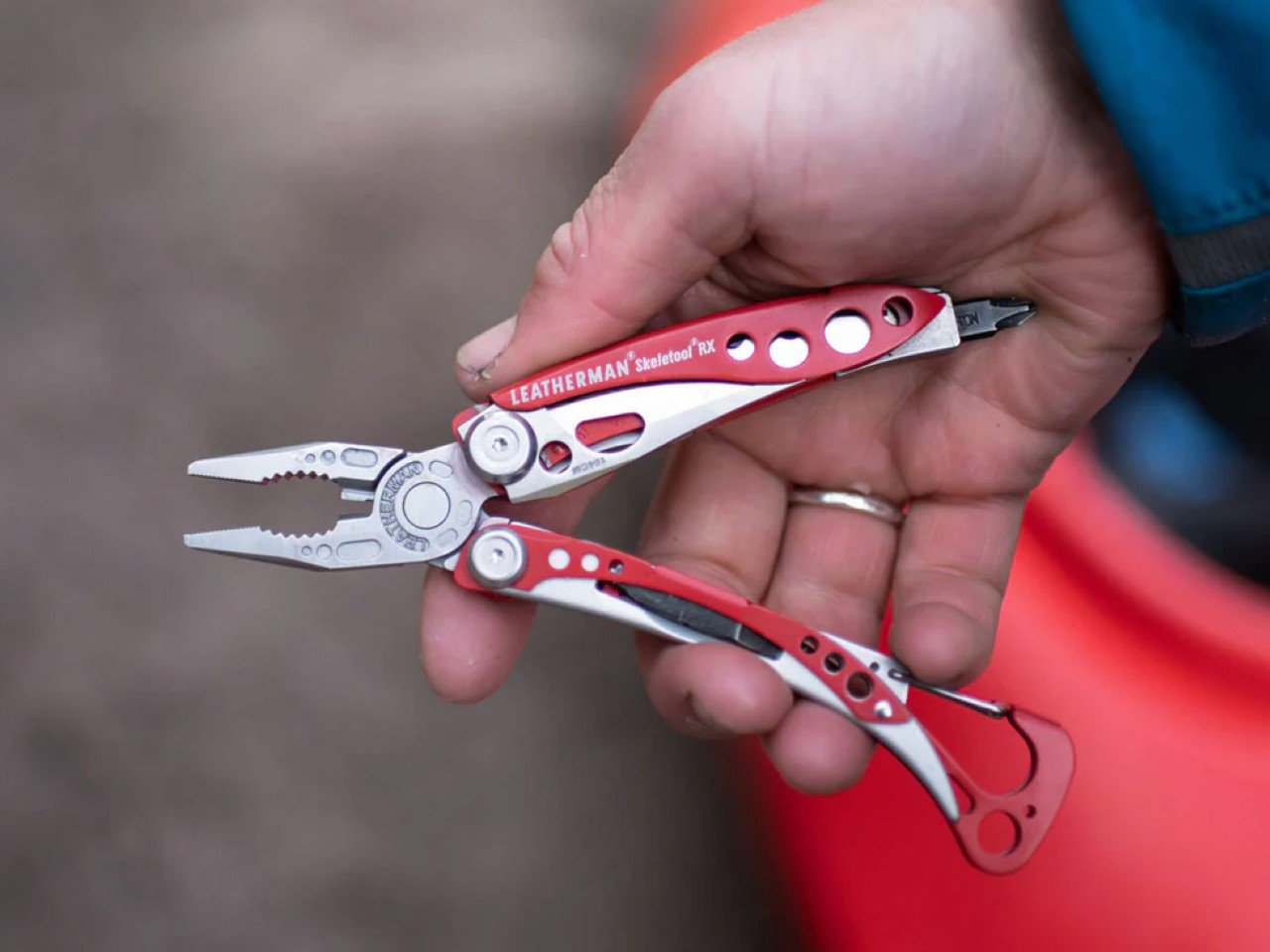
The Skeletool was built around an edit. Leatherman stripped the tool down to seven functions, removed everything that required compromise, and arrived at something genuinely elegant for a multitool: a stainless steel combo blade, needle-nose pliers, a bit driver, a removable pocket clip, and a carabiner that doubles as a bottle opener. That last detail is the most honest acknowledgment a tool manufacturer has ever made that a 4th of July multitool has a very specific social use case. Five ounces, built in Portland, Oregon.
The bottle opener earns its place at a summer cookout, but the pliers and driver mean it stays useful through the entire weekend and the weeks after. Most multitools feel like a design compromise. The Skeletool feels like a design decision. The skeletonized frame that gives it its name is functional rather than decorative, reducing weight without reducing grip. It is one of those tools that looks better the more it gets used, which is the best thing you can say about anything made from stainless steel.
What we like:
The carabiner bottle opener is a genuine design insight rather than a novelty feature
What we dislike:
Seven functions cover most use cases, but it will not satisfy anyone who needs scissors or a saw
4. TriBeam Camplight
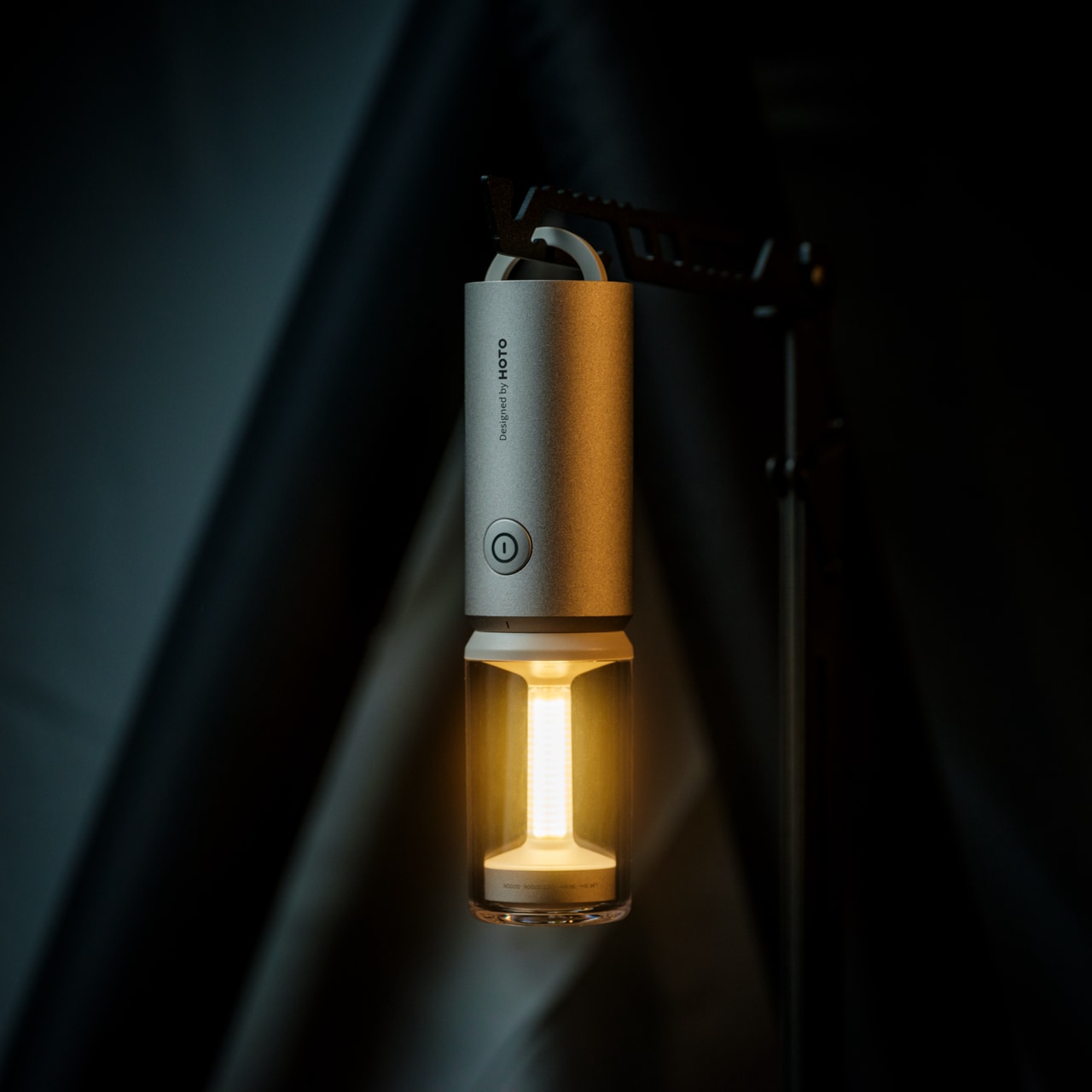
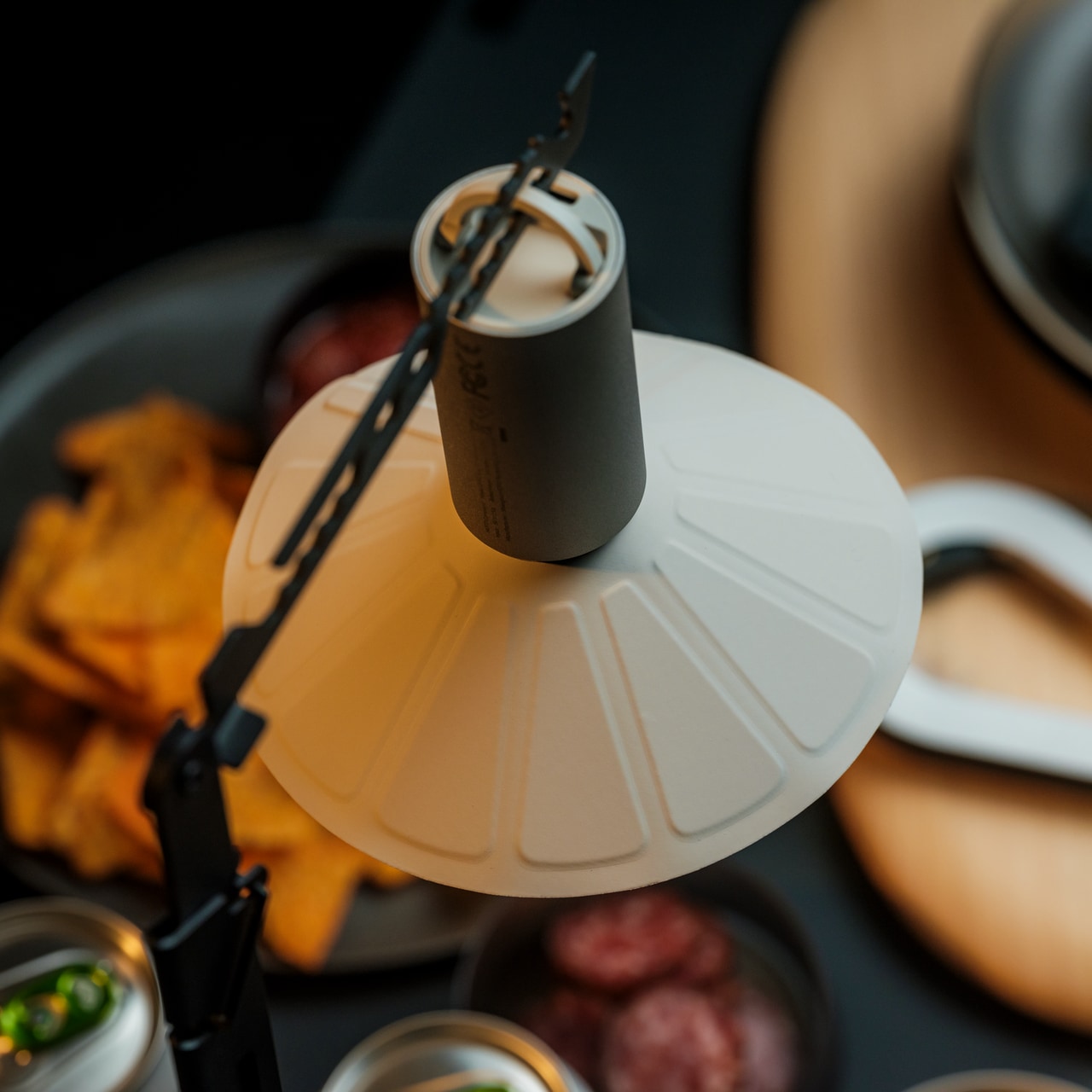
Most camp lights make you choose between utility and atmosphere. The TriBeam refuses that trade-off. At $65 and 135 grams, it switches between a soft ambient glow for conversation, a focused flashlight beam for task lighting, and a diffused lantern mode that fills a campsite evenly. Three distinct lighting behaviors in a single award-winning body that measures just 12.8 centimeters tall and fits in a jacket pocket, which is not something most camp lanterns can honestly claim.
The design is the product. Clean cylindrical housing, no unnecessary buttons, nothing that reads as cheap at close range. It earns its price through the quality of the materials and the precision of three modes that each do their job without bleeding into the others. For anyone spending part of the 4th of July weekend outdoors, whether camping or simply sitting on a dark lawn waiting for fireworks, the TriBeam handles the full range of lighting needs without requiring a second item in the bag.
Three genuinely distinct lighting modes that each solve a specific outdoor scenario
What we dislike:
The compact scale means battery life has limits on multi-night trips
5. Matador Pocket Blanket 3.0
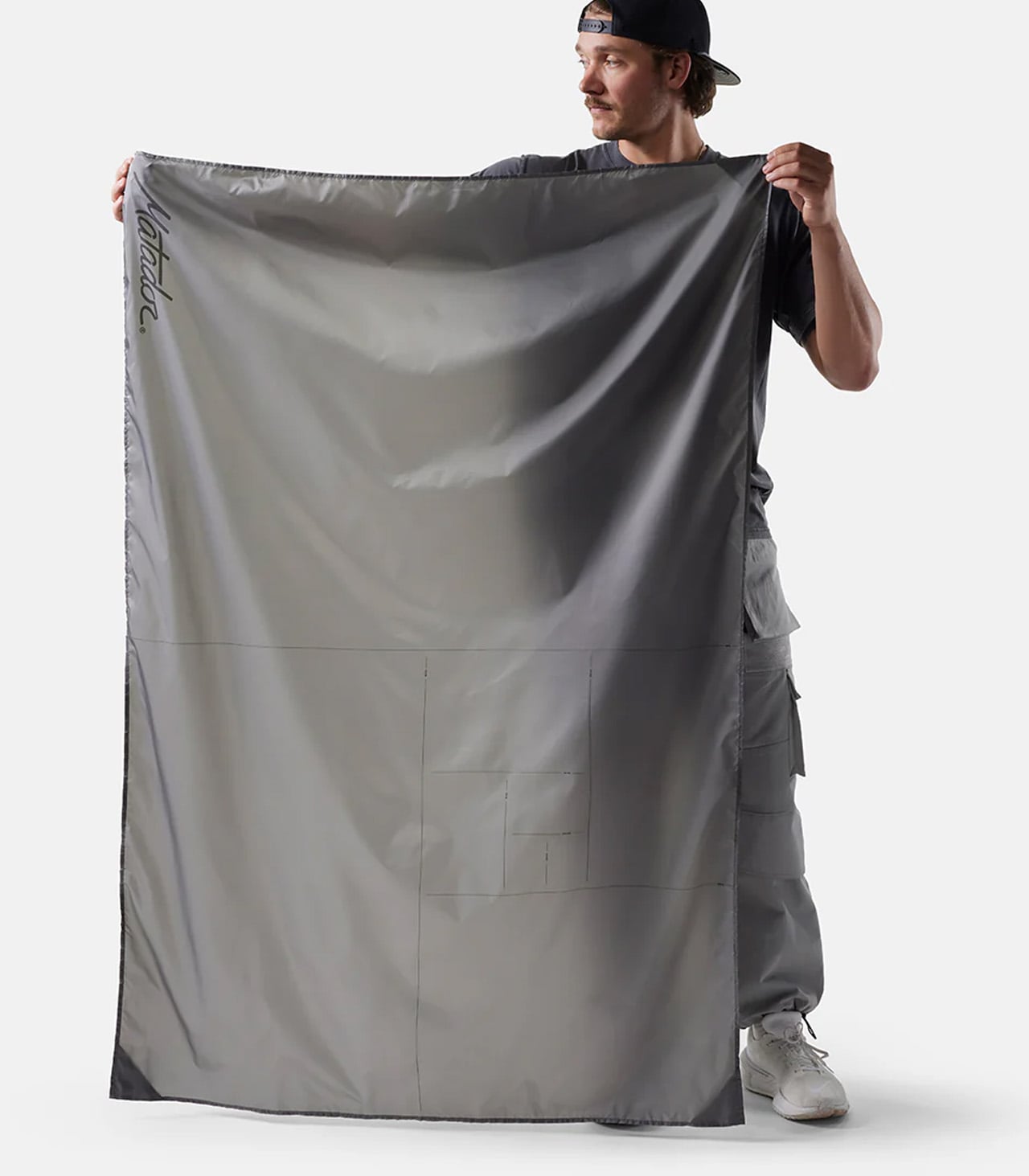
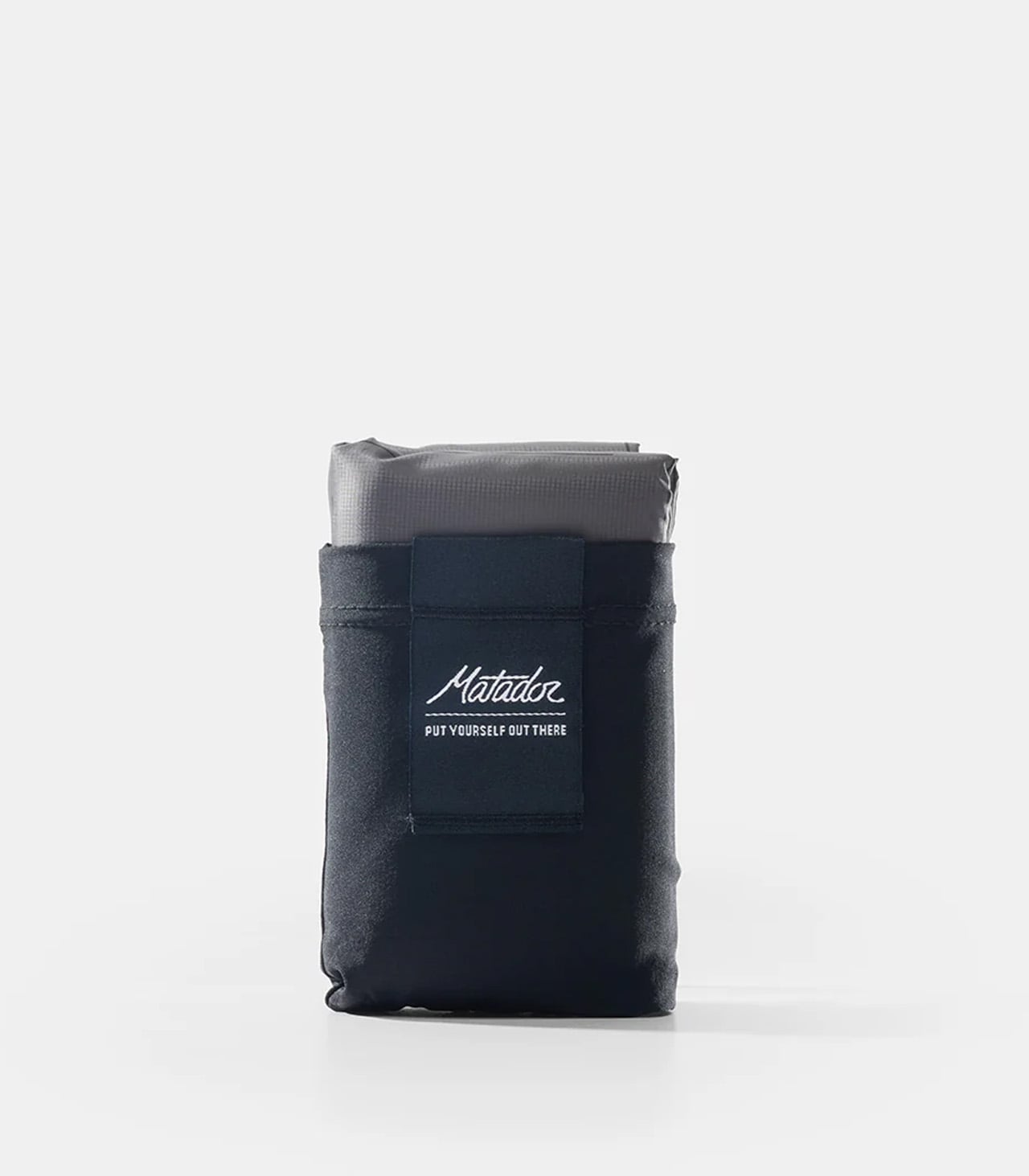
The Matador Pocket Blanket folds to the size of a carabiner pouch. Opened, it seats two to four adults on a water-resistant surface with integrated corner stakes for wind. The bottom layer blocks moisture from wet grass and damp park lawns; the top layer resists sand and water without trapping them. Everything about this object was designed for exactly the 4th of July scenario of sitting on public ground watching fireworks without wearing whatever that ground has been absorbing all afternoon.
The Easy-Pack Pattern built into the blanket’s face guides the refold intuitively, which solves the specific frustration that makes people abandon ultralight blankets within the first month of owning them. At $35 it is the lowest-price item on this list and potentially the most used, because it solves a problem that comes up every single time the weather is good enough to go outside. That ratio of price to utility is rare and worth recognizing when you find it.
What we like:
The built-in refolding guide makes packing it back down a one-attempt operation
What we dislike:
The sizing works well for two adults, but a larger group will want a second one
6. Planbok Waterproof Wallet
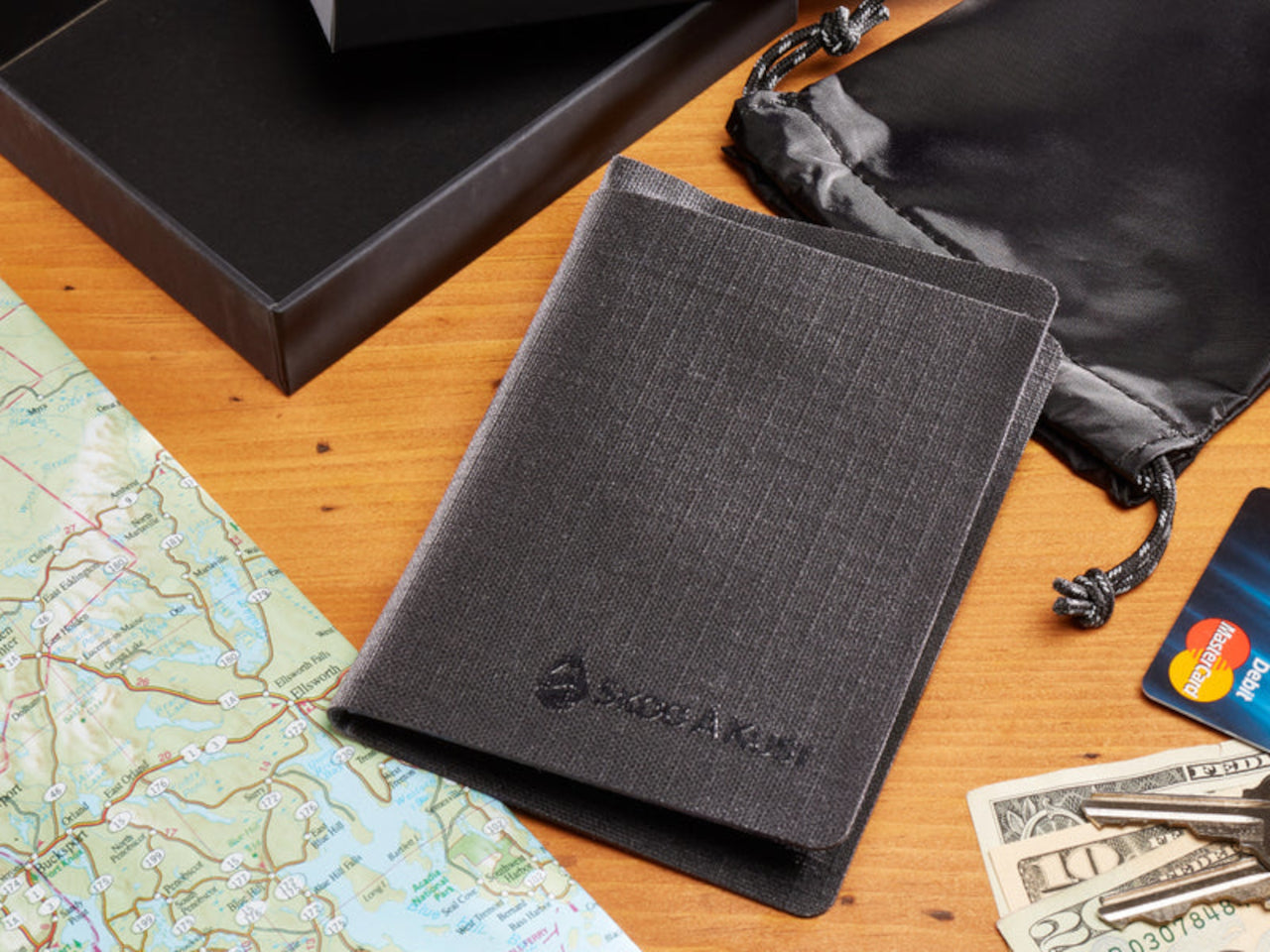
The Planbok is built from 420 denier TPU-coated ripstop nylon with fully welded seams and an IPX6 water resistance rating. It floats if you drop it in the water. That detail separates it from every slim wallet on the market, including the ones that market themselves as water-resistant. The difference between water-resistant and waterproof is invisible until it matters, and on a weekend that involves boats, coolers, rivers, or an unexpected downpour, it matters immediately and without warning.
The profile stays slim enough for a front pocket, cards slide easily, and the construction feels deliberate rather than disposable. It is not a novelty item. It is the answer to the quiet anxiety of carrying a leather bifold to a lake weekend, which is a real anxiety that real people experience every summer without ever quite solving it. Covering a genuine everyday frustration with a well-made object at a reasonable price is precisely the brief that good design exists to fulfill.
What we like:
Buoyancy is a genuine functional feature, not a marketing headline
What we dislike:
IPX6 covers heavy rain but stops short of full submersion, which the floating capability can quietly imply
7. DraftPro Top Can Opener
There is a version of cracking open a cold can on the 4th of July, and there is a better version. The DraftPro, designed by award-winning Japanese designer Shu Kanno and built in Japan, removes the entire top of a can in a single smooth motion, leaving a clean, safe edge and a wide-mouth opening that releases the full aroma of whatever is inside. Beer tastes closer to draft. Sparkling water breathes. A canned cocktail becomes something you can actually build on, adding ice directly into the can or mixing in the source without reaching for a glass or a shaker.
The opening motion is controlled and quiet — not by accident but by engineering — and the grip was shaped to sit naturally in the hand without slipping or requiring a particular angle. Nothing about it reads as a novelty. It is a tool designed with the restraint that Japanese craft disciplines demand: nothing added, nothing wasted, every detail in service of the one thing it exists to do. At a cookout full of people who have never seen one, it will be the most-passed-around object on the table.
Removes the full top cleanly, transforming a canned drink into a genuinely better sensory experience
Works as a cocktail vessel, ice bucket, and open drink in one move with no extra equipment
What we dislike:
Stock is limited — only a few units available at the time of publication, so early ordering matters
8. Nimble SharePower
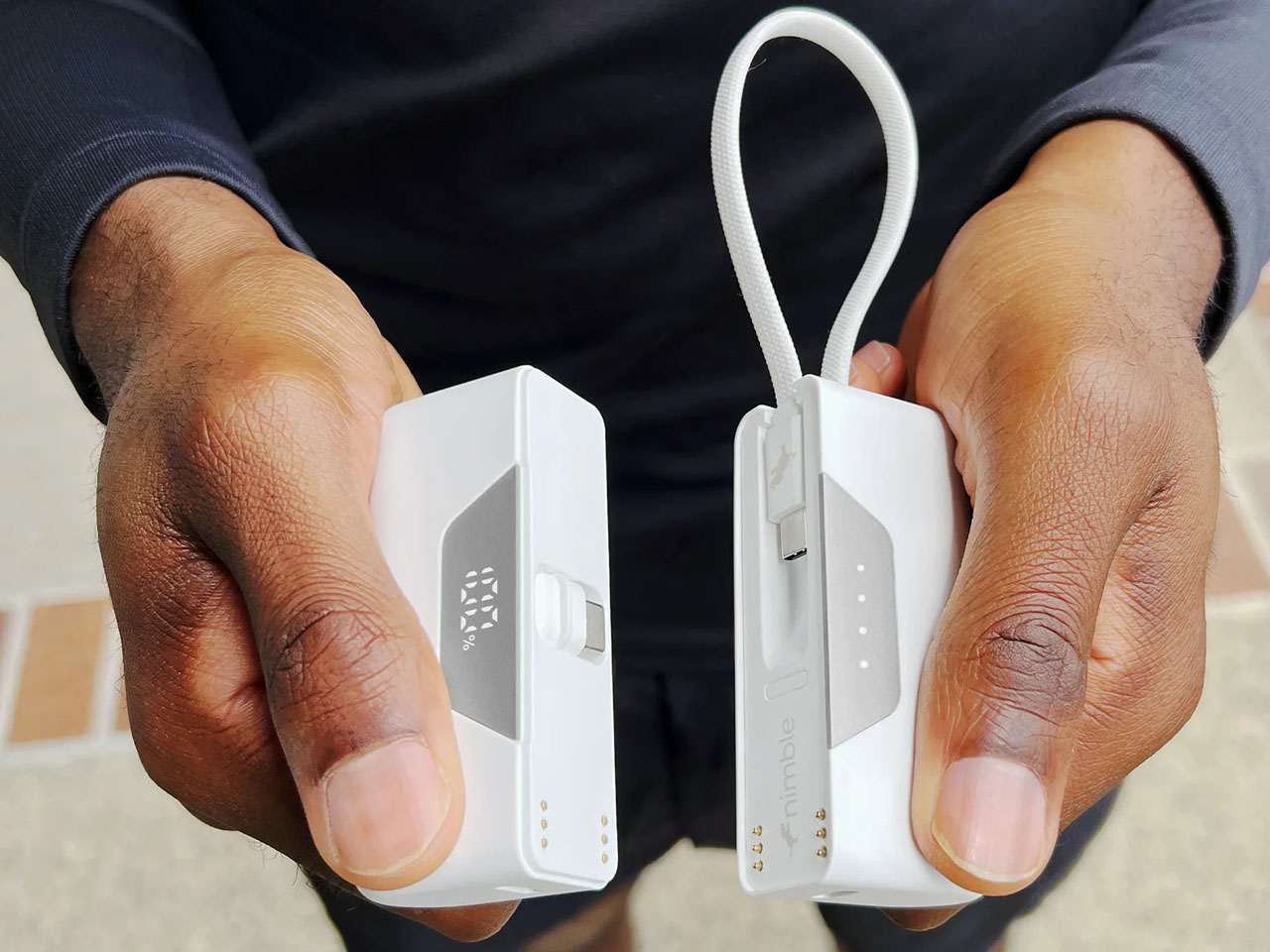
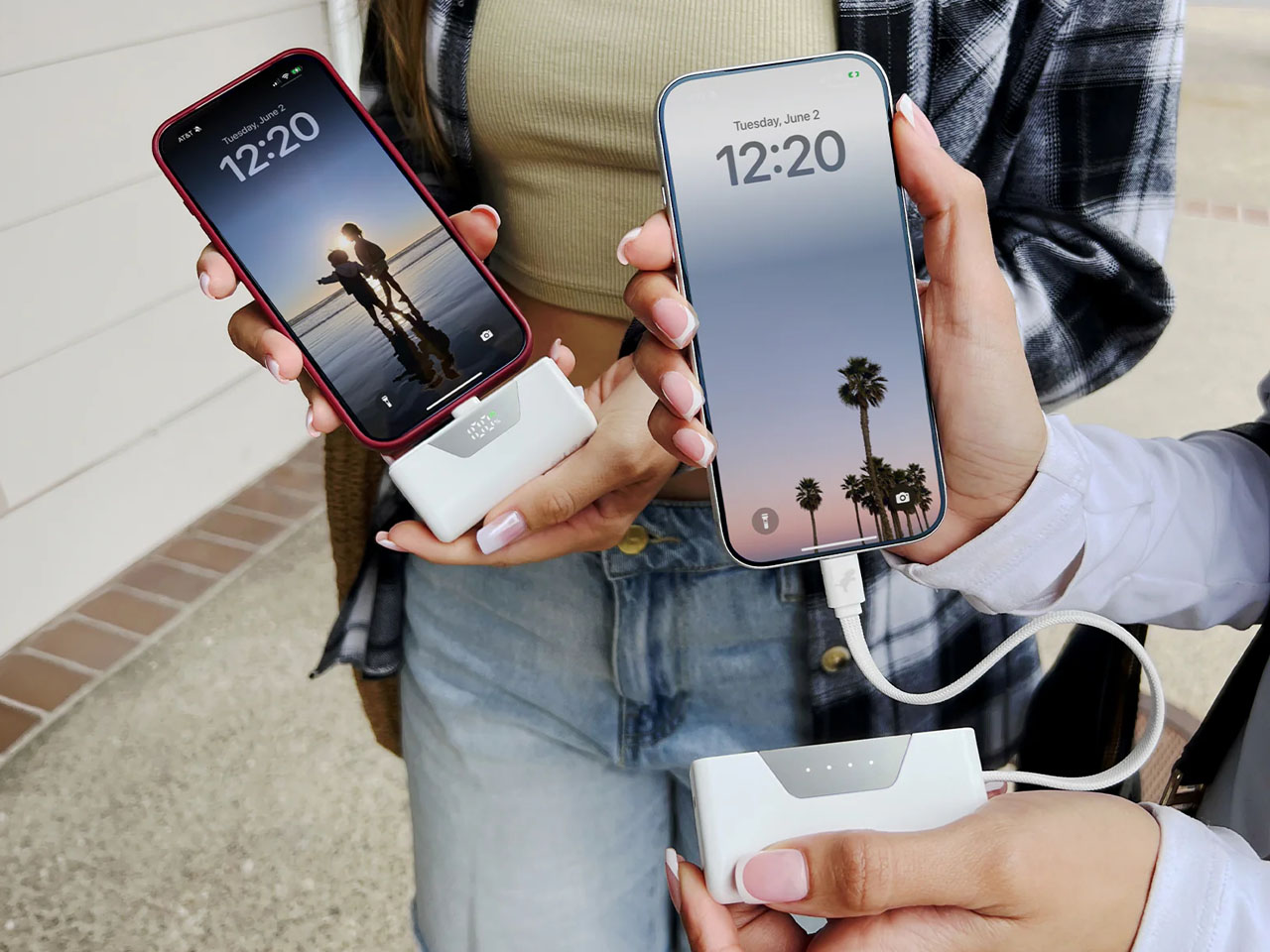
The SharePower from Nimble is a 10,000mAh power bank that splits in half. The two halves are held together magnetically and separate cleanly, with one half housing a battery percentage display and the other using four LEDs to communicate charge level. The braided lanyard connecting them opens into a USB-C cable when the halves are split apart. In joined mode, it delivers 35W charging; split, each half runs at 20W for a single device or 15W across two. The whole unit measures 3.05 by 2.75 inches at under one inch thick.
The concept is obvious in retrospect, which is the clearest sign of a genuine design insight. Every group trip produces the same conversation about who has the power bank and whether anyone can borrow it, followed by a compromise where the original owner gets it back at 30 percent. The SharePower ends that conversation by making sharing a built-in function rather than an inconvenience.
What we like:
The split-mode design solves a social problem that has existed since portable batteries were invented
What we dislike:
The translucent color options are fun in concept but may narrow the gift appeal depending on the recipient
The Only Standard That Matters
Eight products with one shared quality: each one earns its place through a specific design decision rather than a general category promise. The RetroWave works through a blackout. The Boom 3i floats. The Skeletool has a bottle opener exactly where it should. The TriBeam gives you three different lights in one hand. Good design shows up like that — not as a feature list but as a moment where something just works better than you expected it to.
That is the real standard for a gift. Not whether it looks impressive in the box, but whether it gets used on the second trip, the third, the tenth. Most of what is on this list ships before the holiday, which means the only remaining variable is whether you want to give someone something that will still be in their bag come Labor Day.