Forget bulky multitools, this titanium Apple Watch bracelet hides 24 EDC tools on your wrist

Your wrist might be the most underutilized piece of real estate you own. Most smartwatches promise everything at your fingertips, tracking steps and heart rate while delivering notifications in real time. But what happens when you need to fix something physical, tighten an actual screw, or open a stubborn bottle? That digital magic suddenly feels pretty limited. Remember that bonkers Smartlet concept from CES that tried cramming an Apple Watch AND a Rolex on your wrist? Weird execution, brilliant insight. The watch strap has serious potential as a wrist-borne utility belt, and Woods Design seems to have cracked the code with something actually wearable.

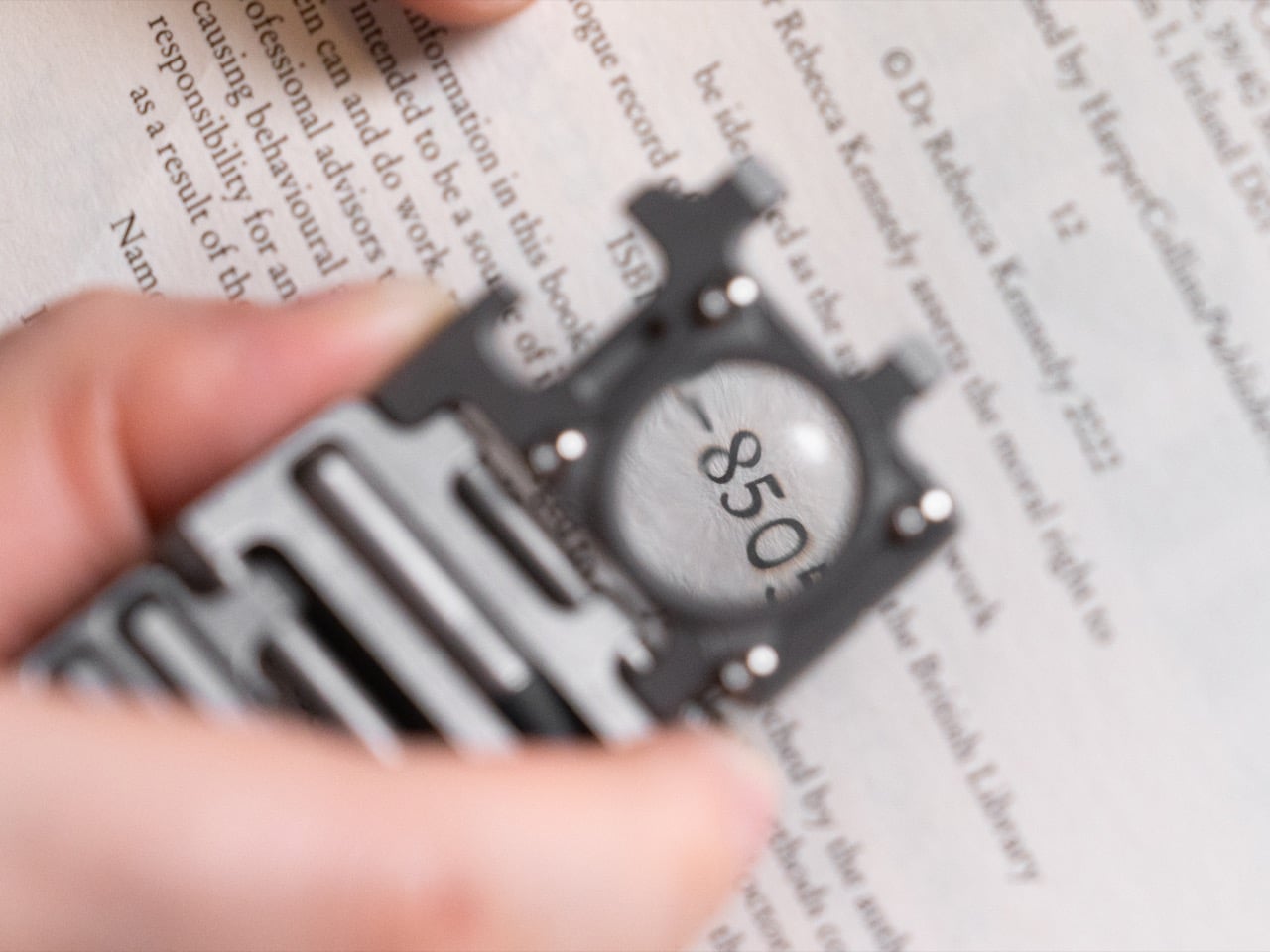
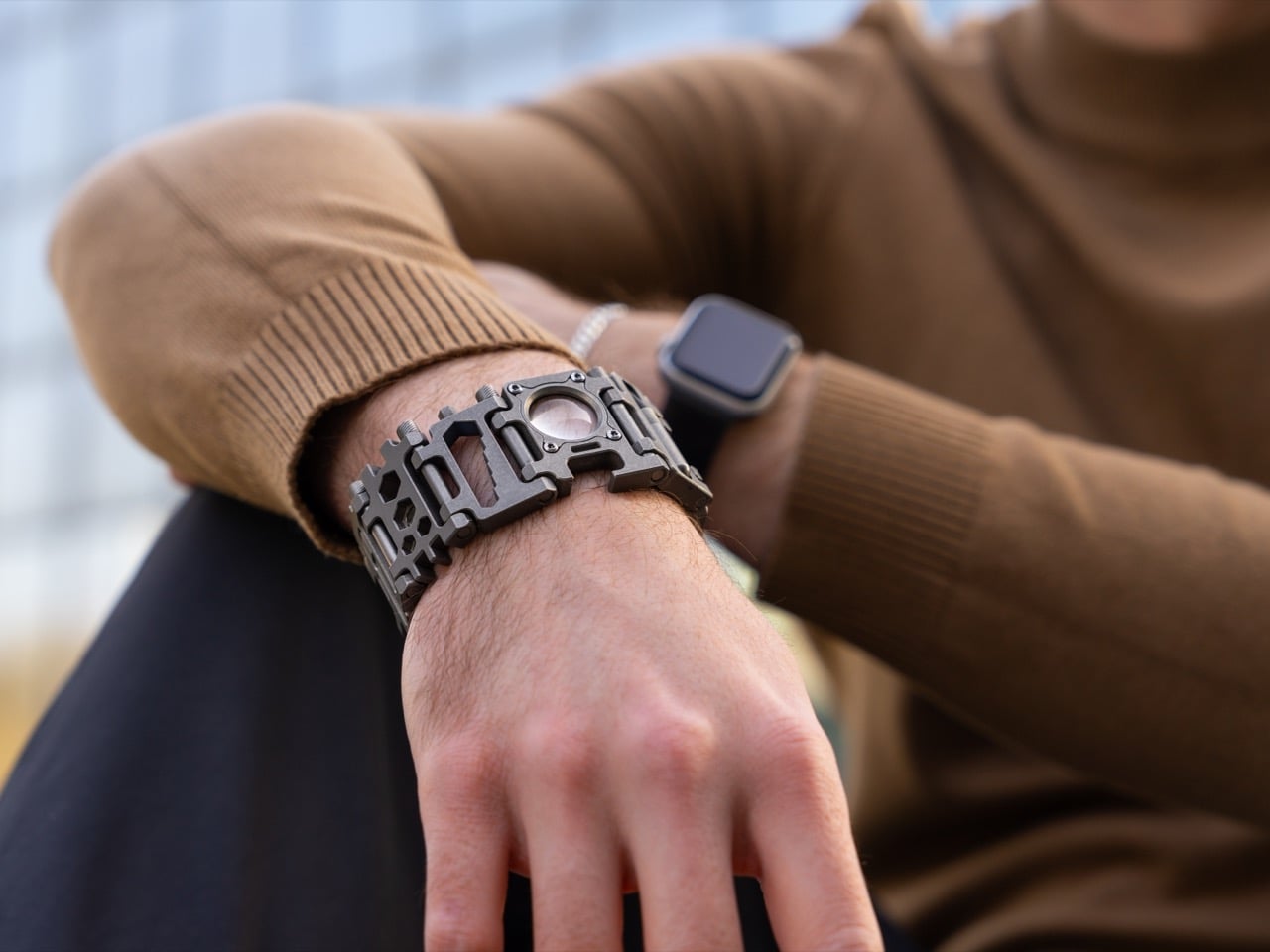
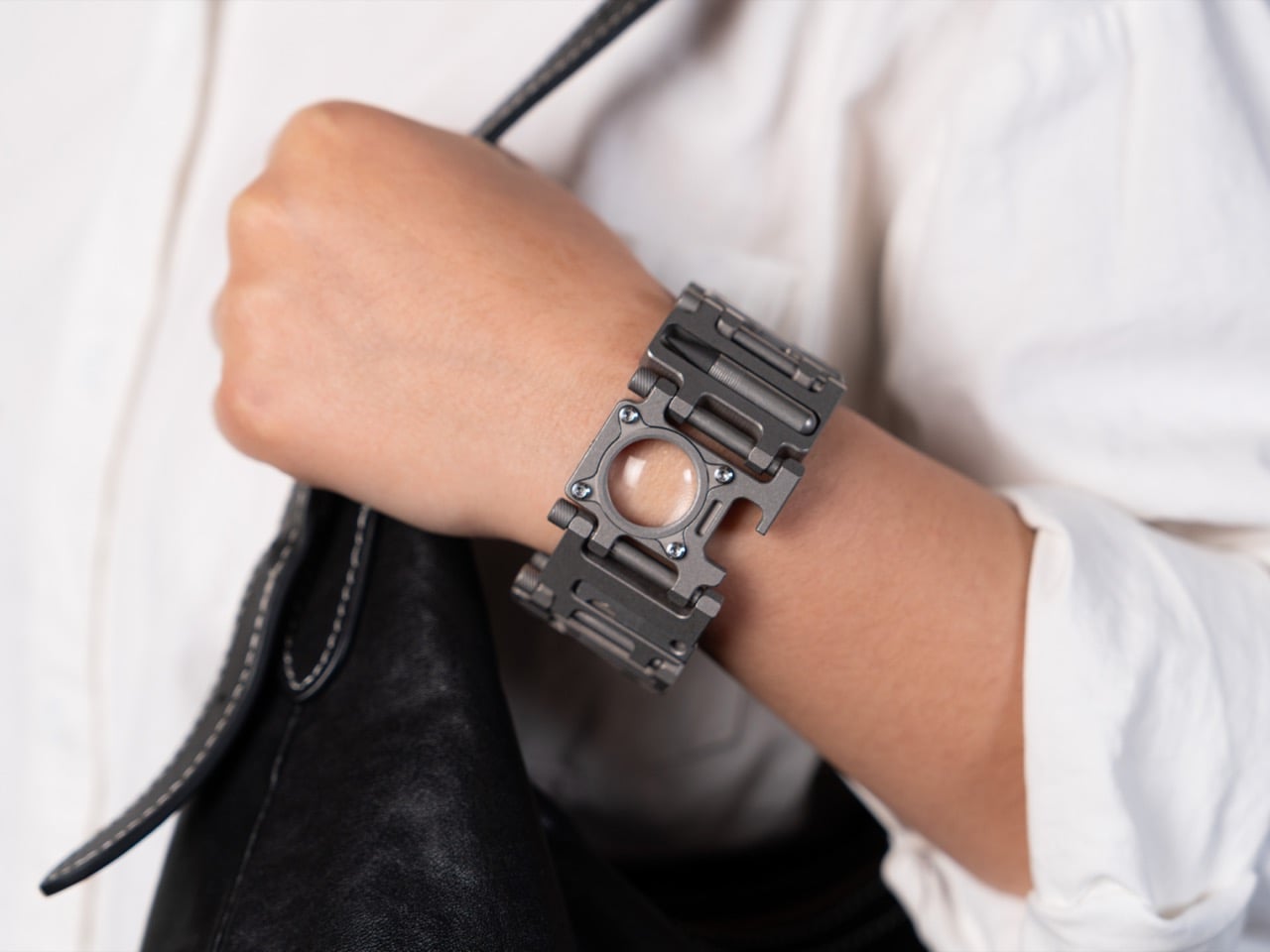
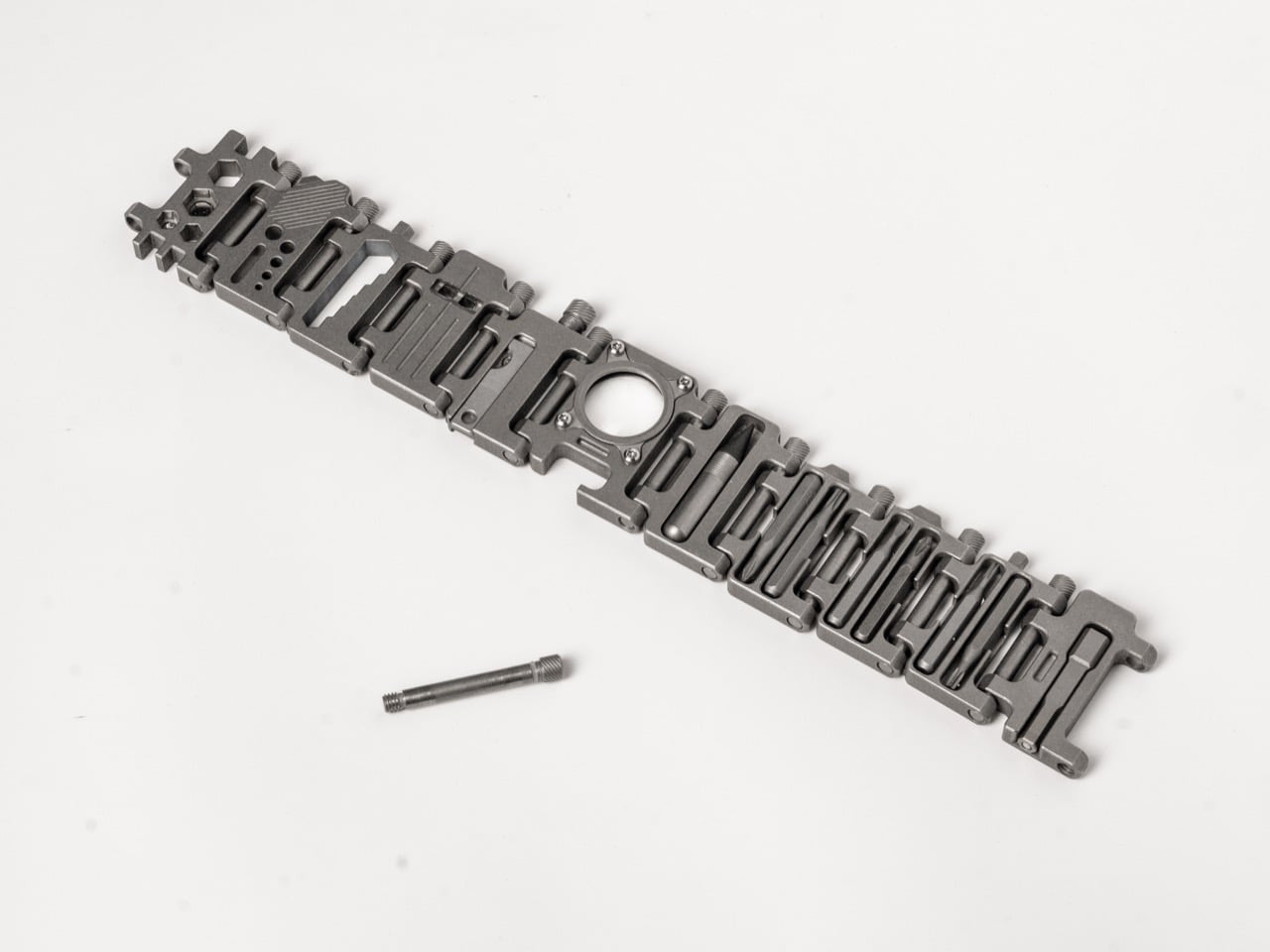
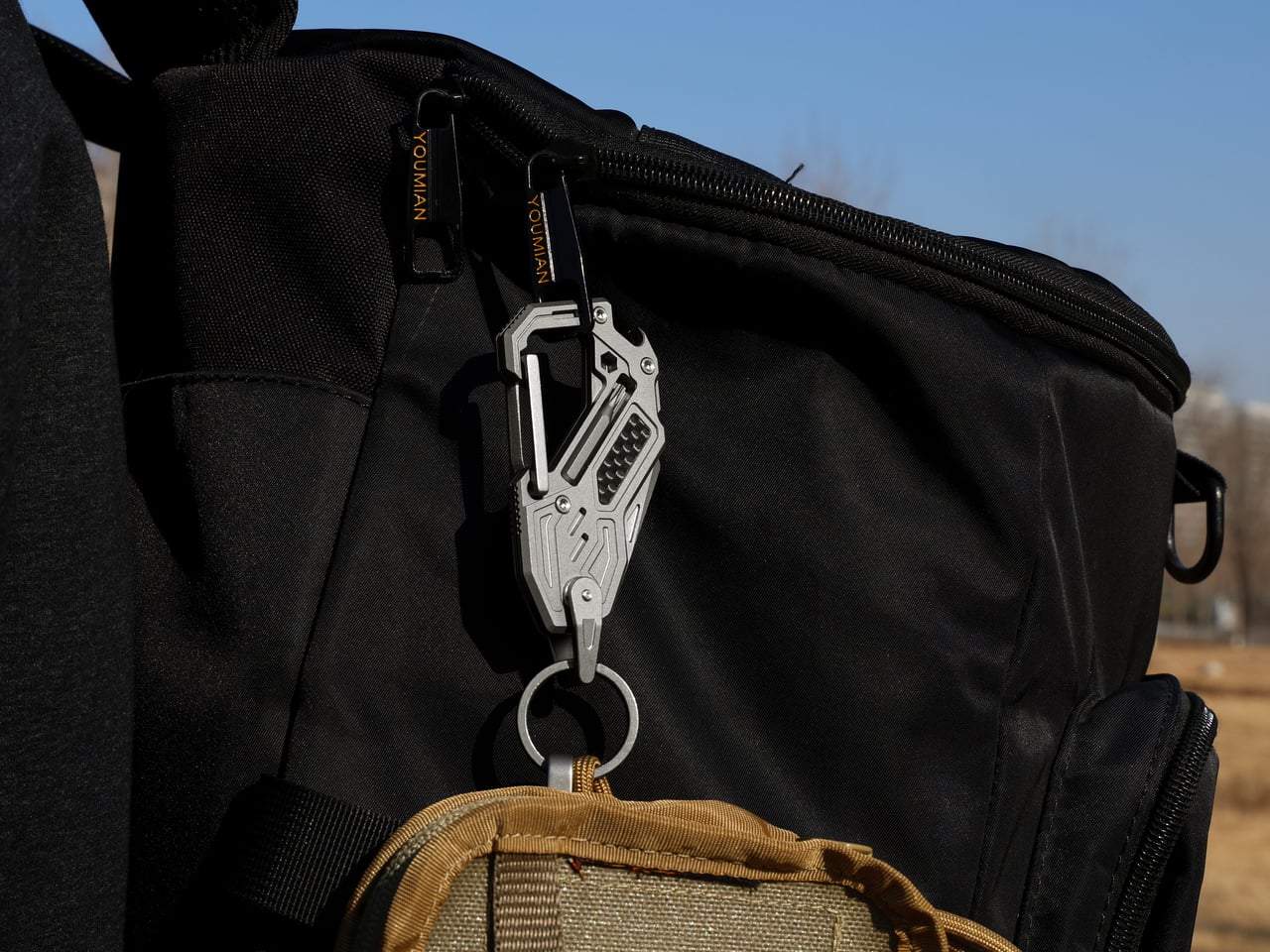
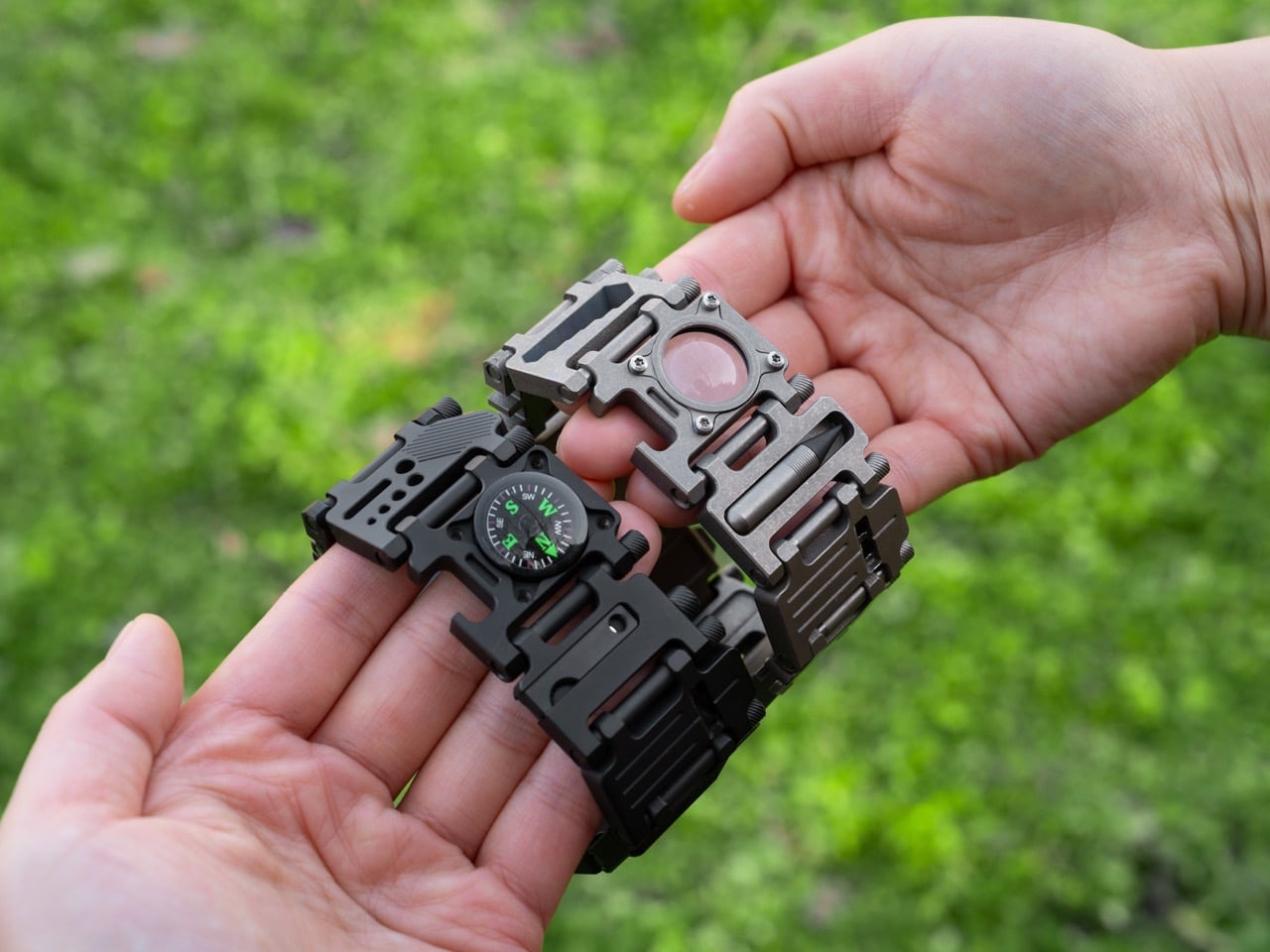
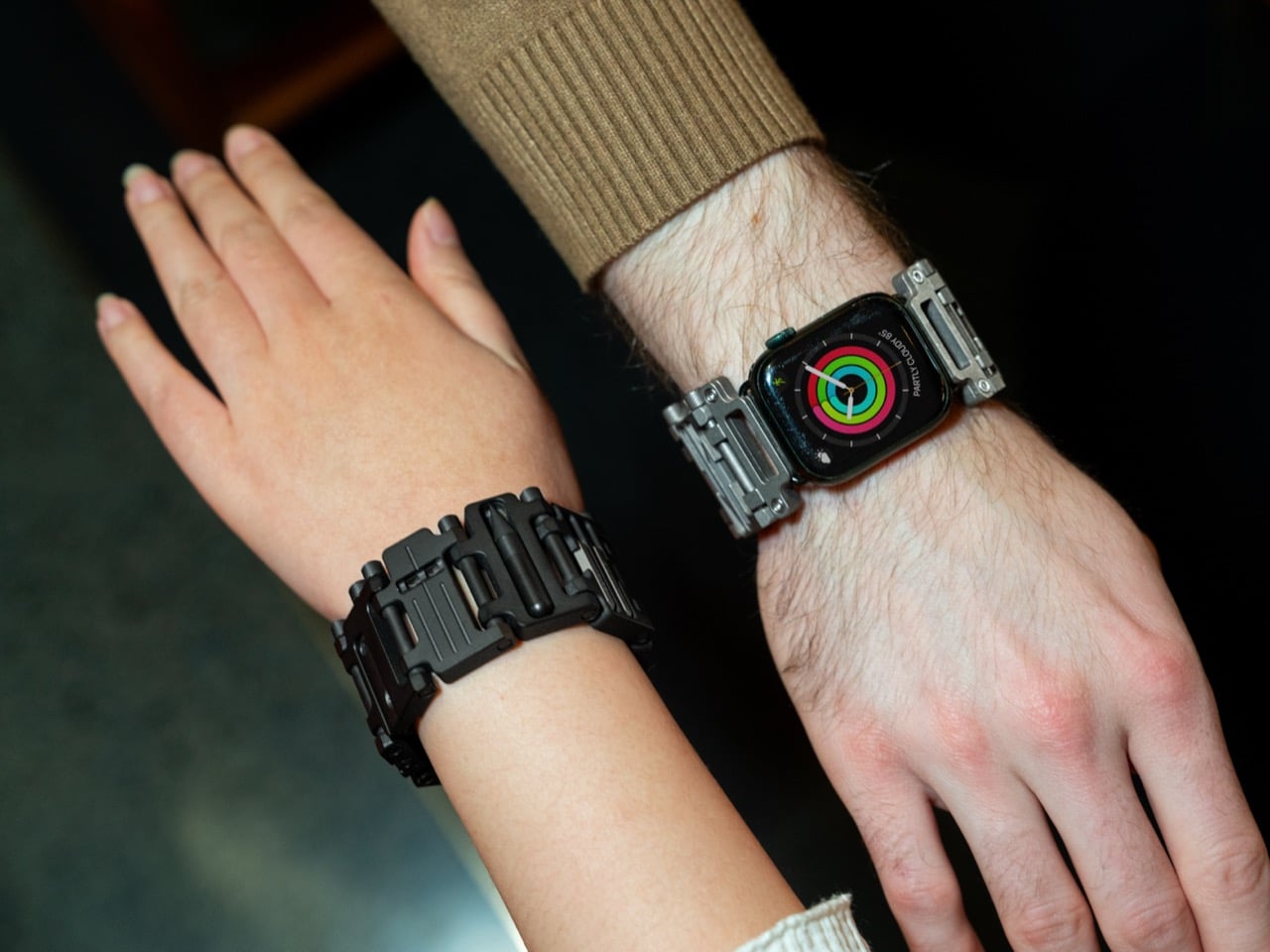
The TiLink is a 24-in-1 titanium bracelet that doubles as a watch strap, creating this interesting yin-yang of capabilities. Compatibility spans across all watches with lug widths between 18-26mm, which means the TiLink can attach to the Apple Watch as well as Garmin, Samsung, Google Pixel, and analog watches. One side tracks your biometrics and messages, the other has screwdrivers, wrenches, a magnifier, and a fire starter machined from aerospace-grade titanium. Full transparency: you’re probably not getting through airport security without some explaining, and this definitely isn’t for minimalists. But for EDC enthusiasts who love flaunting their gear, or anyone who believes in being prepared for whatever life throws at them, this bracelet does something clever. Instead of just holding your device, the strap itself becomes the utility belt, merging analog preparedness with digital functionality in one surprisingly balanced package.

Designer: Russell Wu (Woods Design)

Click Here to Buy Now: $179 $259 (31% off) Hurry! Only 15 left of 300. Raised over $139,000.

Woods Design chose GR5 titanium, the aerospace-grade stuff that shows up in aircraft components and surgical implants. The entire bracelet weighs just 138.8 grams despite packing 24 tools across 230.5mm of length. That’s lighter than most steel watches while being significantly stronger and completely corrosion-resistant. Every link gets CNC-machined for precision, which means tight tolerances and smooth articulation that stays consistent over time. The 35mm width sounds chunky on paper but makes sense once you see how the tools integrate into each module. Your Apple Watch will become obsolete e-waste in five years while this thing keeps working indefinitely.

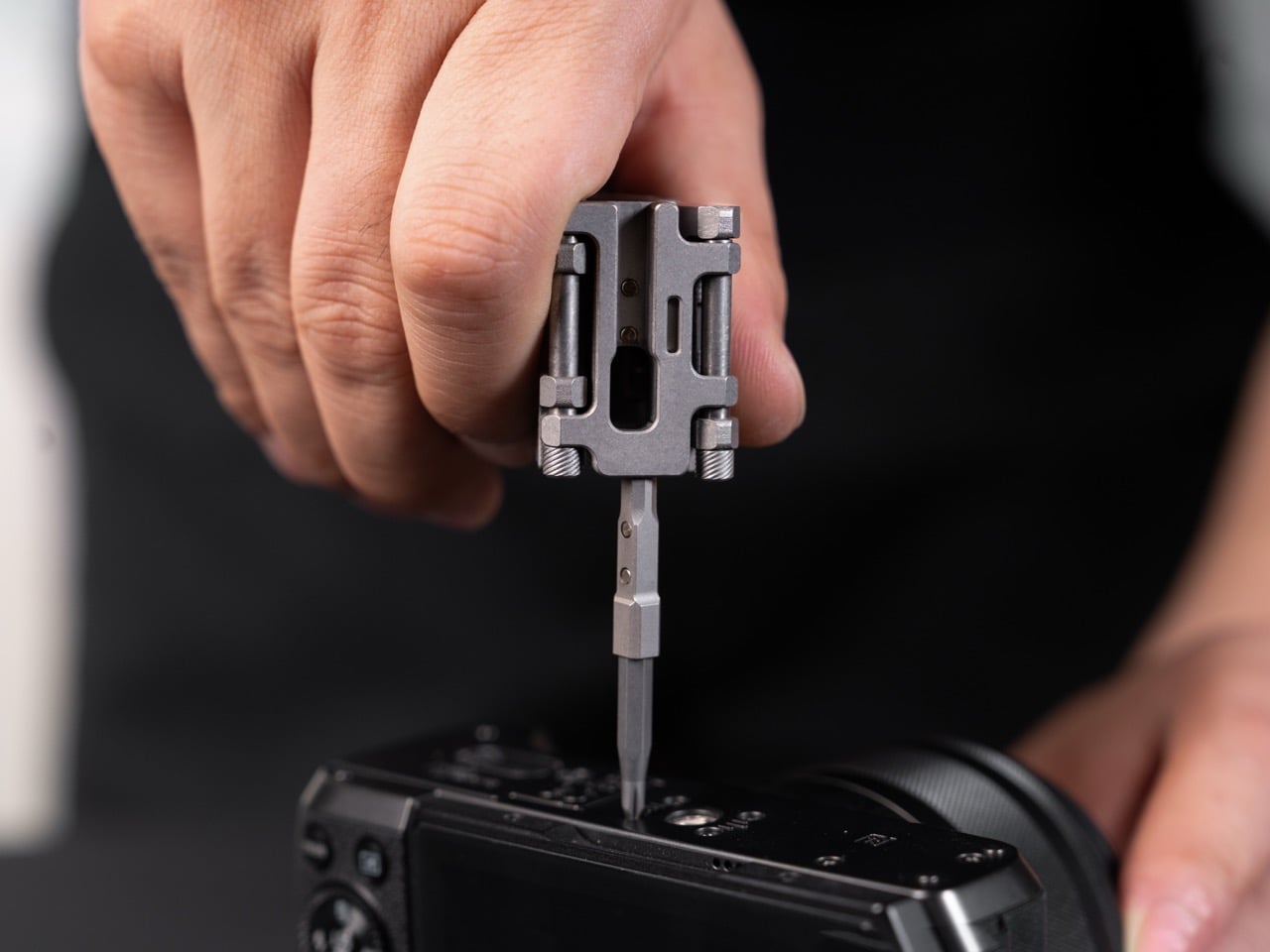
Three flathead screwdriver sizes (SL3, SL4, SL5) integrate directly into the bracelet structure, covering everything from eyeglass screws to home appliance panels. Hex bit holders accept both 4mm precision bits and 6.35mm standard bits, giving you genuine versatility instead of that fake multi-tool marketing where one size supposedly handles everything. The 4mm bit extension bar reaches recessed screws in tight positions without needing adapters or workarounds. You can swap bits on the fly, choosing configurations based on what you actually need that day. Eyeglass adjustments, toy repairs, electronics tinkering, small hardware fixes, all the annoying little tasks that require tools you never have handy.

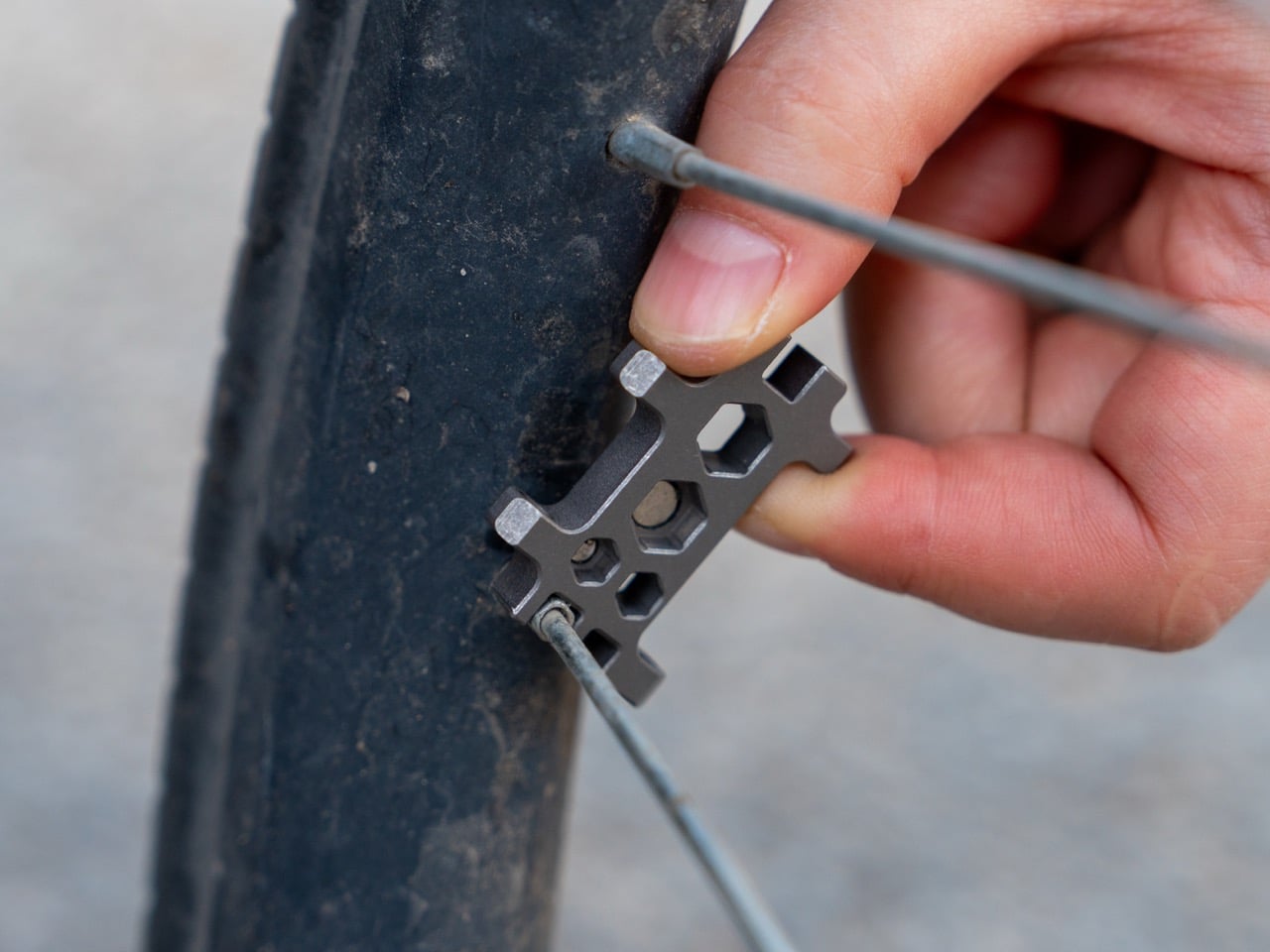
An adjustable wrench covers M4 to M8 nuts and bolts, replacing an entire wrench set with one modular link. Traditional hex wrenches deliver solid torque but disappear into drawers and take up pocket space. Mini versions fit on keychains but lack leverage and get lost in couch cushions within days. This integration gives you proper wrench functionality without the carry hassle. The spoke wrench includes three sizes (3.6mm, 3.9mm, 4.4mm) for common spoke nipples, which tells me they actually consulted cyclists during design. Roadside wheel truing without carrying a separate tool bag changes the calculation for anyone who rides regularly and has dealt with wonky spokes mid-ride.

A built-in magnifier handles small text, component inspection, or marking verification without pulling out your phone and fumbling with zoom controls. The eternal pen requires zero refills, won’t leak ink all over your stuff, and stays permanently attached so it can’t vanish. I’m honestly uncertain how often I’d write with a bracelet pen, but jotting quick notes or reminders beats typing on a phone screen when your hands are already busy. The double-hole survival whistle produces louder, sharper sound than standard single-hole designs, making it effective for emergencies, signaling in crowds, or outdoor scenarios. Being permanently integrated means you can’t lose it, unlike those keychain whistles that fall off within a week.

Fire starting capability feels niche for urban carry but makes perfect sense for actual preparedness. The striker produces sparks without fuel or batteries, and a rubber o-ring seals the compartment against moisture. For camping, hiking, emergency kits, or survival situations, having a fire starter that physically cannot run out of fuel beats carrying lighters or matches. For everyday city life, you’ll probably never use it. Here’s where the modular design earns its keep: remove the links you don’t need, keep what you actually use. The bracelet adapts to your reality instead of forcing you to carry someone else’s idea of essential tools.

A nail file smooths rough edges or tidies nails when needed. Wire gauge holes measure five common sizes (3.5mm, 3mm, 2.5mm, 2mm, 1.5mm) accurately without needing dedicated calipers. The bottle opener works exactly as expected, which sounds mundane until you need one and realize your entire keychain, wallet, and pockets contain zero bottle-opening capability. These small inclusions prevent those specific frustrating moments where you’re almost prepared but missing one crucial thing. They fill the gaps between major tools without adding bulk or complexity.

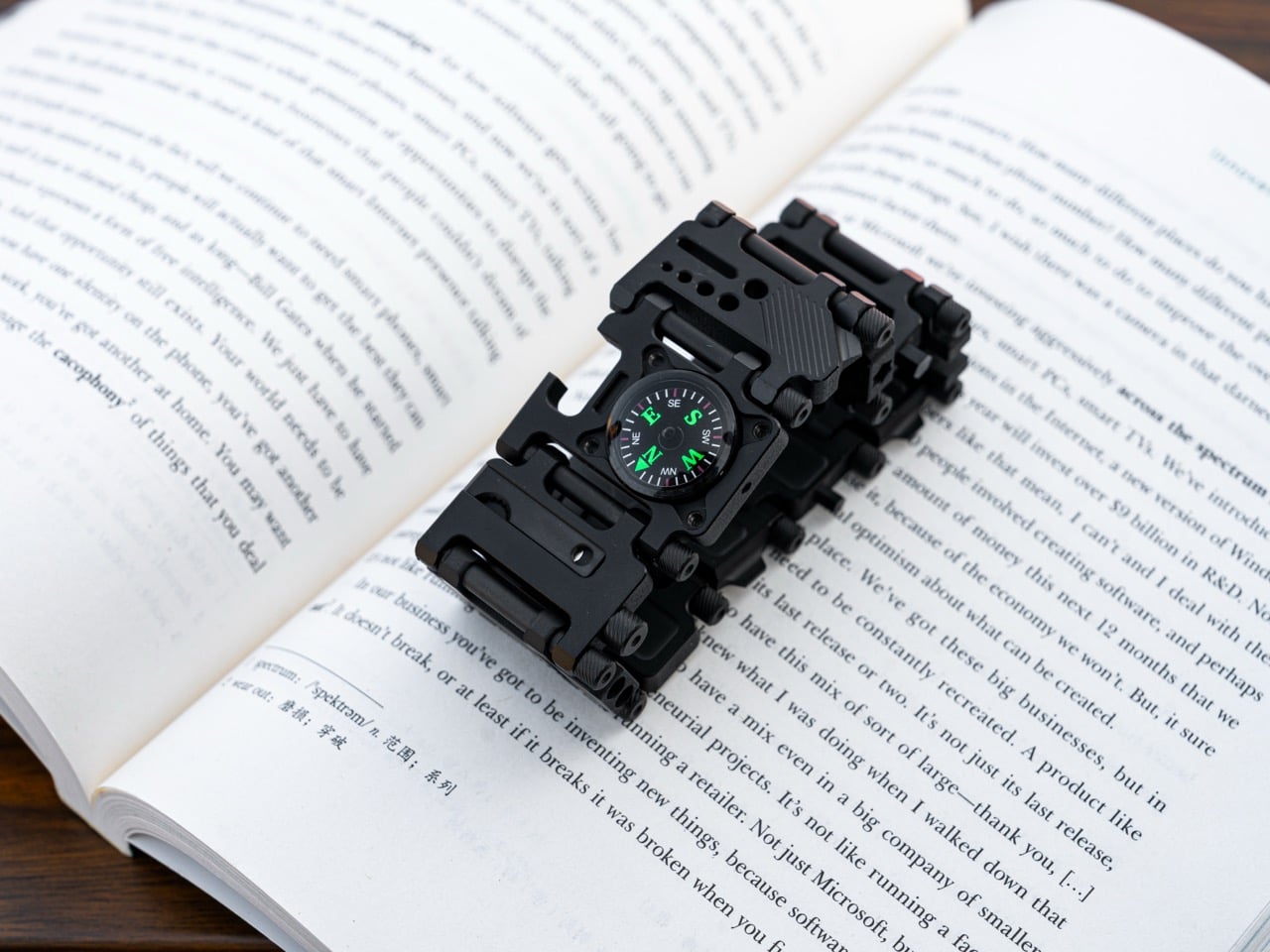
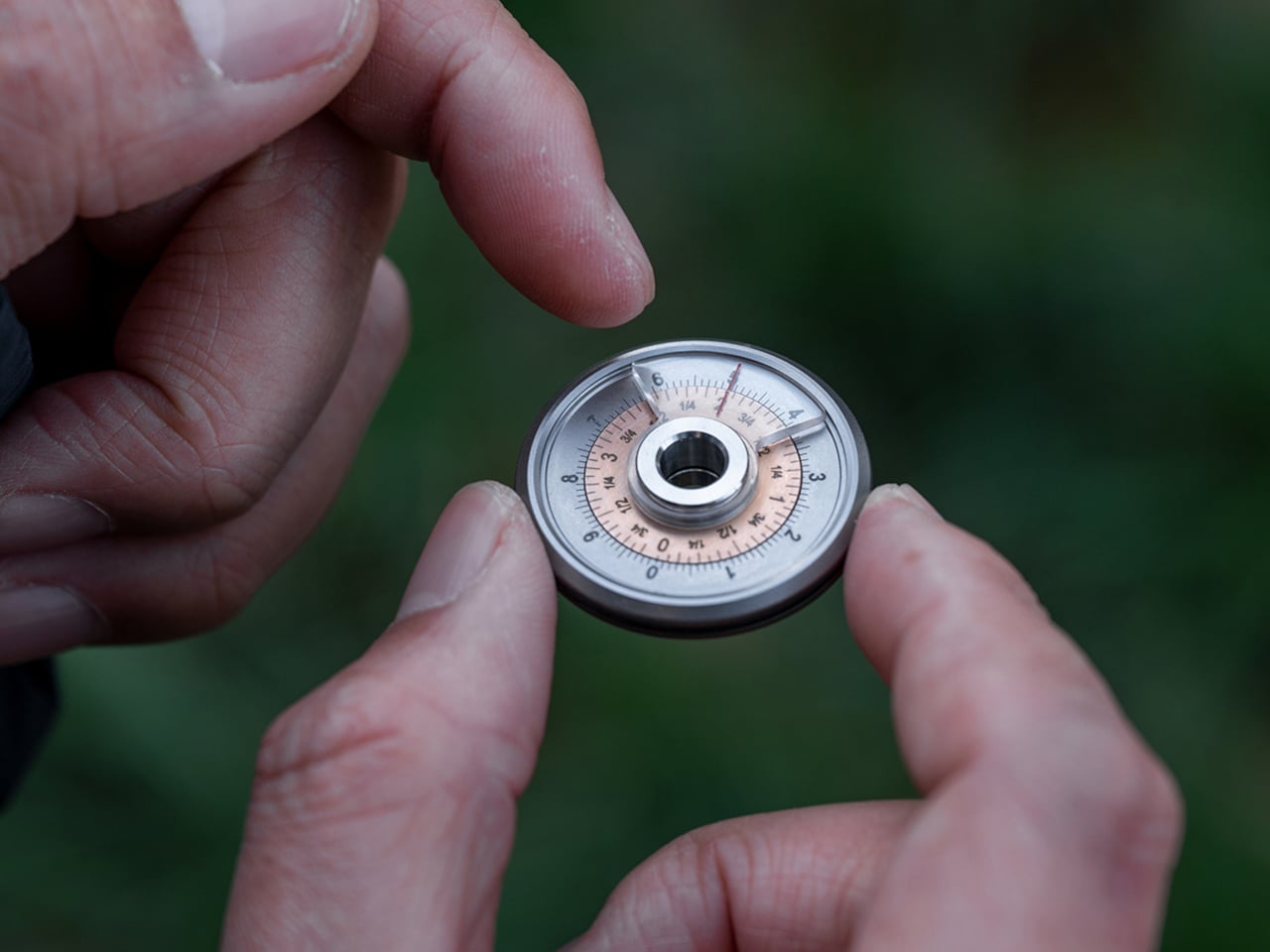
Two optional modules extend the system further. A liquid compass uses premium white mineral oil for smooth operation and minimal temperature sensitivity, staying functional across a wide range of conditions. Sliding it off the bracelet and placing it on the ground eliminates magnetic interference from other tools, giving you accurate readings. When GPS satellites become unreliable or your phone battery dies at the worst possible moment, having mechanical directional finding matters. Tritium tube slots (1.5mm x 6mm) accept glow inserts that work continuously for 25 years without batteries, charging, or external light exposure. That’s legitimate low-light visibility plus understated aesthetic appeal for people who appreciate functional details.

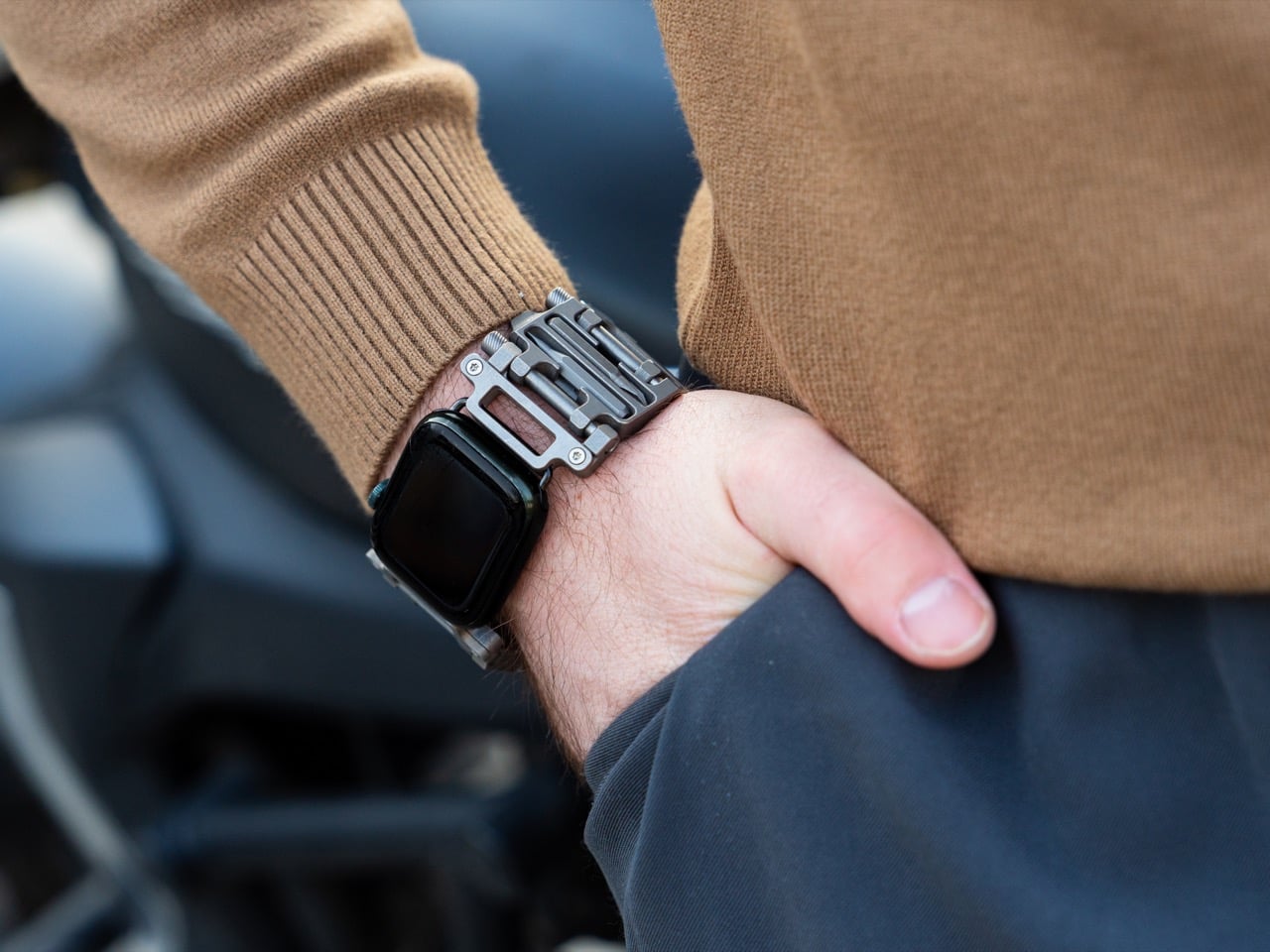
Apple Watch connectors transform the entire premise. Any Apple Watch model attaches and locks securely into place without extra tools or complicated procedures. This creates a genuine hybrid: your watch handles notifications, fitness tracking, payments, and connectivity while your band contains physical tools for fixing actual things. Digital and analog utility coexist on the same wrist, each handling what it does best. When you need to check your heart rate and tighten a loose screw within the same five minutes, having both capabilities right there makes a surprising amount of sense. That being said, the Watch integration isn’t mandatory – you can still wear the TiLink as a regular bracelet too, keeping your smartwatch unencumbered by these massive new responsibilities.

Each link connects and disconnects cleanly for tool-free size adjustment. Add links for a looser fit, remove them for tighter wear, customize tool selection while you’re at it. The precision machining ensures every link articulates smoothly and maintains consistent tolerances, which matters for something rubbing against your wrist all day. You’re essentially building a custom toolkit that also happens to be a watch band, selecting exactly the modules you’ll actually use instead of carrying a pre-configured set that includes stuff you’ll never touch.

As with every EDC, this watch strap has a time and place, and I’m not entirely sure if wearing this universally would work (the same way carrying a Swiss Army Knife everywhere is a tad risky). For example, airport security will absolutely flag this. TSA agents see a metal bracelet with integrated tools and fire-starting capability, they’re pulling you aside for additional screening. Office environments, malls, and public transit systems might consider it too tactical depending on where you live. But for EDC enthusiasts, makers, cyclists, outdoor types, or anyone who regularly encounters small problems requiring tools, wrist-mounted organization beats pocket clutter or carrying bags just for gear. Woods Design built something that respects both form and function, achieving a balance that’s surprisingly rare in products that usually sacrifice one for the other.

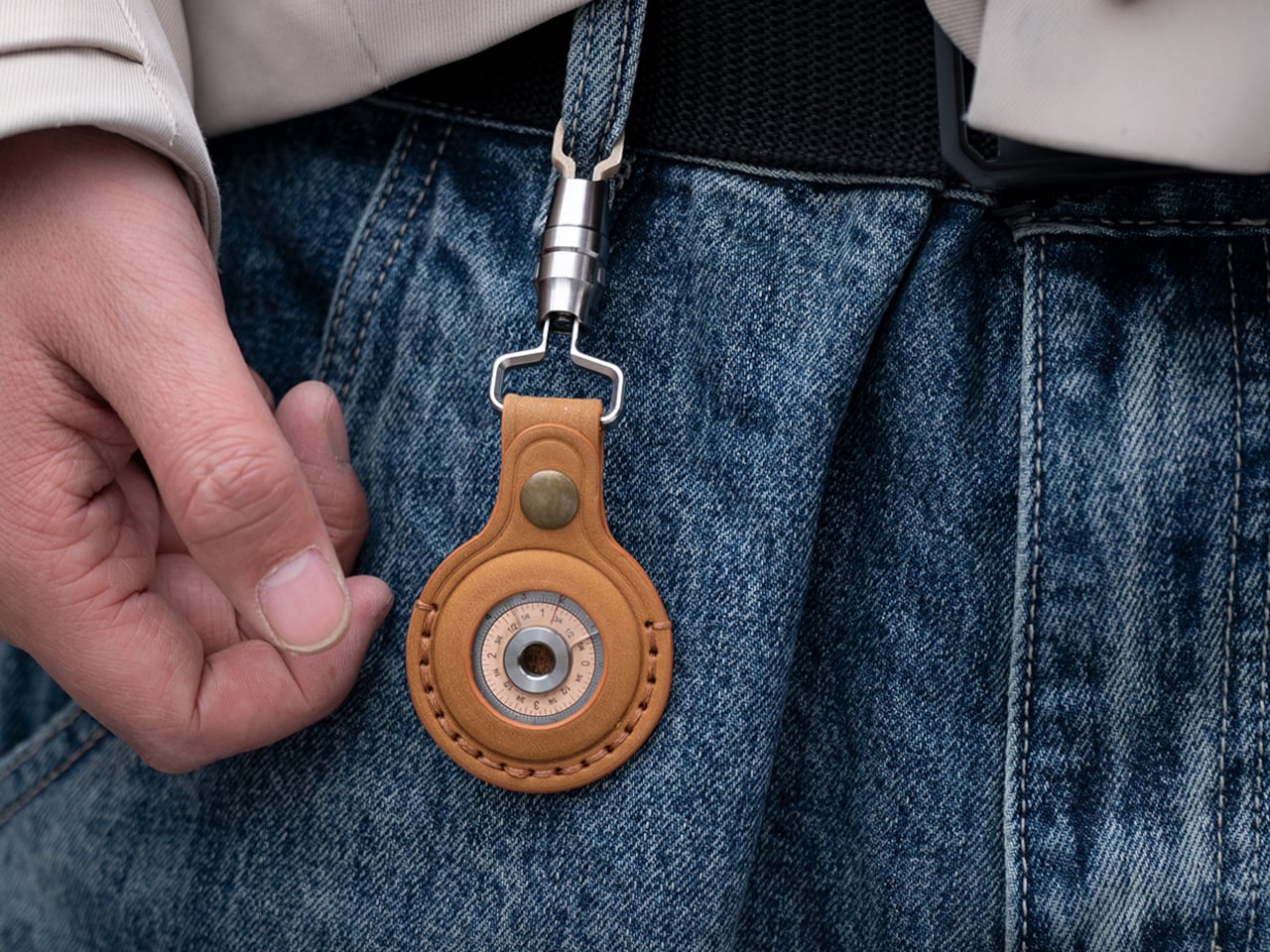
Pricing starts at $179 for early backers, hitting $199 at standard retail for the titanium version. Quality titanium watch bands that do nothing except hold your watch regularly cost $150 to $300, so you’re paying a comparable rate for the band itself while getting 24 integrated tools as a bonus. An aluminum version exists at $89 for people who want the functionality without premium material costs. Individual modules run $19 each if you prefer building your configuration gradually or testing the concept before committing to a full bracelet. Single modules come with paracord so you can wear them immediately as standalone pieces.

Click Here to Buy Now: $179 $259 (31% off) Hurry! Only 15 left of 300. Raised over $139,000.

The post Forget bulky multitools, this titanium Apple Watch bracelet hides 24 EDC tools on your wrist first appeared on Yanko Design.
Titaner’s Magnetic Ring Ruler Clicks Every 10cm While It Measures Curves

Before glowing screens and silicon chips, engineers used slide rules to design skyscrapers and send people to the Moon. Calculation meant moving a physical object, not tapping an app, and there was a certain clarity in that, a feeling that your hands and brain were in the same loop. Some of that intelligence at the fingertips is worth bringing back in a world that defaults to calculators for everything, even quick conversions.

Titaner’s Tisolver is a 3-in-1 titanium calculating ring ruler that sits at the intersection of tool, instrument, and jewelry. It measures curves and straight lines, converts between metric and imperial, and calculates square area, all in a GR5 titanium body you can wear or clip to your gear. The company calls it a bridge between the physical and mathematical worlds, a way to put slide-rule logic back into something you can roll across a table.

Designer: Titaner

Click Here to Buy Now: $49 $88 (44% off). Hurry, 40/550 left! Raised over $93,500.

1

Tisolver uses a high-strength magnetic lock to give a clear tactile and audible click every time the ring completes a full 10cm rotation. The equation is simple: the number of clicks times ten plus the current reading in the HUD window equals the total length. You can roll it along a cable, a curved edge, or a piece of leather, count clicks, glance once, and know the measurement without juggling a straight ruler and a flexible tape.

1

Side A has a 10cm metric scale and a 4-inch imperial scale laser-etched on the same ring. You snap Tisolver to zero with the magnetic feedback, align the HUD window’s red line with the metric value you care about, and the imperial equivalent sits under the same line. For longer numbers, you borrow a classic slide-rule trick, shifting the decimal, aligning at 4.2 instead of 42, reading the imperial, then shifting back, all without opening a phone.

Side B keeps a 10cm outer scale but replaces the inner ring with a square-area scale. When you roll and then align the red line with a side length, say 5cm, the inner scale shows 25, the area of a square with that side. Designers, leather crafters, and DIY people can measure one edge of a panel and instantly see coverage instead of doing mental multiplication. Flip the ring, and the same alignment also shows the imperial length.

1

The dual-locking traction system uses a soft rubber O-ring on the outside and hidden reverse anti-slip teeth on the inside that bite into the rubber, so the ring grips greasy workbenches or wet glass without slipping. The quarter-arc PMMA HUD window with a red reference line acts like a tiny scope, improving readability and protecting the finely etched scales. GR5 titanium, with a fine blasted matte finish, keeps the body light, corrosion-resistant, and warm in the hand.

1

The Titaner Tisolver lives on a lanyard around your neck, on a keychain, or clipped to a backpack, ready whenever a measurement or conversion pops up. When you are stuck on a problem or waiting for a render, the magnetic click becomes a small mechanical meditation, a way to keep your hands busy while your brain turns things over. The ring rolls, clicks, and resets, and that rhythm helps ease tension without needing a screen or app to distract you.

A titanium ring that measures, converts, and calculates without a single pixel in sight feels like a satisfying little rebellion against the reflex of reaching for a phone every time you need a number. For people who like tools that think with them, not just for them, the Titaner Tisolver quietly earns its place on your chest or in your pocket, turning quick math and measurement into something you can touch, hear, and rely on.

Click Here to Buy Now: $49 $88 (44% off). Hurry, 40/550 left! Raised over $93,500.

The post Titaner’s Magnetic Ring Ruler Clicks Every 10cm While It Measures Curves first appeared on Yanko Design.
This Pocket Titanium Ruler Has a Level, Protractor, and Pen Built In

Projects pile up on the bench with a ruler that stops at 30 cm, a square for right angles, a separate protractor for odd cuts, a level somewhere in a drawer, and a pencil that has wandered off. Those small frictions add up when you are trying to stay in a flow state, and most rulers can measure but do not really help you think through the layout. You end up switching between tools, rechecking marks, and occasionally cursing when parallels drift, or angles end up slightly crooked.

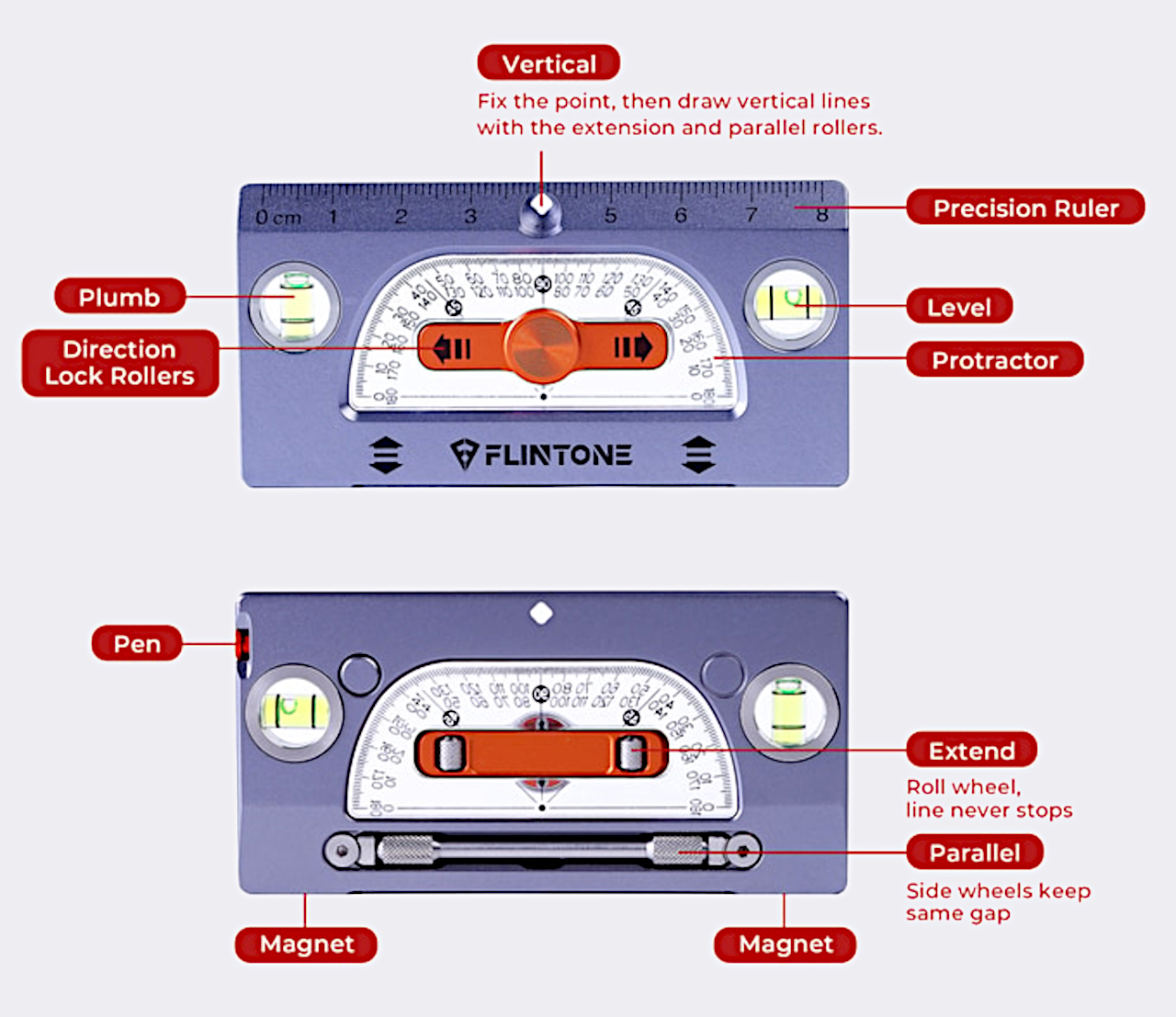
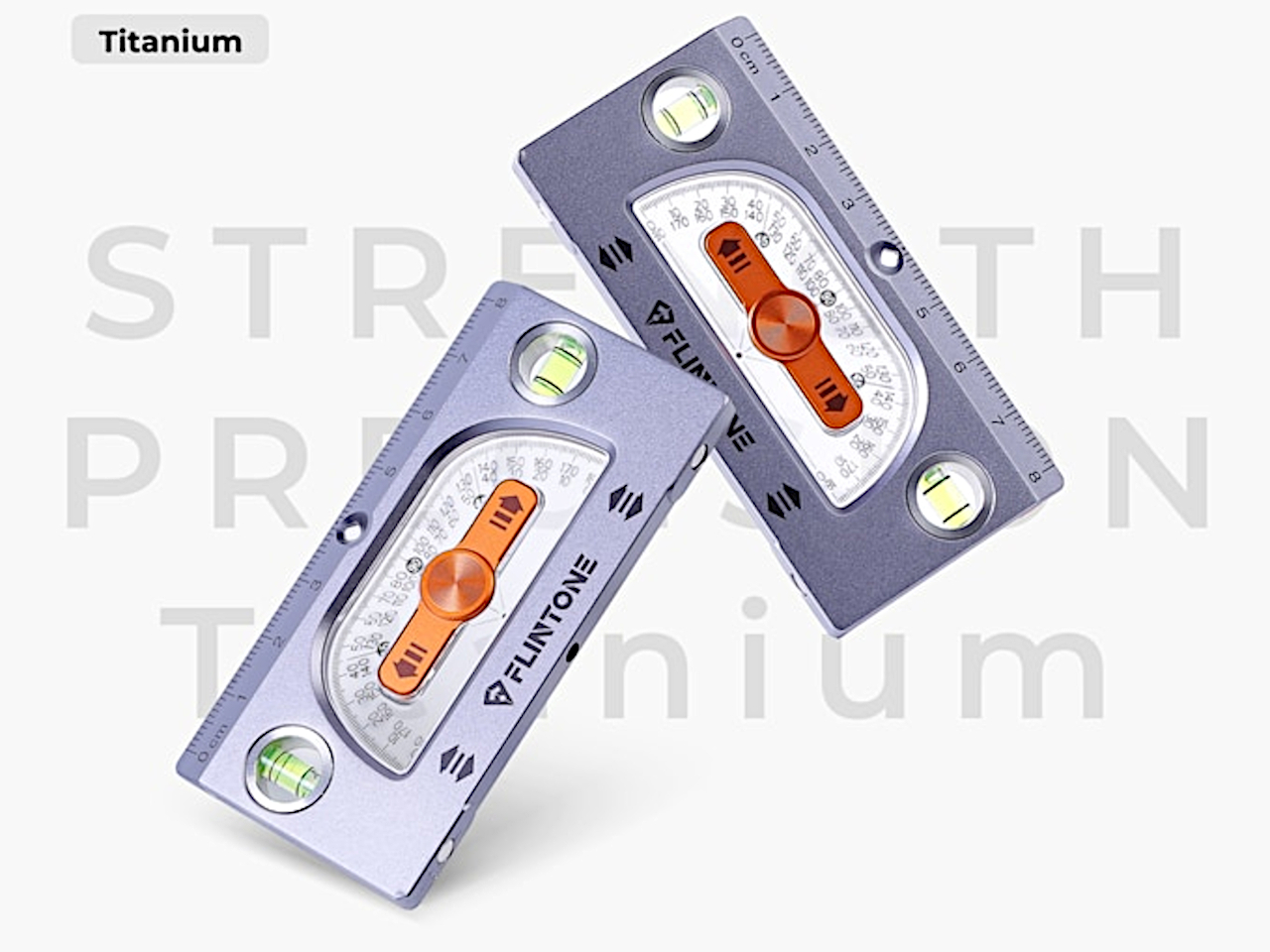
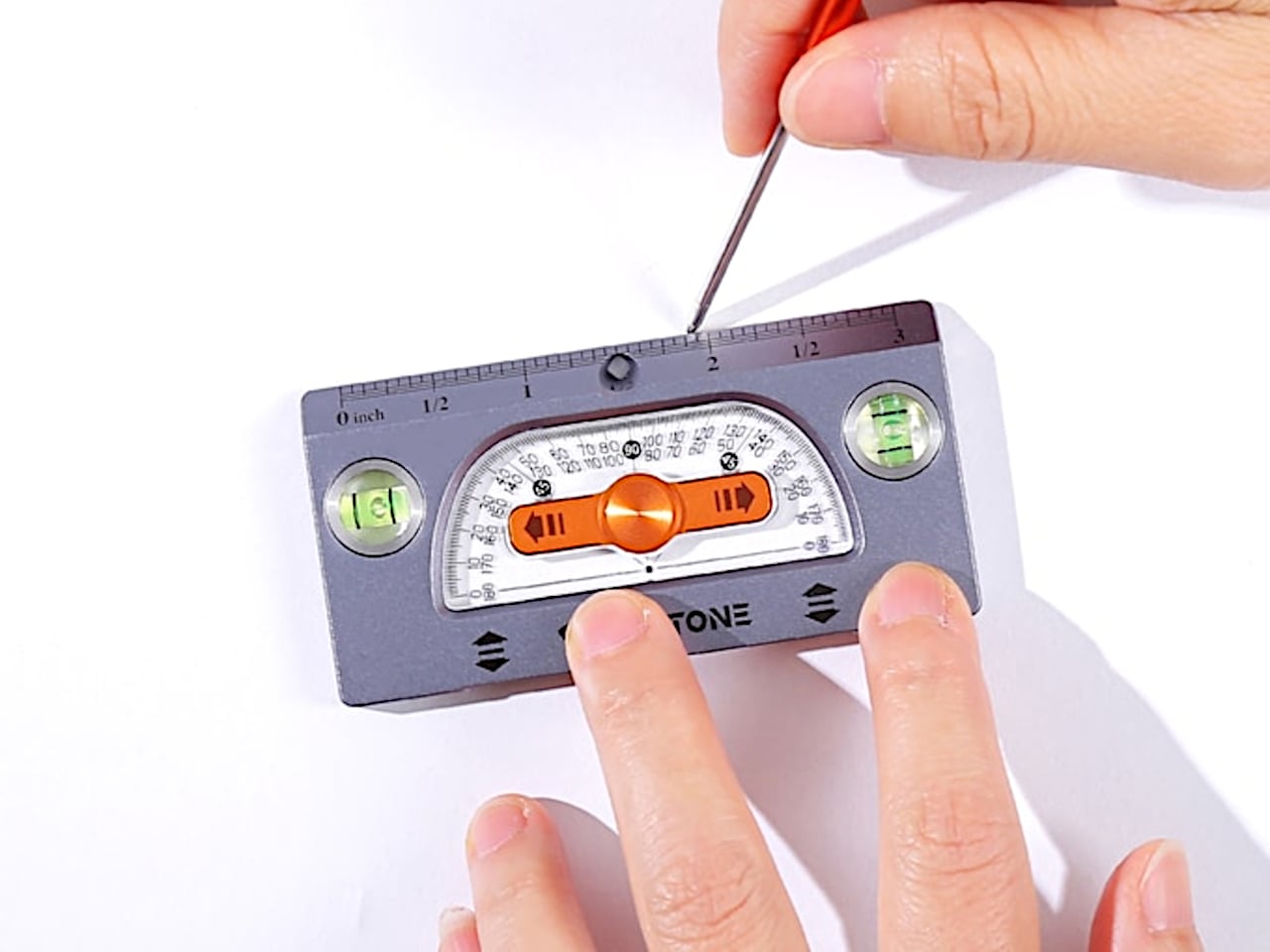
The FLINTONE MegaRuler is a titanium 9-in-1 drawing master that tries to compress a whole layout kit into something smaller than a phone. It is designed for garage tinkerers, designers, woodworkers, model builders, electronics people, and 3D-printing geeks who want strength, accuracy, and versatility in one object. The body is machined from titanium, so it feels like a small instrument rather than a disposable ruler, and it packs infinite extension lines, perfect parallels, angles, levels, magnets, and a built-in pen into a single pocket-sized block.

Designer: FLINTONE

Click Here to Buy Now: $69 $99 (30% off). Hurry, only 223/500 left! Raised over $150,000.

1

The infinite extension feature uses a central roller that lets you draw a straight line as long as you need by rolling the tool along the surface. You can dock the ruler end-to-end 27 times with less than 0.1mm cumulative error, enough to lay out an 8m straight line without a laser or chalk box. For framing, cabinetry, set building, or large-format graphics, that kind of repeatable accuracy means less rework and fewer compromises when the layout determines everything downstream.

The side wheels hug a reference line, so every new line stays exactly the same distance away. In testing, drawing 50 parallel lines produced a maximum drift of 0.07mm, which is effectively negligible for most jobs. That lets you stop measuring every joist, slat, or tile and simply roll the MegaRuler along, trusting it to keep spacing consistent for grooves, stitch lines, or printed patterns. The result feels less like measuring and more like running a tiny machine that thinks about geometry for you.

1

MegaRuler handles angles by letting you draw any-angle slanted lines from 1° to 179° in one smooth motion. The integrated protractor is laser-etched with a high-contrast scale that remains readable in bright light, dust, or glare, so you can lean the body to the exact angle you want and draw without switching tools. For miters, chamfers, or odd-angle joints, it becomes the single reference you reach for instead of juggling a ruler and a protractor and hoping the alignment holds while you mark.

1

Dual bubble vials turn the tool into both a horizontal level and a plumb checker. Standing it up gives true vertical in half a second, laying it flat gives an instant surface check. N52 magnets are flush-mounted in the body, so it sticks to steel beams, machines, or a shop cabinet, allowing hands-free marking and storage. A small marking pen lives inside the ruler itself, sliding out to mark and back in when you are done, so measuring and marking are finally in the same place instead of scattered across the bench or lost in pockets.

1

MegaRuler might live clipped to a pocket on a jobsite, sitting next to a sketchbook on a designer’s desk, or magnetized to a drill press in a home workshop. Instead of reaching for a different tool every time you need a line, angle, or level check, you grab the same titanium block and let its rollers, vials, magnets, and pen handle the details. It earns its space by doing many jobs well, feeling less like a novelty and more like the ruler you wish you had from the start, compact enough to forget until you need it and precise enough to trust when accuracy actually matters.

Click Here to Buy Now: $69 $99 (30% off). Hurry, only 223/500 left! Raised over $150,000.

The post This Pocket Titanium Ruler Has a Level, Protractor, and Pen Built In first appeared on Yanko Design.

Steel Is Dead: 5 Titanium Products That Just Replaced It in 2026

Titanium is no longer confined to aerospace or medical tools. You now see it shaping everyday product design, from consumer electronics to furniture and wearables. Its high strength-to-weight ratio lets you create thinner profiles without sacrificing durability. Resistant to corrosion, scratches, and heat, titanium extends product life while reducing the need for frequent replacement.

Beyond performance, titanium delivers a refined tactile and visual experience. Its surface interacts with light to produce subtle tonal shifts that feel precise yet understated. You get products that feel premium without excess. With its long lifespan and recyclability, titanium supports responsible design choices, aligning innovation with sustainability and long-term value.

1. Generative Titanium Design

Generative design combined with additive manufacturing is reshaping how you approach product structures. Instead of solid, overbuilt components, you can now create lightweight forms guided by algorithms. These digitally evolved geometries use material only where strength is required, resulting in efficient, organic profiles inspired by natural systems such as bone and cellular growth.

With 3D titanium printing technologies like laser powder bed fusion, you achieve precise stress-optimized components with minimal waste. Although production costs remain higher upfront, you benefit from reduced material usage, fewer assembly steps, and lower energy input, which delivers smarter products that balance performance, sustainability, and long-term value.

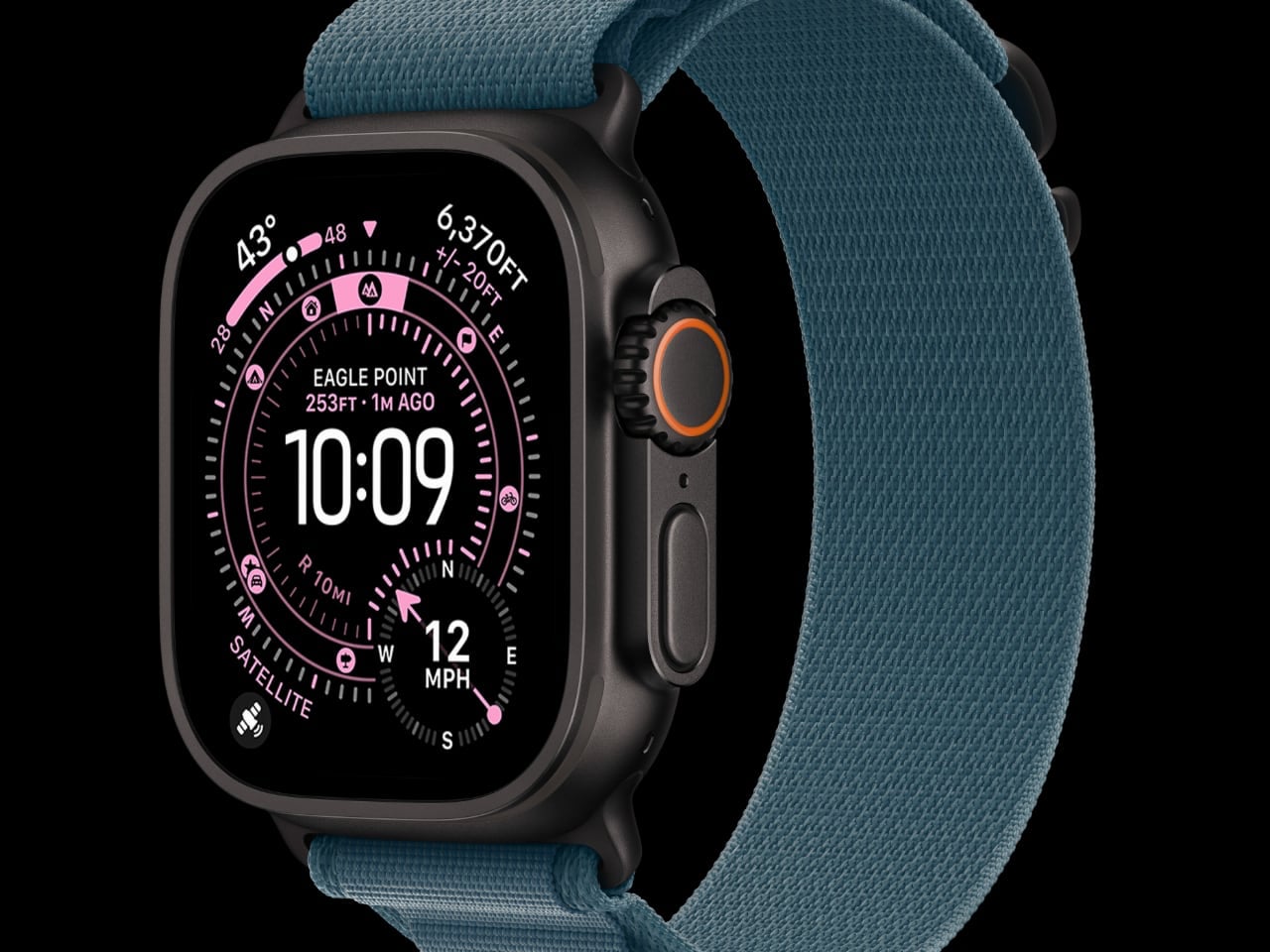
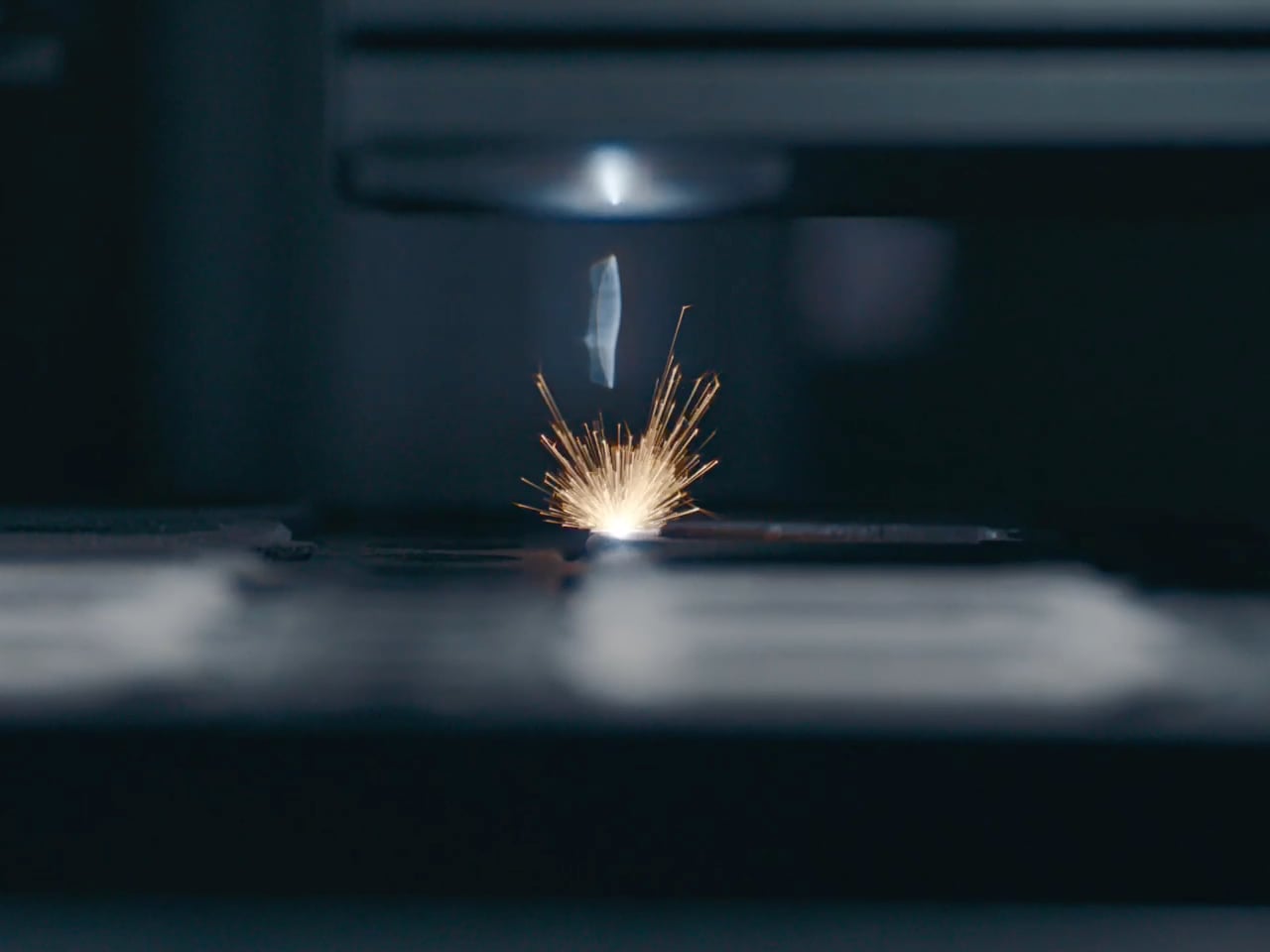
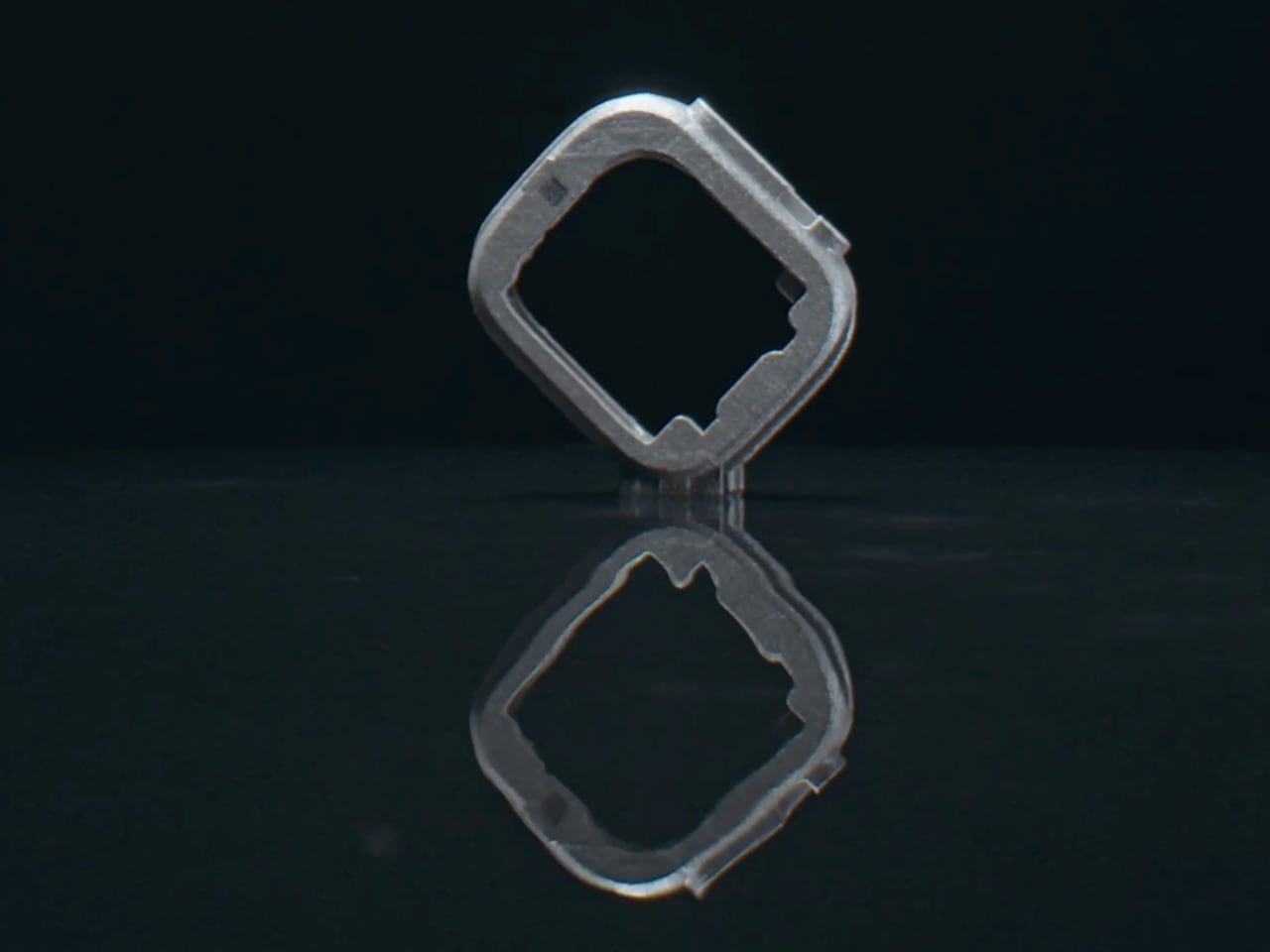
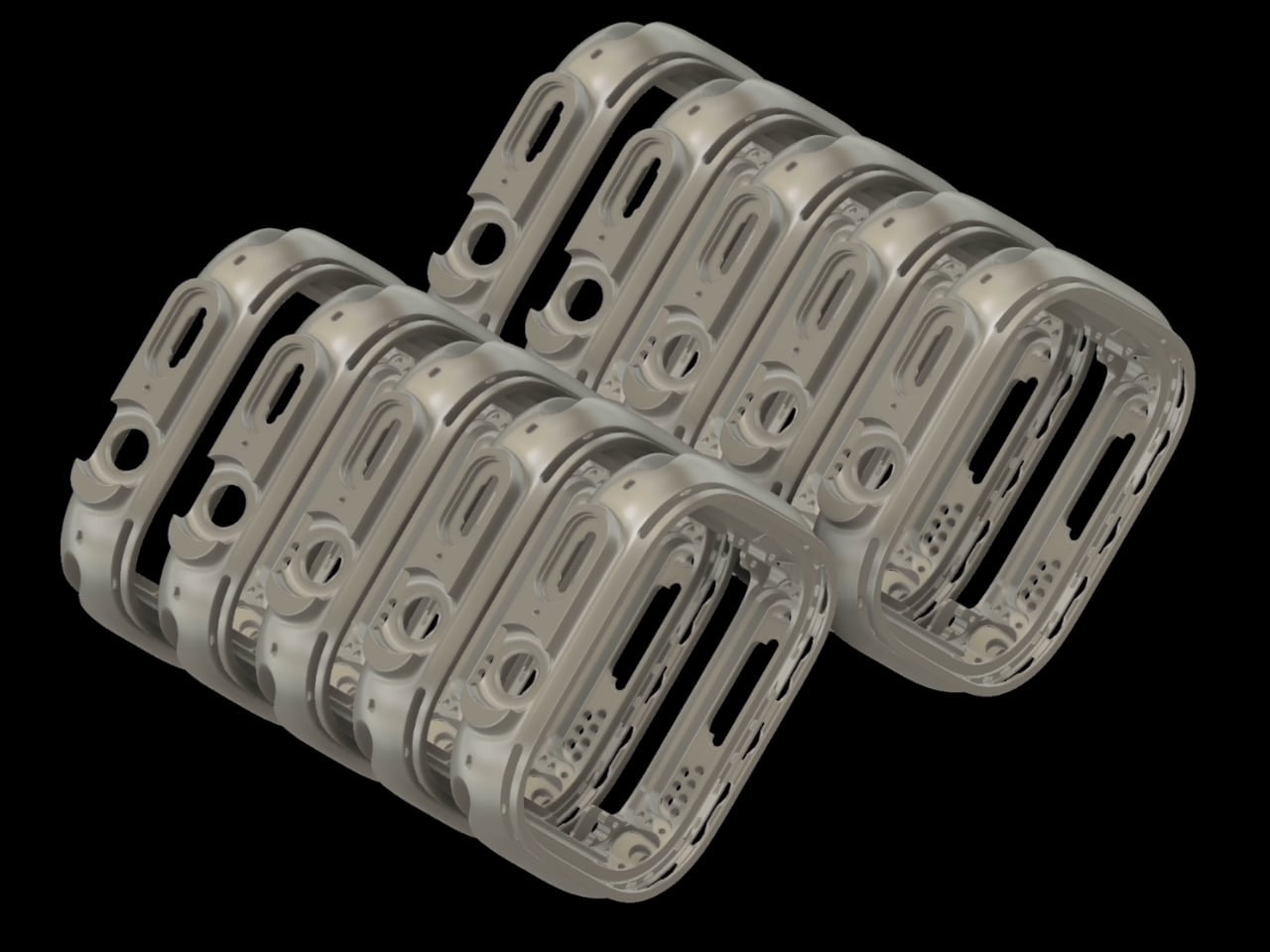
Apple’s move to 3D-printed titanium signals a deeper shift in product design, where manufacturing innovation directly shapes form, performance, and sustainability. By producing Apple Watch Ultra 3 and Series 11 cases through additive manufacturing using 100 percent recycled aerospace-grade titanium powder, Apple cuts raw material use by nearly half. The result feels identical to traditionally forged cases that are light, durable, and mirror-polished, yet it emerges from a process that builds only what the design truly needs.

Unlike subtractive machining, where excess titanium becomes waste, 3D printing constructs cases layer by layer with extreme precision. This unlocks design advantages beyond efficiency. Apple can now print internal textures that improve bonding between metal and plastic, enhancing waterproofing without adding bulk. The same approach enables thinner yet stronger components, such as the titanium USB-C enclosure in the iPhone Air. Here, sustainability is not an add-on, as it becomes the system through which better products are designed.

2. Anodic Color Effects

Titanium achieves color through anodic oxidation, an electrochemical process that alters its natural oxide layer rather than covering it. You are not applying paint, but you are changing how the material interacts with light. This creates rich hues—ranging from soft blues to deep violets—that shift subtly with angle and atmosphere, giving products a living, responsive surface.

These anodic finishes are not only expressive but enduring. They resist UV fading, corrosion, and salt exposure far better than conventional coatings. For product design, this means long-lasting color without maintenance or reapplication. You get visual depth, material honesty, and performance aligned in a single, permanent finish.

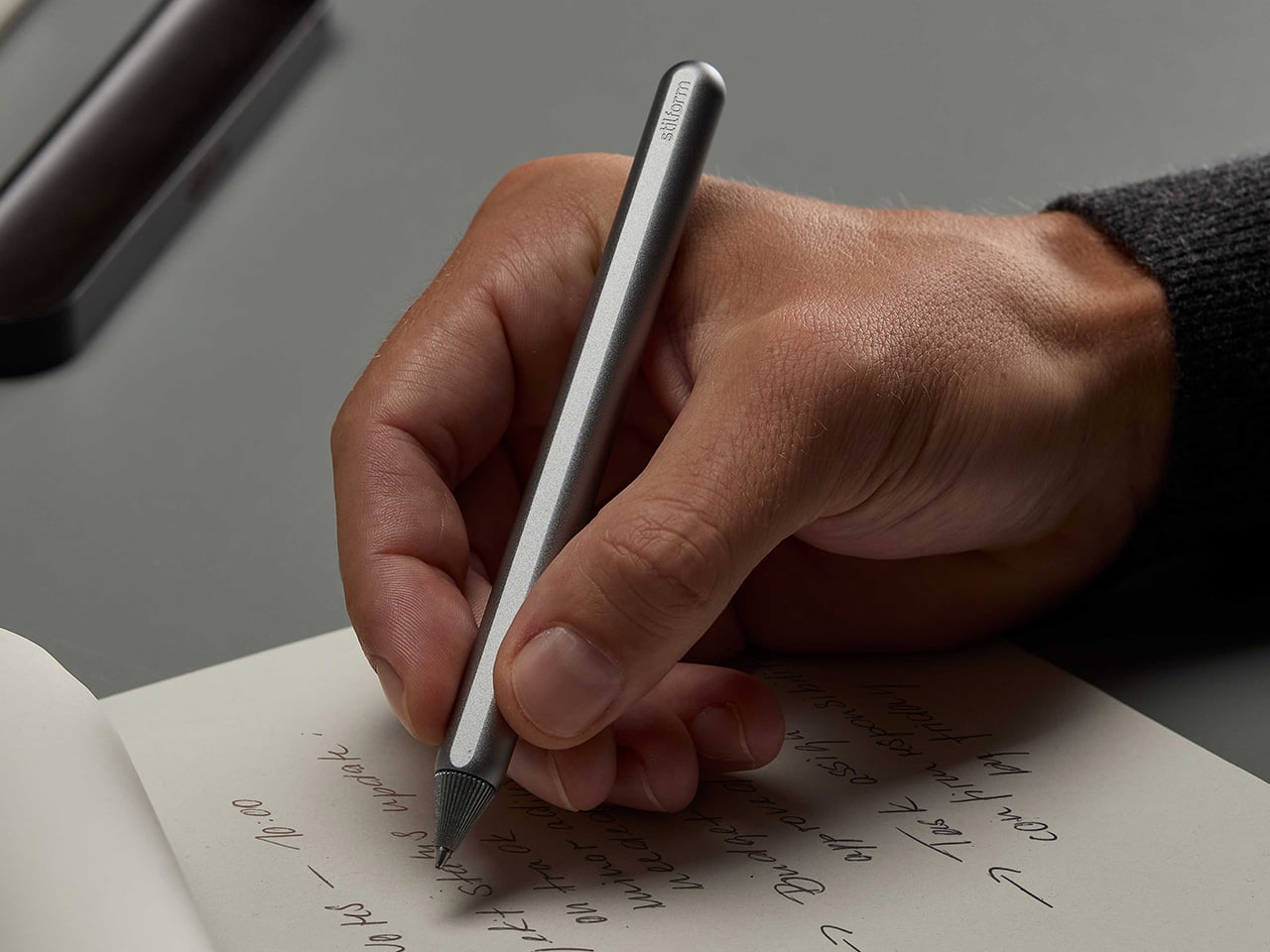
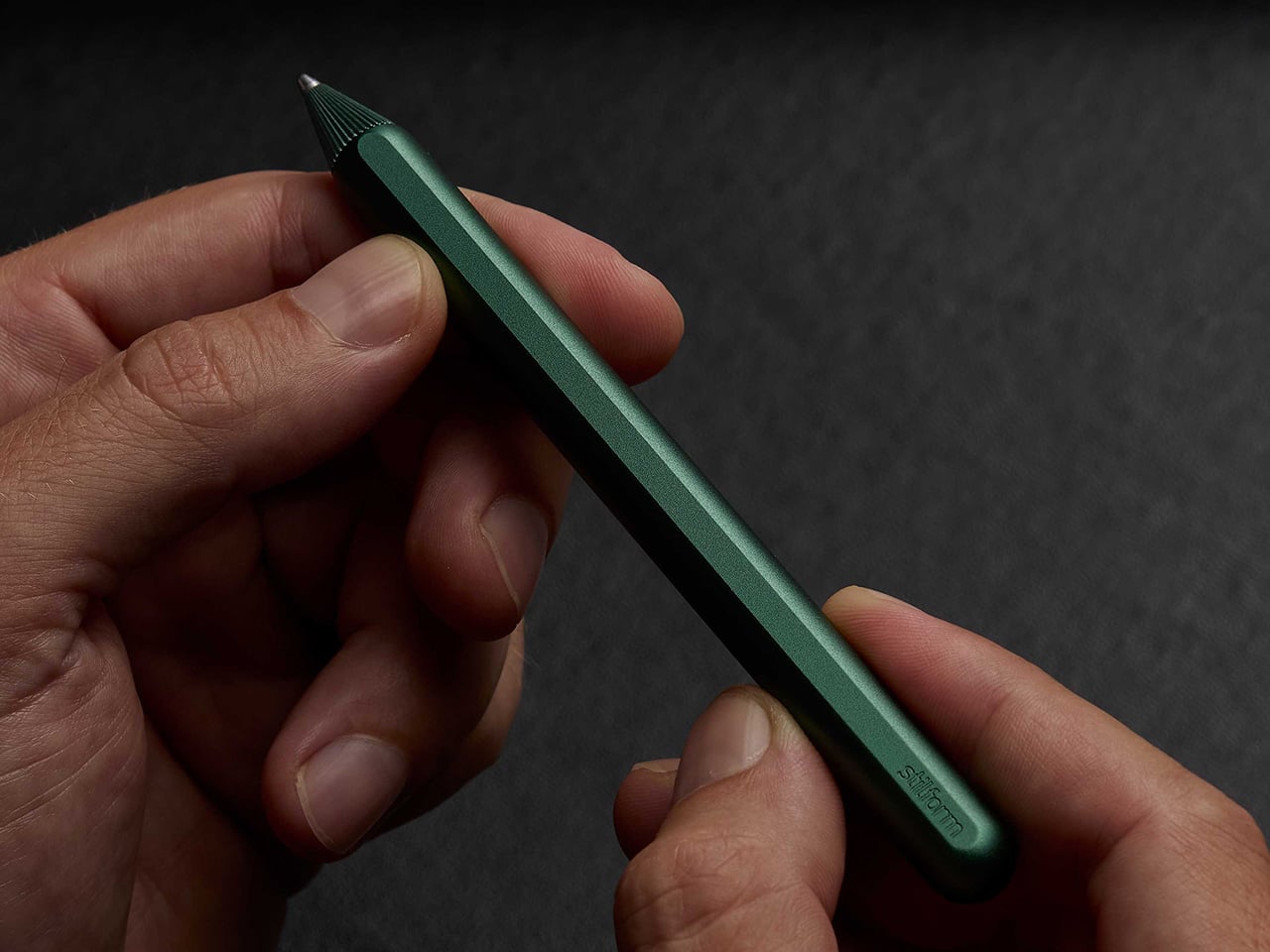
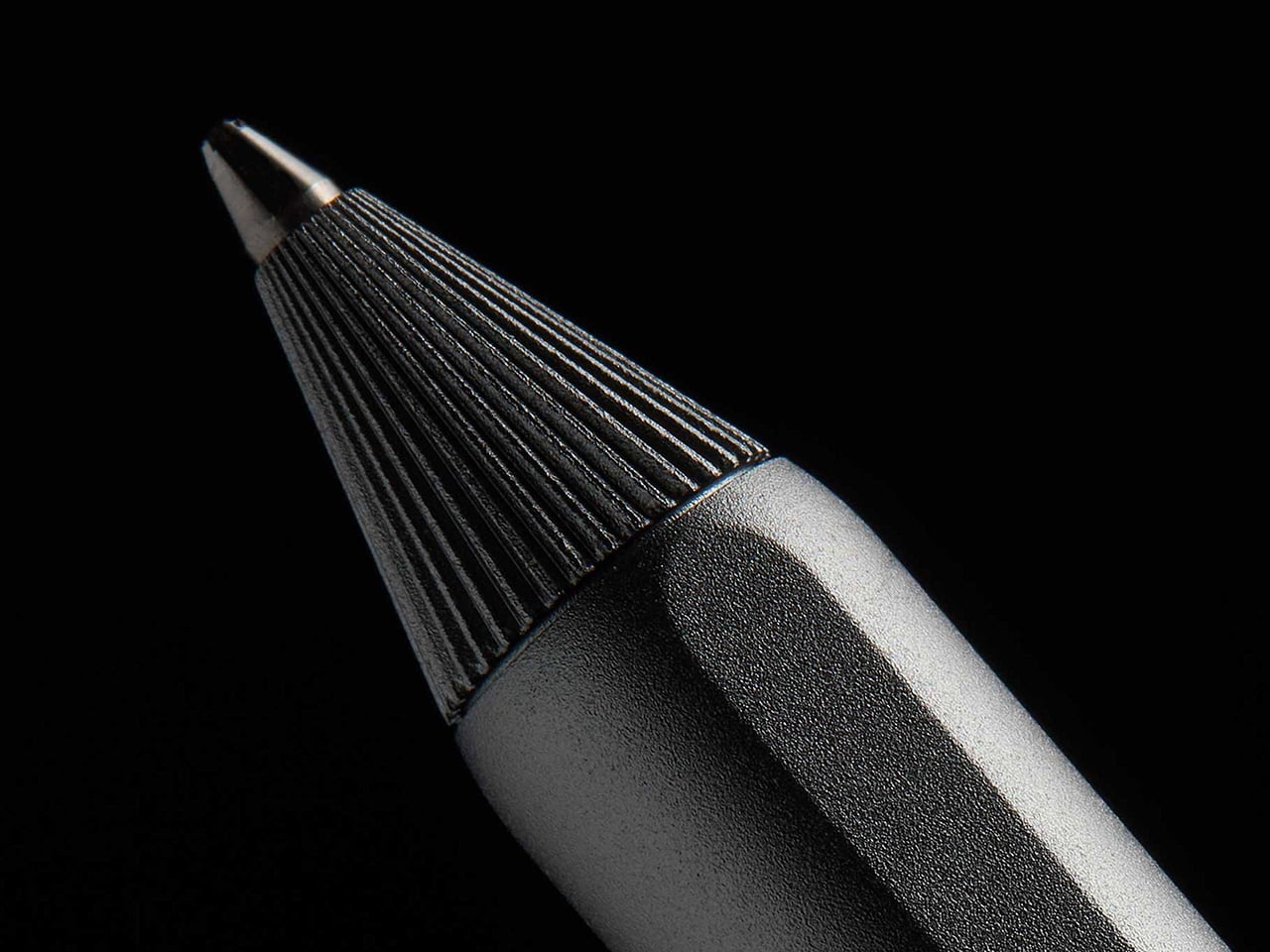
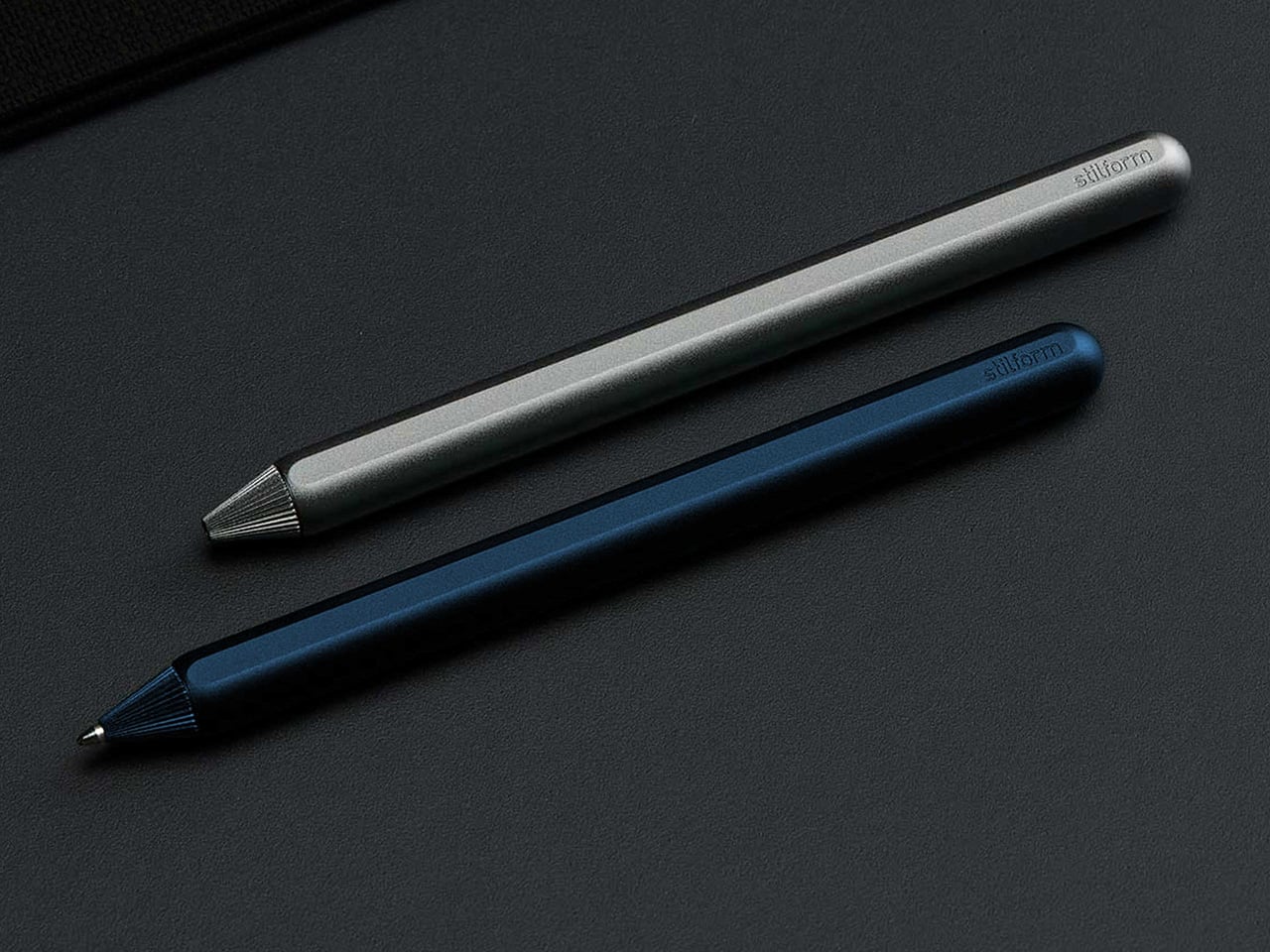
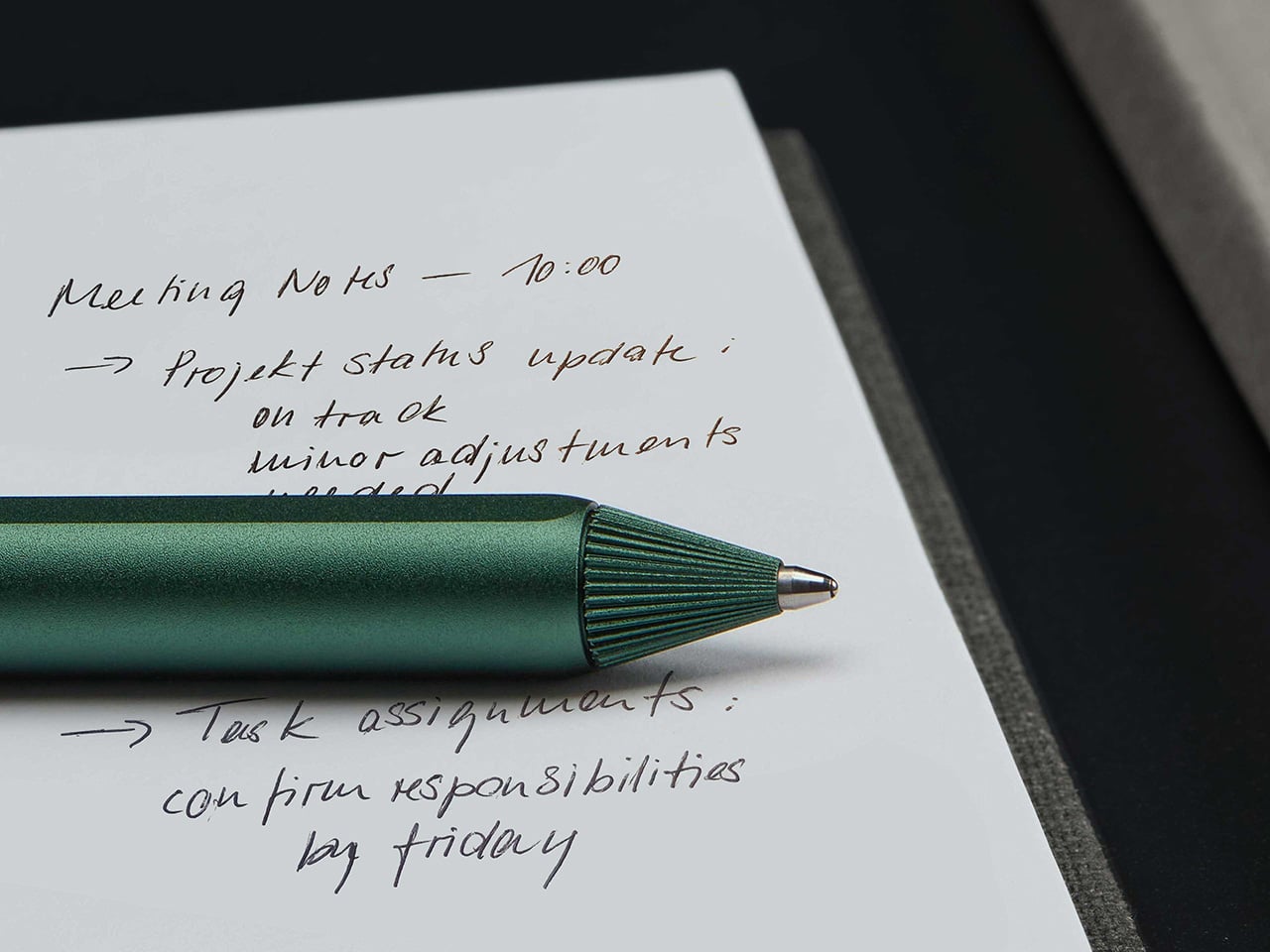
The AEON Ballpoint is defined by disciplined product design rather than visual flair. Its form is reduced to a clean metal cylinder, free of branding, excess seams, or decorative elements. The matte finishes are chosen for grip and durability, not ornament. Every curve is calibrated for the hand, making the object feel purposeful and precise from the first touch.

Function drives every detail. The front-end twist mechanism is hidden where the fingers naturally rest, allowing seamless operation without changing grip. Weight distribution is carefully balanced for sustained writing comfort, while subtle flat facets prevent the pen from rolling on a desk. Titanium

3. Smart Glazing

Titanium-doped glazing represents a new generation of high-performance glass designed to actively regulate indoor climate. By depositing ultra-thin layers of titanium dioxide onto glass surfaces, this technology achieves spectral selectivity—reflecting infrared heat while allowing visible light to pass through. The result is improved thermal efficiency, reduced heat gain, and lower dependence on mechanical cooling systems, even in buildings with expansive glass façades.

Beyond performance, this glazing supports biophilic design intent. Clear, untinted views preserve a visual connection with the landscape, allowing natural light to shape interior experience. The space remains thermally stable yet visually open, creating a calm, nature-connected interior envelope.

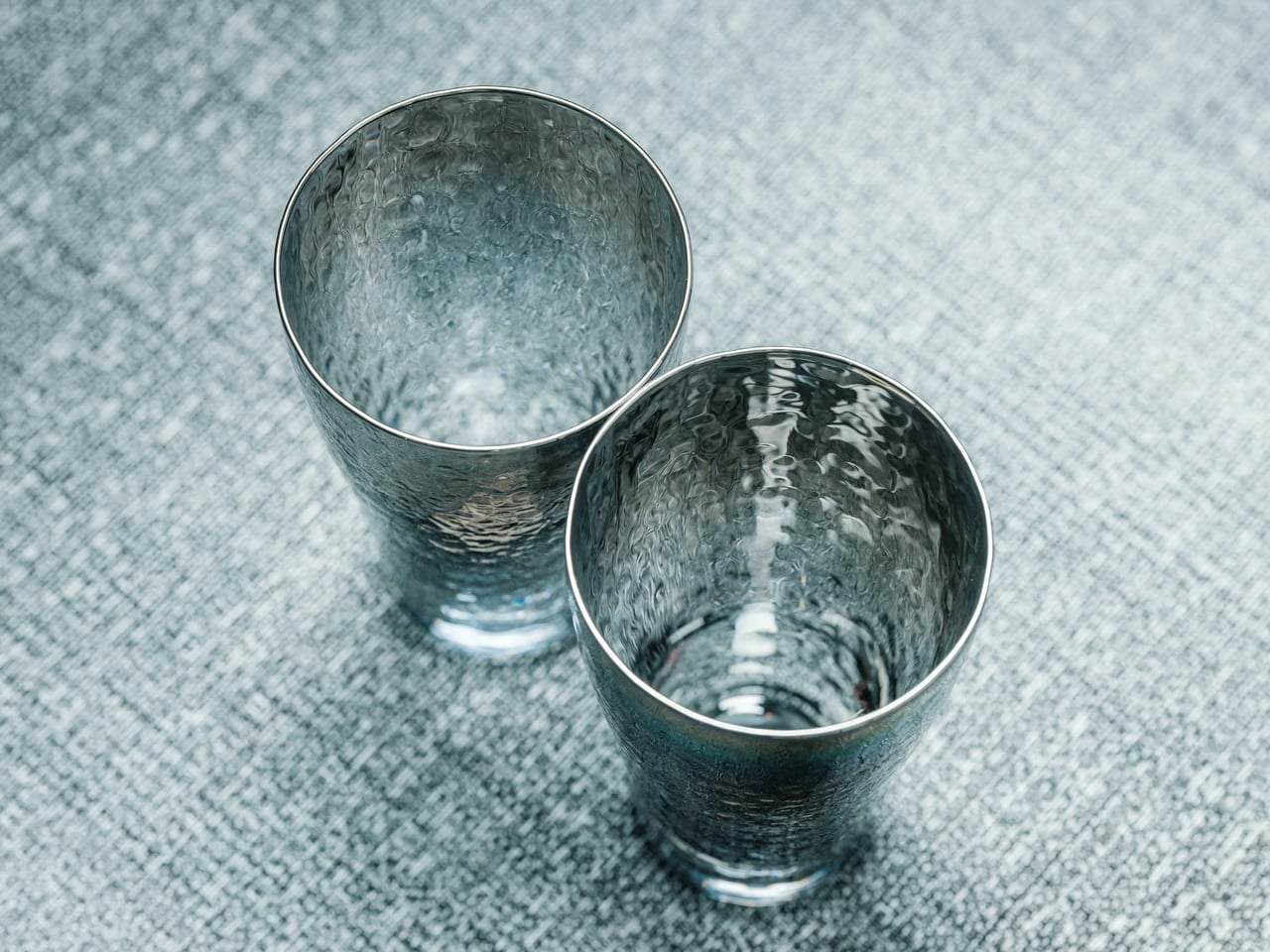
The Prism Titanium Beer Glass is designed to elevate the act of drinking through precision, material integrity, and restrained design. Crafted in Japan by Progress Design, the glass features an ultra-thin lining of 99.9% pure titanium, engineered to reduce bitterness and eliminate metallic aftertastes, allowing the true character of the beverage to emerge. Its flared rim enhances aroma and refines mouthfeel, while the aerospace-grade construction ensures durability, corrosion resistance, and long-term performance. Every element reflects a balance between advanced technology and traditional Japanese craftsmanship.

Visually understated yet distinctive, Prism’s light-reactive finish subtly shifts with movement, adding depth without excess. Etched motifs draw from enduring Japanese symbols of continuity and prosperity, reinforcing its sense of permanence and purpose. Designed to be used daily rather than displayed, the Prism Titanium Beer Glass prioritises clarity, tactility, and intention—transforming an ordinary pour into a composed, well-considered experience grounded in design excellence.

Click here to Buy the Prism Titanium Beer Glass: $99 

4. Minimalism Enabled by Strength

Titanium’s exceptional tensile strength enables a new approach to product and structural design defined by extreme slenderness and visual lightness. Components can be engineered with significantly reduced mass while maintaining high performance, allowing forms to appear almost invisible. This material efficiency supports refined proportions and uninterrupted lines, enhancing both functionality and aesthetic clarity.

By minimising structural bulk, design emphasis shifts towards spatial sequencing and visual flow. Slender supports and cantilevered elements create open, fluid compositions that maximise usable space while reinforcing a sense of weightlessness. This form of minimalism is not decorative but technical—rooted in advanced engineering and material intelligence, where precision-driven design allows the surrounding context and spatial experience to take precedence.

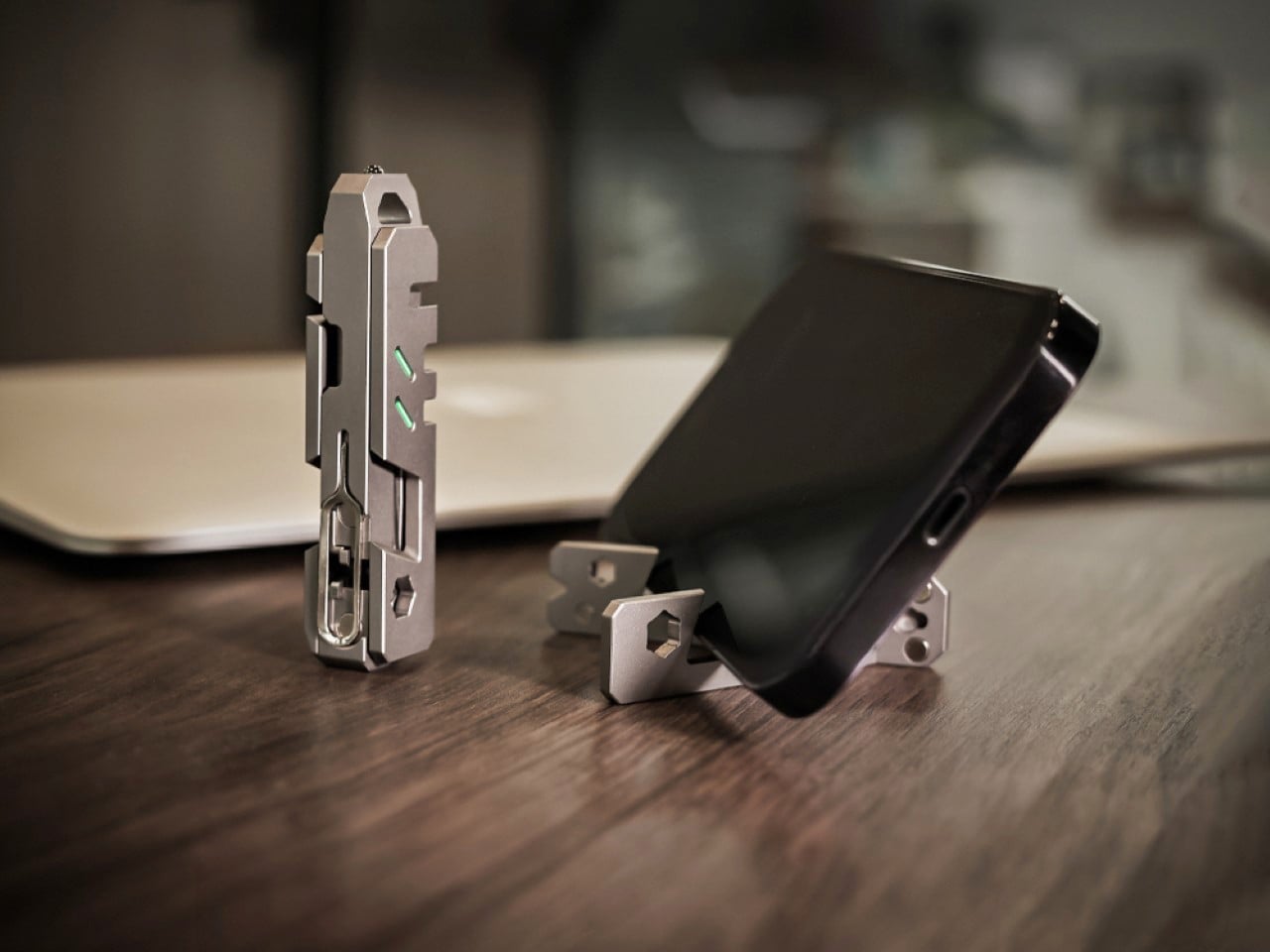
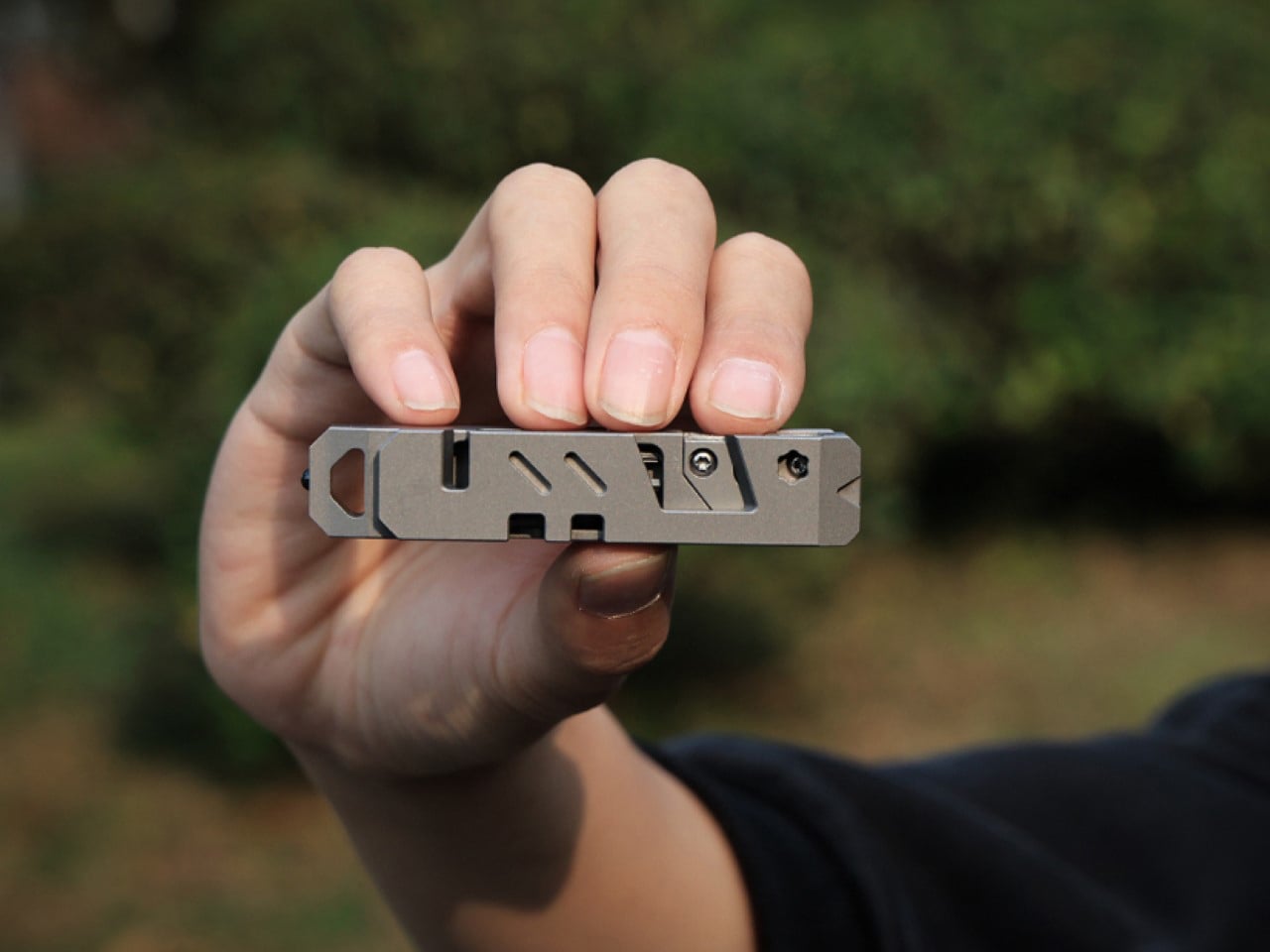
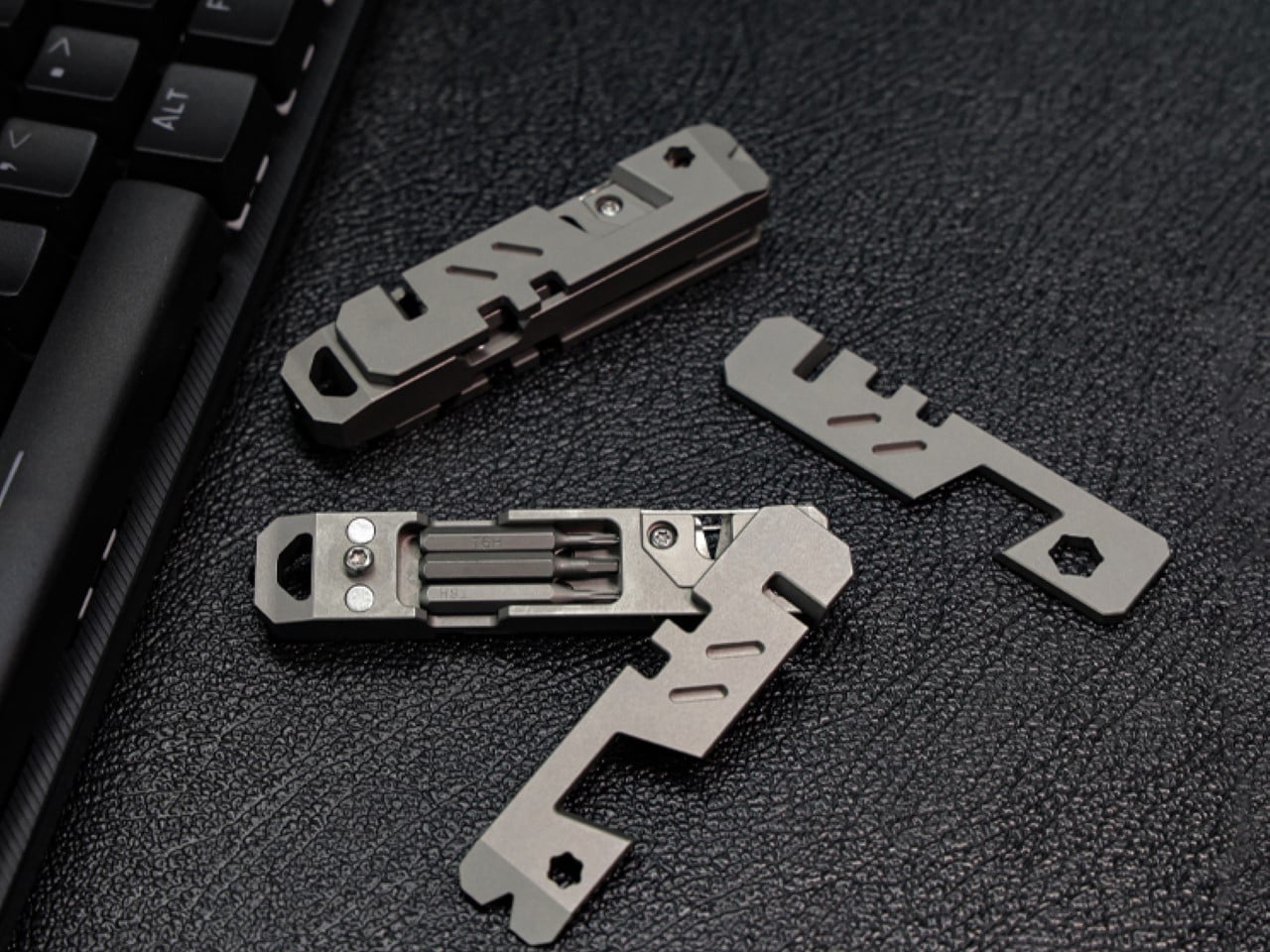
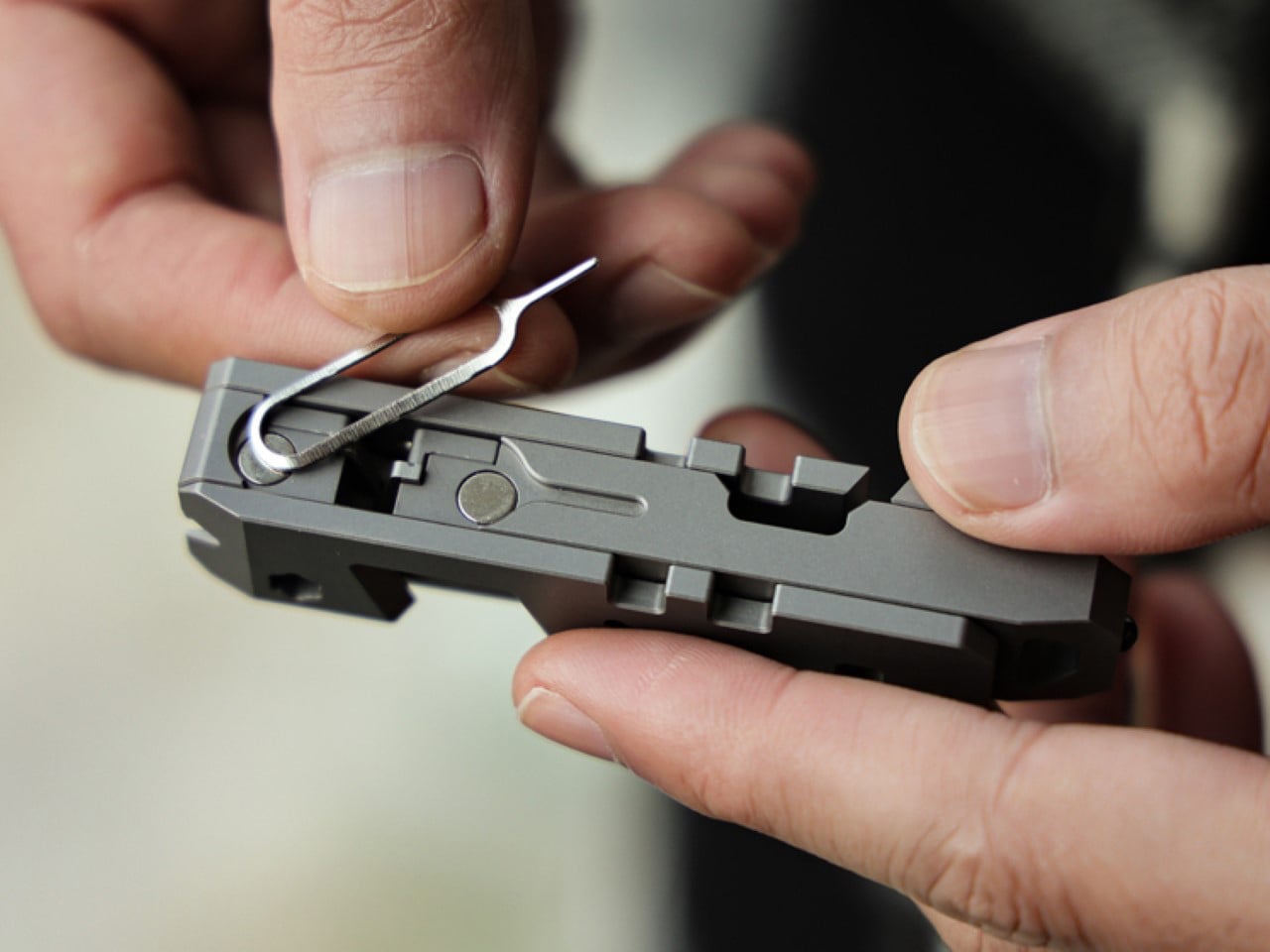
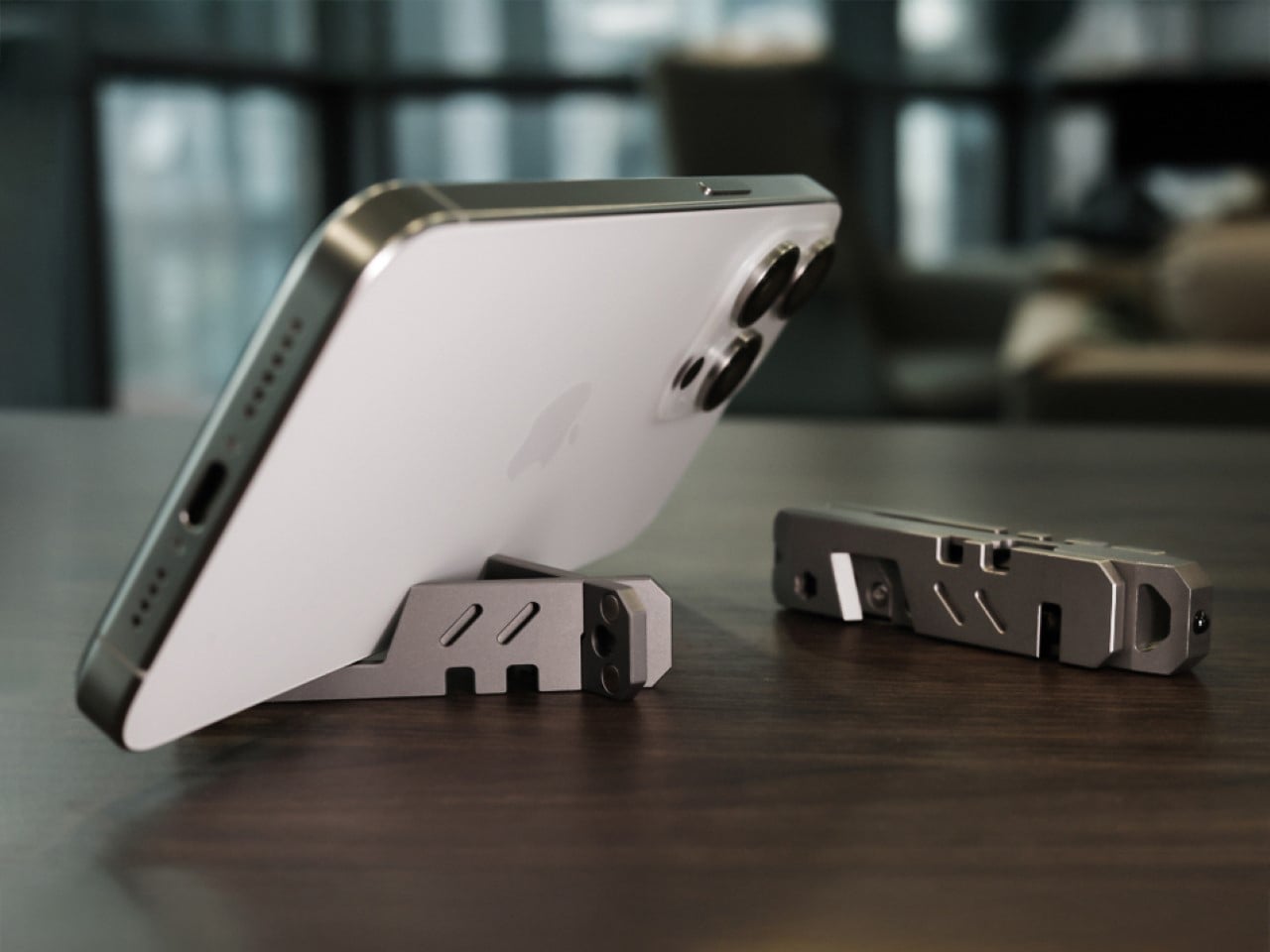
The TriPro Stand is a compact, precision-engineered multitool designed to deliver high functionality within a remarkably small form. Crafted from durable titanium alloy, it integrates 15 essential tools into a structure no larger than a finger while maintaining a lightweight profile of just 56 grams. Its design prioritises strength, corrosion resistance, and refined minimalism, demonstrating how advanced materials allow complex functionality without added bulk. The result is a discreet yet highly capable everyday carry tool that balances performance with visual restraint.

Each function is thoughtfully embedded to support practical, real-world use. Features such as the integrated phone stand, modular screwdriver system with magnetic bit storage, SIM ejector, pry bar, spoke wrench, folding scalpel, sharpener, and emergency glass breaker are engineered for reliability rather than novelty. Measuring 8 cm in length, the TriPro Stand exemplifies intelligent product design—where precision manufacturing, material efficiency, and purposeful detailing converge to create a durable and dependable multitool.

5. Exceptional Fatigue Resistance

Titanium demonstrates exceptional resistance to cyclic fatigue, enabling it to withstand repeated stress and loading without cracking, deforming, or compromising structural integrity. Unlike many conventional metals that gradually weaken under continuous use, titanium retains its mechanical performance across millions of stress cycles. This inherent endurance allows designers to rely on slimmer, more efficient components without sacrificing reliability.

Such fatigue resistance makes titanium particularly suitable for products intended for frequent handling and long-term use, including hinges, fasteners, wearables, tools, and precision mechanical interfaces. By maintaining consistent performance over time, titanium enhances safety, durability, and functional stability. Its ability to endure prolonged mechanical demand reinforces its position as a material defined not only by strength and lightness, but by sustained performance and endurance-led design.

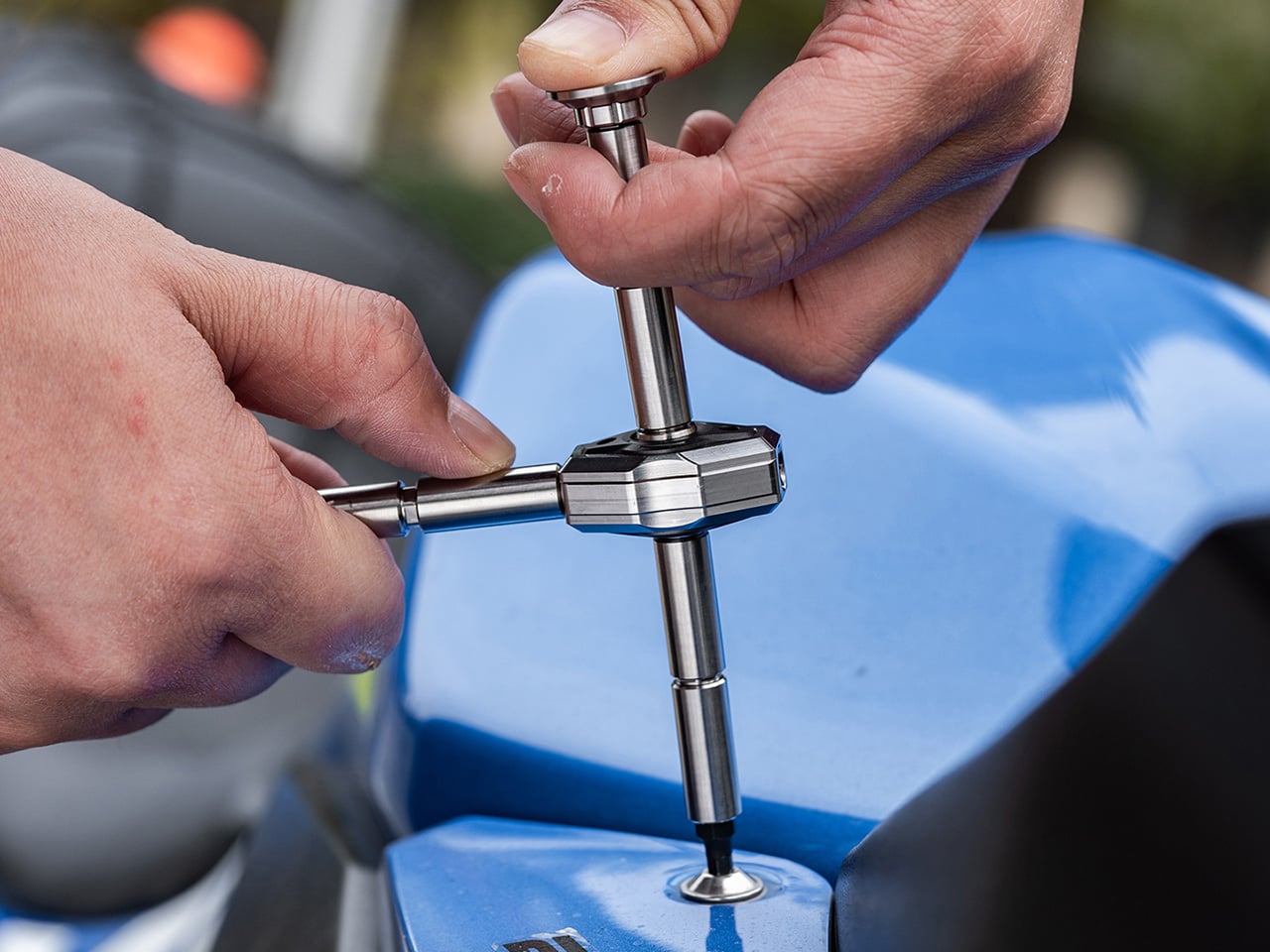
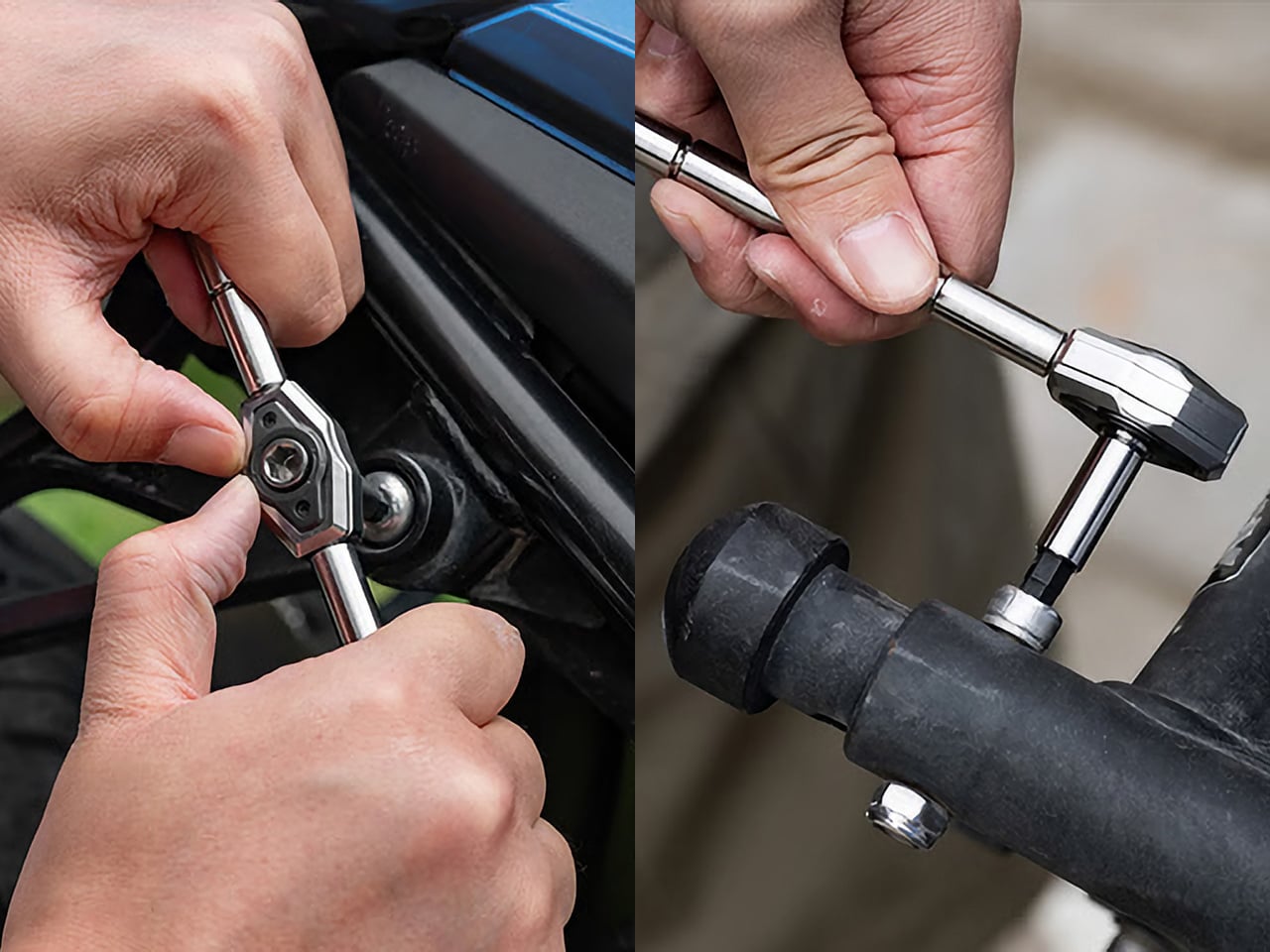
Fasteners positioned in confined or obstructed spaces often reveal the shortcomings of conventional ratchets, which require a wide swing arc to function effectively. The Titaner EDC Ratchet System is engineered specifically to overcome this limitation through a precision 4-degree swing arc, enabling forward motion with minimal hand movement. Its compact ratchet core weighs just 29.8 grams, yet delivers clear tactile and audible feedback, ensuring accurate engagement even in environments where access and visibility are severely restricted.

Despite its minimal size, the system is designed for high torque and long-term durability. A dual-lock gear mechanism efficiently transfers force without play, while a flip-based directional control replaces fragile thumb levers, reducing complexity and potential failure points. The modular configuration allows the tool to be adapted into T-, L-, or I-shaped formats using extension bars, optimising leverage and reach. Manufactured from GR5 titanium with hardened M390 steel gear teeth, the Titaner EDC Ratchet System combines corrosion resistance, structural integrity, and refined mechanical performance in a compact, purpose-driven design.

The integration of titanium into product design marks a shift from visual heaviness to intelligent lightness. No longer perceived as cold or industrial, titanium functions as a responsive material that balances strength, precision, and refined tactility. Its use enables objects that are lighter, more durable, and visually restrained—defining a new language of design where performance, longevity, and elegance are seamlessly aligned.

The post Steel Is Dead: 5 Titanium Products That Just Replaced It in 2026 first appeared on Yanko Design.
Steel Is Dead: 5 Titanium Products That Just Replaced It in 2026

Titanium is no longer confined to aerospace or medical tools. You now see it shaping everyday product design, from consumer electronics to furniture and wearables. Its high strength-to-weight ratio lets you create thinner profiles without sacrificing durability. Resistant to corrosion, scratches, and heat, titanium extends product life while reducing the need for frequent replacement.

Beyond performance, titanium delivers a refined tactile and visual experience. Its surface interacts with light to produce subtle tonal shifts that feel precise yet understated. You get products that feel premium without excess. With its long lifespan and recyclability, titanium supports responsible design choices, aligning innovation with sustainability and long-term value.

1. Generative Titanium Design

Generative design combined with additive manufacturing is reshaping how you approach product structures. Instead of solid, overbuilt components, you can now create lightweight forms guided by algorithms. These digitally evolved geometries use material only where strength is required, resulting in efficient, organic profiles inspired by natural systems such as bone and cellular growth.

With 3D titanium printing technologies like laser powder bed fusion, you achieve precise stress-optimized components with minimal waste. Although production costs remain higher upfront, you benefit from reduced material usage, fewer assembly steps, and lower energy input, which delivers smarter products that balance performance, sustainability, and long-term value.

Apple’s move to 3D-printed titanium signals a deeper shift in product design, where manufacturing innovation directly shapes form, performance, and sustainability. By producing Apple Watch Ultra 3 and Series 11 cases through additive manufacturing using 100 percent recycled aerospace-grade titanium powder, Apple cuts raw material use by nearly half. The result feels identical to traditionally forged cases that are light, durable, and mirror-polished, yet it emerges from a process that builds only what the design truly needs.

Unlike subtractive machining, where excess titanium becomes waste, 3D printing constructs cases layer by layer with extreme precision. This unlocks design advantages beyond efficiency. Apple can now print internal textures that improve bonding between metal and plastic, enhancing waterproofing without adding bulk. The same approach enables thinner yet stronger components, such as the titanium USB-C enclosure in the iPhone Air. Here, sustainability is not an add-on, as it becomes the system through which better products are designed.

2. Anodic Color Effects

Titanium achieves color through anodic oxidation, an electrochemical process that alters its natural oxide layer rather than covering it. You are not applying paint, but you are changing how the material interacts with light. This creates rich hues—ranging from soft blues to deep violets—that shift subtly with angle and atmosphere, giving products a living, responsive surface.

These anodic finishes are not only expressive but enduring. They resist UV fading, corrosion, and salt exposure far better than conventional coatings. For product design, this means long-lasting color without maintenance or reapplication. You get visual depth, material honesty, and performance aligned in a single, permanent finish.

The AEON Ballpoint is defined by disciplined product design rather than visual flair. Its form is reduced to a clean metal cylinder, free of branding, excess seams, or decorative elements. The matte finishes are chosen for grip and durability, not ornament. Every curve is calibrated for the hand, making the object feel purposeful and precise from the first touch.

Function drives every detail. The front-end twist mechanism is hidden where the fingers naturally rest, allowing seamless operation without changing grip. Weight distribution is carefully balanced for sustained writing comfort, while subtle flat facets prevent the pen from rolling on a desk. Titanium

3. Smart Glazing

Titanium-doped glazing represents a new generation of high-performance glass designed to actively regulate indoor climate. By depositing ultra-thin layers of titanium dioxide onto glass surfaces, this technology achieves spectral selectivity—reflecting infrared heat while allowing visible light to pass through. The result is improved thermal efficiency, reduced heat gain, and lower dependence on mechanical cooling systems, even in buildings with expansive glass façades.

Beyond performance, this glazing supports biophilic design intent. Clear, untinted views preserve a visual connection with the landscape, allowing natural light to shape interior experience. The space remains thermally stable yet visually open, creating a calm, nature-connected interior envelope.

The Prism Titanium Beer Glass is designed to elevate the act of drinking through precision, material integrity, and restrained design. Crafted in Japan by Progress Design, the glass features an ultra-thin lining of 99.9% pure titanium, engineered to reduce bitterness and eliminate metallic aftertastes, allowing the true character of the beverage to emerge. Its flared rim enhances aroma and refines mouthfeel, while the aerospace-grade construction ensures durability, corrosion resistance, and long-term performance. Every element reflects a balance between advanced technology and traditional Japanese craftsmanship.

Visually understated yet distinctive, Prism’s light-reactive finish subtly shifts with movement, adding depth without excess. Etched motifs draw from enduring Japanese symbols of continuity and prosperity, reinforcing its sense of permanence and purpose. Designed to be used daily rather than displayed, the Prism Titanium Beer Glass prioritises clarity, tactility, and intention—transforming an ordinary pour into a composed, well-considered experience grounded in design excellence.

Click here to Buy the Prism Titanium Beer Glass: $99 

4. Minimalism Enabled by Strength

Titanium’s exceptional tensile strength enables a new approach to product and structural design defined by extreme slenderness and visual lightness. Components can be engineered with significantly reduced mass while maintaining high performance, allowing forms to appear almost invisible. This material efficiency supports refined proportions and uninterrupted lines, enhancing both functionality and aesthetic clarity.

By minimising structural bulk, design emphasis shifts towards spatial sequencing and visual flow. Slender supports and cantilevered elements create open, fluid compositions that maximise usable space while reinforcing a sense of weightlessness. This form of minimalism is not decorative but technical—rooted in advanced engineering and material intelligence, where precision-driven design allows the surrounding context and spatial experience to take precedence.

The TriPro Stand is a compact, precision-engineered multitool designed to deliver high functionality within a remarkably small form. Crafted from durable titanium alloy, it integrates 15 essential tools into a structure no larger than a finger while maintaining a lightweight profile of just 56 grams. Its design prioritises strength, corrosion resistance, and refined minimalism, demonstrating how advanced materials allow complex functionality without added bulk. The result is a discreet yet highly capable everyday carry tool that balances performance with visual restraint.

Each function is thoughtfully embedded to support practical, real-world use. Features such as the integrated phone stand, modular screwdriver system with magnetic bit storage, SIM ejector, pry bar, spoke wrench, folding scalpel, sharpener, and emergency glass breaker are engineered for reliability rather than novelty. Measuring 8 cm in length, the TriPro Stand exemplifies intelligent product design—where precision manufacturing, material efficiency, and purposeful detailing converge to create a durable and dependable multitool.

5. Exceptional Fatigue Resistance

Titanium demonstrates exceptional resistance to cyclic fatigue, enabling it to withstand repeated stress and loading without cracking, deforming, or compromising structural integrity. Unlike many conventional metals that gradually weaken under continuous use, titanium retains its mechanical performance across millions of stress cycles. This inherent endurance allows designers to rely on slimmer, more efficient components without sacrificing reliability.

Such fatigue resistance makes titanium particularly suitable for products intended for frequent handling and long-term use, including hinges, fasteners, wearables, tools, and precision mechanical interfaces. By maintaining consistent performance over time, titanium enhances safety, durability, and functional stability. Its ability to endure prolonged mechanical demand reinforces its position as a material defined not only by strength and lightness, but by sustained performance and endurance-led design.

Fasteners positioned in confined or obstructed spaces often reveal the shortcomings of conventional ratchets, which require a wide swing arc to function effectively. The Titaner EDC Ratchet System is engineered specifically to overcome this limitation through a precision 4-degree swing arc, enabling forward motion with minimal hand movement. Its compact ratchet core weighs just 29.8 grams, yet delivers clear tactile and audible feedback, ensuring accurate engagement even in environments where access and visibility are severely restricted.

Despite its minimal size, the system is designed for high torque and long-term durability. A dual-lock gear mechanism efficiently transfers force without play, while a flip-based directional control replaces fragile thumb levers, reducing complexity and potential failure points. The modular configuration allows the tool to be adapted into T-, L-, or I-shaped formats using extension bars, optimising leverage and reach. Manufactured from GR5 titanium with hardened M390 steel gear teeth, the Titaner EDC Ratchet System combines corrosion resistance, structural integrity, and refined mechanical performance in a compact, purpose-driven design.

The integration of titanium into product design marks a shift from visual heaviness to intelligent lightness. No longer perceived as cold or industrial, titanium functions as a responsive material that balances strength, precision, and refined tactility. Its use enables objects that are lighter, more durable, and visually restrained—defining a new language of design where performance, longevity, and elegance are seamlessly aligned.

The post Steel Is Dead: 5 Titanium Products That Just Replaced It in 2026 first appeared on Yanko Design.
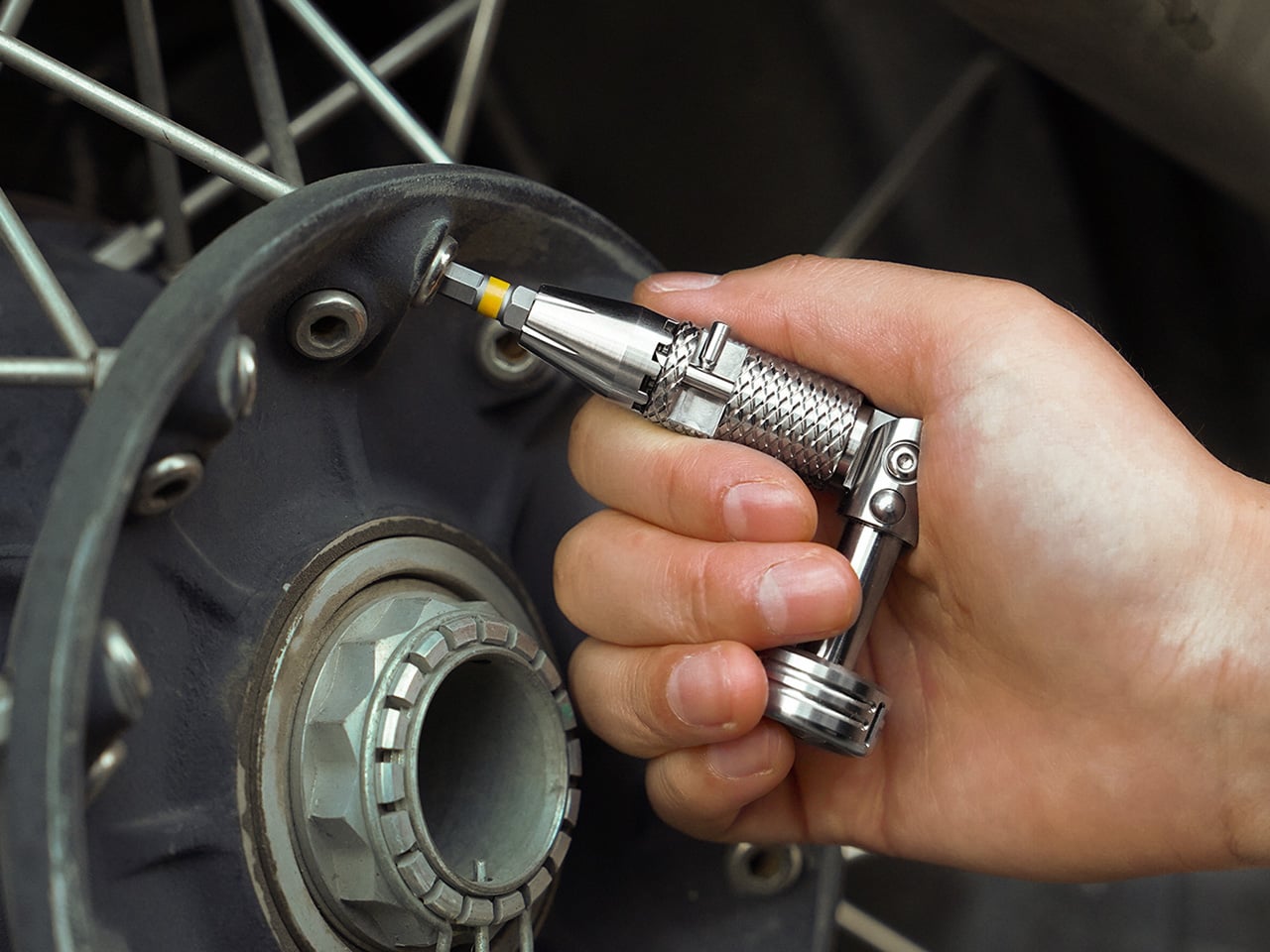
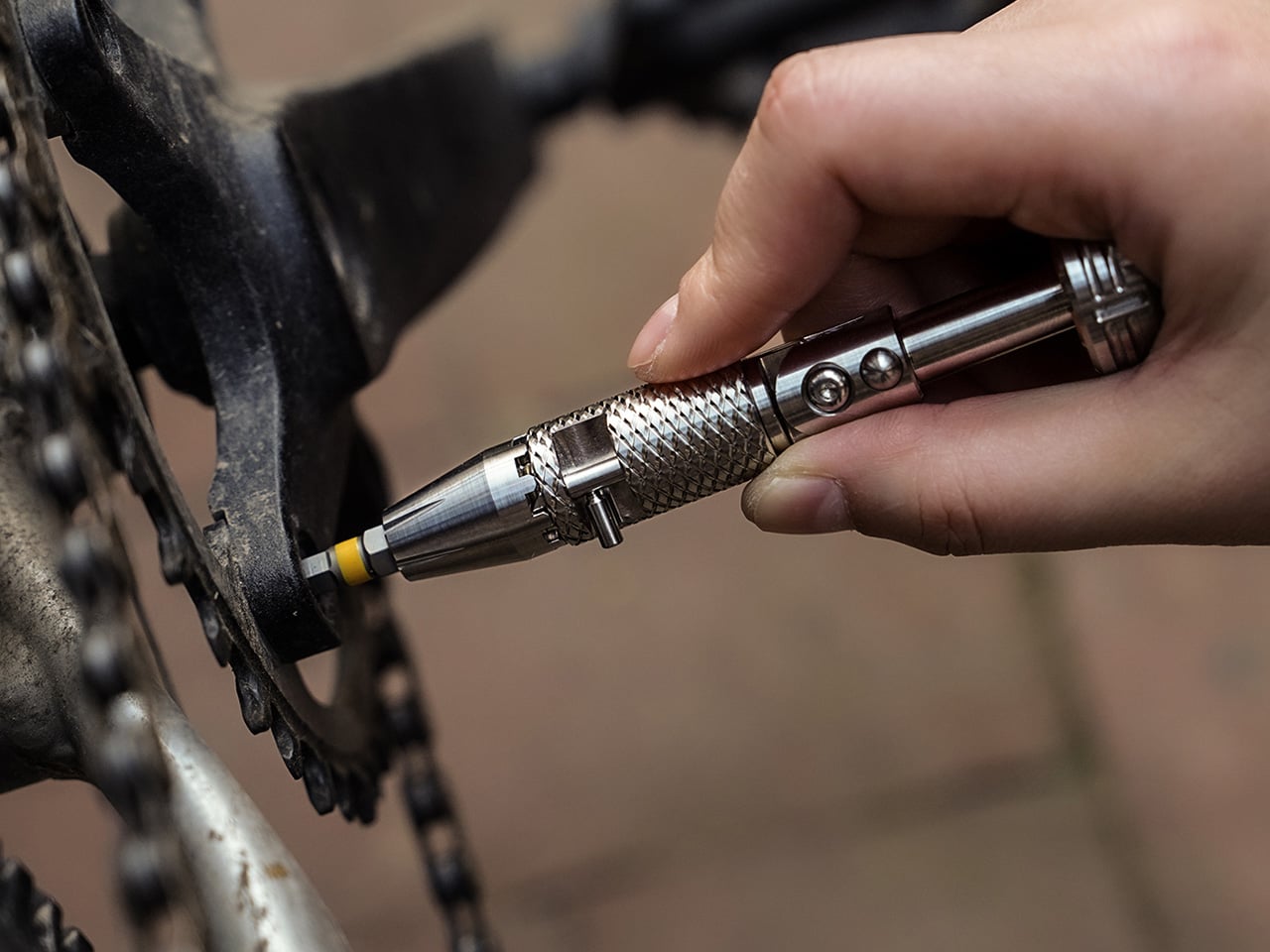
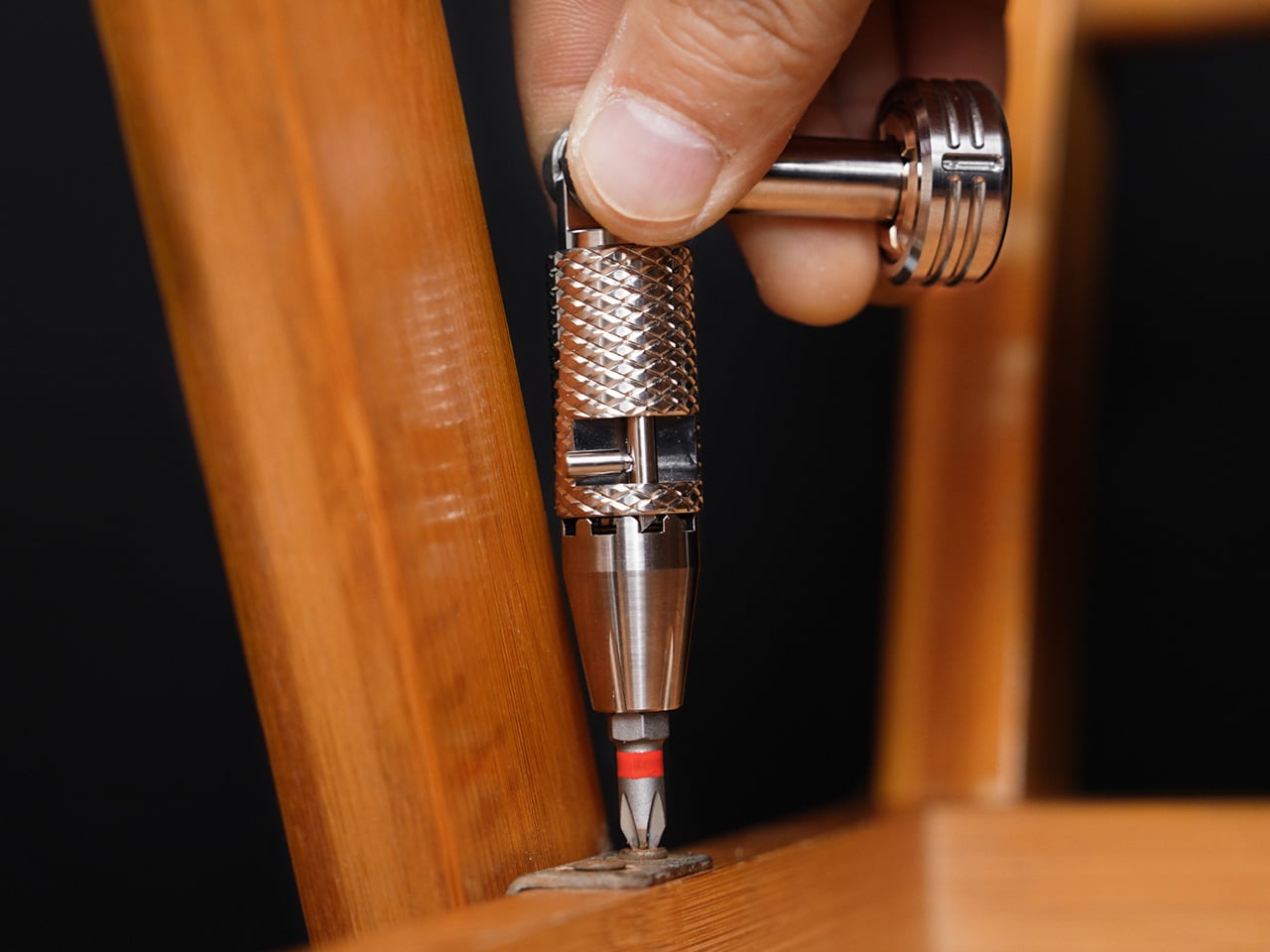
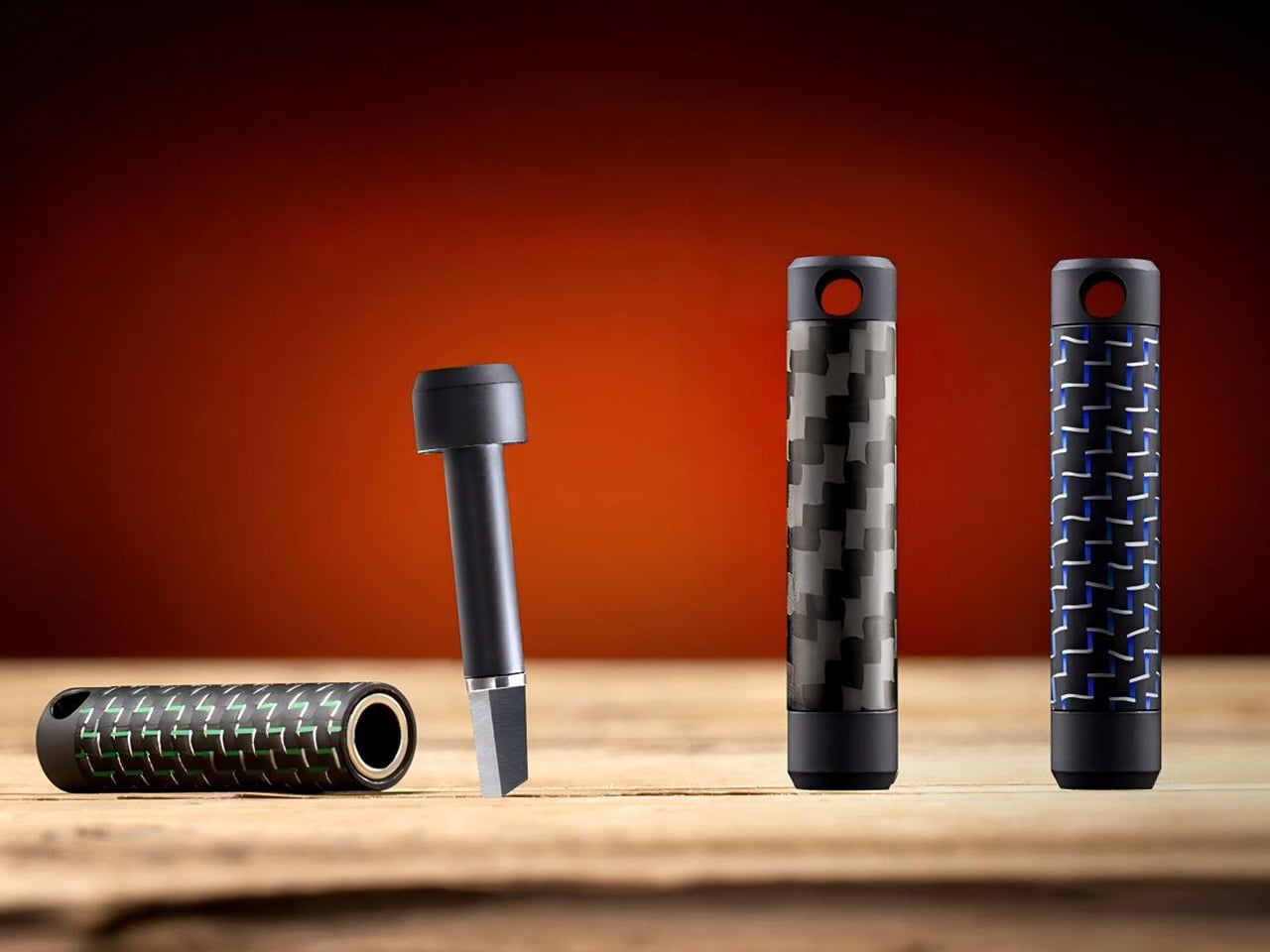
This CNC Titanium Screwdriver Has a Spinner Top You Can’t Stop Touching

Most screwdrivers and multi-tools do their job but feel generic, with rubbery handles, loud colors, stamped metal, and no reason to carry them unless you have to. Modern life involves low-level tension, loose screws on glasses, small repairs, idle hands in long meetings, and the constant search for something to occupy fingers without annoying everyone nearby. MAGICDRIVE is aimed at people who want a tool that matches their EDC mindset rather than just filling a slot in a toolbox they rarely open.

MAGICDRIVE is a precision-machined titanium ratchet screwdriver that tries to be a tool, a toy, and a small piece of mechanical art in one body. It is engineered for real performance, with a CNC-machined ratchet, foldable angles, and modular bit holders, but also designed for lifelong delight, something you might leave on a desk or carry in a pocket organizer because you enjoy using it, not just because you need it when something breaks.

Designer: Thomas Lee

Click Here to Buy Now: $149 $199 (25% off). Hurry, only 48/100 left! Raised over $128,000.

The ratchet mechanism is a fully CNC-machined assembly in titanium, brass, and ceramic bearings, with no injection-molded or stamped parts, built around a classic mechanical design. Every component is individually machined and mechanically interlocked, delivering smooth, solid clicks, strong torque transfer, and the promise of zero wobble and long-term reliability. The knurling is also CNC-machined, grooves cut rather than pressed, giving a confident grip that feels secure without being abrasive during longer sessions or repeated use.

The foldable body locks into 0°, 45°, and 90° positions with a push-button system. Straight-line mode is for rapid spinning and quick turns, 45° mode adds control and comfort, and 90° mode turns the compact driver into a small lever for stubborn screws and awkward angles. Torque testing measured up to 7.9 N·m in 90-degree mode with the 1/4-inch holder installed, which is more than most screws can take before they strip or fail.

The modular bit system lets you swap between a standard 6.35mm (1/4-inch) bit holder and a 4mm precision bit holder using a magnetic quick-swap interface. The 1/4-inch mode is the workhorse, fully compatible with common bits, extension bars, and socket adapters, likely the configuration you use most for everyday screws, small repairs, and workshop tasks where full ratchet engagement and smooth mechanical feedback matter during tightening or loosening.

The 4mm module is for micro jobs and delicate hardware, eyeglasses, small electronics, cameras, watches, keyboards, and calibration tasks where control is more important than torque. This mode intentionally skips the ratchet to give fingertip finesse, and MAGICDRIVE’s compact form makes it feel closer to a surgical instrument than a bulky driver when you are working on tiny fasteners that need gentle, precise turns without stripping delicate threads.

The quick-swap bit holder is held by a strong magnetic interface designed to avoid accidental separation or rattling during carry. The magnets are mechanically sealed by CNC-machined caps instead of just glued, preventing glue fatigue and loose parts over time. This reinforces the theme that the tool is built for long-term reliability, not just initial impressions or the first few months of use before parts start failing.

The balanced spinner top with a brass core is designed for silent, satisfying spins when there is nothing to fix. It offers a moment of focus without clicks or noise, and three tritium slots in the top make the driver easy to find in low light while adding a subtle glow when it spins. It is a small piece of kinetic art that turns idle moments into something more intentional, quieter than clicking a pen and more deliberate than scrolling through a phone.

The Grade 5 titanium body, brass spinner core, and N56 magnets avoid coatings pretending to be metal. Three finishes are available: satin silver, beadblast matte grey, and PVD black, and the brass develops patina over time. The hex-based modular ecosystem includes pen and knife modules and an aluminum bit-holder magazine with a ruler and storage, framing MAGICDRIVE as a platform that can grow with an EDC setup rather than a single-purpose tool that sits in a drawer.

MAGICDRIVE is meant to live beside a favorite knife, pen, or watch, not buried in a drawer. Sometimes you pick it up to fix something, sometimes just to feel the machining under your thumb or spin the top during a long call. It is a screwdriver that treats function and feeling as equally important, turning small interruptions and small repairs into chances to enjoy a beautifully made object. For people who care about the tools they carry and the rituals that fill the gaps between bigger tasks, MAGICDRIVE reads less like a gadget and more like a small, well-resolved piece of everyday gear that earns its place in a pocket or on a desk.

Click Here to Buy Now: $149 $199 (25% off). Hurry, only 48/100 left! Raised over $128,000.

The post This CNC Titanium Screwdriver Has a Spinner Top You Can’t Stop Touching first appeared on Yanko Design.
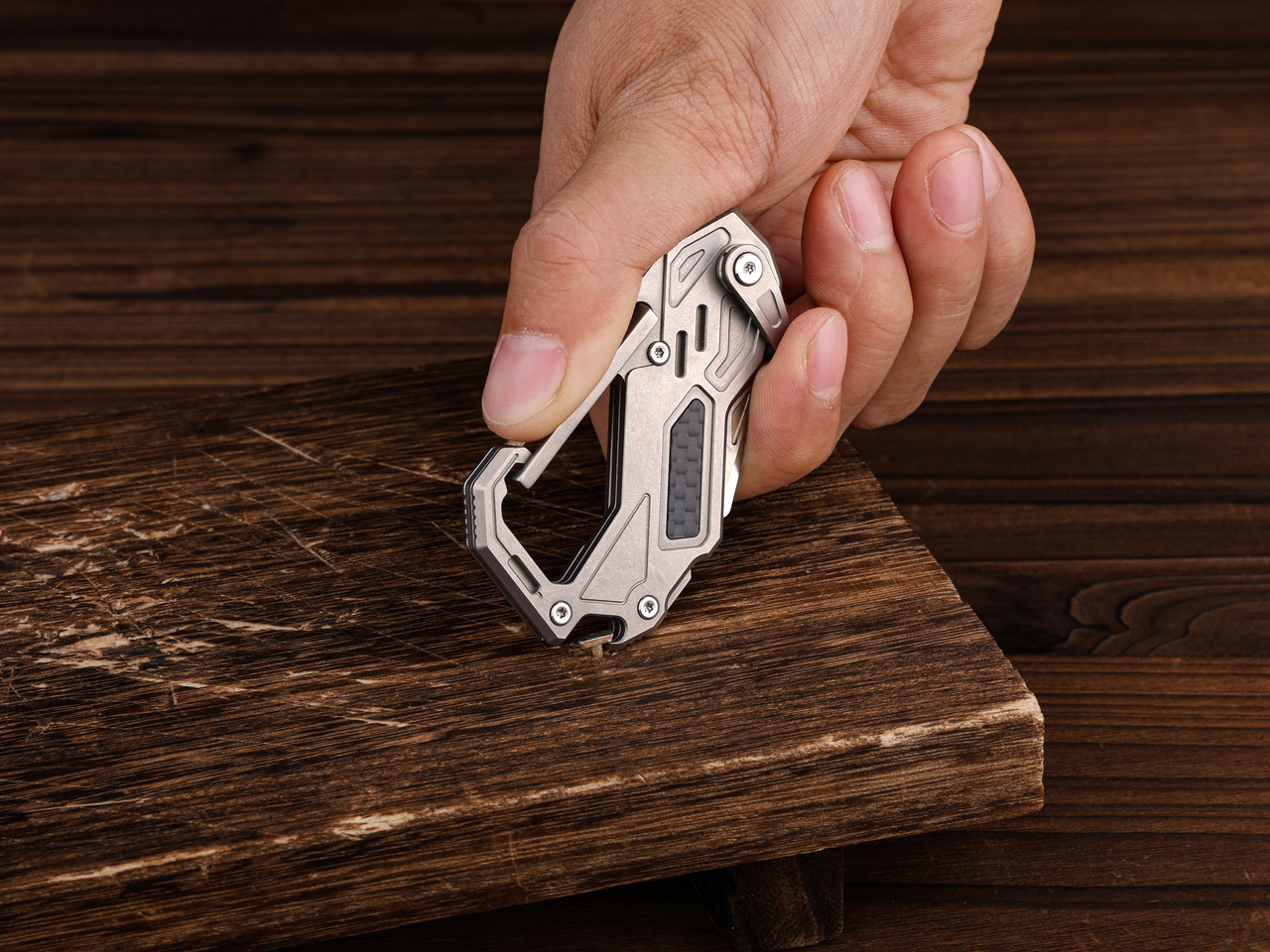
This 11g Keychain Knife Has a Tungsten Tip You Swap, Never Sharpen

Most keychain cutters feel like afterthoughts. Plastic shells with soft blades that struggle with packing tape, bend on zip ties, and disappoint when needed. The gap between how often a small sharp edge would be useful and how rarely those tools work is frustrating. Small does not have to mean flimsy, but most micro knives settle for exactly that, leaving you hunting for scissors or borrowing someone else’s blade when boxes arrive.

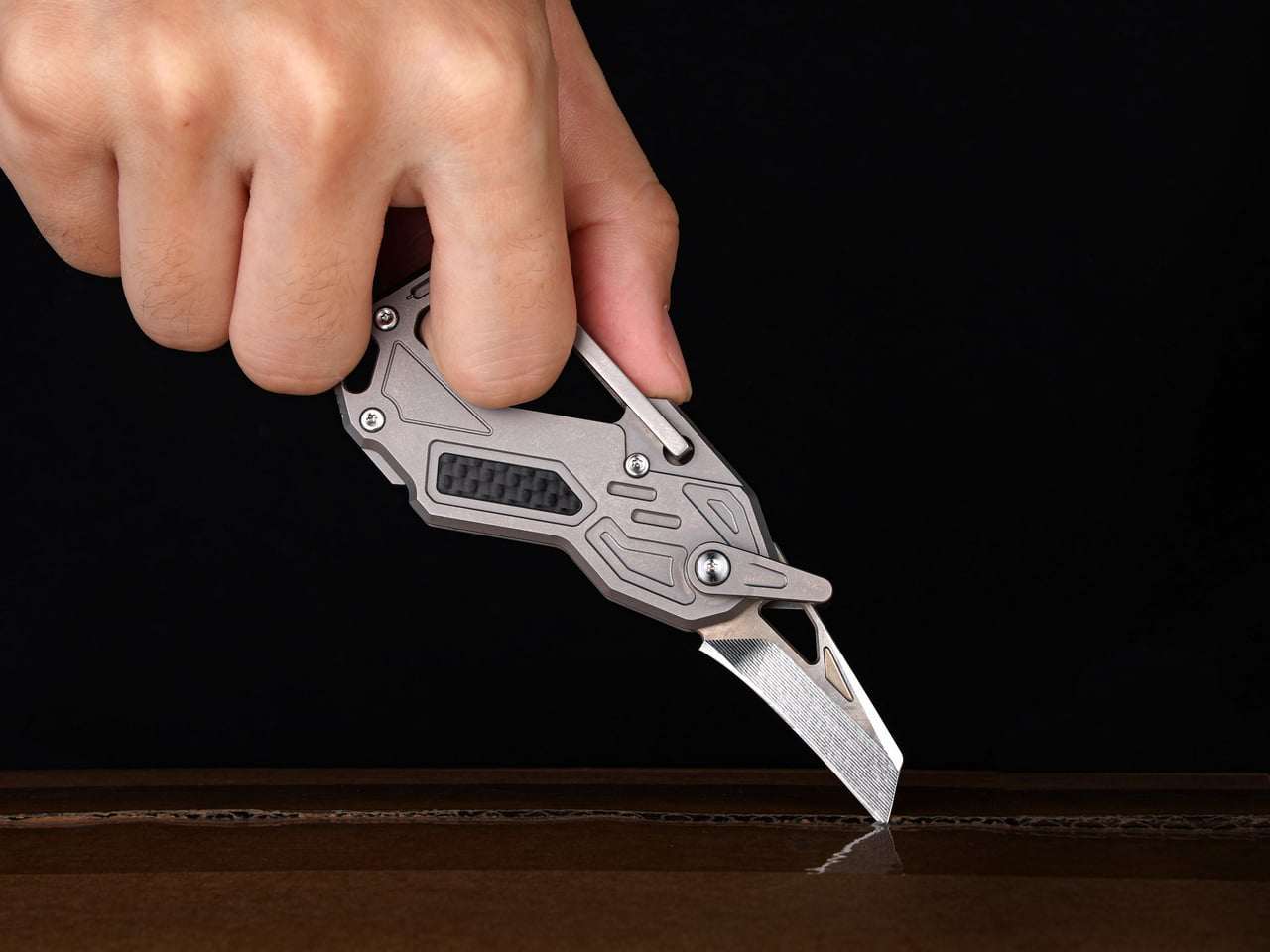
The Z3RO mini knife rebuilds the category from the materials up. It weighs 11g, measures around 5cm, and combines a tungsten cutting tip, carbon fiber body, and titanium backbone in a package that fits on a keychain without feeling like a toy. Instead of plastic or aluminum, Z3RO feels closer to pocket tech or minimalist jewelry, something you notice when you pick it up rather than ignore until it breaks.

Designer: YSMART Design Team

Click Here to Buy Now: $74 $120 (38% off). Hurry, only a few left!

The cutting tip is tungsten alloy, the same material used in surgical blades and industrial cutters, rated at Mohs hardness nine. It shrugs off cardboard, cord, plastic tags, and thick tape without dulling quickly or chipping like softer steel. It handles tasks that show up constantly, opening boxes, slicing cable ties, trimming threads, and cutting shrink wrap. Sharp enough to feel precise, hard enough to stay that way through months of daily cutting and abuse.

Instead of sharpening a tiny, ultra-hard edge, Z3RO uses a replaceable cutter head that swaps out in seconds without tools. When the tip eventually loses its bite, you pop in a fresh one. The body becomes a long-term object while the working edge is treated like a precision consumable. You replace the blade, not the tool, and the carbon fiber shell ages gracefully without looking worn after weeks of heavy pocket carry.

Most small knives lean on plastic or aluminum to save weight. Z3RO goes for woven carbon fiber wrapped around a titanium core, keeping the weight at eleven grams while still feeling solid. The material combination offers natural resistance to rust, sweat, moisture, and impacts, so it does not corrode in damp pockets or degrade from drops. It is the kind of material choice expected in high-end gear, not something dangling from house keys.

The mechanism is a magnetic quick-release using internal neodymium magnets instead of fiddly sliders. One firm pull separates the body, the cutter snaps into position with a click, and it is ready. The magnets hold everything with zero wobble, so it feels precise rather than loose. This matters when your other hand is holding a box, rope, or bag you do not want to drop while fumbling for a blade.

Everyday moments shift when a sharp, instantly accessible cutter lives on your keychain or neck lanyard. Cutting packing tape becomes one motion instead of clawing at it. Freeing a stuck zipper pull takes seconds. Trimming a cable tie or slicing shrink wrap happens without hunting for scissors. The tool turns minor annoyances into quick actions, and that quiet utility adds up, making it something you reach for multiple times daily without thinking.

The carbon fiber sheen, titanium accents, and slim silhouette make Z3RO look more like gear art than a utility blade. Color options like Stealth Black, Neo Blue, and Volt Green add personality without sacrificing the minimalist shape. It is the sort of object people notice when you set keys down, even if they do not immediately realize it cuts. The woven texture and metal details read as intentional design rather than generic hardware fare.

Z3RO exists because everyday carry has matured past cheap freebies into a space where materials, mechanics, and longevity matter. A tiny knife built from tungsten, carbon fiber, and titanium, with a magnetic quick-release and replaceable head, feels like a natural evolution. It reminds you that even the smallest tools can be designed with the same care as big ones, and sometimes the best gear is what you forget you are carrying until you actually need it.

Click Here to Buy Now: $74 $120 (38% off). Hurry, only a few left!

The post This 11g Keychain Knife Has a Tungsten Tip You Swap, Never Sharpen first appeared on Yanko Design.
Titaner Titanium EDC Ratchet Swings at 4° for Impossibly Tight Spaces

There’s a particular kind of frustration that comes with a stubborn screw buried deep inside a chassis or tucked behind a piece of furniture. You finally wedge a ratchet into the gap, but every swing sends the screw back to where you started, undoing your progress in tiny, maddening increments. The problem isn’t skill or strength; it’s that most ratchets need too much arc to advance the fastener.

The Titaner EDC Ratchet System was built precisely for this challenge, engineered around an impressive tight 4-degree swing arc. At the heart is a tiny ratchet mechanism, just under thirty grams, that can click forward with minimal movement. In cramped spaces where you can barely tilt your hand, that tight swing means you still get crisp confirmation that the fastener is turning.

Designer: Titaner

Click Here to Buy Now: $159 $295 ($135 off). Hurry, only 66/1900 left! Raised over $479,000.

Traditional thinking says that more precision means more fragility, and more strength means more mass. Titaner’s core weighs just 29.8 grams yet uses a dual-lock gear mechanism engineered to handle serious torque. When fully engaged, it feels like every bit of effort goes straight into the screw without the mushy slop you expect from small ratchets. The core is light enough to carry every day but built to take on rusted bolts without flinching.

Direction control works through a flip-based design instead of a small thumb lever. One side of the core locks for tightening, the other releases for loosening, with engraved markers making it obvious at a glance. Flipping the core in your fingers becomes a natural gesture, and removing that fragile switch simplifies the structure while shaving off weight and potential failure points.

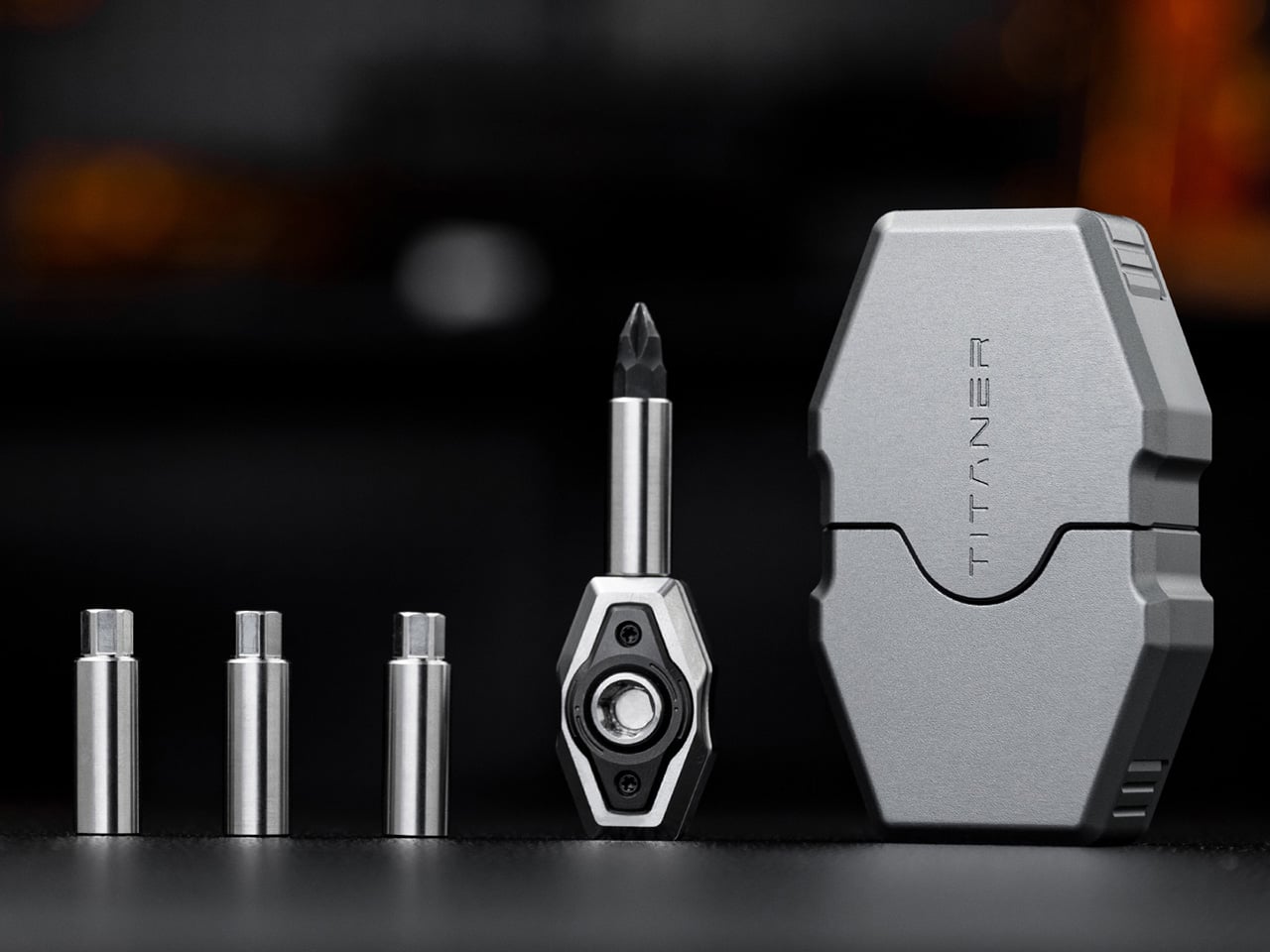
The modular system lets the same core adapt to very different tasks. Snap extension bars into the side ports, and it becomes a T-shaped handle for maximum leverage, letting both hands and your upper body share the load. Reconfigure into an L-shape to work around a chassis brace or wall, or keep it in a slim I-shape when you need to reach deep into a narrow opening.

Of course, controlling force at the moment of maximum torque is where the optional Gyro-Stabilizer cap comes in. It separates downward pressure from twisting motion, so your palm can press straight down while the ratchet turns freely underneath. That helps keep bits seated, reducing cam-out and stripped fasteners. For delicate work on plastics or electronics, the side port configuration gives more linear feedback, making it easier to stop at just the right tightness.

The titanium core, four extension bars, and a set of hardened S2 steel bits all nest into a small aluminum vault case. A clever magnetic structure locks each piece in place with a satisfying snap, so nothing rattles. In a bag or pocket, it feels more like a compact object than a toolbox, yet it unfolds into a capable setup when you need it.

GR5 titanium resists sweat, rain, and seawater, while M390 steel gear teeth handle repeated engagement without rounding off. The outer case is milled from 7075 aluminum, with chamfered edges and smooth surfaces that feel deliberately finished. Spin the core between your fingers, and the fine clicks of the 4-degree mechanism turn precision into something you can hear and feel, a tactile reward for the engineering underneath.

The system comes in two versions. The basic edition offers just the ratchet core with a standard interface, meant for people who already have their own bits and extensions they trust. The pro edition includes the full modular ecosystem with bars, bits, a vault case, and all the configuration options for T, L, and I shapes, turning it into a complete pocket toolkit built around a single titanium heart.

The Titaner EDC ratchet system treats turning a screw as an opportunity for thoughtful engineering and satisfying interaction. It’s built to live in a pocket, ready for the awkward angle or hidden fastener that shows up without warning, and to make those moments feel a little less like a fight and a little more like a solved puzzle with the right tool in hand.

Click Here to Buy Now: $159 $295 ($135 off). Hurry, only 66/1900 left! Raised over $479,000.

The post Titaner Titanium EDC Ratchet Swings at 4° for Impossibly Tight Spaces first appeared on Yanko Design.

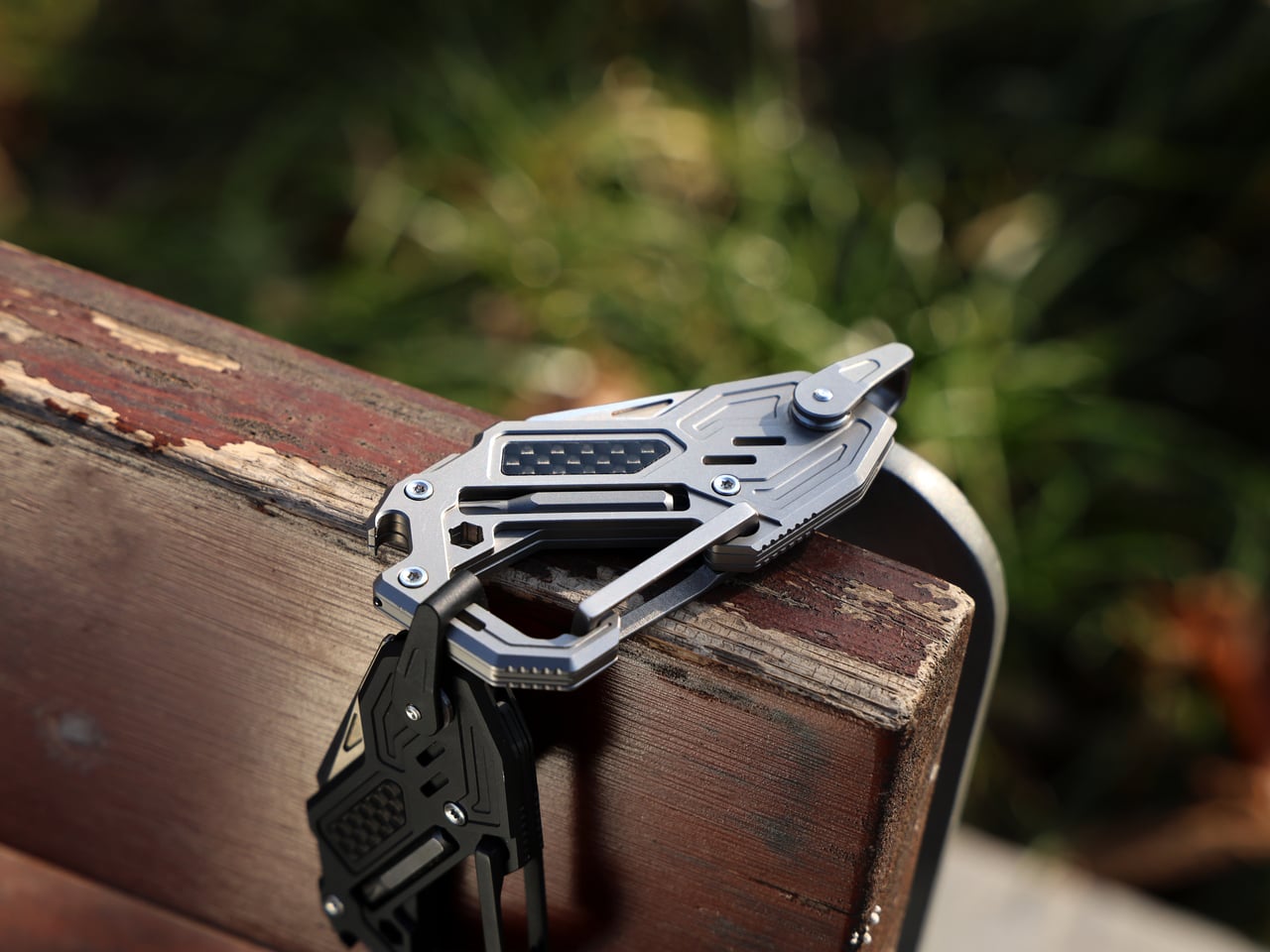
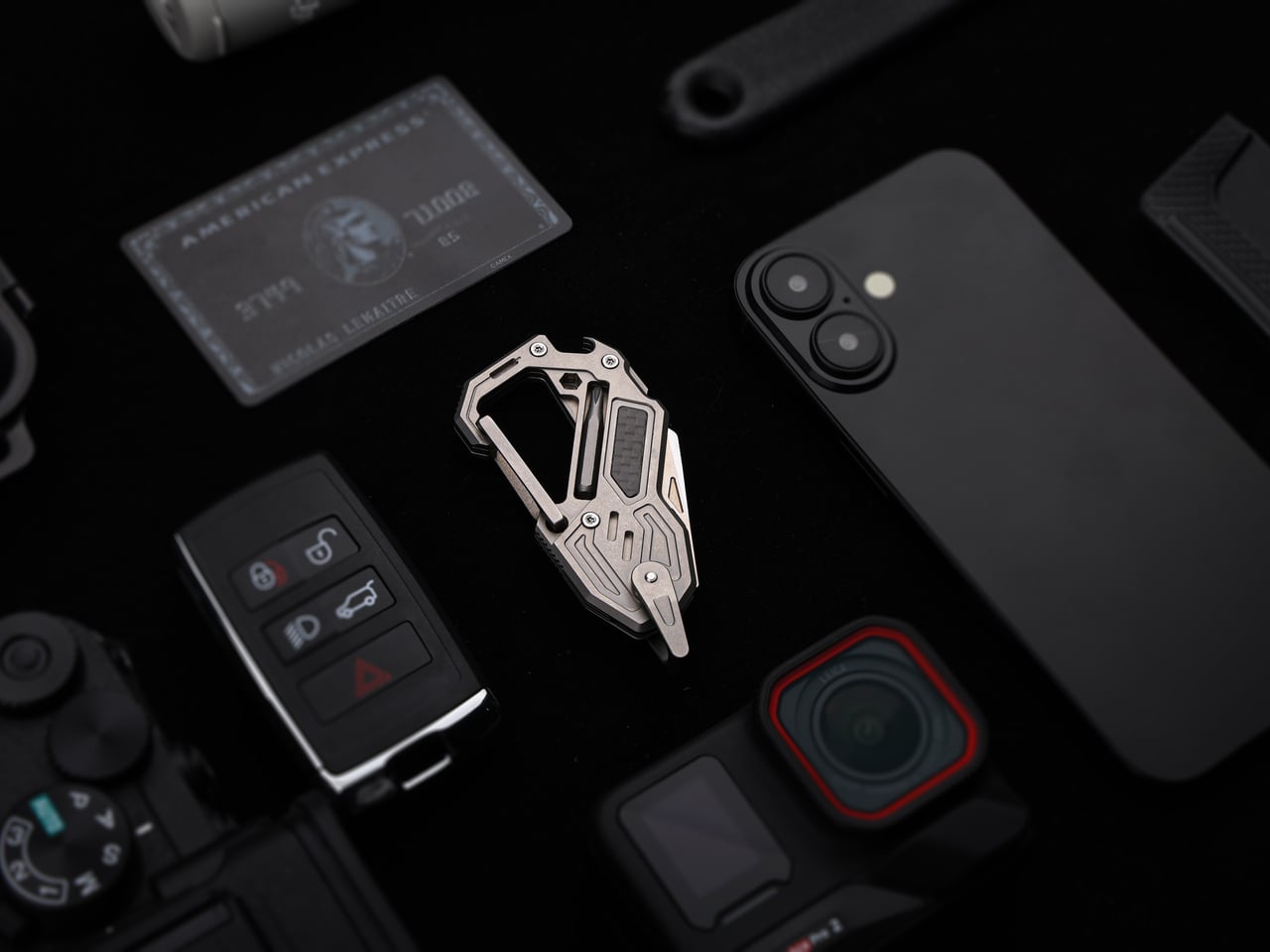
This 6.5g Quick-Release Titanium Keychain Opens With One Hand

Most of us have struggled with key rings that jam in your pocket, carabiners that tangle with everything else in your bag, or split rings that pop open at the worst possible moment when you’re rushing to unlock something important. Everyday carry should be about readiness and preparation, not frustration and fumbling with gear that fights you instead of helping you stay organized and efficient throughout your day.

The Titaner Quick-Release EDC Carry System offers a completely different approach by blending aerospace-grade GR5 titanium, a patented magnetic-mechanical lock, and a modular design that adapts to your gear and your daily routine without adding unnecessary bulk or complexity. It features four sub-connectors that support various carrying use cases, from everyday carry to professional outdoor gear. Best of all, it feels as good as it looks, engineered to disappear into your pocket until the exact moment you need quick, one-handed access to whatever you’re carrying.

Designer: Titaner

Click Here to Buy Now: $36 $65 (45% off). Hurry, only a few left! Raised over $94,000.

Crafted entirely from GR5 titanium, the Titaner system manages to be both ultra-light and incredibly strong for its compact size. Each connector is CNC-machined with precision tooling and finished with careful attention to edge smoothness, available in your choice of stonewashed, machine, or bold anodized finishes in yellow and blue. The result is gear that feels warm and tactile rather than cold and industrial.

The minimalist form follows function precisely without wasting a single millimeter on unnecessary features or decorative elements. Weighing just 6.5 grams, lighter than two sheets of paper, the main connector is barely noticeable in your pocket yet tough enough to survive years of daily use and harsh outdoor environments without failing. The titanium construction means it will never rust, discolor, or irritate your skin during extended contact with sweat or seawater.

The heart of the system is a patented dual-action lock combining an N56 neodymium magnet for effortless alignment with a physical GR5 titanium lock for absolute security you can trust completely. Connecting your gear is as simple as snapping the pieces together with a satisfying, audible click that confirms proper engagement, but releasing them requires a deliberate press and 90-degree twist motion that prevents accidental detachment.

This dual-action approach ensures your keys, tools, or tech never detach by accident during daily activities, no matter how much you pull, shake, or jostle your bag during commutes, hikes, or outdoor adventures. The connector maintains its hold through vibration, snagging, and heavy use in demanding conditions, providing peace of mind for carrying expensive equipment you can’t afford to lose unexpectedly or replace on short notice.

The newly launched EDC Connector modular system eliminates the need for traditional key rings entirely through four distinct sub-connector types that attach directly to the main buckle. This direct-attach approach removes bulk, weak points, and the annoying jingle that comes with metal rings clanking together in your pocket. Each sub-connector is purpose-built for specific carry needs, from single items to webbing straps, letting you build a setup that actually makes sense for your lifestyle.

There are four types of sub-connectors that work seamlessly with the main buckle for different purposes. The U-Series provides balanced carry for single items, the X-Series features a reinforced titanium pin for tools with small attachment holes, the D-Series stacks keys quietly like pages in a book for flat carry, and the E-Series creates ultra-stable anchor points for webbing and backpack straps.

Whether you’re organizing house and car keys for daily commutes, hanging a flashlight or multitool from your belt, attaching gear to a backpack for outdoor adventures, or keeping pet tags secure during walks through the neighborhood, the system adapts seamlessly to different scenarios throughout your day. The 360-degree swivel keeps everything tangle-free and automatically positions gear in the most convenient orientation for immediate, effortless access.

Every edge is finished smooth for absolute comfort, and the connector’s action is so precise and crisp that you’ll find yourself clicking it open and closed just for the tactile satisfaction and stress relief it provides. The titanium is hypoallergenic and completely corrosion-resistant, maintaining its appearance and performance even after years of sweaty hikes, rainy commutes, or daily handling without showing degradation or requiring special maintenance.

The finishes let you match your gear to your personality and specific use case preferences. Stonewashed provides a rugged texture that hides daily wear and tells your adventure story, machine finish showcases pure titanium with clean technical elegance, and anodized versions make a bold visual statement with vibrant color that distinguishes your carry from typical EDC gear most people settle for every day.

The Titaner Quick-Release EDC Carry System delivers minimalist design, technical innovation, and everyday practicality in a package that feels both premium and approachable for serious users who demand quality. For anyone who wants their gear to be as reliable and refined as the rest of their daily routine, this titanium connector system offers a thoughtful alternative to the clunky key rings and unreliable split rings most people simply tolerate.

Click Here to Buy Now: $36 $65 (45% off). Hurry, only a few left! Raised over $94,000.

The post This 6.5g Quick-Release Titanium Keychain Opens With One Hand first appeared on Yanko Design.
Gorgeous titanium-coated drinking glass makes every drink a visual and gustatory treat

It’s almost too easy to take for granted the vessel we’re drinking from. After all, we’re definitely more interested in the taste of our drink, unaware that the material our glass or cup is made of can actually have an adverse effect on the very taste we’re so fixated on.
And that glass you’re drinking from? It might not even be pure glass but mixed with some metals to reinforce the material, metals that also affect the taste or, worse, affect our bodies.
If you’re searching for the perfect glassware, you don’t have to look far because we have just the perfect design for this very purpose. Stunningly beautiful and faithful to your flavors, this small piece of glassware is able to recreate the magnificent Aurora lights right in your hand, turning every sip into a memorable experience.

Designer: Progress Design

Click Here to Buy Now: $58.50 $65 (10% off at checkout). Hurry! Black Friday deals end in 48 hours.

Drinking glasses are a common sight in many households, whether they’re for “regular” beverages or alcoholic drinks. Clear as they might appear, some of these are mixed with some metals to produce certain colors or effects.

And while these metals aren’t so dangerous to our health, they do have negative effects on the taste of the drink.

It is almost as if you can’t combine beauty and taste in a glass, but that theory has been proven false with PROGRESS’ Rex Rock glassware.

Skilled craftsmen from Shizuoka, Japan harness the same technologies and processes used in making space-grade equipment like satellites to process titanium of the highest purity to reinforce the glass and coat its inner surface.

This rare form of pure titanium doesn’t release metal ions that mess with the flavor of the drink inside. In fact, it actually works to enhance the taste by breaking down unpleasant flavors.

Pure titanium is also regarded to be the most human-friendly and safest kind of metal because it rarely changes over time. That means no staining, no odors, and completely hygienic.

Pure titanium alone, as impressive as it already might be, isn’t enough to create an unforgettable drinking experience. This drinking glass takes the design even further by reproducing the mesmerizing colors of the rainbow and of the majestic Aurora lights.

This feat is made possible by making extremely precise cuts and changes to the glass’ thickness down to nano levels. Pouring drink into the glass results in a shimmering effect that’s comparable to the soothing glow of the aurora, a bonfire, or a murmuring stream, imagery that calms the heart and soothes the soul.

Stop worrying about the safety and taste of your drink and start enjoying the flavors and the dazzling visuals offered by this pure titanium-reinforced glassware. Whether it’s liquor, soda, or even just ice-cold water, this stunning drinking glass will turn the activity into a joyful and reinvigorating experience, rich in flavor and color.

Click Here to Buy Now: $58.50 $65 (10% off at checkout). Hurry! Black Friday deals end in 48 hours.

The post Gorgeous titanium-coated drinking glass makes every drink a visual and gustatory treat first appeared on Yanko Design.