Dyson’s one of the biggest players in the cordless vacuum and air purifier space (and, more recently, hair styling as well), but it’s kept a relatively low profile in the robot vacuum market. Today, the company’s bringing its latest robot vacuum to the US and Canada. After being available in other regions, the Dyson 360 Vis Nav is now available to order in the US for a whopping $1,199 from Dyson direct and other retailers like Amazon.
While we haven’t had the chance to test the 360 Vis Nav yet, we were able to get more details from Dyson about how the new robot vacuum works. A few things stand out as departures from traditional robot vacuums, the first being the 360-degree vision system that uses a camera on the top-center of the robot to map out your home as it cleans. Home mapping isn’t new in this space, but Dyson claims that the images captured by this vision system will help the machine better understand the layout of your home, including where obstacles like furniture live, make note of corners and edges and help it recognize where it’s cleaned and where it still needs to go to finish a job. The camera is surrounded by eight LEDs that balance exposure and better help the robovac navigate in low-light situations as well.
Second, whereas most robot vacuums use small sweepers to collect dust bunnies hiding in room corners and along furniture edges, Dyson’s machine has a side-edge actuator that opens automatically when cleaning spaces like these. It then uses suction to collect debris, which Dyson claims provides an even more thorough cleanup. I’m eager to see how this works in practice because cleaning the corners of rooms is one of the hardest things for a robot vacuum to do right, even for those that have the advantage of a D-shaped design like the 360 Vis Nav.
Finally, Dyson’s robot vacuum uses a Piezo sensor similar to those found in the company’s stick vacs to detect dirt and, subsequently, help the machine do a couple of things: kick up its suction power to the max 65 air watts when necessary, and create a heatmap in the My Dyson app of the dirtiest parts of your home. This sounds like a more useful application for a piezo sensor than that of Dyson’s cordless vacuums; I found in my testing that seeing how many dirt particles you’re sucking up with a manual vacuum might be fun to watch change on a digital display as you clean, but it’s not very actionable once you’re done vacuuming. But in this application, particularly with the heatmap, that information can show you areas of your home you may want to clean more often and you can program the 360 Vis Nav to only clean those spots from within the app.
The Dyson 360 Vis Nav has a similar design to some of the higher-end robot vacuums on the market right now, with two squared-off edges that help it get into room corners more easily. Under the hood, it has a Hyperdymium motor and a removable filter, plus a triple-action brush bar that spans the entire width of the machine, something you don’t often see in competing robot vacuums. Naturally, the cleaning surfaces borrow a lot from those on the company’s stick vacs: there are carbon fiber bristles and stiff nylon bristles for deep-cleaning carpets and a “fluffy” softer nylon surface that’s better on hard floors. The whole machine is HEPA-compliant, which means air that’s been sucked up cannot escape through other parts of the machine, making it better at trapping microscopic particles like allergens and dust mites.
Dyson may have waited a bit to enter the US robot vacuum market, but it appears it wanted to find the right ways of integrating technology from its cordless vacuums into this space before doing so. On paper, that technology could set the 360 Vis Nav apart from other robot vacuums when it comes to raw suction power. When we’re able to get testing time with the device, I’ll be interested to try out its four cleaning modes (Auto, Boost, Quick and Quiet), see if the advertised 65-minute runtime (in Auto Mode) actually holds up and judge how robust and easy to use the My Dyson app is.
But what already sets the 360 Vis Nav apart from the competition is its sky-high, $1,199 price tag. That’s a price we’ve only seen on robot vacuums that come with self-emptying bases, and the 360 Vis Nav doesn’t have one of those (its dock only recharges). But this won’t be a surprise if you’re familiar with other Dyson products, which are often priced at a premium.
This article originally appeared on Engadget at https://www.engadget.com/dyson-enters-the-us-robot-vacuum-market-with-the-360-vis-nav-153013678.html?src=rss
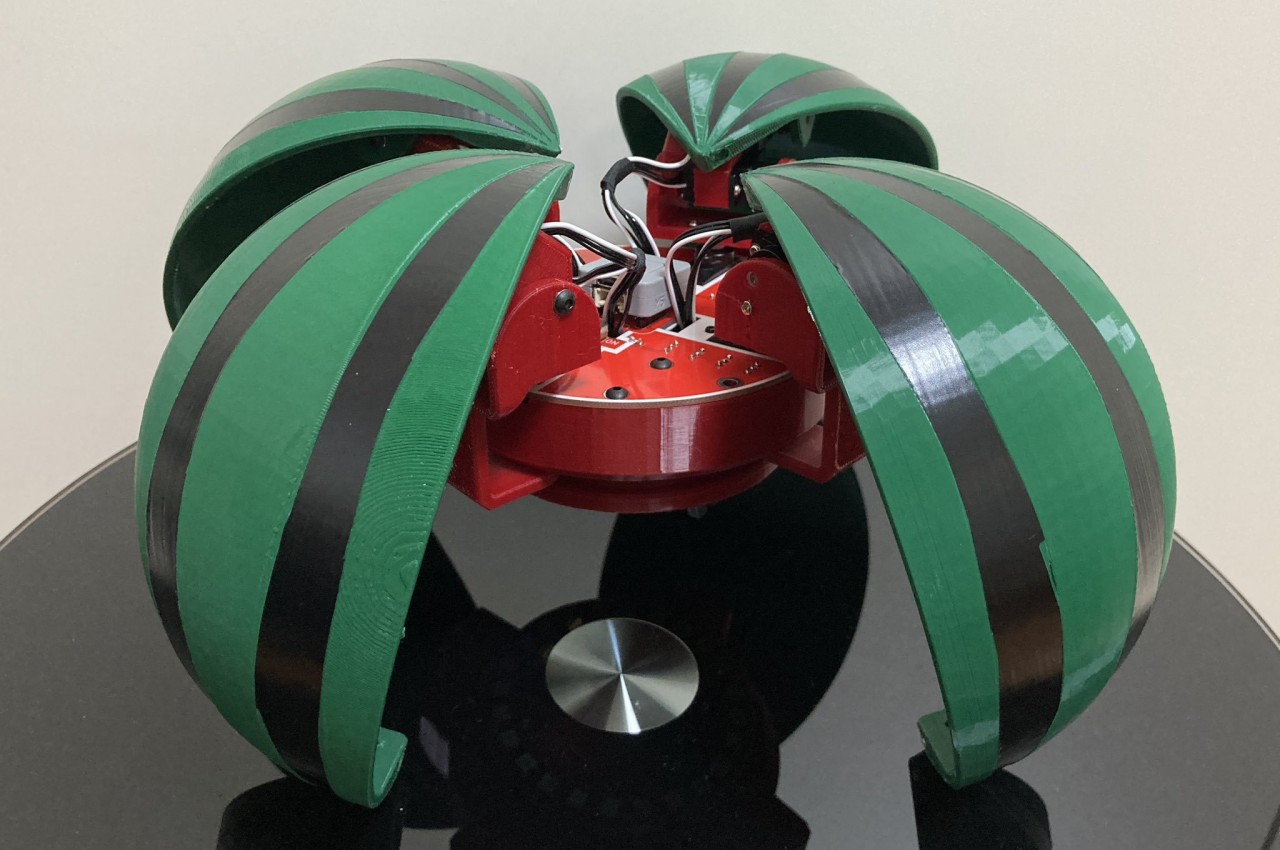
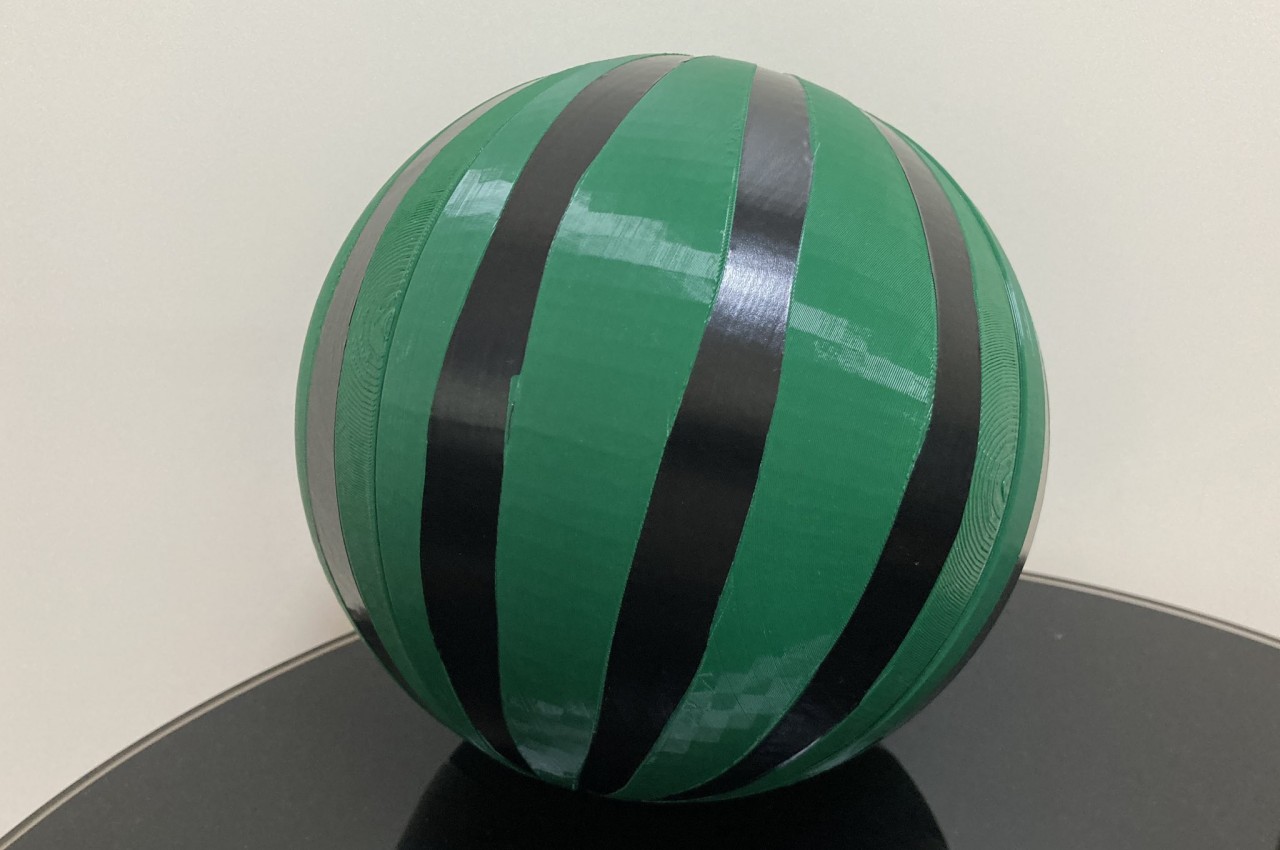
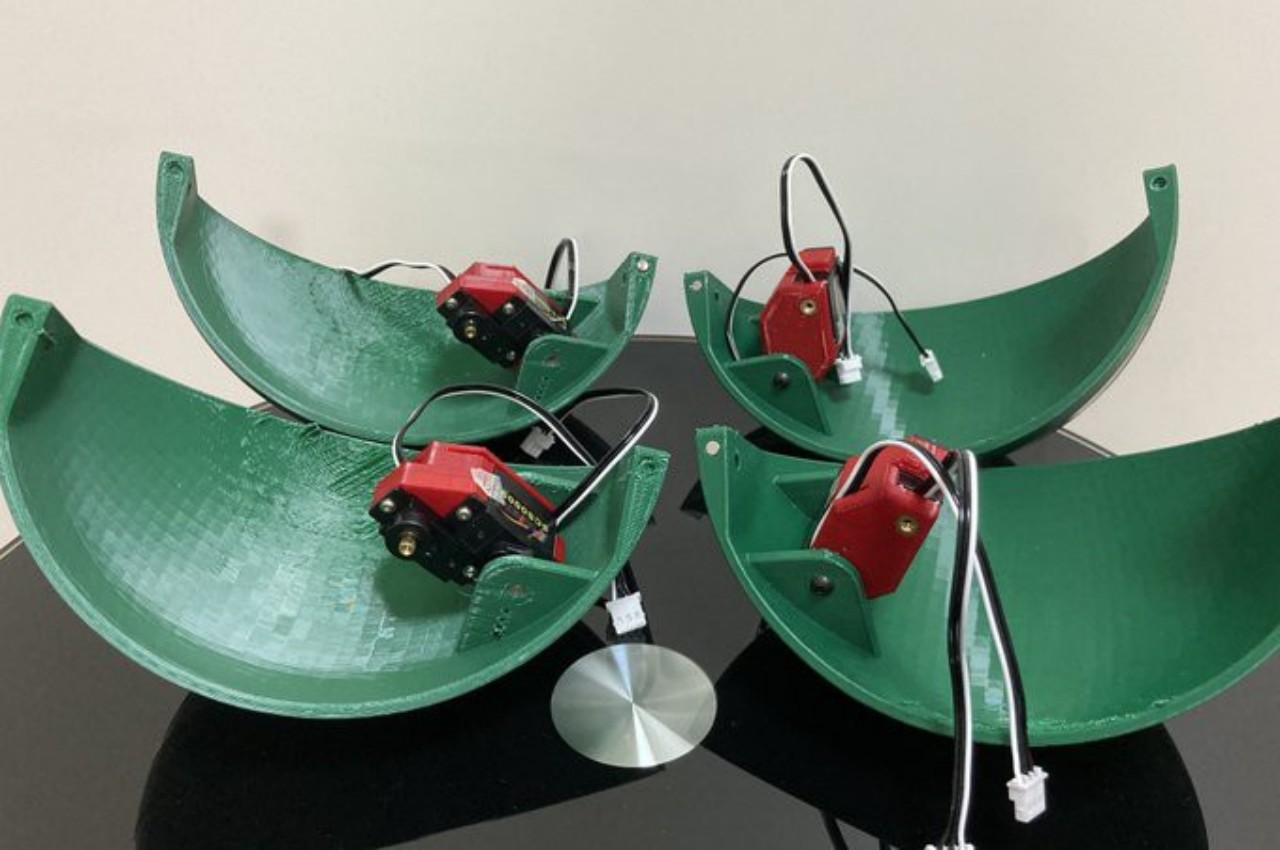
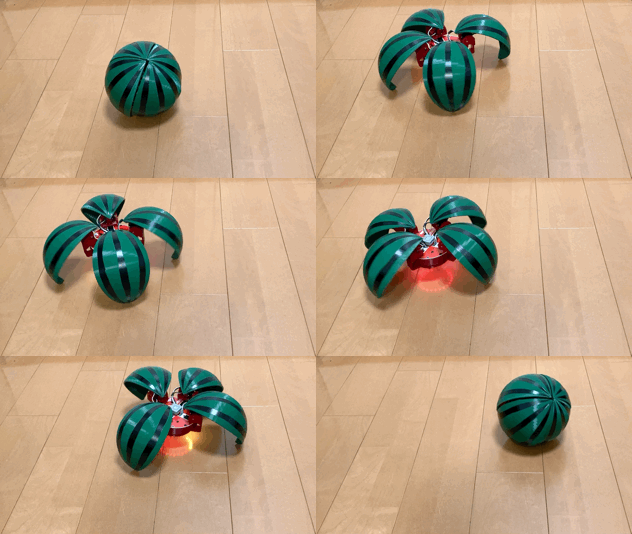
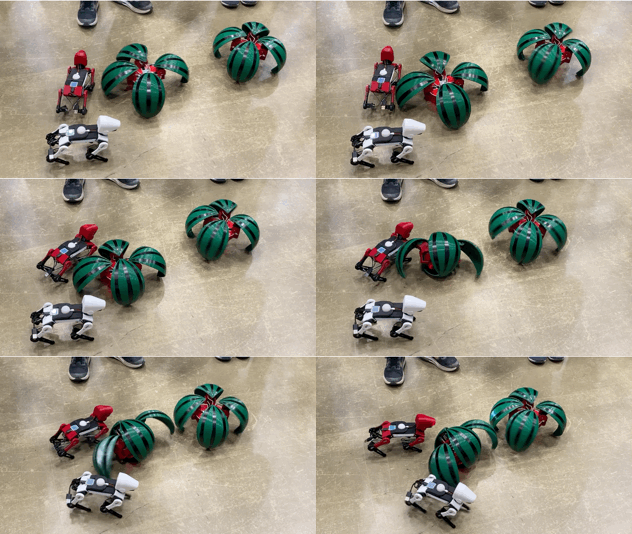
We saw quite a few robots at MWC 2024 last month, but the two brightest stars were dog-like designs that were derived from the nightmare fuel that was Boston Dynamics’ Spot. Nowadays, the term “quadruped robot” would call images of that machine or its more refined descendants, but that’s only by convention and not by definition. This DIY robot, for example, also has four legs, at least for the technical definition of what a “leg” means, except it doesn’t take inspiration from canines or other four-legged animals. Instead, it tries to disguise itself as a fruit that suddenly splits into four and starts moving almost like a crab. A real-world Transformer, but in a small and somewhat cute package.
Designer: Ryota Kobayashi
Most of us probably aren’t unfamiliar with robots in disguise, at least those fictional machines that transform from a mundane shape to something truly more robotic. Of course, those fictional robots try to mimic vehicles or even animals since those things are already mobile by nature. But a spherical fruit that only rolls when the law of inertia takes effect? Really an odd choice for a disguise.
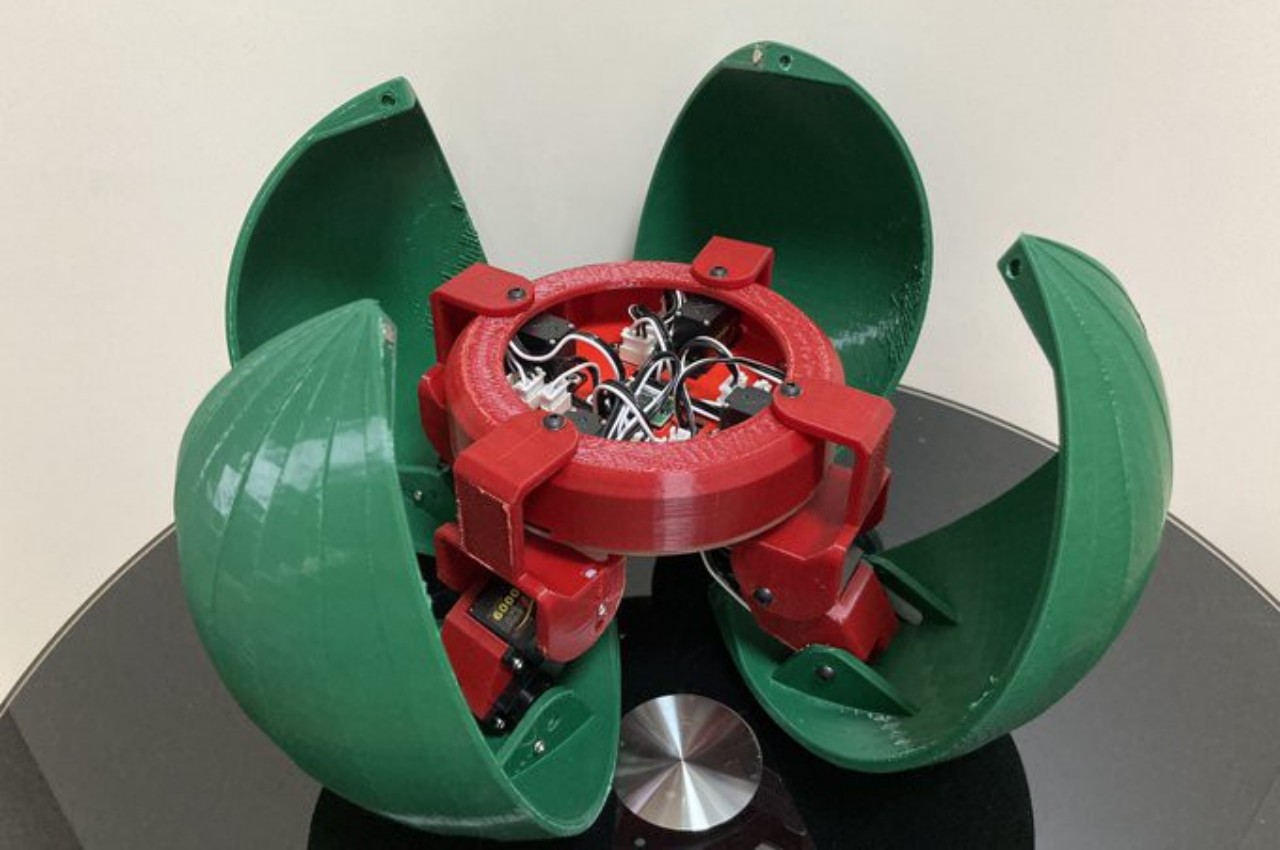
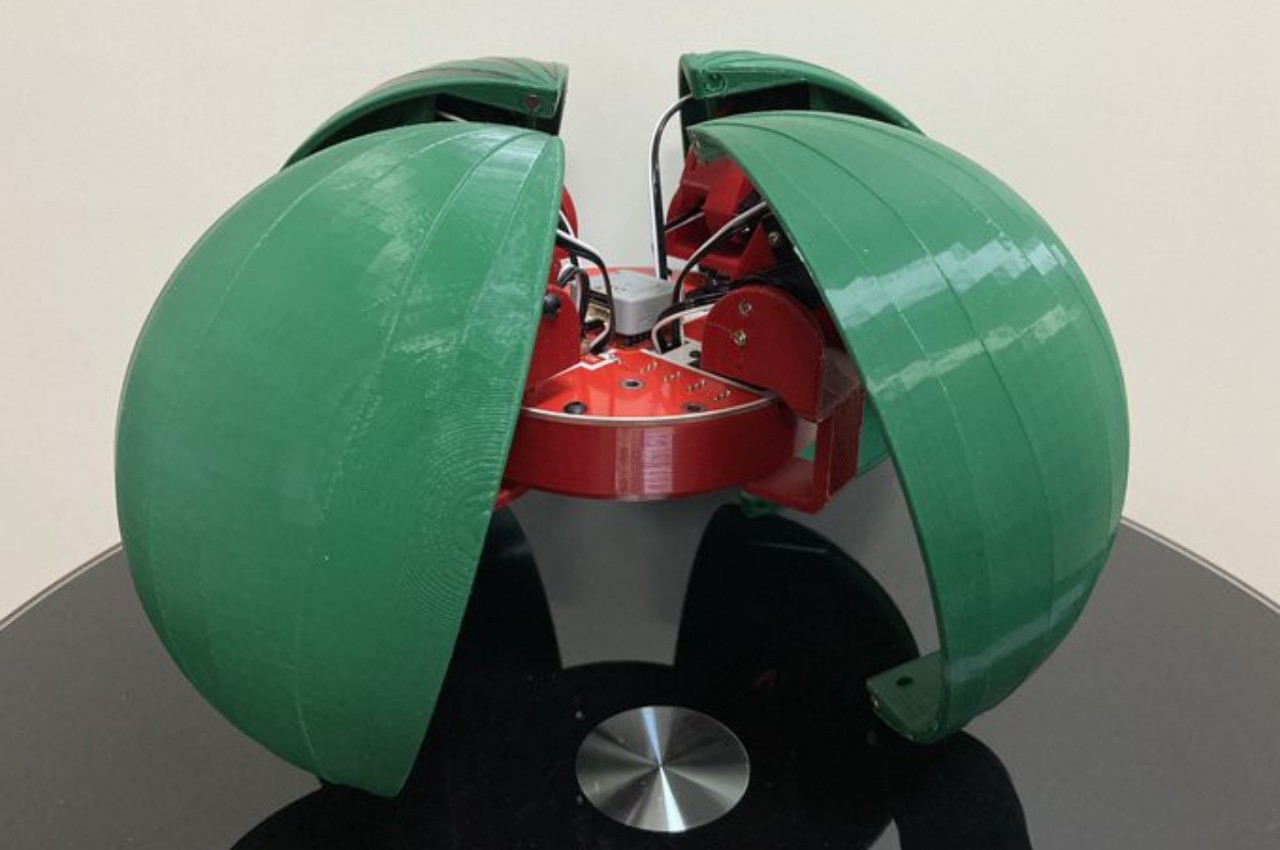
But that’s exactly what the Sherobo quadruped robot does, looking like a very fake plastic lemon in its “inactive” state. The real inspiration isn’t actually the fruit itself but what’s done with it in Japan. A game called “Suikawari” is pretty much the Japanese form of piñata, trying to split the watermelon with a stick while blindfolded. Of course, you won’t be splitting this sphere, let alone hitting it, because it splits on its own when it stretches its legs to walk around.
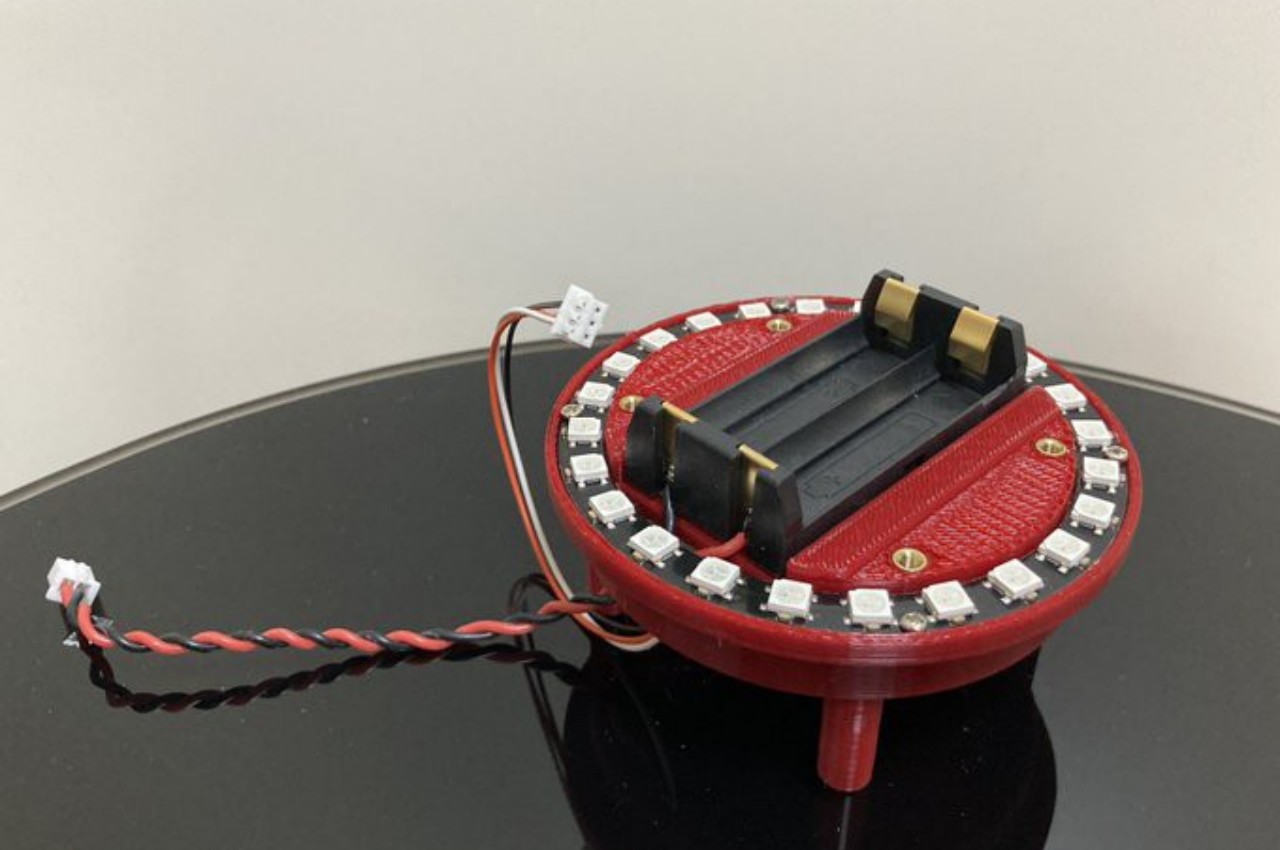
Sherobo is actually made from many off-the-shelf components for the robot’s mainboard and motors. The frame, body, and legs, however, are all custom 3D printed, of course, and the designs are sadly not available publicly. What’s interesting is that each of the robot’s four legs has three degrees of freedom or 3DoF, giving it a great deal of mobility and flexibility. That said, given its design of the legs located around the body, it walks more like a crab than any other quadruped.
And, of course, it doesn’t have to be a watermelon, either, and it can be any fruit or spherical object you prefer. It’s definitely an interesting experiment on robot design and one that expands the definition of a quadruped robot. It doesn’t hurt that it is perhaps more adorable those those Spot-like dog-inspired robots, that is unless you actually have a phobia of crab-like and spider-like critters.
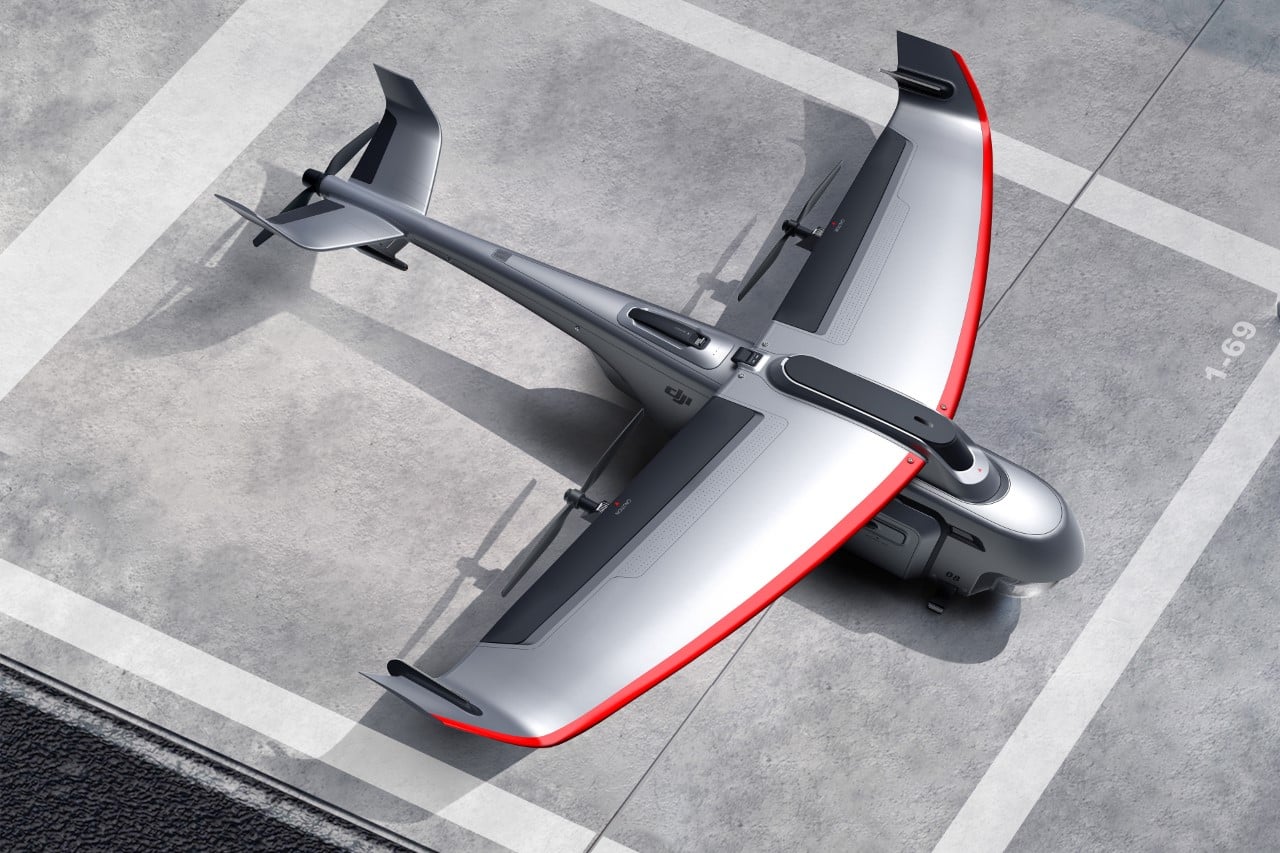
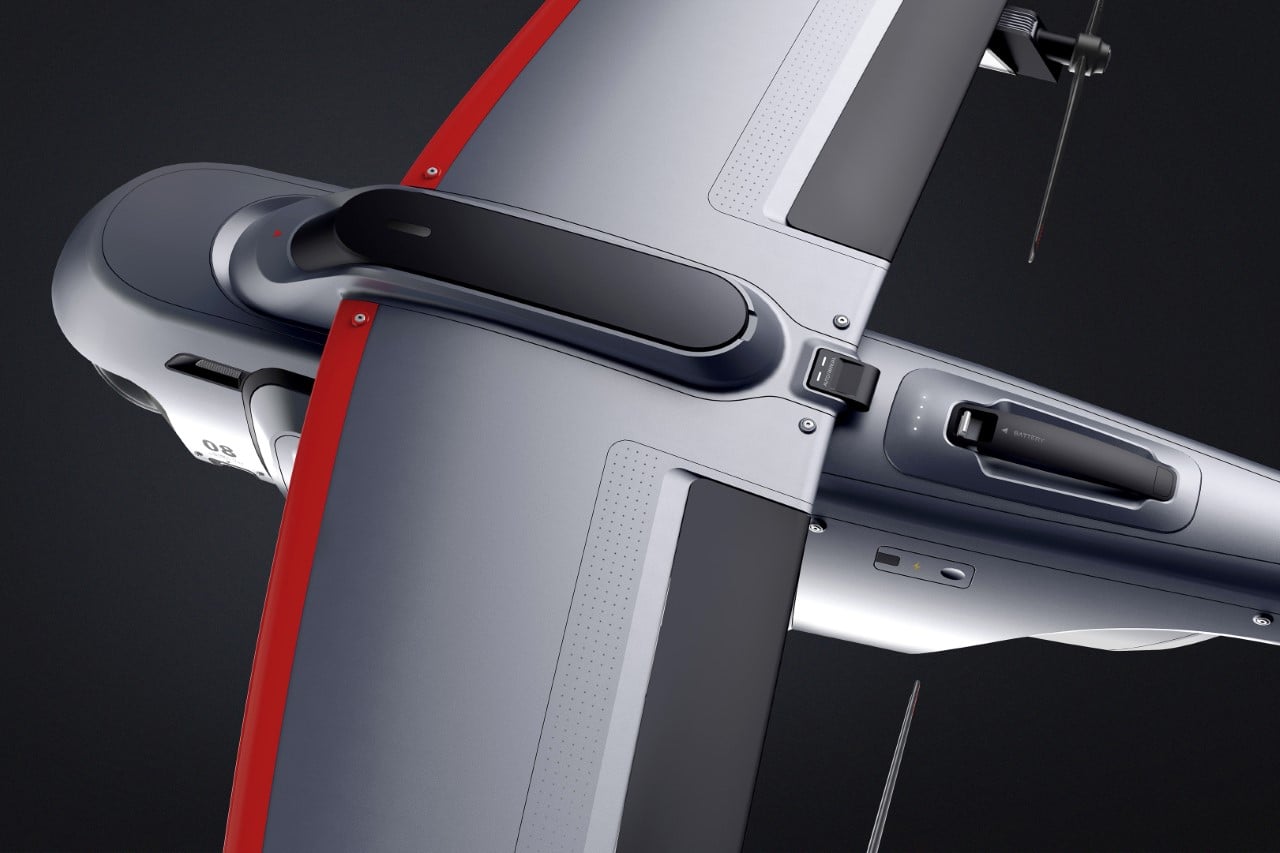
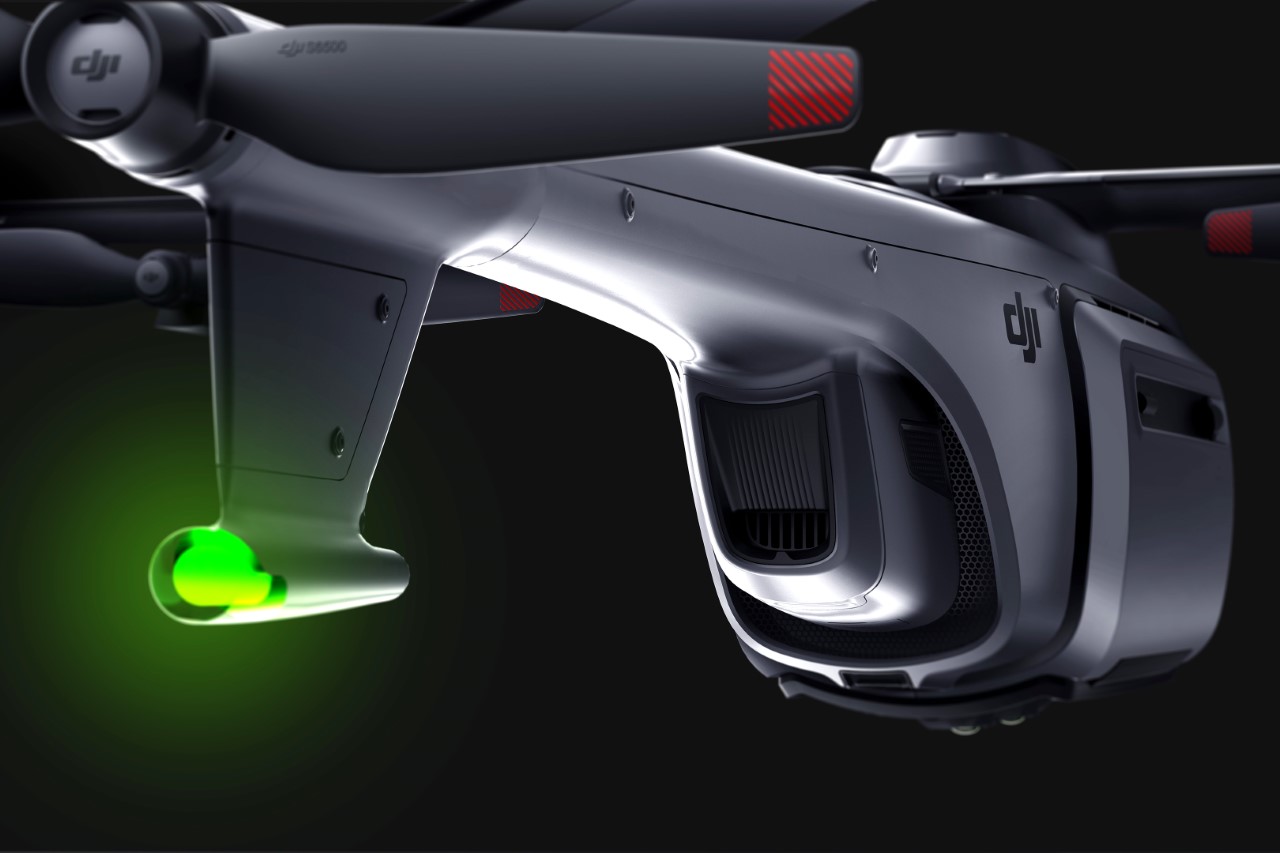
Designed to extend the range of delivery from specific hubs, the DJI Express can easily make short inter-city commutes to deliver cargo and supplies without needing a semi-truck or even a dedicated driver. Perfect for smaller cities located next to bigger ones, the drone takes on the role of a delivery-agent, helping easily and rapidly cover large distances to complete deliveries.
Designer: Qingsheng Meng
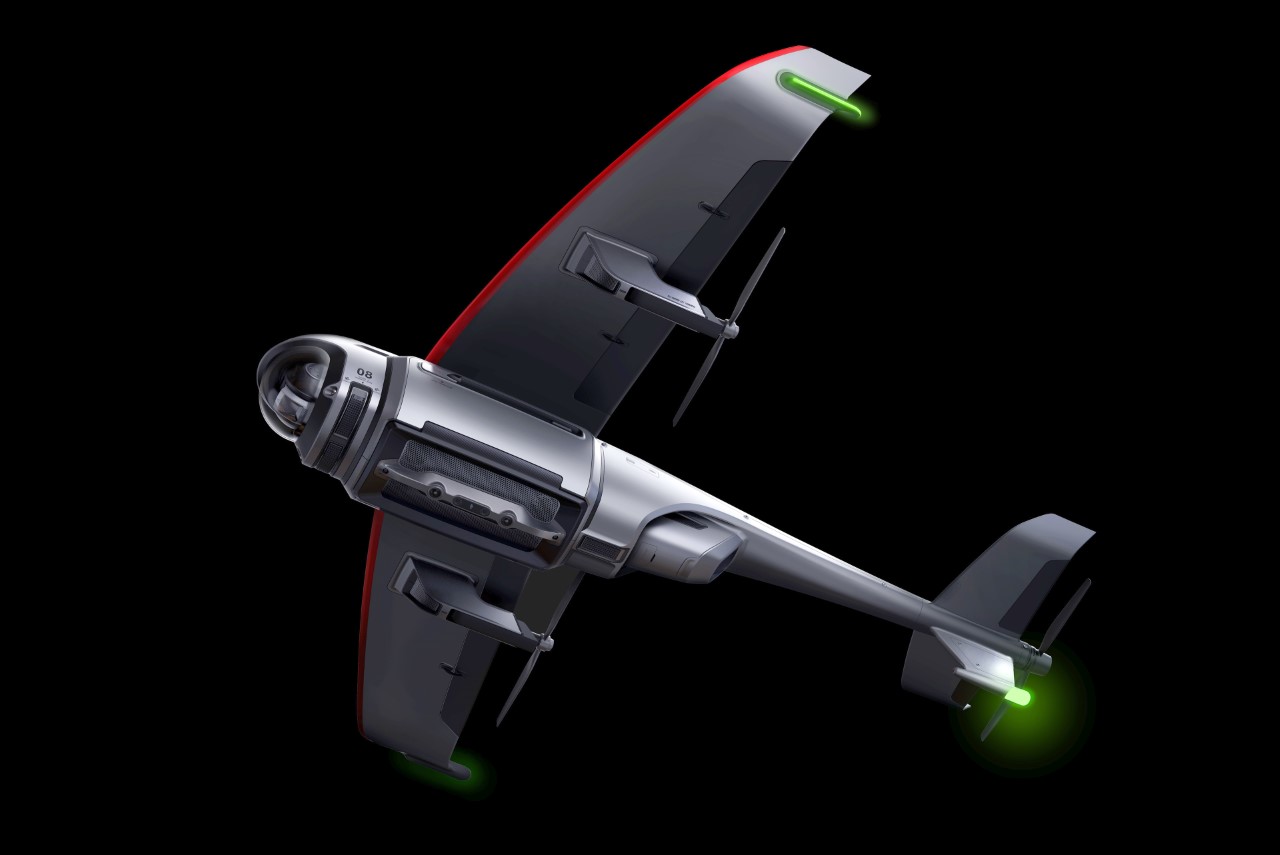
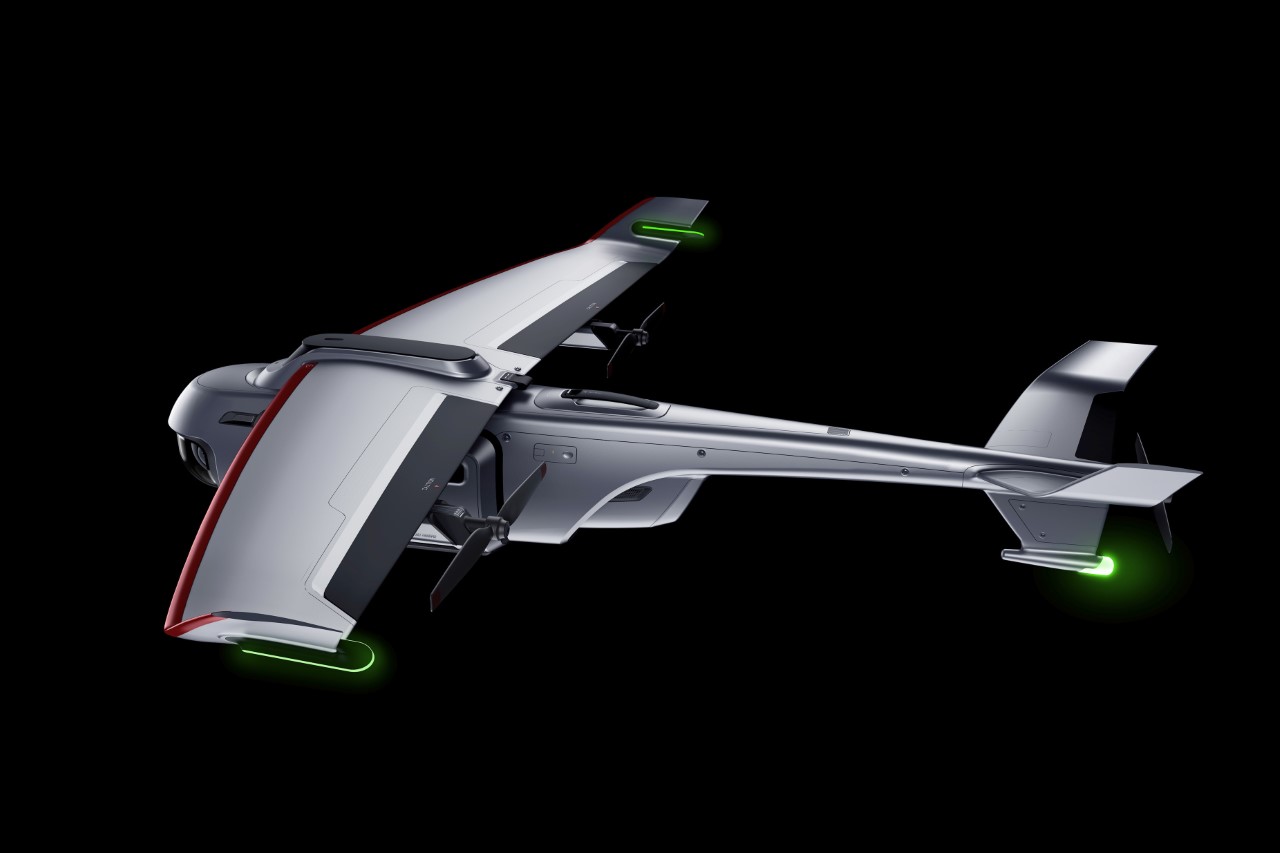
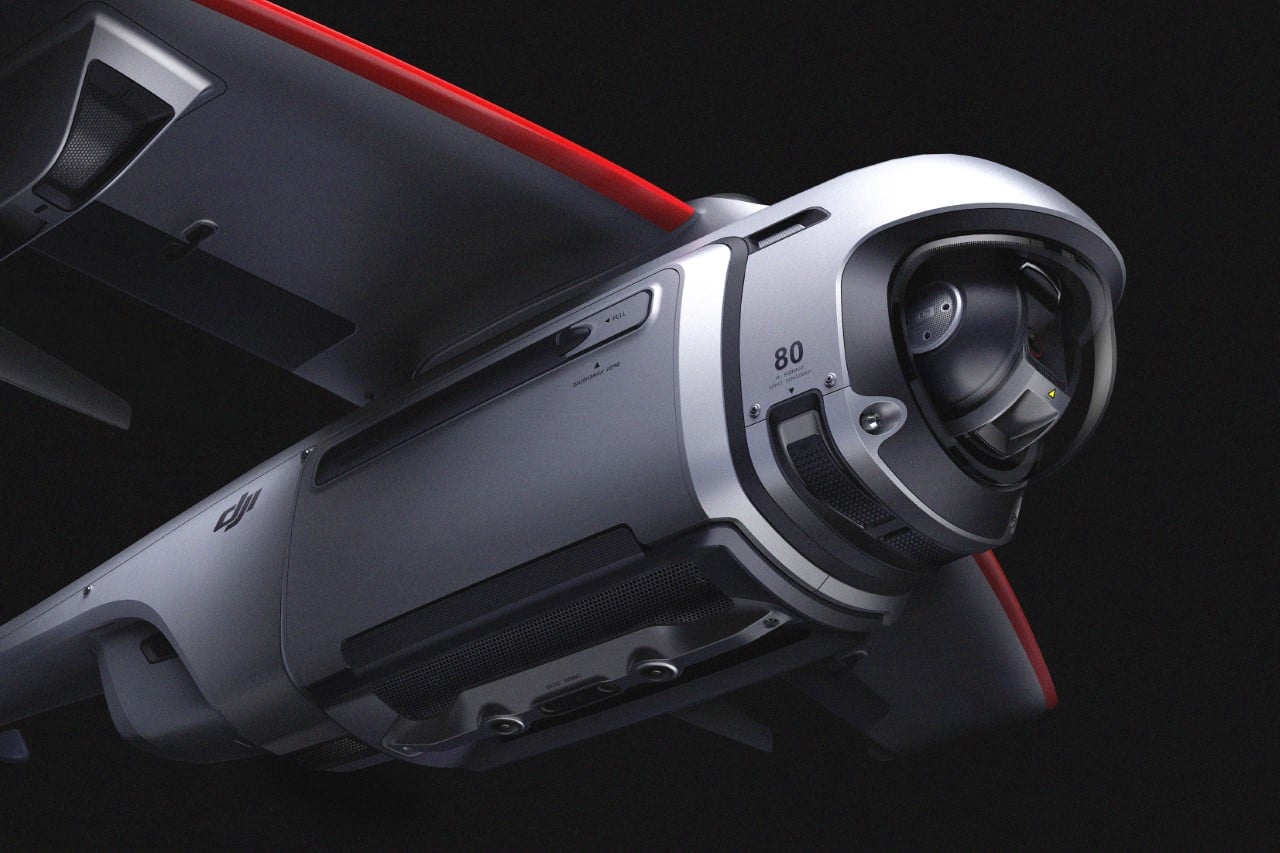
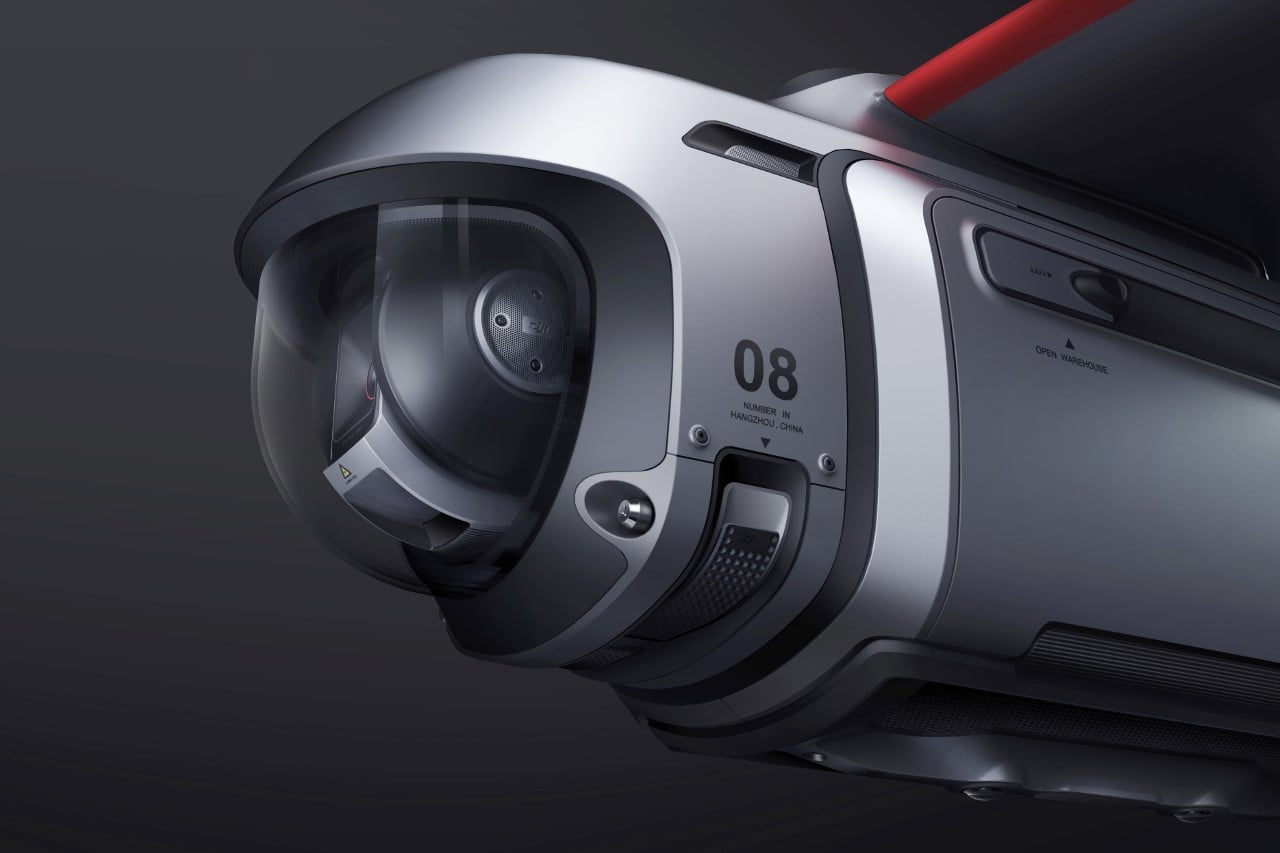
The DJI Express UAV concept, created by China-based Qingsheng Meng, explores a different format from the drones you’re currently used to. Unlike most quadcopter-shaped aerial devices, the Express takes on the shape of a winged eVTOL that can fly longer distances like your regular airplane. However, significantly smaller than most airplanes, the Express UAV, as its abbreviation suggests, doesn’t have any humans inside it. The unmanned aircraft is controlled entirely remotely, relying on a combination of sensors for route-mapping and obstacle avoicance, and a rather massive camera unit on the tip that allows the remote pilot to look around as they maneuver the craft.
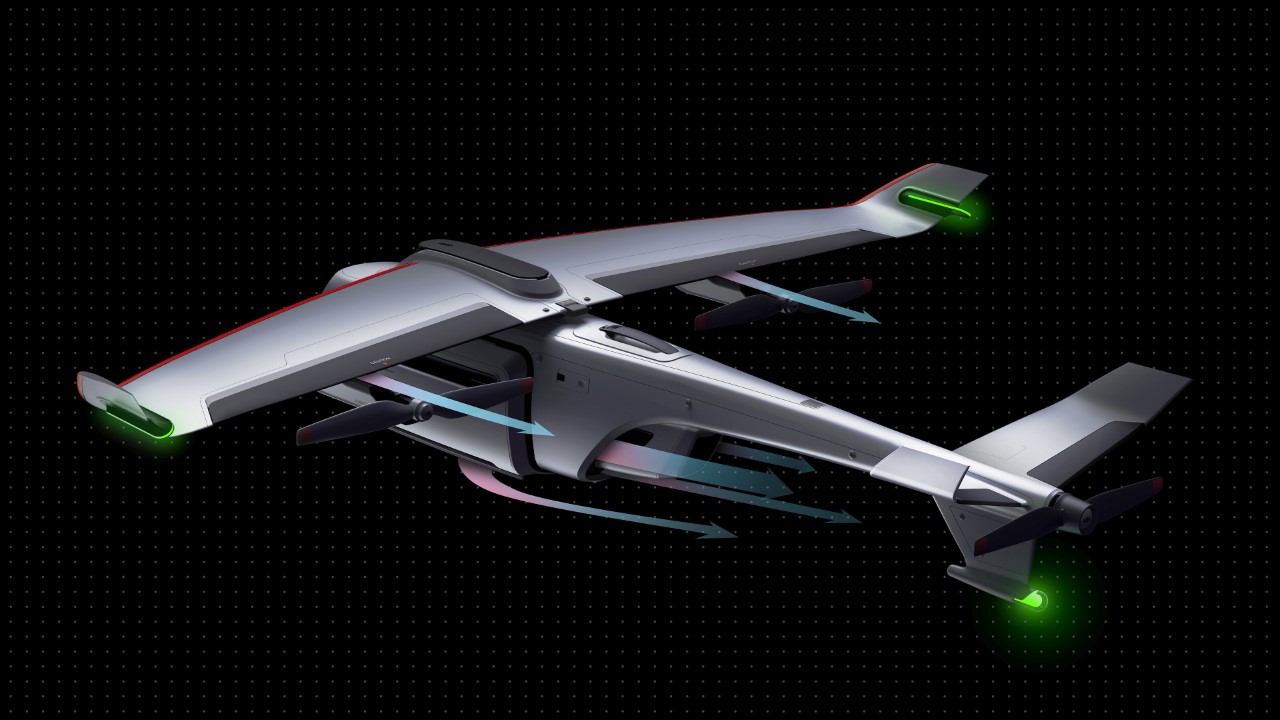
The drone’s design can functionally be split into a few distinct groups. You’ve got yourself a winged aircraft with propellers on each side. A high-definition camera mounted on a 2-axis gimbal on the front allows the drone to ‘see’, while the body of the aircraft houses a battery module on top, and the cargo payload at the bottom. Finally, a tail with a dedicated propeller helps with steering and stability.
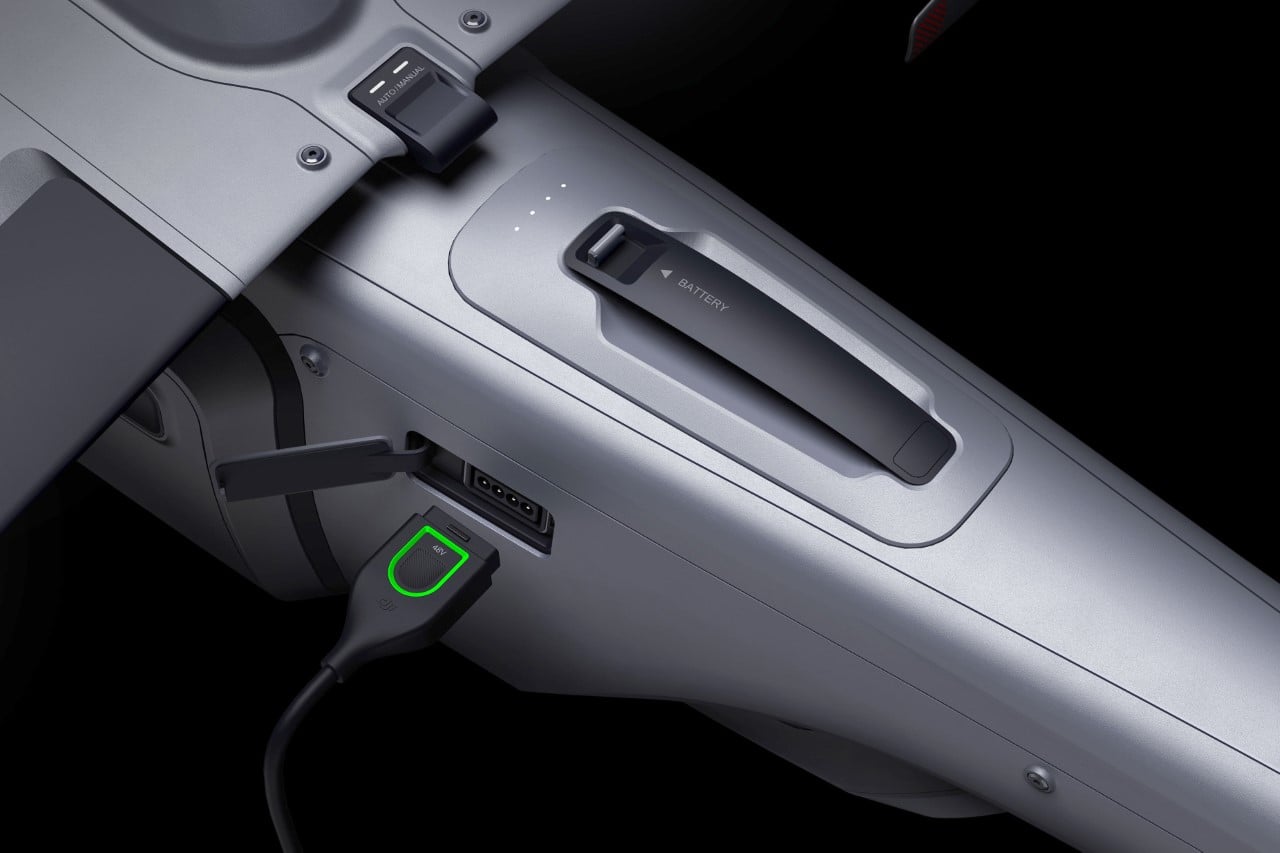
A close-up of the top shows you the drone’s detachable battery, which comes with an easy-to-pull-out handle for swapping battery cells during a delivery cycle. However, the drone has its own charging port too, allowing you to charge said battery packs – a feature that can be used while the drone’s grounded for a significant number of hours. In front of the battery is a flip-switch that lets you set the drone to auto or manual, hinting at fully-autonomous flying capabilities thanks to the intelligent obstacle-avoidance sensors on the top as well as the bottom of the craft.
The DJI Express UAV’s design also has a rather well-ventilated fuselage that allows wind to rapidly cool the motor and batteries during flight. Cool air passes through the UAV’s body, helping maintain optimal temperatures during flight and keeping the battery healthy over longer journeys. Given the UAV’s fan-made conceptual nature, there are really no concrete details of its size or capabilities, although DJI does have a delivery drone in its enterprise roster – the Flycart 30. That being said, the Flycart still has a quadcopter-style design that severely limits its range and ability to deliver cargo over inter-city commutes.
I miss having clean floors. I've been using a variety of Roombas over the years to help out with vacuuming, but ever since my wife and I had our second child in 2022, mopping has become an afterthought. And really, vacuuming can only clean your floor so much. I missed the shimmer of a mopped hardwood floor and the smell of Murphy Oil cleaner lingering in the air. Instead, I've been living with even more toys, crumbs and an assortment of bodily waste (which three cats contribute to) on my flooring and carpets. Don't judge me (or any parent!), I'm tired.
When Engadget's own Daniel Cooper extolled the virtues of iRobot's first combination robot vacuum and mop, I was intrigued. I'd already grown to love my Roombas, especially after they gained the ability to dump their own waste into their charging docks. But for them to mop as well? That just sounded like an impossible dream. So when iRobot announced its second combination flagship, the Roomba Combo j9+, I leapt at the chance to test it. (Sorry, Dan.)
I've tested iRobot's Braava Jet m6 mopping robot, which was announced in 2019 and was notable for being able to work alongside the Roomba s9+. But it would have cost me $499 and required clunky setup and maintenance. Plus, it was yet another device that needed to live somewhere in my home. It was ultimately easier for me to just run the Roomba and mop by hand whenever I needed to.
Photo by Devindra Hardawar/Engadget
The Roomba Combo j9+ (and the j7+ before it) promises a far smoother experience: It can simultaneously vacuum and mop without much additional effort on your part. All you need to do is add some water and cleaning solution to its large reservoir (stored neatly in the redesigned Clean Base) and attach a mop pad. The company developed a unique mop arm that can automatically move up and down when needed, which helps to avoid leaving your carpets wet with residue.
Maintenance is fairly simple too: Wash the mop pads after a few runs, add more water when necessary, and make sure the Roomba's bristles aren't getting tangled with hair. Once the Clean Base is full, swapping its custom waste bags takes only a few seconds.
While we liked the Roomba Combo j7+ well enough, the new model solves some of the issues we encountered. It can automatically refill its water tank from the Clean Base, whereas the j7+ required you to manually add liquid to the robot. The Combo j9+ also offers stronger vacuum suctioning, which allows it to pick up smaller debris and complete jobs with fewer cleaning passes. Its new Clean Base also looks like a piece of furniture, with a wood top that you can use like a regular table. Its door swings open from the front and offers space for additional waste bags, accessories and a large reservoir for cleaning liquid.
Photo by Devindra Hardawar/Engadget
iRobot claims the j9+ Clean Base allows for 30 days of hands-free mopping and 60-days of hands-free vacuuming, figures that seem exceedingly ambitious for most users. In my testing, I needed to look at the Roomba's bristles at least once a week to deal with extraneous hair and random toys. And I definitely had to change the mop pad after two or three runs — after all, there's no such thing as clean floors with a dirty mop.
Like the Roomba j7+ and s9 before it, as well as just about every Roomba ever made, you'll want to clear your floors of small debris and potential hazards before starting a run. As a Roomba user since 2005, I've grown to accept that they're not magical cleaning devices. You will need to put in a bit of work to help them run best. But the key is it's still easier than manually vacuuming and sweeping your floors and it's significantly cheaper than a cleaning service.
Thanks to iRobot’s OS 7, along with its camera and wide array of sensors, the Roomba Combo j9+ is far better at automatically mapping your home than previous models. After two runs, it tagged my kitchen, dining area and living room correctly, though I had to hop into the iRobot app to differentiate between my living room and family room. The mapping might seem unnecessary if you're using a Roomba for the first time (you can also disable it entirely), but it is the heart of the vacuum's routines. Instead of cleaning your entire home, you can program it to just clean the kitchen and dining room. If you connect your app to Alexa, Siri or Google Assistant, you can also use voice commands to direct your robot to specific locations.
After getting in hot water over its earlier plans to sell home mapping data, iRobot made an about face, gave up on that idea and started emphasizing privacy. The company says your mapping data is stored in the iRobot Cloud for processing (something you can also disable), which is a "secure" environment with "strict access controls, data encryption at rest and in transit, and periodic audits to ensure access is only given to those who require it."
In 2020, MIT Technology Review reported that development versions of the Roomba J7 captured images of a woman sitting on a toilet and a child playing on the floor, which made their way to a library used by the labeling service Scale AI. iRobot said that the people using those devices had agreed to have their data captured — they weren't regular consumers. One downside of using any cloud-connected device, especially one that aims to learn about your home, is that it'll require sharing some data. It's up to you to determine if that's a worthwhile tradeoff for more convenience.
Photo by Devindra Hardawar/Engadget
When it comes to cleaning, the Roomba Combo j9+ practically mesmerized me as it balanced vacuuming and mopping duties. At the start of every mopping job, the robot emerged from the Clean Base, turned around and studiously refilled its liquid tank. It's like watching R2D2 go to the bathroom in reverse. Since it was starting every job on my wood floor, the Roomba then lowered its mopping pad from its top (it has a 'lil mop hat!) and spun up its vacuum. Then, it proceeded to move forward, sucking up dirt while the scrubbing pad cleaned right behind, a virtuoso show of autonomous cleaning acrobatics.
If you don't need a full cleaning, you could also use the iRobot app to have the j9+ just vacuum or mop (useful if you've just gone to town on your floors with a manual vac). The iRobot app lets you control the number of cleaning passes per job (one, two or "room-size", which tackles large rooms once and smaller spaces two to three times), as well as the amount of water for every mopping job (eco, standard or ultra). You can also choose between low, medium and high suction options (which get progressively louder, as you'd expect).
Photo by Devindra Hardawar/Engadget
The iRobot app also lets you turn the Roomba's obstacle detection on and off, though you'll likely never want to disable it. In my testing, the Roomba Combo j9+ managed to avoid shoes, toys and other objects in its path. It also quietly came to a halt whenever my kids or cats stepped in front of it. iRobot's promise to avoid pet poop (the aptly named Pet Owner Official Promise) also applies to the j9+. If the company's poop-optimized computer vision algorithms somehow miss a dog or cat mess in your home, iRobot says it will send you a new Roomba at no charge within the first year of purchase. The company will only send out one replacement, though, and the guarantee doesn't apply to non-solid waste (including diarrhea) or poop from another animal.
Before you ask, yes, I tested this. I placed a bit of cat poop in front of the j9+ and watched with worry as it approached the stinker. Thankfully, it stopped about six inches away and immediately backed off, as if it was terrified of the horrors it was about to inflict on itself. My floors were grateful, as was I.
The Roomba Combo j9+ performed admirably as a mop. It wasn't always perfect, and I could occasionally make out streaks, but it still looked a lot better than when relying on mere vacuuming. After my first cleaning session, my floors beamed in the sunlight with a glow I hadn't seen in months. And best of all, it required very little effort on my part, aside from a bit of tidying up. Even my notoriously picky mom noticed my floors sparkled more when they visited right after the Roomba worked its magic.
According to iRobot, the j9+ features twice the scrubbing performance of the j7+. While I couldn't test the difference directly, I can confirm it's a stubborn little bot when it comes to tough situations like dried litter paw prints and caked-in dirt. It managed to fully clean up those messes, but I'd be wary of letting it tackle anything worse, at least not without changing the mopping pad right afterwards. The j9+ may be able to avoid streaking poop around your house, but having your floors painted with a muddy mop can also be awful.
Photo by Devindra Hardawar/Engadget
A rogue j9+ could do plenty of damage around your home, since its battery life has also been improved. It typically cleared my first floor in around two hours without needing a charging break. At one point, it ran for two and a half hours without a sweat. That should make this Roomba pretty capable even if you have a large home. A full floor cleaning took between 30 minutes and an hour longer than the j7+, but that makes sense since it’s also mopping and being more diligent about vacuuming.
At $1,400, the Roomba Combo J9+ is too expensive for most people looking to buy their first robovac. Even when iRobot is running a sale (we've seen it drop the price down to $999), the Combo j9+ is pretty pricey, but that cut does make the j9+ more palatable for longtime Roomba owners who've learned how to fit the bot into their cleaning routines. iRobot isn't completely out of line with its pricing: The competing Roborock S7 Max Ultra offers similar vacuum and mopping features and typically sells for $1,299 (it's also on sale for $999 at the moment).
There's still no robot vacuum equivalent to the Jetson's Rosie the Robot, but the Roomba Combo j9+ is the closest we've got so far. iRobot has built upon its excellent robot vacuum platform to deliver something that can finally mop your floors without a sweat. And while it may seem a tad exorbitant, the cost may be worth it for parents who, like me, forgot what truly clean floors looked like.
This article originally appeared on Engadget at https://www.engadget.com/roomba-combo-j9-review-the-ideal-robot-vacuum-and-mop-130017400.html?src=rss
Whenever I write about robots, I cannot help but think about all the horror scenarios that I’ve seen in sci-fi movies and TV shows when they become our overlords after overthrowing abusive humans. But obviously, not all robots are scary in reality or at least we haven’t reached that point yet. There are also some cute and cuddly robots out there, both in pop culture and in real life. This new innovation from Toyota belongs to that latter category but it combines both hard and soft robotics.
Designer: Toyota
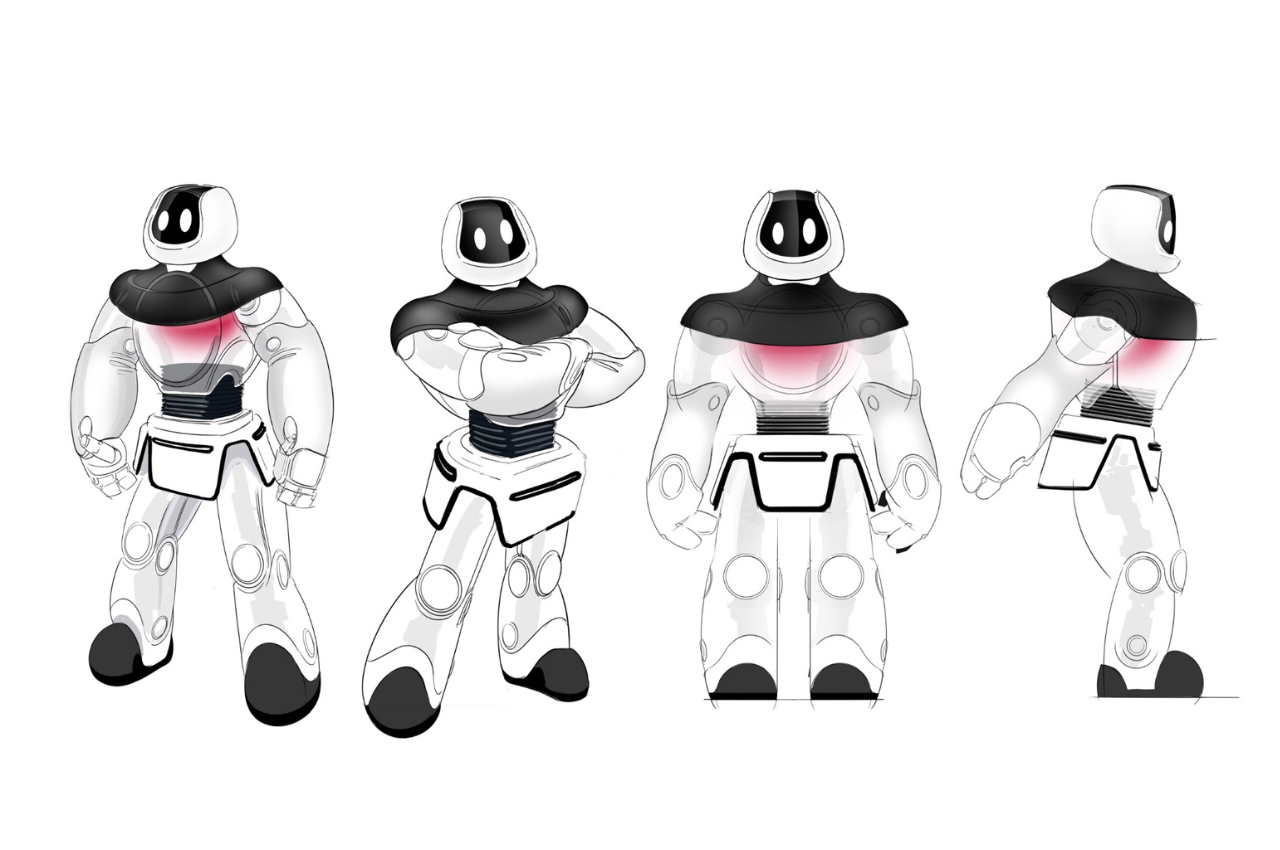
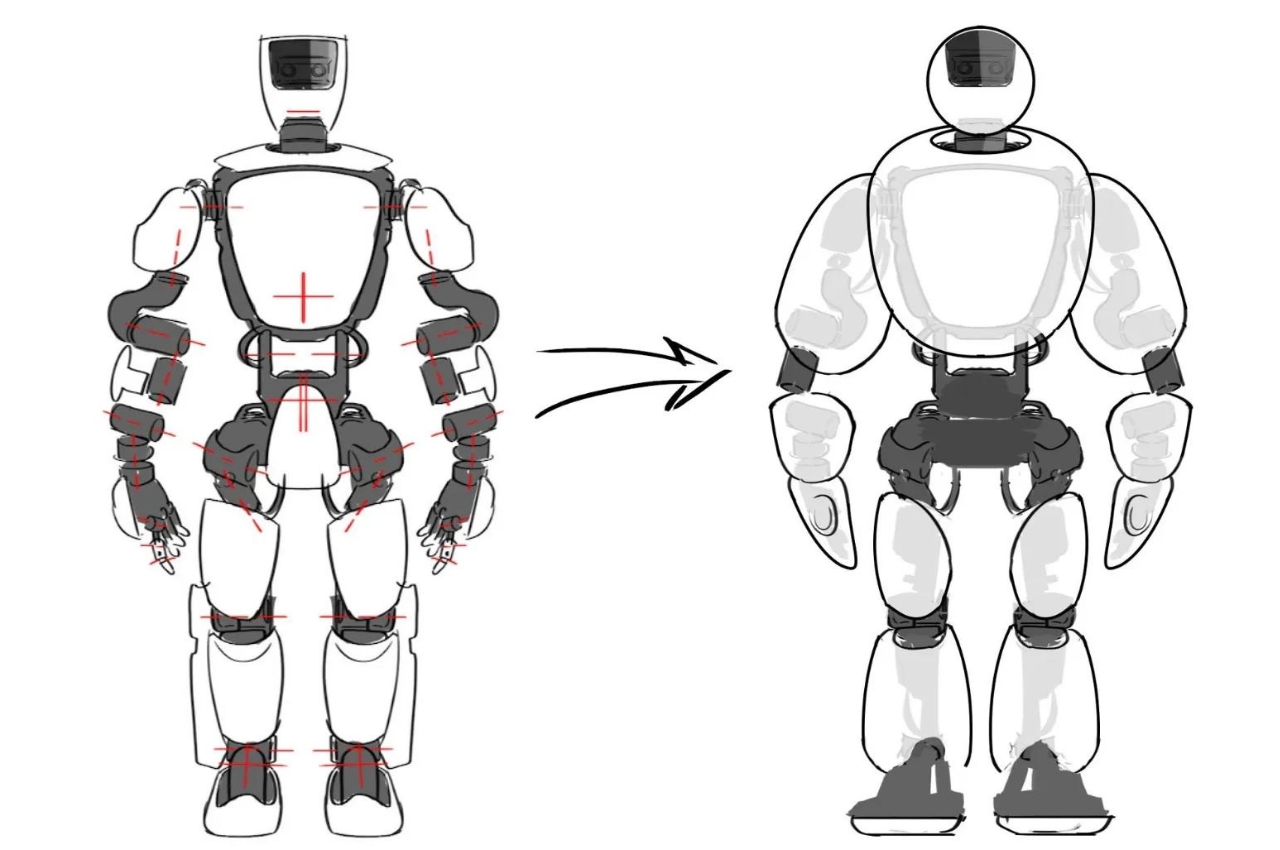
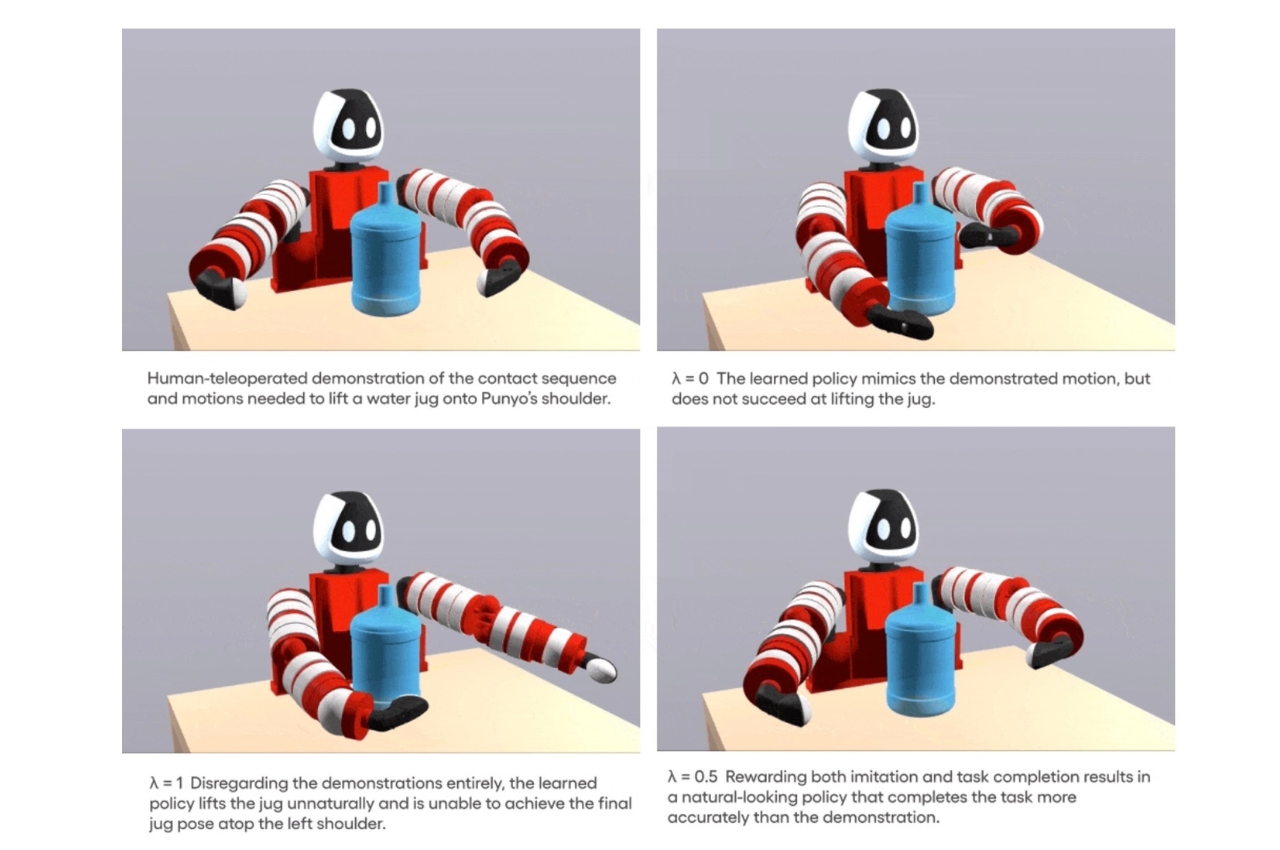
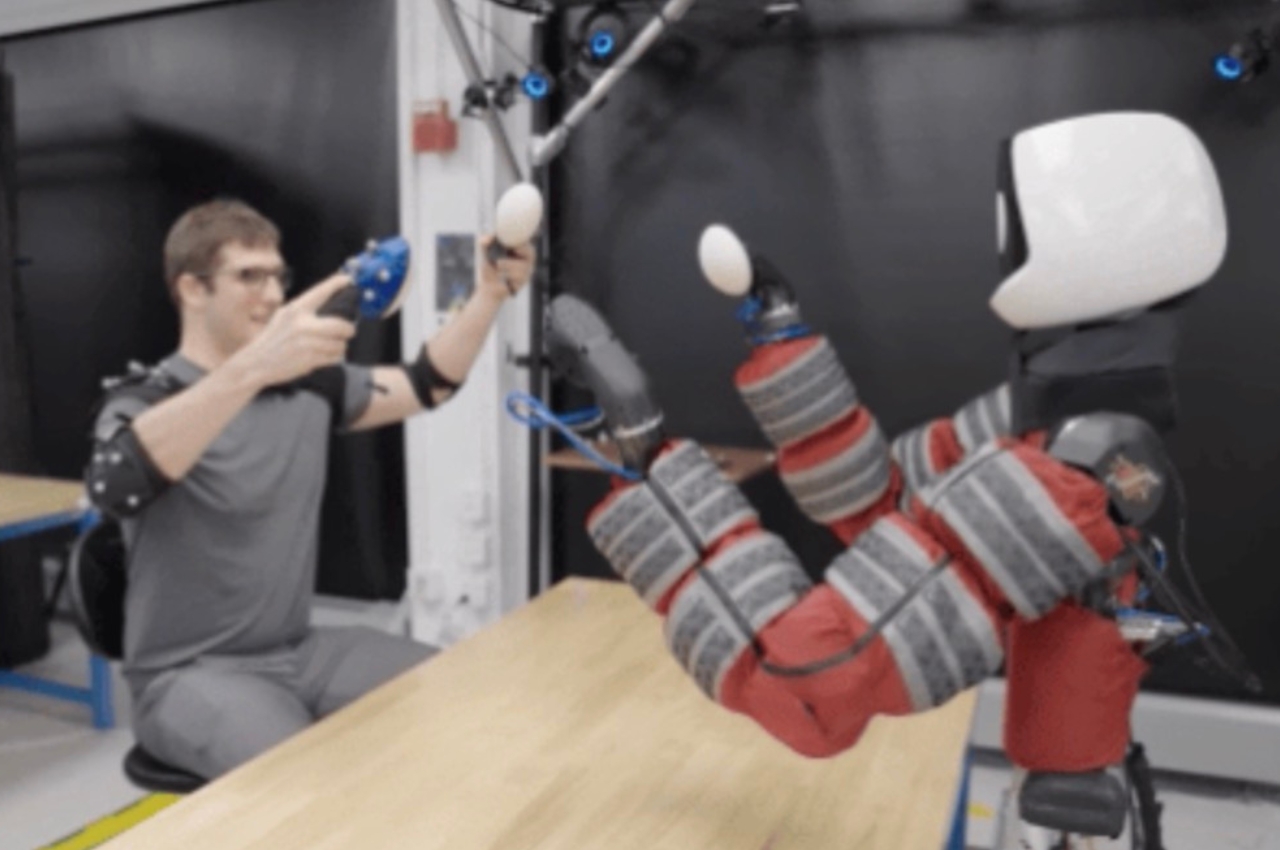
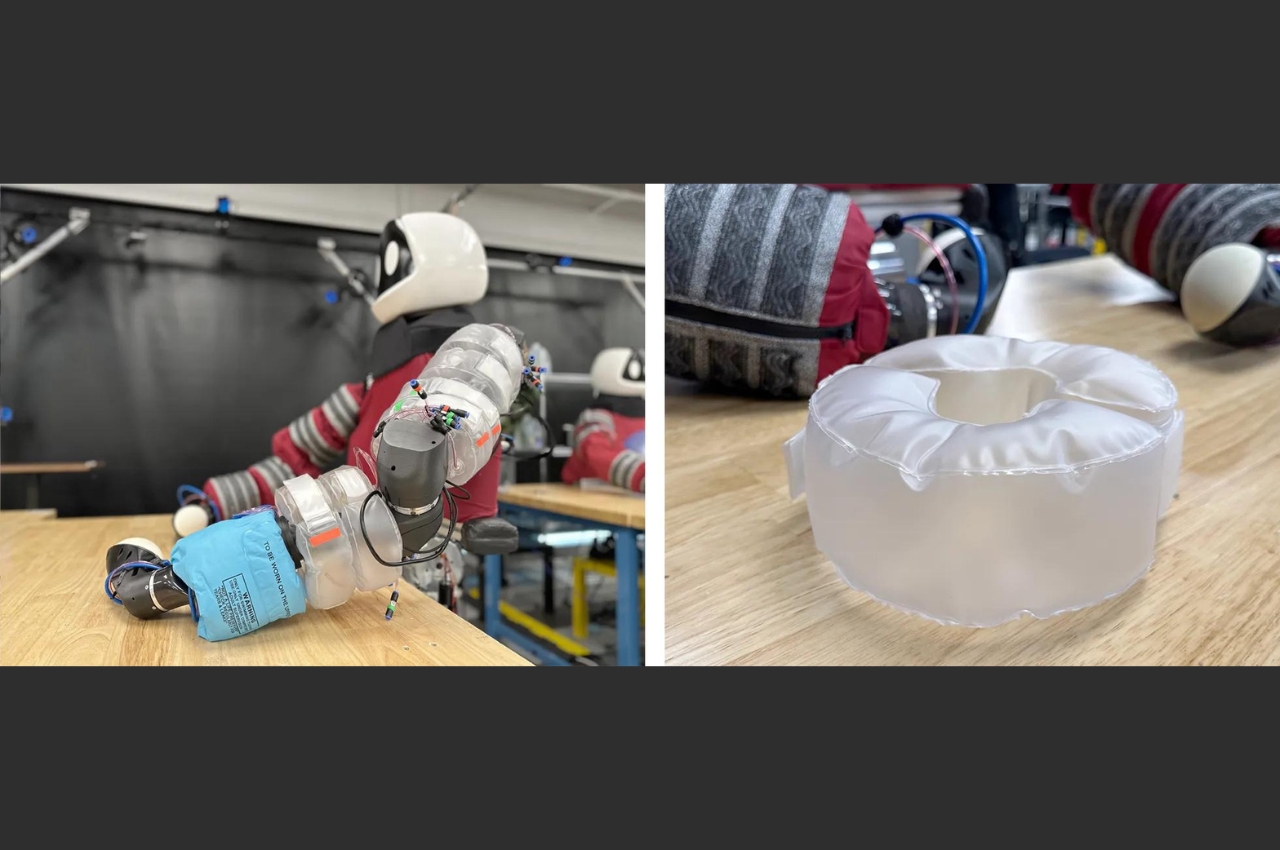
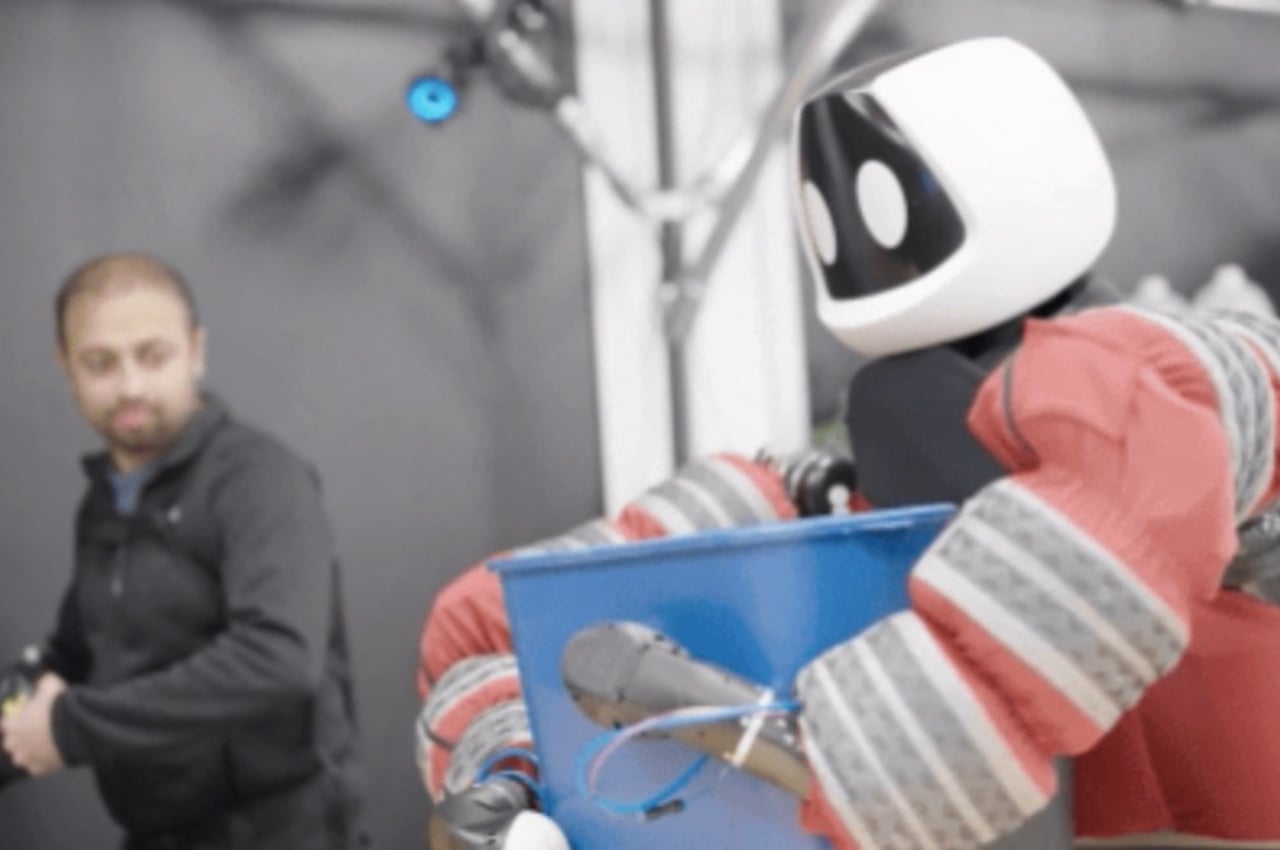
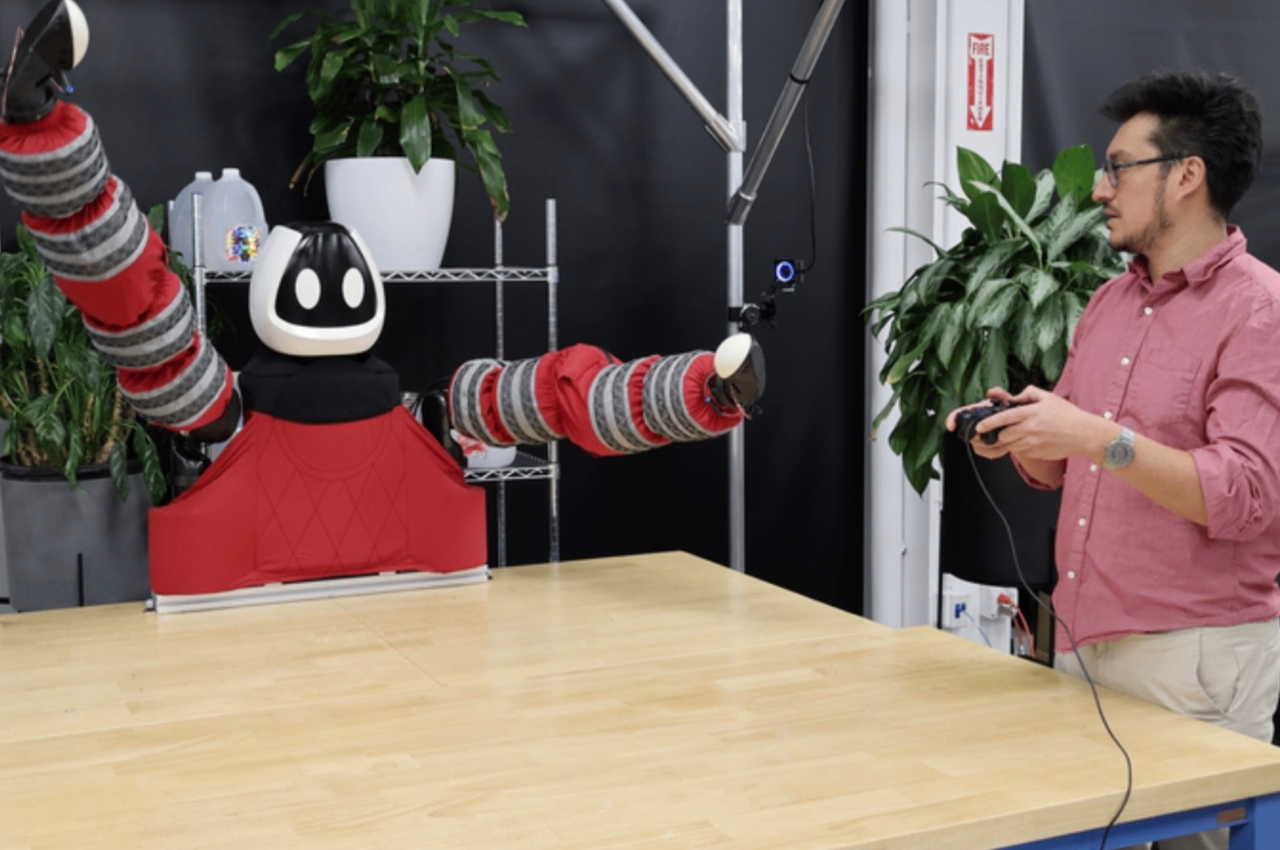
Punyo is the newest robot from Toyota but instead of looking like your typical robots that carry heavy things for us, it looks more like that adorable Baymax from Disney’s Big Hero 6. It’s even wearing a “sweater” that is actually functional as it actually enhances the robot’s capability to carry various things. Normally, robots just use their hands and their claw-like “fingers” but Punyo uses its chest, hips, arms – its entire body actually) to lift objects. This means it is able to carry heavier objects since it uses whole-body manipulation.
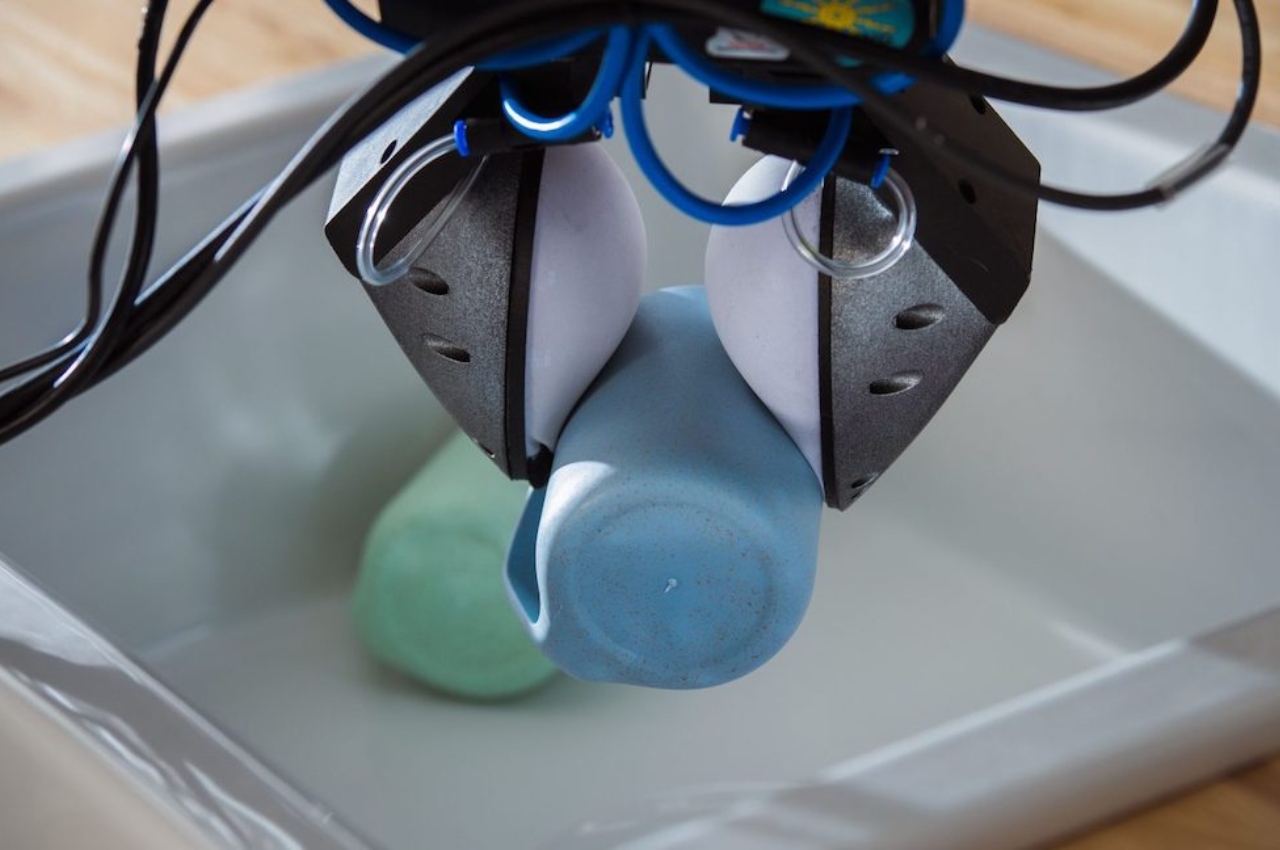
The arms of Punyo are made of air-filled bladders that can interact with different kinds of objects. Instead of the usual grippers we see on robots’ hands, there are high-friction latex bubbles as its “paws”. There are even internal cameras that are able to estimate the force that it needs to exert to carry whatever object it is holding. Inside the “sweater”, there are the usual robotic parts like rigid arms, a torso frame, and a waist actuator.
The name Punyo actually comes from the Japanese concept of “softness, cuteness, and resilience”. Combining the soft and hard robotics, as well as using teleoperation and artificial intelligence learning processes to train the android, gives us a holistic kind of robot that will not scare us but instead will be a helpful and friendly companion when it eventually becomes mass-produced. Hopefully, they will not be cute robot overlords.
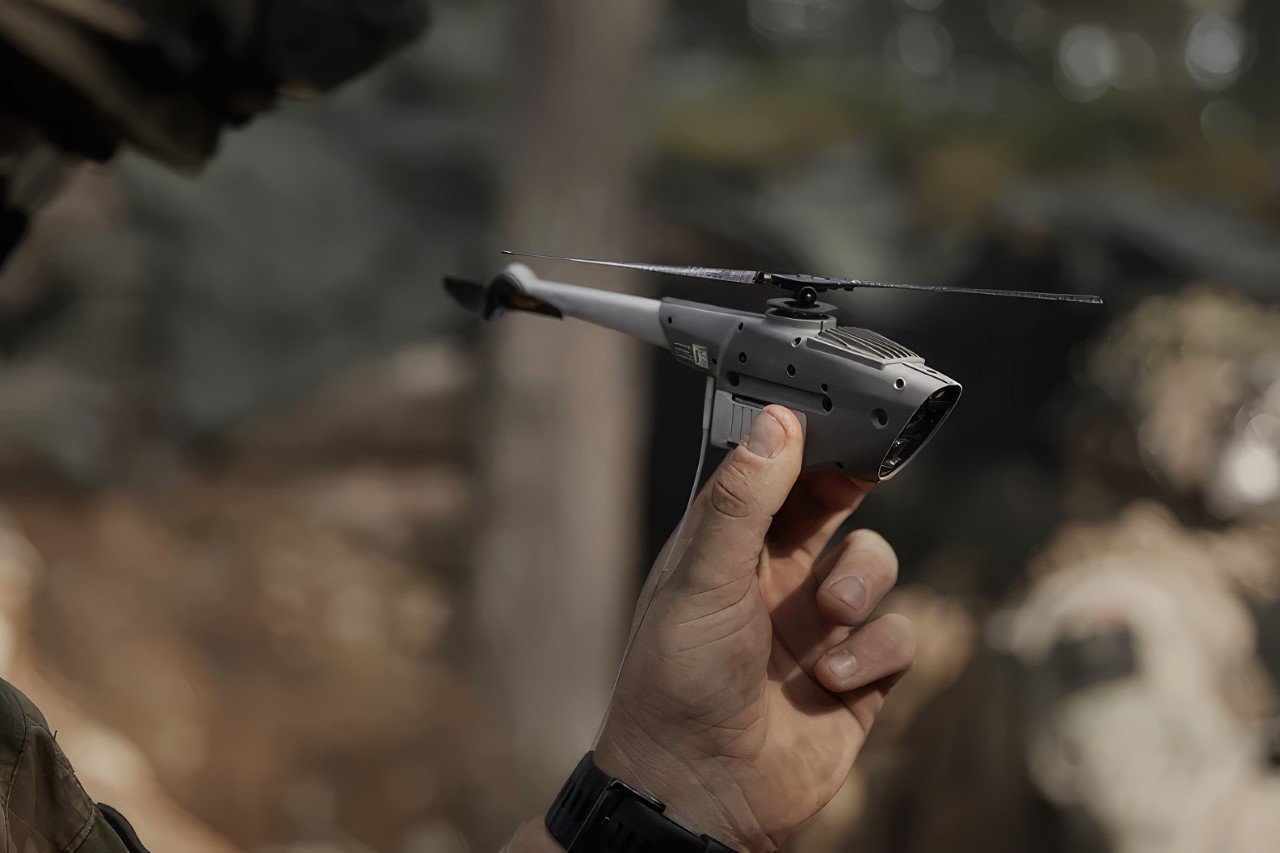
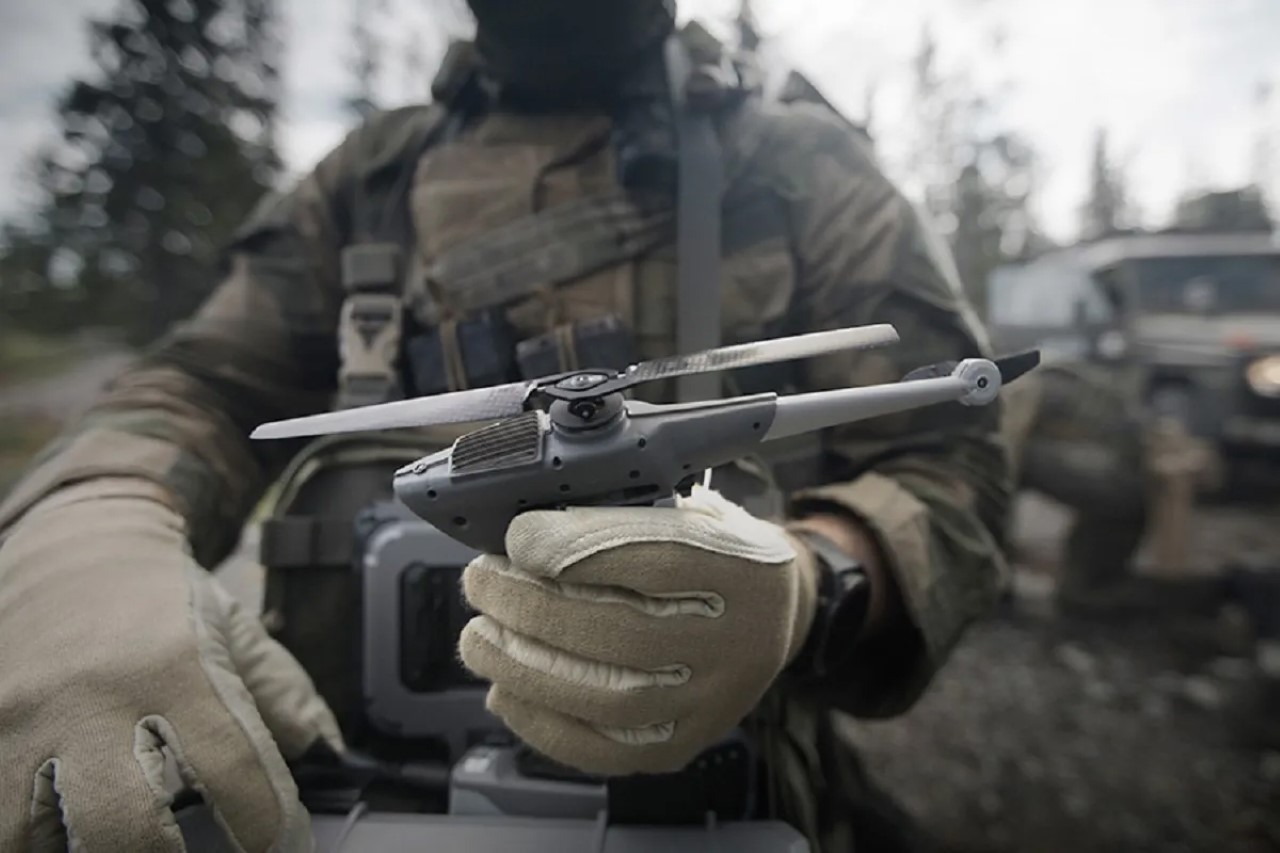
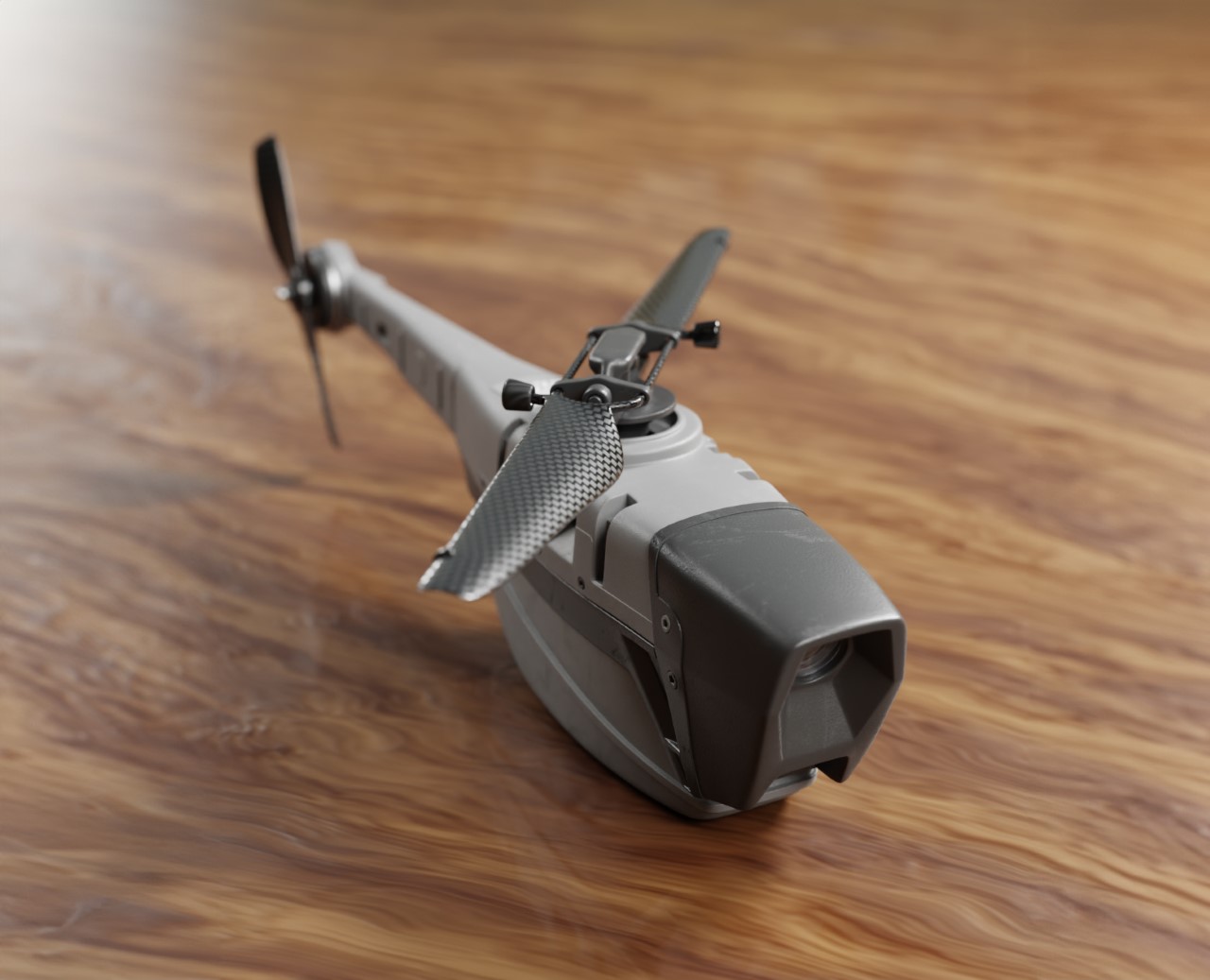
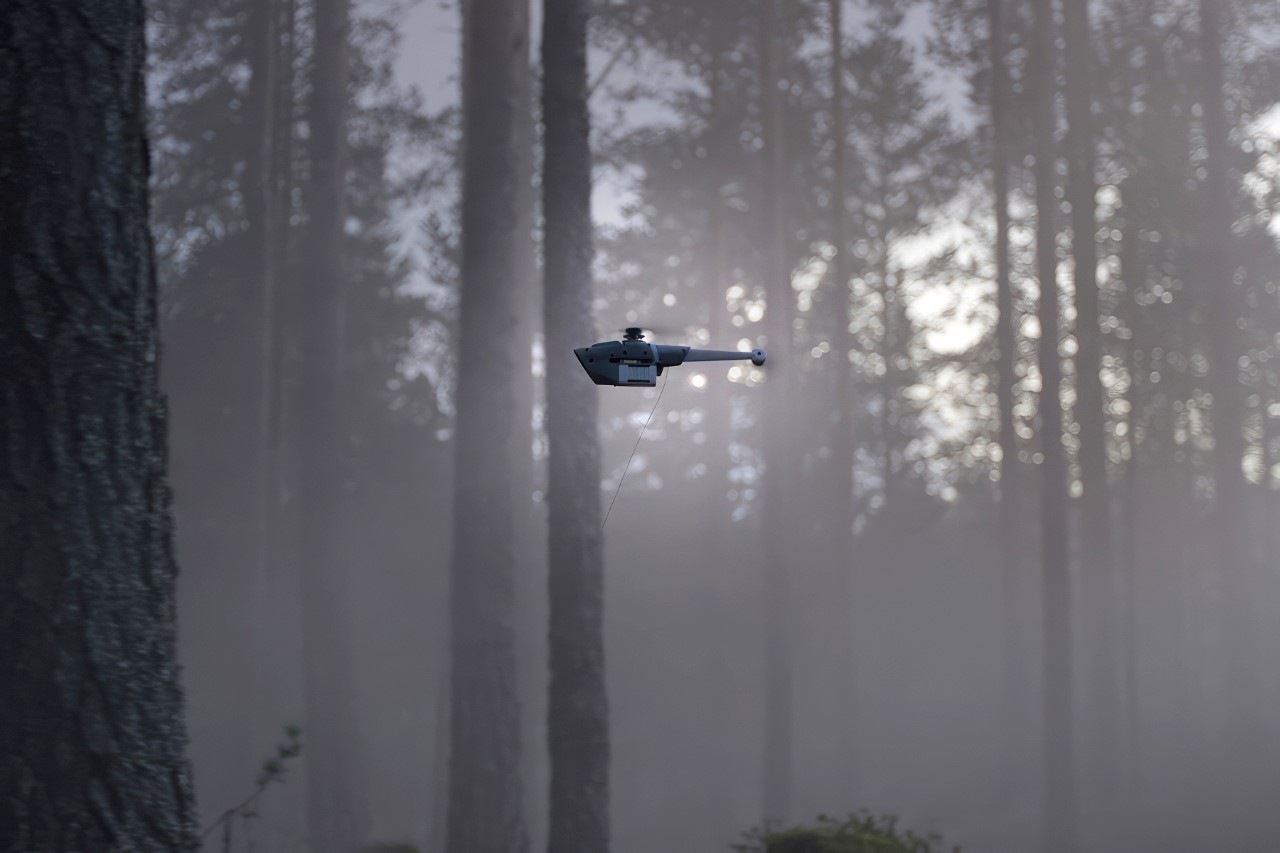
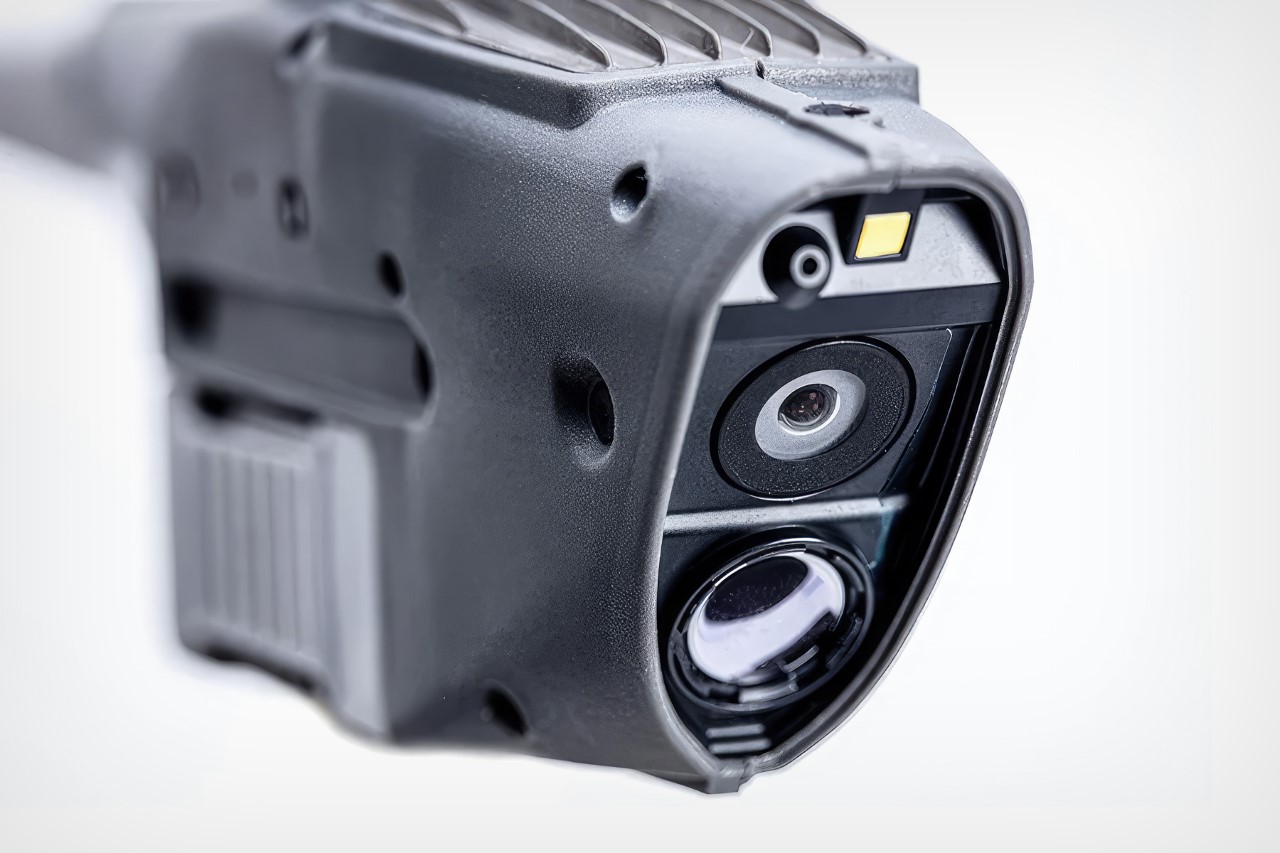
Quite reminiscent of the Hunter-seeker drones from the DUNE movie series, the Black Hornet 4 is shaping up to be an incredibly small yet exceptionally handy recon drone, capable of flying into areas unnoticed, and helping perform important surveillance required during military strategy and battle planning. This miniature marvel, weighing a mere 70 grams, packs a powerful array of features. Equipped with a 12-megapixel camera, superior low-light performance, and a high-resolution thermal imager, the Black Hornet 4 empowers soldiers with exceptional situational awareness on the ground.
Designer: Teledyne FLIR
However, its true potential lies in its ability to excel in challenging environments. Boasting a flight time exceeding 30 minutes, a range surpassing 2 kilometers, and the capability to withstand strong winds, the Black Hornet 4 navigates even the most demanding situations with ease. Additionally, its low visual and audible signature makes it ideal for covert operations, allowing for discreet deployment and data collection. The system’s ability to function in GPS-denied environments adds another layer of versatility, ensuring reliable operation regardless of external factors.
This innovative technology has already seen significant global adoption, with over 20,000 units deployed. The recent contract awarded by the U.S. Army for additional systems further underscores the Black Hornet 4’s impact. This tiny tech marvel represents a significant leap forward in the realm of personal reconnaissance, offering soldiers unprecedented capabilities and operational flexibility.
Beyond its military applications, the potential of the Black Hornet 4 extends to various civilian sectors. Search and rescue operations in disaster zones, environmental monitoring in remote areas, and even industrial inspections in hazardous environments could all benefit from the capabilities of this miniature marvel. As the technology continues to evolve, we can expect to see the Black Hornet 4, or similar systems, playing an increasingly crucial role in diverse fields, pushing the boundaries of what’s possible in the world of miniaturized aerial technology.
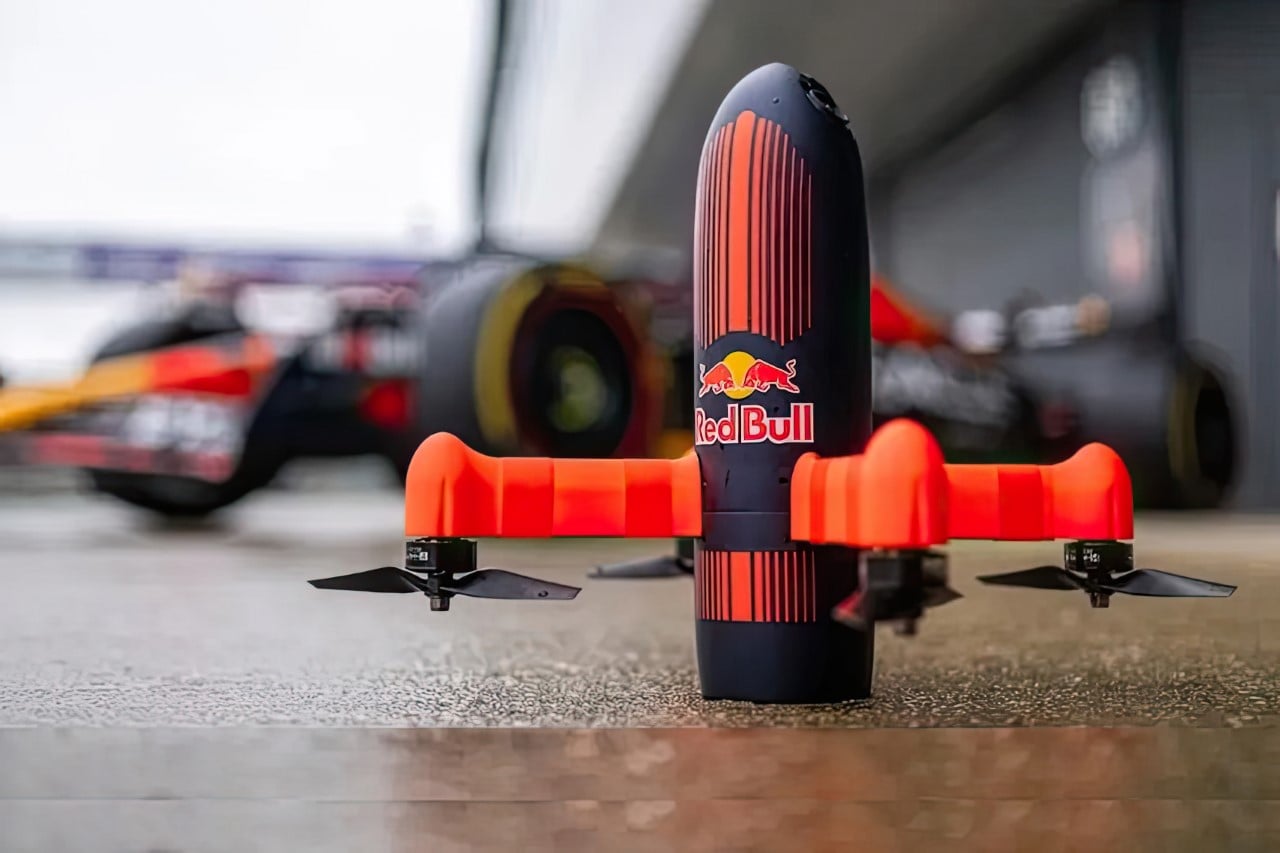
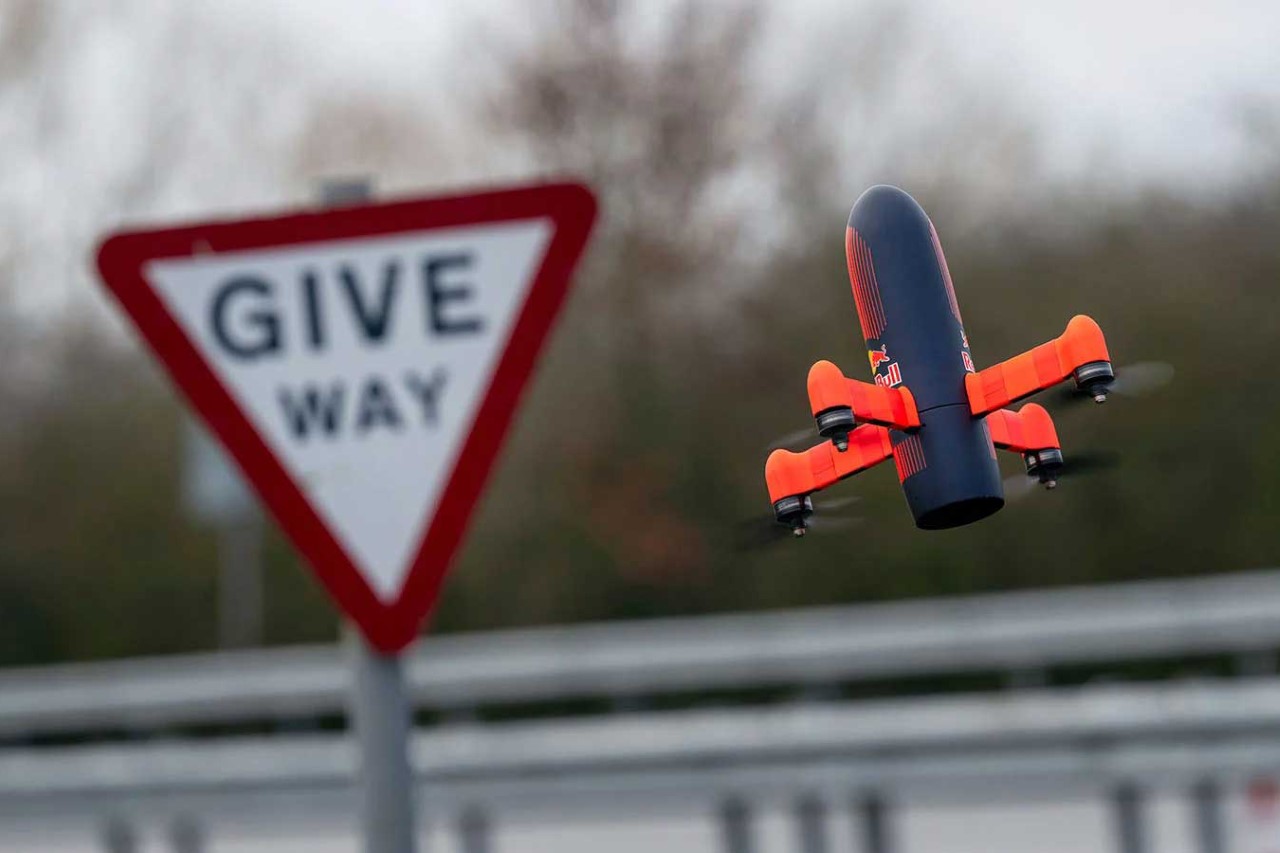
The fact that the world’s fastest FPV drone looks somewhat like a missile is simultaneously incredibly cool and incredibly scary. It might change how we watch F1 races, but it has the potential to change much more than just that.
This just seems like the kind of crazy thing Red Bull would pull off. The company decided to challenge multiple-time F1 champion Max Verstappen to a race – the catch, Verstappen would be behind the wheel of a Red Bull F1 car, while his opponent would be the world’s fastest FPV drone. The project was in collaboration with Dutch Drone Gods, a group of FPV drone makers and pilots known for holding the existing title of the world’s fastest FPV filming drone with a 150km/h top speed. The only problem – Verstappen’s F1 car is more than twice as fast.
Drones aren’t new in the F1 circuit, given that the racing organization uses a combination of aerial filming methods to get their shots. Sustained footage is taken on helicopters that hover above the track, but for up-close shots, the F1 team relies on drones… the only problem is that these drones don’t follow the car around. They simply hover in the air, taking cinematic panning/dolly shots before the camera angle changes. Understandably, creating a drone that can follow an F1 car around like a third-person camera in a video game is just a tad bit short of impossible. Drones have a notoriously low flight time, outputting probably a maximum of 15-20 minutes of flight before their batteries get drained. Moreover, F1 cars can hit speeds of almost 400km/h and are designed to be highly responsive, making razor-sharp turns on the tarmac. The Dutch Drone Gods’ FPV maxes out at 150km/h, and can’t perform sharp maneuvers in mid-air. This meant redesigning the drone to hit higher speeds while being responsive, and perhaps most importantly, not melting or exploding in the air because of all the heat generated by hitting upwards of 300km/h speeds.
Pilot and Founder of DDG Ralph Hogenbirk and F1 World Champion Max Verstappen with the Red Bull PFV Drone
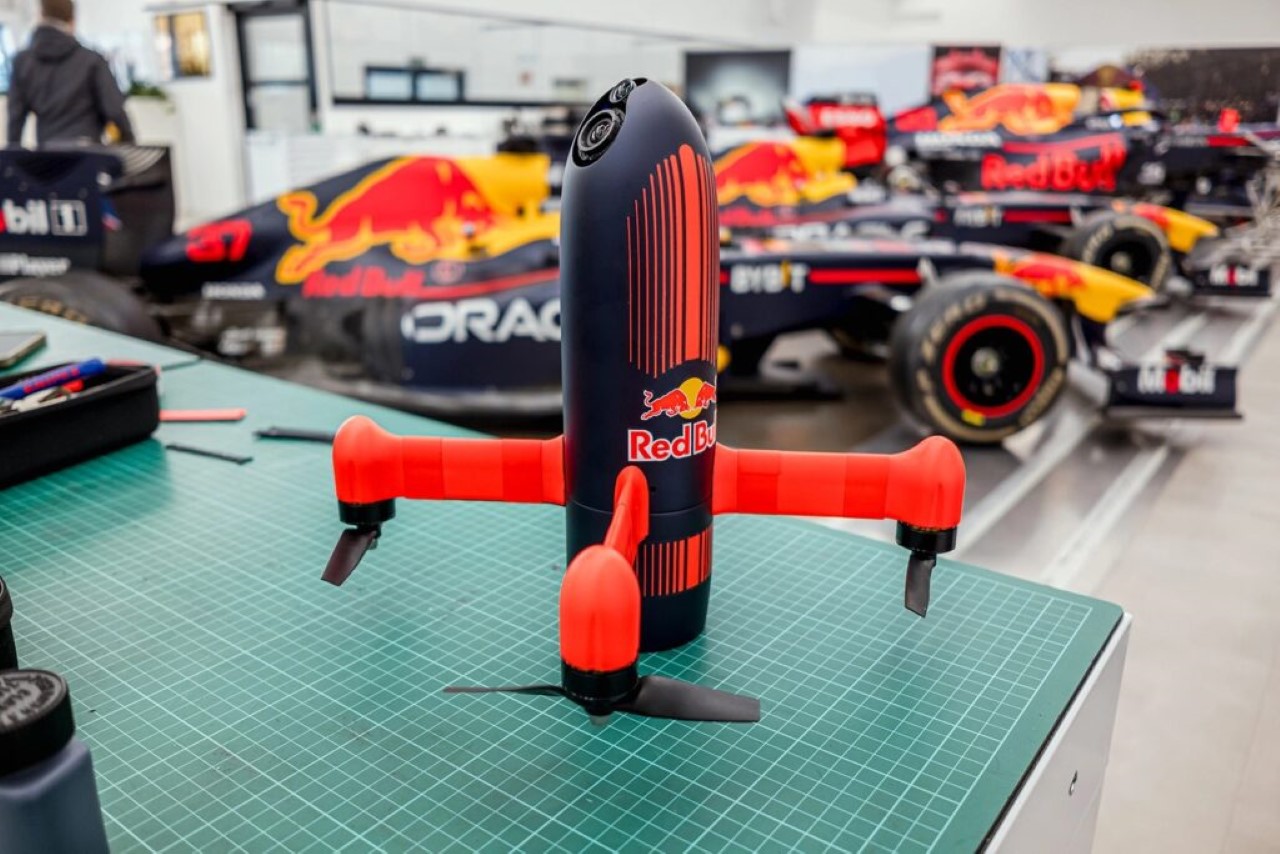
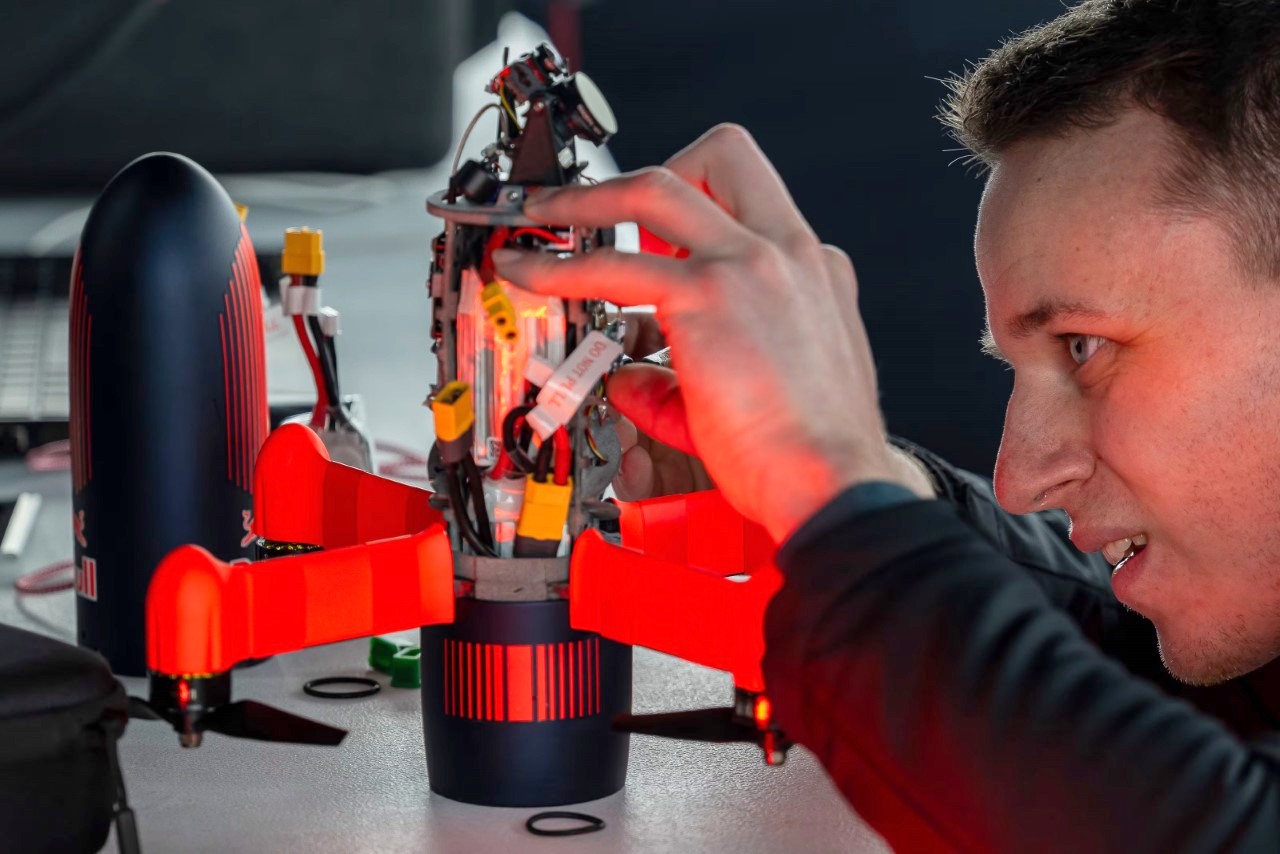
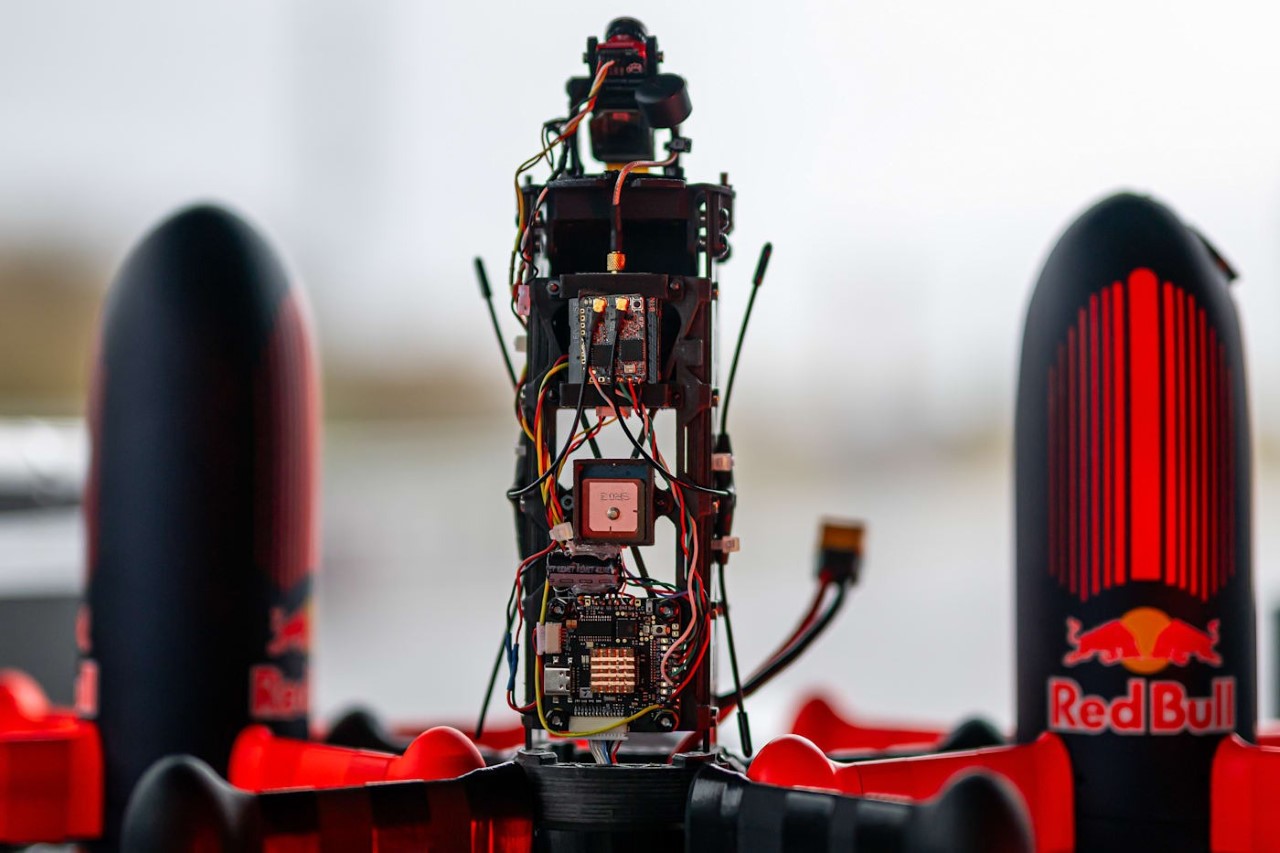
The process saw multiple iterations from the Dutch Drone Gods’ team, who took up the challenge of pushing their drone to be as fast as a Formula 1 racecar. The challenge, aside from speed, was also to make the drone maneuverable, and durable. Initial tests yielded a few pitfalls, wires would melt under extreme heat, parts would wear and tear or even explode, but more interestingly, the drone’s stability would take a beating just because of the wind turbulence created by the F1 car as it zoomed across the track. Two rounds of prototypes also showed that simple off-the-shelf components and 3D-printed outer shells couldn’t handle the task, so the DDG team decided to visit the Red Bull Advanced Technologies headquarters to partner with the team there to design the drone. The new drone had machined metal structures, speed-capable inner components, and an FRP composite outer shell that was lightweight but highly resilient.
The final drone prototype got one single chance to race against Verstappen in the latest RB20 car on the Silverstone track. It fared incredibly well against Verstappen, filming the car as it blitzed through the track. The goal wasn’t to go faster than Verstappen’s car, that would be a foolish mistake, but rather, to capture the racecar from a unique following PoV, giving the audience the effect of moving at the same speed as Verstappen. F1 race broadcasts are already pretty exciting to begin with, but imagine being able to follow a car with a camera, capturing the intense speed, adrenaline, and reflexes of the race in real-time…
The engineering of Red Bull’s FPV drone could potentially revolutionize the landscape of F1 filming. Instead of static camera shots or quick drone shots that just pan across a track, Red Bull has potentially unlocked the ability to now follow cars as they race, creating an even more thrilling broadcast that could practically reinvent how people enjoy the sport. Heck, I could totally conceive the creation of a drone racing championship as a result too. The implications for Hollywood are just as exciting too, with cinematic drones getting a whole lot faster thanks to the Red Bull FPV Drone’s unique shape.
However, a drone hitting speeds of 350km/h has its own pitfalls too. Reconnaissance, surveillance, or potentially even weapon-based payload delivery could somehow become even easier and more accessible to anyone with the right tools. Sure, the Red Bull FPV drone isn’t a ballistic missile, but it’s dangerously close to being unstoppable. Try stopping a drone cutting through a military zone or an airport at 350km/h. This new world is exciting, but just as scary too.
That doesn’t take away from how incredibly impressive Red Bull and Dutch Drone Gods’ demonstration was. The Red Bull FPV Drone currently holds the record for defeating its predecessor by a factor of nearly 200km/h. The new FPV drone also gets the bragging rights of being able to keep up with Verstappen, a feat that not even other F1 racers can hold claim to!
If we’re going to give in to our eventual robot overlords, my only hope is that they’re as adorable-looking as Doly.
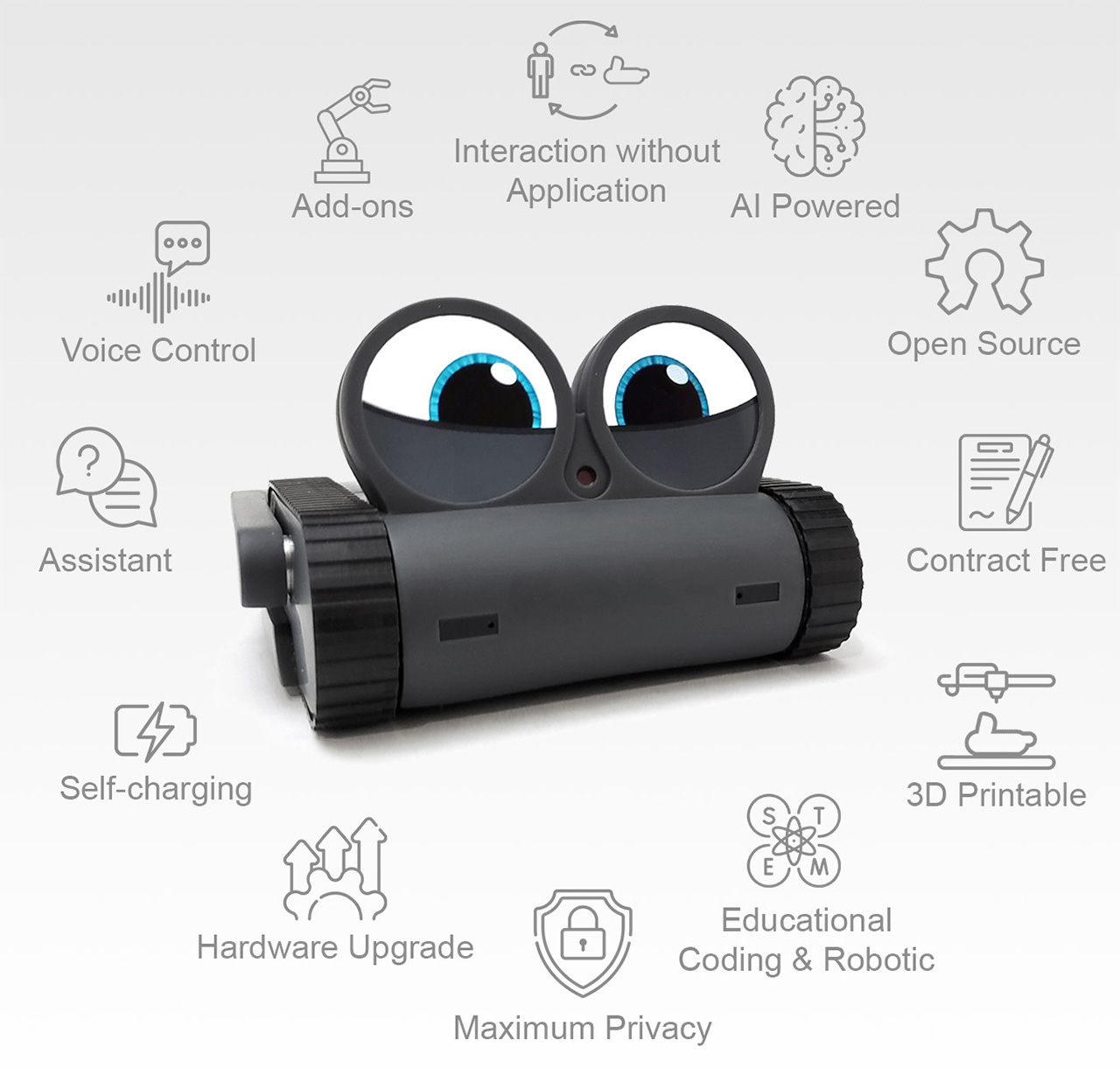
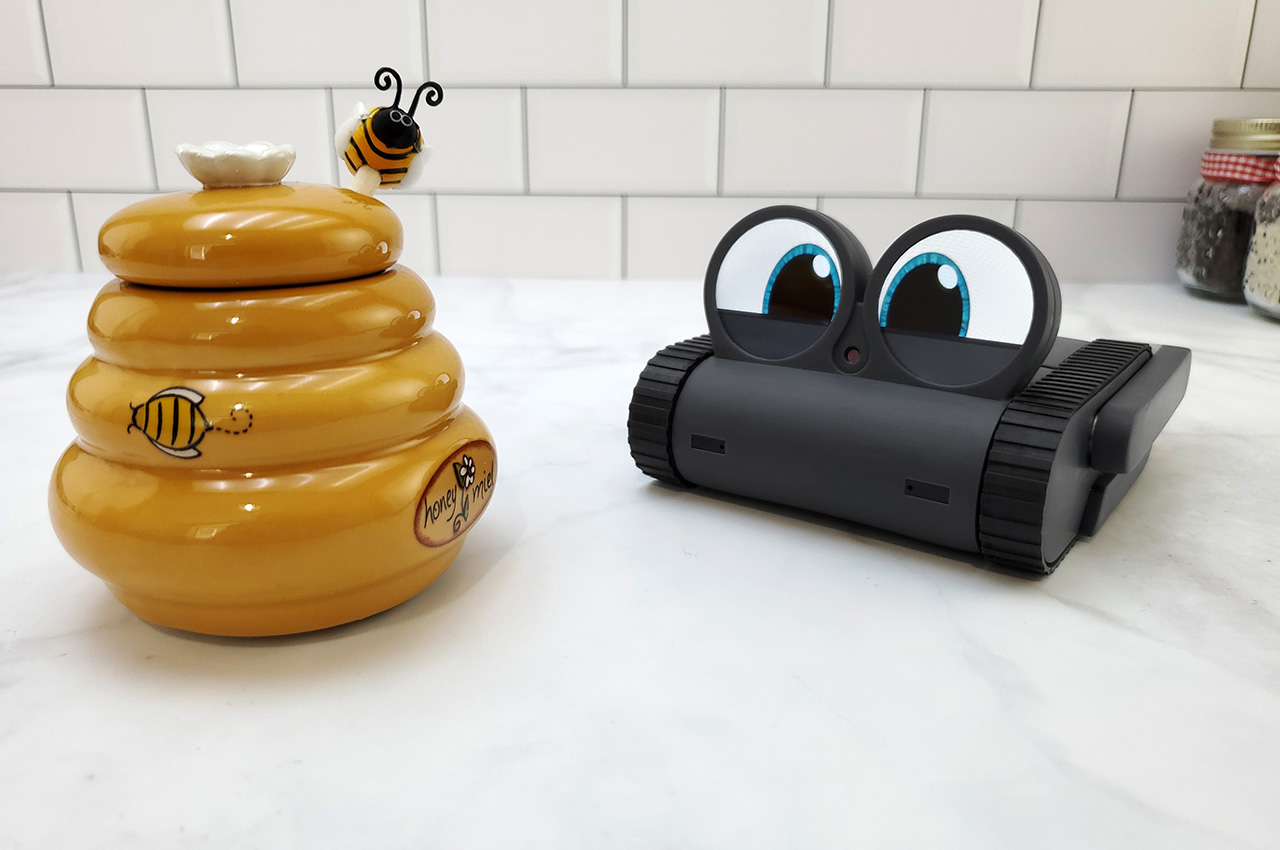
With its googly eyes and treadmill-operated motion system, Doly instantly reminds me of Pixar’s WALL-E. Designed as a robot companion with high emotional intelligence, and the ability to respond to requests, evoke joy, and even serve as a learning tool, Doly combines an open-source build with AI capabilities. The result is remarkably better than the tabletop toys you’re used to expecting. Doly is smart, sensitive, and self-sufficient, as it moves around from A to B, enriches you with interactions and those adorable eyes, and then makes its way back to its charging station when it’s low on batteries.
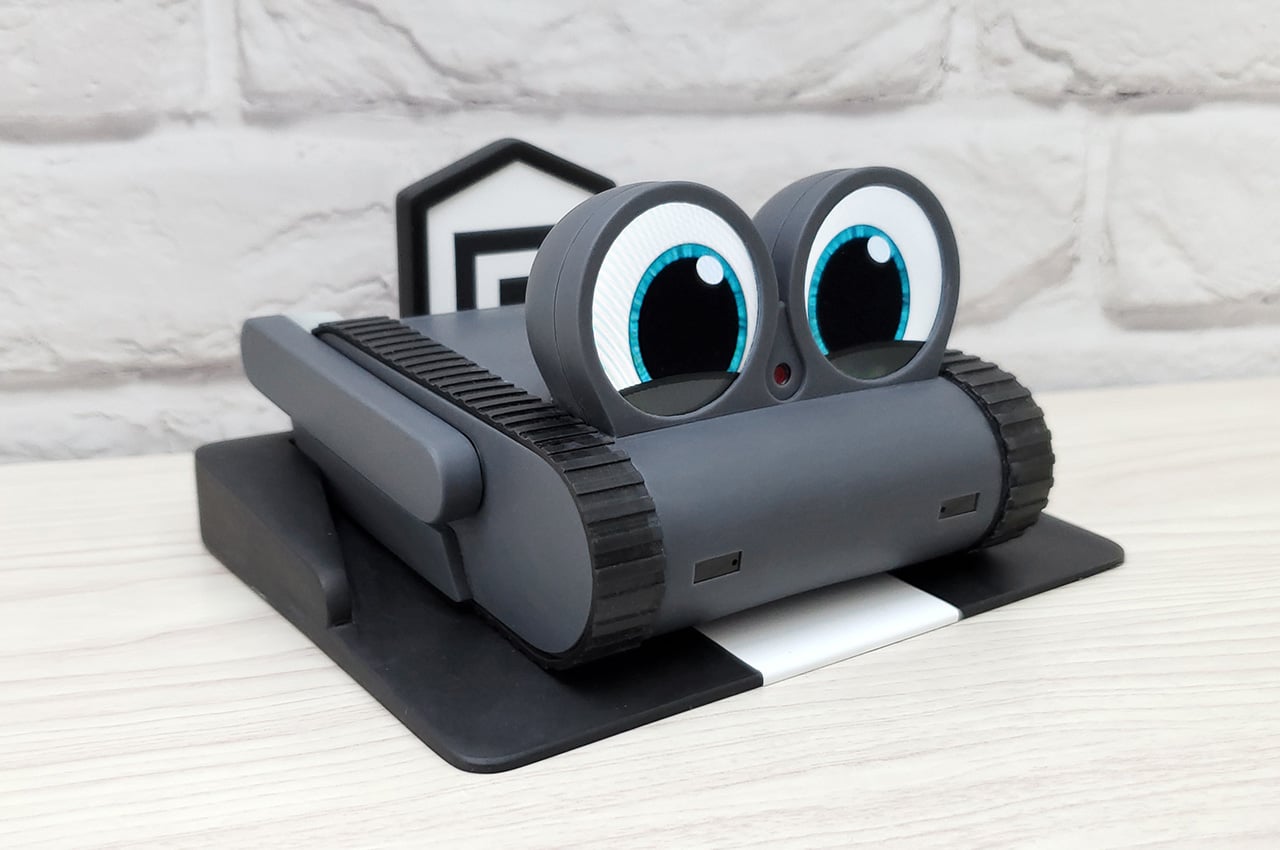
On the design front, the Doly adopts a familiar form factor, mimicking the success of WALL-E and even the Vector robot by Anki. It stands at just 68mm (2.67 inches) tall, but has a personality that’s larger than life. Nearly half that height can be attributed to Doly’s massive eyes that give it its distinct cartoonish character that instantly makes you fall in love with the robot. The eyes can look in different directions, respond to stimuli, express emotions, and can even be replaced by imagery like weather status, a clock, or a timer. Depending on Doly’s mood, or how it reacts to your commands, the eyes do most of the speaking… while voice models allow Doly to speak in any tone of your choice too.
Doly accepts touch and voice inputs, through strategically located microphones and capacitive touch surfaces located on its body. You can tap its head, pet it, tickle it, and Doly emotes exactly how you’d expect a pet to. Talk to it too, and its built-in AI responds intelligently to your queries and commands, letting you set timers, know the weather, take a photo, etc. The robot has natural language understanding, and packs an 8MP camera that lets it see the world around it, identify humans, and even recognize familiar faces. Treads on both sides allow Doly to move around too, shifting forward, backward, and even making turns, while ToF sensors on the front allow it to sense depth, and four strategically placed edge-detection sensors prevent your robot from accidentally driving off surfaces like the stairs or a tabletop (Amazon’s Astro could pick up a few lessons from Doly)
On the inside, Doly runs on a Raspberry Pi board that drives its systems and even powers the AI functions. The robot is built on open-source approach with open-hardware and open-design, allowing you to mod or customize your robot in a variety of ways through I/O ports or even by adding quirky attachments to the robot’s magnetic hands. The hands themselves are an interactive dream to begin with, allowing you fistbump your Doly , or even have it grab things, with lights inside the arms adding a rich layer of interact-ability. I/O ports on the top let you build attachments for your Doly, transforming it in a variety of ways and helping you learn robotics too.
8 MP camera allows Doly to memorize and recognize people with their names, take high quality snapshots and many more.
Doly communicates and responds you back with his own voice when you ask about the weather forecast, time, your name and many more.
To that end, Doly’s much more advanced than most other STEM toys out there. It grows with you, learning and evolving to understand you, your mannerisms, needs, etc. so that no two Doly robots are alike after multiple months/years of usage. Moreover, the robot itself encourages people of all ages to learn coding, with support for languages like C, C++, and Python that let you program your robot, and even much more intuitive block-based coding apps like Google’s own Blockly that help children grasp the basics of programming through the robot toy.
Doly relies on cameras to analyze its surroundings and recognize faces, and built-in microphones to pick up on voice commands – that’s a fair amount of data that your toy robot gathers on a daily basis (sort of like your smart camera and smart speaker combined). Coupled with the fact that Doly has a built-in AI that learns from you (which means it does gather data for machine learning purposes), data privacy can be a pretty large concern. To ensure that your data stays safe and away from hackers, governments, and data-brokers who sell data to third parties, Doly stores and processes all its information locally, oftentimes even working offline. Embedded processing power and local storage ensure that your data never reaches any remote server where it can be compromised by targeted hacks.
Other than that, each Doly comes with an app that lets you access specific features like managing settings or performing graphical programming (Doly’s creators emphasize that you don’t NEED an app to use your robot). The creators do, however, mention that the robot can be customized to wild degrees, with even the ability to swap out the Raspberry Pi module on the inside with better CM4 boards that have better RAM and storage. The Doly robot starts at $269 for a DIY kit that lets you build your own robot from scratch, or $299 for a fully assembled bionic buddy. Limitbit, the creators behind Doly, promise free lifetime over-the-air (OTA) software updates to ensure the robot is always up to date with the latest features, and are apparently even working on ChatGPT integration to make your tiny robotic friend even smarter! Just promise that you won’t turn it against humanity!
If we’re going to give in to our eventual robot overlords, my only hope is that they’re as adorable-looking as Doly.
With its googly eyes and treadmill-operated motion system, Doly instantly reminds me of Pixar’s WALL-E. Designed as a robot companion with high emotional intelligence, and the ability to respond to requests, evoke joy, and even serve as a learning tool, Doly combines an open-source build with AI capabilities. The result is remarkably better than the tabletop toys you’re used to expecting. Doly is smart, sensitive, and self-sufficient, as it moves around from A to B, enriches you with interactions and those adorable eyes, and then makes its way back to its charging station when it’s low on batteries.
On the design front, the Doly adopts a familiar form factor, mimicking the success of WALL-E and even the Vector robot by Anki. It stands at just 68mm (2.67 inches) tall, but has a personality that’s larger than life. Nearly half that height can be attributed to Doly’s massive eyes that give it its distinct cartoonish character that instantly makes you fall in love with the robot. The eyes can look in different directions, respond to stimuli, express emotions, and can even be replaced by imagery like weather status, a clock, or a timer. Depending on Doly’s mood, or how it reacts to your commands, the eyes do most of the speaking… while voice models allow Doly to speak in any tone of your choice too.
Doly accepts touch and voice inputs, through strategically located microphones and capacitive touch surfaces located on its body. You can tap its head, pet it, tickle it, and Doly emotes exactly how you’d expect a pet to. Talk to it too, and its built-in AI responds intelligently to your queries and commands, letting you set timers, know the weather, take a photo, etc. The robot has natural language understanding, and packs an 8MP camera that lets it see the world around it, identify humans, and even recognize familiar faces. Treads on both sides allow Doly to move around too, shifting forward, backward, and even making turns, while ToF sensors on the front allow it to sense depth, and four strategically placed edge-detection sensors prevent your robot from accidentally driving off surfaces like the stairs or a tabletop (Amazon’s Astro could pick up a few lessons from Doly)
On the inside, Doly runs on a Raspberry Pi board that drives its systems and even powers the AI functions. The robot is built on open-source approach with open-hardware and open-design, allowing you to mod or customize your robot in a variety of ways through I/O ports or even by adding quirky attachments to the robot’s magnetic hands. The hands themselves are an interactive dream to begin with, allowing you fistbump your Doly , or even have it grab things, with lights inside the arms adding a rich layer of interact-ability. I/O ports on the top let you build attachments for your Doly, transforming it in a variety of ways and helping you learn robotics too.
8 MP camera allows Doly to memorize and recognize people with their names, take high quality snapshots and many more.
Doly communicates and responds you back with his own voice when you ask about the weather forecast, time, your name and many more.
To that end, Doly’s much more advanced than most other STEM toys out there. It grows with you, learning and evolving to understand you, your mannerisms, needs, etc. so that no two Doly robots are alike after multiple months/years of usage. Moreover, the robot itself encourages people of all ages to learn coding, with support for languages like C, C++, and Python that let you program your robot, and even much more intuitive block-based coding apps like Google’s own Blockly that help children grasp the basics of programming through the robot toy.
Doly relies on cameras to analyze its surroundings and recognize faces, and built-in microphones to pick up on voice commands – that’s a fair amount of data that your toy robot gathers on a daily basis (sort of like your smart camera and smart speaker combined). Coupled with the fact that Doly has a built-in AI that learns from you (which means it does gather data for machine learning purposes), data privacy can be a pretty large concern. To ensure that your data stays safe and away from hackers, governments, and data-brokers who sell data to third parties, Doly stores and processes all its information locally, oftentimes even working offline. Embedded processing power and local storage ensure that your data never reaches any remote server where it can be compromised by targeted hacks.
Other than that, each Doly comes with an app that lets you access specific features like managing settings or performing graphical programming (Doly’s creators emphasize that you don’t NEED an app to use your robot). The creators do, however, mention that the robot can be customized to wild degrees, with even the ability to swap out the Raspberry Pi module on the inside with better CM4 boards that have better RAM and storage. The Doly robot starts at $269 for a DIY kit that lets you build your own robot from scratch, or $299 for a fully assembled bionic buddy. Limitbit, the creators behind Doly, promise free lifetime over-the-air (OTA) software updates to ensure the robot is always up to date with the latest features, and are apparently even working on ChatGPT integration to make your tiny robotic friend even smarter! Just promise that you won’t turn it against humanity!
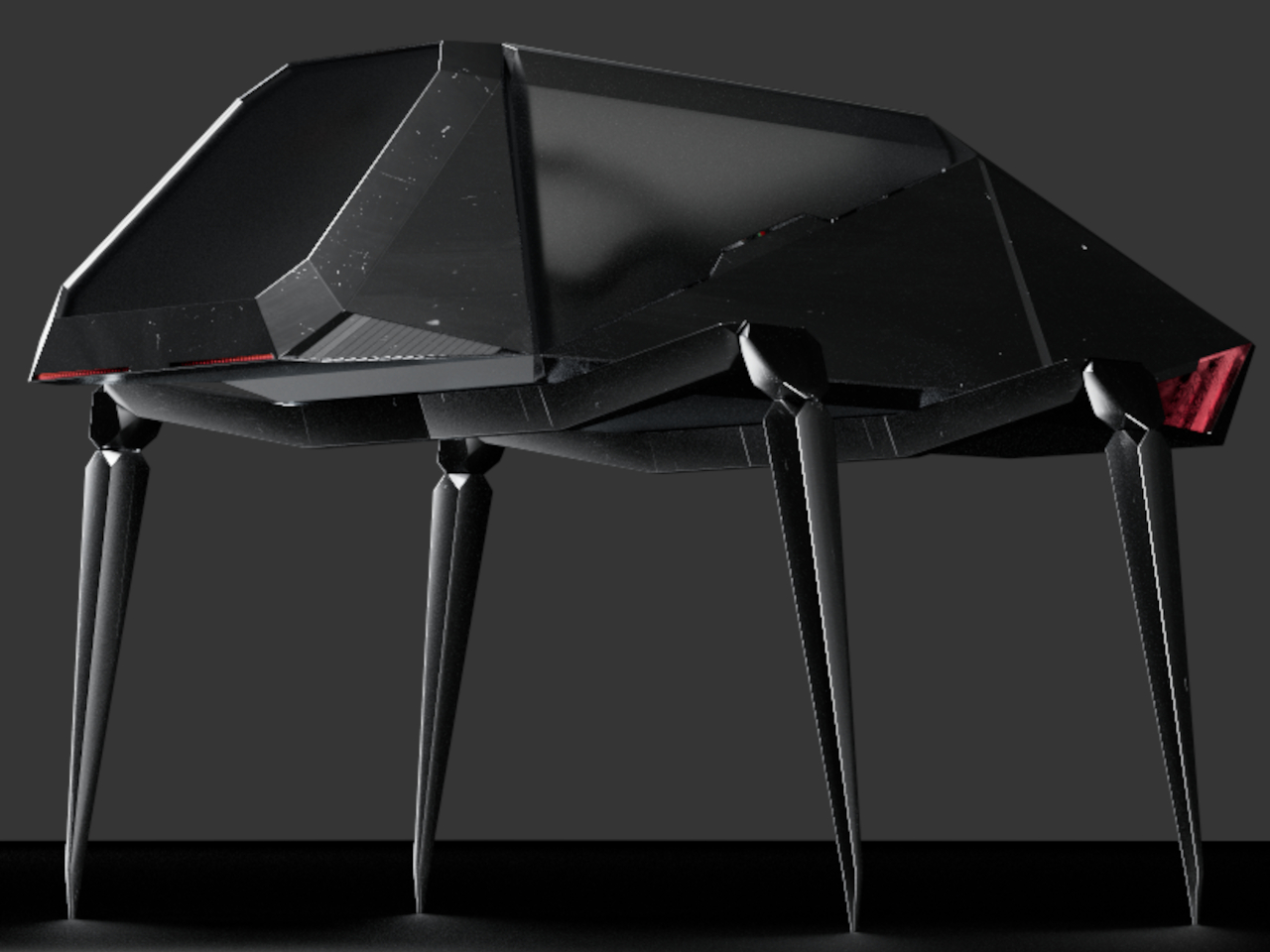
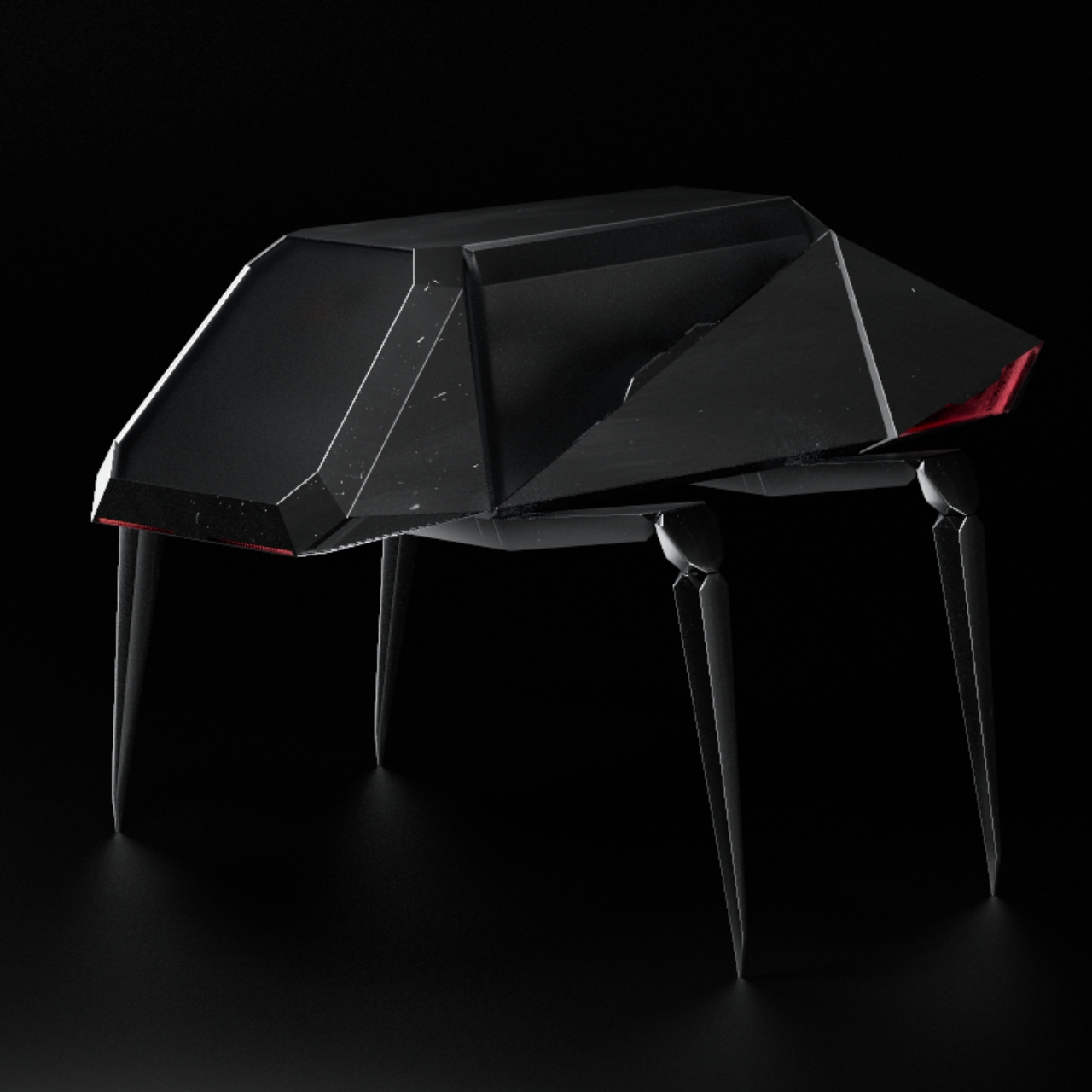
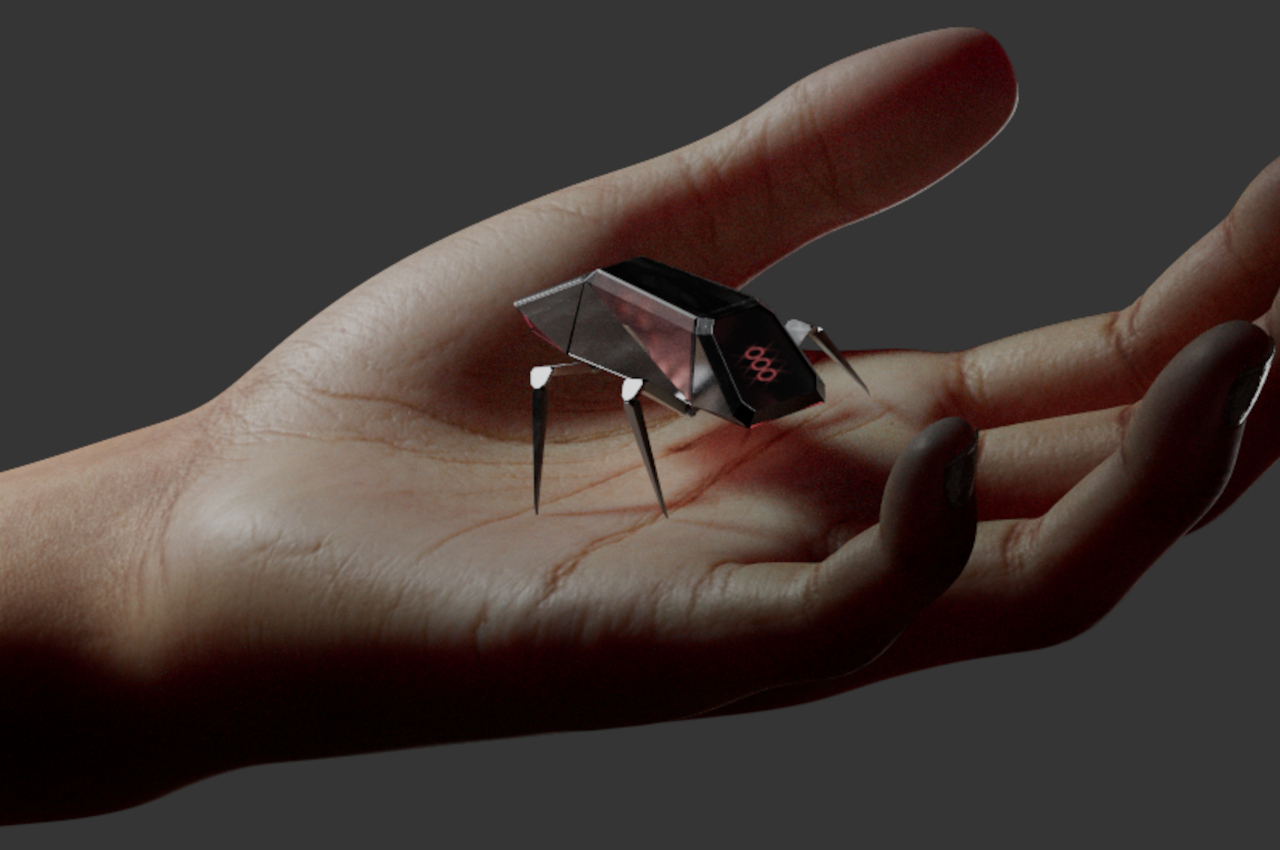
Some of the most popular (not necessarily best) memes are of people who seem to be brave on the outside but are reduced to screaming messes when faced with a cockroach. We’re talking both men and women here and seeing them freak out over these insects is apparently funny to some people. So this concept for a robotic cockroach may be the stuff of nightmares for some or a fascinating experiment for those who are curious.
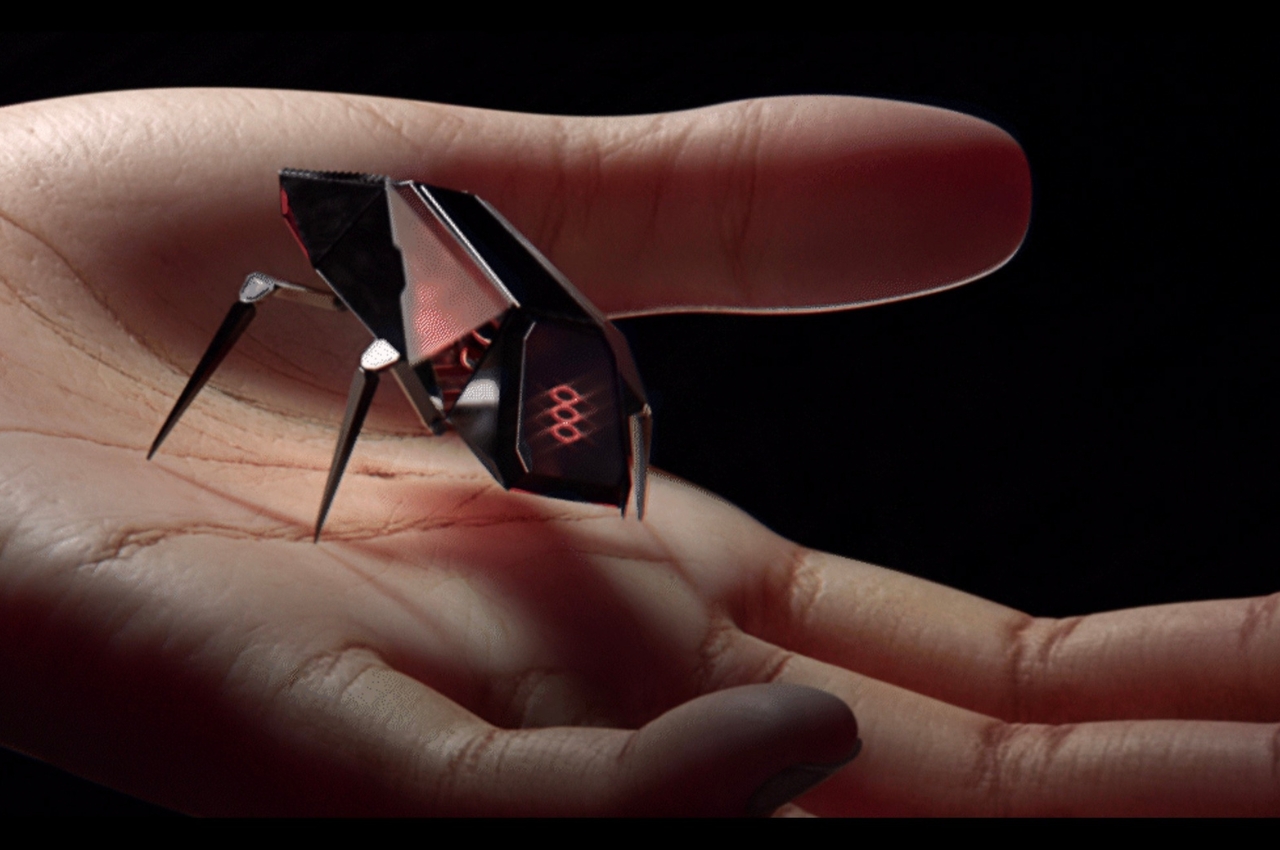
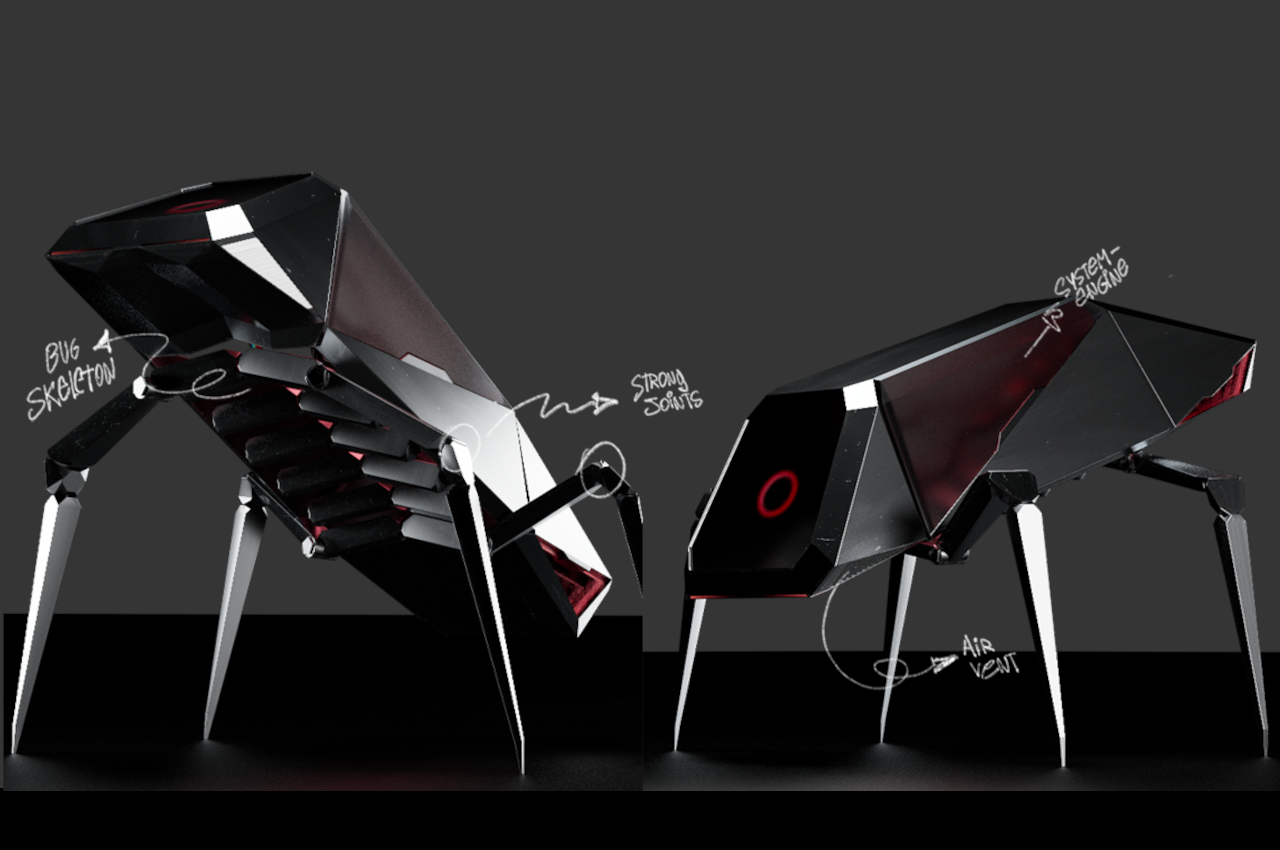
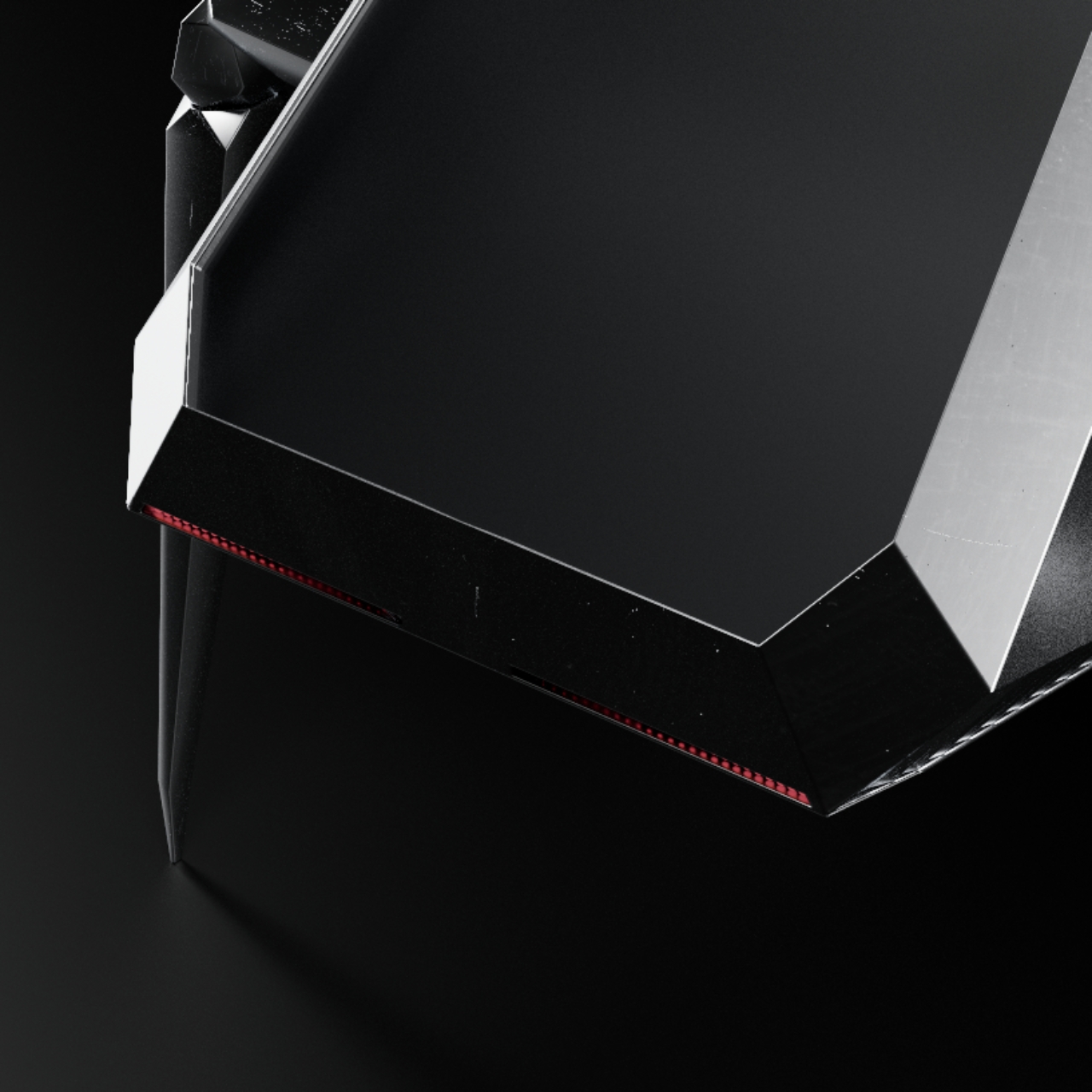
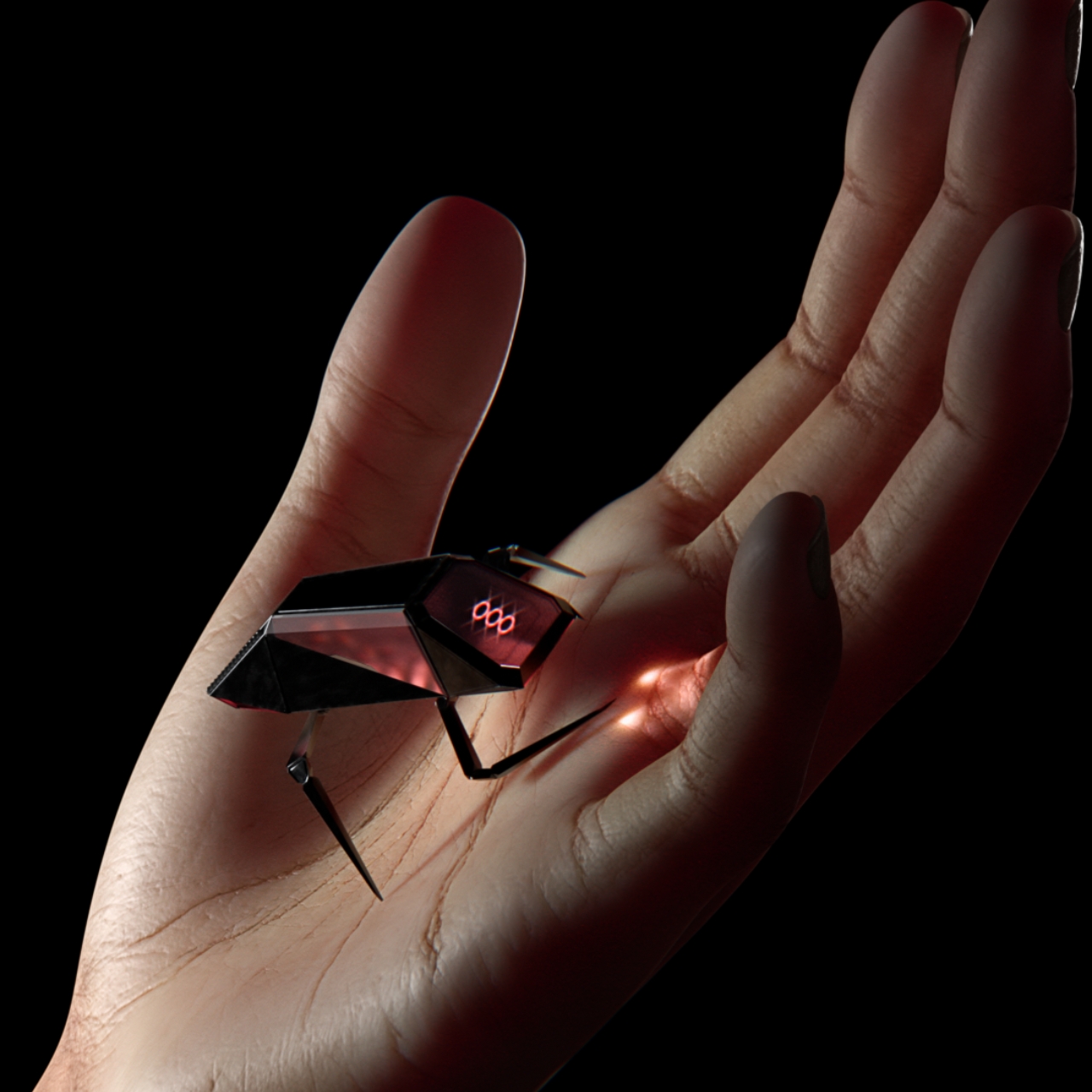
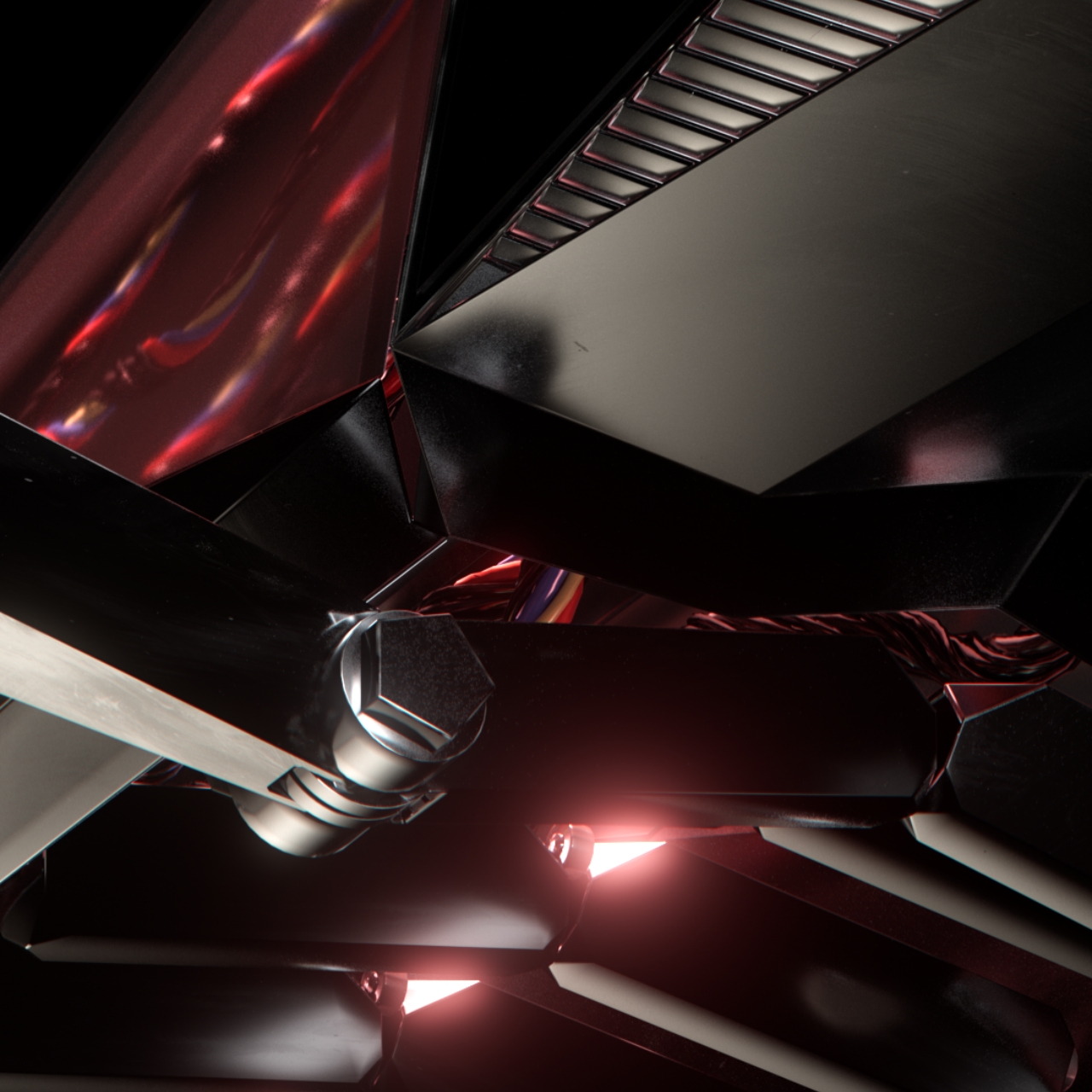
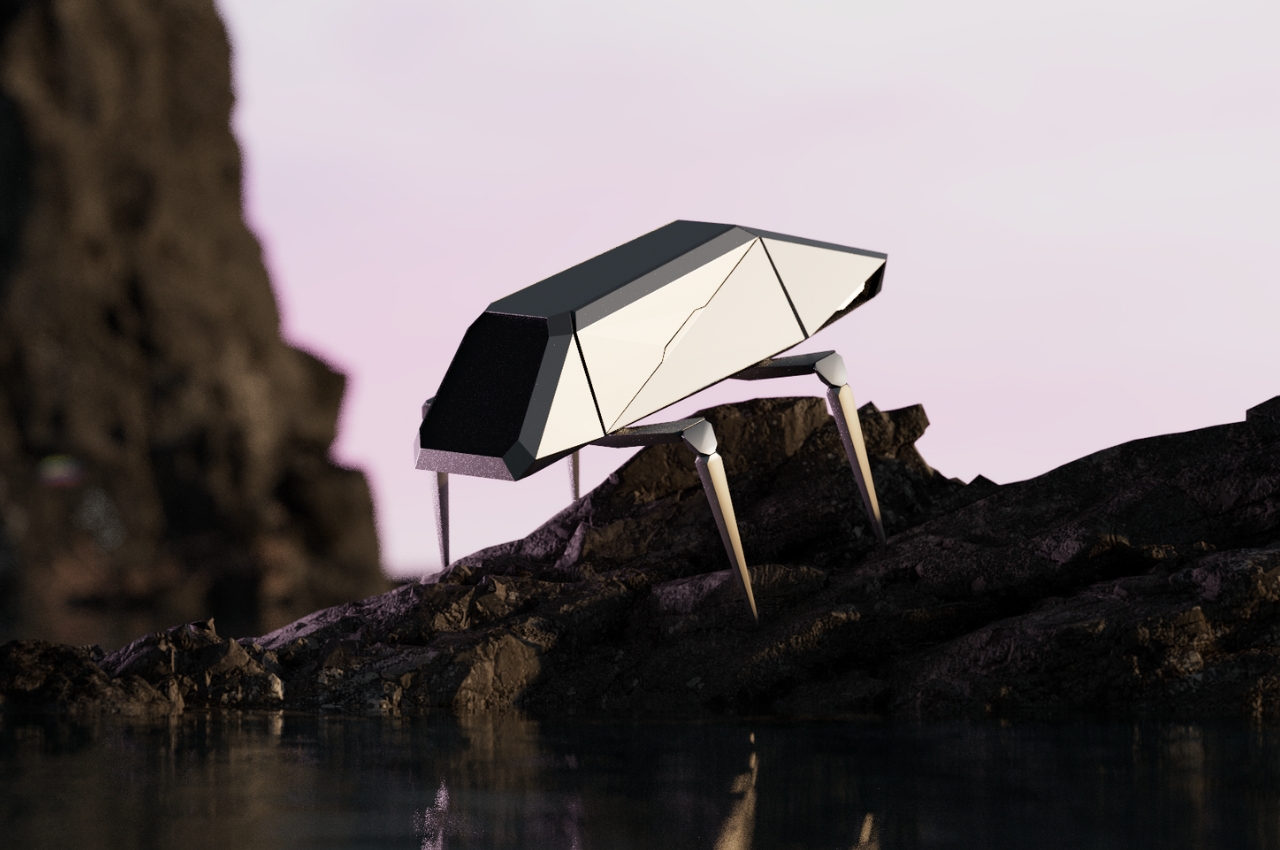
Baby X-Roach is a concept or experiment into creating a robotic creature that is usually a source of disgust or fright. In his description of this creature he created, he says that she has a huge and kind heart with her curiosity keeping her alive even if most people don’t see it. It is designed to have a high tech aesthetic even though it is a low poly creation (small number of polygons in 3D computer graphics).
Based on the animations the designer included, the structure of the Baby X-Roach seems to be based on the actual cockroach’s look but with a high tech aesthetic. It may actually look right at home in a Tesla facility as per the creator. It can also be part of the Into the Spiderverse animated universe as it looks like it may be insect cousins with the spider that bit Miles Morales, with its red and black colors and mechanical movements.
This insect doesn’t seem to have any other function except to be a cute, mechanical pet. Well, that is, if you’re not afraid of roaches. If you are, you just might squish it if you see it scurrying across to you, which would be a shame for this baby roach.