As a regular (addicted) coffee drinker, I use different methods to get my caffeine fix. Most of the time I just use a good ole coffee brewer but when I need a sort-of espresso fix, my coffee pod machine is the most convenient way since I don’t have an actual espresso machine. However we know that this isn’t the most environmentally-friendly way to consume coffee. But we’re seeing several brands come up with a more sustainable way forward for the k-cup industry.
Designer: Zenpack for Cambio
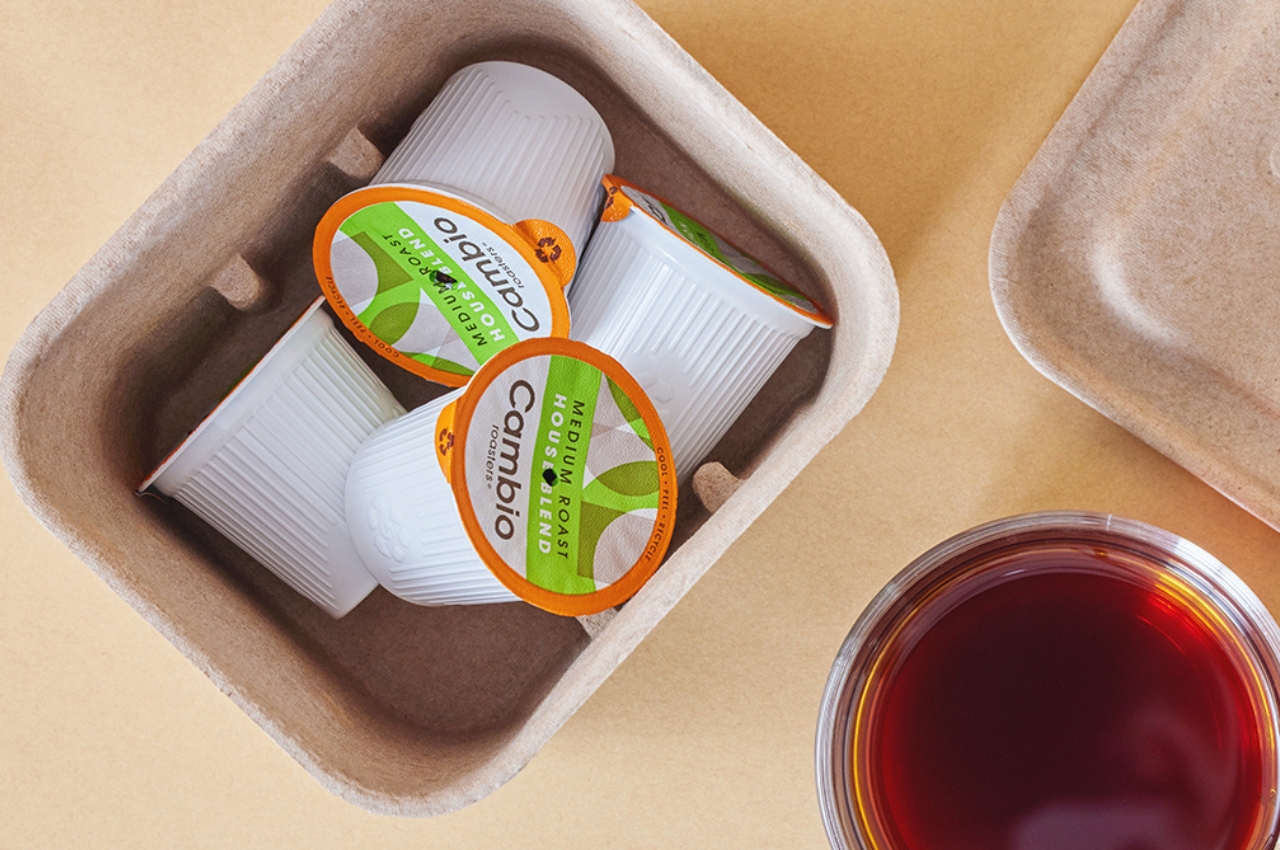
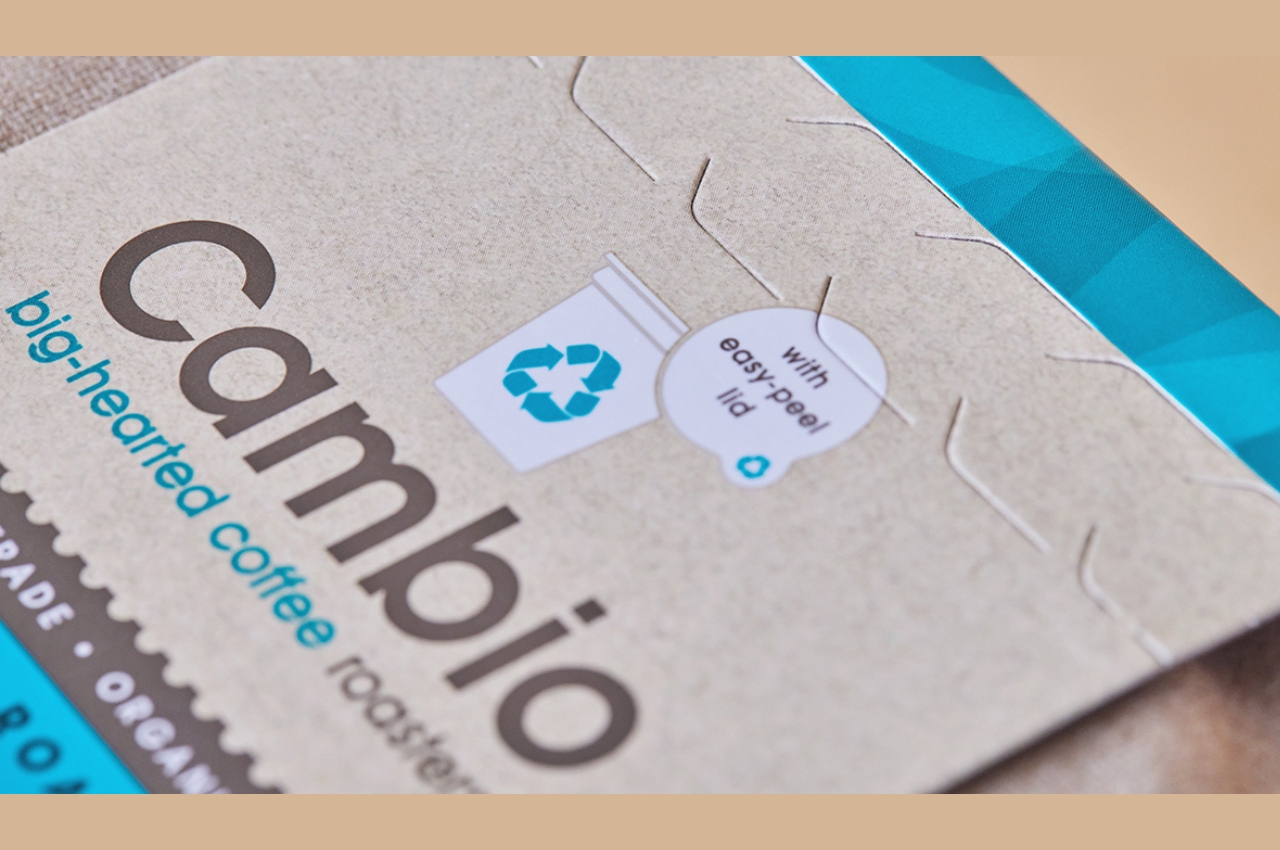
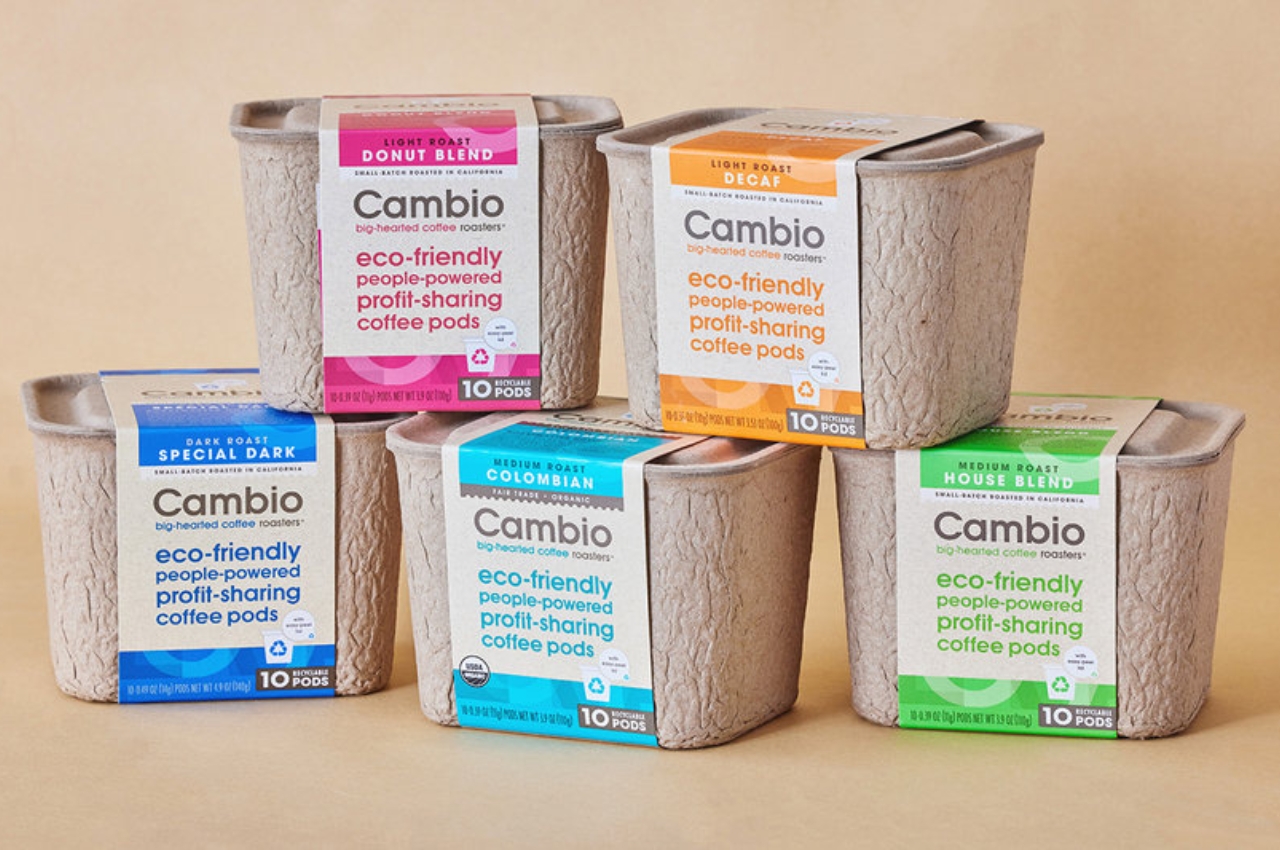
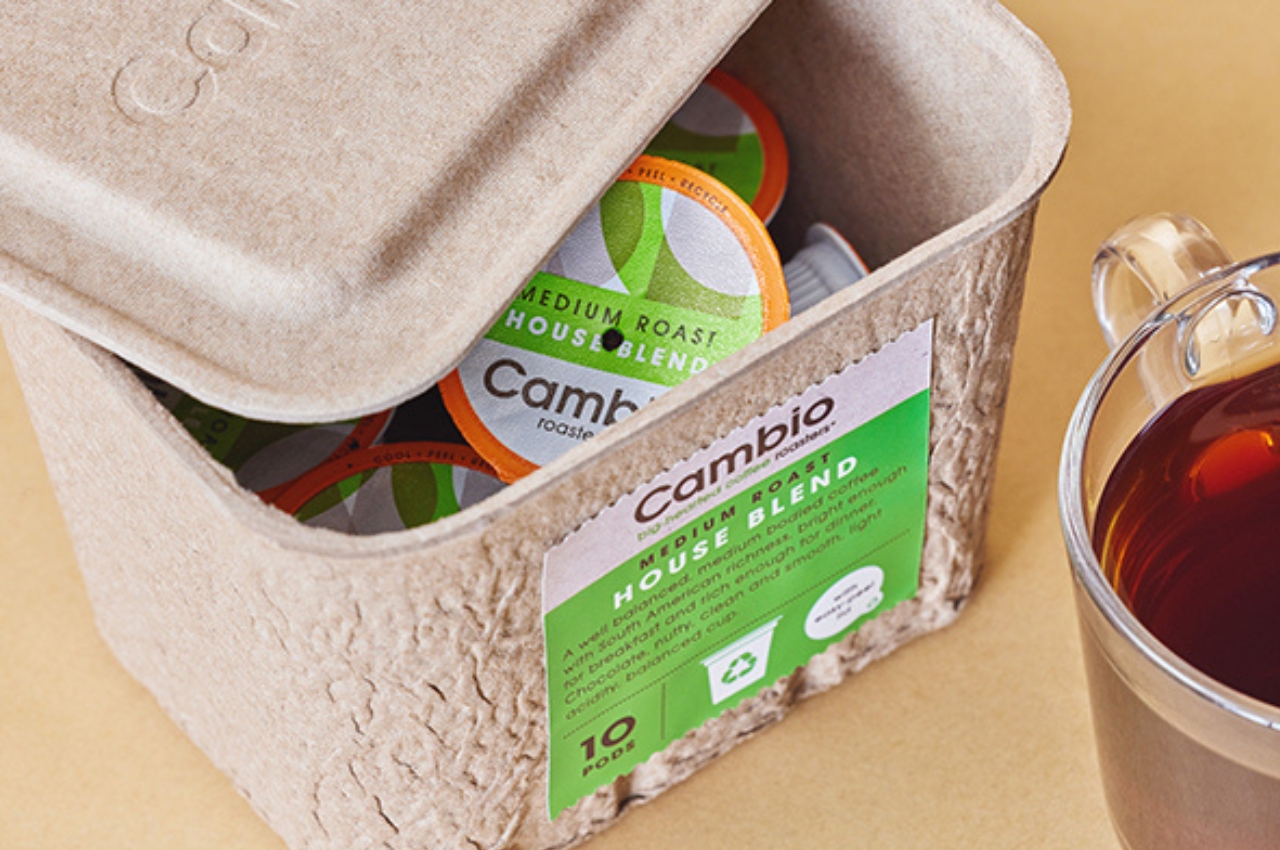
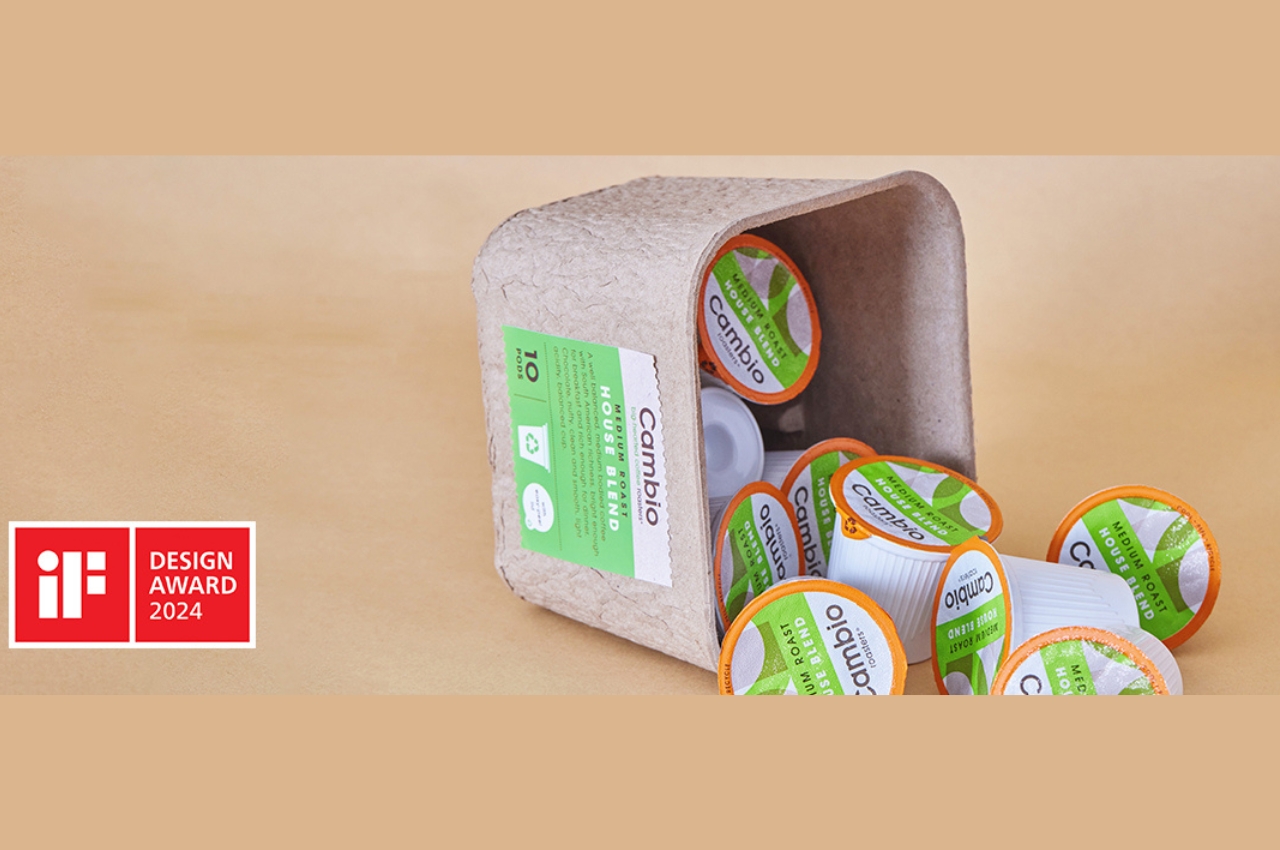
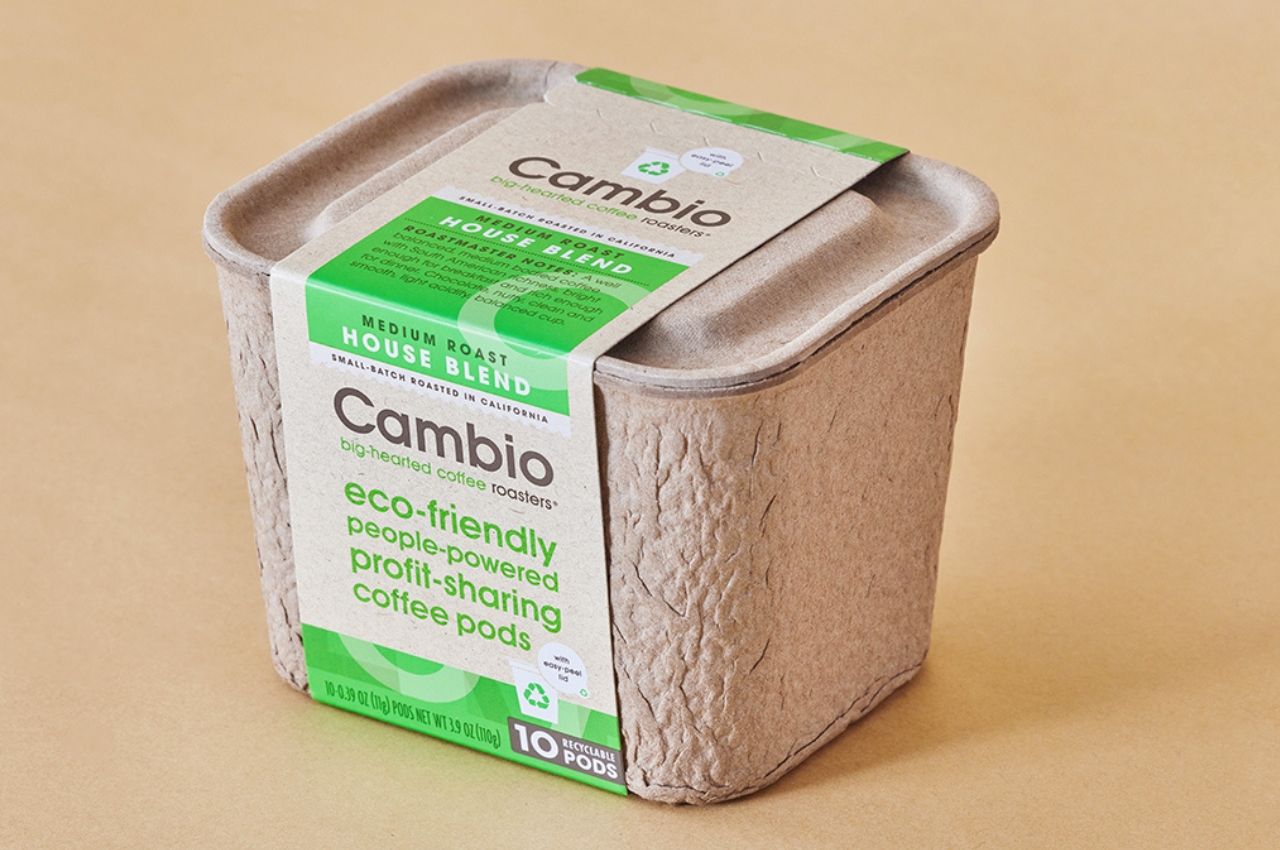
Cambio Roasters is one such brand that came up with organic coffee pods that were made up of just two materials: #5 polypropylene plastic and aluminum. But they didn’t want to just stop with the pods but come up with sustainable packaging as well. Zenpack created this container with eco-friendly materials that can serve also as a mini recycling bin for the pods before you bring them to the actual recycling bin.
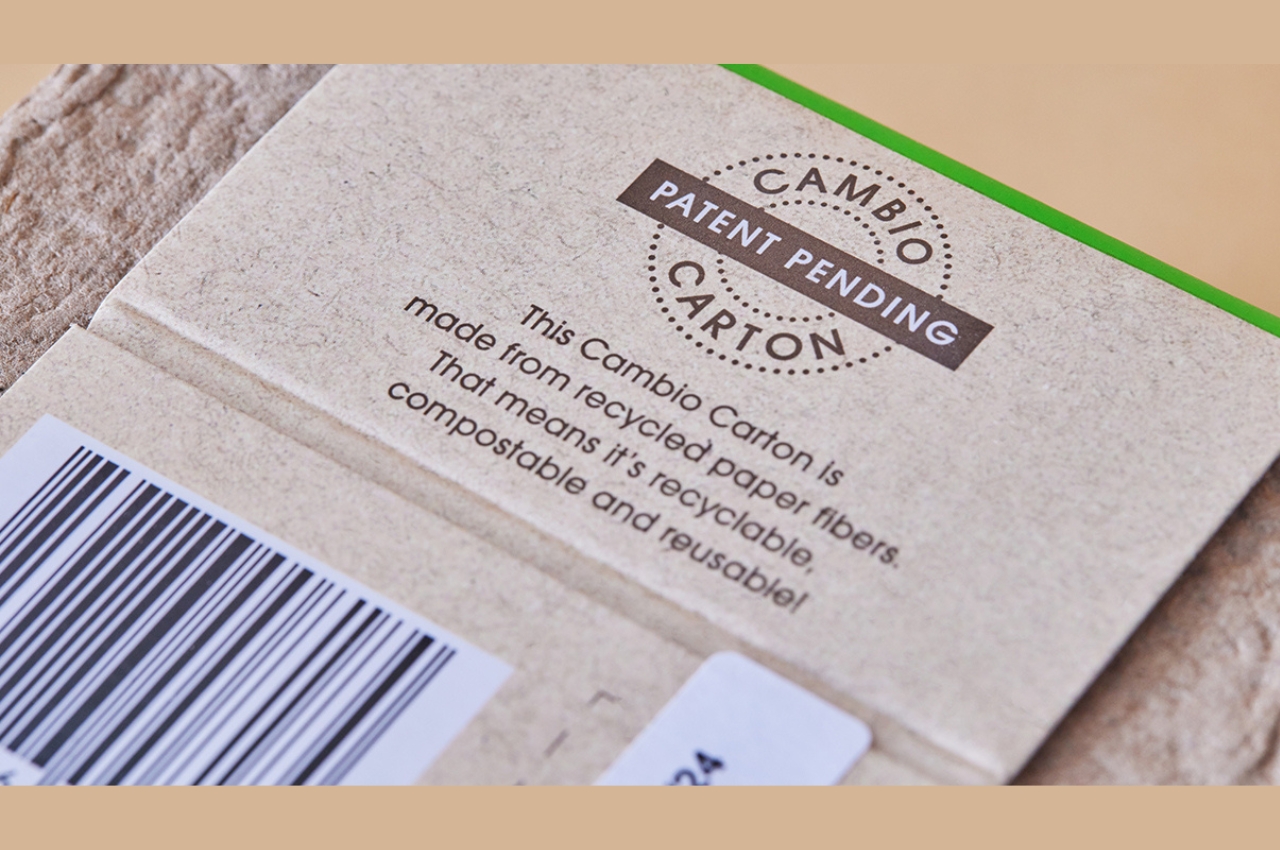
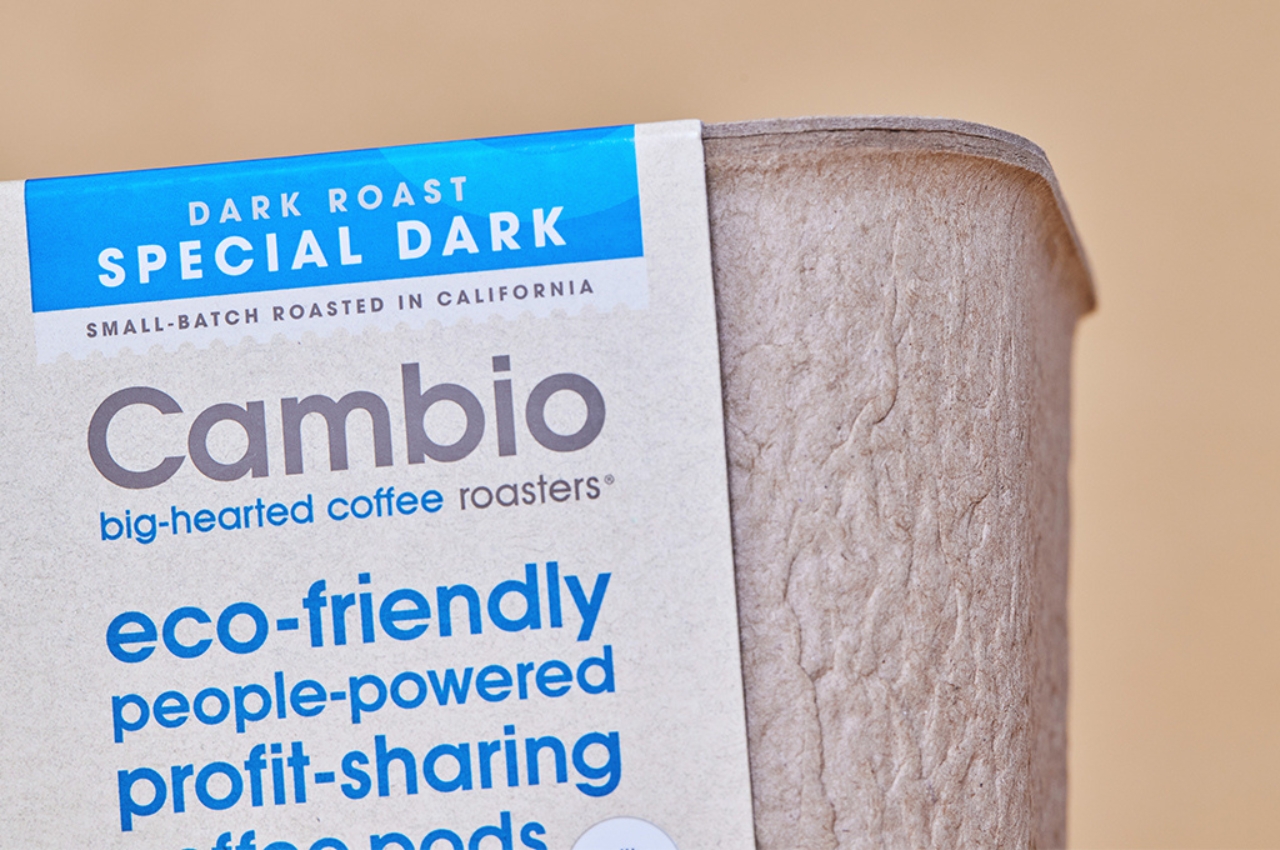
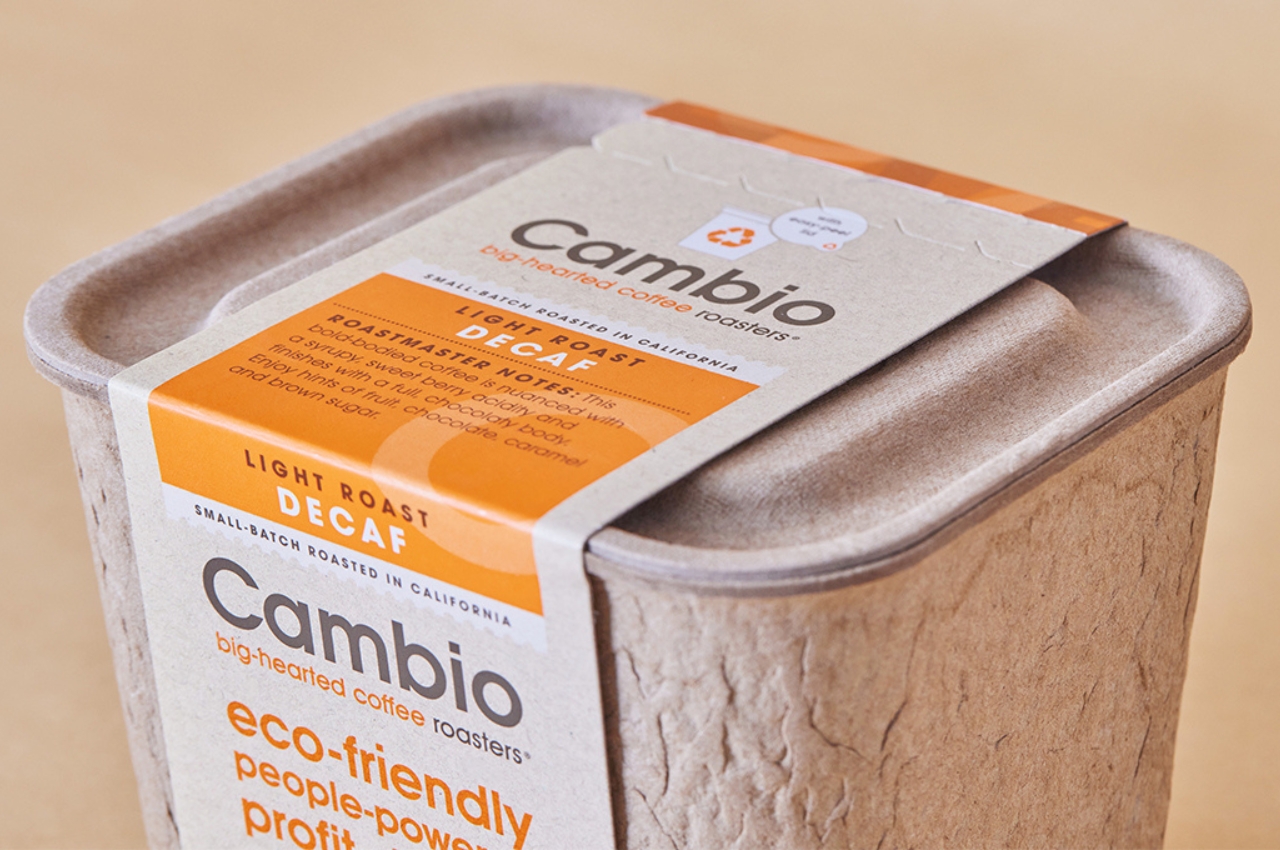
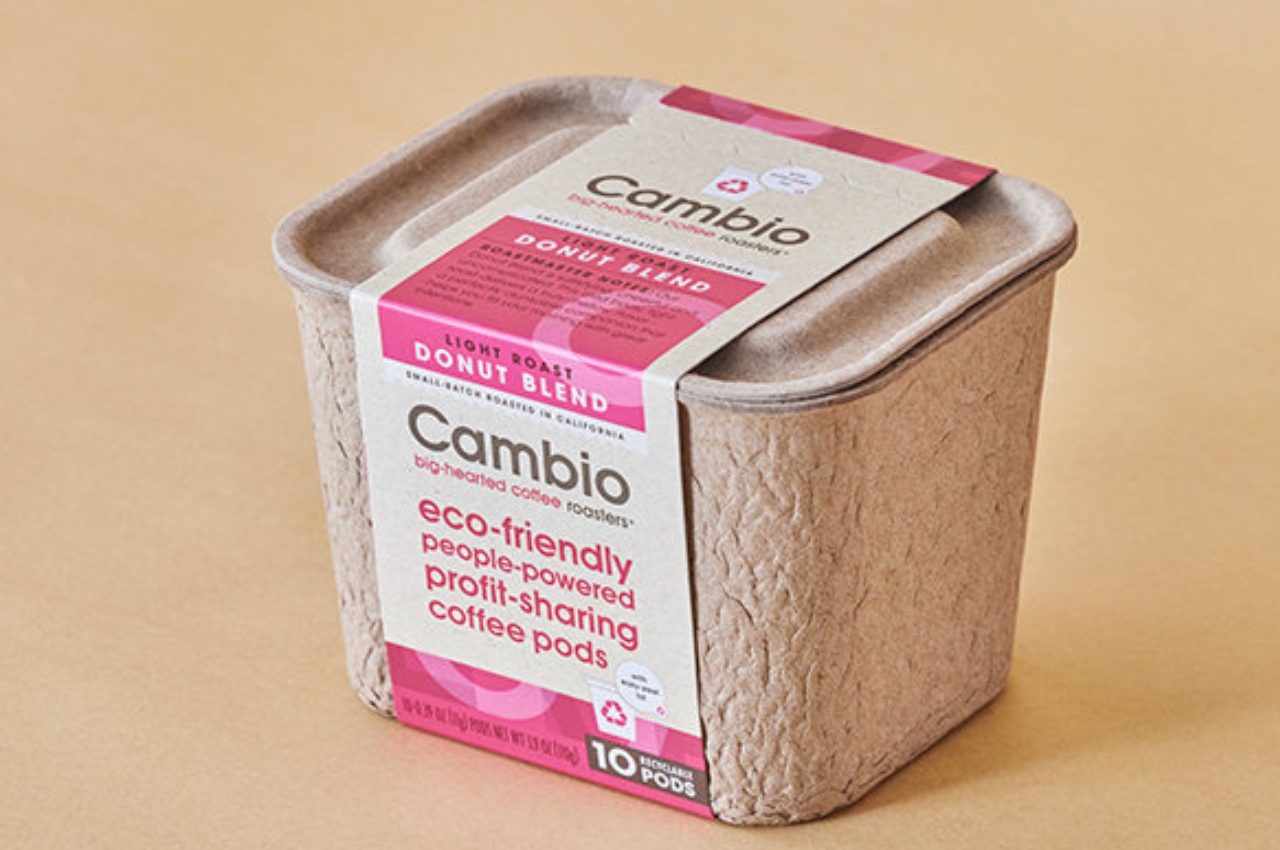
The container is made from molded pulp with added vertical ribs to give it more structure. It is able to hold 10 pods both for when it is shipped and for when you want to hold your used pods. Even the label is sustainable as it’s a glue-free belly band with a tear strip. All of the elements of this packaging can be thrown into a larger receptacle recycling bin. The container can also be used as a temporary compost bin for your coffee grounds and other kitchen scraps.
With people becoming more conscious with how they consume products, it is good that more sustainable brands are emerging. We stan these brands that not only think of their main products but also their packaging, which can sometimes get lost in the shuffle.
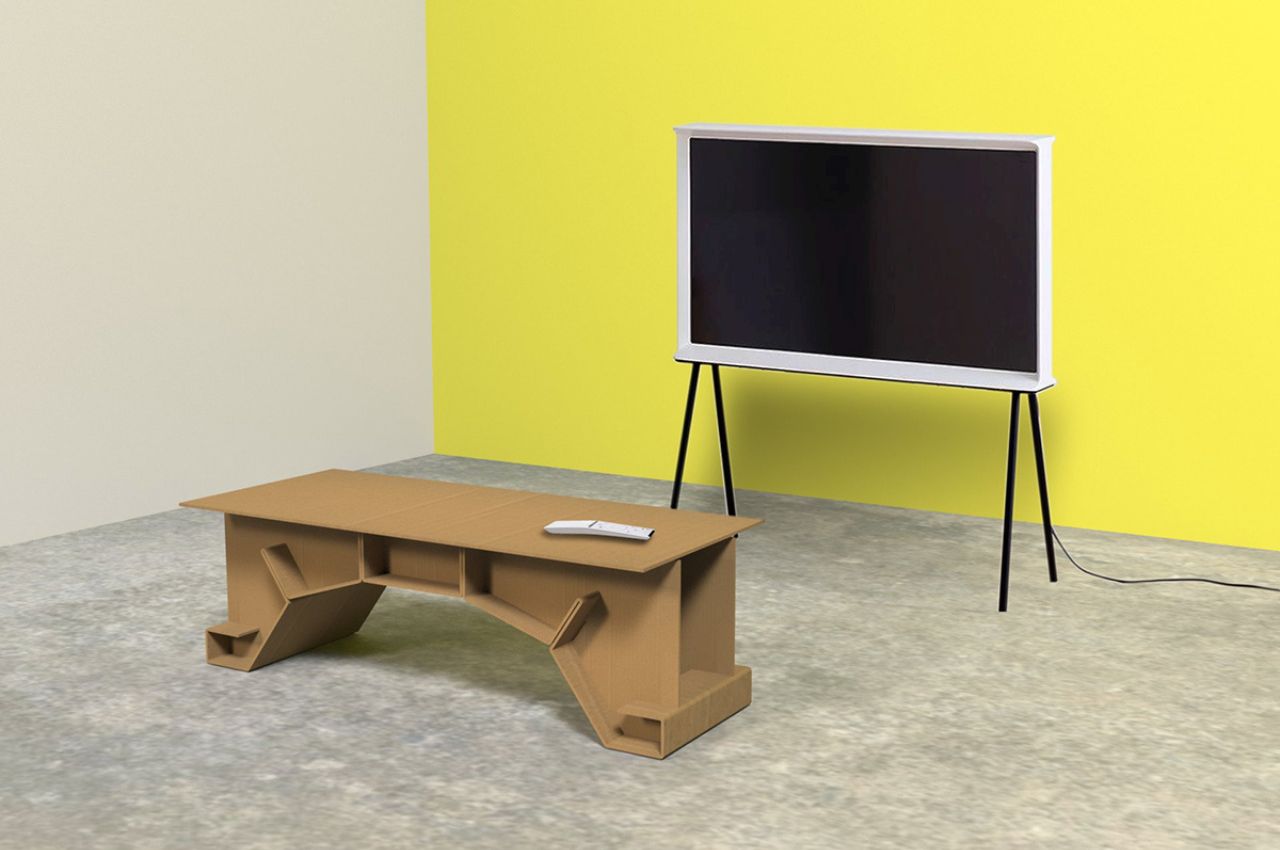
Innovative design often emerges from the desire to solve a problem, and the Cuna furniture collection is a perfect example of this principle. Created as a solution to repurpose cardboard, Cuna is an eco-friendly piece of furniture that is cleverly designed, a multifunctional piece that redefines the concept of sustainability and functionality.
Designer: Valeria CoelloCrafted from cardboard, a material readily available in most households, it is a testament to the idea that there is latent potential in what we often consider to be “waste.” Think about the sheer volume of cardboard boxes that accompany the gadgets, appliances, and packages we receive daily. Rather than relegating this cardboard to landfills, Cuna repurposes it, offering an ingenious solution that is as practical as it is environmentally friendly.
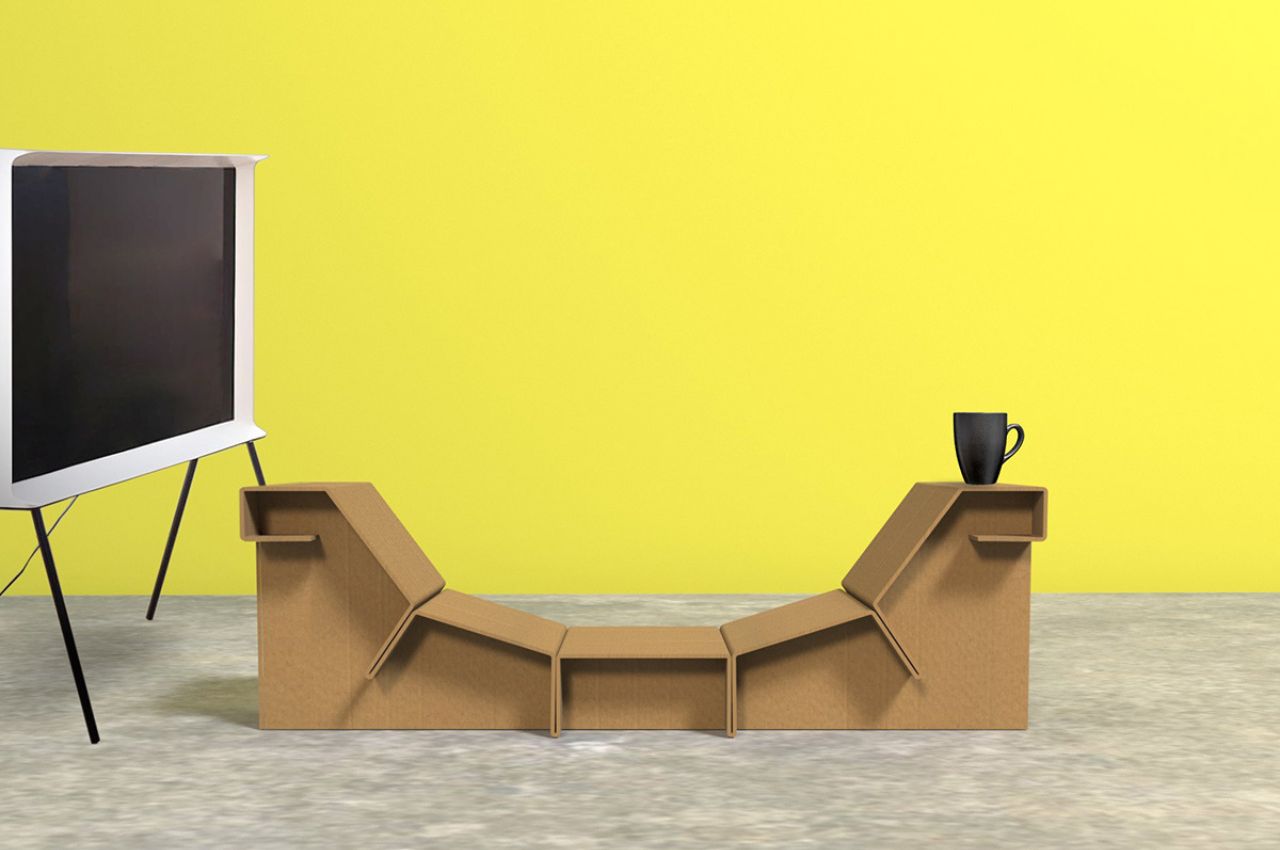
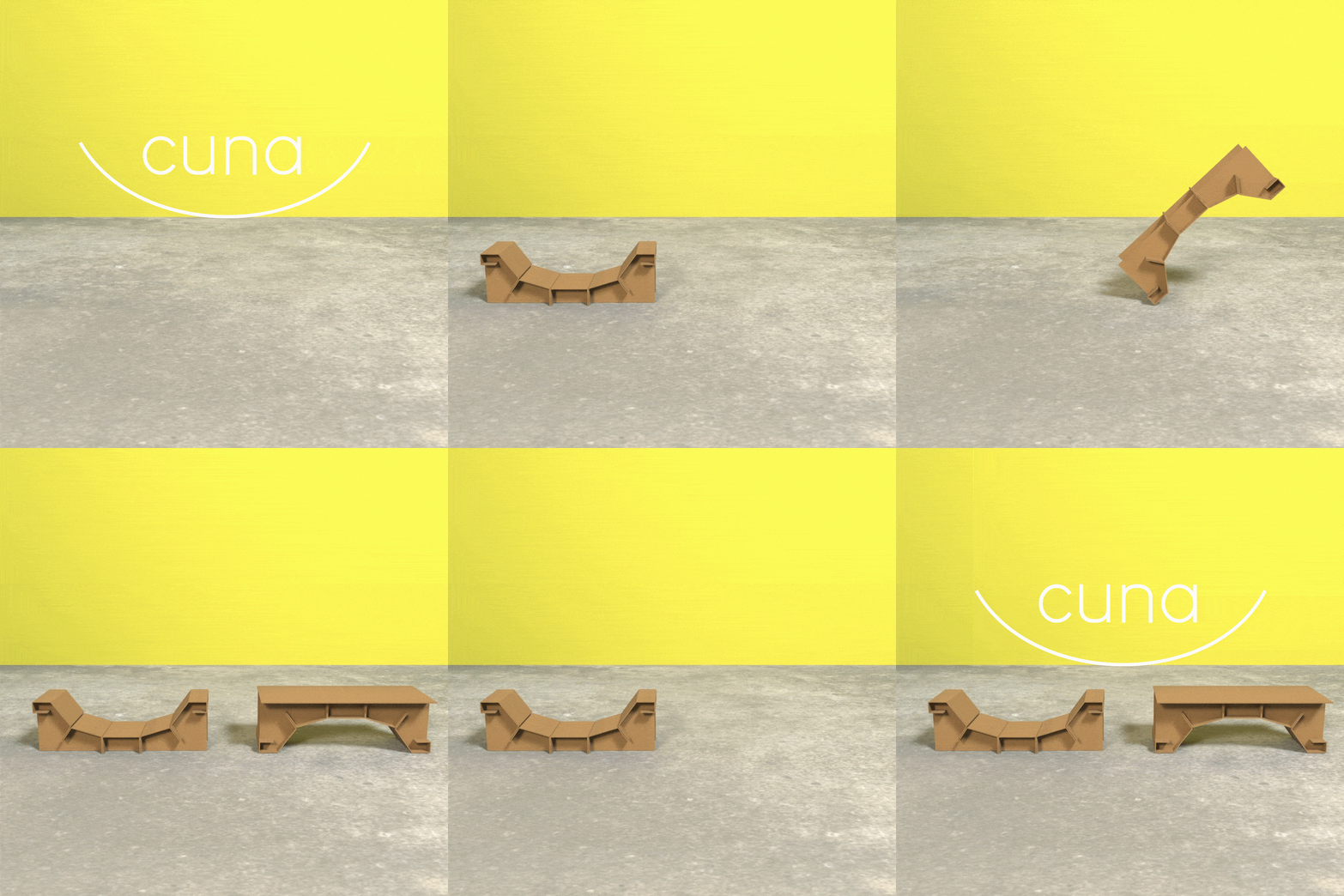
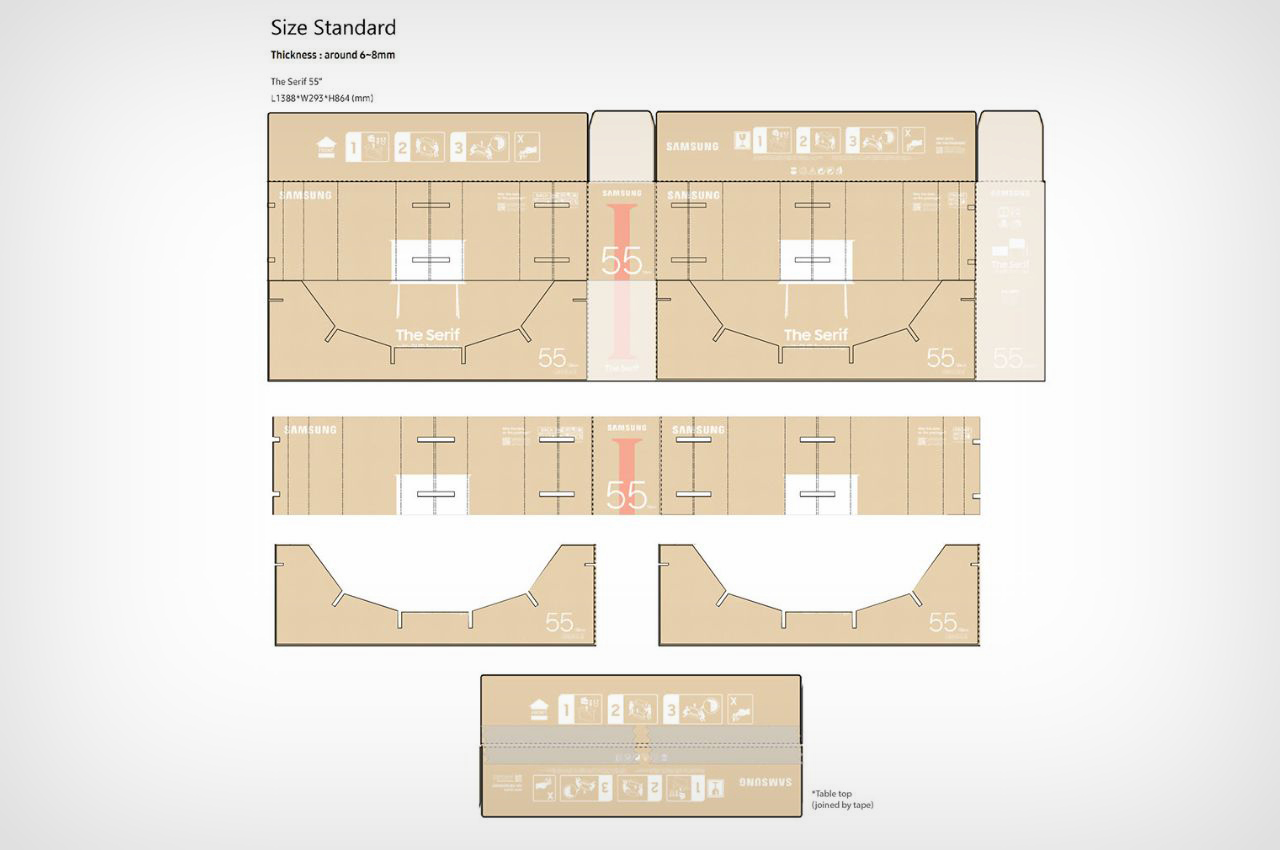
Created from just two sheets of sturdy cardboard joined by five additional pieces, the bench offers a unique aesthetic and DIY experience. It’s a lovely DIY experience that allows one to build a connection with their masterpiece. The brilliance actually lies in the simplicity of its design. By utilizing the principles of joinery, the pieces interlock without the need for screws or adhesives, forming a structure that is remarkably sturdy and surprisingly lightweight.
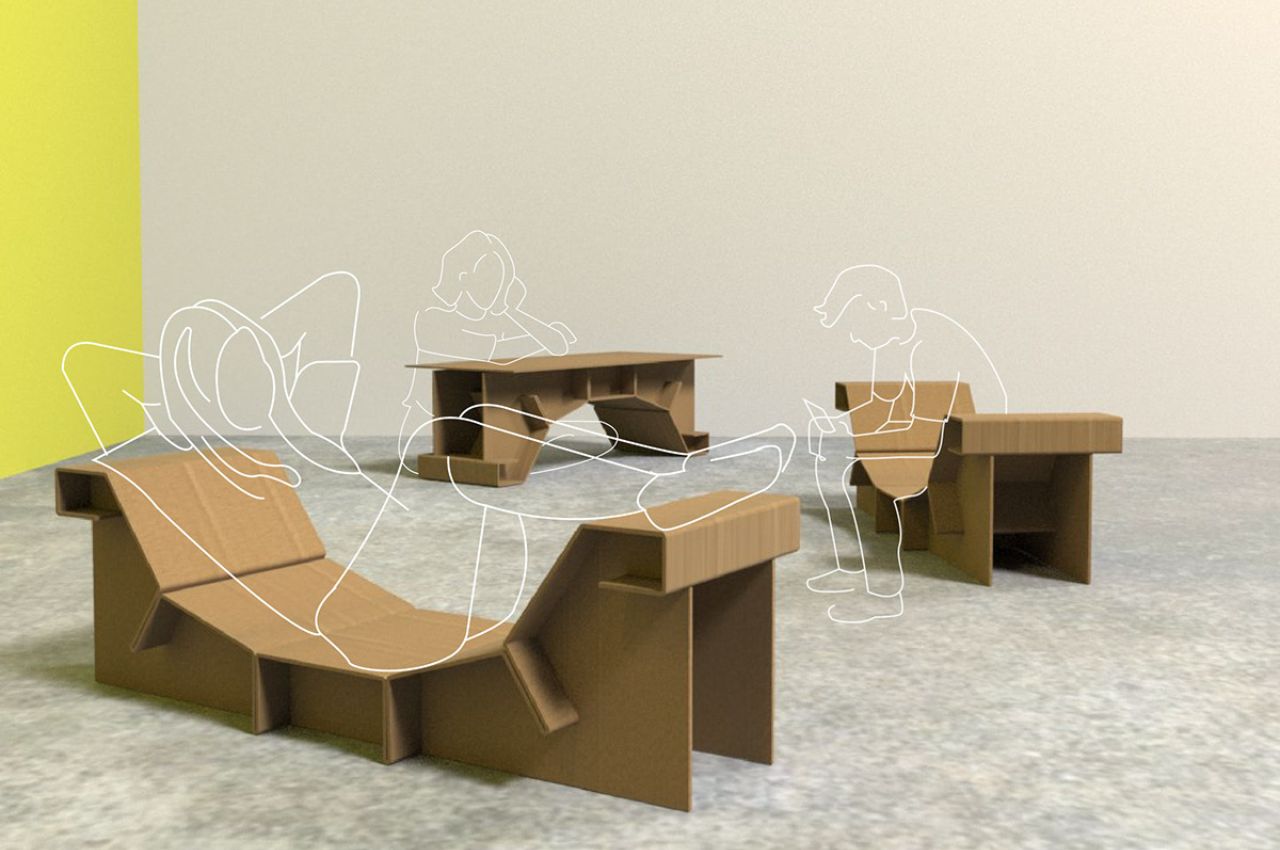
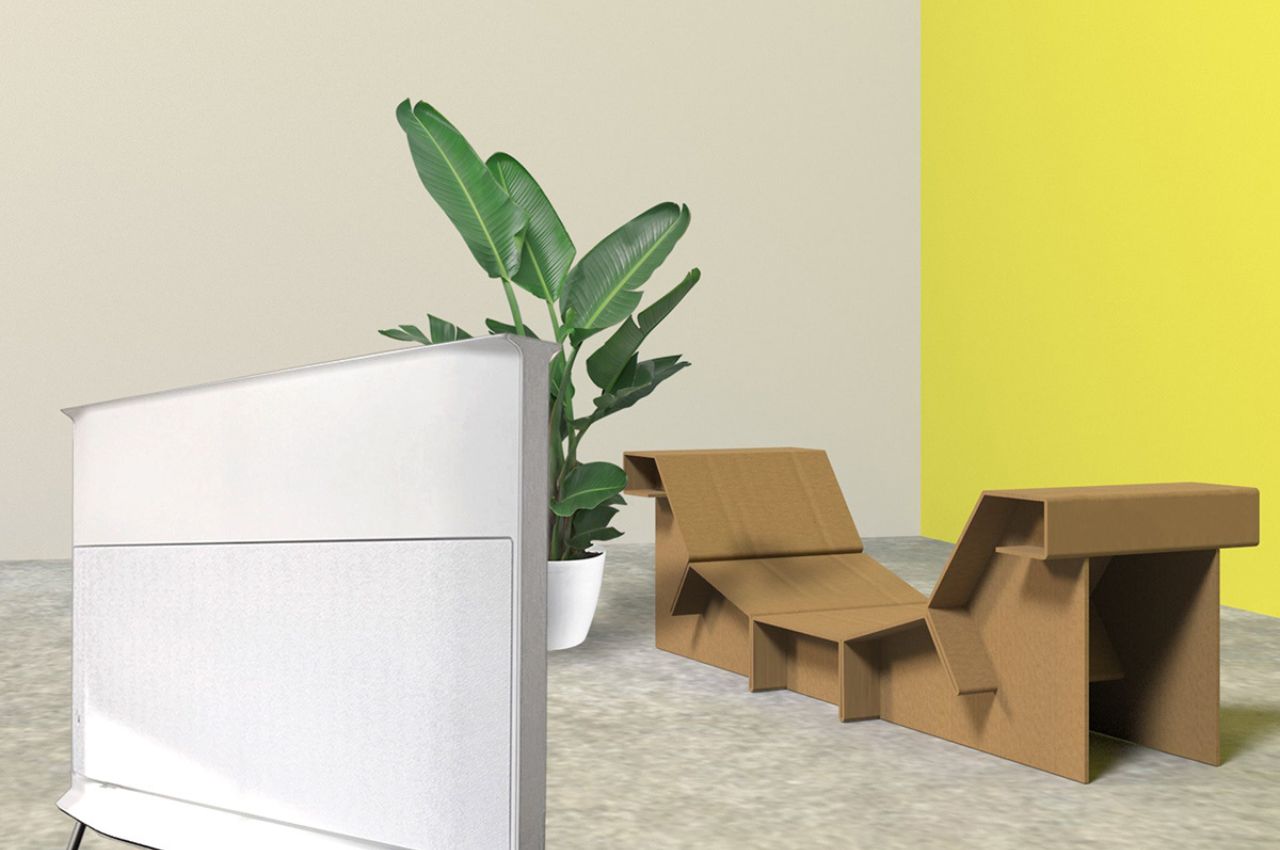
The genius of the Cuna bench lies in its versatility. When assembled, it can be used in two different ways, depending on the user’s needs. In its standard configuration, it offers a beautifully curved seating area for one person. However, flip it upside down, and an additional layer of cardboard transforms it into a conventional flat bench, capable of potentially seating an extra person. This dual-purpose functionality extends further; the flat-top version can also serve as a table. With two of these benches, you have a complete set—a low table and chairs—perfect for various settings, from hosting parties to day-to-day living.
Despite being made of cardboard, Cuna is surprisingly comfortable. The 6-8mm thickness of the cardboard provides a firm yet yielding surface, which is gentle on the body. The curved design provides a cozy seating experience, with the sides acting as convenient armrests or even as a place to set down a cup or phone. When placed against a wall, it even acts as a makeshift backrest. Furthermore, it can serve as a daybed, allowing you to rest on one side while placing your legs on the other.
Cuna is an ideal option for a wide range of scenarios. Whether you are a student on a budget, a bachelor looking for practical and sustainable furniture or a new homeowner looking to add both comfort and sustainability to your space, Cuna fits the bill perfectly.
The next time you unbox a new TV, microwave, or even the humble pizza, think twice before discarding the packaging. With Cuna, you can repurpose that cardboard, transforming it into a functional piece of furniture that adds an element of sustainability and comfort to your living space.
If you’re having a dinner party and you need to smoke some of your food like meats, vegetables, fish, cheese, and nuts, you probably will have to do it outdoors. But if you don’t have space to do actual smoking and you just have your table as your space, then that can be a problem (or you might have to just change your menu). There are options out there for table smokers but not all of them are convenient or emit minimal smoke or worse, they can make your food a bit charred.
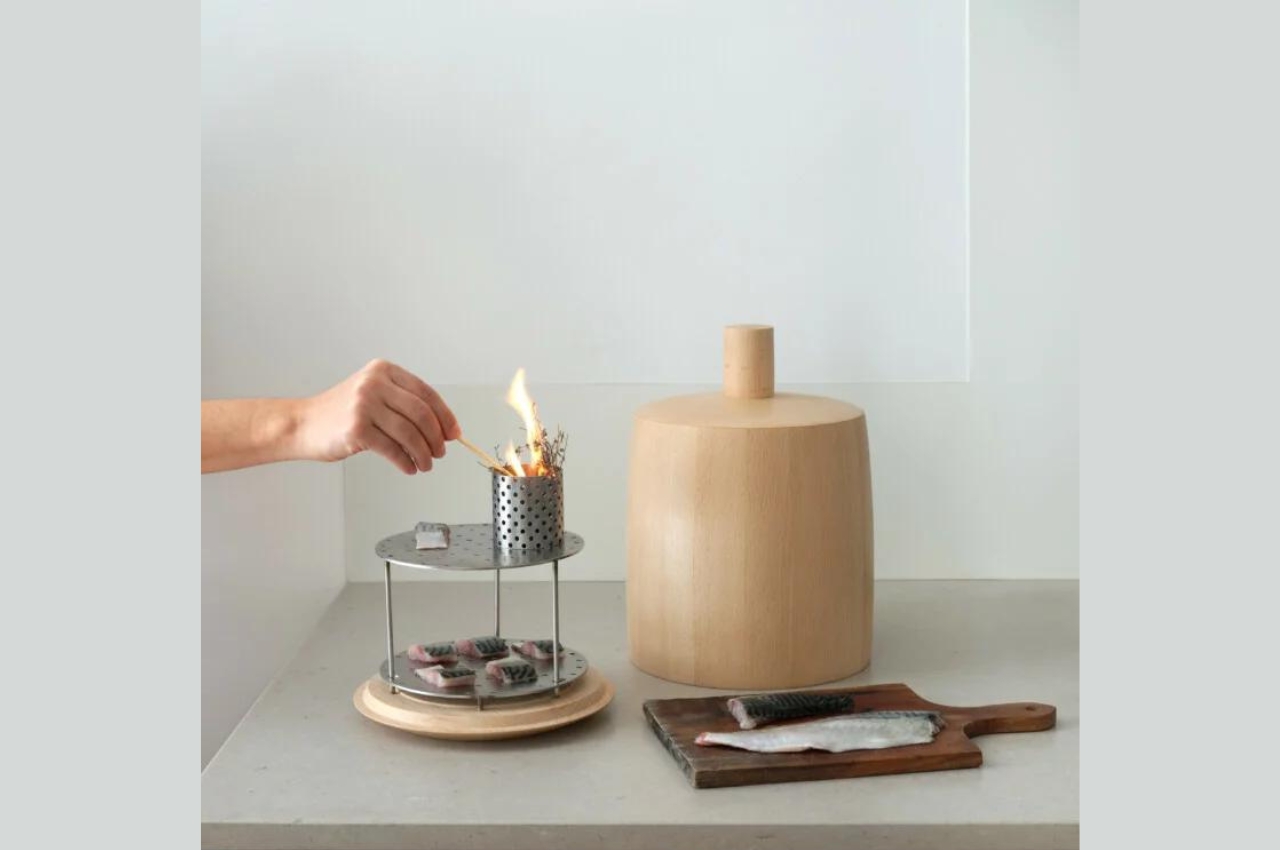
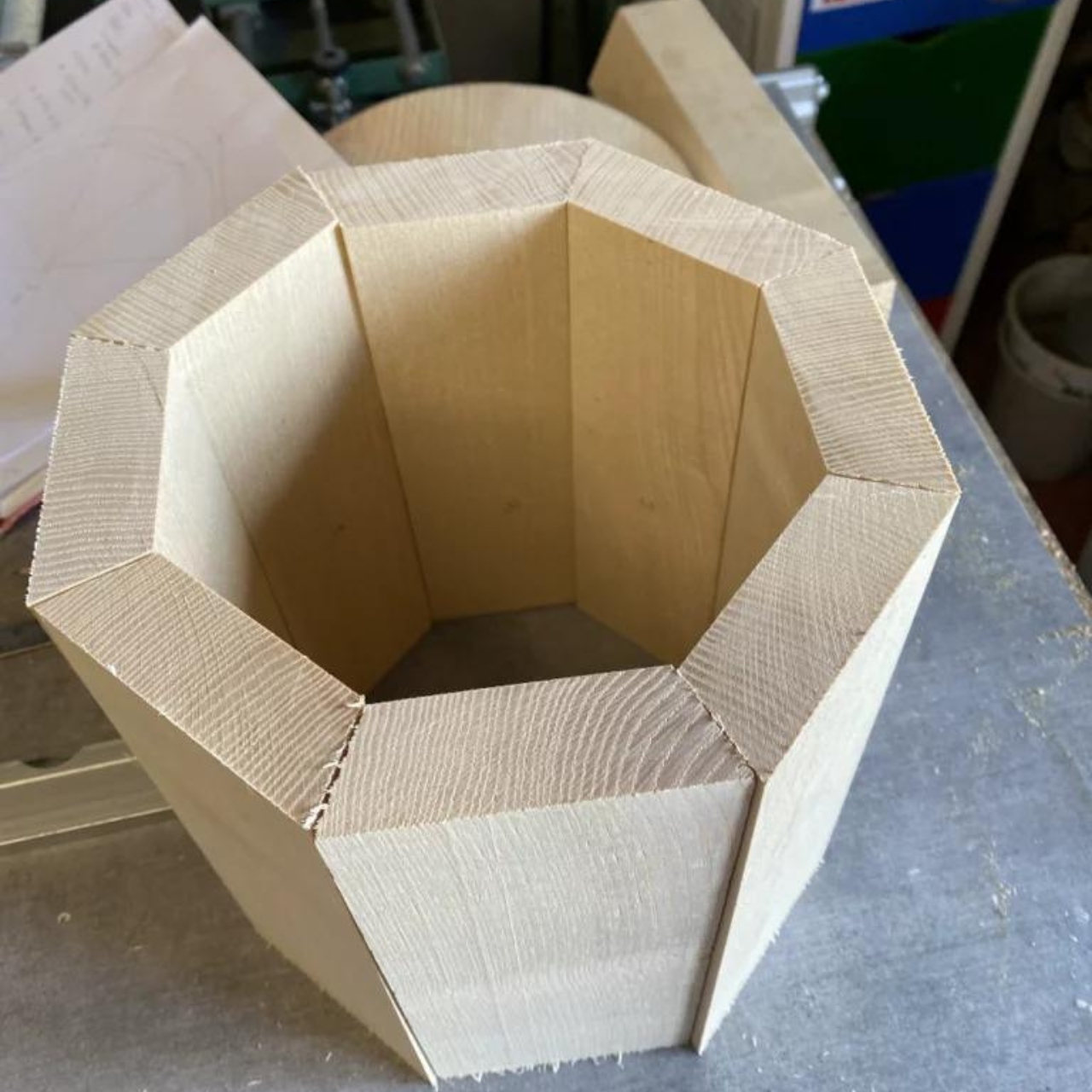
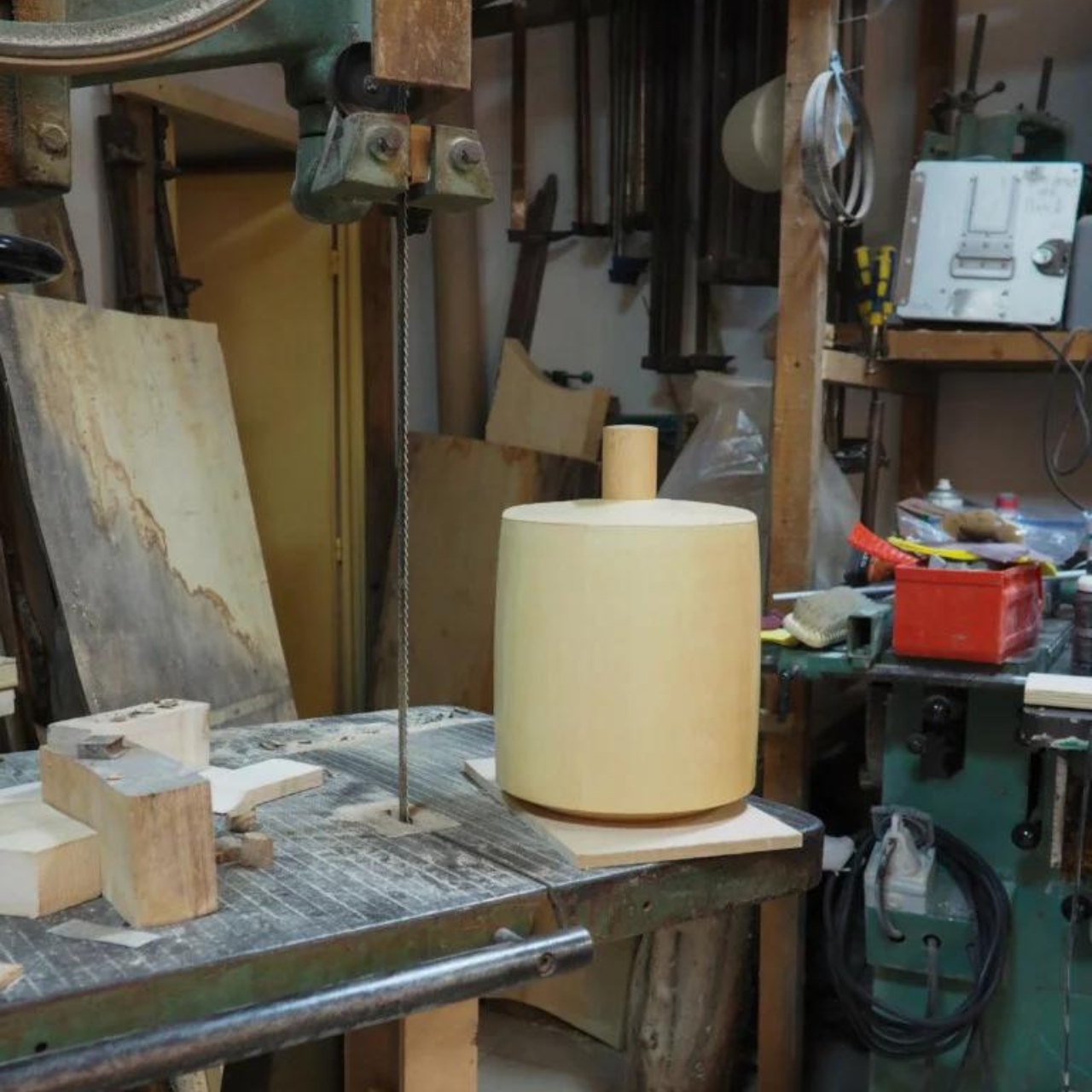
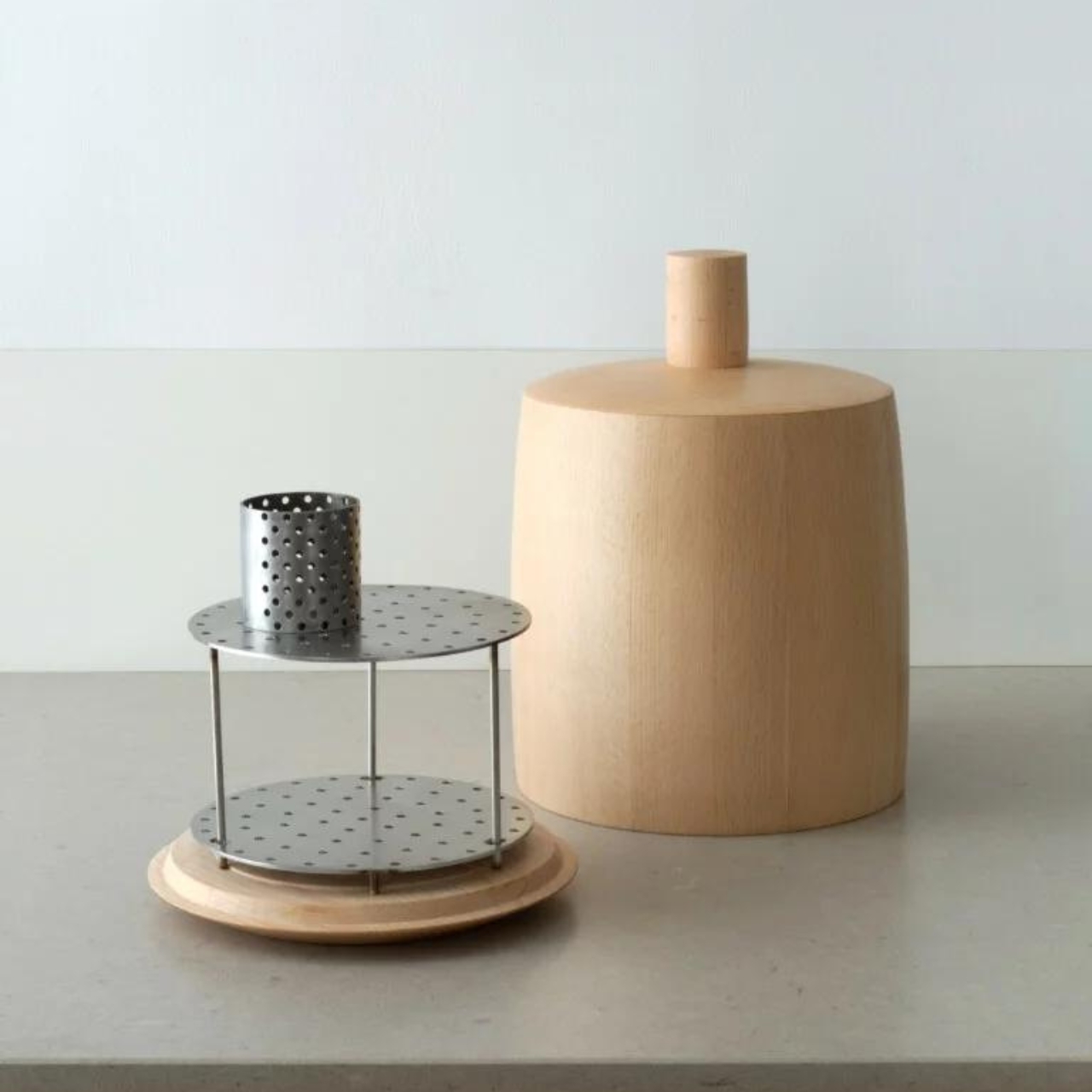
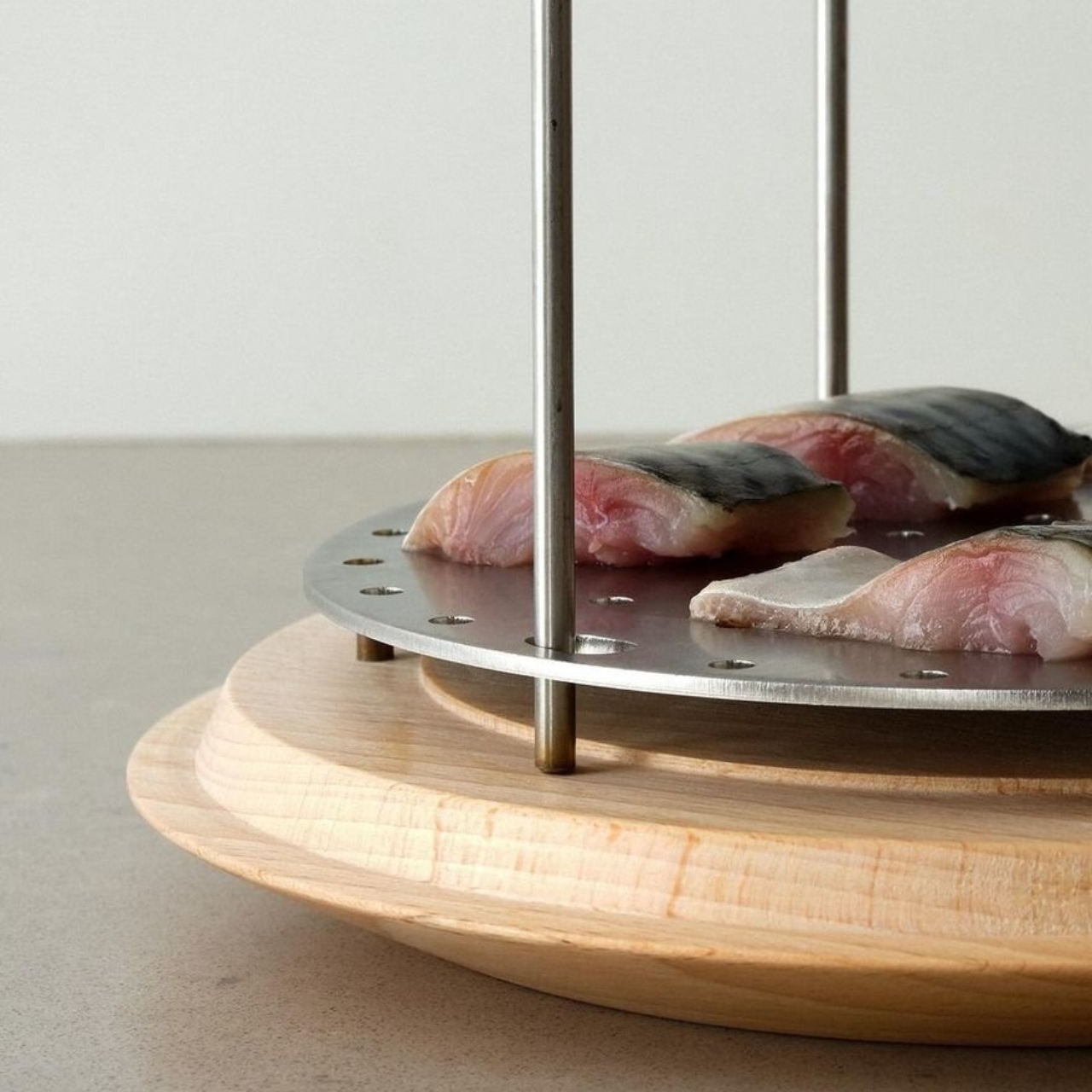
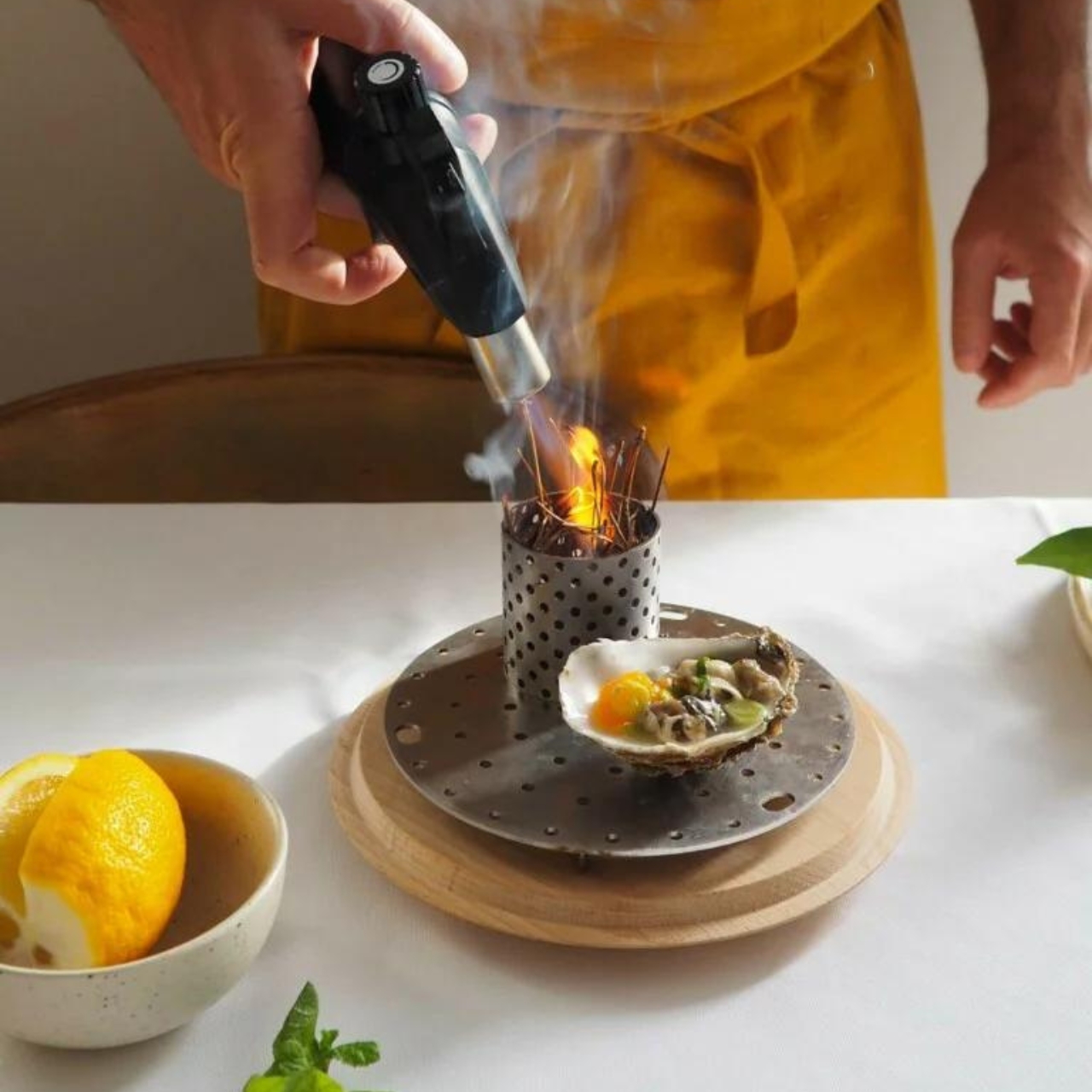
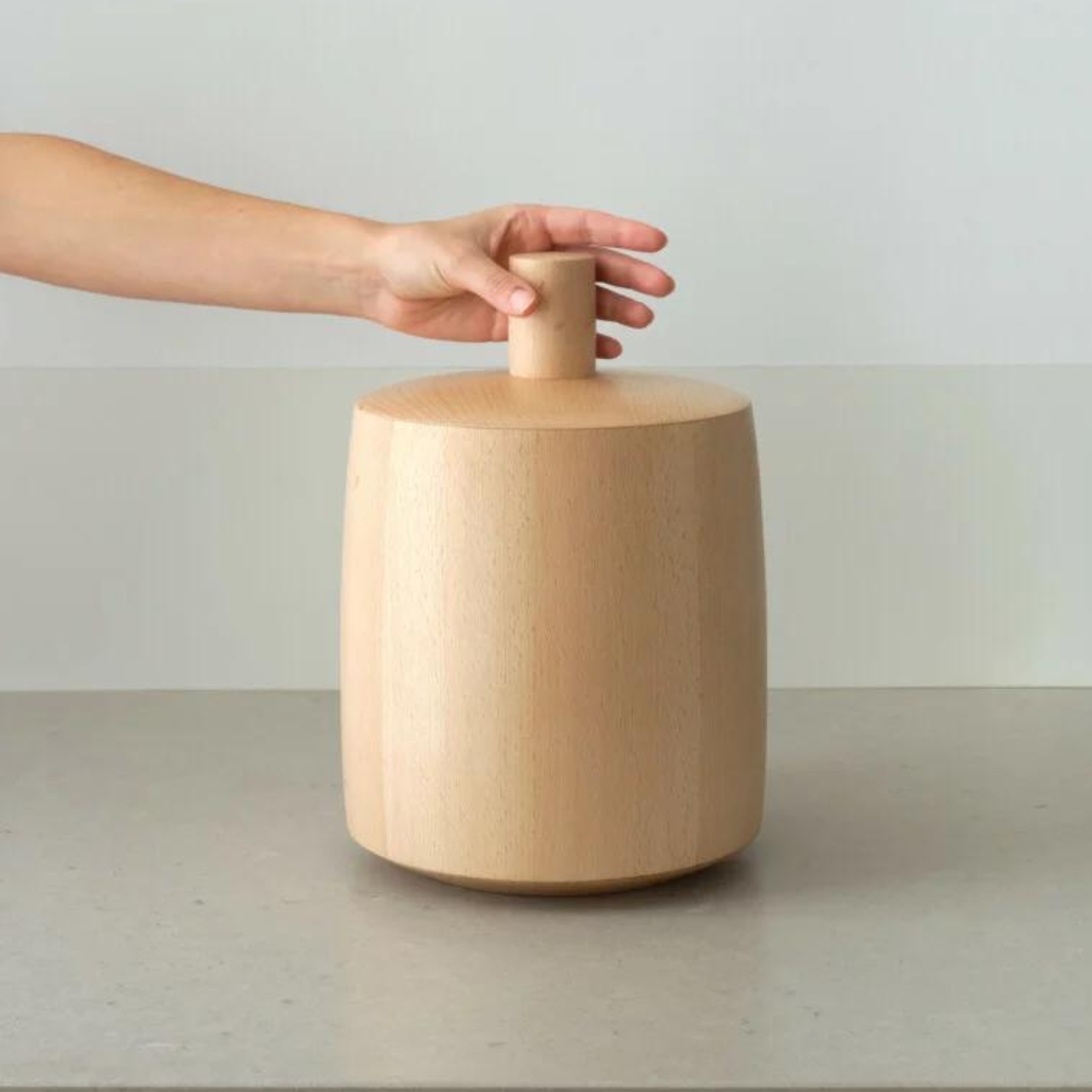
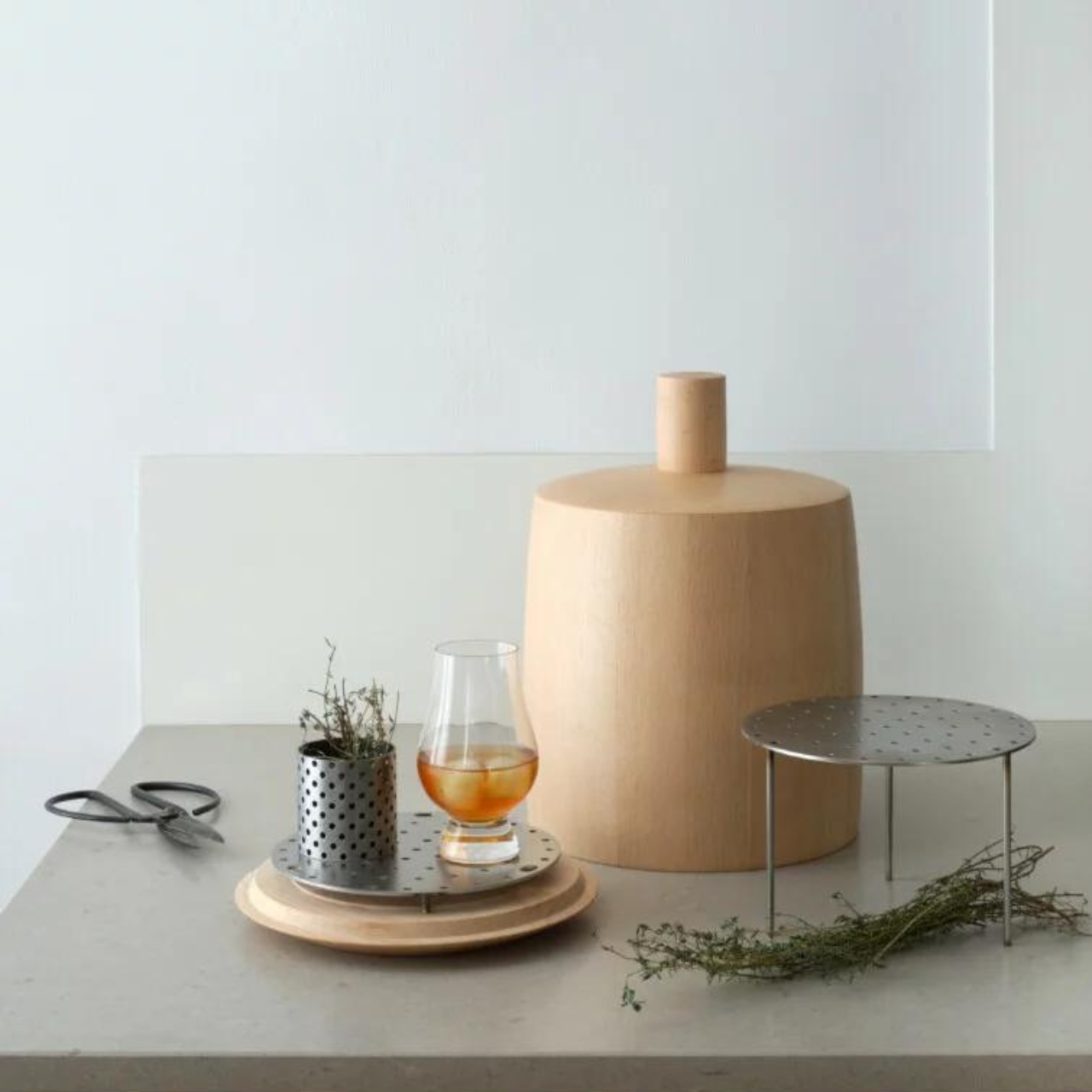
The Cloche table smoker may be the solution to that particular problem. It uses aromatic plants and wood chips as your smoker so that the food you’re cold smoking will still be able to retain their original flavors but this time with a smoky note added to it. It can also serve as part of your dining table decoration as its beech and stainless steel aesthetic can add to the atmosphere of your meal. You can create a ritual out of arranging the food, lighting the fire, then putting it out and presenting the food for eating.
Using it seems pretty easy on paper. You place the ingredients on the metal part and then put the aromatic plants or pine needles on the hearth. You can use matches or a blowtorch to light your “fireplace” then close the smoker with the beech cover. The fire will be put out once you put the cover on (hopefully). After 30 minutes, you can lift the cover and then start consuming whatever it is you were cold smoking. You will still get some residual smoke but hopefully not to make anyone cough or choke.
Having a table smoker like this can help alleviate the pressure of having an actual smoking grill if you just need to cook a bit of food for your party. But of course this is assuming you’re just having a few guests over since the Cloche table smoker is a bit small. If you’re not using it, it can also just be part of your table decoration or a food container.
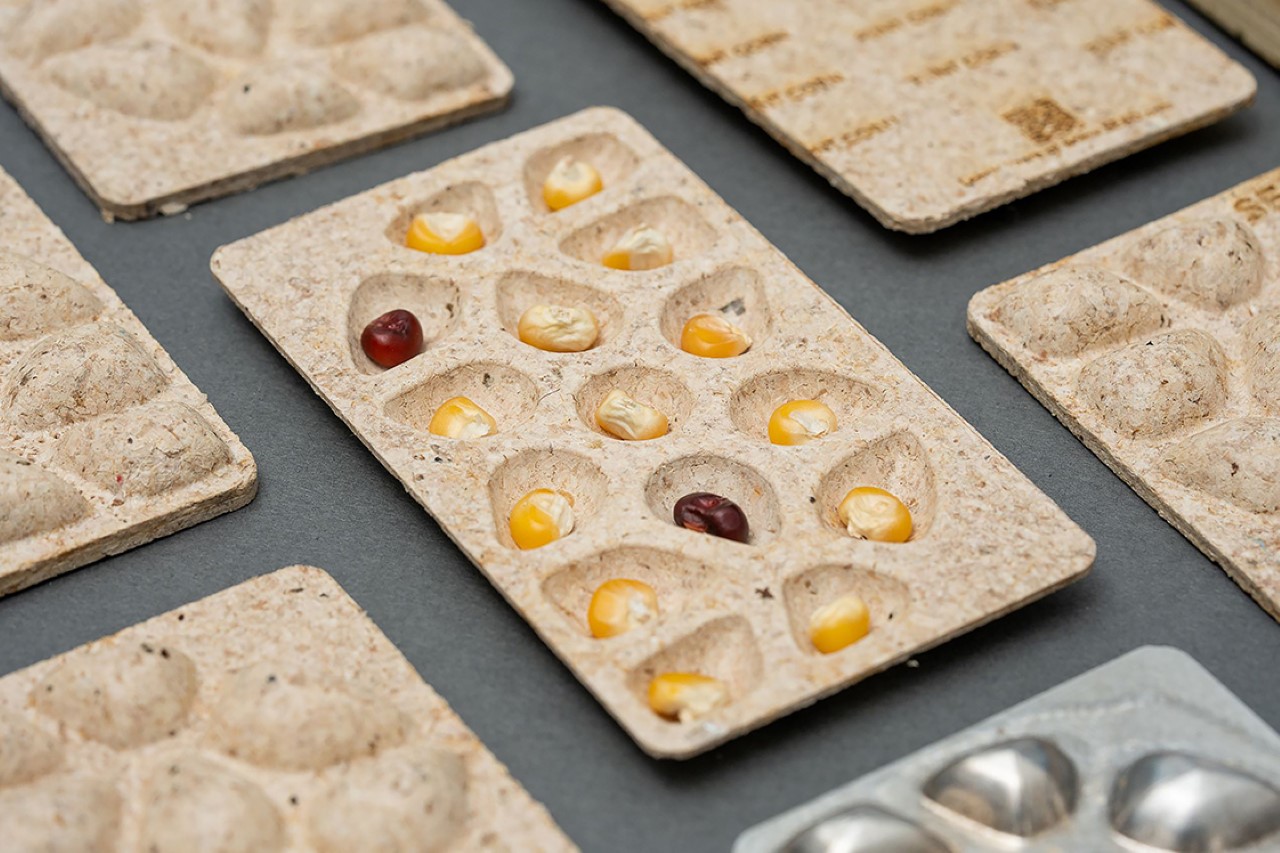
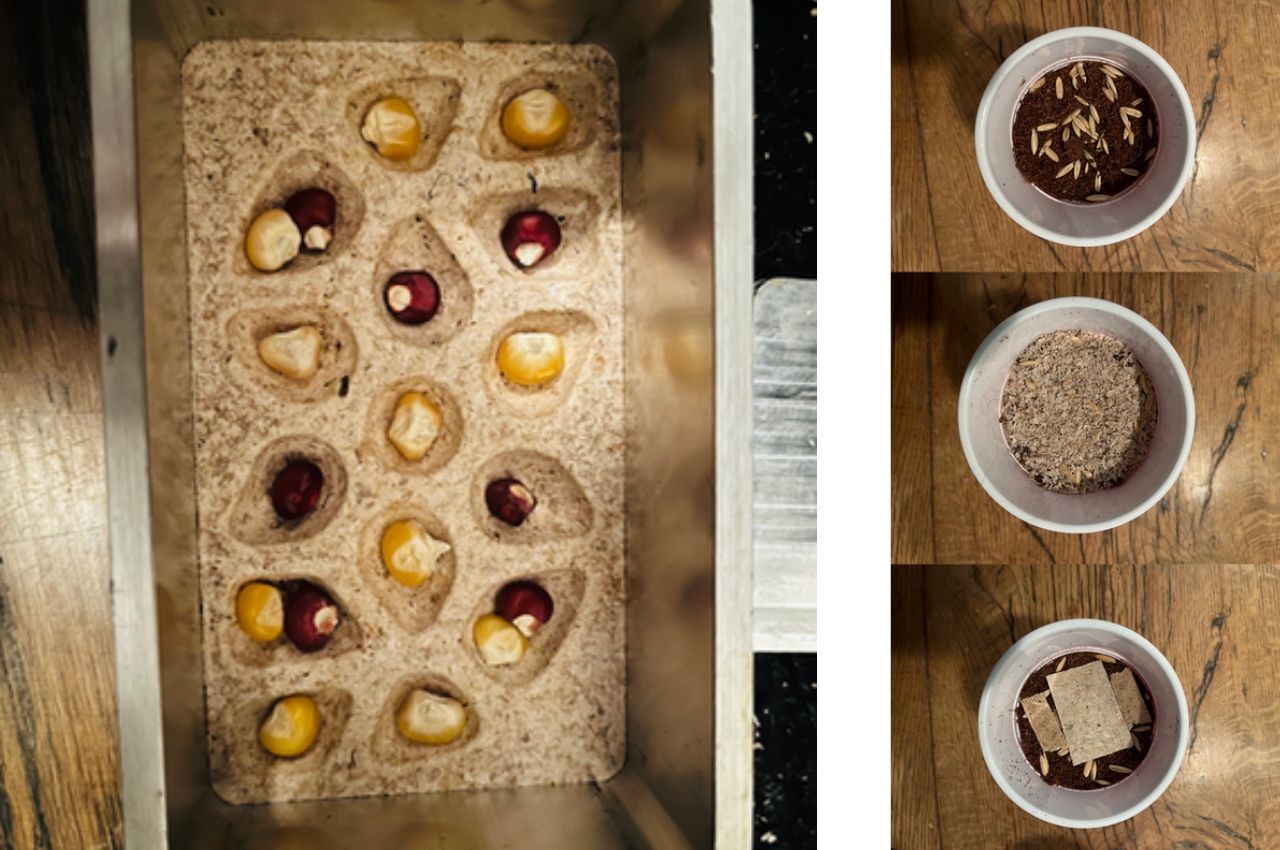
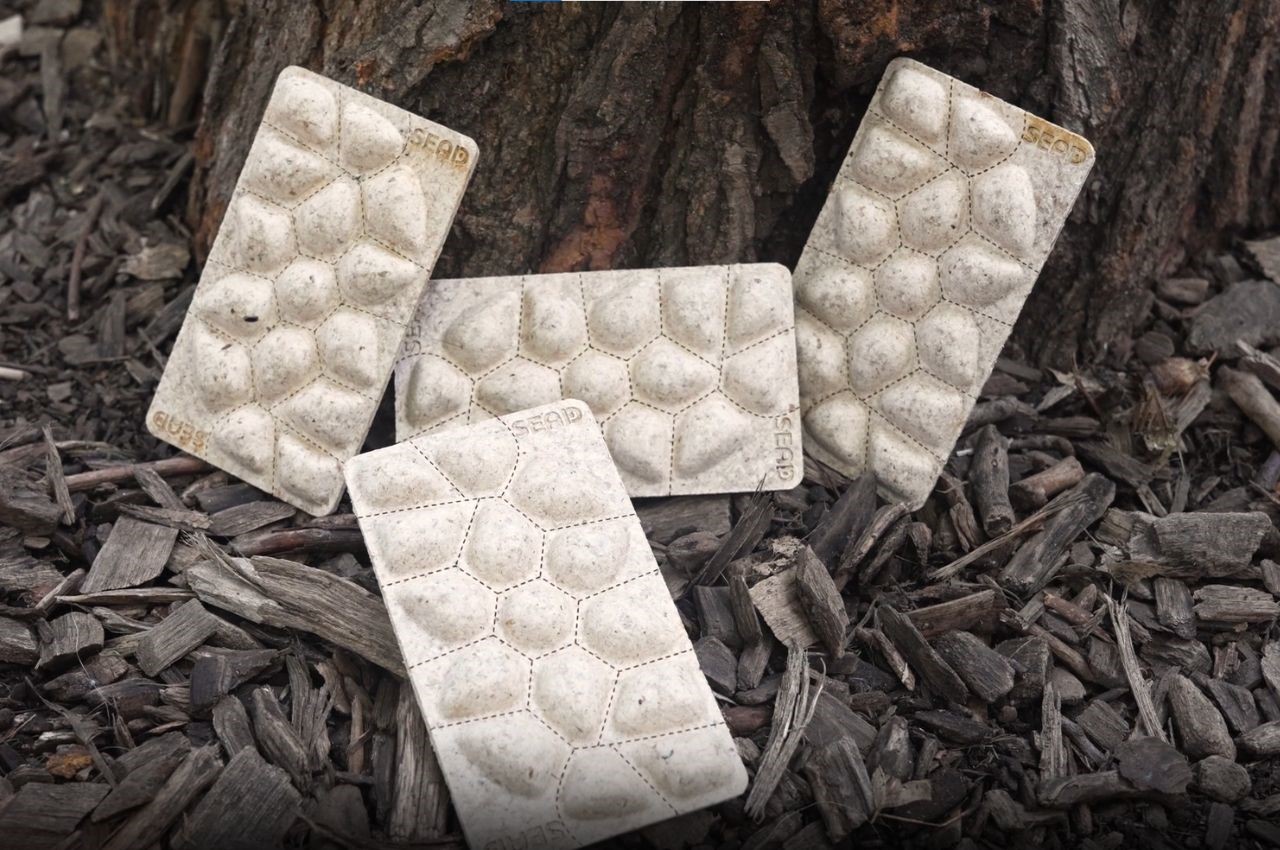
Born from discarded seafood shells, SEAD merges tradition with innovation, offering eco-friendly pods for heirloom seeds. It’s a journey of reimagined agriculture, where waste transforms into a resource and every seed sown signifies sustainability. SEAD’s design mirrors ecological harmony and agricultural resilience, promising a greener future. Join the movement where innovation blossoms and sustainability flourishes, one seed, one pod at a time.
SEAD represents more than just packaging; it embodies a sustainable ethos by repurposing waste material into a valuable resource. Its inception showcases the potential of replacing virgin materials with recycled alternatives, contributing to a circular economy and reducing environmental impact.
At the heart of SEAD lies the preservation of heirloom seeds, varieties passed down through generations, each carrying a rich history and cultural significance. Heirloom seeds, with their diverse traits and adaptability, play a crucial role in maintaining biodiversity and ensuring food security in the face of evolving environmental challenges.
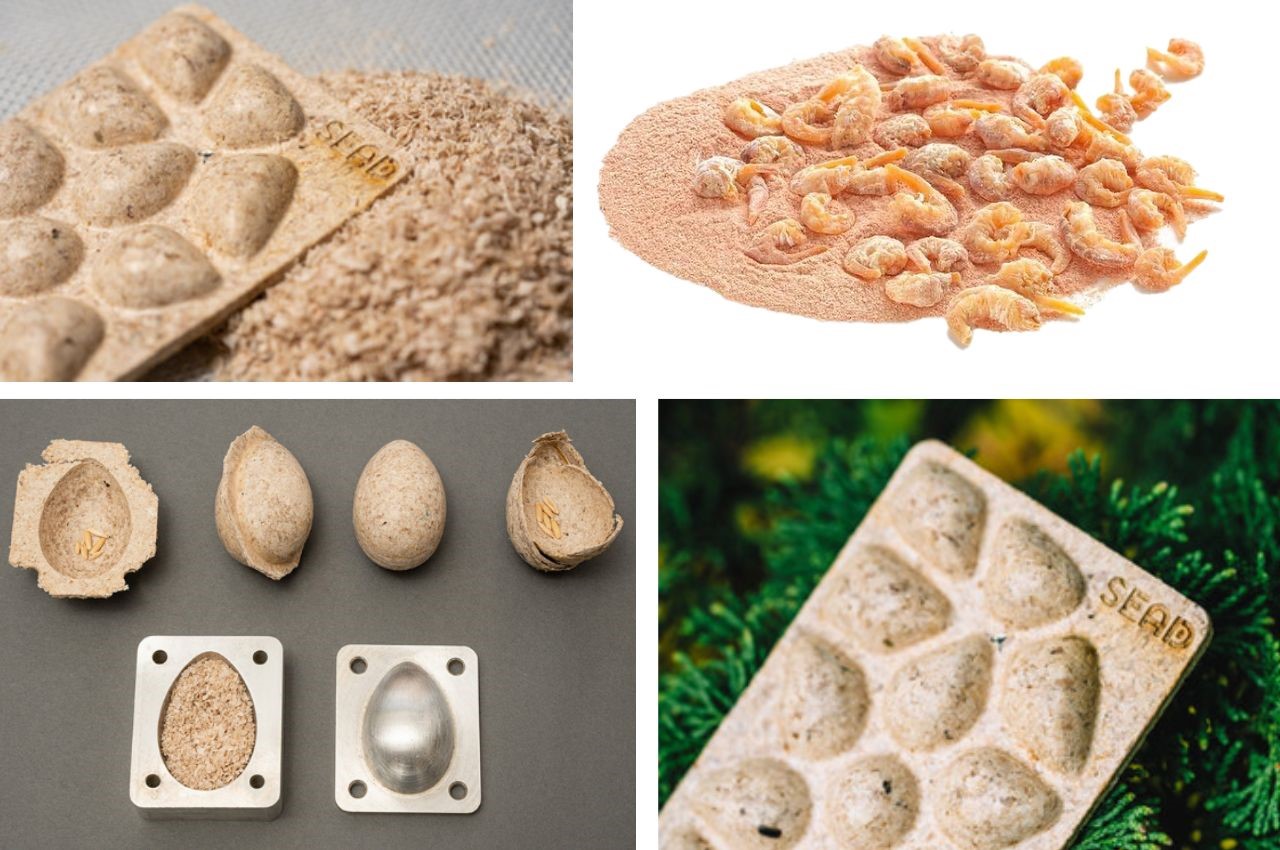
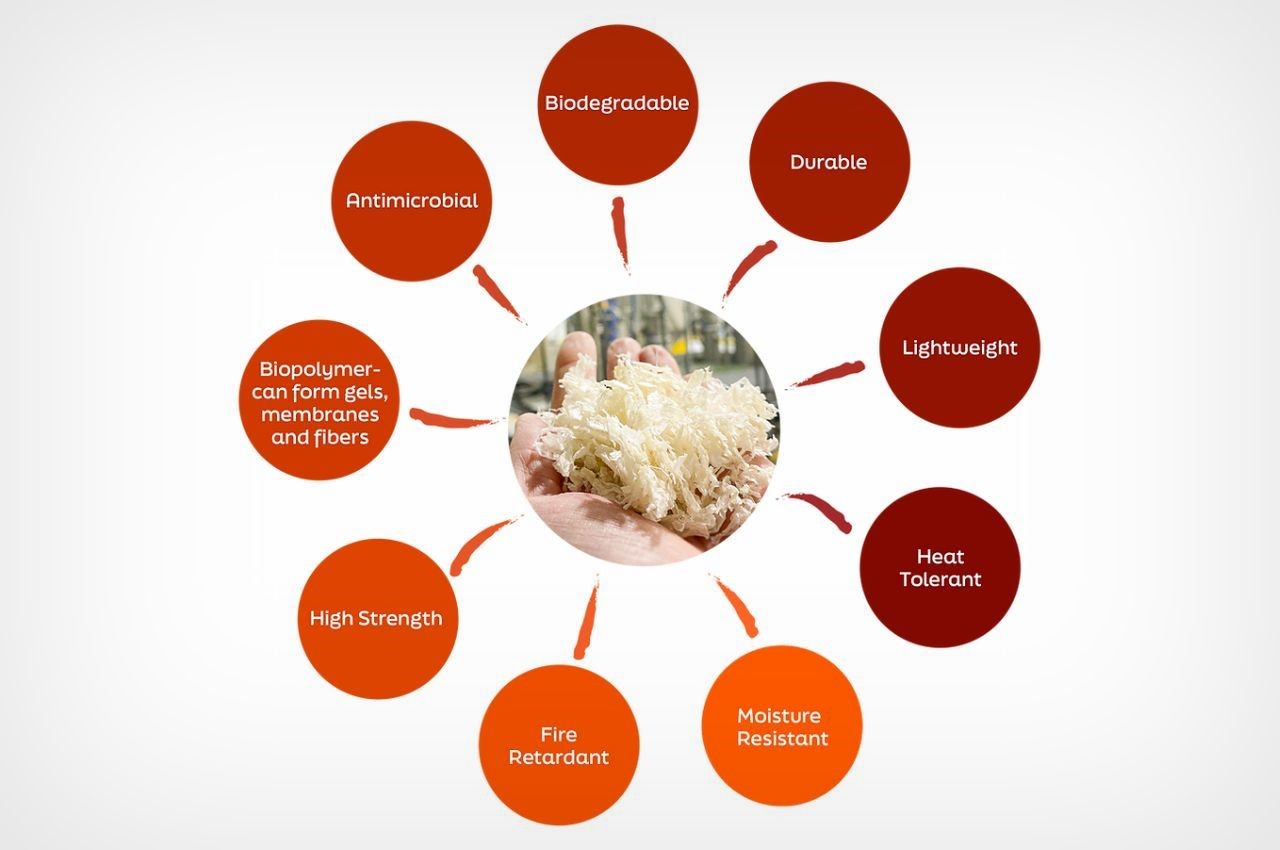
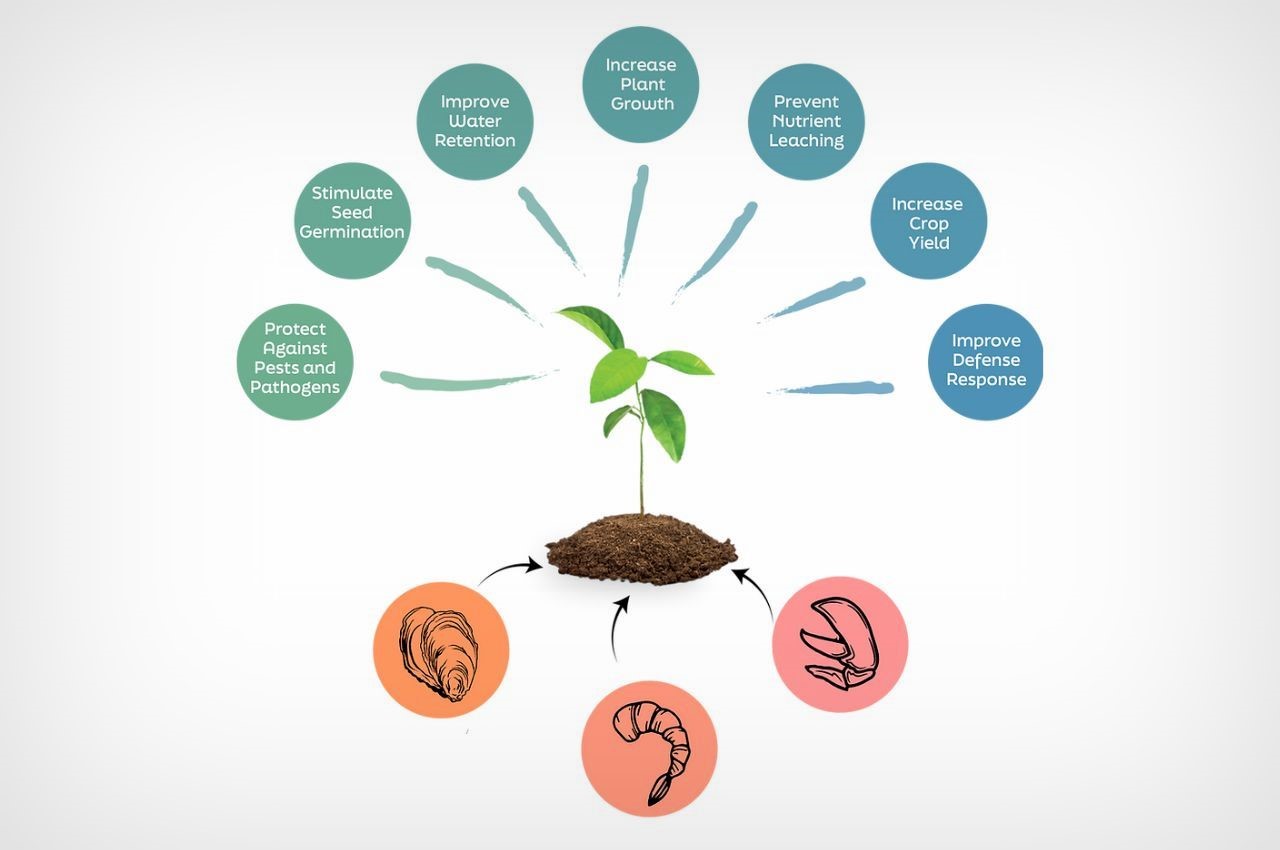
The use of chitin (pronounced kai-tun) in SEAD packaging not only offers a sustainable alternative to traditional materials but also brings agricultural benefits. Chitin, and its derivatives, act as bio-stimulants, enhancing seed germination, and promoting crop growth. Its natural properties boost plant defenses against pests and diseases while improving water retention in adverse conditions.
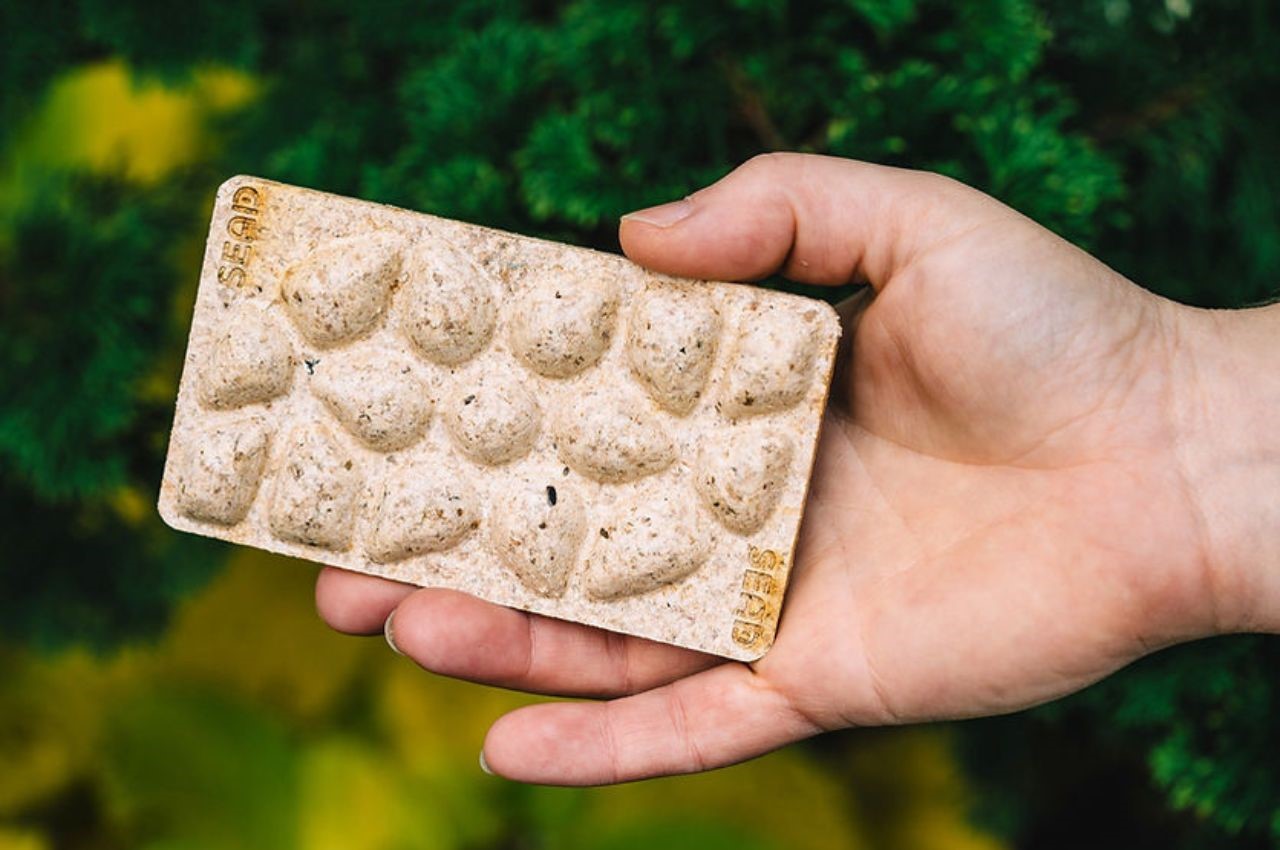
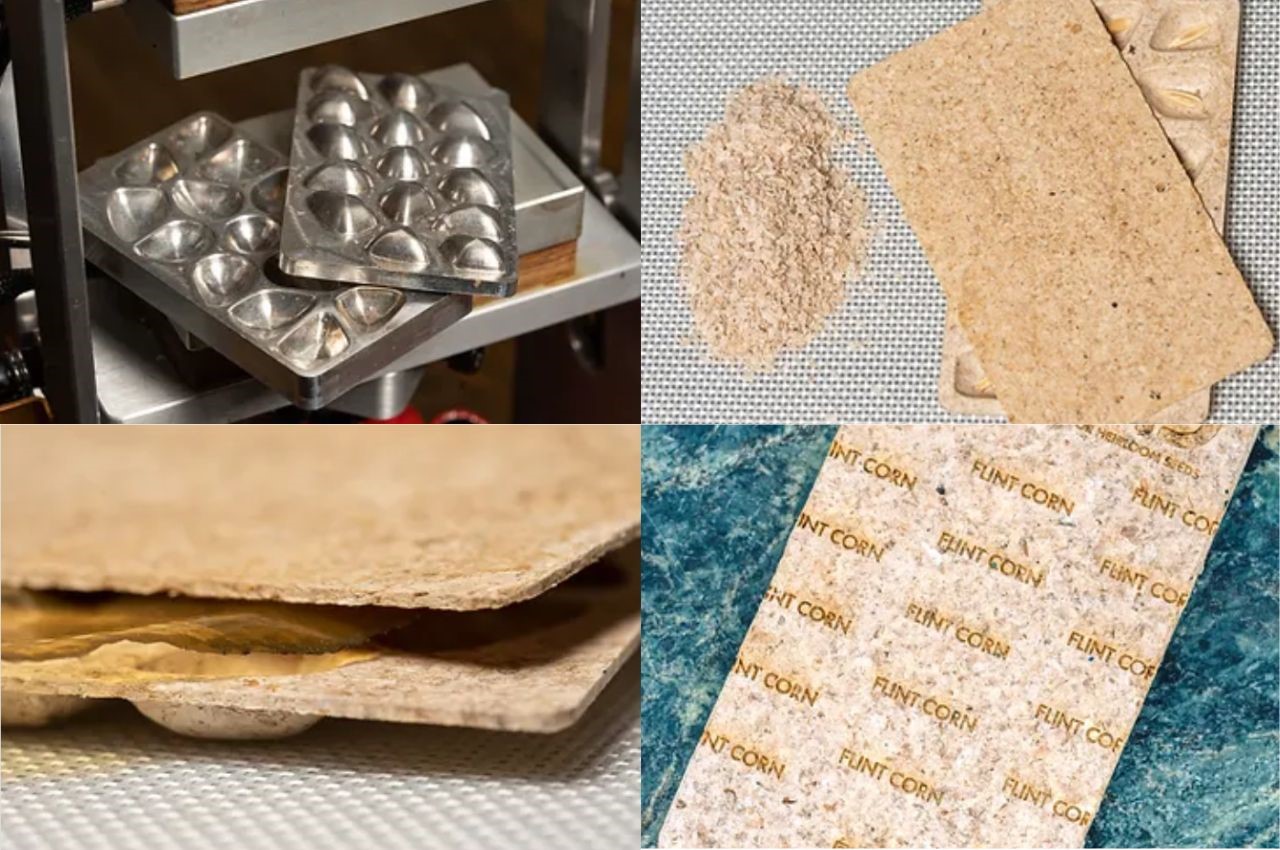
Crafted through a meticulous three-step pressing process, SEAD packaging demonstrates the remarkable self-binding ability of chitin, eliminating the need for additional agents. Laser-engraved labeling ensures traceability without the use of inks or dyes, aligning with SEAD’s commitment to sustainability.
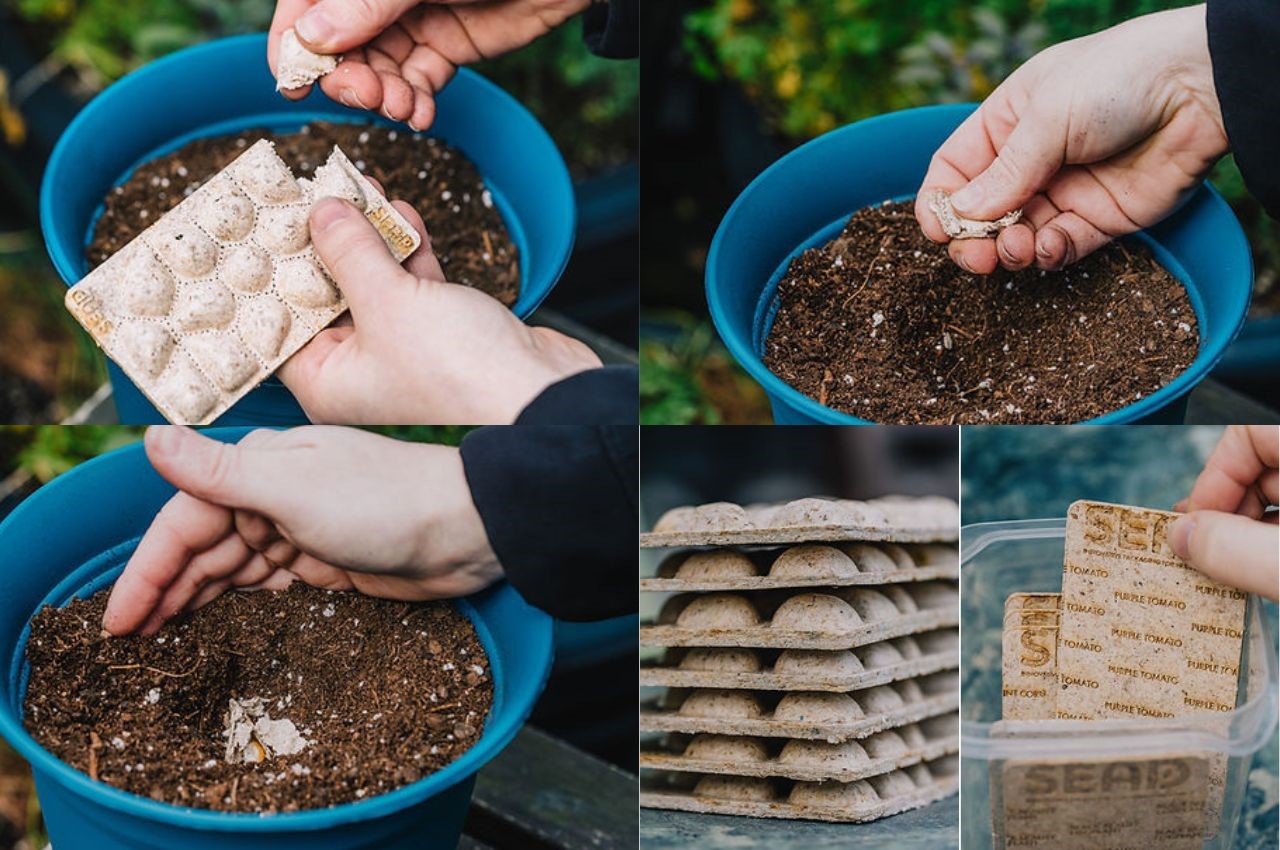
Inspired by nature’s design, SEAD packaging mimics the structure of fruits and vegetables, providing a functional and aesthetically pleasing solution. The innovative design features creases that allow for easy tearing, enabling users to plant seeds conveniently while keeping the rest of the packaging intact.
SEAD offers a holistic approach to sustainable agriculture, combining ecological principles with practical innovation. By seamlessly integrating packaging with planting, SEAD promotes zero-waste practices and fosters a deeper connection between consumers and the environment.
Just in four simple steps: Break pods along perforated lines, gently crush for better seed exposure, plant enriched seeds, and store remaining bars conveniently. These actions seamlessly integrate eco-friendly practices into gardening routines, fostering a deeper connection with the environment. Each step contributes to a greener future, promoting sustainability and preserving heirloom seeds. With SEAD, every seed sown signifies a commitment to ecological harmony and agricultural resilience, paving the way for a more sustainable tomorrow.
SEAD’s innovative seed packaging, crafted from discarded seafood shells, faces cultural barriers in regions like India and Mexico, where pure vegetarianism is prevalent. Mixing seafood with vegetables may encounter resistance due to dietary preferences. Convincing individuals adhering to strict vegetarian or vegan diets of SEAD’s ecological benefits requires careful communication. Despite these challenges, SEAD offers a sustainable option for open-minded consumers committed to environmental conservation. It’s crucial to acknowledge cultural sensitivities and cater to diverse preferences.
Jesmonite, a flexible substance crafted from a fusion of gypsum sourced from sedimentary rock and water-based acrylic resin, is gaining popularity among artists, eco-conscious enterprises, and DIY enthusiasts. This material emerged in the UK in 1984 and is credited to Peter Hawkins. Jesmonite is known for its durability, flame resistance, and impact resistance, is ideal for crafting objects of all sizes, readily accepting colored pigments and metal powders when mixed. Additionally, it is a preferred option over alternatives like fiberglass, plaster, polyester, or resin because of its safety, eco-friendliness, and user-friendliness.
Jesmonite, derived from the natural mineral Gypsum is ground into a fine powder and is then blended with a water-based resin. Resembling stone when fully cured, Jesmonite has a rapid setting time of as little as 30 minutes. However, it gradually cures over 24 hours.
What are the benefits of using Jesmonite?
The top benefits of using jesmonite include:
• Versatile Material:
Jesmonite, a versatile material, can replicate any texture and can be pigmented to achieve any color. It is adaptable to various shapes and sizes, effortlessly mimicking the appearance and surface finish of numerous materials such as wood, stone, metal, and even leather.
• Flexible:
Jesmonite can be molded into various shapes and can be used to create both simple and complex designs.
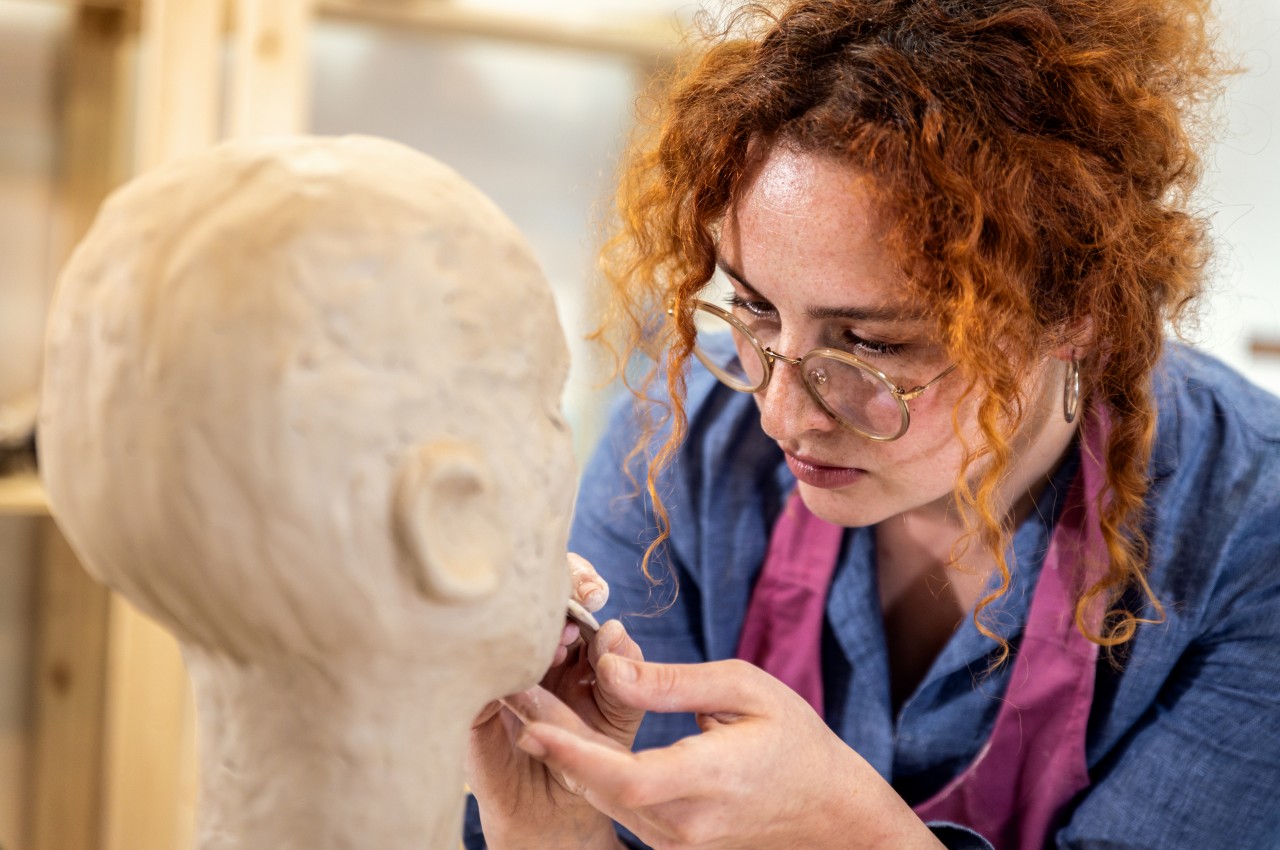
Female sculptor working in pottery studio workshop sculpting human head.
Although Jesmonite can give the appearance of stone, concrete, or metal it is light in weight which makes it user-friendly and easy to handle. Due to its lightweight nature, Jesmonite is favored in other fields where casting and molding are prevalent, particularly in architectural stone and plasterwork applications that demand reduced weight.
• Highly Durable:
Jesmonite is renowned for its durability, withstanding cracking, chipping, and damage while remaining waterproof when sealed. It also resists staining, making it suitable for both indoor and outdoor use, effortlessly handling everyday wear and tear.
• Multiple Finishing Options:
Jesmonite offers versatile finishing options, easily customizable from smooth and matte to rough and textured, making it ideal for crafting unique decor pieces. Unlike concrete and plaster, Jesmonite requires minimal effort to achieve desired finishes without the need for specialized tools or techniques.
• Eco-Friendly:
It is non-toxic, does not emit harmful VOCs, and can be combined with other recyclable materials, further helping to reduce environmental impact.
What are the applications of Jesmonite?
Jesmonite can be used for multiple purposes across various fields and is primarily employed in sculpting and crafting three-dimensional artworks, it also doubles as a suitable painting substrate when paired with other materials. Additionally, Jesmonite functions adeptly as a surface material in construction, offering an appealing alternative to resin-based options like polyester and fiberglass, and is utilized for casting and laminating tasks.
Note: Despite being low-hazard, with no need for harmful solvents during mixing and emitting no toxic fumes, caution is urged during mixing, requiring protective gear like rubber gloves, eye protection, and a dust mask in a well-ventilated area, while cleanup is easily done with water.
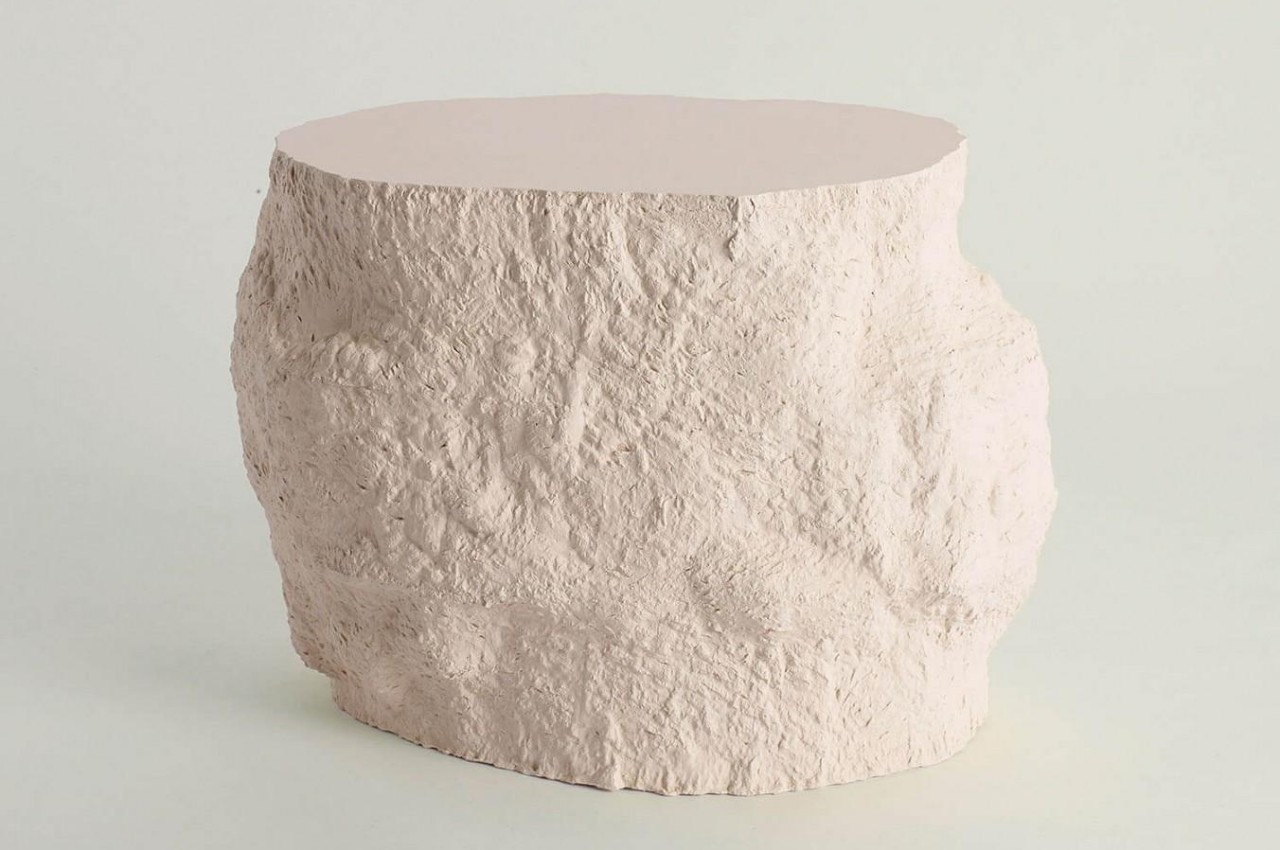
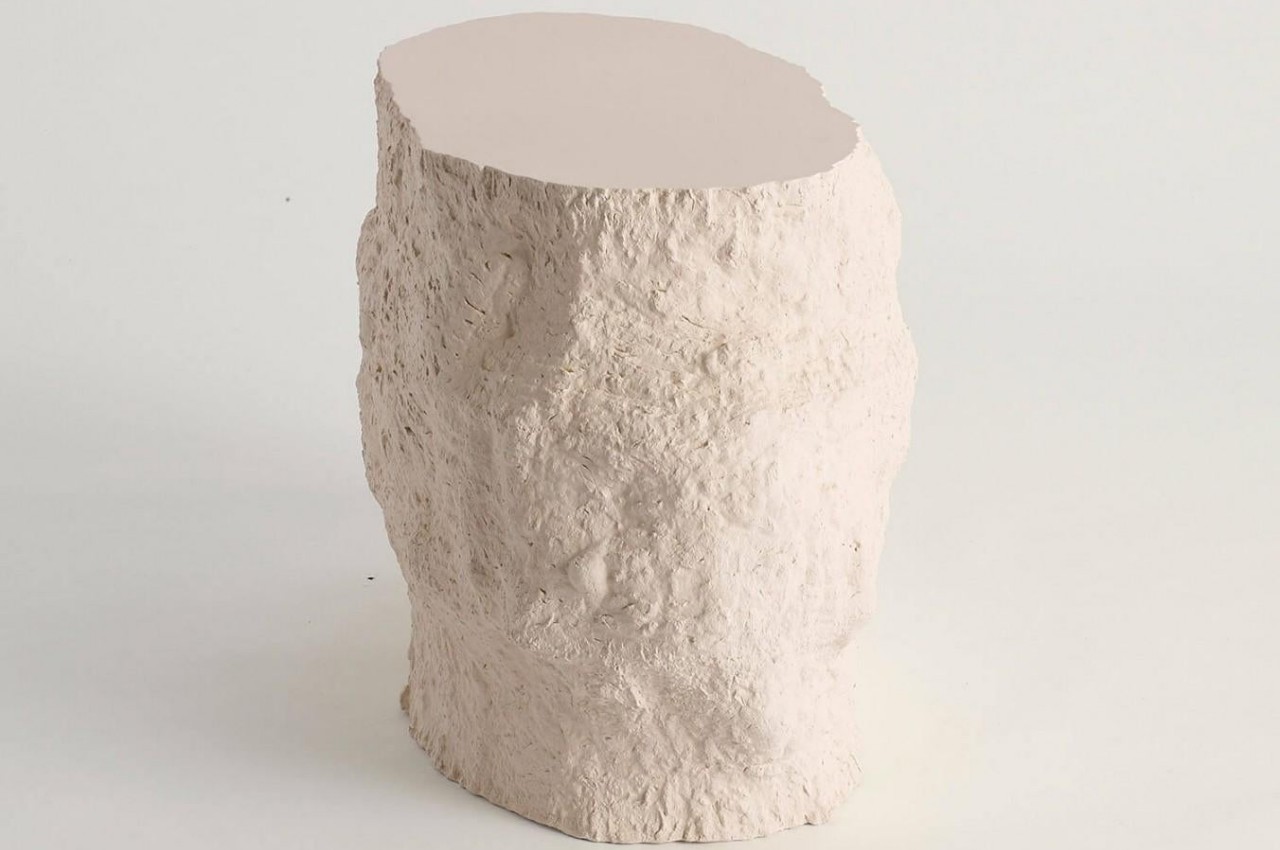
The Contemporary Jesmonite Side Table – Acacia, designed by Malgorzata Bany, draws inspiration from daily cleansing rituals and natural decay. The ACACIA collection embodies an intuitive construction method, carving the material to create foam molds, ensuring each piece is unique as each mold is used only once. Additionally, the textured body of the acacia vessel recalls Japanese Tsukubai, ceremonial washbasins symbolizing purification for visitors at holy places.
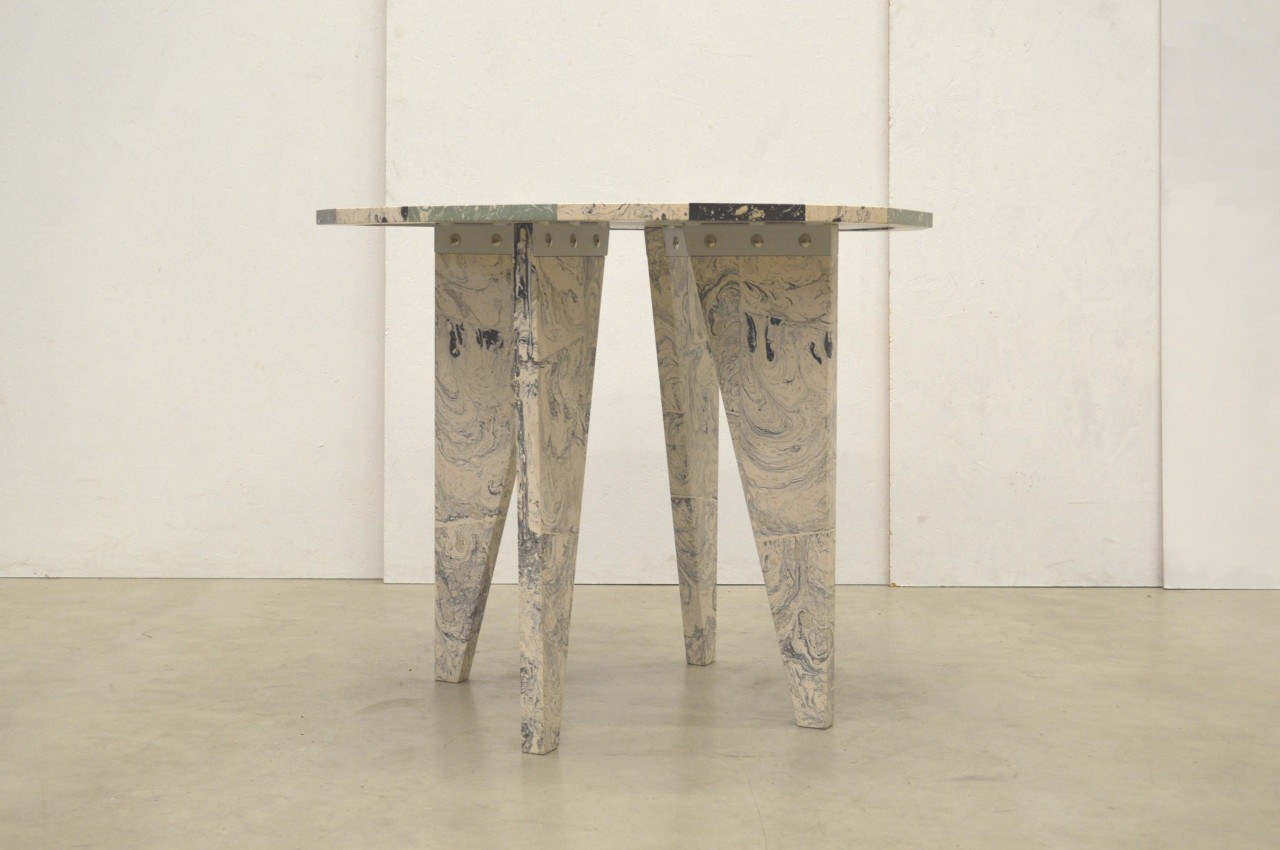
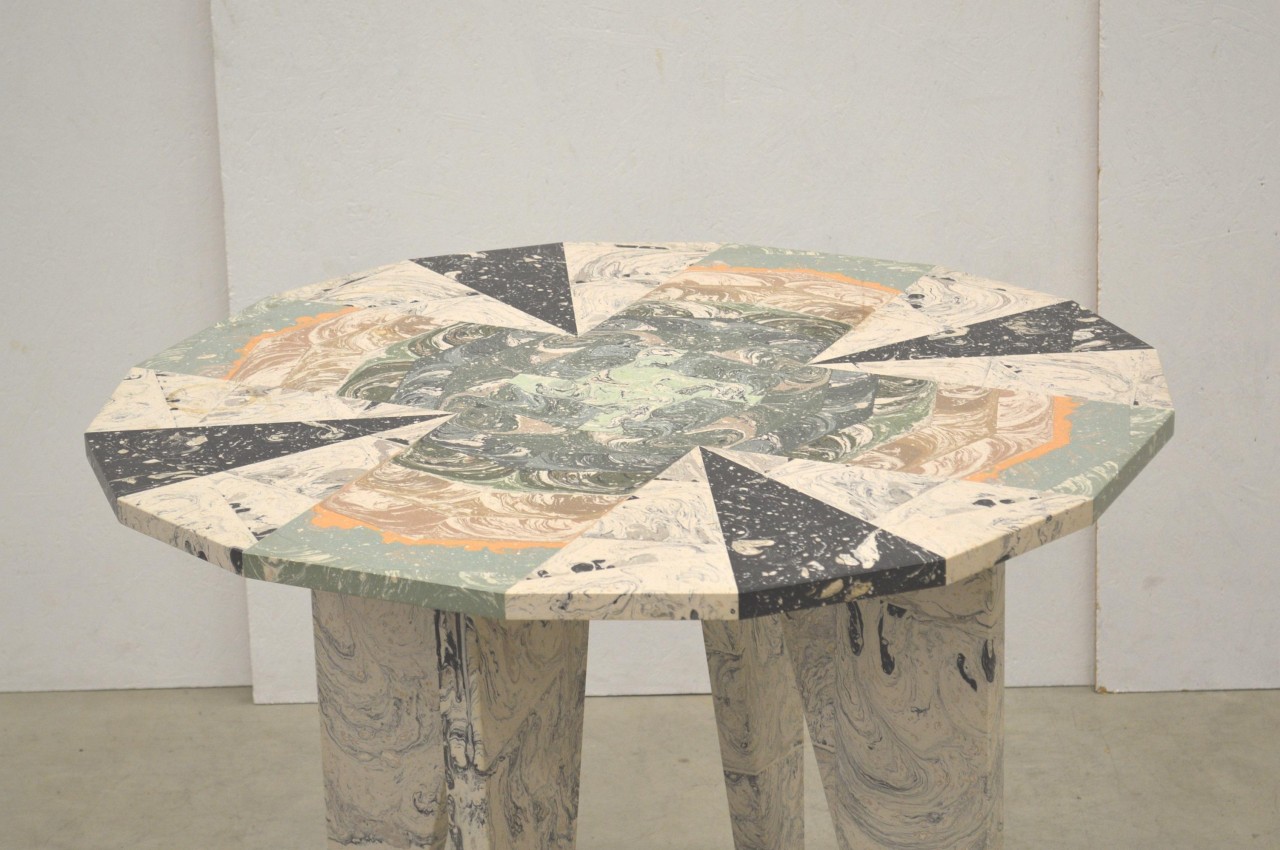
Crafted by Swedish designer Hilda Hellström, this artistic table is composed of a blend of plaster and jesmonite, and serves various functions as a centerpiece, game, or dining table. Showcasing remarkable artistic vision and practicality, it stands as a true testament to elegance and sophistication.
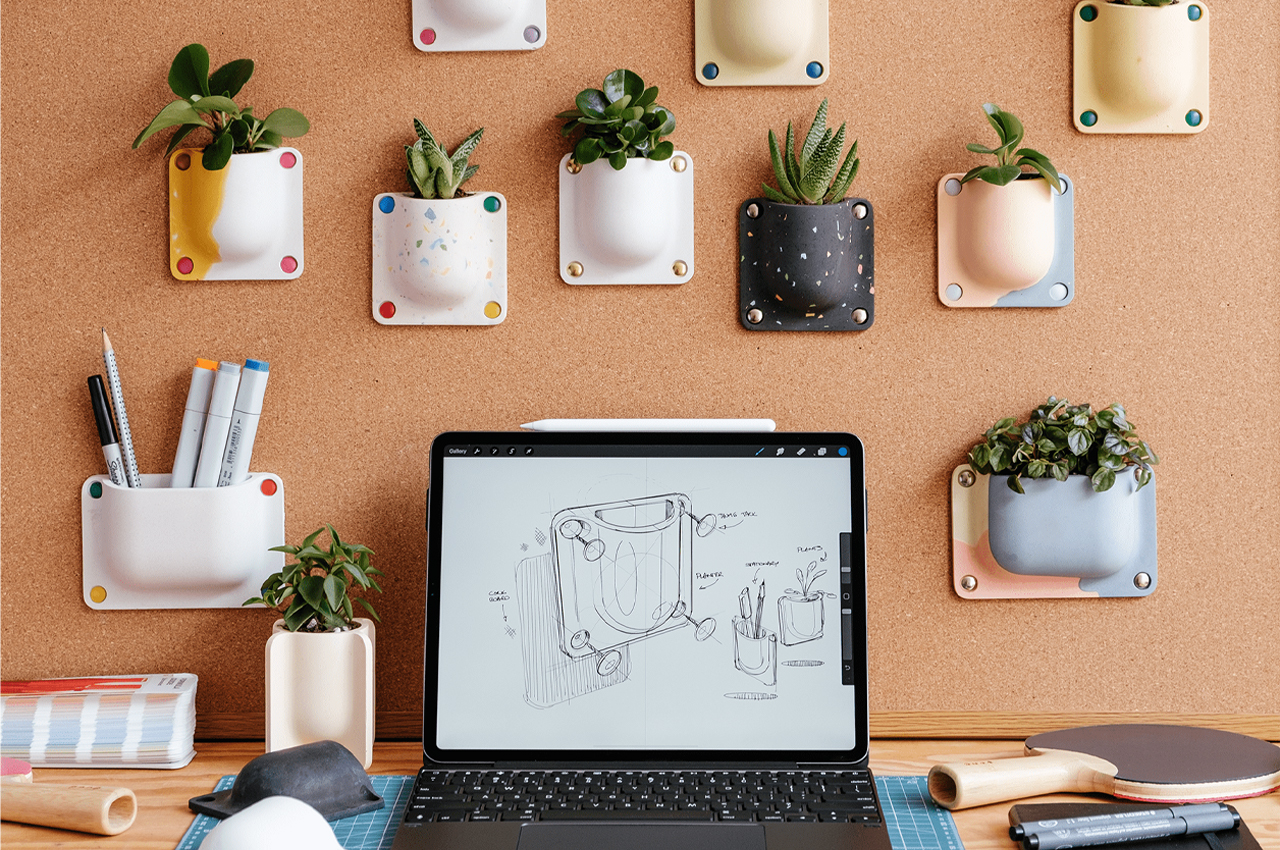
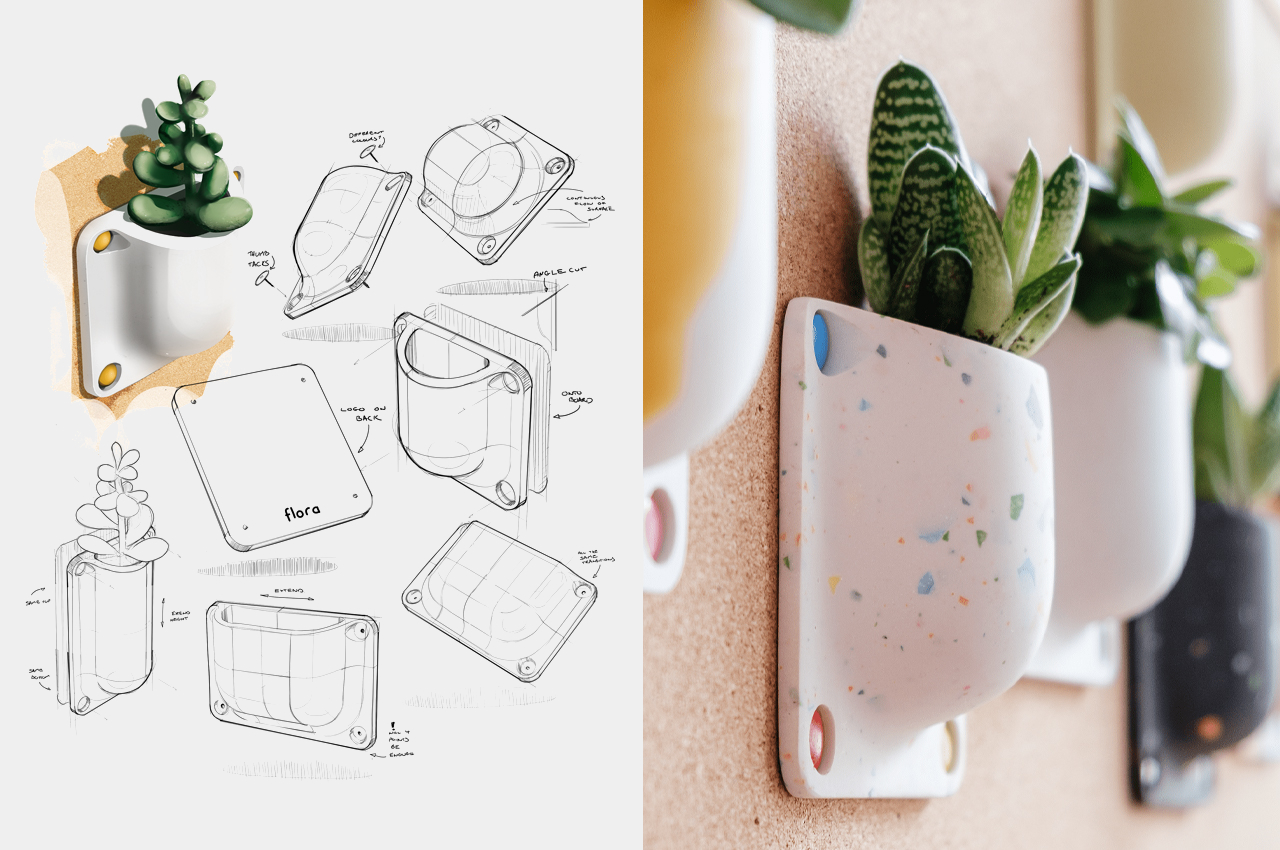
Flora combines a cork pinboard with hanging jesmonite planters, offering a stylish WFH wall accessory. As hybrid and remote work is becoming a popular norm, innovative designs for home office accessories have emerged, including multifunctional solutions integrating storage and organization features. Sydney-based Préssec Design created Flora during the lockdown, initially experimenting with concrete casting before transitioning to jesmonite for seamless integration with the corkboard. Customizable with colorful thumbtacks, Flora maintains crisp edges through meticulous prototyping, using silicone molds for jesmonite casting.
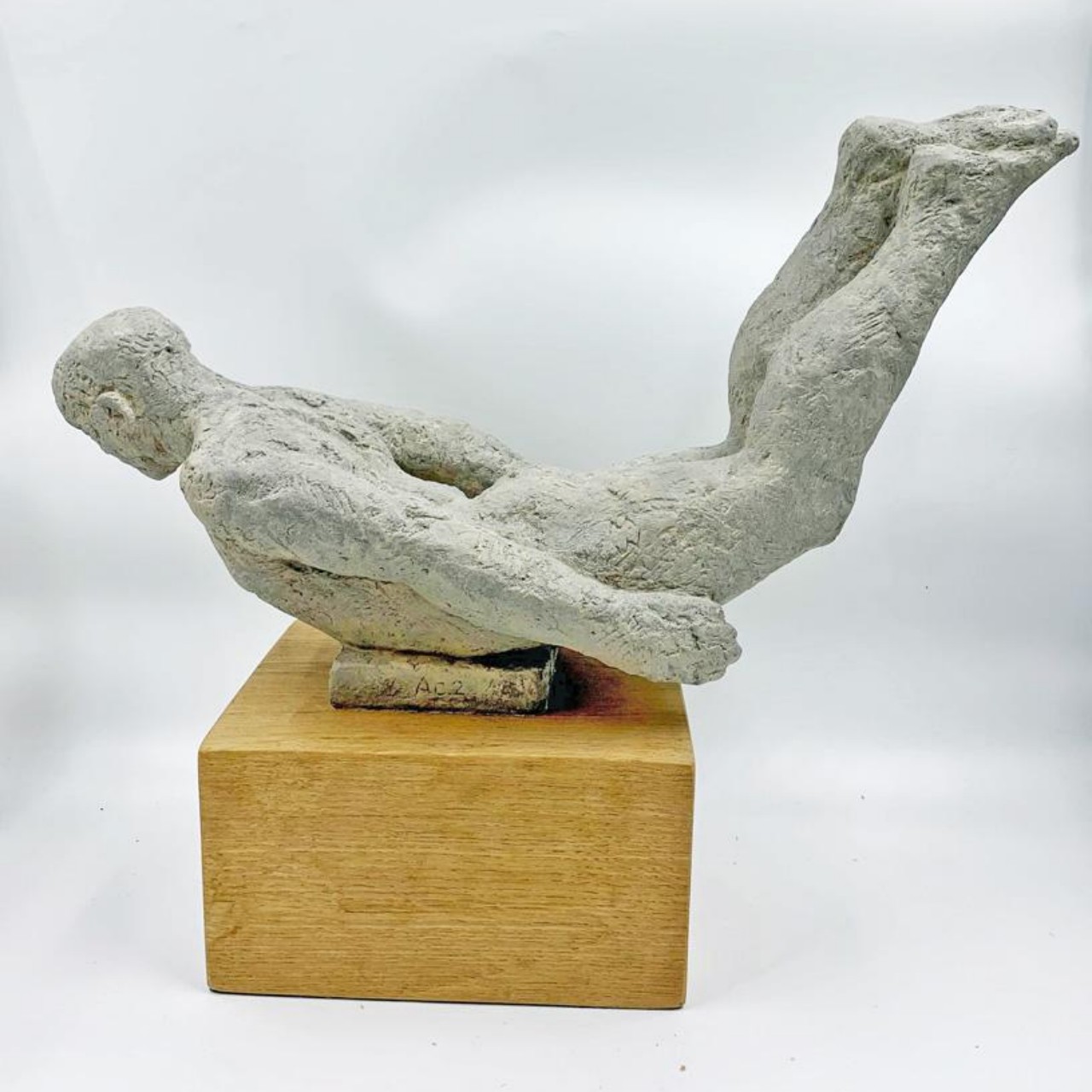
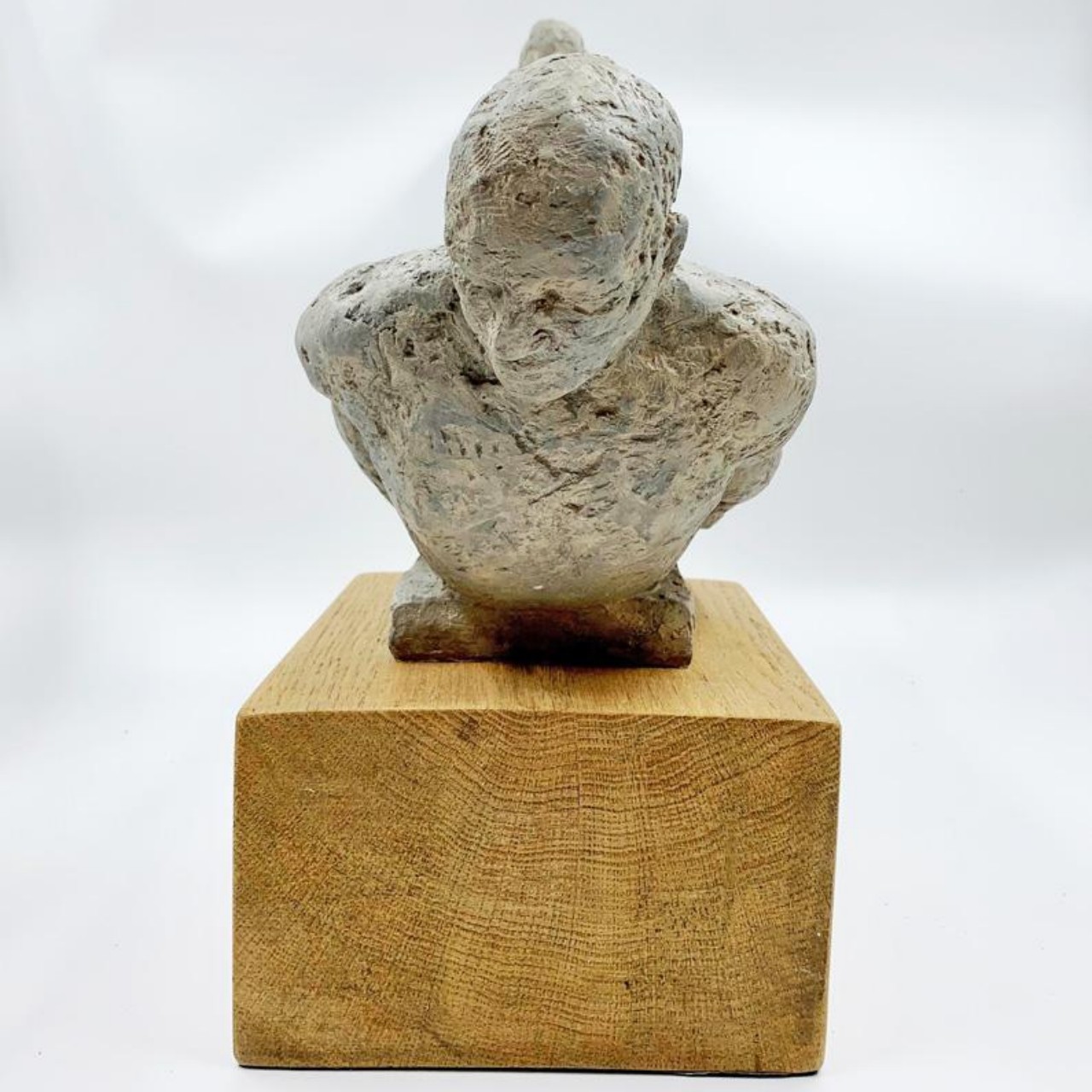
Manny Woodard’s sculptures, such as “The Flying Man,” embody contemporary figurative jesmonite sculpture. Woodard’s works prioritize the nuanced dynamics between individuals rather than superficially attractive subject matter, often portraying ordinary people regardless of conventional beauty standards, occasionally depicting individuals who are overweight.
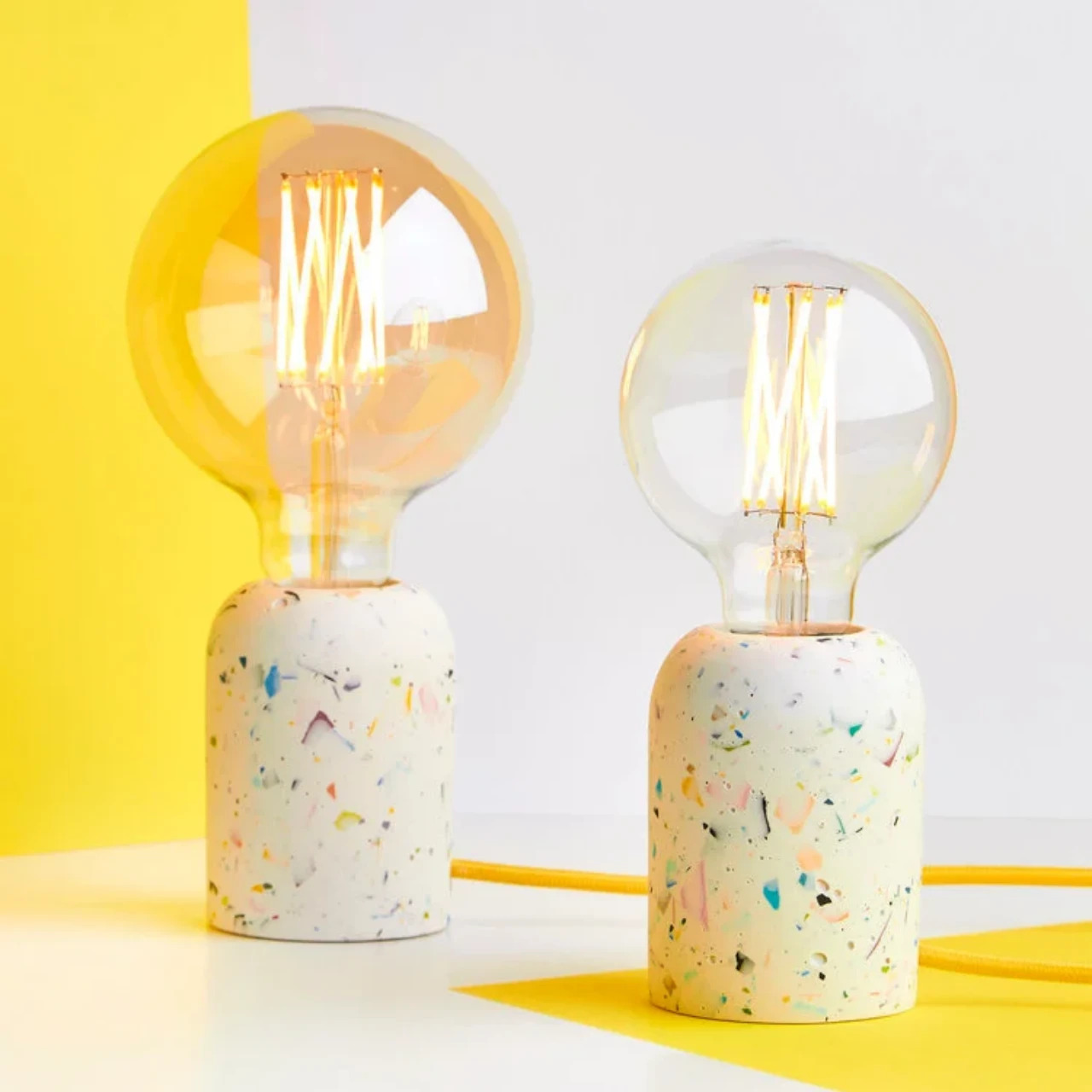
This lamp is meticulously crafted in Wales from jesmonite/terrazzo material and is perfect for adorning bedside tables or coffee tables next to any sofa. The lamp features a captivating blend of black, white, and copper fragments, exuding modern elegance. Complete with a 1.5m black fabric cable and switch, it offers both style and functionality to illuminate any space with sophistication.
Designer: Egg Designs
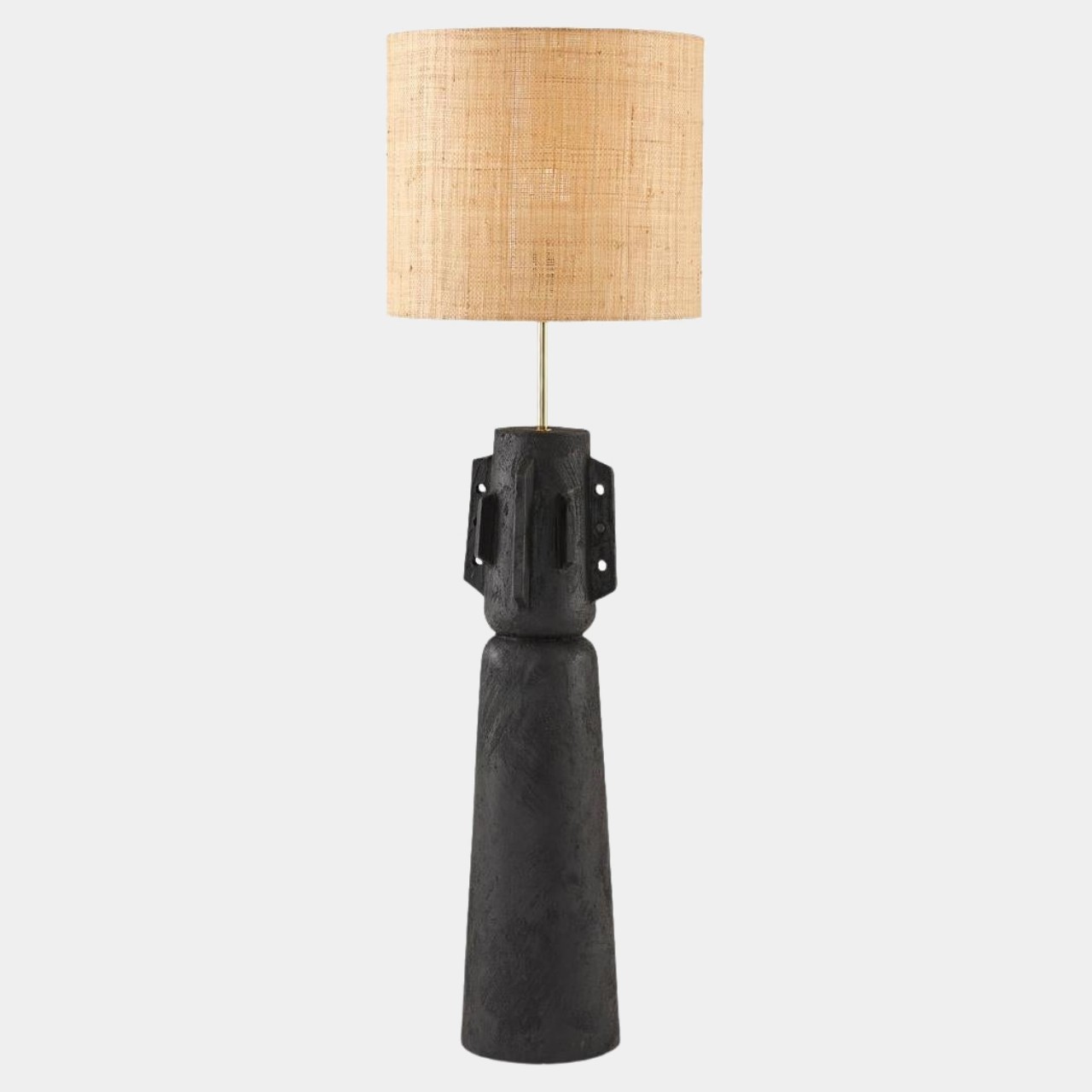
The Totem lamp collection draws inspiration from Brutalist forms and incorporates hand-applied details for an individual artisanal flair. Crafted with a terracotta base finished in textured black Jesmonite plaster, each lamp is paired with a shaped raffia shade and polished brass stem, ensuring versatility to complement various interior styles.
5. Stone Carving
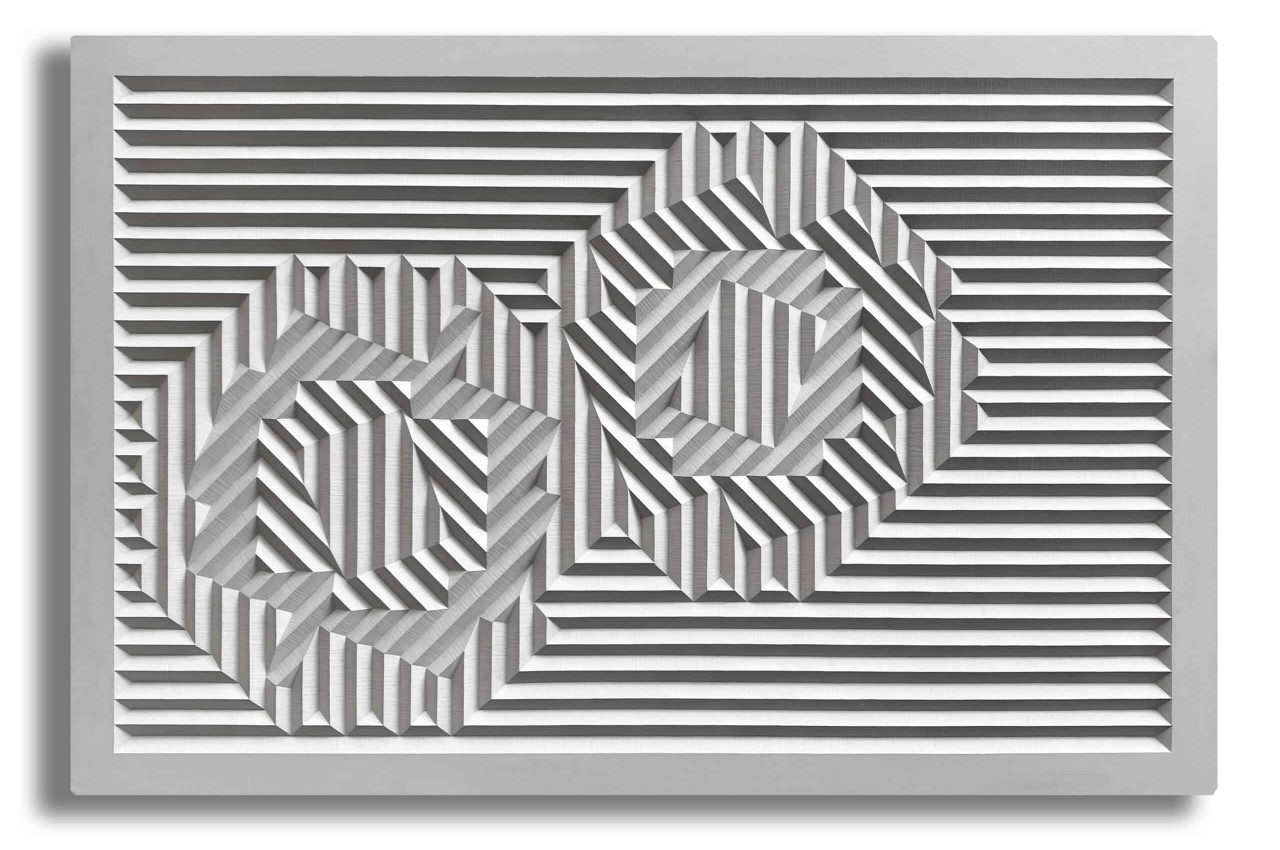
Samar, created by British stone carver Zoë Wilson, pays homage to friendship through its intricately precise multidirectional ridges, forming a captivating geometric pattern. Crafted from Jesmonite with a Portland finish, Samar derives its title from the Arabic word meaning ‘to sit together in conversation at sunset.’ The stone craftsmanship embodies a strikingly modern yet timeless aesthetic, effortlessly blending into various environments.
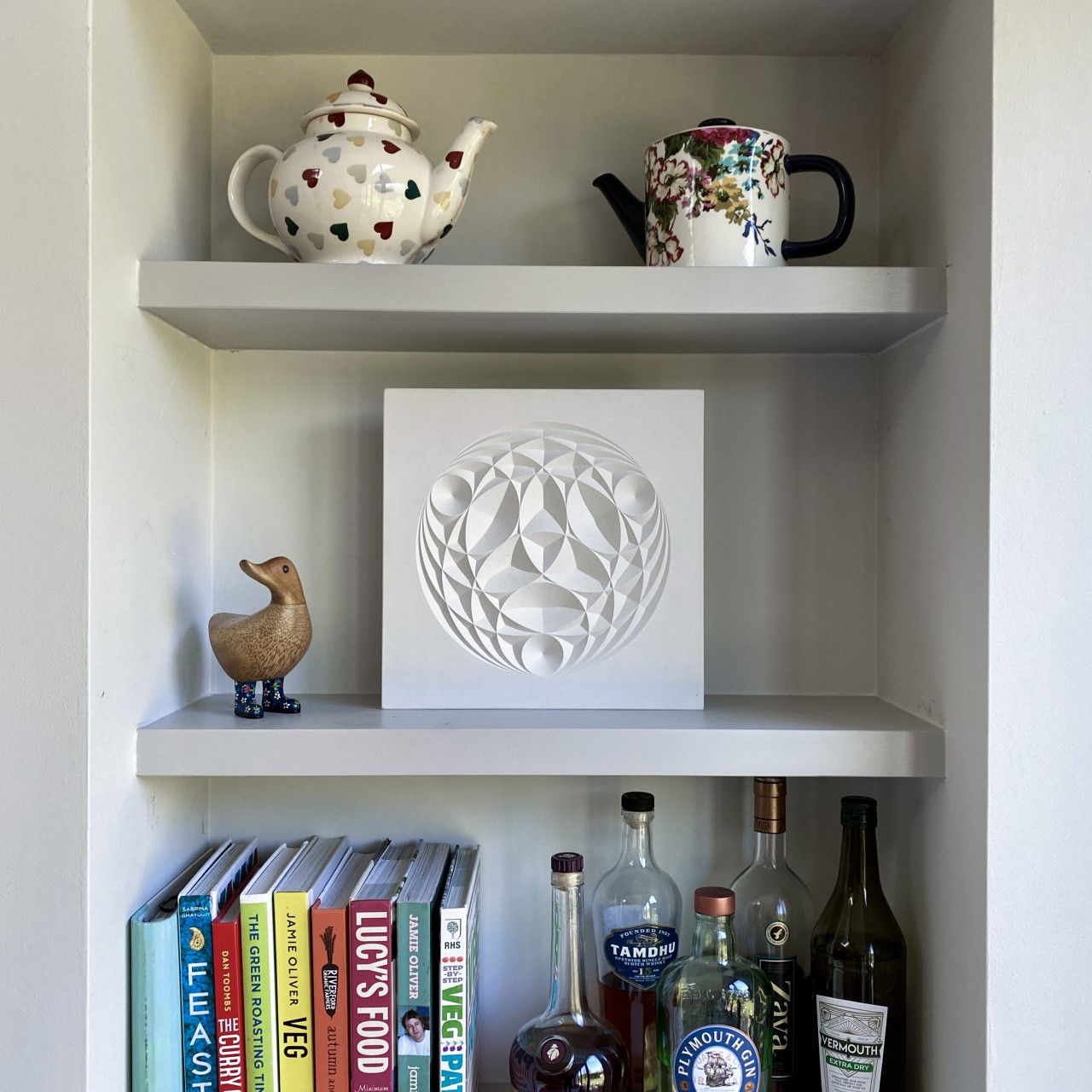
In Zoë Wilson’s stone carving “Breath,” crafted from Jesmonite with a Portland finish, delicate overlapping circles form a hypnotic pattern, symbolizing the tranquillity she finds in the creative process.
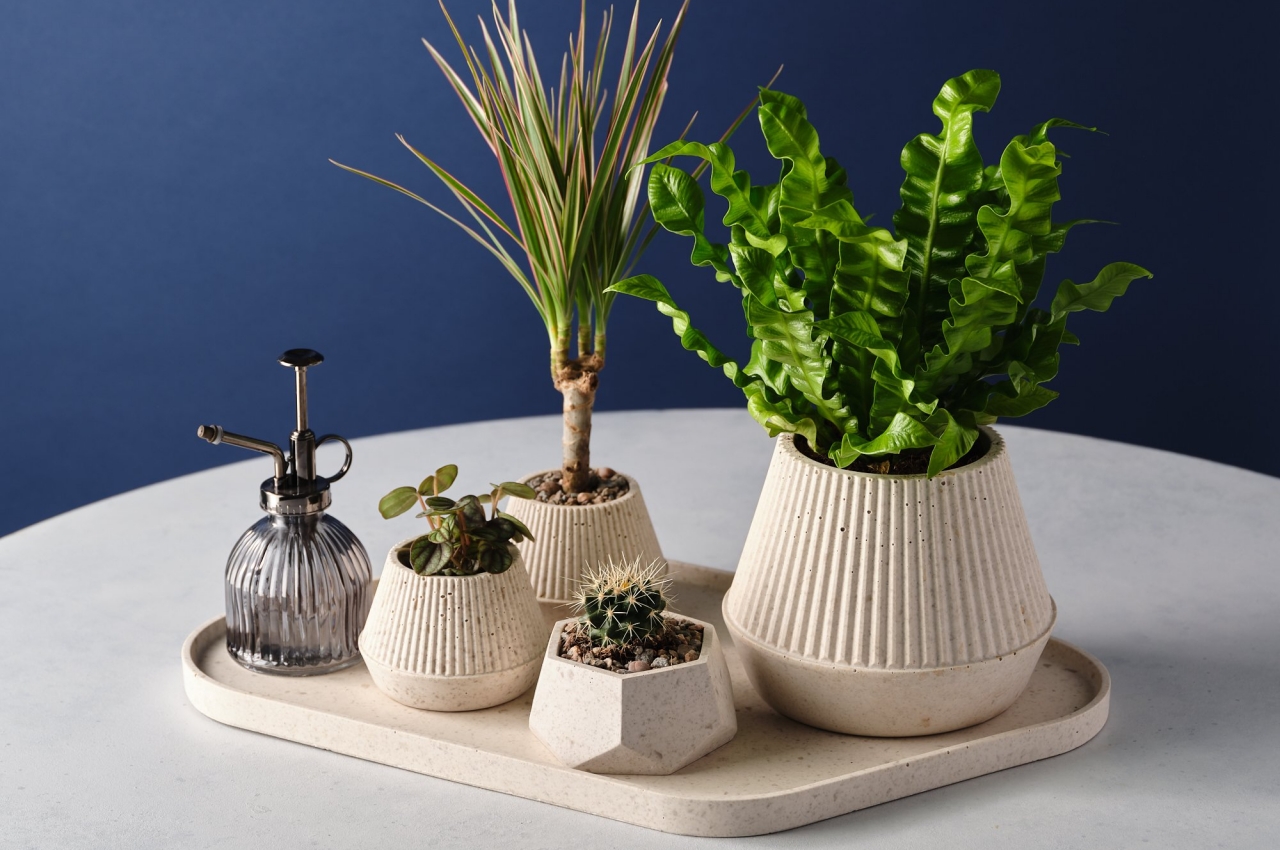
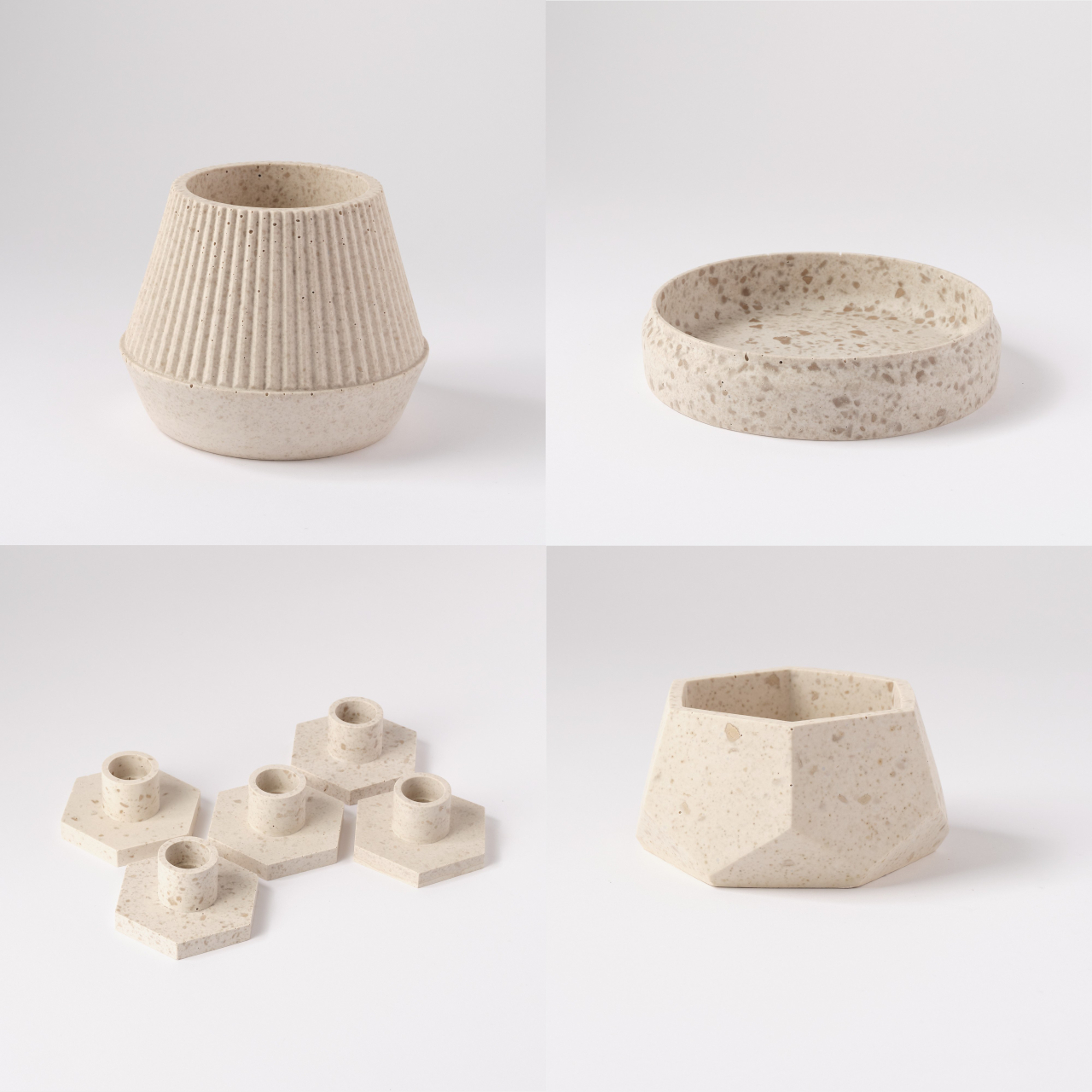
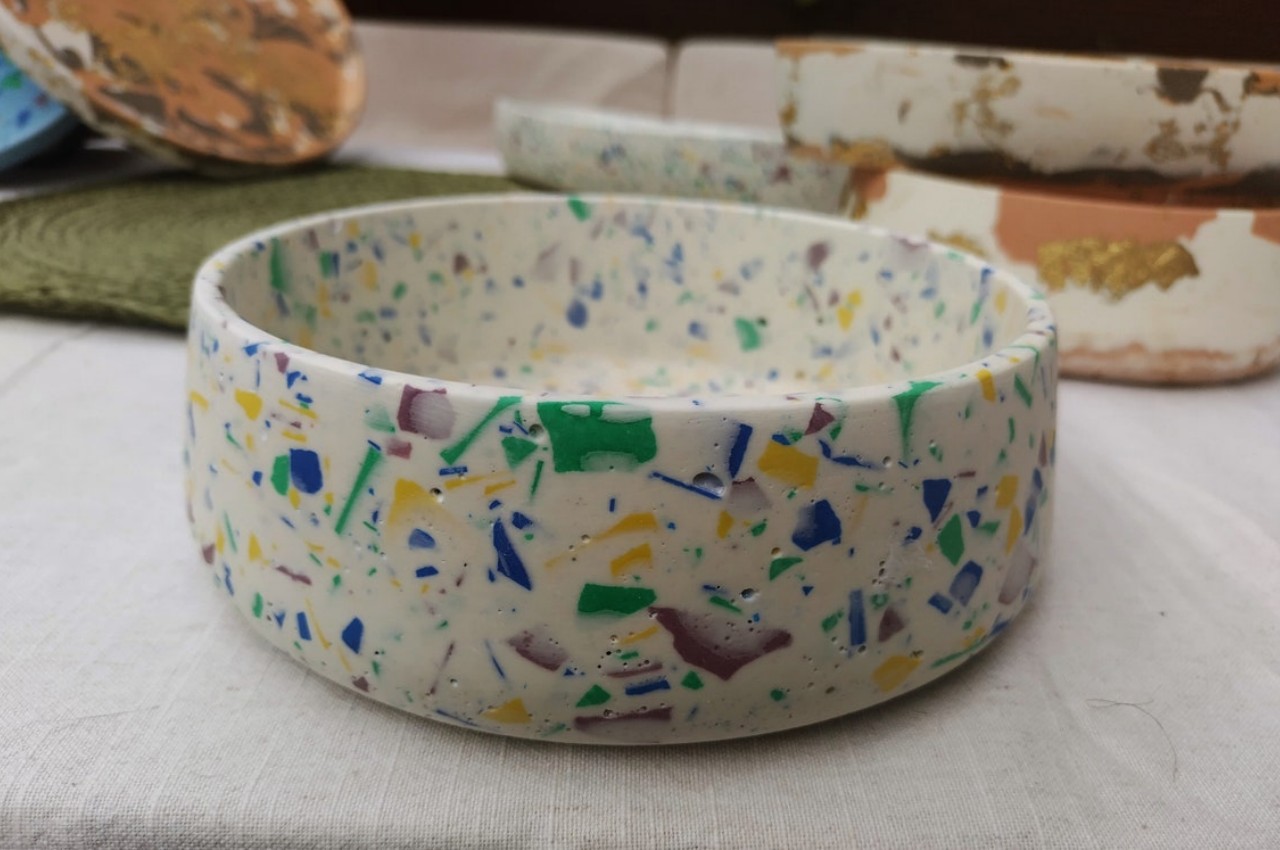
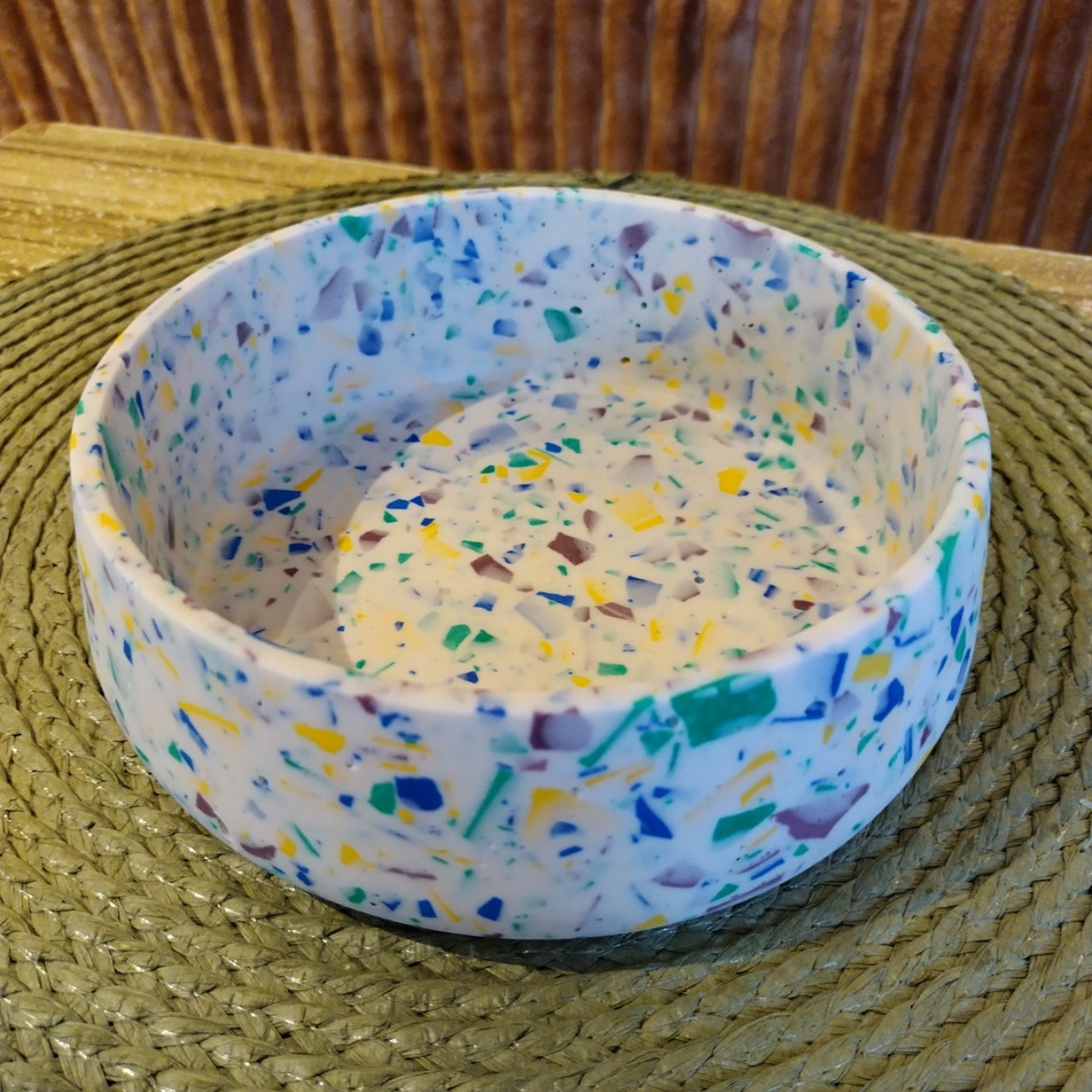
Sarah Christensen utilizes Jesmonite, a popular eco-friendly alternative to resin-based products, along with spent coffee grounds to craft everyday homeware. These materials are combined to create solid objects resembling terrazzo, with each product consisting of 40% coffee grounds and 60% Jesmonite. Christensen’s focus on plant pots, candle holders, and soap dishes encourages indoor gardening and mindfulness while repurposing coffee waste. Additionally, she aims to integrate her homeware into the circular economy by utilizing broken pieces for other purposes, showcasing how coffee can continue to benefit the world beyond its primary function of energizing individuals.
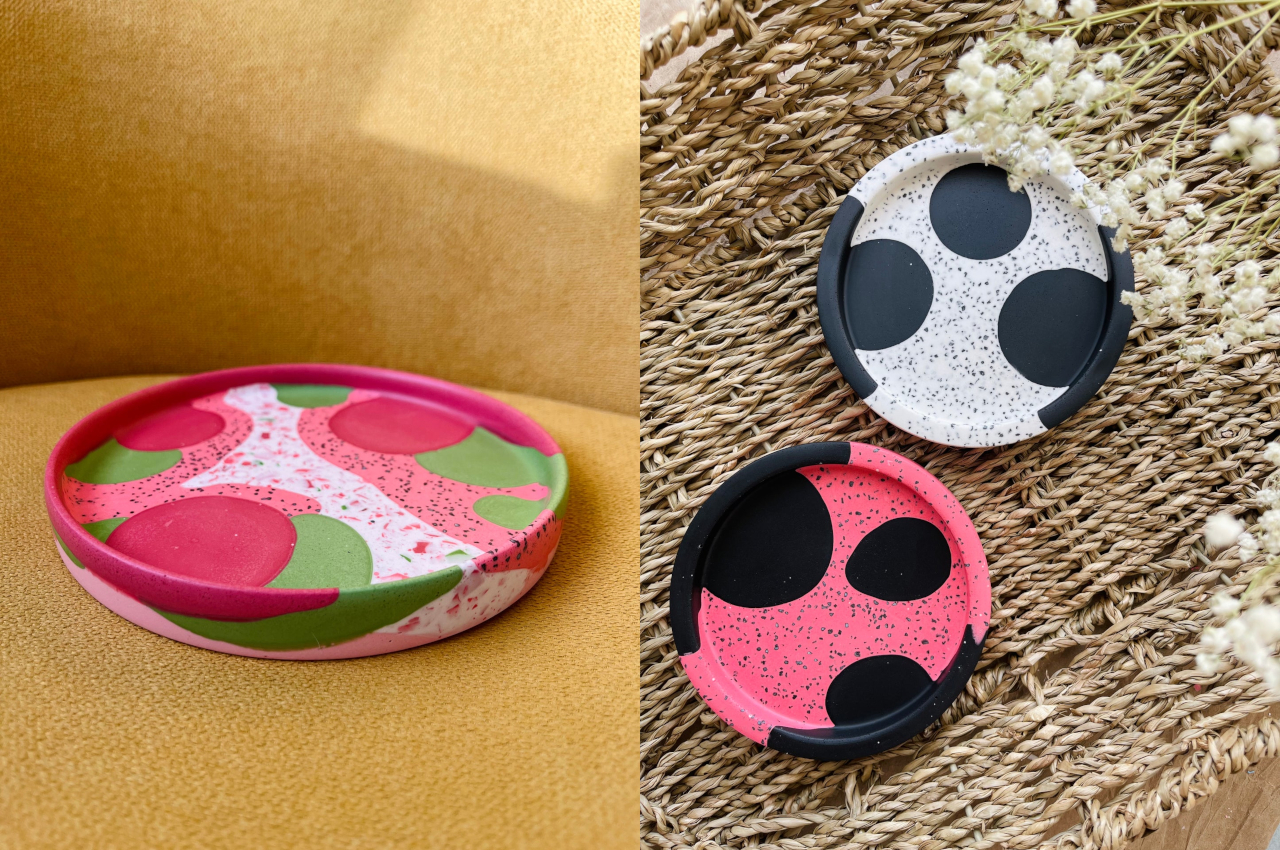
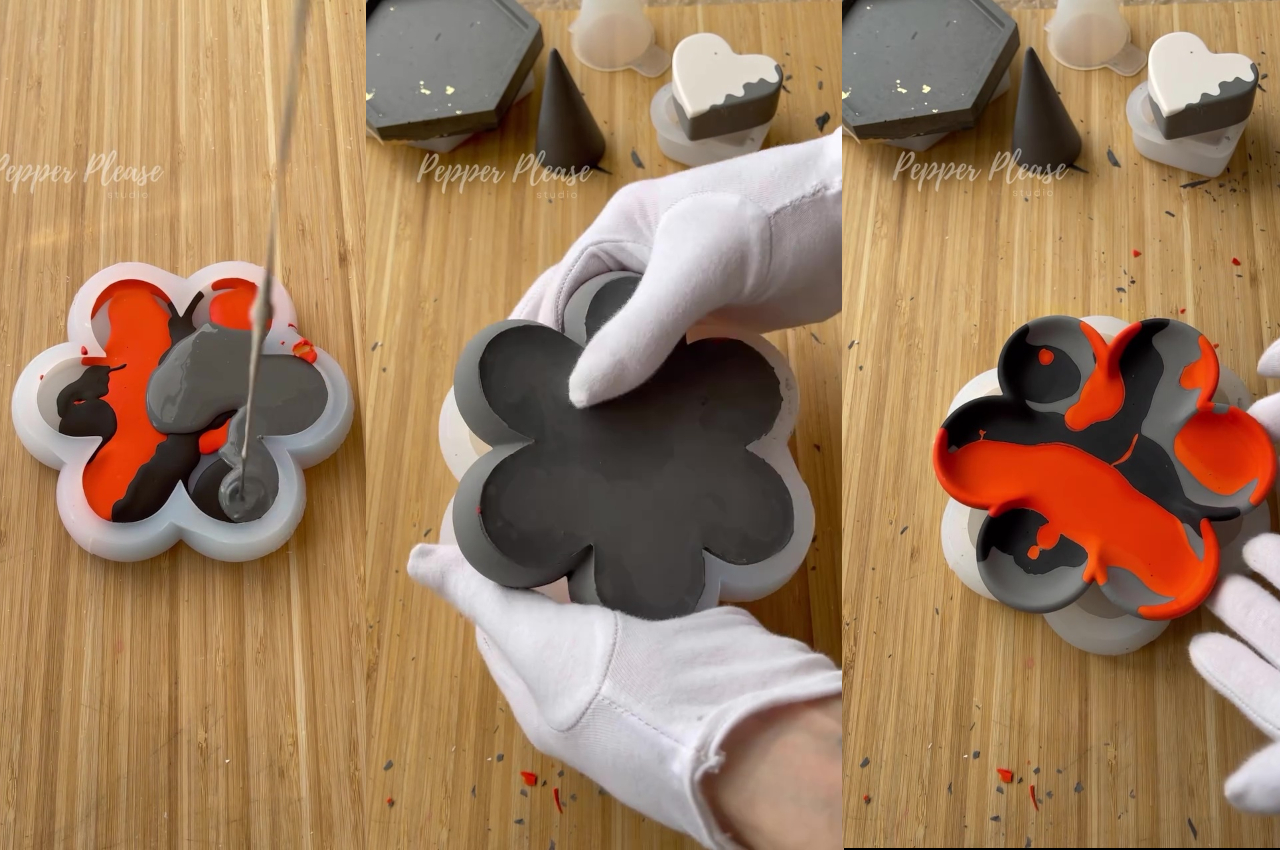
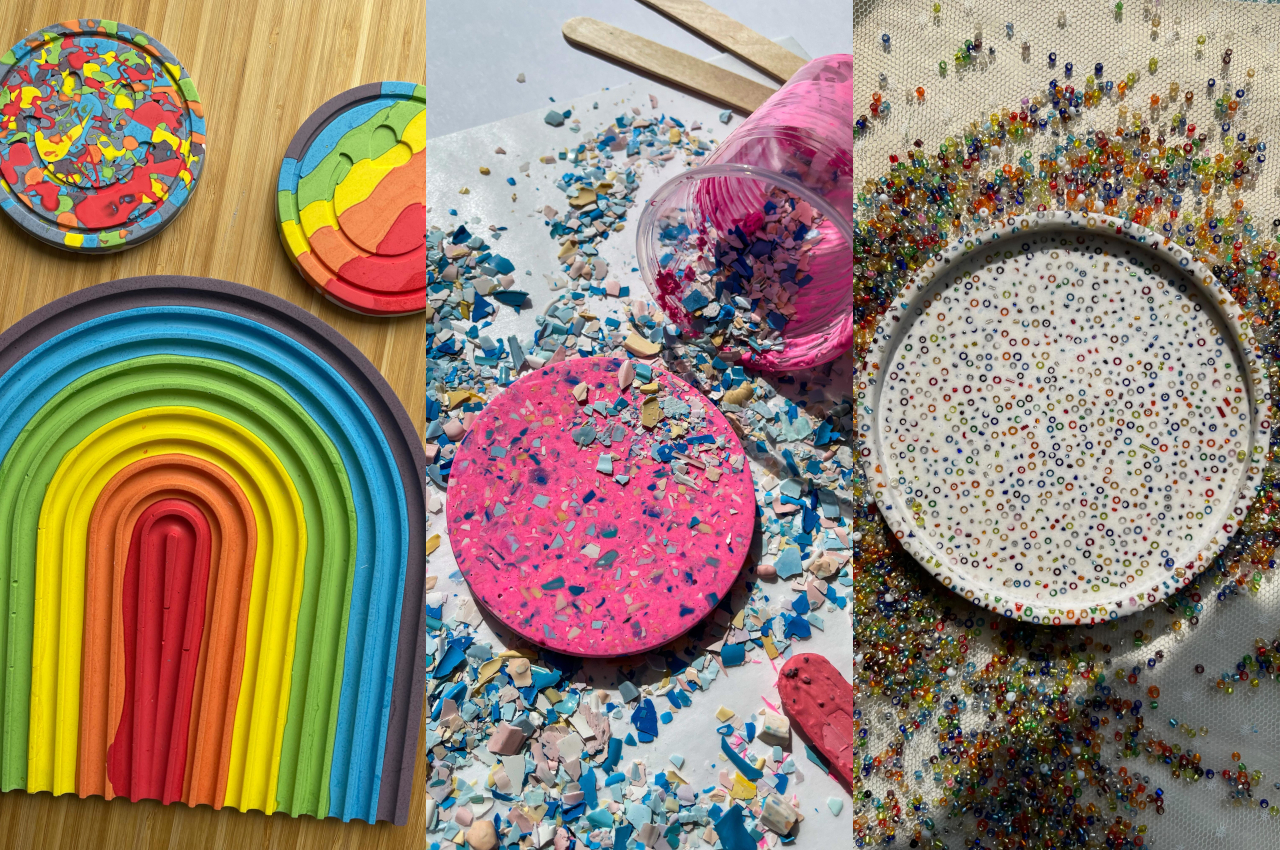
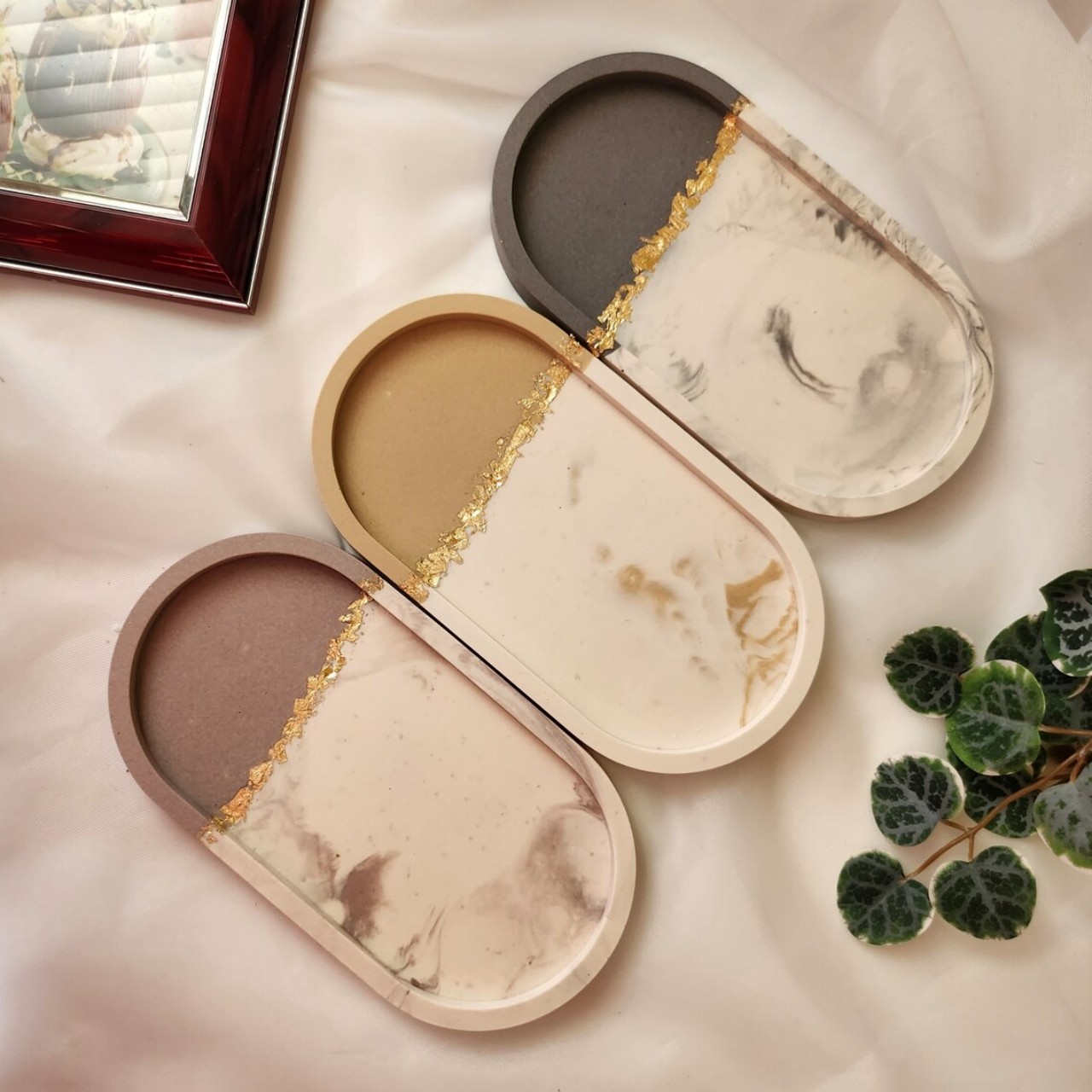
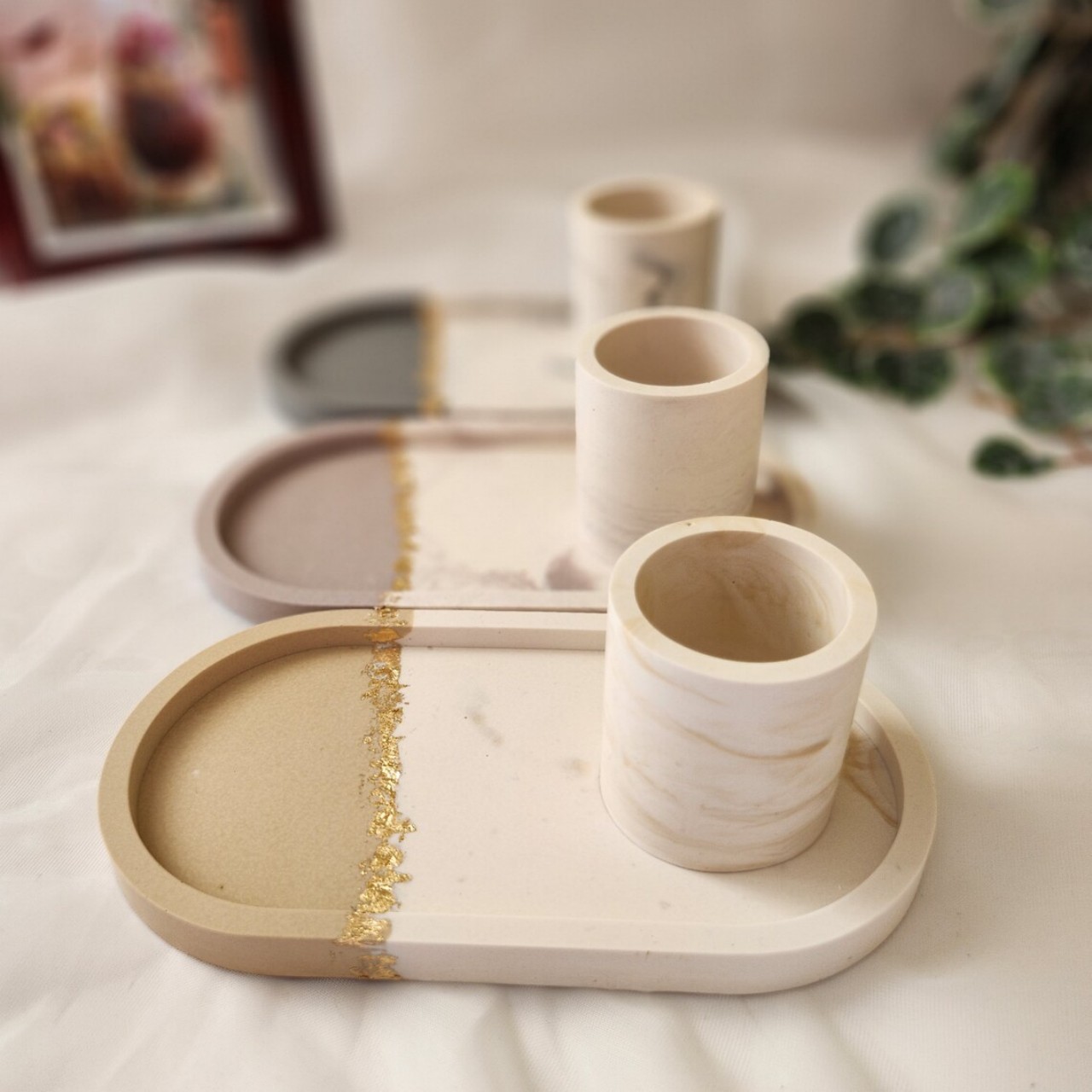
Jesmonite lends itself well to molding into diverse shapes, making it an excellent option for crafting various decor pieces such as trays, cups, jars, and other homeware items. These decorative jesmonite trays blend artistry with functionality. Jesmonite products, composed of a reactive mineral base and water-based acrylic resin, are non-solvent and free of VOCs, making them eco-friendly and versatile for various uses at home.
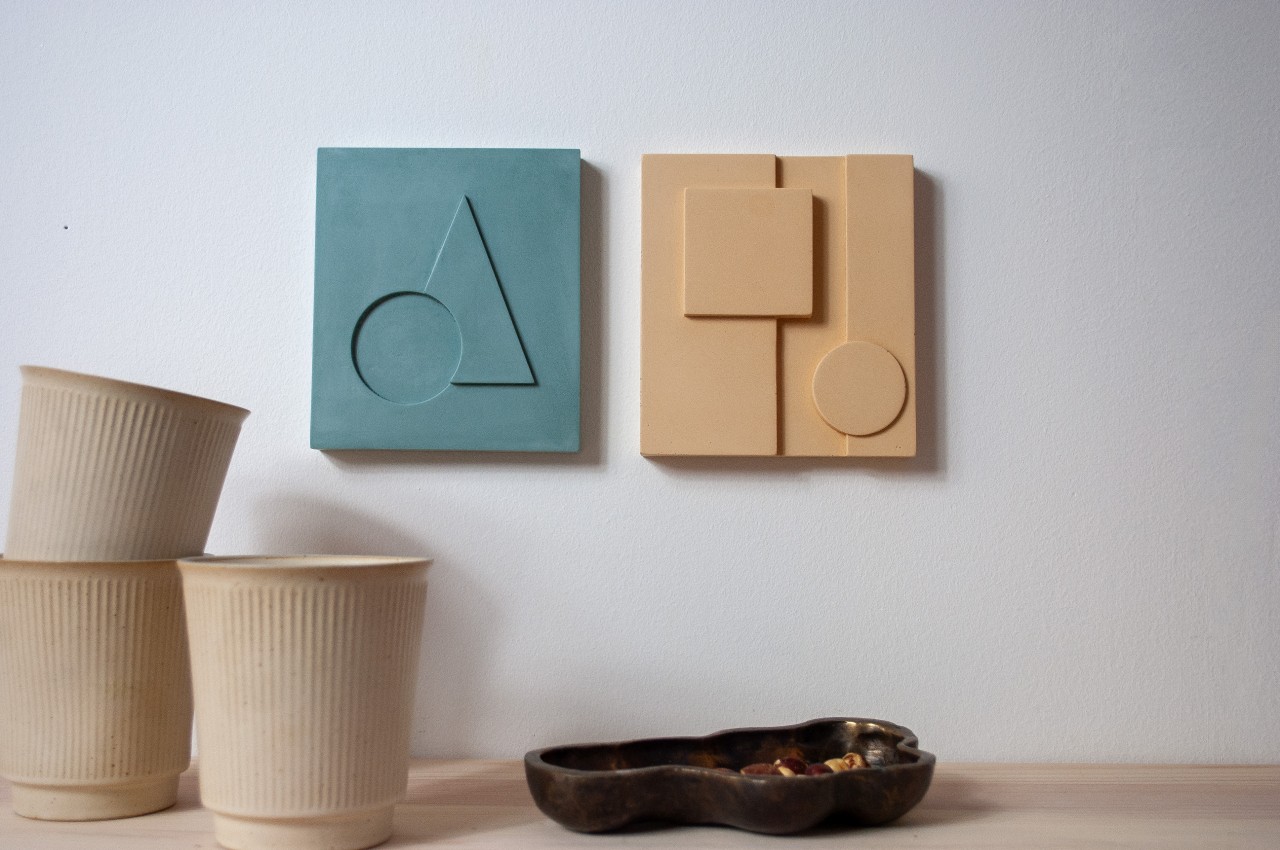
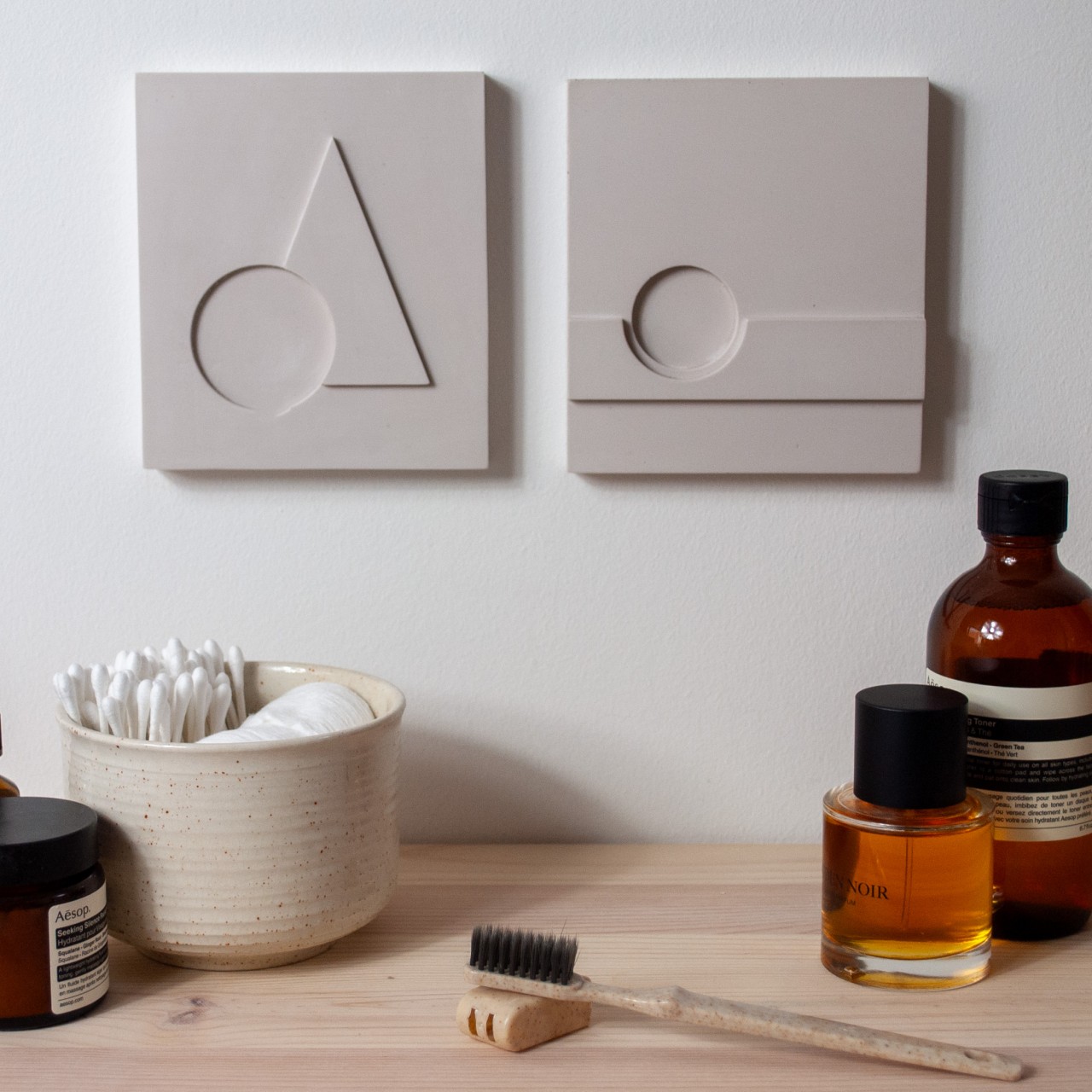
The ‘Wall Jesmonite Relief’ by Theodora Alfredsdottir is a captivating geometric artwork that seamlessly blends artistry, geometric shapes, and functionality, perfect for interior decor. Crafted from versatile jesmonite with a discreet keyhole for easy wall mounting, it looks stunning in various color options.
In conclusion, Jesmonite is highly versatile, durable, and lightweight, finding extensive use across construction, architecture, and art industries. Its ability to replicate natural materials, along with its strength and durability, makes it an ideal choice for diverse projects and design applications.
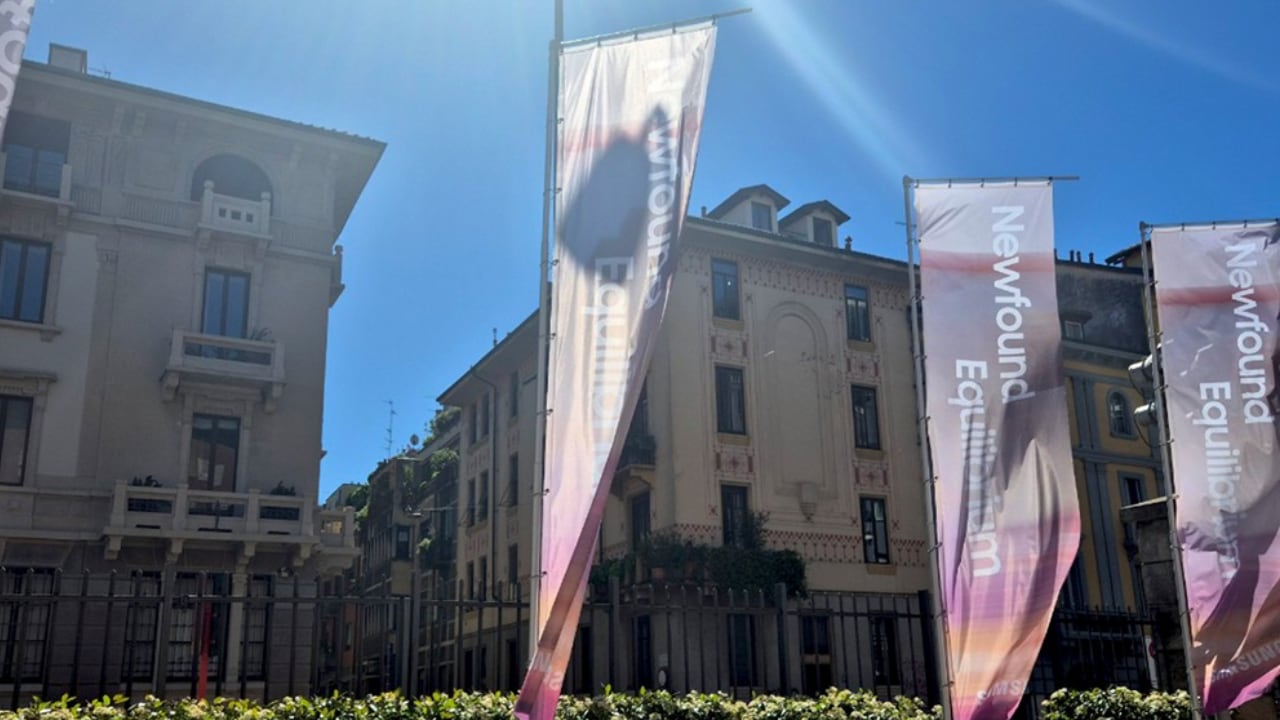
At Milan Design Week 2024, Samsung Electronics unveiled its “Newfound Equilibrium” exhibition. This impressive showcase is all about Samsung’s forward-thinking design philosophy, which they call “Samsung Design Identity 5.0: Essential∙Innovative∙Harmonious.” It focuses on drawing inspiration from people and shaping the future. Samsung has over 1,500 designers spread across seven global studios, all working to keep their design language fresh and relevant for their customers.
Designer: Samsung
INNOVATIVE, the second exhibition space of Samsung Design’s Newfound Equilibrium
The exhibition is in the Leonardo da Vinci National Museum of Science and Technology in Milan, specifically in Le Cavallerizze. This place is a mix of 16th-century architecture and modern design, showing off Samsung’s knack for blending old and new.
Leonardo da Vinci National Museum of Science and Technology in Milan, Italy, where Samsung Design’s Newfound Equilibrium exhibition is being held.
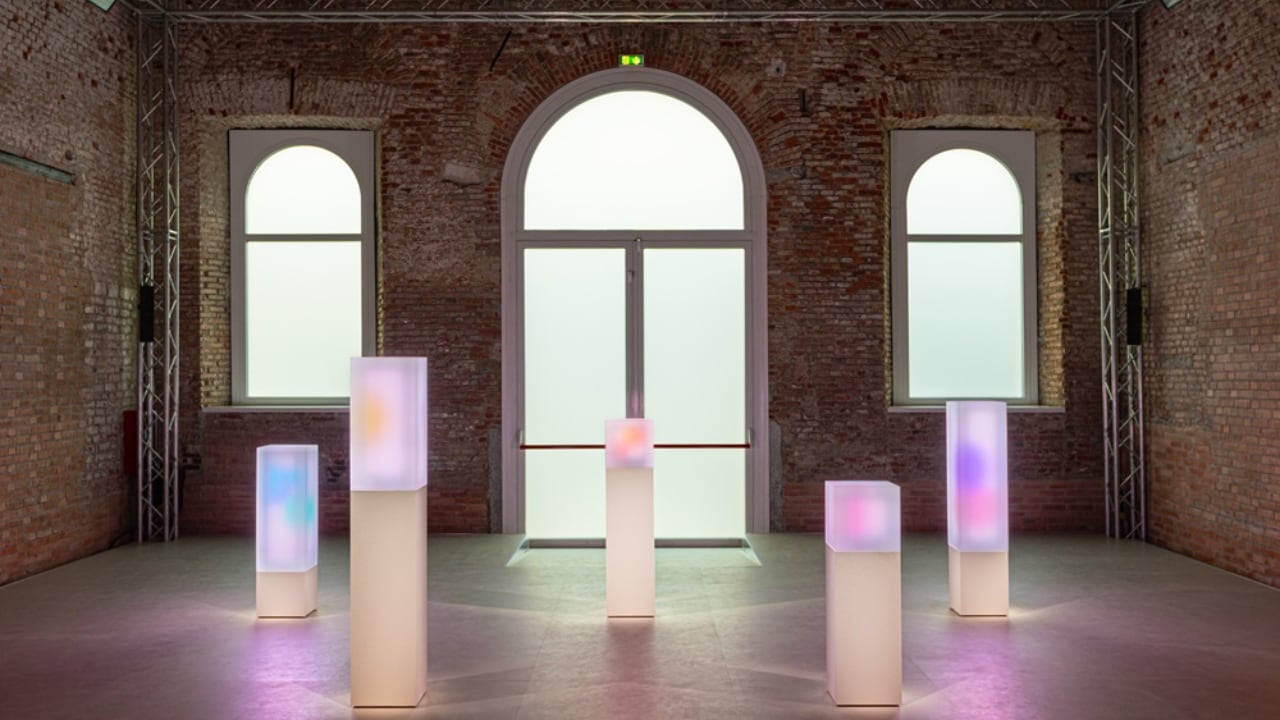
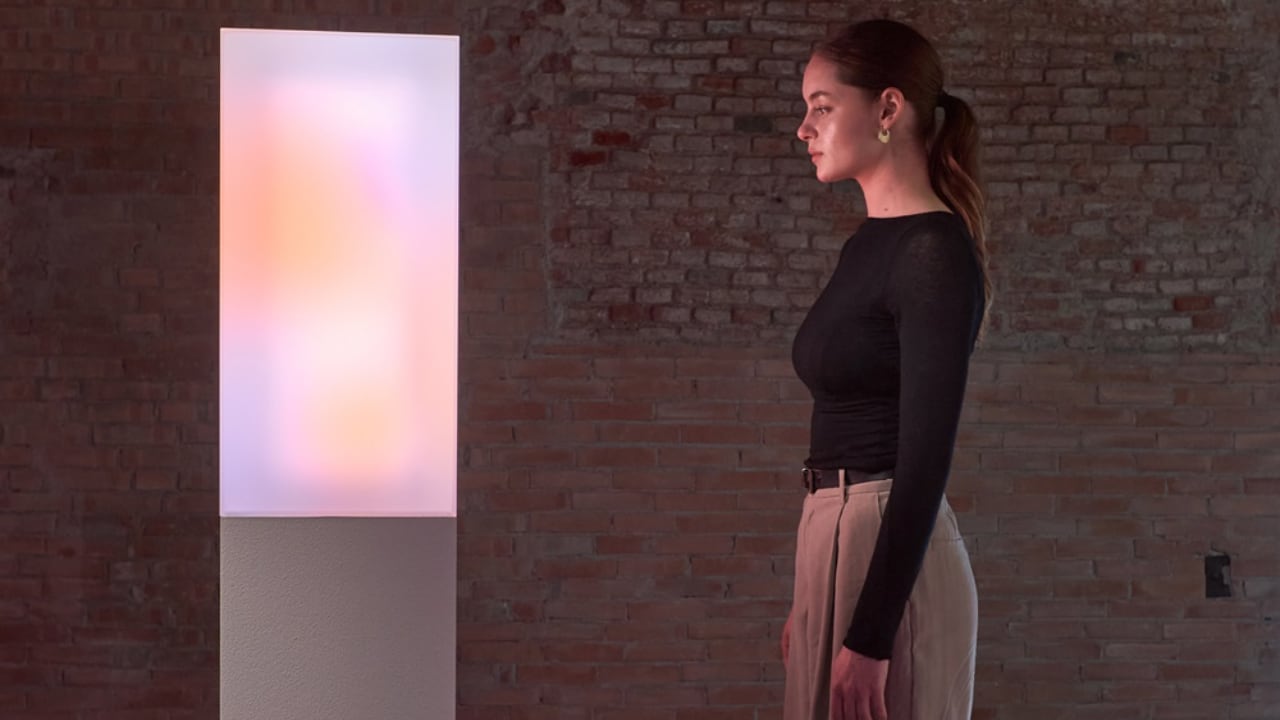
First up in the exhibition is the “Essential” area. This is all about getting back to basics and focusing on what really matters. It’s shown in the sleek design of the Galaxy S24 series and some really practical home appliances like the all-in-one washer and dryer. There are also some awesome minimalist installations with translucent cubes and playful lighting that really get the point across.
ESSENTIAL, the first exhibition space of Samsung Design’s Newfound Equilibrium
ESSENTIAL, the first exhibition space of Samsung Design’s Newfound Equilibrium
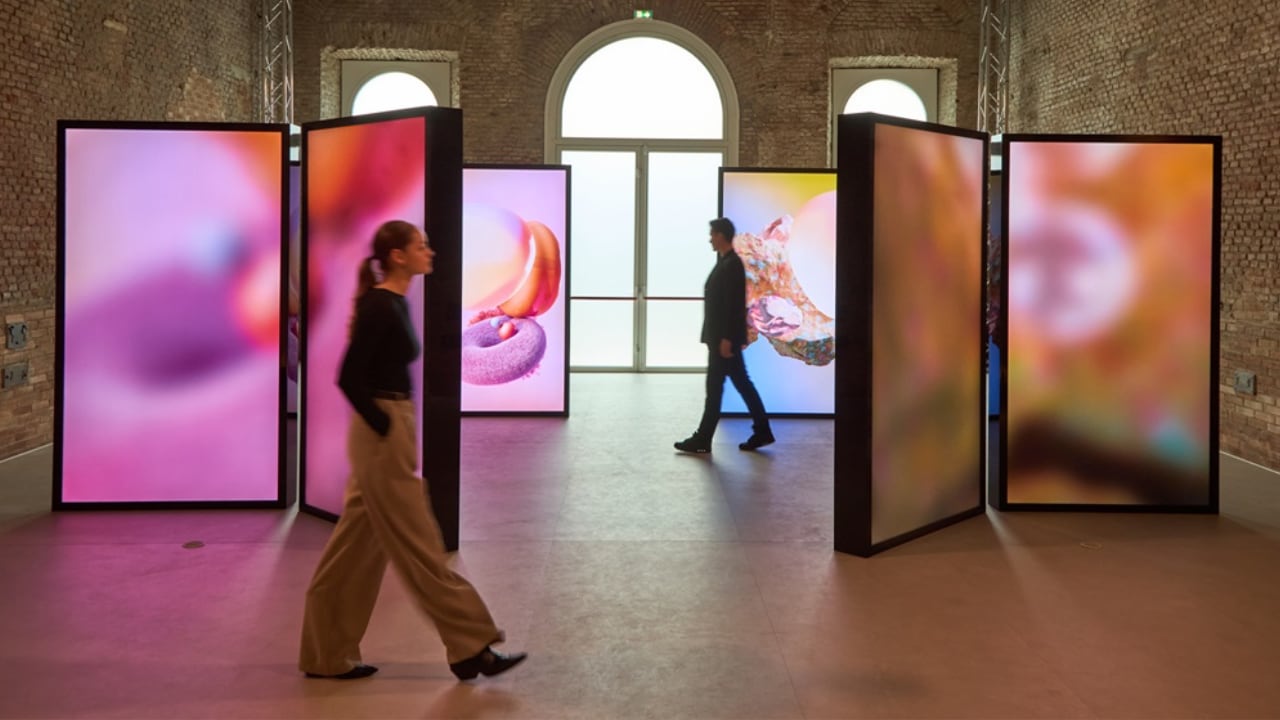
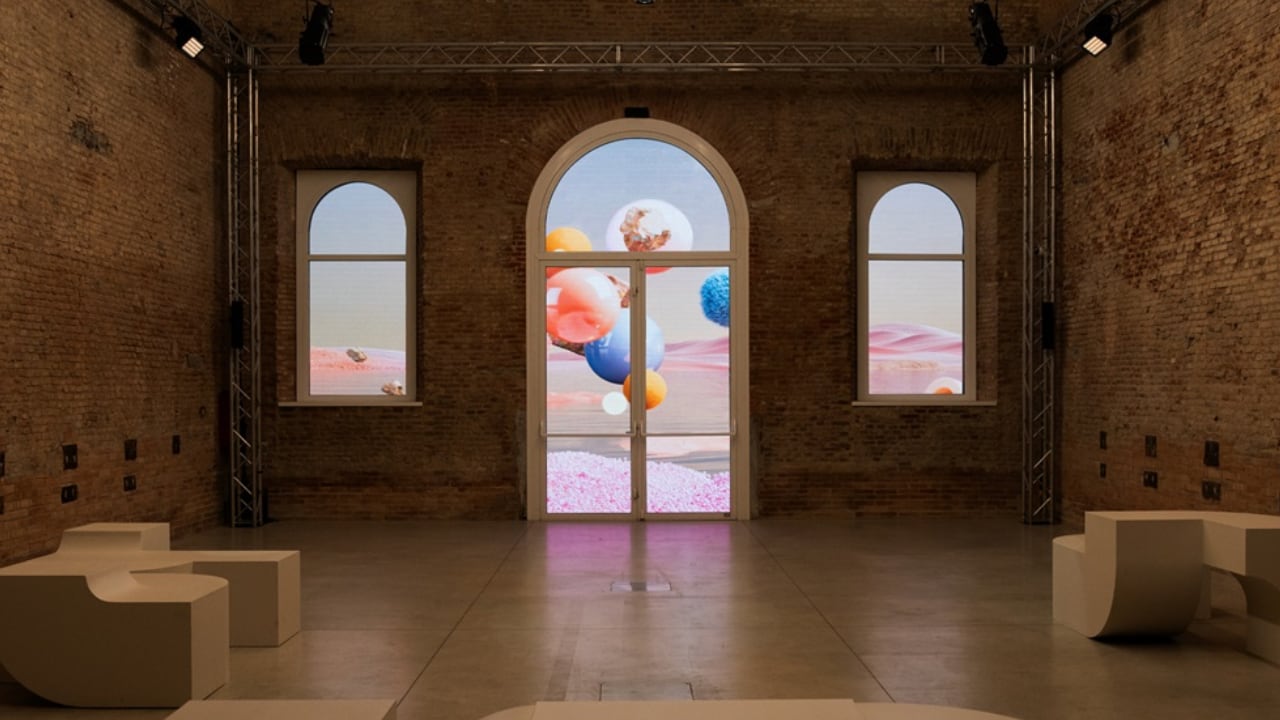
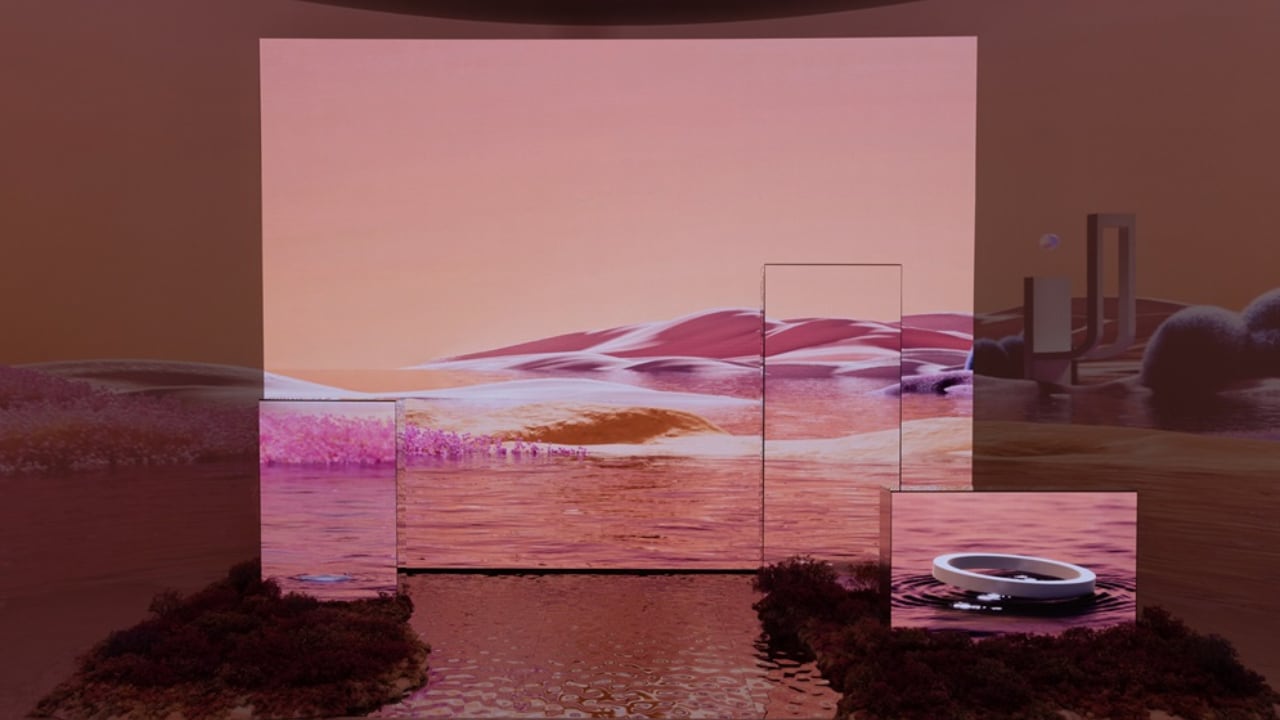
Next, we move to the “Innovative” section. Here, Samsung shows off its drive to make everyday life better with functional advancements. There are interactive displays that change based on how close you are to them, just like Samsung’s smart TVs and vacuum cleaners that adapt to your needs. This part really shouts about Samsung’s ambition to push tech boundaries.
A display shown at INNOVATIVE, the second exhibition space of Samsung Design’s Newfound Equilibrium, displays forms that shift from solid to ethereal textures as guests move closer or farther away.
INNOVATIVE, the second exhibition space of Samsung Design’s Newfound Equilibrium
INNOVATIVE, the second exhibition space of Samsung Design’s Newfound Equilibrium
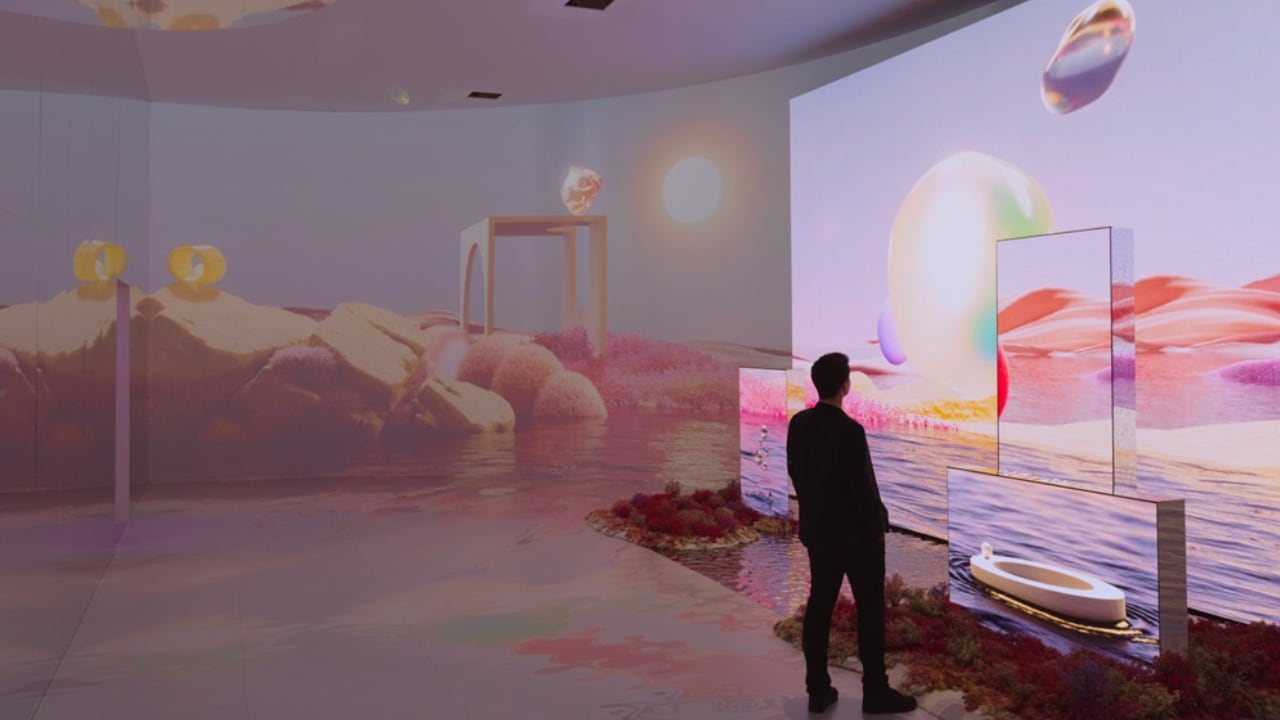
Then there’s the “Harmonious” section. This is all about how tech can blend into daily life, like the SmartThings ecosystem and the Music Frame that enhance your home without taking over. There are interactive LED displays that mimic natural events, inviting visitors to imagine a world where tech fits in naturally with human and environmental needs.
HARMONIOUS, the third exhibition space of Samsung Design’s Newfound Equilibrium
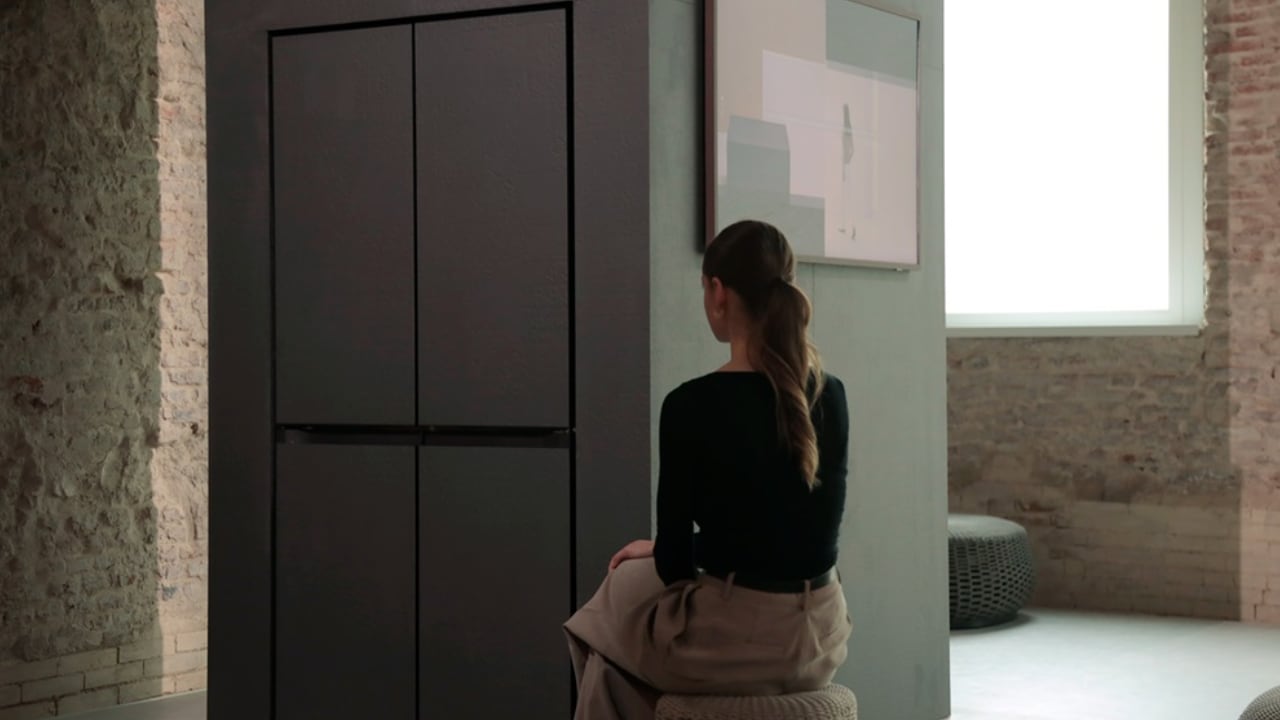
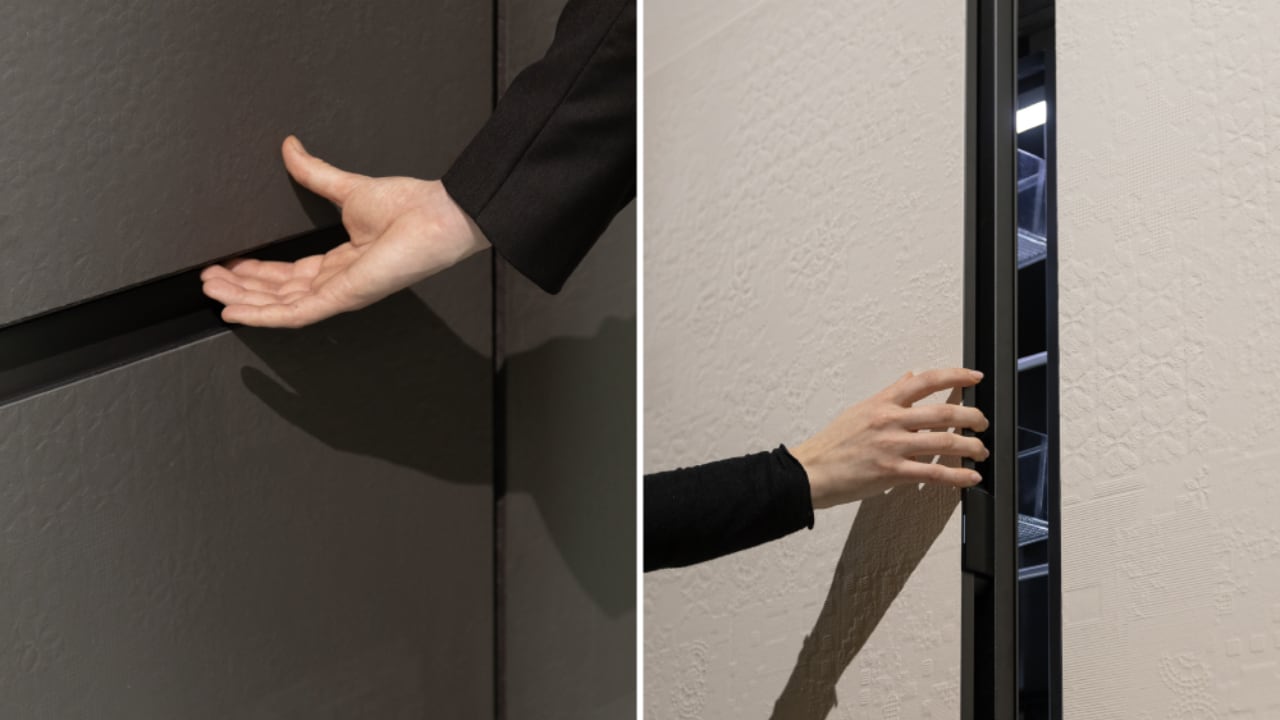
The exhibition wraps up with the “Infinite Dream” and “New Dawning” spaces, which celebrate the blend of modern tech with traditional craftsmanship, through collabs with artisans like MUTINA and ALPI.
INFINITE DREAM, the fourth exhibition space of Samsung Design’s Newfound Equilibrium
In a nutshell, the ‘Newfound Equilibrium’ exhibition at Milan Design Week 2024 shows off Samsung’s big ideas about the future of tech and design. It’s about tech and design, living together, and making life better for people all over the world. Samsung’s ongoing commitment to thoughtful and progressive design is clear, and it’s really exciting to see what they’re doing to make tech a force for good in our lives.
Bespoke creations that blend modern technology with traditional craftsmanship are showcased at NEW DRAWING, the concluding exhibition space of Samsung Design’s Newfound Equilibrium.
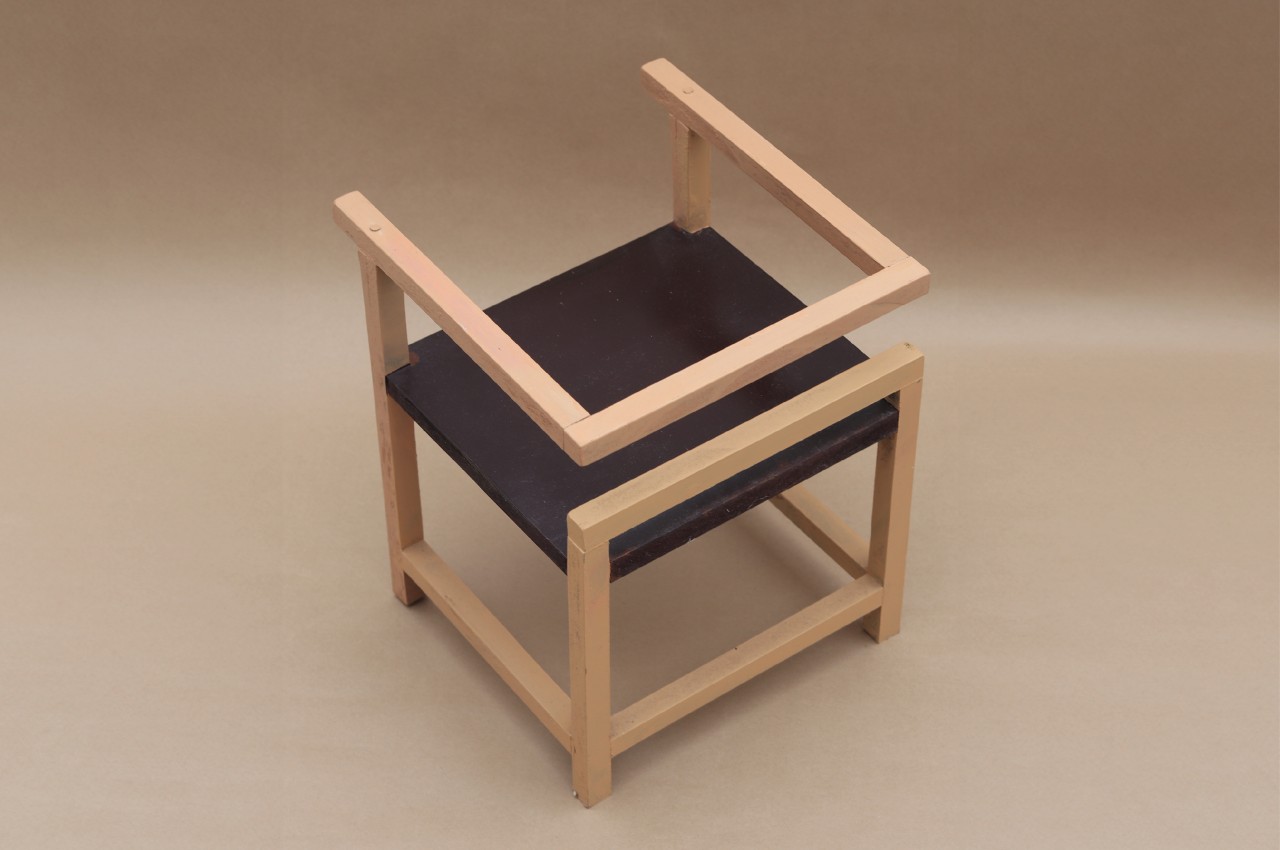
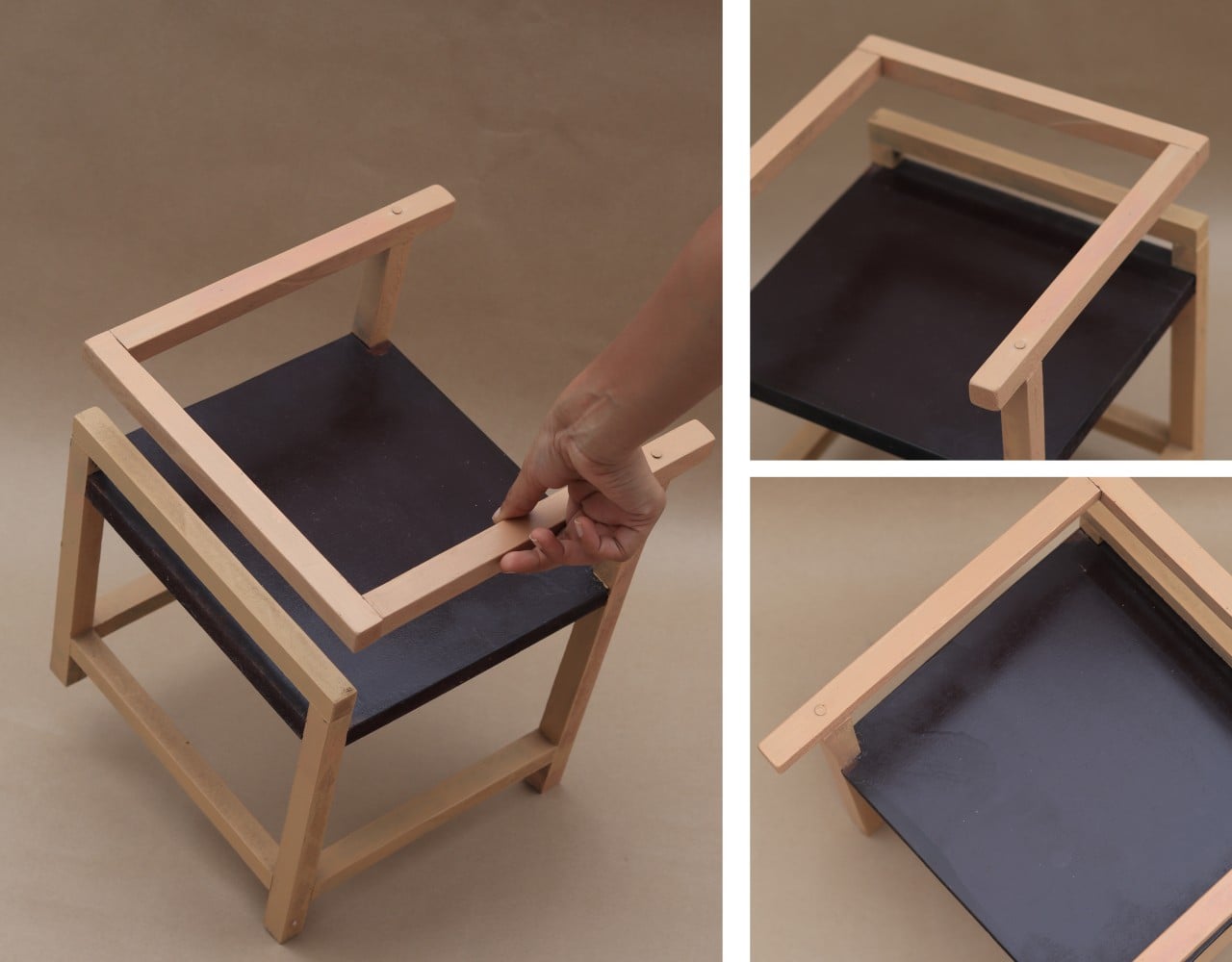
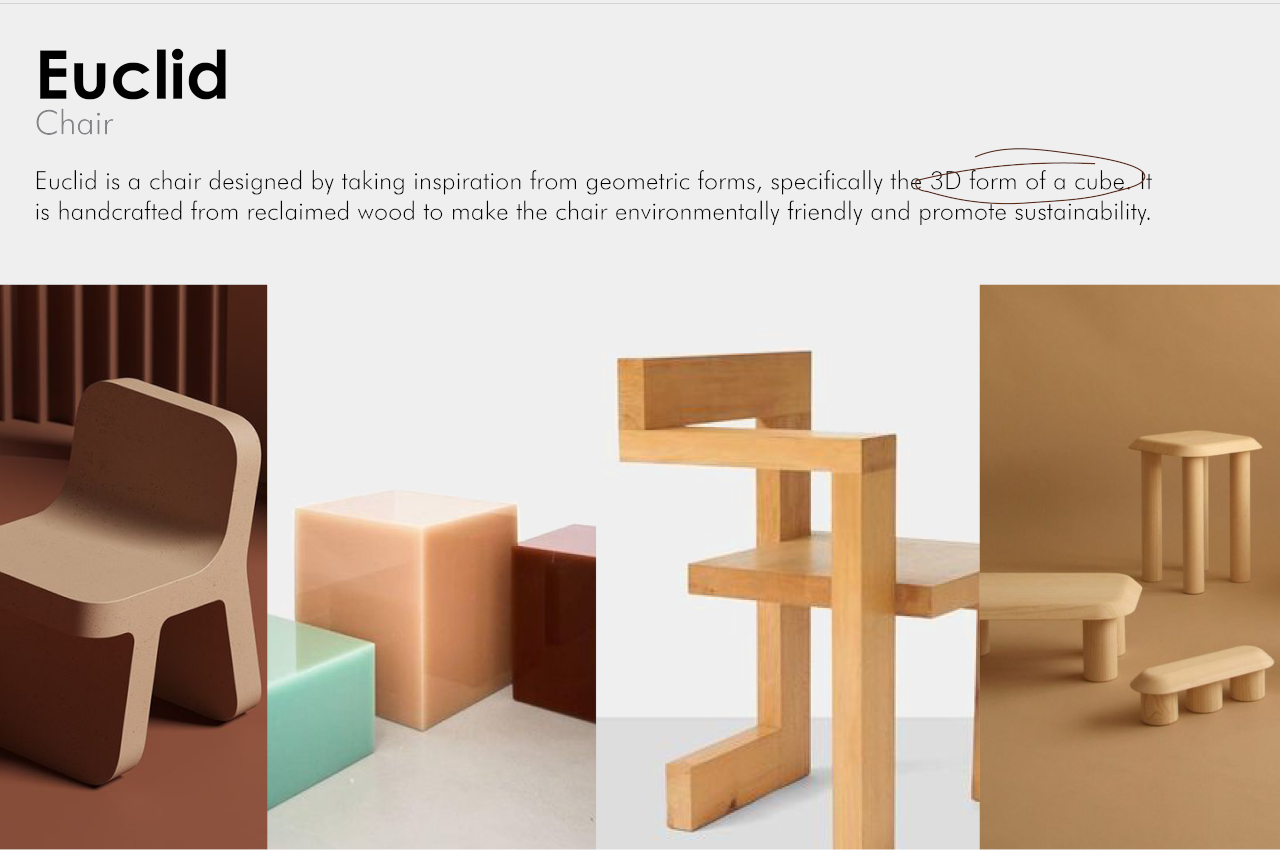
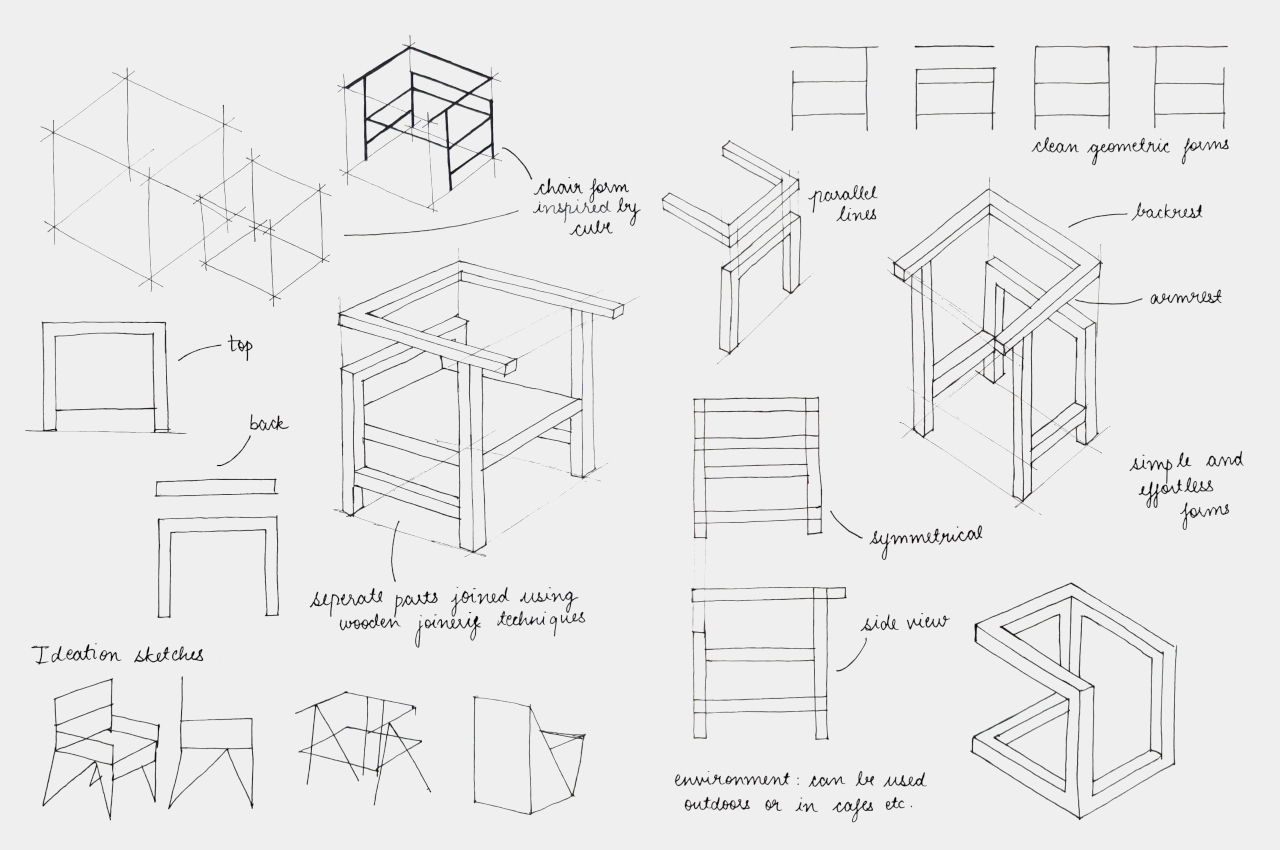
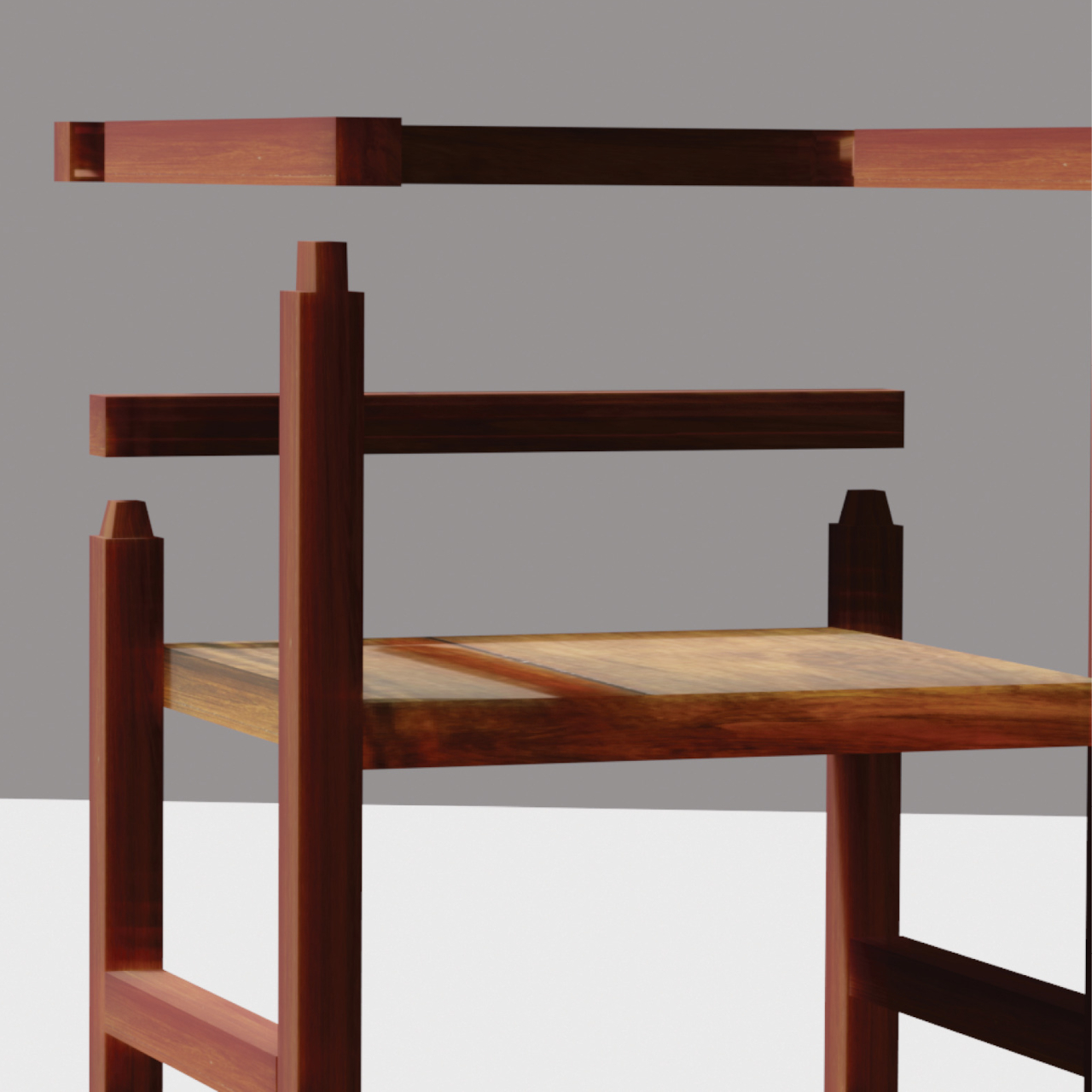
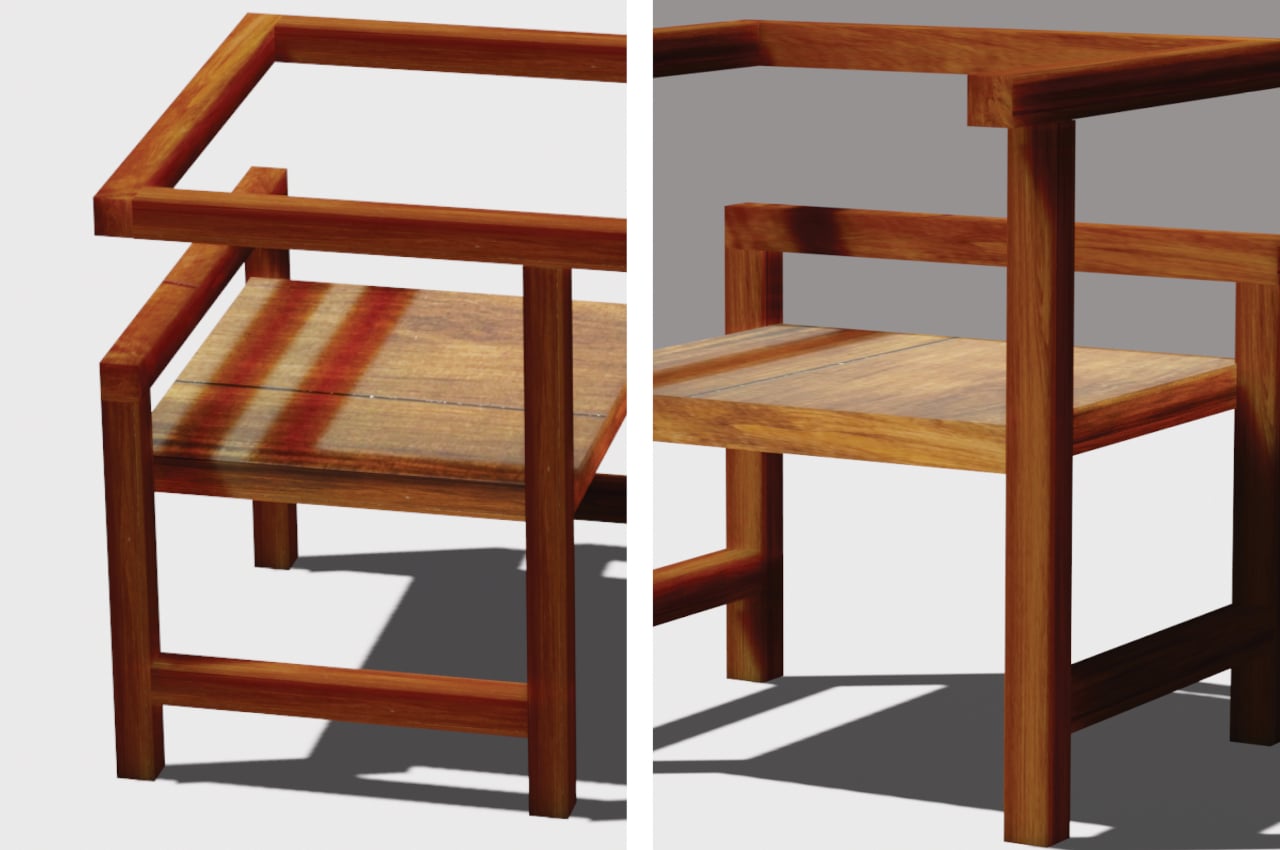
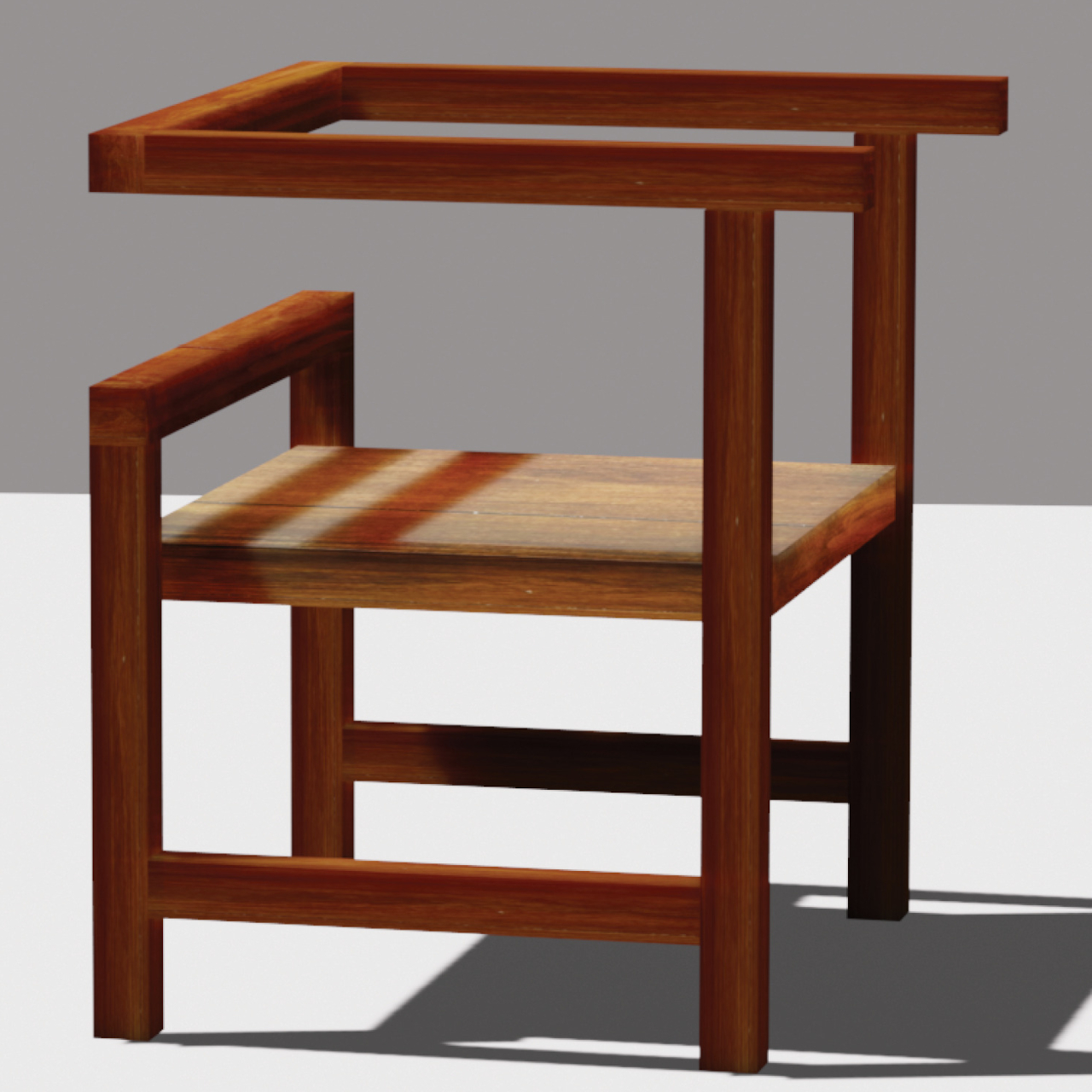
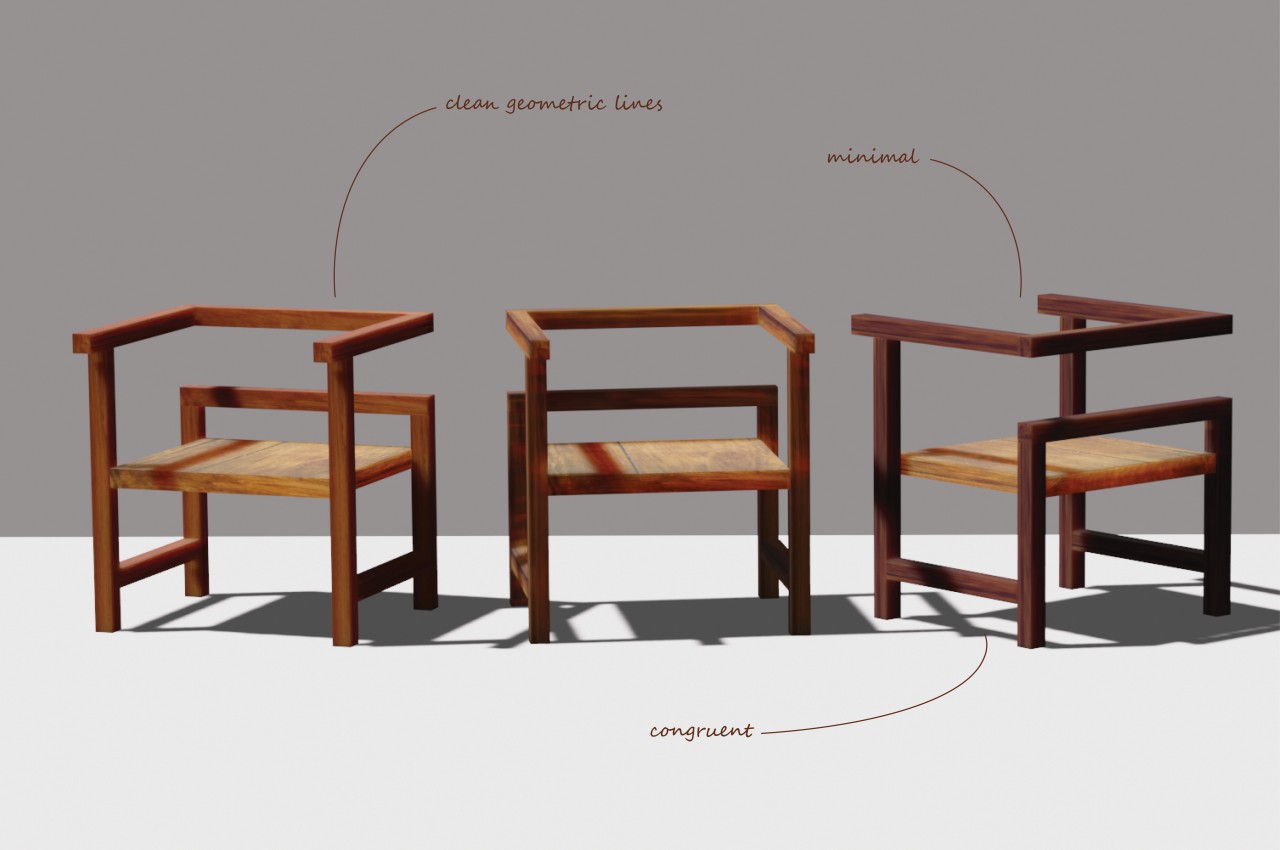
Chairs can come in all shapes and sizes. Some can take on complicated and organic forms, while others can be extremely minimalist or even brutally raw. They can range from designs that take inspiration from nature to those that adhere to simpler geometric shapes. The Euclid concept is one of the latter, aptly named after the ancient Greek mathematician. But while it draws its shape from a simple cube, its execution sparks a bit of wonder and curiosity as it resembles more the skeleton or wireframe of the shape, represented by almost unbroken lines that are reminiscent of Escher’s famed optical illusion, the impossible cube.
Designer: Sonakshi Gupta
Admittedly, it’s a bit difficult to see the Euclid chair as a cube, since most of us have this idea of a cube as having 12 lines that are all connected at eight corners to form six faces. Then again, that popular Escher object already shows an impossible depiction of that shape, and those familiar with that print might see some of that characteristic in this chair when viewed from certain angles. Overall, it creates a dynamic form that has your eyes following the lines and moving all over the place, sometimes confused about where the front and back sides are.
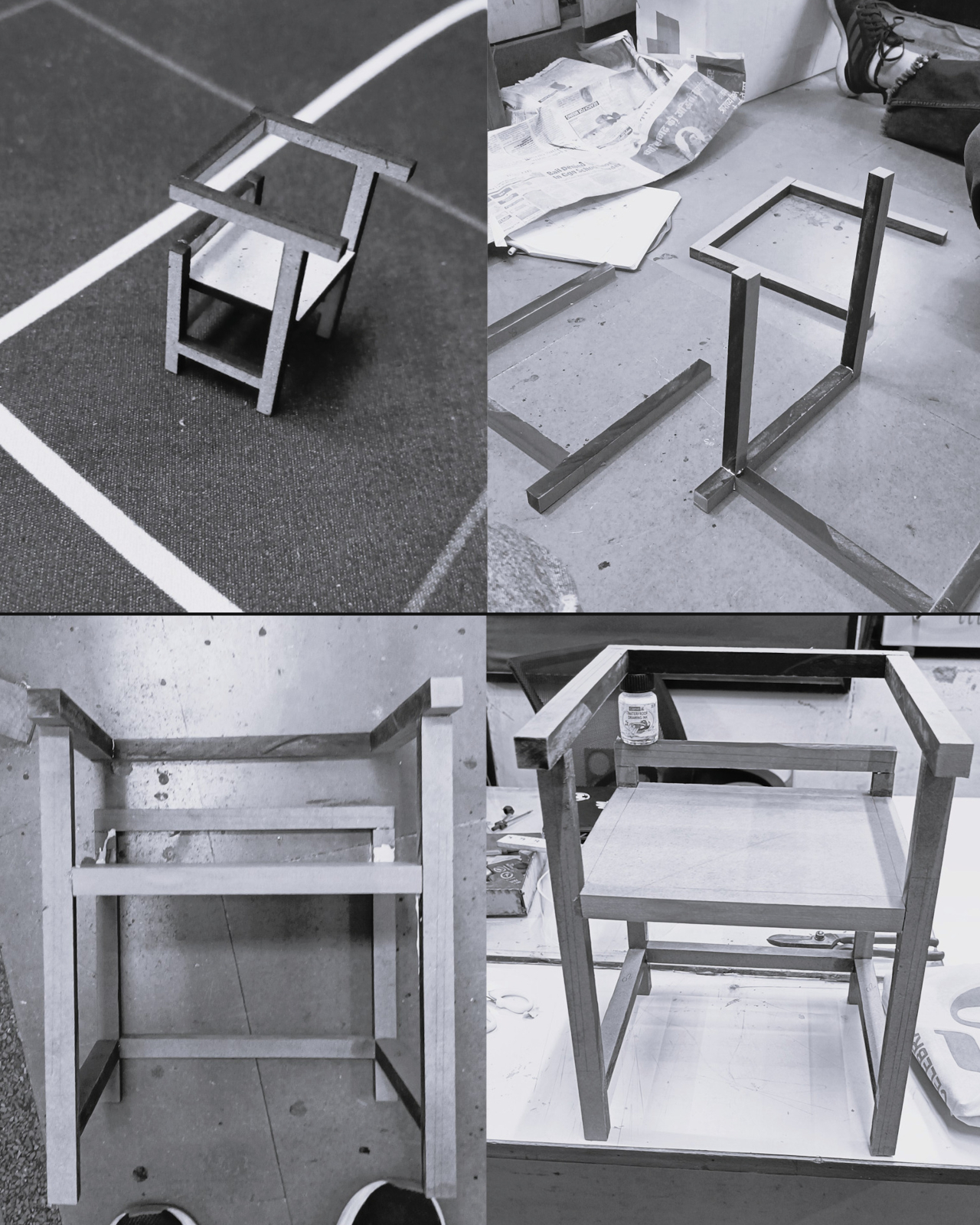
Its unique form isn’t the only notable thing about this concept, however. Its use of reclaimed wood gives it more than a sustainable character. That material, in a way, carries some history from what it was before becoming a part of this chair. Even if that past is unknown to the new owner, simply knowing it has one could give each Euclid chair its own unique charm.
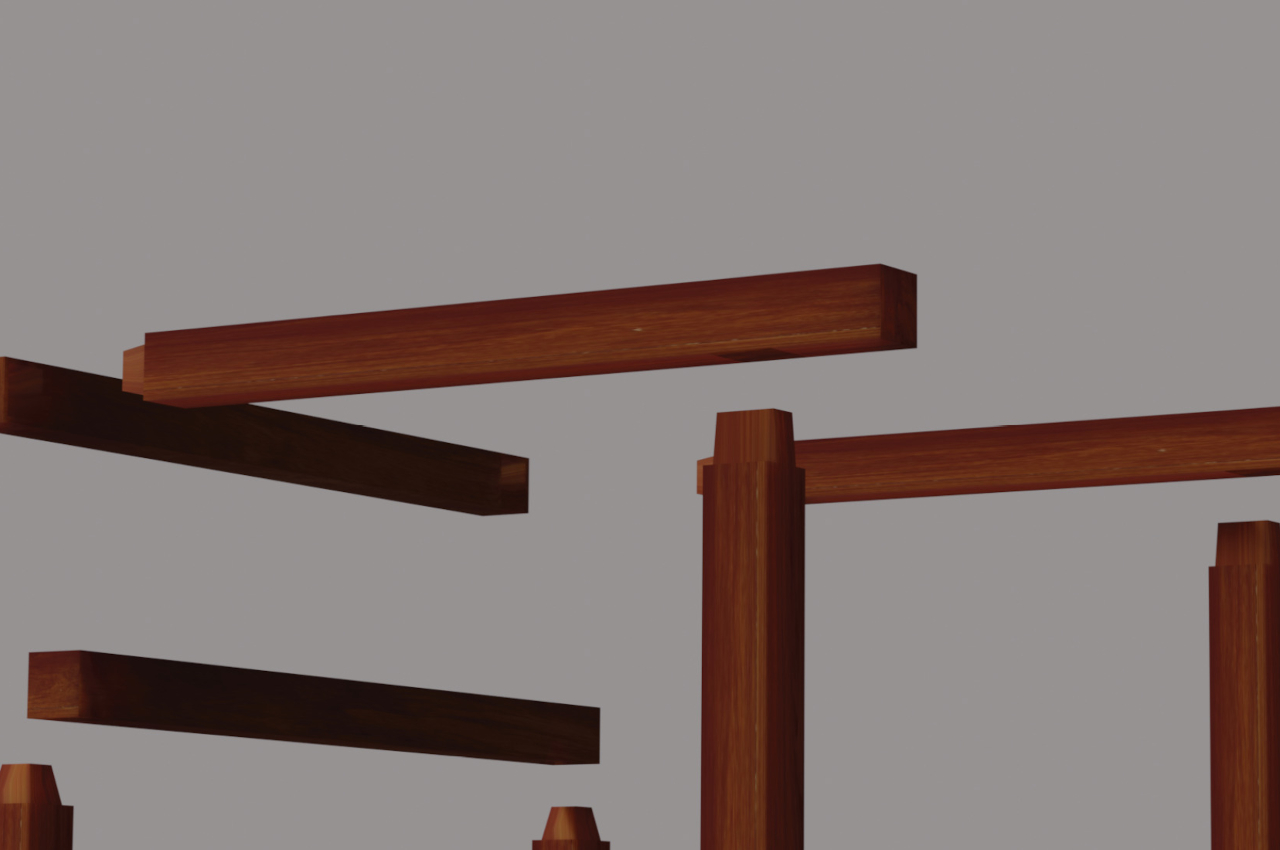
And then there’s the method used to bring all the pieces together. Instead of requiring screws or even glue, a mortise and tenon joinery is used to provide stability without introducing complicated mechanisms. In theory, this could make it easy to later take the chair apart if some pieces need to be replaced, though that could also start to weaken the connection over time if done too frequently.
The Euclid concept chair offers a design that is minimalist, sustainable, and visually interesting. Whereas a cube is pretty much the epitome of symmetry, the missing edges and disconnected faces give the chair a bit more volatility. That said, it doesn’t seem like the most comfortable chair to sit on. Even if you put a cushion on the seat, the hard edges of the armrest and especially the backrest could give your body some grief after a long period of time.
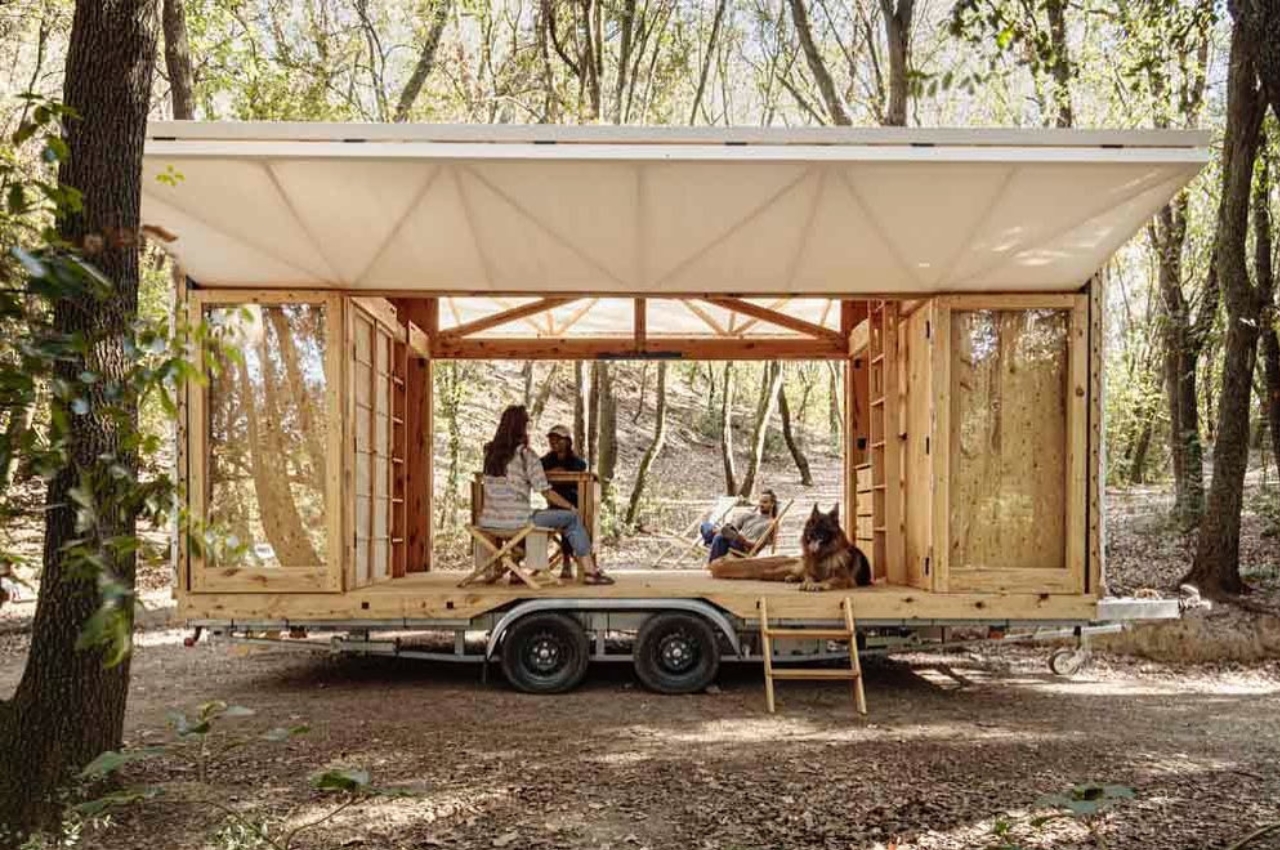
One of the advantages of people who can work remotely (digital marketers, writers, virtual assistants, etc) is that they can work from literally anywhere. As long as there’s internet and a power source for when their devices run out of juice eventually, these digital nomads have the freedom to set up shop wherever they are and to live in things like mobile homes. We’re seeing a lot of products and concepts targeting this segment and I for one am very interested to see these come to life.
Designer: Institute for Advanced Architecture of Catalonia (IAAC)
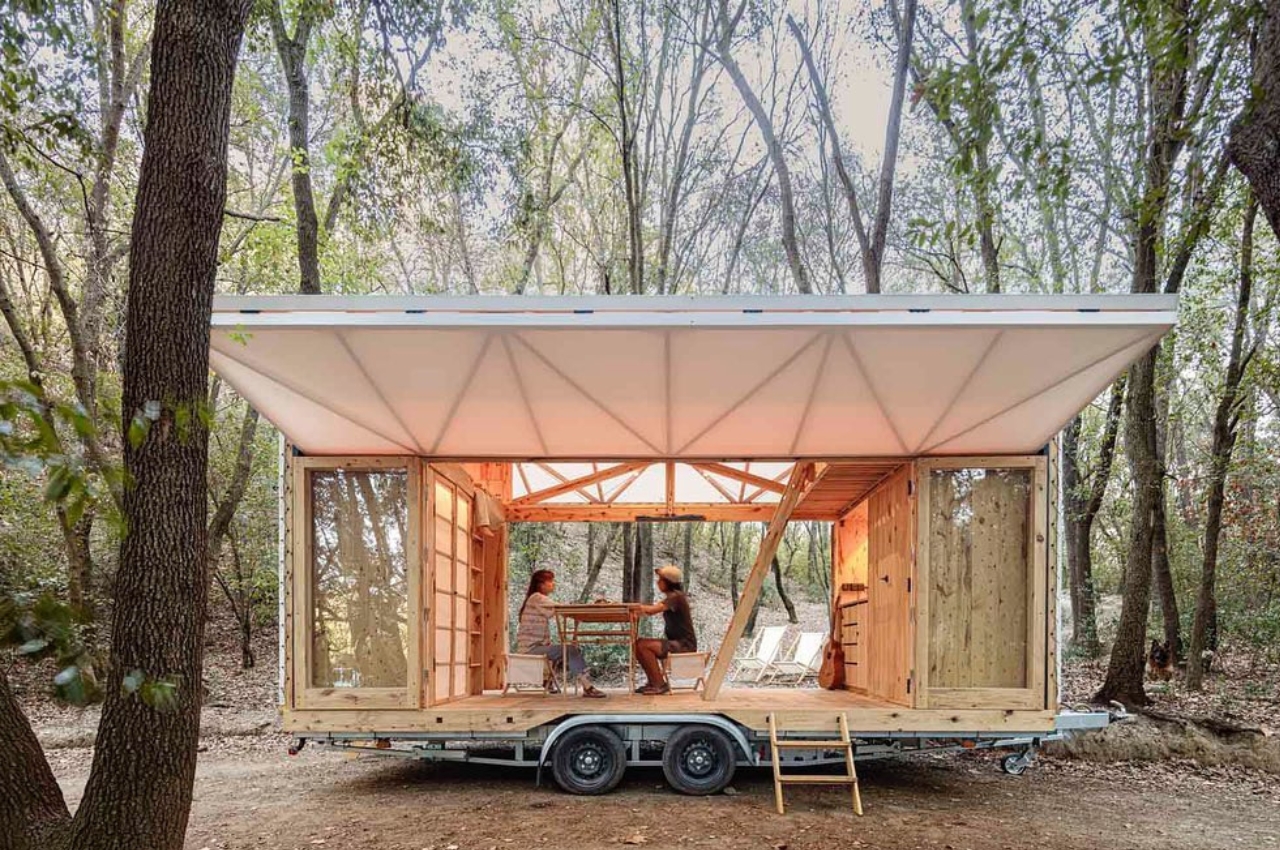
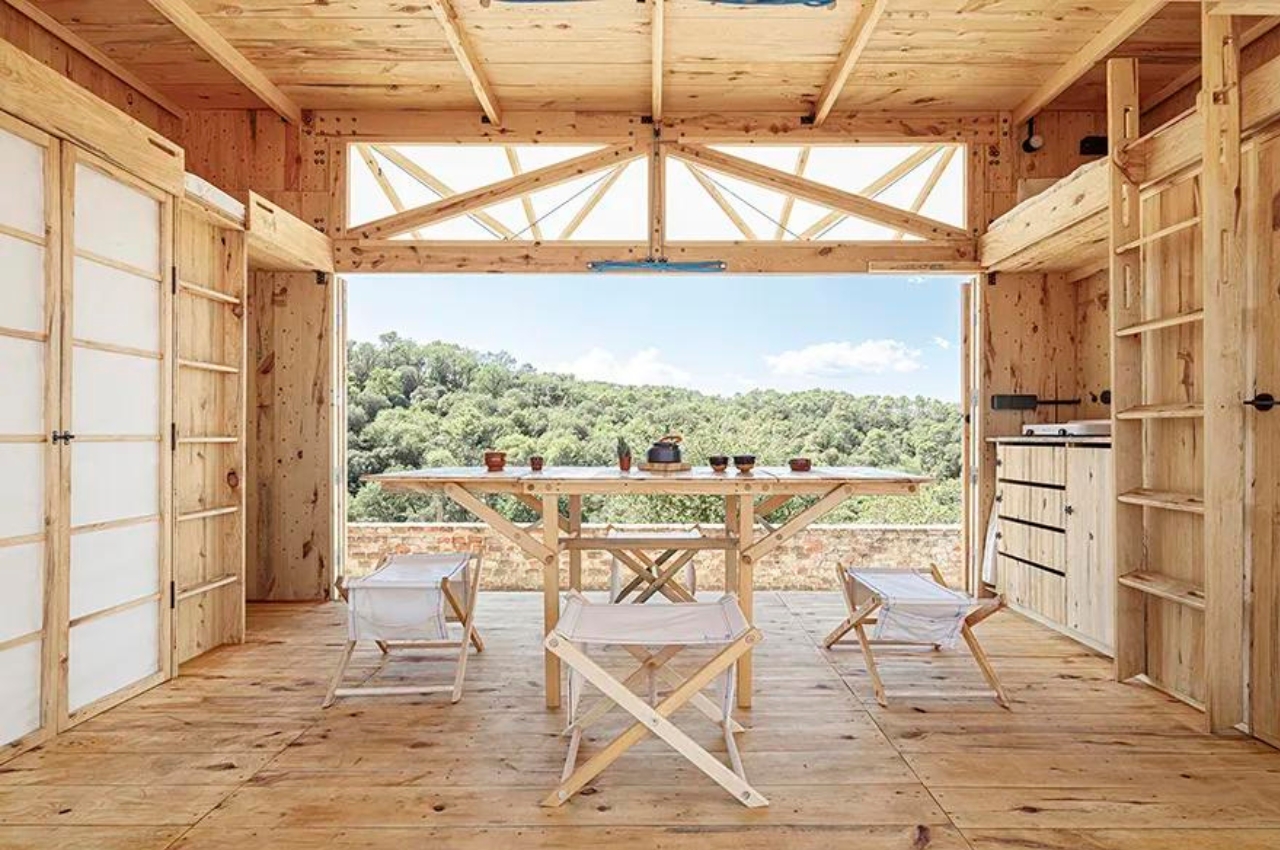
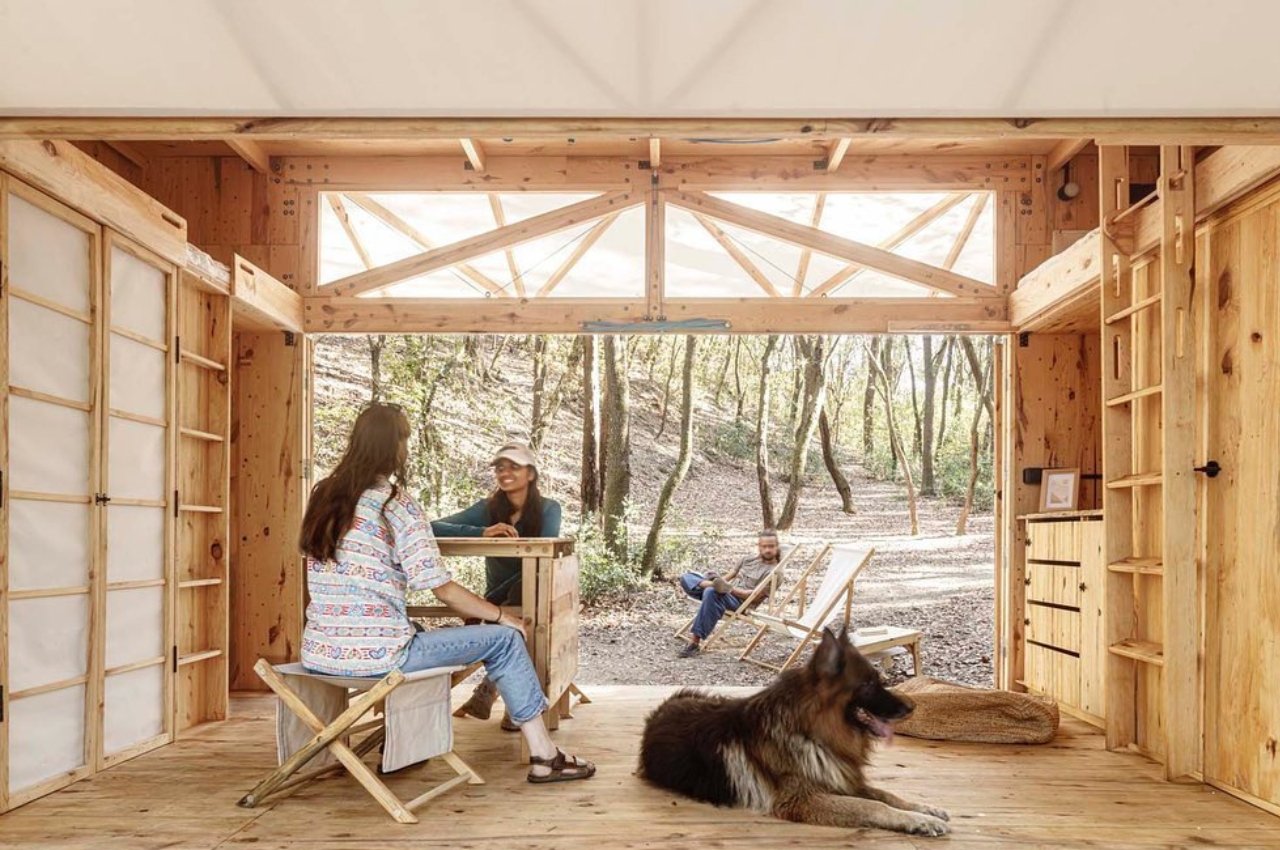
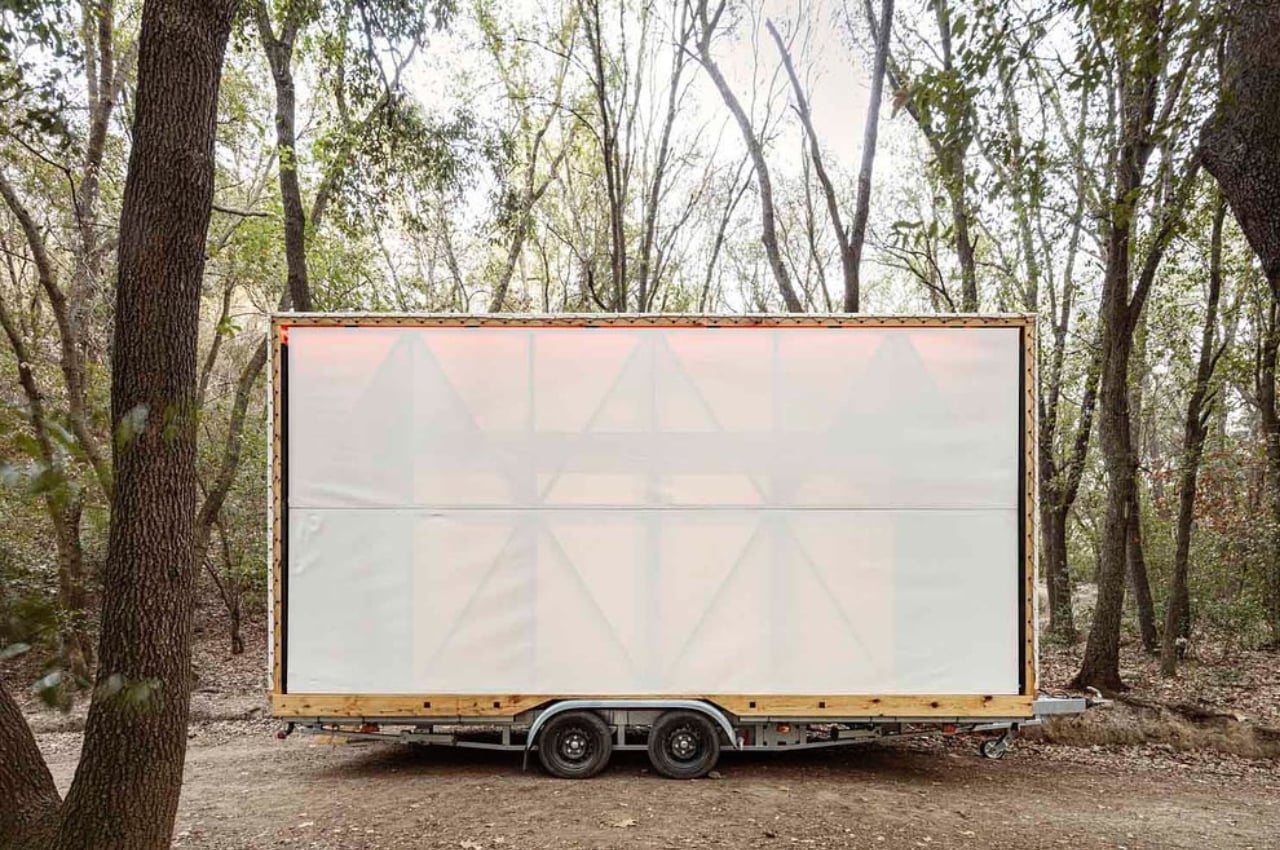
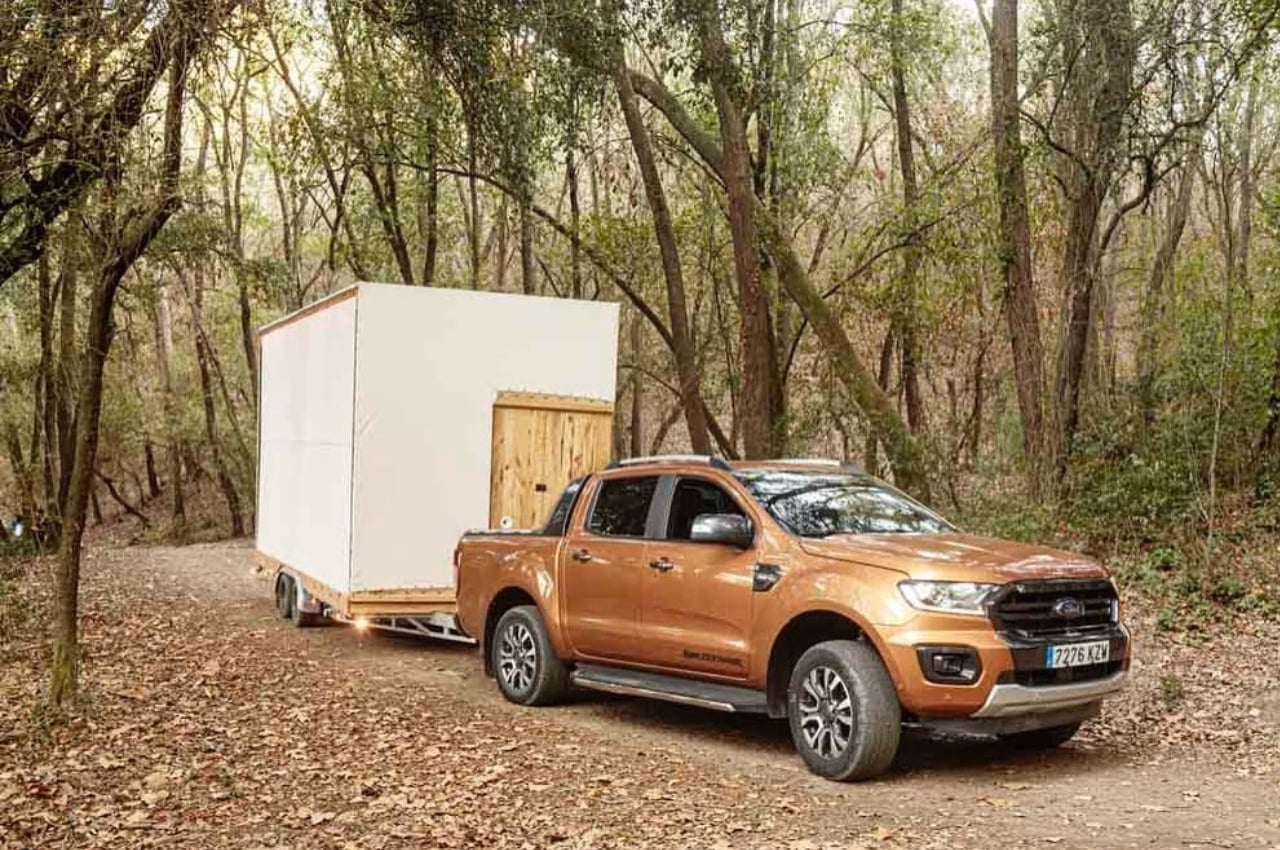
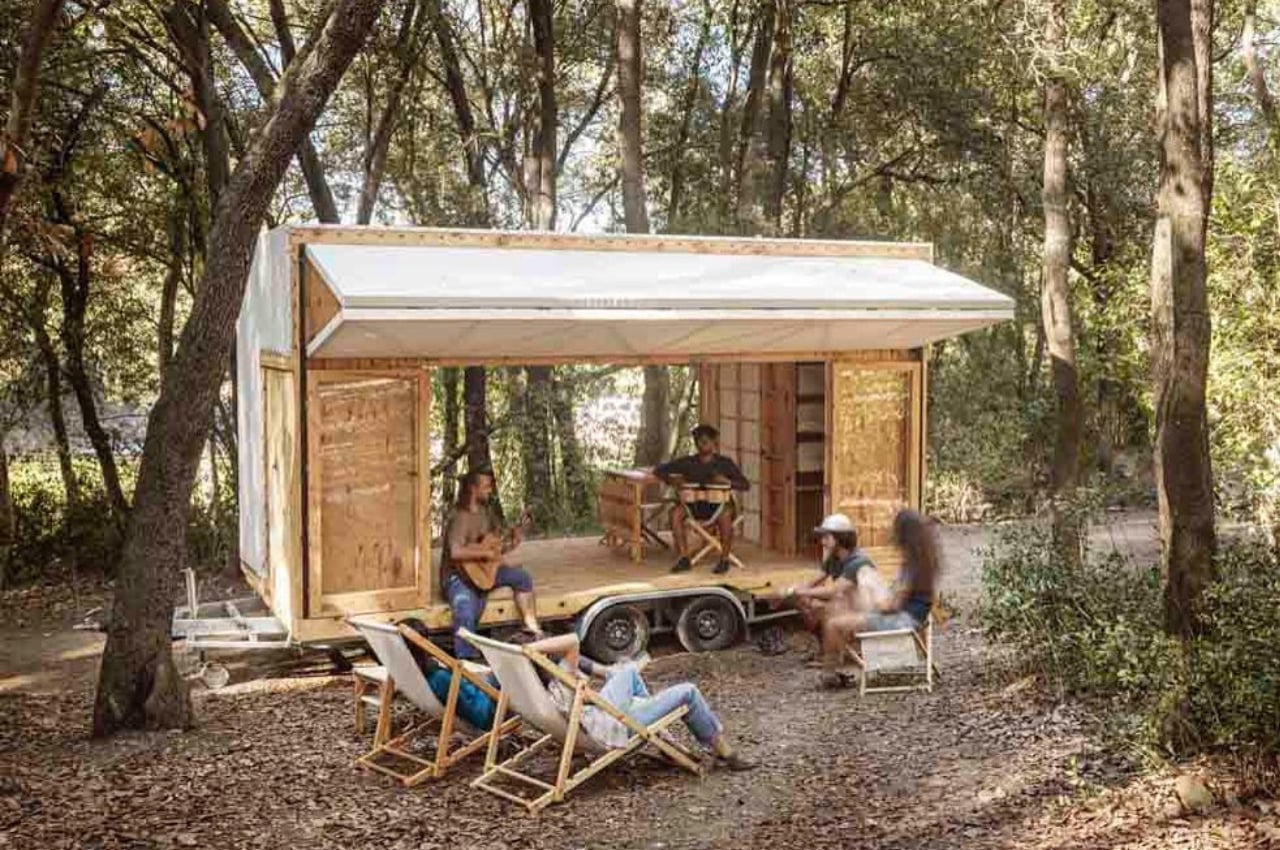
The Mobile Catalyst, nicknamed MOCA, was developed by masteral students from IAAC. Not only is it a perfect space for those that want to work while staying anywhere with a view but it is also an experiment into sustainable and self-sufficient habitat with a digital twist. It is basically a 5.4 meter long, 2.4 meter wide, and 3.6 meter high minimalist space that gives you the basic necessities of living. Its interior is made from dowel-laminated timber produced at the IAAC itself but sustainably harvested of course.
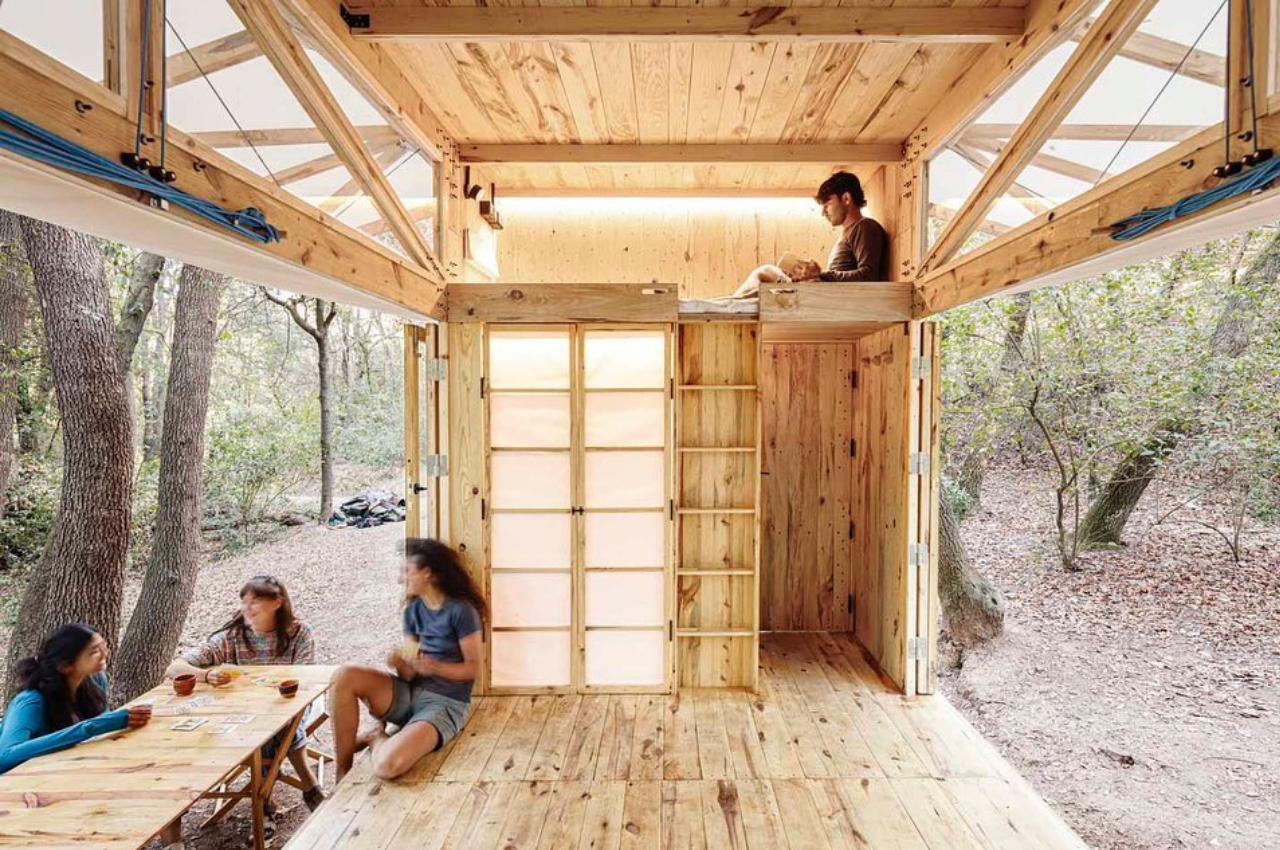
The front part of this mobile home has the basic amenities you would need to live in it like a kitchen, toilet and shower, and electric and water systems. In the middle and the back part is the space that can be turned into an office, a meeting area, a library, a recreation room, or even a space for small events. If you need privacy or partitions and also protection from different weather conditions, there are glass doors and a water-resistant cotton fabric that slides or folds with a pulley. There are also two beds on its “mezzanine” floor and you can reach it through a movable ladder.
And of course since MOCA is designed to be sustainable, you have three light-flexible mono-crystalline solar panels on the roof and LED strips as an interior lining. The house can run on its own for around 24 hours before it needs recharging. Water is also self-sufficient as the system stores, filters, and returns the shower water into reusable water. The entire mobile home is built with digital nomads in mind so they can live, work, and play anywhere they want, as long as the trailer can move and fit in that area.
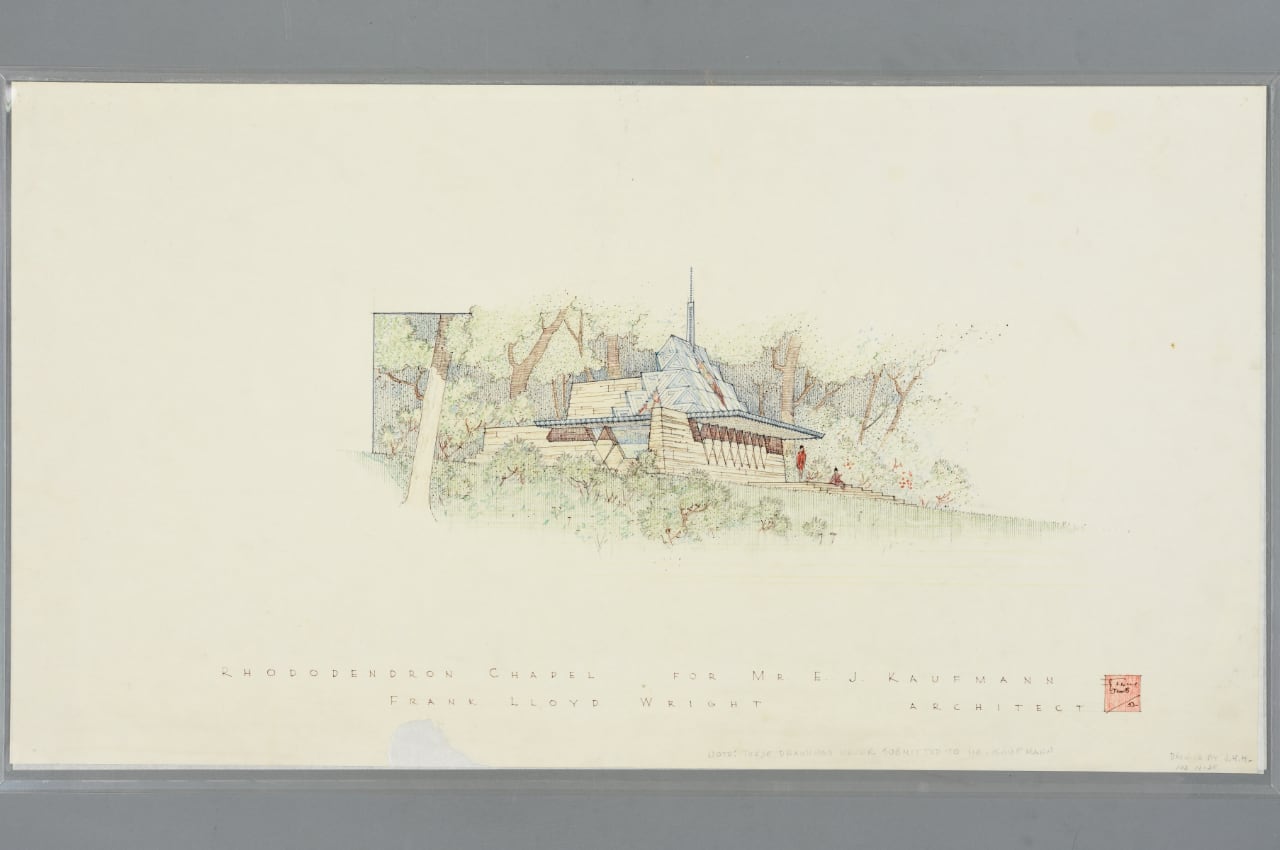
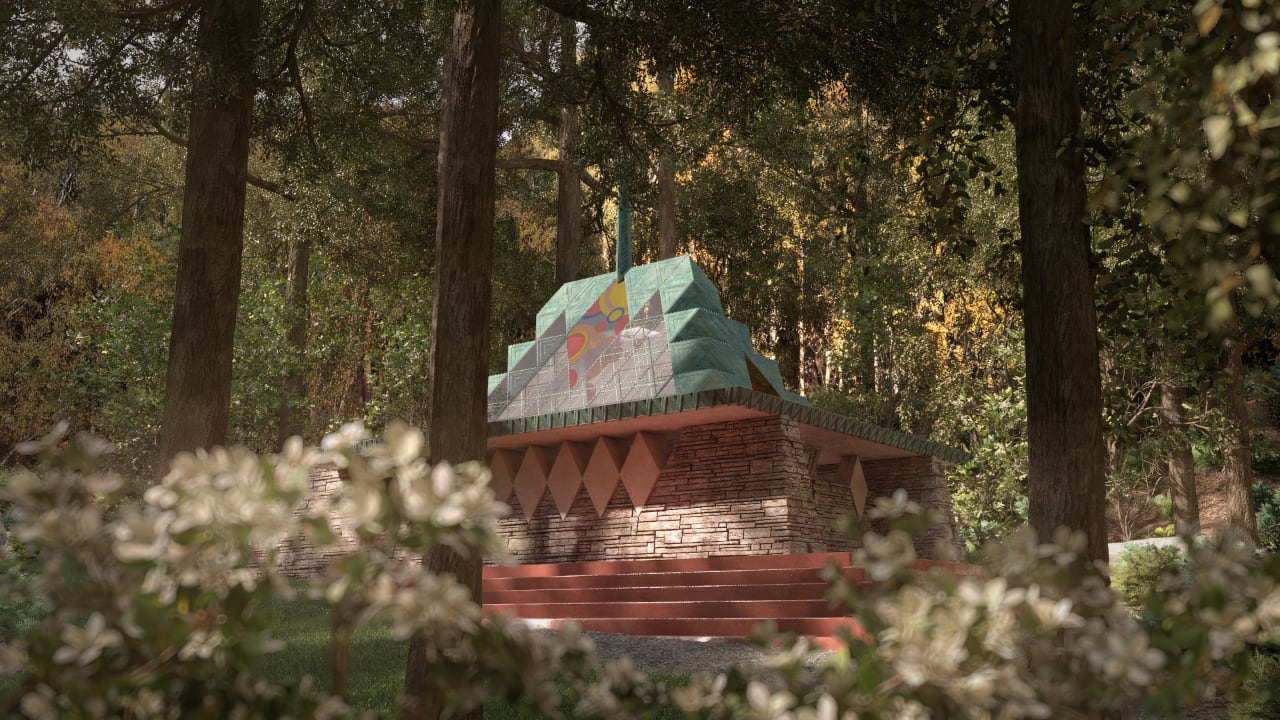
Saturday, April 13, marked the grand opening of “Frank Lloyd Wright’s Southwestern Pennsylvania” at the National Building Museum in Washington, D.C. This collaborative effort between The Westmoreland Museum of American Art and Fallingwater, guided by the Western Pennsylvania Conservancy, showcases a detailed exploration of Frank Lloyd Wright’s architectural vision through both his realized and unrealized projects.
Designer: Frank Lloyd Wright
Photo Credit: THE NATIONAL BUILDING MUSEUM
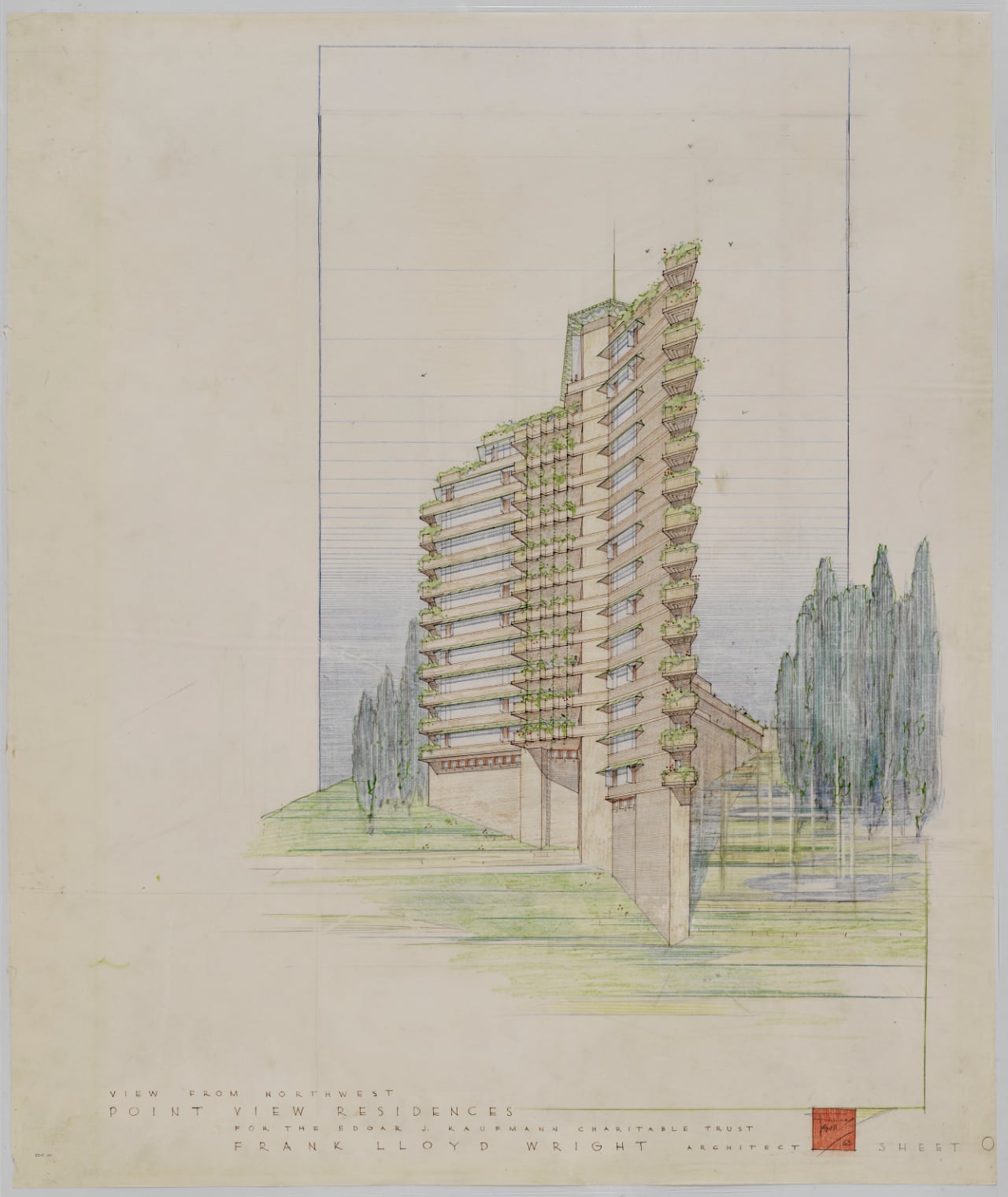
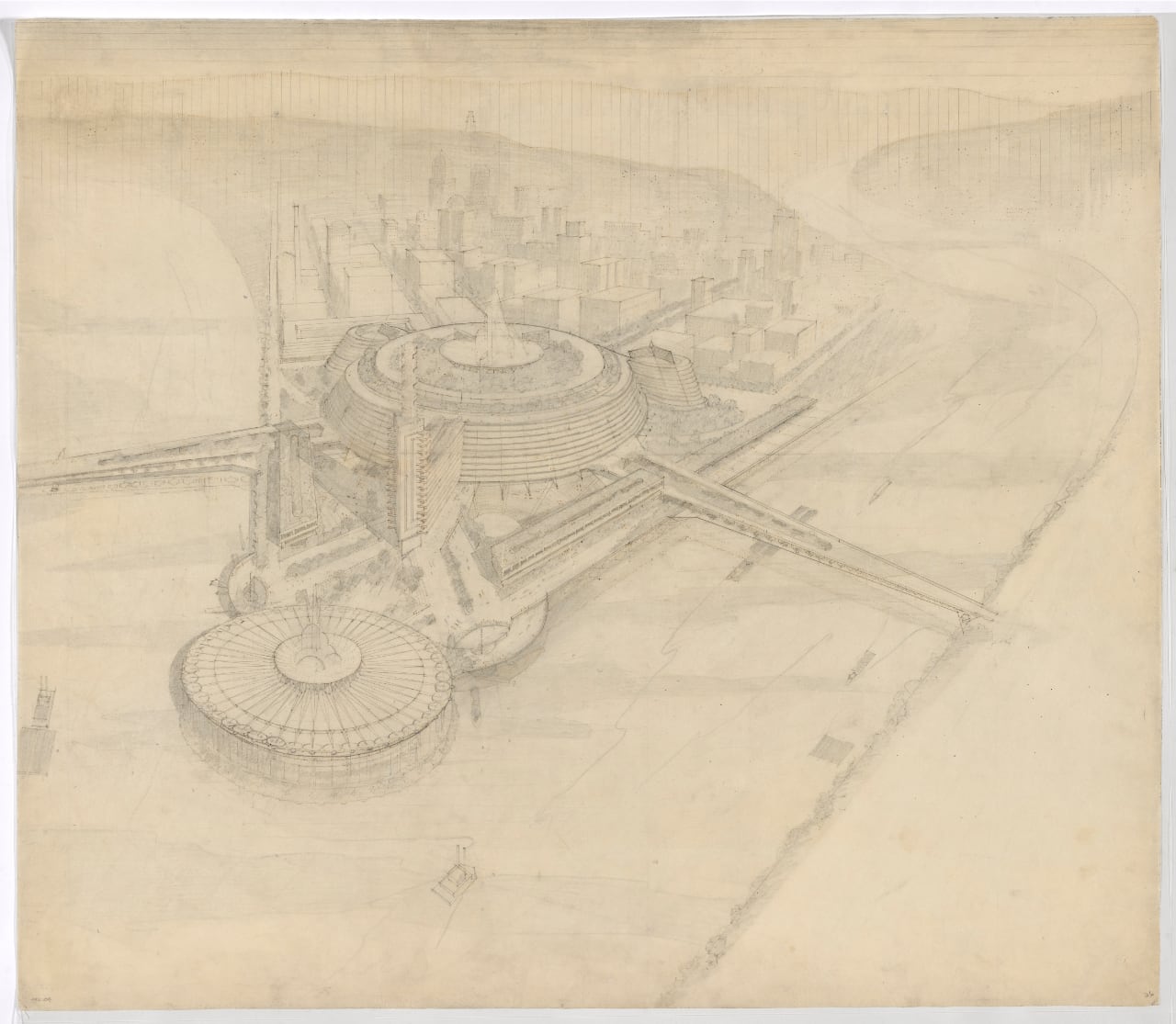
The exhibition, curated by Scott W. Perkins and Jeremiah William McCarthy, who are recognized for their expertise in American art preservation and curation, provides an intricate look at Wright’s proposals from the 1930s through the 1950s, considering their potential impacts across various landscapes. Noteworthy are the animated reconstructions of five projects that were conceived but never executed. These include innovative designs such as the transformation of the Point in 1947, a futuristic self-service garage at Kaufmann’s Department Store in 1949, and the Point View Residences planned in 1952 for the Edgar J. Kaufmann Charitable Trust.
Photo Credit: THE NATIONAL BUILDING MUSEUM
Enhanced by state-of-the-art three-dimensional rendering technologies that parallel those used in contemporary cinema, these animations by Skyline Ink Animators + Illustrators bring Wright’s unrealized ideas to life. The experience is augmented in a dedicated viewing theater, complete with a specially composed musical score by Daniel May and Marty Ashby, which accentuates Wright’s meticulous attention to material detail, textures, and the interplay of light and shadow.
Photo Credit: THE NATIONAL BUILDING MUSEUM
Aileen Fuchs, the president and executive director of the National Building Museum, expressed her enthusiasm for the exhibition, noting its fit with the museum’s dedication to showcasing innovative and inspiring works. The exhibit highlights Wright’s architectural genius and encourages visitors to explore the ‘what might have been’ of his unrealized projects.
Photo Credit: THE NATIONAL BUILDING MUSEUM
The exhibition also underscores Wright’s significant influence in Pittsburgh, a connection initiated by Edgar J. Kaufmann, Sr., who introduced Wright to the city in 1934 and advocated for his involvement in various civic projects. This partnership often aligned with the goals of the Allegheny Conference on Community Development, which aimed to tackle urban challenges and enhance the city’s cultural landscape.
Photo Credit: THE NATIONAL BUILDING MUSEUM
“Frank Lloyd Wright’s Southwestern Pennsylvania” will continue to engage visitors until March 17, 2025. It enjoys the support of The Heinz Endowments, The Hillman Exhibition Fund of The Westmoreland Museum of American Art, and donors like Wendy and David Barensfeld. Contributions from The Frank Lloyd Wright Foundation, The Museum of Modern Art, and the Avery Architectural & Fine Arts Library at Columbia University further enrich the exhibition.
This display commemorates Wright’s architectural legacy and functions as an educational platform. It merges historical context with contemporary technological displays to invite visitors to appreciate the blend of artistic expression and architectural innovation.
Desk trays are an indispensable part of any organization system, and their designs vary wildly to meet different needs and aesthetic tastes. While wooden desk accessories are not uncommon, the most standard materials used for these products are often virgin plastics that, given the volume of their use, spell trouble for the planet. Fortunately, a few designs nowadays do try to utilize recycled or even upcycled materials to ease the burden on the environment, but good design doesn’t have to stop there. This concept, for example, seems to check all the right boxes by offering not only a sustainable solution with a beautiful minimalist design but also one that lets you combine pieces as you see fit or use them solo in different places as needed.
Designers: Hoyeon Shin, Seokhyoun Han, Joae Kim, Yeongha Kim, Zoae Kim for Haus Bari
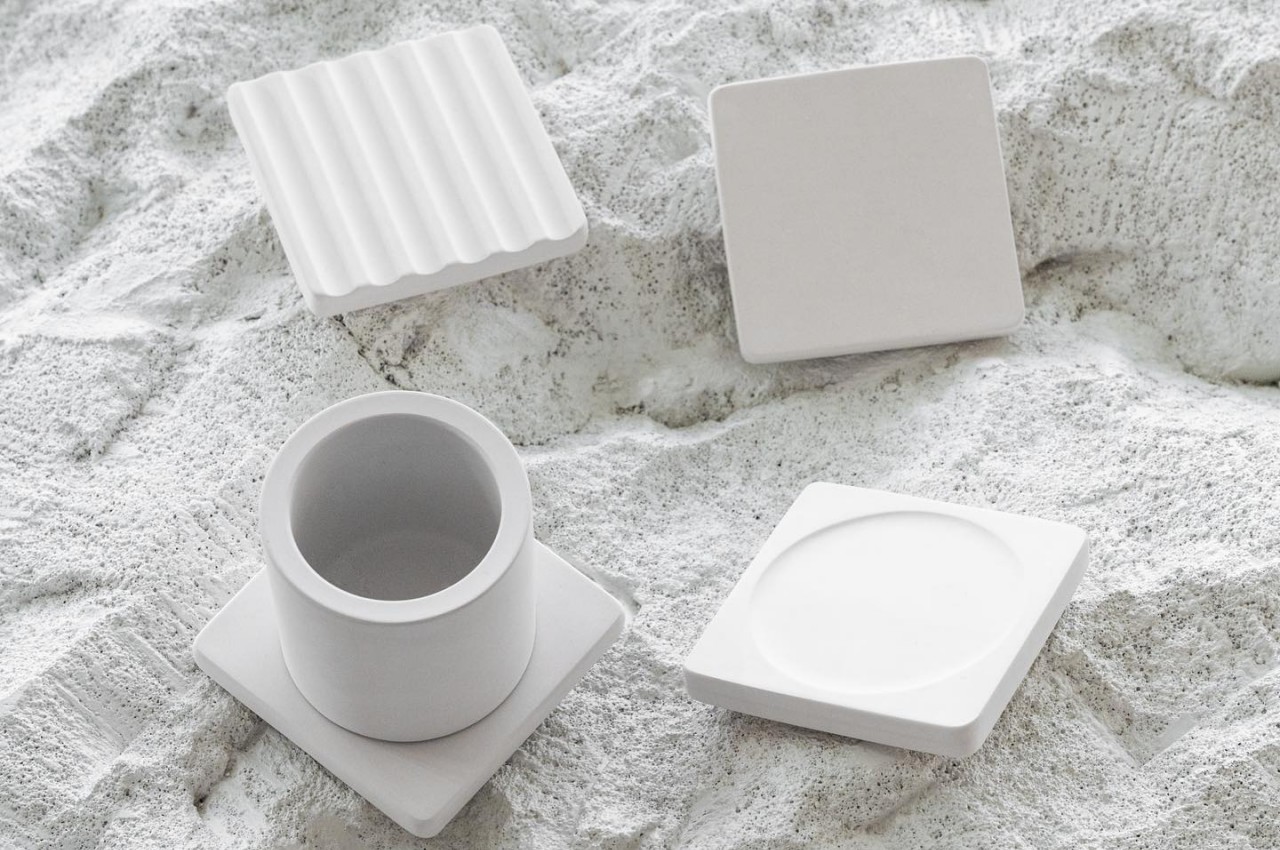
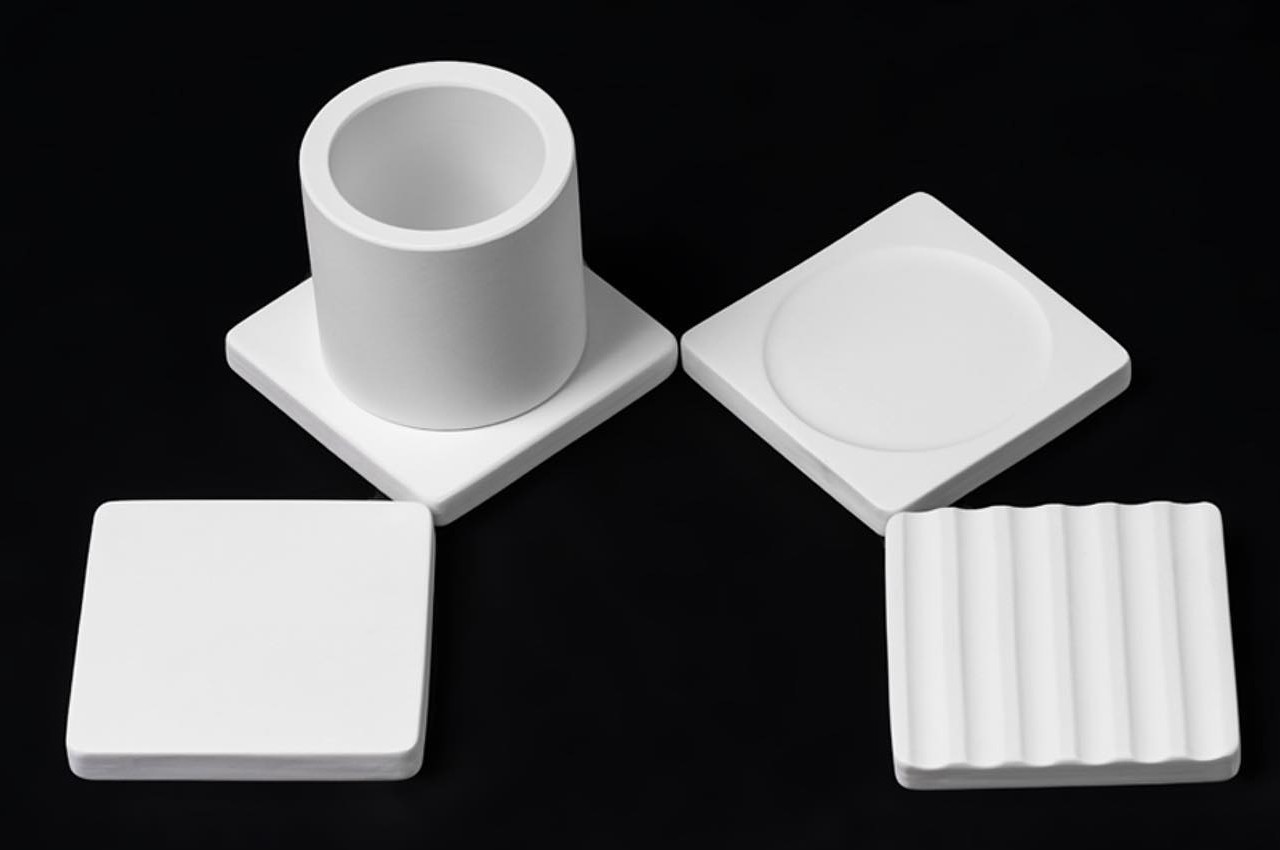
Truth be told, this design is actually four separate products sharing a similar DNA. One design, however, can’t meet all the needs of all users, so rather than make a monolithic product that wastes space and materials, this series of trays simply offers four unique designs that can be used for a variety of purposes, including in places that don’t involve work tables and stationery.
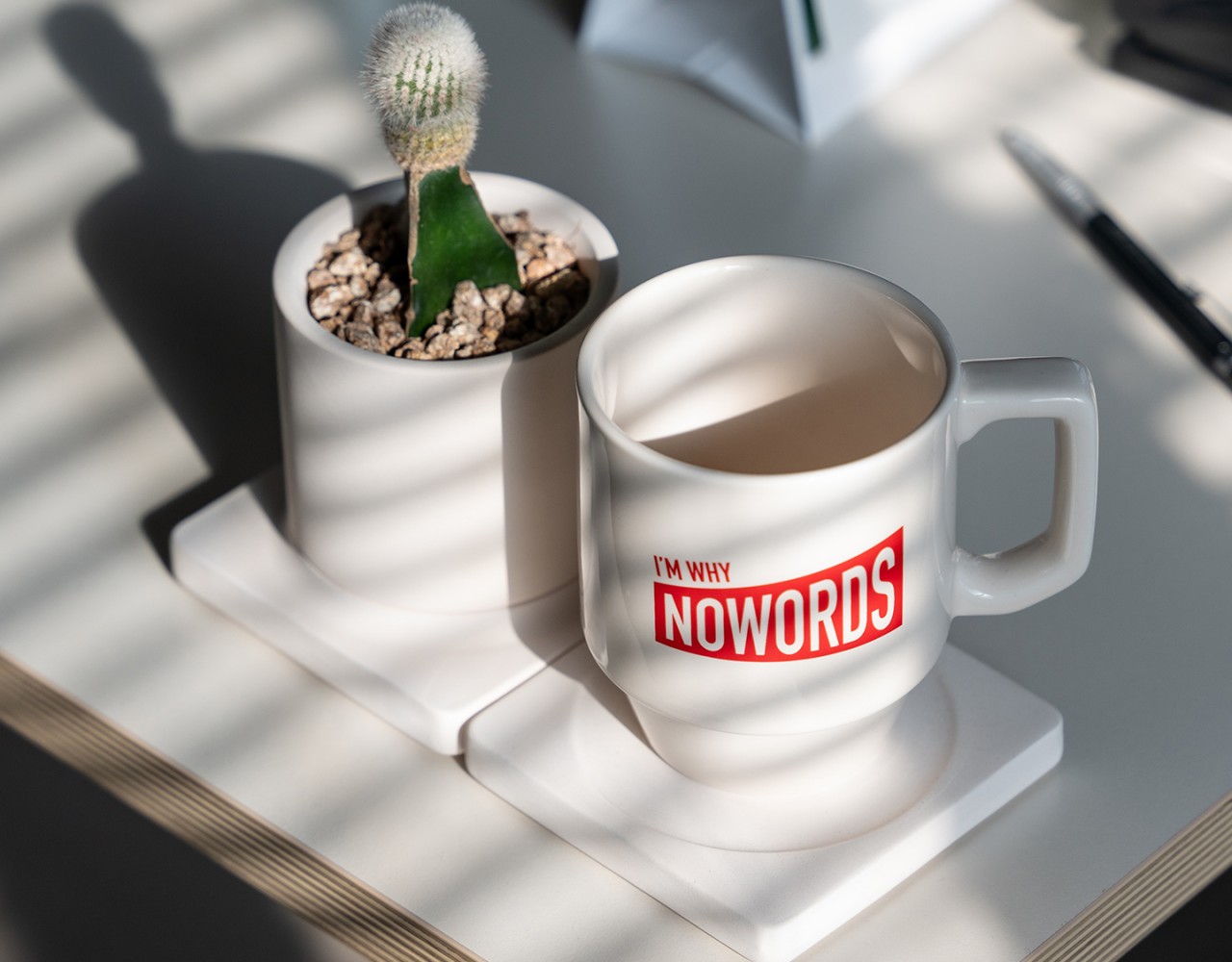
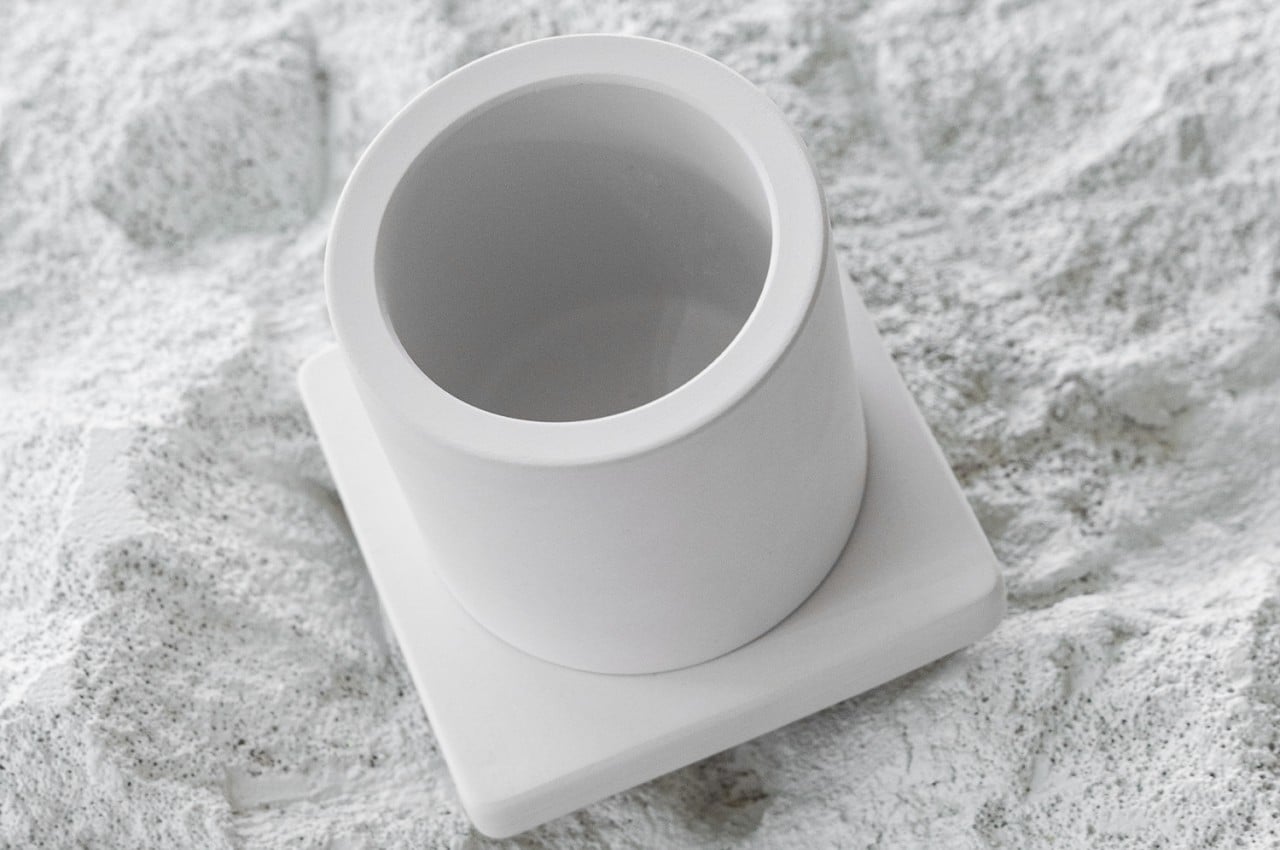
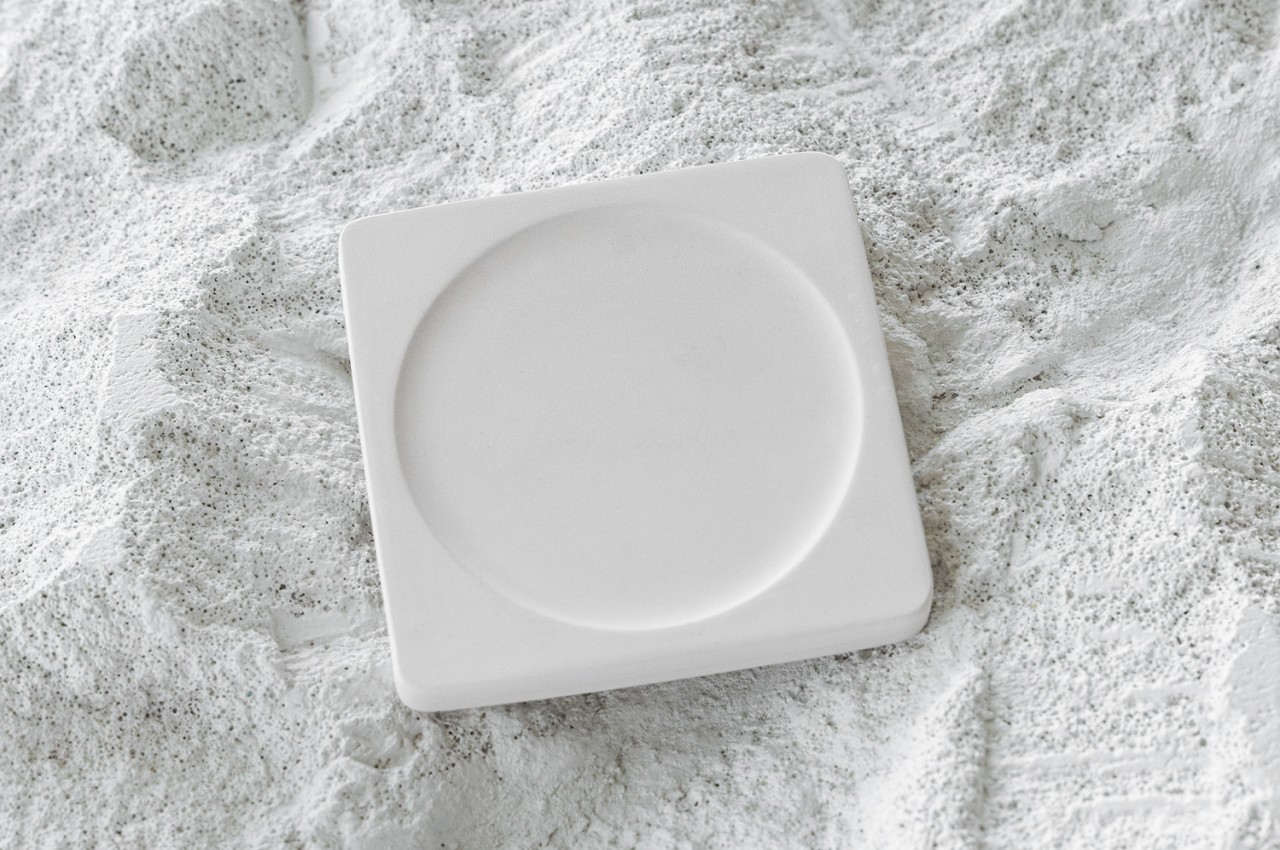
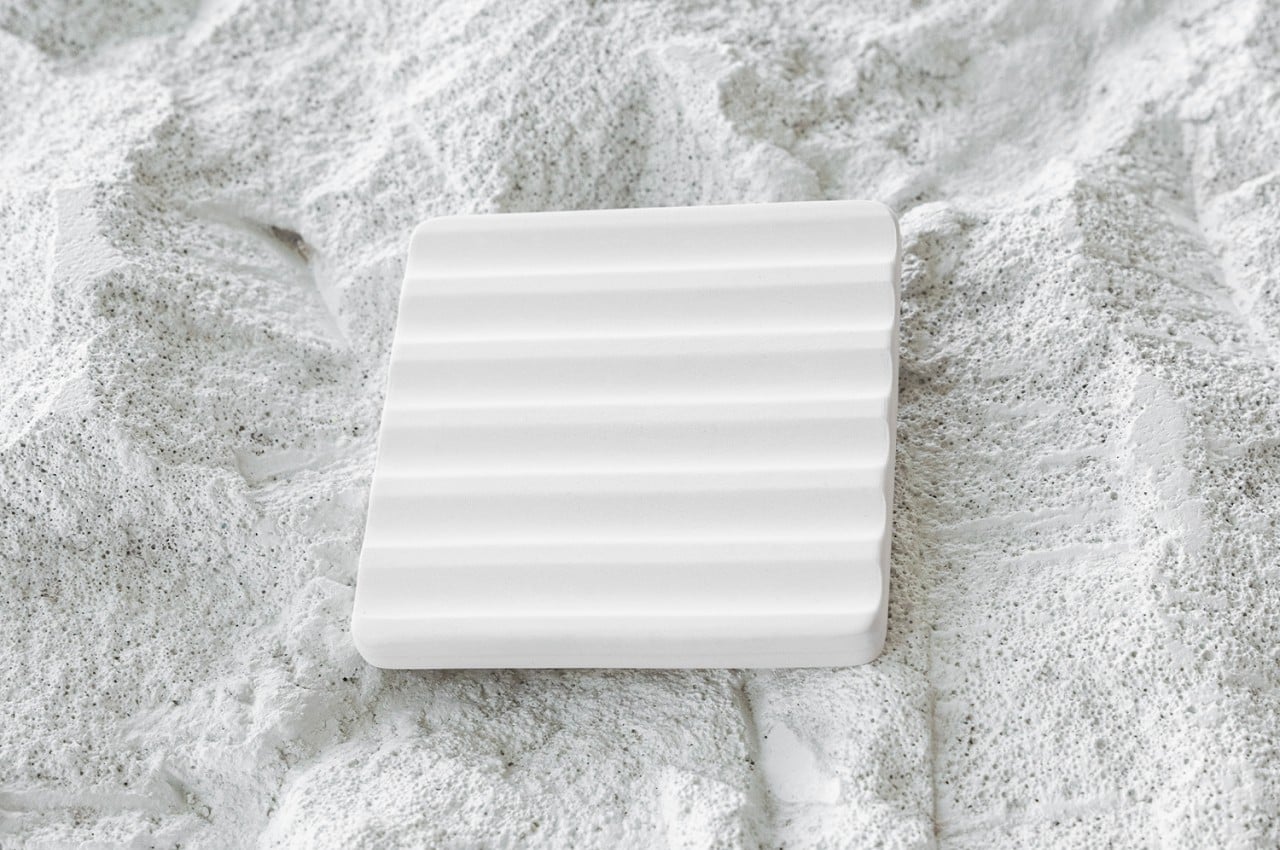
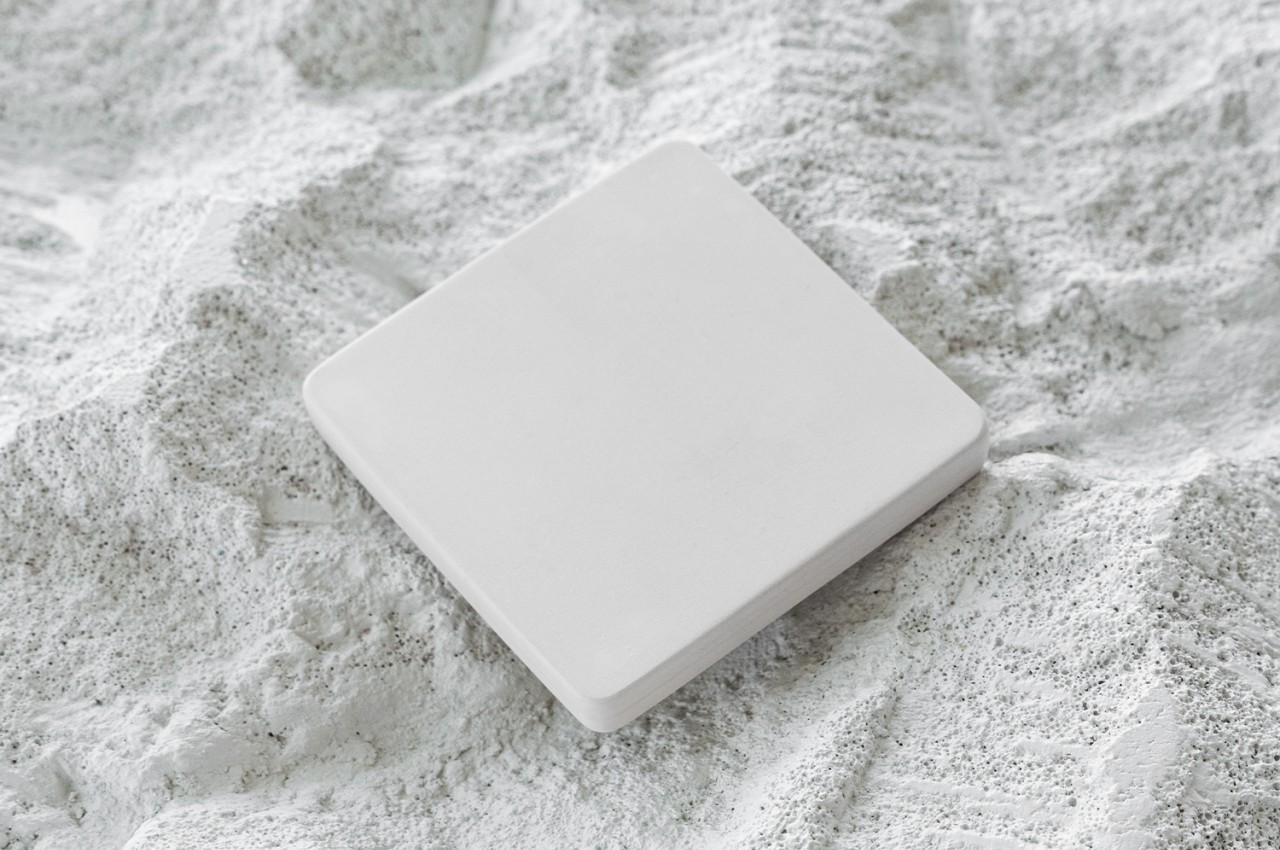
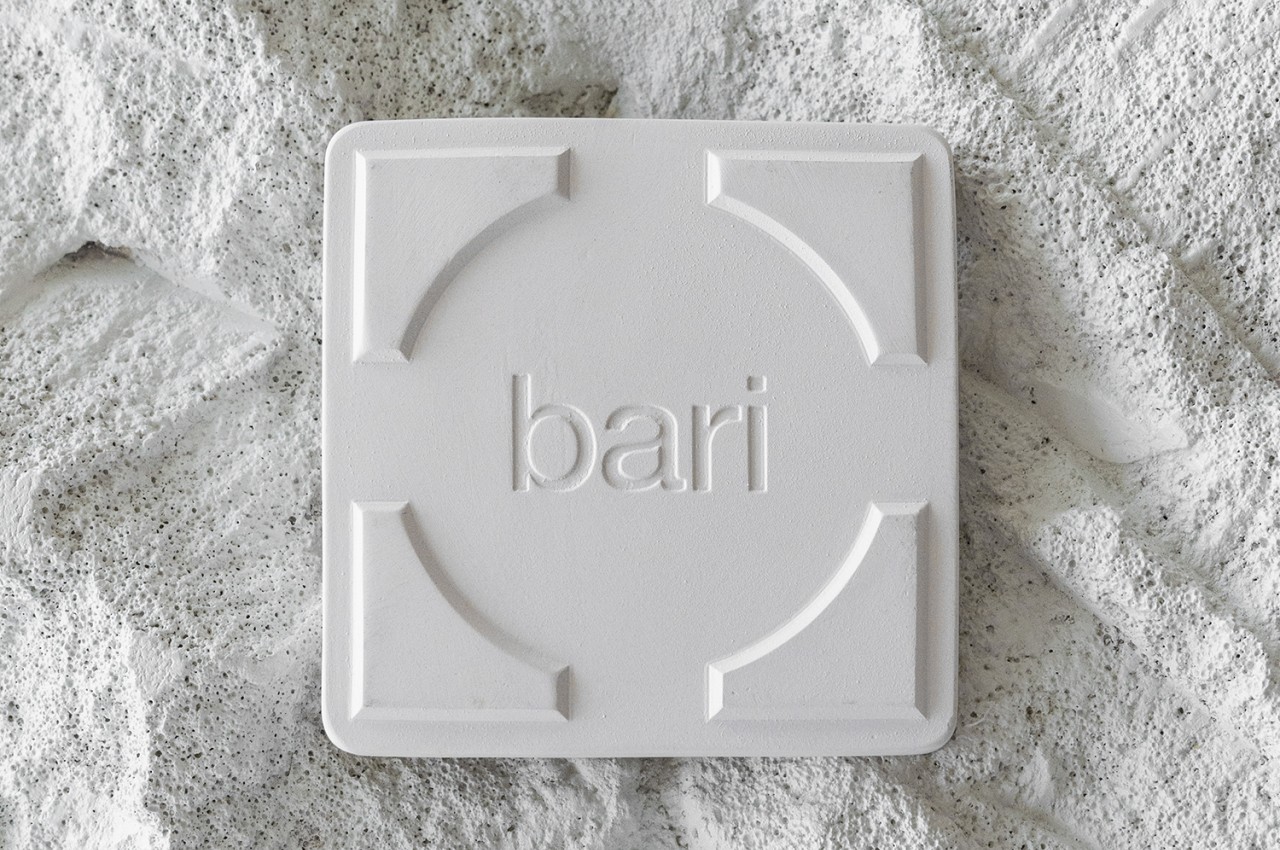
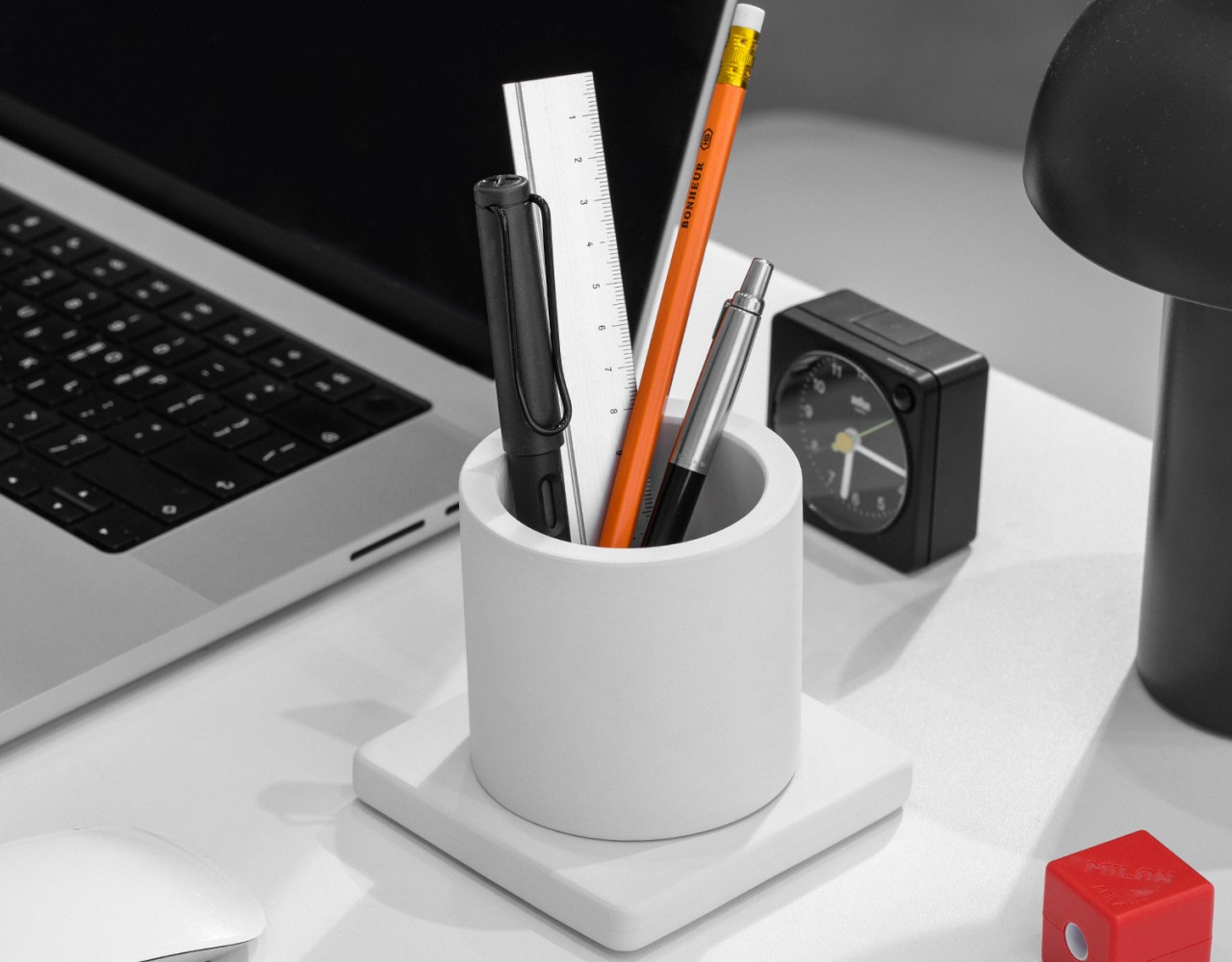
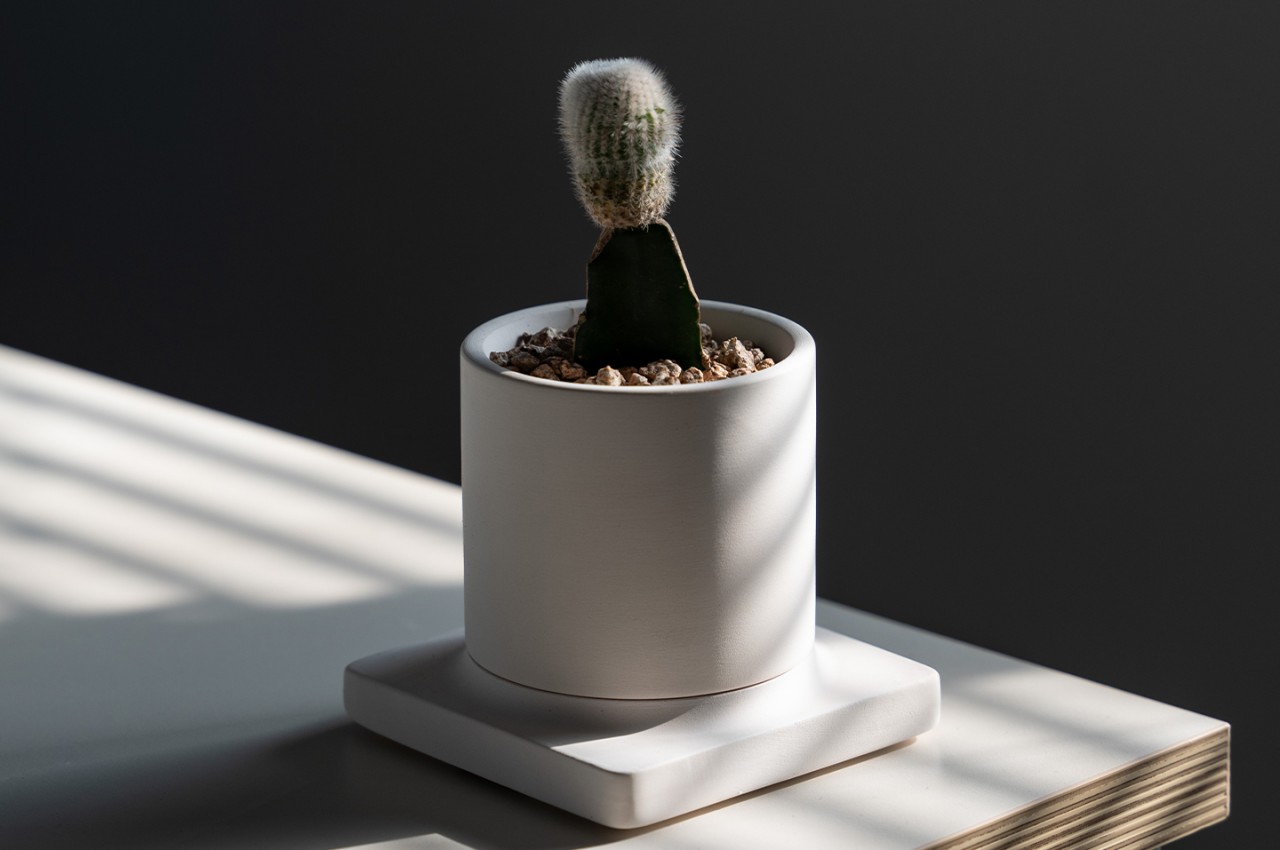
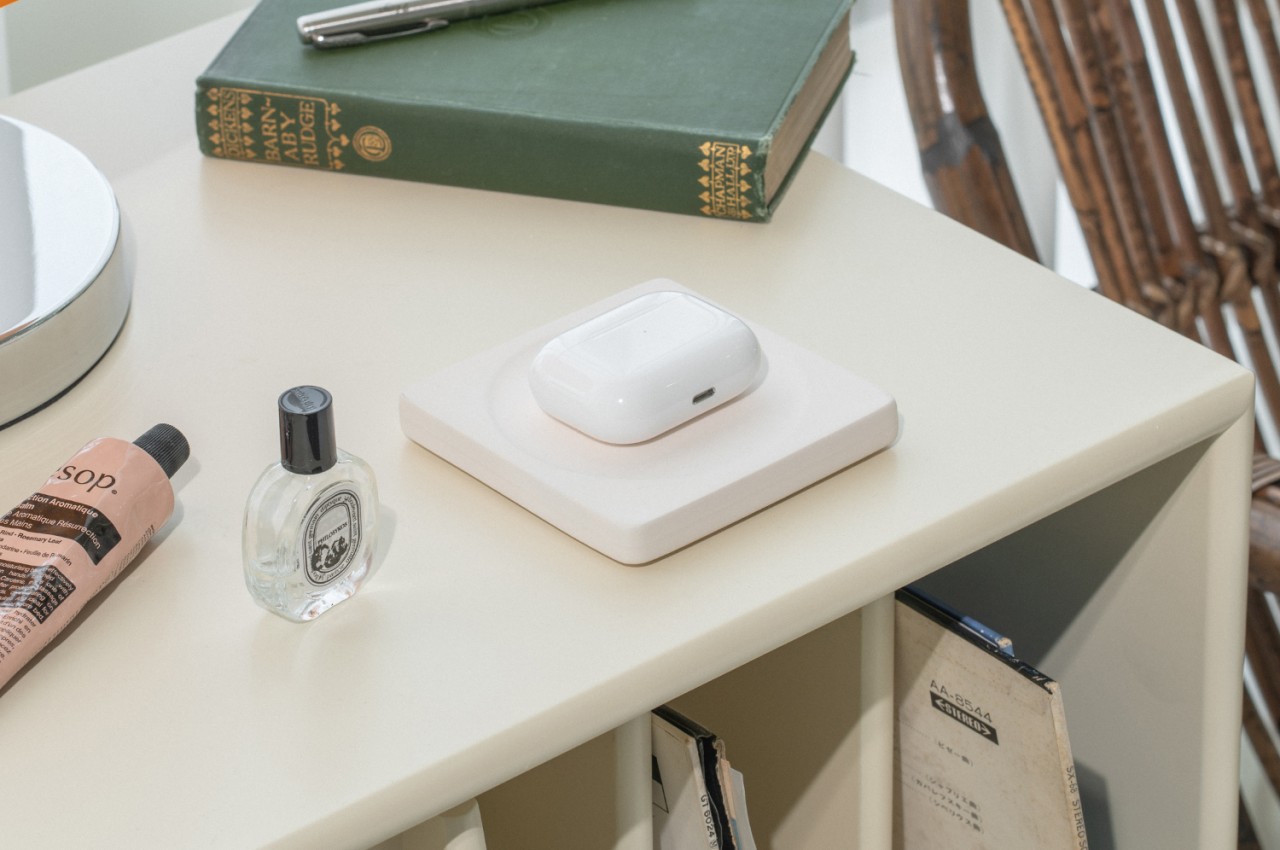
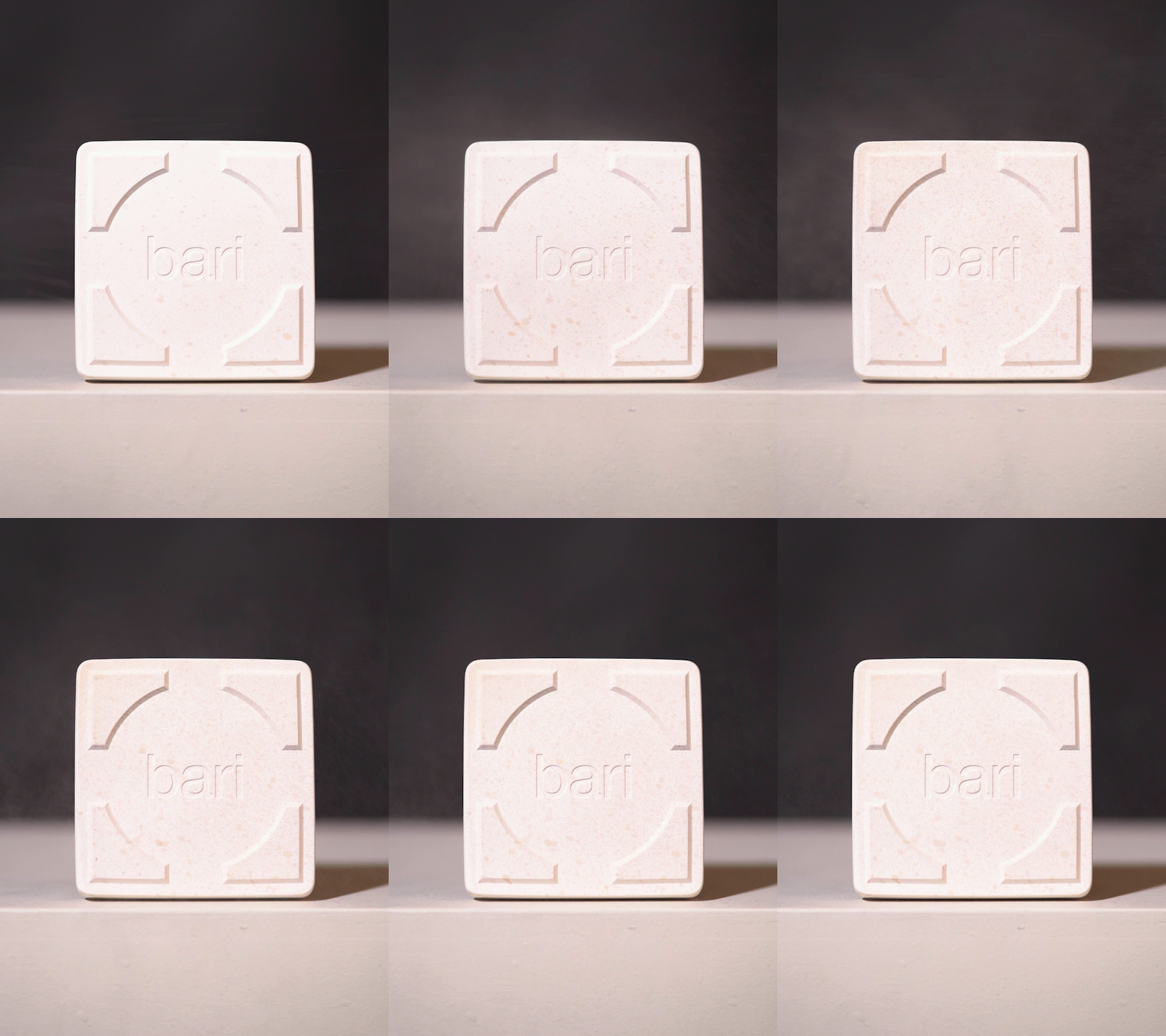
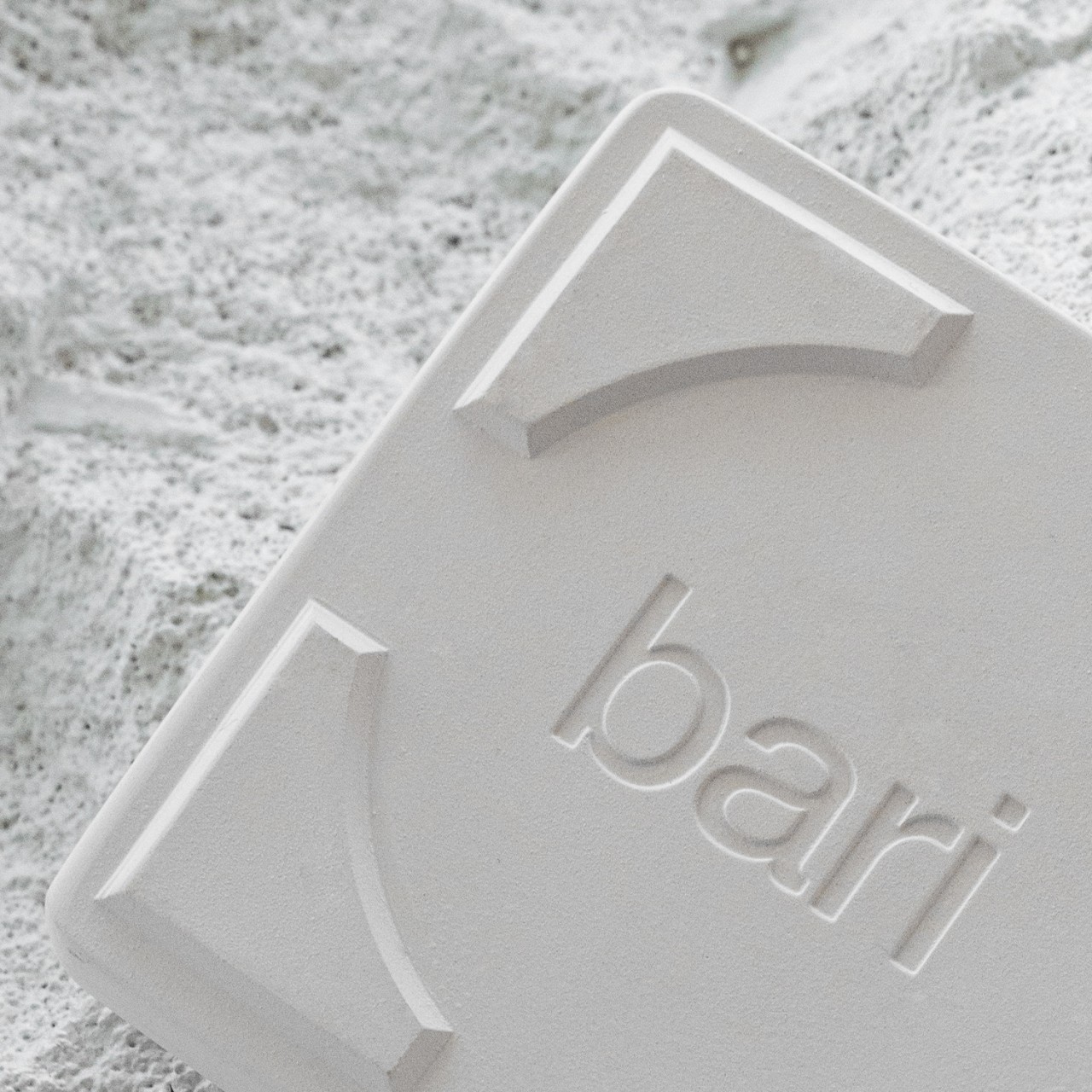
All four pieces share the same thin square platform, but that’s pretty much where the similarities end. One “block”, for example, has a fixed cylinder that can be used for holding writing instruments, tools, or maybe even flowers. Another has a circular indentation that invites you to place a mug or glass on it, though it can also fit small items such as an AirPods charging case. The tray with a wavy surface can be a bed for pens and pencils without having them jumbled up together. The fourth member has a simple flat surface, but flip it over and you will behold the Bari branding underneath. It can also function as another coaster thanks to that circular groove again.
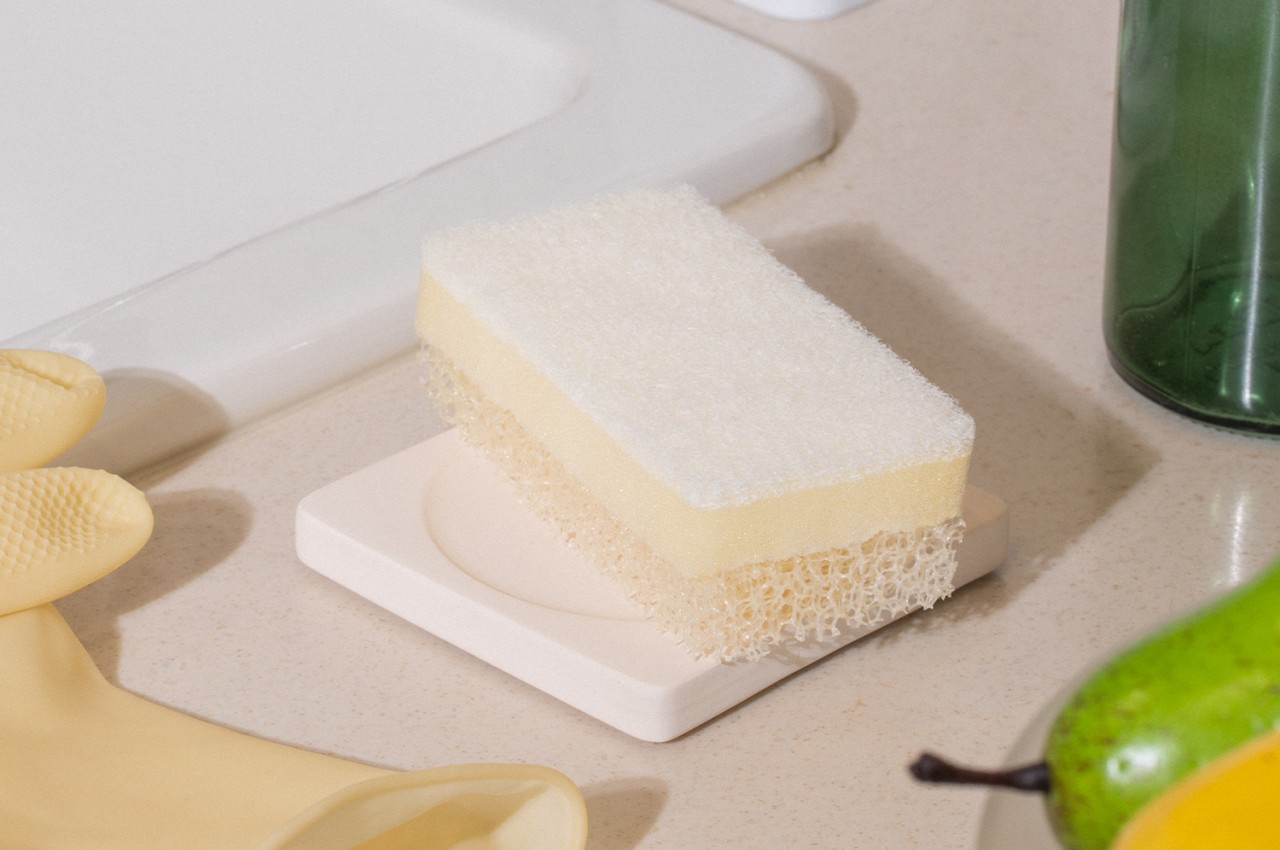
The trays use diatomaceous earth, a sustainable material that is gaining popularity among product designers. It also gives the tray a textured appearance that resembles rough, unpolished stone, making the minimalist products look a little more visually interesting. It also makes it possible to place wet or damp objects on top of the tray, such as sponges or even soap, thanks to the material’s moisture resistance and self-drying properties.
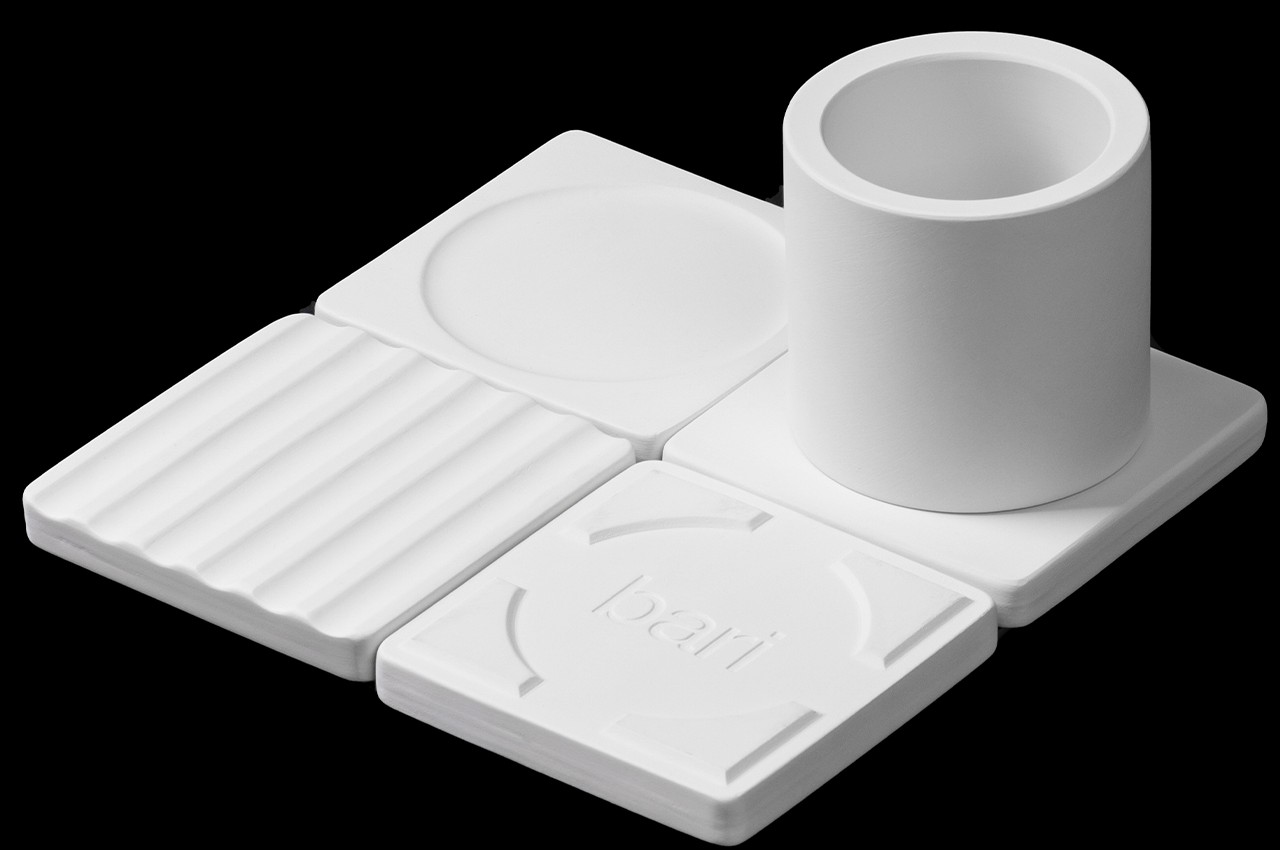
Although each of these trays functions as an independent unit, you can also combine them as a single organization system where you have free reign over how they are arranged. You can have them for a line, put them in a grid, or spread them out all over the desk. Of course, you’re not limited to just one of each piece, either, and can form an army of trays and containers ready to keep your mess at bay. It’s an admittedly simple solution to desk and life organization, but one that offers beauty and flexibility in a package that tries to reduce its negative impact on the environment.