Imagine a world where you can enjoy your favorite tunes, podcasts, or audiobooks without blocking out the world around you. A world where you can stay connected to your environment while still immersing yourself in high-quality audio. That world is here, and it’s brought to you by Dashlyte’s open-ear headphones that use bone conduction […]
They say Denim was invented in the 17th century, and popularized across parts of Europe and North America in the centuries after that. The material, which was derived while trying to produce a heavy-duty fabric, was perfect for workers in mines, factories, quarries, and gold diggers during the California Gold Rush in the late 19th century. It was durable, tough, comfortable, breathable, and frankly, looked good in both clean or slightly ripped-up styles. In 1873, Levi Strauss obtained a US patent for putting rivets in denim jeans, helping enhance their longevity, and practically turn the garment from a worker essential into a fashion staple. However, denim hasn’t seen much of a change since then. Sure, there have been minor improvements to the manufacturing like the integration of stretchable yarns that give denim a 4-way stretch, but jeans today are still fundamentally no different from the ones made post 1873… and S Jordan Berman and Peter McDougald Juhl want to change that. You see, jeans were originally designed for laborers, but are now worn by practically everyone, and that’s a bit of a problem. Berman and Juhl’s redesigned jeans, dubbed the Standard Issue Denim 001, are actually designed for everyday life – with a fit that’s perfect for work, leisure, and even sport, and a fabric that’s durable, stretchable, and breathable. Life’s changed a lot since 1873… it’s time our jeans changed too.
Designers: S Jordan Berman and Peter McDougald Juhl
The Standard Issue Denim 001 isn’t like your regular pair of jeans – it’s designed simultaneously to be worn with semi-formals, casuals, or even as functional-wear while camping and hiking. The jeans boast a perfect fit made possible without needing a belt, and have a unique 4-way stretch fabric that helps you do everything short of actual parkour (or maybe you could), without sacrificing durability.
Inspired by the needs of urban athletes and adventurers, these pants are crafted from our proprietary workwear-weight HSTech Denim fabric and are designed for maximum comfort and flexibility, without compromising style.
HSTech Denim has a 13% stretch factor on its diagonal, in line with the stretchiest, most flexible men’s denim available.
The secret lies in the fabric. Wares for All Reasons utilizes a proprietary HS Tech stretch denim that combines durability with exceptional flexibility using a combination of 98% cotton and 2% stretchable materials. This allows for a full range of motion without sacrificing the classic denim look. Whether you’re lunging at the gym or negotiating a deal at the office, these jeans are designed to move with you. But functionality isn’t the only focus – The Standard Issue Denim 001 comes in a classic, clean silhouette, free from excessive embellishments. This timeless design ensures the jeans will remain a staple in your wardrobe for every season for years to come.
Standard Issue Denim 001 jeans are crafted with globally sourced, top – grade materials.
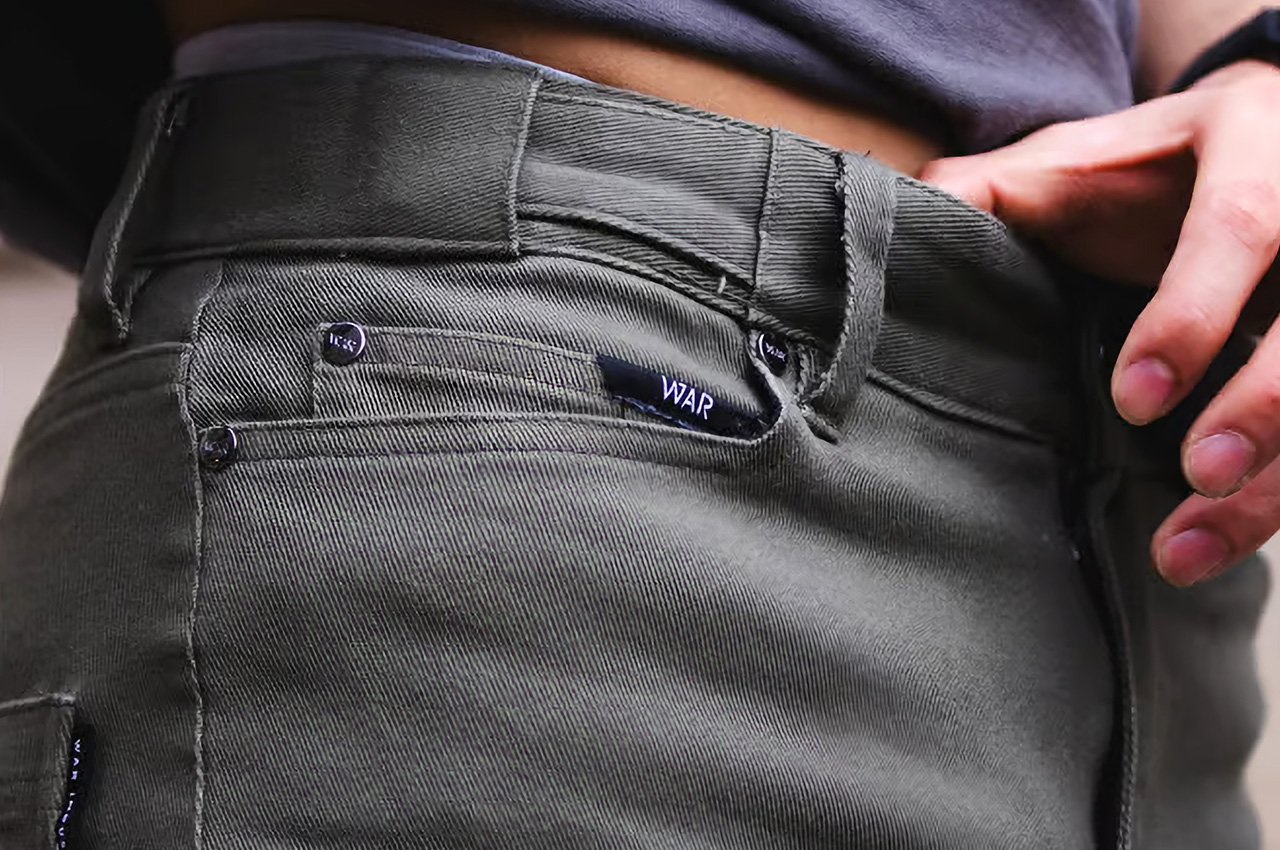
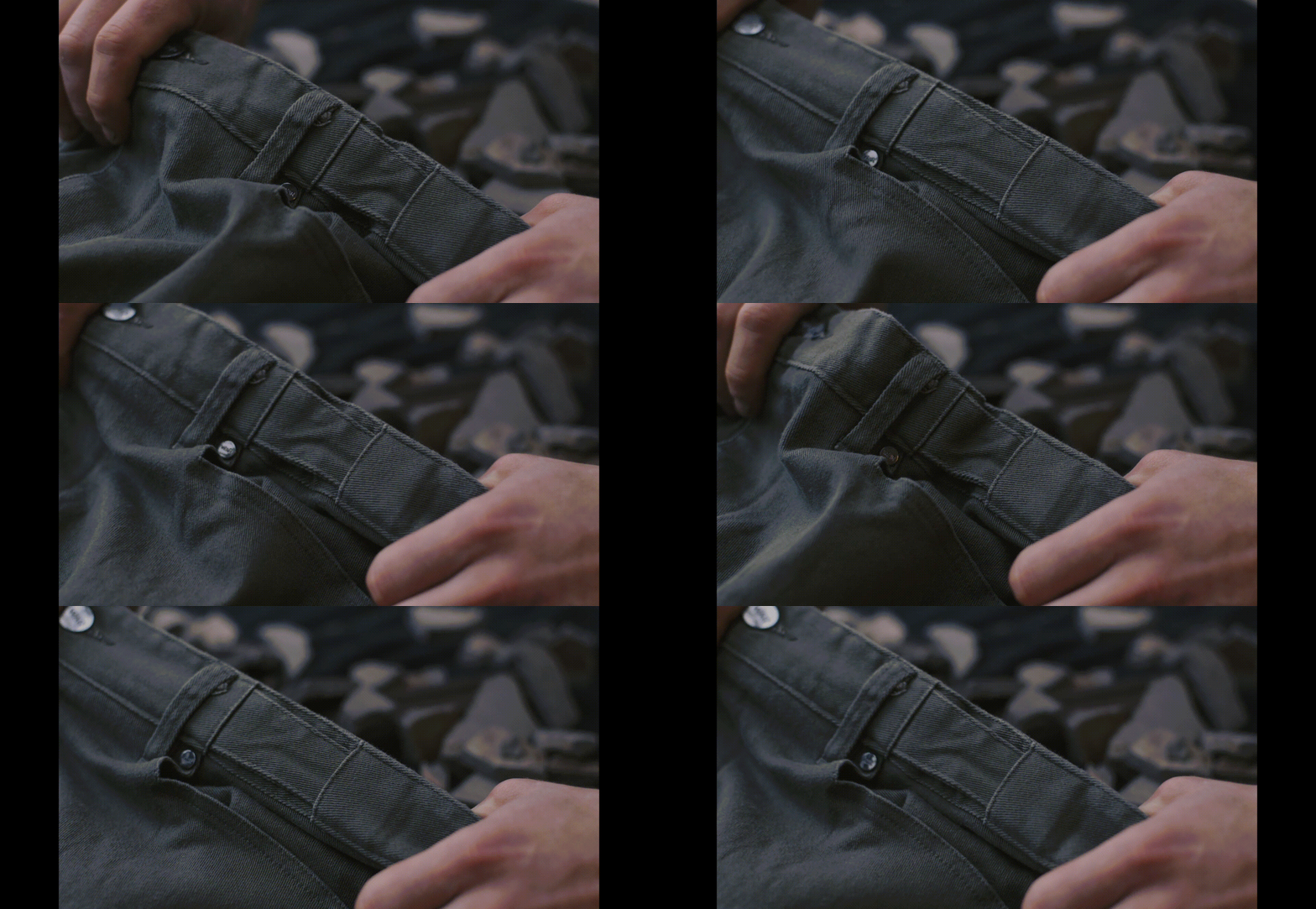
The jeans boast some clever detailing too, like the split waist construction that allows the waistline to stretch and contract based on your body, giving you a snug fit without a belt. High-step knee darts give you a wide range of motion, allowing you to bend your knees without feeling the fabric stretching too much or pressing against your skin. Zippered pockets at the back give your wallet secure storage, and a slim 5-pocket design also gives you ample storage for your belongings and EDC without that baggy appearance that most cargo pants with multiple pockets have. A high-vis reflective ankle strap lets you be spotted in low light, and a webbing loop in the rear lets you secure your keys or a carabiner to your pants in a way that you really can’t with regular denims unless you attach them to a belt loop.
The Standard Issue Denim 001 comes in 8 sizes with one classic color option (and more on the way). Each pair of Standard Issue Denim 001s is vegan, manufactured ethically, and with a circular product life-cycle. The jeans are made to be durable and last for thousands of washes and tens of thousands of wears (this might just be the last pair of jeans you’ll want to buy), and if and when the jeans finally wear out, they can be returned to their manufacturers who will either repair them for you or offer a 10% discount on your next pair of jeans.
Cooler Master's MasterBox 600 offers easy cable management, versatile cooling, and flexible storage for a smooth PC building experience across all levels.
In major cities worldwide, the ever-increasing cost of living and space crunch have become common challenges. Toronto, one of Canada’s prominent cities, is no exception. To address this issue, it’s crucial to optimize every available space. In the contemporary era of interior design, the focus has shifted towards planning and adapting to small spaces, mobile housing, multi-use spaces and furniture. As more people yearn to experience city life, it’s imperative to make even the smallest spaces comfortable. The Symington Laneway Suite, situated in Toronto’s Junction neighborhood, is a quintessential example of innovative space utilization and modern interior design.
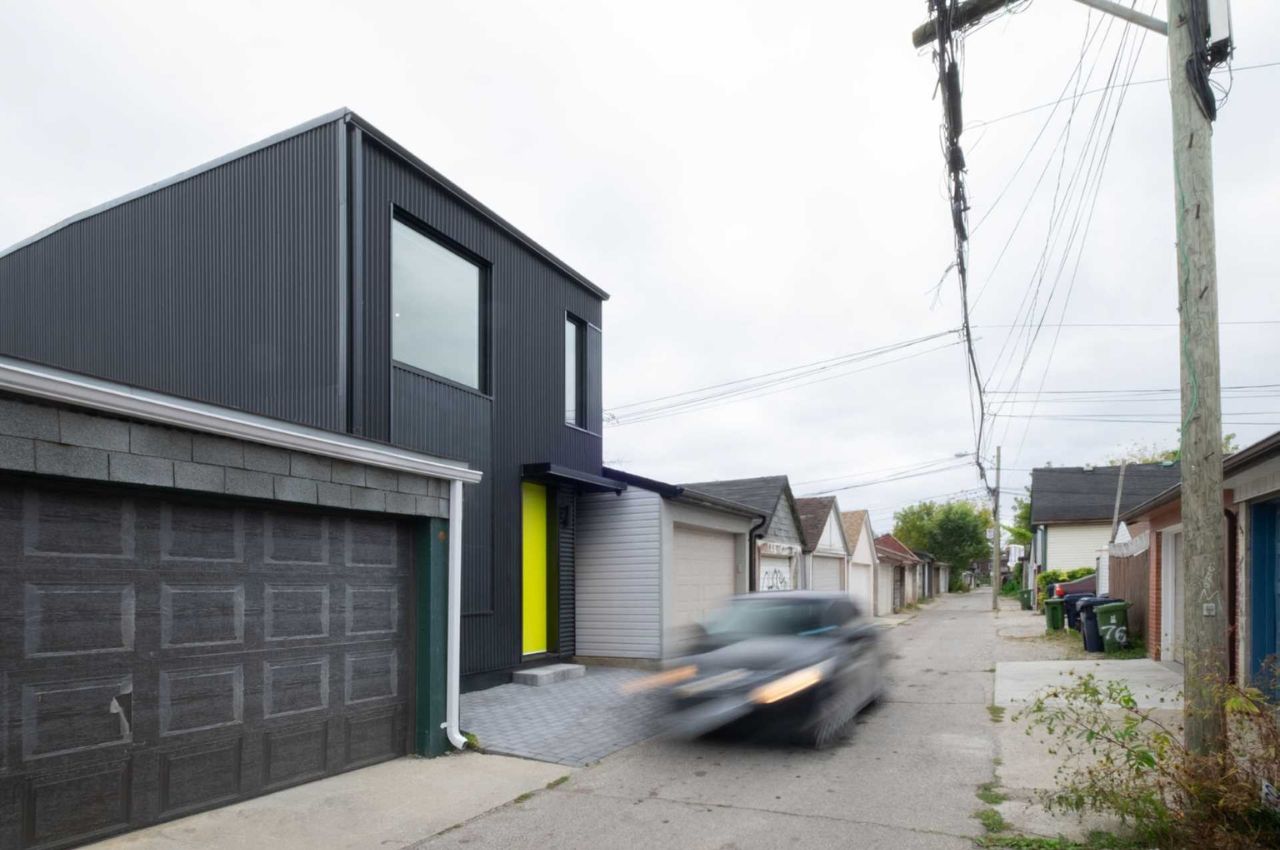
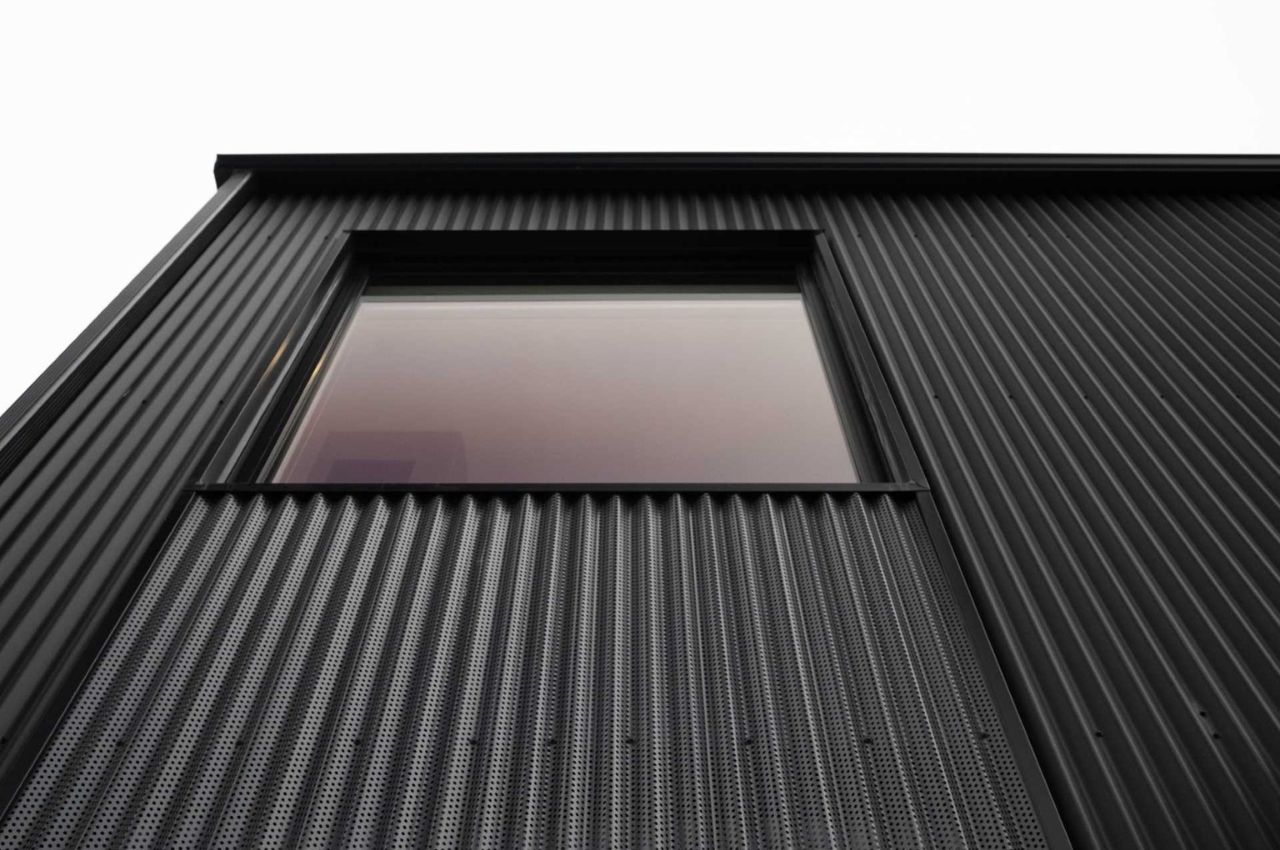
In the heart of Toronto’s Junction neighborhood, on a narrow 17-foot wide lot, stands a beacon of modern living: the Symington Laneway Suite. This 1,000 square foot (92sqm), 2-storey home is a testament to ingenuity, offering a 1-bedroom, 1.5 bathroom residence conveniently close to parks, transit, and community amenities. The exterior is built using black corrugated metal, while horizontal planks add texture to the ground floor, making it feasible to construct.
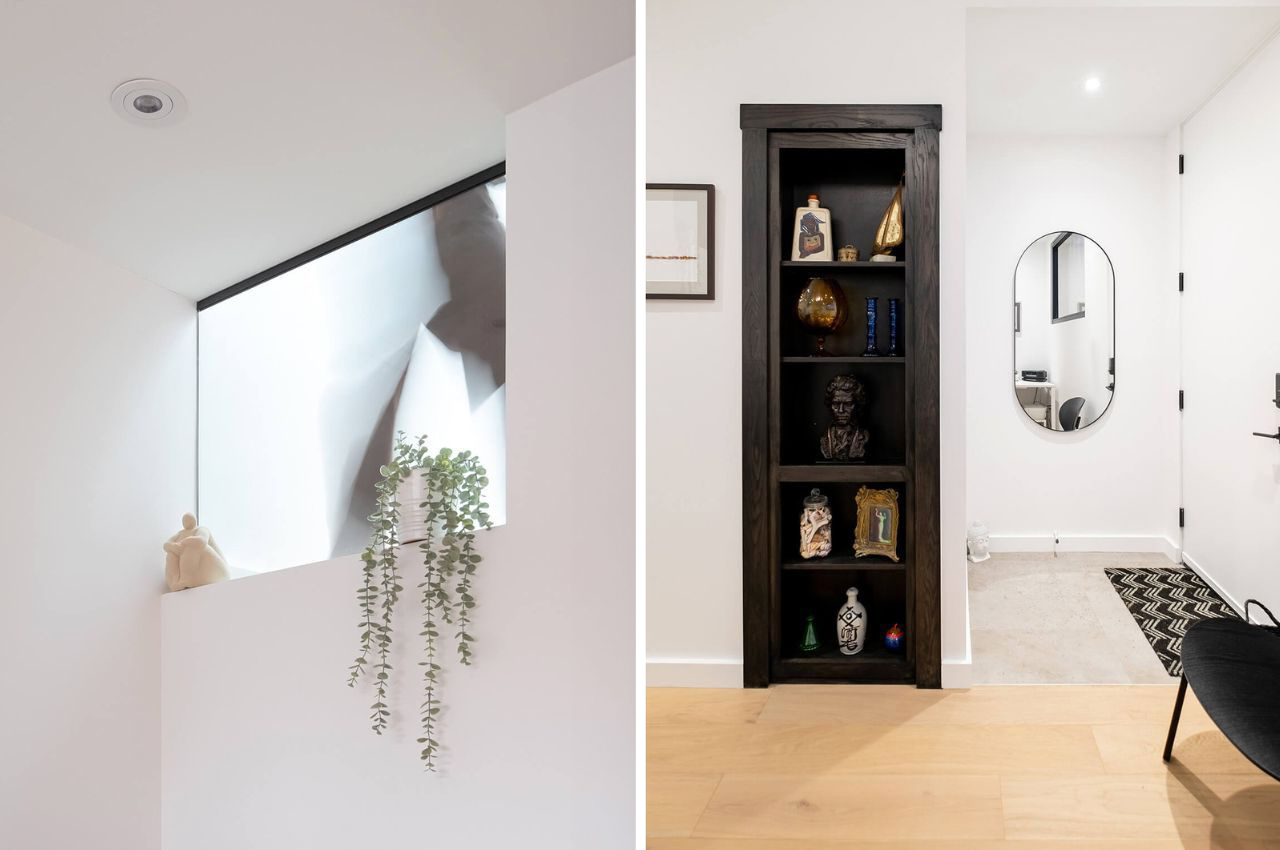
Don’t be fooled by its size, this suite is packed with features. As you approach, the bright yellow entry door immediately catches the eye. Behind it lies a den/study, complete with a desk, a cozy sitting area, and a built-in shelving niche – perfect for work-from-home needs or simply completing tasks during the day.
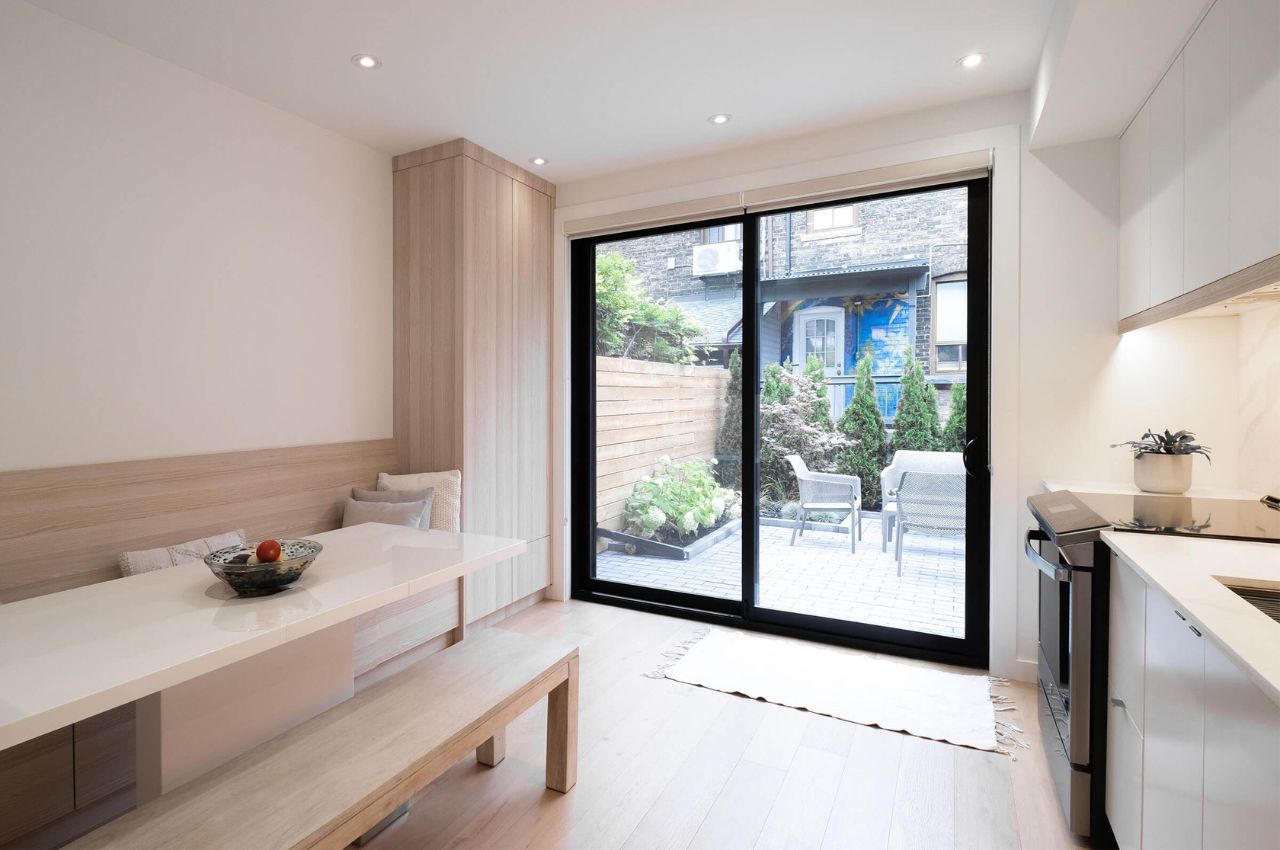
Moving through the space, towards the rear of the laneway house, you’ll find the dining area and kitchen. The dining area boasts banquette seating, while the kitchen is adorned with under-cabinet lighting, adding to its ambiance. A sliding door seamlessly extends this open-plan space to a small patio, offering a delightful outdoor escape.
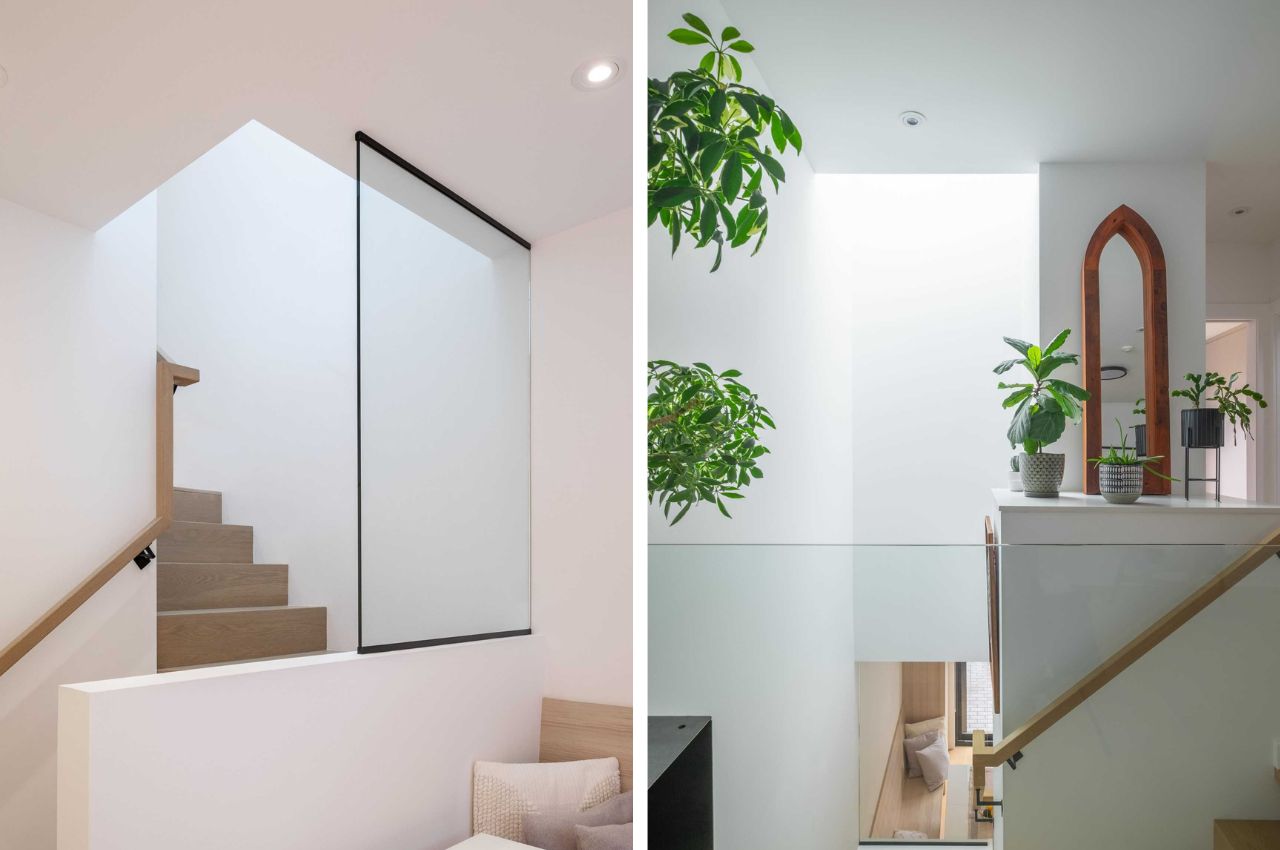
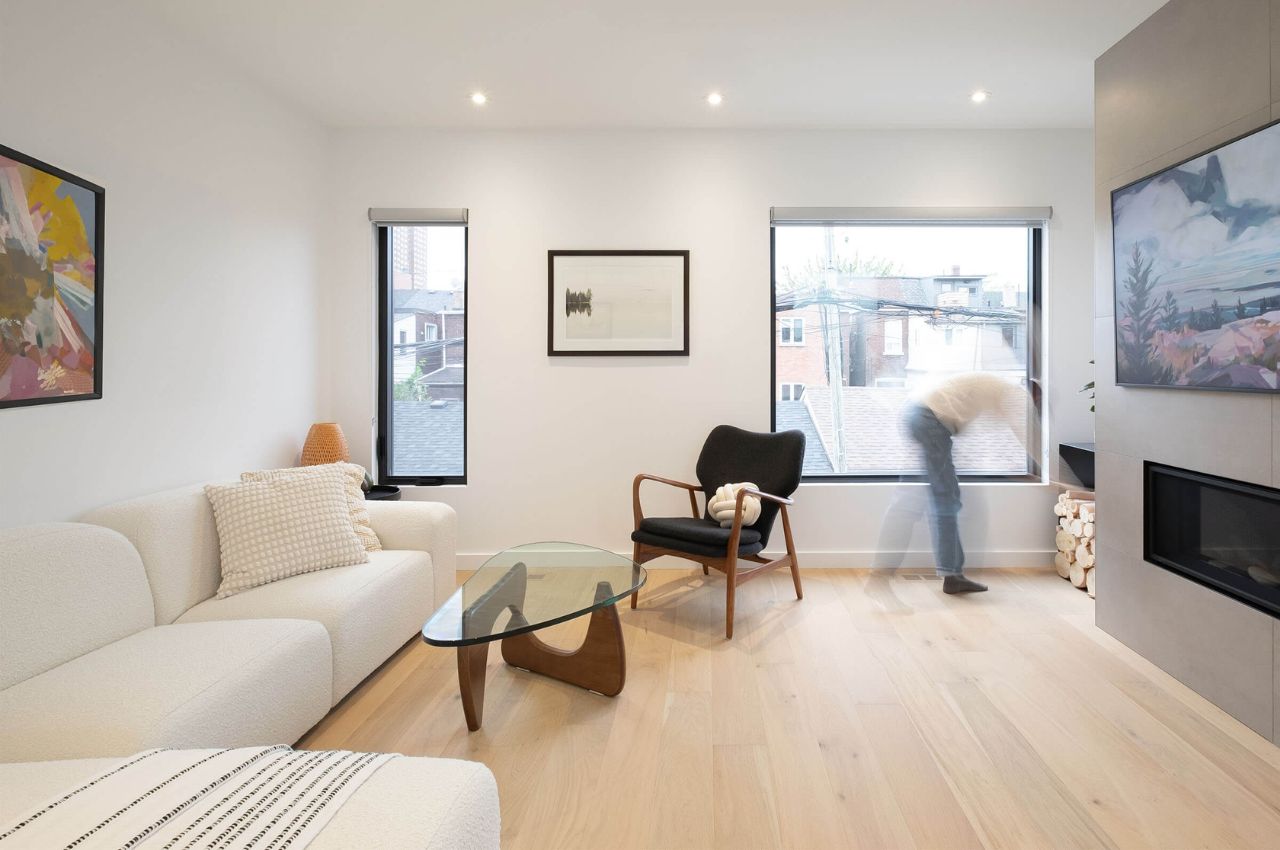
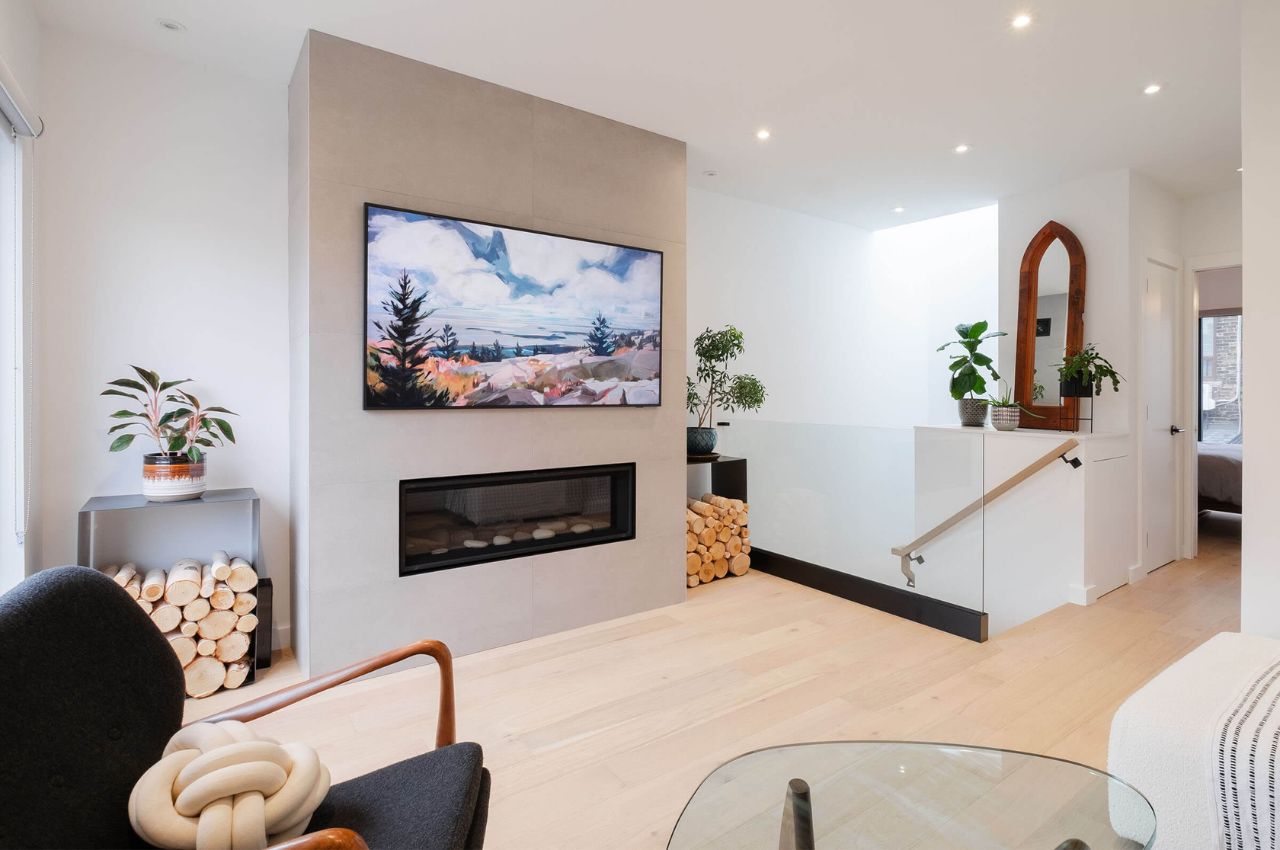
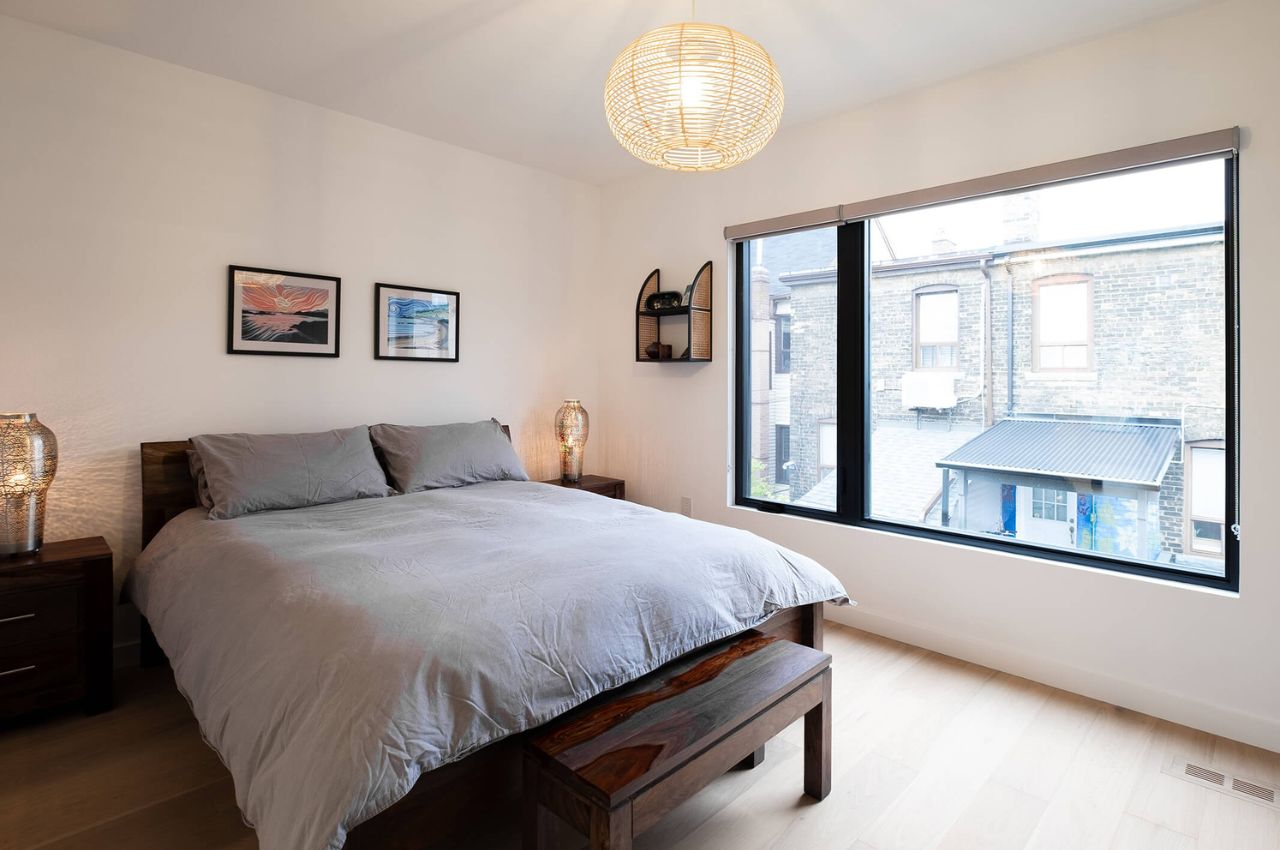
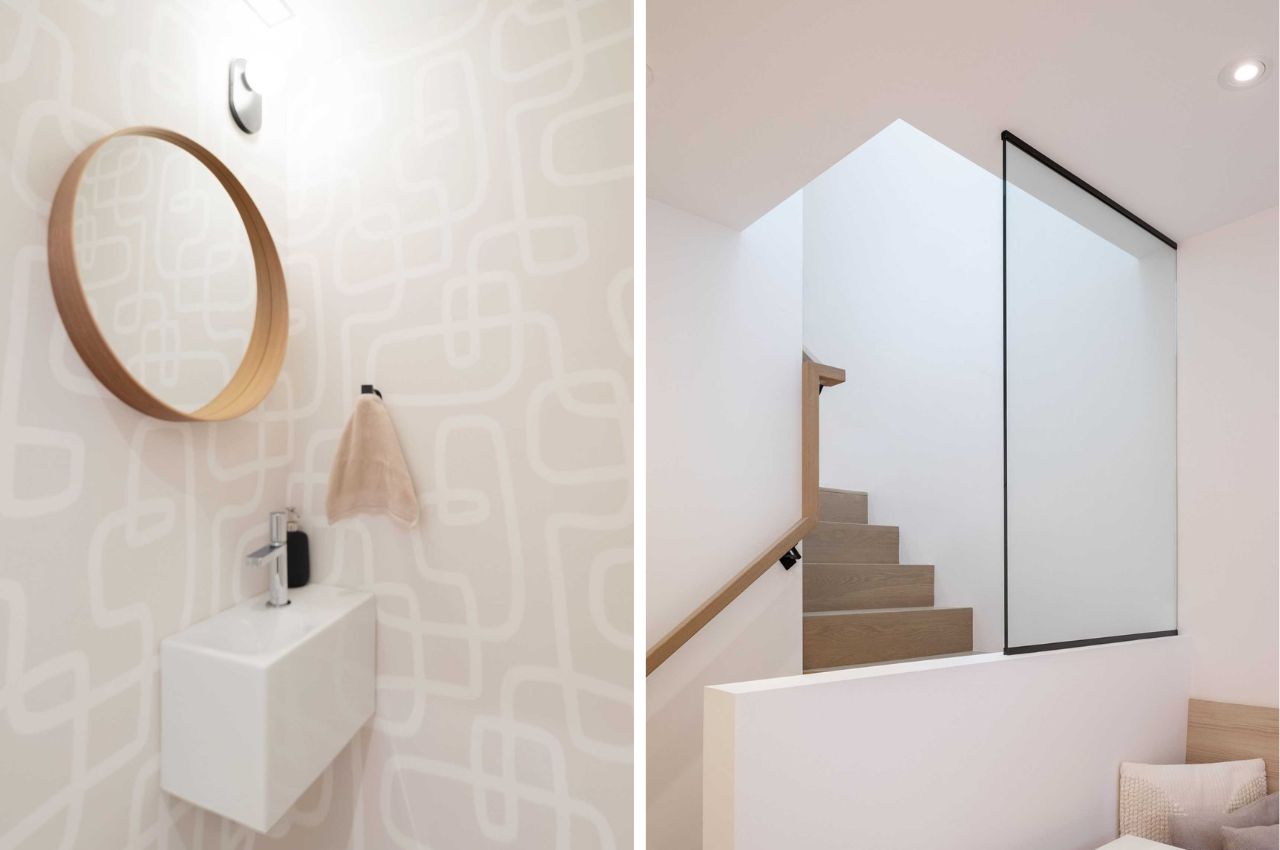
Step onto the patio and take in the ingenious architectural design. The second floor of the laneway house cantilevers outward, providing an additional 3 feet of livable space inside. Stairs between the den and the dining area/kitchen lead to the upper level of the home. Here, a glass partition and railing allow natural light to travel throughout the interior. Upstairs, the small living room, featuring a fireplace, overlooks the laneway with a more private view towards West Toronto. The bedroom and bathroom are located at the rear of the house, facing the yard. Both rooms boast a neutral color palette with added interest in the form of artwork and wallpaper.
The secret to the spacious feel lies in the open floor plan, with not many walls, and large windows that allow light to flow through the space, making it seem open and airy, rather than claustrophobic. The use of a light color palette also makes the space look bigger and airy, making it feel larger than it is. Moreover, the addition of plants brings life to the space, enhancing its overall ambiance.
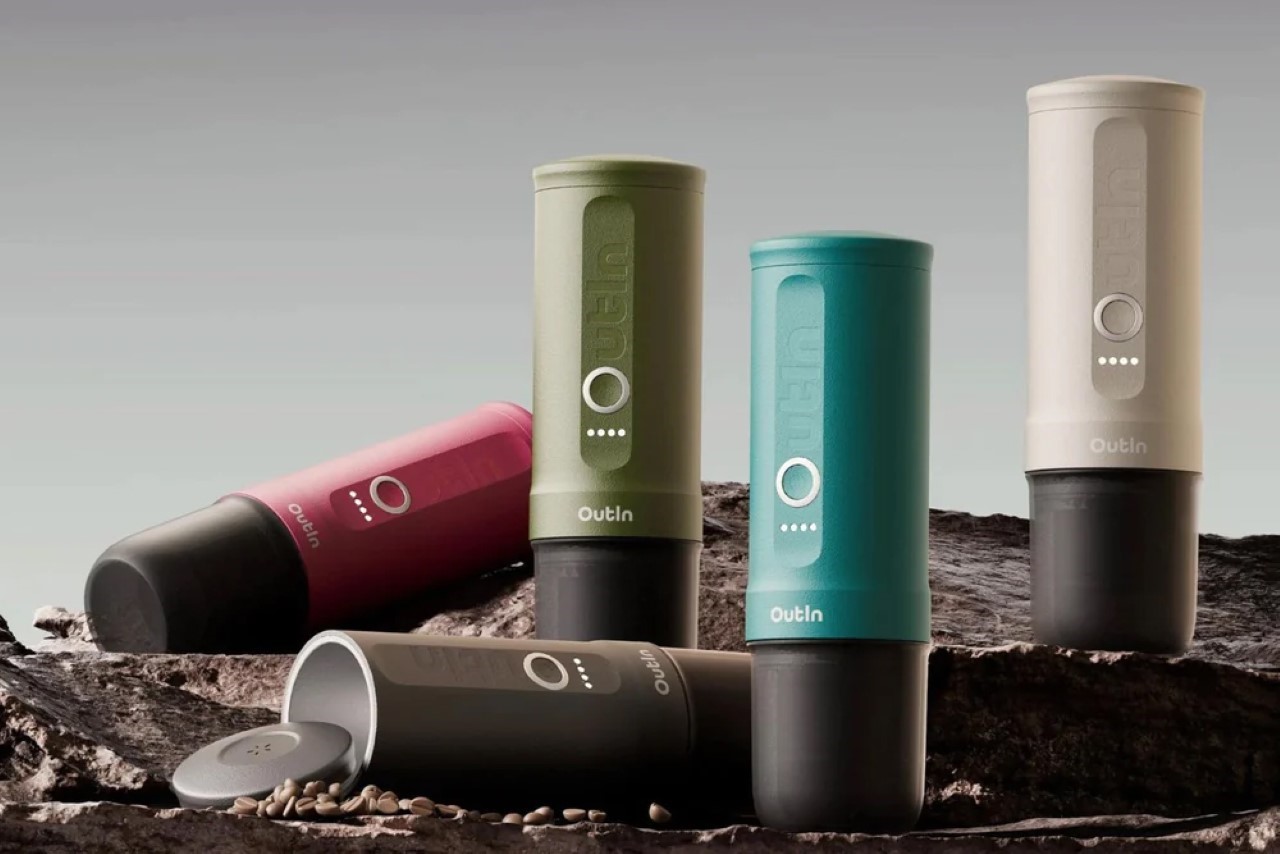
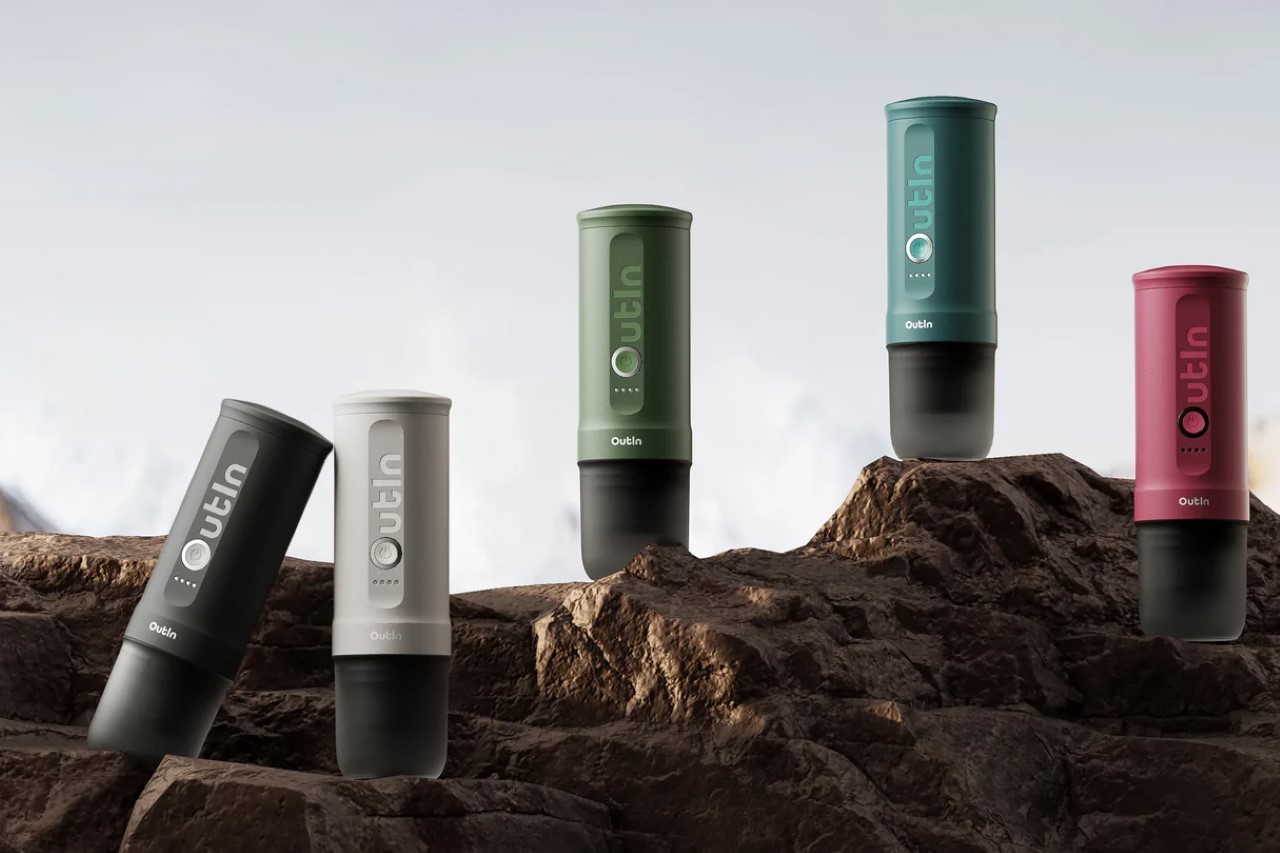
Dubbed the OutIn Nano, this little flask-shaped beauty is your key to a golden cup of coffee literally anywhere. Use it indoors, outdoors, or even in the sky – the OutIn Nano Portable Espresso Maker lets you pull a shot of espresso anywhere, letting you relish your coffee whenever you want. Even equipped with its own water heater, the Nano will warm up your water as it brews the coffee, which means you really don’t need anything apart from an empty cup and a caffeine craving.
Designer: OutIn
The OutIn Nano is perhaps the only portable espresso maker that will heat your water for you. Sure, other portable espresso makers boast a compact design, but every single one of them needs you to add your own hot water. That really isn’t a concern for the OutIn Nano, which has its own heating coil that ensures you get a perfect espresso shot even if all you have is tap water or mineral water around. The vertical flask-shaped design lets you add water to the top, and either a Nespresso or Keurig pod at the bottom, or a small puck filled with your own coffee grounds. A single-button interface gets your coffee brewing, and a built-in pump extracts your espresso right into the OutIn Nano’s cap, which serves as a nifty cup.
A 7500mAh battery powers the OutIn Nano, heating up water in just 200 seconds. Alternatively, you could just add hot water the way you would with any other portable espresso maker and that should speed up the process. The battery life also significantly differs between cold and hot water, with the OutIn Nano brewing 5 cups of coffee if you add cold water and rely on the built-in water heater feature, or a stunning 200 cups of coffee on a full battery if you use pre-heated water.
The resulting coffee is deliciously authentic, with a rich crema created by heating/brewing at 92°C/198°F and passing the water through the coffee grounds at an impressive 20 bars of pressure. The entire cycle takes just 4 minutes from start to finish (if you use the water heater), giving you your espresso. The OutIn Nano holds as much as 80ml of water, which is more than enough for a double-shot, allowing you to either drink your coffee neat or turn it into an Americano or a latte by adding water or milk.
Weighing just 700 grams, the OutIn Nano was practically built for the outdoors. It comes in 5 colors, charges via USB (even working with your car charger), and ships in a soft-shell case that includes the entire coffee-making kit. Heck, the Nano even won both the Red Dot and iF Design Award last year for its impressively compact design.
Apple has scheduled its next product showcase for May 7 at 10AM ET, a few weeks before the Worldwide Developers Conference gets under way. While the company is, as usual, being a bit coy about what's on deck, the signs are all there. It had been rumored for months that Apple would refresh its iPad lineup in May. Sure enough, the image on the announcement for this "Let Loose" event includes an illustration of a hand holding an Apple Pencil, which points at an iPad Pro launch.
Various reports over recent months have offered some insight as to what Apple has up its sleeves. So, with that in mind, here's what to expect from the upcoming iPad event:
An M3 (or M4?) iPad Pro
Nathan Ingraham / Engadget
It's been about 18 months since Apple updated any of its iPads, so its tablet lineup is due for a refresh. Until recently, everyone was expecting Apple to slot M3 chips into the latest iPad Pro models, since the most recent versions run on M2 chipsets. However, Bloomberg's Mark Gurman on April 28 suggested there is a "strong possibility" that the iPad Pro may arrive with the next-gen M4 instead. “I believe Apple will position the tablet as its first truly AI-powered device — and that it will tout each new product from then on as an AI device,” Gurman wrote.
Otherwise, the biggest update is expected to come in the form of OLED displays, according to Gurman. That should bring richer colors and deeper blacks to the iPad Pro.
Since OLED panels are thinner than LCD panels, that should allow Apple to reduce the thickness of the iPad Pro. According to 9to5 Mac, the 11-inch iPad Pro will be 0.8 mm thinner at 5.1 mm, while the 12.9-inch model will be more noticeably slender, as the thickness is expected to drop by 1.5 mm to 5 mm. A leaker has suggested that the bezels could be up to 15 percent thinner than previous models as well.
Rumors have been swirling for a while that Apple may offer a glass-backed iPad Pro this year to enable MagSafe charging. Meanwhile, there have been hints that Apple will solve one of our biggest iPad bugbears and move the front-facing camera to the landscape edge of the Pro, as it did with the entry-level iPad in late 2022. That means the camera will be more optimally placed for those who use a Magic Keyboard or folks who simply prefer a landscape orientation.
M2 iPad Air
Nathan Ingraham / Engadget
As for the iPad Air, which Apple has left in stasis for over two years, that's expected to get an upgrade to M2 chips from the M1 that the tablets currently use. There are rumblings that Apple will go with the older chip in the iPad Air to differentiate it from Pro models and ensure that the latter devices clearly remain its highest-end tablets. Reports suggest that the iPad Air's front-facing camera is also blessedly moving to the landscape edge.
There is one other big change we're expecting for the iPad Air, and I mean that in the most literal sense. Apple is rumored to be prepping the first 12.9-inch iPad Air. It's likely to be the least expensive option for a large-screen iPad, even though that would run somewhat against the "Air" part of the name.
Display analyst Ross Young previously suggested that the 12.9-inch iPad Air screen would have a mini-LED display, but that no longer appears to be happening — at least for now. However, Young says that Apple may release an iPad Air with such a display later this year. Meanwhile, the new iPad Air models may have a larger camera bump, perhaps so Apple can add a flash.
New Magic Keyboard and Apple Pencil
Engadget
Gurman reported last year that Apple was working on a revamped Magic Keyboard, but only for the iPad Pro, not the Air lineup. The updated keyboard is said to make the iPad Pro look more like a laptop, with a larger trackpad. It's said to be made of aluminum to make it sturdier than previous models, though "the exterior shell of the Magic Keyboard will retain the cover material of the current model," Gurman says.
In addition, Apple is expected to unveil a new Apple Pencil to replace the second-gen model. Dataminers have suggested that an updated peripheral could include a squeeze gesture to carry out certain actions and have Find My support. Some reports have indicated the next Apple Pencil could work with Vision Pro drawing apps too.
What not to expect: A new iPad or iPad mini
Even though the iPad mini in particular is getting very long in the tooth — the most recent model arrived in September 2021 — you probably shouldn't expect a new model to show up at the Let Loose event. Not are we expecting to see a new base iPad. Reportssuggest an 11th-gen iPad and an updated iPad mini may arrive later this year, but maybe don't hold your breath for them.
Update, April 30, 11:35AM ET: This story was updated after publishing to include details from Bloomberg on the potential for the new iPad Pro to arrive with an M4 chip inside.
This article originally appeared on Engadget at https://www.engadget.com/apple-is-launching-new-ipads-may-7-heres-what-to-expect-from-the-let-loose-event-210041117.html?src=rss
Apple has scheduled its next product showcase for May 7 at 10AM ET, a few weeks before the Worldwide Developers Conference gets under way. While the company is, as usual, being a bit coy about what's on deck, the signs are all there. It had been rumored for months that Apple would refresh its iPad lineup in May. Sure enough, the image on the announcement for this "Let Loose" event includes an illustration of a hand holding an Apple Pencil, which points at an iPad Pro launch.
Various reports over recent months have offered some insight as to what Apple has up its sleeves. So, with that in mind, here's what to expect from the upcoming iPad event:
An M3 (or M4?) iPad Pro
Nathan Ingraham / Engadget
It's been about 18 months since Apple updated any of its iPads, so its tablet lineup is due for a refresh. Until recently, everyone was expecting Apple to slot M3 chips into the latest iPad Pro models, since the most recent versions run on M2 chipsets. However, Bloomberg's Mark Gurman on April 28 suggested there is a "strong possibility" that the iPad Pro may arrive with the next-gen M4 instead. “I believe Apple will position the tablet as its first truly AI-powered device — and that it will tout each new product from then on as an AI device,” Gurman wrote.
Otherwise, the biggest update is expected to come in the form of OLED displays, according to Gurman. That should bring richer colors and deeper blacks to the iPad Pro.
Since OLED panels are thinner than LCD panels, that should allow Apple to reduce the thickness of the iPad Pro. According to 9to5 Mac, the 11-inch iPad Pro will be 0.8 mm thinner at 5.1 mm, while the 12.9-inch model will be more noticeably slender, as the thickness is expected to drop by 1.5 mm to 5 mm. A leaker has suggested that the bezels could be up to 15 percent thinner than previous models as well.
Rumors have been swirling for a while that Apple may offer a glass-backed iPad Pro this year to enable MagSafe charging. Meanwhile, there have been hints that Apple will solve one of our biggest iPad bugbears and move the front-facing camera to the landscape edge of the Pro, as it did with the entry-level iPad in late 2022. That means the camera will be more optimally placed for those who use a Magic Keyboard or folks who simply prefer a landscape orientation.
M2 iPad Air
Nathan Ingraham / Engadget
As for the iPad Air, which Apple has left in stasis for over two years, that's expected to get an upgrade to M2 chips from the M1 that the tablets currently use. There are rumblings that Apple will go with the older chip in the iPad Air to differentiate it from Pro models and ensure that the latter devices clearly remain its highest-end tablets. Reports suggest that the iPad Air's front-facing camera is also blessedly moving to the landscape edge.
There is one other big change we're expecting for the iPad Air, and I mean that in the most literal sense. Apple is rumored to be prepping the first 12.9-inch iPad Air. It's likely to be the least expensive option for a large-screen iPad, even though that would run somewhat against the "Air" part of the name.
Display analyst Ross Young previously suggested that the 12.9-inch iPad Air screen would have a mini-LED display, but that no longer appears to be happening — at least for now. However, Young says that Apple may release an iPad Air with such a display later this year. Meanwhile, the new iPad Air models may have a larger camera bump, perhaps so Apple can add a flash.
New Magic Keyboard and Apple Pencil
Engadget
Gurman reported last year that Apple was working on a revamped Magic Keyboard, but only for the iPad Pro, not the Air lineup. The updated keyboard is said to make the iPad Pro look more like a laptop, with a larger trackpad. It's said to be made of aluminum to make it sturdier than previous models, though "the exterior shell of the Magic Keyboard will retain the cover material of the current model," Gurman says.
In addition, Apple is expected to unveil a new Apple Pencil to replace the second-gen model. Dataminers have suggested that an updated peripheral could include a squeeze gesture to carry out certain actions and have Find My support. Some reports have indicated the next Apple Pencil could work with Vision Pro drawing apps too.
What not to expect: A new iPad or iPad mini
Even though the iPad mini in particular is getting very long in the tooth — the most recent model arrived in September 2021 — you probably shouldn't expect a new model to show up at the Let Loose event. Not are we expecting to see a new base iPad. Reportssuggest an 11th-gen iPad and an updated iPad mini may arrive later this year, but maybe don't hold your breath for them.
Update, April 30, 11:35AM ET: This story was updated after publishing to include details from Bloomberg on the potential for the new iPad Pro to arrive with an M4 chip inside.
Follow all of the news live from Apple's 'Let Loose' event right here.
This article originally appeared on Engadget at https://www.engadget.com/apple-is-launching-new-ipads-may-7-heres-what-to-expect-from-the-let-loose-event-210041117.html?src=rss
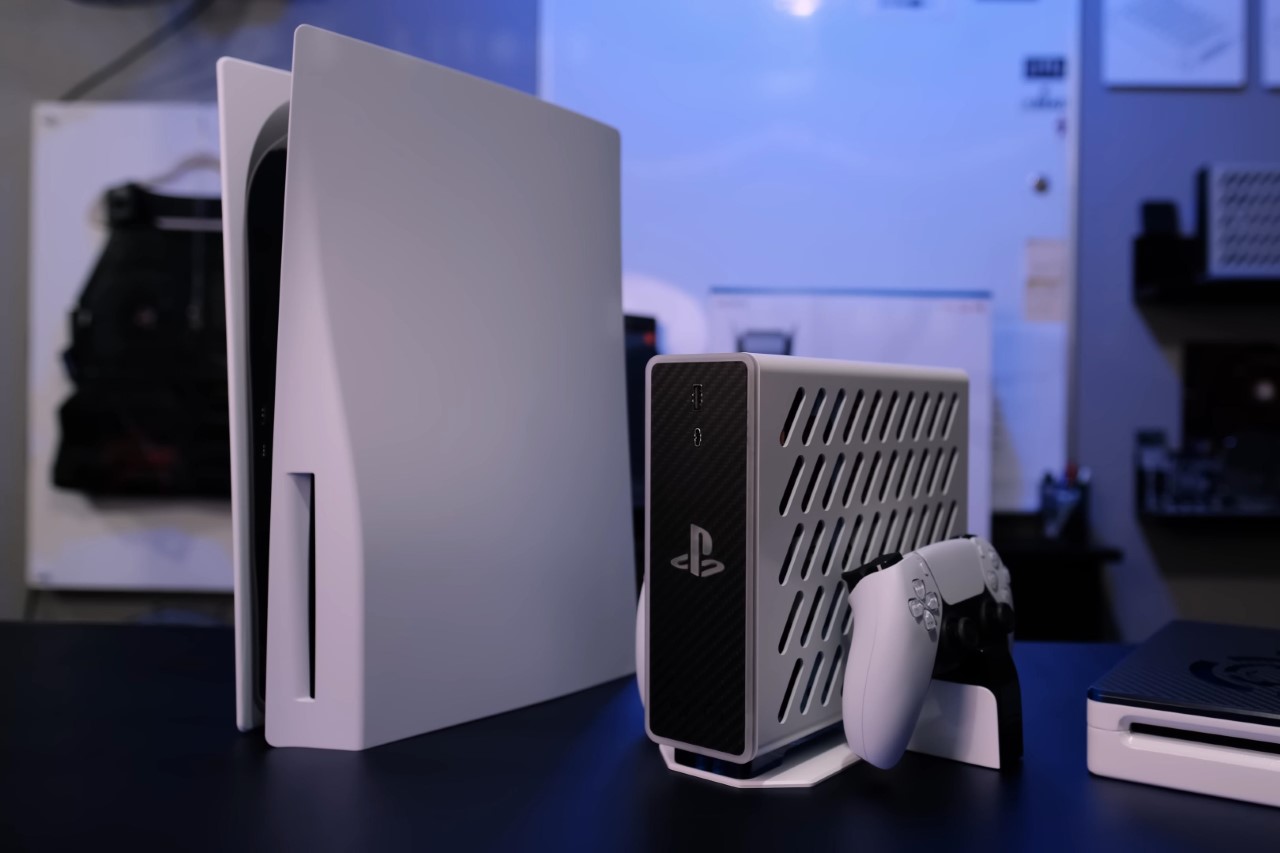
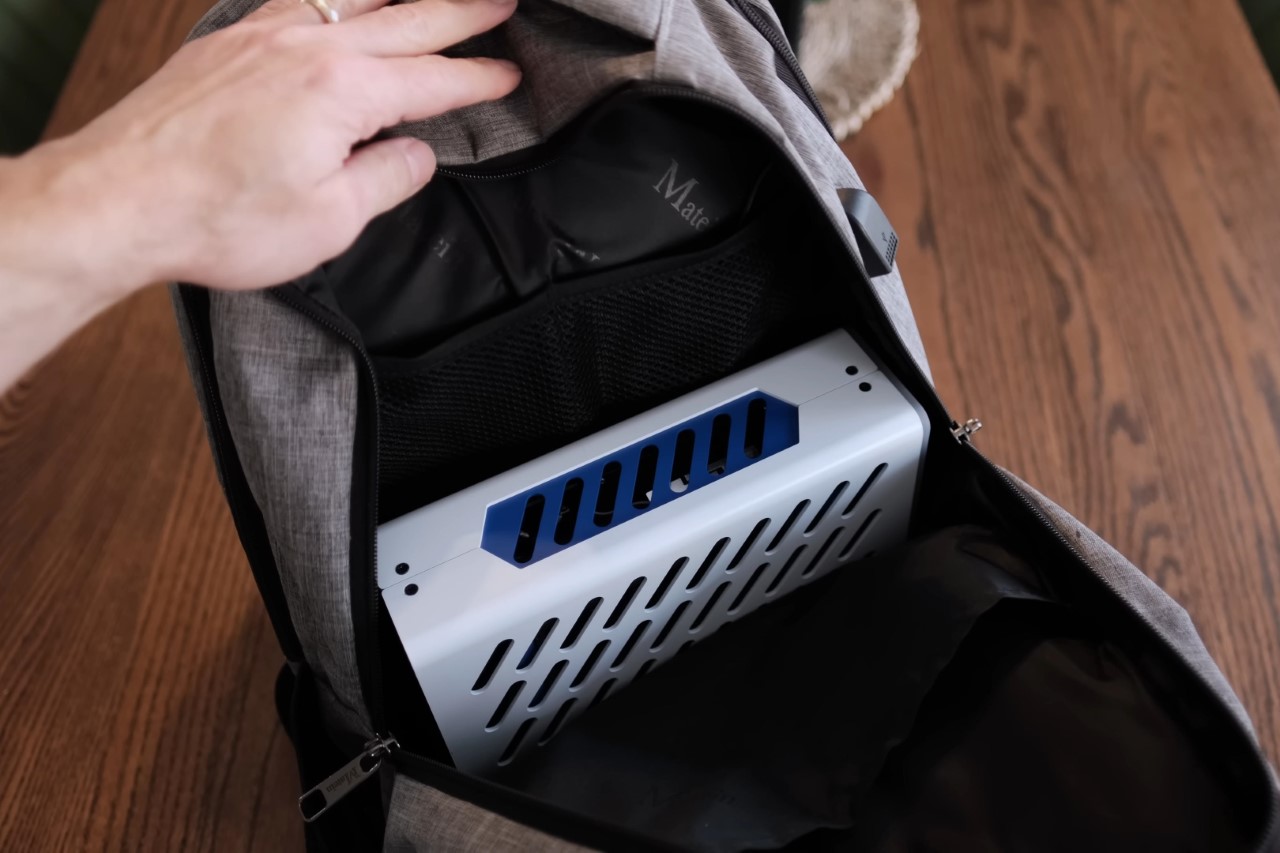
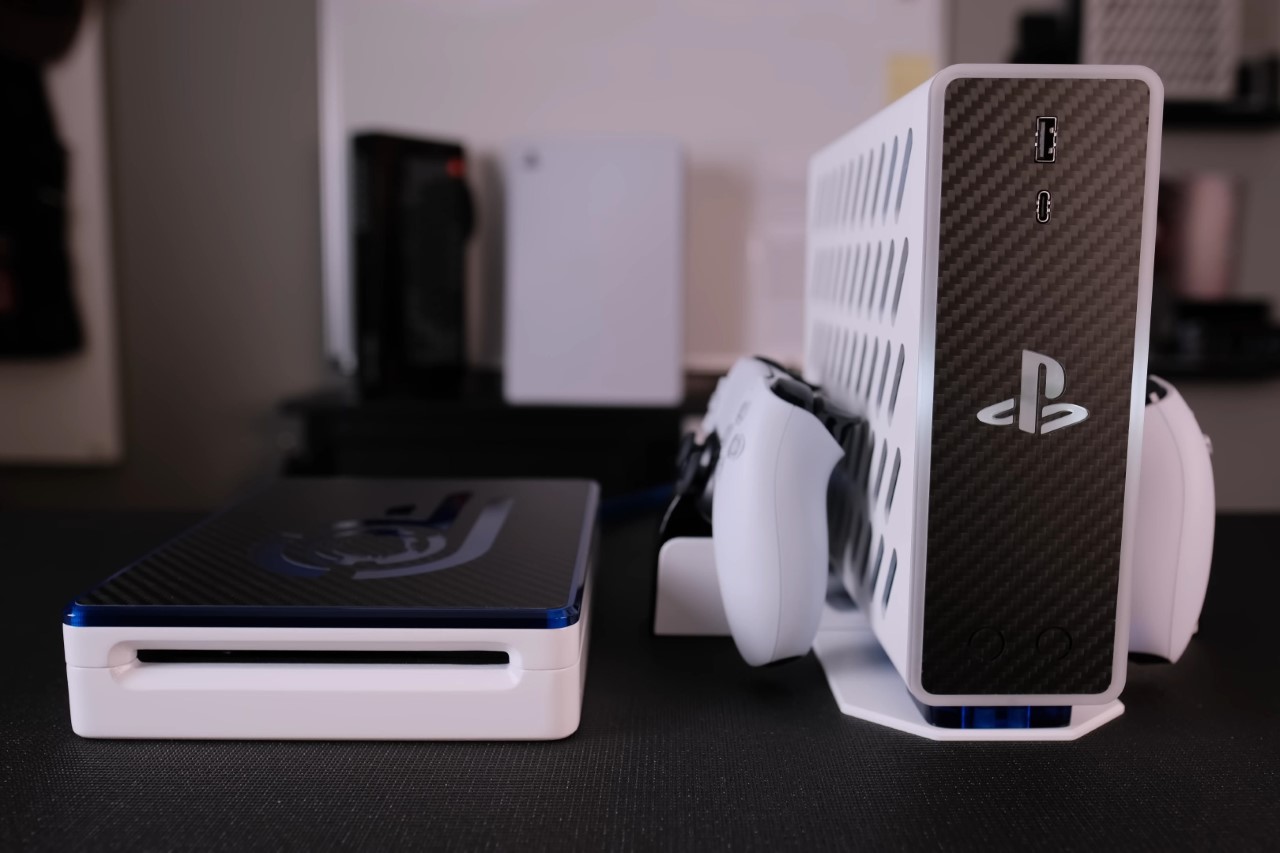
Even tinier than the PS5 Slim that launched in October last year, this fan-made gaming rig is small enough to slide into a backpack, has a glowing PS logo on the front, docks and charges two DualShock controllers on either side, and has a thermal performance that almost matches up to the regular PS5. Designed by YouTuber NFC, this ‘PlayStation Mini’ relies on a reimagined architecture and an external disc drive that helps cut space by nearly 70%, giving you a final console that’s merely 30% the size of its original self. No Ozempic was involved…
Designer: Not From Concentrate
When rumors of the PS5 Slim began making rounds on the internet, YouTuber NFC (short for Not From Concentrate) hoped that Sony would radically shrink the console and make the disc drive external instead of detachable. Instead, we got a marginally smaller console that had a disc drive that could only be used by snapping it onto the side of the vertical console. Not that anything’s wrong with the PS5 Slim, we think it’s an iteratively improved console, but NFC definitely found himself wanting more. The journey he embarked on is one that not all of us can take – it involved deep designing, engineering, and using CNC machines and 3D printers to build everything from new outer housings to inner thermal architectures, and even adding a logo and backlight to make it something so professional it looked like it came out of Sony’s own headquarters.
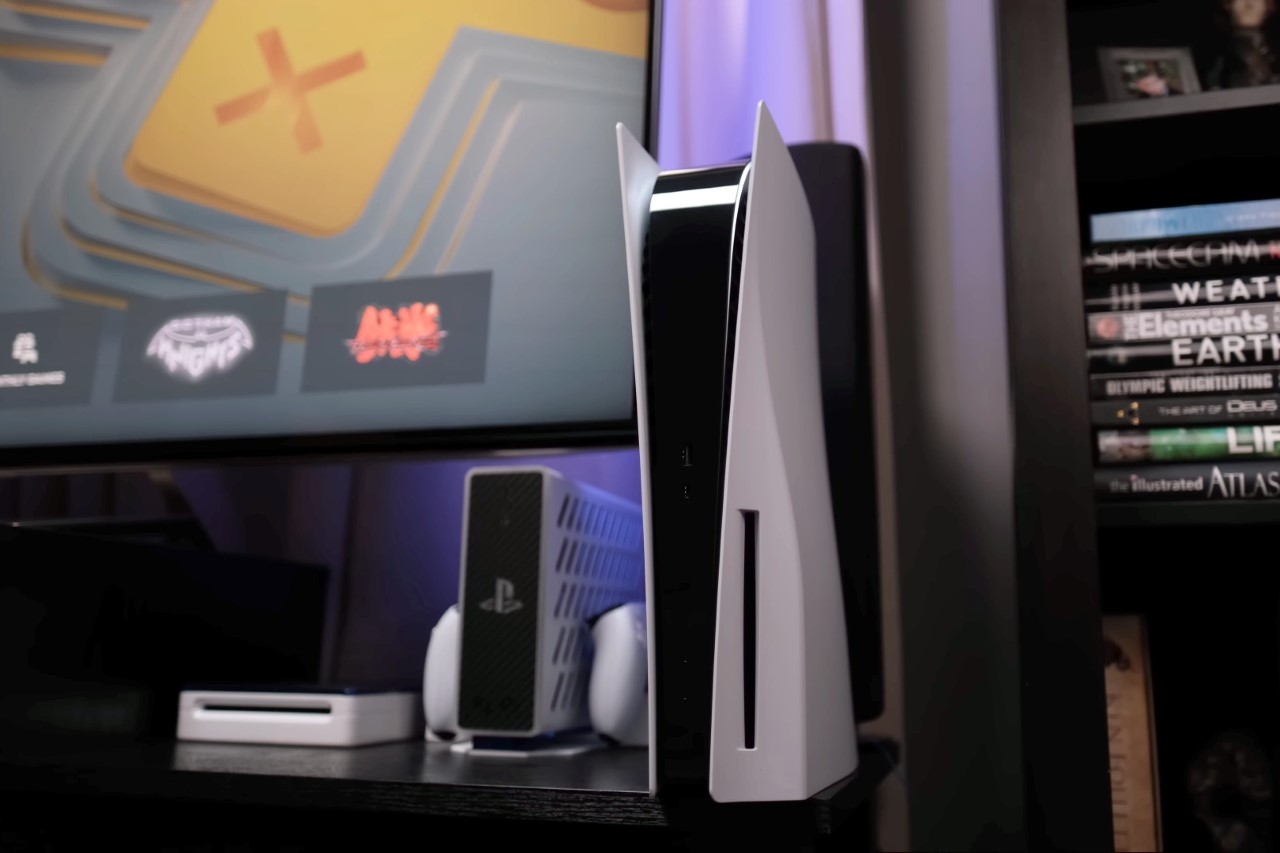
The resulting PS5 Mini is probably a one-off unit that NFC built for the YouTube video (you can watch the entire thing above), but it’s a sheer work of art and engineering. Anyone can rip circuitry off from the existing PS5 and cram it into a new plastic body… but only a few of them can do such a great job that the resulting PS5 Mini has a performance that rivals its bigger sibling. In fact, the tinier console is nearly 3.3 liters in volume, making it significantly smaller than the 10.5-liter PS5. It’s so small it fits into most backpacks and is no larger than a thick book.
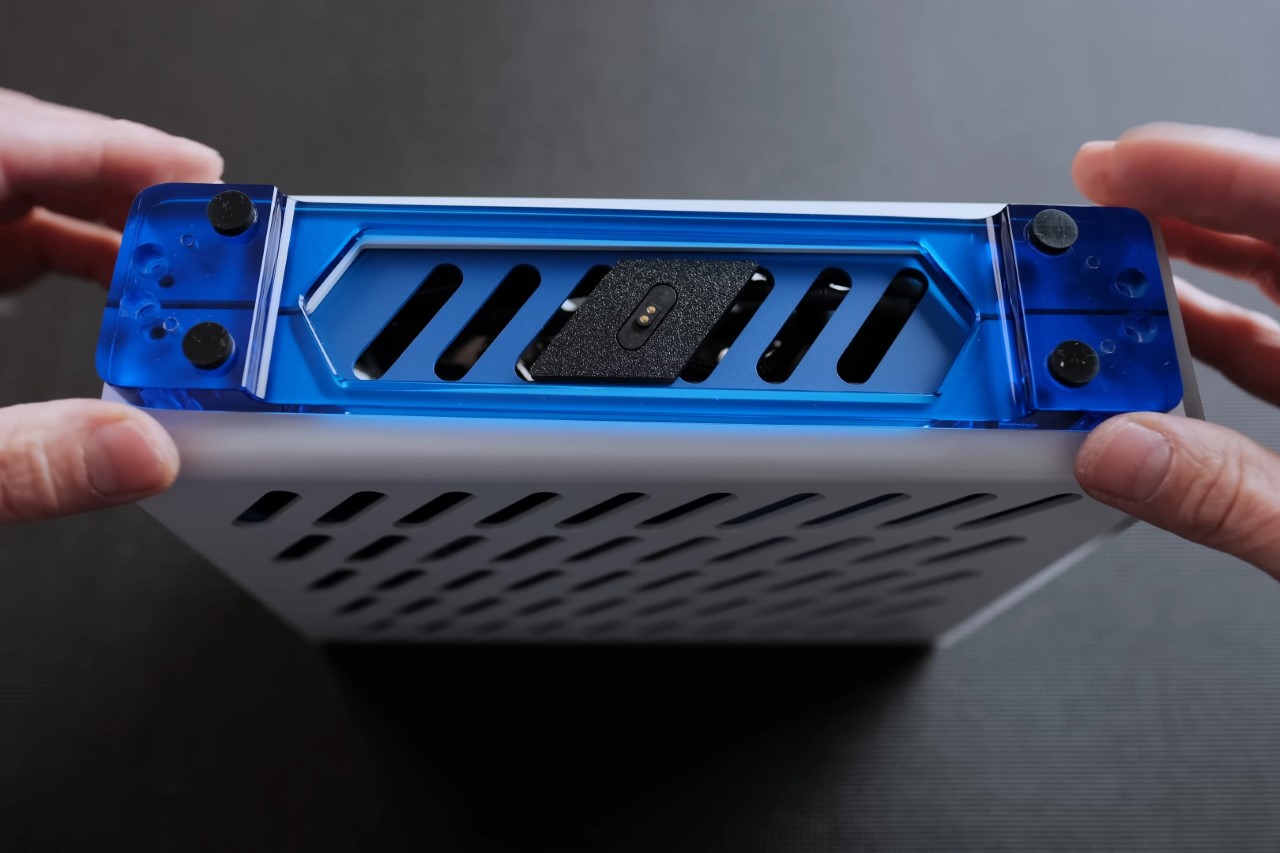
The PS5 Mini comes with a construction featuring metal, plastic, and even carbon fiber parts. It has a completely new heat sink, a new chassis, outer body with massive grills on the side for air flow, a new fan, and even backlit plastic components that glow blue when the machine’s on. It also features not one but two DualShock controller docks that also charge your controllers when put in place, doing something that even the OG PlayStation couldn’t.
The new build features up to 20 redesigned components that were either made in NFC’s studio workshop on his CNC machine or 3D printer, or ordered from a fabrication website. The size of the new PS5 Mini was determined by the motherboard, which was a compact rectangular little component that served as the starting point for the console’s design. NFC uses a Black-Ridge CPU Cooler heat sink, and even a new fan and fan controller because the original PS5’s fan is a massive component that played a major role in what made the original console so big. NFC explains that Sony prioritized console ‘quietness’ with the old design, owing to the large fan size (larger fans move more air at slower speeds, creating less noise). The power supply was replaced with a smaller 250W GaN one, the front was capped off with carbon fiber that contrasted the white outer body beautifully, and NFC used the original PS5’s status LEDs to light up a new PS logo that now adorned the front.
The stand charges the controllers even when it’s switched off.
An external disc drive made sense, allowing the PS5 to be web-based when needed, and disc-based when plugged in.
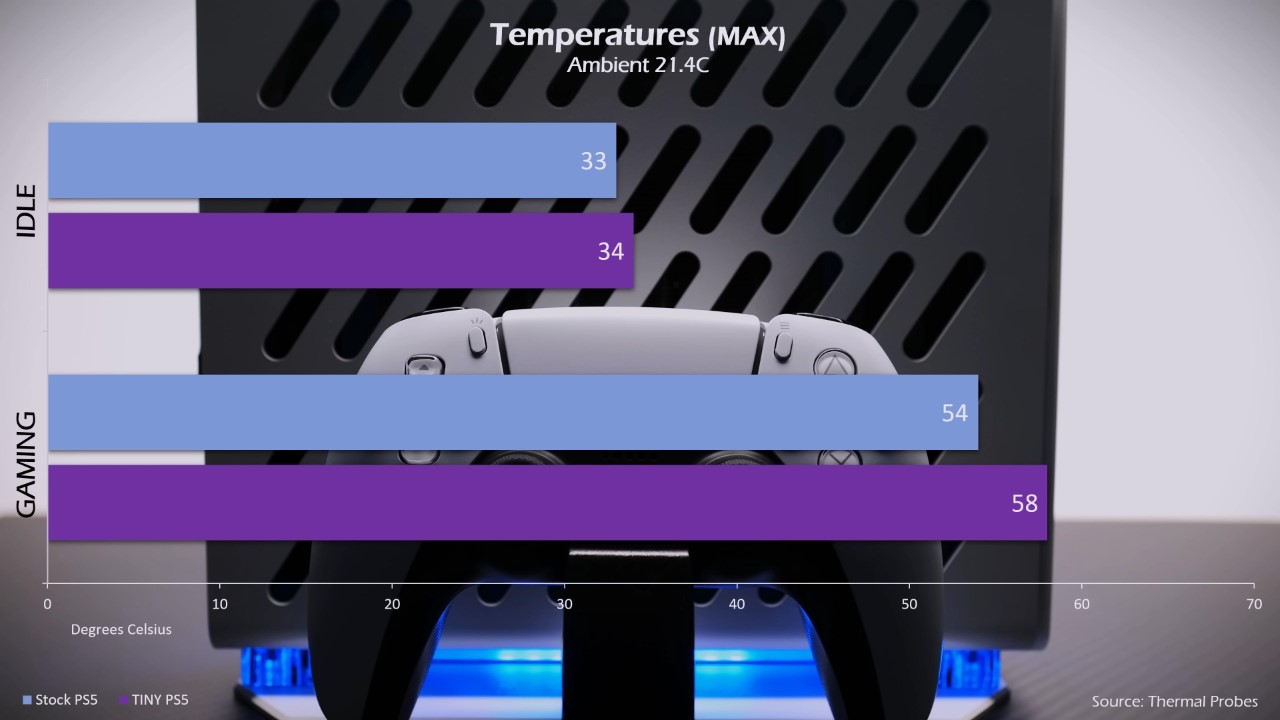
Surprisingly, even the thermals match up to the original, with idle temperatures being a mere 1°C hotter, and gaming temperatures hitting a marginal but impressive 4°C hotter than the original. The way NFC did this is by literally wiring temperature probes into the different parts of the console to get a holistic reading of the console’s temperature at all times. The new fan works in theory, but NFC does point out that making everything smaller means having a marginally noisier fan. Luckily, this could easily be taken care of by placing the console near some speakers, that would wash out the fan’s sound.
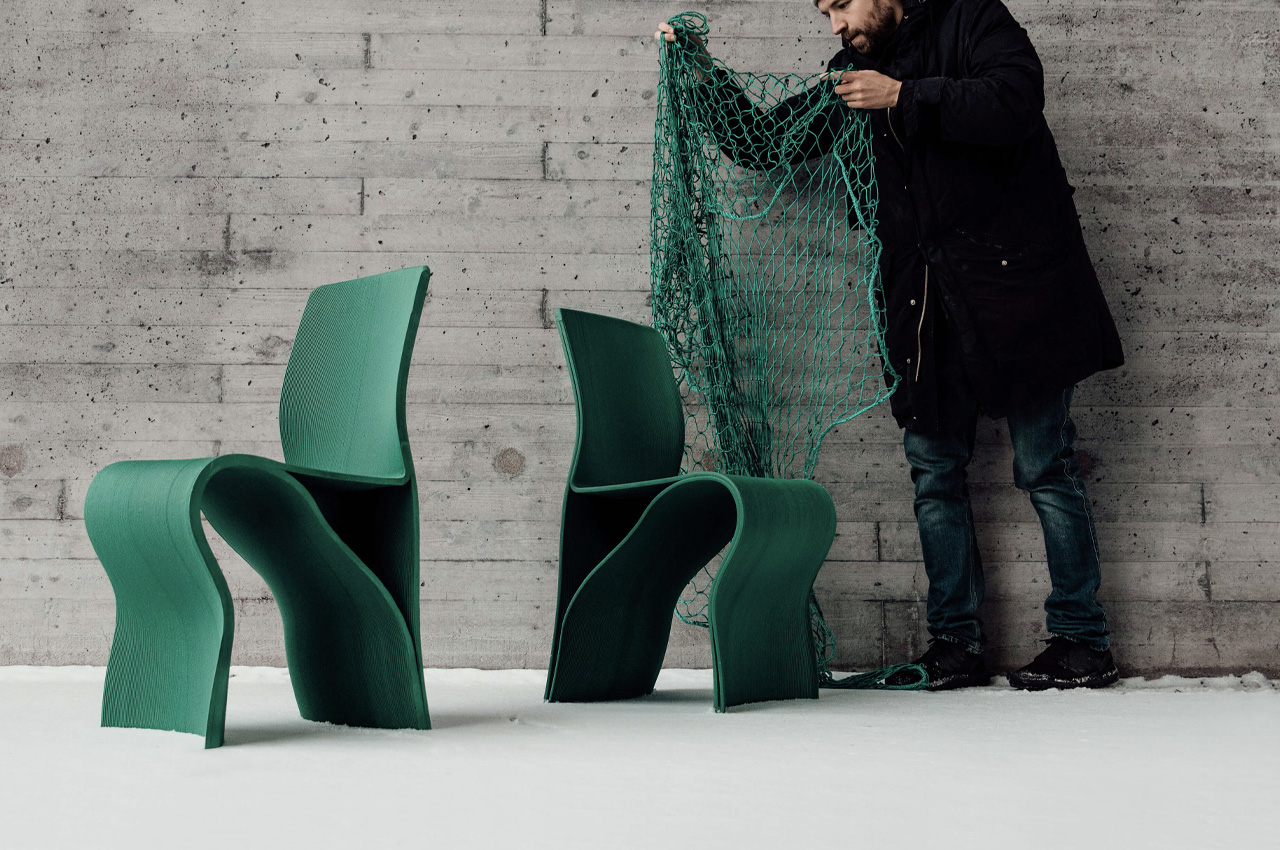
Sustainable furniture is taking the design industry by storm, they’re a step towards making our homes and our daily lives more eco-friendly and sustainable. They’re an attempt to cast aside toxic materials, and instead, add furniture designs to our home that won’t rot away on Earth for years once we’re done with them. And one such intriguing and thoughtfully designed sustainable furniture design I recently came across is the Kelp Chair by Interesting Times Gang.
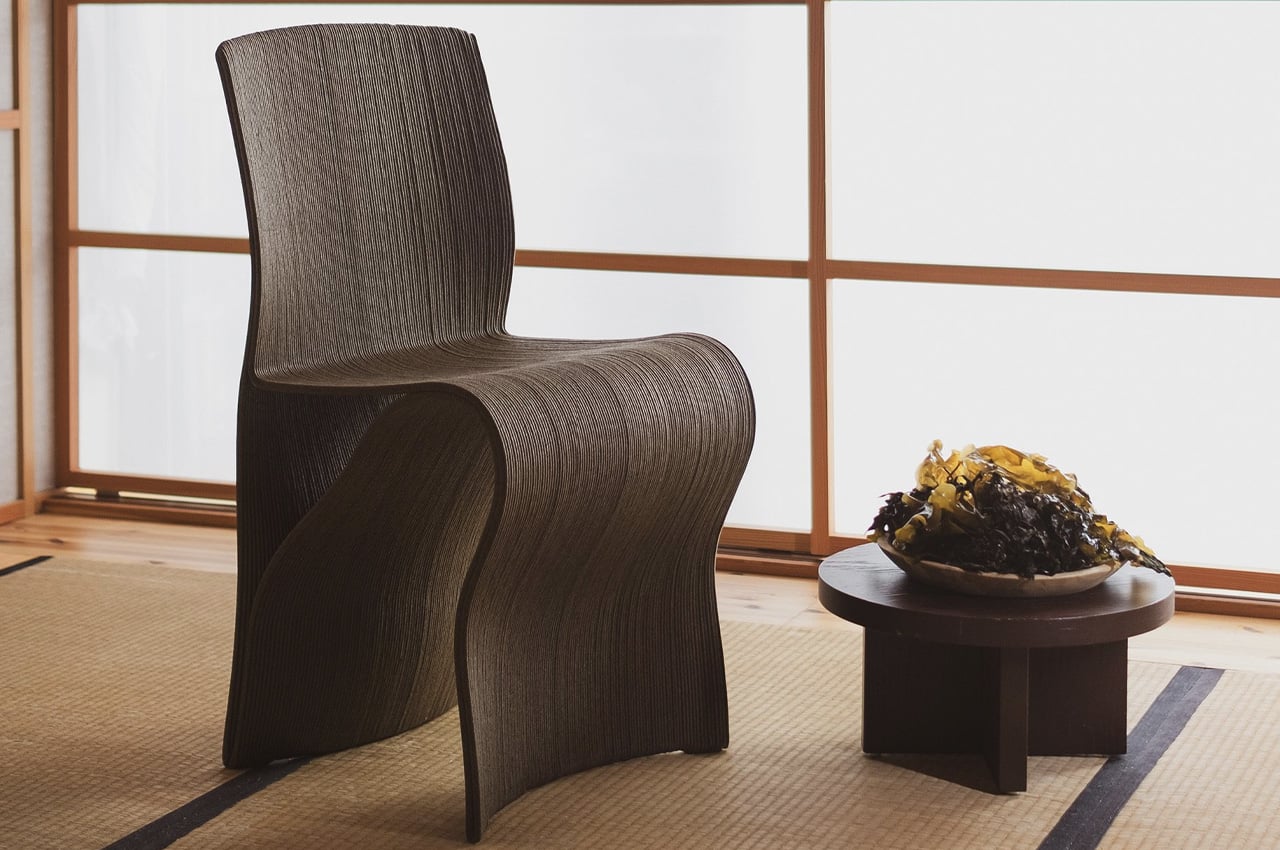
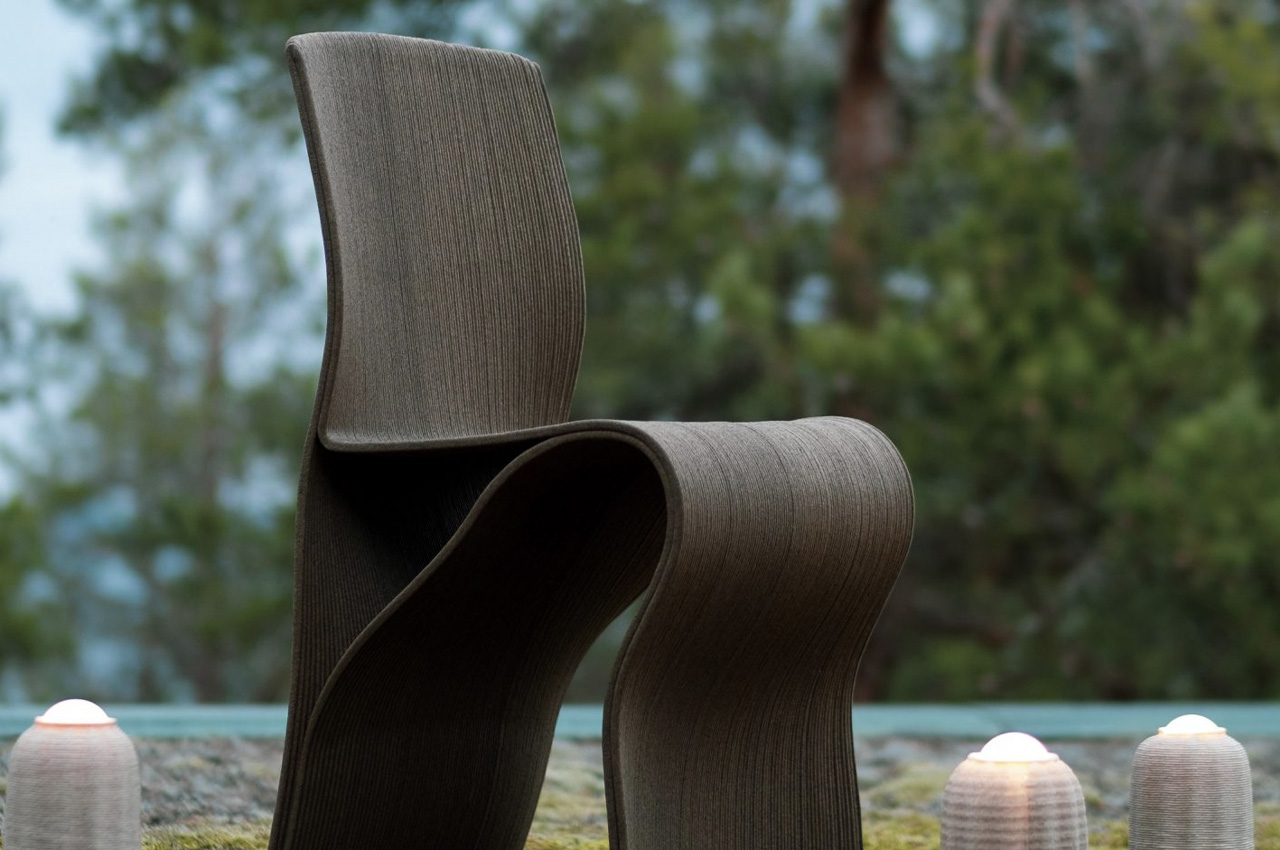
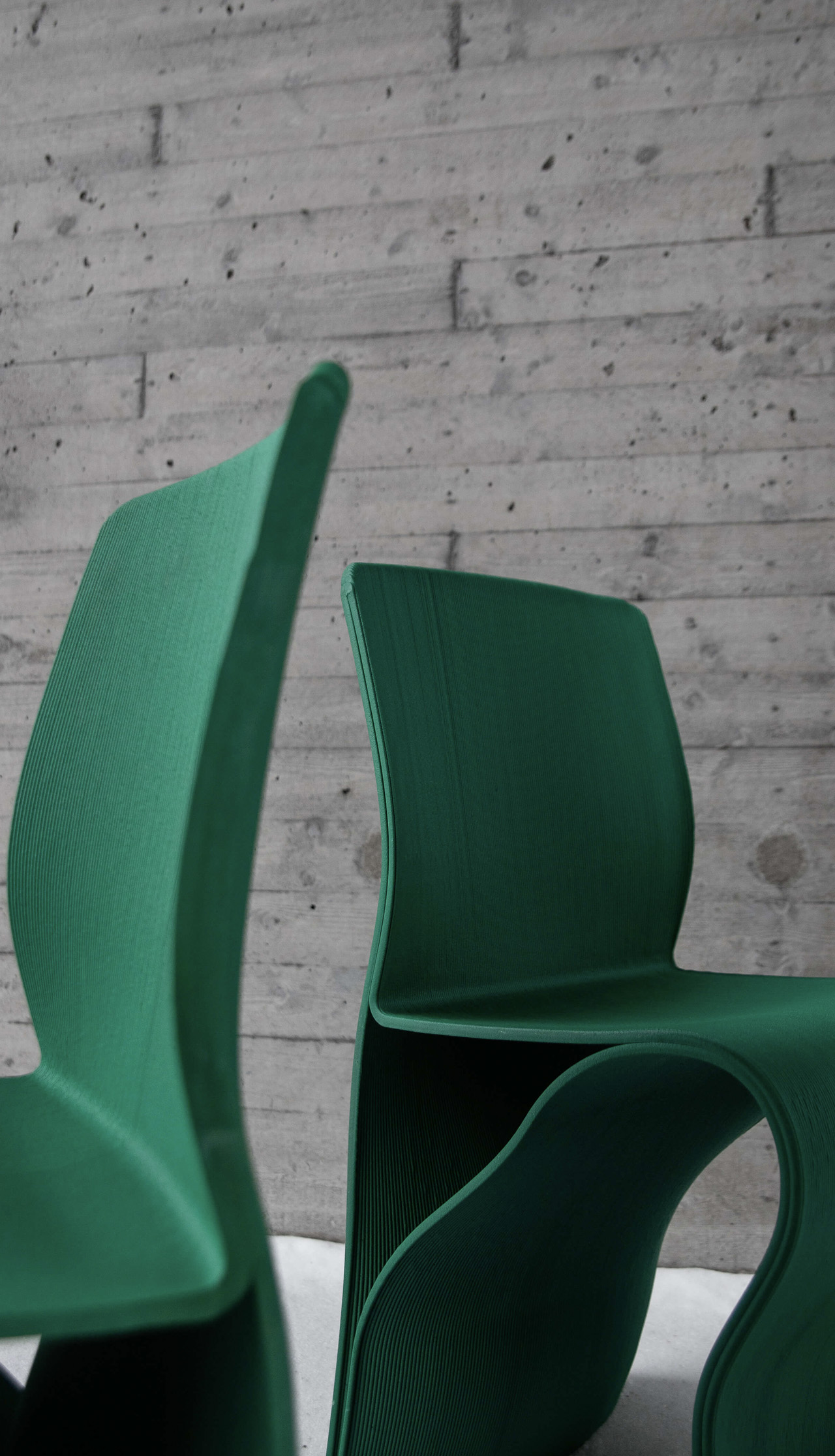
Designed by the Swedish design studio Interesting Times Gang, the Kelp Chair has a new and improved version. The new 3D-printed version of the Kelp chair is built from seaweed instead of recycled plastic! The original Kelp chair was designed in 2022 by Interesting Times Gang and it was made using recycled fishing nets and wood pulp. The chair was named because of the unique lines of its form, which were heavily inspired by ocean vegetation.
Since the chair was originally released, the studio wanted to recreate a new version made with its namesake algae! By using kelp, they were using an organism that has significant value in the steady conversion to bio-based materials. “Macroalgae play a vital role in capturing carbon and produce at least 50 percent of Earth’s oxygen,” said Interesting Times Gang. “Scaling up the cultivation and utilization of kelp has a pivotal role when it comes to mitigating the effects of climate change.”
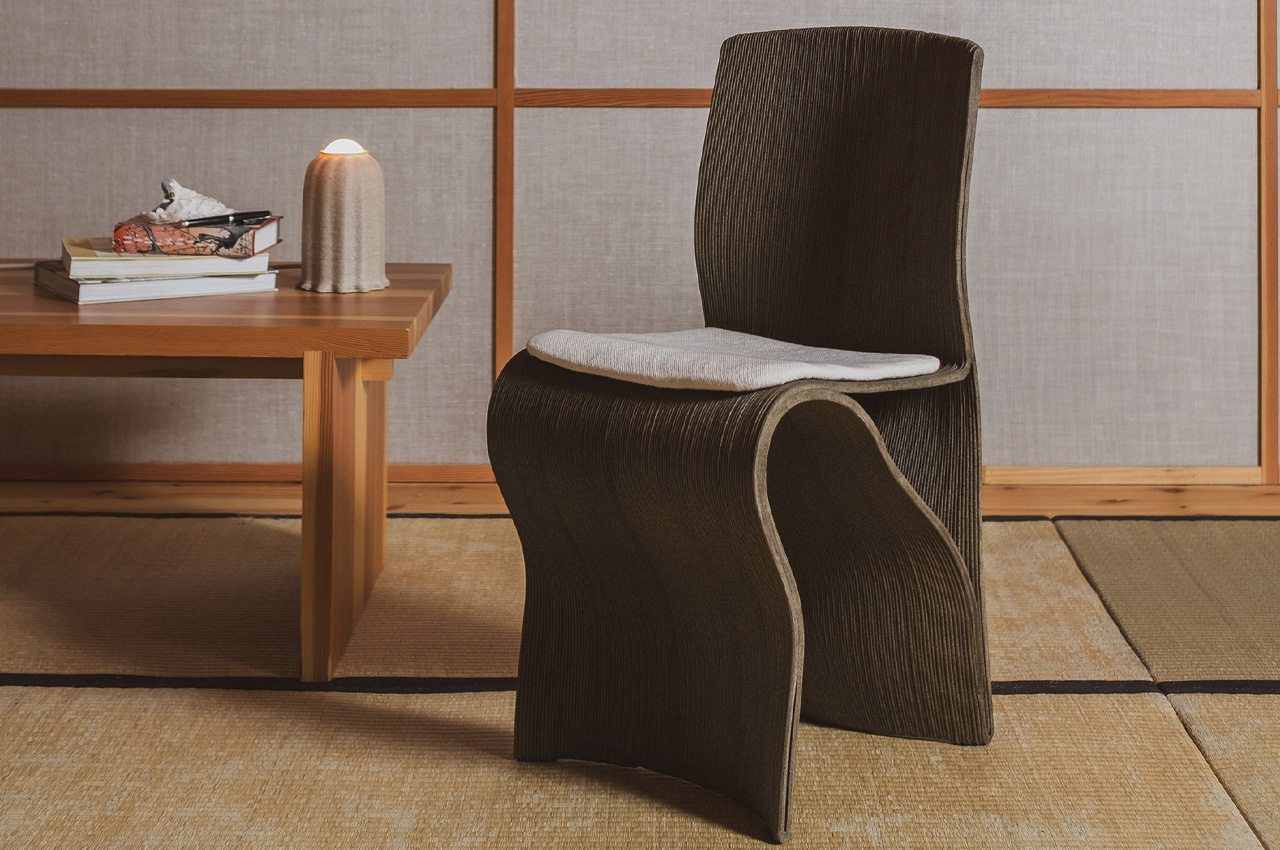
The Kelp Chair is constructed from a kind of kelp called the Nordic sugar kelp. The Nordic sugar kelp is a brown seaweed that grows in the North Atlantic and North Pacific Oceans. This seaweed is then converted into a bioplastic, and then 3D printed. The Sugar Kelp cair also includes a cushion which is made from a material from an identical source. The unique upholstery is crafted from Keel Labs’ seaweed-based Kelsun fiber, while the foam filler is made from a kelp biofoam which is produced by the Norwegian start-up Agoprene. This innovative chair is supposed to be biodegradable till the end of its life cycle.
It's a post-Digital Markets Act (DMA) world, and Spotify continues to test what that means for its iOS app. The music streamer announced that it submitted an update for Apple's approval that would allow Spotify to display "basic pricing and website information" on its app in Europe and "the bare minimum outlined under the European Commission's ruling in its music streaming case." Within a few hours, Apple had rejected the update.
"Apple continues to break European law,” and unfortunately that means we still can’t give EU consumers the information they need and the choices they deserve in our app. Here’s what we mean. pic.twitter.com/tkcXQkRqLy
In the news, shared in a post on X (formerly Twitter), Spotify's chief public affairs officer Dustee Jenkins further stated, "By charging developers to communicate with consumers through in-app links, Apple continues to break European law. It's past time for the Commission to enforce its decision so that consumers can see real, positive benefits."
In the hours following Spotify's stunt, Apple swiftly moved to reject the update. In a response sent to Spotify and shared with Engadget, the company said the following:
Hello team at Spotify,
We are reaching out to let you know about new information regarding your app, Spotify - Music and Podcasts, version 8.9.33.
As you may be aware, Apple created a new Music Streaming Services Entitlement (EEA) for iOS and iPadOS music streaming apps offered in EEA storefronts. The entitlement allows music streaming apps to use buttons, external links, or other calls to action to direct customers to a purchase mechanism on a website owned or controlled by the developer. You must accept its terms before adding any of these capabilities to your app. Please find more information about the entitlement here.
We note that your current submission includes a call to action to purchase a Spotify subscription on your website. As such, you must accept the terms of the Music Streaming Services Entitlement (EEA) and include the entitlement profile in your app for submission. To be clear, this entitlement is required even if your app does not include an external link (nor does it require that you offer an external link). We will, however, approve version 8.9.33 after you accept the terms of the Music Streaming Services Entitlement (EEA) and resubmit it for review.
If you have any questions about this information, please reply to this message to let us know.
Best regards,
App Review
Spotify is — surprise! — not pleased with this development. A spokesperson for the company told Engadget that "Apple has once again defied the European Commission’s decision, rejecting our update for attempting to communicate with customers about our prices unless we pay Apple a new tax." They added that Apple's "disregard for consumers and developers is matched only by their disdain for the law."
Apple and Spotify have consistently butted heads over what the latter can and can't do with its iOS app. Following the DMA going into effect, Spotify submitted an update to Apple that would have allowed users to purchase plans directly from the app, but Apple rejected it. Apple did so even though the European Union had just hit it with a nearly $2 billion fine for "blocking" alternative music apps. The EU is also investigating Apple, Meta and Google for self-preferencing and charging developers additional fees.
Update, April 25 2024, 2:50PM ET: This story has been updated twice since publishing. The first update, at 8:45AM ET, included Spotify's reaction to Apple's rejection. The second update, published at 2:50PM ET, included a letter sent by Apple to Spotify.
This article originally appeared on Engadget at https://www.engadget.com/spotify-tests-apples-resolve-with-new-pricing-update-in-the-eu-120004754.html?src=rss