These Edible Gummy Dungeons and Dragons Characters raised over $300,000 on Kickstarter

They say you shouldn’t play with your food… but that’s precisely what the Gummyquest was designed for. These mouthwateringly mythical treats were designed to make your game nights fulfilling as well as filling! Meet Gummyquest, an all-encompassing kit of more than 150 characters straight out of a fantasy roleplaying tabletop game. You’ve got dragons, goblins, heroes, dice, potions, everything needed for a rewarding game… but the best part? All the characters are edible! Made out of a chewy gummy gel (like your gummy bears or worms), every character or element in the Gummyquest is edible, with each individual piece having its own distinct flavor. Play your turn, kill a character, use a potion, and destroy the evidence by eating it. It’s a fun new twist on your favorite game with 25 different flavors to keep every single round uniquely tongue-tinglingly fun!

Designer: Jay

Click Here to Buy Now: $42 $60 (30%) off. Hurry! Limited availability! Raised over $310,000.

Stories make everything fun, especially food. Whether it’s your parents turning a spoon of veggies into a plane that flies into your mouth, or whether it’s a Michelin-star restaurant weaving stories through their intricate dishes, where there’s a story, there’s a memorable experience. That’s sort of what the Gummyquest series builds on, with its set of 151 characters and items (with more being added to the collection every day) that make for a perfect tabletop gaming day with friends, colleagues, or family.

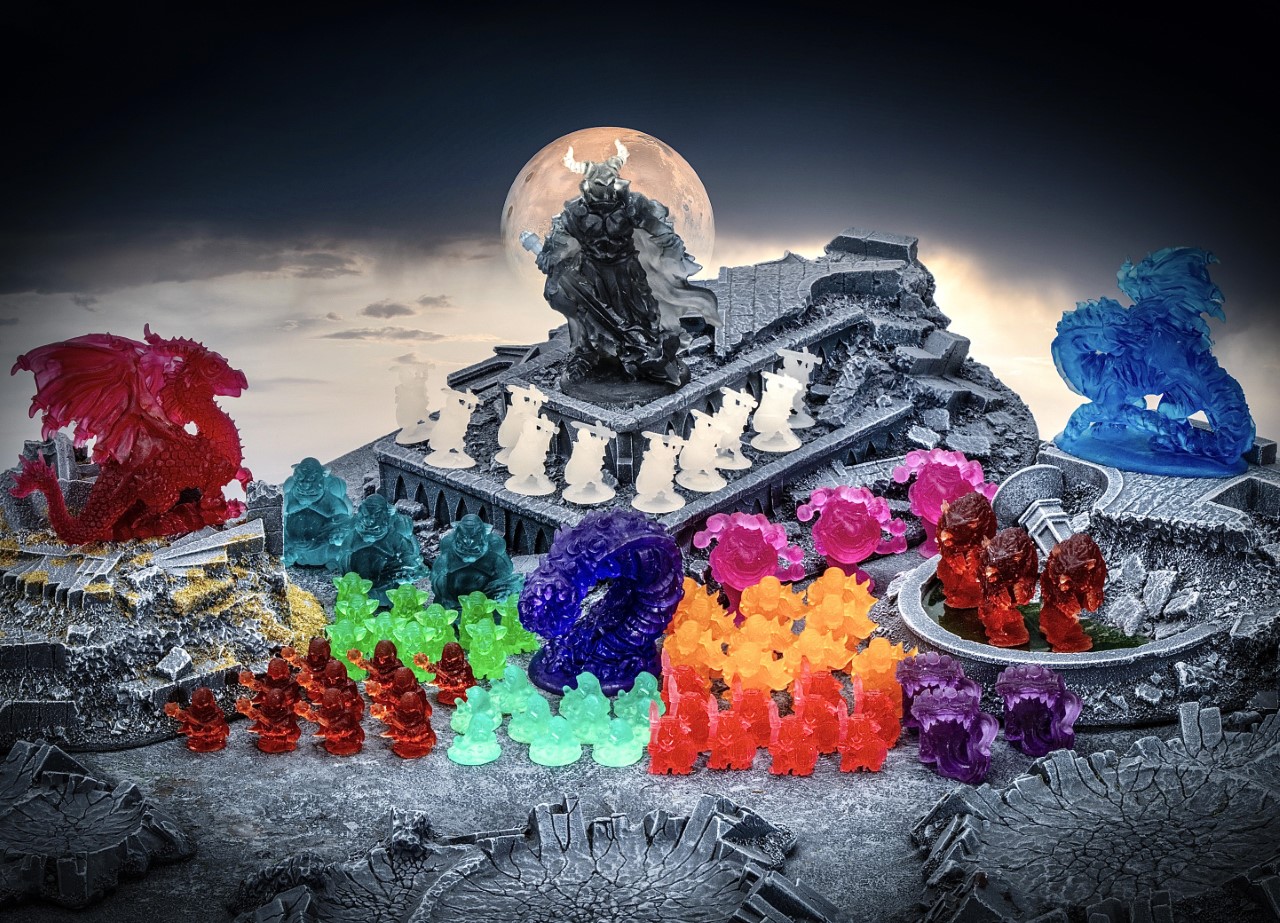
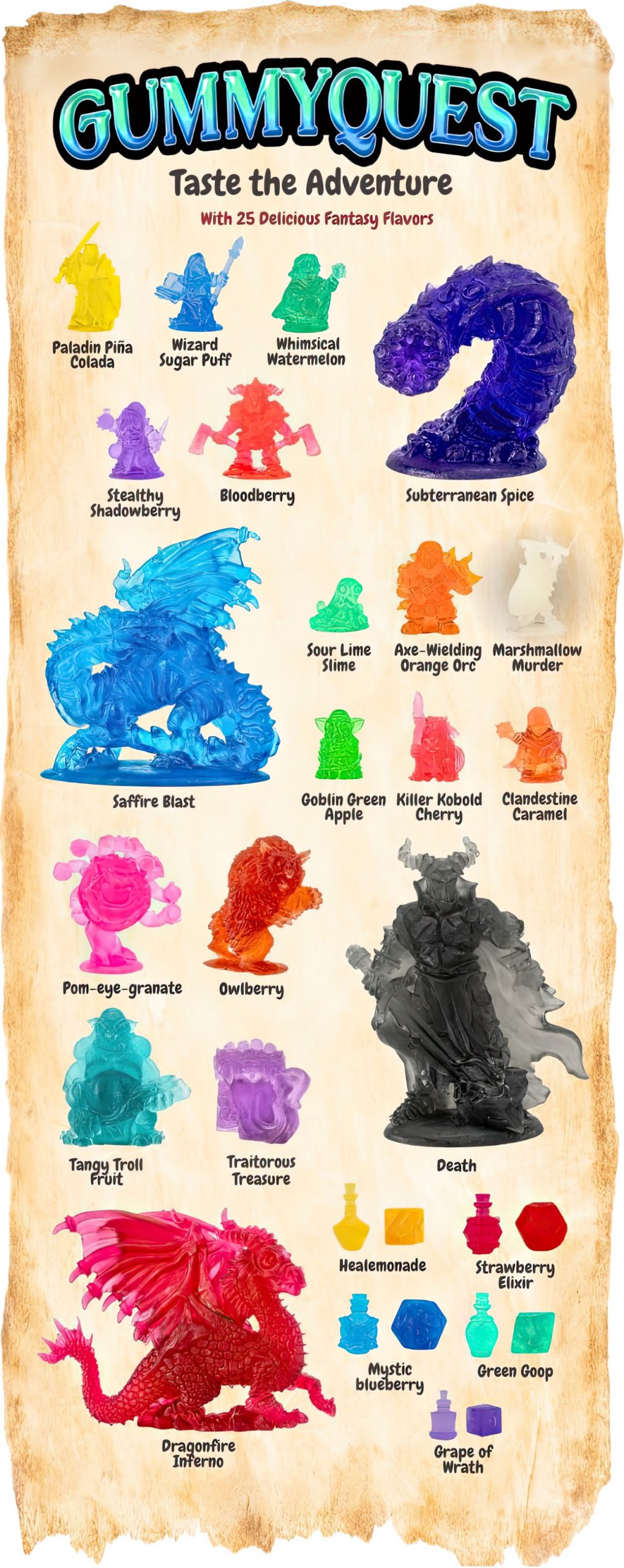
The collection encompasses practically every element of a roleplaying game like DND – you’ve got heroes and villains, orcs, goblins, dragons, knights, wizards, paladins, and even Dune-style sandworms. Along with players are potions and polyhedral dice to make the game even more interesting. All these elements encompass 25 rather mouth-watering flavors, from specific berries and fruits to more vaguely tropical flavor profiles, to even marshmallow-flavored items. “Some of our favorite fantasy flavors include Orcish Creamsicle, Paladin Piña Colada, Owlberry, and Death”, says creator Jay. Each box is packed with 151 gummies including 76 monsters, 15 heroes, 25 potions, and 35 dice.


The edible set is truly a work of art. Each single gummy was designed and sculpted by a meticulous team of people who fill shelves in every game store in America with miniatures from Dungeons & Dragons, Reaper Bones, and Warp Miniatures. The gummies were designed as a part of a broader story and theme, and were crafted to perfection, with details that would make you want to never eat a boring gummy bear or worm ever again.


Tragically, the set only lasts one or two, or maybe three games. Once the gummies run out, you’ll either have to revert back to playing with non-edible characters, or buy another set. Luckily, the Gummyquest box sets are on discount, priced at $42 for a set of 151 pieces. As the crowdfunding campaign gains speed (they’ve raised over $300k), the kit will include even more characters and items like gryphons, slime monsters, warrior princesses, and even a Kraken! Grab your Gummyquest while you can… I’m pretty sure they don’t expire, but don’t quote me.
Click Here to Buy Now: $42 $60 (30%) off. Hurry! Limited availability! Raised over $310,000.

The post These Edible Gummy Dungeons and Dragons Characters raised over $300,000 on Kickstarter first appeared on Yanko Design.


Otherworldly-Looking Origami-Inspired Lighting Fixture Seems To Suspend Mid-Air

Lighting designs today are truly innovative and unique, I mean you find all kinds of cool lighting designs out there! Today designers are creating unique, functional, and powerful pieces that not only light up a living space but also add an extra oomph factor! These lighting designs not only help you see in the dark, but they also function as an attractive and visually appealing piece. And, one such lighting design is Sora Light by Fung + Bedford for Frandsen.

Designer: Fung + Bedford for Frandsen

Designed by UK-based design duo Fung + Bedford, this statement light for the Danish brand Frandsen is inspired by the Japanese art of origami. As you look at it, you can see how widely and generously it has drawn on art the of origami. Called the Sora pendant light, it features a horizontal form and is artfully suspended between two cords, and flanked by wing-like intrusions, which gives the impression that it is floating in mid-air.

An LED strip light is embedded inside the bottom of the fixture, which allows it to radiate a soft and warm light. The subtle glow seems to spread across the lamp’s structure, which is crafted from tyvek – a paper-like and synthetic material produced from compressed fibers. Tyvek has been utilized since it is waterproof and features tear-proof characteristics. It is also a 100 percent recyclable material, according to the designers.

“A sculptural statement piece which appears to levitate in its surroundings, Sora exudes a serene, radiant aura whilst transcending the boundaries of traditional lighting design,” said Frandsen. And Sora truly has an almost other-worldly and ethereal look to it. It seems to suspend from the air, giving it a charming and floating quality. It can add an extra oomph factor, and loads of muted elegance to a living space, or even a commercial office space if you’re feeling experimenting.

The post Otherworldly-Looking Origami-Inspired Lighting Fixture Seems To Suspend Mid-Air first appeared on Yanko Design.

Bovet Récital 28 Prowess 1 world-timer stays accurate even when countries move to Daylight Saving Time

Bovet fan or not, you cannot help but be awe-struck by the Swiss luxury watchmaker’s complications, craftsmanship, and artistry in collector-worthy timepieces that are over the top for consumers like you and me. That means, even if it is beyond the depth of our pockets, the exceptional work ranging from the ridiculously priced Récital 22 Grand Récital to the new Bovet watch dubbed Récital 28 Prowess 1 is worth appreciating.

The latest addition to the company portfolio, Récital 28 Prowess 1 is the first universal time watch that can adjust to the changes in Daylight Saving Time (DST). While presenting itself as a timepiece that should never let you lose time no matter where you are in the world, it is a significant leap from traditional world timers and features an inventive perpetual calendar, flying tourbillon, and an in-house movement with up to 10 days of power reserve.

Designer: Bovet

Before delving into the details about the abovementioned features, let’s go through how the watch is constructed and what you get. The Récital 28 Prowess 1 comes in a new 46.3 mm Writing Desk case created by Bovet itself in choice of 18K Red Gold, 950 Platinum, and Grade 5 Titanium. Irrespective of the material, the intricately detailed watch features hand-finished and hand-engraved bridges.

The sizeable case allows the dial to make room for a lot of complications starting with the patented double-sided flying tourbillon on the top at 12 o’clock. The highlight is in the center where the 24 cities are displayed on rollers that are controlled through the crown. Each of these cylinders have four positions for UTC, AST (American Summer Time), EAS (Europe and America Summer Time), and EWT (European Winter Time). With the push of the crown, the four different time zones can be adjusted independently.

Given the intricate complication, the Récital 28 Prowess 1 worn on a black alligator leather strap, is extremely exclusive with production limited to only eight pieces a year (in each case material). Of course, owning the watch starting at CHF 650,000 (titanium edition) is a rarity, but if you have one, you can in addition to the flying tourbillon and the DST world-timer, also flaunt the built-in perpetual calendar. With the date and leap year indicator, the perpetual calendar – inner workings visible through the exhibition caseback – is mounted on rollers that roll back automatically like a slot machine at midnight, at the end of the month and at the culmination of the year.

The post Bovet Récital 28 Prowess 1 world-timer stays accurate even when countries move to Daylight Saving Time first appeared on Yanko Design.

Meta asks a judge to throw out an FTC antitrust case

Meta has asked a judge to dismiss a Federal Trade Commission antitrust case against the company before it goes to trial. Alongside 48 states and territories, the FTC sued Meta in 2020 in an attempt to force the company to divest Instagram and WhatsApp, which it bought in 2012 and 2014, respectively.

The agency and dozens of attorneys general claim that Meta (then known as Facebook) bought the two platforms to stifle competition. Meta CEO Mark Zuckerberg “recognized that by acquiring and controlling Instagram, Facebook would not only squelch the direct threat that Instagram posed, but also significantly hinder another firm from using photo-sharing on mobile phones to gain popularity as a provider of personal social networking,” the FTC asserted. “Just as with Instagram, WhatsApp presented a powerful threat to Facebook’s personal social networking monopoly, which Facebook targeted for acquisition rather than competition.”

Meta notes that not only did the FTC approve both acquisitions in the first place, but its initial complaint was dismissed for failing to to state a plausible claim. While a judge has allowed an amended complaint to move forward, Meta claims that "the agency has done nothing to build its case through the discovery process" to show that the company holds monopoly power in the “personal social networking services” market and that it caused harm to consumers and competition through the purchases.

In its motion for summary judgment, the company points out that Instagram, which accounted for nearly 30 percent of the company's total revenue in the first half of 2022, wasn't making any money when it bought the service for $1 billion in 2012. Instagram had just two percent of the billion-plus users it has now, Meta says, adding that it introduced features such as direct messages, livestreaming, Stories and shopping. As for WhatsApp, Meta made the service free to use, added end-to-end encryption and implemented voice and video calling.

Meta argues that it has invested billions of dollars and millions of hours of work into the apps. It claims that both Instagram and WhatsApp are in a better place as a result, to the benefit of consumers and businesses.

Elsewhere, Meta argues that the FTC failed to establish a relevant antitrust market, claiming that the agency's definition of an “personal social networking services” market used "an artificially limited set of only four companies – Facebook, Instagram, Snapchat and MeWe – ignoring many of the most popular activities people engage in on Facebook and Instagram." For instance, Meta points out that YouTube and TikTok offer similar short-form video features to Reels.

What's more, the FTC's allegation that Meta has a “dominant share” of the artificial “personal social networking services market” doesn't hold up, according to the company. Meta says that's because the FTC's "market share numbers are meaningless without a properly defined market."

Meta, which accused the FTC of wielding "structurally unconstitutional authority" against the company in a separate case last year, also took the opportunity to take more potshots at the agency and antitrust rules. "The decision to revisit done deals is tantamount to announcing that no sale will ever be final," Jennifer Newstead, Meta’s Chief Legal Officer, wrote in a blog post. Newstead claims the Instagram and WhatsApp "lawsuit not only sows doubt and uncertainty about the US government’s merger review process and whether acquiring businesses can actually rely on the outcomes of the regulatory review process, but it will also make companies think twice about investing in innovation, since they may be punished if that innovation leads to success."

This article originally appeared on Engadget at https://www.engadget.com/meta-asks-a-judge-to-throw-out-an-ftc-antitrust-case-203950108.html?src=rss

Hear me out – A Coffee Machine shaped like a Coffee Bean is kind of a brilliant idea

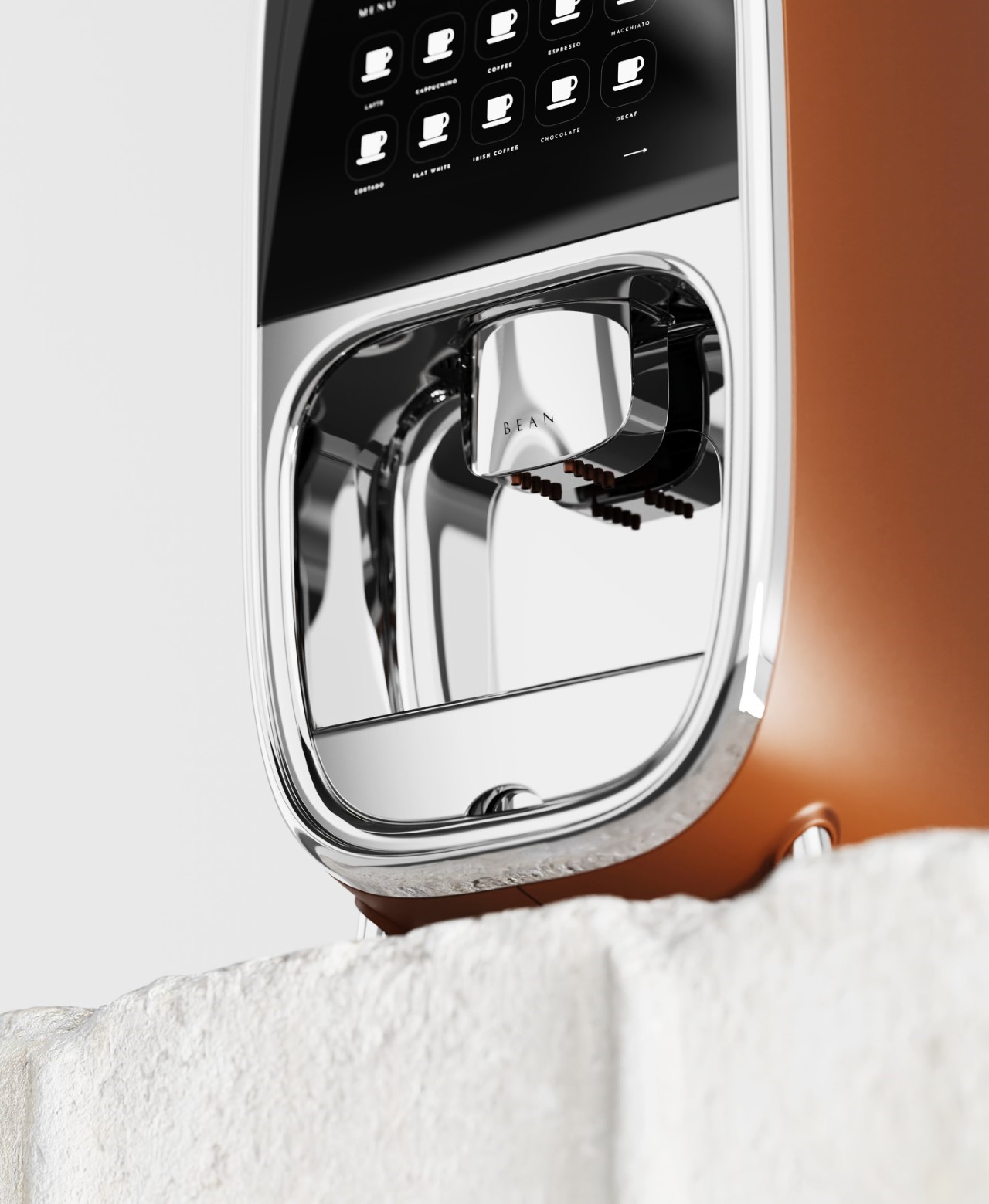
You are what you eat, they say… surely the Bean Coffee Machine eats a whole lot of coffee beans, am I right?! A clever visual redesign of the standard coffee machine, this particular appliance by Juliana Juleva tries to make the ubiquitous coffee-brewer instantly recognizable. The way she does it is by making the machine look like a giant bean from afar. Look at it and even if you’re not a coffee drinker, chances are you’ll recognize exactly what it is and what it’s used for. The intuitive design is further complemented by an intuitive user interface, which employs a simple yet large touchscreen to help you brew the perfect cup of coffee ever. Place your empty mug, tap a button, and wait for the giant bean to give you a cup of pure bliss!

Designer: Juliana Juleva

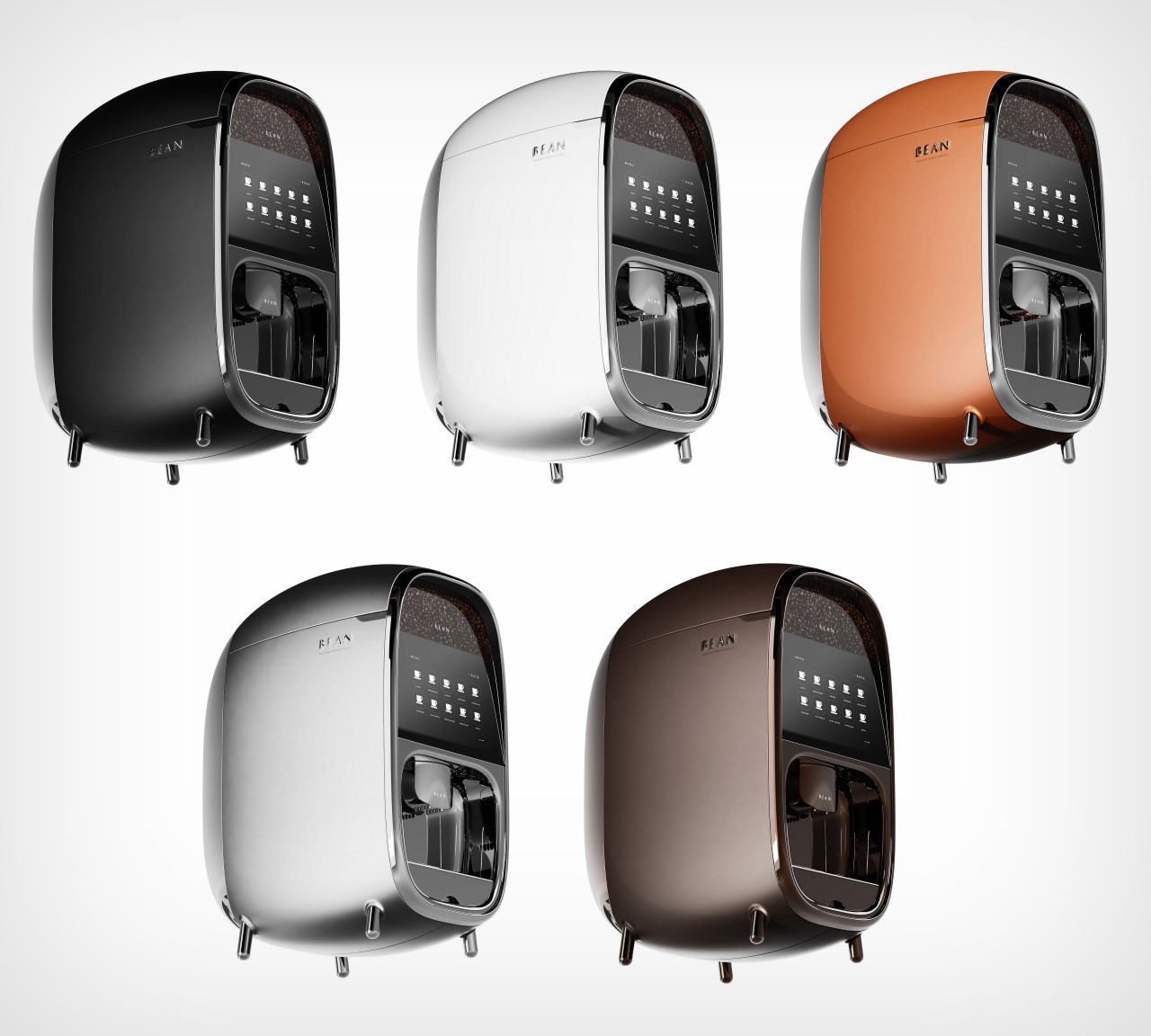
The Bean Coffee Machine doesn’t try to be too fancy. It doesn’t look overtly industrial, or too high-tech like something Apple would have designed. Instead, it tries to opt for visual familiarity by taking inspiration from the shape of a coffee bean. The machine comes with an oval shape, sporting broad and gentle curves that make it look as smooth as a roasted coffee bean. It’s propped up vertically on four legs, and comes with a relatively simple front surface that has the interface on top, and a dispenser at the bottom.

Using the Bean machine is incredibly intuitive too. A transparent window on top lets you look into the machine’s coffee storage, letting you know if it has enough supply of roasted beans. If not, all you do is load fresh beans in, and you’re ready to brew. Right underneath the window is an interface that has the simplicity of a menu card. Tap the kind of coffee you want Bean to brew and it gets to work. The coffee gets dispensed right into your cup below, letting you choose from multiple options from the classic flat white or americano, to even more eclectic options like a decaf.

The Bean comes in 5 colors – black, white, bronze, silver, and our favorite, metallic brown. Sure, everyone’s entitled to having a coffee machine that complements their tastes and interior decor, but the metallic brown Bean just plays to the visual metaphor perfectly, and it kind of does look like an instant classic too, if you ask me personally. The machine was designed for a Russian coffee brand, although it hasn’t hit the market yet.

The post Hear me out – A Coffee Machine shaped like a Coffee Bean is kind of a brilliant idea first appeared on Yanko Design.

Tesla is reportedly focusing on robotaxis over its planned budget EV

Tesla has scrapped plans to make an affordable electric vehicle (EV), according to Reuters. CEO Elon Musk said as recently as January that he was “optimistic” the low-cost EV would arrive in the second half of 2025. The automaker will instead reportedly “go all in” on robotaxis, which Musk has described as the future of transportation.

The canceled entry-level EV project — often called “Model 2” — was reportedly codenamed “Redwood.” The automaker had predicted a weekly production volume of 10,000 vehicles, and Musk said, “We’ll be sleeping on the line” to make it a reality. He had previously claimed Tesla was working on two new EV models expected to sell up to five million units annually.

For nearly two decades, the CEO has described his long-term goal as using luxury vehicles to build Tesla’s brand before using those profits to fund budget models. “When someone buys the Tesla Roadster sports car, they are actually helping pay for development of the low cost family car,” Musk wrote in a 2006 “Secret Tesla Motors Master Plan” memo. In the following years, he often echoed those sentiments to customers and investors.

The cancellation would leave the $39,000 and up Model 3 sedan as Tesla’s cheapest vehicle. The scrapped budget model was expected to start at around $25,000.

Reuters’ sources told the outlet they were told about the cancellation in a late February meeting “attended by scores of employees.” The publication says it reviewed internal Tesla messages about the pivot, including one advising staff to hold off on telling suppliers “about program cancellation.” Other messages allegedly told staffers that “suppliers should halt all further activities related to H422/NV91,” referring to the budget model’s external and internal codenames.

Musk posted on X (Twitter) on Friday, “Reuters is lying (again)” in response to the story — without listing any points of contention.

Tesla has its work cut out for it. Not only has EV demand slowed in the US, but competition in China is fierce, with the fast-growing BYD leading the country’s entry-level market. The Chinese automaker said earlier this month that its sales increased 13 percent year over year. Meanwhile, Tesla said on Tuesday that its deliveries dropped eight percent annually while falling 20 percent from the previous quarter.

This article originally appeared on Engadget at https://www.engadget.com/tesla-is-reportedly-focusing-on-robotaxis-over-its-planned-budget-ev-190833687.html?src=rss

Annual Max subscriptions are still 40 percent off, plus the rest of this week’s best tech deals

As another week winds to a close, it's time for Engadget's roundup of the best deals we spotted this week. There's no giant sale happening right now, but we still found a few decent discounts on some of our recommended tech, including 40 percent off a year's subscription to Max's streaming service, $130 off our favorite Android tablet and a new low price on our top mouse for gaming. If you've been considering a foldable phone but have been (understandably) turned off by the high prices, a both Samsung's Galaxy Z Fold 5 and Google's Pixel Fold are currently on sale and going for $400 and $500 off, respectively. Here are the best tech deals from this week that you can still get today. 

Follow @EngadgetDeals on Twitter and subscribe to the Engadget Deals newsletter for the latest tech deals and buying advice.

This article originally appeared on Engadget at https://www.engadget.com/annual-max-subscriptions-are-still-40-percent-off-plus-the-rest-of-this-weeks-best-tech-deals-172622166.html?src=rss