Get ready to drive and fly with this modular Chinese flying car debuting at CES

Numerous flying car concepts have come and gone. Some remain in the pipeline after decades and a few have evolved into enticing prototypes. There are just a handful that are slightly near realism and ready to take off. Not that these are iterations of the dream flying car I have, where I would sit in a normal vehicle driving to the office for an urgent meeting and when I hit traffic, I’d just shift from drive mode to flying mode and take to the sky, over the congestion below… Ah!

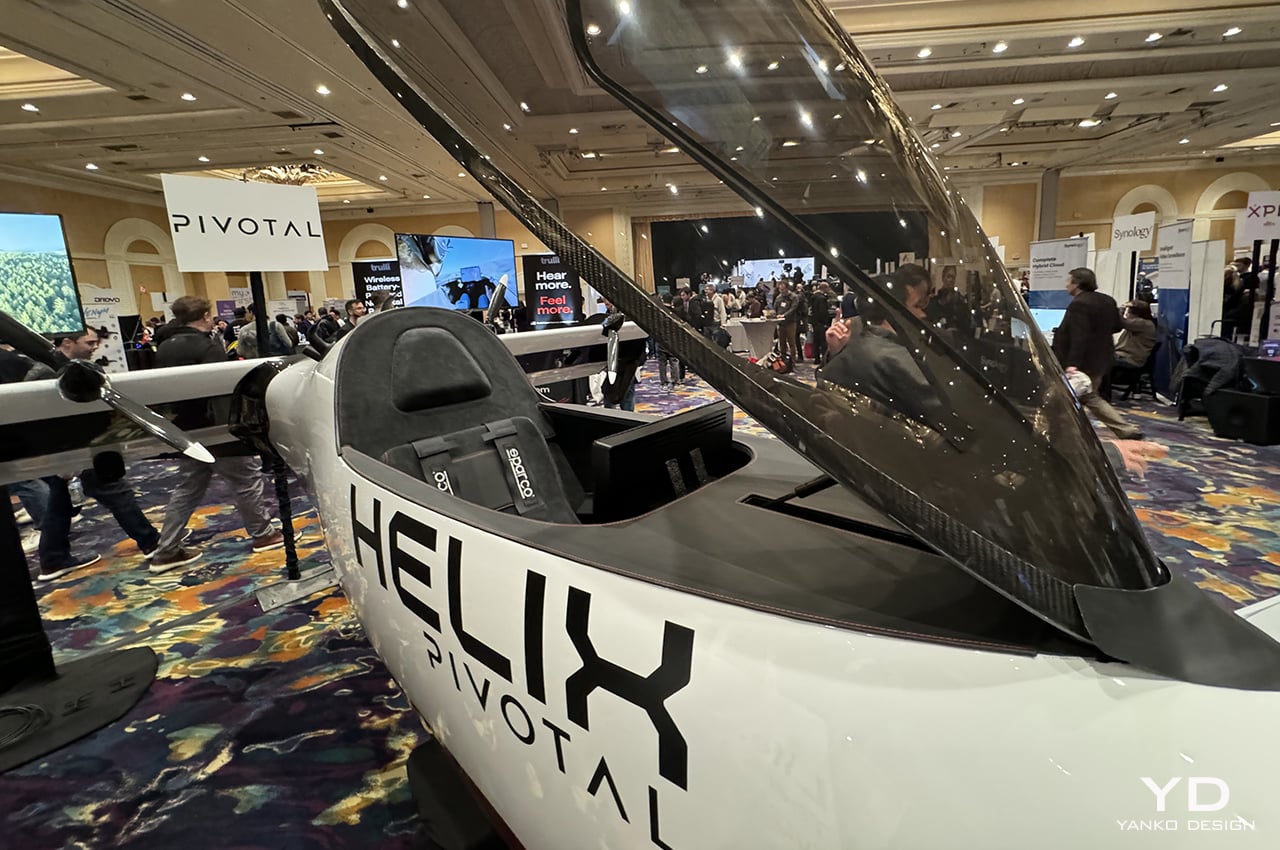
These ideas of flying cars we are seeing pop up at the mega tech fest in Vegas are VTOLs with electric propulsion, designed to just fly straight up – without a runway – when you need personal mobility of the future to flaunt. After the fruitful sight of the Helix, the first marketable eVTOL aircraft slated to ship in the US starting June 10, 2024; we came across the Xpeng AeroHT eVTOL Flying Car at the ongoing CES.

Designer: Xpeng AeroHT
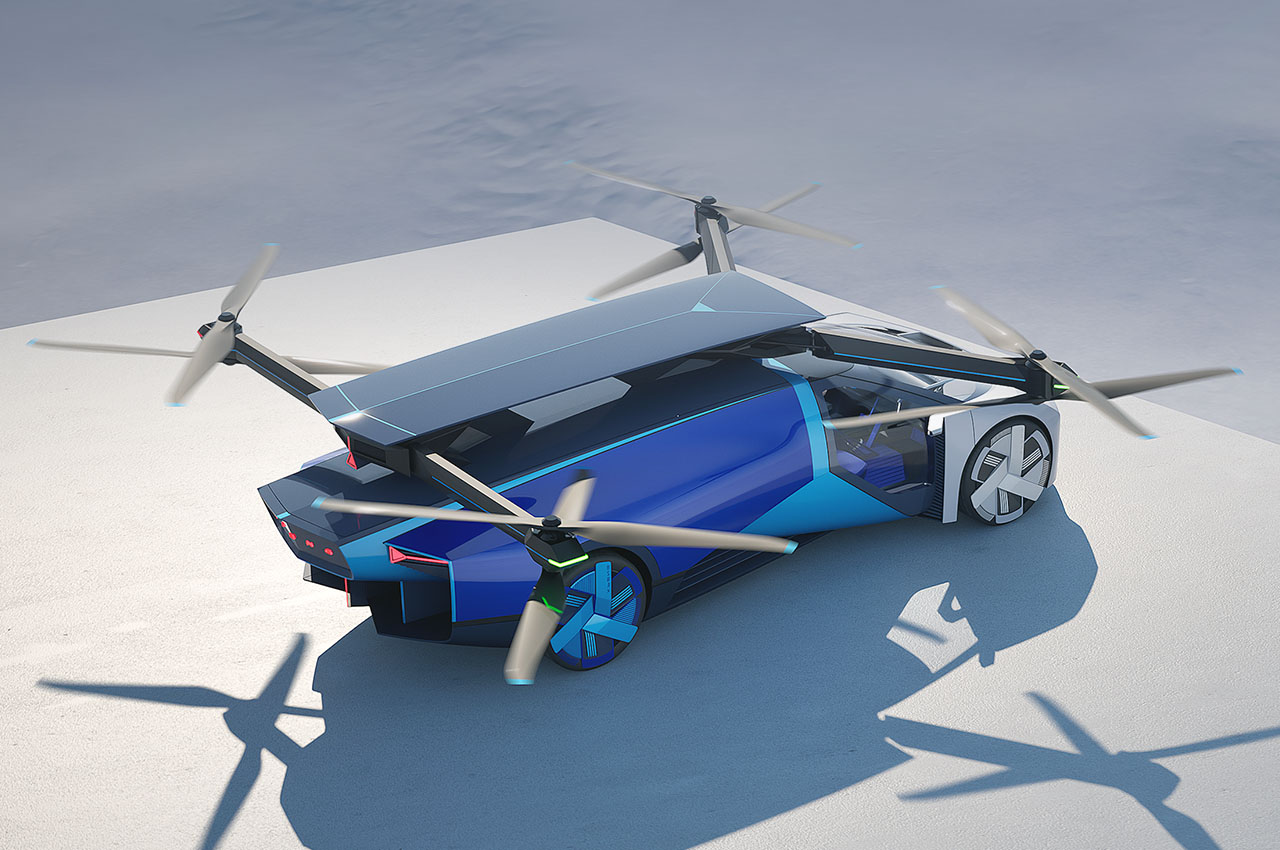
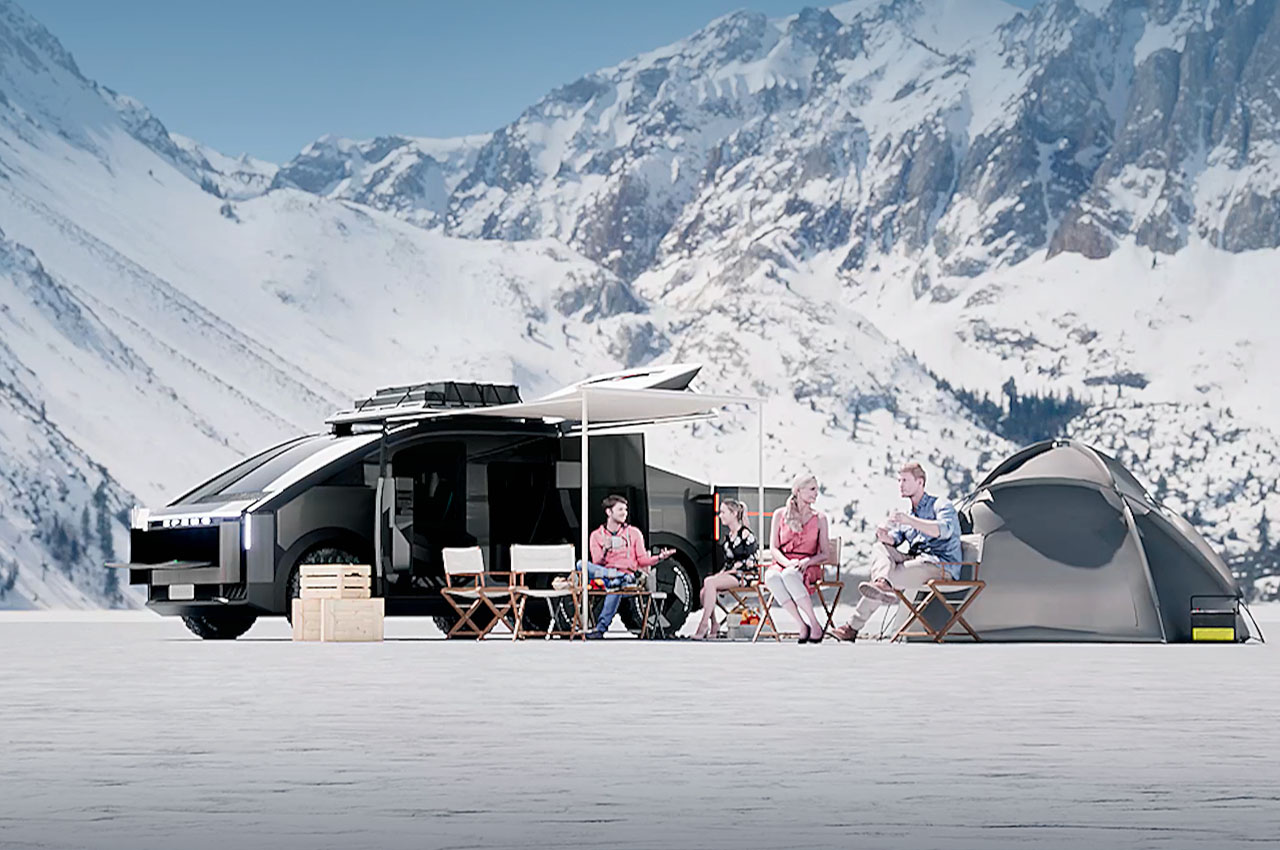
We learn this eVTOL flying car is designed and developed by AeroHT electric aviation wing of the Chinese auto company XPeng. Unlike traditional ideas, this modular flying car has a different approach. It comes in a two-part design, one part car and other an eVTOL, so it seamlessly switches between land and aerial modes.
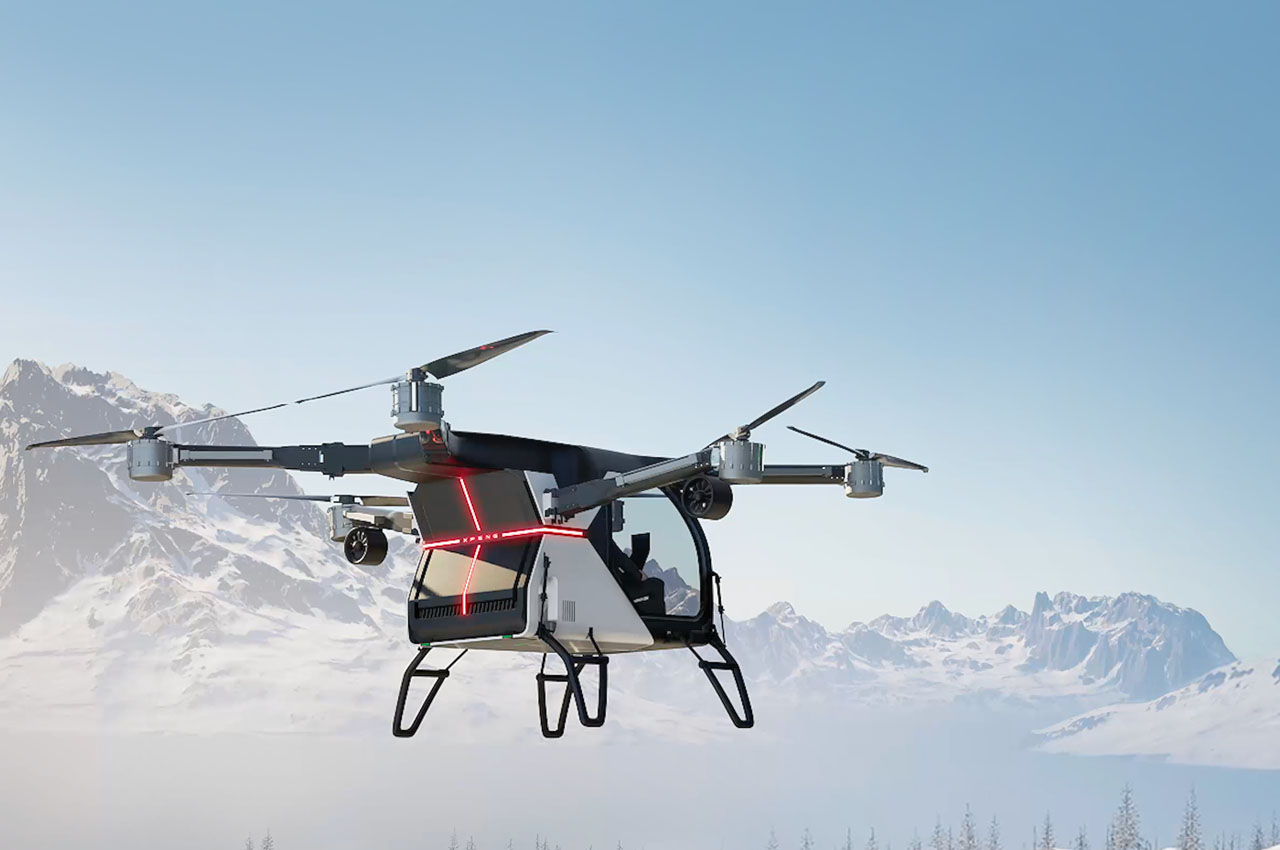
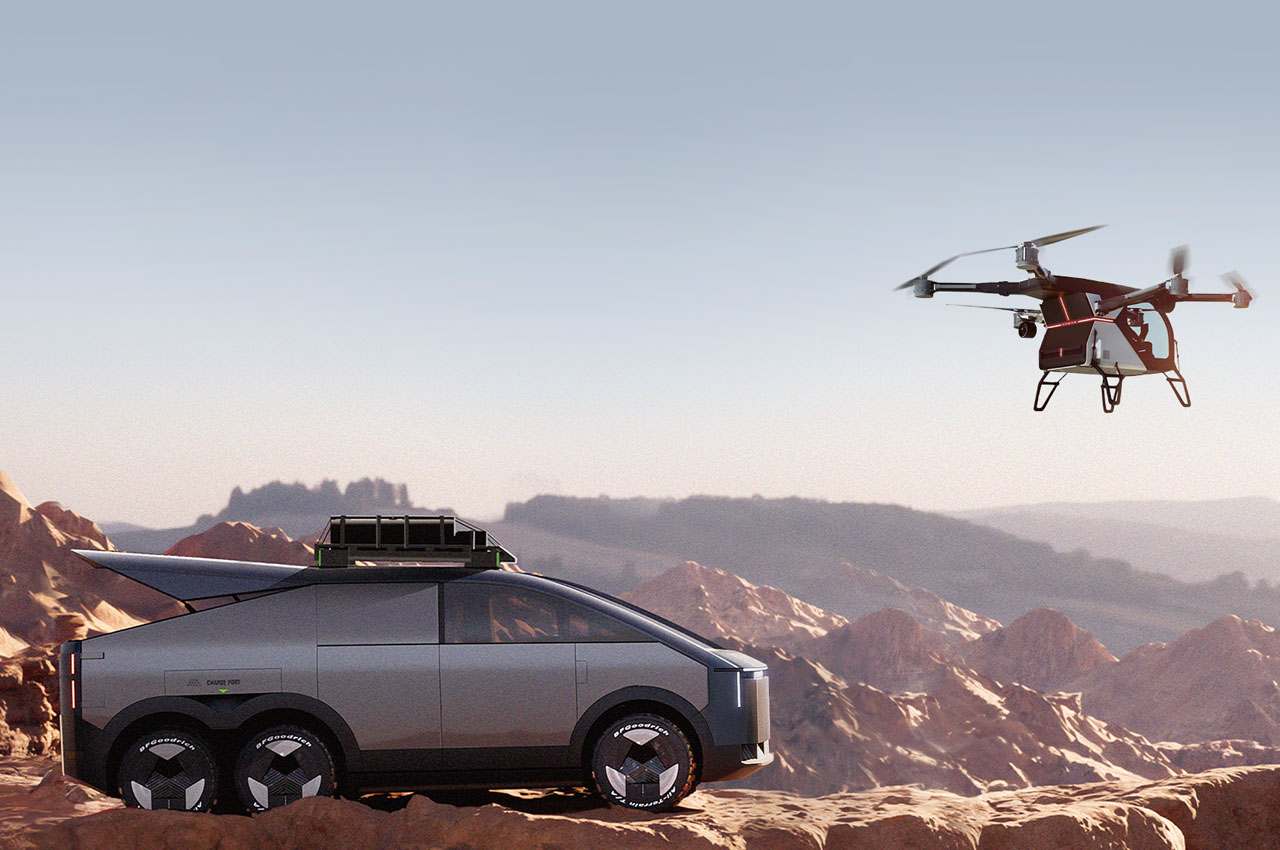
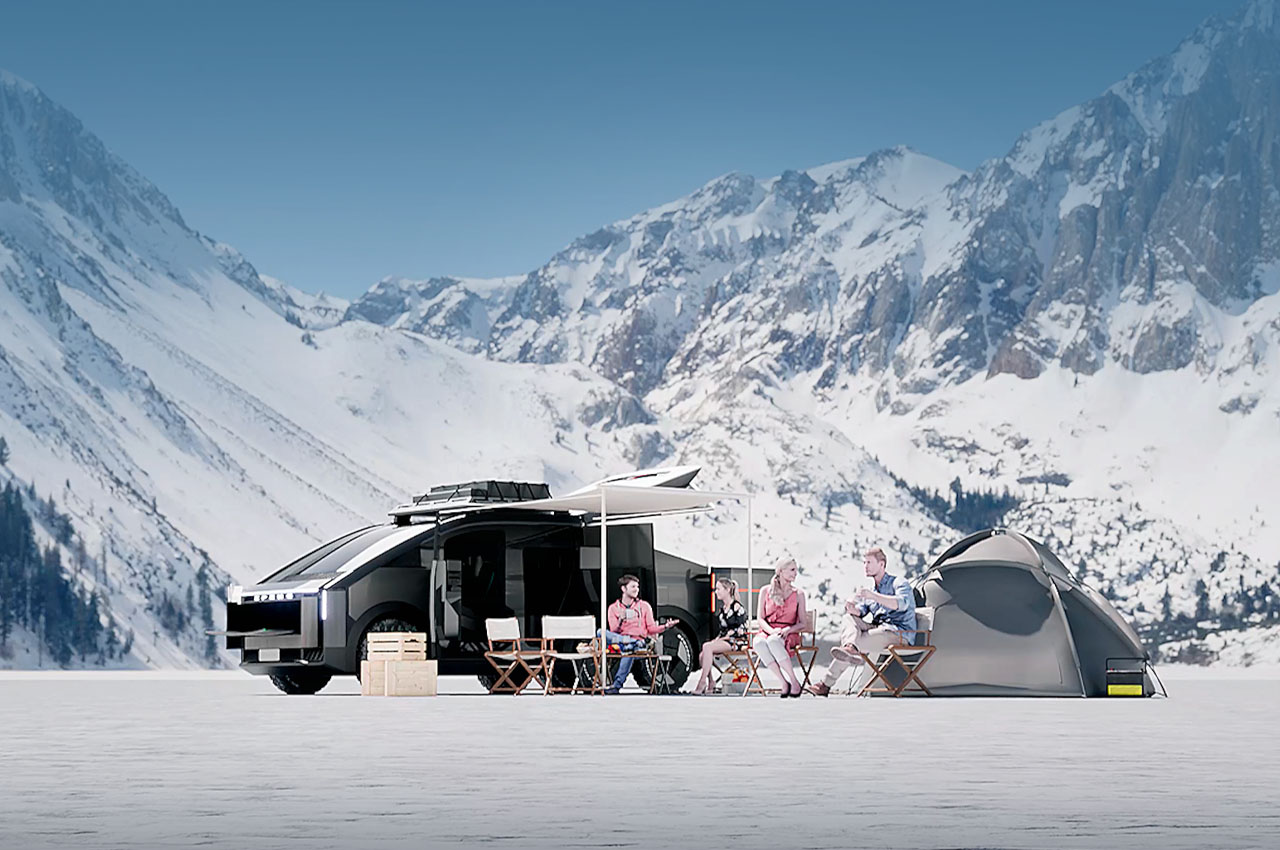
Dubbed the land aircraft carrier, it has an all-electric powertrain. Designed in a futuristic form factor – somewhat hinting at the aesthetics of the Cybertruck – this is a 6×6 all-wheel-drive vehicle you would want to drive all day. The car functions as a land aircraft carrier and when you want to reach the destination faster, you can reach out to a tiny two-person eVTOL helicopter called air module from the rear hatch and get going.
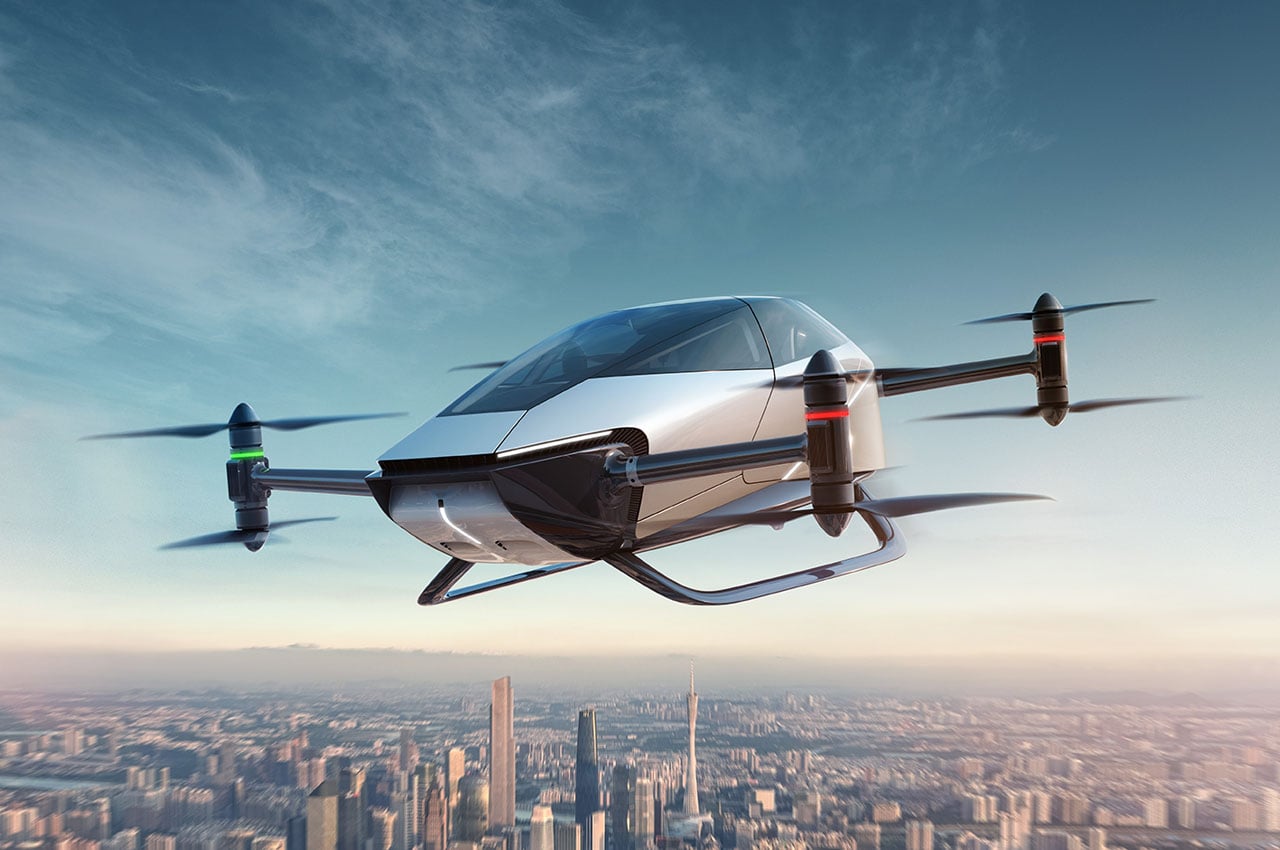
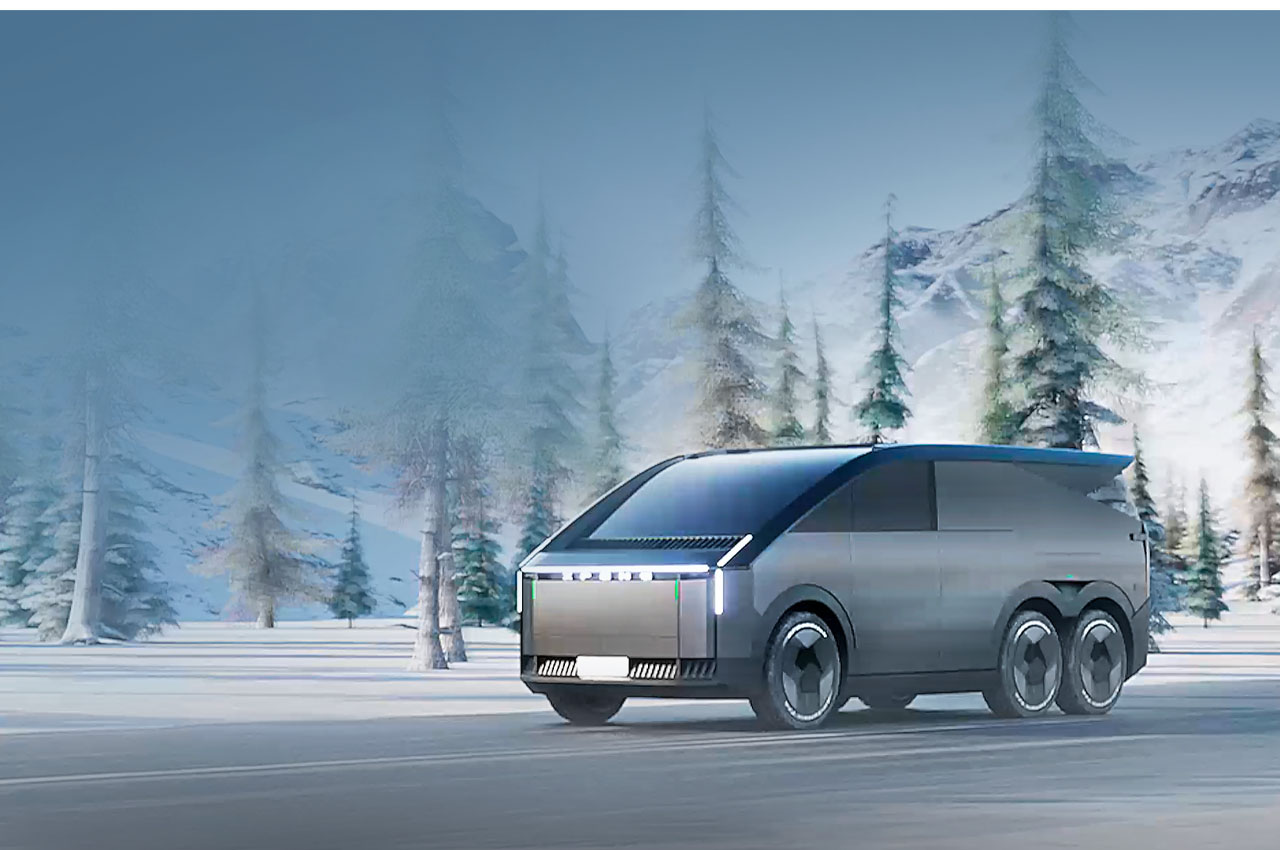
We were fascinated by the demonstration of the wonderful act of the land and aerial modes of the enthralling low-altitude aircraft capable of vertical take-off and landing. Visioned with safety in mind – both for land and air modes – the eVTOL comes with manual and autonomous flight modes, making it one of the safest personal, electric flying cars. We tried to hold up some conversation with the team at CES, but we do not have information on the battery unit or pricing, we learned it is going into production and should be available for preorder soon. Shipping is likely to begin in China toward the end of 2025.

The post Get ready to drive and fly with this modular Chinese flying car debuting at CES first appeared on Yanko Design.
2024 Bon Voyage Trailer is LG’s foray into designing intelligent life solutions

LG has been a force to reckon with at CES 2024. Especially with the amazing set of TVs it has brought to Vegas. This includes the show-stopper 77-inch wireless, transparent OLED TV that lets you use it as a décor item you can peep beyond, when you’re not enjoying your regular dose of entertainment on it.

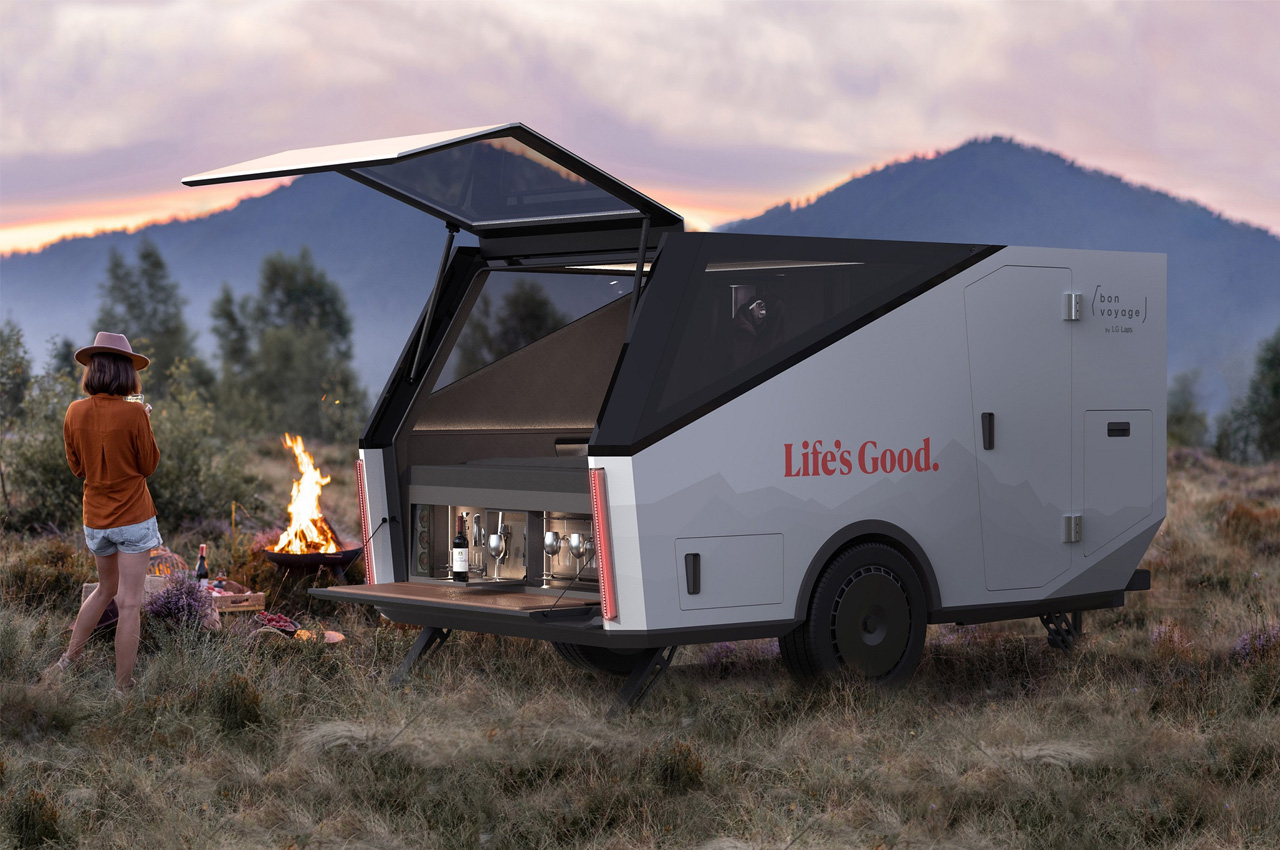
Of course, new speakers, TVs and other forms of consumer tech are expected from the South Korean tech company. What is really not a given is a micro-housing solution for adventurers. But that’s what LG Labs, the company’s marketing division for innovative products – has on exhibit at CES in the form of 2024 Bon Voyage camping trailer.

Designer: LG Labs

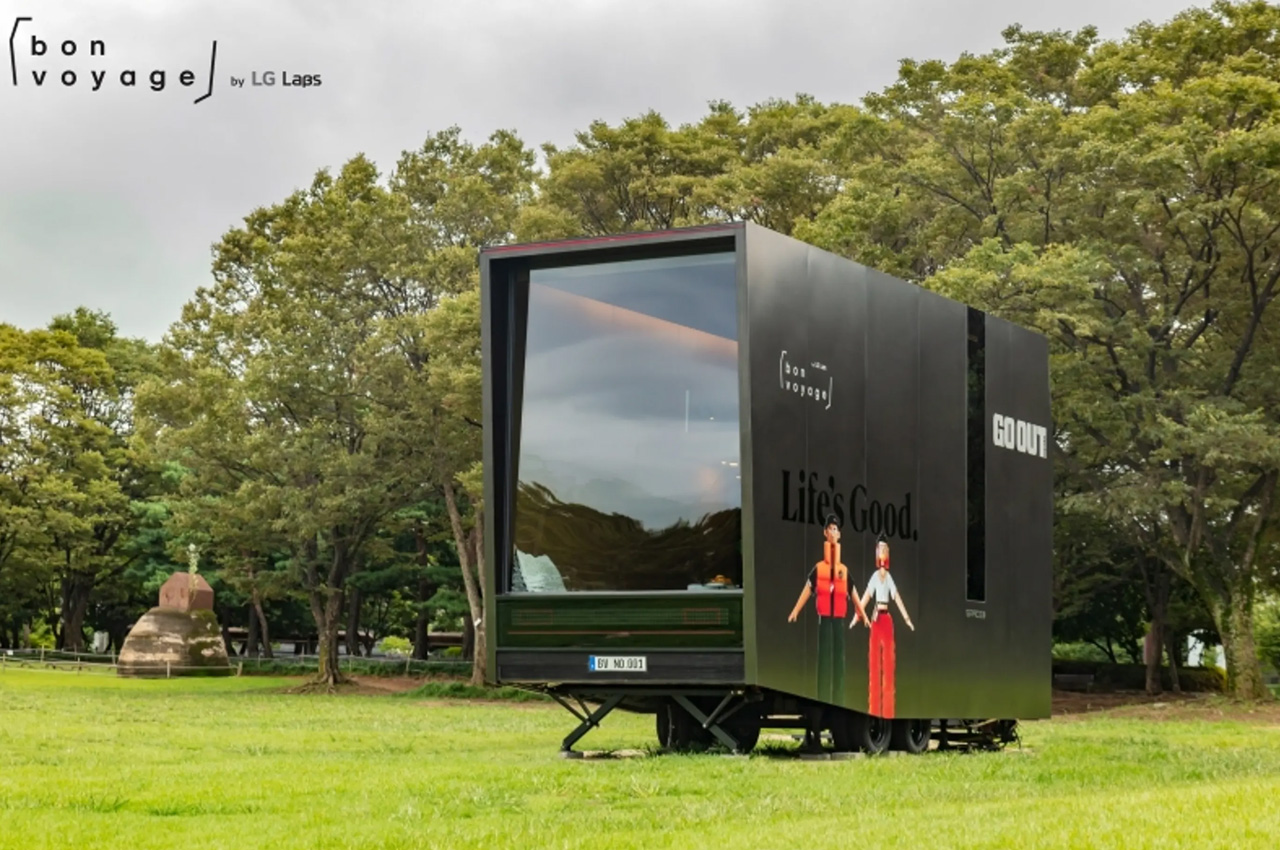
The Bon Voyage trailer is, frankly then, LG’s foray into designing intelligent life solutions for the masses. This trailer is based on the bigger tiny living solution – with the same name – released back at the Wanderlust Korea 2023. It was a duplex home built with 20sq meter of living space comprising diagonal corridors and ergonomic stairs.

The idea behind creation of the Bon Voyage was to understand the trends in housing culture and to gauge what people wanted. Through the received feedback, LG Labs has now scaled down the Bon Voyage – showing off at CES – into the size of the towable trailer which can be trailed behind your electric vehicle.

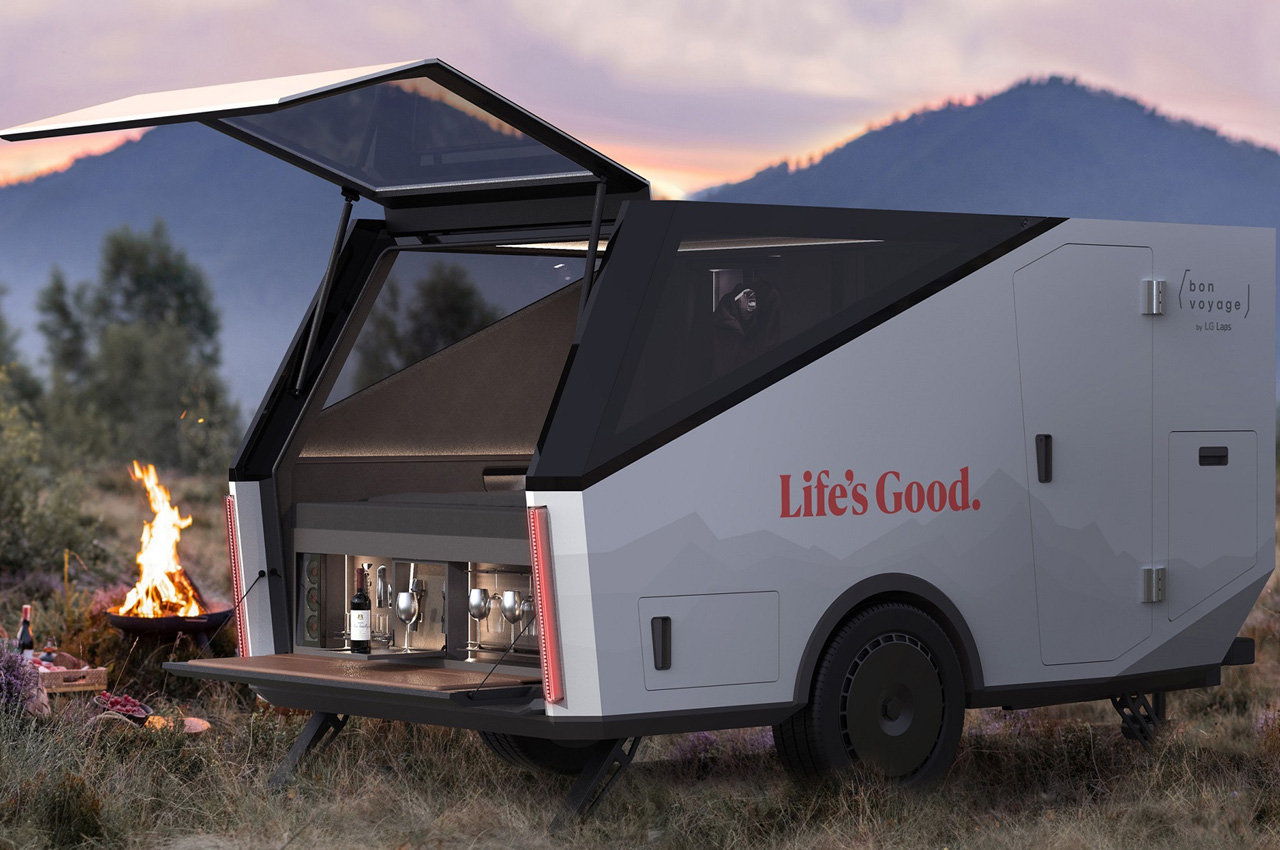
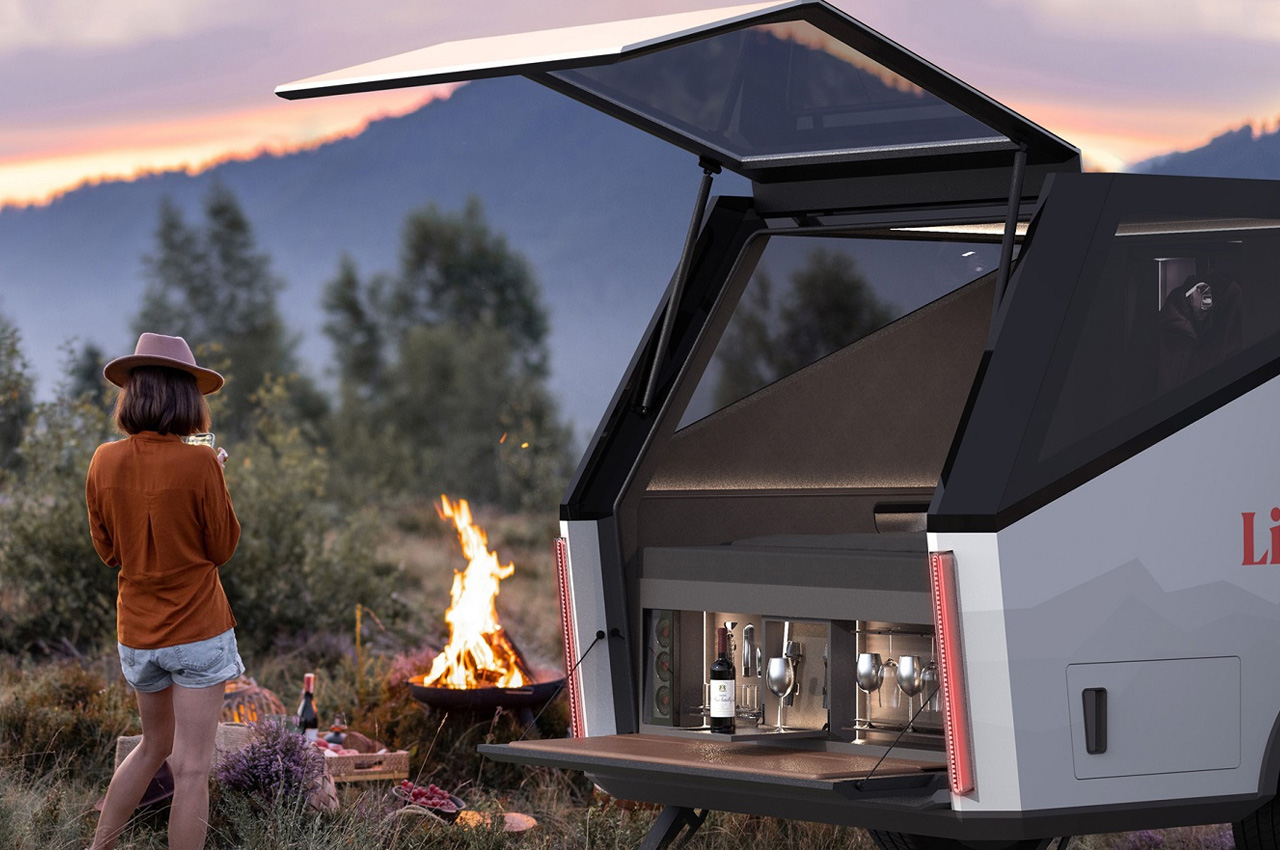
Designed as a cozy personal space on the road, the new Bon Voyage trailer is 7 feet high, 6.6 feet wide, and over 12 feet long. In this little space, LG has managed to stuff a range of furniture, storage, and a bed. It makes the living space well-lighted with the use of large glass windows and a side entry.

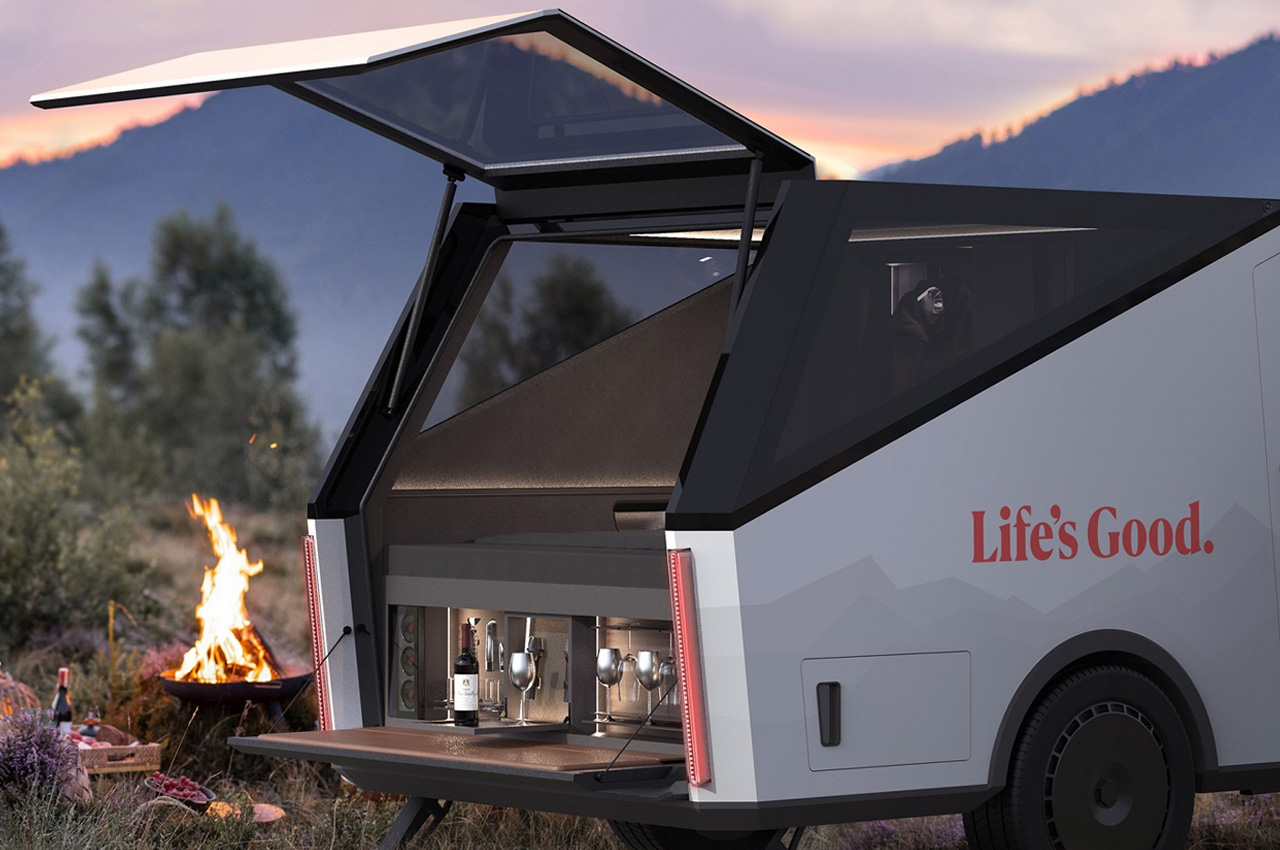
The basic construction is done with the use of low-carbon steel materials presumably, and it features a flatter roof for limited headspace. With the sleeping space tucked toward the front, the tailgate has a functional kitchen stocked up with an electric stove, water purifier, and refrigerator. From how things appear, there is no bathroom, but we would like to believe LG has a portable toilet and a section for bathing within. The battery-powered Bon Voyage trailer doesn’t have a price or availability going its way at the time of writing, but the battery-powered camping solution, should be apt for off-grid tours with an option solar panel set-up.

The post 2024 Bon Voyage Trailer is LG’s foray into designing intelligent life solutions first appeared on Yanko Design.
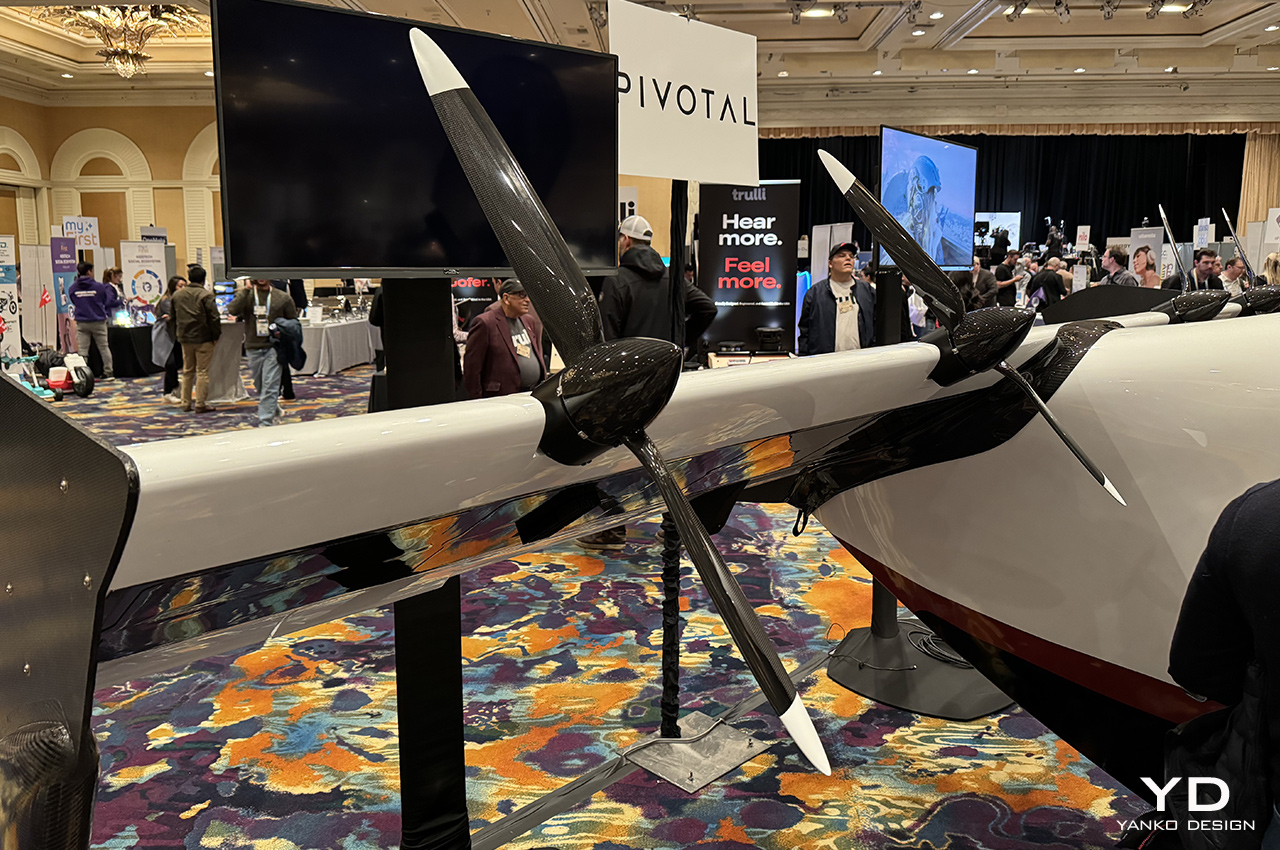
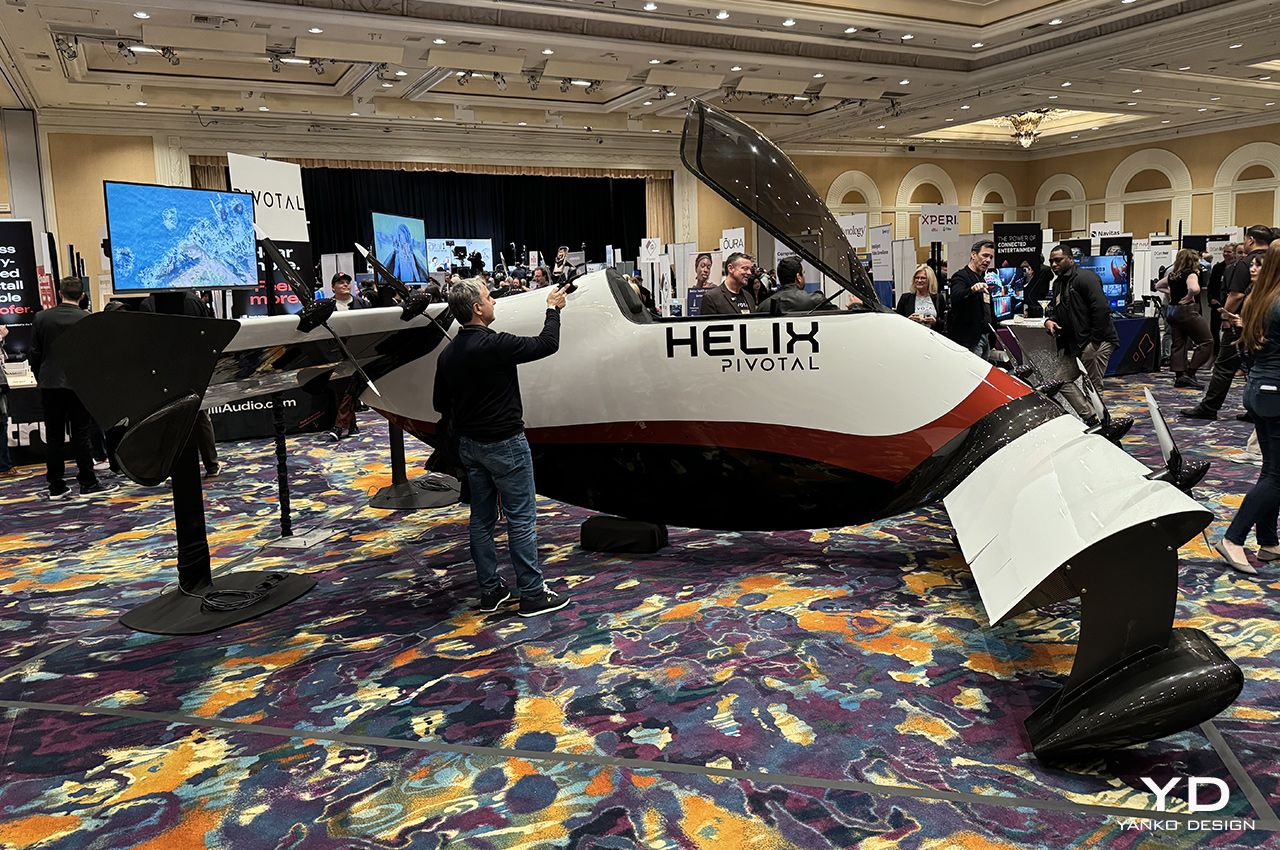
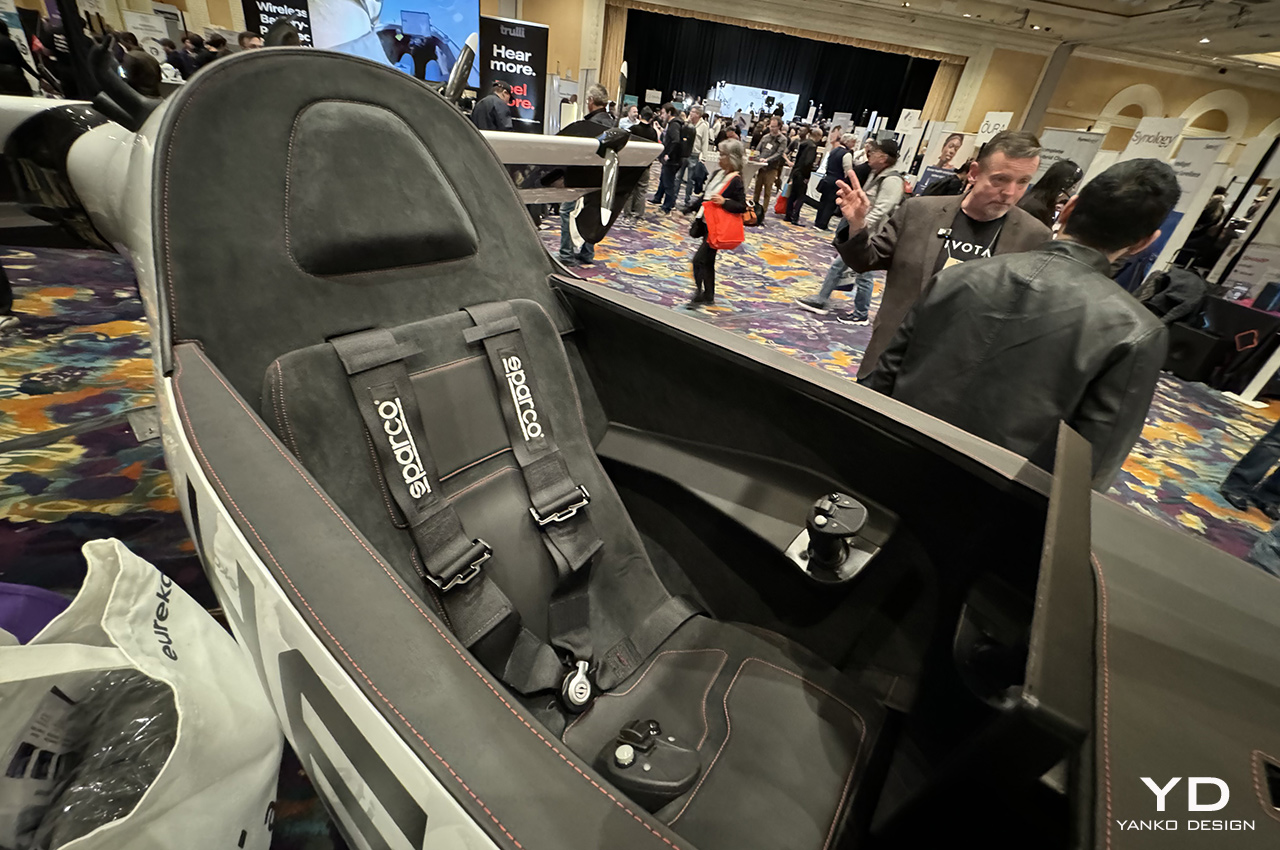
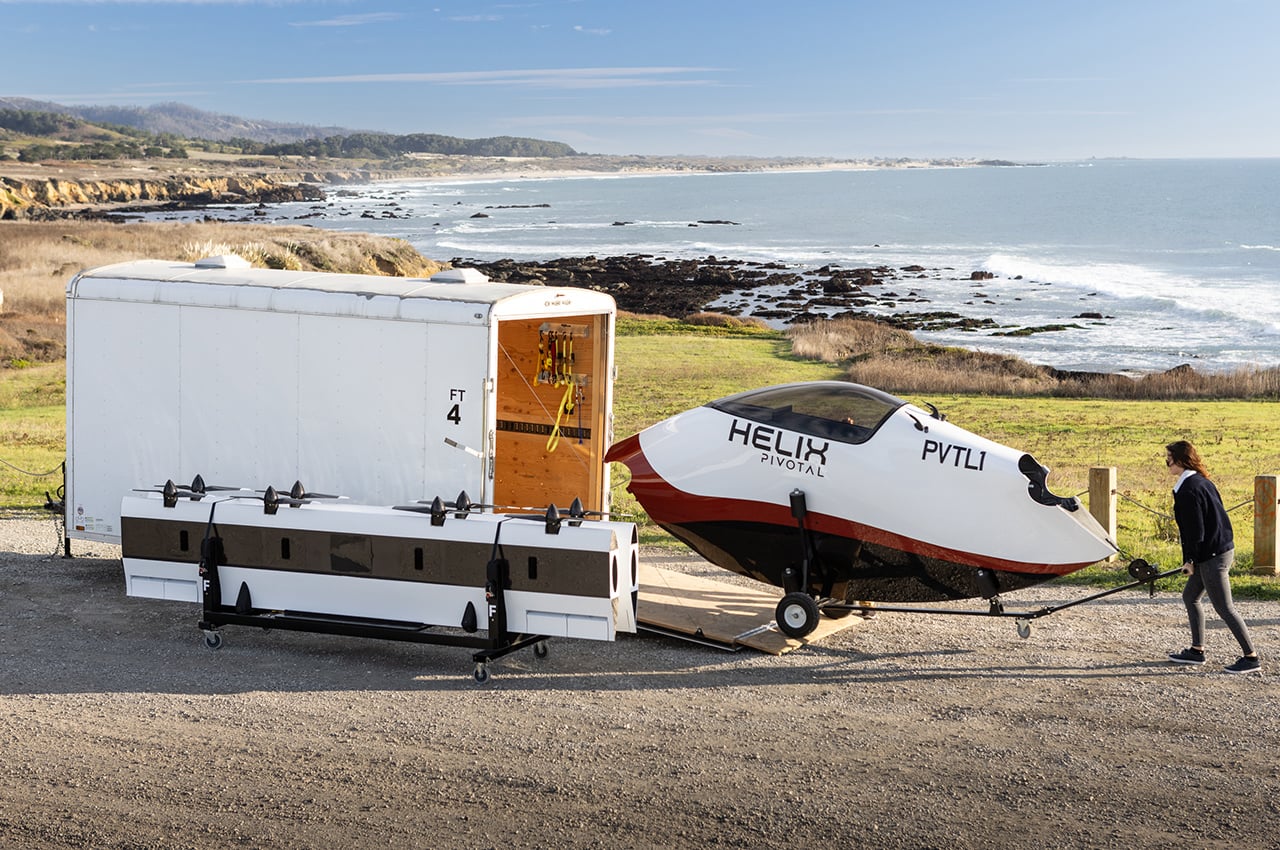
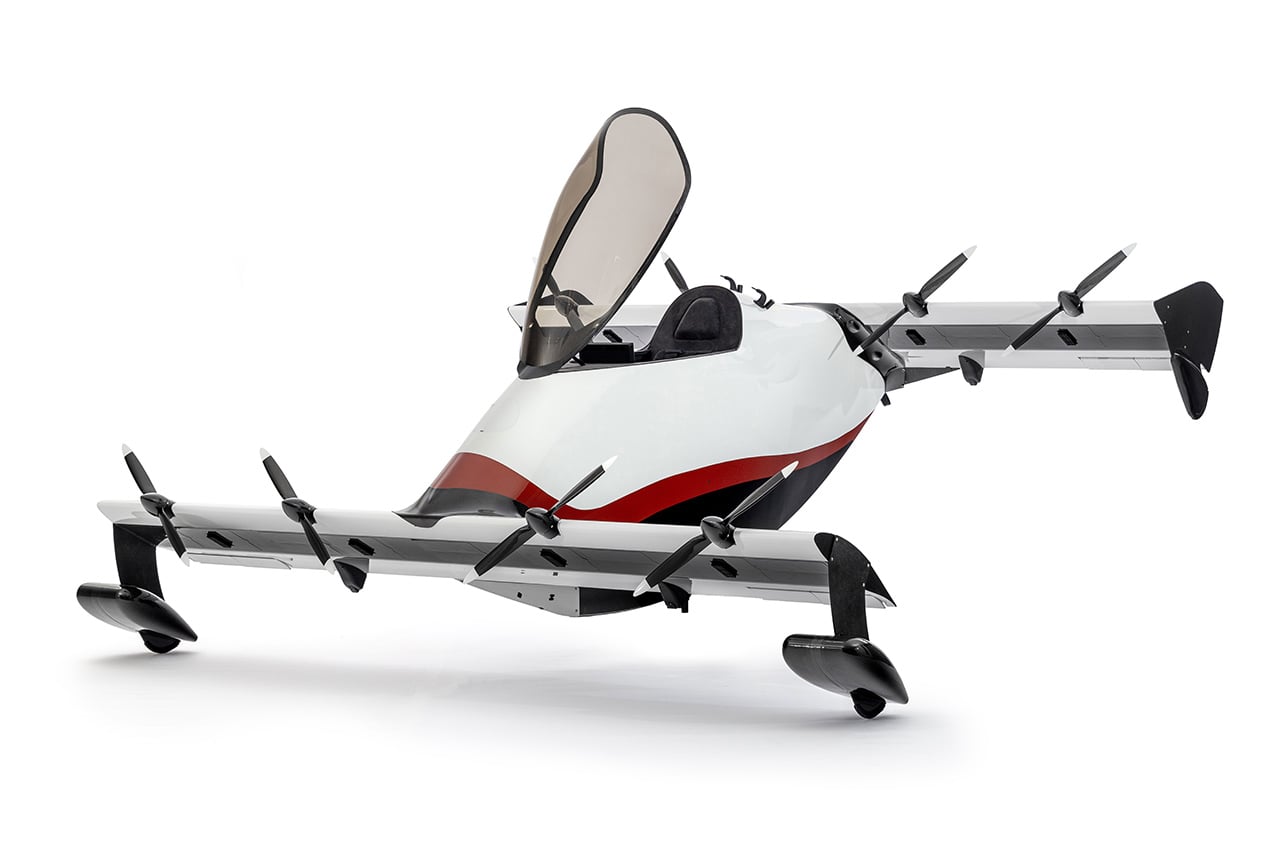
Helix, the first eVTOL aircraft is at CES and all set to begin flying from June 2024

One day, the future of aviation will be the electric vertical and take-off aircrafts! This is a journey of thought that started over a decade back when the idea of flying cars was in its total frenzy. Manufacturers around the world have since deviated a little, and come up with various concepts/prototypes of eVTOLs aircrafts, with the idea of making short-distance aviation much quieter, with fewer emissions, and potentially safer than helicopters and other forms of flying crafts.

The main reason for the eVTOL lagging behind and not making it into mass production is essentially because of the demands of the Federal Aviation Administration in America. But that hasn’t stopped companies from working through time to prove to regulators that VTOL aircrafts can operate safely. Seems, the reasoning has met sane ears, and the first eVTOL, dubbed Helix, is now at CES 2024, and all set to be produced in larger volumes and shipped starting June 10.

Designer: Pivotal

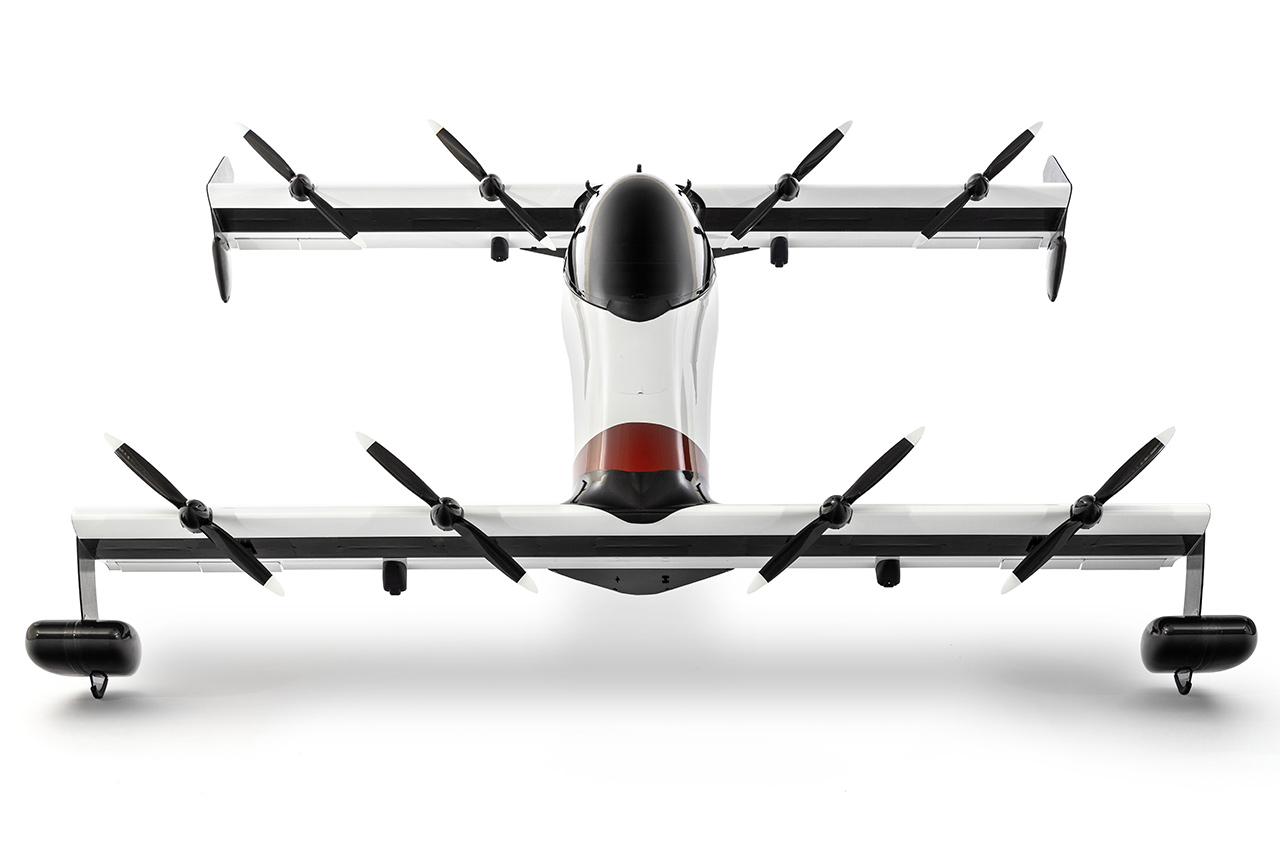
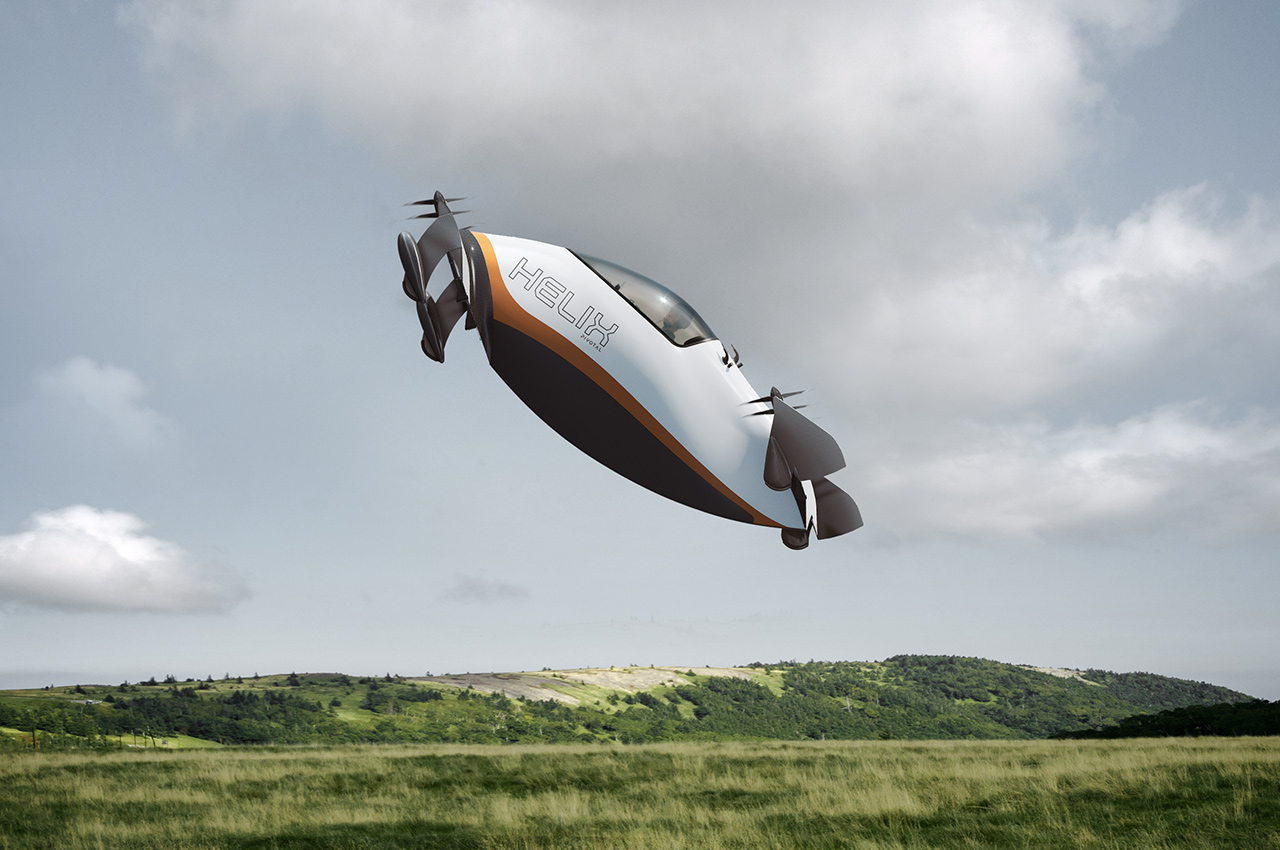
The lightweight electric VTOL aircraft has been in the works by Palo Alto, California-based company Pivotal for over a decade. After numerous phases, the final aircraft is ready to take-off and land vertically without needing a runway or a pilot’s license to go airborne.

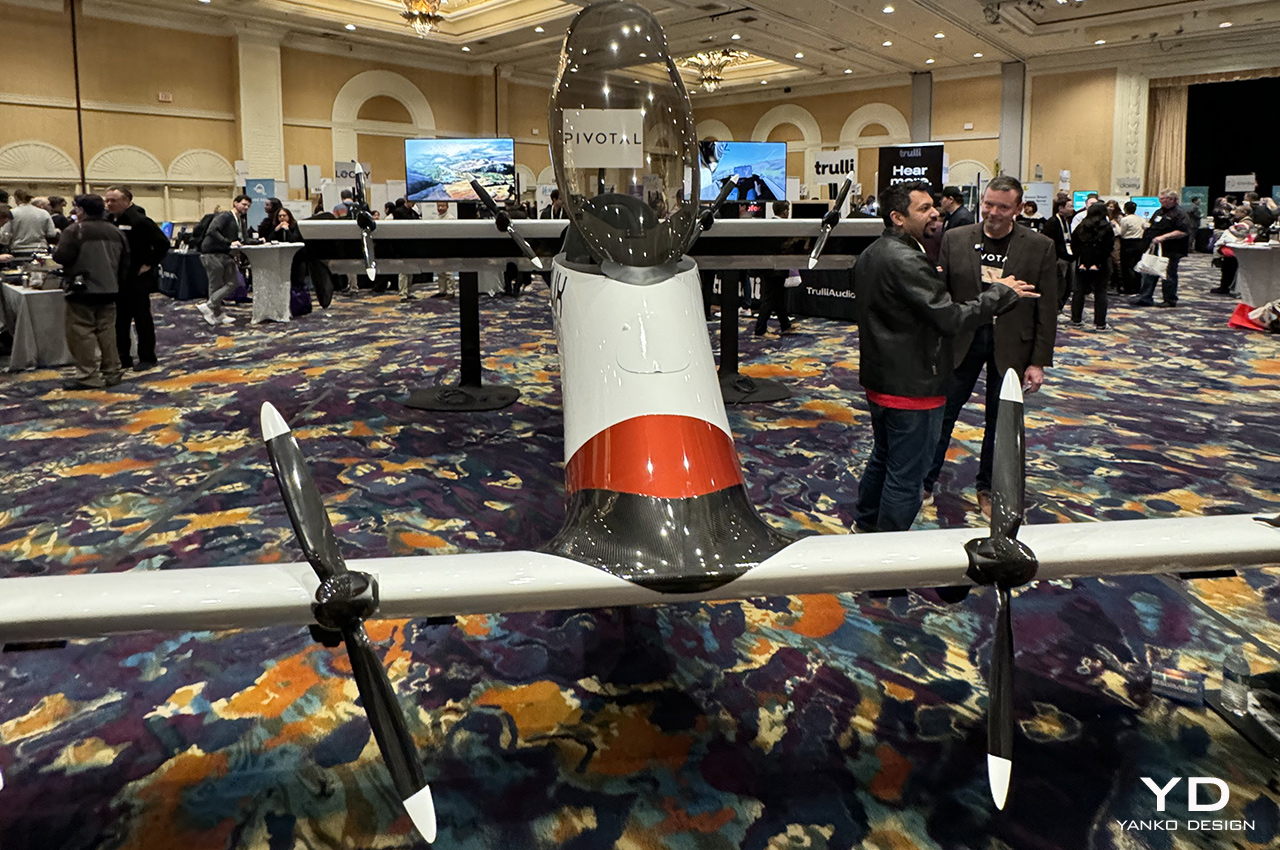
The Pivotal Helix, with fixed rotors and tandem wings, is a single-seat aircraft that can be flown without an FAA pilot certification, but the manufacturing company requires prospective fliers to go through hours of simulator and training sessions to fly the 348-pound eVTOL craft in the USA. Before you intend to shell out your savings to be the first Pivotal customer; you must be 18 years and above, have a body weight of fewer than 220 pounds, and you shouldn’t measure more than 6.5 feet tall, else you may not fulfill the company’s buyer requirement for the Helix.

Even though a pilot’s license is not necessary to fly the eVTOL, FAA requires the aircraft to be flown only above non-congested areas and at a considerable distance from airports. There is no other additional requirement as to why you cannot fly the Helix once it becomes available (and you have close to $200K odd to spare).

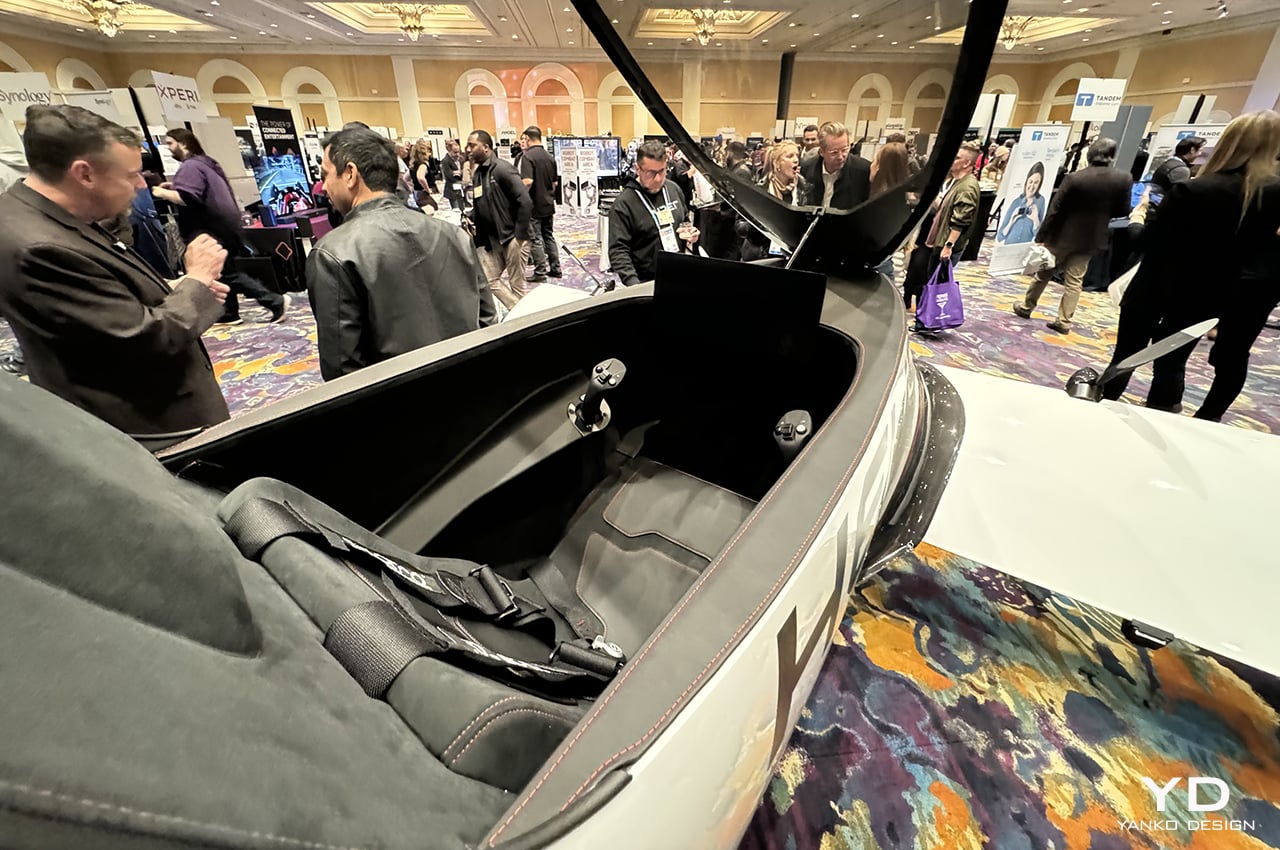
To make flying easy, the Pivotal Helix features a wide-angle view from the cockpit, and thriving on the electric engine, it guarantees silent operation. The battery renders 20 miles of range to the Helix, which can charge 100 percent in about 75 minutes using a 240V charger.

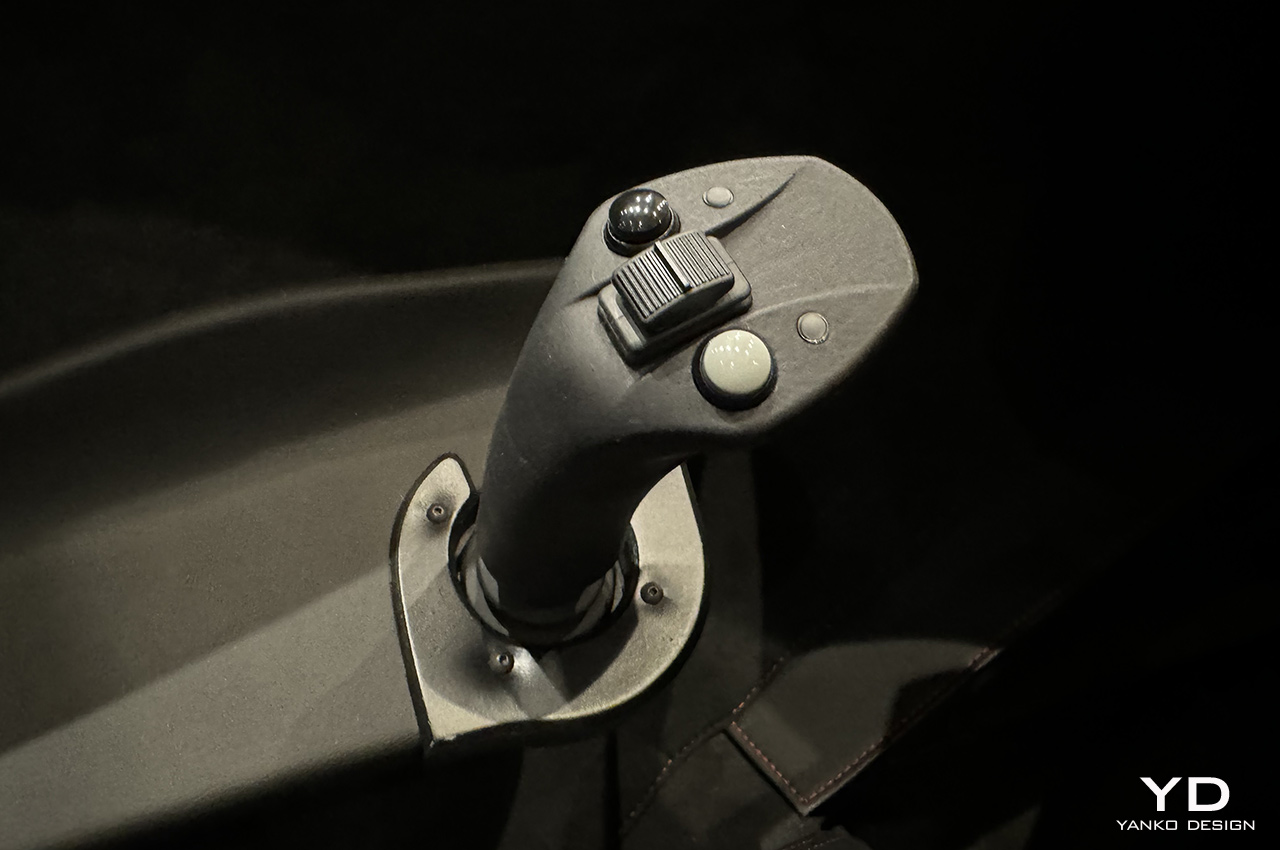
Helix scheduled for June, will come in three configurations. The base model with a white carbon fiber exterior, a digital flight panel, and an HD camera for landing will start at $190,000. The model with gloss white and striped carbon fiber exterior, 4K camera with landing assist will set you back $240,000, while the third model with a premium flight deck, customizable interior and exterior will cost $260,000. The first production lightweight eVTOL aircraft in the US can now be pre-ordered via $250 nonrefundable application fee, and a $50,000 booking deposit.

The post Helix, the first eVTOL aircraft is at CES and all set to begin flying from June 2024 first appeared on Yanko Design.

Hisense Automobile Laser Displays hands-on at CES 2024

Hisense recently unveiled its latest products at CES 2024. The company’s array of state-of-the-art technologies, including automobile laser displays and rollable laser TVs, sets new industry standards, offering consumers unparalleled visual experiences.

Designer: Hisense

Automobile Laser Display: A New Era in Vehicle Technology

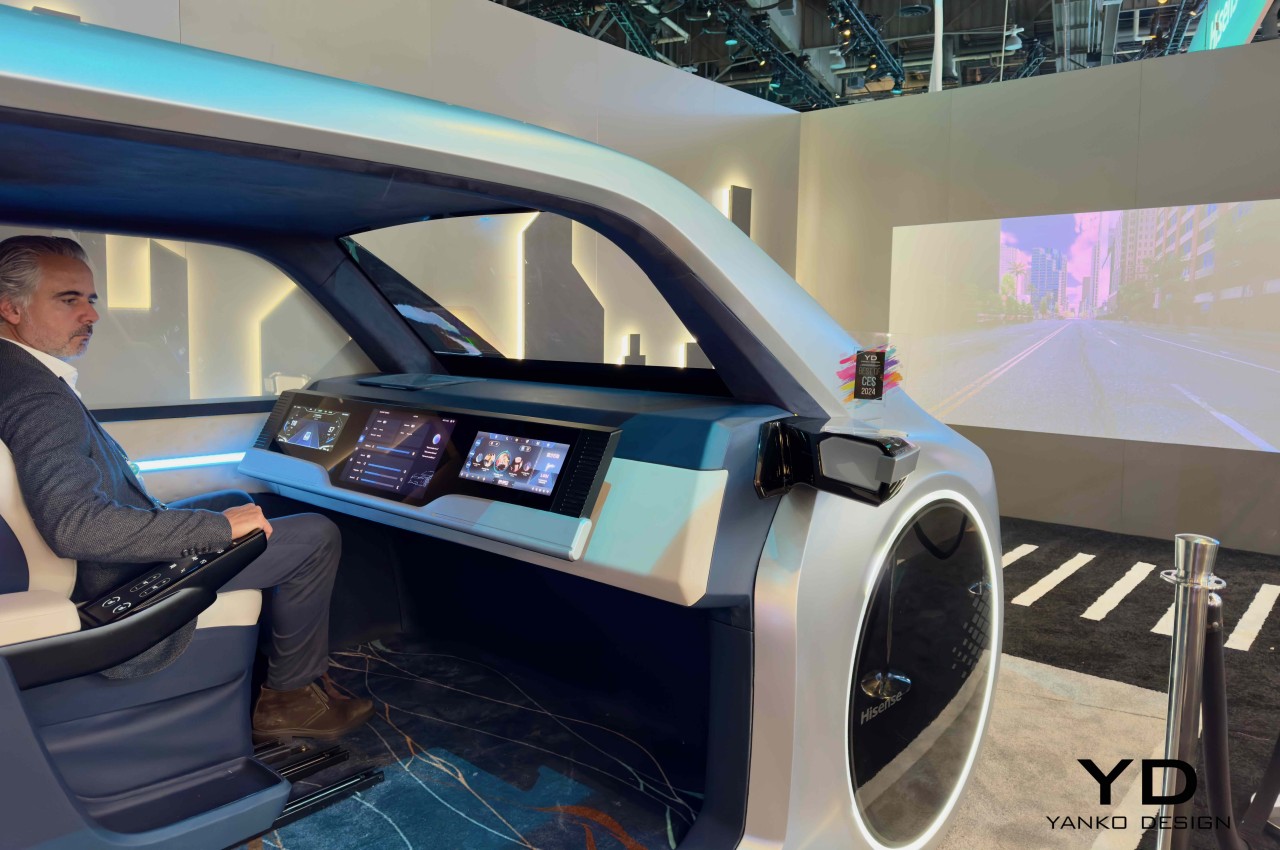
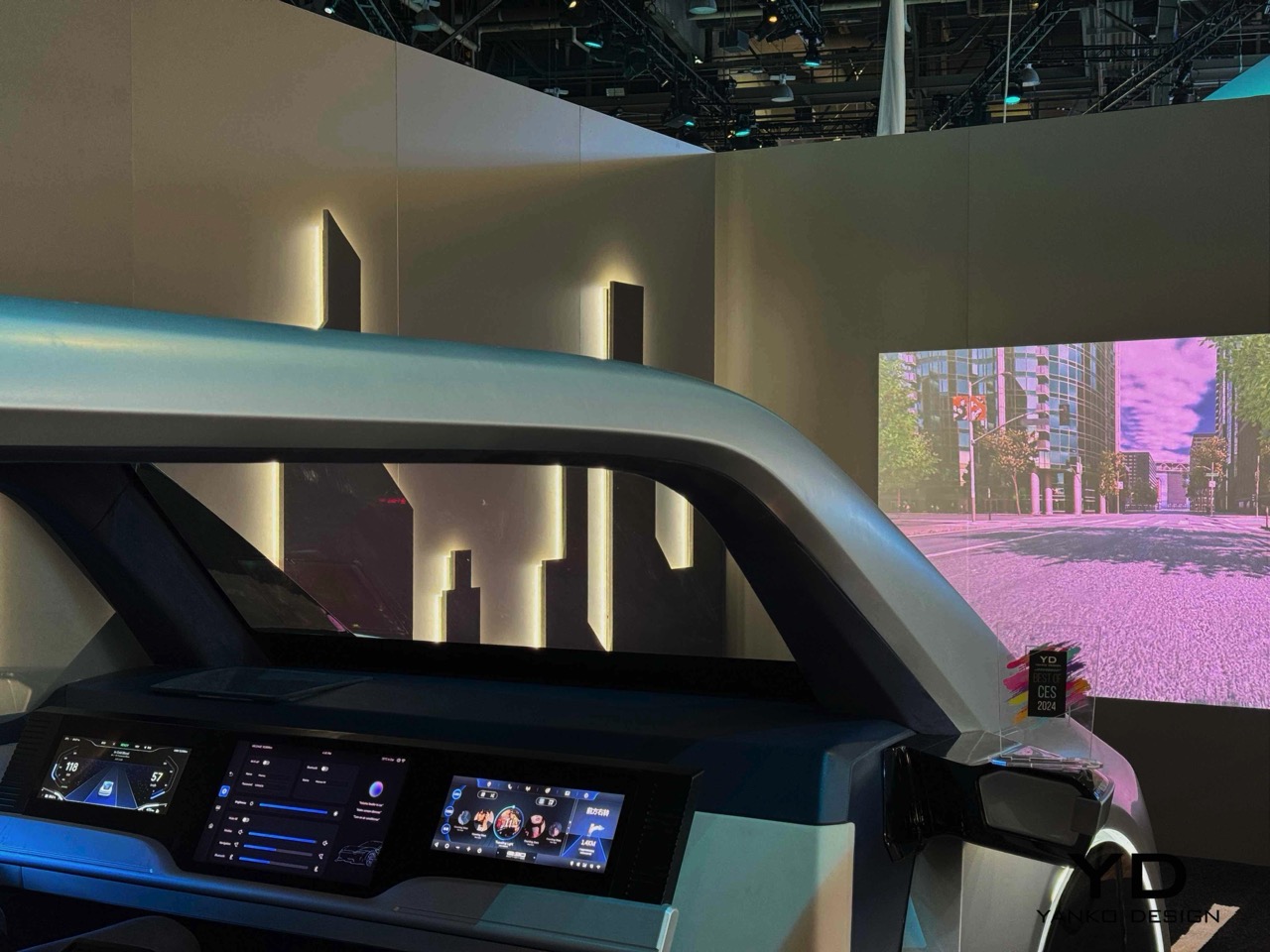
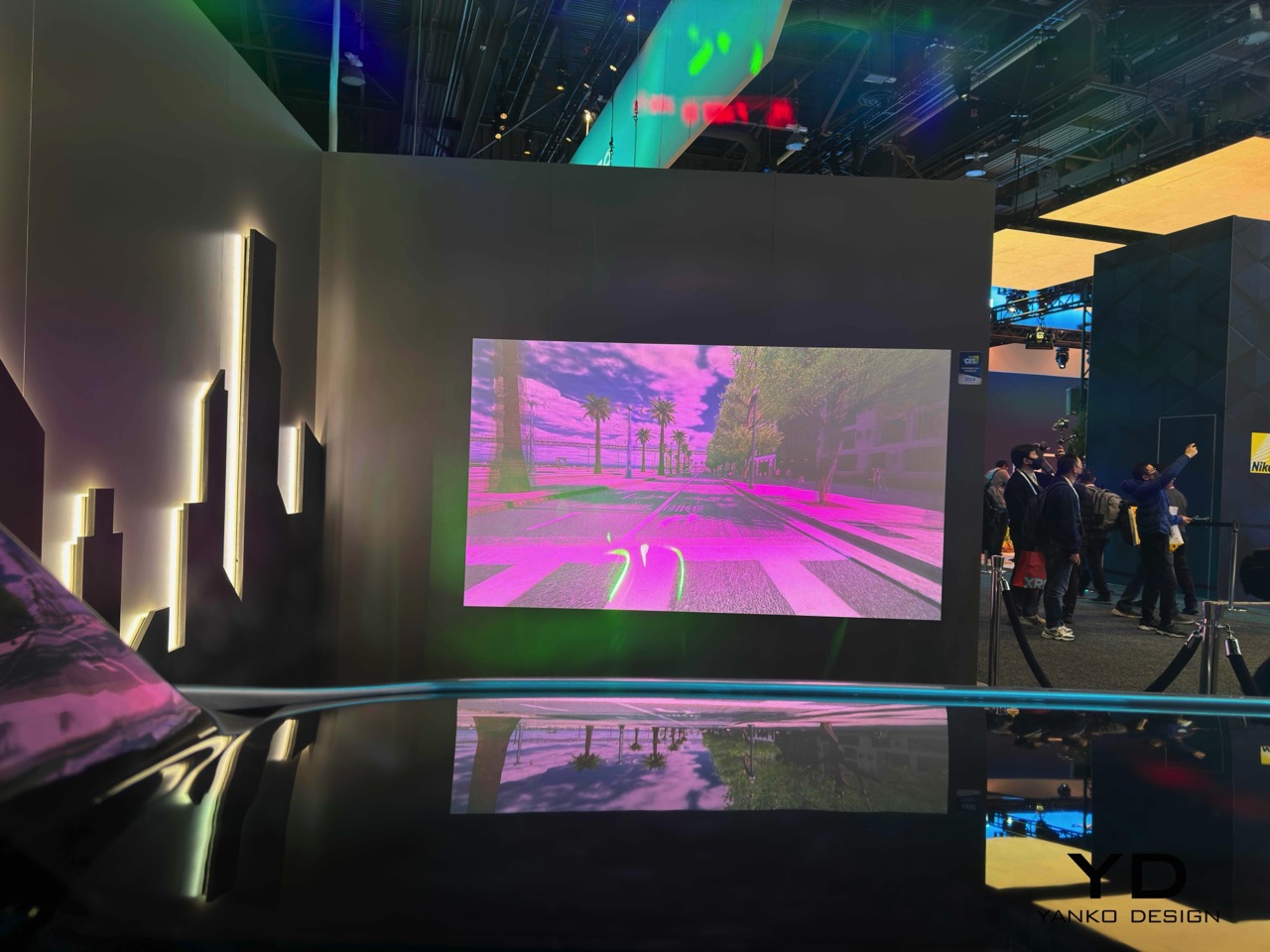
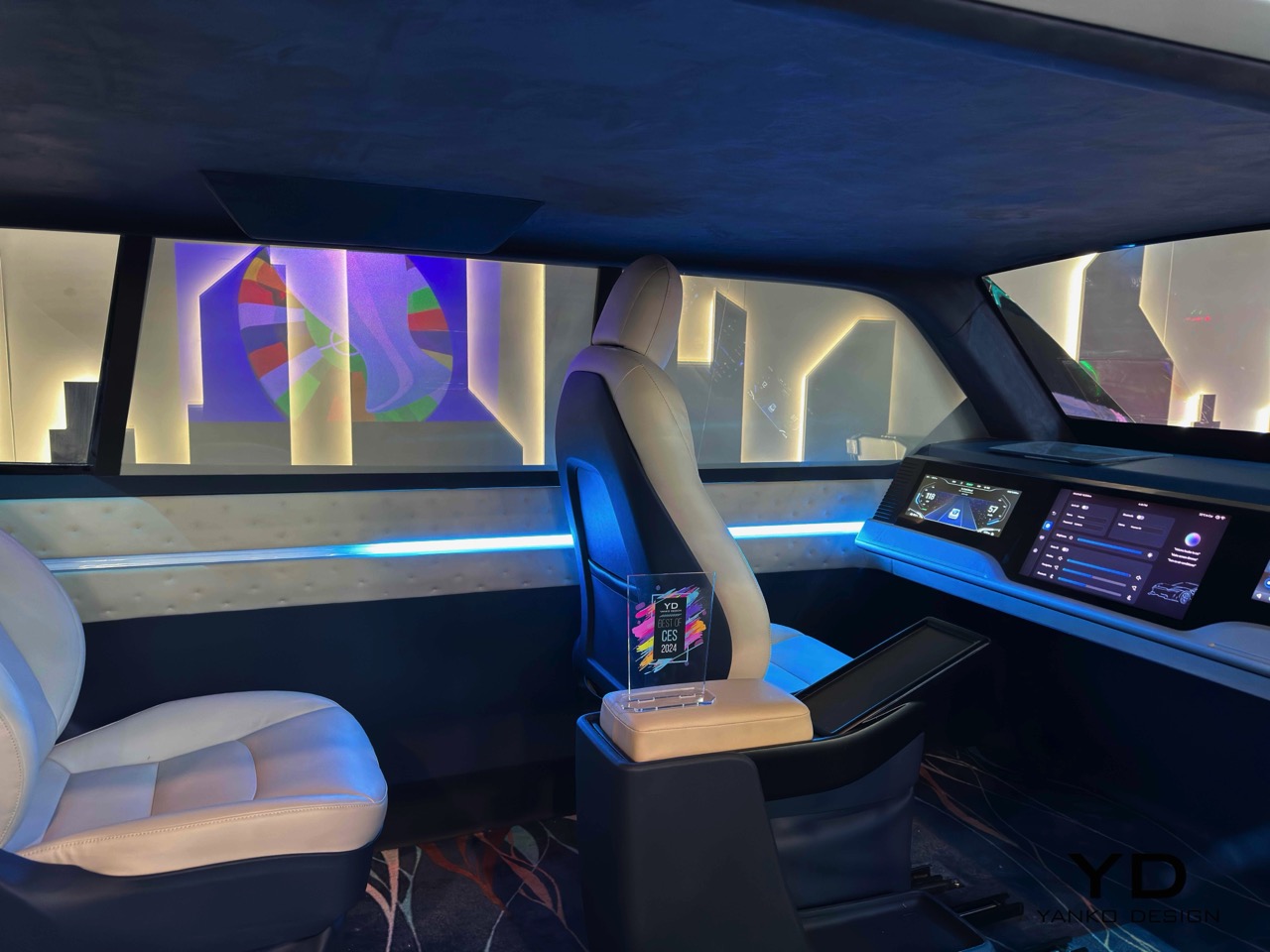
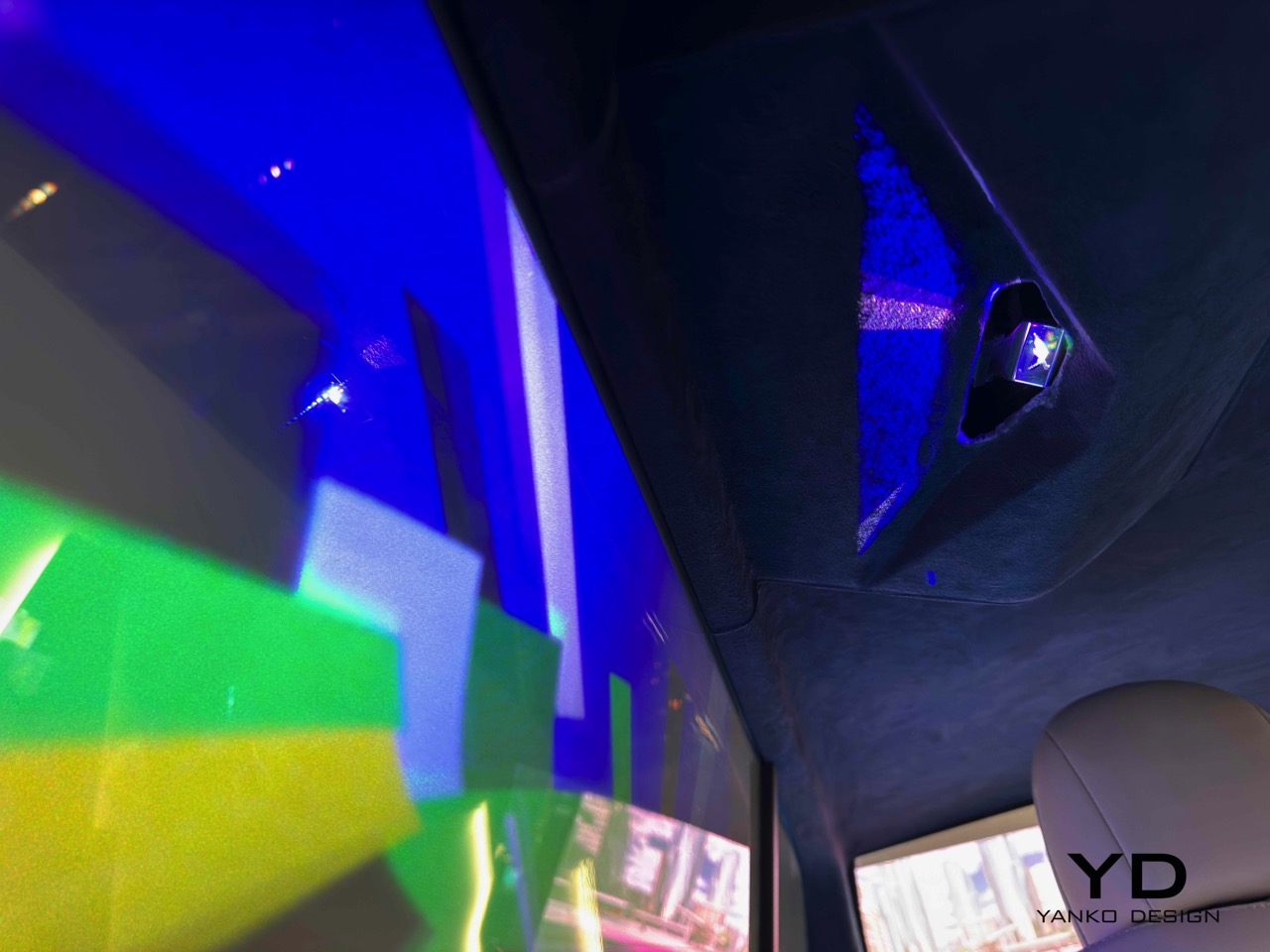
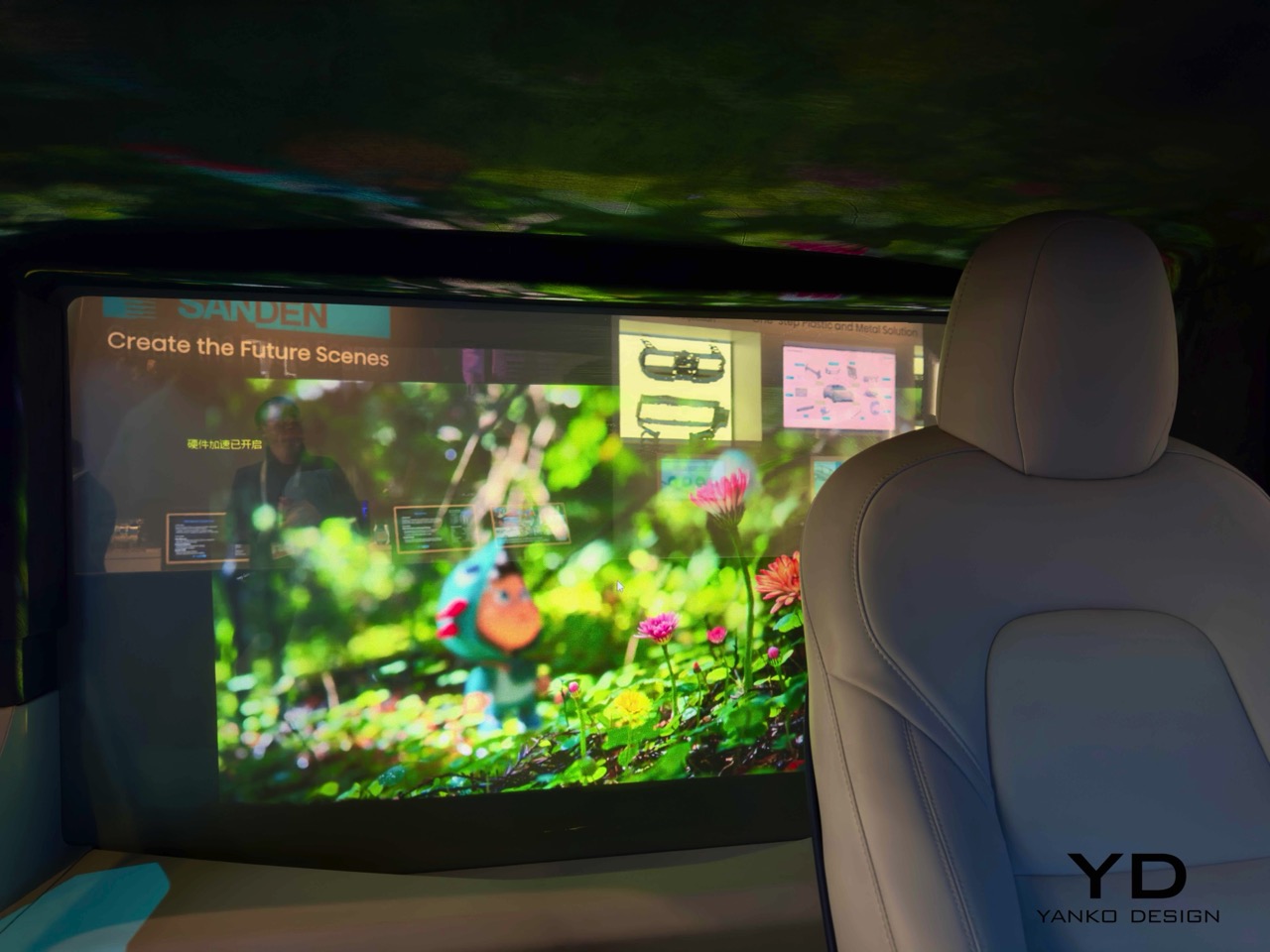
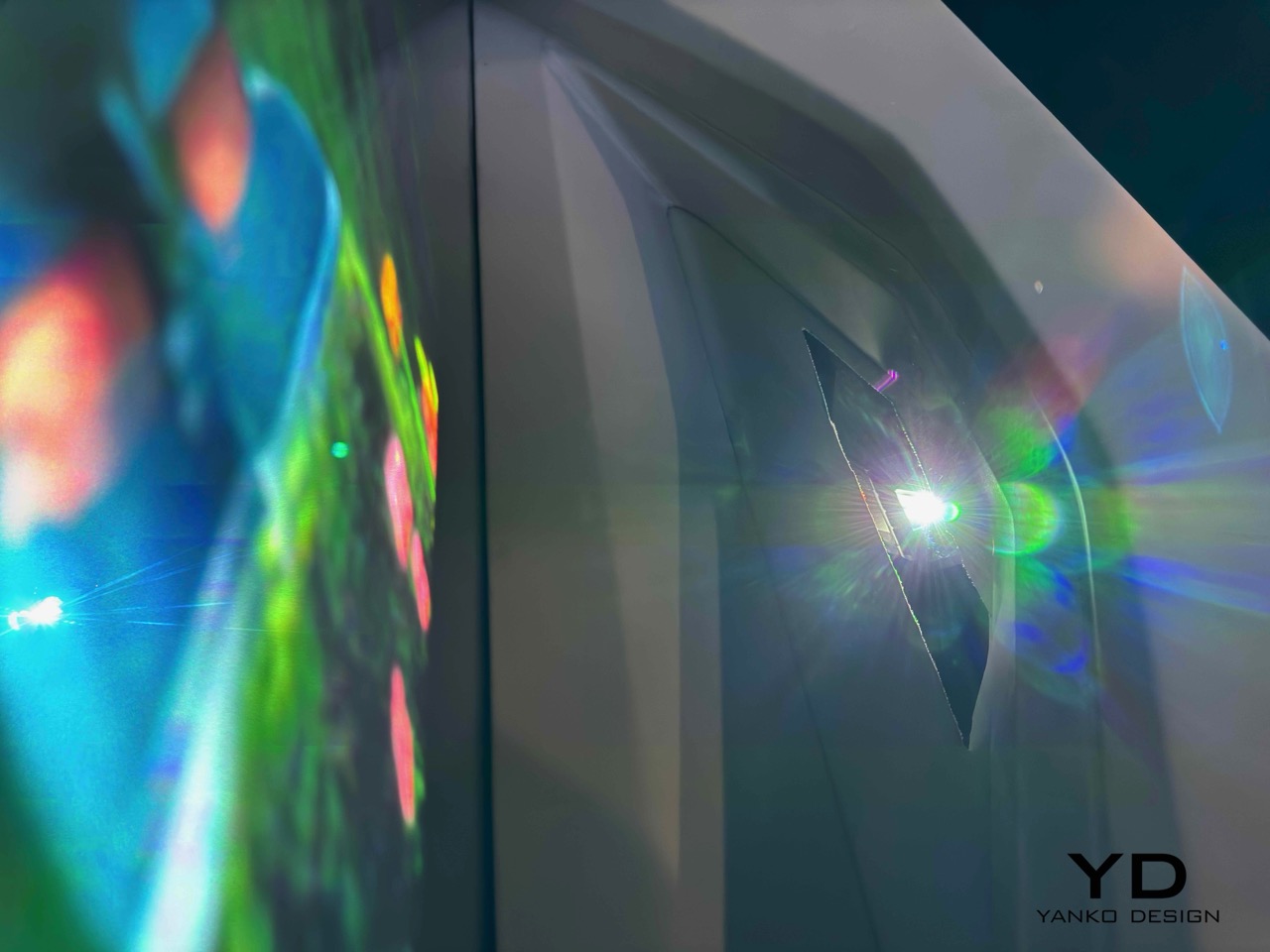
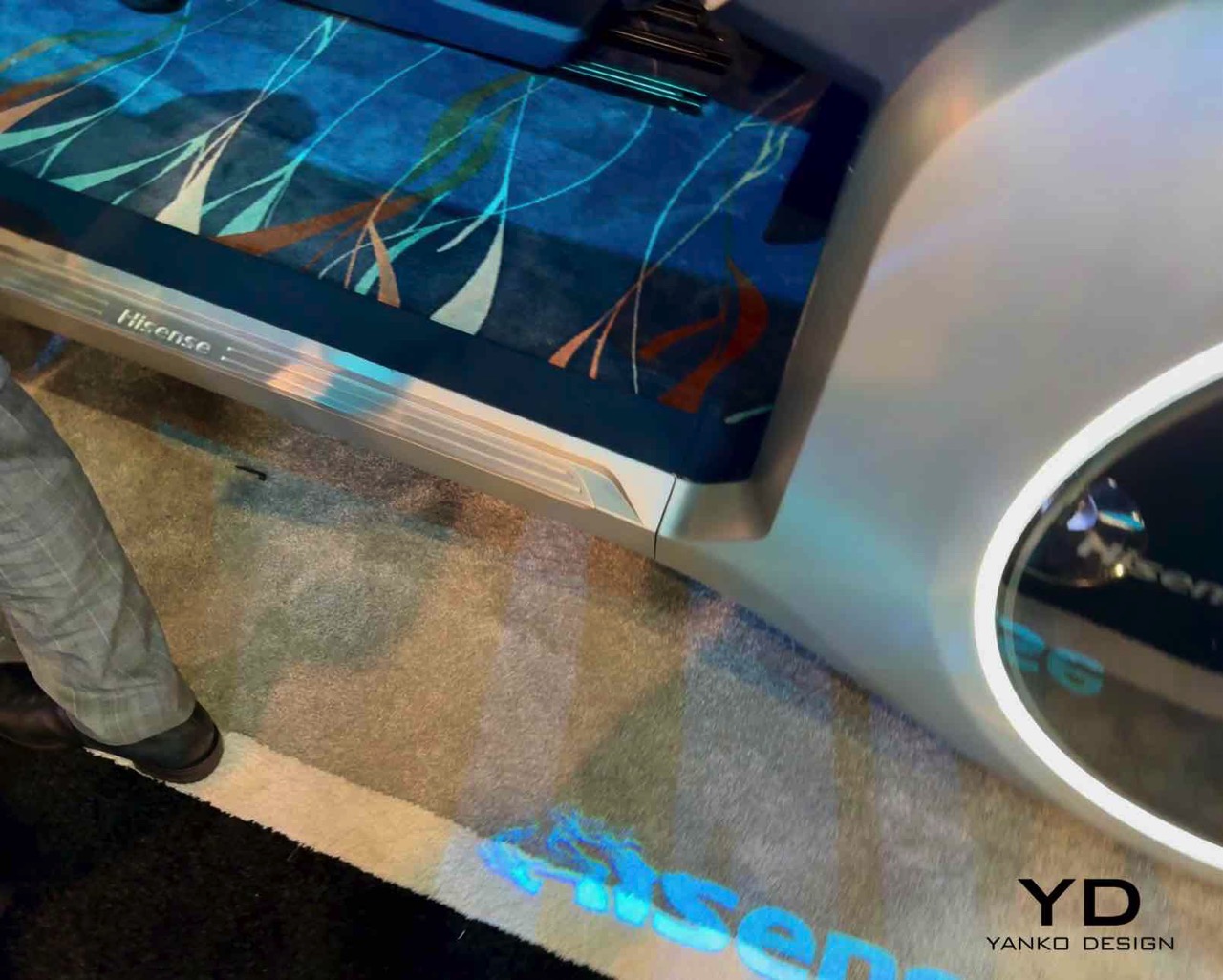
The Automobile Laser Display, honored with the CES 2024 Innovation Award, is revolutionizing the in-vehicle experience. It features the TriChroma™ triple-laser projection system, delivering a color performance 48% superior to traditional LEDs while maintaining a compact form, 80% smaller than conventional optical solutions. Its 200% luminous efficiency makes it the premier choice for automotive displays. The Laser Holographic AR-HUD transforms the windshield into an expansive holographic screen, merging virtual and real-world elements for safer driving. Advanced optical technology further converts side and rear windows into immersive displays, enhancing navigation and entertainment while focusing on safety and compact design.

Hisense Automotive Laser Display: Eyes on

The display of Hisense’s Automotive Laser at CES 2024 made a lasting impression on spectators. With its remarkable features, this cutting-edge technology is poised to revolutionize the automotive industry. Let’s delve into the details.

Starting from the driver’s cockpit, the heads-up display (HUD) offers an immersive experience by providing turn-by-turn directions, speed, and other essential vehicle information. While the exact resolution and size dimensions are yet to be finalized, the preliminary concept promises a screen size ranging from 13 to 15 inches, ensuring optimal visibility for drivers.

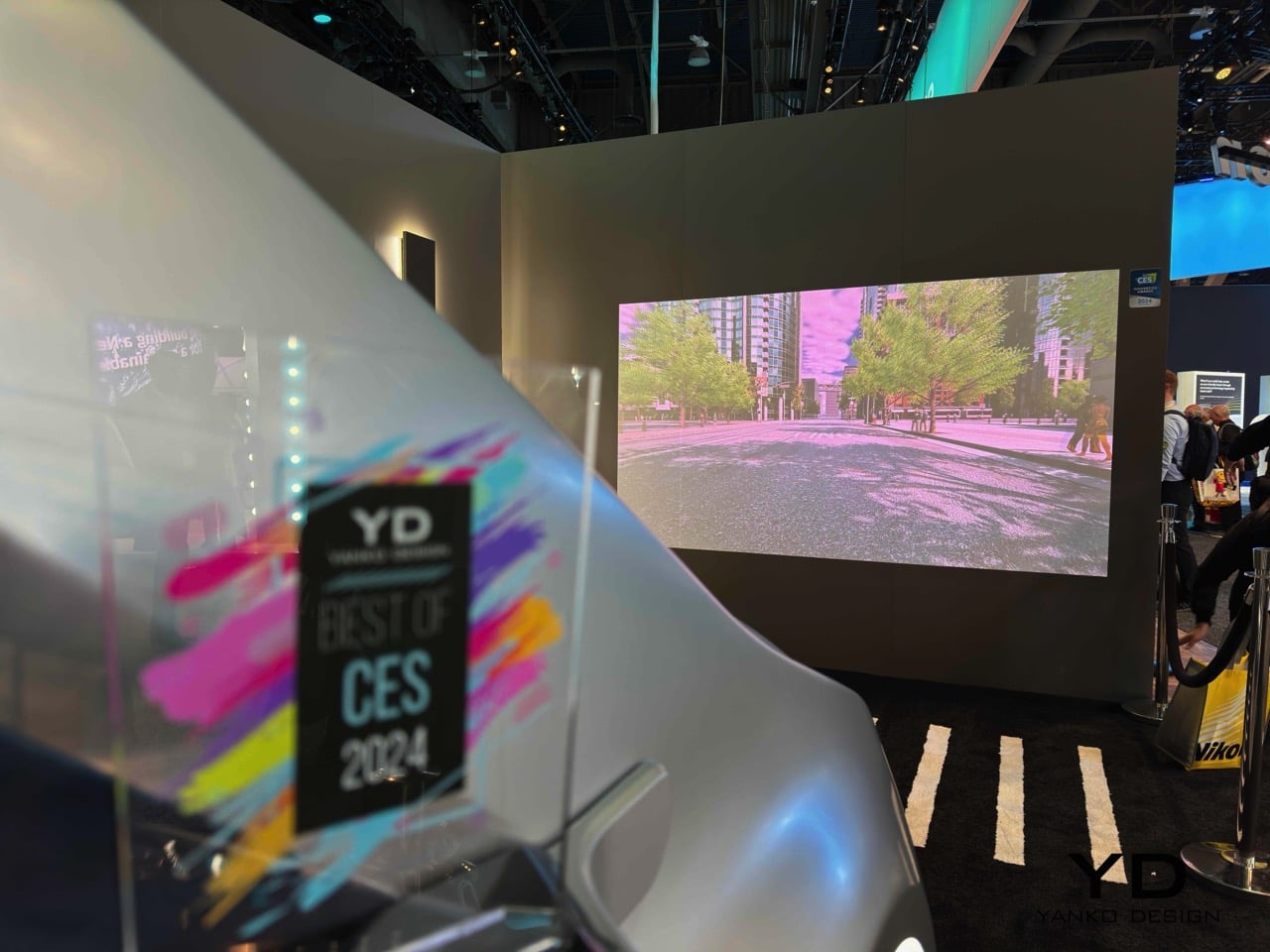
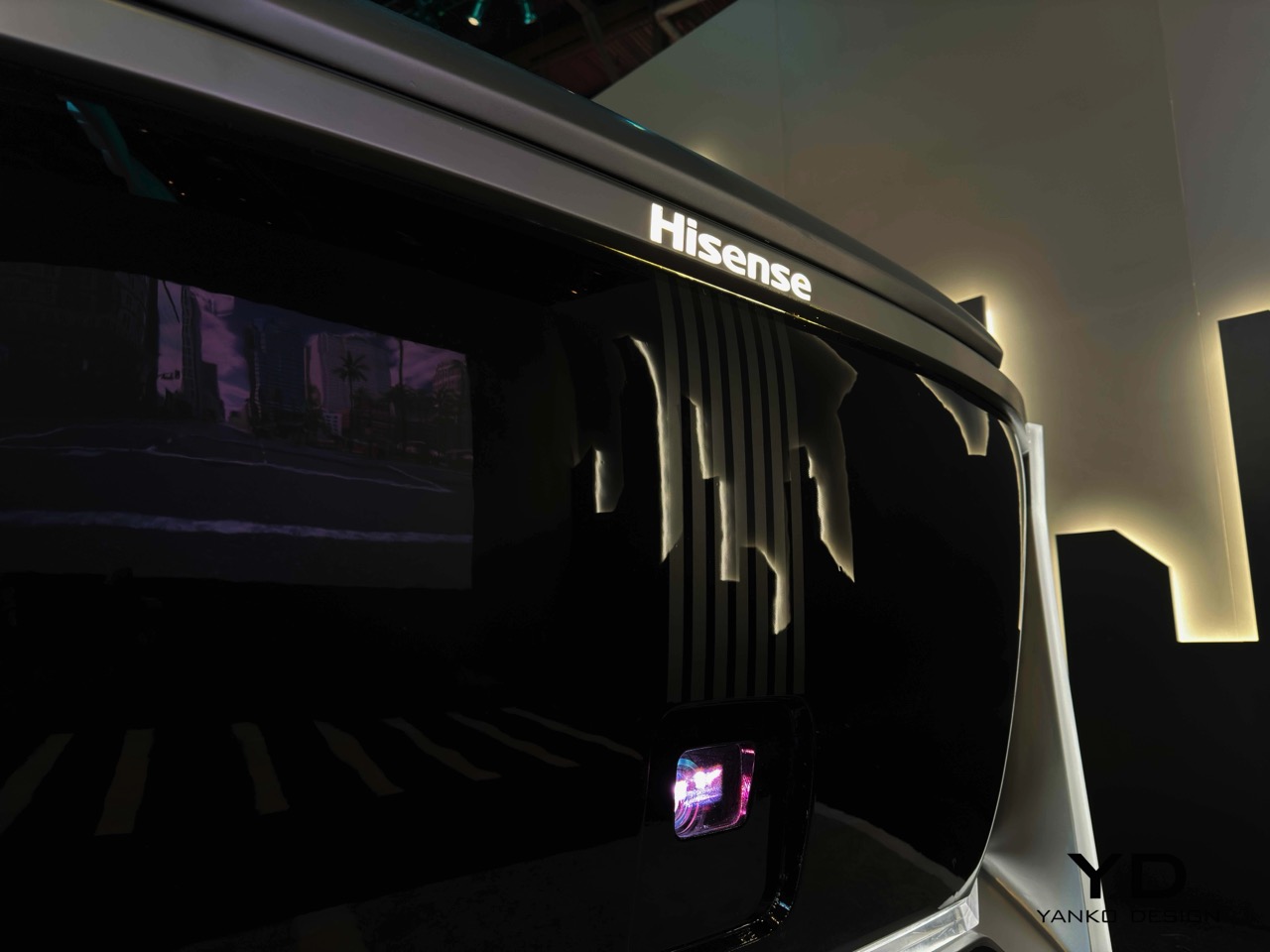
But it doesn’t end there. Rear passengers are also in for a treat with two additional laser projectors, one on each side, and another centrally located in the rear where the traditional glass would typically be. The idea is that when cars are capable of autonomous driving, the rear passenger seats will swivel around. These laser displays, measuring approximately 30 to 40 inches, create a captivating visual experience for passengers, whether they’re embarking on a road trip or enjoying a romantic date night.

One of the most impressive aspects of Hisense’s Automotive Laser Display is its adaptability to the surrounding environment. According to a representative from Hisense, this technology boasts a 200-percent luminous display, surpassing the brightness of conventional LEDs. This feature ensures exceptional picture quality regardless of external conditions, providing an enhanced viewing experience for all passengers.

Moreover, the possibilities of this innovative technology extend beyond the confines of the car. Imagine transforming any flat surface into a drive-in theater with a built-in movie projector in the front bumper of your vehicle. While this incredible feature is only functional when the car is parked, it opens up a world of entertainment possibilities. Tailgate parties, camping trips, or even impromptu movie nights become even more exciting with this cinema-quality experience. Of course, you may need to find suitable surfaces, such as a garage door, for an optimal projection experience.

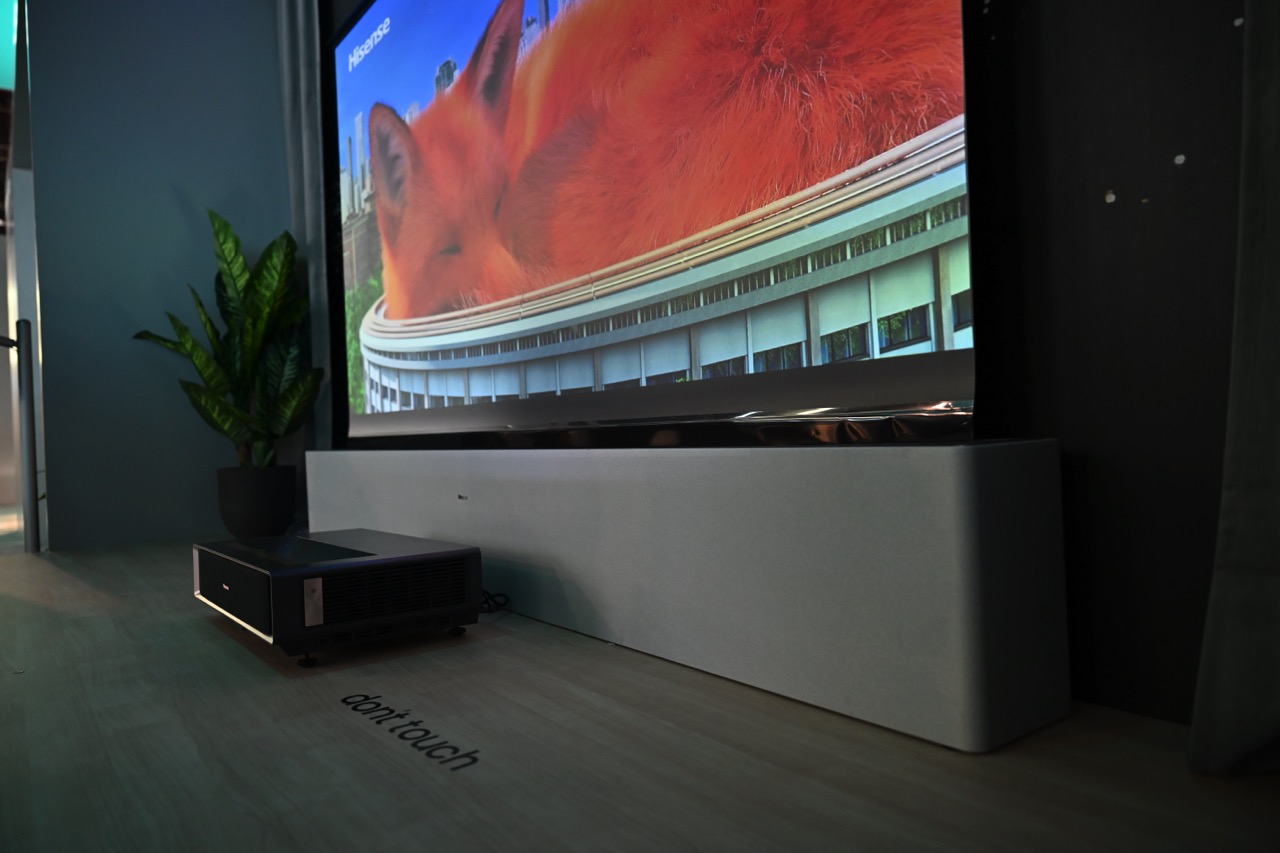
And that’s not all! Hisense also showcased a rollable laser display TV, further expanding its range of state-of-the-art products. The colors, clarity, and brightness of this TV are truly mesmerizing, captivating viewers and immersing them in a stunning visual display.

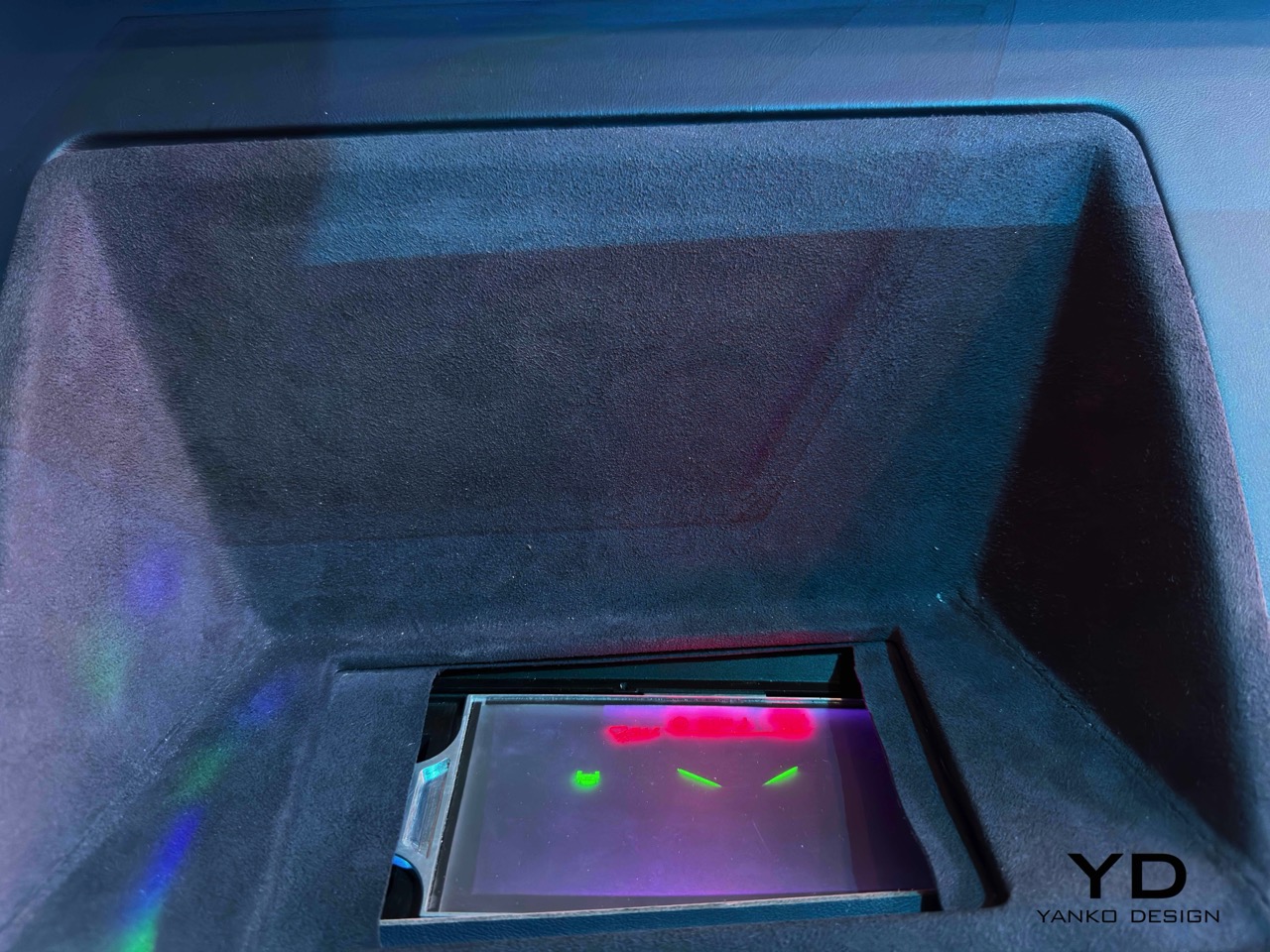
Lastly, a mini-laser projector is located directly under the rearview mirror, providing a luminous projection of the name of the car you are driving.

While Hisense’s Automotive Laser Display is currently in the concept stage, reliable sources have disclosed that leading automakers are actively considering adopting this groundbreaking technology. With its potential to redefine the future of automotive displays, it’s no wonder that industry insiders are closely monitoring the progress of Hisense’s Automotive Laser Display.

The post Hisense Automobile Laser Displays hands-on at CES 2024 first appeared on Yanko Design.
Top 10 Electric Bicycles To Adopt Green Urban Commuting In 2024

Our typical fossil-fuel-consuming means of transportation need to be replaced by greener and more environment-friendly alternatives, and Electric Bicycles are an appealing option! Not only do they curb fuel consumption and reduce automotive emissions, but they’re also a healthy source of exercise for us! I mean, not only do we get to save the Earth from air pollution, but we can also get some intense cardio done. And they’re becoming an increasingly popular option day by day. It’s estimated that the total number of electric bicycles in circulation around the world will be 300 million soon, which is an exponential increase, from 200 million back in 2019. It looks like everyone is slowly and steadily hopping onto the e-bicycle bandwagon! And, we’ve curated a whole range of innovative designs for you that caught our attention!

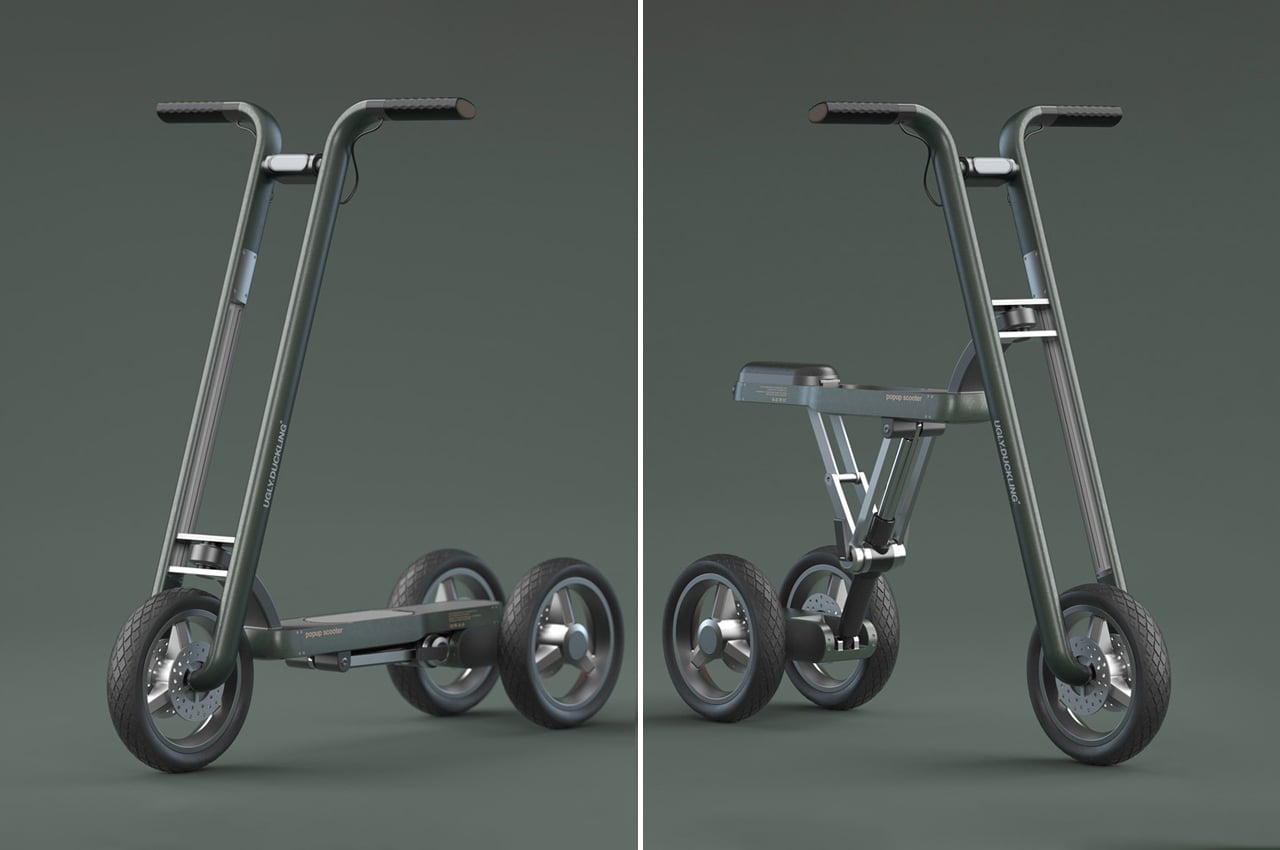
1. Popup Scooter

Meet the Popup Scooter – a two-wheeled electric bicycle that can be transformed into a kick scooter, or the other way round! The transformative design allows the rider to pick a configuration that suits his or her riding needs. The cycle is equipped with a hydraulic cylinder that allows it to move smoothly and swiftly. The mechanism can lift an adult person, so lifting and lowering the rider’s body shouldn’t be an issue at all.

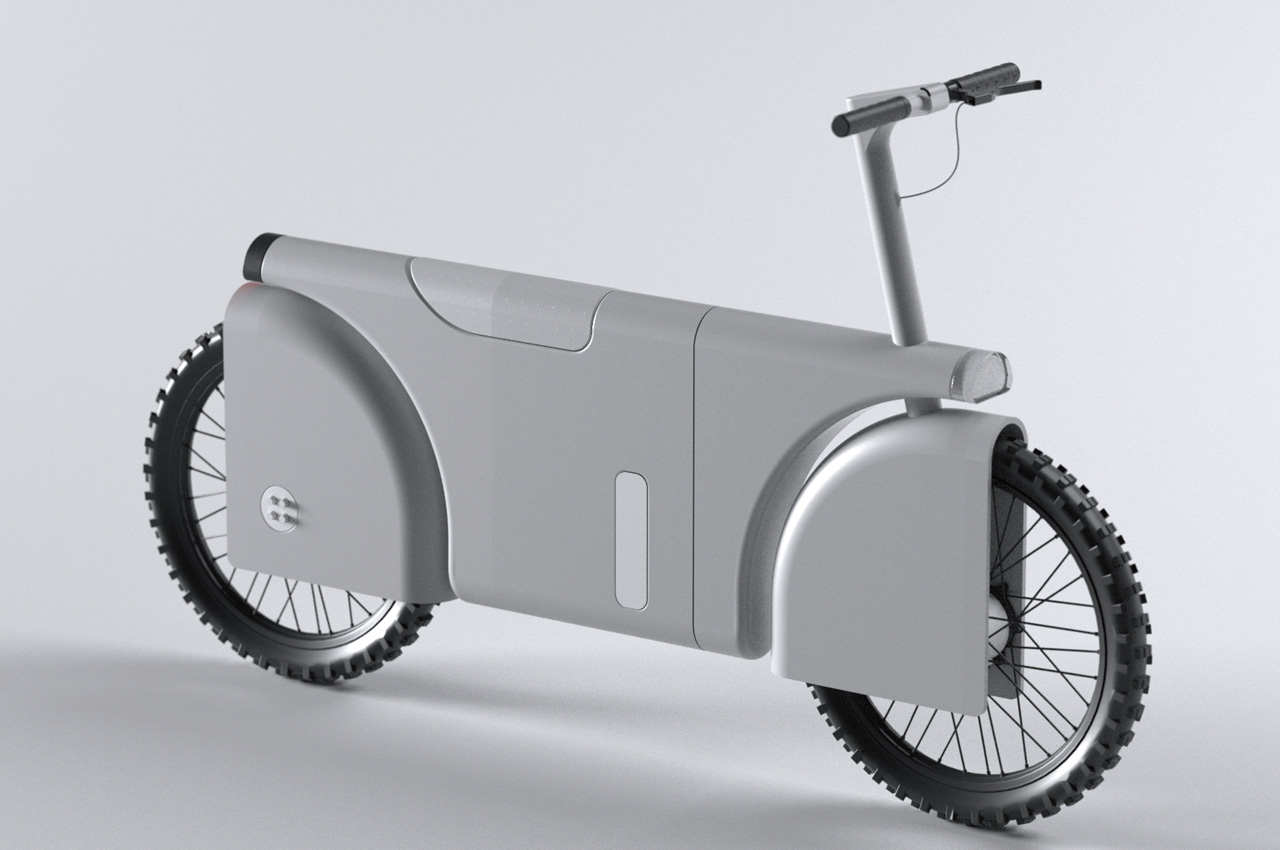
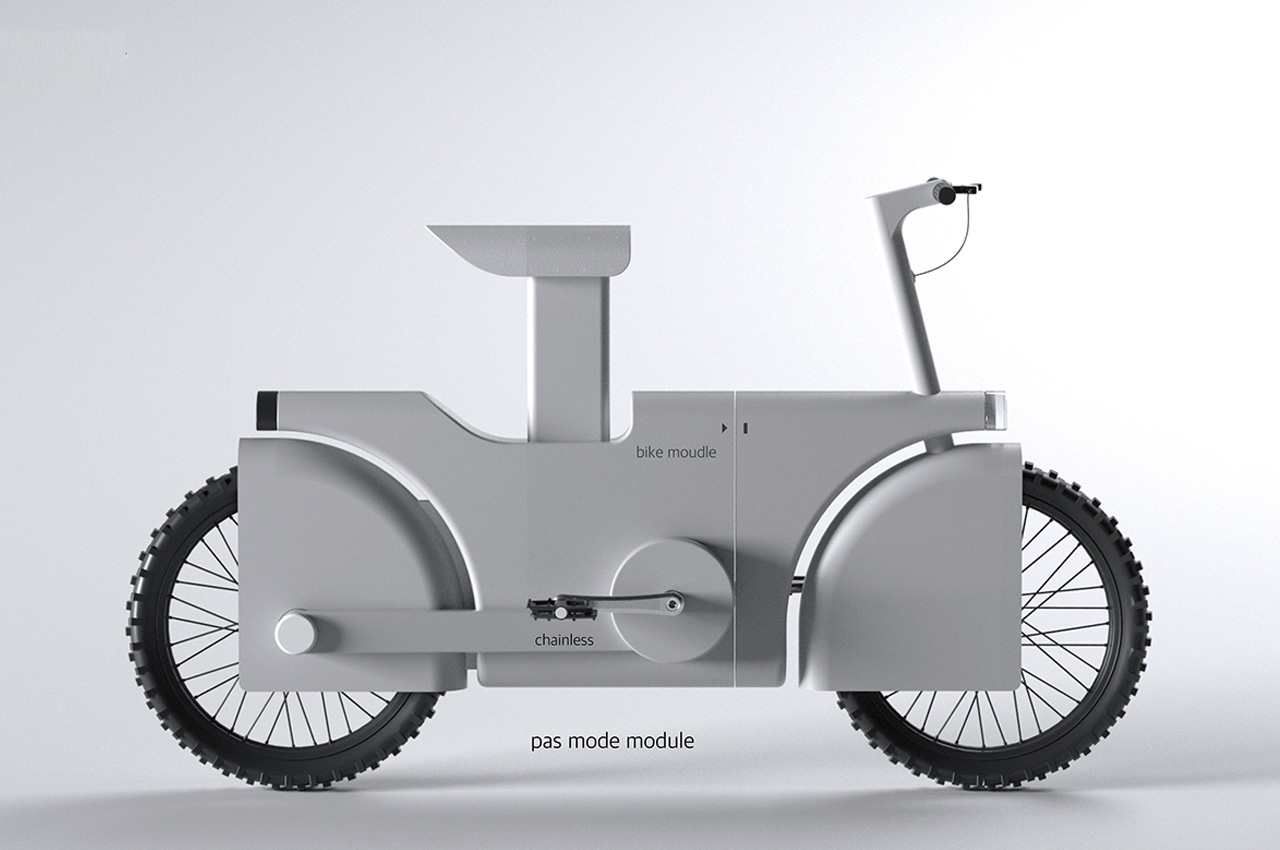
2. Electric Mobility Bicycle

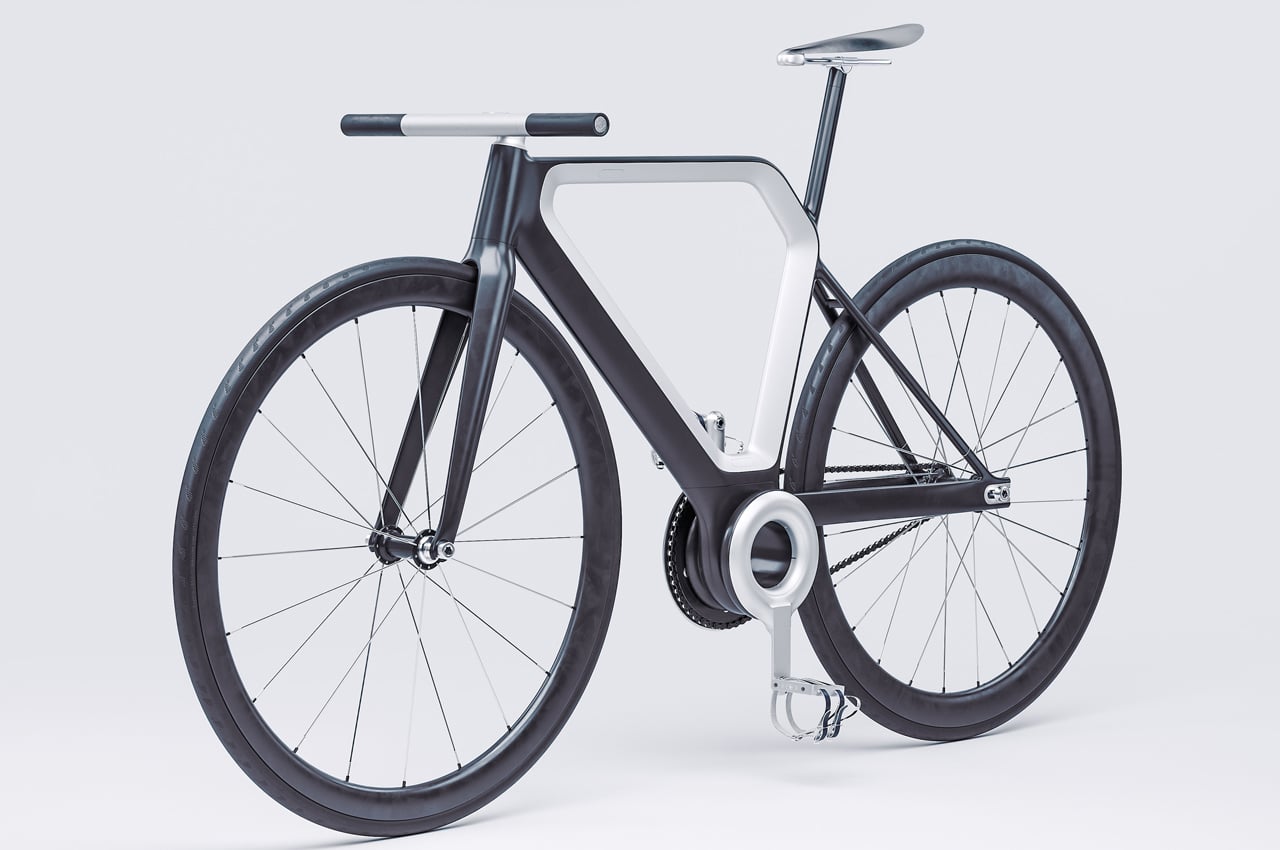
This Cake bike-inspired electric bicycle takes the hybrid nature of personal commuters to a whole another level. The commuter has a modular nature that makes it ideal for different kinds of users. The bicycle takes inspiration from everyday gadgets, featuring a sleek form without compromising on the bike’s robust aesthetic at all. Although the saddle does have an awkward shape, that may not be comfy for the rider for long durations.

3. Electric Fixie

Designed by Andrey Avgust, the Electric Fixie is a fixed-gear bike with the same working principle of the genre, as well as the added and boosted capability of an electric drive, making riding on inclined roads as easy and simple as riding on level ones. The bike is equipped with traction control and regenerative braking for battery recuperation, and the latter can be controlled via the bike’s handlebar.

4. The ONEBOT-S7

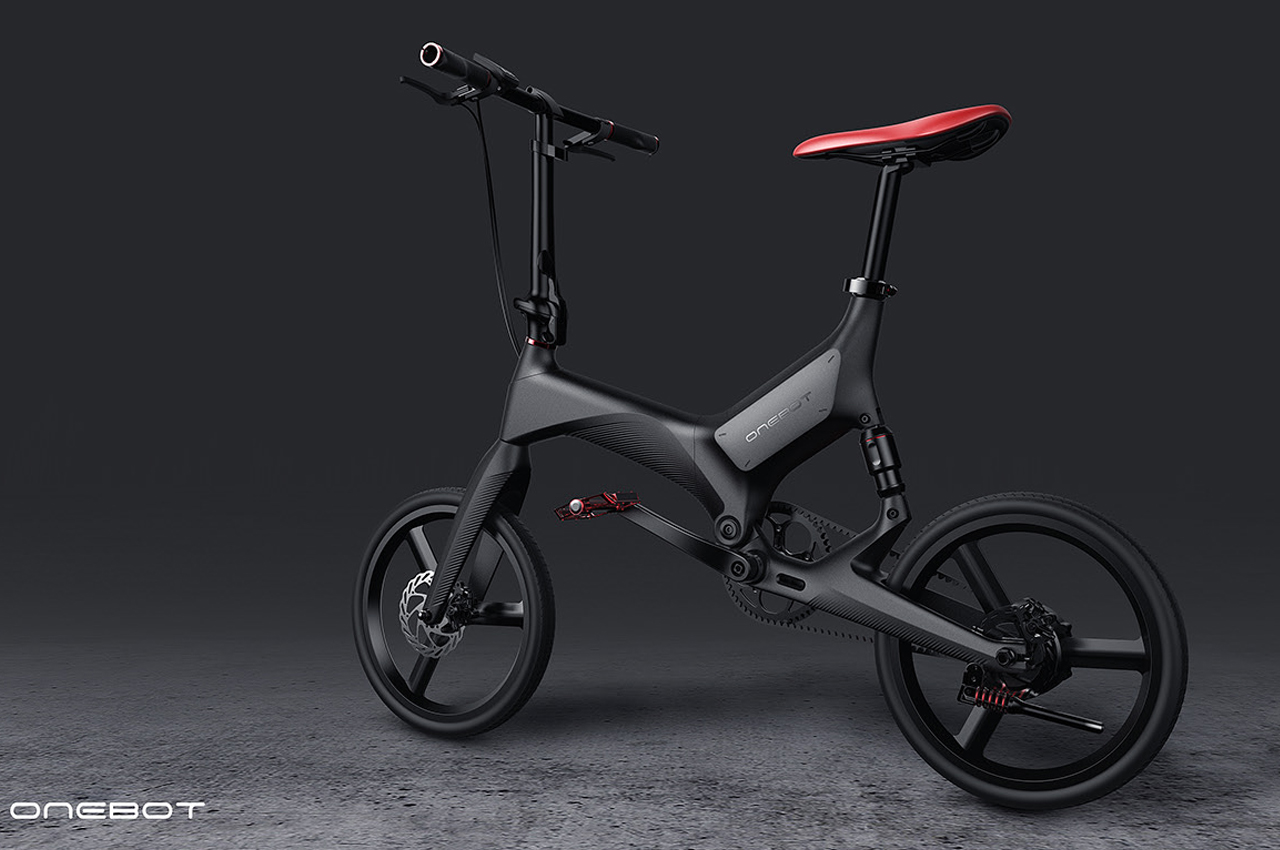
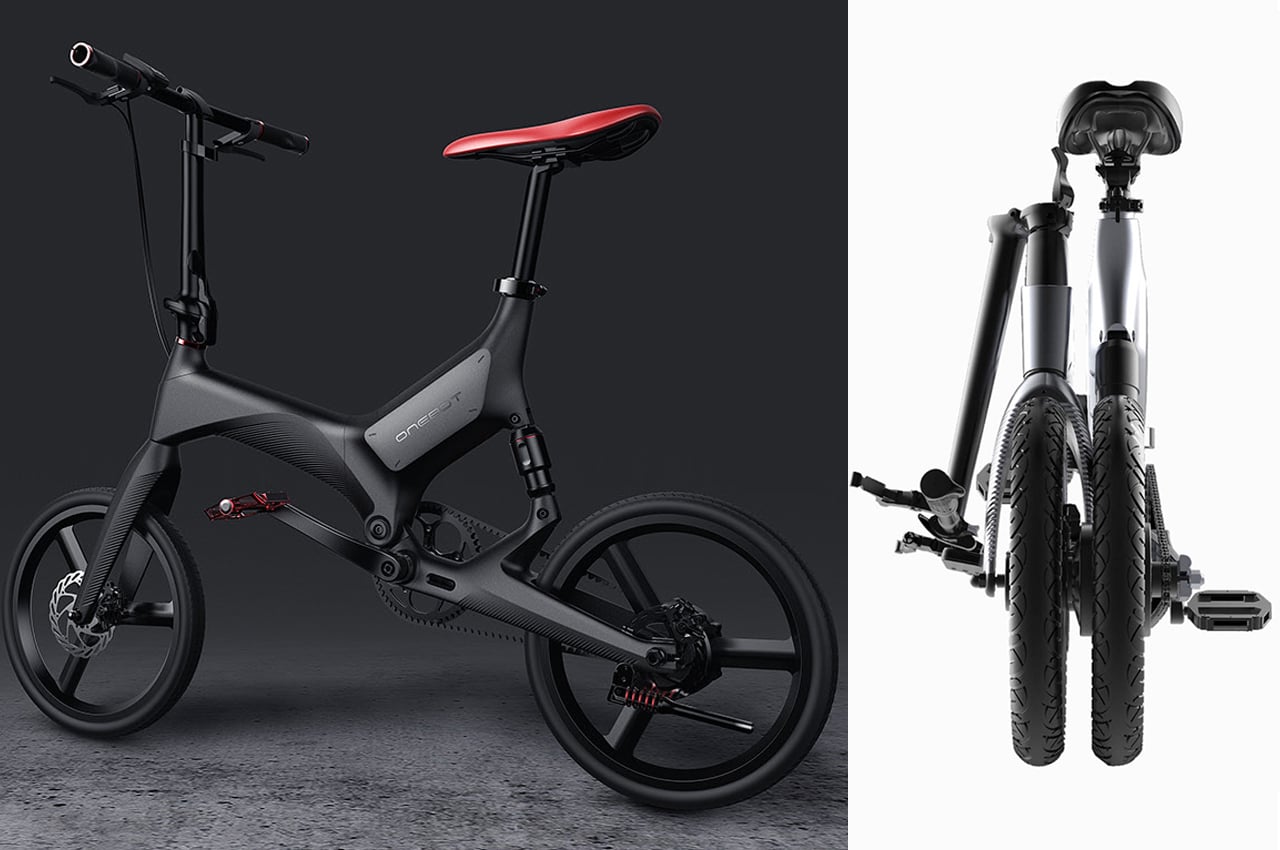
The ONEBOT-S7 features an innovative three-fold structure, unlike the two-step folding design we are all accustomed to. This e-bike is ultra-compact once it is folded, making it super easy to fit into the boot of a car or slide under your workstation. The bicycle can be compressed into the smallest single unit possible, and when folded it only measures 60 cm in height and length, as well as 35 cm in width.

5. The VanMoof Bike

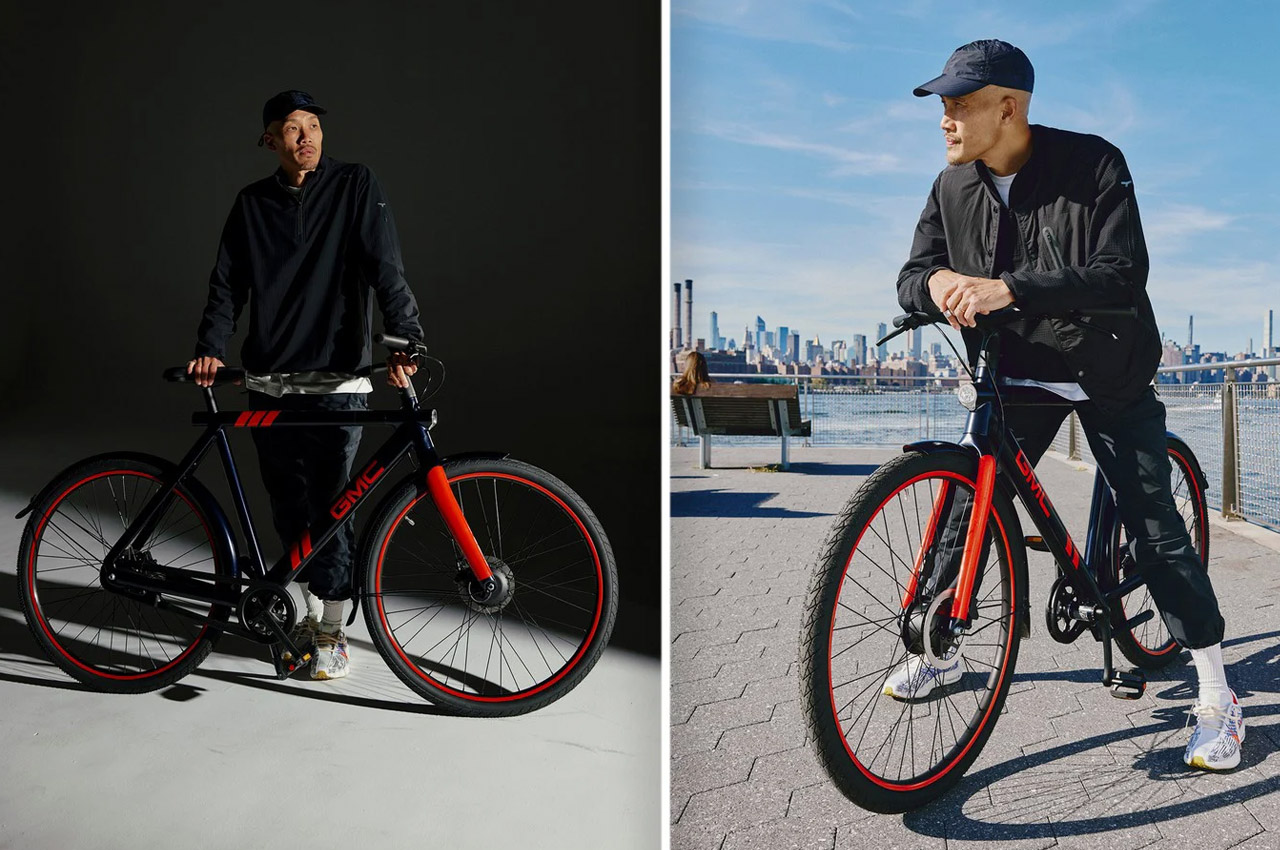
Dubbed the VanMoof bike, this minimal yet robust-looking bike features an amazing red and black colorway. This bike seems to be a custom version of the e-bike company’s Red Dot Award-winning S3 model, and the colorway is designed by Dao-Yi Chow, a New York-born-and-raised designer who co-created the street-savy fashion brand Public School in 2008.

6. IEDEX

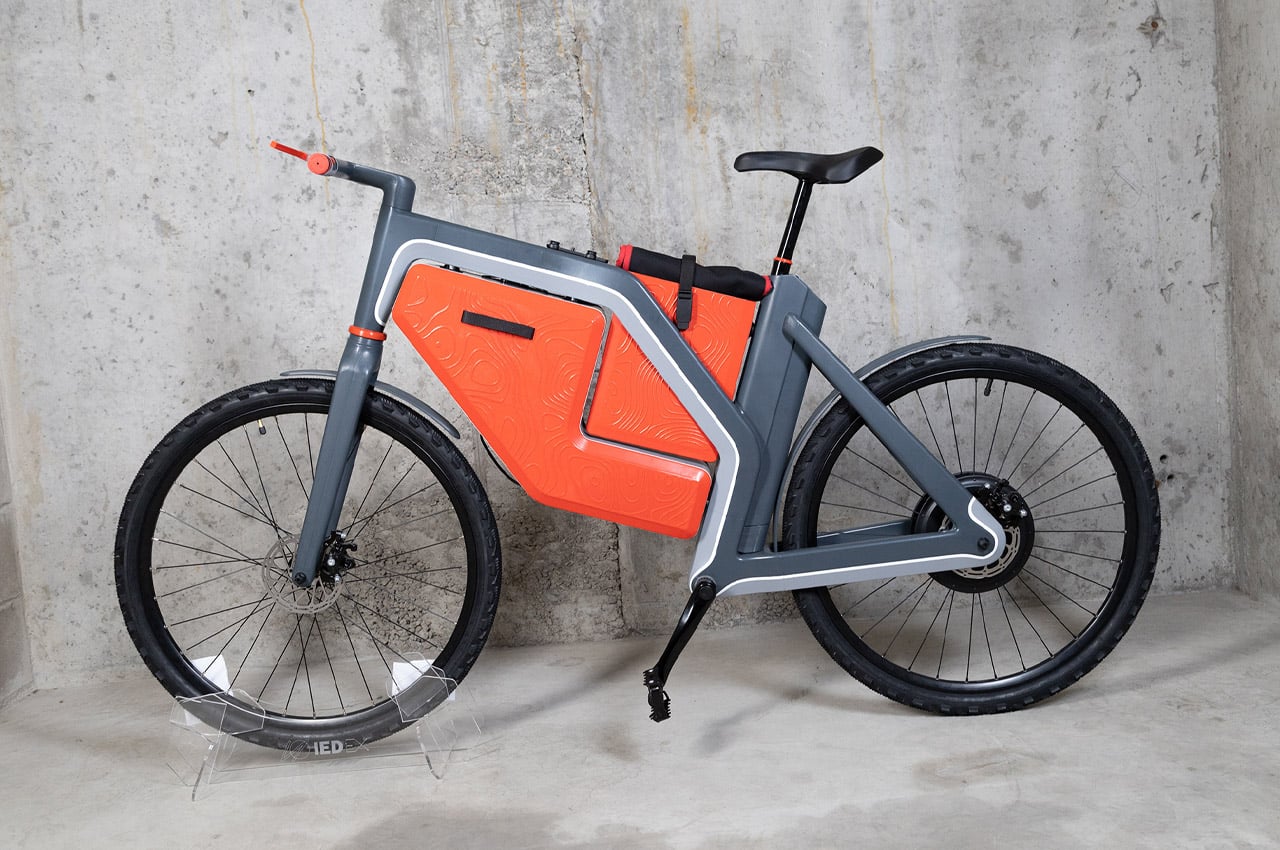
Dubbed IEDEX, this electric bicycle is an exploration cycle with a generous amount of storage space to store your camping essentials without being a complete eyesore. The electric bicycle features ad-hoc space to store luggage bugs in the frame itself. The bicycle eliminates the down tube courtesy of the unibody design, unlike conventional bicycle designs.

7. Nireeka Mega eBike

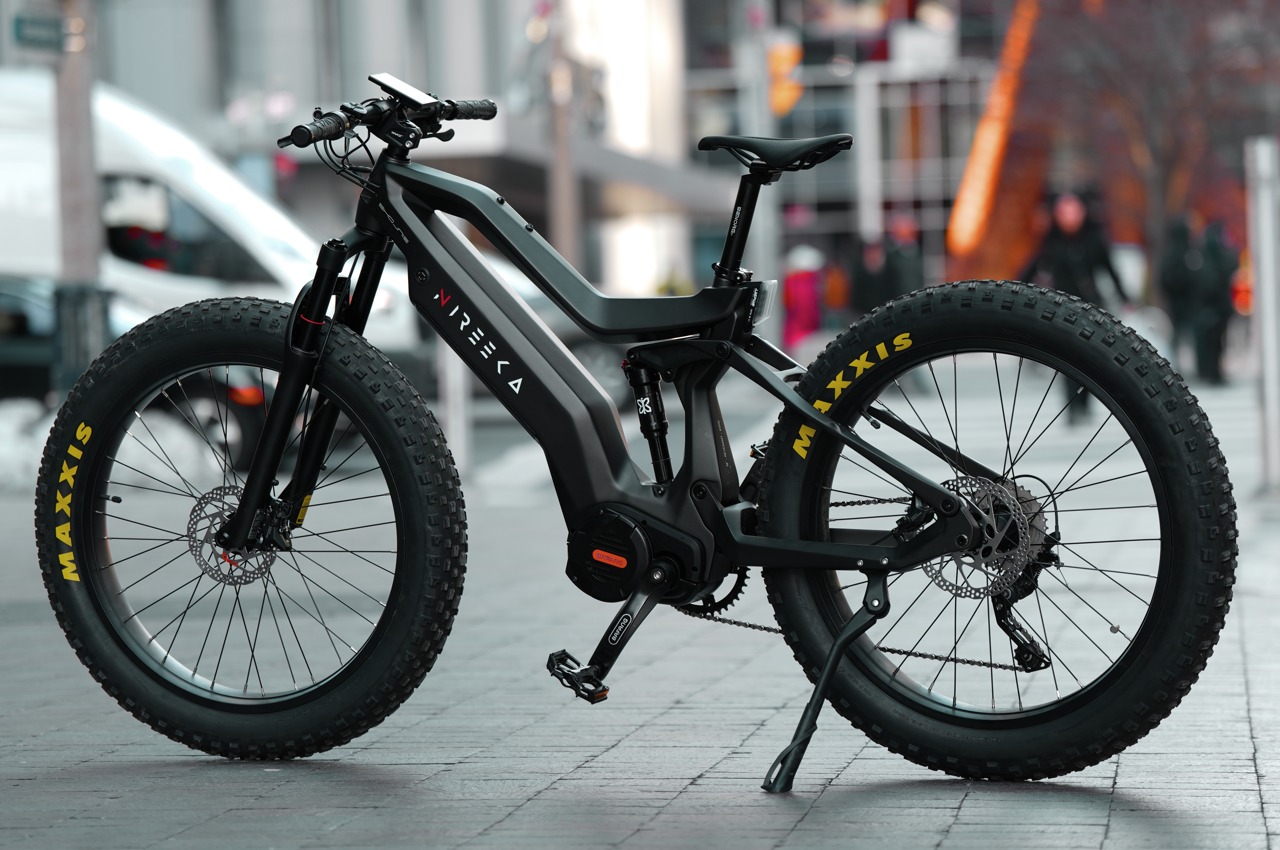
The Nireeka Mega eBike is powered by the 1500W Bafang Ultra mid-drive with a peak torque of 200nm. The impressive vehicle can take you on speeds of up to 38mph and features a removable 840Wh extended battery that can easily help you reach a range of 51 miles on a single charge. It features a full-suspension geometry with 140mm travel on both ends which absorbs bumps.

8. The ENGWE X26 All-Terrain E-Bike

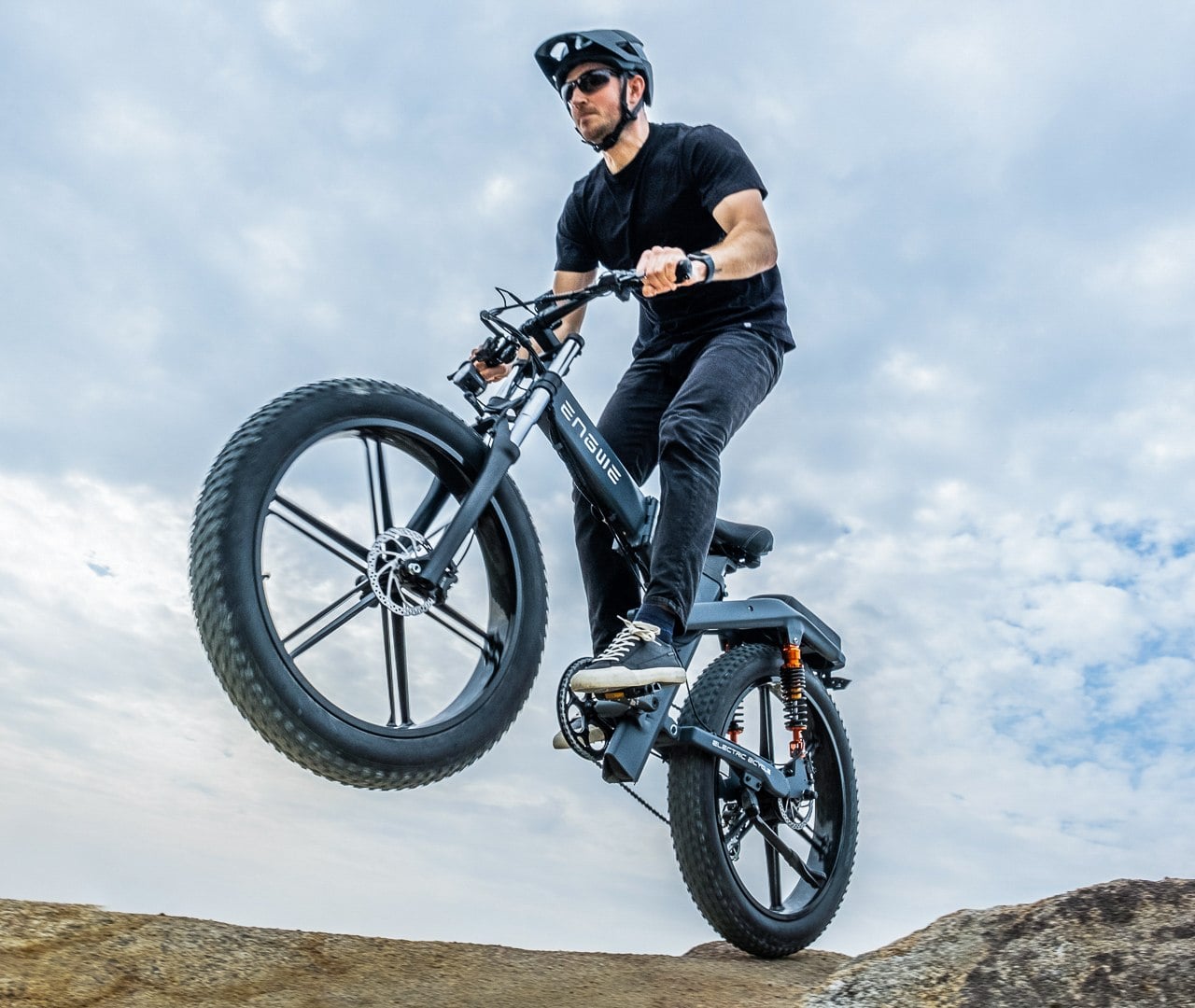
The ENGWE X26 all-terrain e-bike is the e-bike you need to conquer any road and distance! It features a powerful 1000W motor that can push your speed to 31 mph max. That is the maximum power, the e-bike can push out, and it also has a steady and sturdy delivery of 750W output that is greater than the average e-bike’s 500W motors.

9. PXID-A1

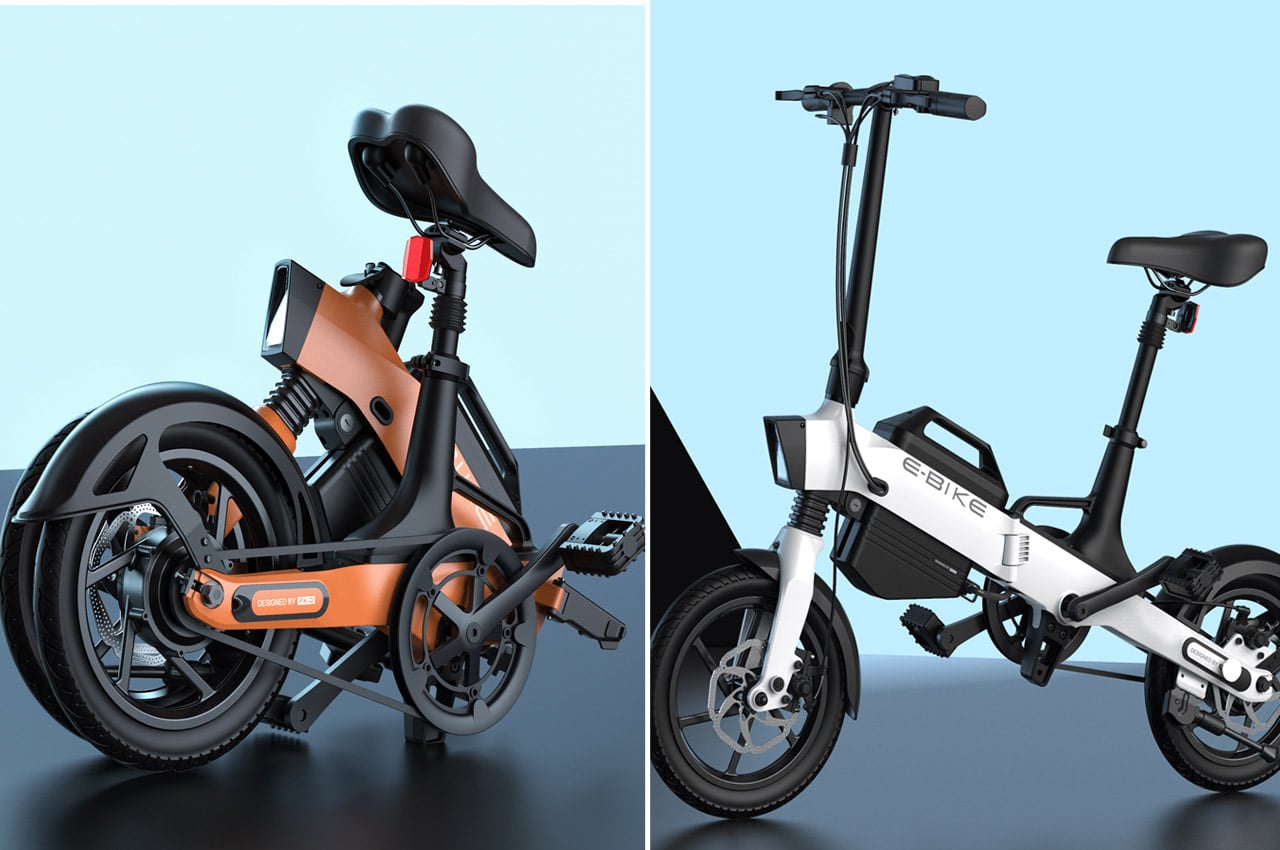
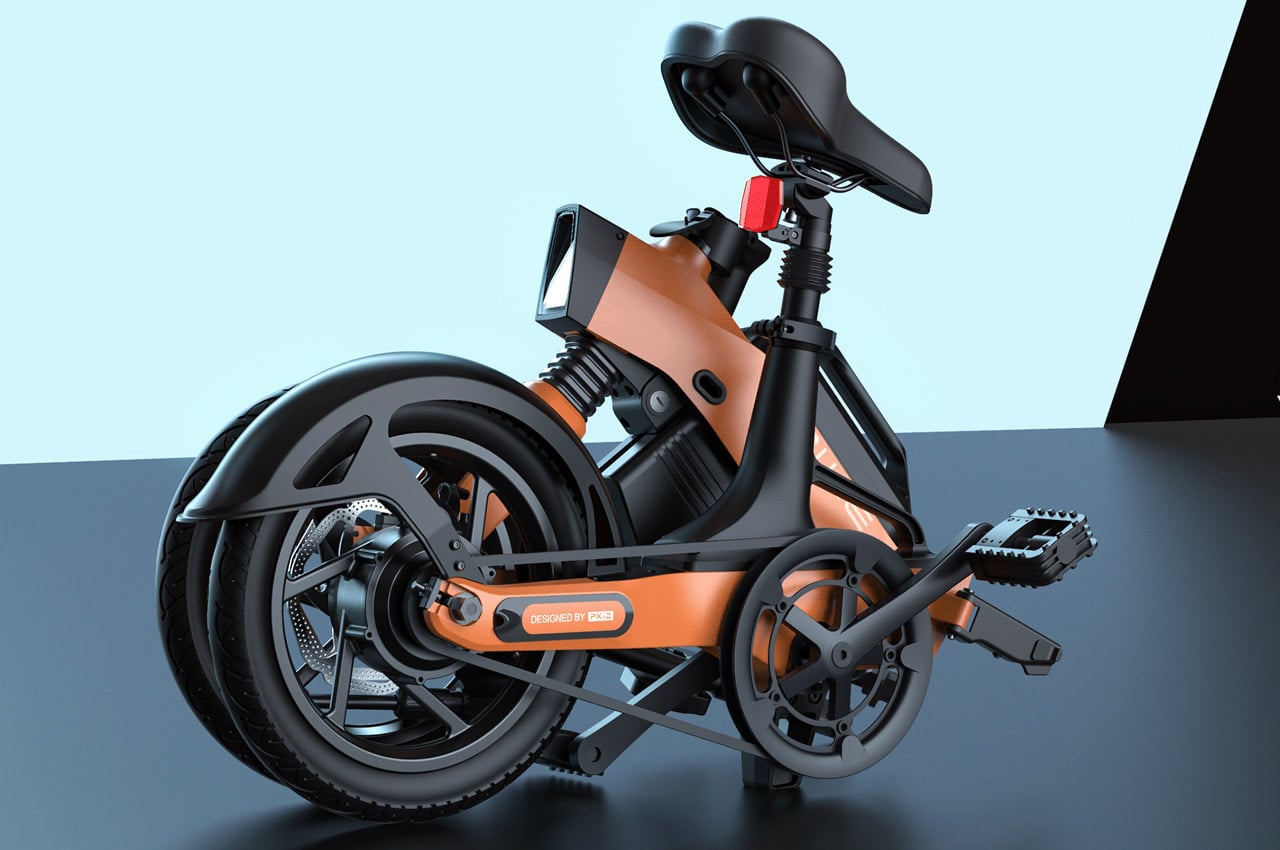
Called the PXID-A1, this compact electric bicycle can be folded down to the size of a small suitcase which makes it super easy to carry around. You can easily transport it in the boot, or even carry it to the office floor if your boss allows. The cycle rides on 14-inch tires, while the rear tires derive their power from the onboard electric battery for assistive riding on ascends.

10. Pendler Bike

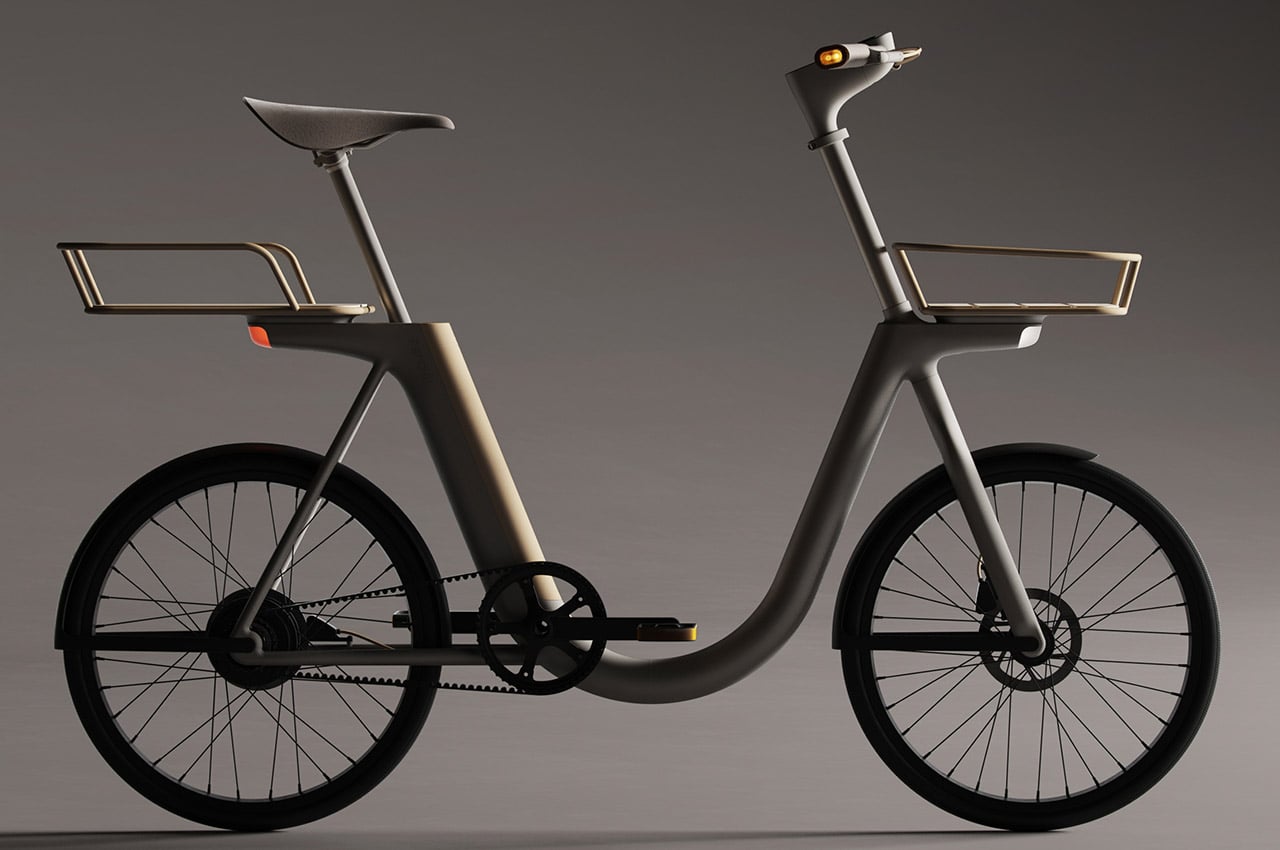
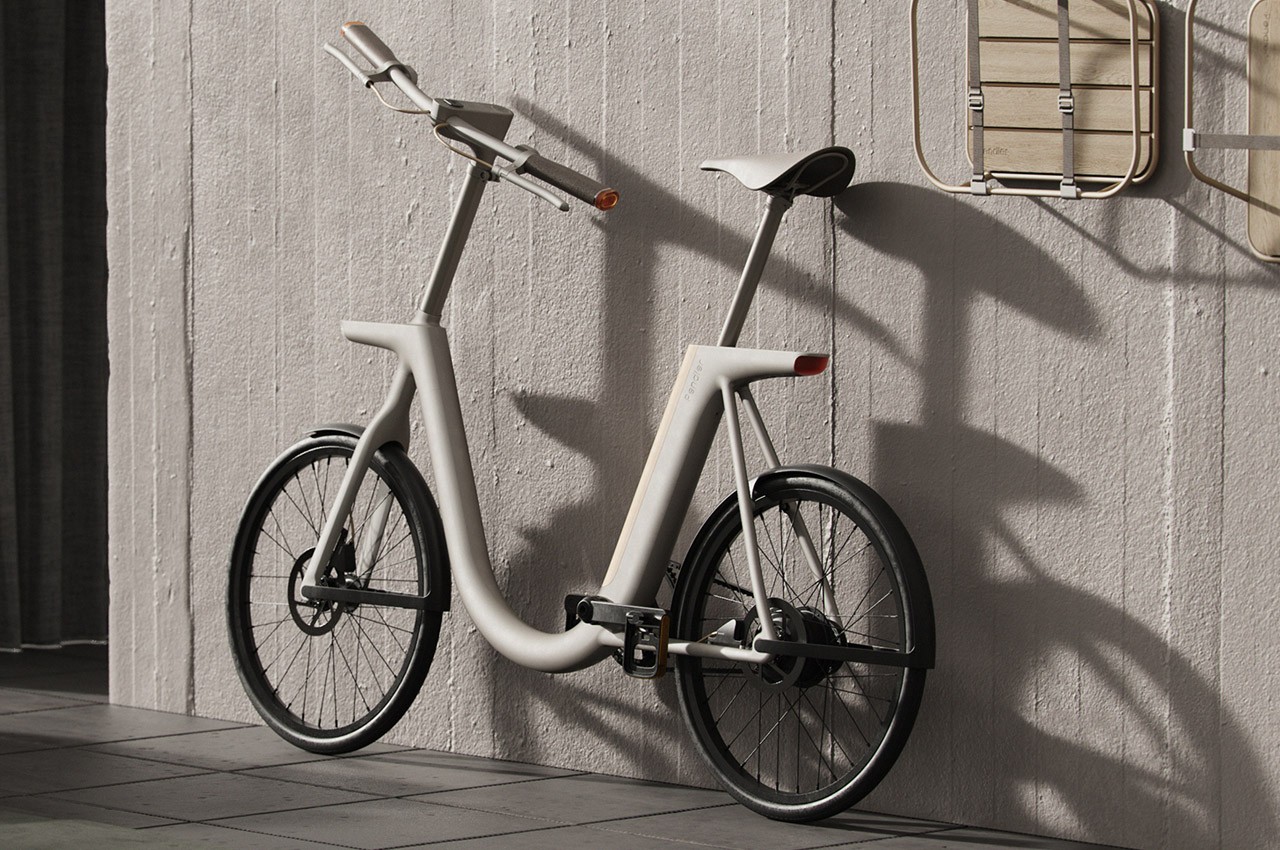
Named the Pendler bike, this unique e-bike is a nod to the country’s deep cycling culture. It features a U-shaped frame which is essentially a thick structural element. This allows the two-wheeler to have an identifiable silhouette which caters perfectly to your urban riding needs.

The post Top 10 Electric Bicycles To Adopt Green Urban Commuting In 2024 first appeared on Yanko Design.
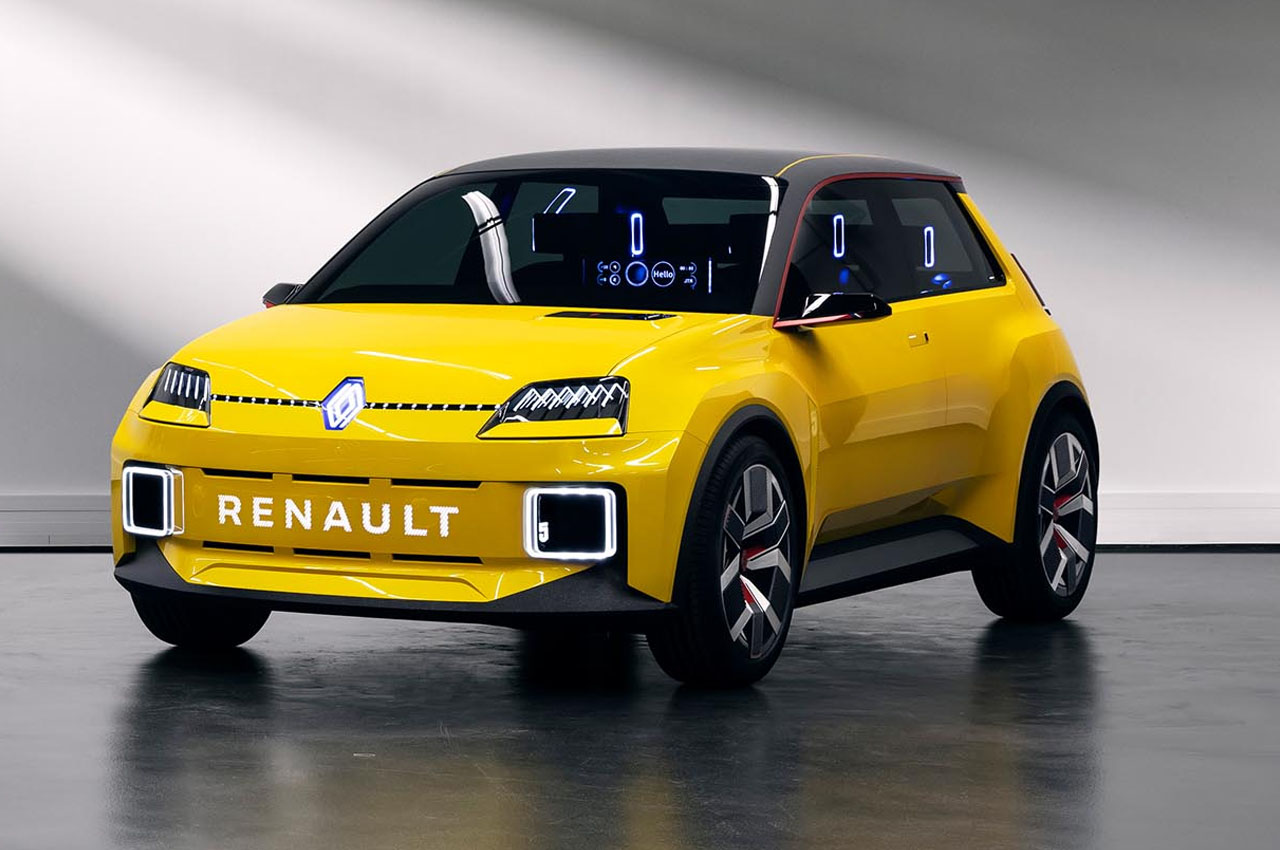
Renault 5 E-Tech is a retro-futuristic electric revamp of R5 hatchback from the 70s

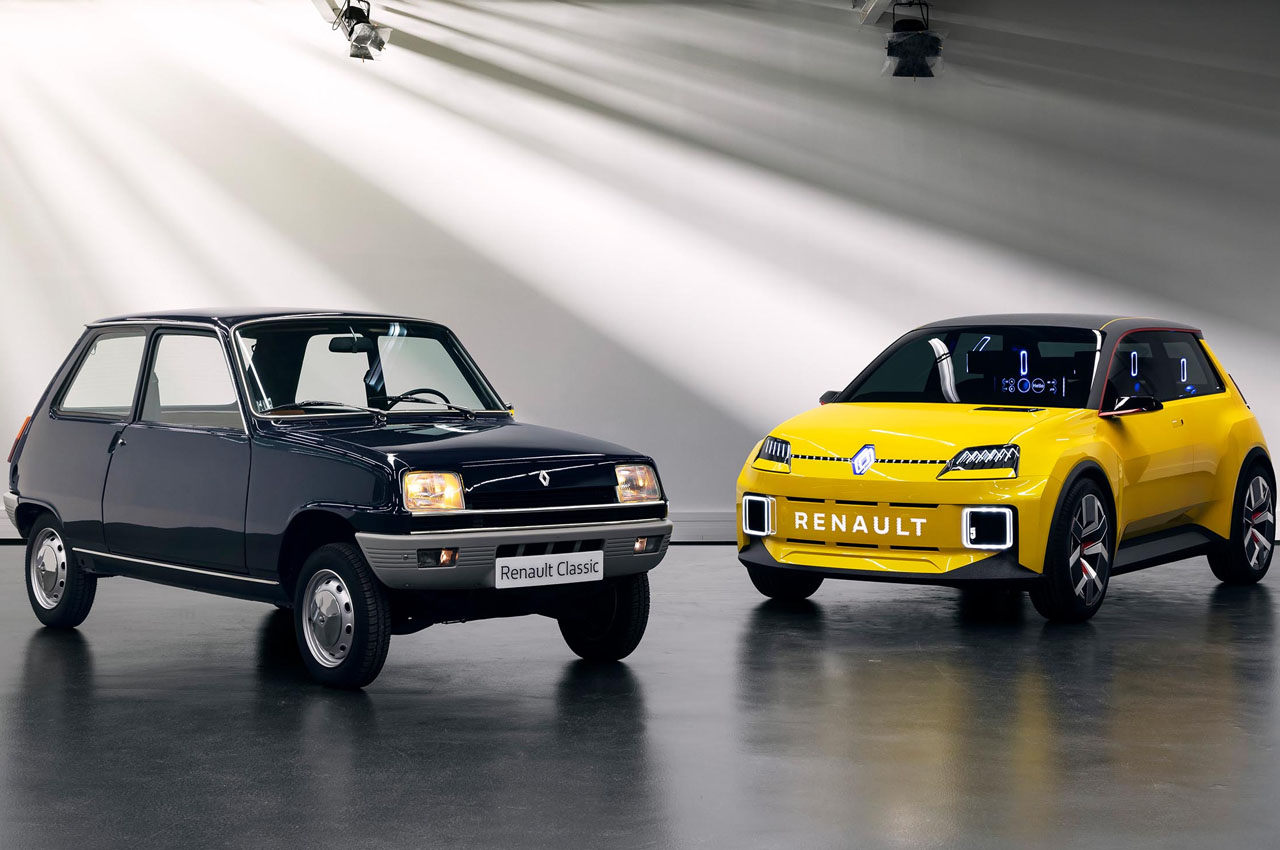
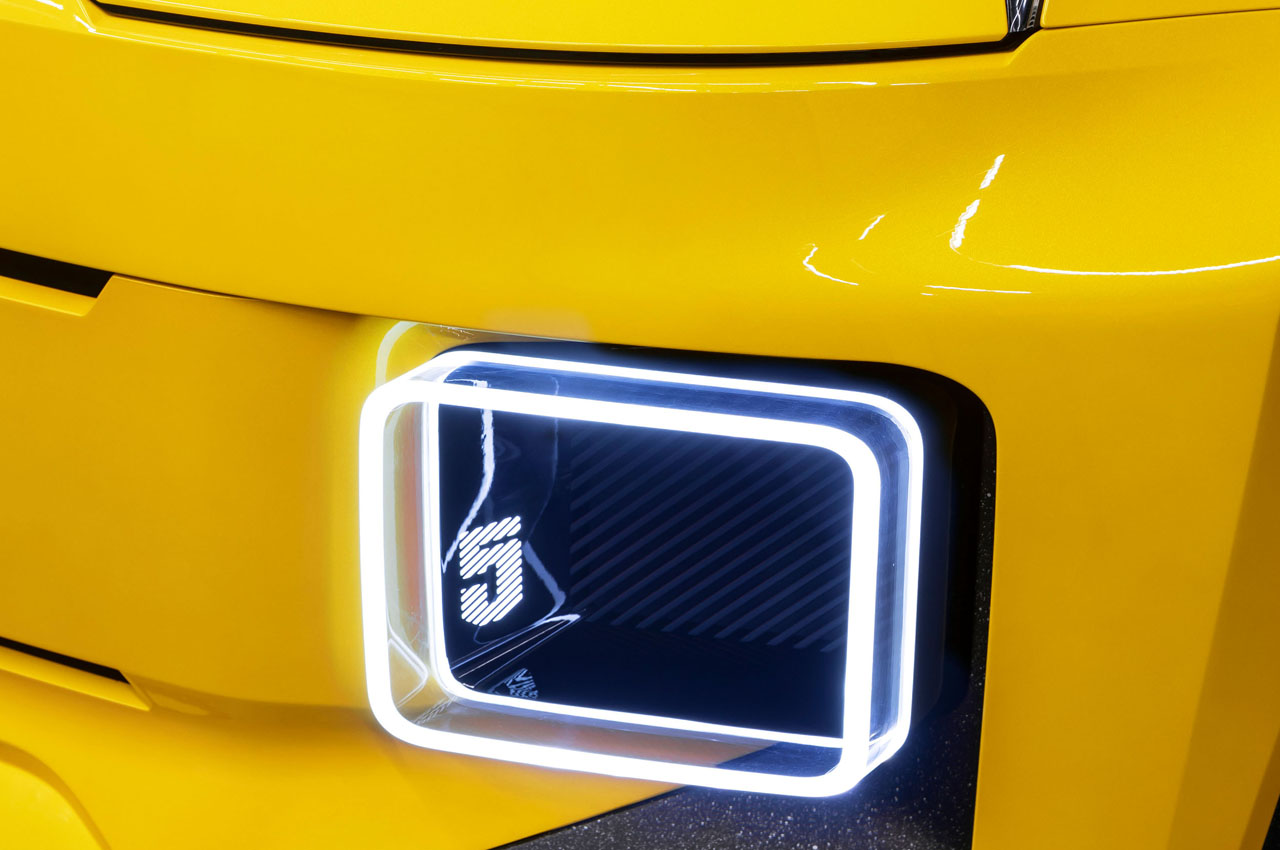
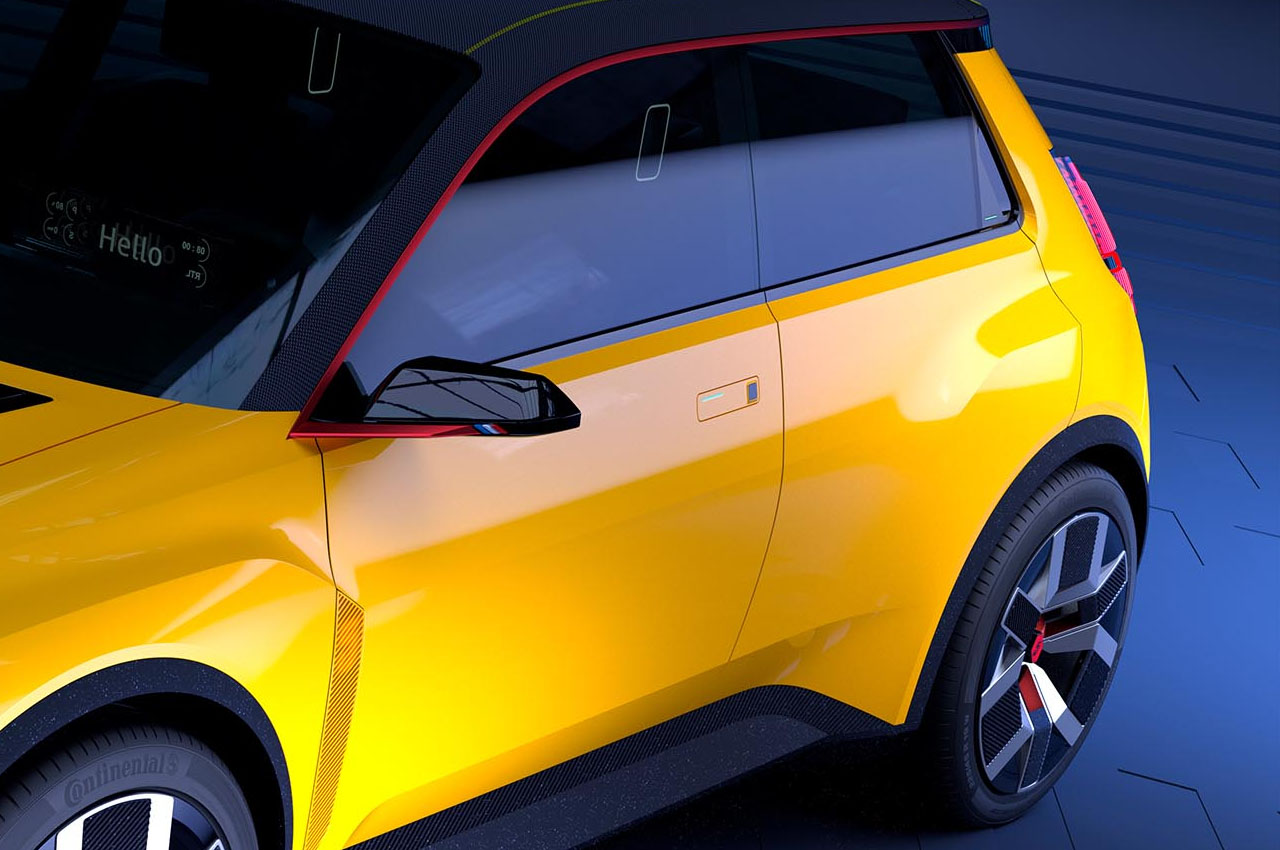
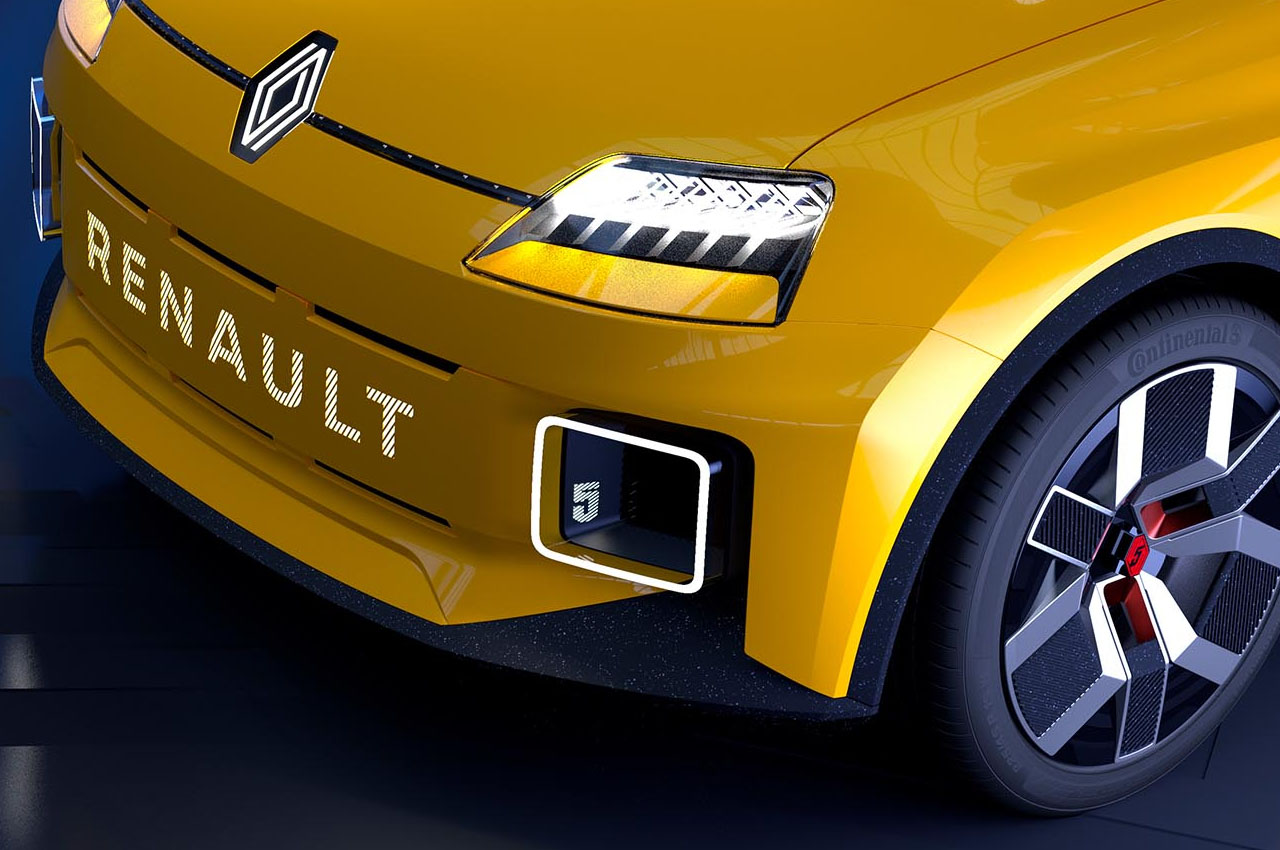
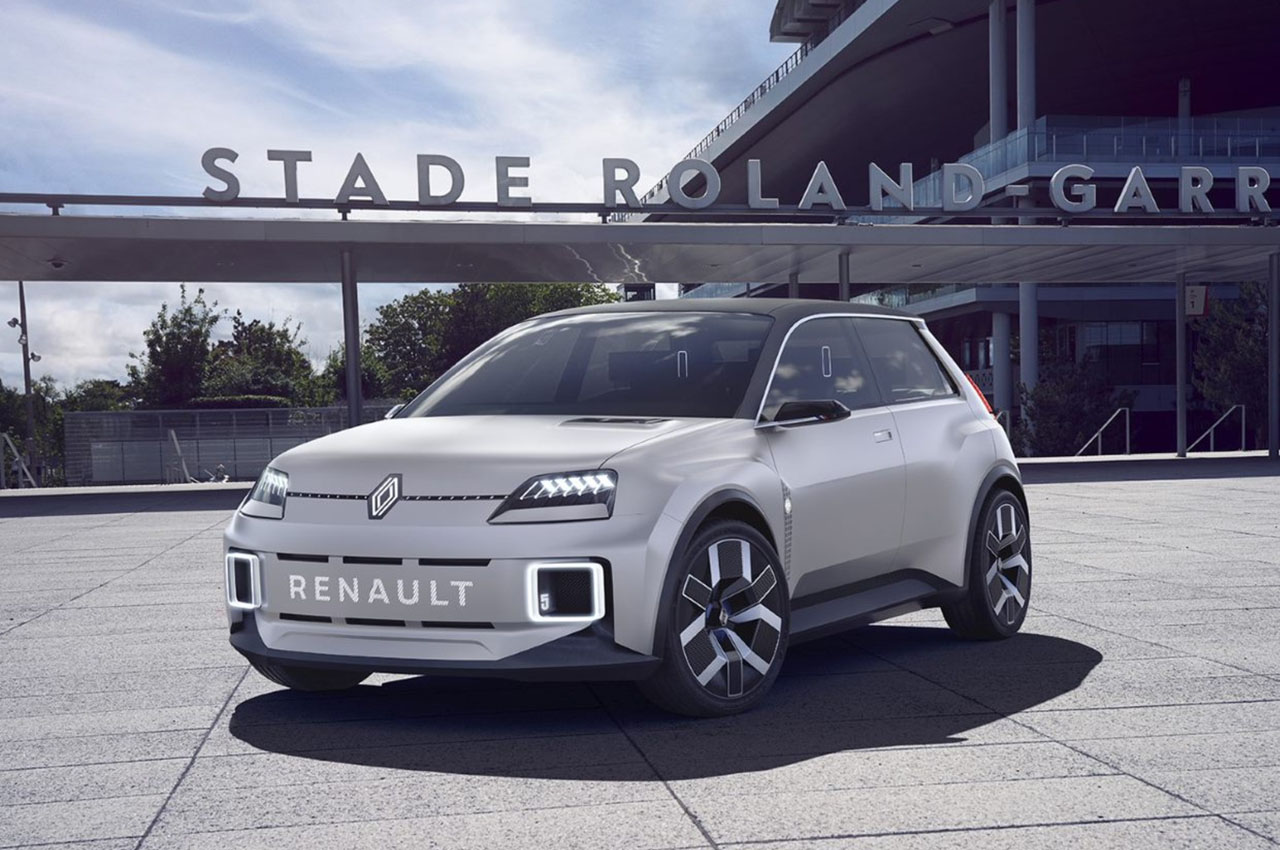
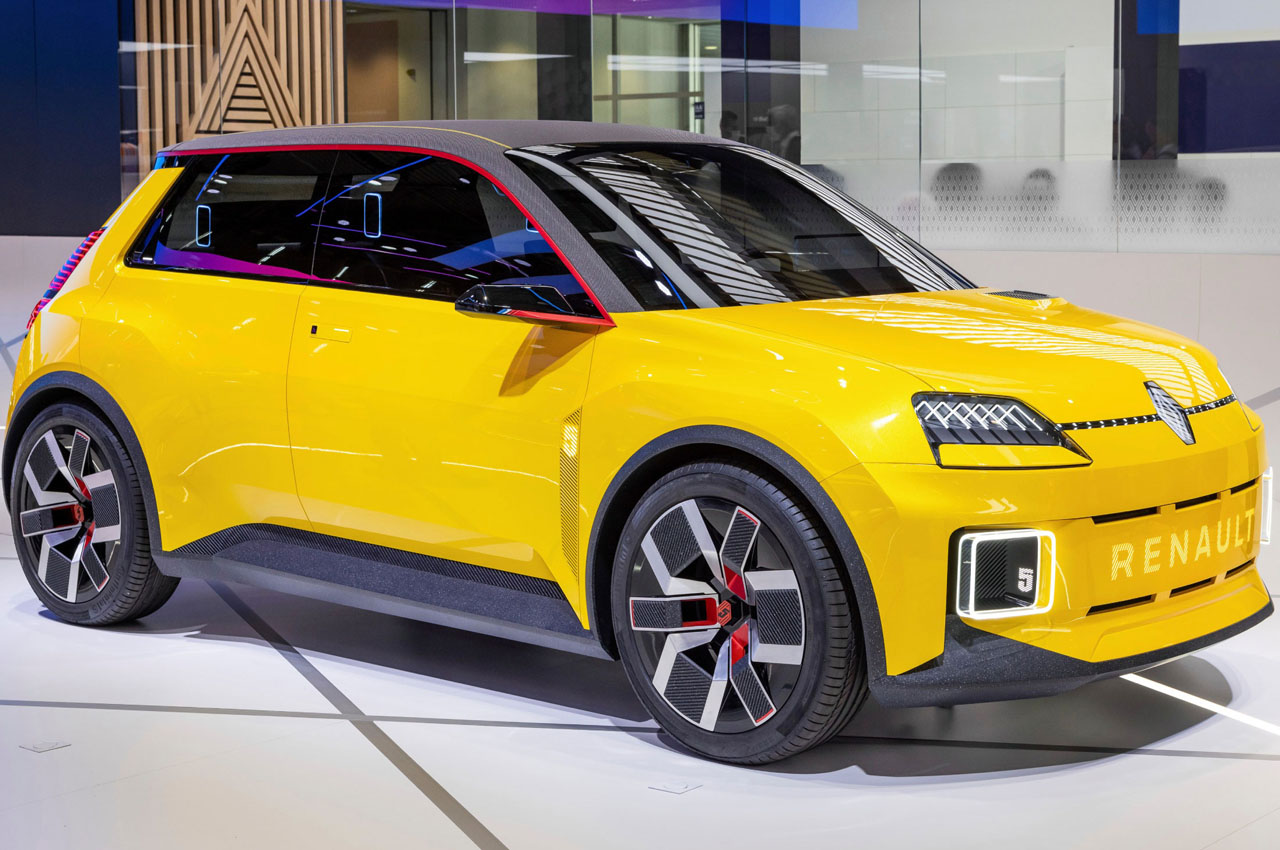
When we talk of cult favorite hatchbacks that rocked the scene back in the 70s, Renault was right up there with the best thanks to the R5. Now, the French carmaker has reincarnated the iconic sports car in a retro-modern avatar they call the Renault 5 E-Tech. All set to make its debut at the Geneva International Motor Show in February 2024, the modernized version carries the same fun and styling in an environmentally friendly iteration.

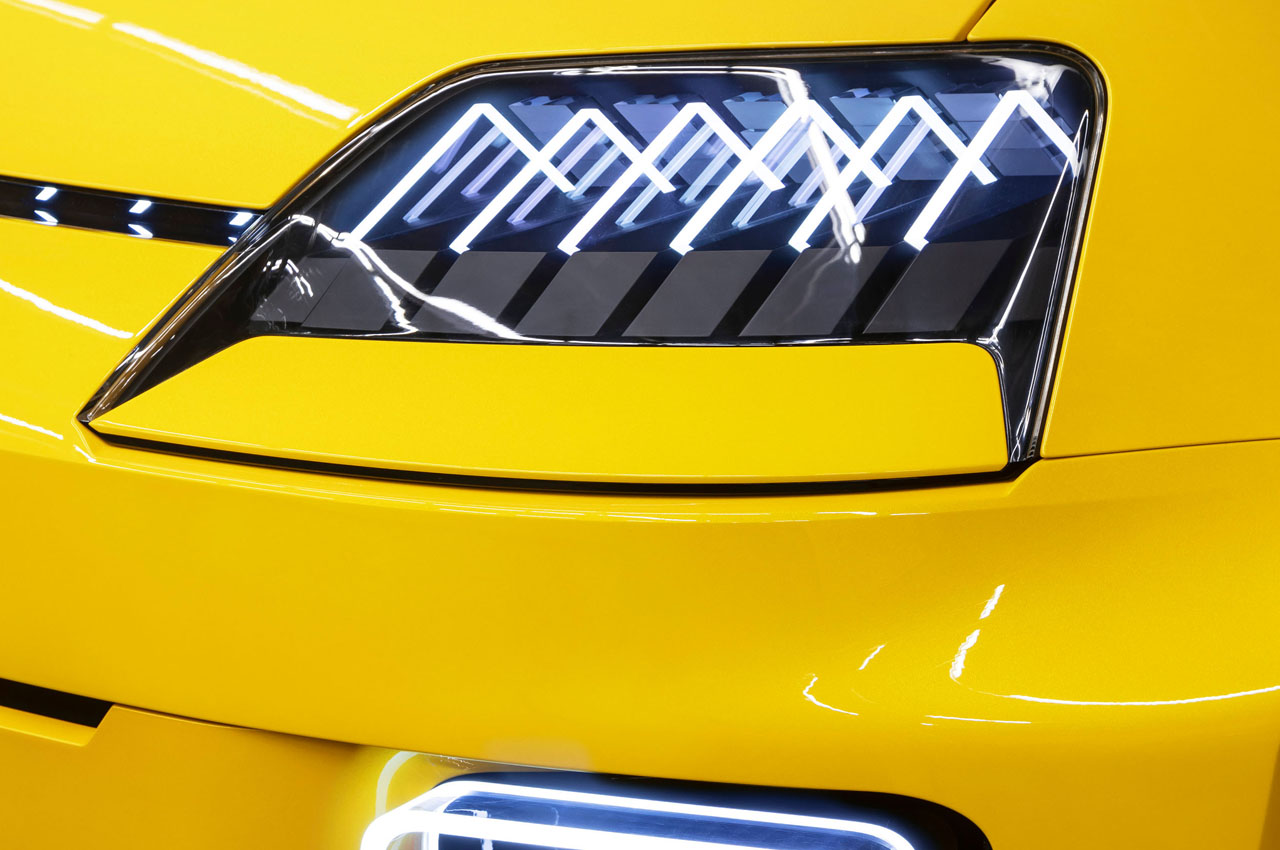
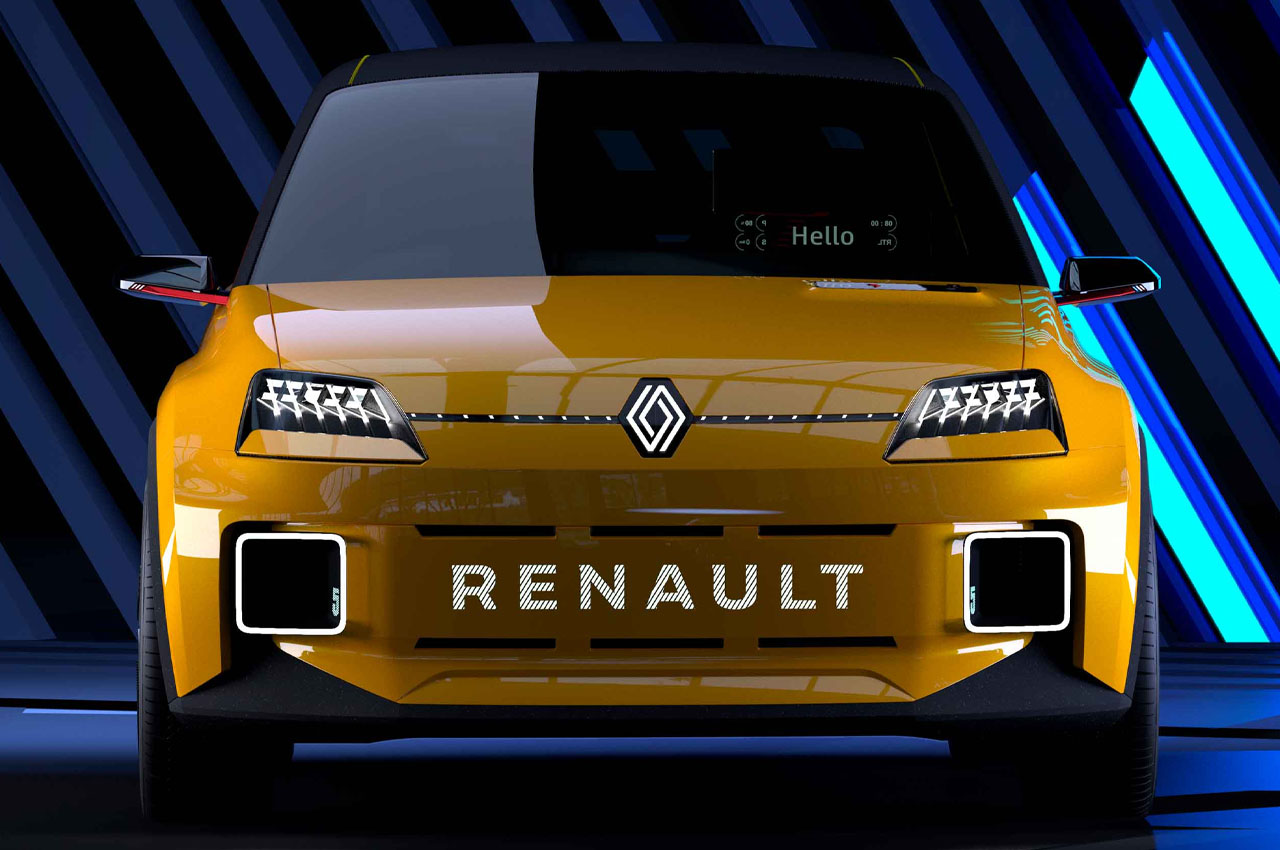
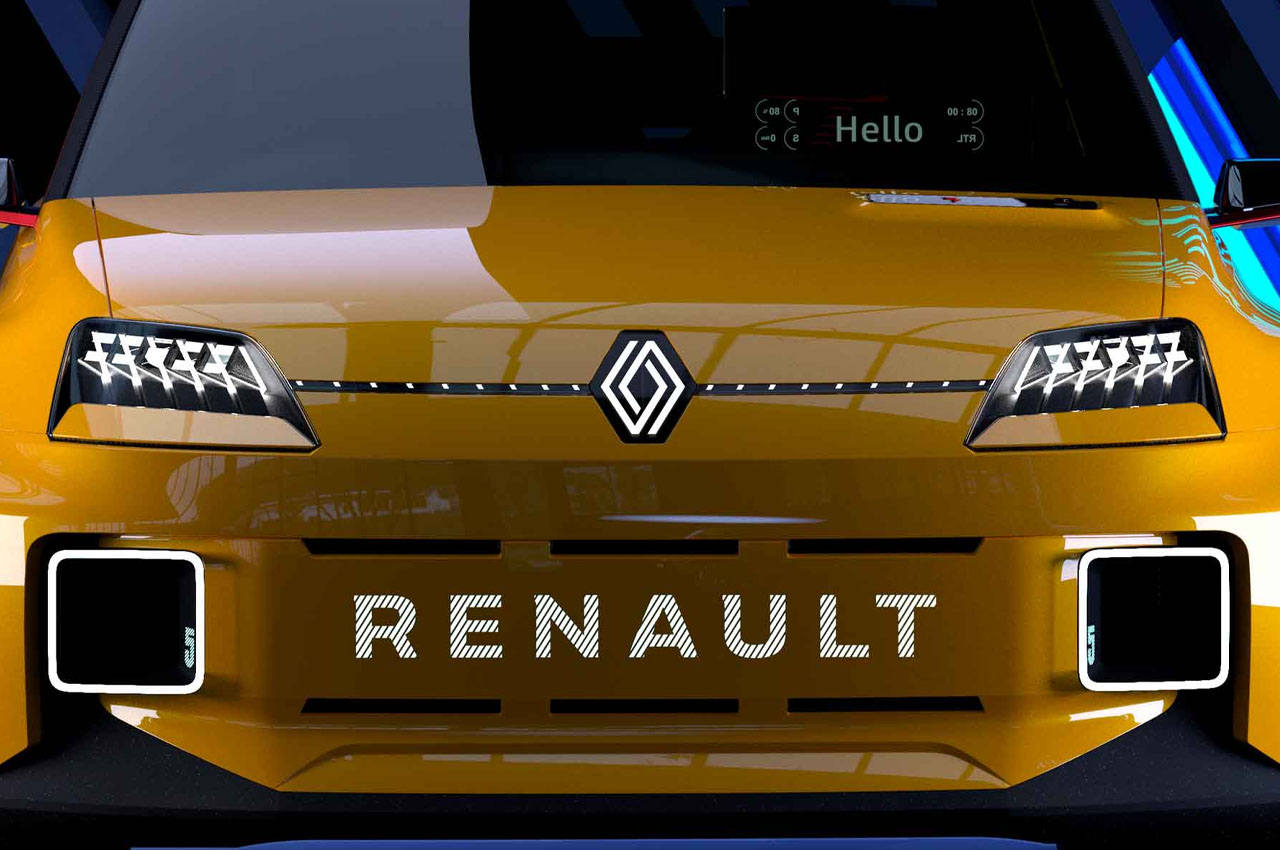
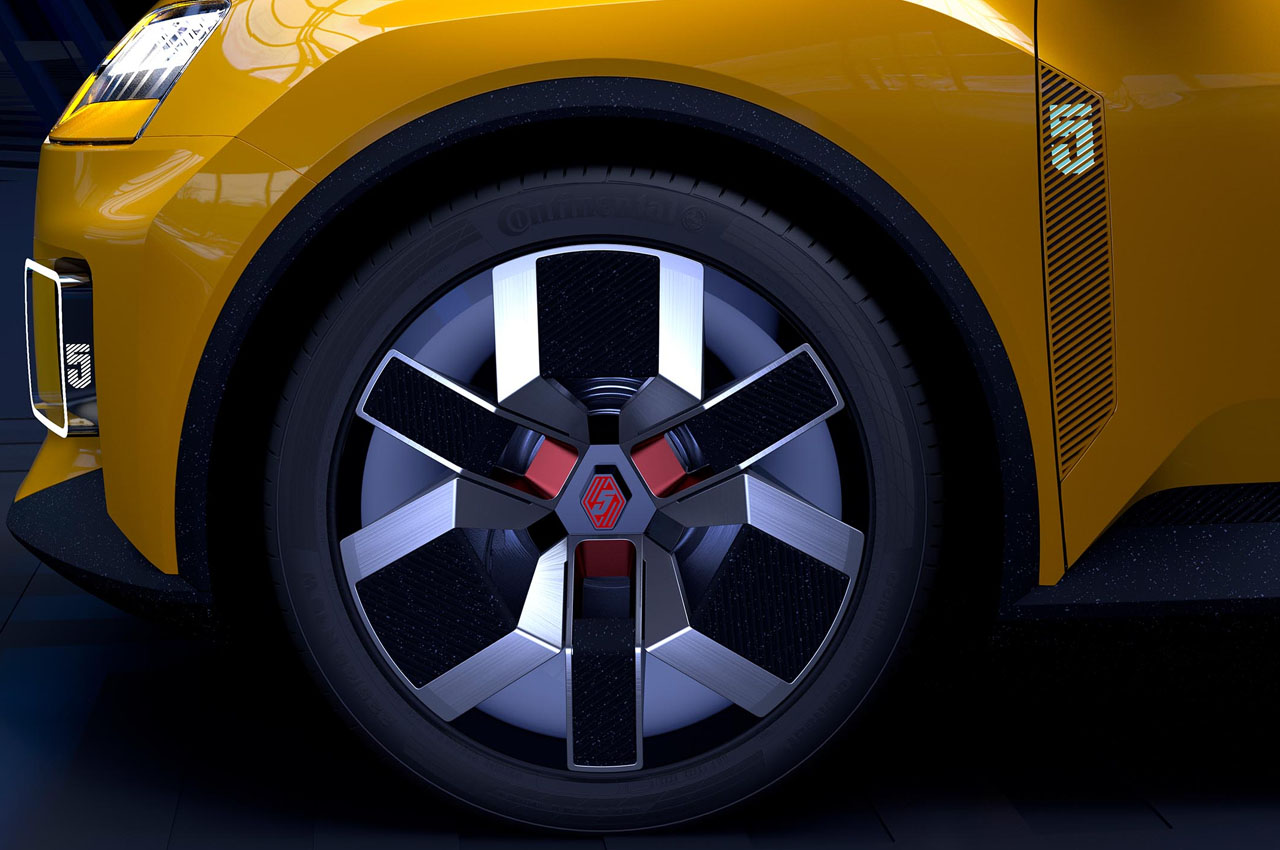
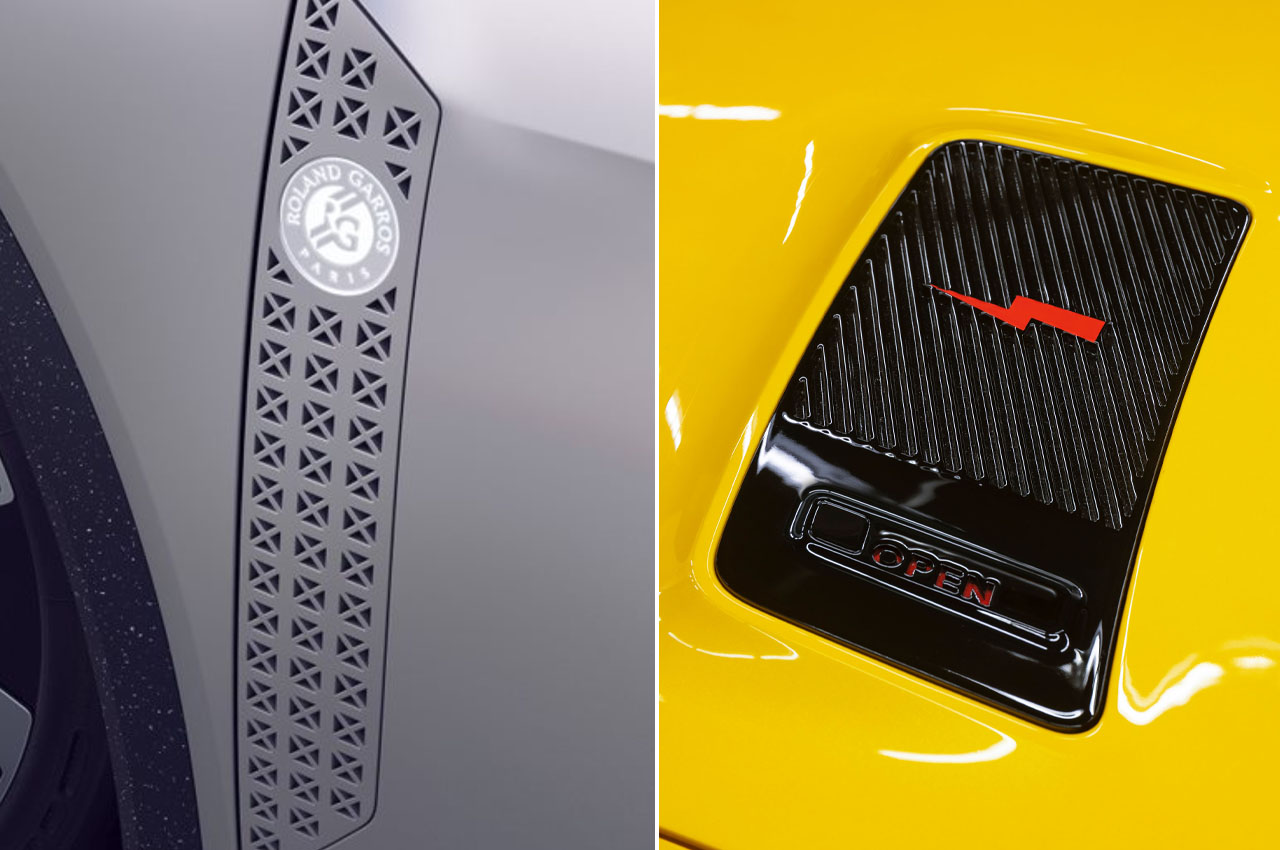
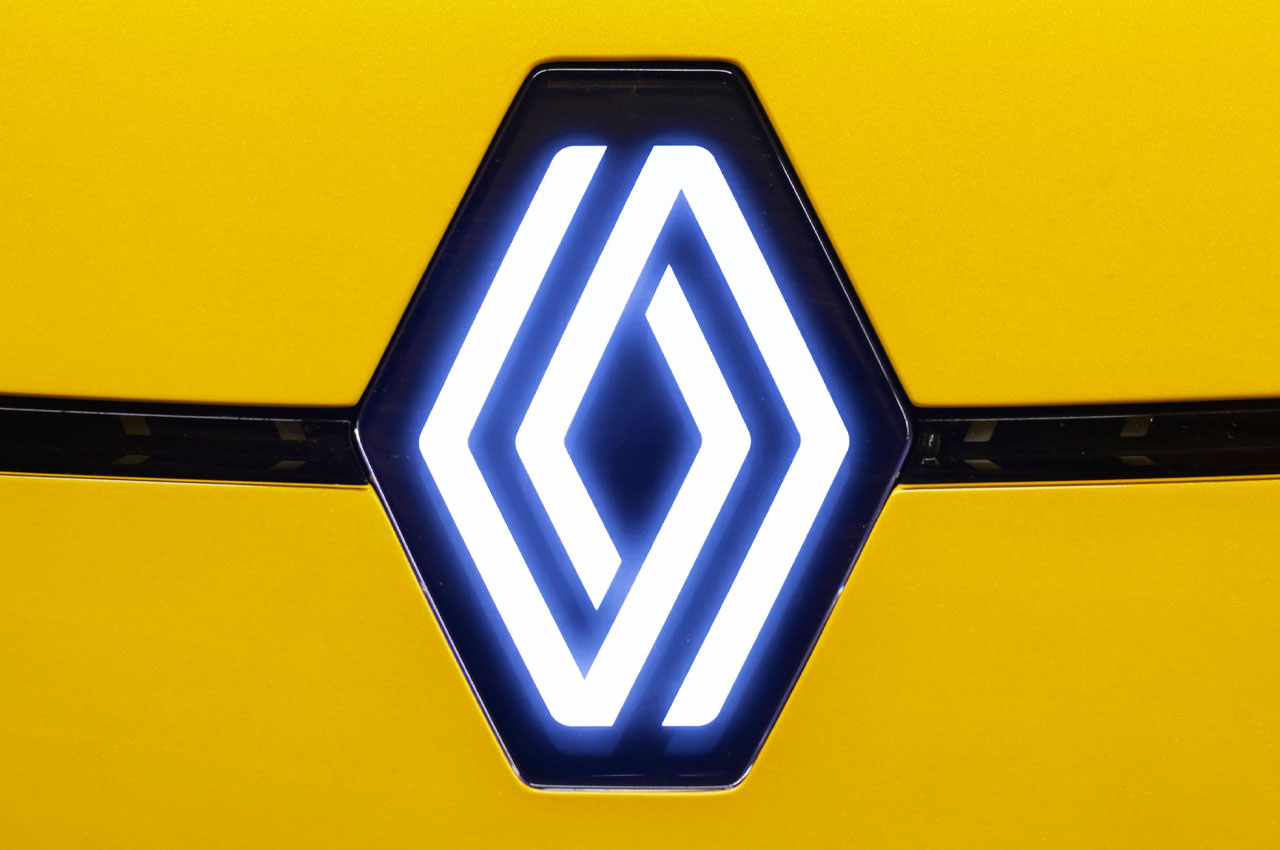
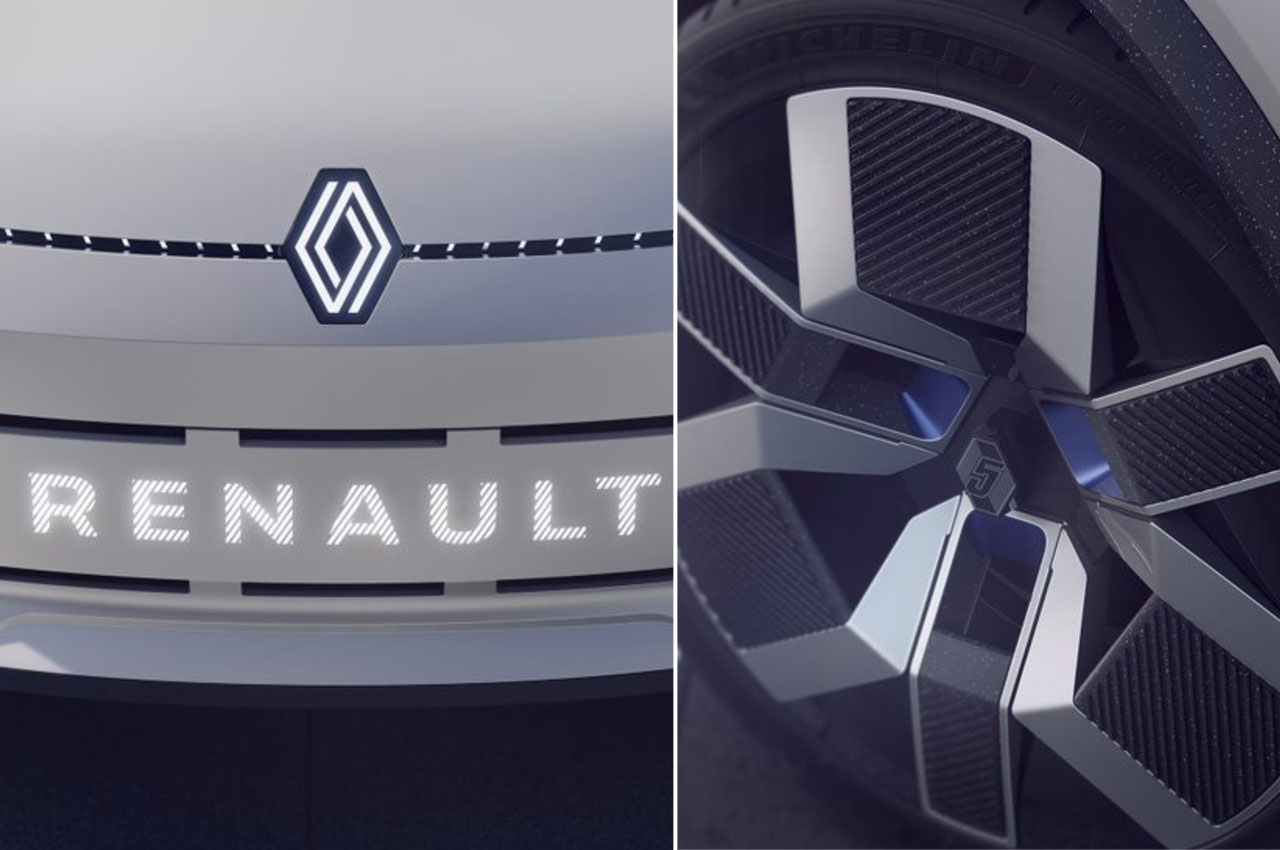
The obvious differences between the two include more rugged wheel arches. Boxier body frame and a flowing soft-top roof. Other changes come in the form of the original bonnet air intake morphed into a charging port. Of course, to stay abreast of the latest automotive trends, the LEDs illuminate the logo on the bonnet and accents on the front section!

Designer: Renault

The electric car is a five-door version of the classic sports car that dominated the scene for nearly five years. This newer version will be powered by a 100-kW electric motor that delivers 136 horsepower and has an impressive range of 400 km on a single full charge.

The electric car debuted back in 2021 as a concept from the brand with no surety about its future as a production-ready version. In fact, last year Renault joined forces with Pierre Gonalons (French designer/interior architect) to create the Renault 5 Diamant. Fast forward to 2023 and it is breaking the scene as a viable four-wheeler that is all set to steal the show. According to Renault, the 5 E-Tech will be assembled in their Douai plant in France. The car is all set to roll off the production lines next summer in Europe for an estimated price tag of around $27,636.

If you are already interested, the Renault 5 E-Tech can be pre-booked right away. Renault also has plans to come up with the Super5 and R5 Turbo versions sometime in the future depending on the consumer response to this current announced model.

The post Renault 5 E-Tech is a retro-futuristic electric revamp of R5 hatchback from the 70s first appeared on Yanko Design.
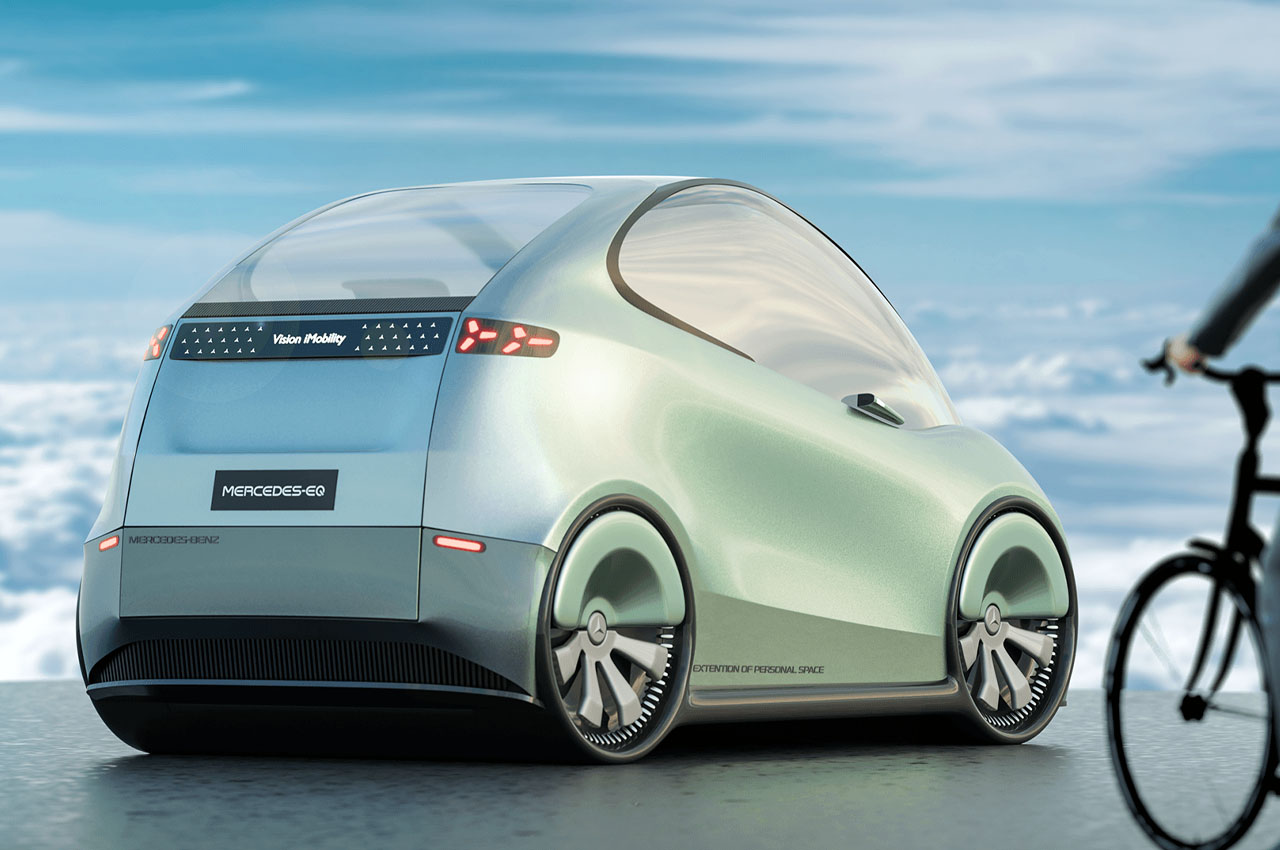
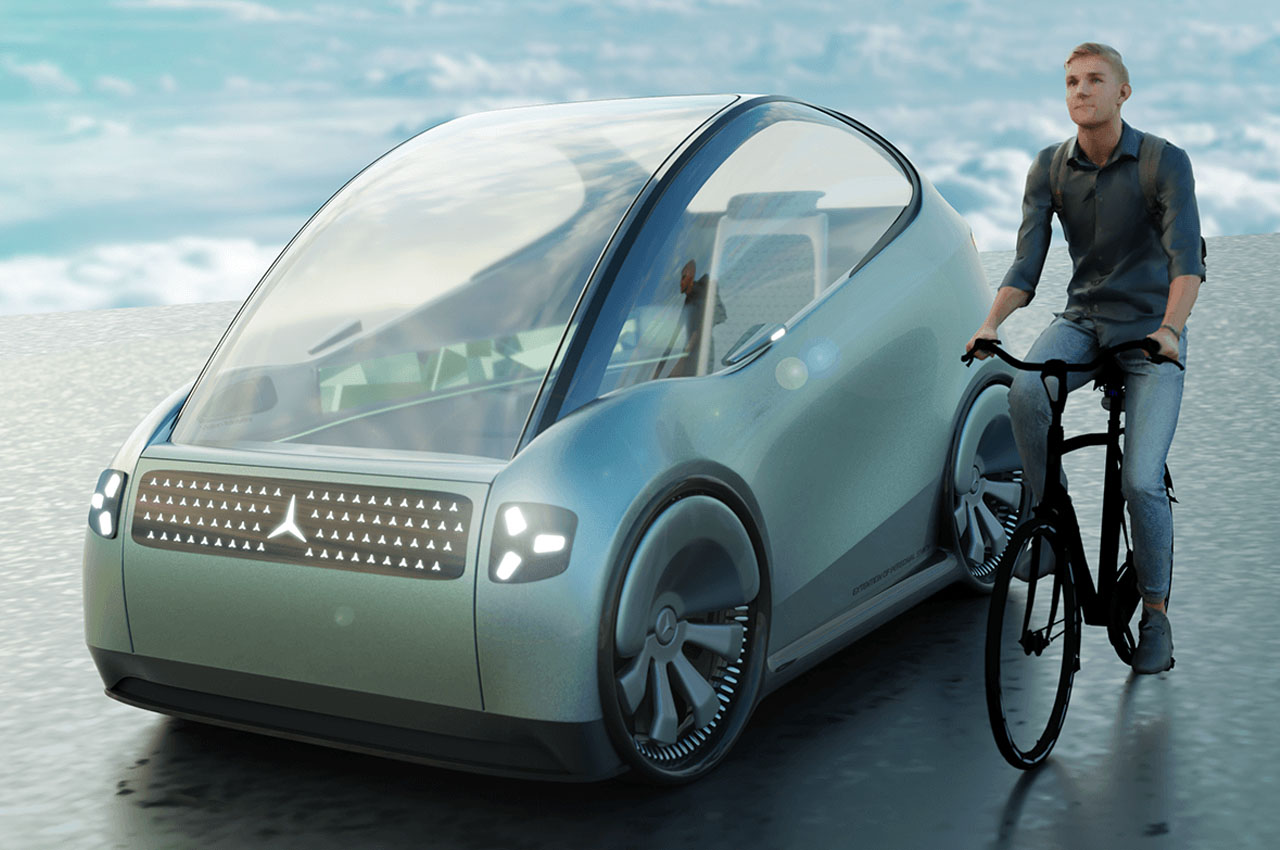
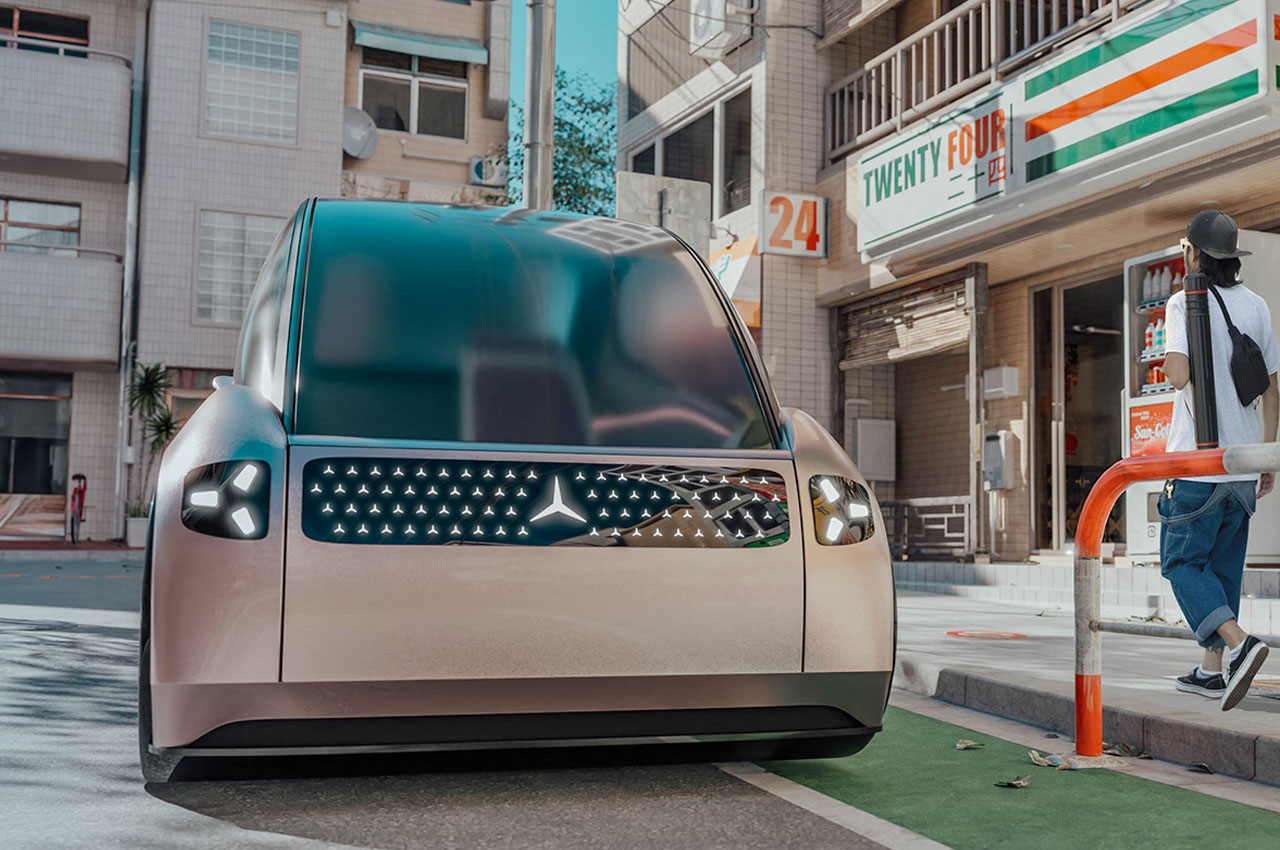
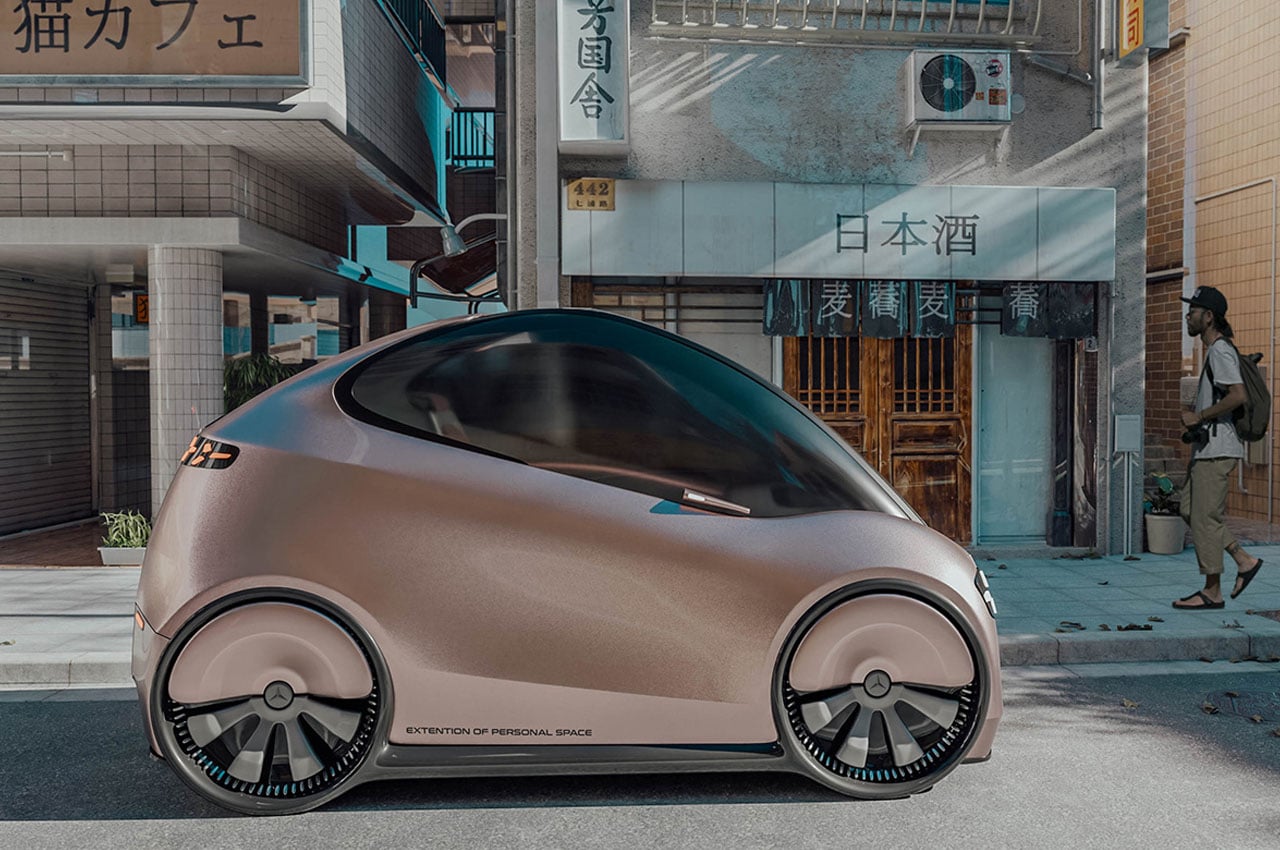
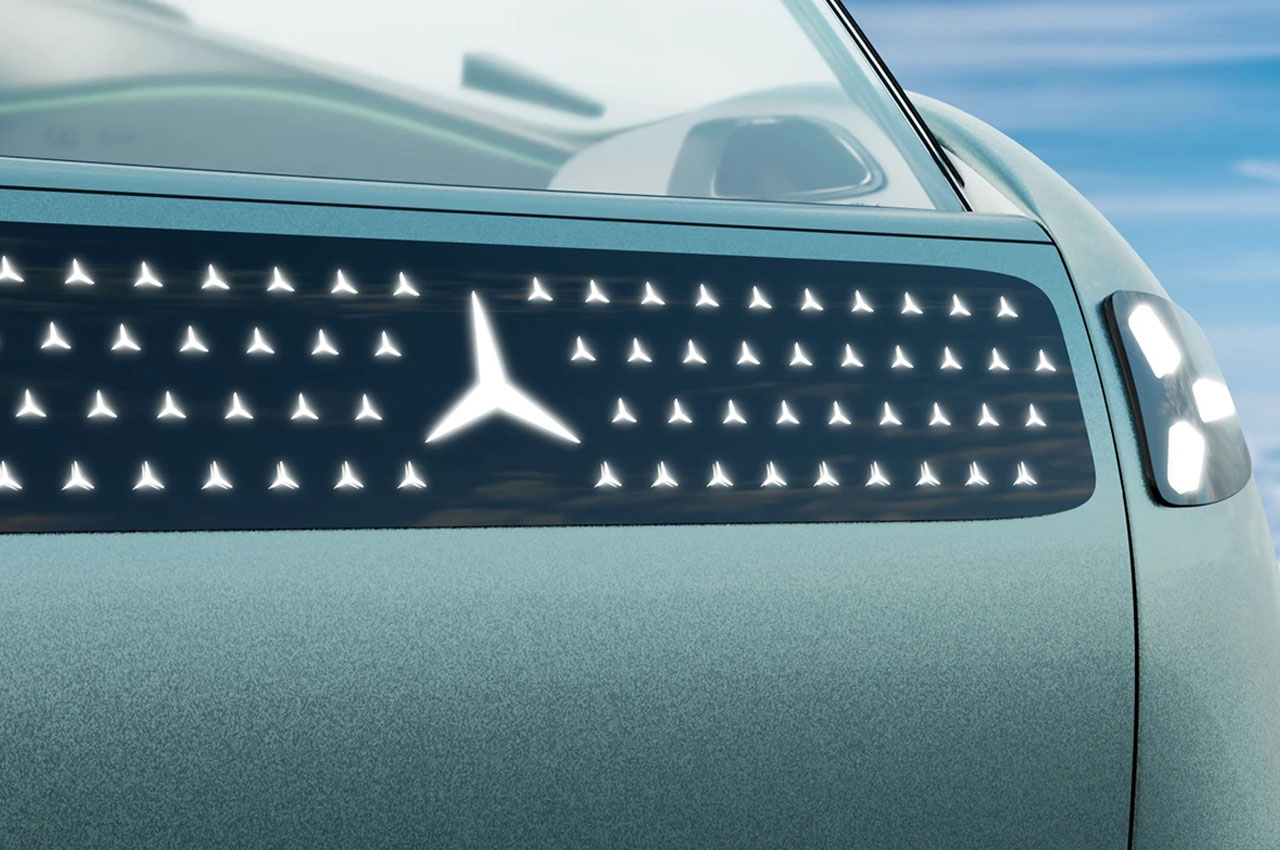
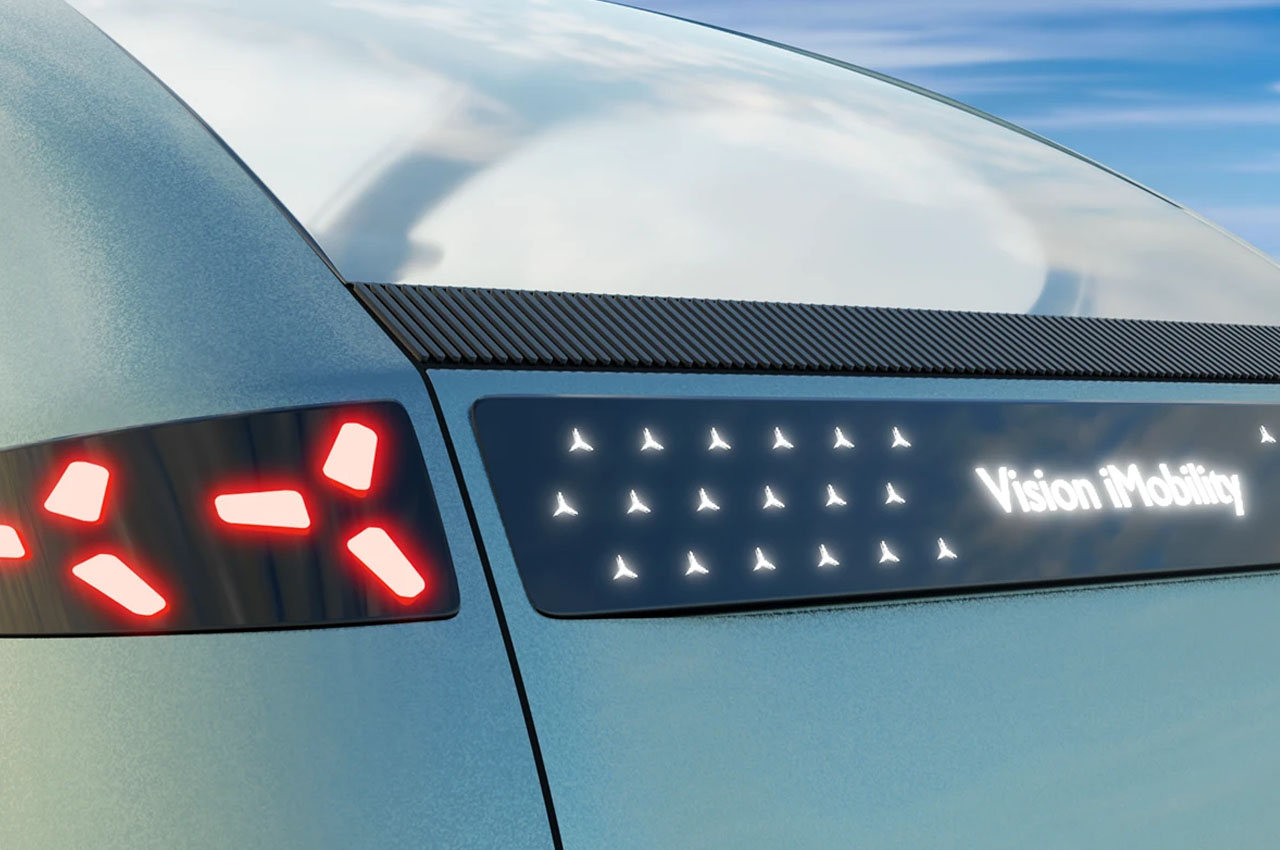
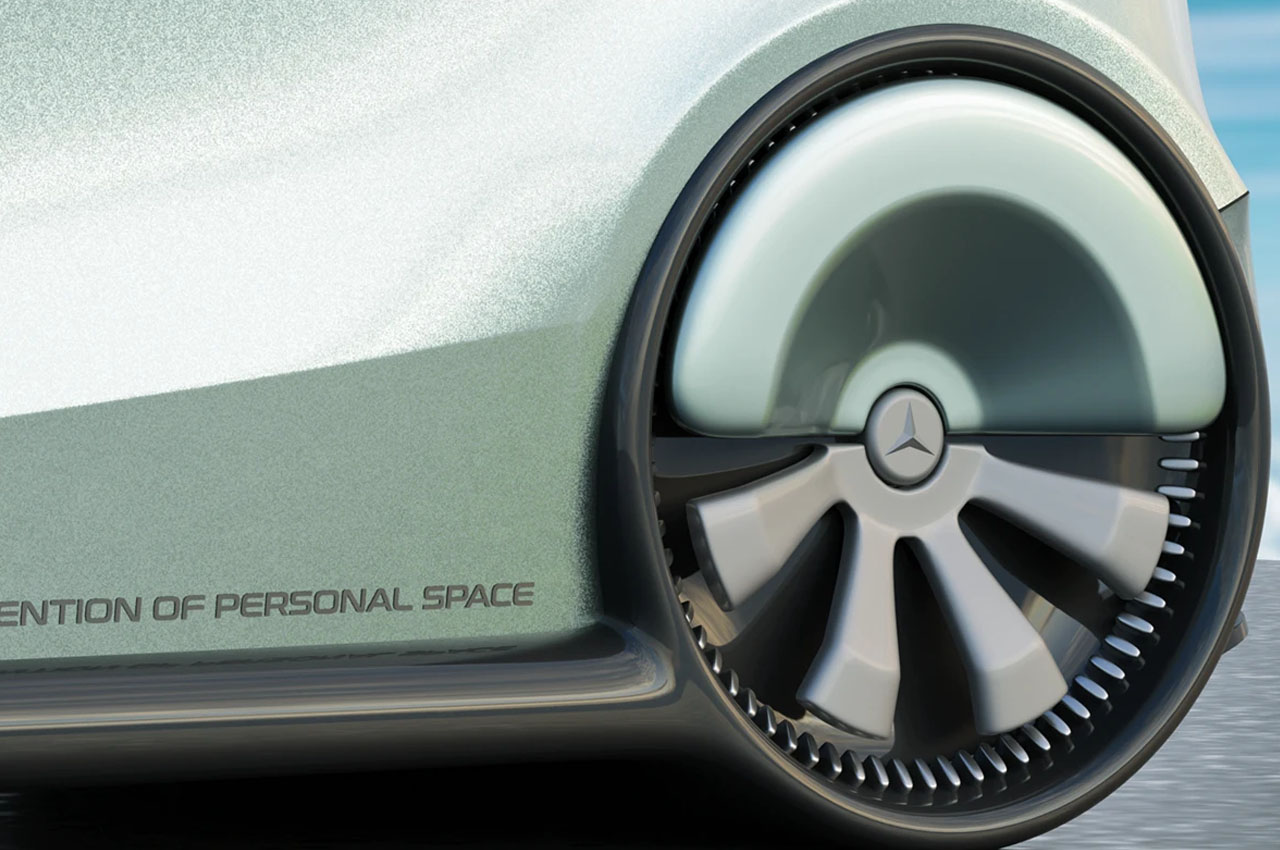
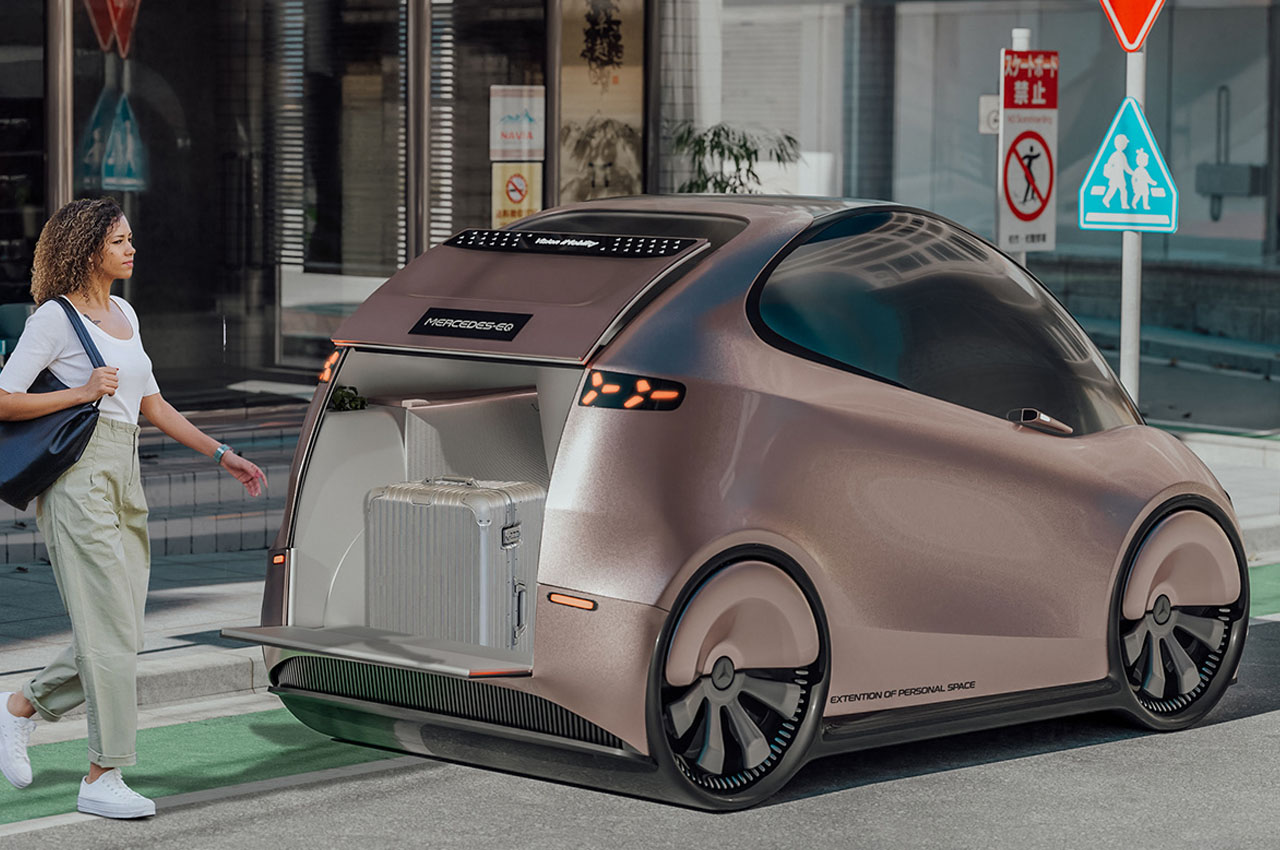
Mercedes Benz Vision iMobility combines style and functionality for ultra-relaxed commutes in urban landscape

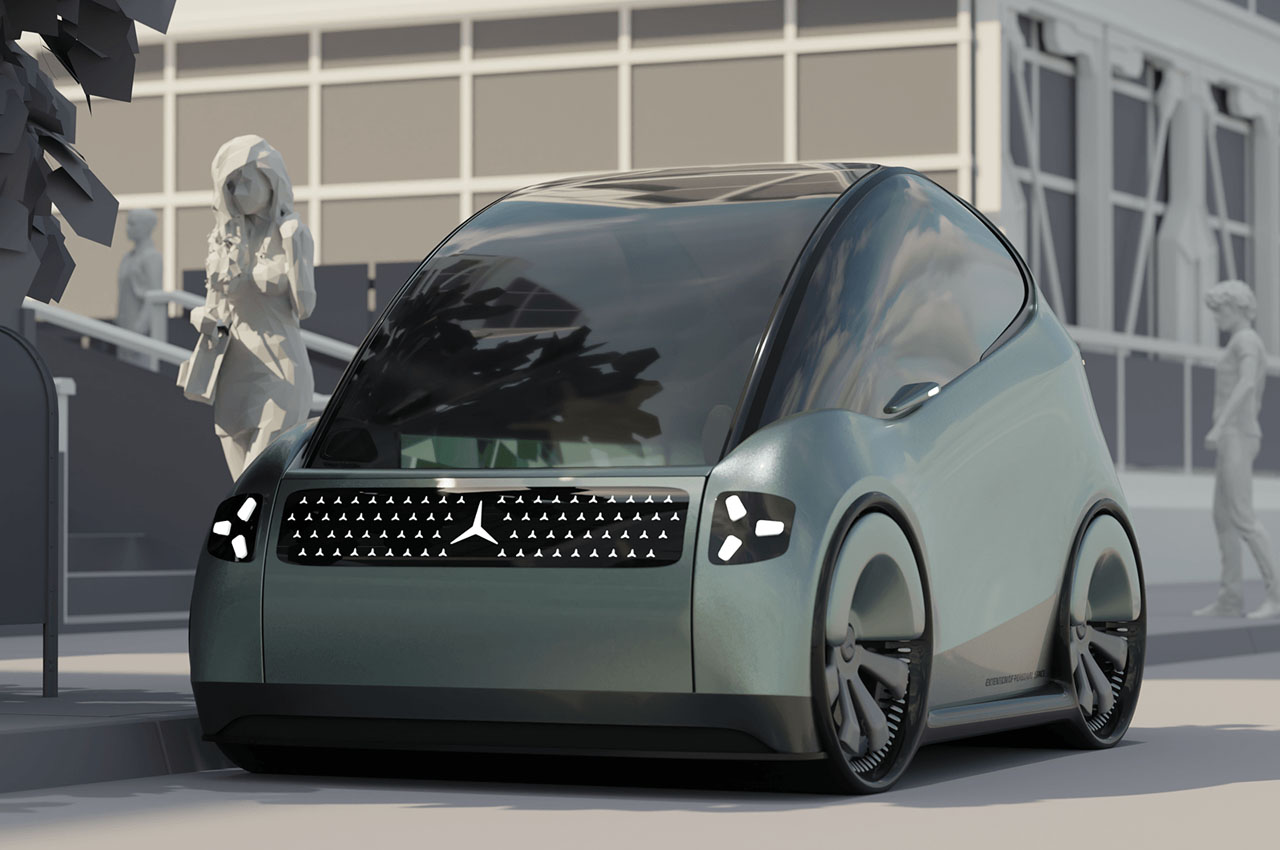
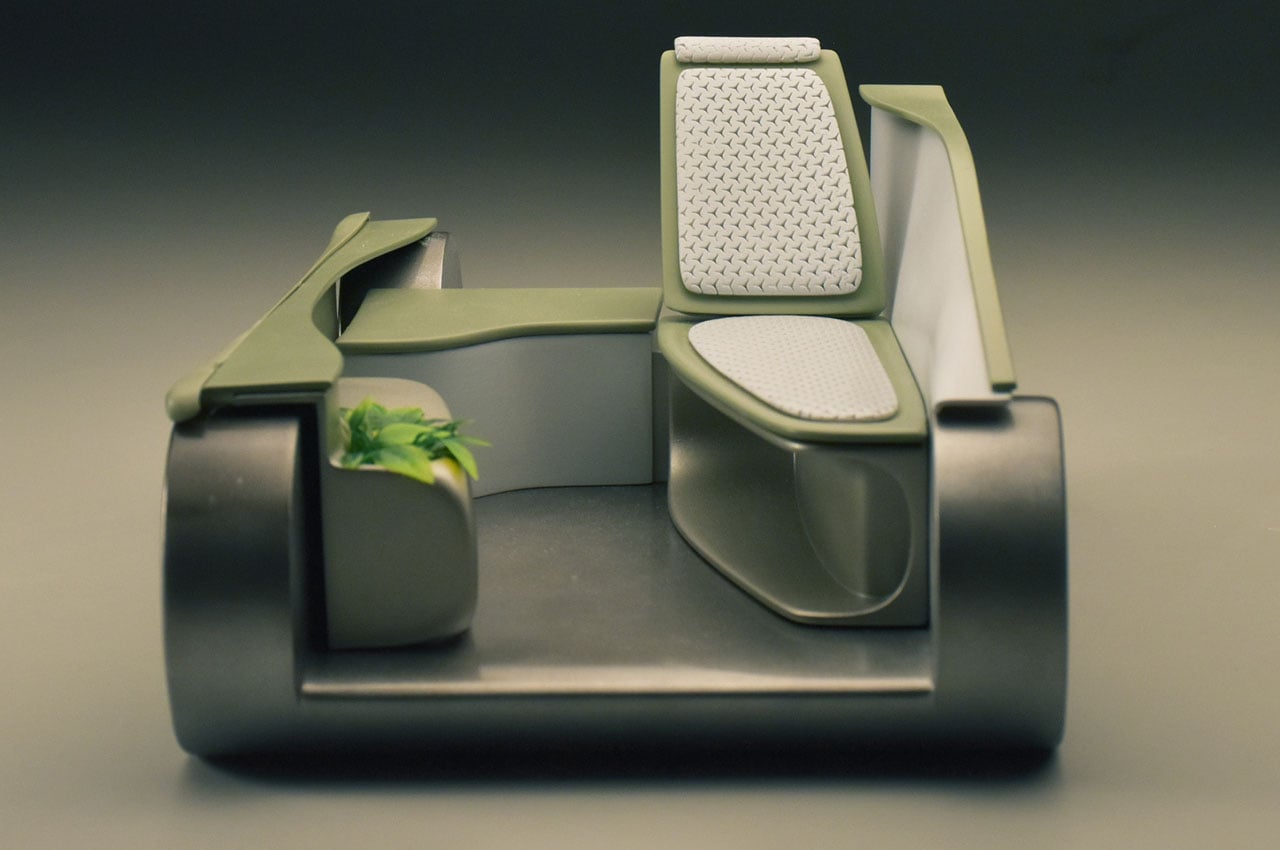
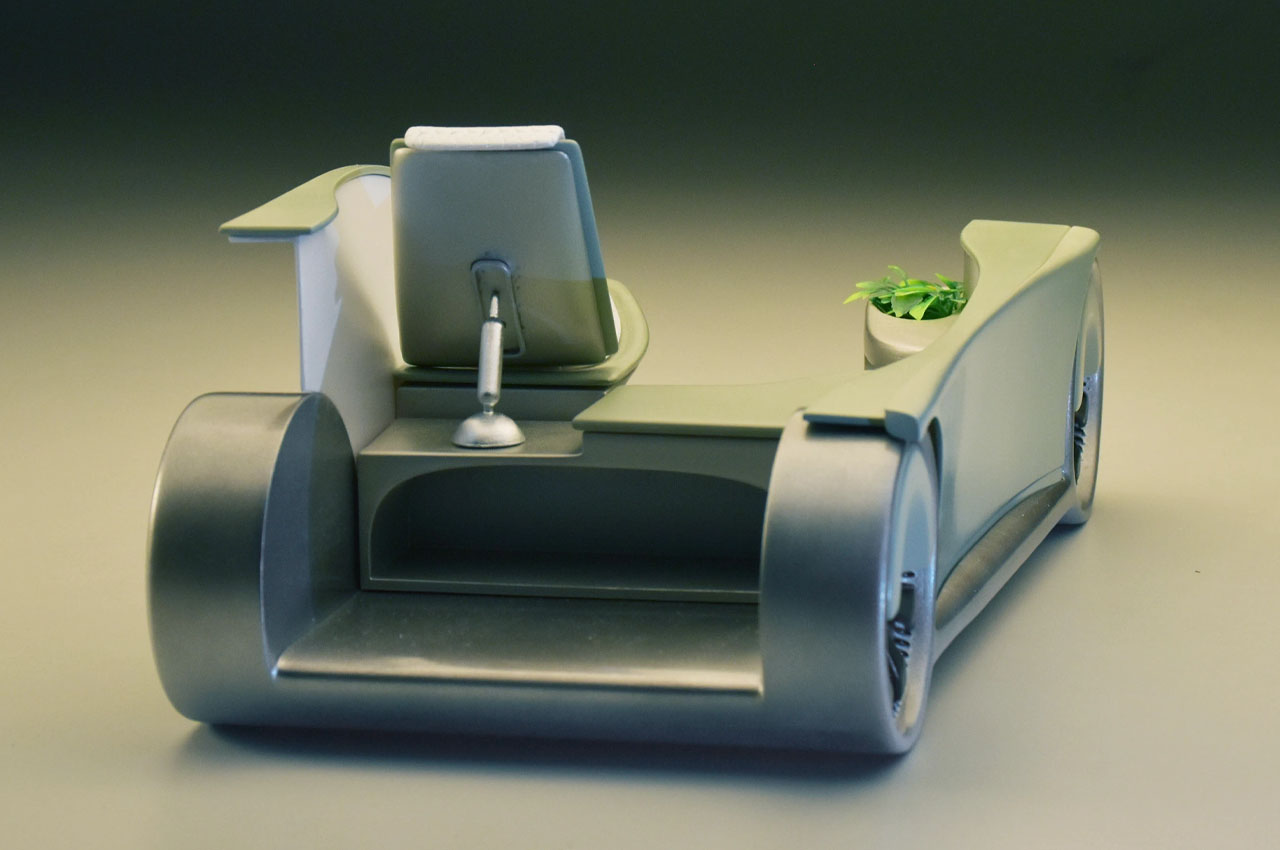
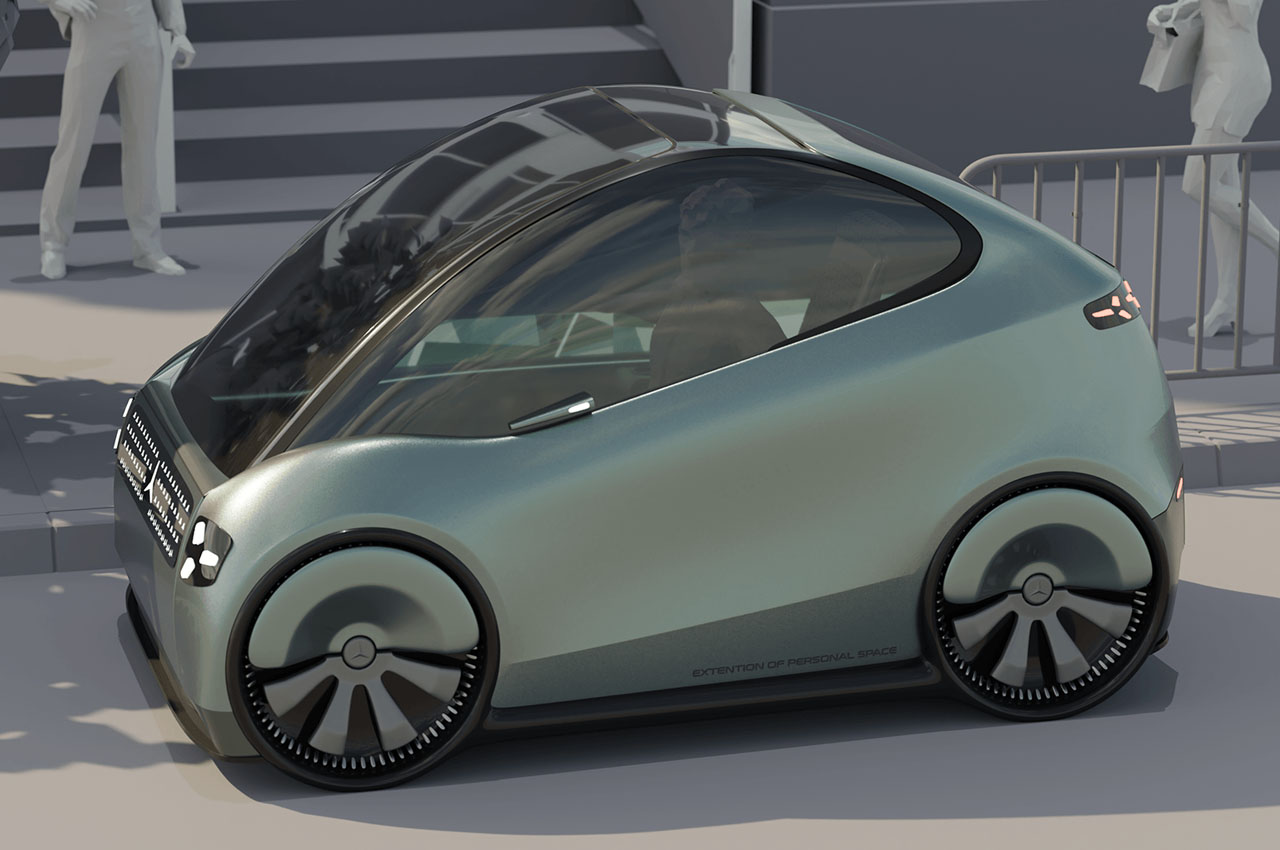
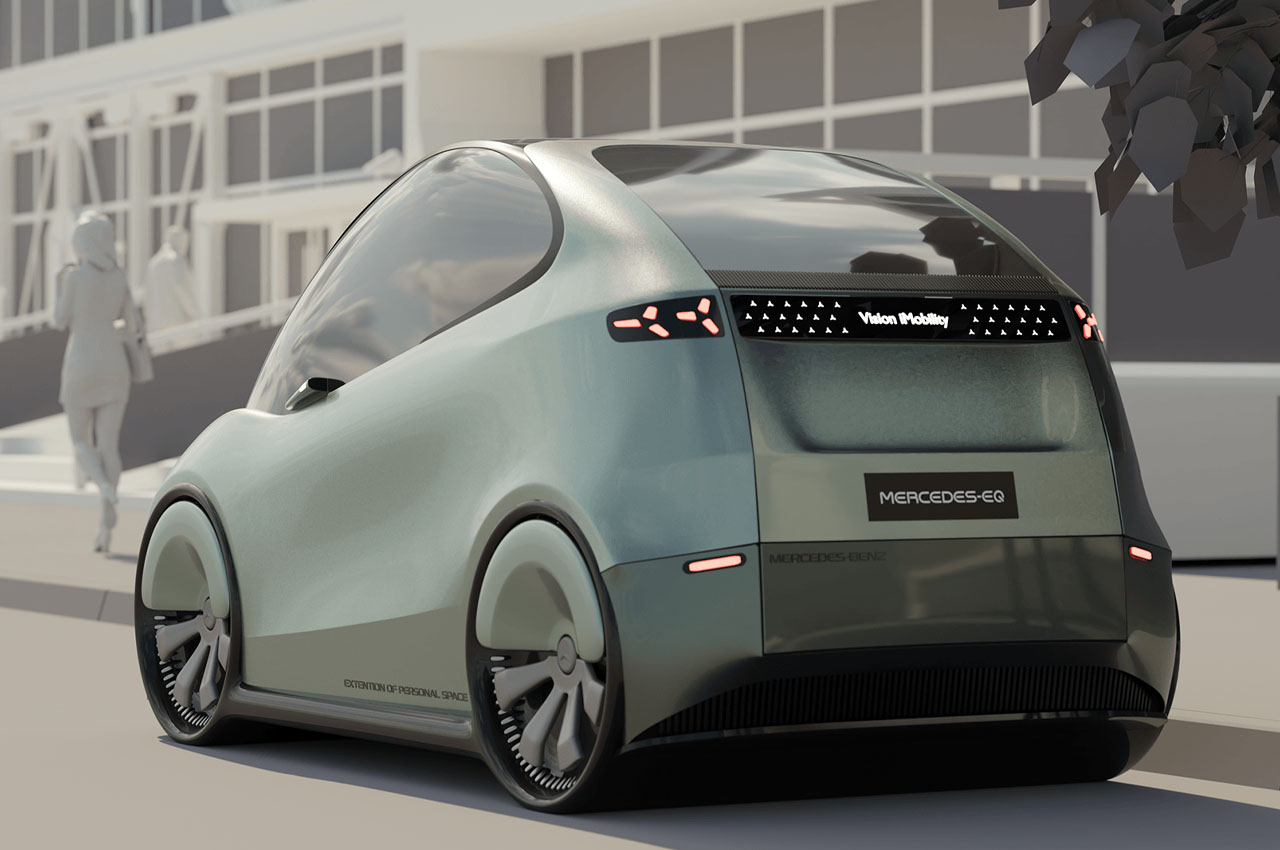
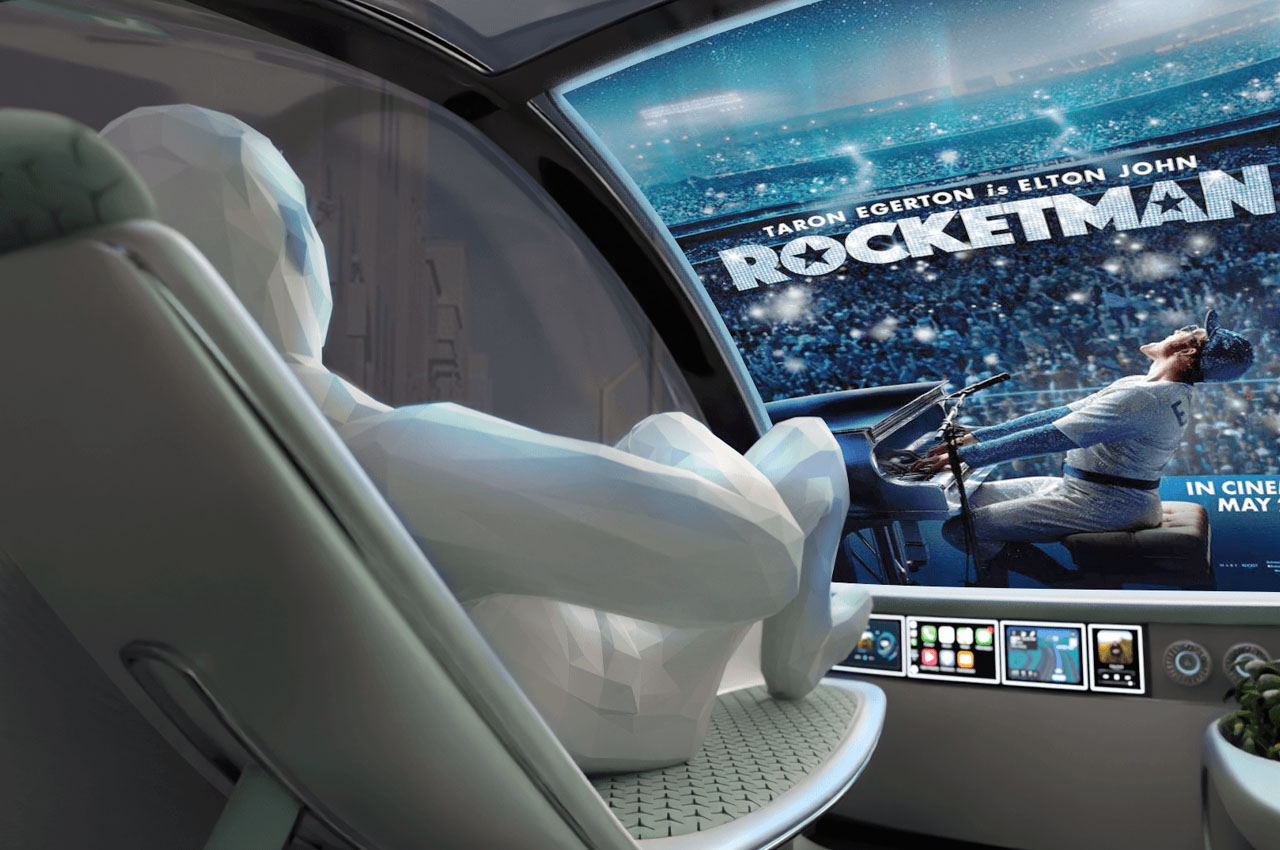
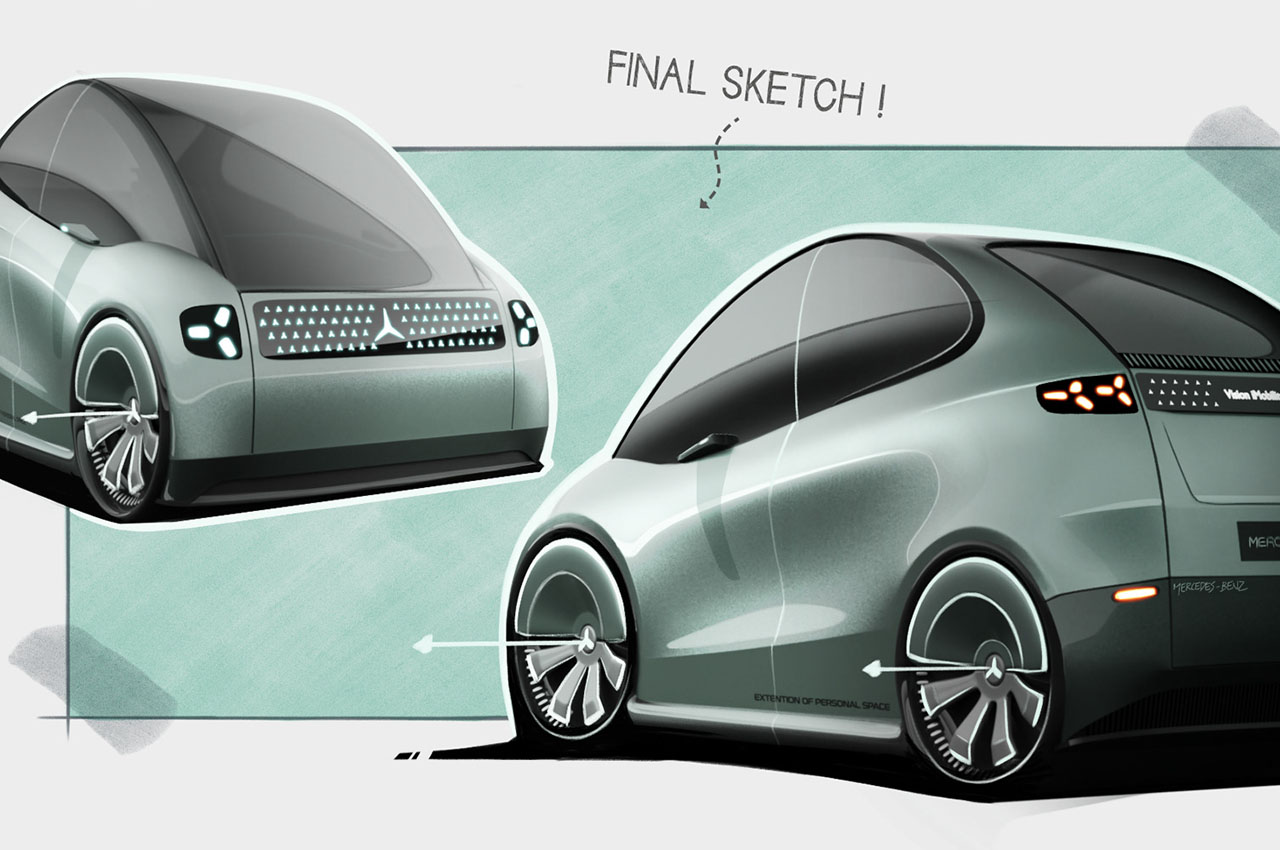
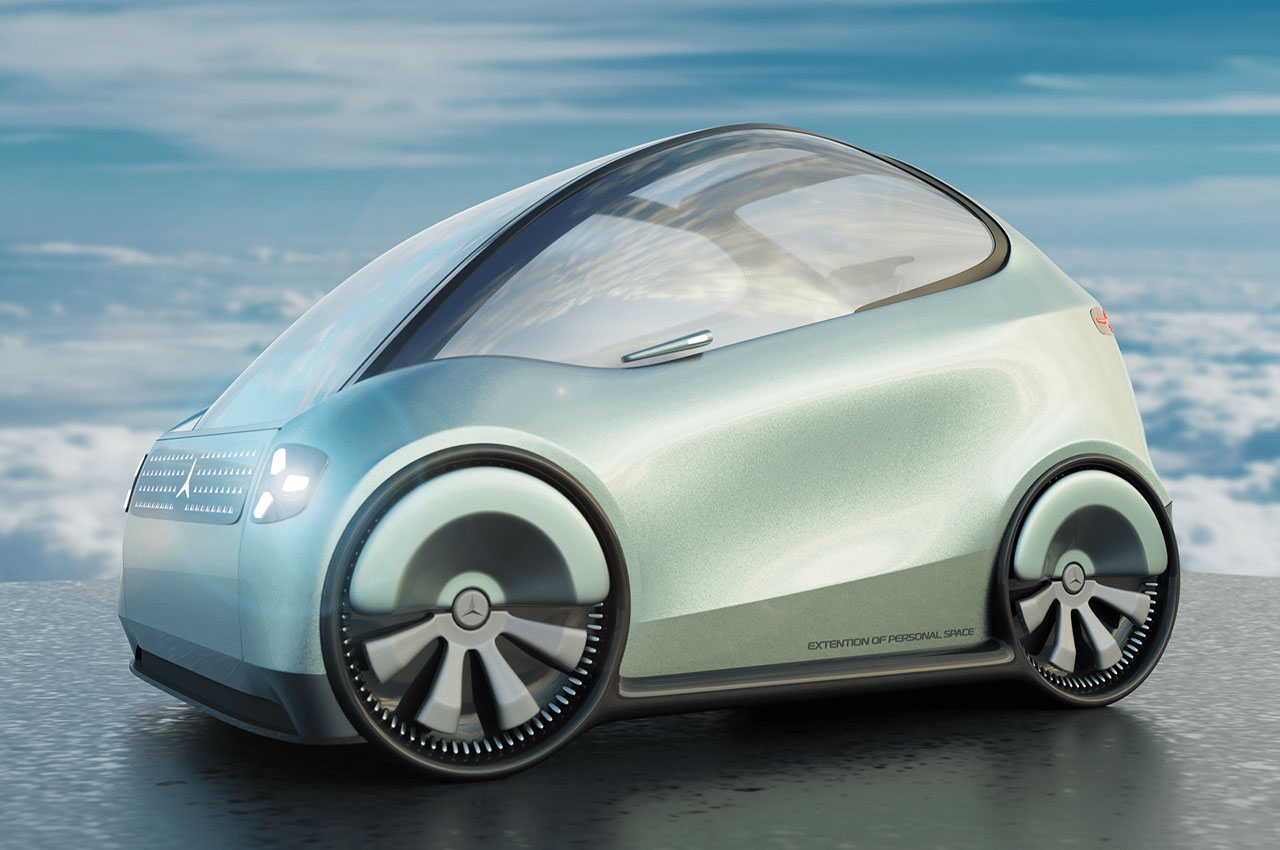
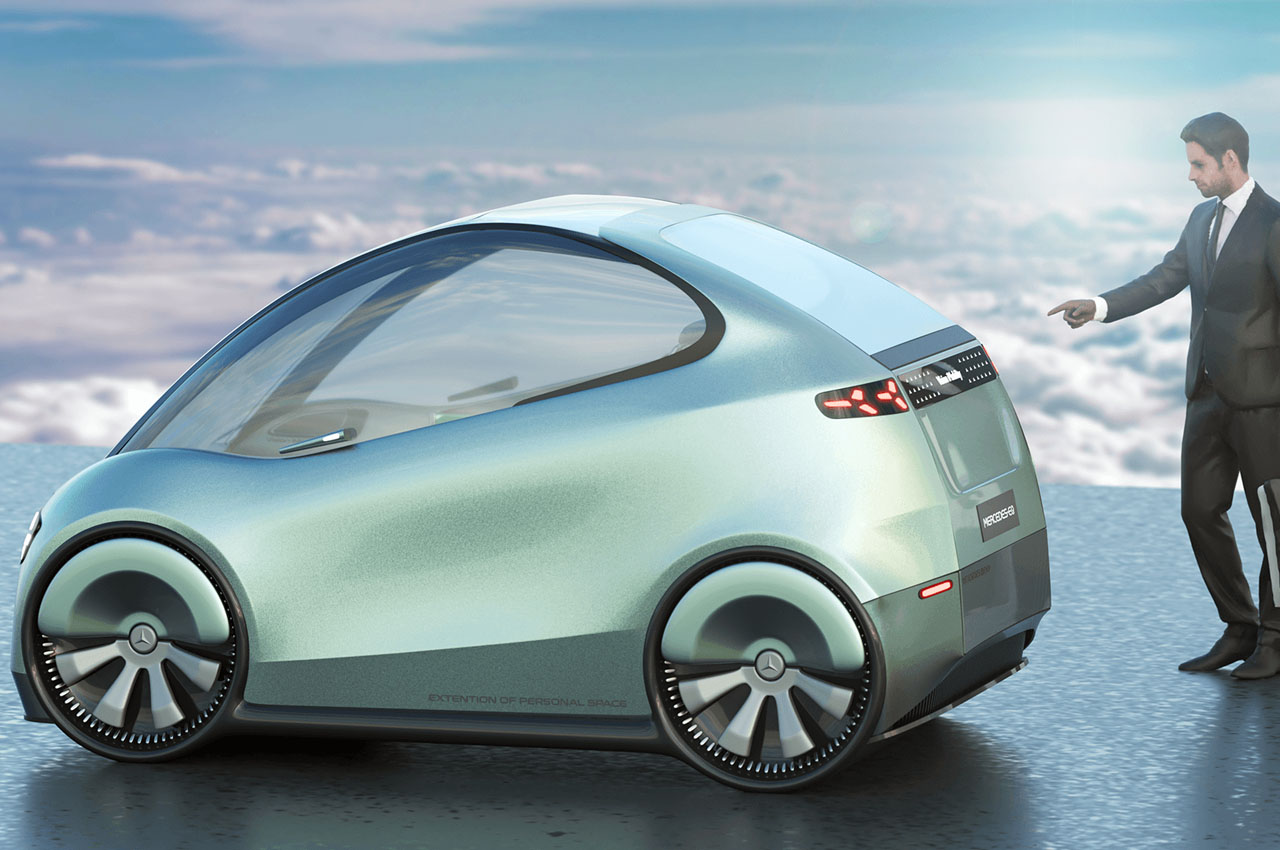
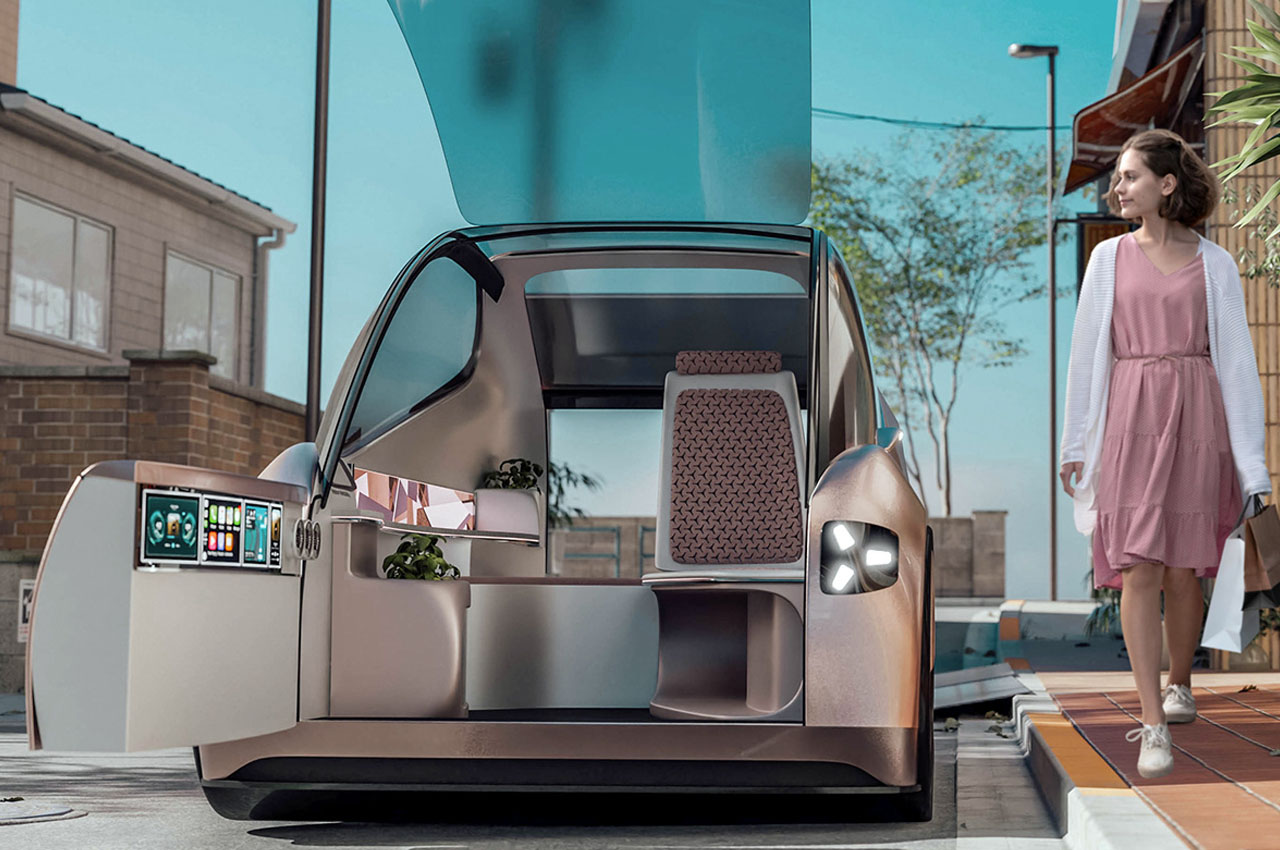
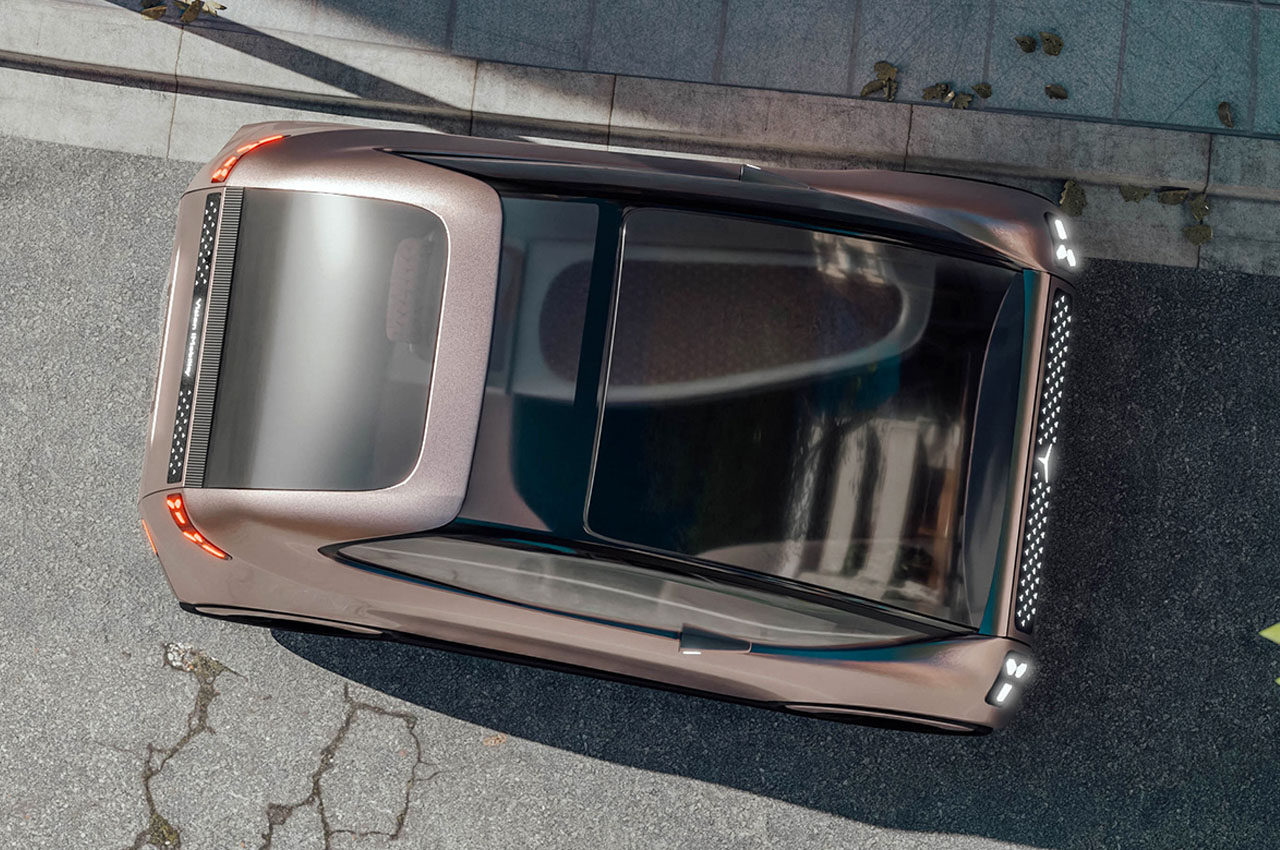
The future of level 5 autonomous mobility is largely going to revolve around relaxation and the whole experience of getting from point A to B.  Inspired by the protective shell of turtles, the Mercedes Benz Vision iMobility concept emphasises efficiency and resilience in a smooth curvy design. The form factor in particular is a combination of style and functionality, creating a bridge between cutting-edge automotive technology and the organic beauty of nature.

The designer imagines this vehicle to dot the landscape of four-wheelers in the year 2050 where cars communicate with the traffic systems, other vehicles and urban environment to optimize routes and bump-up safety. A time when autonomy, connectivity and sustainability are the driving force of innovation. Richard states, “Vision iMobility isn’t just a means of reaching a destination; it’s a dynamic and adaptive space that caters to individual needs.”

Designer: Richard Huang

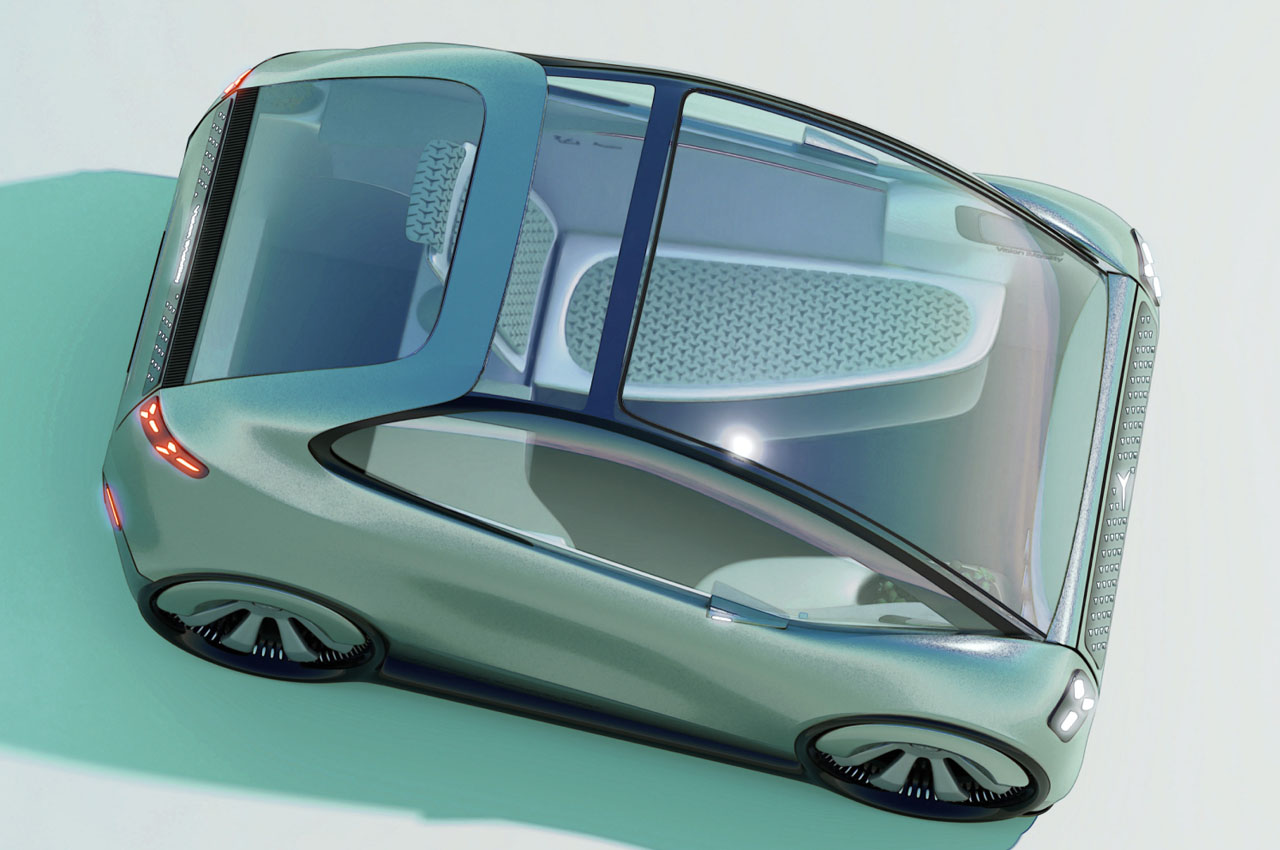
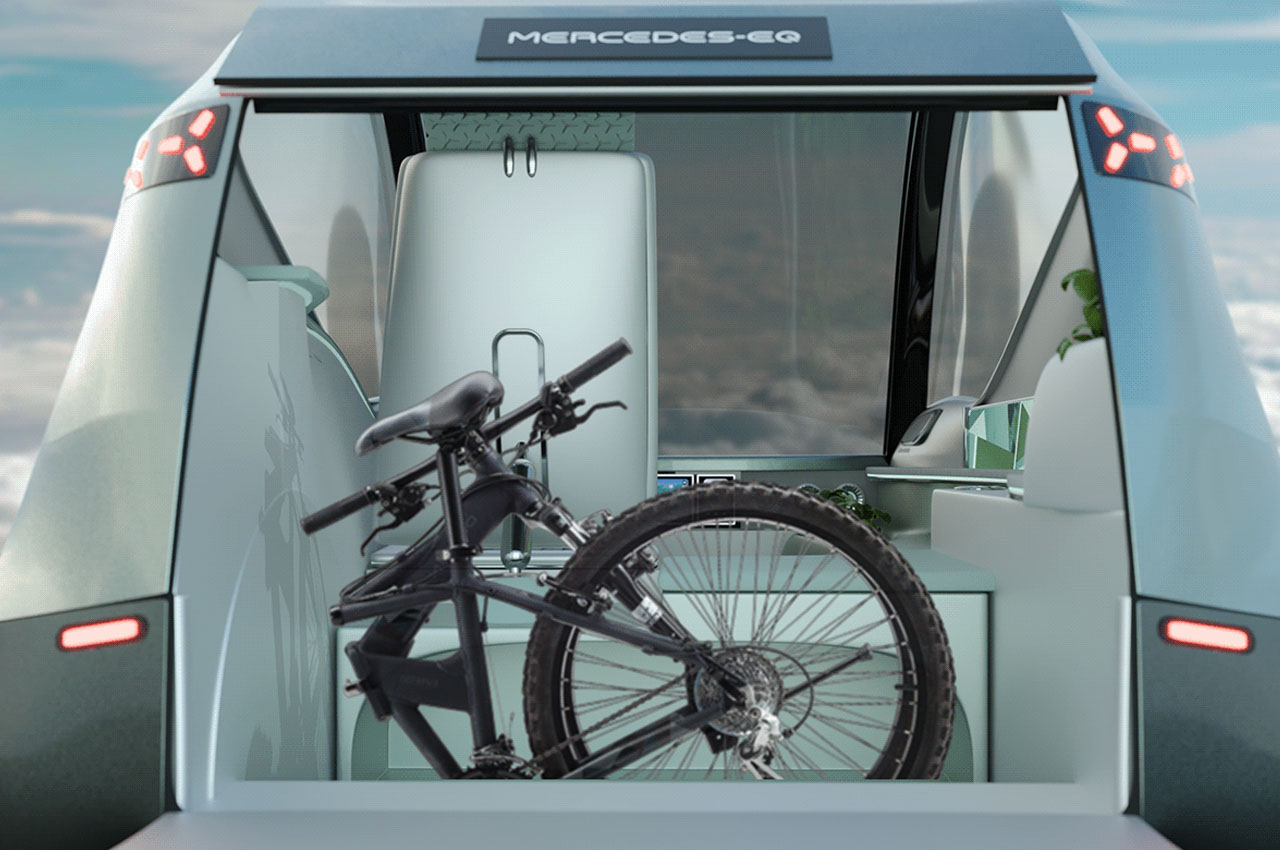
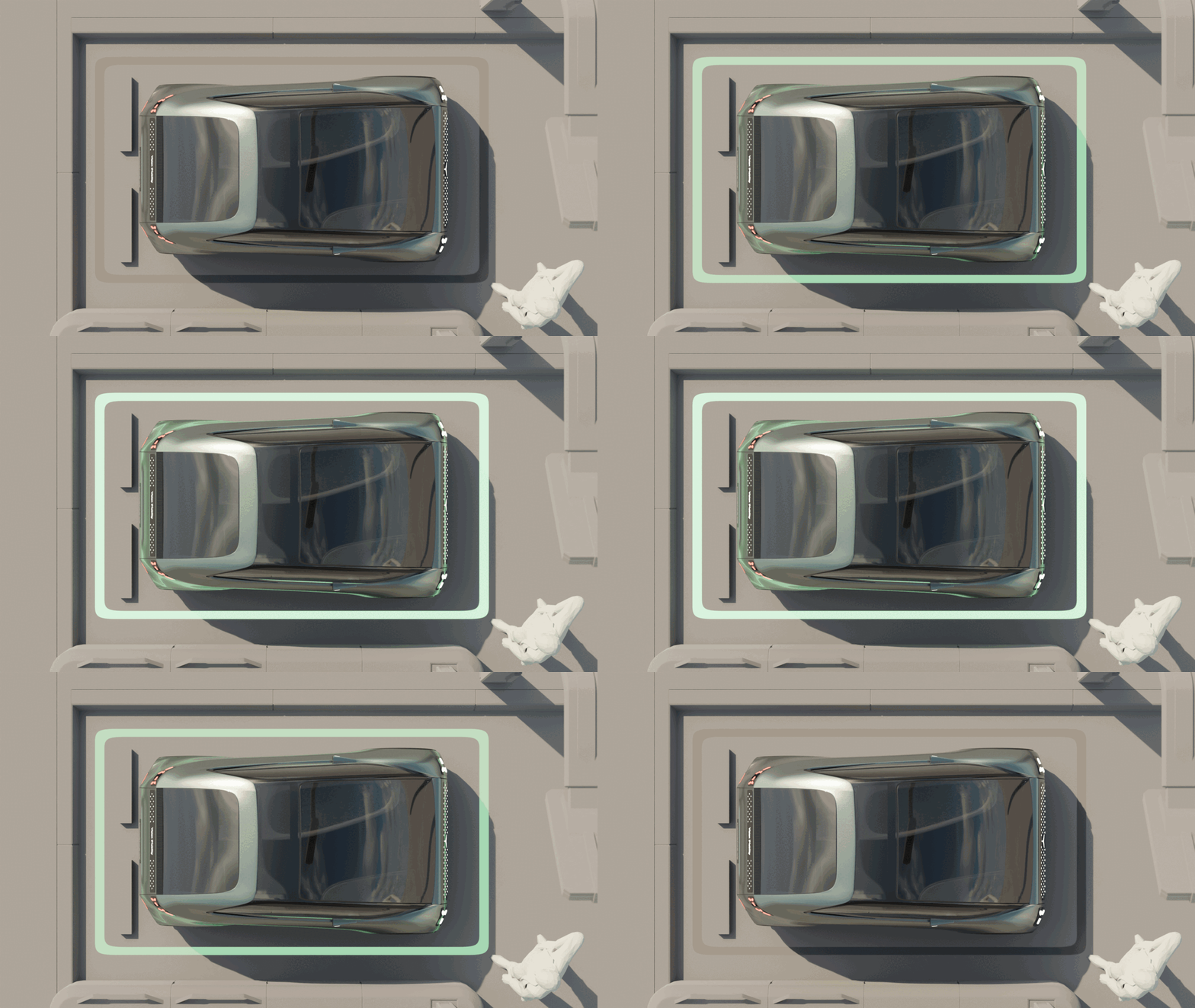
The nature-inspired details don’t end there as the headlights get the reminiscence of a dwarf arrowhead flower. The front-open design of the vehicle makes it easy for the occupant to enter the cozy relaxing interiors and the compact shape gives the iMobility flexibility in tight urban spaces. Running out of juice in this electric vehicle is out of the question as it can be charged wirelessly just by parking on the readily available charging junctions.

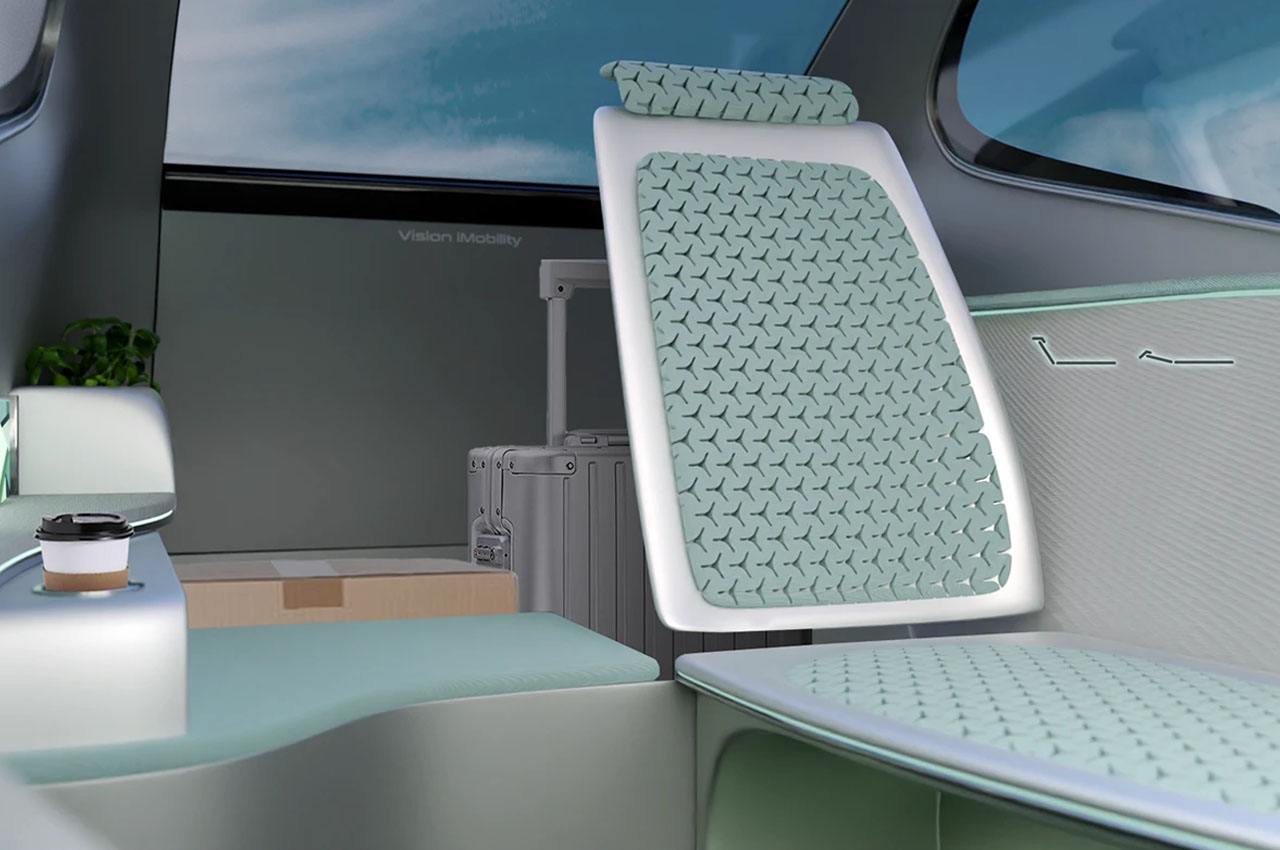
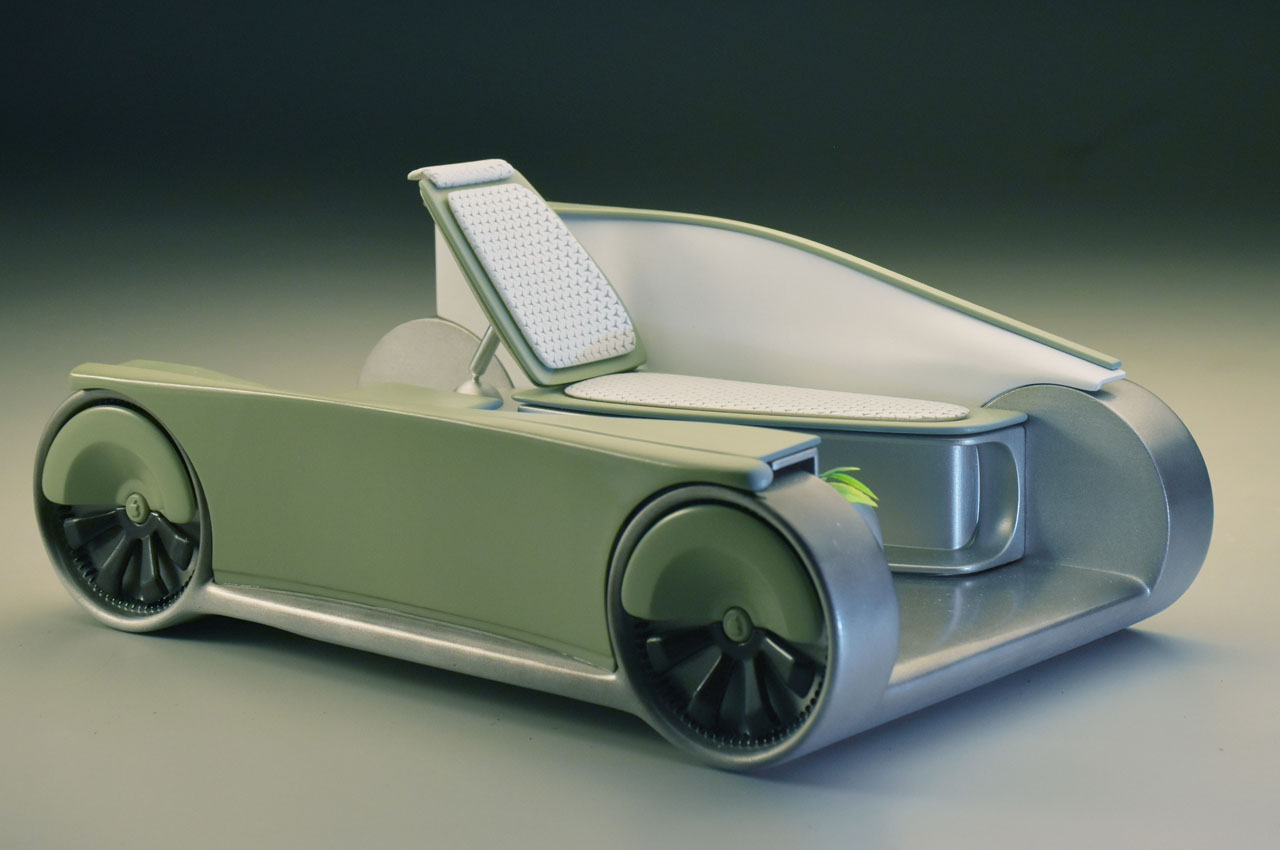
Since we are talking about complete autonomy, there’s no need for driving hardware like a steering wheel, brakes or accelerator. The interior space is rather a personalized oasis for laying back, gaming in VR or simply exploring different realities in metaverse worlds. The small size no a limitation as there is enough tactically designed space for sleeping in comfort. In fact the interior is flexible enough to be arranged for different scenarios. Mercedes Benz Vision iMobility truly becomes an extension of the personal space for self-expression and fulfillment of the rider.

Richard has mustered up the idea of this compact autonomous vehicle for east Asian workforce who have to deal with demanding work cultures, long working hours and intense competition. I believe this EV could be the perfect personal transportation for individuals living in any urban space.

The post Mercedes Benz Vision iMobility combines style and functionality for ultra-relaxed commutes in urban landscape first appeared on Yanko Design.

Modular electric minivan is inspired by puzzles for a more sustainable design

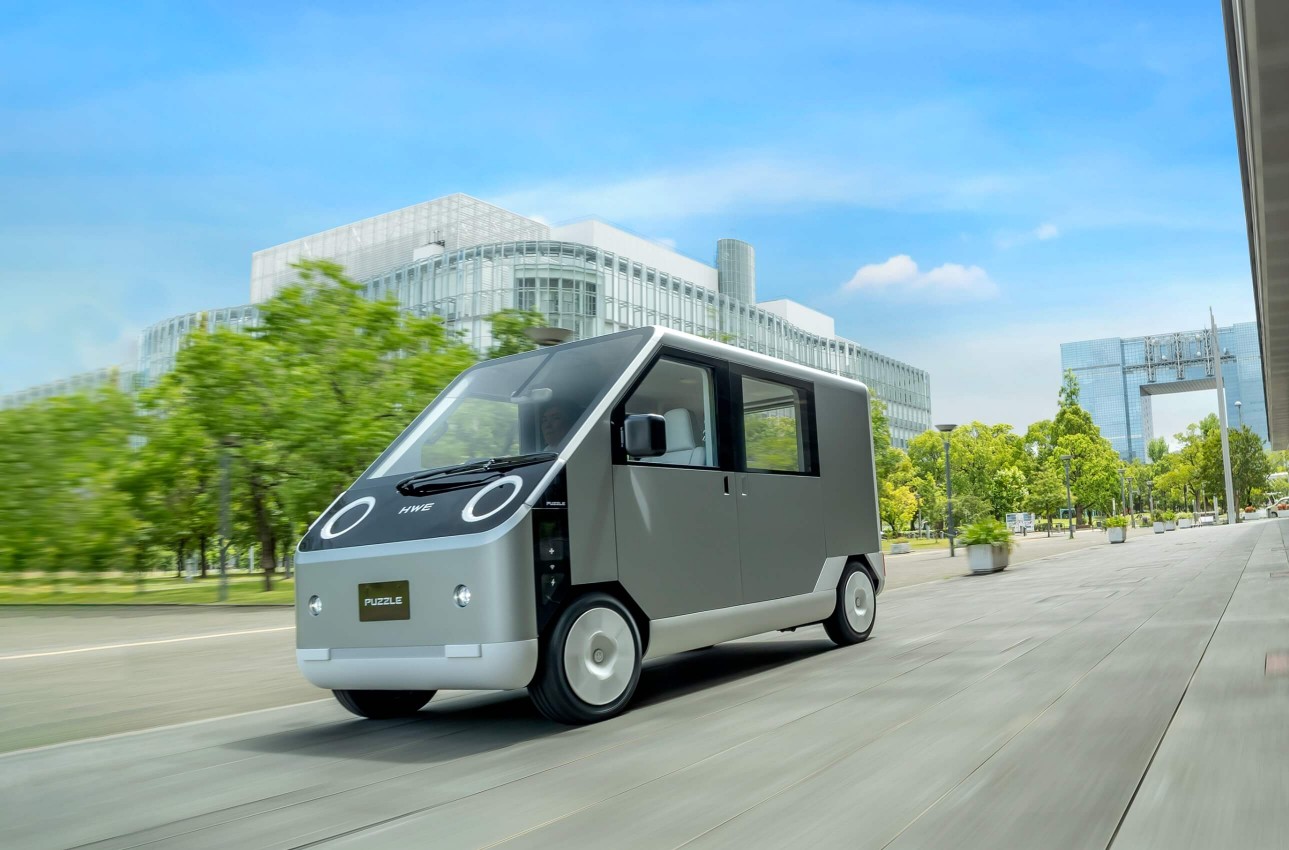
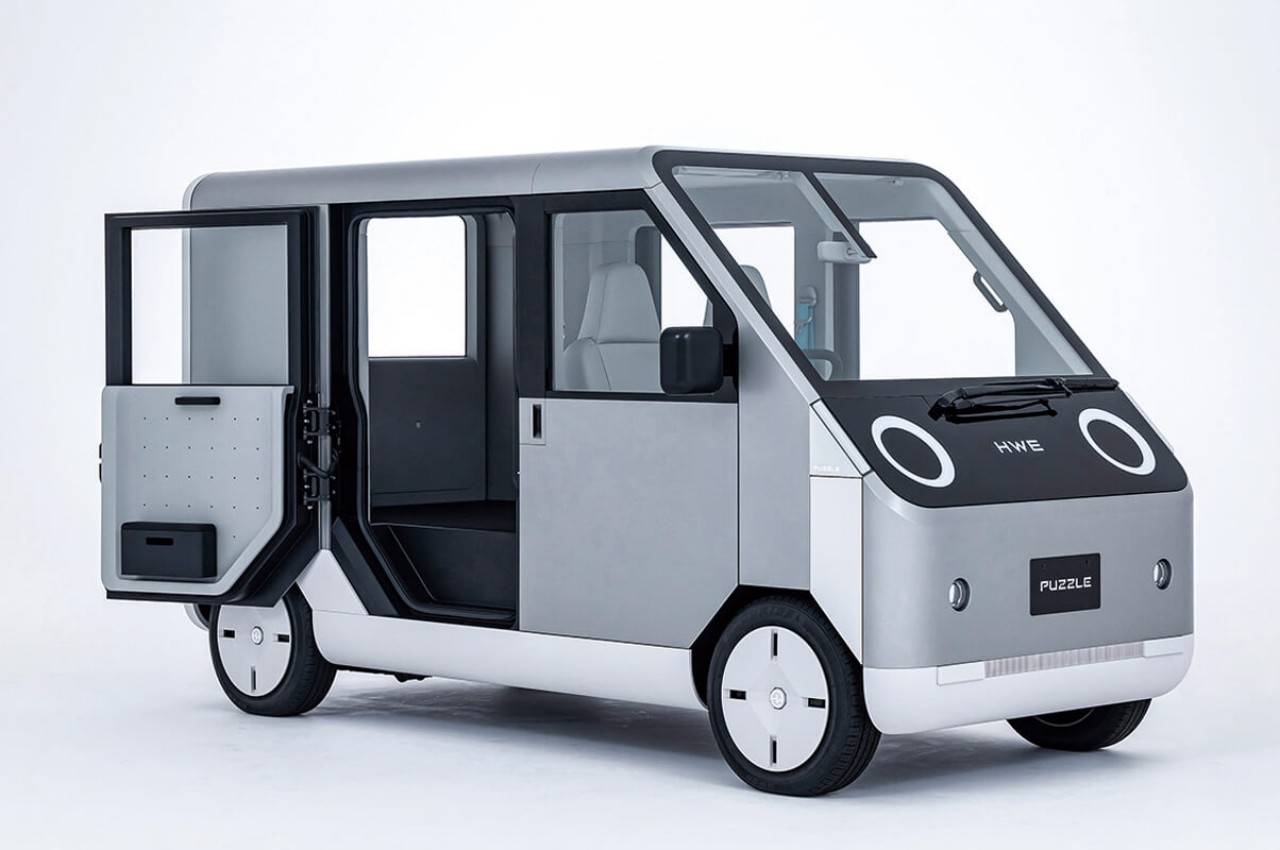
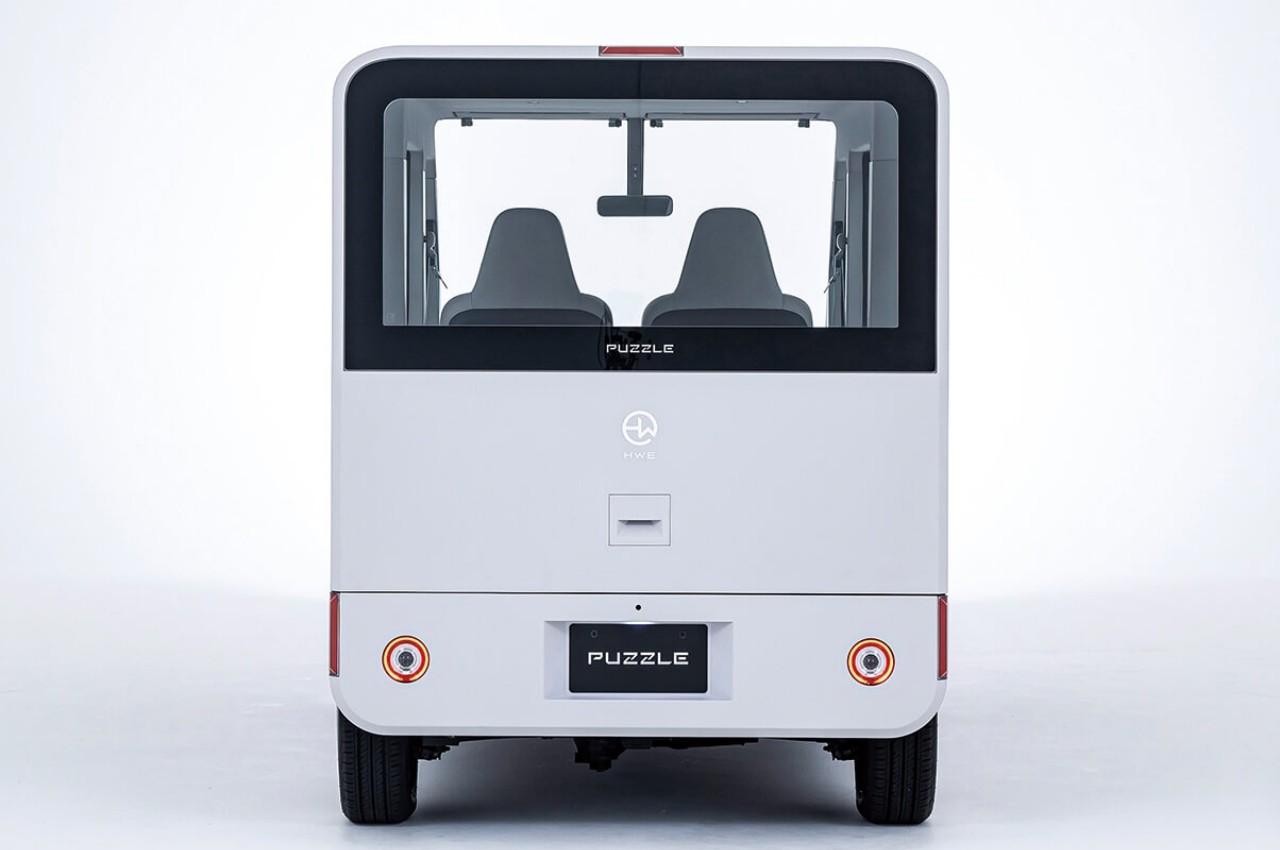
Although electric cars are becoming more common, we’ve barely scratched the surface of what they’re capable of. Removing the need for traditional fuel and relying on batteries opens up new possibilities, and not just in terms of power sources. It can offer a bit more flexibility when it comes to the form and function of the vehicle, like cars with completely digital interfaces or screens all around. There might even be room for a modular design, as this concept for a tiny Japanese electric van tries to show, allowing the manufacturer or even the owner to switch out certain parts both outside and inside to match their needs, just like pieces of a puzzle.

Designer: HW Electro

To be fair, a modular car might be a bit far down the road considering the industry is hyper-focused on standardizing electric vehicles and making self-driving features more acceptable to the masses. That’s not to say that the design is a distant possibility only, especially when the features are made to be more practical rather than fantastical. Switching out panels is probably more feasible than switching out whole car parts or components, which is the kind of modularity that the Puzzle concept embodies.

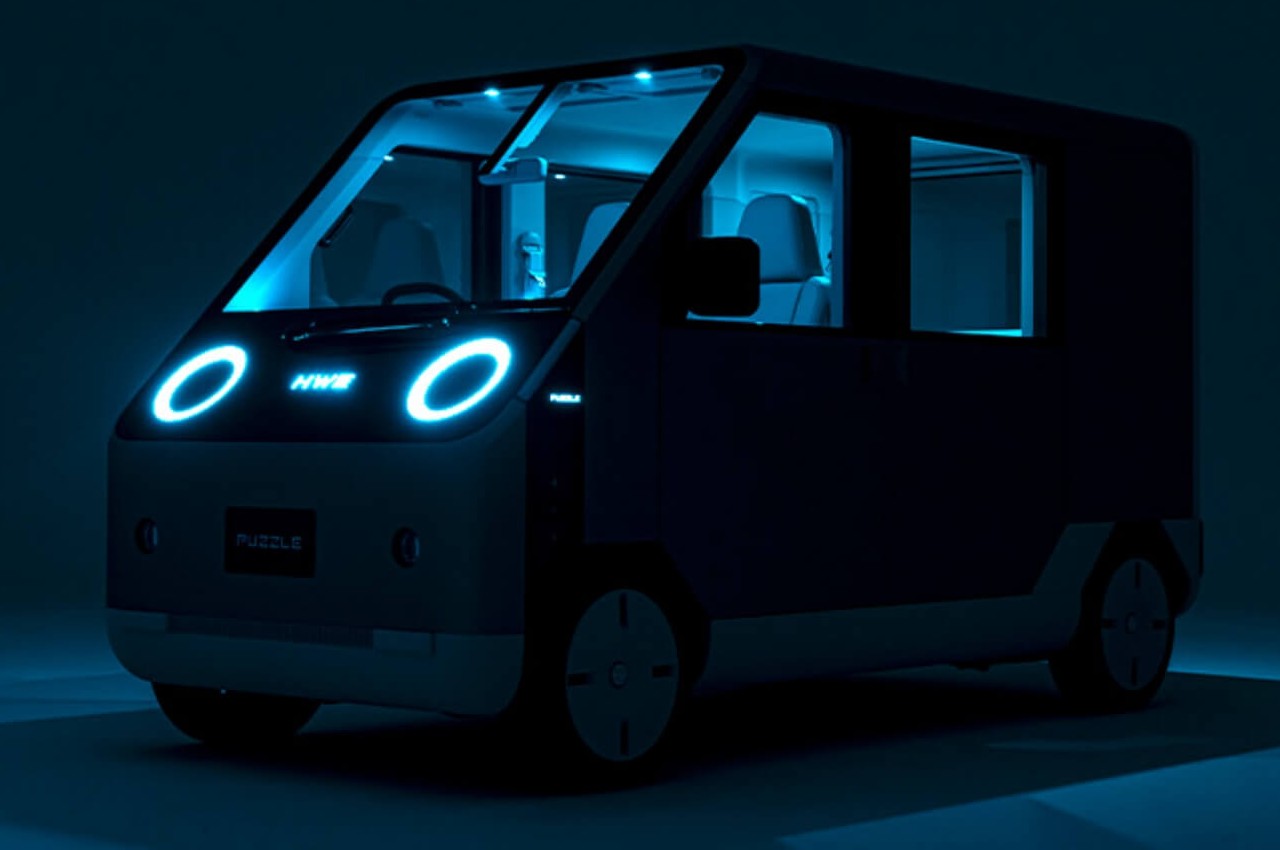
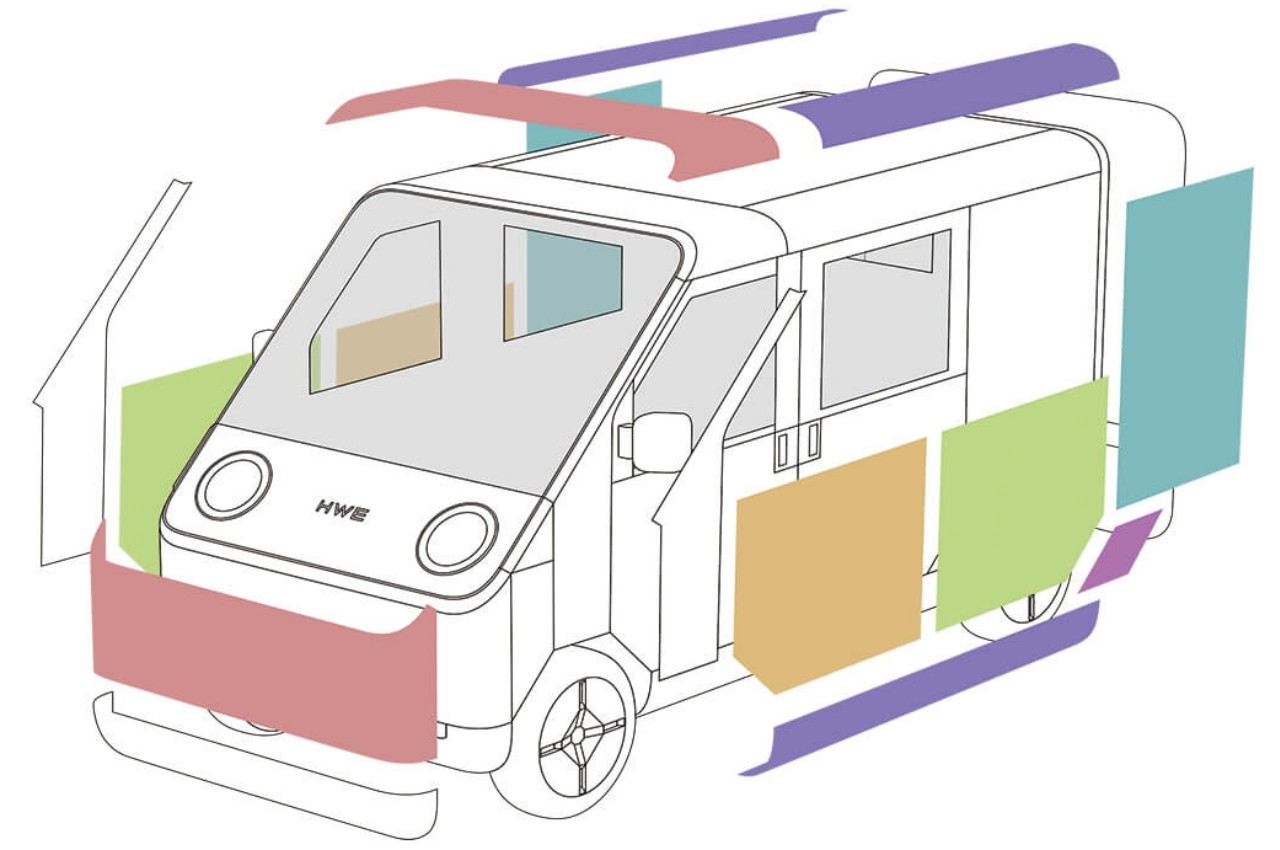
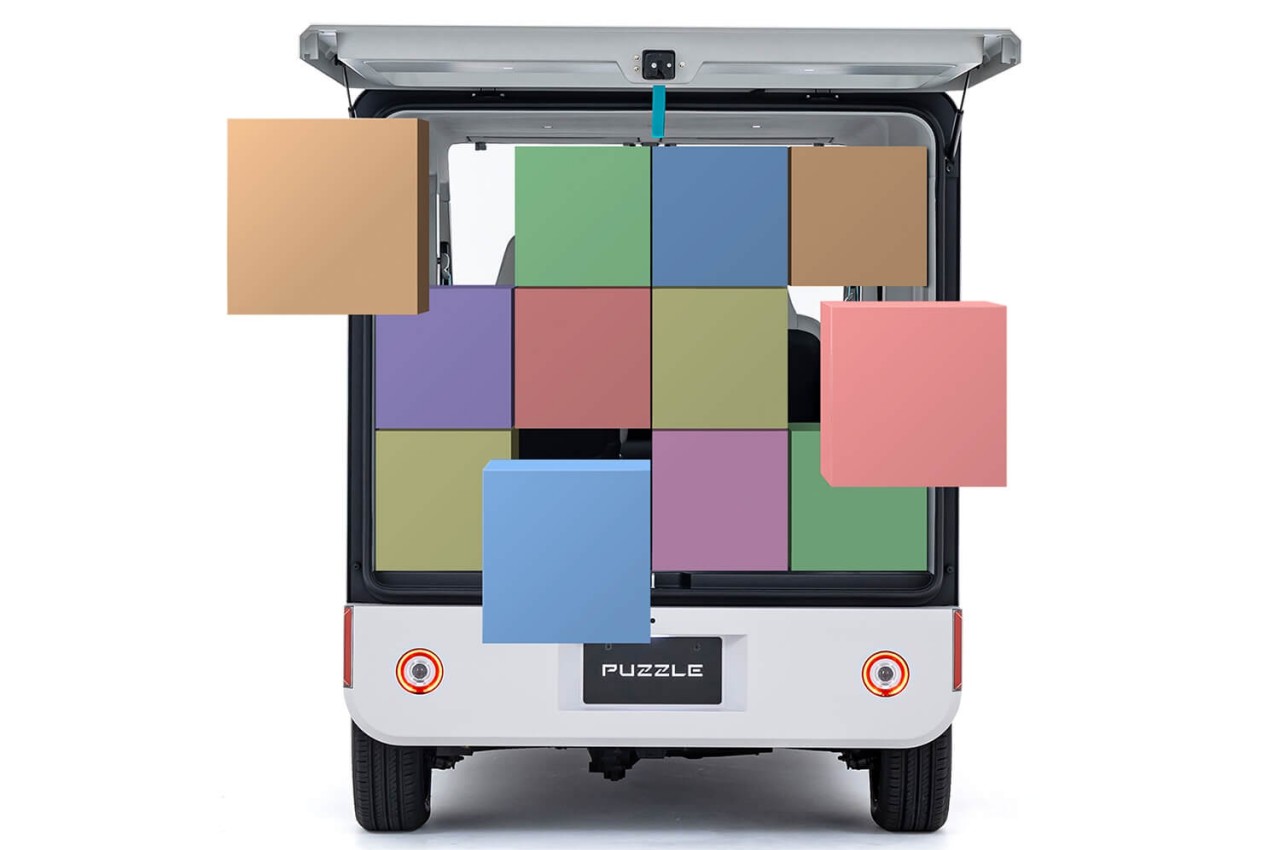
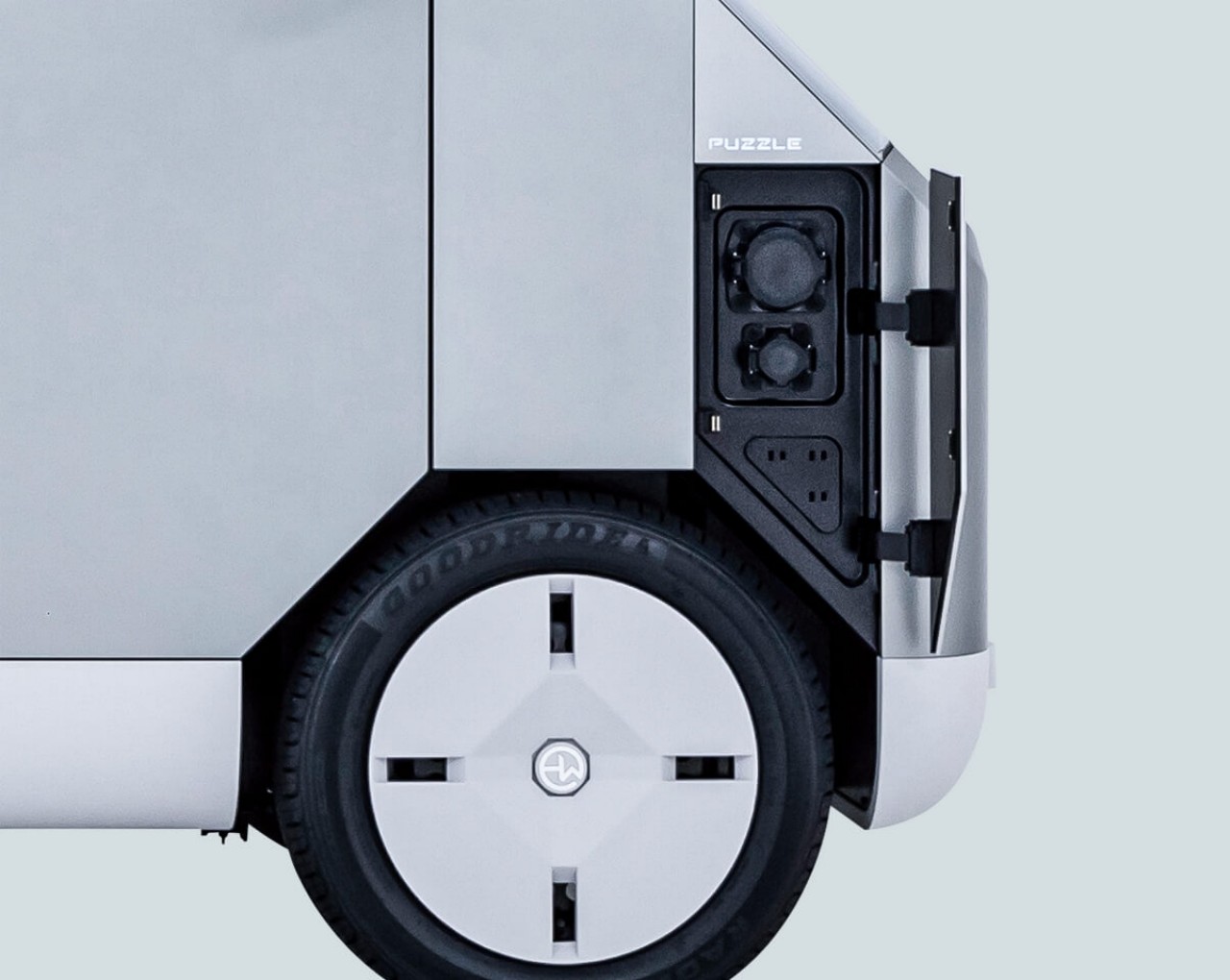
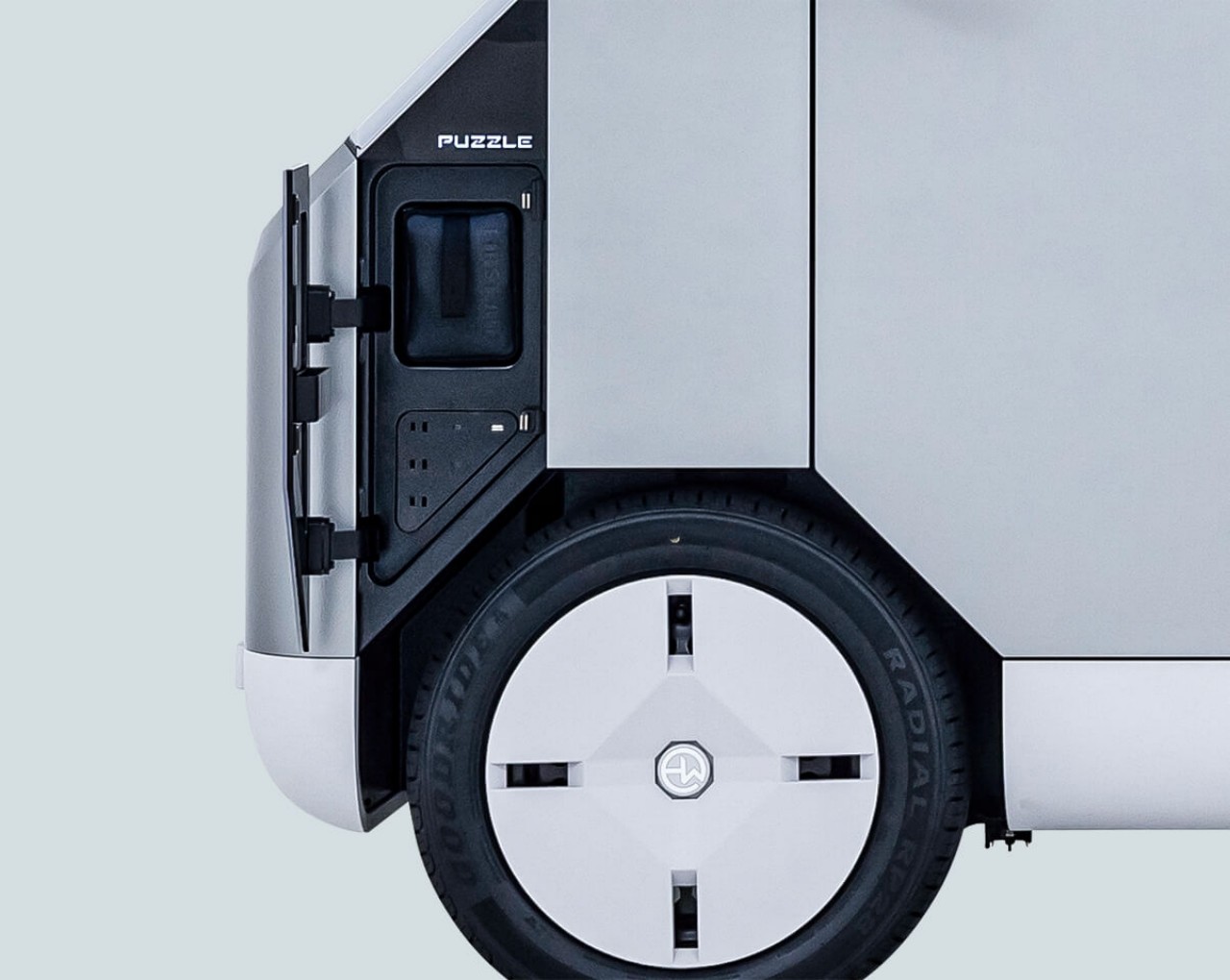
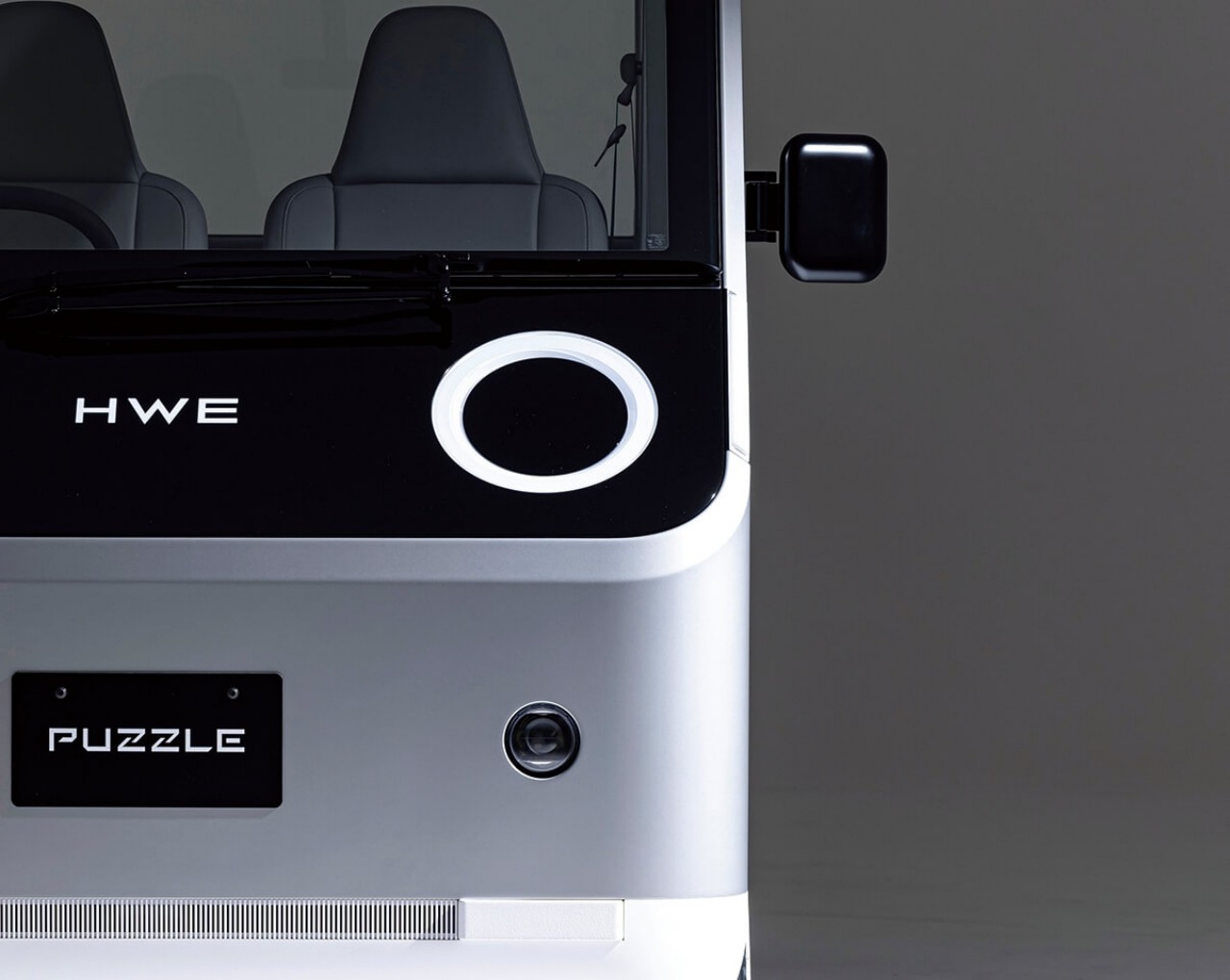
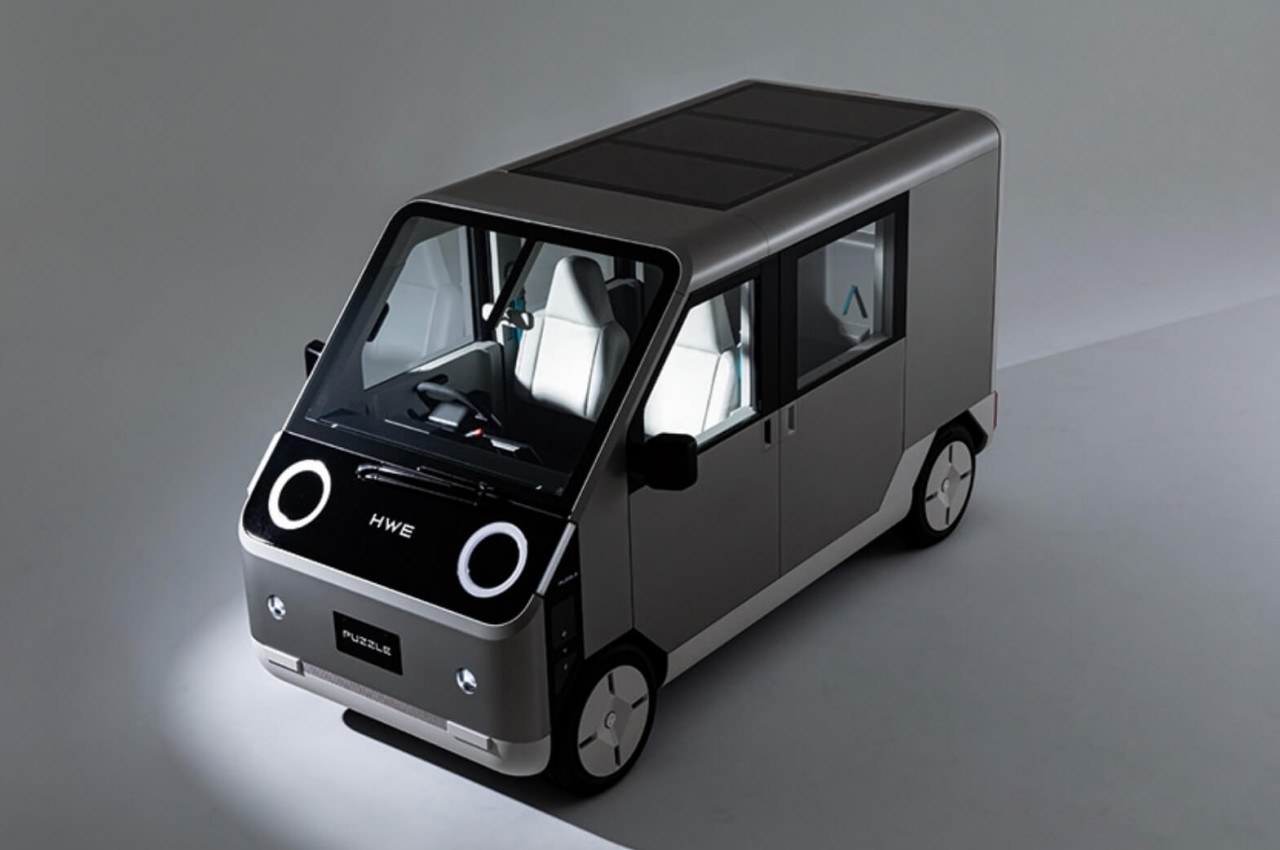
At first glance, the boxy shape of the Puzzle will already look strange to those not used to so-called “Kei cars,” but this kind of van design is popular in Japan for striking a balance between large interior capacity and small compact size. It’s a design that screams practical efficiency, and making it modular is taking it to the next level. But unlike what you might be imagining, the Puzzle’s pieces, pardon the pun, are limited to swapping out certain panels at the sides, corners, and even inside. It’s a bit of a generic system that opens up quite a number of possibilities but, more importantly, it also doesn’t tie them down to a specific design or part. It also makes replacing damaged panels easier and more economical, something that you can only dream of with regular cars.

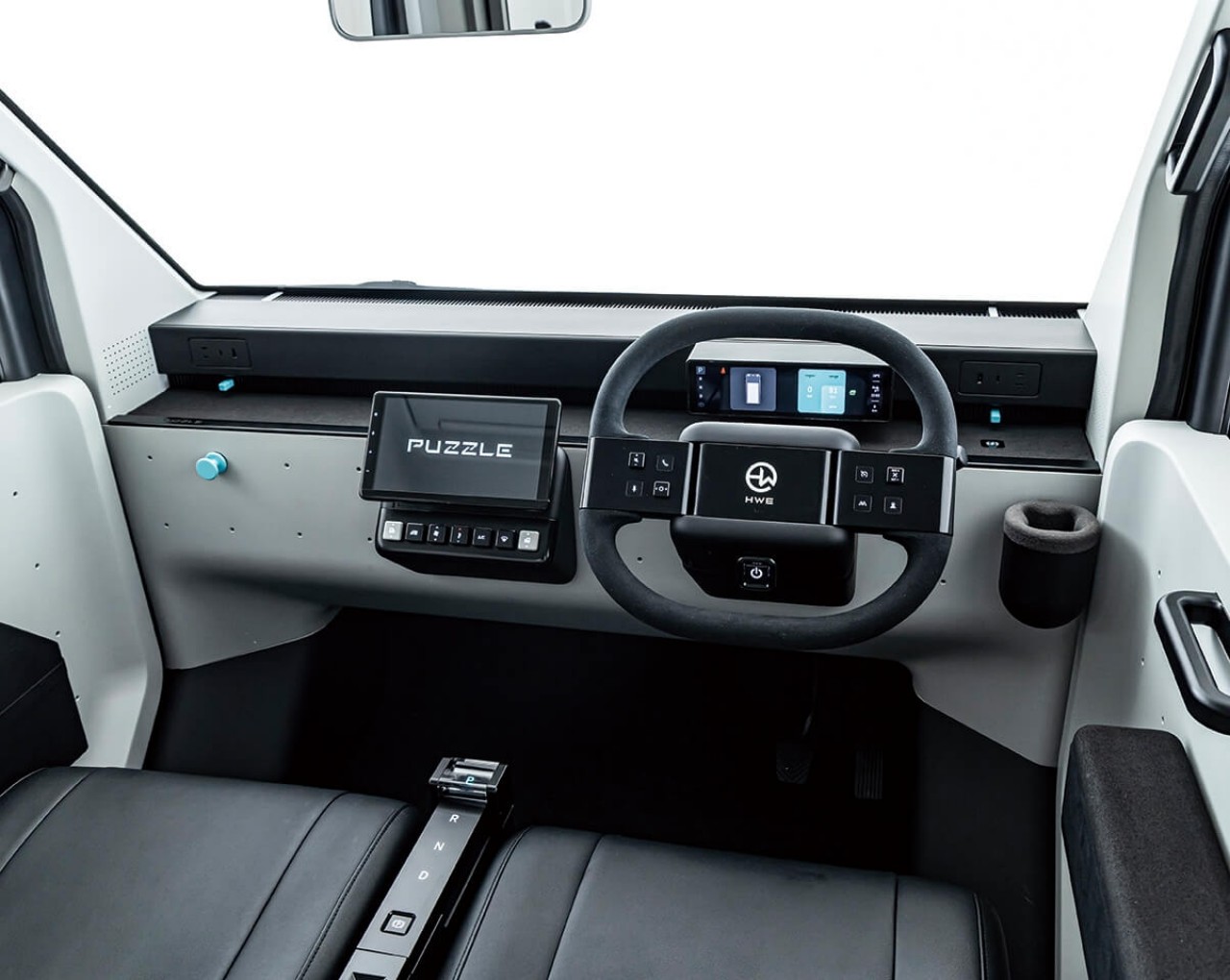
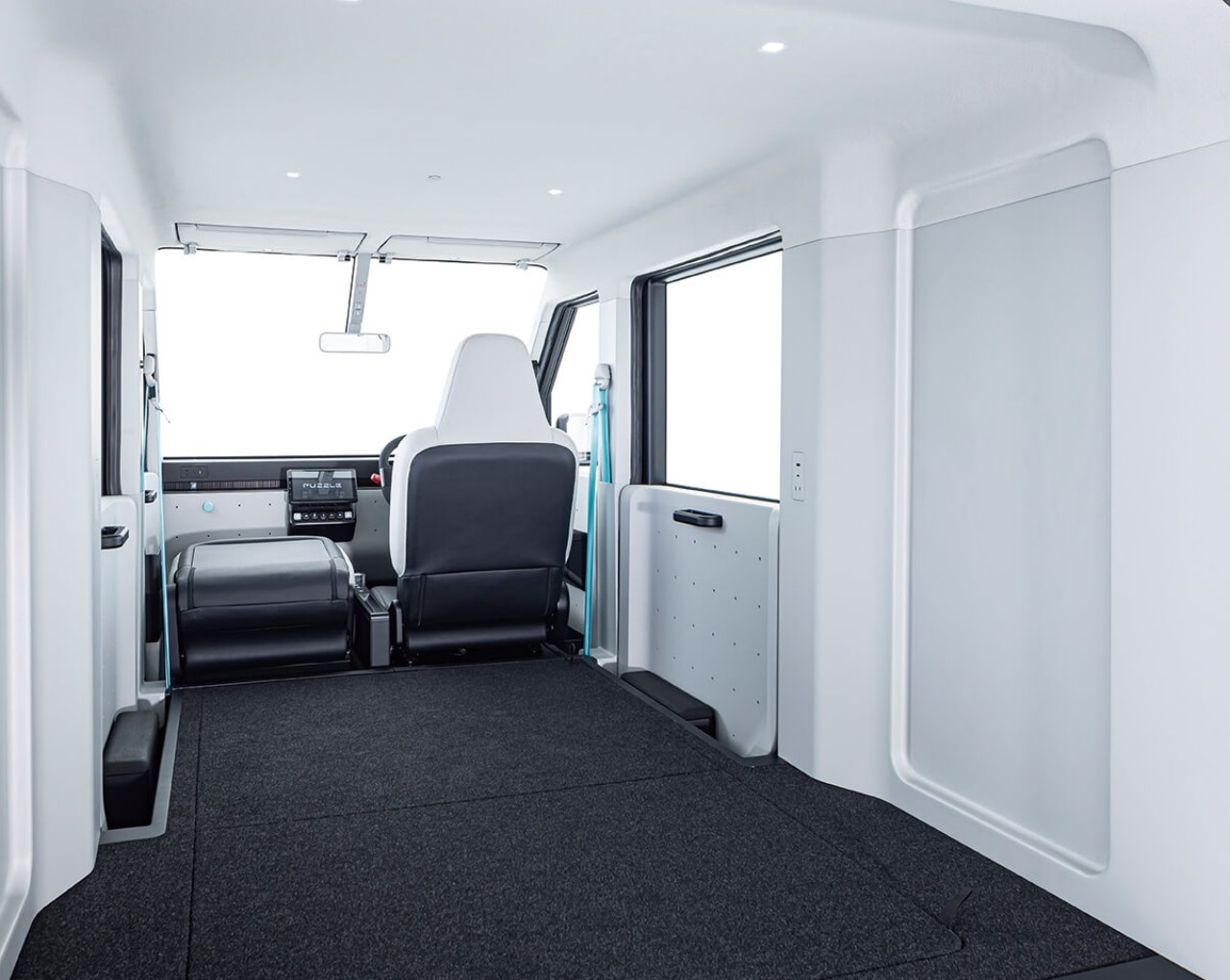
The Puzzle van also has secrets to reveal inside its extremely spacious cabin. The interior door panel has slots that make it possible to add and remove different modules, such as containers, cup holders, and the like. Even the dashboard has this kind of design, yielding a clean yet flexible space for expanding the van’s capabilities, especially in the infotainment aspect. The cargo space, which is practically a cube, is also more space-efficient for storing boxes and all sorts of large objects, making the EV a potential delivery vehicle.

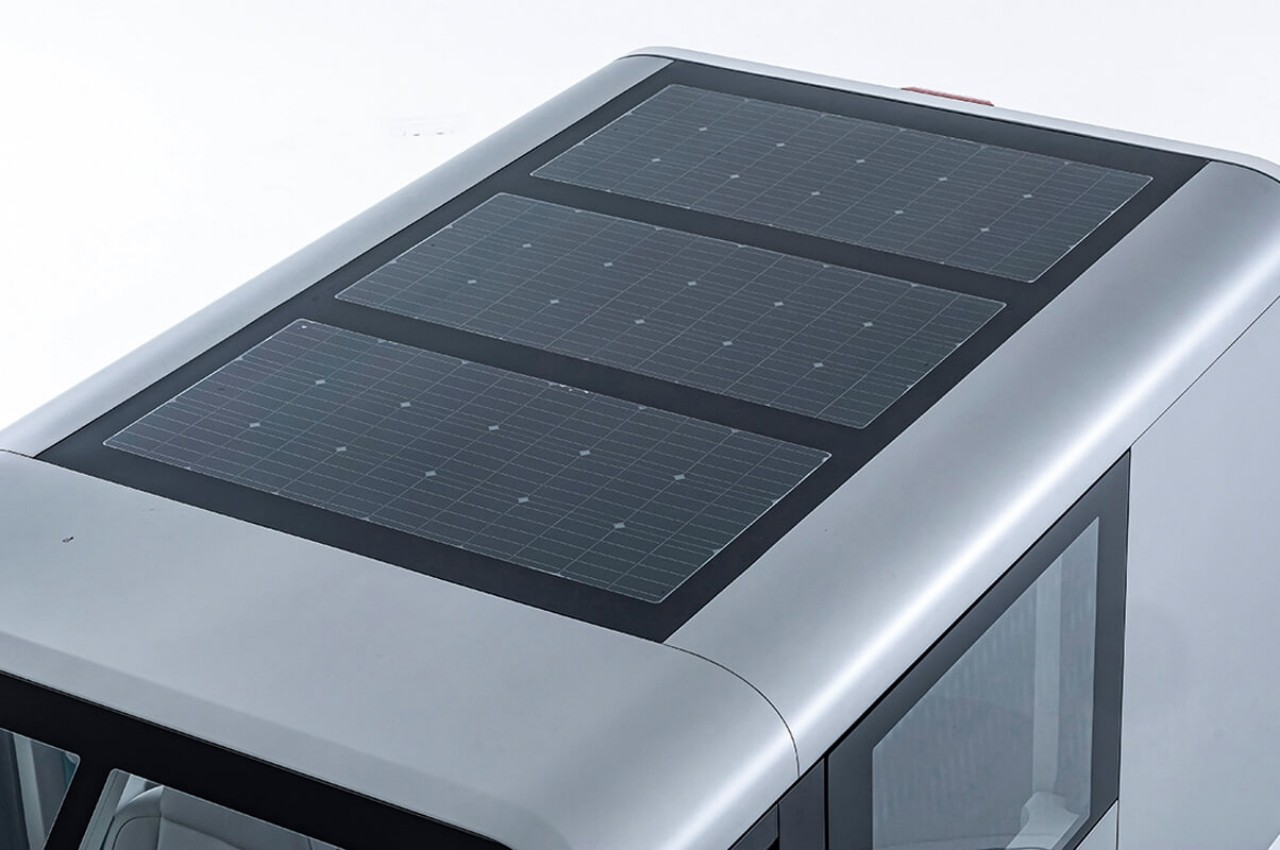
Thanks to the boxy form of this Kei car, it’s possible to put a solar panel on the roof to really maximize its battery mileage. Modular and sustainable, the Puzzle minivan concept offers an extremely simple yet effective solution to the future of electric vehicles, one that espouses the Japanese spirit of minimalism and practicality where form clearly follows function.

The post Modular electric minivan is inspired by puzzles for a more sustainable design first appeared on Yanko Design.
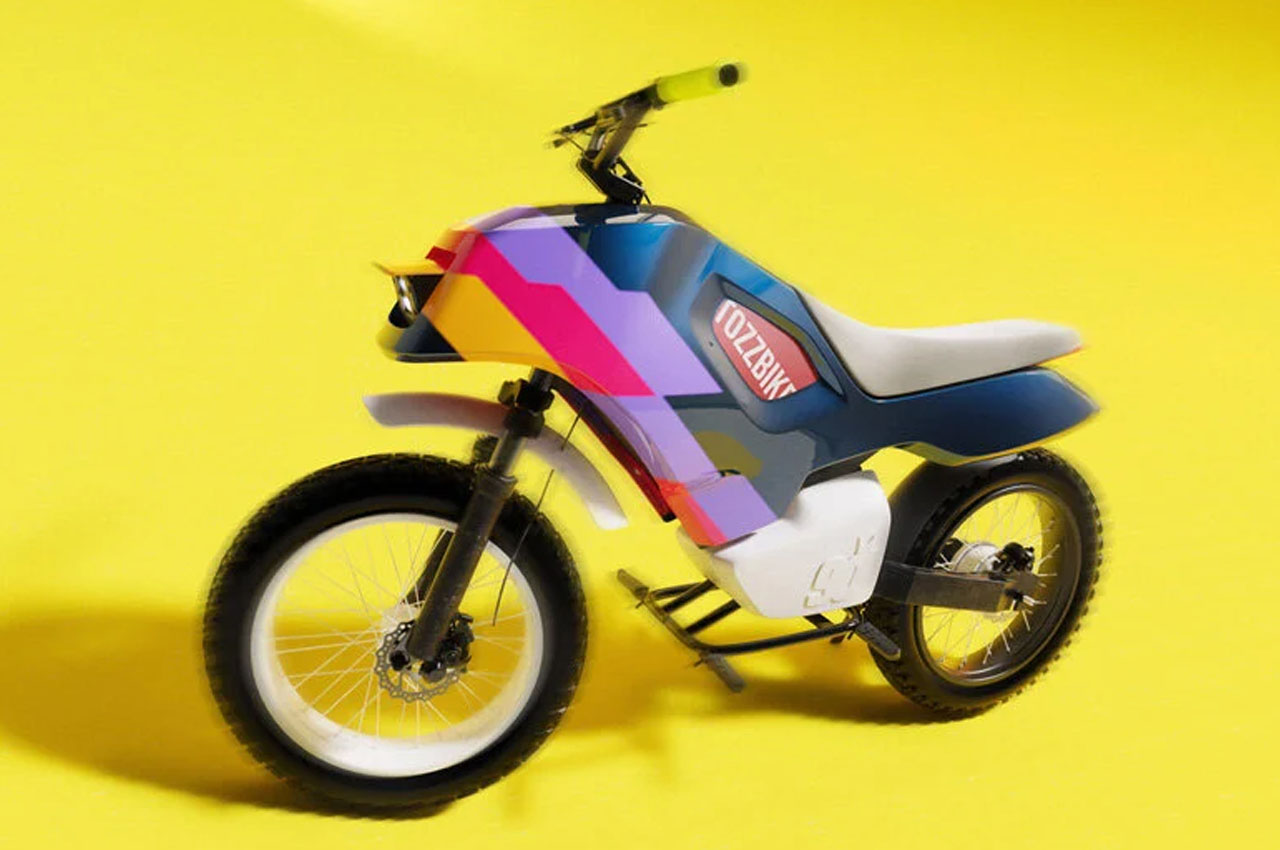
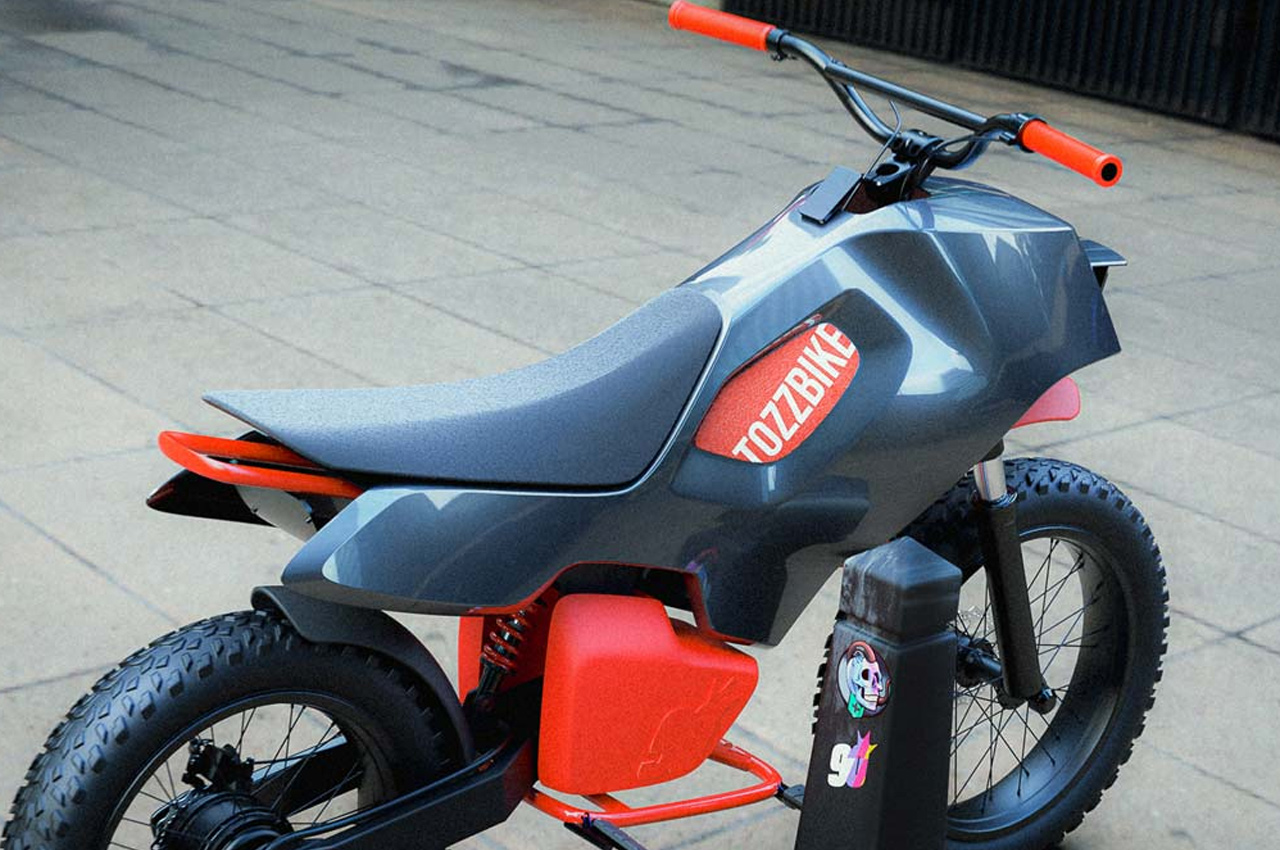
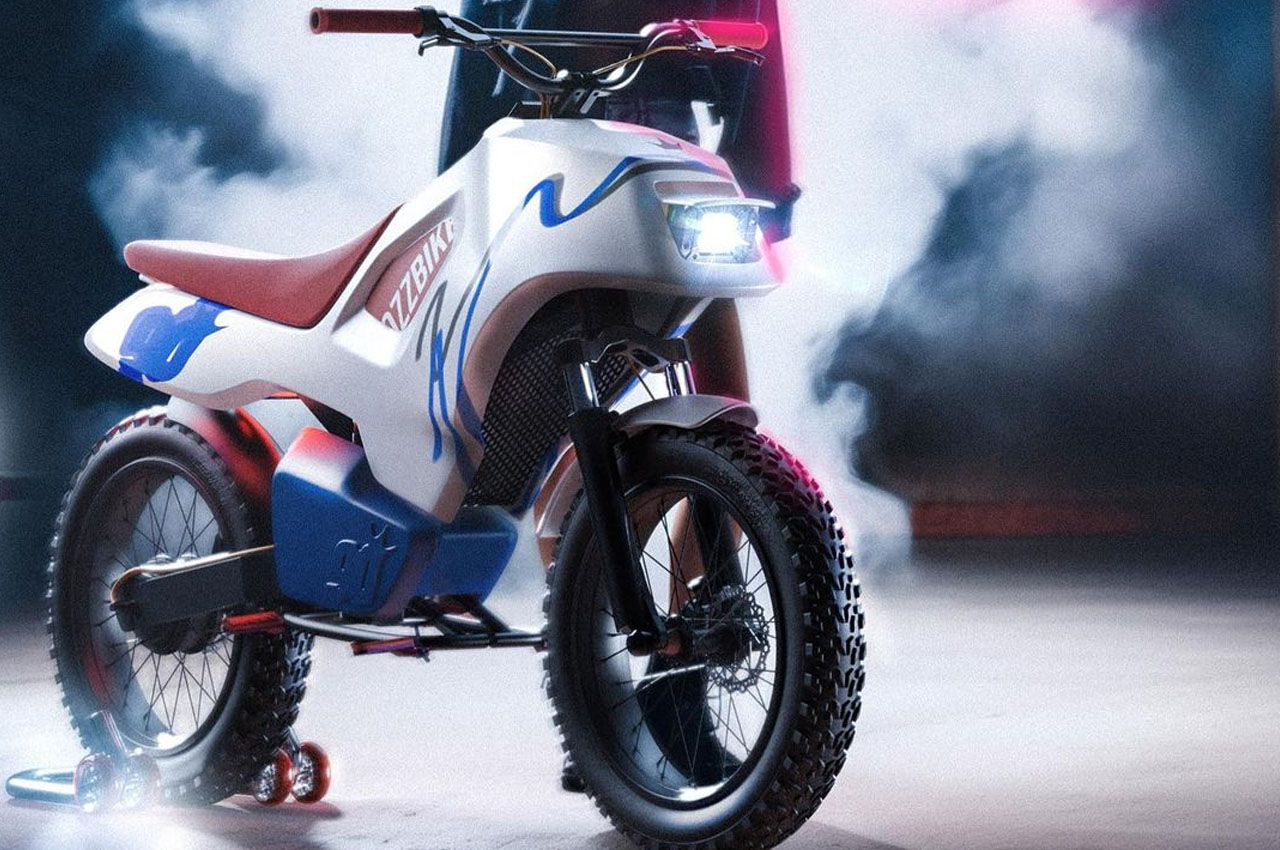
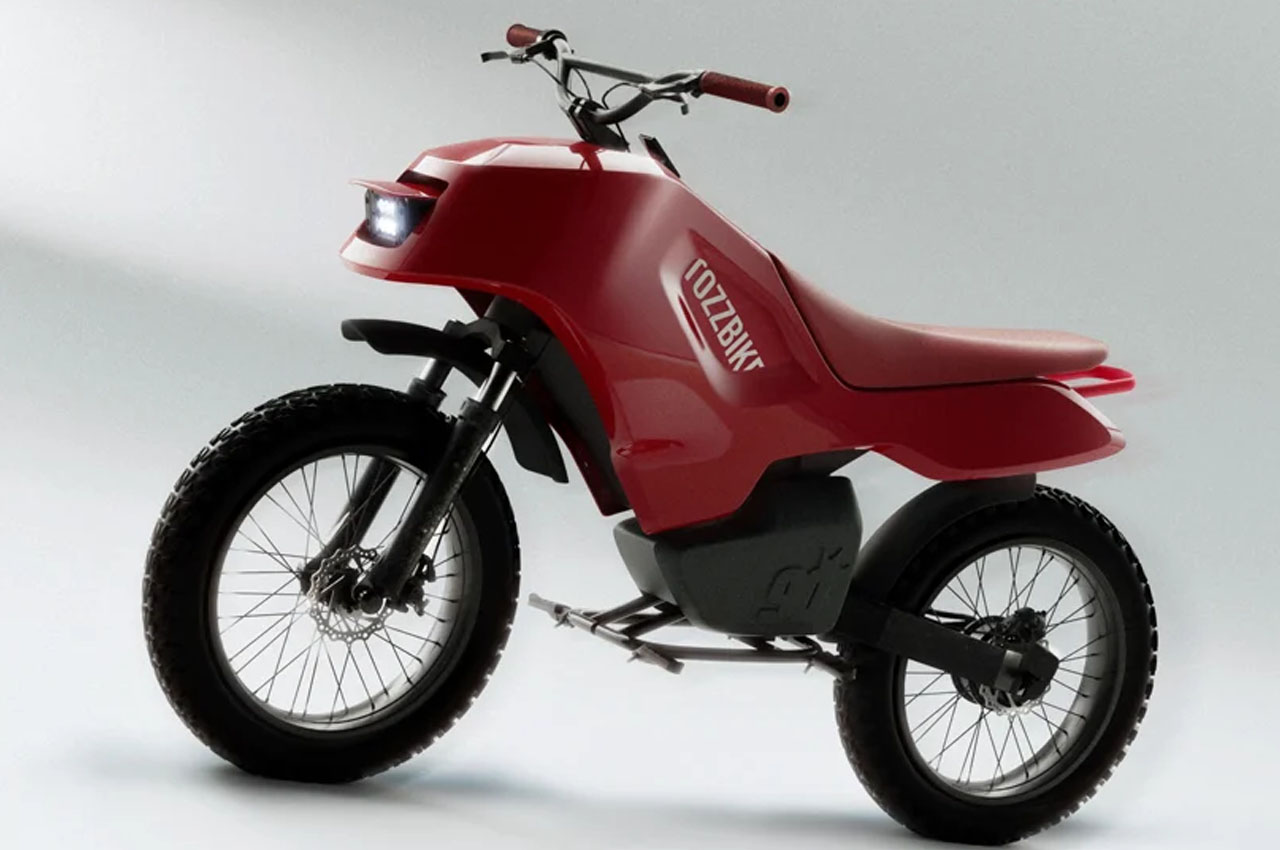
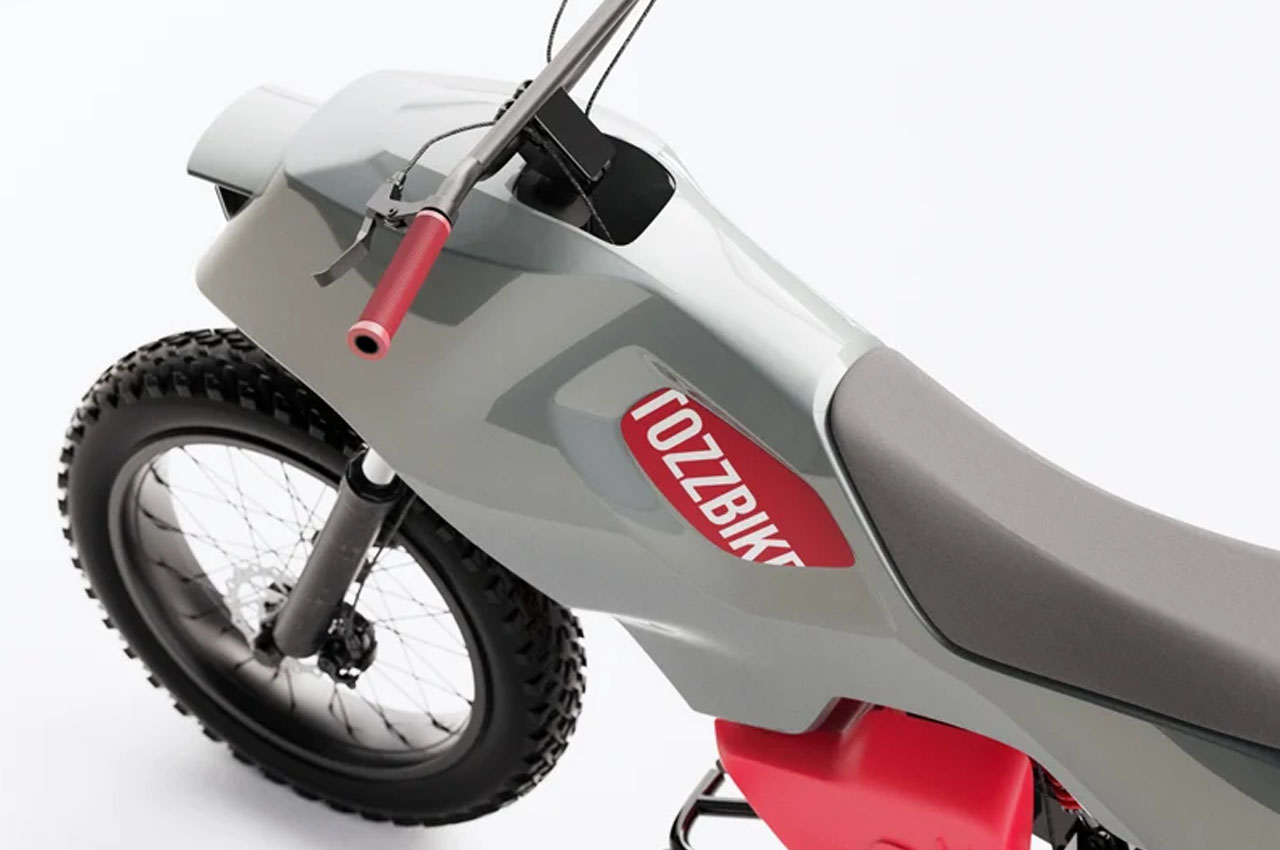
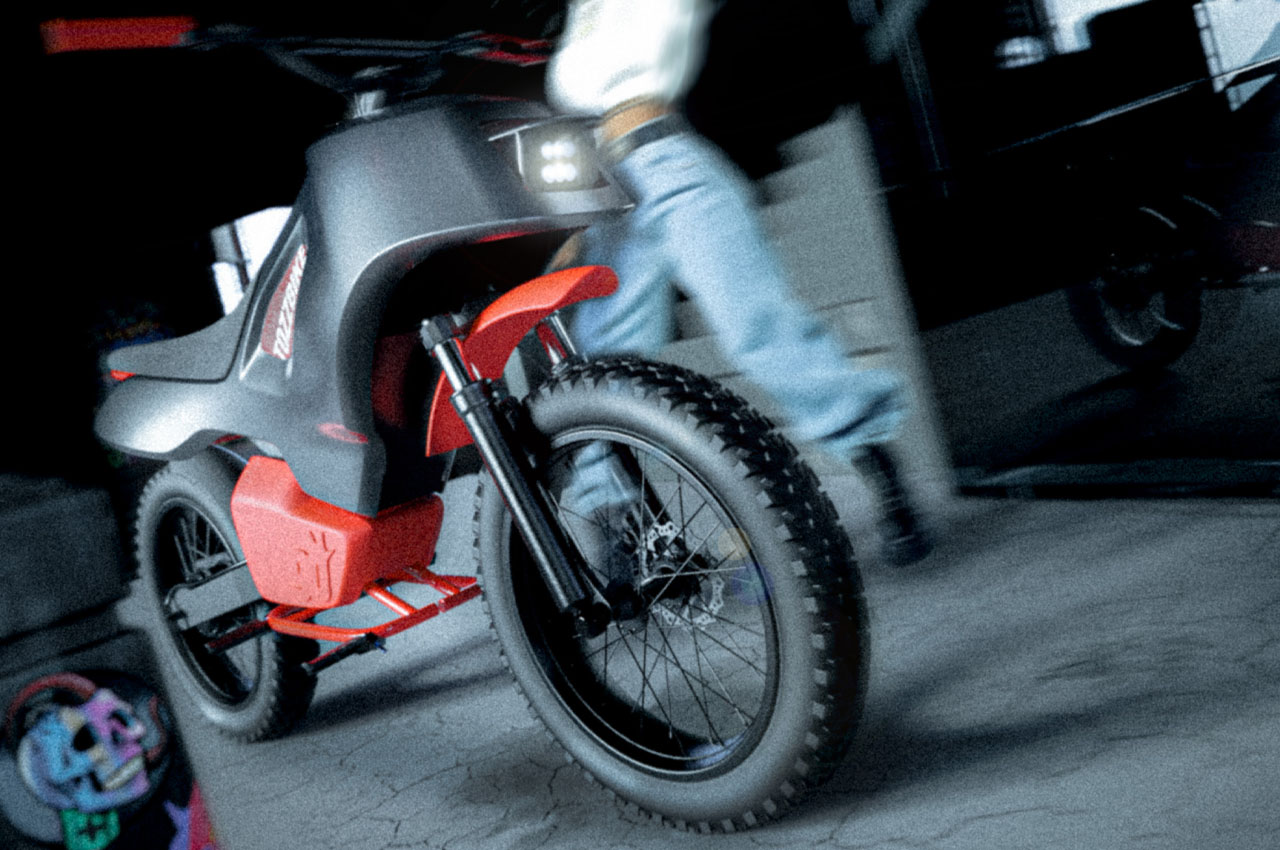
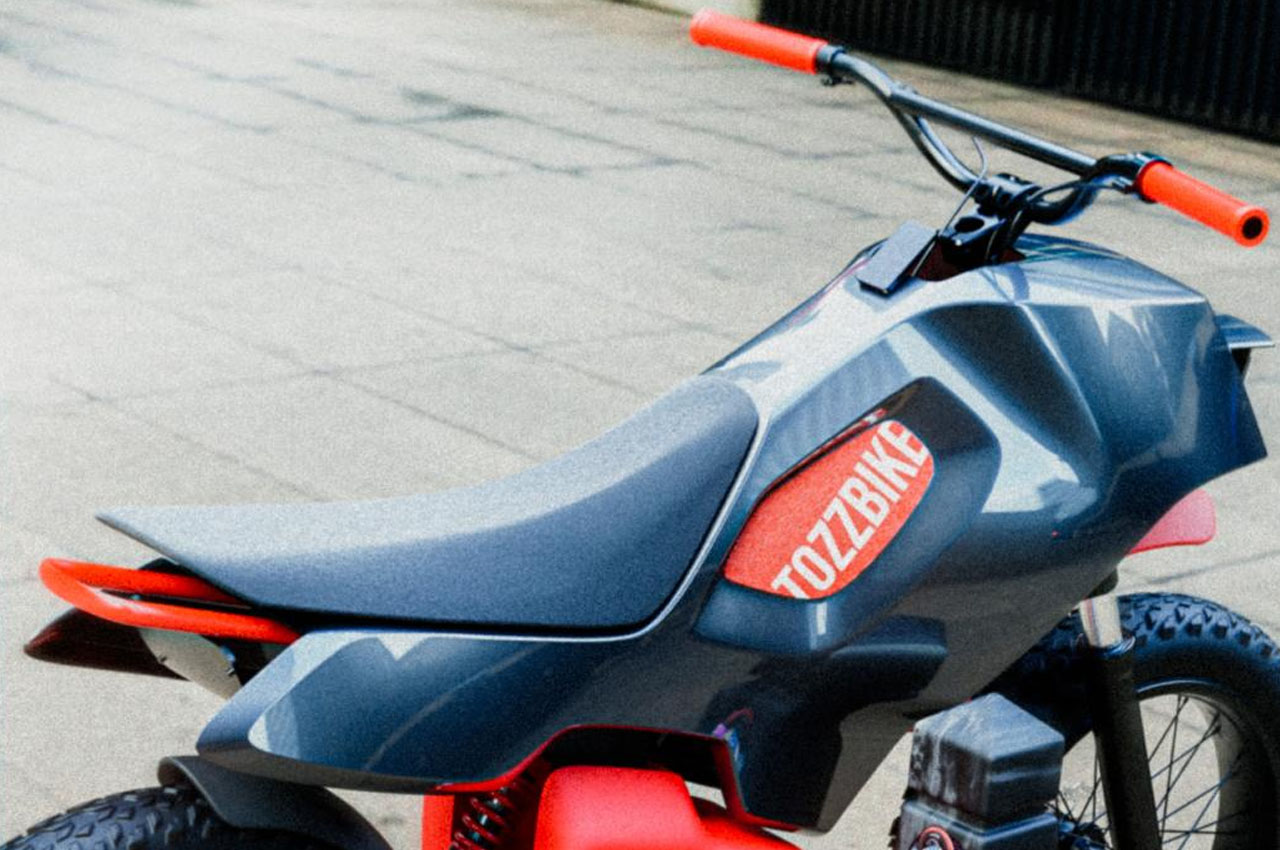
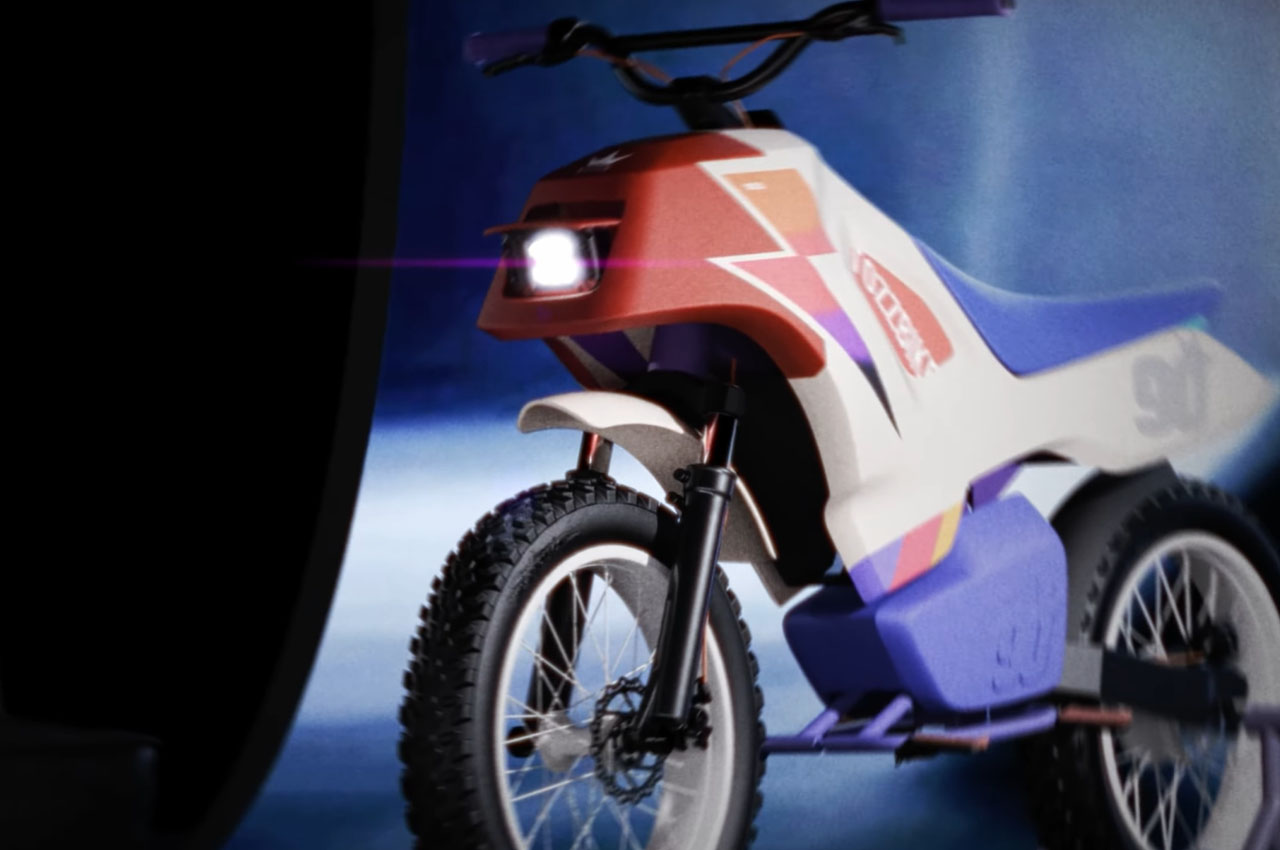
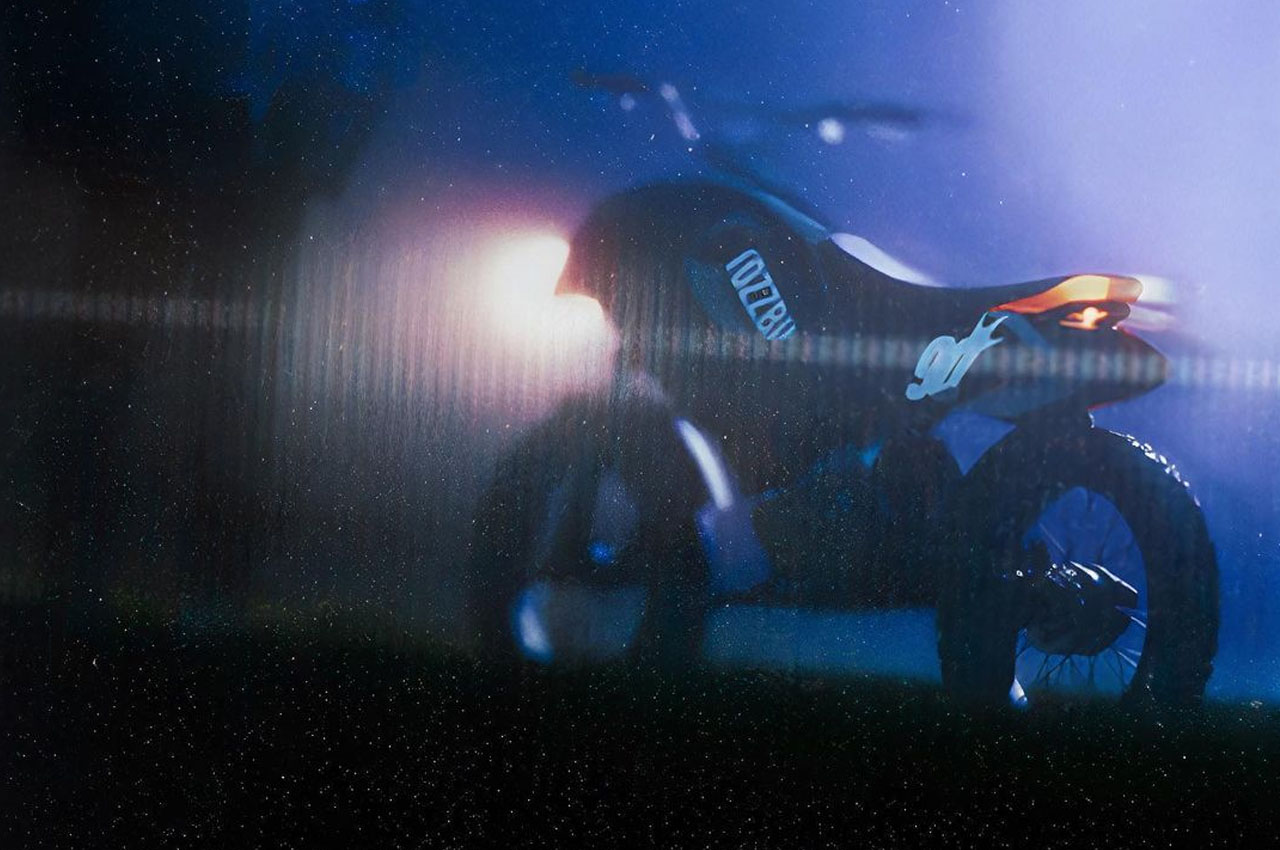
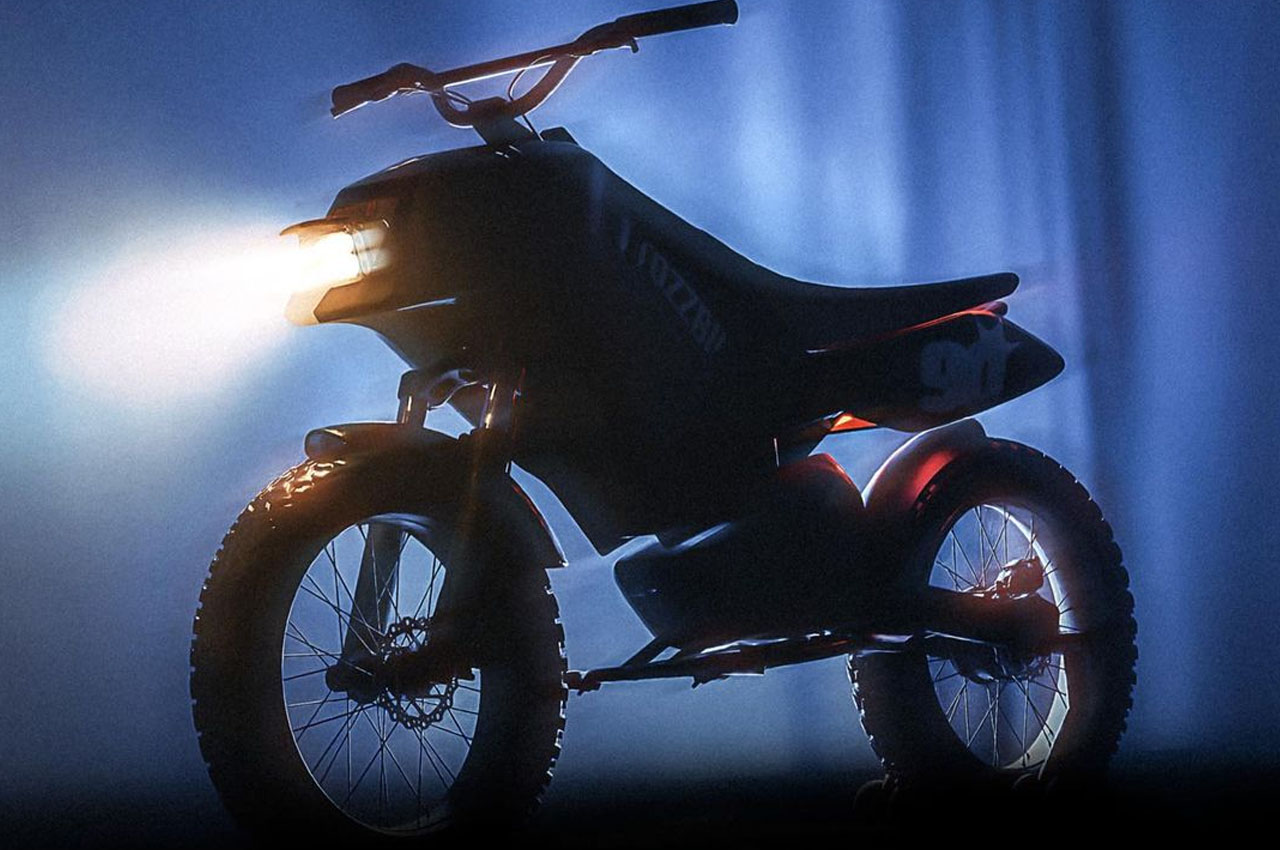
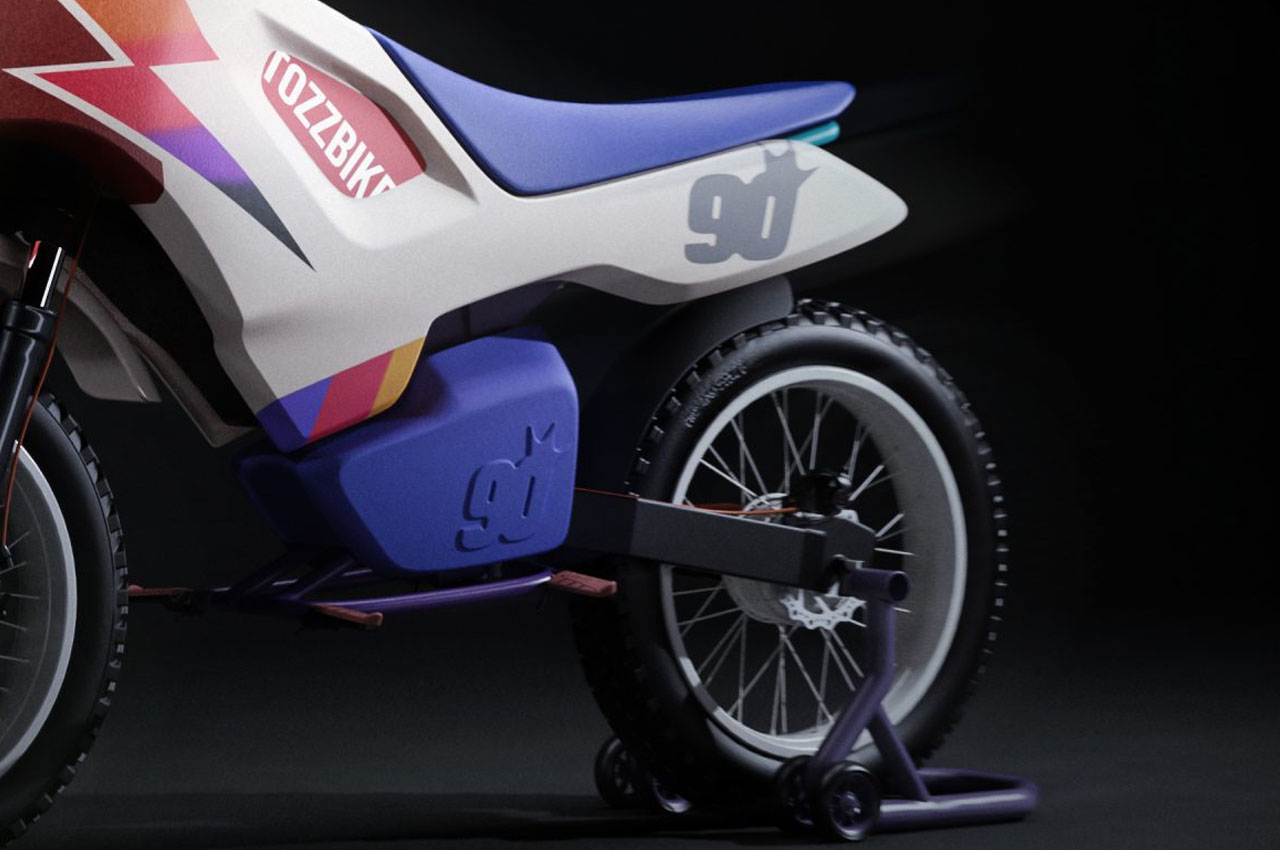
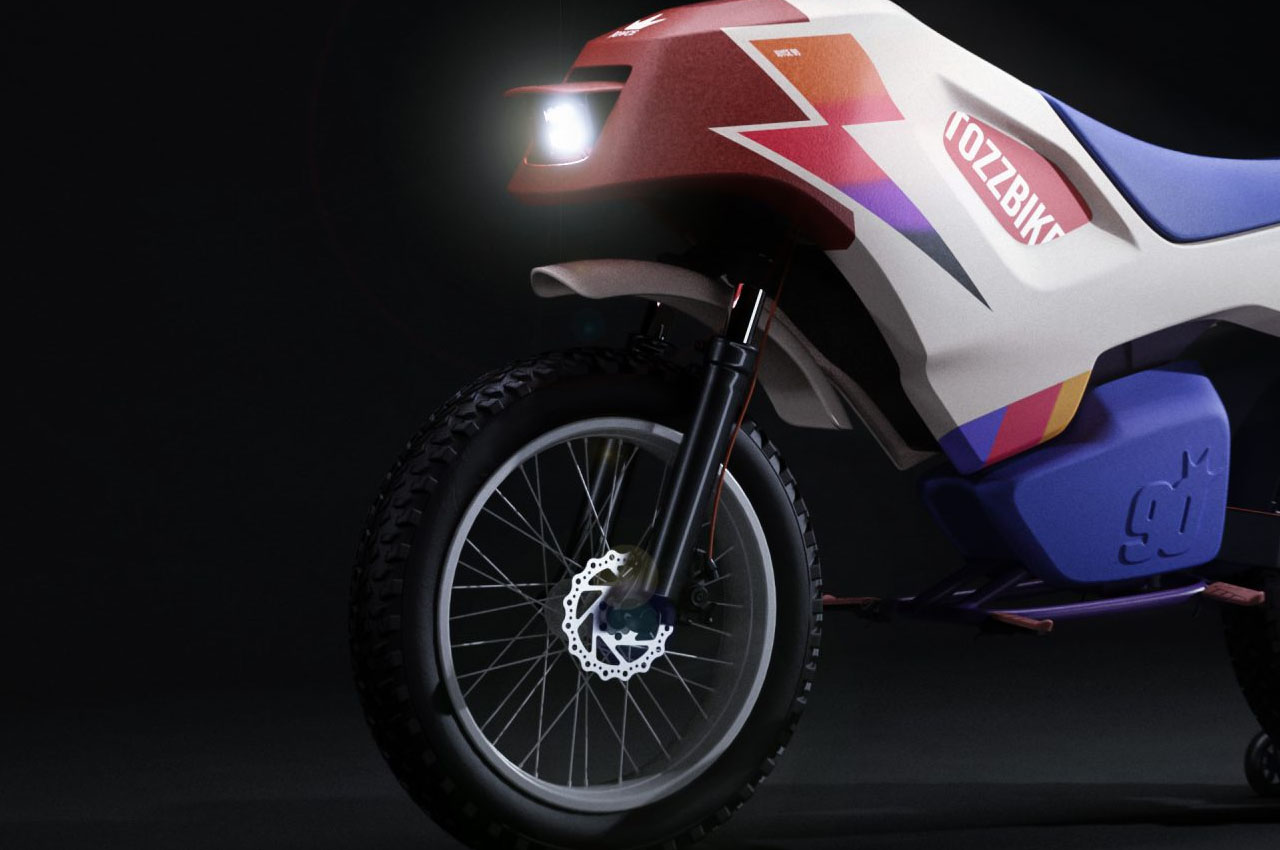
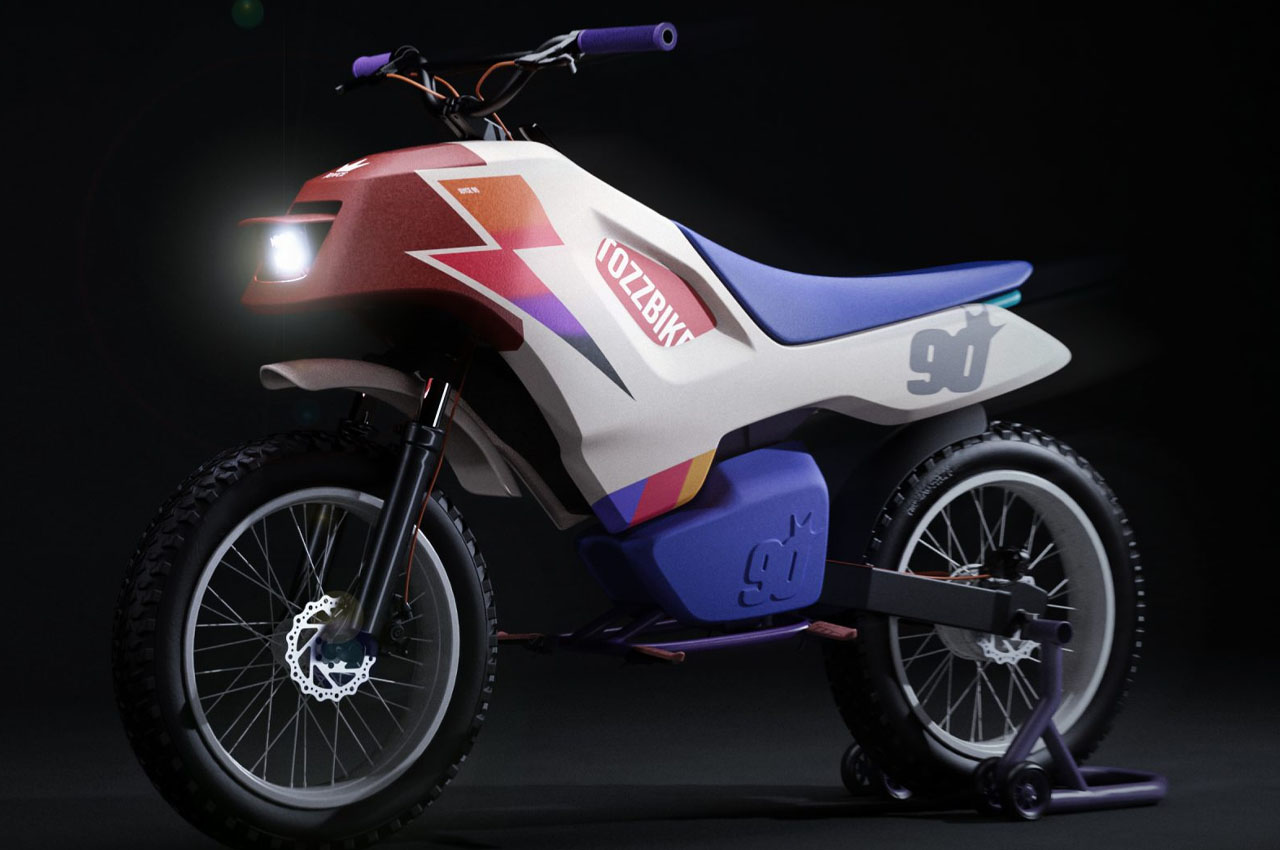
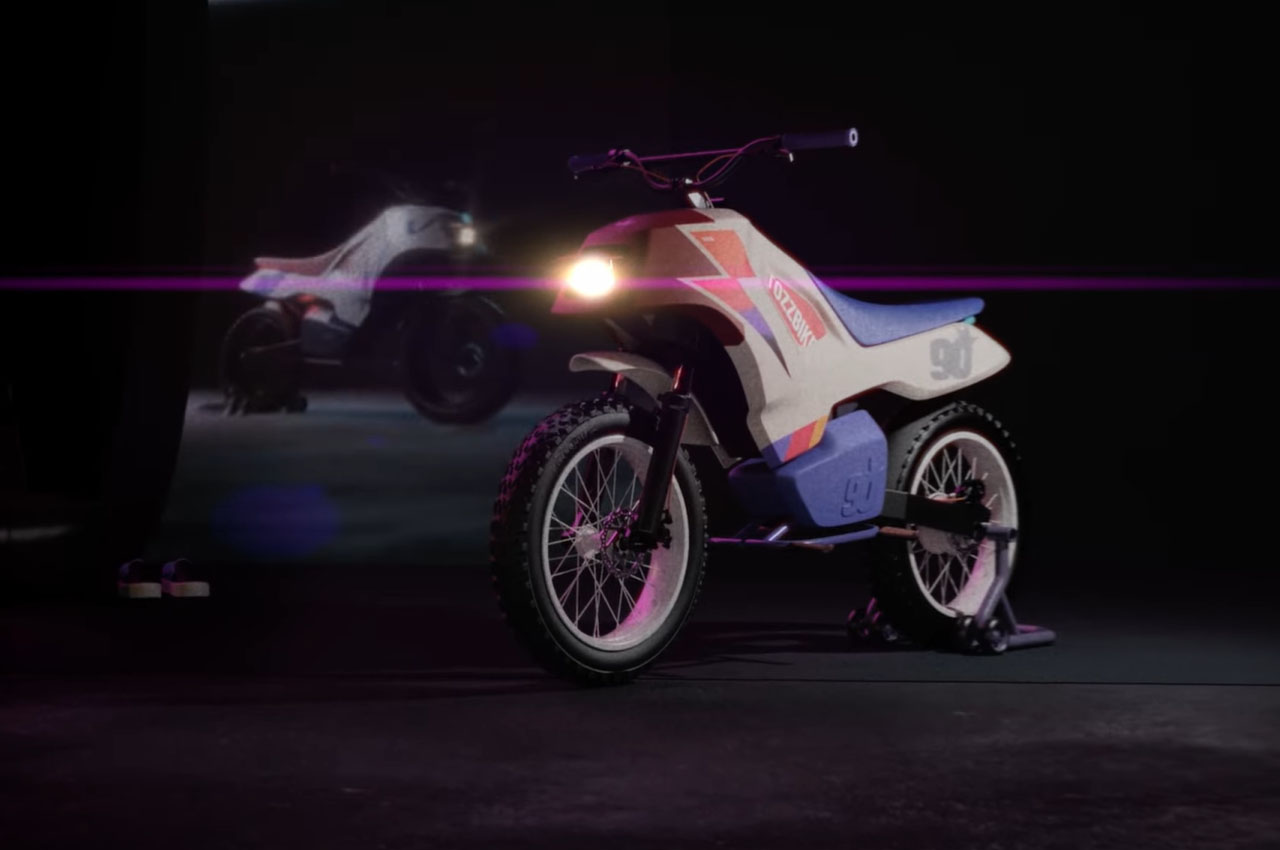
Joyce’90 electric bike with integrated boombox and pop-up headlights comes in peppy design

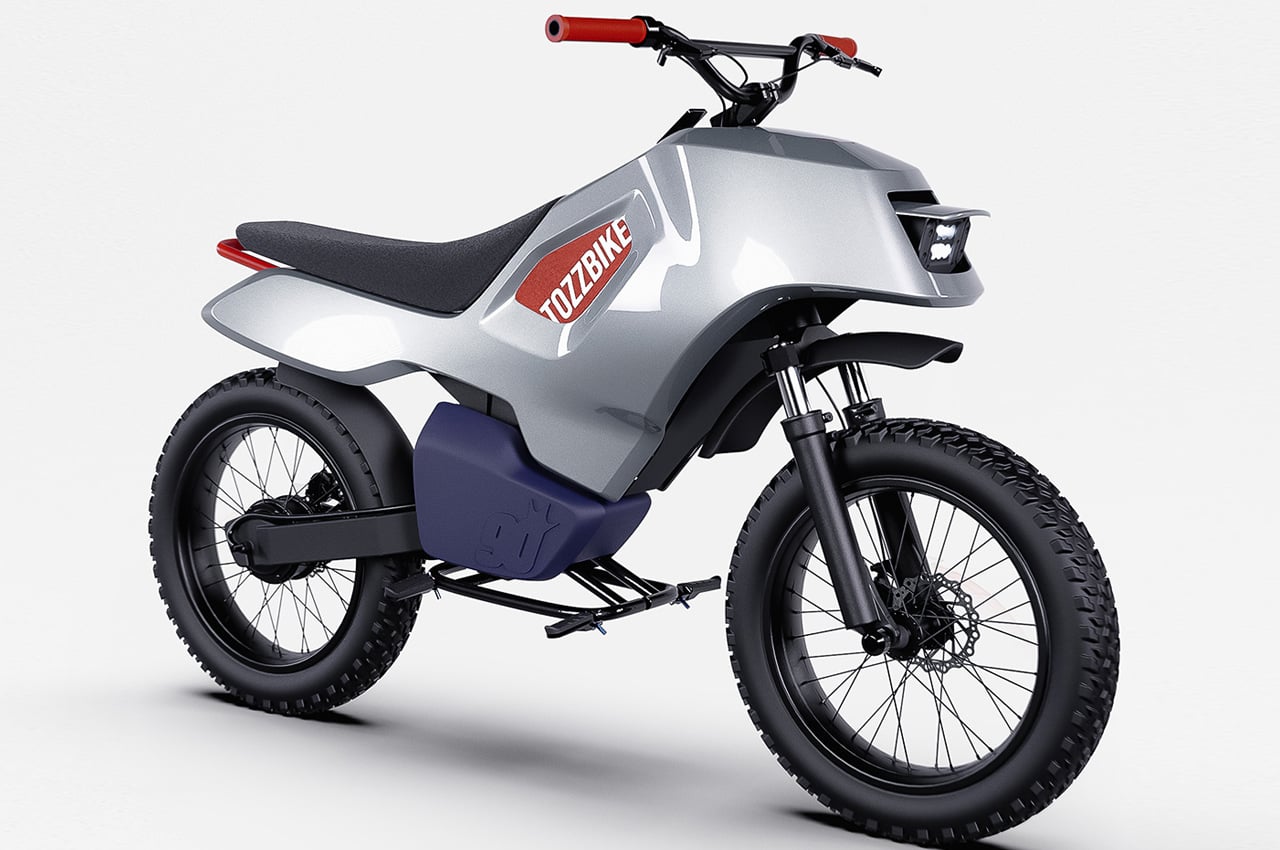
If the micro-mobility market was looking for an evolution that Gen-Z would love, it’s right now. That’s because TOZZ has just revealed its new hip electric motorbike. This is the Joyce’90 by the sub-culture brand based in Istanbul that’s known for its e-mobility solutions for the young generation that doesn’t follow anything mainstream.

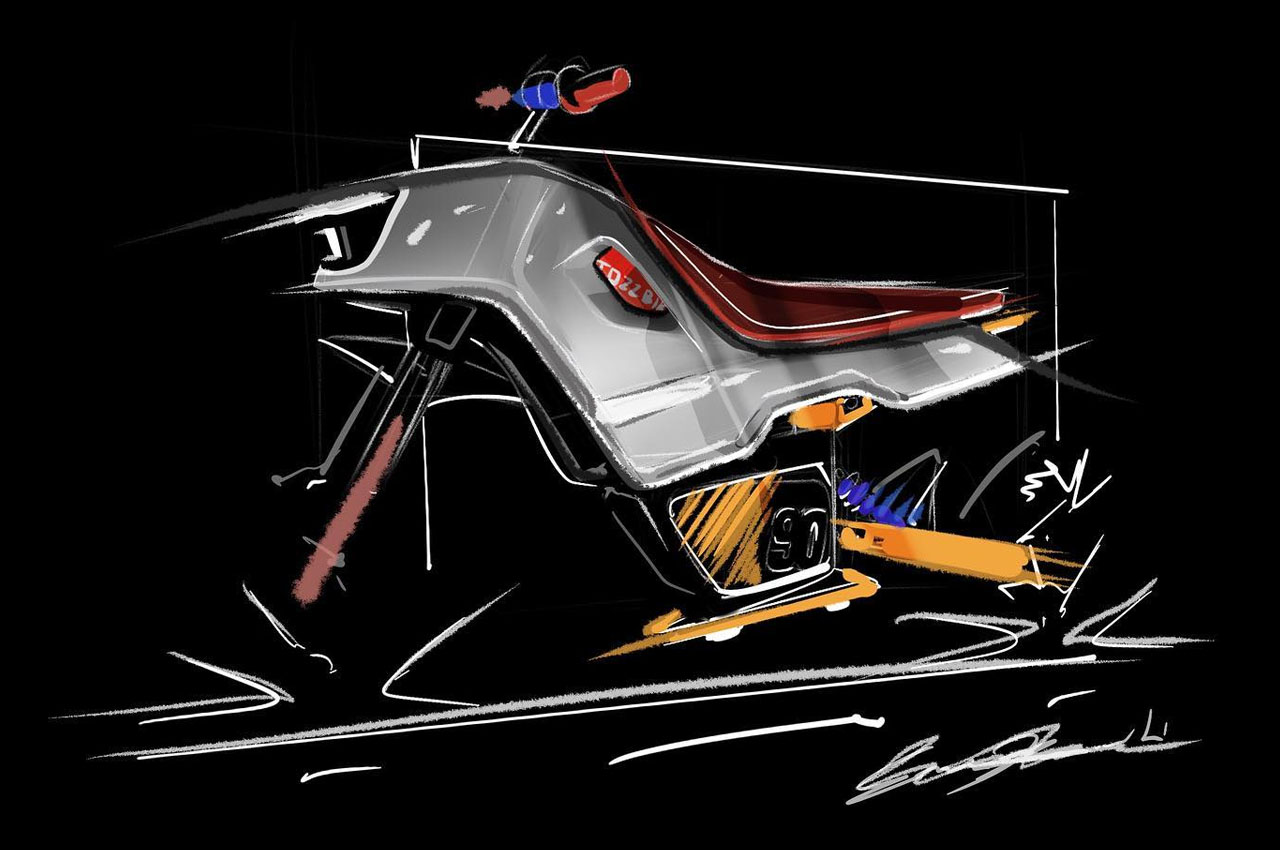
Smart design with sustainable production is their niche and durable construction is their forte. All these attributes are reflected in the Joyce’90 e-bike that shines with its peculiar pop-up headlights. The interesting USP of the electric motorcycle is the integrated Bluetooth boombox, because why not?

Designer: TOZZ

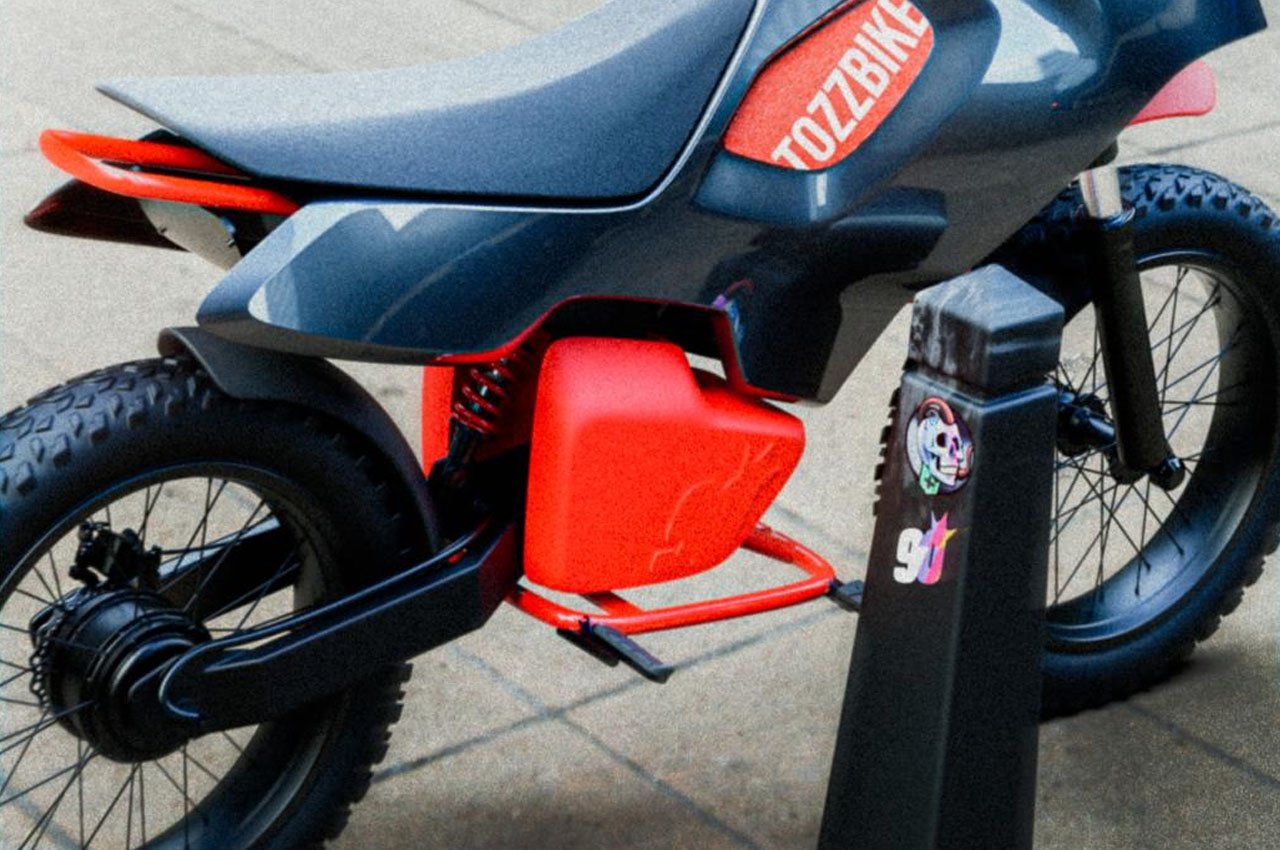
At first glance, you’ll notice the reminiscences of 90s cross bikes (maybe that’s where the name is derived from) and grand tourers. As expected, the body is as tough as a bull and draped in trending color decals, and we can safely say, that millennials will hit the skip button here. Coming on to the hip youngsters who’ll fancy this ride, the 150W 2.1 boombox hides in the body to get the party started anywhere, anytime.

On the performance front, the electric bike reaches a maximum speed of 45 km/h but the company plans to limit it to 25 km/h and 250W output in the European countries to keep up with the regulations. The base battery capacity of the e-bike is 45 km but an upgraded battery pack can be fitted to increase it by double to 90 km. The ride currently in the prototype stage will ultimately be licensed as a pedelec so that it can be driven in the bike lanes in the region. When the electric bike will be available in other parts of the world?

Joyce’90 will be available for pre-order this month and deliveries can be expected soon. The price and availability of the e-bike will be revealed in the coming days on the website and social media channels.

The post Joyce’90 electric bike with integrated boombox and pop-up headlights comes in peppy design first appeared on Yanko Design.
All-electric Ferrari Alto reinforces legacy of The Prancing Horse in zero-emission dominated future

The prancing horses from Italy capture motorheads’ imagination whether they own one or not. These set of wheels adorn either the lavish garages of billionaires or stick to the walls of youngsters who have mustered up a million dreams of where they would take their Ferrari.

The brand laid the foundation of fast car trend that to date have proved their metal as more automotive sports car makers took up the challenge of satisfying demanding drivers. Such is the elegance and performance of The Prancing Horse that every fresh model rolling out of the production lines is as exciting as the last one.

Designer: Alban LERAILLER

With all the major automakers making the gradual transition to electric vehicles, performance cars also seem to be ready for the electrified future. Ferrari SF90 Stradale is the initial step that the Italian automaker had to offer in a plug-in hybrid electric vehicle setup, and they are currently building an all-electric hypercar to dominate the closely contested race for the zero-emission future.

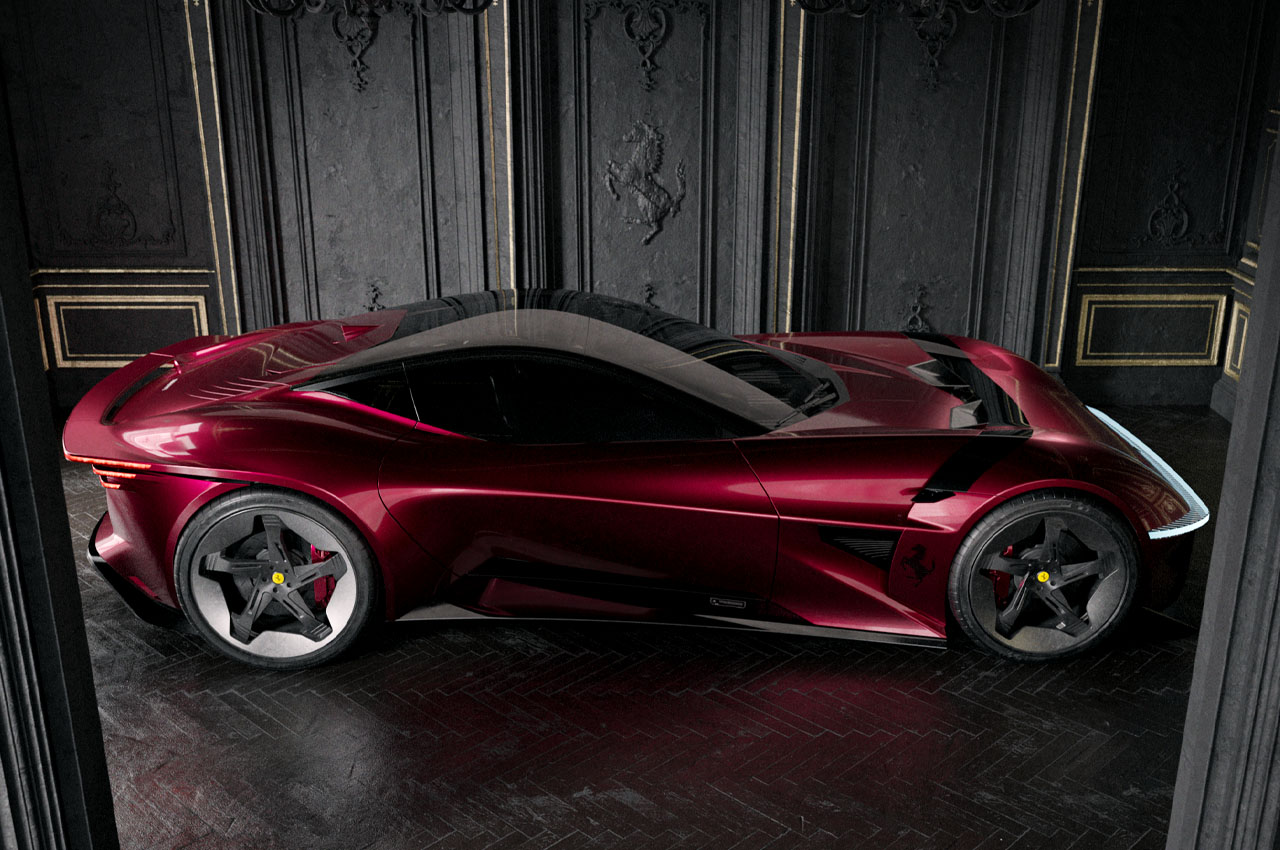
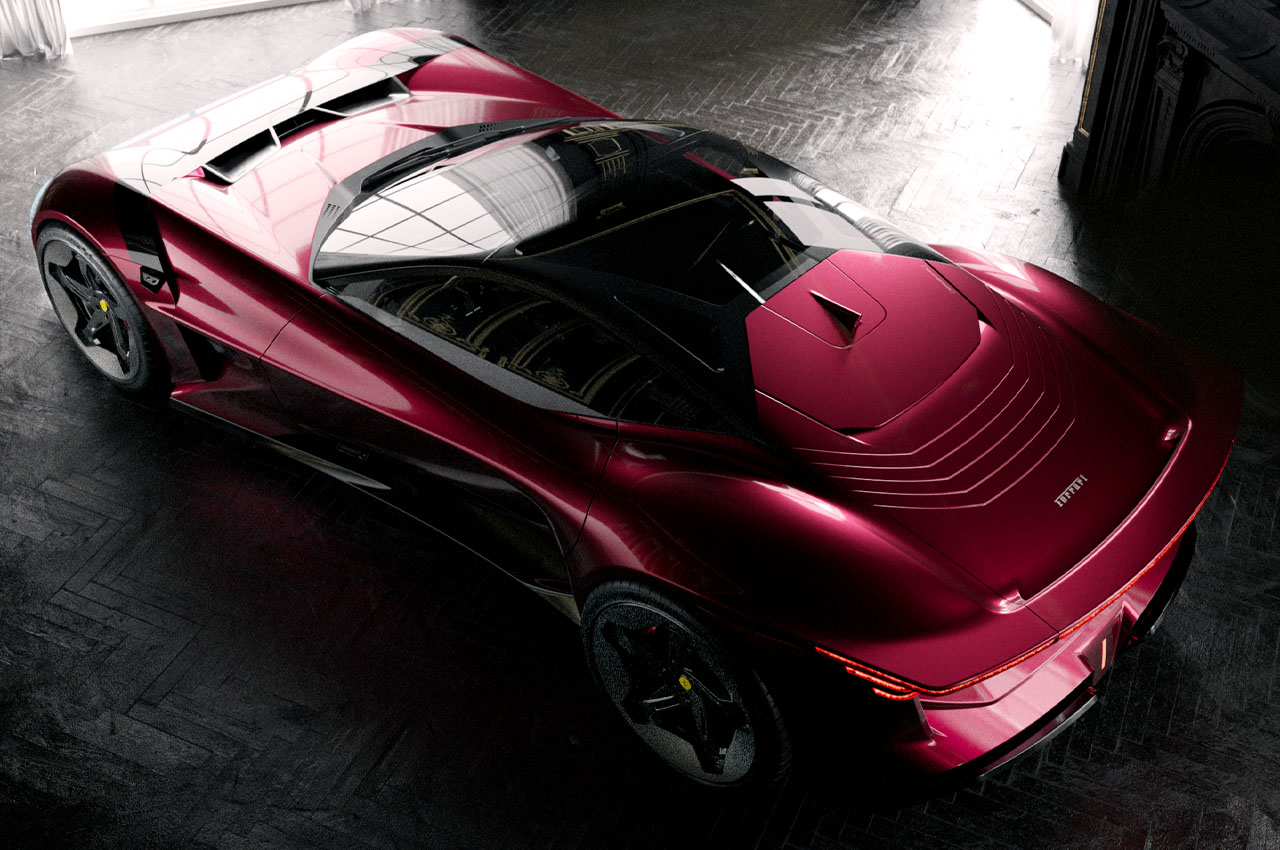
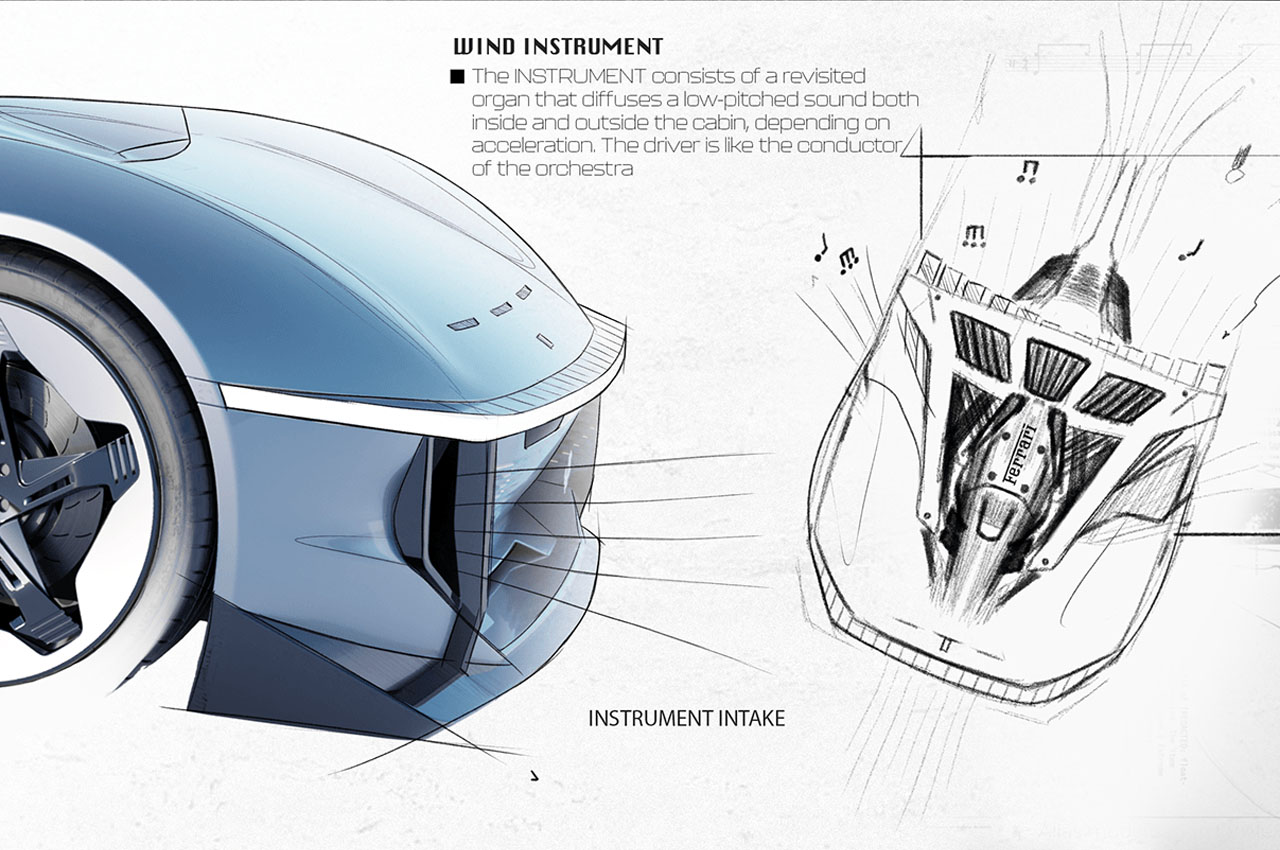
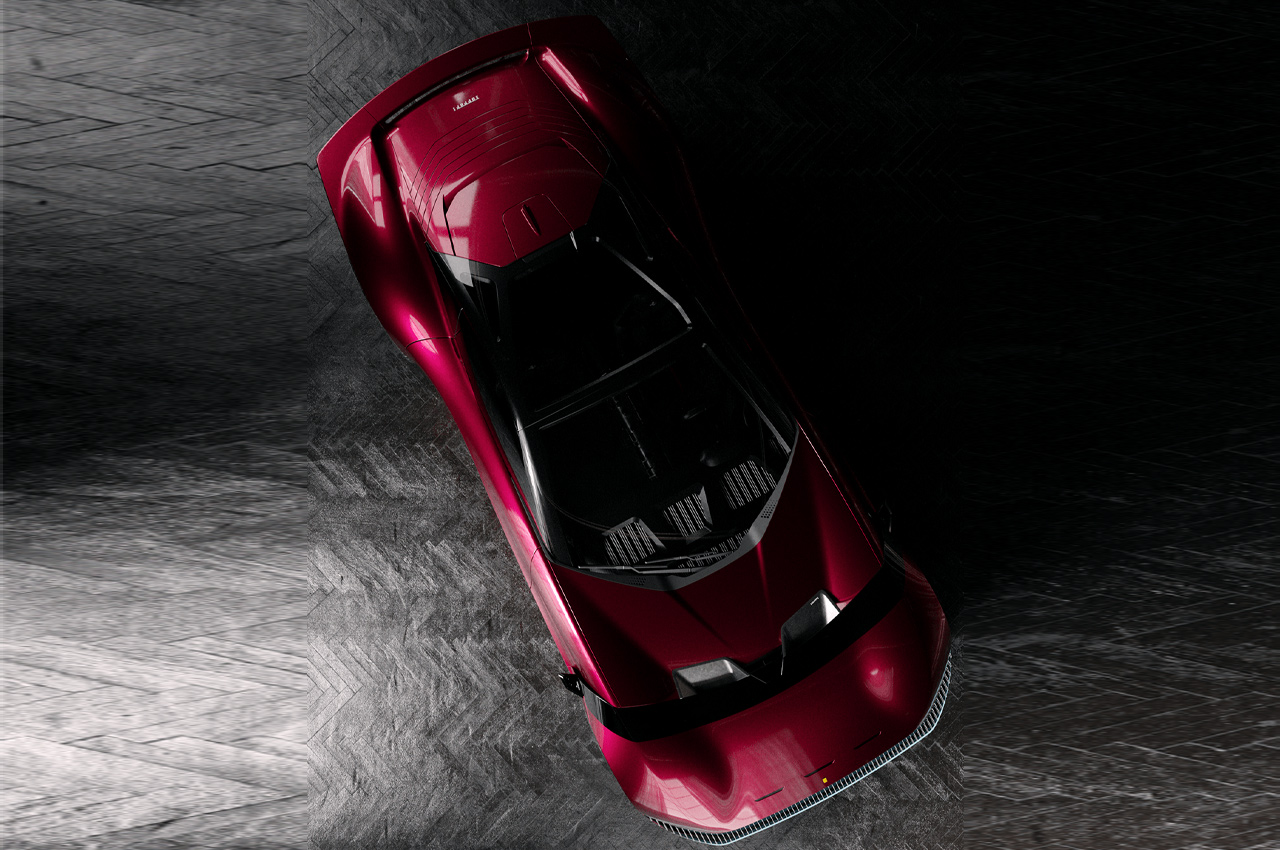
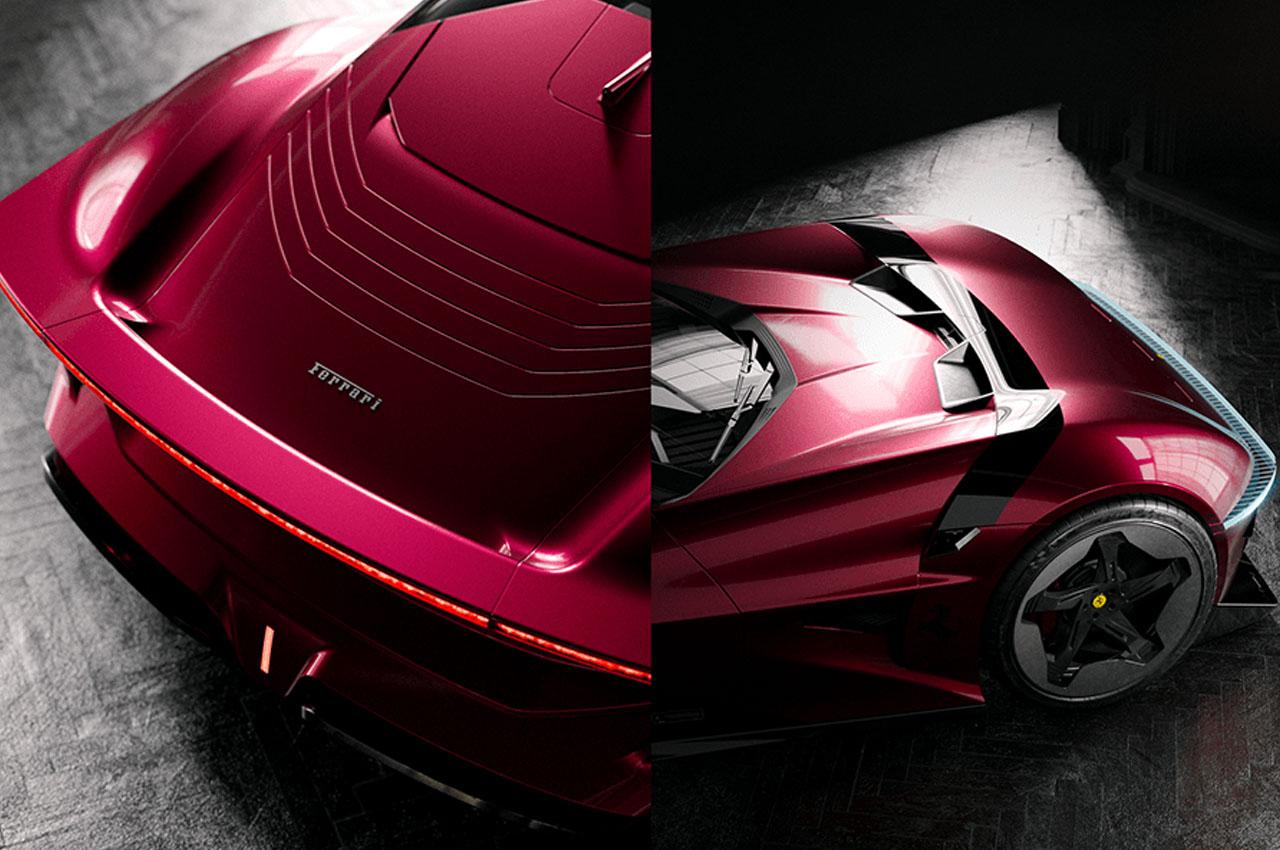
This concept in line with the upcoming plans of Ferrari redefines the shift in strategy to an all-wheel drive electric sportscar that can induce the same level of excitement as the fuel-powered V12 monsters. The front intake of the Alto brings an advantage in terms of the rotation axis of the electric motor – the more speed it gains, the more air intake optimizes performance.

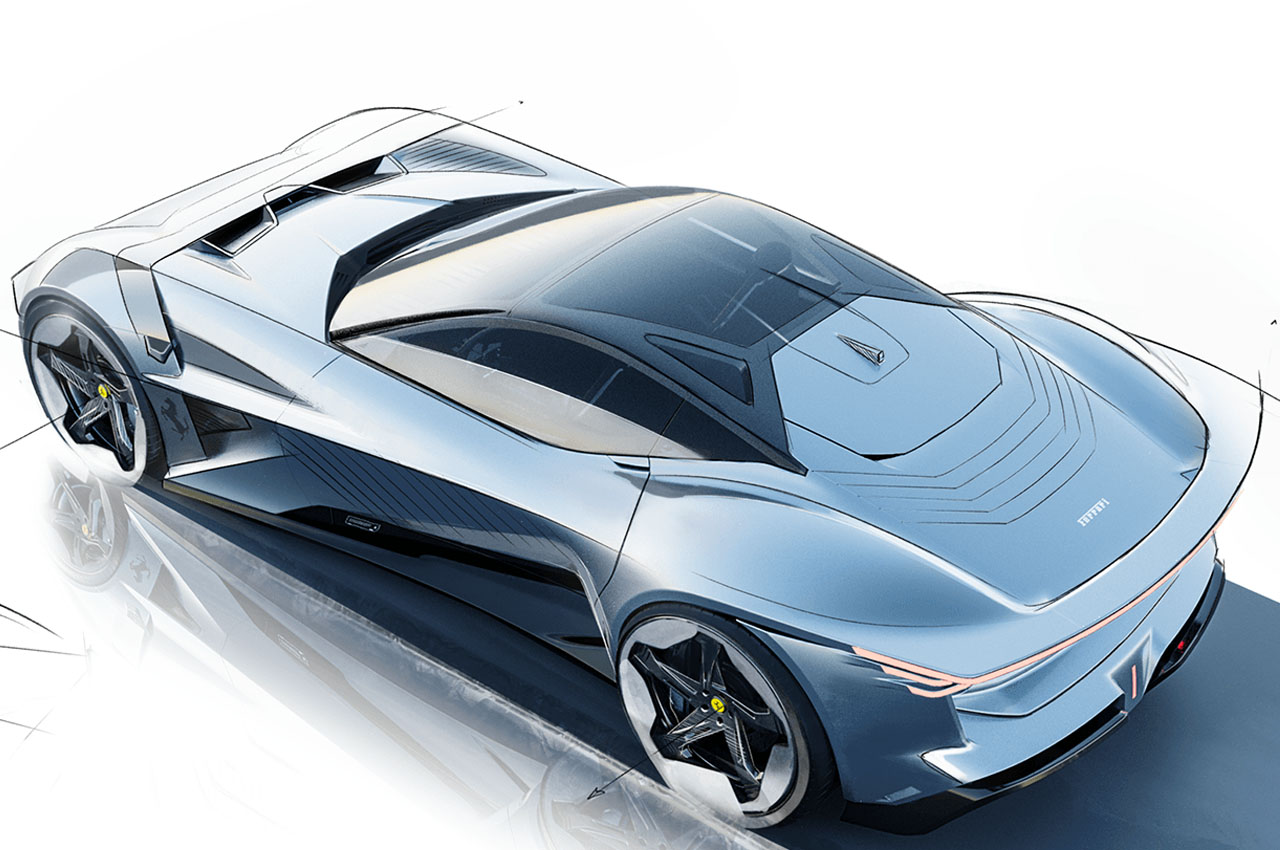
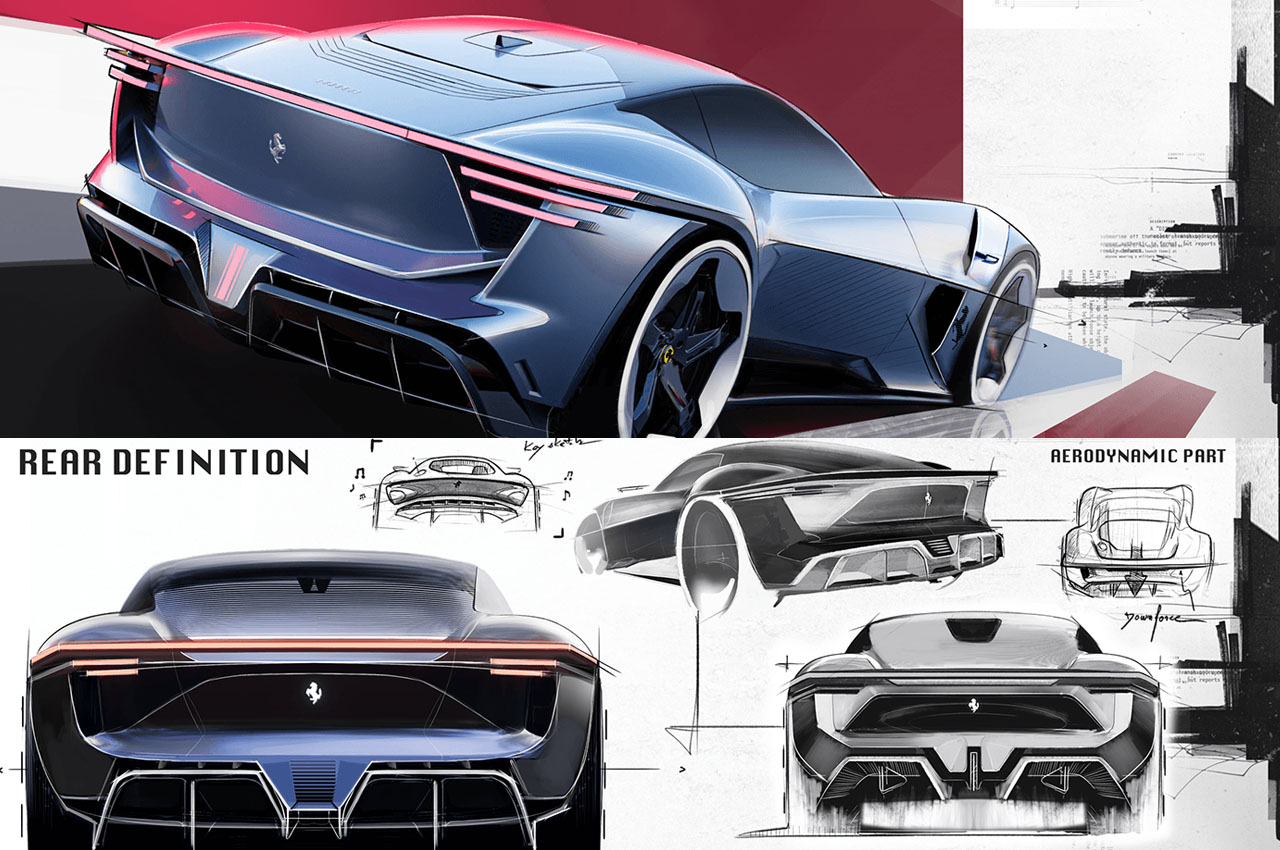
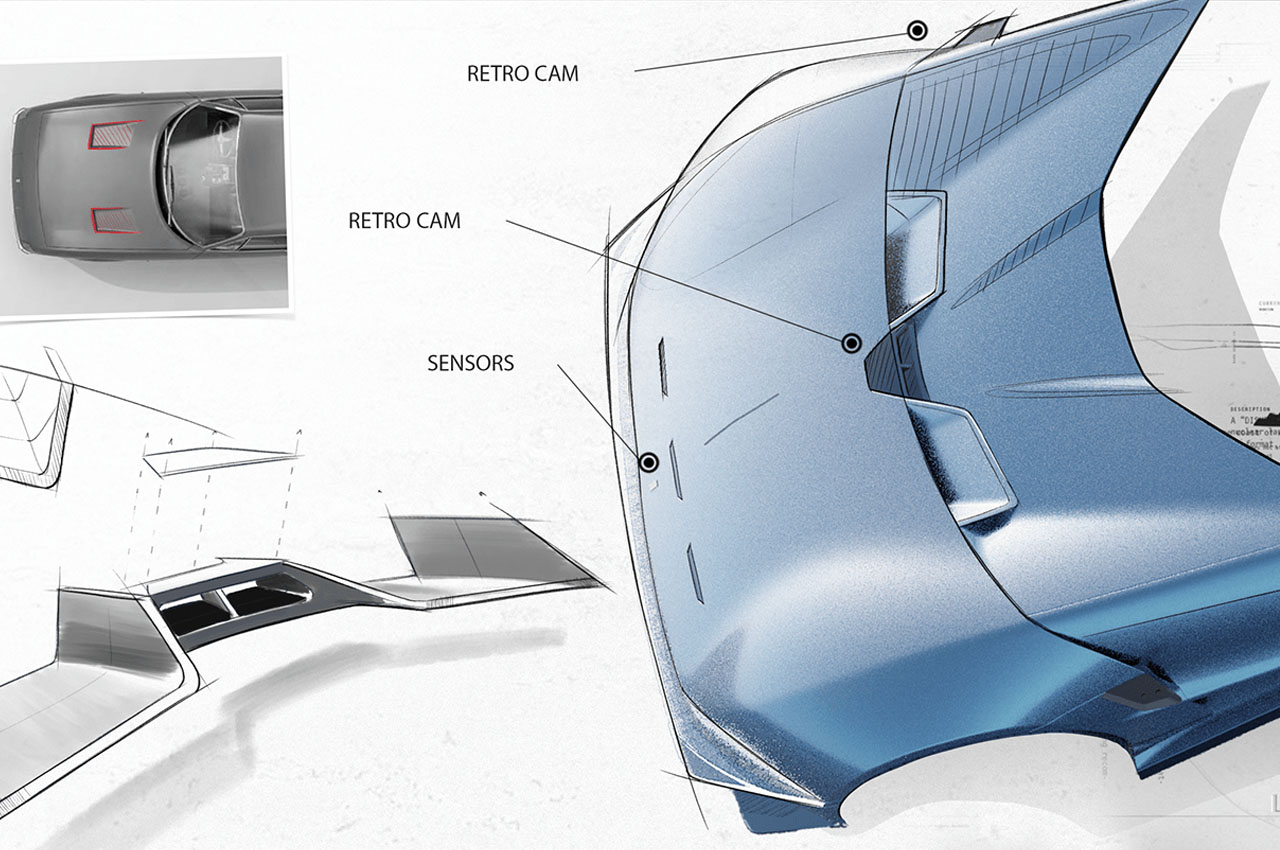
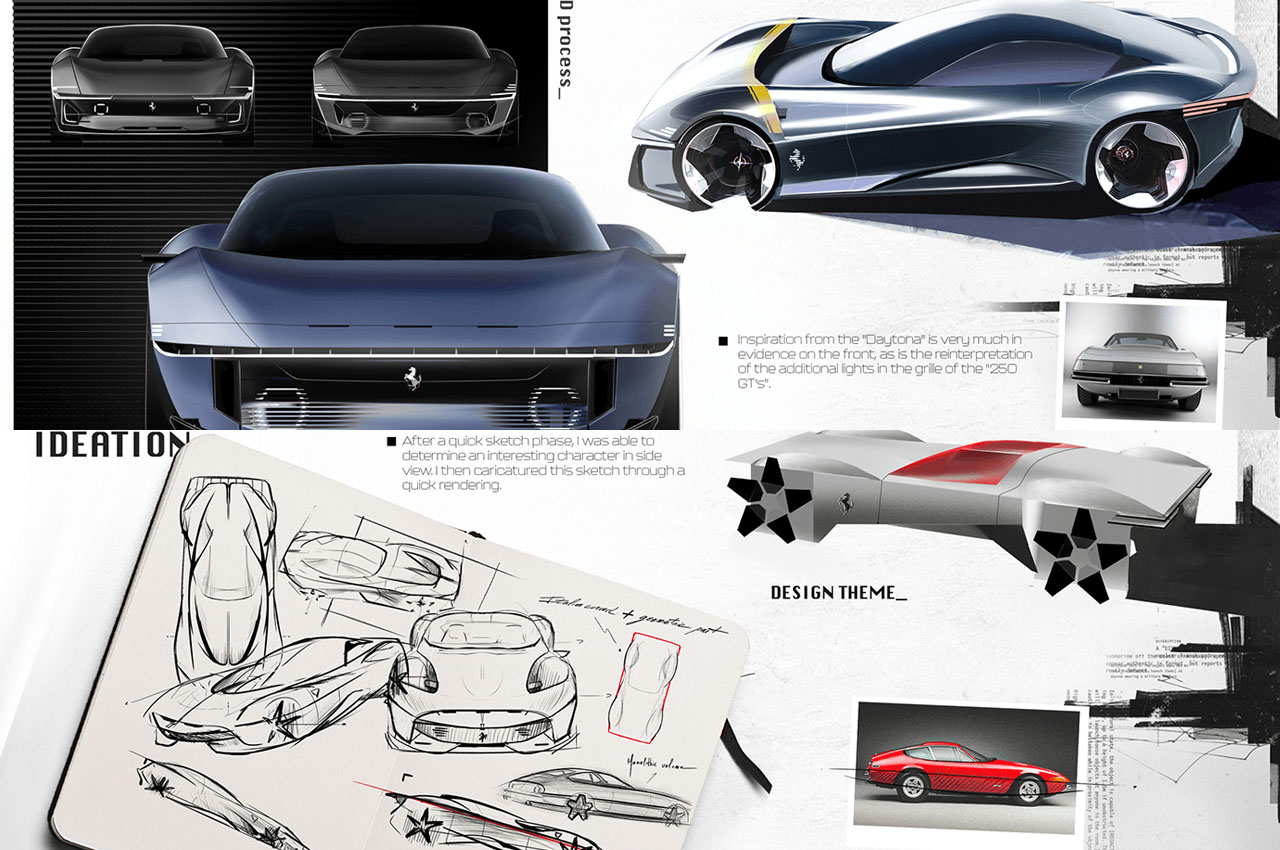
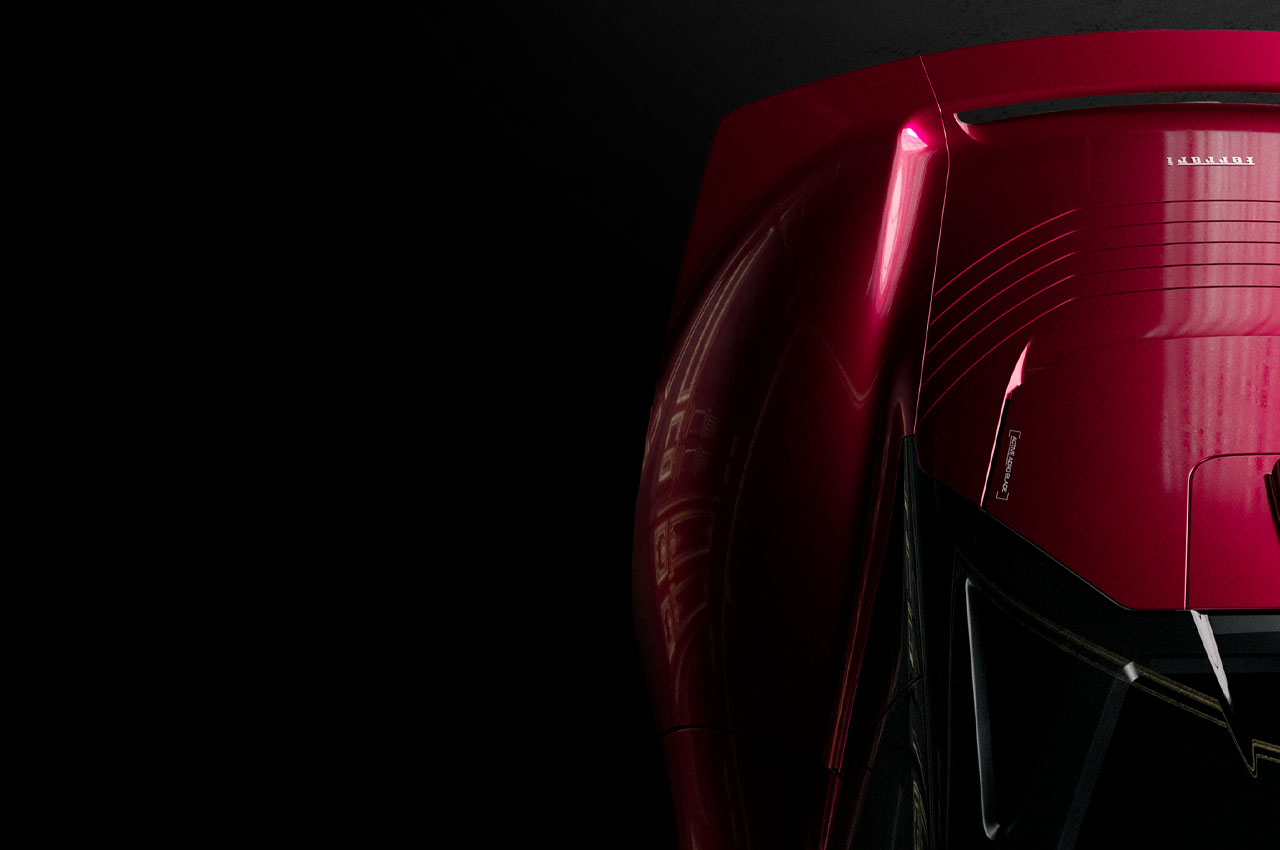
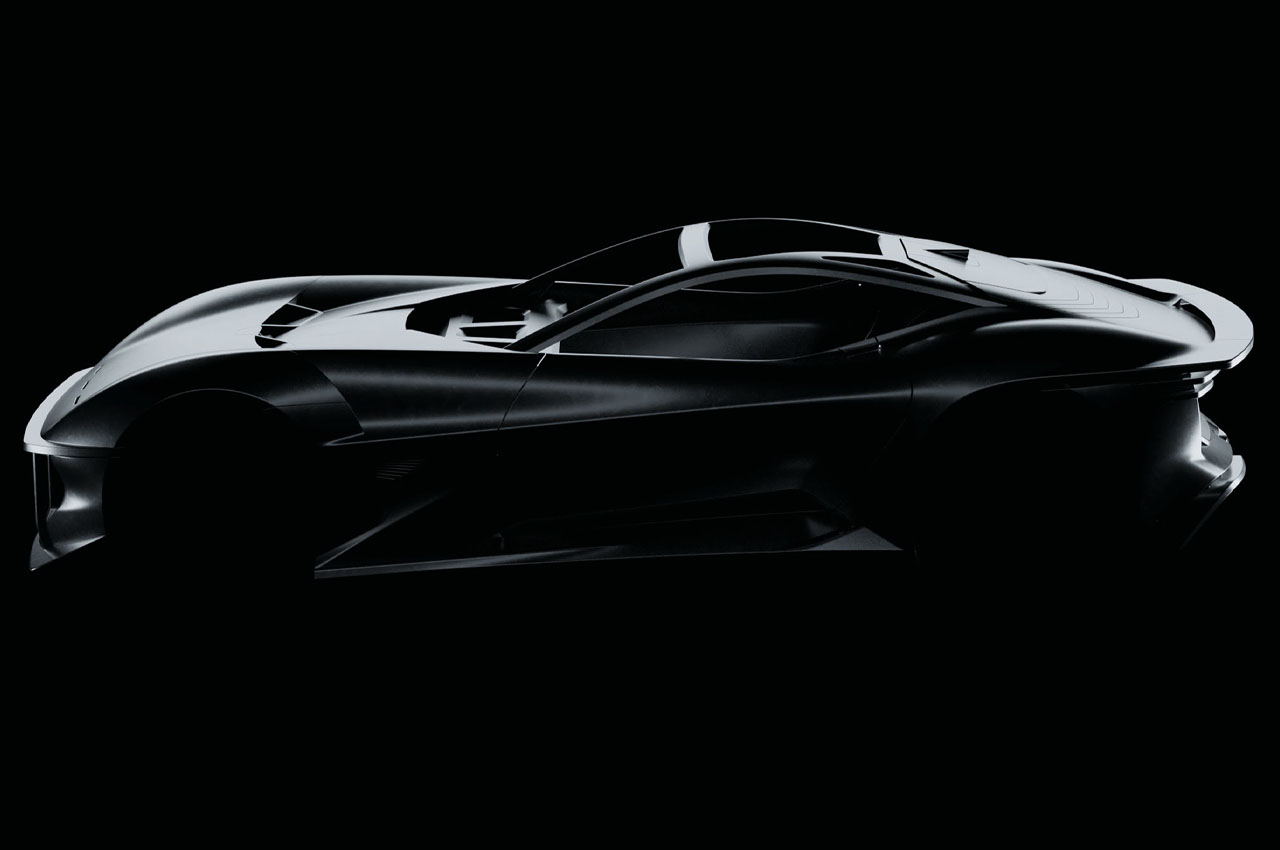
Alto has a divided approach in terms of design with a fluid top (for optimized aerodynamics) and a geometric bottom section (for constant and uniform tension), creating a mix of smooth and sharp aesthetics. Based on the iconic 365GTB chassis, the concept Ferrari here adapts the front section of the Daytona and the grille of the 250 GTs. The subdued spoiler is an extended part of the full body headlights and the panels on top open to act as aérofrein for active aerodynamics.

To add a bit of spark to the predictable concept car designs of today, Alban incorporates a wind instrument organ that diffuses the low-pitched sound inside and outside the cabin to create a peculiar sound. This gives the sportscar a personality of its own.
The post All-electric Ferrari Alto reinforces legacy of The Prancing Horse in zero-emission dominated future first appeared on Yanko Design.