LEGO recreates iconic battle from Legend of Zelda: Ocarina of Time

The LEGO Group has carried over the momentum from last year, introducing sets that the community wants, as well as some releases that are their own brainchild. Last year, LEGO hinted at a Legend of Zelda collaboration with Nintendo, and now the official set is releasing. This one joins the likes of the three Pokémon sets and the Harry Potter set released by the group this month.

The LEGO set will replicate one of the most iconic boss battles in the title’s history, depicting the Ocarina of Time bash taking place among the ruins of Hyrule Castle Town, as Link and Princess Zelda take on the monstrous Ganon. The official set is even better than initially anticipated by community experts, adding to the numerous options LEGO fans have at their disposal.

Designer: LEGO Group

The 1,003-piece set dubbed the Ocarina of Time: The Final Battle is a faithful diorama of the most iconic arcade games for the Nintendo N64 console line-up. Ganondorf, in his final boss human form (that’s buildable piece by piece), takes up the most territory of the set, as minifigures of Link and Zelda are depicted taking on the monster. The base of the set shows Ganon’s ruined castle and damaged tower, as the rubble masks the three recovery hearts. Other inclusions of the set include the Master Sword, a couple of fabric capes, dual honking swords of Ganon, and the Hylian Shield.

When the set depicting the intense scrap in the ruins of Hyrule Castle is put together, it measures 6.5 inches high, 11 inches wide, and 7 inches deep. That makes it ideal for your gaming desk setup or work shelf to display your love for the title. If you look closely at the official pictures, the base recreates the arena of Hyrule from the N64, and has the Triforce-badged display base. LEGO has paid attention to detail in the creation, as one can spot the little elements of the Ocarina. Things like the pile of rubble, the Megaton Hammer, or Navi the fairy floating among the chaos. In fact, a hidden button activates the lid mechanism, as the ruins erupt and the super villain announces his presence for ultimate supremacy.

Compared to the 2-in-1 Great Deku Tree set, this one is smaller since it represents only a single title. The price tag of $130 is also accommodating for fans who don’t want an elaborate set to fit in their scheme of things. Ocarina of Time: The Final Battle set is up for pre-order right now, and the official launch is slated for 1st March. Even for a neutral fan who loves playing arcade games for fun, this LEGO build is one to consider.


The post LEGO recreates iconic battle from Legend of Zelda: Ocarina of Time first appeared on Yanko Design.

UK agency questions Meta’s policies for illegal gambling site ads

The UK Gambling Commission has raised concerns that Meta is ignoring advertisements by illegal gambling websites on its platforms. At a conference in Barcelona, the commission's Executive Director Tim Miller criticized Meta's behavior towards advertisements for online gambling on its Facebook and Instagram social networks.

"Companies like Meta will tell you that they don’t tolerate the advertising of illegal sites and will remove them if they are notified about them," Miller's speech transcript reads. "But that approach suggests that they don’t know about those ads unless alerted. That is simply false."

Meta's internal policy is that gambling sites must be licensed in the markets where their ads run. However, the agency was able to conduct basic searches for advertisers that are not on its GamStop platform, which helps people block themselves from accessing online gambling sites. GamStop integration is required for an operator to receive a UK license. 

"I would be very surprised if Meta, as one of the world’s largest tech companies is incapable of proactively using their own keyword facility to prevent the advertising of illegal gambling," Miller said. "It could leave you with the impression they are quite happy to turn a blind eye and continue taking money from criminals and scammers until someone shouts about it."

This article originally appeared on Engadget at https://www.engadget.com/social-media/uk-agency-questions-metas-policies-for-illegal-gambling-site-ads-210500714.html?src=rss

TurboTax Deluxe is on sale for only $45 ahead of tax season

With the spring approaching, it's time to start thinking about how you'll file your taxes. Unfortunately, with the recent demise of Direct File, there isn't a free, government-provided alternative to TurboTax in 2026, and you'll need to look to other federal programs, including IRS Free File, to file your paperwork. If you don't qualify for Free File, chances are you'll need to dish out cash for Intuit's software. And while we hate to suggest you give money to a company that has spent decades lobbying to ensure America's tax system remains a nightmare, we can at least save you some money if TurboTax is your only option.

Right now, Amazon has discounted the deluxe desktop edition of TurboTax by 44 percent. That gets you $35 off software that normally costs $80, which you can use to file both your individual state and federal taxes. For most Americans, that should cover their needs.

However, if you're self-employed, you'll need to pony up for the more expensive Business version of TurboTax, which is currently 42 percent off, or $54 off. One last thing to note: you'll need a PC with either Windows 11 or macOS Sonoma to run the software, so an older machine won't do, unfortunately. H&R Block is having a similar sale on their Deluxe software as well.

Follow @EngadgetDeals on X for the latest tech deals and buying advice.

This article originally appeared on Engadget at https://www.engadget.com/deals/turbotax-deluxe-is-on-sale-for-only-45-ahead-of-tax-season-204848111.html?src=rss

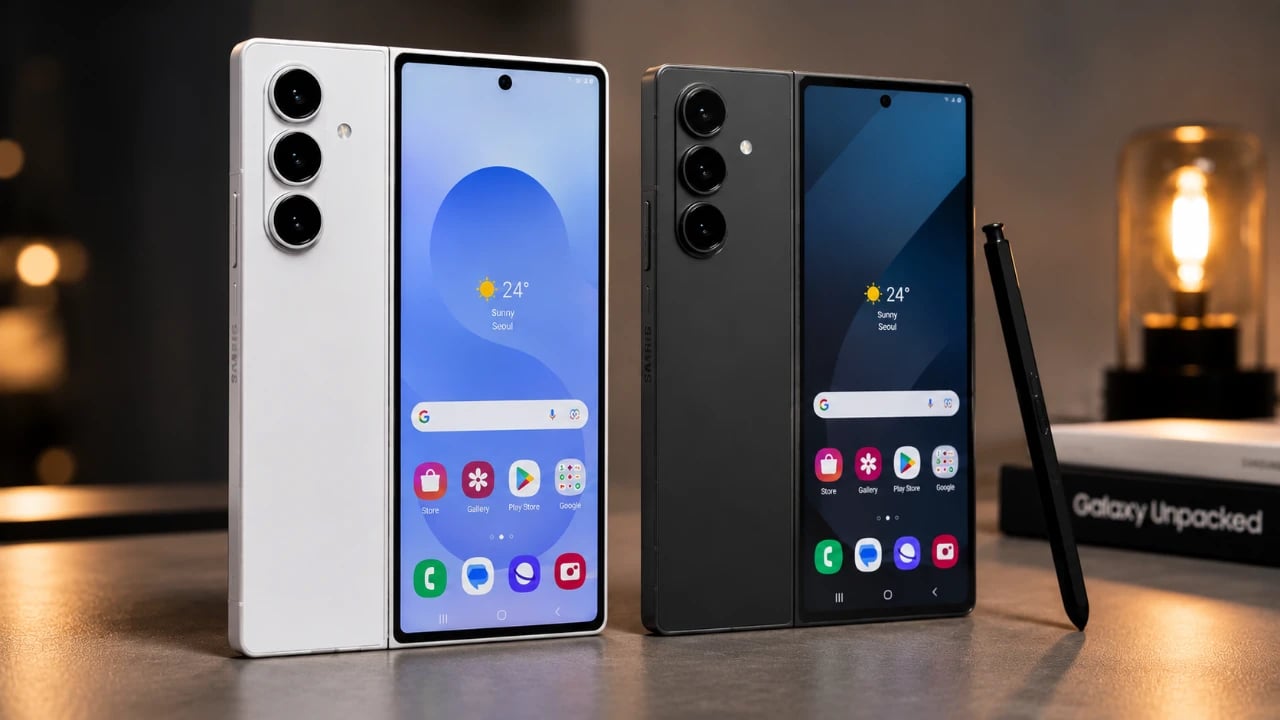
iPhone Fold Specs Leak Online: Aluminum + Titanium Body, A20 Chipset, and the Rebirth of TouchID

Apple’s foldable smartphone with dual displays for multitasking

If someone told you in 2019 that we’d see seven generations of Samsung Galaxy Folds before Apple released a single foldable iPhone, you’d probably have believed them because that’s exactly how Apple operates. Wait, watch, then swoop in like they just invented the whole concept. Well, 2026 might finally be the year, assuming these leaks are legit and not just wishful thinking from analysts who’ve been predicting the iPhone Fold since the Obama era.

The rumor mill is churning out some pretty specific claims right now. We’re talking actual dimensions, chip specs, and price points that’ll make your wallet weep. But more interesting than the what is the how and why. Apple’s supposedly been tackling the exact problems that have kept foldables from going mainstream, which either means they’ve cracked the code or they’re about to learn the same expensive lessons Samsung already learned. Let’s unpack what we actually know versus what’s tech journalism fan fiction.

Designer: Apple

The specs coming out of supply chain analyst Jeff Pu’s investor briefings paint a picture of a device Apple’s positioning right alongside the iPhone 18 Pro lineup. September 2026 launch date, which means they’re treating this as a flagship product rather than some experimental side quest. The inner display clocks in at 7.8 inches when you unfold it, putting it in direct competition with Samsung’s Galaxy Z Fold 8. The outer screen sits at 5.3 inches, which is actually smaller than what Samsung’s offering. That’s either Apple prioritizing pocketability or a sign they couldn’t fit a bigger screen without compromising the design. Probably both, knowing how Apple thinks about these things.

The whole device reportedly measures 4.5mm when unfolded, which is genuinely insane when you consider what’s packed inside. For context, that’s thinner than most credit cards and absolutely thinner than any iPhone that’s ever existed. The folded thickness supposedly hits around 9mm, which still slides into a pocket easier than carrying an iPad mini everywhere. Apple’s apparently using a combination of aluminum and titanium for the frame construction, same lightweight-but-strong approach they’ve been pushing across the Pro iPhone lineup. The real party trick though is the hinge mechanism, which multiple sources claim uses liquid metal components to handle the stress of constant folding without creating that ugly crease everyone hates about foldables.

The A20 chip powering this beast is built on TSMC’s 2-nanometer process, same silicon going into the iPhone 18 Pro models. Apple’s apparently not treating this as a lesser device that gets last year’s processor, which tells you how seriously they’re taking the category. Battery capacity is rumored between 5,400 and 5,800 mAh, making it the largest battery Apple’s ever put in an iPhone because powering two displays simultaneously turns out to require actual juice. That’s almost double the capacity of a regular iPhone 15 Pro, and it needs to be.

The crease is the hot-topic on everyone’s mouths, with the rumor being Apple’s somehow found a way to obliterate it. Every foldable phone on the market has that visible line running down the middle when you unfold it, and it drives people absolutely insane. Apple’s supposedly using a liquid metal hinge design combined with some display technology wizardry to make the crease “nearly invisible” according to the leaks. I’ll believe it when I see it, but if they actually pulled this off, it would immediately make every other foldable look outdated. Samsung’s been iterating on this problem for seven years and still hasn’t fully solved it.

Touch ID is coming back, which is wild after Apple spent the better part of a decade convincing everyone Face ID was the future. The decision makes sense though when you think about the form factor. Authentication needs to work whether the phone is folded, half-open, or fully unfolded, and Face ID gets wonky when you’re holding a device at weird angles or using it propped up like a tiny laptop. A fingerprint sensor in the power button solves all of that instantly. It’s the same approach they took with recent iPads, and it works.

Pricing is where this whole thing either makes sense or falls apart completely. The leaks point to somewhere between $2,000 and $2,500, with recent intel skewing toward the higher end. That’s Mac Studio money for a phone that folds. That’s almost double what an iPhone 17 Pro Max costs. Samsung’s Galaxy Z Fold 8 will probably land around $1,999, so Apple’s betting people will pay a premium for whatever magic they’ve supposedly worked on the crease and overall build quality. Whether that bet pays off depends on a lot of factors, but I guess seeing Apple’s vision of a folding phone first-hand will really help seal the deal regarding whether this 6-7-year wait has finally paid off.

The post iPhone Fold Specs Leak Online: Aluminum + Titanium Body, A20 Chipset, and the Rebirth of TouchID first appeared on Yanko Design.

Bungie’s Marathon arrives on March 5

Marathon, Bungie's long-awaited extraction shooter, will arrive on March 5, the studio announced today. Alongside a definitive release date, Bungie shared a new gameplay trailer, in addition to details about the game's forthcoming deluxe edition, which fans can pre-order today on Steam, PlayStation 5 and Xbox Series X/S. All versions of the game will support crossplay, meaning you'll be able to play with your friends, no matter where they decide to buy Marathon.  

Sony, Bungie's parent company, had previously committed to a March release for Marathon, but stopped short of sharing an exact date. News of that date leaked early Monday after Microsoft published the pre-order trailer you see above early.  Sony had originally planned to release Marathon in September 2025, but delayed the game indefinitely in June of last year after a mixed reception to its alpha and an admission Bungie had partially plagiarized some visual assets. It's safe to say Marathon could decide the future of the studio. In November, Sony said Destiny 2 had not lived up to its expectations and wrote down the value of the studio’s assets by $204 million. This came after the company said it would take more direct control of Bungie.

This article originally appeared on Engadget at https://www.engadget.com/gaming/bungies-marathon-arrives-on-march-5-193808588.html?src=rss

This Airport Lounge Turned Mondrian’s Boogie-Woogie into Wood Islands

Long layovers usually mean seas of identical metal chairs, bright signage, and constant motion that makes rest feel impossible. Even premium lounges often feel like slightly nicer waiting rooms, not places with a point of view beyond arranging seating in rows. Schiphol’s Lounge 2 sits in the flat Haarlemmermeer polder outside Amsterdam, which gave Beyond Space a specific landscape and design history to work with when redesigning the 1,000 square meter space.

The studio looked at that polder and the Dutch De Stijl movement it inspired, particularly Mondrian’s orthogonal paintings. His late Boogie-Woogie works are essentially abstractions of that landscape, grids of lines and colored planes forming rhythmic compositions. Beyond Space took those paintings as an organizing principle, using sequences of orthogonal lines and planes to define where and how people sit instead of just dropping furniture onto a floor.

Designer: Beyond Space

Entering the lounge, you realize you are not looking at rows of chairs but a low wooden city. Connected seats form islands of different sizes that plug into the existing architecture, creating pockets for solo travelers, pairs, and larger groups. You can choose a corner that feels tucked away, a spot with a direct runway view, or a cluster where a family can spread out without blocking circulation.

Instead of Mondrian’s red, yellow, and blue, the designers used solid wood from European tree species Mondrian once painted in his early landscape work. That swap keeps the De Stijl grid and rhythm but trades visual shouting for warmth and calm. In a terminal full of screens and branding, the consistent wood tones and leather upholstery act like a noise-cancelling layer without resorting to beige blandness.

The orthogonal layout hides surprising variety, armchairs with side tables, benches, back-to-back arrangements, and larger platforms for groups. Power outlets are integrated into the wooden blocks, so charging a laptop does not mean hunting for a wall socket or sitting on the floor. The grid gives order, but within it you can find a spot that matches how you actually want to wait.

Because seating follows a clear grid aligned with the architecture, it is easier to orient yourself and remember where you were sitting when you come back with coffee. The repetition of similar forms, combined with daylight from large windows and a neutral floor, creates visual tranquility rare in airports. It feels designed to let your brain idle instead of constantly scanning for threats.

The lounge treats waiting not as dead time to fill with more screens, but as a chance to sit in a space with a clear idea behind it. By abstracting the landscape outside and channeling Mondrian without copying his colors, Beyond Space turns a generic airport zone into a small wooden blueprint of Dutch design history that just happens to be comfortable between flights.

The post This Airport Lounge Turned Mondrian’s Boogie-Woogie into Wood Islands first appeared on Yanko Design.

Musk claims Tesla will restart work on its Dojo supercomputer

Elon Musk posted on X that Tesla will be restarting work on Dojo3, the third generation of its in-house supercomputer project. The Dojo team had been disbanded last year as the company prioritized the AI chips that run on board Tesla vehicles. Musk said the company is returning to the project "now that the AI5 chip design is in good shape."

The purpose of the Dojo project is to process video recordings and other data from Tesla vehicles and use that to train the "neural net" behind the company's Full Self-Driving software. Last year, however, Musk posted on X that "It doesn’t make sense for Tesla to divide its resources and scale two quite different AI chip designs. The Tesla AI5, AI6 and subsequent chips will be excellent for inference and at least pretty good for training. All effort is focused on that."

The AI chips Musk is referring to are ones developed for running FSD onboard Tesla vehicles and are not optimized for training. The AI6 chips will be made by Samsung in the company's Texas factory, after it struck a $16 billion agreement with Tesla.

Musk has also claimed a lot of things over the years, and many of those assertions either were misrepresentations or simply didn't pan out. Working against this chip project: Musk said that Dojo3 will be "space-based AI compute," as he and others believe that data centers in orbit are a superior alternative to the land-based behemoths currently being built. The idea is that space provides easier access to the sun's energy, and the cold temperatures there might greatly reduce the power needed, among other benefits. While it's an increasingly popular if entirely speculative idea, experts have their doubts.

This article originally appeared on Engadget at https://www.engadget.com/ai/musk-claims-tesla-will-restart-work-on-its-dojo-supercomputer-173127863.html?src=rss

Wear Your Real Watch: This Case Turns Apple Watch into a Mini Handheld

Full smartphones often feel like overkill, but the Apple Watch on your wrist is still awkward for anything beyond quick glances. There’s also the complication of wanting to wear a mechanical or analog watch without giving up notifications, Apple Pay, and quick replies. Stacking both on one arm feels ridiculous, and choosing between connectivity and wearing the watch you actually like is the kind of small annoyance that lingers.

elrow’s miniphone Standard and miniphone Ultra are 3D-printed cases that turn an Apple Watch into a narrow, palm-sized device with a lanyard. The Standard fits the 46mm Series 10 and 11, while the Ultra fits the Apple Watch Ultra 1, 2, and 3. Both are about 95mm tall, with textured translucent bodies, visible screws, and an open back so you can charge without disassembling the case.

Designer: elrow industries

Leaving your iPhone in a bag and carrying the miniphone instead means you still get calls, messages, and Apple Pay, but you are not staring at a six-inch screen every time a notification pings. Holding the watch in a slightly larger body makes tapping icons feel more like using an old iPod than pecking at your wrist, and clipping it to a pocket means it stays out of sight until you need it.

The translucent PLA+ on the Standard and PETG on the Ultra, textured surfaces, and stainless or black-coated steel hardware give the cases a rugged, workshop vibe. The integrated lanyard hole and included paracord with an orange bead make it easy to carry without pockets. It feels more like a small tool than a fashion case, which suits the “tool ↔ watch” idea of keeping your mechanical watch on.

Moving the watch off your wrist means that continuous heart rate, ECG, blood oxygen, and sleep tracking are basically gone. You are also told to turn off wrist detection for better battery and notifications, which changes how Apple Pay, auto-lock, and some security features behave. Activity rings and step counts become unreliable when the watch lives in a pocket or on a lanyard, and fall detection may not work as intended.

WatchOS assumes a wrist, from raise-to-wake gestures to how workouts and reminders work. In a miniphone case, some of that feels off or becomes less useful. You are treating the Apple Watch as a tiny connected widget for notifications and quick controls, not as a health tracker logging your life, which is fine if that is what you wanted in the first place.

The miniphone cases make the most sense if you already use the Apple Watch as a lightweight communicator and remote, not as a medical device. If you love wearing a mechanical watch while still having a pocketable slice of watchOS nearby, or you want less phone without going fully offline, a 3D-printed case that trades sensors for simplicity is a strangely logical, if niche, step.

The post Wear Your Real Watch: This Case Turns Apple Watch into a Mini Handheld first appeared on Yanko Design.

This Brick Light Turns Travel Memories Into Glowing Cubes

There’s something beautifully honest about a designer who stops creating long enough to actually live. That’s the story behind the Brick Light from O_1 Design, a lamp that feels less like a product and more like a memento brought back from somewhere you can’t quite place on a map.

The designer’s journey reads like a poem. Golden sunlight threading through misty fields. Frost covering endless plains. The physical memory of wind while cycling, of rough rock under climbing fingertips. These weren’t just Instagram moments to be captured and forgotten. They became something tangible, something you can hold in your hand and turn on at night.

Designer: O_1 Design

What emerged from all those collected sensations is refreshingly simple: three brick-shaped blocks stacked together, glowing softly from within. It’s the kind of design that makes you wonder why no one thought of it before, which is usually the hallmark of something genuinely clever. The inspiration comes from architecture’s most fundamental building block. Not the sexy, swooping curves of modern design, but the humble brick. The kind of thing that’s built everything from ancient walls to corner shops you pass without noticing. There’s a democratic quality to that choice, a nod to the idea that extraordinary things can come from ordinary elements.

Each segment maintains perfect 1:1:1 proportions, creating a symmetry that feels almost meditative. The surface carries a subtle brick pattern, textured enough to catch your eye but not so literal that it becomes gimmicky. When the light filters through the flame-retardant PC material, it transforms into something between solid and ethereal, like a memory that’s both crystal clear and slightly hazy around the edges.

But here’s where things get interesting. This isn’t a lamp you just turn on and off with a boring switch. The Brick Light wants to play with you. Rotate it 90 degrees and you’re setting a sleep timer with options for 10, 25, 45, or 60 minutes. Flip it completely upside down and it begins a gentle fade to darkness, easing you into sleep like a bedtime story that knows exactly when to end. It’s this kind of thoughtful interaction design that separates memorable products from forgettable ones. Anyone can make a lamp. Making a lamp that invites touch, that rewards curiosity, that feels almost alive in its responsiveness? That takes actual imagination.

The technical details matter here too. This isn’t just about aesthetics. The patented internal structure uses a support and suspension system that allows the modular design to work as both form and function. The material choice prioritizes safety with flame-retardant certification, because beautiful things should also be responsible things.

What strikes me most about the Brick Light is how it manages to feel both playful and contemplative. The promotional photos tell this story perfectly. Tiny figurines interact with oversized glowing cubes in miniature worlds ranging from arctic landscapes to desert sunsets to lush green countryside. It’s whimsical without being childish, fantastical while remaining grounded in real materials and honest construction.

In a market saturated with smart home devices that require apps and WiFi and monthly subscriptions, there’s something genuinely refreshing about a light that just asks you to flip it. The analog nature of the interaction feels almost radical in 2026. No voice commands, no connectivity issues, no firmware updates. Just you, the lamp, and the simple pleasure of physical manipulation creating immediate response.

This is design that understands we’re all a little tired of being optimized and connected and notified. Sometimes you just want to hold something real, turn it in your hands, and watch what happens. The Brick Light offers that uncomplicated satisfaction while still delivering genuine innovation in how we interact with everyday objects. Whether it ends up on a nightstand helping you drift off to sleep or on a desk providing ambient lighting while you work, the Brick Light carries with it that original inspiration: the fragments of a journey, the rhythm of experience, quietly glowing.

The post This Brick Light Turns Travel Memories Into Glowing Cubes first appeared on Yanko Design.

This Building Is Designed to Look Like a Molecule Exploding at 100x Scale

Most cutting-edge science happens in anonymous lab buildings that could be anything from offices to data centers. Fields like protein folding, which quietly underpin medicine and biotech, rarely get a public face. Architecture could act as a billboard or sculpture for that work, making invisible processes more legible to everyone outside, but most research centers settle for glass boxes with vague names on the lobby wall.

Michael Jantzen’s Folded Protein Molecule Research and Exhibition Center is part of his Fantasy Art, Architecture, Science series and proposes a facility where scientists researching protein folding could work and exhibit findings. The twist is that the entire complex is shaped like an exploded protein diagram, using the same coils, arrows, and rods that researchers use to visualize molecules. The building becomes its own subject matter, scaled up so you can walk through it.

Designer: Michael Jantzen

Protein folding is how a linear chain of amino acids twists into a three-dimensional structure that lets it function. Scientists represent these structures with bright symbols, coils for helices, arrows for sheets, bent rods for turns. Jantzen takes those flat symbols and imagines walking through them at architectural scale, turning abstract science into something you approach, enter, and move around inside instead of staring at on a screen.

The three black cubes house research spaces, and the large silver sphere forms the exhibition hall, but they sit entangled in bright red arrows, white coils, green spheres, and smaller cubes. The functional rooms are inside these solids while symbolic elements wrap around and pierce them, so the working building is literally knotted up in its own subject matter. You would approach across an open landscape and see a giant folded molecule rising from the ground.

The arrows and coils arch over the complex like a frozen moment in a folding process, creating a canopy you move under. A long ribbon-like path leads toward an opening at the sphere’s base, suggesting a main entrance that feels more like entering land art than a museum. Visitors experience protein folding as a spatial journey, wandering through loops and under arrows before reaching labs or galleries inside.

Portions of the black cubes and smaller cubes attached to arrows are clad in solar panels, helping to power the center. It ties a facility dedicated to molecular science to renewable energy in the landscape. The same surfaces that read as abstract protein domains also quietly collect sunlight, merging symbolism and function in one set of geometric volumes without needing separate infrastructure or signage.

This proposal blurs the line between research campus, sculpture park, and science museum. It is unlikely to be built exactly as shown, but the idea, that a research center could wear its subject matter on the outside and invite people to wander through a giant protein, is compelling. For a field as abstract and important as protein folding, architectural storytelling might be what pulls it out of the lab and into public imagination.

The post This Building Is Designed to Look Like a Molecule Exploding at 100x Scale first appeared on Yanko Design.