7 Outdoor Speakers So Well-Designed You’ll Actually Leave Them Out on the Counter

Good outdoor speakers are everywhere. Ones worth actually leaving on the counter are a different category entirely. These seven designs blur the line between audio gear and decorative object, earning a permanent spot on a shelf or desk not just because of what they play, but because of how they look doing it. Each one carries a design identity strong enough to spark a conversation before you ever hit play.

From a pocket-sized cassette hiding Bluetooth inside to a mecha-inspired lantern balanced on a tripod, these are the designs that earn their shelf real estate on looks alone. The sound is never secondary, but the form is what keeps them out of the drawer permanently. These are speakers that live in your space the same way a good lamp or a well-chosen object does—placed once and never put away.

1. Side A Cassette Speaker

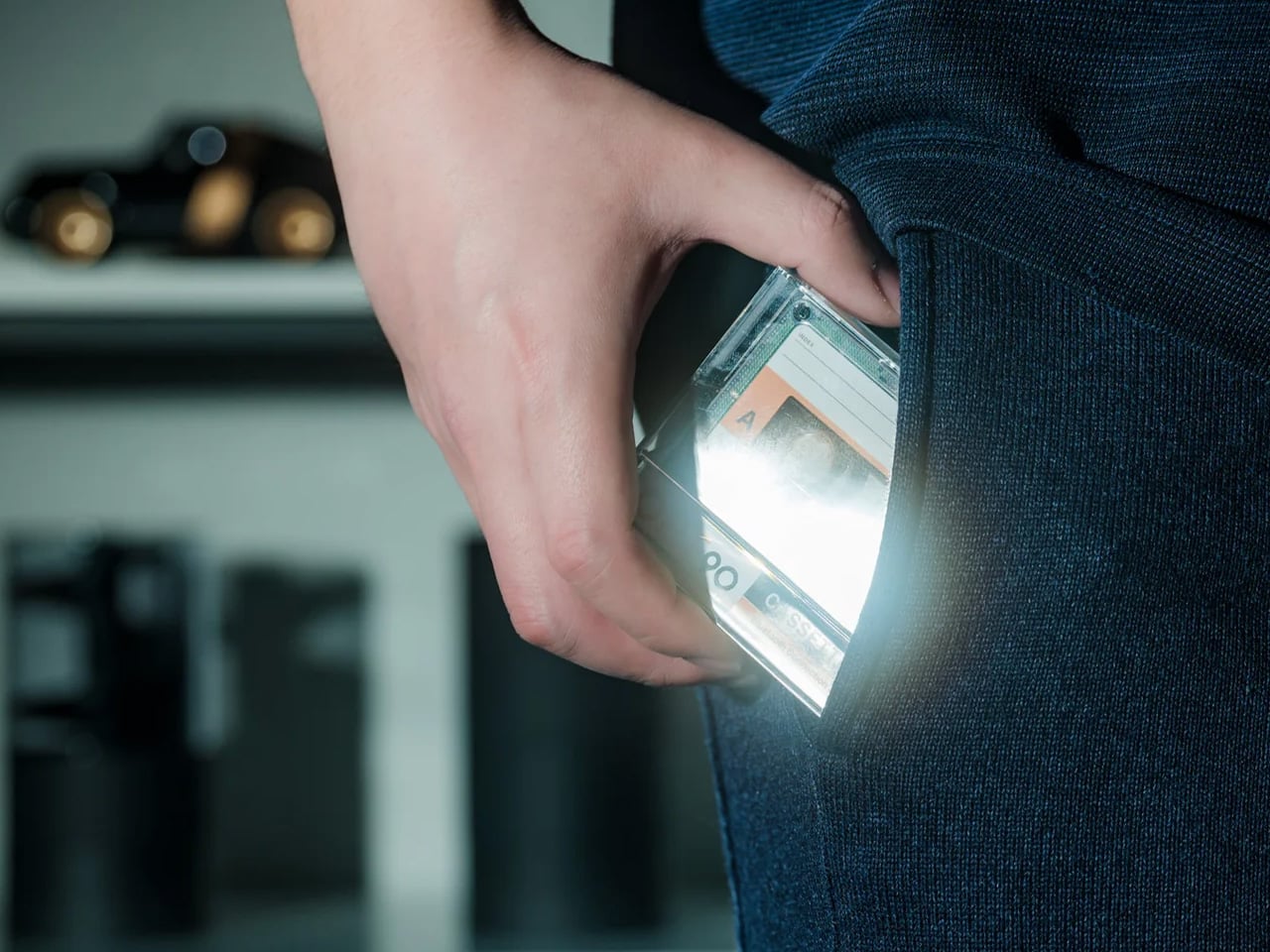
There’s something genuinely satisfying about a speaker that makes people stop and pick it up before they realize what it is. The Side A Cassette Speaker nails that trick with a faithful mixtape silhouette, a transparent shell, and a hand-labeled “Side A” that lands like a gut punch of nostalgia. It ships in a clear case that doubles as a stand, so it lives comfortably on your desk or shelf without looking incidental. At under $50, it’s the kind of impulse buy that actually earns its counter space and keeps it.

Bluetooth 5.3 keeps your phone paired cleanly, and the microSD slot means you can load a full playlist and leave your phone in your pocket entirely. The sound is warmer than you’d expect from something this compact, tuned to echo the soft, rounded tones of actual tape playback rather than the sharp, clinical output most small speakers produce. Six hours of battery handles a full workday, and a two-hour recharge turnaround keeps the momentum going. It’s a speaker you’ll leave on your desk long after you’ve stopped reaching for anything else.

Click Here to Buy Now: $49.00

What We Like

  • Nostalgic cassette design doubles as a shelf display piece
  • Bluetooth 5.3 and microSD support for flexible, wire-free listening

What We Dislike

  • Six-hour battery limits longer or overnight listening sessions
  • microSD playback is MP3-only, restricting audio format options

2. Porsche Design PD S20

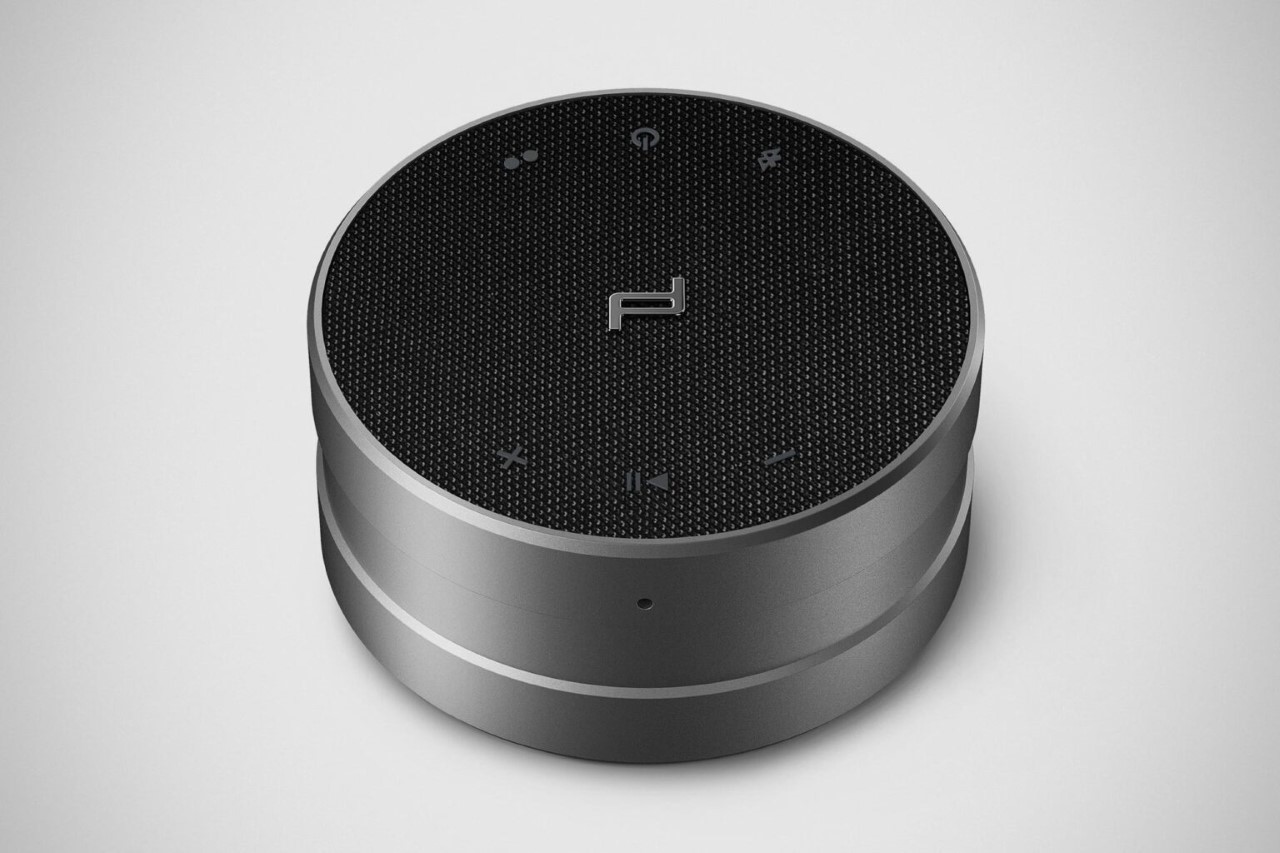
Porsche Design doesn’t rush into new product categories, so when they finally launched their first outdoor speaker, people paid close attention. The PD S20 is a cylindrical unit machined from anodized aluminum and wrapped in gray acoustic fabric, a pairing that looks as refined as it performs. The minimalist silhouette translates just as naturally indoors as it does sitting outside on a trailhead or patio table. It carries the same visual restraint as Porsche’s automotive design work, and that kind of earned confidence transfers directly into your living space.

The IP67 rating means rain, dust, and the occasional splash are non-issues, making it easy to bring the PD S20 wherever your day actually goes. A 1.75-inch woofer flanked by two passive radiators pushes surprisingly full bass for its size, and the 10-hour battery handles a complete day without range anxiety. Haptic buttons built into the fabric grill keep the surface visually clean, and voice assistant integration means you can manage your playlist, handle calls, and send messages without ever picking the speaker up off the counter.

What We Like

  • IP67 waterproof and dustproof rating for dependable outdoor use
  • Anodized aluminum build with a polished, minimalist finish

What We Dislike

  • The $245 price point sits at the higher end of portable Bluetooth speakers
  • A single woofer may not satisfy listeners who want serious bass outdoors

3. RetroWave 7-in-1 Radio
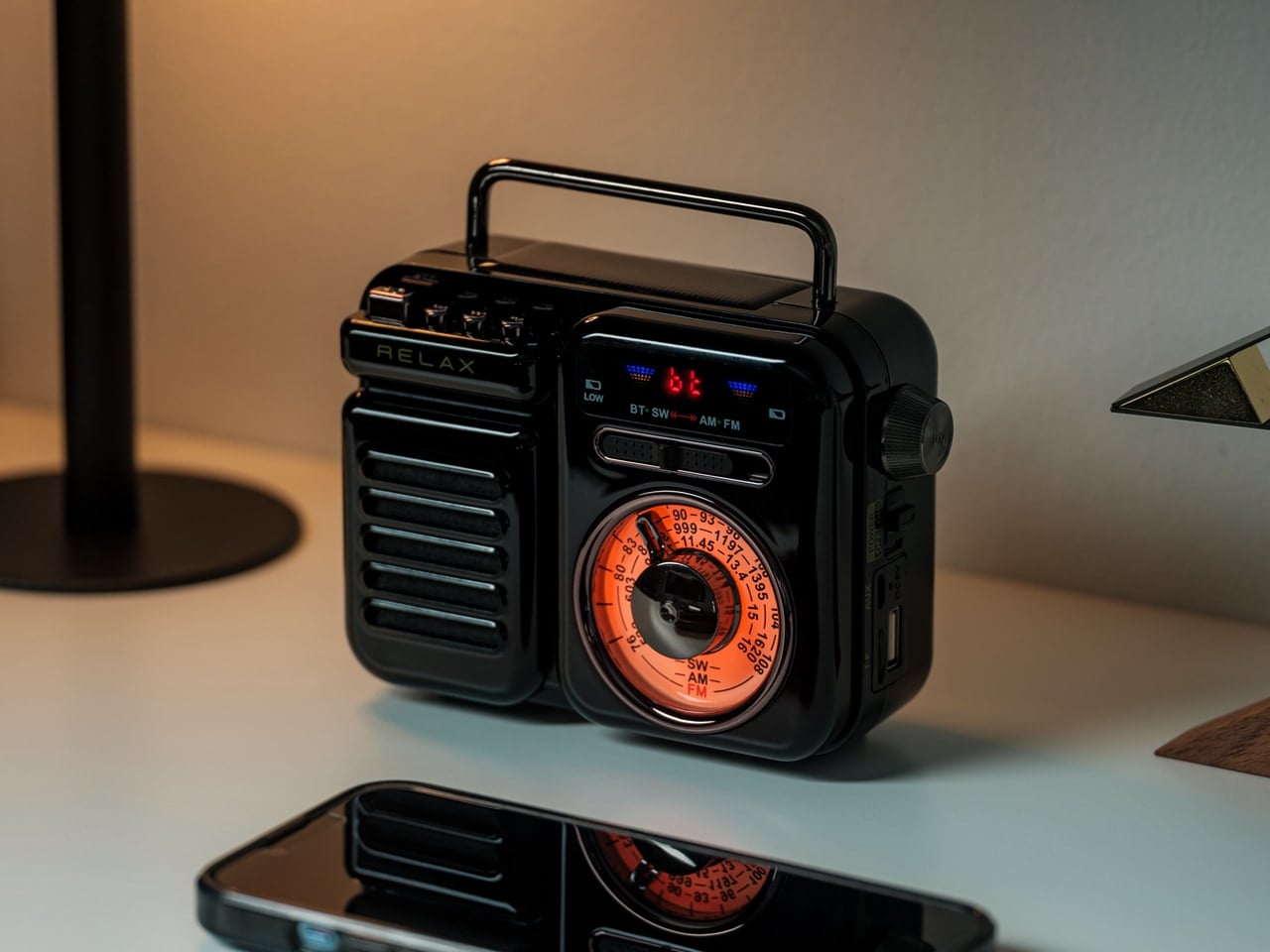
The RetroWave 7-in-1 Radio looks like something pulled from a Japanese vintage shop: warm tones, a tactile tuning dial, and analog character worked into every detail of its form. It handles AM, FM, and shortwave radio, streams over Bluetooth, and plays MP3s directly from USB or microSD. At home, it settles naturally onto a kitchen counter or bookshelf, its retro design holding its own in spaces where most technology looks visually out of place. It’s the rare piece of gear that earns its shelf real estate on looks alone before you ever power it on.

Where it builds real loyalty is in the layers you discover underneath the aesthetic. A built-in flashlight, SOS alarm, hand-crank charging, solar panel, and power bank function make this a genuinely serious emergency companion. When the power goes out or the road gets unpredictable, this is the device you’ll be relieved to have within reach. It does double duty as a daily listening companion and an emergency preparedness tool, meaning you’re not sacrificing any counter space on something that only becomes relevant when things go wrong.

Click Here to Buy Now: $89.00

What We Like

  • Seven practical functions packed into one compact, shelf-worthy design
  • Solar and hand-crank charging for genuine off-grid reliability

What We Dislike

  • Audio quality is tuned for versatility rather than high-fidelity listening
  • FM, AM, and shortwave reception depend heavily on location and antenna placement

4. AUREOLA Wireless Speaker
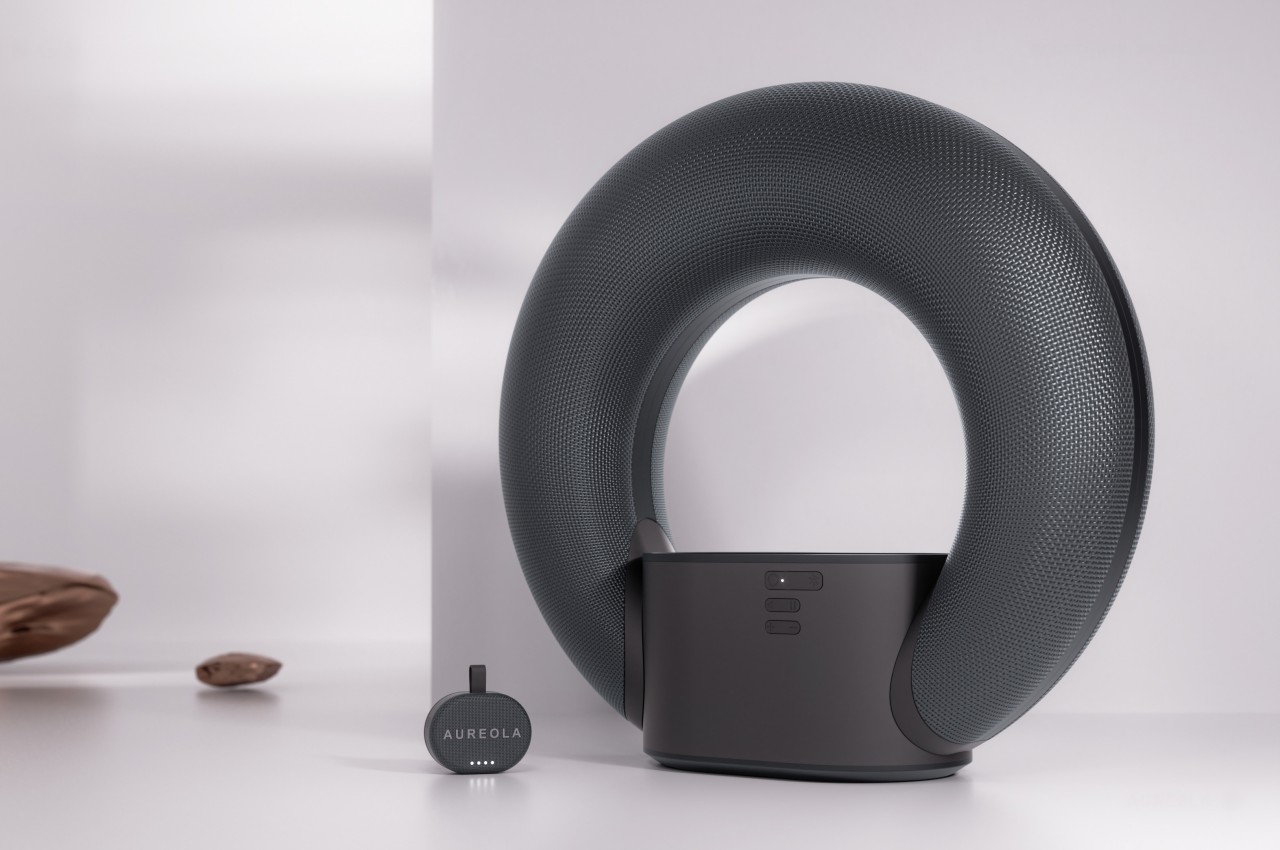
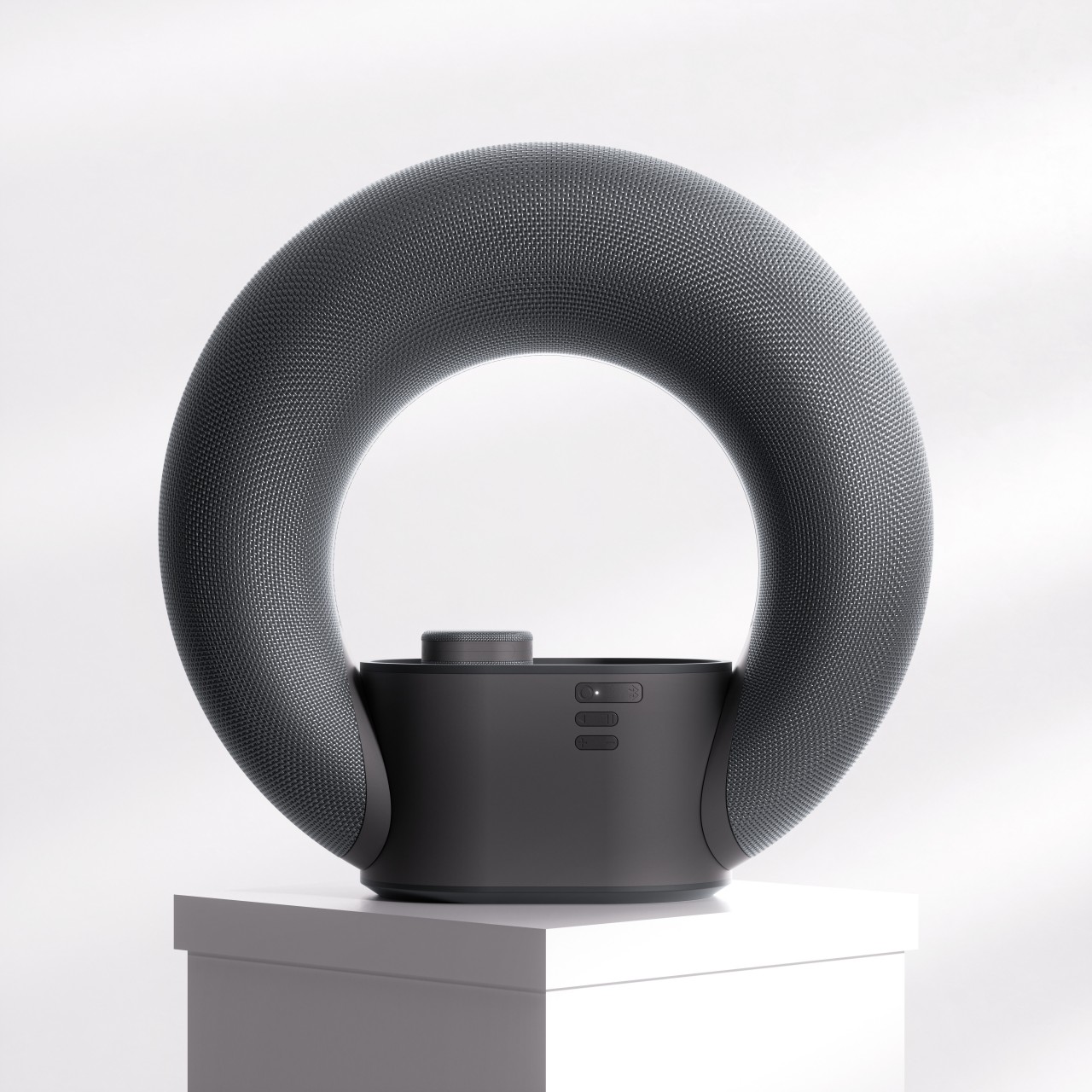
The AUREOLA concept solves one of the more persistent tensions in portable audio: the speaker you take outside rarely looks good enough to bring back in and actually display. Its two-part system separates a compact outdoor portable unit from a large indoor base featuring an omnidirectional ring rising from a wireless charging platform. The ring reads more like a sculpture than audio hardware, and in the right color, it anchors a room visually the same way a considered lamp or art object does. It commands attention without announcing itself.

The outdoor unit is compact enough to slip into a pocket, and the indoor base charges both the speaker and other devices wirelessly, earning its counter space in more ways than one. For you, the benefit is a speaker system that never asks you to choose between portability and design presence. Take the portable unit hiking or to a park, then dock it back into the ring at home and let the room fill with omnidirectional sound from something that actually looks like it belongs there permanently, not just between adventures.

What We Like

  • Two-part system designed for both indoor and outdoor listening environments
  • Indoor base doubles as a wireless charging pad for multiple devices

What We Dislike

  • Concept design, meaning availability, and final specifications remain unconfirmed
  • The compact portable unit’s size may limit raw audio output in open outdoor spaces

5. Battery-Free Amplifying iSpeaker

In a world of rechargeable everything, the Battery-Free Amplifying iSpeaker makes its case through pure, uncompromised simplicity. Set your phone into the slot, and the Duralumin body, the same aluminum alloy used in aircraft construction, does the rest. No charging, no pairing, no apps, no setup. The golden ratio proportions give it a visual elegance that reads across interior styles, from minimal Scandinavian kitchens to warmer, more layered desktops. It looks intentional on a surface in a way that most speakers, trailing cables and charging bricks, never quite manage.

The amplification works by channeling your phone’s audio output through the metal body, adding warmth and volume without drawing a single watt of power. For you, this means a speaker that is always ready, never needs a charge, and costs nothing to run day to day. It works naturally as background listening during work or morning routines and doubles as a clean display stand for your phone. The optional Bloom and Jet modular accessories let you shape the direction of sound if you want more control over how audio fills the room around you.

Click Here to Buy Now: $299.00

What We Like

  • No battery or electricity required, always ready with zero setup
  • Aircraft-grade Duralumin construction shaped to precise golden ratio proportions

What We Dislike

  • Sound amplification is entirely dependent on the phone’s own built-in speaker quality
  • Sound-directing modular accessories are sold separately at additional cost

6. GravaStar Supernova

The GravaStar Supernova looks like it was designed for a film set and simply decided to stay. Its three-legged zinc alloy frame, built on the same iconic tripod base from GravaStar’s earlier mecha-inspired lineup, holds a transparent center tube that doubles as a fully functioning lantern. For outdoor enthusiasts who want their gear to carry a genuine aesthetic point of view, it delivers on both fronts: 25 watts of power paired with a half-inch high-frequency tweeter, and three lighting modes, including a flickering campfire effect that sets a mood no standard speaker comes close to replicating.

The light-synced music mode makes it an effortless centerpiece at outdoor gatherings, pulsing in rhythm with whatever is playing and turning any campsite or balcony into a proper event. For you, it means a speaker who handles the atmosphere as well as the audio. Bring it to a rooftop or a garden party, and it becomes the visual focal point without any extra effort. The solid zinc alloy construction handles outdoor conditions without softening the distinctive look that makes it worth owning and displaying in the first place.

What We Like

  • 25 watts with a dedicated tweeter delivers genuinely powerful outdoor sound
  • Light-synced and campfire modes add atmosphere well beyond standard speakers

What We Dislike

  • The tripod form factor is bulkier than slim portable speaker alternatives
  • The bold mecha aesthetic is a niche design that won’t suit every space

7. Harmon Kardon Traveller Concept
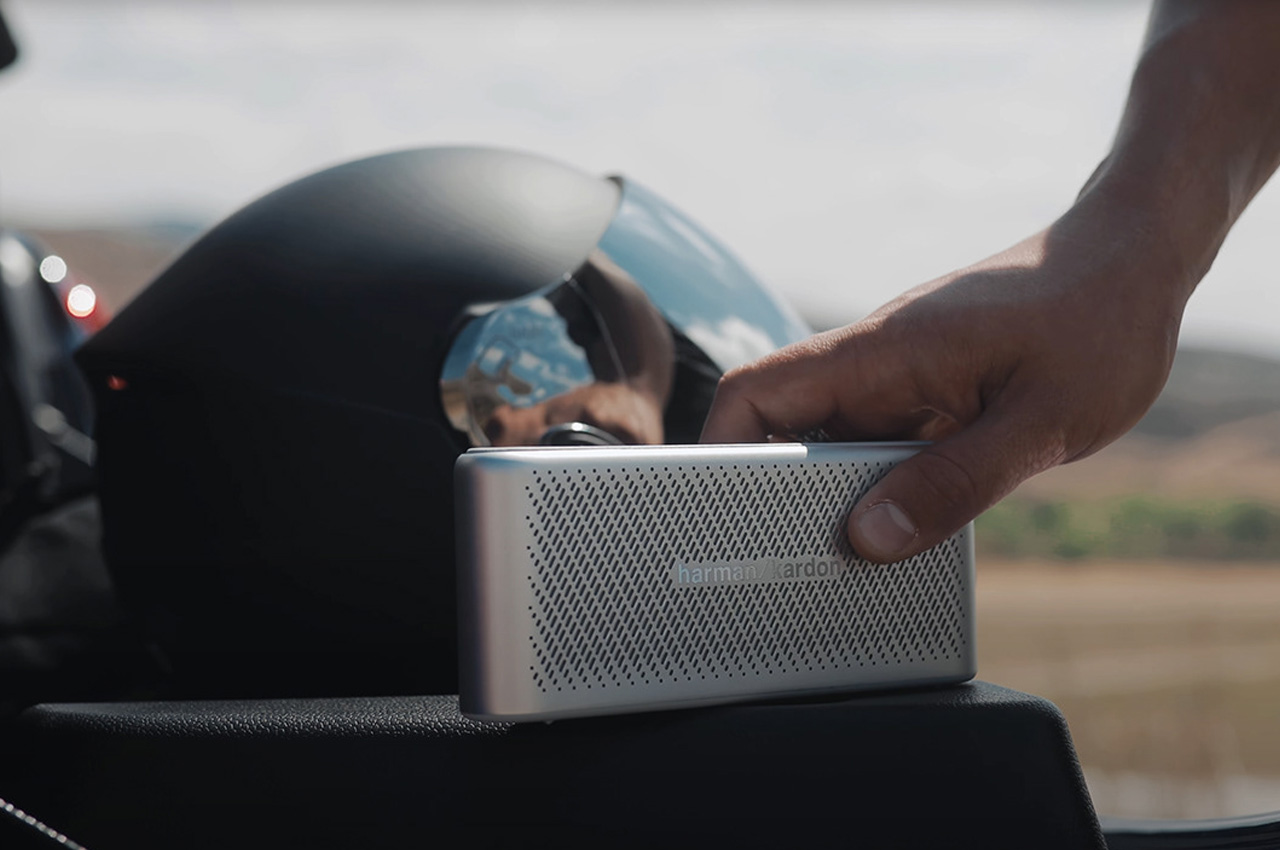
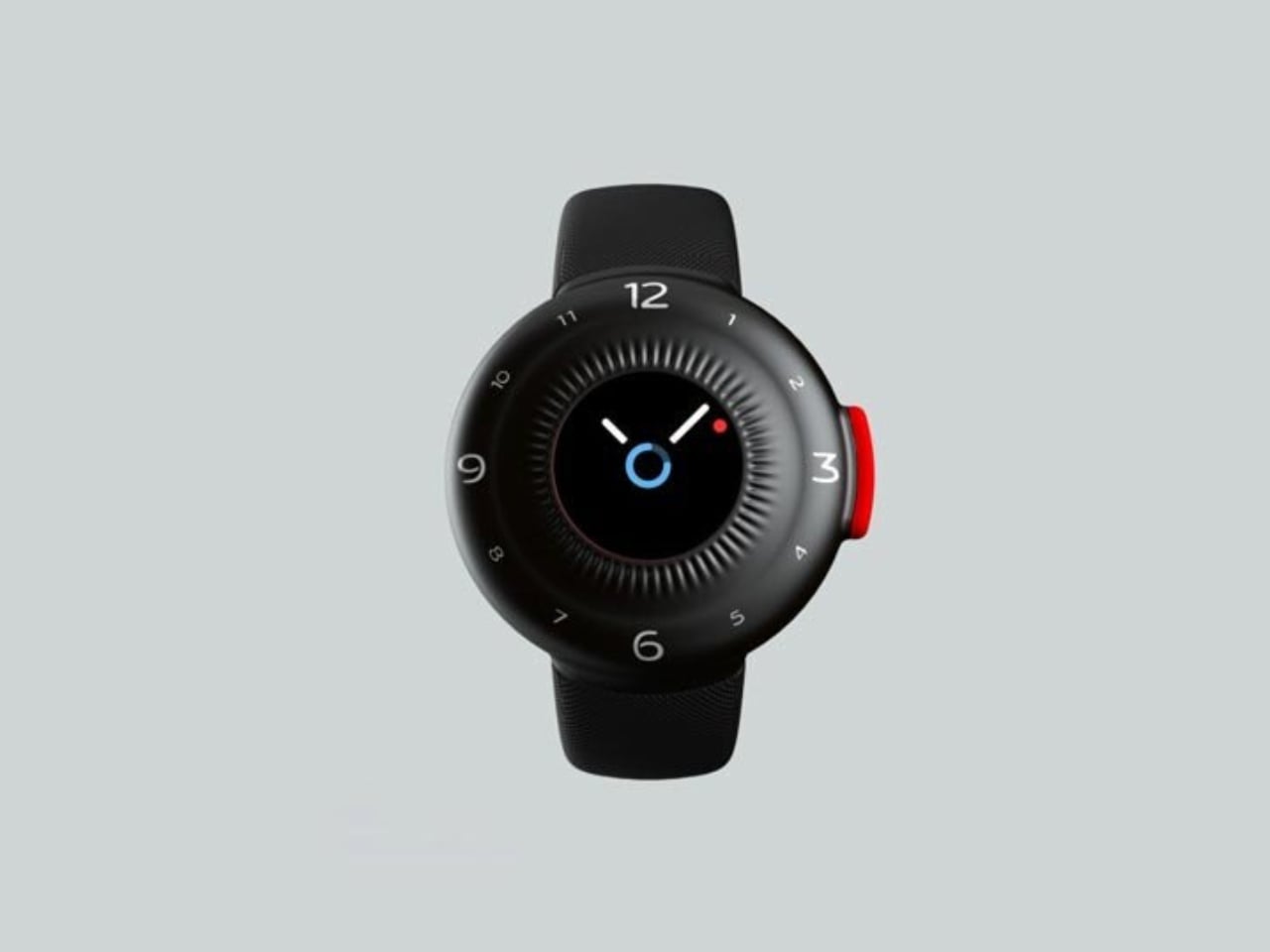
The Traveller pulls its design DNA directly from the Harman Kardon portfolio, borrowing the visual language of ultra-slim point-and-shoot cameras to produce a speaker that reads as considered travel gear rather than an audio add-on. Touch controls and LED indicators sit cleanly on the top surface, keeping the profile uncluttered from every angle. It’s slim enough to disappear into a carry-on without adding meaningful bulk, and polished enough to leave on a hotel nightstand or bathroom counter and have it look like it was placed there with full intention.

Ten hours of battery is the practical floor for a travel speaker, and the Traveller clears that bar while adding a reverse charge feature that turns it into a power bank when your primary device runs low. For you, that translates to one fewer cable to pack and one fewer charging situation to manage at an airport gate. The premium finish and Harman Kardon design language give it a visual authority that most travel speakers simply don’t carry, making it as much a deliberate aesthetic choice as a practical one that travels with you everywhere.

What We Like

  • Reverse charge functionality doubles as a power bank for connected devices
  • Slim, camera-inspired profile built for travel without compromising on design quality

What We Dislike

  • Concept design with no confirmed release date or finalized retail pricing
  • Slim form factor may limit bass depth compared to bulkier travel speaker alternatives

Design Is the Reason They Stay

The best audio gear has always been about more than just sound. These seven speakers prove that a well-considered object can genuinely change how a room feels, not just how it sounds. Whether it’s the warm analog nostalgia of a cassette speaker or the sculptural weight of a zinc alloy tripod, each design earns its place in your space twice over—once through the ears, and once through the eyes.

Counter space is real estate you protect, which means everything on it needs to justify its presence in more than one way. These designs do exactly that. They play music, yes, but they also hold a room together, tell a story about who you are, and make your desk or shelf feel deliberately curated rather than accidentally filled. That’s the difference between a speaker you use and one you keep.

The post 7 Outdoor Speakers So Well-Designed You’ll Actually Leave Them Out on the Counter first appeared on Yanko Design.

10 Best Gadgets & Tools That Make Going Off-Grid Feel Like an Upgrade

There’s a version of going off-grid that means giving things up — signal, comfort, hot coffee, reliable light. Then there’s the version a new wave of purposeful gear is quietly making possible, where disconnecting from the grid doesn’t mean downgrading your experience at all. These ten tools are built for that second scenario. Each one solves a real problem the outdoors creates, with enough design intelligence that you’d carry them anywhere.

What’s changed isn’t just the technology; it’s the design thinking behind it. Gear for the outdoors used to mean sacrificing aesthetics for function. Now the best of it does both, blending rugged performance with a considered design that makes you want to own it before you need it. The ten picks ahead span communication, power, navigation, hygiene, and comfort — a full stack of upgrades for life beyond the last cell tower.

1. HMD Terra M

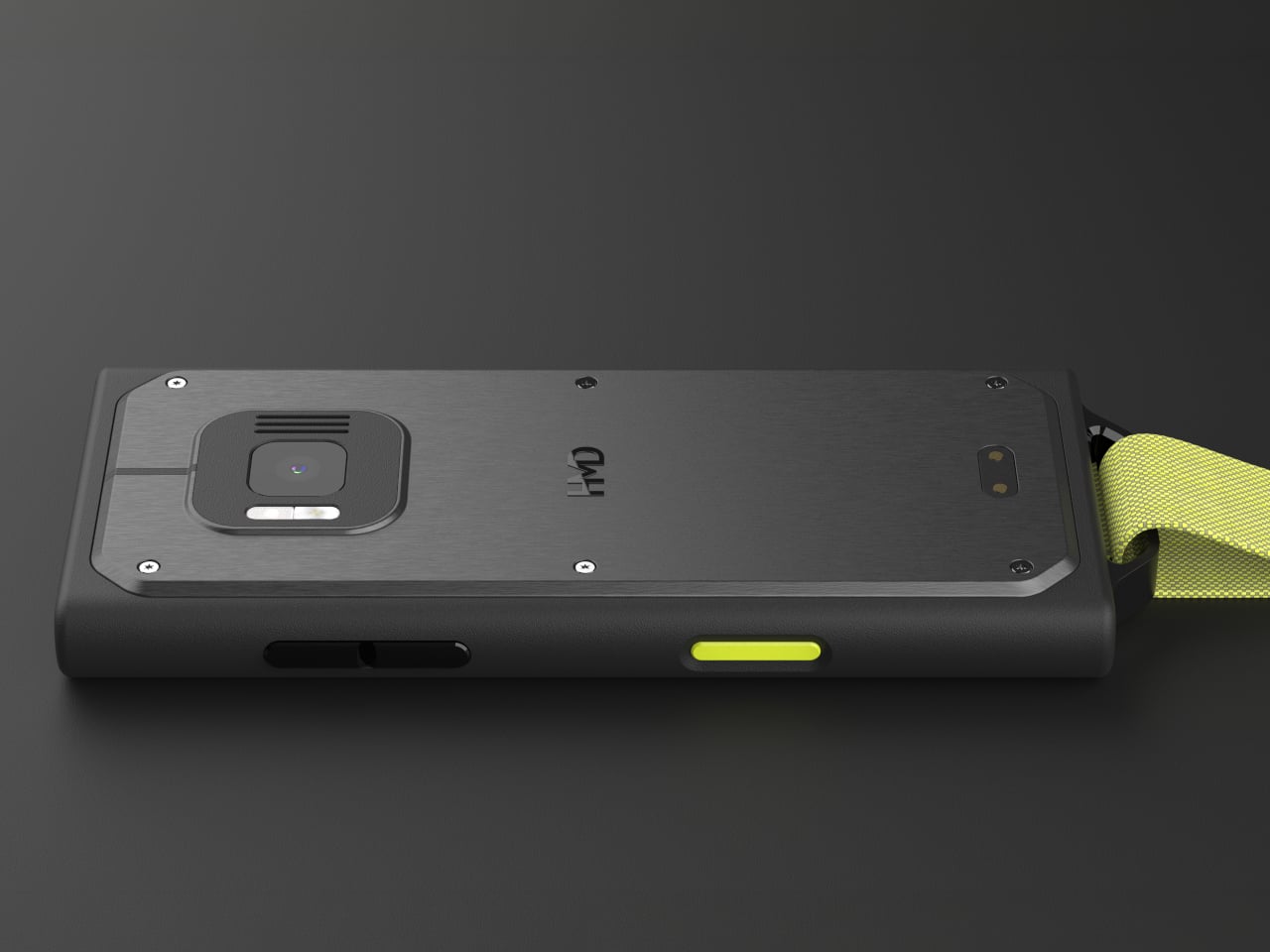
Most rugged phones solve the wrong problem. They add armor, lose usability, and end up too bulky to carry comfortably. The HMD Terra M takes a different approach. It’s compact and purpose-built for field conditions, carrying both IP68 and IP69K ratings, MIL-STD-810H military certification, and resistance to drops from 1.8 meters. It handles submersion, high-pressure water jets at 100 bar and 80°C, and exposure to gasoline, industrial solvents, and medical-grade sanitizers. That’s a resume most flagship phones would quietly fail.

What makes the Terra M genuinely useful outdoors is how it handles the small things. Large physical keys respond to gloved hands, a non-slip textured grip reduces fumbling, and a 2.8-inch display hits 550 nits behind Corning Gorilla Glass 3. These are the details that matter when you’re mid-job and can’t afford to stop and baby your device. The Terra M keeps you reachable and functional in places where most phones simply quit.

What We Like:

  • IP68, IP69K, and MIL-STD-810H rated for serious field conditions
  • Glove-compatible keys and a high-brightness display designed for outdoor use

What We Dislike:

  • The 2.8-inch screen limits any media or app-heavy use
  • The feature phone format won’t suit users dependent on smartphone functionality

2. RetroWave 7-in-1 Radio

A single device covering seven roles sounds like marketing language until you’re three days into a camping trip with a dead phone and no signal. The RetroWave handles AM, FM, and shortwave reception, Bluetooth streaming, MP3 playback via USB or microSD, a built-in flashlight, an SOS alarm, hand-crank charging, a solar panel, and a power bank function. Its retro Japanese design and tactile tuning dial make it something you’d want on a shelf, not buried in a go-bag.

Off-grid, it earns its place immediately. You stop carrying a flashlight, a radio, a speaker, and a backup charger as separate items. The RetroWave collapses all of that into one object you can grab and go. Whether riding out a storm at home or deep in a campsite with no hookups in sight, the hand-crank and solar panel mean you’re never entirely powerless. That reliability, in the right situation, is the difference between anxious and settled.

Click Here to Buy Now: $89.00

What We Like:

  • Seven functions in one device significantly reduce what you need to pack
  • Hand-crank and solar charging operate without any external power source

What We Dislike:

  • Multi-function design means no single feature is best-in-class
  • Retro aesthetic won’t suit every minimalist gear setup

3. O-Boy Satellite Smartwatch

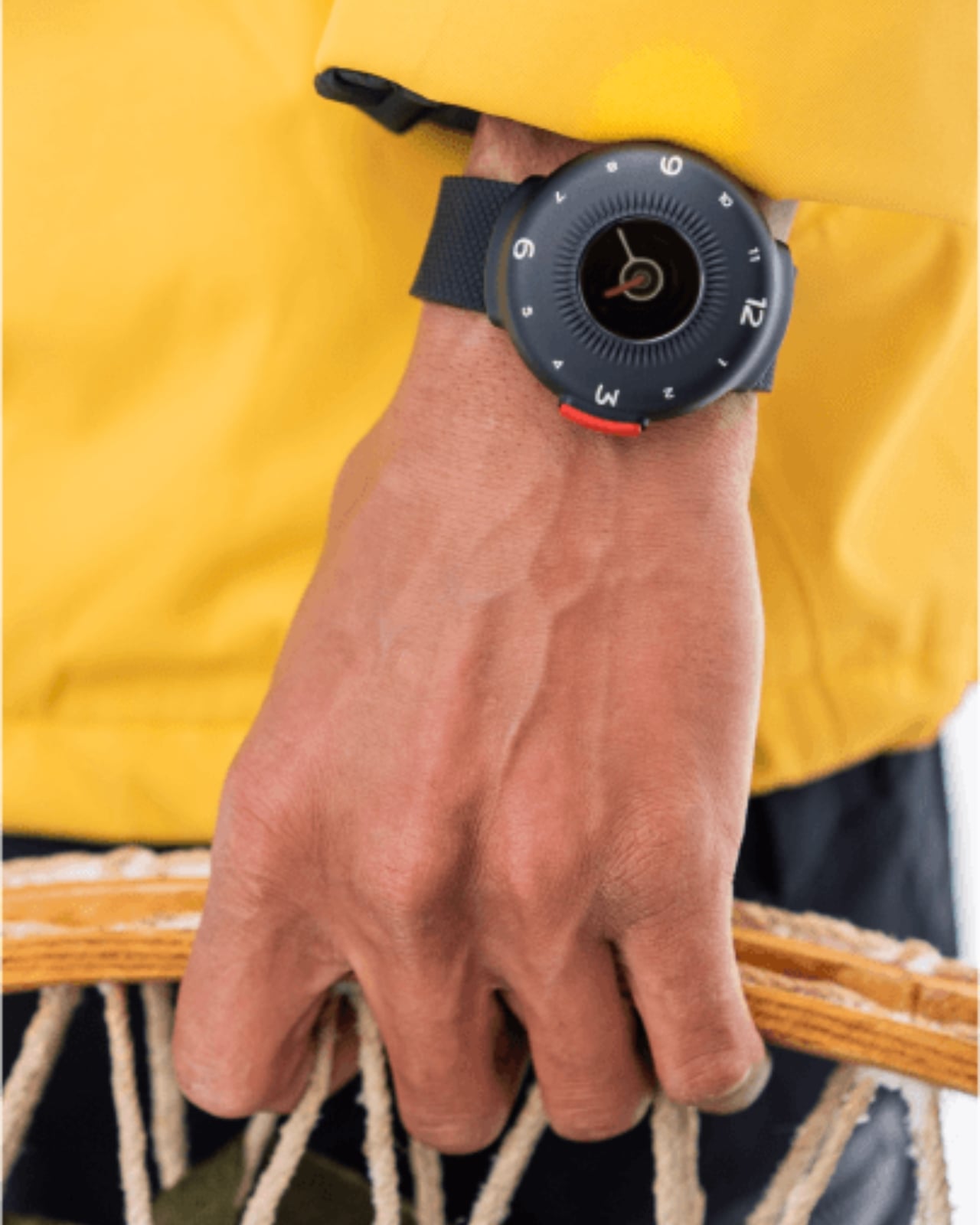
There’s a version of emergency preparedness that stops at downloading an offline map. Then there’s O-Boy. Developed by Brussels-based studio Futurewave, it’s a satellite-connected smartwatch built for environments where mobile networks simply don’t reach — mountains, open ocean, remote job sites. In those places, it functions as a direct satellite communication link, letting you transmit an emergency alert regardless of what infrastructure exists beneath your feet.

What Futurewave got right, beyond the technology, is the design brief. O-Boy doesn’t read as overtly tactical or survival-coded. It looks like something a person who spends time in remote environments would actually wear — utilitarian without being aggressive. That broader visual appeal matters because people who need a backup safety layer the most aren’t always those who identify as outdoor athletes. O-Boy is designed for anyone who ventures where their phone simply cannot save them.

What We Like:

  • Satellite connectivity works in locations with zero mobile network coverage
  • Design is wearable beyond strictly tactical or adventure-specific contexts

What We Dislike:

  • Satellite communication typically requires an ongoing subscription service
  • Smartwatch form factor means battery management becomes a daily consideration

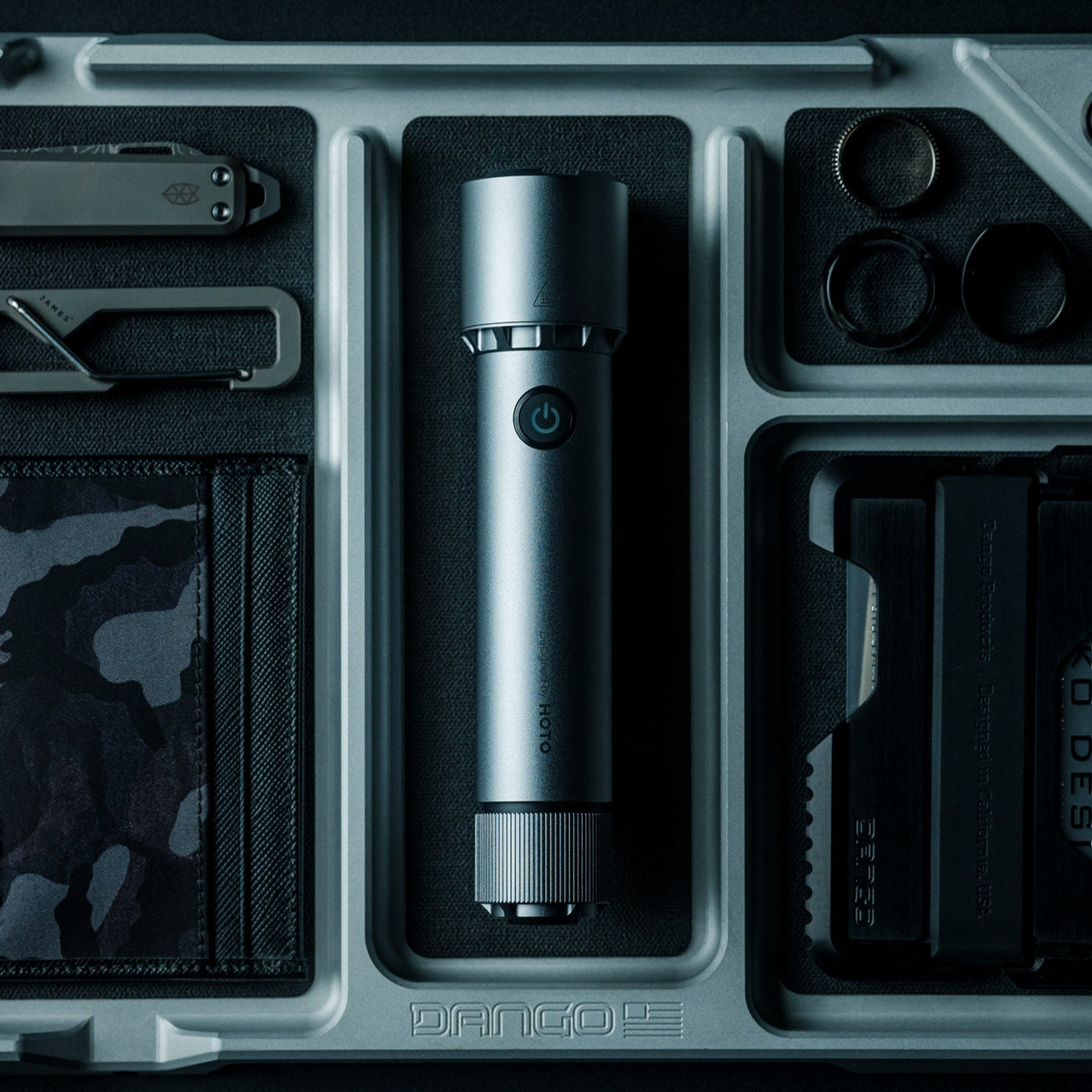
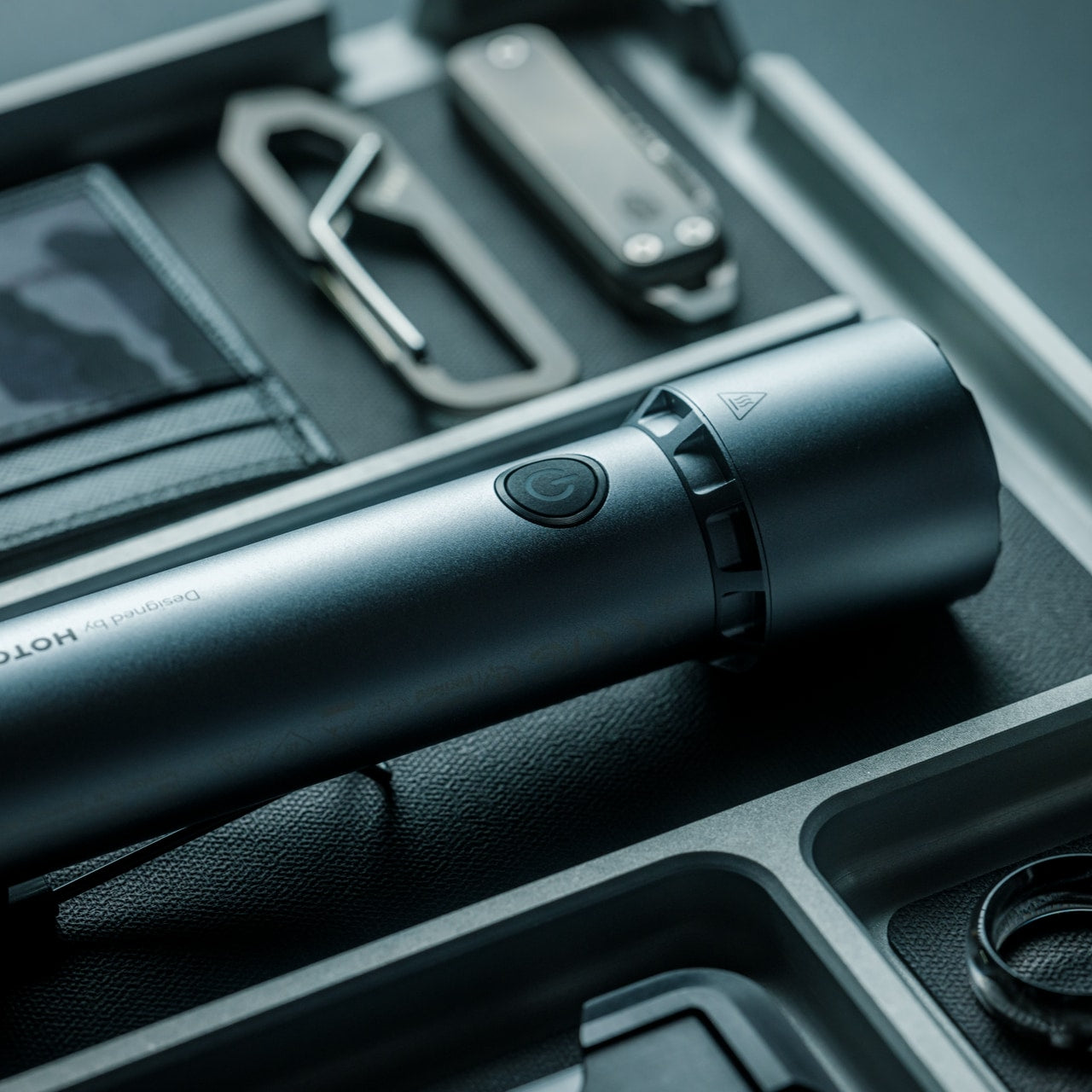
4. BlackoutBeam Tactical Flashlight

Most flashlights ask you to choose between power and portability. The BlackoutBeam doesn’t treat that as a meaningful trade-off. With 2,300 lumens of output, a 300-meter beam throw, and a 0.2-second response time, it delivers instant illumination exactly when you need it. The aluminum body carries an IP68 rating for water and dust resistance, built to handle rain, impact, and submersion without missing a beat.

What separates it from the drawer flashlight you forgot to charge is the combination of instant-on response and structural durability. In a blackout, a wildlife encounter, or a roadside situation at night, the difference between light and no light is rarely about brightness — it’s about how fast you get there. The BlackoutBeam gets there before you’ve finished reaching for it. Its industrial design keeps it from looking out of place in any context, which means it actually gets carried.

Click Here to Buy Now: $90.00

What We Like:

  • 2,300-lumen output with 300-meter beam reach handles serious low-light scenarios
  • IP68 waterproof rating and 0.2-second response built for real-world emergencies

What We Dislike:

  • Maximum lumen output draws battery faster during extended use
  • Tactical aesthetic doesn’t integrate seamlessly into every EDC setup

5. Carabiner Power Bank

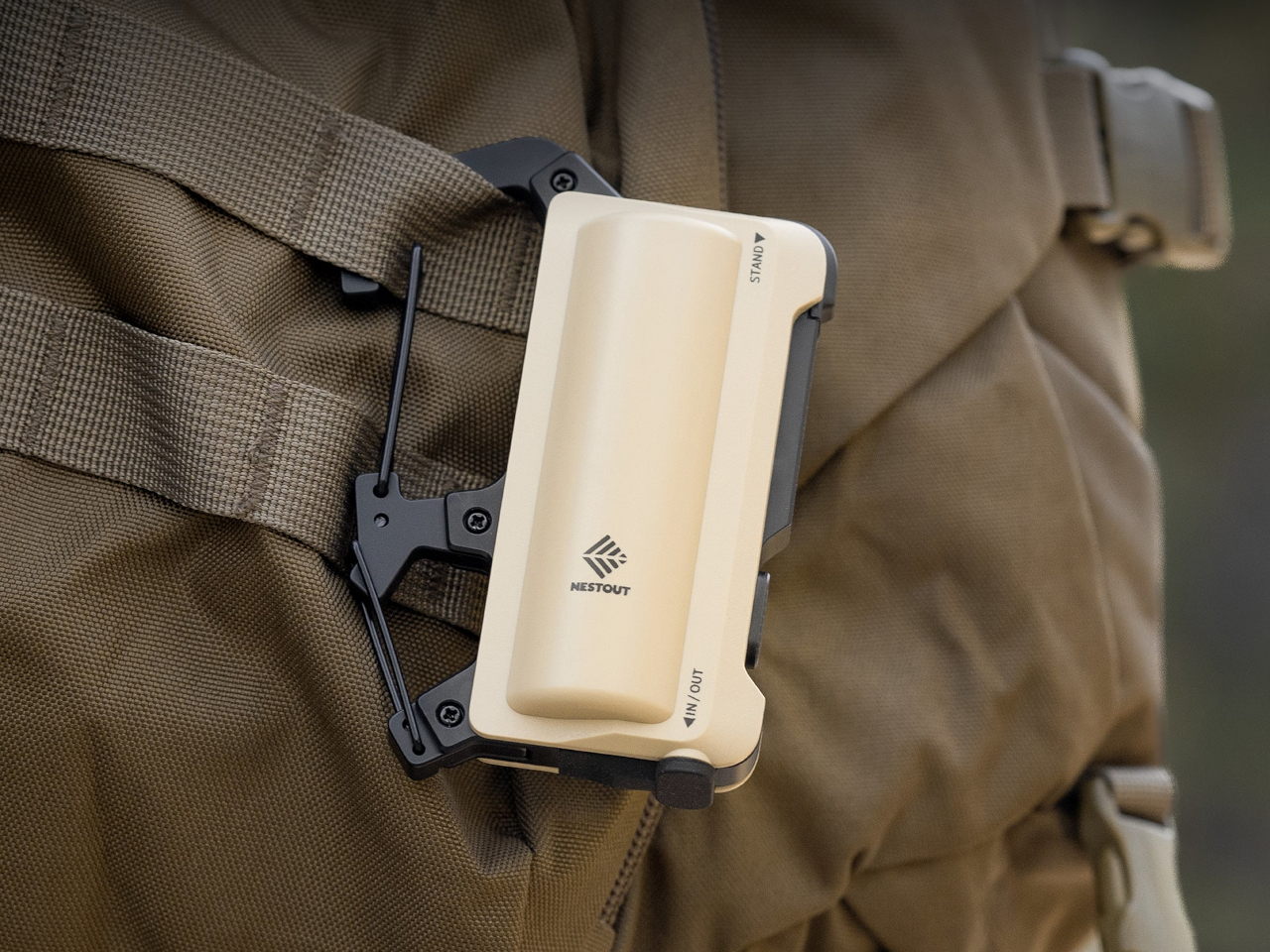
Most power banks are an afterthought in terms of how you carry them. They go loose in a pocket or rattle around at the bottom of a bag until the cable is buried somewhere unhelpful. This carabiner-shaped power bank removes that friction by making attachment the actual design concept. Clip it onto a bag strap, a jacket loop, or a belt, and your backup charge goes wherever you go without adding any mental overhead.

The real value is how it removes a common hesitation: people don’t carry a power bank until they’ve already needed one. A carabiner you clip on once and forget solves the carry problem entirely. Off-grid, that passive availability becomes genuinely important. It’s the kind of accessory that works not because it’s technically impressive, but because it respects how people actually behave and quietly builds itself into the routine.

What We Like:

  • Carabiner form clips directly to gear without consuming bag space
  • Rugged, compact design is suited to outdoor and trail use

What We Dislike:

  • Capacity is limited compared to a dedicated, full-size power bank
  • Not sufficient as a sole charging source for multi-day trips

6. X1 Portable Toilet

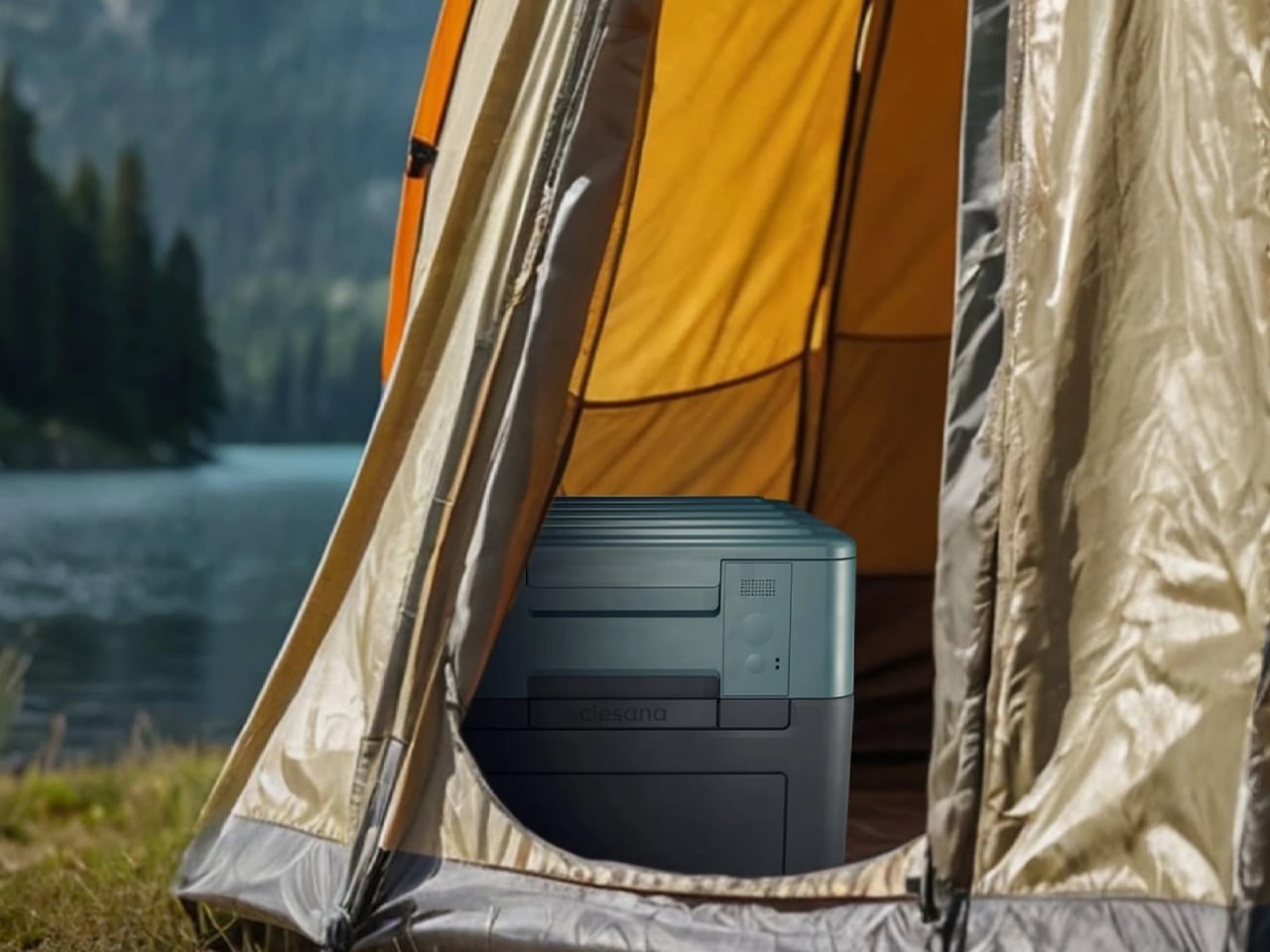
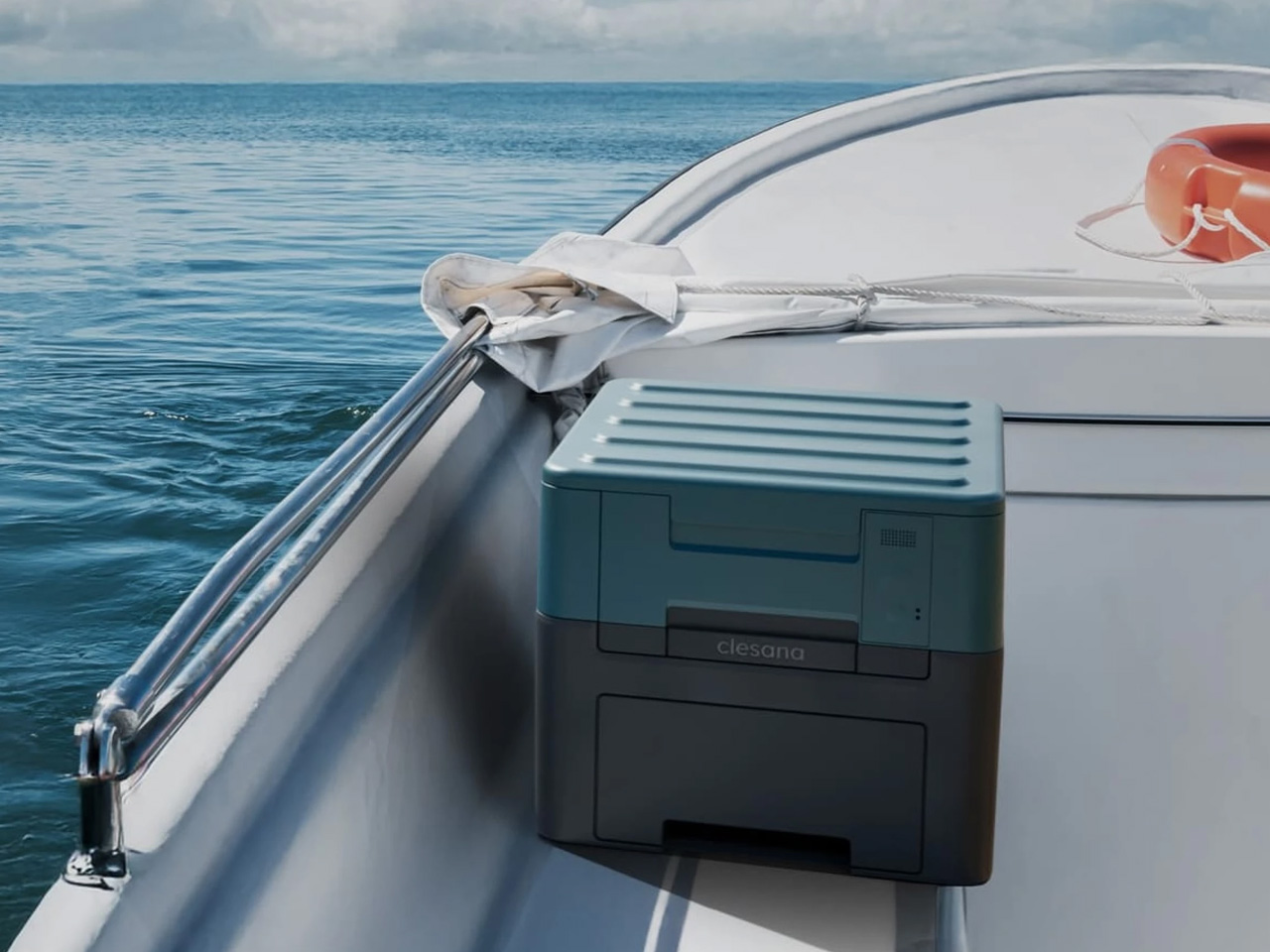
The outdoor bathroom situation is the least discussed but most universally felt problem with going off-grid. Clesana’s X1 addresses it without compromise. The battery-powered portable toilet looks like a compact cube at rest, then telescopes to full, home-equivalent height when needed. At 24 pounds with an integrated handle, one person can move it easily, and the ergonomics when deployed match what you’d expect at home, not in a festival field.

The real design achievement is what happens after use. Clesana’s patented thermoelectric sealing system wraps waste in individual sealed packages with no odor, no chemicals, and no water hookup required. Sealed waste collects in a lower chamber for clean, convenient disposal when the time comes. For van lifers, remote workers, and long-haul campers, the X1 elevates one of the most basic human needs to something approaching actual dignity. It’s a quiet but significant piece of off-grid infrastructure.

What We Like:

  • Telescopic design delivers home-height comfort in a fully portable format
  • Patented sealing system eliminates odor without chemicals or water connections

What We Dislike:

  • Battery dependency adds another device that needs to be monitored and charged
  • Sealed waste packages create an ongoing consumable cost over time

7. Loki-Nav 3-in-1 Compass

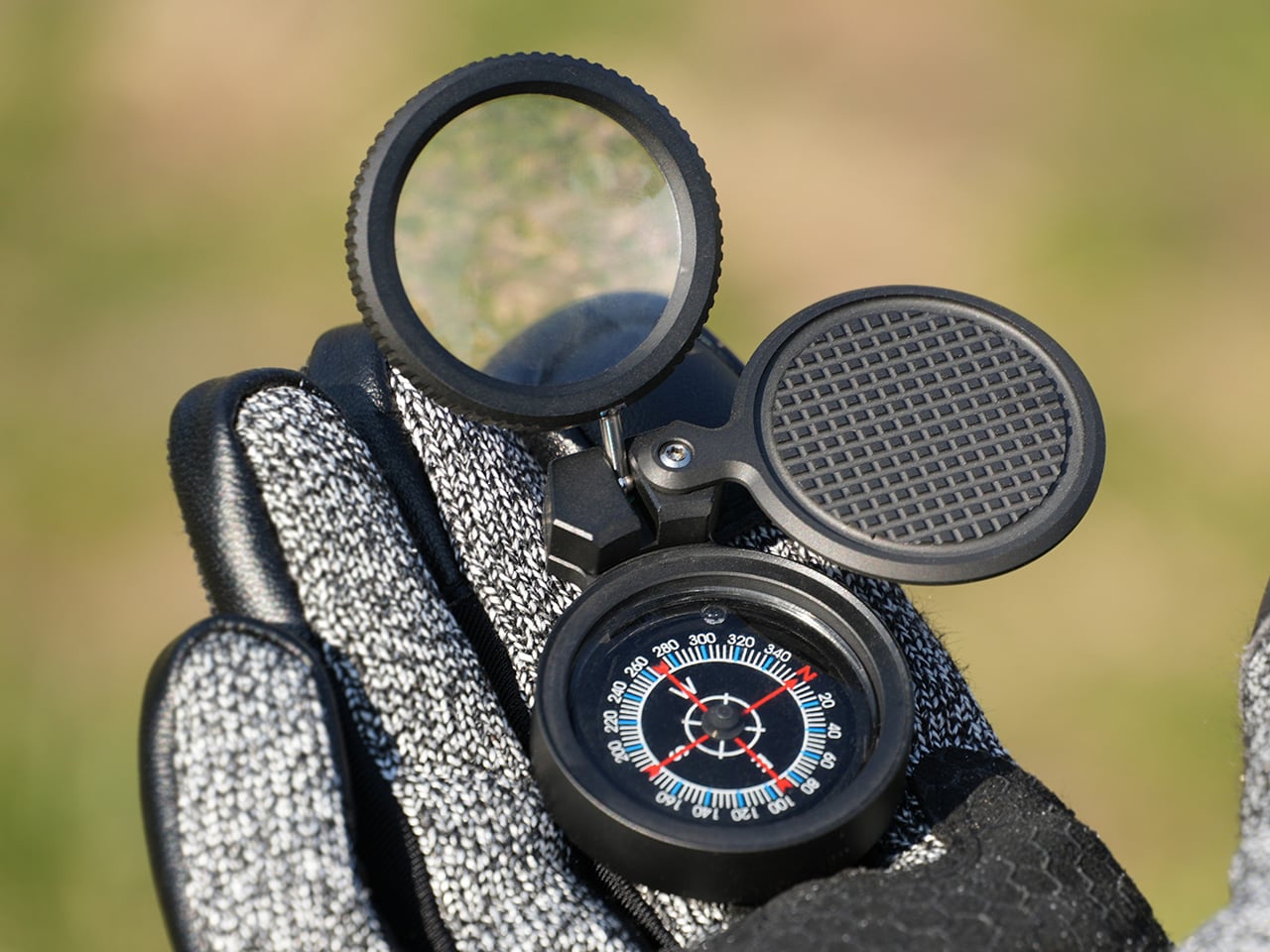
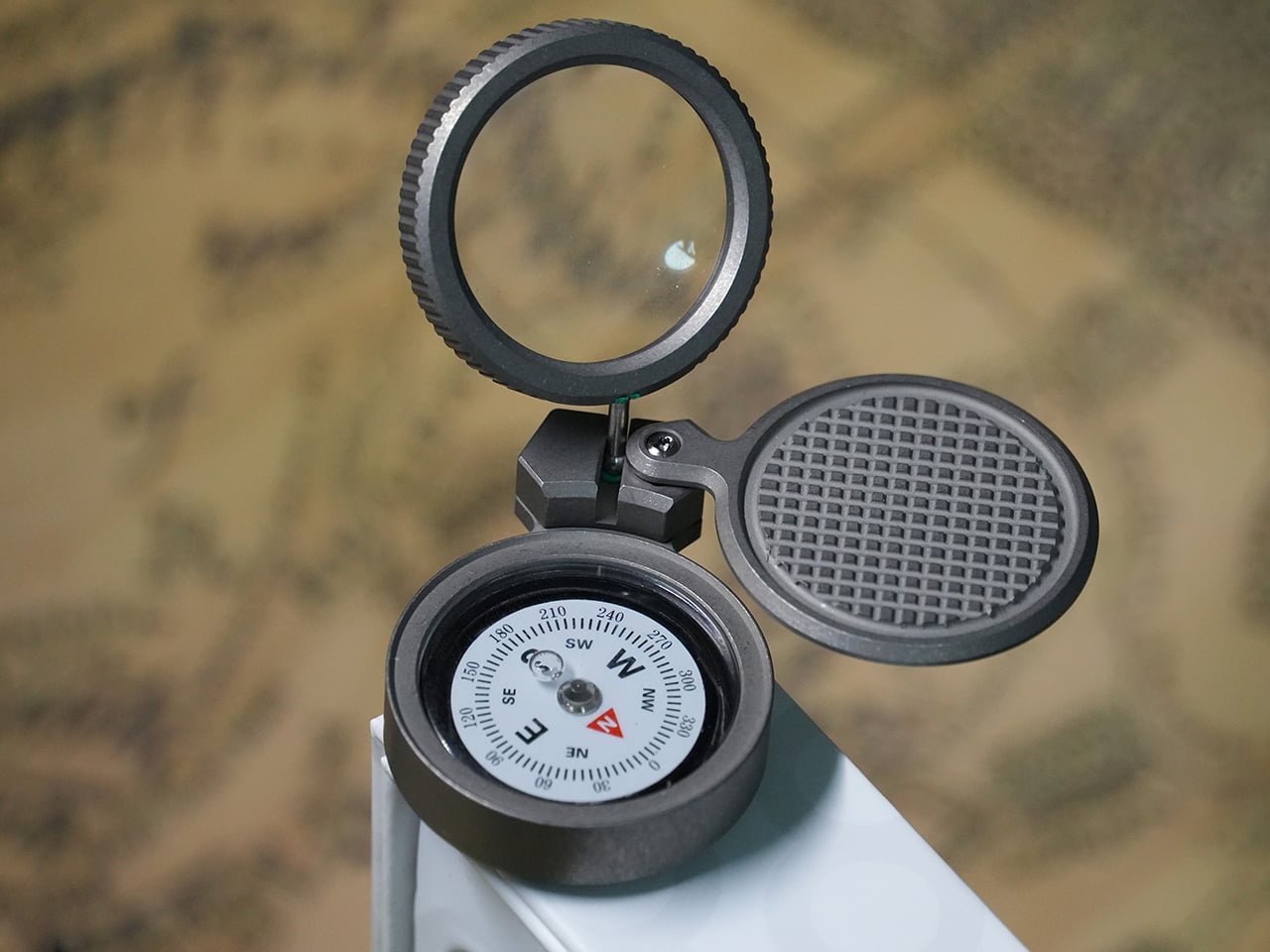
The Loki-Nav makes the case that the best survival tool is the one that actually gets packed. A standalone compass rarely does. But a compass that also works as a magnifying glass for map reading, an emergency signal mirror, and a fire-starting wood chip maker earns a permanent spot on any kit. Four tools in one object change the calculus on what’s worth carrying.

Its IPX8-rated compass is filled with premium white oil and delivers precise navigation in conditions that render most electronics useless — extreme cold, downpours, and complete darkness with the optional Luminous Compass Core upgrade. Smartphones are useful navigation tools right up until they aren’t, and coverage drop-outs and battery deaths are common enough that analog backup should be standard practice. The Loki-Nav doesn’t ask you to compromise on aesthetics to carry it, with three design options available. It’s a tool that respects the intelligence of the person using it.

What We Like:

  • Four survival functions in one design reduces what needs to be packed separately
  • IPX8-rated, oil-filled compass operates reliably in extreme temperatures

What We Dislike:

  • Wood chip fire-starting function is supplementary, not a primary fire tool
  • Each capability requires practice before relying on it in a real situation

8. Airflow 8-Panel Fire Pit

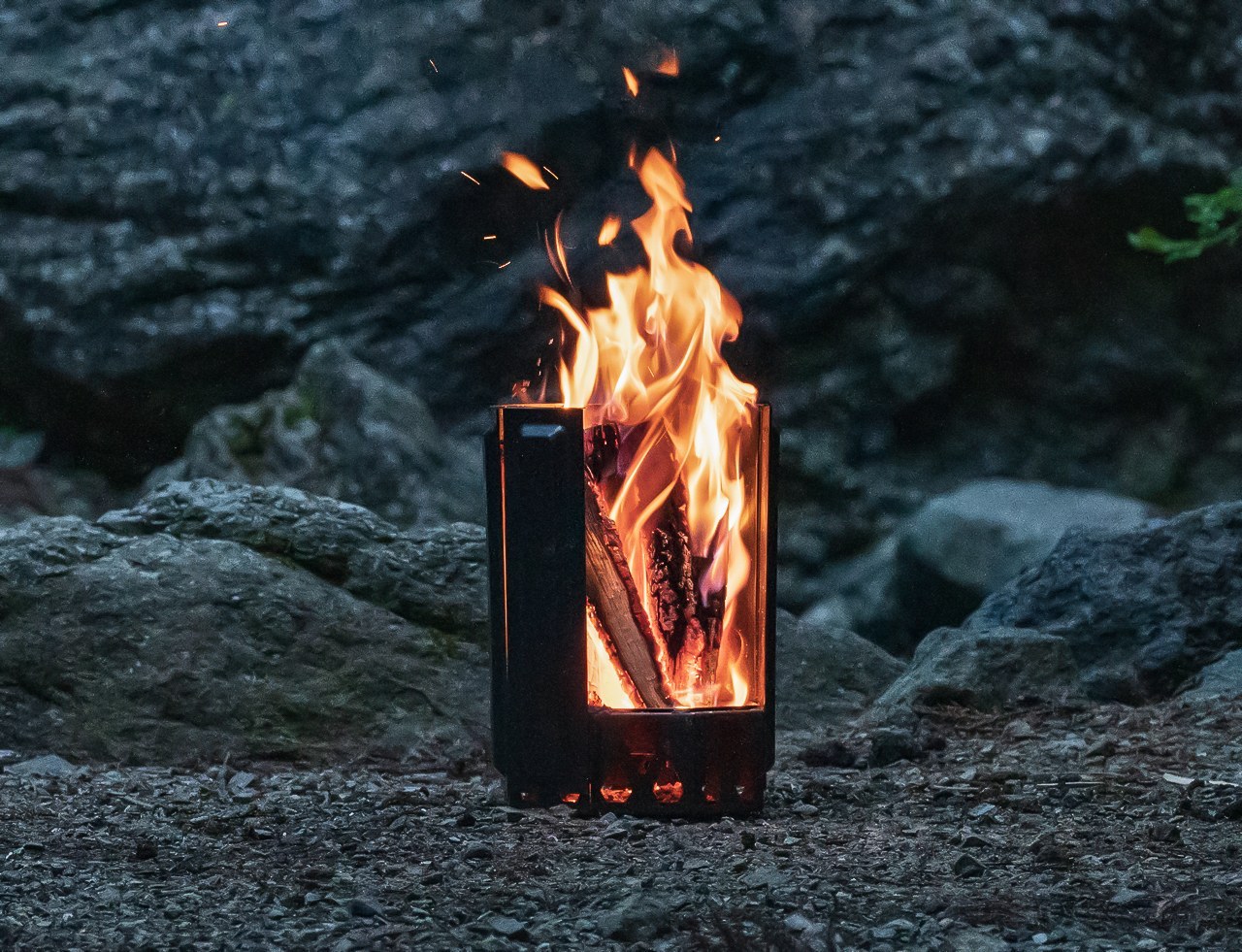
A campfire that tends itself is the dream. The Airflow 8-Panel fire pit doesn’t go that far, but its 8-panel removable design gets closer than most. Built around secondary combustion science, holes at the base of each panel channel primary airflow upward through double-walled cavities, producing a secondary burn that makes the fire significantly cleaner and more efficient. The result is minimal smoke and a fire that does more with less wood.

The adjustable panel system lets you control how open or enclosed the combustion chamber is, dialing the fire’s intensity up or down without constant prodding. Off-grid evenings deserve a real focal point, and a fire that performs well without drama is a quality-of-life upgrade that’s easy to underestimate until you’ve experienced it. Sanyo Works brings deep metal processing expertise to this design, and that background shows in how precisely the airflow mechanics are considered. Less compromise, more outdoor living.

Click Here to Buy Now: $325

What We Like:

  • The secondary combustion system produces minimal smoke for a noticeably cleaner burn
  • Adjustable 8-panel design allows real control over fire intensity

What We Dislike:

  • Eight individual panels mean more parts to pack and more potential for loss
  • Wood-only fuel system with no gas compatibility

9. COFFEEJACK V2

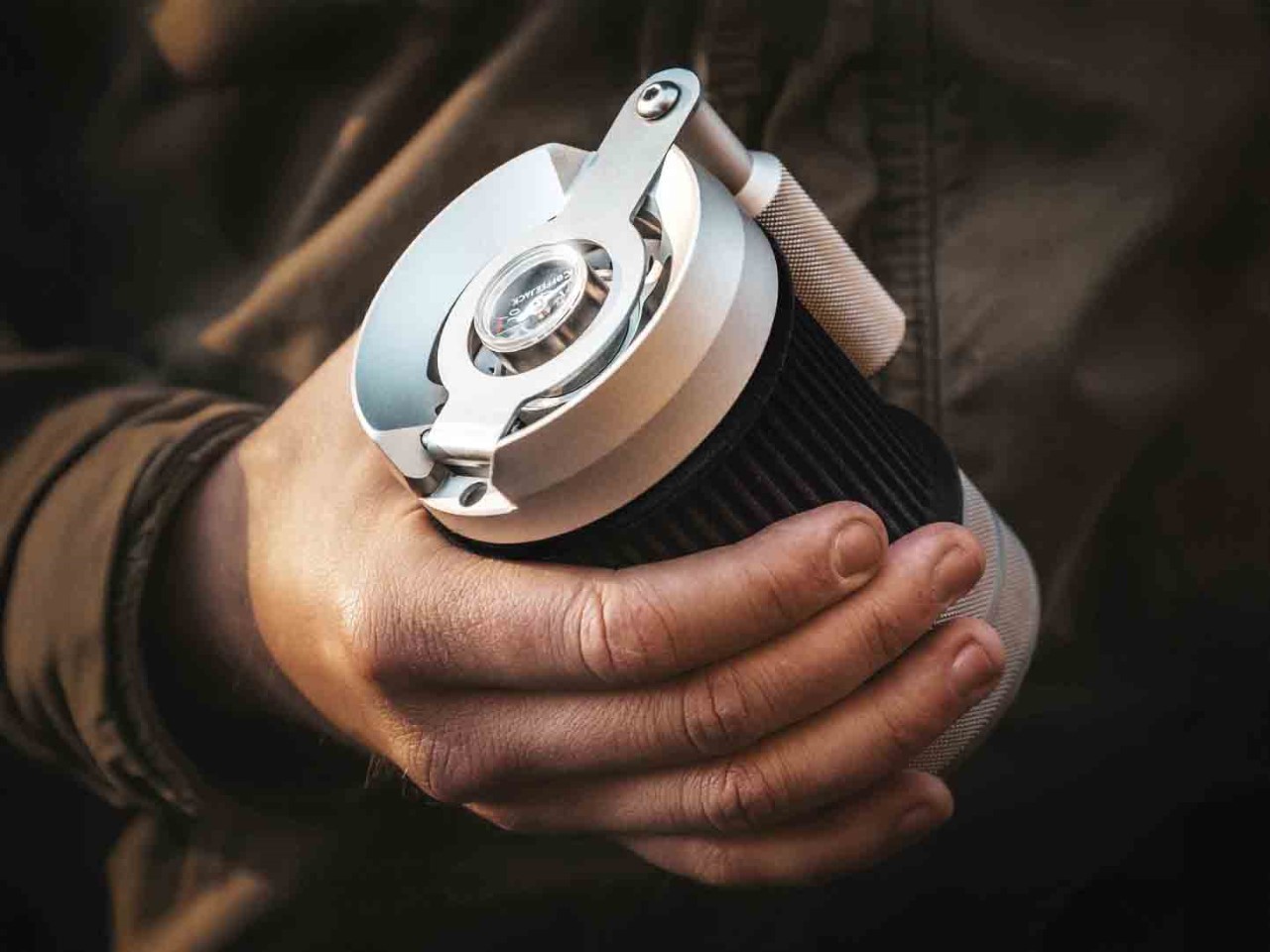
There’s something worth preserving in the process of making coffee, and the COFFEEJACK V2 understands that completely. It’s a fully manual, hand-crank espresso maker that builds up to 10 bars of pressure through rotation alone. No electricity, no battery, no automation. The crank forces hot water through a portafilter packed with a coffee puck, producing a proper espresso shot complete with crema, wherever you happen to be sitting.

The design is compact enough to pack without rethinking your kit, and the purely analog mechanism means nothing to charge and nothing to break electronically. For off-grid mornings, a proper hand-brewed espresso is a ritual worth keeping. It’s also arguably the clearest signal that going off-grid doesn’t require giving anything meaningful up. The COFFEEJACK V2 is the kind of object that makes a campsite feel intentional rather than improvised, which is the whole point.

What We Like:

  • Fully manual design requires zero power source or battery
  • Builds up to 10 bars of pressure for genuine espresso with full crema

What We Dislike:

  • A consistent technique is required to get the best extraction results
  • Hot water still needs to be sourced and heated separately before brewing

10. Giga Pump 4.0

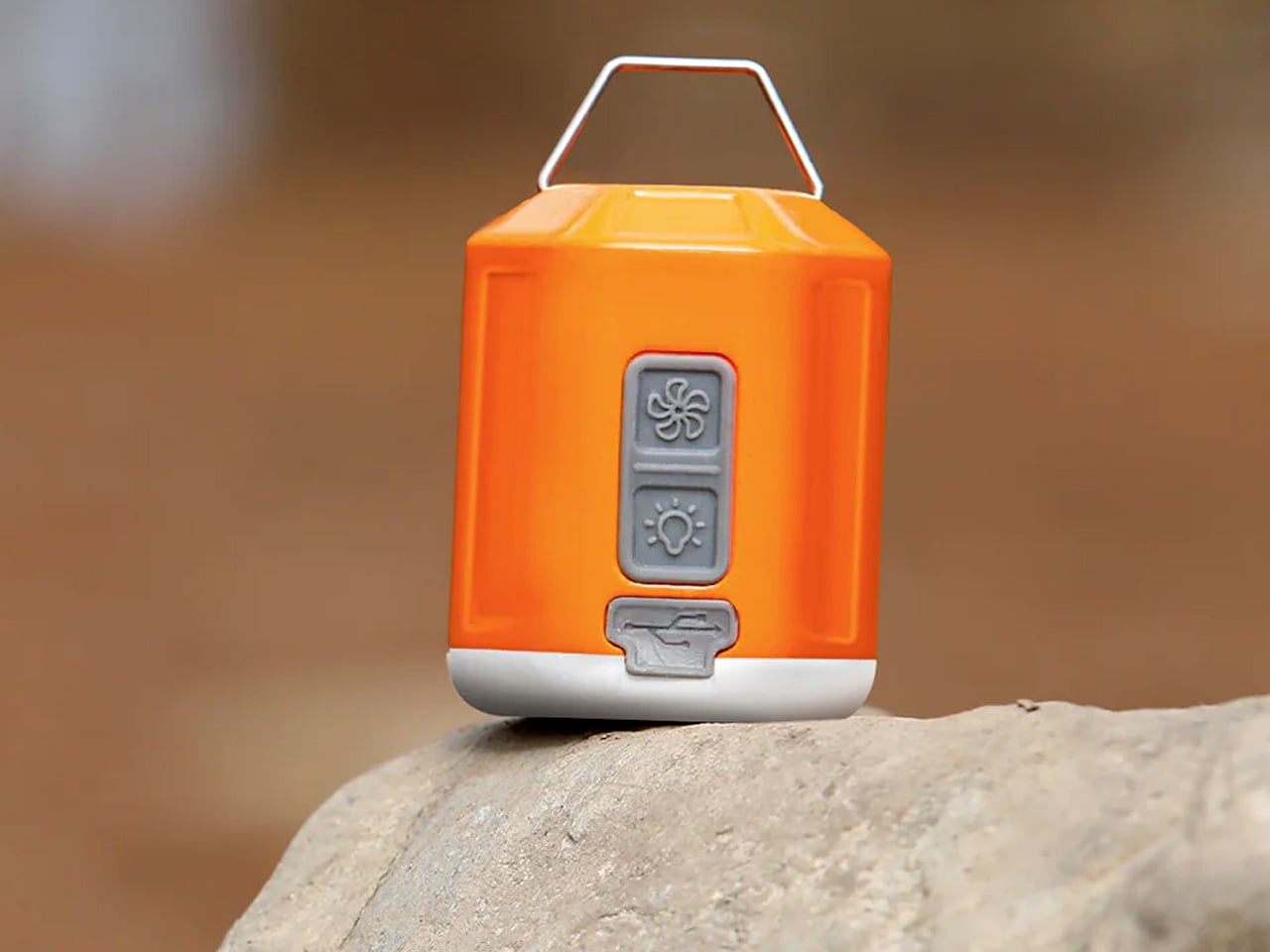
Inflating gear by mouth or with a bulky hand pump has always been the slowest, most tedious part of setting up camp. The Giga Pump 4.0 eliminates that problem. Despite its compact size, it achieves 4.2 kPa pressure and a 220L per minute flow rate, representing a 90% efficiency improvement over its predecessor. A simple toggle switches between 4 kPa for firm inflation and 2 kPa for softer fill, handling mattresses, paddle boards, and tents with equal ease.

Deflation is handled just as efficiently. The reverse suction mode pulls air out as quickly as it pushes it in, compressing gear down for storage in a fraction of the usual time. Off-grid setups live and die by how much friction each task creates. A pump that does its job quickly and quietly, without requiring you to think about it, means more time spent doing the things you actually came out there for. That’s the right kind of upgrade.

What We Like:

  • 90% efficiency improvement delivers 220L per minute from a compact body
  • Forward inflation and reverse deflation are handled by one device

What We Dislike:

  • Battery-powered design requires charging before each outing
  • Compact size means slightly less sustained pressure than full-size pump alternatives

The Grid Was Always Optional

Going off-grid used to require an acceptance of compromise. You’d lose convenience, comfort, and connectivity in exchange for space and silence. These ten tools quietly dismantle that trade-off. From satellite communication on your wrist to espresso brewed by hand at a campsite, the gap between outdoor living and the standards you hold at home has never been narrower. The gear has caught up. The question now is whether you have.

None of these products asks you to rough it. That’s the point. The best off-grid gear doesn’t celebrate deprivation — it removes the friction that made leaving the grid feel like a real sacrifice to begin with. Whether you’re building a go-bag, outfitting a van, or just spending more time outdoors, this kind of kit makes the case that beyond the last signal bar is exactly where you want to be.


The post 10 Best Gadgets & Tools That Make Going Off-Grid Feel Like an Upgrade first appeared on Yanko Design.

Three Bedrooms, Two Bathrooms, and a Tiny Home Layout Nobody Thought to Try Until Now

Most tiny homes follow the same predictable playbook: squeeze a loft bed above, cram the kitchen below, repeat. The Onda by Australian builder Removed Tiny Homes throws that rulebook out entirely. Part of the brand’s new Tiny Mansions lineup — a series of oversized, premium tiny homes built for people who love the concept of small-scale living but refuse to sacrifice comfort — the Onda is the first of its kind to introduce a true upside-down layout.

The concept is disarmingly simple, yet nobody has really done it before. All three bedrooms sit on the ground floor, while the kitchen, living room, and bathroom occupy the elevated upper level. It’s a reverse loft plan, and once you see it, the logic is undeniable. Private spaces below, communal life above, all wrapped in a design that moves with natural fluency between the two.

Designer: Removed Tiny Homes

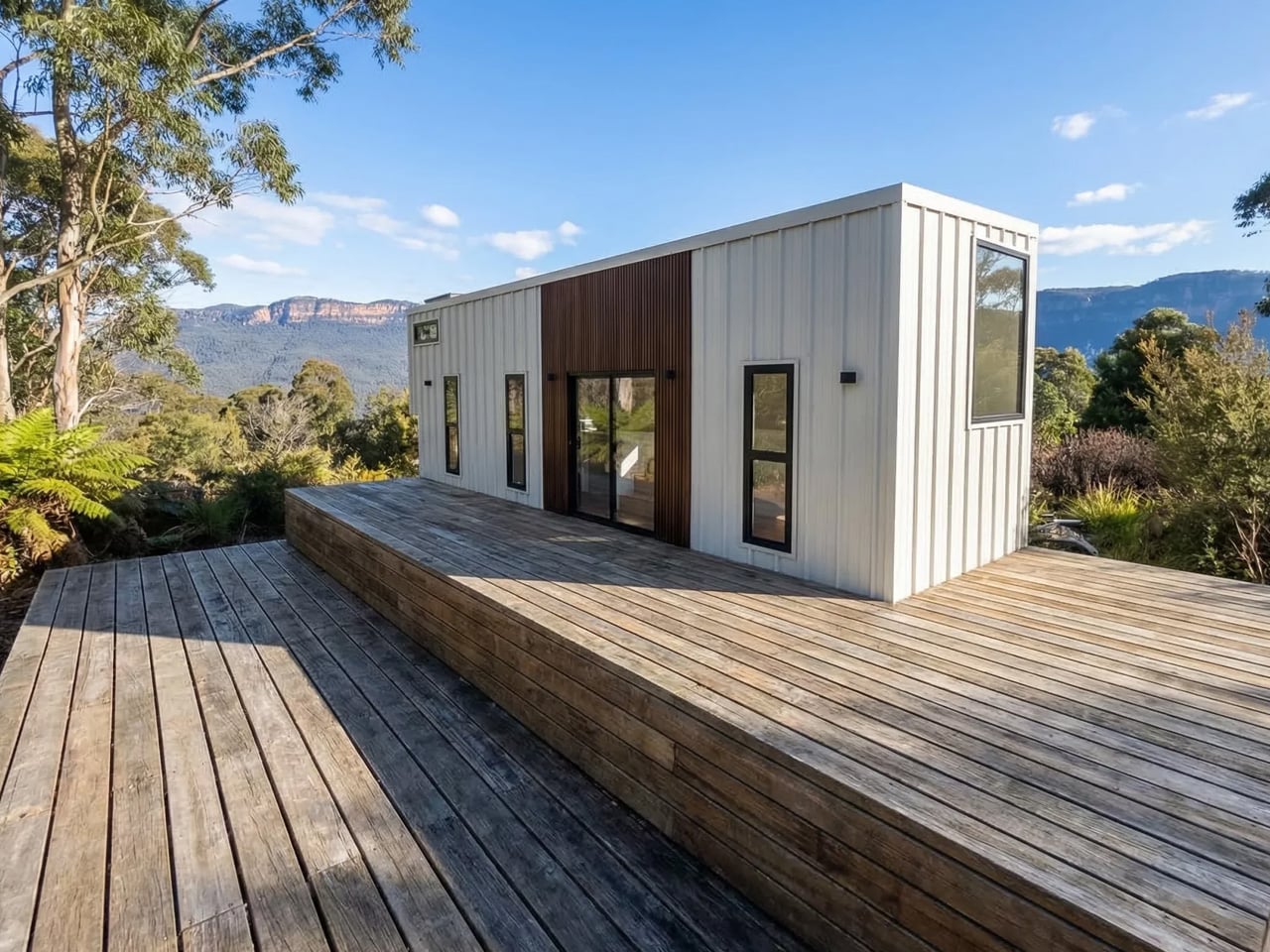
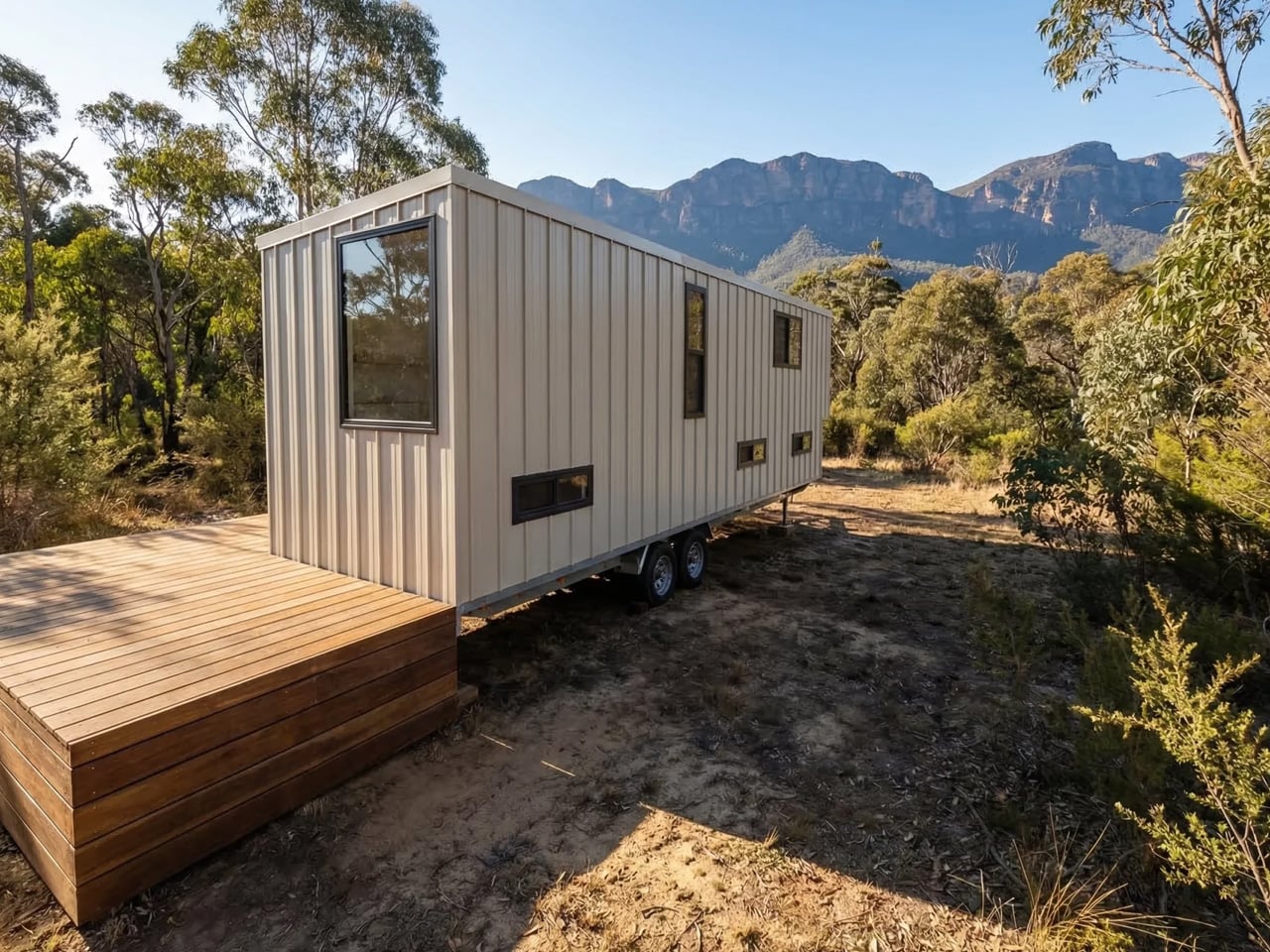
Built on a double-axle trailer, the Onda is finished in steel with warm wooden accents that keep it from reading too industrial. It measures 10 meters long, 3.4 meters wide, and 4.5 meters tall, dimensions that push it squarely into apartment territory rather than anything you’d call a cabin. An optional deck extends the footprint further, spilling the living area outdoors when the weather calls for it.

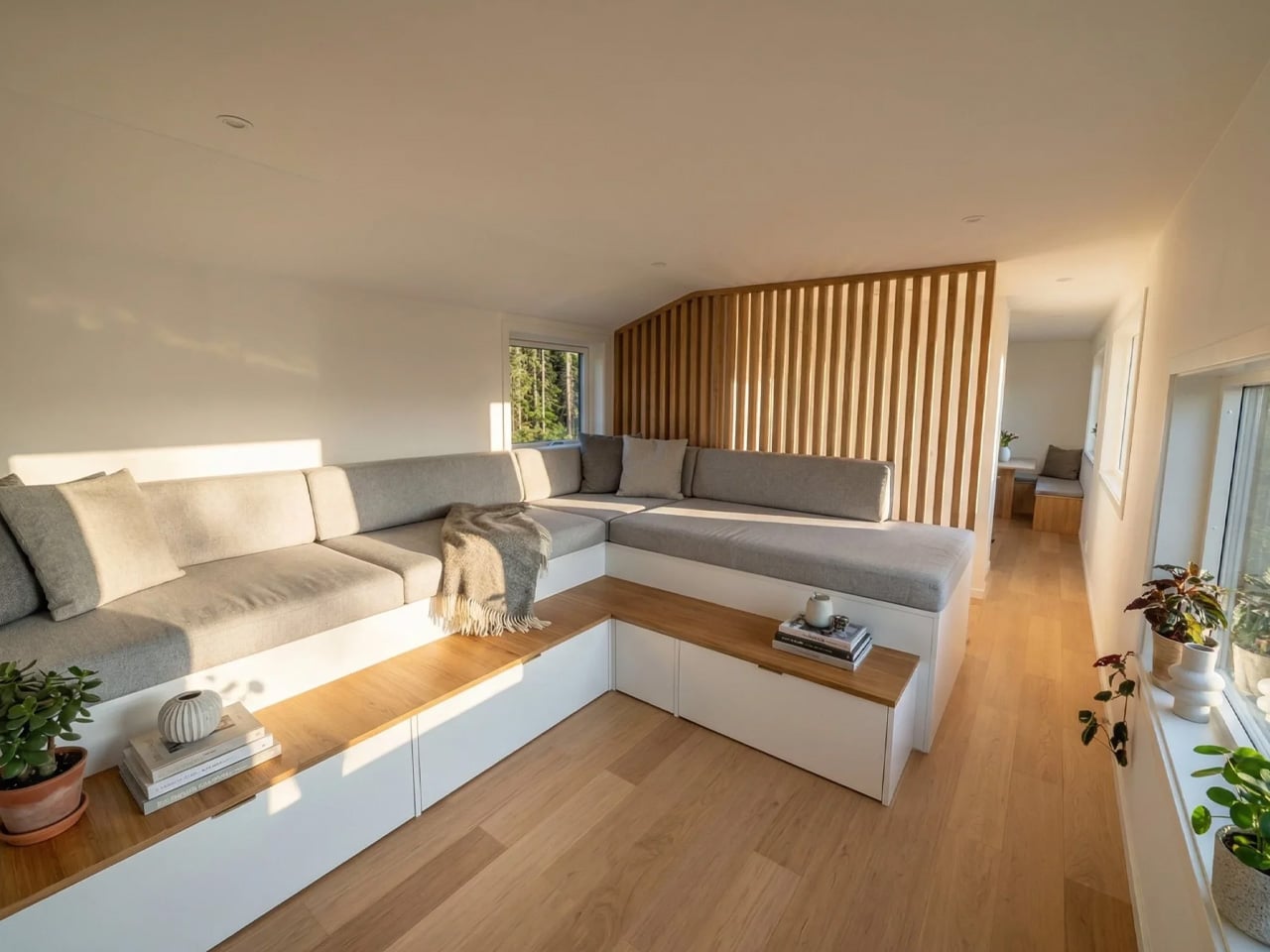
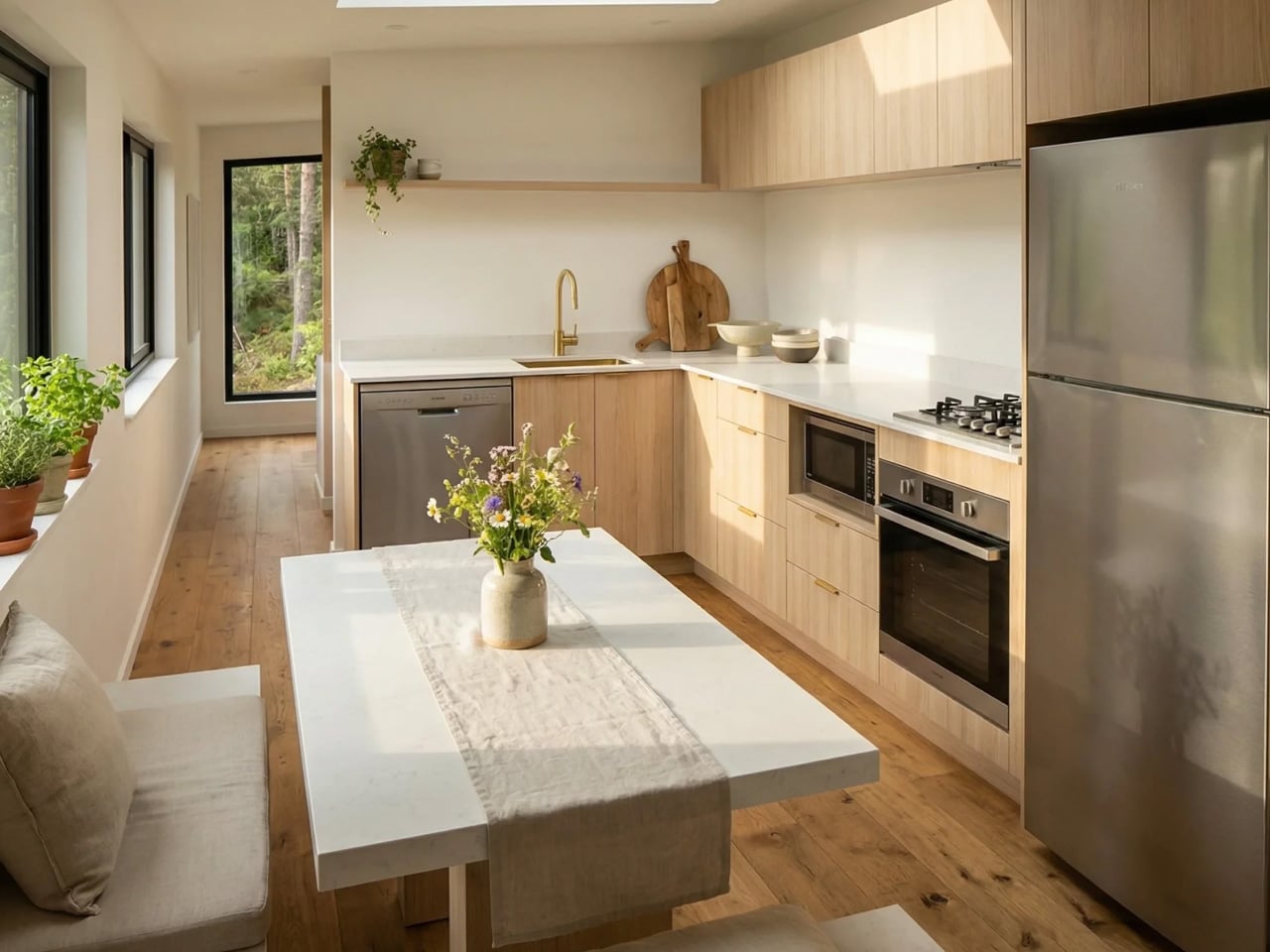
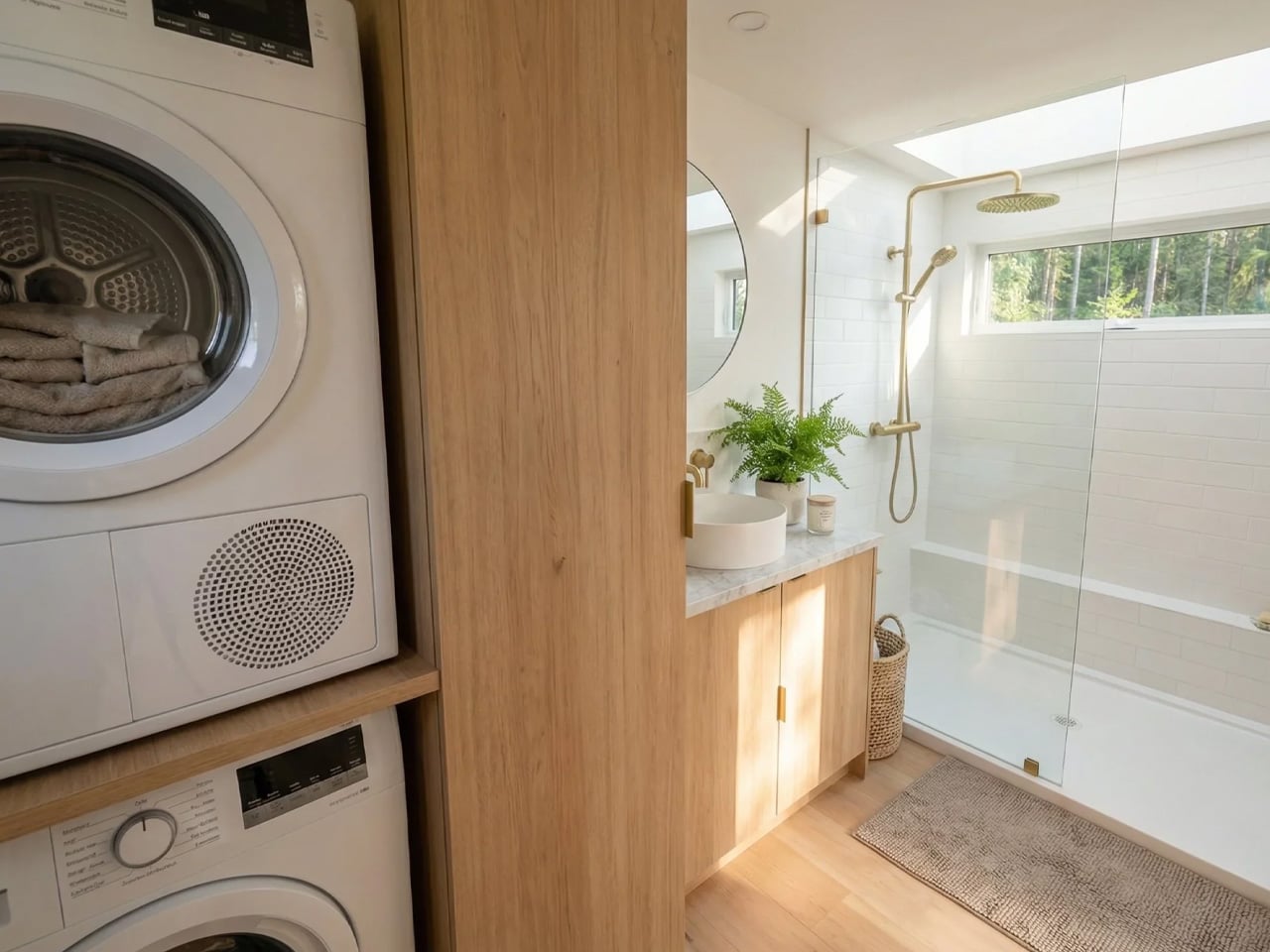
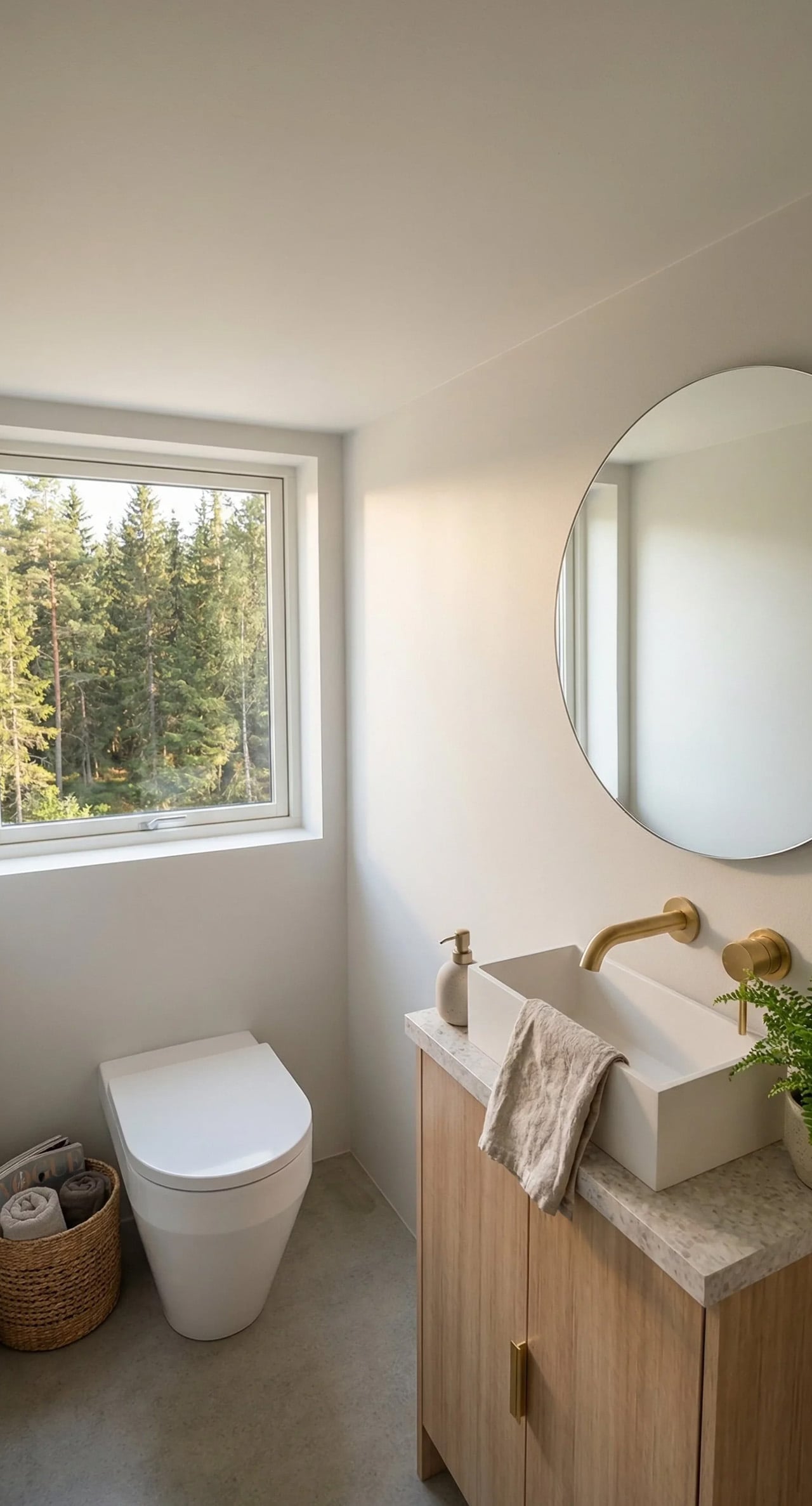
Upstairs is where the design really earns its Tiny Mansion billing. The kitchen is a proper one with stone benchtops, full cabinetry, and no compromises. The living room opens beside it, lit by a trio of skylights that flood the space with natural light. The bathroom is equally considered: a central vanity, a glass-enclosed shower positioned directly beneath a skylight, a toilet, a closet, and a stacked laundry setup all within a space that somehow feels spa-like.

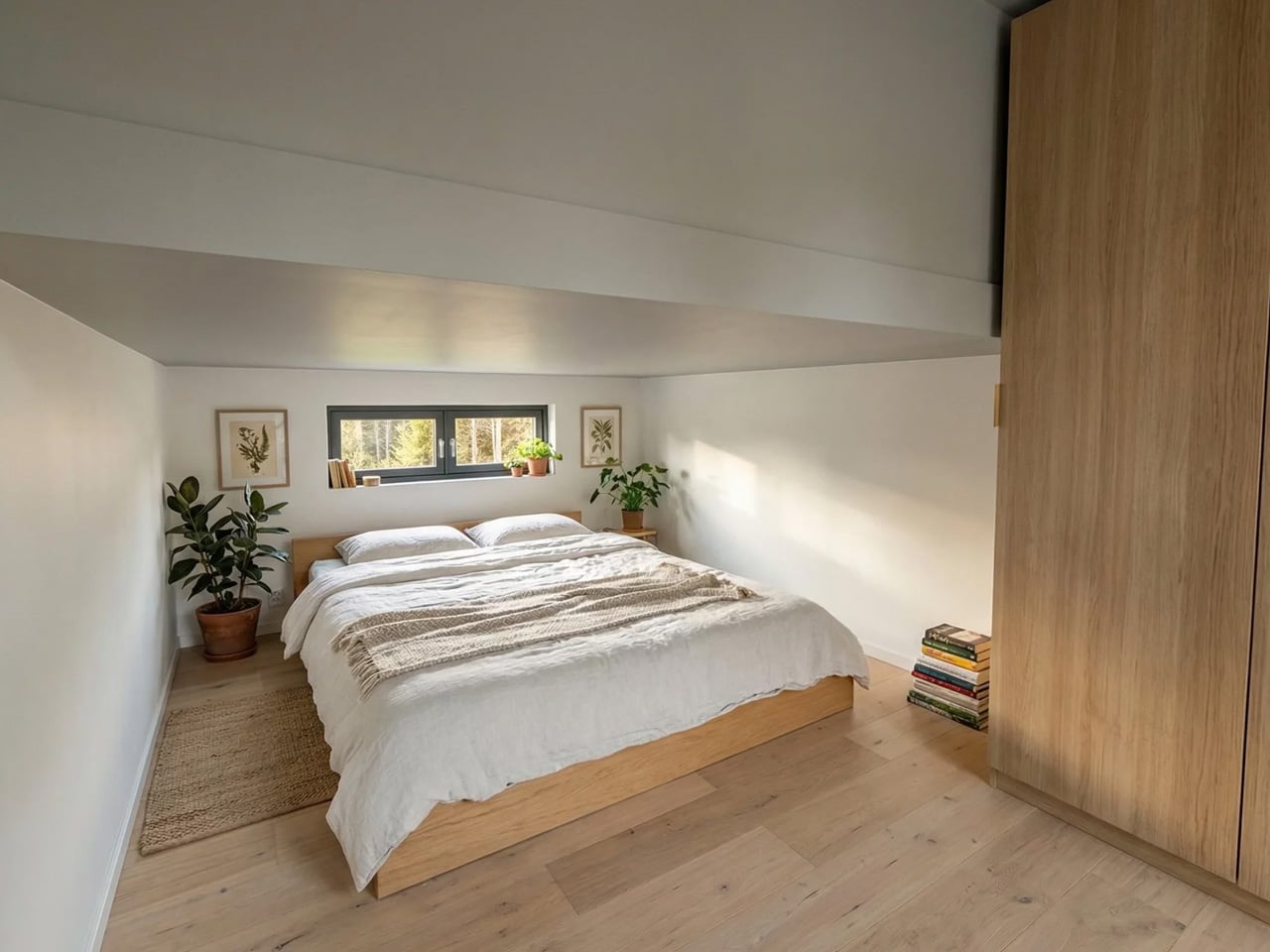
The three downstairs bedrooms give a growing family actual breathing room, not a ladder-accessed loft shared with luggage, but real rooms with doors. That shift alone repositions the Onda from novelty to a genuine alternative for families navigating an increasingly impossible housing market.

Early buyers are rewarded with a Luxury Living Upgrade Pack that includes the fully tiled bathroom, the skylight trio, and the stone benchtops at no extra cost. Customization options ranging from strategic window placement to full off-grid capability mean the Onda can be tailored to wherever life needs to land next. Pricing starts at around USD $161,700, with delivery available across Australia. For a home that carries three bedrooms, two bathrooms, and an entirely new way of thinking about space, that number is harder to argue with than it looks.

The post Three Bedrooms, Two Bathrooms, and a Tiny Home Layout Nobody Thought to Try Until Now first appeared on Yanko Design.
5 Clever Lighting Designs That Actually Deserve to Be the First Thing You Notice in a Room

Most rooms treat lighting as an afterthought. A fixture goes on the ceiling, a floor lamp fills a corner, and the result is illumination without real personality; technically functional, completely forgettable. The lamps that actually change a room belong to a different category entirely. They’re worth looking at before you’ve switched them on, with forms that say something specific about how light should behave and how a space should feel.

These five designs earn that standard. Some rethink where light is allowed to exist. Others change their function with a single physical gesture. A few carry material quality that improves over time rather than fade. None of them are lamps you choose because something needs filling. They’re the kind of objects that make everything else in the room feel like it’s working harder just by being there.

1. Flying Moon & Sun

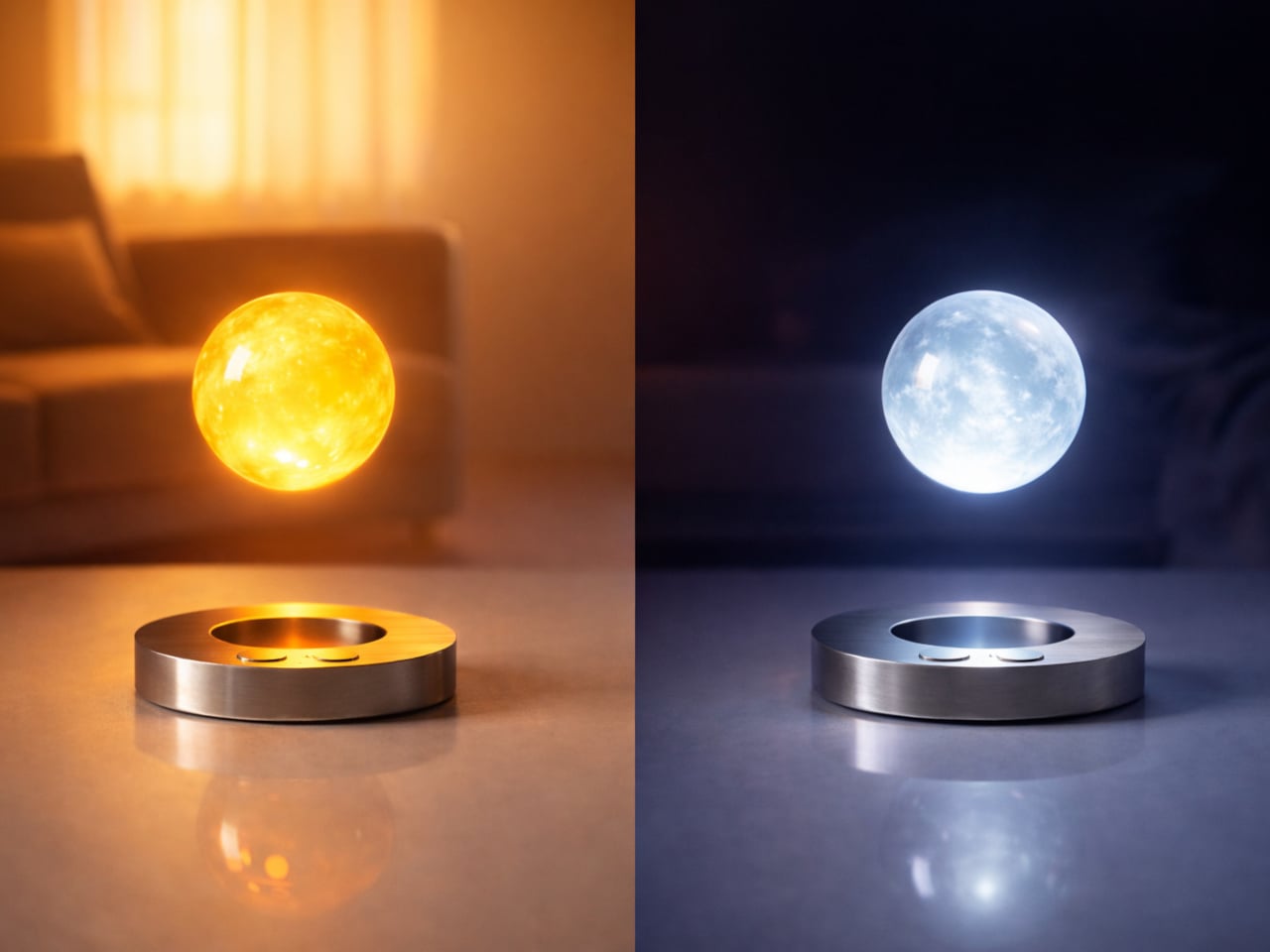
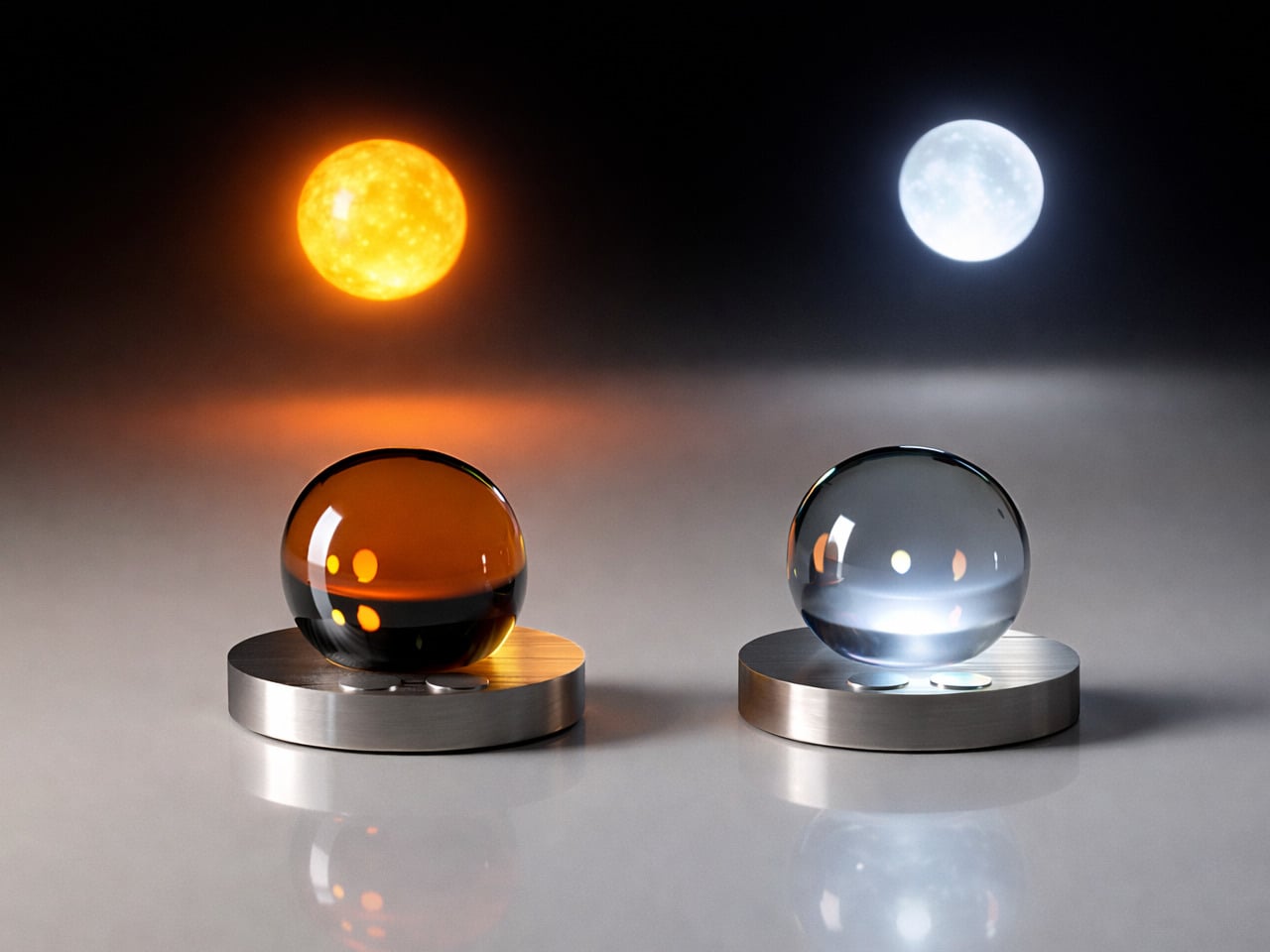
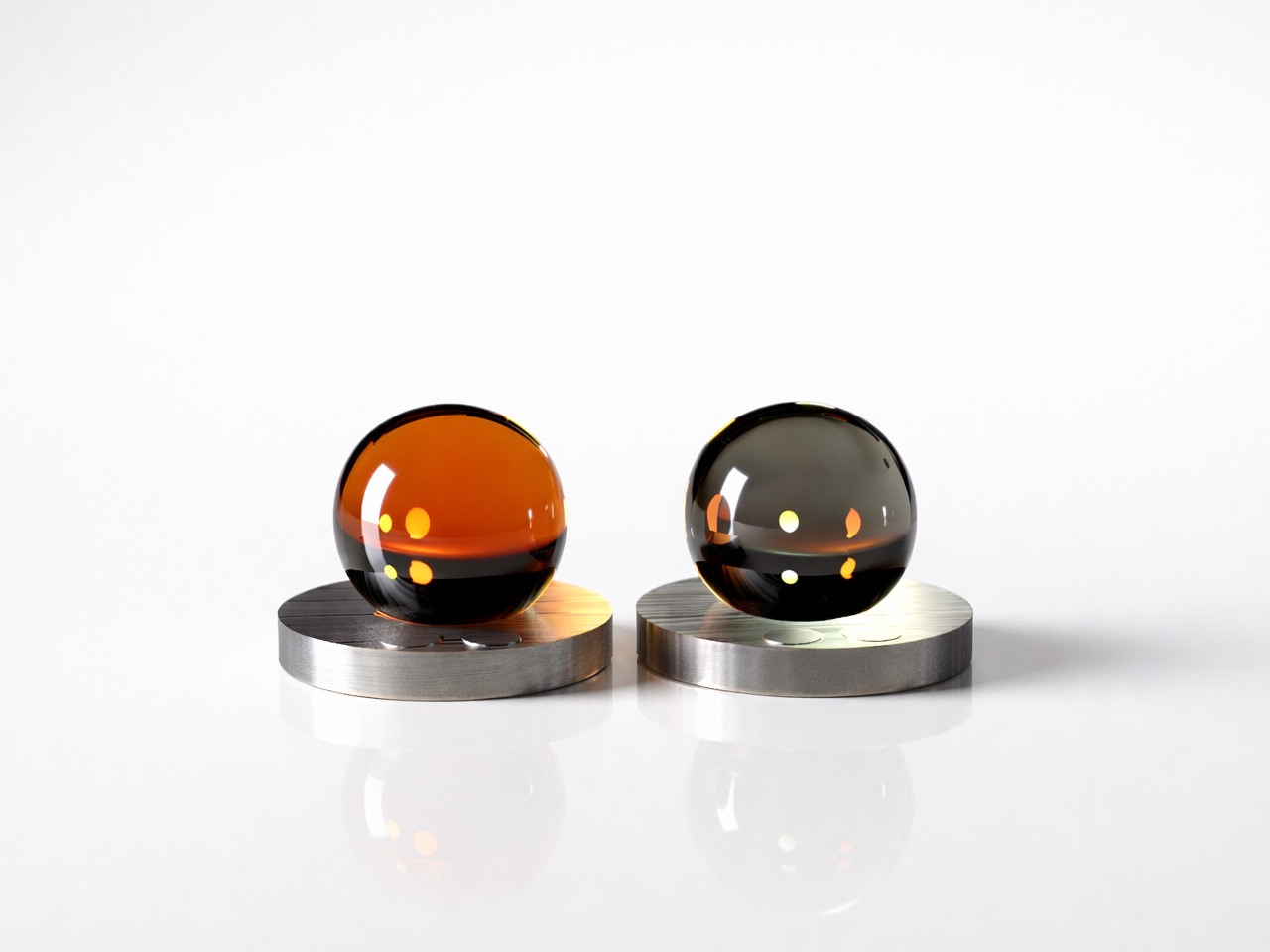
Ivana Nedeljkovska’s Flying Moon & Sun flips the usual assumption about lighting — instead of walking toward the light, the light walks toward you. The concept takes shape as two glass orbs, one in warm amber drawn from the energy of the sun and one in cool frosted blue that mirrors the moon’s quieter character. Each levitates above a brushed circular metal base through magnetic force, that floating quality expressing the central idea: a light that doesn’t need to be anchored anywhere in a room.

Living with it means giving up the idea that a room’s light is fixed and neutral. The amber orb suits an evening wind-down or a reading session, anywhere overhead lighting handles the mood badly. The cool blue shifts the atmosphere entirely, bringing a calm ambient quality that works differently in a bedroom than it does in a living room. For anyone tired of reaching for a switch, this concept points clearly in a direction worth following.

What We Like

  • Dual orbs deliver two distinct lighting characters — warm amber and cool blue — without any additional hardware
  • Levitation through magnetic force gives it a presence no cord-tethered or wall-mounted fixture can replicate

What We Dislike

  • Currently a concept design and is unavailable to purchase
  • Real-world performance around battery life, sensor accuracy, and magnetic durability remains untested

2. Anywhere-Use Lamp

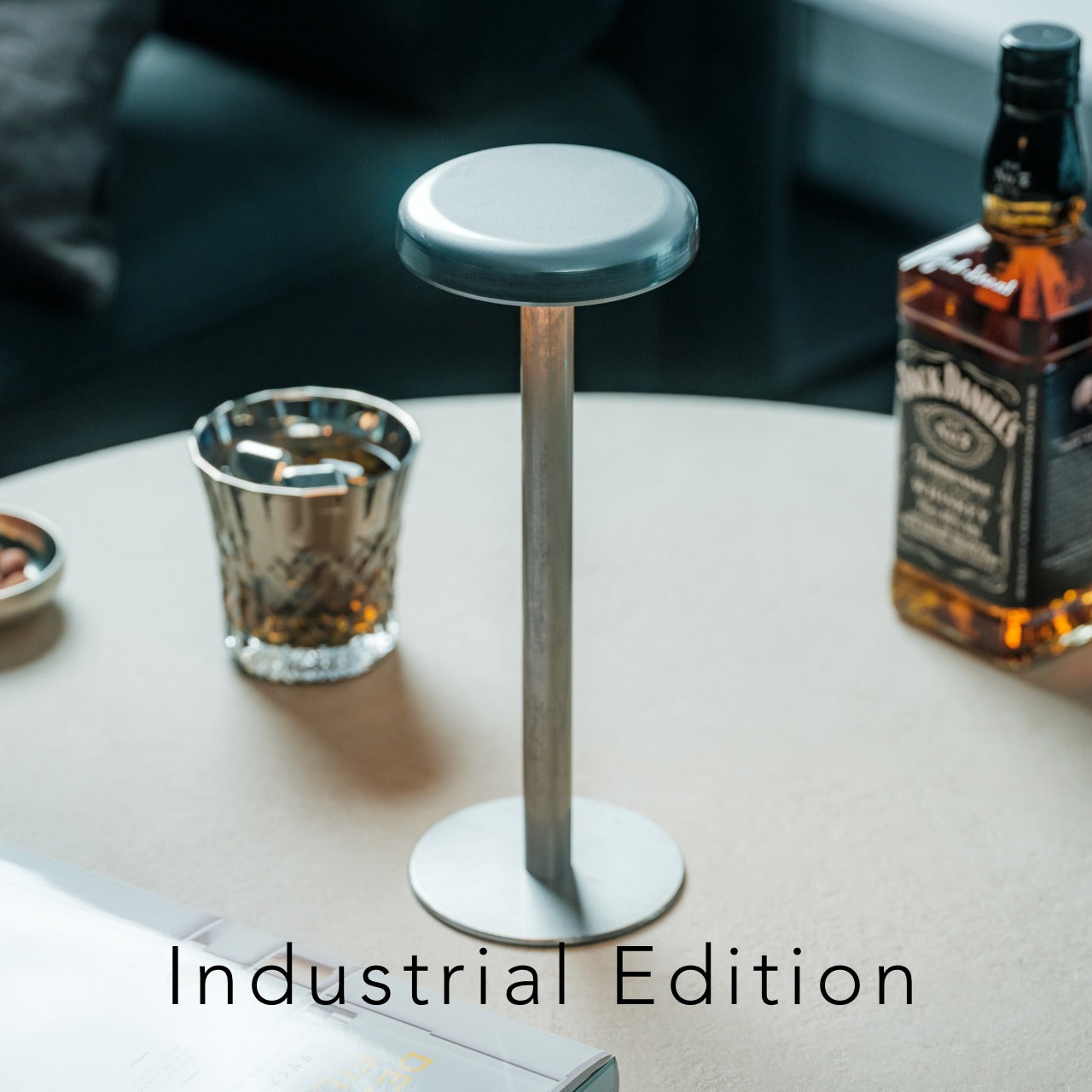
The Anywhere Use Lamp is one of the few portable lamps that actually looks like it belongs in a room. The mushroom silhouette is clean and minimal, available in black, white, and an Industrial edition with a scratch-detailed metal base that reads as honest material character rather than decoration. Six high color rendering LEDs produce a warm, soft glow calibrated toward mood over task — a distinction most battery-powered lamps in this category never bother to consider.

Running on four AA batteries, it disassembles flat enough to slide into a bag and sets up wherever you carry it. Pressing any edge of the cap cycles through four brightness levels with a satisfying tactile click — a detail that makes the lamp genuinely pleasurable to use every day. For a dinner table without an outlet nearby, a reading corner mid-renovation, or a patio gathering that deserves better than a string of bulbs, it places the right quality of glow exactly where it’s needed.

Click Here to Buy Now: $149.00

What We Like

  • Fully modular and battery-powered — complete location freedom with no outlet planning required
  • Tactile click feedback on each brightness cycle is a deliberate sensory detail that elevates daily use above anything else in its portable category

What We Dislike

  • Standard AA batteries require ongoing replacement, adding a recurring cost that a built-in rechargeable option would eliminate
  • The mushroom silhouette, while clean, is familiar enough in this market to lack the full visual distinction the Industrial edition’s scratched base brings

3. Fire Capsule Oil Lamp


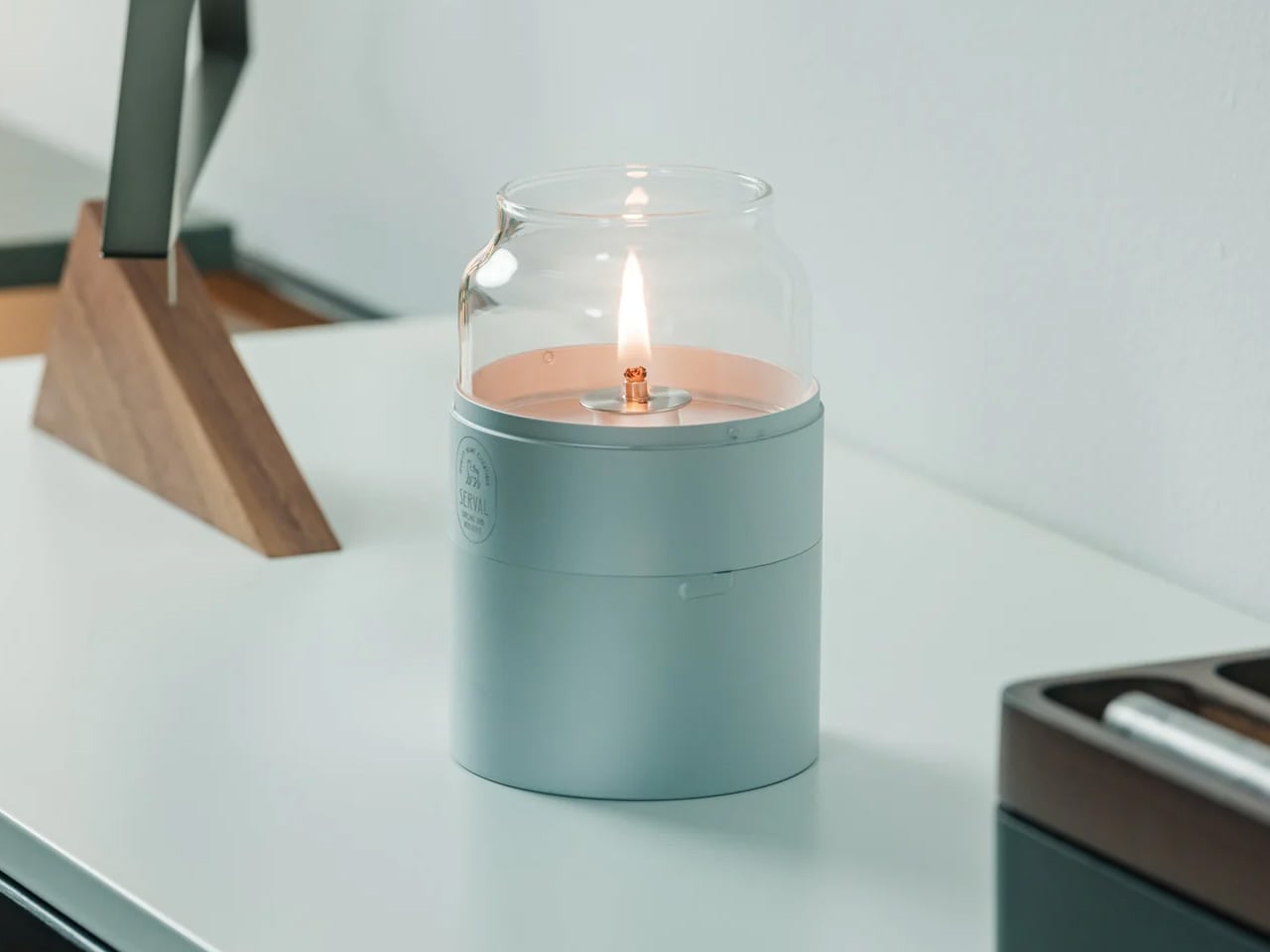
The Fire Capsule is an oil lamp in a cylindrical glass form, and it works because everything has been reduced to exactly what the object needs. A precision-engineered lid keeps the chimney clean between uses. An 80ml capacity delivers up to 16 hours of continuous light — enough for a full dinner or a slow evening without refilling. An included aroma plate lets you layer scent alongside the glow, turning the lamp into a multi-sensory presence on any surface it occupies.

The flat-topped design allows multiple units to stack cleanly, and paraffin oil with insect-repelling properties extends its usefulness outdoors — on a patio, a terrace, or any table where atmosphere and comfort both belong on the list. For a dining setup that already has overhead light and simply needs something warmer at eye level, the Fire Capsule handles it without consuming space you can’t spare. A drawstring pouch makes it as easy to carry as it is to use.

Click Here to Buy Now: $90.00

What We Like

  • A 16-hour burn time from a single fill makes it a genuinely practical choice for extended gatherings, not just decorative use
  • The aroma plate adds a scent layer most lamps never attempt, turning a light source into a full atmosphere object

What We Dislike

  • Paraffin oil requires regular restocking, and the insect-repelling outdoor variant may need sourcing through specialist retailers
  • The glass chimney, while protected by the lid between uses, requires careful handling when packing for travel

4. JAL

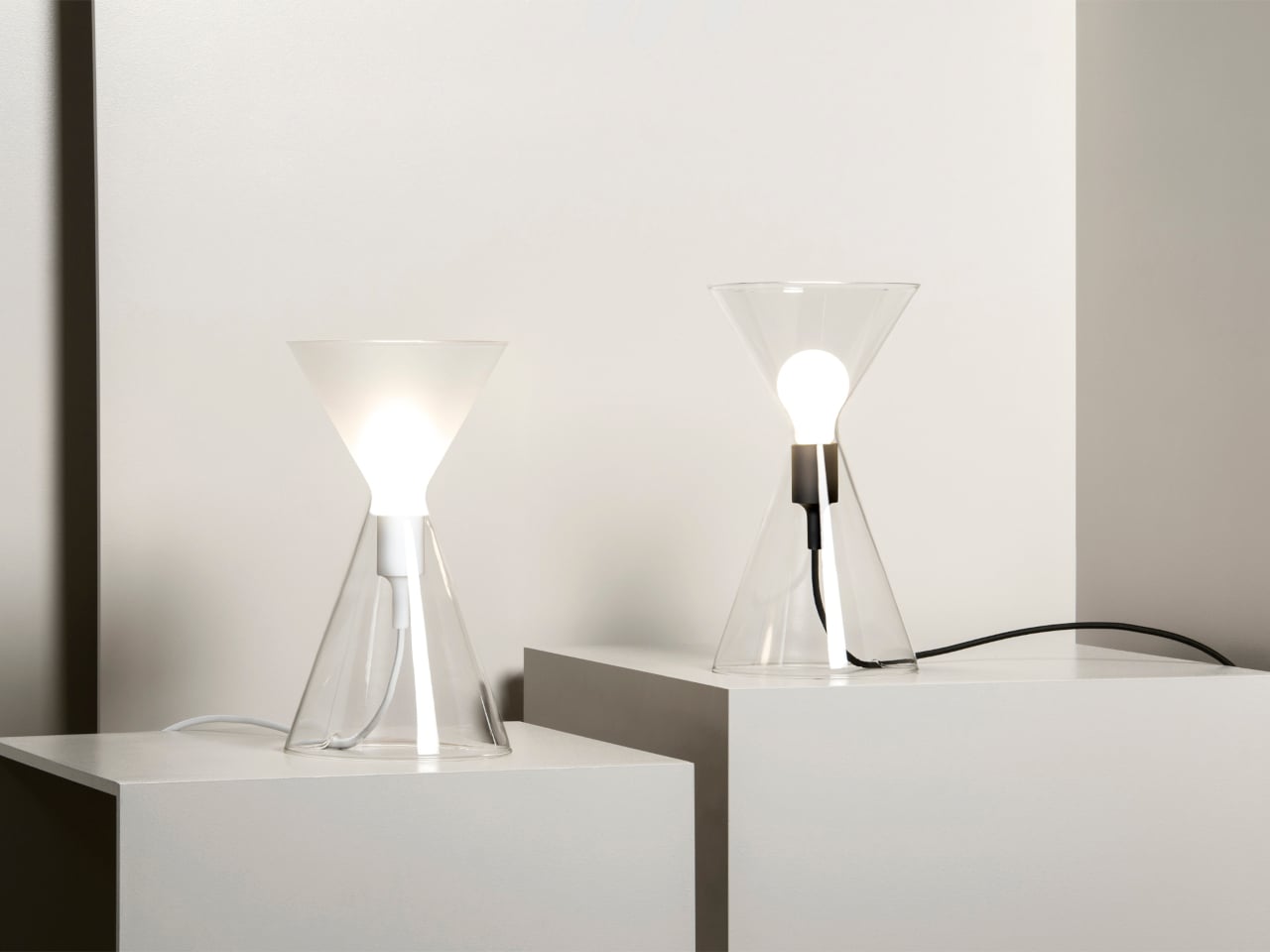
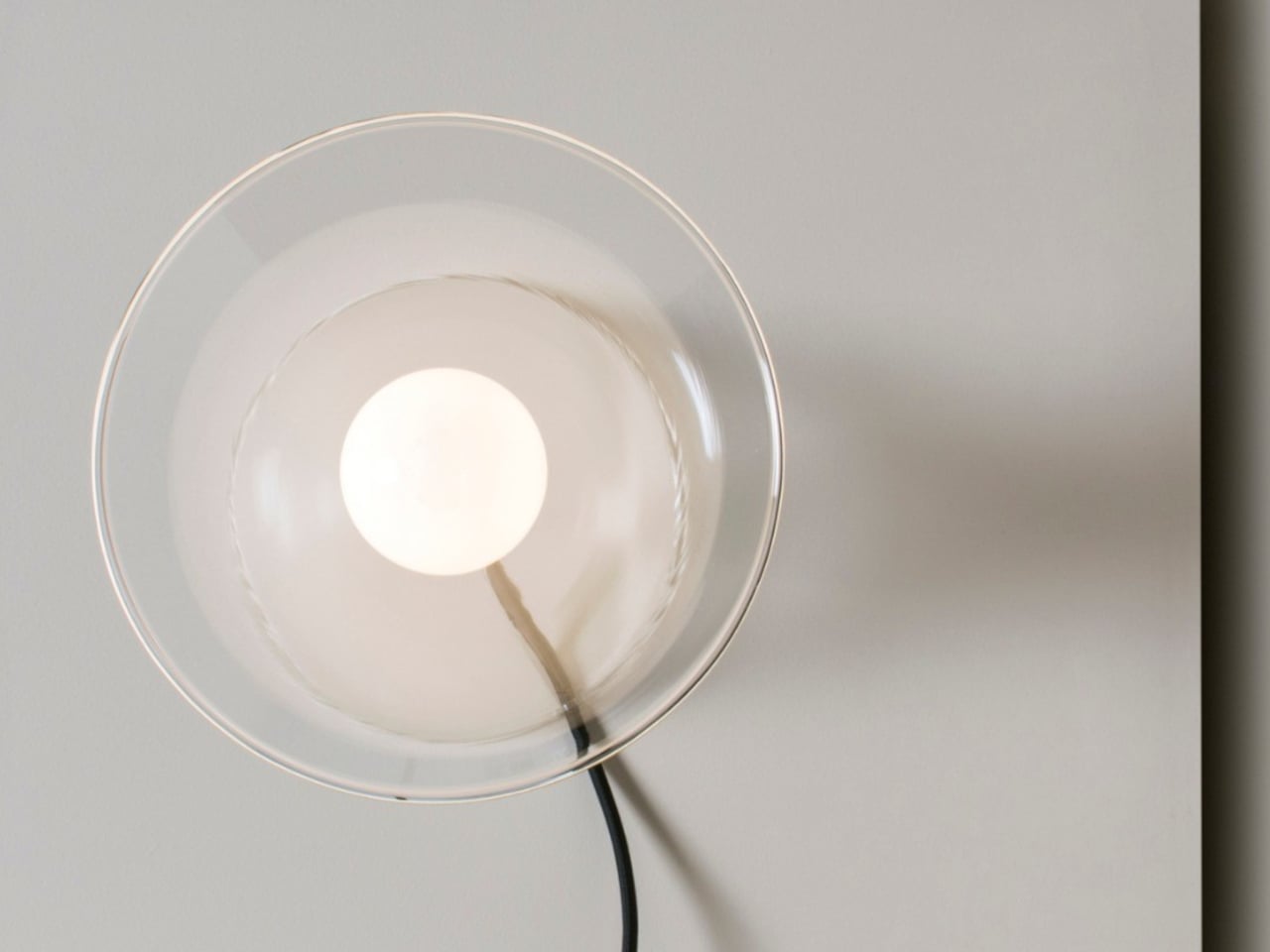
JAL is built from two glass cones joined tip to tip in a form that reads immediately as an hourglass. The bulb sits inside this sealed geometry and appears to float in mid-air — a quality that gives the lamp real presence before you’ve considered what it actually does. Available in transparent or frosted glass with a colored cable as the only other visible element, the form does all the work. It belongs on a sideboard, a console, or a bedside, and holds that position without competing with anything around it.

The more you interact with it, the more considered it reveals itself to be. Place the lamp with the bulb facing upward, and it behaves like a conventional table lamp, sending light toward the ceiling. Flip it so the bulb faces downward, and it becomes a softer source that pools light onto the surface below — closer to a glowing object than a reading companion. One rotation, two completely different functions, no settings required.

What We Like

  • Flipping the lamp changes its function entirely with a single physical gesture — no apps, dimmers, or remote controls involved
  • The hourglass form holds its own as a visual object even when it’s switched off

What We Dislike

  • All-glass construction requires careful handling with no obvious protection during storage or transport
  • The colored cable adds character but limits neutral styling options for more minimal setups

5. Harmony Flame Fireplace

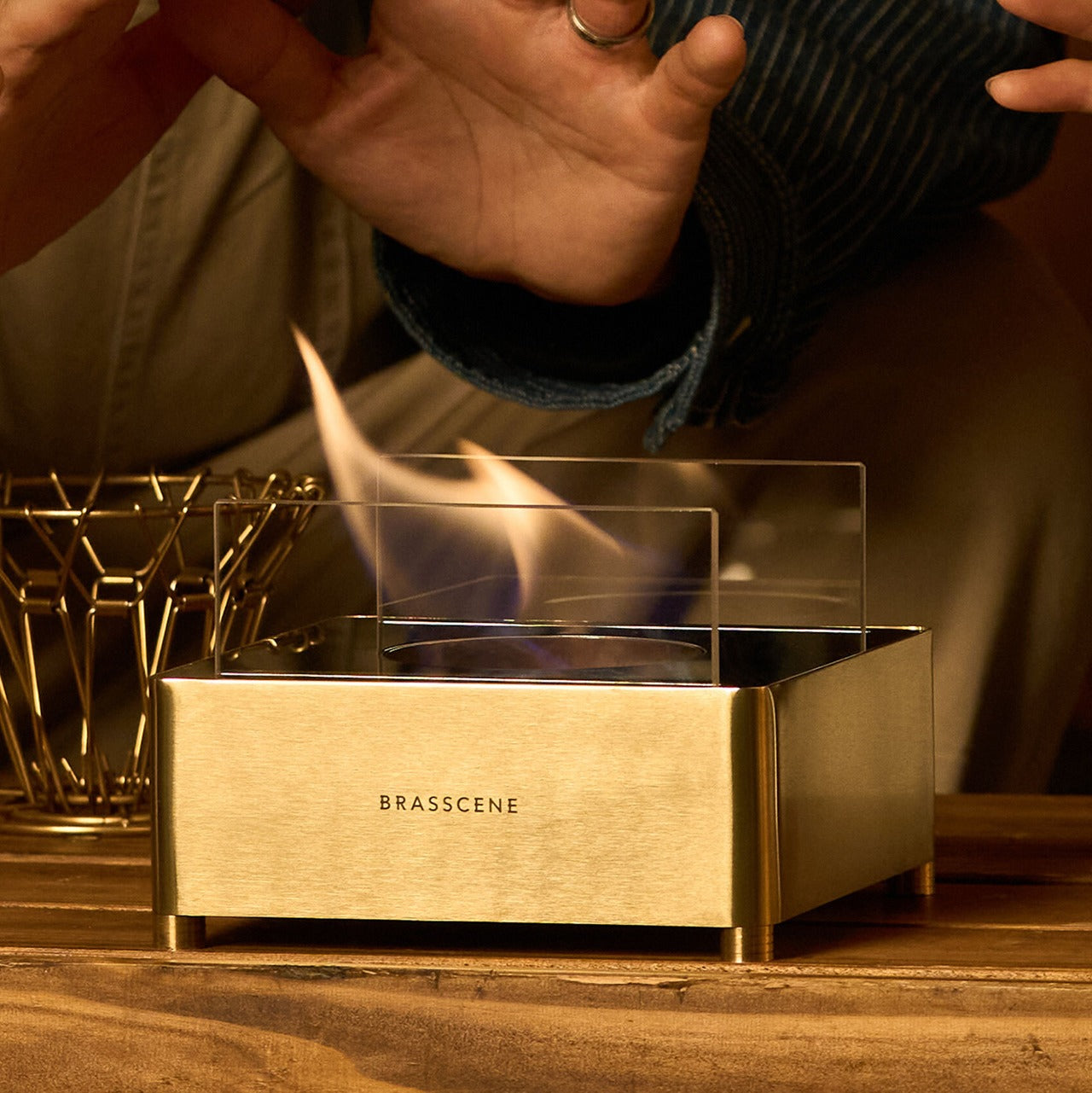
The Harmony Flame Fireplace is made by craftsmen who build brass musical instruments, and that connection is visible in the finish and felt in the weight of the object. It burns bioethanol that is odorless, smokeless, and clean enough for indoor use, and the flame plays against the reflective brass interior in a way that creates a shifting, living quality of light no bulb can replicate. Shadows move on the surrounding walls. The room feels different. No installation, no wiring, no planning — you fill it and the space changes.

Brass develops a patina over time that makes the object more interesting rather than less — a quality that cheaper materials never manage and most design objects don’t survive long enough to demonstrate. For a dining table that earns its centerpiece through material presence rather than novelty, or an outdoor setting that deserves something more honest than a string of lights, the Harmony Flame Lamp delivers with real authority. It’s also the one on this list that people are most likely to ask about by name.

Click Here to Buy Now: $240.00

What We Like

  • Hand-crafted brass construction develops genuine character over time, giving it depth no manufactured alternative can match
  • Bioethanol burns without odor or smoke, making an open indoor flame genuinely practical — rare in a lamp this well-made

What We Dislike

  • An open flame requires standard fire safety awareness and isn’t suitable for unsupervised use around young children or pets
  • Bioethanol fuel is not universally stocked and may require a specialist supplier, depending on your location

The Right Lamp Changes Everything Else

Good lighting doesn’t announce itself — it changes how a room feels before you can explain why. These five designs each do something specific: one proposes a new relationship between light and movement, one turns a single rotation into a full shift in function, and one brings the right quality of warmth to wherever the evening happens to be. None of them are objects you choose simply because a corner needed filling.

One works through scent as much as one does through light. One earns its presence through material quality that only improves with time. Another proposes a concept so specific it makes every fixed lamp feel like a missed opportunity. You don’t need all five. But the right one changes how the rest of the room reads — and that’s what separates a lamp worth noticing from one that simply occupies space.

The post 5 Clever Lighting Designs That Actually Deserve to Be the First Thing You Notice in a Room first appeared on Yanko Design.
Why the Audrey by CozyCo Might Be the Most Practical Tiny Home on the Market

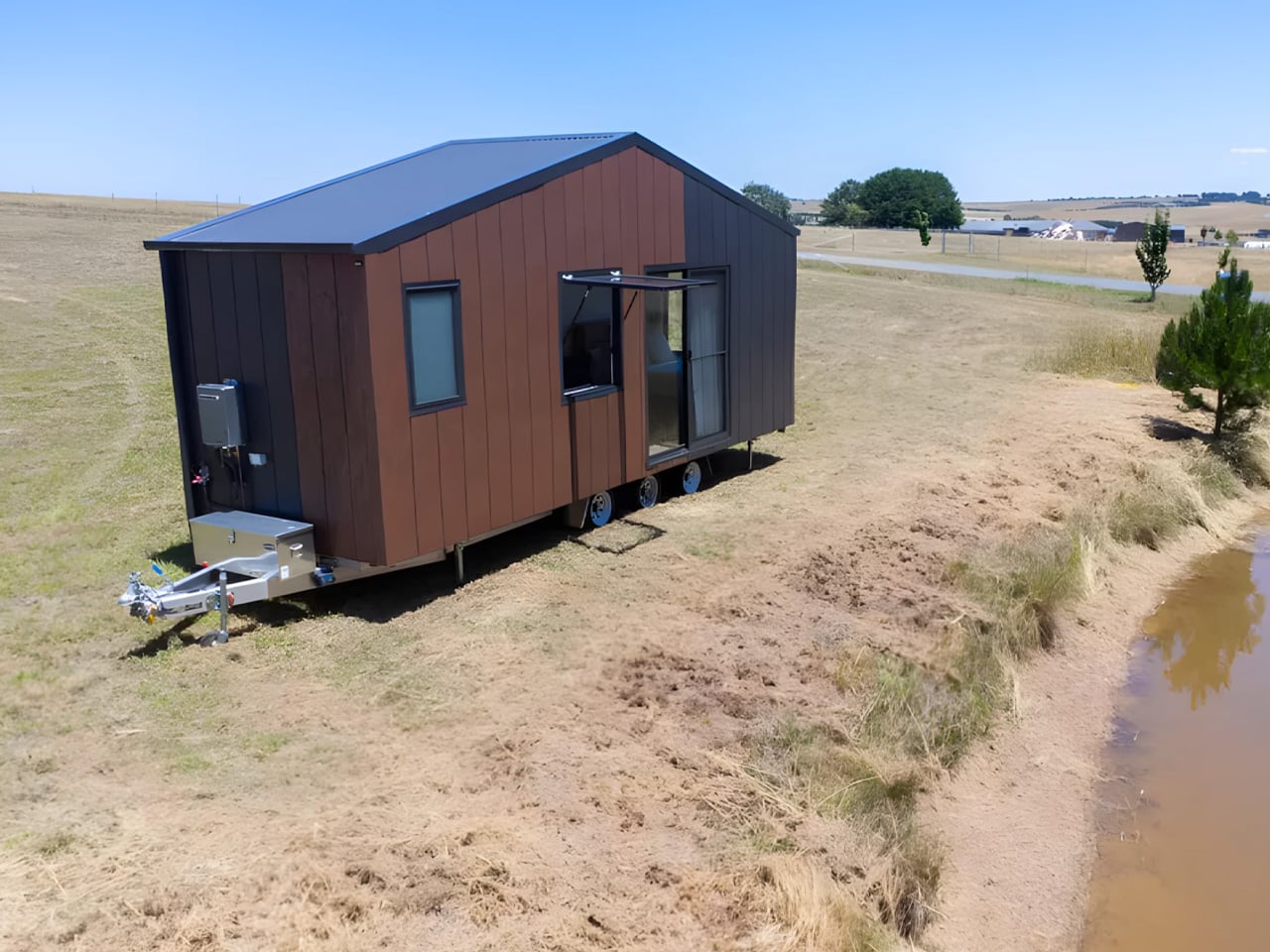
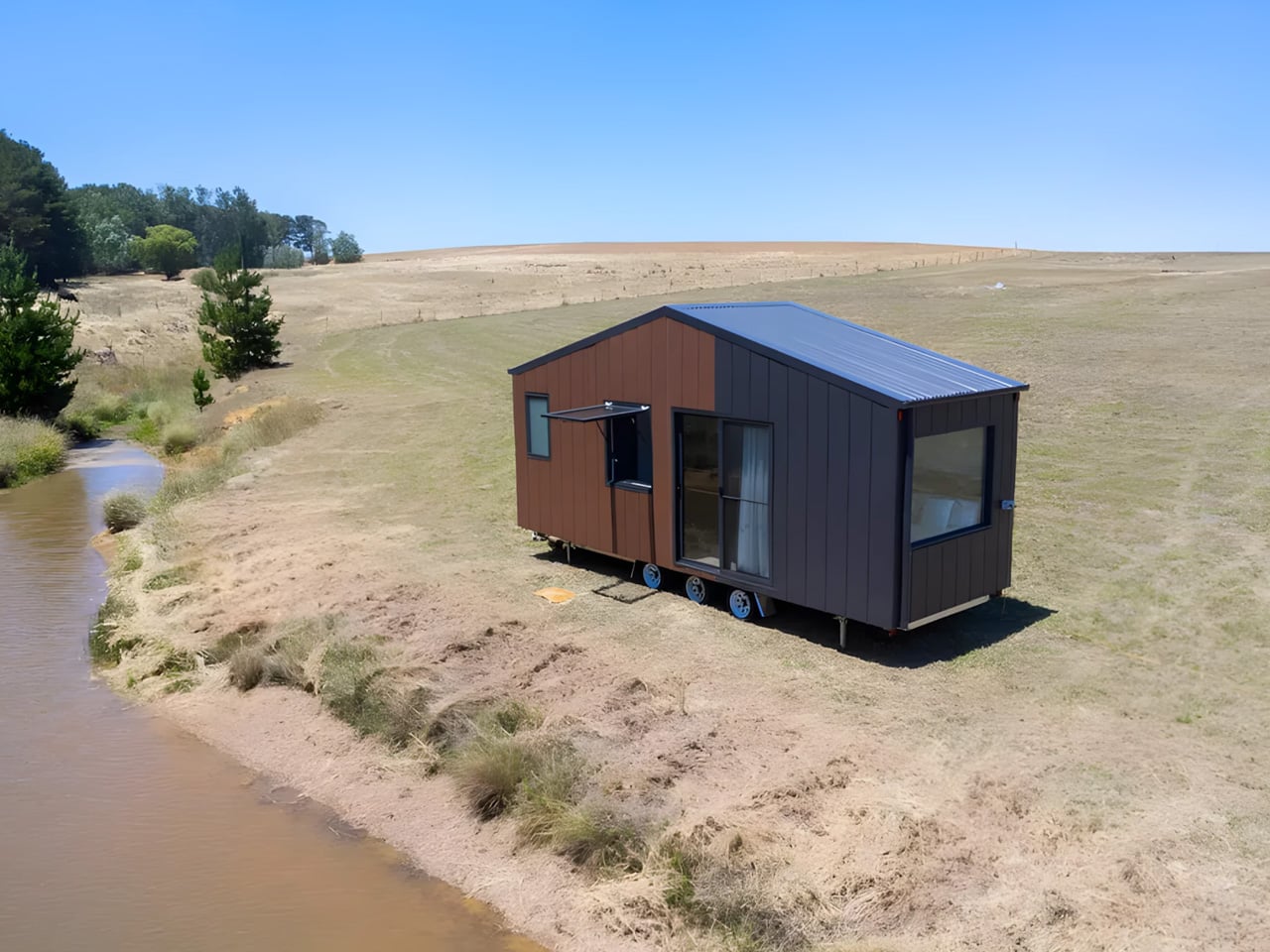
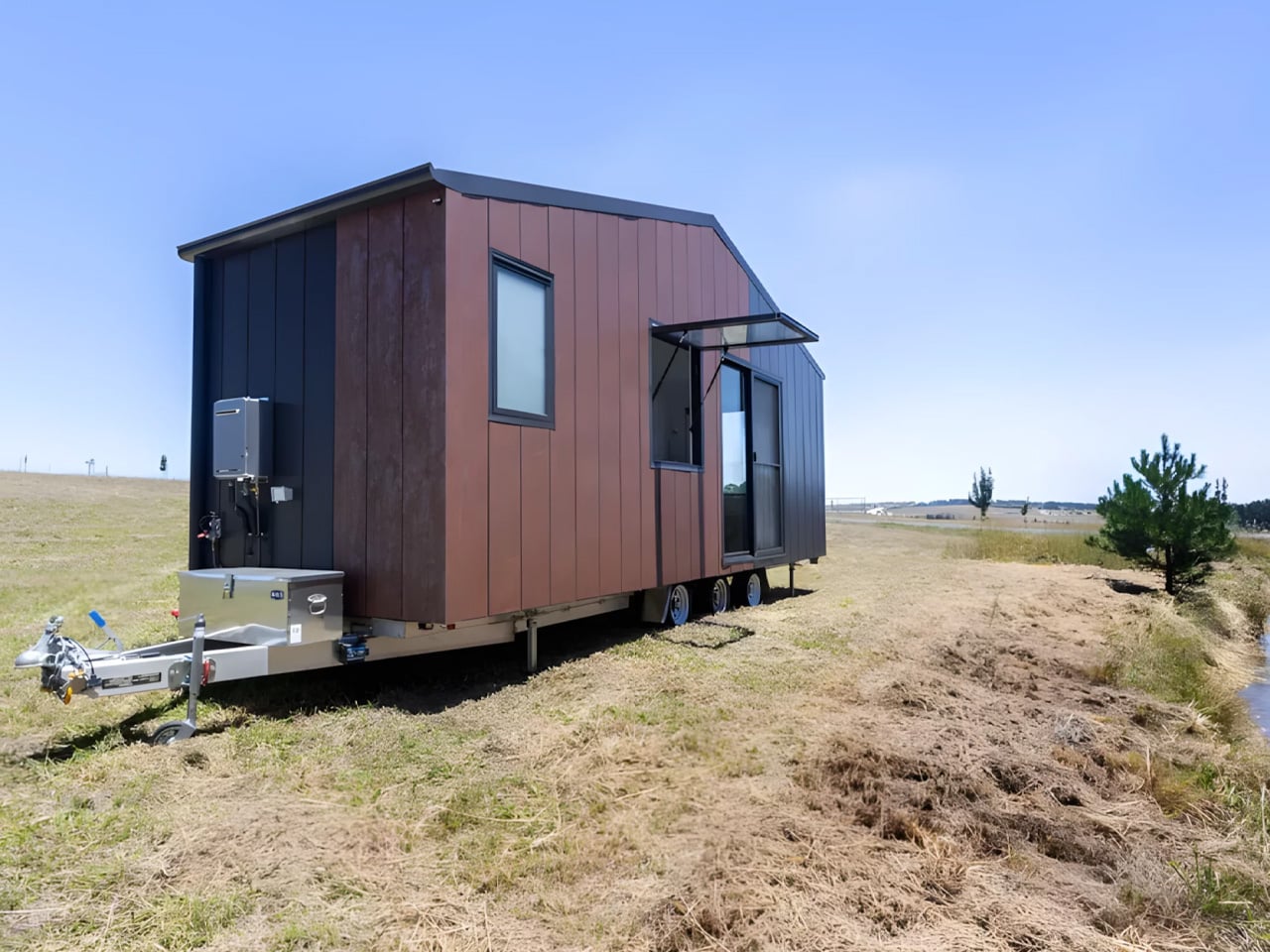
Most tiny homes ask you to compromise. The Audrey by Australia’s CozyCo Tiny Homes is built around the idea that you shouldn’t have to, delivering a compact, single-level build that makes efficient living look effortless. At just 7.2 metres (23.7 ft) long and mounted on a triple-axle trailer, the Audrey punches well above its footprint.

Its exterior is a clean mix of corrugated aluminium and timber-look panels, a combination that gives the home a timeless aesthetic that could slot into a bush property, a coastal block, or a suburban backyard without missing a beat. A small external box handles propane storage, keeping things tidy on the outside.

Designer: CozyCo Tiny Homes

Step inside, and the single-level layout immediately makes sense. Designed to sleep up to two people comfortably, the Audrey works equally well as a short-stay rental, a guest suite, a granny flat, or a semi-permanent retreat. The open studio configuration keeps circulation easy, while sliding glass doors flood the interior with light and make the space feel far larger than its dimensions suggest.

The build quality is where CozyCo makes its case. R2.5 insulation, VJ paneling, and double-glazed windows work together to keep thermal comfort dialed in across seasons. Gas, hot water, and air conditioning mean the Audrey handles year-round living without compromise. A storage bed rounds out the interior, removing the need for bulky furniture and keeping the floor plan clean.

For those who want to go further off-grid, CozyCo offers optional packages that include solar power systems, eco-friendly toilets, and water storage. The brand sources materials locally and builds each home to residential standards, backing every Audrey with a seven-year structural warranty and a lifetime warranty on the trailer. That’s a level of confidence that’s rare in the tiny home space.

CozyCo is an Australian outfit that brings real construction industry experience to the table, with a clear focus on builds that minimise environmental impact and maximise longevity. The Audrey is architecturally designed and finished to a premium standard, not a flat-pack workaround, but a proper home that happens to be mobile.

Whether the goal is Airbnb income, a low-maintenance guest house, or a quieter way of living, the Audrey makes a compelling argument. It’s proof that you don’t need more square footage. You need better decisions about the space you already have.

The post Why the Audrey by CozyCo Might Be the Most Practical Tiny Home on the Market first appeared on Yanko Design.
5 Best EDC Drops for April 2026 That Are Actually Worth the Pocket Space

Pocket real estate is non-negotiable. Every gram you carry should earn its spot — by solving a problem you actually face, doing it better than what’s already in your rotation, or pulling off both without adding the kind of bulk that defeats the purpose of carrying light. April delivered a focused set of drops that clear that bar across the board.

The drops include a tool built on a patent that predates the first World War, a carabiner that turns an AirTag into proper hardware, a collaboration piece that turns Japanese wave motifs into functional grip texture, and a flashlight that rethinks how a carry light should deploy. None of these is an impulse purchase. They’re the work of people who thought seriously about what an object owes the person carrying it.

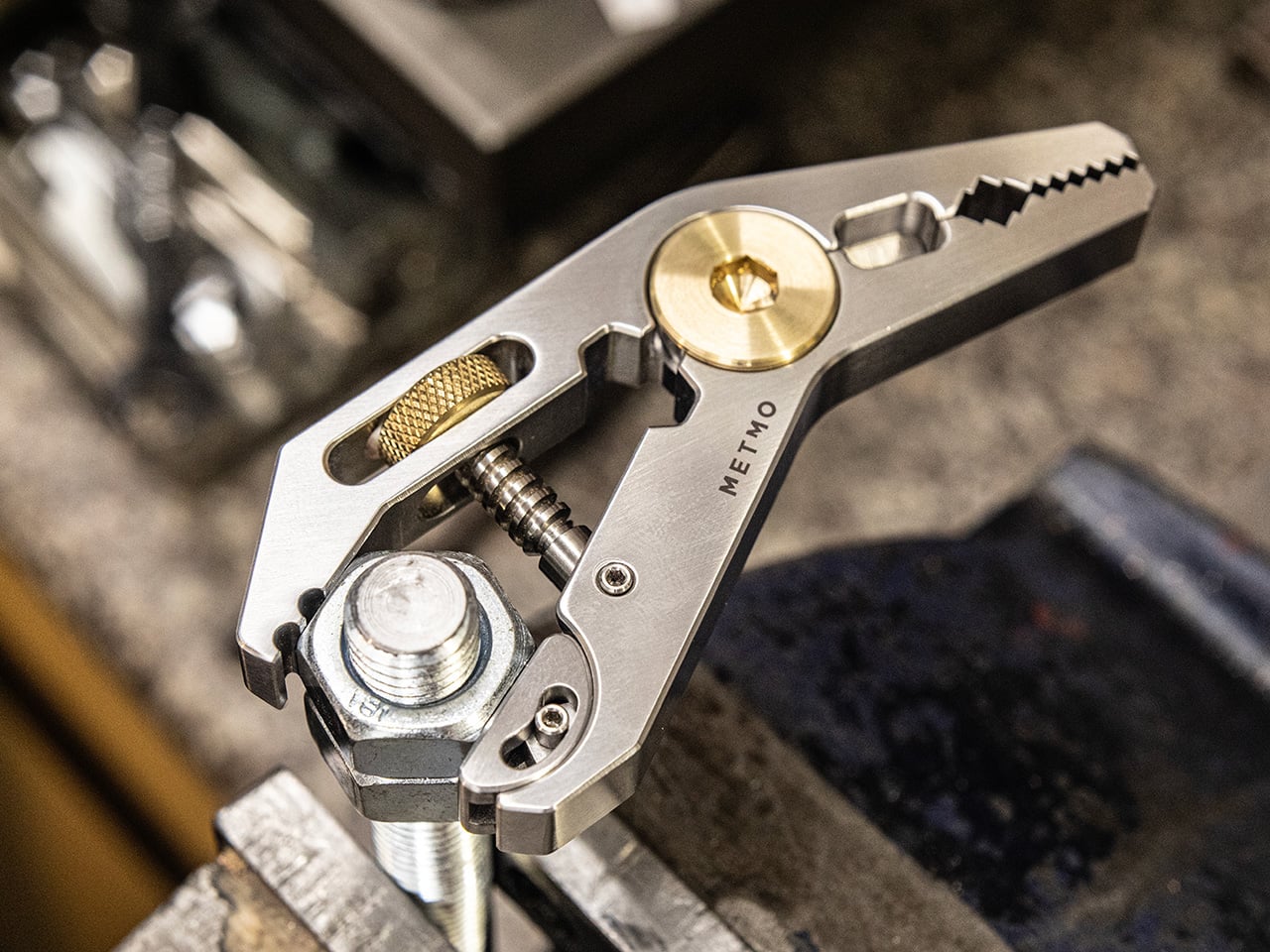
1. MetMo Pocket Grip — A 1913 Patent, Finally Fulfilled

The Pocket Grip is proof that the best ideas don’t expire — they wait for the manufacturing era that can do them justice. MetMo pulled a 1913 Anderson patent from near-total obscurity and rebuilt the concept from scratch using CNC machining and modern metallurgy. The double-ended, central-pivot architecture that made the original mechanically clever is still the structural engine here, but the tolerances, surface finishing, and material quality are generations ahead of what Anderson’s era could produce. It doesn’t feel like a revival. It feels like the tool is arriving for the first time, fully formed.

What keeps it from becoming a novelty is the design discipline packed into every surface. The central pivot, a structural requirement in the 1913 concept, is machined to serve as a 1/4-inch hex drive for standard bits. The jaws split into distinct functional zones: a chomping area for raw grip, dedicated geometry for round and flat objects, and a nipping point for edge work. Nothing is decorative. Every millimeter carries a job, which is a genuinely rare quality in a category that usually trades specificity for the appearance of versatility.

What We Like

  • CNC precision transforms a century-old mechanical concept into a tool that performs to modern standards
  • Jaw geometry, divided into distinct zones, removes the clumsy generalism of traditional multi-tool pliers

What We Dislike

  • The central-pivot format will feel unfamiliar to anyone who’s built habits around conventional plier-style tools
  • Specialized architecture means it won’t replace a full multi-tool on extended technical trips

2. AirTag Carabiner — Aerospace-Grade Metal for Your Most-Forgotten Gear

The problem with most AirTag holders isn’t the tracker — it’s the housing. Plastic shells and rubber sleeves cheapen what should feel like a permanent fixture in your carry system. This Duralumin composite carabiner takes a different position entirely, using a material cleared for aircraft, spacecraft, and marine environments to do a job most people hand off to a keyring loop. The result is a carabiner that snaps onto a bag strap, bike frame, or umbrella handle and genuinely disappears into the hardware without looking like an afterthought.

What makes it worth calling out specifically is the handcrafted construction and the material choices available at checkout. Duralumin keeps the weight negligible while delivering structural integrity that synthetic alternatives simply can’t match at this scale. Untreated brass and stainless steel variants let you match the finish to what’s already on your keychain or bag without compromising the function. The AirTag sits cleanly inside the carabiner body, turning a tracker that would otherwise rattle around a pocket into something secured, accessible, and built to last well beyond the device it’s carrying.

Click Here to Buy Now: $149.00

What We Like

  • Duralumin construction brings aerospace-grade material standards to an everyday carry accessory without adding perceptible weight
  • Multiple finish options in brass and stainless steel let it integrate into an existing carry system rather than clash with it

What We Dislike

  • AirTag is not included, meaning the full cost of the setup requires accounting for Apple’s tracker price separately
  • Carabiner-style attachment won’t suit minimalist setups where a slim keyring profile is a priority

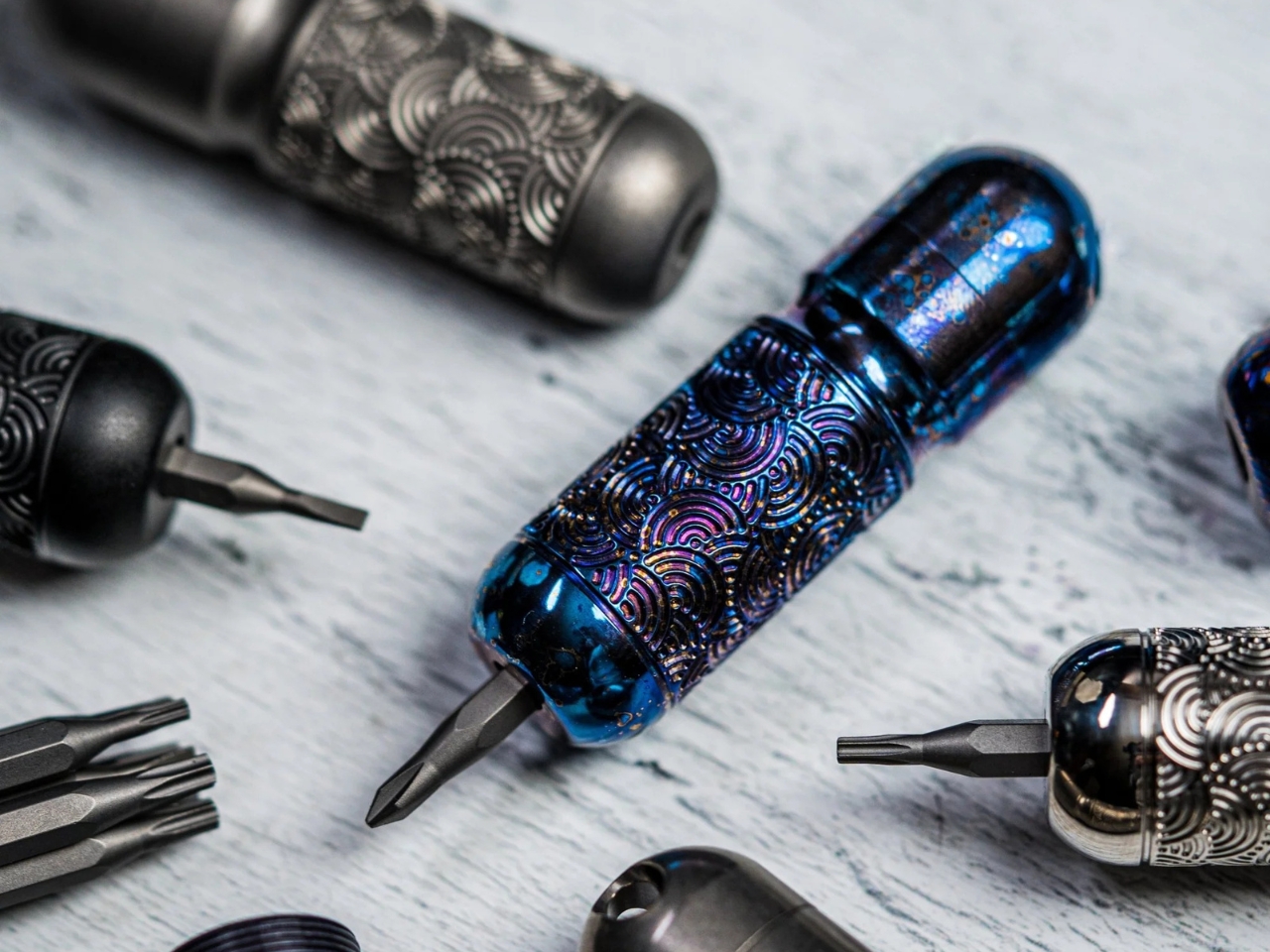
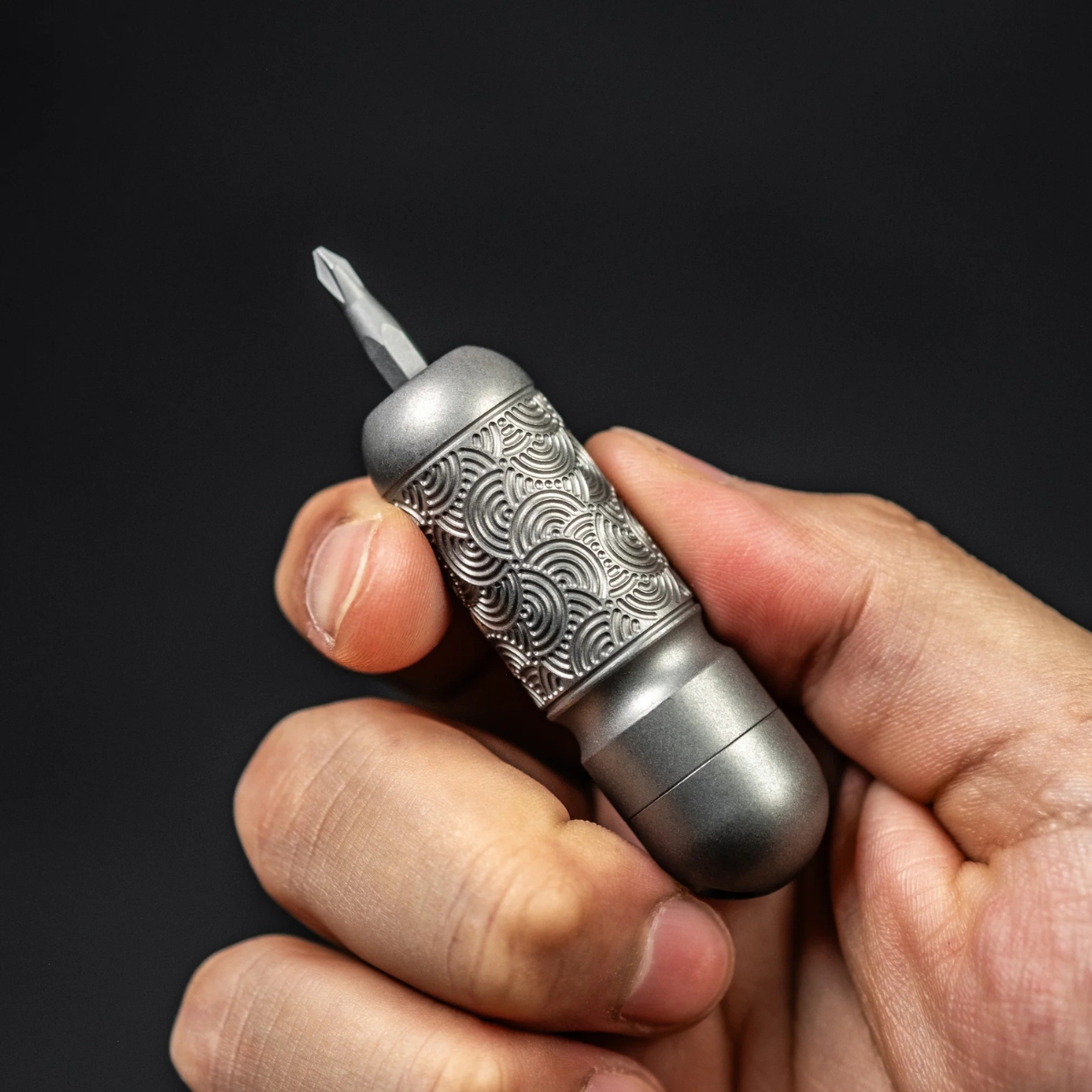
3. Audacious Concept x URBAN Tool XS — Chaos Seigaiha Edition

The collaboration between Audacious Concept and URBAN EDC produced something the limited-edition tool market rarely manages — a piece that’s genuinely better because of its design, not just more expensive because of its branding. The titanium body is milled with the Chaos Seigaiha pattern, a Japanese wave motif that reads immediately as art on a shelf. Hold it, and the texture resolves into a real grip surface, tactile enough to prevent slip under pressure without being rough against pocket fabric or a keychain ring. Lightweight, corrosion-resistant, and built to outlast most objects you’ll carry alongside it for the next decade.

Inside the body, a neodymium magnetic core holds seven micro bits in place and releases them cleanly on demand. The selection covers Phillips and flathead sizes, which handle the practical scope of most small-scale fastener work — eyeglass adjustments, consumer electronics, and pocket gear maintenance. Bit retention is tight enough that nothing rattles loose in a jacket pocket, but the swap is smooth and one-handed. For something designed to live on a keychain, the functional depth is serious enough to make reaching for a larger screwdriver feel unnecessary for anything outside heavy-torque work.

What We Like

  • The Seigaiha milling functions simultaneously as a visual identity marker and a genuine grip surface
  • Magnetic core bit retention secures seven micro bits without adding measurable weight to the titanium body

What We Dislike

  • Limited-edition status means supply is finite, and secondary market pricing will reflect that quickly
  • Micro bit format won’t satisfy tasks requiring full-size driver torque or a longer shaft reach

4. 8-in-1 EDC Scissors — The Tool That Benefits From Being Underestimated

The instinct to dismiss a palm-sized pair of scissors is exactly what makes this carry piece a reliable surprise. At 13 centimeters, it disappears into a zipper pocket or bag compartment without registering as weight or bulk — but the eight integrated tools inside that frame cover a range of everyday situations that most dedicated items can’t individually match. Scissors, knife, lid opener, can opener, cap opener, bottle opener, shell splitter, and degasser. The oxidation film finish resists rust and gives the whole object a clean matte black profile that holds its look through daily contact and pocket friction without complaint.

Where compact multi-tools often make you feel the engineering compromises in your hand, these scissors stay intuitive throughout. The scissors work like scissors. The openers work without awkward repositioning or a three-step learning process. The geometry is uncomplicated, and the execution is clean, which matters more than mechanical cleverness when you’re opening a can at a campsite or dealing with packaging without a workspace. This is the kind of tool that earns its spot precisely by disappearing into the carry and only surfacing when it’s actually needed.

Click Here to Buy Now: $59.00

What We Like

  • 13cm form factor fits cleanly into zipper pockets and bag compartments without displacing other carry items
  • Eight functions without mechanical complexity keep the tool immediately usable under real-world time pressure

What We Dislike

  • Compact size limits leverage, meaning heavier cutting tasks will push past what the scissors can comfortably handle
  • First-time users need a short adjustment period to locate each function quickly without looking

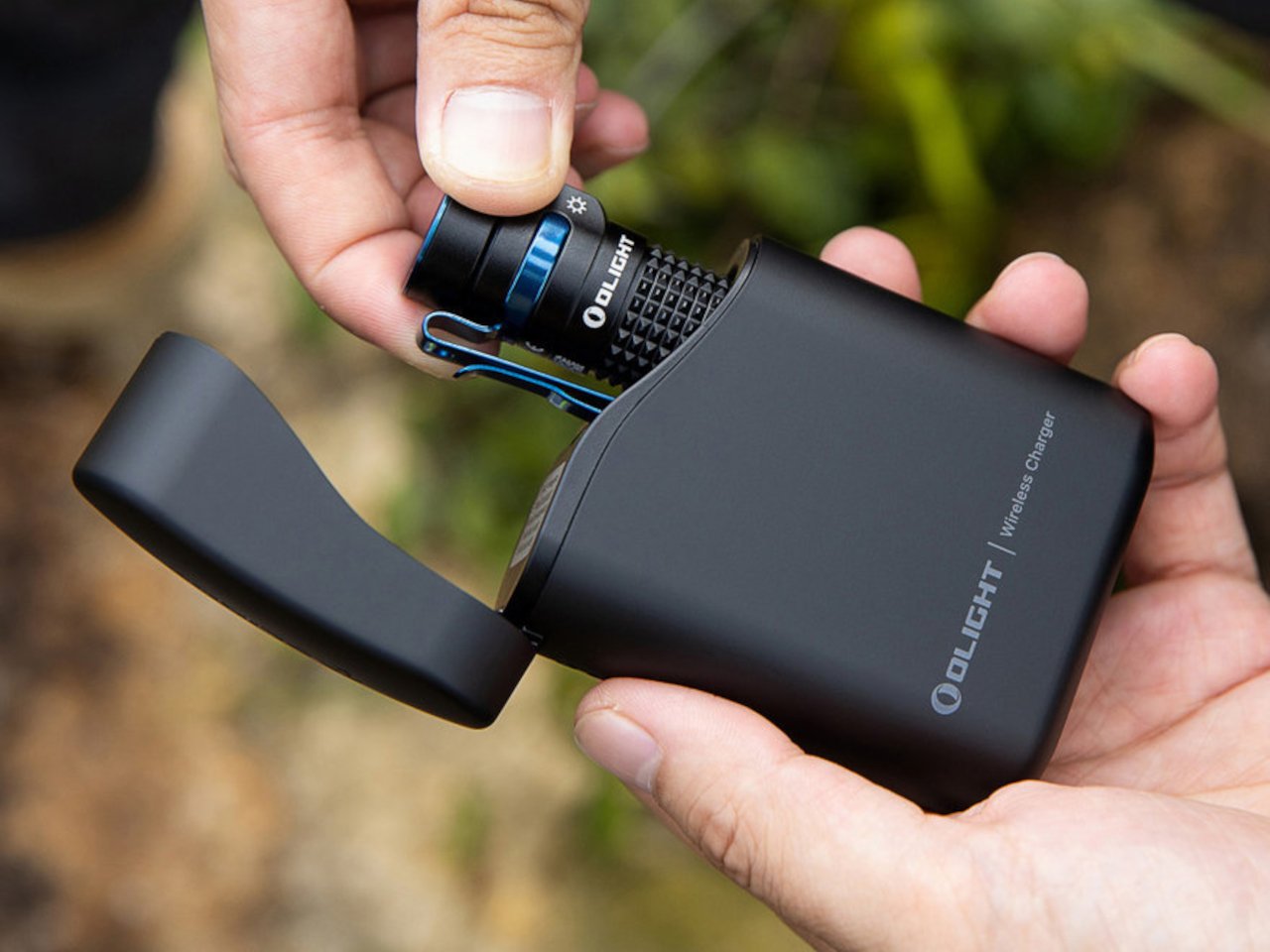
5. Olight Baton 4 Premium Edition — The Flashlight That Figured Out Deployment

The 5,000mAh flip-top charging case is the real innovation here, and it changes how a flashlight behaves as an EDC item in a way that’s easy to underestimate until you use it in the dark. Flip the cover, press the side button, and 1,300 lumens activate while the light stays seated and secured inside the case. That one design decision removes the most persistent friction point in carry lighting — the fumble of finding, pulling, and orienting the flashlight when time actually matters. The case fits jacket pockets and pack hip belts without issue, keeping the light charged and immediately accessible across a full day of use.

The Baton 4 flashlight itself delivers 1,300 lumens at a 170-meter throw from a cylinder compact enough to stop registering as a presence after the first few carries. LED indicators display brightness level and remaining battery without guesswork, which becomes meaningful on longer backcountry trips where runtime management is part of staying prepared. One-handed case operation keeps the other hand free on technical terrain. The case charges other compatible Olight models, which adds genuine ecosystem value for anyone already carrying their hardware. For the output-to-size ratio it delivers, this is a difficult flashlight to argue against at any level of the carry conversation.

What We Like

  • Flip-top case enables immediate one-handed light activation without removing the flashlight from its housing
  • Case charges multiple compatible Olight models, turning one accessory into a multi-device carry solution

What We Dislike

  • Premium pricing places it well above the entry-level EDC flashlight bracket, narrowing its practical audience
  • The charging case adds volume that won’t suit ultra-minimalist or slim front-pocket carry configurations

The Best EDC Gear Doesn’t Ask for Attention — It Just Performs

What connects these five drops isn’t price point or category — it’s intentionality. Each one reflects a design process where the question wasn’t “what can we add?” but “what does this object actually owe the person carrying it?” That shift in thinking is what separates a tool worth carrying from one that looks convincing in product photography but quietly disappears from rotation after the first week. April’s strongest EDC offerings share that quality, and it shows.

The carry conversation has matured past the spec sheet arms race. Lumen counts, blade counts, and material callouts matter less than how an object behaves in the hand at the moment it’s needed. The MetMo earns its pivot. The RetroWave earns its seven roles. The Baton 4 earns its case. When gear is designed with that level of accountability, it doesn’t just fill pocket space — it justifies every square centimeter of it.

The post 5 Best EDC Drops for April 2026 That Are Actually Worth the Pocket Space first appeared on Yanko Design.
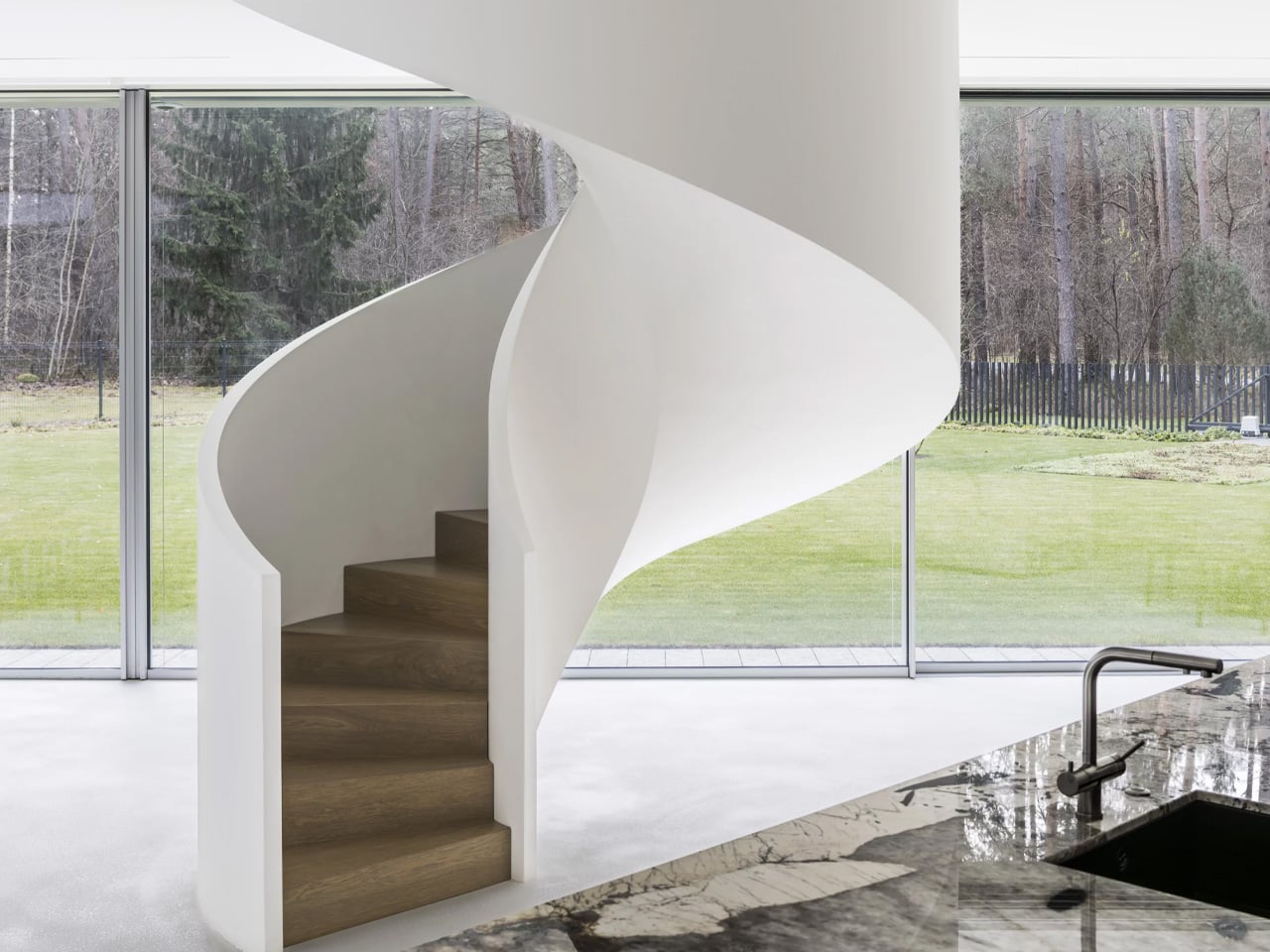
This Sharp-Cornered Lithuanian Home Only Exists Because Planning Rules Wrecked the Original Design

Most architects fold when the rules change. The Trim House by Polish firm KWK Promes, completed in 2025 in a forested suburb of Vilnius, Lithuania, is exactly that kind of project. It began in 2016, when KWK Promes, led by Robert Konieczny, won a closed competition to design a luxury single-family home on a wooded plot in suburban Vilnius. The site carried its own quiet history, once dotted with interwar wooden cottages that had long since disappeared, leaving behind open ground and a loose scatter of trees. What followed was a straightforward brief and an optimistic timeline. Then, mid-design, local planning regulations changed everything.

The allowable building footprint was slashed in half. The driveway was also repositioned, now cutting directly through the garden. The client’s instinct was to abandon the site altogether. KWK Promes had a different idea. Rather than retreat, the firm persuaded the client to stay, reduce the total area by 40%, and let the new constraints rewrite the geometry entirely. The result was a triangular floor plan, precise, deliberate, and oddly inevitable once you see it.

Designer: KWK Promes

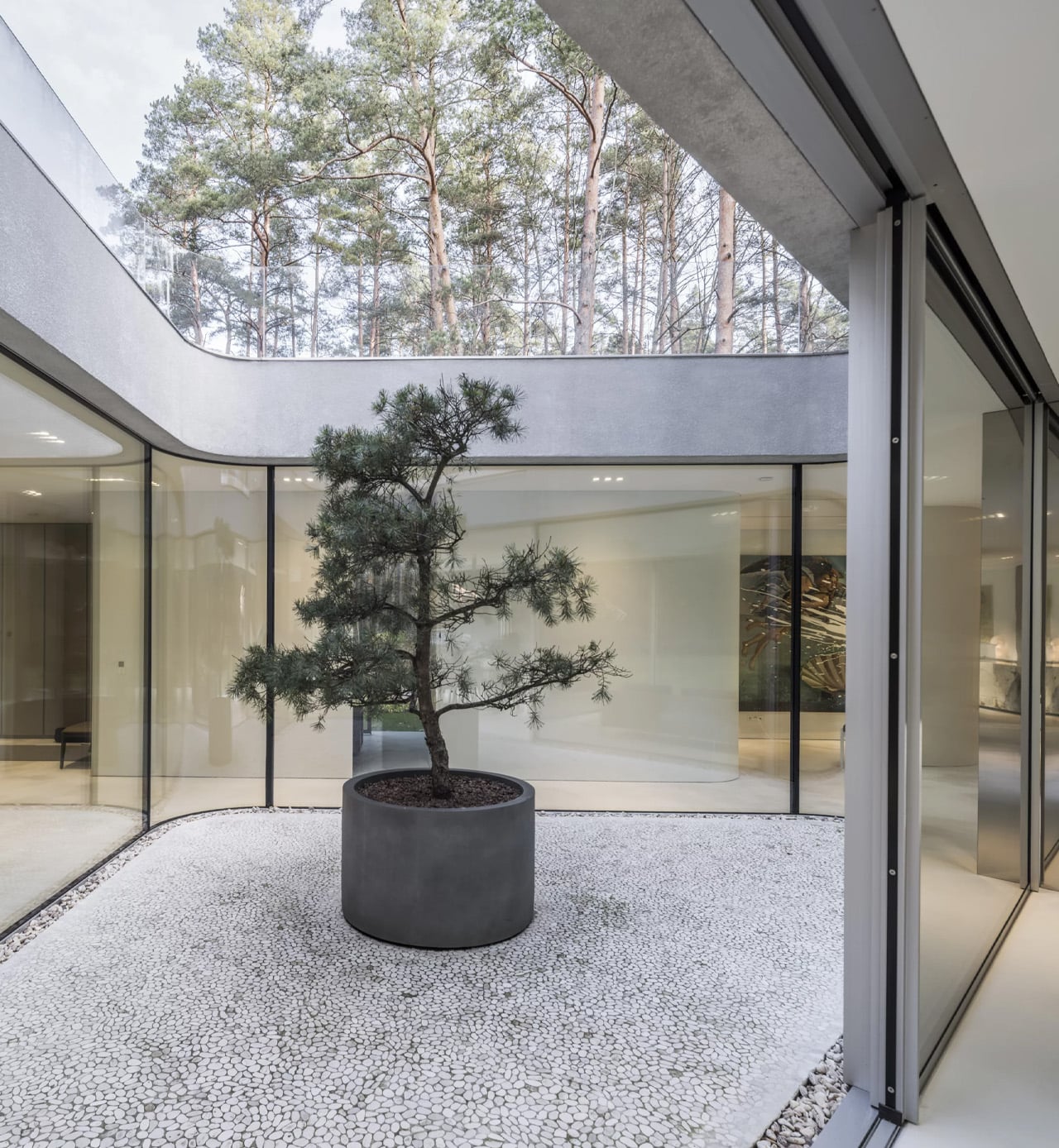
The name does exactly what it says. The house was trimmed. And in being trimmed, it became something far more interesting than the original design might have been. Spanning 299 square meters, the Trim House is a composition of concrete and glass, its sharpest corner cutting through the landscape like an ocean liner carving through ice. The most dramatic elevation reads almost like a flatiron building scaled down to domestic life, angular, taut, and satisfying in a way that’s hard to place. The surrounding pine trees press close, softening what could have felt severe.

Inside, the two-level plan is organized around a central patio that pulls daylight deep into the heart of the structure. The ground floor holds the living spaces and opens seamlessly into the garden, while the raised first floor contains the private bedrooms, each with access to a terrace that sits above the ground-floor volume. The section plays the two zones off each other, the social, grounded, garden-facing level below, and the quieter, more elevated, view-oriented rooms above. Privacy and nature, held in careful balance.

What makes the Trim House worth paying attention to isn’t just its sculptural confidence. It’s the story behind the form. Constraints aren’t obstacles but essential drivers of innovation, as KWK Promes put it. The Trim House makes that argument with concrete and glass, and it’s hard to argue back.

The post This Sharp-Cornered Lithuanian Home Only Exists Because Planning Rules Wrecked the Original Design first appeared on Yanko Design.
This Japanese-Inspired Garden Studio in California Is Doing Three Jobs at Once

The name says two. The building delivers three. Tucked behind a 1912 home in Fairfax, California, Two-Fold Studio is the latest project from San Francisco-based practice ONO, founded in 2020 by Max Obata and Tyler Noblin, and it might be one of the most quietly considered small structures the firm has produced yet.

The client, a general contractor and a ceramic artist who also teaches Pilates, came to ONO with a precise brief: build a pavilion that could hold a Pilates studio, a ceramics workshop complete with kiln, storage, and kitchenette, and, when the occasion calls for it, a guesthouse. Three programmes, one 800-square-foot structure, and a yard full of trees that weren’t going anywhere. The architects delivered on all counts.

Designer: ONO

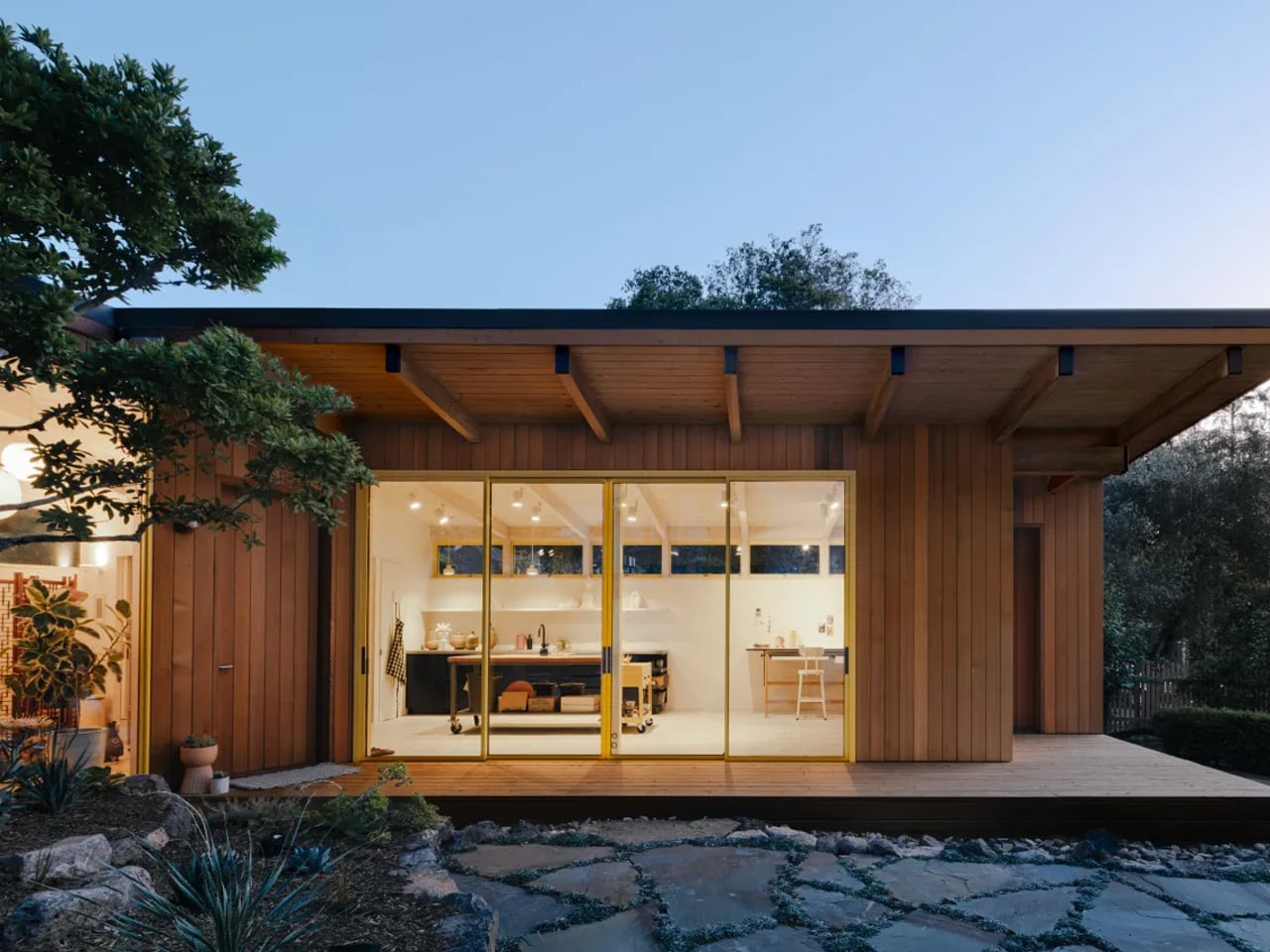
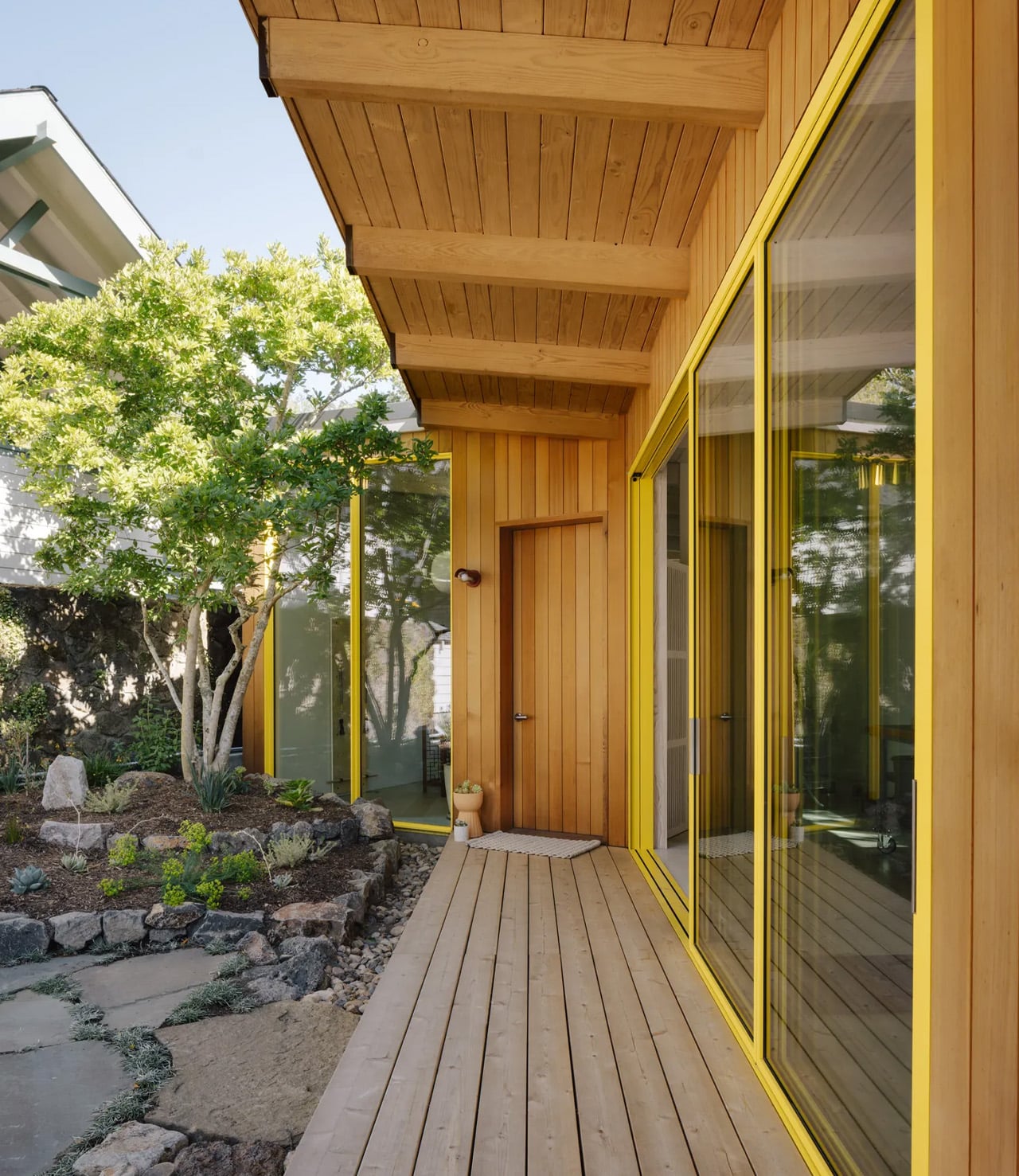
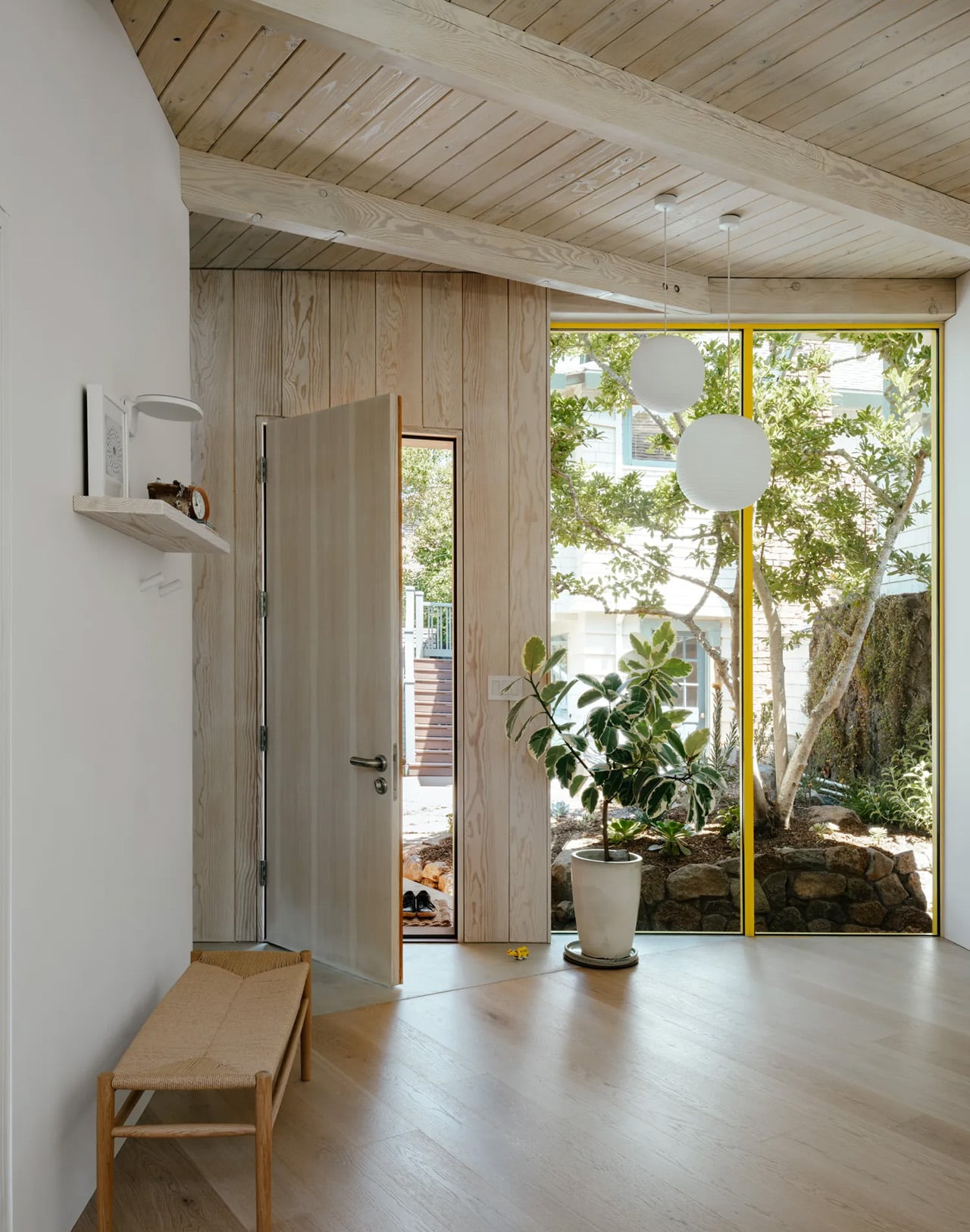
Rather than bulldoze the site into submission, ONO bent the building around it. The structure contorts into an L-shape, folding around the pre-existing trees to maintain the yard’s existing character. The form then becomes a kind of frame, a viewing pavilion, in ONO’s words, taking direct reference from the Ryoan-ji Rock Garden in Kyoto. The relationship between building and landscape isn’t incidental here; it’s the whole point.

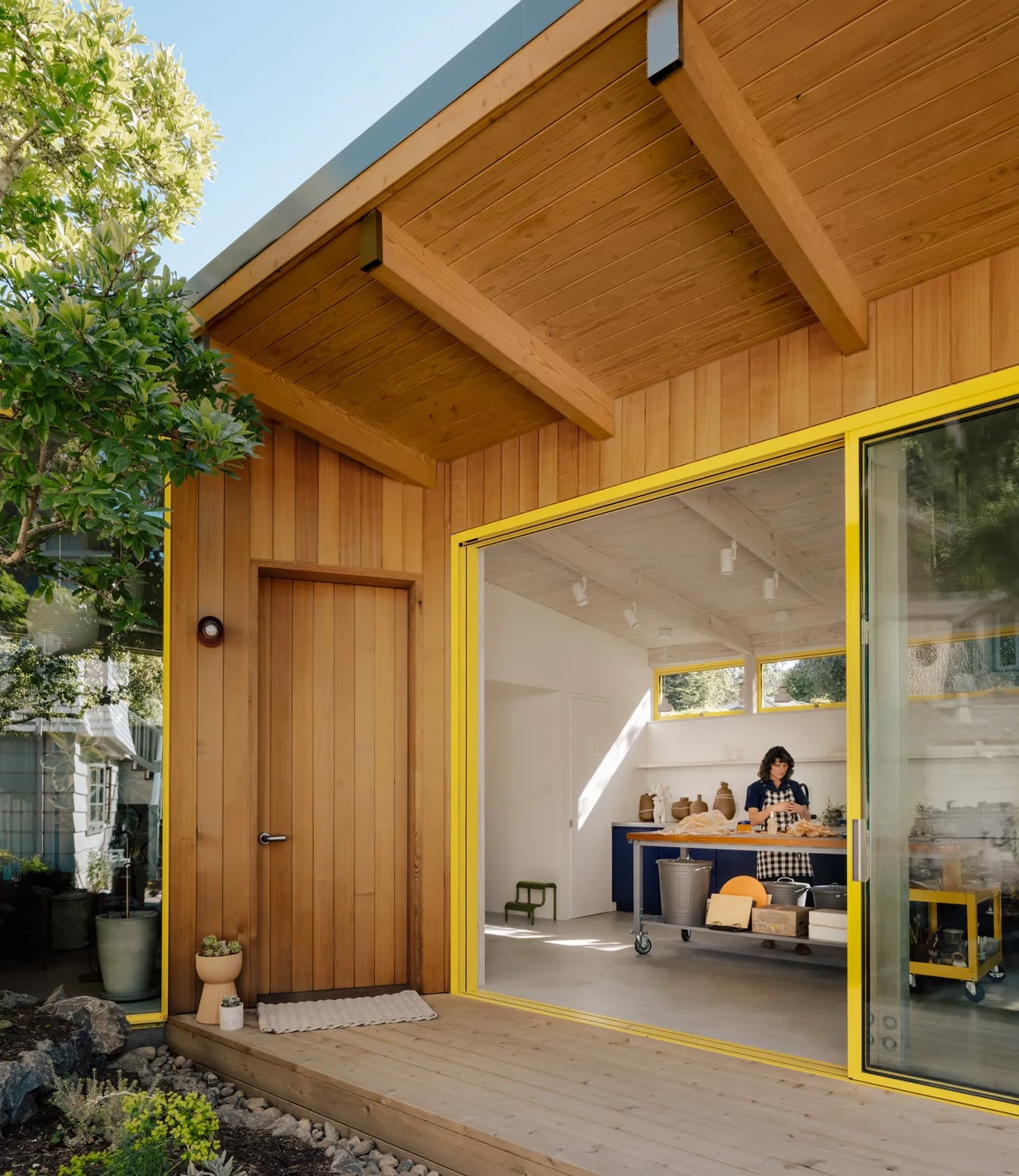
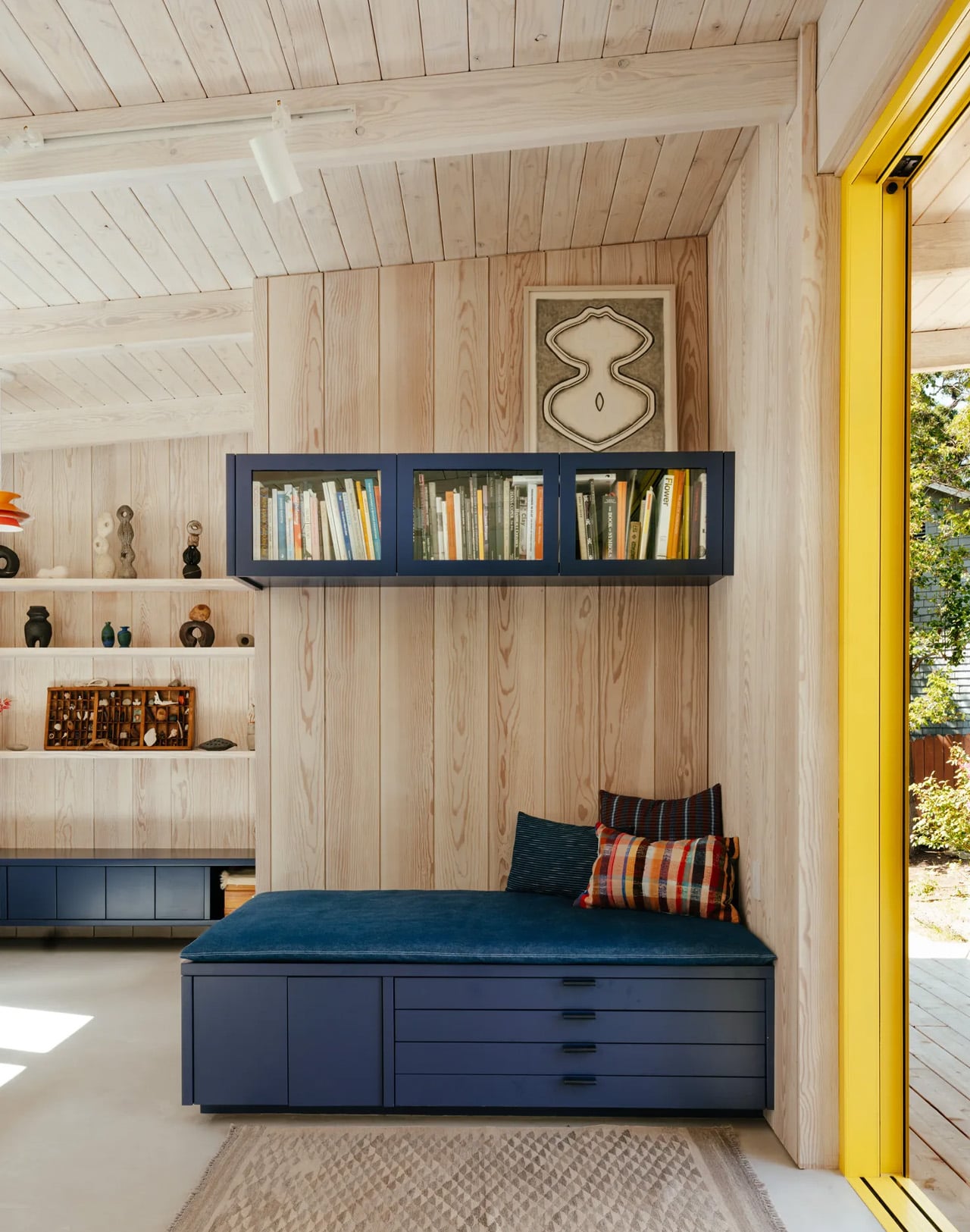
On the outside, the building reads modestly. Cedar shingles tie it back to the original home, keeping the new structure from announcing itself too loudly against the surrounding hills. Sliding glass doors, cheerfully framed in yellow powder-coated aluminum, open one side of the building entirely to the outdoors, creating a small patio underlined by the roof’s generous overhang. The yellow wasn’t arbitrary. Obata has noted that the client works in bold colour in her ceramics, so the palette needed to hold its own.

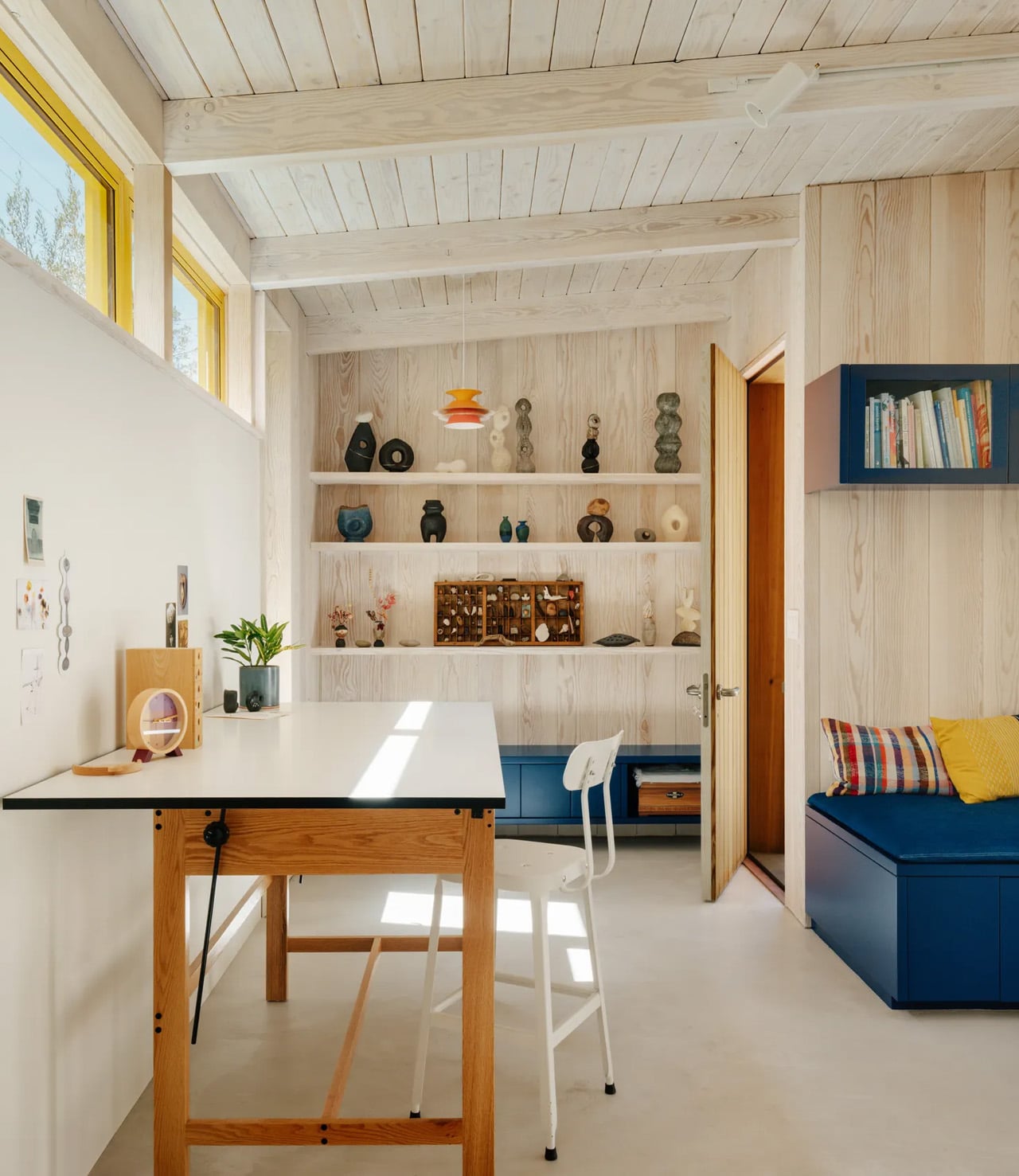
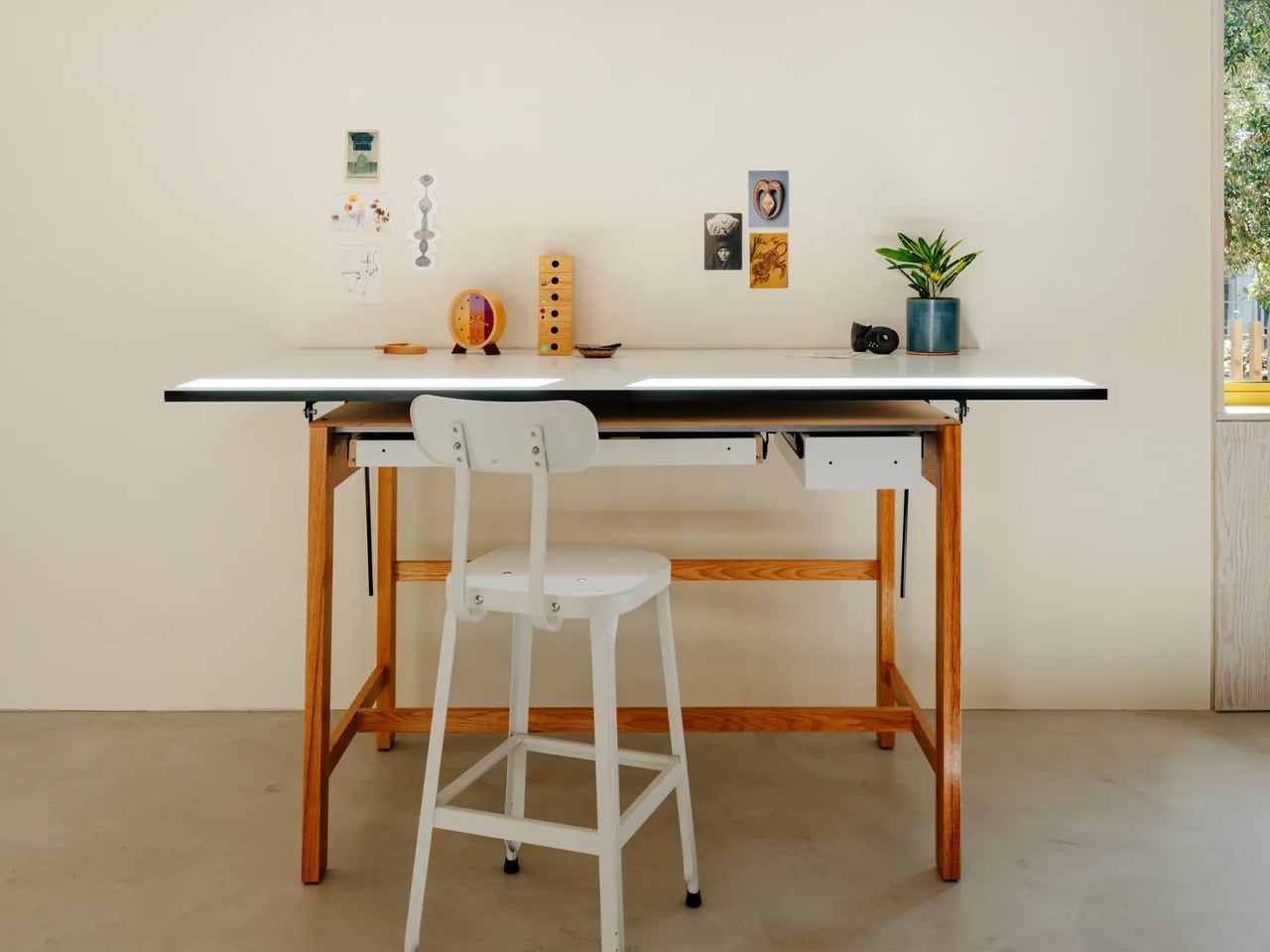
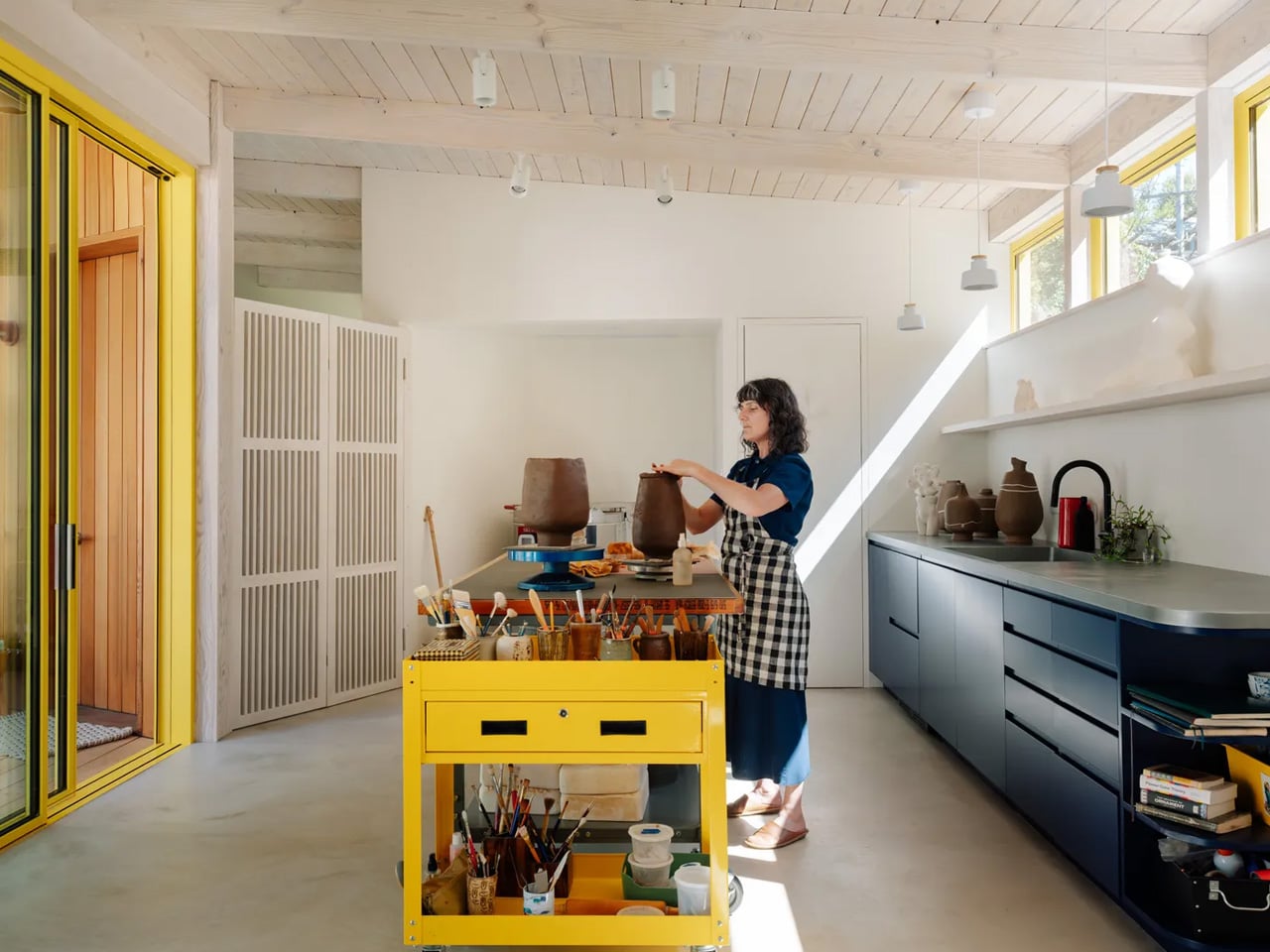
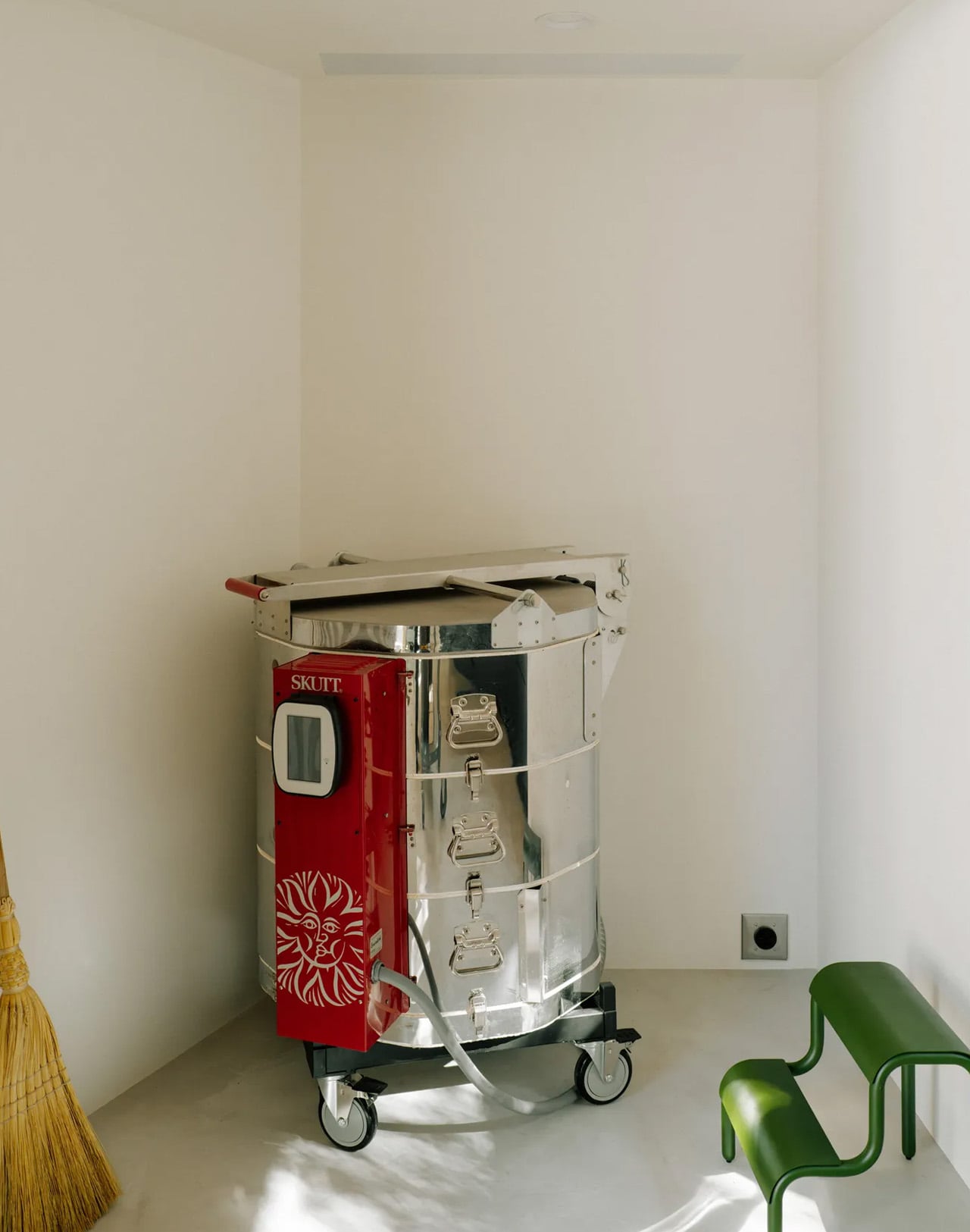
Step inside, and the two halves of the studio read distinctly but feel continuous. The Pilates side is warm and spare, finished in wood that flows through to a bathroom lined in plaster, a softer material that adds texture without breaking the natural language of the space. The ceramics side opens wider, with blue cabinets, exposed ceiling beams, and zinc countertops chosen specifically for the way they’ll patina into a silvery blue over time. A long work desk doubles as a kitchen counter, adjacent to a kiln neatly tucked into a wall niche.

Clerestory windows flood the ceramics studio with light while maintaining privacy from the street. In summer, with the sliding doors thrown open, afternoon light comes in late and high, ideal, as Obata puts it, for working well into the evening. Two-Fold is small, specific, and built entirely around the person who uses it. That’s what makes it memorable.

The post This Japanese-Inspired Garden Studio in California Is Doing Three Jobs at Once first appeared on Yanko Design.
5 Best Gifts of April 2026 for the Person Who Already Has Everything (That They’ll Actually Display)

Finding a gift for someone who already has everything is less a shopping problem than a design problem. The question is not what they are missing — they have likely found the answer and already bought it. The real question is what kind of object earns a permanent, visible place in their space. Something they set down and never want to store away. Something that changes how a room actually feels.

This April, five objects have made a strong case for exactly that kind of staying power. Each carries a distinct personality — some earn their place through material quality, the weight of brass or natural wood grain pushing through pigment. Others earn it through a clever reimagining of something familiar. A few earn their place through ritual. None are impulse buys, and all are built for people who aren’t easily impressed.

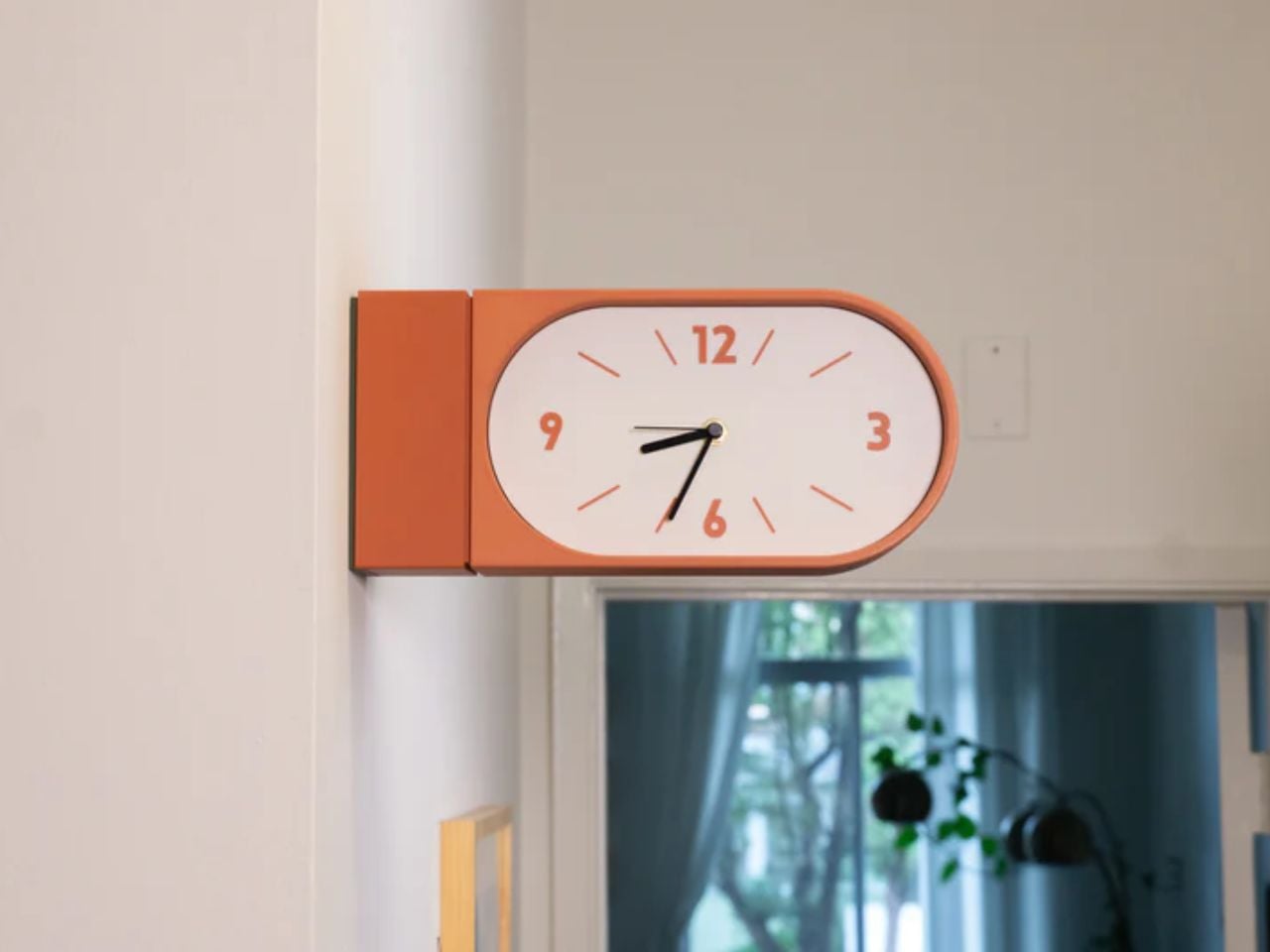
1. Perch Double-Sided Wall Clock

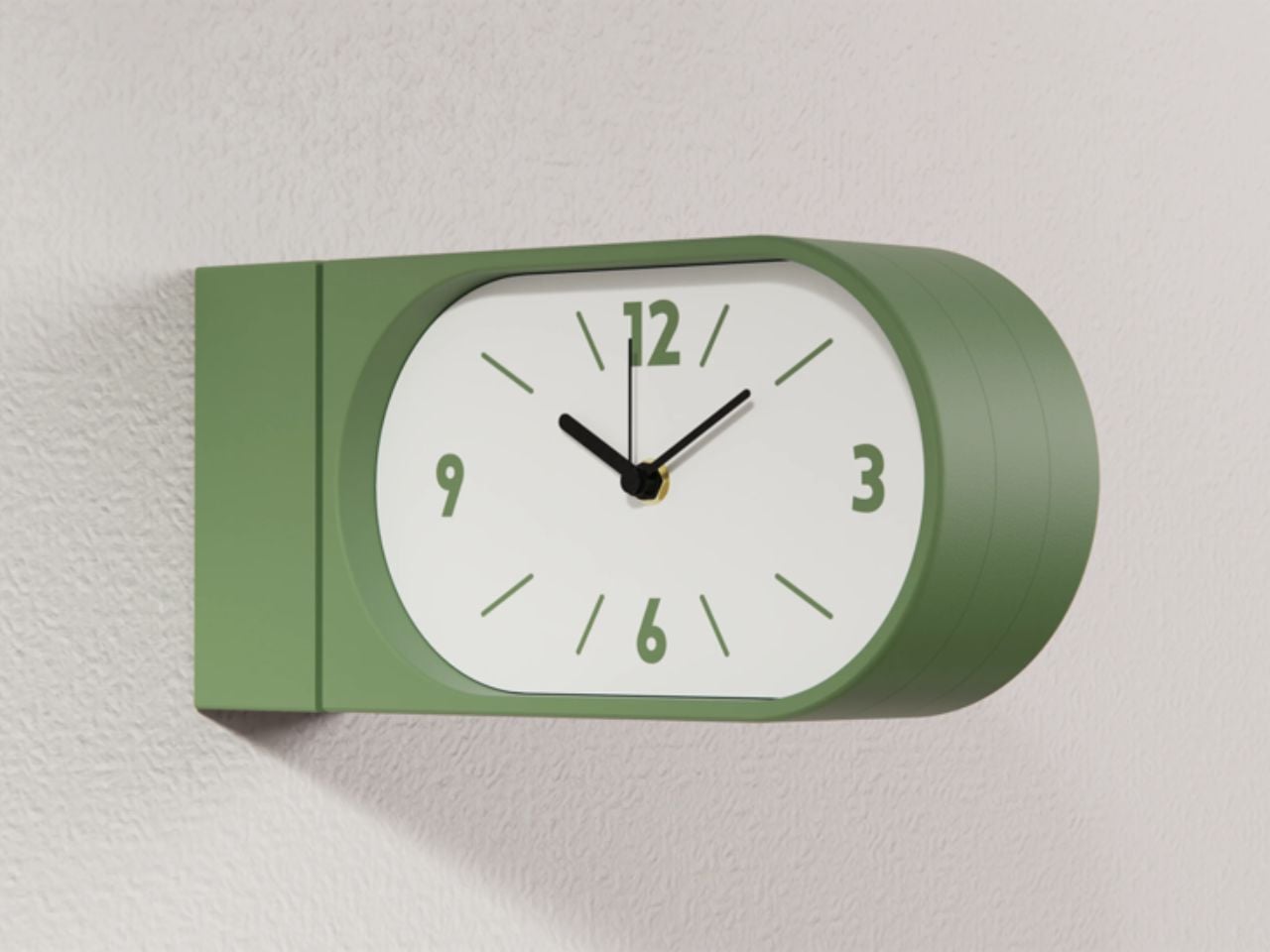
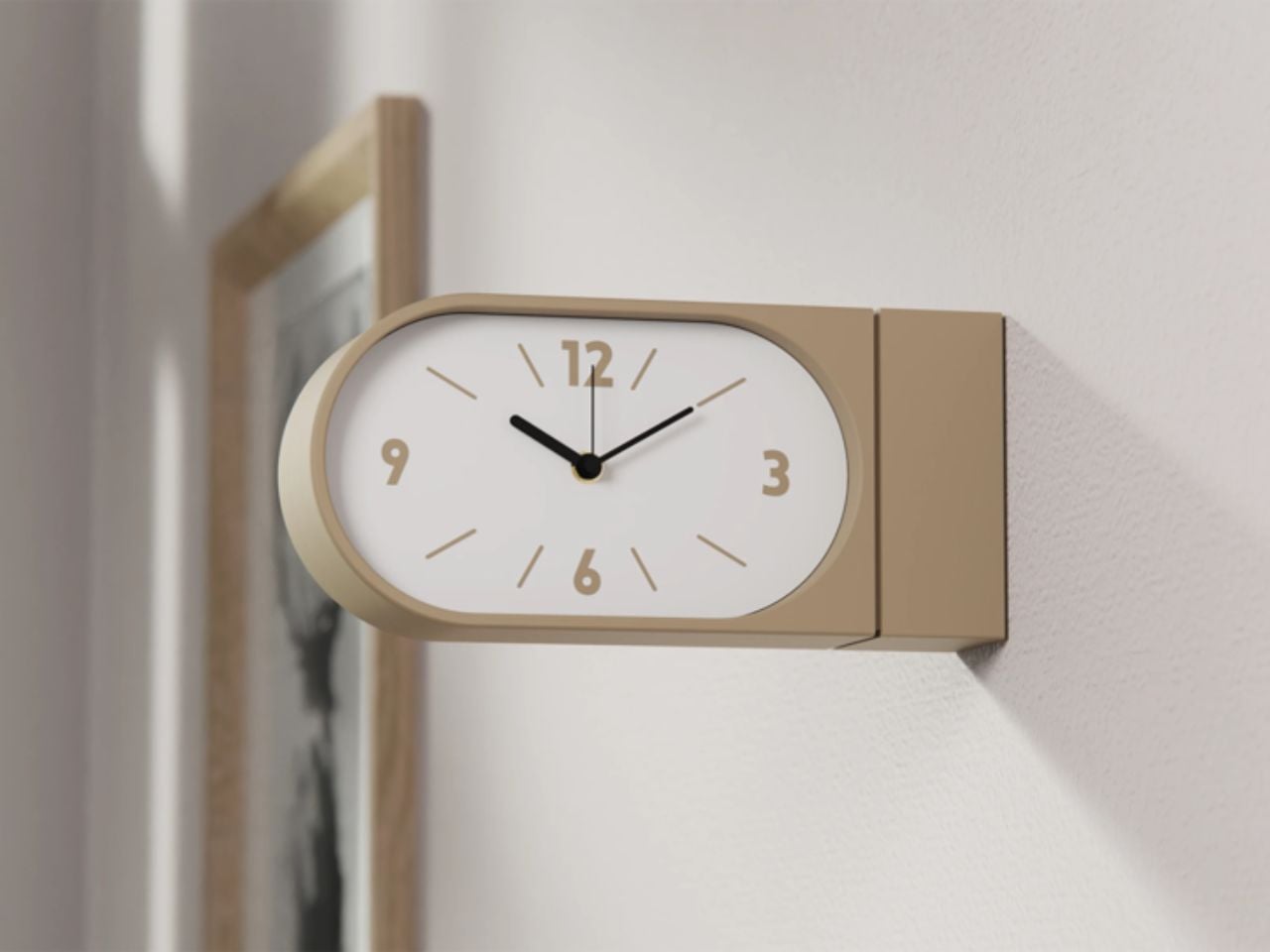
Most wall clocks are passive. They sit flat against a surface and wait to be glanced at from a single fixed position — a design that assumes you always approach from the same direction and that time only needs to be readable when you happen to be standing in the right spot. The Perch clock rethinks that assumption entirely. By extending out from the wall and displaying time on both faces, it becomes part of how you actually move through a room rather than something you consult only when facing the right way. Walk into a space, pass through a corridor, glance back as you leave — time is always within sight.

The visual language leans into restrained warmth rather than the clinical precision that often defines minimalist design. Available in three colors, the Perch holds a quiet presence without demanding attention. There is also something unmistakably reminiscent of vintage railway clocks in its silhouette — those objects that once shaped shared, public notions of time and movement. Functionally, it runs on two AA batteries and hangs from a simple bracket that allows it to be lifted off cleanly when the batteries need changing. No wiring, no complicated installation. Living with it is entirely effortless, and effortless is exactly the quality that makes something worth keeping on the wall for years.

What We Like:

  • Readable from both directions, making it genuinely useful in corridors, open-plan rooms, and pass-through spaces
  • Requires no wiring — two AA batteries and a simple bracket keep installation and maintenance completely straightforward

What We Dislike:

  • The bracket system may require specific wall types or additional anchoring for a fully stable hang
  • Only three colorways available, which may not suit every interior palette or design preference

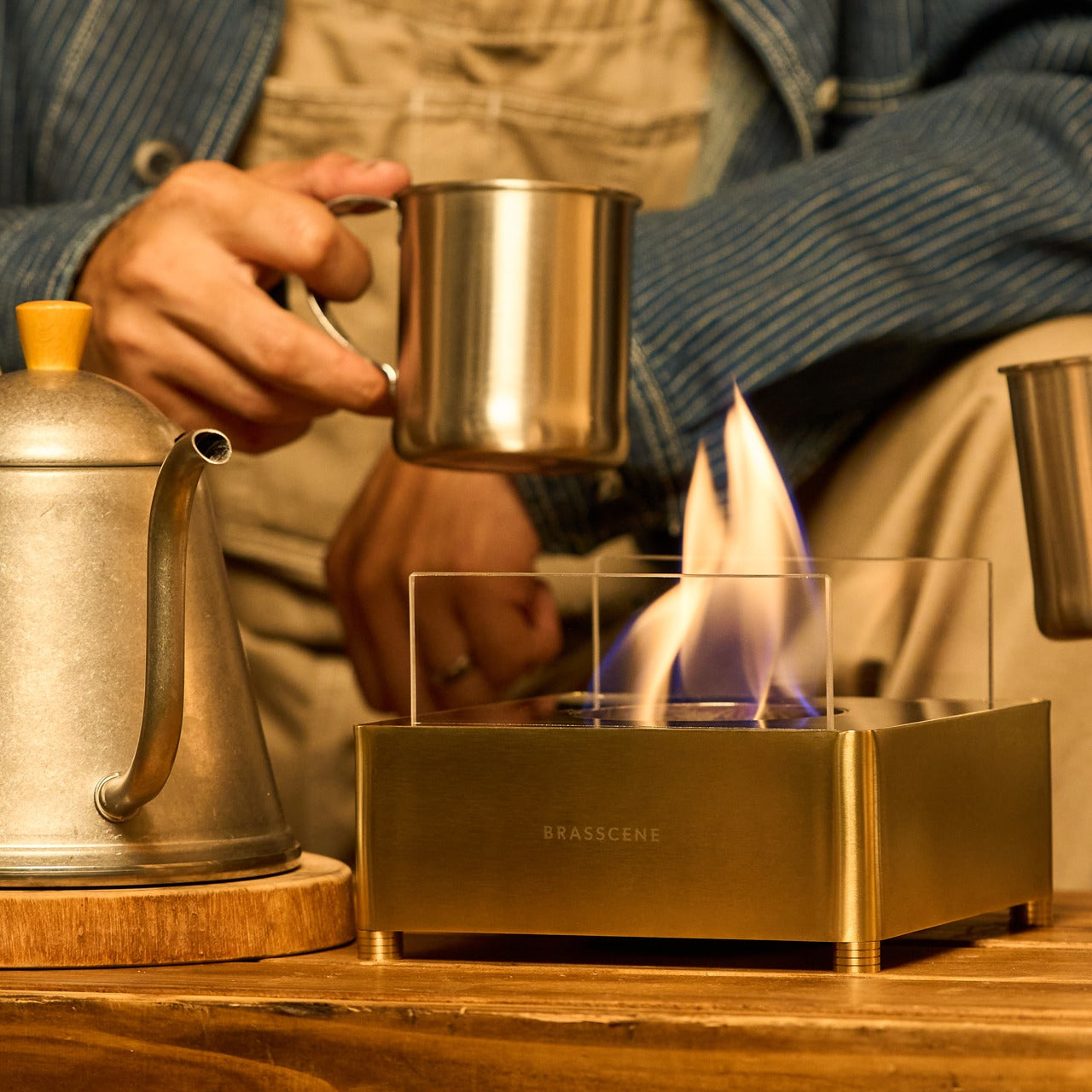
2. Harmony Flame Fireplace

No LED strip or ambient bulb has ever replicated what a real flame does to a room. The Harmony Flame Lamp is a handcrafted brass bioethanol fireplace built using the same techniques applied when making brass musical instruments — and that level of craft is immediately apparent the moment you hold it. Place it at the center of a dining table or carry it to a patio and the flame catches and reflects across the polished surface, casting a living play of light and shadow that shifts with every movement of air. It transforms whatever surface it sits on into something worth gathering around.

The fuel is eco-friendly bioethanol, which burns without producing odor or smoke, making it fully safe to use indoors without ventilation or installation of any kind. There is nothing to wire, nothing to mount, and no complicated process to get it going. For someone with a strong sense of how their space should feel, this is the kind of object that earns its placement not on a back shelf, but at the center of the table where it can do exactly what it was designed to do. The craftsmanship alone justifies where it ends up.

Click Here to Buy Now: $240.00

What We Like:

  • Burns odorless and smokeless bioethanol fuel indoors without any ventilation or installation requirements
  • Handcrafted by brass instrument makers, giving it a material quality and finish that is immediately apparent

What We Dislike:

  • Requires bioethanol fuel that needs to be sourced and replenished separately as an ongoing consumable cost
  • An open-flame product that may not be suitable for homes with young children or pets

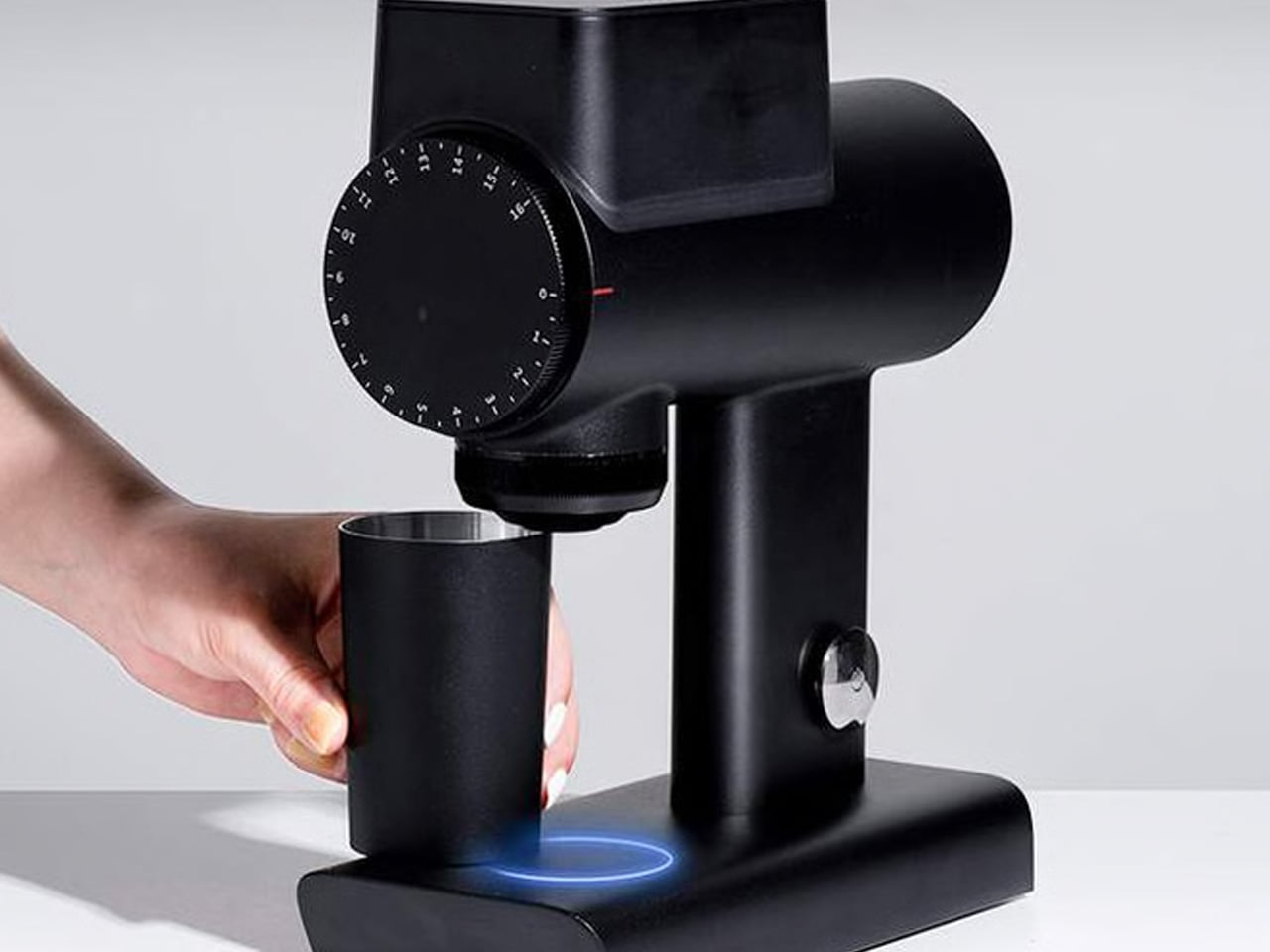
3. Timemore Electric Coffee Grinder


For the person who already takes their coffee seriously, the Timemore Electric Grinder is the kind of upgrade that changes the entire shape of a morning. Its patented 078 Turbo Burrs feature three layers of teeth that deliver fast, consistent grinding while meaningfully reducing the fine particles that accumulate in a cup and dull its flavor. A sensory brushless motor handles the work without vibration, using PID control and Hall components to maintain stability and precision across every grind. It does not simply produce ground coffee. It makes the whole process feel like it was properly thought through.

Two burr configurations mean it adapts to different brewing methods without compromise. The 078S flat burrs deliver the fine, high-uniformity grind that espresso demands, while the Turbo burrs handle pour-over with equal confidence. A patented rotary knocker clears stubborn fines from the grinder spout with a single turn — a small feature that makes a genuine difference at six in the morning. The magnetic bean lid keeps things sealed and tidy between uses. For someone who already has the kettle, the scale, and the dripper lined up on the counter, this is the final piece of the setup they have been quietly looking for and will be glad to leave on full display.

What We Like:

  • Two interchangeable burr options handle both espresso and pour-over brewing styles without needing a second machine
  • The brushless motor and rotary knocker deliver a level of precision and cleanliness that surpasses most standard electric grinders

What We Dislike:

  • The dual-burr system and technical setup may be more involved than casual coffee drinkers are looking for

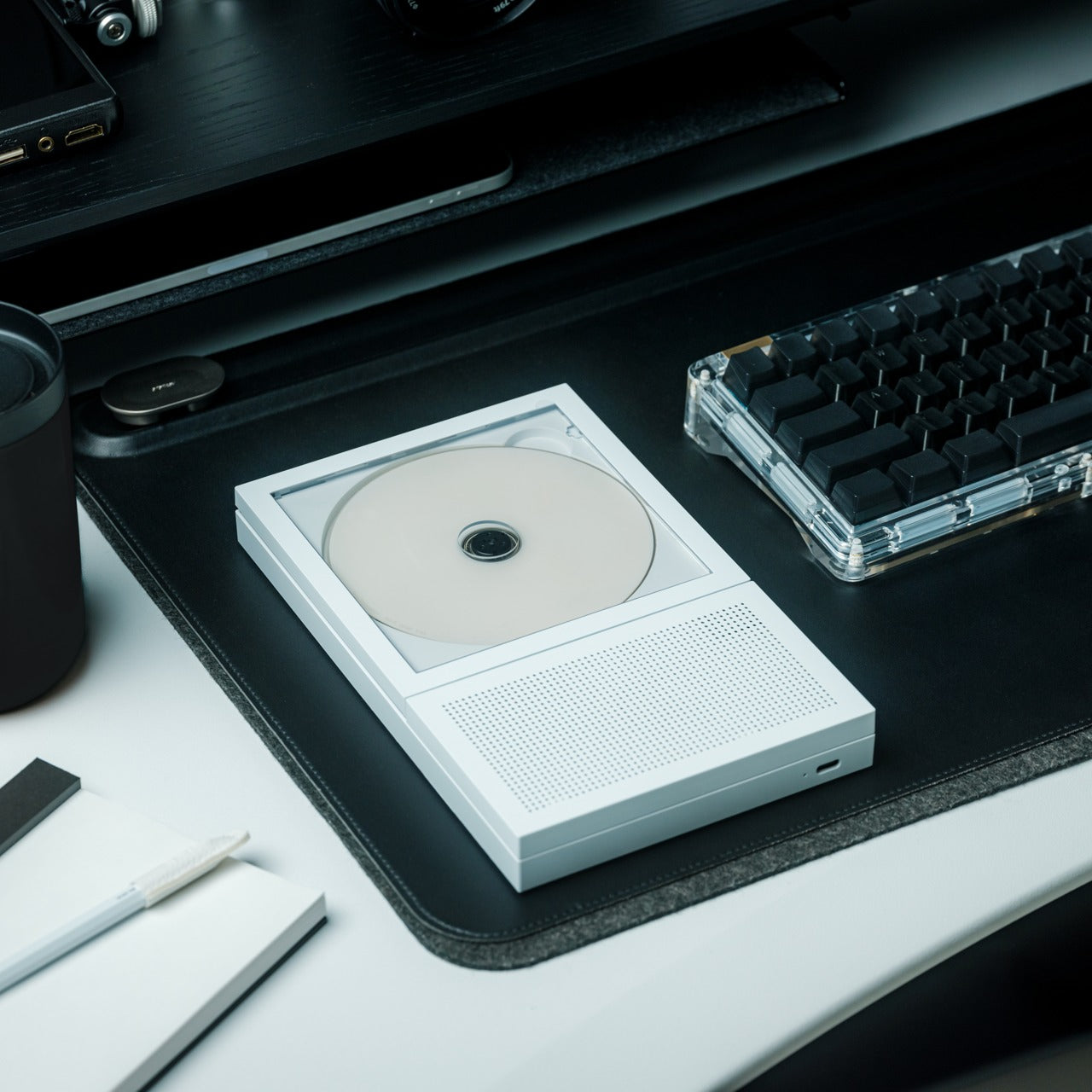
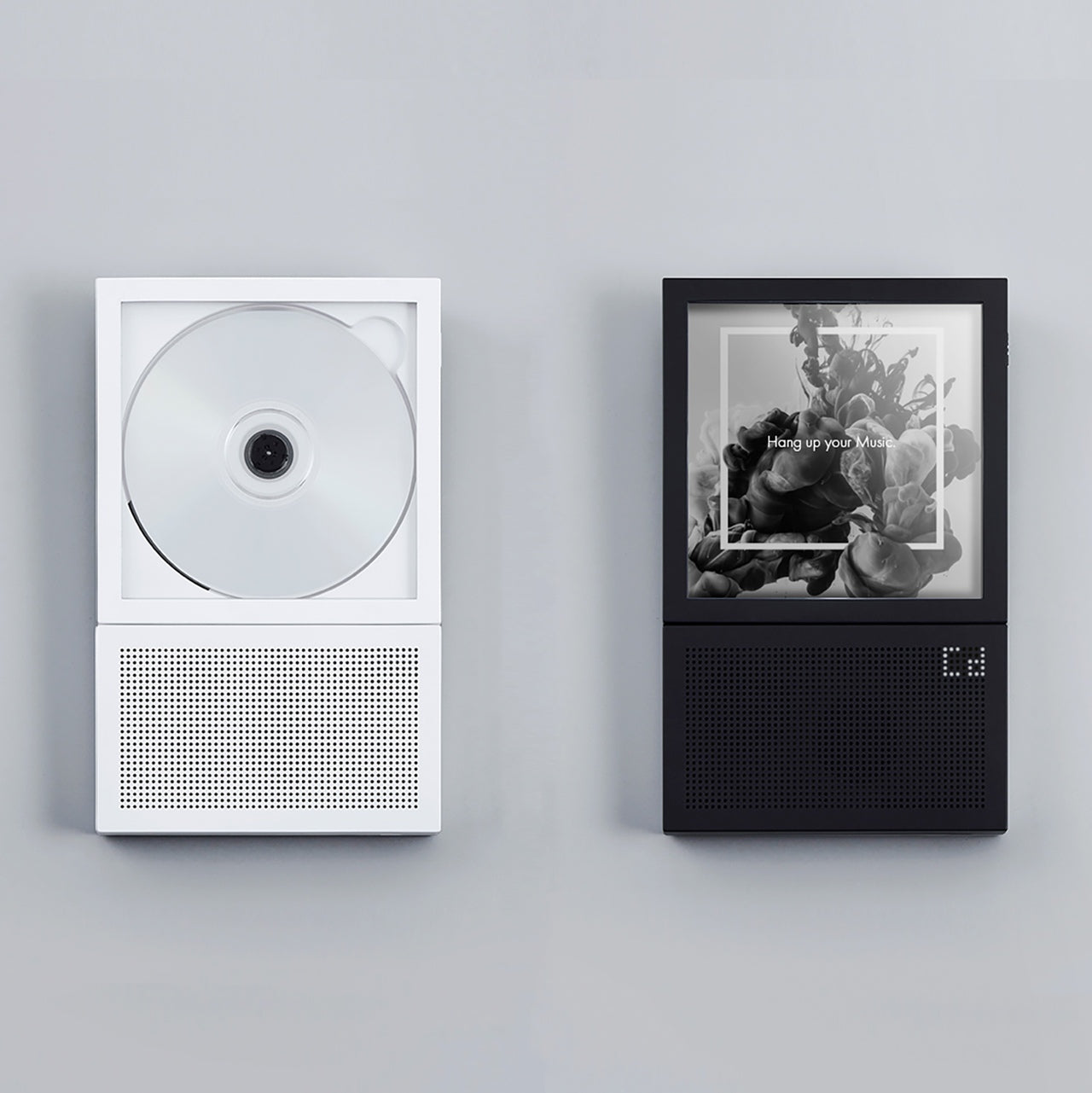
4. Portable CD Cover Player

The CD player should not still feel this relevant in 2026, and yet this one earns it entirely through a single, genuinely clever idea. The Portable CD Cover Player has a transparent front pocket that displays the album’s jacket art while the music plays — turning a listening device into a small, rotating gallery piece. Whether it is sitting on a shelf, resting on a desk, or hung on the wall using the optional bracket, it gives physical music a visual presence and a context that streaming has never been able to offer. That visibility is precisely the point, and it lands.

The design is clean and minimal, built around the conviction that visual and audio experience belong together rather than being treated as separate acts. A built-in speaker and rechargeable battery untether it from any power source, meaning it moves with you — to a different room, to a balcony, to wherever the afternoon takes shape. For someone who still collects CDs, inherited a catalog worth rediscovering, or simply believes that an album cover is a piece of art that deserves to be seen while being heard, this is the object that makes analog listening feel deliberate and considered rather than merely nostalgic.

Click Here to Buy Now: $199.00

What We Like:

  • Displays album jacket art while playing, merging audio and visual experience into a single displayable object
  • Rechargeable battery and built-in speaker allow it to be placed or carried anywhere without wired speakers or a power source

What We Dislike:

  • The wall mount bracket is sold separately, which adds to the total cost for those wanting to display it as a wall-hung piece
  • Limited to CDs only, which may be a drawback for listeners who have fully transitioned to streaming or vinyl formats

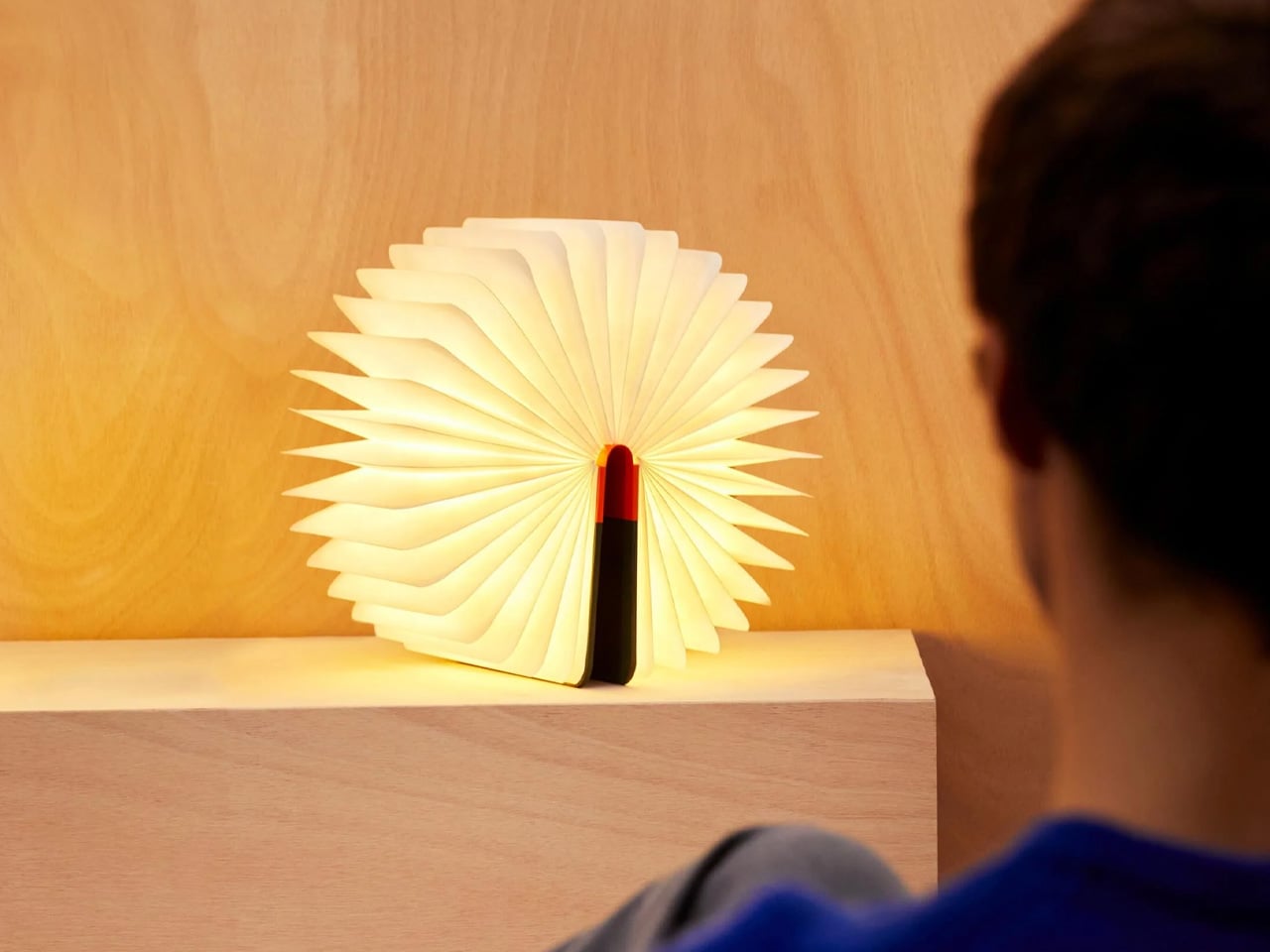
5. Lito Classic Book Lamp

The Lito Classic does not announce what it is. Sitting on a shelf or a side table, it reads exactly like a hardcover book — considered and quiet, unremarkable until someone picks it up or opens the cover and finds a sculptural lamp inside. That moment of recognition is built into the design, and it is the kind of detail that works at a dinner table, on an outdoor terrace, or in a corner of a living room that needed one more thing to feel complete. It goes wherever the atmosphere needs it most and carries its own presence without trying.

The 2026 collection introduces British Racing Green, Navy Blue, and Vibrant Red, each finished in a way that lets the natural wood grain push through, giving every piece a texture that feels crafted rather than manufactured. Lito has earned both the Red Dot and Good Design awards, and The New York Times described it as “a gift that amazes.” With an eight-hour battery life and a form that holds its visual appeal whether the light is on or off, it is one of those rare objects that earns its place from every angle — lit or closed, given or kept on the shelf indefinitely.

What We Like:

  • Disguised as a hardcover book, it functions as a striking decorative object on any shelf even when switched off
  • Red Dot and Good Design award winner with an eight-hour battery life for fully portable, untethered use

What We Dislike:

  • The book format means it can blend into a crowded shelf and be overlooked, which reduces some of its potential visual impact
  • Sits at a premium price point that places it at the higher end of what most people would consider a casual or spontaneous gift

The Verdict

The best gifts for someone who has everything are not necessarily the most expensive or the most technically sophisticated — they are the ones that fit naturally into a life and earn a visible, permanent place in the room. Objects that feel worth setting out rather than storing away after the first week of novelty fades.

The Perch clock becomes part of how you move through a space. The Harmony lamp turns a table into a reason to gather. The Timemore makes the counter worth showing off. The CD player gives physical music a home it has never quite had. And the Lito sits patiently on a shelf pretending to be a book until someone opens it and everything shifts. April 2026 has some genuinely considered options for the person who seems to have everything. These five are the ones worth wrapping.

The post 5 Best Gifts of April 2026 for the Person Who Already Has Everything (That They’ll Actually Display) first appeared on Yanko Design.

The All-Black Kitchen Is 2026’s Hottest Design Trend — Here Are 8 Products That Nail It

Black has always carried weight in design. Authority, restraint, a quiet elegance that needs no announcement. In 2026, the all-black kitchen has shifted from a bold statement to a genuine design movement. What once felt too dramatic for the most-used room in the home now feels precisely considered. Designers and homeowners alike are gravitating toward the palette for its ability to make a space feel curated, intentional, and deeply sophisticated when executed well.
The shift runs deeper than cabinetry and countertops. It lives in the tools, the cookware, the lighting, every touchpoint that shapes how a kitchen performs and how it looks doing it. Finding pieces that commit to the aesthetic without sacrificing function is the real challenge. These eight products do exactly that, from carbon graphite cookware rooted in Japanese craft to a precision pour-over kettle engineered for serious brewing.

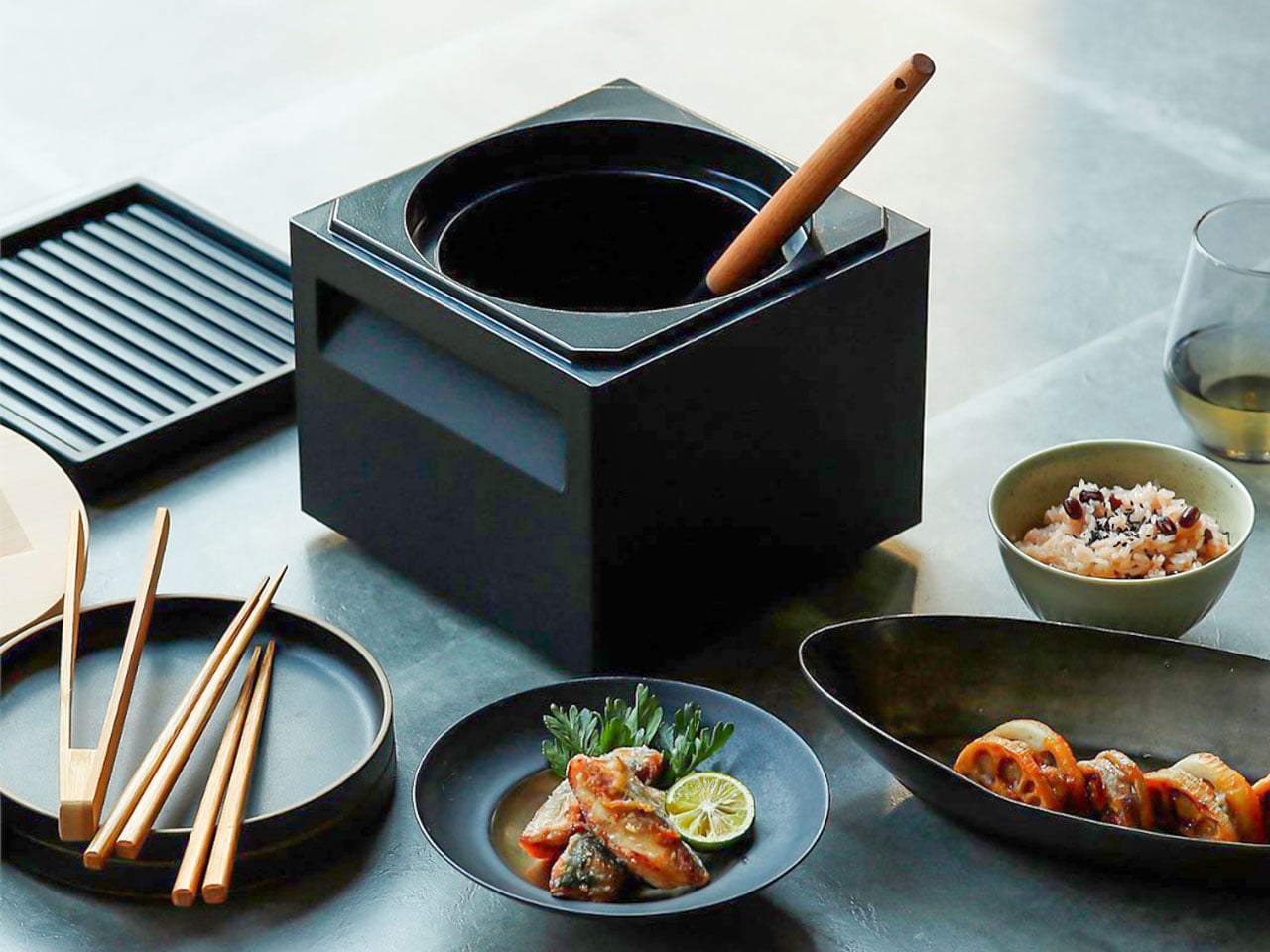
1. ANAORI Kakugama

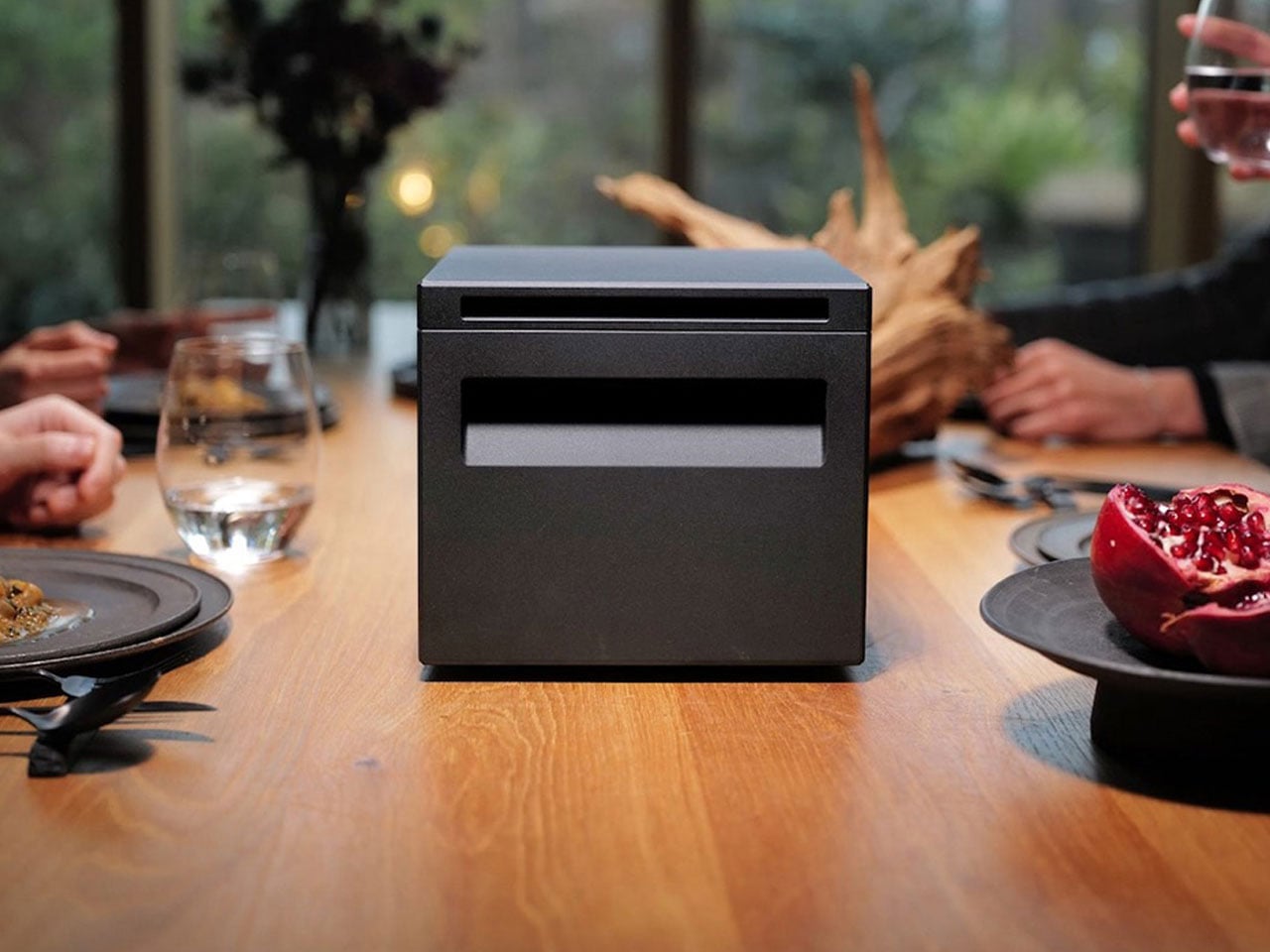
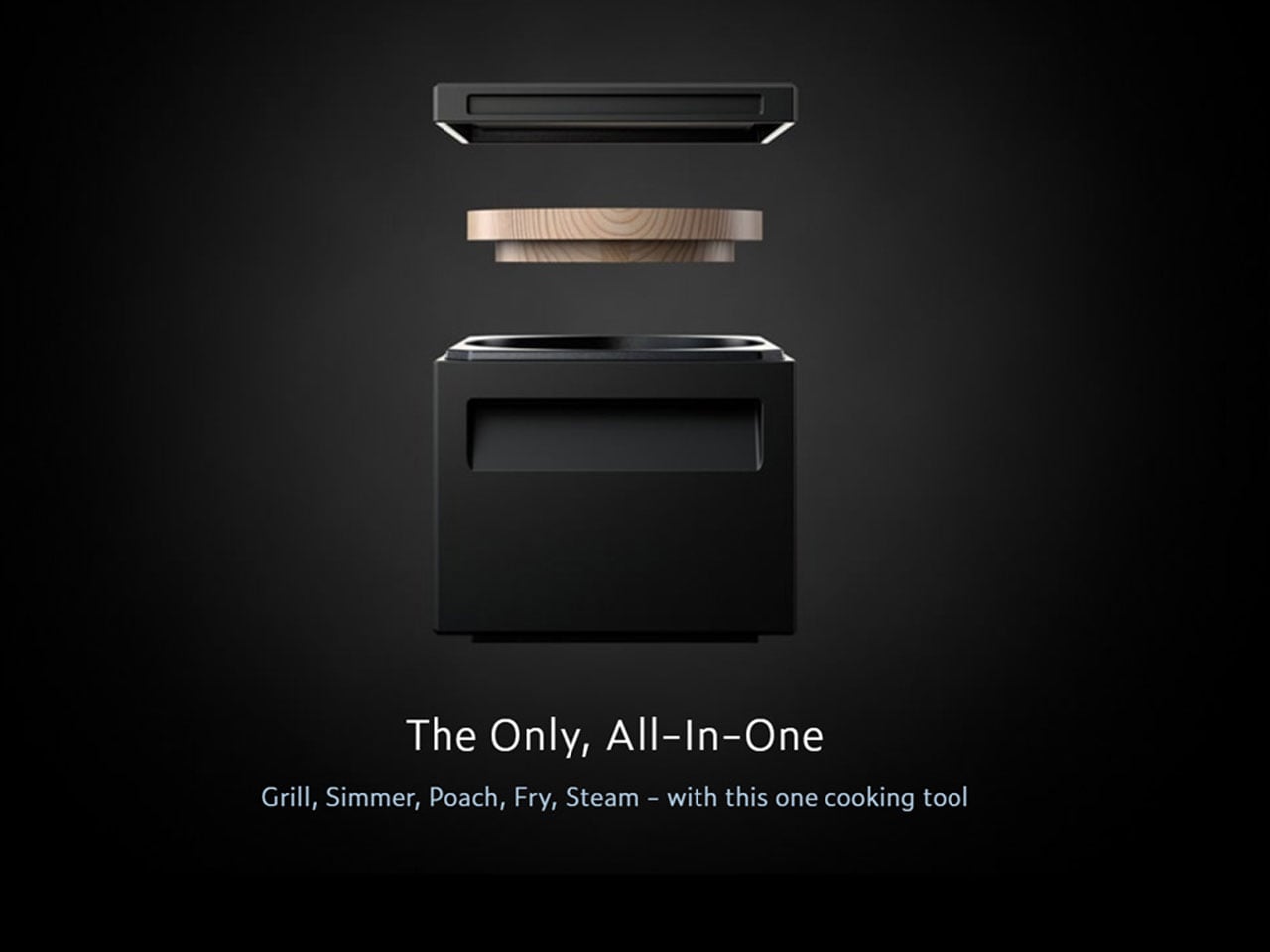
Carbon graphite isn’t a material you encounter in the kitchen, which is precisely what makes the ANAORI Kakugama so compelling. Crafted from solid carbon graphite, this Japanese cooking vessel carries a physical and conceptual weight that coated pans simply can’t match. Its matte black surface distributes heat with uncommon efficiency, significantly reducing the risk of scorching while preserving the natural flavors and nutrients of whatever is being prepared. This is cookware that approaches food with genuine respect.

The kakugama’s range is quietly impressive. Designed to steam, poach, simmer, grill, and fry, it handles each technique without compromise, making it the kind of piece that earns a permanent position in the kitchen. The fragrant Japanese cypress lid adds something unexpected: as it heats, it releases a subtle, earthy aroma that transforms an ordinary cooking session into something closer to ritual. For the design-conscious cook who values craft as much as performance, this vessel is essentially irreplaceable.

What We Like

  • Carbon graphite construction delivers exceptional, even heat retention across every cooking method
  • The Japanese cypress lid adds a rare aromatic quality to cooking that no synthetic material can replicate

What We Dislike

  • The premium material and craftsmanship place this vessel at a significant price point above conventional cookware
  • Carbon graphite requires more attentive handling and care than standard kitchen materials

2. Obsidian Black Precision Chopstick Tongs

There’s a particular satisfaction in a kitchen tool that commits fully to its concept. Part of the Obsidian Black Kitchen Collection, the Precision Chopstick Tongs take their form directly from traditional Japanese chopsticks and engineer it for the demands of a modern kitchen. Made from SUS821L1 stainless steel, they’re light enough to handle delicate pieces of sushi yet durable enough for daily stovetop use. The result is a utensil that genuinely bridges the line between cooking instrument and tableware.

What sets these tongs apart from anything else in the drawer is the finish. A special metal processing technique ensures the obsidian’s black color resists scratching and peeling, maintaining its appearance through repeated use and washing. They work just as confidently plating sashimi at the table as they do flipping proteins in a pan. That dual-purpose quality is rare, and it’s exactly what earns a piece a permanent place in a kitchen where aesthetics and performance are equally weighted.

Click Here to Buy Now: $25.00

What We Like

  • The obsidian black finish is scratch and peel-resistant, holding its appearance through sustained daily use
  • Designed to function as both a cooking utensil and tableware, bridging the kitchen and dining with a single tool

What We Dislike

  • The chopstick form may require a brief adjustment period for those accustomed to conventional tong grips
  • The precision-focused design is less suited to tasks requiring wide or bulky gripping

3. Samsung Bake Ultra Concept

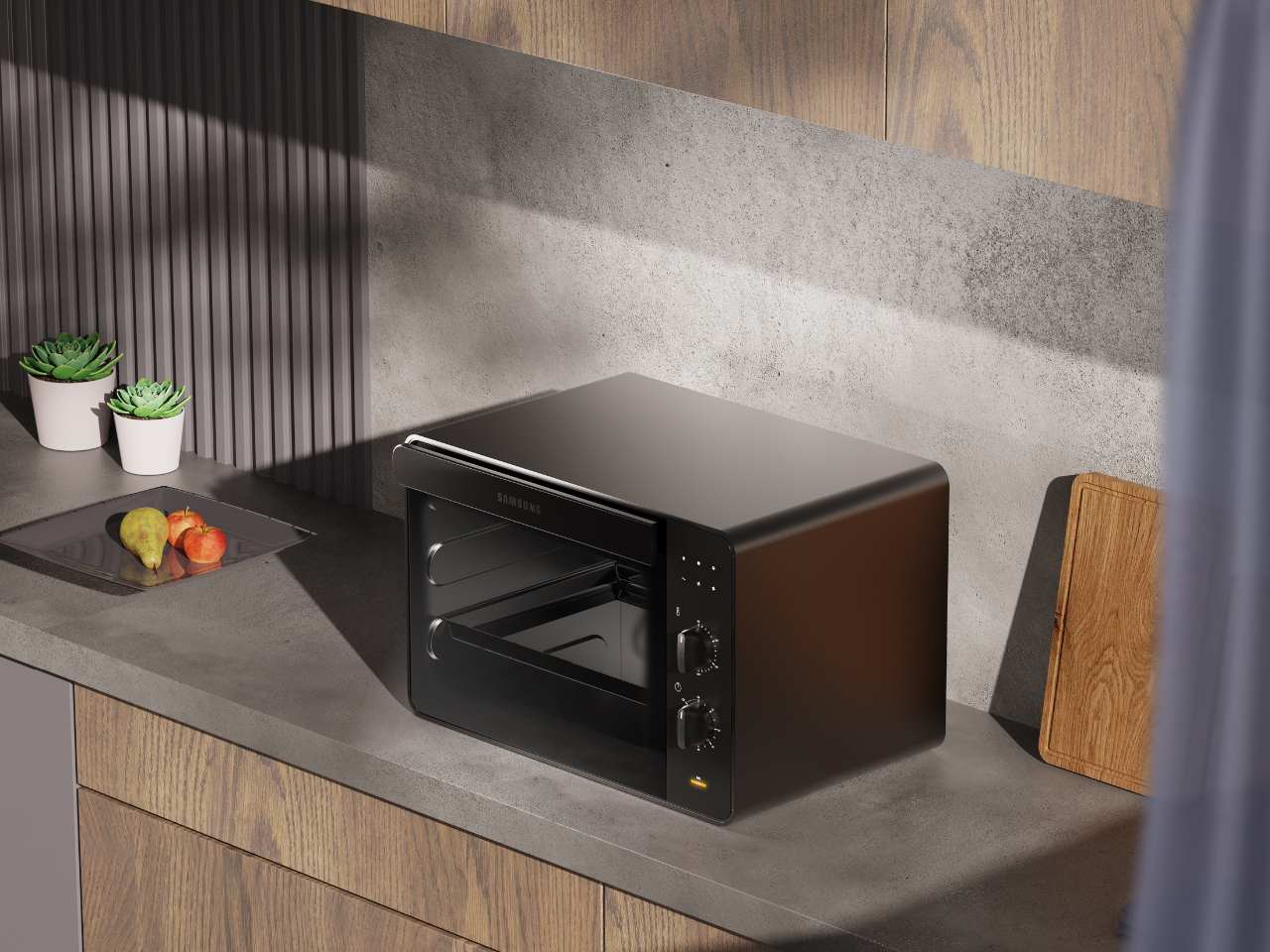
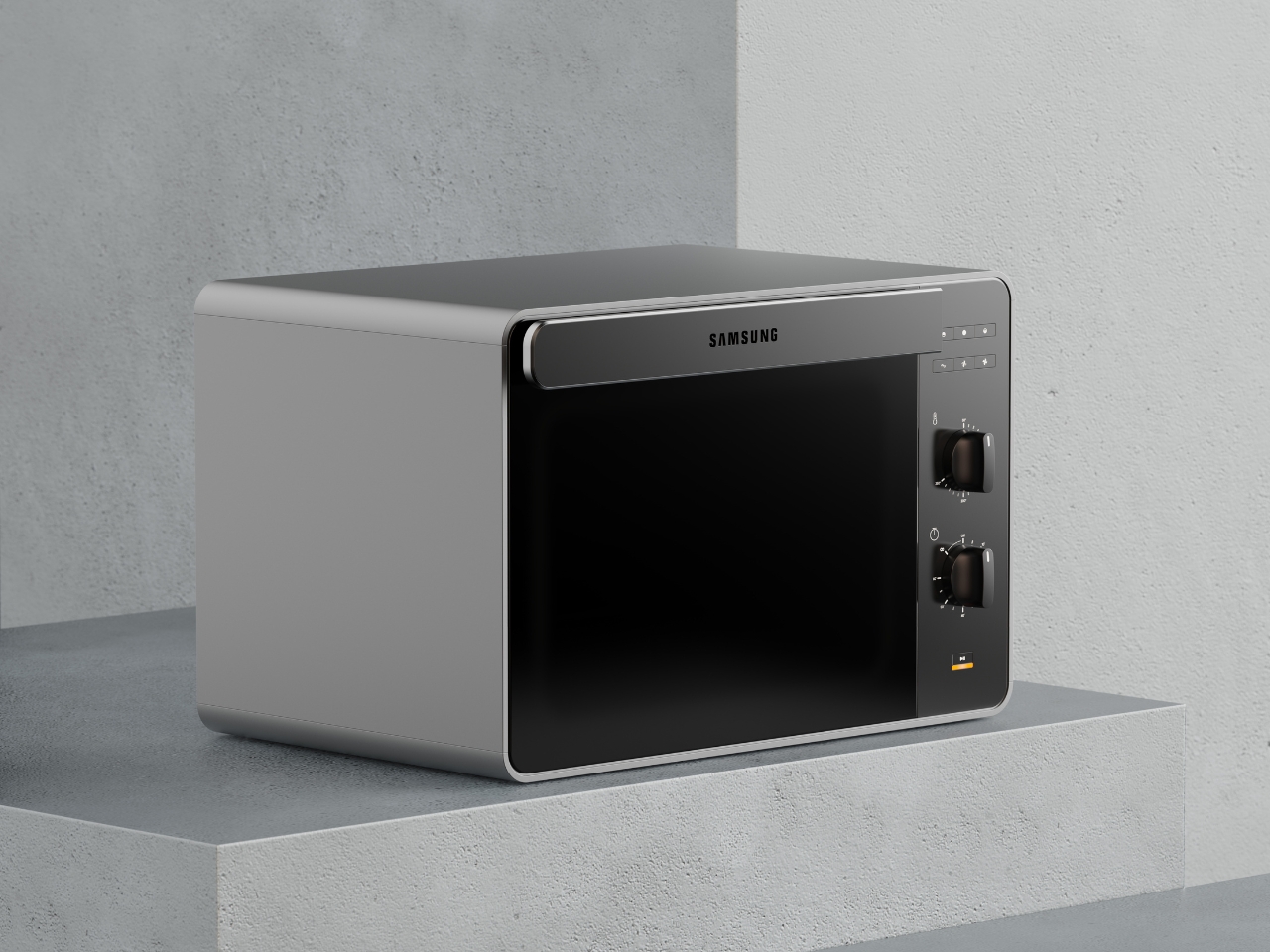
Concept appliances rarely look this resolved. Designed by Octavio Leon Villareal, the Samsung Bake Ultra approaches the compact electric oven with a formal discipline that separates considered design from merely clever design. Its two-tone composition, a soft gray body anchored by a black glass front, achieves a visual balance that reads as both contemporary and enduring. This isn’t minimalism for its own sake. It’s a deliberate formal decision that allows the Bake Ultra to feel entirely at home in kitchens ranging from industrial-chic to warm and considered.
The rounded edges are doing significant work. By softening what could easily have read as an overly boxy silhouette, Villareal gives the Bake Ultra an approachability that most compact ovens lack entirely. It doesn’t demand attention, but it consistently earns it. In an all-black kitchen where every object contributes to the room’s visual tone, an appliance this compositionally assured is genuinely valuable. The Bake Ultra wasn’t designed just to function. It was designed to belong.

What We Like

  • The two-tone design with black glass front integrates cleanly into an all-black kitchen without disrupting the visual flow
  • Rounded edges give the compact form an approachability that’s rarely achieved in kitchen appliance design

What We Dislike

  • As a concept design, the Bake Ultra is not yet available for consumer purchase
  • The soft gray body, while elegant, slightly departs from a fully committed all-black aesthetic

4. Iron Frying Plate

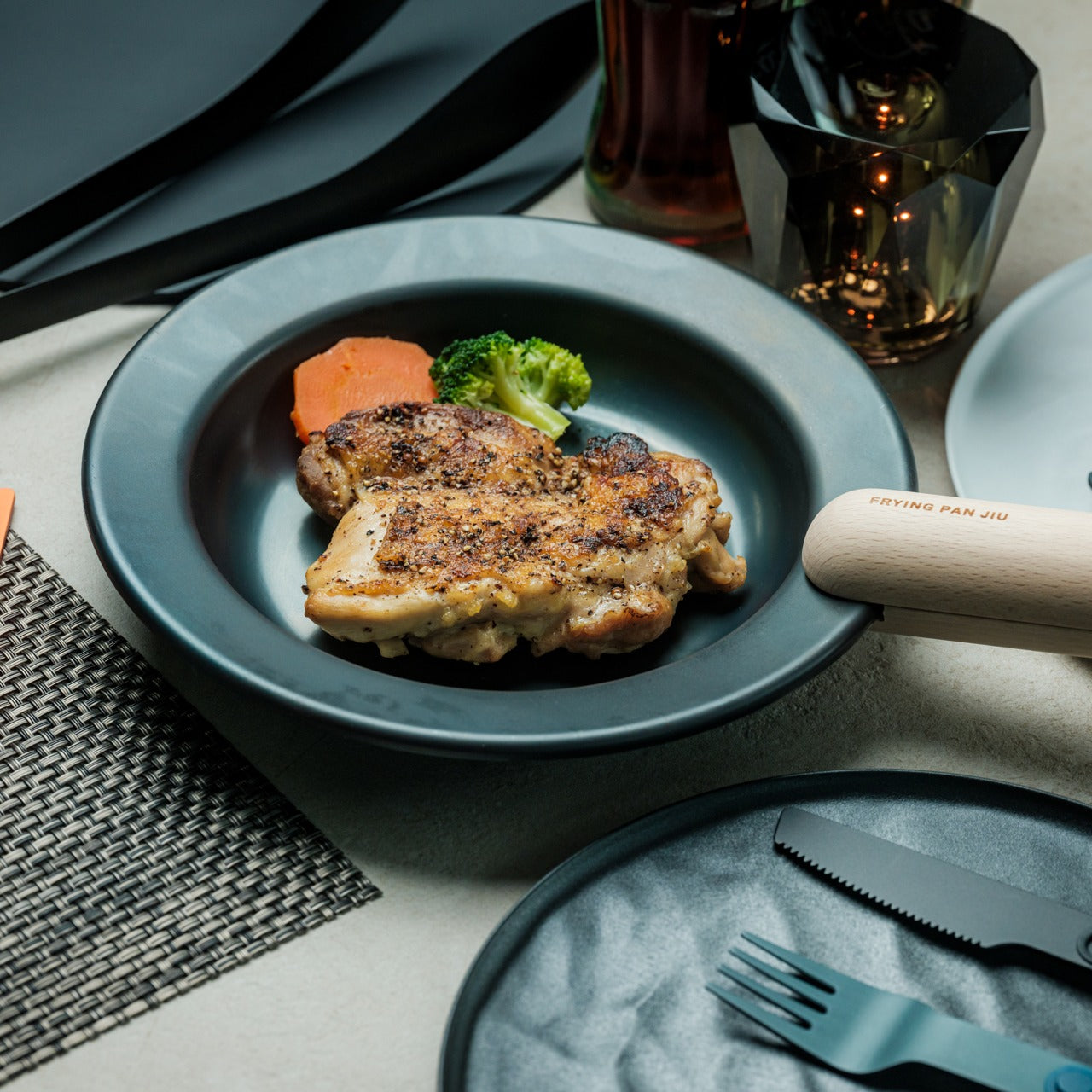
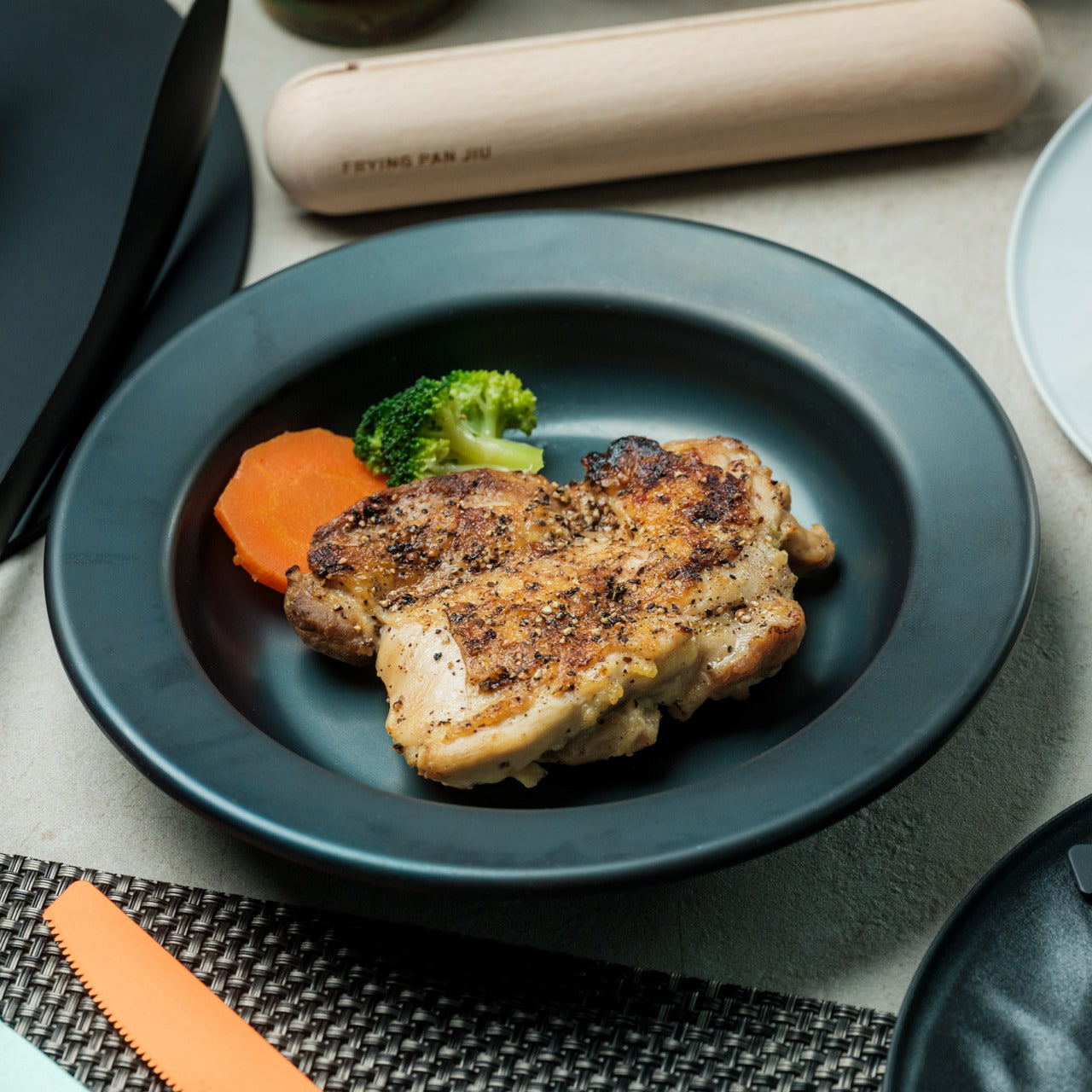
The Iron Frying Plate operates on a beautifully simple premise: eliminate the plate. Made from 1.6mm-thick mill scale steel, this uncoated, rust-resistant piece of cookware is designed to go from stove to table without interruption. There’s no ceramic coating to chip, no synthetic surface to question, just raw, well-engineered steel that builds character and natural seasoning with every use. The matte black mill scale finish slots into an all-black kitchen without any deliberate effort at all.

Its detachable wooden handle is one of those small design decisions that reveal serious thought about every moment of use. Attach it for cooking, remove it for serving, one-handed, no tools required. That seamless transition from cooking vessel to serving piece is exactly the kind of dual-function thinking that earns a product permanent space in a curated kitchen. JIU doesn’t try to be more than it is. It’s a frying plate, and it’s an excellent one.

Click Here to Buy Now: $69.00

What We Like

  • The uncoated mill scale steel surface develops natural seasoning over time, building flavor with every use
  • The one-handed detachable wooden handle enables a smooth transition from stovetop cooking directly to table service

What We Dislike

  • An uncoated steel surface requires regular seasoning and more attentive care than nonstick alternatives
  • The minimal form is best suited to simple preparations rather than sauce-heavy or complex dishes

5. HA1 Expert Hard Anodized Nonstick 10-Piece Set

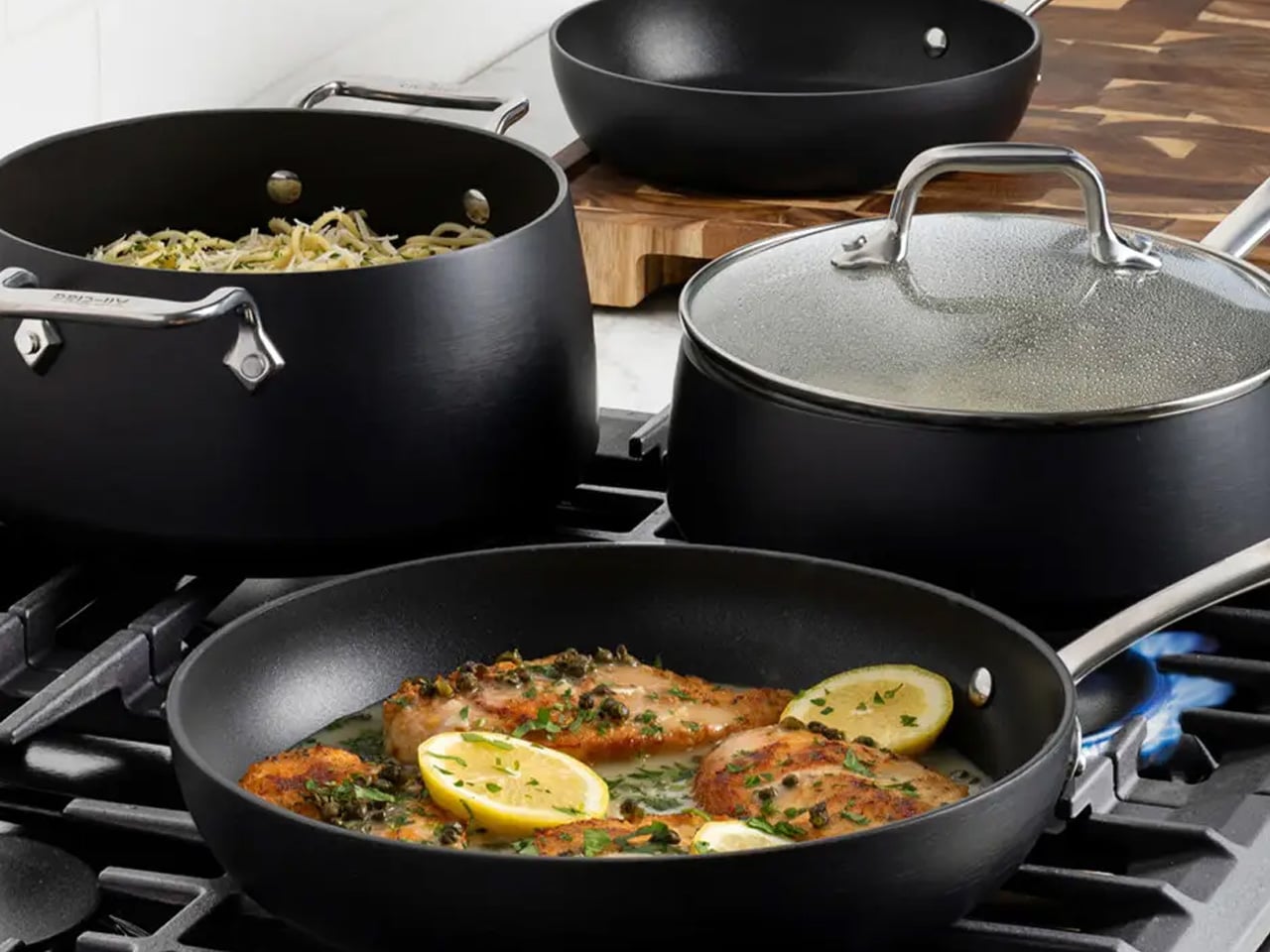
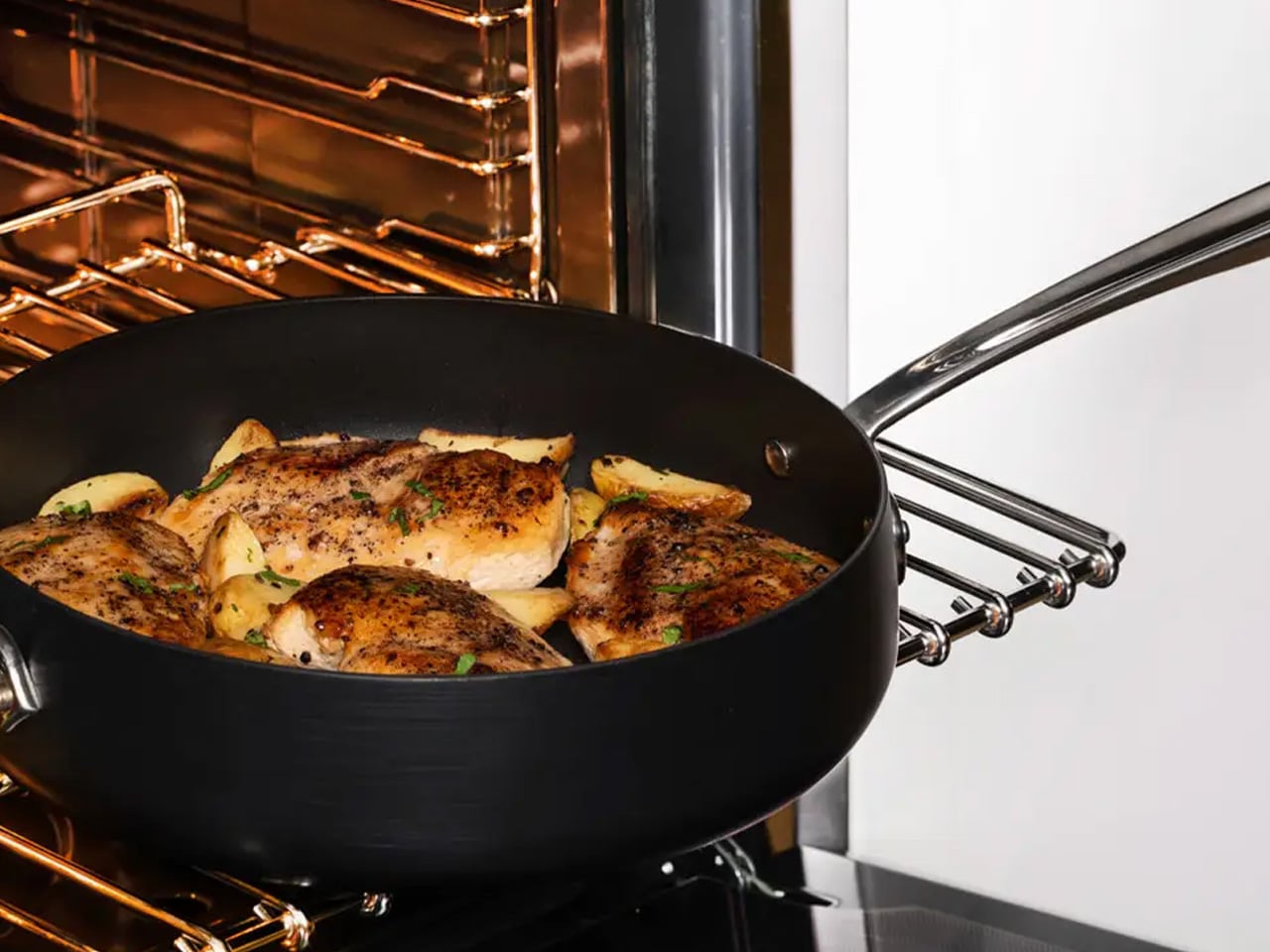
If the all-black kitchen needs a workhorse, the All-Clad HA1 Expert set fills that role without compromise. Ten pieces of hard anodized, scratch-resistant nonstick cookware finished in a deep, uniform black that holds up to both heavy daily use and visual scrutiny. The anodized aluminum construction is reinforced with a stainless-steel base, delivering warp resistance and the kind of even, consistent heat distribution that makes routine cooking genuinely more reliable. This is a set built for people who cook seriously and care deeply about how their kitchen looks.

The range covers everything a fully functioning kitchen demands: two fry pans, two saucepans, a sauté pan, and a stockpot, each paired with a matching lid. Oven-safe to 500°F and induction-compatible, very little is left unaddressed. Double-riveted stainless steel handles hold securely through extended use, while tempered glass lids allow for monitoring without lifting. As a complete, coherent system in black, this set reads less like a collection of pots and more like an intentional design decision.

What We Like

  • Hard-anodized, scratch-resistant construction paired with long-lasting PTFE nonstick delivers durable, professional-grade performance
  • Fully induction compatible and oven safe to 500°F, covering virtually every cooking scenario without exception

What We Dislike

  • Glass lids are only oven safe to 350°F, considerably lower than the pans themselves
  • PTFE nonstick requires careful utensil choice and hand washing to preserve its surface longevity

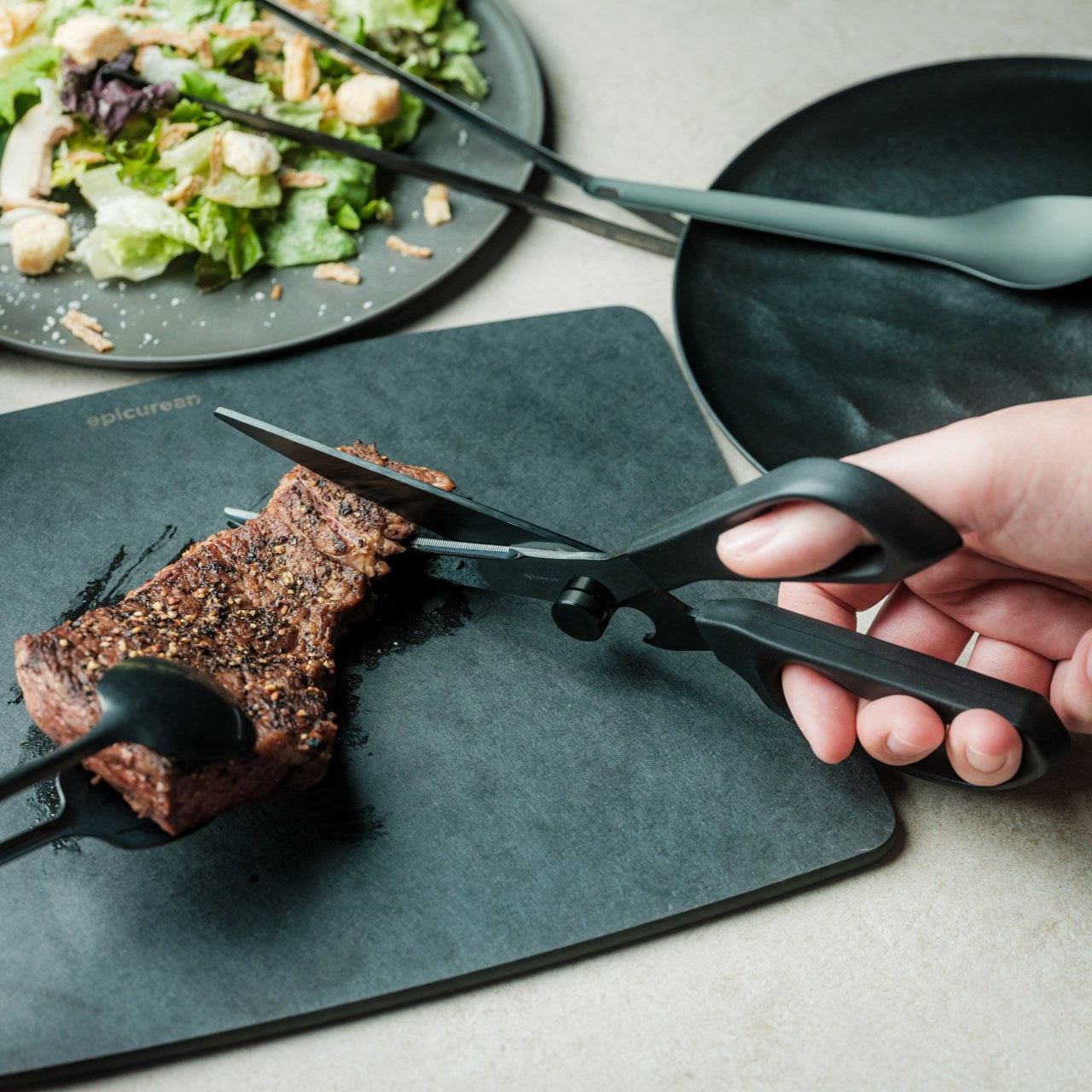
6. Precision Chef Kitchen Scissors

Kitchen scissors rarely receive the design attention they deserve. The Precision Chef Kitchen Scissors are a deliberate exception. The oxidation-colored black finish isn’t cosmetic; it’s a durable surface treatment that resists deterioration, holding its appearance through years of regular use. The curved serrated blade is engineered specifically for cutting meat, reducing effort while improving both control and safety. In a kitchen where every object is chosen with intention, a pair of scissors is considered a meaningful detail that most kitchens quietly overlook.

The ergonomic structure goes beyond grip comfort. When laid flat, the blade is designed to avoid contact with the counter surface, a small but precise detail that speaks to the level of thought invested in this tool. Cutting through steaks, portioning pizza, or trimming vegetables, these scissors approach each task with the same quiet authority that an all-black kitchen demands. They are scissors genuinely designed to be seen as well as used, and they meet that standard on both counts.

Click Here to Buy Now: $95.00

What We Like

  • Oxidation coloring creates a durable black finish that resists fading and surface deterioration through sustained use
  • The curved serrated blade is purpose-engineered for meat cutting, improving control and reducing the effort required

What We Dislike

  • The specialized curved blade may feel less versatile for tasks that go beyond protein and general food prep
  • Ergonomic scissors with complex geometry can be more difficult to sharpen at home than straight-bladed alternatives

7. Melrose Pendant Light

Lighting in an all-black kitchen isn’t merely functional; it’s structural. The Steel Lighting Co. Melrose pendant operates as both. The 18-inch industrial dome in matte black is proportioned specifically for kitchen island use, casting a wide, even wash of light across the work surface below. American-made and UL-approved for both indoor and outdoor installation, this is a pendant built to perform as well as it looks. At 300 watts, it carries the capacity to anchor a kitchen island with genuine visual authority.

What makes the Melrose particularly thoughtful is its configurable interior. Available in white, matte black, or brass, the interior color shapes both the quality of reflected light and the overall tone of the fixture without altering its profile. In a black kitchen, a brass interior introduces a warm, considered counterpoint that prevents the space from reading as flat or one-dimensional. The matte black exterior remains constant throughout: commanding, clean, and entirely at home in a kitchen built around the same commitment to the color.

What We Like

  • Configurable interior color options in white, matte black, or brass allow for subtle tonal customization within a consistent exterior
  • American-made with indoor and outdoor UL approval, signaling a meaningful commitment to build quality and longevity

What We Dislike

  • At 12 pounds, installation may require additional structural consideration, depending on the ceiling construction
  • The industrial farmhouse silhouette may not suit kitchens with a strictly contemporary or ultra-minimal design direction

8. Fellow Stagg EKG Pro Electric Pour-Over Kettle

The Fellow Stagg EKG Pro is the kind of object that reframes where coffee fits in the morning. Its signature gooseneck spout delivers precise control over flow rate and stream consistency, the kind of control that produces a measurable difference in pour-over extraction. To the degree, temperature control heats and holds water exactly as programmed, while a high-resolution color display allows complete customization of brewing schedules, altitude adjustments, and temperature units. This is a kettle engineered with the seriousness typically reserved for professional brewing equipment.

The EKG Pro’s WiFi connectivity and scheduling capabilities are where it shifts from impressive to genuinely integrated into daily life. Program brewing schedules that adapt to your routine so the kettle is ready precisely when you are, no preheating, no guesswork. The sleek industrial design holds its own on a countertop alongside thoughtfully chosen cookware and tools. The hold function maintains brewing temperature for extended periods without wasting energy. In an all-black kitchen, this kettle earns its visible place every single morning.

What We Like

  • To-the-degree temperature control, combined with a gooseneck spout, delivers precision that measurably improves pour-over coffee quality
  • WiFi connectivity and programmable scheduling mean the kettle is ready exactly when needed, without any manual preheating

What We Dislike

  • Advanced features like WiFi and the color display come at a price point that significantly exceeds basic kettle alternatives
  • The gooseneck form is optimized for pour-over brewing and is less suited to general-purpose boiling tasks

The Kitchen Finally Got the Design Treatment It Deserved

The all-black kitchen doesn’t ask for compromise. Every product here demonstrates that designing in black means choosing objects with a strong point of view, ones crafted carefully, finished deliberately, and considered at every stage. The color is what makes the curation visible. It’s a shared language between objects that have little else in common except that they were each made to last, made to perform, and made to matter in the space they occupy.

What’s striking about 2026’s black kitchen movement is how completely it spans every category. Cookware, utensils, lighting, kettles: the commitment runs through the entire room. When each element carries the same visual weight, a kitchen stops being a collection of appliances and tools and becomes a genuinely designed space. That’s the standard these eight products are held to, and without exception, it’s the standard each one meets.

The post The All-Black Kitchen Is 2026’s Hottest Design Trend — Here Are 8 Products That Nail It first appeared on Yanko Design.