A Modern Chess Set To Serve The Modern Needs

Chess, the ancient game of strategy and intellect, has a rich history dating back to seventh-century India, where they called it chaturanga, evolving into the familiar rules we know today in Europe by the 15th century. Over the centuries, the materials used to craft chess sets have varied from clay to metal and, more recently, plastic. However, a recent chess design challenges the norm by embracing sustainability by going back and resorting to wood as well as minimalism to cater to contemporary choices.

Designer: Begüm Kılınç

In a world increasingly conscious of environmental impact, the chess set design opts for birch wood, deviating from the prevalent use of plastic in the market. This conscious choice not only aligns with eco-friendly values but also adds a touch of authenticity and craftsmanship to the pieces.

The evolving trend of minimalism has permeated various aspects of design, now including chess sets. The pieces in this particular set showcase a minimalist approach, a departure from the ornate designs seen in traditional sets. While this may present a slight learning curve for those accustomed to intricate pieces, it adds a contemporary touch to the timeless game.

The minimalist approach in the design might be less intuitive for traditional players initially, as each piece has a unique, modern aesthetic. However, this adaptation encourages players to appreciate the individuality of each chess piece, fostering a deeper connection with the game.

One of the standout features of this chess set is its portability. The design ingeniously transforms into a compact, laptop-bag-like form, making it easy to carry for impromptu games at picnics, school, playdates, or even around the house. This nod to modern lifestyles aligns with the increasing demand for convenience without compromising on the elegance of the game.

The chess set is available in two colors and can be painted in more variety paints, providing users with the flexibility to choose a set that suits their preferences and surroundings. This touch of personalization enhances the overall experience, making the chess set a stylish addition to any setting.

In a digital age, the enduring appeal of chess persists, and this innovative design breathes new life into the classic game. By embracing sustainable materials, minimalist aesthetics, and convenient portability, this chess set not only pays homage to the game’s ancient roots but also paves the way for a more modern and environmentally conscious approach to chess set design.

The post A Modern Chess Set To Serve The Modern Needs first appeared on Yanko Design.

A Linoleum Birdhouse Game That Educates and Instils The Values Of Sustainability

In an interesting collaboration, design studio Mano de Santo has joined forces with French design atelier Tarkett to introduce ELVI. This innovative urban birdhouse game delves into the transformative potential of reusing materials. An eco-friendly and adaptable creation that not only highlights the versatility of linoleum but also aims to provide an interactive learning experience, fostering awareness and coexistence with urban wildlife.

Designers: Mano de Santo and Tarkett

In the world of birdhouse games, ELVI is not your everyday player. It stands out for its incredible ability to fit in just about anywhere – be it on streetlights, trees, balconies, or bars. It has a way of seamlessly blending into different spots, making it the go-to choice for those who appreciate a touch of beauty. What makes it even cooler is its modular design, making it super easy for anyone to put it together. You can be your own urban designer, customizing the birdhouse to match your style. The DIY aspect of ELVI adds a unique and personal dimension to the birdhouse-making process. By allowing individuals to assemble the birdhouse themselves, it creates a sense of connection to the project. This hands-on approach not only fosters a personal connection with the final product but also instills a deeper appreciation for the craftsmanship involved in its creation.

But this birdhouse is not just about looking good; it’s on a mission to teach us some important values. Imagine it as a wise friend, sharing knowledge about linoleum – a material often used for floors. It’s not just comfortable and durable; it’s also super versatile. You can find it in schools, hospitals, and many other places. The birdhouse takes this material and turns it into a piece of art that fits perfectly into our daily lives. The DIY nature encourages more people to actively engage in sustainable practices. As individuals take part in the creation of their birdhouses, they become more conscious of the materials used and the environmental impact of their choices.

Beyond its good looks, it takes on another important role as an educational tool. It’s like a guiding light, showing us how linoleum can be recycled and why it’s so good for the environment. It’s a product of the values of Tarkett, emphasizing how linoleum can be recovered and reused after we’re done using it. By pointing out the linoleum’s cleanliness and its ability to become new floors, the birdhouse wants us to feel responsible for taking care of our environment.

The hands-on experience serves as an educational tool, promoting a greater understanding of the importance of reusing materials like linoleum and contributing to a culture of sustainability.

By creating ELVI, a birdhouse game that goes beyond just being pretty, the project adds a special touch to urban spaces. Its design and focus on the eco-friendly qualities of linoleum make it more than just a decoration; it becomes a symbol of responsible choices and a reminder that we can live in harmony with nature even in our busy cities.

The post A Linoleum Birdhouse Game That Educates and Instils The Values Of Sustainability first appeared on Yanko Design.

Zaha Hadid Design Brings The Concepts Of Architecture Into Tableware

In a striking display of creativity and functionality, Zaha Hadid Design (ZHD) introduces its latest tableware collections, including the ‘Cell,’ ‘Swirl,’ ‘Prime,’ ‘Hew,’ and ‘Pulse’ series. Crafted meticulously in glass and polished stainless steel, these pieces not only showcase the studio’s commitment to pushing design boundaries but also pay homage to the late architect Zaha Hadid’s distinctive aesthetic, blending organic forms inspired by cellular organisms with cutting-edge technology.

Designer: Zaha Hadid Design

Established in 2006 by the visionary architect Zaha Hadid, ZHD has emerged as a symbol of groundbreaking design across diverse categories. Design directors Woody Yao and Maha Kutay seamlessly carry forward Hadid’s unique design language, involving fluid and futuristic forms, and implementing a methodical approach that integrates the latest technological and material advancements into the studio’s creations. With a portfolio spanning four decades of research, ZHD remains at the forefront of innovation in lighting, furniture, fashion accessories, jewelry, interiors, exhibitions, public art, and set design.

Hew Drinkware

Born out of ZHD’s extensive exploration of erosion and carving concepts, the ‘Hew’ drinkware series is a tactile and visually engaging ensemble. Comprising a highball, tumbler, and carafe, each piece epitomizes the delicate balance between form and function. Meticulously crafted, these elements redefine traditional glassmaking, offering a unique and captivating experience. ‘Hew’ stands as a testament to ZHD’s commitment to pushing the boundaries of craftsmanship.

Cell Collection

The ‘Cell’ collection, fashioned from polished stainless steel, draws inspiration from the intricate beauty of cellular organisms. Evoking a transition from solidity to void through hexagonal and spherical perforations, the collection expands into serverware with the addition of bowls and a centerpiece. Introducing textural parametricism, bringing the essence of architecture into these pieces signifies a moment of transition, expressing the myriad states of change found in nature. Machined with precision by robotic lasers, these stainless-steel marvels not only make a visual statement but are also food-safe, ensuring functionality alongside their aesthetic appeal.

Pulse Series

The Pulse series challenges simplicity with pleated glass, showcasing the complex production process behind each piece. The polished, hand-blown glass reveals subtle variations, providing a glimpse into the meticulous craftsmanship involved. Vertical channels seamlessly integrated into the glassware offer a tactile experience, emphasizing both vertical and horizontal dynamism. The result is an immersive, sensory journey for users, where smooth and folded surfaces converge in harmonious design.

Swirl Bowl

The ‘Swirl’ small bowl, inspired by the motion of a swirling vortex, is a captivating addition to the series. Retaining the essence of its larger counterpart, this shallow bowl with a polished surface injects dynamism into any setting. Ideal for decorative purposes or serving food, the ‘Swirl’ small bowl exemplifies ZHD’s dedication to meticulous craftsmanship and the creation of timeless design.

Zaha Hadid Design’s latest tableware collections seamlessly blend artistry with functionality, showcasing the studio’s prowess in pushing design boundaries. The ‘Cell,’ ‘Pulse,’ ‘Hew,’ ‘Swirl,’ and ‘Prime’ series are a testament to ZHD’s ability to translate Zaha Hadid’s visionary design language into tangible, awe-inspiring pieces that redefine the art of tableware.

The post Zaha Hadid Design Brings The Concepts Of Architecture Into Tableware first appeared on Yanko Design.

The Future Is Here! Introducing Flying Umbrellas To Take Convenience To The Next Level

In the fast-paced world of technological innovation, where convenience is key, I Build Stuff, a content creator, has taken the concept of hands-free technology to new heights—literally. In a recent creation that has captured the imagination of tech enthusiasts and casual observers alike, I Build Stuff has designed a flying umbrella drone that hovers above users, shielding them from the rain in a futuristic and whimsical fashion.

Designer: I Build Stuff

In an era dominated by smart devices and voice-controlled assistants, the integration of hands-free technology into everyday objects is a natural progression. The flying umbrella drone is a prime example of this trend, offering a unique solution to the age-old predicament of holding an umbrella while navigating through rain showers.

The concept behind the flying umbrella may seem straightforward—attach propellers, install a drone, and affix an umbrella. However, the designer encountered numerous technical challenges during the development process, leading to a journey of trial and error. The result is a remarkable fusion of cutting-edge technology and creativity.

The core structure of the flying umbrella is a cross-shaped frame made of 3D-printed parts, extending from the edges of a traditional umbrella. At each end of the frame, small propellers resembling a hurricane’s rotation lift the umbrella into the air. To ensure lightweight yet robust construction, carbon fiber tubes form the skeleton of this innovative device, enabling it to gracefully soar above its user.

Crucial to the functionality of the flying umbrella is the incorporation of a flight controller and an electric stability control circuit. The designer meticulously soldered wires to the circuit, regulating the motor’s speed to prevent the device from flying off uncontrollably. The flight controller, programmed to maintain stability, keeps the flying umbrella gracefully following its user.

Despite initial success during the pilot flight, the inventor faced challenges during subsequent tests. The flying umbrella exhibited erratic behavior, shaking violently during one instance. The inventor took a pause, addressing the issues and stabilizing the system, even going so far as to encase the electronics in plastic wrap to protect them from moisture.

While concerns about the device’s stability persist, the I Build Stuff creator has showcased its effectiveness in protecting against drizzles. Anticipating future improvements, the inventor envisions adding a camera and programming the flying umbrella to autonomously follow users, eliminating the need for manual control.

The current controller-operated system opens the door to exciting possibilities. However, the prospect of a fully autonomous flying umbrella holds promise, making this invention accessible to a broader audience. The potential for hands-free technology to benefit not only tech-savvy individuals but also the elderly or those less proficient with remote controllers is an exciting prospect on the horizon.

In a world where innovation knows no bounds, the flying umbrella drone stands out as a quirky yet functional creation, redefining the way we navigate rainy days. As technology continues to evolve, the prospect of a completely hands-free experience with a flying umbrella is both intriguing and eagerly awaited by enthusiasts around the globe.

The post The Future Is Here! Introducing Flying Umbrellas To Take Convenience To The Next Level first appeared on Yanko Design.

Gaggenau’s Essential Induction Cooktops Are Invisible And Integrate Seamlessly Into The Kitchen Platforms Believing In Quite Luxury

In the dynamic realm of kitchen design, Gaggenau’s latest creation, the Essential Induction, masterfully merges cutting-edge technology with architectural elegance, redefining the very essence of kitchen aesthetics. This platform-breaking cooktop effortlessly fades into the background, offering a perfect union of functionality and minimalist design.

Designer: Gaggenau

Gaggenau’s longstanding commitment to innovation and visually pleasing aesthetics has consistently elevated its status in the world of kitchen appliances. The Essential Induction, part of the 400 series cooktops, presents a range of sizes from 38 cm to one meter, tailored for spacious kitchens, granting architects the freedom to express their creative vision. The solid stainless steel illuminated control knobs can be vertically mounted, and the flexible Vario options empower users to craft a bespoke cooktop that aligns with individual preferences.

At the core of the Essential Induction’s design philosophy lies the concept of quiet luxury. When not in use, the cooking zone seamlessly transforms into a multifunctional stone surface, maintaining a sleek and minimalist appearance. The absence of visible cooking zones or frames enables seamless integration into any living space, erasing the traditional boundaries between living areas and food preparation.

This induction marks a departure from conventional kitchen layouts, encouraging a more fluid and interactive cooking experience. Gaggenau’s design team observed a shift in user behavior, with individuals instinctively arranging ingredients and utensils around the pot, fostering a natural and enjoyable cooking process.

Crafted with meticulous attention to detail, the induction almost vanishes into a Dekton worktop when switched off, leaving only the front-mounted knobs in stainless steel or black as evidence of its presence. When in use, The knobs glow and a discreet LED dot guides users on where to place their pan for optimal heating, enhancing both safety and efficiency.

The seamless integration of Essential Induction into the Dekton worktop is made possible by the remarkable properties of Dekton, a durable material from Cosentino. Composed of ultra-compact mineral particles, Dekton offers resistance to heat, stains, and scratches, making it an ideal choice for architects designing kitchen countertops.

Beneath the Dekton surface, Gaggenau employs high-performance induction modules in two sizes, accommodating pots and pans up to 21 cm or 28 cm. The modules are activated through magnetic surface protectors, ensuring a secure grip on cookware while safeguarding the worktop from scratches and dampening sounds. The control knobs provide users with Gaggenau’s signature precision and speed, offering 12 power levels, a keep-warm function, and a boost for added convenience.

In the realm of kitchen appliances, Gaggenau’s Essential Induction stands as a testament to the philosophy that less is more. By seamlessly integrating into the living space, this cooktop not only enhances the aesthetics of the kitchen but also transforms the cooking experience into a joyous and liberating activity. Gaggenau’s Essential Induction is not just a kitchen appliance; it is a celebration of minimalism, innovation, and the pursuit of culinary perfection.

The post Gaggenau’s Essential Induction Cooktops Are Invisible And Integrate Seamlessly Into The Kitchen Platforms Believing In Quite Luxury first appeared on Yanko Design.

This Beach House In Denmark Is A Symbol Of Their Local Culture

Nestled at the northernmost point of Denmark in the picturesque town of Skagen, the Skagen Klitgaard Beach House stands as a testament to architectural homage, familial togetherness, and seamless integration with the natural surroundings. Designed by PAX Architects, this stunning summer retreat draws inspiration from Skagen’s Black Period, incorporating the historical use of burned shipwreck wood into its distinctive exterior and thatched roof.

Designer: PAX Architects

The exterior of the Skagen Klitgaard Beach House pays homage to the historical legacy of Skagen. The black-painted timber exterior and thatched roof evoke the charm of houses built during the Black Period, where charred wood from shipwrecks was a common building material. This architectural choice creates a connection to the town’s history while establishing the house as a visual delight against the coastal landscape.

The architectural concept revolves around the central theme of fostering togetherness, especially among three generations of occupants. The house is designed to accommodate various needs, from communal gatherings in the centrally located kitchen to more secluded areas for moments of solitude. Despite the diverse purposes of each space, a continuous pitched roof unifies the entire house, emphasizing the idea of ‘being under one roof.’

Special attention is given to inclusivity within the Beach House. The architects incorporated an acoustic ceiling to mitigate noise levels, creating an environment conducive to both family life and individual retreats. Fluid zones within the layout allow for visual connectivity between different areas while maintaining a strong sense of connection to the surrounding landscape.

Recognizing the importance of family mealtime, the kitchen is positioned centrally, acting as the heart of the house. Thick oak mullions frame large glass panels, creating a seamless transition between indoor and outdoor spaces. This design choice not only blurs the boundaries but also brings the beauty of the landscape indoors, enhancing the overall living experience.

To cater to the diverse needs of its occupants, the ceiling heights vary in different spaces. Lower ceilings in intimate zones, such as the multi-purpose room behind the kitchen, create a contrast with the open and social areas, offering a variety of atmospheres within the house.

The interior design, characterized by muted colors and extensive use of sustainable Douglas fir, seamlessly blends with the natural surroundings. The tactile qualities, scent, and soothing sounds of wood contribute to a warm and inviting atmosphere, aligning perfectly with the vision of the house being an integral part of the natural environment.

The collaboration with Danish company Dinesen reflects a commitment to quality and precision. Responsibly sourcing timber from forests in France and Germany, the architects ensured not only a visually stunning but also a sustainable and enduring home.

The post This Beach House In Denmark Is A Symbol Of Their Local Culture first appeared on Yanko Design.

Bio-composite Roof Tiles With Solar Panels Are An Ode To Traditions In The Modern World

In a world grappling with environmental challenges, Studio SKLIM’s Lo-Hi Tech project stands out as a beacon of innovation, marrying high and low technologies to create hybrid solutions that are not only efficient but also environmentally friendly. This project is a testament to the power of blending primitive materials with modern and ancient technology to address contemporary issues and enhance human living conditions.

Designer: Studio SKLIM

The Lo-Hi Tech project revolves around two main building material systems: the Ke-Sol System (KSS) and the Terra-Cooling System (TCS). The Ke-Sol System seamlessly combines the strength of Kenaf fibers in lightweight biocomposite roof tiles with custom solar panels, showcasing a perfect harmony between nature and technology. Through a meticulous process involving high thermal pressure, Kenaf fiber mats are transformed into robust yet lightweight roof panels. These panels are then integrated with monocrystalline solar panels, creating an innovative roof tile capable of generating clean energy through its modular and tiltable configurations.

The integration of the Ke-Sol System not only emphasizes sustainability but also illustrates the potential for future-proofing primitive materials with advanced technology. The combination of Kenaf fibers and solar panels provides a durable roofing solution and also transforms roofs into energy-generating surfaces. This not only reduces the environmental impact of traditional roofing materials but also contributes to a cleaner and more sustainable energy future.

On the other front, the Terra-Cooling System harnesses the natural properties of terracotta, drawing inspiration from ancient refrigeration and irrigation techniques. Comprising Hex and Tri components, the system converts hot air into cool air while serving as a water tank. By integrating terracotta with innovative technology, the TCS forms a wall system capable of reducing air temperatures by an impressive 6.5 degrees Celsius. This substantial temperature drop is achieved through the inherent cooling properties of terracotta, a well-designed form maximizing air and water flow, and the cooling effect driven by water evaporation.

Computer Fluid Dynamics (CFD) simulations play a crucial role in refining the TCS design for optimal evaporative cooling performance. The system envisions a future where material systems seamlessly transition between shelter and vehicular infrastructure, breaking conventional boundaries. One promising application involves creating sustainable shelter infrastructure for Electric Vehicle (EV) charging stations. These structures not only reduce ambient temperatures but also utilize solar energy for localized lighting during the night, showcasing the project’s commitment to integrated sustainability solutions.

The Lo-Hi Tech project represents more than just a technological achievement; it is a celebration of the convergence of traditional craftsmanship with cutting-edge techniques. The images of terracotta pieces being removed from the kiln, custom-built wood-fired kilns, and CNC-milled molds reveal the meticulous craftsmanship involved in creating these sustainable solutions. This blend of ancient materials and modern technology exemplifies a forward-thinking approach to addressing environmental challenges while honoring the rich heritage of craftsmanship. It is a commendable example of how innovative thinking can revolutionize the construction and energy sectors. By combining primitive materials with state-of-the-art technology, the project not only showcases the potential for sustainable solutions but also sets a precedent for future initiatives that seamlessly integrate the built environment with vehicles, paving the way for a more sustainable and interconnected future.

The post Bio-composite Roof Tiles With Solar Panels Are An Ode To Traditions In The Modern World first appeared on Yanko Design.

A Sustainable Lighting Solution That Redefines The Interaction Between Light And Sound

In the ever-evolving landscape of technology and design, the fusion of functionality and artistic expression continues to yield groundbreaking innovations. One such marvel is Oloïd, a sustainable acoustic luminaire born from the collaborative synergy of Impact Acoustic; a provider of sustainable acoustic solutions, and the esteemed design studio atelier oï. This unique lighting fixture not only delivers exceptional sound absorption but also redefines the way light and sound interact, creating a transformative experience that enhances the ambiance of any space.

Designer: Impact Acoustic Atelier oï

At the heart of Oloïd’s revolutionary design lies Archisonic Felt, a high-performance sustainable acoustic absorber crafted from upcycled PET bottles. This versatile material demonstrates outstanding sound absorption capabilities and embodies a commitment to sustainability and responsible material sourcing. The Cradle to Cradle certification and LEED accreditation of Archisonic Felt underscore its eco-friendly credentials, aligning with the growing demand for environmentally conscious design solutions.

Oloïd distinguishes itself by offering a transformative lighting experience that seamlessly integrates functionality with artistic expression. The collaboration between Impact Acoustic and Atelier oï is not merely about illuminating a space but about creating an immersive environment where light and sound harmonize effortlessly.

Aurel Aebi, a key figure at Atelier oï, highlights the creative process that brought Oloïd to life. “At atelier oï, we often begin our creative process with an encounter with the material,” Aebi explains. “Our goal was to find a way to make the sustainable material speak in a new way.” This innovative approach involved working with the material’s stiffness and flatness to create organic shapes that redefine conventional luminaire design.

Oloïd is available in a stunning array of 32 colors, presenting a curated selection from the Archisonic Felt range. This diversity empowers users to personalize their spaces, allowing for the creation of bespoke environments that reflect individual tastes and preferences. The luminaire’s design seamlessly integrates the organic shapes derived from the unique qualities of Archisonic Felt, transcending two-dimensional panels into captivating three-dimensional entities.

Sven Erni, co-founder of Impact Acoustic, expresses his fascination with the collaborative process that transformed their material. “The collaboration fascinated us as we witnessed the metamorphosis of our material,” Erni notes. “This was made possible using a distinctive cutting technique at specific angles and the skillful folding of the panels. This creative approach seamlessly transformed the two-dimensional panels into fascinating three-dimensional entities, transcending surfaces to tangible bodies.”

Oloïd not only sets a new standard for sound-absorbing luminaires but also stands as a testament to the potential of sustainable design in reshaping our surroundings. With its commitment to responsible material usage, innovative design, and the seamless integration of light and sound, Oloïd emerges as a beacon of eco-conscious creativity, inviting us to reimagine the possibilities of our illuminated spaces.

The post A Sustainable Lighting Solution That Redefines The Interaction Between Light And Sound first appeared on Yanko Design.

GoChip Gets A Sustainable Design To Track Your Dog And Remain A Stress-Free Pet Parent

Isn’t it tiresome to constantly run around your furry friends and keep a tab on them? Well, say hello to GoChip – the ultimate digital passport for your pet that makes being a responsible pet parent a breeze! In cahoots with city governments, vets, and shelters, GoChip is rocking the digital pet ID game. Just attach a GoChip to your pet, and you’re all set to manage them right from your phone. It’s like your pet’s passport, always updated, always with you. Plus, it’s not just smart; it’s a style statement inspired by Japanese minimalism and the cool vibes of Bali and Goa. With GoChip, your pet is not just found; they’re Always Found.

Designer: ANCORD Design Co (for GoChip)

Pet owners are always stressing about their furballs. Traditional pet IDs like collars and tags are easily lost and often outdated. And don’t even get me started on the emotional rollercoaster of trying to track down a missing pet. Shockingly, over 10 million pets in the U.S. go missing every year, with a whopping 65% never making it back home. Nobody expects it to happen to them, but it does. However, even in this case this chip is installed on the collar and can lose its value if it comes out, but it is surely a better option than the traditional collar tags.

ANCORD Design’s mission was to change the pet safety game. They went from brainstorming to a product that’s both cool and functional. They delved deep into the competitive landscape, analyzing a myriad of tracking products, from pet-specific devices to general-purpose trackers. This comprehensive research allowed them to identify gaps and opportunities that GoChip could uniquely fill.

Sustainability and functionality were at the forefront of material exploration. The designers considered options ranging from silicone to ocean plastics, ensuring durability without compromising aesthetics—a crucial balance for a product meant to accompany pets on their everyday adventures. They drew inspiration from Japanese minimalism, natural elements, and exotic vibes and curated a mood board that served as their aesthetic North Star. This guided the product’s look and feel, ensuring a globally appealing design. They chose 3D printing as their mode of manufacturing for optimum use of materials.

The design development involved iterative refinements based on client feedback. This collaborative approach ensured that every design choice was intentional and aligned with GoChip’s overarching vision. The final tag consists of a tracker, and a QR code to access all the information.

The post GoChip Gets A Sustainable Design To Track Your Dog And Remain A Stress-Free Pet Parent first appeared on Yanko Design.
This Biochemical Food Lid changes color to tell you when your refrigerated food is about to go bad

Ever found yourself tossing out perfectly good food just because the expiration date on the package said so? Well, Kimia Amir-Moazami, a UDK Berlin graduate, has an awesome solution for that – the Vorkoster Lid. This cool 3D-printed lid is here to put an end to unnecessary food waste by giving you a heads-up on whether your food is still good, without relying solely on those conventional expiry dates.
Designer: Kimia Amir Moazami

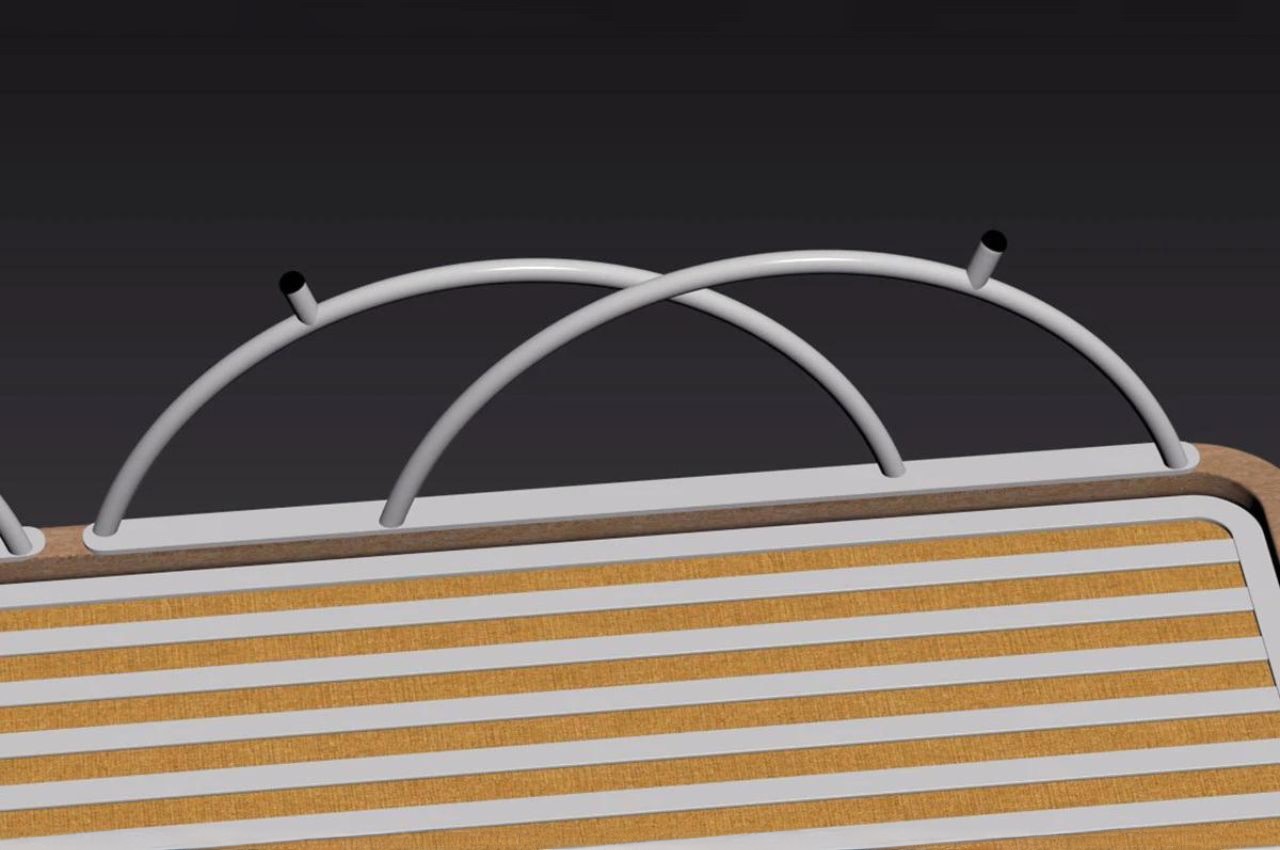
So, the Vorkoster Lid is not your average lid – it’s got a pH-sensitive foil in the middle that can sniff out if your meat or fish is starting to turn bad. When these foods get spoiled, they release ammonia gas, and this clever foil, made from algae and coated in a special dye, changes color from light green to bright purple. It’s like a neon sign for your food – “Eat me now!” or “Better find something else.”

Kimia makes a valid point about the confusion surrounding expiration dates contributing significantly to food wastage. The Vorkoster Lid aims to revolutionize this by tapping into our natural senses, similar to recognizing the browning of a banana peel or the smell of sour milk, guiding us to make informed decisions. It acts as the superhero of your fridge, ensuring nothing unnecessarily goes to waste. Kimia’s dislike for standardized expiry dates is well-founded, acknowledging that factors like cooling interruptions during food transport and production can hamper the shelf life. The Vorkoster Lid, armed with pH functionality, responds directly to a food item’s freshness regardless of its origin or packaging, challenging the dominance of one-size-fits-all expiration dates. It’s a rebellious solution to a common problem.

The Vorkoster Lid is a chameleon, if I may say. It is designed to cover any type of tub or bowl, ensuring flexibility and compatibility with various containers. Its versatility allows consumers to use it across different types of packaging, serving as a reminder to consume that deliciousness before it turns into science experiment leftovers.

Amir-Moazami drew inspiration from the common practice of using a plate to cover food in the fridge, creating a design that fits any bowl or container. The star of the show is the pH-reactive film that takes the guesswork out of checking your food’s freshness. First shown off in 2021, the Vorkoster Lid made its mark at Dutch Design Week. Amir-Moazami anticipates that the Vorkoster Lid could hit shelves within the next two years, following thorough testing to ensure flawless functionality.

With food waste being such a burgeoning problem (and a leading cause of carbon emissions), the Vorkoster Lid is like a breath of fresh air – or should we say, a bite of fresh food. It’s not just a lid; it’s a game-changer. By offering a visual and analog reminder of a food item’s freshness, this 3D-printed wonder might just be the hero we need to kick food waste to the curb and savor every last bite.

The post This Biochemical Food Lid changes color to tell you when your refrigerated food is about to go bad first appeared on Yanko Design.