Compact Shaver the size of an AirPods Case is the perfect Pocket EDC for Grooming on-the-go

Did you ever think a clipper could become a part of your EDC? Well, this one can.

I’m sure this sounds relatable. You wake up to notice you’re running late for work. You have time to brush your teeth, you’re possibly skipping your bath, and breakfast is just going to be an apple you quickly munch as you drive to work. You reach the workplace with minutes to spare, remembering you’ve also got a meeting today. Your hand runs across your jaw and you realize you didn’t get time to shave today. Even if it isn’t the kind of incident that happens on a daily basis, forgetting to shave is a quintessential problem. Either you don’t have the time, you forgot to charge your trimmer, or you’re traveling and conveniently ditched the razor/clipper thinking you wouldn’t need it.

That’s where a product like the ZERA M proves to be pretty handy. A beard trimmer small enough to fit into your pocket, the ZERA M is roughly the size of a wireless earbuds case. It measures 2.67 inches long, 1.27 inches wide, and weighs a paltry 3.4 ounces… but it’s a full-fledged stubble and nose-hair trimmer you can use on the go. Designed to fit right in your pocket, the trimmer/shaver is the ultimate on-the-go grooming accessory. You can use it directly on your skin, or pair it with a shaving cream of your choice. Either way, the ZERA M is designed to be used anywhere, whether it’s in a hotel washroom while on a business trip, at home before work, or even just minutes before you enter an important meeting where you need to look your professional best.

Designer: Zera M

Click Here to Buy Now: $59 $89 (34% off) Hurry! Only 4 Days Left.

Technology has a way of shrinking things. Phones today are slimmer than they were 10 years back. Cameras are measurably smaller than they were decades ago. Televisions today measure about as thick as a few credit cards stacked together. There’s no reason the beard shaver should still remain a bulky device, right? After all, the shaver is merely a blade powered by a motor and battery. Eschewing the bulky, ergonomic designs of most beard shavers you see today, the ZERA M simplifies things down for the sake of compactness. The tiny device, no longer than your thumb, gives you a comprehensive shaving experience on the go.


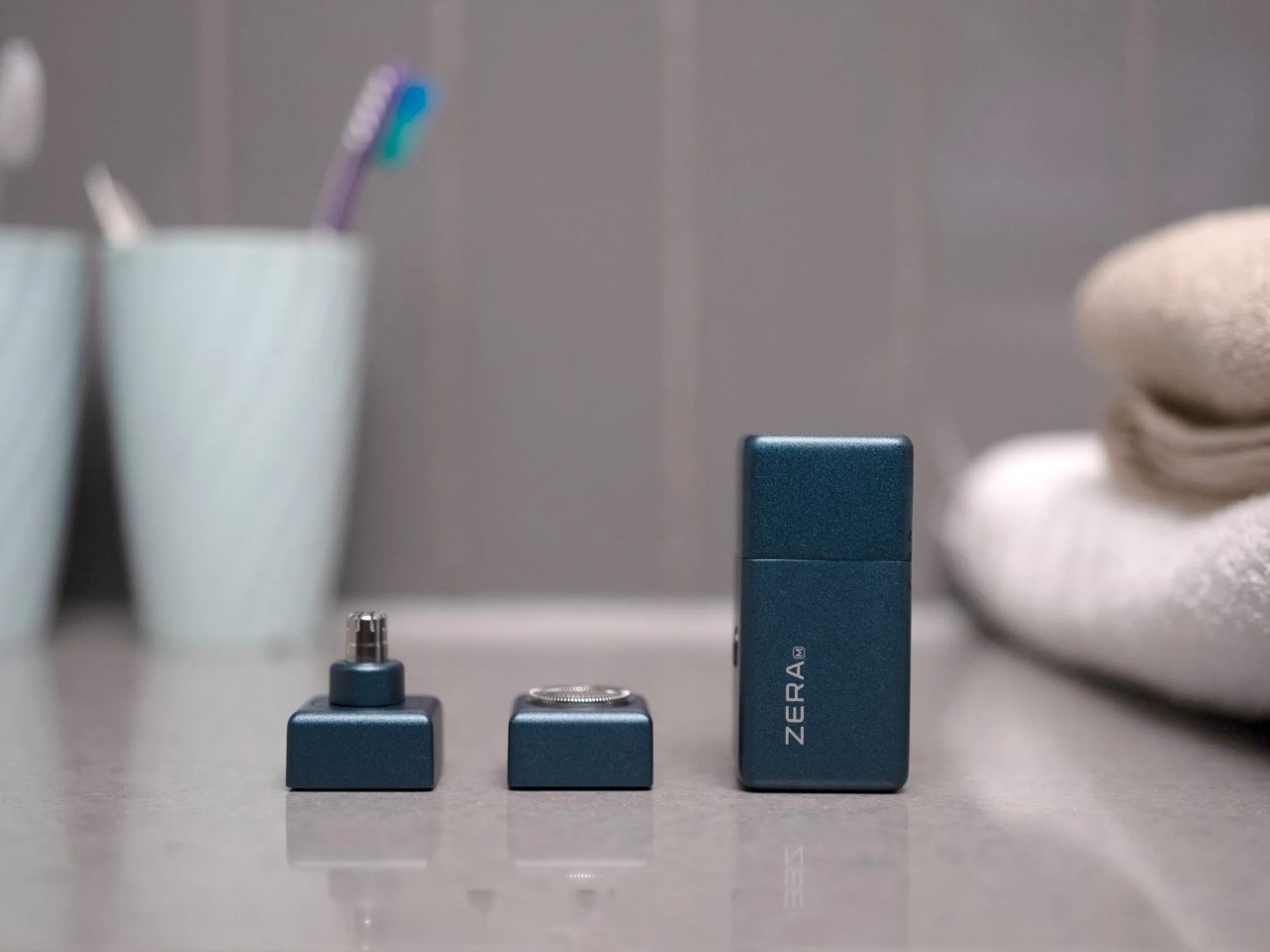
Essentially, the device can be split into two broad parts, the base, which contains the motor and battery, and a snap-on magnetic blade module that attaches to the base. When powered, the blade rotates at a stunning 8000RPM, operating at a volume of under 30dB (that’s quieter than the hum of your refrigerator). The blades sit within a safe enclosure, trimming your beard without causing razor burn or pinching your skin. All you do is run the ZERA M around your jawline to clear out any stubble… and if you want to groom your nostrils, just snap off the blade module and replace it with the nose-trimmer module that lets you quickly trim your nose hairs.
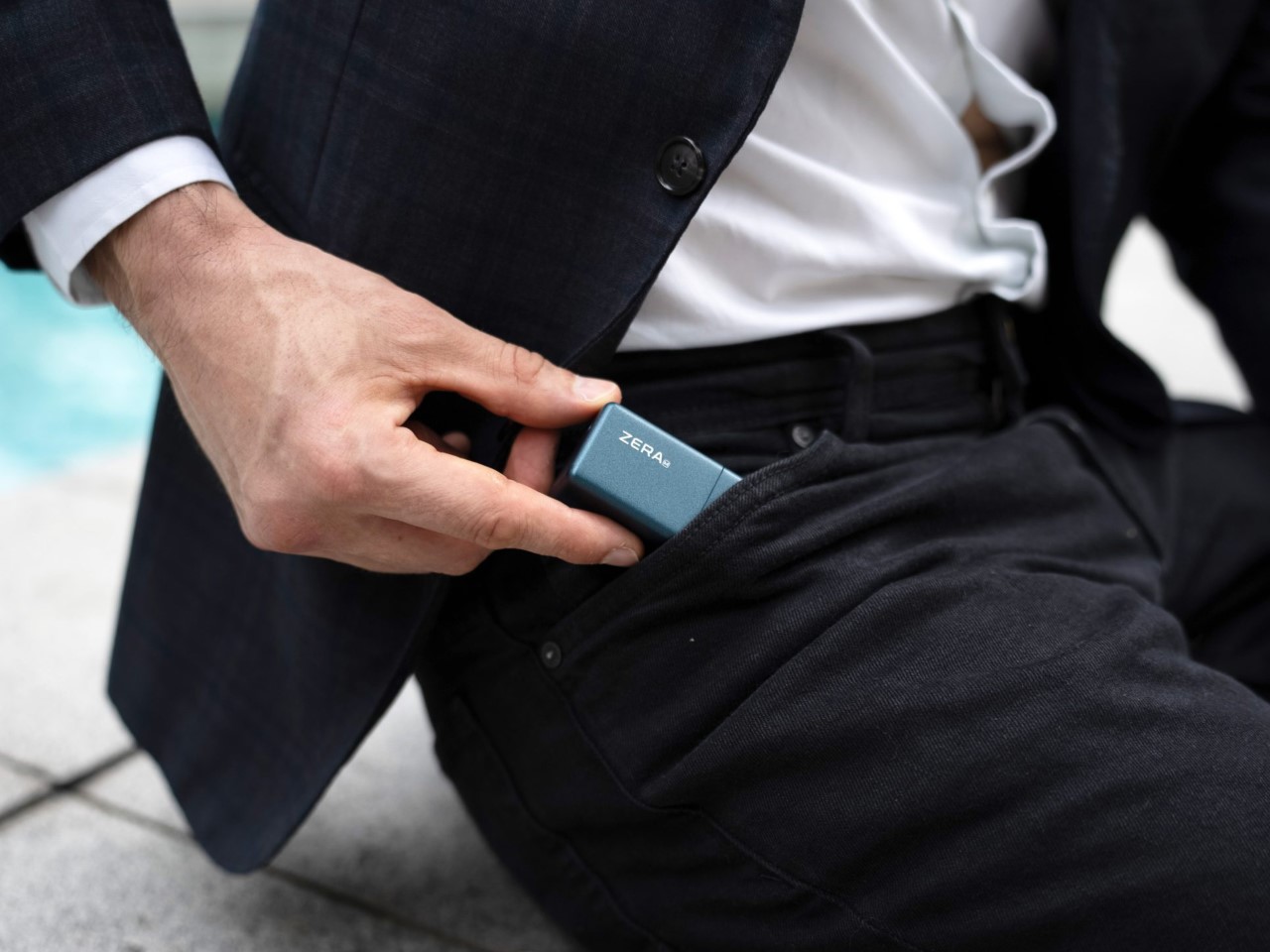
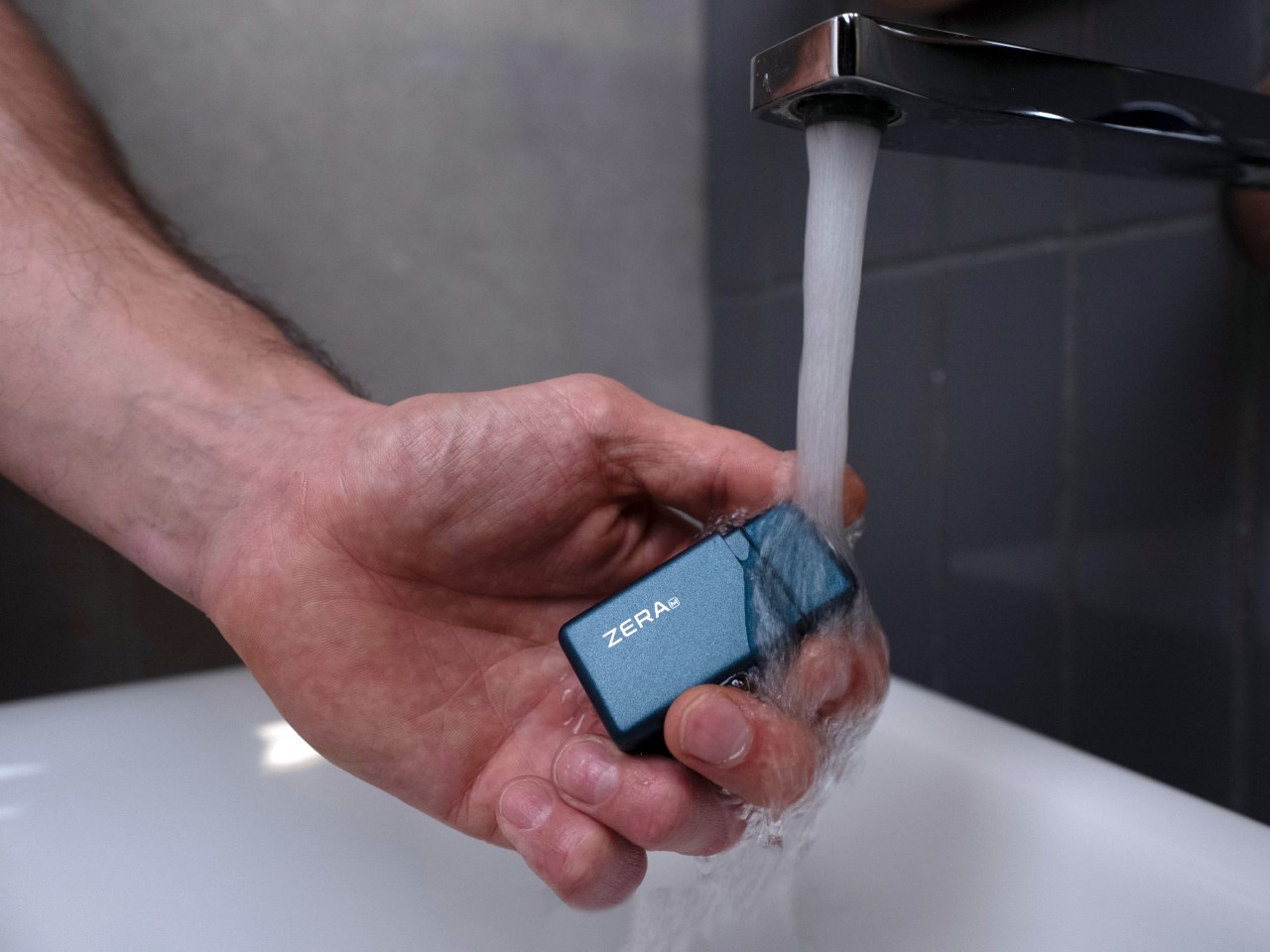
The technology that runs the ZERA M isn’t new – shavers/clippers have existed for decades. It’s just how the ZERA M packages things that makes it so effective. Everything sits within a hyper-portable design that literally fits in your pocket. Perfect for carrying around with you (or just stashing in your suitcase or travel case during business trips), the ZERA M is there when you need it, and invisible when you don’t. The battery and motor sit enclosed within a water-tight body, making the ZERA M perfect to use even in the shower. The entire device is IPx7 water-resistant, and you can either use it dry against your skin (like any conventional shaver), or combine it with shaving cream if you want to leave your skin feeling soft and supple after a shave.

The motor operates at 8000RPM, giving you a quick, clean shave

Swap between beard-trimming and nose-trimming modules in a second

Apart from being compact enough to travel with, the ZERA M saves you big bucks in the long run. It replaces the need to buy razor blades (if you’re the kind that uses razors), saving you nearly $500 in blade refills over a span of just 1 year if you’re a regular shaver. Maintaining your ZERA M is fairly simple too – just run it under a tap to clean out any stubble that may linger around in its crevasses. The shaver also comes with a tiny brush to help you clean the blade without using water, should you choose.
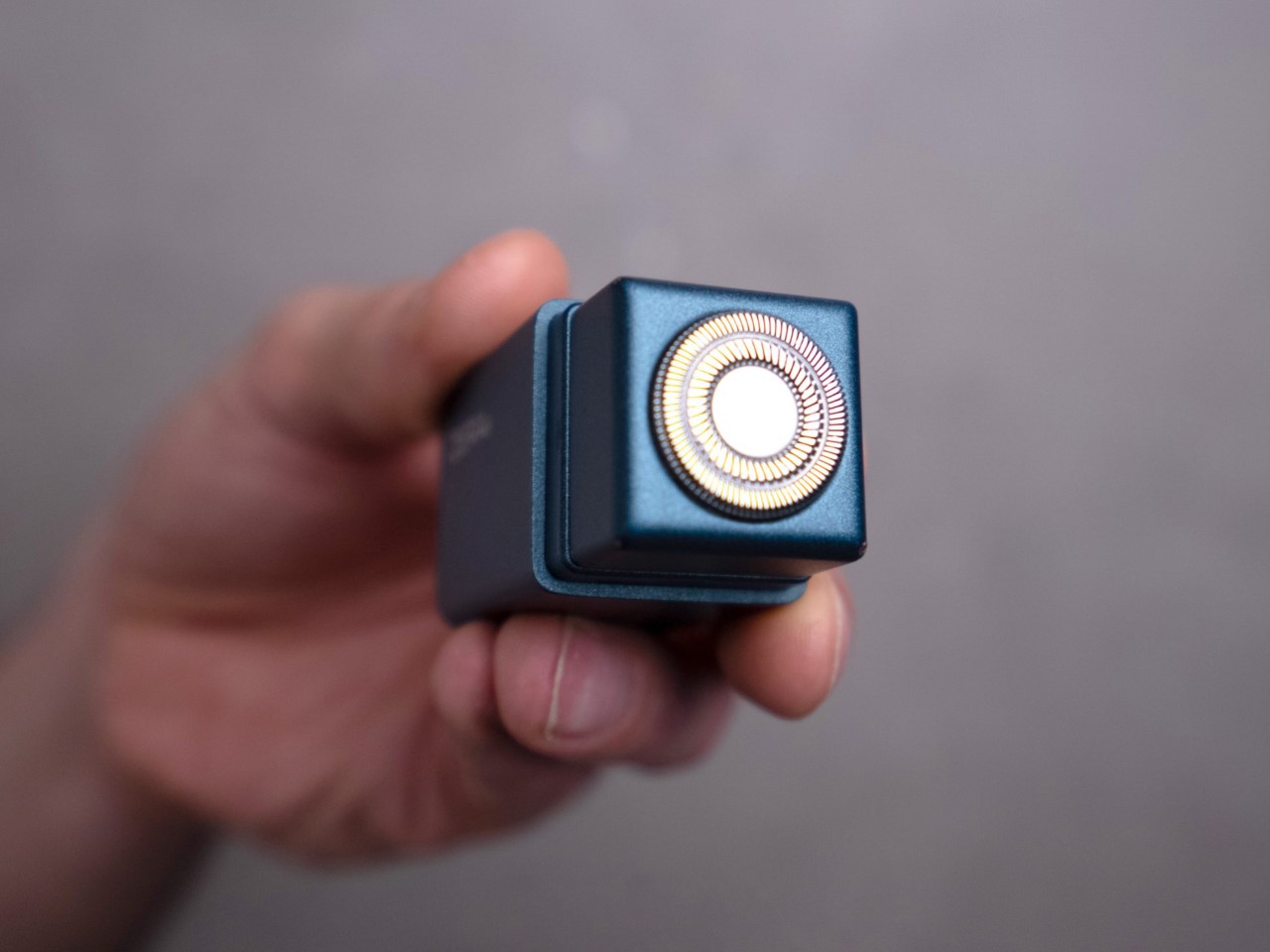
The magnetic module-swapping detail is sheer genius, allowing you to go from beard trimming to nose-hair trimming without changing devices. The process of swapping modules takes barely a few seconds (as is visible below), giving you the ability to quickly and effectively groom yourself without busting out the entire shaving kit. A grooming ritual that can take nearly half an hour gets done in minutes.

The ZERA M starts at $59, which includes the base, the two upper modules (beard + nose trimmer), and a USB-C charging cable. The cable juices the ZERA M’s built-in 800mAh battery, which runs the shaver for roughly 60 days on a full charge. Meanwhile, an LED indicator on the side lets you know how much power the shaver holds, and a single-button interface lets you easily operate the shaver without needing to bust open a user manual. While traveling, long-pressing the power button puts it in ‘travel-lock’ mode, so it doesn’t accidentally switch on while inside your luggage. The ZERA M ships globally, with a 1-year warranty that’s extendable to 2 years for an extra $15.

Click Here to Buy Now: $59 $89 (34% off) Hurry! Only 4 Days Left.

The post Compact Shaver the size of an AirPods Case is the perfect Pocket EDC for Grooming on-the-go first appeared on Yanko Design.

Google Gemini Nano vs Apple Intelligence: Which AI Assistant is Better?

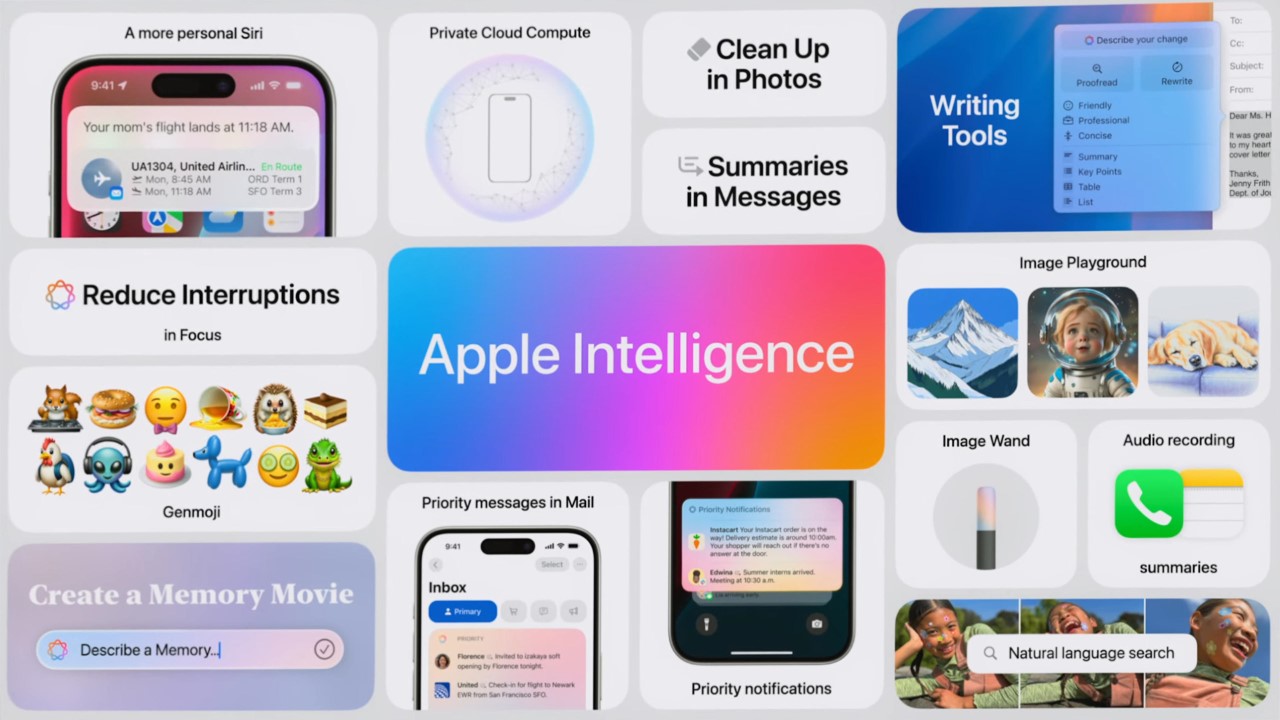
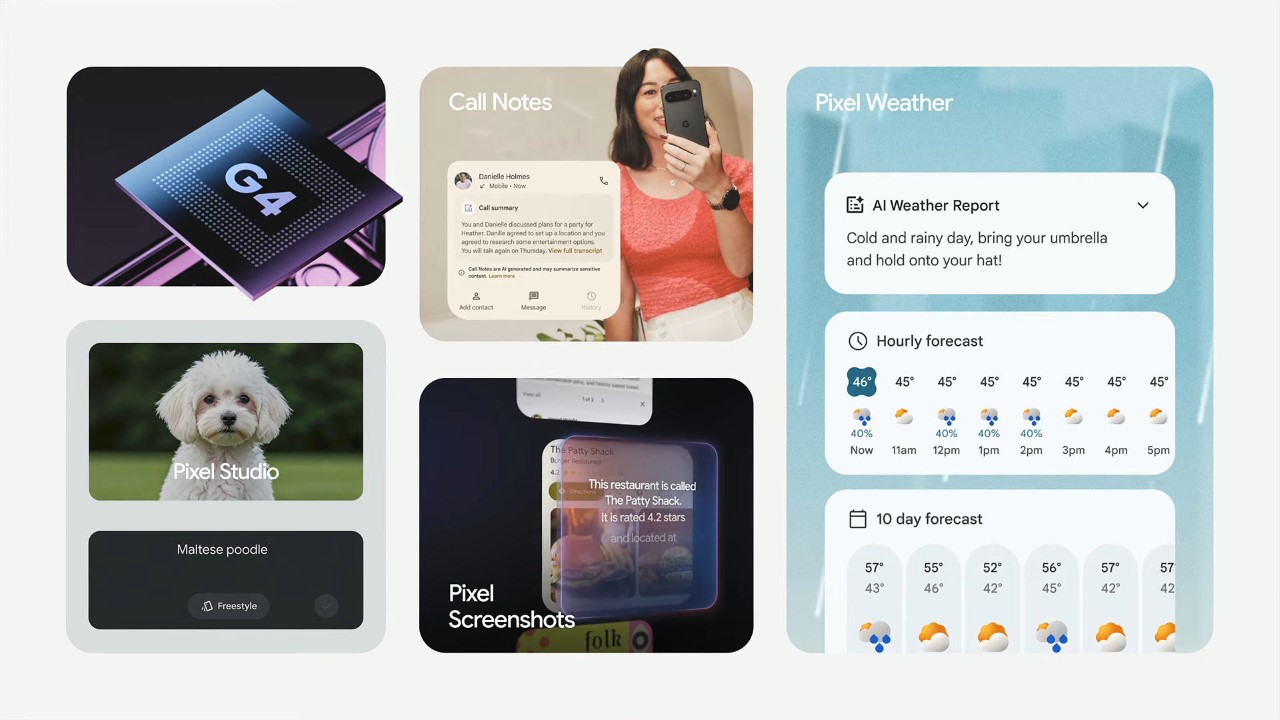
With Google’s Pixel event coming to a conclusion, we now have a comprehensive look at what AI upgrades are coming to the Pixel 9 devices, as well as a fair understanding of what Apple’s plans are for AI (or Apple Intelligence) on their upcoming iPhone 16 series. Although neither of these features has launched yet (both Google and Apple plan on rolling out their multimodal AI assistants later this year), it’s fair to quickly compare how they stack up against each other, and whether it makes sense to go the Pixel or the iPhone route this smartphone season.

On-Device Models

Both Google and Apple boast the ability to handle AI queries on the device itself, which means all the AI processing is happening on your phone instead of a server on the cloud. For Pixel phones, this is courtesy Gemini Nano, Google’s on-board multimodal AI model, while for Apple, they just call it Apple Intelligence instead of bogging you down with model names and version names. When the phone can’t handle a task on-device, it accesses the cloud – something common to both Gemini and Apple Intelligence. However, every single thing Gemini does is handled by Google’s own AI model, whereas for Apple, some tasks get outsourced to ChatGPT, without logging any private data… but more on privacy later. Google benefits from owning the entire ‘stack’, whereas Apple benefits from being able to be truly diverse by leaning on ChatGPT’s capabilities when it finds itself lacking.

Multimodality

The term multimodality refers to the ability to work across different modes – text, video, and audio. Both Gemini and Apple Intelligence are designed to be multimodal. They accept text input, can take voice commands, can analyze audio files, inspect images, and can even search within videos. It’s worth noting that while Google and Apple both announced these multimodal capabilities, the final AI assistants are still weeks/months away from launch.

Language Input

Apple Intelligence has only been demonstrated to work in English as of this writing. Google’s Gemini, however, holds the edge by accepting 45+ different languages as input.

The Gemini ‘Feature Quilt’

Text Generation/Rewrite

This might be the simplest yet most effective feature on both platforms, and one you’ll find yourself using the most. Text generation and rewriting isn’t new for Gemini at all, and is available across all of Google’s own apps/services regardless of your device. You can prompt Gemini to compose emails, write letters/flyers, and even proofread your documents, either within the Gemini website or across apps like Gmail, Docs, etc. Apple Intelligence offers the same features too (refining, proofreading, rewriting), but these capabilities seem limited only to Apple devices like the iPhone, iPad, MacBook, and Mac desktops. While Apple Intelligence’s text-generation features are yet to make their debut on Apple devices, Google’s Gemini-powered features are already available across all devices regardless of their make.

Image Generation

Aside from just analyzing images, Gemini and Apple Intelligence have image generation features too, with their own different abilities. The Pixel Studio text-to-image feature was unveiled today, limited to Pixel 9 models only. Type a prompt out and the app creates an image that you can then view variants of, refine by refining the prompt, or even change the style by choosing from a selection of style templates. At WWDC this year, Apple unveiled their Image Playground which has the exact same capabilities. However, the Image Playground offers fewer styles to choose from, staying consciously away from generating realistic images. Google’s Pixel Studio can generate photorealistic images, although the company also unveiled tools to detect AI images earlier, which may play a crucial role in minimizing the spread of deepfakes and misinformation.

Additionally, Google’s Magic Editor (its upgrade to the Magic Eraser) is set to debut on Pixel phones and also see a broader Android (and even iOS) rollout. The feature lets you correct your photo by adjusting parameters like reframing or expanding the composition, or edit parts of your photo by adding GenAI details to them. Google, however, doesn’t get Apple’s GenMoji, or the ability to generate custom emojis based on prompts and context. These custom emojis can be shared on Apple’s Messages app, but can also be saved as stickers and used on other messaging apps like WhatsApp and Instagram.

Live Mode

Debuted at Google’s Pixel Launch event today, Gemini’s Live Mode lets you talk to your AI the way you would another person. If you remember ChatGPT’s GPT 4o model from not too long ago, that’s what the Live Mode lets you do. You can summon the AI and just have a conversation with it, asking it questions, sparring on ideas, or instead collaborating over them. This feature is currently available only in English, and to Gemini Advanced subscribers, which means free users won’t be able to tap into the Live Mode feature. Apple Intelligence doesn’t have a Live Mode as of now, but you could expect it to drop in the future as soon as the intelligence features actually begin rolling out. Notably, ChatGPT lets you chat with the GPT 4o model for free, but it’s limited to a ‘few’ times within a limited time window.

Call Record/Transcribe

Both Gemini and Apple Intelligence boast the ability to record and transcribe conversations. Recorded calls get transcribed using on-device AI, and all participants are notified that the call is being recorded. Apple, however, adds transcriptions to the Notes app, while Google lets you view the transcriptions right within the Call Log using a feature called Call Notes.

The Apple Intelligence ‘Feature Quilt’

Memory + Context

What good is an AI if it doesn’t remember your conversations? Both Gemini and Apple Intelligence ‘allegedly’ get context very well by understanding what you require, which apps need to be referenced, and also people within your contacts. You can have a steady conversation with both AI models, and they’ll remember what you’re talking about without constantly needing to be reminded. This is in major contrast to just a few years ago when Voice Assistants only had a limited memory that existed only within that chat command. Now you can reference something from an image taken years ago, or details from an email buried in your inbox, and the AI models will get working without missing a heartbeat. Or at least that’s what Apple and Google will have us believe. We’re still waiting to see these features roll out on devices, and can only understand their limitations once they do.

Privacy

A lot of AI talk is also supplemented by a fair amount of fearmongering. AI replacing humans, AI training itself on your data, and AI going rogue – all valid concerns that Google and Apple understand rather well. To that end, a lot of the Pixel 9 Gemini Nano and Apple Intelligence’s features occur on device, without even connecting to the internet (the Gemini Nano on-device AI is different from the Gemini available on other Android devices). However, when Gemini or Apple Intelligence needs to access an on-cloud version of the AI model, it happens within its own sandbox, without having any data be accessible to any third parties. Notably, Apple also relies on ChatGPT to power some of its AI experiences, although Craig Federighi was quick to mention that ChatGPT doesn’t (or cannot) log any data or queries inputted through Apple Intelligence.

Availability

As far as availability goes, Google’s Gemini Nano model will only be available on Pixel 9 devices, with an official release said to occur weeks from now. While Gemini will be available across all devices, the ability to use Gemini as a personal smartphone assistant is limited only to the latest Pixel 9 range. Apple Intelligence awaits a formal launch too, and will be available on the iPhone 15 Pro series from last year, along with this year’s iPhone rollout. EU users, unfortunately, will not be able to use Apple Intelligence features on the iPhone following the EU’s strict DMA (Digital Markets Act) legislation.

Neither Gemini Nano nor Apple Intelligence have an official launch date, but chances are they’ll both debut in the weeks/months to come. Apple Intelligence will be free for all users (you can even use the ChatGPT features for free without making an account), and Gemini Nano’s core features will be free for Pixel users too. Pixel users also get a 1-year access pass to Gemini Advanced, which can handle more complex tasks, has a larger context window, and allows you to use the Gemini Live Mode.

Watch the official videos on Gemini Nano and Apple Intelligence below.

The post Google Gemini Nano vs Apple Intelligence: Which AI Assistant is Better? first appeared on Yanko Design.

This Quirky Hourglass-shaped Kitchen Container takes ‘Playing with food’ to another level

As certain objects and traditions fade into history, their charm remains etched in our memories. One such relic is the hourglass, a timeless instrument once used to measure the intervals of time with its delicate cascade of sand. For many of the younger generation, particularly those of Generation Alpha, an hourglass is a curious antique, more likely seen in movies than in real life. But now, this iconic design has found new life in a surprising context—kitchen storage.

Designer: Vladimir Fer

“The Grains of Time” is a delightful storage container that captures the essence of the hourglass, reimagined for modern culinary needs. Designed to store grains, pasta, and spices, this container is more than just a functional kitchen accessory; it’s a nod to history, a way to keep the charm of the past alive in a contemporary setting.

For those unfamiliar, an hourglass is an instrument that measures intervals of time through the flow of sand from one bulb to another, connected by a narrow neck. This design has been adapted to The Grains of Time, with the sand replaced by your favorite kitchen staples. The glass container mirrors the traditional hourglass shape, with a narrower neck that’s ideal for storing smaller items like spices, powdered foods, or petite pasta shapes.

Encased in a wooden exterior, the container is both stylish and practical. Two sturdy rods along the sides offer a secure grip, while the hourglass-inspired neck provides an ergonomic hold, allowing your fingers to fit between the curve and the rods comfortably. This design not only prevents the glass from breaking easily but also ensures that pouring and handling are effortless.

The containers are equipped with screw lids featuring a larger opening, making it simple to fill them with your ingredients of choice. Whether you’re storing grains, spices, or pasta, the ease of use is undeniable. Available in two stunning finishes, dark wood with a black lid and light wood with a white lid. These containers are as much a statement piece as they are a practical storage solution. Their aesthetic appeal is undeniable, adding a touch of elegance to any kitchen countertop.

And why stop at the kitchen? Imagine smaller versions of the container on your dining table, perfect for holding salt and pepper. These miniature versions could extend the charm beyond the kitchen, making every meal a little more special.

The post This Quirky Hourglass-shaped Kitchen Container takes ‘Playing with food’ to another level first appeared on Yanko Design.

The pixelated cyberpunk platformer Replaced has been pushed back to 2025

Sad Cat Studios announced on X that it is delaying its highly anticipated cyberpunk action game Replaced to next year.

The studio says in its online statement that its expectations for the Xbox and PC exclusive are high since they first announced the game at E3 in 2021. It wants to make sure it meets those expectations and doesn’t want to rush the production process.

“Our initial release was optimistic, and we apologize for that,” the statement reads. “Developing Replaced is quite a unique challenge, and we’re proud to be creating something that special. We need more time to ensure we meet the high standards we’ve set for ourselves and to meet the expectations of our fans.”

If there are no more delays and Sad Cat feels the game meets its expectations, Replaced will now be released in 2025.

This marks the third time that Replaced’s release date has been moved by Sad Cat Studios. The first delay moved the game from 2022 to 2023 when Russia’s invasion of Ukraine forced the studio to relocate developers from its offices in Belarus and Ukraine for their safety, according to Eurogamer.

Last year, Sad Cat Studios announced on X its second release date shift to this year. The statement echoed similar concerns about making sure they released a game that met fans’ expectations instead of a “sub-par game.”

This article originally appeared on Engadget at https://www.engadget.com/gaming/the-pixelated-cyberpunk-platformer-replaced-has-been-pushed-back-to-2025-220802916.html?src=rss

The 2025 VW ID.Buzz gets 3 full-fledged Campervan Upgrades courtesy Peace Vans

Of course, the future of van camping is electric. Arguably, in that future, the much-anticipated all-electric ID.Buzz from Volkswagen is going to be the lead. This modern, electrified variant of the retro VW Bus was expected in a campervan variant. Still, the company thought otherwise, and pushed the release back to fall 2024, citing lack of demand on the market as the reason for its thoughtful delay.

Before the camper version of the electric VW Bus can hit roads, there is a hardcore VW campervan repair and restoration outfit in Seattle, United States, by the name of Peace Vans that has introduced three fitting options to uplift the 2025 ID.Buzz into a capable campervan right from the word go when launched. Two options: either purchase an ID.Buzz directly from Peace Vans with your choice of the camper conversion option, or bring your own vehicle and return with it ready for the camping excursions.

Designer: Peace Vans

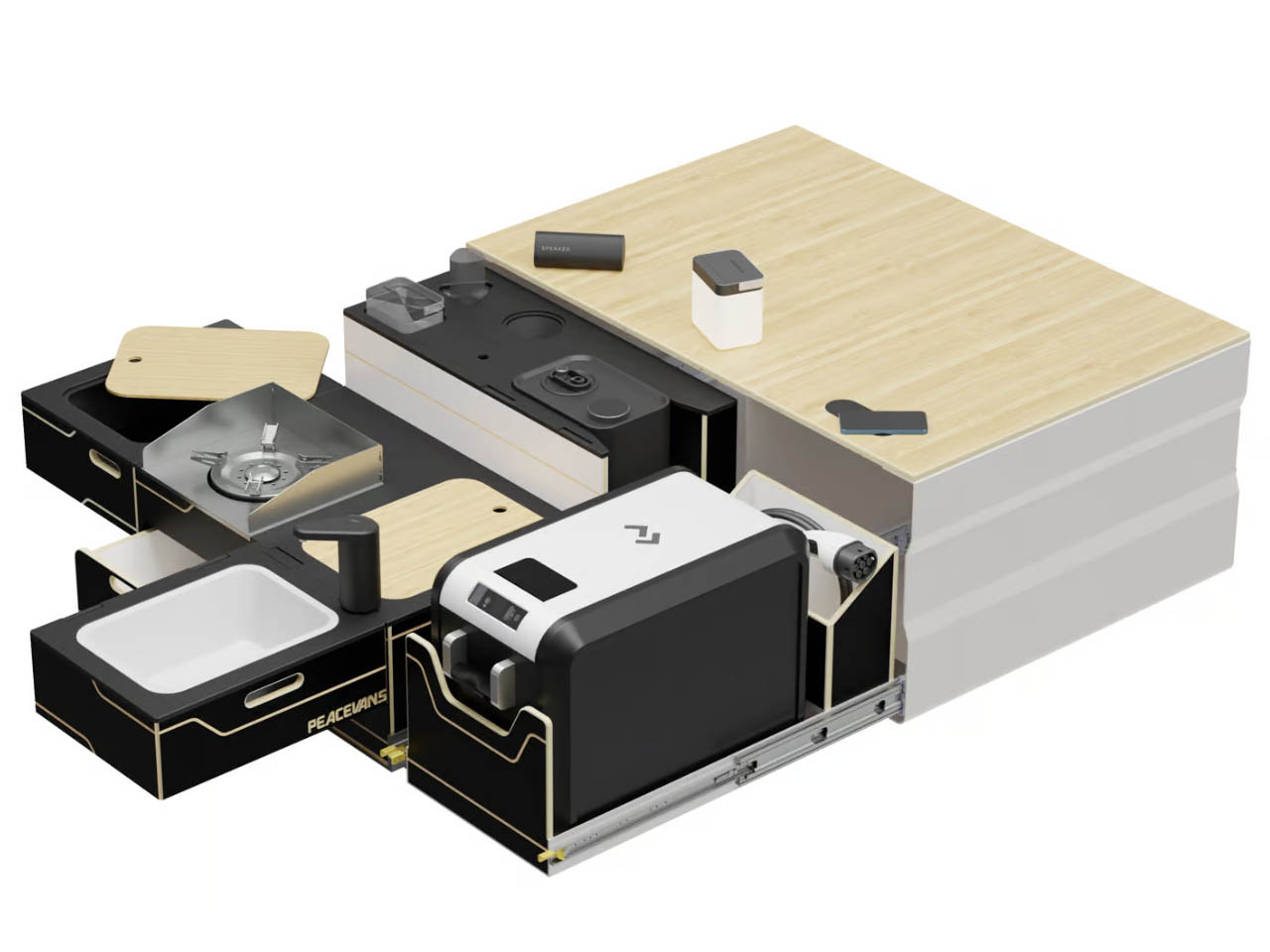
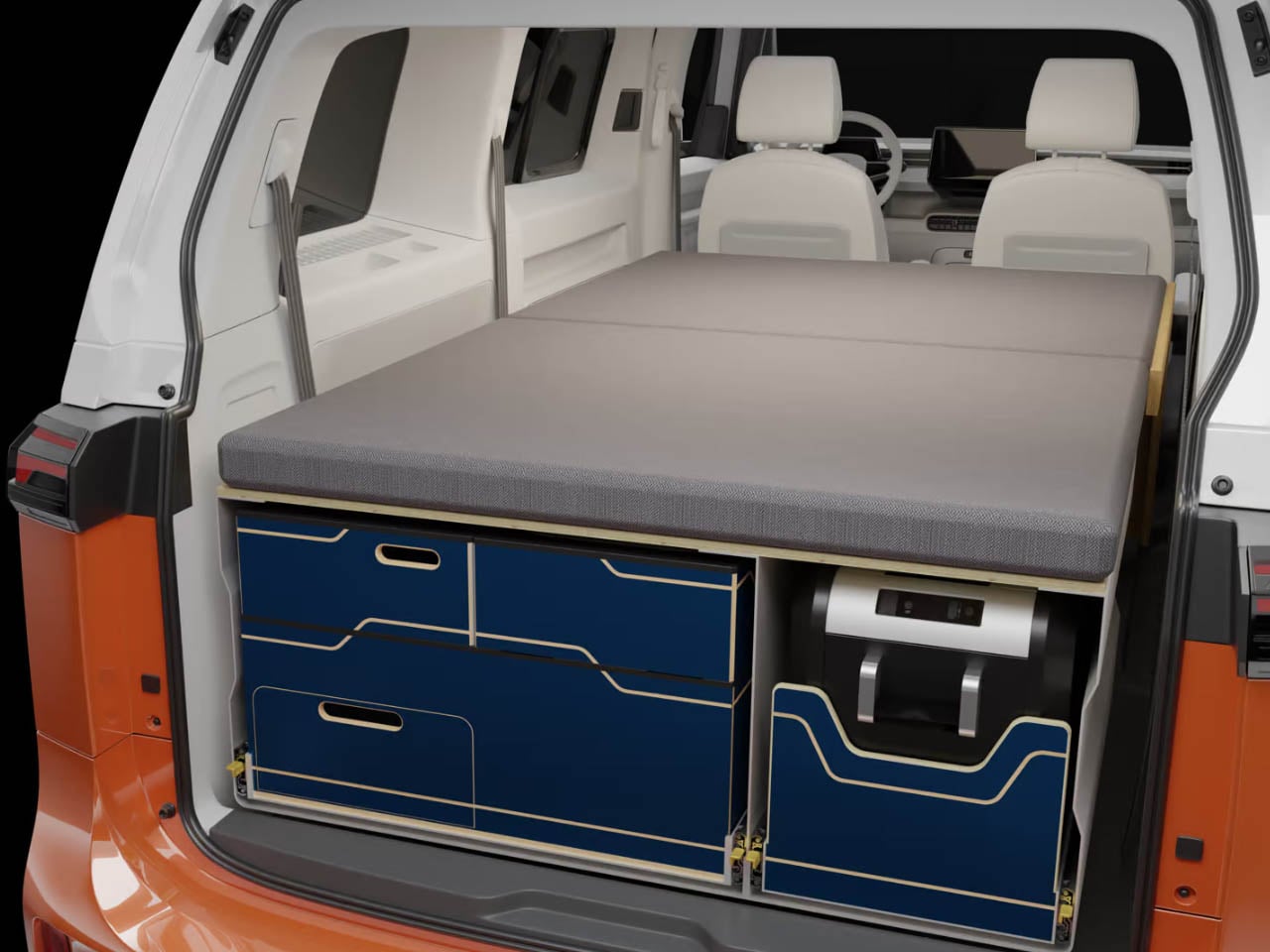
Peace Vans has been at the forefront of retrofitting Volkswagens with camping solutions. Furthering its experience, it has three customizable units for camping enthusiasts who want their ID.Buzz to an adventure-ready vehicle. These are Buzz.Box, Buzz.Box.Sleeper, and Buzz.Camper. Ideal for tailgating or a day ride with a kitchen integrated into the back of the vehicle, the campers can go with the Box. But if you want the Box with a sleeping solution, opt for the Sleeper or you can go with the Camper for a full-fledged camp on wheels with a queen bed and indoor kitchen.

The Box, as we said, is designed for day trips. It comprises a kitchen complete with an integrated cooktop, a fridge, a sink, and some prep area. The Box would fit in the back of the ID.Buzz and would require the third-row seats removed to accommodate the kitchen setup. If you want some sleeping area along with the Box kitchen – so you can spend at least a weekend in the wilderness – choose the Sleeper option that includes a fold-out bed to transform the back of your van into a comfortable sleeping area.

For the more hardcore, of course, is the Camper add-on that would convert the ID.Buzz into an ultimate adventure van with a fully functional internal kitchen, a queen-sized bed, storage cabinets, and much more. The Camper unit would require the removal of both rows of seats, leaving you with just two seats up front. If you’re a couple wanting a campervan, you shouldn’t look beyond this. To make the integration somewhat lucrative for you, the three units are fairly priced by Peace Vans. The Buzz.Box would be $7,995, while Buzz.Box.Sleeper would cost $10,995. The price of the Camper unit is still under wraps even though the company has started taking pre-orders for all its variants with delivery expected in November.

The post The 2025 VW ID.Buzz gets 3 full-fledged Campervan Upgrades courtesy Peace Vans first appeared on Yanko Design.
Waiting for a new Fitbit smartwatch? Google says that’s the Pixel Watch 3

It's been three years since Google completed its acquisition of Fitbit. Since then, the company has launched three new smartwatches under the Pixel brand, including the Pixel Watch 3 at today's Made By Google event. Meanwhile, Fitbit's not launched a single new smartwatch since the unceremonious announcement of the Sense 2 and Versa 4 two years ago. The writing has been on the wall for years that Fitbit might not make smartwatches anymore, instead focusing on lower-profile activity trackers that last long. Engadget can confirm that this is indeed true moving forward.

In an interview with the senior director of product management for Pixel Wearables Sandeep Waraich, I asked whether we would ever see another Fitbit-branded smartwatch anytime soon. Waraich said "Pixel Watch is our smartwatch part of the portfolio." He confirmed that moving forward everything from Fitbit would focus on the more minimalistic, long-lasting trackers the brand has become synonymous with.

While the Sense 2 and Versa 4 will continue to be available in the market, a Google spokesperson said "Pixel Watches are our next iteration of smartwatch for Fitbit."

As for the devices Fitbit continues to make, "trackers is where users clearly tell us they want something discreet," Waraich said. "They want longer battery life, they want a simple experience and we are very proud of our Inspire line."

Waraich also shed some light on how the Google and Fitbit teams have collaborated to build Pixel watches, referencing the former's AI prowess and the latter's established expertise in interpreting heart-rate sensor data for greater insights. According to him, Google brought its expertise in machine learning, providing "advanced models that otherwise probably externally weren't readily available." Fitbit, of course, had deep knowledge on things like data and signal capture and how that translated into how your hands are moving or what you're doing. "HIIT has a very different heart rate algorithm [and] implications than a running workout," Waraich explained.

There's little doubt that the Fitbit brand remains valuable to Google and the industry at large, given the fact its name is basically the catch-all noun for activity trackers. While it can be jarring to see the Fitbit name and app in devices like the Pixel Watch, where integrations should feel more seamless and unified, Waraich told me "it's not an app in Pixel Watch. It's deeply integrated at a system level." 

Outside of the Pixel portfolio, the Fitbit app and Fitbit Premium both still exist to the large chunk of the population that want something simple that can help them stay on top of their overall health. With the trackers and Pixel watches having now matured into devices that can log your activity very well, Waraich said "There is a tremendous opportunity in terms of going from tracking to coaching, real-time guidance included."

Time for everyone's favorite buzzword and trend for 2024: AI. With the Pixel Watch 3, Fitbit Premium users can get AI-generated customized workouts based on their activity and recovery. Of all the features Fitbit Premium has offered (and paywalled) in the past, this feels like a more-suitable use of AI and charging for it. Fitbit and Fitbit Premium are unlikely to be going away, and while we may not see a Fitbit-branded smartwatch again, this feels like a smart move.

Catch up on all the news from Google’s Pixel Watch 3 launch event right here!

This article originally appeared on Engadget at https://www.engadget.com/wearables/waiting-for-a-new-fitbit-smartwatch-google-says-thats-the-pixel-watch-3-202314838.html?src=rss

Halloween’s Michael Myers and Ash vs. Evil Dead’s Ash Williams are getting their own throwback games

Michael Myers may be dead and Ash Williams may be flung far into the future, but they aren’t done slashing up the screen here and now. Boss Level Games announced the upcoming release of two new retro style games under its RetroRealms banner based on the classic slasher flick Halloween and the Starz horror comedy series Ash vs. Evil Dead.

The retro Halloween and Ash vs. Evil Dead titles will be released on October 18 for the PlayStation 5, Xbox Series X|S, Xbox One, Nintendo Switch and PCs via Steam.

The Halloween game puts players in control of the murder machine Michael Myers during the events of the original John Carpenter film as he hacks and slashes his way through Haddonfield, Illinois with his iconic butcher knife. The Ash vs. Evil Dead game pits players as the horror movie and TV series hero with his arm-mounted chainsaw and his beloved boomstick against an onslaught of Deadites unleashed by the Necronomicon.

The games will be sold separately, or together as part of a special “Double Feature” bundle. There’s also a special “Collectors’ Edition” that includes a physical copy of the game for your chosen console, two extra playable characters — including Laurie Strode for Halloween and Kelly Maxwell for Ash vs. Evil Dead — and a bunch of other Halloween goodies like a 12-inch plush Michael Myers doll, a digital copy of the Halloween game’s soundtrack, a pack of Halloween trading cards and more. The games connect to each other when both are installed through crossover access in which characters can be brought to either game and “an ever-expanding universe of popular characters that unlocks additional gameplay,” according to Boss Team Games.

Boss Team Games is one of the studios behind the popular asymmetric survival horror multiplayer slasher Evil Dead: The Game. The studio’s press release also notes that these two games will be “the first two releases in a new series of games for console and PC” implying that more throwback game projects are in the works.

This article originally appeared on Engadget at https://www.engadget.com/gaming/halloweens-michael-myers-and-ash-vs-evil-deads-ash-williams-are-getting-their-own-throwback-games-193000903.html?src=rss

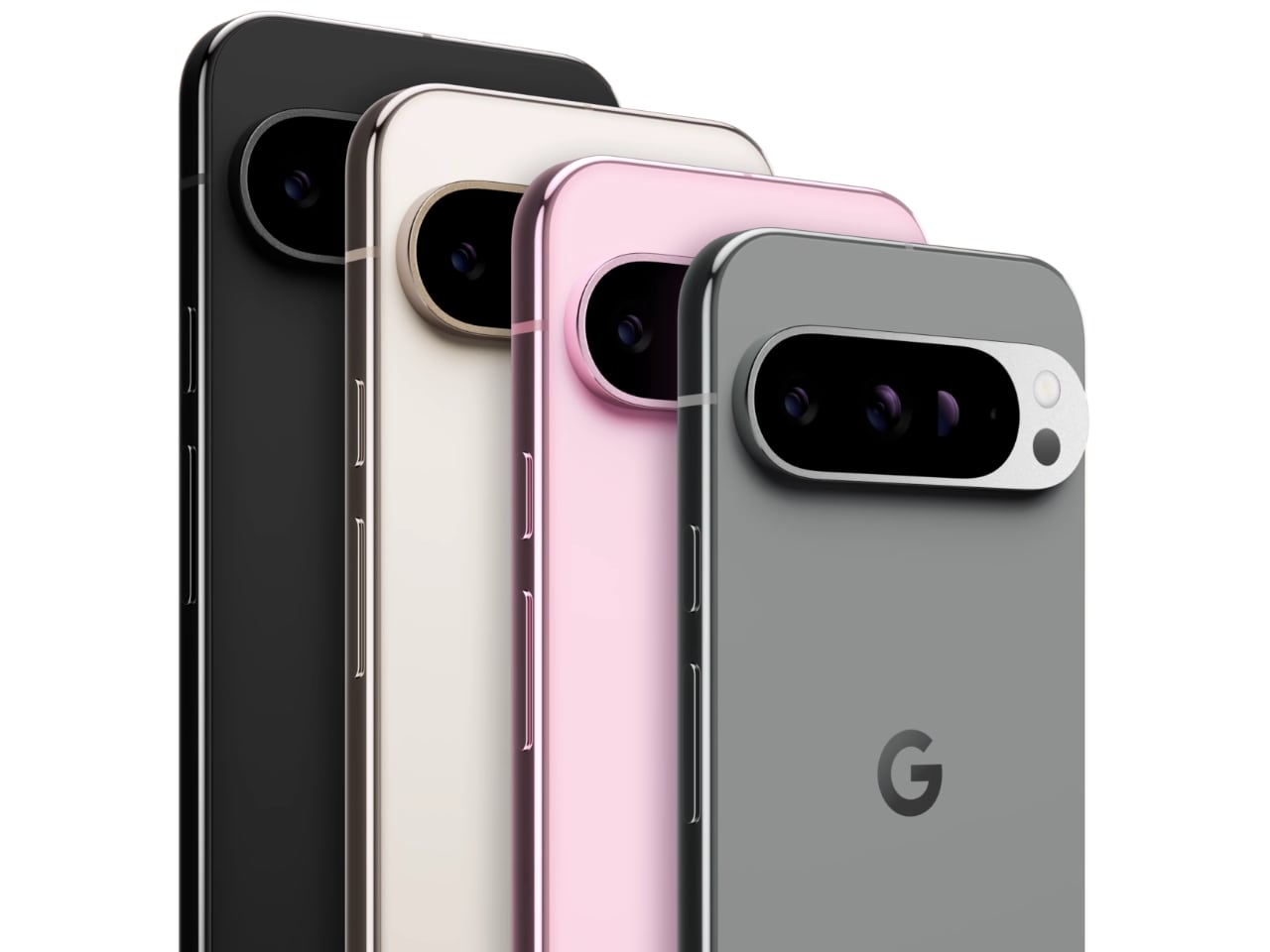
Google Pixel 9 Pro and Pixel 9 Pro XL Released with AI-Driven Features and Superior Display Unveiled

Google has unveiled the Pixel 9 Pro and Pixel 9 Pro XL, highlighting advanced AI capabilities, cutting-edge camera systems, and vibrant displays. Powered by the Tensor G4 chip, these devices offer improved performance and functionality. Built with durability and sustainability in mind, they feature recycled materials and plastic-free packaging.

Designer: Google

The Pixel 9 series is powered by the new Tensor G4 chip, which brings advanced AI capabilities to the forefront. With Gemini Nano’s Multimodality, the phones can effortlessly understand text, images, and audio, providing a more seamless AI experience. One of the standout features is Gemini Live, which lets you have natural, flowing conversations with your phone or Pixel Buds, perfect for planning events or brainstorming ideas. Plus, handy tools like Pixel Screenshots help you keep track of important information, and the improved Pixel Weather app delivers accurate, AI-powered weather updates to help you plan your day.

Design and Display

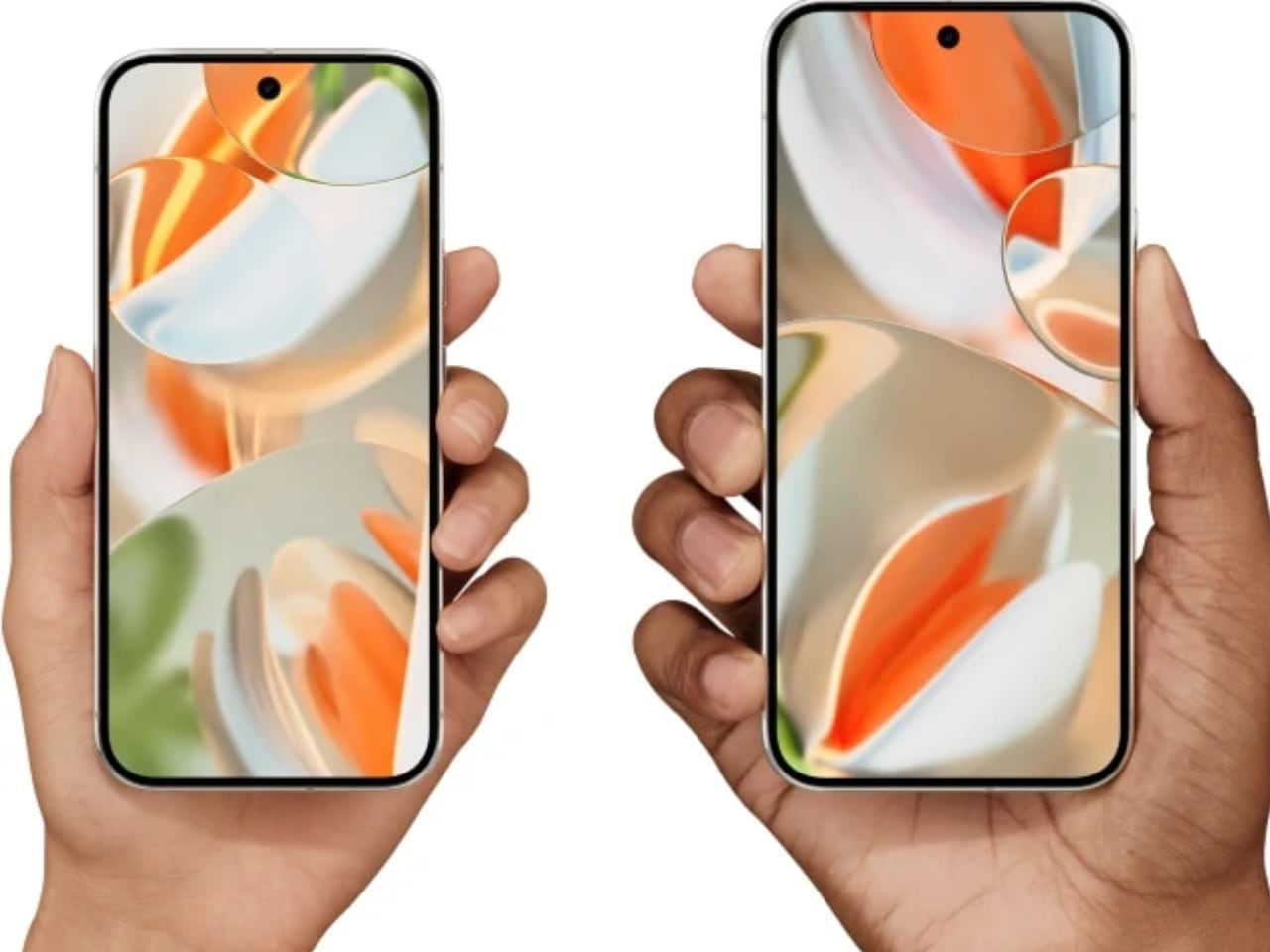
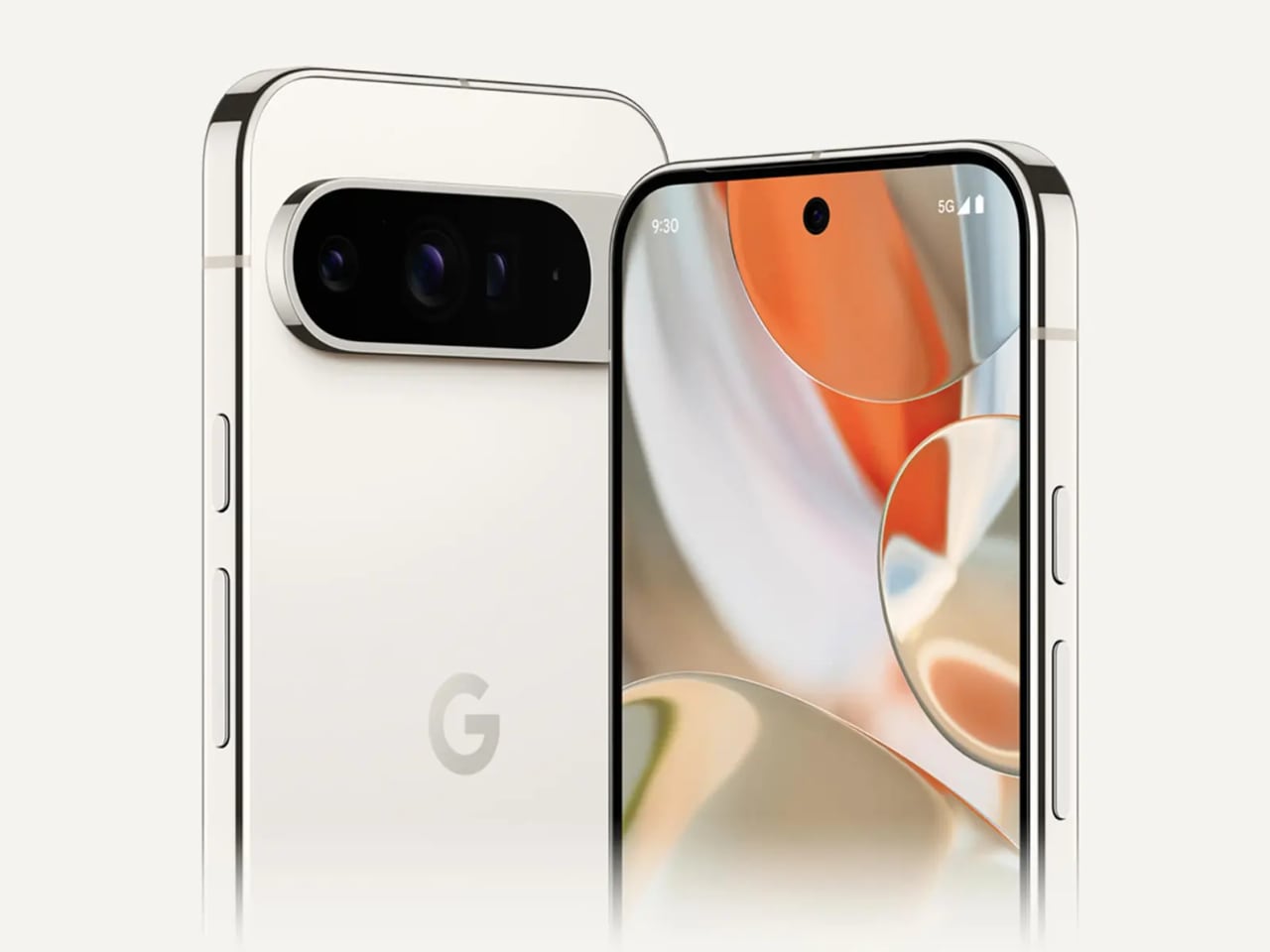
The Pixel 9 Pro and Pixel 9 Pro XL feature a sleek, sculpted design with the iconic camera bar taking center stage. Both phones are crafted with a silky matte glass back and polished metal sides, offering a premium feel. The Pixel 9 Pro, with its 6.3-inch Super Actua display, measures 6 inches in height (152.4 mm), 2.8 inches in width (71.12 mm), and 0.3 inches in thickness (7.62 mm), and weighs 7 ounces (198.4 grams). It’s compact yet powerful. Meanwhile, the Pixel 9 Pro XL offers a larger 6.8-inch Super Actua display, measuring 6.4 inches in height (162.56 mm), 3 inches in width (76.2 mm), and 0.3 inches in thickness (7.62 mm), with a weight of 7.8 ounces (221.1 grams), providing a bigger screen for those who prefer more display real estate.

The displays are some of the brightest and most vivid in their class. The Pixel 9 Pro boasts a 6.3-inch LTPO OLED display with a resolution of 1280 x 2856 pixels and 495 PPI, capable of reaching up to 2000 nits in HDR and 3000 nits peak brightness. The Pixel 9 Pro XL features a 6.8-inch LTPO OLED display with a resolution of 1344 x 2992 pixels and 486 PPI, offering the same brightness capabilities. Both displays support a smooth refresh rate of 1-120Hz and feature Corning Gorilla Glass Victus 2 for enhanced durability.

Performance and Battery

The Google Tensor G4 chip powers both models, which were developed in collaboration with Google DeepMind. This processor is optimized for running advanced AI models, enabling faster app launches, seamless browsing, and enhanced AI-driven features. The Pixel 9 Pro and Pixel 9 Pro XL come with 16 GB of RAM and storage options ranging from 128 GB to 1 TB, ensuring ample space for all your needs.

Battery life is robust. The Pixel 9 Pro houses a typical 4700 mAh battery, providing over 24 hours of usage and up to 100 hours with Extreme Battery Saver mode. The Pixel 9 Pro XL, with its larger 5060 mAh battery, offers similar endurance. Both models support fast charging, achieving up to 55% and 70% charge, respectively, in about 30 minutes using the Google 45W USB-C charger, sold separately. Wireless charging and Battery Share features add further convenience.

Camera Capabilities

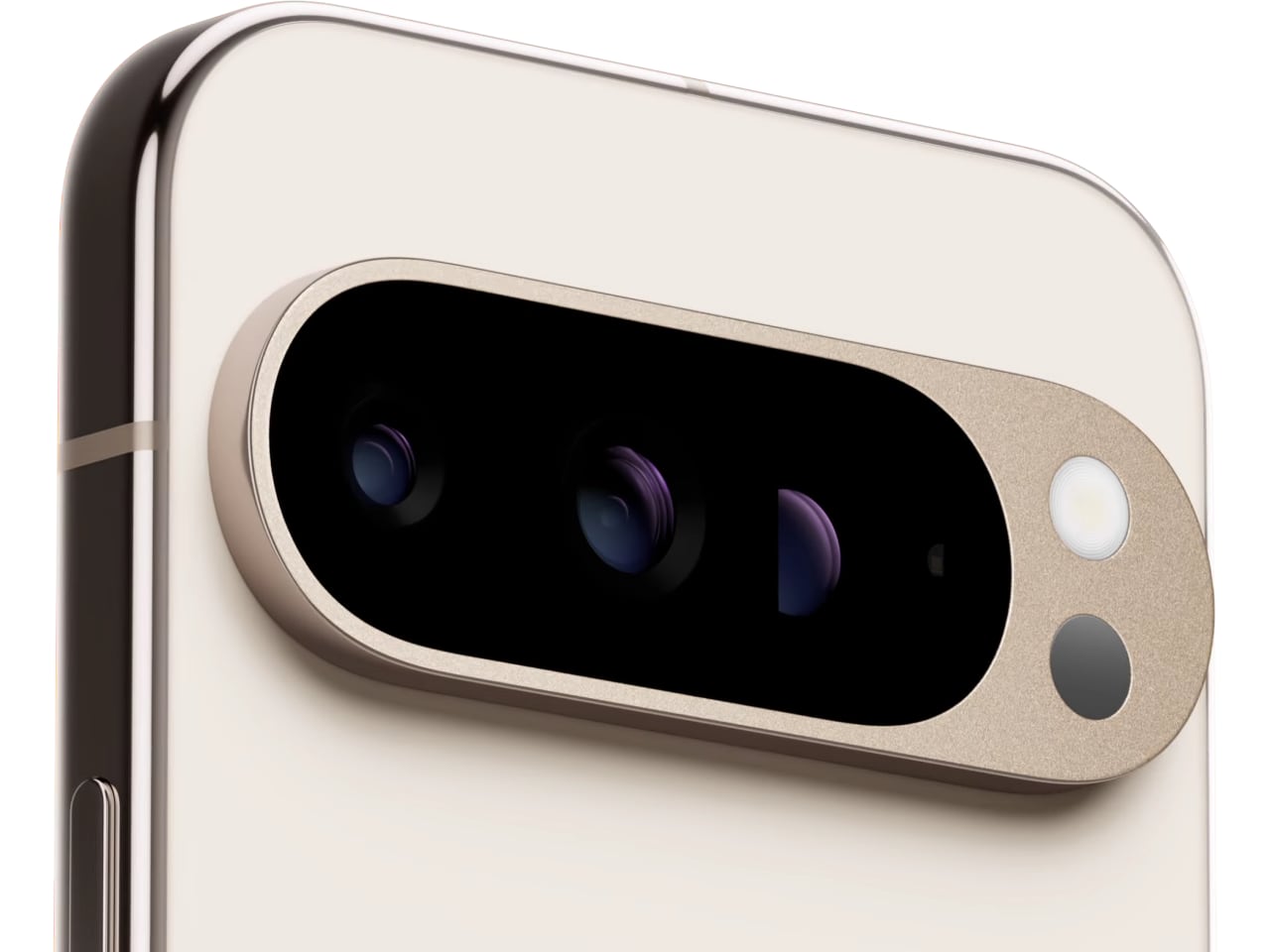
The Pixel 9 Pro and Pixel 9 Pro XL share a pro triple rear camera system that sets a new standard for smartphone photography. The setup includes a 50 MP wide camera with an ƒ/1.68 aperture, a 48 MP ultrawide camera with Macro Focus, and a 48 MP telephoto lens offering 5x optical zoom and up to 30x Super Res Zoom. These cameras are equipped with advanced features like optical and electronic image stabilization, a multi-zone LDAF sensor, and a spectral and flicker sensor to ensure crisp and clear images in any condition.

Cameras: 50 MP wide with ƒ/1.68 aperture, a 48 MP ultrawide with Macro Focus, and a 48 MP telephoto lens with 5x optical zoom and up to 30x Super Res Zoom

The front camera is a 42 MP Dual PD selfie camera with an ƒ/2.2 aperture and a 103-degree ultrawide field of view, designed for sharper and brighter selfies, even in low light.

Video capabilities are equally impressive, with the rear camera capable of 8K video recording at 30 FPS, powered by Video Boost, and 4K video recording at up to 60 FPS. The front camera supports 4K video at 30/60 FPS. Features like Night Sight Video, Super Res Zoom Video, and various stabilization options ensure high-quality video capture.

Pixel Studio is a unique feature that allows users to create images from scratch on their phone, powered by a diffusion model and the Imagen 3 text-to-image model. The camera system includes advanced features like Add Me, which ensures no one is left out of group photos, and Magic Editor’s Reimagine and Auto Frame tools for enhanced editing capabilities.

Comparison with Pixel 8 Pro and Pixel 8 Pro XL

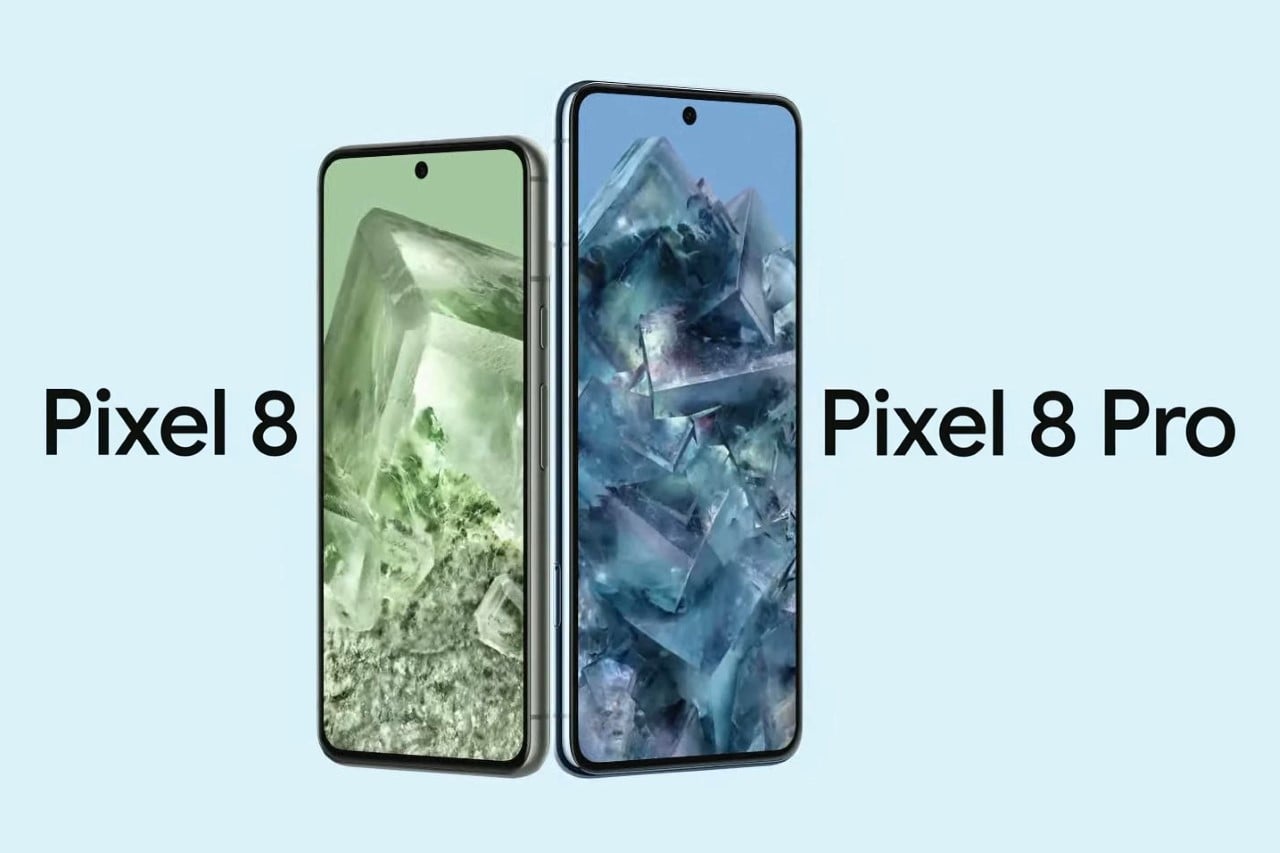
The improvements are clear when comparing the Pixel 9 Pro and Pixel 9 Pro XL to the Pixel 8 Pro and Pixel 8 Pro XL. The Pixel 9 series offers a brighter and more vibrant display, enhanced by Super Actua technology, with significant camera resolution and feature upgrades. The new Tensor G4 chip provides faster and more efficient processing compared to the previous generation Tensor G3 chip.

In terms of design, the Pixel 9 series adopts a more refined and durable build, featuring Gorilla Glass Victus 2 and increased use of recycled materials. The battery life has also seen improvements, offering longer usage times with faster charging capabilities.

Overall, the Pixel 9 Pro and Pixel 9 Pro XL present a significant step forward, offering users a powerful, feature-rich smartphone experience. These enhancements make the new Pixel 9 series a compelling choice for those seeking cutting-edge technology with a focus on sustainability and performance. With prices starting at $999 for the Pixel 9 Pro and $1,099 for the Pixel 9 Pro XL, both models provide a range of options to suit different preferences and needs.

The post Google Pixel 9 Pro and Pixel 9 Pro XL Released with AI-Driven Features and Superior Display Unveiled first appeared on Yanko Design.

Google Pixel 9 Pro Fold: The Thinnest, Brighter, and More Powerful Foldable

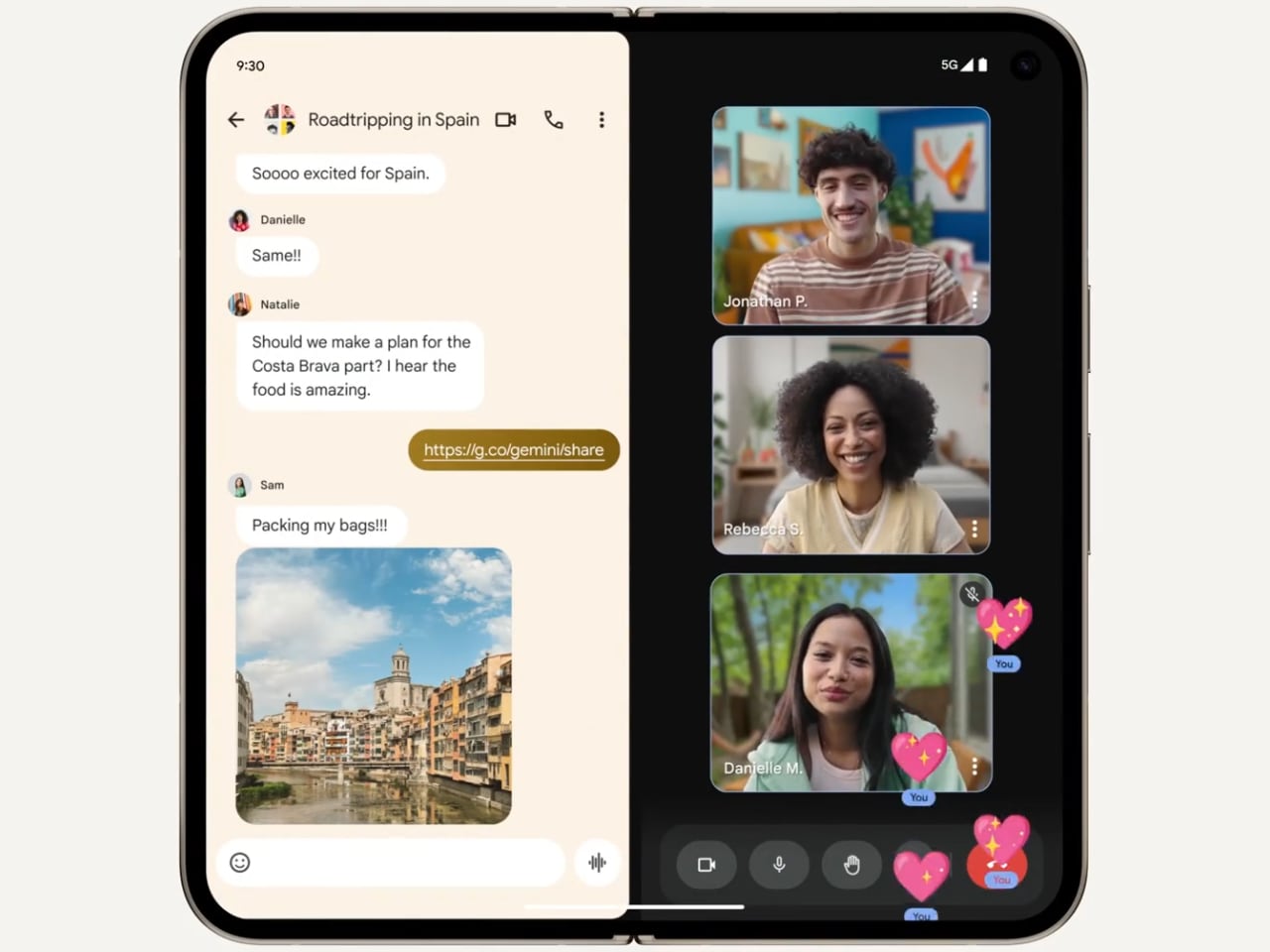
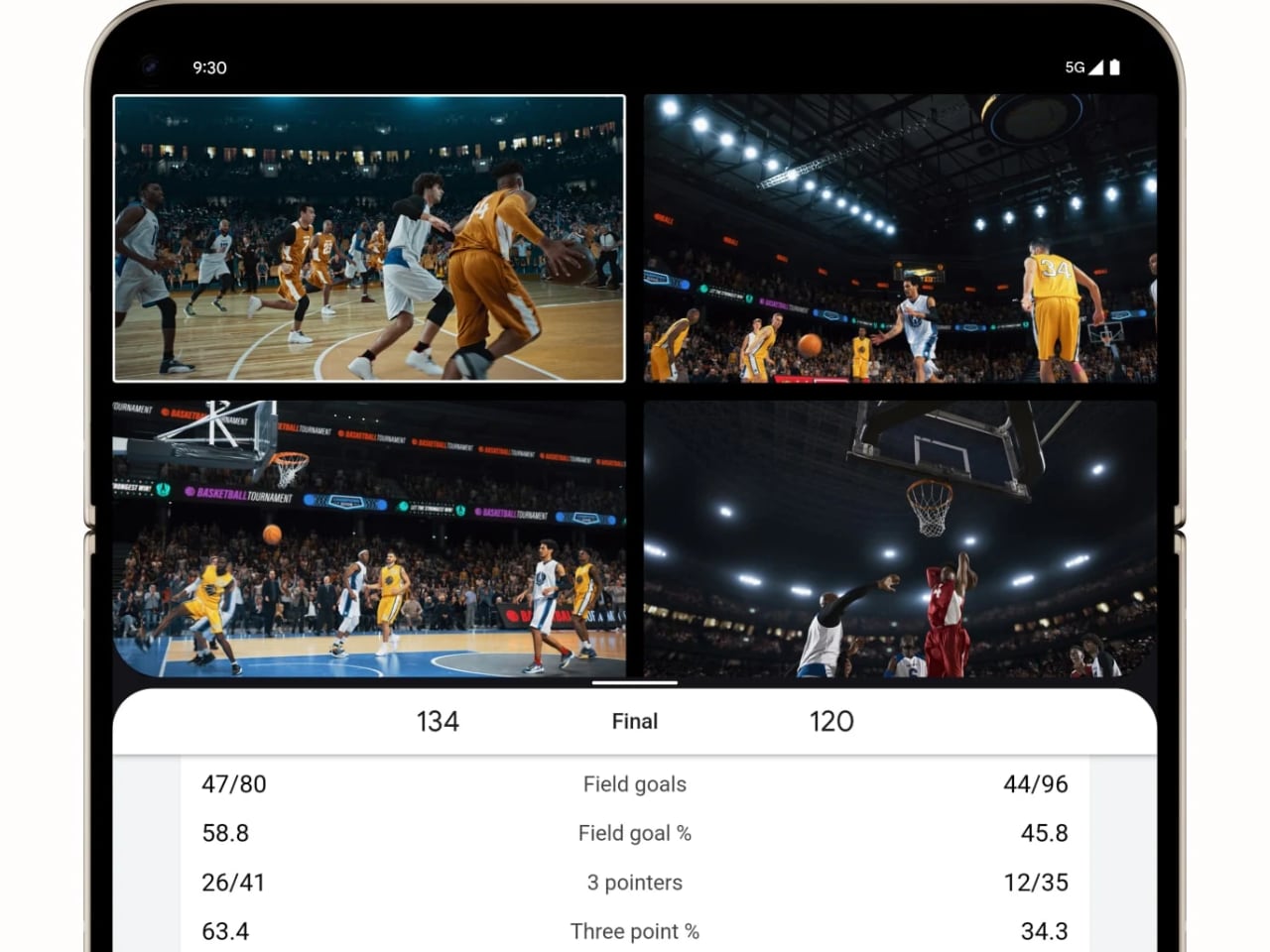
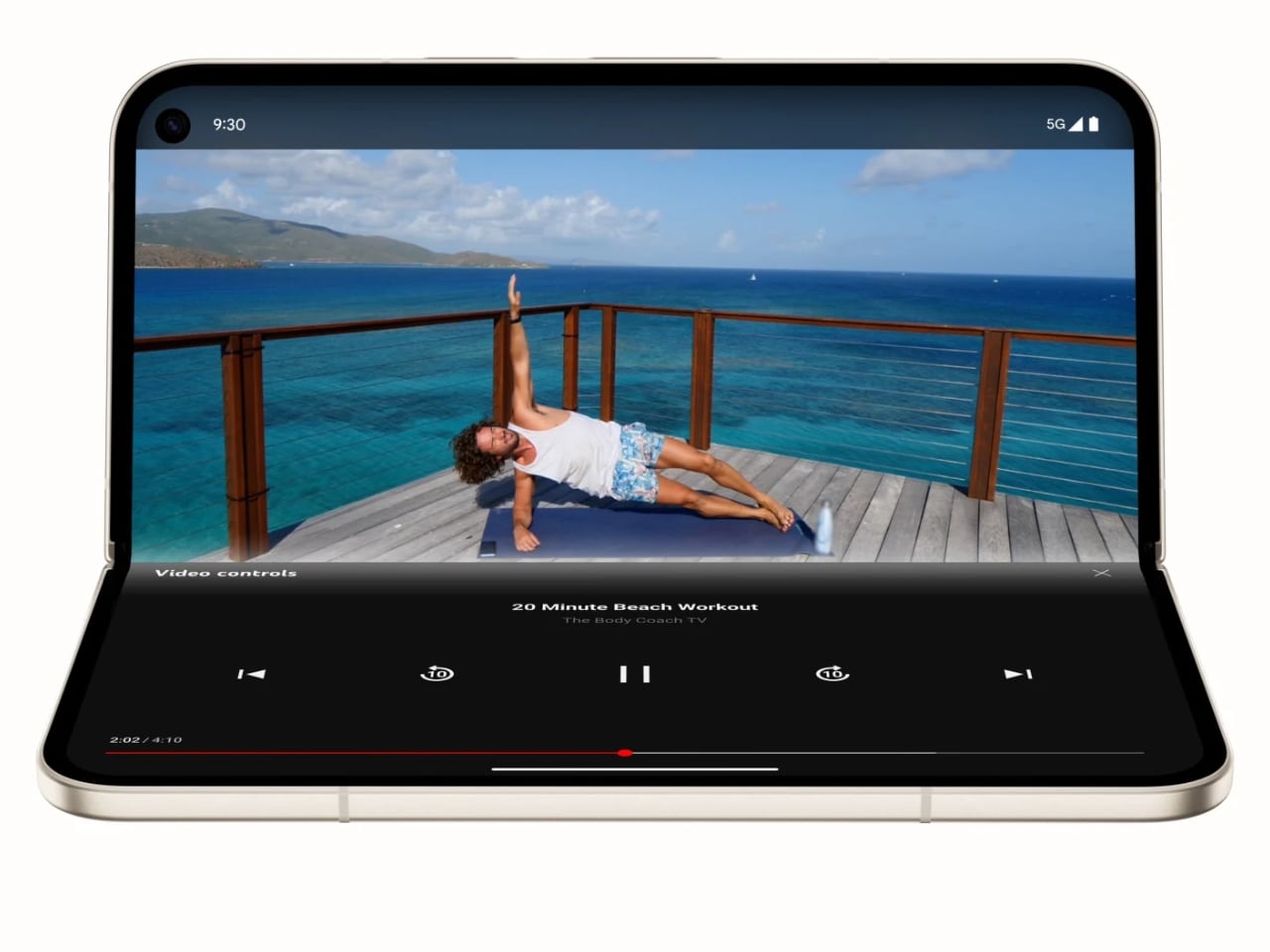
Google has unveiled the Pixel 9 Pro Fold, a device that combines the functionality of a high-performance smartphone with the expansive capabilities of a tablet. This new addition to the Pixel family sets a new standard for versatility in mobile devices.

Designer: Google

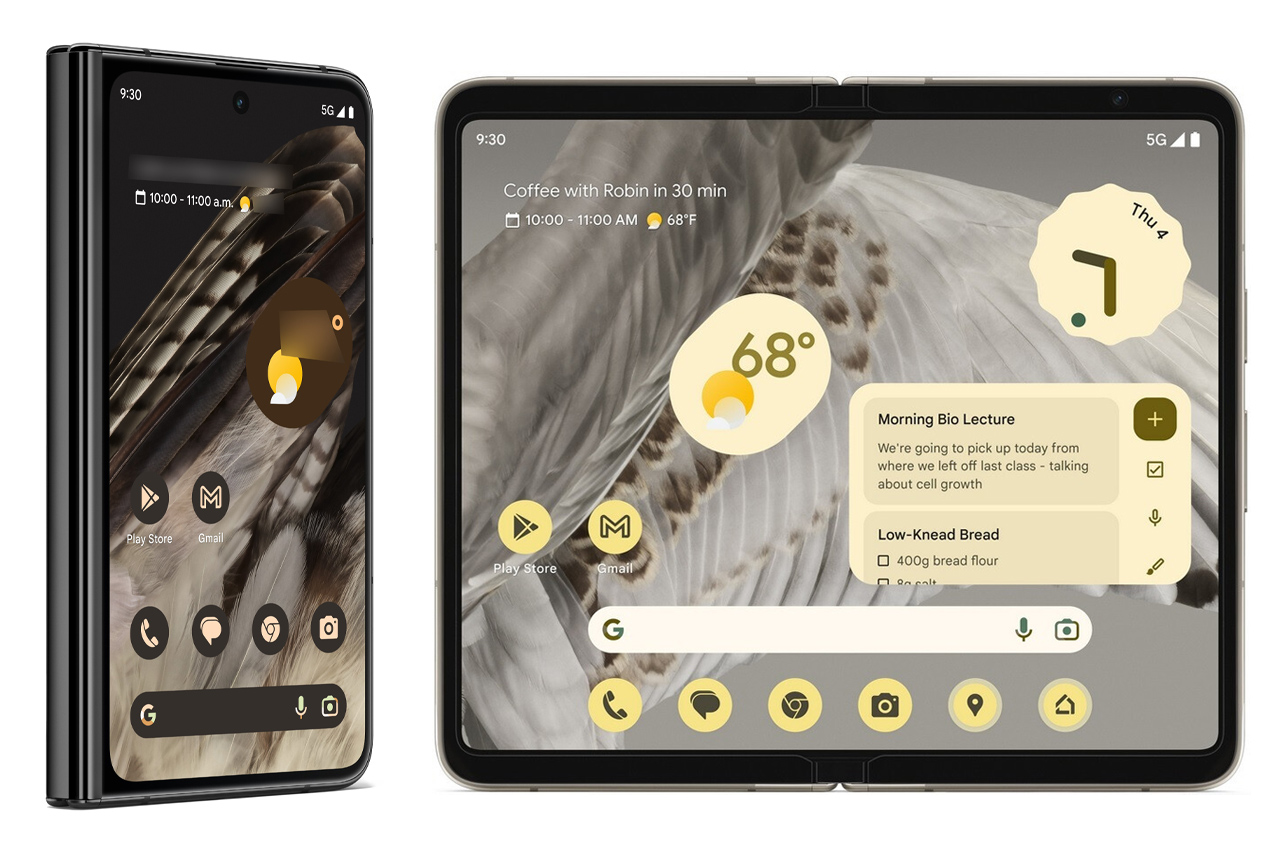
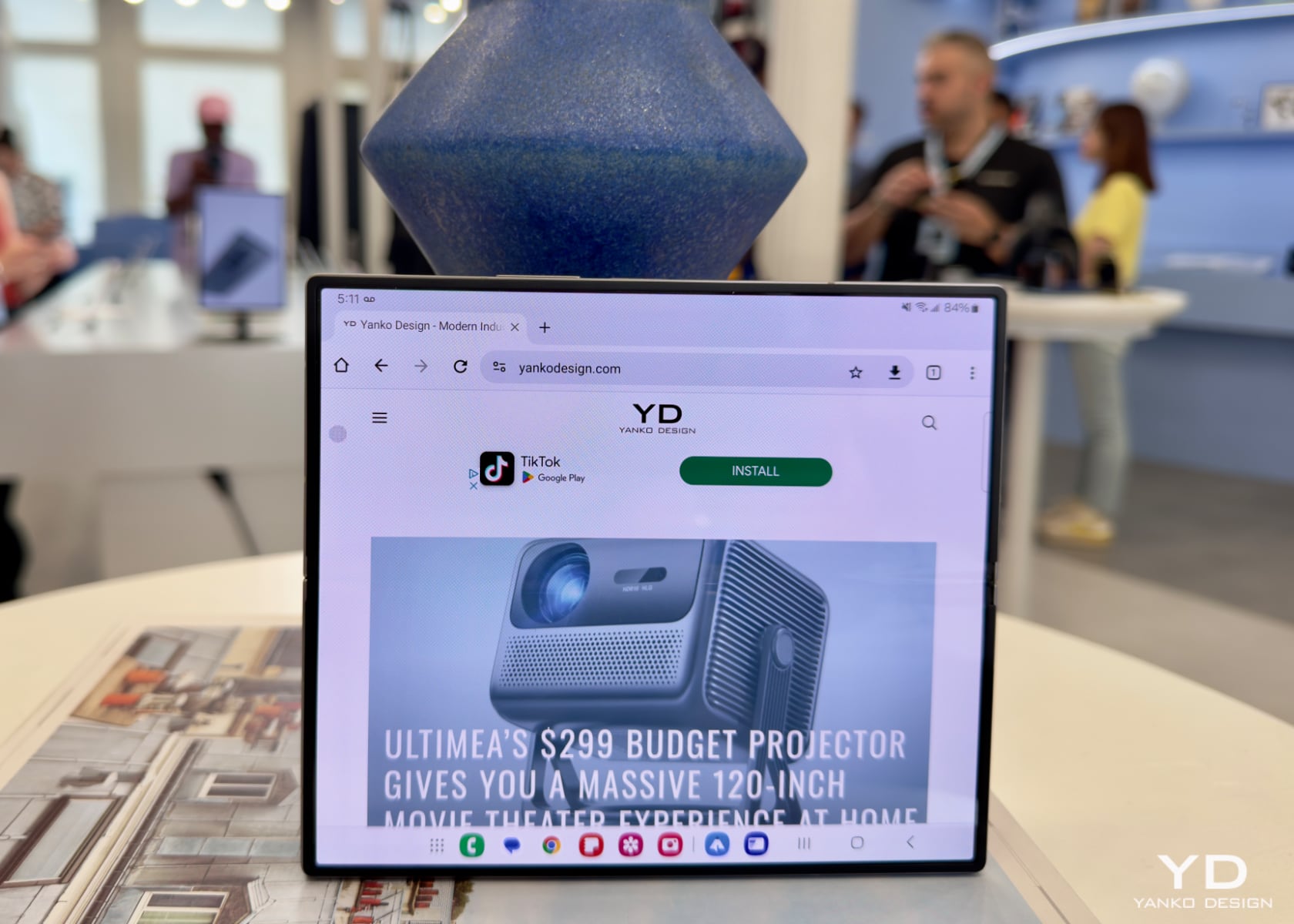
Pixel 9 Pro Fold: 8-inch (204 mm) Super Actua Flex display (LTPO) and 2076 x 2152 OLED at 373 PPI

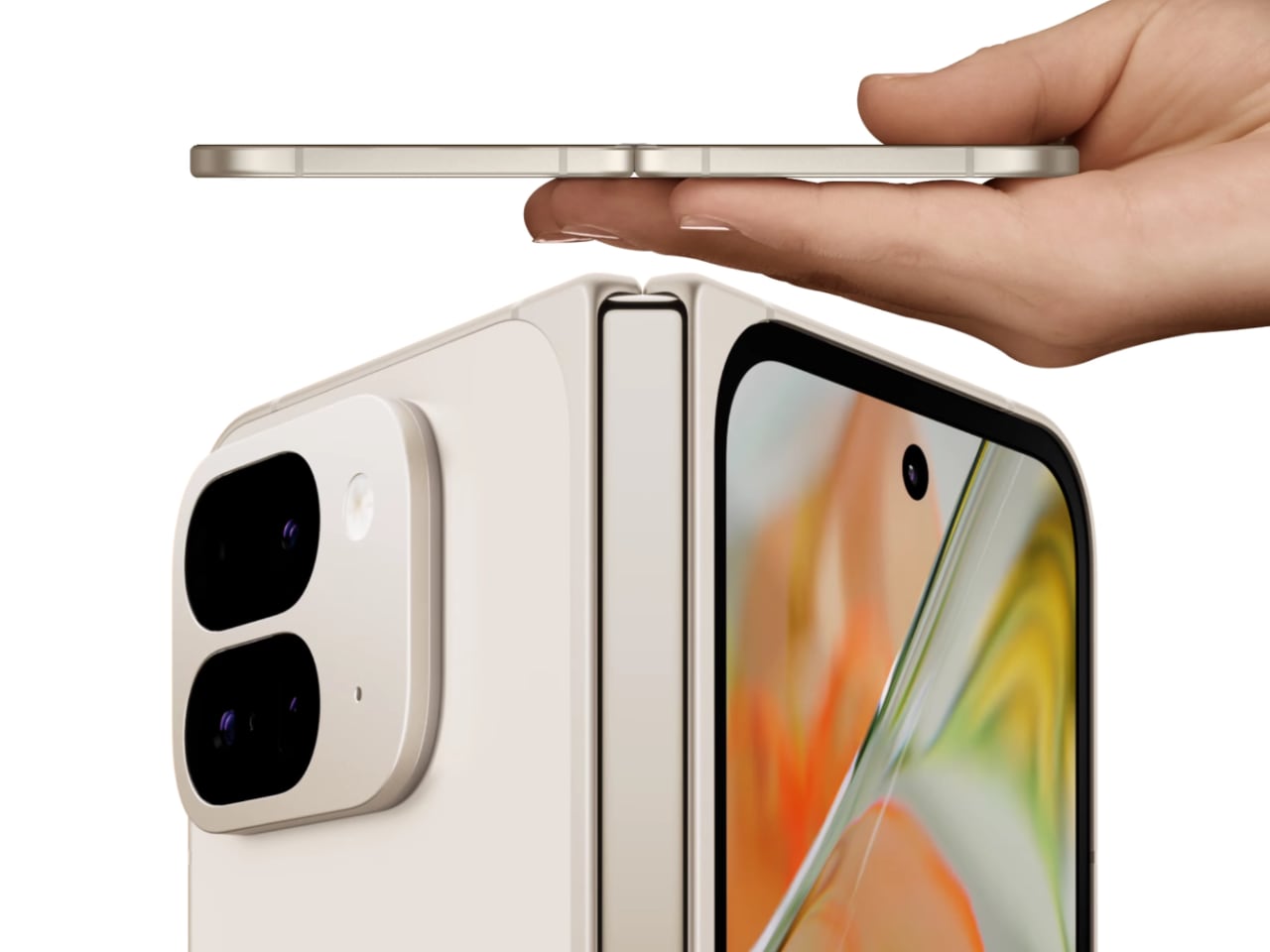
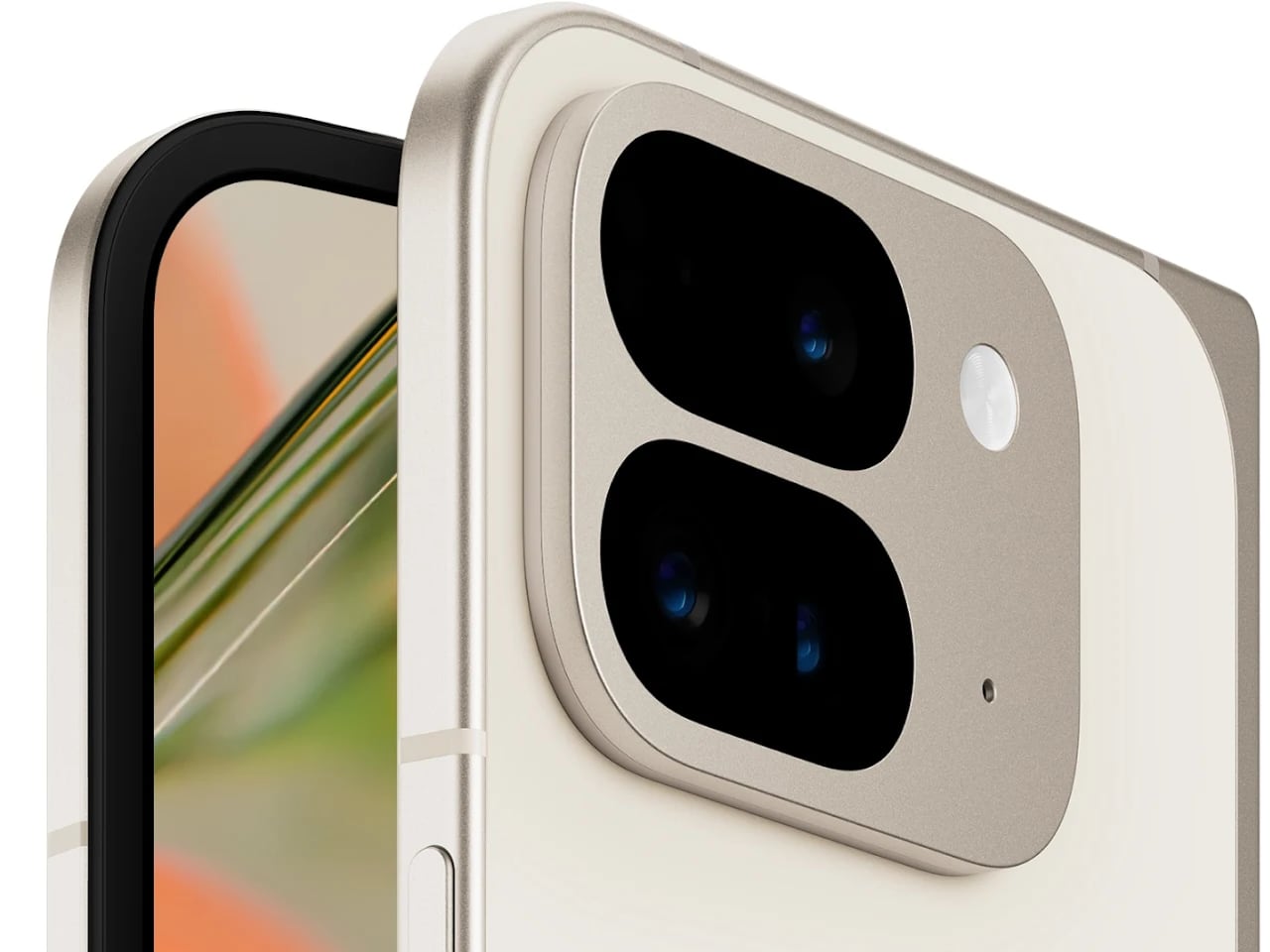
The Pixel 9 Pro Fold features a sleek design and innovative technology. When folded, it mirrors the size and thickness of the Pixel 9 Pro, making it both compact and portable. Its dimensions are impressive: when folded, it measures 6.1 inches in height, 3 inches in width, and 0.4 inches (10.16 mm) in thickness. Unfolding the device reveals an 8-inch Super Actua Flex display, the largest on any foldable phone, with a resolution of 2076 x 2152 pixels at 373 PPI. This stunning display is 80% brighter than the previous generation, reaching up to 1,600 nits in HDR mode and up to 2,700 nits in peak brightness, making it ideal for everything from entertainment to productivity.

The Pixel 9 Pro Fold’s design is built for durability and elegance. It features a luxurious metal frame with seamless rounded corners and is protected by scratch-resistant Gorilla Glass Victus 2. This construction ensures the device can withstand everyday wear and tear while maintaining a sophisticated appearance. The hinge is crafted from multi-alloy steel with an aerospace-grade high-strength aluminum alloy cover, providing structural integrity and a smooth folding experience.

Underneath its polished exterior, the Pixel 9 Pro Fold is powered by Google’s Tensor G4 chip, a fourth-generation processor designed in collaboration with Google DeepMind. This chip optimizes the device for AI-driven tasks, enhancing everyday activities such as web browsing, streaming, photography, and videography with minimal battery impact. The device is equipped with 16 GB of RAM, providing ample memory for smooth multitasking and seamless performance, especially when handling the complex demands of foldable technology.

The Pixel 9 Pro Fold’s camera system is equally impressive. It features a triple rear camera setup with a 48 MP wide lens, a 10.5 MP ultrawide lens with Macro Focus, and a 10.8 MP telephoto lens with 5x optical zoom and up to 20x Super Res Zoom. This setup allows users to capture stunning images and videos with incredible detail and clarity, regardless of the setting.

Triple rear camera with a 48 MP wide lens, 10.5 MP ultrawide lens with Macro Focus, and a 10.8 MP telephoto lens with 5x optical zoom and up to 20x Super Res Zoom

Battery performance is robust. With a typical capacity of 4,650 mAh, the device offers more than 24 hours of usage and up to 72 hours with Extreme Battery Saver mode. The device supports fast charging via a 45W USB-C charger and wireless charging. To ensure optimal performance, Google has introduced a new vapor chamber cooling system in the Pixel 9 Pro Fold, maintaining peak performance even during intensive use.

Moreover, the Pixel 9 Pro Fold is the first in the Android lineup to feature Satellite SOS, enabling users to contact emergency services and share their location even when cellular service is unavailable. Initially available in the U.S., this feature provides peace of mind for those venturing into remote areas.

Pre-orders for the Pixel 9 Pro Fold are now open. Prices start at $1,799 or $49.97 per month, with 36-month financing before trade-in. Customers can choose from Porcelain and Obsidian colors and choose between 256 GB and 512 GB storage options. The unlocked version works with any major carrier, providing flexibility for users who want to switch networks. As a special offer, Google is providing $500 back on the device and $350 in Google Store credit for purchases made by Sept. 7.

Comparing the Pixel 9 Pro Fold to its predecessor reveals several enhancements that make it a worthy upgrade. In terms of design and build, the Pixel 9 Pro Fold is more compact and portable, with a weight of 9.1 ounces (approximately 258 grams), making it lighter than the previous model. Its luxurious metal frame, seamless rounded corners, and scratch-resistant Gorilla Glass Victus 2 provide enhanced durability. The hinge is crafted from multi-alloy steel with an aerospace-grade aluminum cover, offering better structural integrity and smoother folding mechanics than the previous Pixel Fold.

The display of the Pixel 9 Pro Fold is a significant improvement over its predecessor. The Pixel 9 Pro Fold features an 8-inch Super Actua Flex display with a resolution of 2076 x 2152 pixels at 373 PPI, which is 80% brighter than the previous generation, reaching up to 1,600 nits in HDR mode and 2,700 nits peak brightness. The external cover display is a 6.3-inch Actua display with a resolution of 1080 x 2424 pixels and a peak brightness of 2,700 nits. In contrast, the previous Pixel Fold had a smaller 7.6-inch main display with a resolution of 2208 x 1768 pixels at 370 PPI, reaching lower brightness levels and making it less visible in bright conditions. The cover display on the older model was also smaller, at 5.8 inches, with a resolution of 2092 x 1080 pixels.

Pixel Fold

Performance and features have also seen a boost with the Pixel 9 Pro Fold. It is powered by the Google Tensor G4 chip and equipped with 16 GB of RAM, which allows for better multitasking and overall performance. The advanced triple rear camera system has improved sensors and zoom capabilities, setting it apart from the previous Pixel Fold’s camera system, which had fewer features and lower resolution sensors.

Powered by the G4 powerful chip and 16 GB of RAM

The Pixel 9 Pro Fold offers battery and durability improvements. It offers a 4,650 mAh battery capacity with extended battery life, supporting over 24 hours of usage and up to 72 hours with Extreme Battery Saver. The device is twice as durable as its predecessor, featuring Gorilla Glass Victus 2 for better protection against damage. Additionally, the Pixel 9 Pro Fold introduces a new vapor chamber cooling system, which provides more advanced thermal management than the previous model.

When compared to the Samsung Galaxy Z Fold 6, the Pixel 9 Pro Fold holds its own with a folded thickness of 0.4 inches (10.16 mm) and an unfolded thickness of 0.2 inches (5.08 mm). This is thinner than the Samsung Galaxy Z Fold 6, which is typically about 0.51 inches (13 mm) thick when folded and 0.22 inches (5.6 mm) when unfolded. The previous generation Pixel Fold was 0.5 inches (12.7 mm) thick when folded and 0.24 inches (6.1 mm) thick when unfolded, making the Pixel 9 Pro Fold a notable advancement in slimness and portability. These refinements highlight Google’s focus on achieving a more elegant and user-friendly foldable device.

The Pixel 9 Pro Fold is a significant upgrade over the previous Pixel Fold, offering enhancements in almost every aspect of physical hardware. The improved design, brighter and larger display, enhanced performance with the Tensor G4 chip, superior camera system, and increased durability make it a compelling choice for users seeking a foldable phone that meets modern demands. With these upgrades, the Pixel 9 Pro Fold is a worthy successor, addressing many of the limitations of its predecessor while introducing new features and capabilities. For more details on availability and specifications, visit Google’s official website.

The post Google Pixel 9 Pro Fold: The Thinnest, Brighter, and More Powerful Foldable first appeared on Yanko Design.

Now it’s Democrats who want the House to investigate X for political censorship

The House Judiciary Committee Ranking Member Jerry Nadler (D-NY) sent a letter to his committee’s chair, Jim Jordan (R-OH), on Thursday, urging him to investigate inaccurate information about the presidential election on X (Twitter). Jordan, a self-proclaimed free speech advocate, has relentlessly pursued claims that social platforms have censored conservative voices. For a little taste of what Jordan considers censorship, he cried foul when platforms removed bogus COVID conspiracies during the height of the pandemic and banned Donald Trump for inciting a mob to storm the US Capitol on January 6, 2021.

Nadler cited reports that Grok, X’s AI chatbot, falsely claimed Democratic nominee and Vice President Kamala Harris missed deadlines in nine states, making her ineligible to appear on their ballots. Harris didn’t miss any deadlines and will appear on all 50 states’ ballots.

In addition, Nadler pointed to reports that Musk’s social platform suspended the group White Dudes for Harris (@dudes4harris) after it hosted an event that raised over $4 million from over 200,000 people for the Vice President’s campaign. The account was barred due to a “user report” accusing it of “violating rules against evading suspension,” which was never explained further. After X reinstated the White Dudes account the following day, the same profile was labeled as spam after being falsely accused of “manipulating the platform,” limiting its reach.

Nadler also mentioned “prominent journalists with left-leaning accounts” finding their X profiles “accidentally” suspended.

“Given Chairman Jordan’s extensive focus on allegations of censorship on social media this Congress, Ranking Member Nadler urged Chairman Jordan to continue fighting against political discrimination on platforms by investigating this matter,” Nadler’s office wrote in the letter. “Chairman Jordan’s silence on this matter follows X’s actions to stop disinformation against Republican officials on its platform that have not been similarly applied to Democratic officials.”

“In sum, I lack confidence that Mr. Musk (with his self-proclaimed expansive view on free speech) will take the same swift action against false election information about liberals as he does when it targets conservatives.”

Musk has seemingly had no issue policing accusations of the censorship of right-wing figures. Nadler’s letter cites the platform’s swift response to false posts claiming to derive from internal X software which stated Musk, Trump and other far-right personalities were exempt from policies banning racial slurs. The account posting the false images was suspended within hours, and they were soon tagged with warning labels about manipulated media. X confirmed that multiple accounts were suspended for sharing the bogus pictures.

Where is the Federal Election Commission (FEC) in this fight? Likely, sitting it out. “The FEC has consistently dismissed complaints against social media sites where they could show that they were merely enforcing their own moderation rules,” campaign finance lawyer Brett Kappel told The Washington Post. “That’s likely to continue to be the case with X even though the company has seriously weakened its own rules.”

“While we may have significant disagreement over the degree and extent of content moderation, I hope that we can at least agree that enforcement on a major platform like X should be fair to both sides,” Nadler said. “At a basic level, a platform’s policies should be applied in an even-handed manner free from political bias.”

This article originally appeared on Engadget at https://www.engadget.com/social-media/now-its-democrats-who-want-the-house-to-investigate-x-for-political-censorship-180048710.html?src=rss