DJI Meets Polestar in This Sleek White FPV Drone Concept That Rejects the Racing Aesthetic

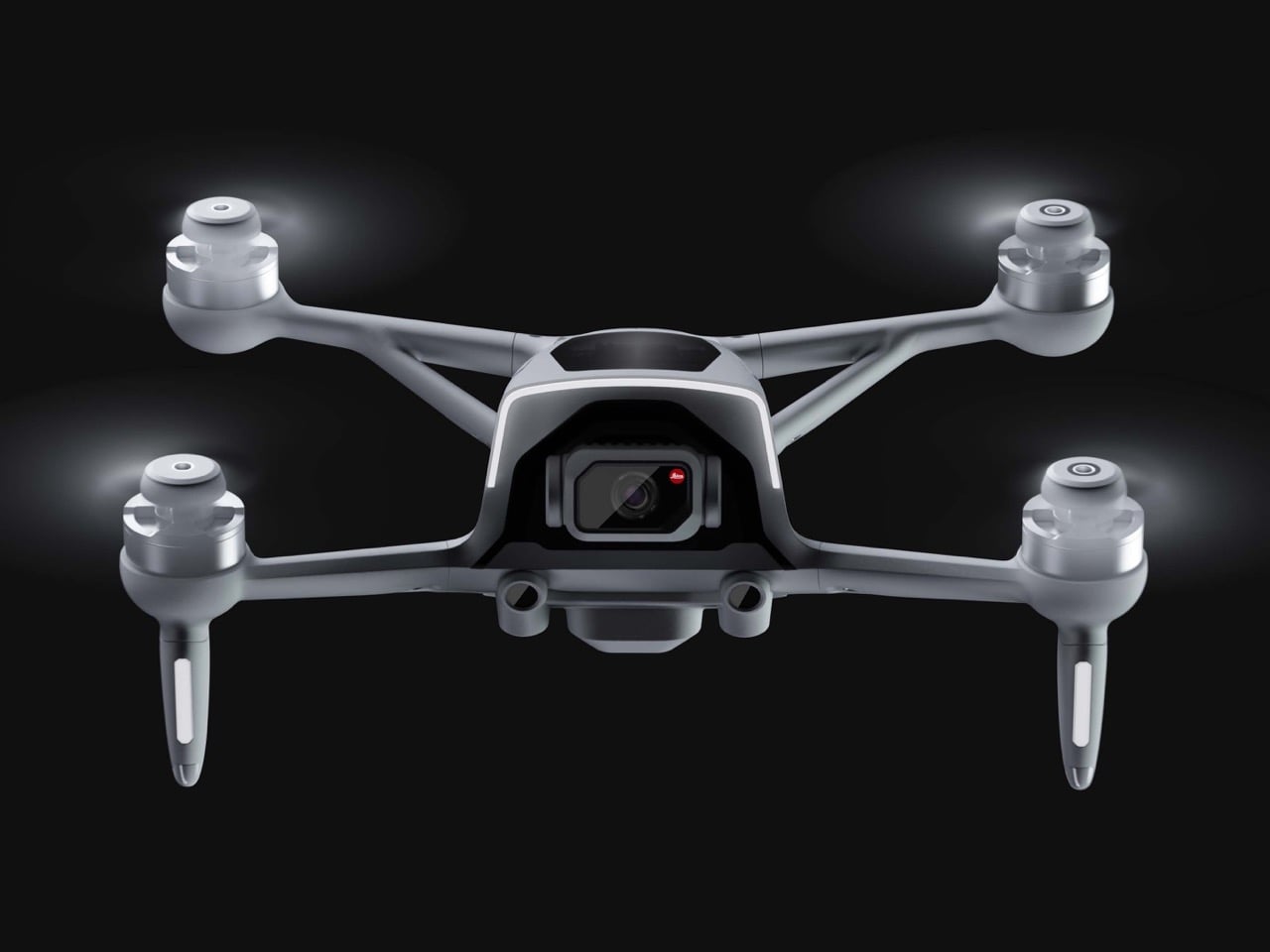
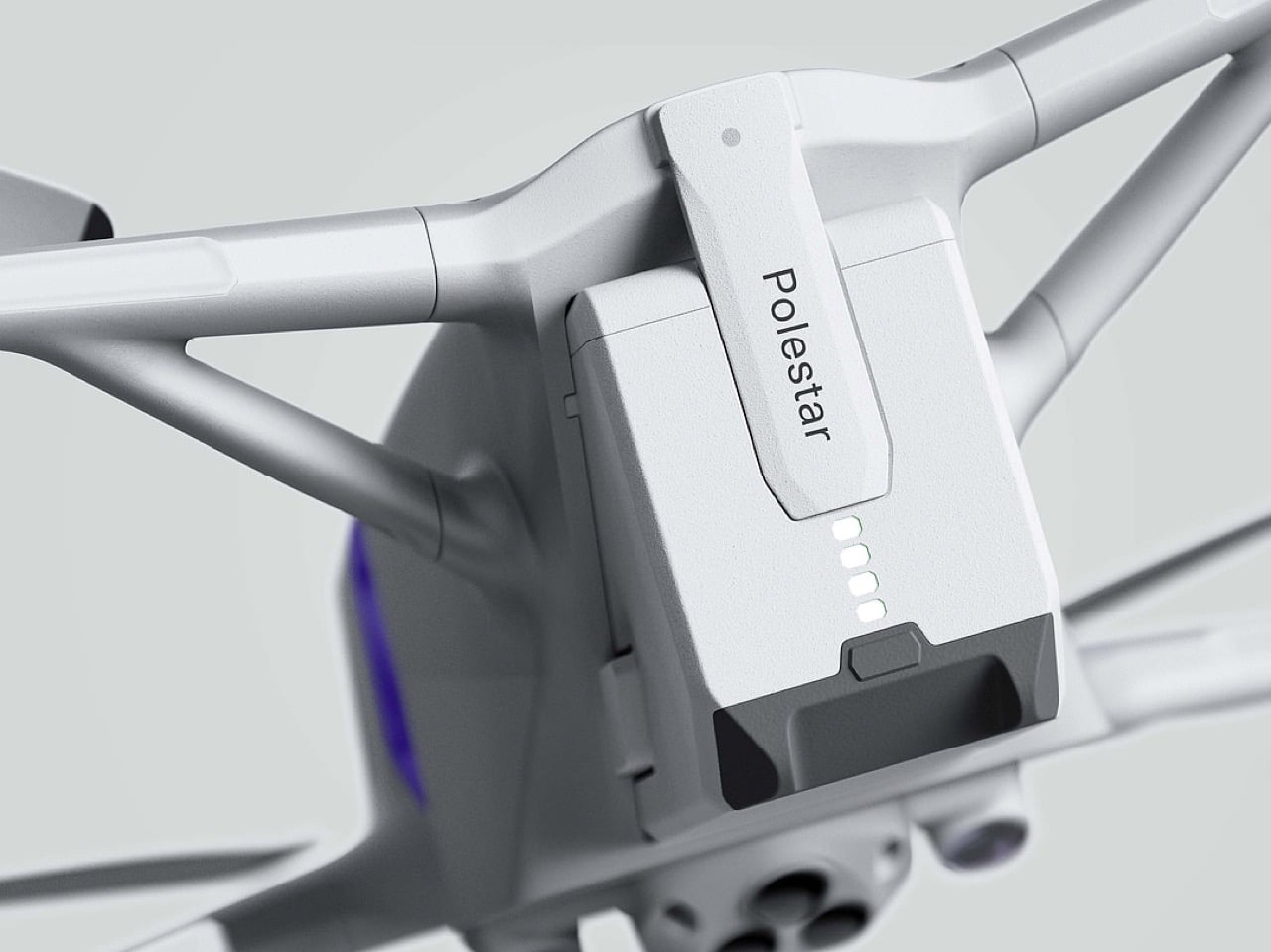
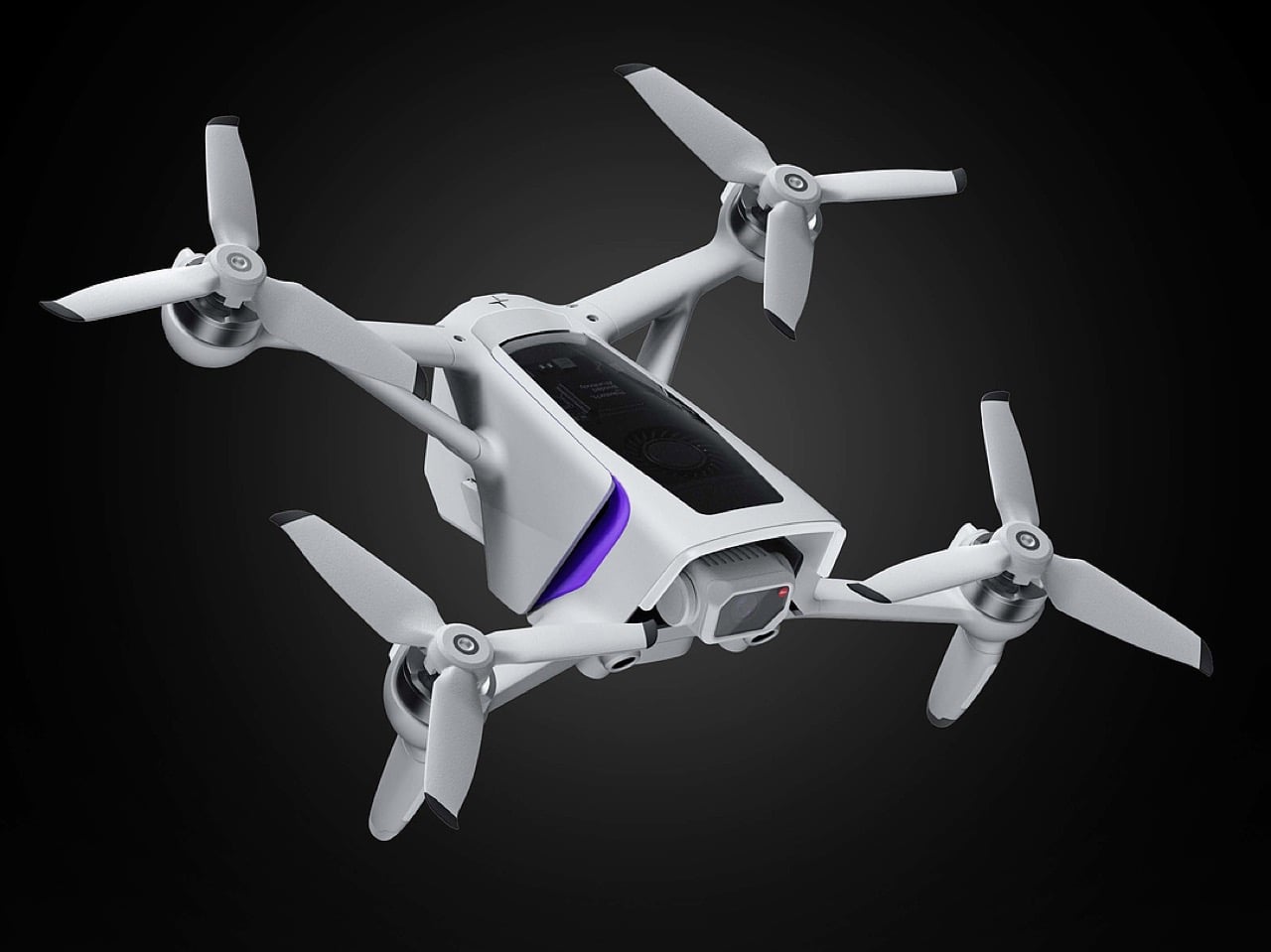
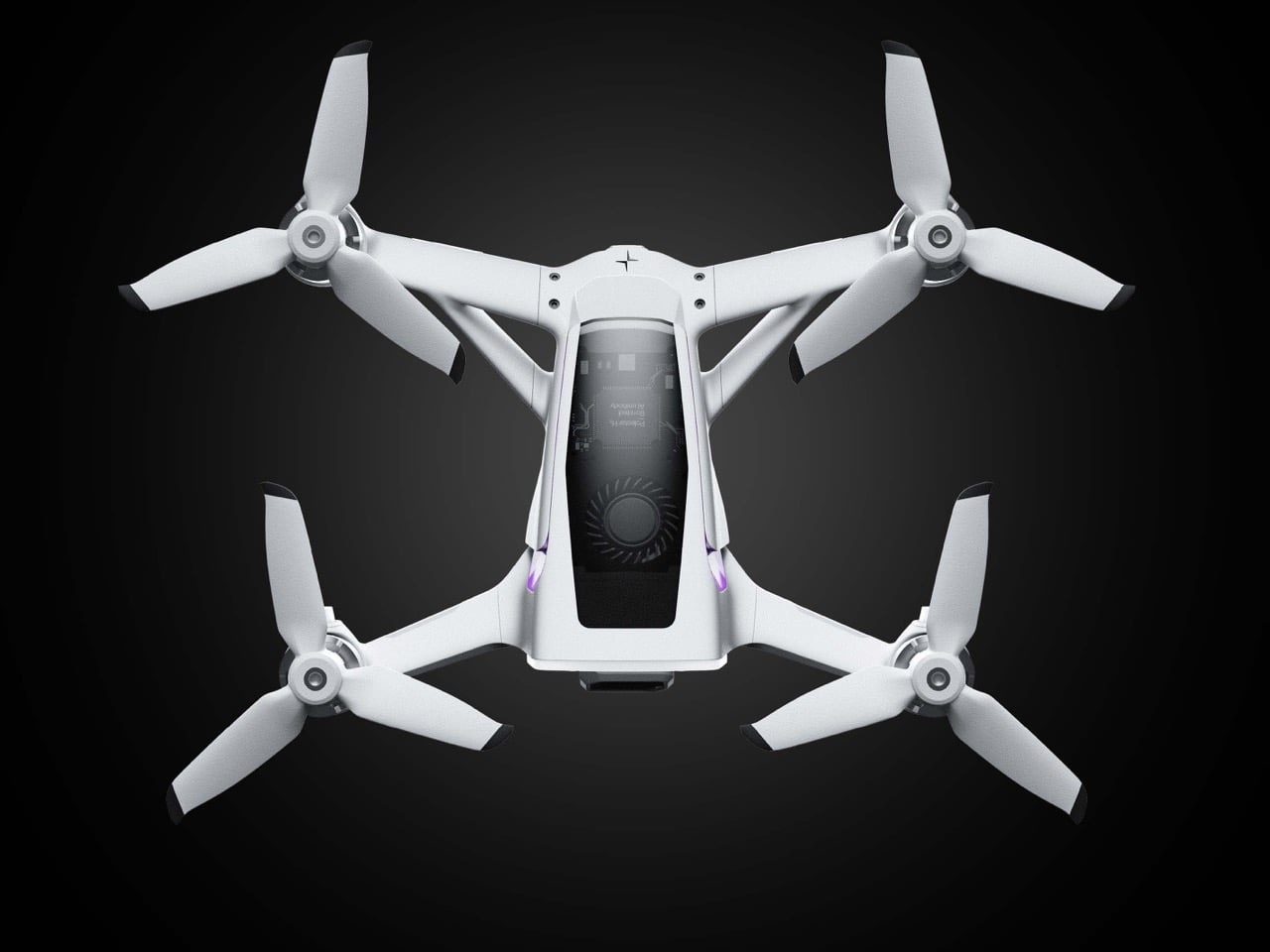
Polestar’s cool Nordic minimalism is not the first thing you expect to see in an FPV rig, yet this concept leans into that contrast and makes it feel inevitable. The drone lifts DJI’s “stacked” architecture of camera, flight controller, cooling, and battery, then wraps it in a crisp, automotive shell that would look just as natural parked beside an electric coupe as it would screaming through a canyon. Instead of the usual exposed carbon and repair-bench aesthetic, the body reads like a single sculpted volume, with the arms flowing out of a central spine and a long, glassy tech strip revealing the hardware beneath. Subtle light signatures, a clean white finish, and a battery module that wears the Polestar wordmark turn what is usually a niche racing tool into something that feels like a premium consumer product, without sanding off its performance edge.

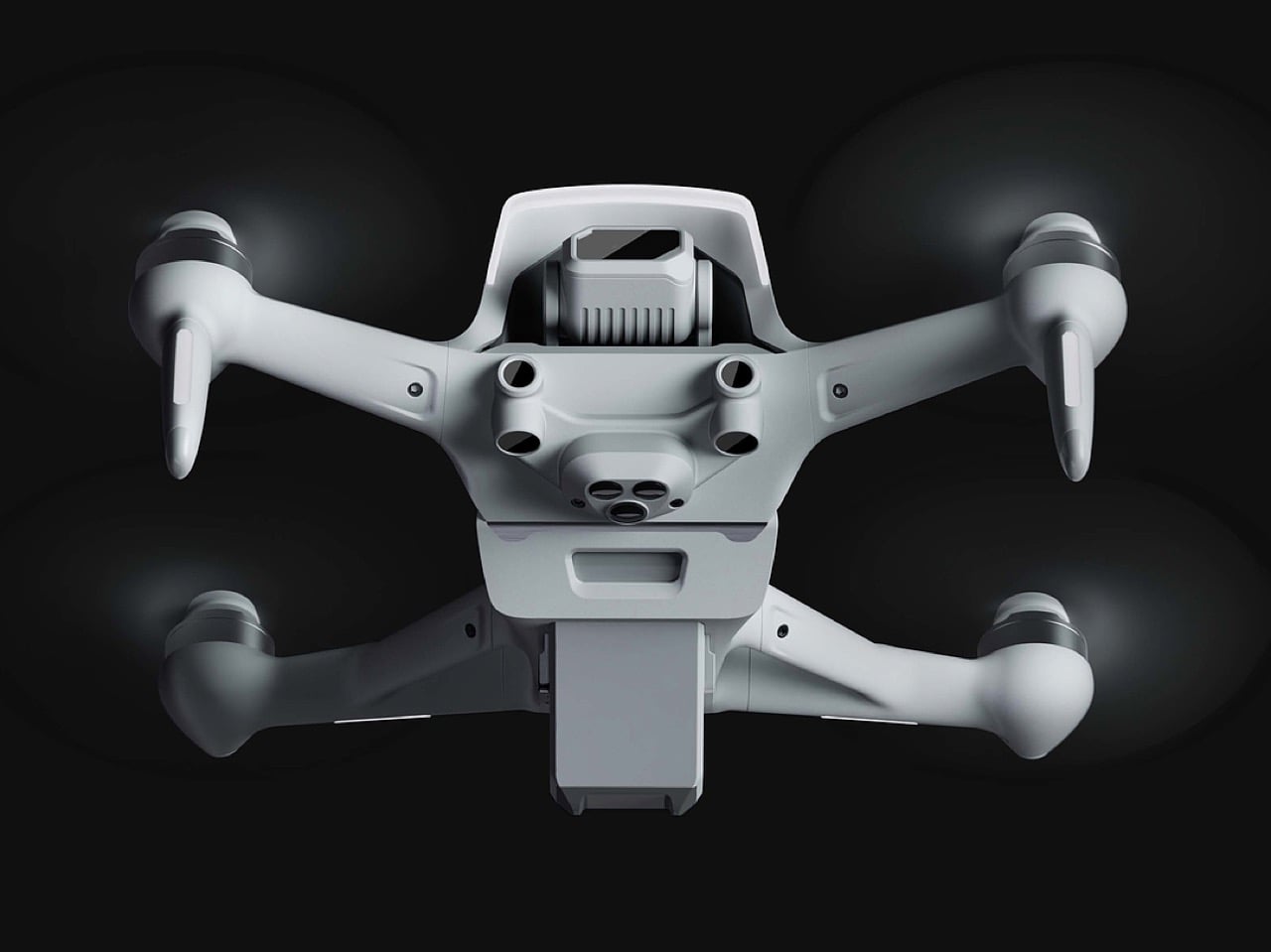
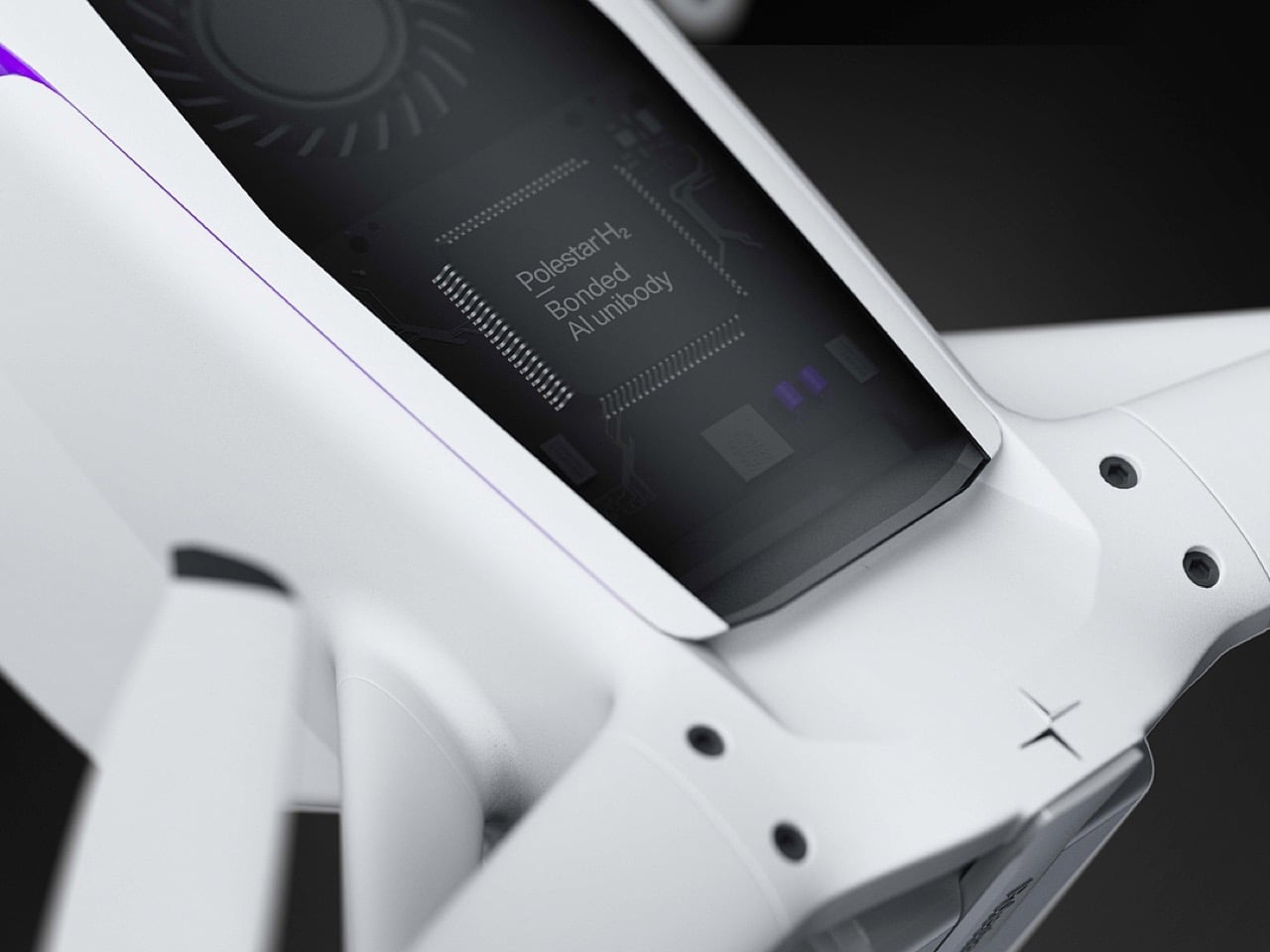
The design’s intelligence lies in how it translates DJI’s engineering logic into a clean visual language. The concept of “structural stacking” is central here, treating each primary component as a self-contained module arranged in a neat, vertical order. The camera and gimbal sit in a dedicated nose pod, followed by the flight control unit and heat dissipation systems under the long, dark canopy, with the battery locking in as a solid block at the rear. This layered approach brings an architectural order to the drone’s anatomy, making the technology feel organized and accessible. It moves away from the traditional FPV layout, where components are often fastened to an open frame, and instead presents a unified, product-like object that feels intentional from every angle.

Designer: Ocean

The drone’s body is finished in a matte, almost ceramic white, with surfaces that are both soft and incredibly precise, a hallmark of the EV brand’s surfacing strategy. The long, dark insert on top is more than just a cover; it’s a “tech window” that frames the internal hardware as a point of interest, much like Polestar does with its glass roofs and integrated sensor bars. Even the lighting is handled with automotive discipline. The thin purple accents feel like signature light blades, providing a controlled glow that suggests advanced technology rather than the often chaotic RGB strips found on custom FPV builds. The result is a machine that feels both high-tech and incredibly calm.

Still, this polished exterior does not compromise the drone’s aggressive spirit. The wide, planted stance and large, efficient-looking propellers signal that it is built for serious performance. A look at the underside reveals a dense cluster of sensors, cooling vents, and structural ribbing, confirming that this is a tool for demanding pilots, not a toy. The designer skillfully balances these hard-core elements with a consumer-friendly sensibility. The battery, for instance, is a perfect example. Branded with the Polestar logo and featuring clear, intuitive LED charge indicators, it feels like a piece of premium electronics, making a critical component feel safe and simple to handle for users who may not be seasoned hobbyists.

Ultimately, this concept imagines an FPV experience for the tech enthusiast who appreciates sophisticated design as much as raw performance. It is a drone for the person who owns a Polestar, not just because it is electric, but because of its commitment to a clean, forward-looking aesthetic. By merging the robust, modular architecture of a DJI product with the refined, human-centric design of a modern EV, this concept suggests that the future of high-performance drones might be less about exposed wires and carbon fiber, and more about the seamless integration of power and polish.

The post DJI Meets Polestar in This Sleek White FPV Drone Concept That Rejects the Racing Aesthetic first appeared on Yanko Design.

This 1km Saudi Tower Will Be the World’s Tallest Building by August 2028

The world’s most ambitious skyscraper project is finally picking up speed. Saudi Arabia’s JEC Tower, the supertall that’s been in the works for over a decade, has reached floor 69 on its central core. After years of delays and a construction hiatus that had people wondering if it would ever get finished, the project seems to be moving again. Architects AS+GG have reconfirmed an August 2028 completion date, which is specific enough to suggest they’re serious this time.

The tower has gone through a few name changes—it started as Kingdom Tower, became Jeddah Tower, and is now officially the JEC Tower, named after the Jeddah Economic Company. It’s rising in the Saudi port city of Jeddah under Saudi Prince Al Waleed bin Talal Al Saud, and calling it tall doesn’t quite cover it. AS+GG has confirmed the tower will exceed 1 kilometer in height, putting it well above Dubai’s Burj Khalifa. That’s nearly twice the height of One World Trade Center in New York and more than three times taller than London’s Shard. The numbers are almost absurd.

Designer: AS+GG

When it’s done, the JEC Tower will have 59 elevators serving at least 157 floors. Inside, you’ll find the world’s highest observation point, a luxury hotel, office space, and residential units designed for people who can afford to live in a building this expensive. The central core is currently leading the way up, with the flanking wings about five floors behind. Construction crews are working steadily to keep the pace going, and the building is already changing Jeddah’s skyline even in its unfinished state.

The construction numbers show real progress. Work picked back up in January after sitting idle for years, but things have accelerated noticeably in recent months. About 50% of the concrete has been poured, which matters when you’re talking about a project this size. AS+GG released photos from November showing how far they’ve come, and you don’t put out progress shots unless you’re confident about where things are headed. Narrowing the completion date down to a specific month—August 2028—suggests they’re working from actual timelines now instead of hopeful guesses.

The project’s troubled history makes the current momentum worth noting. There were legitimate questions about whether this would ever happen, so seeing it past floor 69 is significant. Pinning down August 2028 as the completion date is bold, considering that’s only four years away and they’re building something that’s never been done at this scale. The engineering challenges get harder as you go higher, particularly when you’re dealing with wind loads and structural concerns at these heights. But with half the concrete poured and construction visibly moving, it’s starting to look real.

The next year will show whether they can maintain this pace. AS+GG says major updates are coming as construction continues climbing. By this time next year, we’ll know if August 2028 is realistic or overly optimistic. The tower is already dominating the skyline in its incomplete form. Whether it finishes on schedule or takes longer, Jeddah is getting its kilometer-tall landmark one way or another. The question is just when.

The post This 1km Saudi Tower Will Be the World’s Tallest Building by August 2028 first appeared on Yanko Design.

iam8bit is suing Skybound Game Studios alleging fraud and theft of designs

Skybound Game Studios is being sued by indie outfit iam8bit over fraud and breach of contract, including the theft of original designs. Skybound Entertainment, the parent company of Skybound Game Studios, is chaired by Robert Kirkman, who may be best known for creating the original comic book of The Walking Dead. We've reached out to Skybound for comment on the lawsuit but have not received a response as of publication.

iam8bit is a video game producer as well as a merchandise operation selling vinyl soundtracks and other geek gear. The company entered into a partnership with Skybound Game Studios in April 2021. Since then, iam8bit alleges that Skybound conducted a multi-year accounting scheme and failed to provide accurate financial reports for the partnership each month. "Skybound failed to provide the monthly reports as agreed," the Los Angeles Superior Court complaint reads. "It also padded its expenses with millions of dollars in fake line items." iam8bit claims Skybound has yet to explain the line items, even to a third-party auditor that it engaged. The company is alleging more than $4 million in damages related to the accounting issues. 

iam8bit also accused Skybound of cutting it out of a deal regarding indie video game Stray. According to the company's counsel, iam8bit designed and developed promotional materials for the launch of Stray on PlayStation and Xbox consoles. The complaint claims that Skybound used trade secrets from iam8bit to secure its own deal for the Nintendo launch of the game. It alleges Skybound used confidential information about iam8bit’s royalty split with publishing Annapurna Interactive to cut out its business partner, while also using “almost exact copies” of its creative output for marketing.

The full list of allegations in iam8bit's complaint include breach of contract, fraud, conversion, unjust enrichment and misappropriation. The company's legal team is seeking monetary damages, punitive damages and attorneys' fees in compensation.

This article originally appeared on Engadget at https://www.engadget.com/gaming/iam8bit-is-suing-skybound-game-studios-alleging-fraud-and-theft-of-designs-000822886.html?src=rss

Robosen’s TRANSFORMERS Soundwave Does What the 1984 Original Only Pretended: It Actually Works as a Speaker

Robosen has spent years perfecting the art of making metal transform on command. Their latest collaboration with Hasbro takes that expertise and applies it to one of the most design-conscious characters in TRANSFORMERS history: Soundwave, the Decepticon whose cassette player form defined an entire era of toy aesthetics.

Designer: Robosen

The G1 Flagship Soundwave represents something more interesting than another collectible robot. It’s a study in how designers can honor iconic industrial design while pushing the technical boundaries of what consumer robotics can achieve. The original 1984 Soundwave toy worked because it made sense. A portable cassette player was something you carried. It had buttons, a display window, speakers. The disguise wasn’t just clever, it was culturally relevant.
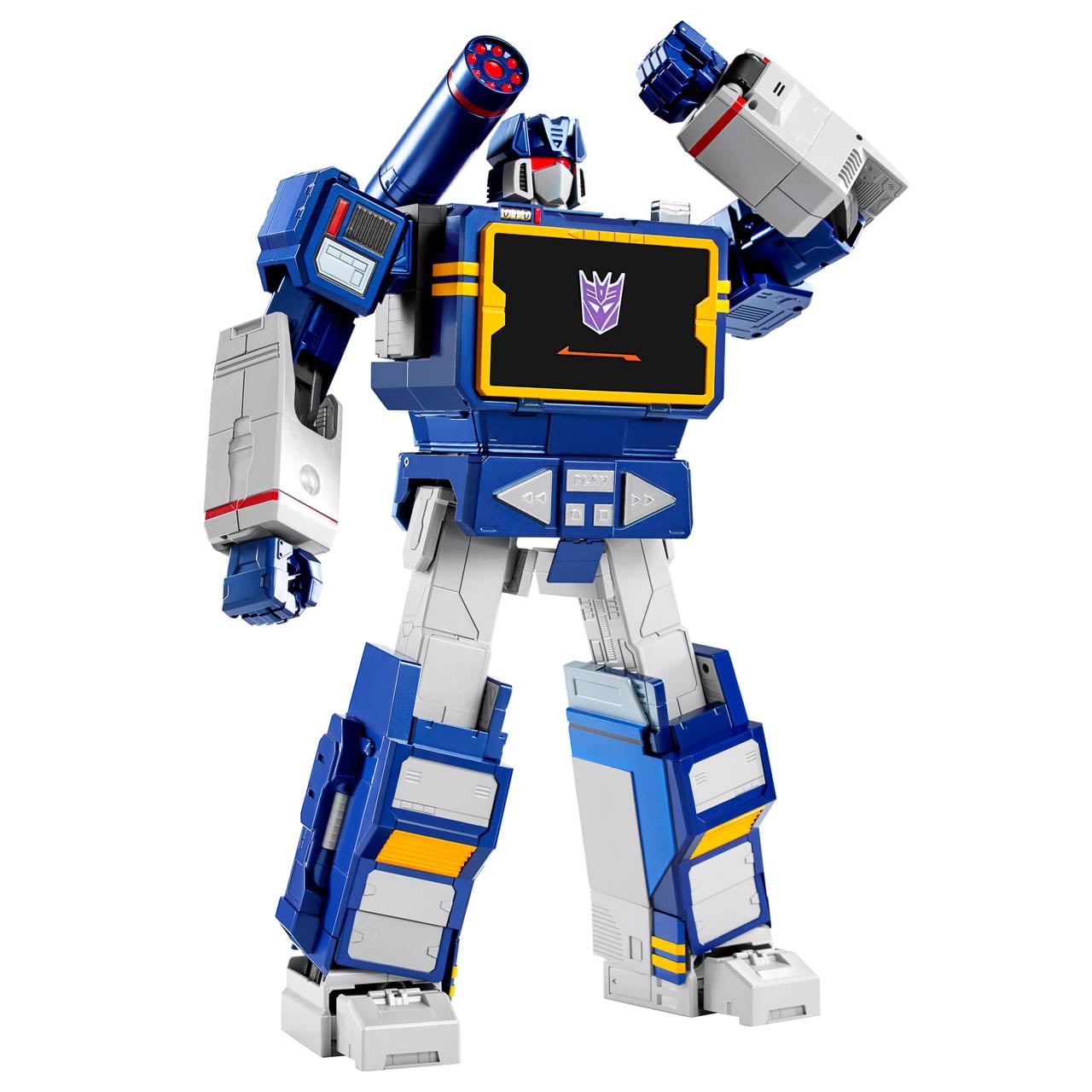
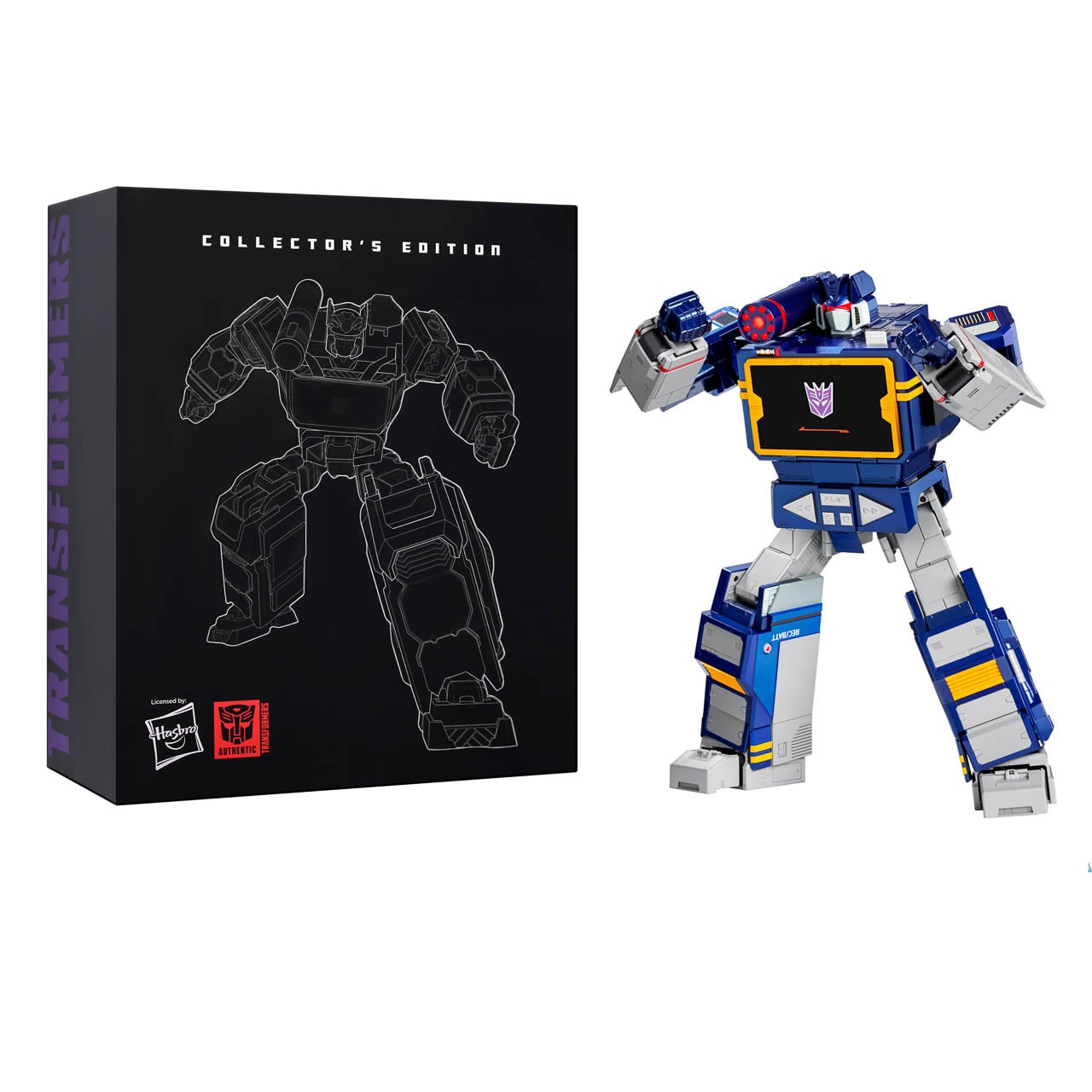
Robosen’s interpretation maintains that design logic while adding functional depth that the original could only suggest. The robot actually works as a Bluetooth speaker when in cassette mode. The tape deck buttons on the front panel control playback, pause, and track skipping. There’s even an integrated recording feature accessible through those same retro-styled controls.

The Cassette Player as Design Icon

The Sony Walkman launched in 1979. By 1984, when Soundwave first appeared in toy form, the portable cassette player had become one of the most recognizable consumer electronics forms in existence. Rectangular, pocketable, with a clear window showing the tape spools and a row of tactile buttons along the bottom edge. This wasn’t arbitrary product design. It was the distillation of function into form that industrial designers spend careers trying to achieve.
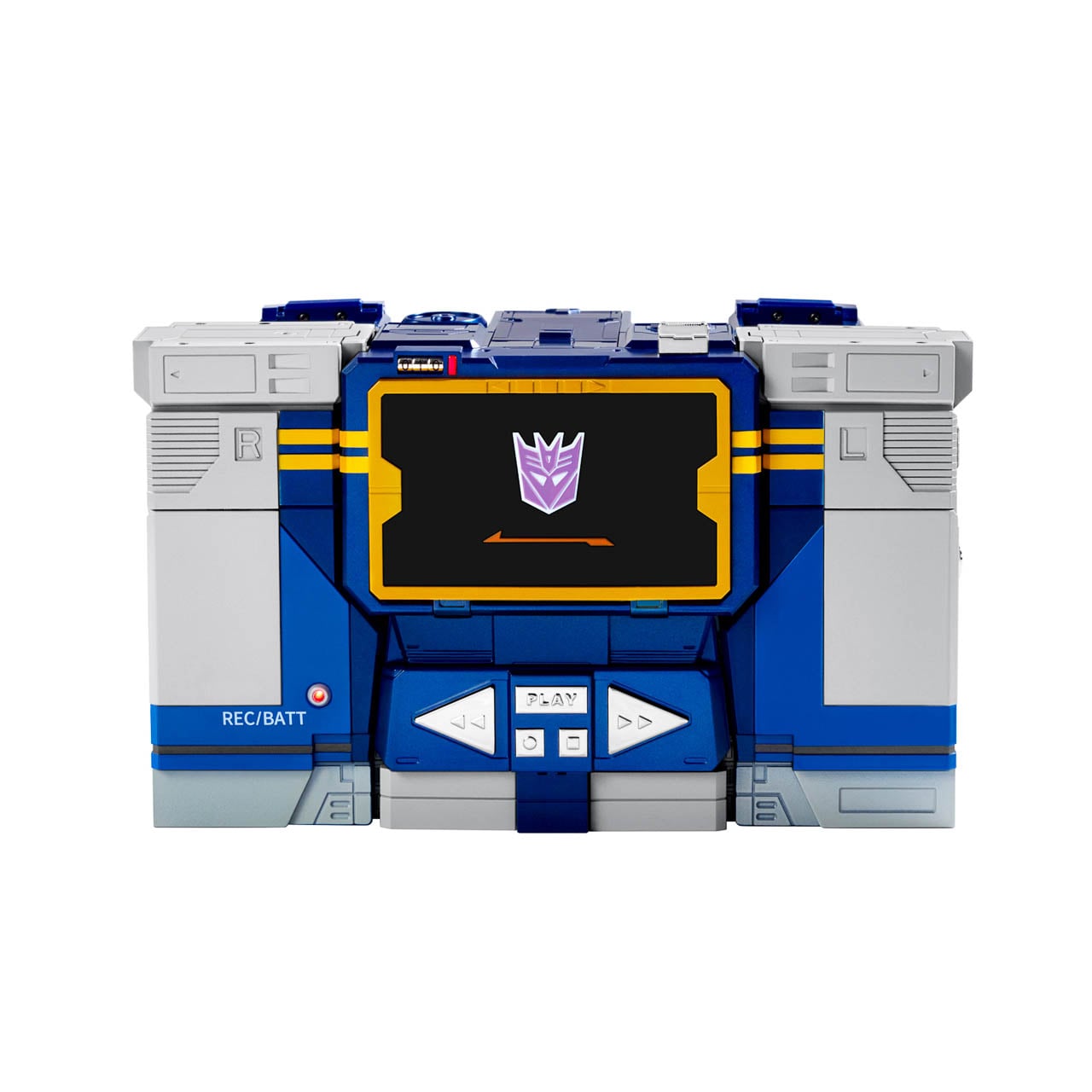
Soundwave’s original toy designers understood something fundamental: the best disguises reference objects people already trust. A cassette player in 1984 was friendly technology. You saw them everywhere. The genius of Soundwave as a character lies in this design decision. He hides in plain sight by becoming an object so ubiquitous that nobody questions its presence.

Robosen’s 2025 interpretation carries this design philosophy forward while acknowledging that cassette players now occupy nostalgic rather than practical cultural space. The form factor triggers recognition and emotional response rather than functional expectation. This shift from utility to symbolism changes how the design needs to perform. It must read as authentic to fans who remember the original while communicating “premium collectible” to anyone encountering it fresh.
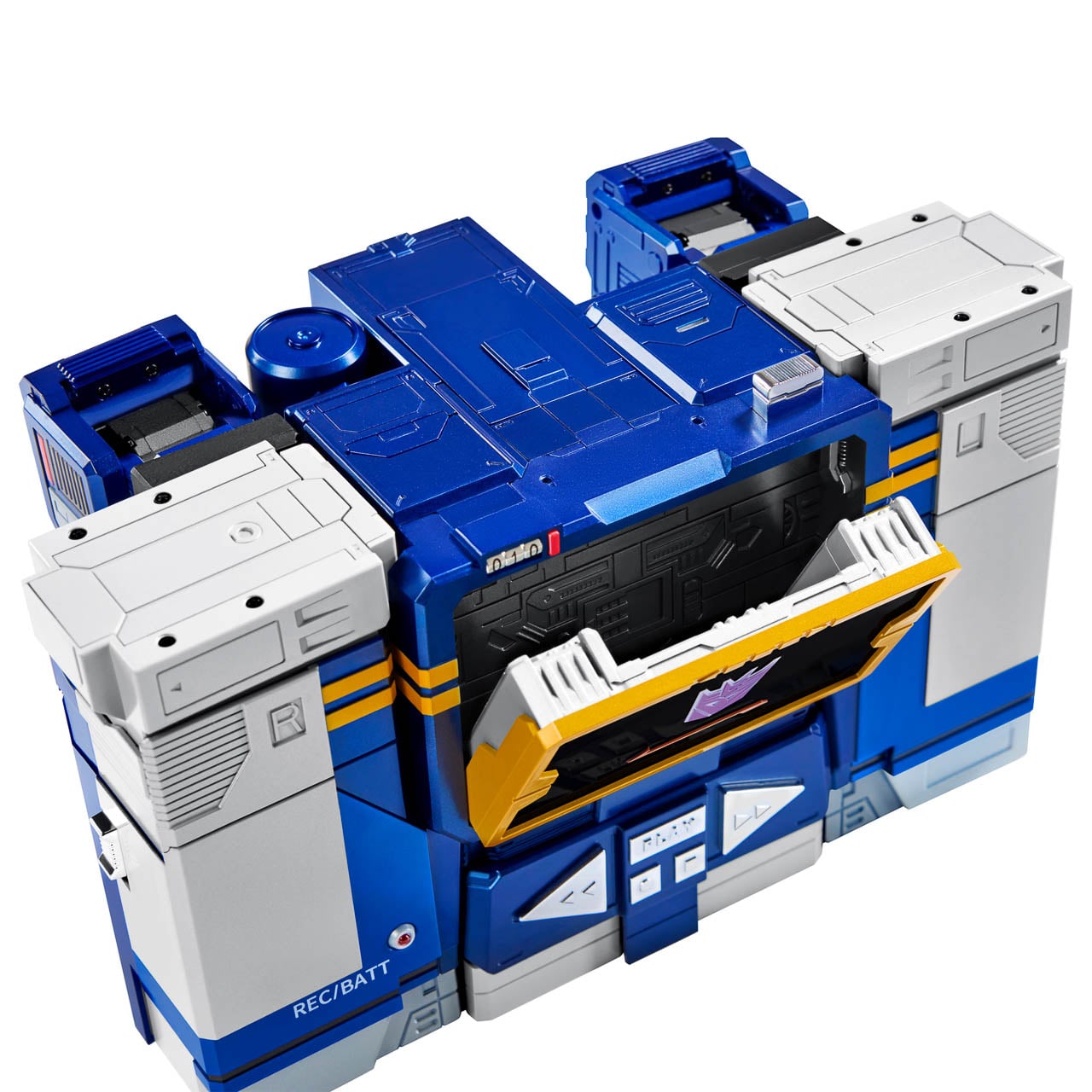
The proportions matter here. Original Soundwave toys were constrained by the need to fit actual toy cassettes inside the chest compartment. Robosen’s version maintains those proportions not because they’re functionally necessary, but because they’re aesthetically correct. Deviation would break the silhouette that defines the character.

Surface Language and Material Decisions

The G1 aesthetic demanded specific material choices that go beyond color matching. Original Soundwave toys used a particular shade of blue with silver and gold accents that fans recognize instantly. But the original also had the specific surface characteristics of 1980s injection-molded plastic: slight texture variations, mold lines, the particular way chrome-plated parts caught light differently than vacuum-metallized ones.
Robosen’s version matches those colors while upgrading the materials to support both the mechanical stress of repeated transformations and the visual expectations of collectors who will display these at eye level. The chest cassette window features actual transparency rather than a printed graphic. This seems like a small detail, but it fundamentally changes how the object reads. A printed graphic is decoration. A transparent window is architecture.

Surface textures vary intentionally across the figure. Some panels feature subtle grain that references the original toy’s plastic molding characteristics. Others present smoother finishes appropriate for their fictional function as viewscreens or armor plating. This attention to tactile variety creates what industrial designers call “material truth,” where surfaces communicate their purpose through texture rather than relying entirely on color or shape.

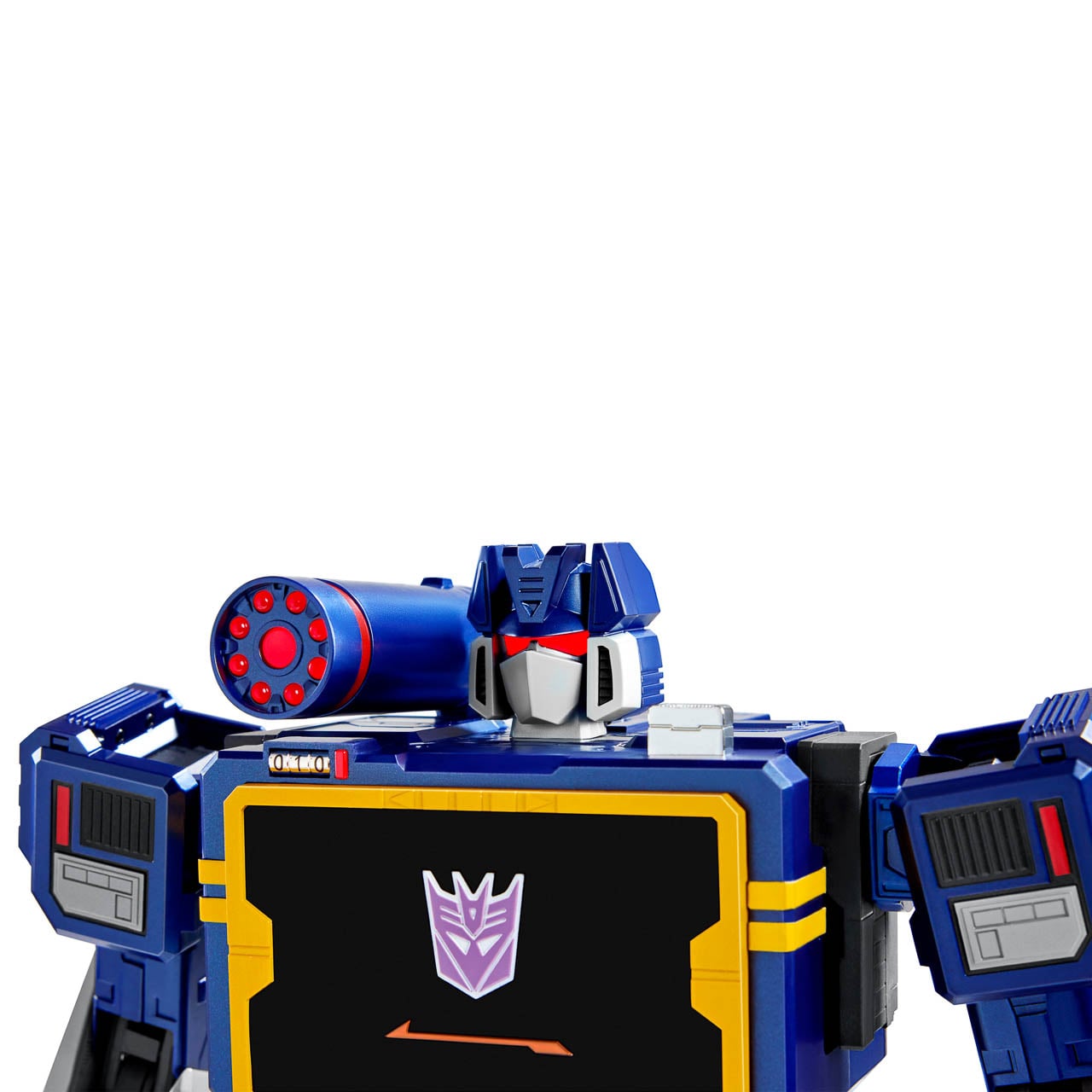
The shoulder cannon glows with animated lighting effects, adding dynamic visual interest without betraying the vintage inspiration. Gold paint applications use metallic finishes that catch light similarly to the chrome and vacuum-metallized plastics of 1980s toys, but with durability that modern collectors expect. The color temperature of the gold matters. Too warm reads as cheap costume jewelry. Too cool reads as modern and wrong. Robosen found the specific yellow-gold that triggers 80s nostalgia.

Engineering Constraint as Design Driver

The technical challenge of automated transformation created design constraints that ultimately improved the final object. Robosen developed new servo technologies specifically for Soundwave, paired with upgraded algorithms that coordinate dozens of moving parts into a smooth transformation sequence. But the interesting design story isn’t the technology itself. It’s how hiding that technology shaped the aesthetic decisions.
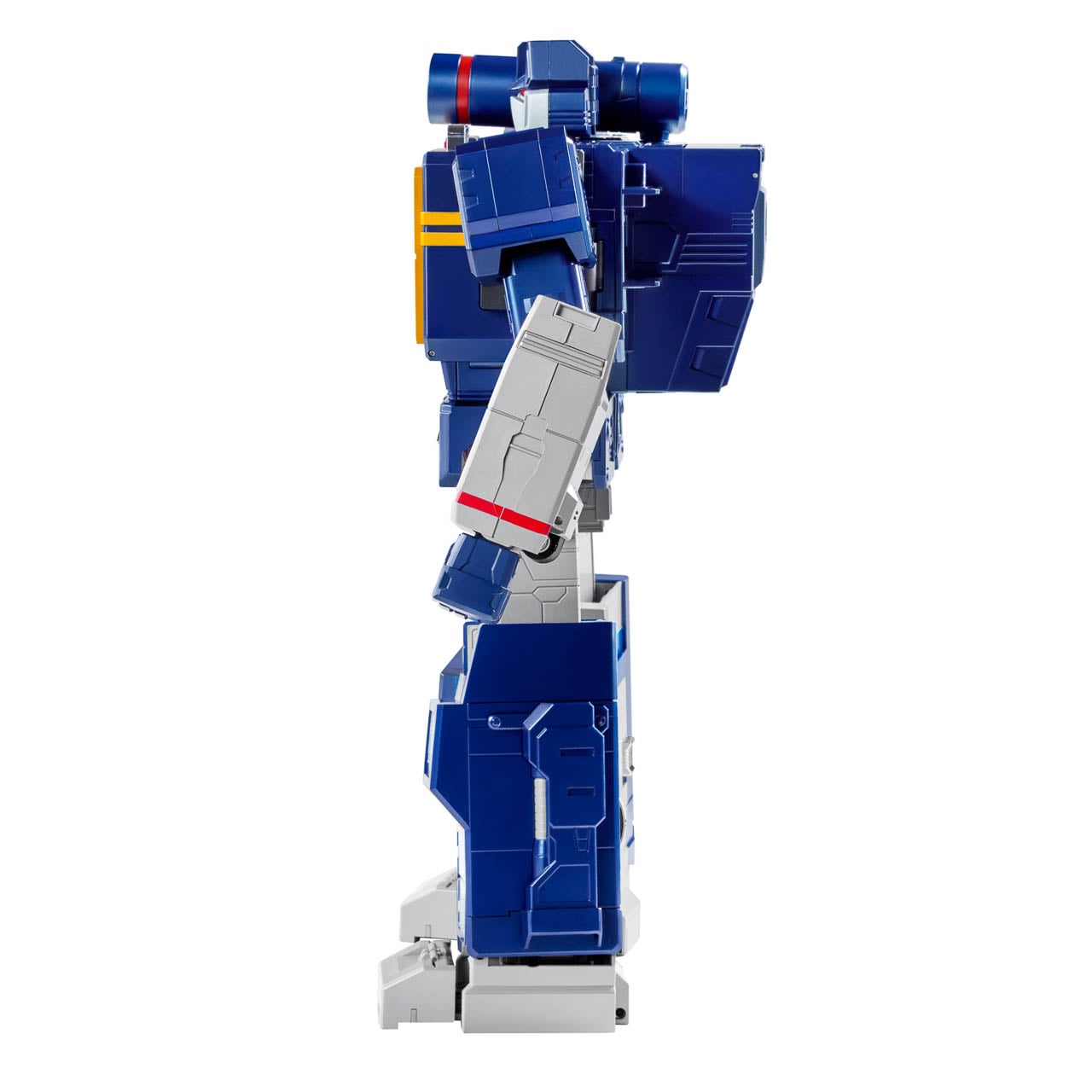
The servo placement had to account for the cassette player’s boxy proportions while still allowing the robot mode to achieve recognizable poses. Soundwave’s character design has always featured a relatively stocky build with prominent shoulder-mounted accessories, and Robosen needed their servo architecture to accommodate that silhouette without visible motor housings destroying the aesthetic. This is classic industrial design problem-solving: the mechanism disappears so the form can speak.
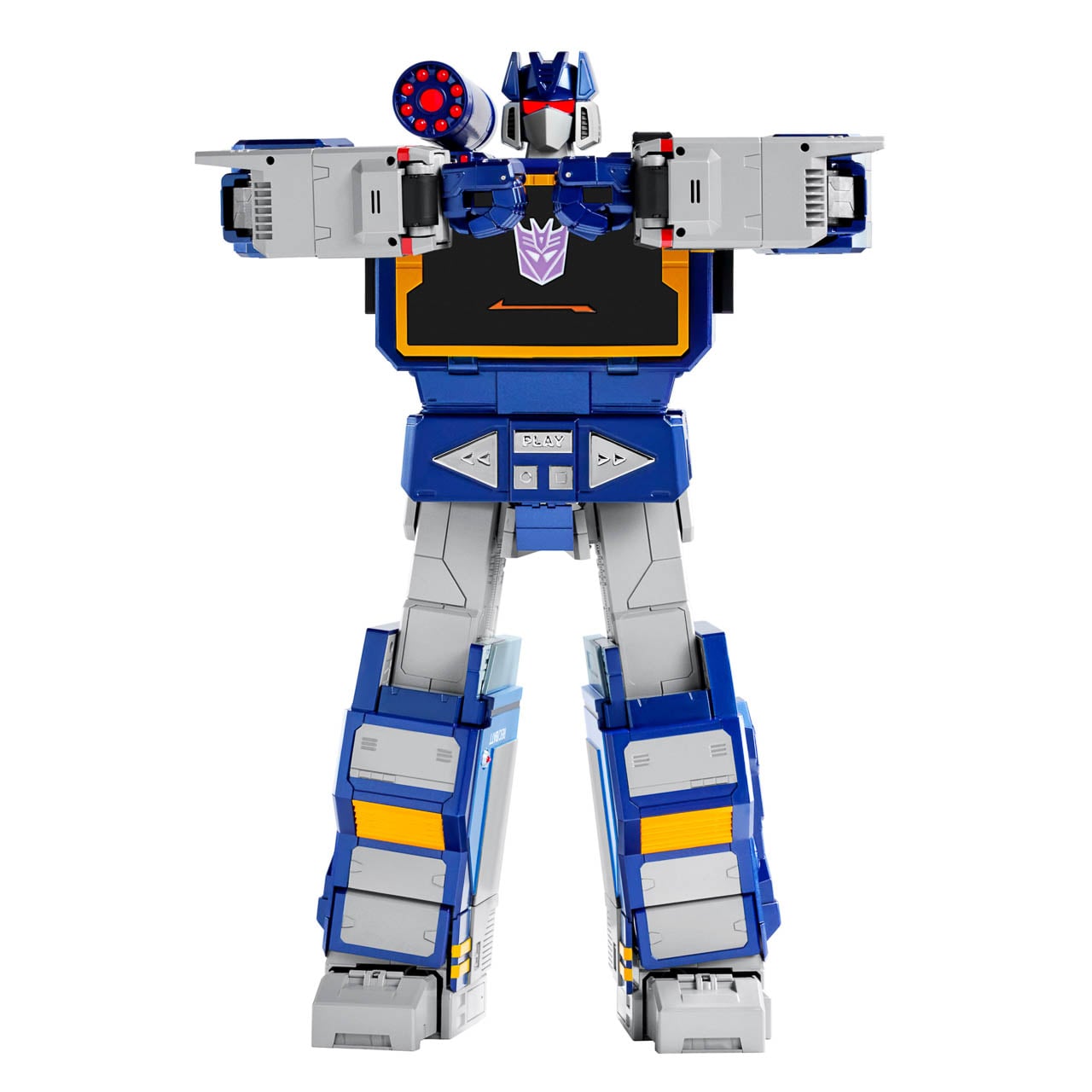
Weight distribution presented another constraint that became design opportunity. A Bluetooth speaker needs certain components in certain places for audio quality. A transforming robot needs weight balanced for stable standing poses. Robosen’s solution integrates the speaker components into the chest cavity in a way that actually improves the robot mode’s center of gravity while positioning drivers optimally for sound projection in cassette mode. Function serving multiple purposes simultaneously is elegant engineering, but it’s also the kind of solution that creates better products.

Accessories and Proportional Relationships

Soundwave’s neutron assault rifle and sonic cannon aren’t afterthoughts. They’re design elements that complete the character’s visual language. The rifle features proportions that reference the original toy’s weapon while scaling appropriately for the larger figure. It attaches and detaches through magnetic connection points that preserve the clean lines of the robot mode when weapons are removed.
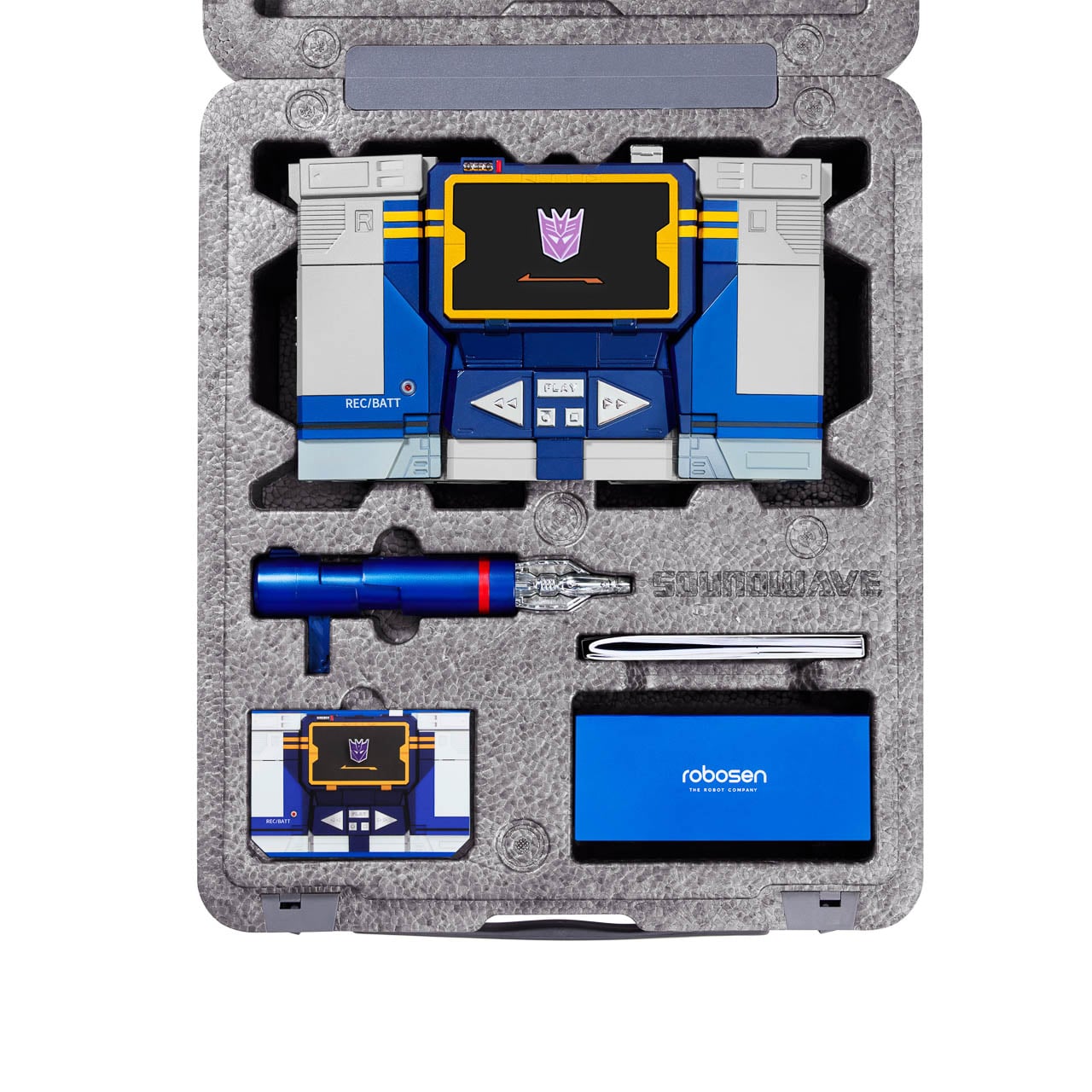
The shoulder-mounted sonic cannon deserves particular attention. Its proportions relative to Soundwave’s shoulder width, its angle of mounting, its extension beyond the body envelope: these relationships were established in the original 1984 toy and refined through decades of subsequent figures. Robosen’s designers had to honor those proportions while engineering animated lighting into the accessory, creating a glowing effect that suggests the weapon is charged and ready.
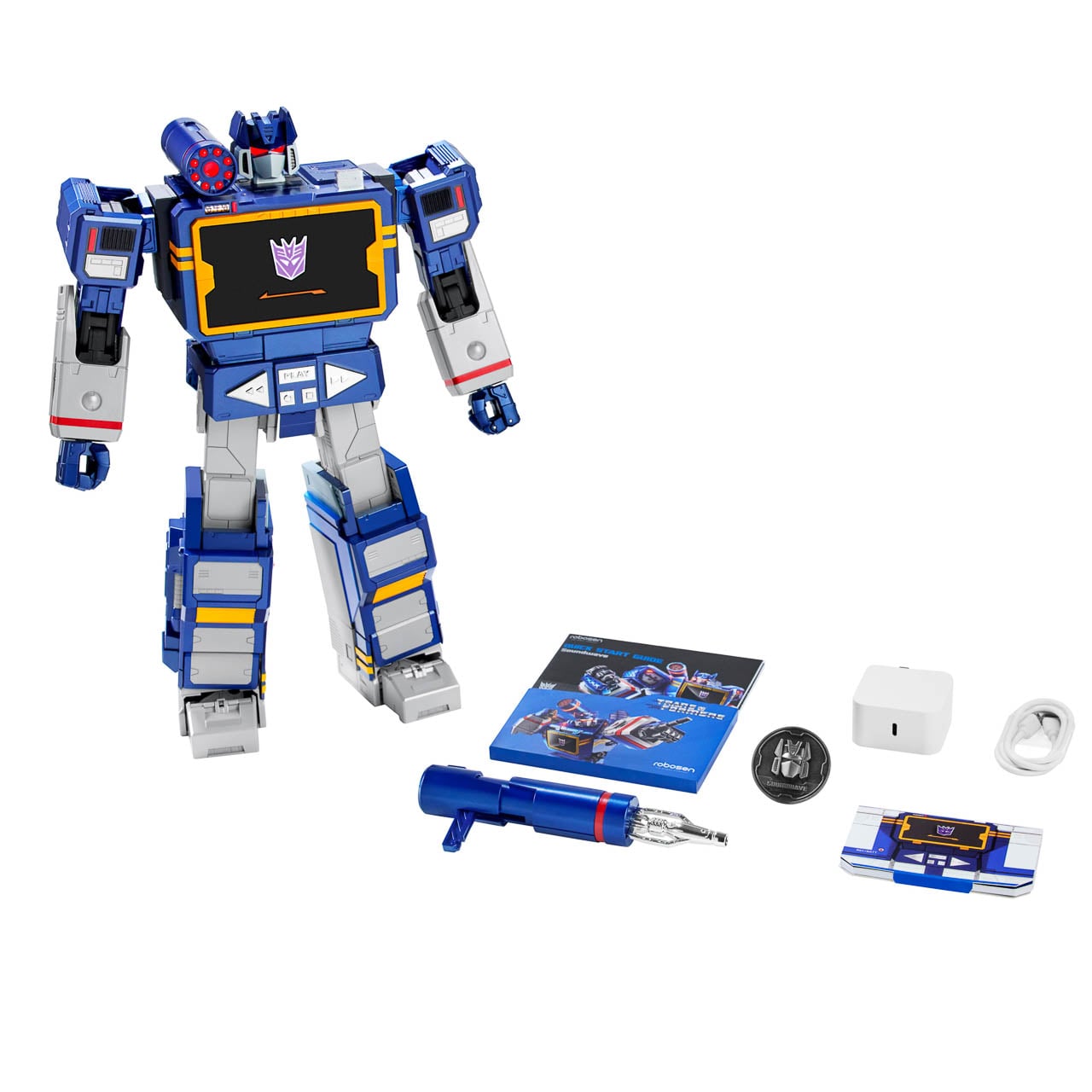
Both accessories store within the cassette mode’s form factor, maintaining the object’s disguise integrity. This kind of design consideration, making sure every component has a home in both modes, separates serious transforming robot design from figures that simply fold into vaguely recognizable shapes. The accessories don’t just belong to Soundwave. They belong to his silhouette.

Functional Disguise as Design Philosophy

The Bluetooth speaker functionality represents a design philosophy that could influence the entire collectible robotics category. Most high-end collectible figures exist purely for display. They’re sculptures with premium price tags. Robosen’s approach suggests these objects can occupy space in our lives more actively.

A Soundwave that plays your music isn’t just a shelf piece you admire occasionally. It’s an object that earns its place through daily utility. The recording function, controlled through those satisfyingly tactile tape deck buttons, adds another layer of interaction. Leave yourself a voice memo through a transforming robot. It’s absurd and delightful, but it’s also philosophically interesting: the disguise becomes real.
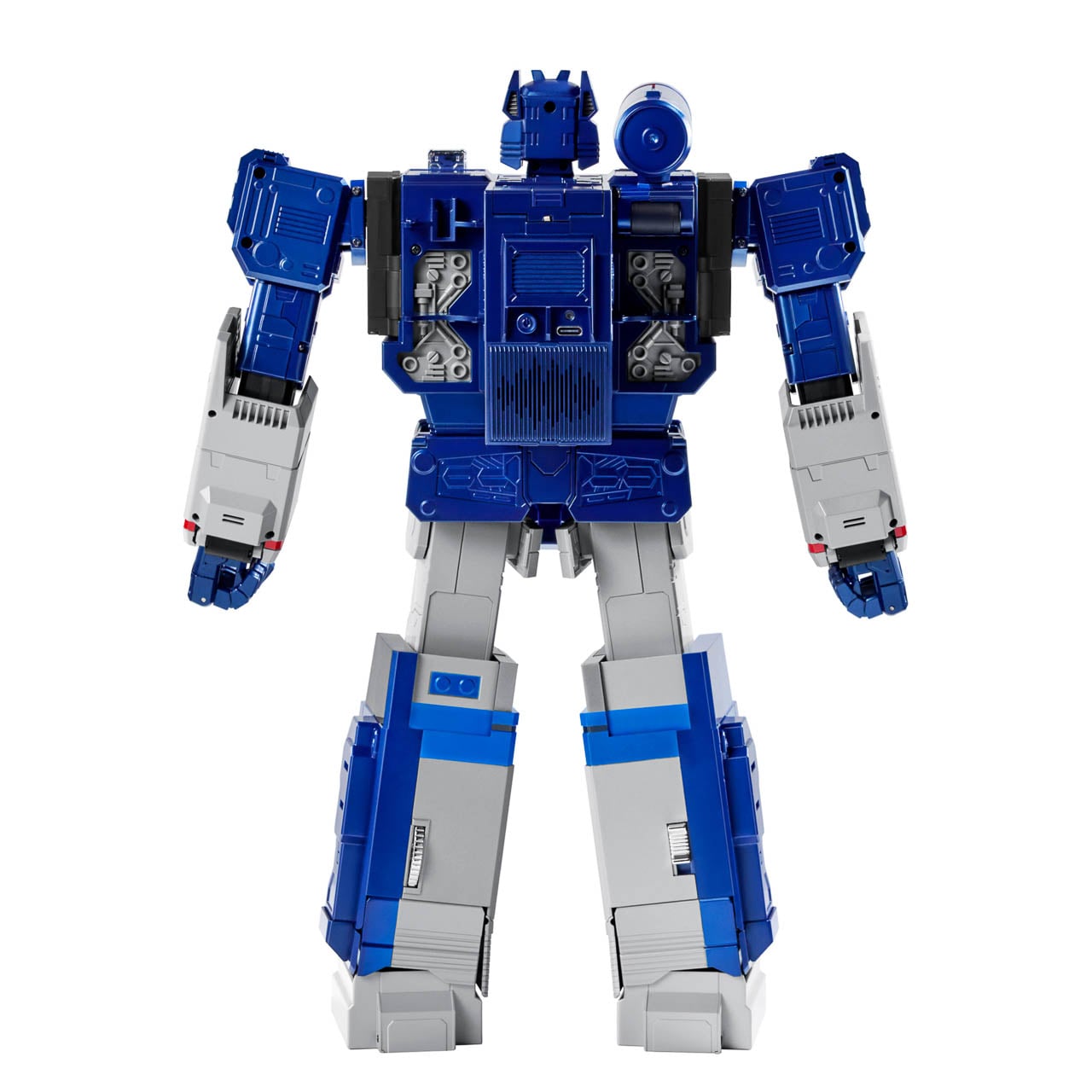
This creates a design feedback loop. The original Soundwave disguised himself as a functional object. Robosen’s Soundwave actually is a functional object. The fiction collapses into reality in a way that feels appropriate for a property built around the idea of machines hiding among us. When your Bluetooth speaker transforms into a robot, the TRANSFORMERS concept stops being a story you remember and becomes an experience you have.

The $999 pre-order price (rising to $1,399 after the initial 30-day window) positions Soundwave alongside high-end audio products, not just toys. Robosen is essentially arguing that a collectible robot can be both display piece and functional device, and the design work supports that argument convincingly. The premium isn’t just for nostalgia. It’s for an object that justifies its existence through use.

Design Coherence Across the Lineup

Soundwave joins Optimus Prime, Bumblebee, and Grimlock in Robosen’s expanding TRANSFORMERS lineup. Each figure establishes different design challenges based on their alt-modes and character proportions. But what makes the collection work as a collection is consistent design language across mechanically diverse objects.
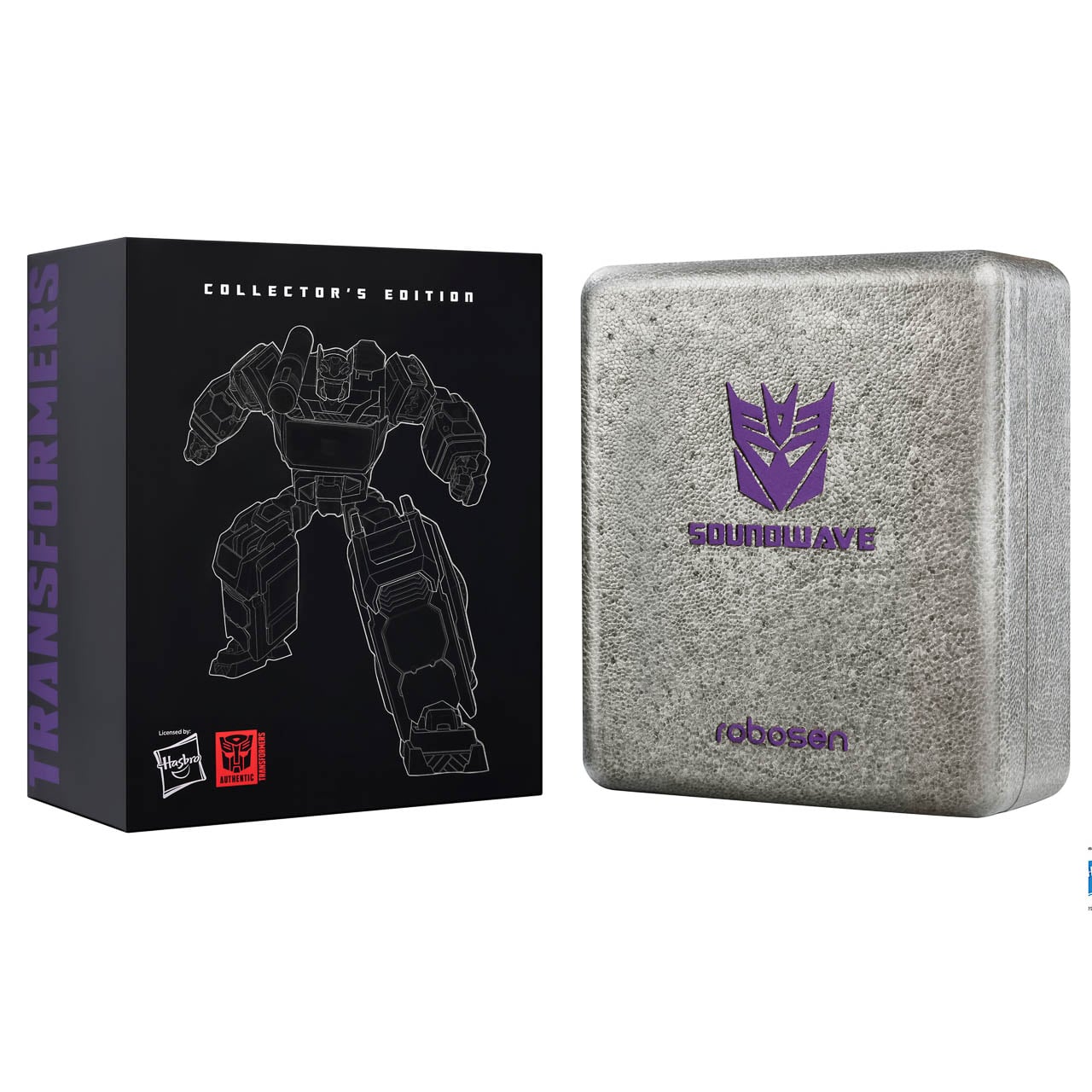
The servo placement follows similar principles across figures, creating comparable ranges of motion and transformation speeds. Joint articulation uses consistent detent patterns that give all four figures the same tactile feedback. Surface treatment applies metallic finishes at similar scales and positions. Lighting integration follows established brightness and color temperature standards. These unifying decisions mean the figures read as a coherent family rather than separate projects that happen to share a license.

When displayed together, Optimus, Bumblebee, Grimlock, and now Soundwave present a unified design statement about what premium TRANSFORMERS collectibles can be. They share DNA despite their radically different forms. This is harder to achieve than it sounds. Plenty of collectible lines feature individual great pieces that look awkward together. Robosen’s design discipline prevents that problem.

Pre-orders are live now at Robosen.com, with HasbroPulse.com availability coming soon. For design enthusiasts and TRANSFORMERS collectors who appreciate the intersection of nostalgia and engineering achievement, Soundwave represents the current peak of what consumer robotics can accomplish within the constraints of beloved intellectual property.

The post Robosen’s TRANSFORMERS Soundwave Does What the 1984 Original Only Pretended: It Actually Works as a Speaker first appeared on Yanko Design.
These Ceramic Cups Were Designed And Manufactured Entirely By An Algorithm

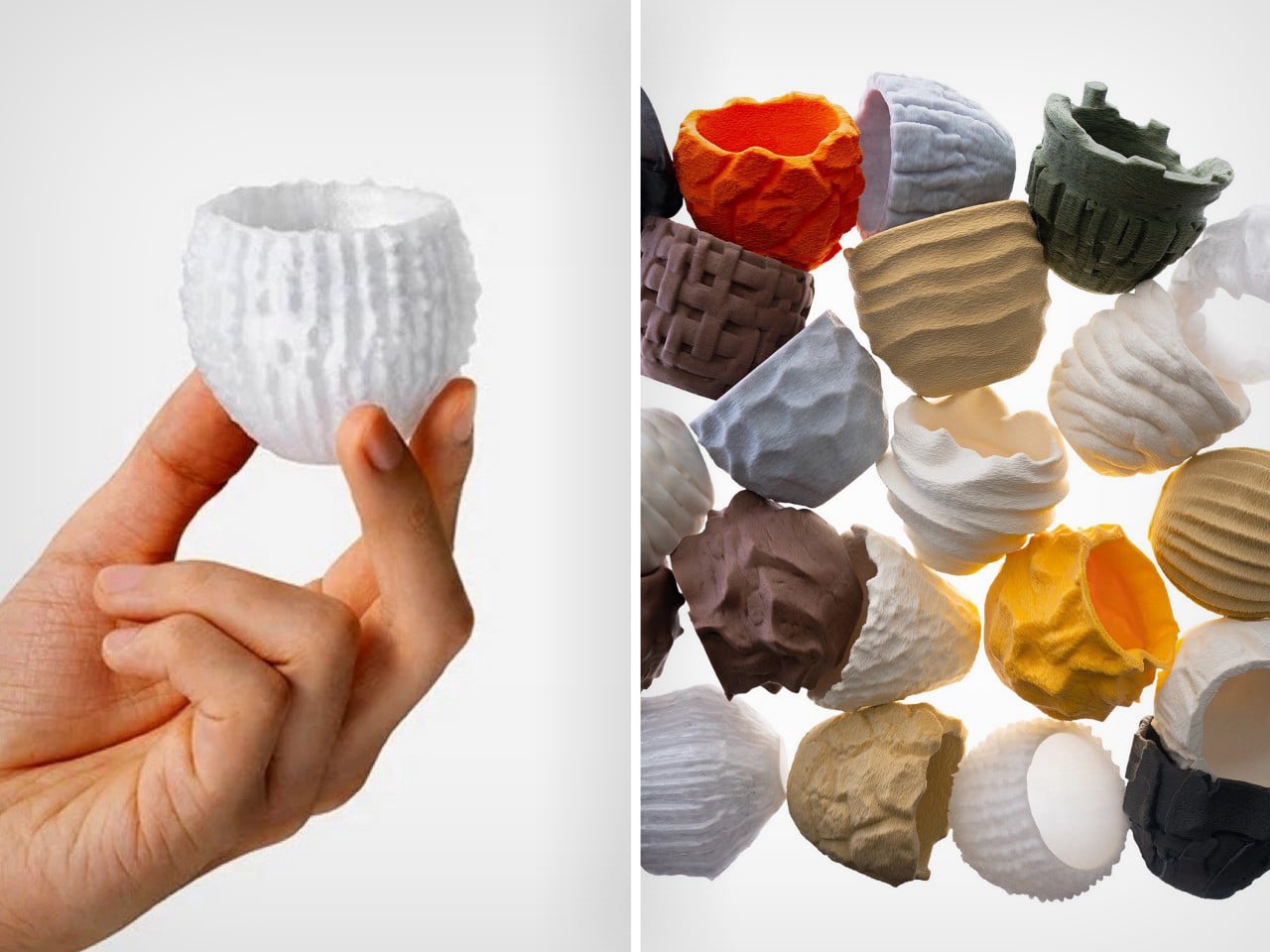
Sure, we could sit and fearmonger about how AI will one day replace designers, but here’s an alternative reality – what if AI didn’t replace us, it just created a parallel reality? Like you’ve got Japanese ceramics, Italian ceramics, and Turkish ceramics, what if you could have AI ceramics? Not a replacement, not a substitute, just another channel. That’s what BKID envisioned with ‘Texture Ware’, a series of cups designed entirely by AI and manufactured using 3D printing. Minimal human intervention, and minimal human cultural input.

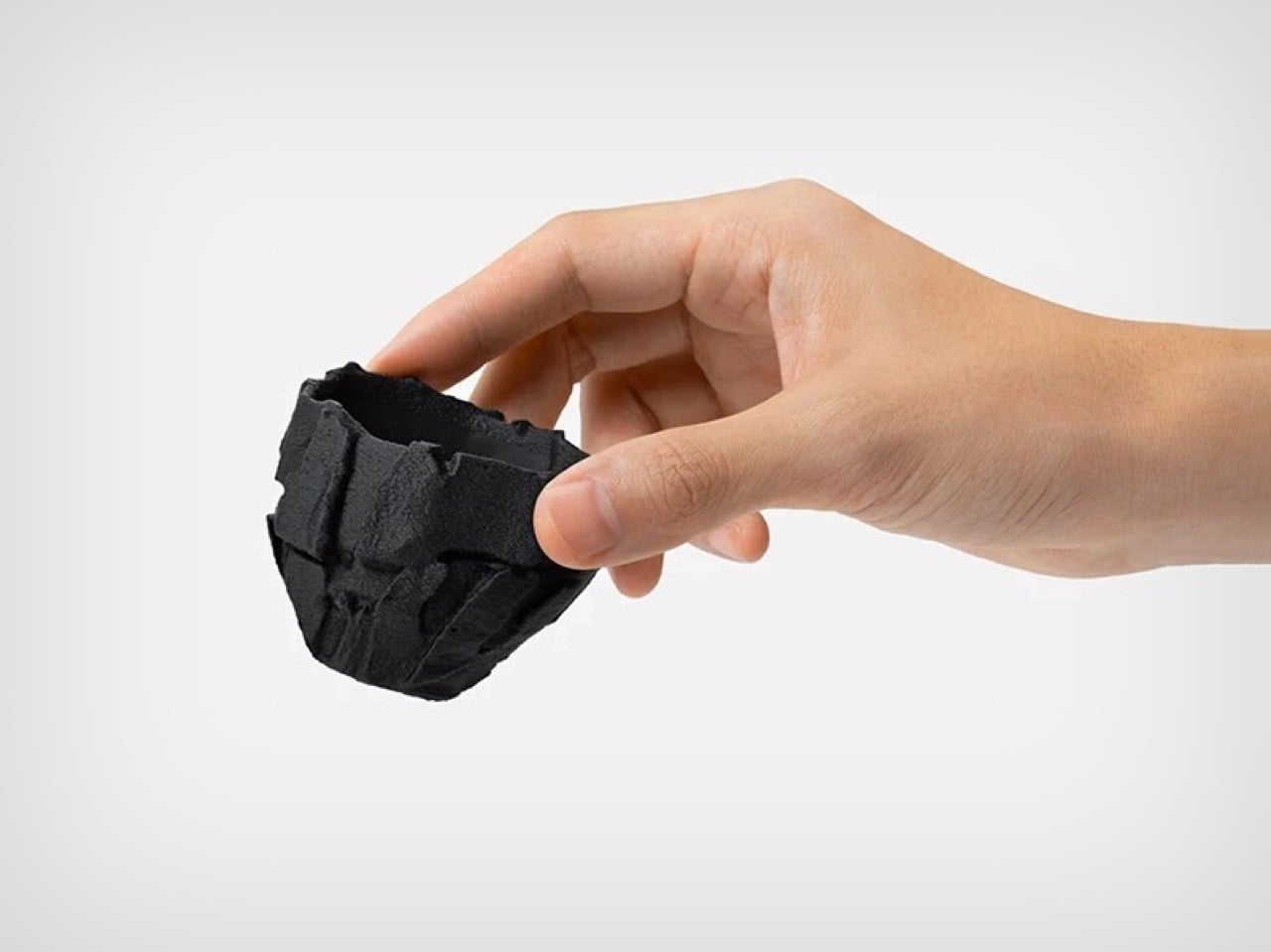
The AI feeds itself a vast repository of data and uses its own database to make textural products that humans then use. BKID’s results look nothing like anything we’ve seen before, each cup of the Texture Ware series looks almost alien, an exaggeration of textures found in nature taken to an extreme. You wouldn’t find such cups in a handicrafts bazaar or your local IKEA. They’re so different that they exist as a separate entity within the industry, not a replacement of the industry itself.

Designer: BKID co

The workflow uses different AI services to go from prompt to cup. The only real input is a text prompt from a human specifying what sort of texture they want. The AI generates the texture image using ChatGPT’s Dall-E, creates  a cup out of it in Midjourney, and then translates the 2D image of a cup to 3D using Vizcom. The 3D file then gets 3D printed, eliminating pretty much any actual human intervention as the machine models and manufactures the design from start to end.

“What would normally require a considerable amount of time if crafted entirely by hand was instead realized through two to three generative tools and a process of repeated trial and error,” says BKID. “The exaggerated expressions and omitted forms that emerge in each stage invite the audience to experience the subtle differences in sensibility between traditional handcraft and craft shaped by generative software.”

Users can make cups inspired by brutalist textures of concrete, fuzzy textures of moss, rustic textures of wood-bark, wrinkled textures of crumpled paper, raw textures of coal, columnar textures of basalt rock, porous-like textures of coral, or even alien-like textures of fungi. Each cup looks unique and the AI never repeats itself, which means even cups within the same texture category could be wildly different.

The result truly feels alien, because the AI approaches design using an entirely different set of parameters. Their imperfections become design details, their lack of ergonomics or awareness become a unique design DNA. The result isn’t like any cup you’ve ever seen before, and that’s the point – it’s created by an AI that hasn’t ‘seen’ cups, hasn’t used cups, and doesn’t test its output. That being said, the cups are still usable because of the parameters set by the human. The cups don’t have holes, and contain enough volume to hold liquid efficiently. They’re perfect for espresso, saké, or green tea, something that’s savored in tiny quantities in vessels that feel less utilitarian and more ritualistic.

What BKID’s experiment proves is that AI (at least in this case) won’t replace designers, it’ll exist independent of them. Can an AI make a cup exactly like a regular designer would? Absolutely… but there’s a better case to be made to have AI make things beyond human creativity and culture. These cups contort nature and textures into something that feel extremely new, in a way that allows AI-made cups and human-made cups to coexist peacefully.

The post These Ceramic Cups Were Designed And Manufactured Entirely By An Algorithm first appeared on Yanko Design.

Liquid Swords’ debut title is a $25 ‘noir action game’ coming next year

The debut game from Liquid Swords will arrive in early 2026, it was announced at today's PC Gaming Show. Samson: A Tyndalston Story is billed as "a consequence-heavy noir action game" by its developer, and focuses on the eponymous Samson McCray, a man who's got himself into serious debt in a city that doesn’t seem particularly forgiving. 

The debut trailer doesn’t give too much away in terms of story, but I’m getting gritty Max Payne-y vibes. Combat looks crunchy and visceral, and it sounds like Liquid Swords is going for an oppressive atmosphere. "Samson is built on a simple, brutal truth: every day costs you," writes the studio in a press release. "Debt grows with interest, and time works against you. Each job burns a limited pool of Action Points and every decision shifts how the city treats you—there are no do-overs. You move forward because standing still makes everything worse."

Liquid Swords has been teasing its first game for a while. The studio has some serious pedigree, being founded in 2020 by Christofer Sundberg, who created the Just Cause franchise when he was at Avalanche Studios. Developers who previously worked on Mad Max and the Battlefield series have also joined Sundberg at Liquid Swords, and the studio says it drew on its collective experience in combat systems, systemic design, animation and action-oriented storytelling to create Samson.

Just Cause was an open-world series, but it sounds like Samson will be a more focused experience, possibly reflected by its $25 price tag. At the beginning of the year, the studio laid off an undisclosed number of employees, something it said was necessary to ensure its “long-term sustainability” amid challenging industry conditions. Samson: A Tyndalston Story launches in early 2026 on Steam and the Epic Games Store. We don't yet know if it's coming to console as well. 

Correction, December 5 2025, 3:25PM ET: This story originally misspelled Christofer Sundberg's name. We apologize for the error.

This article originally appeared on Engadget at https://www.engadget.com/gaming/pc/liquid-swords-debut-title-is-a-25-noir-action-game-coming-next-year-215544328.html?src=rss

Fiio DM15 R2R CD Player fuels compact disk revival with modern day functionality

The music industry is in turmoil lately, as streaming services are seeing many musicians pull their music due to dismal royalty payments and AI-generated content being pushed to listeners. Thus, direct-to-fan models are preferred by artists to at least have a livelihood. This marks a moment that is highly conducive to CD listening, which in most instances, delivers better audio quality compared to streaming services that prioritize mediocre audio delivery as the basic plan offered.

Apart from those reasons, physical media is seeing a revival for more reasons than not. Beyond the vinyl-loving crowd, the next best thing is playing your favorite albums on a CD player. Yes, CD players are again hitting popularity, and Fiio wants to serve its audiophile community with all the possible options. The DM15 R2R Portable CD Player is their modern take on a CD player, since the silver disk is seeing a serious revival in 2025.

Designer: Fiio

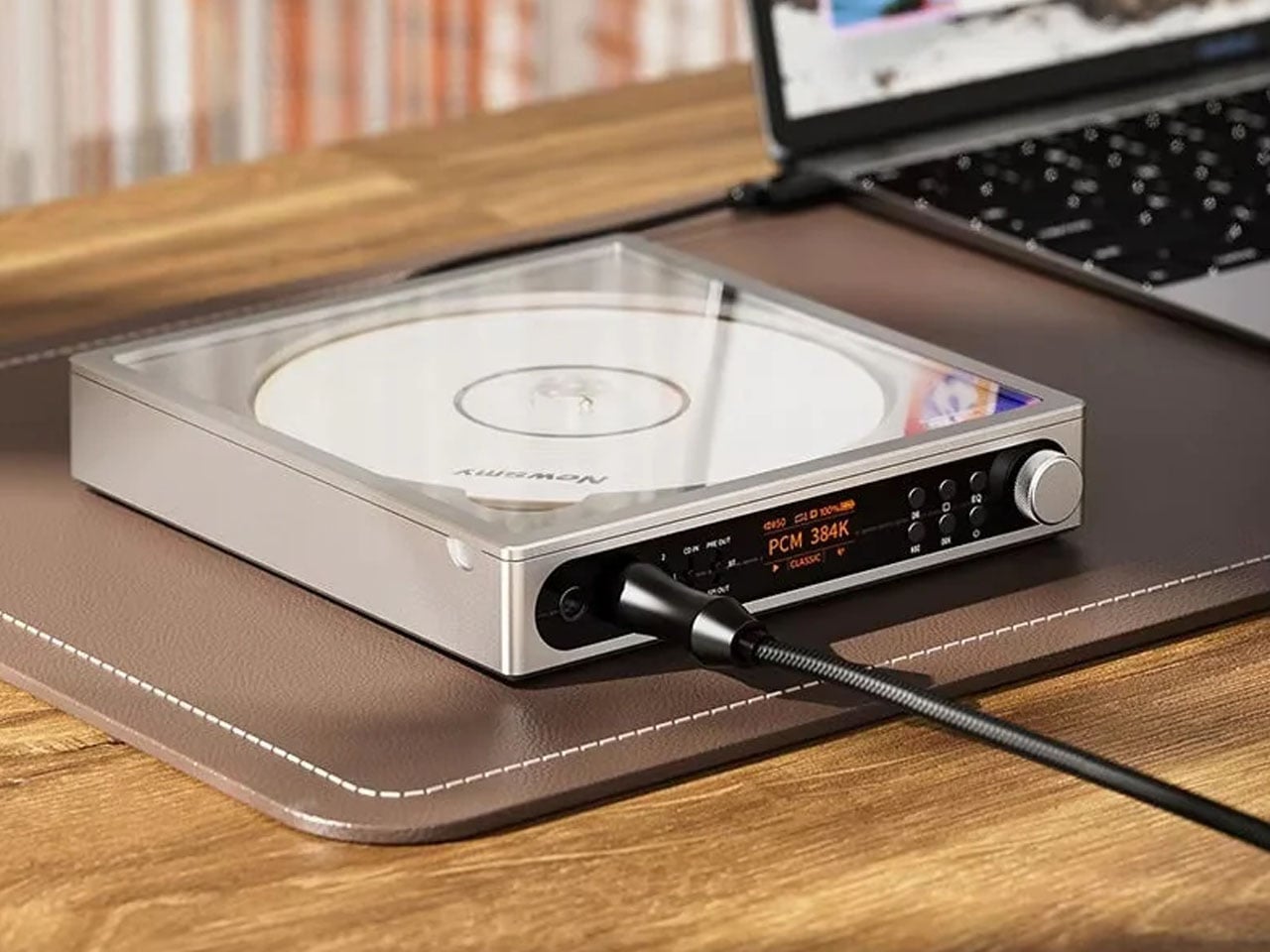
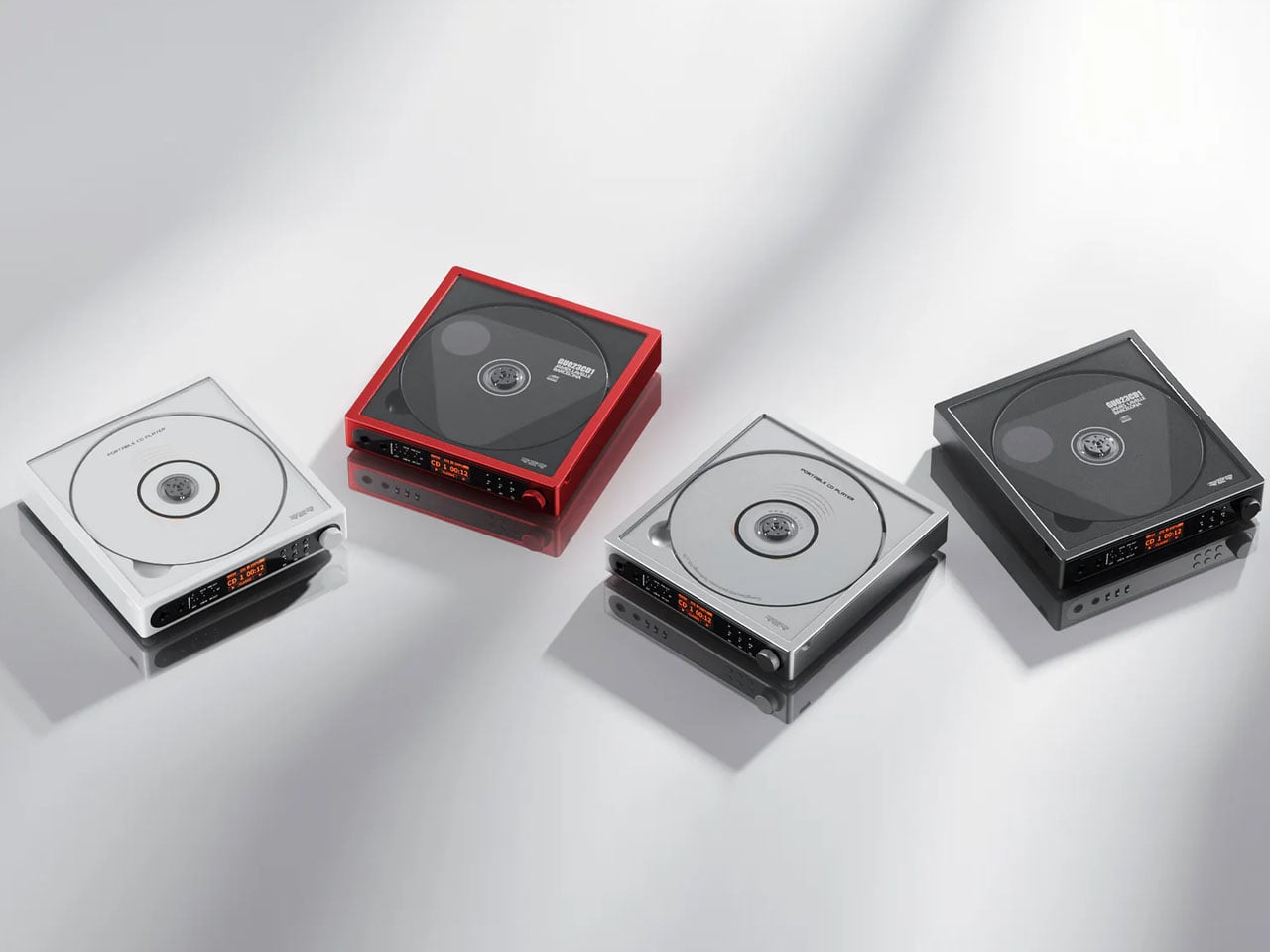
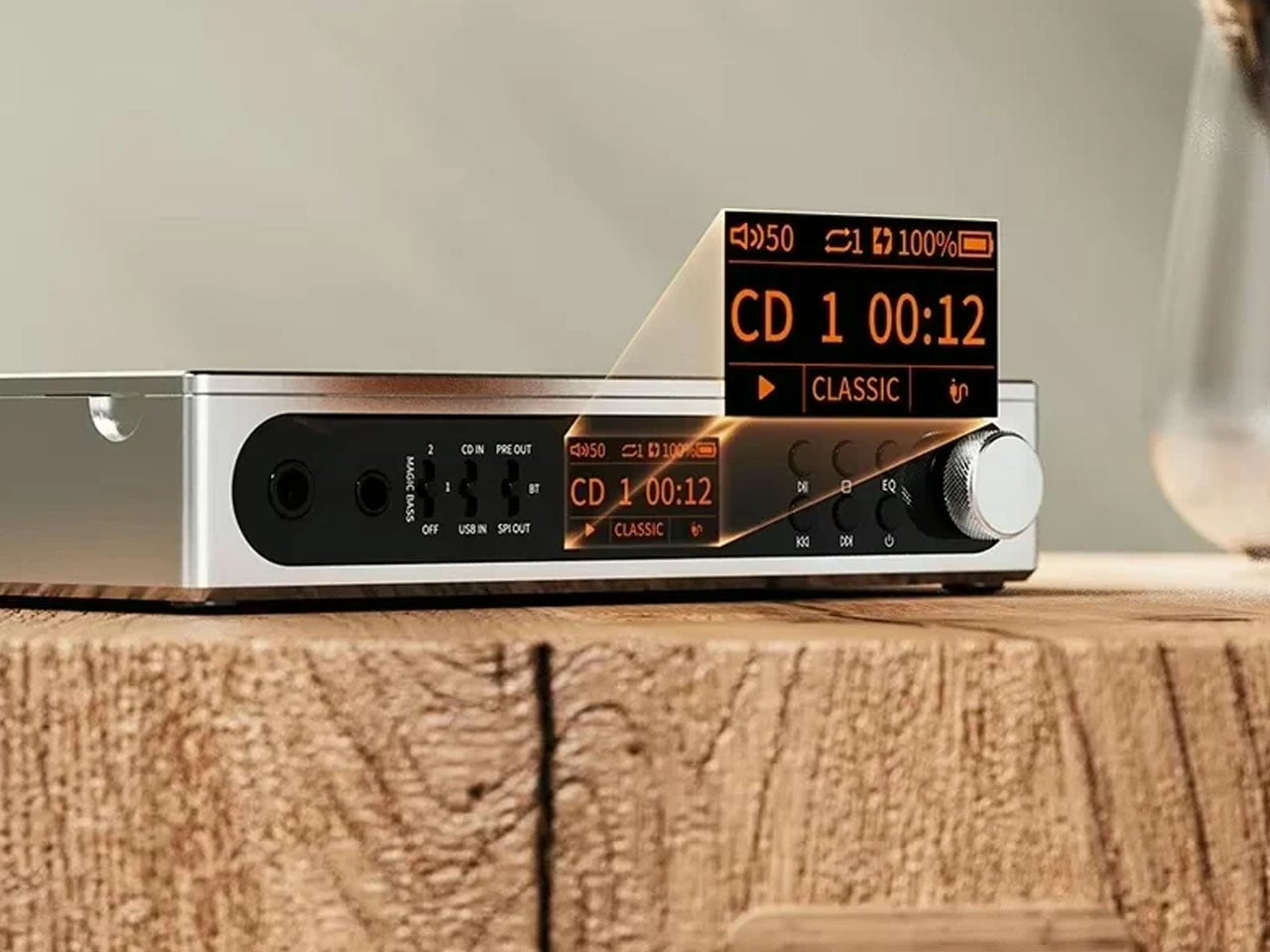
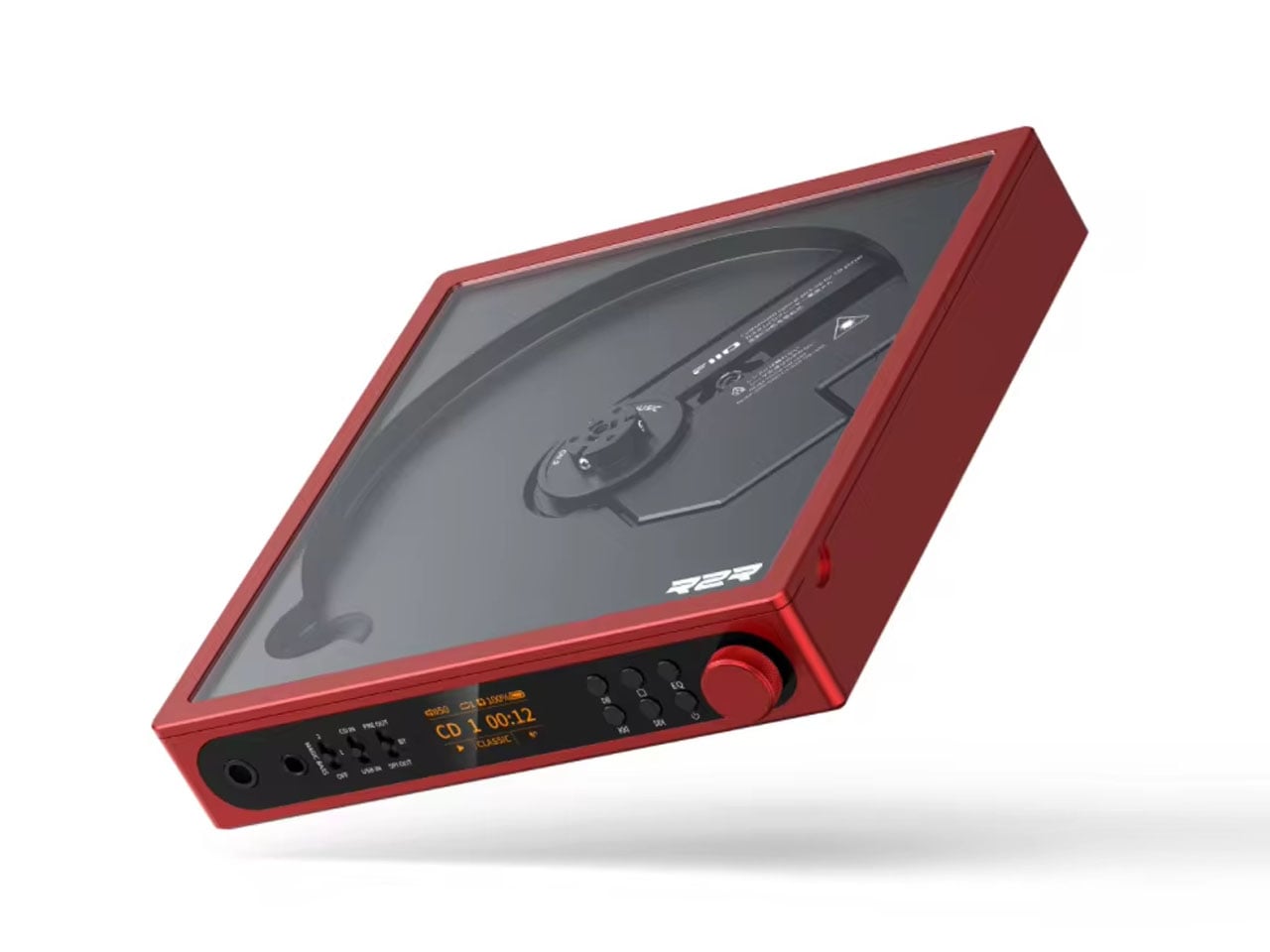
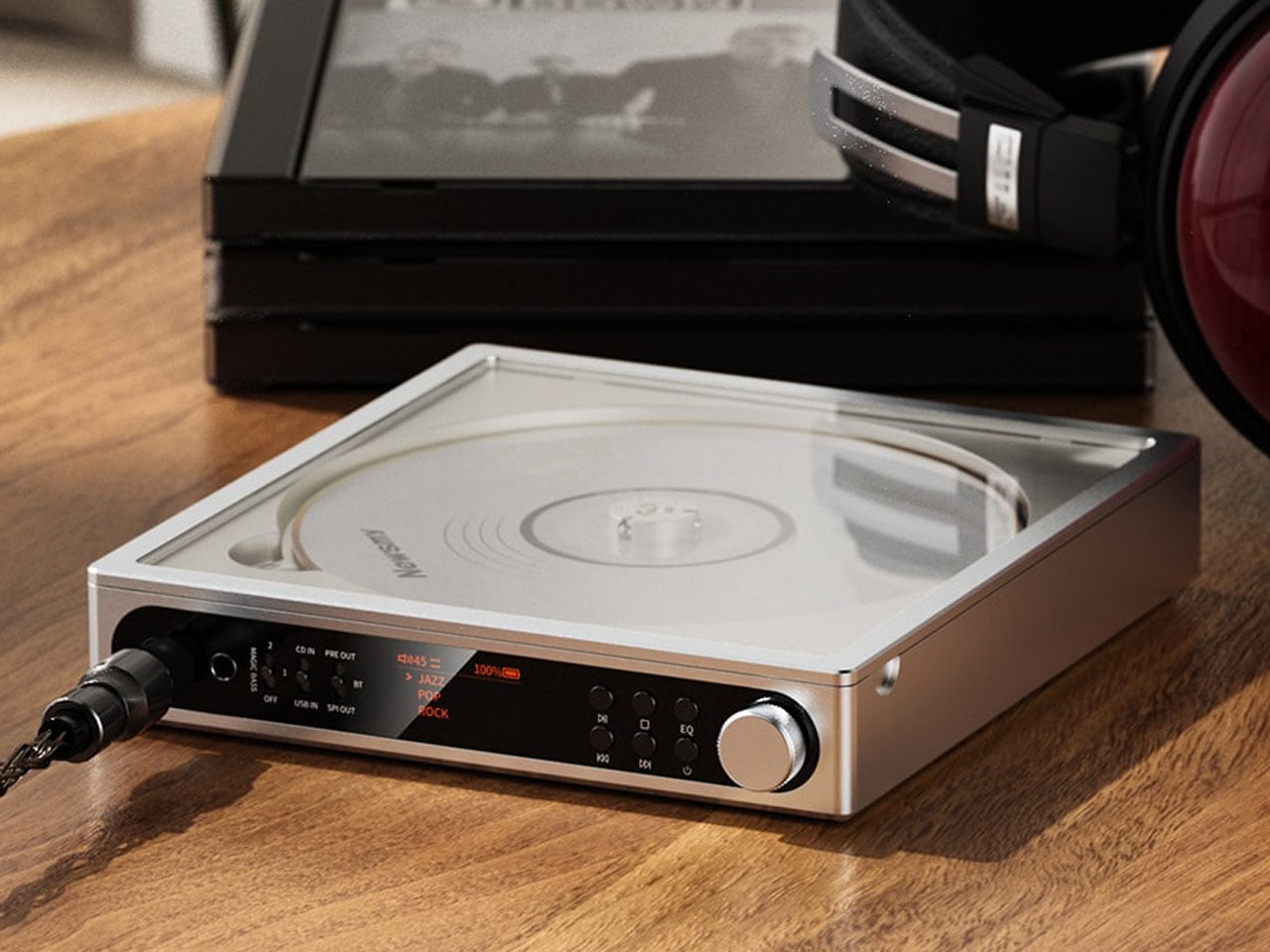
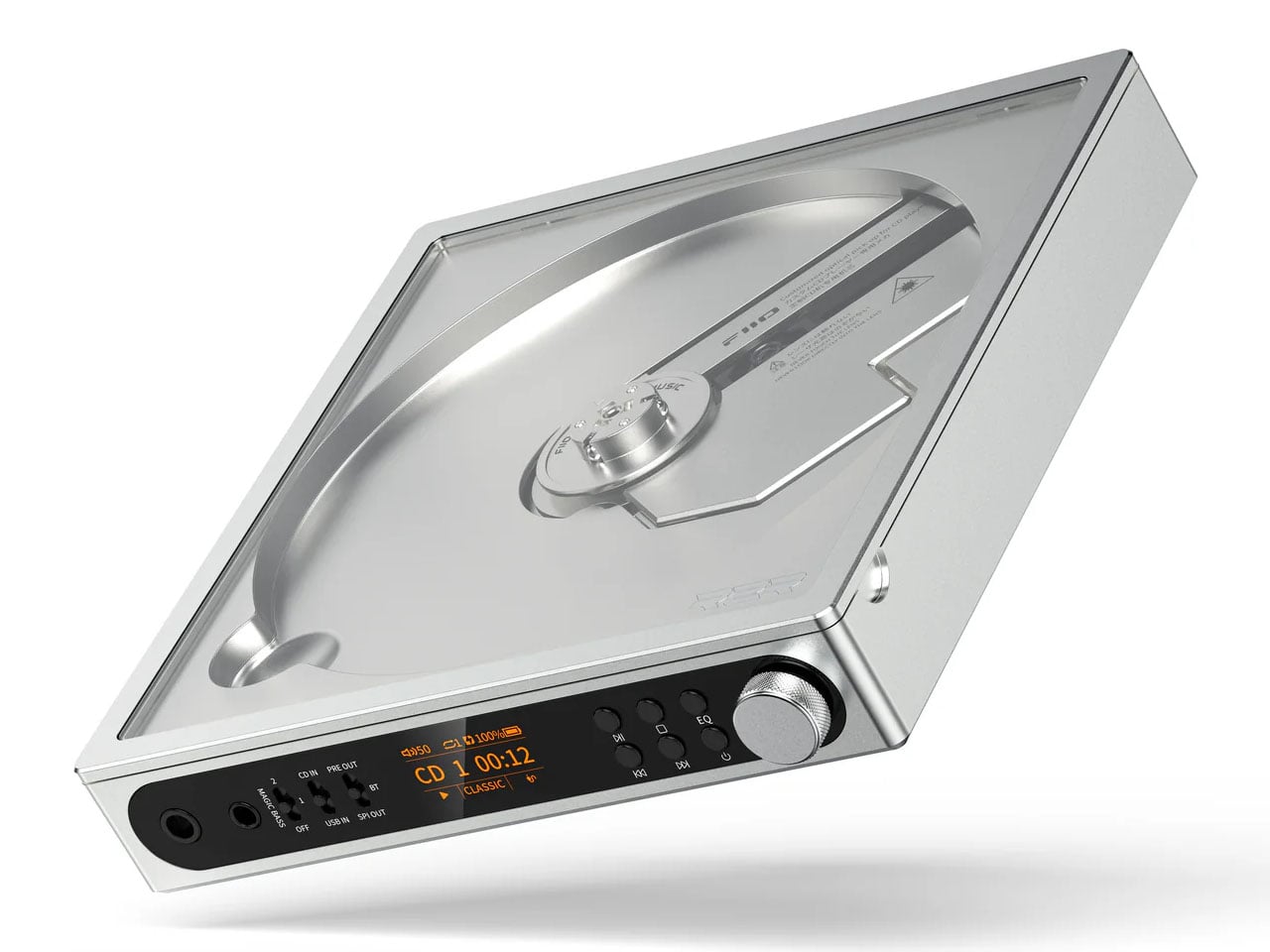
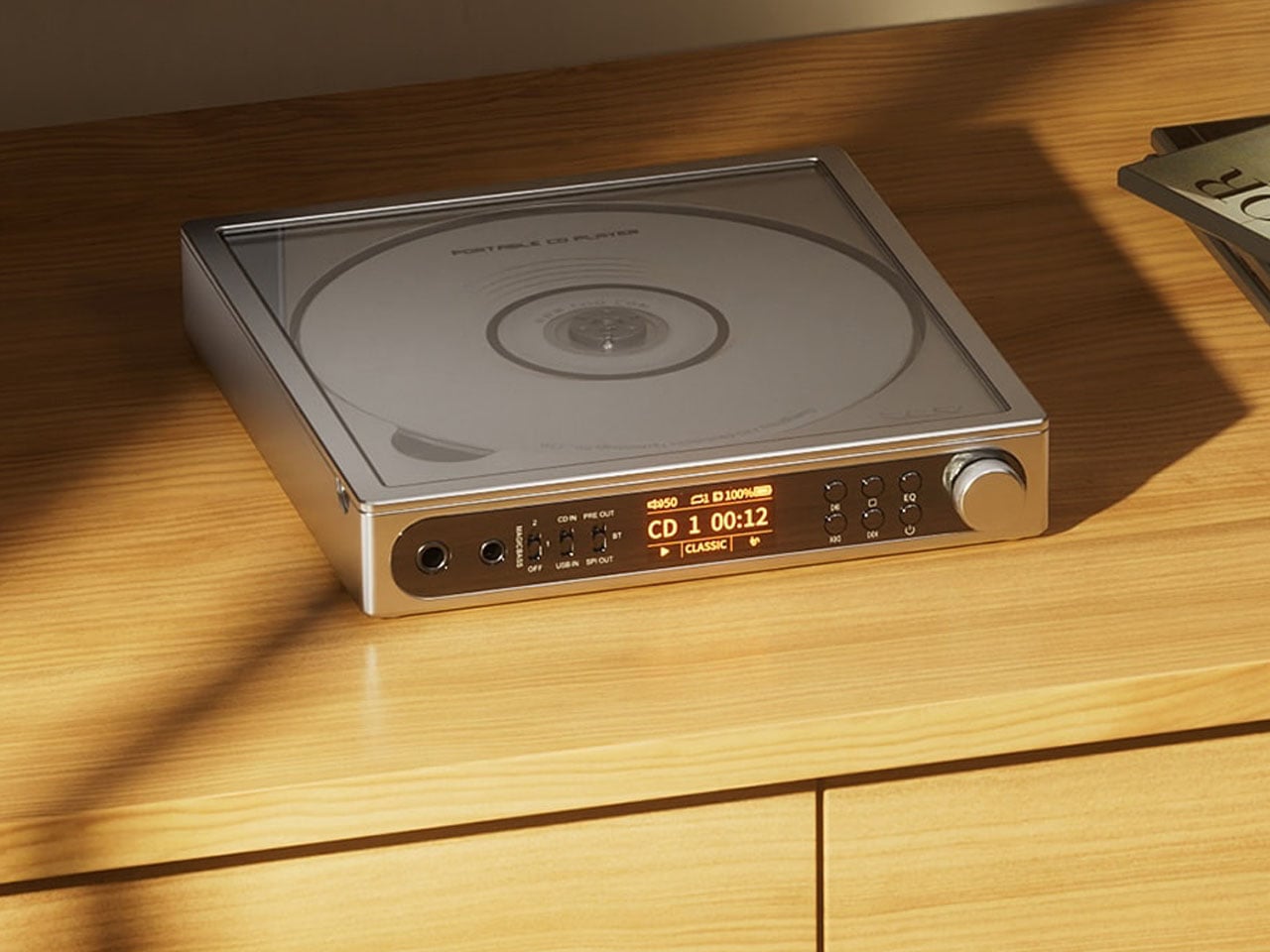
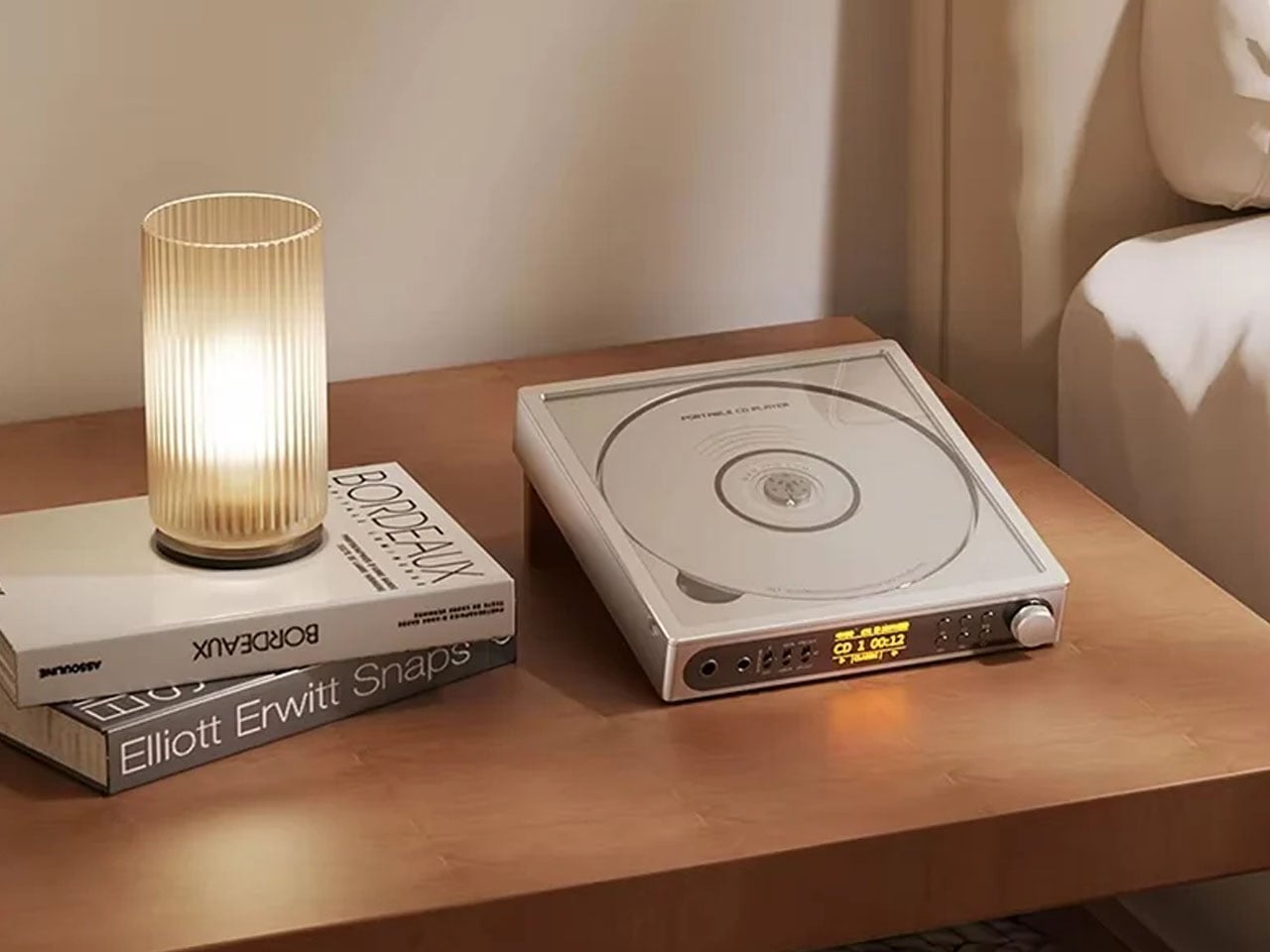
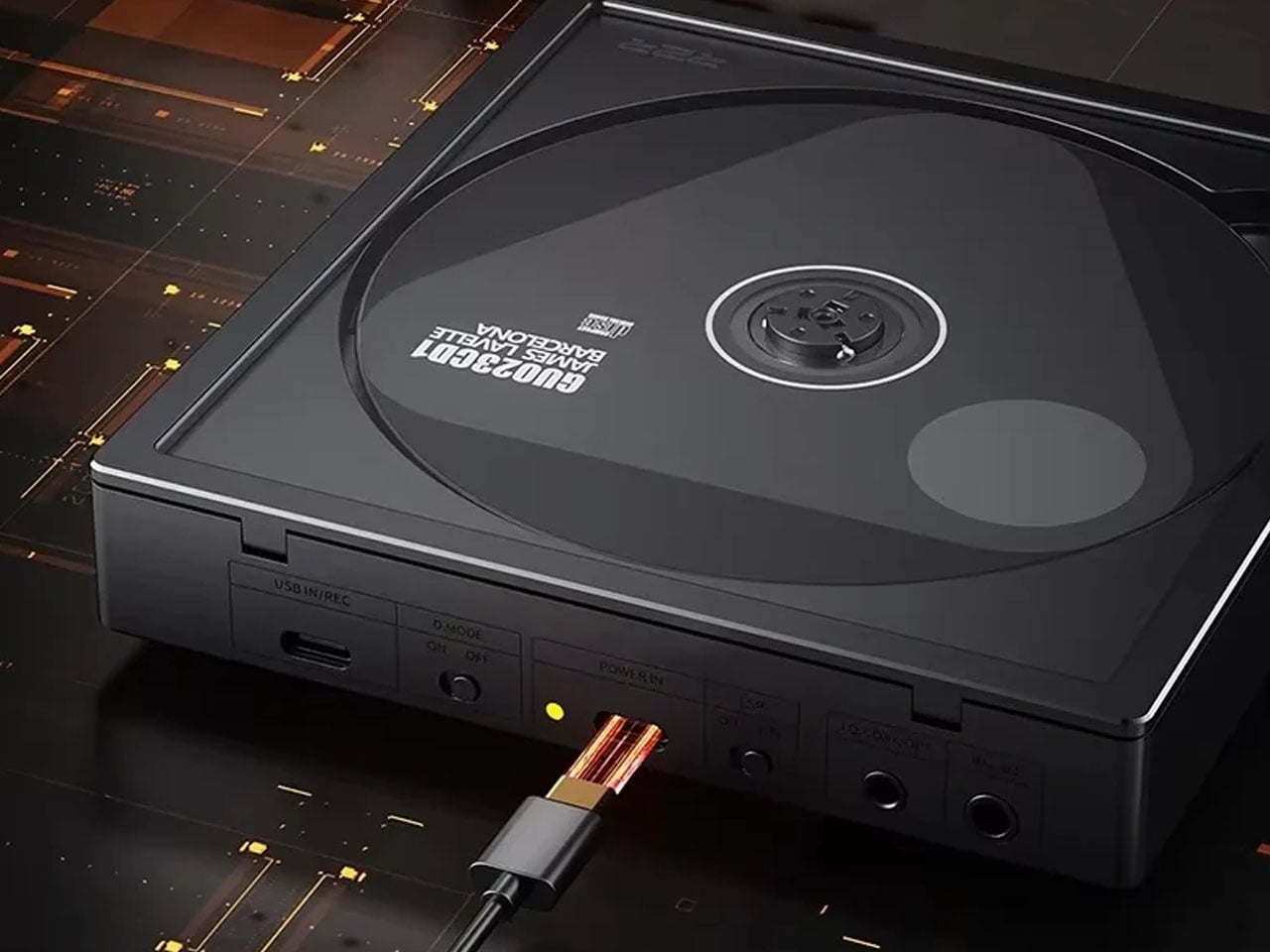
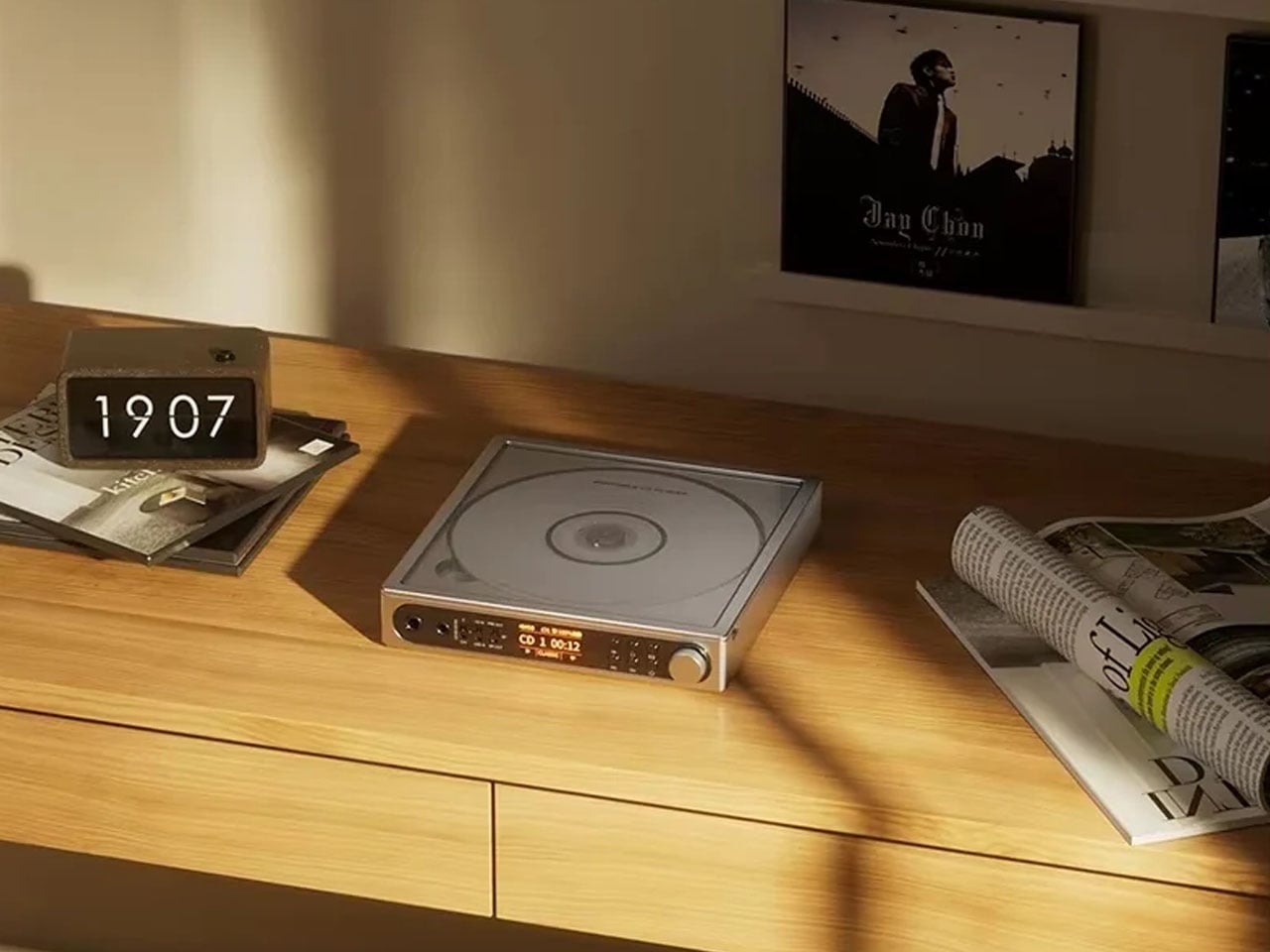
This one is a successor to the DM13 deck, which is also liked by the audio community. The DM15 R2R is made out of a compact aluminium chassis with a transparent top panel that displays the disc as it spins and plays your favourite tunes. To keep things wire-free, the CD player has an in-built rechargeable battery that gives you around seven hours of non-stop music. Extending the use case scenario beyond just playing your CDs, the player comes with a USB DAC, Bluetooth mode, and Hi-Fi playback with the in-built optical and coaxial ports. To extend the functionality further, it has the customary 3.5mm jack and the balanced 4.4mm line output. In the USB DAC mode, the player outputs music at up to 32-bit/384kHz PCM and native DSD256.

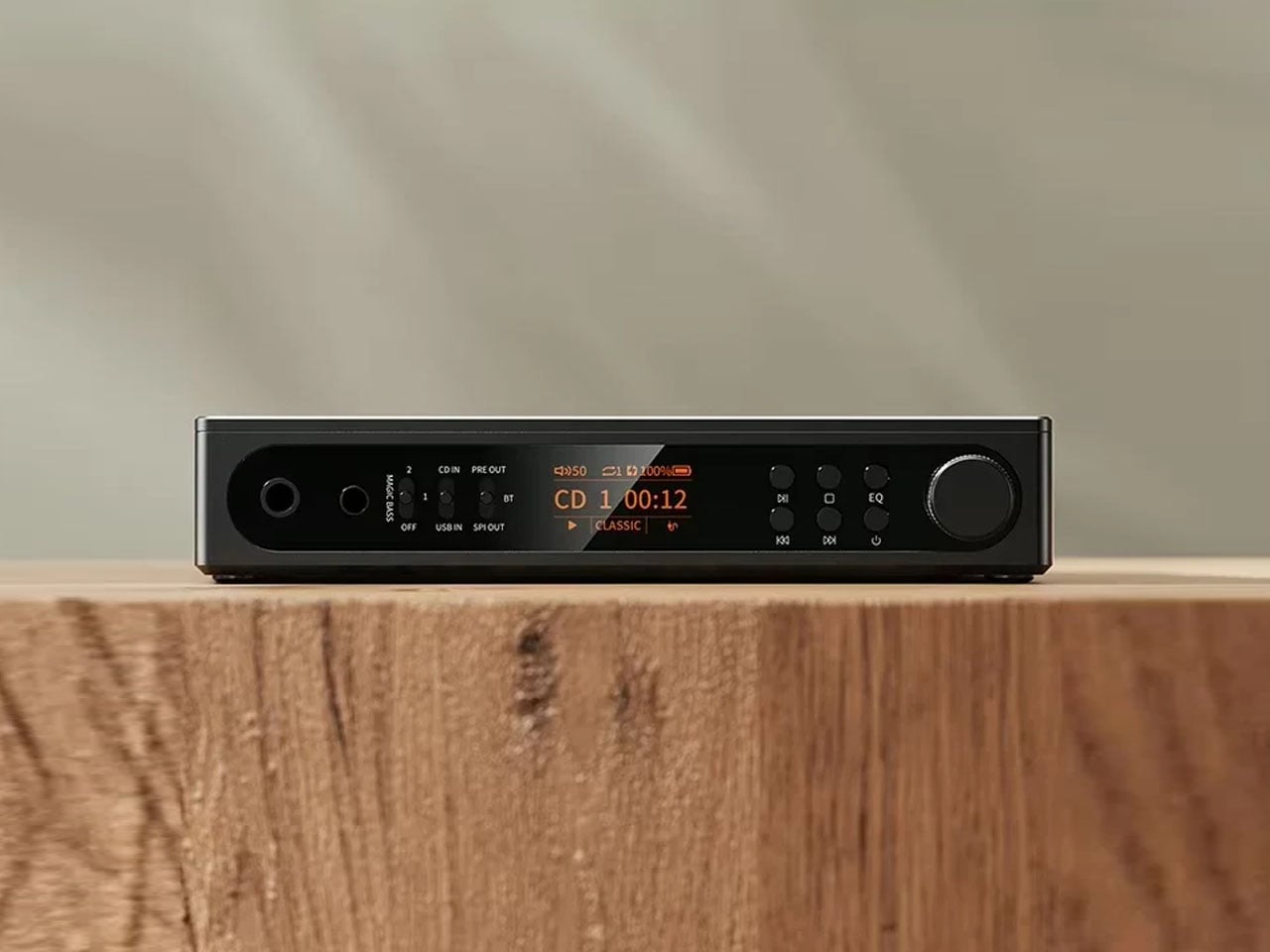
You can stream high-res audio to your wireless headphones or speakers as the player supports codecs including aptX, aptX HD, aptX Adaptive and aptX Low Latency. The CD player comes with an ESP (Electronic Shock Protection) switch to eliminate skipping issues. This comes really handy when travelling as the movement of the CD player can heighten this problem. As an upgrade, the CD player comes with playback and control buttons on the front panel, paired with a tactile volume dial. As suggestive of the name, the CD player employs a resistor ladder to convert digital signals into analog waveforms, which, according to Fiio, translates to a smoother, more organic style of playback many listeners prefer.”

The premium build quality, added features and useful functionality come at a higher price of $270, but they are absolutely justified given what’s on offer. The CD player will be offered in four attractive finishes with pre-orders starting now. The silver and red variants will start shipping. If you want most of the features and functions at a lesser price, the $170 DM13 is the next best thing.

The post Fiio DM15 R2R CD Player fuels compact disk revival with modern day functionality first appeared on Yanko Design.

Cairn’s new release date is January 29, 2026

We've been monitoring the upcoming rock climbing game Cairn for several months, as have the many folks who've already enjoyed the demo — which has an impressive 99 percent rating on Steam. In September, developer The Game Bakers pushed back the game's planned 2025 debut to give some extra time for polish. Today, the team dropped a fresh trailer announcing the revised launch date for the project. Cairn will be available on January 29, 2026 for Steam and PlayStation 5 for $30.

The Game Bakers have a solid track record of indie gems, often with a strong, unique sense of place and character. The survival-climbing experience seems like an excellent new topic for the team behind games including Haven and Furi. Cairn captures the intensity of winding your way up a mountain and paints a psychological portrait of the people who are drawn to tackling that mental and physical challenge. And if you find the basic gameplay isn't difficult enough, there will also be a free solo mode for channelling your inner daredevil without ropes.

This article originally appeared on Engadget at https://www.engadget.com/gaming/cairns-new-release-date-is-january-29-2026-211508330.html?src=rss

This LEGO Christmas Snow Globe Actually Spins and it’s Perfect Stocking Stuffer Material

As Mariah Carey says religiously every single December – “It’s tiiiime!” As we kick off the last month of the year and the holiday season, this LEGO build adds exactly the right spice to everyone’s lives. Why buy a generic snow globe from Hallmark when you could make your own, asks The Brick Artist – the designer behind the Christmas Snow Globe currently gathering momentum on the LEGO Ideas website.

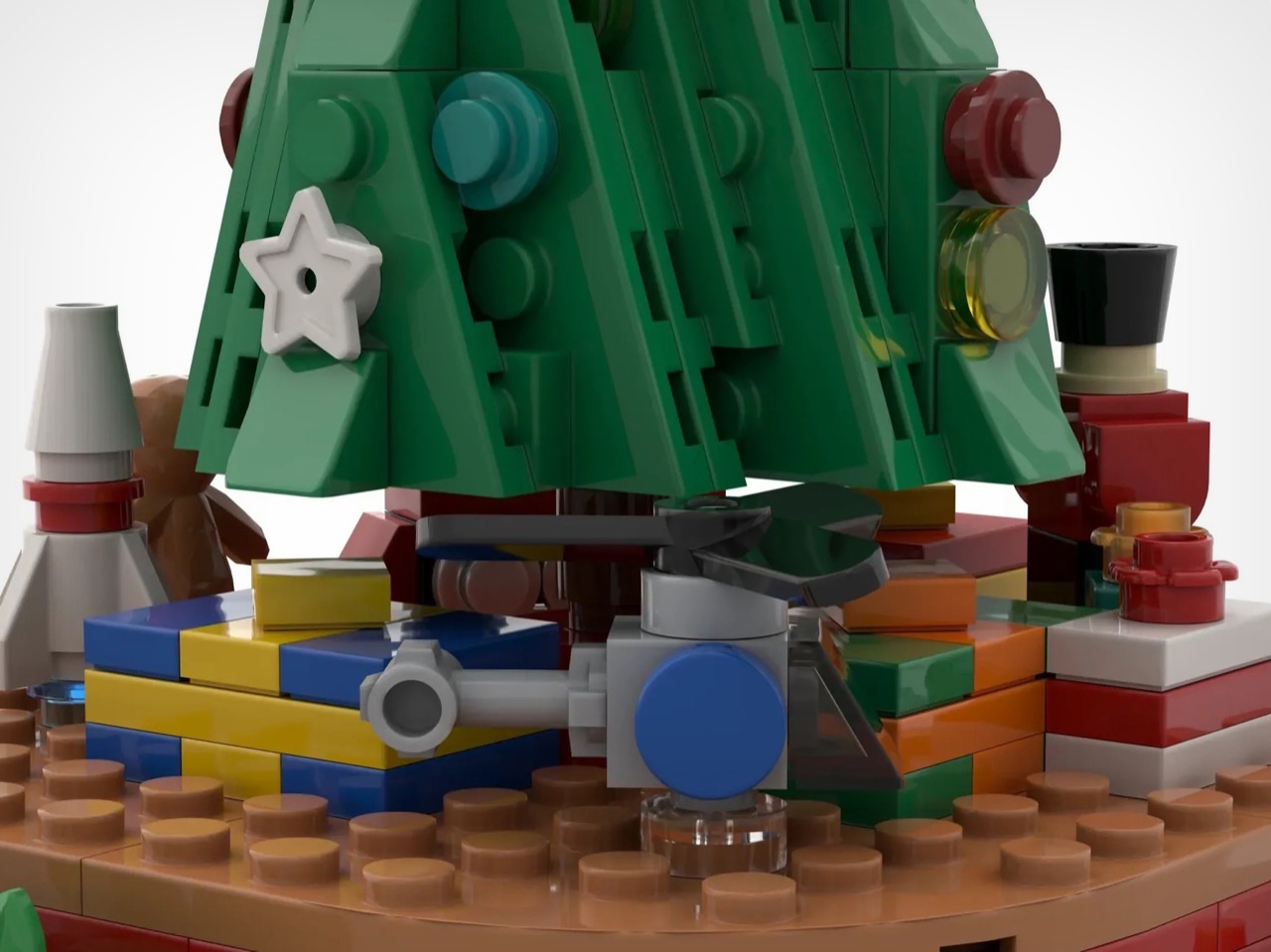
We’ve covered LEGO snow globes before on this website, but none of them designed to be as dynamic as this MOC (My Own Creation). The Brick Artist’s build actually features a rotating element, allowing the globe to spin on its own axis like a tiny fidget toy. Inside, the globe features a decked out Christmas tree complete with baubles, stars, and a shimmering snowflake tree topper. Underneath the tree are the usual suspects, gifts like a wooden train, the nutcracker, a toy rocket, and a remote-controlled airplane.

Designer: The Brick Artist

The build looks fairly simple, with a base decorated with snowflakes and wreaths, capped off with a rotating platform which houses the Christmas tree encased in the clear orb. The Brick Artist hasn’t detailed the part-count, but it’s probably in the 200-400 brick-ballpark, making it easy to assemble and perfect for kids, adults, or even Santa and his elves.

The way the tree rotates is using a rotary crank on the back that probably activates a pair of bevel gears that cause the upper half to spin on a central axis. There’s no music element here, although that would probably seal the deal as a pretty fun Christmas toy. However, the joy of this MOC isn’t in the experience as much as the journey of building your own snow globe from scratch.

The drill with this MOC is like every other one we’ve written about. It’s a fan-made creation that currently exists only on LEGO’s Ideas website – an online forum where people build and share their own LEGO creations and have the broader community vote for them. The only way this build becomes an official LEGO box set is if it crosses the 10,000 vote mark, and then gets approved by LEGO’s internal team after a review period. If you want to see that happen, head down to the LEGO Ideas website and cast your vote for this brickset!

The post This LEGO Christmas Snow Globe Actually Spins and it’s Perfect Stocking Stuffer Material first appeared on Yanko Design.

Russia reportedly bans Snapchat and FaceTime

Roskomnadzor, Russia's federal agency for monitoring and censoring mass media, has blocked access to Snapchat and FaceTime in the country, Bloomberg reports, citing Russian news service Interfax. The bans were reportedly put in place because the platforms were used "to organize and carry out terrorist acts,” and commit fraud.

It's not clear if either service is still accessible by using a VPN, but banning Snapchat and FaceTime fits with Russia’s crackdown on communication and social platforms that started after the country’s invasion of Ukraine in 2022. Facebook and X were blocked in March of that year, and Instagram was added to the ban list not long after. In 2024, the encrypted messaging app Signal was also banned, and more recently in July 2025, Russia threatened to block access to WhatsApp.

Engadget has contacted both Apple and Snap to comment on the Russian bans. We'll update this article if we hear back.

Banning or restricting these platforms is a way to exert control over where and how conversation happens in Russia — and prevent the spread of "LGBT propaganda," if you believe Roskomnadzor's reasoning for banning Roblox — but it might also be an attempt to drive people to use "MAX," a state-run super app that offers services like communication, banking and document storage. The app is part of a long-standing push to rely on Russia's tech industry rather than foreign companies, and could potentially give the Russian government an easier method for surveilling its citizens, The New York Times reports.

This article originally appeared on Engadget at https://www.engadget.com/apps/russia-reportedly-bans-snapchat-and-facetime-194906404.html?src=rss