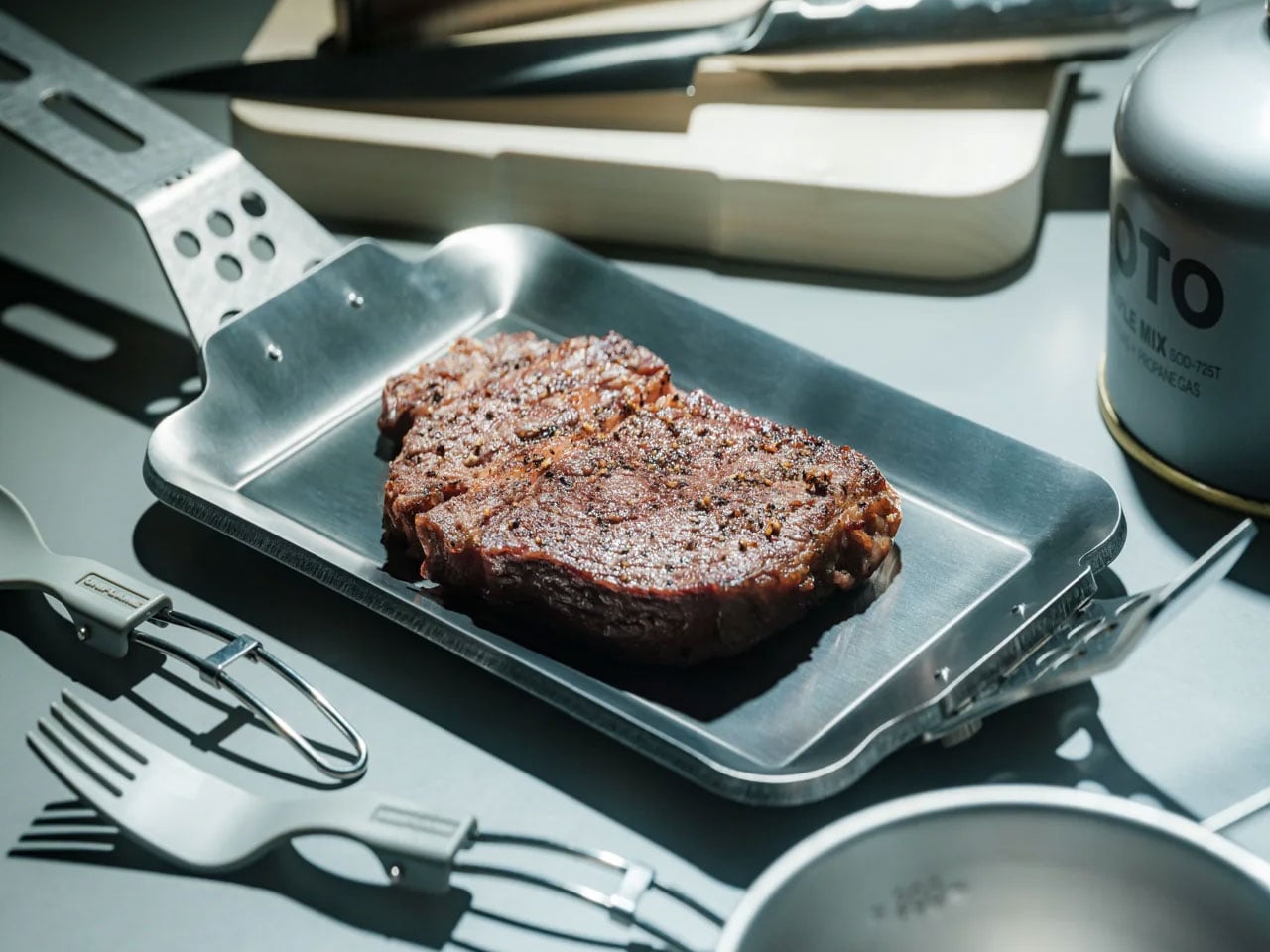
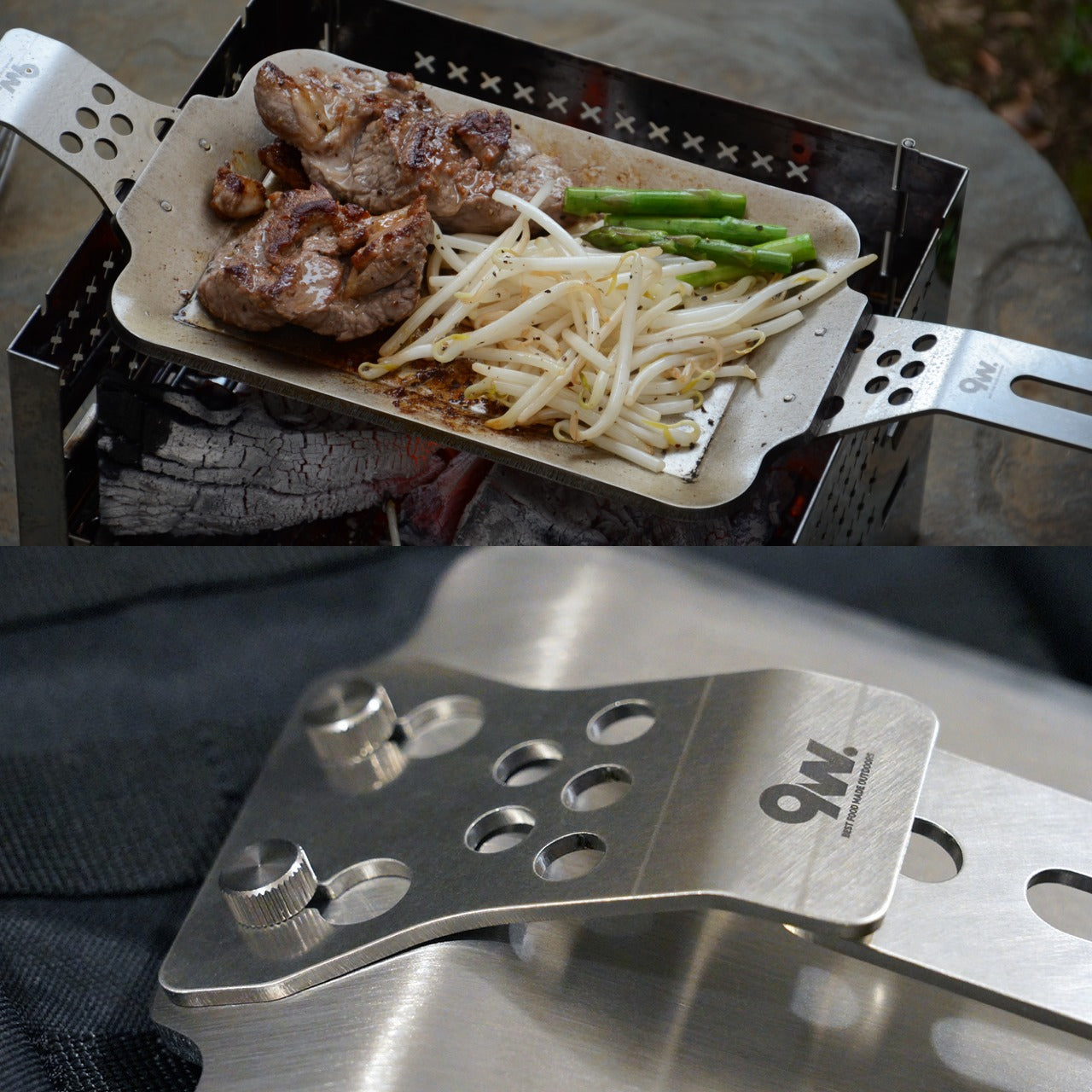
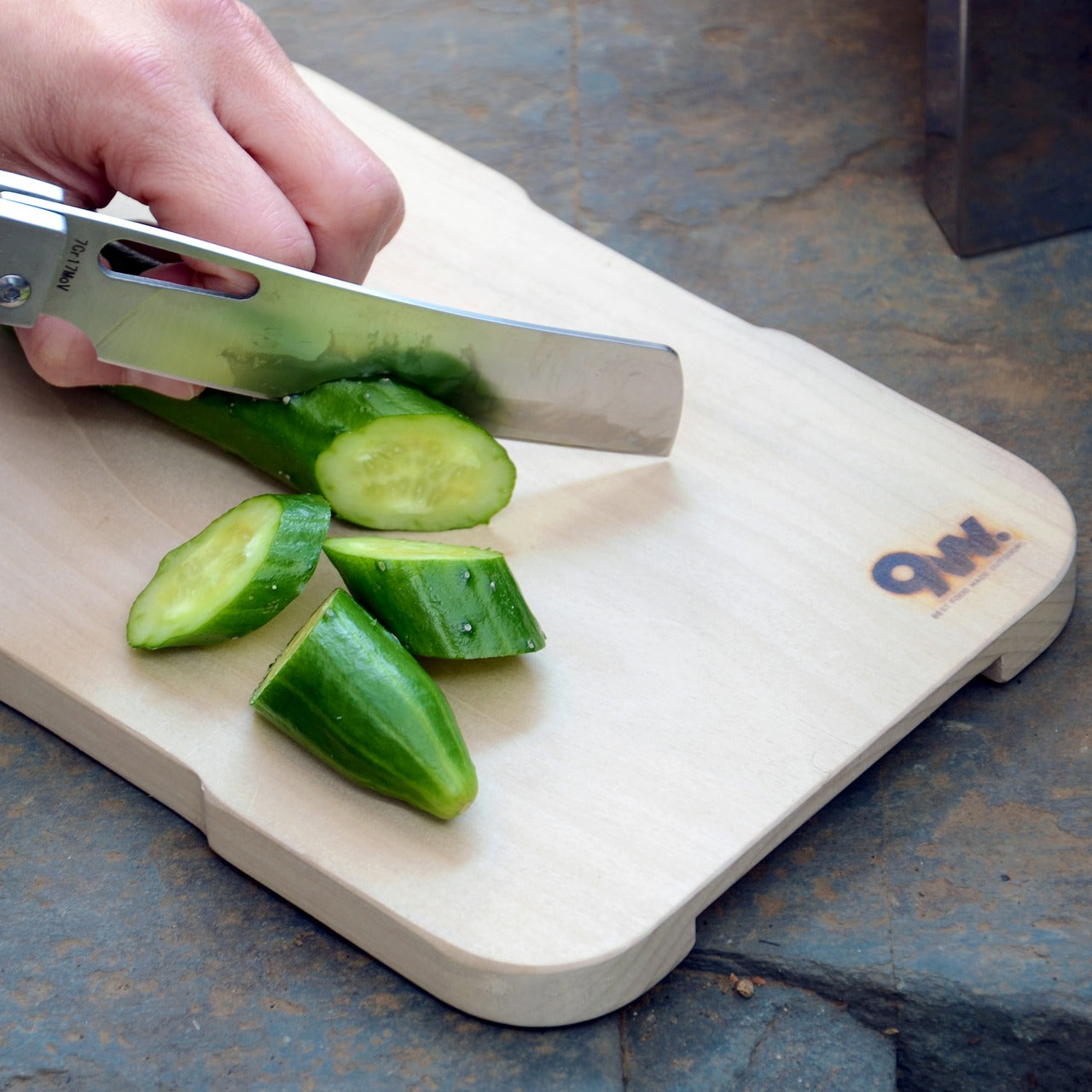
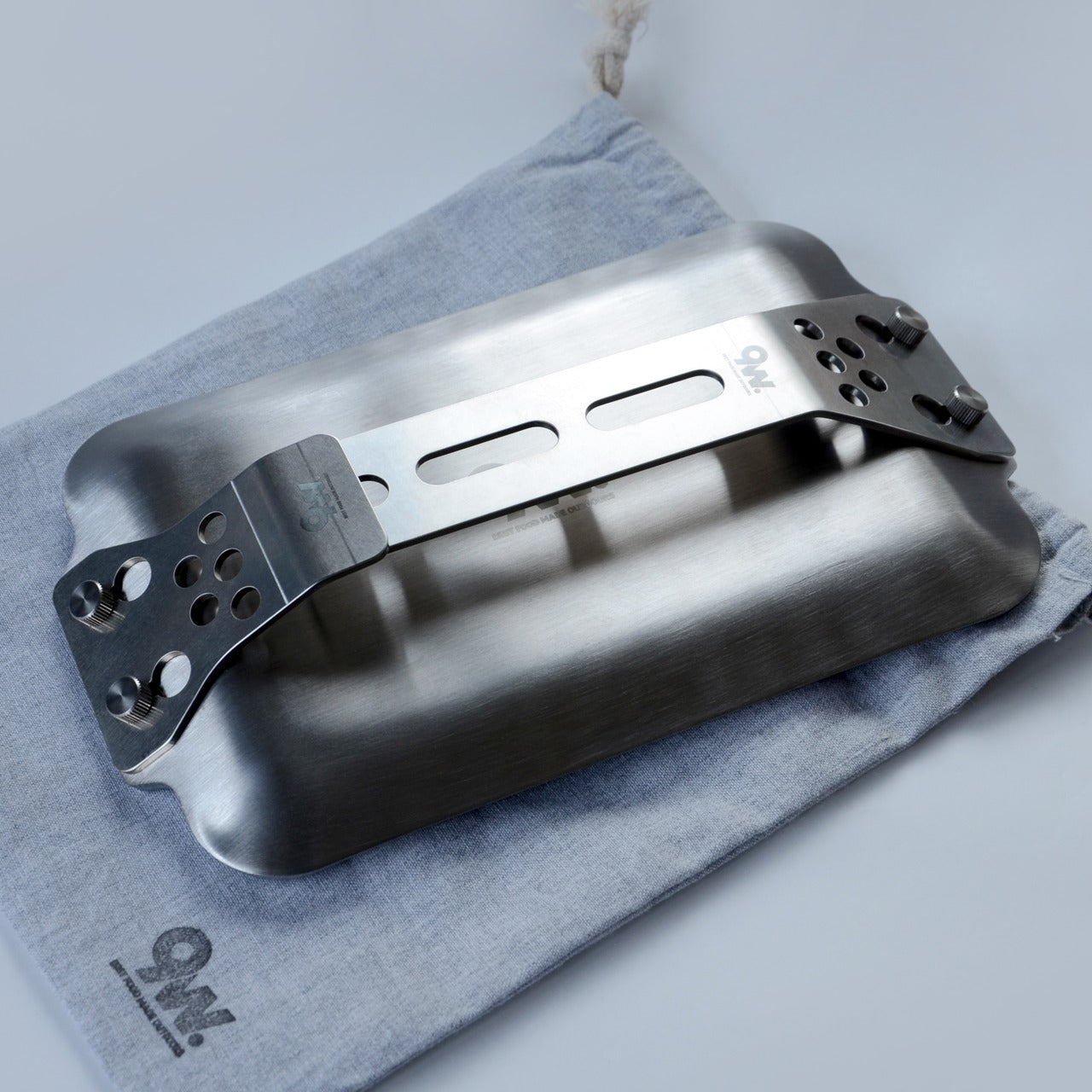
Some grill pans spend their days at the back of a cabinet, too heavy to bother with and too uneven to trust. Then there are the ones that earn a place on the stove every single time. The Compact Modular Grill Plate belongs to the second category. Built with a three-layer steel construction that spreads heat evenly across its entire surface, it closes the gap between a proper kitchen sear and a campfire meal, without making you choose between the two.
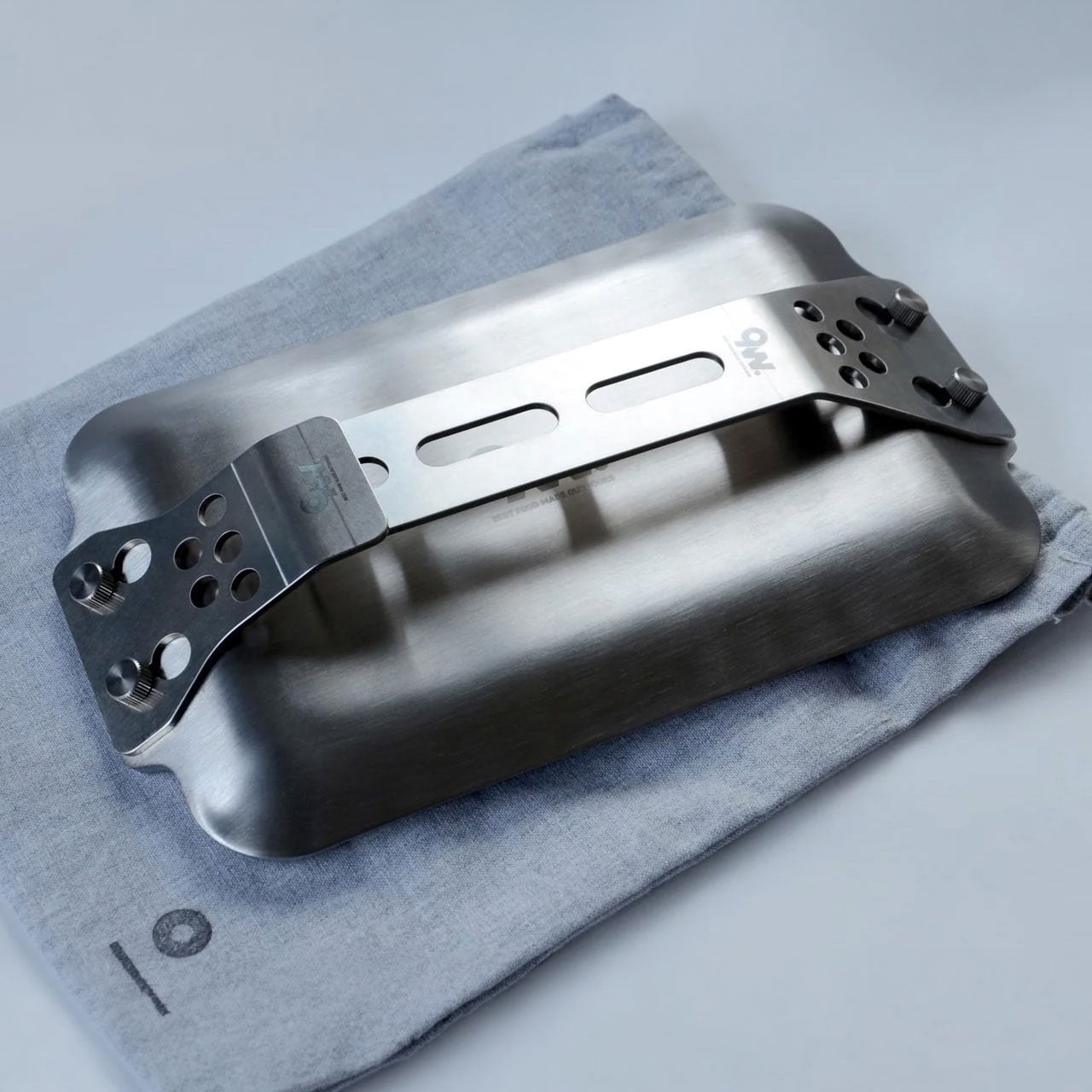
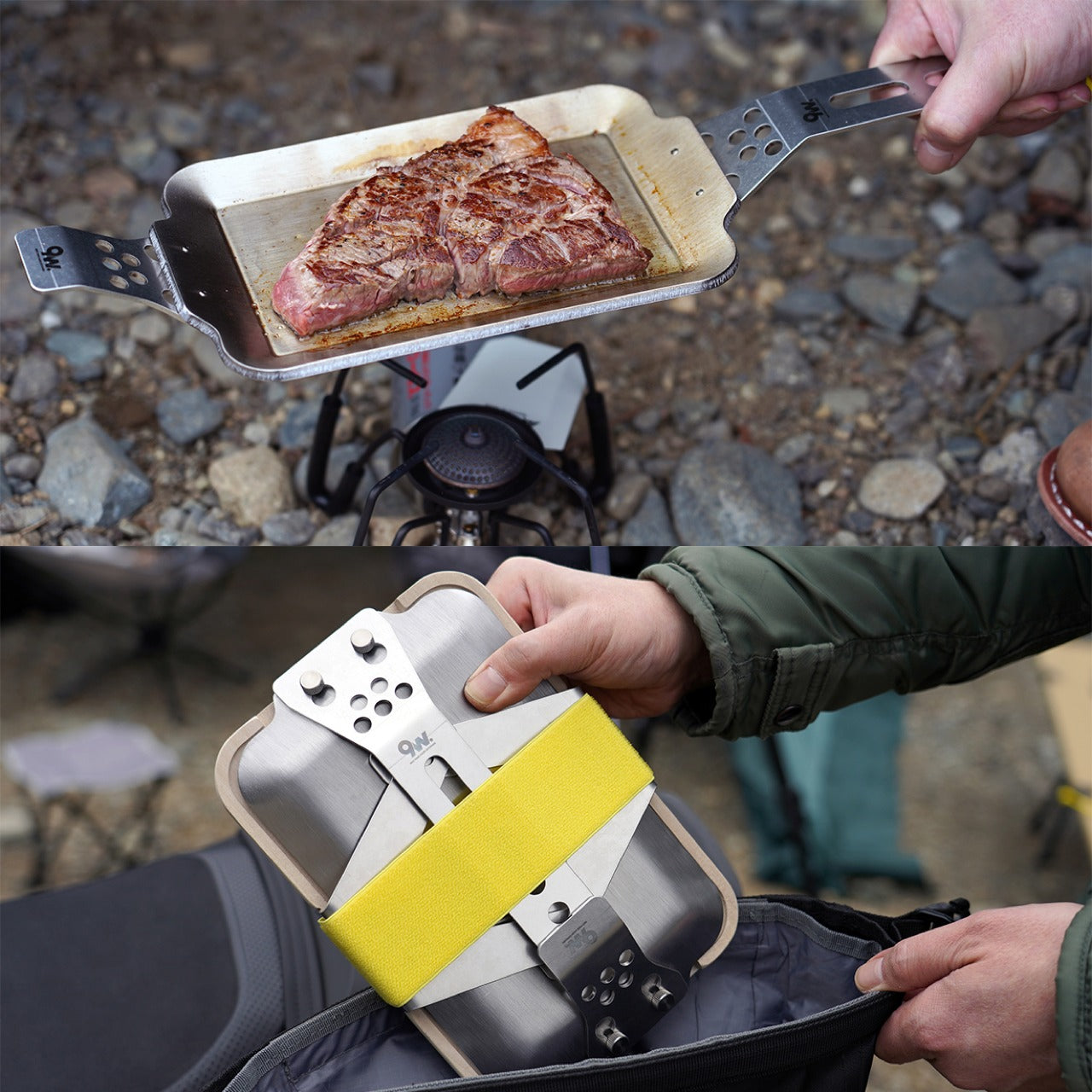
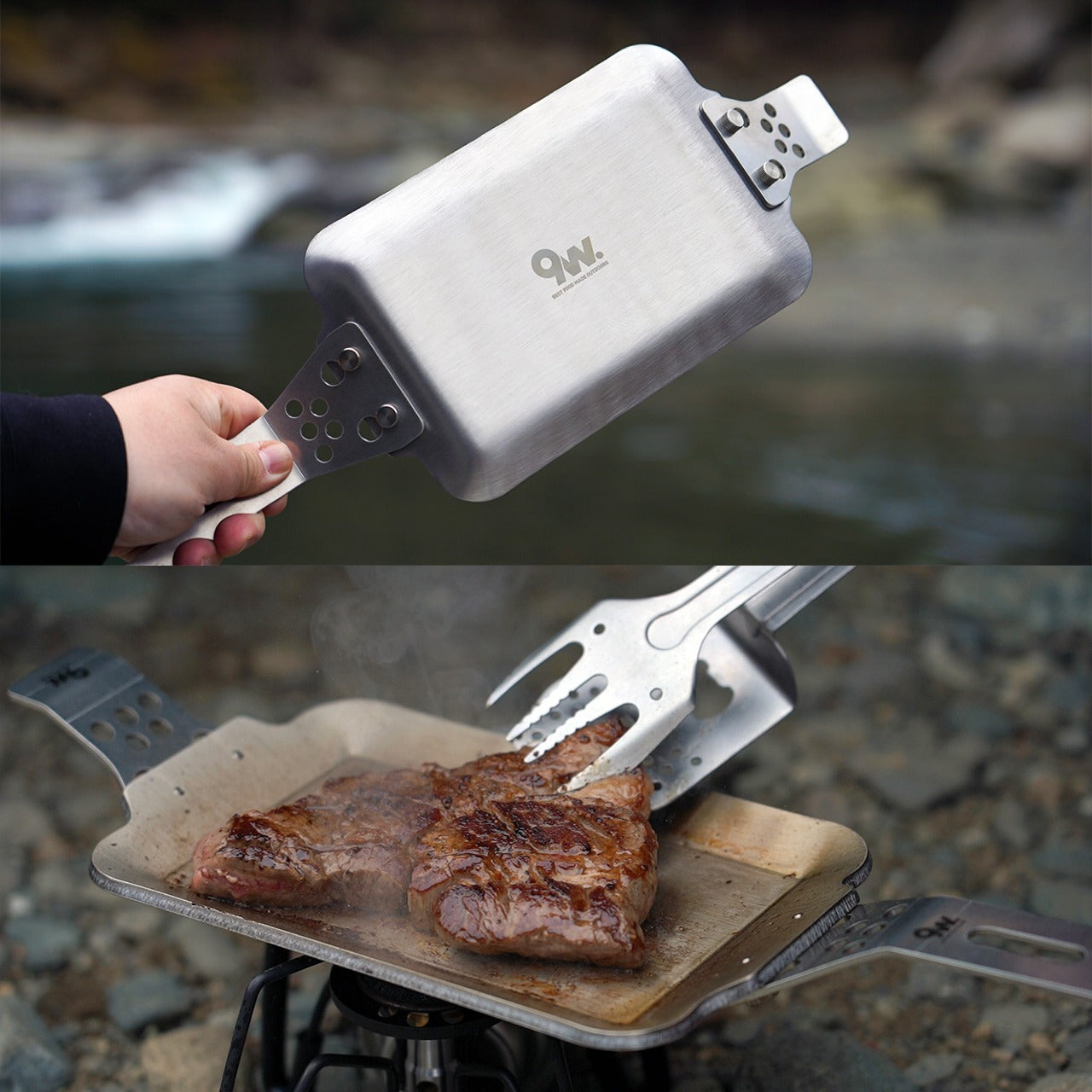
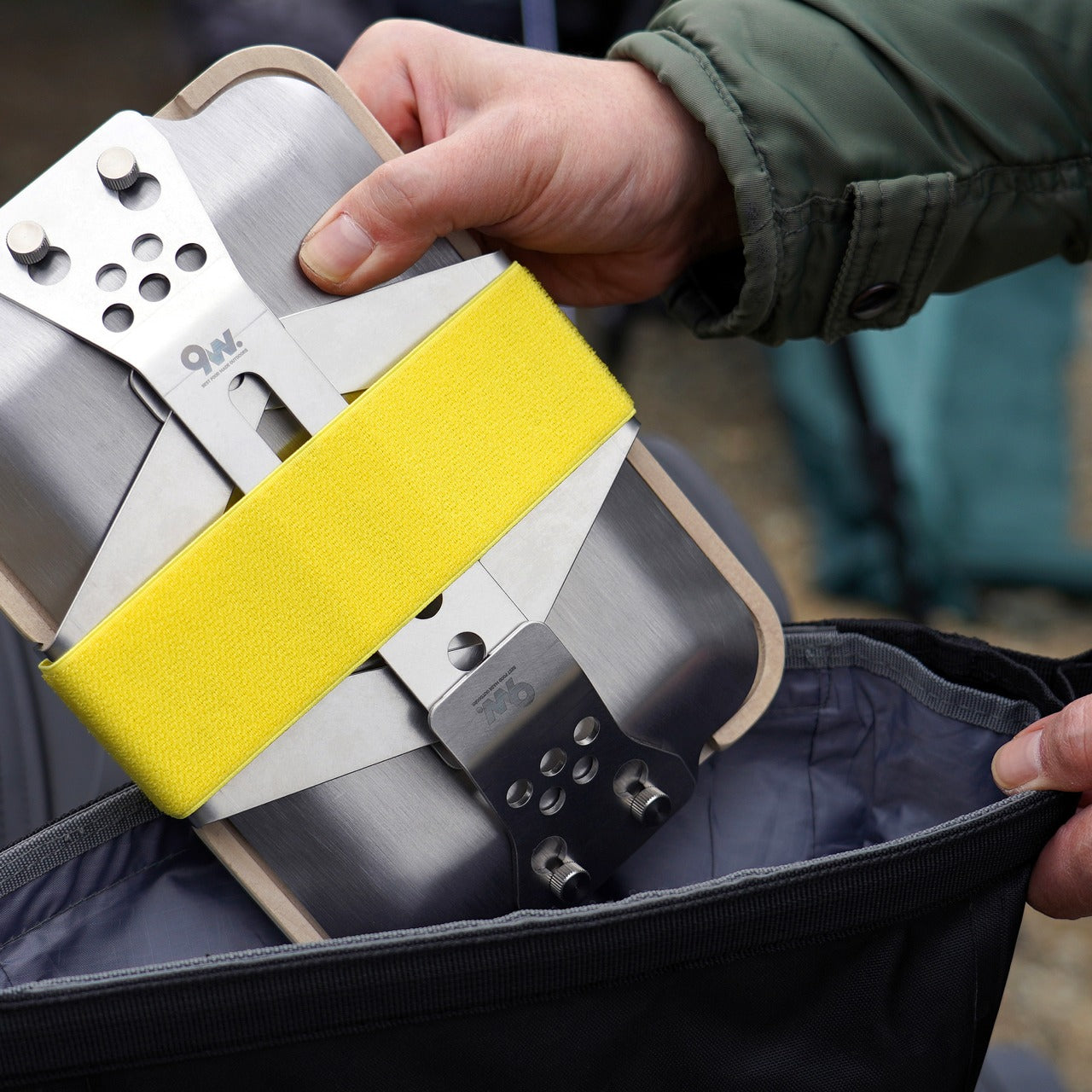
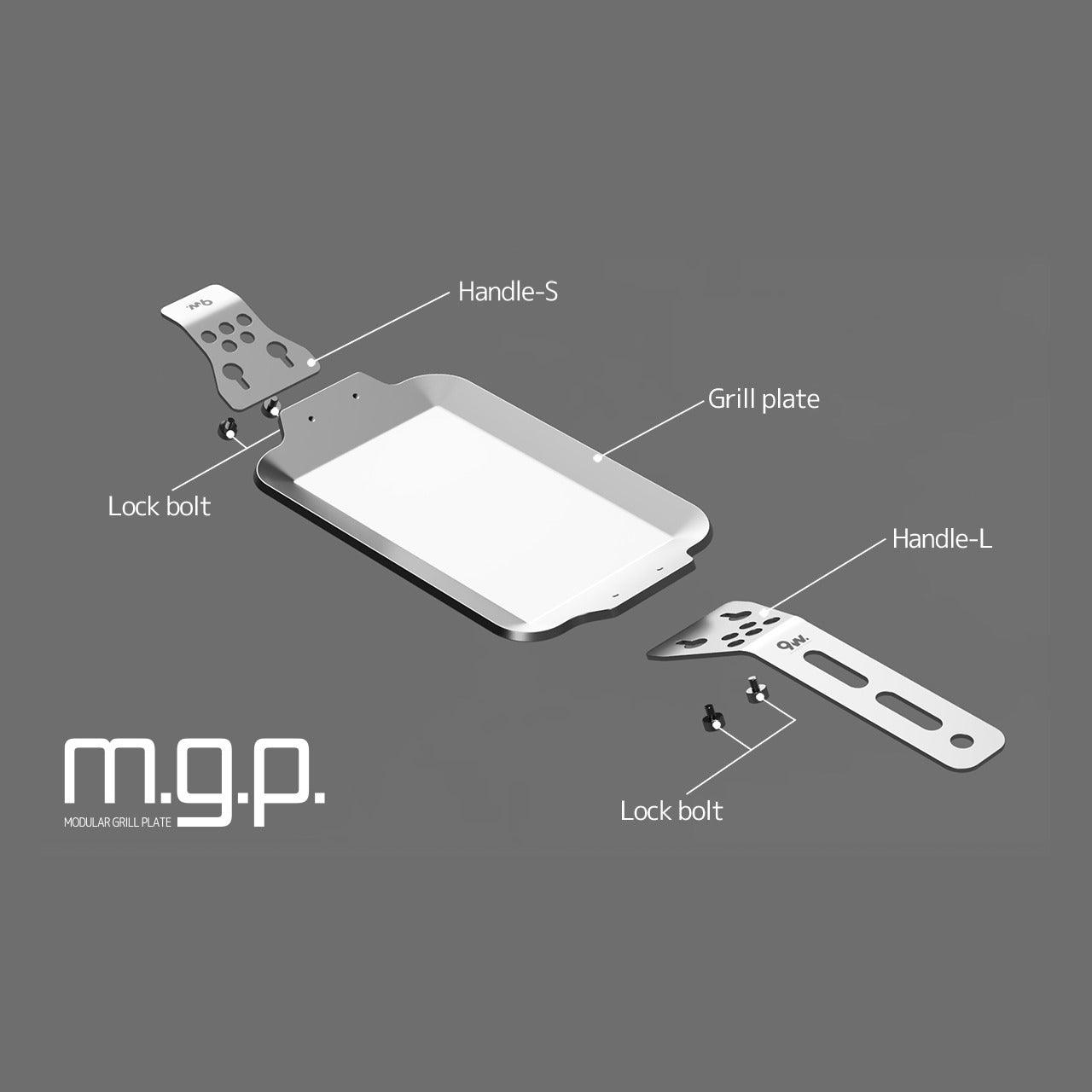
What makes it worth owning is the adaptability. Handles swap out depending on the situation. The plate runs on campfires, gas burners, and induction stoves without modification. When cooking is done, the whole setup packs flat, small enough to fit in a bag without reorganizing everything around it. That level of flexibility does not happen by accident. It is the result of a design that actually solves the problem rather than merely describing it.
The three-layer steel plate is where the performance begins. Single-layer pans burn where the flame sits and fade everywhere else, which is how a good cut of meat ends up patchy and dry in the wrong places. The layered construction here distributes heat uniformly from the edge to the center, keeping the temperature consistent across the entire cooking surface. The result is a better sear, better moisture retention, and food that actually tastes the way it should. Compatible with campfires, gas burners, and induction stoves, it performs just as well in a small apartment kitchen as it does over an open fire on uneven ground.
Modular, Compact, Actually Practical
Most portable cookware treats portability as a footnote. The Compact Modular Grill Plate starts there. The handle system swaps out depending on the setting, so the plate adjusts to whatever the cook needs rather than the other way around. Remove the handles for cleaning, and pack everything flat for travel. There is a specific kind of satisfaction in gear designed to disappear when you are done with it, and this plate earns that cleanly. It comes in a Basic set and a Special set for those who want more to work with from the start.
What We Like
Three-layer heat distribution: a properly engineered cooking surface that keeps temperature uniform for consistent sears and better moisture retention from edge to center
Multiple heat source compatibility: campfire, gas, and induction in one plate with no adapters and no compromise between settings
Swappable handle design: takes seconds to change and genuinely adapts the plate to whatever situation the cook is working in
Compact pack-down: flat storage with handles removed; the kind of practical detail that determines whether gear actually makes the trip
What We Dislike
No surface treatment specified: the product does not clarify whether the cooking surface has a non-stick finish, which matters for cooking delicate proteins and for cleanup expectations
Limited set configuration: Basic and Special cover the range well, but there is no option to add a single accessory without committing to a full set upgrade
The Cookware That Goes Where You Go
The Compact Modular Grill Plate was built for cooking that happens outside the ideal. An unpredictable campfire. A countertop induction burner in a small space. A situation where the cookware needs to adapt before you do. It handles all three without changing what it is, which is a rarer quality in portable cookware than it should be.
If what you are currently cooking with makes the meal harder than it needs to be, this is the straightforward fix. Pick upthe Basic or Special set and take the guesswork out of the next meal.
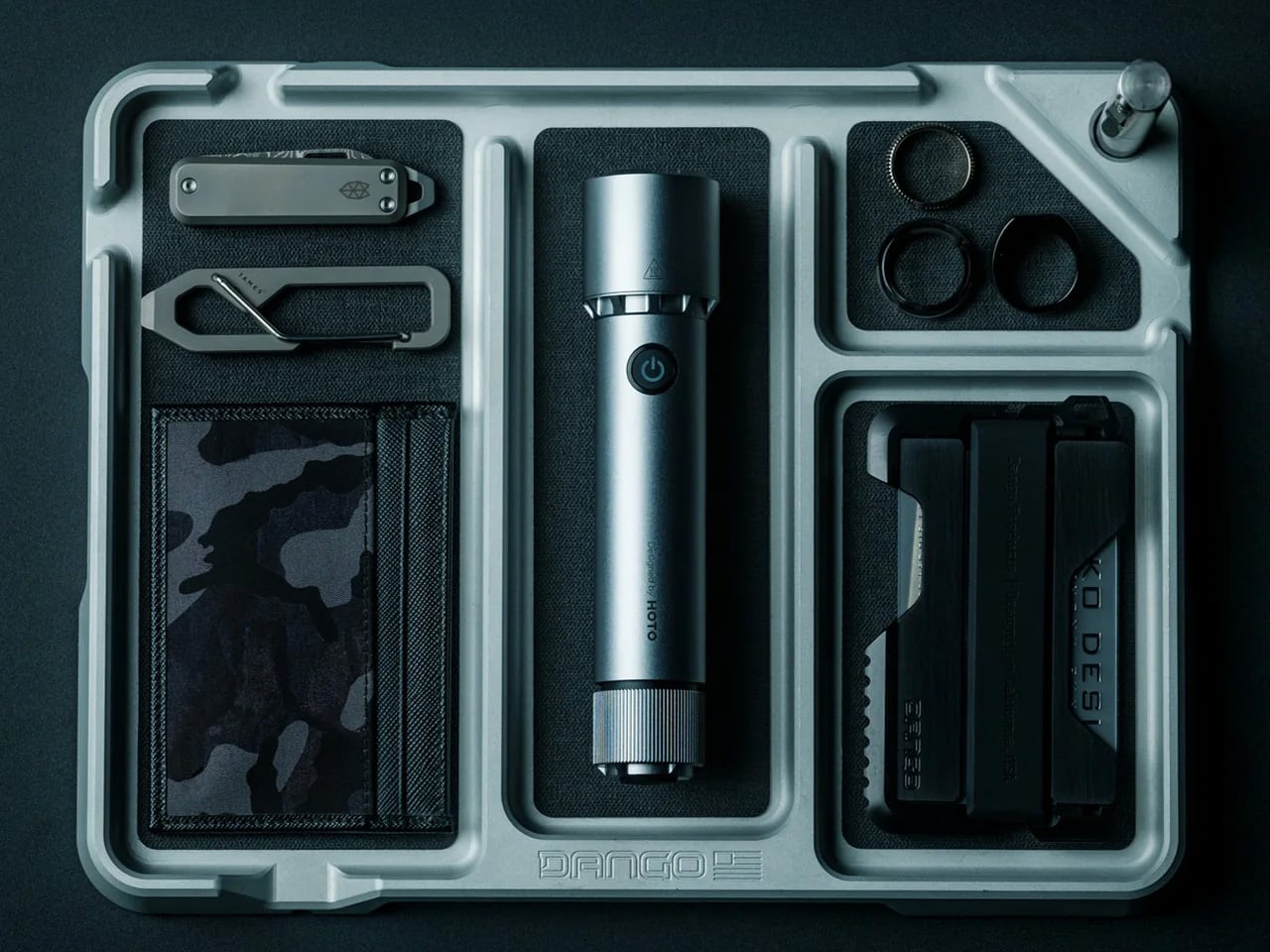
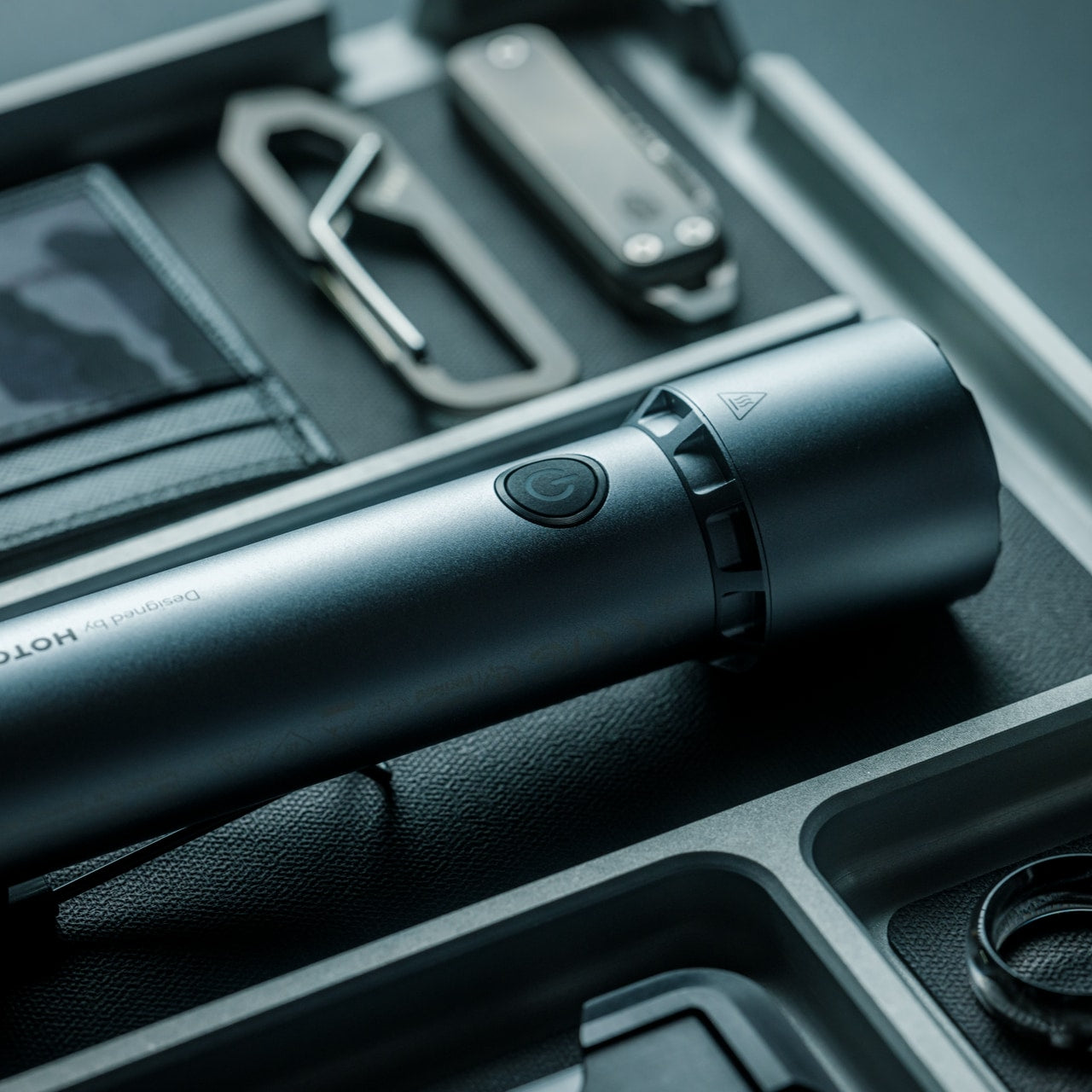
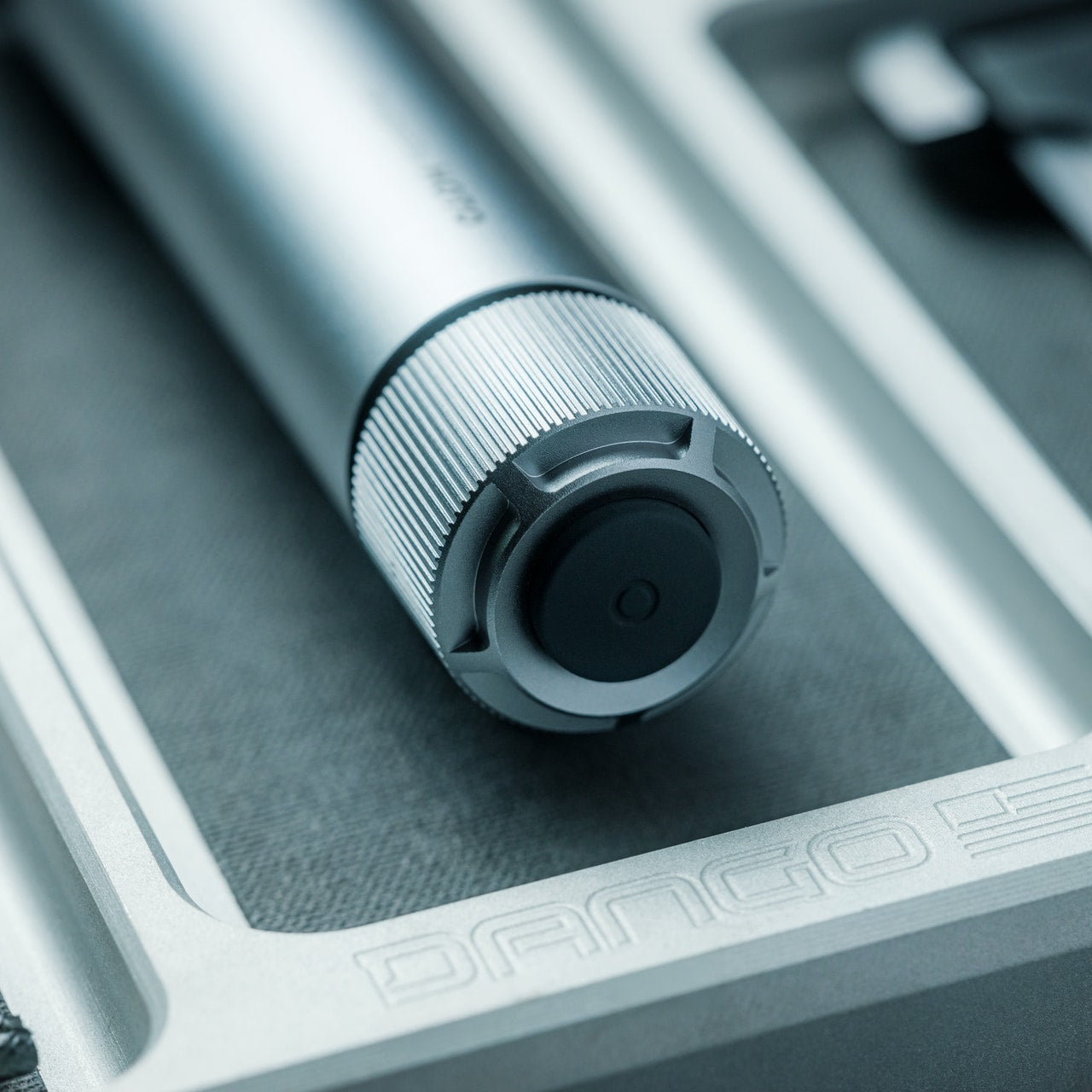
Some flashlights live at the back of a junk drawer, half-dead batteries and all, and then some tools earn permanent nightstand status. The BlackoutBeam Tactical Flashlight belongs in the second category. With 2300 lumens and a 300-meter throw, it outperforms gear twice its size, and it does it inside a body slim enough to slide into a jacket pocket without a second thought.
What makes it worth talking about is not just the output. It is the combination of IP68-rated aluminum construction, a 0.2-second activation time, and a 6500K daylight beam that together closes the gap between tactical hardware and everyday carry. This is not a flashlight you grab when nothing else is available. It is the one you reach for first, every time, because it was built to perform before you even think about it.
What separates BlackoutBeam from the crowded EDC flashlight market is the combination of brutal output and surgical design. Three brightness levels cover everything from close-up task lighting to long-range situational awareness. A strobe mode and a focused pinpoint beam add tactical flexibility that most everyday carry flashlights simply do not offer. The 6500K color temperature mimics natural daylight, which matters when you need to read a situation quickly rather than fumble through warm, orange-tinted light.
The one-handed design works in gloves, which tells you everything about the intended use case. This is a flashlight engineered for genuine emergencies, not the kind you imagine while browsing gear forums. A storm takes out the power. Your car stops on an unlit road. Something moves in the yard at 2 a.m. BlackoutBeam activates in the time it takes to blink, and it does not stall when you need it most.
Dual Power, No Dead Ends
Power management is handled with the same care as everything else. A 3100mAh lithium-ion battery recharges via USB, folding into the same charging routine as your phone and laptop. When the grid goes down entirely, two CR123A backup batteries ensure the flashlight is never stranded. That dual-power system is rare at this price point. Most lights at $90 force a choice between one option or the other.
At $90, BlackoutBeam sits at the crossroads of EDC practicality and award-winning industrial design, a combination that rarely arrives in the same package. Slim enough to slide into a go-bag, refined enough for a nightstand, and powerful enough to change the outcome of a real emergency. Most flashlights cover one of those bases. This one covers all three without a single compromise.
What We Like
2300 lumens with a 300-meter throw: the output is genuinely serious for a flashlight this slim, covering everything from a dark room to a wide outdoor perimeter without switching tools
0.2-second activation: no warm-up, no delay; it works at the exact speed an emergency demands
IP68 waterproof and dustproof aluminum build: not just splash-resistant, but rated for full submersion, which puts it well above most EDC flashlights at this price
Dual power system: USB recharging for daily life, CR123A battery backup for when the grid is gone; genuine redundancy rather than a marketing afterthought
What We Dislike
Stock is critically limited: the product page lists only one unit available, which means this is essentially a last-chance purchase rather than a reliable restocking situation
No published runtime figures: the page details brightness levels and battery specs but never states how long the 3100mAh cell actually lasts at full 2300-lumen output, which is information any serious buyer needs before committing at $90
Buy It Once, Carry It Forever
The BlackoutBeam was designed for the moments when everything else falls short. That is not marketing language. It is a design brief backed by 100 international awards and a track record that earns its reputation. If you have been carrying a flashlight bought out of convenience rather than confidence, this is the upgrade worth making. The difference between the right tool and a forgotten one matters more than most people realize until it is too late.
Pick up the BlackoutBeam Tactical Flashlight while stock lasts. With only one unit currently available, this is not a purchase to schedule for later. The flashlight you carry in an emergency is not the place for compromise, and BlackoutBeam is proof that the right tool never has to sacrifice how it looks to deliver exactly what it promises when the moment arrives.
The 4th of July has a way of surfacing the gear you wish you already owned. The flashlight nobody can find. The pocket tool left at home. The radio that needs Wi-Fi to work. This year, instead of defaulting to another box of sparklers, consider something that earns a permanent spot in someone’s daily carry. These seven picks are design-forward, genuinely useful, and built for long days outdoors.
The range runs from ten dollars to under a hundred, spans keychain carry to campsite audio, and skews toward objects that solve problems the recipient didn’t know they had. A 4th of July gift isn’t really about the holiday — it’s about summer. Long evenings, unfamiliar parks, parking lots that feel like a mile from the fireworks. The best EDC is already in your pocket before you realize you needed it.
1. NoxTi Titanium Glow Keychain
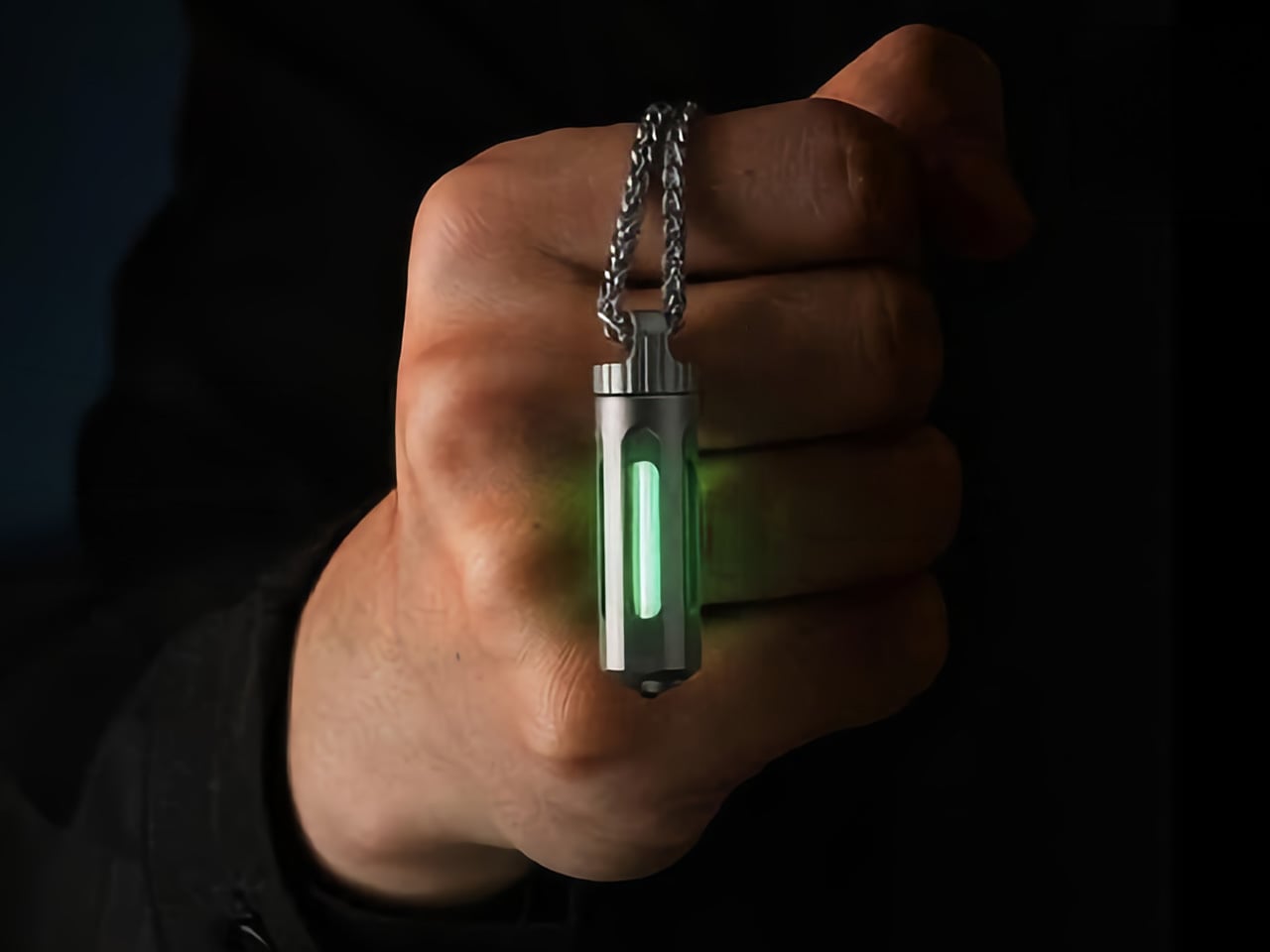
Most keychain tools solve for function and ignore everything else. The NoxTi starts from a different premise entirely. Inside a 45mm Gr5 titanium body machined to aerospace tolerances lives a tritium vial — a hydrogen isotope that releases beta particles, which strike a phosphor coating and produce light. No batteries. No charging. No switch to press. The physics simply runs, continuously and silently, for 25 years. Six color options span Apple Green, the brightest to the human eye, through Ice Blue, Red, Sunset Orange, Violet, and Ocean Blue.
At 10.7 grams, roughly two US pennies, the NoxTi disappears on a keychain until darkness falls and it becomes the most visible thing in your pocket. The quartz tube transmits 92% of available light and will still be optically clear in 2050. A ceramic-tipped glass breaker sits at the tail end for emergencies. When the tritium dims after two decades, you press the old vial out and slide a new one in. The titanium body is designed to outlast every other item in your carry, twice over.
What we like
Tritium glow requires no battery, no charging, and no activation — just physics running without interruption for 25 years
User-serviceable vial replacement means the titanium body becomes a permanent carry piece that improves rather than degrades over time
What we dislike
The glow is intentionally faint — this is a locator light, not a work light, and that distinction matters when gifting
The tritium version costs nearly double the luminescent model; the difference only reveals itself in complete darkness
2. CasaBeam Everyday Flashlight
A 1,000-lumen output with a 200-meter throw sounds like overkill for a walk to the fireworks lot. It isn’t. The CasaBeam’s core trick is what happens when you stand it upright: it becomes a lantern, casting ambient light across a blanket, a tailgate, or a campsite without requiring a second device. Twist the front to shift between focused spotlight and wide floodlight. Five lighting modes handle everything from reading fine print on a map to signaling across a dark field.
The form factor is the story. Cylindrical, compact, no exposed bezels or tactical knurling — it reads as a designed object rather than a piece of survival gear. That matters when the gift lives on a kitchen counter for 50 weeks a year and earns its place the other two. The dual-mode beam and standing lantern configuration solve two distinct problems with a single product and no attachments required. Most flashlights beg to be put away. This one earns a shelf spot.
1,000 lumens and an upright lantern mode solve two distinct lighting problems within a single compact form
Clean cylindrical profile reads as a designed object rather than tactical gear, earning permanent display rather than a drawer
What we dislike
Battery life at maximum output isn’t specified, which becomes a real concern during extended outdoor use
No integrated power bank function means a phone running low still needs a separate solution
3. Cubik
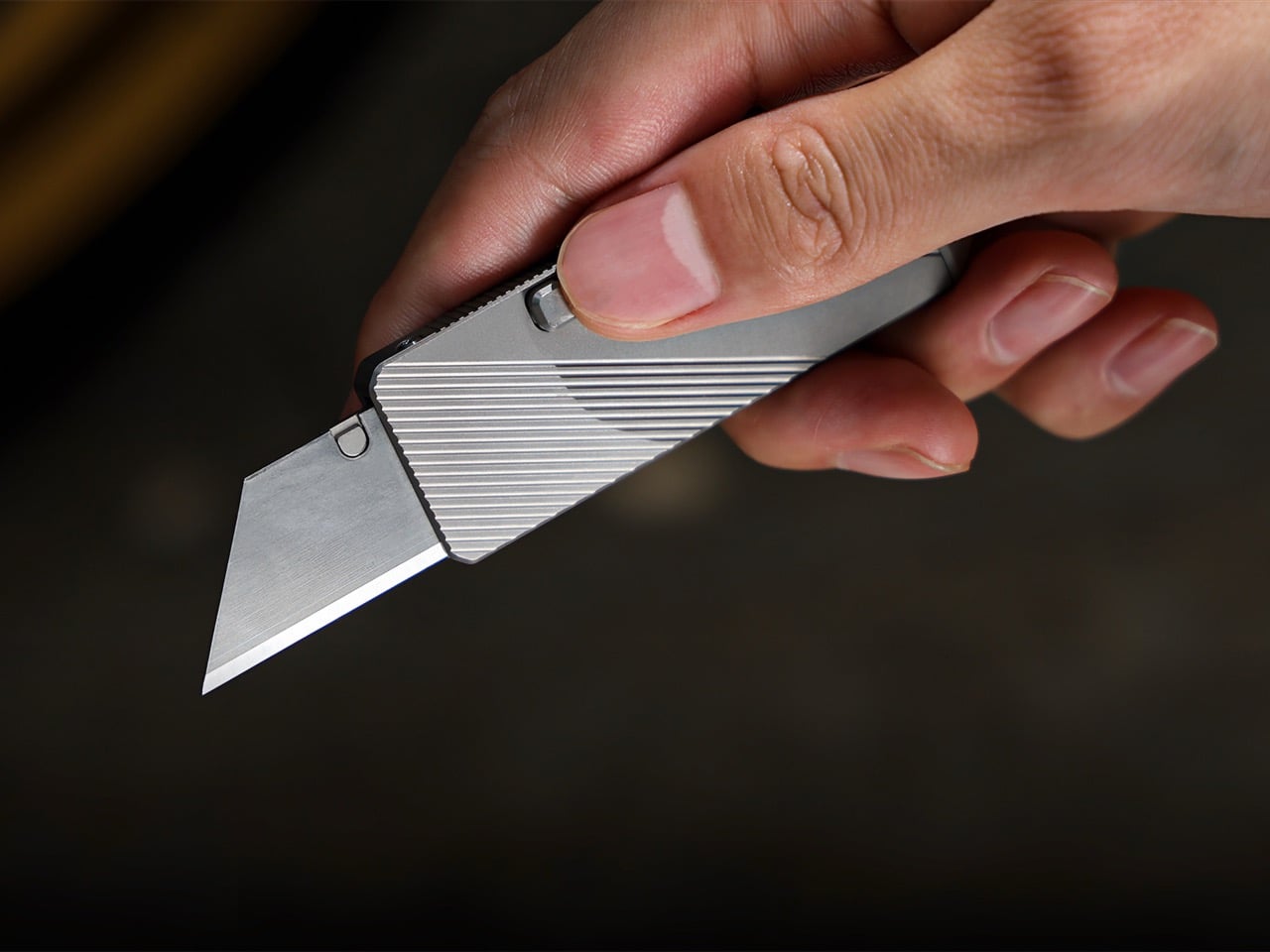
Knife design has explored most of its available territory. Springs, flippers, bearings, assisted openers — the variations are incremental. The Cubik does something genuinely different. Press the trigger, tip the handle down, and the SK5 trapezoid blade drops into place using nothing but gravity. Release and it locks. No spring to rust, no bearing to fail, no mechanism that requires maintenance over years of carry. The outer body is fully machined titanium at 1.65 ounces, measuring 2.6 inches long and 0.2 inches thin.
The swappable blade design turns a potential limitation into a genuine advantage. When an edge dulls, you replace it rather than resharpening. Five blades come included, and the trapezoid format is dual-ended — when one tip wears, flip it. Remove the blade entirely, and the handle clears TSA checkpoints. Tritium slots on both sides accept glow vials for low-light visibility. A tungsten carbide glass breaker sits at the rear end, and a pocket clip handles daily carry. The Cubik removes friction from every step except the cut.
What we like
Gravity deployment eliminates springs and bearings, making the mechanism nearly impervious to the wear that compromises most folding knives over time
TSA-friendly with blade removed, making it genuinely packable for any travel scenario without sacrificing the handle as a daily tool
What we dislike
Gravity deployment requires a deliberate wrist motion that takes practice — less intuitive than a flipper under real pressure
SK5 is functional blade steel but won’t match the edge retention of higher-alloy alternatives at this price
4. Gerber Shard
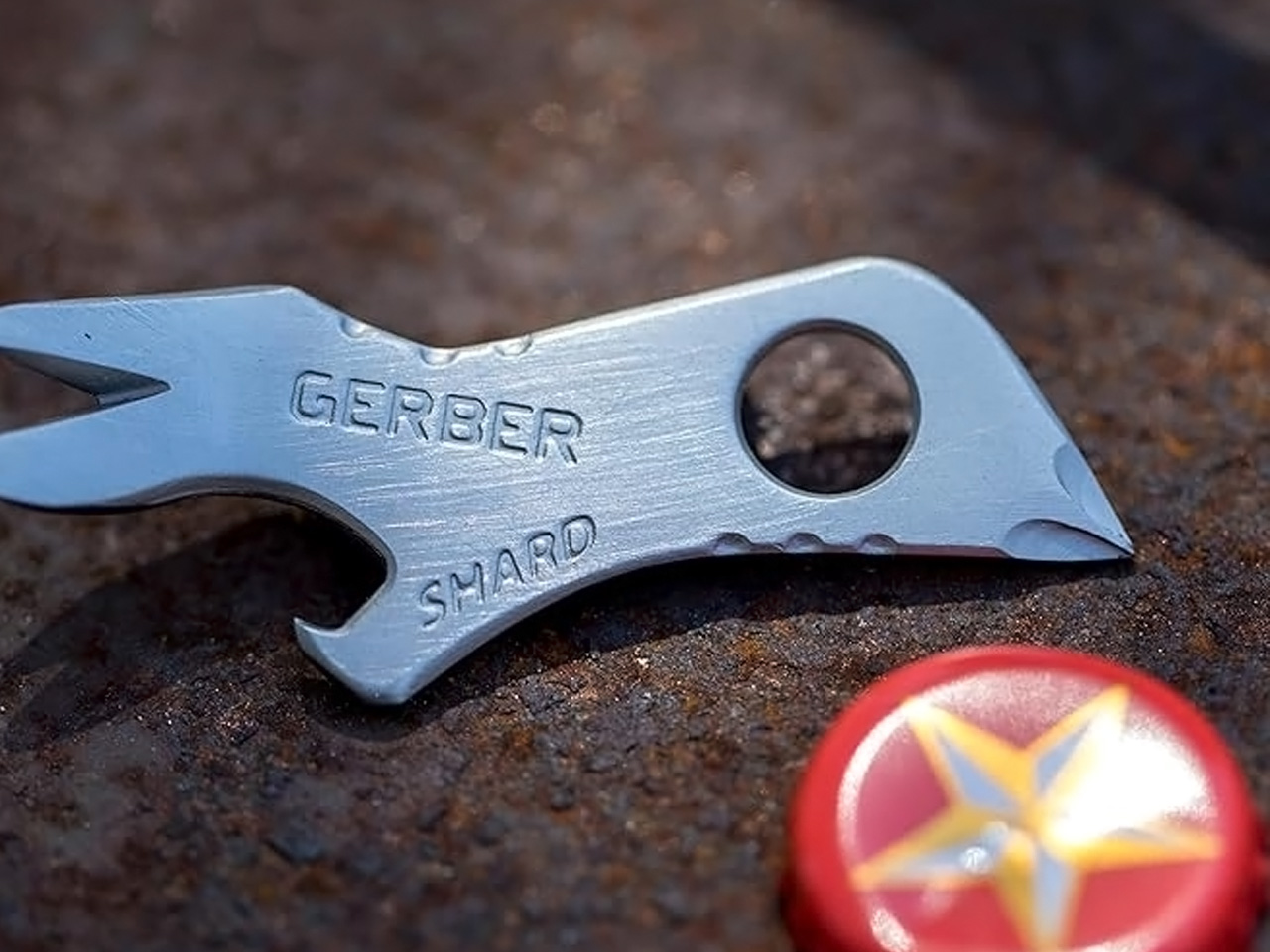
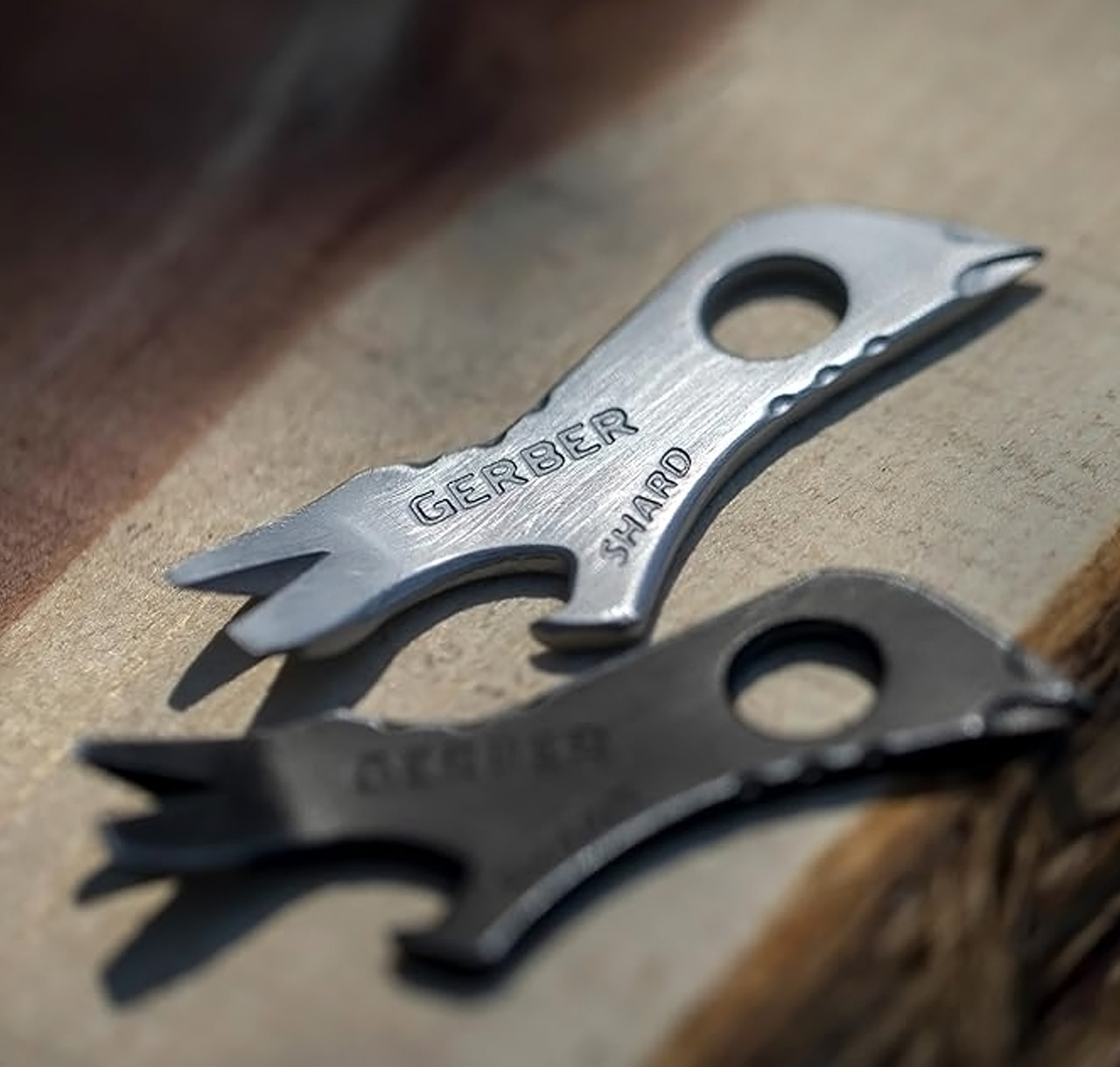
There is a specific kind of gift that costs almost nothing and immediately becomes indispensable. The Gerber Shard is exactly that. Seven functions in a 2.75-inch titanium nitride-coated steel body: small flathead, medium flathead, cross driver, pry bar, wire stripper, lanyard hole, and bottle opener. The coating handles sweat, saltwater, and general outdoor abuse without corrosion or tarnish. Gerber backs it with a limited lifetime warranty. At roughly ten dollars, the case against it is genuinely difficult to construct.
The airline-safe design is the detail that separates the Shard from every competitor at this price point. No blade means it travels in carry-on luggage, clears international security, and stays in a bag that never gets checked. Most multitools get confiscated at security checkpoints or packed reluctantly into checked bags. This one goes everywhere without a second thought. Clip it to a keychain, a zipper pull, or a lanyard and forget it exists until someone nearby needs exactly what it offers.
What we like
Airline-safe and TSA-compliant, seven functions that travel literally anywhere without planning around security
A limited lifetime warranty from an established brand at a price that removes any justification for not owning one
What we dislike
Seven functions cover the daily basics but won’t satisfy carry needs that demand pliers or a dedicated blade
Small size reduces leverage on stubborn fasteners — torque-heavy tasks require a full-sized tool regardless
5. RetroWave 7-in-1 Radio
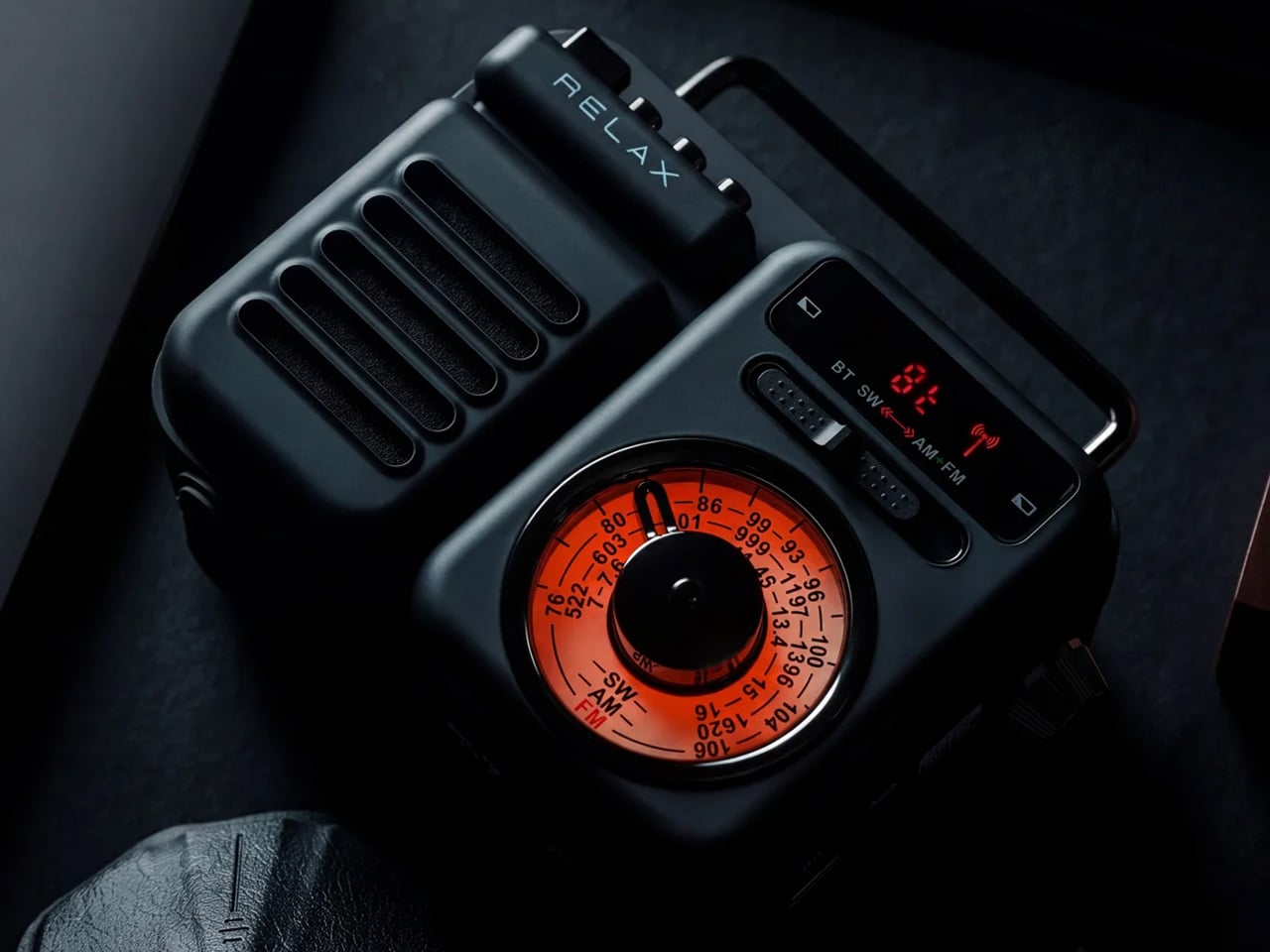
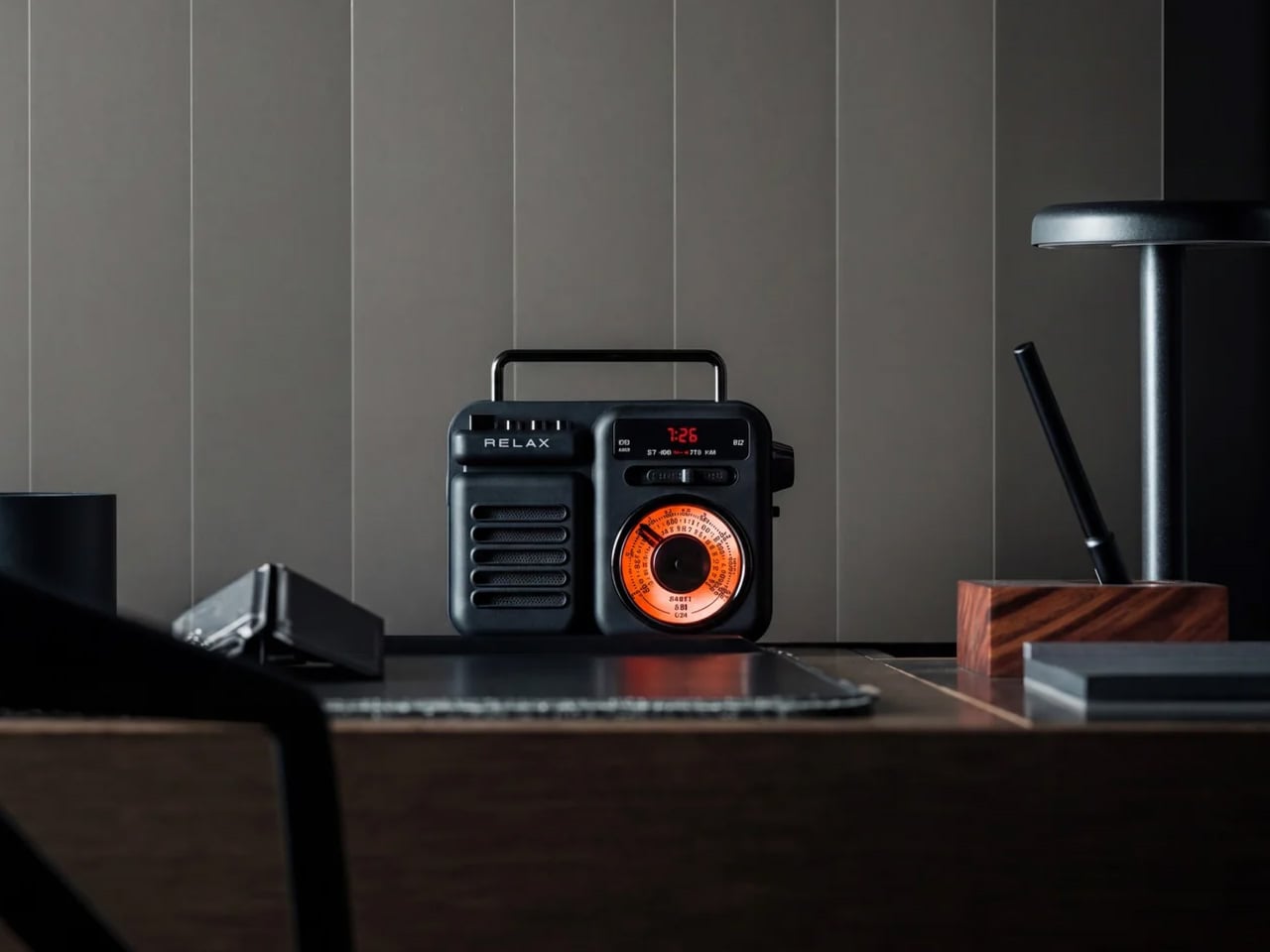
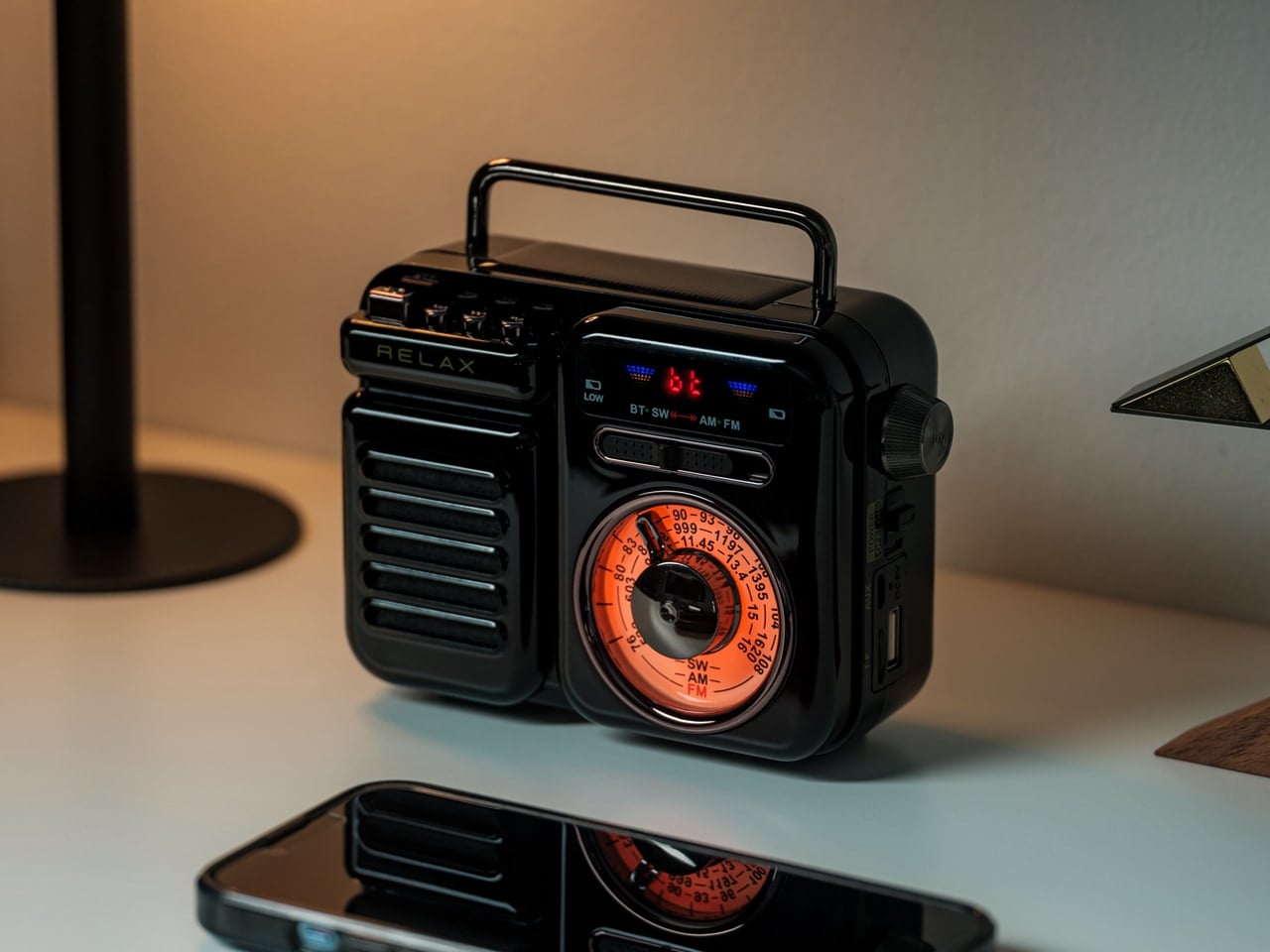
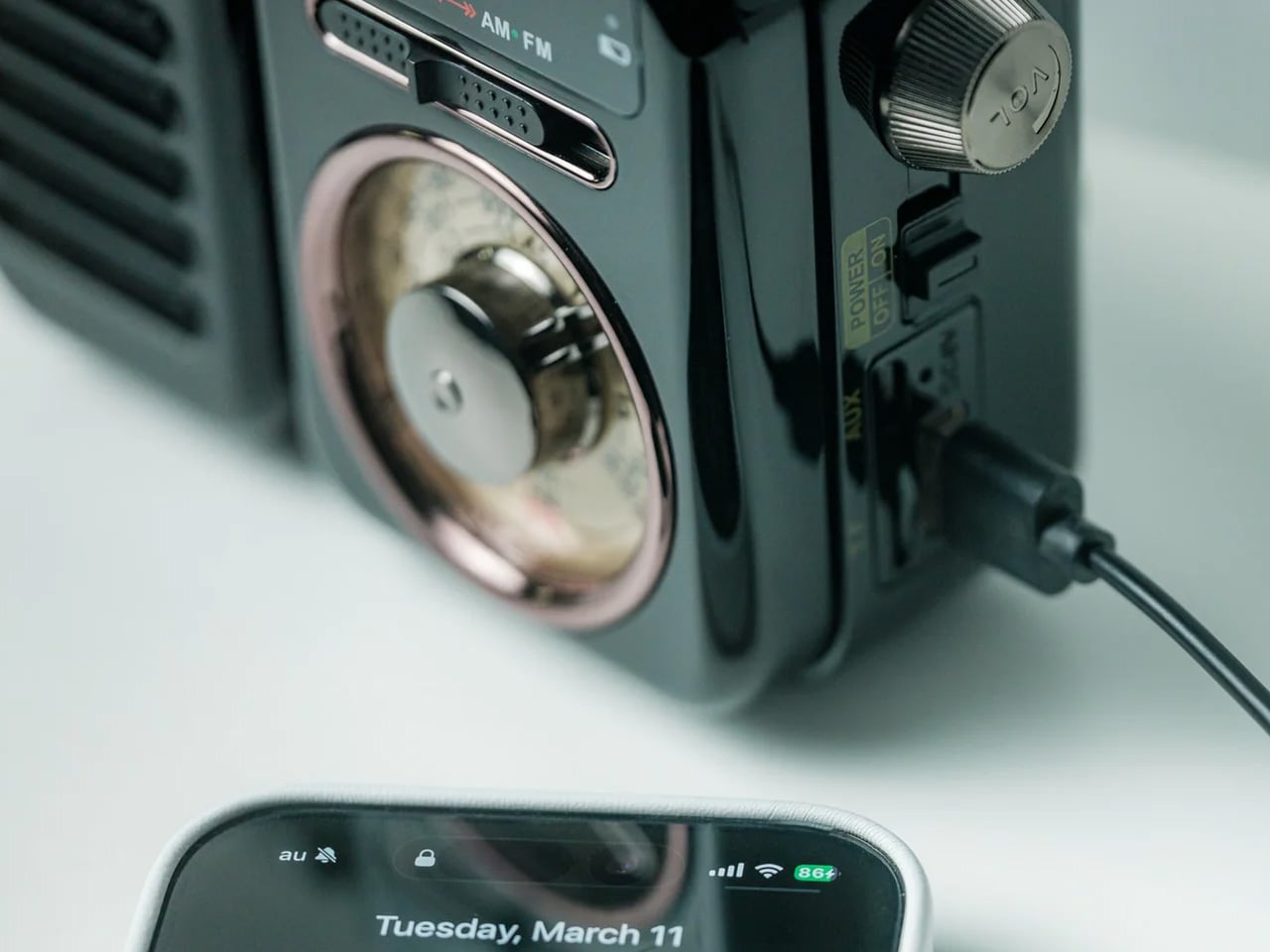
Smart speakers go quiet when the Wi-Fi drops. Phones drain exactly when you need them. The RetroWave Radio is built for the moments modern devices quietly fail. FM, AM, and shortwave radio run analog without internet. Bluetooth and microSD handle streaming and offline playback. A 2000mAh battery charges your phone when outlets aren’t available. A hand crank and solar panel keep the radio running when neither power source is reachable. An SOS alarm stays ready in the background, doing nothing until it’s the only thing needed.
The design earns its shelf space long before the power cuts. The retro Japanese-inspired silhouette has genuine tactile weight — a tuning dial with real feedback, proportions that feel resolved rather than nostalgic for effect. On a picnic blanket with fireworks building overhead, it handles audio without pulling anyone’s phone from their pocket. During a summer storm a week later, it handles the emergency without requiring a different device. Up to 20 hours of radio playback, six hours of emergency lighting, and one object that earns its place every day between holidays.
Hand crank and solar charging mean the radio keeps working when power and signal both fail — a genuinely rare capability at this price
The retro Japanese silhouette earns its shelf presence on design alone, before any function is considered
What we dislike
2000mAh power bank capacity is modest — enough for an emergency top-up, not a full phone charge from zero
Shortwave reception quality depends on antenna position and local interference, requiring some adjustment in new environments
6. Loki Nav Compass
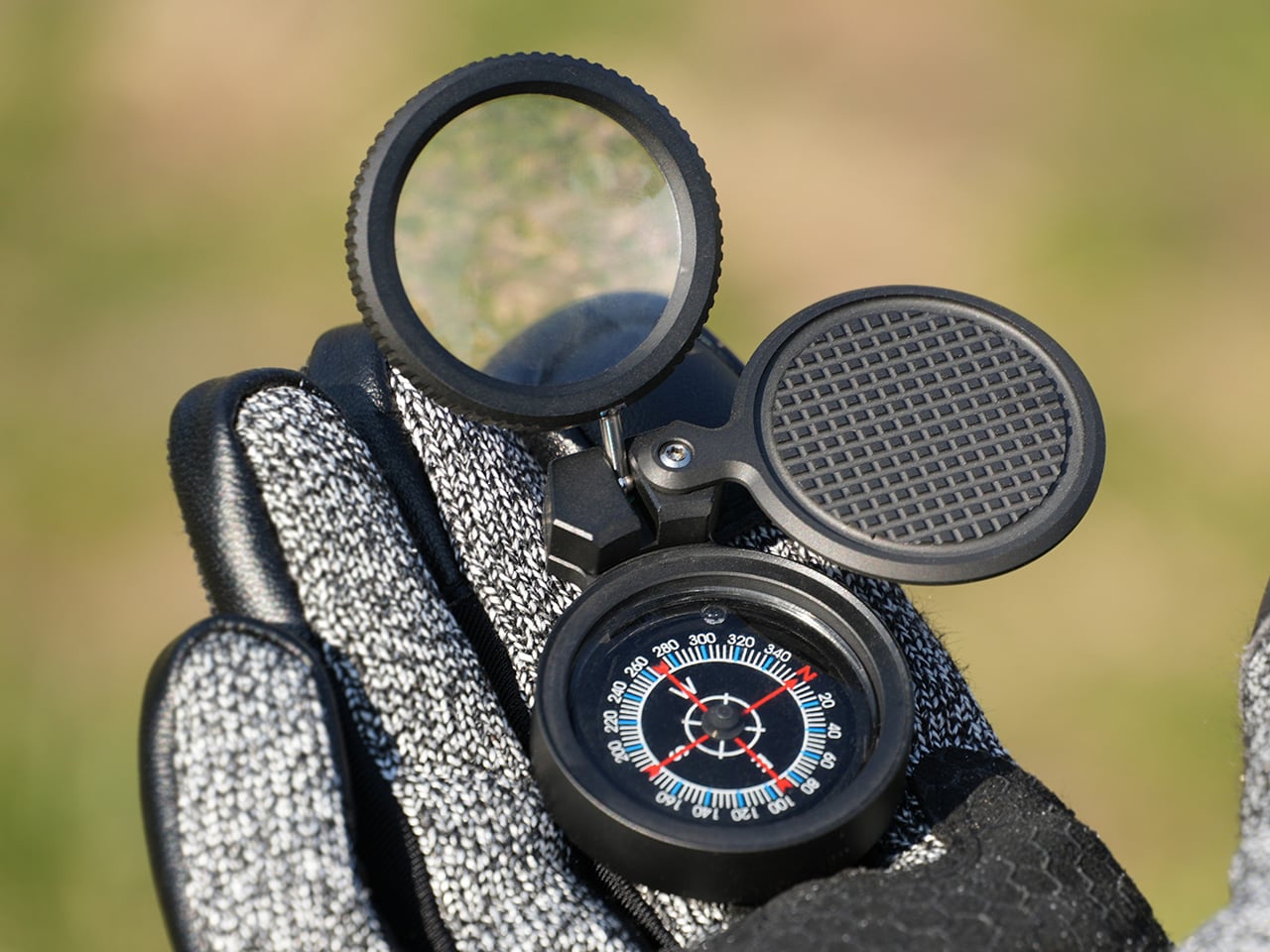
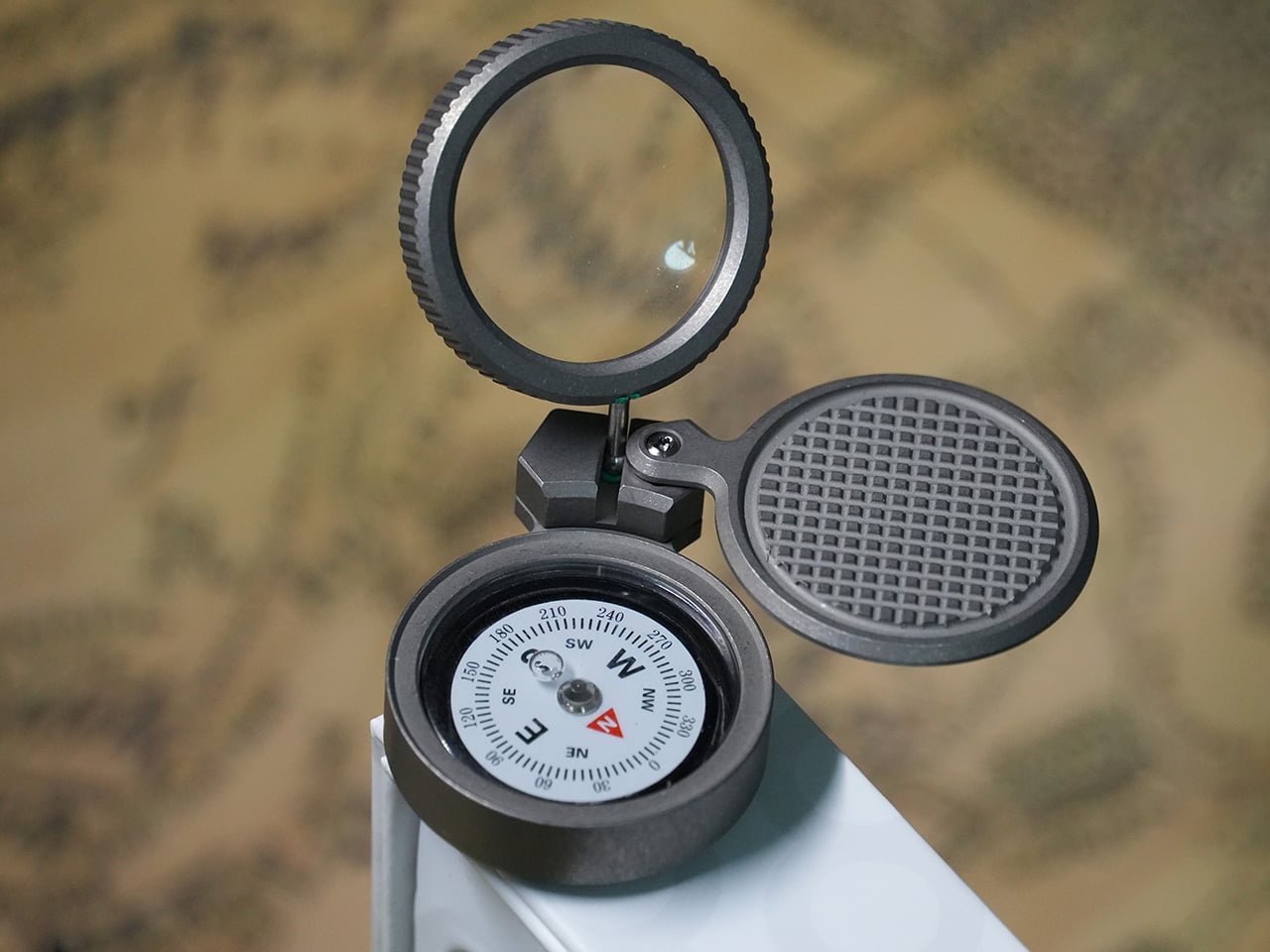
Grade 5 titanium, 48 grams, IPX8 waterproof to one meter for thirty minutes. The Loki Nav by EckDesign compresses a serious navigation system into a 46.5mm body you forget is in your pocket until the phone battery dies on a trail with no cell signal. Three interchangeable oil-filled compass modules create built-in redundancy where most compasses offer only one. The cap houses a 12x magnifying loupe, an emergency signal mirror, and a wood file for making fire-starting tinder from available material.
The design logic rewards attention. Every component earns its inclusion. The loupe rotates to protect its lens between uses. The mirror deploys without disassembly. Compass modules swap through a base hole using a toothpick — no tools, field-serviceable in seconds. For a day that starts in a park and ends on a hiking trail, or begins with fireworks and continues into unfamiliar terrain after dark, analog navigation that requires no signal and no battery is a quiet, specific kind of reassurance that no smart device can replicate.
What we like
Three interchangeable compass modules create a navigation system with real redundancy — reliability treated as a first principle, not a feature mention
IPX8 waterproofing and Grade 5 titanium construction match the durability demands of any outdoor carry without adding weight that defeats the purpose
What we dislike
At 48 grams in titanium, noticeably heavier than a basic compass — the weight is justified, but worth factoring into ultralight setups
Compass module swapping via toothpick requires some practice to execute cleanly under field conditions
7. Orbitkey Key Organiser
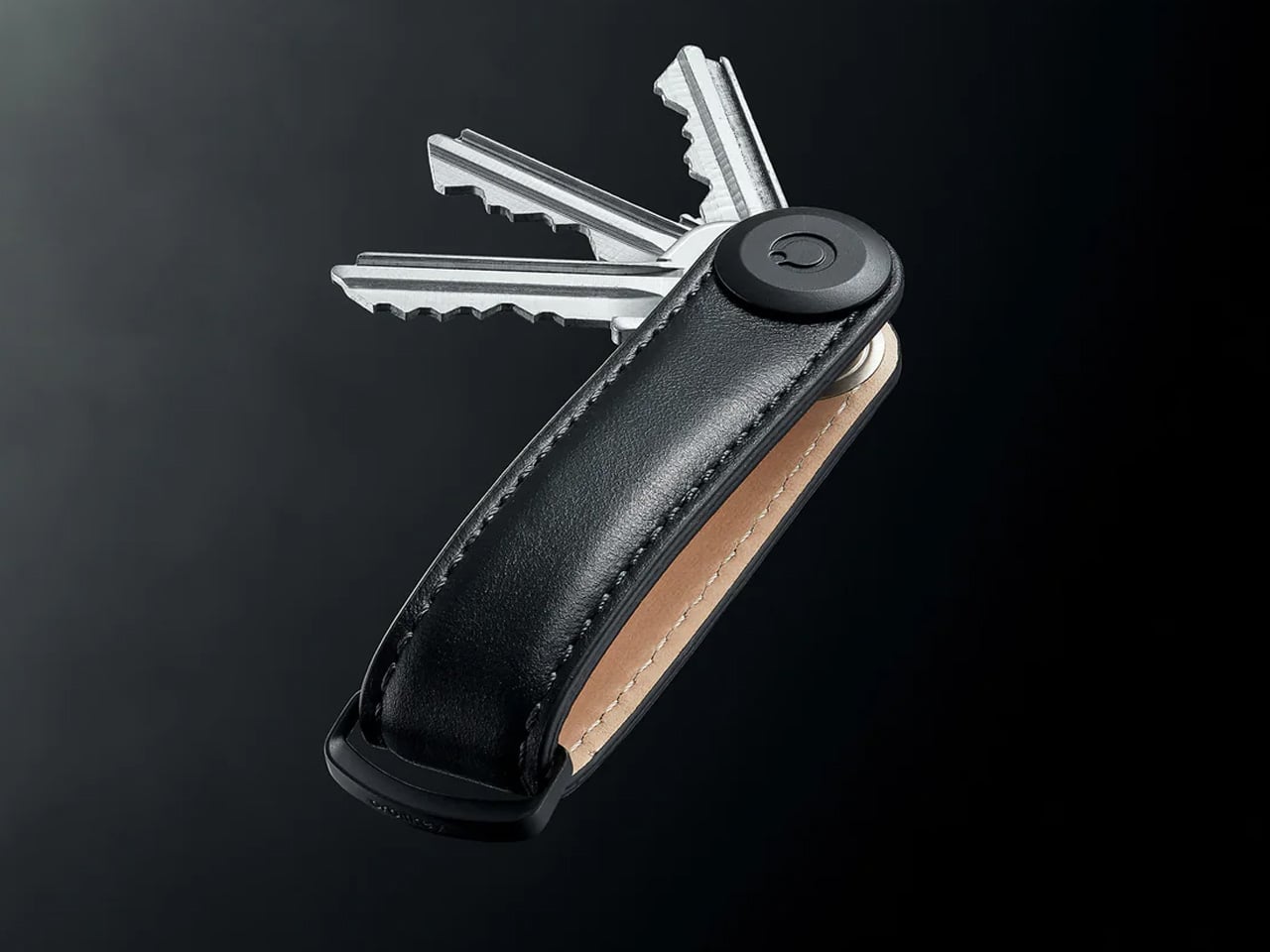
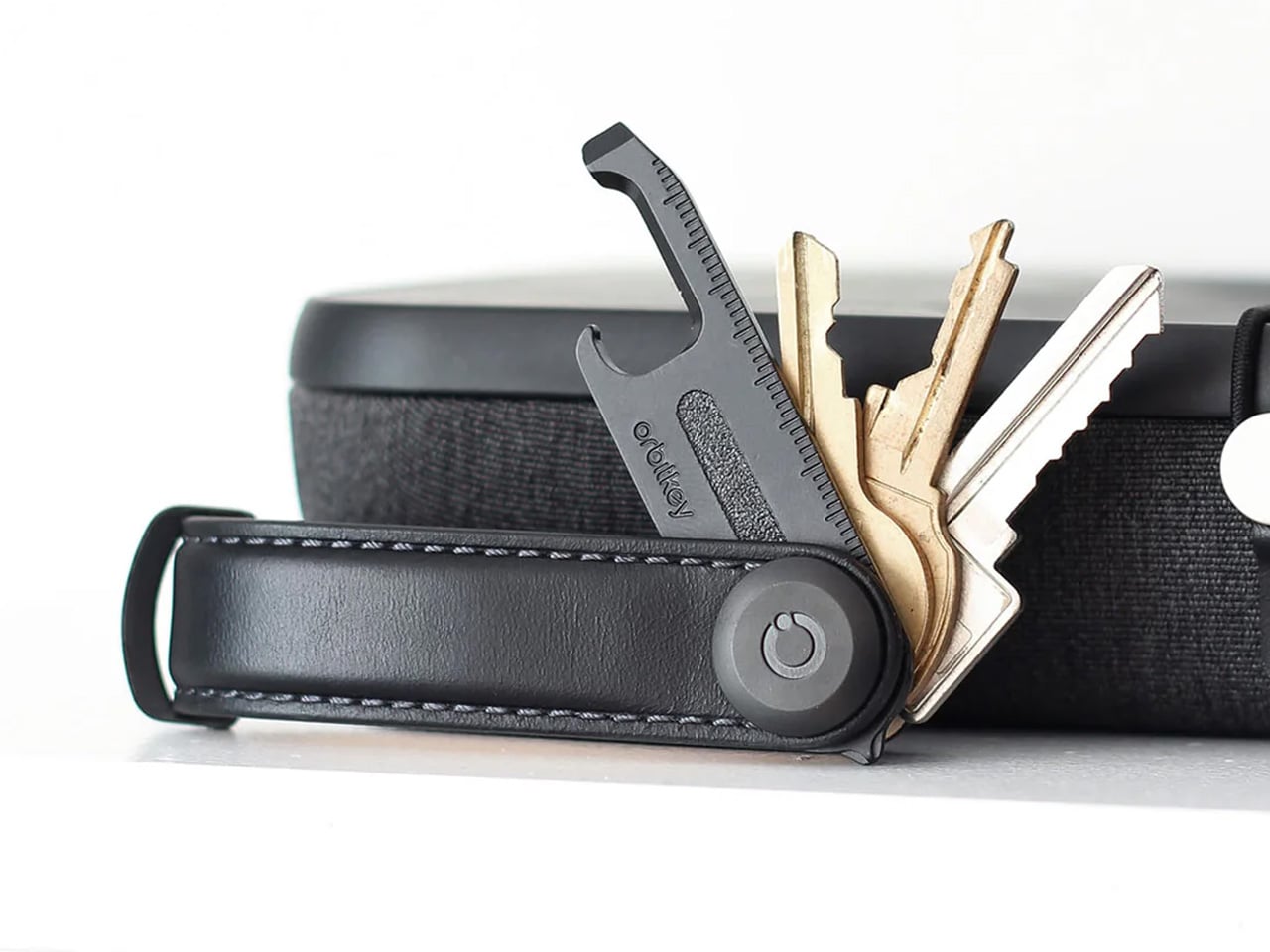
Standard key rings solve the wrong problem. They keep keys together while ensuring they jingle constantly, press metal ridges into pockets all day, and resist every attempt to add or remove a key without a fight. The Orbitkey stacks two to seven keys flat inside a full-grain leather spine with stainless steel hardware, held under tension. Closed, it sits flat and produces no sound. In a pocket, it disappears. Five colorways run from black dress leather to warm cognac.
The gift case for the Orbitkey is strong because the problem it solves is one most people have accepted rather than noticed. Hand one to someone who has carried a key ring for years and watch the change happen within a week. The full-grain leather develops its own wear pattern over years of daily carry — a position on longevity that most keychain products decline to take. One week in, returning to a standard key ring feels genuinely regressive. That’s the kind of product worth giving.
What we like
Tension stacking eliminates key jingle — a quality-of-life improvement that compounds quietly across every single day of carry
Full-grain leather construction ages into character rather than showing damage, signaling a product designed to outlast the trend cycle
What we dislike
Initial key installation requires a screwdriver and careful threading — not difficult, but not intuitive on the first attempt
Oversized or irregularly shaped keys may not stack cleanly within the system’s flat geometry, worth checking before purchase
The Best Gifts Are the Ones That Outlast the Holiday
The best 4th of July gifts aren’t themed — they’re useful in ways that outlast the holiday by years. Every product here earns a permanent spot in daily carry rather than a drawer by August. The NoxTi glows on a keychain for 25 years. The Orbitkey replaces a friction point people had quietly accepted. The Loki Nav works when every other tool has gone silent. That’s the standard worth giving.
Spending a long day outdoors with people you like is a design problem, and the solution is reducing friction. Less searching for the flashlight. Less draining someone’s phone for music. Less fumbling with a key ring in a dark parking lot after the show. These seven objects do exactly that — each one eliminating a small problem before it becomes one. That’s the kind of gift that doesn’t get returned, explained, or forgotten.
Most 4th of July gifts end up on a shelf by August. The problem is rarely budget. It is that the average gift guide optimizes for novelty over usefulness, leaving the recipient with something impressive at unboxing and forgotten by Labor Day. The eight picks here work differently. Each one earns its place through daily utility, genuine design quality, or the kind of clever thinking that makes you wonder why it took this long to exist.
These are products built to be used outdoors, shared freely, and carried constantly. Every price is real, every product is available to order in time for July 4th, and every item fits the kind of man who appreciates design as much as function. That is a harder brief than it sounds. These eight cleared it.
1. RetroWave 7-in-1 Radio
The RetroWave is not trying to be a smart speaker. That restraint is exactly what makes it work. At $89, it covers AM, FM, and shortwave reception alongside Bluetooth streaming, a built-in flashlight, a phone charging port, and a weather band — seven functions in a single object with a tactile analog tuning dial and enough visual warmth that it looks right sitting on a picnic table or a porch railing. It runs on battery or USB-C, which matters at any outdoor gathering where outlets are not a given.
What sets it apart from the wave of retro-styled Bluetooth speakers is that the RetroWave functions during a blackout. The weather band and hand-crank charging give it genuine emergency utility that most audio products ignore entirely. On a holiday weekend where fireworks, crowds, and summer storms converge, a radio that can do real work under pressure is a more interesting gift than another Spotify-only device with a personality made entirely of silicone and LED rings.
Seven-function range covers daily and emergency use without feeling cluttered
What we dislike:
The shortwave reception will delight a specific type of person and leave others indifferent
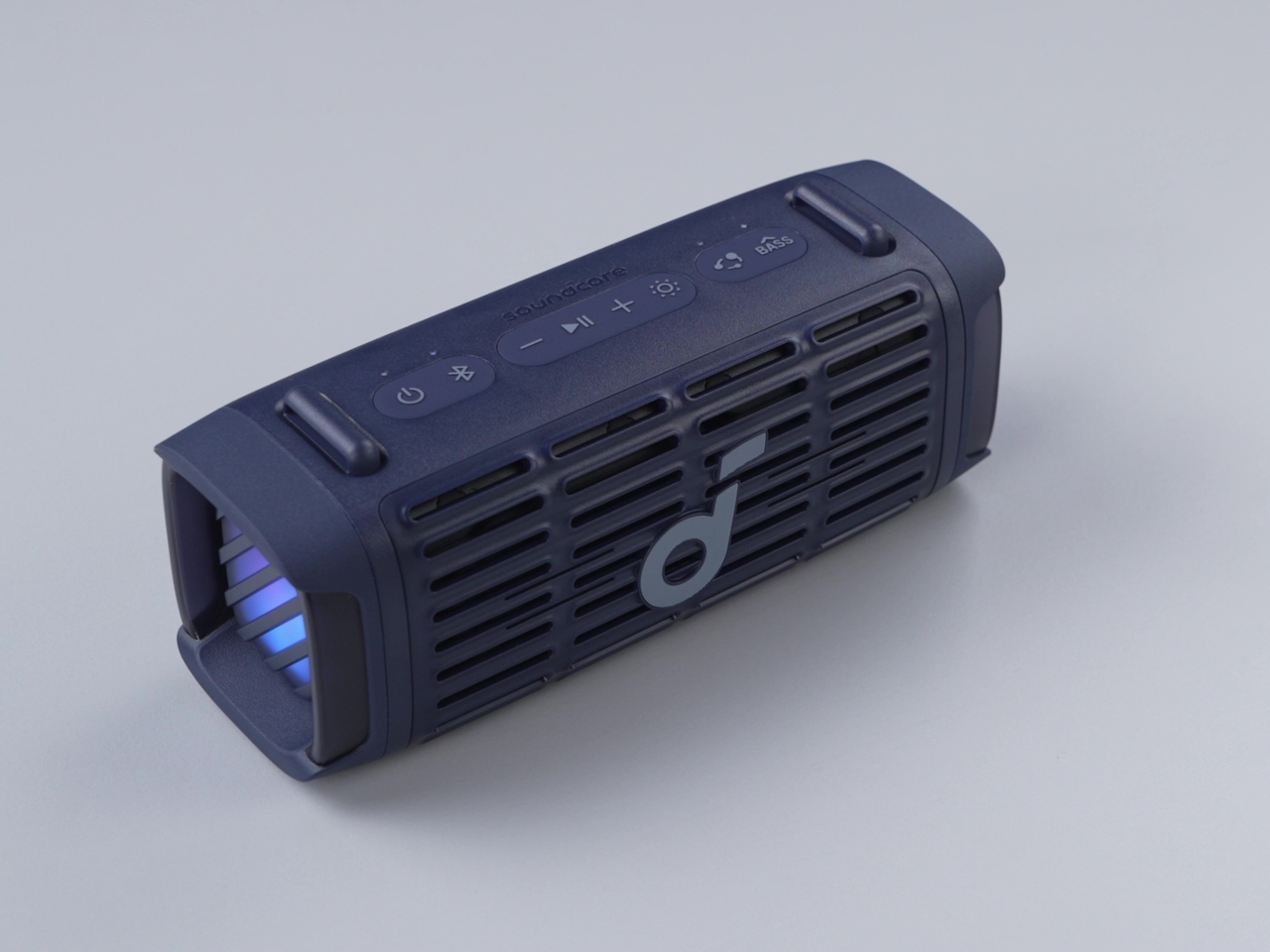
2. Anker Soundcore Boom 3i
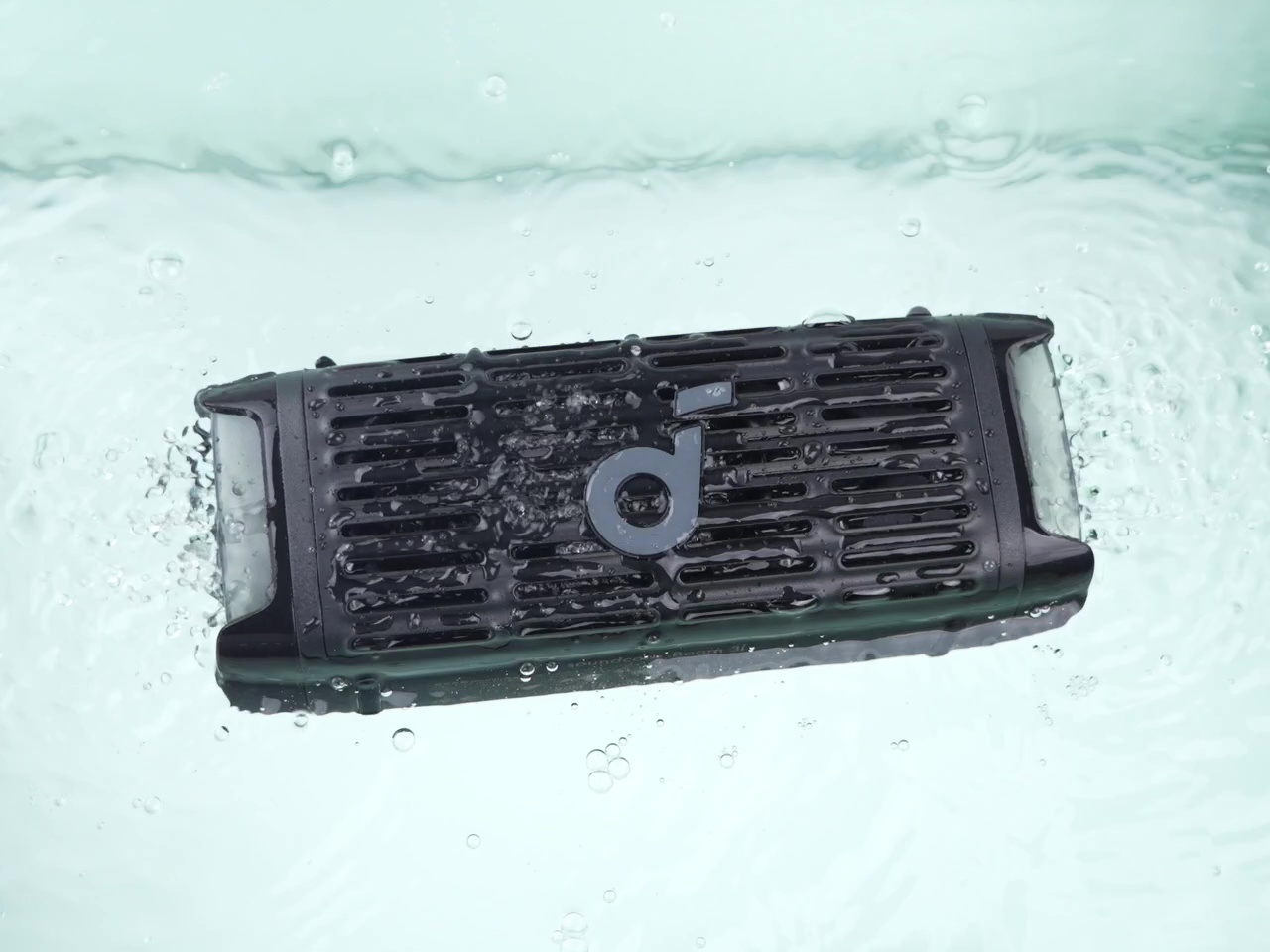
The Boom 3i was designed to survive the kind of afternoon that destroys other electronics. It floats on water. It shakes sand off its housing without clogging the drivers. The IP rating holds up in the rain and in the pool, and while most outdoor speakers are water-resistant in theory and fragile in practice, Anker engineered this one for submersion rather than splashes. It is the Bluetooth speaker you stop worrying about the moment you walk out the front door with it.
The audio output is full and wide for a speaker this compact, with enough low end to anchor a playlist over ambient crowd noise without the distortion that plagues smaller drivers at higher volumes. For a 4th of July gathering where the speaker will inevitably be nudged off a table, handed between a dozen people, and left near the cooler in a wet patch of grass, the Boom 3i is the one pick on this list that was engineered specifically for that set of conditions.
What we like:
Floating capability is the one feature that separates it from every comparable speaker at this price
What we dislike:
The design prioritizes durability over aesthetics, which shows in the bulkier silhouette
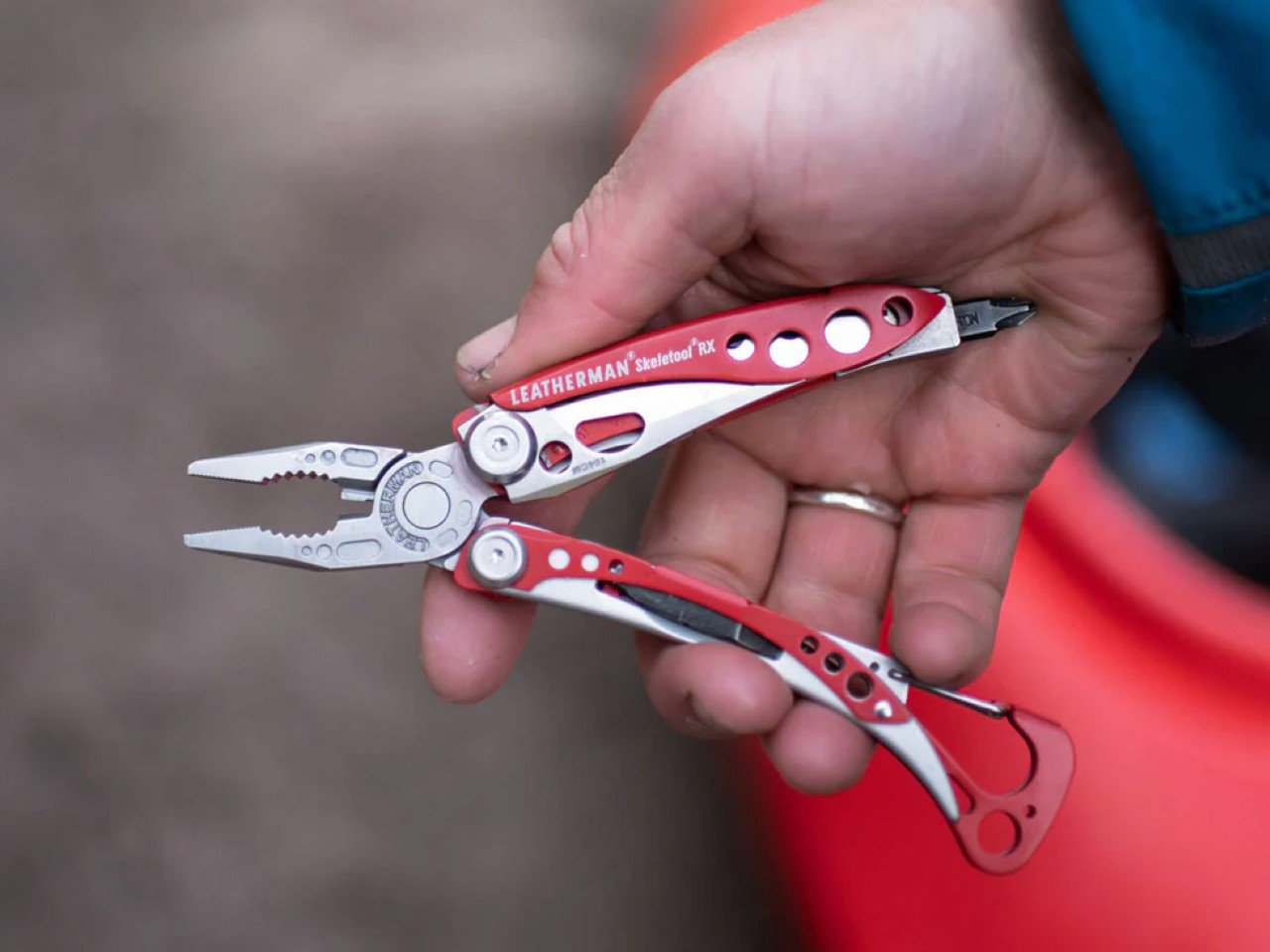
3. Leatherman Skeletool RX
The Skeletool was built around an edit. Leatherman stripped the tool down to seven functions, removed everything that required compromise, and arrived at something genuinely elegant for a multitool: a stainless steel combo blade, needle-nose pliers, a bit driver, a removable pocket clip, and a carabiner that doubles as a bottle opener. That last detail is the most honest acknowledgment a tool manufacturer has ever made that a 4th of July multitool has a very specific social use case. Five ounces, built in Portland, Oregon.
The bottle opener earns its place at a summer cookout, but the pliers and driver mean it stays useful through the entire weekend and the weeks after. Most multitools feel like a design compromise. The Skeletool feels like a design decision. The skeletonized frame that gives it its name is functional rather than decorative, reducing weight without reducing grip. It is one of those tools that looks better the more it gets used, which is the best thing you can say about anything made from stainless steel.
What we like:
The carabiner bottle opener is a genuine design insight rather than a novelty feature
What we dislike:
Seven functions cover most use cases, but it will not satisfy anyone who needs scissors or a saw
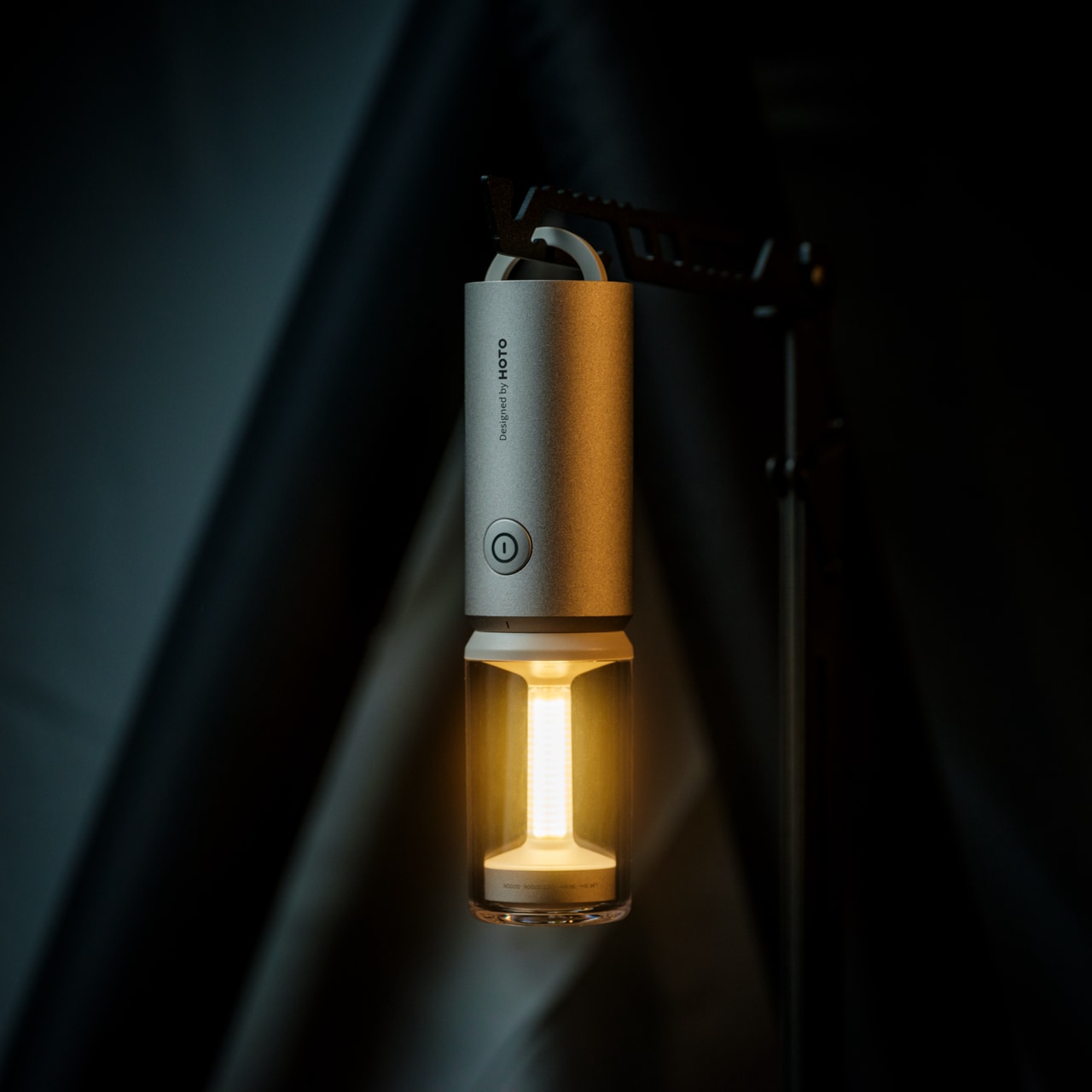
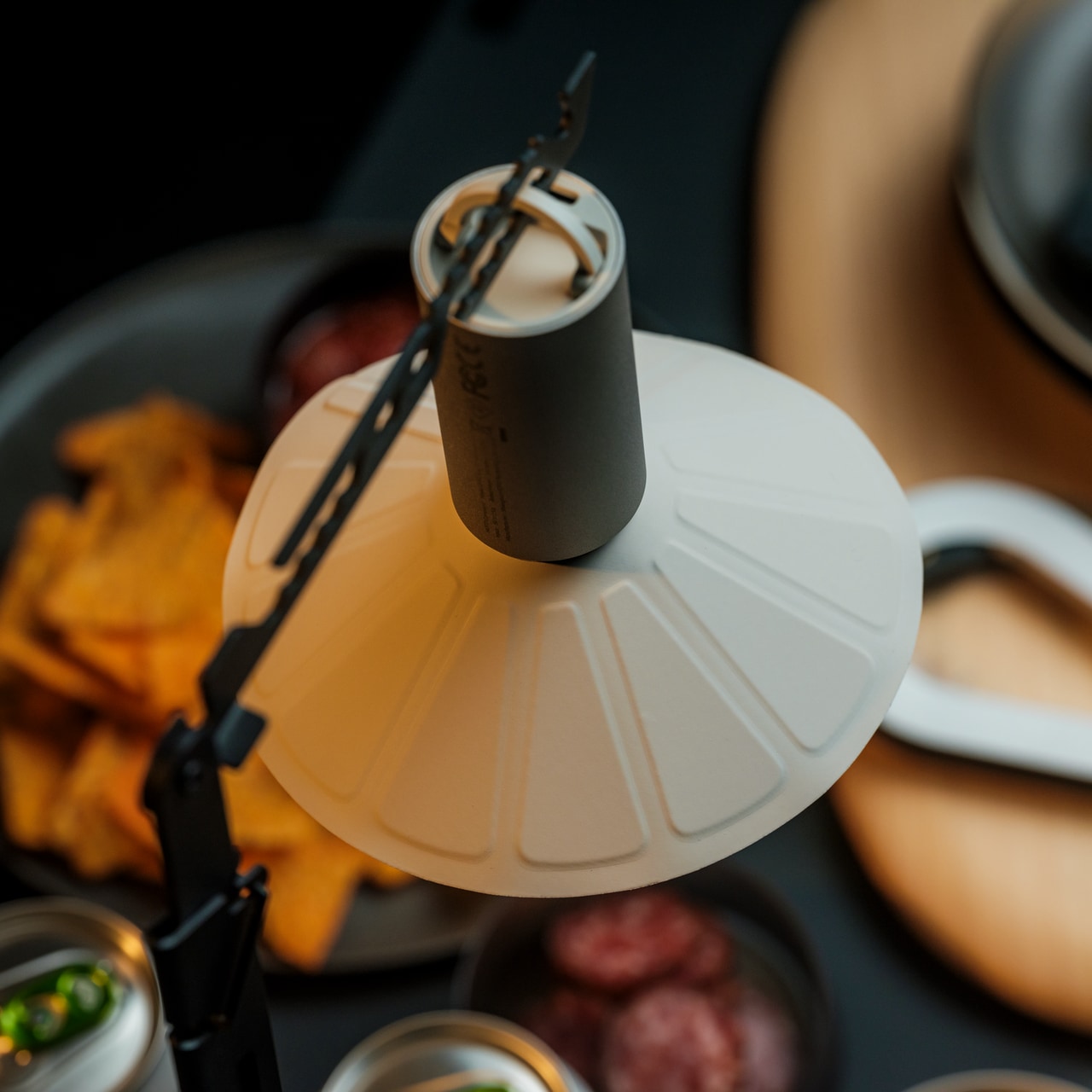
4. TriBeam Camplight
Most camp lights make you choose between utility and atmosphere. The TriBeam refuses that trade-off. At $65 and 135 grams, it switches between a soft ambient glow for conversation, a focused flashlight beam for task lighting, and a diffused lantern mode that fills a campsite evenly. Three distinct lighting behaviors in a single award-winning body that measures just 12.8 centimeters tall and fits in a jacket pocket, which is not something most camp lanterns can honestly claim.
The design is the product. Clean cylindrical housing, no unnecessary buttons, nothing that reads as cheap at close range. It earns its price through the quality of the materials and the precision of three modes that each do their job without bleeding into the others. For anyone spending part of the 4th of July weekend outdoors, whether camping or simply sitting on a dark lawn waiting for fireworks, the TriBeam handles the full range of lighting needs without requiring a second item in the bag.
Three genuinely distinct lighting modes that each solve a specific outdoor scenario
What we dislike:
The compact scale means battery life has limits on multi-night trips
5. Matador Pocket Blanket 3.0
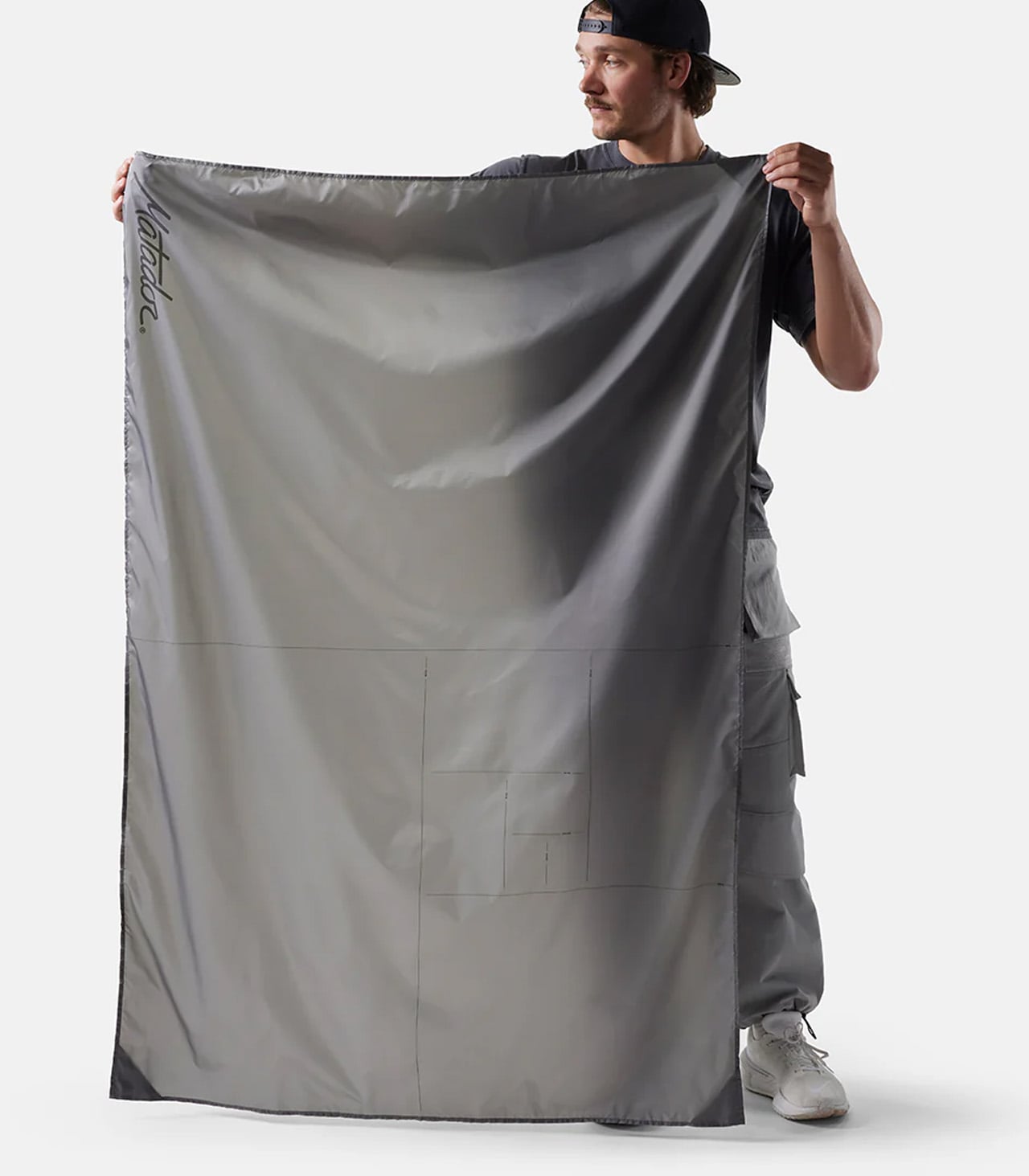
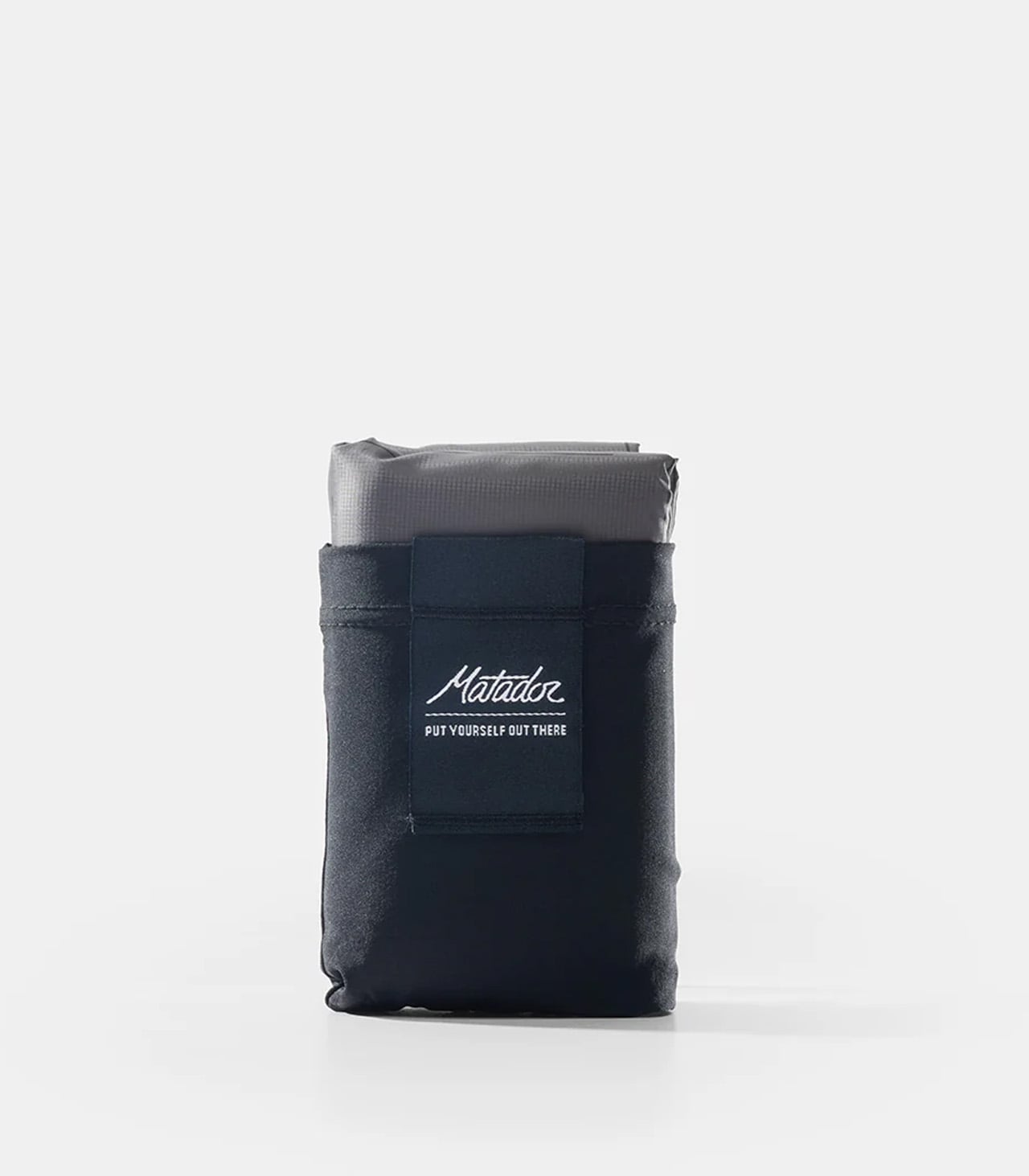
The Matador Pocket Blanket folds to the size of a carabiner pouch. Opened, it seats two to four adults on a water-resistant surface with integrated corner stakes for wind. The bottom layer blocks moisture from wet grass and damp park lawns; the top layer resists sand and water without trapping them. Everything about this object was designed for exactly the 4th of July scenario of sitting on public ground watching fireworks without wearing whatever that ground has been absorbing all afternoon.
The Easy-Pack Pattern built into the blanket’s face guides the refold intuitively, which solves the specific frustration that makes people abandon ultralight blankets within the first month of owning them. At $35 it is the lowest-price item on this list and potentially the most used, because it solves a problem that comes up every single time the weather is good enough to go outside. That ratio of price to utility is rare and worth recognizing when you find it.
What we like:
The built-in refolding guide makes packing it back down a one-attempt operation
What we dislike:
The sizing works well for two adults, but a larger group will want a second one
6. Planbok Waterproof Wallet
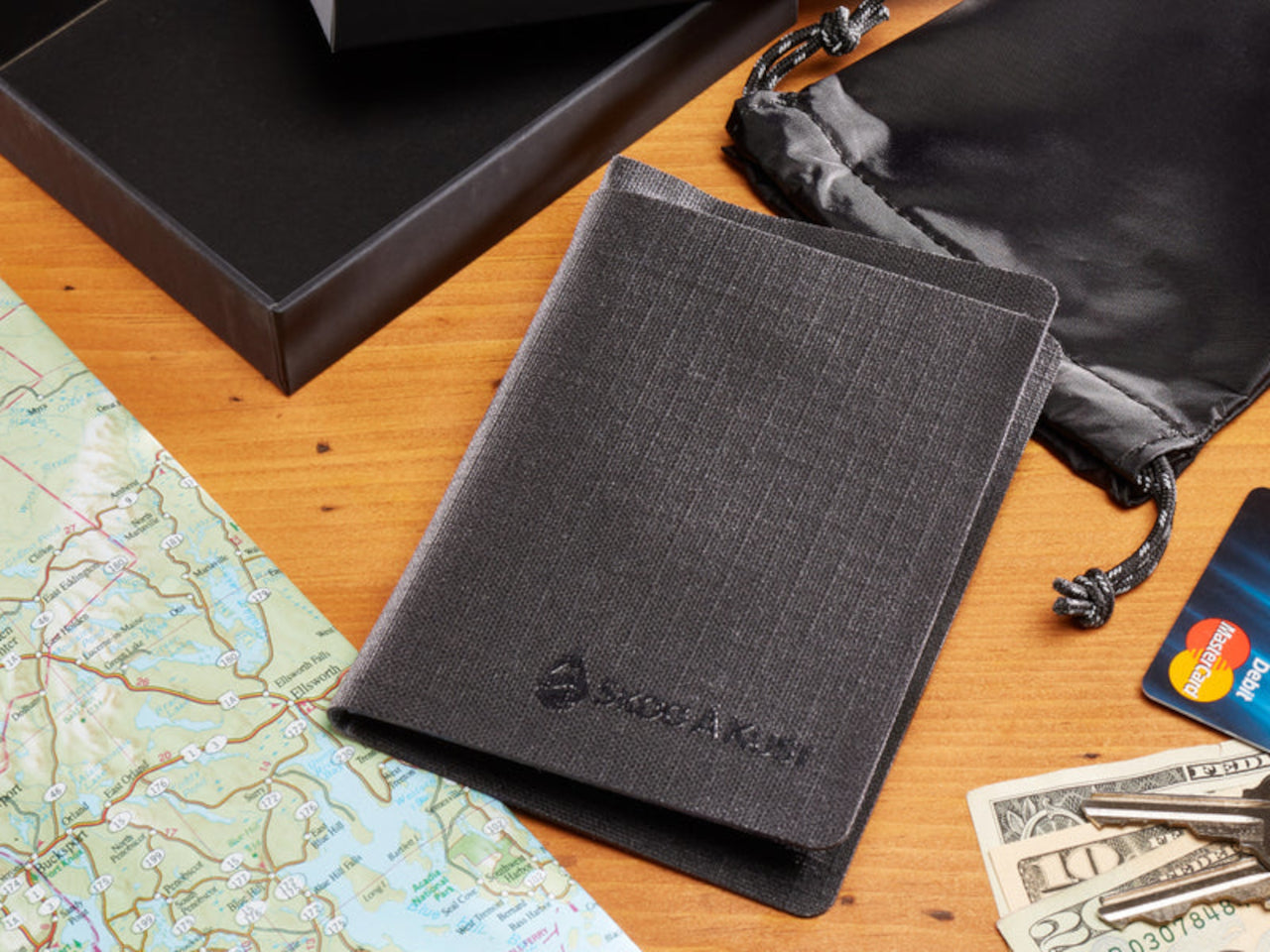
The Planbok is built from 420 denier TPU-coated ripstop nylon with fully welded seams and an IPX6 water resistance rating. It floats if you drop it in the water. That detail separates it from every slim wallet on the market, including the ones that market themselves as water-resistant. The difference between water-resistant and waterproof is invisible until it matters, and on a weekend that involves boats, coolers, rivers, or an unexpected downpour, it matters immediately and without warning.
The profile stays slim enough for a front pocket, cards slide easily, and the construction feels deliberate rather than disposable. It is not a novelty item. It is the answer to the quiet anxiety of carrying a leather bifold to a lake weekend, which is a real anxiety that real people experience every summer without ever quite solving it. Covering a genuine everyday frustration with a well-made object at a reasonable price is precisely the brief that good design exists to fulfill.
What we like:
Buoyancy is a genuine functional feature, not a marketing headline
What we dislike:
IPX6 covers heavy rain but stops short of full submersion, which the floating capability can quietly imply
7. DraftPro Top Can Opener
There is a version of cracking open a cold can on the 4th of July, and there is a better version. The DraftPro, designed by award-winning Japanese designer Shu Kanno and built in Japan, removes the entire top of a can in a single smooth motion, leaving a clean, safe edge and a wide-mouth opening that releases the full aroma of whatever is inside. Beer tastes closer to draft. Sparkling water breathes. A canned cocktail becomes something you can actually build on, adding ice directly into the can or mixing in the source without reaching for a glass or a shaker.
The opening motion is controlled and quiet — not by accident but by engineering — and the grip was shaped to sit naturally in the hand without slipping or requiring a particular angle. Nothing about it reads as a novelty. It is a tool designed with the restraint that Japanese craft disciplines demand: nothing added, nothing wasted, every detail in service of the one thing it exists to do. At a cookout full of people who have never seen one, it will be the most-passed-around object on the table.
Removes the full top cleanly, transforming a canned drink into a genuinely better sensory experience
Works as a cocktail vessel, ice bucket, and open drink in one move with no extra equipment
What we dislike:
Stock is limited — only a few units available at the time of publication, so early ordering matters
8. Nimble SharePower
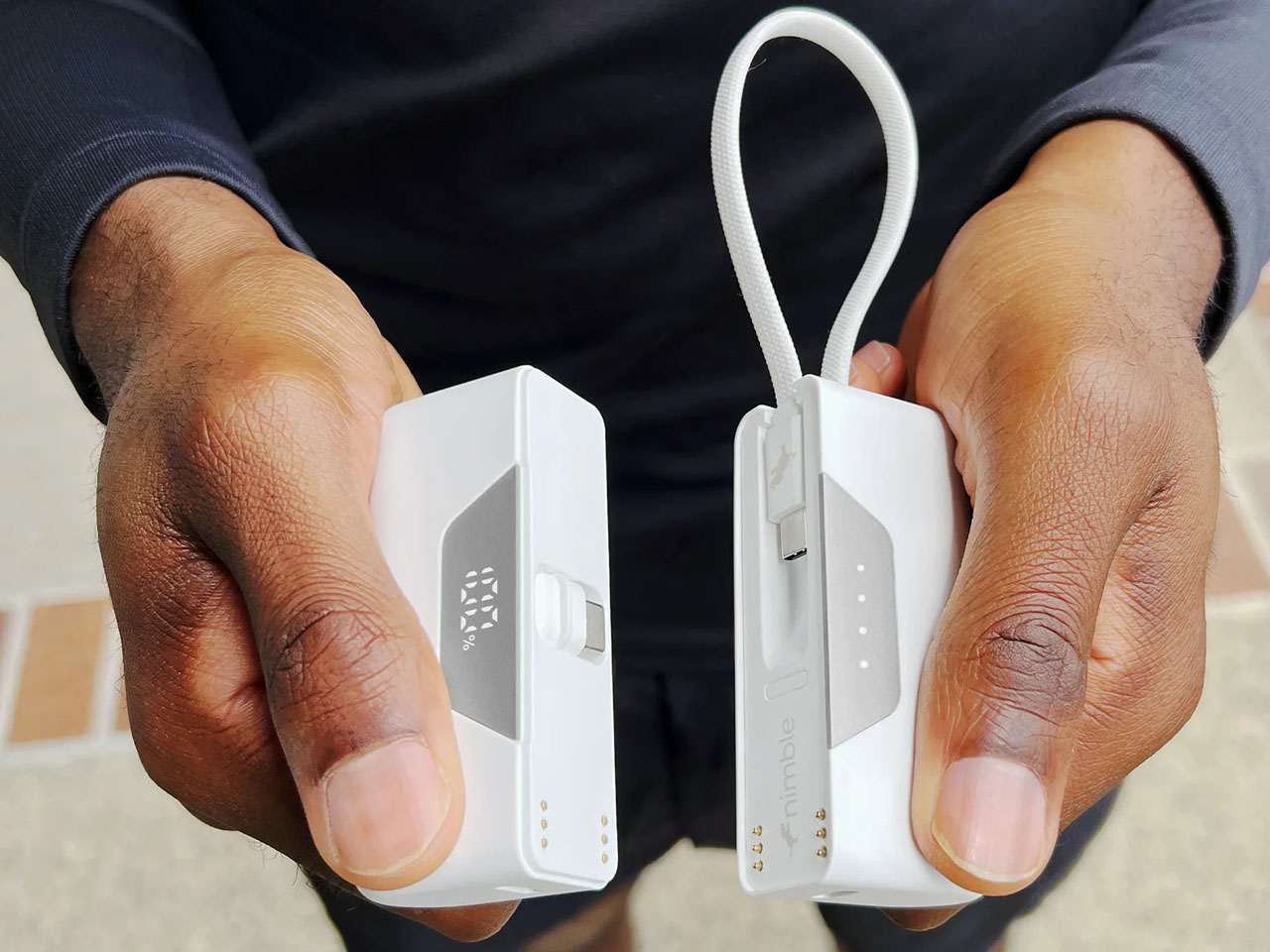
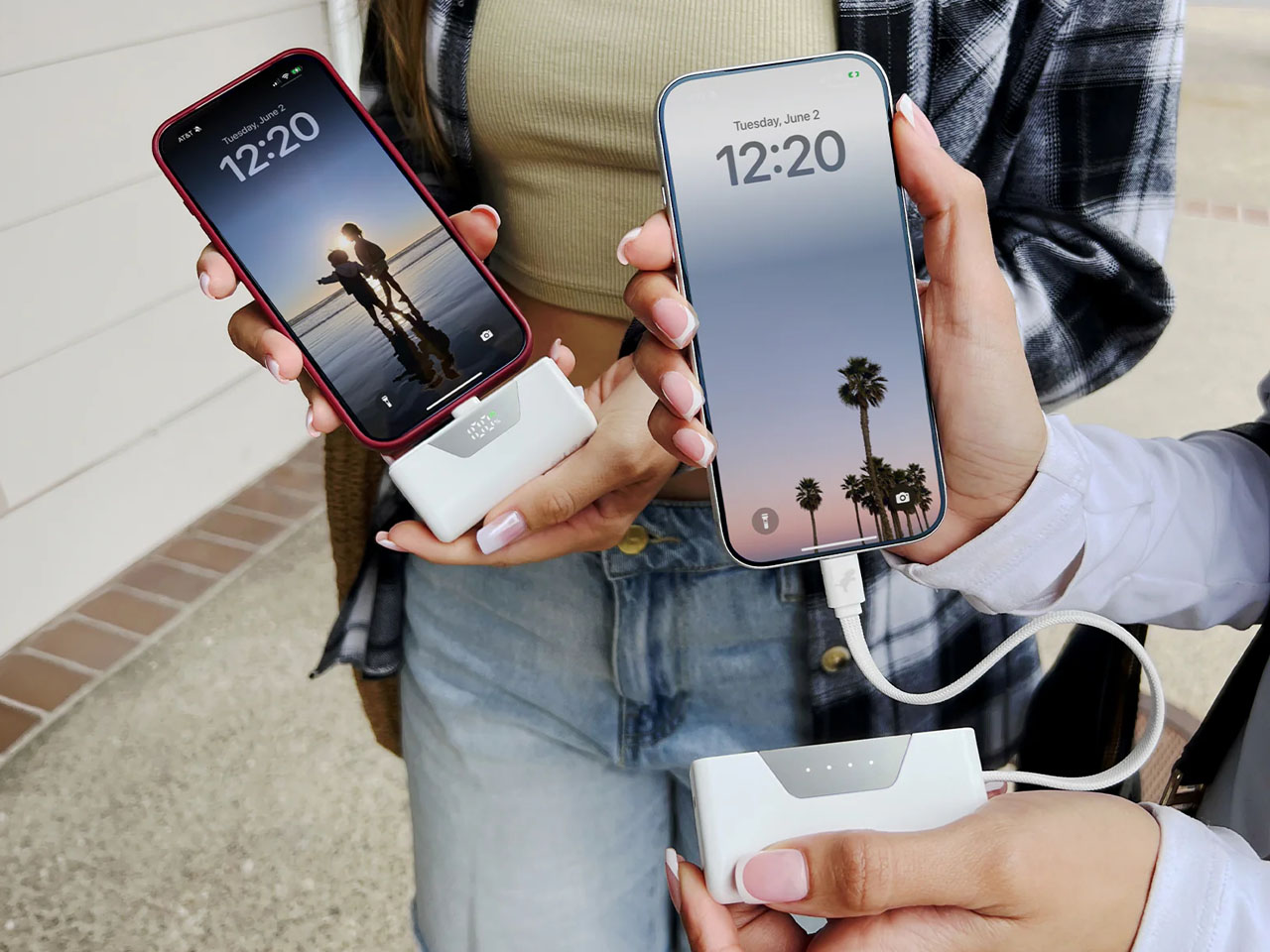
The SharePower from Nimble is a 10,000mAh power bank that splits in half. The two halves are held together magnetically and separate cleanly, with one half housing a battery percentage display and the other using four LEDs to communicate charge level. The braided lanyard connecting them opens into a USB-C cable when the halves are split apart. In joined mode, it delivers 35W charging; split, each half runs at 20W for a single device or 15W across two. The whole unit measures 3.05 by 2.75 inches at under one inch thick.
The concept is obvious in retrospect, which is the clearest sign of a genuine design insight. Every group trip produces the same conversation about who has the power bank and whether anyone can borrow it, followed by a compromise where the original owner gets it back at 30 percent. The SharePower ends that conversation by making sharing a built-in function rather than an inconvenience.
What we like:
The split-mode design solves a social problem that has existed since portable batteries were invented
What we dislike:
The translucent color options are fun in concept but may narrow the gift appeal depending on the recipient
The Only Standard That Matters
Eight products with one shared quality: each one earns its place through a specific design decision rather than a general category promise. The RetroWave works through a blackout. The Boom 3i floats. The Skeletool has a bottle opener exactly where it should. The TriBeam gives you three different lights in one hand. Good design shows up like that — not as a feature list but as a moment where something just works better than you expected it to.
That is the real standard for a gift. Not whether it looks impressive in the box, but whether it gets used on the second trip, the third, the tenth. Most of what is on this list ships before the holiday, which means the only remaining variable is whether you want to give someone something that will still be in their bag come Labor Day.
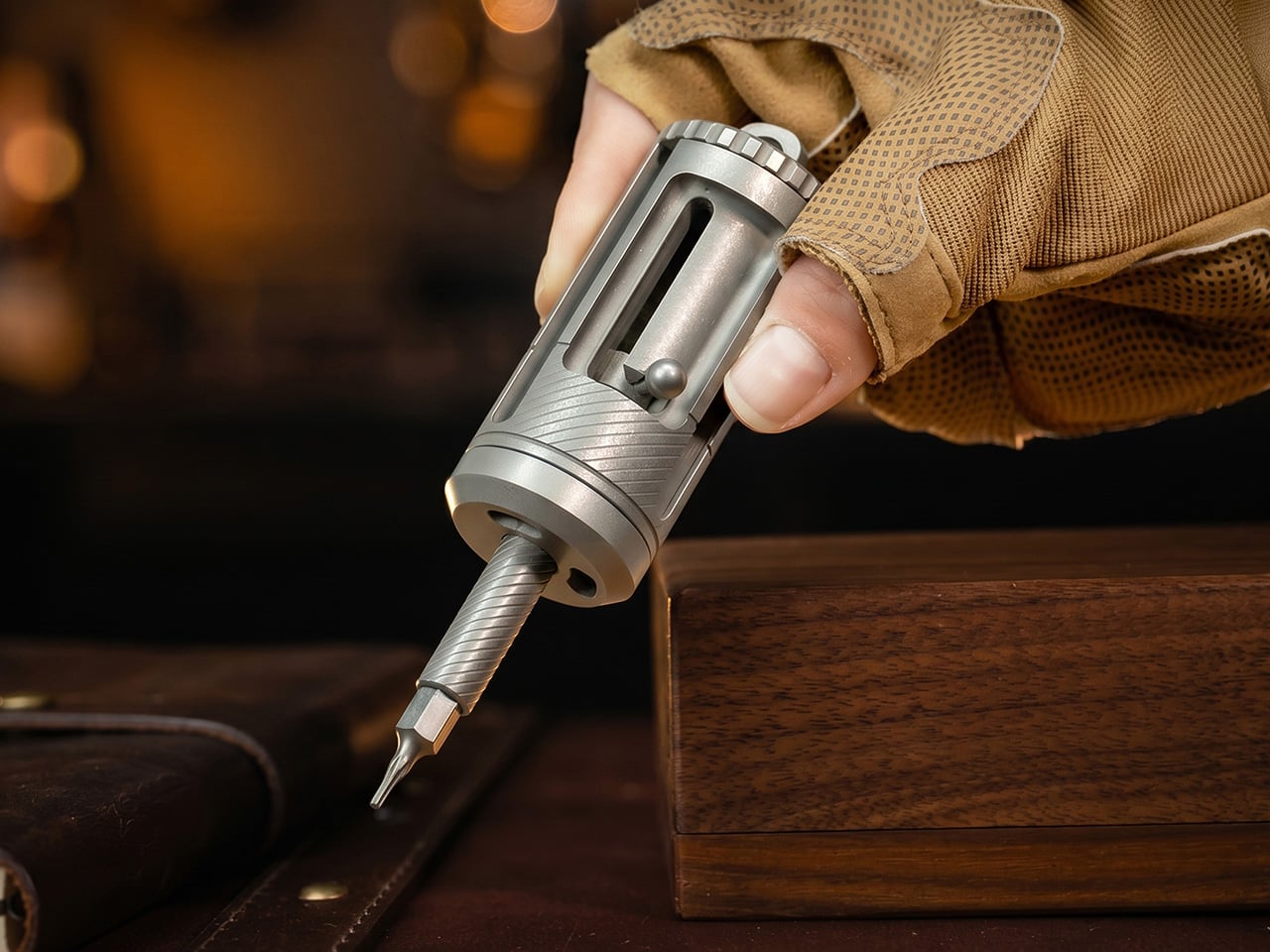
When Eck Studio launched the FixBoy in 2025, it found a dedicated audience that loved its compact form and clever revolver-style bit holder. The tool was small, fidget-friendly, and perfect for light-duty tasks. Community feedback, however, pointed toward a clear desire for something more. Users wanted the same smart design principles applied to a tool built for bigger jobs, something with more leverage, more strength, and the professional capability to become a primary driver rather than a backup. It was a call for an evolution, asking for a tool that could graduate from a pocket novelty to a serious piece of hardware.
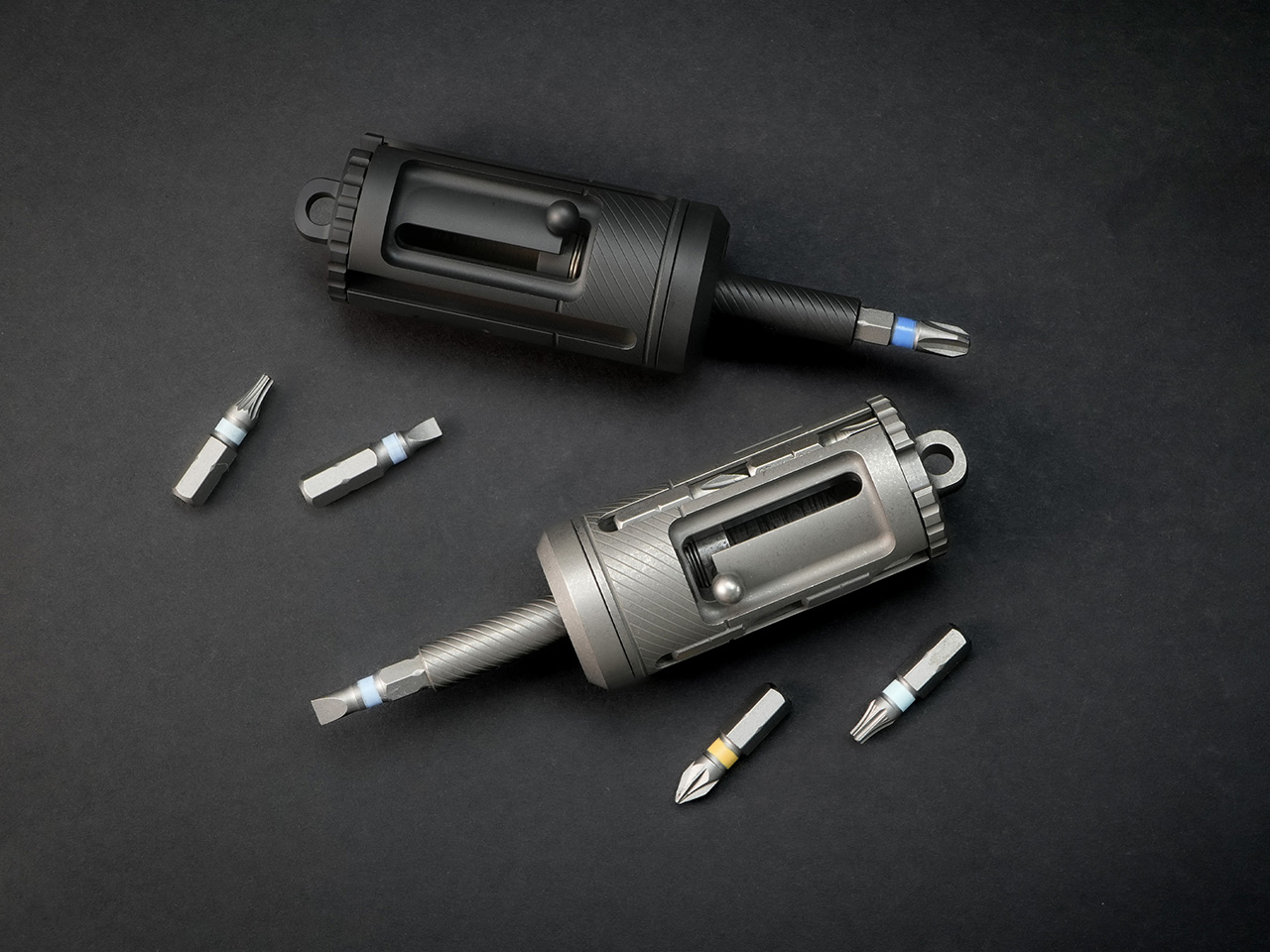
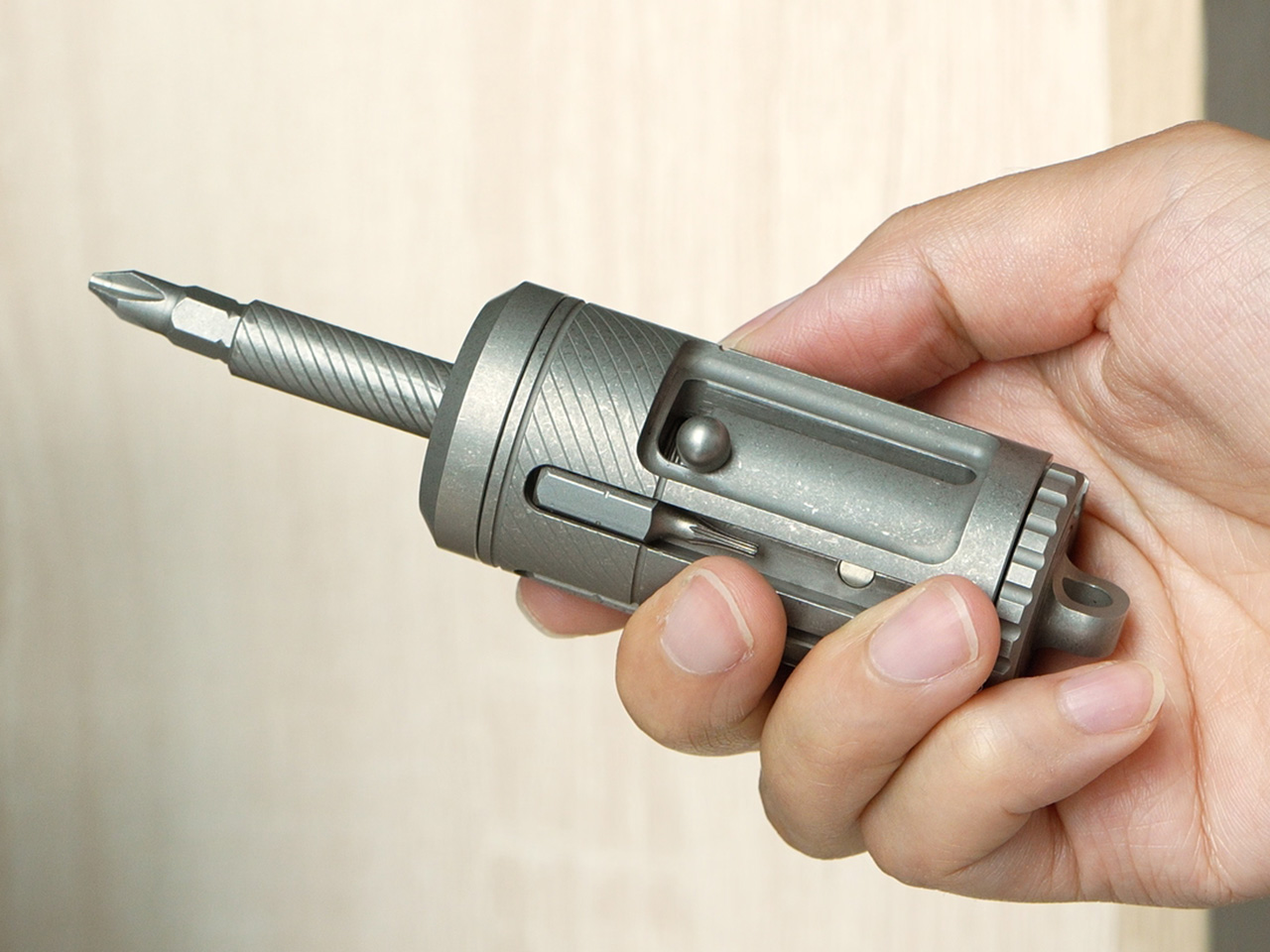
The FixMan is the answer to that call. It represents a complete redesign from the ground up, scaling the original concept into a more powerful and refined tool. While it keeps the iconic revolver bit chamber and bolt-action extension, the FixMan is a larger, more robust instrument built from Grade 5 titanium. It accommodates standard 1/4-inch bits, integrates a three-mode ratchet system, and delivers the torque needed for actual repairs, from assembling furniture to adjusting gear in the field. It’s what happens when a good idea is given the space to become a great one.
The ratchet mechanism is the functional heart of the FixMan, and its execution reveals a deliberate approach to both utility and aesthetics. Most ratchet screwdrivers on the market rely on off-the-shelf steel ratchet components, with manufacturers focusing customization efforts on the outer shell while leaving the core mechanism standard and exposed. Over time, those steel internals are prone to rust, the mode switching can feel clunky or inconvenient, and the bulky ratchet head remains visible, compromising the tool’s profile. Eck Studio took a different path. The ratchet structure in the FixMan was developed entirely in-house, allowing the team to engineer a hidden ratchet system that sits cleanly inside the titanium body. Even the internal ratchet components are CNC-machined from titanium, creating a mechanism that resists corrosion, maintains tighter tolerances, and delivers stronger torque capability compared to typical steel assemblies. The result is a more durable, more refined, and longer-lasting system that operates smoothly and feels premium in hand.
The system operates in three distinct modes: tighten, loosen, and locked. Tighten mode enables continuous forward driving with smooth, controlled ratcheting that eliminates the need for constant repositioning. Loosen mode reverses the action for clean screw removal, while locked mode disables the ratchet entirely, providing full manual control for precision tasks where feel and feedback matter more than speed. Switching between these modes takes seconds and can be done one-handed, a design detail that becomes especially useful when working in awkward positions or tight spaces. Each position locks firmly into place with a satisfying mechanical click. Eck Studio precision-machined every component of the ratchet assembly, avoiding injection-molded or stamped parts in favor of individual CNC-machined pieces. The knurling on the grip is also CNC-cut rather than pressed, creating grooves that provide secure purchase without being abrasive during extended use. Titanium, brass, and ceramic bearings work together to deliver smooth operation, strong torque transfer, and zero wobble under load. The entire assembly is built for longevity, designed to get smoother and more familiar with use rather than looser or less precise.
Reaching screws in deep or narrow spaces is where most compact drivers fall short, and the FixMan solves this with its bolt-action hidden extension. A spring-loaded slide mechanism deploys an additional 26 millimeters of reach with a single push, transforming the driver from a compact 77.5-millimeter tool into a 103.5-millimeter extender. The extension snaps out smoothly and locks securely, providing stable support even when working at awkward angles or applying significant torque. When the extra reach is no longer needed, the mechanism retracts just as cleanly, collapsing back into the main body without requiring any disassembly or bit removal. The bolt-action design is fast, intuitive, and deeply satisfying to operate, turning a practical feature into a kinetic experience. When you factor in the length of the bits stored inside the revolver chamber, the FixMan can reach approximately 75 millimeters into deep or narrow spaces, making it capable of accessing screws that would be completely out of reach for standard compact drivers.
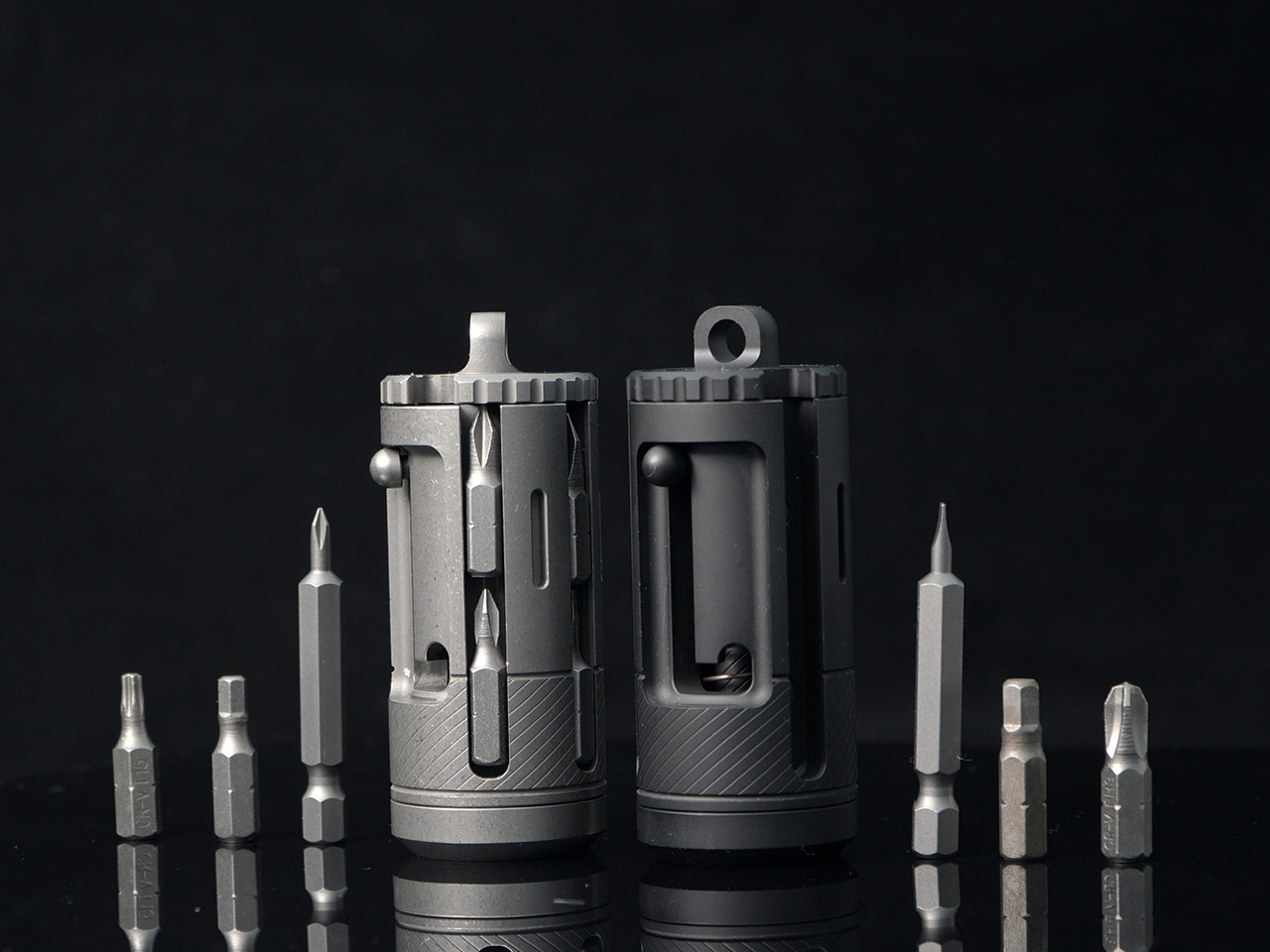
The revolver-style bit chamber is the visual and mechanical signature of the FixMan, borrowing directly from its predecessor. The chamber stores up to ten standard 1/4-inch bits, with each slot capable of fitting bits up to 53 millimeters long. Each bit is held securely in its own magnetic slot, and a rotating selector lets you dial through the chamber to find the bit you need. Each position clicks firmly into place as the mechanism indexes, providing clear tactile feedback. The chamber eliminates the need for a separate bit case or loose bits rattling around in a pocket, consolidating everything into a single, self-contained tool. The included bits cover the most common fastener types: PH1, PH2, PH3, SL4, SL6, H3, H4, H5, T20, and T25. Once selected, a bit snaps into the magnetic holder with a clean, secure fit that keeps it firmly locked during use while remaining easy to swap out when the job changes.
The FixMan’s compatibility with the standard 1/4-inch ecosystem gives it flexibility beyond the included bits. Any standard bit, socket, or extension designed for the 1/4-inch interface will work seamlessly with the driver, opening up a wide range of possibilities for specialized tasks. The magnetic bit holder pulls bits into place instantly, providing dependable retention without requiring excessive force to remove them. This universal compatibility means the FixMan can grow with your needs, adapting to new tasks without being locked into a proprietary system. You can use the bits that came with it, or reach for the specialty drivers and sockets you already trust.
Grade 5 titanium forms the structural foundation of the FixMan, offering an ideal balance of strength, weight, and corrosion resistance. At 144 grams, the driver has enough mass to feel substantial in hand without becoming a burden in a pocket or bag. Titanium’s resistance to rust and corrosion means the tool can handle exposure to moisture, sweat, and outdoor conditions without requiring constant maintenance or protective coatings. The stonewashed finish gives the surface a matte, tactile texture that looks refined and hides the inevitable wear that comes from daily carry. Over time, the finish develops a patina that reflects use without looking worn out, aging gracefully rather than appearing damaged or neglected.
The FixMan is built for people who want a capable, professional-grade screwdriver that fits into an everyday carry rotation. It’s suited to those who assemble, adjust, repair, and tinker regularly, whether that means maintaining camera gear, building custom keyboards, adjusting bikes, assembling furniture, or handling the kinds of small mechanical tasks that show up unexpectedly throughout the week. The tool’s compact dimensions and integrated storage make it practical for pocket or bag carry, while its ratchet system and extendable reach give it the performance needed for real work. The fidget-friendly mechanisms, from the spinning chamber to the bolt-action slide, make it a tool you’ll want to pick up and interact with, not one that sits forgotten in a drawer.
Eck Studio offers the FixMan in two finishes: a stonewashed titanium version and a black PVD option for those who prefer a darker, more subdued aesthetic. Custom engraving is available for personalization, and a handmade leather sheath provides additional protection and easier carry for those who prefer belt or bag mounting over direct pocket storage. For those who want low-light visibility, the driver features four enlarged tritium slots designed to accommodate 2 x 12 millimeter tritium tubes, which provide up to 20 years of self-powered glow without batteries or charging. Chosen tritium tubes are installed before shipping, making the tool ready to use straight out of the box.
The FixMan is priced at $158 for the stonewashed version and $168 for the black PVD finish. The tool is currently available through its campaign, with deliveries expected to begin in October 2026.
Most flashlights spend more time in a drawer than in a pocket. The ones people actually carry tend to earn that habit by being genuinely useful across more than one situation, not just reliable when the power goes out. That gap between gear carried out of habit and gear someone actually reaches for is where most EDC tools either prove themselves or collect dust.
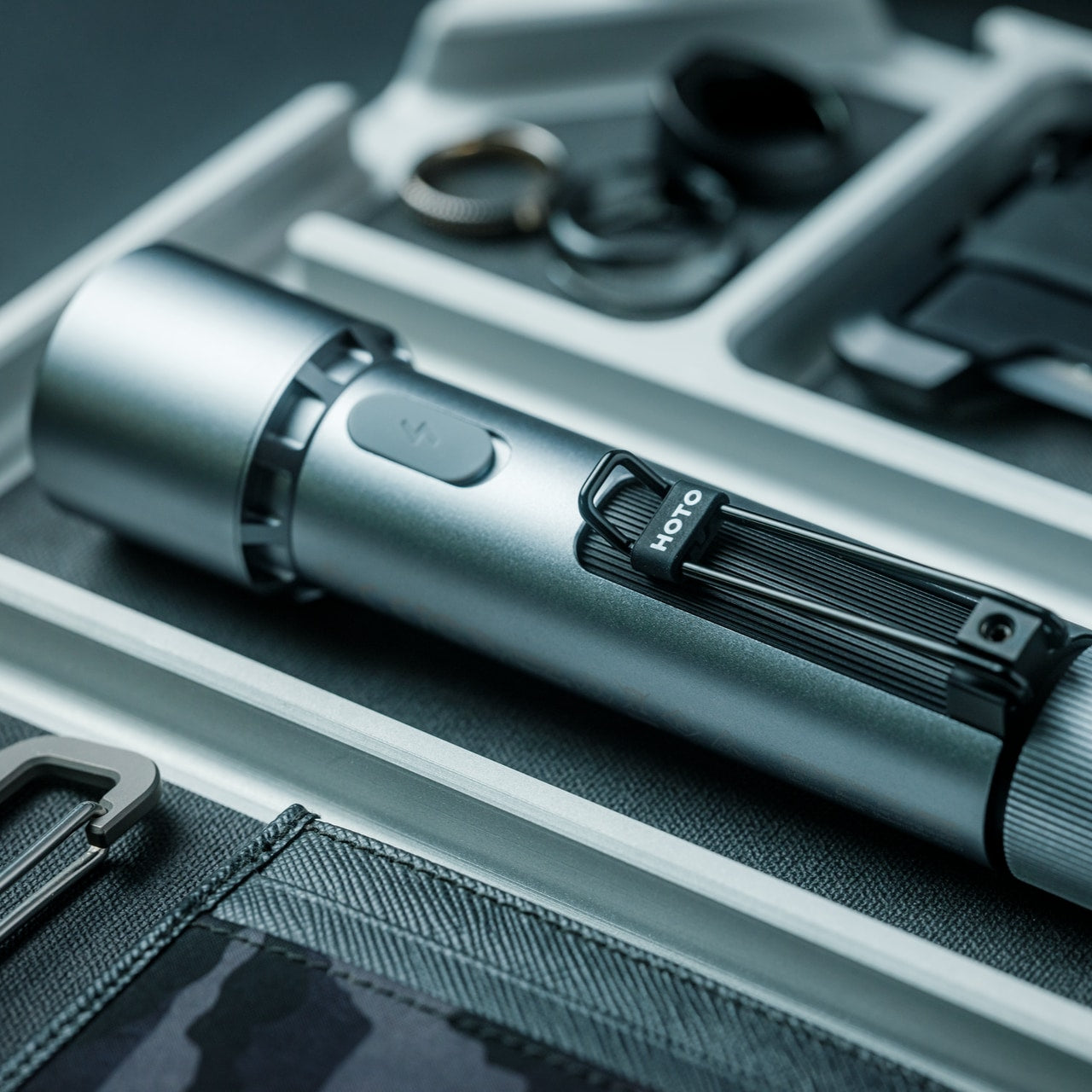
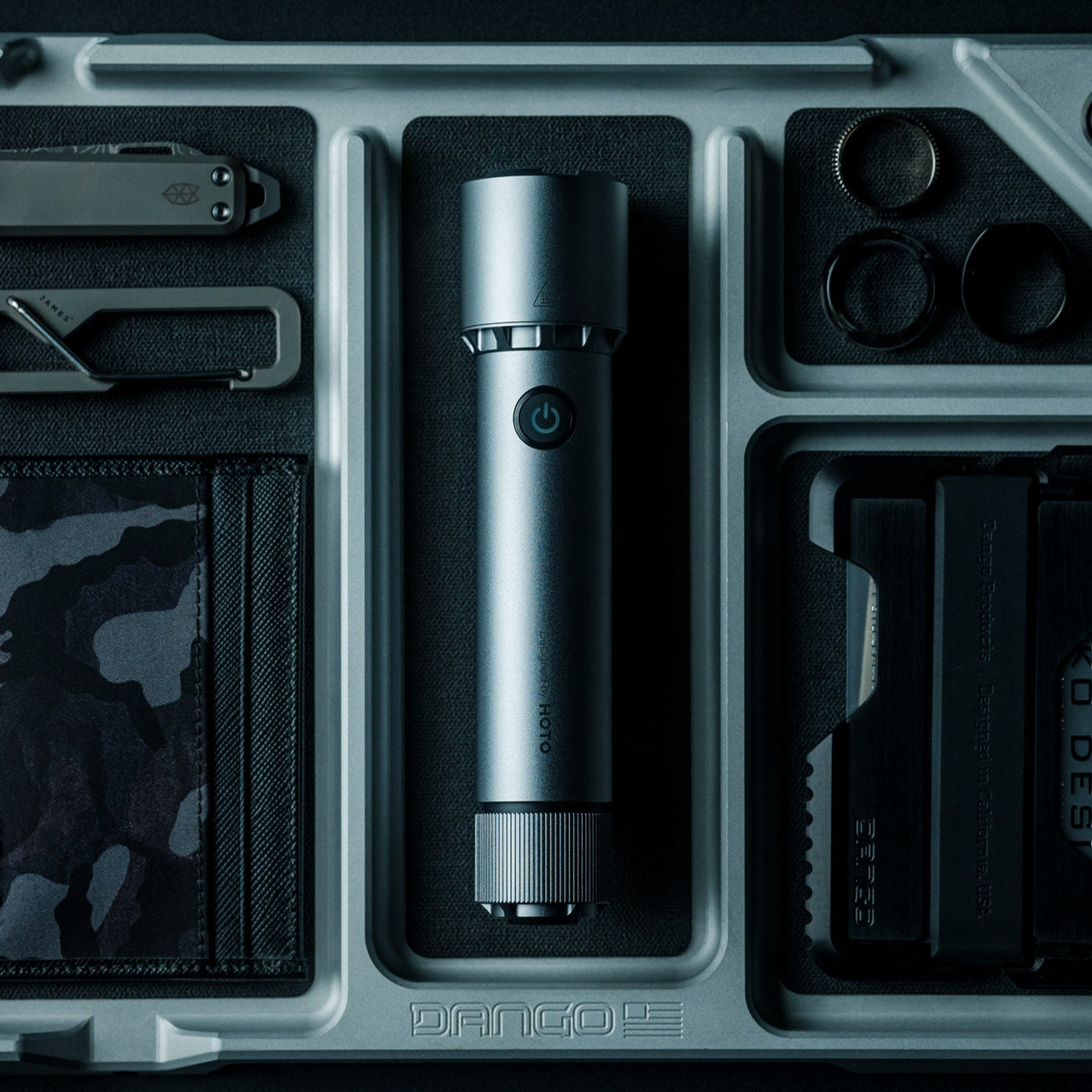
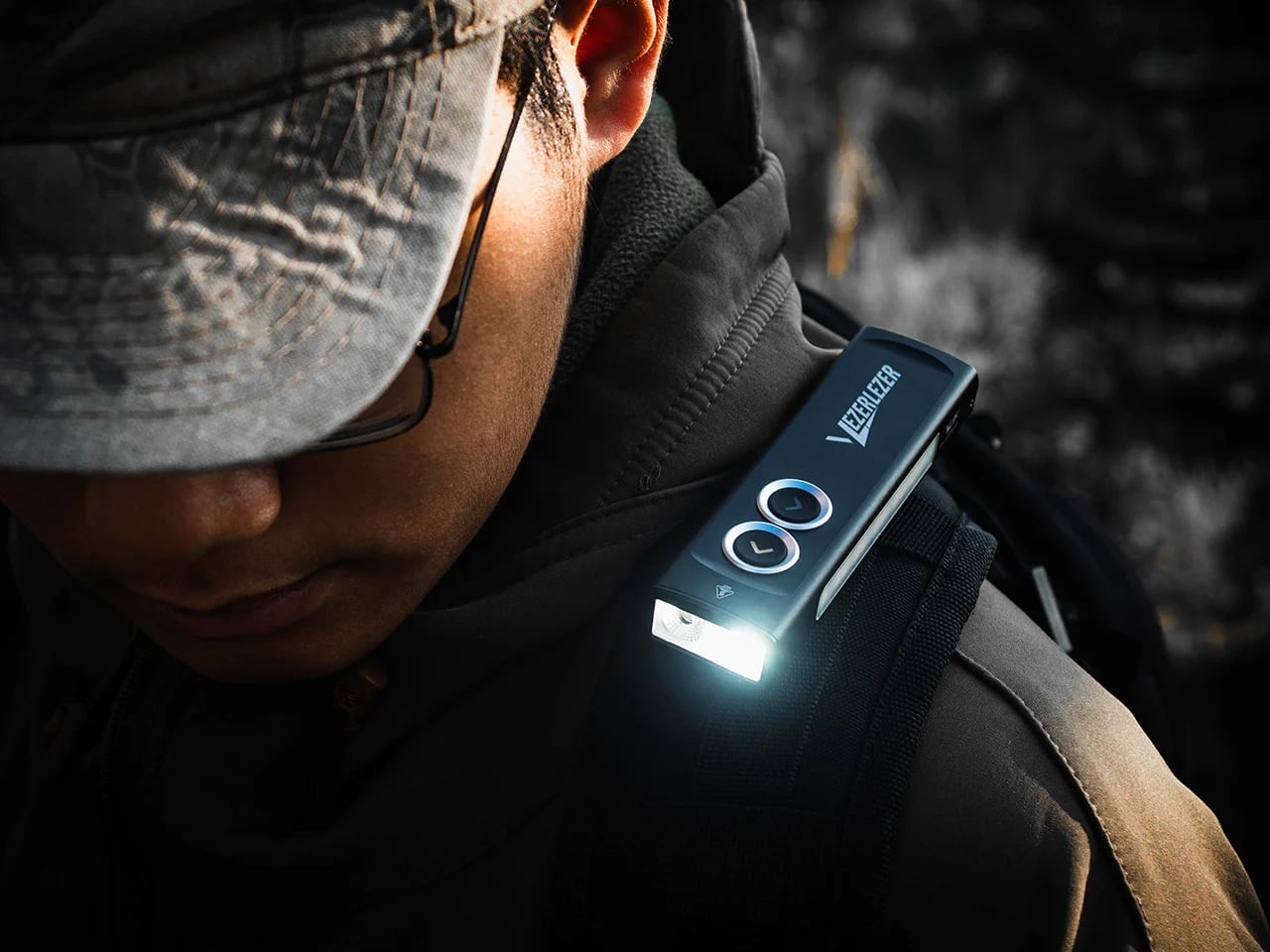
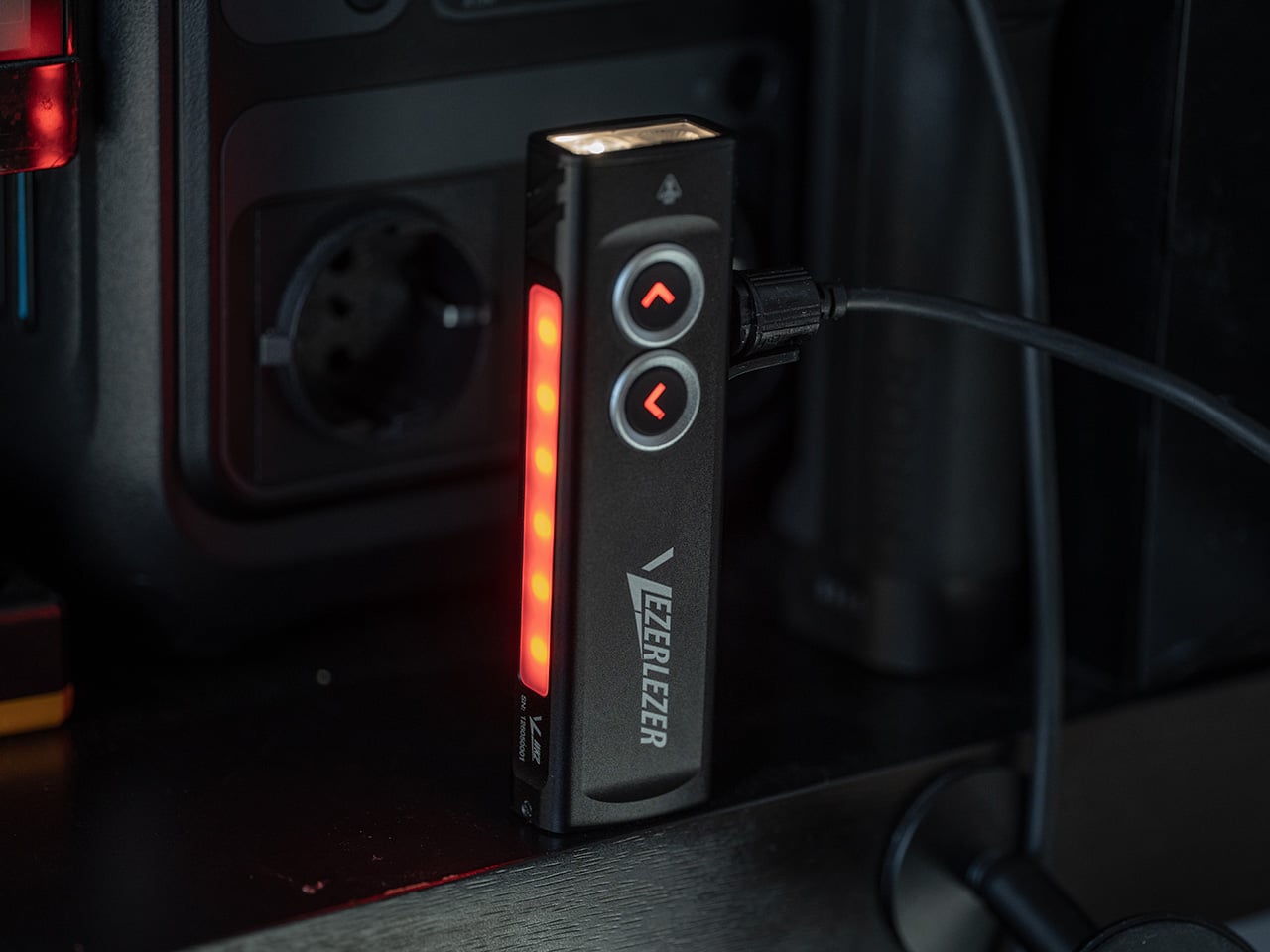
The VEZERLEZER WK2 takes that problem head-on. Rather than being one bright option you might need someday, it covers the full range of lighting situations a person encounters in an average week, from navigating dark outdoor spaces to close work with your hands to pointing something out across a room. The goal is to be a light you actually use every day, not just carry.
Its front-facing white spotlight handles the primary illumination work, reaching up to 1,300 lumens with a beam that covers serious distance. It isn’t a fixed brightness setting, though. From moonlight mode through low, medium, and high, the output ramps in either direction on command, so it’s easy to dial in exactly the right amount of light rather than landing on whatever happens to come next.
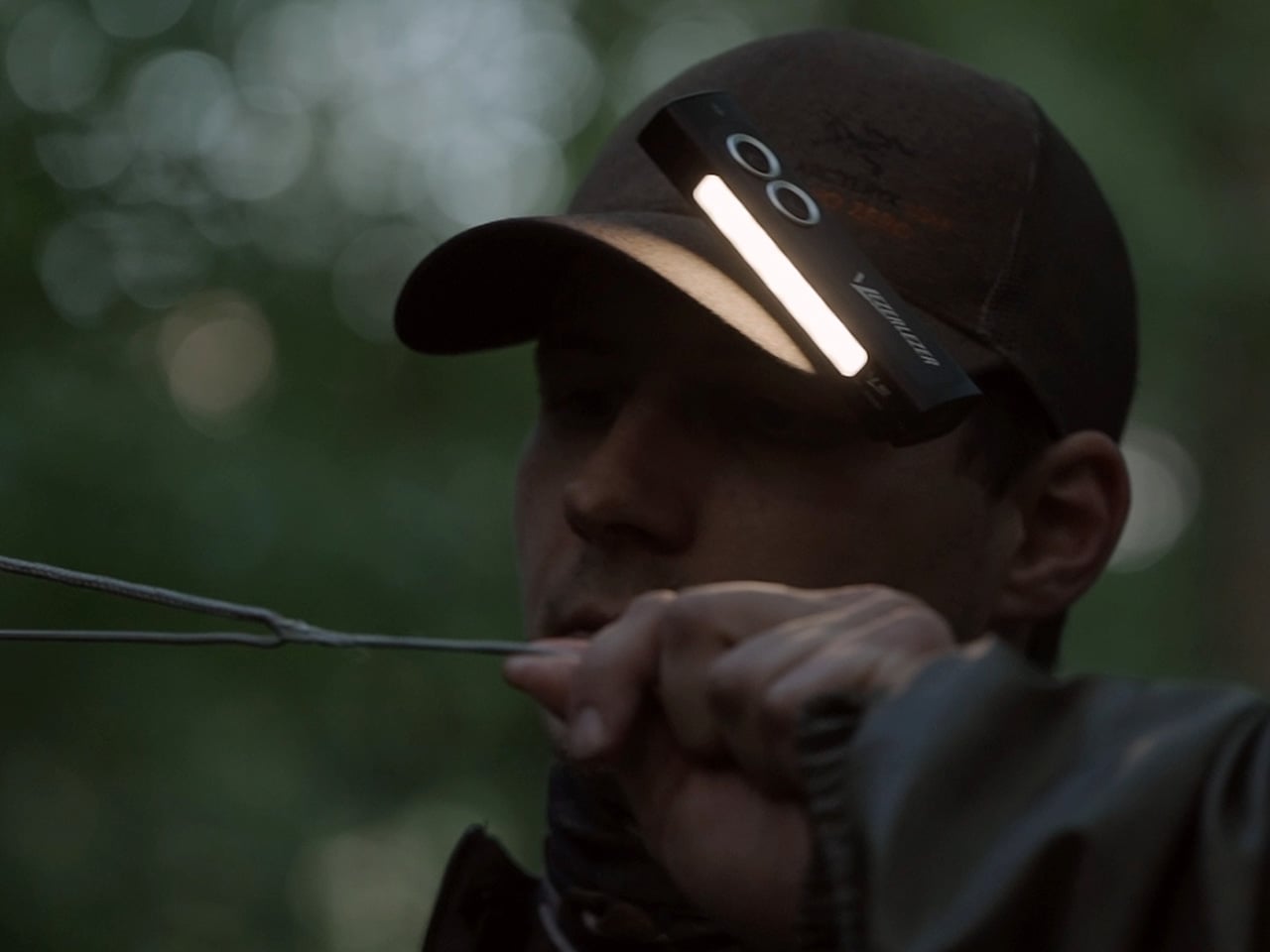
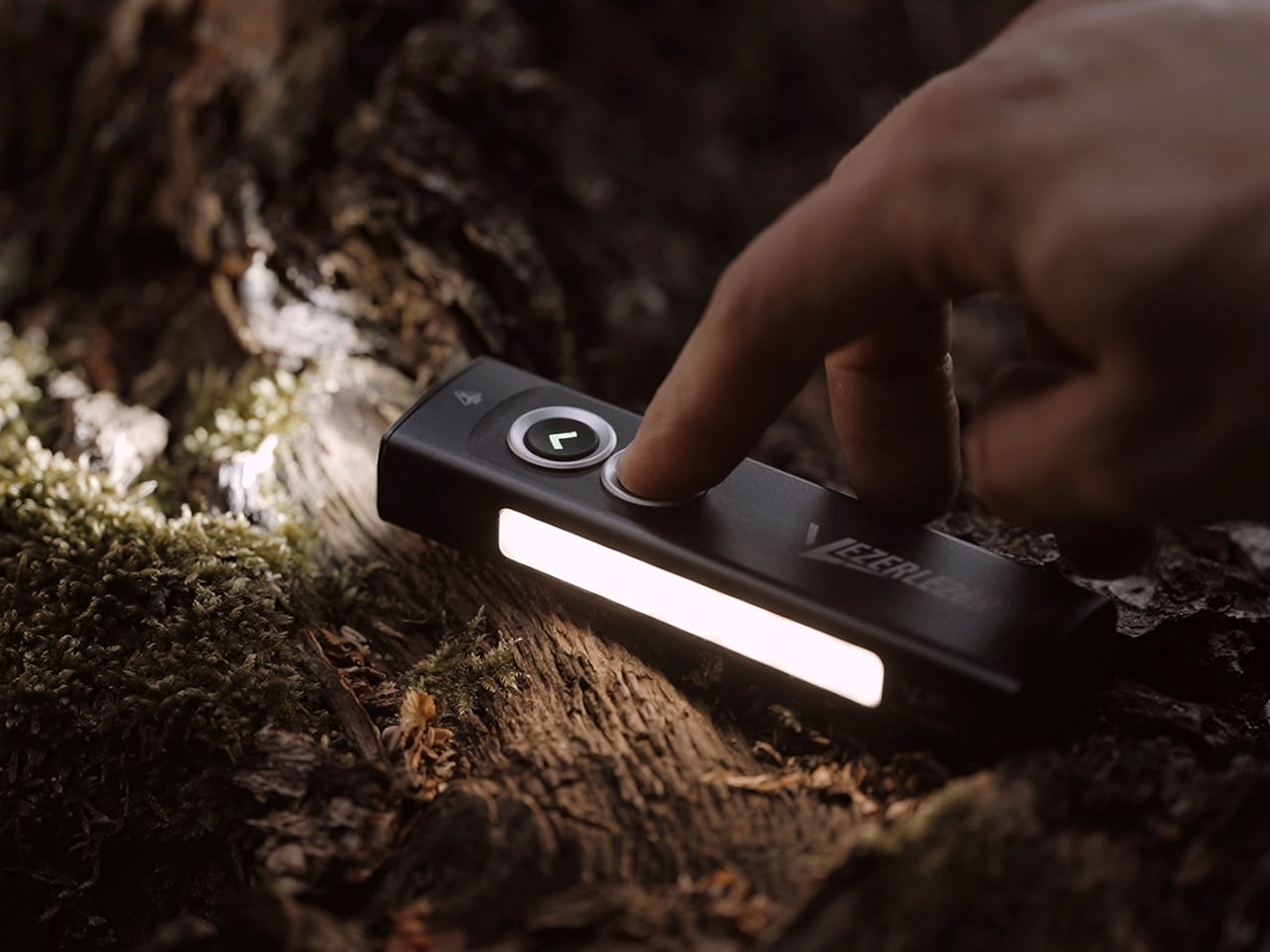
The side light offers an entirely different kind of output. Built around a 4,500K warm-tint LED with a color rendering index of Ra 90, it reveals true colors rather than washing them out, making it useful for close-up tasks where accuracy matters. It’s rampable from as low as one lumen up to 200, covering everything from quiet bedside reading to a broader wash of task lighting.
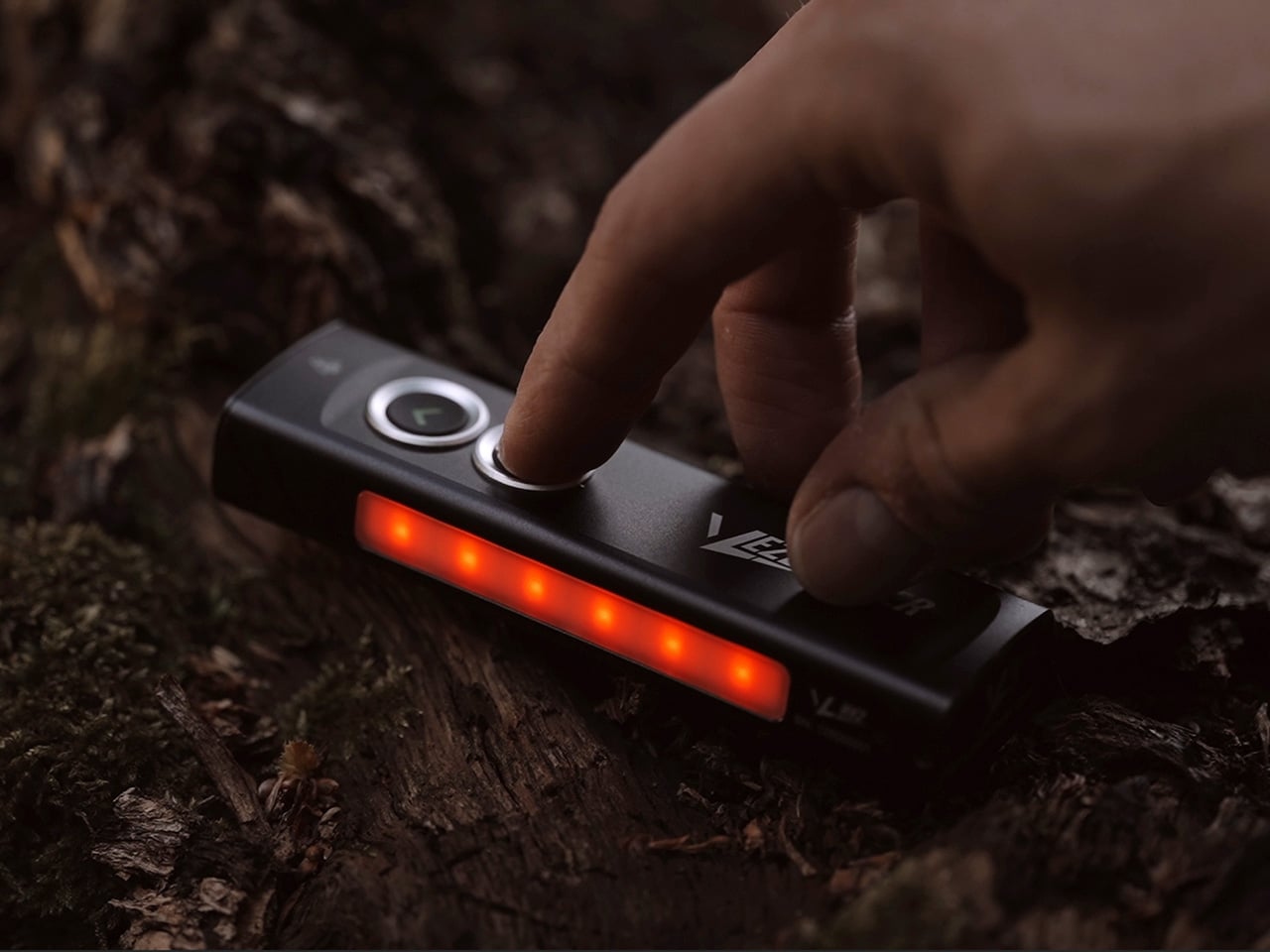
The same side strip also has a red light mode, and it’s more practical than it might initially seem. Red light doesn’t wreck your night vision the way white does, making it a much gentler option for moving around after dark without startling yourself or anyone nearby. A double click takes you straight there without cycling through anything else, which is a small but well-considered touch.
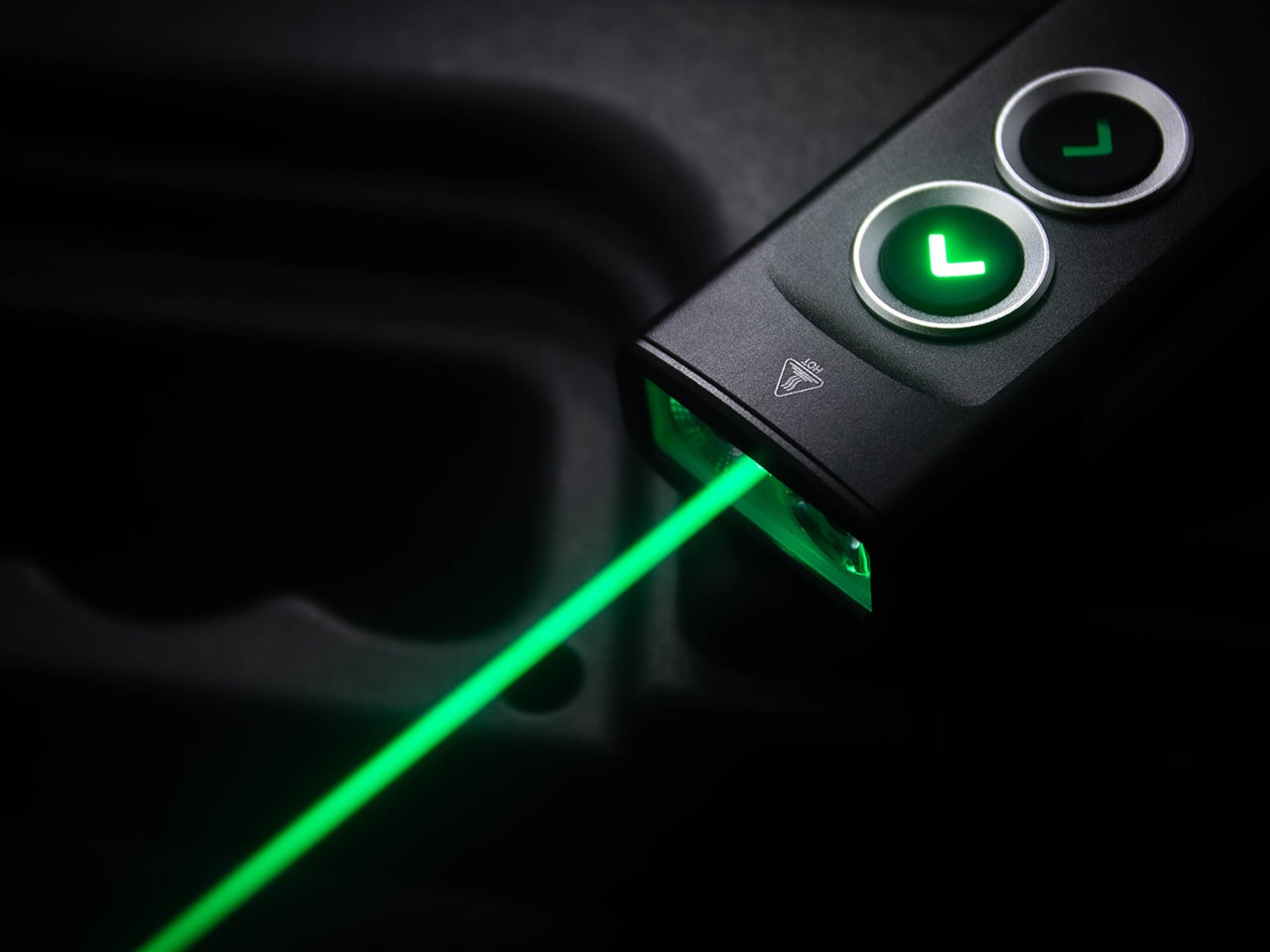
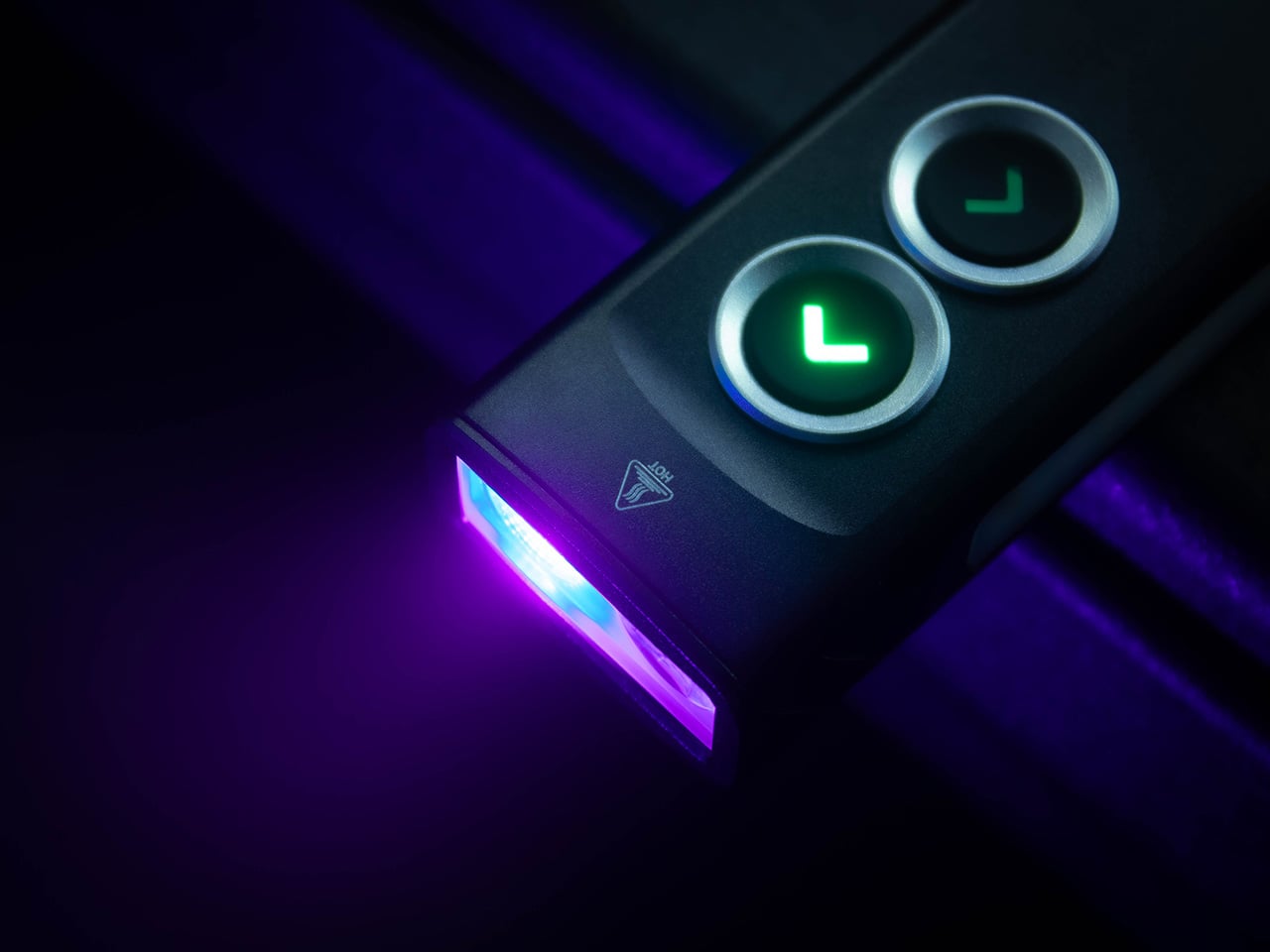
Where the WK2 steps beyond conventional flashlight territory is in its two remaining front outputs. A 365 nm UV light handles surface checks and the kind of inspection tasks a standard beam simply can’t manage, while a 520 nm green laser adds directional precision for pointing out specific details from a distance. Both are accessible independently, without cycling through any other modes first.
Managing all of that through a single button would be a mess, but the WK2’s dual-switch layout handles things sensibly. The upper switch controls the front outputs; the lower covers the side. Each uses distinct click patterns to jump directly to a specific mode without accidentally landing on the wrong one first. It’s a clean approach to organizing multiple functions without burying them in complicated sequences.
A 2,000 mAh built-in battery handles regular daily use, and USB-C charging makes it easy to keep topped up. What’s more notable is that it also accepts power from an external source while running, meaning a connected power bank can potentially extend the runtime indefinitely. That’s more dependable for longer work sessions, camping, or power outages than relying on a sealed battery alone.
The physical design reinforces the daily carry intent. The WK2’s flat rectangular body fits in a pocket far more naturally than a cylindrical torch, and the wide stainless steel deep-carry clip holds it firmly in place without shifting. It’s low-profile enough to stay discreet, too. A strong tail magnet rounds it out with a hands-free mounting option for any nearby metal surface.
The WK2 makes a case for being the one light that handles a surprisingly broad mix of everyday needs across a typical week. Five distinct outputs, a direct-access layout, and a carry design built around regular use all point to a flashlight that was put together by people who think about their gear as something to be used, not just stowed.
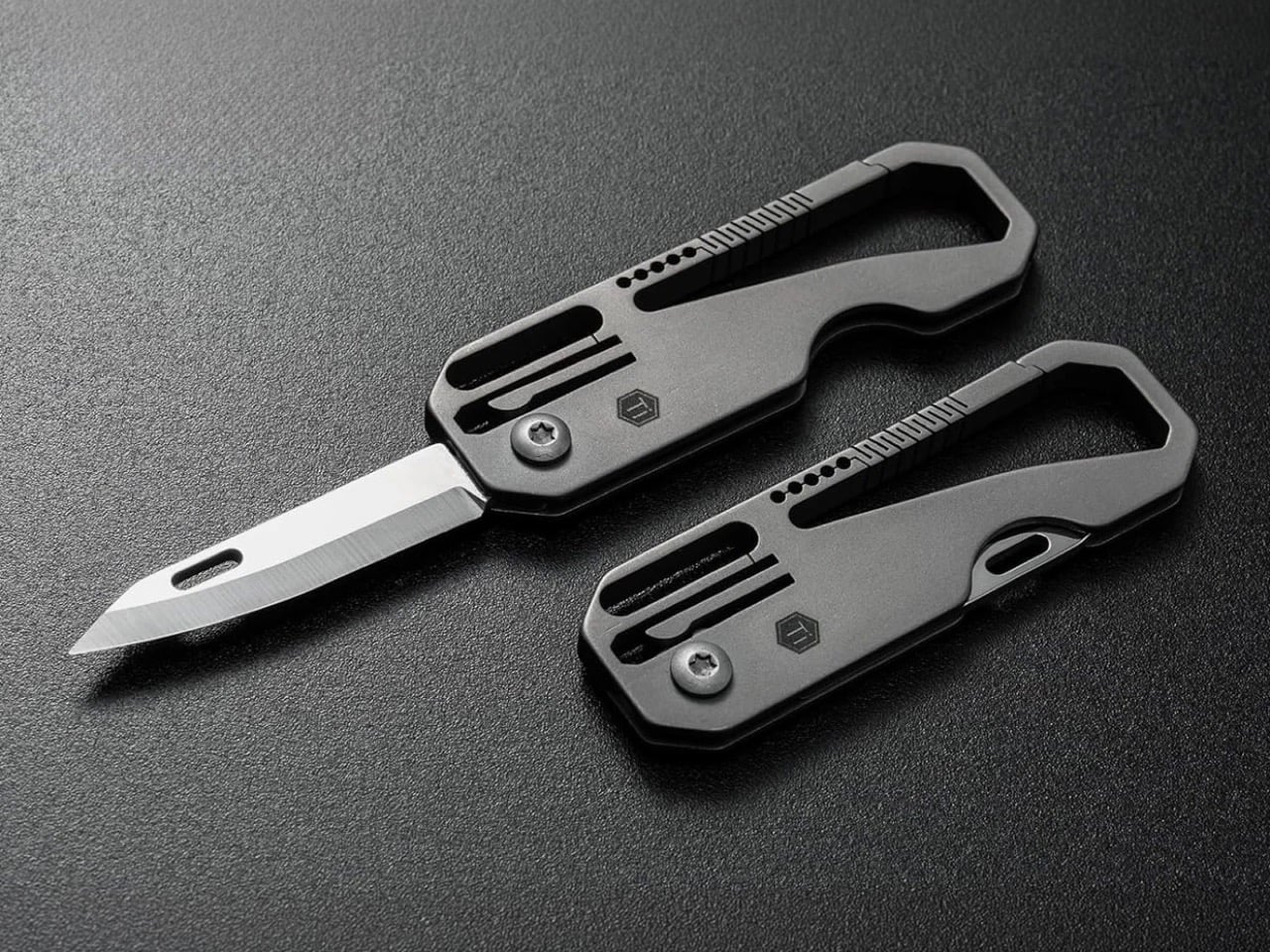
I don’t sing enough praise of titanium as a material. It’s the strongest metal known to humankind, but at the same time, it’s also anti-corrosive, rust-resistant, and biocompatible (the body doesn’t reject it when used internally for implants/supports in surgery). It’s found in abundance on the moon, it self-heals (forms an oxidized layer if scratched), and is the only element that burns in nitrogen (every other element burns in oxygen). Titanium, aside from being such a weirdly wonderful element, is also a preferred alloy in EDC… and while most makers use titanium for a handle and call it a day, the folks at KeyUnity machined it in a way to give Titanium properties of a carabiner.
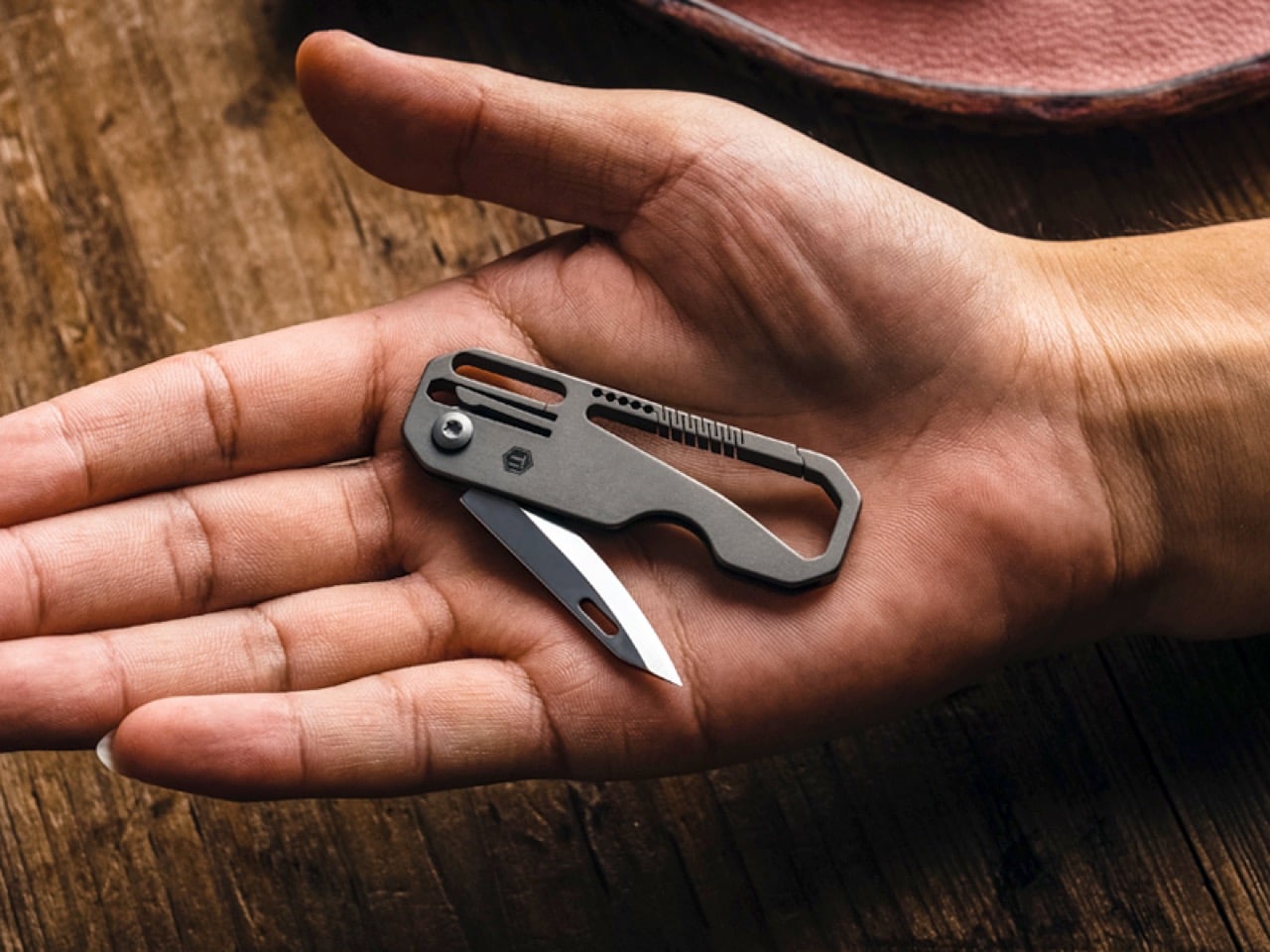
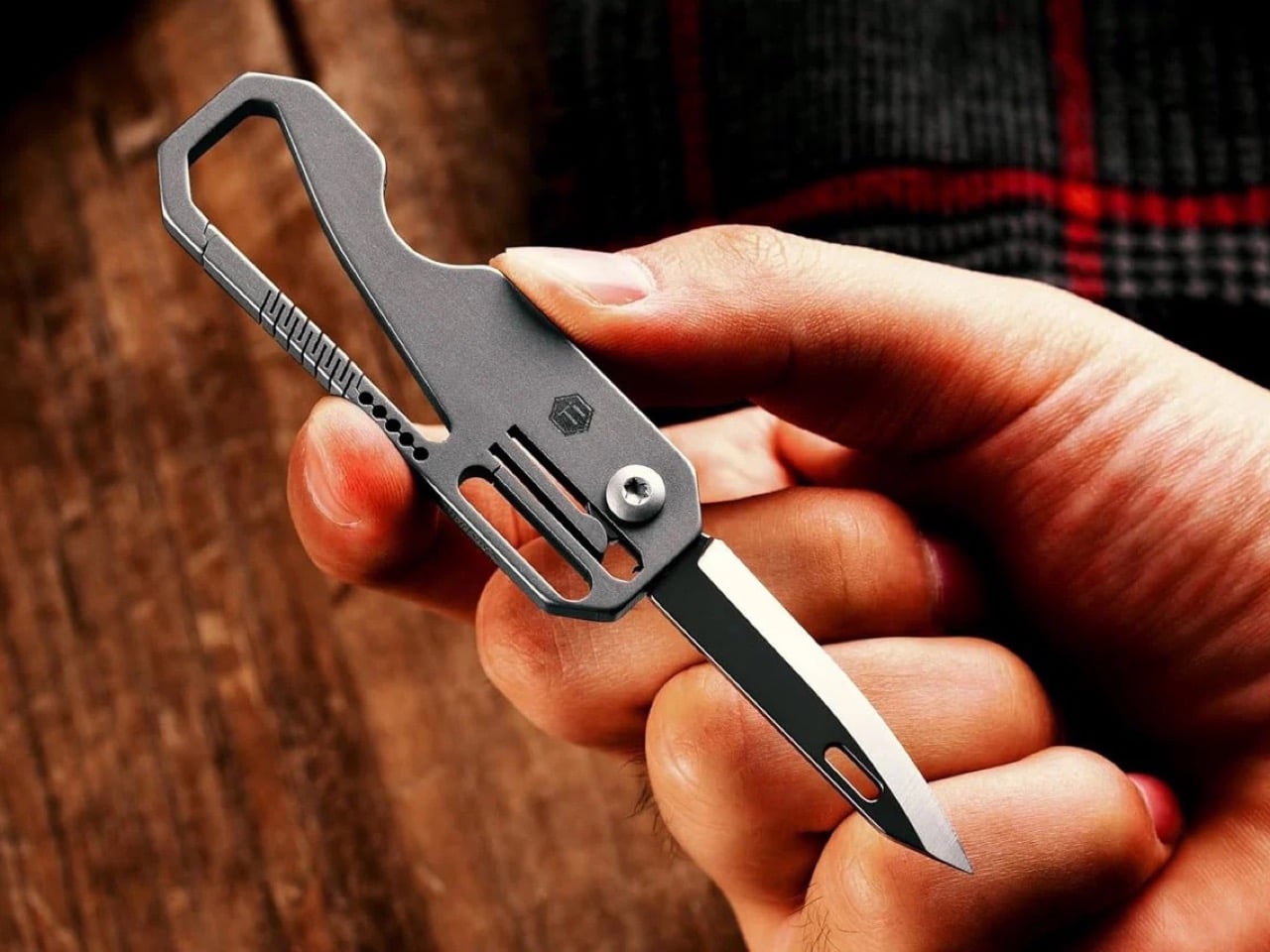
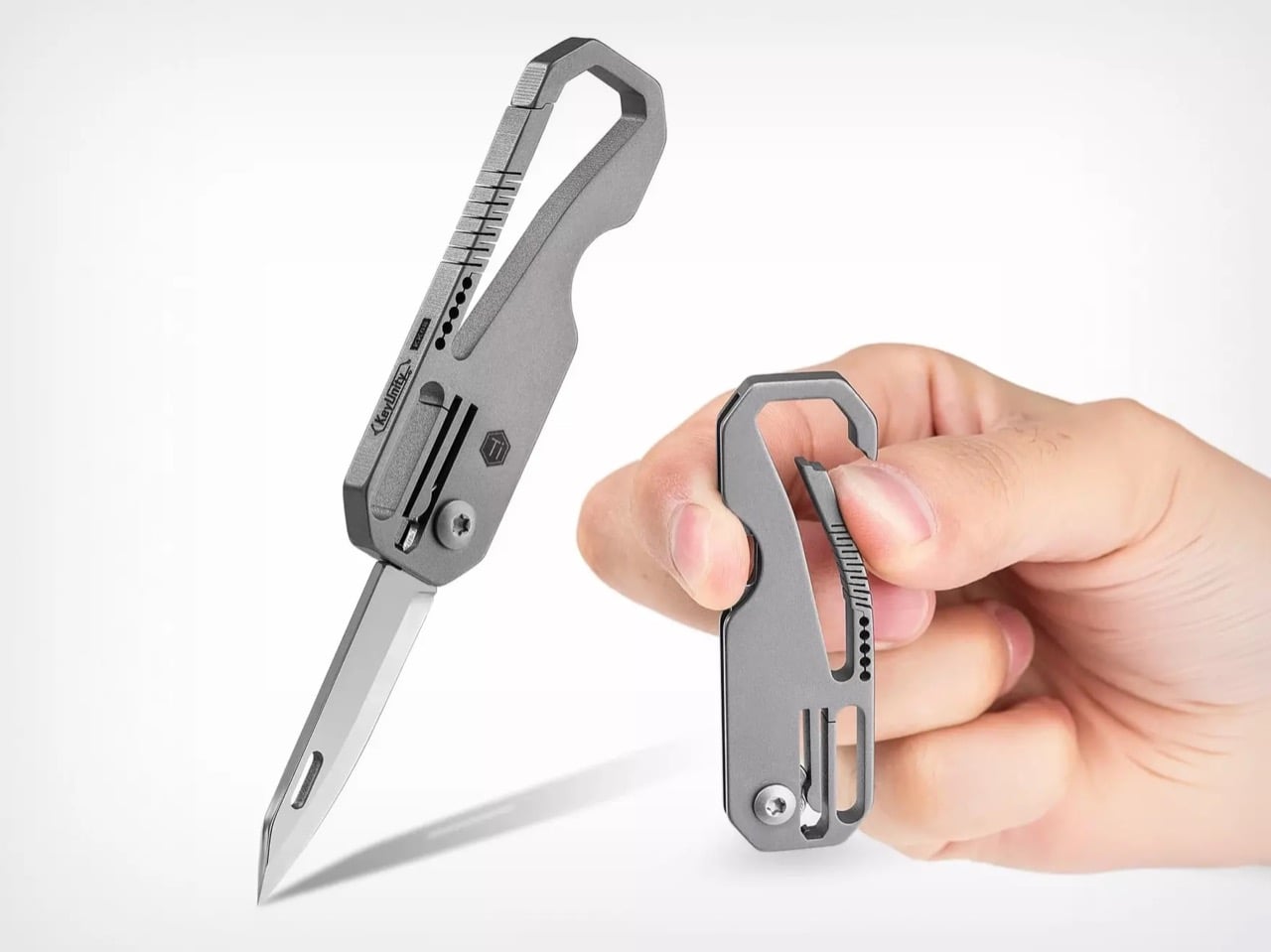
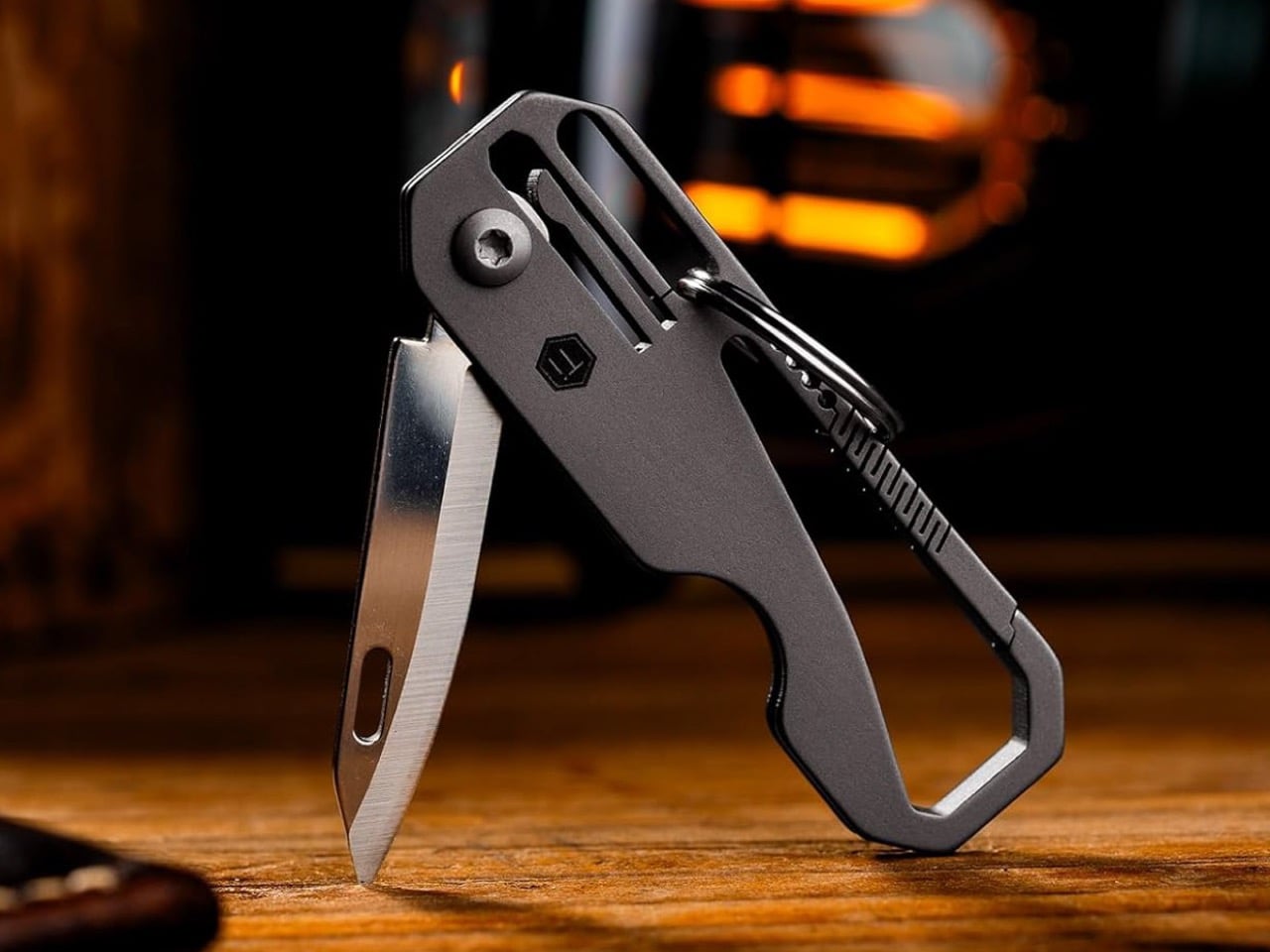
The KK08 carabiner from KeyUnity uses a single-piece titanium handle, which houses a 7Cr17Mov steel blade inside it. The handle is carabiner-shaped for a reason – it has this brilliantly machined detail that allows the carabiner arm to spring and bend without using a spring. Relying entirely on Titanium’s own properties, the zigzag machined pattern lets the carabiner work immaculately, providing spring as well as being durable enough to never break. The rest of the handle? Well, it’s cleverly designed to house the knife when not in use, sheathing the blade within its slim but incredibly cool design.
At 2.56″ when closed, this is your average-sized carabiner. It’s compact, weighs a paltry 16 grams, and can punch well above its weight. Titanium’s incredible strength-to-weight ratio means this carabiner can lift keys but even be used to do things like secure your water bottle to your backpack or even your backpack to a railing/fence. The cleverly machined detail on the carabiner arm allows the titanium to flex just like the spring-loaded arm on a regular carabiner. Meanwhile, the KK08 also hides a nifty blade inside it, for when you need a pocket knife.
The hidden blade folds out, revealing a 1.6″ cutting edge which might be on the smaller side, but it certainly gets the job done. The 7Cr17Mov steel build is brilliant on a budget, with high chromium for shine, and vanadium for strength and resilience. The drop-point profile makes it a great knife for all sorts of activities, from benign stuff like opening envelopes and packages, to more rugged activities like sharpening pencils, cutting branches, slicing through fruit/vegetables, or even self defense if push comes to shove.
Given its small size (and its fairly budget $23 price tag), the KK08 integrates everything into a minimal footprint, using a simple pivot for the knife to fold in and out. A frame lock is built into the titanium handle, allowing the blade to click into place while open, holding its position even while you’re working with tough materials like wood. KeyUnity mentions that the KK08 is the perfect hiking companion, although we see it as a brilliant EDC tool that you can carry anywhere – just not an airport or places where knives are considered taboo!
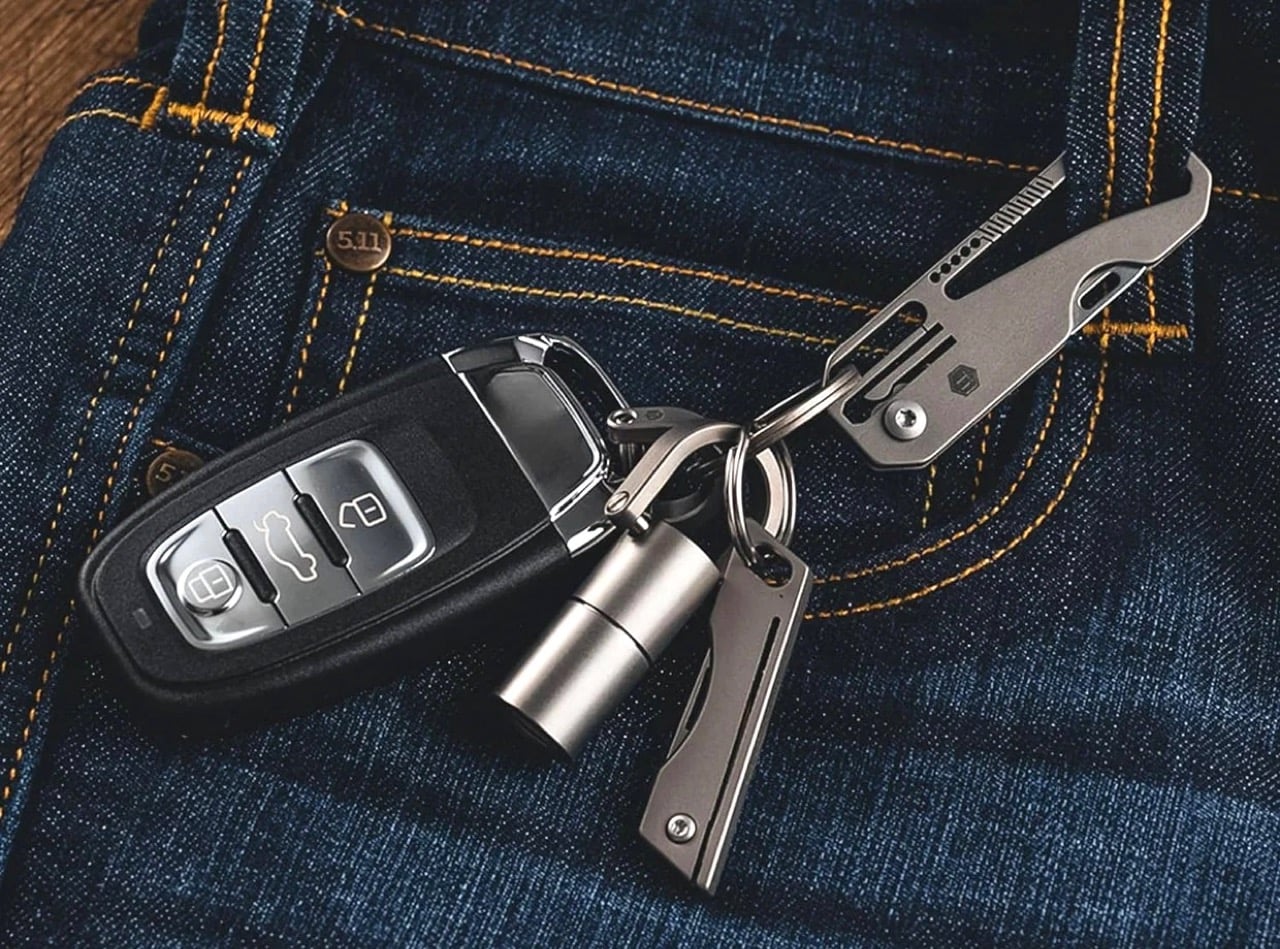
The KK08 comes in two colors – the plain titanium, as well as an anodized space grey finish. It honestly doesn’t need any color or pattern – the simple design language works wonderfully for this form factor, allowing it to also integrate seamlessly into your other EDC (especially your keychain). Both variants cost $23, and KeyUnity provides a 15 day exchange window upon damage or defect, along with a 1-year free maintenance period if your carabiner experiences regular wear and tear. There’s a lifetime warranty available too, although KeyUnity offers it at an added cost. Knowing their track record as well as how robust and durable titanium is, you’ll probably never need it.
There is a specific kind of frustration that comes with building a carry kit piece by piece over months, selecting each object for a reason, and then clipping on an AirTag that looks like it came in a party favor bag. The titanium pen, the slim card wallet, the knife with the stonewashed blade that earns its spot every single day – and then that silicone loop. The coherence collapses, and we know it the moment it happens.
In 2026, the AirTag accessory market has split at a visible fault line. On one side: the standard silicone loop Apple sells for $29, the Spigen Rugged Armor case, and a range of injection-molded plastic clips that treat the tracker as a packaging problem rather than a design opportunity. On the other: a smaller group of manufacturers asking what kind of object an AirTag deserves to travel inside. That question is driving a genuine shift in carry culture right now, separating the kits assembled with intention from the ones that stopped one decision short.
After handling and carrying all three material variants across several weeks of daily use – commute conditions, trail carry, and air travel – the AirTag Carabiner is the most considered tracker carrier we have tested in this category.
Three Materials, Three Different Arguments
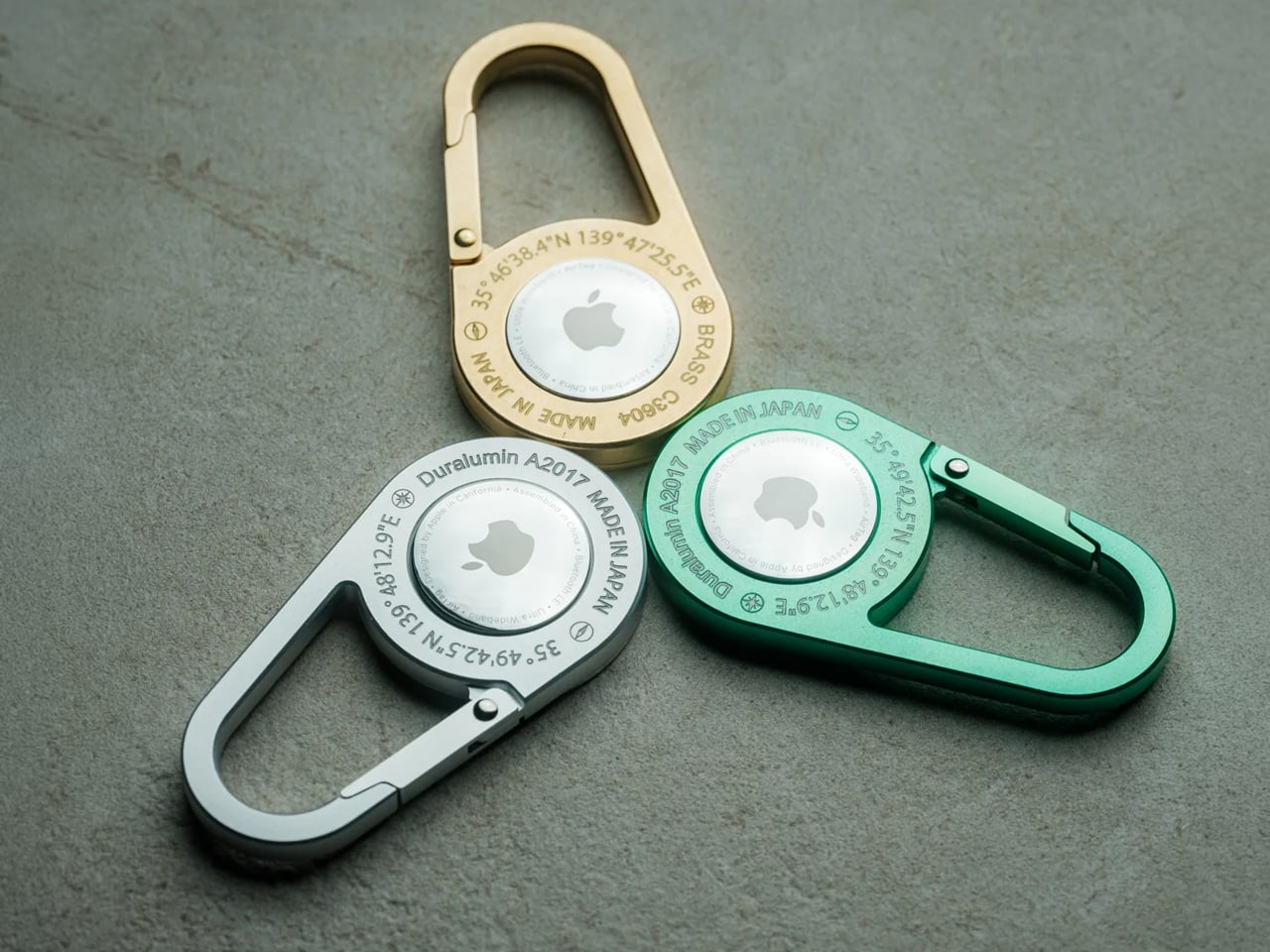
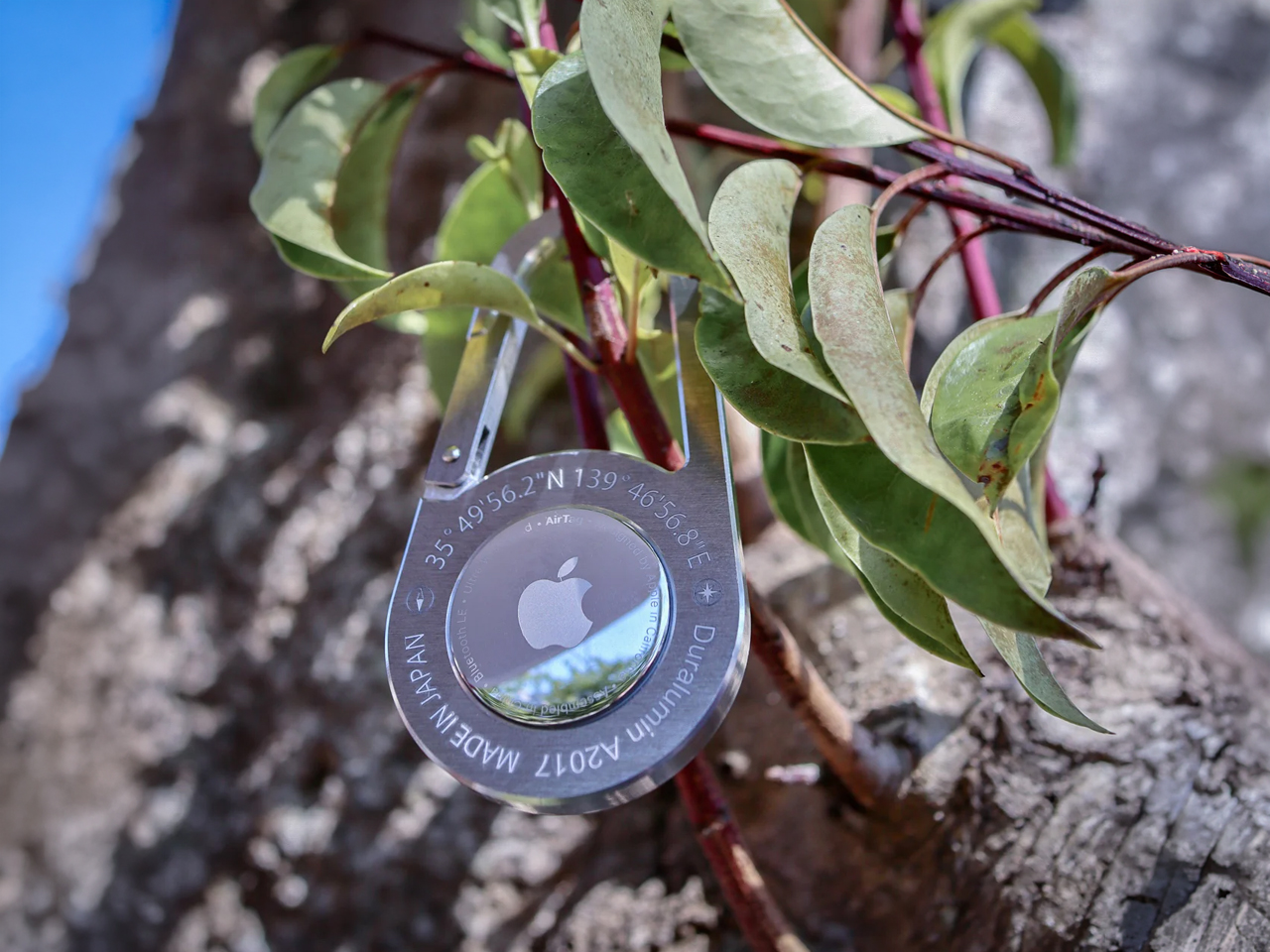
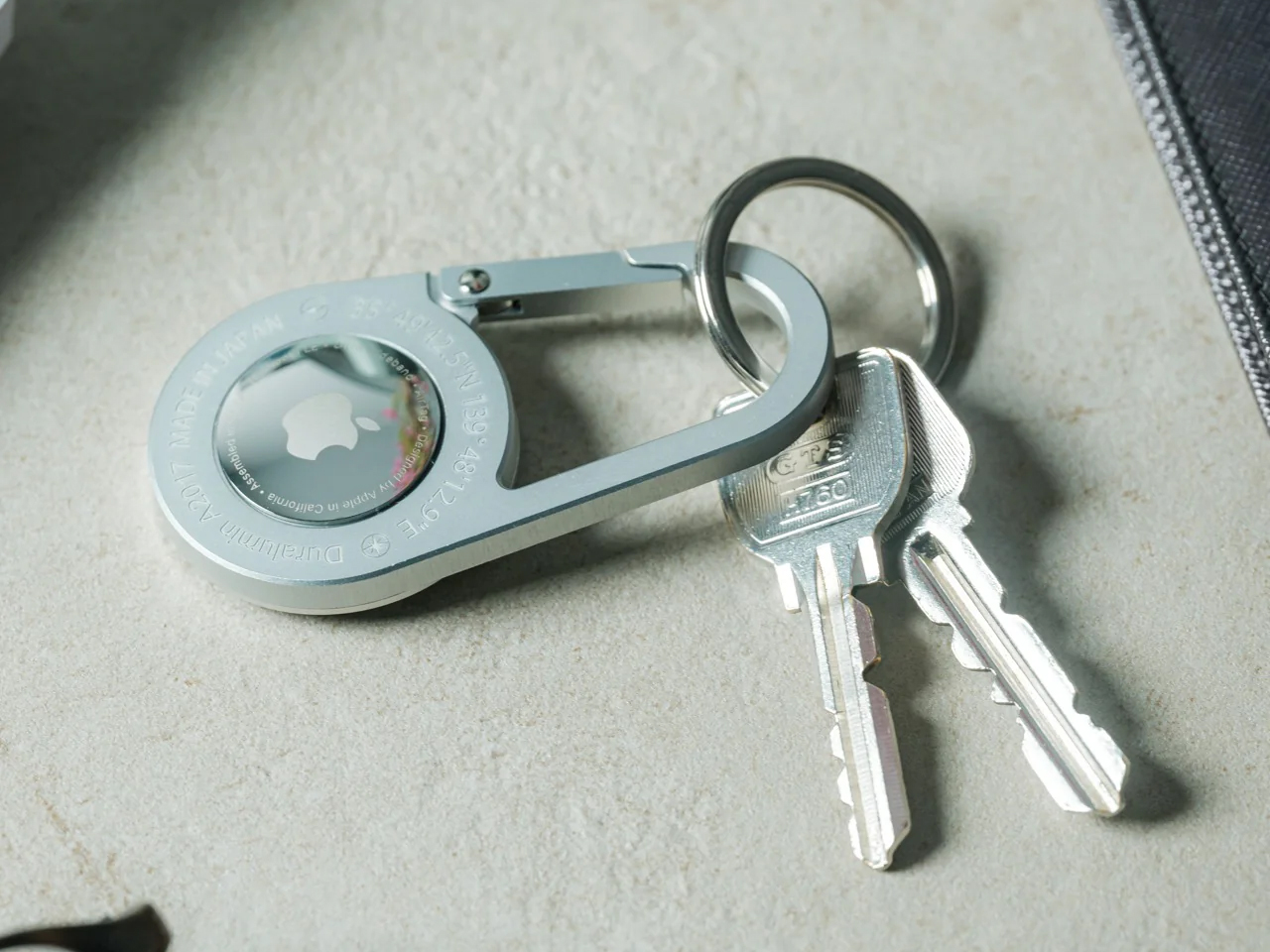
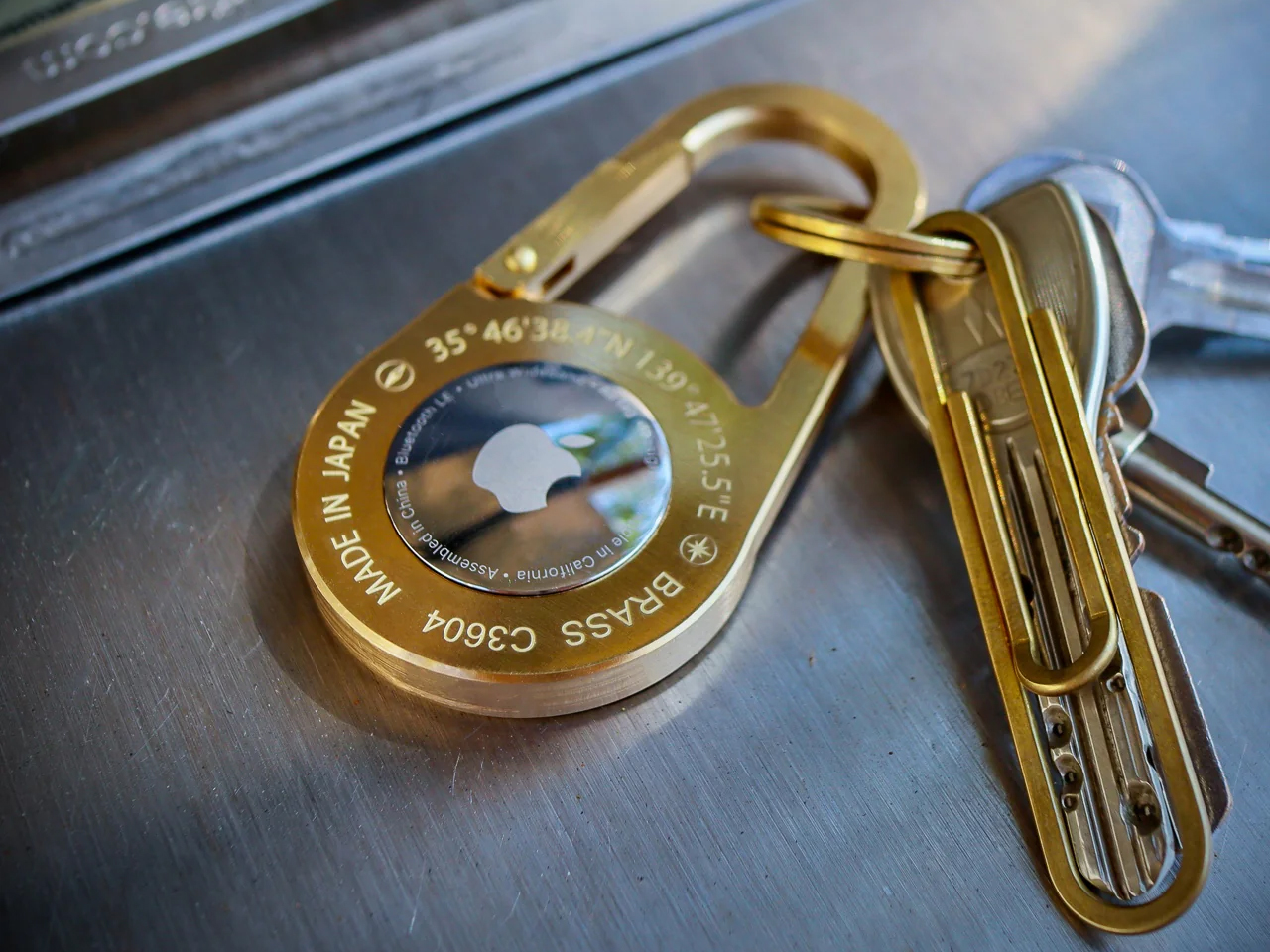
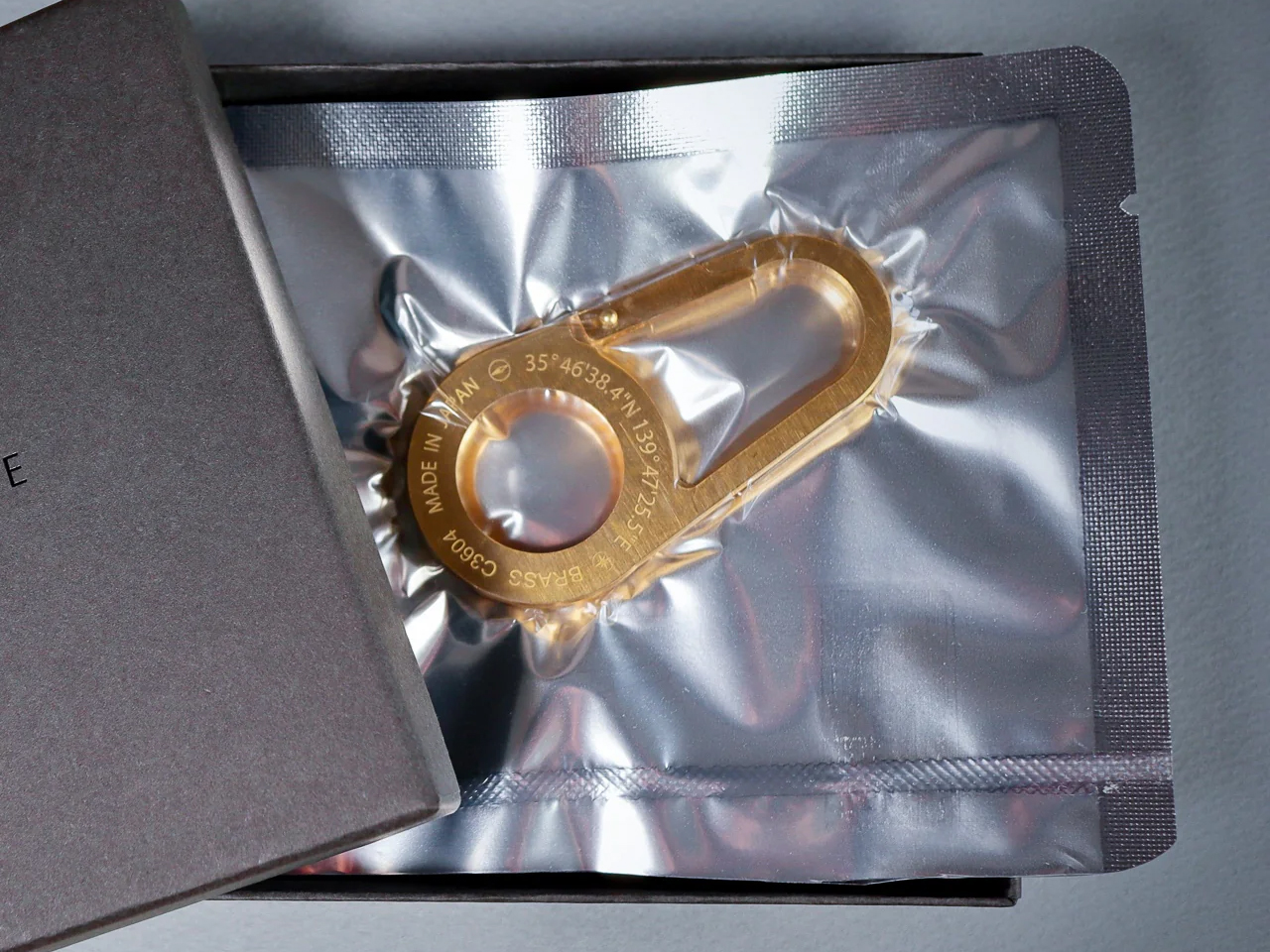
The AirTag Carabiner is made in Japan and individually hand-crafted. It comes in three materials: Duralumin composite alloy, untreated Brass, and Stainless Steel, and each variant makes a different argument for itself.
The Duralumin at 0.59 ounces – roughly the weight of a standard coin – is for those who account for every gram in a cycling kit or trail pack. It is, practically speaking, weightless in use.
The Brass at 1.7 ounces develops surface character over time that neither alternative will.
The Stainless Steel at 2 ounces carries its weight as a tactile signal of permanence.
The Brass variant arrives with a warm matte surface that shifts toward a richer patina at contact points within the first few weeks of carry. The Stainless Steel reads as deliberately neutral – a finish that recedes into a bag’s existing hardware rather than competing with it. The Duralumin sits between them: a cool, slightly satin surface that holds its character rather than developing one. Each variant is visually distinct enough that the choice of material is also a choice about what the rest of the kit communicates.
Sized for Motion, Not the Display Case
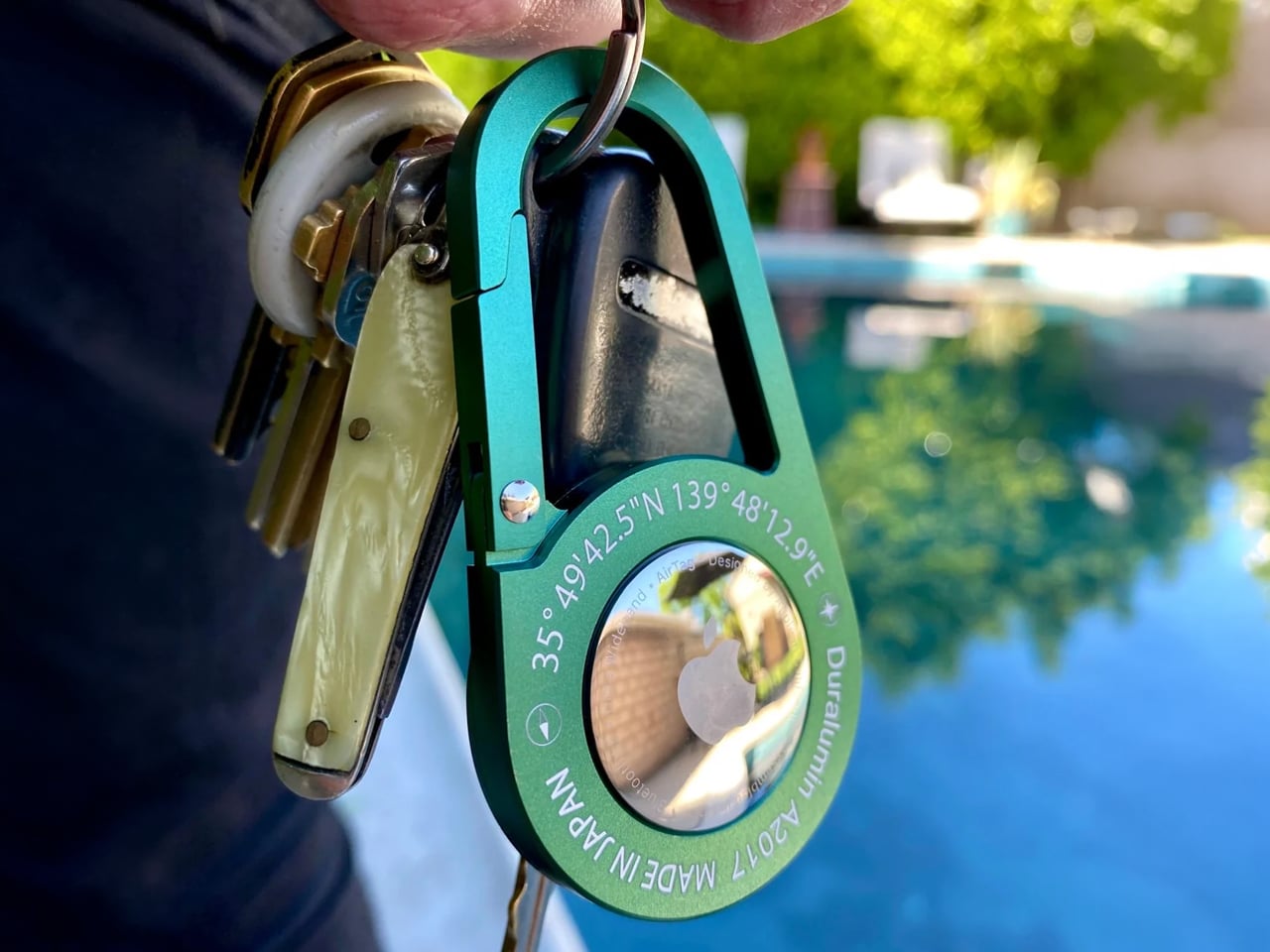
At 3.1 inches by 1.6 inches, the carabiner is sized for function without excess. The 0.2-inch profile means it sits flat against a zipper pull or bag strap rather than protruding outward to snag on jacket fabric, handlebar bags, or adjacent gear in a pack. For cyclists on a commute or a weekend ride, that profile matters in motion.
For travelers moving through terminals with carry-on luggage, it is one fewer point of friction in a sequence of movements that accumulates quickly across a long travel day.
Why the Alloy Choice Actually Matters
The Duralumin alloy deserves specific attention because it is not a decorative material reference. It belongs to the same alloy class used in aircraft, spacecraft, and marine applications – a pairing of low mass and high tensile strength that explains why the carabiner weighs 0.59 ounces without sacrificing structural integrity.
Applied here, it produces a carrier suited for the conditions an active kit already operates in: salt air, rain, altitude, and the sustained mechanical stress of a clip opened and closed hundreds of times a year. This is not a material chosen for its name. It is a material chosen because its properties match the job.
What Hand Production Means at This Scale
Hand production in Japan means finishing tolerances are set by a maker, not a mold. Carrying the AirTag Carabiner’s Duralumin variant daily for three weeks made that difference concrete: the gate action is consistent across hundreds of openings, the edge quality where the alloy meets at its joins has no rough transition point, and the surface shows none of the micro-scoring that injection-molded carriers typically develop within the first month of use.
These are details that do not appear in a spec sheet and do not become visible in product photography. They register in the hand, and they compound over time. At six months of daily carry, an object built to a specification and one built to a price have separated completely.
Where It Delivers
For the weight-optimized active carry: At 0.59oz – roughly a coin’s worth of mass – the Duralumin variant adds nothing measurable to a cycling pack, trail kit, or camera bag. It is the only tracker carrier in this category that does not undo the weight discipline a considered kit has already established.
For outdoor and travel conditions: The alloy’s documented suitability for water and high-altitude environments means this carabiner performs alongside the gear it clips onto – from a salt-air coastal commute to a pressurized cabin – without corrosion or gate fatigue.
For carry coherence: The hand-finished construction and material quality place this carabiner alongside machined pens and precision wallets without asking the rest of the kit to lower its standard.
What to Factor In
The Apple AirTag is not included. At $119 starting for the AirTag Carabiner alone, the full system investment clears $150 once the tracker is added. That is the honest cost of entry and should be weighed against a kit where every other object has been selected at a comparable standard.
The weight spread across variants is significant: 0.59oz for Duralumin versus 2oz for Stainless Steel – a 3.4x difference across identical dimensions. Users attaching this to a keychain or wrist lanyard will feel that gap in daily carry and should choose their variant before ordering rather than after.
The standard for AirTag carry has been a $29 silicone loop. The AirTag Carabiner sets a different standard: machined-quality construction, aircraft-grade material, and hand finishing that holds up to daily inspection after a year of use. Whether that standard becomes the category norm depends on whether the rest of the market decides the AirTag deserves to be treated as a permanent part of the kit rather than a temporary addition to it.
The AirTag Carabiner is available now starting from $119 at Yanko Design.
Some people adapt to trackpads just fine. They swipe, they tap, they gesture their way through a full workday and never once think about what they’re missing. That has never been me. Trackpads feel unintuitive, slow and imprecise in a way that becomes genuinely frustrating once the work gets serious. Image editing, timeline scrubbing, file navigation, moving through a browser at pace, these are things a trackpad tolerates and a mouse handles. That distinction matters when you travel for work as often as I do, and it is why a wireless mouse has been a permanent fixture in my laptop bag for as long as I can remember.
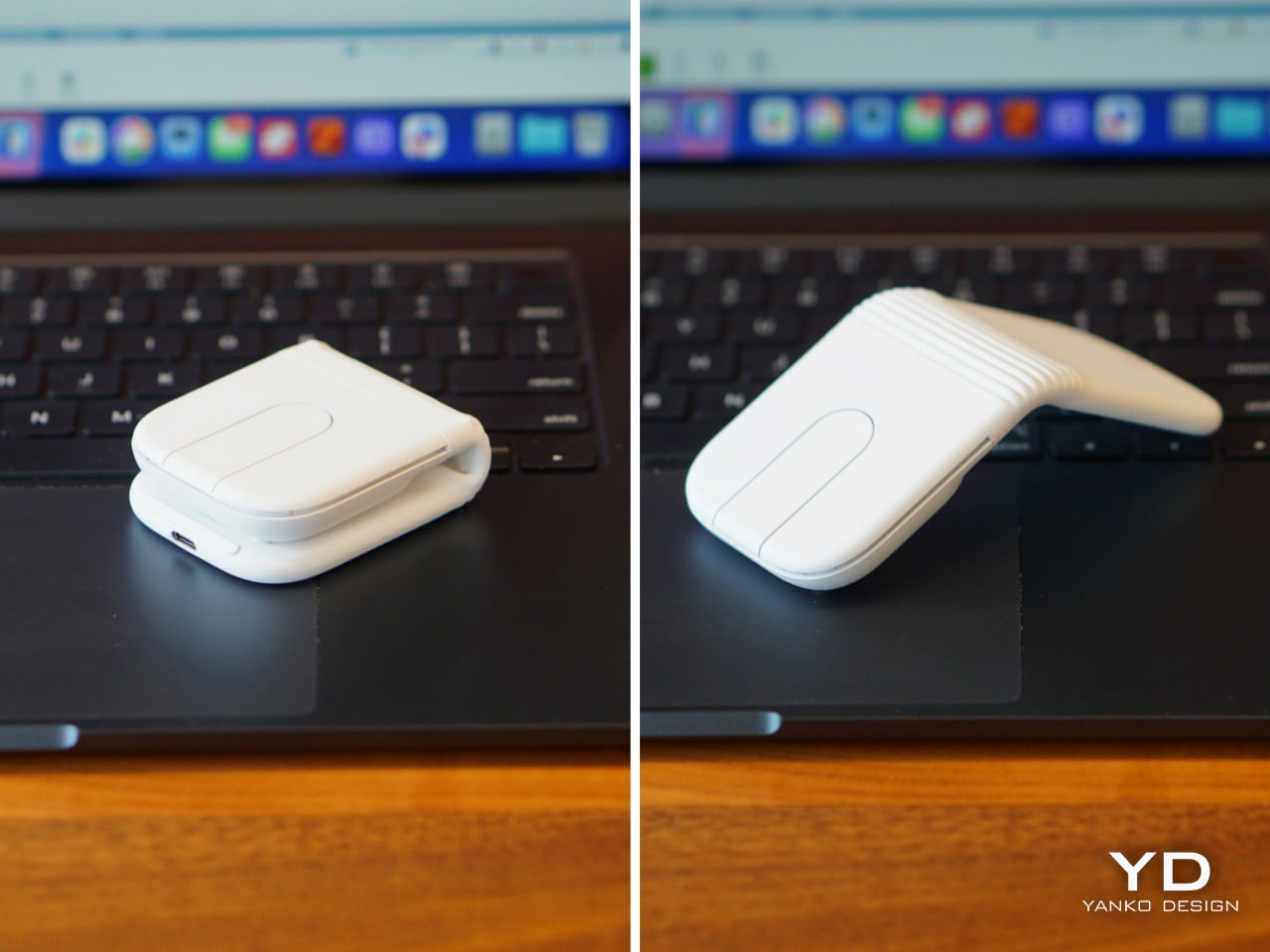
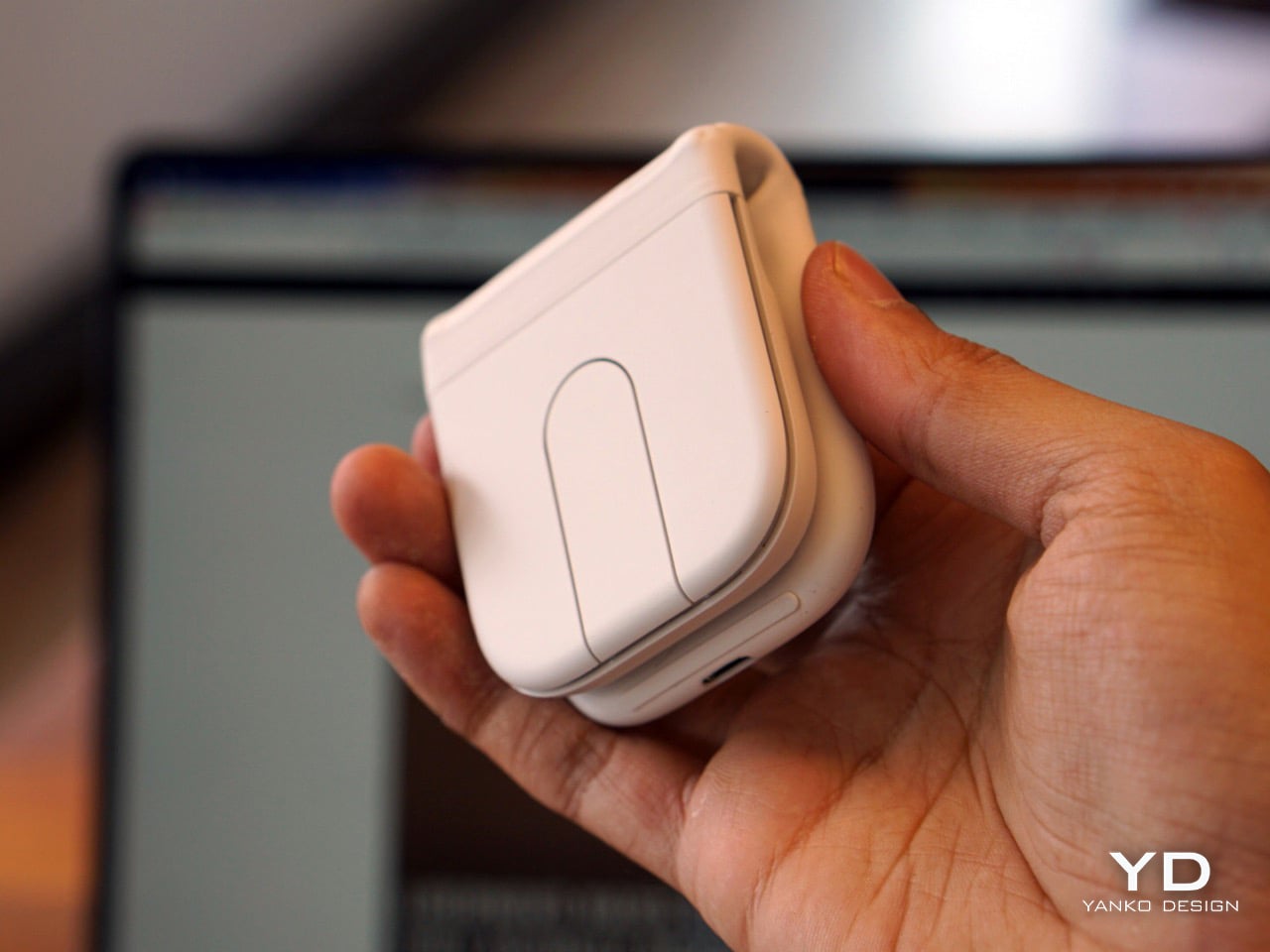
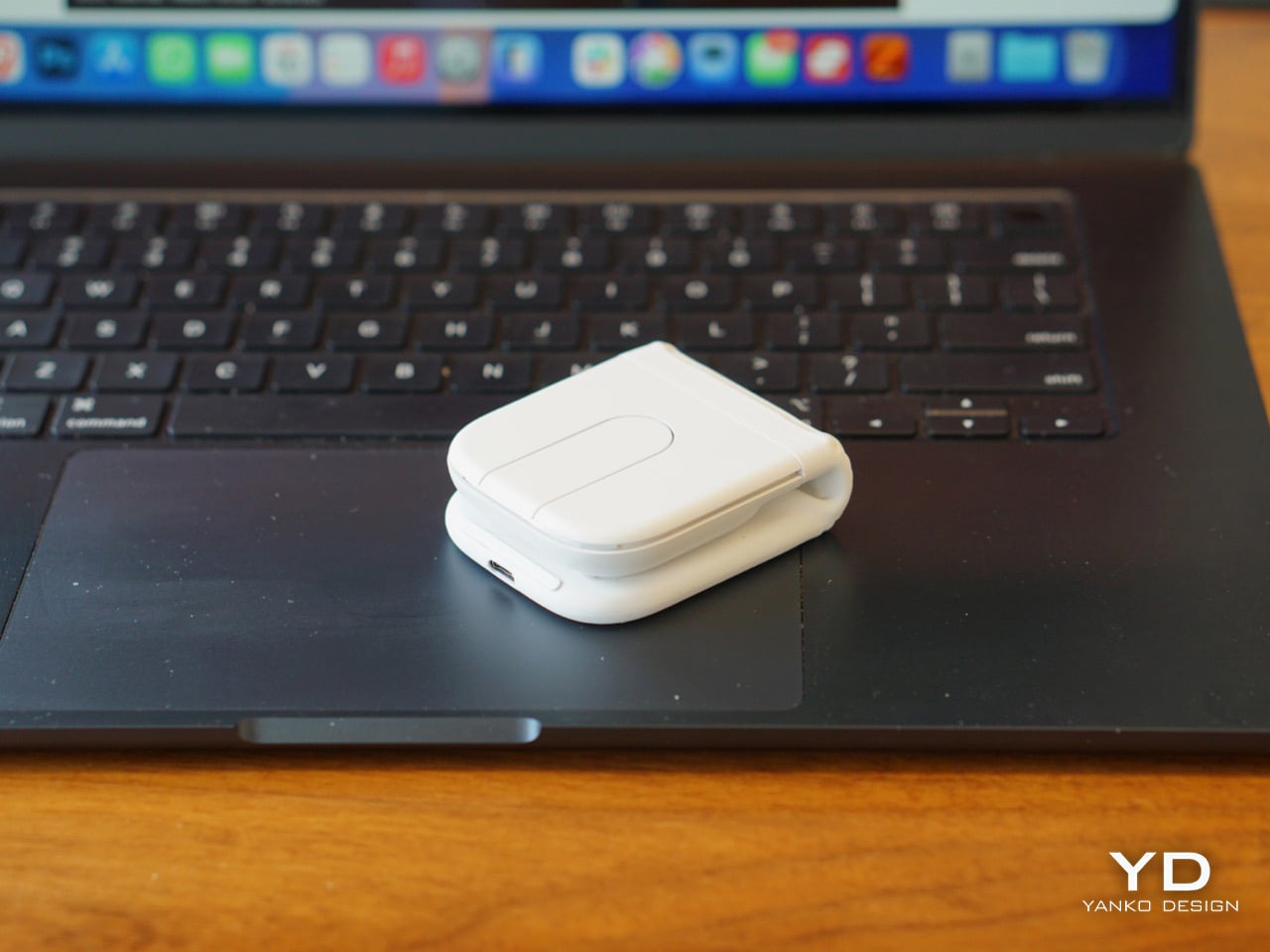
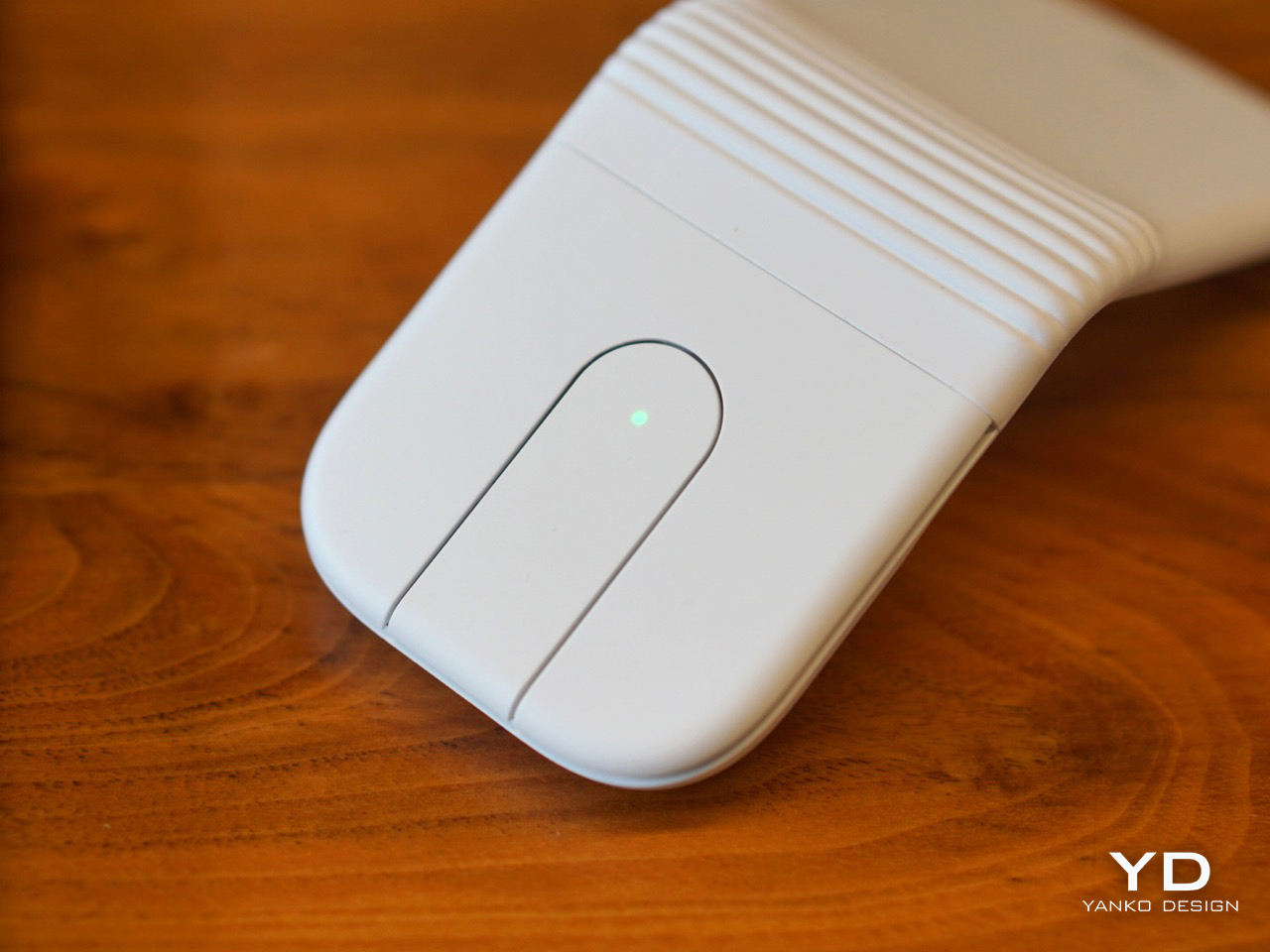
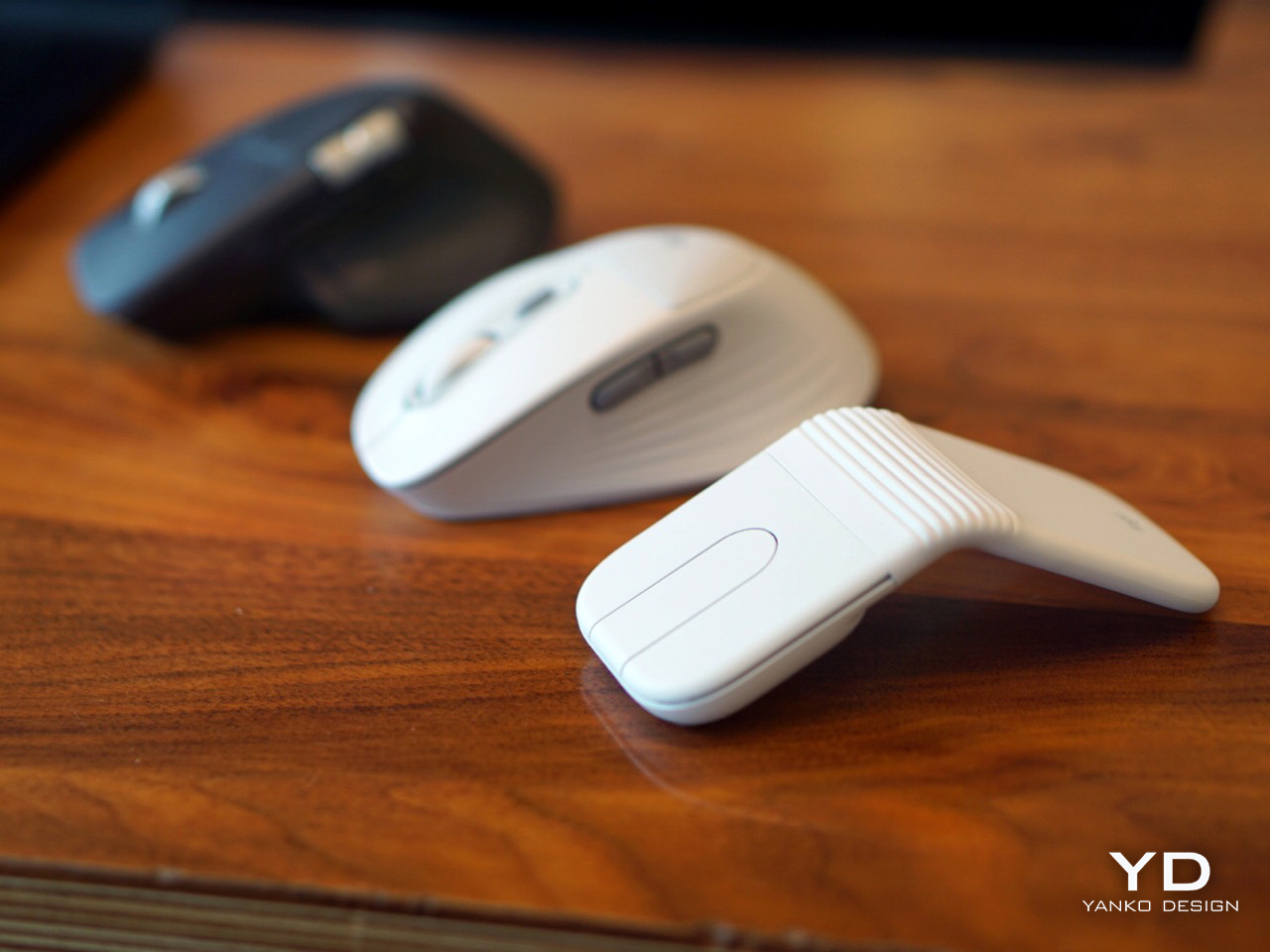
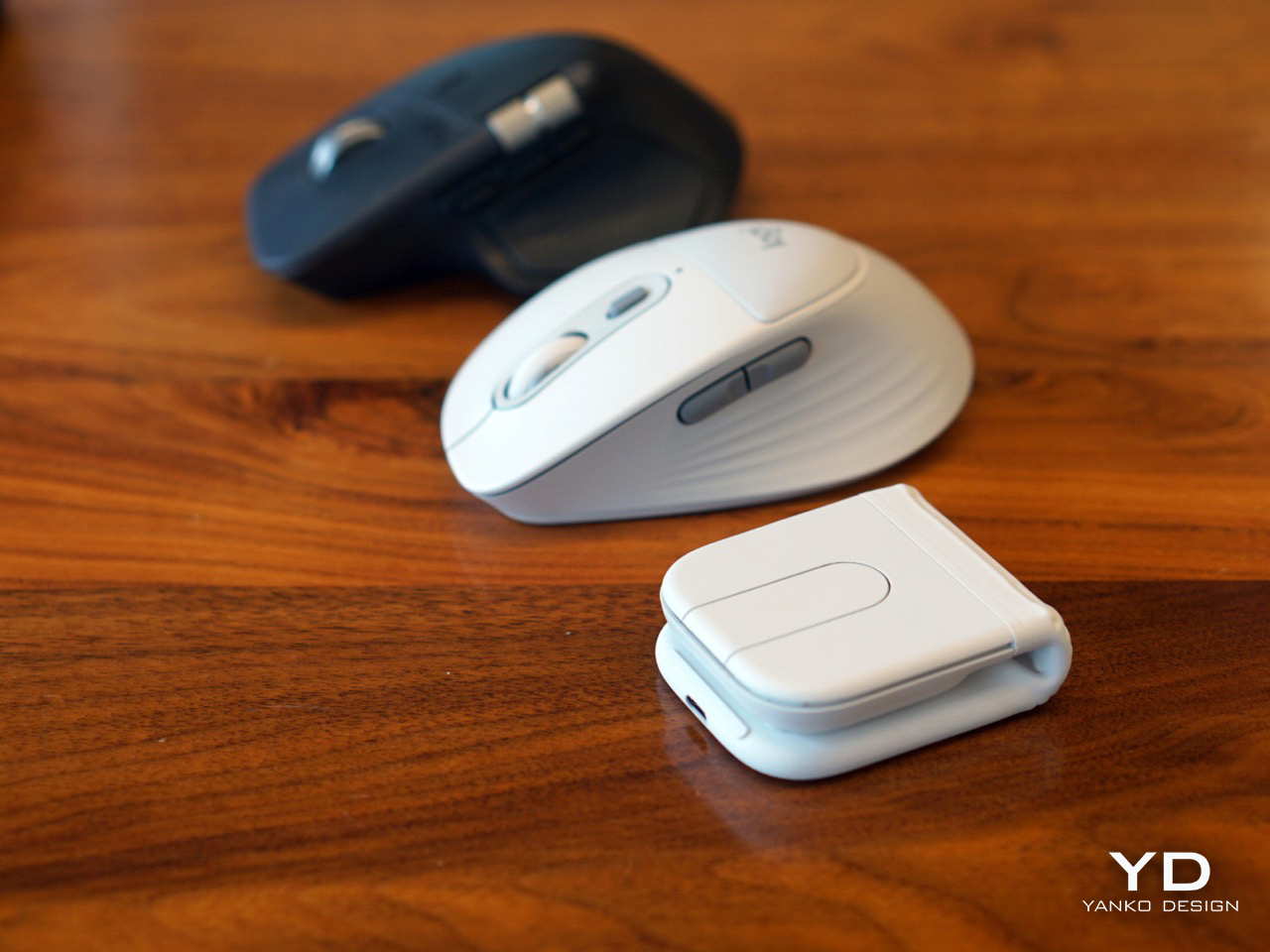
The problem with that habit is volume. A full wireless mouse takes up real estate, adds weight, and always ends up in the way of something else. I have watched foldable mouse concepts cycle through design blogs and crowdfunding pages for years, always clever in theory and usually mediocre in practice. The ergonomics were afterthoughts, the build quality felt questionable, and none of them felt like something worth trusting with actual work. Logitech’s Mobi Fold is the first one that genuinely changes that equation, folding to the size of a bifold wallet and opening into a properly ergonomic mouse with the kind of engineering behind it that makes it feel like a real daily tool.
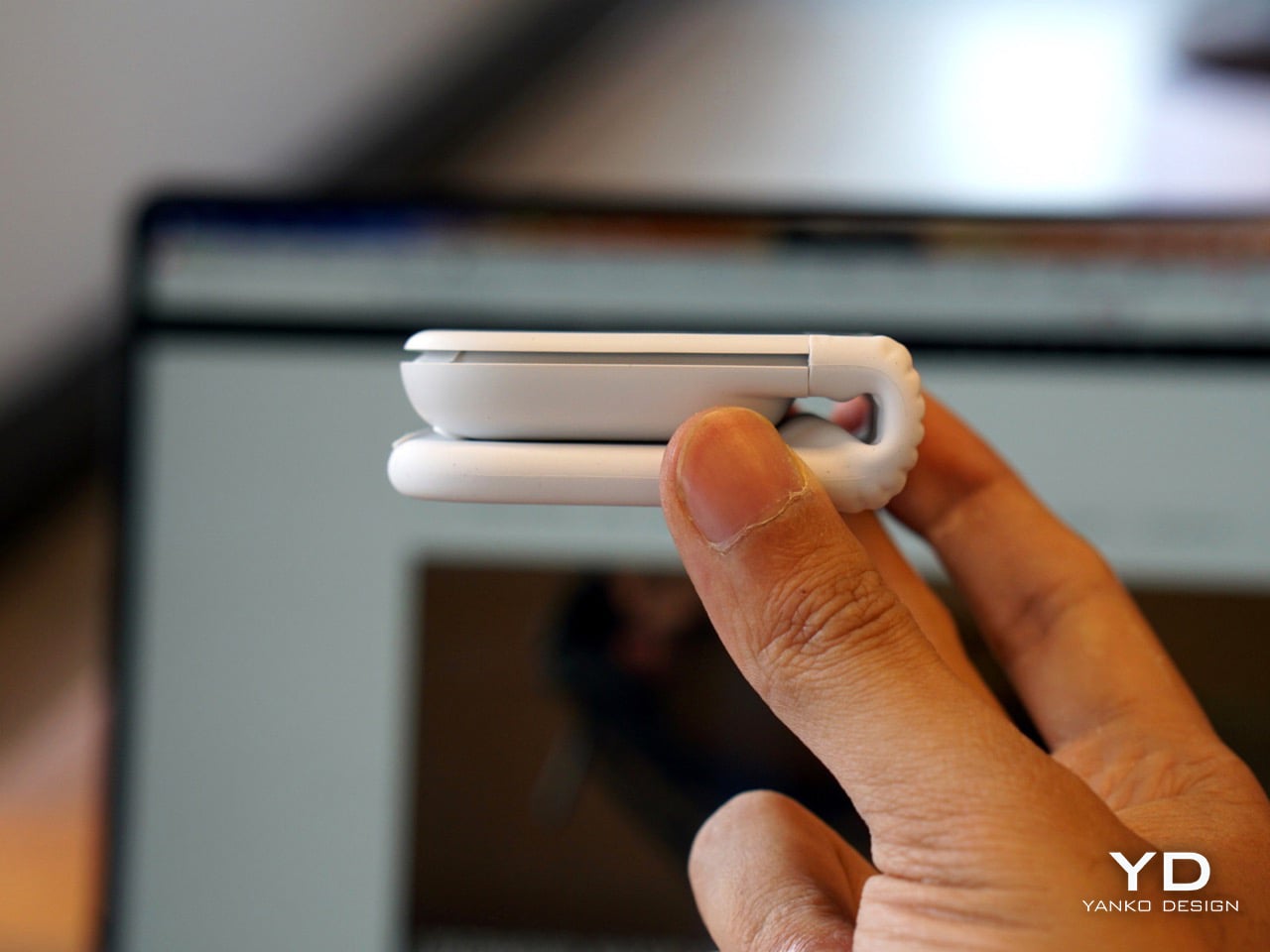
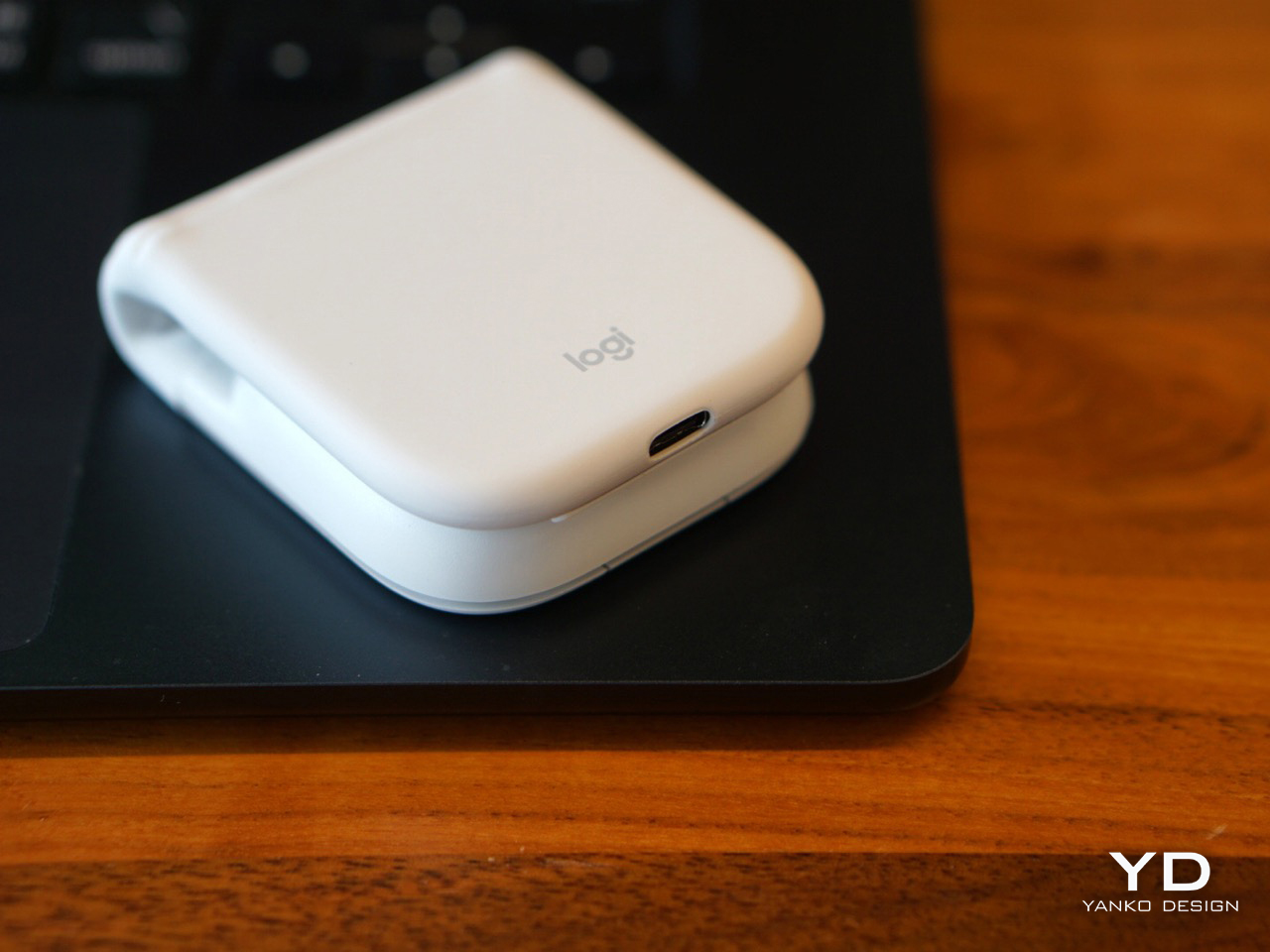
At 21mm when folded and 79 grams total, it pockets without a second thought, and the folded profile is compact enough that it stops reading as a mouse and starts feeling more like a card case or compact notebook. The dust-resistant exterior and drop-tested construction suggest something engineered for the bottom of a bag rather than careful handling, which matters when travel means moving quickly between locations without stopping to think about fragile equipment. It does not feel like an accessory that demands its own consideration. It feels like something designed to absorb daily life and stay functional throughout.
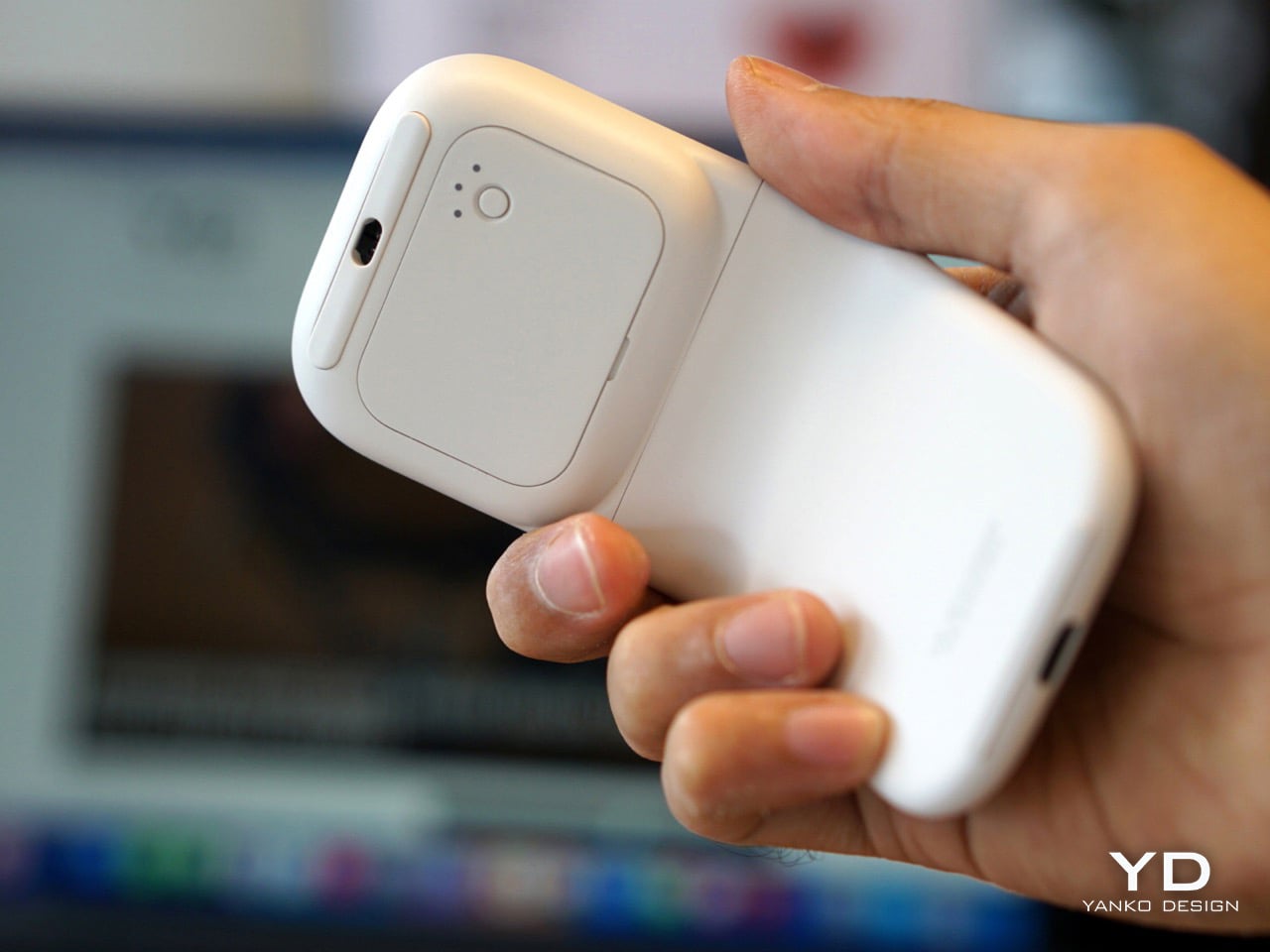
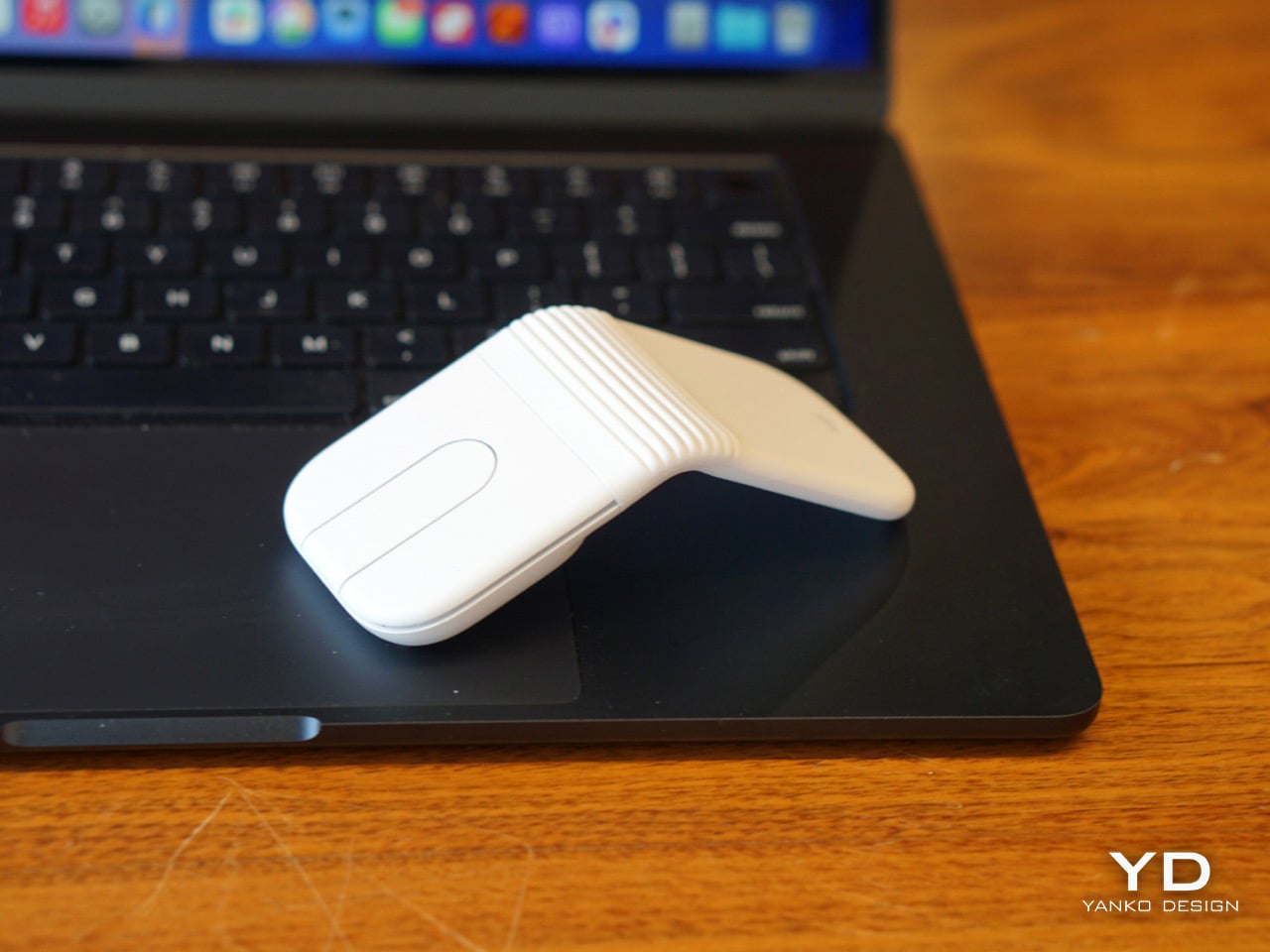
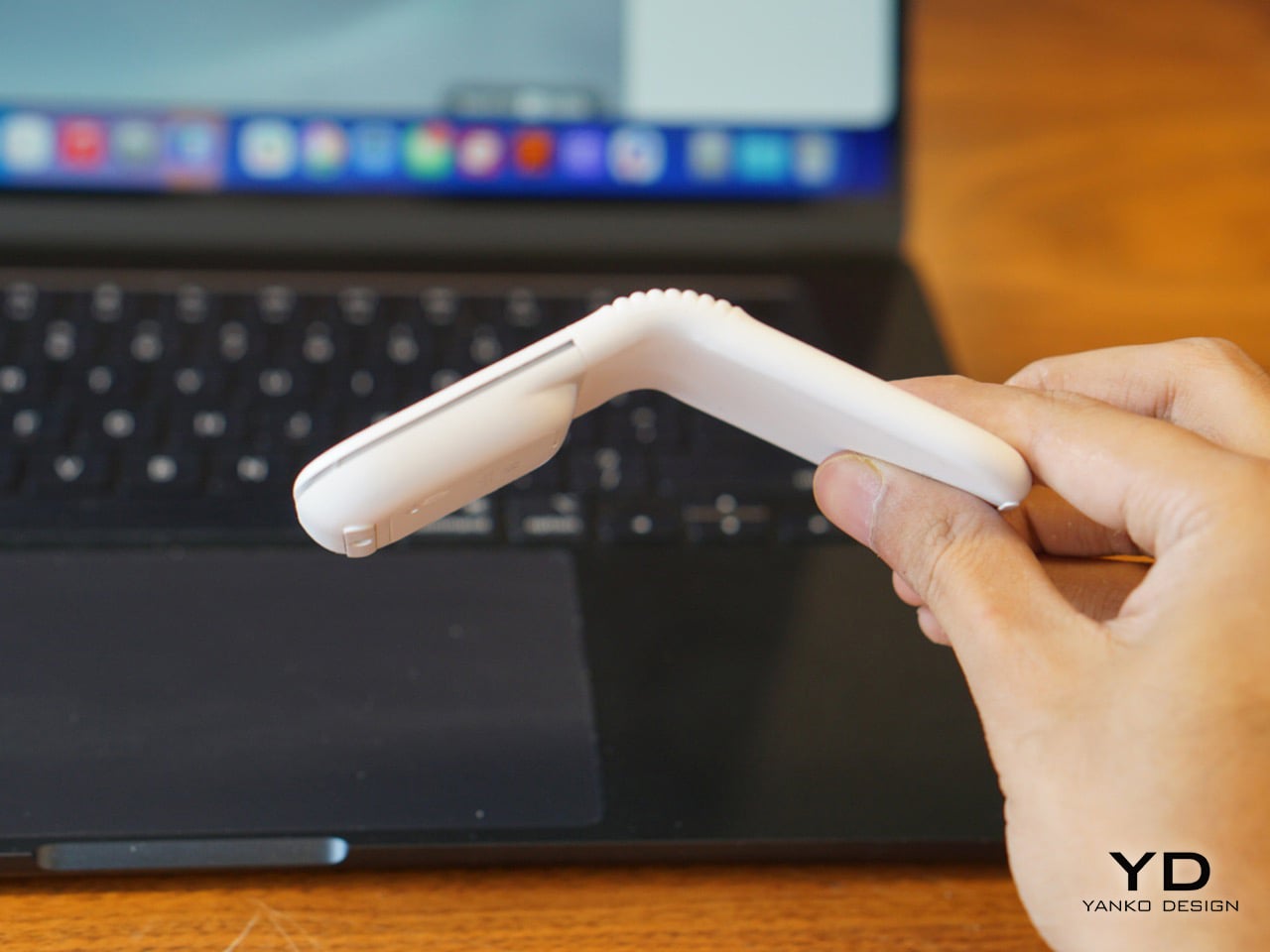
Unfolding it one-handed is cleaner than expected. The mouse settles into its predefined ergonomic angle with a firmness that feels researched, and from that point the experience becomes surprisingly familiar. The left and right clicks are effectively inaudible in a shared workspace, genuinely close to silent in a way that means a library table or open-plan office registers no reaction from the people sitting around you. What makes the folding experience feel genuinely intelligent is that the Mobi Fold knows when it is being closed. The on-device AI model helps prevent unintentional clicks when folding, a behavior I tested repeatedly and found completely reliable every single time. Folding it shut also powers it off automatically, which removes any need for a separate off switch and makes the entire experience feel self-contained.
Opening the mouse turns it on. Closing it turns it off. There is no dedicated power button to hunt for, no mode to toggle, no need to remember. But the smarter detail is what happens during the transition. An on-device AI model helps prevent unintentional clicks by recognizing when to disable the buttons, so inputs are blocked while your hand is still mid-motion. This sounds like a small thing until you test it repeatedly and realize it works flawlessly every single time.
Comfort, on the other hand, takes a little recalibration. The ergonomic angle works and the shape causes no discomfort, so the learning curve comes from a different place entirely. Even with its super compact design, it unfolds to fit naturally in the hand at a predefined angle, with 22% less muscle strain compared to a laptop trackpad, but at 79 grams it is considerably lighter than something like the MX Master 4, and the familiar resistance you expect under your palm simply is not there at first. The flat scrolling surface adds to that shift. It does not glide with quite the same fluidity as Apple’s own trackpad, though holding that against Mobi Fold feels like comparing different hardware categories. Muscle memory reaches for a physical wheel and finds a flat touch surface instead, and both take a day or so to recalibrate. There is also something oddly satisfying about the gap the fold creates underneath the mouse. Tucking your fingers into that space feels natural, and it might just be specific to how I hold a mouse, but it works.
The clicks are exceptional. Left and right are effectively inaudible in a shared workspace setting, which is not an exaggeration. Shared office environments, open-plan cafes, library tables, all of those spaces where a clicking mouse would normally draw quiet irritation from the people nearby, the Mobi Fold operates in near silence. Logitech has shipped quiet-click mice before, so this is not new territory for the brand, but the execution here is particularly clean. The mouse weighs 79 grams, which gives it a noticeably lighter feel in the hand than most desktop mice. Coming from something like the MX Master 4, the weight difference is a bit of a culture shock, and it takes a few sessions before your hand stops expecting more resistance beneath it.
The center control replaces your standard scroll wheel – for logical reasons, scroll wheels occupy space and the Mobi Fold doesn’t have any room for it, given the optical tracker sits right underneath the scroll area. Described in the spec sheet as a touch panel with two customizable buttons, the center control functions in practice more like a multi-input surface that earns more real estate in your workflow the more time you spend with it. It handles scrolling, whether navigating massive spreadsheets with line-by-line precision or gliding through long documents hyper-fast. The panel also rocks, registering separate inputs at the top and bottom, which Logitech defaults to Forward and Back navigation. For anyone who spends a significant portion of their day working in a browser, that default alone pays off immediately. Through the Logi Options+ App, the two customizable buttons on the touch panel can be personalized to trigger shortcuts like switching applications or taking screenshots instantly, or remapped to things like muting your microphone or toggling your camera in Zoom, giving the panel a versatility that a standard physical scroll wheel would struggle to match.
The surface is smooth, the feedback is silent, and the precision is genuinely there for line-by-line navigation or hyperfast scrolling powered by the 4K DPI sensor. The Apple Magic Trackpad scrolls more fluidly, but that smoothness comes from Apple’s own software stack, so the comparison is not a fair one to draw. What matters is that the Mobi Fold’s scrolling is functional and versatile, and the muscle memory issue fades with use. It is a reasonable adaptation to make for a mouse this portable.
One persistent instinct the design triggers is the urge to open Mobi Fold completely flat. The hinge stops at its predefined angle, which Logitech settled on after extensive user research, but the hand keeps wanting to push through. It is a small quirk rather than a flaw, and it fades with familiarity. My own hope is that Logitech’s natural evolution of this form factor eventually lets the device open flat, turning it into a presentation remote or pointing device in the process. For now, Logitech has successfully bridged tech and everyday carry to produce a mouse that earns its place in a travel setup from the first day you use it. The Mobi Fold is now a mainstay in mine.
There are two mice in my setup now, one that stays on my desk and one that goes everywhere else. The MX Master 4 handles the home office. The Mobi Fold handles everything that happens between flights, hotels, cafes, and borrowed desks. It is available in Graphite, Lilac, and Off-White in select markets, starting at $79.99. The white finish is something I want to monitor over the next few months to see how it holds up to daily travel and bag life, but everything else holds up impressively from first use. The foldable mouse has been a concept for a long time. Logitech has turned it into a product worth actually carrying.
The best pocket tools don’t announce themselves. They earn their place through precision and purpose, things you reach for so naturally they feel like extensions of your hand. For designers and engineers, the bar is higher. Every object in the loadout gets audited for weight, material, and justification. What makes this particular crop of EDC tools stand out in June 2026 is that each one actually clears that bar.
Titanium still dominates the conversation, but material alone isn’t the story anymore. It’s about the problems these tools solve without calling attention to themselves. From passive illumination powered by atomic decay to precision measurement you can clip to a keyring, the designs here represent a shift in what EDC hardware is expected to do. Smaller, sharper, smarter, and in almost every case, worth more than their weight class.
1. Painless Key Ring
Standard split rings are a small, recurring frustration nobody talks about enough. They warp under thick keys, resist every attempt to add something new, and typically end the interaction with a broken fingernail. The Painless Key Ring addresses all of that with spring-grade SUS304 stainless steel, less than one millimeter thick, formed into a wave-shaped structure inspired by mechanisms used in aerospace equipment. The result delivers twice the strength at half the weight of a conventional ring, with natural gaps built directly into the design.
Made in Japan and sold as a set of one large ring and three small ones, it comes in silver and a dyed black finish that resists wear and scratches more effectively than standard ring coatings. The wave geometry accommodates thicker keys without deforming permanently. It fixes something you’ve been tolerating for years without realizing a better version existed. At $29 per set, it’s the most quietly effective upgrade any designer or engineer can make to what lives in their pocket every single day.
Wave-spring geometry makes adding and removing keys effortless, including thick or awkwardly cut keys
Made-in-Japan precision and a dyed black finish that holds up better than standard ring coatings over time
What we dislike
The ultra-thin profile takes some adjustment for anyone used to the familiar resistance of a conventional split ring
Available only in silver and black, which covers the basics but leaves little room for material variety
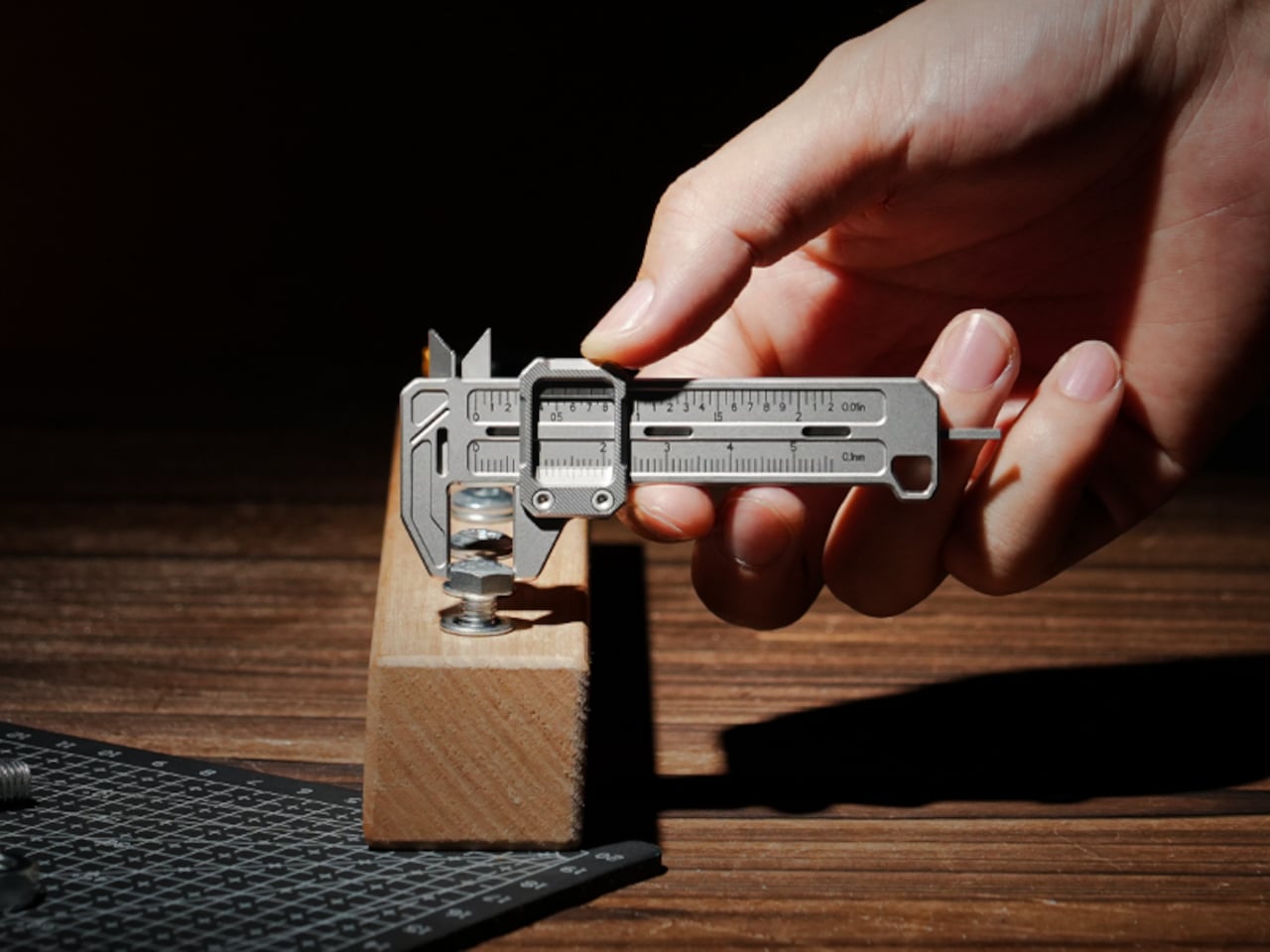
2. Titanium Caliper (37.6g)
Calipers belong on the bench, at the desk, or clipped to a work apron. What they’ve never managed to do is live in a pocket without adding bulk and drawing the kind of attention a working tool shouldn’t need. This titanium caliper changes that. At 37.6 grams, it’s the kind of precision measurement instrument the EDC community has quietly wanted for years without a viable version actually existing. The machining is clean, the material choice is deliberate, and the weight removes every reasonable objection to daily carry.
For a designer who measures things constantly- fastener sizes, material thickness, gaps in a prototype that are definitely off- having a caliper that travels with you reshapes how you move through the workday. Accurate measurement shouldn’t require a trip back to the bench.
Titanium construction delivers genuine precision at 37.6g, making this the most pocketable caliper in the category
A measurement tool that has been conspicuously absent from EDC loadouts finally exists in the right material class
What we dislike
Precision jaws need some protection from pocket debris and impact, adding a small layer of carrying discipline
The function-specific nature means it earns its space only if accurate measurement is a regular part of your day
3. BlackoutBeam Tactical Flashlight
Most flashlights are either underpowered or packed with modes nobody uses. The BlackoutBeam sits squarely between those two failure states. It throws 2,300 lumens across a 300-meter range with a 0.2-second instant-on response time, fast enough to feel reflexive rather than mechanical. Five operational modes, including strobe and pinpoint, handle everything from quiet navigation to emergency signaling. IP68-rated waterproof aluminum construction means rain, impacts, and full submersion are non-issues day or night.
For engineers and designers who work late, move between sites, or spend real time outdoors, the BlackoutBeam functions as both a practical daily carry and a genuine backup tool. A dual power system, USB rechargeable with battery backup, removes the anxiety of running dry when it actually matters. At $89, it’s real money for a flashlight. The output-to-size ratio and the IP68 build quality justify that number without qualification. This is not a novelty purchase. It’s a tool that performs exactly as described.
2,300 lumens with a 300-meter throw, and a 0.2-second response deliver professional-grade output in a pocket-sized body
IP68 waterproof aluminum construction with a dual power system ensures reliability regardless of conditions
What we dislike
Maximum brightness draws battery down faster than lower output modes, requiring more frequent recharging on heavy-use days
The tactical aesthetic, though restrained, skews utilitarian and won’t disappear into a more minimal everyday loadout
4. NoxTi Titanium Keychain
Tritium is a radioactive hydrogen isotope with a 12.3-year half-life. As it decays, beta particles strike a phosphor coating and produce a continuous glow without batteries, a switch, or maintenance of any kind. The NoxTi packages that physics into a Grade 5 titanium cylinder measuring 45mm by 12mm and weighing just 10.7 grams. A precision quartz tube with 92% light transmission holds the vial inside a CNC-machined body, available in six color options across two titanium finishes, designed by Xedge.
For a designer or engineer, the NoxTi earns its place on the keychain because it asks nothing of you. No charging schedule, no dead battery, just a reliable glow every time you reach into a dark bag or a jacket pocket at night. A ceramic glass breaker at one end adds genuine emergency utility that you hope never to use. When the vial dims after two decades, you push it out and slot in a replacement.
What we like
25 years of passive illumination powered entirely by material physics, requiring zero maintenance
A ceramic glass breaker turns an everyday keychain piece into a real emergency tool
What we dislike
The glow is intentionally ambient; it orients you in the dark rather than illuminating a space
Tritium is regulated in certain countries, worth confirming local availability before ordering
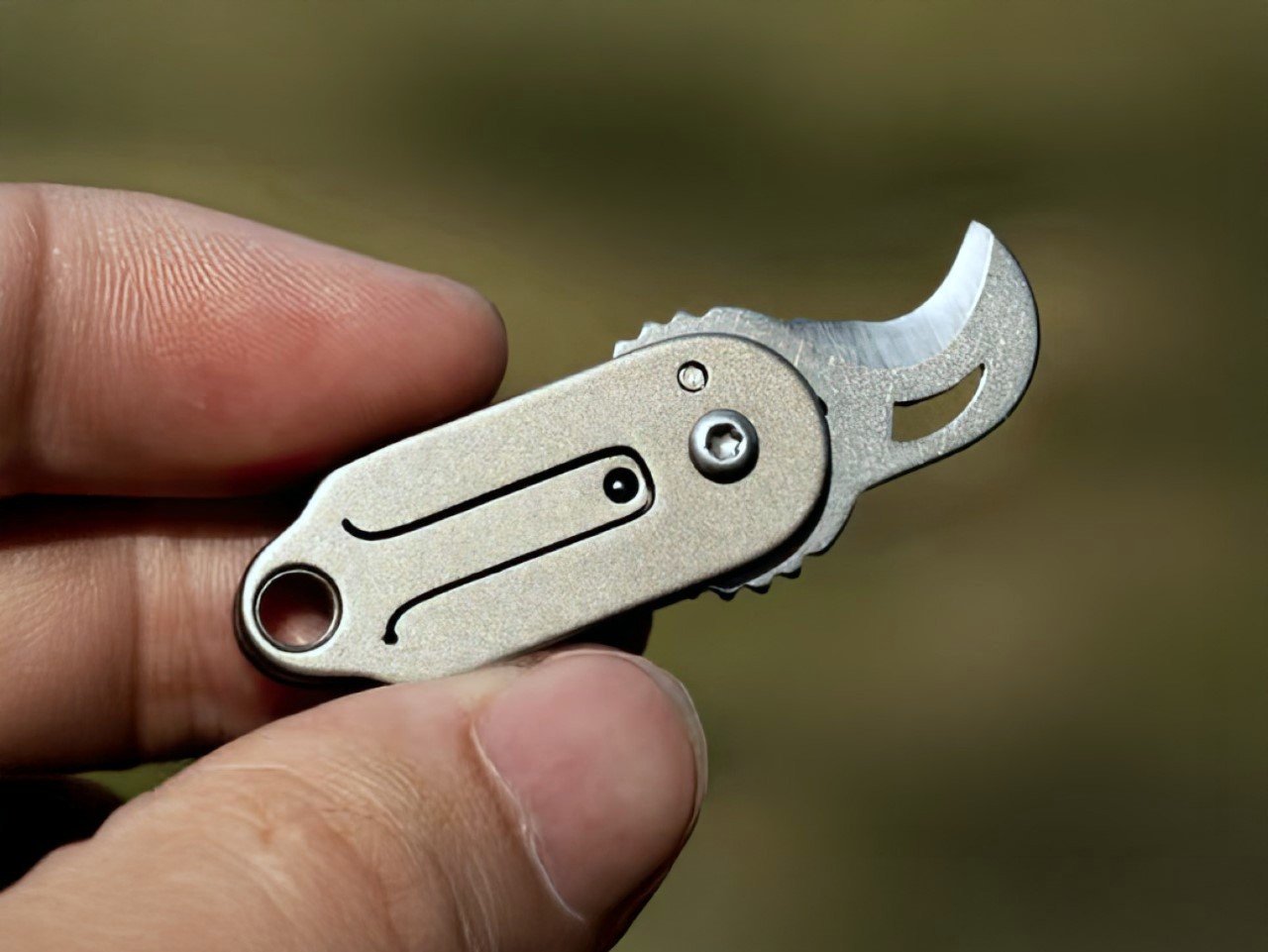
5. ScytheBlade
Edgelet took the Grim Reaper’s most recognized silhouette and scaled it down to keychain carry without sacrificing what makes that shape perform. The ScytheBlade’s curved blade profile mimics a tiger claw at 46mm deployed, and that geometry serves a real function. Curved blades concentrate cutting force in ways straight edges can’t match, particularly on pull cuts. The full titanium body brings the total weight to just 8 grams, which is about as close to weightless as a real, functional folding knife gets.
For designers who use knives practically- cutting tape, trimming mock-ups, opening packaging at the workbench- the ScytheBlade earns its place through daily carry that disappears and consistent performance that doesn’t. Titanium’s natural corrosion resistance means it survives contact without demanding attention. You won’t notice it until you reach for it, at which point the curved profile becomes immediately relevant in a way a standard straight-edge pocket knife often isn’t.
What we like
The 46mm scythe-curved blade concentrates cutting force through geometry rather than size
At 8 grams in full titanium, it’s the kind of tool you genuinely forget you’re carrying until the moment you need it
What we dislike
The curved profile takes adjustment if straight-blade EDC knives are what you’re accustomed to reaching for
Intentionally compact at 46mm deployed, it won’t satisfy anyone who needs more blade length for heavier tasks
The Pocket Loadout for June 2026 Doesn’t Need More Tools. It Needs Better Ones
The through-line across all five tools is restraint. None of them overstate their function or ask you to carry something you’ll resent by noon. The best EDC hardware solves a real problem in the smallest footprint possible. When the material is titanium, the manufacturing is Japanese, or the physics are literally radioactive, the argument for carrying it writes itself. These five tools earn that argument across every scenario a designer or engineer moves through in a given day.
The pocket loadout for June 2026 doesn’t need more tools. It needs better ones. A passive glow that requires nothing of you. A caliper light enough to forget you have it. A key ring that finally works the way it should. A blade that concentrates force into 8 grams. A flashlight that throws 300 meters and answers in a fifth of a second. Five tools, no redundancy, and genuine utility in every situation.