OnePlus 12 teardown reveals what it takes to keep this phone cool

Smartphones today are practically small yet powerful computers that you can hold in your hand and fit in your pocket. And just like any computer, the more powerful it is, the more heat it generates. In the past, smartphones could get by with simple cooling techniques that didn’t take much engineering or design to implement. Of course, those no longer work today, and sometimes even the common “vapor chamber” isn’t enough to keep the device from running hot. That’s why you’ll often hear brands boasting about some new advanced cooling technology, and a teardown of the new OnePlus 12 shows just how far some have to go to make sure your phone doesn’t turn into an incendiary device, whether you’re gaming, browsing the Web, or even simply charging it.

Designer: OnePlus (via JerryRigEverything)

It’s probably debatable whether the OnePlus 12 is the most powerful smartphone in the market to date, but it is one of the first to launch with the shiny new Qualcomm Snapdragon 8 Gen 3 processor. Benchmarks do speak in its favor, which suggests that despite its rather classy appearance, the OnePlus 12 is a gaming-worthy device. This also means it is in even more need of a more effective cooling solution compared to gaming smartphones with insane designs that include a tiny fan inside.

OnePlus does talk about a “Dual Cryo-velocity Vapor Chamber Cooling System,” which is just its fancy way of saying that its latest flagship has a ginormous cooling system. That size is mainly due to actually having two vapor chambers on top of each other, acting as redundant cooling systems that work doubly hard to keep not just the processor cool but the battery as well. Of course, you wouldn’t actually see the stacked vapor chambers even from the teardown, because they’ll just look like a large, flexible copper plate.

The size of this material, however, does show the almost ridiculous lengths designers and engineers have to go through to ensure the safety of such a powerful device. And it’s not just because of the powerful processor but also thanks to super-fast battery charging, which means even more heat being generated. The teardown also shows the trick that OnePlus (and other manufacturers) use to pull off this quick charging feat: split the battery into two and charge both small packs at the same time.

Although not the focus of the video, the teardown does suggest how relatively easy it is to open up the OnePlus 12. It was only when it came to separating the screen did things got really risky, but if you’re trying to replace the display, chances are it’s already dead in the first place. OnePlus is noted to have a solid parts replacement program, so much of that effort in prying open the OnePlus 12 won’t be in vain.

The post OnePlus 12 teardown reveals what it takes to keep this phone cool first appeared on Yanko Design.
Realme GT5 Pro Review: Flagship dream for budget-conscious users

PROS:


  • Capable camera system especially main and telephoto

  • Battery performance

  • Fast wired and wireless charge

  • Gorgeous display

CONS:


  • No ultra-wide video recording

  • Palm unlock and air gesture features can be improved

RATINGS:

AESTHETICS
ERGONOMICS
PERFORMANCE
SUSTAINABILITY / REPAIRABILITY
VALUE FOR MONEY

EDITOR'S QUOTE:

With its stylish design, good camera performance especially in low-light situations, bright display, outstanding battery performance, and fast charging, Realme GT5 Pro is a compelling option for those who seek well-rounded, feature-rich devices without breaking the bank.

Realme is one of the fastest-growing smartphone brands in the world, having shipped over 200 million units globally. Realme launched the GT5 Pro on December 7th in China, positioning it as the flagship phone in the GT line. While the GT line has represented Realme’s premium segment, the brand has not, until now, offered a true flagship device. Although the term “flagship” lacks a formal definition, it is generally considered to pack the latest and most powerful chipset and excellent camera capabilities.

Realme is positioning the GT5 Pro as a dual-engine flagship, claiming it strikes a balance between performance and imaging without compromise. The phone boasts the newest Snapdragon 8 Gen 3 and triple camera setup with the industry’s largest IMX890 periscope telephoto lens. Of course, the device has a lot more going for it, including a bright display and 3VC Iceberg Cooling System.

Designer: Realme

Aesthetics

The design of the GT lineup has undergone significant transformations from one model to the next. The GT2 Pro, designed by a world-renowned industrial designer Naoto Fukusawa, featured paper-like a back panel made with pulp extract and other renewable materials. Its successor, the GT3, adopted a more futuristic design boasting a customizable RGB light on its upper back right next to the square camera island.

In contrast, the GT5 Pro showcases a clean and sleek design. A big, round camera island takes up much of the top half of the GT5 Pro’s back. The camera island houses an LED flash, a triple camera set-up (A main camera, a periscope telephoto, and an ultra-wide), and finally, a placeholder to form a perfect symmetry. The intricate radial engraving underneath the glass extends to the side of the camera island giving a tactile feature to the camera island. This design, which Realme calls the “Star Trail lens”, gives a luxurious touch to the device. The Realme logo shines below the camera island.

The GT5 Pro offers three color options: Red Rock (red), Bright Moon (white), and Starry Night (black). The Red Rock and Bright Moon variants feature textured vegan leather, while Starry Night shines a glass back panel. I was hoping to receive the Red Rock variant which reminds me of a certain luxury handbag brand and has more character, but I ended up with the Bright Moon for the review. Despite my initial letdown, I found myself appreciating the appeal of the Bright Moon’s soft eggshell-like color.

Realme includes a protective cover, opting for a gray cover instead of the typical transparent case. Although typical transparent cases are far from attractive, the gray cover that comes with GT5 Pro isn’t aesthetically pleasing either.

Ergonomics

The phone weighs approximately 218g (224g for the Starry Night variant) and measures about 161.72 x 75.06 x 9.23 mm. Thanks to the center-circle design, it feels balanced when you hold it in your hand. The volume rocker and power button are located on the right side of the device, while the SIM card slot and USB-C port are situated at the bottom.

The GT5 Pro has a slightly curved panel and round shiny aluminum copper frame, which is stronger than a titanium frame, according to Realme. It doesn’t dig into your palm without being slippery.

While the phone is comfortable to hold, there is a notable consideration regarding the placement of the fingerprint sensor. Positioned very close to the bottom edge of the screen, approximately 1 centimeter or 0.4 inches above the bottom edge, the fingerprint scanner requires a slight stretch of the thumb for unlocking. Luckily, the GT5 Pro can be unlocked with other methods including one of the main features – palm gesture. But there is more to discuss about this feature.

Performance

The Realme GT5 Pro has a triple camera setup. There is a 50MP main camera that uses a LYT-808 1/1.4-inch sensor with OIS stabilization and an f/1.69 aperture lens with OIS stabilization. The upgraded 50MP periscope telephoto camera uses an IMX890 1/1.56 sensor and f/2.6 aperture lens. The telephoto also comes with OIS stabilization. It can zoom 2.7x optically and supports macro mode at 3x. Finally, there is an 8MP ultra-wide IMX355 with f/2.2 aperture.

The main camera produces great daylight photos with nice vibrant yet natural colors. It captures plenty of details without being overly processed and has good dynamic range, though there is a tendency for bright spots to be slightly overexposed. Additionally, the main camera performs admirably in low-light conditions, exhibiting excellent dynamic range and adeptly handling mixed lighting situations.

The 3x photos captured with telephoto are impressive thanks to its big 1/1.56 inch sensor. While the phone lacks a dedicated macro camera, the macro mode is implemented on the 3x zoom. The resulting images are just fine; however, I believe only a niche group of users will find this feature particularly noteworthy.

Turning our attention to the ultra-wide camera, it doesn’t stand out as particularly exceptional spec-wise, and the images it produces. The images display a decent dynamic range, and the color rendition aligns with that of the main camera is, but details especially towards the not very wide with FOV of 112 degrees.

Flip the phone over, the front camera takes pleasant selfies in a wide variety of shooting situations. Images came out a bit on the softer and warmer side, but not overly done.

In terms of video, it can record video up to 8K at 24FPS with the main camera. The telephoto is capable of recording up to 4K at 60 FPS, 1080p at 30 FPS for the ultrawide, and 4K at 30 FPS for the front camera. Videos captured by the device are not going to wow you. One thing that bothered me was that the 0.6x ultrawide option is not visible on the main video interface unless you set the recording resolution to 1080p or lower. It would be more convenient to have a 0.6x ultrawide option accessible directly on the main video interface, with the resolution automatically adjusted to 1080p when the 0.6x is selected.

As for the screen, the GT5 Pro boasts a 6.78-inch, 2,780 x 2,364 AMOLED screen with a 144 Hz refresh rate, 460 pixels per inch, and an impressive peak brightness of 4,500 nits. We have to take the very high peak brightness with a grain of salt as this measurement probably does not reflect real-life usage scenarios. Realme provides a more realistic figure of 1,600 nits of global peak brightness. Nevertheless, the screen remains impressively bright performing well even under harsh sunlight. The narrow bezel is an additional noteworthy feature.

Under the hood, the phone is powered by the latest Snapdragon 8 Gen 3, and four memory versions are available starting with 12GB of LPDDR5X RAM and 256GB storage up to 16GB/1TB, which is the review unit that we received. There’s also the 3VC Iceberg Cooling System with a heat dissipation area of 12,000 mm2 which Realme claims to be the largest in the market. So the device won’t get hot even when it’s handling heavy loads.

In terms of software, the GT5 Pro runs Realme UI 5.0 based on Android 14. One of the unique features of the Realme GT5 Pro is that you can unlock the phone with your palm using the front-facing camera and do all other sorts of stuff like opening apps, scrolling up and down, taking screenshots, and more. While I was initially excited to try these features, the experience turned out to be disappointing. To be fair, Realme mentioned the limitation of palm unlock, stating that for the feature to work, strong light, low light, or backlit conditions have to be avoided. The palm unlock functionality proved to be inconsistent. Even when I did manage to unlock the phone with my palm the 2-second duration required to hold my palm in front of the front camera felt a bit too long. The air gestures required some practice, and I struggled to smoothly navigate the device. I can envision the potential usefulness of palm unlock and air gestures in various situations, so let’s hope Realme improves its accuracy and usability in the future.

The phone is equipped with a massive 5,400 mAh battery, delivering excellent performance that easily sustains a day’s use without issues. When it’s time to charge, GT5 Pro charges remarkably fast at 100W via USB-C. Additionally, for the first time for Realme’s device, the phone supports wireless charging at 50W.

Sustainability

Apart from reduced plastic packaging which has become pretty much an industry standard nowadays, there isn’t much to mention about the sustainability aspects of the GT5 Pro. Considering Realme’s proactive approach in incorporating bio-polymer materials in the aforementioned GT2 Pro, which used bio-material for its back panel, the lack of use of renewable materials in the GT5 Pro is disappointing. Since its inception in 2018, Realme has always shown commitment to being an eco-friendly and sustainable tech player. Let’s hope they’ll strengthen the commitment as Realme steps forward into true flagship space.

Value

The Realme GT5 Pro offers incredible value starting at 3,499 CNY which translates to roughly US$490. Boasting capable cameras, a sleek design, a gorgeous screen, excellent battery life, and rapid wired and wireless charging capability, the GT5 Pro stands out in its price range. Unfortunately, it is currently exclusively available only in China, leaving us hoping that Realme will extend its market availability to other regions in the near future.

Verdict

Realme’s venture into the premium segment has left a positive impression. While it may not be flawless there’s no denying that the GT5 Pro offers a host of features. With its stylish design, good camera performance especially in low-light situations, bright display, outstanding battery performance, and fast charging, the Realme GT5 Pro is a compelling option for those who seek well-rounded, feature-rich devices without breaking the bank.

The post Realme GT5 Pro Review: Flagship dream for budget-conscious users first appeared on Yanko Design.

Pixel 8 Pro thermometer can now ready body temperatures, but is it worth it?

When Google launched the Pixel 8 Pro, it revealed a feature that seemed to be a solution looking for a problem. It had a temperature sensor, one of if not the first to debut on a smartphone, that was advertised as a way to, well, check the temperature of food or your baby’s water bottle. There were leaks claiming that it could also take your body’s temperature, but that never came to pass, at least until now. Google finally let the cat out of the bag that it was just waiting for FDA approval, so the Pixel 8 Pro is now capable of reading your body temp, though the exact process and usefulness of that feature still remains a big question mark.

Designer: Google

Why would you want to use your phone to read your own temperature anyway? That’s because many people have been quite obsessed with checking their body temperature ever since the recent pandemic, and short of awkwardly carrying a thermometer with you all the time, using a smartphone is the next best thing. But since the feature would be used to take the place of a medical device, it needed regulatory approval first, which Google finally got.

According to the tech giant, the secret to this feature is the infrared sensor that’s positioned right beside its cameras. Before this body temperature feature was finally released, all it was allowed to do was measure the temperature of non-living objects by holding the phone no farther than two inches from the target. Unsurprisingly, there’s only a limited number of applications for such a thermometer, so it was like a feature that buyers were paying for but couldn’t fully use. The narrative now changes with the addition of body temperature readings, but it might not be a clear win either.

It uses the infrared radiation, a.k.a. heat, that our body generates to make this reading, but Google claims it does one better than the typical forehead digital thermometers commonly used today. It measures the temporal artery, that is, the artery located on your temple, to get a more accurate reading. Of course, the data is further processed by an AI-powered algorithm before being displayed on the Pixel thermometer app. The process, however, isn’t as quick or as straightforward as those forehead thermometers. You need to first hold the Pixel 8 Pro two inches away from the center of your forehead, wait for the beep to signal the start of the scanning process, and then swipe the phone toward your temple, all in just four seconds. The scanning automatically stops after four seconds, so the accuracy of the reading also depends on how accurate your movements are.

Although Google is quite confident in the accuracy of this feature, it’s still a bit doubtful how much use it will get in real life. Admittedly, body temperature reading is far more useful than precariously placing your phone so close to a hot object, let alone one that’s giving off smoke or steam. Fortunately, the Feature Drop that delivered this feature on Pixel phones also has other goodies, like Circle to Search which was first announced on the Samsung Galaxy S24 series. Google is also launching a new Mint Green flavor of the Pixel 8 and Pixel 8 Pro, in case you’re still in the market for a new phone, especially one that you can also use as a thermometer.

The post Pixel 8 Pro thermometer can now ready body temperatures, but is it worth it? first appeared on Yanko Design.
Galaxy S24 Ultra by Caviar is a luxurious way to mark the Year of the Dragon

Smartphones are quite expensive these days, especially the fully-featured, high-end premium models, but that might still be enough for a few “well-funded” people. Limited Editions are not uncommon in this industry, but nothing says “limited edition” more than an extremely limited number of devices being made with extremely extravagant materials and designs. Luxury brand Caviar has for years been making these kinds of exquisite variations of already pricey smartphones, and Samsung’s latest flagship is unsurprisingly getting the same treatment. With the launch of the Galaxy S24 series so close to the Chinese New Year, the marque took the opportunity to welcome the Year of the Dragon with a special edition that’s laden not just with gold and jewels but with references to the union of East and West that Samsung’s smartphones embody.

Designer: Samsung x Caviar

Just one look at this Caviar interpretation of the Galaxy S24 Ultra and you can already tell it’s far from being ordinary. That golden Korean dragon is no mere painting or sticker but is a highly-detailed bas-relief covered with 24-karat gold. That dragon is seen descending from the top of the phone, in other words, the heavens, and wraps around the analog watch that is at the center of this design.

Yes, there is an honest-to-goodness mechanical watch on this phone’s back, one that boasts a CVR ELT3350A Tourbillon with a manual winding mechanism and 19 stones. This element does add quite a bit of thickness to the phone’s otherwise slim profile, but its novelty and beauty could very well be worth that price. Curiously, the watch is encircled by the 12 signs of the “Western” Zodiac, not the Chinese roster you would expect from a phone that commemorates the Chinese New Year. These symbols, made of enamel on PVD-coated titanium, represent that mix of European and Eastern culture that is representative of Samsung’s own business.

Every inch of this rather elaborate design was made with meticulous attention to detail and symbolism. The three diamonds in the corner not only mimic a constellation but is actually a homage to Samsung’s original logo, the “three stars” from which the company takes its name. The green color of the watch dial might seem like an odd mix to the prevalent gold and black motif, but it symbolizes rebirth and prosperity, which also happens to be the color and theme of the Year of the Wood Dragon.

If the $15,070 price tag isn’t enough to mark this design as something only the elite can afford, the fact that there will only be 24 such devices made will definitely cement that image. The chances of meeting another VIP holding the same phone would be as low as meeting a mythical Korean dragon, but the prestige of owning a rare and enchanting piece of craftsmanship is all that matters to those who will be scrambling to fall in that very short queue.

The post Galaxy S24 Ultra by Caviar is a luxurious way to mark the Year of the Dragon first appeared on Yanko Design.
The Minimal Phone mixes BlackBerry and E Ink to minimize your phone use

As useful as our powerful smartphones might be, they have also become the bane of modern society. Not only are they the source of most of the distractions that bombard our consciousness day in and day out, they also developed this rather odd scenario of paying more attention to a social circle of virtual strangers than to the people physically present around us. It’s practically too late to go cold turkey and turn our backs on smartphones, regardless of whether we actively use social media or not, which is why there have been attempts to distill the experience down to the essentials, both in software as well as in design. The latest attempt at a minimalist phone, literally called The Minimal Phone, puts a rather interesting twist to that idea by marrying the gentle and almost laid-back nature of an E Ink screen with a QWERTY keyboard that’s long been associated with productivity and busyness.

Designer: Andre Youkhan (The Minimal Company)

You’d be forgiven if you looked at this design and presumed it was a variant of the BlackBerry Passport or a shrunken-down old Kindle with a Keyboard (yes, those existed at one point in time) because that is exactly how this device would look like to those who have seen enough of tech history to know these devices. It’s a hardware combination that has been done before, albeit now in a smaller and more modern style, but the purpose is completely different. Rather than encouraging the use of the device, the design is, in fact, ironically meant to make you use the phone even less.

BlackBerry Passport

While E Ink is great for reading text for long periods of time without straining your eyes as much, their low pixel density, low refresh rate, and lack of vibrant colors would make them terrible for the most distracting uses of smartphones, namely social media, videos, and aimless web browsing. The relatively smaller size and square aspect ratio of the display, something familiar to BlackBerry users, is also less conducive to most online content that presumes a tall smartphone screen. The idea behind The Minimal Phone, then, is to still provide the common smartphone experiences but in an environment that would make you want to just get a reply out quickly or search for the correct information and then stop.

Kindle Keyboard

Strangely enough, The Minimal Phone almost does a U-turn by squeezing a QWERTY keyboard into the design, which would normally make typing and productivity easier. That said, typing on a slow E Ink screen can be an infuriating experience and would be contrary to the mindfulness that the phone wants to cultivate. A QWERTY keyboard offers a faster and more pleasant experience so that users can swiftly peck out a post and then put The Minimal Phone back in their pocket.

While the theory sounds reasonable, there is still a lot about the implementation that is unknown at this point, other than having a 4,000mAh battery that’s promised to last around 4 days. There will be a custom Android-based OS that will take advantage of the unique form factor and objectives of the design, but there’s no guarantee that Google Play will make its way to the unconventional device. A crowdfunding campaign set to launch next month will judge whether the concept will strike a chord with people tired of noisy smartphones or if it will be just another forgotten attempt at curbing our tendency to be distracted by every ping and buzz.

The post The Minimal Phone mixes BlackBerry and E Ink to minimize your phone use first appeared on Yanko Design.
OPPO Find X7 Ultra Review: Inching Closer to Photography Perfection

PROS:


  • Distinctive and stylish design with a nice touch of vegan leather

  • Impressive Quad Main Camera output

  • Bright and vibrant display

  • Excellent hardware performance across the board

CONS:


  • Available only in China

RATINGS:

AESTHETICS
ERGONOMICS
PERFORMANCE
SUSTAINABILITY / REPAIRABILITY
VALUE FOR MONEY

EDITOR'S QUOTE:

With four nearly co-equal cameras packaged in a gorgeous design, the OPPO Find X7 Ultra makes real the prophesied smartphone that could rival professional cameras.

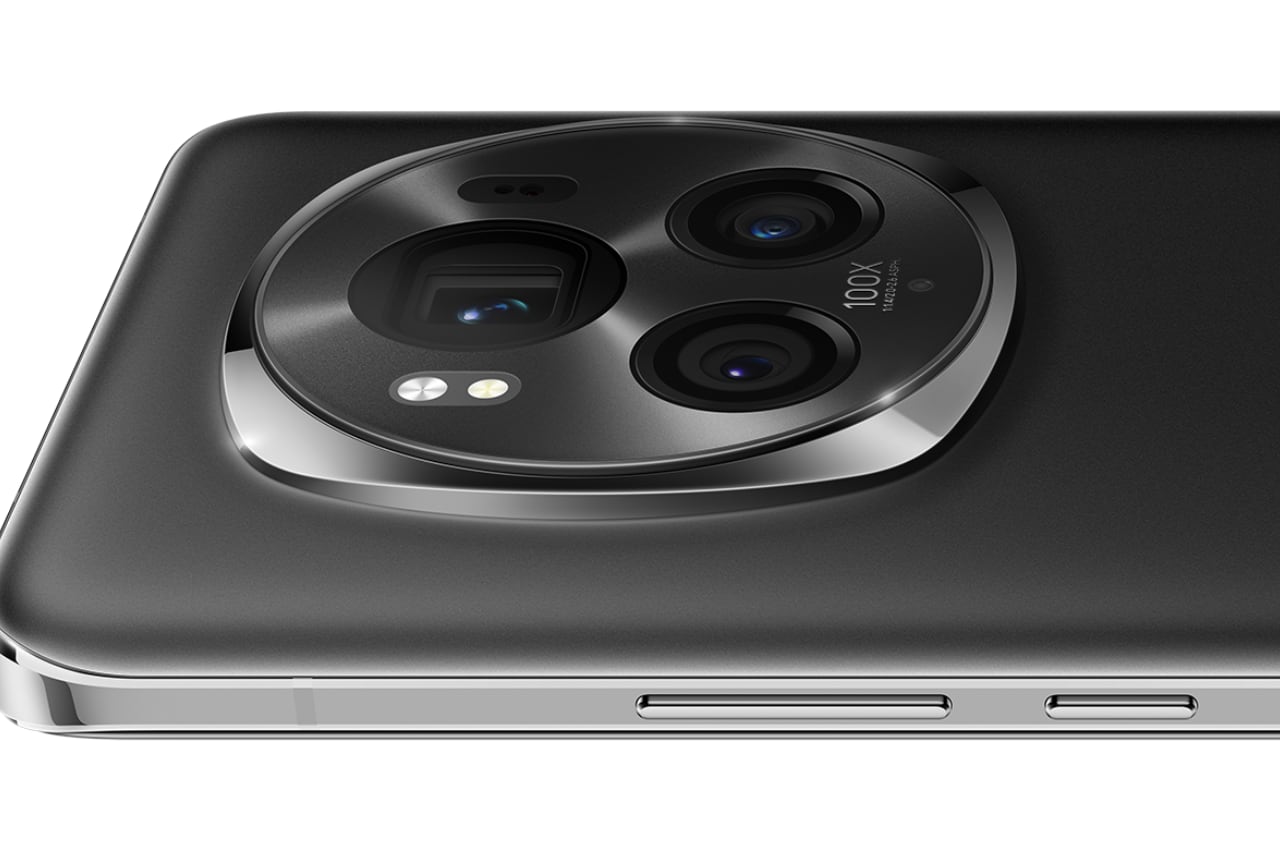
Photography has become an important part of the smartphone experience to the point that it could be considered one of the most critical deciding factors in a purchase. Companies have been working left and right to provide an excellent experience, but no matter how good the output is, they still can’t compare with the flexibility of a dedicated camera, especially mirrorless and DSLR cameras. You can only cram so much inside the thin body of a smartphone without either compromising on quality or leaving a distasteful bump on the phone’s back. Technology, however, is starting to catch up with smaller but more powerful sensors and lenses that could really give cameras a run for their money. The OPPO Find X7 Ultra embodies that promise, so we give the smartphone and its cameras a good test to see if it’s worth that large disc on its back.

Designer: OPPO

Aesthetics

If you’re familiar with OPPO’s premium smartphone line, then the Find X7 Ultra will immediately look familiar. But even if you aren’t, you’re still in for a treat with one of the most beautiful devices to grace the market so far. Just like its predecessor, the Find X6 Pro, it bears a dual-tone color scheme and a large circular camera bump that others have dubbed the “camera Oreo,” though a resemblance with the top of a soda can wouldn’t be off the mark either. It’s a peculiar design, but one that has a reason and actually serves another purpose, intentional or not.

That said, the OPPO Find X7 Ultra isn’t just a rehash of the 2023 flagship. The colored vegan leather that makes up two-thirds of the rear area has a pleasant curve that arcs around the camera at a distance where the two elements intersect. It’s a subtle yet significant change that prevents visual elements from just abruptly cutting into each other. It also has the visual effect of giving the camera Oreo more prominence, with the leather seemingly giving way to this important part of the phone’s design.

The color options for the phone differ in more than just their hues this year, though. Both the Orange and Blue colorways do share a similar design, with the white top of the design looking like a familiar ceramic that OPPO has used in the past. The black colorway, on the other hand, has a few more interesting details, like the stitching on the vegan leather surface. Instead of ceramic, the top looks more like metal but still feels like glass. The mid-frame is also different, using some sandblasted finish that complements the phone’s darker looks.

All three do have the same basic design, with a back that curves at the sides toward the edges. On the flip side, the screen is mostly flat but does curve sharply at those same edges, typical of the premium design carried by phones in the past. Admittedly, it’s going to be a divisive design choice, given how flat is back these days. There’s no denying, however, that the OPPO Find X7 Ultra still looks great with this style and probably wouldn’t be as appealing if was completely flat all around.

Ergonomics

The OPPO Find X7 Ultra is a large piece of metal and glass, there’s no getting around that fact. As with any large smartphone, there will be a problem of straining your hand with its weight and making it less comfortable and stable to hold over time. Fortunately, the phone is also unbelievably thin at 9.5mm only, and at 221g, it’s not exactly a heavyweight. It also feels well-balanced and not top-heavy as you might suspect given the size of the camera bump.

Even better, the rest of the phone’s design also contributes to helping secure a more confident grip. The vegan leather, for example, provides enough texture for your skin to grip comfortably. Even that camera Oreo becomes a place where your index fingers can rest when holding up the phone, especially with a ribbed rim that, again, adds texture and friction to stop the phone from slipping out of your hands. You will still have some difficulty reaching higher areas of the screen if you’re holding it in one hand, but other than that, the size of the Find X7 Ultra doesn’t get in the way of an enjoyable experience when using it.

Performance

The OPPO Find X7 Ultra is a premium flagship through and through, which means it also bears the best of the best hardware available in the market to date. That means a Qualcomm Snapdragon 8 Gen 3, 16GB of RAM, and 512GB of storage, right at the top of the list. Suffice it to say, the phone isn’t wanting in terms of silicon power and it blasts through all kinds of tasks, including heavy gaming, without breaking a sweat. Your hands won’t be sweating either thanks to an impressive cooling system. Mind you, it does get a bit warm with heavier loads, but not to the point of making you want to drop it like a hot potato.

It would be such a shame and a waste if those specs were matched with a mediocre screen and, fortunately, OPPO didn’t fail to impress here either. The huge 6.82-inch LTPO AMOLED display is bright, fast, responsive, and vibrant. It perfectly complements the phone’s luxurious back with an equally gorgeous display that supports the industry-standard HDR10+, OPPO’s own ProXDR, and soon, Google’s new Ultra HDR. Given you’ll want to view the photos you take on this screen, OPPO really needed to make sure that it was up to the task.

OPPO crammed a 5,000mAh battery inside, which is both common yet also mildly disappointing. With all its capabilities, a higher capacity would have been a better choice, but that would have also weighed down the phone considerably. Fortunately, it does last a day on a single charger, at least with constant use, and the super-fast 100W charging is enough to bring it back to full in about half an hour. 50W wireless charging is also plenty fast, which is a rarity in this regard.

Quad Main Camera and HyperTone System

Much of OPPO’s rhetoric revolves around the OPPO Find X7 Ultra’s Quad Main Cameras, and to be fair, it does deserve some praise for pulling off what comes naturally to professional cameras but not to smartphones. DSLRs and mirrorless cameras can easily change lenses when they need a different focal length or field of view while keeping the same high-quality imaging sensor built into the camera. Smartphones, on the other hand, use a different camera for different focal lengths, but due to space and price constraints, also use different sensors that aren’t always up to the task.

What the OPPO Find X7 Ultra accomplishes is to have four different cameras with different lenses, all of which have 50MP sensors. Yes, these sensors have different sizes and specs and, therefore, different overall quality, but the differences are very marginal at best. No longer do you have to sacrifice quality just to jump from wide to ultrawide to telephoto, nor will you get that jarring effect whenever you switch between cameras.

The phone’s mighty camera roster includes a 1-inch 50MP Sony LYT-900 with a 23mm focal length equivalent, a 1/1.95-inch 50MP Sony LYT-600 ultrawide (14mm equivalent), a 1/1.56-inch 50MP Sony IMX890 3x periscope telephoto (65), and a 1/2.51-inch 50MP Sony IMX858 6x periscope telephoto (135mm). With this set, the OPPO Find X7 Ultra practically covers the whole range of lenses used by photographers, including 10x zoom at 270mm with some computational photography. OPPO’s software also allows users to select more common focal lengths, like 35mm for the wide (main) camera, though it does that with a bit of cropping.

As you might have already noticed with the camera samples, these aren’t just numbers or empty words. OPPO definitely delivered on its promise of professional-quality photos in any field of view, zoom, or even lighting condition. Part of that magic is thanks to its partnership with Hasselblad, which also led to the Computational Photography aspect of its HyperTone camera system. In a nutshell, it tries to avoid oversharpening, overexposure, and other exaggerations that most camera software apply to compensate for poor image quality, resulting in more natural-looking photos you might have never thought came from a smartphone instead of a pro camera.

Sustainability

As one of the world’s top 5 smartphone vendors, OPPO has taken its responsibility for preserving the environment quite seriously. In addition to a few models that made use of recycled or sustainable materials, the company also has a concrete program for reducing the negative impact its business has on the planet. That involves reducing its carbon footprint, optimizing its packaging and logistics, and offsetting its harmful emissions.

Unfortunately, the OPPO Find X7 Ultra itself doesn’t have the clear marks of a sustainable phone. Sure, it uses vegan leather across all models, but that synthetic material isn’t completely environment-friendly either, despite the name. One upside is that the phone is IP68-rated, which is one of the highest dust and water resistance levels for smartphones, promising a mostly durable product that should last you quite a while before you have to throw it away, responsibly, of course.

Value

If you’re anything of a mobile shutterbug, it’s hard not to get excited over the OPPO Find X7 Ultra. Although it’s not going to dethrone an expensive DSLR, it really comes close to it with its HyperTone Quad Main Camera System. And all that imaging hardware is packed into a thin and stylish device that you can also use for more than just taking photos. What’s not to like?

Unfortunately, the product’s value takes a nosedive because of the fact that, as of this writing, OPPO has no plans yet to bring the OPPO Find X7 Ultra to international markets, making it exclusive to a Chinese audience. Yes, you can probably import the phone through other channels, but that won’t change the fact that the version of ColorOS software running on it isn’t made for global users. Yes, you can install Google Play Store unofficially, but that still won’t give you access to some basic platform capabilities you’d expect from international versions of these devices. It’s definitely a shame that such a treasure would be out of reach, and hopefully, OPPO will change its mind very soon.

Verdict

Smartphones are sometimes a victim of their own success, or at least of marketing hype. It wasn’t that long ago when they were said to devour the lower end of professional cameras, but they haven’t managed to surpass the bulkier and more powerful shooters in terms of flexibility and quality. It’s just impossible, given the restraints on design, price, and engineering, so smartphones have to make do with workarounds and software solutions.

The OPPO Find X7 Ultra, however, comes pretty close to that ideal. It still can’t change lenses physically, but it provides almost the same experience through a perfect combination of hardware and software. Of course, it’s not just a digital camera, and it manages to excel in almost every field with very few flaws. It’s tragic that most people won’t be able to experience all of that, though, but hopefully, they will soon be able to get their hands on what could very well be this year’s most beautiful and most capable smartphone camera.

The post OPPO Find X7 Ultra Review: Inching Closer to Photography Perfection first appeared on Yanko Design.
nubia Z60 Ultra Review: Challenging Conventions

PROS:


  • Distinctive boxy design

  • Gorgeous, hole-less screen

  • Large, long-lasting battery

CONS:


  • A bit on the bulky and heavy side

  • "Metallic glass" material attracts dust too easily

RATINGS:

AESTHETICS
ERGONOMICS
PERFORMANCE
SUSTAINABILITY / REPAIRABILITY
VALUE FOR MONEY

EDITOR'S QUOTE:

Taking the road less traveled, the nubia Z60 Ultra's unconventional rectangular design, flawless screen surface, and choice of camera focal lengths are sure to leave a lasting impression on consumers tired of the same old things.

Despite how smartphone manufacturers try to differentiate the designs of their products, most of them still jump on the same trends, like the curved edge screens of the past, today’s flat sides, or camera bumps of different shapes and sizes. The same is true even for features you don’t immediately see, like camera sensors and lenses that everyone is using, just advertised under a different marketing name. It’s almost too easy to just do what everyone else is doing, riding the waves in the hopes of making a large catch as everyone else. Fortunately, there are outliers that dare to take a different path, and the nubia Z60 Ultra easily stands out as a nonconformist, so we take a closer look to see if it has more to offer than just a different yet oddly familiar face.

Designer: nubia

Aesthetics

The design of the nubia Z60 Ultra is admittedly divisive. Some will appreciate a fresh break from the smooth curves of the current breed of smartphones, while others might scoff at the blast from the past. Anyone who still remembers the Sony Xperia of the past might indeed see some resemblance to this late 2023 newcomer, and it’s not exactly a bad light to be in.

The nubia Z60 Ultra is unabashedly flat and angular, giving off an air of maturity and hardness at the same time. Even the camera bump diverges from circles, squircles, and any other round shape found on most smartphones. Two of the three cameras sit on a strip, not unlike the Google Pixel 8’s visor, except it’s also completely flat and more like a thin block stretching across the width of the phone. This boxy aesthetic is going to be subjective, even more so compared to other phone designs, but there’s no denying that it will leave a lasting impression, positive or otherwise.

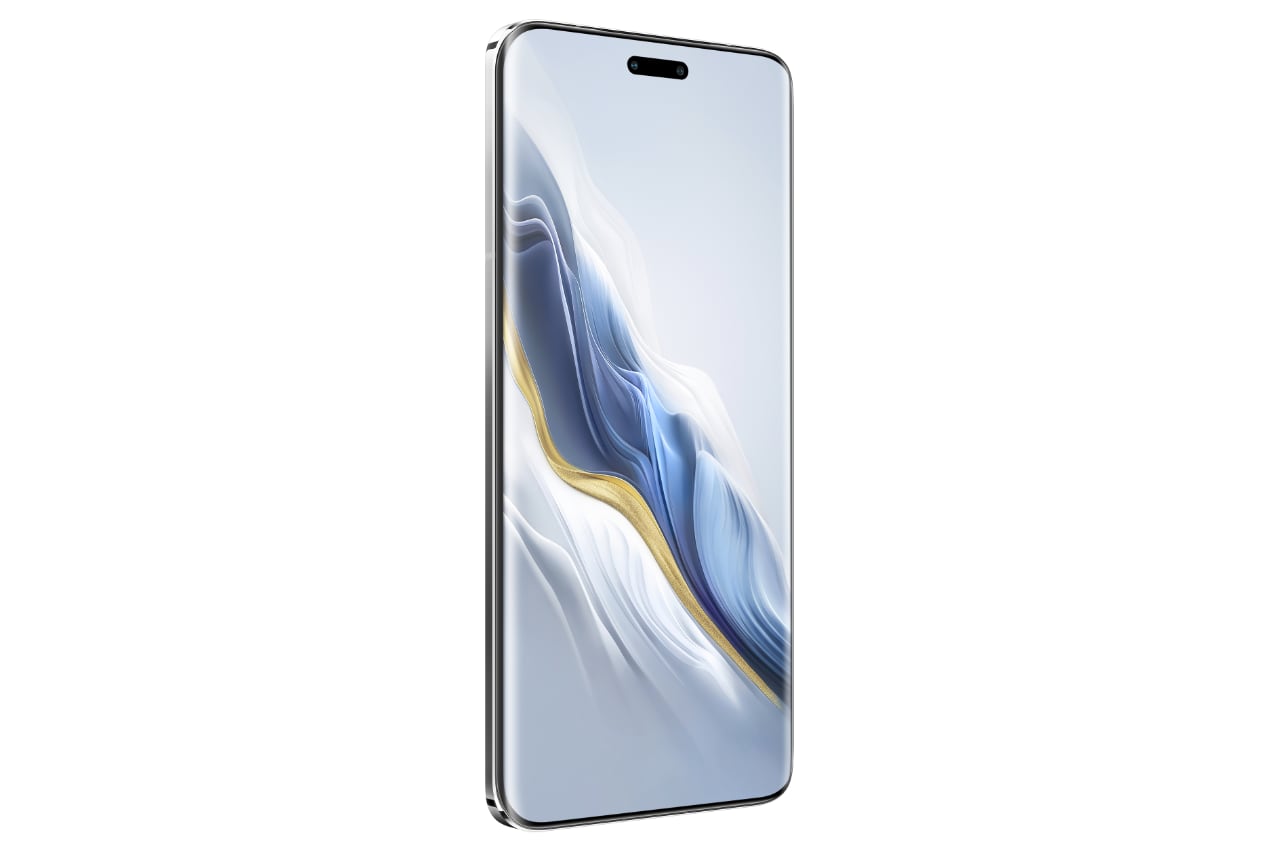
If the shape and back of the phone are what immediately catch your attention, it will be the large 6.8-inch display that will probably draw you in. Admittedly, it’s not the brightest nor the most colorful panel, but it’s the flawless, unbroken surface of this screen that will really impress you. Under-display cameras (UDC) aren’t exactly novel, but they’re so rarely used that you’d still be surprised to see one up-close. Even better, the nubia Z60 Ultra uses the company’s fifth-generation UDC technology that improves the pixel density of that spot above the front-facing camera. The result is a screen that is full from edge to edge, and thanks to its completely flat surface, also visible and usable in its entirety.

There are different colorways available, including a “Starry Night” that makes no effort to hide its Van Gogh inspiration. nubia introduces an “AG Metallic Glass” material that covers the rear of the phone, and for the most part, it does offer your hand a new sensation that almost feels like metal. Unfortunately, for some reason, it also seems to act as a huge magnet for dust. It may stay free of oily fingerprint smudges, but you’ll still want to put on the included clear case to keep it clean, among other reasons.

Ergonomics

There’s still an ongoing debate on which design is better for your hand and your grip. Curved edges are claimed to be gentler on the skin, but some claim it makes the phone slip more easily from your grasp. Flat edges and sharp angles add a bit more tooth to improve your grip, but there are those who feel uncomfortable with how it bites into their palm. The latter, of course, is what applies to the nubia Z60 Ultra’s sharp figure, and like its design, is going to split camps.

What everyone will agree on, however, is how bulky and heavy the phone feels in your hand. At 8.78mm thick and 246g heavy, it’s definitely going to give your hand a bit of strain when held up for long periods of time. Add that to the phone’s sharp edges, and you might indeed find your hand feeling a bit uncomfortable sooner rather than later, at least with the protective case that makes all those moot. Fortunately, that heft isn’t without good reason, but it’s still something that prospective buyers will need to consider if they prefer phones that are impossibly thin and light instead.

Performance

The nubia Z60 Ultra has been compared to its gaming-focused cousin, the RedMagic 9 Pro, and the comparison isn’t without basis. Both sport top-notch hardware available in the mobile market, starting with the Qualcomm Snapdragon 8 Gen 3 that can be paired with up to 16GB of RAM. In terms of raw performance, the nubia Z60 Ultra is pretty much a gaming phone, sans the bells and whistles like a tiny fan or extra buttons on the edges. In a way, this is the more subdued and stylish version of the RedMagic 9 Pro.

The phone’s extra-large battery definitely supports that use case and then some. Rated at 6,000 mAh, it’s definitely one of the highest capacities in the market today, and while you might not hit that advertised 47-hour uptime with average use, you’ll get pretty close to more than a day’s worth. Charging, however, won’t be blazing fast, given it only supports 80W wired charging, pushing the charging time to a little over 30 minutes. This chunk of power is definitely to blame for the nubia Z60 Ultra’s size and weight, but it’s a price worth paying for those who value battery life over comfort and thin profiles.

It isn’t only in design that the nubia Z60 Ultra bucks the trend. While it does put a heavy emphasis on its cameras like any other flagship smartphone, it’s the details that truly make it unique. In a nutshell, nubia has opted to adopt narrower fields of view compared to most smartphones in an effort to appeal to photography enthusiasts who would be more familiar with these focal lengths.

The main 50MP camera, for example, has that 35mm focal length used by classic camera lenses, which is great for taking sharp photos, especially with a natural bokeh effect. Unfortunately, this field of view will be too narrow for videos that will look cropped at the edges. That’s probably why nubia used an ultra-wide camera with a similar 50MP sensor (though from a different manufacturer) to make the transition to a wider view look more seamless. That said, this ultra-wide camera is also narrower than what you’d find in the market, using an 18mm focal length only.

In practice, the nubia Z60 Ultra’s cameras perform impressively, producing images with rich detail, at least in well-lit environments. The small exception is the 64MP telephoto camera with an equally narrow 85mm focal length, which makes close-up shots less doable. The narrow field of view might find fans among more seasoned photographers, but it is also an odd and awkward detail for those already used to the wider range of camera smartphones, especially when it comes to video recording.

Sustainability

So far, the nubia Z60 Ultra is proving to be quite the nonconformist, embracing designs already eschewed by most manufacturers as well as camera specs more popular among photographers than smartphone users. It would have been even more impressive if nubia also became a rebel and embraced sustainable materials and practices wholeheartedly for this smartphone. Unfortunately, that’s not the case.

In this regard, the nubia Z60 Ultra is pretty typical when it comes to composition, durability, and repairability. It’s your typical mix of plastic, glass, and metal, none of which were made from post-consumer recycled materials, at least none that nubia is telling. The silver lining here is that the phone is IP68 rated, so it’s not going to join the masses of e-waste littering the planet after a slight splash or dive into water.

Value

The nubia Z60 Ultra is a premium flagship through and through, and its extra-large battery, hole-less screen, and pixel-dense camera sensors push it even higher among its peers. For all of that, you’d expect it to cost as much as your next late 2023 or early 2024 high-end handset, but here’s the clincher: it’s almost half that!

While it does start at $599 for a rather modest 8GB of RAM and 256GB of storage, the highest configuration with double that memory is only $779. And it’s not like nubia is a new, unknown, and unreliable brand, so such a price tag is downright crazy. Of course, there’s the matter of being able to buy one in the first place, since nubia isn’t available in all markets, but in those regions it does serve, the nubia Z60 Ultra is bound to make an irresistible proposition to go with its undeniable presence.

Verdict

While there is some wisdom in going with tried and true traditions, it’s never an excuse not to think outside the box. There’s no certainty that you will do better or worse, but what’s certain is that you will make some impact. That’s the kind of legacy that the nubia Z60 Ultra will have with a design that is both fresh yet classic, and features that have a clear purpose, even if it swings away from the mainstream smartphone crowd.

It definitely gets a lot of things right, like its impressive performance, its memorable design, and its blemish-free screen, but it’s far from being perfect. There’s no denying that part of its imposing character is its bulk and weight, and the narrow field of view will probably trip up some mobile shutterbugs. With a head-turning price tag, though, you might be willing to look past these flaws, especially if the flaws are features you actually value. Needless to say, the nubia Z60 Ultra is doing quite a difficult balancing act, and to its credit, it’s doing quite an admirable job in keeping on its toes.

The post nubia Z60 Ultra Review: Challenging Conventions first appeared on Yanko Design.
How much is the Galaxy S24: Is it worth the price

Although it didn’t do so at the recently concluded CES 2024 in Las Vegas, Samsung is still starting the year with a bang with its own Unpacked event. To no one’s surprise, the stars of the show are, of course, the new Galaxy S24 trio, though the much-rumored Galaxy Ring also made a very brief appearance as an unambiguous teaser. Samsung’s early 2024 flagships are bringing the expected upgrades in terms of hardware, but they’re also riding on the AI train in their own, unique way. But with every new Samsung phone also comes the question of whether its price is worth its weight in gold. We take a cursory look at what the Galaxy S24, S24+, and S24 Ultra have to offer to bring you that answer.

Designer: Samsung

What’s New

Of course, there are the customary hardware upgrades you’ll see every year, but there are a few surprise twists here and there. All three, for example, are powered by a new Snapdragon 8 Gen 3 “for Galaxy” chipset that’s marketed as a special flavor designed just for Samsung’s newest darlings. It’s presented as being optimized for hard AI work that we’ll get to later, but the exact performance differences between this and a vanilla Snapdragon 8 Gen 3 are probably going to be subtle.

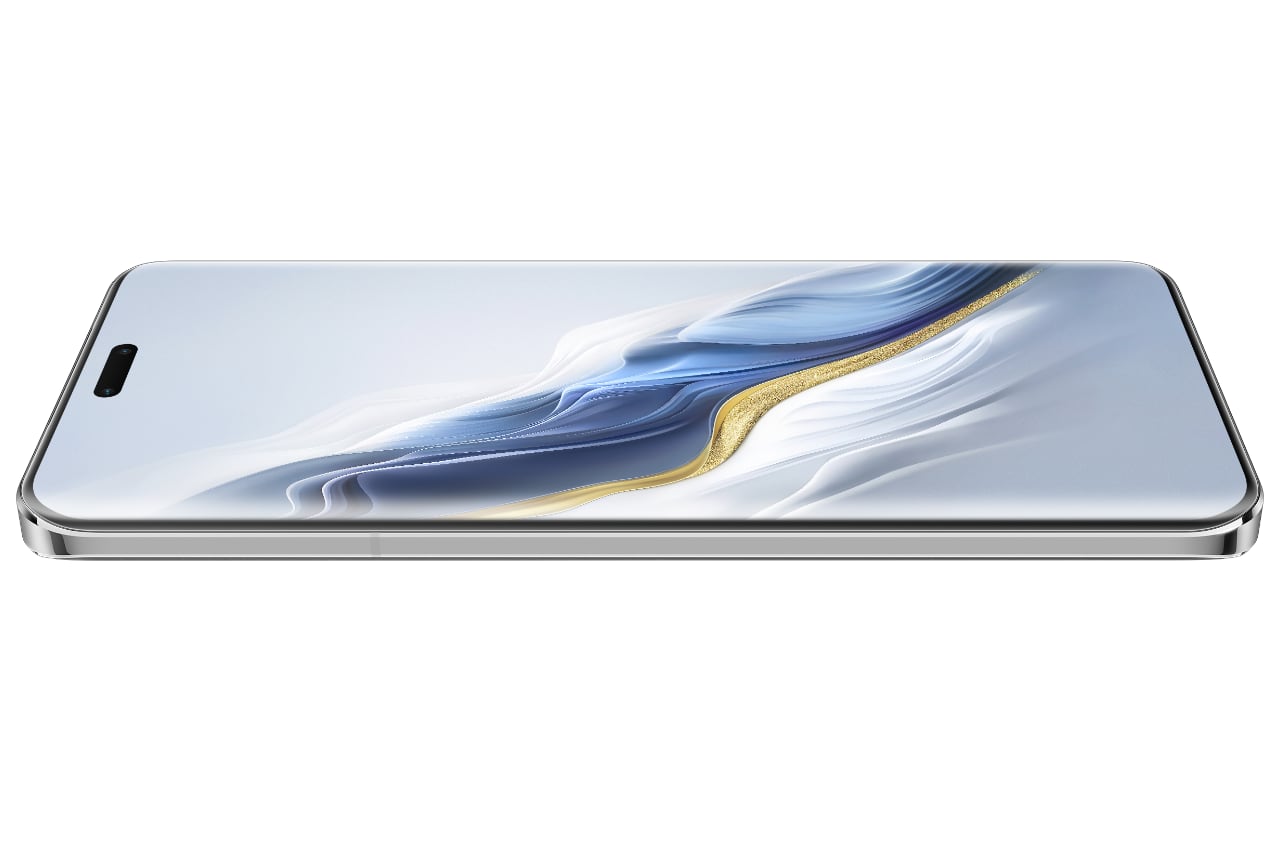
Also subtle are the slightly larger displays on this year’s generation of Galaxy phones, at least for the Galaxy S24 and Galaxy S24+, and only by 0.1 inches. The Galaxy S24 Ultra’s screen remains the same large 6.8 inches, but the design change is actually greater in some other areas, as we’ll soon see. All three get brighter panels, though, so reading under the sun shouldn’t be a problem if it was before.

While most of the features are similar across the three models, differing mostly in screen size, things take a very different turn when it comes to the cameras. Suffice it to say, the Galaxy S24 and S24+ do not get any meaningful upgrade in terms of camera hardware, while the Galaxy S24 Ultra seems to take one step forward and one step back with at least one of four cameras. One of the two telephoto cameras gets a denser 50MP sensor but halves the optical zoom from 10x to 5x. Samsung assures, however, that the quality of a 10x “hybrid” zoom from that new sensor will just be as good, thanks to some AI tricks, of course.

Bold Direction towards Flat Design

The Galaxy S24 series looks nearly identical to its predecessor at first glance, but once you take a closer look, you will notice some subtle yet important differences. The Galaxy S24 and S24+ now adopt a completely flat design on its front, back, and sides, except for the rounded corners that help it avoid a completely boxy appearance. This refinement, though small, does put it in the same boat as many notable premium smartphones these days, particularly the latest iPhones.

The Galaxy S24 Ultra only changes its screen design, but that actually has the biggest repercussion in this generation. Gone are the curved edges that used to mark high-end flagships, with a screen that’s completely flat across the surface. It gives it a more modern look, at least as far as current design trends go, but the more important consequence is that owners now have full access to the entire screen using the included S Pen. No more avoiding or accidentally sliding off the edges because you can now utilize every single inch and pixel on that large screen.

AI for a Price

With AI still reigning as the buzzword in consumer electronics, it was really only a matter of time before Samsung joined the bandwagon in this industry as well. There are plenty of AI-powered features being advertised on the Galaxy S24 and, to Samsung’s credit, they really do show what the technology can do and how we can harness it for our benefit.

Real-time translations are one of the best examples of this artificial intelligence, and both two-way Live Translate and split-screen Interpreter help break down language barriers when communicating with people around the globe. Samsung Notes also gets an AI-assisted Notes Assist for summaries and template creation, while Voice Recorder gets Transcript Assist for transcribing audio recordings. And, of course, there are also tons of AI-powered image editing features in the Camera and Gallery apps.

There is one particular application of AI that also demonstrates the continued cooperation between Samsung and Google, former frenemies on the Android platform. As the name clearly states, Circle to Search lets you simply draw a circle around an image or even a block of text on your screen to initiate a Google Search.

As useful as these may sound, it seems that Samsung will be taking a rather controversial approach to providing AI features on its gallery phones. Samsung’s suite of Galaxy AI features will apparently be available for free on these devices only until 2025, after which it could charge a subscription fee for using them. It doesn’t exactly state how much that will be or which features will be covered by this limitation, though Google’s Circle to Search and other third-party AI features are most likely going to be exempt. Nothing’s set in stone yet, but this will surely lessen the appeal of relying on these features heavily.

Should you buy it or upgrade?

And now for the most critical part of the decision-making process: the price tags. The Galaxy S24 starts at $799.99 for 8GB of RAM and 128GB of storage, while the Galaxy S24+ will go for $999.99 for 12GB RAM and either 256GB or 512GB of storage. These are pretty much the same launch prices as the Galaxy S23 and S23+, which isn’t surprising considering very little has changed.

The Galaxy S24 Ultra, however, is a chunky $100 higher than last year’s model, now starting at $1,299.99 for 12GB of RAM and 256GB of storage. It’s a considerable price jump, especially when you consider you might be asked to pay for those trendy Galaxy AI features in two years. That new telephoto camera might be partly to blame, among other things.

If you’re looking to jump into the Samsung ecosystem for the first time, then it’s really only a choice between the smaller and more affordable Galaxy S24 and the larger, fully-featured Galaxy S24 Ultra. The Galaxy S24+ might sound like it has the best of both worlds, but it’s actually the opposite. Its only winning grace is the larger screen and battery, both of which will set you back $100 more than the Galaxy S24 but still won’t have the better cameras of the Galaxy S24 Ultra at the very least.

Considering all these, it’s going to be tough to recommend upgrading to any of the three models if you still have a perfectly fine Galaxy 23 or even a Galaxy 22. Even the Galaxy S24 Ultra, with a creator-friendlier flat display, is going to be a hard sell considering it’s also more expensive. The jury is still out on the camera improvements, though it’s probably not going to be too mind-blowing compared to the already decent quartet on the Galaxy S23 Ultra. Of course, if you have a Galaxy S21 series or older, then there’s almost no more doubt about making the jump or not.

The post How much is the Galaxy S24: Is it worth the price first appeared on Yanko Design.

The Twitter (X) Smartphone sports an X-shaped camera and a dedicated rear display for notifications

While the world’s been living on a prayer of a Tesla phone some day, designer Antonio De Rosa had a much better idea – why not build a phone centered around a much more smartphone-centric company? The Object-X is every microblogger’s dream device, with its own dedicated display unit just for Twitter (ahem, X). You can see notifications, browse the app, send tweets, and even access your Tesla right through the rear display. For everything else, a normal front display serves its purpose. Oh, and extra points if you noticed the X-shaped camera bump…

Designer: Antonio De Rosa

Just given the company’s (and its founder’s) trajectory over the past year, the Object-X may not be for everyone, but as a concept and design exercise, it makes for a pretty nifty piece of hardware. It builds on all of Elon’s companies’ most smartphone-centric features, from the social media app to Tesla integration, AI-based computational photography, and even enhanced connectivity thanks to Tesla SpaceLink.

The Object-X sports a 6.9-inch (nice) screen on the front, with a slightly asymmetric design and a sharper corner on the bottom right, with a dedicated X button that doubles as an Action Button, allowing you to do things like fire up the social media app, start your Tesla, or even chat with Grok (X’s ‘free speech’ AI chatbot). No, it probably isn’t made from the same metal as the Cybertruck, but it’s nice to think that maybe this could be possible one day.

The rear display is the Object-X’s most visually iconic feature, giving Twitter-addicts their dedicated supply of the microblogging platform. Although it’s really impossible to get any typing done on that small screen, it’s perfect for browsing tweets, retweeting, checking notifications, and liking tweets from your feed. A sidebar lets you also toggle between Twitter and Tesla applets, so you can also do things like locate your car, auto-park it, unlock it, or even remote-start your vehicle.

If the secondary display didn’t excite you, the quad-cam system probably might. Shaped to look like the X logo, the cameras are augmented by Twitter’s GROK AI that processes the photos to give you great images every time… or at least that’s what designer Antonio De Rosa envisions with the phone. The four cameras cover a wide range of scenarios, while a flash in the middle handles low-light photography.

The Object-X is clearly just a concept phone, but it explores possibilities more than it does feasibility. I doubt most people would trust Musk with a smart device that knows everything about you (no single person deserves all that power), but hey, you never know… the Cybertruck still has 1.9 million preorders as of last year, with no clear delivery in sight. People clearly have money to spare when it comes to Musk’s visions.

The post The Twitter (X) Smartphone sports an X-shaped camera and a dedicated rear display for notifications first appeared on Yanko Design.
realme 12 Pro wraps a premium telephoto camera in a luxurious watch design

Almost all smartphone makers try to advertise their design-centric processes and products, but few actually live up to the expectations they set. Of those few, realme has had a track record of teaming up with big names in the industry to come out with a variety of designs that target different audiences, from youngsters to travelers to connoisseurs. This year, it seems that realme is aiming to tickle the fancy of watch lovers with a flagship that takes deep inspiration from these masterpieces of design and craftsmanship. Of, the realme 12 Pro isn’t just a pretty face and promises to also elevate your mobile photography with a new premium telephoto camera.
Designer: realme x Ollivier Savéo

In the past, smartphone telephoto cameras could only use digital tricks to get closer to a subject, but the development of periscope-style lenses finally enabled true optical zoom without bulking up the phone too much. With the realme 12 Pro, the brand is taking that to the next level with a combination of innovative elements and engineering to deliver a premium telephoto experience. In addition to a state-of-the-art periscope telephoto lens, the flagship phone utilizes the latest OmniVision OV64B, a 64MP 1/2-inch sensor that’s twice as large as your typical telephoto camera, including the one on the iPhone 15 Pro Max. These two pieces work together to provide not just 3x optical zoom but also 6x in-sensor (hybrid) zoom, getting you close and personal without the usual degradation associated with simple image cropping.

Of course, the realme 12 Pro’s main camera isn’t going to be left behind. With a 50MP Sony IMX890 1/1.56-inch sensor, the primary wide shooter promises rich details even at night. This is further enhanced by the MasterShot algorithm developed in collaboration with Qualcomm, enabling the phone to process RAW images directly, among other process-intensive capabilities. Along with the ultra-wide shooter, this camera system supports a wide range of lossless zoom levels, from 0.6x to 6x, similar to that of more expensive handsets.

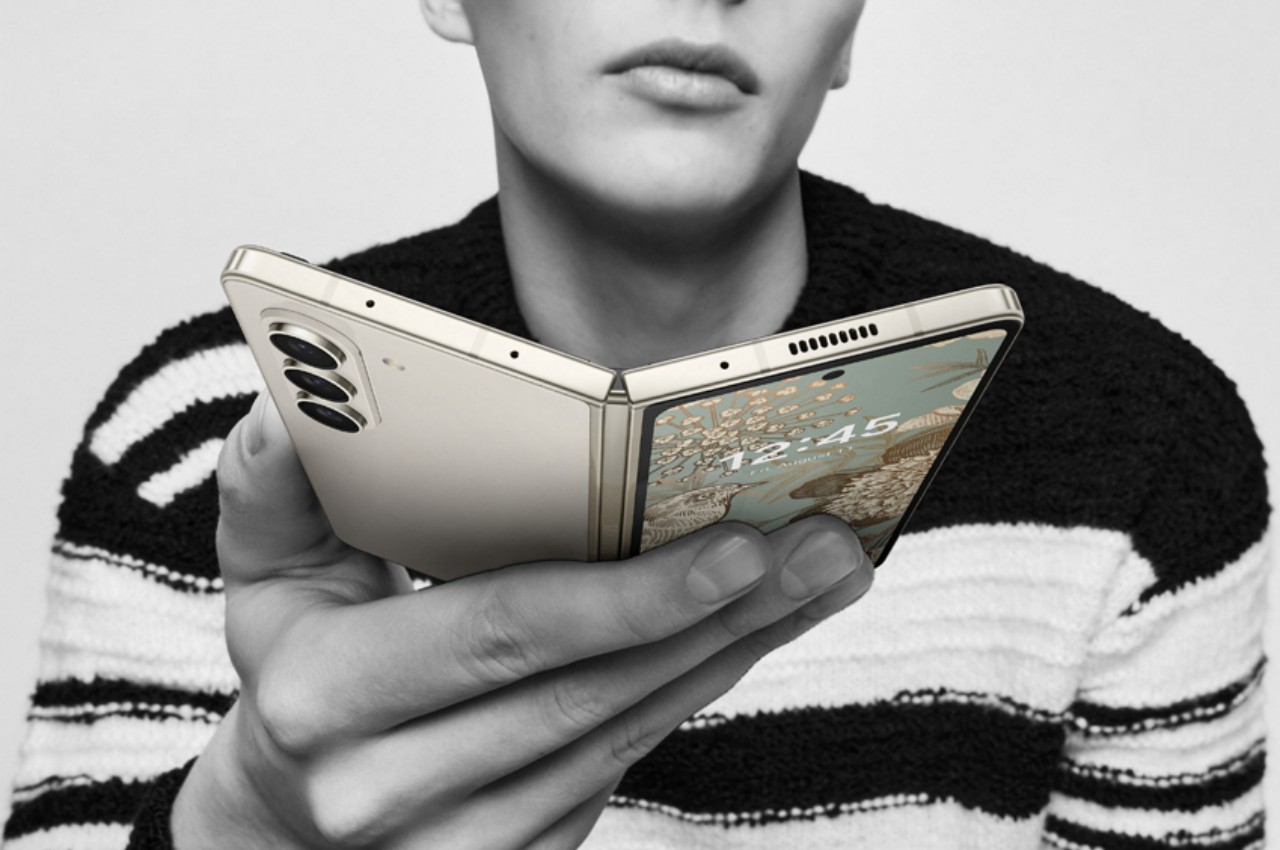
Although the cameras are a focal point of the realme 12 Pro (pun intended, the phone’s design takes its cue from a different kind of luxury product. Teaming up with luxury watch designer Ollivier Savéo, the phone bears the aesthetic and tactile hallmarks of an elegant and premium timepiece. A fluted bezel wraps the circular camera island, giving the semblance of a classic watch face, while the vegan leather material that covers the phone’s back is akin to the leather straps of these luxurious accessories.

The realme 12 Pro takes this a step further with a 3D jubilee bracelet, similar to a metallic strap, that runs down the middle of the phone. With its three-dimensional rhomboid precision splicing, this minute detail adds a new texture and a touch of class to an already stylish phone. The realme 12 Pro is set to launch this month, with availability details and exact specs still to be disclosed.

The post realme 12 Pro wraps a premium telephoto camera in a luxurious watch design first appeared on Yanko Design.