iOS 26.2 Release Candidate 2 Released- Why the Delay?

iOS 26.2 Release Candidate 2 Released- Why the Delay?

Apple has officially released iOS 26.2 RC2, marking the final release candidate before the public rollout of this update. This version is designed to address lingering bugs, enhance system performance, and refine existing features. For developers and public beta testers, it provides an early glimpse into the improvements that will soon be available to all […]

The post iOS 26.2 Release Candidate 2 Released- Why the Delay? appeared first on Geeky Gadgets.

Posted in Uncategorized

This Pocket Hydrator Adjusts Mist Strength Based on Face Distance

Skin loses the hydration war quietly in today’s modern world. Office air conditioning runs all day, planes recycle cabin air for hours, and cars blast heat or cold depending on the season. Most hydration routines still happen at a bathroom mirror with a cotton pad and a bottle, even though the real damage shows up at desks, in conference rooms, and halfway through a flight when your face feels tight and tired.

NanoHydra Pro tries to close that gap by shrinking a fairly advanced hydrator into something pocket-sized. It looks like a small metallic gadget with a gradient finish, the kind of thing that sits on a desk next to a phone or slips into a bag without announcing itself. A dual pump nano mist system atomizes toner or serum into a 10 micron droplet cloud, fine enough to sit on skin rather than drip off.

Designer: iNewMe

Click Here to Buy Now: $189 $269 (30% off). Hurry, only 121/200! Raised over $109,000.

The 10 micron mist feels different from a regular spray bottle. Most misters shoot larger droplets that either evaporate too fast or run down your cheeks, leaving streaks on your makeup or pooling near your jawline. NanoHydra Pro atomizes liquid into something closer to a soft fog, light enough to absorb quickly without leaving skin wet or sticky, and you can use the same toner you already have.

What makes it feel smarter is the ToF distance sensor built into the front. It reads how close the device is to your face and quietly adjusts mist output in real time. Hold it near, and the spray softens to avoid oversaturating small areas. Pull it back, and coverage expands for broader strokes. Step outside the detection range, and it shuts off automatically, saving product and avoiding accidental desk misting.

The design seems built for people who keep skincare at their desk rather than just in the bathroom. Five modes let you shift between everyday hydration, a gentler setting for sensitive days, a lifting mode when skin feels slack, an infuse mode for deeper serum sessions, and a manual option for one quick burst. Each mode adjusts mist intensity and duration to match the moment.

The battery lasts around a week with regular use, so it sits there ready without becoming another thing to plug in every night. You press a button, pick a mode on the small LCD screen, mist your face, and go back to work. It fits into the kind of routine where hydration happens between calls or emails rather than as a separate event you have to carve out time for at home.

Travel is where the leak-proof capsule starts to matter. The chamber locks toner or serum inside with enough seals that you can toss it into a bag, check it in luggage, or carry it through airport security without spills soaking into clothes or electronics. The compact body fits easily into a jacket pocket or backpack side slot. On a long flight or dry commute, pulling it out and misting your face takes less effort than digging through a toiletry kit.

A companion app adds a layer for people who like tracking routines. It lets you adjust mist intensity, log each session, and review hydration trends over time, turning a simple spritz into something more intentional. The app also offers guidance based on your skin type and habits, though the device still works perfectly well as a one-button hydrator if you would rather skip the data layer entirely.

NanoHydra Pro hints at a version of skincare tools that pay attention to context instead of just pushing liquid through a nozzle. It reads distance, tunes droplet size, and fits into spaces where traditional routines fall apart, like desks, cars, and airplane seats. As hydration stops being something that only happens at a mirror, a small object that adapts quietly in your hand starts to feel like the more useful kind of upgrade.

Click Here to Buy Now: $189 $269 (30% off). Hurry, only 121/200! Raised over $109,000.

The post This Pocket Hydrator Adjusts Mist Strength Based on Face Distance first appeared on Yanko Design.

Remember Need For Speed? Someone built a real-life Mini Map from the game to use in your car

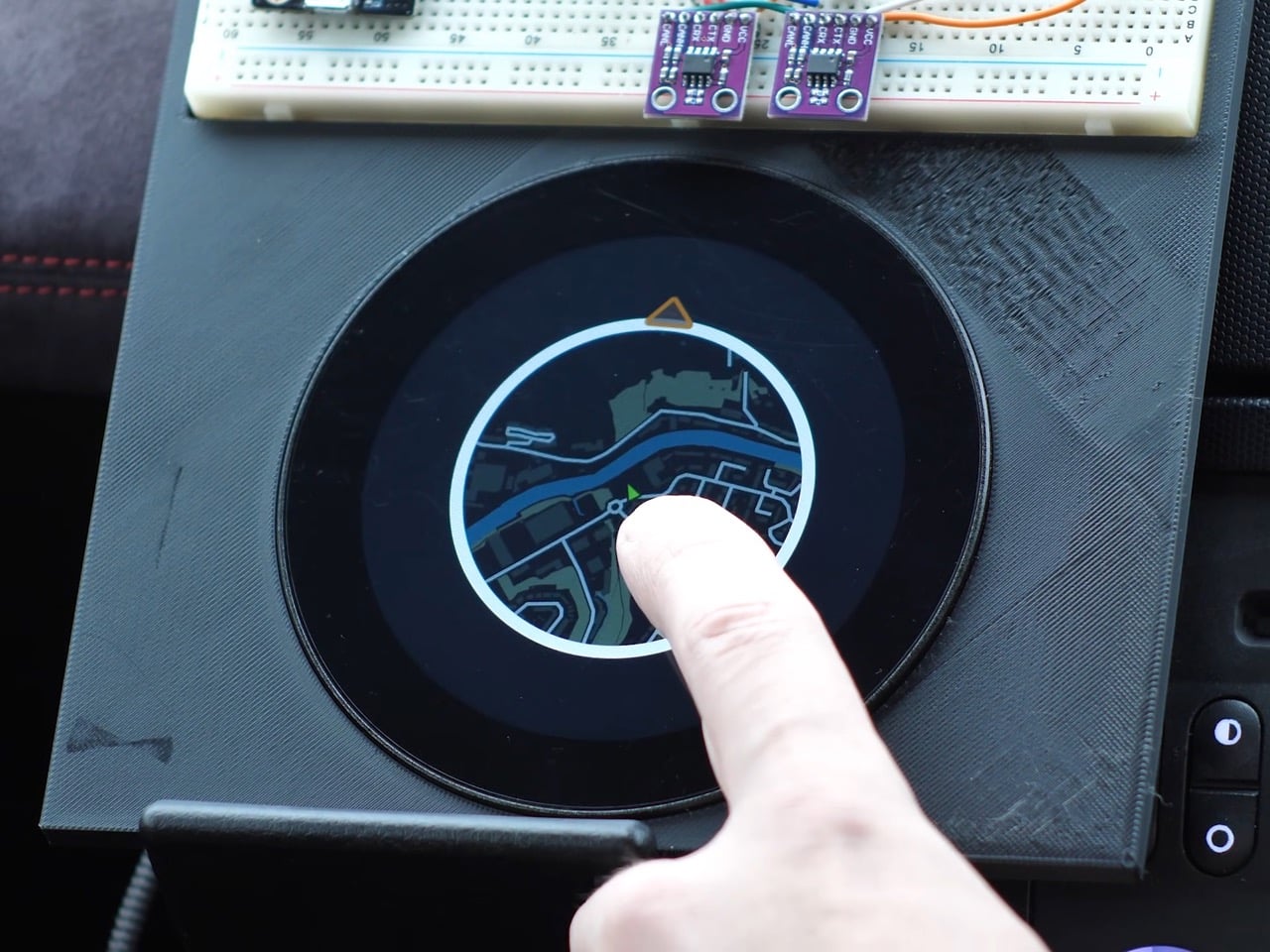
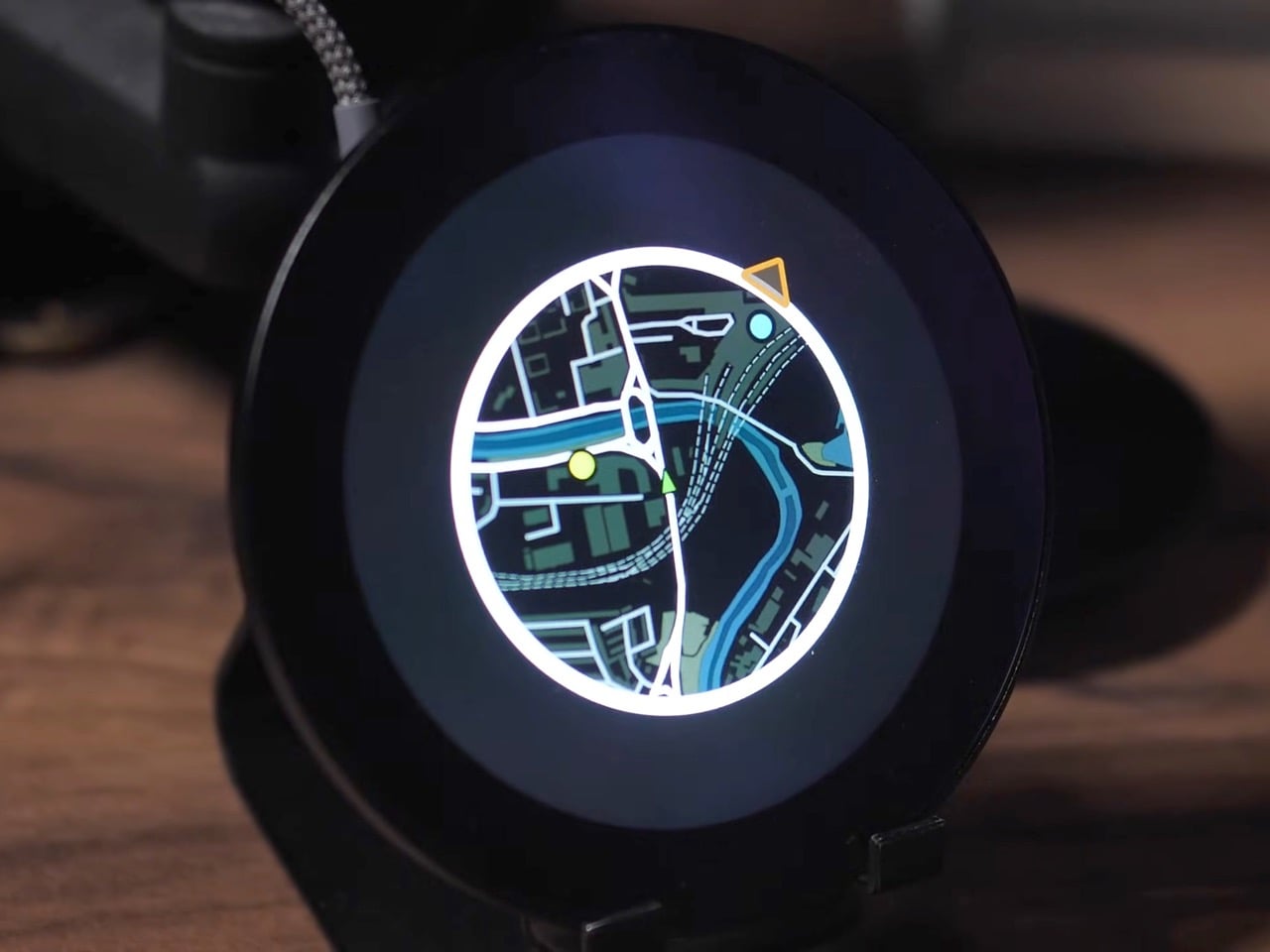
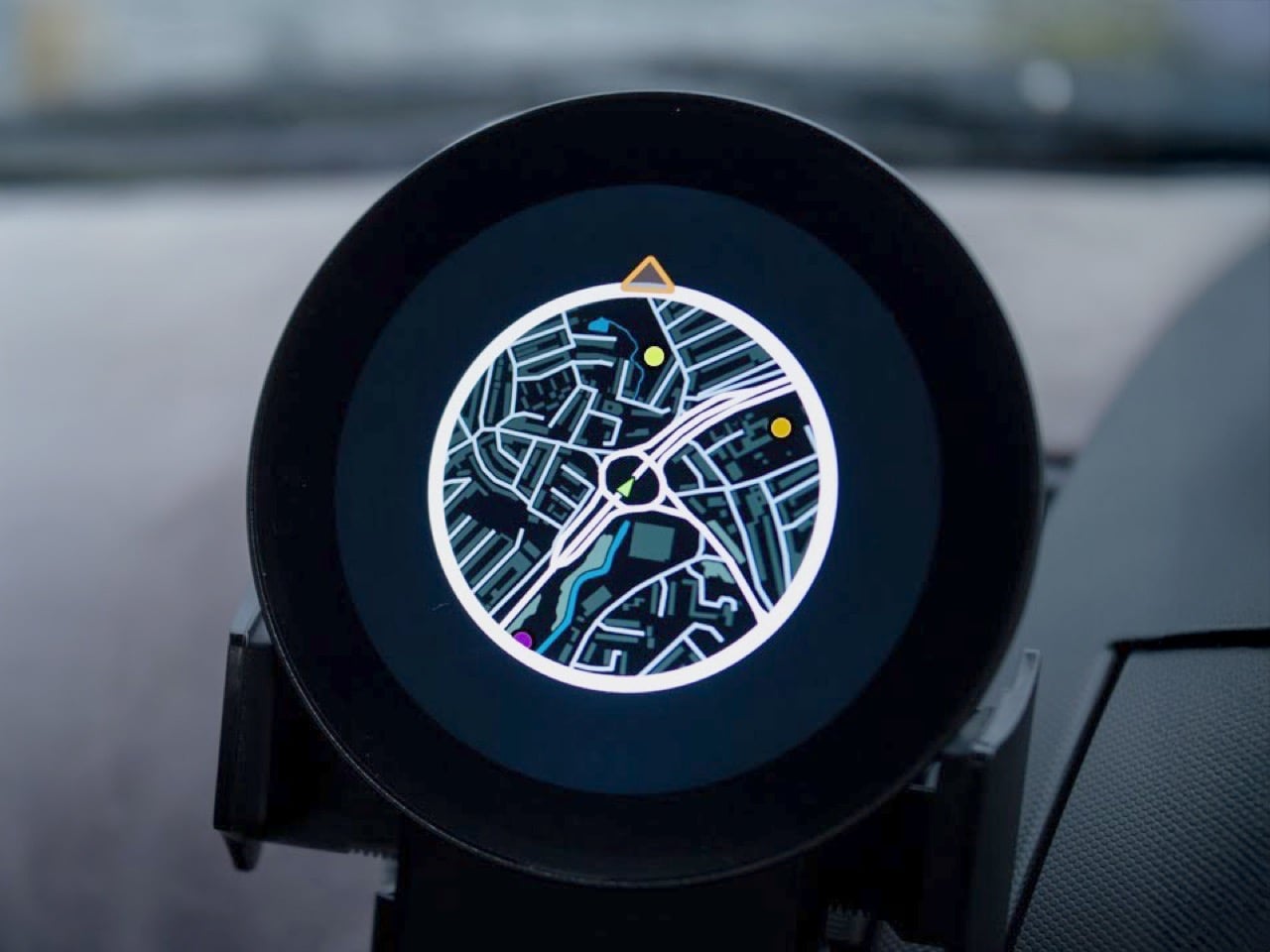
The mini map has been a staple of racing and open-world games for decades, teaching us to navigate virtual cities with quick glances at a corner of the screen. A developer has now made that experience tangible, building a GPS-based mini map system for actual driving that recreates the look and feel of Need for Speed Underground 2. What everyone said was impossible on an ESP32 microcontroller is now working smoothly in a real car, tracking position, displaying waypoints, and making everyday drives feel unexpectedly game-like.

Getting this to work on a $20 microcontroller meant processing the entire UK into 2.5 million map tiles, totaling 236GB of data stored on an SD card. The ESP32 loads them dynamically based on your heading, only pulling in new tiles from the direction you’re traveling because each one takes a tenth of a second to load. We’re talking weeks of optimization just to get map tiles loading fast enough, clever tricks to avoid tanking the frame rate, and some creative compromises that make the whole thing feel polished despite running on hardware that costs less than takeaway for two. What’s particularly cool is that all the code is open-source, meaning you could theoretically generate tiles for your own city styled after whatever game you’re nostalgic for.

Designer: Garage Tinkering

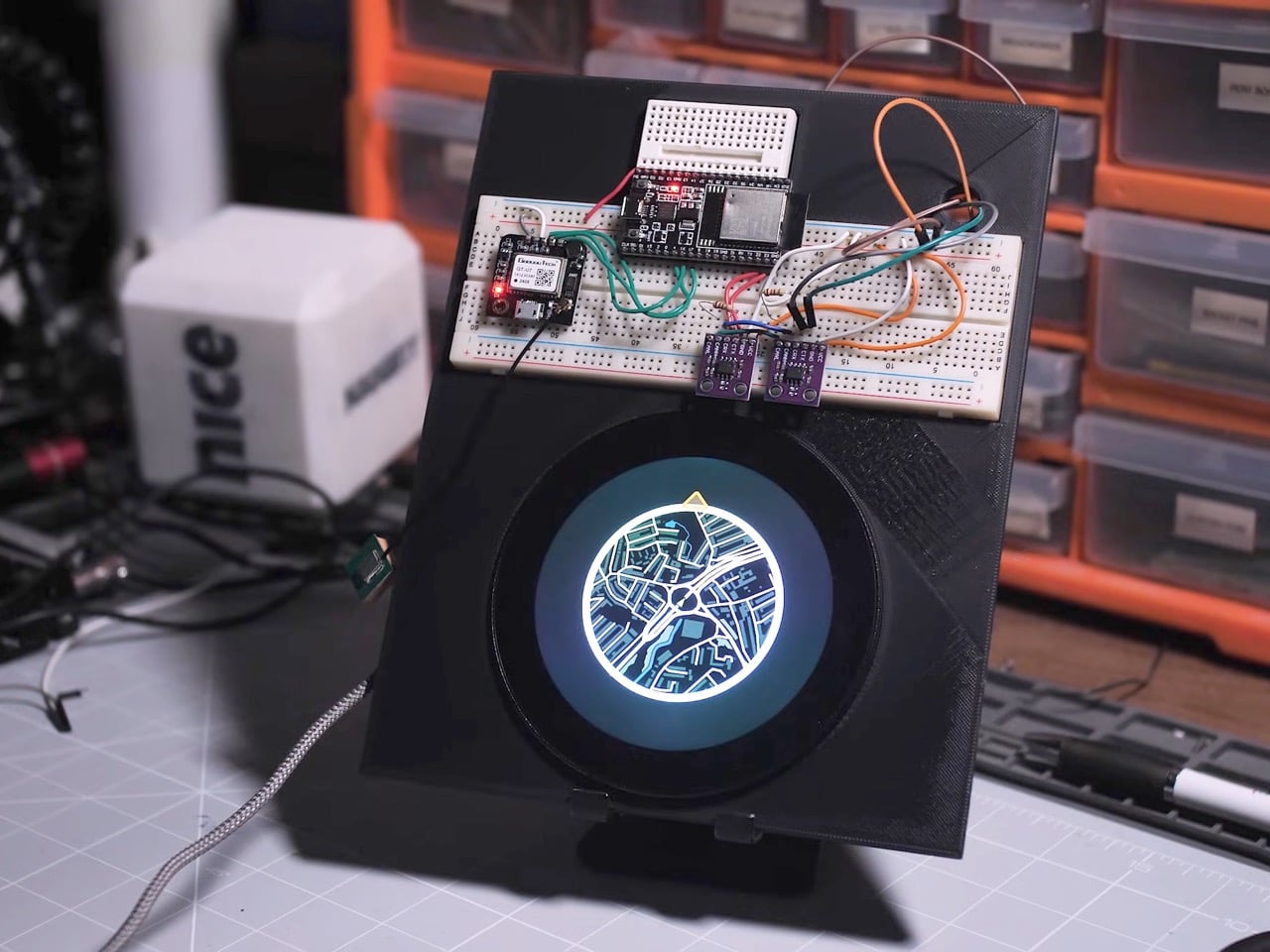
The project runs on an ESP32-P4, the flagship chip in the ESP32 family, paired with a 3.4-inch 800×800 pixel WaveShare display. If it couldn’t work on this combination, it wasn’t going to work on any ESP32, which is exactly why the developer chose it. The alternative would have been admitting defeat before even starting, and where’s the fun in that?

The map generation process alone is wonderfully excessive. Using QGIS, a geospatial mapping tool, the developer pulled road data from Ordnance Survey, transportation waypoints from the UK Department of Transportation, and petrol stations from Open Street Maps via a custom Python script that parsed through a 2GB dataset looking for anything tagged with “amenity=fuel.” The result was 2.5 million map tiles covering the entire UK at zoom level 16, totaling 236GB of data. Processing took 35 hours. Converting those tiles to a format the ESP32 could read took another 18 hours. Transferring everything to an SD card took 22 more hours. This is the kind of project where you start things running before bed and hope they’re done by morning.

Getting smooth performance meant rethinking how traditional GPS navigation works. Each tile takes roughly 0.1 seconds to load from the SD card, which sounds fast until you realize how many tiles you’d need if you loaded everything around you constantly. The solution was directional loading. If you’re heading north, only load new tiles coming in from the top. The tiles on the sides and bottom don’t need refreshing because you’re moving away from them. Just shuffle the existing data around in memory and you’ve saved yourself a bunch of unnecessary SD card reads.

The other big performance win came from abandoning authenticity. The original plan was to rotate the entire map grid so it moved like it does in Need for Speed, with the car always pointing up. Turns out rotating large image grids on an ESP32 makes everything stuttery and unpleasant. The fix was keeping the map oriented north and rotating just the car icon to show your heading. It’s less true to the game but infinitely smoother in practice, which matters more when you’re actually using the thing.

The current prototype isn’t exactly plug-and-play elegant though. The GPS module sits on a breadboard outside the main device, creating a larger footprint than the sleek circular display suggests. It’s functional but definitely looks like a dev setup rather than a finished product. Still, the developer plans to integrate everything into a full Need for Speed inspired dashboard for their Nissan 350Z, which should clean up the form factor considerably. And since all the code is open-source and free to use, anyone with the patience for multi-day processing times can adapt it for their own area and preferred game aesthetic.

The post Remember Need For Speed? Someone built a real-life Mini Map from the game to use in your car first appeared on Yanko Design.

A Living Sphere: Japan’s Self-Contained Food Ecosystem Points to Urban Agriculture’s Future

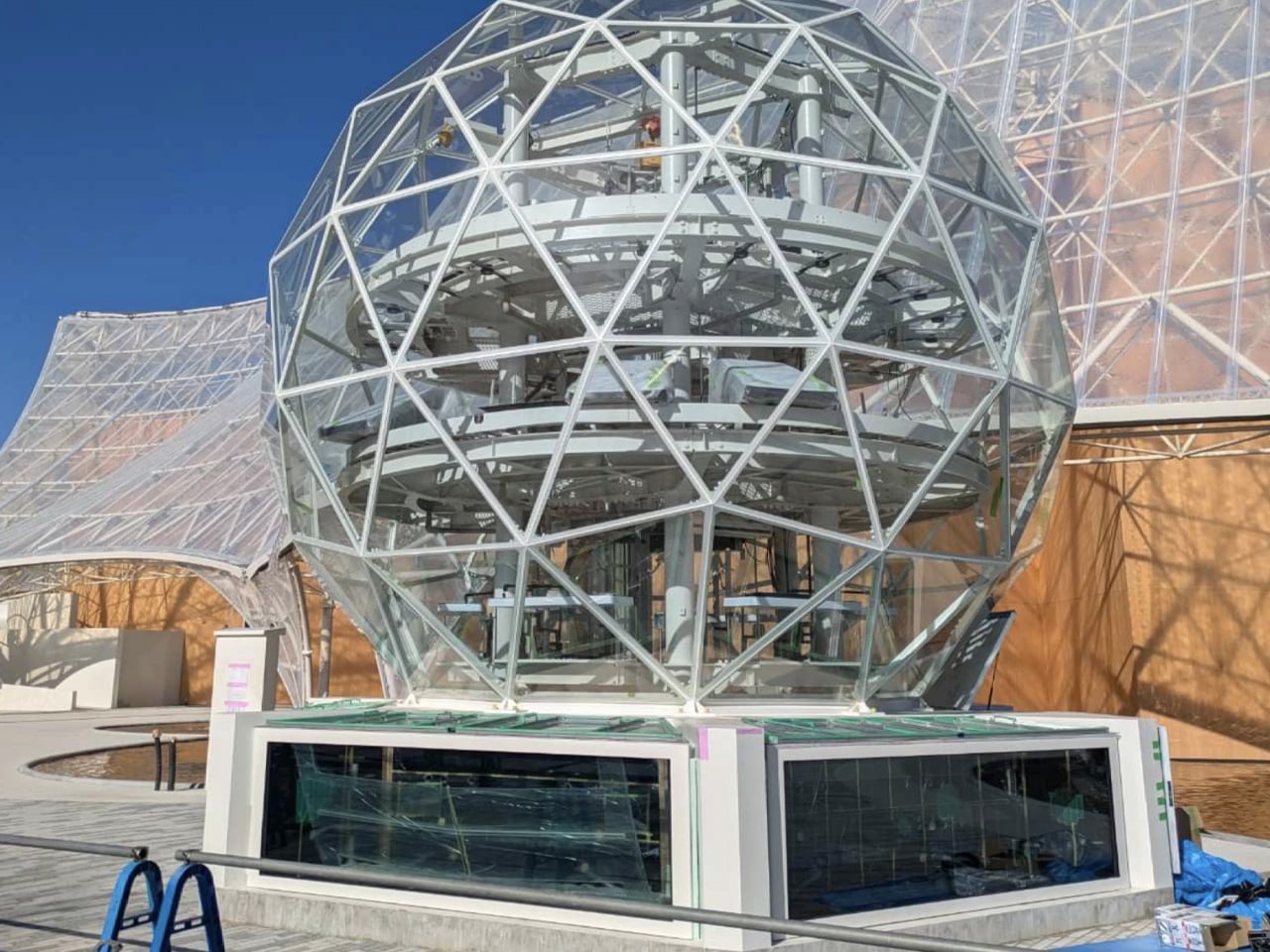
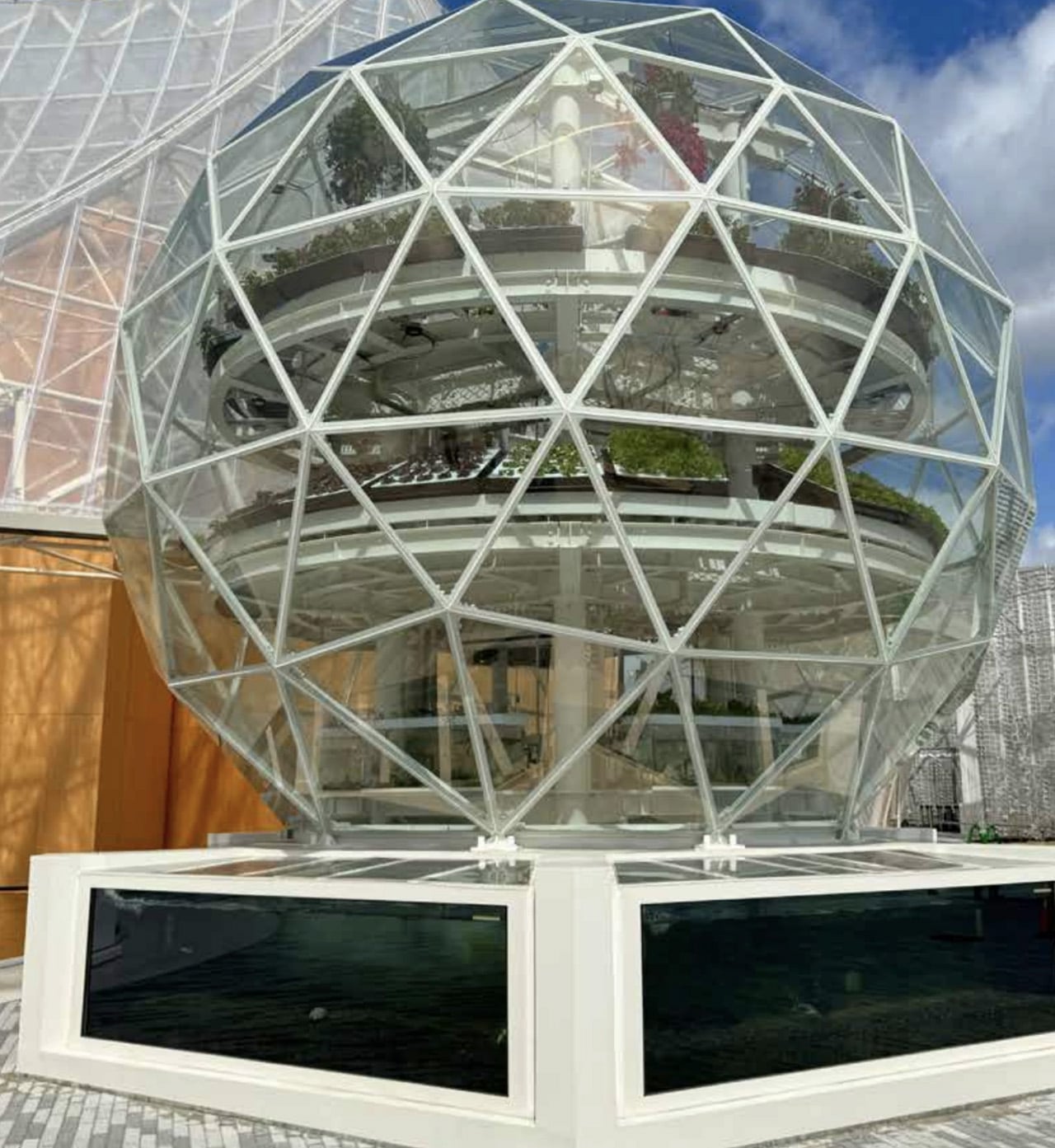
Perched at the Osaka Health Pavilion during Expo 2025, a translucent dome hums with life. Inside, tomatoes ripen above brackish water while pufferfish swim below, their waste feeding the plants that clean their home. This is “Inochi no Izumi,” or “Source of Life,” a 21-foot-high sphere that reimagines how cities might feed themselves. The dome’s genius lies in its vertical arrangement. Four water compartments form the base: seawater, brackish water, and two freshwater tanks. Each supports aquatic species matched to its salinity, from marine groupers to freshwater sturgeon. Above each tank rises a corresponding tier of hydroponic crops, creating four parallel ecosystems stacked inside a single structure.

The nutrient cycle starts underwater. Fish excrete ammonia-rich waste that specialized microbes convert into nitrites, then nitrates. Pumps lift this nutrient-loaded water to feed the plants directly overhead. As roots absorb nitrogen compounds, they return purified water to the tanks below. Nothing leaves the system. Nature’s wetland cycling becomes an engine for food production. The broader the range of compatible species, the more resilient and self-sufficient the ecosystem becomes. That diversity mirrors natural systems but remains optimized for human consumption.

Designer: VikingDome, Osaka Metropolitan University’s Plant Factory R&D Center & Tokyo University of Marine Science & Technology

Each layer hosts plants suited to its water source. Salt-tolerant halophytes like sea asparagus and sea purslane grow above the seawater tank housing red seabream and black porgy. Sea grapes flourish in the saltwater itself. Move up a tier, and semi-tolerant tomatoes thrive on brackish water where Japanese pufferfish and ornamental carp glide. The freshwater zones support functional vegetables—nutrient-dense herbs and lettuces—while edible flowers, including nasturtium and marigold crown the top tier, their beds rotating via built-in motors to optimize light exposure.

The dome’s outer skin consists of transparent ETFE panels stretched across 245 steel structural bars connected by 76 joints. This geodesic framework, built using VikingDome’s T-STAR system, covers 1,378 square feet while weighing just over two tons. The entire structure arrived at Yumeshima Island on three pallets. Its design maximizes sunlight penetration while maintaining stable internal temperatures, creating a microclimate where multiple growing zones coexist.

Developed with Osaka Metropolitan University’s Plant Factory R&D Center and Tokyo University of Marine Science and Technology, this system demonstrates agricultural biodiversity at work. The practical applications extend beyond exhibition. Dense urban centers with limited ground space could host these modular systems on rooftops or in narrow lots. Land-poor regions where traditional farming struggles could gain food independence. Disaster-prone areas might deploy closed-loop domes for decentralized production unaffected by soil contamination or water scarcity.

What makes Source of Life compelling isn’t revolutionary technology. The core principle—aquaponics—has existed for decades. Rather, it’s the elegant integration of ecological understanding with space-efficient design. Commercial agriculture often chases yield through inputs: fertilizers, pesticides, energy. This dome inverts that logic, asking what happens when we design with nature’s cycles instead of against them. As cities grow and climate pressures mount, feeding urban populations sustainably demands fresh thinking. This geodesic greenhouse suggests one path forward: upward, inward, and circular.

The post A Living Sphere: Japan’s Self-Contained Food Ecosystem Points to Urban Agriculture’s Future first appeared on Yanko Design.

Letterboxd Video Store’s first film rentals will be available this week

Letterboxd has introduced its first wave of exclusive digital film rentals for the company’s previously announced Letterboxd Video Store. The inaugural collection is themed Unreleased Gems and includes four movies that received awards or acclaim during a film festival. The titles will be available to watch from Letterboxd from December 10 through January 9. Each film is limited to certain geographic markets and the prices will also vary both by title and country.

The Unreleased Gems rental titles include It Ends, a mystery-horror that played at SXSW 2025; Sore: A Wife From the Future, which received eight nominations at the 2025 Indonesian Film Festival; Kennedy, a Hindi-language crime-thriller that premiered at Cannes Film Festival in 2023; and The Mysterious Gaze of the Flamingo, a drama which received the Un Certain Regard prize from this year's Cannes event.

This article originally appeared on Engadget at https://www.engadget.com/entertainment/tv-movies/letterboxd-video-stores-first-film-rentals-will-be-available-this-week-235426596.html?src=rss

Toyota IMV Origin rethinks modular truck design with a vehicle that arrives unfinished

The Toyota IMV Origin arrived at the 2025 Japan Mobility Show stripped down to almost nothing, and that was entirely intentional. Where conventional vehicle concepts arrive polished and production ready, the IMV Origin presented itself as a skeletal flatbed with an open air single seat cab, barely recognizable as a truck at all. Toyota’s approach here inverts the typical automaker logic: instead of delivering a finished product, the company ships a foundation, a canvas, a system of parts that local communities complete on their own terms. The concept draws from Toyota’s long running Innovative International Multi-purpose Vehicle platform, which already emphasizes flexibility and regional adaptation. Revealed during the same press conference that showcased flashier vehicles and premium brand expansions, the IMV Origin quietly proposed something more radical: a vehicle that gains value and identity only after it leaves the factory.

Designer: Toyota

Koji Sato, Toyota’s president and CEO, described the underlying philosophy in direct terms during the Japan Mobility Show presentation. The first idea, he explained, was to ship the vehicle unfinished, allowing the local people who receive it to assemble and complete it themselves. The second idea extended that premise further: customers would define the vehicle on their own terms even after assembly, choosing whether it carries people or cargo, boxes or something else entirely. Toyota builds the base, and from there each user completes the vehicle to fit specific needs. This framing positions the IMV Origin not as a truck but as a design system, a physical framework for distributed creativity that shifts final authorship away from the factory floor and into the hands of communities scattered across emerging markets.

Designing a Vehicle That Arrives Unfinished

That philosophy becomes visible in the physical form itself. The Toyota IMV Origin reads less like a finished vehicle and more like a piece of industrial furniture waiting for context. A flat chassis defines the primary surface, interrupted only by a minimal open cab structure designed for a single occupant. There is no enclosed cabin, no rear bed walls, no cargo box, no secondary seating. The silhouette suggests a factory cart or a stripped down work platform rather than anything destined for public roads. This visual starkness serves a functional purpose: every absent panel, every missing enclosure represents space for local fabrication and adaptation.
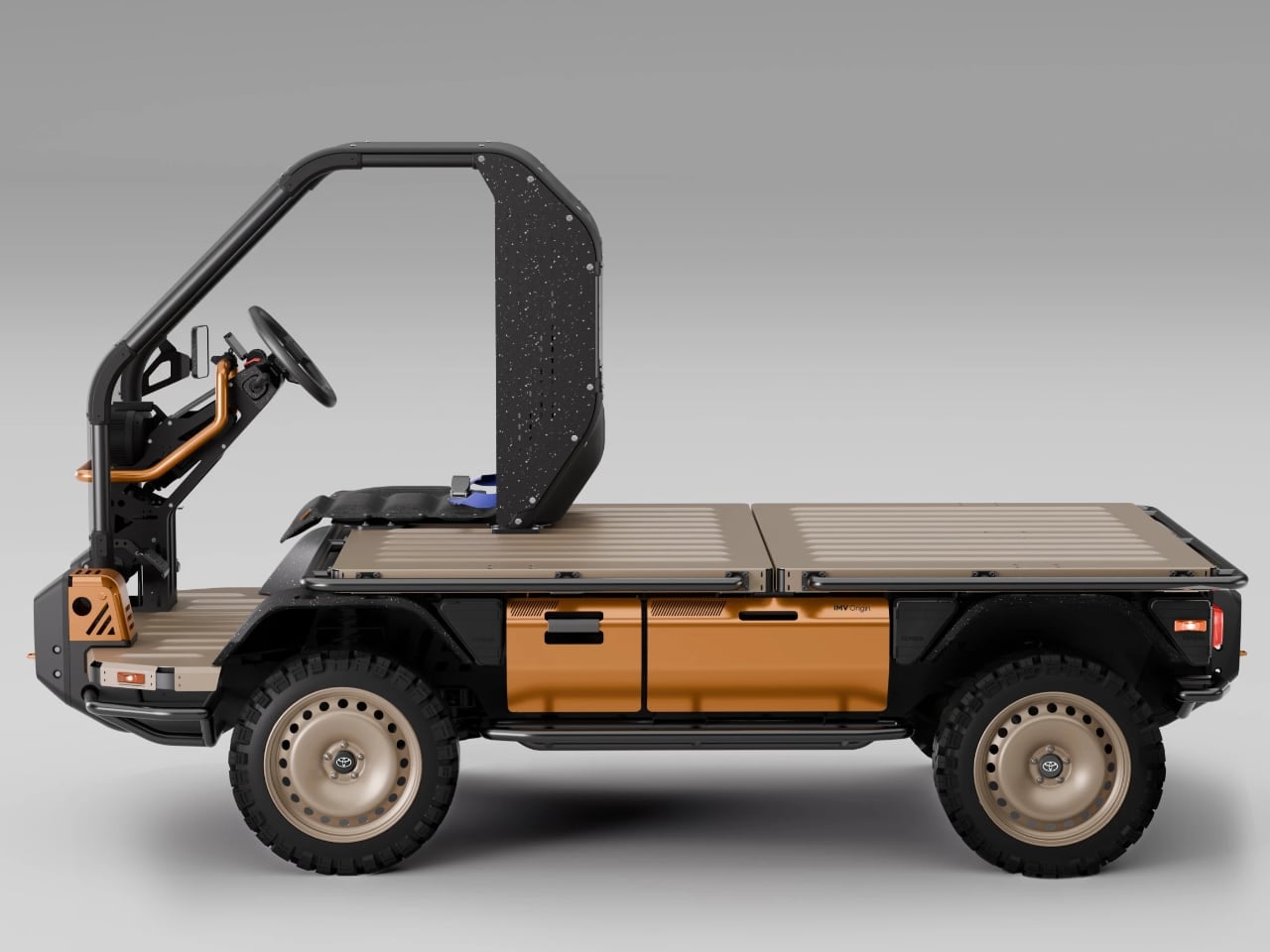
Toyota’s shipping model borrows imagery from flat pack furniture, a comparison Sato made explicit during the Japan Mobility Show press conference. The idea is that the IMV Origin ships as a crate of assemble yourself components, packed efficiently enough to slide into a standard shipping container. Buyers receive the rolling chassis, the cab frame, the essential mechanical systems, and presumably a set of instructions and basic tools. Assembly happens on arrival, requiring some combination of included hardware and locally sourced equipment. The furniture analogy carries weight here: just as a bookshelf arrives as panels and fasteners awaiting configuration, the IMV Origin arrives as a vehicle skeleton awaiting completion. This approach compresses shipping volume, reduces transport costs, and distributes final assembly labor to regions where that labor already exists and seeks work.

The open cab structure reveals how Toyota communicates modularity through form. By leaving the driver’s area exposed rather than enclosed, the company signals that even this fundamental zone remains open to interpretation. A buyer might add a windscreen, side panels, a full roof, or leave the cab skeletal for maximum airflow in hot climates. The single seat default suggests solo commercial use, but the surrounding space invites expansion to two seats or more. Every surface of the IMV Origin exists as a potential attachment point, a mounting location, a starting place for fabrication. The form does not dictate function; it invites negotiation.
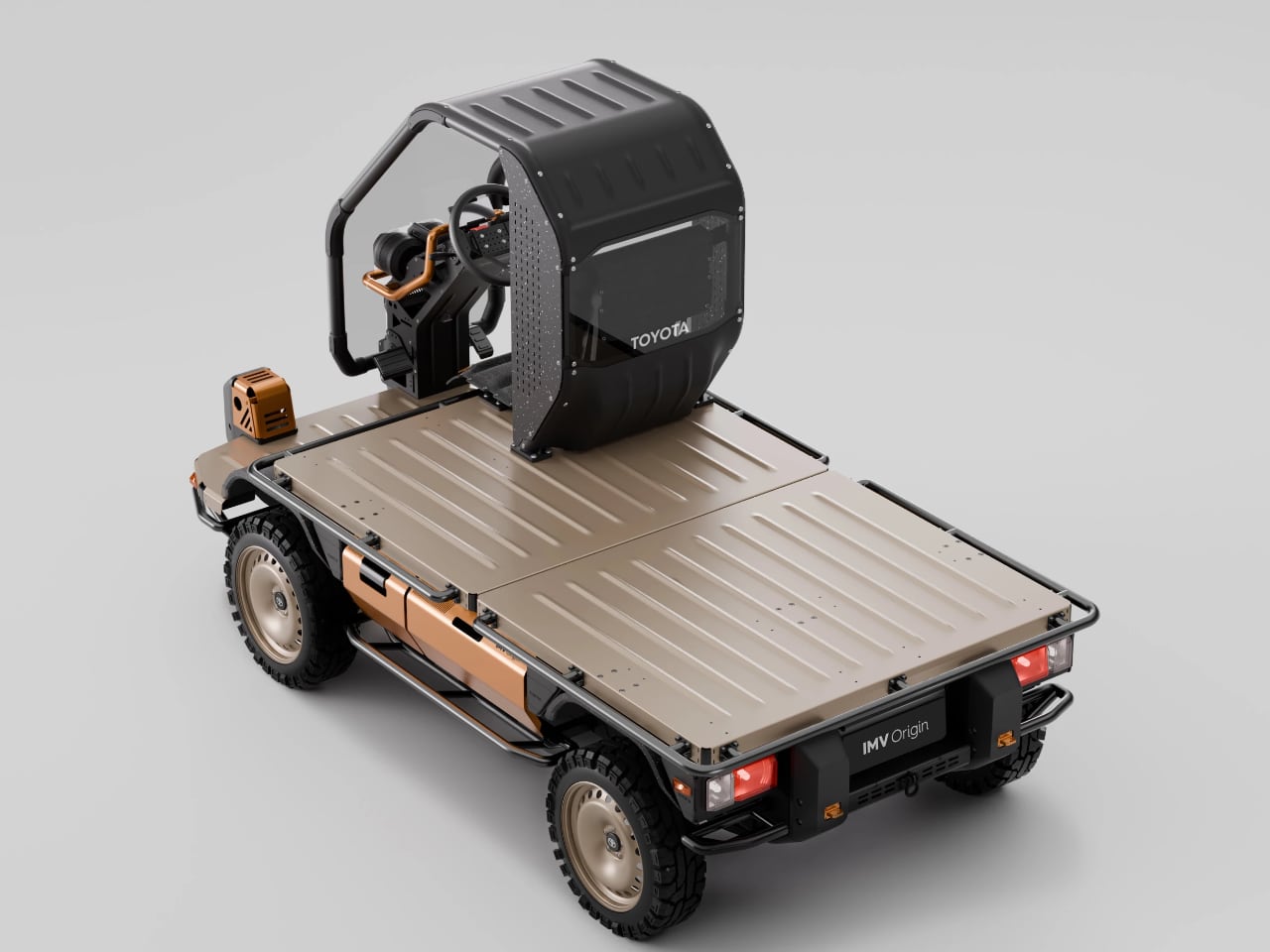
The visual openness of the chassis functions almost like an instruction diagram for local builders. Exposed rails, visible mounting surfaces, and unobstructed structural geometry signal exactly where modules can attach. A fabricator examining the modular truck concept does not need a manual to understand where a cargo box might bolt or where a cab enclosure could fasten. The stripped form communicates its own logic, revealing load paths and connection points through the simple act of leaving them visible. Toyota’s decision to ship the vehicle unfinished becomes, in this light, a form of design communication: the geometry itself teaches the user how to complete it.

How Local Assembly Shapes Everyday Use

The design logic extends directly into how people actually use the vehicle. The user experience of the Toyota IMV Origin begins not with driving but with building. A farmer in rural Africa might receive the crated components, unpack them with neighbors, and spend a day or a week assembling the base vehicle. The process itself becomes a form of ownership, a hands on introduction to every mechanical connection and structural joint. By the time the owner starts the engine for the first time, they already understand how the vehicle fits together, which fasteners hold the cab frame, where the chassis accepts additional load. This knowledge carries forward into repair and modification, lowering the barrier to maintenance and customization.
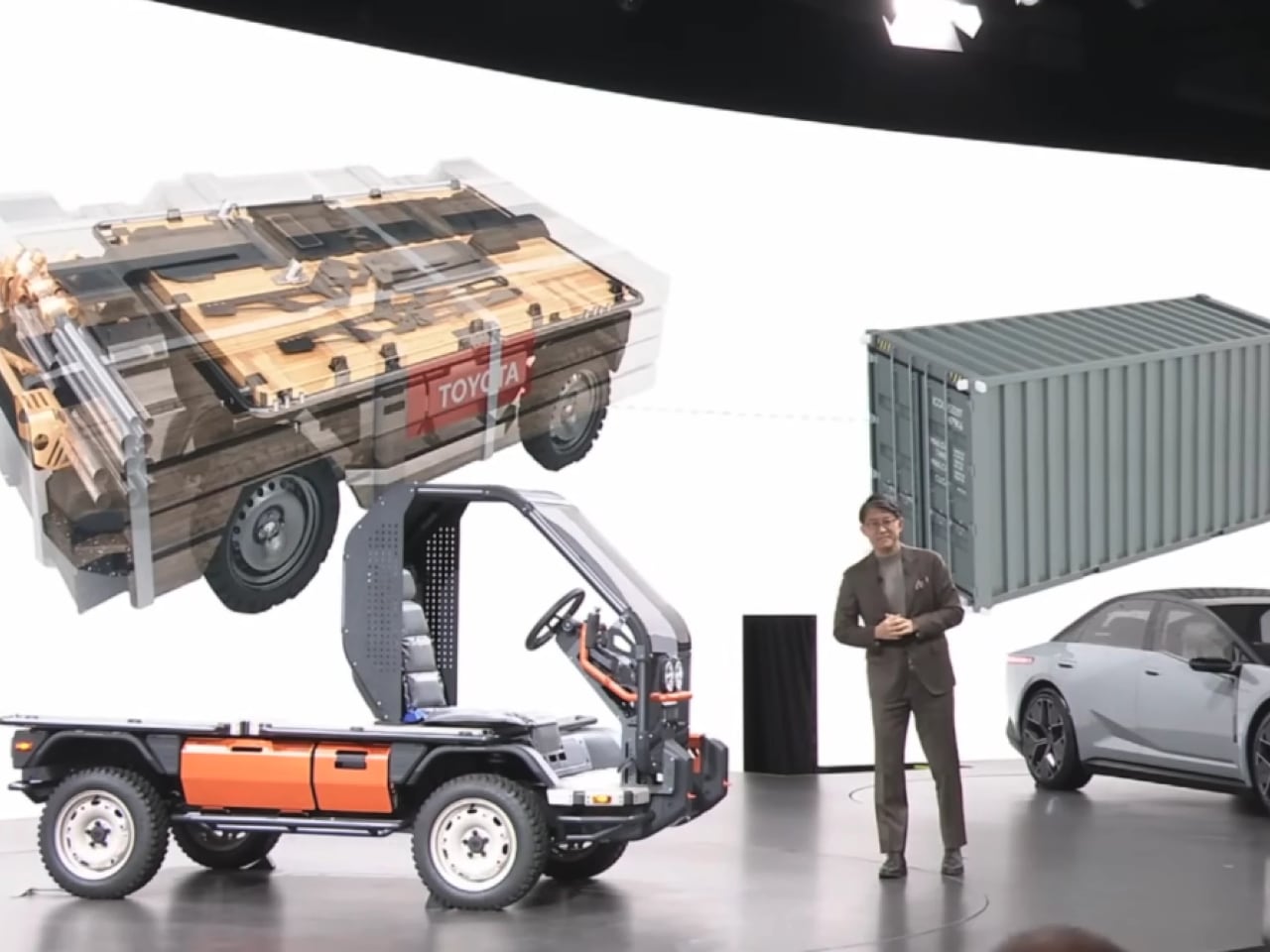
Toyota showed several example configurations at the Japan Mobility Show press conference, including a produce delivery truck with a tall cargo box and a logging truck with open stake sides. These illustrations suggest the range of possibilities without defining limits. A community workshop in a small agricultural town might fabricate a cargo bed with fold down sides, bolted directly to the exposed chassis rails, for transporting harvested crops over uneven dirt roads. Another shop could build a modular fire response carrier, using the visible mounting surfaces to secure water tanks and equipment racks for rapid deployment across scattered villages. A regional upfitter with welding equipment might create a lightweight camper module, fastening a sleeping platform and basic storage to the flatbed’s open connection points, transforming the IMV Origin into a mobile shelter for seasonal workers or traveling repair crews. Each scenario draws on locally available materials, locally developed skills, and locally understood needs.

The modularity extends beyond the initial build, allowing role changes across seasons without requiring a new vehicle purchase. A single IMV Origin might serve as a produce hauler during harvest season, then swap its cargo box for a flatbed configuration to transport building materials during construction months, then add a canopy and seating for passenger transport during community events. This flexibility mirrors the way rural economies actually function, where a single asset often serves multiple purposes across different seasons and circumstances. The design anticipates that reality rather than ignoring it.

Sustainability Through Local Fabrication and Modular Updates

These same structural choices carry environmental consequences that compound over time. Shipping a compact crate of components rather than a fully assembled vehicle reduces the volumetric footprint of each unit in transit. Fewer shipping containers, smaller cargo holds, and more efficient packing translate directly into lower fuel consumption and reduced emissions during international transport. The sustainability benefit begins before the vehicle ever reaches its destination, embedded in the logistics strategy rather than added as an afterthought.
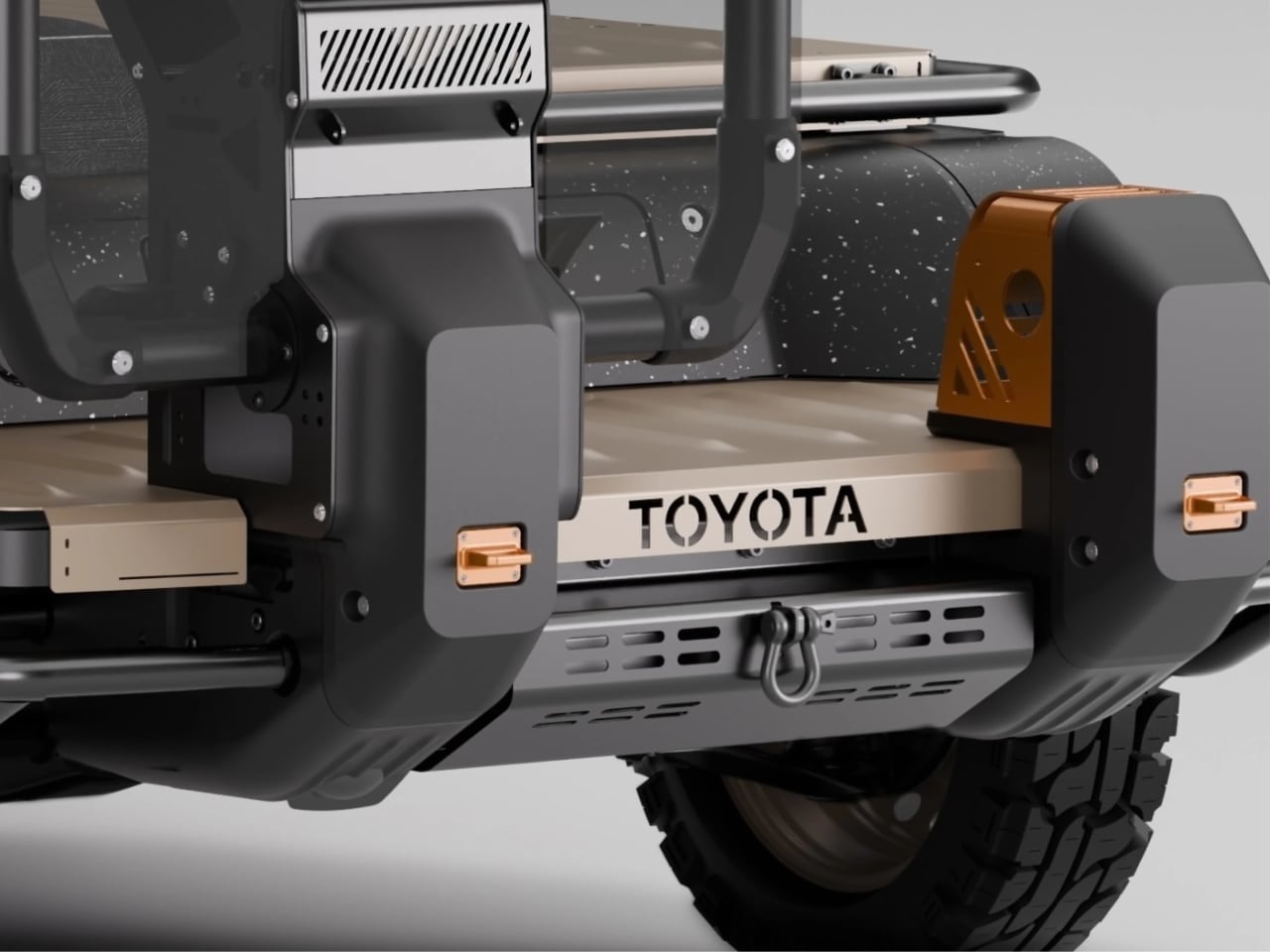
Local assembly creates additional environmental value by distributing expertise and reducing dependence on distant supply chains. When communities build and maintain their own vehicles, they develop skills that support long term durability. A locally fabricated cargo box can be repaired with locally sourced materials when it sustains damage. A cab enclosure built by a regional shop can be modified or replaced without importing new parts from distant factories. In regions where replacement parts are expensive or difficult to obtain, this local capability becomes a practical necessity as much as an environmental virtue.

The IMV Origin’s intentional incompleteness encourages a culture of repair over replacement, extending the useful life of the base platform and reducing the frequency of full vehicle turnover. Rather than discarding an entire vehicle when needs change, owners upgrade or swap individual components. A farmer who expands operations might add a second seat to the cab rather than purchasing a larger truck. A delivery service that shifts from dry goods to refrigerated cargo might install an insulated box module rather than acquiring a purpose built refrigerated vehicle. Each modular intervention preserves the embedded energy and material value of the existing platform while adapting it to new requirements.

Durability emerges not from overengineering but from accessibility: the vehicle lasts longer because owners can fix it, adapt it, and extend its usefulness without specialized tools or imported components. Toyota’s willingness to leave the product unfinished becomes, paradoxically, a strategy for longevity.

Where the IMV Origin Fits in Toyota’s Modular Platform Roadmap

This approach did not emerge in isolation. The Toyota IMV Origin sits at the most stripped down end of a spectrum that already includes the IMV 0 concept and the production Hilux Champ. The IMV 0, revealed in 2022, offered a simplified small truck platform with strong modularity but still arrived as a recognizable vehicle. The Hilux Champ, which debuted in Thailand in 2023, translated that modularity into a production reality, spawning mini motorhomes, delivery trucks, food trucks, and overland campers through partnerships with regional body shops. Indonesia’s version, the Hilux Rangga, inspired a design competition that produced fire trucks, police tactical vehicles, agricultural transporters, and recreational campers. The IMV Origin steps further back along this trajectory, offering even less finished hardware and even more open ended potential.
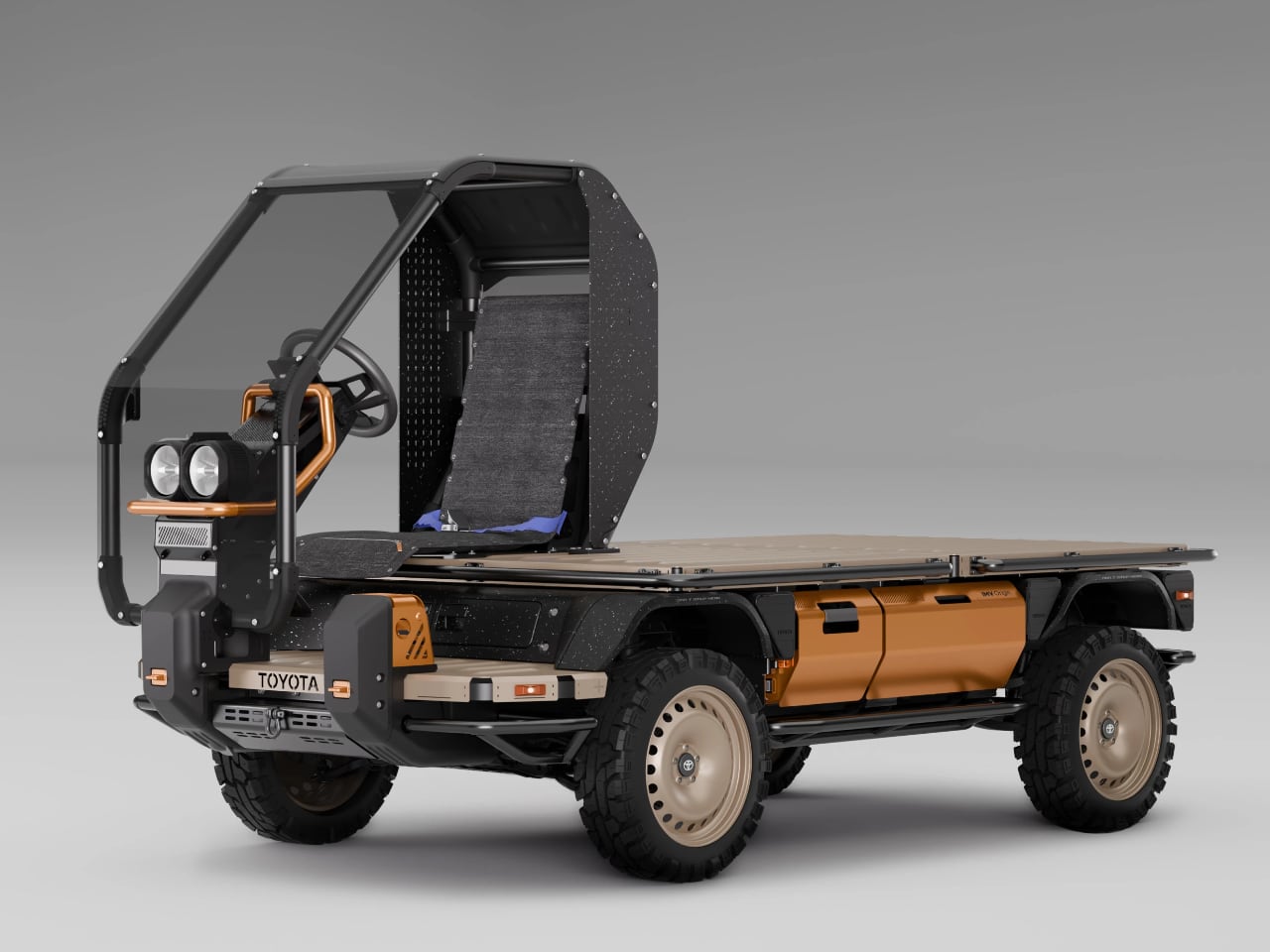
This positioning reveals something about Toyota’s strategy for global mobility within the broader IMV platform family. Rather than designing a single truck and adapting it for different markets through factory options, the company designs a platform that markets adapt themselves. The factory provides the mechanical core, the structural integrity, the safety critical systems. Everything else becomes a canvas for regional creativity. This approach acknowledges that Toyota cannot anticipate every use case, cannot understand every local need, cannot predict how a vehicle will serve a community it has never visited. By stepping back from finished product design, the company creates space for distributed innovation.

The IMV Origin also signals a willingness to rethink what a vehicle manufacturer actually provides. Traditional automakers sell cars and trucks. Toyota, through this concept, proposes selling capability frameworks: mechanical systems and structural platforms that enable local economies to generate their own transportation solutions. The value proposition shifts from finished goods to enabling infrastructure. Whether this model scales into production remains to be seen, but the conceptual territory it explores challenges assumptions about how vehicles reach the people who need them.

Why the IMV Origin Acts as a Platform Rather Than a Product

What emerges from these choices is a rare form of restraint. By shipping a deliberately incomplete vehicle, Toyota acknowledges that the factory cannot know best, that distant engineers cannot anticipate the specific needs of a farming community in rural Africa or a delivery network in Southeast Asia. The concept trusts local fabricators to complete the design, trusts regional workshops to maintain and modify the platform, trusts communities to define what a truck should be in their specific context. This trust becomes a design decision as much as any chassis dimension or cab geometry.

The furniture shipping model, the open cab structure, the flatbed awaiting cargo solutions: all of these choices point toward a vehicle that exists as potential rather than product. As Koji Sato noted during the presentation, not finishing this vehicle was frustrating from a carmaker’s perspective, but not finishing it is what makes it a vehicle built for actual users, because people have different needs in their daily life and work. The IMV Origin does not try to be everything. It tries to be a starting point, a foundation, a system that gains identity through use and modification. Toyota builds the base. The world completes the truck.

The post Toyota IMV Origin rethinks modular truck design with a vehicle that arrives unfinished first appeared on Yanko Design.


Congress removes right to repair language from 2026 defense bill

According to a statement from the Public Interest Research Group, the National Defense Authorization Act for Fiscal Year 2026 has removed language that would have granted the US military the right to repair its own equipment rather than requiring it to use official defense contractors for maintenance. This bill is still being considered by Congress, but it is uncertain whether the right to repair language is likely to be re-introduced once it has been removed. 

"Despite support from Republicans, Democrats, the White House and key military leaders, troops will keep waiting for repairs they could perform themselves," US PIRG Legislative Associate Charlie Schuyler said in a statement from the organization. "Taxpayers will keep paying inflated costs. And in some cases, soldiers might not get the equipment they need when they need it most."

A bipartisan bill from Senators Elizabeth Warren and Tom Sheedy was introduced earlier this year to allow the military right to repair access. The topic has been a more piecemeal affair for laypeople in the US, with some states enacting their own laws and federal regulators sometimes intervening to offer consumers more choice in how they seek repairs.

This article originally appeared on Engadget at https://www.engadget.com/big-tech/congress-removes-right-to-repair-language-from-2026-defense-bill-231708835.html?src=rss

Katsuhiro Harada is leaving Bandai Namco after 30 years

Katsuhiro Harada is departing Bandai Namco at the end of 2025. He announced the news both with a farewell note shared on X and, in possibly the coolest exit ever, with an hour-long DJ mix. Harada's 30-year career has most closely been involved with Tekken and he's a familiar face in the fighting game community.

He began as a voice actor in the original Tekken game and continued to do so even as he became a director for the series. He has worked on other Bandai Namco titles as a producer, both in and out of the fighting genre. "Each project was full of new discoveries and learning, and every one of them became an irreplaceable experience for me," Harada wrote on X. "To everyone who has supported me, to communities around the world, and to all the colleagues who have walked alongside me for so many years, I offer my deepest gratitude."

He closed by saying that over his career, he never DJed at a tournament event. So to mark his departure, Harada posted a full set titled ‘TEKKEN: A 30-Year Journey – Harada’s Final Mix’ to SoundCloud. Which is just the most swag move I can think of and a fun way to close out this chapter for fans of the franchise.

This article originally appeared on Engadget at https://www.engadget.com/gaming/katsuhiro-harada-is-leaving-bandai-namco-after-30-years-223156258.html?src=rss

The 8BitDo 64 controller just got an iMac G3 inspired makeover in 8 new colors

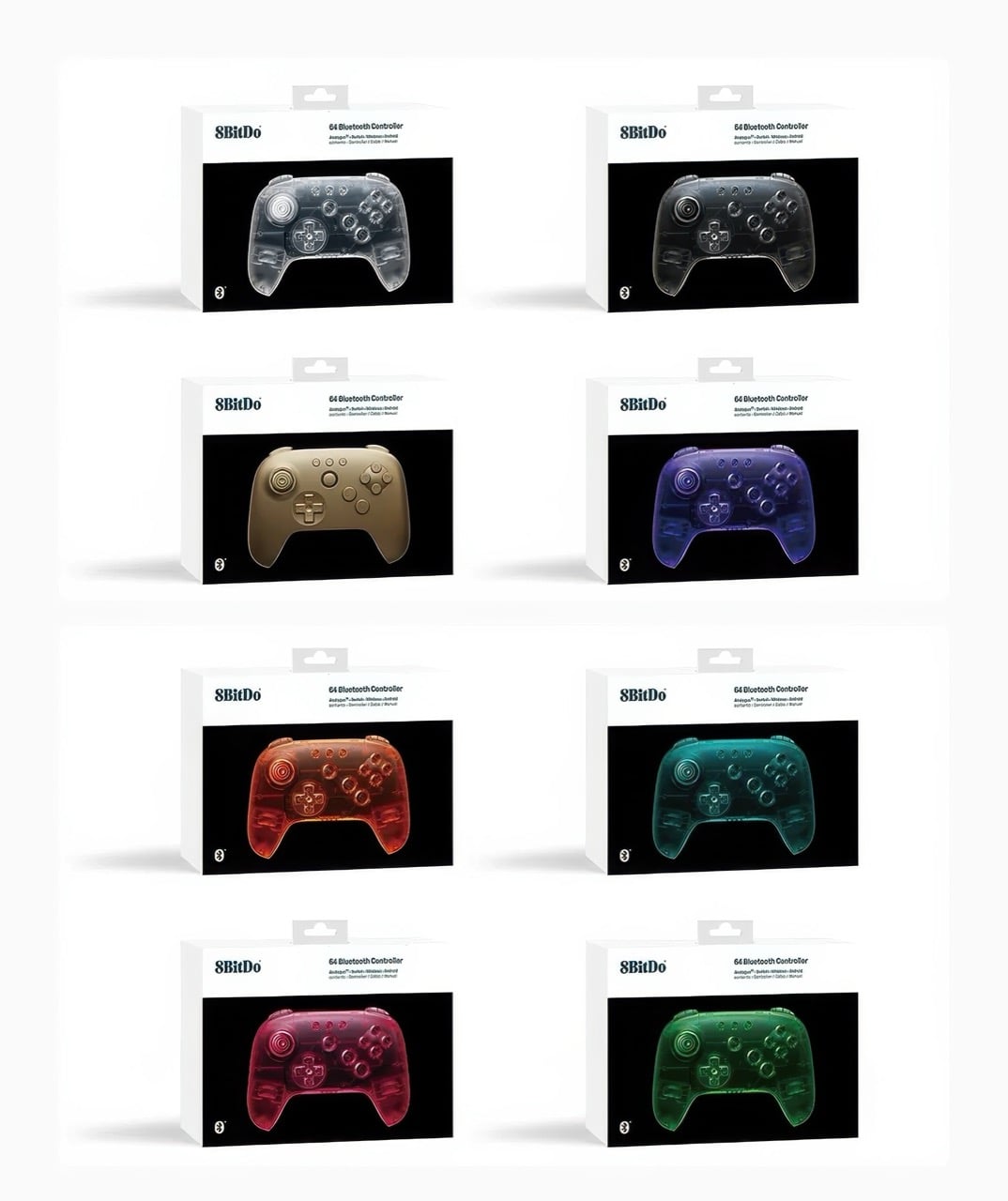
Remember when technology came in flavors instead of just space gray and black? 8BitDo certainly does, and the company is channeling serious late-90s energy with its newly announced Funtastic Limited Editions. These eight new colors for the 64 Bluetooth Controller embrace the translucent design language that once made the iMac G3 a cultural phenomenon and the N64 Funtastic series highly collectible. Now that aesthetic is back, adapted for modern gaming needs.

The lineup includes seven see-through variants alongside a solid Gold option, bringing the total 64 Controller color count to eleven. Each model maintains full compatibility with the Analogue 3D, Nintendo Switch family, Android devices, and Windows PCs through Bluetooth or USB connectivity. At $44.99, they command a small premium over standard colors, but that hasn’t stopped 8BitDo from warning potential buyers about extremely limited quantities. Pre-orders begin December 10 at 8 AM PST, with units shipping in February 2026.

Designer: 8bitdo

Look, I get why 8BitDo went this route. The Analogue 3D crowd skews heavily nostalgic, and these controllers speak directly to people who spent their formative years with an atomic purple N64 controller in hand. Clear, Jungle Green, Watermelon Red, Smoke Black, Ice Cyan, Fire Orange, Gold, and Grape Purple. These aren’t subtle nods to the past. They’re full-throated love letters to an era when product designers believed technology should spark joy rather than disappear into minimalist oblivion. The translucent shells let you peek at the circuit boards inside, which feels refreshingly honest in an age where everything’s sealed up tighter than Fort Knox. There’s something genuinely appealing about seeing the guts of your gear, even if modern miniaturization means there’s less to actually see than there was in 1998.

What strikes me is how this design language has aged. When Jonathan Ive and his team at Apple dropped the iMac G3 in Bondi Blue, it felt revolutionary because computing had spent decades looking like beige office equipment. Nintendo followed suit with their Funtastic series, and suddenly every product category had a translucent variant. Then it all died out around 2002, victim of its own ubiquity and the rising tide of aluminum unibody minimalism. But here we are in 2025, and these candy-colored shells feel fresh again. Maybe enough time has passed, or maybe we’re all just exhausted by the relentless sameness of contemporary industrial design.

The $44.99 price point sits five bucks above the standard black and white models, which retail for $39.99. That’s a reasonable premium for limited edition colorways, especially given that 8BitDo isn’t skimping on features. Full Bluetooth connectivity, wired USB support, compatibility across multiple platforms. The February 2026 ship date feels distant, but that’s standard for limited runs where manufacturing slots are precious. What concerns me more is 8BitDo’s emphasis on “highly limited quantities.” That phrasing usually means either genuine scarcity or artificial hype-building, and with gaming peripherals, it’s often hard to tell which until pre-orders go live. Either way, if you want one of these translucent beauties sitting next to your Analogue 3D, setting a December 10 alarm is probably wise.

The post The 8BitDo 64 controller just got an iMac G3 inspired makeover in 8 new colors first appeared on Yanko Design.
An AI copycat of King Gizzard & the Lizard Wizard went unnoticed on Spotify for weeks

Despite making some moves to address the proliferation of AI-generated audio on its platform, Spotify failed to catch a copycat making imitations of music by King Gizzard & the Lizard Wizard. The long-running experimental rock band from Australia, has been a vocal critic of Spotify and was one of several artists that took their music off the platform in the summer. The move was in response to the discovery that outgoing CEO Daniel Ek was a leading investor in an AI-focused weapons and military company. Today, a poster on Reddit was recommended what appeared to be an AI-generated copy of one of the band's songs in Spotify’s Release Radar playlist.

The phony artist was called King Lizard Wizard and it had an album of tracks all sharing titles with songs by the original band and using their original lyrics. Futurism grabbed screenshots of the imposter, although it appears to have since been taken down; only the band's original page appears in searches for both their name and the AI name. A rep from the company provided the following statement about the issue: “Spotify strictly prohibits any form of artist impersonation. The content in question was removed for violating our policies, and no royalties were paid out for any streams generated.”

However, the phony King Gizzard band's album went unnoticed by the company for weeks before today's social post surfaced it. The Reddit thread points to several other anecdotal cases where someone attempted to trick listeners with AI-generated versions of popular bands. In September, Spotify unveiled a spam filter for catching AI slop, as well as policies for disclosing AI use in the content it hosts and how it would tackle AI impersonations. An instance like this, particularly when it features an artist that had left the platform in protest, creates a pretty big question mark about how well those policies are working. 

Update, December 9, 2025, 5:15PM ET: Added statement from Spotify.

This article originally appeared on Engadget at https://www.engadget.com/entertainment/streaming/an-ai-copycat-of-king-gizzard--the-lizard-wizard-went-unnoticed-on-spotify-for-weeks-220018144.html?src=rss