iOS & iPadOS 26.5 Beta 1: RCS Encryption Returns and Apple Maps "Suggested Places” Debuts

iOS & iPadOS 26.5 Beta 1: RCS Encryption Returns and Apple Maps iPadOS 26.5

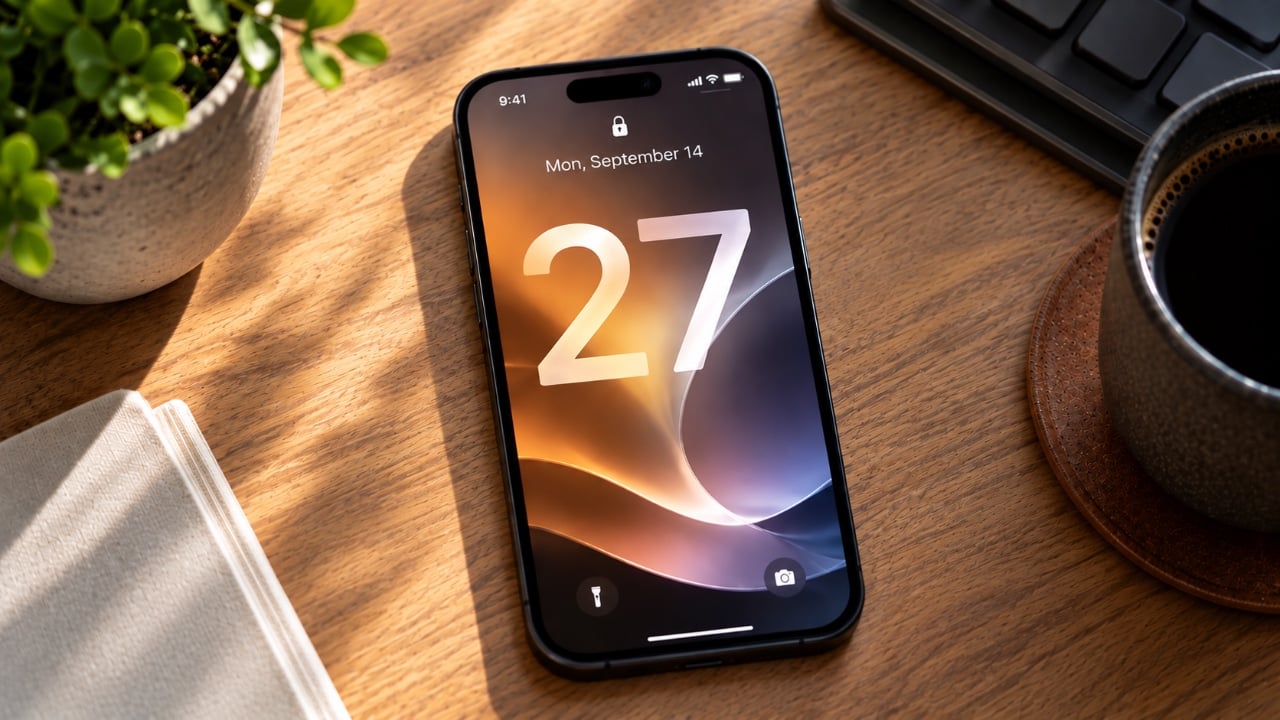
Apple has officially released iOS and iPadOS 26.5 Beta 1, marking another step in its ongoing software development cycle. While this update doesn’t introduce innovative features, it focuses on system stability and performance enhancements, setting the stage for the highly anticipated iOS 27 announcement at WWDC. This release is a critical milestone for developers and […]

The post iOS & iPadOS 26.5 Beta 1: RCS Encryption Returns and Apple Maps “Suggested Places” Debuts appeared first on Geeky Gadgets.

Posted in Uncategorized

iOS 18.7.7 is Out: The "DarkSword” Patch for Everyone Refusing iOS 26

iOS 18.7.7 is Out: The An iPad in Settings displaying iPadOS 18.7.7 ready to install alongside other iOS 18 security updates.

Apple has officially rolled out iOS 18.7.7, a significant update aimed at users who have chosen to remain on iOS 18 instead of transitioning to iOS 26. This release is primarily focused on enhancing security and addressing critical vulnerabilities, such as the “Dark Sword” exploit, which posed serious risks to user data. Additionally, the update […]

The post iOS 18.7.7 is Out: The “DarkSword” Patch for Everyone Refusing iOS 26 appeared first on Geeky Gadgets.

Posted in Uncategorized

Google’s $20 per month AI Pro plan just got a big storage boost

Google's $20 per month AI Pro plan, which includes Gemini, Veo and Nano Banana, got a big storage boost and some other new perks. Users of the plan (also available for $200 per year) will see their cloud space jump from 2TB to 5TB at no extra cost. That extra storage can be used not only for AI but also Gmail, Google Drive and Google Photos backups.

Gemini can now pull context from Gmail and the web for Drive, Docs, Slides and Sheets, provide summaries for your Gmail inbox and proofread emails before you send them. It's also introducing additional agentic help with Chrome auto browse "that handles those tedious, multi-step chores — like planning a trip or filling out forms," Google VP Shimrit Ben-Yair wrote on X

Finally, Google announced that it's bundling its Home Premium subscription into AI Pro, a perk that usually costs $10 per month by itself. The storage and extra features are now available for new and existing subscribers. You may not see the benefits appear in your plan yet but it's definitely not an April Fool's joke, Ben-Yair assured X commenters. 

This article originally appeared on Engadget at https://www.engadget.com/ai/googles-20-per-month-ai-pro-plan-just-got-a-big-storage-boost-044502621.html?src=rss

The Artemis II mission has started its 10-day journey around the moon

The Artemis II mission successfully launched into space on April 1, at 6:35pm Eastern time, from Launch Complex 39B at the Kennedy Space Center in Florida. It will take NASA astronauts Reid Wiseman, Victor Glover, Christina Koch, as well as Canadian Space Agency astronaut Jeremy Hansen, on a 10-day trip around the moon. This mission is the first crewed Artemis flight and will lay the groundwork for future trips to the moon itself, the first flight with a crew onboard the SLS rocket and Orion spacecraft system and our first foray into deep space since the Apollo program.

A few hours into their journey, and the astronauts could already see majestic views of our planet. However, the astronauts also reported a problem with their waste‑management system, which is the first real toilet installed on a deep-space mission. The astronauts thankfully have a backup option: Waste collection bags that Apollo crews had used and had previously discarded on the lunar surface.

By 10:43PM Eastern, the Orion spacecraft carrying the four astronauts successfully separated from the upper stage of the Space Launch System rocket. Glover then started manually piloting the capsule to demonstrate and test how Orion would move and dock with the future lunar landers that will be built by SpaceX and Blue Origin. You can watch the events that happened within the first few hours of the mission below. The crew and their Orion capsule are expected to slash down into the Pacific Ocean on April 10.

This article originally appeared on Engadget at https://www.engadget.com/science/space/the-artemis-ii-mission-has-started-its-10-day-journey-around-the-moon-033412865.html?src=rss

These Solid Copper & Brass Mechanical Pencils Were Designed to Outlast Their Owners By Centuries

Copper weighs 8.96 grams per cubic centimeter. Brass comes in at around 8.5. Those densities mean something when you’re holding a pencil for hours at a time, and Nicholas Hemingway has built an entire design philosophy around that fact. His clutch pencils are machined from solid metal bar stock rather than hollowed-out tubes or plastic barrels wrapped in metallic finishes. The result is a tool that sits differently in your hand, one that uses its own mass to reduce the pressure you need to apply to the page. Hemingway calls it a “gravity-feed” approach, where the weight of the copper body does the work, allowing for longer, more comfortable creative sessions without the hand fatigue that comes from gripping too hard or pressing too firmly.

The 10th anniversary collection includes three pencils, each one a celebration of a decade spent refining manual lathe craftsmanship. The 5.6mm Copper and Brass Hybrid is the heaviest at 58 grams, designed for shading and life drawing, with a built-in lead sharpener in the push button. The 2mm Precision series comes in brass or copper, each weighing around 30 grams, and is aimed at technical drafting and fine-line illustration. Hemingway ships the brass version with an HB lead and the copper version with a 2B lead (the 5.6mm version gets the darkest 5B lead), a pairing he uses in his own studio to avoid having to swap leads mid-workflow. Both are standard clutch formats, fully compatible with any lead brand you prefer.

Designer: Nicholas Hemingway

Click Here to Buy Now: $79 $115 (31% off). Hurry, only 15/50 left!

The clutch mechanism is simple, proven, and deliberately old-fashioned. Press the top button to release the jaws, advance or retract the lead, then release the button to lock it in place. There are no springs to fatigue, no ratcheting internals to gum up with graphite dust, and no plastic components to crack under pressure. The 5.6mm version includes a sharpening chamber machined directly into the push button, a detail that keeps the pencil self-sufficient without requiring a separate pocket sharpener. The mechanism works identically whether you’re using the factory-supplied HB or a softer 6B lead you’ve swapped in yourself. Hemingway designed these pencils to accept any standard 2mm or 5.6mm lead on the market, which means you can dial in exactly the hardness and texture you prefer without being locked into proprietary refills.

The 5.6mm Copper & Brass Clutch

The material choice drives the entire experience and stands as a direct antidote to disposable culture. C101 copper is a high-conductivity grade typically used in electrical applications, chosen here for its density, workability, and willingness to develop a rich patina over time. The 360 brass, a free-machining alloy, delivers a brighter, more clinical aesthetic and holds its finish longer before tarnishing. Hemingway leaves both materials raw, with no lacquer, no powder coating, and no protective sealant. The copper will darken and mottle as it reacts to the oils in your skin and the humidity of your studio. The brass will develop a warmer, more subdued tone, though it resists the transformation longer than copper does. This is slow design in practice, where the aging process becomes part of the design language, carrying the visible marks of its owner’s journey rather than something to prevent or hide.

The 2mm Brass

The 2mm Copper & Brass

Dimensionally, the 5.6mm Copper and Brass Hybrid measures 115mm in length with a 12mm diameter barrel, while the 2mm Precision series comes in at 140mm long with a 7mm diameter. The 2mm pencils are slimmer and longer, built for precision linework and extended drafting sessions where fine motor control matters. The 5.6mm version is shorter and thicker, designed to sit further back in your hand for broader, more gestural strokes. At 58 grams, the 5.6mm Hybrid has real heft, the kind of weight that anchors your hand to the page and makes you slow down, think about each mark, and commit to your lines. The balance has been engineered around the nib, shifting the center of gravity forward so the pencil glides across the paper rather than requiring constant pressure from your wrist.

Hemingway machines every pencil in-house at his London workshop on a manual lathe, hand-finishing each piece and inspecting it personally before it ships. The production model is bespoke and made-to-order, which eliminates the supply chain drama that plagues most crowdfunded EDC launches. If 100 people order a pencil, Hemingway machines 100 pencils. There are no minimum order quantities with overseas factories, no shipping containers stuck in customs, and no quality control surprises three months into fulfillment. Every tool is built to the same standard Hemingway uses for his own work, and the track record backs that up. This is his 17th Kickstarter campaign, and all 16 previous projects delivered on time. These are engineered to be the last drawing tools a creative will ever need to buy, true heirlooms designed for a lifetime of use and capable of being passed down.

Whether you opt for the copper or brass variant, or even the 5.6mm or 2mm model, Hemingway’s set the pricing at £59 ($79 USD), discounted off its £85 MSRP. Each pencil comes with its own lead, along with a hand-written note in a wonderful gift box. International shipping starts July 2026, and Hemingway packages everything in recycled cardboard with zero single-use plastics. All waste metal from the workshop gets collected and sent back to be melted down and reused, keeping the production cycle as tight and sustainable as the pencils themselves.

Click Here to Buy Now: $79 $115 (31% off). Hurry, only 15/50 left!

The post These Solid Copper & Brass Mechanical Pencils Were Designed to Outlast Their Owners By Centuries first appeared on Yanko Design.
The PlayStation Portable Gets an Incredibly Detailed LEGO Remake Complete with Working Disc Tray

Before smartphones killed the dedicated handheld, before the Switch made portability synonymous with Nintendo again, there was a brief window where Sony owned mobile gaming’s premium tier. The PSP launched in 2004 as a technical powerhouse wrapped in sleek industrial design, a device that felt expensive in your hands and looked like it belonged in a gadget enthusiast’s bag. It ran PlayStation 2-era games, played movies, supported WiFi multiplayer, and became the go-to modding platform for tinkerers who wanted every emulator ever made on one device. The PSP’s legacy is complicated, but its design has aged remarkably well.

This LEGO interpretation, shared on Reddit, proves that good hardware design translates across mediums. Reddit user Embarrassed_Map1072 has captured the PSP’s essential character using bricks: the wide landscape format, the glossy black shell, the satisfying asymmetry of controls flanking a dominant screen. The printed XMB interface behind transparent elements brings the build to life, while the removable UMD disc adds a playful interactivity that feels right for a gaming device. Small touches like the curved edges, the recessed shoulder buttons, and the memory stick door’s yellow tab demonstrate real attention to the source material. This thing looks like it could slide into a PSP case and nobody would notice until they tried to boot up Lumines.

Designer: Embarrassed_Map1072

The build’s proportions are spot-on, capturing that distinctive wide-bodied stance that made the PSP feel substantial without being bulky. The face buttons render Sony’s iconic shapes (circle, cross, square, triangle) in rounded LEGO elements, while the D-pad on the left maintains its classic cruciform layout. The analog nub sits where your thumb expects it, a small circular detail that any PSP veteran will immediately recognize. Up top, smooth tiles create the volume controls and power switch, with printed detailing that suggests the original’s labeling. The headphone jack makes an appearance at the bottom edge, because what’s a portable gaming device without a way to plug in your earbuds during a commute?

My favorite detail is the UMD disc itself. The builder recreated the distinctive white-and-gold casing that held your games, complete with the circular window that let you glimpse the tiny disc inside. It slides into the back of the unit just like the real thing, a mechanical function that elevates this from display model to something tactile and engaging. The memory stick slot retains that pop of yellow that broke up the PSP’s otherwise monochrome palette, a small design flourish that Sony used to signal where your saves lived. This is LEGO building that understands its subject, translating not just shapes but the experience of holding and using the actual hardware.

The post The PlayStation Portable Gets an Incredibly Detailed LEGO Remake Complete with Working Disc Tray first appeared on Yanko Design.
Four Dark Cedar Volumes Stepping Down a Tahoe Slope — This Is What a Smart Cabin Looks Like

Most mountain cabins treat the landscape as a backdrop. Mork-Ulnes Architects’ Staggered Cabin treats it as a collaborator. Completed in the summer of 2024 and situated at an elevation of over 6,000 feet where South Lake Tahoe meets the foot of the Sierra Nevada, the project doesn’t fight the slope it sits on — it moves with it. Four dark-stained cedar-clad volumes shift and step down the alpine terrain, preserving existing granite boulders and Jeffrey Pines rather than displacing them, a decision that sets the entire design logic in motion from the outset.

The staggered footprint does more than navigate the slope. As the volumes shift against each other, they carve out compact exterior courtyards between them, creating protected outdoor pockets that catch the sun and shelter from the wind. These aren’t residual spaces. They extend daily life outdoors for much of the year, whether that means a morning coffee in a snow-framed clearing or children moving freely between the cabin’s interior and the forest edge. It’s a quiet but considered move, one that turns the gaps in the architecture into some of the most usable square footage on the site.

Designer: Mork-Ulnes Architects

The exterior reads as restrained and deliberate. Rough-sawn western red cedar is clad in a deep dark stain, with boards running diagonally to emphasize the pitch of the roofs and reinforce the sense of directional movement down the hill. Standing-seam metal roofs cap each volume, with engineered snow guards holding a continuous layer of snow in place through winter, adding insulation and moderating melt. Over time, the finish will weather toward the tones of bark and shadow, letting the cabin settle further into the forest rather than announce itself against it.

Inside, the 1,400-square-foot plan organizes sleeping quarters around a central living and dining space that opens to the outdoors on either side. Douglas fir plywood runs continuously across walls, ceilings, and custom cabinetry, creating a unified warmth that glows under Sierra light. The steeply pitched shed-roof geometry is put to work capturing mezzanine spaces above, with a plywood ladder accessing a compact home office tucked beneath the roofline. Clerestory windows frame the pine canopy overhead, drawing the eye upward and making the 1,469-square-foot footprint feel considerably more generous than its dimensions suggest.

The work of Mork-Ulnes has long bridged Scandinavian and Northern Californian sensibilities, and the Staggered Cabin sits squarely within that lineage. The shed-roof silhouettes recall Nordic precedents while nodding to the A-frame tradition of the Sierra. Designed as a full-time residence for a young family of four, it’s a cabin that doesn’t ask you to trade comfort for place. It offers both, at 6,000 feet, without compromise.

The post Four Dark Cedar Volumes Stepping Down a Tahoe Slope — This Is What a Smart Cabin Looks Like first appeared on Yanko Design.

Vases That Stretch Color Until Form Disappears and Perception Takes Over

In a design landscape increasingly obsessed with clarity, function, and hyper legibility, Stretch Color resists the urge to explain itself. Instead, it lingers in ambiguity, somewhere between object and illusion, material and mirage. What at first glance appears to be a series of vases slowly reveals itself as something far more elusive: a study of perception itself.

The collection operates in a delicate tension between two dimensions and three-dimensional form. From certain angles, the pieces flatten into what feels like a planar artwork, almost painterly, like gradients suspended on an invisible canvas. Shift your position slightly, however, and the illusion collapses into volume. The vases re-emerge as sculptural objects, reclaiming their presence in space. This oscillation is not accidental; it is the core language of the work.

Designer: Bo Zhang

Crafted through a combination of acrylic layering and spray coloration, each vase carries a gradient that transitions from dense pigment to complete transparency. But this gradient is not merely decorative; it performs. Color appears to stretch, almost as if pulled across the object’s surface and into the surrounding space. The deeper hues anchor the form, while the fading edges dissolve it, creating a visual tension between presence and absence.

This local disappearance is perhaps the most compelling aspect of the collection. Portions of the vase seem to vanish, not through physical subtraction, but through optical diffusion. The structure is still there, yet it evades the eye. What remains is a ghost of form, an outline that flickers between visibility and invisibility. In doing so, the vases challenge one of the most fundamental expectations of objects, that they should be fully knowable.

The three varying sizes in the series amplify this effect. Rather than simply scaling the object, each size interprets the idea of stretch differently. Smaller forms feel more concentrated, their gradients tighter and more immediate, while larger pieces allow the color to breathe, elongating the visual pull across space. Together, they create a rhythm, a sequence of expansions and dissolutions that feel almost cinematic.

What makes Stretch Color particularly resonant today is its subtle commentary on how we experience objects in an increasingly mediated world. Much like digital interfaces that flatten depth or augmented realities that overlay perception, these vases blur the boundary between what is physically present and what is visually perceived. They invite the viewer to move, to question, and to reorient themselves in relation to the object.

There is also a quiet emotional undercurrent to the work. The fading gradients and disappearing forms evoke a sense of ephemerality, of things slipping just beyond grasp. Yet, this is not a loss; it is a transformation. The vases do not vanish entirely; they redistribute themselves into space, into light, into perception.

Stretch Color moves away from the idea of the vase as a static container and leans into it as a shifting experience, something that unfolds only when the viewer participates. The object does not simply sit in space; it negotiates with it, stretching color, dissolving edges, and quietly asking the viewer to look again, and then look differently.

The post Vases That Stretch Color Until Form Disappears and Perception Takes Over first appeared on Yanko Design.

IKEA Just Gave the Allen Key a Glow-Up Nobody Saw Coming

You know exactly where this is going the moment IKEA hands you that little L-shaped hex key. You use it once, maybe twice, cross your fingers the furniture doesn’t wobble, and then it disappears into the junk drawer, a kitchen counter corner, or the bottom of a tote bag you haven’t opened since 2021. The allen key has never been a thing anyone kept on purpose. Until now.

IKEA Singapore, working with creative agency The Secret Little Agency, has reimagined the brand’s iconic flat-pack tool as a piece of wearable jewelry. The ALLËNKI, as it’s been named (and yes, the umlaut is doing a lot of heavy lifting there), is the humble allen key redesigned to hang from a chain as a pendant. It leans hard into an industrial aesthetic, the kind that lives somewhere between a Depop vintage find and something a contemporary menswear designer would slip into a lookbook without explanation. Raw, utilitarian, and surprisingly chic. I did not expect to want a hex wrench around my neck. And yet, here we are.

Designers: The Secret Little Agency for IKEA Singapore

What makes the ALLËNKI genuinely interesting as a design concept isn’t just the novelty of it. It’s the fact that it remains fully functional. The piece isn’t a replica or a decorative prop styled to look like the real thing. It’s the actual tool, shaped into something you’d wear. That framing, which the designers describe as “hardware meets heirloom,” is doing a lot of the creative work here, and it does it well. There’s a real conversation happening in contemporary design right now about the objects we use every day and why we’ve decided some deserve beauty and others don’t. The ALLËNKI is a pretty sharp response to that question, even if the response comes with a chain and a studio-lit campaign.

The branding also knows exactly what it is. The campaign leans into humor and self-awareness, which is the right call. A jewelry line built around a furniture tool that most people lose within 48 hours of unboxing a bookcase doesn’t need to take itself too seriously. The Secret Little Agency managed that balance well, keeping the design itself genuinely considered while letting the concept breathe with a bit of absurdity. That’s harder to pull off than it sounds. Most brand stunts either try too hard to be funny or take themselves so seriously that the joke lands flat. This one sits in the right place.

Now, the catch. The ALLËNKI dropped on April 1st, which puts a fairly significant asterisk on the whole thing. Whether it was an April Fools’ stunt, a concept piece, or an actual product in development isn’t entirely clear. Store availability, if any, has not been confirmed. And while part of me wants to be cynical about that, the other part of me thinks the ambiguity might be intentional. It functions as a piece of cultural commentary either way. If it becomes real, great. If it doesn’t, it still made people stop and look at a two-inch hex key like it had something worth saying.

And maybe that’s the bigger point. The ALLËNKI asks you to reconsider what makes something worth keeping. We’ve watched fashion absorb work boots, industrial hardware, and construction aesthetics for years. Luxury brands have put carabiners on bags and charged several hundred dollars for the privilege. In that context, turning the allen key into a pendant feels less like a joke and more like a logical next step in a long line of utilitarian objects getting a second life. IKEA has always understood that good design shouldn’t be reserved for expensive things. Extending that thinking into wearables, even as a concept, feels genuinely on-brand.

Whether or not the ALLËNKI ever lands on store shelves, it’s already doing what good design work does. It’s got people talking, reconsidering a mundane object, and maybe feeling just a little possessive over something they used to throw in a drawer without a second thought. That’s a win, April Fools or not.

The post IKEA Just Gave the Allen Key a Glow-Up Nobody Saw Coming first appeared on Yanko Design.

Sakura-Inspired Racing Bulls F1 Simulator Is the Most Beautiful Thing to Come Out of the 2026 Japanese GP

Racing Bulls arrived at the 2026 Japanese Grand Prix wearing a livery that had nothing to do with sponsor placement optimization or brand color refresh cycles, and everything to do with sakura. Designed by Bisen Aoyagi, one of Japan’s most accomplished calligraphers, the Cherry Edition wrapped Lawson and Lindblad’s cars in white, red, and silver calligraphy that treated the F1 car as a medium for cultural expression rather than a rolling billboard. The team introduced it to Tokyo at Red Bull Tokyo Drift in Shibuya before the Suzuka weekend, generating the kind of organic enthusiasm online that no marketing campaign can manufacture, and the cars then backed the visual statement with a double points finish in the race.

That specific convergence of art, culture, and competitive result is what F1 Authentics and Memento Exclusives have captured in a limited edition motion simulator now available at f1authentics.com. The simulator replicates the Cherry Edition livery from official team data, ensuring the calligraphy and colorwork match what appeared on the actual cars at Suzuka, while haptic actuators, front pivot configuration, and rumble feedback handle the physical side of the experience. Racing Bulls CEO Peter Bayer framed the Cherry Edition as part of a broader commitment to engaging meaningfully with the cultures that host each race, which makes the simulator less a piece of merchandise and more a physical artifact of that philosophy in action.

Designer: Bisen Aoyagi

The livery itself deserves more than a passing description. Aoyagi’s calligraphy does something that most F1 livery design cannot, which is carry genuine visual weight at both highway speed and standing still. The white base gives the red and silver calligraphic strokes room to breathe, and the result reads differently depending on your distance from the car. At speed through Suzuka’s Esses, the Cherry Edition reads as a bold, high-contrast graphic. Parked in the Shibuya streets during Tokyo Drift, it operated as something closer to a gallery installation on wheels. That duality, between kinetic graphic and considered artwork, is exactly what makes the livery a strong candidate for the simulator treatment, because you actually want to sit inside it and study the surfaces around you.

The simulator itself is built by Memento Exclusives’ in-house team of engineers and mechanics, people who have spent decades working in professional motorsport environments and understand the difference between a product that looks like an F1 simulator and one that behaves like one. The haptic actuator system and front pivot configuration work in tandem to replicate the physical signature of cornering forces, while the haptic rumble feedback layer communicates road surface texture and kerb strikes with enough fidelity to make the experience genuinely instructive rather than merely theatrical.

Memento Exclusives has built simulators for other F1 teams through the F1 Authentics platform before, and the Racing Bulls Cherry Edition continues that technical standard while raising the aesthetic bar considerably.

For the sim racing community, which has already made the Cherry Edition one of the most discussed liveries of the early 2026 season across forums and social channels, the simulator represents an opportunity to own the physical version of something they have already been racing virtually. For collectors with a longer view, it represents a documented moment: a calligrapher’s interpretation of Japanese spring, painted onto an F1 car, raced at one of the sport’s most mythologized circuits, and preserved in a numbered, limited run that will not be repeated. Available now at f1authentics.com, and given the trajectory of interest since Suzuka, the window to secure one is likely shorter than a sakura season.

The post Sakura-Inspired Racing Bulls F1 Simulator Is the Most Beautiful Thing to Come Out of the 2026 Japanese GP first appeared on Yanko Design.