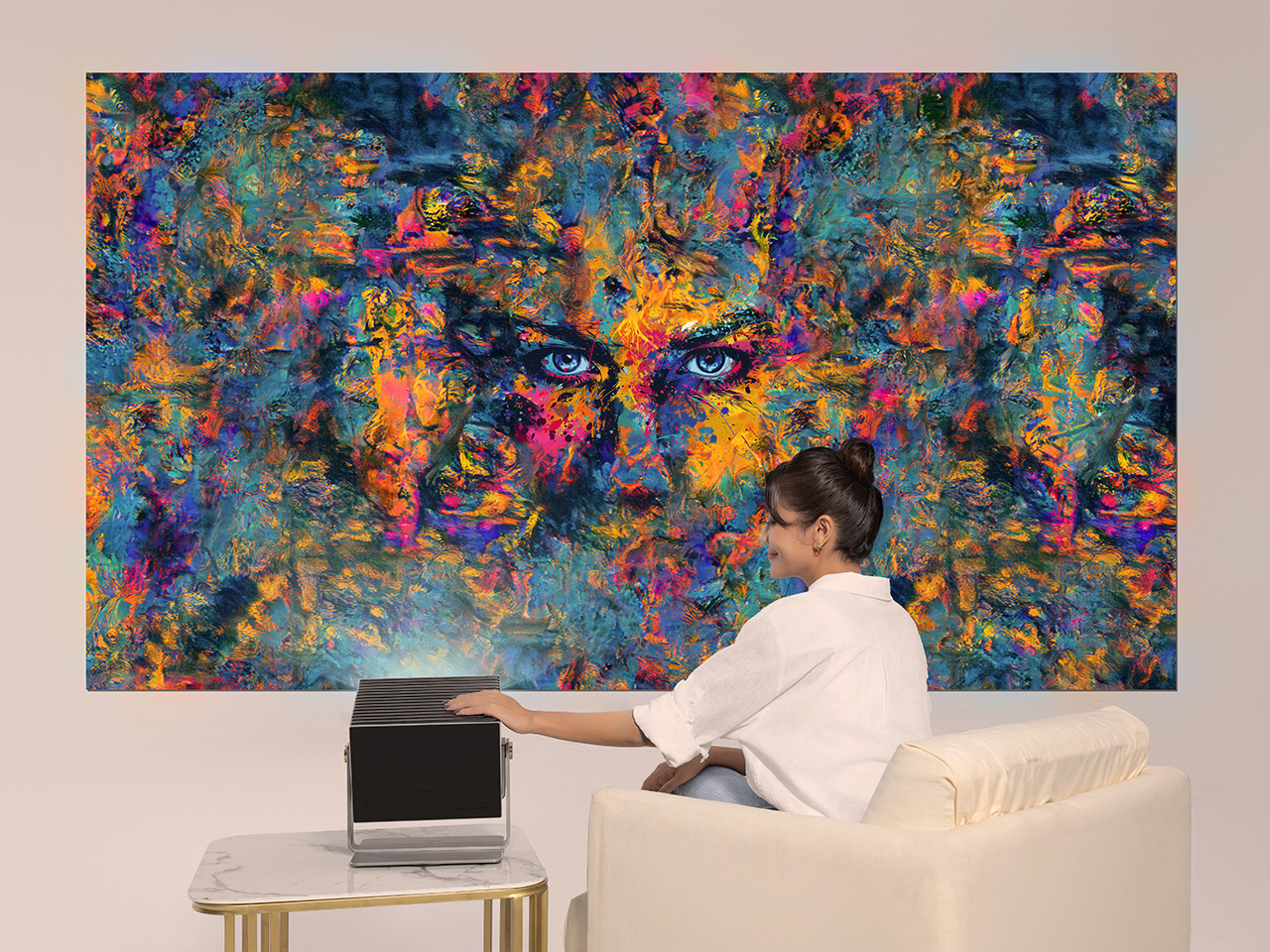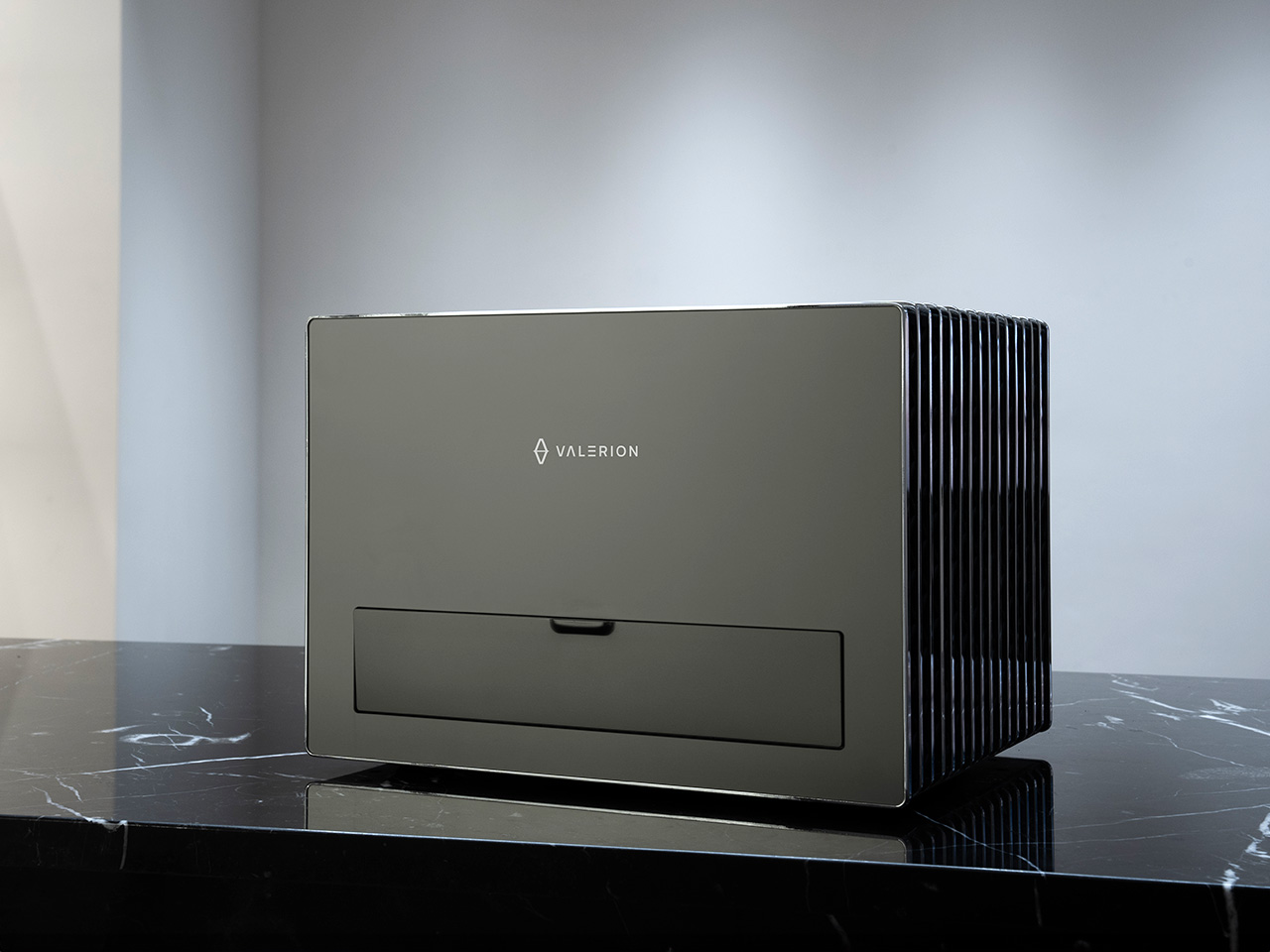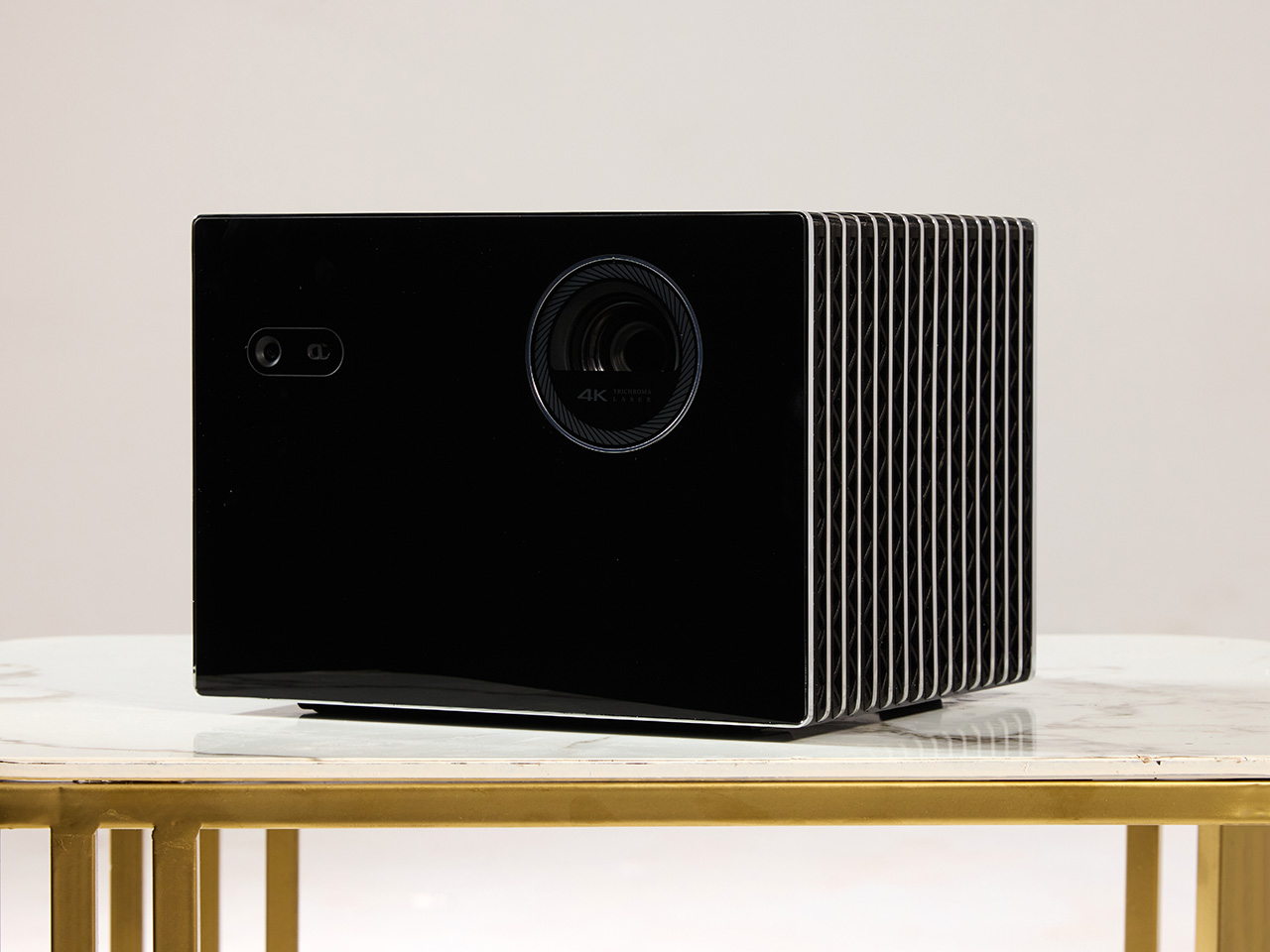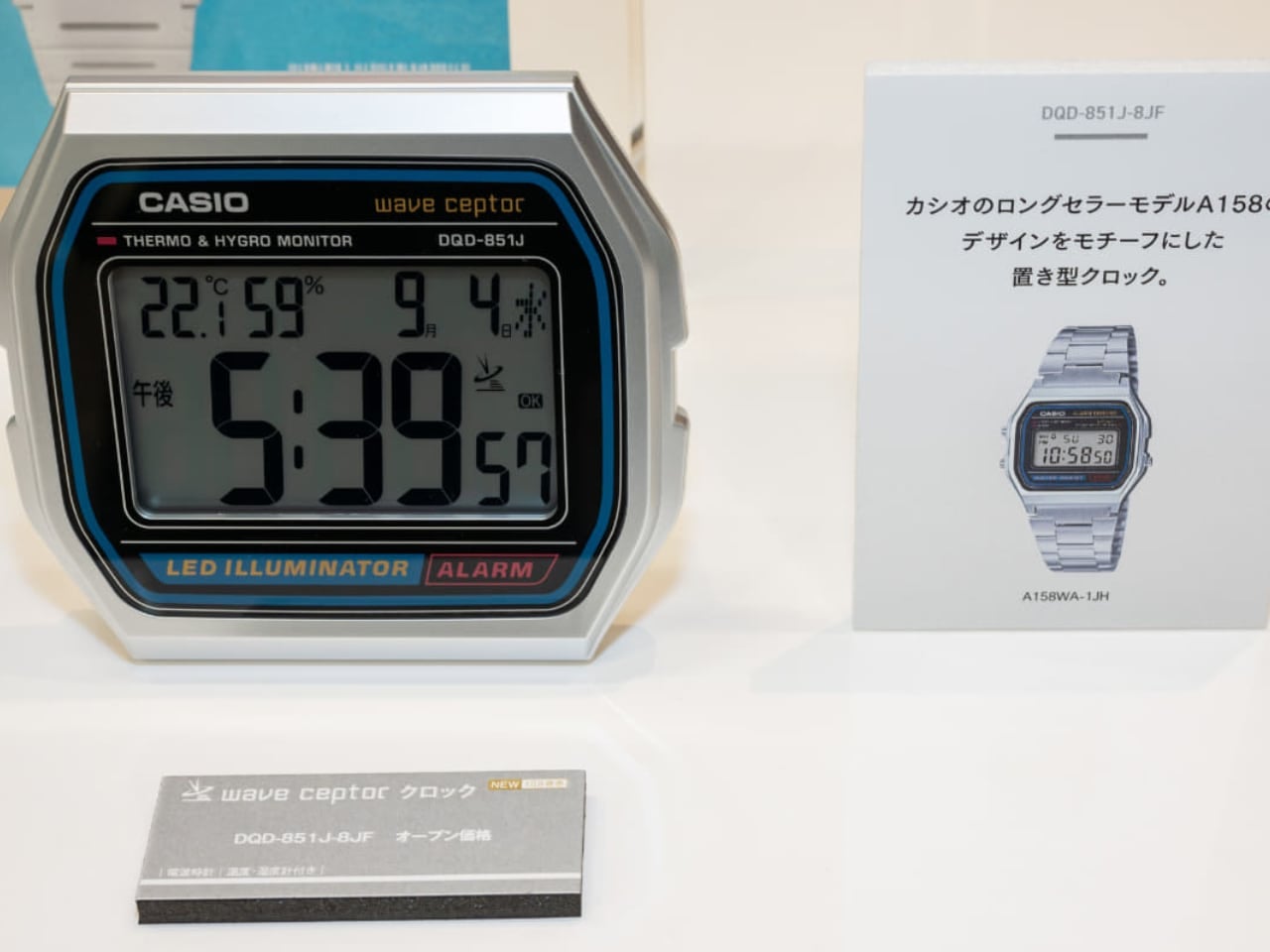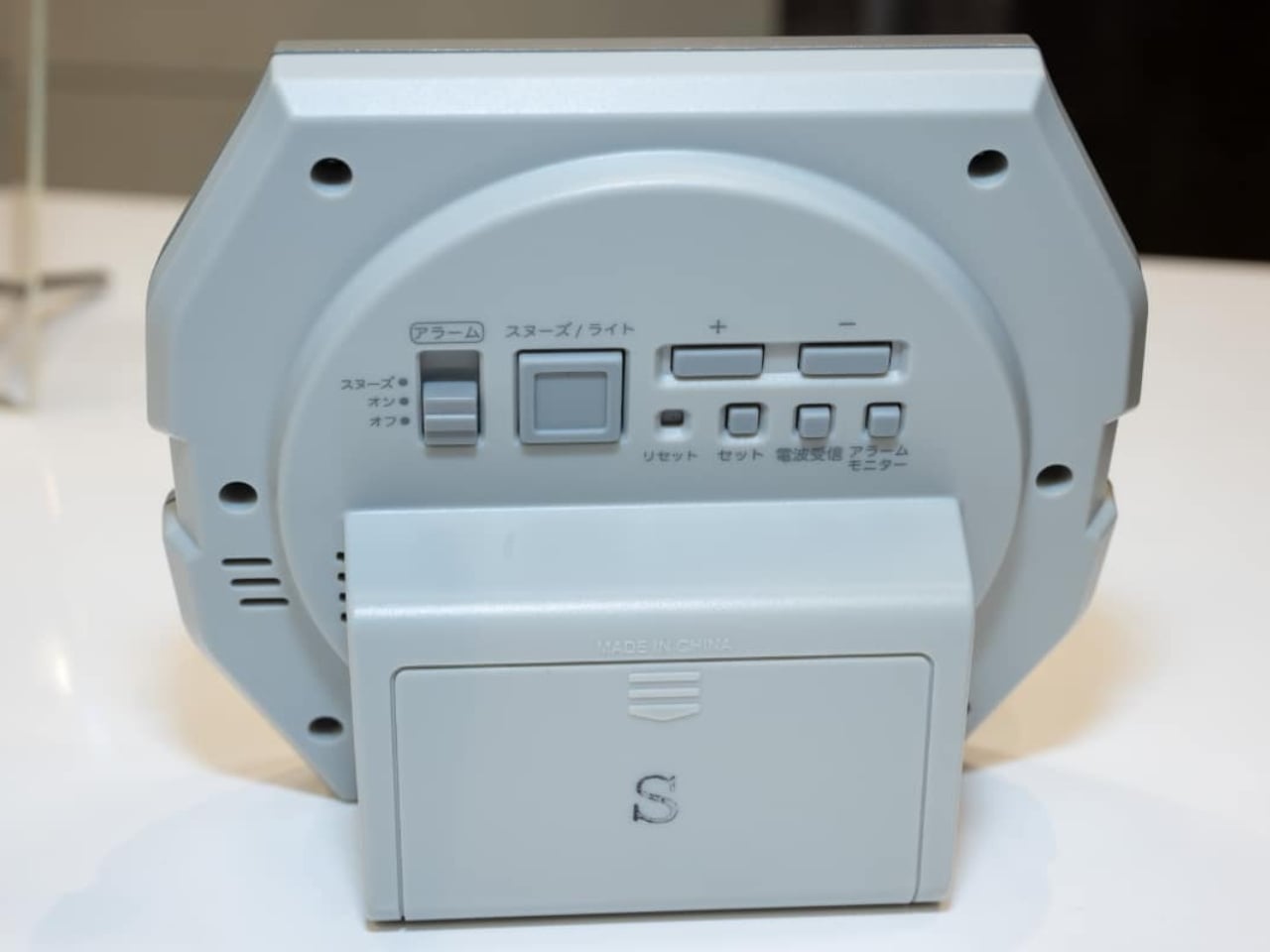
Portable speakers come in all types, sizes and themes but never before have I laid my eyes on one that looks like a front-loading washing machine. Only possible in the concept design world realm, this Bose branded portable speaker is a true conversation starter in any geeky den.
The intriguing design of this compact sound blaster tickles my fancy for its ingenuity in the placement of the different elements. Most definitely, you’ll start to see all those front-loading washing machines as a huge speaker once you lay your eyes on this concept. However, in reality all the button placements and speaker components are designed in a way that they seem like the perfect amalgam of portable audio equipment and a miniature washer for your undergarments.
Although there is no detailed information about this concept’s development stage, there’s a picture at the end suggesting a prototype or a display model is indeed crafted by the designer. Dressed in a cool titanium grey finish, the portable speaker is a treat to watch if you are an audiophile who appreciates modern product design. The front of this cool gadget has all the audio telemetry to show the player controls on the touchscreen display along with the volume rocker knob, power button and play/pause buttons. On the left bottom side there’s the Bass actualizer knob.
To the front lies the subwoofer and on each side are the stereo speakers to beam quality sound. Wireless connectivity should be a given on this one, since no one in 2024 would buy a portable speaker without that option. Frankly speaking, this portable speaker would rock your desk setup as well. Folks over at Bose would also be keenly viewing this design language if they want to add something on these lines to their existing line-up.
Chopsticks are a 4000-year-old eating implement that has remained untouched. And, for almost four centuries, the quaint town of Obama in Fukui Prefecture, Japan has manufactured beautiful lacquered chopsticks. The lacquered chopsticks are considered the hardest and the most beautiful of the Japanese lacquer chopsticks, and they’ve been named ‘Wakasa-nuri’. Nendo teamed up with Hashikuru Matsukan – a manufacturer who has continued the Obama legacy. Nendo gave a contemporary and innovative twist to the age-old chopsticks!
Called the Rassen or spiral chopsticks, these unique chopsticks merge fun and functionality to create a product that is quintessentially Japanese, yet quite contemporary. The Rassen chopsticks can be joined together to create one convenient single unit, and they can be detached or separated whenever you need to use them! Rather than having two separate pieces of tableware, you have a single unit in the shape of an elongated cone. When you pull both the chopsticks apart, you notice an interesting twist in their wooden handles.
The entire experience of bringing the chopsticks together and then separating them becomes a fun and amusing experience. It feels like you’re playing with a jigsaw puzzle! Using the chopsticks to eat your meals, brings joy and a certain sense of playfulness to your everyday ordinary meals. Putting them back together is really quite swift and easy too, and it eliminates the fear of losing one of them.
While designing the Rassen chopsticks Nendo had the intention of giving people a small ‘!’ moment. We often find many small ‘!’ moments in our day, and these tend to make our days brighter and richer. Nendo wanted to contribute and add a ‘!’ moment in people’s lives with their lovely chopsticks. These chopsticks are handmade by artisans, and Nendo also utilized a multi-axis CNC miller to build the unusual yet useful utensils.
In the six full years that it took to transition from the notch to the dynamic island, I’m sure the Apple team was hard at work figuring out what the next logical step would be. Under-screen cameras had their caveats (camera quality would suffer), and bezels were an absolute no-go. The iPad could get away with a notch built into its relatively thin bezels, but the same bezel thickness couldn’t be carried forward to the significantly smaller iPhone. Then in 2022, Apple revealed the successor to the notch, a more detached notch that they called the Dynamic Island. Its benefit? That it could shapeshift into different shapes and sizes depending on notifications, resulting in a notch that didn’t feel like a compromise.
But information obtained by the folks at MacRumors provides a rare peek behind the curtain of Apple’s design process, and more importantly, what we COULD have gotten instead of the dynamic island. The concepts range from acceptable to downright absurd, with some proposing two notches instead of one! Here’s a look at the 6-year worth of brainstorming at Apple’s design offices before they transitioned from the notch to their now ubiquitous Dynamic Island.
The notch made its first appearance in 2017 with the iPhone X, a commemorative phone to mark the product line’s 10-year anniversary. It soon became a meme, and then a standard fixture for iPhones moving forward, but needless to say, Apple wanted to find a better solution. The first solution was in the form of an extra notch to make the existing notch look more appealing. Visible in the image above (left), this notch would effectively be your control center, but would disappear when not in use. Let’s be objectively clear, I’m glad Apple didn’t implement this because it’s downright hideous. It creates a uniquely displeasing screen shape (even if temporarily), and is an ergonomic nightmare for left-handed people. The second alternative was to black out parts of the screen entirely to hide the notch (top right) – a feature that looked much more acceptable visually, but was a step back for Apple’s zero bezel effort. It, however, would translate to battery savings because the top part of the screen on either side of the notch would remain black for most of the time.
Finally, the company arrived at the dynamic island, but struggled with finding the right way to make it ‘dynamic’. Initial explorations would show dot-shaped icons emerging from the island when in use, while others showed the island transforming into a large block when increasing or decreasing the volume before returning to its original size. This pretty much put Apple on the right track, but they weren’t there yet. Another concept showed the entire island turning into your control center (I somewhat like this if I’m being absolutely candid), while one concept gave the island a second skin in the form of a colored window.
Finally, Apple figured out how to have the island dynamically transform into widgets based on apps and processes, offering something much more elegant than the concepts shown here. However, that’s the nature of the design process, whether you’re a small startup or a trillion-dollar company. You try, ideate, evaluate, fail, and go back to the drawing board over and over till you find something that works… even if it takes six damn years. In hindsight, I’m glad they took that long. I’d take a dynamic island any day over that godawful secondary side notch!
I’ve always said that great technology doesn’t cater only to the needs of the dominant 95%, it also factors in the needs of the often neglected 5%. To that end, AR technology is great, but it hasn’t been applied in a way that benefits the 5th percentile – and Cellico wants to change that. The medical-tech company unveiled the Eyecane AR glasses at MWC, the world’s first augmented reality device designed to correct age-related macular degeneration (AMD).
Designed to look and feel like your standard sunglasses, the Eyecane AR helps people with retinal disease see clearly. A 4K camera at the center of the glasses records the world, feeding media into a tiny projected display within the Eyecane AR’s lenses. AMD causes blind spots within people’s vision, but the Eyecane AR’s cameras help fill in those blind spots with digitally captured imagery in real time, helping people see fully and clearly again.
A disease that affects as many as 1 in 200 people by the time they reach 60, going up as high as 1 in 5 people by the time they hit their 90s. The affliction, caused by the degeneration of the macula (the central part of the retina) results in blurry or sometimes even no vision in the center of your eye. Think of a large black dot in otherwise relatively clear vision. Given that a lot of the important things we see find themselves in this central zone, people with AMD can have a tough time looking at objects, identifying people, and navigating scenarios. Cellico’s solution is incredibly simple – have a camera capture whatever is in that gap, and display it in the corner of your eye, where you can still see things relatively clearly. Creating somewhat of a picture-in-picture effect, Eyecane AR allows people with AMD to regain vision in their macular region simply by having a camera capture it and display it in another part of their field of view.
A snap-on sunshade helps people see clearly in bright settings too
By harnessing the power of a compact 4K 20MP camera seamlessly integrated into smart glasses and complemented by an intuitive mobile app, Eyecane AR captures and processes real-time images with precision, even applying optical image stabilization. These images are then projected onto an augmented reality display in Full-HD, effectively shifting central vision to the peripheral field of view. This groundbreaking approach not only restores clarity but also rekindles independence for those navigating the challenges of AMD.
simulates how people with AMD perceive the world, and how the Eyecane AR can help fill in the gap with a PIP on the left side.
Moving the PIP to the center of the screen shows what images would look like for people with regular vision.
The beauty of the Eyecane AR lies in the fact that it can be used right out of the box without a hospital visit. The Eyecane app has a built-in scotometry program that analyzes your vision for you, pinpointing the blind spot or the problematic area in your vision. The app then helps the AR glasses’ camera calibrate and focus on that region, capturing the image and displaying it in a corner of your peripheral vision. The entire process takes mere minutes, and helps quickly restore macular vision simply by relying on the inherent properties of augmented reality displays!
Key Features of Eyecane AR:
4K camera with Optical Image Stabilization (OIS) embedded in AR glasses
Mobile app featuring a customized image-processing engine
Full HD Reflective Freeform crystal Lens offering a Field of View (FoV) of 40°
Voice control functionality for seamless user interaction
Electric Auto Sunshade coated with an LC film, ensuring optimal visual comfort in diverse lighting conditions
Lightweight construction, crafted from Titanium and Ultem materials, prioritizing comfort and wearability
Dubai, a city known for pushing the boundaries of innovation and technology, is set to redefine its transportation landscape with two groundbreaking projects. The Roads and Transport Authority (RTA) in Dubai has recently entered into partnerships with international experts to develop sustainable and futuristic transport solutions. The first memorandum focuses on the development of the Floc Duo Rail system, while the second aims to create a solar-powered rail bus system. These initiatives mark a significant leap forward in Dubai’s commitment to embracing advanced technologies, sustainability, and the future of urban mobility.
Over the past 15 years, Dubai has undergone a remarkable transformation, from the inauguration of the iconic Dubai metro in 2009 to the creation of architectural marvels such as the Burj Khalifa and Palm Jumeirah Islands. The UAE has truly made a mark on the map, quite literally with the man-made islands. Dubai has consistently demonstrated a commitment to pushing the boundaries of what is possible, blending luxury with technological advancements. With a conscious focus on sustainability, Dubai has established forums that encourage initiatives aimed at reducing environmental impact.
Floc Duo Rail System:
The Floc Duo Rail system, developed in collaboration with UK-based Urban-Mass Company, is set to revolutionize urban transportation. Comprising driverless, electric-powered pods moving on an elevated track, this innovative system eliminates the need for extensive earthworks, costly tunnels, and large stations. The double-track design enables swift and efficient movement within urban areas, with the added advantage of scalability. The system can be tailored from small local areas to city-wide networks, showcasing its adaptability to various urban environments.
yanko design images to size – Dubai_new_transport_03
Furthermore, the Floc Duo Rail system is characterized by its reliance on solar energy. Equipped with solar panels, the system generates the electricity needed for operation, aligning with Dubai’s commitment to sustainable practices. As a 21st-century mass transit solution, Floc Duo Rail is adaptable to various urban environments, scalable from small local links to extensive city-wide networks. The stations, ranging from ‘bus stops’ to large interchanges, are customized to meet rider demand. Platform lengths are flexible, allowing platoons to break up when entering and exiting stations. The driverless nature of the pods allows for smart-designed capacity adjustments, ensuring energy efficiency by using short units during low peak periods and long units during high peak periods.
Ricky Sandhu, the founder and CEO of Urban.Mass, emphasized the partnership’s significance, stating that it epitomizes the strong commitment of the UK and the UAE to combat climate change. The collaboration is poised to pave the way for sustainable mass transit solutions through innovative technology, reshaping urban mobility in the city.
Solar-Powered Rail Bus System:
In a parallel development, Dubai’s RTA has signed a memorandum with US-based Rail Bus Inc. to develop a solar-powered rail bus system. This system employs small, driverless electric vehicles that run on elevated tracks, emphasizing its lightweight and flexible nature. The adaptability of this system makes it suitable for retrofitting into various environments, offering an environmentally friendly and operationally efficient transportation solution. It’s mostly going to be a smaller size of a metro with an added layer of sustainability.
yanko design images to size – Dubai_new_transport_07
Dubai’s campaign into the future of transportation through the Floc Duo Rail system and the solar-powered rail bus system underscores the city’s commitment to adopting cutting-edge technologies and sustainable practices. As the world watches, Dubai continues to position itself as a pioneer in urban mobility, setting the stage for a greener and technologically advanced future. These initiatives not only enhance the city’s quality of life but also contribute to a global conversation about the possibilities and benefits of embracing innovative and sustainable transportation solutions.
Harry Potter fans will have their mouths wide open for the next big set revealed by the LEGO Group. Yes, the Sorting Hat for choosing out of the four Hogwarts Houses (Gryffindor, Slytherin, Ravenclaw, Hufflepuff) that each of the students will go to, now gets a dedicated LEGO version.
This detailed set slated for a March 1, 2024 release consists of 561 pieces in total, each one coming together to create the intricate build. It’s going to be the first time in more than a decade that LEGO has incorporated a sound box in one of its Harry Potter sets. The Talking Sorting Hat will carry a price tag of $100 when it is finally available to pick off the shelf. Eager Harry Potter fans can also pre-book it right away!
The hidden sound box says out loud randomized phrases in English, that we all are familiar with. Of course, these are from among one of the magical verses that assign the person (holding the tip or placing it on top of the head) to one of the four Hogwarts houses. When the 9.5 inches tall and 7.5 diameter LEGO set is fully assembled it can be adorned on a stand that has the Gryffindor, Slytherin, Hufflepuff and Ravenclaw house symbols all around. The tip of the hat and the eyebrows are both movable – in fact, pressing the hat’s tip opens the mouth, sways the eyebrows and plays the random phrase from the 31 available options.
As a generous bonus, the Talking Sorting Hat comes with an exclusive Harry Potter minifigure wearing the Sorting Hat miniature version and looking ever so cute. As already mentioned the set consists of printed bricks depicting each of the houses, the other patches are realized with the stickers.
If you’ve browsed through the internet long enough, you’ve seen videos of Taylor Swift or Coldplay concerts, with the entire audience lighting up thanks to LED wristbands that respond to the concert’s lighting and music setup. Well, Dynavisual wants to take that technology a few steps further. The company is working on a set of flexible high-visibility LED ‘billboards’ that can be worn on caps, clothes, bags, etc. The LEDs can be customized to display messages, stats, and brand logos (pretty standard stuff), but what really makes them exciting is their ability to be paired together by the thousands, potentially turning an entire crowd into a massive display. Dubbed ‘Swarm Technology’, Dynavisual paints an incredibly exciting future where massive arenas come to life at concerts or sports games, displaying images, logos, or even massive graphics – just imagine the entire stadium displaying the word ‘GOAL’ when Messi scores. The best part? These Dynavisual displays could then go back to being individual units once the game is over, with each person carrying their display back home and using it like they normally did.
Flexible displays have been around for over a decade now, but calling the Dynavisual Pad a flexible display is a bit of a stretch. In theory, it passes the bar, but practically, you’re also looking at a pad that has just 512 pixels, arranged in a 16×32 array. Standard OLED displays like the ones in your phone have millions of pixels per display, but the folks at Dynavisual don’t want you to make that comparison. If looked at independently, the Dynavisual Pad is an entirely different product. It’s designed with a robust construction that can be worn across your body or on your head, has multi-directional flexibility across both X and Y axes, and those individual pixels may give the display an incredibly low resolution, but they’re exceedingly bright. For comparison, the iPhone has a peak outdoor brightness of 2000 nits – the Dynavisual Pad outputs a comfortable 6000 nits, making it up to 3x brighter than traditional phone displays. The reason is simple – the low resolution and high brightness aid visibility over distances of multiple feet, whereas a smartphone display is practically unusable beyond 6-7 feet.
Showcased at MWC 2024, the Dynavisual team is bringing attention to how capable its Pad is. Each Pad is roughly the size of a large phone, has visibility in bright daylight, and boasts a flexible design thanks to ridges in the back that allow it to easily bend in multiple directions, making it perfect for wearing on your person. The device is made to be lightweight, allowing you to wear it on a cap, in a hoodie/jacket, or even on a bag, and it has its own built-in battery. Details on the battery life were unclear, but given that the device has just over 500 LEDs to power, it’s much more power-efficient than your smartphone.
The applications for the Dynavisual Pad are perhaps the most exciting bit as far as the product goes. There’s an obvious use-case in branding/marketing, with the pad accepting logos, messages, and branding elements, but Dynavisual sees the Pad as being a great communication element beyond the narrow marketing approach. It could be used by safety personnel to help deliver messages/guidance, or it could even be used in a personal capacity, perhaps by a cyclist looking to let drivers behind know whether they’re turning left or right (or braking). To that end, the Dynavisual Pad is a pretty smart device. It packs a whole slew of sensors, including GPS, Bluetooth, WiFi, Infrared, and even voice input.
The 6000-nit LEDs are bright enough to shine through thin fabrics too, allowing you to easily conceal them into clothing.
However, things get truly exciting when multiple Dynavisual Pads come together at the same venue. The company has developed a unique protocol that allows multiple Dynavisual Pads to sync together, becoming a swarm or hive-mind. The technology is best displayed within stadiums and arenas, as organizers can command multiple Dynavisual Pads together, turning them into a massive intelligent display that relies on hundreds if not thousands of pads to work as individual pixels. Imagine an entire stadium audience erupting into colors and displaying the score every time there’s a goal (or a touchdown), or lighting up with brand messages during an ad break. Unlike with current LED bands used in concerts that rely on a combination of WiFi and radio frequencies, Dynavisual’s Swarm Technology operates differently. For starters, with existing solutions, LED bands are owned by organizers, distributed to audiences at venues, and collected once the event is over. That isn’t a concern with the Dynavisual Pad, as users can bring in their own Pad devices into a venue and have it automatically sync up with the event’s light and sound system. Moreover, while current LED bands can only display swathes of colors and vague shapes, Dynavisual’s team has managed to figure out how to display images – a feat that’s incredibly tricky because organizers will need to know where every single Pad device is located, and send specific signals to them.
The application of that widespread swarm technology, however, doesn’t translate well to a hands-on demo with just one or two units on display. It’s also a challenge to explain the product to people attending the Mobile World Congress, because there’s a knee-jerk reaction to then compare it to a mobile – which the Dynavisual Pad is NOT. That being said, the swarm technology looks promising, as the visuals quite literally paint a vivid picture… although with massive concerts, tournaments, and large-scale sporting events like the Olympics, the Dynavisual Pad has an audience practically ripe for the picking!
Meet the Energizer Hard Case P28K smartphone from Avenir Telecom. I hesitate to call it a smartphone because it’s pretty much a brick with a screen… but this smart brick does have a pretty incredible spec to boast about. This device is a behemoth in the battery department, boasting a staggering 28,000mAh capacity that promises to last a regular user an entire week on a single charge. It’s a follow-up to their previous 18,000mAh model from 2019, marking a significant leap in battery size and, implicitly, in user independence from power outlets.
For context, a 28,000mAh battery is roughly 9x more than your average smartphone, which has an average of around 3000mAh. That translates to much more battery capacity, stretching to a week (or maybe more) with regular use… but it also leads to, well, that massive brick-ish format. The Energizer Hard Case P28K measures a staggering 27.8mm thick (that’s nearly three smartphones thick) and weighs a whopping 570 grams (over 20 ounces). I pity the fool who texts with this in bed and accidentally drops it on their face. That being said, the phone is at least rated IP69 for dust and water resistance…
The 18,000mAh Energizer Phone from 2019 (above), versus the P28K smartphone (below)
Fast charging at 33W is also a welcome feature, considering you don’t want to spend 5-6 hours topping off the entire battery. However, details regarding the full charge time remain unspecified, raising questions about the practicality of recharging such a large battery. The phone’s specifications are modest, with no 5G support and a processor that won’t turn heads. Yet, with 8GB of RAM, 256GB of storage, a trio of rear cameras, Android 14, and a sizable 6.78-inch 1080p LCD display, it covers the basics well enough for users whose primary concern isn’t cutting-edge tech but battery life.
Scheduled for release in October at a price of €249.99 ($271.37 USD), the P28K positions itself as a unique offering in the smartphone market. However, it’s notable that it won’t be available in the US, a decision that may reflect market research or regulatory challenges, but it certainly raises curiosity about the global distribution strategy and target audience for such a niche product.
Gone are the days when lighting designs were boring and typically designed objects that did nothing but add light to a living space. A well-designed lighting fixture should not only have the ability to illuminate any living space but also add that extra oomph factor! I mean, of course, we need them to see in the dark, but as highly functional as they should be, a lighting fixture also needs to be aesthetically pleasing, adding an attractive and visually soothing element to your home or office space. And if it manages to be portable – then well it’s everything you could ask for. From a Japanese lantern candle to a collapsible lighting design – these unique lighting designs are what you need to elevate your living or working space!
1. Japanese Lantern Candle
Inspired by a traditional Japanese ‘chouchin’ lantern, this Japanese lantern candle features a billowy pillar shape and emits an ambient and ethereal-looking glow. This lantern is a lighting design that can add some peace and calm to your hectic workday and is also easily moveable from one place to another.
The lantern candle is a modern and contemporary take on an iconic Japanese design. It has a minimalist design that is portable, allowing you to carry it with you. It creates a relaxing glow and is a handcrafted piece by artisans in Kurashiki, Japan. It is a prime specimen of accurate and meticulous craftsmanship.



What we like
The candle’s wax is non-melting, which provides a beautiful clarity on the candle
What we dislike
The lantern can be a fire hazard, so you need to place it carefully around pets and children
2. The Tomori Lantern Kit
The Tomori Lantern Kit is an innovative kit that lets you build your own lantern, and then put it aside once you’re done using it! It doesn’t function as a ready-made lantern, and once it collapses, it doesn’t occupy much space. You can also snugly fit a conventional flashlight inside it!
A foldable cardboard piece functions as the base of the kit, as a flashlight holder, and as a stable structure for the lamp. The kit features an LED flashlight that you can use when it is not fitted inside the lantern. But the cardboard base can also accommodate any other cylindrical flashlight that is less than 30mm in diameter and 160mm in length.
What we like
The whole kit can be folded down into a flat A4-sized package which is ideal for stashing and packing away
A fun experience to put together and create your lantern
What we dislike
The lantern cannot withstand rain
3. Gingko Smart Diffuser Lamp
Called the Gingko Smart Diffuser Lamp, this quaint-looking lamp has a monolithic form that holds a fragrance diffuser in its upper half, and a well-designed ergonomic lamp in its lower half. The lamp works well for desks, but can also be used as a portable design to be carried anywhere with you.
Why is it noteworthy?
The Gingko Smart Diffuser Lamp is made from a combination of wood, copper, and frosted acrylic glass, providing it with an earthy and warm appearance which is one of the signature features of all Gingko’s products.
What we like
A portable and dual-functional device that you can carry with you with ease
What we dislike
Some people may not prefer wood as their material of choice for diffusers
4. Harmony Flame Fireplace
Coined the Harmony Flame Fireplace, this stunning brass lamp lets you enjoy a pretty and safe fire indoors. It uses eco-friendly bioethanol to spread light and warmth throughout your home. The technique used to build musical instruments was used to build the fireplace.
The Harmony Flame Fireplace is created to uplift and enhance the mood of indoor spaces. The reflective surfaces of the fireplaces, and the vivid flames play around with shadows and light to form a decorative piece that is aesthetically appealing for your dining table or your patio!
What we like
You can enjoy a warm, pretty, and safe fire inside your home
What we dislike
The lamp is powered using bioethanol which is eco-friendly, but needs to be purchased again for refilling, which in turn creates a fuel dependency
The lamp’s fuel capacity and compact size do not support long-term extended use
5. Anywhere-Use Lamp
The Anywhere-Use Lamp is a minimalist portable table lamp that is a relief in a world populated with harsh lighting and big glaring screens. The lamp offers a touch of tranquility and elegance when placed in a living space. It has a mushroom-inspired head emitting a soft and warm ambient glow.
The lamp is powered by four AA batteries, and it has a modular modular that delivers amazing atmospheric enhancement wherever you decide to place it. The lamp features six high-color rendering LEDS, which radiates a soothing luminescence, transforming any space into an oasis of peace.
What we like
Feature 4 brightness level
Easy to disassemble, store in a bag, and carry anywhere with you
What we dislike
The lamp is not water-resistant
It utilizes four AA batteries
6. Madco Table Lamp
Dubbed the Madco Table Lamp, and designed by Italian designer Elisa Ossino for the Japanese brand Ambientec, this lamp is a subtle, minimalist, and delicate recreation of festive Japanese lanterns. They aim to bring Japanese culture to your home in a convenient and portable form.
Why is it noteworthy?
The lamp is designed to be portable, and it can be recharged using a UBC-C. The designer says that you should take the lamp outside, as it is waterproof, and will create a pretty and intriguing interplay with plants. It can be hung from its handle as well!
What we like
Features a portable and flexible form
Adds a pop of color and Japanese culture to your living space
What we dislike
The lamp seems to be a bit fragile and easily breakable, must be handled with care
7. Iyer’s Lamp Design
Designed by Shail Iyer, this sleek lamp design is an experiment on modern minimalism, to create a lighting fixture that is simple yet multifunctional. Iyer tried to present his take on modern minimalism, which entails taking up minimum space while doing maximum work – and this lighting design is the final result.
Why is it noteworthy?
The portable desk lamp looks much like a modern lamp light lantern, and it features a multi-shaped silhouette. The body has a large cylindrical shape, with a sturdy bottom for stability. What makes the lamp interesting is that it can be hung from a hook, or even rested on top of a flat surface.
What we like
Compact, easy-to-carry form
Multifunctional design that can be hooked or placed on a flat surface
What we dislike
It’s a conceptual design, so we don’t know how well it will translate into a tangible product
8. Stella
Called Stella, this exquisite-looking lighting design was created as a part of the 2023 New Collection lighting products by COG Design Studio x Bonakia. The ethereal-esque lighting design was built through a mix of multiple techniques – repetition and transforming, and by employing various geometric shapes.
Why is it noteworthy?
It features an interesting triangular intaglio shape and is built using acrylic material. The goal behind the design was to observe the sensibility of light when it is transmitted to a detailed intaglio pattern.
What we like
Stella radiates an ambient and seductive glow
Portable design that can be placed wherever you like
What we dislike
The lamp should be carefully cleaned and maintained, as it looks quite fragile
You should move the lamp around with caution, as it could fall and break
9. Z-Lamp
Dubbed the Z-lamp, this innovative lamp has a collapsible feature that makes it easy to carry around. It features a ridged silicone shade that lets the lamp expand or contract, letting you control the lamp’s overall brightness as well. It is equipped with a collapsible silicon clad that sits over the LED base.
Why is it noteworthy?
Once you expand the entire silicone cover, it functions as a large diffuser, that scatters more light in all directions. Once you compact it, the diffuser’s size reduces and dims the LED’s intensity. The lamp is simple, smart, and engaging!
What we like
Unique collapsible feature that converts it into an easy-to-carry design
What we dislike
10. Float
Called Float, this cute battery-powered design can create ambient restaurant lighting wherever you like. Designed by the Italian brand Axolight, this lighting design is a versatile product that can be placed on a desk, used as a lamp, or even fixed on a wall.
Why is it noteworthy?
Float has a minimal shape and form, that allows it to easily merge with both indoor and outdoor spaces – whether it is a home or a restaurant patio. You could also place the lighting design over an empty bottle, and create your own pretend-restaurant experience.
What we like
Battery lasts for 9 hours, you can use it wirelessly as well
Features a 5-step touch dimmer, allowing you to adjust the lighting
Back in 2020, the way we worked radically changed. No, I’m not talking about the shift to Working From Home (WFH) during the pandemic, I’m talking about the birth of the Mover Erase, a rather inventive little piece of stationery that took the best parts of a magnet, a whiteboard, and a Sticky Note and combined them all into one single universally appealing solution. The Mover Erase was just genius – it was portable, reusable, magnetic, and came in clusters that helped you move notes around instead of one large static surface. Moreover, it saved paper by replacing thousands of sticky notes that would eventually end up in the trash. Nearly 4 years later, the folks at Bravestorming are making the Mover Erase better than ever, with standardized sizes that let you mount sticky notes onto your individual MEU (Mover Erase Uni-size) plate, for people who prefer the texture of paper. The entire kit also comes with its own mounting accessories, along with an app that digitizes your hand-written notes, giving them a place to live forever even if you wipe them clean to reuse!
Whiteboards are great because you can capture ideas, wipe them down, and start afresh. Sticky notes are great because you can put them anywhere, and arrange them to create brainstorming maps with repositionable boxes. So why not combine the two into a novel, clever solution? The Mover Erase Uni-size cleverly merges them into a singular product that really lends well to your creative process. The MEU’s whiteboard-like glossy silicon surface is great to write on with whiteboard markers, while the magnetic design lets you snap your notes easily onto surfaces for future reference. A patented release technique lets you dislodge notes too, quite like pulling a sticky note off a wall. The MEUs are color-coded, perfect for organizing your notes based on category or urgency, come in two standard sizes that match popular Sticky Note formats, and unlike paper which tends to curl up and become frail after days, stays looking as good as new forever.
6 Forms of MoveNote + Trifold
The beauty lies in the ability to use a cluster of MEUs together, brainstorming, organizing, reshuffling, and effectively mapping out ideas simply by moving individual MEUs around. Then, once you’re done with your sprint session, you can either keep the MEUs where they are, dislodge them to assign activities/roles to different teammates, or better still, take a photo through 3M’s Post-It app to digitize your notes effectively before wiping an MEU clean. Cleverly enough, the new MEUs are perfectly sized to fit your standard Post-It notes too, so just in case you love the texture of paper, you can stick your notes right on the MEU and use them… although what’s great about the new MEUs is the fact that the silicon surface on which you write can actually be removed from its plastic housing and stuck onto surfaces (given that silicon has an almost friction-like gripping tendency). However, there’s an understated beauty to the magnetic clear casing that the MEU has been perfecting since 2020.
Speaking of things being perfected since 2020, the Mover Erase Uni-Size comes with two new accessories in the form of an A3-compatible Movenote magnetic folder that gives your MEU notes and your paper documents a single place to coexist, and a shapeshifting Trifold that gives your notes a dynamic stand to display themselves on. The Movenote is a folio case that holds documents (A4/A3), acts as a daily planner (letting you stick your MEUs on the built-in charts), and even transforms into a tiny table! Its A3/A4 size compatibility means it holds tablets too, giving you a singular place for all your stationery and productivity tools. However, if you need something a little more compact just for your MEUs, that’s where you’ve got the Trifold.
The Trifold is a clever accessory that features three panels with dedicated charts on them for using alongside your MEUs. The magnetic surface lets you easily attach MEUs to the Trifold’s charts, but wait, they also fold into a prism shape, sitting on your desk either horizontally or vertically, allowing you to view and access your MEU notes on command. Open the Trifold flat, and it’s just the right size to fit into the Movenote folder, giving you a holistic kit that radically transforms how you think, take notes, and work.
The makers behind the Mover Erase began their journey by simply designing magnetic memo bricks that you could attach sticky notes to… but in doing so, they realized there was a lot more to the product. “Compared to the traditional sticky note thinking process, our Mover (Magnetic Memo Brick) significantly helped ADHD adults, Montessori educators, and many entrepreneurs in their thinking processes,” mentioned the creators at Bravestorming. Over the years, different iterations helped them build products that served different needs for different users. The magnetic memo brick still remains core to the product’s UX, but it now comes with a removable, washable, paper-like textured silicone writing surface… but more importantly, it’s standardized in size, still allowing people to mount Sticky Notes from popular brands like 3M onto it, just like the first generation.
Following 3 successful Kickstarter campaigns with over 15,000 happy customers, the folks at Bravestorming are finally turning a good idea into a great ecosystem. Four years later, the Mover Erase ‘universe’ is more functional and well-rounded than ever, allowing you to ideate, brainstorm, collaborate, and organize your work-life more efficiently and creatively. The Mover Erase Uni-size Starter Pack starts at a mere $33, consisting of just blank MEUs, but for $44 you can upgrade to color-coded MEUs, and for a little extra, you can add the Movenote and Trifold to your kit.