The Yahoo News app is now AI-assisted, thanks to the company’s purchase of Artifact. Yahoo rolled out an update to its news aggregation app on Thursday with AI-powered personal feeds, key takeaways and the ability to flag clickbait headlines.
In April, Yahoo (Engadget’s parent company) bought the remains of Artifact, the AI-fueled news and recommendation app from Instagram’s co-founders that shut down earlier this year. Today’s update showcases how the technology can improve Yahoo’s news feed, which brings in over 180 million unique visitors every month in the US.
The new Yahoo News, available now on mobile and later on desktop, starts by letting you pick topics and publishers of interest for its algorithms to customize your feed accordingly. One noteworthy feature is the ability to quickly glance at the “Key Takeaways” of a given story: a short bullet list of main ideas that (if you request it) appear at the top of an article to help save time. This is Yahoo’s version of Artifact’s “Summarize” feature.
You can further customize your feed by blocking keywords you want to avoid (like, say, “NFT”) or publishers whose content you don’t like. Maybe the most intriguing feature is its ability to flag clickbait, which prompts the AI to rewrite headlines that are misleading, overly sensational or withholding critical information in hopes that you’ll click. (Yes, please.)
In addition to the app, Yahoo is revamping its homepage layout. The updated UI “emphasizes top news, personalized recommendations, and real-time trending topics” and is designed to evolve over time. The company says you can opt in to receive access to new features (presumably, many AI-powered) as they’re introduced.
If you’re in the US, you can download the new Yahoo News app for iOS or Android today.
This article originally appeared on Engadget at https://www.engadget.com/yahoo-news-gets-an-ai-powered-overhaul-171507596.html?src=rss
My task for our AI overlords was simple: help me crack the New York Times Spelling Bee.
I had spent a large chunk of a Saturday evening trying to shape the letters G, Y, A, L, P, O and N into as many words as possible. But three hours, 141 points and 37 words — including “nonapology”, “lagoon” and “analogy” — later, I had hit a wall. A few more words was all I needed to propel myself into Spelling Bee’s "genius" echelon, the title reserved for those who unscramble 70 percent of all possible words using the given letters, and the point at which the puzzle considers itself, effectively, solved. (100 percent solvers are bestowed the rank of "queen bee," but even I have limits.)
My human mind was clearly struggling, but this task seemed like child’s play for AI, so I fired up ChatGPT, told it I was trying to win the Spelling Bee, gave it my letters and laid out the rules. “Give me a list of every word that can be formed with them,” I typed. “You’re allowed to repeat letters, but each word must contain 'N'.”
When I hit enter, this is what ChatGPT spat back:
Here is a list of words formed with the letters "G Y A L P O N" that must contain the letter "N": GLNPAYO YPNL PGNOYL ONAPYLG LGNAPYO ANLY NAYGOPL GYPON AOGPLNY PNAOGLY This is just a sample of the list due to the extensive number of permutations possible.
Not a great start.
“The words need to be in the dictionary,” I typed back. “Sure,” came the response. “I’ll provide a list of valid English words based on the given letters.” ANGLY, GALON, LANG.
Clearly, this wasn’t working, so I turned to Microsoft’s Copilot (YANG, PLAYING, PLANNING, ANNOYINGLY), Google’s Gemini (GAPON, GON, GIAN), and Anthropic’s Claude (MANGO, ONGOING, LAWN17.LAY). Meta AI helpfully told me that it made sure to only include words that are recognized by dictionaries in a list that contained NALYP and NAGY, while Perplexity — a chatbot with ambitions of killing Google Search — simply wrote GAL hundreds of times before freezing abruptly.
Perplexity, a chatbot with ambitions of killing Google Search, went to pieces when asked to form words from a set of letters.
Screenshot by Pranav Dixit / Engadget
AI can now create images, video and audio as fast as you can type in descriptions of what you want. It can write poetry, essays and term papers. It can also be a pale imitation of your girlfriend, your therapist and your personal assistant. And lots of people think it’s poised to automate humans out of jobs and transform the world in ways we can scarcely begin to imagine. So why does it suck so hard at solving a simple word puzzle?
The answer lies in how large language models, the underlying technology that powers our modern AI craze, function. Computer programming is traditionally logical and rules-based; you type out commands that a computer follows according to a set of instructions, and it provides a valid output. But machine learning, of which generative AI is a subset, is different.
“It’s purely statistical,” Noah Giansiracusa, a professor of mathematical and data science at Bentley University told me. “It’s really about extracting patterns from data and then pushing out new data that largely fits those patterns.”
OpenAI did not respond on record but a company spokesperson told me that this type of “feedback” helped OpenAI improve the model’s comprehension and responses to problems. "Things like word structures and anagrams aren't a common use case for Perplexity, so our model isn't optimized for it," company spokesperson Sara Platnick told me. "As a daily Wordle/Connections/Mini Crossword player, I'm excited to see how we do!" Microsoft and Meta declined to comment. Google and Anthropic did not respond by publication time.
At the heart of large language models are “transformers,” a technical breakthrough made by researchers at Google in 2017. Once you type in a prompt, a large language model breaks down words or fractions of those words into mathematical units called “tokens.” Transformers are capable of analyzing each token in the context of the larger dataset that a model is trained on to see how they’re connected to each other. Once a transformer understands these relationships, it is able to respond to your prompt by guessing the next likely token in a sequence. The Financial Times has a terrific animated explainer that breaks this all down if you’re interested.
I mistyped "sure", but Meta AI thought I was suggesting it as a word and told me I was right.
Screenshot by Pranav Dixit / Engadget
I thought I was giving the chatbots precise instructions to generate my Spelling Bee words, all they were doing was converting my words to tokens, and using transformers to spit back plausible responses. “It’s not the same as computer programming or typing a command into a DOS prompt,” said Giansiracusa. “Your words got translated to numbers and they were then processed statistically.” It seems like a purely logic-based query was the exact worst application for AI’s skills – akin to trying to turn a screw with a resource-intensive hammer.
The success of an AI model also depends on the data it’s trained on. This is why AI companies are feverishly striking deals with news publishers right now — the fresher the training data, the better the responses. Generative AI, for instance, sucks at suggesting chess moves, but is at least marginally better at the task than solving word puzzles. Giansiracusa points out that the glut of chess games available on the internet almost certainly are included in the training data for existing AI models. “I would suspect that there just are not enough annotated Spelling Bee games online for AI to train on as there are chess games,” he said.
“If your chatbot seems more confused by a word game than a cat with a Rubik’s cube, that’s because it wasn’t especially trained to play complex word games,” said Sandi Besen, an artificial intelligence researcher at Neudesic, an AI company owned by IBM. “Word games have specific rules and constraints that a model would struggle to abide by unless specifically instructed to during training, fine tuning or prompting.”
“If your chatbot seems more confused by a word game than a cat with a Rubik’s cube, that’s because it wasn’t especially trained to play complex word games."
None of this has stopped the world’s leading AI companies from marketing the technology as a panacea, often grossly exaggerating claims about its capabilities. In April, both OpenAI and Meta boasted that their new AI models would be capable of “reasoning” and “planning.” In an interview, OpenAI’s chief operating officer Brad Lightcap told the Financial Times that the next generation of GPT, the AI model that powers ChatGPT, would show progress on solving “hard problems” such as reasoning. Joelle Pineau, Meta’s vice president of AI research, told the publication that the company was “hard at work in figuring out how to get these models not just to talk, but actually to reason, to plan…to have memory.”
My repeated attempts to get GPT-4o and Llama 3 to crack the Spelling Bee failed spectacularly. When I told ChatGPT that GALON, LANG and ANGLY weren’t in the dictionary, the chatbot said that it agreed with me and suggested GALVANOPY instead. When I mistyped the world “sure” as “sur” in my response to Meta AI’s offer to come up with more words, the chatbot told me that “sur” was, indeed, another word that can be formed with the letters G, Y, A, L, P, O and N.
Clearly, we’re still a long way away from Artificial General Intelligence, the nebulous concept describing the moment when machines are capable of doing most tasks as well as or better than human beings. Some experts, like Yann LeCun, Meta’s chief AI scientist, have been outspoken about the limitations of large language models, claiming that they will never reach human-level intelligence since they don’t really use logic. At an event in London last year, LeCun said that the current generation of AI models “just do not understand how the world works. They’re not capable of planning. They’re not capable of real reasoning," he said. "We do not have completely autonomous, self-driving cars that can train themselves to drive in about 20 hours of practice, something a 17-year-old can do.”
Giansiracusa, however, strikes a more cautious tone. “We don’t really know how humans reason, right? We don’t know what intelligence actually is. I don’t know if my brain is just a big statistical calculator, kind of like a more efficient version of a large language model.”
Perhaps the key to living with generative AI without succumbing to either hype or anxiety is to simply understand its inherent limitations. “These tools are not actually designed for a lot of things that people are using them for,” said Chirag Shah, a professor of AI and machine learning at the University of Washington. He co-wrote a high-profile research paper in 2022 critiquing the use of large language models in search engines. Tech companies, thinks Shah, could do a much better job of being transparent about what AI can and can’t do before foisting it on us. That ship may have already sailed, however. Over the last few months, the world’s largest tech companies – Microsoft, Meta, Samsung, Apple, and Google – have made declarations to tightly weave AI into their products, services and operating systems.
"The bots suck because they weren’t designed for this,” Shah said of my word game conundrum. Whether they suck at all the other problems tech companies are throwing at them remains to be seen.
Update, June 13 2024, 4:19 PM ET: This story has been updated to include a statement from Perplexity.
This article originally appeared on Engadget at https://www.engadget.com/if-ai-is-going-to-take-over-the-world-why-cant-it-solve-the-spelling-bee-170034469.html?src=rss
I’m sure some of you have looked at robo mowers as Roombas for your yard but, sadly, many of them require you to install a boundary wire around the perimeter of your lawn. And any product that requires you to dig a trench is the opposite of what “low effort” means to me. That’s why I was interested in trying Segway’s Navimow i105, its £945 (around $1,200) GPS-equipped mower which eliminates that busywork. And keeping your lawn neat and tidy is a job that’s all busywork.
Ask a gardener and they’ll tell you the secret to a great lawn is to seed a piece of flat land and then mow it into submission. Regular, militant mowing kills off all the other flora, ensuring only grass can grow until everything looks well-manicured. But that relentless mowing requires a lot of time, a luxury I’ve never had. It’s the sort of job a robot mower was born to do, given it can scuttle around and trim grass without you there.
Segway’s i Series is the company’s latest, more affordable offering compared to its pricier S Series. The new units have a smaller battery and range, with the i105 able to handle areas up to 500 square meters. Unlike some GPS mowers, the i105 is equipped with a forward facing HD camera with a 180-degree field of vision. So while it relies on satellites for positioning, it’ll have enough sense to stop before it clatters into an obstacle. It’s not packing sophisticated computer vision smarts, but it’ll play safe lest it charge into a pet, inattentive family member or prized flower.
I wanted to test the Navimow because I have whatever you’d call the opposite of the platonic ideal of a Good Garden(™). My house sits at the base of a hill, with the garden built into tiers along its height, and the lawn 1.5 meters above ground level. There’s a sheer drop down its nearest edge and a foot-long drop along the side where the pathway has been cut into the ground. It’s a high-stakes test to see how accurate the unit’s positioning is, given what would happen if things went wrong. Plus, I’m not green-fingered and my lawn is usually overrun with an orgy of Borage that grows faster than I can cut it down.
Setup requires you to plant the Navimow i105’s docking station and connect it to a mains power and standalone GPS antenna. Once the unit is paired with the app, you’ll use your phone as a remote control to drive it around the perimeter of your lawn. You’ll also quickly learn that what you thought was a flat lawn has plenty of hidden bumps and dips. Which meant my first few mapping runs left with me a very wonky edge that I had to keep tweaking.
Photo by Daniel Cooper / Engadget
You’ll also need to give your lawn a good mowing before you run the Navimow, because it’s obviously not built to clear masses of unkempt grass. Spare a thought for me, as I was testing this during a typical British April, where we get torrential rain and bright sunshine in equal measure. And that will give your lawn — and the weeds lurking therein — time and opportunity to spring back. The unit’s obstacle avoidance made it skirt even just a sprightly patch of grass and weeds, leaving me with a patchy cut that meant I had to get the lawnmower out again.
Setup took about half an hour, which didn’t feel too onerous given there’s a fair chunk of stuff to do. Staking the GPS antenna into the ground, running the cables and locking down the charging station are all easy enough. I’m fortunate enough to have no tall buildings or obstacles blocking my GPS signals, either. Once it was all working, all I had to do after the initial run-around was let it work its magic without supervision. And, on flat ground in fair weather, Navimow does all you could ask it to do.
Bear in mind that the Navimow will have the same limitations as any other robotic domestic aid (like a robovac). The cutting blades sit underneath the center of its body so it can’t do edges unless you opt to have the machine ride beyond its boundary. If you can’t do that, then you’ll need to get a weed wacker to trim the unreachable edges of your turf. But I’ll admit, I’m very much an edge case compared to most folks.
I was deeply concerned about leaving the Navimow out in the weather, but the company said its IP66 rating for water- and dust-resistance meant I shouldn’t worry. The company will sell you a canopy that can sit on top of the charging station to protect it from the elements. You’ll have to bring the unit indoors from the end of fall to the start of spring each year, but that’s hardly a shock.
That’s a relatively minor gripe, however, and I’ve enjoyed the ability to set this thing to run out on a regular basis. Once the inclement weather and weed growth subsided, the unit showed its worth eliminating around 90 percent of the busywork I would otherwise have to do. The fact I have a neat lawn that only needs a quick trim around the edges has been a delight. And I’ve spent more time in the garden now than I would otherwise given that it’s nice by default, rather than needing a mow.
Fundamentally, if you have a patch of ground you’d like to see become a lawn and don’t have time to do it yourself, take a look at this. It may not be the set-and-forget solution you could hope for, but it’ll reduce the amount of effort to almost nothing. And, while it costs a grand, if it lasts more than a couple of years, it’ll work out cheaper than hiring a gardener to do the same job.
This article originally appeared on Engadget at https://www.engadget.com/segways-robot-mower-spared-me-from-my-least-favorite-chore-163659951.html?src=rss
Roomba Essential robot vacuums are on sale via Amazon right now and there are some great deals. The iRobot Roomba Vac Essential Q0120 is on sale for just $180, which is a discount of nearly 30 percent.
The Vac Essential line is a slightly-upgraded rebrand of the fantastic Roomba 694, which topped our list of the best budget robot vacuums. The Q0120 boasts three different levels of suction to handle different types of messes and excels on both carpets and hard floors. It also features the same smart navigation algorithms as other iRoomba products, with sensors to help it avoid furniture and stairs.
Just like its pricier cousins, it’ll even return to the dock for juice on its own when running low on power. It can spot clean, handle corners and slide into tight spots like underneath beds and sofas. As a bonus, your cats will be absolutely terrified of or entranced with the thing.
One task the Q0120 can’t do, however, is mop. That’s where the iRobot Roomba Essential Y0140 comes into play, which is on sale for $200 instead of $275. This model can do everything outlined above, but it vacuums and mops in a single pass. You’ll never have to lift a finger ever again, except to empty debris from the robot. These models don’t come with self-emptying bins.
This article originally appeared on Engadget at https://www.engadget.com/roomba-essential-robot-vacuums-are-on-sale-for-as-low-as-180-right-now-161359265.html?src=rss
Bird Buddy has introduced a groundbreaking smart bird feeder that combines modern technology with the joy of birdwatching. This feeder is equipped with a high-resolution 5-megapixel camera that captures detailed photos and 720p HD live stream videos of visiting birds, offering a close-up view of nature right in your backyard. The camera connects to a dedicated app, allowing users to receive notifications whenever a bird visits and using AI-powered recognition to identify over 1,000 bird species. The AI technology takes the guesswork out of bird identification, making it easy for users to learn more about the wildlife visiting their feeders.
The Bird Buddy feeder is weatherproof and designed to withstand various outdoor conditions, ensuring durability and long-term use. One of its standout features is the built-in microphone, which captures the sounds of the birds, providing a comprehensive birdwatching experience that includes both visuals and audio. This feeder also offers optional solar panels for sustainable and eco-friendly power, reducing the need for frequent battery changes.
Moreover, Bird Buddy has a modular design, making it easy to clean and refill with birdseed. The app not only identifies birds but also keeps a log of the birds that visit, offering educational insights and fun facts about each species. Users can share their birdwatching moments with a community of bird enthusiasts through the app, fostering a shared appreciation for nature.
Additional accessories for the Bird Buddy include different types of bird seed and specialized attachments to attract a wider variety of bird species. The solar roof add-on is a particularly innovative feature, providing a constant power supply and ensuring the feeder operates efficiently without interruption. This solar roof is designed to fit seamlessly with the feeder, enhancing its eco-friendly credentials.
The Bird Buddy smart feeder also features a user-friendly design with a rear door for easy refilling and can be set up in a variety of environments, whether hanging from a tree, mounted on a pole, or affixed to an outdoor surface. It includes a 120-degree field of view, dual-action motion sensors, an accelerometer, and a 4000 mAh rechargeable lithium-ion battery.
In addition to the hardware, the Bird Buddy comes with a lifetime app membership. This app not only allows you to view the birds in your backyard but also connects you to a global network where you can view birds from around the world. The package includes the AI-powered camera bird feeder, a detachable solar roof, a USB-C charging cable, a metal hanger, a seed scoop, and a universal mount with screws.
The Bird Buddy Smart Bird Feeder with Solar Roof is available in blue and offers a food capacity of 4 cups. It supports wireless connectivity through Bluetooth and Wi-Fi and is compatible with both Android and Apple iOS. The feeder is designed for outdoor use and includes a 2-year manufacturer’s warranty for both parts and labor.
For more information and to purchase, visit Bird Buddy.
Samsung is a tech giant with its hands in many industries, but one of its biggest businesses is in making displays. These cover anything from TVs to laptops to smartphones to signage, supporting a variety of display technologies like LCD, LED, and everything in between. One kind of technology it has barely touched, however, is Electronic Paper Displays or EPDs, the same kind of eye-friendly, battery-efficient screens found on eBook readers. That is changing now, however, with Samsung dipping its toes into this market with a new Color E-Paper display that’s currently aimed at indoor signage and posters but could also be extended to new types of devices in the very new future.
E Ink signage is becoming more common these days, especially as these electronic paper displays start to show improvements in color rendering. It’s not hard to see the benefits of the technology for this particular use case, since EPDs don’t use power to retain their image and use very little power when changing what’s on display. Although it is hardly the first of its kind, even for the tech giant, Samsung’s presence in this growing market is pretty much a stamp of approval from a brand that sells large TVs and screens for the same purpose of advertising in indoor signage.
The new Samsung Color E-Paper display seems to be really pushing the boundaries of the technology. The 32-inch has a QHD resolution of 2560×1440, though its real boasting feature is the 60,000-color gamut (six per pixel) which is quite high for a color electronic paper. This is thanks to the new E Ink Spectra 6 panel, the very same that flaunted artistic designs and images on the ASUS ROG Project DALI at Computex 2024 last week. This laptop concept utilizes a smaller panel that acts as a canvas for owners to customize the design of the laptop cover as they desire.
ASUS ROG Project DALI laptop concept @ Computex 2024
While the gigantic size of the Samsung Color E-Paper limits it to applications like signs and posters, it does make one wonder if Samsung will stop there. Its collaboration with E Ink could, in fact, lead to more devices with smaller screens, particularly in the eReader market that Samsung has never ventured into before. And with its close ties with Wacom, it could even add stylus support for these devices, potentially putting the likes of the Amazon Kindle and Kobo on notice.
Looking for more games to play this summer? You can pick up three months of Xbox Game Pass Ultimate for $35 via Woot, which is a discount of $10 and close to a record low price. Single months are also on sale for $12, instead of $17. It’s a veritable cornucopia of digital subscription codes.
Game Pass Ultimate is, well, the ultimate way to access the service. You can play hundreds of games on Xbox consoles, of course, but this membership also allows for cloud gaming on other devices like PCs and tablets. It even includes a free EA Play membership, which opens up even more games.
The reason why Game Pass has been so successful is that the catalog isn’t filled with shovelware and ancient relics, like the gaming equivalent of $1 Blu-Rays in the back of a Walmart somewhere. The catalog is overstuffed with actual games, from AAA exclusives to indie gems. Wanna check out the expansive JRPG Octopath Traveler and its sequel? They’re both on Game Pass, in addition to the indie equivalent Sea of Stars. The same goes for Minecraft, Forza Horizon 5, Assassin’s Creed Valhalla and just about every EA sports title. It’s a pretty deep bench.
Game Pass is also the home to Xbox first-party titles, and most of these release on the platform at launch. This means the catalog includes Bethesda games like Starfield and the Rare pirate-sim Sea of Thieves. This also means that subscribers will be able to play upcoming titles the day they release, like Indiana Jones and the Great Circle and a little war sim named Call of Duty: Black Ops 6. Xbox just had a fantastic showcase of upcoming games and many of the announced titles will be day one Game Pass exclusives.
There are no two ways about it. Game Pass is the best subscription service around. PlayStation Plus Premium is decent and does its own share of day one launches, but the catalog just isn’t as exciting. Nintendo Switch Online is, uh, great for people who want to play a middling SNES port once every three months.
This article originally appeared on Engadget at https://www.engadget.com/get-three-months-of-xbox-game-pass-ultimate-for-only-35-151745145.html?src=rss
macOS 15 Sequoia introduces a wealth of new features, system updates, interface enhancements, and application improvements designed to elevate your computing experience. This comprehensive update focuses on streamlining window management, boosting Safari’s functionality, and expanding the capabilities of FaceTime and Messages. Additionally, new applications like the Passwords app and significant upgrades to existing apps such […]
Vacuum cleaners have come of age. They have evolved to be noiseless, automatic, and big dust and grime gobblers that can clean our homes, removing all possible allergens. Irrespective of all the interesting form factors, choice of materials, and functionalities they come with, vacuums still remain in one corner of the house, preferably away from sight, sitting there for longer than being used. This is essential because vacuum cleaners lack decorative usability, which can put them into the mainframe of the living area.
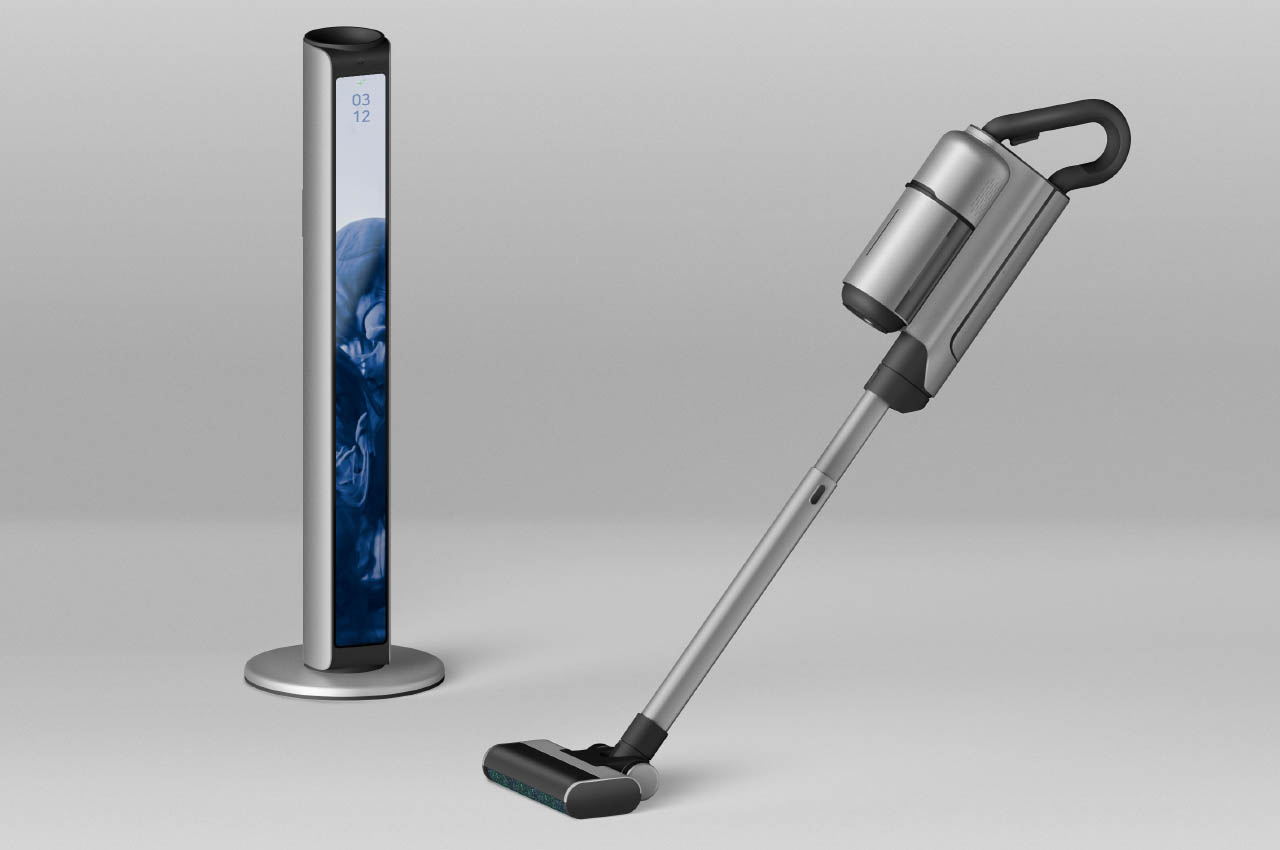
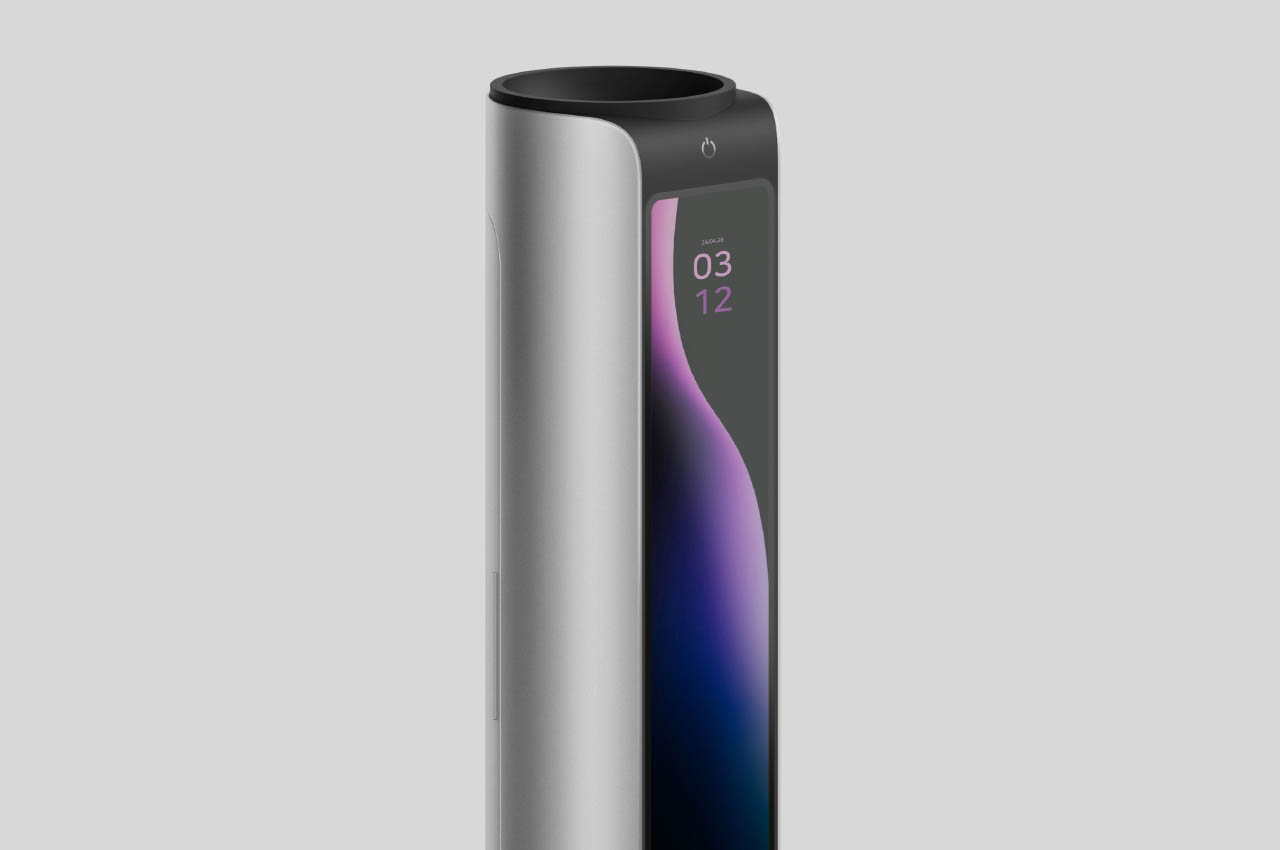
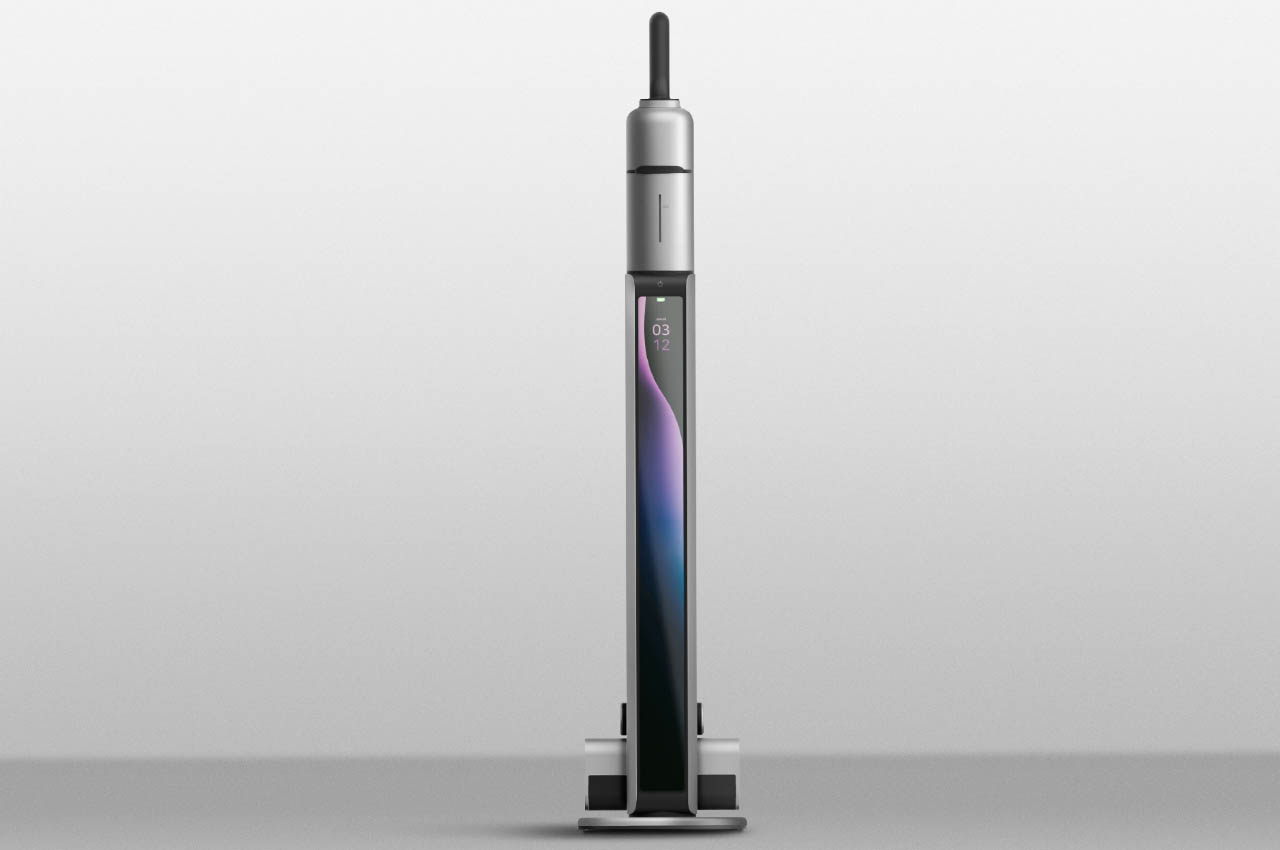
Vacuum cleaners are an everyday requirement we cannot do without on a daily basis now. Since their necessity, work is being done in shaping them to come out of the hiding to sit amid the other appliances in the house. But an appealing vac is yet to make the mainstream. Leaving scope for something like the BLEND I Vacuum Cleaner, which adds an interactive display to the vacuum cleaner’s stand.
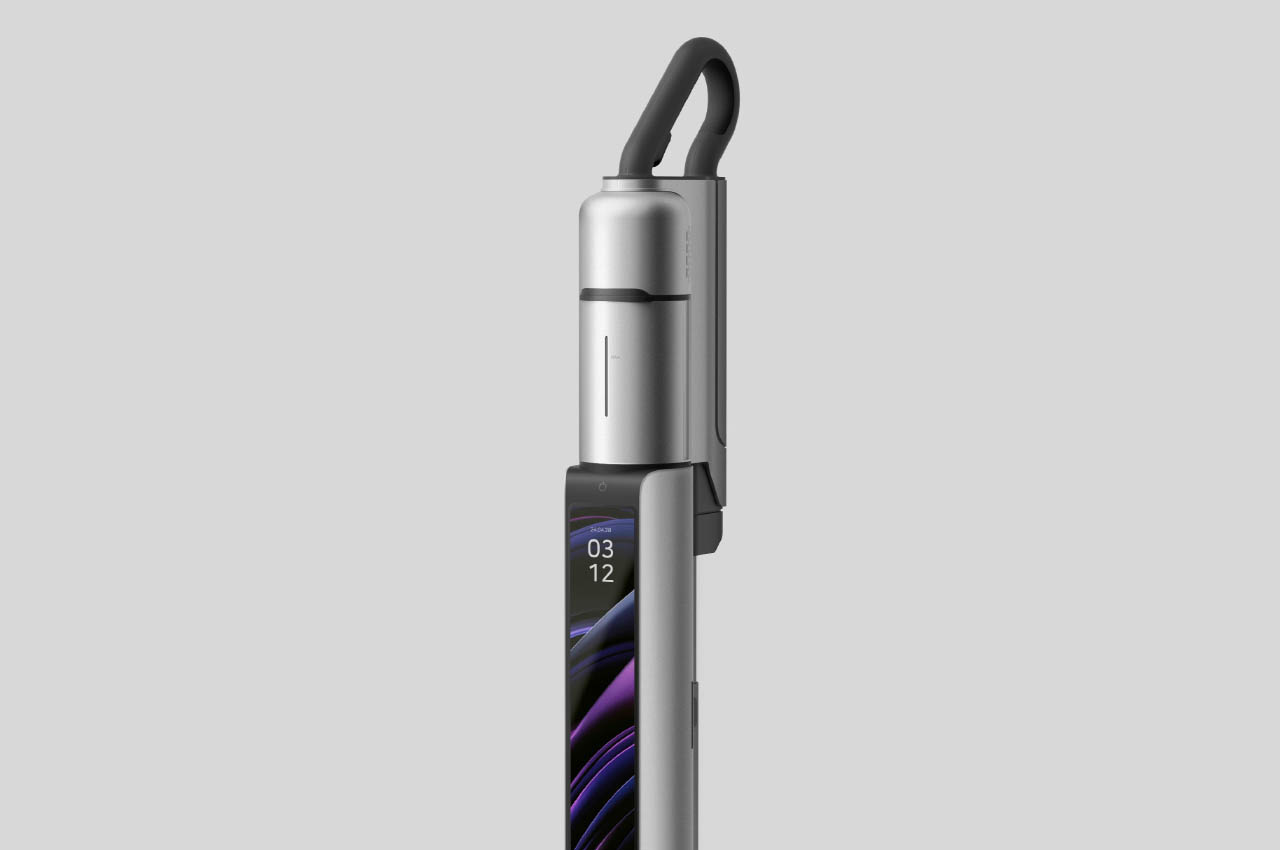
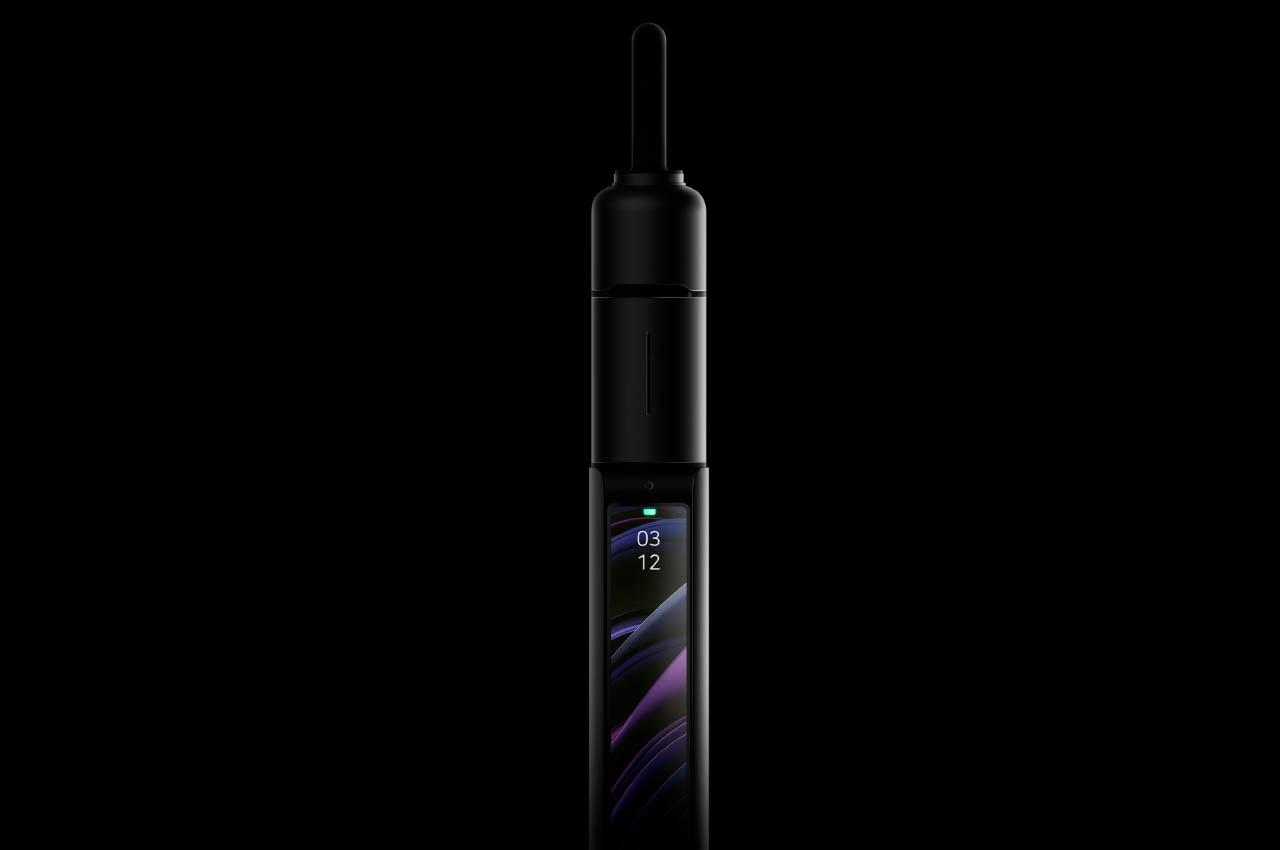
The display brings usability to the otherwise idle-lying appliance between uses. The display can be used to show information such as the time, temperature, notifications and more, along with giving the vacuum cleaner a better space in the interior décor.
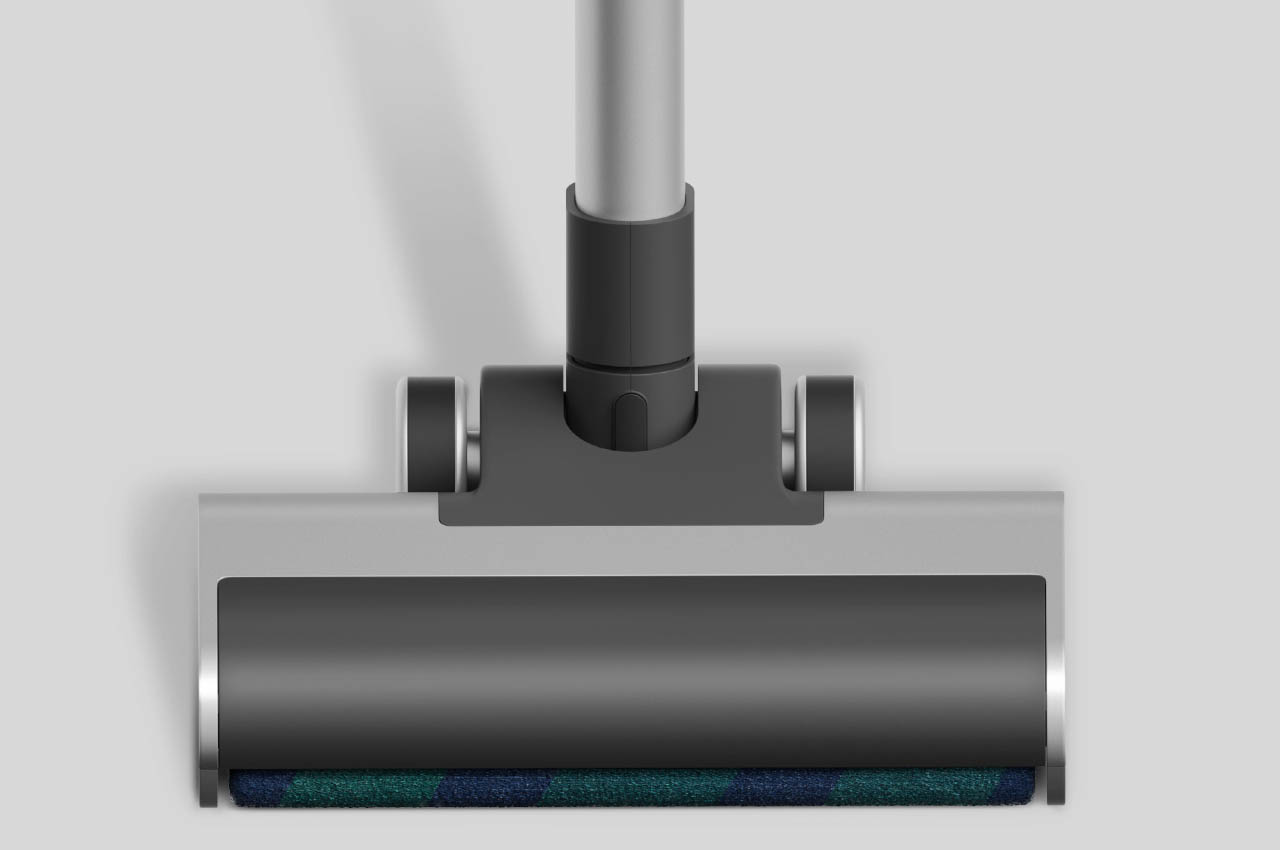
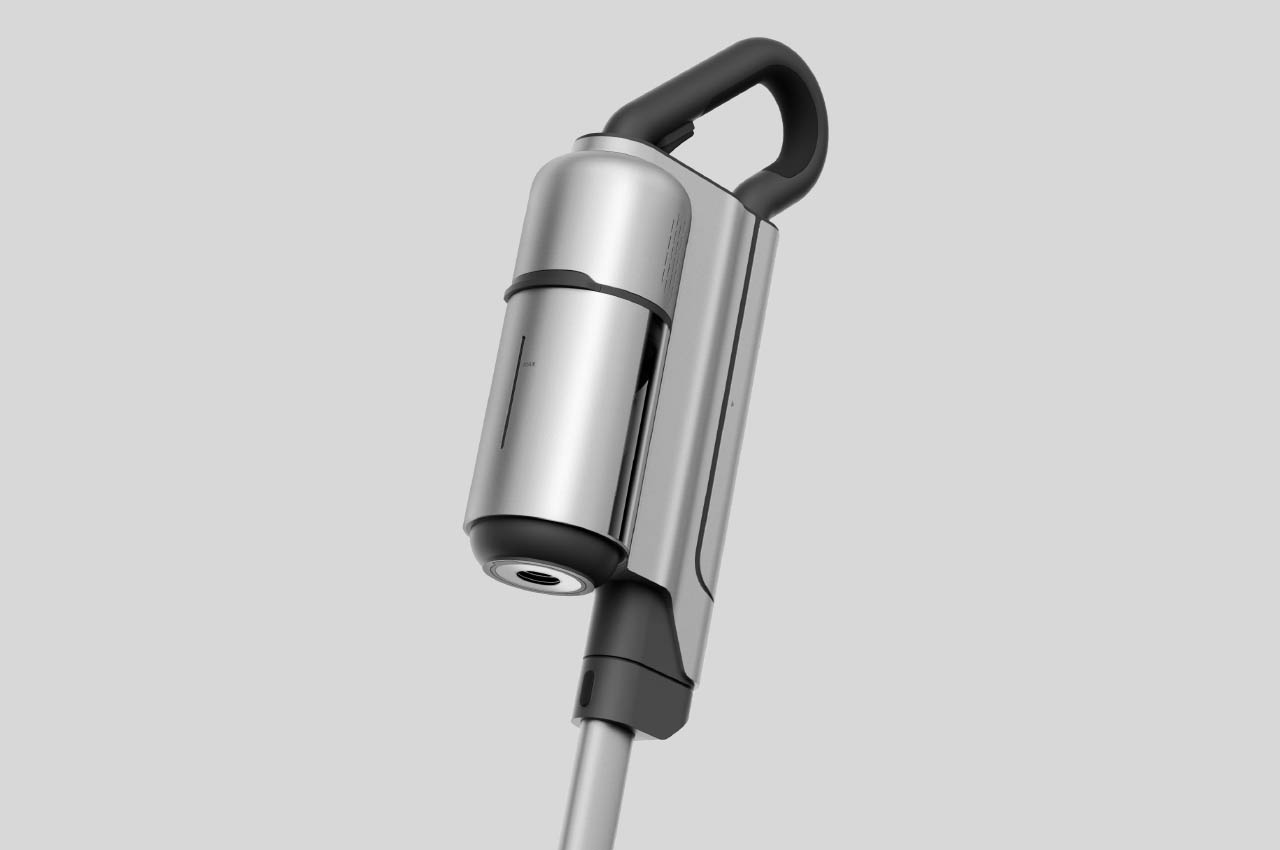
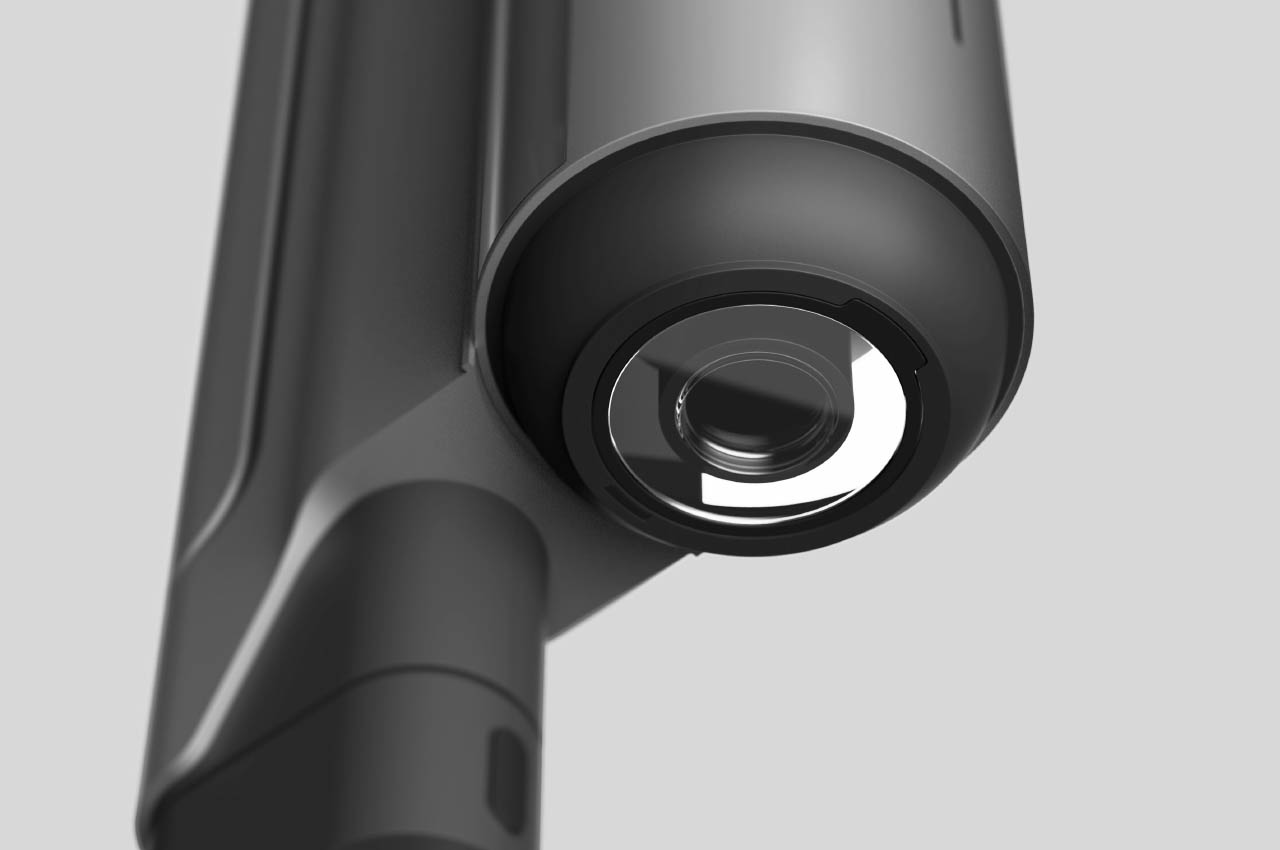
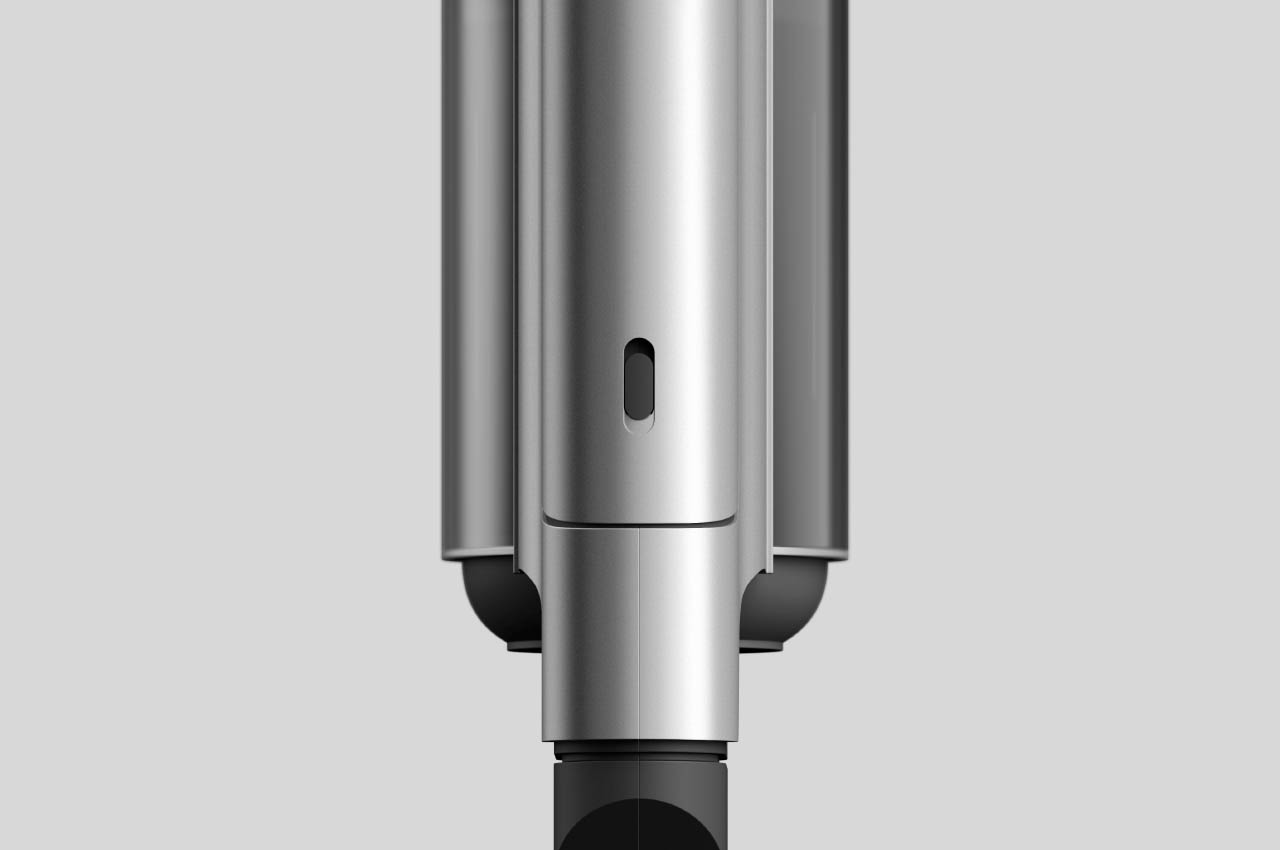
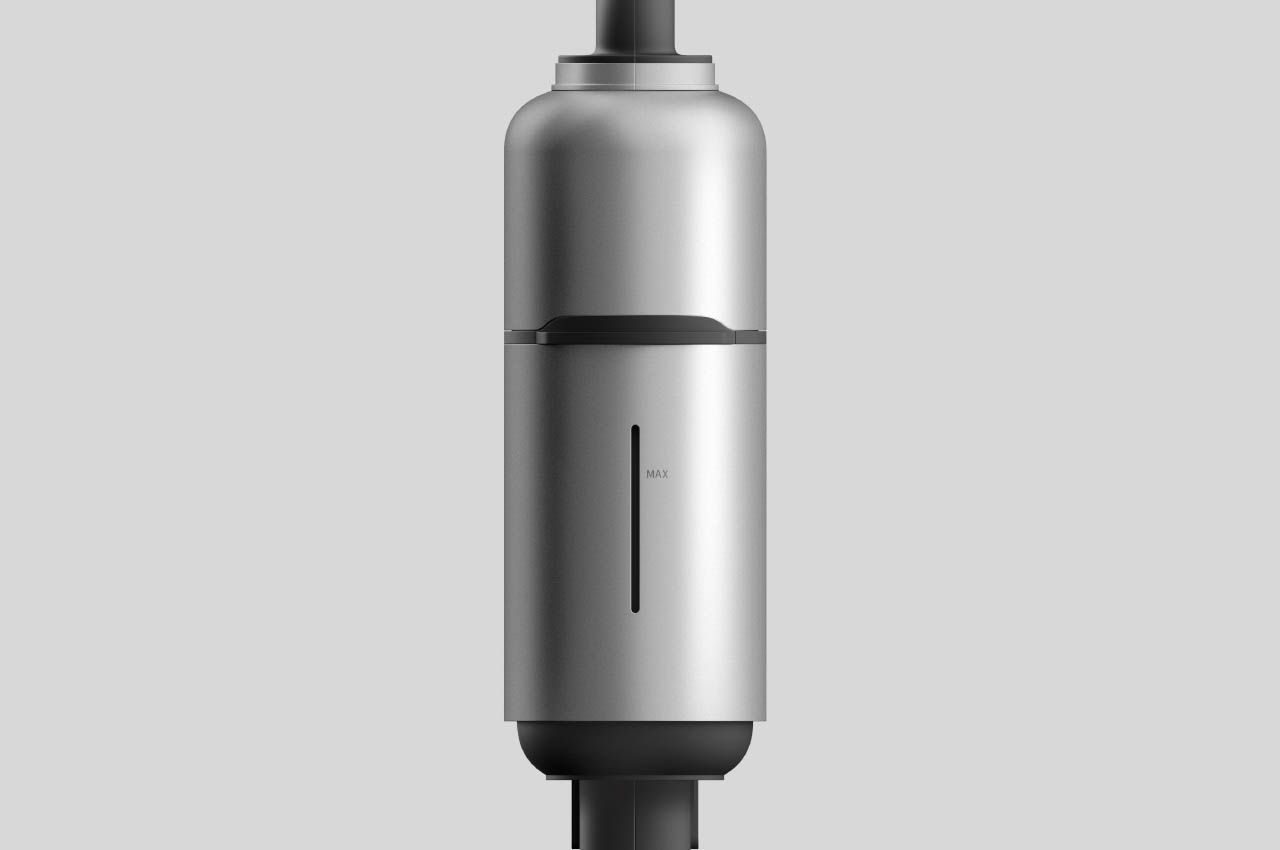
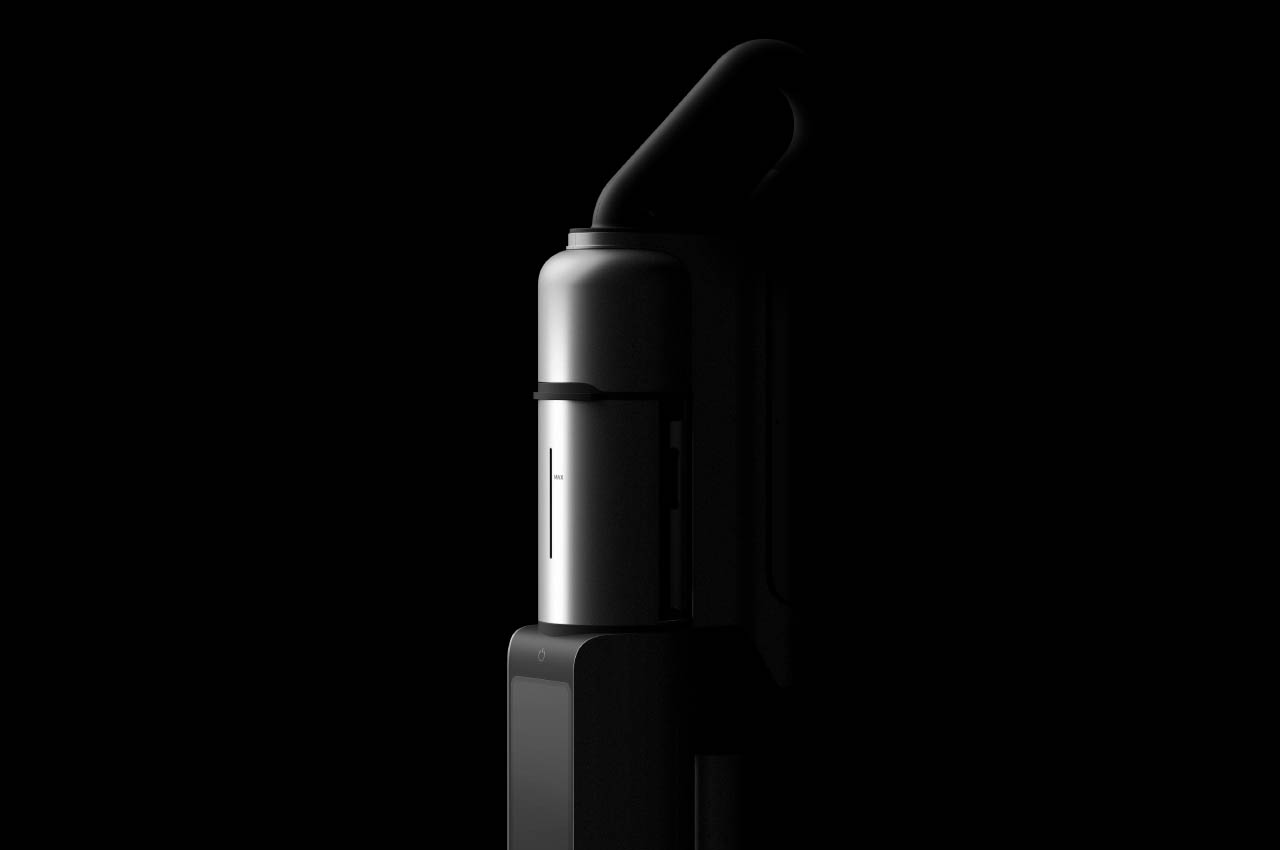
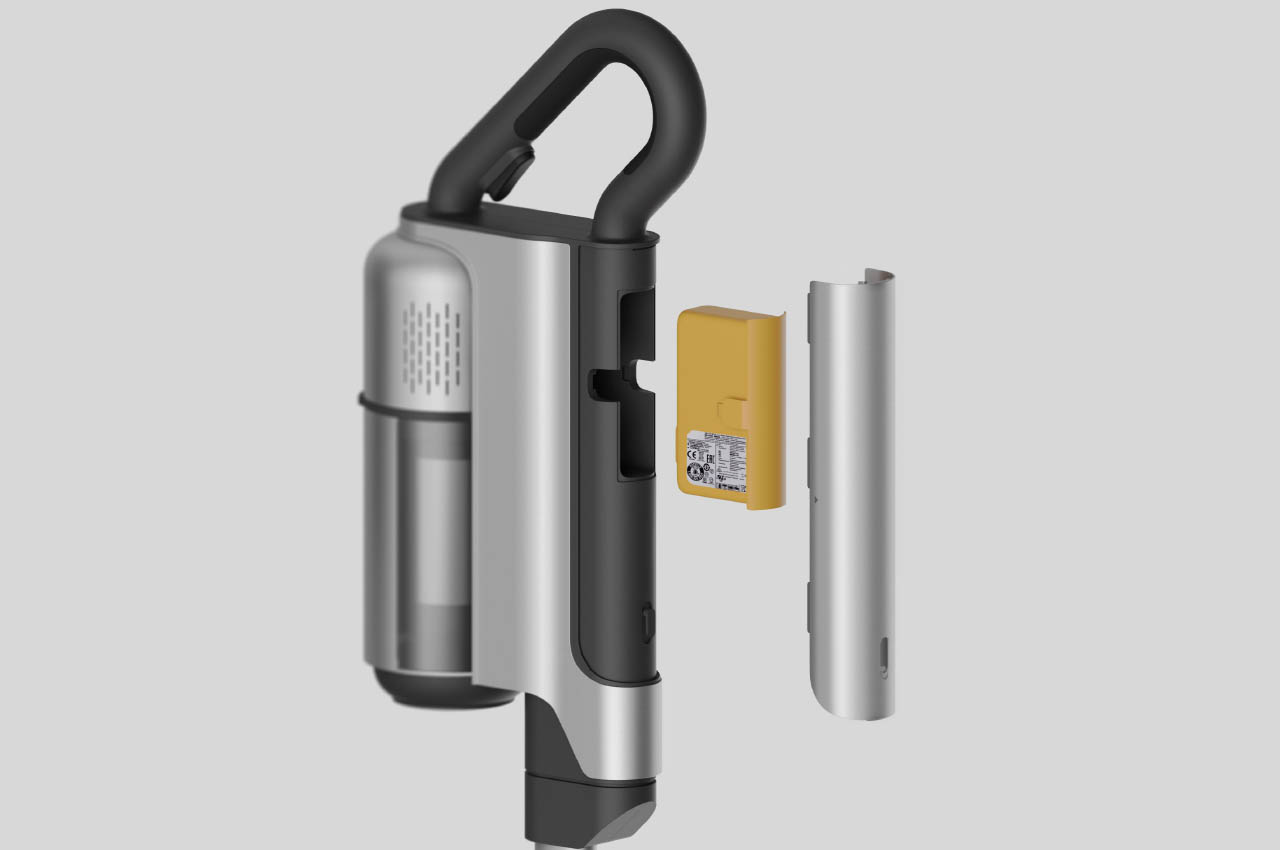
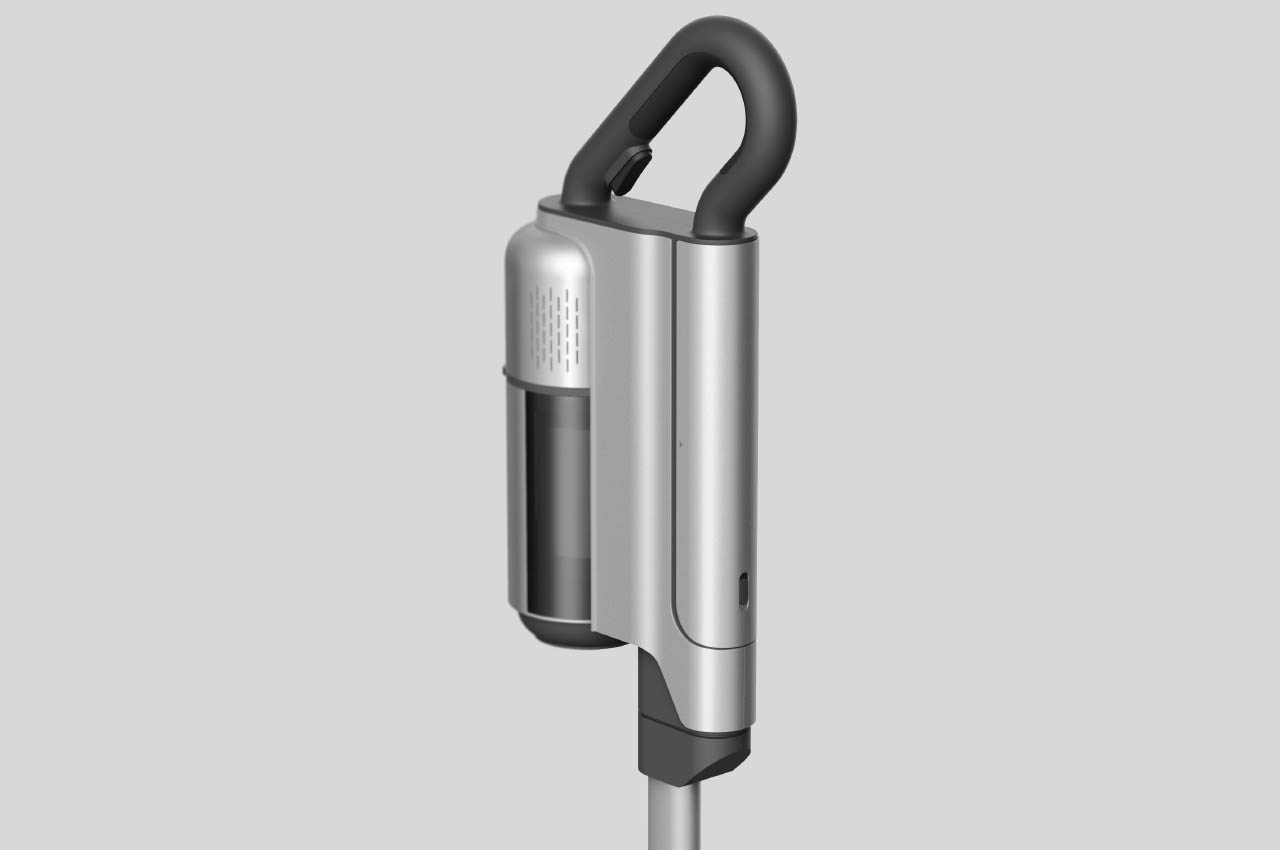
Drawing some design inspiration from a Dyson, the vacuum cleaner is conceived in metal, featuring harmonious curved and straight lines to create a luxurious body that can complement the novelty of the screen to gel with the interior like never before with a vacuum cleaner. The handle – with a curved finish at the top – has a conveniently angled design, which permits easy handling without straining the user’s wrist.
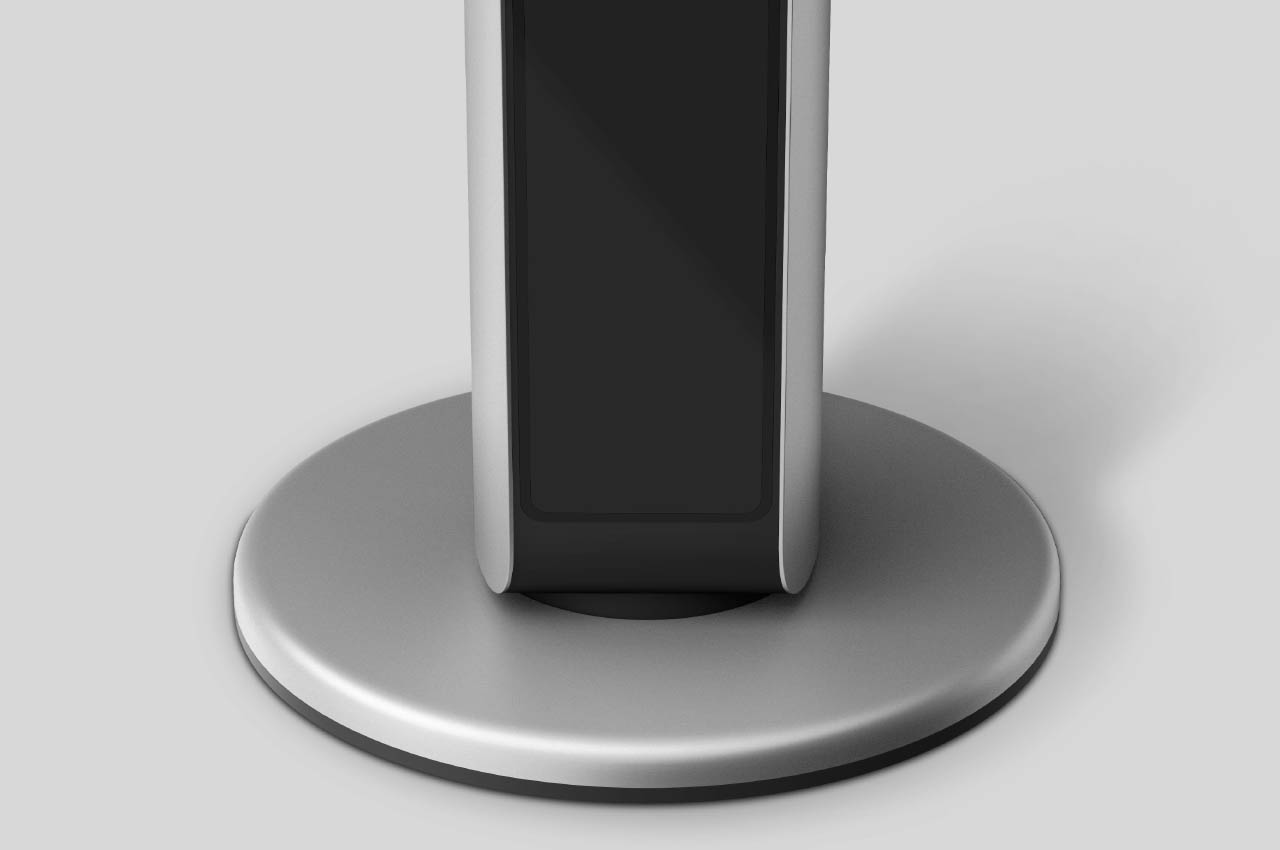
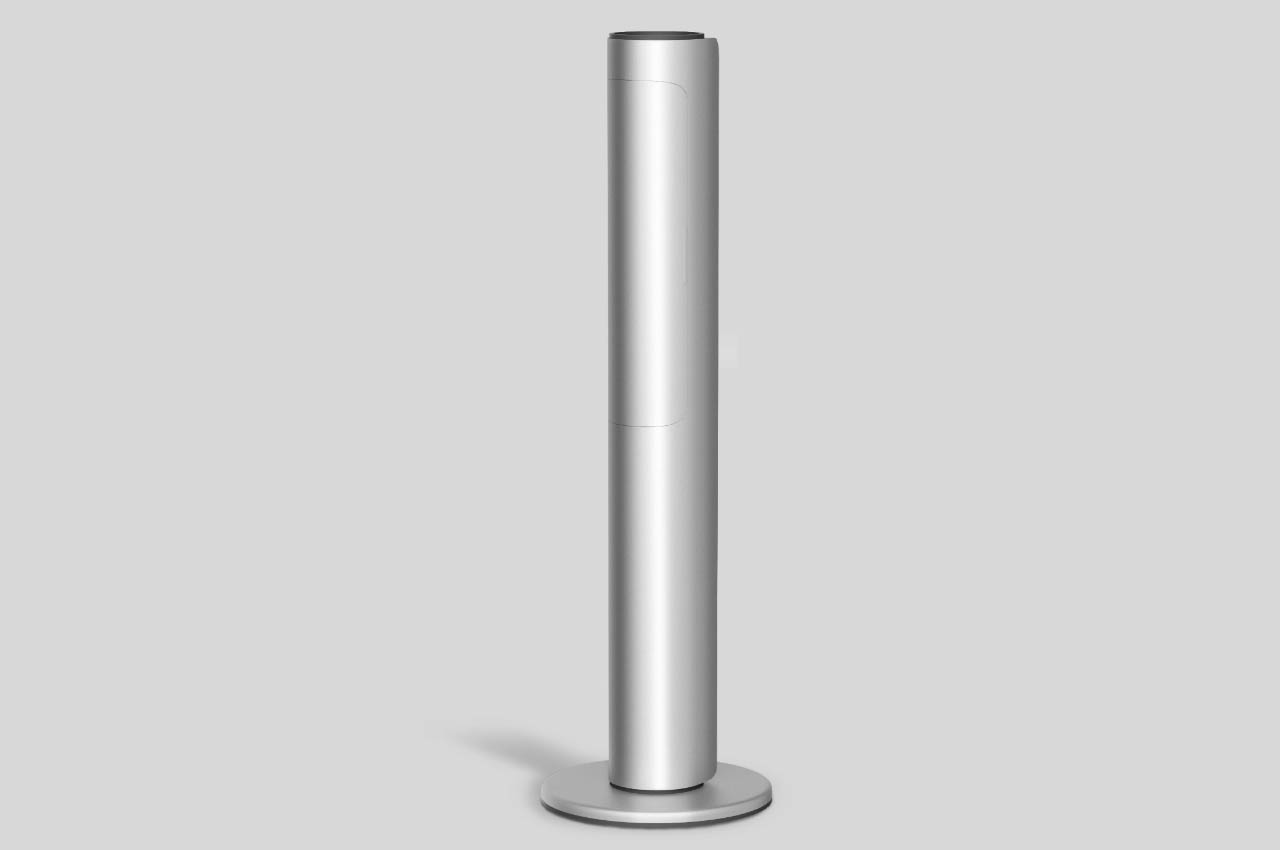
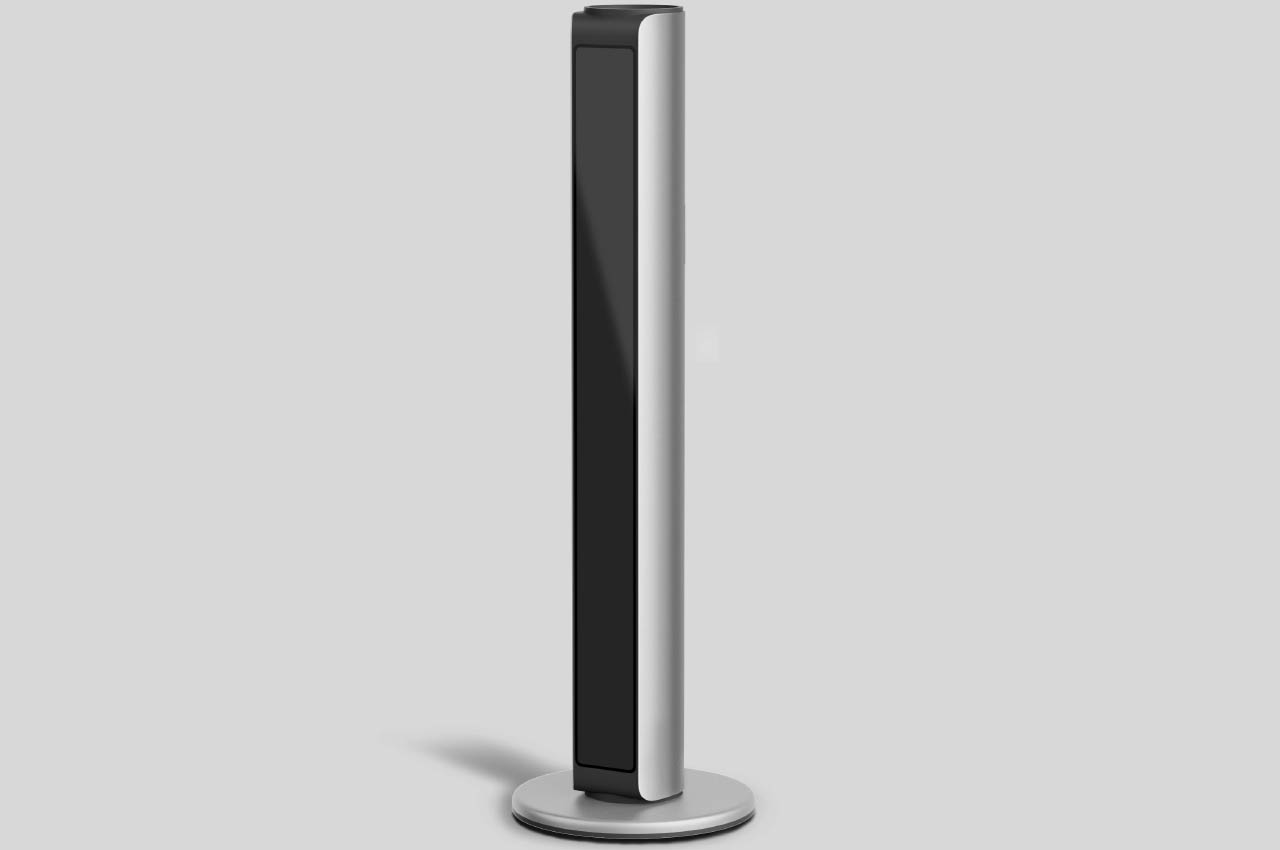
The display of the standing vacuum cleaner spans the entire height and width of its stand. Standalone it looks like a long thin screen with a steel body and round base. The vac when docked back into the stand for charging and security, becomes an interesting element of décor that you won’t mind placing alongside other essential appliances at home or in the office.