Tiny Titanium Pocket Knife is smaller than a Key, and uses a Replaceable Blade Design

I swear these pocket knives keep getting smaller and smaller, but remain just as fascinating and sharp.

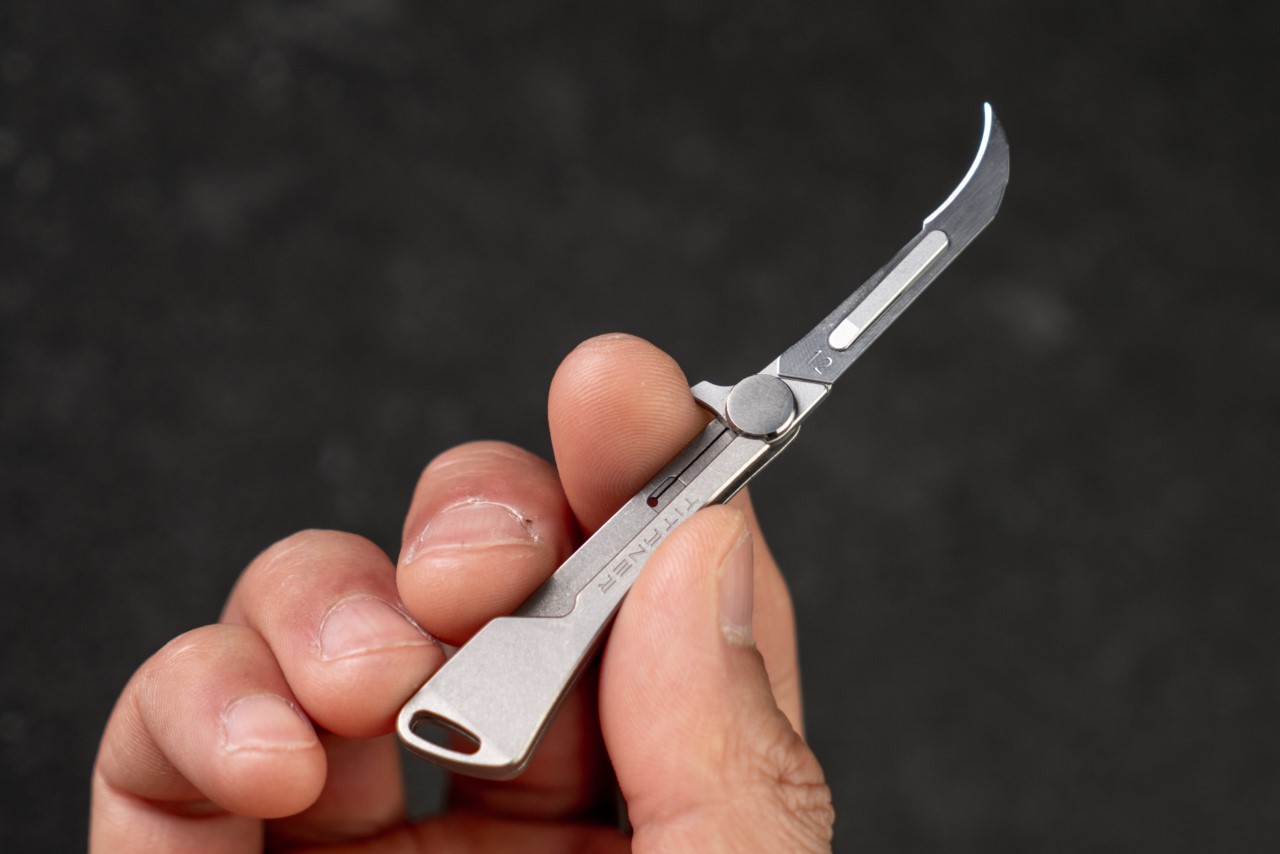
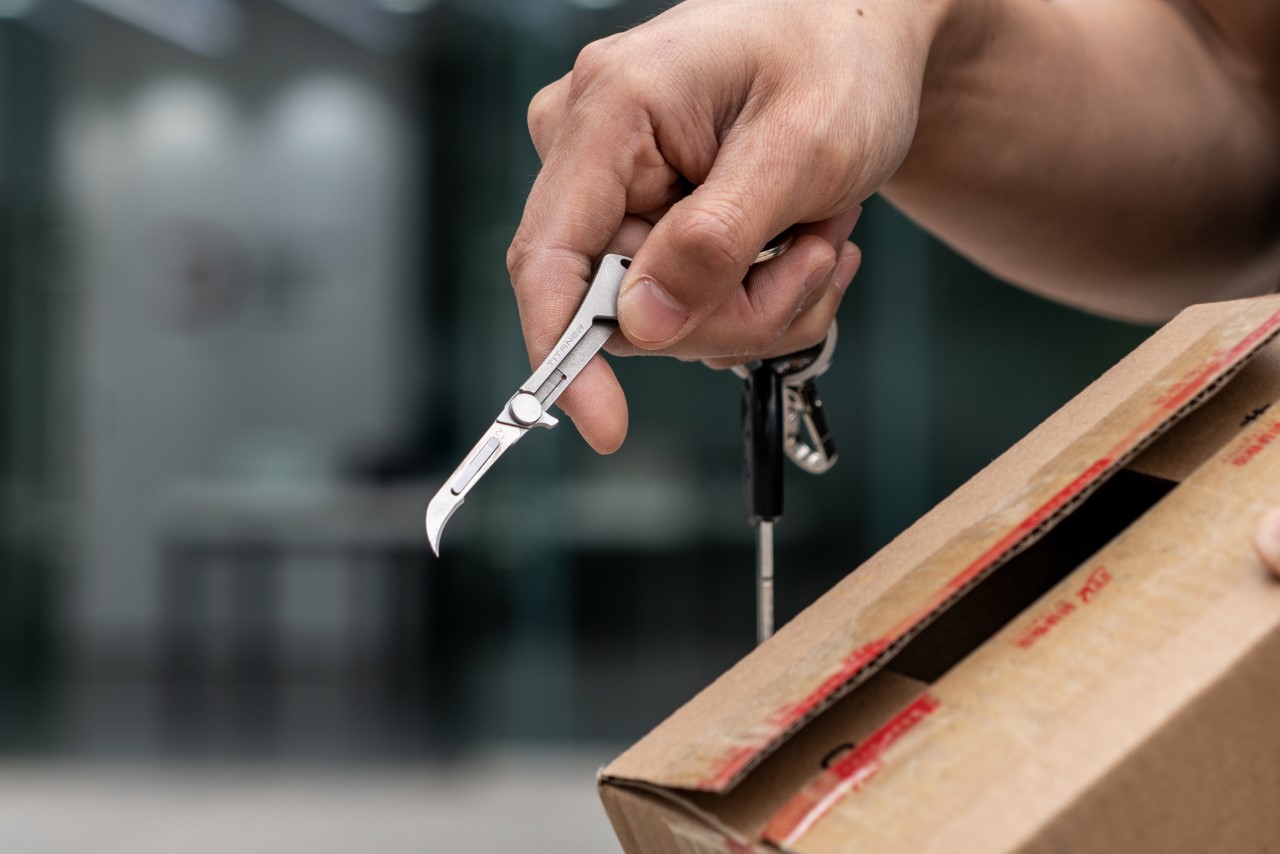
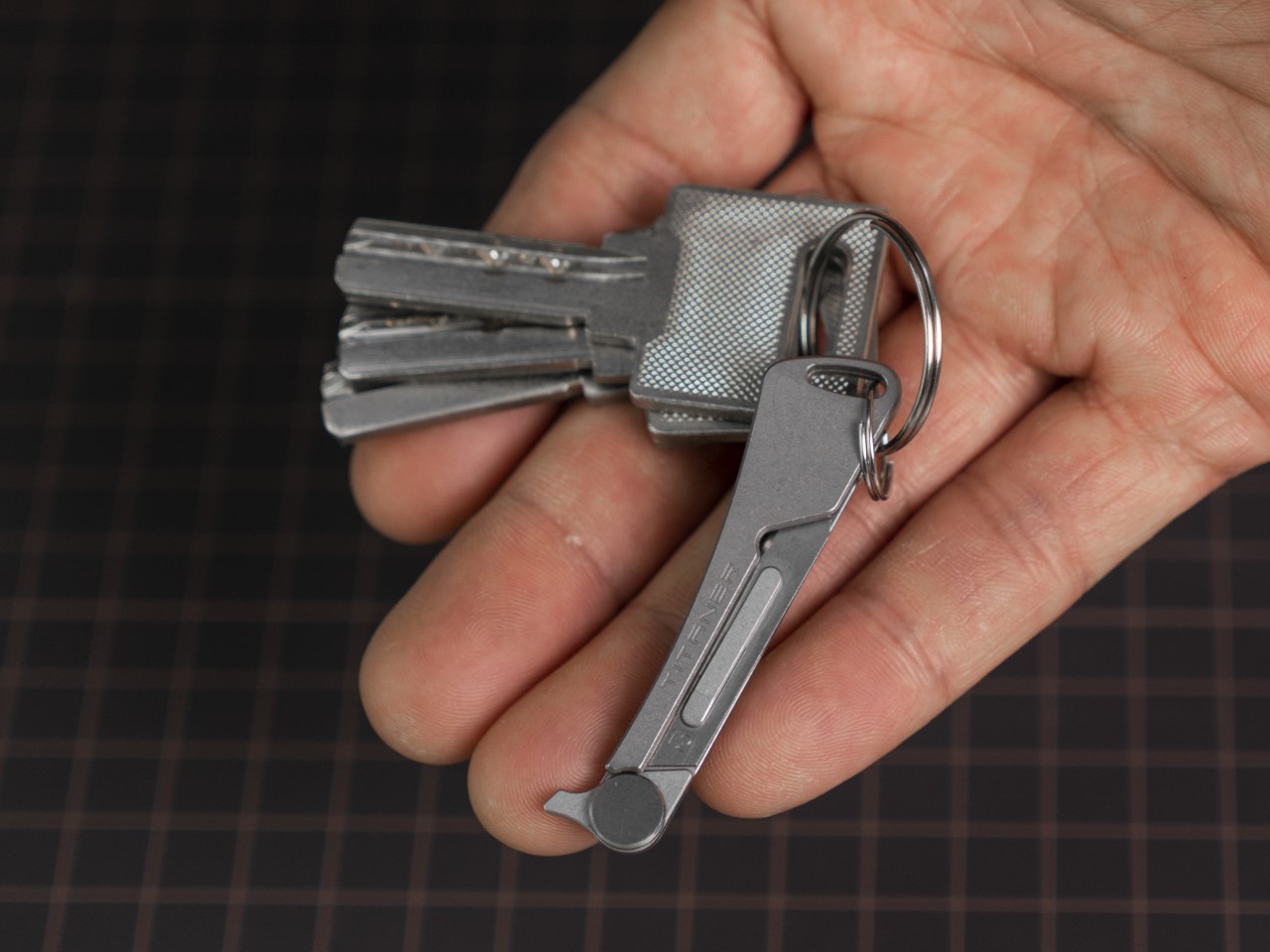
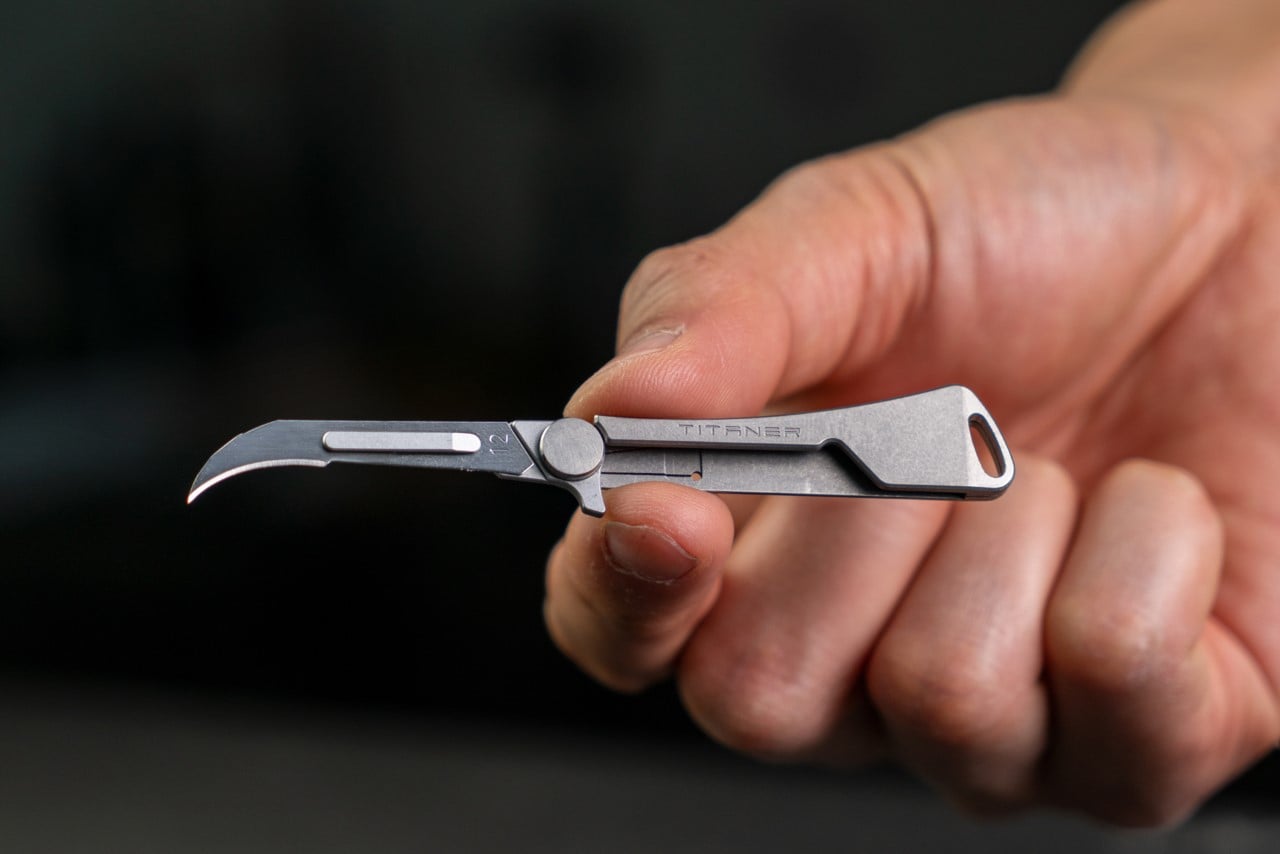
Meet the Tiflex, a knife so tiny you could hold it using just two fingers. Designed to be compact enough to fit on your keychain, the Tiflex is a petite little knife that shouldn’t be underestimated. It packs a titanium body and houses a scalpel blade on the front, known for its deceptive sharpness. If you’ve ever used an Xacto Knife, imagine having the same kind of blade in a form factor small enough for you to carry safely with you and use for everything from opening boxes to cutting ropes and even self-defense.

Designer: Titaner

Click Here to Buy Now: $42 $65 (35% off) Hurry! Only 33 of 100 left.

Open and close the Tiflex with a single hand

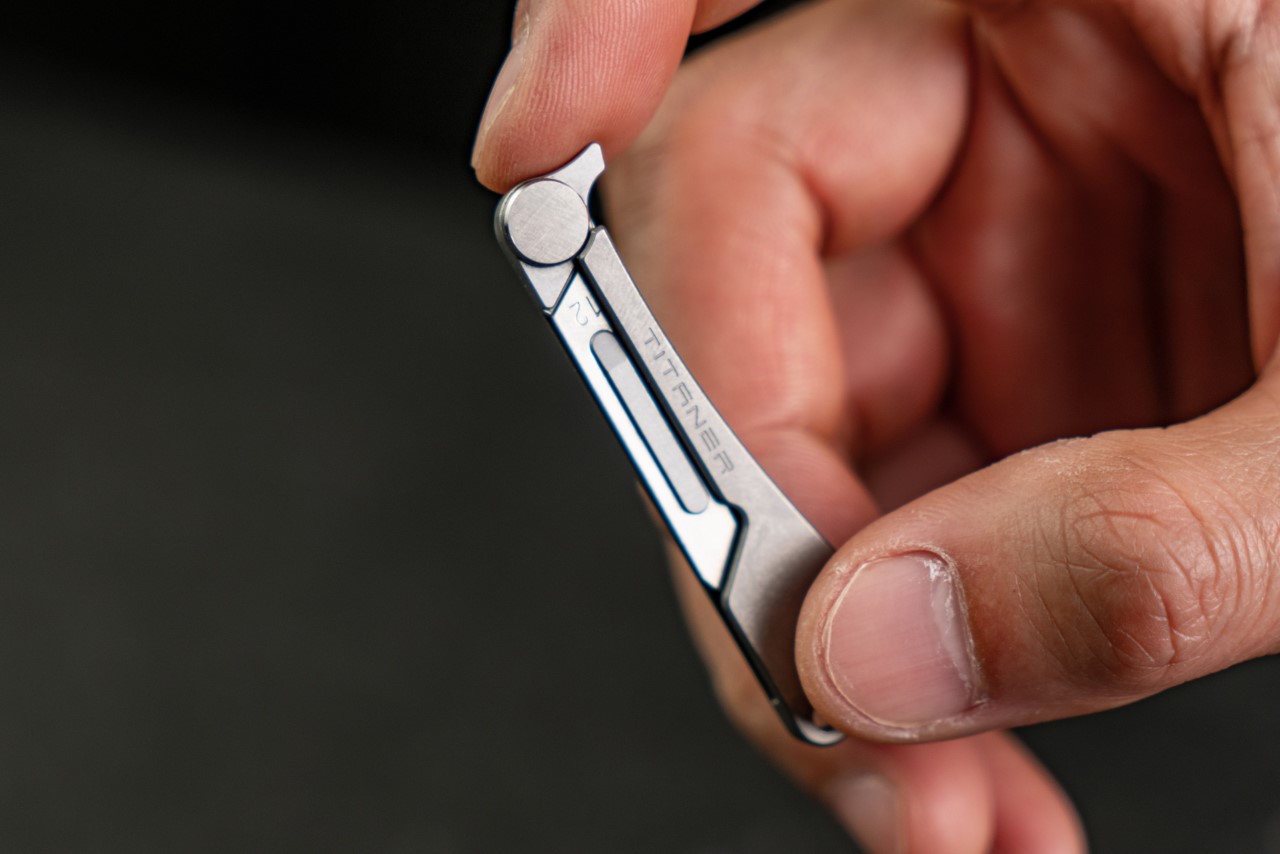
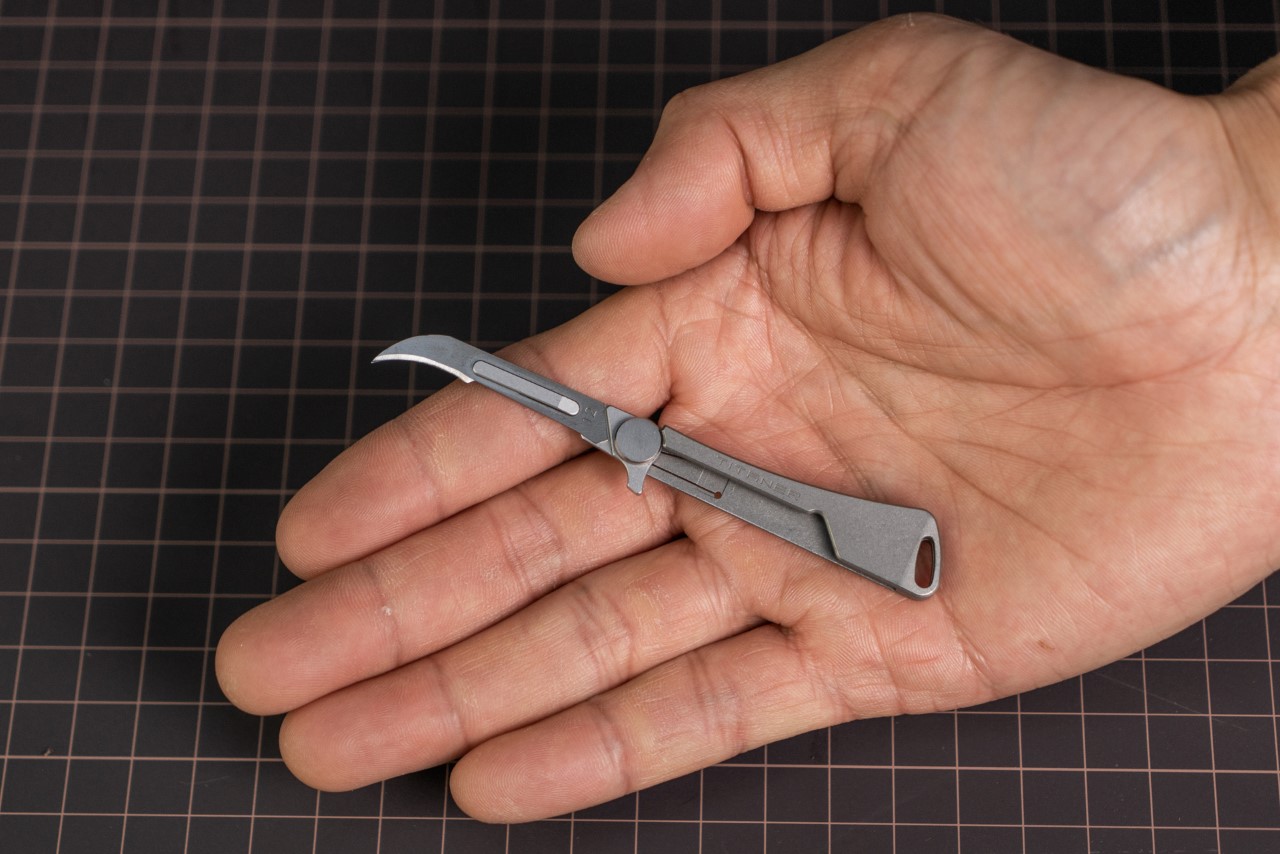
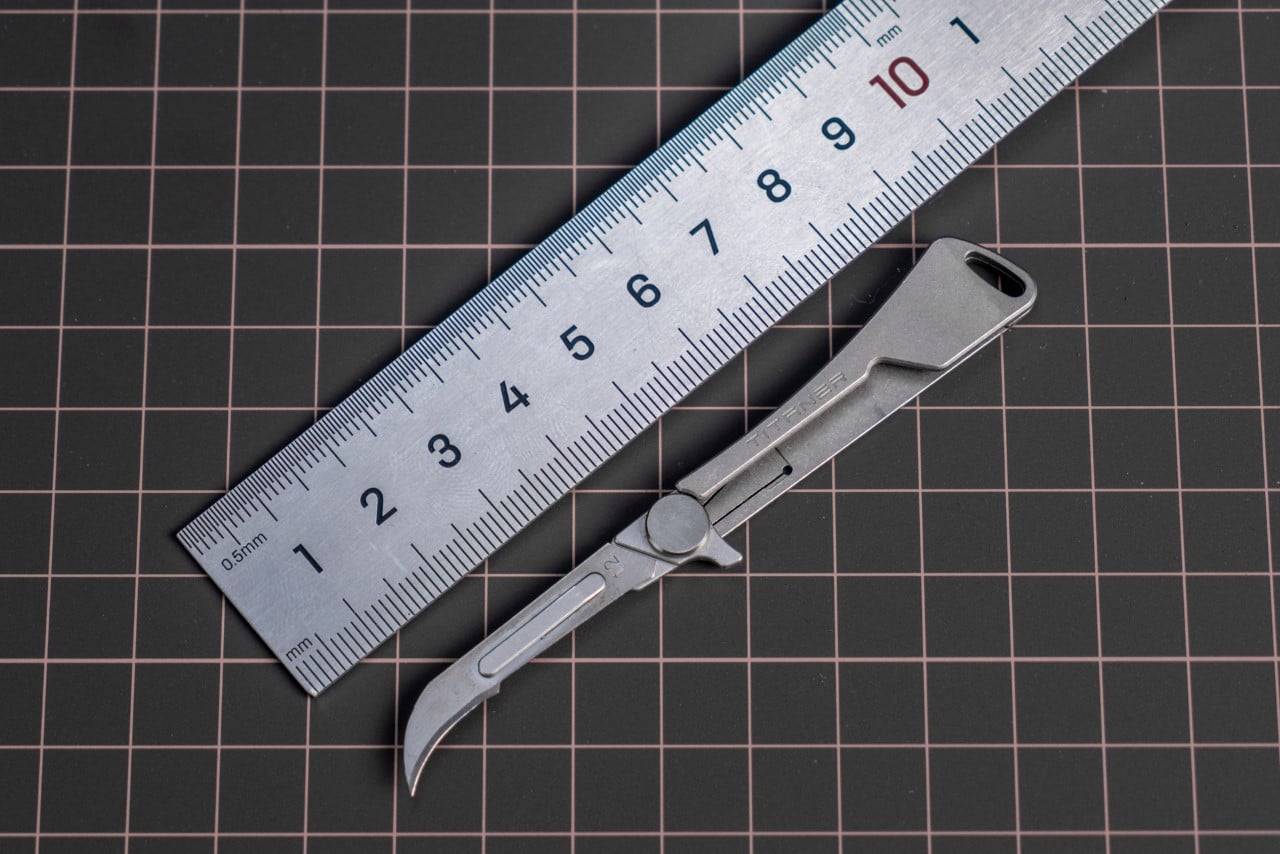
Measuring a little more than 2 inches when closed, the Tiflex might be tiny, but it’s still rather immaculately designed. It comes with a flipper that makes one-hand opening easy – the flipper even acts as a finger rest to prevent your index finger from ever accidentally touching the blade’s edge – and even has a frame lock that prevents the blade from shutting while in use. All this packs itself in a design small enough that even your house keys look larger in comparison. Now you’re probably worrying about ergonomics.

The problem with small knives is that they have small handles, which can be annoying to hold, but that’s where the Tiflex achieves a pretty good balance. The knife’s handle is 2.1 inches, and along with the blade, the knife measures 3.7 inches from tip to base. Even for that small size, the Tiflex is fairly handy to hold and use. Sure, you can’t measure it against much larger, more ergonomic knives, but the Tiflex offers convenience instead, with its compact form factor. The knife is perfect for outdoor use, craft, EDC-adjacent activities, or even for self-defense. The sharp scalpel blade plays its role wonderfully in that regard, giving you a knife that feels effortless to use.

The scalpel blade, often made with either high-carbon steel or hardened tempered stainless steel, is known for its versatility. You can use the Tiflex to cut paper, leather, plastic ties, ropes, or even seatbelts. The sharp edge can carve wood too, and that hook shape comes in handy for piercing or clawing. Hold the knife upside down like you would a karambit (with the blade emerging from the base of your grip) and it’s perfect for self-defense too, allowing you to potentially get out of a messy situation quickly.

The entire knife is made out of just 5 parts, including the blade. The handle, hinge, and blade holder are all machined from solid titanium, making the overall knife extremely light at just 6.6 grams or 0.2 ounces, but still rather durable. The knife is impervious to damage, is waterproof, corrosion-proof, and can last decades. However, the blade won’t, but that’s why the Tiflex comes with a replaceable blade design.

The clever frame lock ensures the knife’s blade stays in its open position while you use it

The replaceable blade format is great for the Tiflex for a bunch of reasons. Sharpening knives is an art that not many people have the skill or patience for, and sharpening a tiny knife like the Tiflex can be even more of a challenge. Scalpel blades come in a variety of shapes and you can buy them in bulk, replacing the Tiflex’s blade whenever it gets dull, or if you want to swap out its hook shape for something a little different. There are quite a few blade designs to choose from, and they’re all compatible with the Tiflex. All you need to do is take the old blade out and pop a new one in and it locks in place. This ensures you can use the Tiflex for years just by replacing the blade every few months, and it also means the Tiflex is inherently TSA-friendly and flight-safe, because you can simply ditch the blade and carry the rest of the knife with you on board.

The chances of you accidentally carrying your Tiflex on board a plane are pretty high because of just how ludicrously little it is. It’s designed to be attached to your keychain and forgotten about until you need a knife. That’s honestly the best kind of knife – one that’s there when you need it and gone when you don’t. Designed by the folks at Titaner, the Tiflex comes in both right-handed as well as left-handed variants, so you can choose the style of knife based on your dominant hand. The knife is originally priced at $65, but backers can grab the Tiflex at a special discounted price of $42, with 10 scalpel blades included, and global shipping starting July 2024.

Click Here to Buy Now: $42 $65 (35% off) Hurry! Only 33 of 100 left.

The post Tiny Titanium Pocket Knife is smaller than a Key, and uses a Replaceable Blade Design first appeared on Yanko Design.

Max Space Is Revolutionizing Balloon-Like Scalable Space Habitats for a New Era in Space Exploration

Isn’t it ironic when we say space is infinite, yet it has the same housing problem we face on Earth of not having enough room? The challenge for builders of space habitats is not the vastness of space itself but the constraints of shipping capacity. Despite the increased frequency and reduced cost of rocket launches, the amount of building material that can be sent into orbit remains limited. The International Space Station (ISS), for example, required over 40 flights and cost more than $100 billion to construct. In contrast, Max Space is giving more in less! A bargain that can never go wrong. It is a company revolutionizing space habitation by offering equivalent cubic volume to the ISS for just $200 million, including launch, slashing costs by over a hundred-fold.

Designer: Max Space

Max Space was founded by Maxim de Jong, a pioneer in “soft system space architecture.” De Jong is globally recognized as the foremost expert in utilizing expandable materials for space. His early designs, Genesis I and Genesis II, have been orbiting Earth since 2006 and 2007. Max Space’s approach is distinguished by its use of ‘isotensoid’ architecture. This innovative design ensures that every structural fiber remains unencumbered, allowing it to assume an ideal geometry for optimal load-bearing capability. This results in the lowest possible mass and cost while offering unsurpassed predictability and unlimited scalability.

A significant advantage of Max Space’s inflatable modules is their enhanced resilience against space debris. Unlike traditional hard modules made of aluminum and titanium, Max Space’s expandable modules feature a multi-layered system of fiber-based ballistic shielding. This design provides greater resilience, making the material safer and stronger.

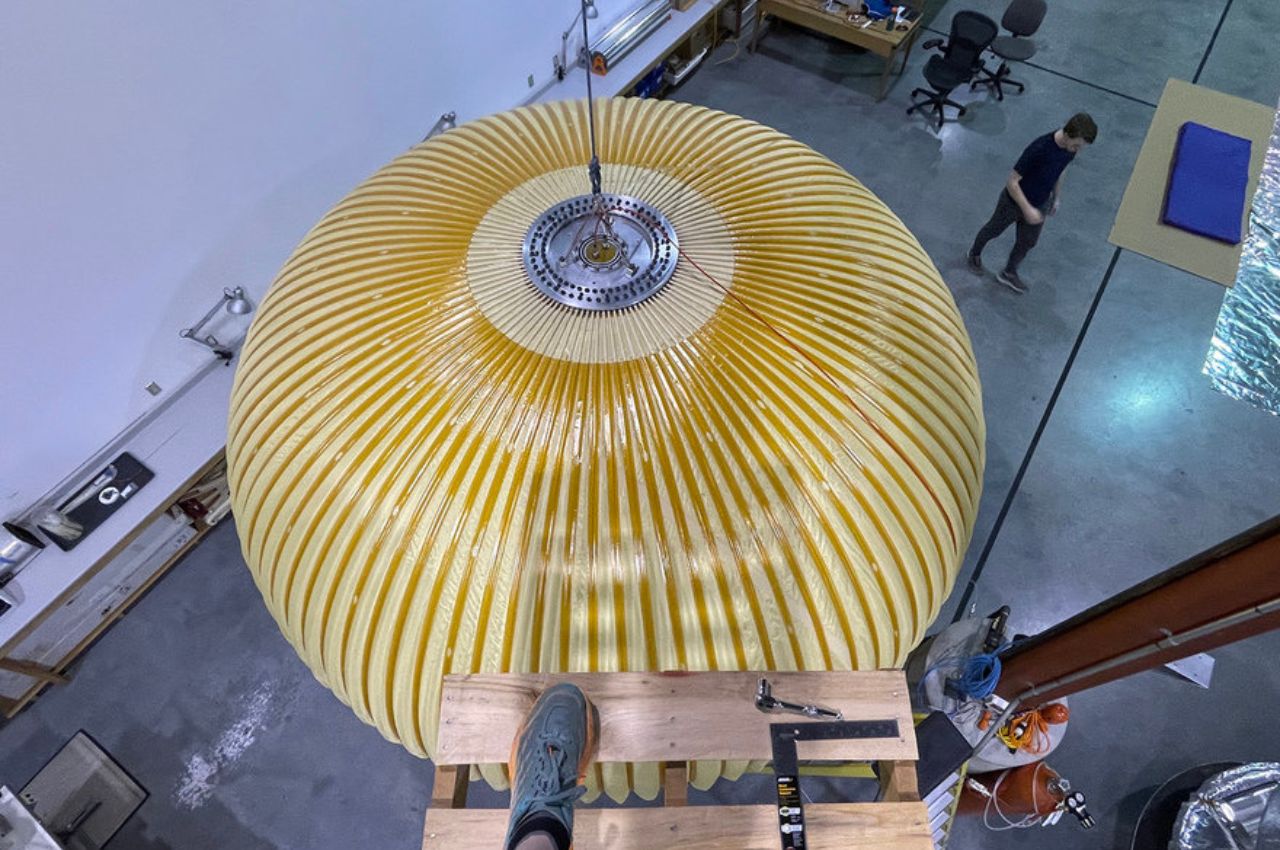
The Max Space 20, the company’s initial module, provides 20 cubic meters (706 cubic feet) of interior space. Though smaller than the ISS’s habitable volume of 388 cubic meters (13,696 cubic feet), it marks a significant step towards larger structures. The company plans to launch the Max Space 20 units in 2026, followed by the Max Space 100 and Max Space 1000 within the next four years. The Max Space 1000 will dwarf the ISS in volume, illustrating the company’s commitment to scalability.

“More volume, less cost” is Max Space’s motto. Their first expandable module, scheduled to launch on a SpaceX rideshare mission in 2025, will be compacted into two cubic meters for launch and expand to 20 cubic meters after deployment. This will make it the largest expandable module flown to date. Aaron Kemmer, co-founder and CEO of Max Space, drew on his experience at Made In Space, a company that developed 3-D printers for the ISS, to address the volume bottleneck in space habitats. His vision is to overcome the limitations of confined space, which often hinder meaningful projects.

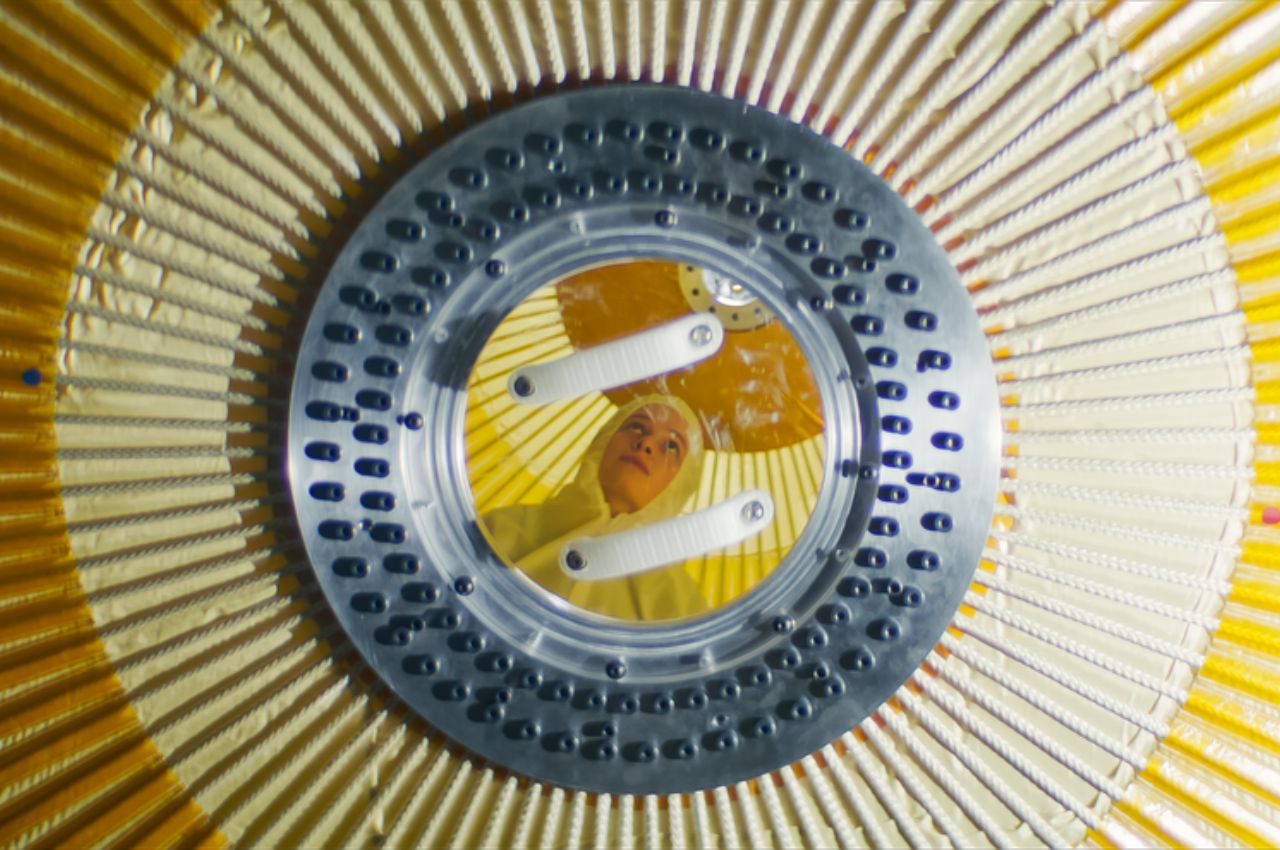
Max Space’s expandable module technology builds on the legacy of Bigelow Aerospace’s Genesis 1 and 2 and BEAM. However, Max Space’s approach differs significantly. Instead of a bi-directional “basket weave” fabric structure, which distributes load unpredictably, Max Space employs a technology that distributes loads in one direction. This ultra-high-performance vessel, a serendipitous discovery by de Jong, ensures more precise safety margins and scalability. Tests have shown that the modules can burst at pressures within 10% of predicted levels, demonstrating excellent predictability.

Recently, Max Space showcased a test version of the Max Space 20 module at the MARS Conference, hosted by Jeff Bezos. The company is now developing a flight version with enhanced debris shielding. The scalability of this design will enable Max Space to quickly advance to modules with volumes of 100 to 1,000 cubic meters, equivalent to the entire ISS volume, at a fraction of the cost.

Max Space does not intend to build its own space station but aims to supply modules to other commercial space station developers, including those involved in NASA’s Commercial Low Earth Orbit Development (CLD) program. The company remains focused on its core technology, contracting out other elements like power, propulsion, and life support systems.

Having raised a “sub-$10 million” seed round, Max Space is developing its first module and preparing for its rideshare launch. With a small team of less than a dozen employees, the company is committed to scaling up efficiently and cost-effectively.

Future commercial space stations are a prime application for Max Space’s modules. Aaron Kemmer emphasized the potential for these space habitats to revolutionize fields such as in-space manufacturing, biosciences, and pharmaceuticals by providing affordable and scalable solutions. Initially, the modules may serve government agencies as in-space propellant depots or storage facilities, with the company prioritizing the demonstration of safety and functionality before accommodating human habitation.

The potential applications for Max Space’s habitats are vast, ranging from orbiting research and manufacturing facilities to lunar surface installations. Imaginative possibilities include space tourism and zero-G sports. Additionally, these habitats could enable nations without a domestic space program to establish an orbital presence, significantly broadening global participation in space exploration and utilization.

The post Max Space Is Revolutionizing Balloon-Like Scalable Space Habitats for a New Era in Space Exploration first appeared on Yanko Design.

Highlights from Yanko Design: Baxley Moto, Apple WWDC 2024 Insights, and AI Voice Assistant Developments

This week, Yanko Design highlights some of the most exciting developments in tech and design. From the futuristic Baxley Moto to the highly anticipated Apple WWDC 2024 and the evolving role of AI voice assistants, these topics underscore the rapid advancements shaping our world. Each product and topic discussed not only showcases cutting-edge innovation but also reflects the practical applications of these technologies in enhancing our daily lives.

Baxley Moto: A Futuristic Ride

The Baxley Moto, an innovative electric motorbike designed by Shane Baxley, stands out with its hubless wheel design, merging angular lines with sleek contours. This electric bike features a hunched-forward riding position, large treaded tires, and a suspended tail section, emphasizing its capability for high-speed thrills. Even though I don’t ride motorcycles, I still appreciate the great design and innovation this bike brings to the table. The Baxley Moto’s sleek black colorway with vibrant red and metallic gold accents enhances its visual appeal, suggesting power and sophistication.

Designer: Shane Baxley

Using lightweight carbon fiber for the frame and applying hubless wheel technology show promise for market readiness. This blend of futuristic aesthetics and functional features creates a compelling vision of electric bikes’ future. Baxley’s design balances innovation with practical elements, making it a realistic candidate for future production.

Apple WWDC 2024 Preview: Expectations and Insights

We are thrilled to attend Apple’s Worldwide Developers Conference (WWDC) 2024 in person for the first time. The keynote on June 10 at Apple Park is expected to reveal the latest advancements in iOS, iPadOS, macOS, watchOS, tvOS, and visionOS. Our team will be on-site to provide comprehensive coverage of these exciting updates.

Designer: Apple

iOS 18 and iPadOS 18

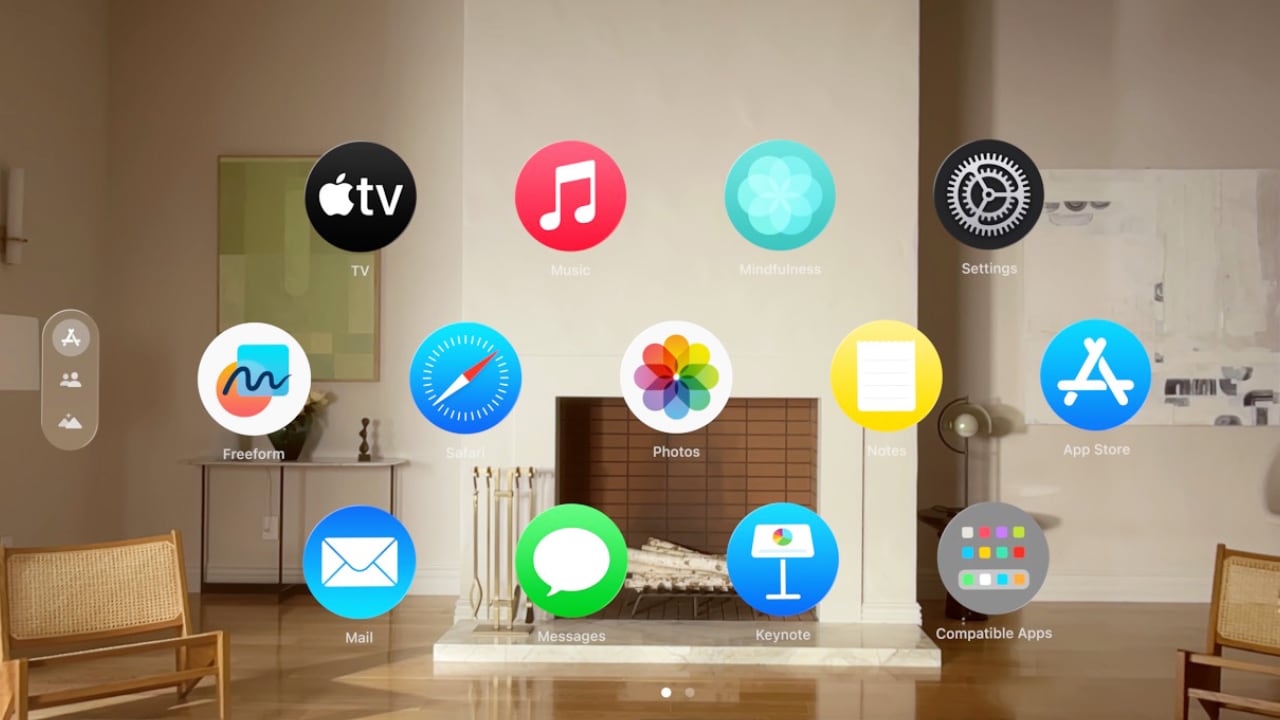
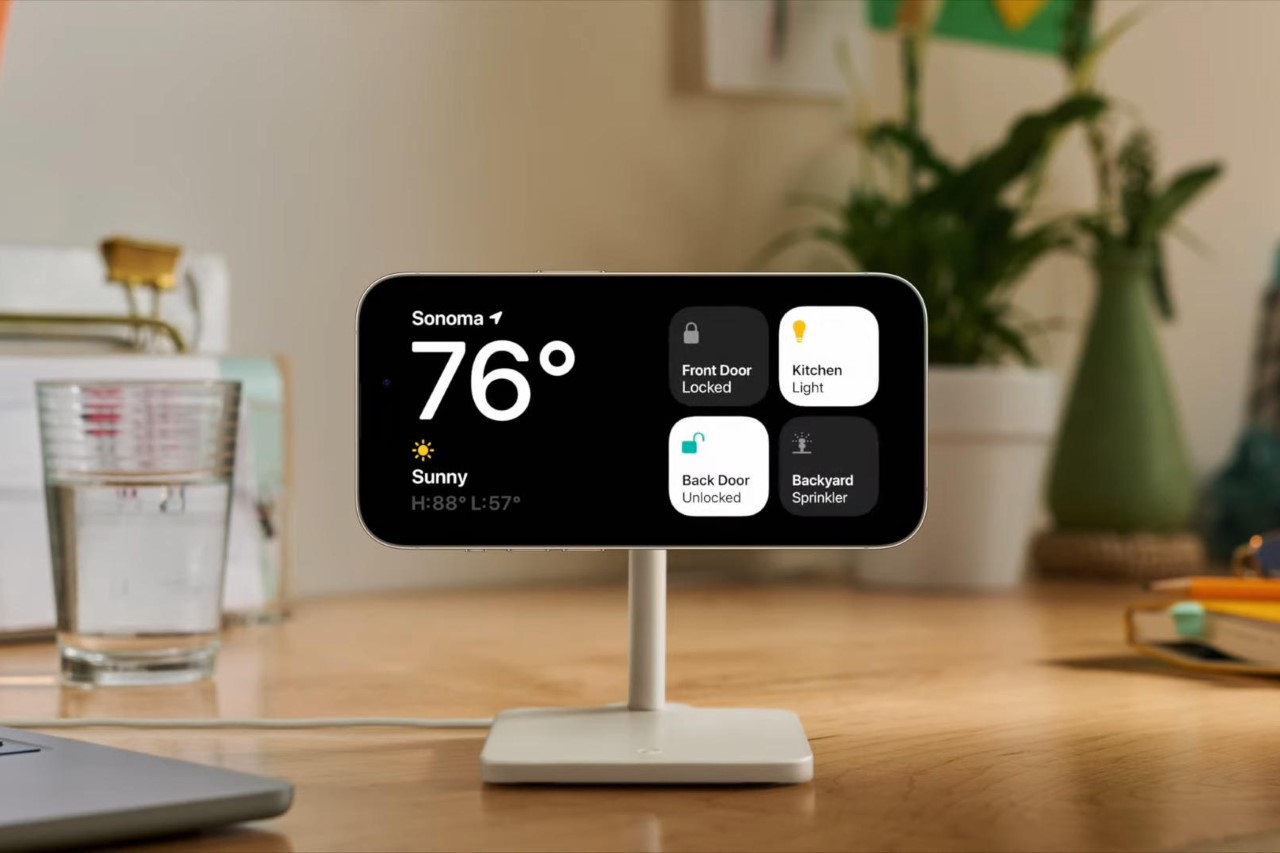
Apple’s iOS 18 and iPadOS 18 are set to introduce advanced AI functionalities such as suggested email and message replies, text summaries, and improved photo touchup tools. Rich Communication Services (RCS) will enhance messaging between iOS and Android with features like end-to-end encryption and high-resolution media sharing. Additionally, custom emoji generation and customizable app icons are rumored to provide more personalization options for users.

macOS 15

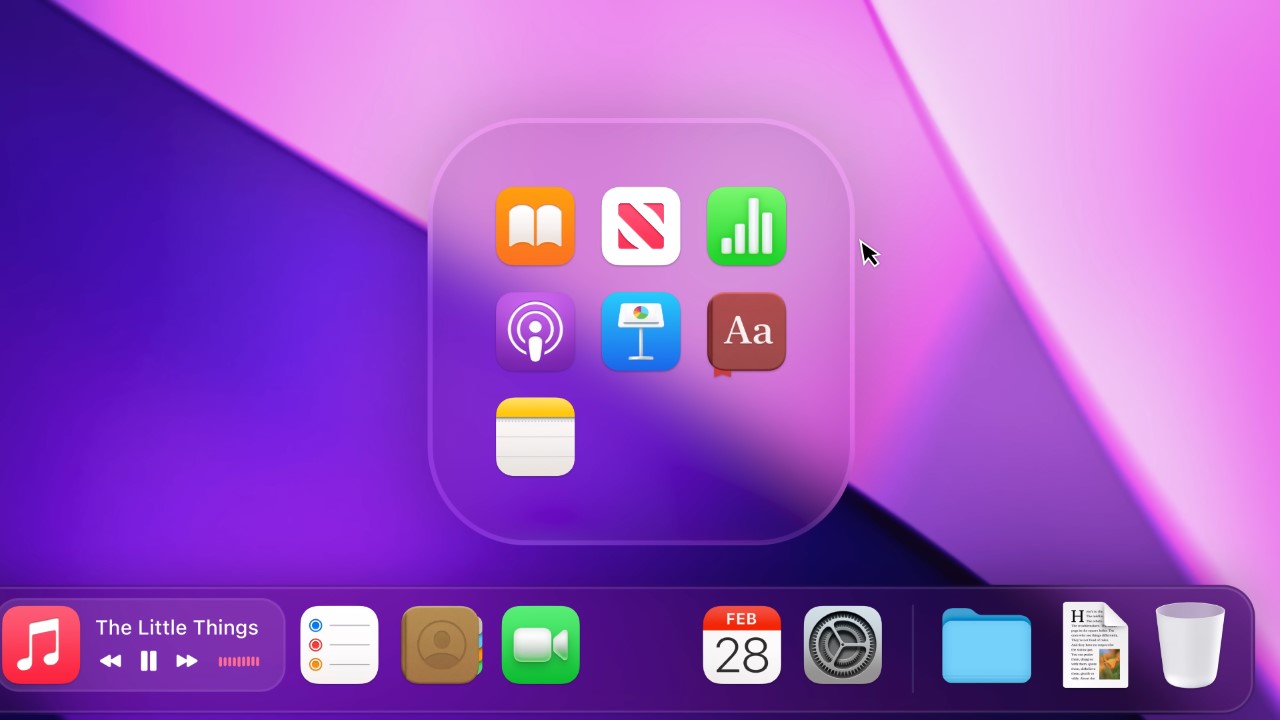
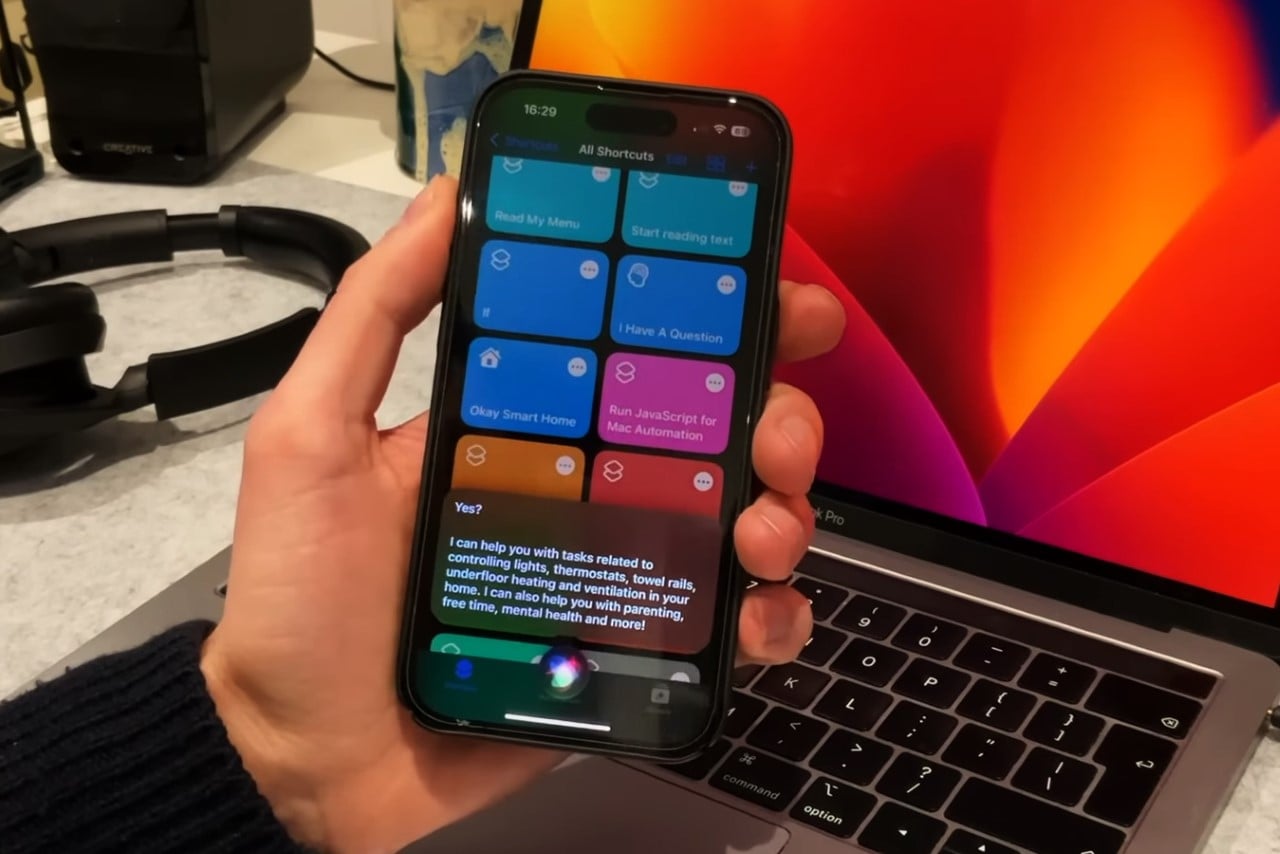
The next version of macOS, possibly named after a California location, is expected to incorporate many AI enhancements seen in iOS 18. Updates to core apps like Apple Music, Notes, and productivity tools will focus on integrating AI functionalities to enhance user productivity. The System Settings app is rumored to be reorganized for better usability, and Siri’s menu bar icon might get a new look. Accessibility improvements are also anticipated, including custom spoken phrase triggers in Shortcuts.

Generative AI

Generative AI will be a significant focus at WWDC 2024. Apple is expected to integrate OpenAI’s ChatGPT and potentially Google’s Gemini AI assistant into iOS 18. These integrations could bring advanced conversational capabilities and intelligent assistant features to iPhones and iPads. Siri is also slated for substantial upgrades using Apple’s large language models, enhancing voice recognition and response accuracy and focusing on practical, everyday applications. Apple aims to enhance user privacy and security by handling AI processing on devices when possible.

Next-Generation CarPlay

CarPlay is set for significant updates with iOS 18. New accessibility features like Voice Control and Color Filters will enhance usability. Sound Recognition will notify users of driving-related sounds, benefiting those who are deaf or hard of hearing. Next-generation CarPlay is expected to integrate more deeply into vehicle systems, including instrument clusters and climate controls, providing a seamless and comprehensive user experience.

AI Voice Assistants: Gender Dominance and Implications

This week, we explored the dominance of female voices in AI systems. Voice assistants like Siri, Alexa, and Google Voice feature female voices to create a friendly user experience. Studies show that users generally find female voices more soothing and pleasant, enhancing the effectiveness of these assistants in support roles.

The trend towards female voices in AI voice assistants raises important questions about gender perceptions and biases. Ensuring diverse training data and mitigating biases in AI systems is crucial for creating fair and balanced AI assistants. As AI becomes more integrated into daily life, addressing these issues is vital to avoid reinforcing negative biases and ensuring equitable technology representation.

This integration’s relevance extends to AI tools revolutionizing the design process, as seen in BMW’s Designworks studio. AI tools like MidJourney and Runway streamline workflows, making it easier for designers to visualize and iterate on ideas rapidly. This synergy between AI and human creativity ensures the final product is technologically advanced and artistically inspired.

Fitbit Ace LTE: A New Era in Kids’ Wearables

The Fitbit Ace LTE is a new wearable designed for kids aged seven and up, combining playtime with video games to get kids active. It introduces immersive, interactive 3D games to the child’s wrist, aligning gametime with physical activity. Privacy and parental control are core features, with real-time location tracking, call and text capabilities, and voice messaging through the Fitbit Ace Pass and app.

Designer: Fitbit

For those already invested in the Apple ecosystem, the Apple Watch offers similar tracking features and more, potentially making the Fitbit Ace LTE redundant. However, this product is particularly valuable for non-Apple users, providing a unique tool for balancing screen time with physical activity. Its innovative design and functionality make it a worthwhile investment for enhancing kids’ active lifestyles.

Essential Workspace Accessories for Enhanced Productivity

To enhance your daily workflow, here are three essential workspace accessories that can significantly boost productivity and comfort:

Magic Bar
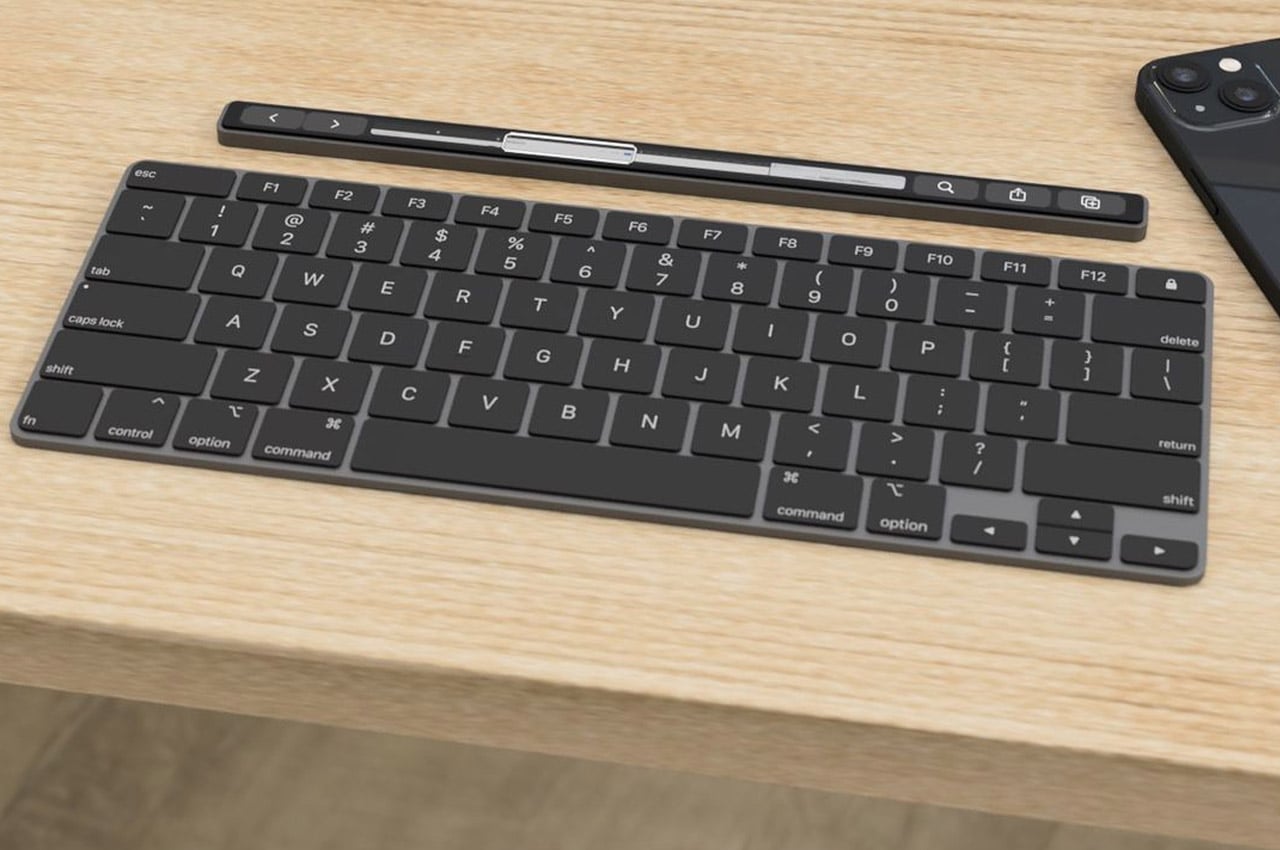
The Magic Bar is a portable Touch Bar that can be teamed up with any Apple peripheral. It is a sleek, seamless toolbar that aligns horizontally with your keyboard, enhancing your productivity with ease.

Triple 4K Docking Station
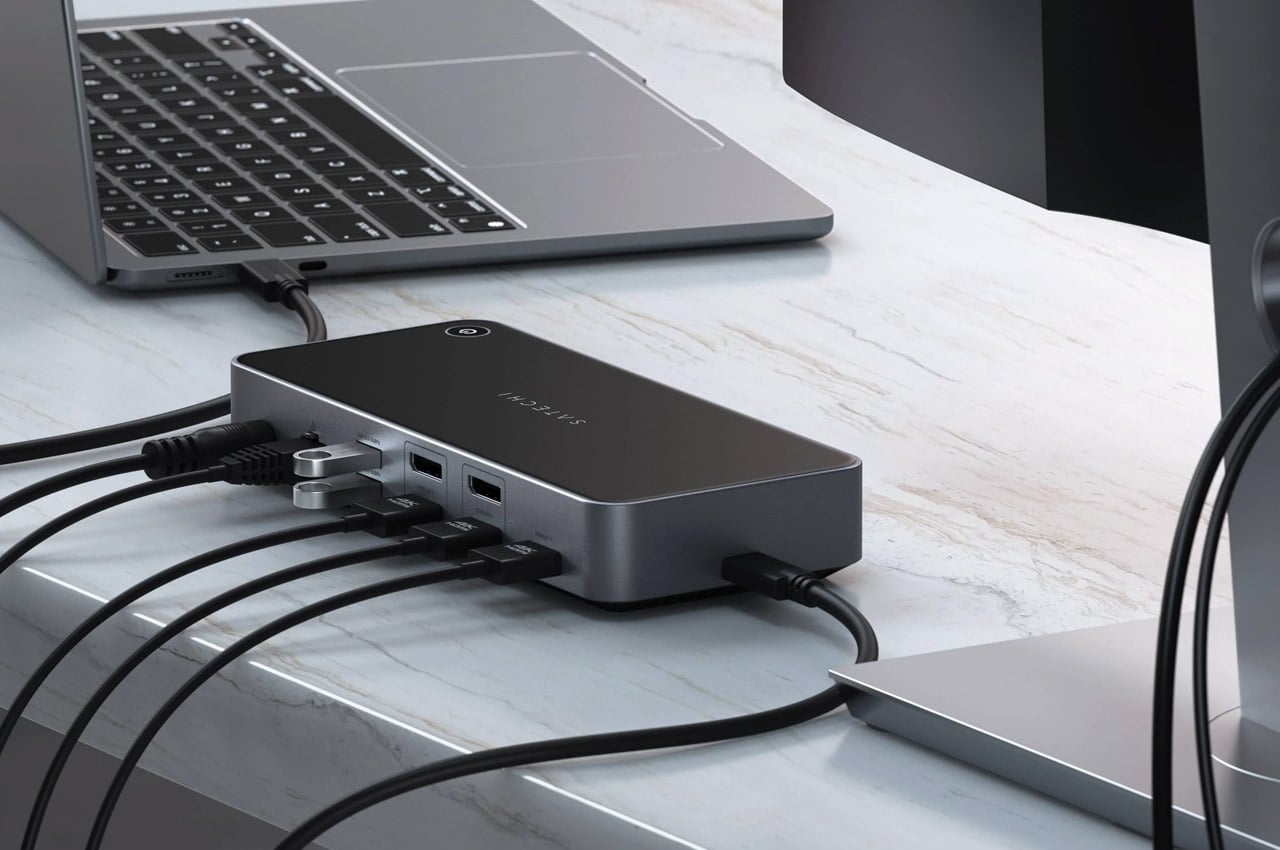
This docking station transforms your MacBook setup into a multi-display powerhouse. It can extend your display to three extra screens and offers a 4K HDMI port at 60Hz and additional HDMI slots and DisplayPort outputs.

FLIKK Laptop Stand & Sleeve
The FLIKK Laptop Stand & Sleeve provides ergonomic support and convenient portability. It offers the desired viewing angle to create a comfortable working environment and transforms into a laptop sleeve for easy carrying.

By focusing on these innovative products and topics, Yanko Design continues to showcase the latest trends and tools that promise to make our lives more efficient, creative, and connected. These selections highlight the forefront of technological advancement, emphasizing the importance of integrating design and functionality to meet the demands of modern living.

The post Highlights from Yanko Design: Baxley Moto, Apple WWDC 2024 Insights, and AI Voice Assistant Developments first appeared on Yanko Design.

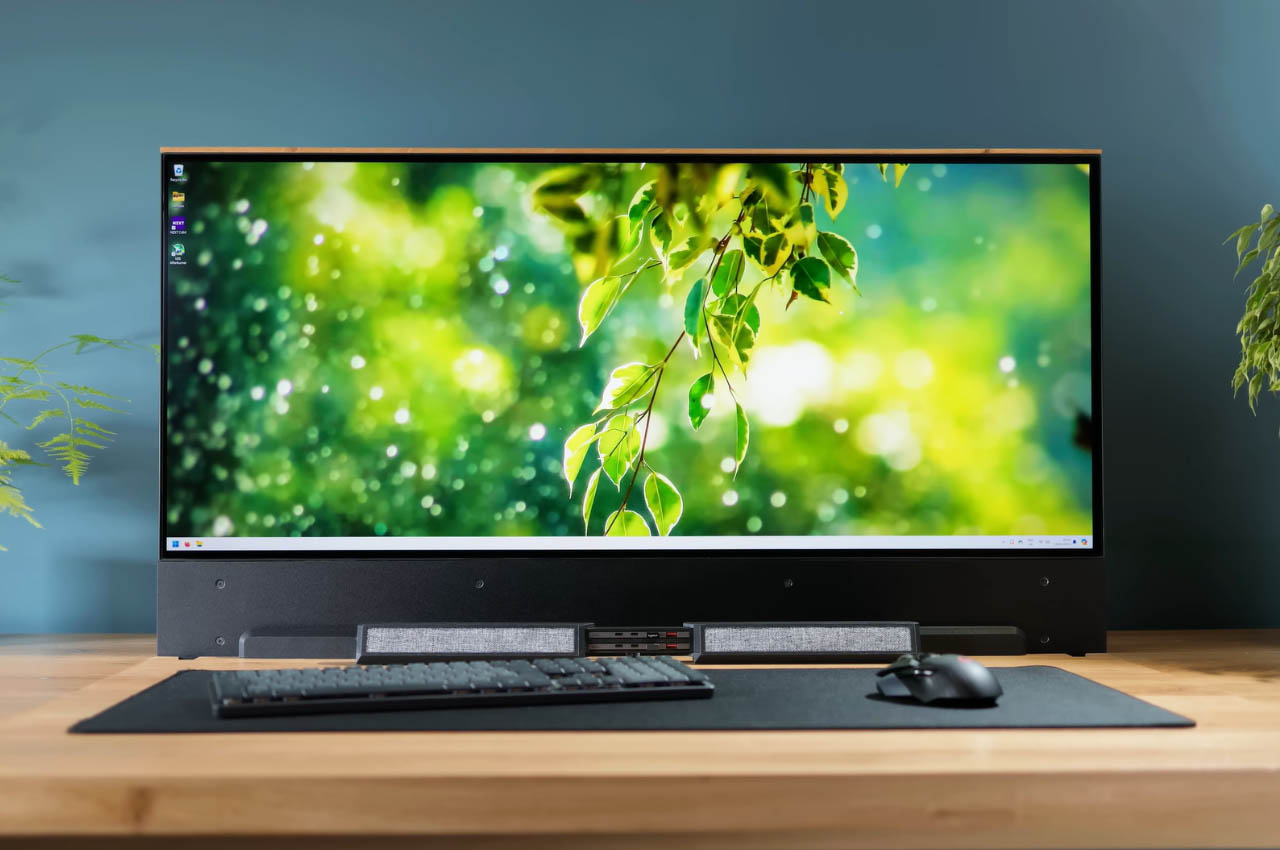
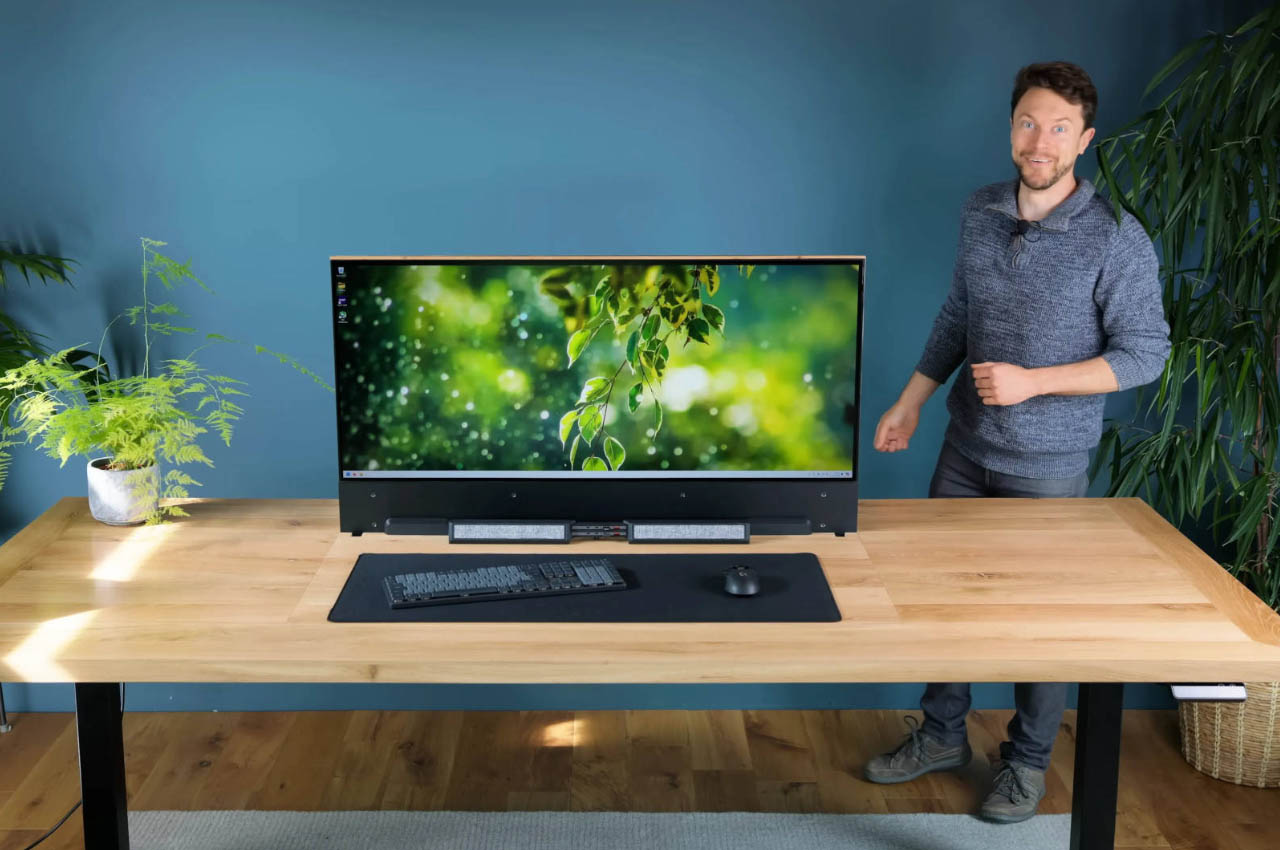
Endgame Invisible PC desk is the ultimate gaming machine hiding in a secret hatch under the tabletop

Having powerful desk setups can be exciting but all the wire clutter and visual chaos can overshadow the buzz. Matthew Perks is one DIYer who is keen enough to design unique rigs that are highly functional and instantly pique the interest of a geek like me. The respected YouTuber has created some impressive projects in the past including his first attempt at an invisible desk PC.

Now, he’s more mature and experienced to create an endgame PC desk that will blow you away, just as it did to me. The final result is a functional and visually calming setup that goes perfectly with any home décor or geeky theme. This project makes technology disappear in your living space and only shows up when it’s time to get productive or go a gaming marathon.

Designer: Matthew Perks

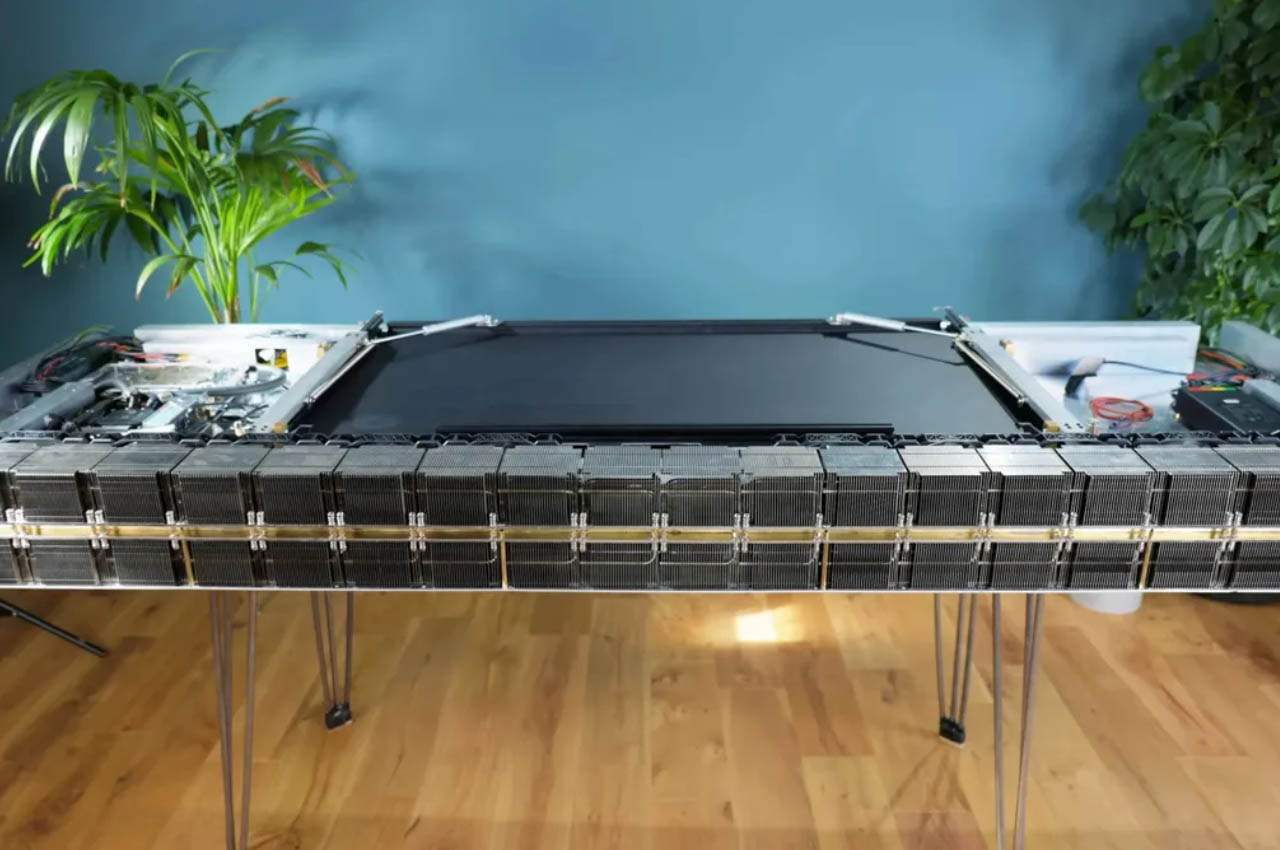
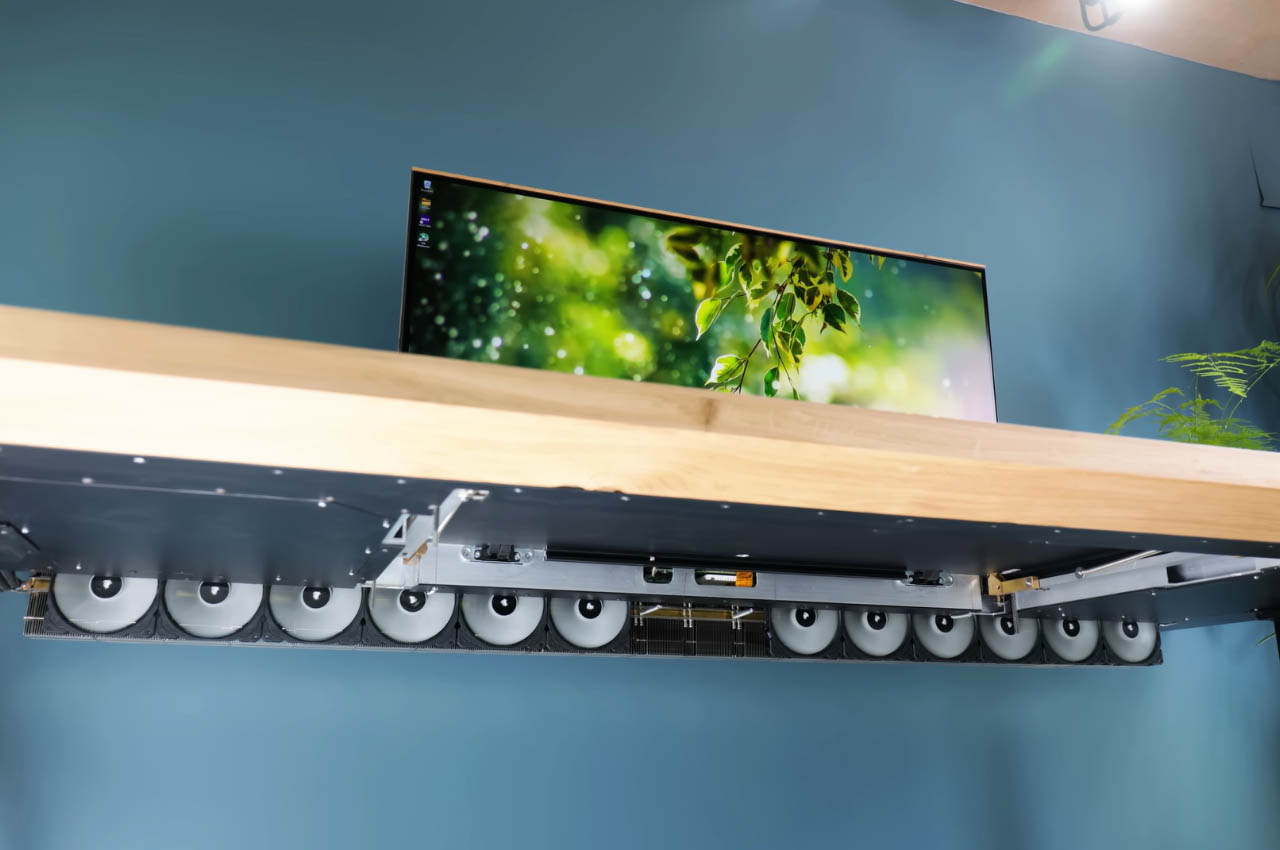
The invisible PC setup looks minimalistic, as Matthew tactfully integrates high-end PC hardware into the frame of a desk. Barely noticeable to the unassuming eye, the OLED display, water-cooled PC and peripherals hide inside a secret hatch in the tabletop when not in use. Call it the ingenuity of the man, or level of creative patience – everything about this PC desk is done so immaculately that you’ll barely realize how difficult it actually is to make one. This is a true example of what future home computing applications could be like while harmoniously integrating with the existing interior setup.

The most difficult part of the whole DIY is to mount a 45-inch Corsair Xeneon Flex ultrawide bendable OLED display on the custom-built aluminum frame that opens and closes as smooth as butter, courtesy of the hinge mechanism pneumatic struts and tension springs. The high-performance Intel Core i9-13900K processor and Zotac GeForce RTX 4090 GPU of the PC require optimum cooling, therefore, Matthew went ahead with installing custom water blocks, but to make it even better, he then upgraded the rig with bigger heatsinks and 140mm Corsair fans.

Once everything technical got sorted, the final phase of the DIY involved aesthetics and function. For this, he added wood panels to the motorized standing desk to go with the home décor. The last little detail includes adding magnetic assists for lifting the monitor with the least effort while maintaining the sleek look of the tabletop that can take a total weight of 440 lbs without breaking a sweat.

The post Endgame Invisible PC desk is the ultimate gaming machine hiding in a secret hatch under the tabletop first appeared on Yanko Design.

Top 10 MagSafe-Compatible Accessories to Upgrade Your iPhone Experience

There’s just something about a MagSafe-compatible product that hits the mark for me! There is a great sense of satisfaction, in my opinion, to have things just stick to your phone. Be it a pair of earphones (maybe that’ll be the next generation of AirPods) or have your phone just conveniently stick to a charging pad – it’s almost like magic. The reintroduction of the MagSafe led to a whole new world of accessories being unleashed. Designers and creatives were racing to create a whole range of products for the repurposed MagSafe. And we’ve been loving every bit of it! From a MagSafe power bank that cools your phone to a Cyberpunk-themed charging station – there’s a MagSafe accessory out there for your every need. And, we’ve curated many products that we truly believe are worth buying and investing in. This army of accessories will truly amp up your Apple experience!

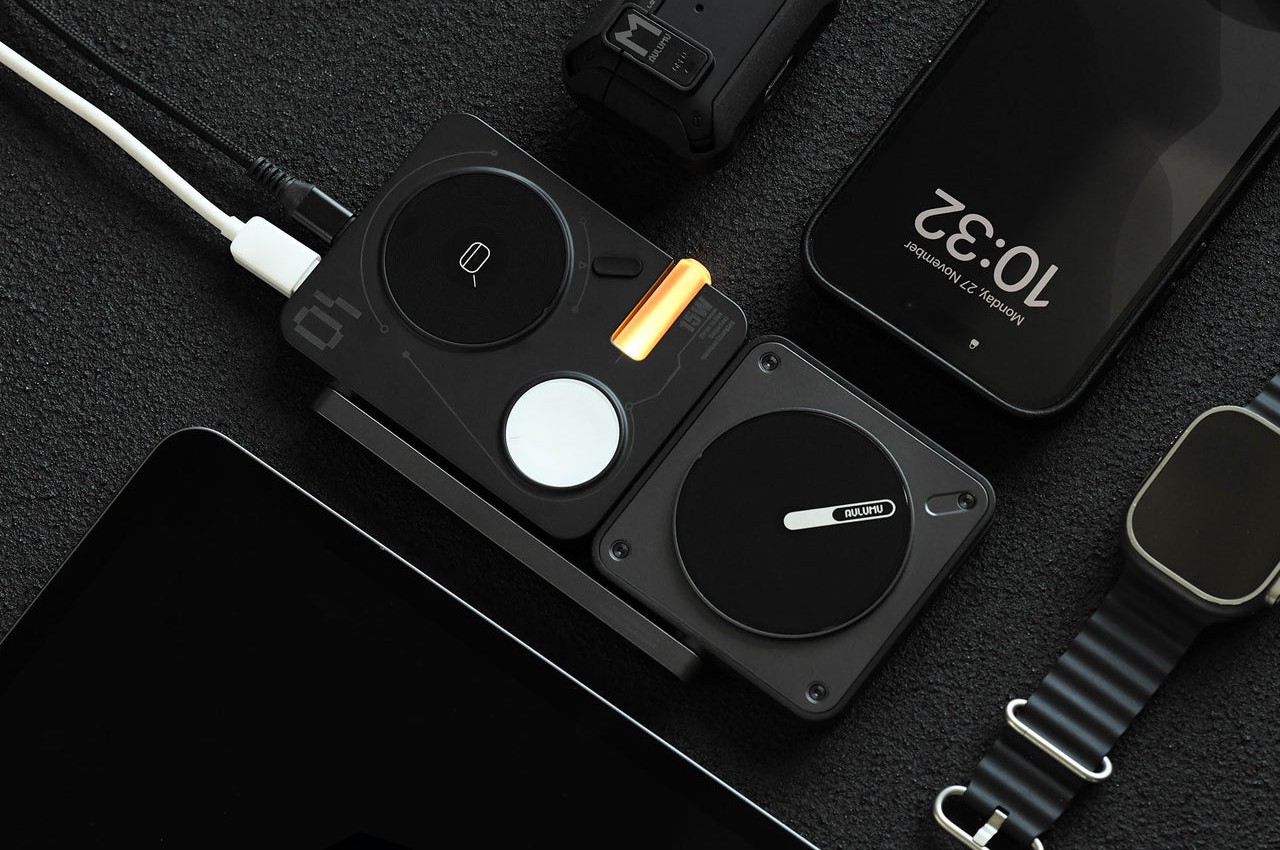
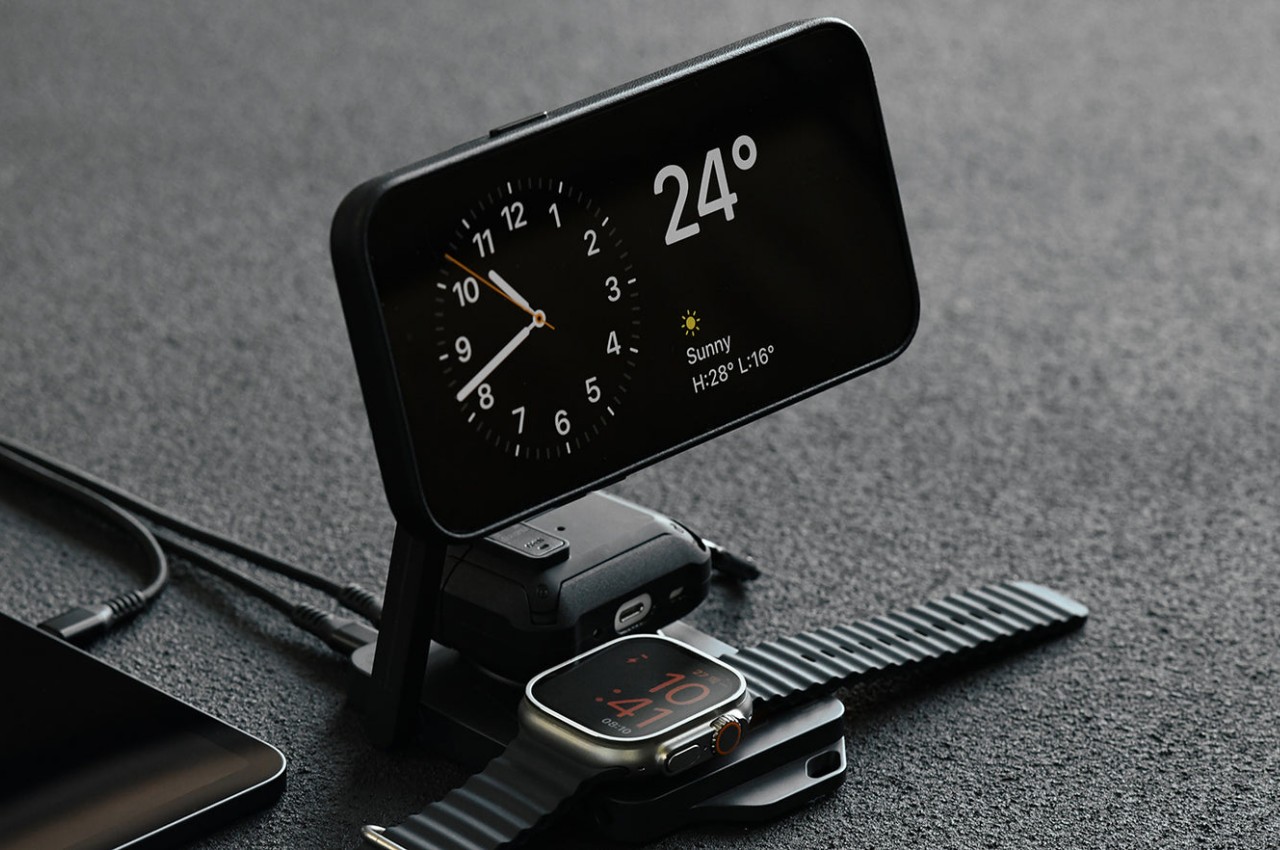
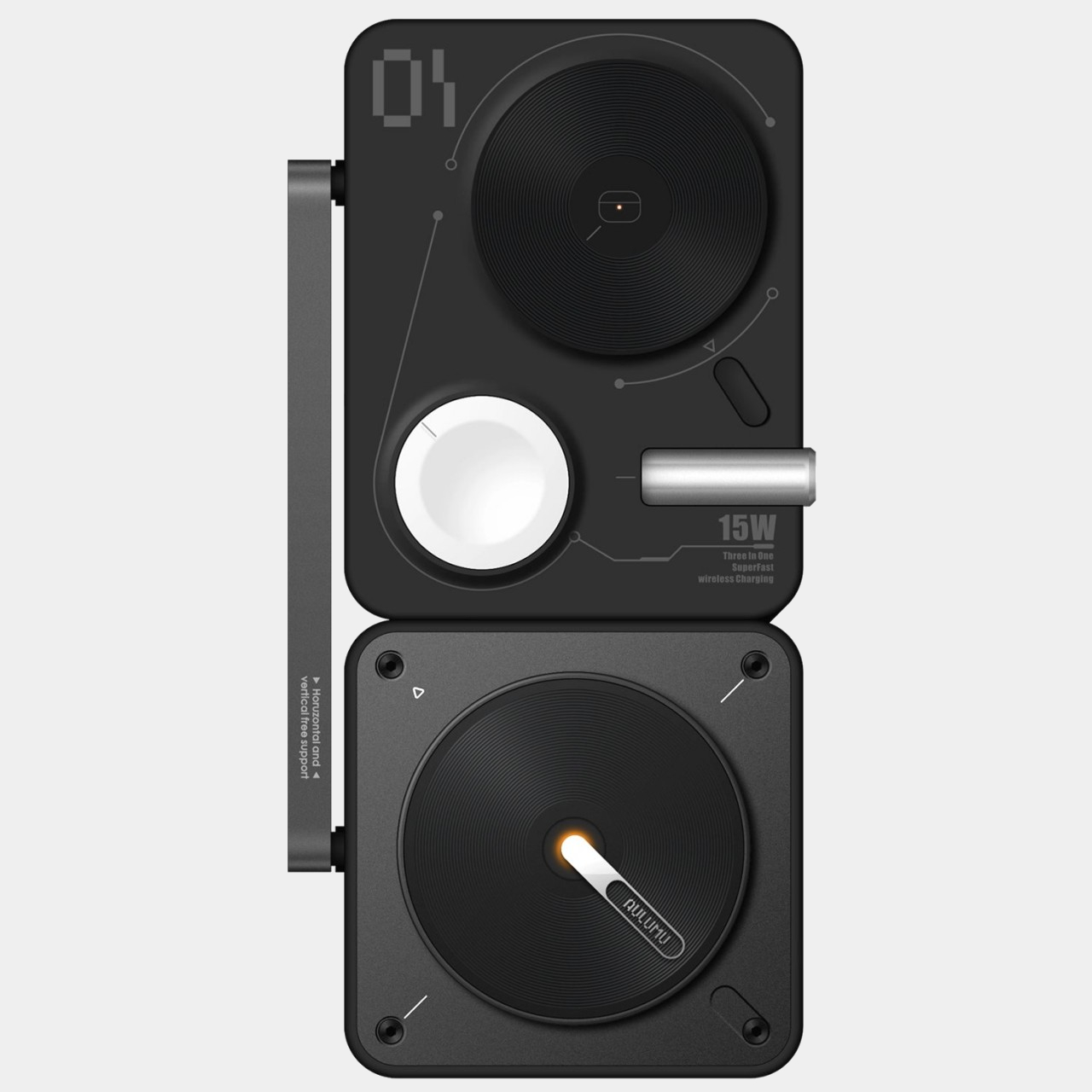
1.The Aulumu M01 4-in-1 Wireless Charging Station

 The Aulumu M01 4-in-1 Wireless Charging Station has a unique cyberpunk-like aesthetic which truly sets this charger aside. It doesn’t feature a straightforward row of circles, instead it alternates their arrangement to create a visually appealing composition that instantly grabs attention. The colors alternate as well, as the white Apple Watch pad is surrounded by black circles for the iPhone and AirPods case. The charging station features the conventional text, lines, and visible screws you’d find in such a tech-centric design language.

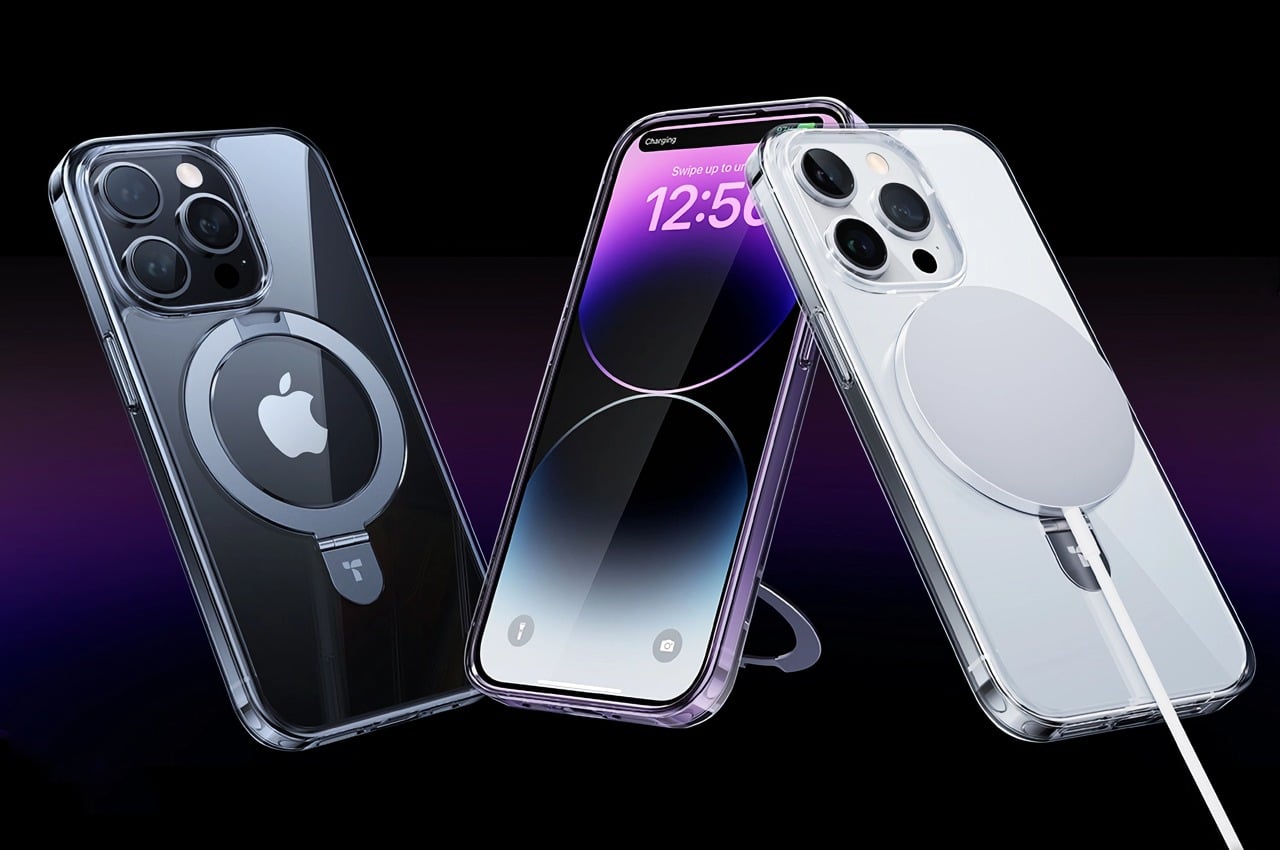
2. UPRO Ostand Case

Dubbed the UPRO Ostand case, this innovative device is a winner of the iF Design Award. It upgrades your iPhone’s MagSafe by offering it a whole new bunch of awesome upgrades. You can make your phone stand, hang, or stay safely in your hands as you click pictures, or scroll through Instagram during your work break. At first glance, the Ostand case may not look too impressive, it looks like an ordinary iPhone case, but it features the all too familiar magnetic ring, giving it a noteworthy upgrade.

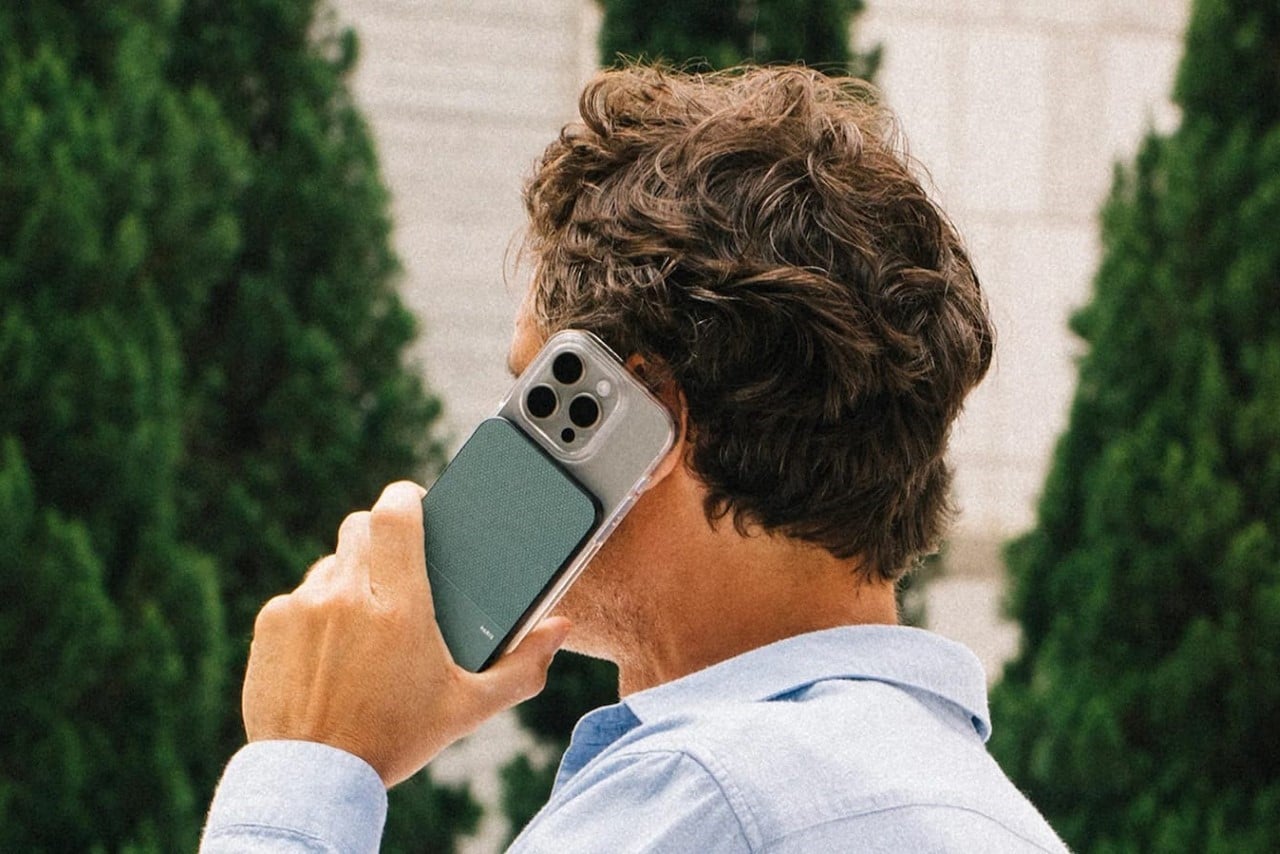
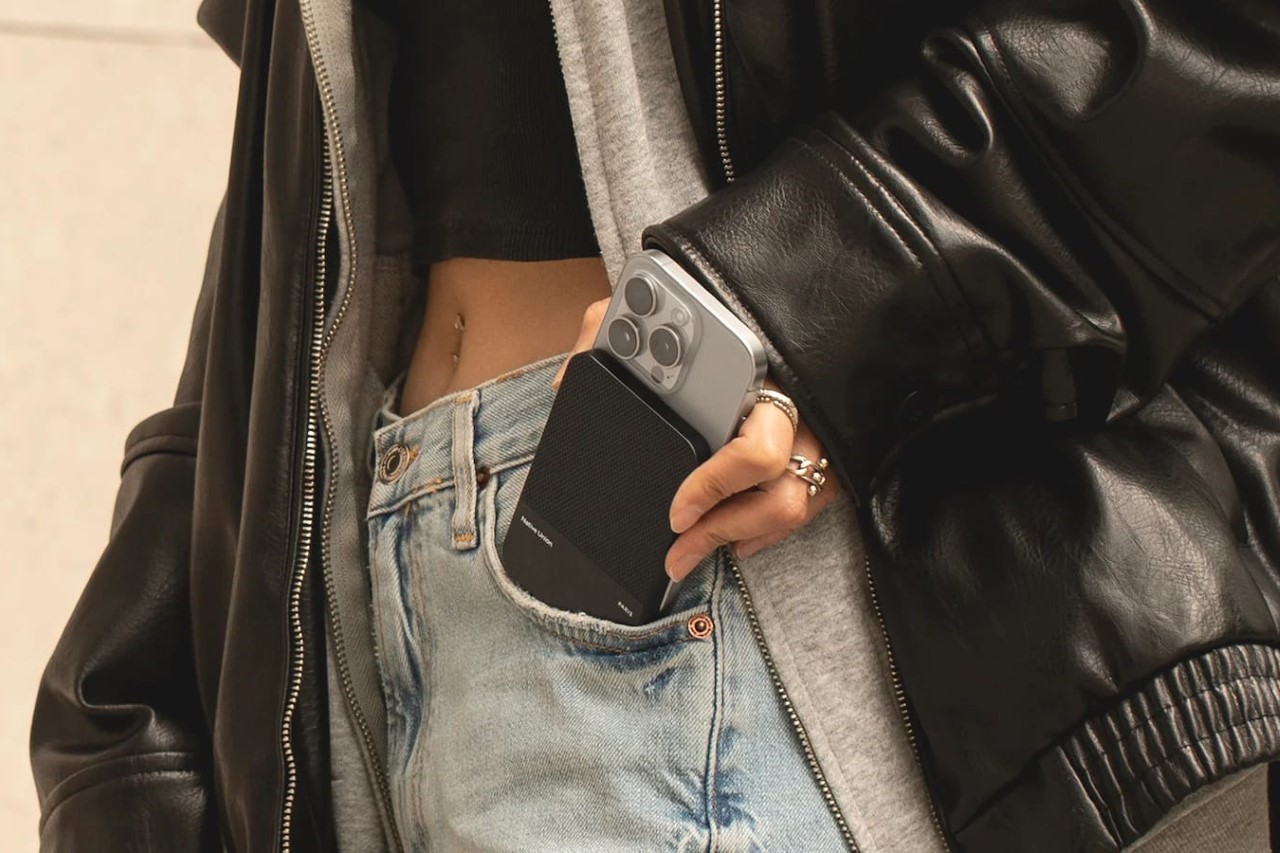
3. (Re)Classic

If you’re missing Apple’s MagSafe Power Bank, then you may want to get your hands on the (Re)Classic from Native Union. The little device measures .086cm thick, essentially as thick as your iPhone. You can swiftly attach it to your iPhone or any smartphone with the MagSafe sticker. This super cool power bank lets you easily and wirelessly charge your iPhone on the go! It has a slim and compact design, allowing to to seamlessly merge with your iPhone sleek’s profile. You don’t need to waste time handling heavy and uncomfortable power banks.

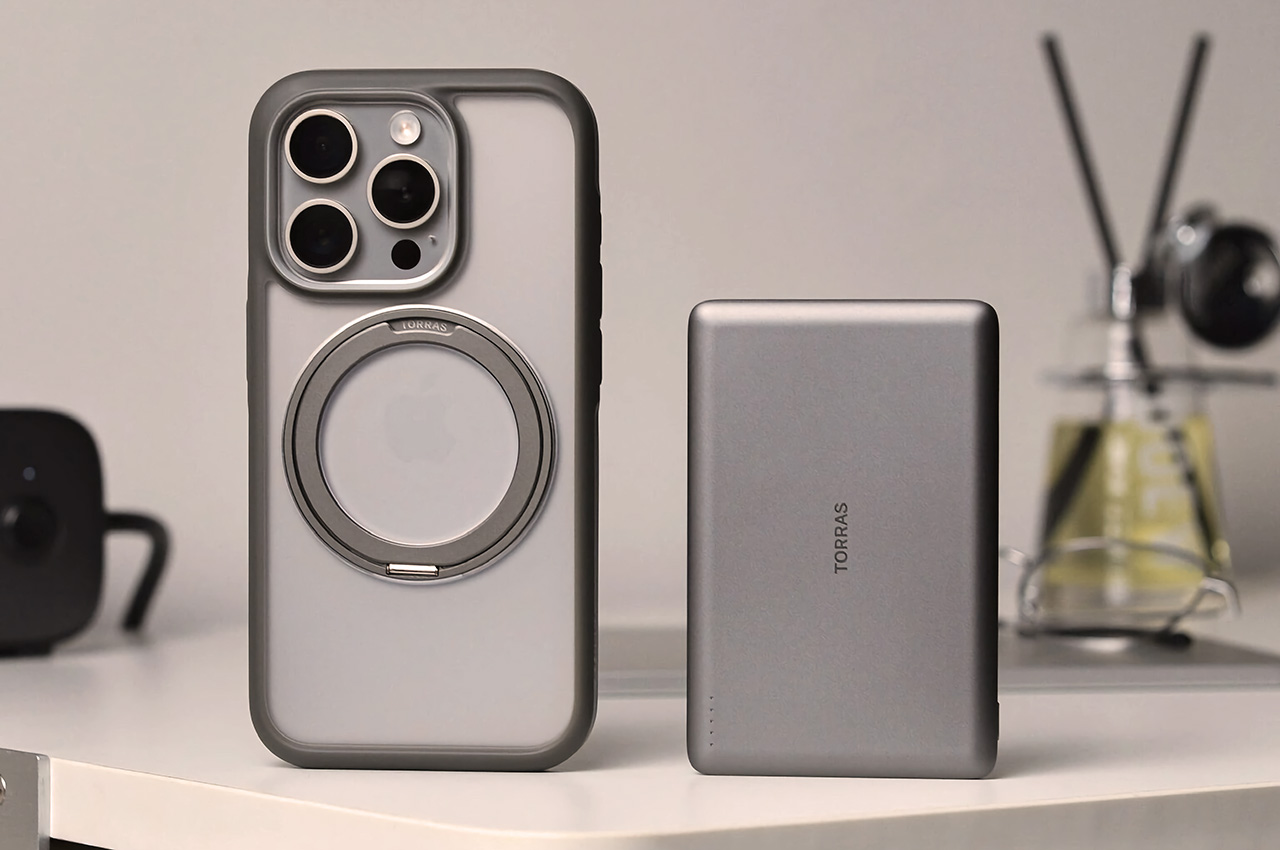
4. TORRAS MiniMag

Meet the TORRAS MiniMag – a compact MagSafe power bank that you can snap onto the back of your phone, giving it an instant and much-needed battery boost. The power bank is the size of a credit card, and it features a thickness of 0.3 inches. The MiniMag’s compact size and MagSafe compatibility allow it to seamlessly attach to your iPhone, powering it with an extra 5000mAh battery, allowing you to go about your day without the stress of your phone dying down any second.

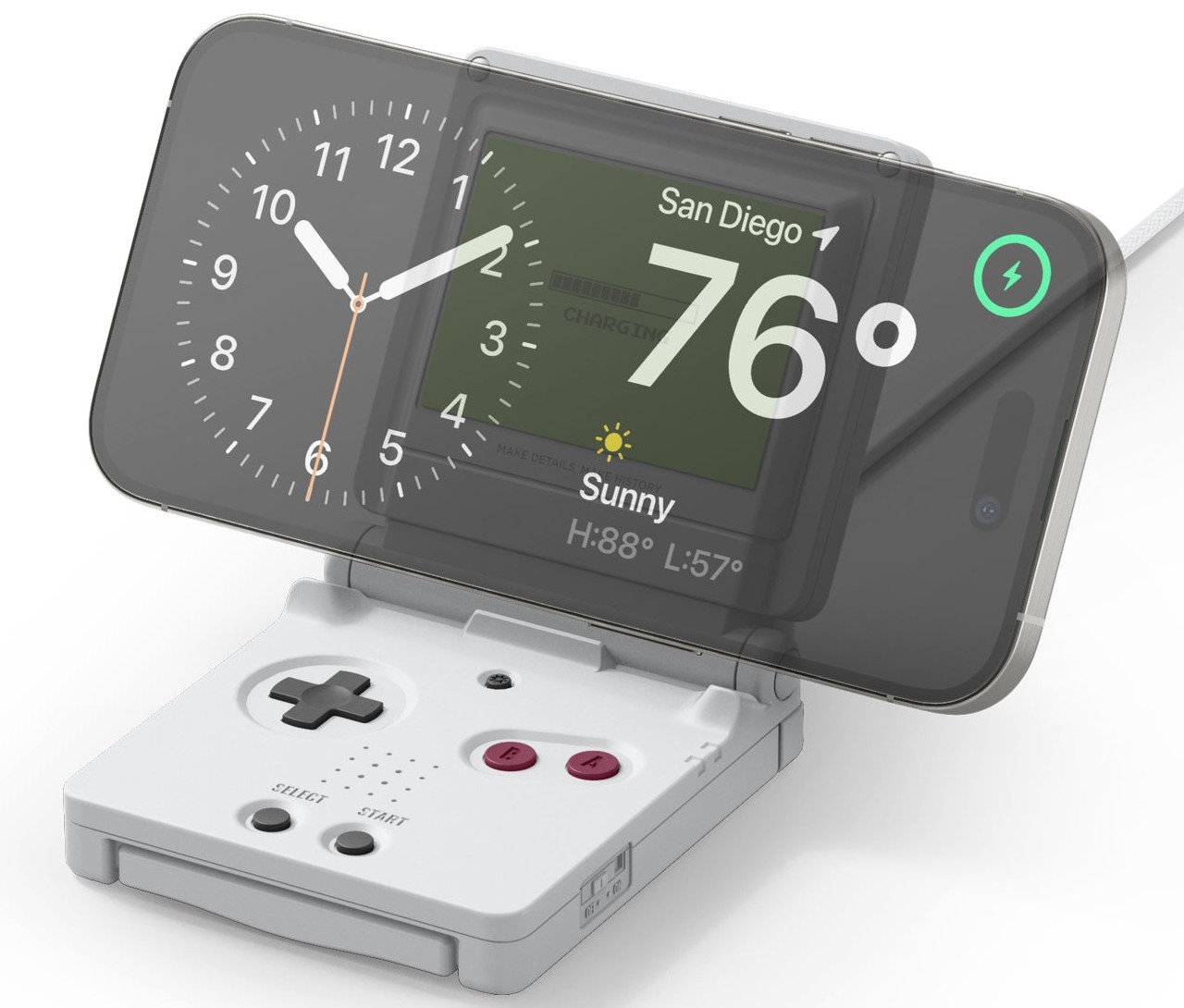
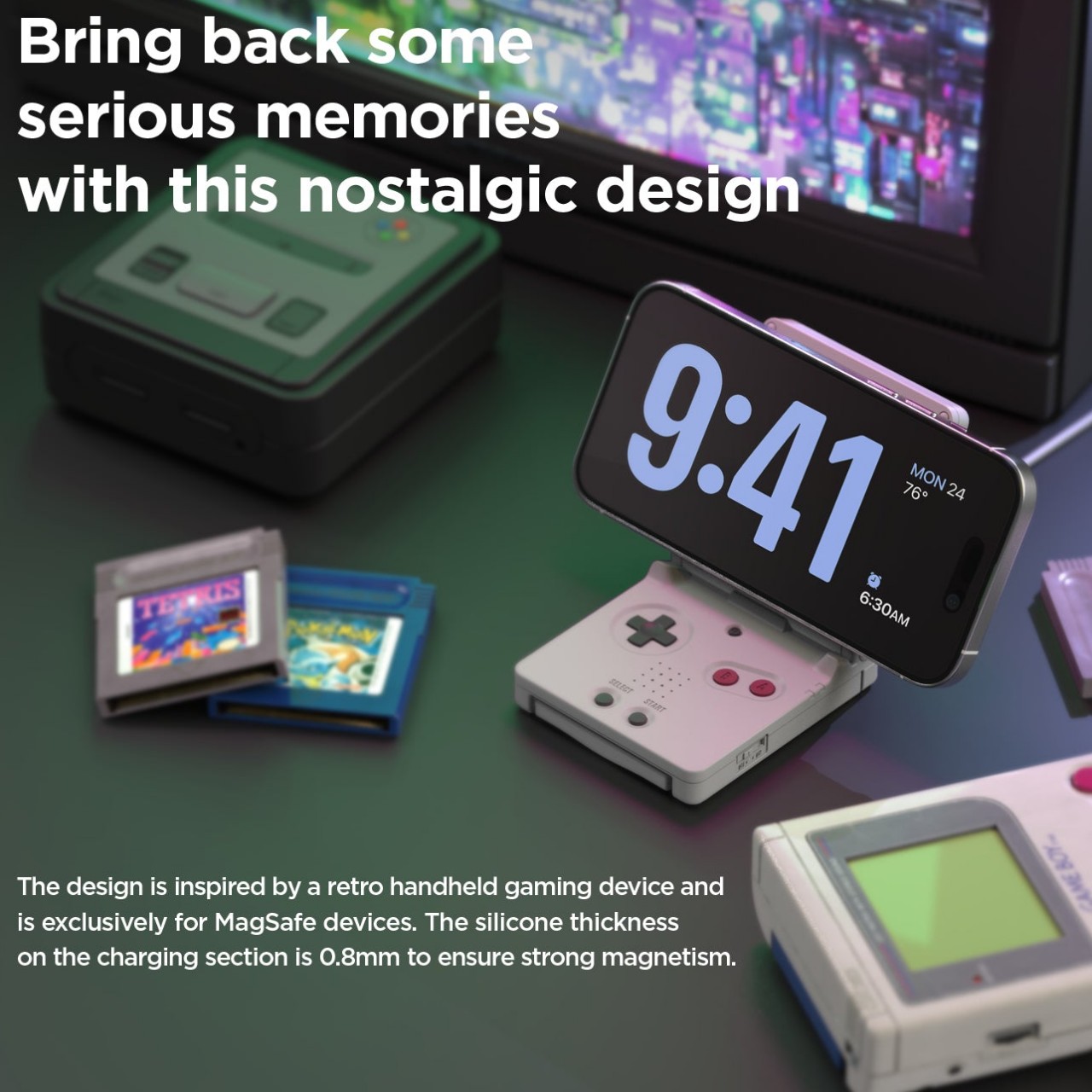
5. The Elago WS M5 Charging Stand

Say hello to Elago’s WS M5 Charging Stand! This little design serves as a fun and whimsical MagSafe charger, and it resembles the Nintendo Game Boy Advance SP. This charger functions as a stable stand to charge and hold your iPhone. It has a fixed 30-degree angle which is excellent for watching videos or movies, or to utilize the IOS Standby Mode at night. The charging stand also includes a helpful support on the back, so that the charger doesn’t fall down, because of the phone’s weight.

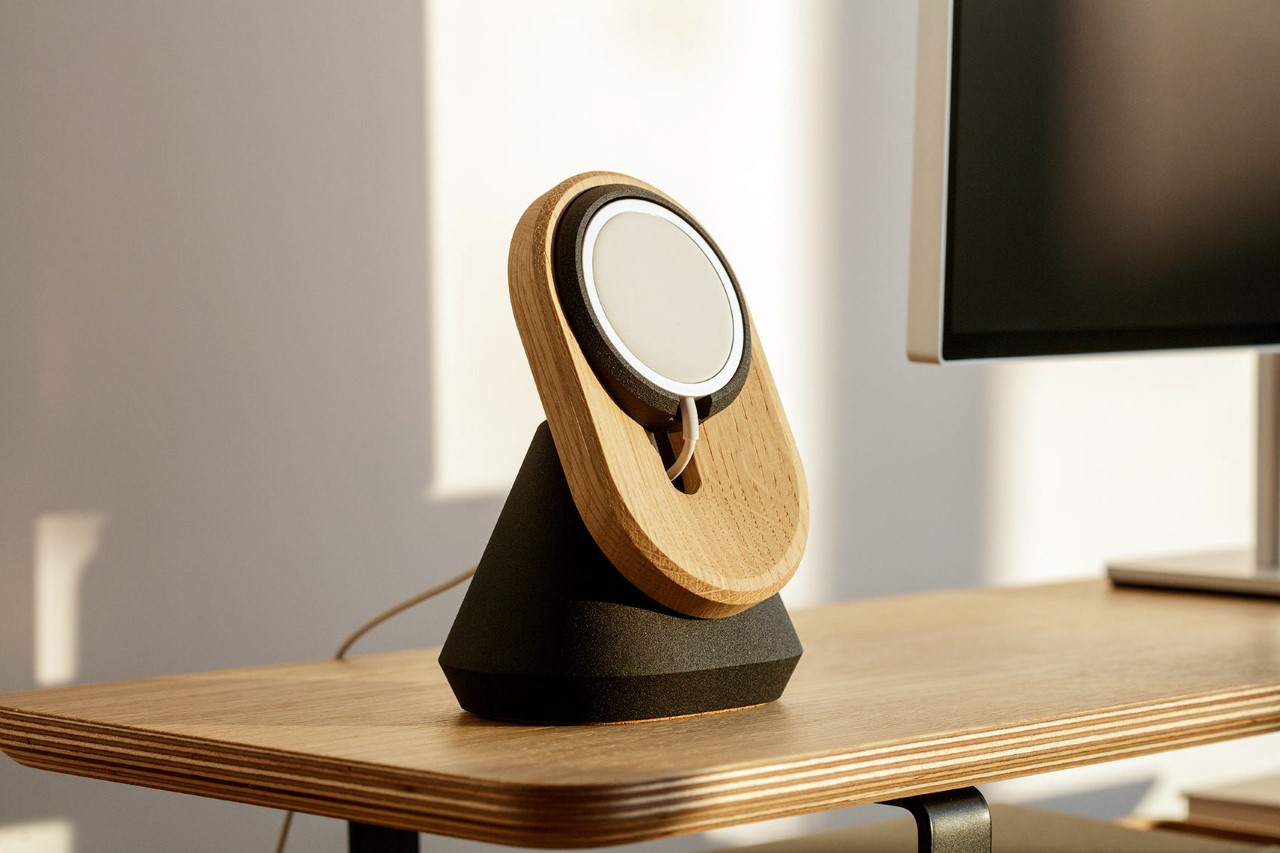
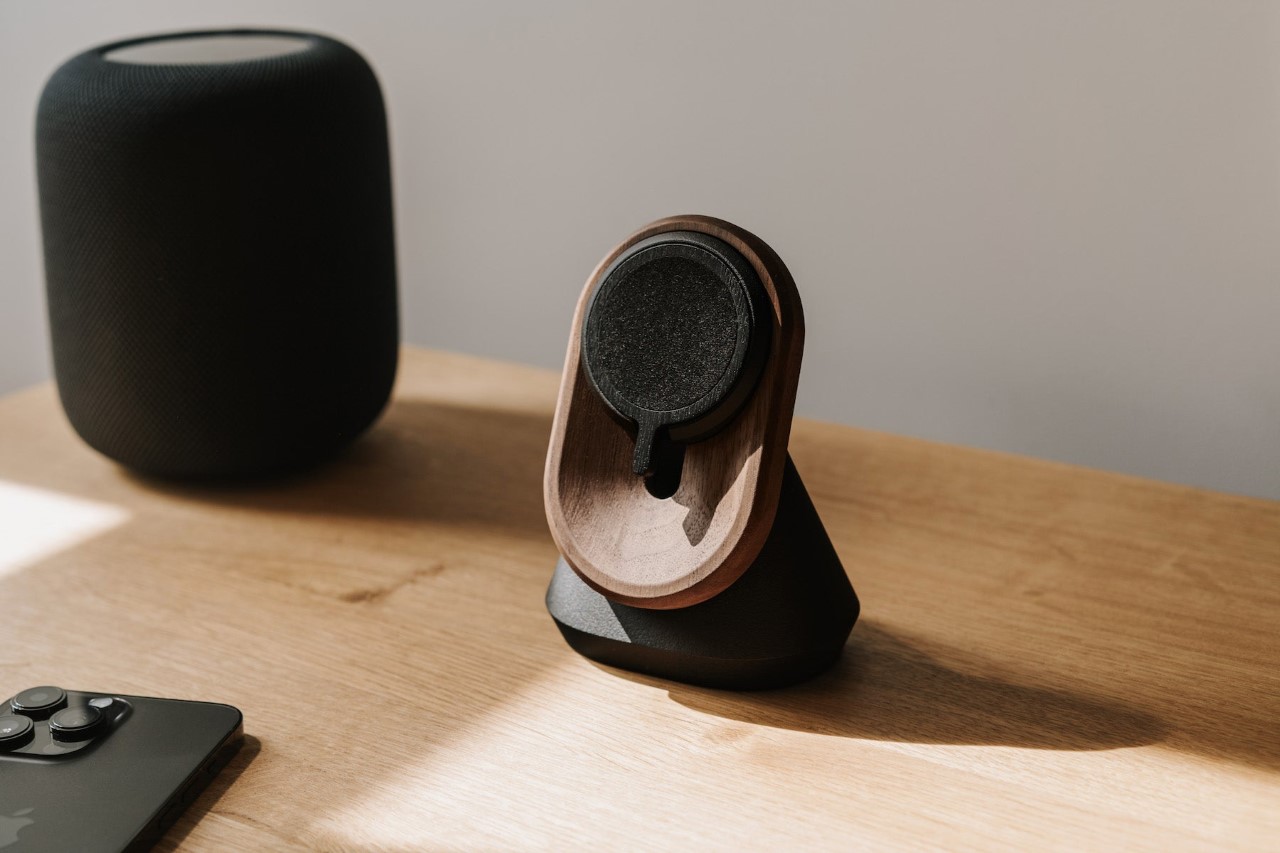
6. Oakywood’s MagSafe iPhone Stand/Charger

Oakywood’s MagSafe iPhone Stand/Charger is truly a thing of beauty. It features a simple form factor, and a dual-shade wood construction, making it an aesthetic product with a design language similar to that found in Japanese and Scandinavian homes. Oakywood’s MagSafe Charger has a Japandi-like aesthetic, featuring an ethos focused on cleanliness and minimalism, without any clutter and materialism. This classy product adds a sense of rustic beauty to your workdesk, using natural materials like Oak and Walnut wood.

7. Ice Speed Freezemat Magsafe Wireless Charger

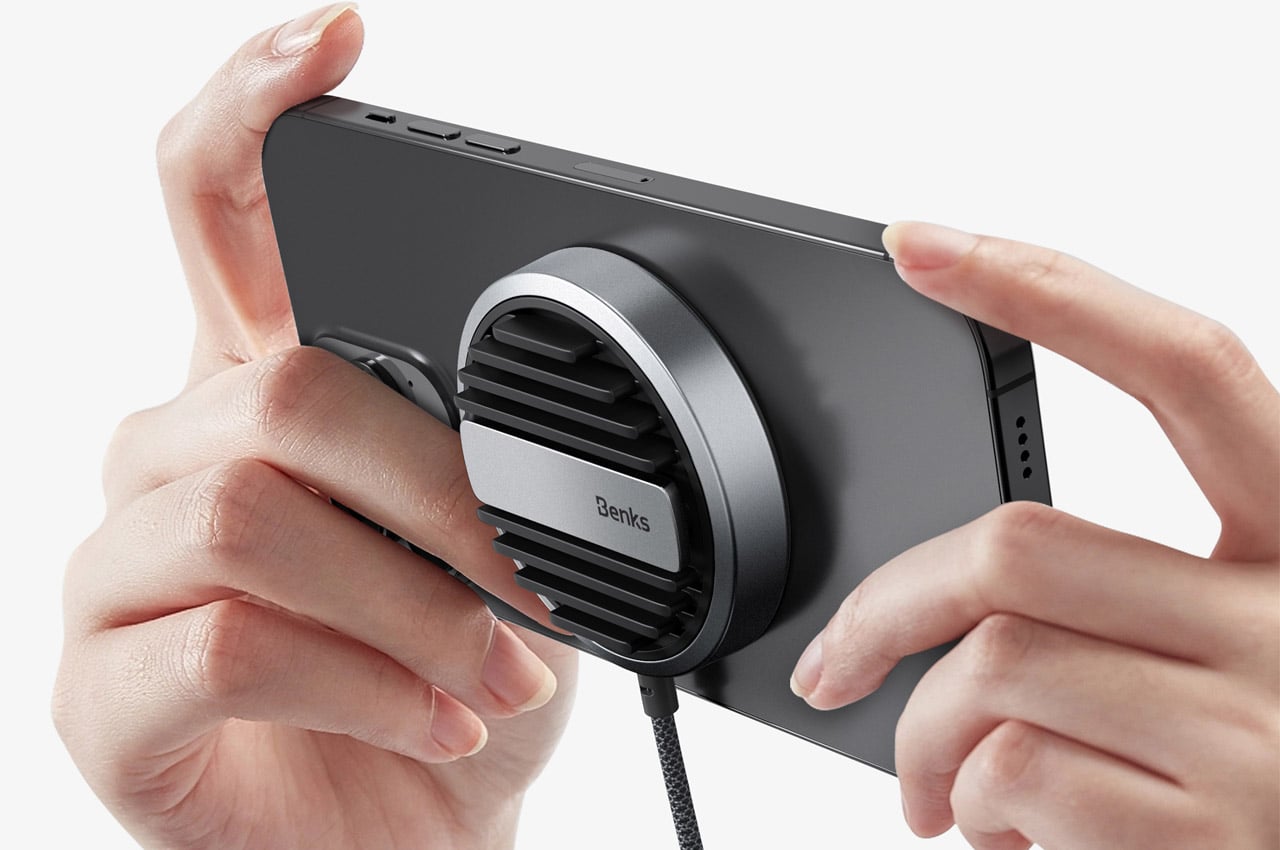
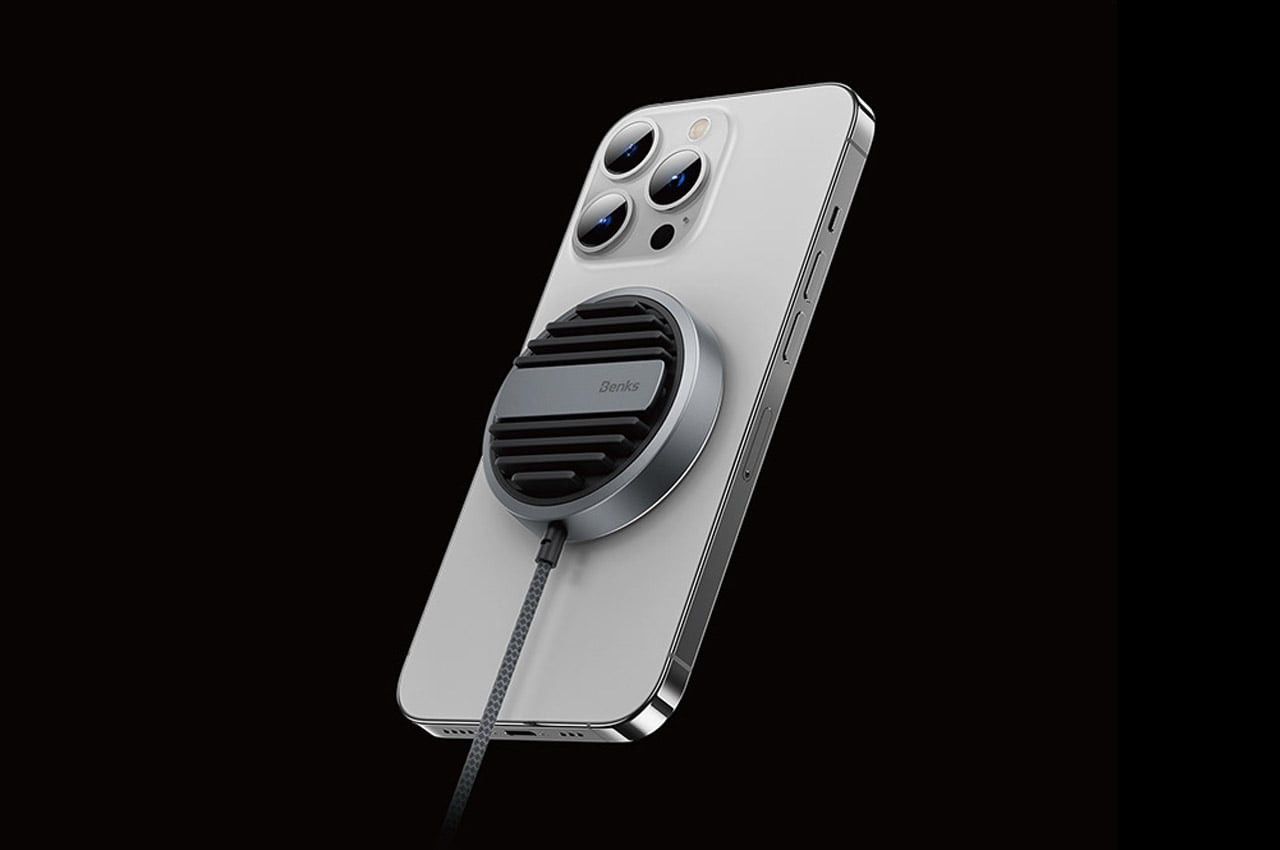
Dubbed the “Ice Speed Freezemat MagSafe Wireless Charger”, this little Apple accessory utilizes an intriguing method to dissipate heat, keeping the insides of your smartphone cool and at an optimum temperature during gaming or fast charging rituals. The charger is made from an aviation-grade cooling material, and it has a rather interesting cooling mechanism that draws inspiration from the way the human body sweats to dissipate heat.

8. Apple MagSafe Origami Grip Stand

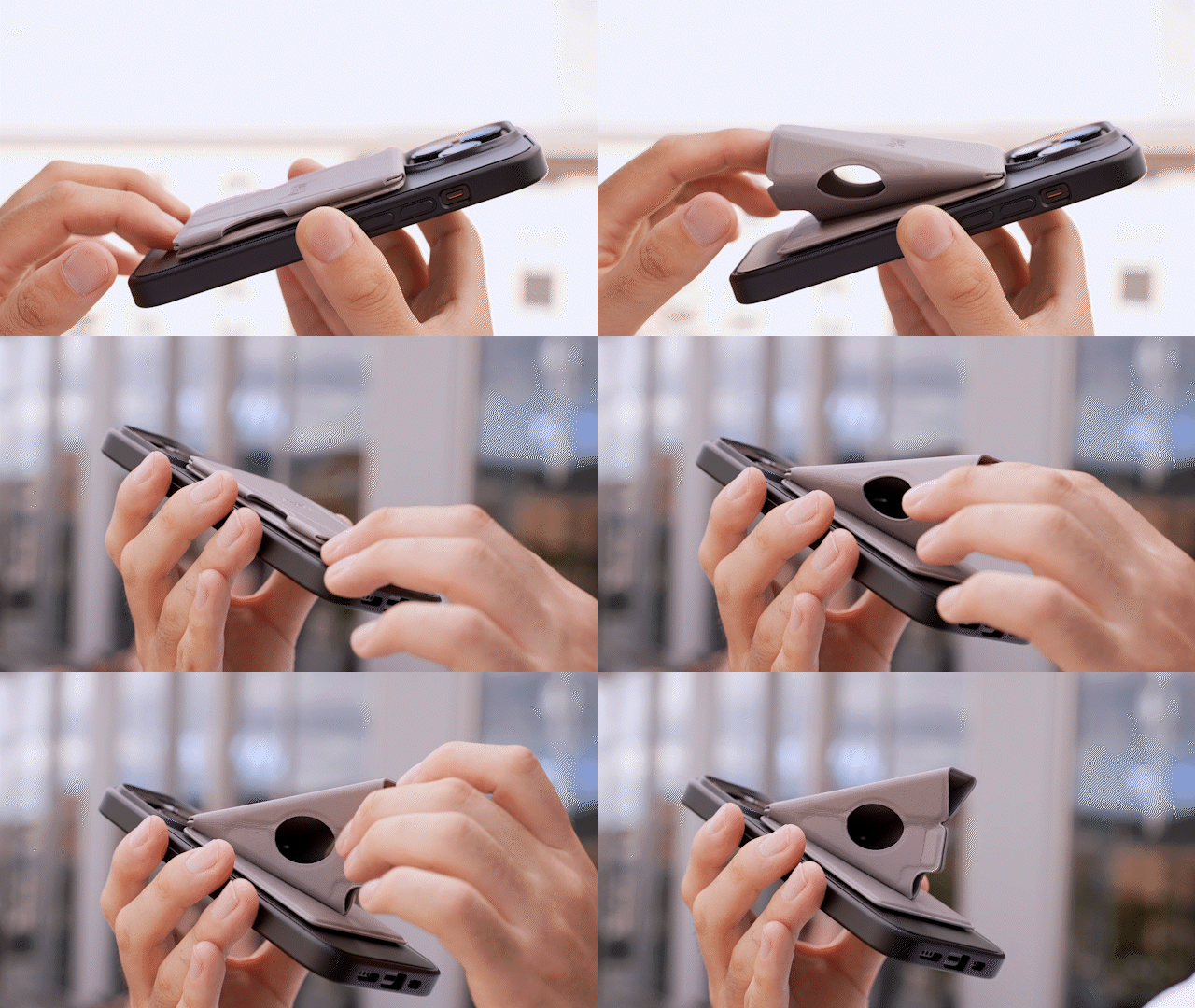
If you’re looking for a unique MagSafe stand, then you need to get your hands on the Apple MagSafe Grip Stand! Inspired by the Japanese art of paper folding, you can fold this stand flat, and vice versa, without the hassle of assembling and disassembling it. This one-of-a-kind accessory is thin and lightweight, and sized like a credit card, making it easy to attach to your phone, and store it in your pocket, without it looking super weird or awkward!

Click Here to Buy Now: $45.00

9. Snapods

Designed by Scendo, the Snapods are an innovative pair of TWS Earbuds that come in a flat case that you can snap onto the back of your iPhone! The earbuds play on the MagSafe feature, letting you carry your earphones wherever you go. You simply need to snap them to the back of your phone, and you have a pair of easy-to-carry and easy-to-store earbuds that you surely won’t lose again. The case has a slim and flat wedge-shaped profile which makes it easy to place in your pocket, it doesn’t look bumpy or awkward. The case doesn’t simply store your earphones, it also charges them!

10. Shin & Han’s MagSafe Accessory

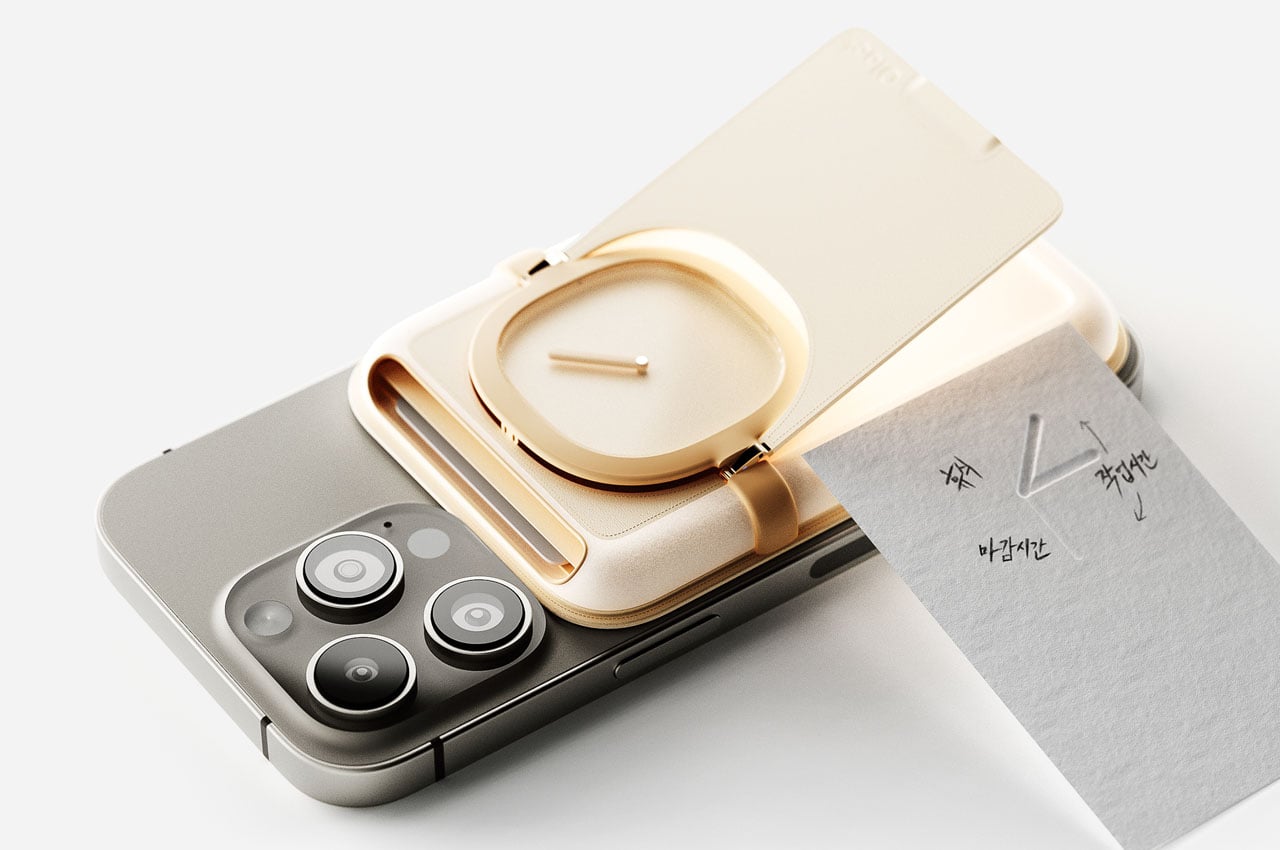
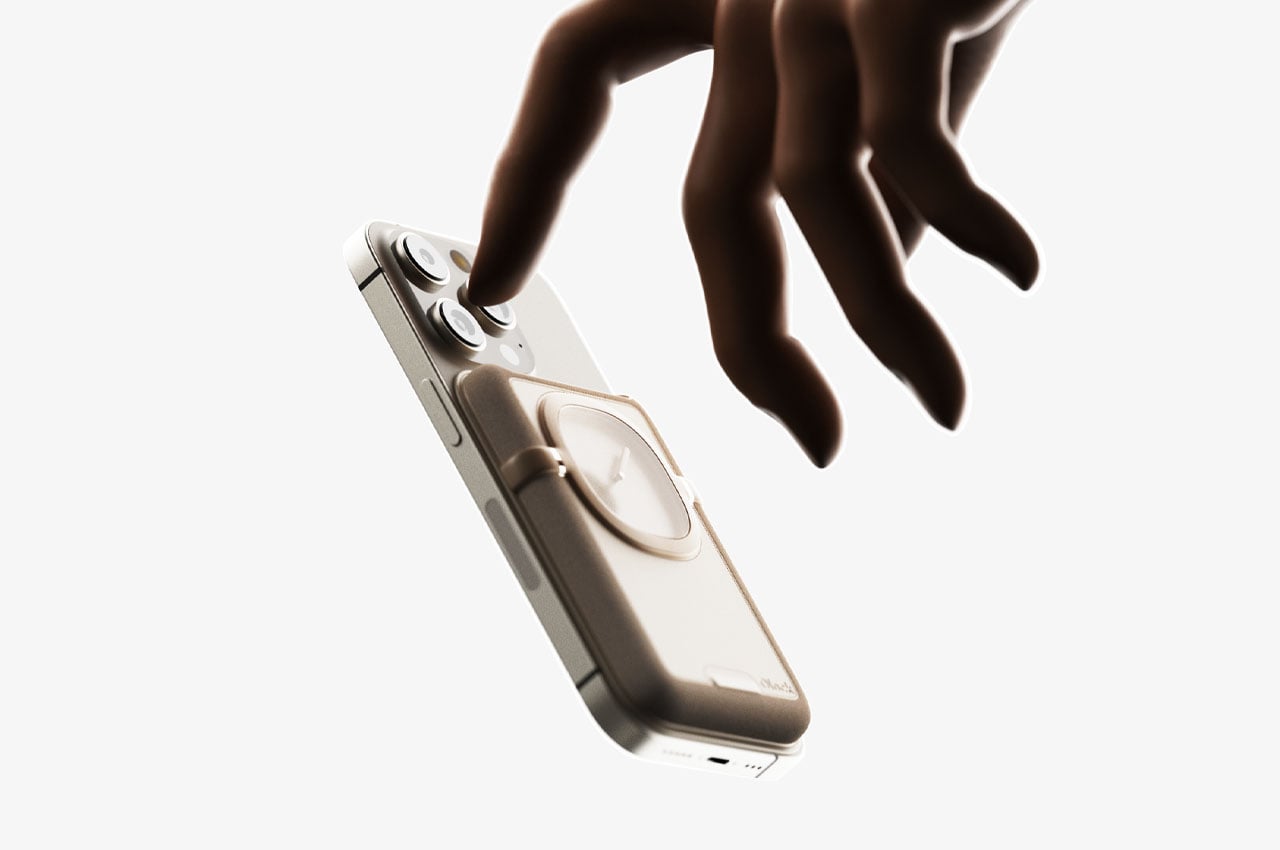
Are you someone who’s constantly on their phone, your face glued to the screen, and you have a hard time pulling away from it? Well, then you may want to get your hands on this unique MagSafe-compatible accessory. This innovative accessory is created to get over your digital addiction, ensuring you spend less time on your phone. You can easily attach the accessory to the back of your phone, and it features a real clock with a single-hour hand to ensure you are aware of the passing time. This little feature prevents you from spending too much time on your phone. You can also use it to hold your cards and quick cash!

The post Top 10 MagSafe-Compatible Accessories to Upgrade Your iPhone Experience first appeared on Yanko Design.

Experience Pure Sound and Fresh Air with the Moss Echo: The Ultimate Air-Purifying Wireless Speaker

Nature and tech are almost always at odds. Technology is fast-moving, often focused on productivity/entertainment and nothing else. Nature, on the other hand, is a more immovable force that nourishes you and teaches you patience. It isn’t common to see the both of them intertwined together seamlessly, but the folks at MOSSLAB seem to have figured out the impossible. Designed to be a smart display, a speaker, an alarm clock, an air purifier, and also a living plant, the Moss Echo intertwines both shrubbery and silicon into one unique solution. The tabletop device is characterized by a wall of moss – the plant responsible for 30% of all the oxygen we breathe – but power it on and an LED screen comes to life right through the moss facade. This acts as the Moss Echo’s display interface, while the device itself works as an alarm, wireless speaker, and an air purifier that relies on real living greenery to cleanse the air you breathe and help relieve stress.

Designer: Yoonsang Kim of Mosslab

Click Here to Buy Now: $199 $299 ($100 off). Hurry, only 263/400 left! Raised over $158,000.

Moss Echo goes beyond the typical utilitarian smart device. Yes, it displays the time, functions as an alarm clock, and lets you play music or podcasts via Bluetooth. But the real star of the show is the moss itself. Nestled within a replaceable filter, this actual living plant isn’t just decorative; it serves as a natural air purifier. The moss’s tiny structures efficiently absorb pollutants, releasing clean air back into your environment, while filling your room with the natural scent of flora that is known to be an instant stress-buster.

Perfect for having by your bedside, living room, or even on your work-table, the Moss Echo helps keep you calm. While the wall of moss itself looks delightful, it works in tandem with the built-in wireless speaker to calm and recharge you. Moss Echo’s companion app lets you play soothing nature sounds while the display accompanies it with visuals to match. You can even choose between different visualizations for the speaker, or set a sleep mode that cues the device to gradually lower its audio before turning off within half an hour.

Moss is considered to be the world’s oldest plant, and by that logic, can be said to be responsible for all natural life because of its first ability to synthesize oxygen from carbon dioxide. Even though it’s so small, it’s arguably much more effective than plants thousands of times larger than itself. Just two hours of exposing indoor air to moss can reduce fine dust by 90%, VOCs (volatile organic compounds) by 60%, and CO2 by 40%.

The living moss and LEDs coexist together in mutually beneficial ways. The LEDs use a proprietary light pole technology that actually boosts the moss’ photosynthesis capabilities by 20%, allowing it to clean air more efficiently, while the moss adds a touch of greenery to the otherwise industrial-looking LED panel, creating an illusion of the plants actually lighting up to display the time or respond to music and other cues.

The magic is evident when you water the moss by spraying it with mist with the smart sprayer that comes along with the Echo. Moss Echo’s LED screen reacts to the user every time water is sprayed and shows various interactive graphics. The moss itself comes to life too in no time too, opening up and spreading its distinct plant-like smell in the air. The screen can additionally be personalized to display other things too, when sitting dormant. You can choose to have something as utilitarian as a clock, or opt for calming elements like clouds or a sunrise/sunset or even dandelions. If you have a child around the house, the Moss Echo’s screen can even display a cute avatar cartoon that looks around with animated eyes.

The Moss Echo’s design also strikes that beautiful balance, with the wall of moss on the front interspersed with the LED matrix, encased within a sleek box-shaped design that comes in either black or white. Buttons on the top, along with an elegant linear knob let you access the Moss Echo’s features and control playback. LEDs also give you status indications, like WiFi and Bluetooth connection, or even when the moss needs watering Under the dynamic green matrix lies a powerful set of audio drivers that draw their thump from a 120 Mhz Qualcomm® Kalimba™ DSP, providing a high-performance 24-bit mono audio interface.

The Moss Echo comes from the folks at MOSSLAB, who designed the mini vertical forest Moss Air last year that used the power of moss to clean and humidify your air. The Echo is the company’s next logical step, bringing nature to the omnipresent wireless speaker in a way that goes well beyond just listening to music or having one or two potted plants.

Each Moss Echo comes with a USB-C cable to power it, and a smart spray bottle that tells the Echo’s display to react when it’s spritzed with water (your regular plant could never!) To ensure that the Moss Echo can withstand the water, the light poles or LEDs are built to be waterproof, and to keep your moss alive, it’s recommended you mist it 2-3 times every day. However, it’s an incredibly resilient species too, capable of enduring up to 6 months without moisture. Once watered, it quickly springs back to life, resuming photosynthesis to sustain its vitality. The Moss Echo starts at $179 for a single unit and ships globally.

Click Here to Buy Now: $199 $299 ($100 off). Hurry, only 263/400 left! Raised over $158,000.

The post Experience Pure Sound and Fresh Air with the Moss Echo: The Ultimate Air-Purifying Wireless Speaker first appeared on Yanko Design.

Top 10 Apple Products We Wish Existed – But Probably Never Will

As incredible as Apple’s products almost always are, there’s always a sense of mystery around their catalog. Unless leaks confirm the launch of a product, there’s always a will-they-won’t-they discussion about things like a folding iPhone, an Apple Car, or up until recently, an Apple VR headset (which did eventually get launched at WWDC last year). This discussion is fueled by one undeniable fact – when Apple enters an industry, it makes a grand entrance. Everything Apple does, it does with great intent and decades of hidden innovation. So it only makes sense to want Apple to enter more industries and disrupt them. Here’s a look at a few product categories that fit well within Apple’s catalog, and even though it makes absolute sense for Apple to design these products (and I’m sure they’d do a stellar job), Apple is probably never going to consider making them. From drones to e-bikes to even printers, here are 10 products everyone wishes Apple made… but Apple probably won’t.

01. Apple Drone

The first-ever drone we saw from Apple actually made its appearance in the company’s iPhone 14 Pro keynote. The video showed a rather crude-looking drone engineered to fly with the iPhone 14 Pro Max mounted on it, relying on the iPhone’s camera system to capture footage. We later learned that the drone was entirely made in-house by Apple’s engineers… so why not make one for us regular consumers too? Imagine a drone rivaling the ones from DJI and Parrot, using a state-of-the-art camera system taken from Apple’s latest iPhones. An object-avoidance LiDAR system taken from the iPhones and iPads, and a 3-axis gimbal so advanced, it helps Apple make better motorized stabilizers for their phone cameras. It’s no secret that DJI’s three product lines – their Osmo cameras, gimbals, and their drones – all benefit from advancements in each other’s domains. A truly symbiotic system that helps create great products. I don’t see why Apple couldn’t do the same.

02. Apple Arcade Gaming Controller

Apple has a gaming service, a game-ready tablet that has better rendering capabilities than some laptops, and Apple also has a spatial reality headset that’s perfect for games, but lacks a controller input. It just makes absolute sense for Apple to launch a gaming controller that works in tandem with all their devices, helping you play/test all sorts of games, whether it’s on Unity or on Apple Arcade. Here’s yet another thought. What if you could remove the control part of the controller from its ergonomic case and use it like an Apple TV or Nintendo Wii-style remote? All speculative of course, but not without reason. Apple’s tech offering severely lacks a gaming controller, and if Apple is serious about gaming, it just makes sense.

03. Apple MovePod Wireless Speaker

You know what else also makes sense? Being able to take your music on the go. Both of Apple’s speakers – the HomePod and the HomePod Mini are wired, tethered devices that don’t have batteries of their own, and can’t be carried around with you. Ironically enough, Apple’s released quite a few wireless portable speakers under its Beats by Dre sub-brand… so why not just launch an unchained HomePod that you can travel with? An orb-shaped device with a handle (sort of like the Devialet Mania) occurs to me as the most obvious bet. Instead of relying on AirPods to listen to music on the go, this wireless speaker gives you the thump of a HomePod, but on the beach, at parties, on a terrace, in a backyard, or even a campsite. Obviously you couldn’t call it HomePod anymore, so something like the MovePod made sense as just a naming ritual.

04. Ergonomic Magic Mouse

The Magic Mouse sucks. It charges horribly, hasn’t been redesigned in years, and it’s an ergonomic nightmare. In fact, it’s so bad to hold that people have even designed grips for the Magic Mouse that make it more comfortable to grasp. Needless to say, an ergonomic Magic Mouse doesn’t exist, but it desperately needs to. The current slim mouse is perfect for travel, but let’s be honest, nobody chooses mice based on their travel-ability. So here’s an appeal to Apple to just make a slightly chunkier Magic Mouse that’s better to hold while working, because that’s really what a mouse is for… working.

05. Apple Printer

MKBHD once said that if there was one gadget he wished Apple designed, it would be the printer. Current printers are the absolute worst. They’re complicated, they jam, they’re a nuisance to configure, and their software are more complex than they need to be. Printers and their user experiences definitely need a major rehaul, and if there’s one company anyone trusts to do a better job, it’s Apple. That being said, Apple probably doesn’t see much sense in a printer. It makes world-class computers for professionals, it dominates the pro-res display market, and printers are an incredibly niche item. Sure, Steve Jobs could have probably launched one in the iMac G3 days when printing was absolutely essential – but printers aren’t a household essential anymore. Want to read documents or preview artwork, use an iPad. That being said, the world definitely deserves a GOOD printer that shows all companies how it’s supposed to be done.

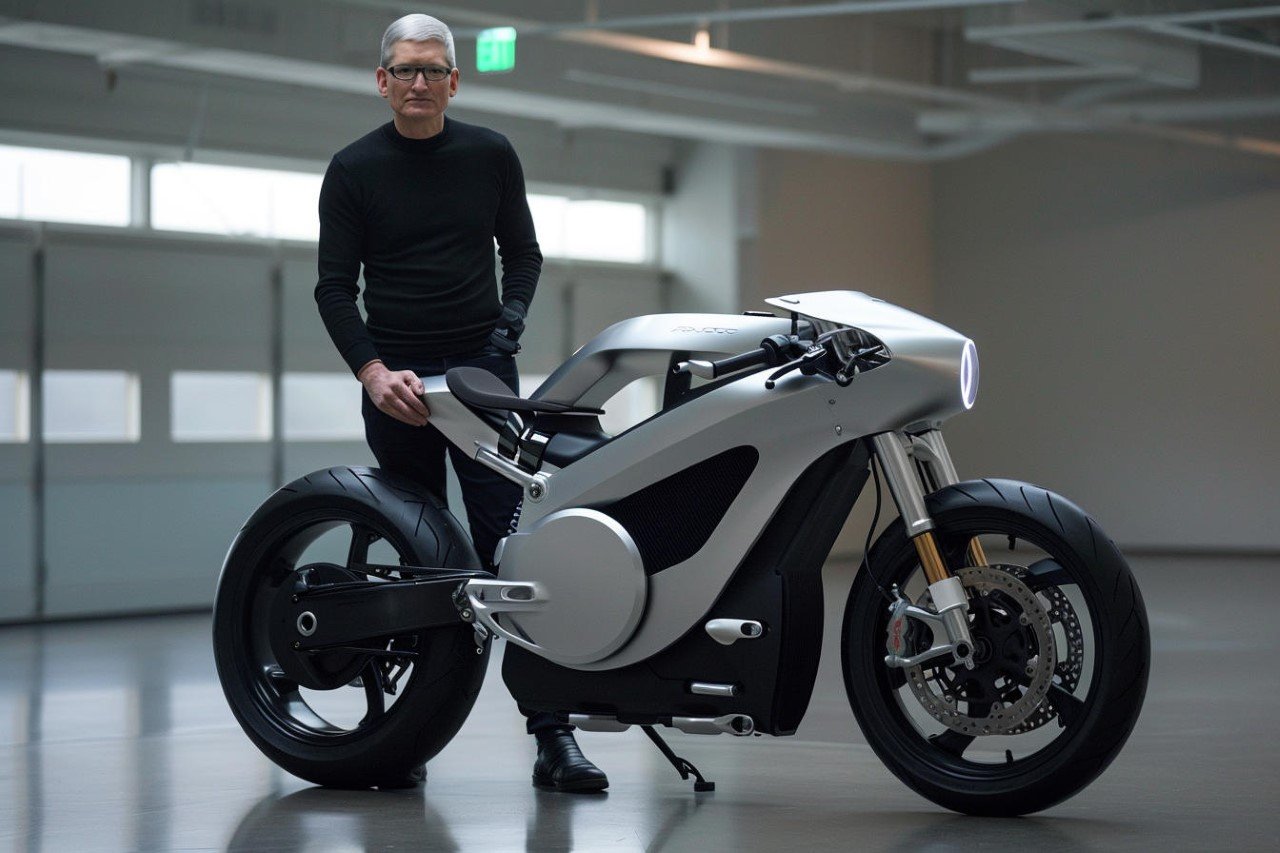
06. Apple e-Bike

Everyone was expecting an Apple Car, but alas, it wasn’t meant to be. The Apple Car was supposed to be Tim Cook’s effort at building an all-encompassing self-driving vehicle (he didn’t even want a steering wheel in it) with nothing but comfortable seating and infotainment. The car would boost Apple’s self-driving algorithms, but ultimately it was a way of pushing Apple’s services like Apple TV, CarPlay, Apple Music, etc. The Apple Car would ultimately lock horns with multiple giants in the field, Tesla, GM, Ford, the works… so why not enter a field that hasn’t seen much (or any) competition from the big automotive giants? An Apple e-bike would be a great transition into automobiles, it would help Apple understand riders, refine its maps service, and even boost their battery technology. All that could LATER be carried into EVs. Not to mention, the absolute lack of competition… but that’s something Apple has always avoided because it views its competition as a proof of a healthy market. That’s why it waited for Samsung to launch a Watch first, and for Meta, Microsoft, and dozens of other companies cut their teeth on AR/VR before launching the Vision Pro.

07. Apple HomeCam Security Camera

Apple prides itself on privacy and security on a software level – so why not on a hardware one too? The Apple HomeCam would be a perfect smart camera to keep in your house for an added layer of security. It would tie in perfectly with Apple HomeKit’s smart home dashboard, plus, imagine being able to have instant FaceTime calls with your house to check if everything is okay. A smart speaker was Apple’s first step in entering the home, a smart camera would be the logical next step. Yes, I was tempted to call this the Vision Cam but decided HomeCam was a better bet!

08. Apple Ring

Of all the products in this list, the most likely seems to be the Apple Ring, and for two reasons – the first, the Apple Watch is a great health wearable but it doesn’t have a battery that lasts weeks, and the second, Samsung is gearing up to launch their Galaxy Ring too, validating the market space. Ring wearables are great for a bunch of reasons – they don’t have screens so there’s really no distraction with notifications and whatnot, but more importantly, the lack of a screen means a MUCH better battery life. People can wear rings everywhere, and unlike a watch where you can only wear one on your wrist (you’d look stupid if you wore two watches), you can actually pair a health-tracking ring with other jewelry for something that’s sleek yet functional. Rumor has it that Apple’s been considering adding a ring to their portfolio, but then again, a lot of it hinges on how successful Samsung’s own efforts are. Besides, would you really want to wear an Apple Watch and an Apple Ring together? Seems like overkill, no?

09. Apple TV Projector

Probably more of a wishlist item than anything, the Apple TV Projector would be Apple’s first foray into projectors. The company already makes the Apple TV box that brings the company’s TV service to televisions. Wouldn’t it be great if they made a projector that could turn your wall into a theater, and fill your room with loud, balanced audio coming directly from the projector itself? Obviously, the projector would have to be an ultra-short throw (UST) one, because who really places projectors 10 feet away from walls anymore? I’d pay good money for a 4K UST Apple TV projector with the service built-in, along with a year of Apple TV+. Pair it with Apple Arcade’s gaming controller from earlier on in this article and you’ve got yourself a stellar immersive gaming rig.

10. Apple WiFi Router

Another area that Apple should enter is the wireless and cellular service business. Just like Apple entered the payments business to fix something that was broken, the company can enter the carrier business to provide high-speed internet to your homes at a fraction of the cost, and with all of Apple services baked in. Imagine paying a single fee for your internet and iCloud storage, and even getting your cellular plan as a bonus. Here, we’ve imagined an Apple WiFi router that broadcasts high-speed internet to every corner of your home, with a built-in VPN that protects user data because Apple cares for privacy. We threw in an Apple NAS (Network Attached Storage) too, so that your iCloud can live in your home instead of on a server in a different state or country.

Did I miss anything? What else do you think Apple should release? Or rather, which product category desperately requires Apple’s magic touch?

The post Top 10 Apple Products We Wish Existed – But Probably Never Will first appeared on Yanko Design.
Chinese Lantern-inspired Speaker Takes The HomePod Texture To New Cultural Heights

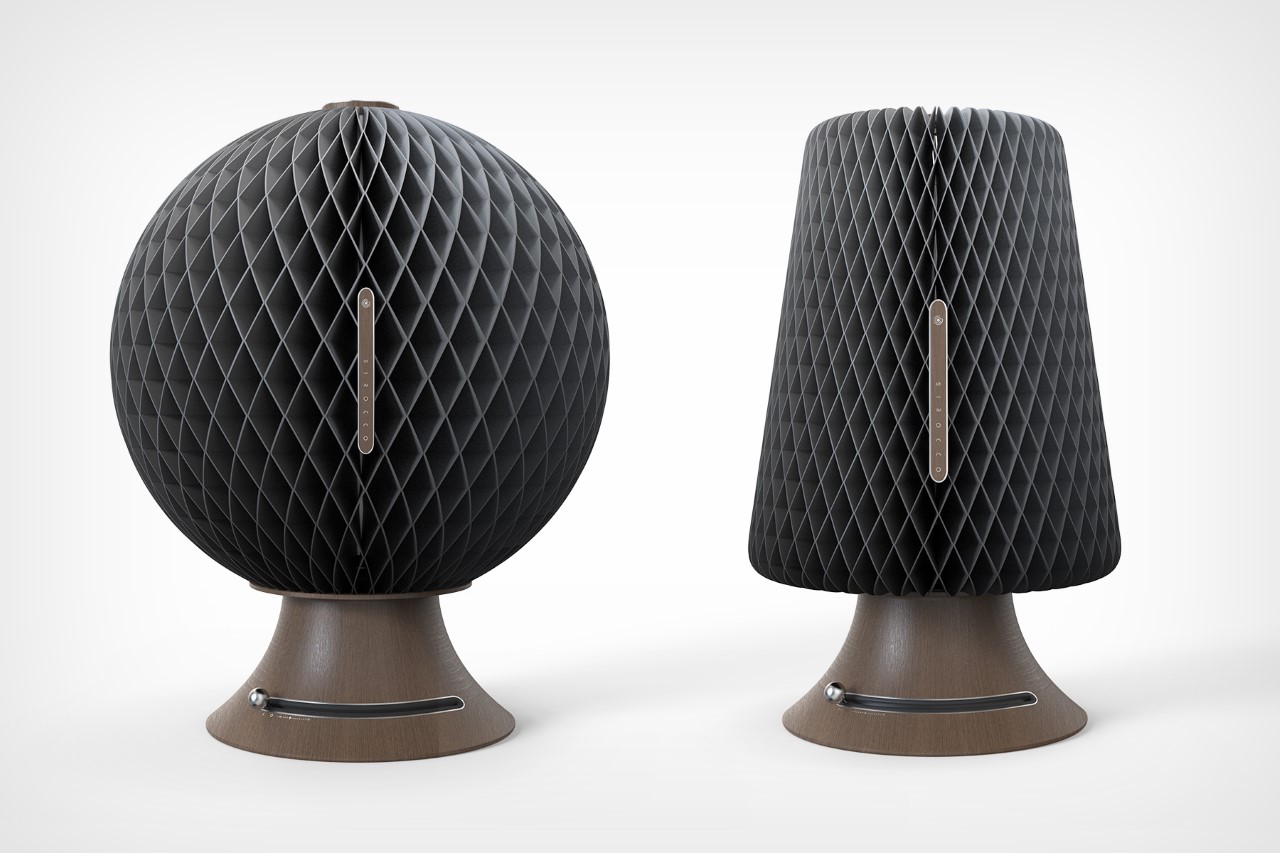
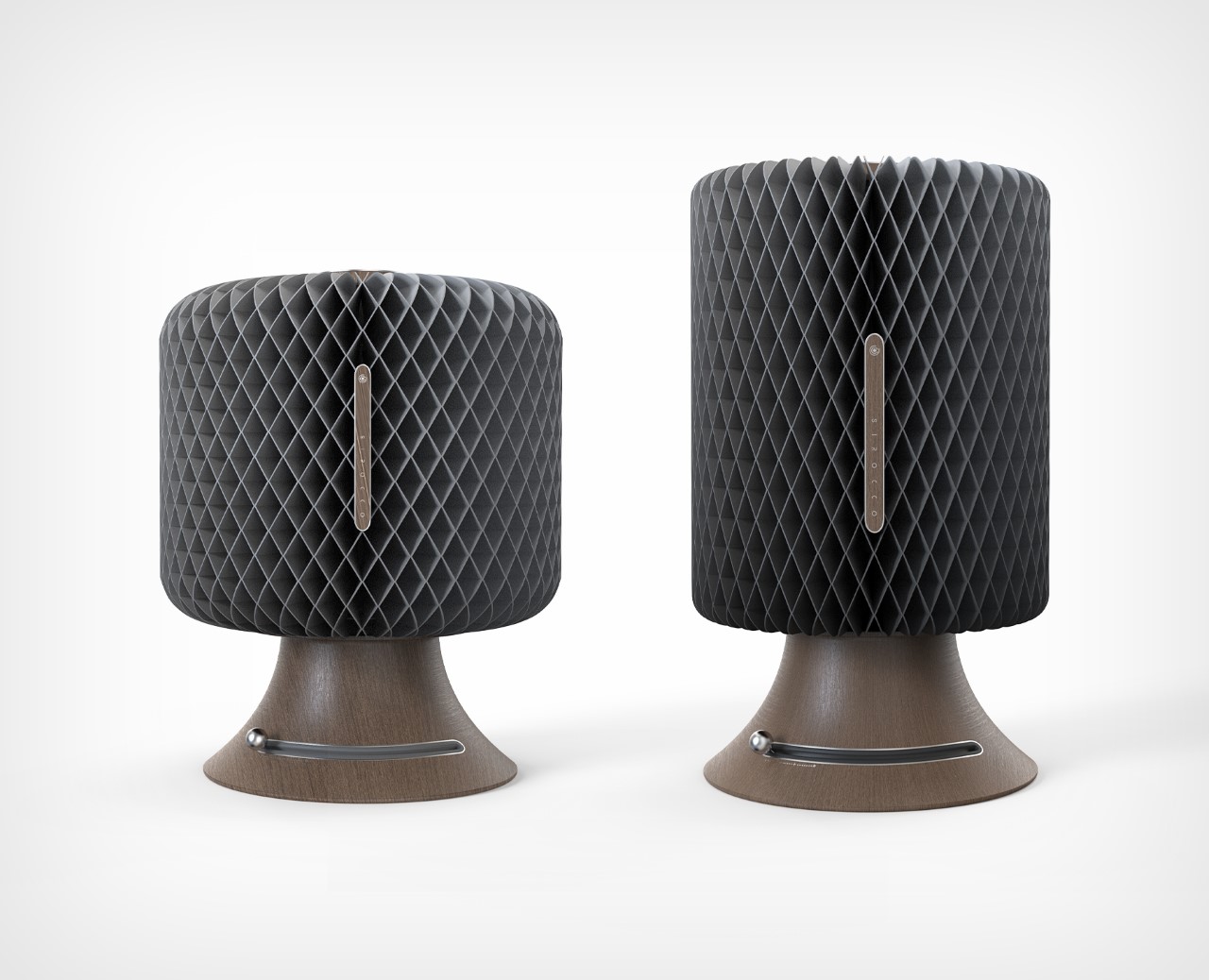
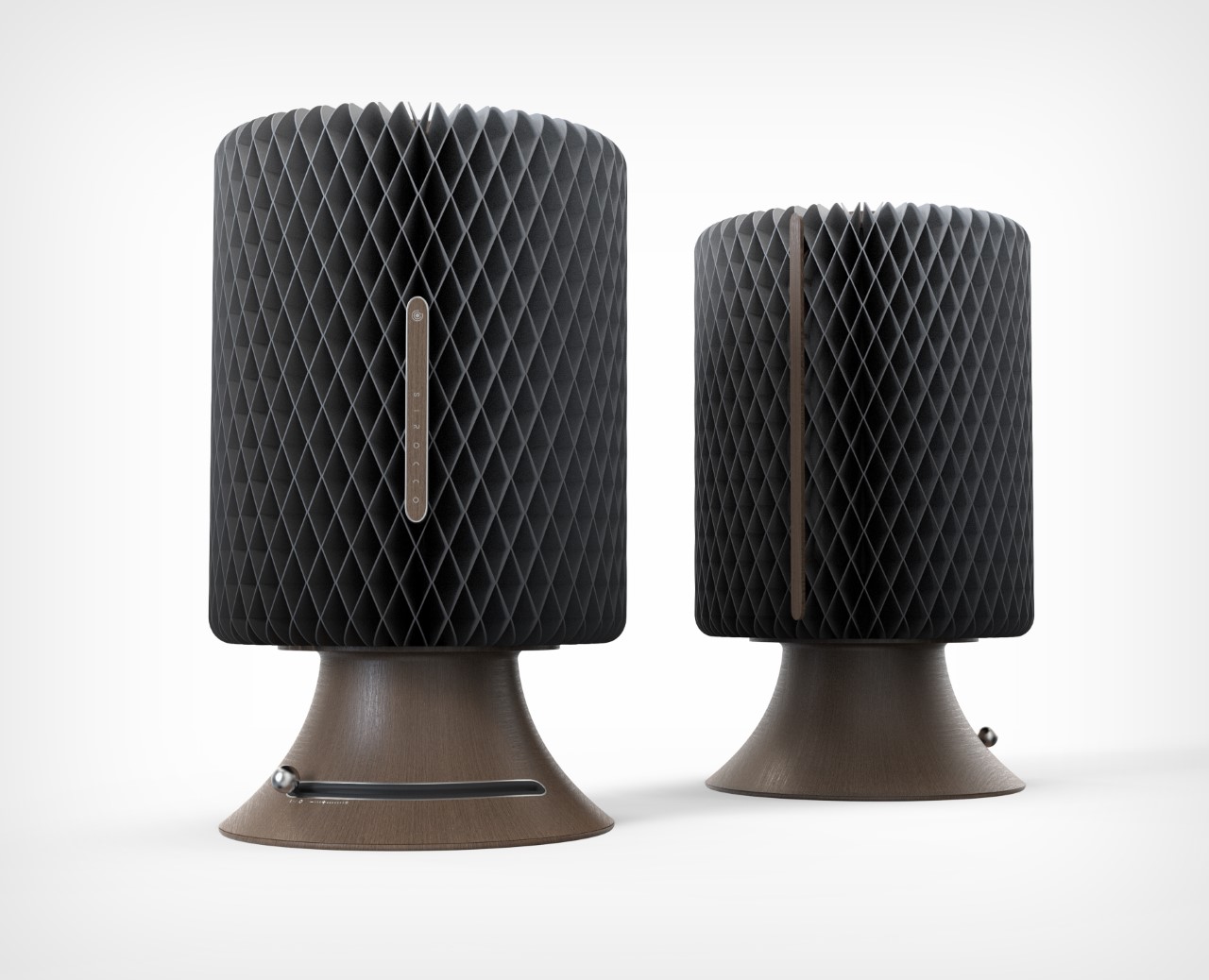
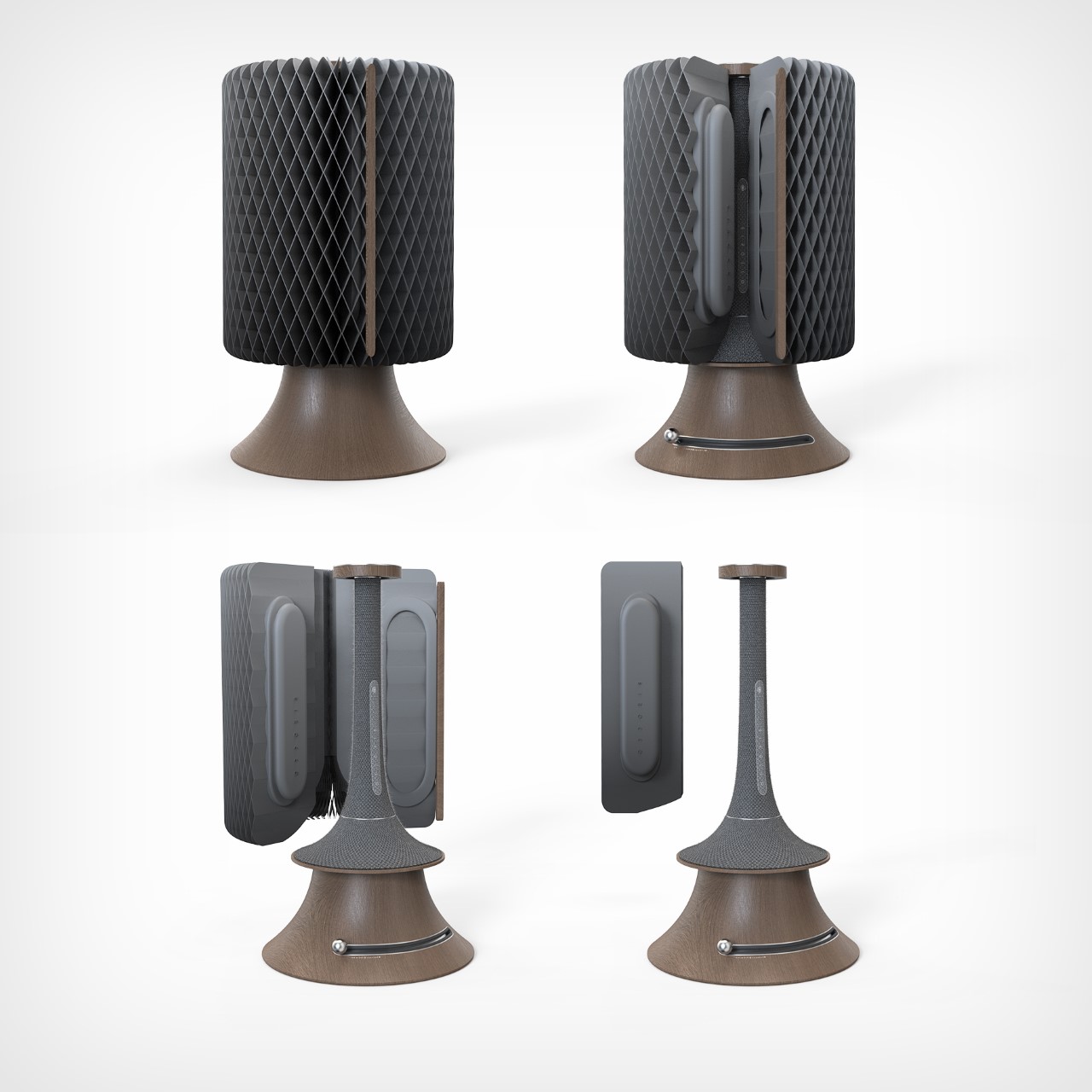
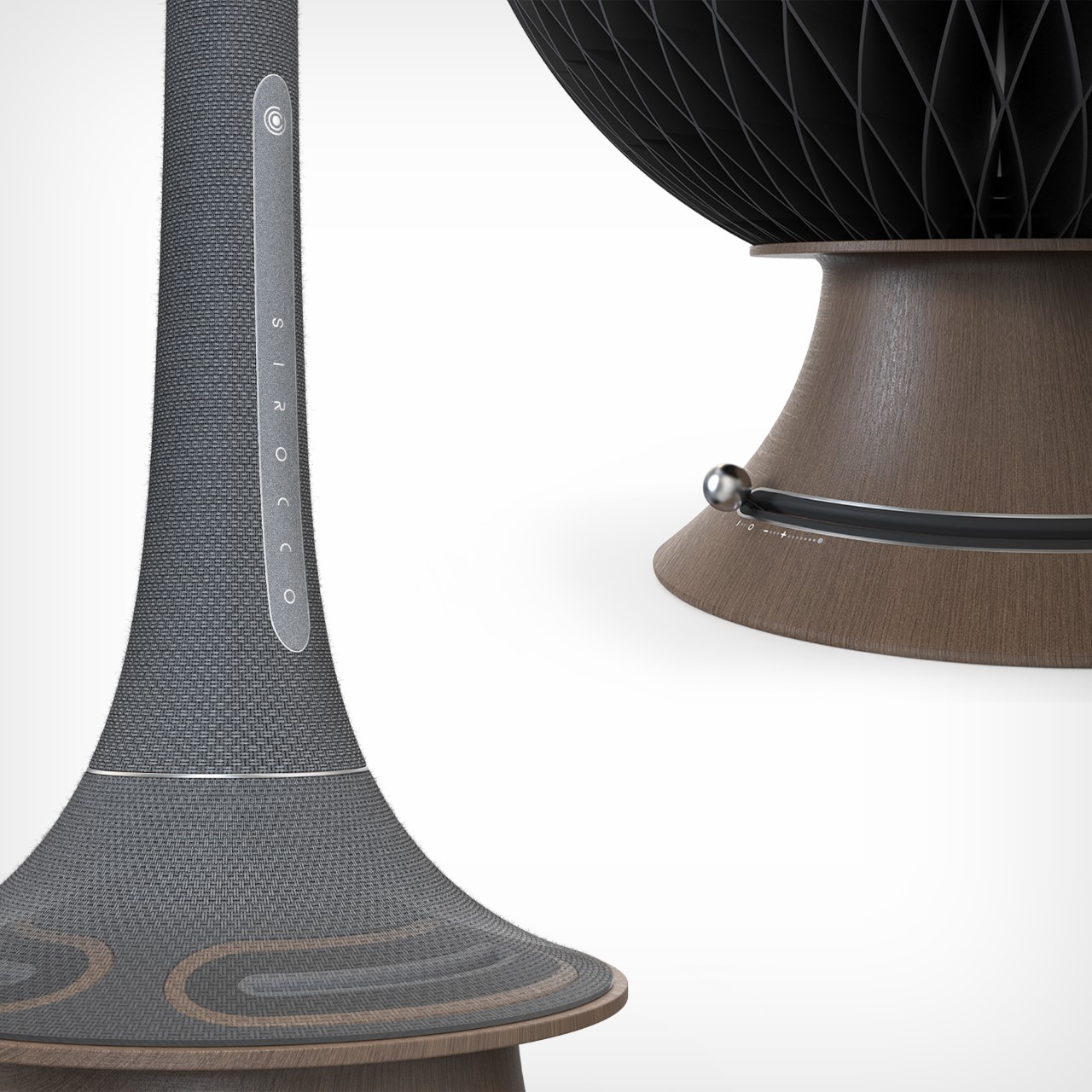
I’m sure that there’s a non-zero percentage of people who saw the first HomePod and were reminded of the paper lanterns that decorate each house during Chinese festivals. These lanterns use a thin crepe paper, joined at intervals to create a diamond-shaped honeycomb pattern not too different from the one seen on Apple’s HomePod, albeit at a much smaller scale. Designer Shengtao Ma saw this as an opportunity to more deliberately design a speaker that pays a hat-tip to tradition. The Sirocco Speaker is a slim audio unit with a decorative cover that tributes the lanterns seen in Chinese culture. The speaker’s cover folds open and close just like the lantern, attaching around the speaker’s slender stem-shaped design. The result is something that’s sculptural yet functional, with a cover that can be changed on demand, and a tactile knob on the bottom for controlling the speaker’s volume.

Designer: Shengtao Ma

The Sirocco Speaker comes in multiple shapes and sizes, resembling the traditional lantern seen in Chinese and other Asian cultures

Shengtao Ma makes a case that the speaker’s foldable outer structure plays a role in amplifying the sound. The speaker itself is a slim, vertical number, but the different diamond-shaped elements act as acoustic chambers, helping channel and amplify the audio much like cupping your hands around your mouth. Whether this theory works in reality is yet to be determined, but the concept secured an A’ Design Award this year.

“This speaker further conducts and diffuses sound through its unique honeycomb structure design, thereby further enhancing the user’s experience and music quality. This speaker is foldable. The speaker’s shell is stowable and modular, and comes with a variety of shell shapes that can be replaced at any time according to the user’s mood and home environment,” Shengtao says. “The foldable honeycomb structure at the upper end can be assembled and disassembled by rotation, making it easy to replace, store, and clean.”

The post Chinese Lantern-inspired Speaker Takes The HomePod Texture To New Cultural Heights first appeared on Yanko Design.
Balloonapkins Turn Every Meal Into A Celebration By Bringing A Touch Of Fun And Whimsy To The Table

For many, especially women, the joy of hosting a party lies in the details. Every element, no matter how small, contributes to the overall atmosphere and aesthetic of the event. It’s these little touches that can make a gathering truly memorable, and Balloonapkins are the perfect addition to elevate your party decor.

Designer: PELEG DESIGN

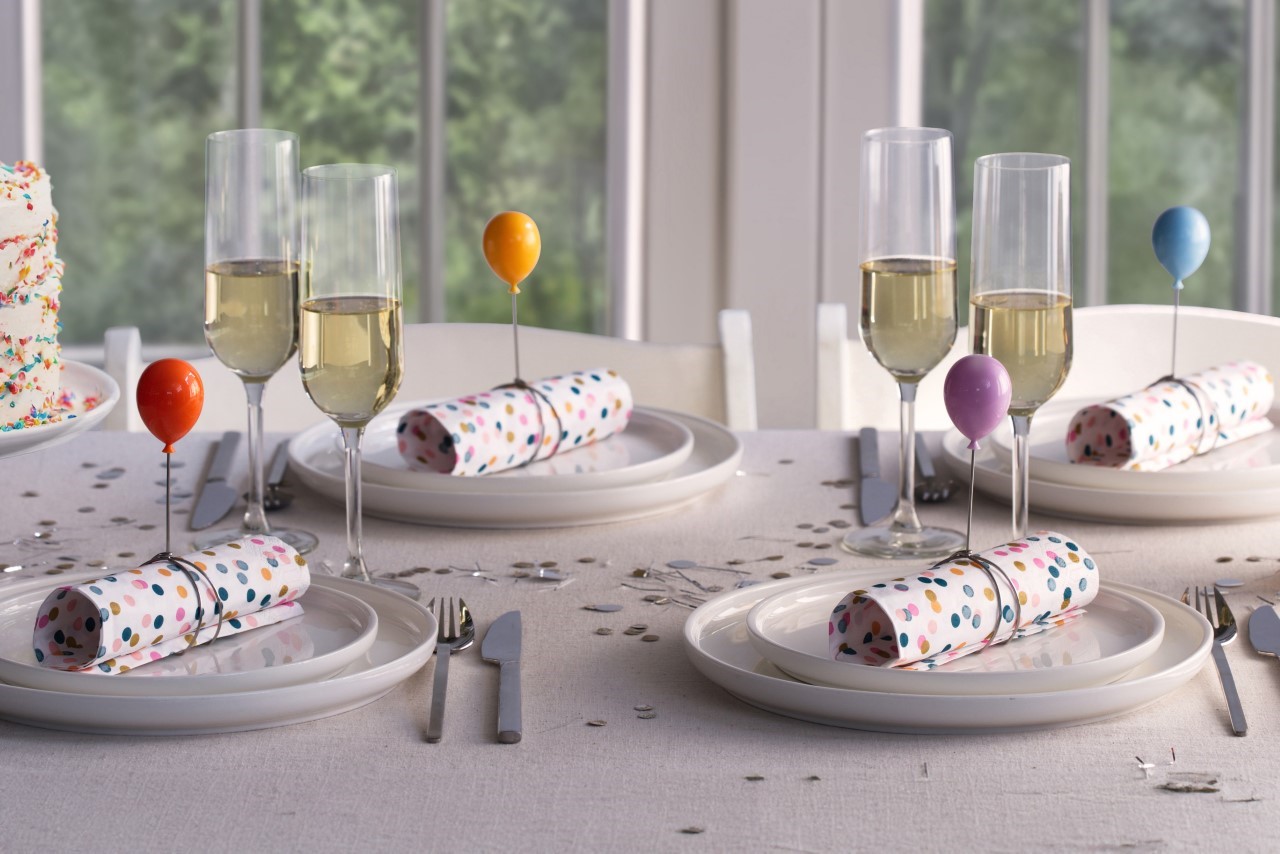
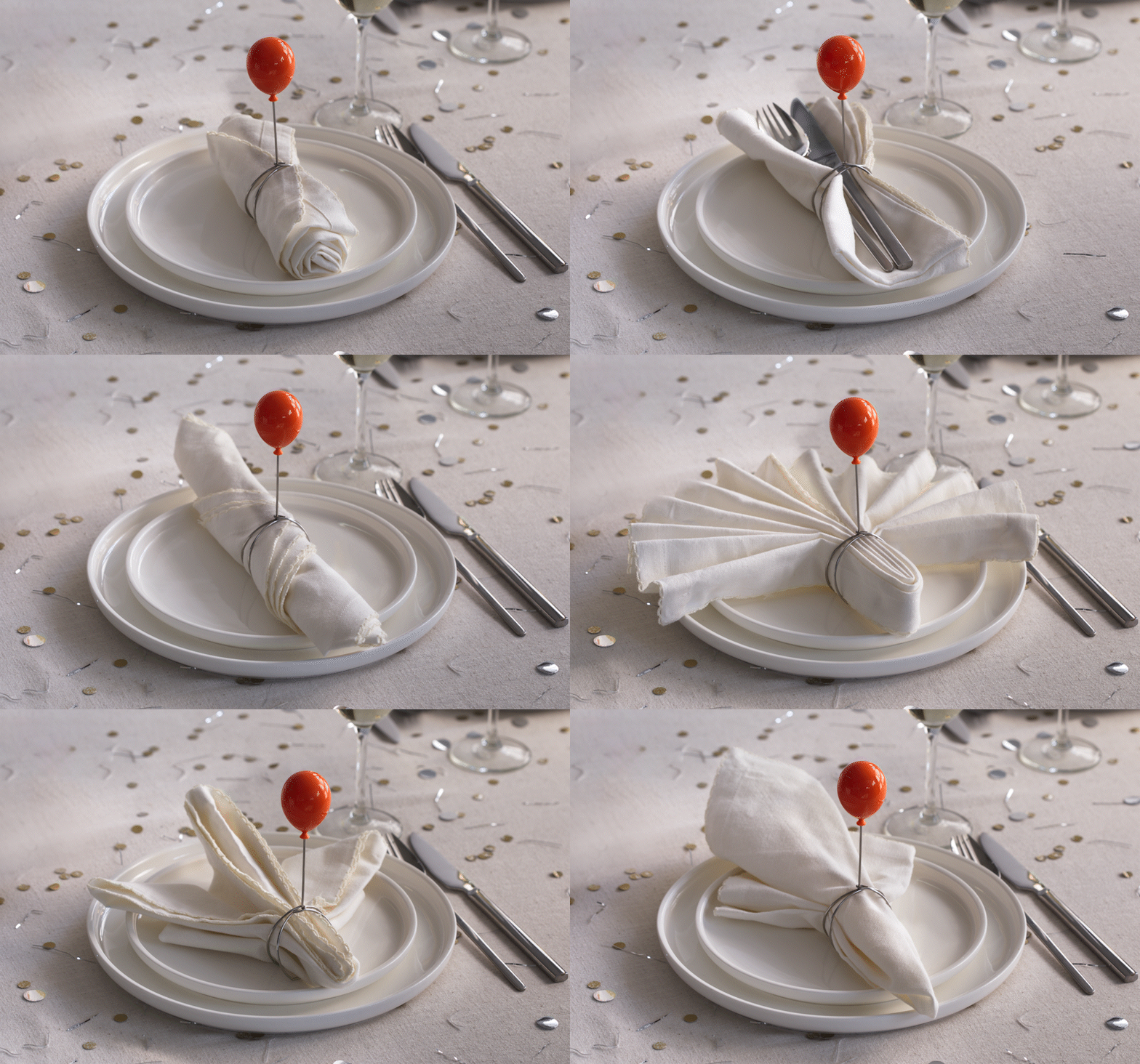
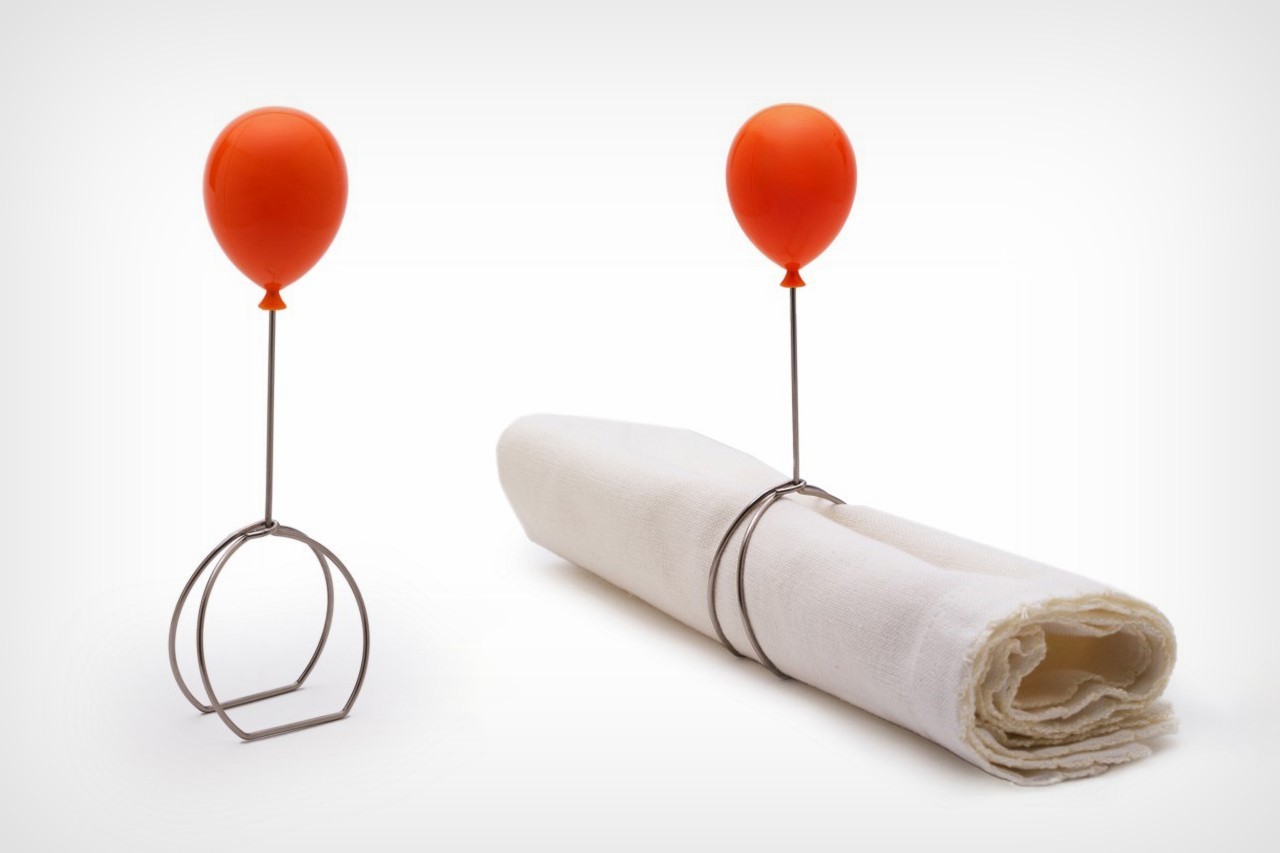
Balloonapkins, with their whimsical design, are more than just napkin holders – they are conversation starters. Shaped like colorful floating balloons, these napkin rings bring a lighthearted, joyful vibe to any table setting. Imagine the delight of your guests as they encounter these charming decorations, sparking conversations and creating a lively, happy environment.

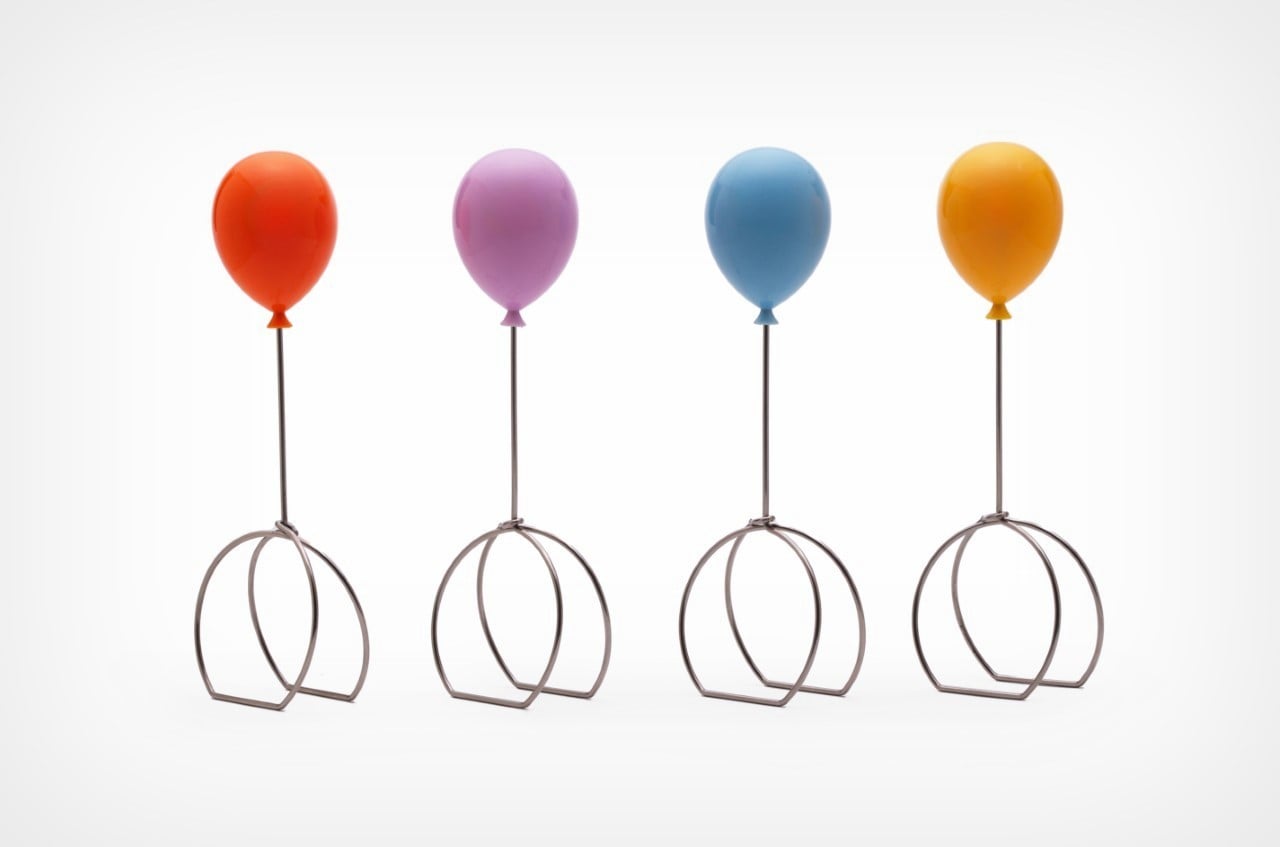
One of the standout features of Balloonapkins is their versatility. The thoughtfully chosen colors are designed to complement almost any party theme, ensuring they fit seamlessly into your decor whether you’re hosting a child’s birthday party, a gender reveal, or any other festive occasion. You’ll never have to worry about them clashing with your color scheme.

Moreover, unlike most party items that are disposable and only good for one or two uses, Balloonapkins are designed for sustainability. Made from durable metal wire and plastic, these napkin rings are built to last through multiple parties. This not only makes them an eco-friendly choice but also a cost-effective one, as you can reuse them time and again.

Safety is also a key consideration in their design. With no exposed edges, Balloonapkins are safe for all guests, including children. Their sturdy construction means they can withstand the rigors of enthusiastic partygoers, ensuring your table setting remains intact throughout the event.

Imagine being known for having that unique factor at your gatherings. Balloonapkins offer just that – a distinctive touch that sets your parties apart. Your guests will remember the fun and creativity of your table settings long after the party is over.

The post Balloonapkins Turn Every Meal Into A Celebration By Bringing A Touch Of Fun And Whimsy To The Table first appeared on Yanko Design.

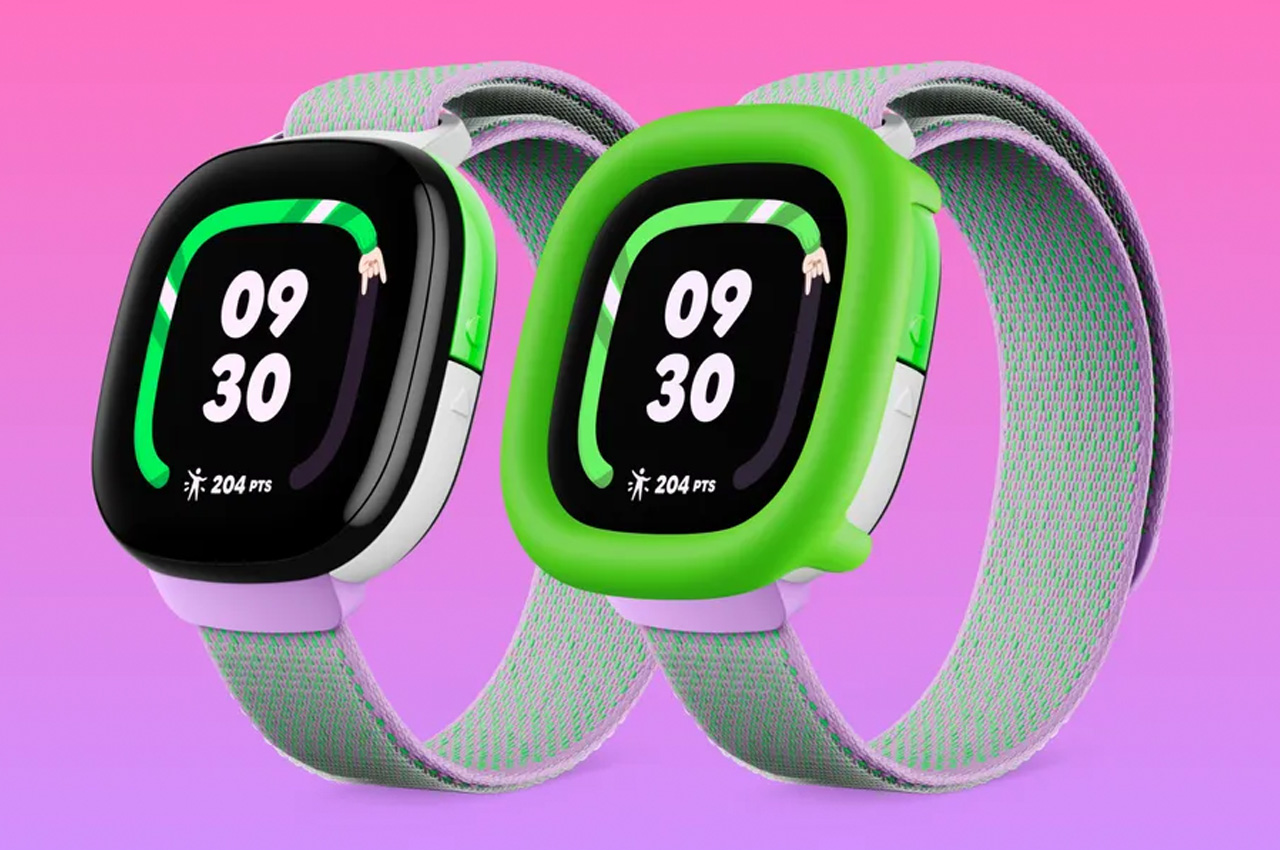
Fitbit Ace LTE smartwatch pulls kids from screens to indulge in rewarding playtime

The other day my 7-year-old nephew refused dinner until his father allowed him access to the smartphone after the meal. This was difficult for me – someone outside of parenting primary school children – to digest. I realized controlling screen time is a big issue for parents handling kids in this age group. These kids are distancing themselves from outdoor sports and playtime only means video games.

Smartwatches have very little share in this. Perhaps, the screen real estate makes them mere child trackers rather than motivators, while smartphones or game consoles enjoy the lion’s share. Even when the smartwatch has more potential to allow kids some distraction from eye-straining mobile screens. Google with Fitbit has been exploring this possibility for a couple of years; now it seems to be rolling out that potential wearable that could provide “benefits of a smartphone. Without the smartphone” in your child’s hand.

Designer: Fitbit

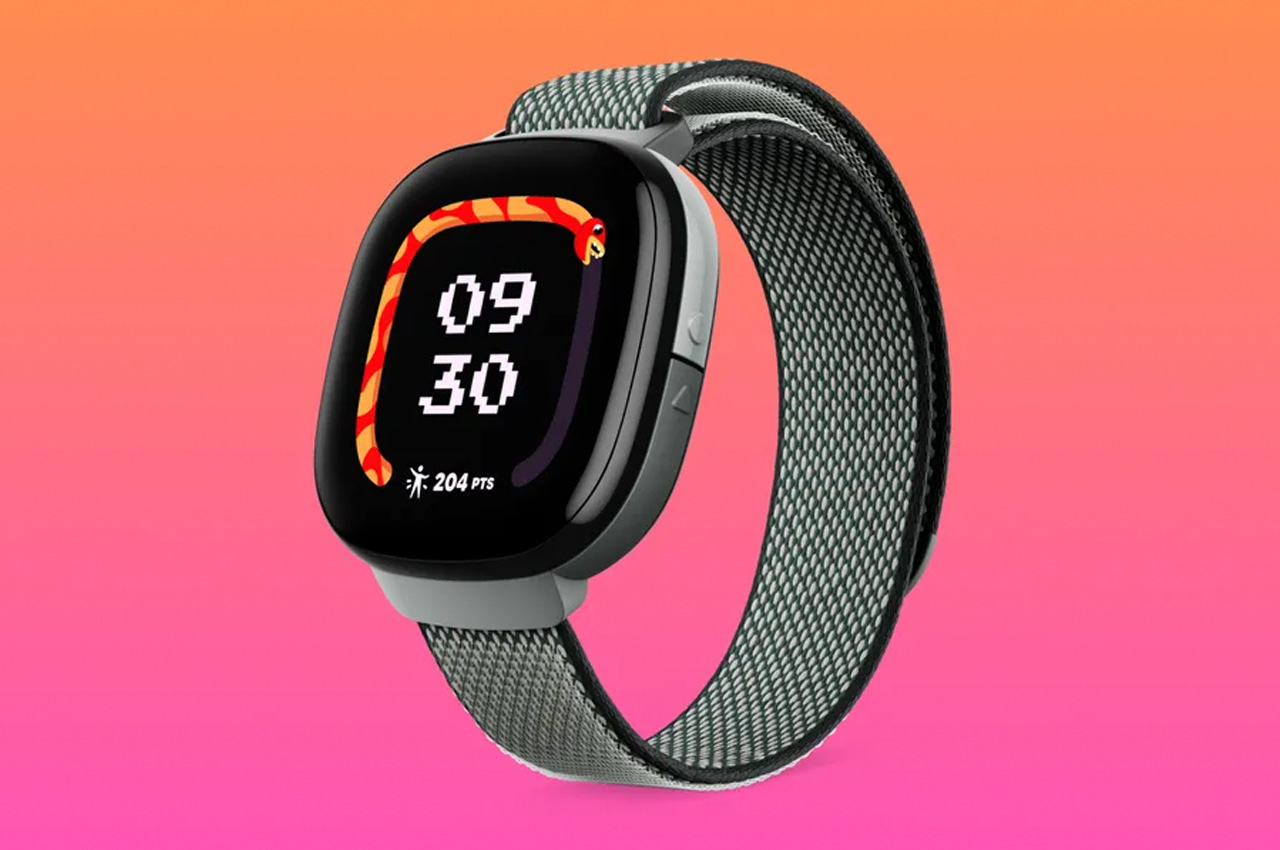
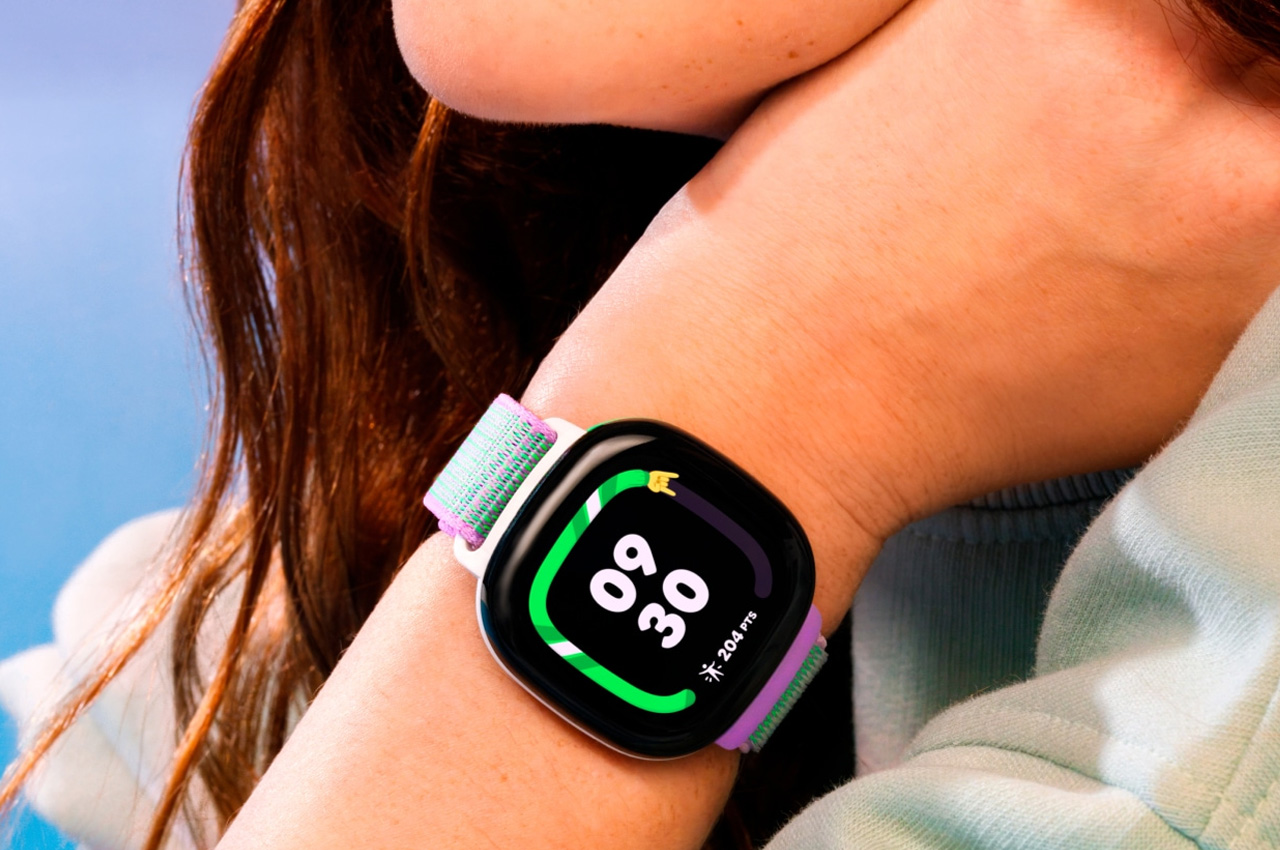
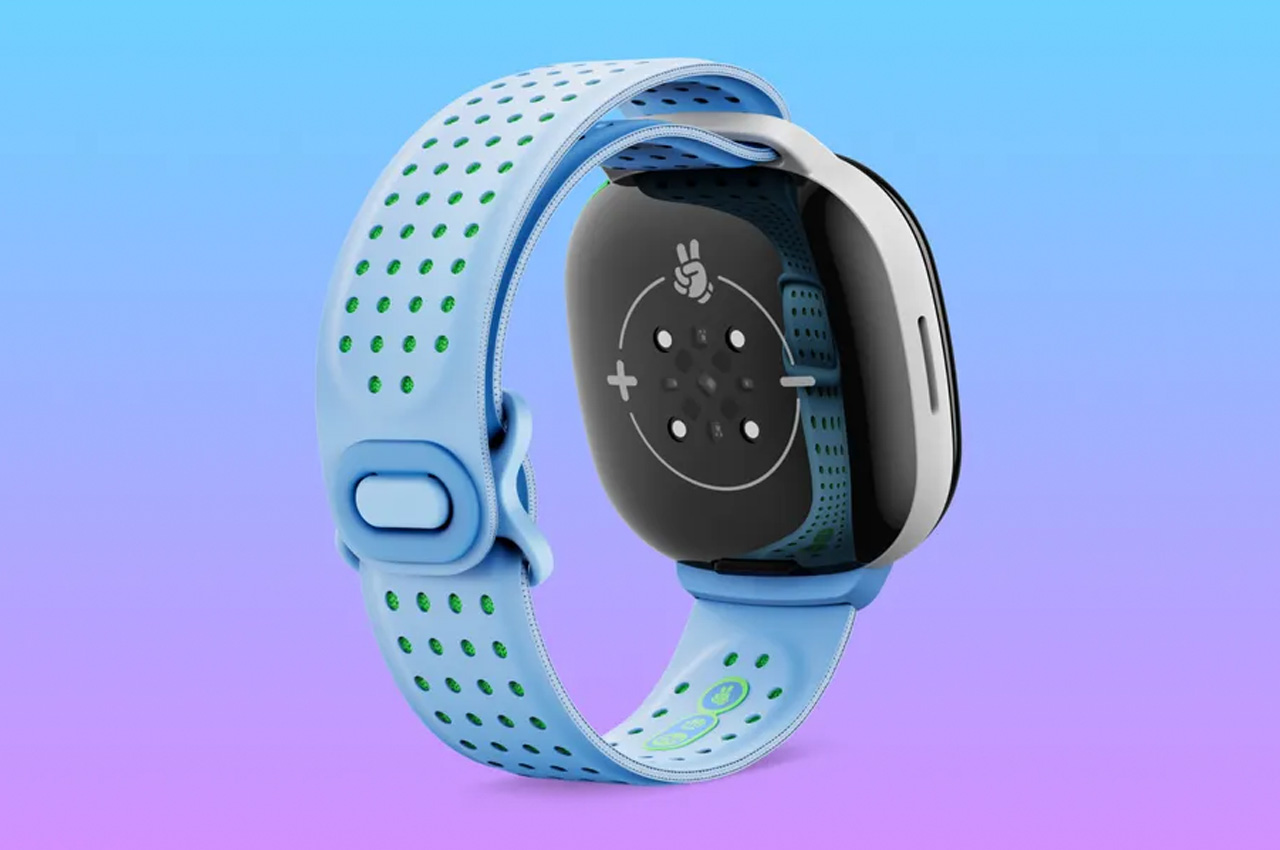
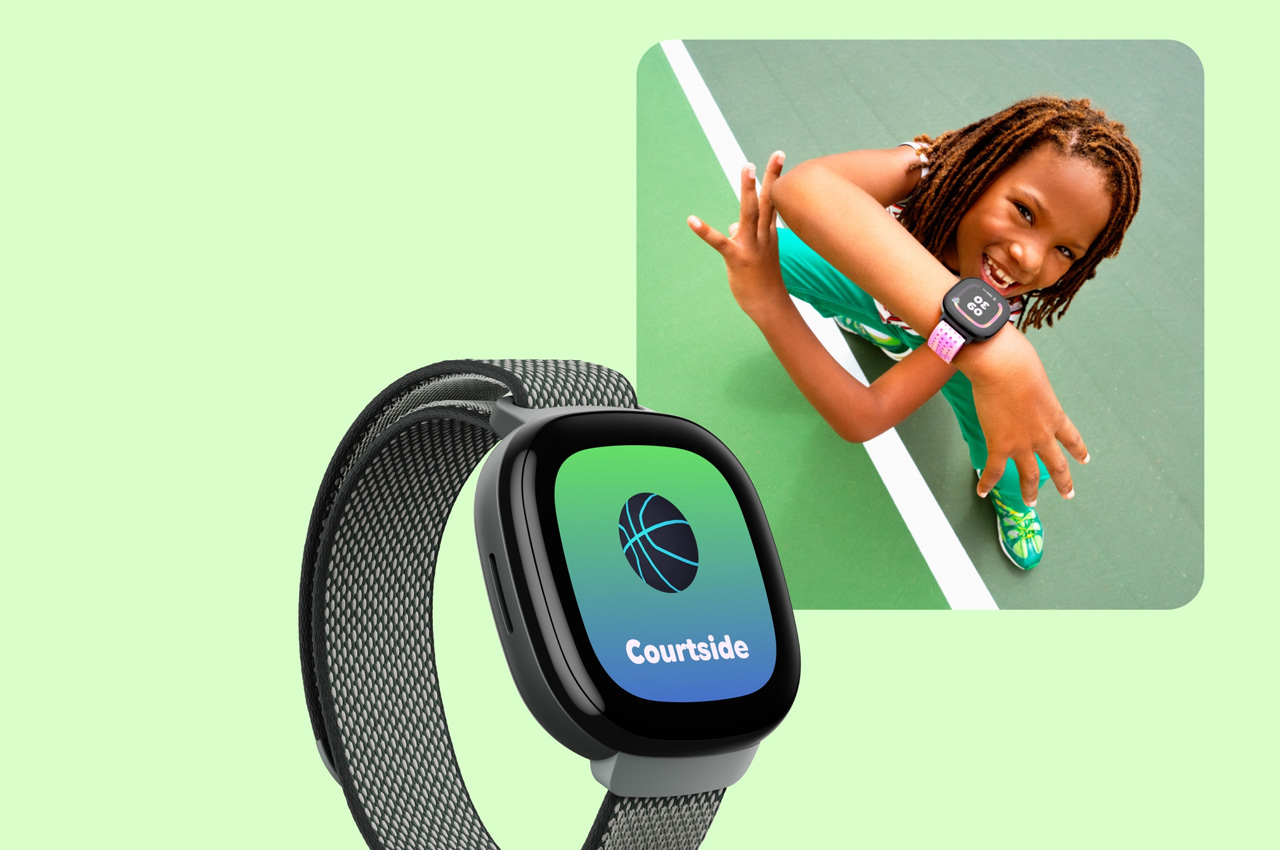
Enter the Fitbit Ace LTE, the first of its type wearable for kids ages 7+ that combines playtime with video games to get kids active without compromising too much on their ongoing lifestyle. By bringing immersive, interactive 3D games to the child’s wrist, Fitbit may have just crossed the line, but its interesting idea to align gametime with playtime really places the device in my good books.

The more a child plays (moves) the more games they unlock on their Ace LTE. This is a simple motivation mantra around which the entire wearable is designed. Because it’s going to be on the child’s wrist all the time, this is not the only feature it packs: privacy and parental control are the driving pillars. Powered by webOS, the Fitbit Ace using Fitbit Ace Pass and the Fitbit Ace app, allows parents to track their child’s real-time location, call or text them, send and receive voice messages, and even set trusted contacts that are permitted to interact with the child. For safety, the child’s location or activity data is deleted every 24 hours while their activity data is erased after 35 days of backup.

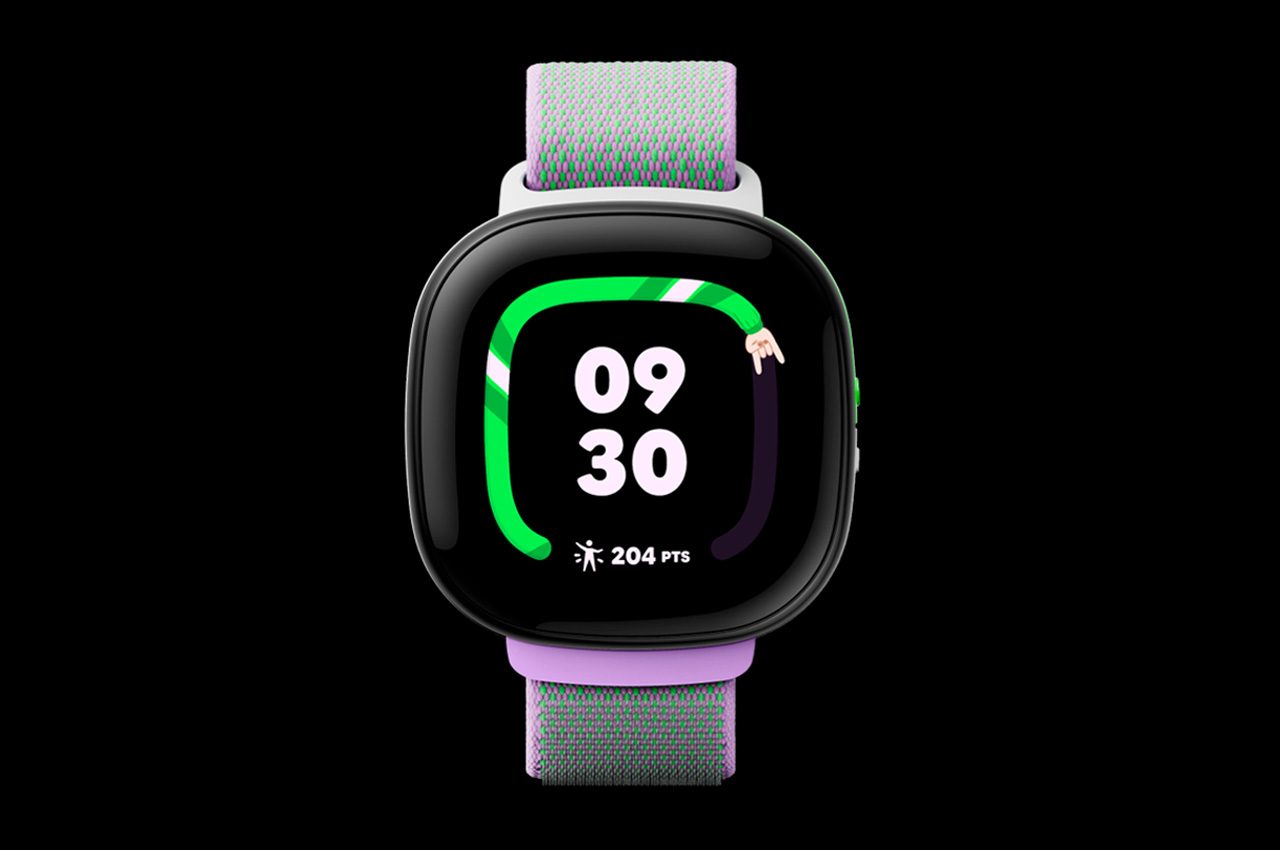
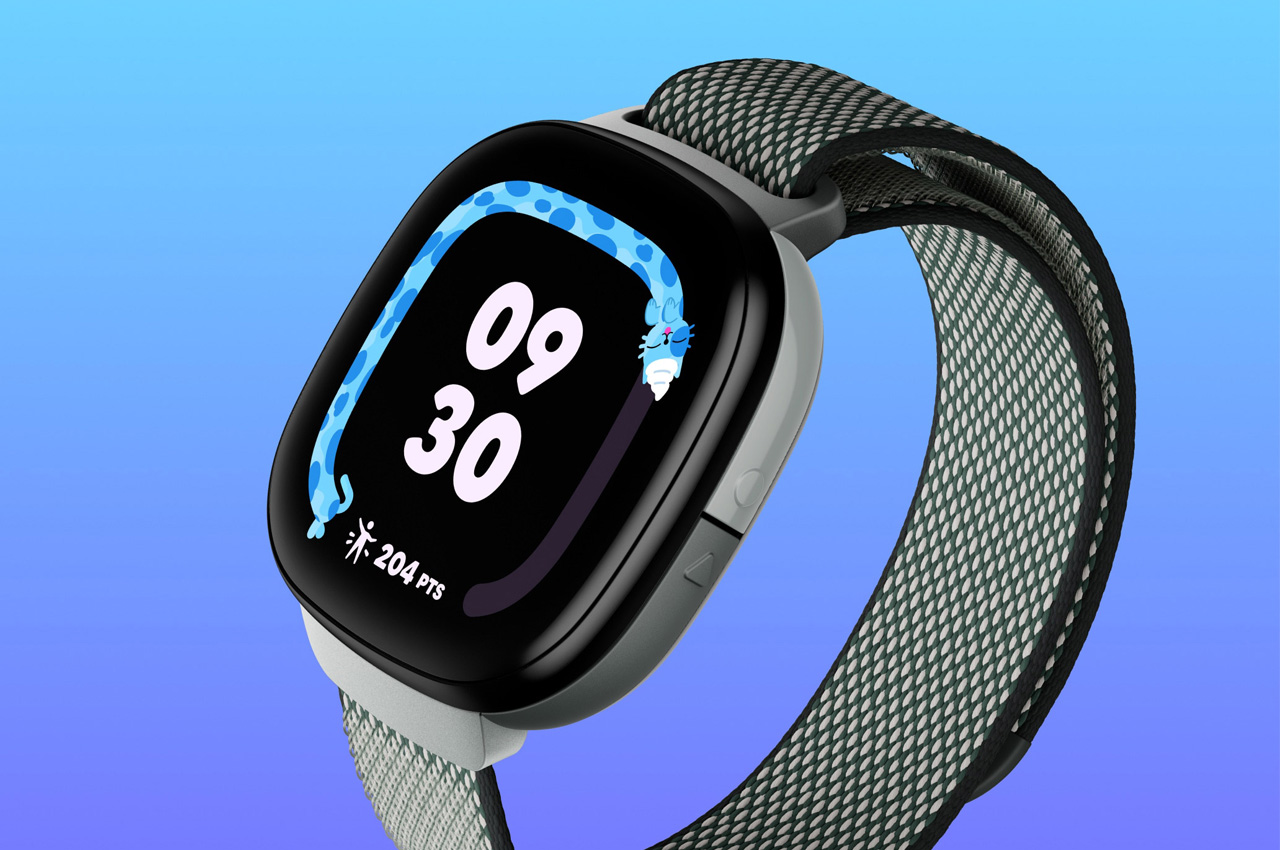
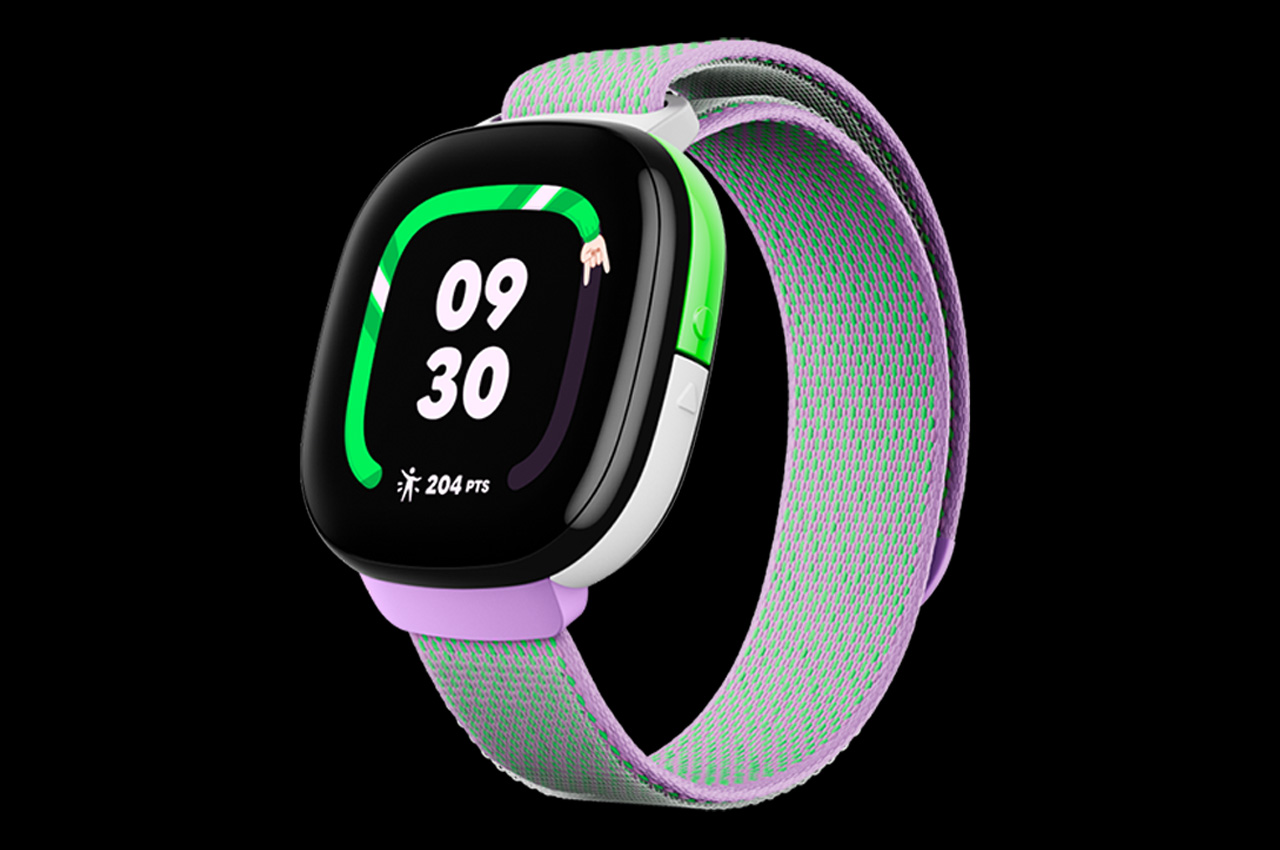
To recognize and reward, Fitbit Ace LTE kid’s smartwatch uses Google’s self-developed movement algorithm to accurately measure kids’ physical activity whether they’re “playing hide and seek, jumping on the bed or having a sibling dance-off,” Google notes. The idea is to encourage and motivate all types of movement – visible in ‘Noodle,’ an activity ring on the watch home screen – and reward the same with new games and more game time.

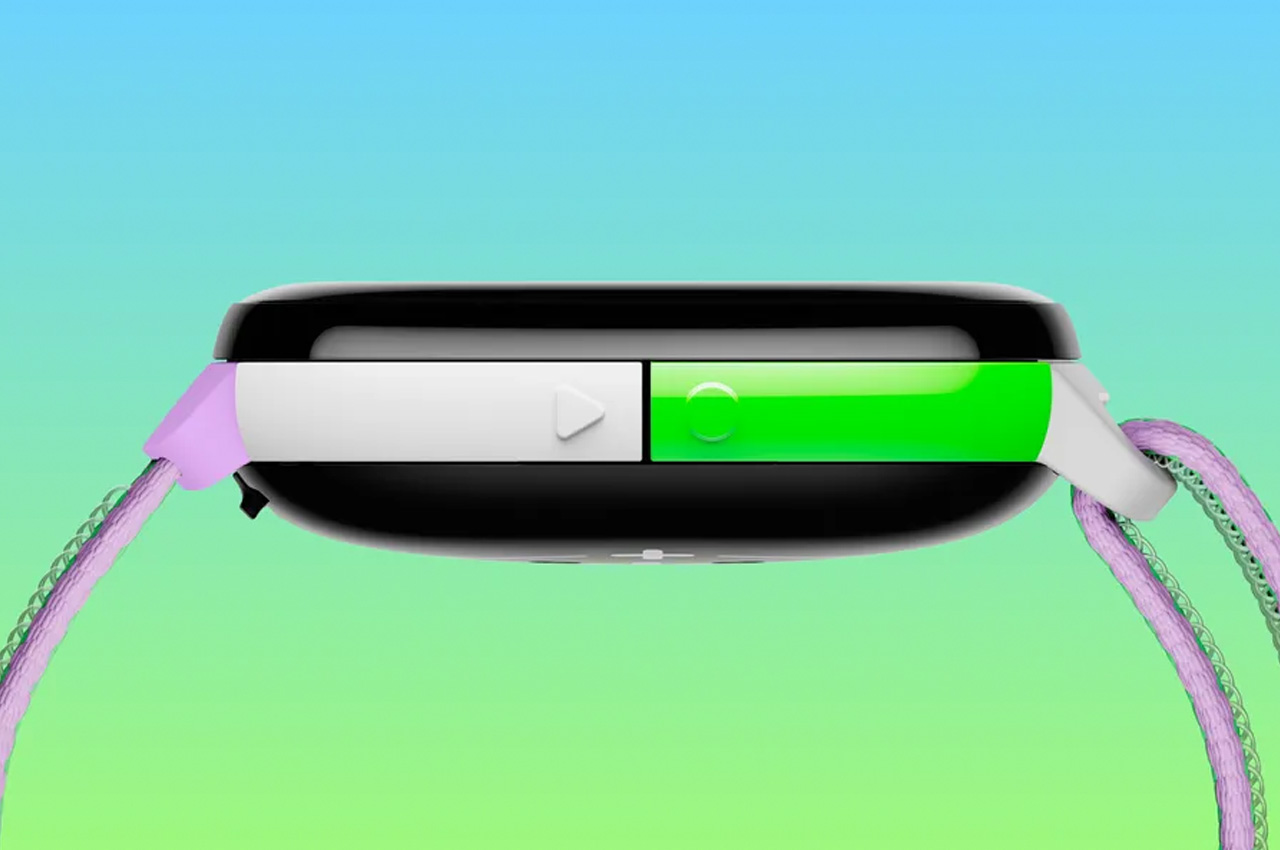
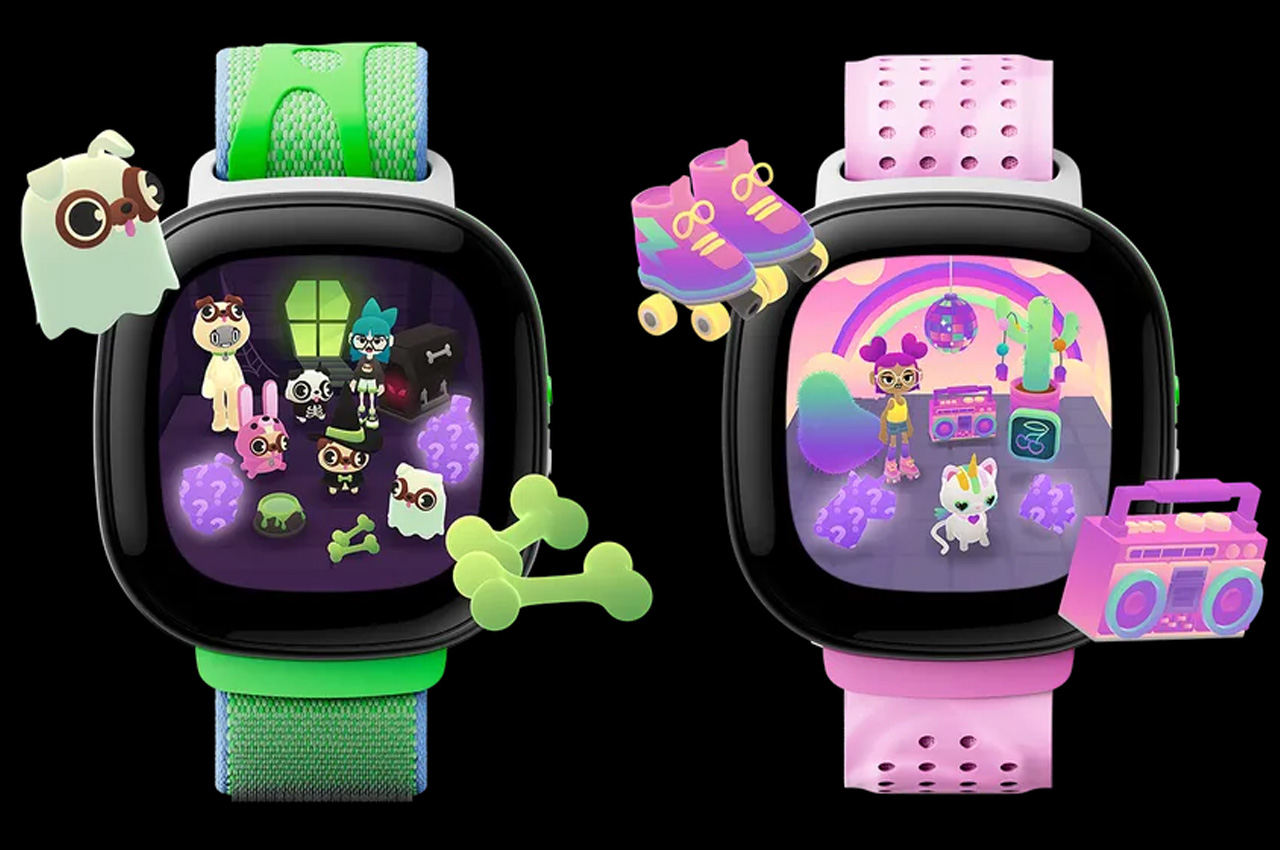
Noddle is not the only weirdo on the Fitbit Ace LTE. Kid’s get their own customizable Eejie that stays happy off the wearer’s daily physical activity. So, the more kids clock their activity goals the happier their Eejie gets. And besides customizing the Eejie, kids can also use different watch bands that clip on and unlock ‘different items, styles, rooms and Noodles’ to interact and play with. With 16 hours of playback time, 50-meter water resistance, and a scratch-resistant display, the Fitbit Ace LTE is available for preorder at $229.95.


The post Fitbit Ace LTE smartwatch pulls kids from screens to indulge in rewarding playtime first appeared on Yanko Design.