Apple may introduce a photo authentication tool in iOS 27
Reference Image could be a new way to prove provenance in the wake of generative AI.

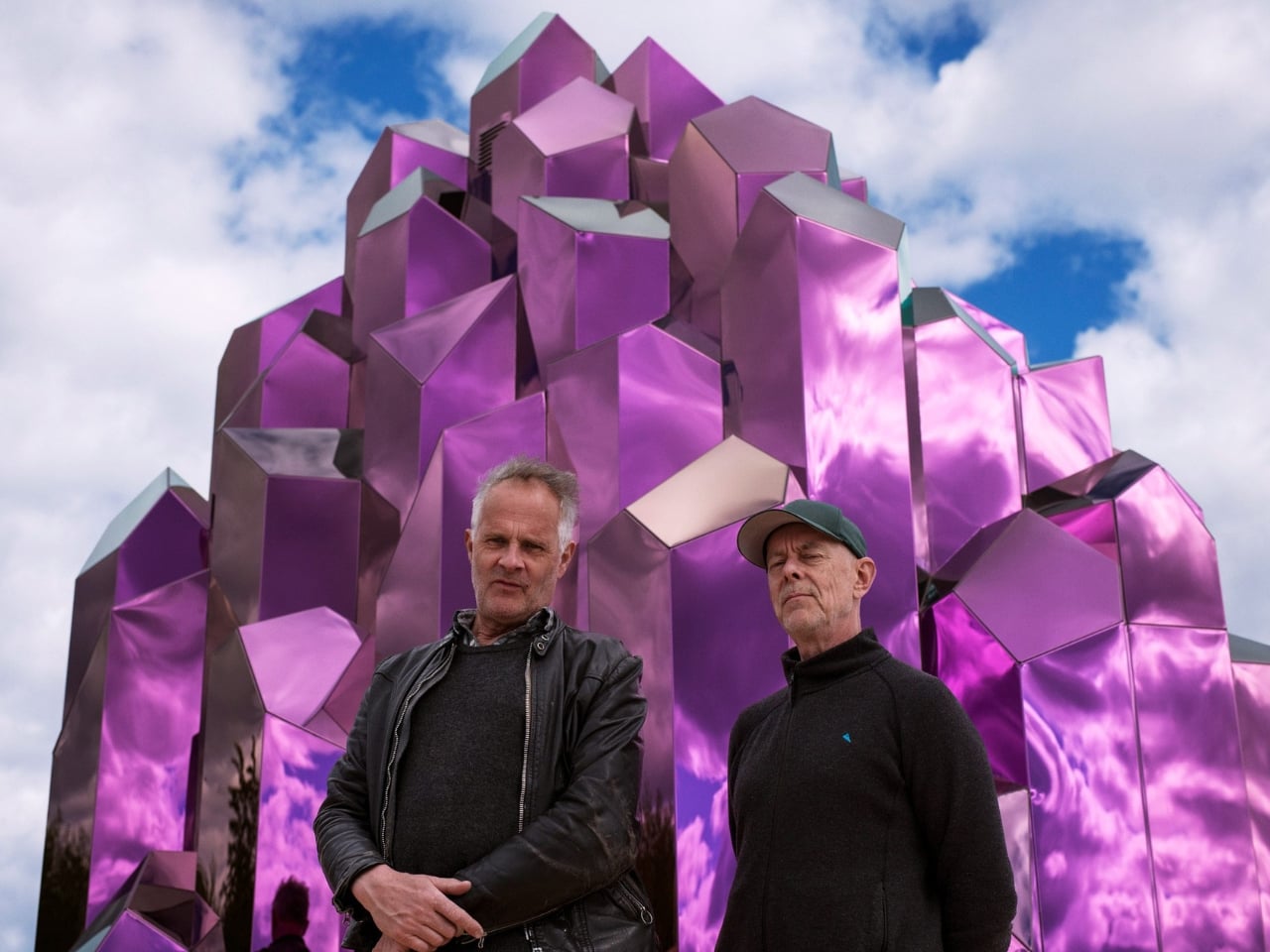
A pink, faceted sculpture sits on the edge of a former industrial wasteland in northern Sweden, catching the river and forest across its mirrored steel skin. It looks like something that fell from a fever dream. Or like a prop someone left behind after filming a sci-fi movie. Look closer and you’ll realize it’s a sauna. A fully functioning, publicly accessible sauna shaped like a giant lithium crystal. And it’s one of the most quietly radical things built in 2026.
The Lithium Crystal Sauna is the work of Stockholm-based artist duo Bigert & Bergström, installed at WasteLand, a newly inaugurated climate action park in Skellefteå, Sweden. The park sits on land that was, not long ago, a polluted industrial site, a place shaped by a century of extraction, production, and environmental consequence. That context is not incidental to the work. It’s the entire point.
Designer: Bigert & Bergström

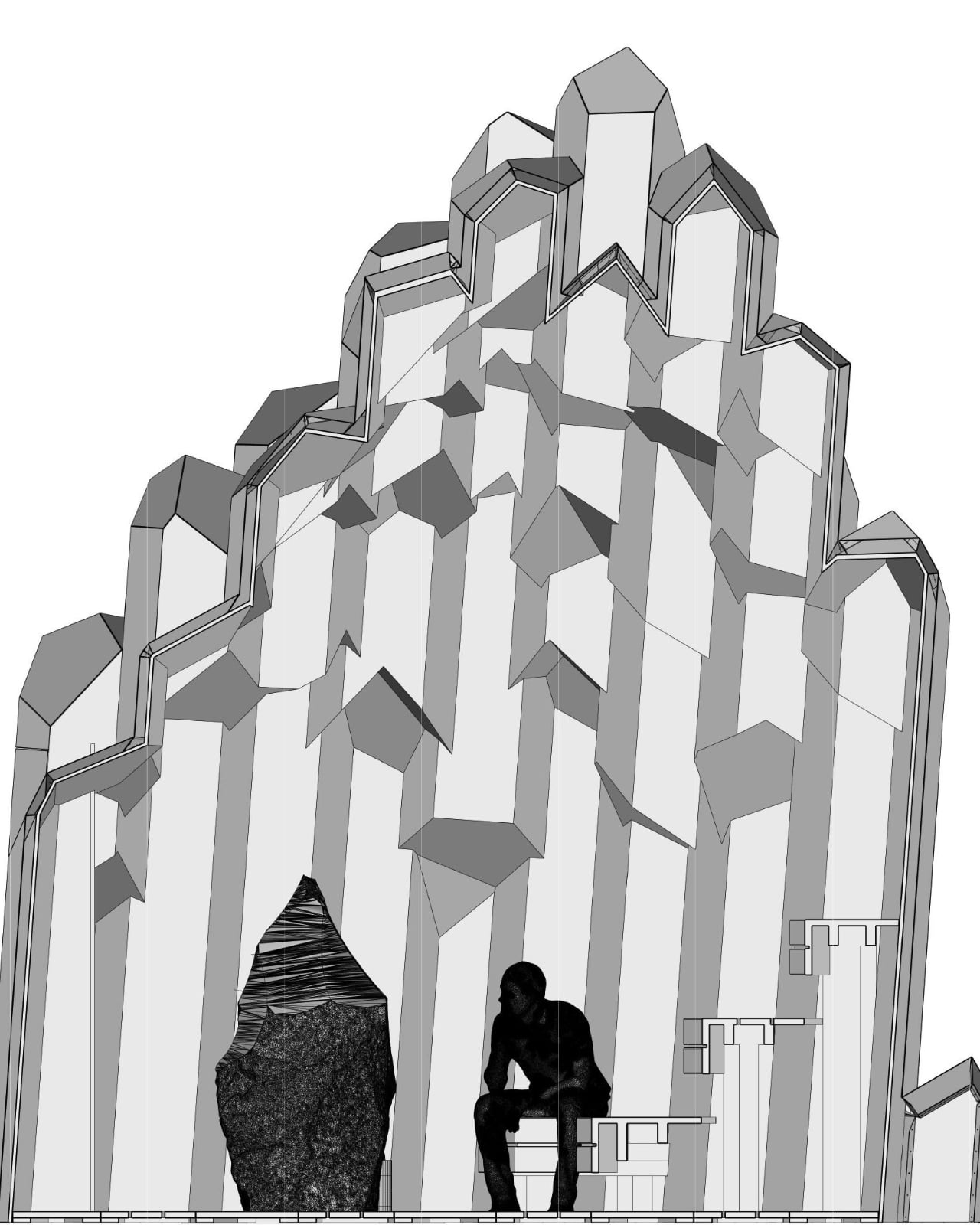
From the outside, the sauna is clad in pink titanium-coated mirror steel, its asymmetrical facets borrowing their geometry from the structure of an actual lithium crystal. It doesn’t blend into the landscape. It confronts it. The mirrored panels throw back whatever surrounds it: the recovering forest, the river, the sky, and presumably your own reflection looking slightly baffled and very impressed. As a sculptural object, it earns its place on a shortlist of the most visually arresting public art installations of recent memory.
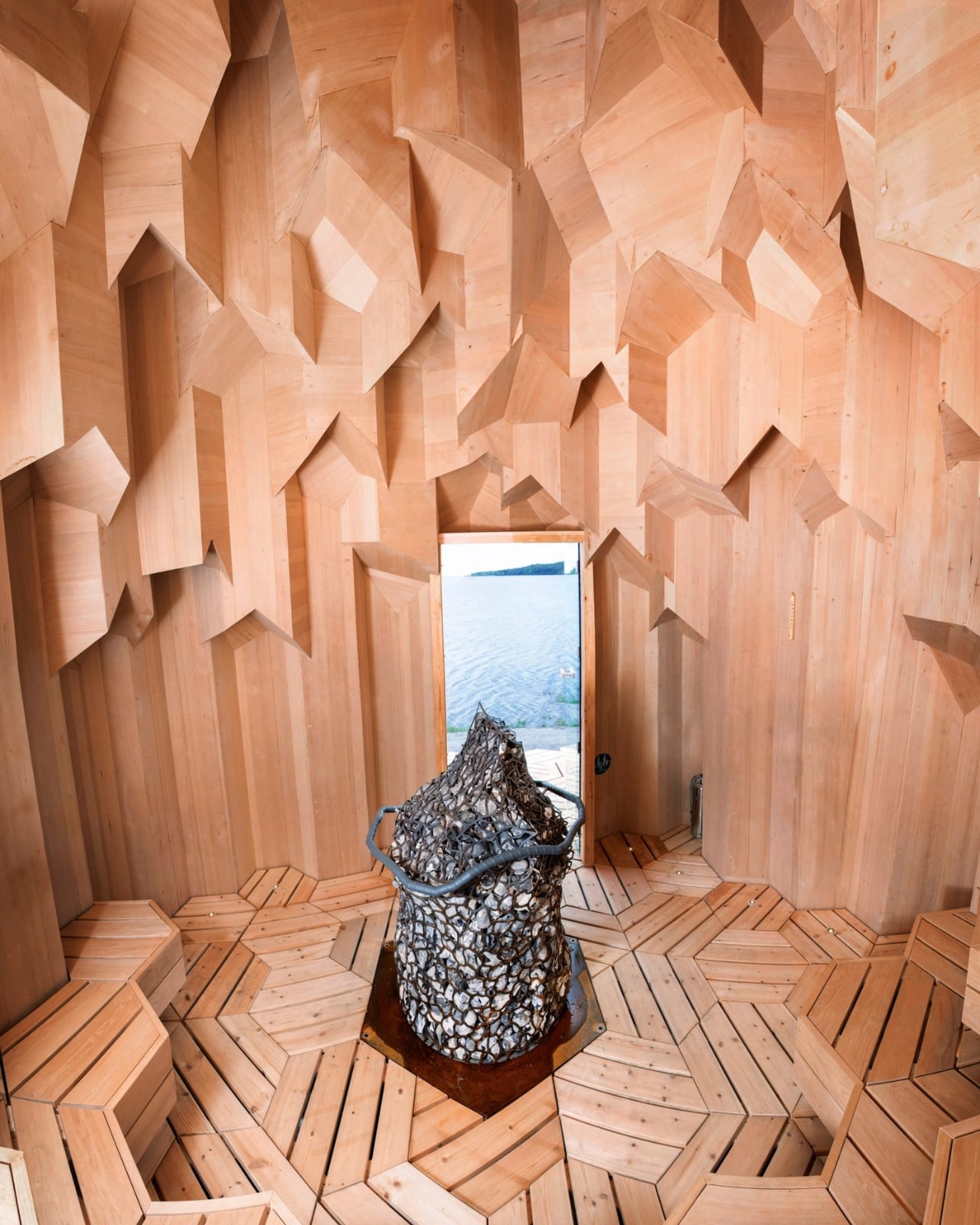
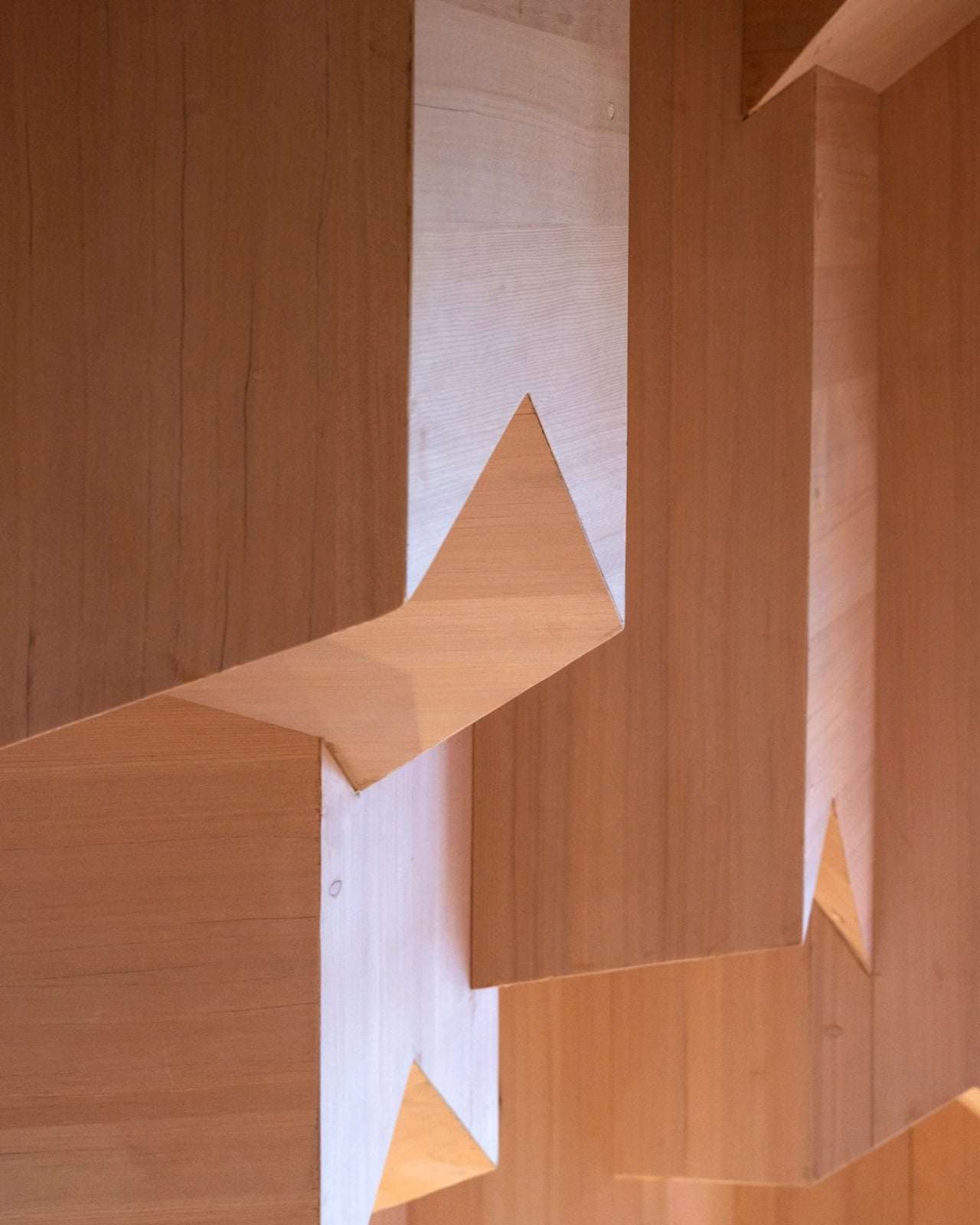
But walking through the door changes everything. Inside, the industrial exterior gives way completely to a warm wooden grotto lined with alder and heartwood pine. Flint and olivine stones sit around the heater. Copper, glass, and LEDs complete the interior. The hexagonal seating echoes the crystal geometry of the outer shell, a small detail that rewards anyone paying attention. The whole space is built to create what the designers describe as a contrasting sensory experience, and the contrast delivers. Going from a mirrored shell to a wood cave is as disorienting as it is beautiful, and I mean that as a compliment.

The material choice of lithium is pointed. Lithium is the mineral at the center of the global battery economy, the thing inside electric vehicles and renewable energy storage systems, and also the driver of a new wave of mining pressure on landscapes not unlike the one WasteLand now occupies. By building a sauna in the shape of a lithium crystal and powering it with a battery, Bigert & Bergström make an argument without saying a word. The Lithium Crystal Sauna is the world’s first battery-powered sauna, running on electricity from standalone batteries and electric vehicles. Through the “Vehicle-to-Sauna” project, Swedish energy company Skellefteå Kraft is developing technology that allows an electric vehicle battery to power both the sauna and the surrounding park. It is, depending on your disposition, either delightfully clever or almost too on-the-nose. Possibly both.

For those familiar with Bigert & Bergström’s earlier work, the Solar Egg, a golden egg-shaped sauna installed in Kiruna where mining had literally forced the city to relocate, this feels like a continuation of a practice that consistently uses warmth, community, and the ritual of the sauna to process what we do to the land we live on. Both works are beautiful. Both carry weight. The difference is that Lithium Crystal Sauna arrives at a moment when the conversation around the green transition has grown more complicated, when the environmental cost of the technologies we’re counting on to save us is harder to look away from.
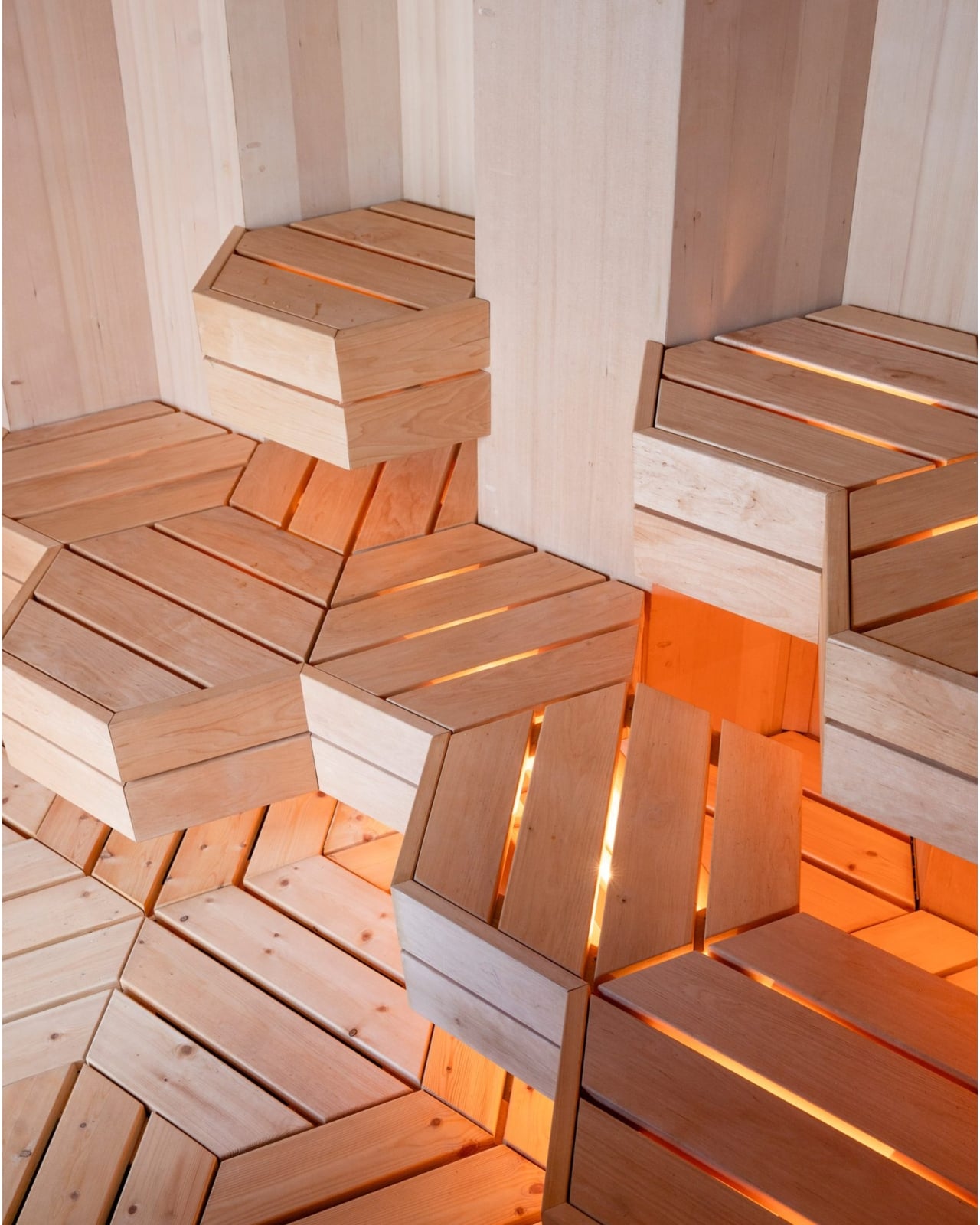

That’s the tension the piece holds without resolving. It doesn’t tell you how to feel about lithium mining or energy transition or the long afterlife of industrial landscapes. It puts you inside all of that, quite literally, makes it warm, and lets you sweat. Good art makes you sit with the uncomfortable question. Great art makes that sitting feel almost pleasant. This one heats you up and lets you figure out the rest.

The post Sweden Built a Pink Crystal Sauna on a Toxic Wasteland first appeared on Yanko Design.
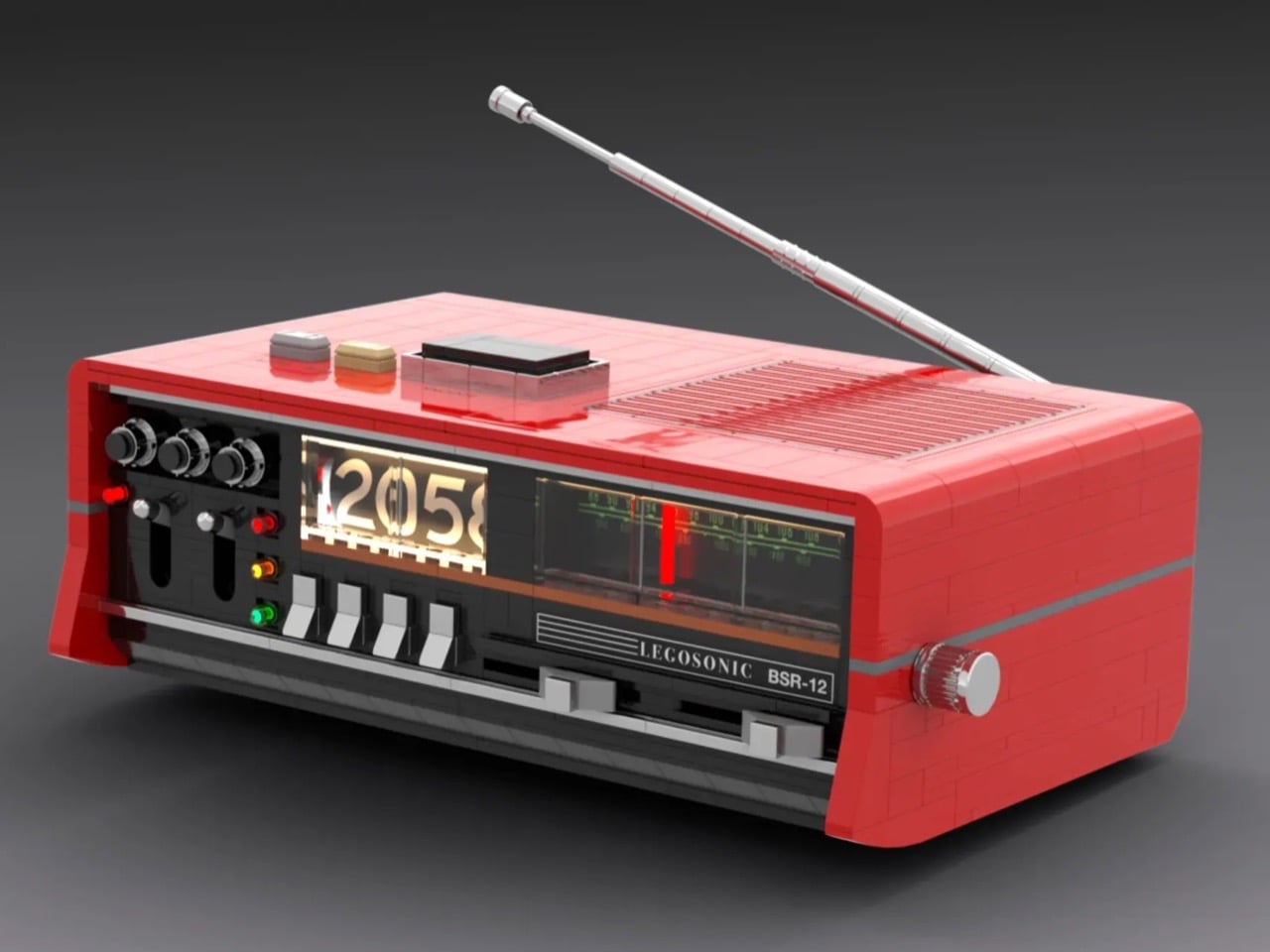
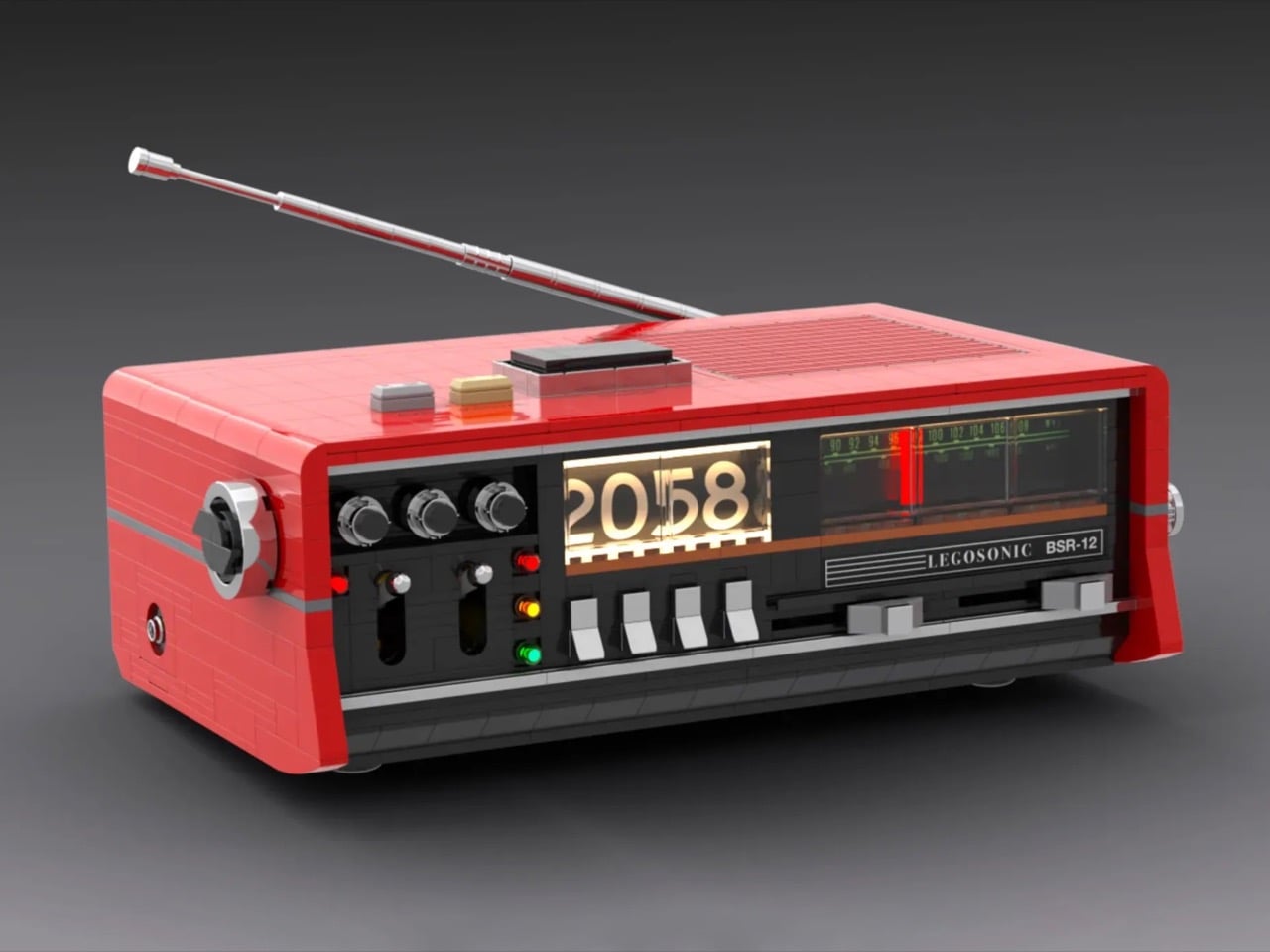
Remember when clock radios had personality? Before phones ate every function a bedside table used to need, you had this chunky little box with dials that clicked, buttons that thunked, and a display that glowed just enough to bug you at 3am. That exact vibe is what 91-Brickdesigns set out to capture with the Legosonic BSR-12, a LEGO Ideas build modeled on the radio alarm clocks that ruled nightstands in the late 70s and early 80s. And they didn’t just nail the look, they nailed the fidgetiness of the thing too.
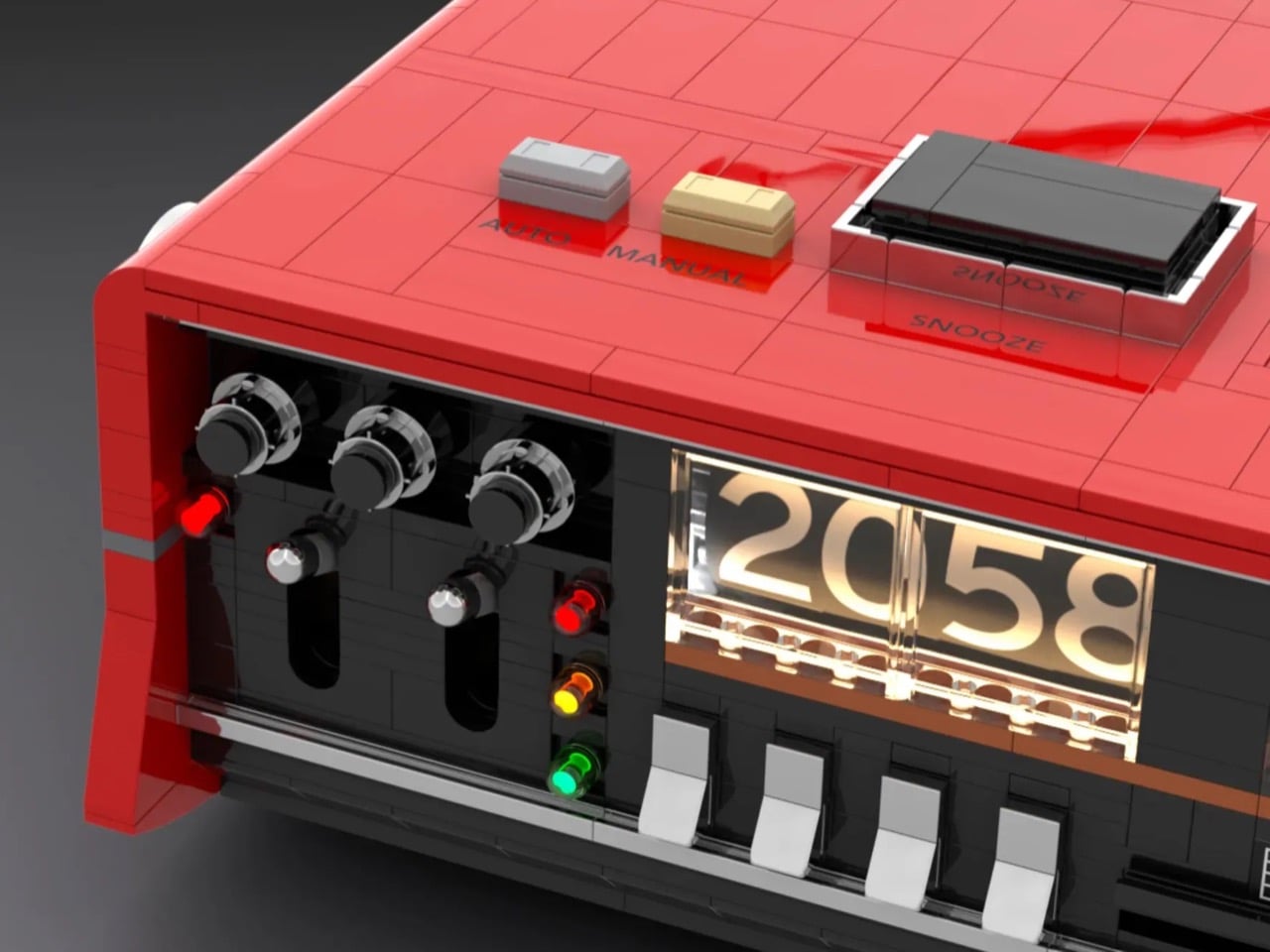
Around 1400 pieces went into this build, and a big chunk of that count is doing unnecessary, delightful work. The toggle switches have actual spring mechanisms so they click when you flip them. The sliders drive a gear underneath just so they feel smoother in your hand, despite doing literally nothing. Even the snooze button is a running joke, since pressing it accomplishes exactly zero. It’s the kind of overbuilt charm we loved in the LEGO Classics Computer a while back, cranked up another notch.
Designer: 91-Brickdesigns
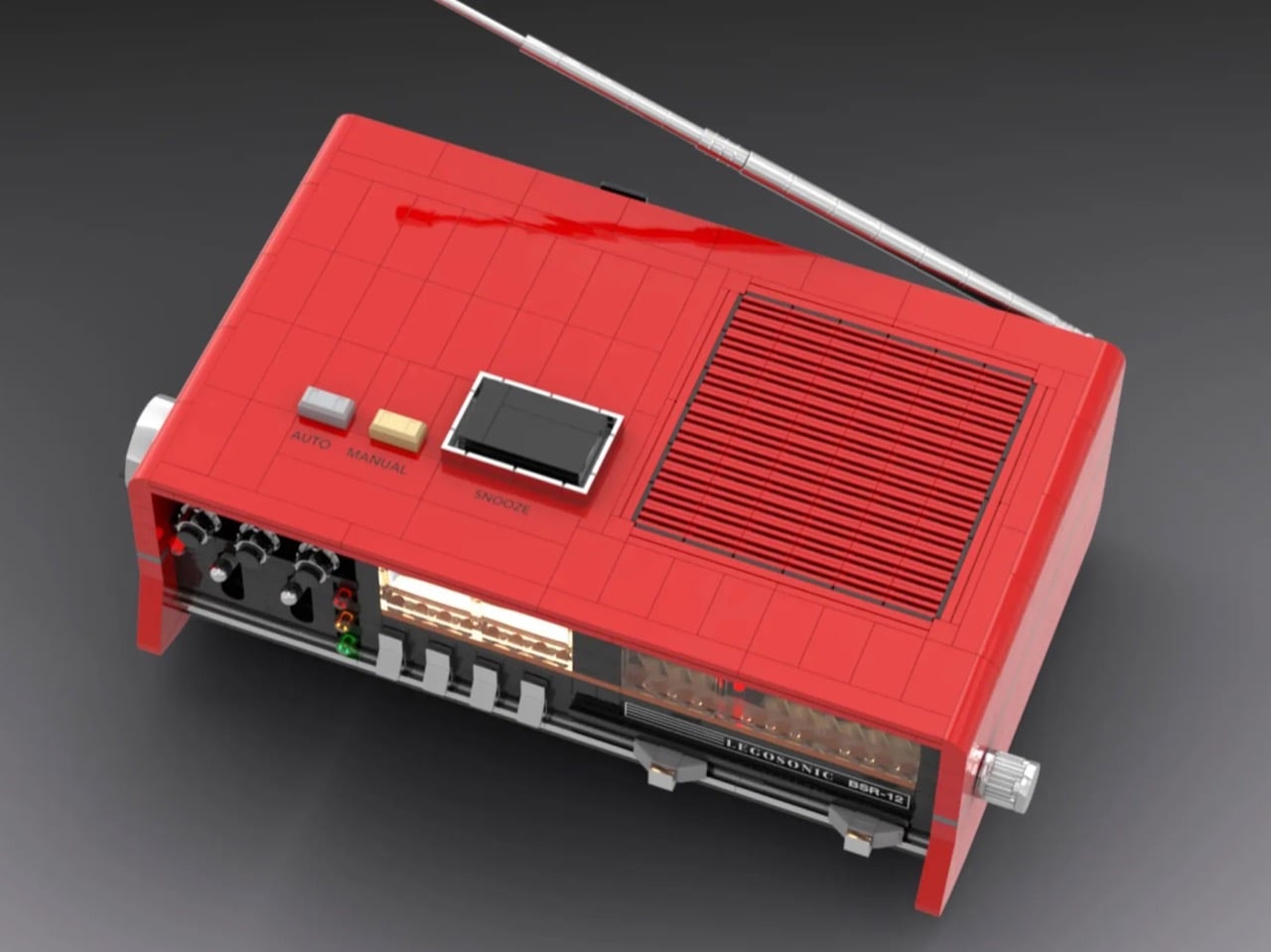
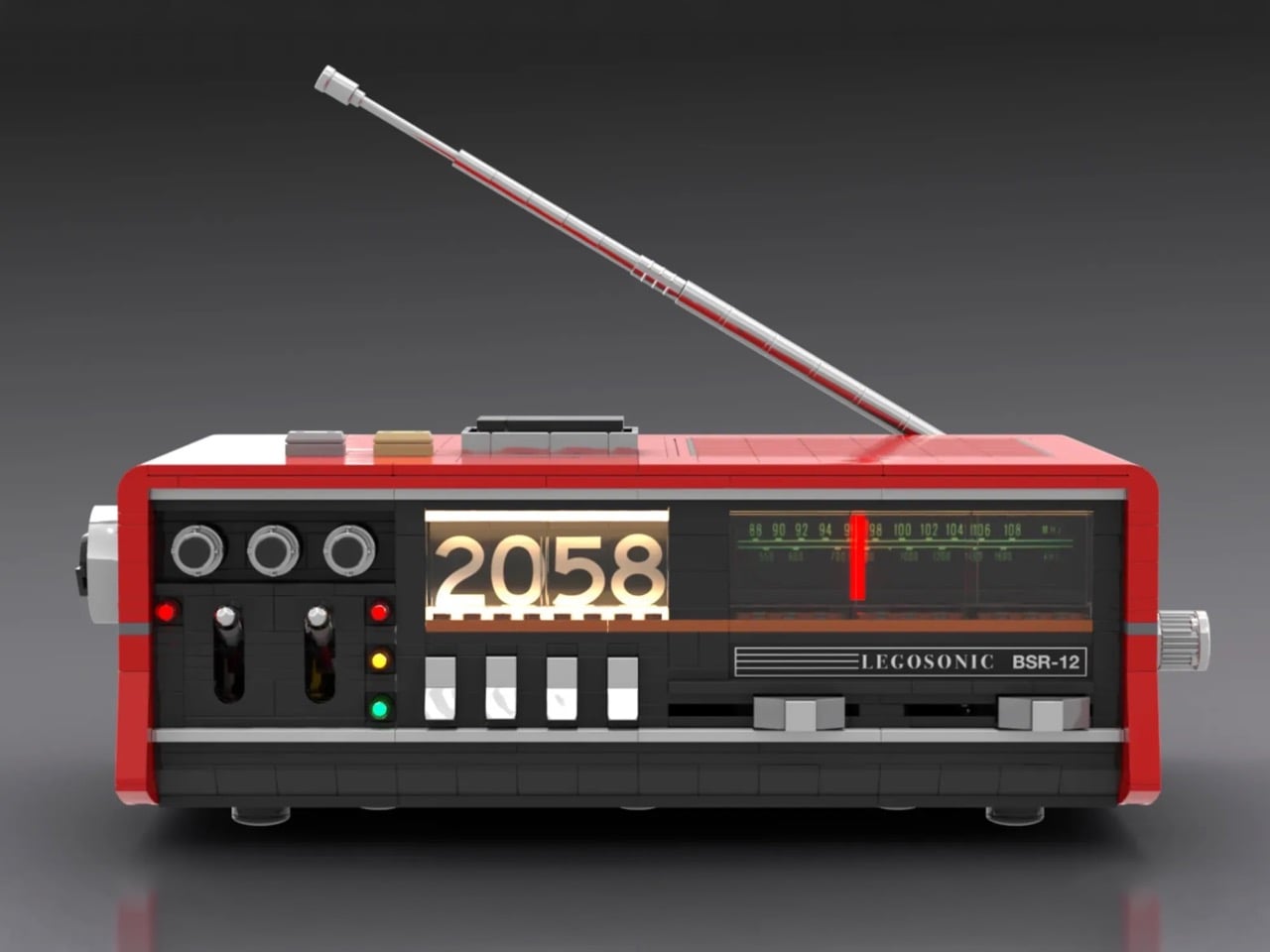
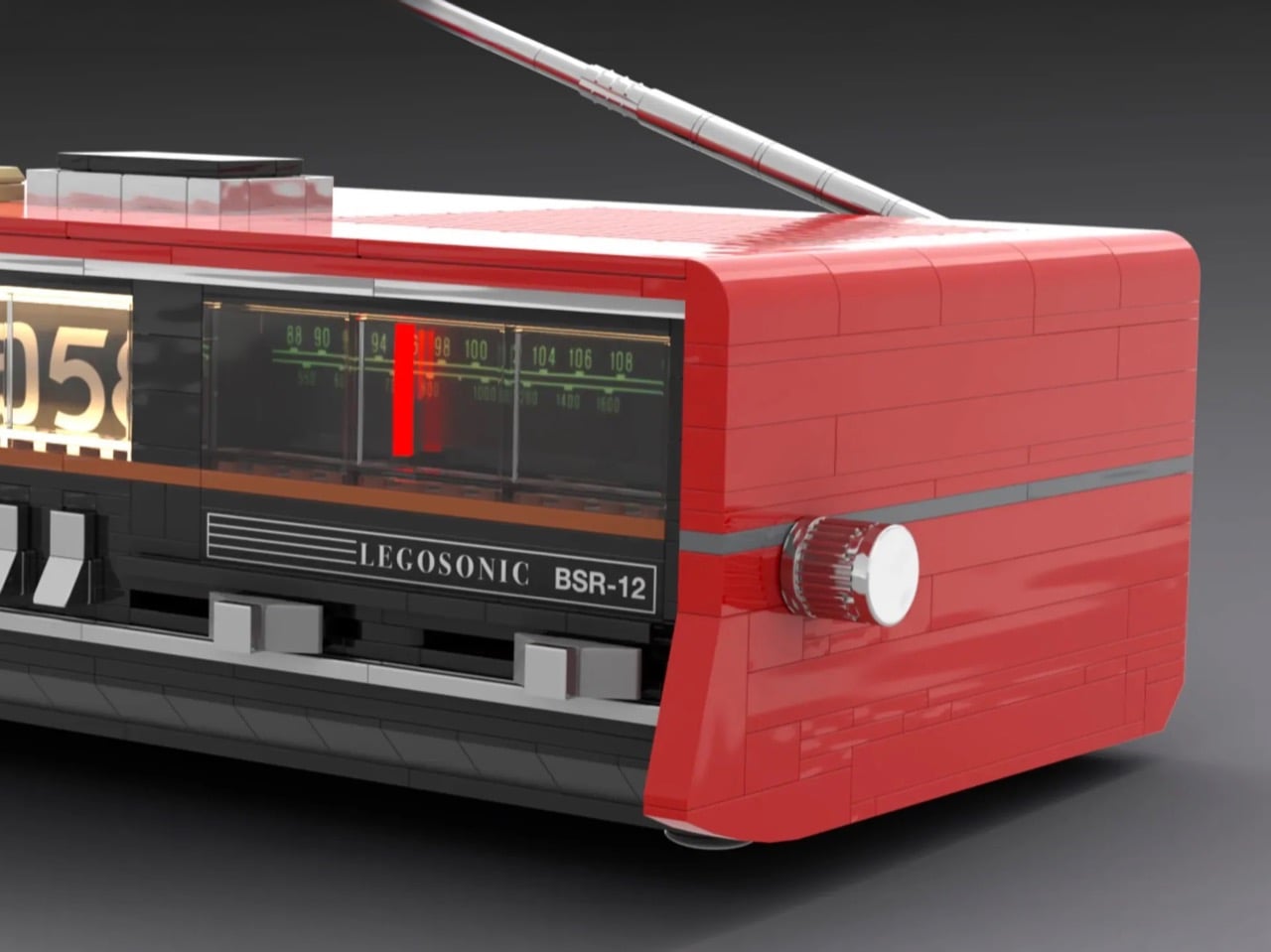
The front panel alone is a lot to take in. You’ve got three round dials up top that turn but don’t actually control anything, a row of colored indicator lights, and a genuinely functional time-set system where you spin the big dial and lock it in with a couple of chrome buttons. Next to that sits a flip clock style display frozen at 20:58, glowing like it just woke up from a nap, and a tuning window with a red needle you can slide across a fake FM and AM band using a little wheel on the side. None of it plays actual music, but every piece of it looks like it should.
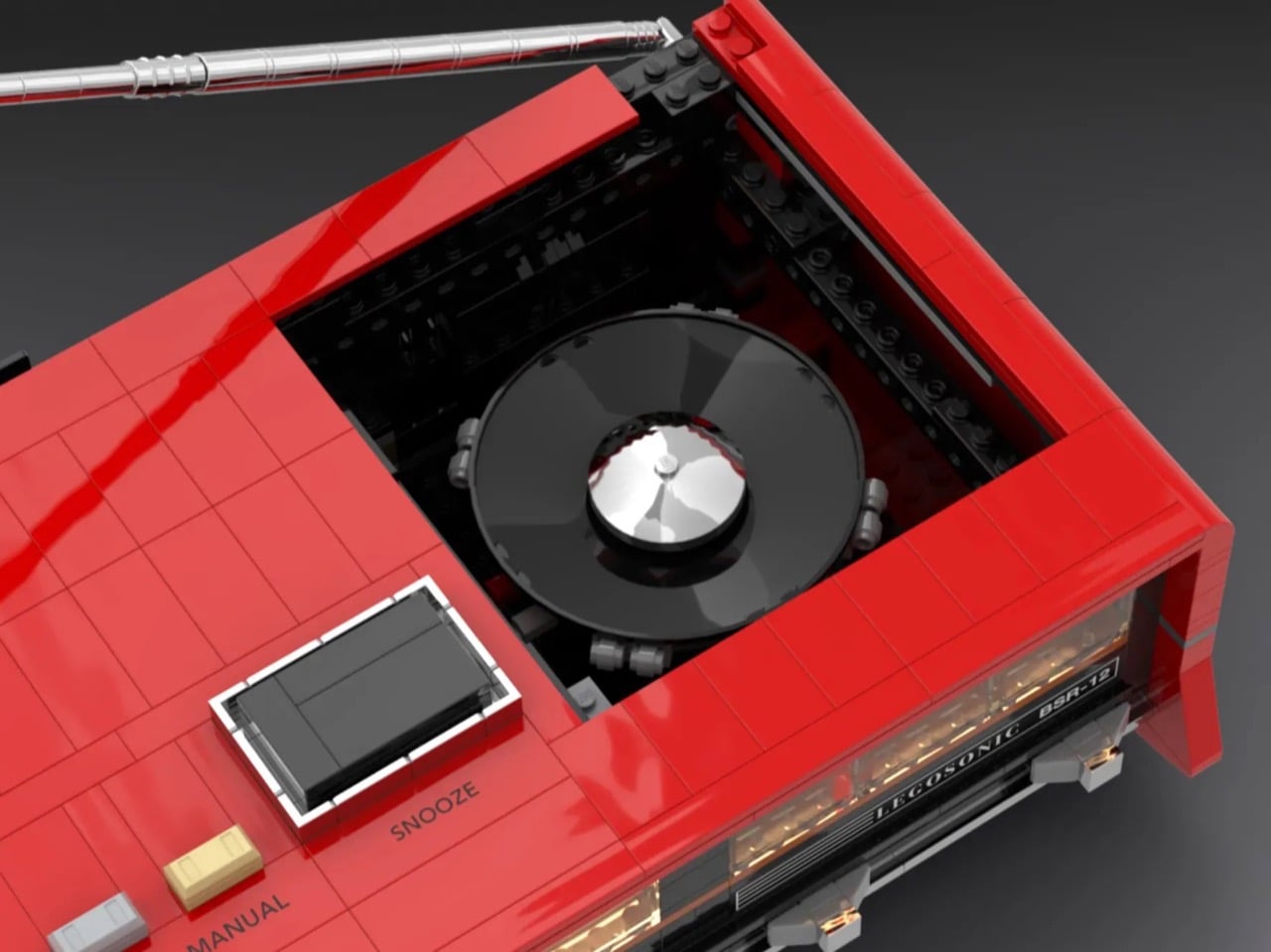
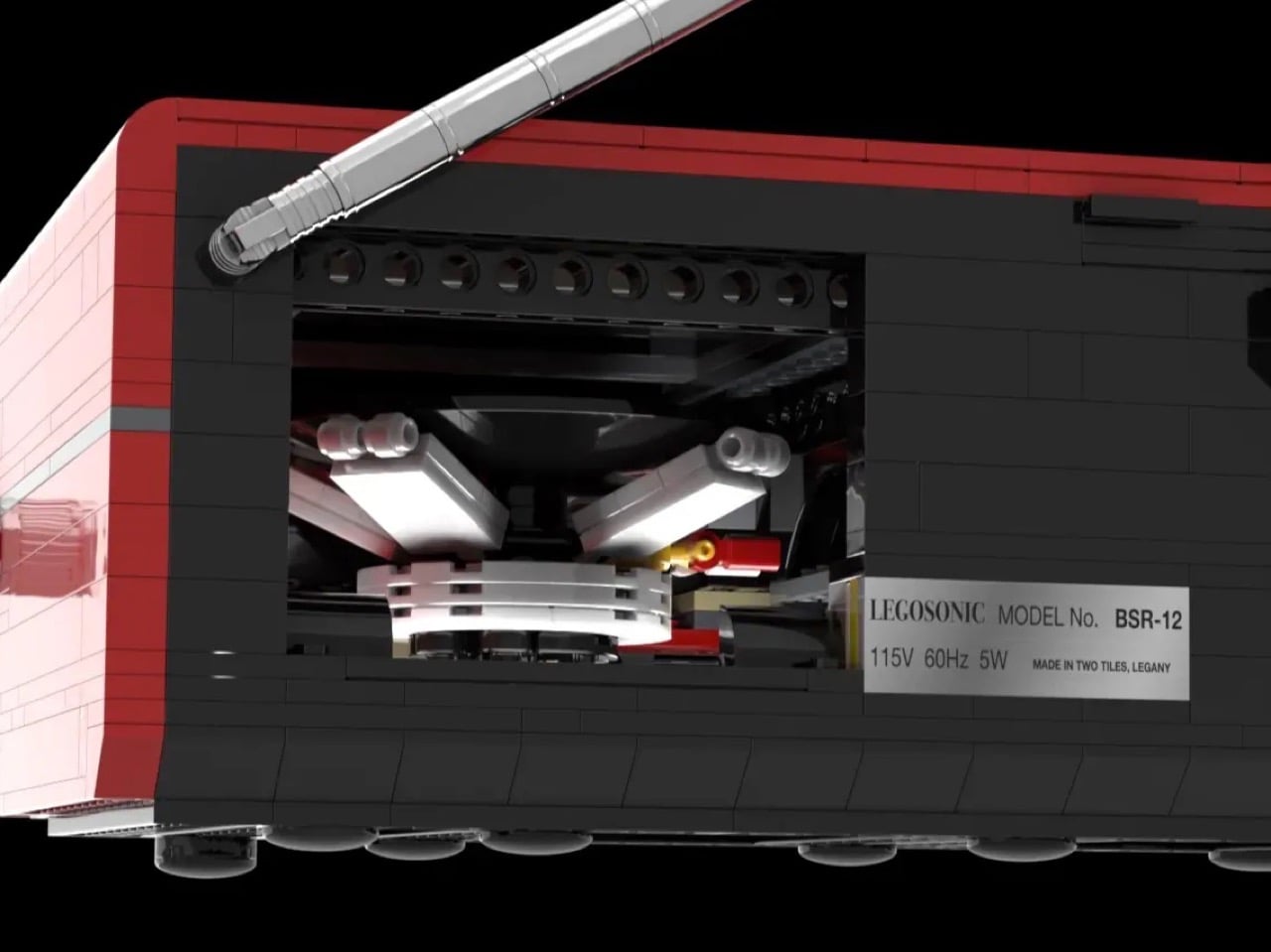
Pop the top cover and there’s a full circuit board hiding under there, with brick built resistors color coded the way real resistors are, a couple of capacitors, and a chip sitting exactly where you’d expect one on an actual PCB. Slide the ventilation grille open and there’s a speaker cone waiting behind it. Flip the whole thing around and the back has a proper spec plate, an AC input, and an on off switch that wouldn’t look out of place on a real appliance from a Best Buy circa 1983. My favorite detail might be the plate itself, which reads “Made in Two Tiles, Legany,” because apparently even fictional radio manufacturers deserve a pun.
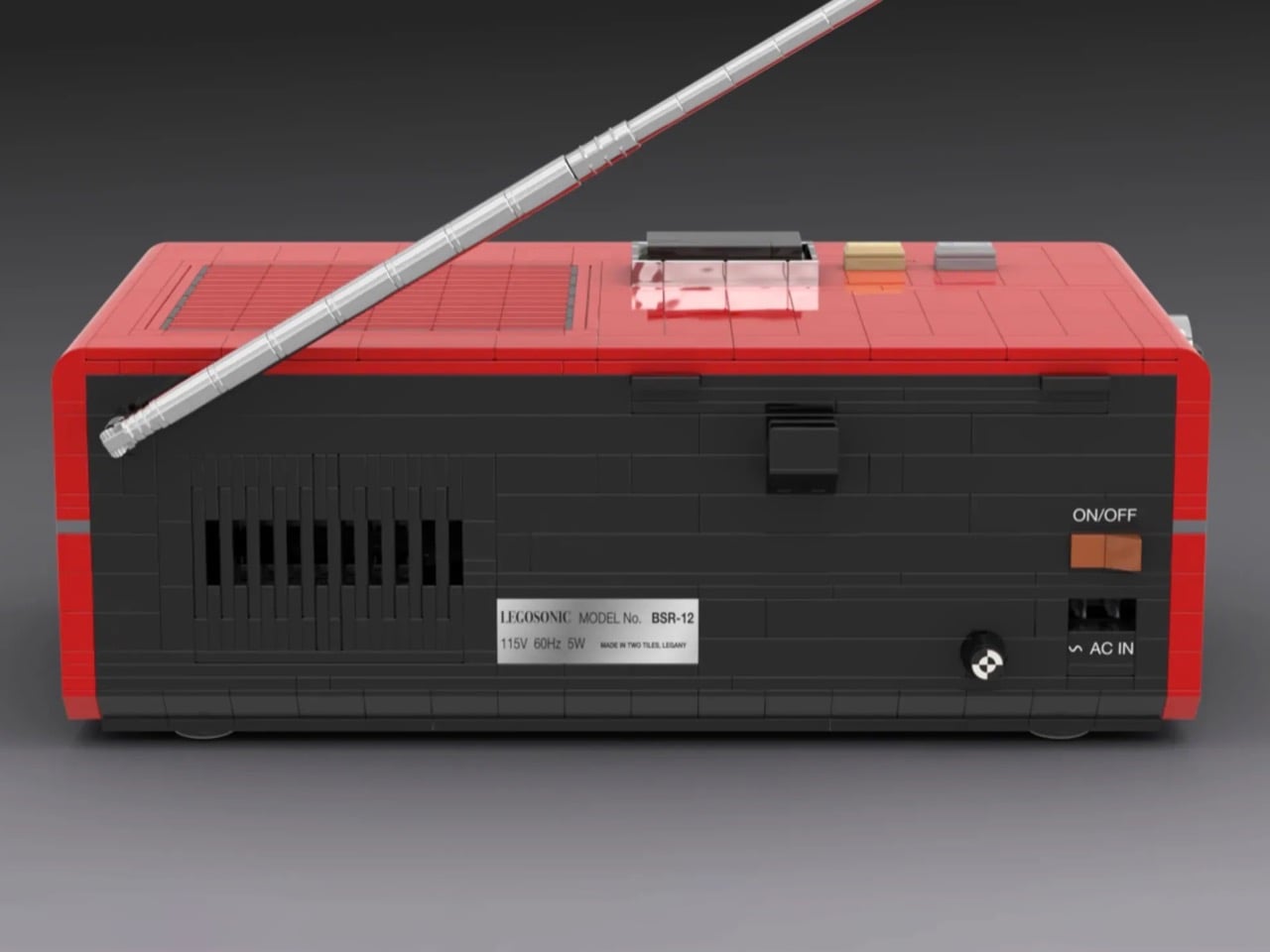
This isn’t the first time we’ve watched builders chase this exact strain of nostalgia. The JVC pyramid TV that hit LEGO Ideas earlier this year leaned on the same appeal, and LEGO’s own Icons Retro Radio proved there’s real demand for gadgets that remind adults of a time when electronics had weight and character instead of just a glass slab and a charging port. The Legosonic BSR-12 fits right into that lineage, except it goes further than most by building the guts as carefully as the shell.
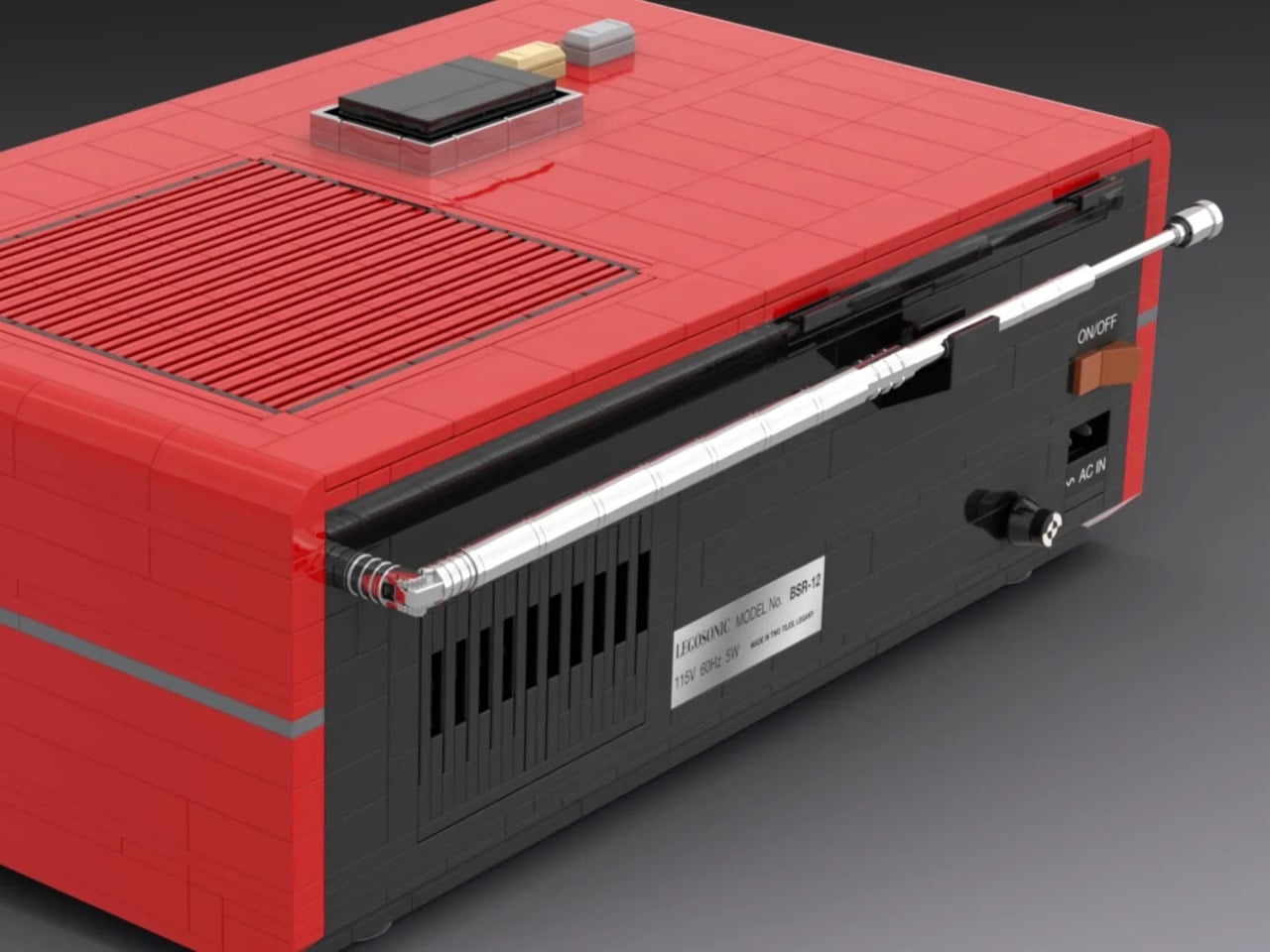
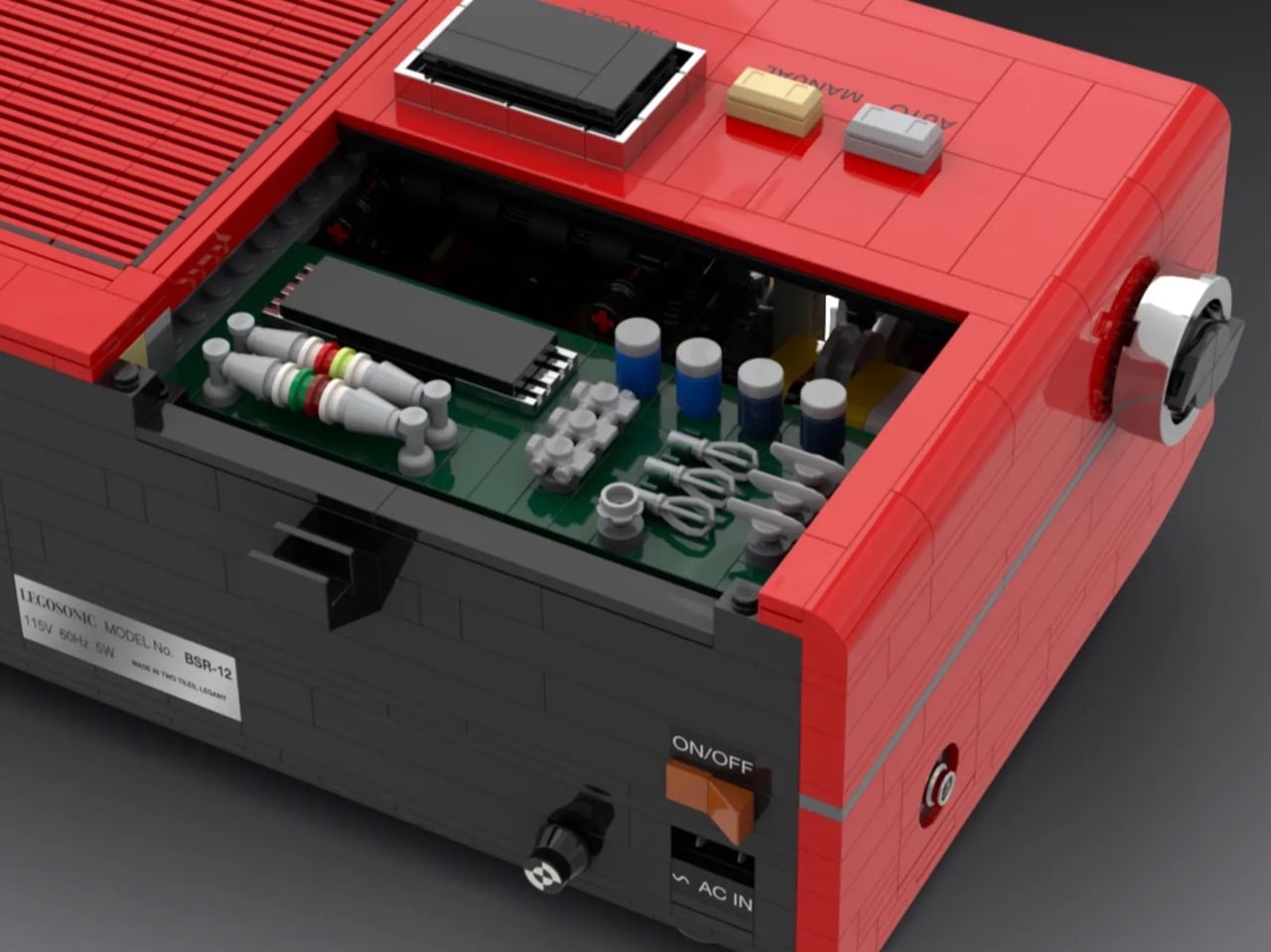
The build currently sits at Staff Pick status with 589 days left to hit its 5,000 supporter mark, on the way to the 10,000 votes needed for LEGO’s official review. If you’re the kind of person who misses a nightstand that made noise when you touched it, head over to LEGO Ideas and give it a vote.
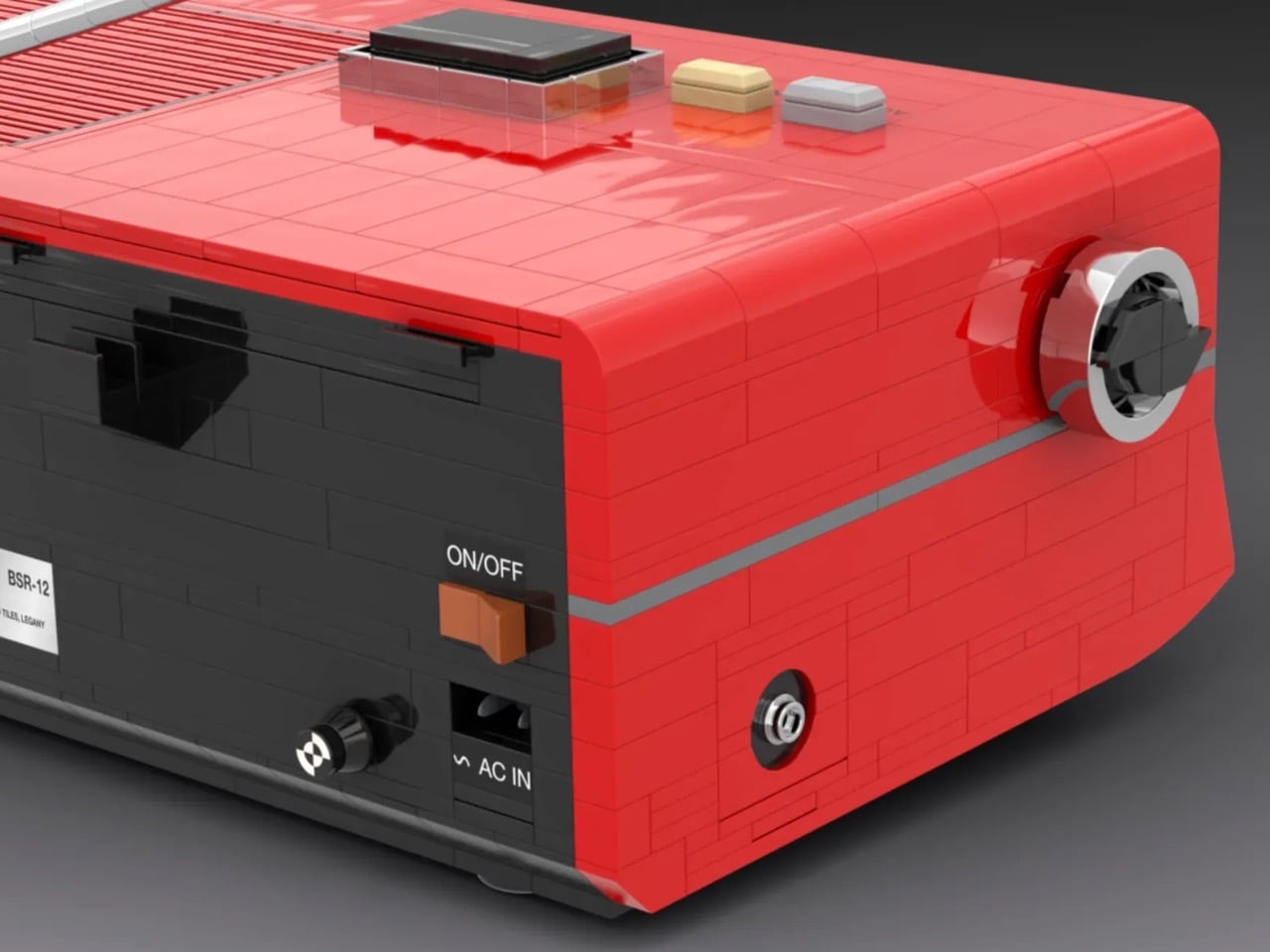
The post Someone Built a LEGO Bedside Radio With 1,400 Bricks And Inner Circuitry first appeared on Yanko Design.

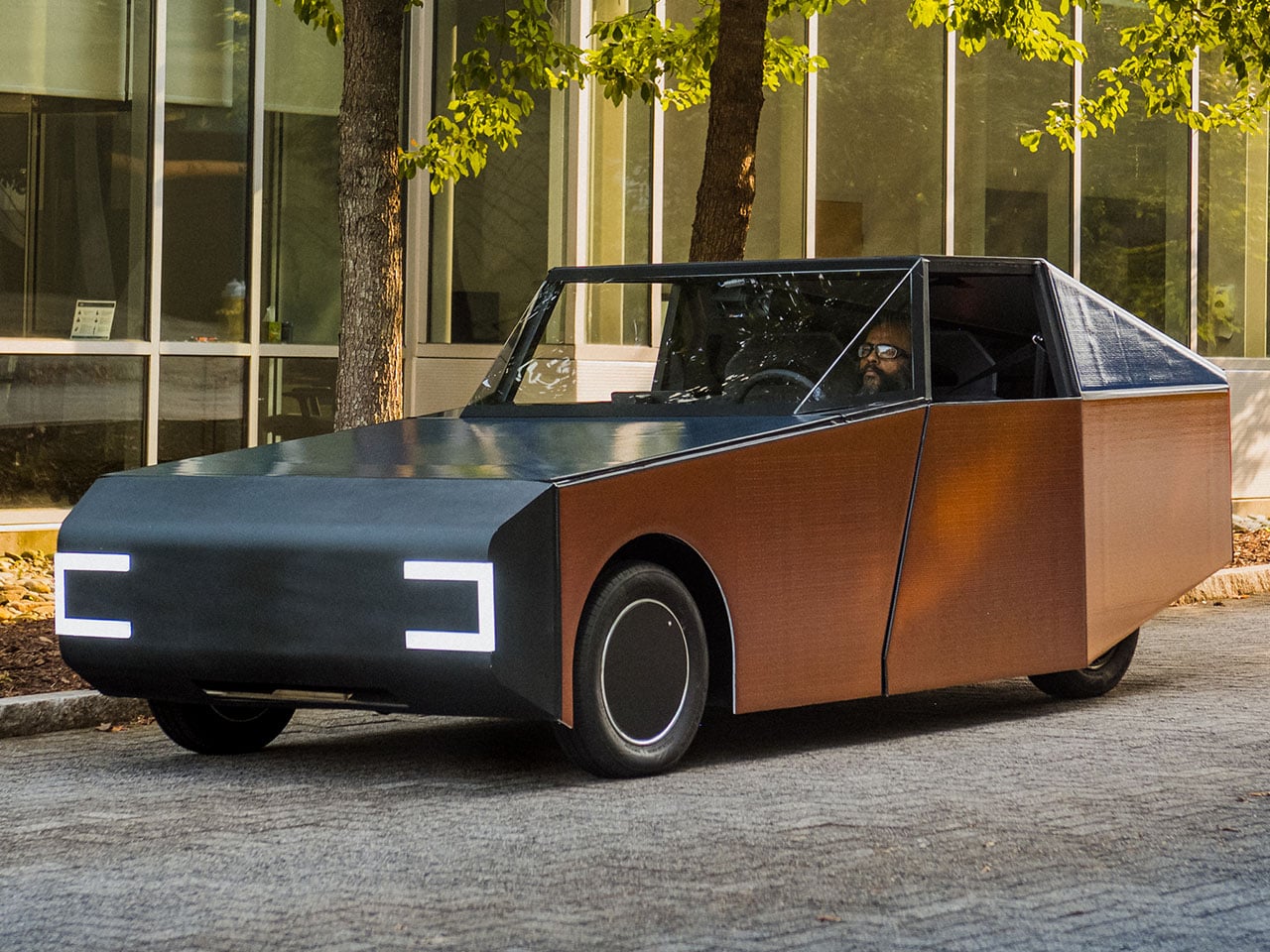
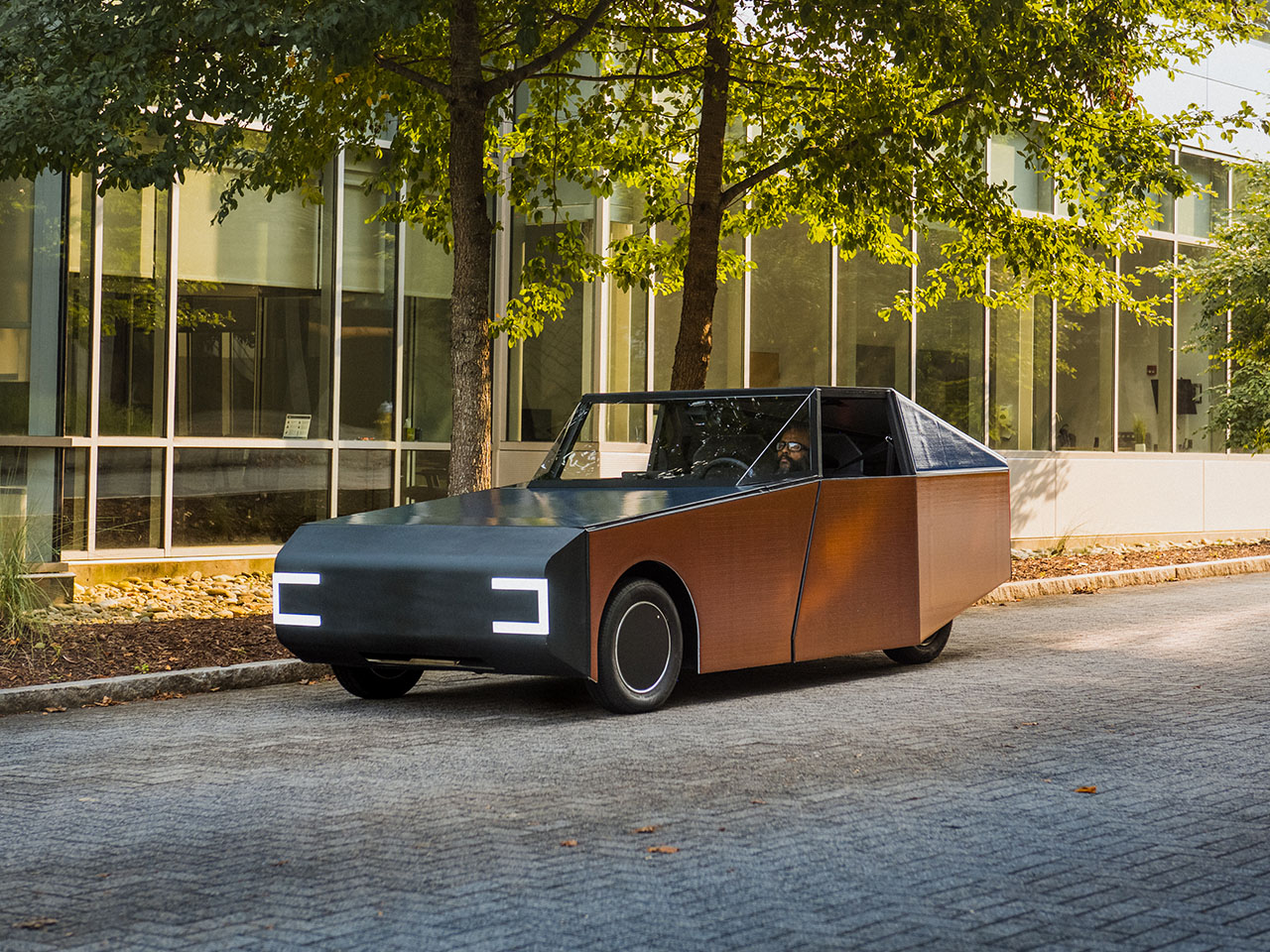
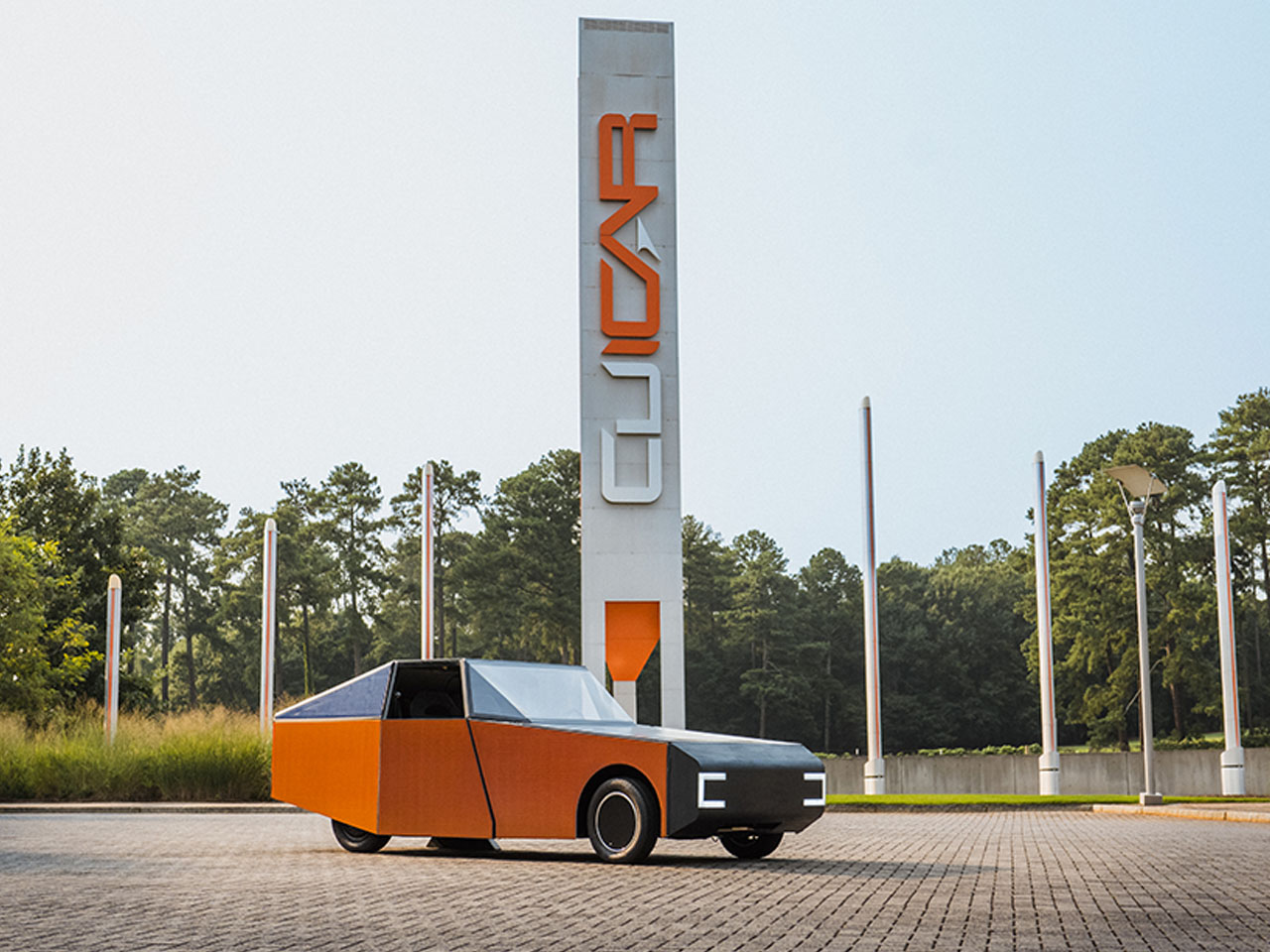
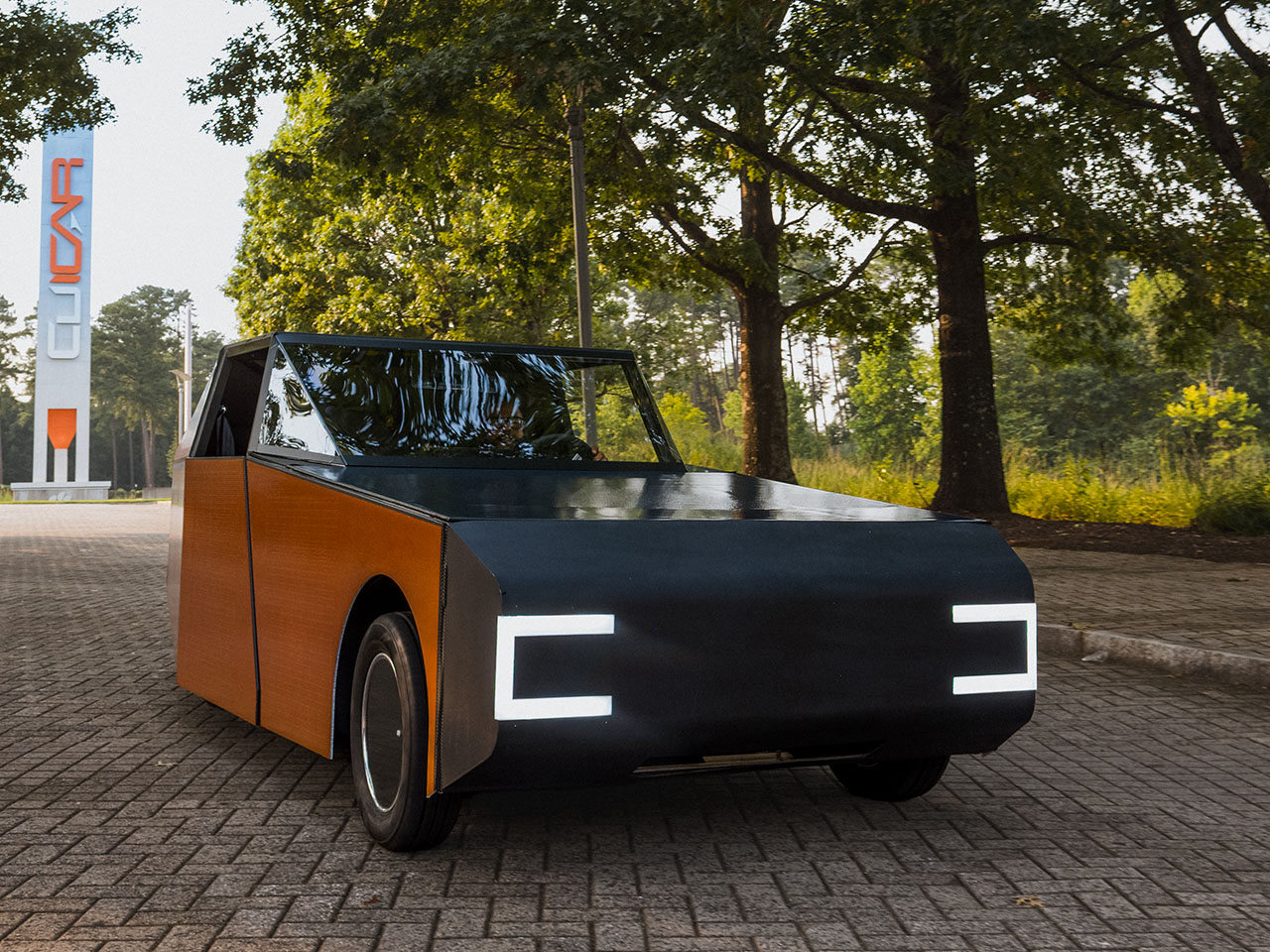
What if an electric vehicle didn’t just consume energy, but quietly made more of it while sitting in the sun? That is the premise behind Clemson University’s Deep Orange 17, a boxy two-seat EV concept developed with BMW of North America. Also called Luminetta, the experimental coupe rethinks the relationship between a car’s body and its energy needs, turning the exterior into something more than a protective shell.
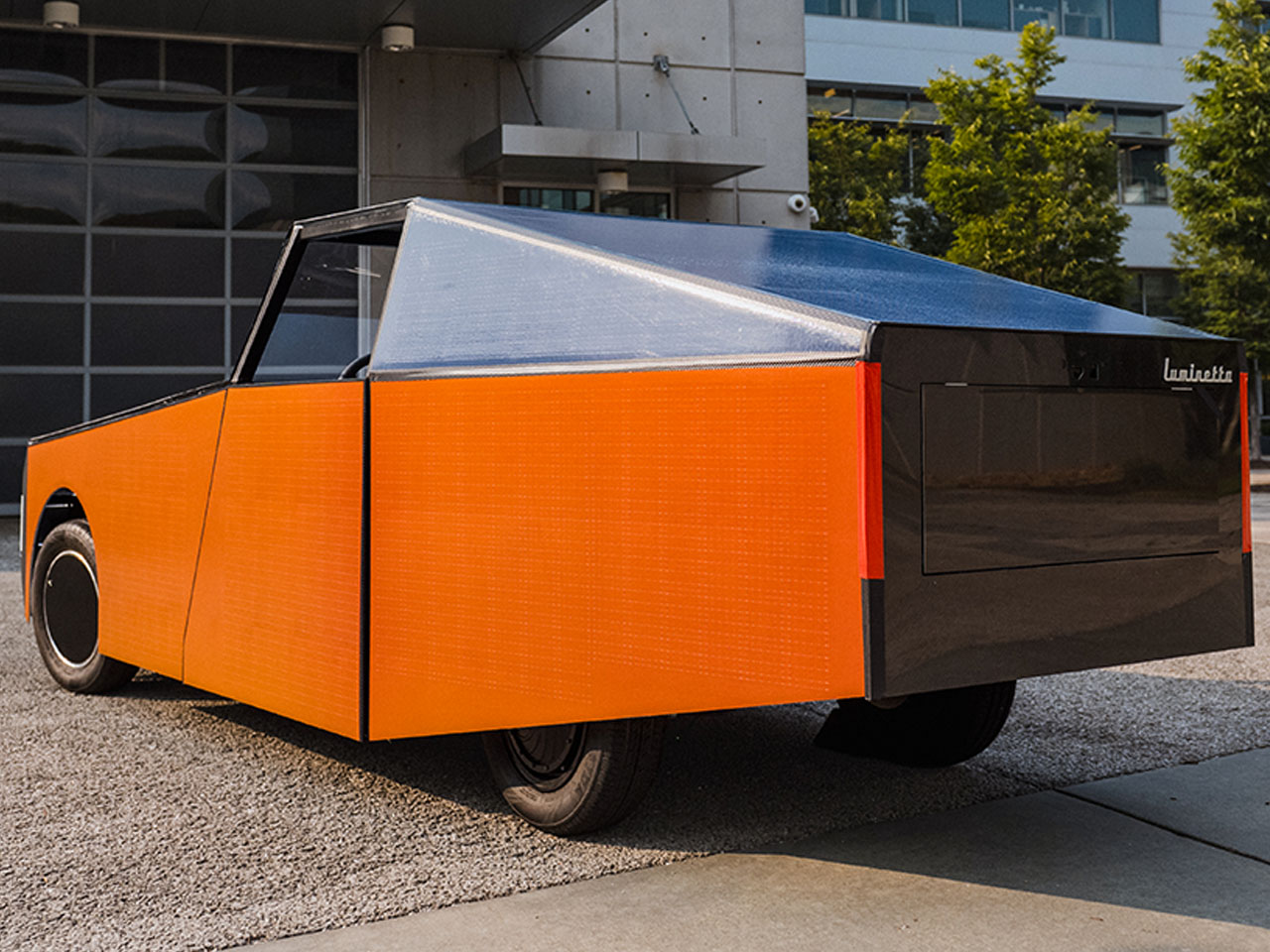
The most unusual part is its photovoltaic skin. Instead of placing a conventional solar panel on the roof, the student engineers integrated more than 1,781 solar cells across the vehicle’s exterior. Developed with Germany’s Fraunhofer Institute for Solar Energy Systems, the system is designed to keep generating electricity even when parts of the surface are shaded. It essentially turns the car itself into a mobile solar collector, capturing energy whether Luminetta is driving or simply parked outside.
Designer: Clemson University
That idea makes particular sense for an EV. Cars spend most of their time stationary, often exposed to sunlight for hours. Deep Orange 17 uses that otherwise idle time to replenish its energy reserves. According to simulations conducted using weather and sunlight data from Greenville, South Carolina, Frankfurt, Madrid, and Mumbai, the concept could generate enough additional energy to deliver an average of around 31 miles of driving range from a typical 12-mile daily commute.
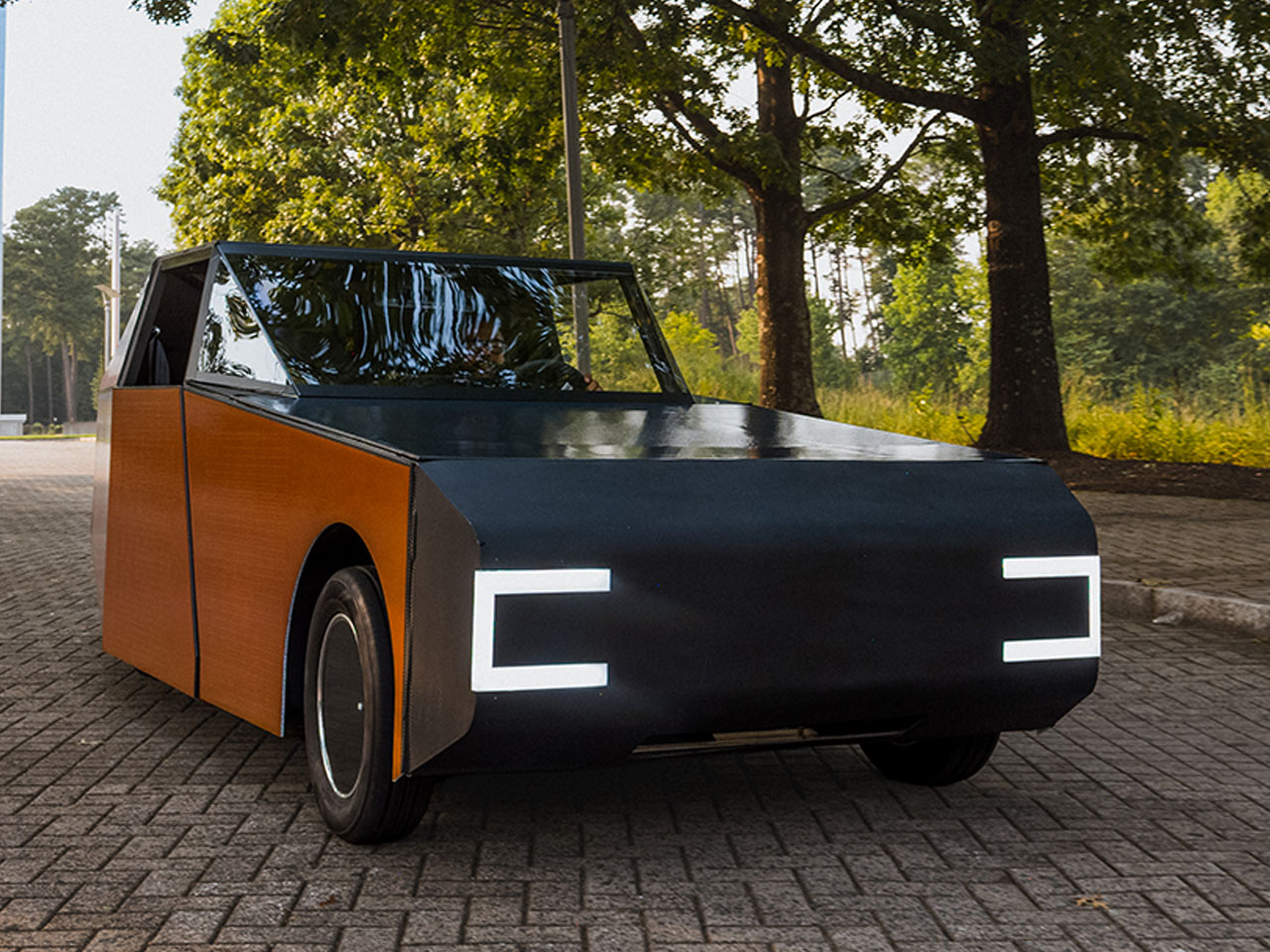
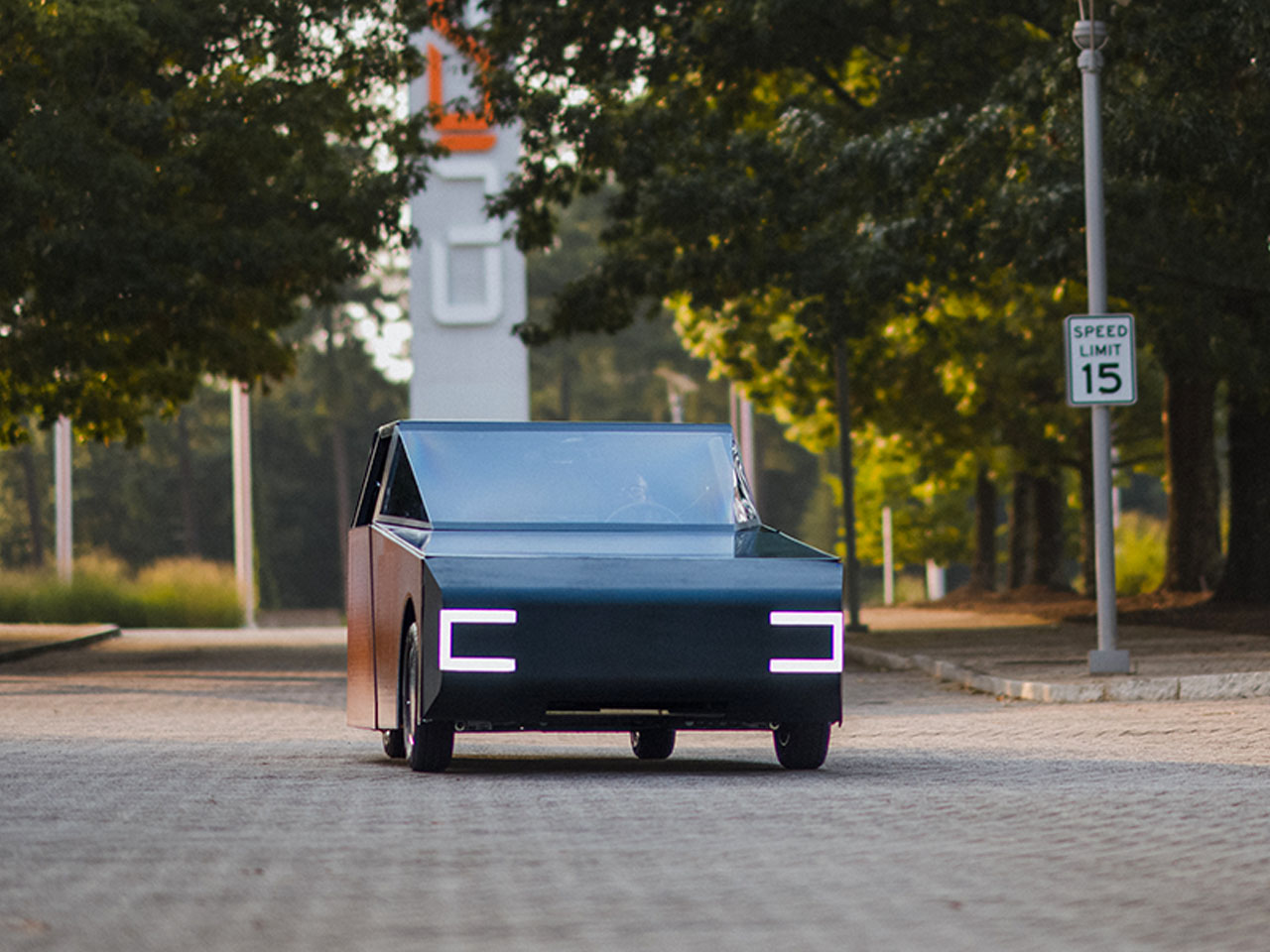
But the solar technology is only half of the equation. To make the most of every watt it generates, Clemson’s team designed the vehicle to be exceptionally light. The prototype weighs just 550 kilograms (1,212 pounds), achieved through a multi-material structure combining steel, aluminum, carbon fiber, and 3D-printed metal joints. With considerably less mass to move, the electric drivetrain needs less energy in the first place.
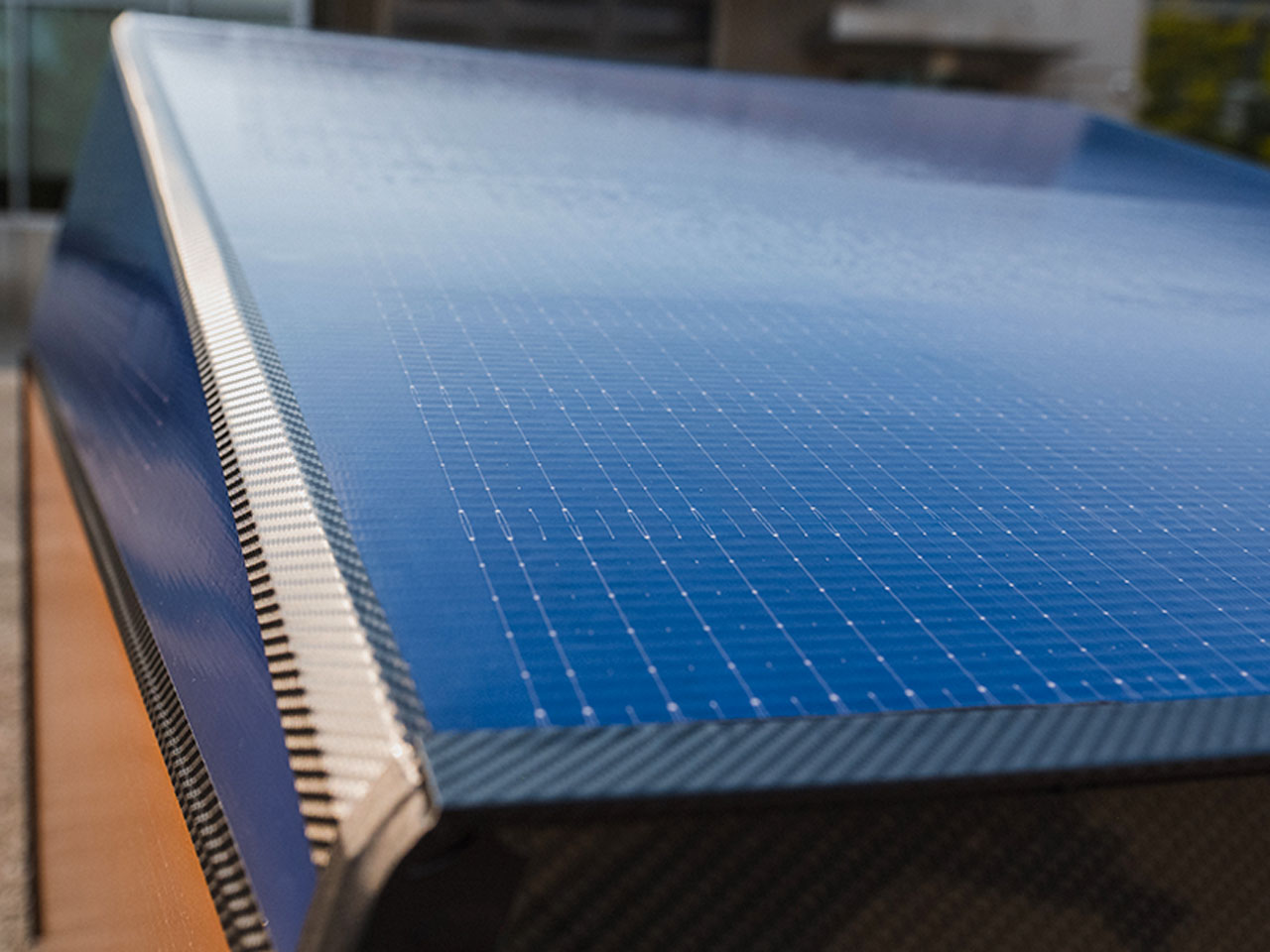
Its shape follows the same efficiency-first philosophy. Inspired by the boxfish, the exterior combines a streamlined profile with a surprisingly practical volume for a compact two-seater. The final prototype is an EV that looks less like a conventional production car and more like a physical experiment in aerodynamic sculpture.
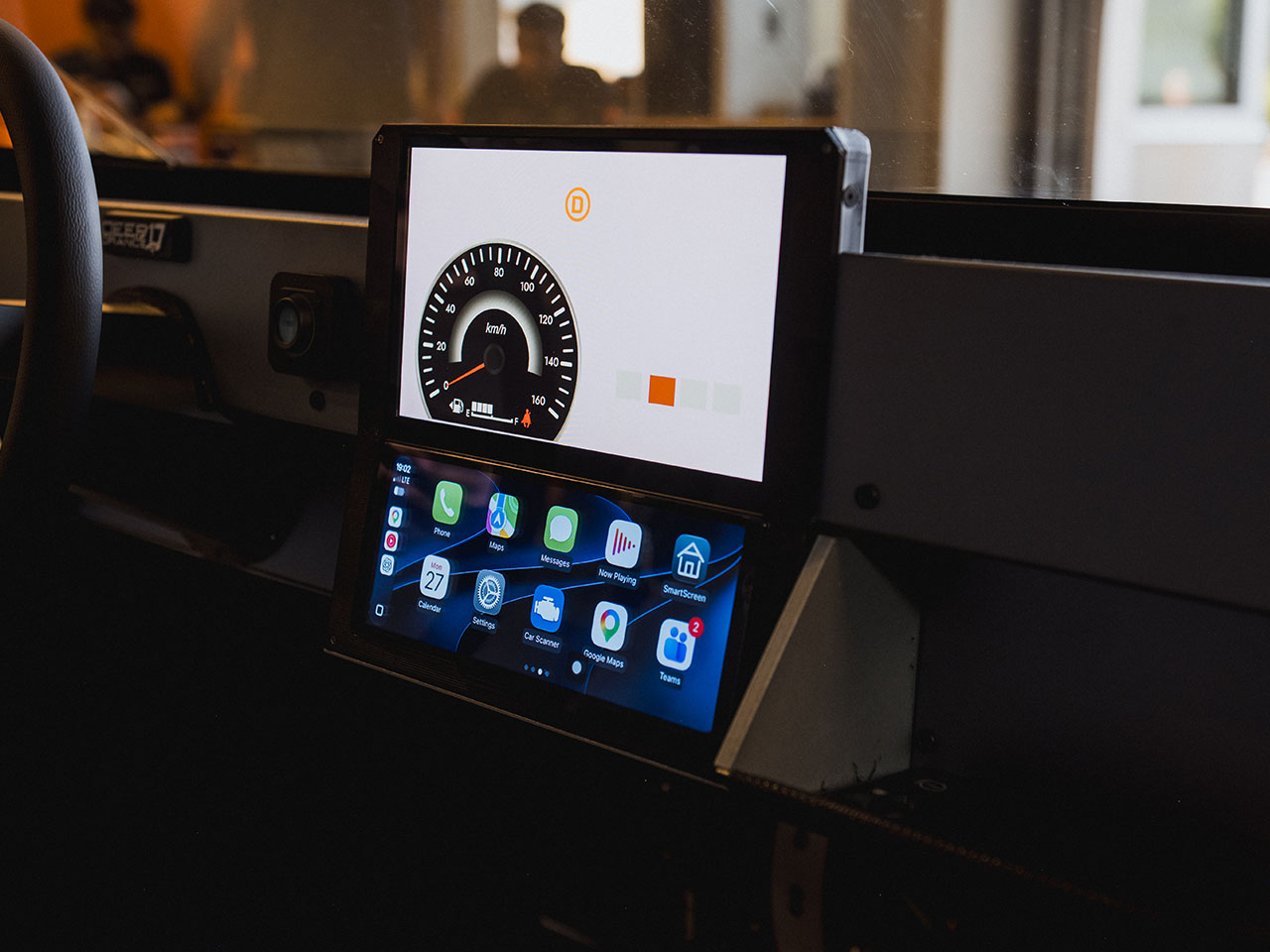
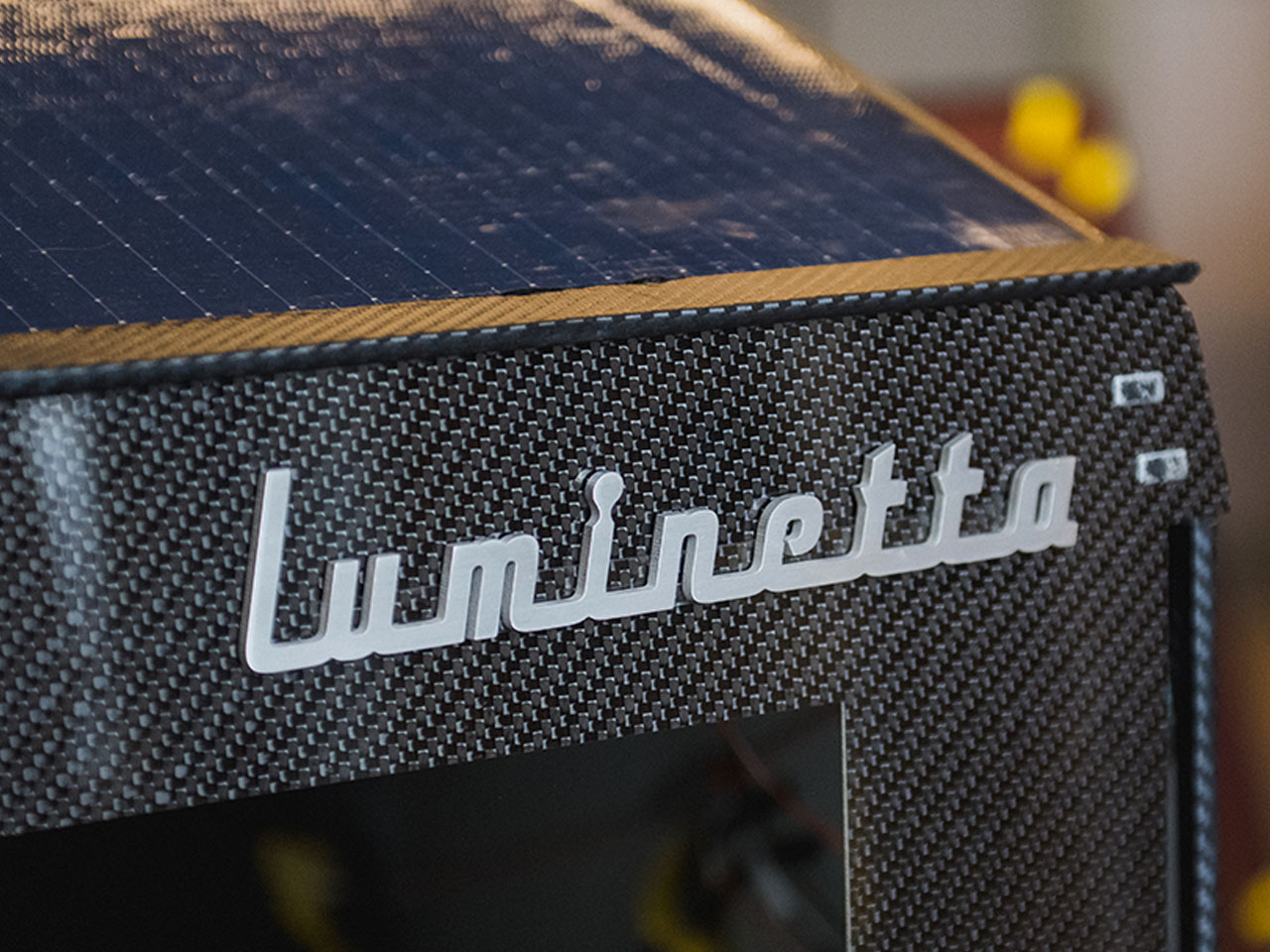
Energy recovery is built into the driving experience as well. Regenerative braking captures some of the energy normally lost during deceleration, while torque distribution and drivetrain controls are optimized to minimize unnecessary consumption. Rather than chasing headline acceleration figures, the project focuses on a more fundamental question – how little energy can a car need to perform its everyday job?
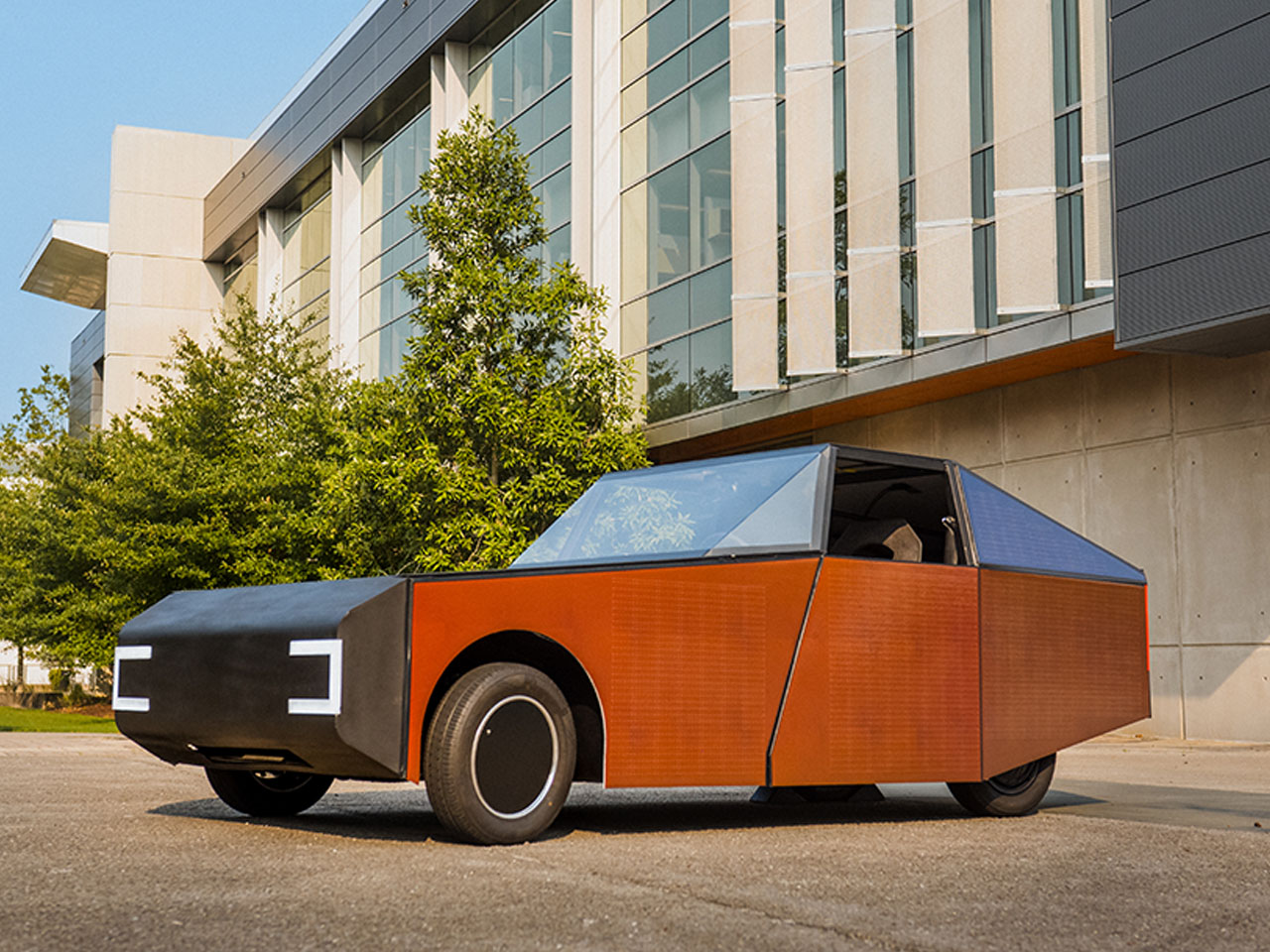
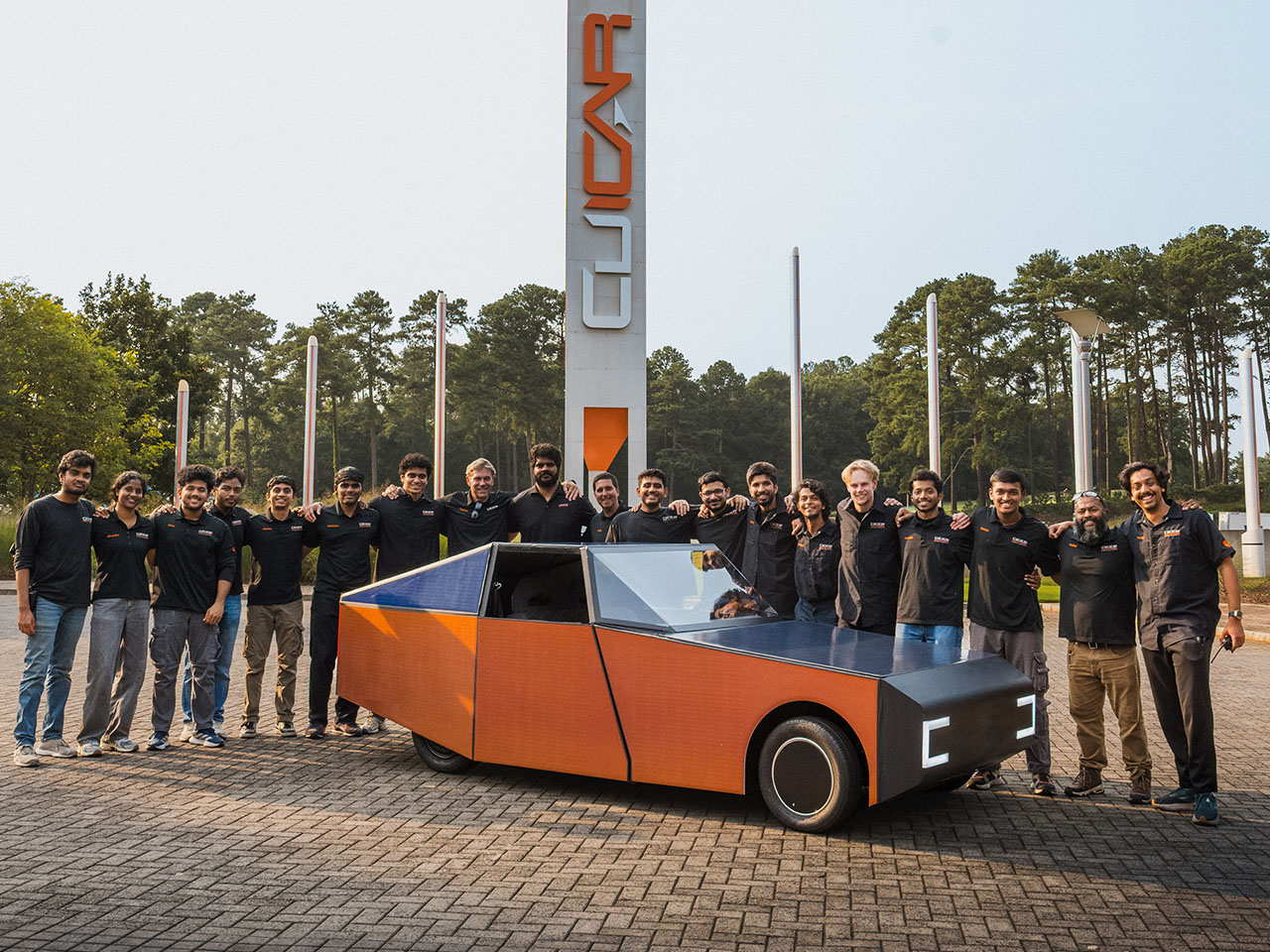
Inside, the experimental approach becomes more familiar. Luminetta features a custom interface for displaying live vehicle data alongside Apple CarPlay and Android Auto, giving the futuristic concept some everyday usability. Developed by 16 graduate automotive engineering students through Clemson’s Deep Orange program, the project took roughly two years to move from an industry challenge to a working prototype. It is not intended to be a production vehicle right now, but as a research platform exploring what an energy-positive EV could look like.
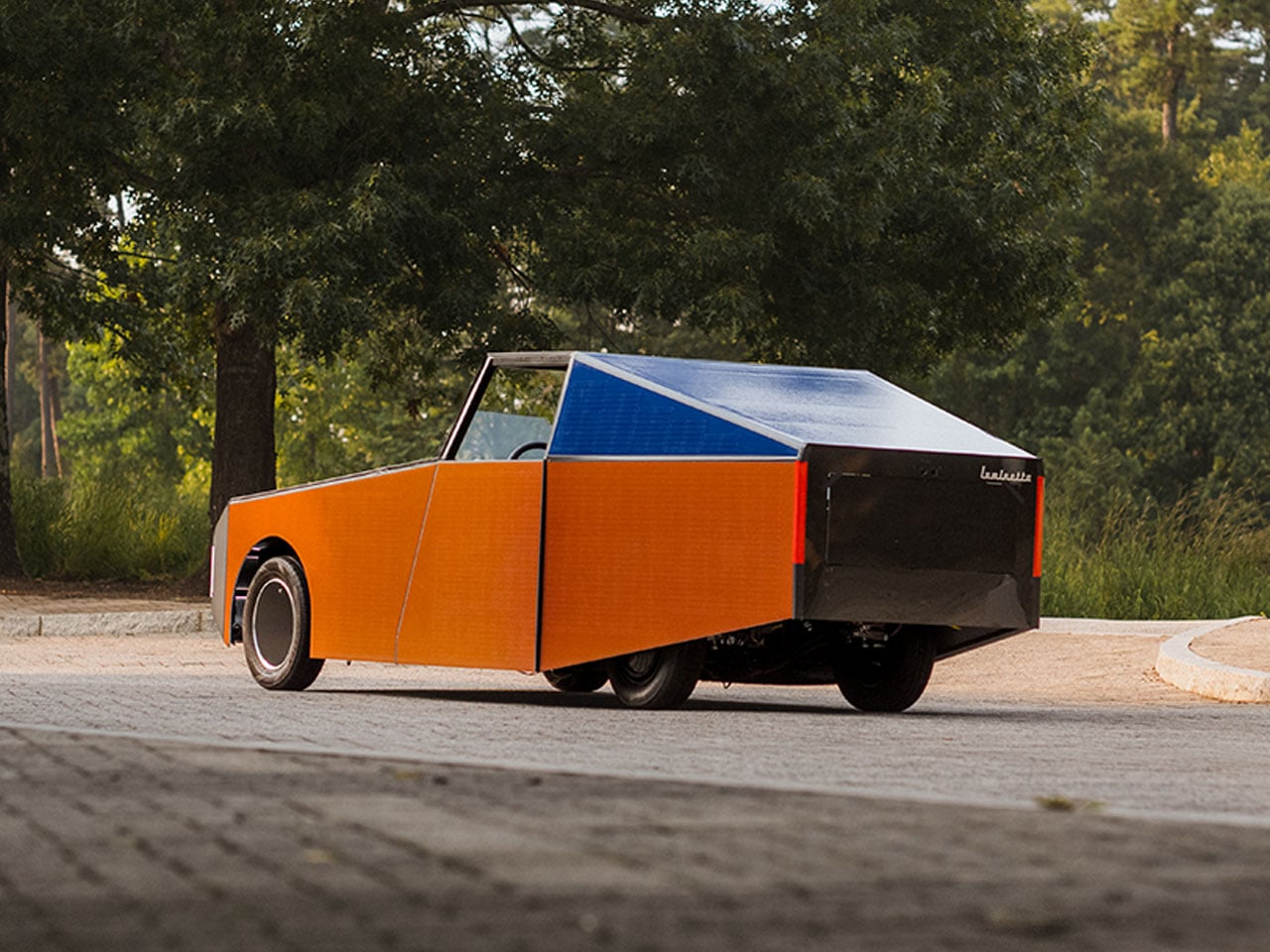
The post This solar-powered EV generates more energy than it uses, so you could drive without charging as often first appeared on Yanko Design.


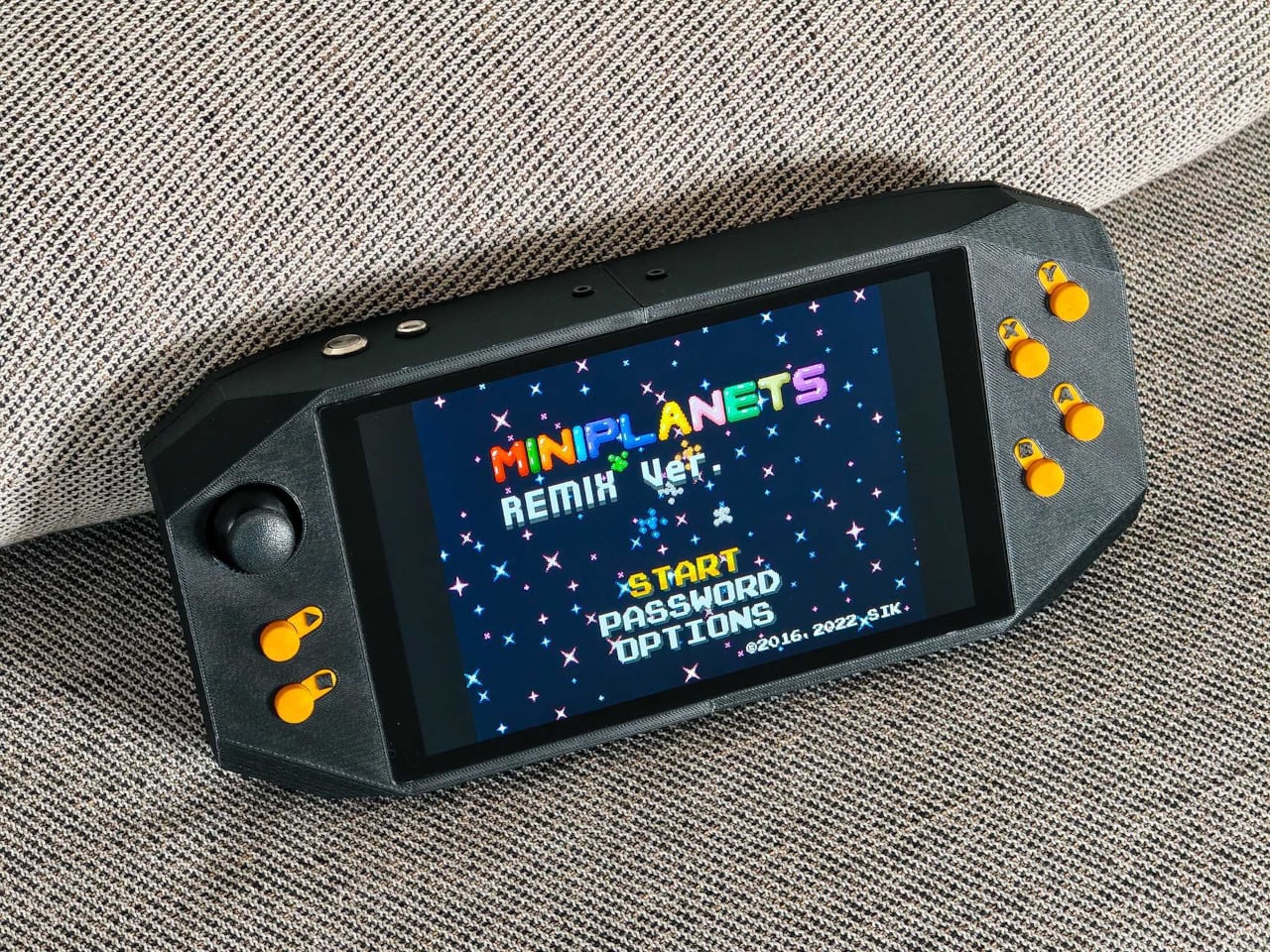
DIY handheld gaming has always had a ceiling for newcomers. Most builds require custom-designed PCBs, hard-to-find specialized connectors, and at least a few evenings spent with a soldering iron before anything turns on. Results from experienced makers can be impressive, but getting there has traditionally demanded an electronics background and a comfort with tools that many people simply don’t have.
This Arduino UNO Q-based handheld console doesn’t ask for any of that. Every component can be ordered from a standard online retailer and assembled without soldering, making the build about as accessible as a maker project can get. The only parts requiring fabrication are the 3D-printed enclosure and buttons, which come together using heat-set inserts for a clean, professional-looking result that doesn’t betray its module-based origins.
Designer: zalmotek
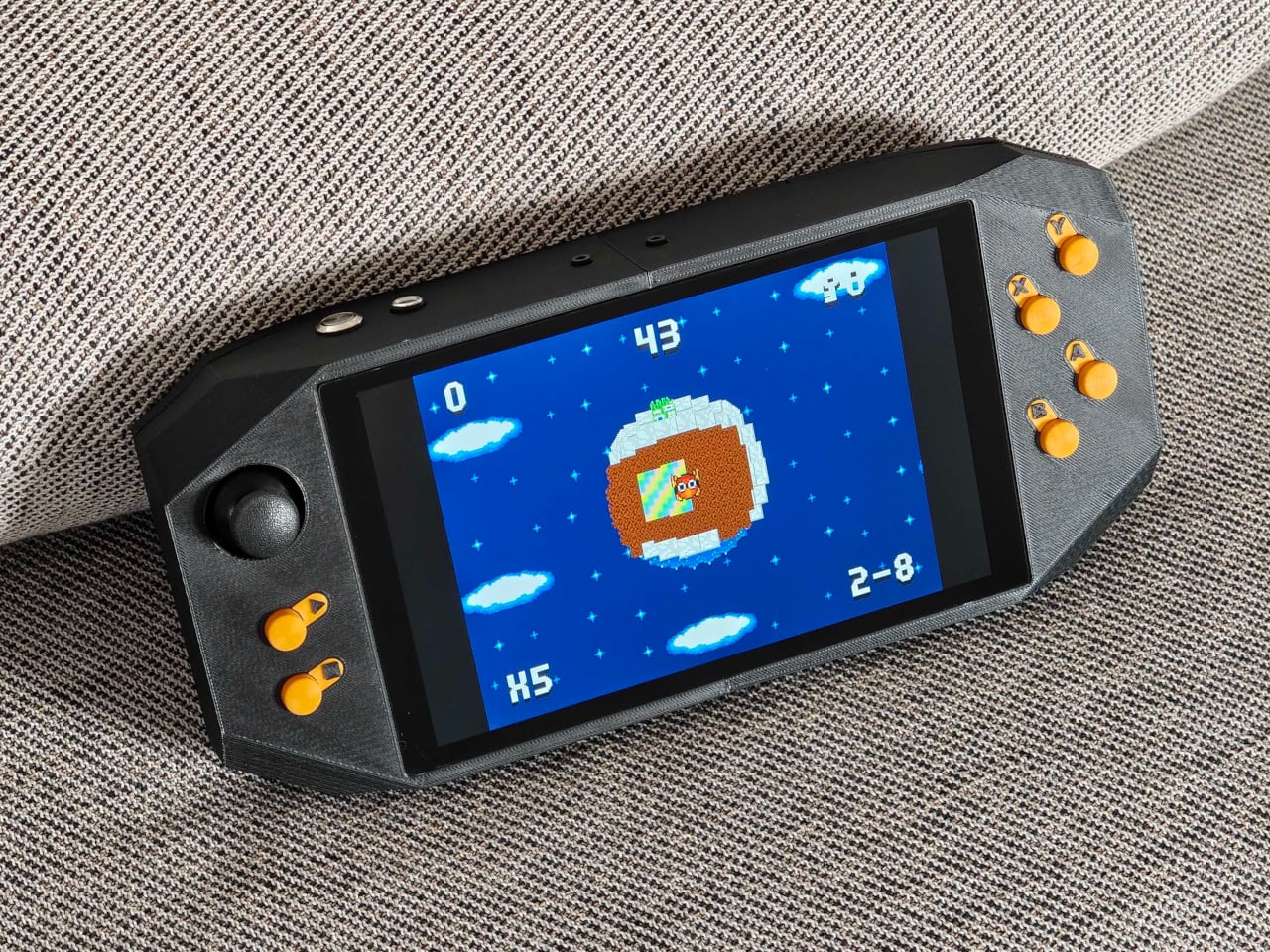
The hardware list reads like an afternoon’s shopping. At the center is the Arduino UNO Q, pairing a Qualcomm Dragonwing QRB2210 processor running Debian Linux with a dedicated STM32 microcontroller for real-time input handling. Modulino Buttons and a Modulino Joystick handle the controls, an Arduino UNO Media Carrier connects an 8-inch Waveshare touchscreen and an Adafruit speaker, and a Waveshare UPS module provides battery support.
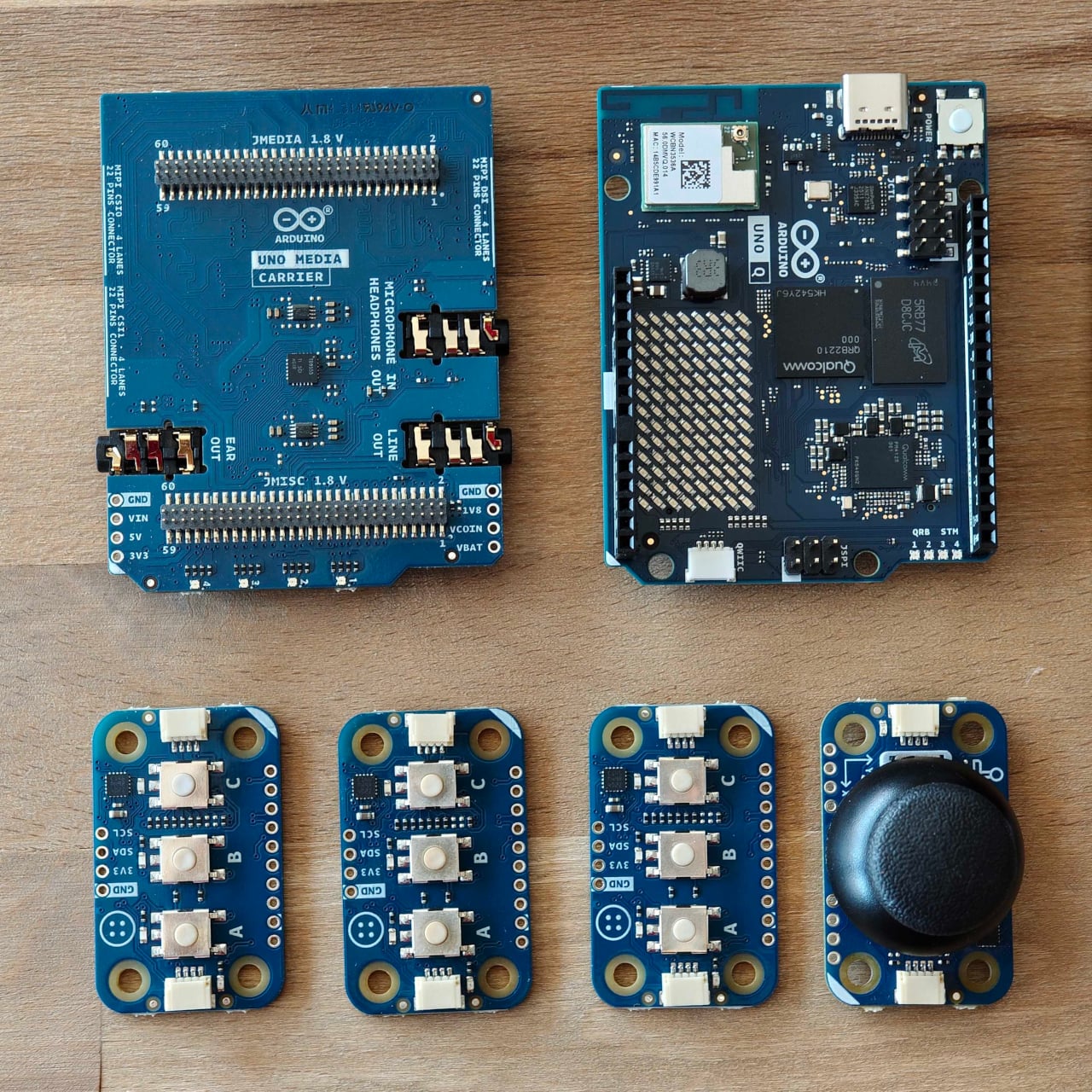
The software side is equally well thought out. The STM32 microcontroller monitors button presses and joystick movements, then passes that data to the Linux environment, where a Python daemon converts everything into standard USB gamepad commands. RetroArch handles the emulation without any complicated setup, so loading up a game doesn’t feel different from plugging a USB gamepad into a PC.
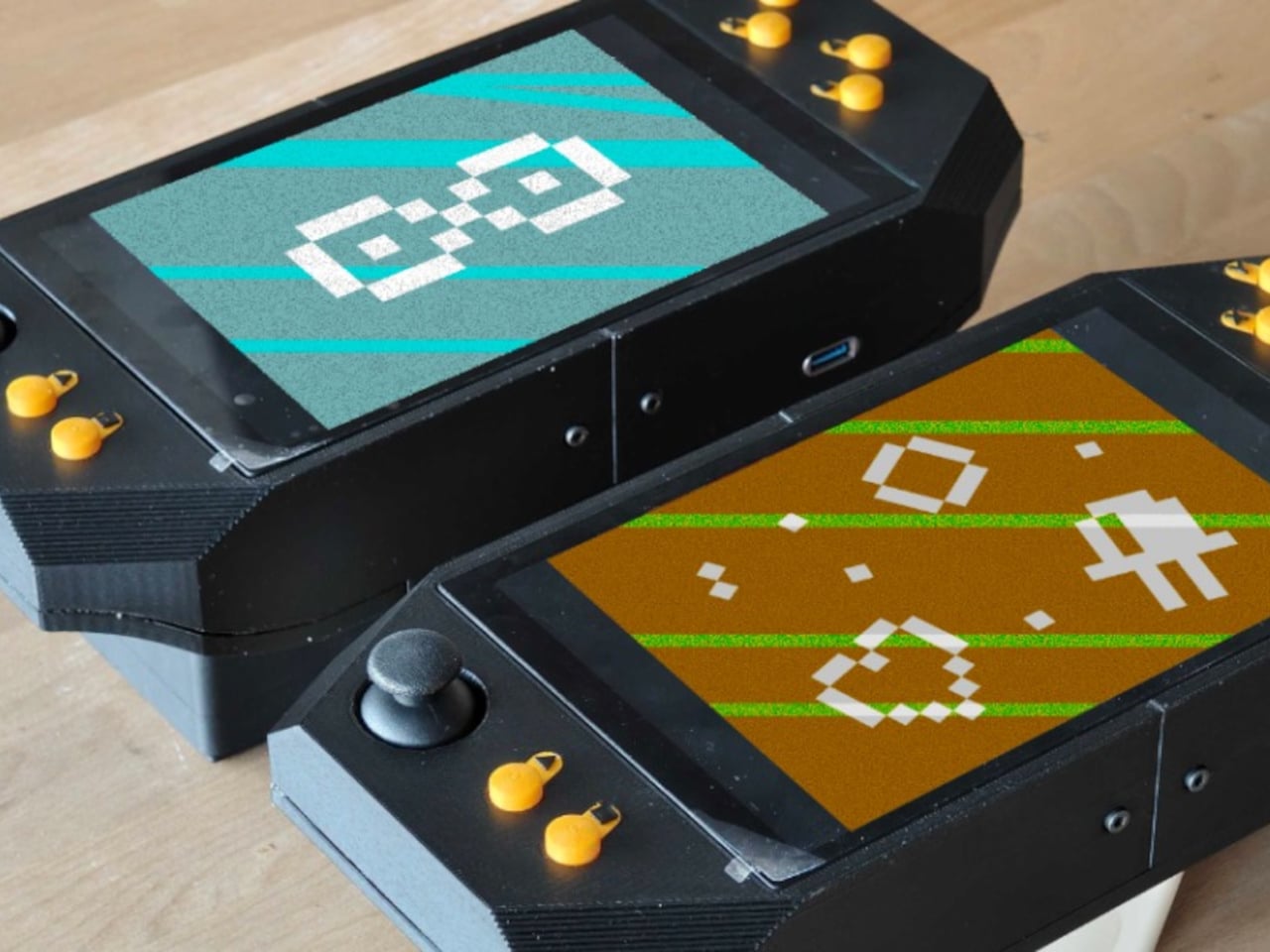
That smoothness pays off in practice. Sitting back with a handheld you built over a weekend and scrolling through titles from systems you grew up with, everything runs cleanly with proper controls and sound. It’s a bit chunkier than a commercial device, given the module-based construction, but the feel is more polished than the trade-off might suggest, especially for a build that skips custom PCBs entirely.
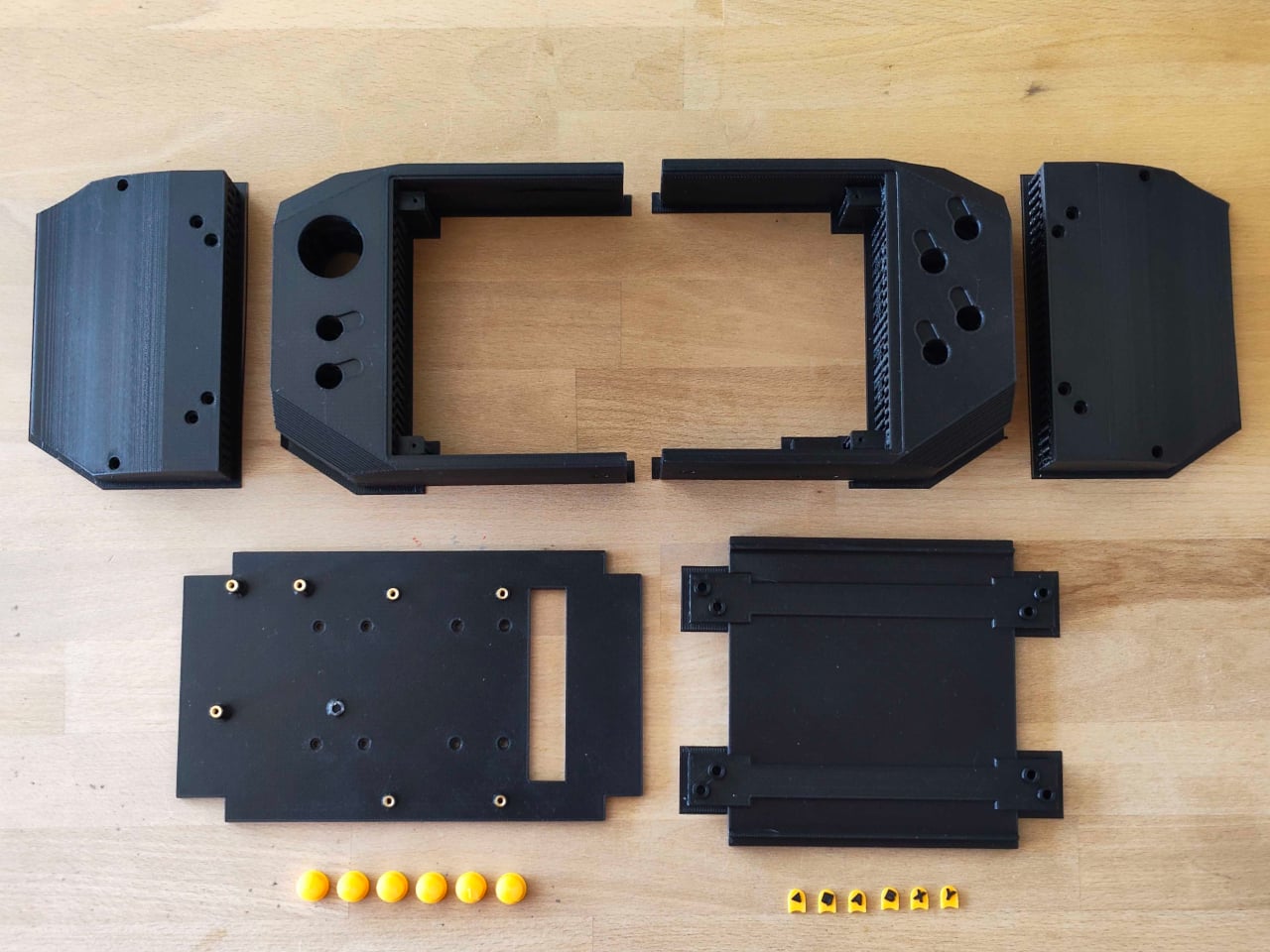
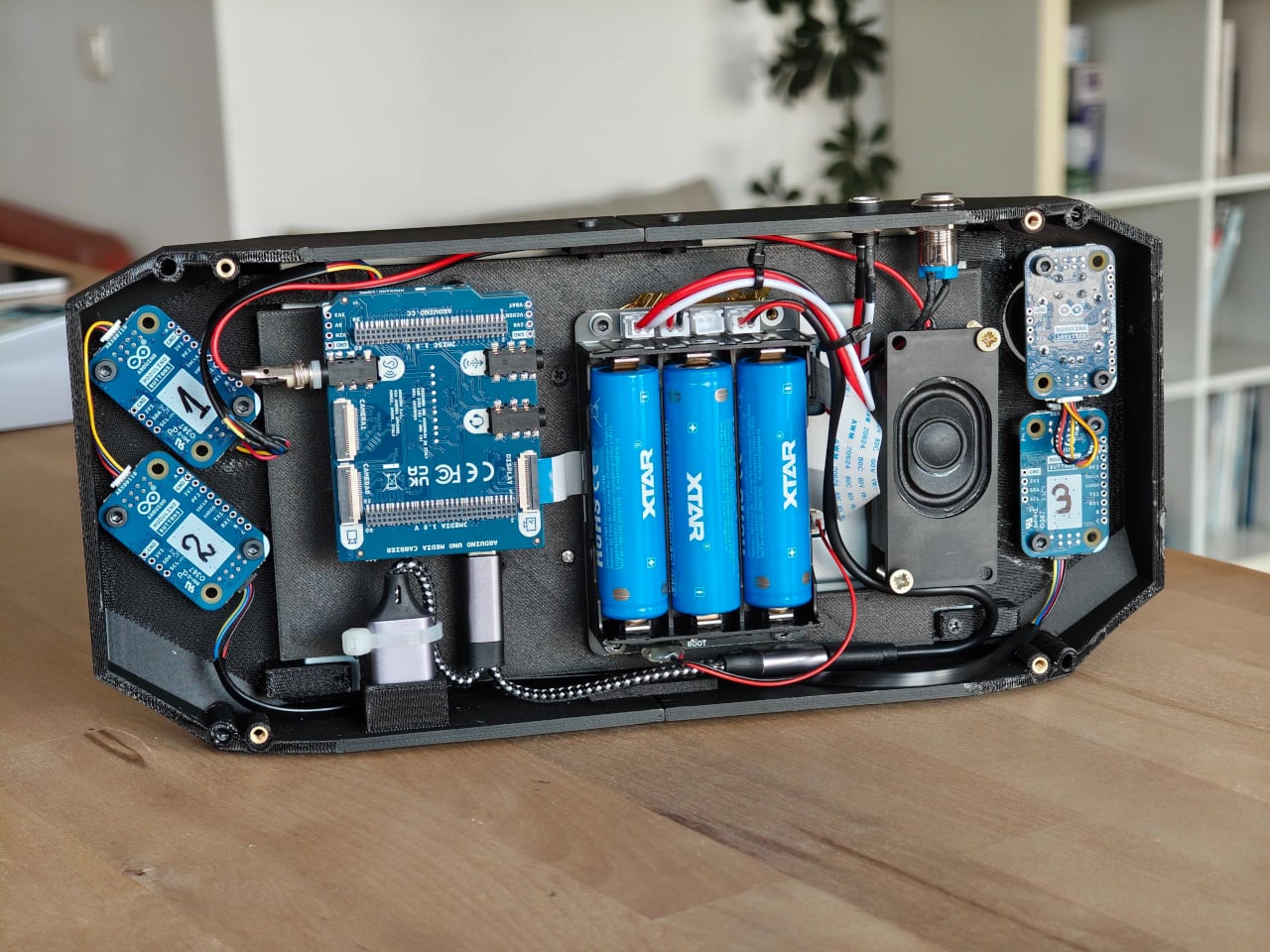
There’s also room to go further than emulation. The UNO Q can run the Godot game engine, which turns the same hardware into a development platform for original games. Between that and RetroArch’s support for a wide range of classic platforms, the console covers both ends of the gaming spectrum without requiring any additional hardware beyond what’s already in the build.
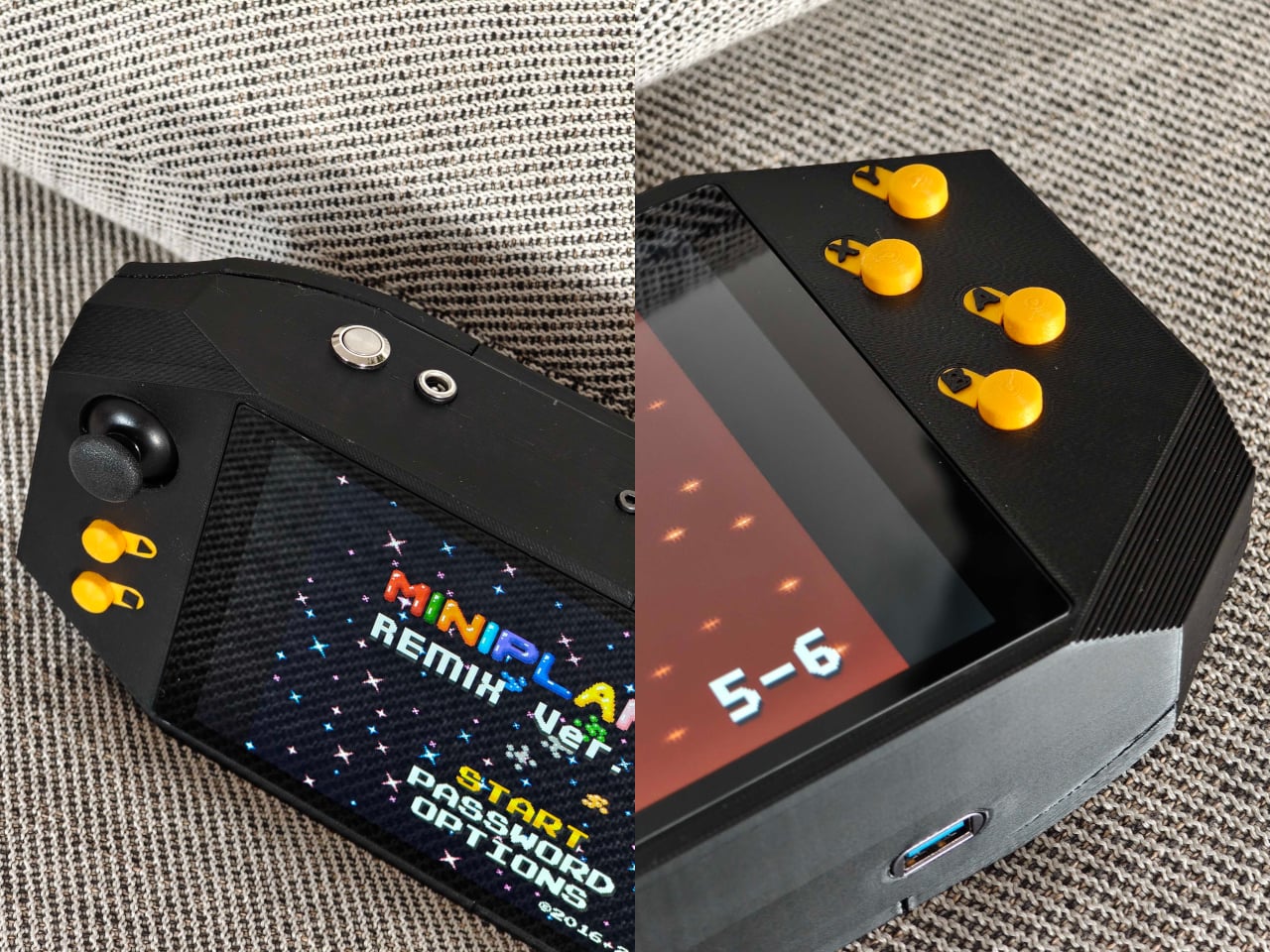
The full hardware list, assembly walkthrough, and complete source code are posted on Arduino Project Hub and GitHub, keeping everything open and reproducible. The documentation also frames the build as a starting point rather than a finished product, with options like swapping the display for a different size, redesigning the enclosure, or adding a Modulino Movement node for motion controls described as natural next directions.
None of that holds together without the right foundation, and the UNO Q’s dual-brain architecture provides it quietly. The STM32 handles time-sensitive inputs without lag while the Qualcomm processor manages the emulation stack, audio, and video at the same time. A software bridge connects the two, and clean communication between them is what keeps the console from feeling like a loose collection of modules.
The post This Arduino-Powered Retro Handheld Is One Anyone Can Build at Home first appeared on Yanko Design.