This Transparent Box Opener Handles Tape & Tags Without You Ever Putting The Package Down

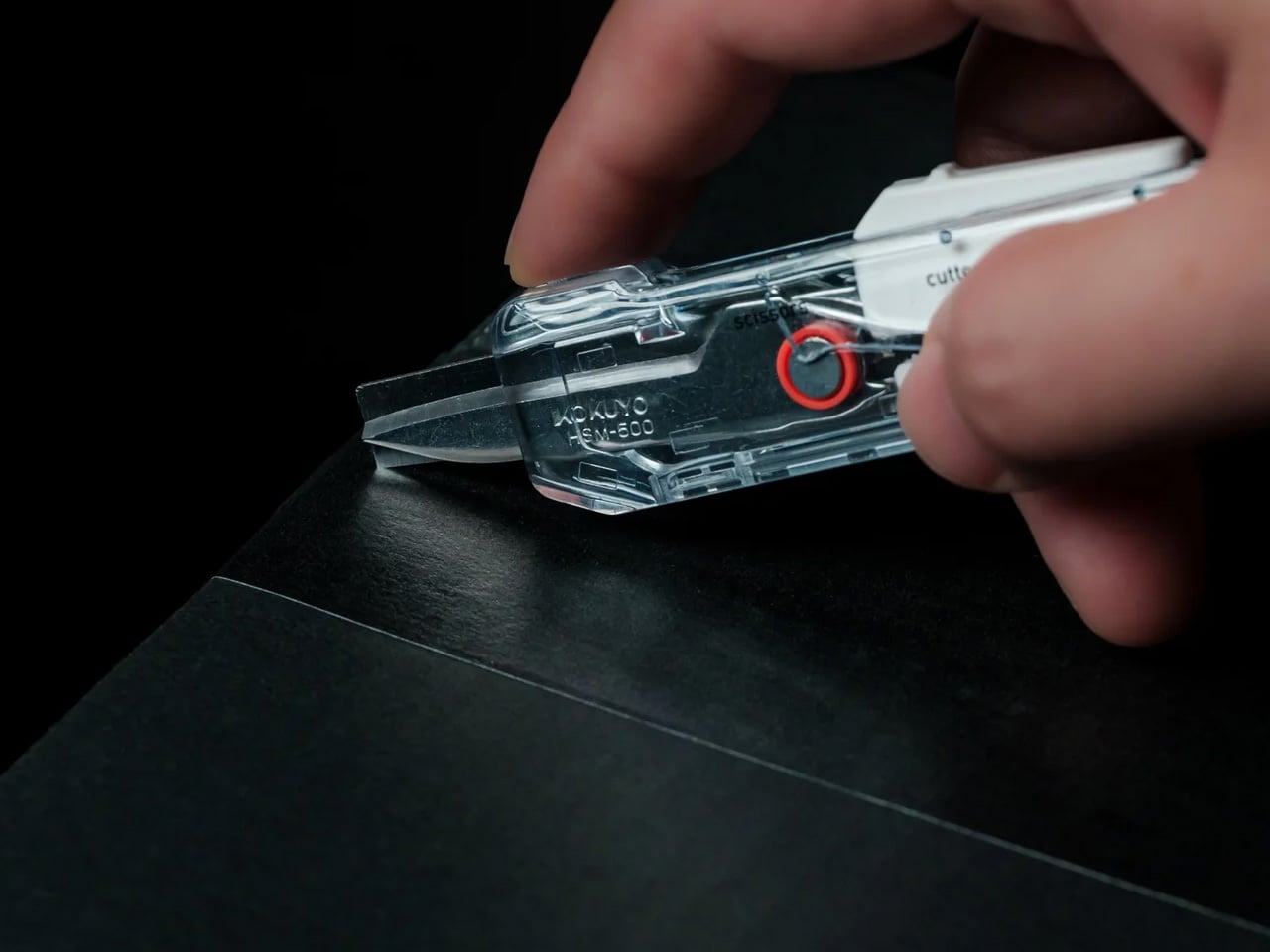
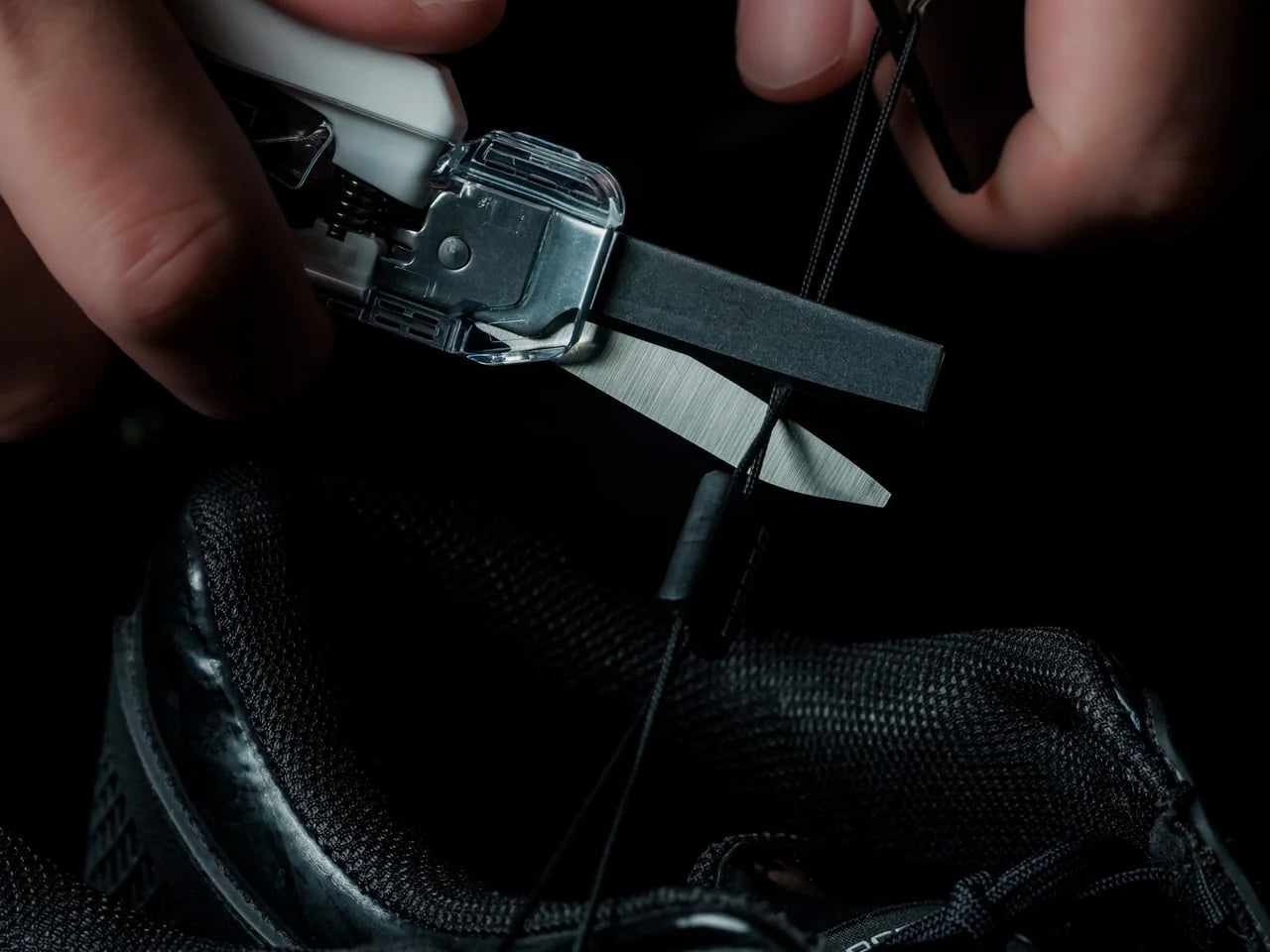
Most box cutters do one thing and leave the scissors somewhere else. The ritual of tearing into a delivery becomes a hunt for a second tool, or a decision to use the first one for everything and hope it does not cut too deep. The ClearSlide Box Opener removes that problem. A blade and scissors in a single compact body, it handles packaging tape and tags in one uninterrupted motion, without putting the package down.

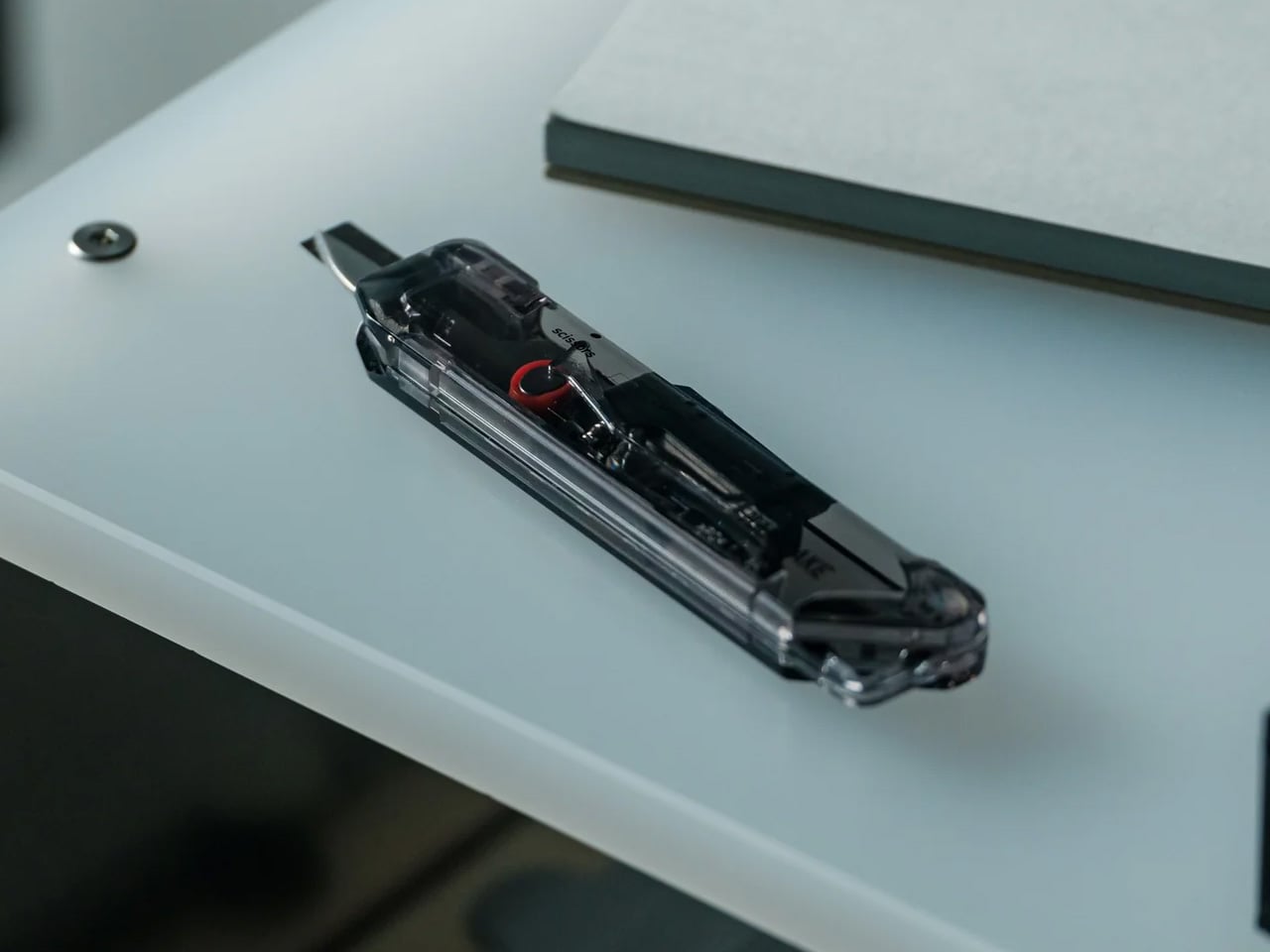
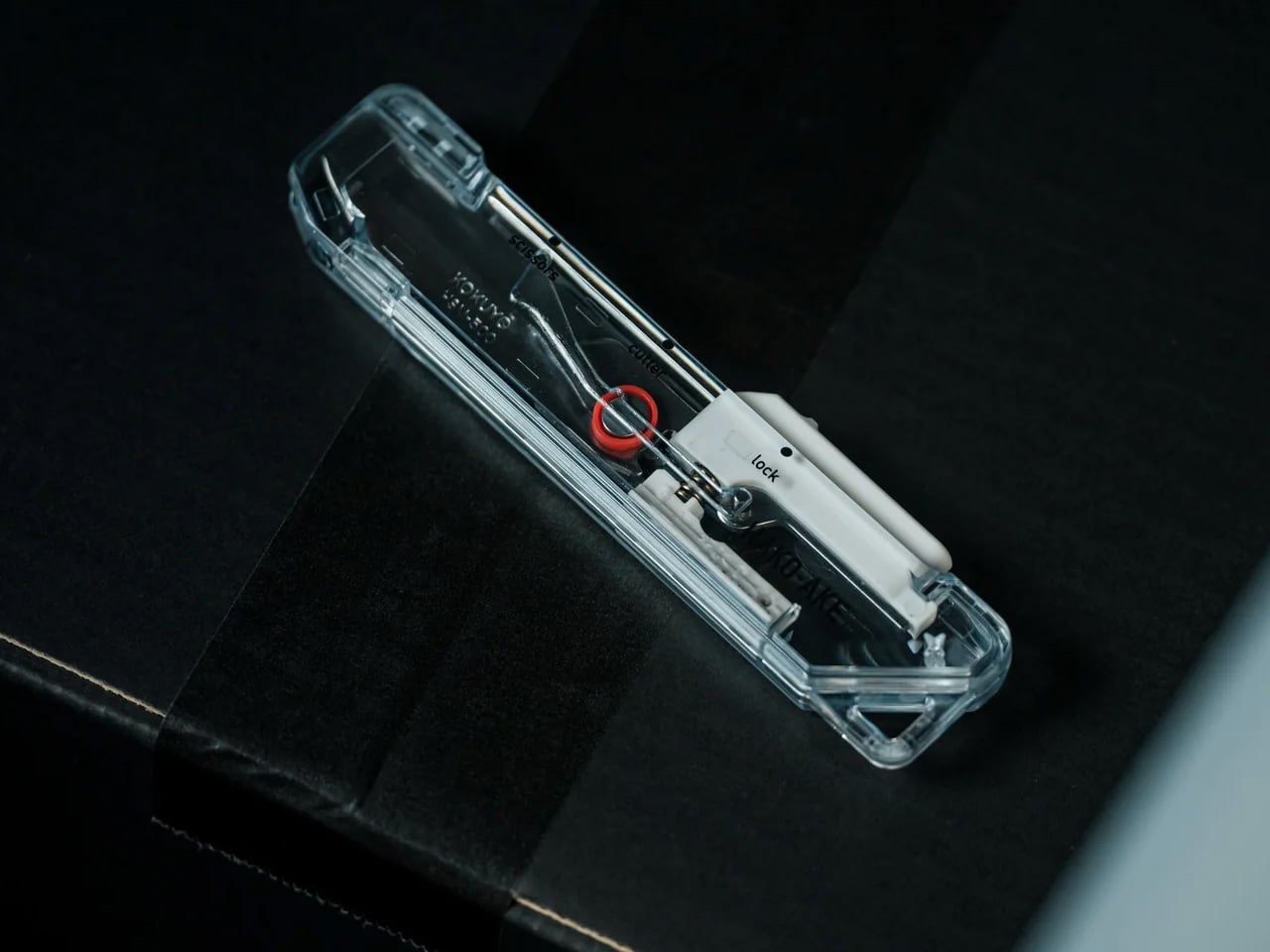
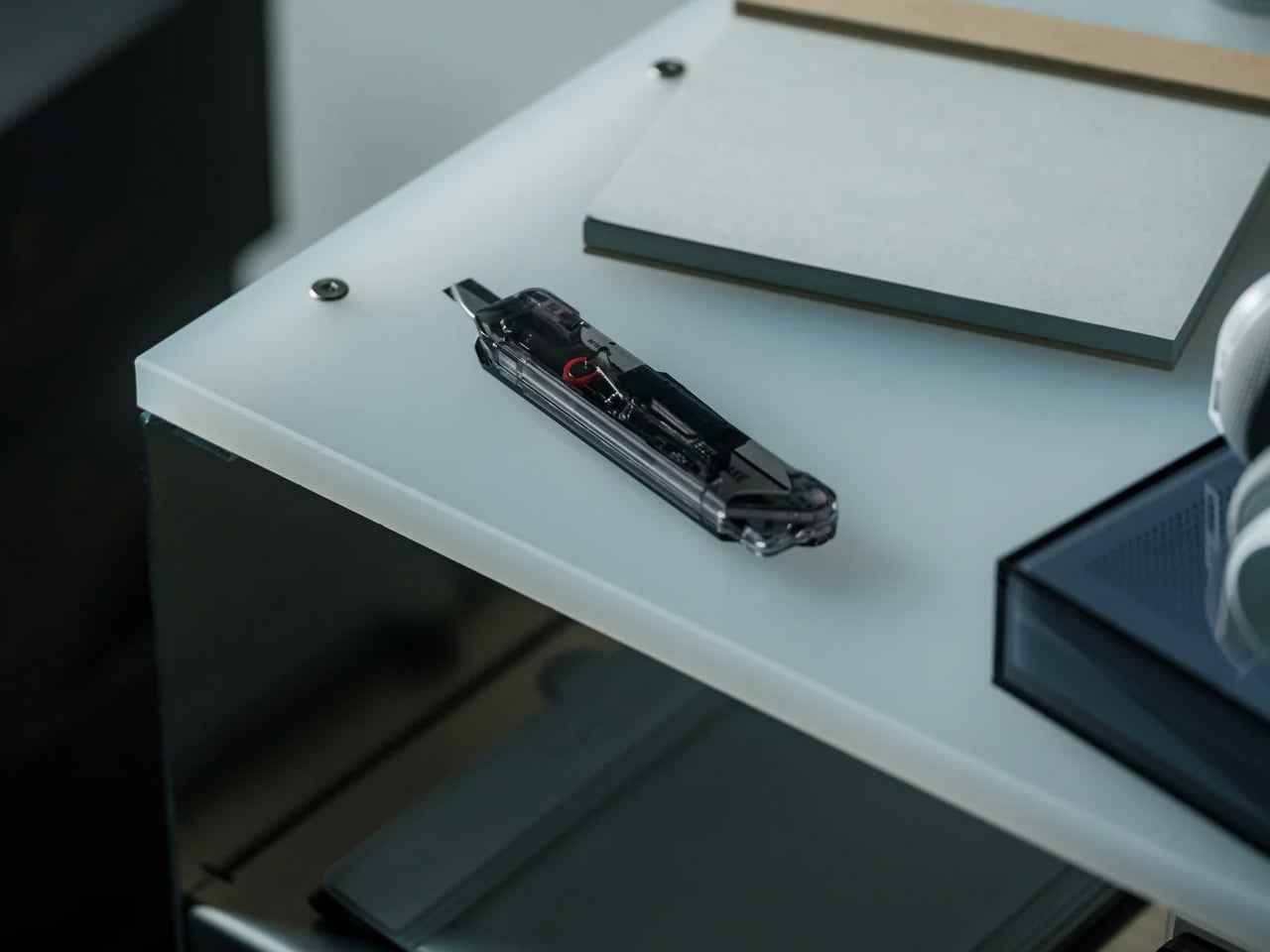
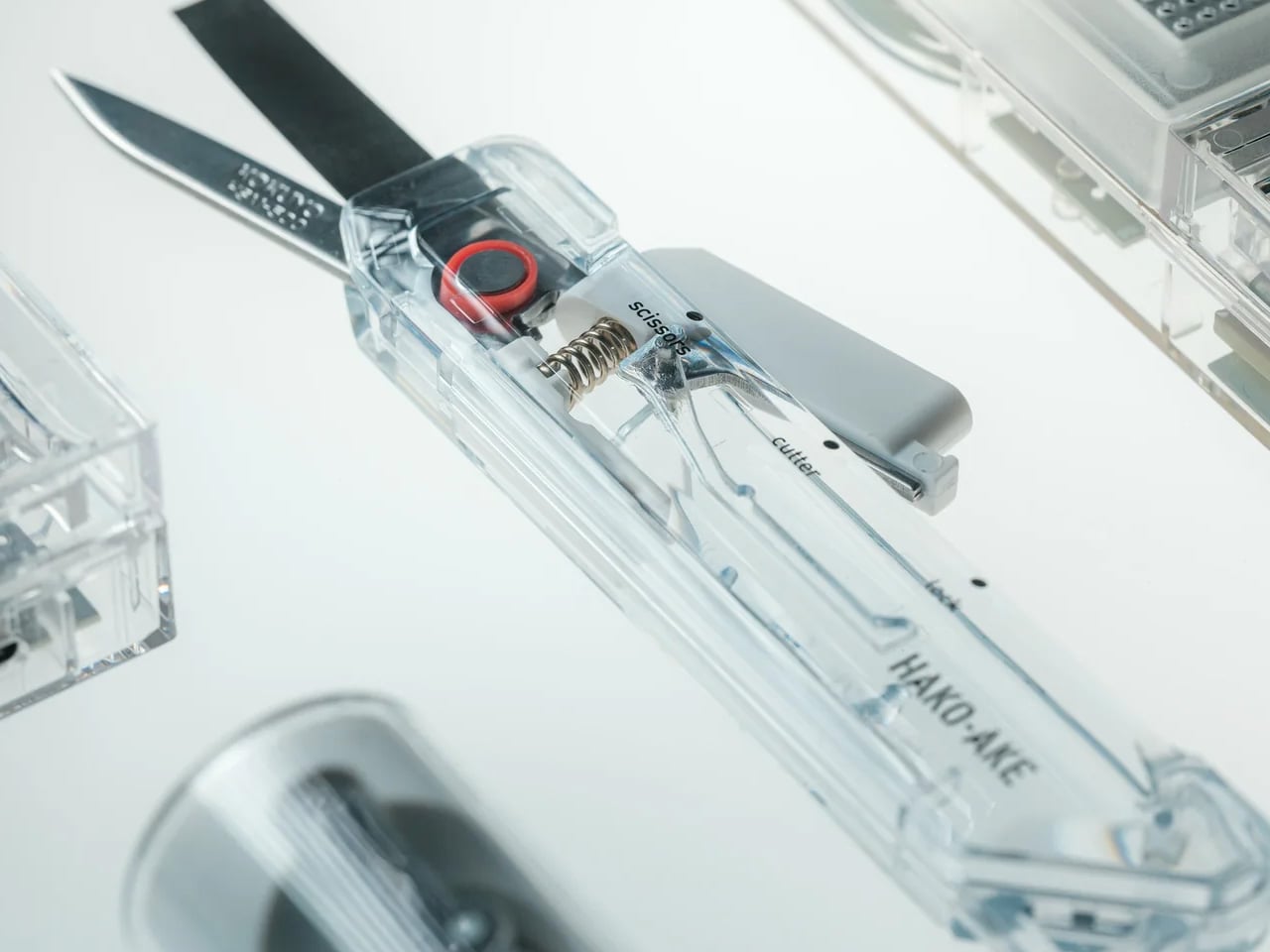
What makes it worth keeping on the desk is the mechanism. A sliding thumb control moves between lock, cutter, and scissors without requiring both hands; each position locks in before releasing cleanly. The blade extends just 0.12 inches, enough to slice through tape without reaching the contents inside. The transparent body shows the internal mechanism’s shift with every adjustment, turning a utility object into something that actually earns its spot next to the keyboard.
Click Here to Buy Now: $30.00

One Tool, Two Functions

Box cutters and scissors solve the same last step in two different ways. The ClearSlide puts both into a single form factor small enough for a pocket. The sliding mechanism moves through three positions: lock, cutter, and scissors, each one clicking into place before releasing with a clean spring action. That kind of tactile confirmation in something this compact is not common. It changes how deliberate the tool feels in use and removes the uncertainty from every position change.

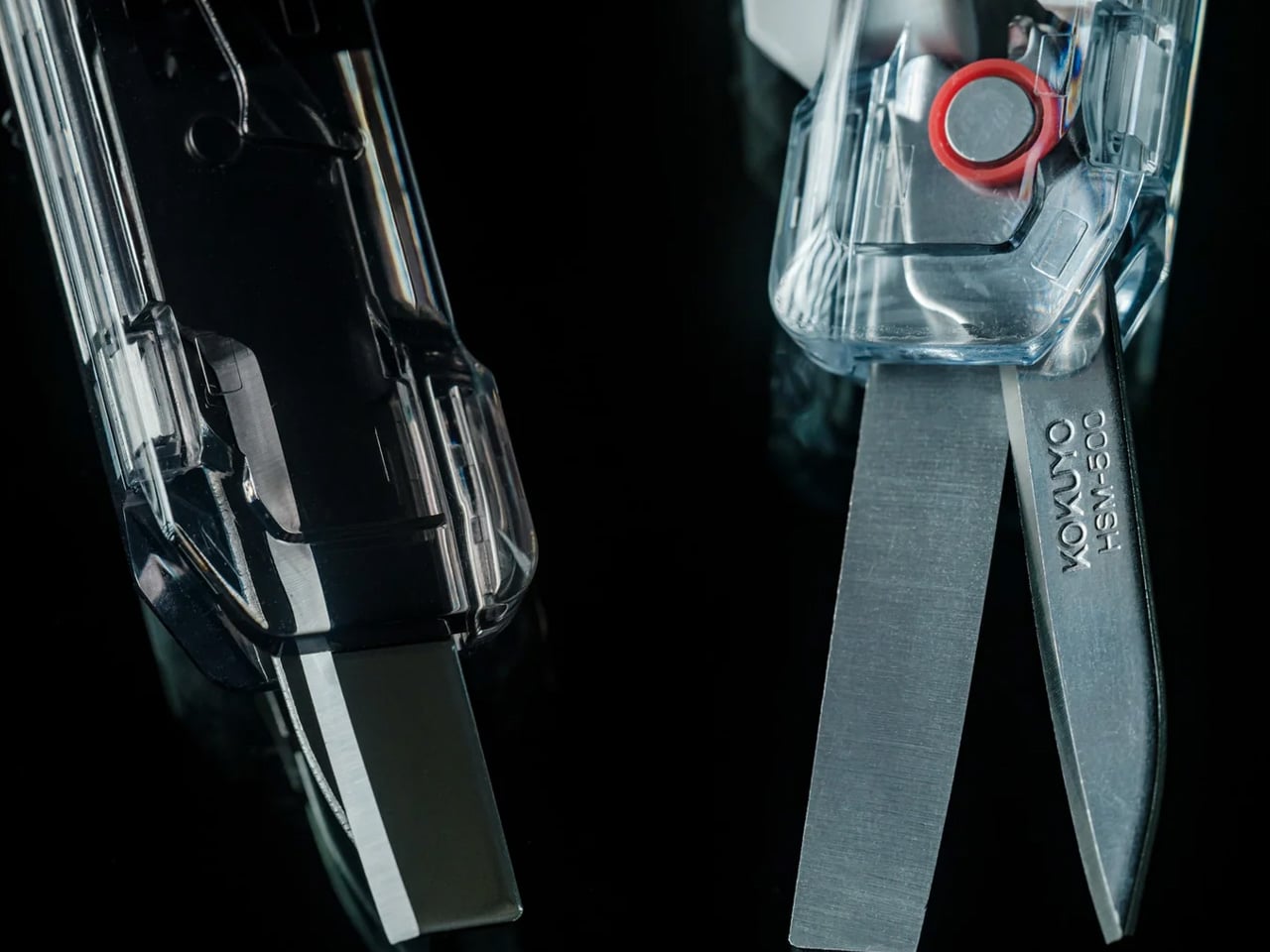
The blade extension is limited to 0.12 inches, which sounds like a constraint until you consider what it actually prevents. Most damaged deliveries come from a blade that cuts too deep on the first pass. At this depth, the cutter handles tape without reaching the contents underneath, which is the only job it needs to do. The scissors handle the rest: tags, inner packaging, anything that a blade would otherwise make worse rather than better.
Transparent by Design

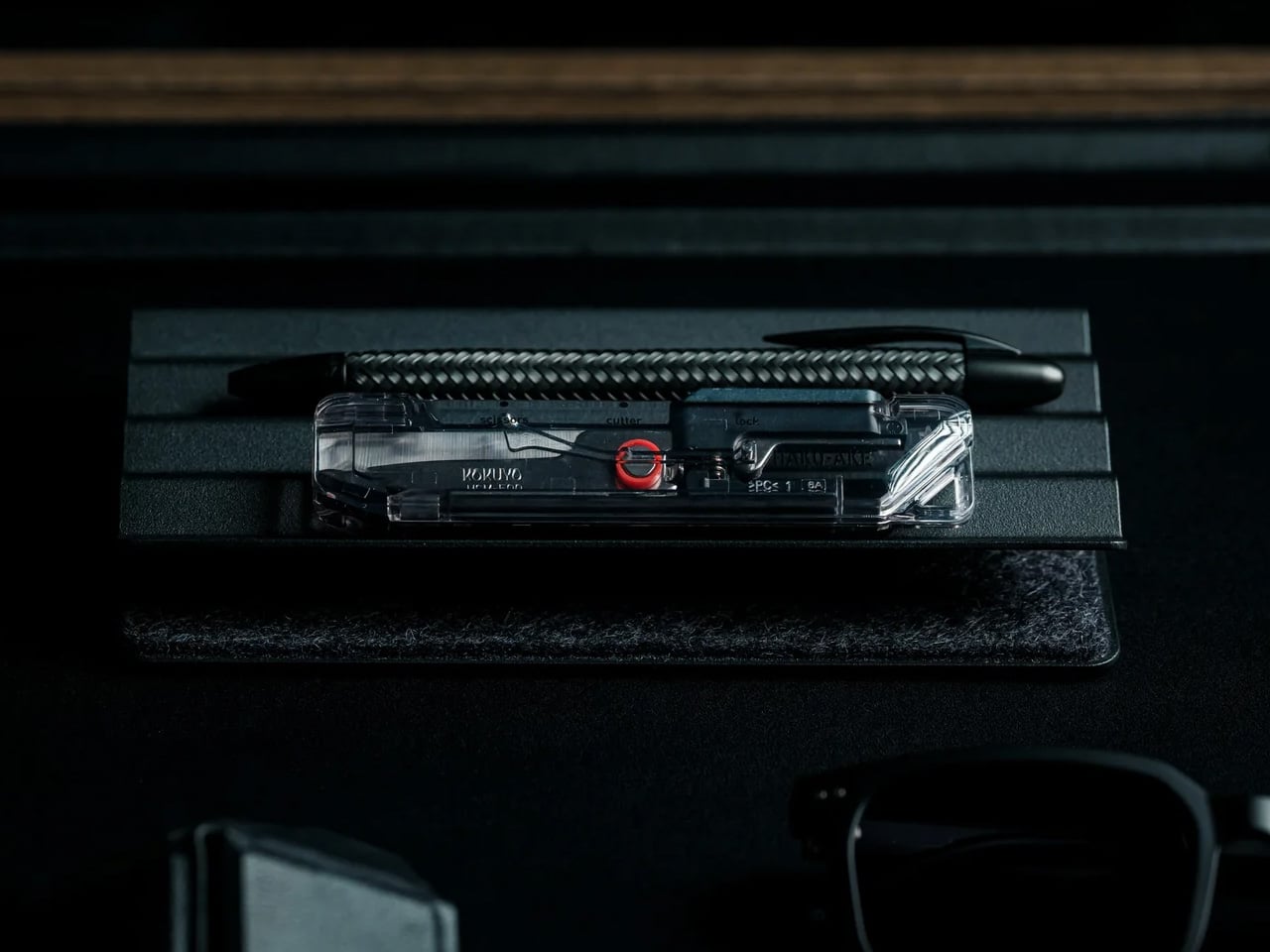
Most tools hide their engineering inside an opaque body. The ClearSlide does the opposite. The transparent shell makes the internal sliding mechanism visible with every position change, so you can see the active mode before making the cut. It is a functional decision dressed as an aesthetic one, or an aesthetic one that happens to be functional. The result is a tool that communicates clearly and carries a retro-tech character most utility objects never bother developing.

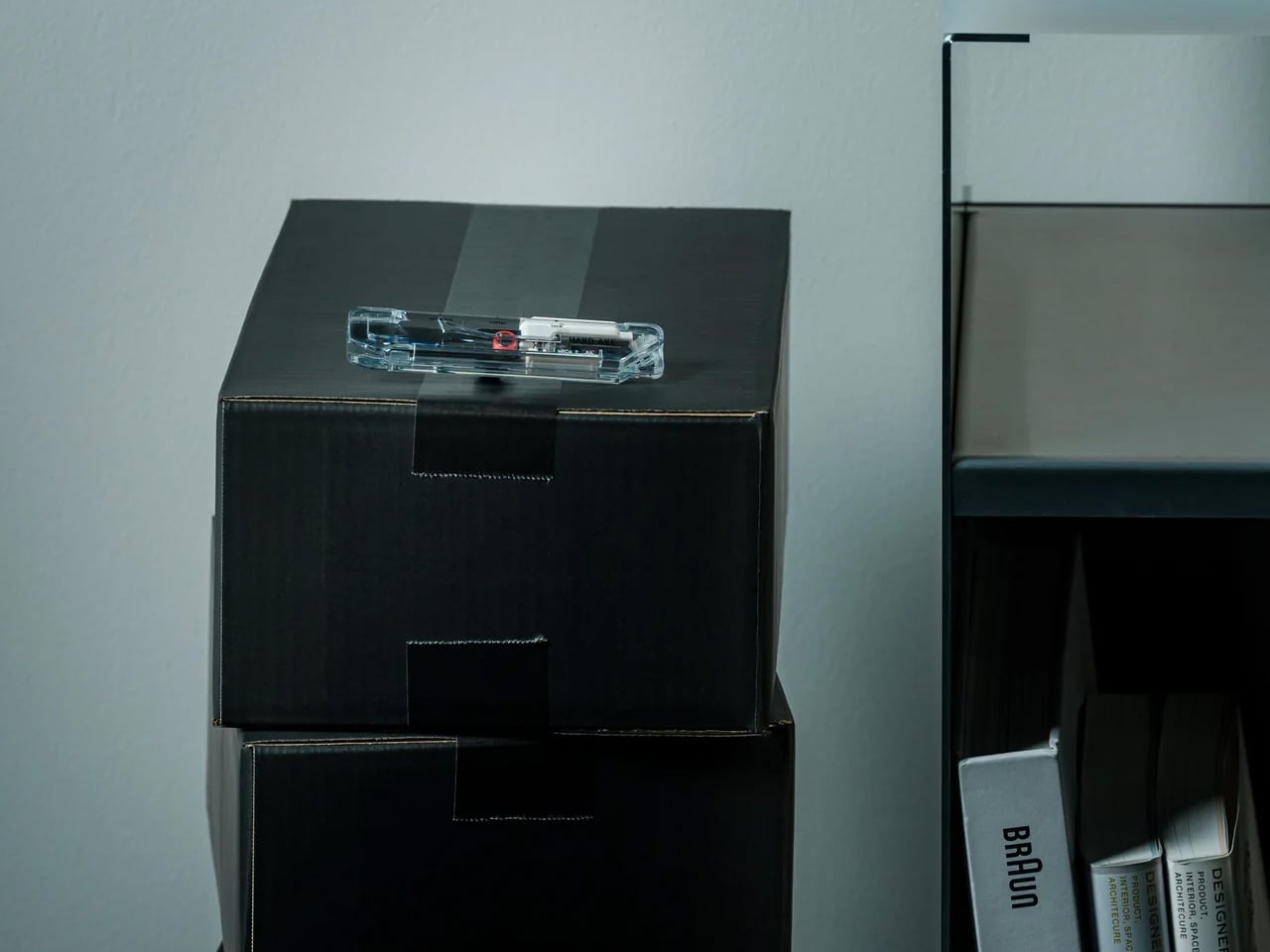
Compact enough for a pocket, fitted with a built-in strap hole for clipping onto a bag, and retractable for safe carry, the ClearSlide is designed to stay within reach. The frustration of opening packages is rarely about the cutting itself. It is about the pause before it: the drawer search, the tool switch, the moment where the delivery wins. This closes that gap. One tool, one pocket, one motion from the moment it arrives at the door.
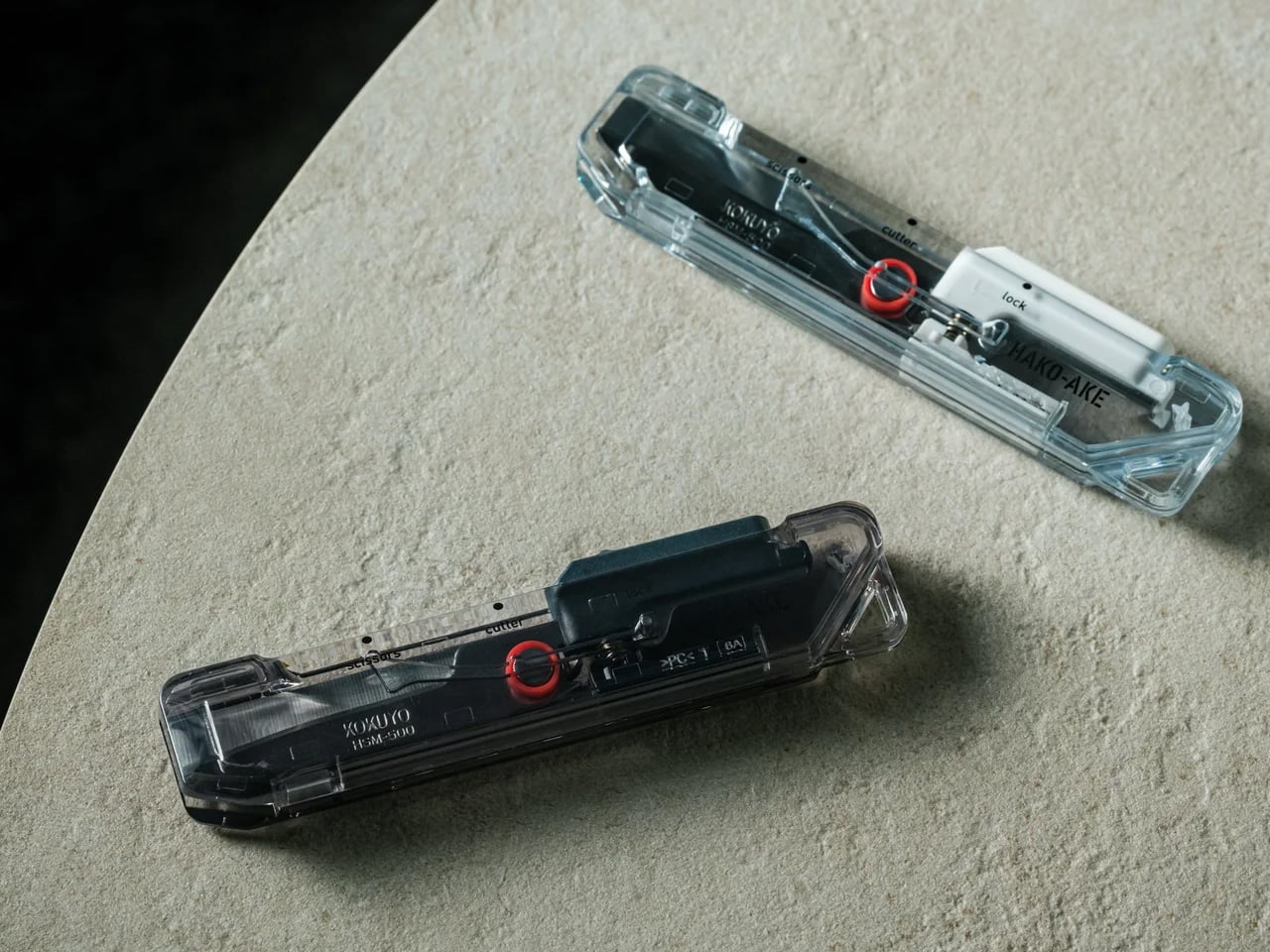
What We Like

  • Blade-and-scissors combination: replaces two tools with one slim body that handles packaging tape and tags in a single session, without switching grip or setting the package down
  • Single-hand operation: the thumb-controlled slider moves between lock, cutter, and scissors with one hand, leaving the other free to hold whatever is being opened
  • Controlled 0.12-inch blade depth: cuts through tape cleanly while staying clear of the contents underneath, solving the most common frustration of opening deliveries with a standard blade
  • Visible internal mechanism: the transparent body lets you confirm the active mode before every cut, and gives the tool a distinct retro-tech character that sets it apart from every other cutter in a drawer

What We Dislike

  • Blade replaceability: the product does not specify whether the cutter blade is replaceable, which matters for anyone opening packages regularly and expecting long-term performance from a $30 tool
  • Limited color range: Clear, White, and Smoke Black are clean choices, but the transparent body has the visual potential to carry a wider palette than three colorways currently allow
The Tool That Ends the Two-Step

The ClearSlide Box Opener was built around a problem most people have learned to live with rather than solve. Two functions in one tool, controlled by a single thumb, with a blade depth engineered to protect what matters. For something that lives on a desk or clips onto a bag, that level of considered detail at $30 makes it difficult to justify keeping a box cutter and scissors as two separate jobs.

If the current setup involves reaching for one tool and then switching to another halfway through, that is the exact friction this replaces. Pick it up in Clear, White, or Smoke Black. Let the next delivery be the last time the packaging feels harder to deal with than whatever is inside it, and let the scissors that used to live in the desk drawer finally earn a proper rest.
The post This Transparent Box Opener Handles Tape & Tags Without You Ever Putting The Package Down first appeared on Yanko Design.


London’s Barbican Now Has Furniture You’re Allowed to Move

Most public spaces don’t trust you. They’re designed to move you through them efficiently, seat you for a limited time, or keep you from lingering too long. Benches with armrests in the middle to prevent sleeping. Spikes on flat ledges. Gaps between seats so no one gets too comfortable. Somewhere along the way, cities stopped being places you inhabit and started being places you pass through.

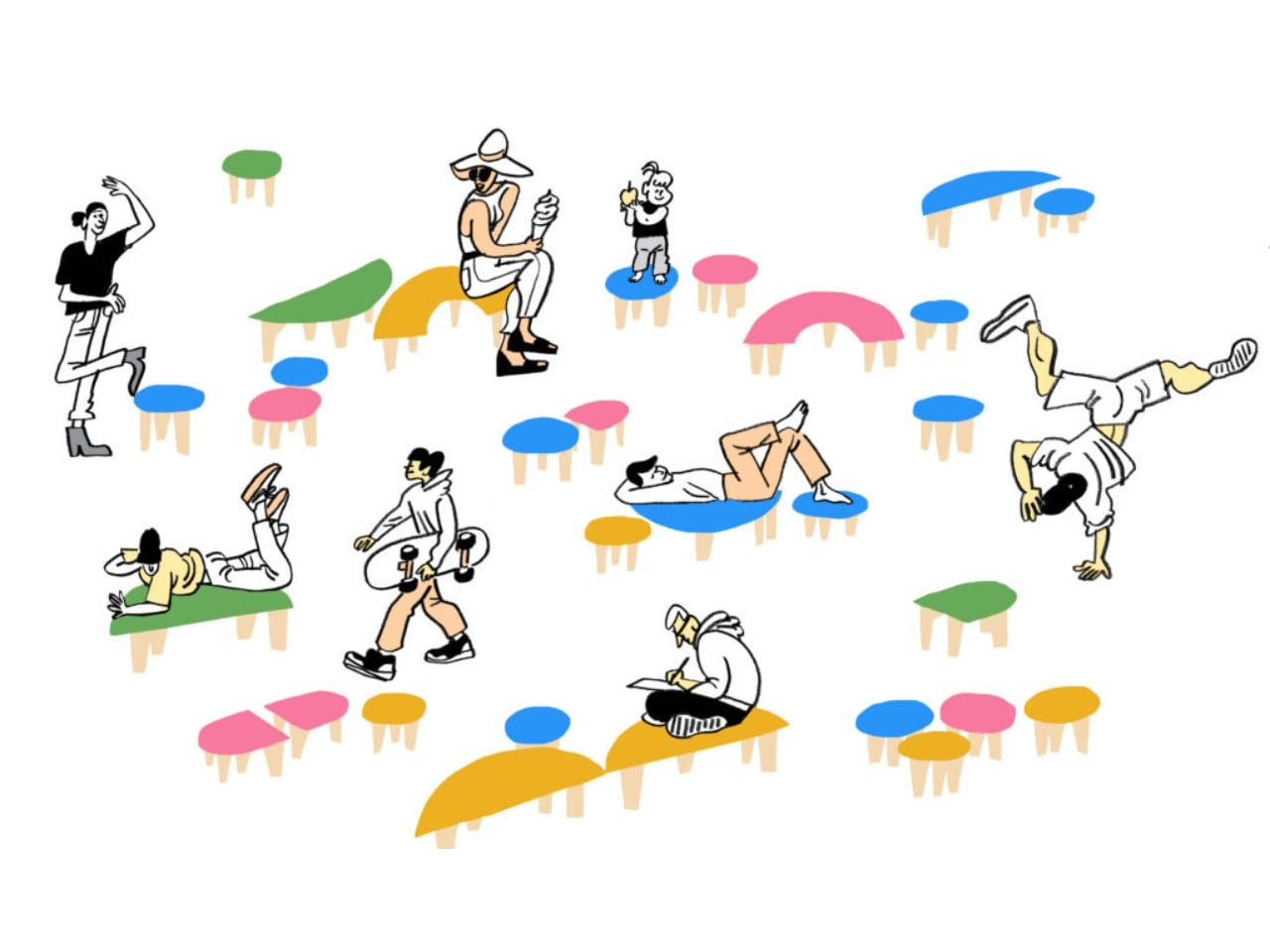
Päivi Raivio’s Basic Forms (of Urban Life) is a direct and cheerful argument against all of that. The Finnish artist and urban designer has taken a set of geometric plywood pieces, painted in colors borrowed from the Barbican’s own brutalist architecture, and placed them in the middle of one of London’s most famous cultural complexes. No instructions. No fixed configuration. No single correct answer. Visitors are invited to pick them up, move them around, stack them, sit on them, or arrange them into something entirely new. What looks like furniture is actually a question: what do you want this space to be?

Designer: Päivi Raivio

I’ve seen a lot of participatory design installations over the years, and most of them fail for the same reason: they participate for you. They have a predetermined “correct” arrangement that visitors slowly discover through guided cues. There’s no real agency. Raivio’s work is different because it genuinely means it. A seat can become a table. A table can become a platform. A platform can become a wall, a stage, or a privacy screen between two strangers who both needed a quiet corner at the same moment. The work shifts with whoever is using it, and that feels radical compared to what most public design offers.

The Barbican is a fitting backdrop for all of this. Designed through the 1950s and completed in 1982, it’s one of the most monumental pieces of brutalist architecture in the UK, all exposed concrete and sharp geometry. Raivio’s lightweight, colorful pieces don’t fight the setting. They echo it quietly, picking up the shapes and tones of the architecture without trying to compete with several acres of concrete. The contrast between the fixed permanence of the building and the cheerful rearrangeability of the installation is part of what makes the whole thing click.

For Raivio, play isn’t a decorative layer applied over the surface of serious design. It’s a foundational principle. Her studio, RaivioBumann, focuses on transforming public spaces into places that are genuinely livable, not just functional. The idea that disorder and disruption can be design tools, rather than problems to be solved, runs through everything about Basic Forms. Public space, in her view, is most alive when it hasn’t been entirely decided for you.

The installation is part of the Barbican’s Play Make Do festival, running 14 to 16 August 2026, and it’s free, unticketed, and open to anyone who walks through. It previously showed at Concéntrico in Logroño, Spain, where it was met with the kind of spontaneous collective enthusiasm that designers spend careers hoping for. People of all ages rearranged, combined, balanced, and rebuilt the pieces for hours. The images from that presentation are worth looking up. They show something you don’t see often enough in public space: strangers making decisions together.

That’s the detail that sticks with me. Not the form, not the color palette, not even the clever way the installation adapts to its environment. It’s the fact that two people who don’t know each other will naturally start negotiating, collaborating, and eventually laughing over how to arrange a pile of plywood. Raivio has essentially built a permission slip for connection, disguised as furniture.

Cities don’t lack benches or tables. They lack reasons to linger. They lack spaces that say, figure it out, make it yours, stay as long as you want. Basic Forms gives London exactly that, even if only for a weekend. The real question it raises is why we aren’t building this kind of thinking into cities permanently, instead of treating it as a festival-season novelty.

The post London’s Barbican Now Has Furniture You’re Allowed to Move first appeared on Yanko Design.

Triumph Added Gold Accents to Its New 1200cc Roadster

Gold is a bully. Put it anywhere near black and it wins every argument, which is why most manufacturers use it sparingly, on a badge, maybe a border, probably just a little accent here or there, that’s it. Triumph used it five times on the new Speed Twin 1200 TFC and somehow the bike does not look like a trophy. There’s gold in the tank pinstripe, gold outlining the Triumph badge, gold on the fork lowers, gold on the Öhlins adjusters, and a full gold chain spinning away back there like it’s showing off.

The trick is what’s holding it all down. Every other surface on this thing is either gloss black, matte carbon, or blacked out titanium, so the gold has nowhere to bounce. It reads as punctuation instead of paint. Look at the tank in daylight and the metallic flake in Obsidian Gold does something sneakier still, glinting only when the light hits at an angle.

Designer: Triumph

Carbon fiber handles the unglamorous half of the equation. Gloss-lacquered panels wrap the mudguards, side panels, and heel guards, keeping the bike visually quiet enough for the gold to register. It also drops wet weight to 214 kg, 3 kg under the Café Racer Edition and 2 kg under the standard Speed Twin 1200 and RS, roughly a six-pack of beer permanently removed from a bike you’re about to fling around corners. None of it shouts about lap times. It’s there because a factory custom still has to look hand-built even when a robot laid up half the panels.

Fully adjustable Öhlins units replace the Marzocchi suspension at both ends, and Brembo Stylema calipers grab the front discs through a radial master cylinder, hardware you’d expect on a race bike, not a numbered plaque. Low clip-on bars and end-mounted mirrors push the rider into a sportier crouch, backed by a billet aluminum top yoke laser-etched with each bike’s number out of the 750-unit run. It’s parked right where your eyes land every time you glance at the bars, a reminder that you did, in fact, pay for something rare.

The engine is the one thing Triumph left alone, correctly. It’s the same 103.5 hp, 112 Nm parallel twin found in the standard Speed Twin 1200, the RS, and the Café Racer Edition, so nobody’s buying this for a bigger number. What’s different is how it exits, through black titanium Akrapovič silencers with carbon end caps that trade a bit of restriction for a better soundtrack. Shift Assist, cornering ABS, traction control, and three riding modes round out the electronics on a color TFT and LCD combo, with a USB-C port instead of some ancient proprietary plug.

Bullet-style LED indicators double as brake and tail lights, freeing up the space where a central lamp usually sits for a clean, logoed blanking plate instead. It’s a small deletion custom shops would charge extra for, and here it comes standard. The seat is a one-piece bench in hand-stitched leather with a suede pad, the kind of detail you only clock once you’re sitting on it.

At $21,995, with 180 units earmarked for the US and 30 for Canada, the Speed Twin 1200 TFC is priced and rationed like the collector’s item Triumph wants it to be. Deliveries start in October, and every bike ships with its own numbered yoke, turning “limited edition” into something you can actually point to. Neither the horsepower nor the price tag really sells this bike. It’s that Triumph resisted throwing everything at it, building a bike where five points of gold do more design work than most manufacturers manage with an entire livery.

The post Triumph Added Gold Accents to Its New 1200cc Roadster first appeared on Yanko Design.

SwitchBot’s $119 Portable Battery Fan Brings Matter Over Wi-Fi to Patios and Campsites

The whole point of a portable fan is that it goes where you go. Bedroom in the morning, home office by noon, patio by evening, campsite by the weekend. That flexibility is basically the product’s entire reason for existing. Smart home integration has historically worked against that, though. Most connected fans are smart in exactly one place: wherever the hub lives. The Curtain 3 and the Blind Tilt, products we’ve covered in the SwitchBot lineup, both need the Hub 3 to talk to Apple Home or Google Home. The Hub lives on a shelf. Your fan moves. That tension has been quietly baked into smart home portability for a while.

Matter over Wi-Fi is the fix. It’s the open connectivity standard that Apple, Google, Amazon, and hundreds of other tech companies built together so that devices can join any smart home platform without a proprietary bridge in the middle. The Battery Circulator Fan 2 Pro has it built in, which means it connects straight to Apple Home, Alexa, Google Home, or Home Assistant from wherever it happens to be, bedroom, patio, campsite, corner of the living room you forgot existed. No Hub required. SwitchBot says it’s the first battery-powered air circulator to ship with Matter over Wi-Fi, and and boasts a 70-hour battery, making it last well over a long weekend when you’re out camping. Even more if you hook it to a power bank.

Designer: SwitchBot

A 3,600 mAh battery gives the fan its untethered freedom – that’s enough to run for several days, or even a full week of evenings, without needing a charge. On its highest setting, you get about four hours of peak performance, which is plenty for cooling down a room quickly. SwitchBot also built in a practical safety net for when the battery does run low. The fan supports both AC wall power and USB-C charging, so you can plug it in and keep it running indefinitely. This triple-power setup makes the portability feel genuine, because the fan is never truly out of commission; it just switches from being cordless to corded without missing a beat.

This fan moves a serious amount of air. It’s an air circulator, designed to generate a powerful, focused column of air that can travel up to 33.5 meters, or about 110 feet. With a max airflow of 477 cubic feet per minute (CFM) and a wind speed of 6.5 meters per second, it’s engineered for whole-room ventilation. This is the kind of performance that helps an air conditioner work more efficiently by distributing cold air evenly, or keeps a stuffy room from feeling stagnant. It’s a significant step up from smaller personal fans that are only effective when they are pointed directly at you from a few feet away, making this a much more versatile cooling tool for larger spaces.

At its lowest setting, the fan runs at just 21 decibels. That’s quieter than a whisper, making it an easy addition to a bedroom or a quiet office without creating a distracting hum in the background. This focus on low-noise operation is a critical detail, because a loud fan, no matter how powerful, often gets turned off. The fan also includes a subtle but clever lifestyle feature: an optional aroma diffuser. A small pad near the grille allows you to add a few drops of your favorite essential oil, letting the fan circulate a pleasant scent throughout the room along with the cool air. It’s a small touch that elevates the experience from simple utility to something that enhances the room’s overall atmosphere.

The fan’s physical design is built around its portability. Its clean, sculptural form is available in both black and white, with a large, integrated handle on top that makes it easy to pick up and move with one hand. The unit feels solid without being heavy, striking a good balance for a device meant to be relocated often. SwitchBot also included a thoughtful, practical detail for long-term use: a removable and washable filter. This fine mesh screen sits behind the main grille and is designed to catch larger particles like pet hair and dust before they get into the fan blades. It’s a simple addition that makes maintenance easier and keeps the air it circulates a little cleaner.

That direct Matter connection unlocks some genuinely useful automations. Because the fan can talk to any Matter-compatible platform, you can tie it into routines with devices from other brands. You could pair it with a separate temperature and humidity sensor, for example, and create an automation that kicks the fan on whenever the living room hits 78 degrees. Or, you could include it in a “Good Night” scene that turns off the lights, locks the doors, and starts the fan on its quietest setting. This is where the hub-free design really shines, allowing the fan to act as a truly independent and intelligent part of your home, wherever you decide to place it for the day.

For years, the intelligence in our devices has been tethered to a power outlet and a central hub. By embedding Matter over Wi-Fi in a battery-powered device, SwitchBot has created a gadget that is smart everywhere, not just in one room. It’s a small but significant step toward a more flexible and intuitive connected home, where our devices adapt to our lives instead of forcing us to arrange our lives around them. For $119.99, you get a powerful air circulator, a long-lasting battery, and a glimpse of a more sensible smart home future.

The post SwitchBot’s $119 Portable Battery Fan Brings Matter Over Wi-Fi to Patios and Campsites first appeared on Yanko Design.

This NASA-inspired Kojima Watch lets you wear Ludens’ futuristic vision on your wrist

NASA-inspired timepieces have always been hot property for astronomy fanatics and watch collectors alike. The minimalist Nova Watch, geeky  NASA Artemis Watch 2.0, and the ultra-exclusive Amida watches prove it, all right. Now, Anicorn Watches has unveiled another space-themed creation that channels the spirit of interstellar exploration through its collaboration with Kojima Productions.

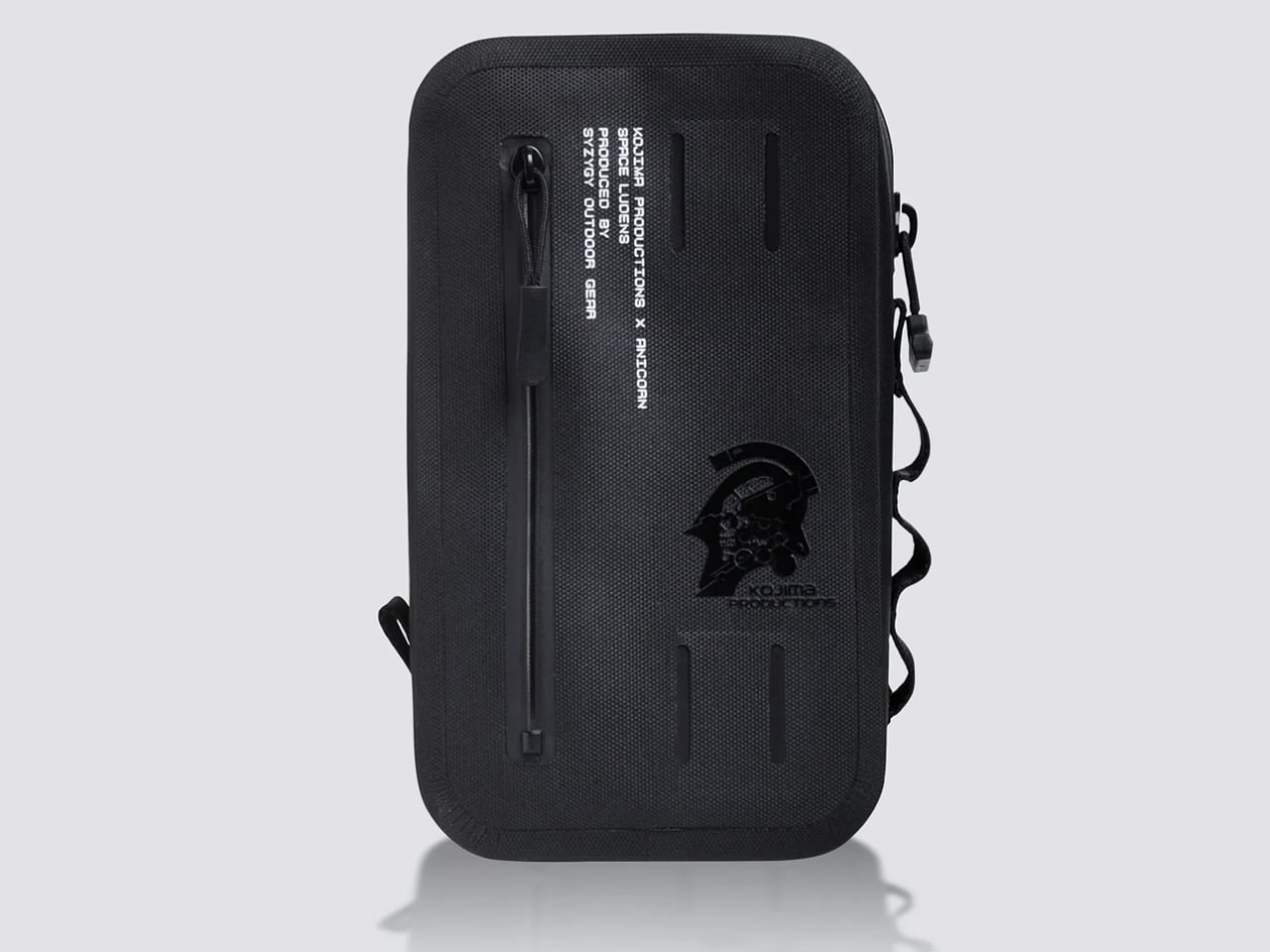
According to Anicorn, the timepiece captures the essence of Hideo Kojima’s iconic Ludens character. Conceived by the legendary artist Yoji Shinkawa, Ludens is imagined as an astronaut venturing into the digital universe, symbolizing the studio’s philosophy of exploring the unknown through creativity. Described by the watchmaker as a once-in-a-lifetime collaboration, the Space Ludens transforms that futuristic vision into a collectible mechanical watch.

Designer: Anicorn Watches

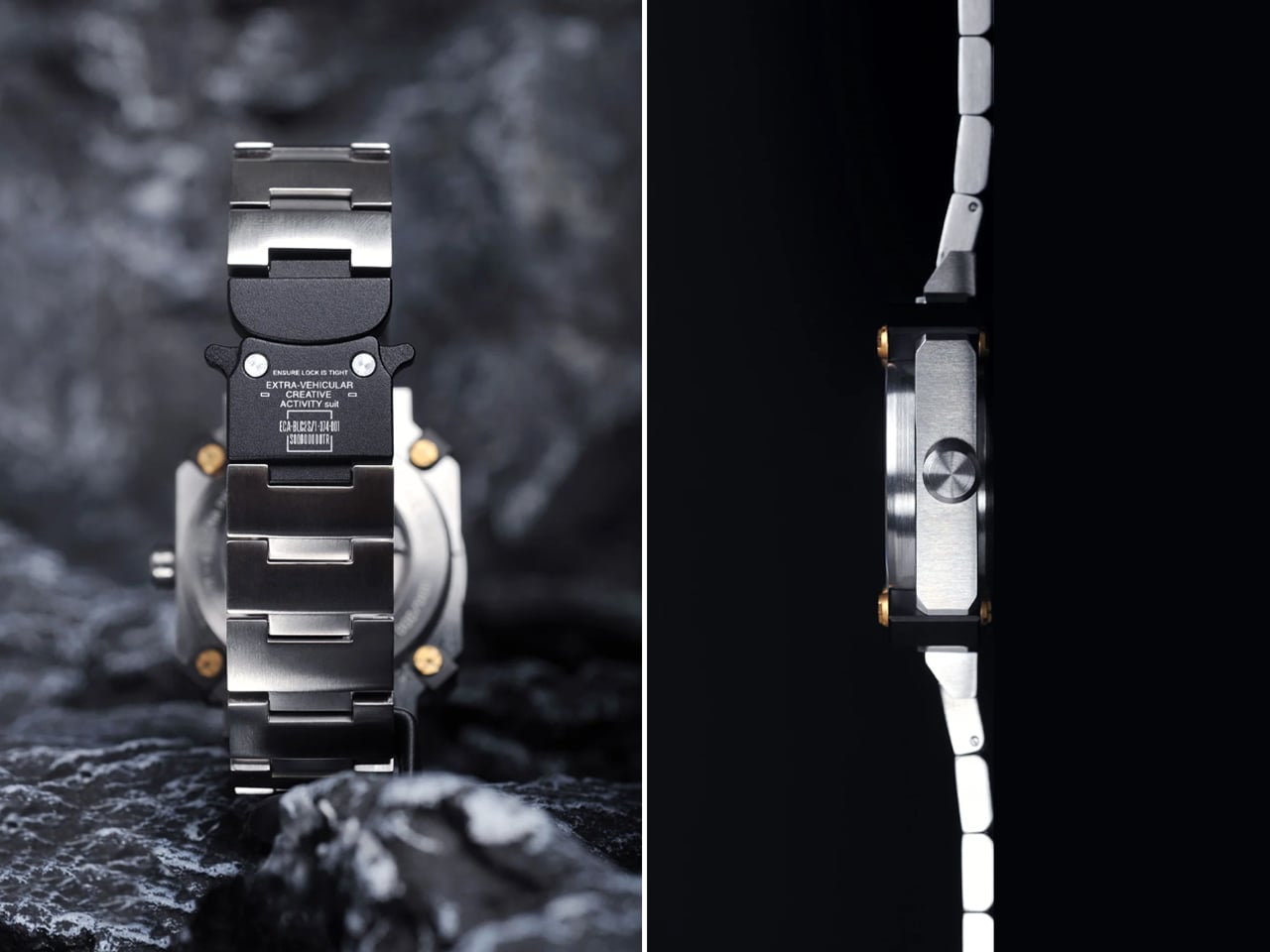
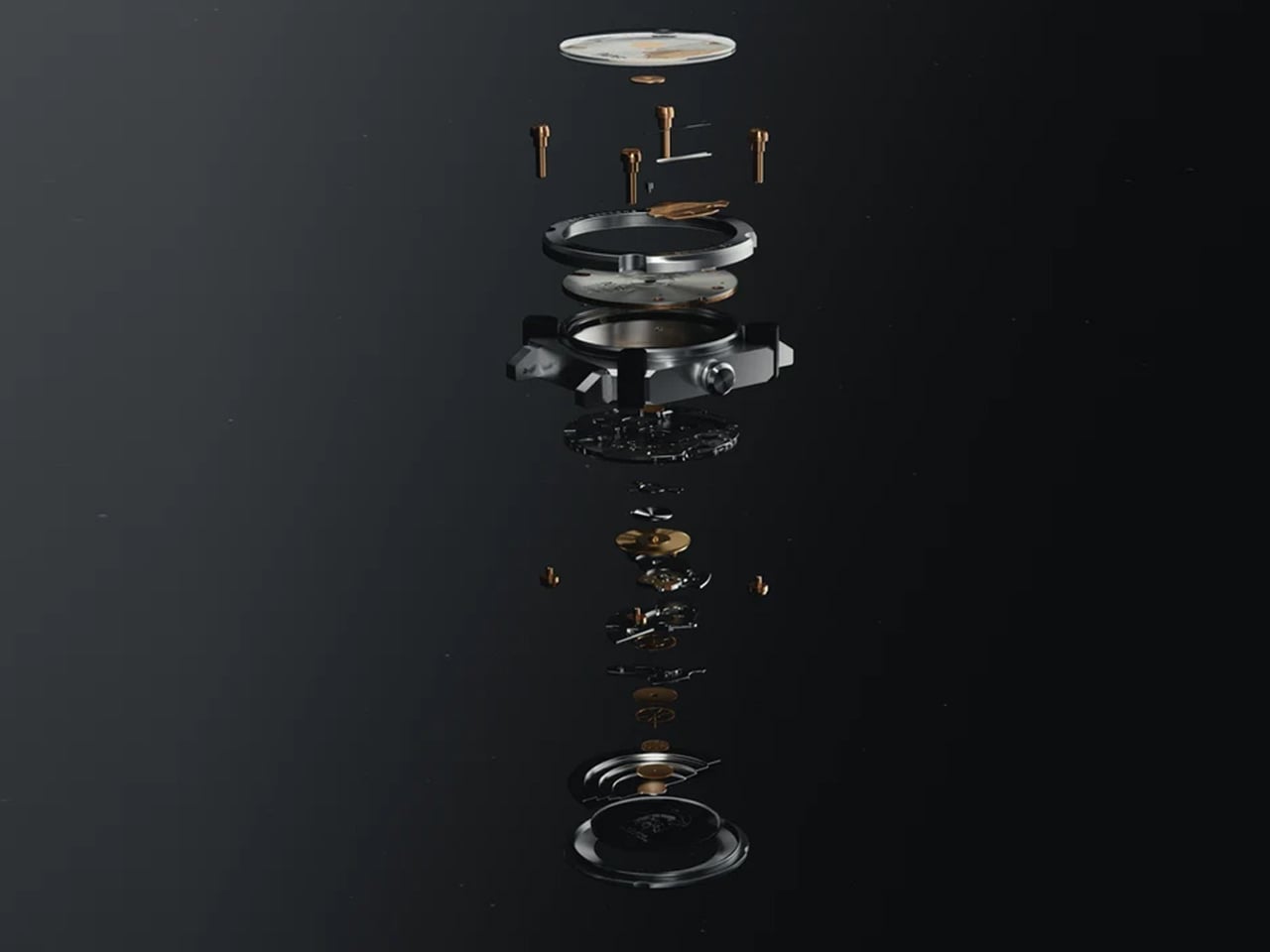
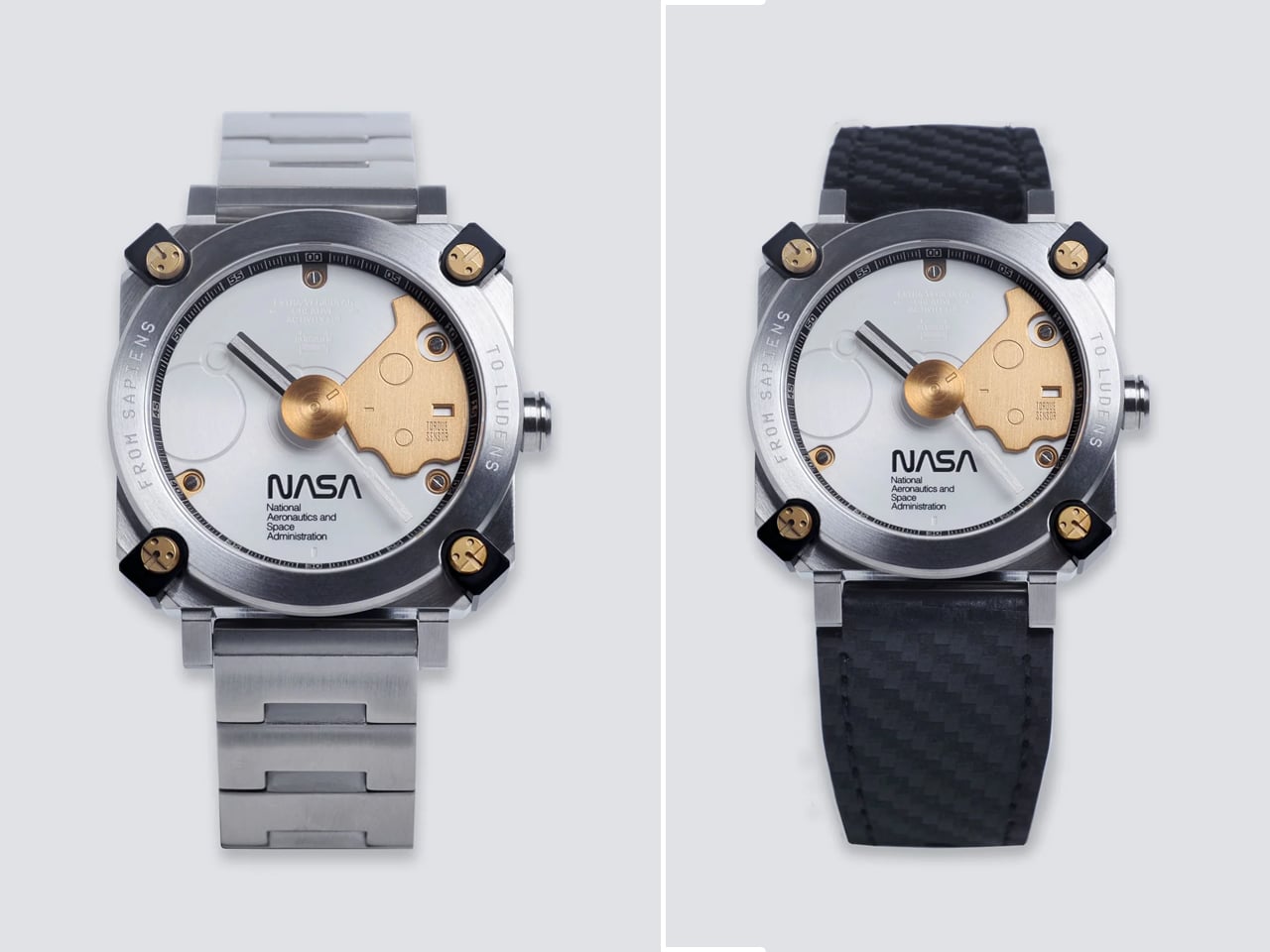
The NASA “worm” logo serves as one of the defining visual elements, reinforcing the idea of “bringing fun into the unknown universe.” Housed in a 42 mm 316L stainless steel case with a scratch-resistant sapphire crystal, the watch embraces an industrial aesthetic inspired by the Ludens EVA Creative Suit. Four exposed screws on the bezel echo the suit’s structural details, while the monochrome dial is accented with subtle futuristic graphics that stay true to Kojima Productions’ signature visual language. Super-LumiNova-coated hands and hour markers ensure the watch remains easy to read after dark without compromising its clean appearance.

Powering the Space Ludens is the dependable Miyota 8215 automatic movement with 21 jewels and a beat rate of 21,600 vibrations per hour. A transparent exhibition caseback reveals the movement in action, giving enthusiasts a glimpse of the mechanics behind the design. The watch also offers 50-meter water resistance, making it practical enough for everyday wear despite its collector-focused appeal.

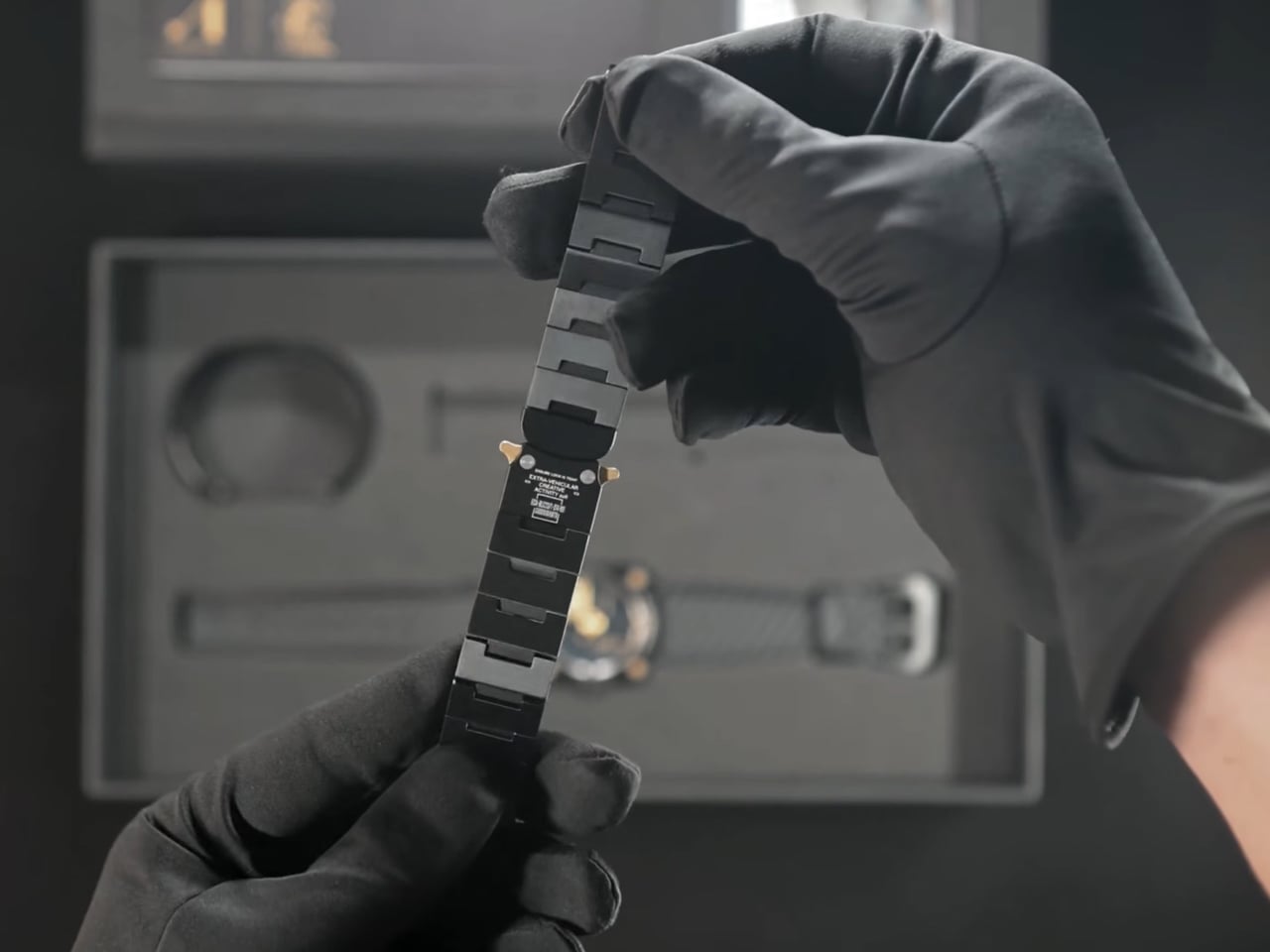
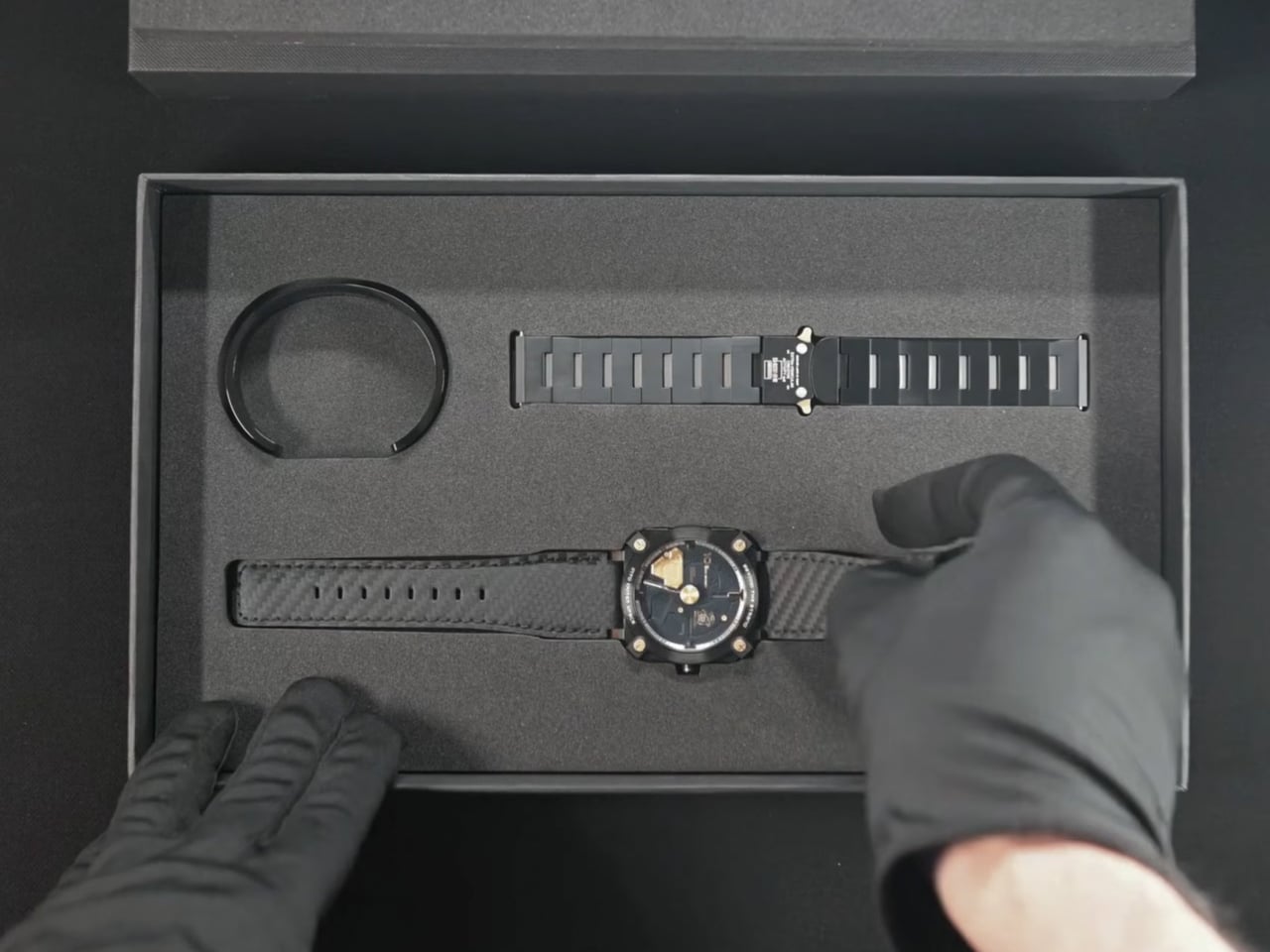
Comfort hasn’t been overlooked either. The timepiece comes paired with a durable black FKM rubber strap that complements the rugged case while providing a secure fit for daily use. Each watch is individually numbered and presented in custom collector packaging that celebrates the collaboration between Anicorn and Kojima Productions.

For enthusiasts seeking an even more exclusive offering, Anicorn also introduced the Space Ludens with Ludens Mask VIP edition limited to just 100 units. In addition to the watch, the premium set includes a detailed Ludens mask display piece presented in a collector-grade package, turning the release into a display-worthy tribute to one of gaming’s most recognizable creative icons. Priced at $1,540, the rare edition is without doubt “EVA Creative Suit on the wrist” for enthusiasts to own.

 

The post This NASA-inspired Kojima Watch lets you wear Ludens’ futuristic vision on your wrist first appeared on Yanko Design.