NAK Studio Imagines a Hi-Fi Stack You Would Actually Want on Display

Most Hi-Fi gear still looks like anonymous black rectangles, even in carefully designed living rooms. Serious listeners often hide their amps and speakers in cabinets because the hardware rarely matches the rest of the furniture, even when the sound is great. The default assumption is that audio equipment belongs out of sight, tolerated for its performance but not celebrated for its presence.

Antoine Brieux of NAK Studio designed a complete stack he would personally want at home, treating it as a thought experiment about what happens when an integrated amplifier, speakers, and turntable are drawn as one family from the start. Color, tactility, and proportions are treated as seriously as the signal path, so the system could earn a spot in the open rather than behind doors or under furniture.

Designer: Antoine Brieux (NAK Studio)

The integrated amplifier is a low, solid block with a ribbed cylinder grafted onto one corner, turning the usual volume knob into a full control column. That cylinder suggests precise, satisfying adjustments for volume, inputs, and tone, giving your hand a clear place to land instead of hunting for tiny knobs or touch buttons scattered across a cluttered front panel.

The tall monochrome display beside the cylinder shows track info, a big dB scale, and twin bar-graph meters dancing with the music. The list of inputs covers phono and TV to Bluetooth and USB, and a warm-to-cold tonal slider sits below, so the front of the amp feels like a calm, legible dashboard rather than a technical interface that demands constant attention or an instruction manual.

The compact speakers are each a rounded rectangle with a single driver and tweeter, but finished in mixable Pantone colors, letting you treat them as color accents in a room. You could pair teal with orange, or match a pair to a shelf or wall, so they become part of the space’s palette instead of something you try to hide or apologize for when guests visit.

The matching turntable sits on the same footprint as the amp, with exposed suspension pillars and a straight arm that echoes the cylinder theme. The three components stack visually into a tidy tower, making the whole listening setup feel intentional, almost like a piece of modular furniture for records and streaming alike, cohesive enough to anchor a sideboard or desk.

NAK Studio’s concept is not about chasing specs, but about imagining a Hi-Fi system that earns its place in the open. The controls invite touch, the colors play with the room, and the stack looks as considered as the music it is built to play. It starts to feel less like a fantasy and more like how audio gear should have evolved all along.

The post NAK Studio Imagines a Hi-Fi Stack You Would Actually Want on Display first appeared on Yanko Design.
NAK Studio Imagines a Hi-Fi Stack You Would Actually Want on Display

Most Hi-Fi gear still looks like anonymous black rectangles, even in carefully designed living rooms. Serious listeners often hide their amps and speakers in cabinets because the hardware rarely matches the rest of the furniture, even when the sound is great. The default assumption is that audio equipment belongs out of sight, tolerated for its performance but not celebrated for its presence.

Antoine Brieux of NAK Studio designed a complete stack he would personally want at home, treating it as a thought experiment about what happens when an integrated amplifier, speakers, and turntable are drawn as one family from the start. Color, tactility, and proportions are treated as seriously as the signal path, so the system could earn a spot in the open rather than behind doors or under furniture.

Designer: Antoine Brieux (NAK Studio)

The integrated amplifier is a low, solid block with a ribbed cylinder grafted onto one corner, turning the usual volume knob into a full control column. That cylinder suggests precise, satisfying adjustments for volume, inputs, and tone, giving your hand a clear place to land instead of hunting for tiny knobs or touch buttons scattered across a cluttered front panel.

The tall monochrome display beside the cylinder shows track info, a big dB scale, and twin bar-graph meters dancing with the music. The list of inputs covers phono and TV to Bluetooth and USB, and a warm-to-cold tonal slider sits below, so the front of the amp feels like a calm, legible dashboard rather than a technical interface that demands constant attention or an instruction manual.

The compact speakers are each a rounded rectangle with a single driver and tweeter, but finished in mixable Pantone colors, letting you treat them as color accents in a room. You could pair teal with orange, or match a pair to a shelf or wall, so they become part of the space’s palette instead of something you try to hide or apologize for when guests visit.

The matching turntable sits on the same footprint as the amp, with exposed suspension pillars and a straight arm that echoes the cylinder theme. The three components stack visually into a tidy tower, making the whole listening setup feel intentional, almost like a piece of modular furniture for records and streaming alike, cohesive enough to anchor a sideboard or desk.

NAK Studio’s concept is not about chasing specs, but about imagining a Hi-Fi system that earns its place in the open. The controls invite touch, the colors play with the room, and the stack looks as considered as the music it is built to play. It starts to feel less like a fantasy and more like how audio gear should have evolved all along.

The post NAK Studio Imagines a Hi-Fi Stack You Would Actually Want on Display first appeared on Yanko Design.

Retro iMac G3-style AirPods Max takes inspiration from Apple’s most colorful tech era

Sure, the AirPods Max come in colors – but there’s something so cold and un-emotional about anodized aluminum. It grabs your eye, but then immediately lets your eye wander once your fingers have run past its cool matte surface. Aluminum’s only purpose was to help build devices that were sleek and thermally advantageous. The problem, however, is that the AirPods Max aren’t ‘sleeker’ than your average headphone. Again sure, the MacBook Air looks so much thinner than the other average laptop – but aluminum in headphones achieves nothing. It adds weight, makes the head feel heavy, and doesn’t even look as eye-catching as some of its plastic-based counterparts.

Saffy Creatives recognized this and decided to give the AirPods Max a rather fitting makeover. After reinventing the Apple Watch as a G3-inspired retro-dream, they’re back with a redesign for the AirPods Max that looks oh-so-gorgeous it makes me want to try licking the headphones – obviously in a non-creepy way.

Designer: Saffy Creatives

What Saffy Creatives did is clever because it doesn’t change the AirPods Max silhouette – just its material treatment. Fair warning, the images ARE made using AI, but to be honest, AI is used more as a rendering tool here than it is as an imagination aid. The device looks exactly the same, except the parts made from metal are now replaced with dual-tone transparent/translucent plastic. The headphones here adopt Apple’s iconic Bondi Blue color scheme, with the outer cans giving a look into the headphones’ inner mechanics (just as Jobs intended with the iMac G3). A cloudy white element breaks the transparent shell, adding almost a halo of sorts around the can while also meaningfully separating the materials that would be probably impossible to injection-mold otherwise.

The old colorful Apple logo also finds itself on both the outer cans – something Apple wouldn’t be caught dead doing with their metal headphones. Is the detail almost too distracting? Some Apple purists would probably say it is – but nobody buys headphones because they look boring. Every audio-lover worth their salt wants headphones that make a noise, whether it’s through audio drivers, or through visuals.

The rest of the headphone remains fairly the same. The cups stay exactly the way they originally were, with the 3D mesh we’ve come to love. Similarly, the headband retains its mesh cushion too, however, the outer plastic frame also gets translucent/cloudy white plastic treatment to match the overall vibe. The result is a pair of headphones that are as gorgeous as any of Apple’s turn-of-the-millennium products – when Jobs and Jony Ive probably had more fun than they ever had making products.

Obviously such a pair of headphones will never exist (and I do wish Nothing had done a better job with their transparent design), but if there’s some maverick YouTuber looking to mod the AirPods Max, this weirdly nostalgic build is definitely worth a shot. After all, it’s nothing a 3D printer could churn out in a few hours. You’re not really changing the geometry either – just the material.

The post Retro iMac G3-style AirPods Max takes inspiration from Apple’s most colorful tech era first appeared on Yanko Design.

MP-1 Reimagines a Modern Walkman Through a Teenage Engineering Lens

Listening to music has mostly collapsed into phones and streaming apps, buried between notifications and multitasking. Some people still crave a single-purpose device that treats listening as the main event, not background noise. The MP-1 is an independent concept study that asks what a modern Walkman could look like if it borrowed Teenage Engineering’s design language, without being affiliated with the company or trying to become an official product at all.

The project set out as a brand-led design study, not a fan mash-up or a wild render. The brief was to study Teenage Engineering’s approach to minimalism, playful restraint, tactile controls, and clear functional expression, then translate those principles into a believable handheld music player. The goal was manufacturable intent and intuitive interaction, not speculative tech or exaggerated shapes, treating it as a disciplined exercise in understanding how strong brand identities shape form.

Designer: Prithvi Manoj Bhaskaran

The study pulled four keywords from Teenage Engineering’s portfolio, playful, tactile, curious, purposeful complexity. Those traits show up in devices like the OP-1 and TP-7, where dense functionality is expressed through simple forms, color accents, and satisfying controls. A focused music player fits naturally into that philosophy, turning listening into an intentional, distraction-free ritual that foregrounds sound as a primary experience rather than something competing with notifications while you commute.

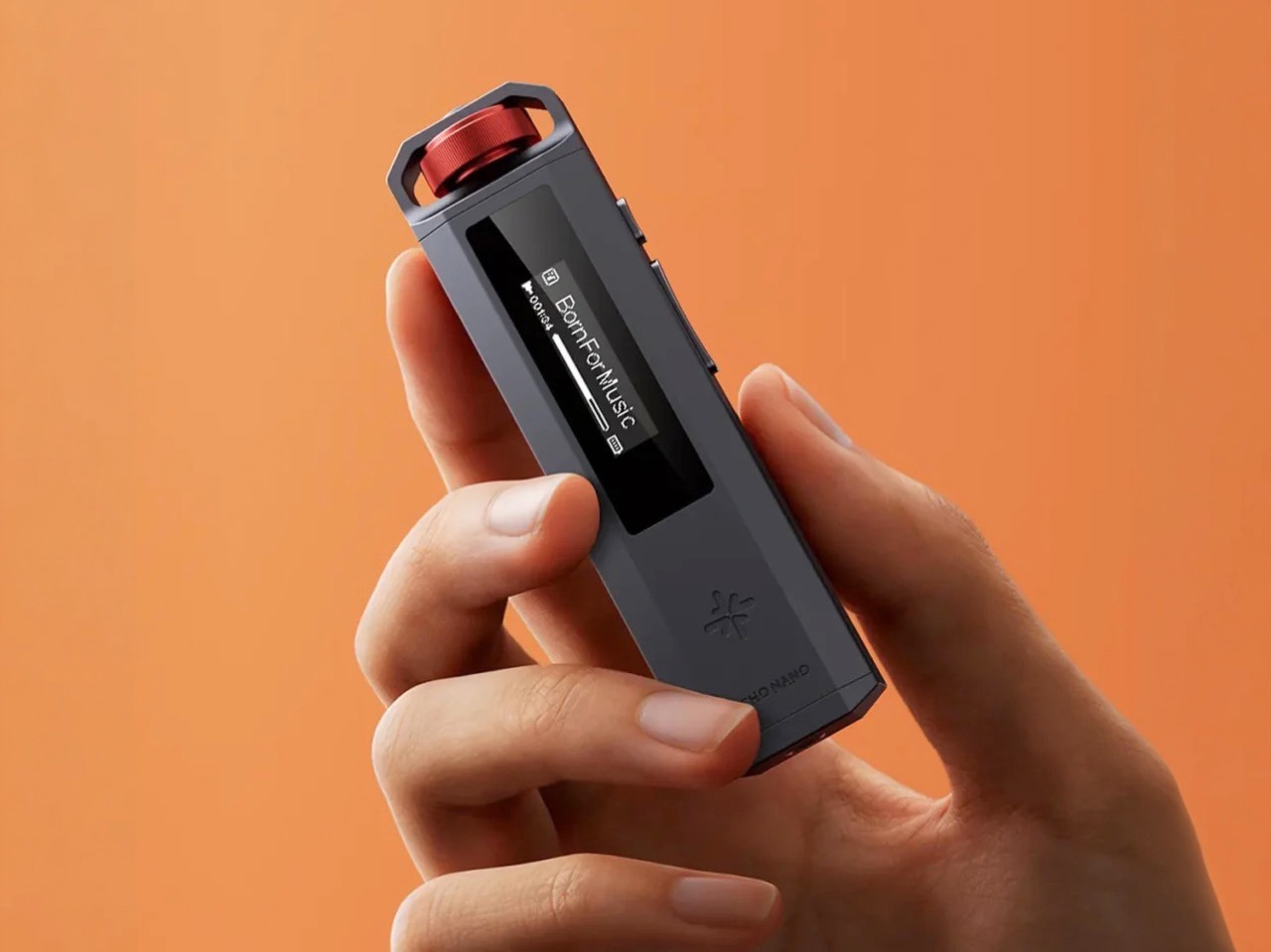
The MP-1’s basic layout is a slim rectangular body with softened corners, a large circular dial as the main control, and a narrow horizontal display that handles track info and waveform visualization. This mirrors Teenage Engineering’s habit of giving one control visual priority, then letting everything else recede, so your hand and eye always know where to go first, with the orange accent adding personality without overwhelming the minimalism.

The tactile controls embody the playful side of the brief. An orange textured rocker invites your thumb, its grid of soft nubs making it feel like a toy in the best sense. A slider reveals “OFF” in orange when pulled back, hiding the label when pushed forward. These details use motion and color to communicate state without cluttering the surface with text, making every interaction feel more deliberate and satisfying.

Practical touches include a USB-C port for charging and data, realistic thickness that suggests room for a battery and mechanical parts, and restrained use of materials. The backplate carries a subtle logo and regulatory text, the kind of thing you would expect on a real product, reinforcing that this is not just a styling exercise but a thought-out object that could plausibly be manufactured and carried in a pocket or bag.

The MP-1 shows the power of a strong design language, recognizing Teenage Engineering’s influence without logos or official ties. Most listening today happens on general-purpose slabs, which makes a small, tactile player appealing, even as a concept. For people who miss dedicated devices and the ritual of choosing to listen rather than letting a playlist run in the background, MP-1 feels like a quiet argument that sometimes less is exactly what you need.

The post MP-1 Reimagines a Modern Walkman Through a Teenage Engineering Lens first appeared on Yanko Design.
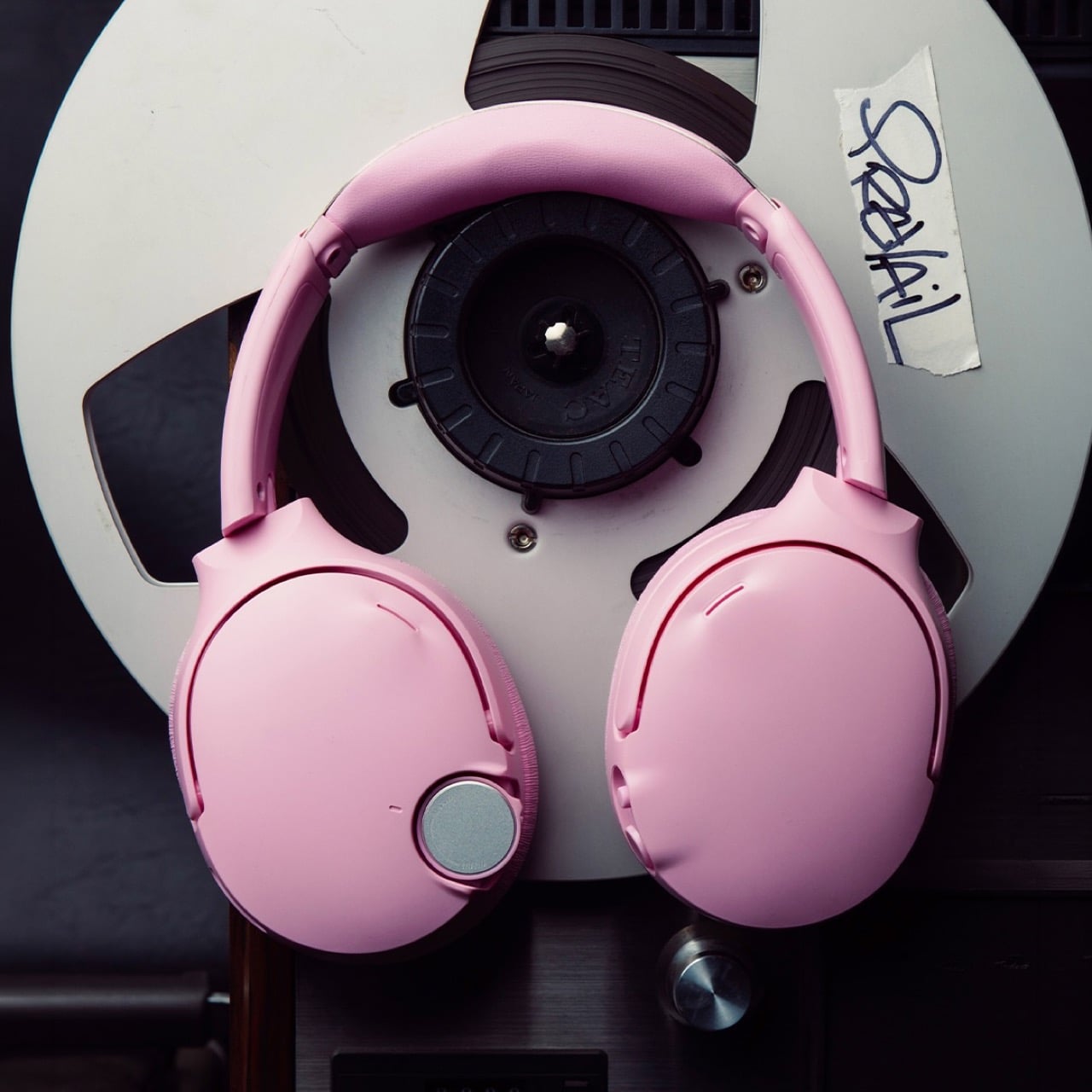
CES 2026’s Loudest Flex: Brane Party Pro Hits The Bass Notes So Hard I Actually Got Goosebumps

There’s a specific moment that happens when you first hear deep bass done properly. Your brain needs a second to process what’s happening because the sound doesn’t match what you expect from a speaker that size. I experienced that exact moment at CES 2026 while listening to Brane Audio’s Party Pro prototype, and for the sake of the rest of the hotel guests, Brane only limited the demo to 10 seconds and played its audio at 25% capacity. The sound is so thundering (especially the base notes), Brane had to quite literally hold its speaker back to avoid noise complaints.

Brane Audio structured their CES presentation strategically, starting with the Brane X to establish their credibility against established competition. Then they unveiled the Party Pro, and the difference was staggering. The low-end reproduction didn’t just sound powerful; it revealed details in familiar tracks that had been buried under inadequate bass response for years. Only after the demo did they mention the kicker: we’d been listening to a single RAD2 driver at half capacity. The shipping version with two drivers will hit four times harder, which means this might legitimately be the first speaker good enough to make your neighbors consider moving.

Designer: Brane Audio

That single driver, the RAD2, is the whole story here. It’s the second generation of their Repel-Attract Driver tech, and the numbers are just absurd. They claim a 30-fold deep-bass advantage over conventional drivers, which sounds like marketing fluff until you hear it for yourself. The genius is in how it handles the lowest frequencies. Instead of just producing a generic boom, it articulates the bass, letting you hear textures and notes in the sub-100Hz range that are usually a muddy mess. You start hearing things in your favorite songs you swear were never there before, which is a wild and slightly surreal experience.

Closer look at the RAD2 Driver

The way it prepares for that bass is mechanically fascinating. The original RAD driver in the Brane X used a small air pump to create the necessary pressure differential. For the RAD2, they’ve engineered a system of small mechanical legs that physically push the driver cone outward to prime it before the music even starts. This pre-tensioning creates the pressure needed for its massive excursion without the lag or potential noise of a pump. It’s a clever bit of electromechanical engineering that solves a very specific physics problem, and watching it happen is almost as impressive as hearing the result. It’s a purely functional design choice that looks incredibly cool.

This level of mechanical control allows for some seriously smart audio processing. Brane’s team explained that the speaker’s internal DSP analyzes the incoming audio in real-time to identify the resonant frequency of each specific track. It then adjusts the driver’s behavior to perfectly match that frequency, essentially tuning itself to every song it plays. This is a huge leap beyond simple EQ presets. The speaker is actively collaborating with the music, ensuring that the bass response is not just powerful but also perfectly in sync with the artist’s original intent. It explains why the bass felt so integrated and clean, rather than being a loud, detached layer on top of the music.

So you take that resonant frequency matching, add the mechanical priming system, and then remember the demo was at quarter-power. The final Party Pro, with its two drivers, will displace a full 1000cc of air, which is an immense amount of sound pressure from a portable enclosure. Brane is essentially breaking Hofmann’s Iron Law, that old rule about deep bass, small boxes, and power efficiency being mutually exclusive. They’ve found a way to have all three. This technology is a new blueprint for how to generate low-frequency sound. I walked away from that demo feeling like I’d just seen the audio equivalent of the first flat-screen TV. The Party Pro will hit shelves later this year, with a price range between $1000 and $1500. You honestly may need to take permission from your Homeowner’s Association before you buy one!

The post CES 2026’s Loudest Flex: Brane Party Pro Hits The Bass Notes So Hard I Actually Got Goosebumps first appeared on Yanko Design.

AI-powered Razer Motoko headphones with 4k cameras do what smart glasses can

Every year at CES, Razer has some exciting tech on offer. This year is no different as they’ve come up with headphones that go beyond audio nirvana. Dubbed Project Motoko, the over-ear headphones are the next frontier of wearable AI, since they have eyes. Yes, the concept cans are loaded with a pair of Sony 4K cameras (with 12MP resolution), to make you ditch your smart glasses for good reason. Since most of us wear headphones more than smart glasses, this innovation makes complete sense.

AI is the name of the game at this year’s CES, even though we’ve seen cramming of machine learning technology in things where it makes no sense or is not useful at all. The Motoko headphones are different as they build on an accessory we already use a lot. The in-built cameras analyse the world around you, seeing what the user sees, in first-person view. They can do pretty much what other smart glasses can, and yes, they play ear-pleasing music when you need to zone out.

Designer: Razer

According to Nick Bourne, Global Head of Mobile Console Division, Razer, “By partnering with Qualcomm Technologies, we’re building a platform that enhances gameplay while transforming how technology integrates into everyday life. This is the next frontier for immersive experiences.”

Motoko headphones can do translations in real time, beam weather updates, provide navigation input, and a whole lot more. The biggest advantage Razer should be appreciated for compared to smart glasses is that the Motko can fetch information from multiple AI assistants, including Grok, Gemini, ChatGPT, Perplexity, and Meta. Most basic functions run on the headphones, like checking the calendar updates and schedules. For other deeply embedded tasks, you have to pair them with a phone or PC. For the most part, someone unassuming won’t be able to tell the difference between a normal pair of headphones and these.

The headphones are built on the Qualcomm Snapdragon platform, making them AI-powered in a real sense. You can recognize objects, track exercises, or even summarize information. The stereoscopic vision extends the field of view beyond the human peripheral vision capabilities. In combination with the audio input and the far-and-near field microphones, the headphones detect dialogue, voice commands, or ambient noises. Thereby, the headphones use all this data in machine learning applications, which ultimately assist the user in daily tasks, work, and, of course, gaming. Down the line, you could be using them for preparing meals in the kitchen, immersive AI guidance in strategy games, or translating in real-time when travelling abroad.

As per Ziad Asghar, SVP and GM of XR at Qualcomm Technologies, they are thrilled to work with Razer to push “AI wearable computing into a new era where intelligence, performance, and immersive experiences converge.” There is no word yet on the probable timeline for the release of the headphones, but they definitely are exciting tech to experiment with and use in daily life. The AI-assisted feature should work at a deeper level with the headphones, and it’ll be exciting to use them hands-on.

The post AI-powered Razer Motoko headphones with 4k cameras do what smart glasses can first appeared on Yanko Design.

Fender ELIE 6 Hands-on at CES 2026: Minimalist Nordic Design, 60W Of Serious Sound

Fender made guitars and amplifiers legendary. Portable Bluetooth speakers seemed like an odd pivot until I saw the ELIE 6 at CES 2026. The design language reminded me immediately of brands like Vifa or Bang & Olufsen, that distinctly Nordic approach where simplicity becomes sophistication. A perforated grille, a wooden handle, clean geometric proportions. Nothing about it shouted “look at me,” yet I couldn’t stop looking.

Audio demos at trade shows rarely impress. Convention center acoustics murder nuance, and most companies crank volume to compensate. Fender’s team played it differently. They let the ELIE 6 perform at moderate levels, and the three-driver configuration with its dedicated subwoofer produced soundstage depth I didn’t expect from something this compact. The wood on that top panel carries particular meaning for anyone who’s held a Fender guitar. It’s actual fretboard wood, the same material musicians touch every time they play. That detail transforms a carrying handle into something that connects this speaker to decades of musical heritage while maintaining the almost-IKEA minimalism that makes it fit anywhere.

Designer: Fender Audio

That fretboard wood handle is such a clever, confident move. It signals that Fender understands its legacy without feeling trapped by it. Instead of slapping a vintage logo on a generic box, they integrated a core component of their instrument-making craft into a new product category. This approach feels so much more authentic than the retro-for-retro’s-sake styling we see from competitors. The tactile satisfaction of the physical volume knobs on top reinforces this. In an industry obsessed with pushing every control into a smartphone app, providing simple, direct interaction feels like a luxury. This speaker is built to be used, carried, and touched, not just administered from a screen.

Fender packed a dedicated tweeter, a full-range driver, and a separate subwoofer into this compact frame, which explains the audio fidelity. This three-driver setup is powered by 60 watts and, interestingly, a Waves system-on-a-chip. That SoC is the key to delivering higher output with minimal distortion, a common failure point for portable speakers when you push the volume. The battery life is rated for up to 18 hours, which is more than enough for a full day of use, and a quick 15-minute charge gives you another 90 minutes of playback. These are solid, practical specs that back up the premium design.

The real surprise is the four-channel input capability. This is where Fender’s deep understanding of musicians and creators becomes obvious. You can connect and mix audio from four different sources simultaneously. Think about the practicality: a guitarist can plug in and play along to a backing track from their phone, or a small group can mix a mic, an instrument, and a laptop for a small performance. This feature elevates the ELIE 6 from a passive listening device into an active creative tool. It’s a thoughtful, useful function that you simply do not find on other Bluetooth speakers in this category, and it makes the $299 price tag feel entirely reasonable.

Fender Audio could have taken the easy route by making a speaker that looked like a miniature amplifier. Instead, they built something that respects contemporary design while embedding their DNA in a subtle, meaningful way. The ELIE 6 feels like a complete thought. It balances a sophisticated Scandinavian aesthetic with robust audio engineering and genuinely useful features born from a deep understanding of how people create and interact with sound. It’s a strong first step into consumer audio, and it proves Fender is thinking about its future, not just coasting on its past.

The post Fender ELIE 6 Hands-on at CES 2026: Minimalist Nordic Design, 60W Of Serious Sound first appeared on Yanko Design.

5 Best Transparent Audio Devices That Show What’s Inside

Transparent design has moved beyond gimmick territory into something genuinely compelling. When Nothing started showing off circuit boards through clear plastic, the tech world noticed. Now that aesthetic has matured into a legitimate design movement where form and function create something worth displaying. Audio equipment benefits particularly well from this treatment because the internals actually matter to the listening experience, turning technical components into visual storytelling.

The devices here represent transparency done right. These aren’t cheap tricks or hollow shells with nothing interesting inside. Each one exposes genuine engineering, invites you to understand how sound gets made, and transforms listening into something more tactile and present. From cassette players to turntables, these designs prove that showing your work can be just as important as the work itself.

1. Sony Walkman Transparent Cassette Recorder

This concept recorder hits differently than most transparent tech because it understands that nostalgia needs a dose of futurism to stay relevant. The design merges Blade Runner aesthetics with classic Sony Walkman DNA, creating something that feels simultaneously vintage and impossible. That crystal-clear housing reveals every mechanical element, from the tape mechanism to those satisfying gear systems that physically move when playing. The transparency here serves a purpose beyond aesthetics, letting you witness analog technology doing its thing in real time.

What makes this particularly successful is the deliberate visual hierarchy. The top-mounted mechanical components receive showcase treatment, positioned like the exposed movement in a luxury timepiece. That digital display embedded among analog parts creates fascinating tension, suggesting computational intelligence coexisting with physical media. The miniaturized control buttons along the top edge reference 80s Sony recorders without feeling derivative, achieving that difficult balance between tactile satisfaction and modern refinement.

What We Like

  • The exposed gear mechanisms turn playback into a visual performance worth watching.
  • The fusion of digital display with analog components creates compelling technological contrast.

What We Dislike

  • Being a concept means you cannot actually buy or use this device yet.
  • The cassette format limits practical utility in modern digital workflows.

2. StillFrame Wireless Headphones

StillFrame approaches headphone design like someone who actually cares about the listening ritual rather than just the specs sheet. The transparent housing exposes the internal circuit board deliberately, treating technology as part of the experience instead of something requiring concealment. That exposed engineering dialogue with the geometric form creates visual interest without resorting to aggressive gaming aesthetics or needless embellishment. The design philosophy echoes those geometric CD cases from the 80s and 90s when physical media demanded intentional shelf presence.

The 40mm drivers deliver a wide, open soundstage that prioritizes melodic texture and spatial awareness. At 103 grams, these feel nearly weightless during extended wear, managing to maintain presence without physical pressure. The magnetic fabric ear cushions swap easily, with each white model including light gray and turquoise options for subtle personalization. That stainless steel headband achieves the ideal strength-to-weight ratio, while the housing fuses circular and square geometry in understated harmony.

Click Here to Buy Now: $245.00

What We Like

  • The magnetic ear cushion system makes swapping colors satisfying and effortless.
  • The 24-hour battery life eliminates constant charging from your routine.

What We Dislike

  • The exposed circuitry might collect dust more readily than sealed designs.
  • The geometric aesthetic will not appeal to those preferring minimalist simplicity.

3. ClearFrame CD Player

ClearFrame treats compact discs like the miniature art exhibits they always deserved to be. That square polycarbonate body frames each album cover while exposing the black circuit board inside, turning engineering into intentional visual design. The transparent construction creates what feels like a crystal sculpture housing an analog soul, where every component receives showcase treatment. This approach transforms music playback from background activity into something more ceremonial and present.

The design accommodates multiple mounting options, functioning equally well on shelves, desks, or walls. That versatility means the player adapts to your space rather than demanding specific placement. The exposed circuitry invites small moments of discovery with each glance, revealing how digital information gets extracted from physical media. Bluetooth 5.1 support extends playback beyond the device itself, while the seven-hour rechargeable battery enables portability when needed.

Click Here to Buy Now: $199.00

What We Like

  • The wall-mounting capability transforms music into room decor.
  • The exposed circuit board turns technical components into deliberate visual interest.

What We Dislike

  • The seven-hour battery life feels limited for extended portable use.
  • CD format restricts compatibility with modern streaming workflows.

4. Side A Cassette Speaker

This pocket-sized speaker commits fully to the cassette aesthetic without feeling like cheap nostalgia bait. The transparent shell and Side A label treatment reference actual mixtapes, but the Bluetooth 5.3 connectivity and microSD support reveal modern functionality hiding inside. That clear case doubles as a stand, transforming this from pocket carry into deliberate desk presence. The compact form factor makes this surprisingly versatile, functioning equally well for personal listening or small gatherings.

The sound signature aims for warmth rather than clinical precision, evoking analog tape playback characteristics within obvious physical constraints. MicroSD support enables offline playback without requiring constant wireless connectivity, useful for locations with spotty coverage or when preserving phone battery matters. The cassette styling walks the line between homage and parody, landing somewhere that feels genuine rather than ironic.

Click Here to Buy Now: $45.00

What We Like

  • The sub-fifty-dollar price point makes this an accessible impulse purchase territory.
  • MicroSD support enables completely offline music playback without phone dependency.

What We Dislike

  • The compact size limits bass response and overall volume capabilities.
  • The cassette format may seem gimmicky to those uninterested in retro aesthetics.

5. Audio-Technica AT-LPA2 Transparent Turntable

Audio-Technica’s transparent turntable represents serious engineering disguised as a design experiment. That 30mm-thick high-density acrylic body and 20mm acrylic platter serve technical purposes beyond aesthetics, with material density providing vibration damping that reduces unwanted resonance. This production version evolved from the limited-edition AT-LP2022 anniversary model, incorporating structural refinements aimed at reliable high-fidelity analog playback. The transparent construction challenges conventional turntable aesthetics without compromising performance expectations.

The visual impact hits immediately. Where most turntables hide mechanisms beneath wood veneer or matte finishes, this model exposes everything. That transparency transforms the tonearm, platter, and motor into focal points rather than concealed components. The minimalist appearance suits modern interiors while maintaining the gravitas expected from serious audio equipment. The acrylic construction communicates both fragility and precision, suggesting careful engineering rather than mass production.

What We Like

  • The thick acrylic construction provides functional vibration damping alongside visual impact.
  • The exposed mechanisms transform turntable operation into observable performance.

What We Dislike

  • The transparent acrylic shows dust and fingerprints more readily than traditional finishes.
  • The premium materials and construction likely command higher prices than conventional turntables.

The Return of Visible Technology

Transparent audio design represents more than an aesthetic trend. These devices signal shifting attitudes toward technology, where understanding how things work matters as much as what they do. The movement away from black boxes toward exposed engineering suggests audiences want relationships with their devices beyond mere utility. When you can see gears turning or circuit boards processing, technology becomes less abstract and more tangible.

The best transparent designs balance revelation with restraint. These five devices expose internal workings without overwhelming the core function of delivering quality sound. They remind us that audio equipment serves both sonic and spatial roles, existing as functional tools and visual objects simultaneously. That dual purpose elevates listening from background activity into something more intentional and present, worth both hearing and seeing.

The post 5 Best Transparent Audio Devices That Show What’s Inside first appeared on Yanko Design.
JBL unveils lifestyle oriented open-ear earbuds at CES 2026

Open-ear earbuds and headphones are trending for good reason, and JBL has kick-started its year with some exciting announcements at CES 2026. They’ve launched three different lineups of open-ear audio and fitness-focused designs. These buds and headphones are broadly spread over three product lines: the Endurance, Sense, and Soundgear CLIPS – with 5 products in total.

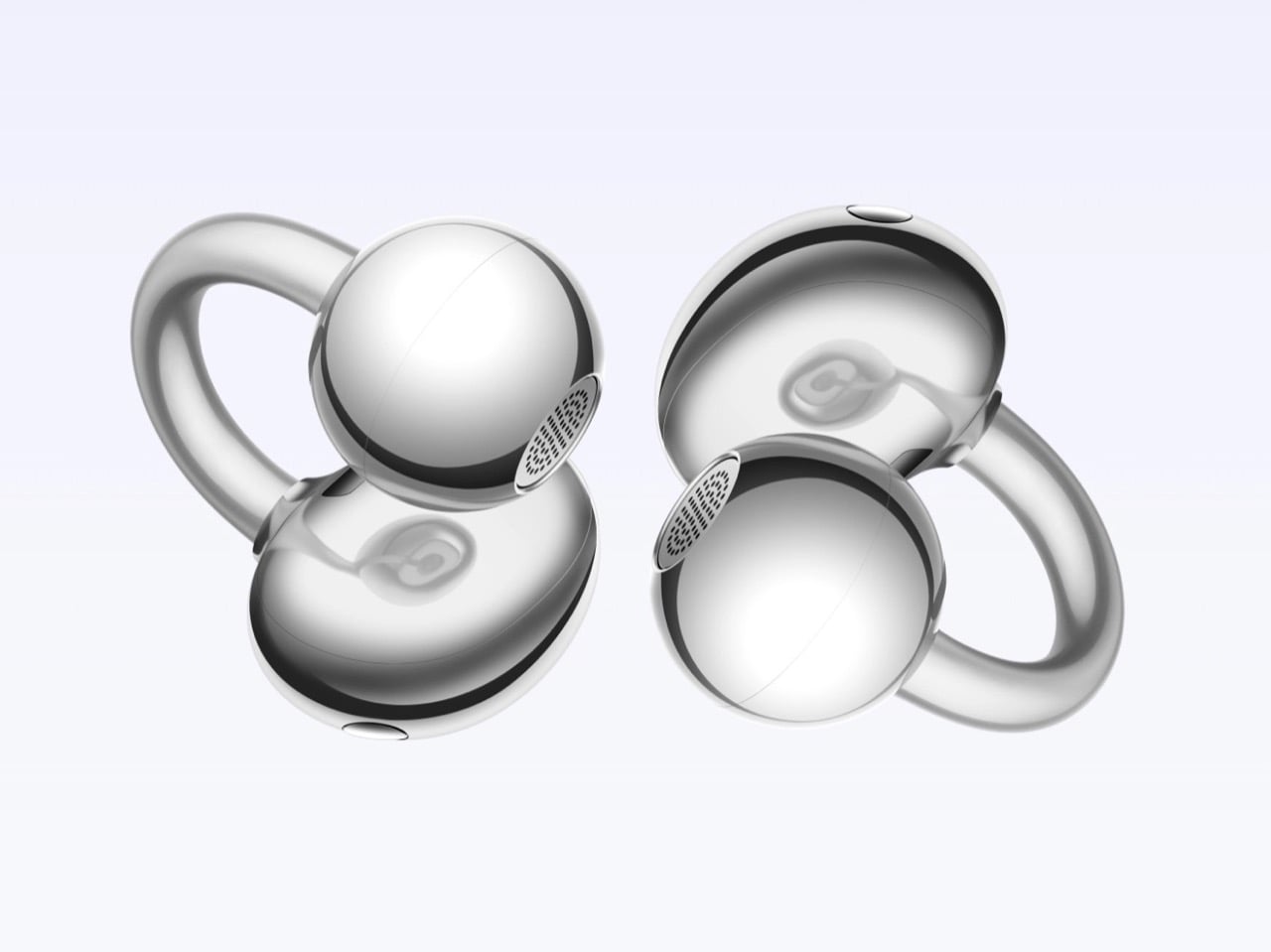
The OpenSound Series lineup is the brand’s audio-first open buds, comprising the Sense Pro and Sense Lite earbuds. They make use of air conduction technology to deliver a lively, bass-rich sound. The Soundgear CLIPS are the most fashion-forward open ears shaped like earring cuffs, something like the Shokz OpenDots One. Along with these, the Endurance Series buds are tailored for active individuals who like the comfort of long hours of listening to their tunes.

Designer: JBL

OpenSound Series

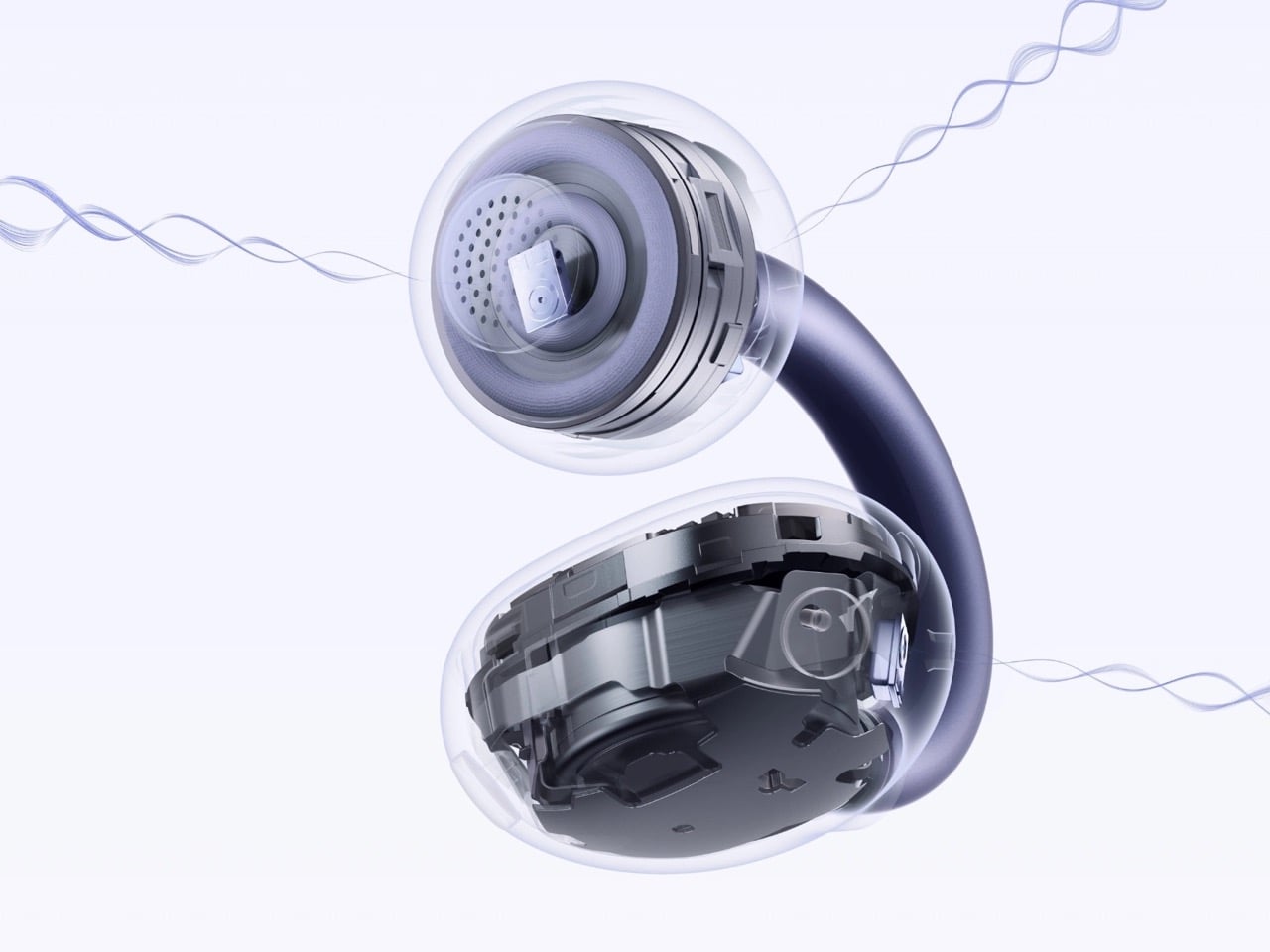
Sense Pro earbuds are the flagship open-ear headphones specifically designed for audio lovers who value the nuances of music. In conjunction with the 16.2mm drivers and the Adaptive Bass Boost technology, they deliver an enjoyable sound even though they don’t sit flush against your ear canal. Making calls with the Sense Pro is a delight even in the most crowded places, as it comes with four mics and the Voice Pickup Sensor technology for a clear calling experience. The buds have 38 hours of playtime in total with the earbuds lasting eight hours on a single charge in the case. The adjustable ear hook ensures all-day comfort for extended listening. The Sense Pro priced at $200, will come in black or white colors when released in March 2026.

The Sense Lite earbuds are the toned-down version of the flagship Pro’s with a simplified aesthetic and feature list. Most of it is the same as the big brother, only the case battery is slightly less at 24 hours. The buds are rated for IP54 water and dust resistance, meaning you don’t need to worry about the odd splashes or listening sessions in a dusty environment. For the Sense Lite, you’ll have to pay $150, and they will also come in black and white color options when finally released in March.

Soundgear CLIPS

The style-driven Soundgear CLIPS hook onto your ear and are lightweight enough for all-day comfort. Soft TPU construction and the SonicArc shape of the earbuds deliver enhanced bass without any considerable sound leakage. The four AI-assisted mics ensure the calls are crystal clear even in super noisy places. These are also IP54 water and dust resistant, with the same 32 hours total battery life as the Sense Pro. The Soundgear CLIPS will come in more peppy color options, including metallic copper, blue, purple, and white. The clip-on earbuds will be priced at $150 and will have the same March 2026 release timeline.

The post JBL unveils lifestyle oriented open-ear earbuds at CES 2026 first appeared on Yanko Design.

Soundcore at CES 2026 Turns Everyday Spaces into Portable Sound and Cinema

Personal entertainment has drifted out of fixed rooms and into commutes, bedrooms, trails, and backyards. People bounce between earbuds, smart speakers, and projectors, often juggling separate ecosystems that do not feel designed with each other in mind. The friction is no longer just sound quality, but how easily gear fits into those shifting contexts, from the desk where you need awareness, to the pillow where you need silence, to the field where you want a movie under the stars.

Soundcore’s CES 2026 lineup follows that drift. The AeroFit 2 Pro, Sleep A30 Special, Boom Go 3i, Nebula P1i, and Nebula X1 Pro aim to move with you rather than live in one place. The common thread is collapsing trade‑offs, open‑ear comfort and ANC in one pair of buds, tiny speakers with long battery life, and projectors that pack a theater into a handle‑equipped box, each tuned to a different moment when sound or vision matters.

Designer: Soundcore (Anker)

Soundcore AeroFit 2 Pro

AeroFit 2 Pro is built for people whose days swing between needing to hear the world and wanting to block it out. The five‑level ear‑hook can reposition the nozzle so the buds behave as open‑ear hooks during runs or desk work, then slide into a semi‑in‑ear ANC form when focus or isolation is needed, without swapping hardware or carrying two pairs.

The liquid‑silicone hooks and 56 degrees of articulation keep pressure off the canal for all‑day wear in open‑ear mode, while Adaptive ANC 3.0 checks noise up to 380,000 times per second and makes 180 adjustments per minute in ANC mode. The buds include 11.8 mm drivers, spatial audio with head tracking, LDAC support, IP55 rating, and differing battery lives, up to 7 hours and 34 with case in open‑ear, up to 5 hours and 24 with case in ANC.

Soundcore Sleep A30 Special

Sleep A30 Special takes over when the day ends and the noise does not. The triple noise reduction system combines active noise cancellation, passive blocking from the low‑profile fit, and adaptive snore masking that targets disruptive frequencies without making the room feel unnaturally silent. The ultra‑compact shape is tuned for side sleepers who usually cannot tolerate bulky earbuds pressing against a pillow overnight.

The earbuds tie into the Soundcore app to deliver Calm Sleep Stories directly, alongside AI brainwave tracks and white noise. The hardware is only half the story; the curated content and extended battery life let people build a consistent wind‑down routine, from reading in bed with subtle noise reduction to drifting off to a story without worrying about wires, over‑ear pressure, or keeping a phone nearby.

Soundcore Boom Go 3i

Boom Go 3i is the speaker that lives on a backpack strap rather than a shelf. The palm-sized form and 15 W output make a picnic or campsite feel less quiet without needing a huge cylinder. The 4,800 mAh battery offers up to 22 hours in Eco mode, so it can handle a weekend of light use without visiting a wall outlet, and it can lend some of its charge for emergency phone top‑ups.

The IP68 rating means it can handle dust, sand, and submersion, which is useful when it gets dropped in a stream or buried in a beach bag. The dual‑mode strap mounting system lets it hang or cinch tightly to a pack, bike, or tent pole, and the LED grille with diagonal light patterns makes it easy to spot in a dark campsite or stowed in the bottom of a gear pile.

Soundcore Nebula P1i

Nebula P1i is the projector for people who want movie‑night flexibility without a permanent ceiling mount. It offers 1080p resolution and 400 ANSI lumens, enough for dim‑room viewing, with a built‑in 0-12 degree tilt stand to aim at walls or screens without stacks of books. Official Netflix and Google TV support mean it behaves like a familiar streaming box, not a bare projector that needs extra hardware.

The flip‑open side speakers swing out for better stereo separation, turning a compact cube into a mini theater without extra cables. Intelligent Environment Adaptation 3.0 handles autofocus, keystone, and screen fit, so the projector can quickly lock onto whatever surface is available. It is the kind of device that can live in a closet until a rainy afternoon or impromptu game night makes a big picture suddenly appealing.

Soundcore Nebula X1 Pro

Nebula X1 Pro is the extreme end of the same idea, a mobile theater station on wheels. It uses a 3,500 ANSI‑lumen 4K triple‑laser engine with 110% Rec.2020 color, 5,000:1 native contrast, and 56,000:1 dynamic contrast, bright enough to throw a 200‑inch image outdoors at night. The integrated wireless 7.1.4 sound system, certified for Dolby Atmos, means the audio is as much a part of the experience as the picture.

The planned bundle adds a 200‑inch inflatable screen and a wireless pump that inflates in about five minutes and holds air without a constant blower, keeping the system quiet during viewing. Dual wireless microphones and AI spatial adaptation handle setup, tuning sound and image to the space. Together, the projector and screen turn any patch of ground into a temporary cinema without generators, scaffolding, or separate speakers cluttering the site.

Soundcore at CES 2026: Entertainment That Travels With You

These five products sketch a day‑long arc: AeroFit 2 Pro for the commute and office, Sleep A30 Special for the hours when noise is unwelcome, Boom Go 3i for the trails and parks in between, and Nebula P1i and X1 Pro for turning small rooms and big fields into makeshift theaters. The common thread is not just wattage or resolution, but designs that respect where people actually listen and watch now, moving with them rather than asking them to stay put.

The post Soundcore at CES 2026 Turns Everyday Spaces into Portable Sound and Cinema first appeared on Yanko Design.