Soft Means Spoiled, and That’s Actually Brilliant

Most kitchen appliances are desperate for your attention. They beep, flash, and send you notifications just to remind you that they exist. Dolce, a conceptual refrigerator handle designed by Zhujun Pang, goes in the opposite direction entirely, and that restraint is exactly what makes it so interesting.

The premise is deceptively simple. The handle, made of frosted silicone with a clean, pill-shaped profile, changes its physical firmness based on the freshness of the food stored inside the refrigerator. When everything’s fine in there, the handle feels firm to the touch. When something is going bad, it softens. No beep. No notification. No app to check. You just reach for the fridge and the handle tells you what you need to know before you’ve even opened the door.

Designer: Zhujun Pang

The metaphor doing the heavy lifting here is the banana. Firm when fresh, soft when it’s past its prime. It’s one of those pieces of embodied knowledge so universal it barely registers as knowledge at all. Pang took that intuition and designed around it, which is the kind of thinking that tends to produce the best objects: not inventing a new language for a user to learn, but borrowing one they already speak fluently.

Aesthetically, Dolce is striking in a way that sneaks up on you. The handle has a warmth and softness even in its “firm” state, that frosted translucency sitting beautifully against the warm wood grain of a cabinet door. It looks almost like a piece of cast glass or a studio ceramics piece. It doesn’t scream “smart home gadget,” and that’s a huge point in its favor. A lot of connected objects fail because they look like what they are: gadgets strapped onto otherwise elegant things. Dolce looks like it belongs.

What Pang identified at the core of this problem is quietly profound. The refrigerator is, in a sense, a box that separates us from our food. You can’t smell your leftovers through the door. You can’t see whether that cucumber at the back is starting to go. The fridge solves the preservation problem but creates an information problem in the process. Dolce’s answer isn’t to add a screen or a camera interface or a connected app. It’s to restore something tactile and immediate at the one point of contact you already have with the appliance every single day.

It’s also worth noting that the handle looks exactly like what a modern refrigerator handle should look like right now. That matters more than it might seem. Design that carries function without calling attention to its function has a longer life. Trends come and go, but an object that is quietly beautiful tends to stay relevant. Dolce is the kind of piece that could sit in a design museum or in an IKEA kitchen and feel at home in either setting.

The technology underneath is also worth a moment of appreciation, even if we’re not deep-diving into the engineering. Internal sensors read the fridge’s environment, an onboard microcontroller processes that data, and a small air pump inflates or deflates a silicone bladder inside the handle. The firmness you feel when you grab it is literally driven by air pressure responding to actual conditions inside the fridge. That the end result of all that is just “firm” or “soft” is the whole point. Complex input, simple output. The user carries none of the cognitive load.

It would be easy to dismiss this as a design concept that will never see production, and maybe it won’t. But the thinking it represents is what the appliance industry desperately needs more of. Most smart home products are still asking us to do more, check more, manage more. Dolce asks us to do less. It removes a small decision from your day and delivers the answer at the precise moment you need it, through the sense that requires the least interpretation of all.

The post Soft Means Spoiled, and That’s Actually Brilliant first appeared on Yanko Design.
5 Best Waterdrop Filter Systems for Spring 2026, From Renters to Full Family Kitchens

The water coming out of your tap has traveled through infrastructure that, in many American cities, predates the internet by several decades. Municipal treatment plants catch most of what they’re supposed to catch, but aging pipes, PFAS compounds from industrial and agricultural runoff, and lead from corroding plumbing each leave their own signature in what eventually fills your glass. Two people living thirty miles apart can have genuinely different water problems, and the solution that works perfectly in one kitchen may be entirely wrong for the other. Spring tends to be when many families actually act on this, a natural reset point where the habits and home conditions worth changing finally get real attention.

Waterdrop Filter has spent the better part of the last decade building a filtration lineup that treats water quality as a variable, not a constant. Five of their systems are currently on sale on Amazon through March 31st, spanning the full range of how people actually live: renters who can’t drill into cabinets, families running a high-demand kitchen with PFAS and lead on their radar, people who want their minerals preserved, and anyone who wants instant hot filtered water without the plumbing commitment. Each one is built around a different problem, and this guide helps narrow down which one is built around yours.

Waterdrop Filter G3P800 Tankless RO System: The Under-Sink Performer That Stays Out of Sight

For families thinking seriously about what’s actually in their water this spring, the G3P800 is where Waterdrop Filter’s under-sink lineup earns its bestseller status. The concerns driving most of those conversations, PFAS compounds, lead from aging pipes, chlorine byproducts, are precisely what this system addresses. Its 10-stage RO filtration achieves 98% PFOA reduction, 99% PFOS, and over 99% lead, numbers that carry particular weight for households with infants, pregnant women, or elderly members. NSF/ANSI certifications across standards 42, 53, 58, and 372 back those claims with third-party verification. The tankless design reclaims 50 to 70 percent of under-sink cabinet space, and the UV sterilization stage catches bacteria and viruses that even a high-precision RO membrane cannot address alone.

At 800 gallons per day, the G3P800 handles the full rhythm of a busy family kitchen, from drinking water and cooking to coffee and baby formula preparation. A brushed nickel smart faucet displays real-time TDS readings and filter status at a glance, keeping the system legible without demanding attention. The 3:1 pure-to-drain ratio reflects a genuine shift in responsible RO design, producing meaningfully less drain water than older systems. Spring tends to be the moment families finally act on water quality concerns sitting in the back of their minds, and the G3P800 meets that decision with something durable, rigorously certified, and quietly capable of handling daily household demand for years.

Click Here to Buy Now: $699 $999 (30% off). Hurry, deal ends in 48-hours! Website Here.

Waterdrop Filter X12 RO System: The Flagship That Puts Minerals Back Where They Belong

Where the G3P800 is built for families who want serious filtration at serious capacity, the X12 is for those willing to push further. At 1,200 gallons per day across 11 stages of precision RO filtration, it represents Waterdrop Filter’s most complete answer to the growing list of contaminants giving health-conscious households pause this spring. The PFAS reduction figures here are among the strongest in the lineup, achieving 98.88% PFOA and 98.97% PFOS reduction, alongside a greater than 99.87% lead reduction rate. Certified against NSF/ANSI standards 58 and 372, the X12 carries the kind of third-party verification that families with infants or elderly members look for before trusting a system with daily drinking water and formula preparation.

What genuinely separates the X12 from most flagship RO systems is what it does after filtration. Reverse osmosis at this level of thoroughness strips water down comprehensively, which is where the built-in alkaline mineralization stage earns its place. Calcium and magnesium are reintroduced post-filtration, supporting bone health over time and restoring the balanced, naturally mineral-rich character that makes water taste the way good water should. For families prioritizing both purity and nutritional quality, particularly those with growing children, that combination is difficult to replicate elsewhere. The smart digital faucet handles real-time TDS monitoring and filter life tracking with the same quiet intelligence found across the range. Spring health resets tend to go deeper for some households, and the X12 is designed for exactly that level of commitment.

Click Here to Buy Now: $854.05 $1299 (34.2% off). Use code YKSPRING26 during checkout. Hurry, deal ends in 48-hours! Website Here.

Waterdrop Filter DLG-P: Serious PFAS Protection Without the Installation Headache

The conversation around PFAS and lead tends to center on high-capacity RO systems, and for good reason. But the reality of how many people actually live, in rentals, in first homes, in apartments where permanent under-sink modifications are off the table, means that access to serious water filtration has historically required commitment that many households simply couldn’t meet. The DLG-P is Waterdrop Filter’s answer to that gap. It installs in around three minutes without specialist tools, routes filtered water through an innovative dual-outlet design serving both a dedicated drinking faucet and the main kitchen tap, and achieves 99.7% PFOA and 99.6% PFOS reduction that rivals systems at considerably higher price points. For renters prioritizing PFAS protection this spring, those numbers reframe what budget-friendly filtration can actually deliver.

The system reduces chlorine, fluoride, sediment, and odors across its filtration stages, covering contaminants that affect daily drinking water quality in the most direct ways. A smart filter life indicator removes guesswork from maintenance, flagging replacement needs before performance drops. Filter cartridge replacement takes around three seconds, keeping upkeep genuinely frictionless for fast-paced households where the water filter is expected to work reliably in the background. The black finish gives it a contemporary presence that holds up in modern kitchen environments, and the compact footprint respects the limited under-sink space that comes with rental kitchens. For those who have looked at the G3P800 or X12 with interest but need a solution that fits a different budget and living situation, the DLG-P covers more ground than its entry price suggests.

Click Here to Buy Now: $91.19 $119.99 (24% off). Use code YKSPRING26 during checkout. Hurry, deal ends in 48-hours! Website Here.

Waterdrop Filter TSU: The Case for Filtration That Knows When to Stop

Not every household is starting from the same water quality baseline. In homes where municipal supply is reasonably clean but carrying chlorine taste, sediment, bacteria, and trace heavy metals like lead, deploying a full reverse osmosis system is a longer route than necessary. The TSU operates on that logic. Its 0.01-micron ultrafiltration membrane reduces 99.9% of bacteria, intercepts rust, sediment, fluoride, and heavy metals including lead, while leaving the water’s natural mineral content completely intact. Where the X12 reintroduces calcium and magnesium through a dedicated remineralization stage, the TSU simply never removes them, which for households with acceptable source water is both more efficient and more elegant.

What makes the TSU particularly compelling as a spring upgrade is what it doesn’t require. No electricity, no pump, zero wastewater, running entirely on standard water line pressure with nothing added to the utility bill. The 3-stage tankless system saves 50 to 70 percent of under-sink cabinet space. A brushed nickel dedicated faucet comes included, and the filter lifespan runs up to 24 months, meaning maintenance stays minimal across nearly two years. For busy families where easy installation and low ongoing upkeep matter as much as performance, the zero-waste design also reduces environmental impact and running costs over time. For households that want clean water supporting healthier spring routines without rebuilding their entire under-sink setup, the TSU makes a case that’s difficult to argue with.

Click Here to Buy Now: $123.99 $189.99 (34.7% off). Use code YANSPRING26 during checkout. Hurry, deal ends in 48-hours! Website Here.

Waterdrop Filter C1H: Countertop RO With a Trick Up Its Sleeve

Every system covered in this guide has required going under a sink. The C1H abandons that requirement entirely. It sits on the counter, plugs into a standard outlet, connects to a water source without drilling or permanent modification, and starts delivering six-stage reverse osmosis filtered water with no installation window and no landlord conversation. The 0.0001-micron RO membrane targets the same field of contaminants that motivates most spring filtration upgrades, including PFAS, chlorine, heavy metals, and TDS. The detachable tank design means it moves between a kitchen, an office, or a bedroom without friction, which matters for parents with young children or elderly family members who want safe, filtered water accessible across different rooms rather than anchored to a single tap.

The feature that sharpens the C1H’s appeal for spring routines is instant hot water delivered in three seconds across five adjustable temperature settings. Morning tea, pour-over coffee, baby formula, and quick meal preparation all lose the waiting step that a separate kettle introduces. A Favorite Mode remembers preferred temperature and volume combinations so the same result comes out consistently. Smart touch controls manage everything from volume selection to real-time TDS monitoring and filter life tracking. The 3:1 pure-to-drain ratio and a twelve-month filter lifespan keep both environmental impact and ongoing upkeep to a minimum. For households that have followed this guide and still need a solution on entirely different terms, the C1H closes that gap with confidence.

Click Here to Buy Now: $219 $279 (22% off). Hurry, deal ends in 48-hours! Website Here.

The post 5 Best Waterdrop Filter Systems for Spring 2026, From Renters to Full Family Kitchens first appeared on Yanko Design.
LPG Shortage Has Millions Unable to Cook. This Battery Induction Cooktop Never Needed Gas Anyway.

The street food vendors of Mumbai did not negotiate the terms of the Iran conflict. Neither did the factory managers in Vietnam, the government officials in Colombo, or the home cooks across a dozen nations who depend on liquefied petroleum gas. Yet the military standoff in the Strait of Hormuz, the chokepoint for 30% of the world’s traded LPG, is landing in their kitchens and economies with uncomfortable speed. In India, the government is rationing supply. In Sri Lanka, officials declared national holidays on Wednesdays specifically to curb fuel consumption. In Japan and South Korea, two of the world’s largest LPG importers, the primary energy artery is tightening, while European markets are bracing for wholesale gas prices to triple. A single geopolitical flashpoint is now determining whether millions can cook dinner.

Against that dystopian backdrop, the Impulse cooktop occupies a category with very little company. The appliance, which earned the Red Dot’s Best of the Best and won Fast Company’s 2024 Innovation by Design Award, builds a battery directly into the cooktop body. It draws from stored charge and the grid simultaneously to deliver a staggering 10,000 watts per burner. BLOND, the industrial design firm behind it, gave the object the physical language of a considered luxury kitchen piece. The engineers gave it freedom from every fuel supply chain that currently has Asia and Europe in a headlock. Both things matter here; right now, one of them lands with a global urgency that the designers probably never anticipated.

Designer: BLOND

BLOND stripped the Impulse cooktop down to a precise, slab-like form with a magnetic control knob that carries the rotational weight of something deliberately engineered, and a ceramic cooking surface that reads more like high-end DJ equipment than kitchen accessories. The battery pack lives entirely inside the appliance body, with no external modules and no separate storage unit. That battery and the grid work in simultaneous tandem, together pushing up to 10,000 watts per induction zone, which is three times the output ceiling of the most powerful competing induction cooktop on the market. A standard gas burner tops out between 1,500 and 2,000 watts. A premium gas hob might hit 4,000. Impulse doubles that, through induction, from a domestic plug.

Impulse became the first battery-integrated appliance to earn UL 858 certification, the U.S. standard applied to household electric ranges, which matters because it signals a tested, production-ready product rather than a clever concept that survived the prototype stage. Most residential kitchens cannot realistically pull 10,000 watts through standard wiring without a costly electrical panel upgrade, which is the single biggest friction point in induction adoption globally. The onboard battery eliminates that bottleneck by buffering the peak load and recharging from a normal household outlet during lower-intensity cooking. The result is extreme performance on ordinary electrical infrastructure. Getting 10,000 watts into a domestic kitchen without rewiring the house turns out to be a harder problem than building a burner that can hit those numbers, and Impulse solves both in the same enclosure.

Amazon India reported induction cooktop sales jumping more than 30 times their normal volume last week as the LPG shortage deepened. That number tells you how fast behavior shifts when a supply chain snaps. The problem is that most of those units being panic-bought are budget induction plates capped around 2,000 watts, which work fine for boiling water but flounder with the kind of cooking that defines South and Southeast Asian cuisine. High-heat wok cooking, crispy dosas on cast iron, intense stir-fry; all of these demand fast, concentrated thermal output that conventional induction simply cannot generate. Impulse at 10,000 watts per zone changes that equation entirely, and it does so without a gas line anywhere in the picture.

At KBIS 2026, THOR Kitchen debuted a full induction range built on Impulse’s battery-integrated platform, and it got recognized at the show. That partnership reveals the bigger picture: Impulse Labs is positioning its engineering as a licensable platform for the appliance industry broadly, treating the consumer cooktop as proof of concept rather than end product. If that model scales, the 10,000-watt battery system becomes the architecture that a generation of kitchen appliances gets built on, with real implications for manufacturers trying to electrify product lines without sacrificing performance. Whether the business reaches that scale fast enough to meet this particular moment depends on manufacturing capacity and pricing the company has not widely publicized. But the Strait of Hormuz did not ask for a roadmap before closing, and the people queuing for gas cylinders at 3am in New Delhi are not waiting on a product launch schedule either.

The post LPG Shortage Has Millions Unable to Cook. This Battery Induction Cooktop Never Needed Gas Anyway. first appeared on Yanko Design.

These $18 Chattering Teeth Pot Holders Are Stupidly Adorable and Oven-Safe, and I Need Them Immediately

Your kitchen drawer probably has a sad, stained oven mitt that you keep meaning to replace. Chomp is the universe telling you it’s time. Fred’s newest pot holders are shaped like classic wind-up chattering teeth, molded in heat-resistant silicone, and completely aware of how ridiculous they look gripping both sides of your Sunday pot roast. You will use them once, cackle, and then refuse to use anything else for the rest of your cooking life. This is not a warning. This is a promise.

The concept is almost insultingly simple: a set of two silicone pot holders shaped like classic wind-up chattering teeth, designed to grip hot pots and handles while looking like your cookware is being accosted by novelty dentures. You slip your fingers into the top jaw, curl them around a handle, and suddenly a completely ordinary Tuesday pasta situation becomes a bit. The pot is being chomped. The pot has opinions. The pot wants to talk. Nobody at the dinner table will be able to explain why this is so funny, but everyone will agree that it is.

Designer: Jennifer Norwood (Fred Studio)

Click Here to Buy Now

Functionally, the Chomp hasn’t cut corners to serve the joke. They’re made from BPA-free, heat-resistant silicone rated up to 450 degrees Fahrenheit (230 degrees Celsius), which covers everything from stovetop handles to oven roasting pans without breaking a sweat. The inside surface is grippy, the mitts lay flat for drawer storage, and the whole set is dishwasher safe, so post-roast chicken cleanup doesn’t require any special handling of your unhinged dentistry accessories. The compact form factor is a deliberate choice too. These work as mini mitts for grabbing handles, lifting lids, and pulling racks rather than full-coverage gloves, which is honestly the more useful format for everyday cooking anyway.

Fred (a kitchen accessory company, not a person named Fred), based out of Pawtucket, Rhode Island, has always been in the business of taking functional everyday products and twisting them into something unexpected and funny. They’ve done creature-mouth oven mitts before, but Chomp hits differently because the chattering teeth aren’t just a cute mouth shape lifted from nowhere. The wind-up chattering teeth toy has been a Halloween staple, a joke shop fixture, and a universal shorthand for low-budget absurdist comedy for decades. Applying that specific cultural weight to kitchen silicone is a genuinely sharp act of object quotation, the kind that makes you wonder why nobody did it sooner.

The set was designed by Jennifer Norwood at Fred Studio, and the sculpting earns its keep. The white molded teeth have the right rounded, cartoonish geometry that reads as instantly recognizable rather than vaguely tooth-shaped, the red gum color lands vivid without tipping into garish, and the two pieces together form a perfectly matched pair. Sitting on a counter, they look like a prop from a sketch show. Clamped onto a cast iron skillet, they look like the skillet has developed a strong personality and several unresolved grievances. Both are correct. Both are good.

At $18.60 for the pair, Chomp is an easy call. It’s a justifiable impulse buy for yourself and a completely effortless gift decision for anyone who spends time in a kitchen, which is most people. The bar for a great housewarming gift is “useful and memorable,” and a pot holder that makes someone laugh out loud the first time they use it clears that bar with room to spare.

Click Here to Buy Now

The post These $18 Chattering Teeth Pot Holders Are Stupidly Adorable and Oven-Safe, and I Need Them Immediately first appeared on Yanko Design.
Alessi Just Made a Moka Pot That Looks Like a Giant Screw

If you’ve ever watched someone twist the top half of a moka pot onto its base, you already understand the Vite. You just didn’t know it yet. That twisting motion, the one you do without thinking every morning, the mechanical ritual of threading metal against metal until it locks into place: that’s the entire design concept, made physical. Philippe Malouin took the gesture and turned it into the object itself, which is the kind of move that seems so simple you wonder why it took this long for someone to try it.

Alessi has just unveiled its latest moka pot, designed by Anglo-Canadian designer Philippe Malouin, and the concept is so obvious in hindsight that it’s almost frustrating nobody did it sooner. The pot is shaped like a screw. The boiler, which is the bottom chamber you fill with water, is wrapped in a pronounced helical thread that mirrors the exact twisting gesture you use to seal the two halves together. Form literally follows function, except here the form is the function, made visible and tactile and almost theatrical.

Designer: Philippe Malouin for Alessi

What makes the design work is how committed it is to the concept. Malouin didn’t soften the industrial reference or add decorative elements to make it friendlier. The thread is deep and aggressive, giving the aluminum body a tactile grip that feels engineered rather than styled. The upper chamber sits on top like a bolt head, clean and geometric, while a tapered pedestal at the base anchors the whole composition. That pedestal isn’t just aesthetic, it’s functional, designed to work on both gas flames and induction cooktops. Every element serves the central idea without compromise.

The construction is straightforward in the way good tools are straightforward. The helical form creates natural contours that make the pot easier to hold and twist, which means the design logic actually improves usability rather than sacrificing it for concept. The thread grooves catch light in a way that makes the object more visually dynamic depending on the angle, and the repetition of the spiral gives it a kinetic quality even when it’s sitting still on a counter.

Malouin has described his research process as drawing from “scrapyard works,” recovering discarded metal parts and recombining them into something new. That approach is visible here. The Vite looks like it was pulled from a bin of machine components and repurposed, which gives it an honesty that a lot of contemporary design lacks. It doesn’t try to hide what it is or smooth over its mechanical origins. The aluminum stays raw and utilitarian, the proportions stay true to hardware logic, and the result is something that feels more like a precision instrument than a kitchen accessory.

The name reinforces the concept. “Vite” is Italian for screw, but it also means “quickly” or “fast,” which layers in a reference to espresso culture and the speed of the brewing ritual. Whether that double meaning was intentional or accidental, it works. Good design tends to accumulate meaning like that, where the formal decisions align with the cultural context in ways that feel inevitable once you notice them.

What I find most compelling is how the design makes you pay attention to something you normally ignore. Every time you screw a moka pot shut, you’re performing the exact motion the Vite is built around, but the traditional design doesn’t acknowledge it. Malouin’s version does. It takes an unconscious gesture and makes it conscious, turns routine into ritual, and does it without adding complexity or decoration. The form just clarifies what was always there.

That clarity is what separates this from novelty design. The screw isn’t a gimmick. It’s the logic of the object, made legible. The thread pattern serves the function, the industrial aesthetic serves the origin, and the overall composition serves the experience of using it. Everything aligns, which is harder to achieve than it looks.

The post Alessi Just Made a Moka Pot That Looks Like a Giant Screw first appeared on Yanko Design.
This 4-in-1 Dispenser Ends the Sticky Sauce Bottle Chaos

There is a particular kind of table chaos that happens at a backyard barbecue or a casual dinner. Four or five sauce bottles crowd around the food, each one sticky at the cap, half of them tipped on their side. It is a small problem but a persistent one, and it is the exact friction that the Drippl is designed to remove. The device consolidates four condiments into a single, upright dispenser.

The Drippl stands 20cm tall and 7cm wide, sized to sit comfortably in one hand. Its four wedge-shaped compartments each hold 150ml of sauce for a combined capacity of 600ml. The form is composed: a white base with frosted, semi-transparent chambers that let you see the sauce inside without fully exposing it, keeping the table looking calm rather than congested with mismatched packaging.

Designer: Drippl

The interaction is straightforward. Rotate the selector dial at the base to the sauce you want, feel a tactile click when it locks in, and squeeze. Only the selected chamber opens; the remaining three stay fully sealed. Turn to the fully closed position, and all outlets are blocked, which matters when the unit is in a bag on the way to a picnic or packed into a cooler for an outdoor cookout.

1

1

The valve system treats sauce viscosity as a variable worth solving for, rather than applying a single nozzle to everything. A large valve handles creamy, thick sauces like mayo; a medium valve suits ketchup and mustard; a small valve controls thinner pours like soy sauce or hot sauce. The valves are interchangeable, so the configuration adapts to whatever combination you fill it with on a given day.

Cleanup is just as stress-free thanks to a fully detachable design. Every compartment, spout, and the selector base separates for hand washing or the dishwasher. The materials are food-grade and BPA-free, with compartments designed to resist staining and odor absorption. The unit also handles sauces up to 70°C (158°F), covering warm applications like heated barbecue sauce, though anything beyond that temperature falls outside its range.

What the Drippl addresses, beyond pure consolidation, is the presentation problem that standard sauce bottles ignore entirely. Most condiment packaging is designed for storage and retail shelf presence, not for the experience of using it at a table. The frosted compartments and white base give it the visual grammar of a considered object, rather than a row of utilitarian squeeze bottles.

That said, the design raises practical questions worth sitting with. At roughly 800 to 850g when fully filled, it is not a lightweight carry. Consolidating four sauces works smoothly when your preferences stay consistent, but swapping out one sauce mid-rotation requires cleaning that compartment first, reintroducing some of the same friction the product is trying to eliminate.

The Drippl is currently in prelaunch, so there are no answers yet on how the sealed valve system holds up across repeated use with thicker sauces, or whether the tactile selector stays reliable after months of daily rotation. Those are fair questions for any mechanism-dependent kitchen product. The concept is well-reasoned, but durability at the valve level will ultimately determine whether this stays on the table or gets retired to a shelf.

The post This 4-in-1 Dispenser Ends the Sticky Sauce Bottle Chaos first appeared on Yanko Design.
7 Best Japanese Kitchen Gadgets & Tools So Clever They Make Every Meal Feel Like a Ceremony

Japanese kitchenware operates on a different frequency than most Western cooking tools. Where mass-market brands chase multifunctionality and feature bloat, Japanese design strips everything back to the single gesture that matters: the cut, the strain, the flip, the pour. The result is objects that feel less like gadgets and more like quiet collaborators in your cooking process, each one shaped by decades of manufacturing precision in regions like Tsubame and Niigata, where metalworkers have been refining their craft since the Edo period.

We have curated seven of the most thoughtfully designed Japanese kitchen tools that deserve a permanent place in your cooking routine. These are not flashy unitaskers destined for a drawer. They are carefully considered pieces of functional design that treat the act of cooking with the same seriousness as the meal itself, and each one brings something to your kitchen that no Western equivalent has managed to replicate with the same level of care.

1. Iron Frying Plate

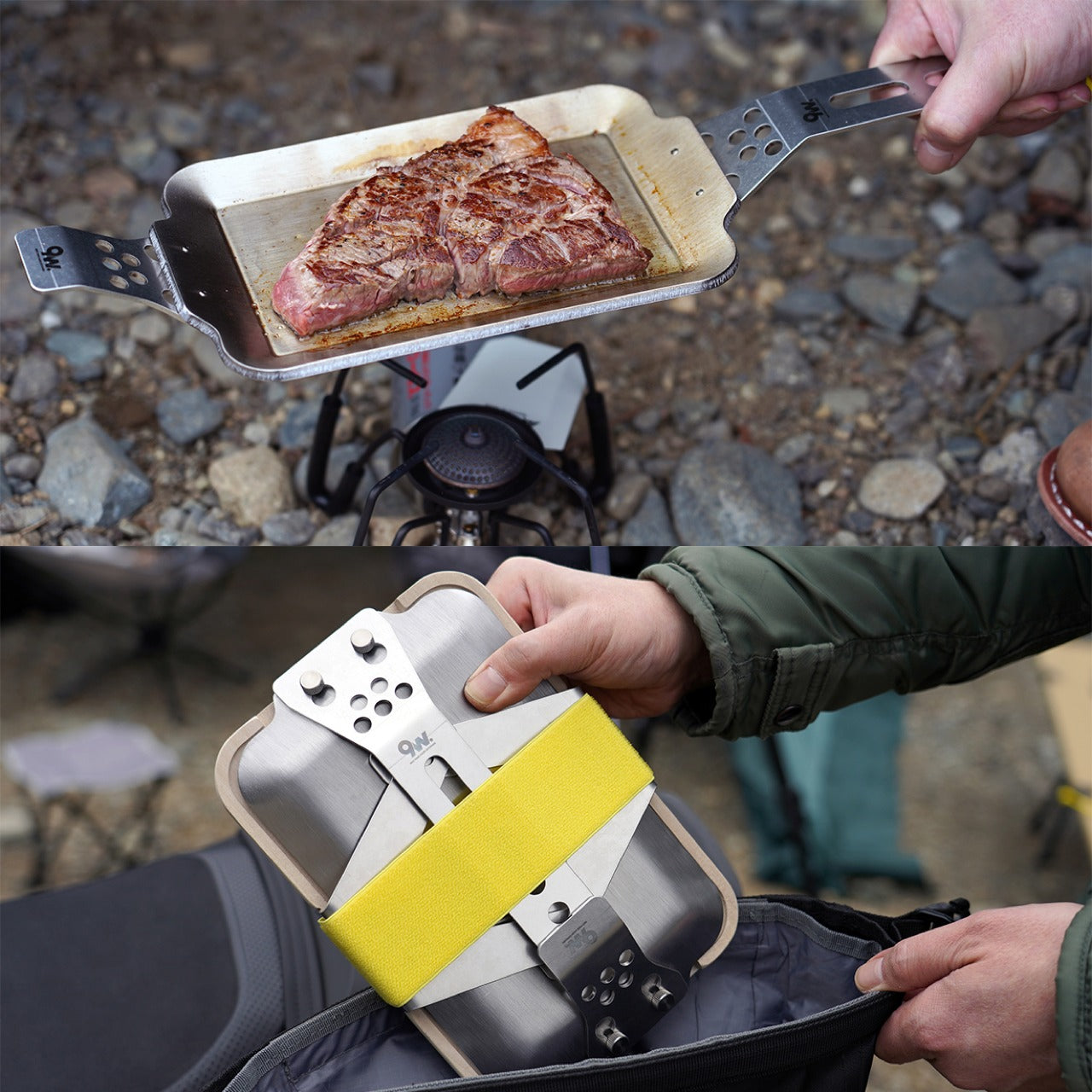
This piece of cookware collapses the distance between the stove and the table in a way that feels both radical and sensible. Made from 1.6mm-thick mill scale steel, the plate arrives rust-resistant, stick-resistant, and ready for immediate use without the lengthy seasoning ritual most iron cookware demands. The wooden handle attaches and detaches with one hand, transforming the object from cooking tool to serving vessel in a single motion. Mill scale steel is an unusual choice for consumer cookware because most manufacturers sand it off during production, but leaving it intact creates a natural non-stick surface that improves with use.

The heat distribution across that thin steel body brings out caramelization and texture in ways that thicker cast iron struggles to match, and the visual warmth of iron against a wooden table turns an ordinary weeknight dinner into something more composed. For a kitchen where counter space is limited, and dishes pile up fast, eliminating one entire step of the cooking-to-eating chain is not a gimmick. It is a rethinking of how we interact with food once it leaves the heat, and the pan-to-plate logic makes cleanup faster than any two-vessel alternative.

Click Here to Buy Now: $69.00

What we like

  • The one-hand detachable wooden handle makes the transition from stove to table seamless and eliminates the need for separate serving dishes.
  • Mill scale steel requires no initial seasoning, so it is usable straight out of the box, unlike most raw iron cookware on the market.

What we dislike

  • The thin 1.6mm steel will not retain heat as long as heavier cast iron, which means food cools faster once removed from the burner.
  • Eating directly from a frying surface takes some adjustment, and the flat profile does not contain sauces or runny dishes well.

2. Akebono Square Sandwich Cutter & Sealer

Sandwich-making in most kitchens involves a knife, a cutting board, and the quiet disappointment of fillings oozing out the sides. The Akebono cutter and sealer replaces that entire sequence with a single press that cuts and crimps simultaneously, producing sealed pockets that hold their shape through a commute, a school day, or a few hours in a lunchbox. Made in Japan with durable, food-safe materials, the tool is dishwasher-safe and simple enough for children to operate without supervision.

What makes it more than a novelty is how it changes the approach to sandwich construction entirely. Instead of spreading fillings thin to prevent spillage, the sealed edges allow for generous, layered interiors: curries, egg salad, fruit, and cream combinations that would be impossible with open-edge bread. Japanese convenience stores have perfected the sealed sandwich format for decades, and this tool brings that same logic to a home kitchen for a fraction of the cost, turning a five-minute task into a two-minute one.

What we like

  • The simultaneous cut-and-seal action locks fillings inside, making it ideal for runny or layered ingredients that would fall apart in a regular sandwich.
  • Dishwasher-safe construction and a straightforward press mechanism mean there is almost no learning curve and minimal cleanup.

What we dislike

  • The square format limits bread choices, as it works best with standard sliced bread and does not accommodate artisan loaves or thicker cuts.
  • Sealed sandwiches can trap steam when made with warm fillings, resulting in soggy bread if not cooled before sealing.

3. Three Snow Stainless Steel Round Mesh Oil Skimmer

Most oil skimmers sold outside Japan are clunky perforated ladles that catch large debris and let everything else through. The Three Snow skimmer operates on a different principle. Manufactured in Tsubame, Niigata, this tool uses 18-8 stainless steel mesh available in fine (40 mesh, 0.4mm) and coarse (16 mesh, 1.2mm) options, giving it the ability to filter particles most skimmers ignore completely. The fine mesh variant catches even the smallest frying residue, which means cleaner oil that lasts longer between changes.

Beyond deep-frying, the tool doubles as a scum remover for stocks and soups and works as a miso strainer, making it one of the more versatile single-form tools in a Japanese kitchen. Available in 12cm, 15cm, and 18cm diameters, the sizing accommodates everything from a small saucepan to a full-sized fryer. At roughly 90 to 140 grams, depending on size, the weight is negligible during long frying sessions. Tsubame stainless steel has earned its reputation: the corrosion resistance and structural integrity of these skimmers outlast most competitors by years.

What we like

  • The fine 40-mesh option catches debris as small as 0.4mm, which keeps frying oil cleaner far longer than standard perforated skimmers allow.
  • Multi-use functionality as a miso strainer, scum skimmer, and oil filter means it earns its space in a drawer more than most single-purpose tools.

What we dislike

  • Fine mesh requires more careful cleaning than a simple perforated ladle, as particles can embed in the weave and are difficult to dislodge without a brush.
  • The shallow depth (25mm to 35mm, depending on size) limits the volume of debris it can collect in a single pass during heavy frying sessions.

4. Playful Palm Grater

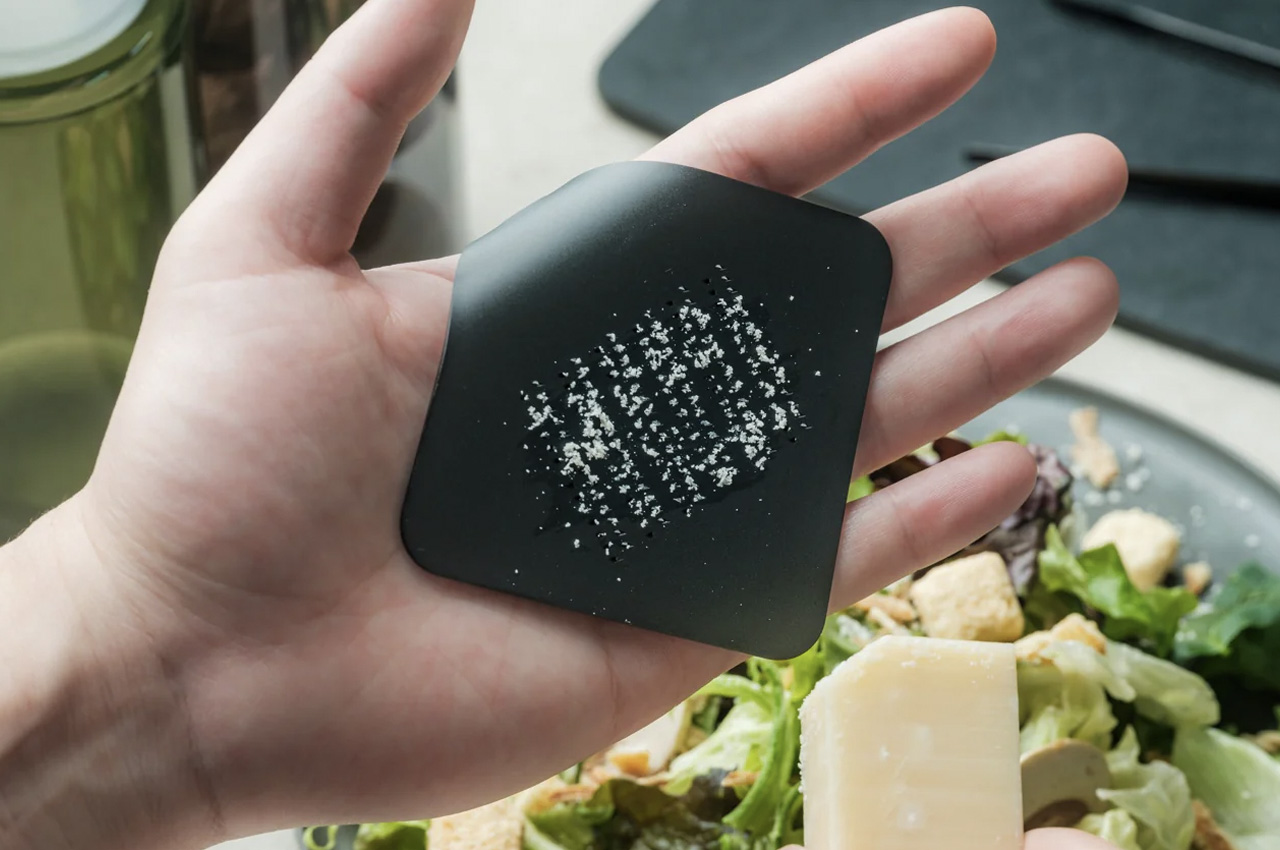
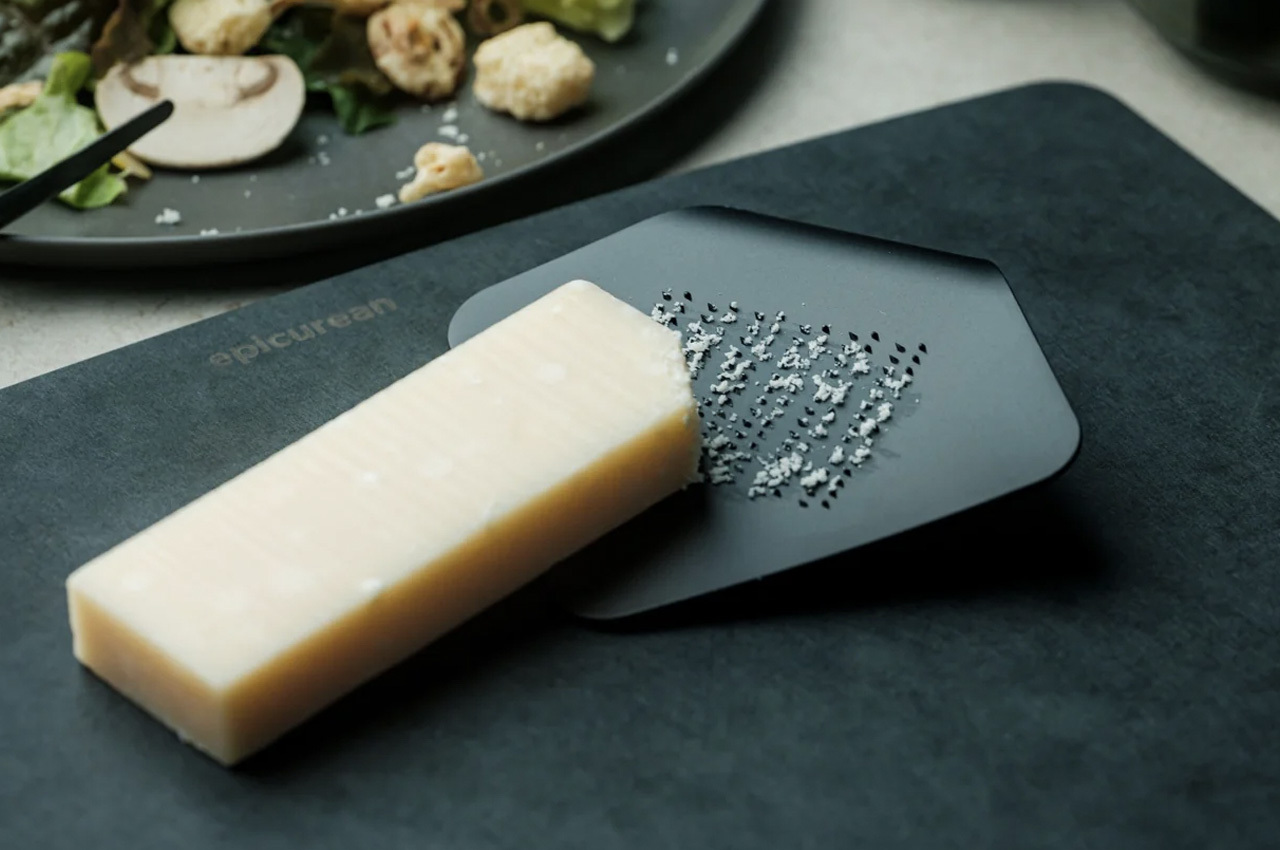
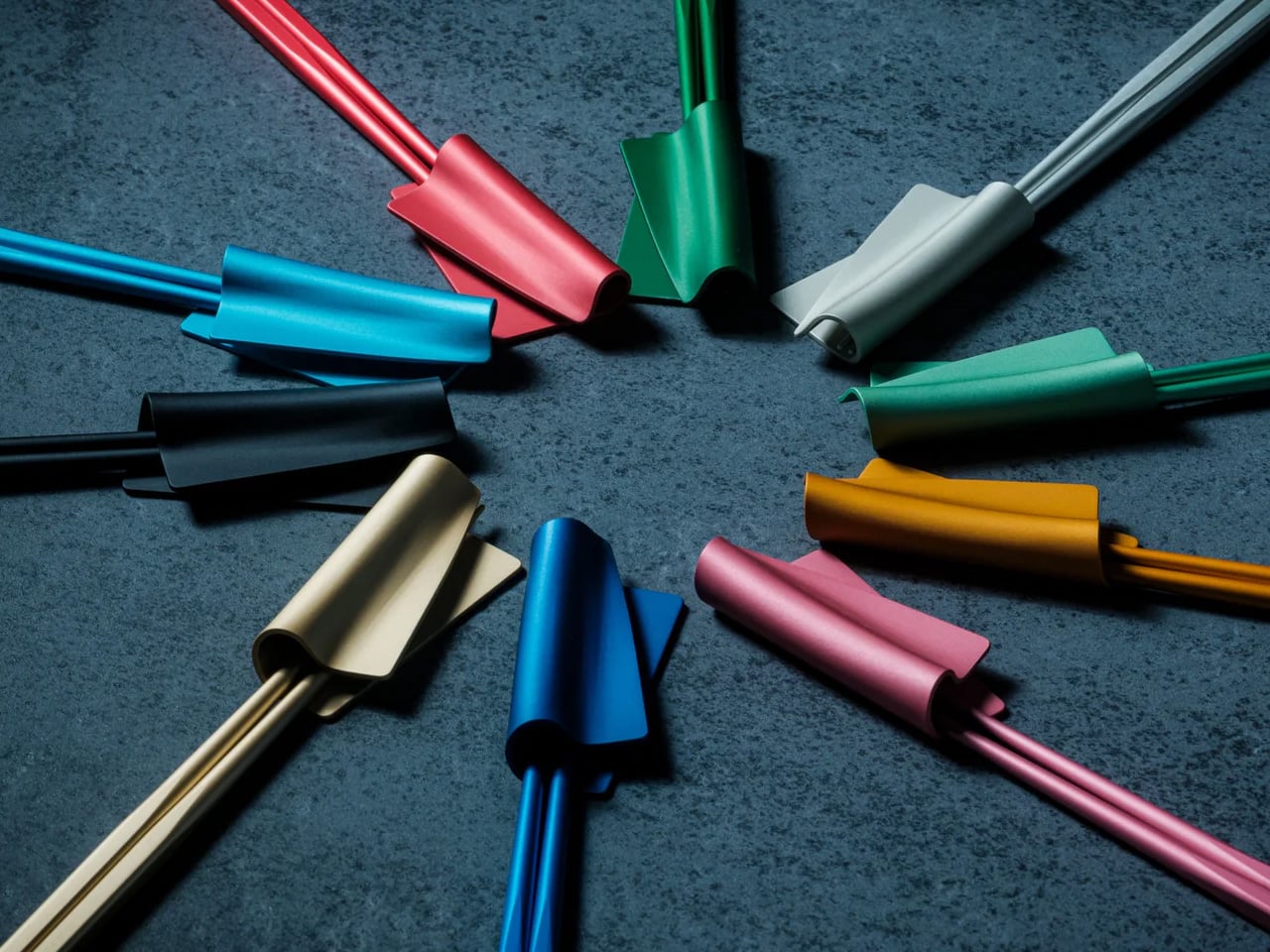
Conventional box graters are bulky, awkward to store, and dangerous to clean. The Playful Palm grater is none of those things. Cut from a single aluminum alloy plate and curled into a form that sits naturally in the palm, this tool reimagines what a grater can physically be. The curve creates a natural channel that directs grated cheese, ginger, garlic, or zest toward the dish below, and the ergonomic fit means the grating hand stays protected behind the plate rather than hovering over exposed blades.

Available in multiple colors, the grater looks more like a piece of desktop sculpture than a kitchen tool, which is part of the design intent. Japanese kitchen philosophy often resists the idea that tools should be hidden in drawers between uses, and a grater this visually appealing can sit on a counter without disrupting the space. The compact size makes it ideal for tableside use: grating Parmesan directly over pasta, adding fresh wasabi at the last second, finishing a salad with lemon zest. The palm grater treats garnishing not as an afterthought but as a distinct step worth its own dedicated instrument.

Click Here to Buy Now: $25.00

What we like

  • The single-plate aluminum construction eliminates crevices and joints, making it far easier to clean than traditional multi-sided graters.
  • The palm-fit ergonomic design keeps fingers behind the grating surface, reducing the risk of nicked knuckles that plague box grater users.

What we dislike

  • The compact grating surface is not suited for large-volume tasks like shredding an entire block of cheese for a casserole.
  • Aluminum alloy, while lightweight, is softer than stainless steel and will dull faster with frequent use on hard ingredients like nutmeg or frozen ginger.

5. Conte Drip-Free Oil Pot with Fine Mesh Filter

Reusing frying oil is standard practice in Japanese home cooking, and the Conte oil pot is the tool that makes it effortless. A fine black stainless steel mesh catches food particles left behind from tempura, tonkatsu, or karaage, and the non-reflective black finish serves a practical purpose: it allows a clear view of the oil level from above, something shiny stainless steel interiors make nearly impossible. The precisely curved rim eliminates drips during pouring, a detail that sounds minor until considering how many oil pots leave trails across the stovetop.

Angled knobs on the lid and strainer allow one-handed operation, so pouring oil back into a pan while holding an ingredient in the other hand becomes routine rather than a balancing act. Available in small (300ml) and large (700ml) sizes, the pot scales to different cooking habits. The small version is suited for seasoning cast iron or saving oil after pan-frying dumplings, while the large handles full frying sessions comfortably. Both sizes sit compactly beside a stove without crowding the workspace, making oil reuse clean, dignified, and free of the greasy mess that discourages most home cooks from attempting it.

What we like

  • The drip-free rim design eliminates oil trails on the stovetop, solving a problem that nearly every other oil storage container ignores.
  • The black stainless steel mesh filter makes oil clarity visible from above, so determining when to discard rather than reuse becomes a visual check instead of a guessing game.

What we dislike

  • The small 300ml version fills up rapidly and is too limited for anyone who deep-fries regularly or cooks for more than two people.
  • Stainless steel retains oil odors over time, and thorough degreasing between uses requires more effort than a quick soap-and-water rinse.

6. Oku Knife

Scottish artist and metalworker Kathleen Reilly designed the Oku knife as a direct response to a problem most Western cutlery ignores: where does the knife go between bites? Informed by the Japanese tradition of chopstick rests (hashioki), which lift eating utensils off the table surface to prevent contamination, the Oku features a handle folded 90 degrees from the blade. This fold allows the knife to rest with its handle on the table while the blade sits perpendicularly in the air, touching nothing.

The result is a tool that solves a cleanliness issue most diners have accepted as unsolvable: the dirty knife laid flat against a tablecloth or balanced on the edge of a plate. Hooking the blade along the edge of a cutting board or plate creates what Reilly describes as an intimacy between the two objects, and the angular geometry locks the knife in position rather than allowing it to slide. For a kitchen where multiple cutting tasks happen in sequence, the Oku provides a resting solution that no flat-handled knife can match. It is a rare case of form and function arriving at the same conclusion through a single geometric decision.

What we like

  • The 90-degree fold solves the dirty-knife-on-table problem that flat cutlery has ignored for centuries, keeping the blade cleanly suspended between uses.
  • The hookable design creates stability on plate rims and cutting board edges, eliminating the wobble and sliding common with standard knives at rest.

What we dislike

  • The unconventional handle angle requires a different grip than traditional knives, which may feel awkward during extended cutting or food prep sessions.
  • As a handcrafted piece by an independent metalworker, availability and pricing are limited compared to mass-produced alternatives.

7. Obsidian Black Salad & Serve Tongs

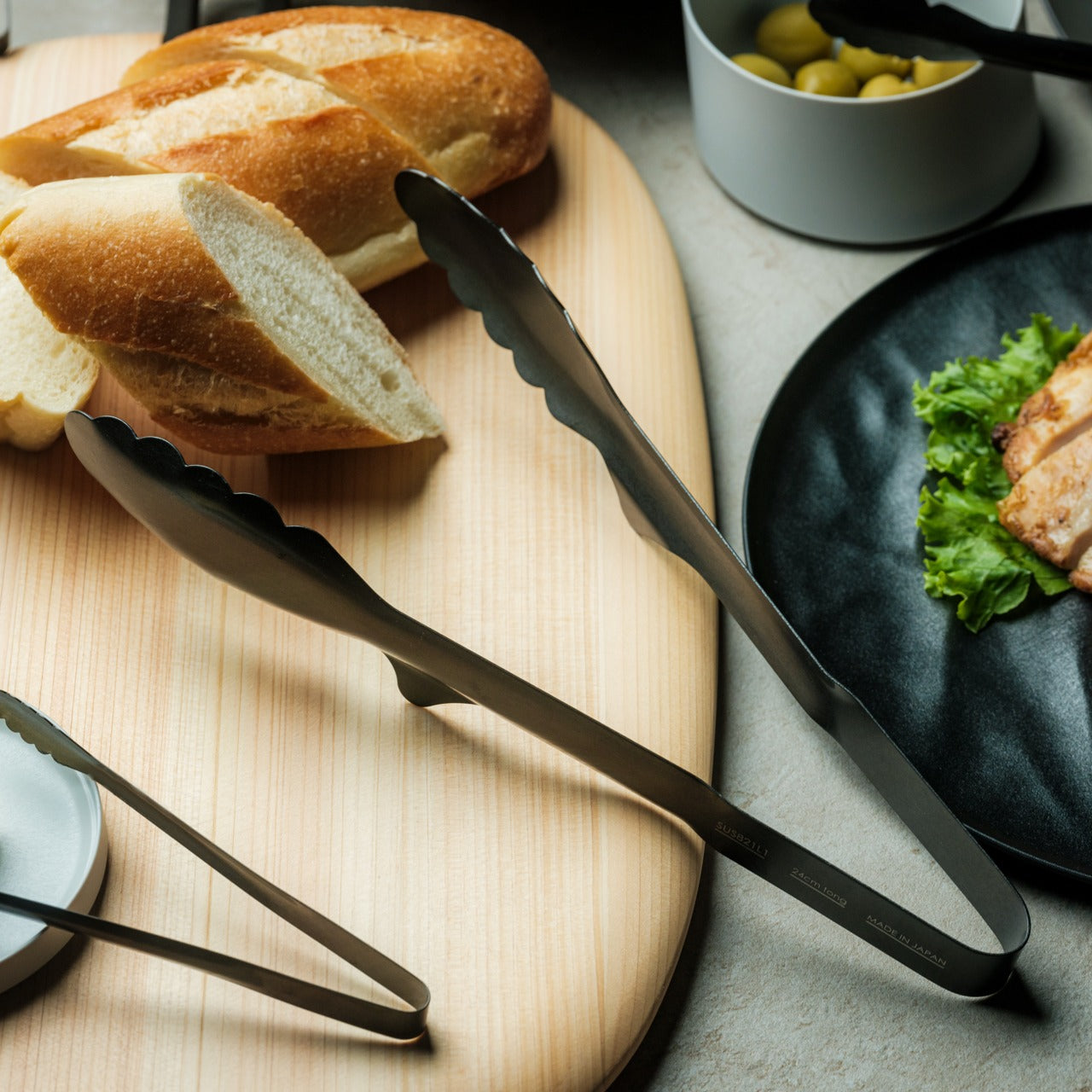
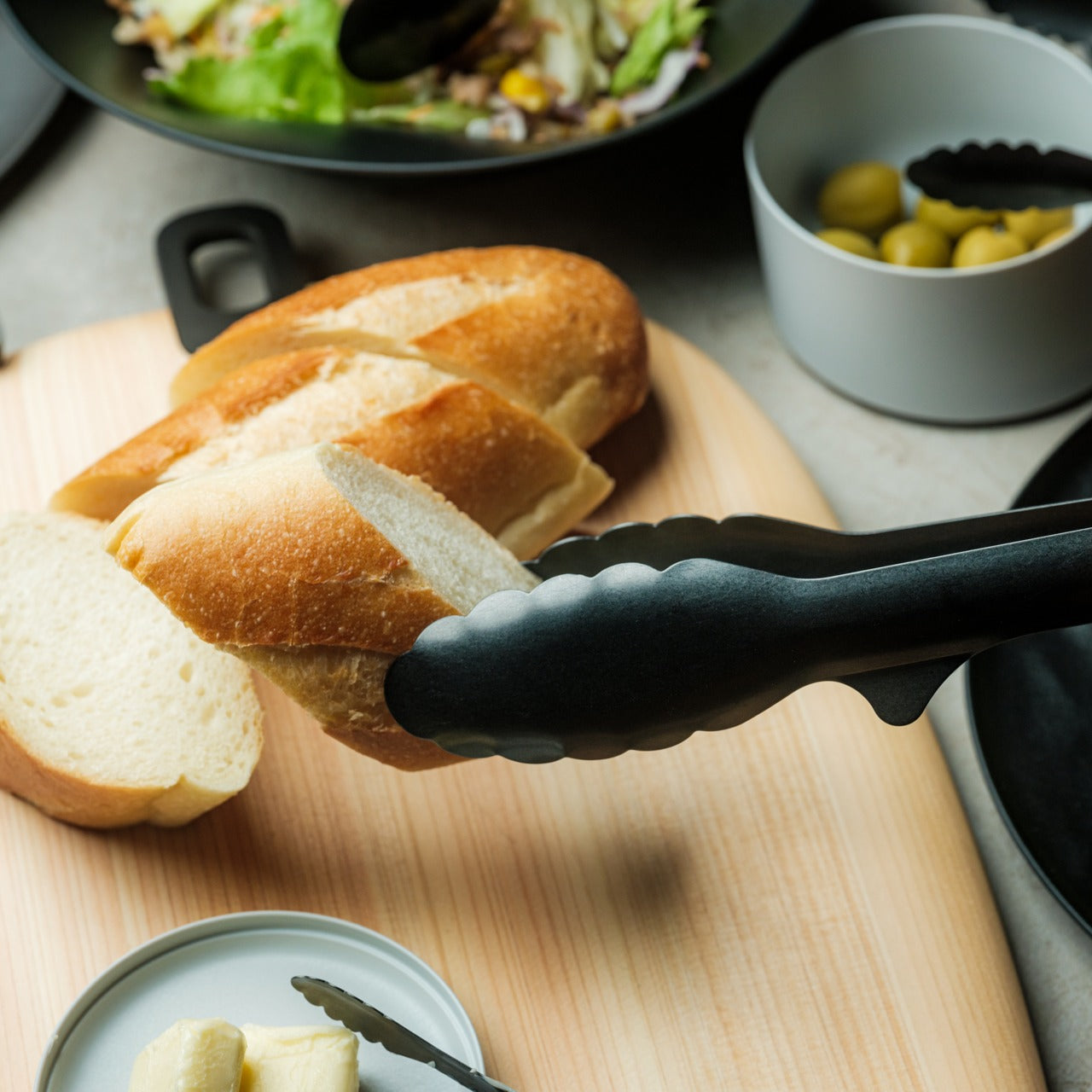
Salad tongs tend to be one of two things: flimsy spring-loaded mechanisms that lose grip on the third toss, or heavy stainless steel clamps better suited to a barbecue than a dinner table. The Obsidian Black tongs occupy neither category. Made from SUS821L1 stainless steel (a variant twice as strong as the standard SUS304 used in most kitchen tools), they achieve a thinner, lighter profile without sacrificing structural integrity. One head is shaped as a spoon, the other as a spork, and this asymmetry is the design’s smartest move.

That mismatched pairing allows the tongs to clamp down on leafy greens with the same confidence as slippery pasta or bite-sized grain bowls, because each head approaches the food from a different angle. At 20cm in length, the reach is sufficient for deep salad bowls without compromising control. The black finish creates visual contrast against greens, fruits, and light-colored dishes, which makes plating feel more considered, and the high corrosion resistance of SUS821L1 steel means the finish holds up through years of use. For a kitchen that treats presentation as part of the cooking process, these tongs turn the final step of assembling a dish into something deliberate.

Click Here to Buy Now: $32.00

What we like

  • SUS821L1 stainless steel is twice as strong as the standard SUS304, allowing a thinner profile that feels lighter in the hand without bending or flexing under load.
  • The asymmetric spoon-and-spork head design grips a wider range of textures and food types than matching heads would, from arugula to penne.

What we dislike

  • The 20cm length may feel short for tossing salads in oversized serving bowls or deep mixing containers.
  • The dark finish, while visually striking, can show water spots and fingerprints more readily than brushed or polished stainless steel.

Where This Leaves Your Kitchen

Japanese kitchen tools share an unspoken philosophy that the best gadgets do not announce themselves. They integrate. They become invisible extensions of the hand, the stove, the table, dissolving the seams between preparation, cooking, and eating until the whole sequence feels like a single continuous act. The seven tools on this list operate exactly within that logic, each one addressing a friction point that most cooks have simply accepted as normal.

Investing in these pieces is not about filling a kitchen with more objects. It is about replacing thoughtless tools with considered ones, swapping volume for precision, and treating the daily act of making food with the same intentionality that Japanese design applies to everything it touches. A kitchen built around tools like these does not feel cluttered. It feels ready.

The post 7 Best Japanese Kitchen Gadgets & Tools So Clever They Make Every Meal Feel Like a Ceremony first appeared on Yanko Design.
Top 5 Japanese Kitchen Knives Under $200 That Professional Chefs Use at Home – Not the Ones They Recommend for Commission

Most knife recommendations come with a quiet asterisk. A brand deal, a commission link, a product sent to a chef’s PO box before the review goes live. What gets left out of that conversation is what the same chef keeps in the drawer at home — the blade they reach for on a Sunday morning when nobody is filming. Japanese knives occupy a rare space where craft, material science, and design intersect, and choosing one well changes the way you cook in ways that are difficult to articulate until you’ve experienced it.

The five knives on this list were chosen for what they do rather than how loudly they market themselves. Some are visually striking in ways that stop you mid-prep, others are quietly exceptional tools that earn no attention but demand all the respect. All of them sit in a price range that rewards cooks who pay attention. Under $200, the Japanese knife category is genuinely competitive, and every pick below earns its place through steel quality, blade geometry, and the kind of design honesty that paid recommendations rarely manage.

1. Black Kitchen Knives

Seki, Japan, carries centuries of blade-making heritage that predates the modern kitchen entirely. The same region that once shaped swords for samurai now produces knives for home counters, and Yanko Design’s pitch-black series makes that lineage feel entirely current. Crafted from molybdenum vanadium steel with a titanium coating, each blade arrives in a matte black finish that is as functional as it is striking. The coating isn’t cosmetic theater — it contributes to durability and surface longevity while making the knife one of the most visually distinctive tools you can introduce to a kitchen without overhauling anything else.

Available in Santoku, Gyuto, and Petty styles, the series covers the full range of tasks that most home kitchens genuinely require. Each blade is crafted individually by a craftsman using a full-scale double-edged grind, which means the cutting geometry is precise rather than approximate. For anyone who has spent time thinking carefully about the objects they interact with daily and expecting those objects to have a point of view, these knives deliver it plainly. Food prep becomes something more considered when the tool in your hand looks like it was made with intention. That shift in feeling is not trivial.

Click Here to Buy Now: $99.00

What We Like

  • The titanium-coated black finish is striking and purposeful, contributing to durability rather than just aesthetics.
  • Each blade is handcrafted individually, giving it the qualities of a bespoke object rather than a factory product.
  • Three blade profiles available mean there is a version here suited to nearly every cutting preference.

What We Dislike

  • The dramatic visual identity demands deliberate care and proper storage to preserve the finish over the years of use.
  • Titanium-coated surfaces can show wear differently from bare steel if not cleaned and maintained with attention.

2. Sakai Takayuki KUROKAGE VG10 170mm

KUROKAGE translates to “dark shadow,” and the name earns its credibility from the first moment you pick the knife up. Sakai Takayuki’s fluorine resin coating on the VG-10 blade creates a surface that food simply refuses to cling to, and that quality changes the pace of prep work in surprisingly immediate ways. The hammered concavo-convex texture of the blade reinforces the non-stick effect physically, creating a topography of dimples that reduces contact between steel and ingredient. Pair that with a VG-10 core hardened to 60-61 HRC, and the edge retention consistently outperforms most knives at twice this price range.

Where the KUROKAGE separates itself further is in the details surrounding the blade. The half-rounded octagonal wenge wood handle with a buffalo horn ferrule signals genuine consideration for how a knife is held over time, not merely how it photographs. Each knife is hand-sharpened before leaving the factory, which means out-of-the-box performance is immediate. There is no break-in period, no first session on the whetstone to get it where it should have arrived. For cooks who want a knife that performs as though it were made with a specific user in mind, this is the closest that experience gets at this price.

What We Like

  • Fluorine resin coating paired with hammered dimples creates food release that genuinely speeds up the rhythm of prep.
  • VG-10 steel at 60-61 HRC delivers edge retention that outlasts chrome molybdenum alternatives, including the respected MAC non-stick line.
  • The wenge wood and buffalo horn handle is refined in a way that feels earned rather than decorative.

What We Dislike

  • The Teflon finish requires careful storage and non-abrasive cleaning to avoid surface damage over the years of heavy use.
  • The matte tones of both blade and handle show fingerprints more readily than polished steel finishes do.

3. Yoshihiro VG-10 16-Layer Hammered Damascus Nakiri 165mm

Vegetable-forward cooking has a dedicated tool, and most people discover it far later than they should have. The Nakiri, with its flat rectangular edge and full blade contact along the cutting board, makes push cuts through anything from dense root vegetables to ripe summer tomatoes faster and more precisely than any standard chef’s knife allows. Yoshihiro’s 16-layer hammered Damascus version, built around a VG-10 core, adds a visual dimension to that functionality that turns the blade into something genuinely close to an object of craft. The hammered surface reduces friction during each cut, preventing food from sticking and maintaining a clean, fluid motion through the board.

The Western-style mahogany handle extends to the full tang, giving the knife a solidity that feels well-considered for sustained daily use. Certified for commercial kitchens and handcrafted by master artisans, each blade carries Damascus layering that produces a pattern unique to that specific knife. No two are exactly alike — a meaningful distinction in an era of mass production. Whether you’re moving through greens for a salad or working down a pile of root vegetables for a slow braise, the Yoshihiro Nakiri makes even the most routine prep feel like something worth approaching carefully and with the right tool.

What We Like

  • The 16-layer hammered Damascus pattern is genuinely beautiful, with layering unique to each blade.
  • The flat Nakiri edge creates more consistent and precise vegetable cuts than a standard chef’s knife profile allows.
  • Full tang mahogany handle delivers solid balance and structural durability across extended prep sessions.

What We Dislike

  • The Nakiri is a specialist vegetable blade and is not the right choice for someone seeking a single all-purpose knife.
  • Damascus finishes require mindful maintenance to preserve both the edge geometry and the layered surface over time.

4. Tsunehisa VG1 Nakiri 165mm

Most knives in this price category top out at VG-10 as their steel of choice, and for good reason — VG-10 is excellent. The Tsunehisa VG1 Nakiri makes a more ambitious material decision. VG-1 steel, enriched with carbon, chromium, cobalt, molybdenum, and vanadium, offers a level of edge retention and sharpness that positions it as a meaningful step above the standard category offering. For a cook who sharpens their own knives and understands what they are working with, the reward is a blade that holds its edge through longer prep sessions before it asks to be returned to the stone.

The design of this knife is deliberate in its restraint, and that restraint is its strongest visual statement. There is no hammered finish, no Damascus drama, no surface treatment that distracts from the blade itself. What remains is the clean rectangular profile of the Nakiri geometry, engineered precisely for vegetable work, and a blade that carries the quiet confidence of a tool that knows exactly what it is. For kitchens that value precision over performance, and for cooks who find more satisfaction in a blade that earns attention through cutting rather than appearance, the Tsunehisa makes an entirely compelling case.

What We Like

  • VG-1 steel goes beyond what most competitors in this price range offer, making it a genuinely elevated material choice.
  • The clean, architectural aesthetic feels intentional and considered rather than understated by default.
  • Enrichment with cobalt, molybdenum, and vanadium produces exceptional hardness and long-term structural durability.

What We Dislike

  • The higher hardness of VG-1 steel can make the blade slightly more brittle than softer stainless alternatives if used carelessly on hard surfaces.
  • The restrained design will leave buyers expecting visual drama feeling underwhelmed by appearance alone.

5. SOUMA (Fujiwara Kanefusa) FKM Santoku 180mm

Every list of knives needs one that a seasoned cook would recommend to someone they genuinely care about, rather than someone they want to impress. The SOUMA FKM Santoku, formerly known under the Fujiwara Kanefusa name and recently rebranded without changing what has always made it reliable, is that knife. Made from AUS-8 molybdenum vanadium stainless steel, it delivers cutting performance, rust resistance, and ease of re-sharpening in a combination that makes daily kitchen use genuinely uncomplicated. The Santoku profile, with its tall blade and rounded tip, moves through meat, fish, and vegetables with equal ease and no change in technique required between tasks.

The black pakkawood handle and stainless steel bolster keep the visual profile composed and professional, and the bolster is positioned to distribute weight exactly where the hand expects it during longer prep sessions. This is the knife that sits beside significantly more expensive blades in the same kitchen without apologizing for its price. For first-time buyers of Japanese knives who want something honest rather than showy, the SOUMA FKM is the answer that experienced cooks would give if they weren’t being paid to say something else. Reliable, well-built, and priced in a way that leaves room to build further as the relationship with good knives deepens.

What We Like

  • AUS-8 stainless steel is genuinely easy to sharpen and maintain, making it accessible without feeling like a compromise.
  • The tall Santoku blade handles meat, fish, and vegetables with equal competence and no adjustment in grip or technique.
  • Black pakkawood handle and stainless bolster give it a clean, professional appearance in any kitchen setting.

What We Dislike

  • AUS-8 steel won’t hold an edge as long as VG-1 or VG-10, so it requires slightly more frequent attention on the whetstone.
  • The intentionally understated design lacks the visual presence of the other knives on this list.

The Sharpest Decision You’ll Make in the Kitchen

Japanese kitchen knives are one of the few purchases where the return on investment is felt with every single meal. Each knife on this list was chosen because it earns its place through material quality, considered design, and a level of performance that changes the way you move through a recipe. Whether you gravitate toward the visual authority of the KUROKAGE, the Damascus craftsmanship of the Yoshihiro, or the pitch-black confidence of the Yanko Design series, the difference a well-chosen blade makes is immediate and lasting.

The specifics of which knife fits best depend entirely on how you cook. A Nakiri for kitchens that treat vegetables as the main event, a Santoku for cooks who need a single versatile blade that handles everything without fuss, and the Yanko Design series for those who believe that every object on the counter should carry as much intention as the food being prepared on it. The list starts here. Where you go next depends on what you find yourself reaching for first.

The post Top 5 Japanese Kitchen Knives Under $200 That Professional Chefs Use at Home – Not the Ones They Recommend for Commission first appeared on Yanko Design.
This Hollow-Handle Titanium Kitchen Knife Actually Shifts Its Own Balance Point Toward the Blade

That elongated oval cutout running through the handle of the Titanion APEX catches attention first. It reads almost like a tuning fork, or a beautifully machined piece of industrial hardware that ended up on a cutting board. The form is deliberate on multiple levels: it trims weight from the handle end, which naturally shifts the balance point forward toward the blade. For cooks who prefer that blade-forward feel, the shift is immediately noticeable. And because the whole knife is machined from a single continuous piece of TC4 titanium alloy, there are no separate components, no rivets to rust, no scales to loosen over years of daily use. The result is a full-tang construction by default, which, in a knife made from one of the strongest lightweight metals on the planet, makes for an exceptionally robust tool.

Titanion is a Hong Kong-based brand with three years of focused research into bringing aerospace-grade titanium materials into everyday kitchen use. Their previous tools have already attracted over 5,000 professional chefs and dessert masters as loyal users. The APEX series is their most knife-forward move yet: two serrated blades, a Titanium Bread Knife and a Titanium Multifunctional Serrated Knife. The blade is forged from high-performance 10Cr15MoV steel with precision serrated edges, boasting outstanding hardness, wear resistance, and long-lasting sharpness. Titanion claims this is the first serrated kitchen knife on the market to feature a titanium alloy handle.

Designer: Byron Ho

Click Here to Buy Now: $81 $116 (30% off). Hurry, only a few left!

The bread knife runs 13.98 inches (35.5cm) total, sitting on the longer end of the bread knife category, which means more stroke per pass and fewer awkward repositions on a large loaf. Titanion uses a segmented serration pattern: larger wavy serrations on the main cutting area for smooth strokes without crushing the crumb, and finer serrations at the tip for piercing hard outer crusts, croissant shells, and thick-skinned fruit. That dual-geometry setup sounds like marketing until you’ve worked through a dense sourdough and realized the tip teeth were doing actual work before the wavy section ever takes over. Blade thickness sits at 0.06 inches (0.15cm), keeping the profile lean enough for clean slicing without wedging. The longer format also makes it useful beyond bread, handling anything that benefits from a long, smooth sawing stroke.

The utility knife at 9.45 inches (24cm) takes a completely different approach: consistent serration from base to tip, the same tooth geometry across the entire blade for stable and uniform cutting performance on whatever it’s working through. That uniformity makes it a genuine generalist, handling root vegetables, steaks, small pastries, and protein foods with equal confidence. Roughly half the length of the bread knife, it’s maneuverable enough for intricate prep but substantial enough for harder cuts, and the compact size pairs well with the ergonomic titanium handle during active cooking. Consistent serration also makes future sharpening more predictable, something the bread knife’s dual-geometry complicates. The two knives fill completely different roles and work as actual complements in daily kitchen use.

TC4, or Grade 5 titanium alloy, runs about 40% lighter than stainless steel while combining superior strength, corrosion resistance, and heat tolerance. The same alloy shows up in aircraft structural frames and orthopedic implants, both of which make the kitchen counter look like a retirement post for the material. In a culinary context, the relevant properties are direct: no moisture absorption, no odor retention, no degradation over time, and full corrosion resistance against acidic ingredients like citrus or vinegar. The 10Cr15MoV steel on the blade side is a high-carbon, high-chromium martensitic stainless that maintains stable sharpness and holds its edge under heavy use significantly better than standard stainless steel options. Together, the materials spec reads closer to precision tooling than kitchen cutlery.

The hollow-out handle is an ergonomic device as much as a visual one. It enhances tactile feedback through the grip, ensures a secure hold even in damp or greasy environments, and significantly reduces fatigue during use. Titanion built in distinct finger grips and a thumb support area, with a flowing contour that allows users to naturally position their thumb and index finger close to the blade’s balance point for a comfortable and precise grip. The oval opening doubles as a hanging point for wall or rail storage, with no extra hardware required. On a knife that gets reached for multiple times a day, small ergonomic decisions like that compound quickly into meaningful quality of life.

Pricing runs $100 for the bread knife, $75 for the utility knife, and $175 for the twin set at the Super Early Bird tier, amounting to a 30% discount on the original price. A discount you should absolutely grab if you’ve made it this far. International shipping is a flat $15 worldwide, with knives delivering starting August 2026. That’s because machining single-piece titanium knives individually takes way more time than snapping components together with glue and rivets. Also, Titanion doesn’t necessarily provide a warranty on the knives, because they don’t need to. Rest assured your GR5 titanium knife will probably outlast you, and then your grandkids too. Wait, why are you still reading? The link’s down below!

Click Here to Buy Now: $81 $116 (30% off). Hurry, only a few left!

The post This Hollow-Handle Titanium Kitchen Knife Actually Shifts Its Own Balance Point Toward the Blade first appeared on Yanko Design.
This Hermès x Bialetti Moka Pot Concept Has No Business Looking This Good

If you follow concept design on social media, there’s a good chance you’ve already stumbled across Jane Morelli’s work. She’s the designer behind that Lacoste x Bialetti moka pot that went viral not too long ago, and now she’s back with something that somehow manages to feel even more covetable. For the Year of the Horse, she has created a concept coffee set that imagines what a Hermès x Bialetti collaboration could look like, and the result is genuinely breathtaking.

To be clear, this is not a real product. It’s a speculative design concept, an unofficial creative exploration that Morelli put together entirely on her own. Neither Hermès nor Bialetti has signed off on it, and there’s no indication it will ever hit shelves. But that hasn’t stopped the internet from losing its collective mind over it, and once you see it, you’ll understand why.
Designer: Jane Morelli

The concept draws on two things that already go together better than most people realize. Hermès has deep equestrian roots. The brand was originally founded as a harness and saddle workshop, and the horse has been central to its identity ever since. That iconic logo featuring a horse-drawn Duc carriage pays homage to the brand’s equestrian beginnings and still appears on every box and ribbon the brand produces today. So when a designer decides to celebrate the Year of the Horse, Hermès is a natural fit.

Bialetti, meanwhile, has its own kind of cult status. The Moka Express, invented by Alfonso Bialetti in 1933, completely changed how people made coffee at home. That eight-sided stovetop brewer became one of the most recognizable objects in design history, sitting comfortably in the same conversation as the Eames chair or the Anglepoise lamp. It’s Italian, it’s timeless, and it’s on millions of kitchen counters around the world.

Morelli’s concept merges both worlds with a detail-oriented love for both brands that really shows. The moka pot gets the full Hermès treatment: a rich burnt orange body with a cream horse silhouette painted on its side, and a three-dimensional horse figurine standing on top of the lid in place of the usual knob. It’s playful without being loud, sculptural without being impractical. The color palette, that signature Hermès orange paired with warm cream and a cognac brown handle, feels completely at home on a stovetop.

The espresso cup might be the most charming piece of the set. A sculpted horse head forms the top of the handle, with the body flowing down into a ribbed, flowing tail that curves back up to meet the cup. The saucer takes the shape of a horseshoe, with the spoon resting neatly in the groove on one side. Every element has been thought through, which is what sets a great concept apart from a quick render.

The whole set comes presented in a walnut wooden box lined with cream fabric, with “Hermès x Bialetti: Year of the Horse” inscribed on the inside of the lid. Even the packaging looks like something you’d want to display on a shelf rather than throw away. It’s the kind of unboxing experience that luxury brands have mastered, and Morelli has translated that into her concept with impressive accuracy.

What makes this design so compelling is how it sits at the intersection of craft, culture, and storytelling. The Year of the Horse in the Chinese zodiac is associated with energy, freedom, and elegance, all qualities that feel right at home in both the Hermès and Bialetti universes. Morelli didn’t just slap two logos together and call it a day. She built a visual language that feels native to both brands, which is no small feat. It’s a concept, yes. But the best concepts do exactly what this one does: they make you want something that doesn’t exist yet, and they make you wonder why nobody has done it already.

The post This Hermès x Bialetti Moka Pot Concept Has No Business Looking This Good first appeared on Yanko Design.