Fender ELIE 6 Hands-on at CES 2026: Minimalist Nordic Design, 60W Of Serious Sound

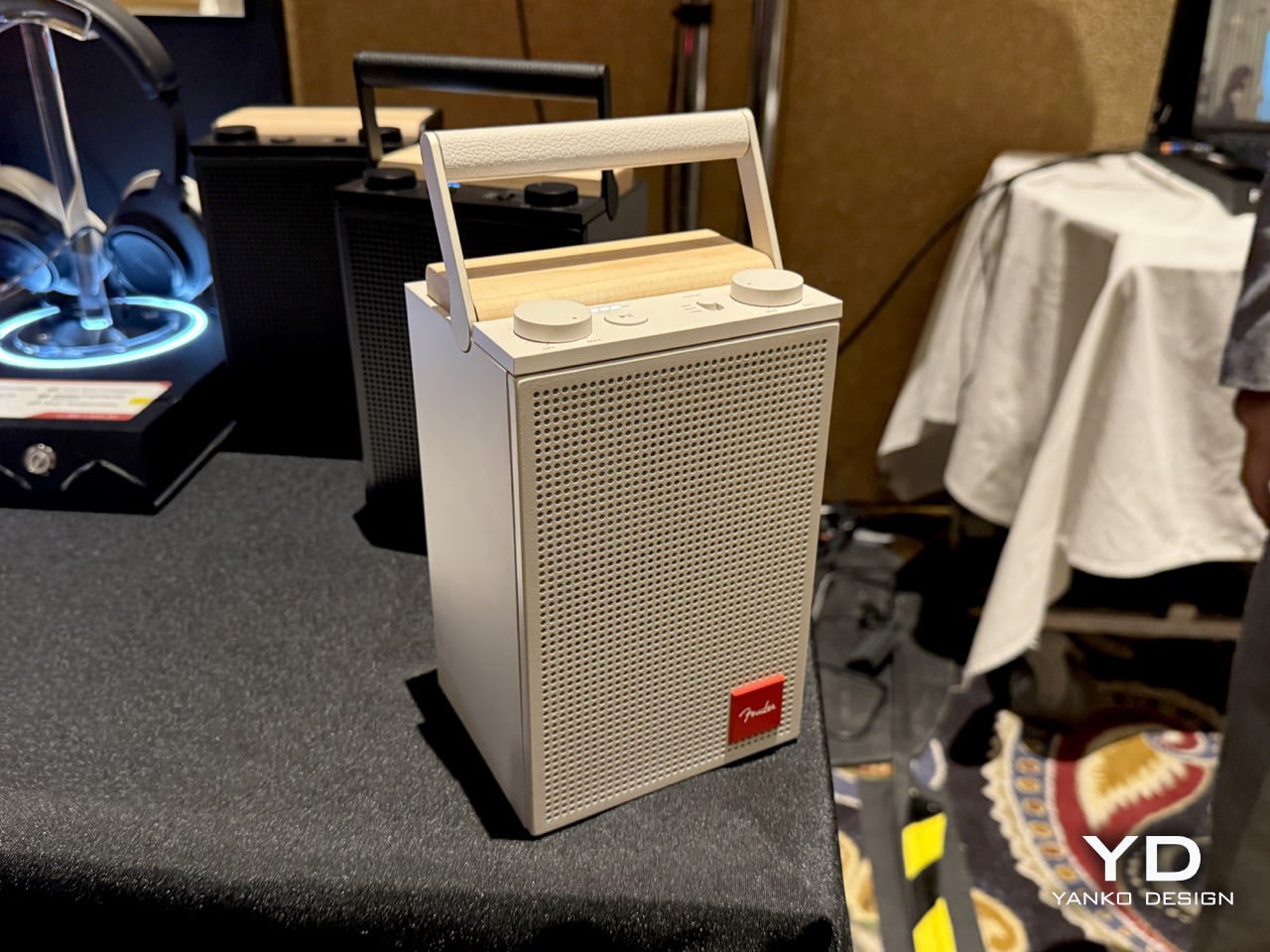
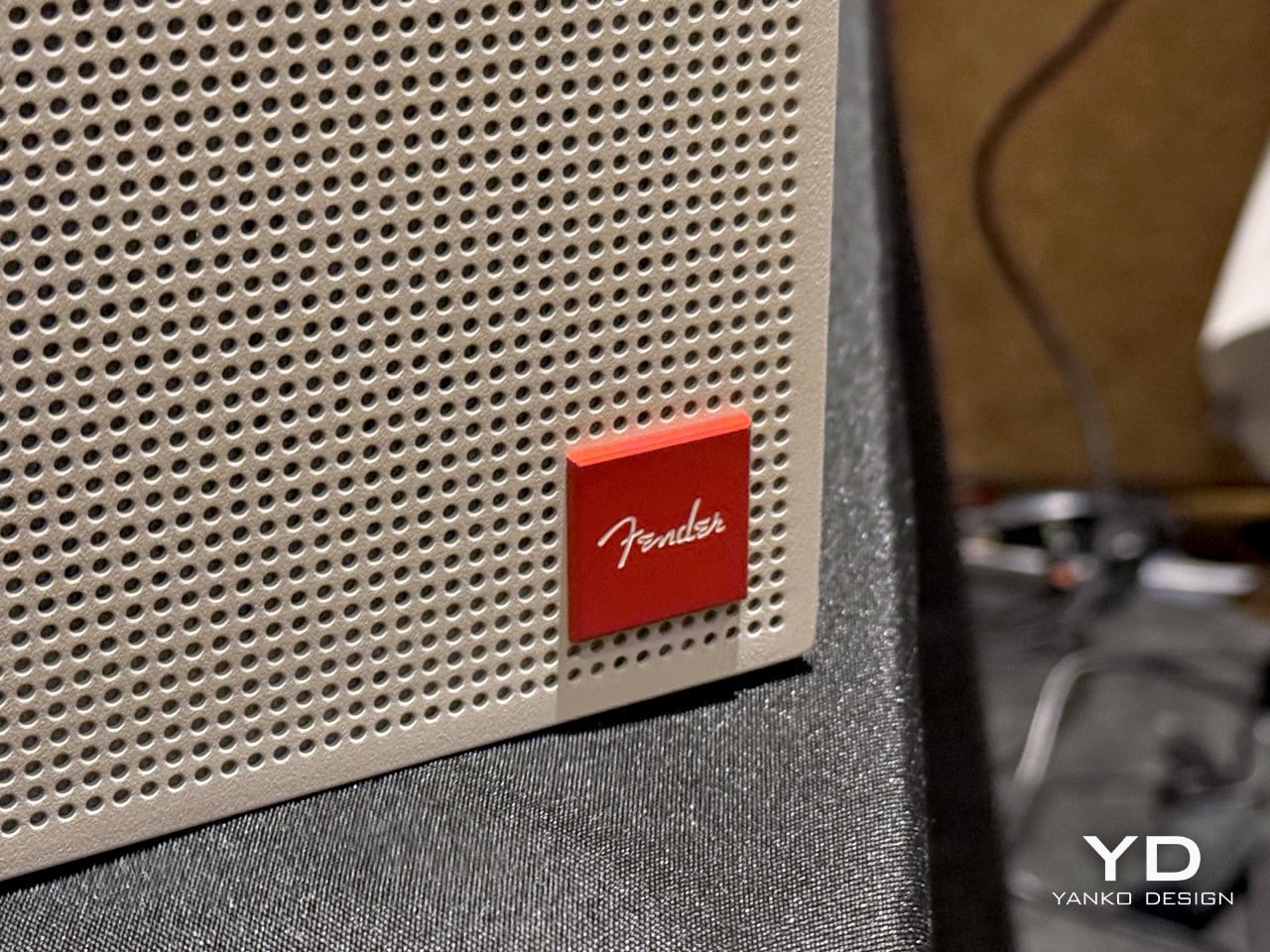
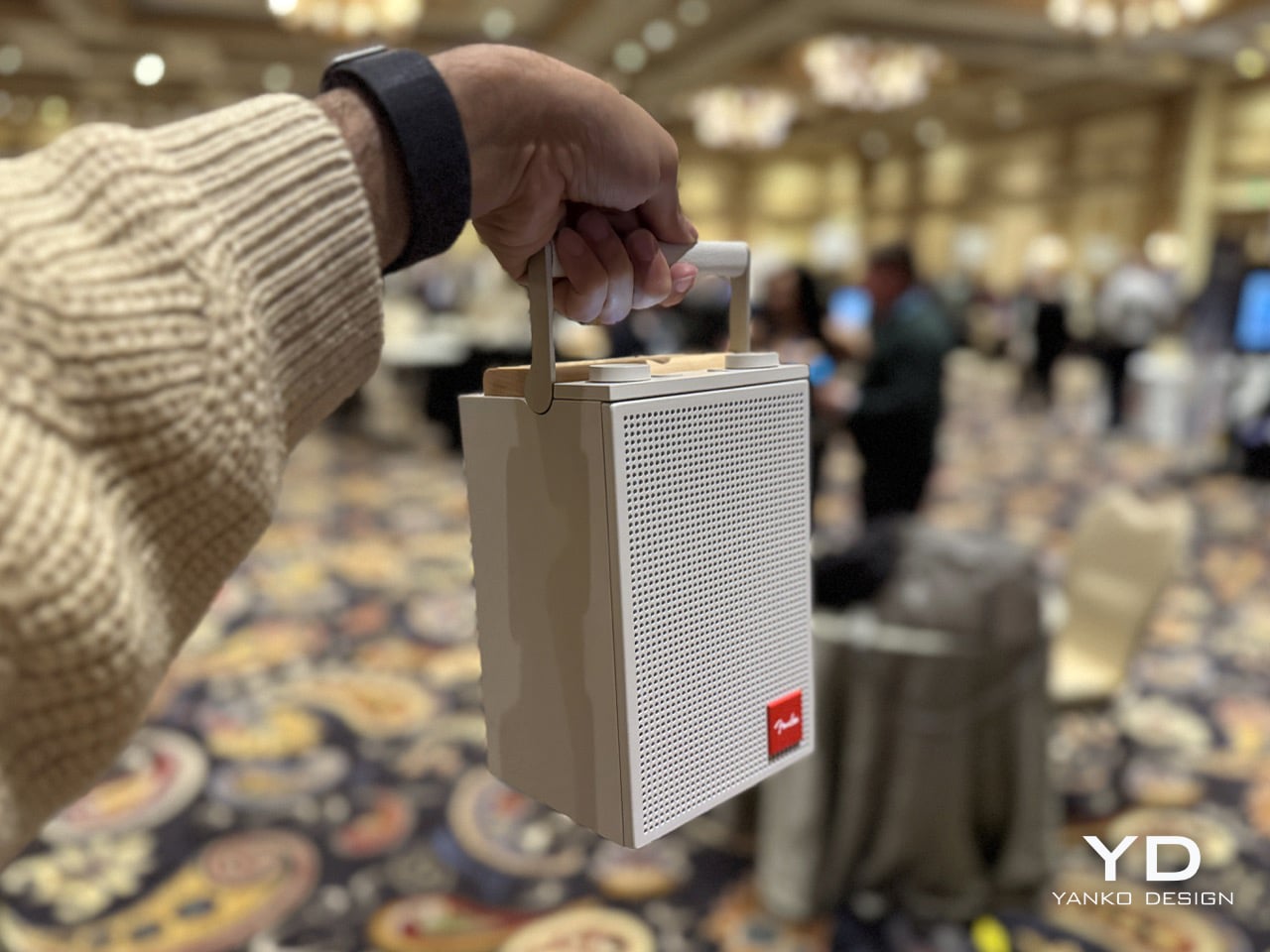
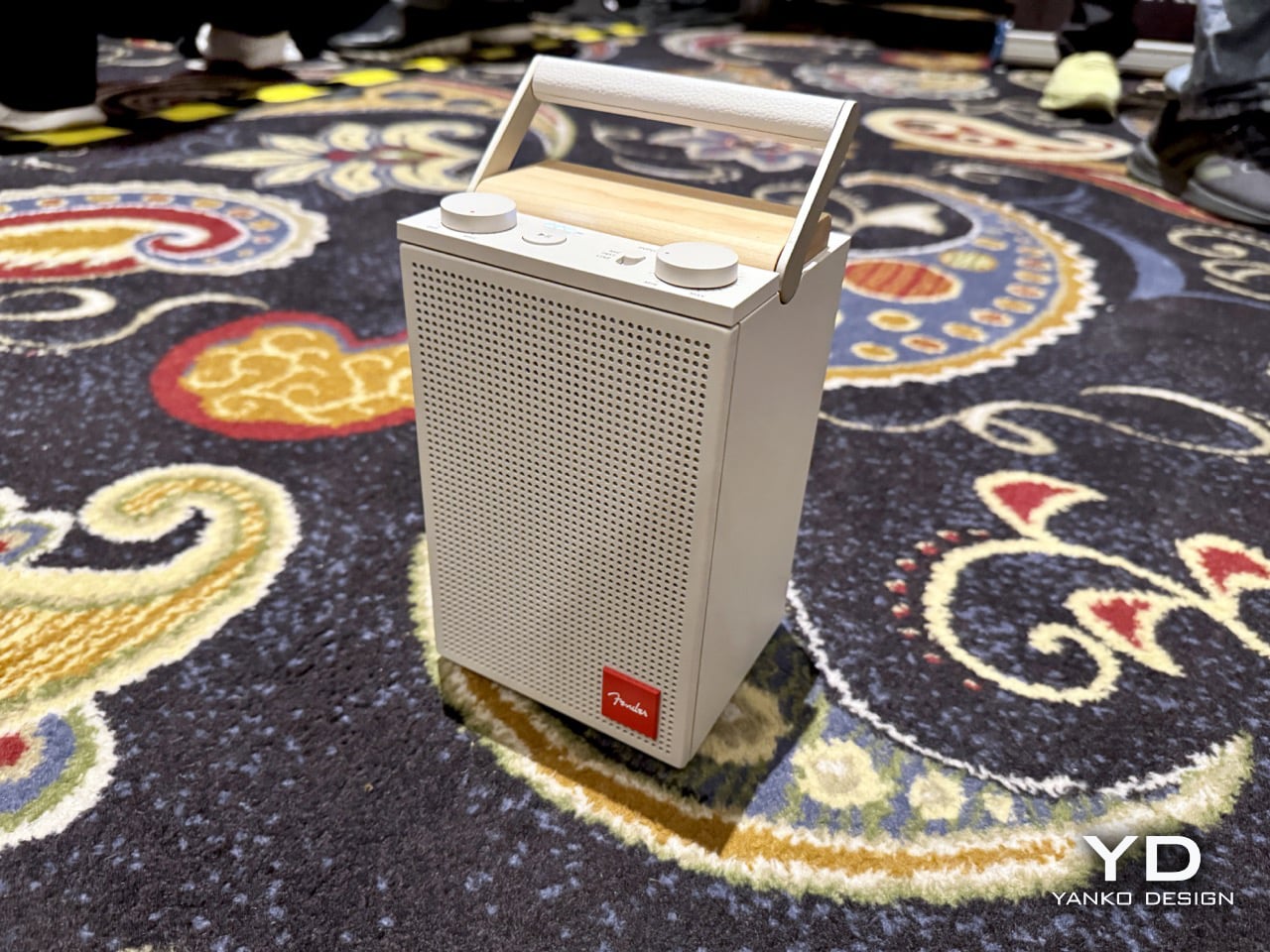
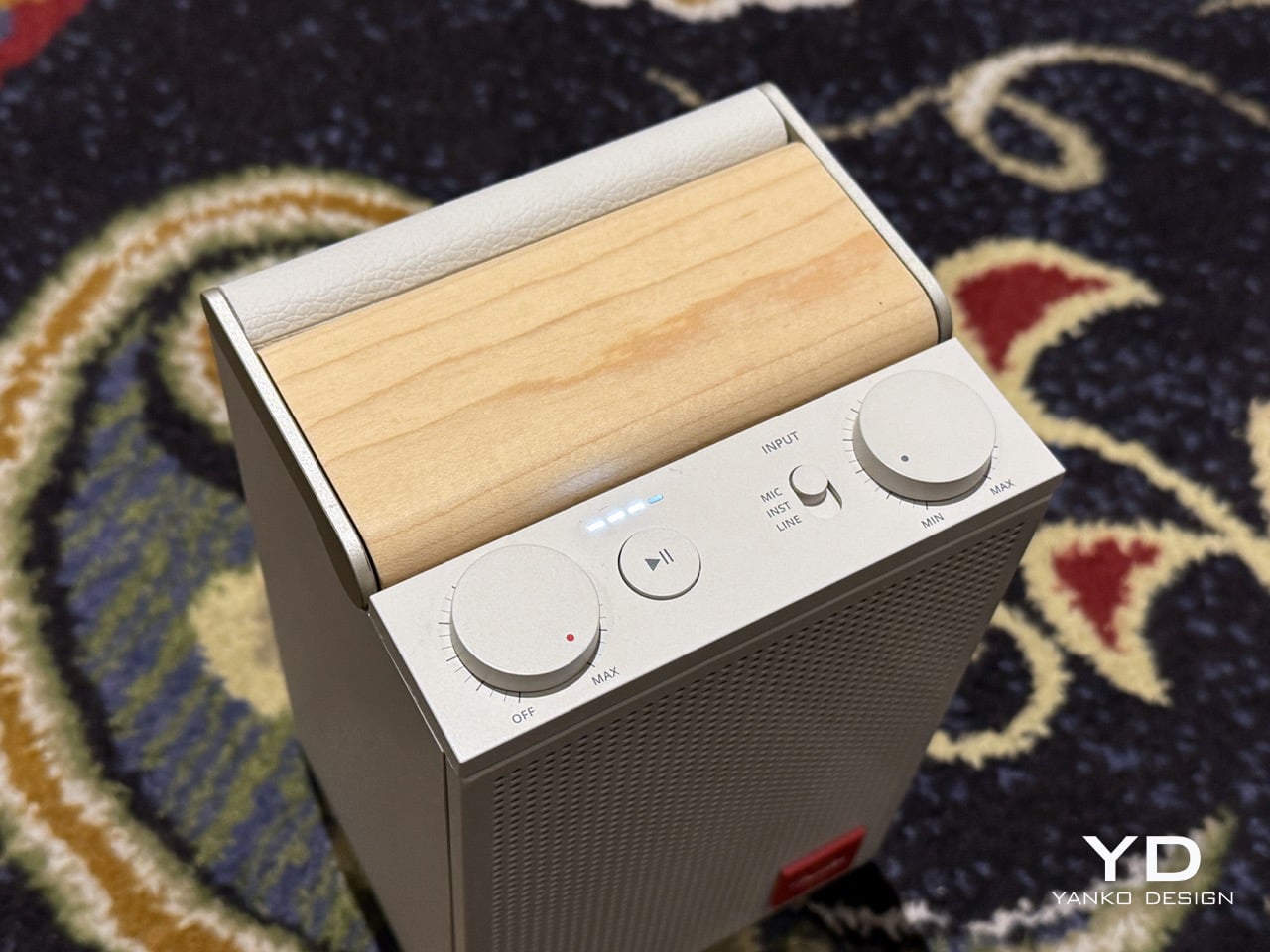
Fender made guitars and amplifiers legendary. Portable Bluetooth speakers seemed like an odd pivot until I saw the ELIE 6 at CES 2026. The design language reminded me immediately of brands like Vifa or Bang & Olufsen, that distinctly Nordic approach where simplicity becomes sophistication. A perforated grille, a wooden handle, clean geometric proportions. Nothing about it shouted “look at me,” yet I couldn’t stop looking.

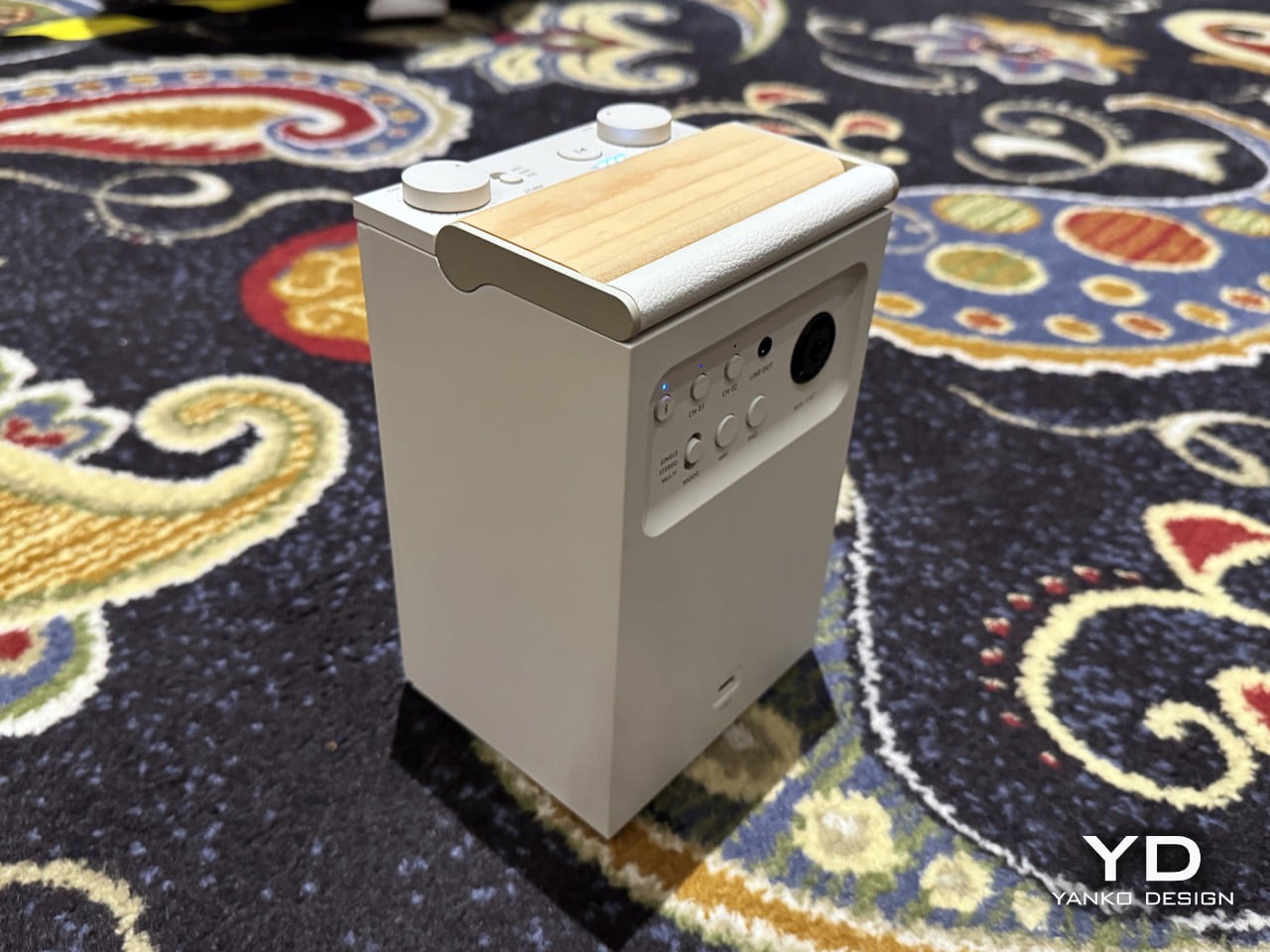
Audio demos at trade shows rarely impress. Convention center acoustics murder nuance, and most companies crank volume to compensate. Fender’s team played it differently. They let the ELIE 6 perform at moderate levels, and the three-driver configuration with its dedicated subwoofer produced soundstage depth I didn’t expect from something this compact. The wood on that top panel carries particular meaning for anyone who’s held a Fender guitar. It’s actual fretboard wood, the same material musicians touch every time they play. That detail transforms a carrying handle into something that connects this speaker to decades of musical heritage while maintaining the almost-IKEA minimalism that makes it fit anywhere.

Designer: Fender Audio

That fretboard wood handle is such a clever, confident move. It signals that Fender understands its legacy without feeling trapped by it. Instead of slapping a vintage logo on a generic box, they integrated a core component of their instrument-making craft into a new product category. This approach feels so much more authentic than the retro-for-retro’s-sake styling we see from competitors. The tactile satisfaction of the physical volume knobs on top reinforces this. In an industry obsessed with pushing every control into a smartphone app, providing simple, direct interaction feels like a luxury. This speaker is built to be used, carried, and touched, not just administered from a screen.

Fender packed a dedicated tweeter, a full-range driver, and a separate subwoofer into this compact frame, which explains the audio fidelity. This three-driver setup is powered by 60 watts and, interestingly, a Waves system-on-a-chip. That SoC is the key to delivering higher output with minimal distortion, a common failure point for portable speakers when you push the volume. The battery life is rated for up to 18 hours, which is more than enough for a full day of use, and a quick 15-minute charge gives you another 90 minutes of playback. These are solid, practical specs that back up the premium design.

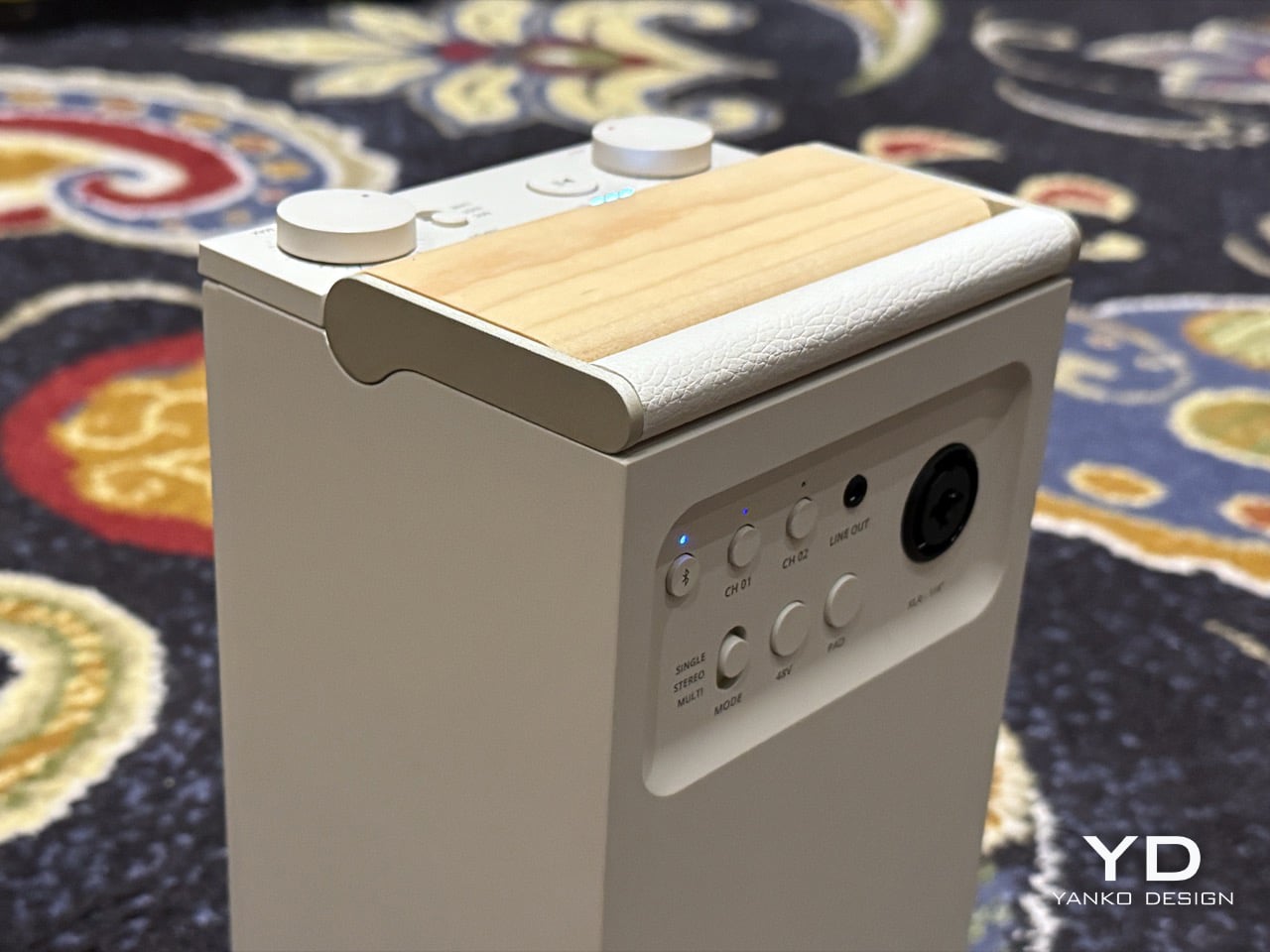
The real surprise is the four-channel input capability. This is where Fender’s deep understanding of musicians and creators becomes obvious. You can connect and mix audio from four different sources simultaneously. Think about the practicality: a guitarist can plug in and play along to a backing track from their phone, or a small group can mix a mic, an instrument, and a laptop for a small performance. This feature elevates the ELIE 6 from a passive listening device into an active creative tool. It’s a thoughtful, useful function that you simply do not find on other Bluetooth speakers in this category, and it makes the $299 price tag feel entirely reasonable.

Fender Audio could have taken the easy route by making a speaker that looked like a miniature amplifier. Instead, they built something that respects contemporary design while embedding their DNA in a subtle, meaningful way. The ELIE 6 feels like a complete thought. It balances a sophisticated Scandinavian aesthetic with robust audio engineering and genuinely useful features born from a deep understanding of how people create and interact with sound. It’s a strong first step into consumer audio, and it proves Fender is thinking about its future, not just coasting on its past.

The post Fender ELIE 6 Hands-on at CES 2026: Minimalist Nordic Design, 60W Of Serious Sound first appeared on Yanko Design.

AI Bartenders, Pool Cleaners, And Chess Arms: The Sleekest (And Smartest) Robots At CES 2026

CES is a lot of things, but intimate isn’t one of them. Global Connect solved that problem by concentrating innovation into a four-hour window at a private Las Vegas villa on January 5th (which I only later found out was Mike Tyson’s house). iMpact PR built this event for media professionals who’ve seen enough “revolutionary” prototypes fail to deliver and want extended time with robotics that might actually make it to market. The format matters because robots only prove themselves when you can test, question, and watch them handle unexpected scenarios beyond their ideal conditions.

What’s showing up covers bizarre range. AI bartenders sit alongside exoskeletons designed to reduce knee pressure by 50%. Lawn robots with four-wheel steering share space with chess-playing arms and vacuum cleaners that climb stairs. Some of these machines solve concrete problems like outdoor maintenance or mobility assistance. Others exist for entertainment, companionship, or just because someone thought teaching a robot to play chess would be interesting. iMpact PR and USA Today are co-hosting, running from 1:30pm to 5:30pm with brands that have manufacturing scale, distribution plans, and enough backing to suggest they’re serious about commercial deployment. This is where you find out whether robotics companies can deliver on their promises or just deliver good marketing.

Ascentiz BodyOS: Hip and Knee Modules
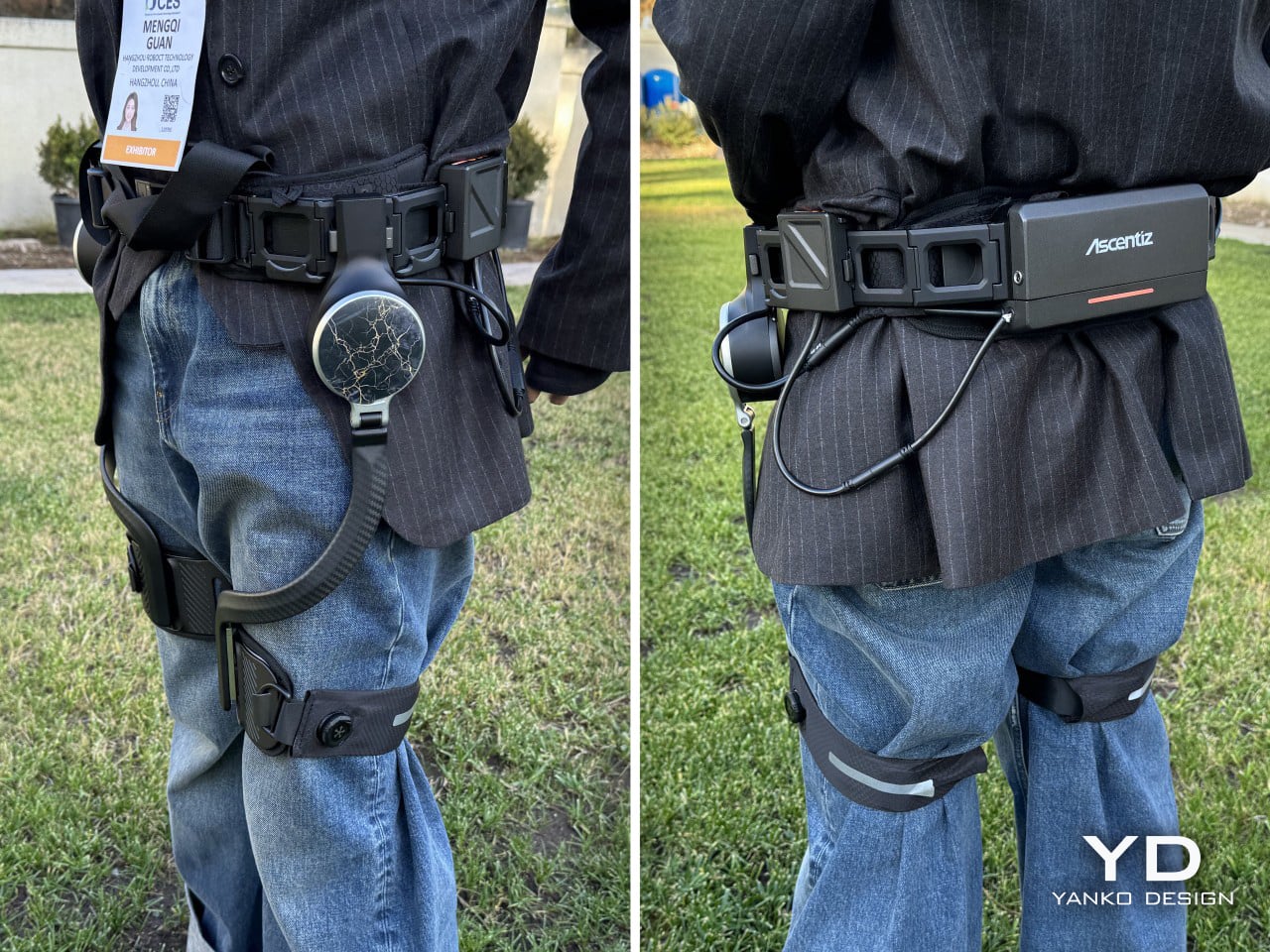
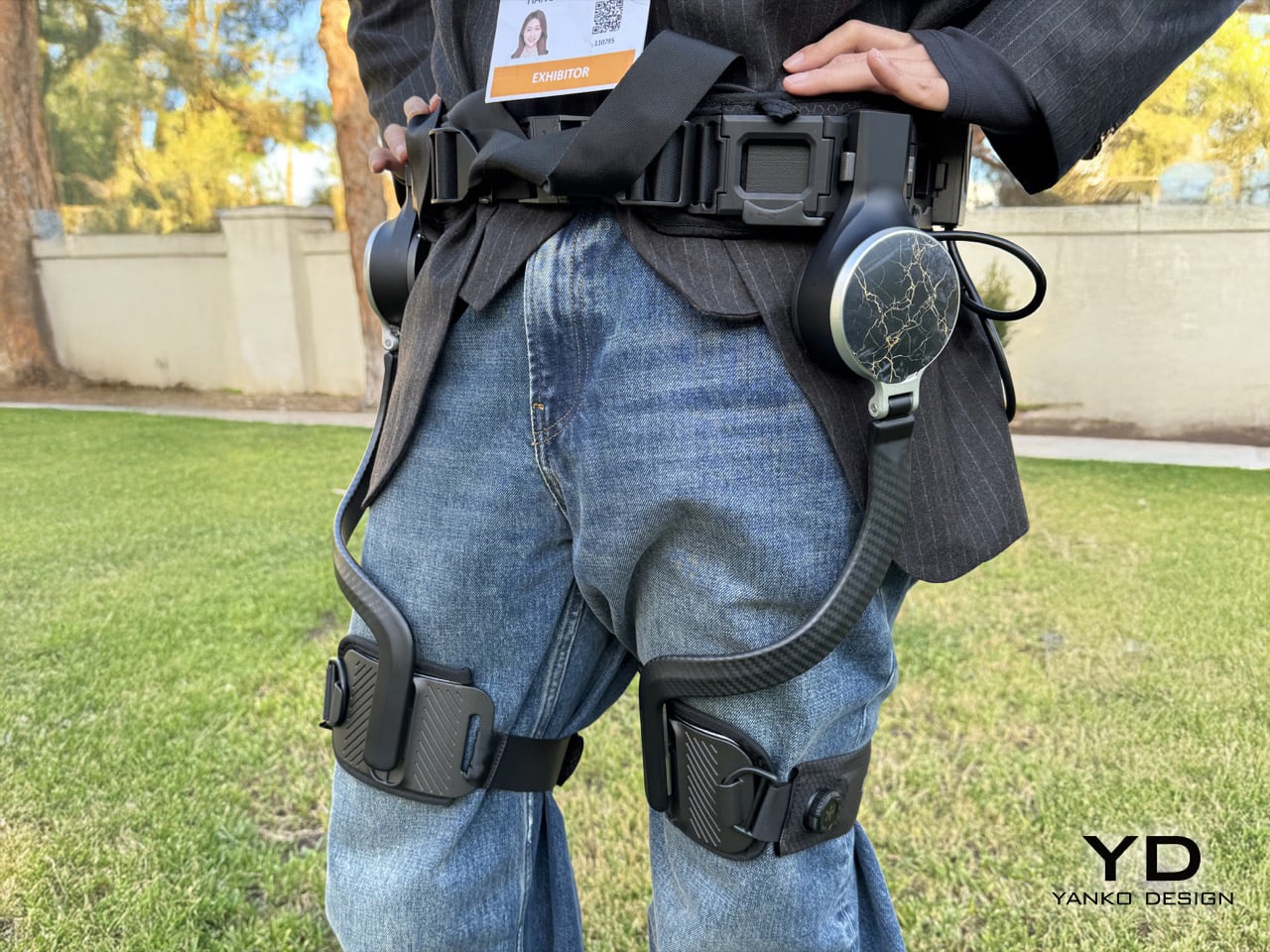
Ascentiz’s BodyOS platform takes a modular approach to human augmentation, letting users swap joint actuators depending on whether they’re climbing mountains, working construction sites, or just need help with mobility. At Global Connect, the company is demonstrating two core modules: a hip actuator that delivers 36 Nm of torque through a quasi-direct-drive system, and a knee actuator using cable-drive transmission to hit 48 Nm while keeping heavy motors away from the moving limb. The hip module can assist at speeds up to 28 km/h and reduces leg effort by 35% on inclines, while the knee module claims to cut knee joint pressure by 50% and reduce energy waste by 30%. Both modules attach to a T700 aerospace carbon fiber frame that can handle temperatures from -20°C to 60°C, making this a system designed for actual outdoor conditions rather than controlled laboratory demonstrations.

The intelligence behind these modules comes from what Ascentiz calls its “Motion Cortex,” an AI trained on over 690,000 musculoskeletal gait cycles that processes data from more than 10 sensors to recognize seven different motion scenarios with 99.5% accuracy. The system responds in under 500 milliseconds when it detects a change in movement pattern, with actuator transitions happening in under 200 milliseconds. Users can strap the entire system on in less than 10 seconds using a proprietary ETIE dial mechanism, which addresses one of the persistent complaints about exoskeletons: that they take too long to put on and adjust. The control loop runs at 20 microseconds, fast enough to respond to the unpredictable shifts in terrain and body position that define real-world hiking, climbing, or industrial work. This isn’t augmentation for the sake of looking futuristic; it’s engineering focused on whether someone’s knees will hold up after a 10-mile trek with a heavy pack.

BreakReal R1: Conversational AI Bartender
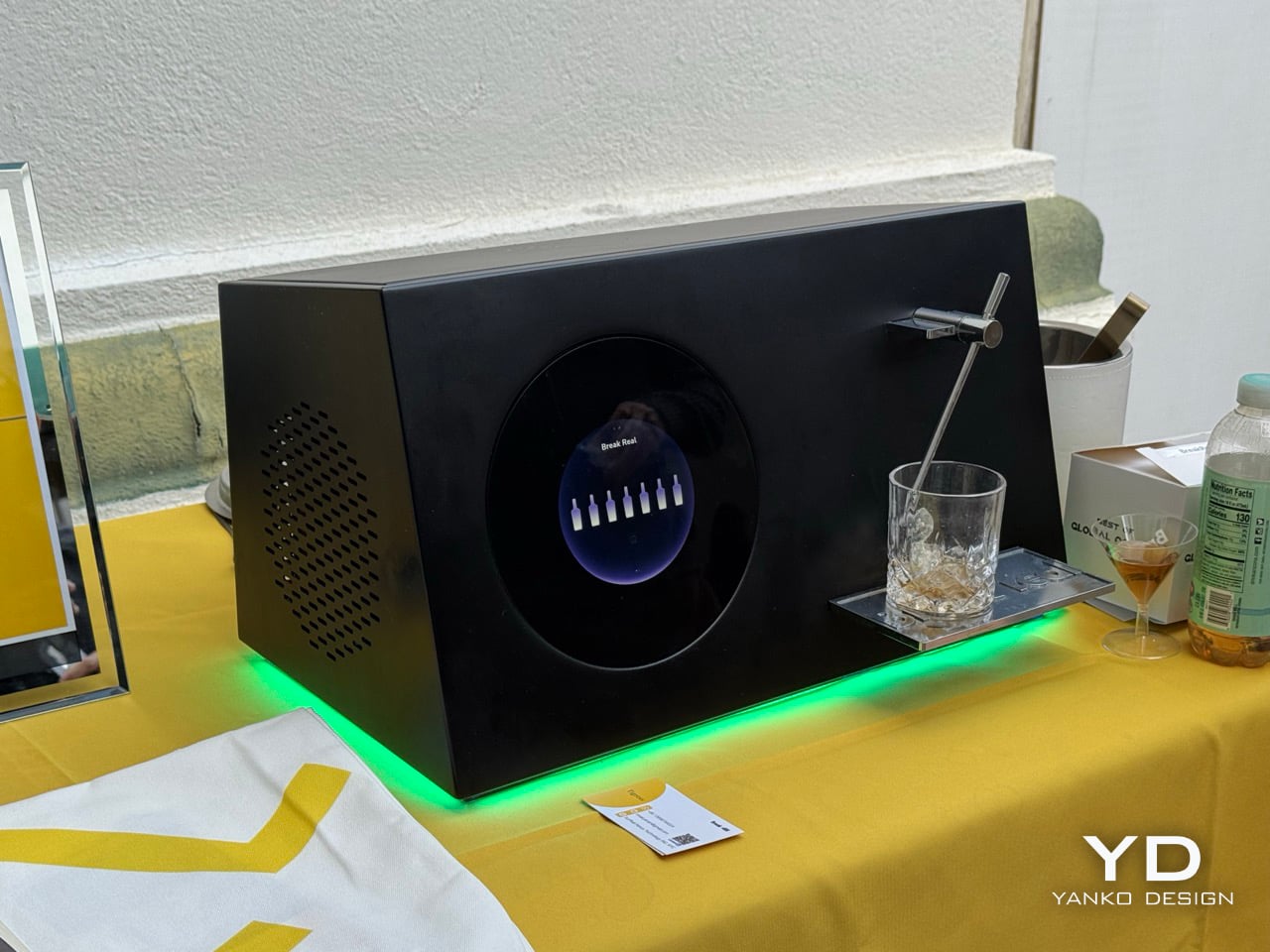
Of all the things artificial intelligence could tackle, someone finally asked the right question: what if a robot understood you were having a rough day and mixed you exactly the drink you needed? BreakReal’s R1 is billing itself as the world’s first conversational AI bartender, and yes, that means you can tell it you’re stressed about work or celebrating a promotion, and it will generate a cocktail recipe based on your emotional state and taste preferences. The system uses large language models to process natural language, so you can be as vague or specific as you want. Tell it you want “something tropical but not too sweet” or just “surprise me with something spicy,” and it will craft one of its generative recipes in about 30 seconds with ±1 ml precision. It has access to over 500 classic cocktail recipes that it can customize, and it uses optical character recognition to identify whatever spirits you have sitting on your counter, so you’re not locked into proprietary bottles or special cartridges.

The genuinely clever part is how BreakReal treats drinks as shareable data. Each cocktail the R1 creates carries emotional and taste information that can be saved to the app, shared with the global BreakReal community, and downloaded by users anywhere in the world. Someone in Tokyo could create a drink reflecting their mood on a rainy afternoon, and you could try that exact recipe in New York the next day. The system handles automatic layering for visual appeal and includes automated cleaning, which addresses the reason most people avoid elaborate cocktails at home: the cleanup is annoying. This isn’t just a novelty machine pouring pre-programmed drinks; it’s attempting to turn mixology into a social network where recipes travel across time zones and language barriers. Whether that sounds delightful or slightly dystopian probably depends on how you feel about your kitchen appliances understanding your emotional state, but it’s hard to deny the ambition of turning feelings into formulas and sharing them globally.

Artly.AI Mini Barista Bot and Bartender Bot: Precision Over Personality
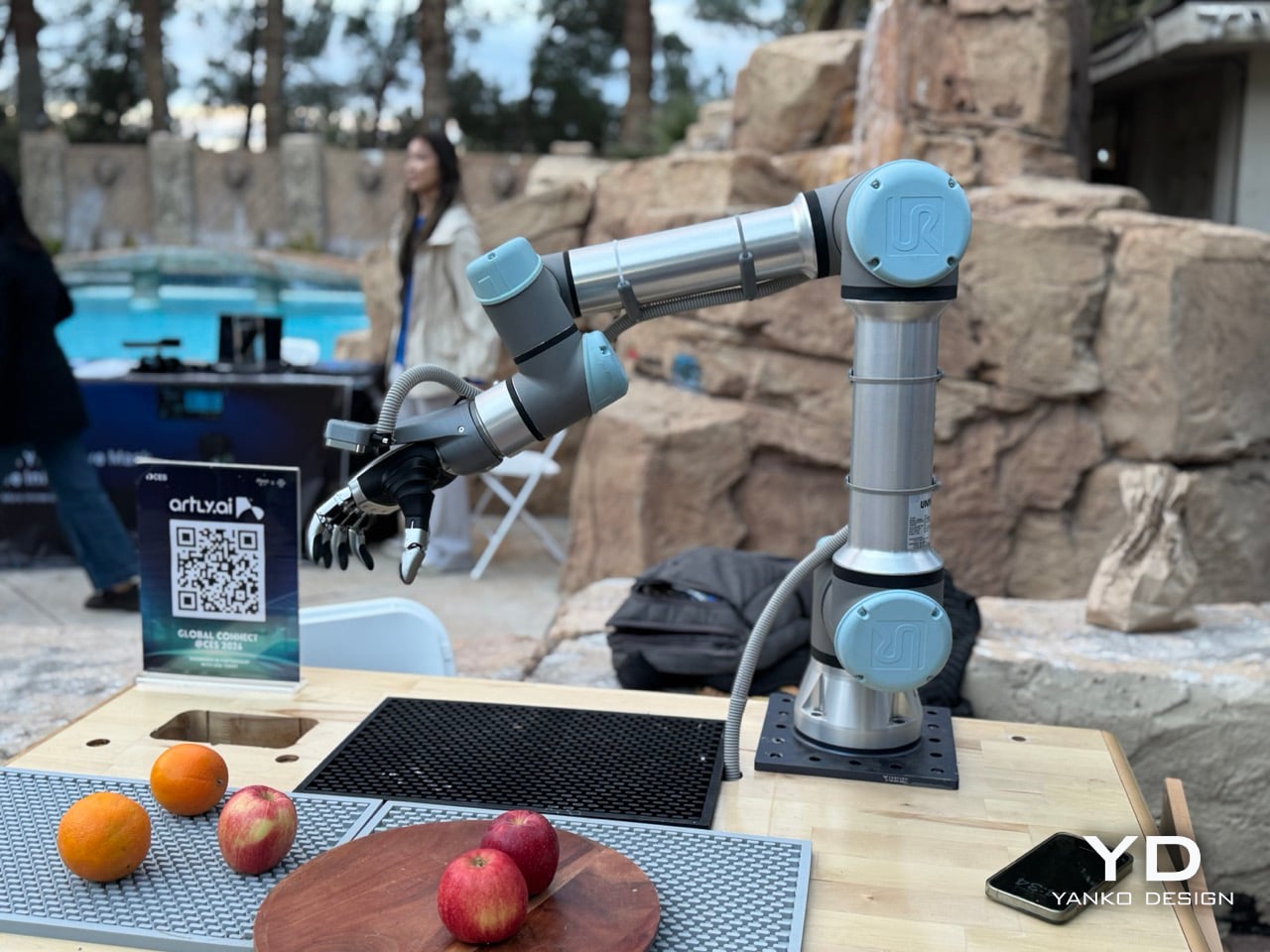
BreakReal wants your robot to understand your feelings, but Artly.AI built theirs to replicate a U.S. Barista Champion’s technique with mechanical precision. The company has two products at Global Connect: the Mini Barista Bot, which has already served over 1.1 million cups since 2021, and the newer Bartender Bot, which applies the same robotics foundation to cocktails instead of coffee. The Mini Barista Bot fits into a 4×4-foot footprint and handles the complete workflow with a single robotic arm, grinding, tamping, brewing, steaming, and pouring latte art without human intervention. It’s constructed with food-grade stainless steel and modular commercial-grade components, deployed in high-traffic environments like airports, T-Mobile stores, Salesforce offices, and MUJI retail spaces where labor costs and consistency matter more than personality. Customers order via a digital kiosk and watch through transparent windows as the bot executes recipes trained by Joe Yang, ensuring cafe-quality output every time. The updated version includes a larger refrigerator, improved learning capabilities, and countertop options in Maple, White Oak, and Walnut finishes that let it blend into different decors.

At NVIDIA GTC 2025, Artly unveiled an advanced robotic hand upgrade featuring up to 20 degrees of freedom, tactile sensors, and force feedback designed to replicate human barista movements. That upgrade becomes critical for the Bartender Bot, which tackles the more intricate manipulation cocktails demand: grabbing bottles, measuring pours, shaking drinks, and adding garnishes with precision. Both bots run the same proprietary AI system combining real-time motion planning, computer vision, sensor fusion, and anomaly detection, but the Bartender Bot’s algorithms are refined for mixology’s complex performance requirements. While BreakReal’s R1 focuses on emotional intelligence and generating recipes based on your mood, Artly’s approach emphasizes craft preservation and mechanical consistency. BreakReal targets home users who want conversational AI; Artly targets commercial venues that need standardized quality without depending on bartender availability or skill variation. The technology is converging from opposite directions, and Global Connect puts both companies in the same room for the first time, offering a direct comparison between robots designed to feel what you need versus robots engineered to execute what you ordered with repeatable accuracy.

Dreame Zircon 2 Ultra and Zircon 2 Pro: Pool Cleaners with Laser Mapping and Auto-Docking
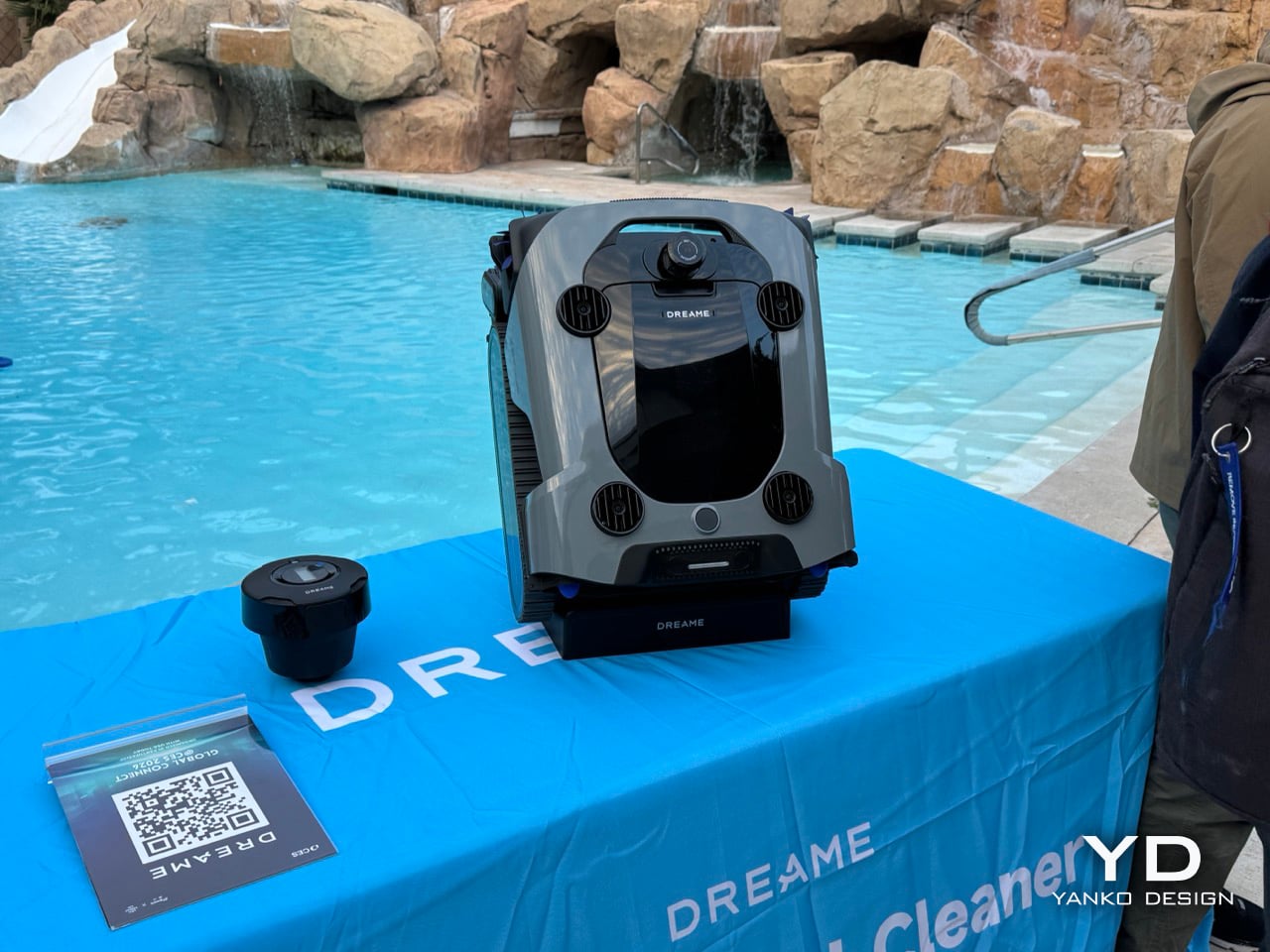
Pool robots typically bounce around randomly until they’ve covered most surfaces or the battery dies, whichever comes first. Dreame’s Zircon 2 Ultra skips the wandering entirely by using PulseMap technology, which combines LDS laser radar with multi-sensor fusion to build a detailed 3D map of the pool, capturing every curve and slope for real-time adaptive navigation. The QuadLift Four-Pump System with dual propulsion jets handles 7-in-1 cleaning across floors, steps, walls, waterlines, sun shelves, pool edges, and even the water surface, addressing the vertical complexity that separates pools from flat floors. At 10,000 GPH suction power (among the highest currently available), it tackles wet leaves, sand, insects, and floating debris in one pass. When cleaning finishes, users can set a preferred docking spot in the app, and the Zircon 2 Ultra surfaces there automatically for retrieval without requiring anyone to reach into the water or dive for a submerged robot.

The Zircon 2 Pro takes automation further with an optional Auto-Dock Base Station, one of the few available systems that eliminates the final manual step entirely. Once cleaning completes, the robot returns to the dock, exits the water, and begins charging without any user intervention, solving the problem of having to physically retrieve and plug in a wet, heavy device. The companion app tracks battery status in real-time, ensuring the robot stays charged between cleaning cycles. Beyond the docking automation, the Zircon 2 Pro uses PoolSense 2.0 technology with 12 precision sensors to map pools in 2D and plan efficient cleaning paths (S-shaped, N-shaped, Star, or Cross patterns) instead of random wandering. Its 8,000 GPH suction handles leaves, sand, and twigs while auto-adjusting power to extend runtime up to 4 hours per charge. DepthLink ultrasonic connection maintains real-time app connectivity even when fully submerged, allowing users to initiate spot cleaning or adjust settings without getting hands wet or waiting for the robot to surface.

Airseekers Tron Ultra: Four-Wheel Drive Heads Outdoors
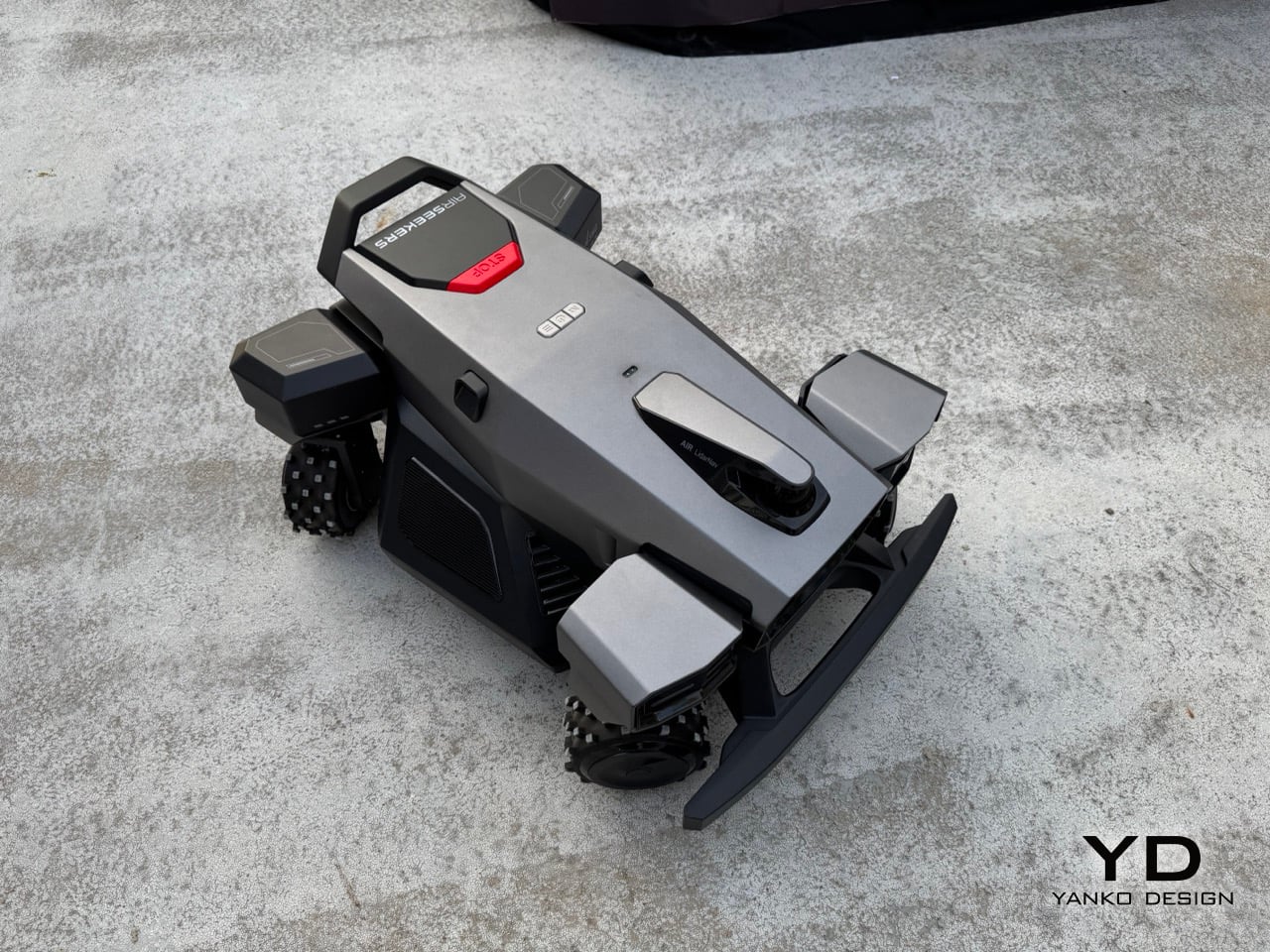
Robots that climb stairs and mix drinks are impressive until you remember most people still push a mower around their yard every weekend. Airseekers already tackled lawn automation with the original Tron, and the Tron Ultra pushes that concept into more complex terrain with four-wheel drive, four-wheel steering, and the ability to handle slopes up to 85% (40 degrees). The FlowCut 2.0 system uses a dual-disc setup that covers 60% more grass per pass, cutting mowing time by 58% while mulching clippings into ultra-fine pieces that decompose quickly and reduce the need for external fertilizer. It can clear obstacles up to 2.36 inches high and moves laterally or diagonally thanks to that four-wheel steering, which also gives it a small turning radius that minimizes lawn compaction. The AirVision 2 navigation combines vision sensors and LiDAR for a 300-degree field of view, with radar ensuring it keeps working in rain, low light, or conditions where cameras alone would fail.

The practical improvements show up in the details: swappable batteries with three hours of runtime and a 2.5-hour charge, automatic returns to the charging dock, and multi-map memory that supports multiple lawns if you’re maintaining more than one property. A new beacon system eliminates signal dead zones under trees, bushes, or around structures, which addresses one of the persistent frustrations with robotic mowers that lose connection and stop mid-job. No RTK stations or boundary wires to install means setup happens faster and with less infrastructure cluttering the yard. Visual mapping and real-time path correction keep the Tron Ultra on track with higher accuracy than previous generations. Airseekers is launching this on Kickstarter in April 2026 at around $3,000, positioning it as a premium option for people with challenging landscapes who are tired of spending weekends on lawn maintenance. The technology has moved past flat suburban yards into hills, obstacles, and the kind of complex terrain that used to require human judgment.

Hengbot Sirius: Your Personal Robot
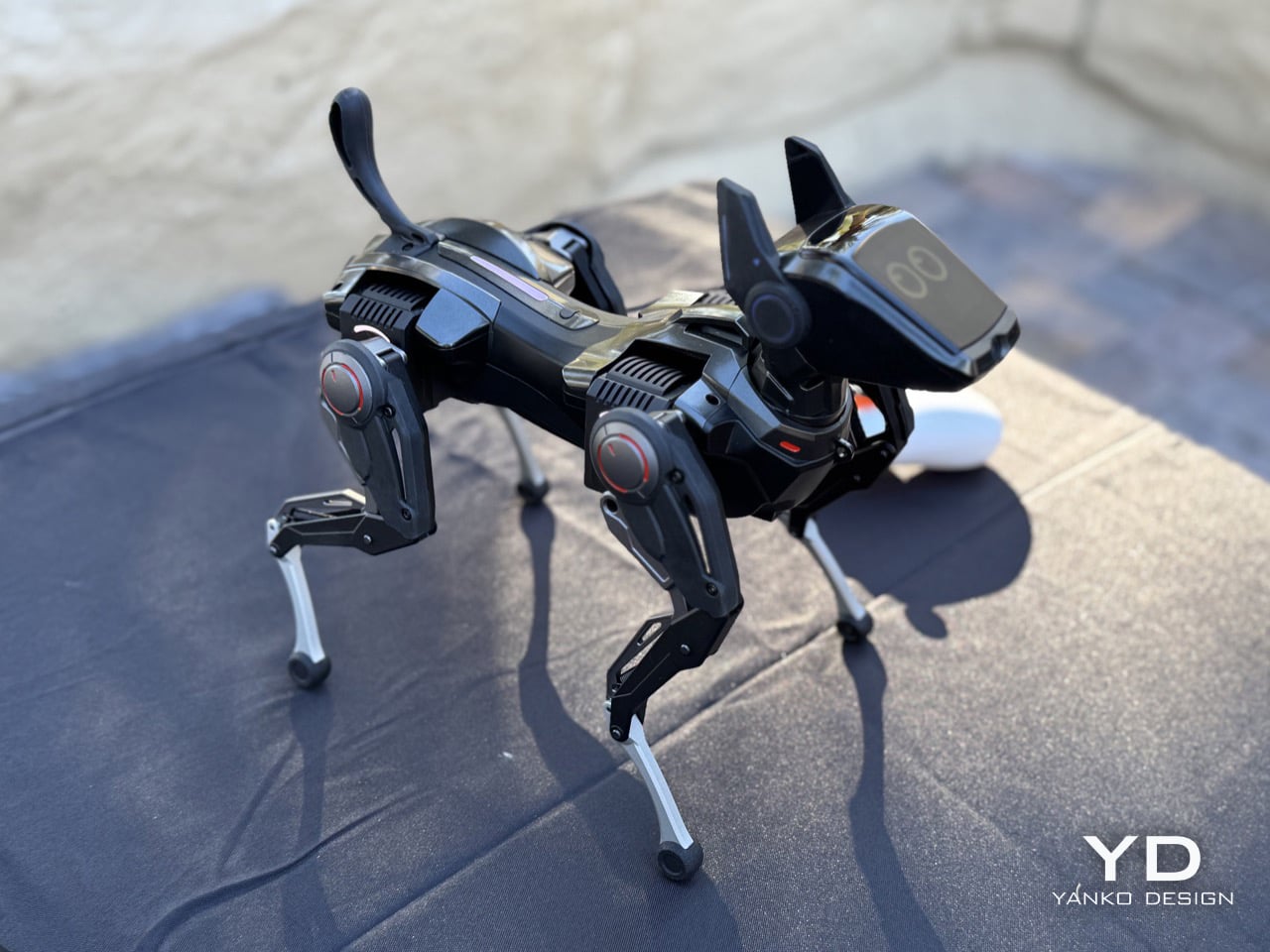
After a parade of robots that clean pools, climb stairs, and carry heavy loads, Hengbot Sirius takes a different approach by asking what happens when a robot’s main job is just being there. This AI-powered companion is marketed as a silent presence for people living alone, a playmate that can mimic your pet’s expressions and sounds after you upload them, or a first-person perspective camera that lets you interact with your dog remotely through the robot’s “eyes.” The pitch shifts depending on who’s buying: for couples it’s a romantic surprise delivery system, for parents it’s an educational Christmas gift and “encyclopedia of robots,” and for animators it becomes a creative platform that serves as your first robotic carrier for bringing characters to life. The flexibility is the point; Sirius positions itself as whatever you need it to be in that moment.

The customization goes deeper with DIY skins that can be 3D printed, turning the robot into a unique object that belongs exclusively to you rather than looking like every other unit off the assembly line. For engineers, an EDU version provides algorithm access, API interfaces, and one-on-one technical guidance for implementing and deploying new ideas, which transforms Sirius from a consumer product into an open development platform. This isn’t solving a concrete problem like lawn maintenance or knee pain; it’s addressing the mushier territory of companionship, creativity, and experimentation. Whether that resonates depends entirely on whether you see value in a robot that exists more for emotional presence and customizable interaction than task completion. In a showcase dominated by machines designed to do specific jobs, Sirius stands out by being deliberately vague about what it’s supposed to accomplish, leaving that definition up to whoever owns it.

SenseRobot Chess: When Robots Master the Board
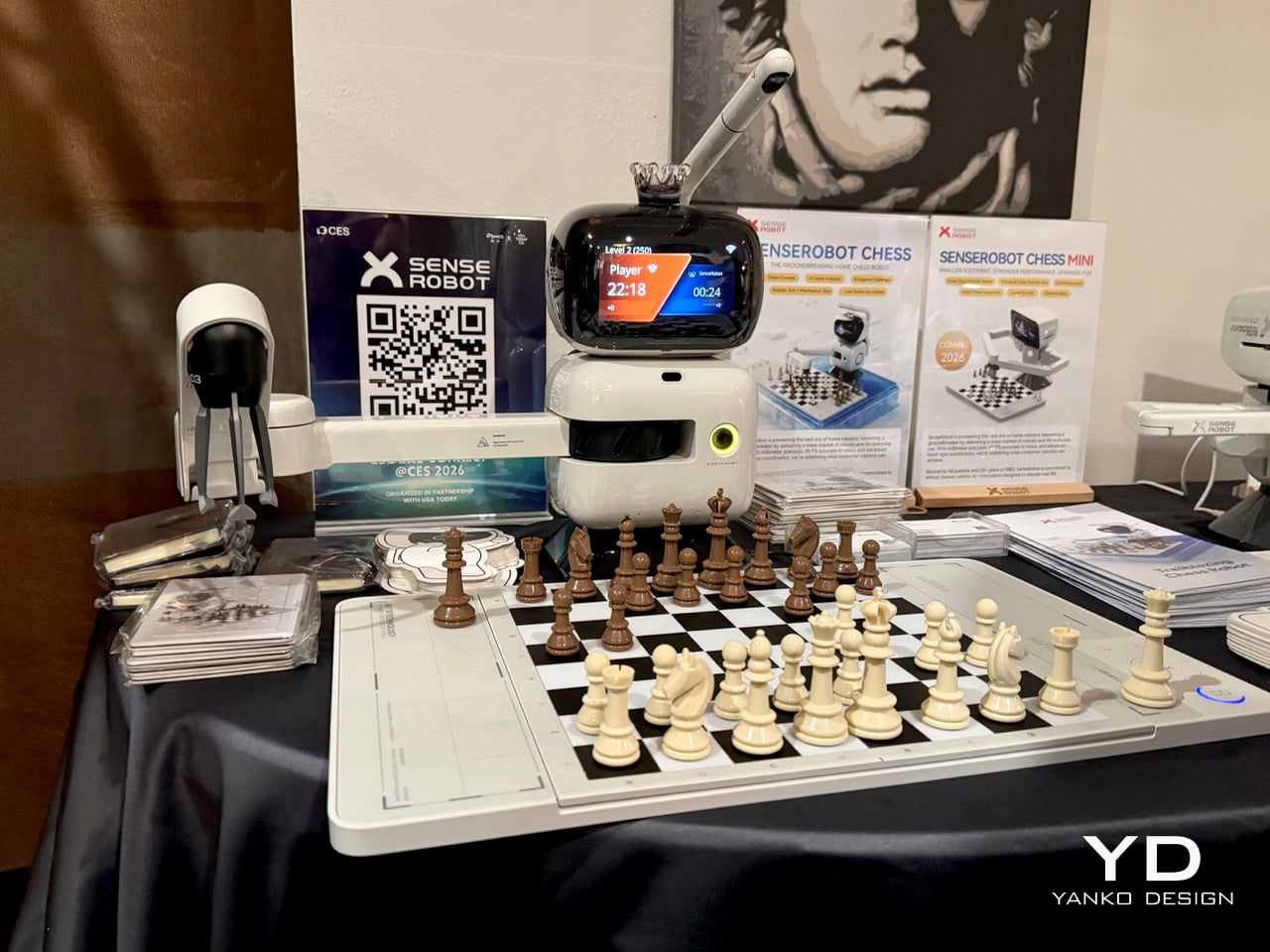
Chess has been testing artificial intelligence since Deep Blue beat Kasparov in 1997, but nobody put a physical robotic arm across the board from you until recently. SenseRobot claims to be the world’s first company mass-producing AI-powered robotic arms for home use, and their lineup includes multiple chess-playing models designed for different skill levels and budgets. The Chess MINI offers an entry point for casual players, while the Lite version expands to handle both chess and draughts (checkers), broadening the appeal to families who want more than one game option. Each model integrates AI vision, robotic arm precision, and intelligent decision-making systems that have been optimized to keep production costs consumer-friendly while maintaining home-level safety standards.

What makes these systems compelling isn’t just that a robot can play chess (software has beaten grandmasters for decades), but that it physically picks up pieces, moves them, and responds to your moves in real time using AI vision to track the board state. The company offers AI game review features and multiple difficulty levels, letting beginners learn strategy against a forgiving opponent or advanced players face genuinely challenging competition. SenseRobot also supports Gomoku (a strategic board game also known as Five in a Row), giving these robotic arms versatility beyond just chess. The physical interaction matters; watching a robotic arm deliberate, reach across the board, and execute its move creates an engagement that screen-based chess can’t replicate. This positions SenseRobot’s products somewhere between educational tools for teaching children strategic thinking and entertainment for adults who want their technology to exist in three-dimensional space rather than behind glass.


The post AI Bartenders, Pool Cleaners, And Chess Arms: The Sleekest (And Smartest) Robots At CES 2026 first appeared on Yanko Design.
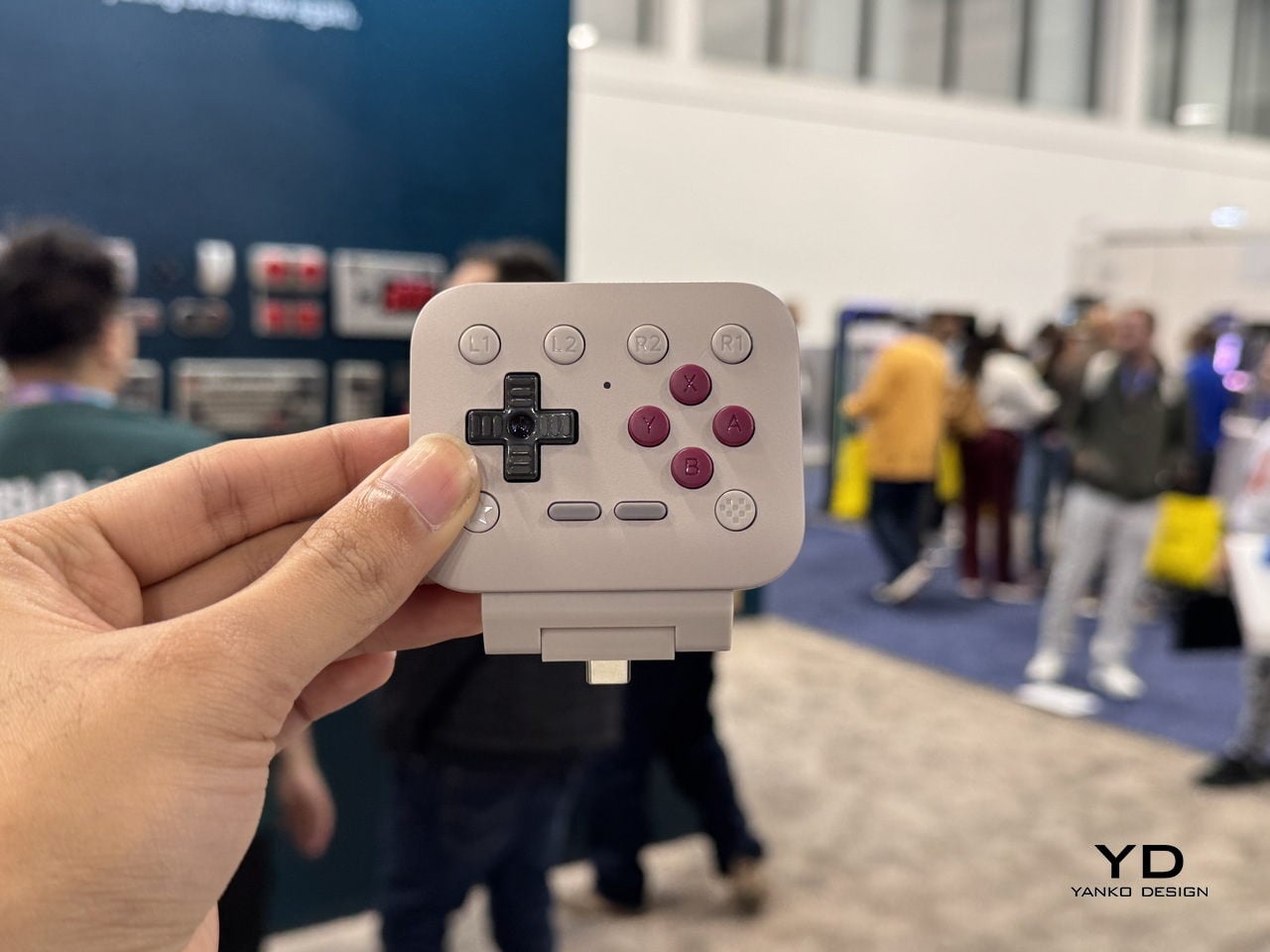
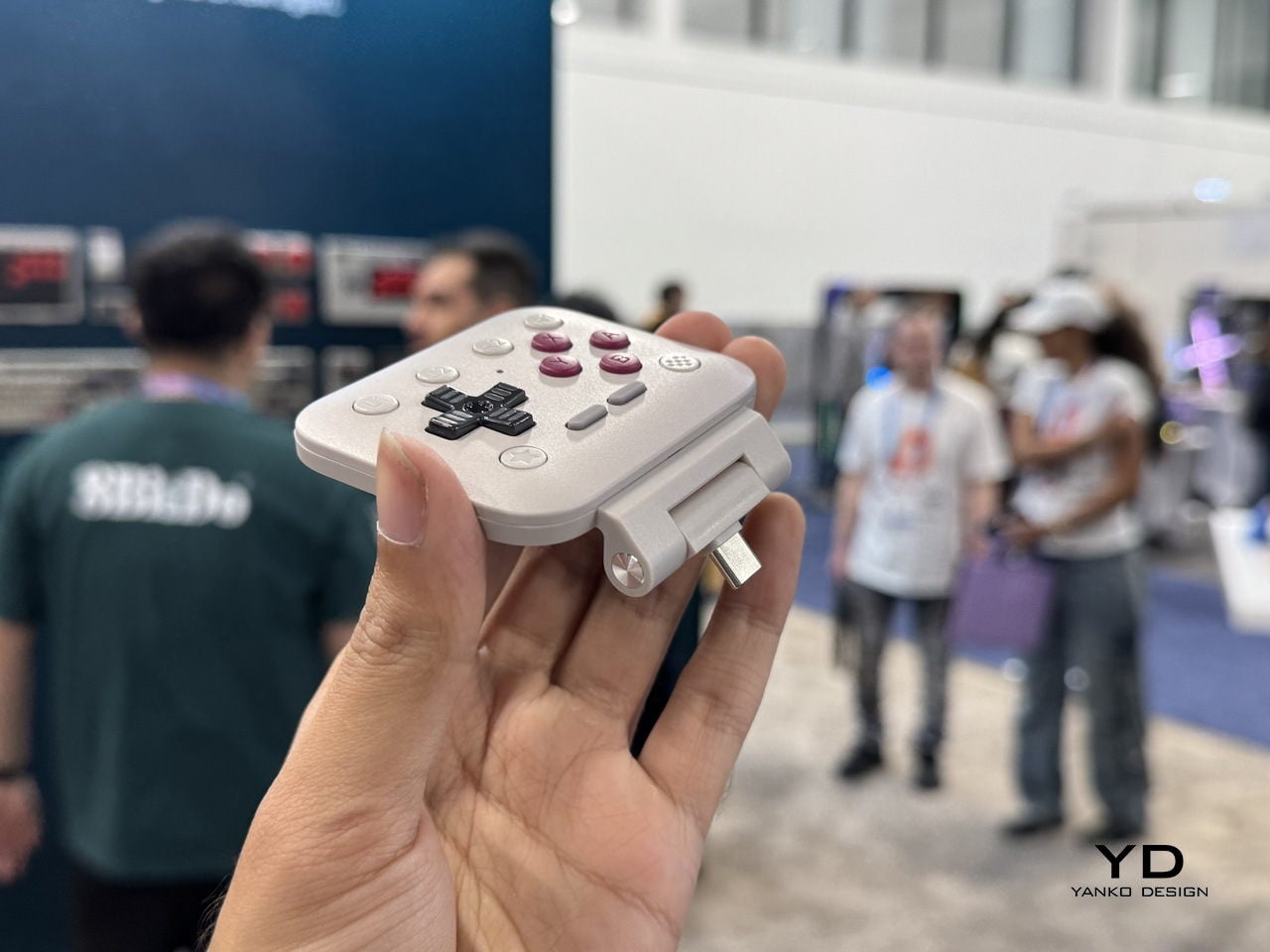
8BitDo FlipPad controller for enjoying portrait games on Android and iOS

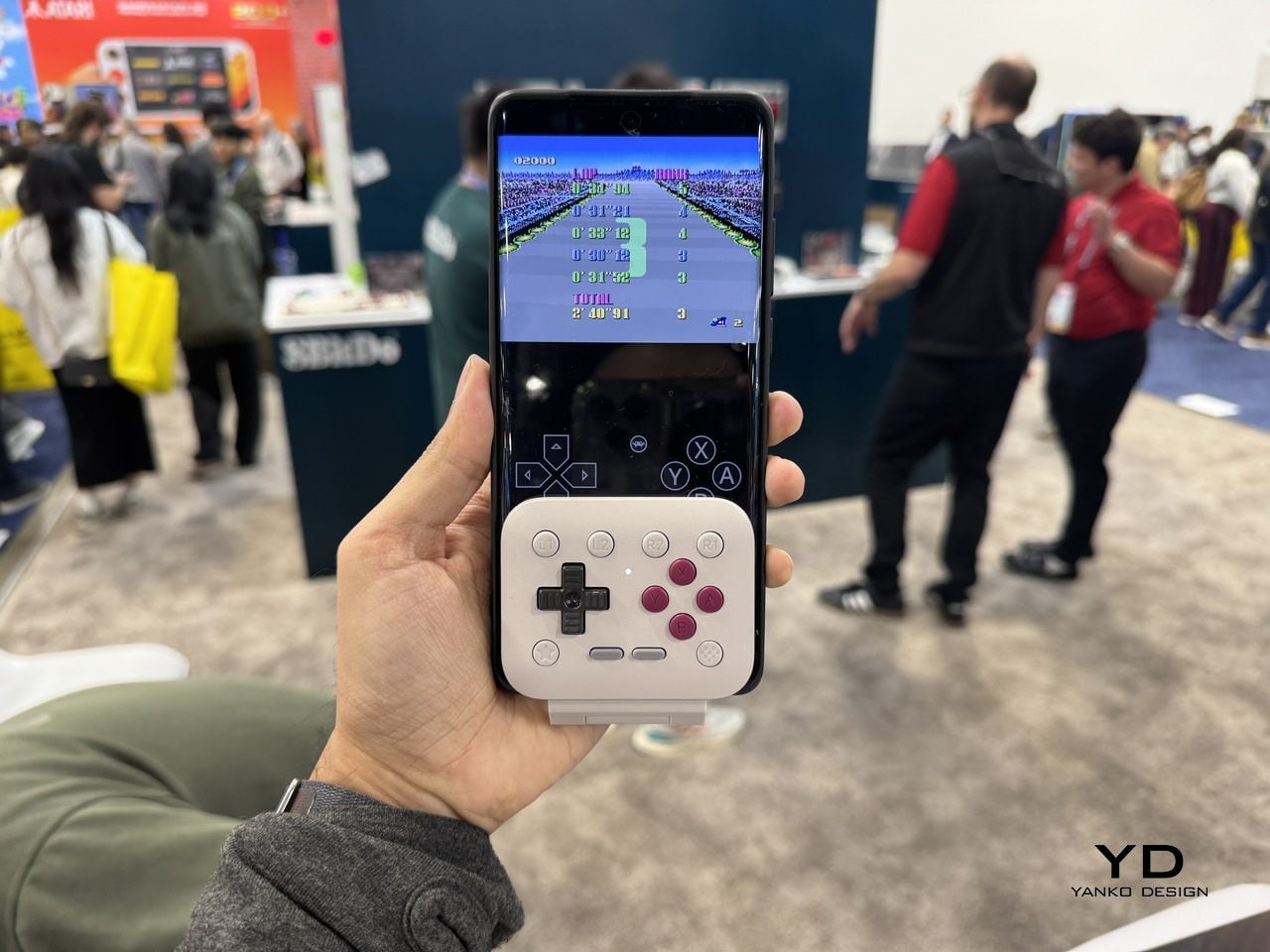
Let’s be honest, most of us casual mobile gamers prefer portrait games that can be enjoyed quickly for a short dopamine boost. Playing platformer or arcade titles that require precise input on-screen are better played with a stylus, giving you the strategic advantage if you’ve got the reflexes to back your skills. 8BitDo is introducing a portrait mode clip-on controller accessory for gamers like me who prefer to keep things minimal.

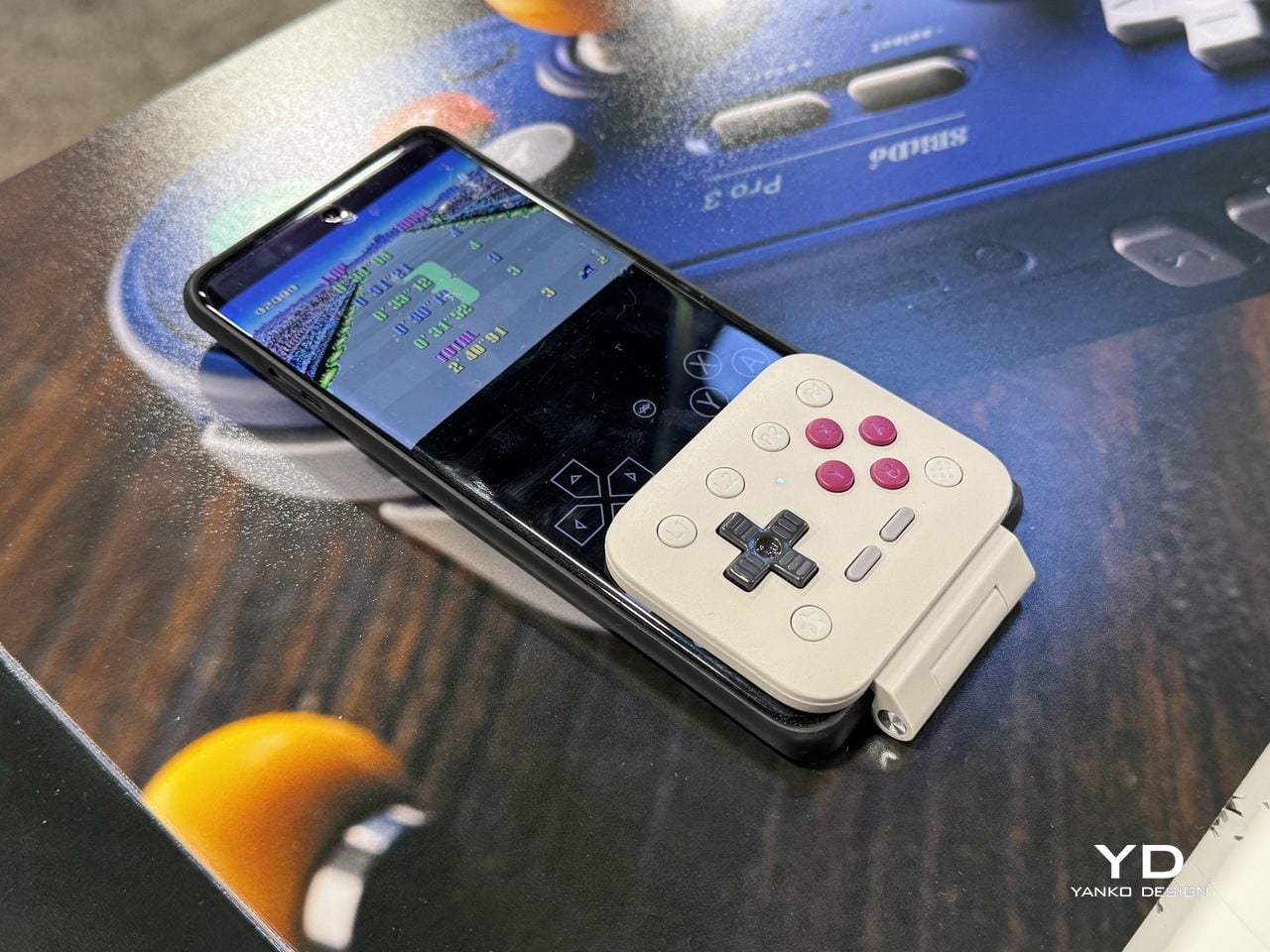
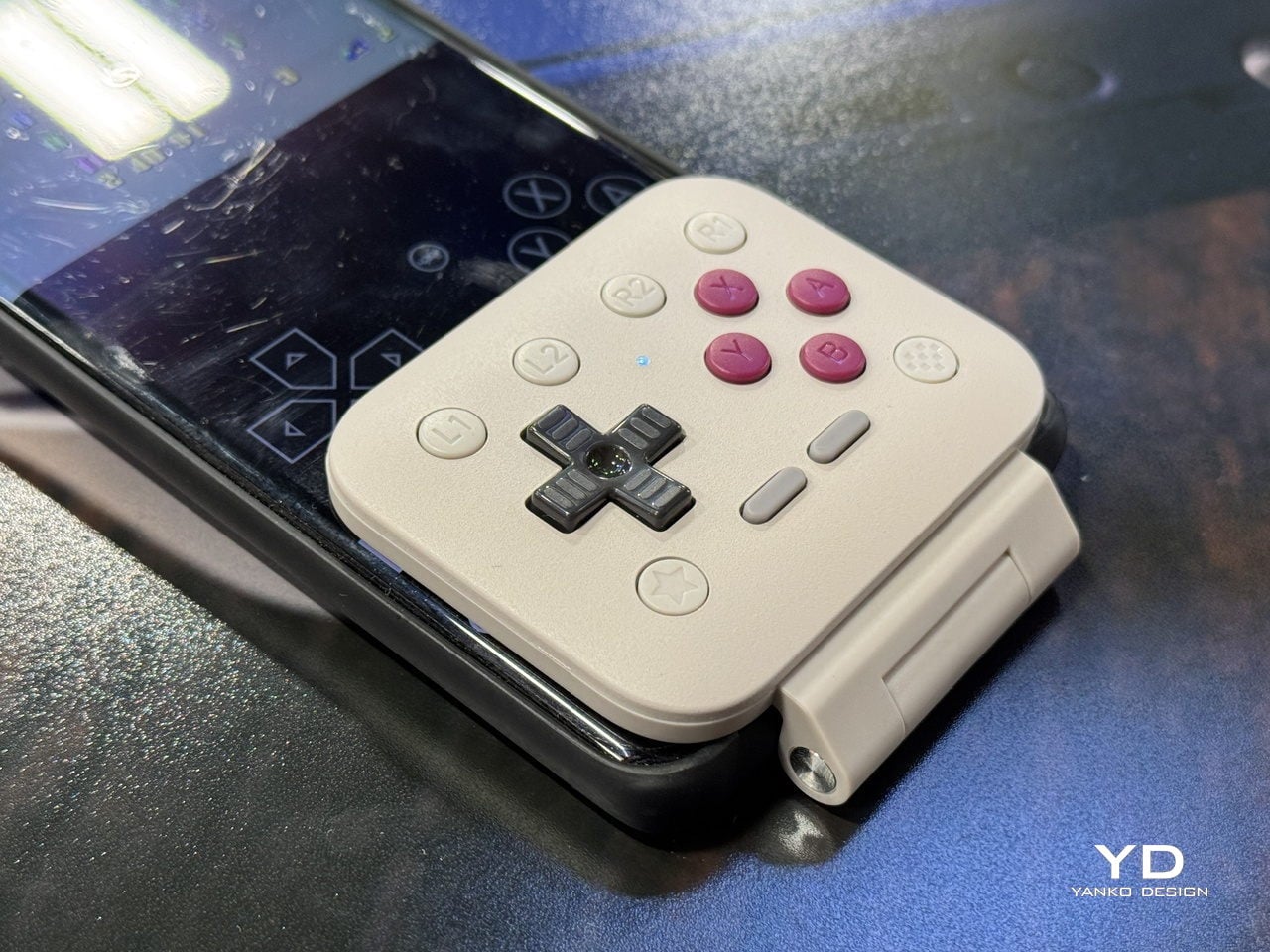
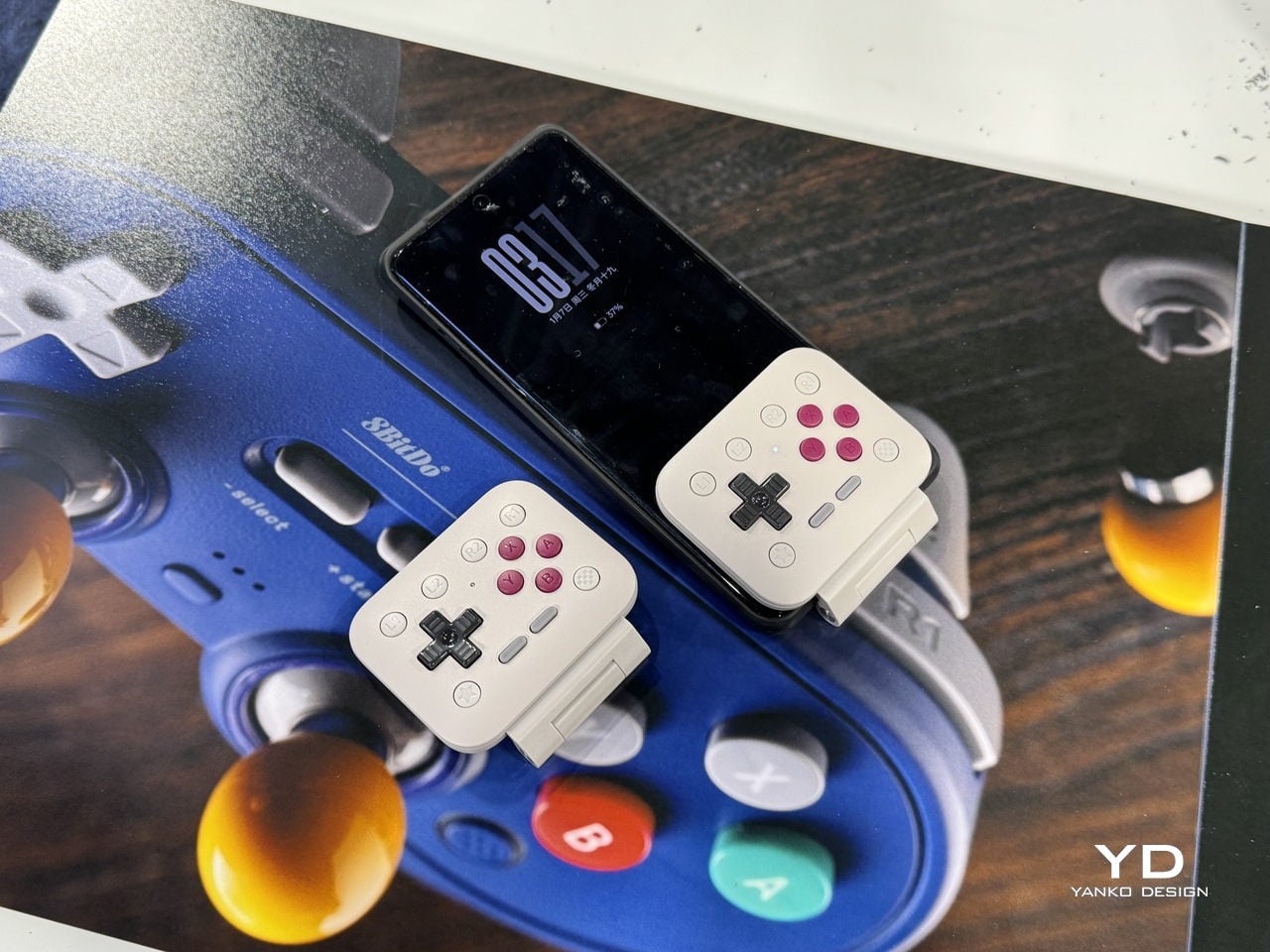
This flip-style gamepad, designed for Android and iOS (officially supported by Apple) mobile devices, is palm-sized for ultra-portability. Coming to CES 2026, the microcontroller will be officially available in the summer of 2026. There is no word on the release date, nor are there many details, but we’ll share what’s available of this retro-forward accessory that looks inspired by the Game Boy DMG color theme.

Designer: 8BitDo

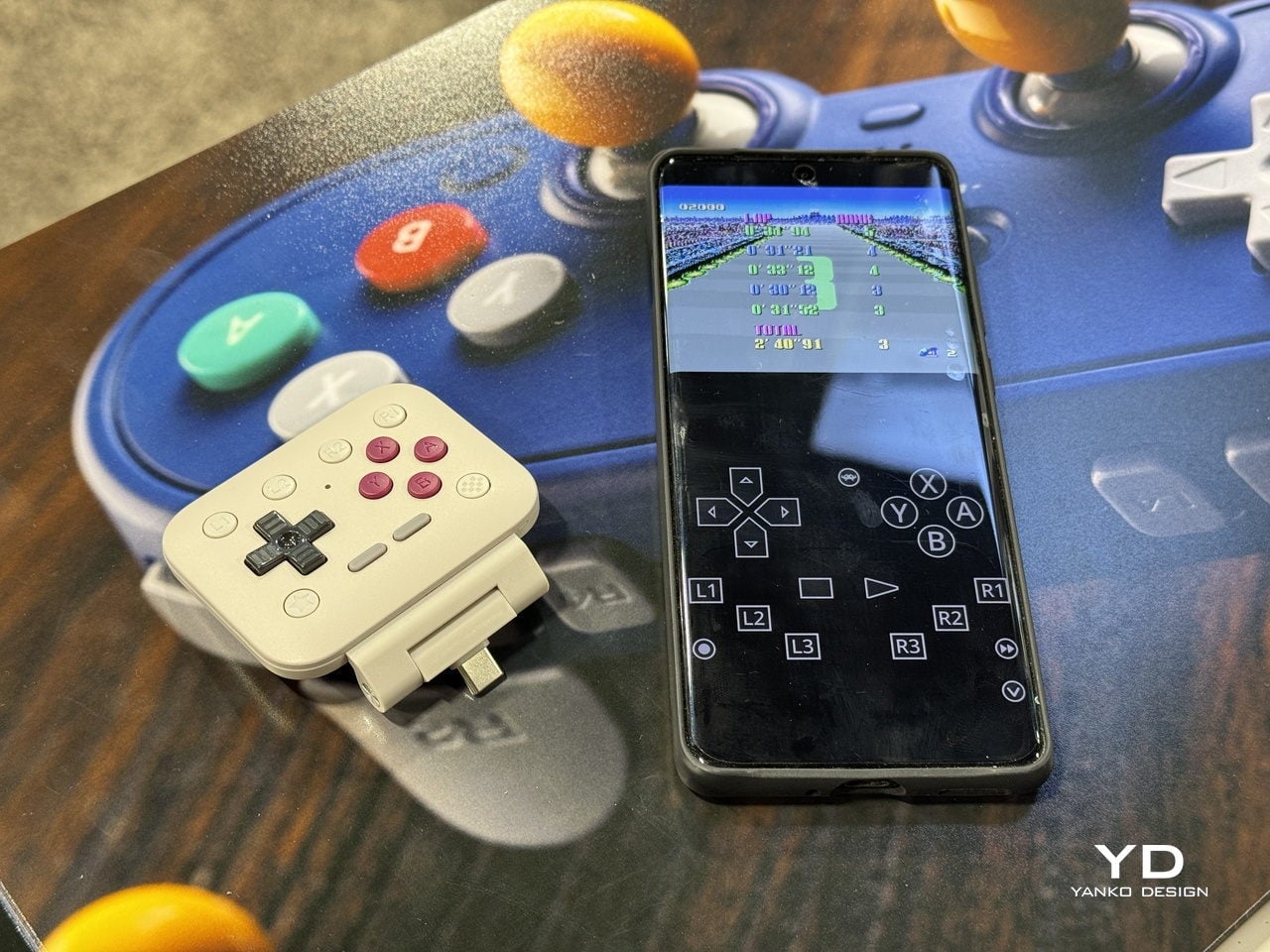
Called the FlipPad, this portrait orientation controller is a good option to have along with your standard mobile controllers that operate in landscape orientation. I can very well imagine playing White Out Survival, Vampire Survivors, Road to Valore: Empires, Subway Surfers, and other mobile games using the compact controller. The USB-C accessory has 12 face buttons and a D-Pad, which should be good enough for portrait games, as they generally don’t demand the shoulder trigger buttons as input.

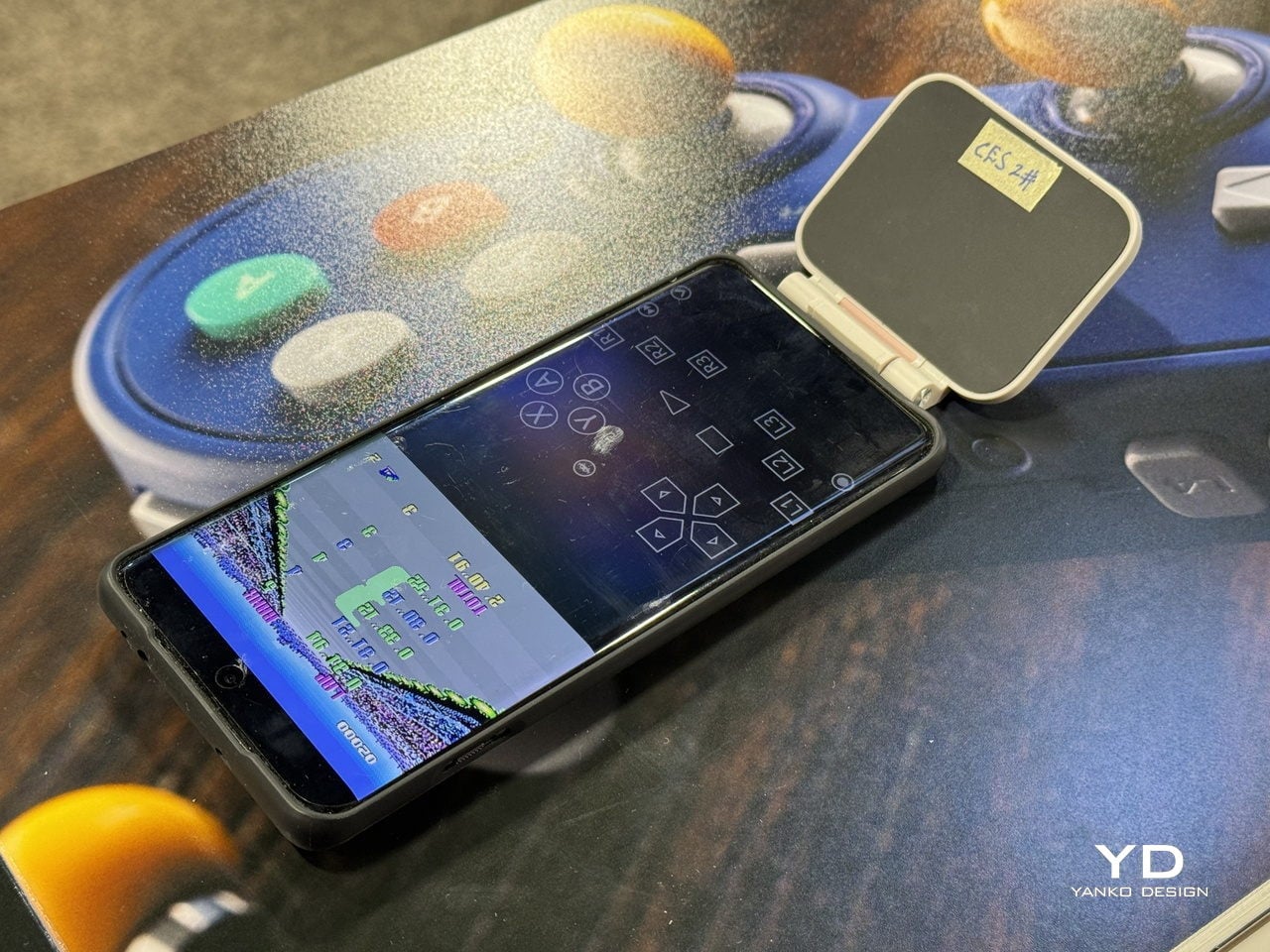
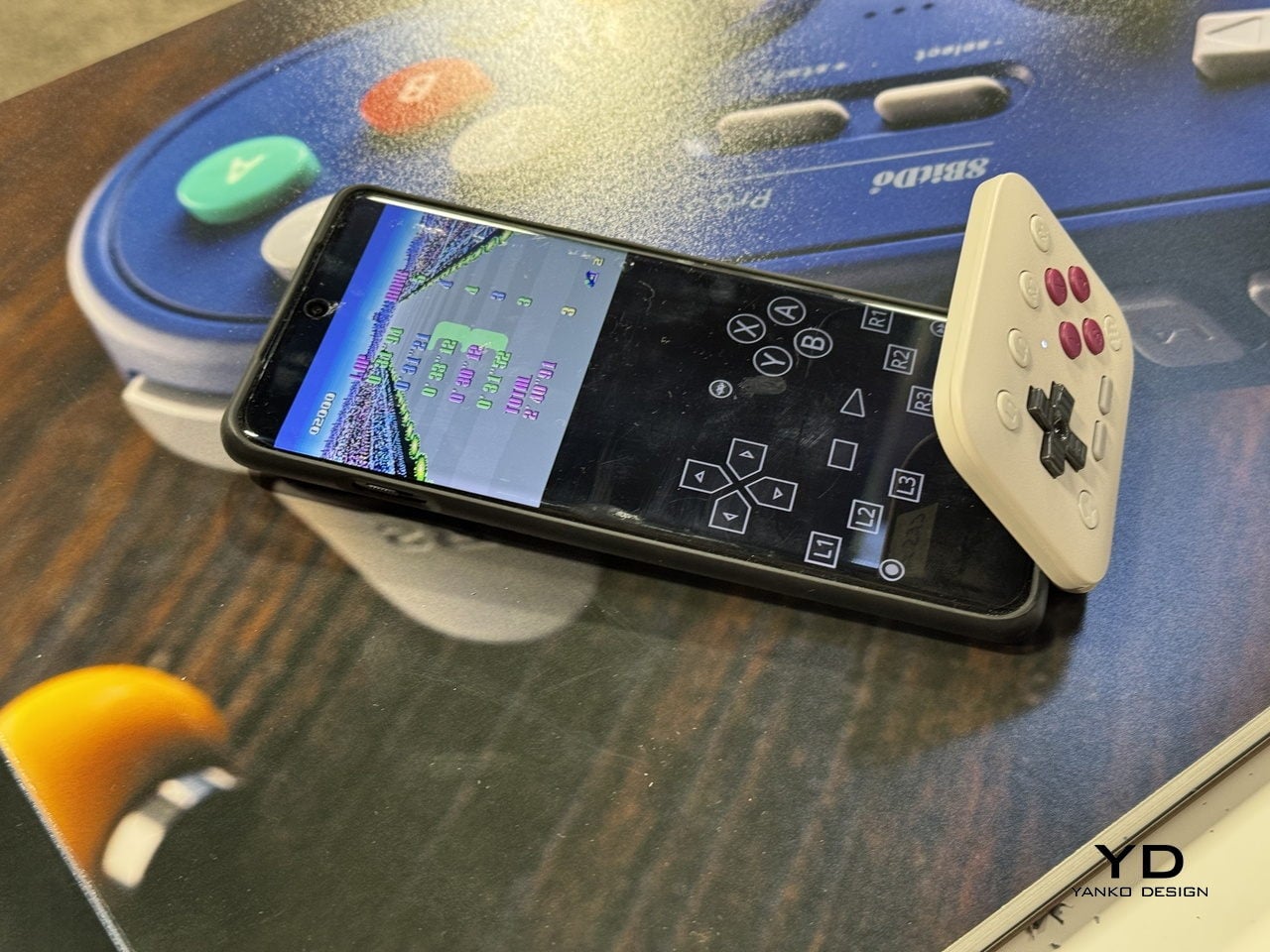
I know most of your mobile gamers will be looking to use the controller for emulators, especially titles that have an on-screen gamepad similar to this. The flip-style controller is designed in a way that it can overlay over the on-screen keyboard for maximum ergonomic comfort. That’s the reason the controller is compatible with most third-party applications and emulators like the Delta Emulator. I presume the controller will come with an in-built rechargeable battery and lack Bluetooth connectivity since it plugs directly into your smartphone via the USB-C port.

For games that are natively portrait-oriented and take up the complete screen, the FlipPad will contract the screen size to accommodate the overlaying gamepad section. It’s more like a physical controller to have the tactile input of the buttons rather than fiddling around with the on-screen buttons.

The post 8BitDo FlipPad controller for enjoying portrait games on Android and iOS first appeared on Yanko Design.

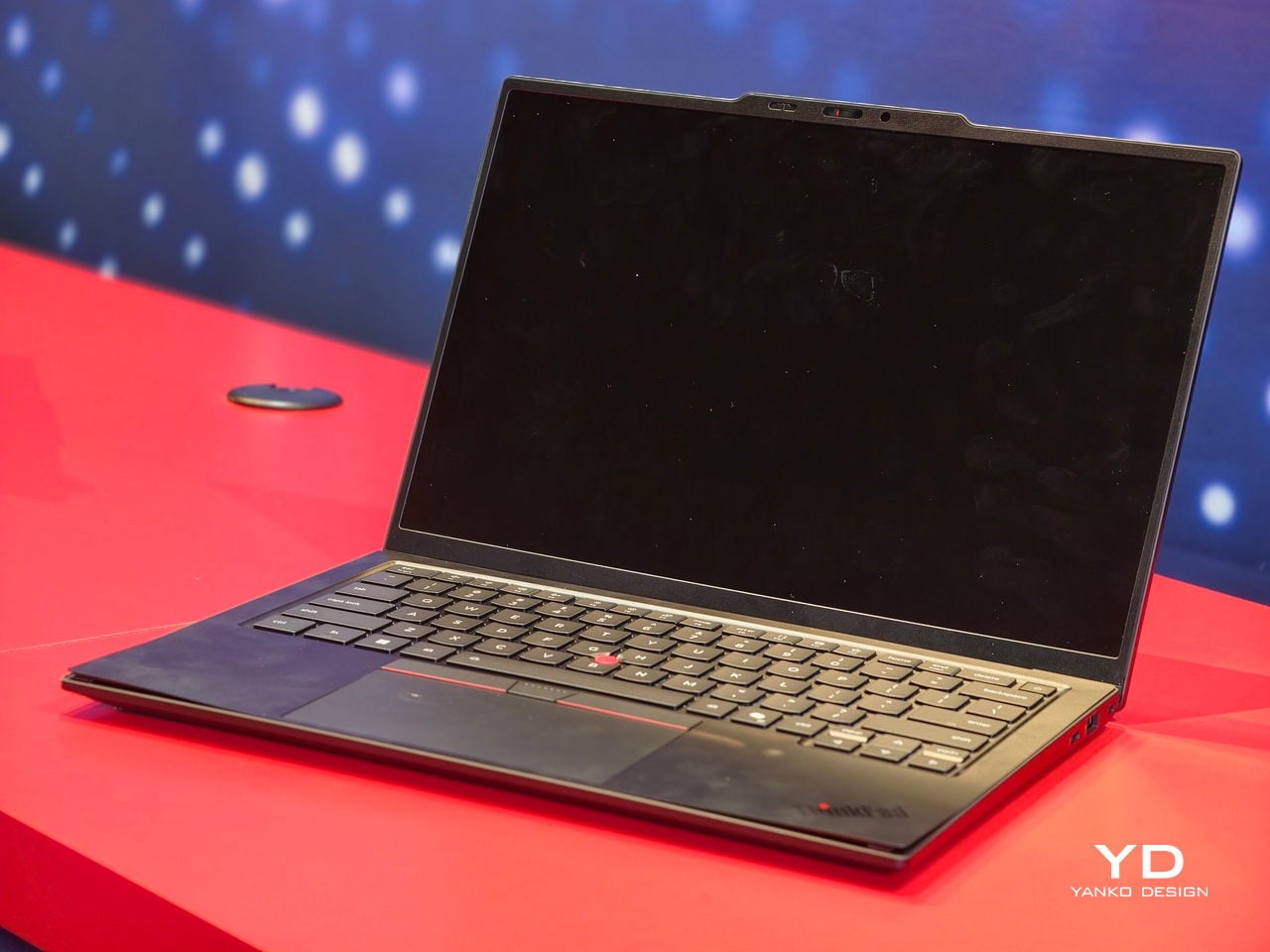
ThinkPad X1 Carbon Gen 14 Aura Edition Scores 9/10 From iFixit at CES 2026

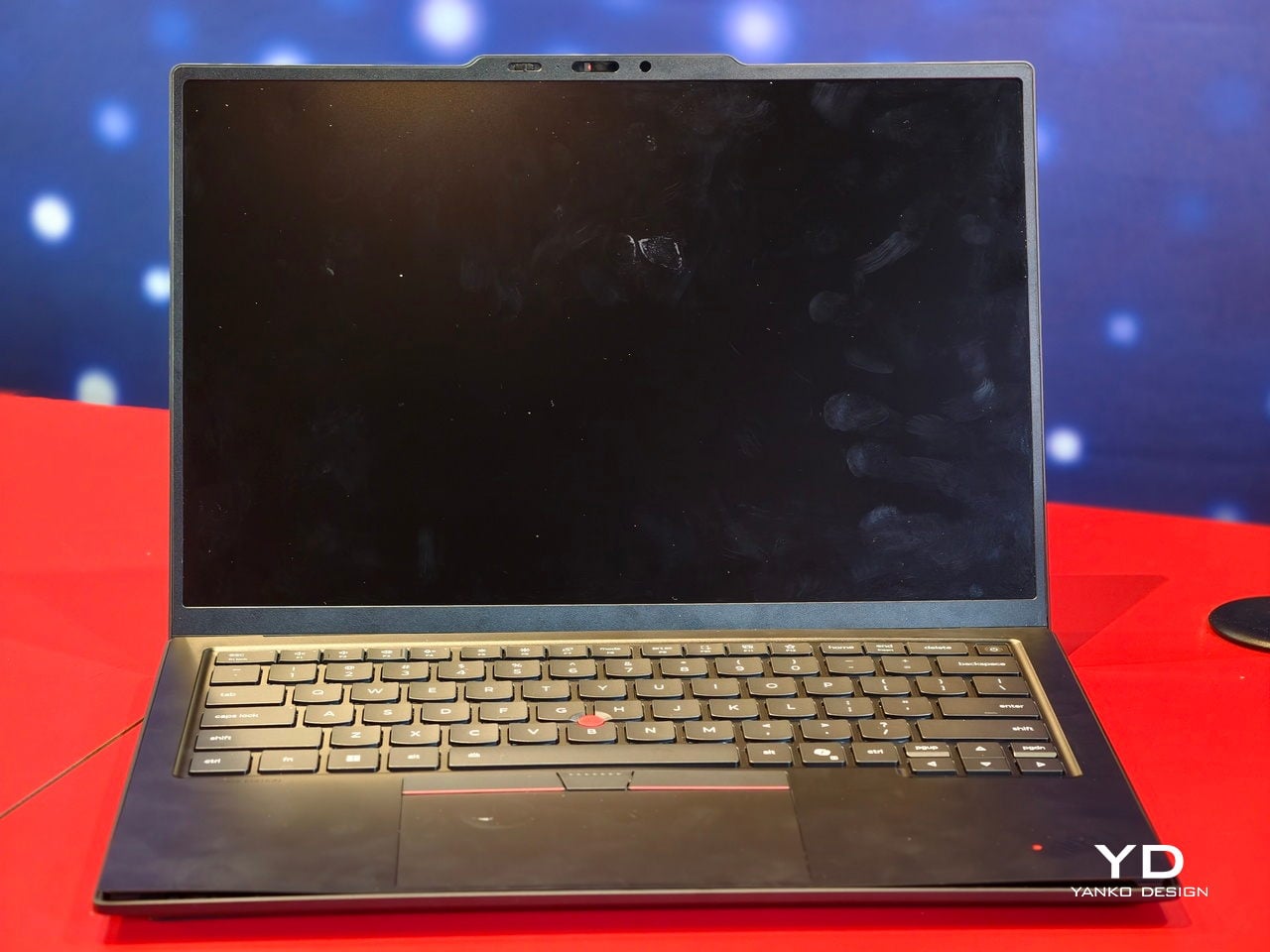
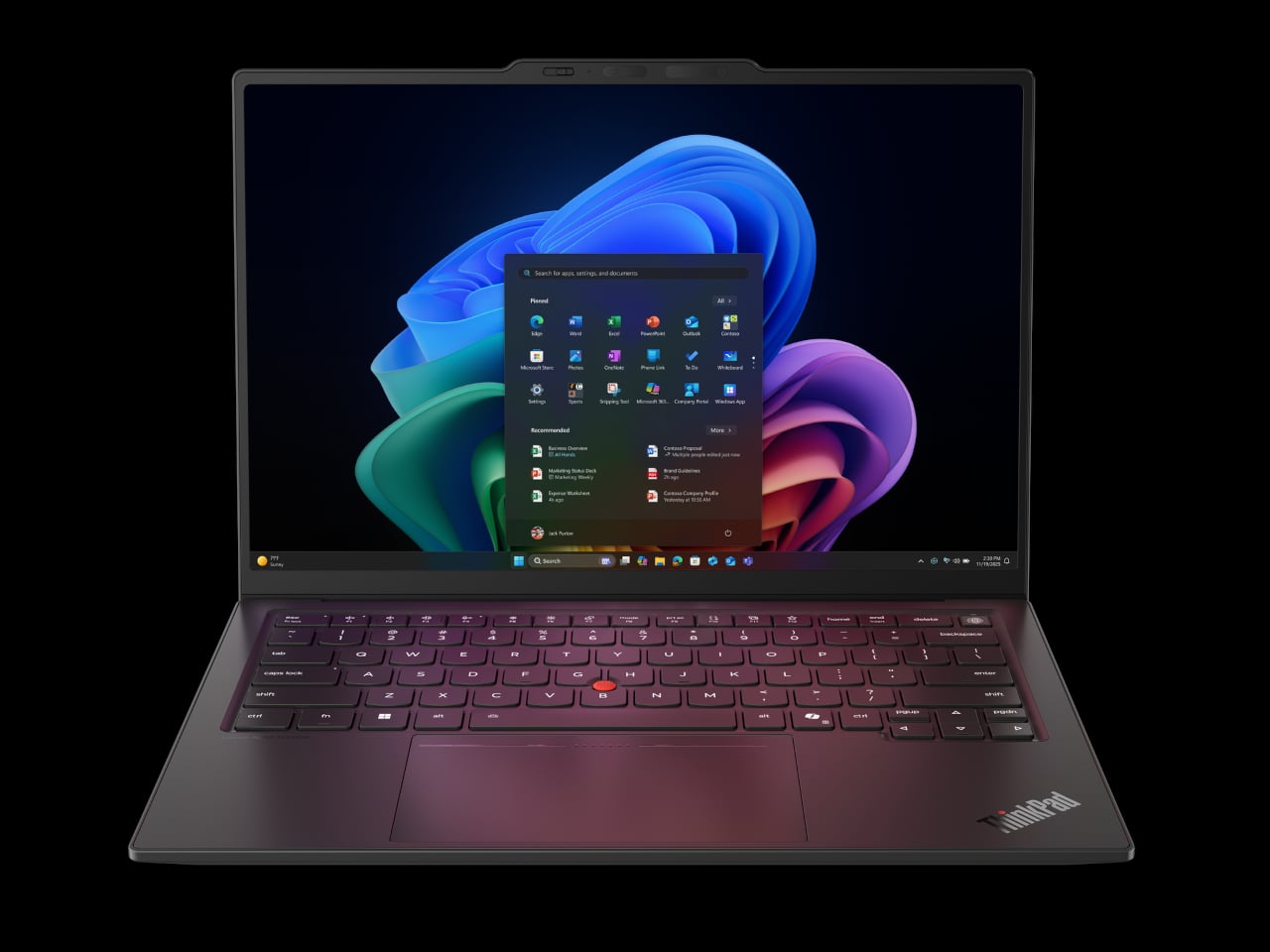
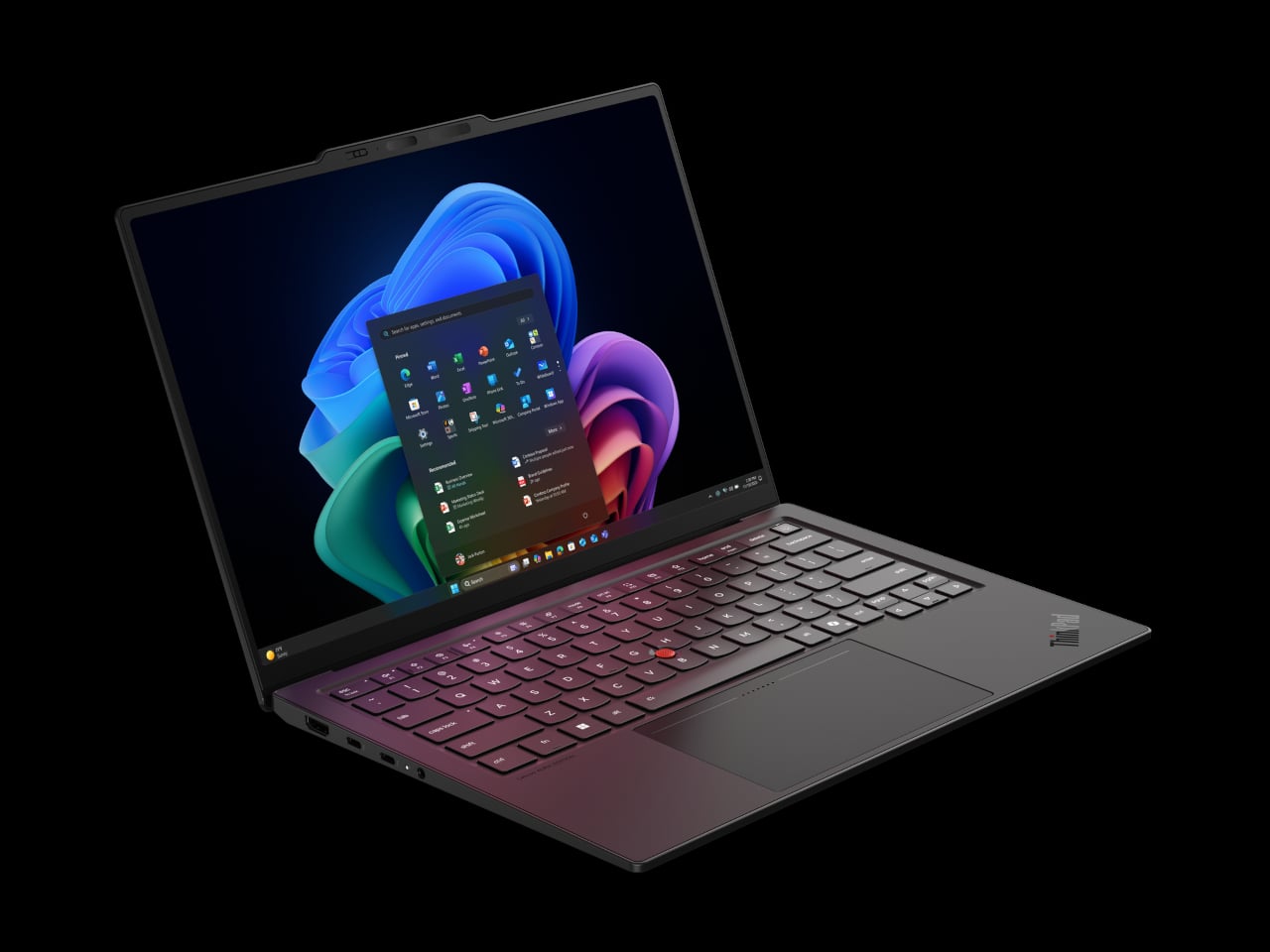
ThinkPad X1 Carbon has been the default answer to “what does a serious work laptop look like?” for more than a decade, with over ten million units sold since 2012. Most look and behave roughly the same. The Gen 14 Aura Edition arrives at CES 2026, when that definition is shifting, and Lenovo’s response is to quietly rework the bones around local intelligence, a new internal architecture, and repairability that does not feel like a compromise.

The first idea is that AI should live on the machine, not just in the cloud. The Aura Edition runs Intel Core Ultra X7 Series 3 processors with an integrated NPU capable of up to 50 TOPS, which means background noise removal, live transcription, or image enhancement can happen locally with less lag and fewer privacy worries. Lenovo’s Aura software layer tunes performance automatically, handles quick media transfers with a tap, and walks users through troubleshooting.

Designer: Lenovo

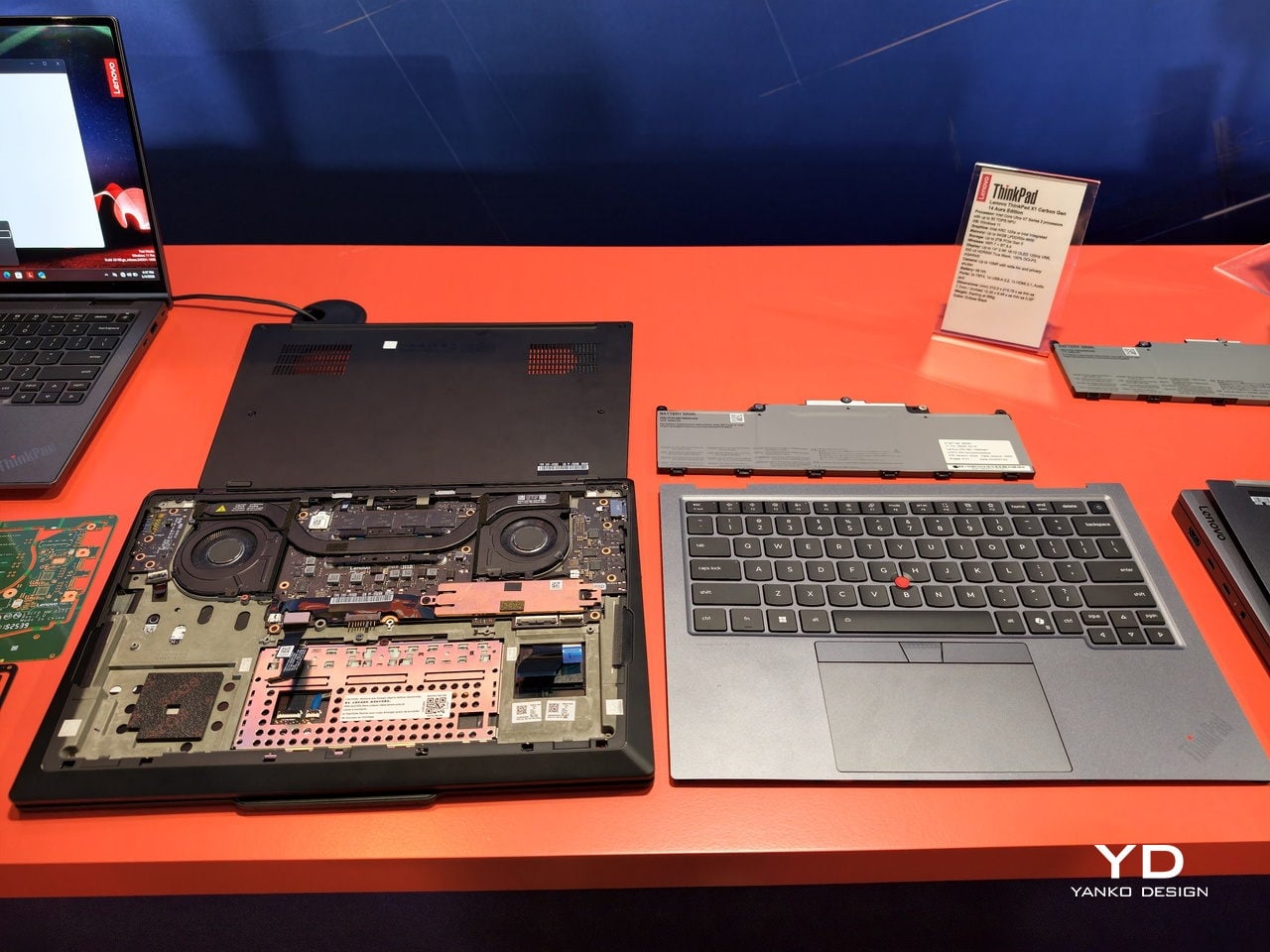
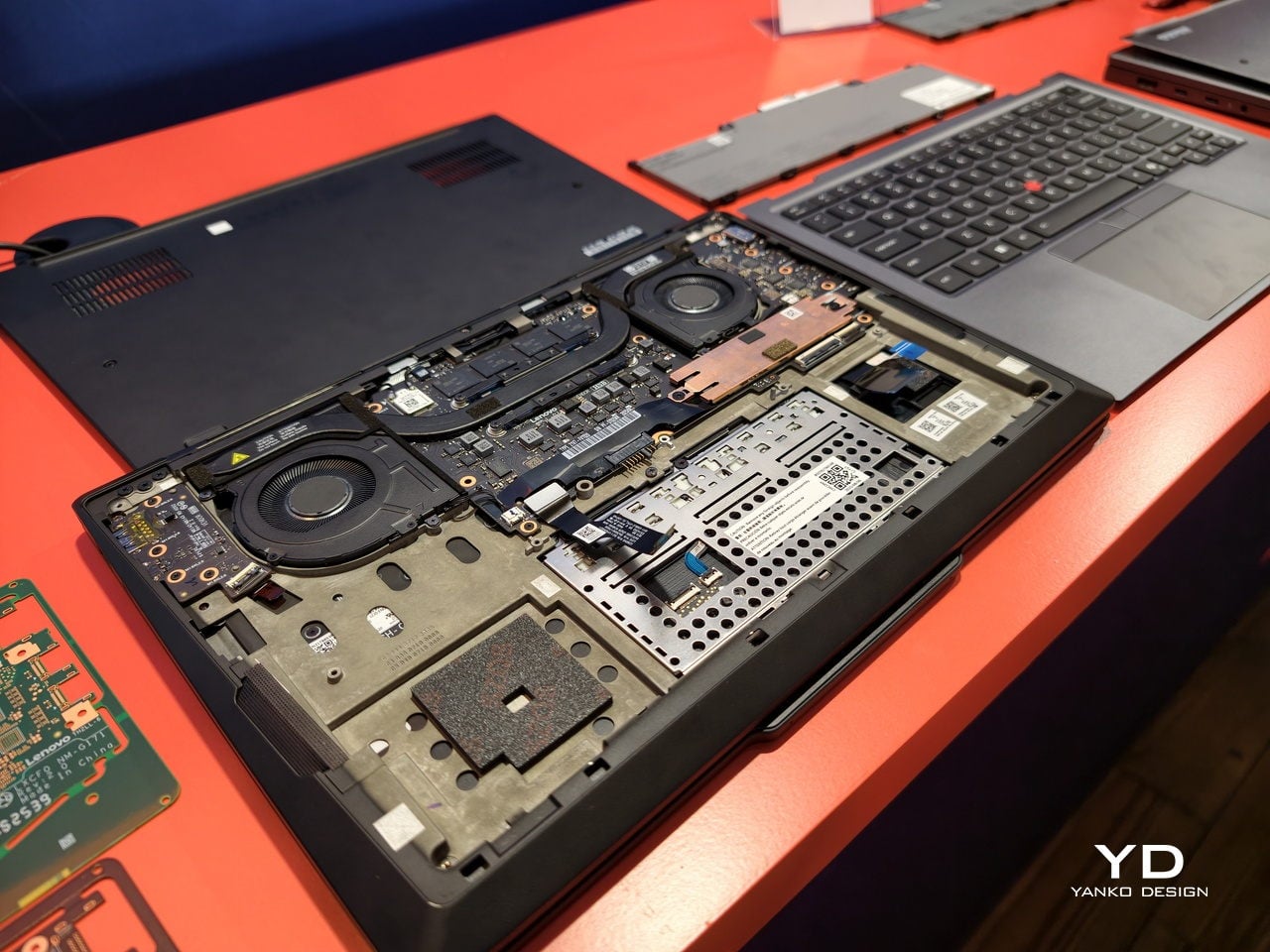
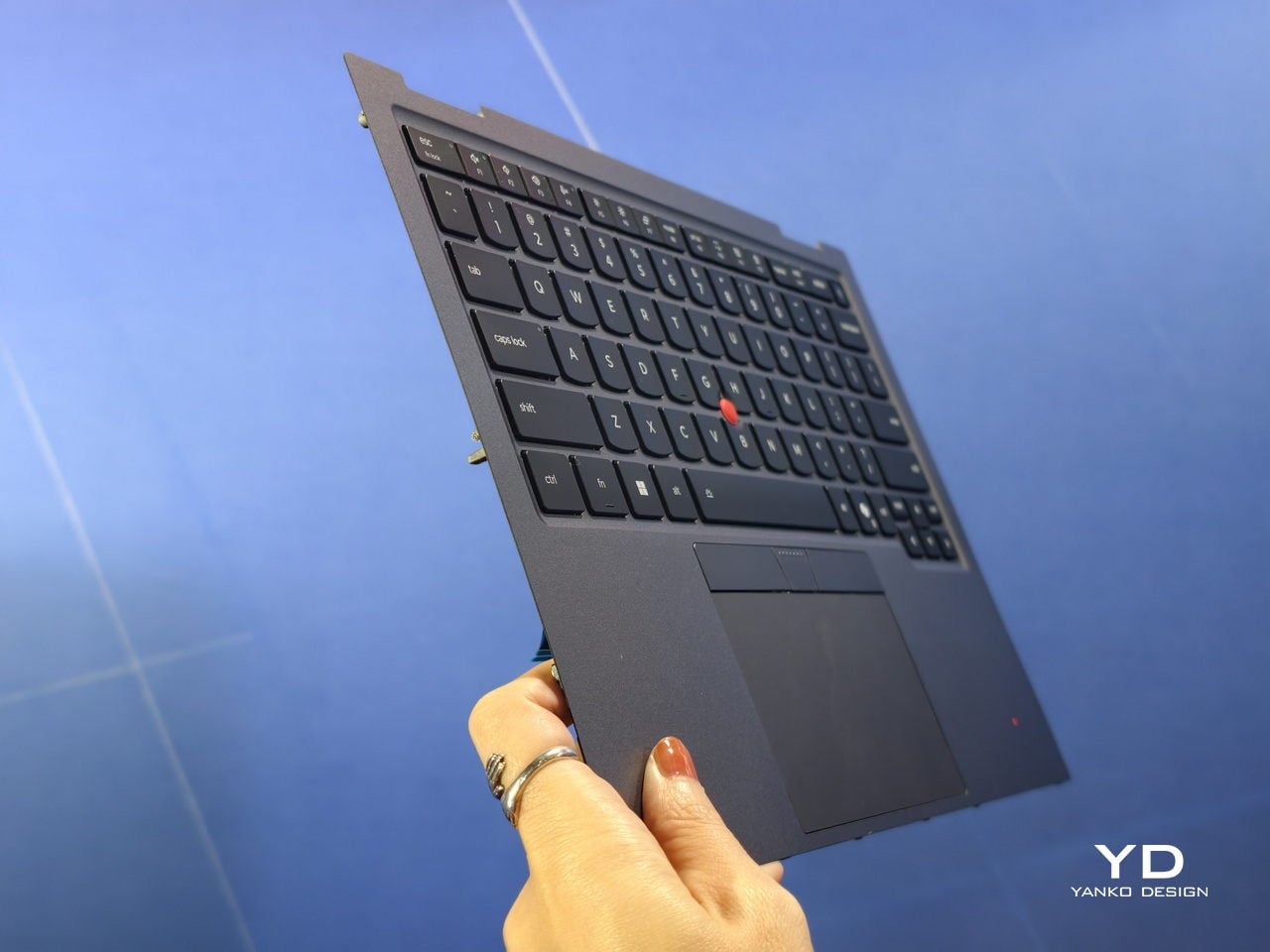
The second idea is Space Frame, a new internal layout that treats the inside as three-dimensional real estate rather than a flat sandwich. By placing components on both sides of the motherboard, Lenovo frees up volume for better airflow and a larger haptic touchpad while keeping the chassis under sixteen millimeters thick. That opens up about twenty percent better heat dissipation and lets the system sustain thirty watts of power, which matters when running heavy workloads.

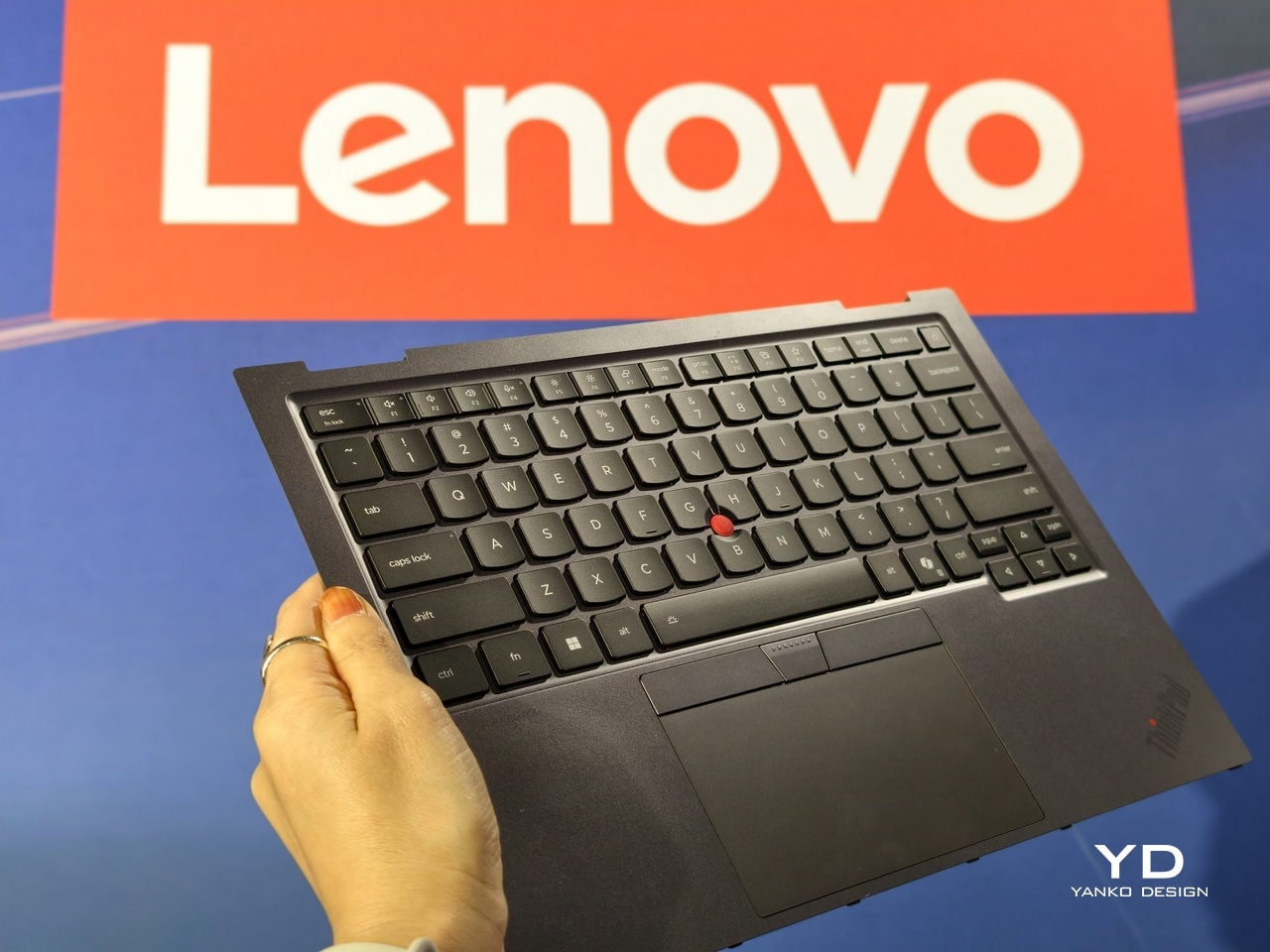
Space Frame also makes room for modular parts. USB ports, the battery, keyboard, speakers, and fans are designed to be replaced as individual units, with a separate daughterboard that isolates some I/O, so a damaged connector does not mean a full motherboard swap. Lenovo says the X1 series now scores nine out of ten from iFixit. For people who keep laptops for years, that means less downtime and fewer machines scrapped for minor issues.

The sustainability story ties in closely. The chassis uses up to seventy-five percent recycled aluminum and ninety percent recycled magnesium in specific components, and packaging is now plastic-free. Those details matter for enterprises reporting on lifecycle impact, and they make the laptop easier to justify to teams skeptical of devices designed to be replaced every few years instead of maintained and refreshed when needed.

Around those pillars, the X1 Carbon Gen 14 Aura Edition feels familiar. An optional 2.8K OLED display with anti-glare coating, 500 nits, and full DCI-P3 coverage handles color work. A new 10-megapixel camera with a wide field of view and distortion correction makes hybrid meetings less painful. Wi-Fi 7, optional 5G, and three Thunderbolt 4 ports keep it ready for whatever networks and docks come next.

The interesting thing about this generation is not that it is faster or lighter, though it is both. Lenovo is using AI and a new internal design as reasons to make a flagship business laptop that is smarter, cooler, and easier to fix. The ThinkPad X1 Carbon Gen 14 Aura Edition is still the same understated black rectangle, but inside it argues that the future of professional laptops is about longevity, adaptability, and treating sustainability as a design constraint rather than marketing.

The post ThinkPad X1 Carbon Gen 14 Aura Edition Scores 9/10 From iFixit at CES 2026 first appeared on Yanko Design.
I checked out Motorola razr fold at CES 2026, and I’m excited for its launch

Motorola’s razr has generated quite a bit of attention and gained loyal fans in the niche flip segment. Now, Motorola is expanding the iconic razr family with a bold new chapter in foldable design, introducing the Motorola razr fold as its first book-style foldable. A lot is still under the cover, but here is what we learned from the preview at CES 2026, and even in this early look, the device already feels like a significant step for the razr line.

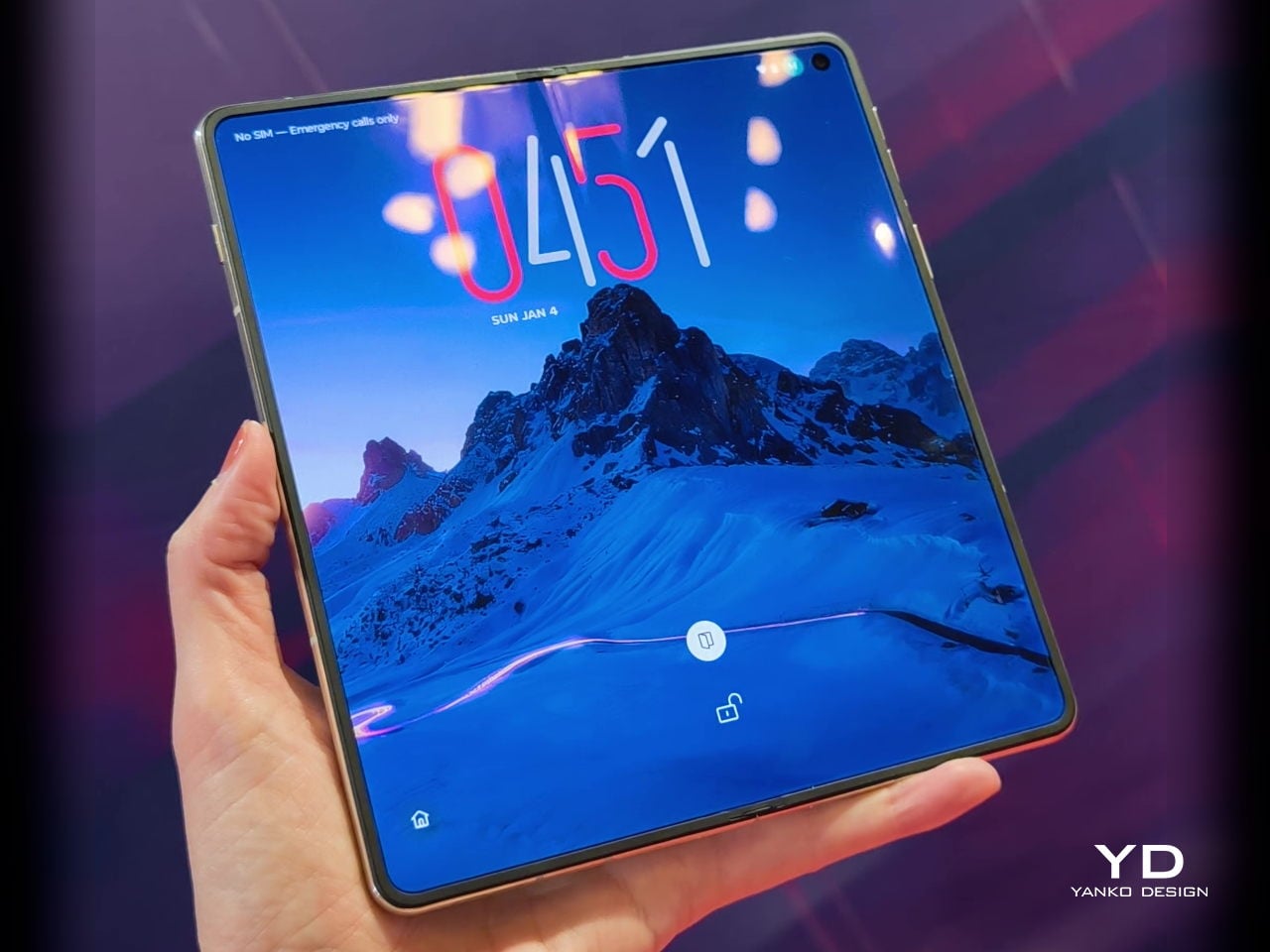
From the outside, the Motorola razr fold presents a slim, striking silhouette anchored by a 6.6-inch external display. This outer screen gives you a familiar candy-bar style experience for everyday tasks and quick interactions, so it behaves much like a standard flagship when closed. It helps the phone feel practical and complete on its own, rather than a secondary screen you only tolerate between unfolds.

Designer: Motorola

Open the device, and it transforms into an 8.1-inch 2K LTPO inner display. This larger panel stretches into a tablet-like space that invites multitasking, media, and creativity in a way a normal phone simply cannot match. Both the outer and inner displays support the moto pen ultra stylus, adding precision for note-taking, sketching, and editing when you want a more deliberate, pen-driven experience.

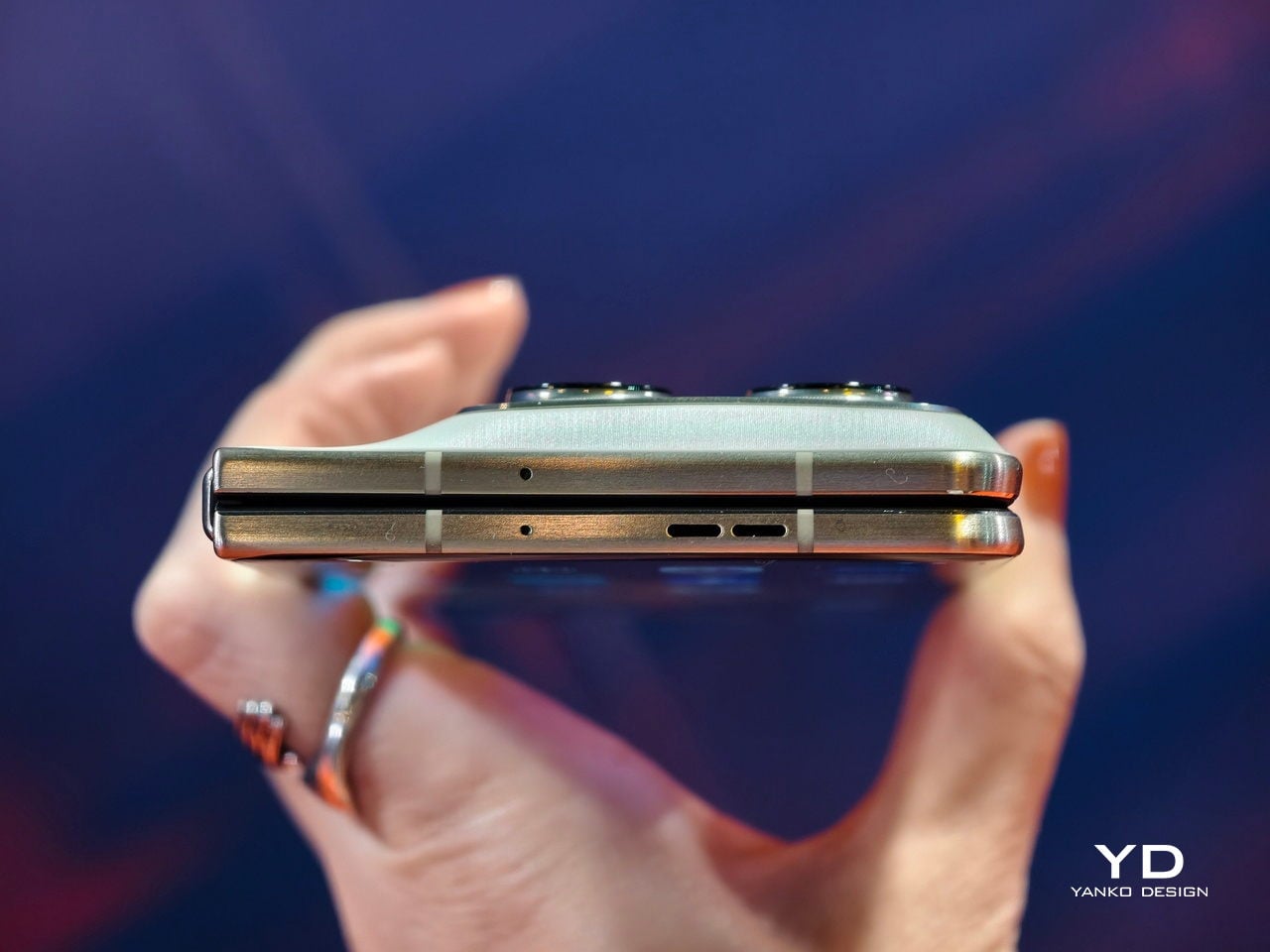
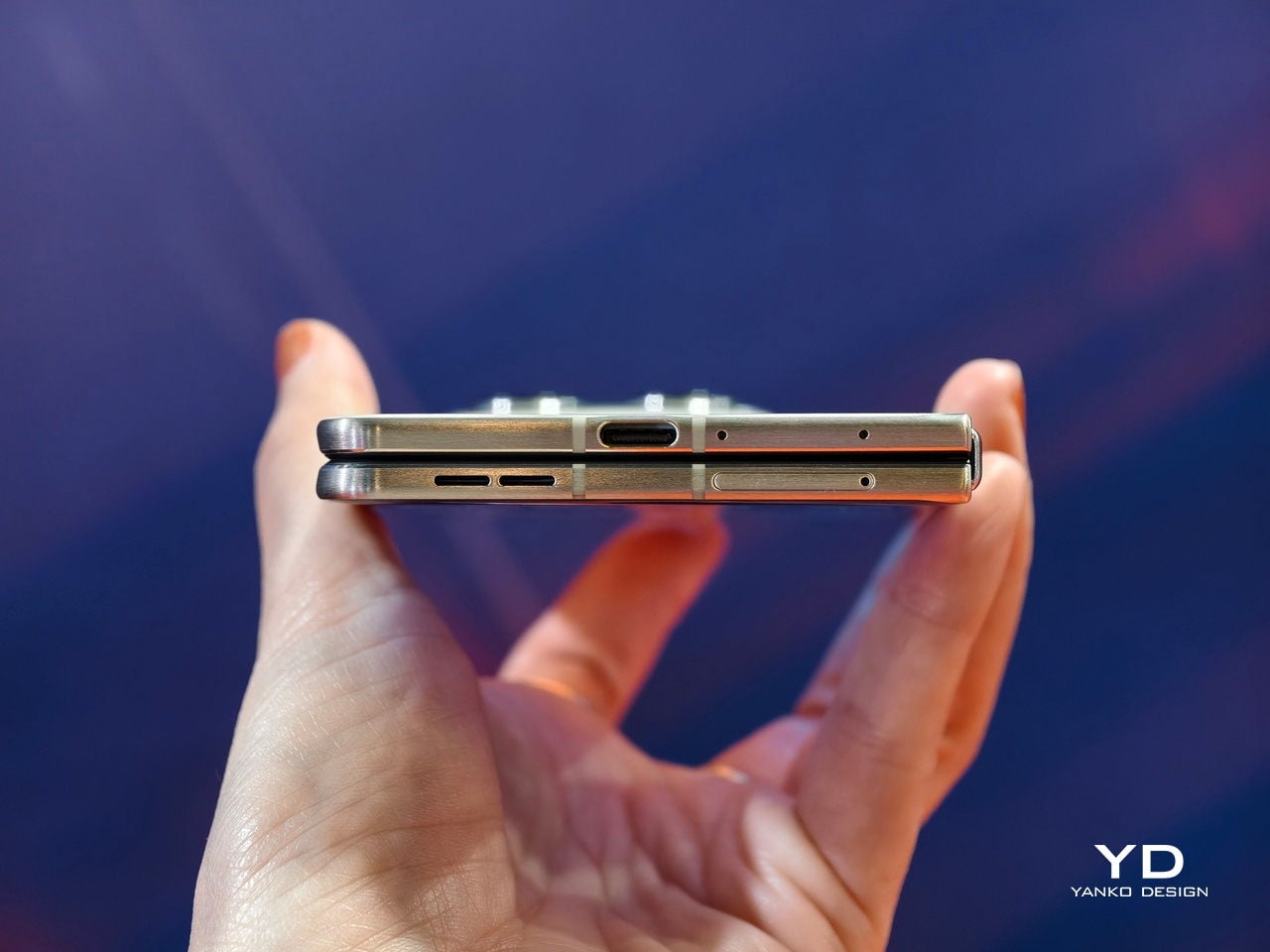
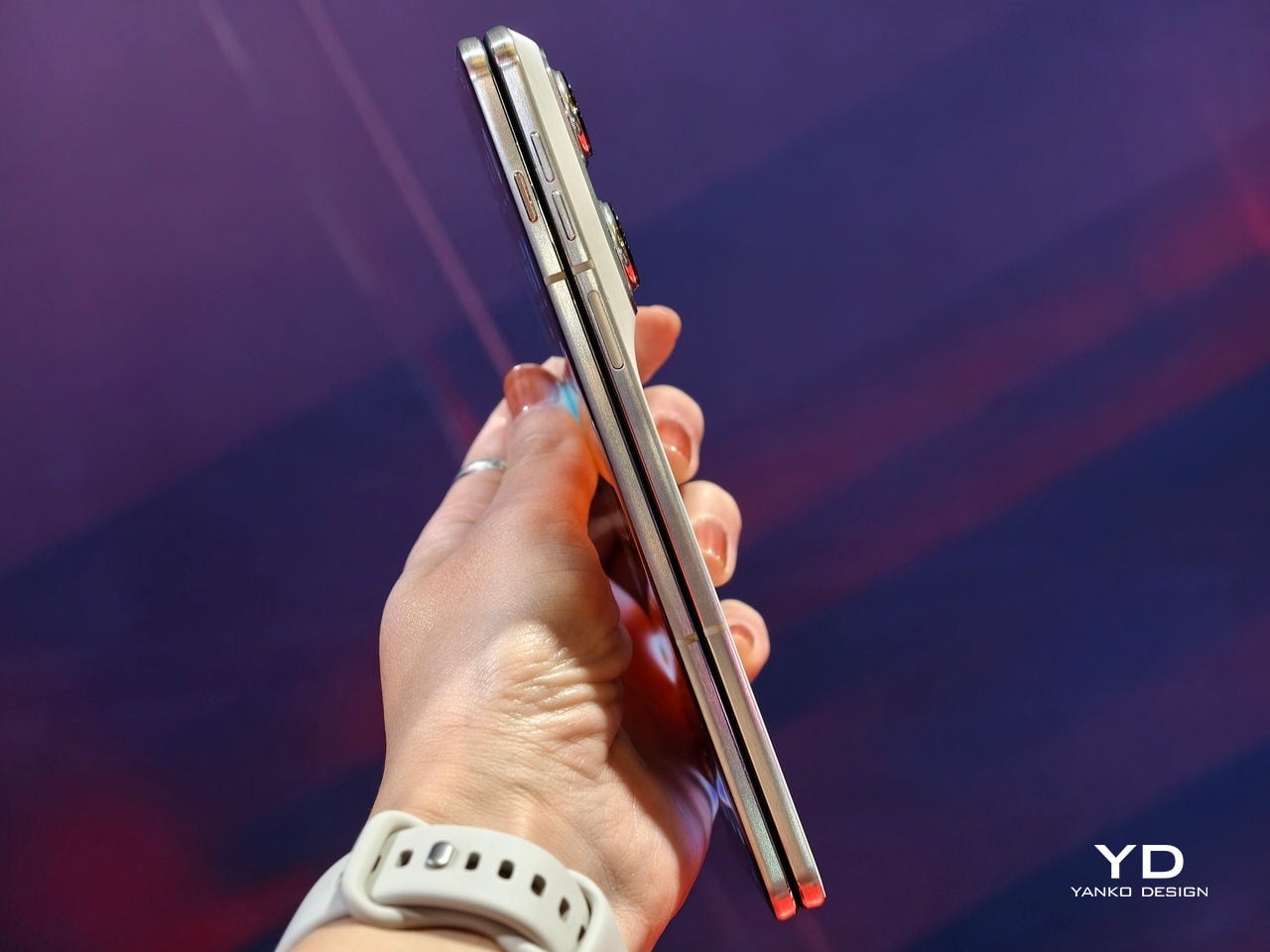
In hand, the hinge feels sturdy yet pleasantly smooth to open and close. It gives a reassuring sense of durability without feeling overly stiff or crunchy during use. The design is not completely gapless when folded, but it comes close enough that the profile still looks clean and modern.

The crease on the inner display is also handled well and is not very noticeable. It tends to fade from view once the content is on screen. This helps the large display feel more like a single continuous canvas rather than a technical compromise.

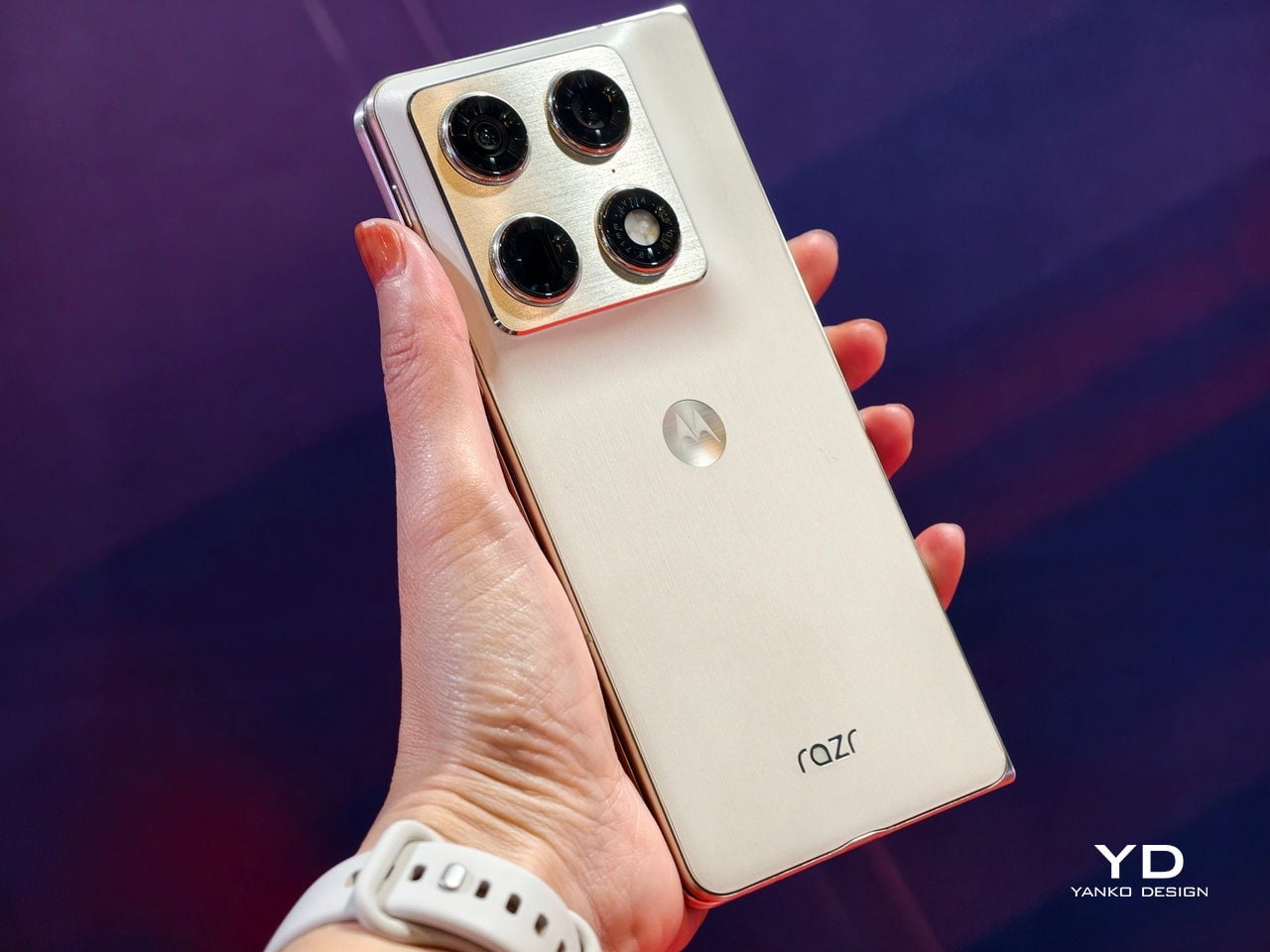
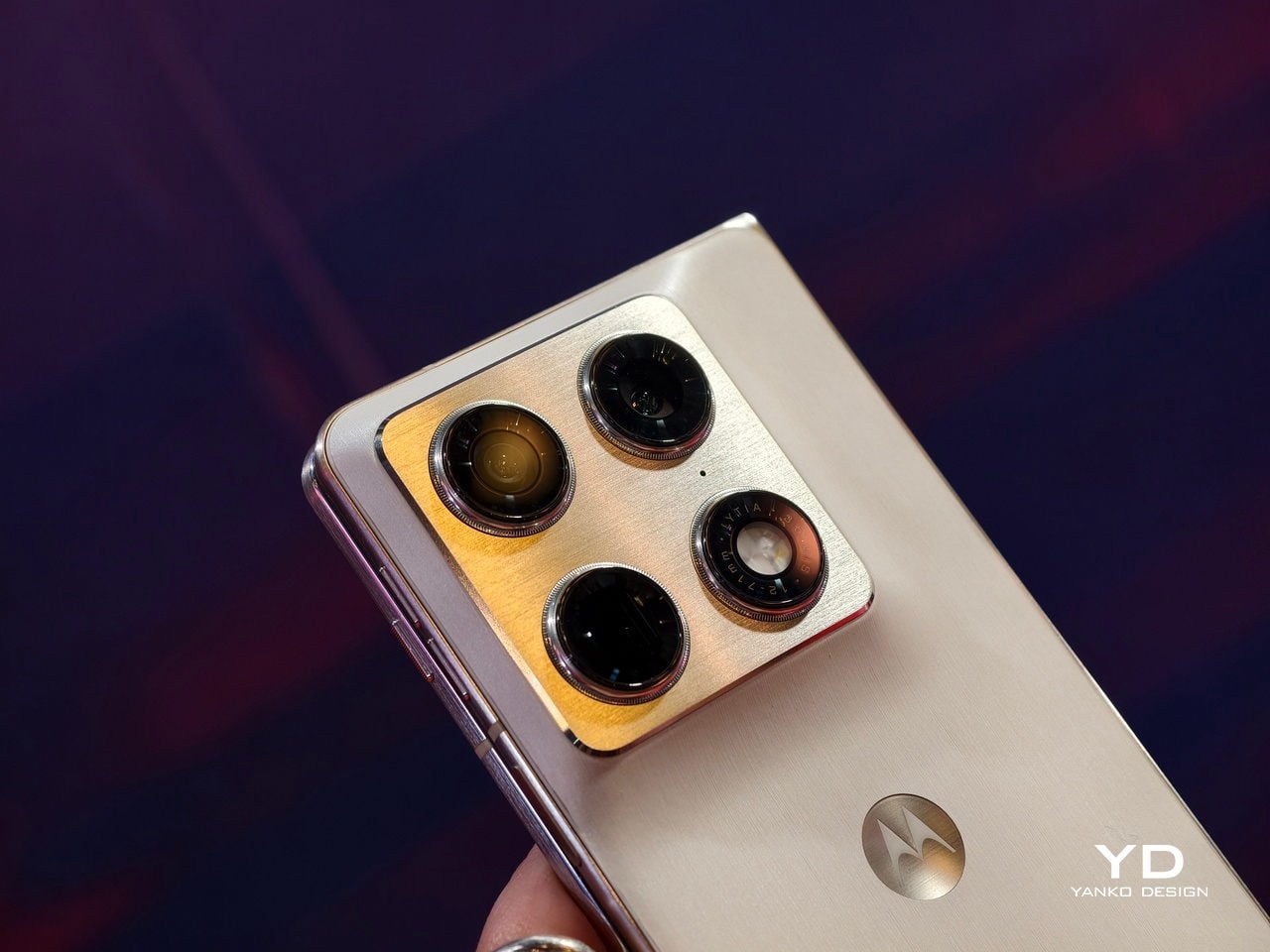
For the camera, the Motorola razr fold is built around a versatile triple 50MP system on its rear. The main 50MP camera features a Sony LYTIA sensor, although the exact model is not revealed, suggesting Motorola is still keeping some details in reserve. Alongside it, a 50MP ultra-wide camera and a 50MP 3x periscope telephoto camera round out the array for sweeping scenes, tight interiors, and distant subjects.

For selfies, the Motorola Razr fold features a 32MP camera in the external display and a 20MP camera on the internal display. The outer selfie camera works with the large cover screen, making it easy to frame high-quality shots while the phone is closed and still feel fully in control. The inner camera is positioned for video calls and content capture when you are using the big internal display, keeping the experience consistent in both folded and unfolded modes.

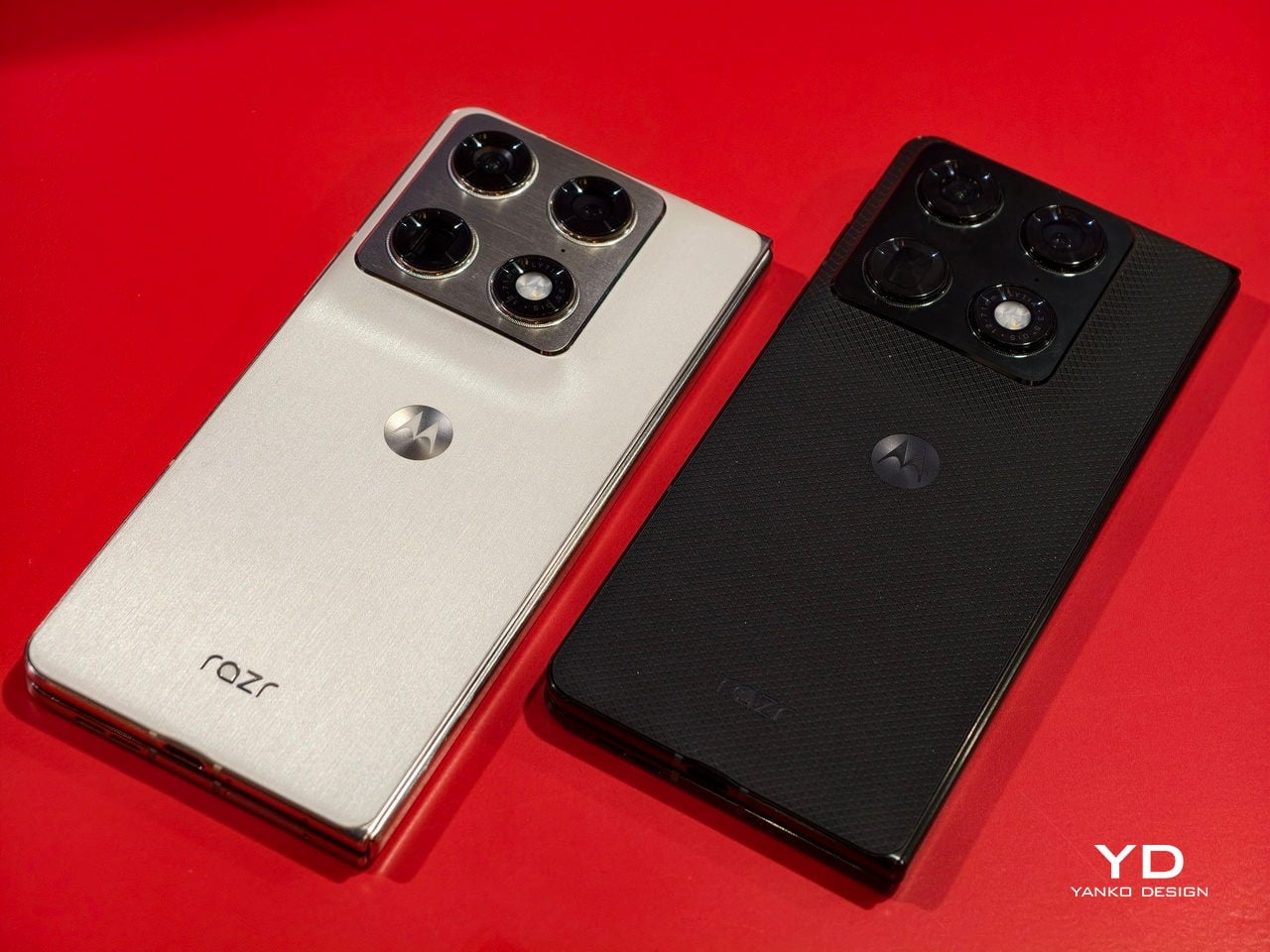
Motorola offers two colors, PANTONE Blackend Blue and PANTONE Lily White. These finishes give the phone distinct personalities, from deeper and moodier to lighter and more minimal, so the hardware can better match different style preferences. It also has a textured matte back, which is pleasant to touch and helps the device feel secure in the hand, adding a subtle sense of grip and refinement. Although the exact launch timing of the Motorola razr fold remains unknown, it has already been gaining a lot of attention and looks poised to push the razr name firmly into the book-style foldable space.

The post I checked out Motorola razr fold at CES 2026, and I’m excited for its launch first appeared on Yanko Design.

This $699 FIFA World Cup Phone Is a Limited-Edition Collector’s Dream

The FIFA World Cup 2026 edition is just a few months away, so we can expect that these first few months of the year, we’ll get a lot of product tie-ups and merchandise. After all, the world’s most-watched sports event will be held in the US, Canada, and Mexico. If you plan to watch any of the matches in person or you’ll just be sitting pretty from the comfort of your own home while streaming, Motorola’s newest smartphone may be the device that you need to enjoy the game more.

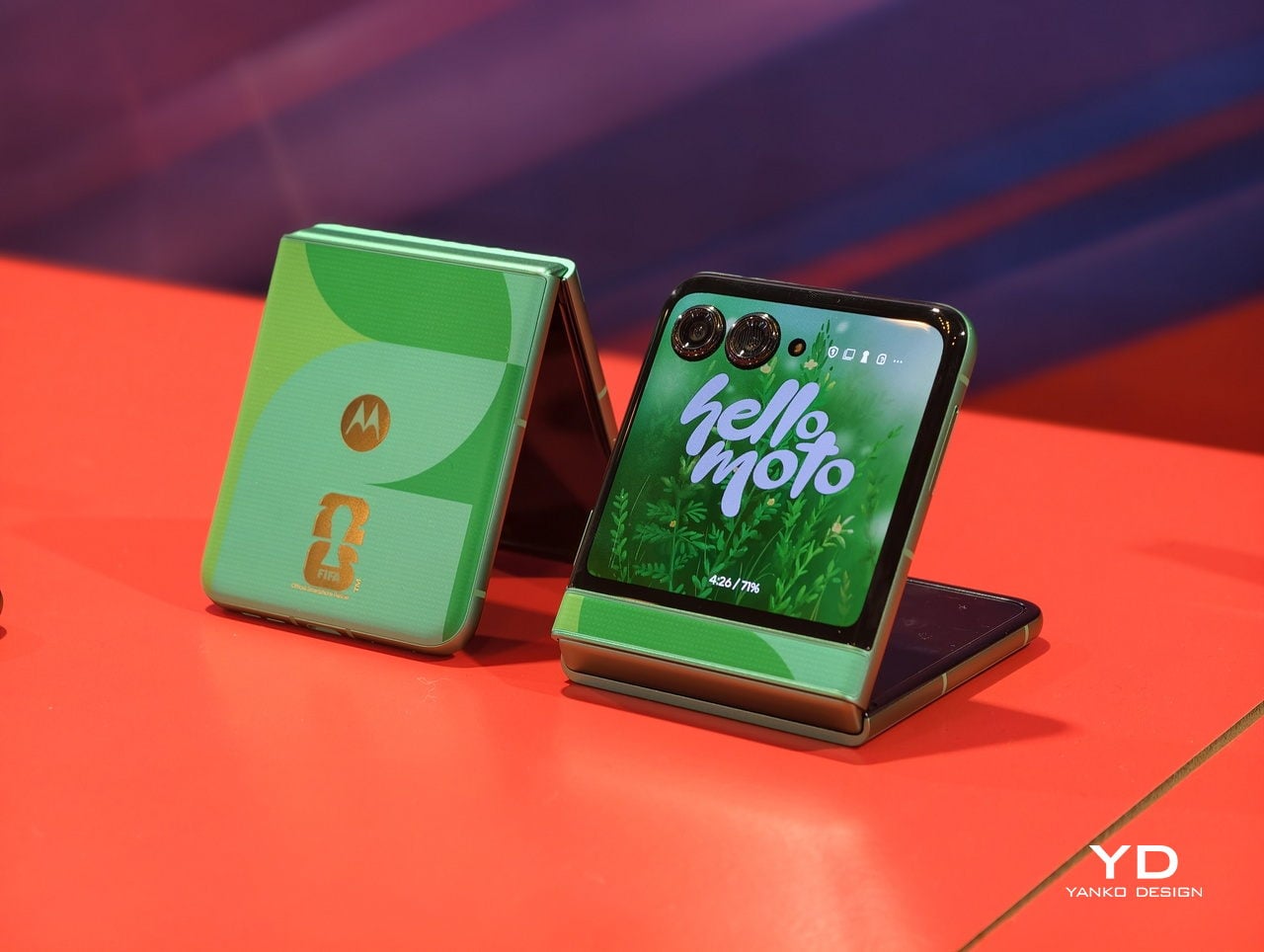
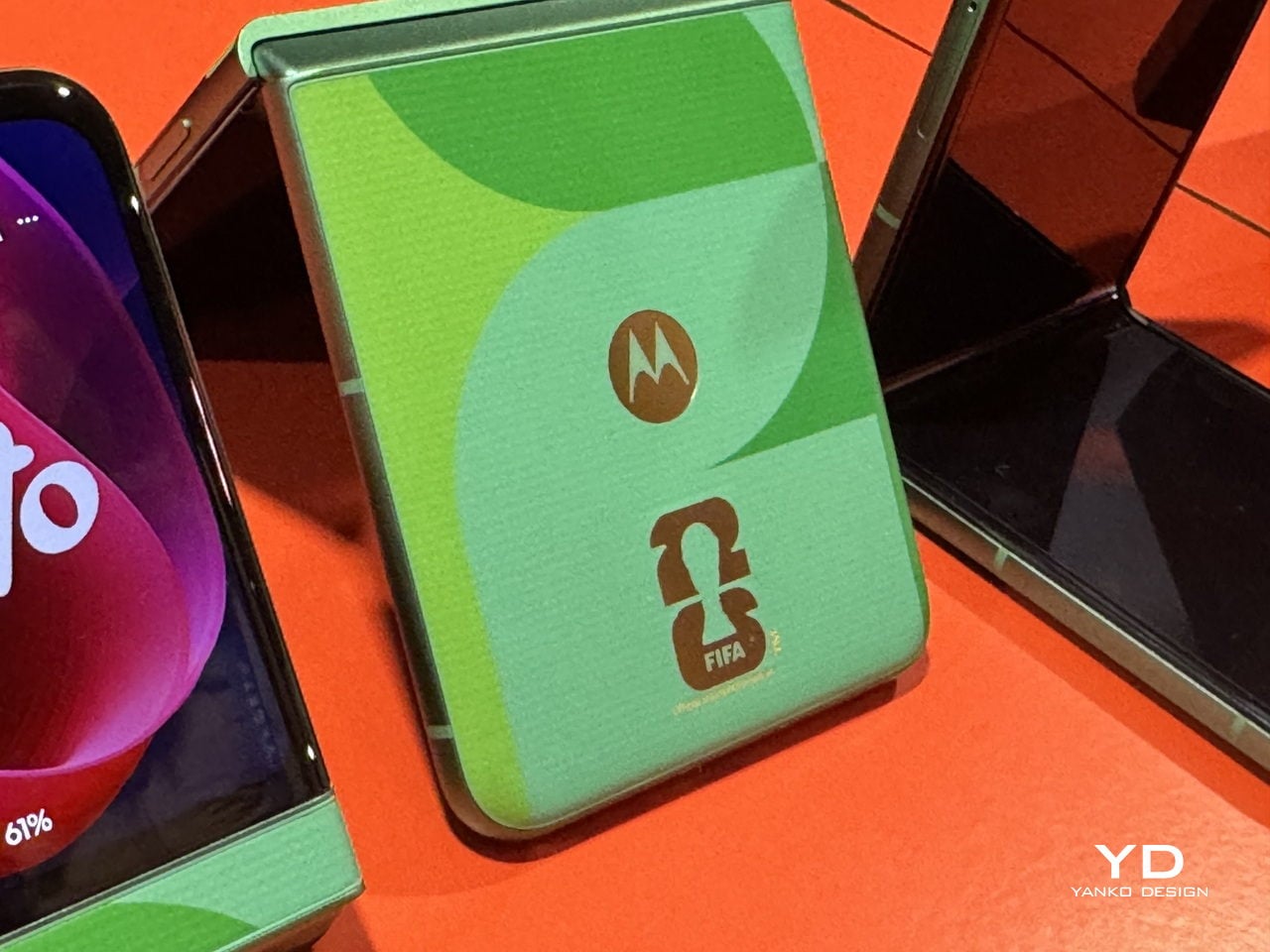
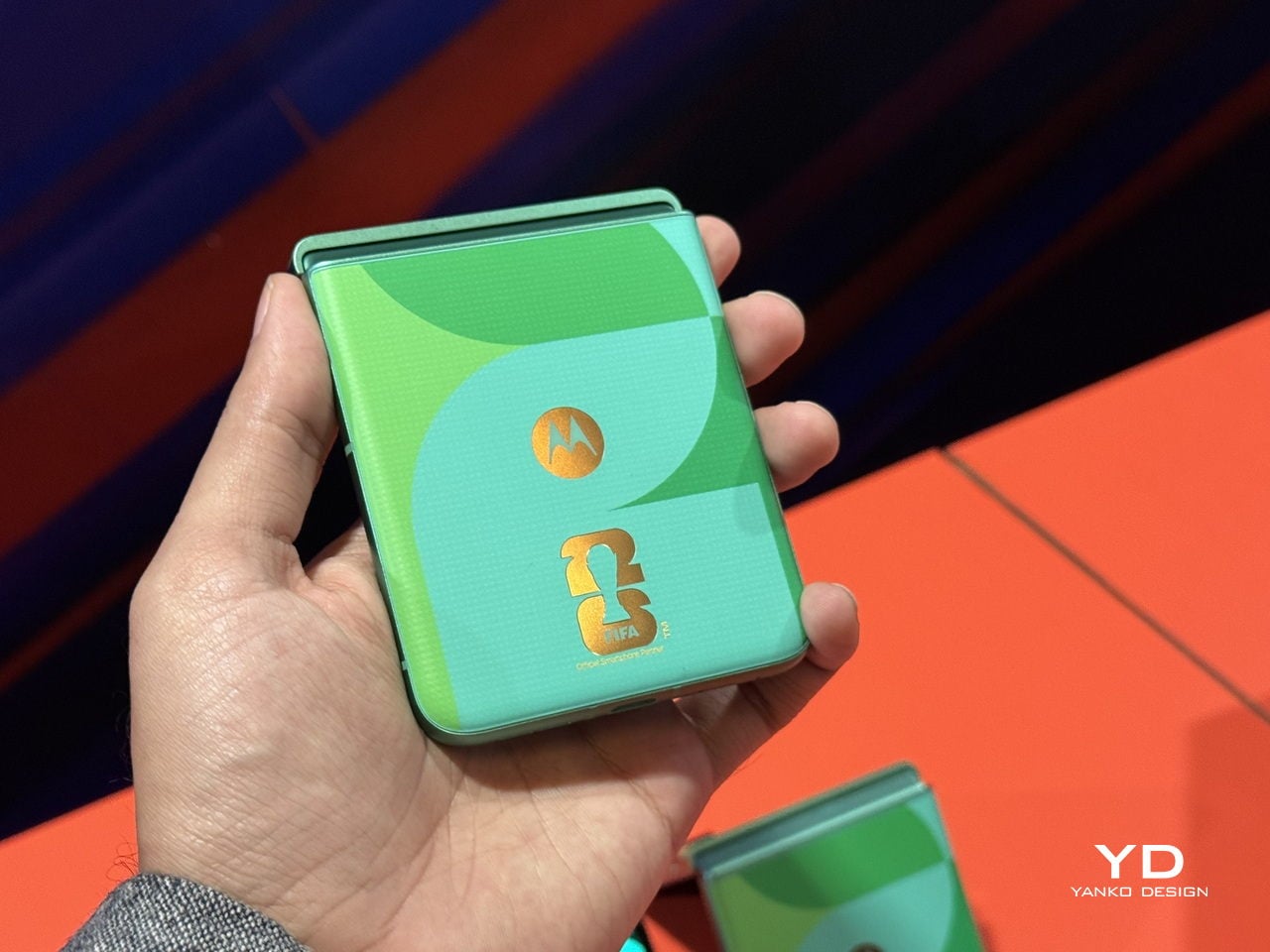
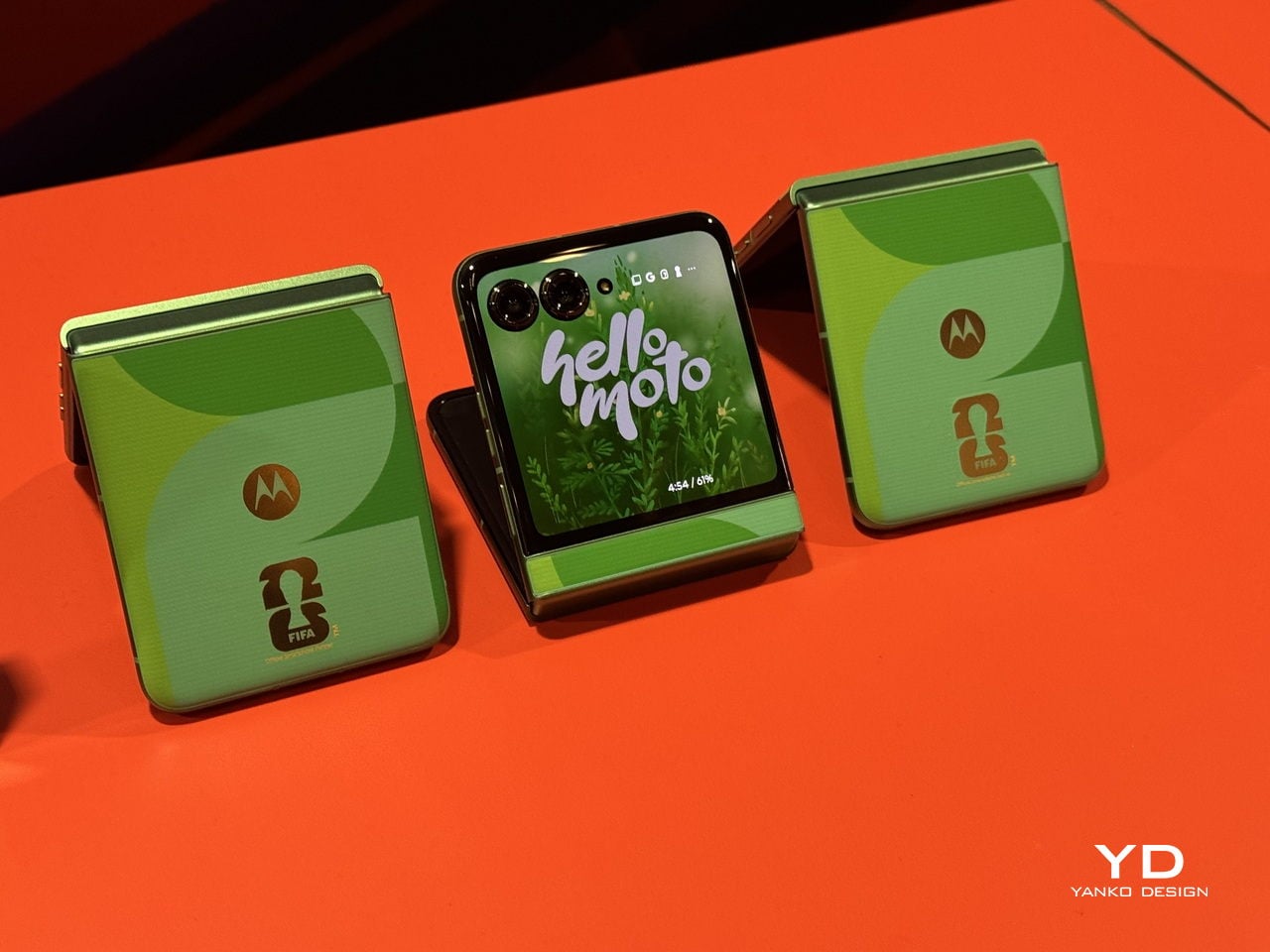
The Motorola razr FIFA World Cup 26™ Edition is a limited-edition collectible device that celebrates the first-ever 48-team FIFA World Cup. It is a mobile phone that’s designed for soccer fans who are excited about the upcoming tournament and for anyone who loves things where technology meets sports culture.

Designer: Motorola

This special razr edition boasts a stunning vibrant green shade reminiscent of a football pitch where all the action takes place. It has a soft-touch vegan leather back cover with multicolor geometric patterns, showing off fluid motion representing energy and inclusivity. Since this is a foldable phone, the pattern is designed to flow seamlessly across the device, giving you a unified, continuous look whether it’s folded or open.

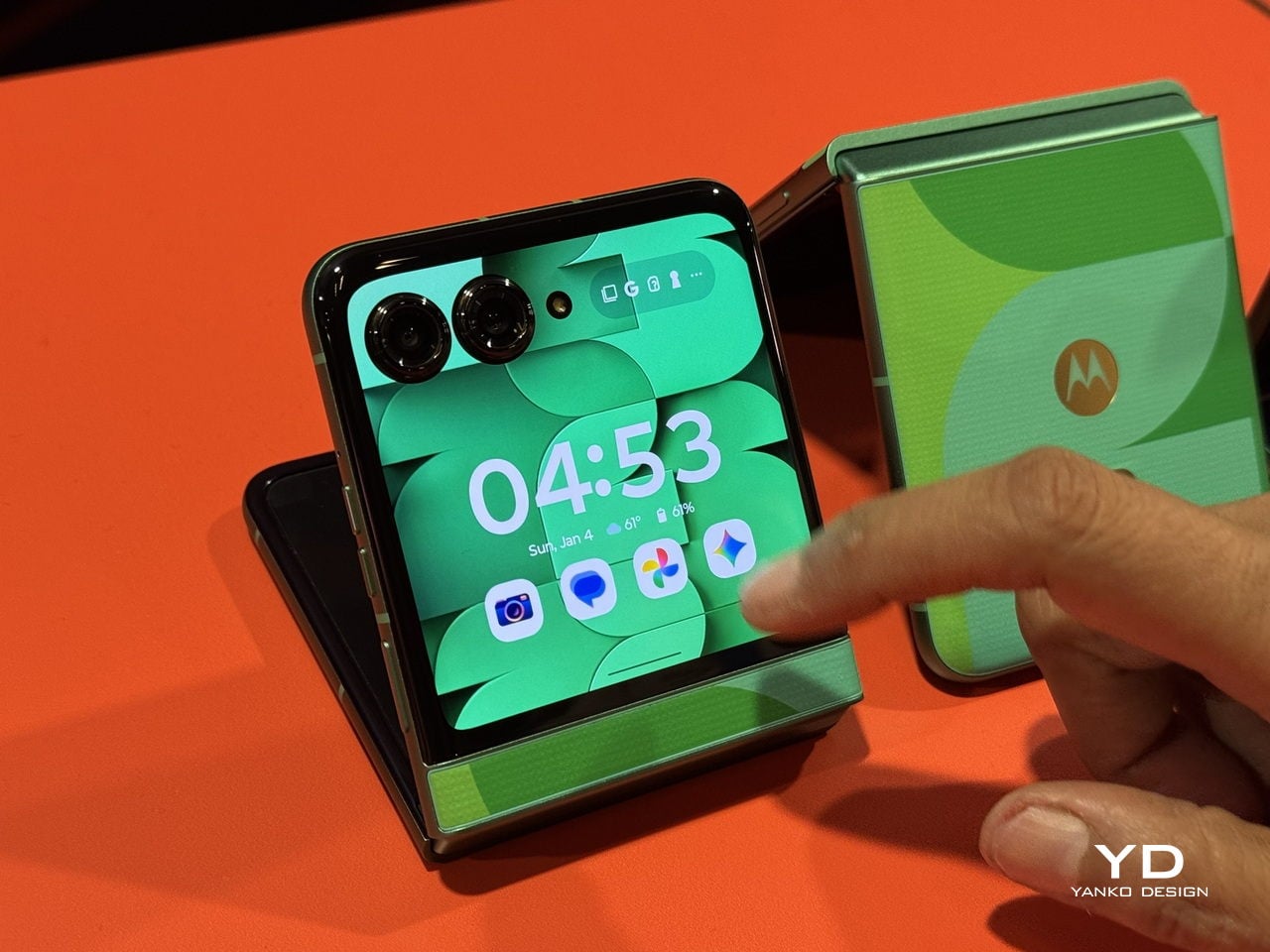
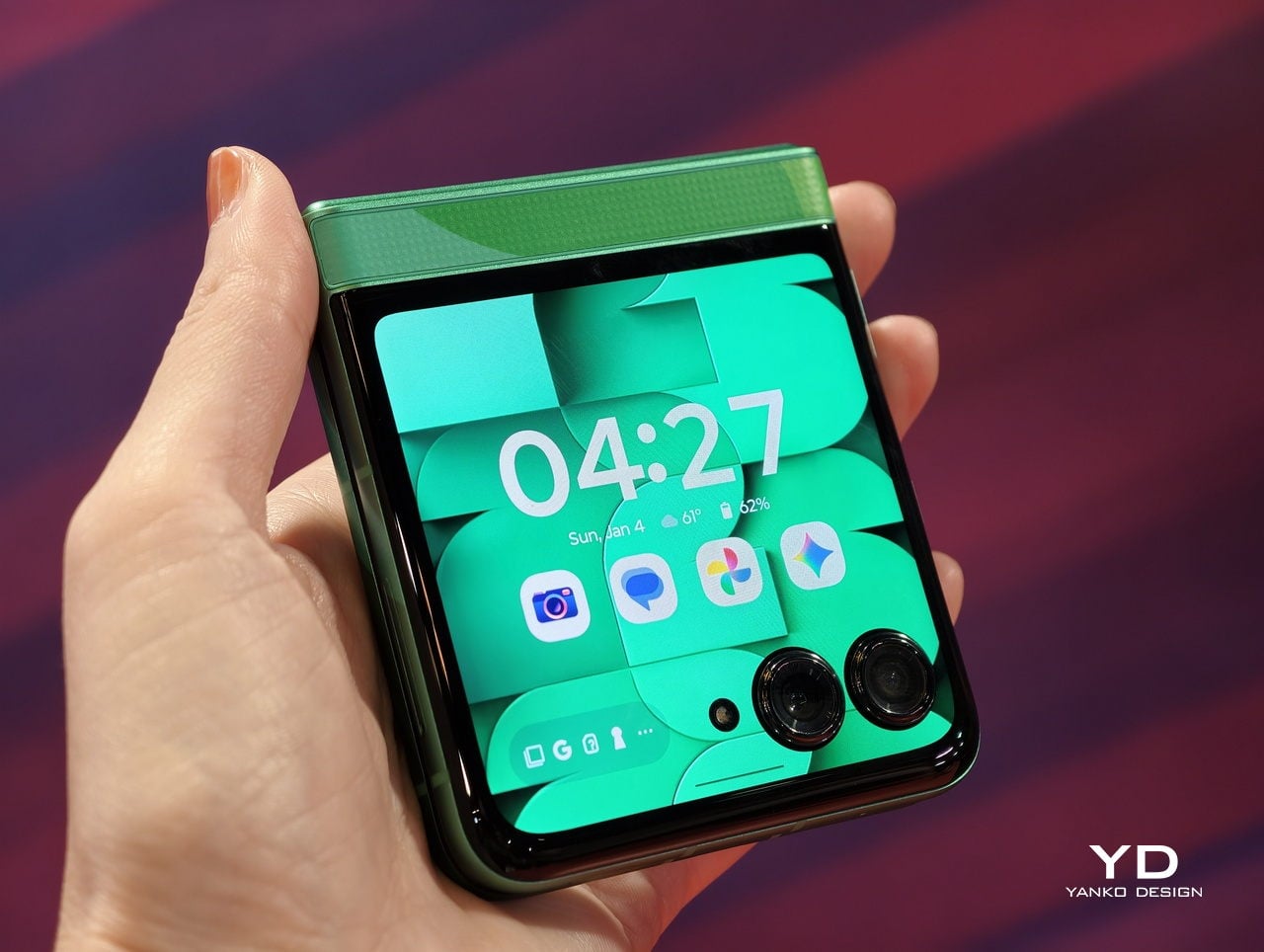
The main display is a 6.9″ Foldable AMOLED screen with HDR10+, FHD+ resolution, adaptive refresh rate up to 120Hz, and stunning 3000 nits peak brightness. This should be perfect for when you’re watching the football matches on your smartphone. The external display has a 3.6″ pOLED with adaptive refresh rate up to 90Hz and 1700 nits peak brightness. You can stay connected with the latest scores and notifications even without having to open your phone.

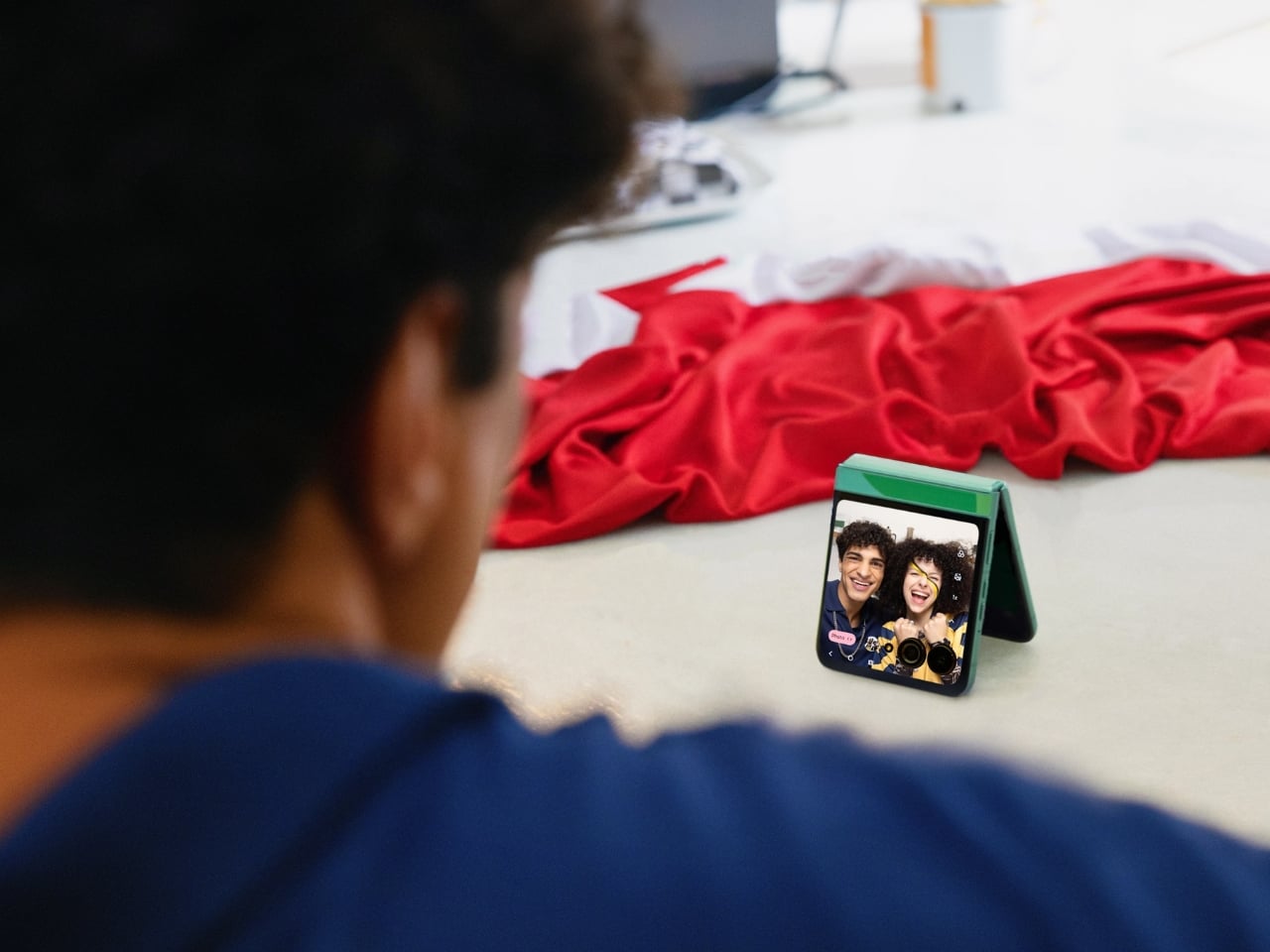
If you’ll be watching the matches live, Motorola wants to make sure your camera system is perfect for those match-day memories. It has a 50MP main camera with a 13MP Ultrawide + Macro Vision Camera with a 120° field of view and a 32MP front camera for those reaction shots. It also has some creative features like Auto Night Vision, 4K UHD video at 30fps, Adaptive Stabilization, and Horizon Lock to get smoother videos. The main camera even includes OIS (Optical Image Stabilization) and Pantone™ Validated Color, ensuring your photos look professional and true to life.

Under the hood, the razr FIFA World Cup 26™ Edition runs on Android™ 15 with a MediaTek Dimensity 7400X chipset and comes with 8GB of RAM and 256GB of storage in the US and Canada. The 4500mAh battery will keep you powered throughout the day, from kickoff to the final whistle, and when you do need to charge, the 30W TurboPower™ charging gets you back in action quickly. There’s also 15W wireless charging for added convenience.

What really makes this device stand out is its durability. It features a titanium-reinforced hinge and IP48 dust and water protection, meaning it can handle submersion in up to 1.5 meters of fresh water for up to 30 minutes. Whether you’re celebrating a goal with friends or caught in unexpected rain while heading to a viewing party, this phone is built to last. The audio experience shouldn’t be overlooked either. With dual stereo speakers tuned by Dolby Atmos® and three microphones, you’ll get immersive sound whether you’re watching matches, making video calls with fellow fans, or recording your own commentary.

Of course, since this is a special edition smartphone, you get FIFA World Cup features that only this phone has. You have exclusive wallpapers to celebrate the tournament, an official tournament theme ringtone, and a FIFA Watermark feature that you can add to your photos and videos before sharing them on your socials.

The Motorola razr FIFA World Cup 26™ Edition will be available starting February 12, 2026, with an MSRP of $699.99 in the United States and $999.99 CAD in Canada. In the US, Verizon will serve as the exclusive carrier partner during the introductory month, and unlocked models will be available on motorola.com, with Amazon.com availability coming later.

For collectors and football enthusiasts alike, this limited-edition device represents more than just a smartphone. It’s a piece of World Cup history you can carry with you. With its eye-catching design, powerful features, and exclusive FIFA content, the razr FIFA World Cup 26™ Edition is the perfect companion for experiencing the tournament’s excitement, whether you’re in the stadium or streaming from home. If you want to showcase your passion for the beautiful game while staying connected in style, this collectible device deserves a spot in your hands and your collection.

The post This $699 FIFA World Cup Phone Is a Limited-Edition Collector’s Dream first appeared on Yanko Design.

Lenovo’s ‘Horizontal Rollable’ Legion Pro Laptop Expands From 16 to 23.8 Inches: Hands-on at CES 2026

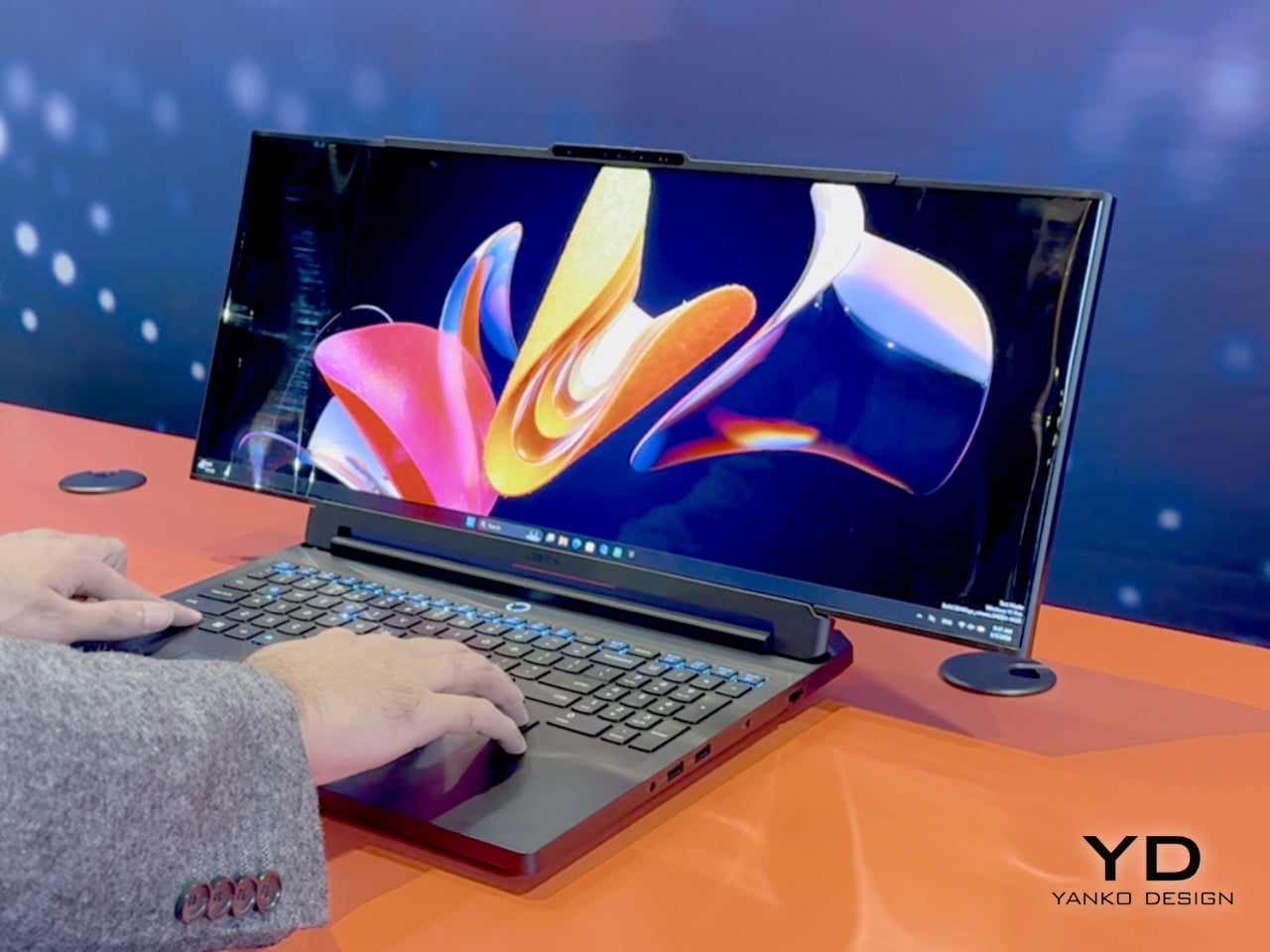
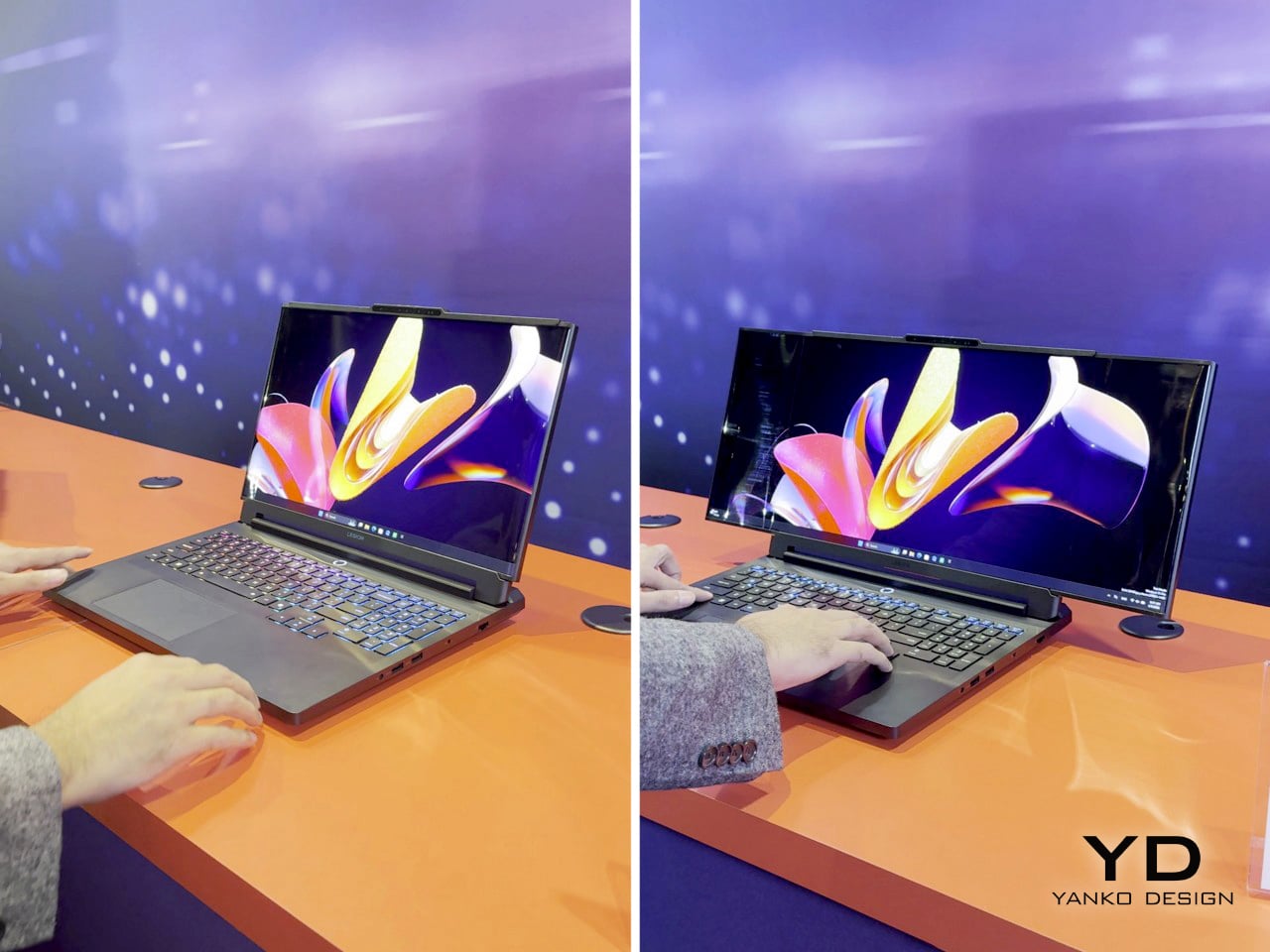
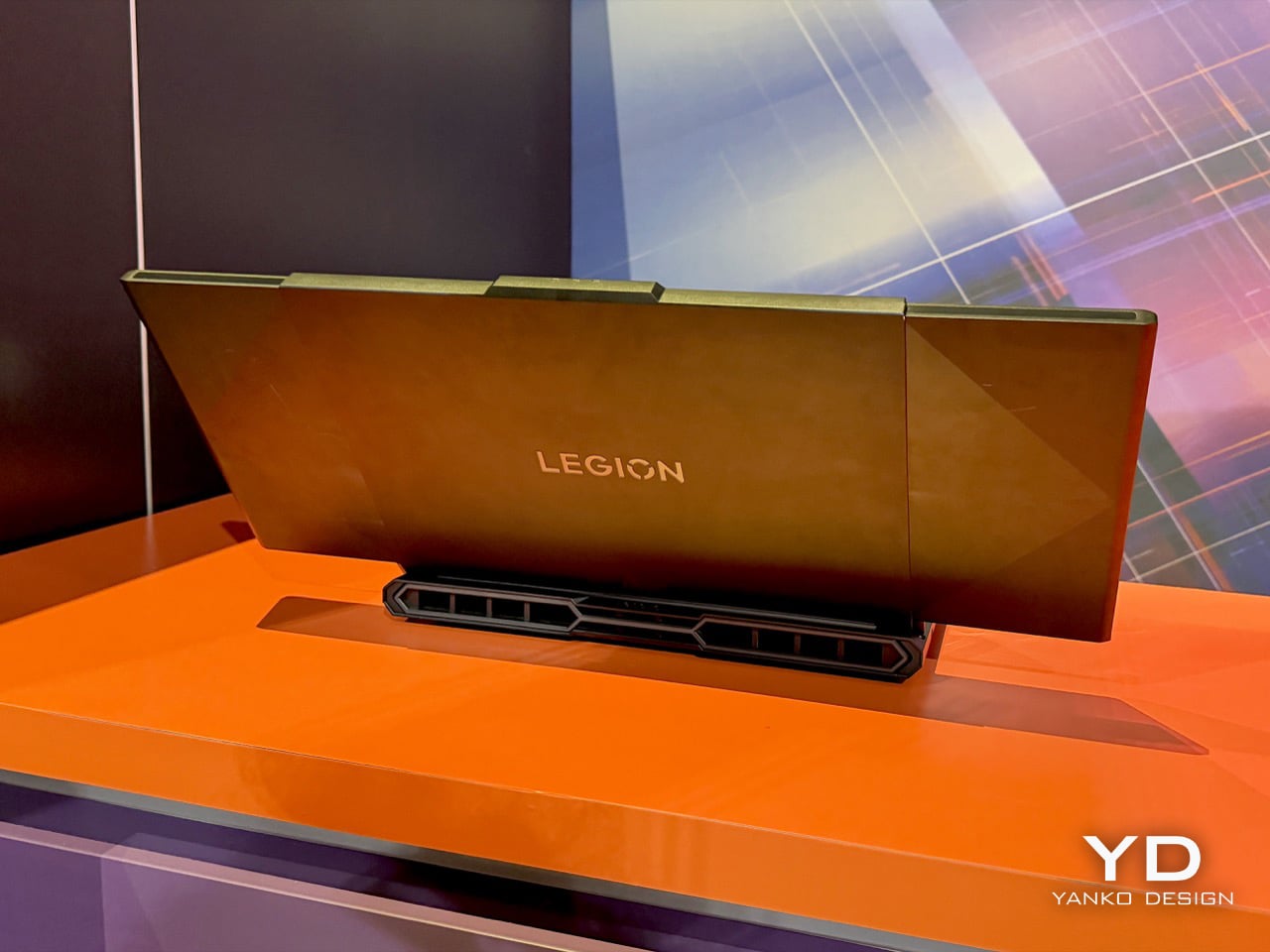
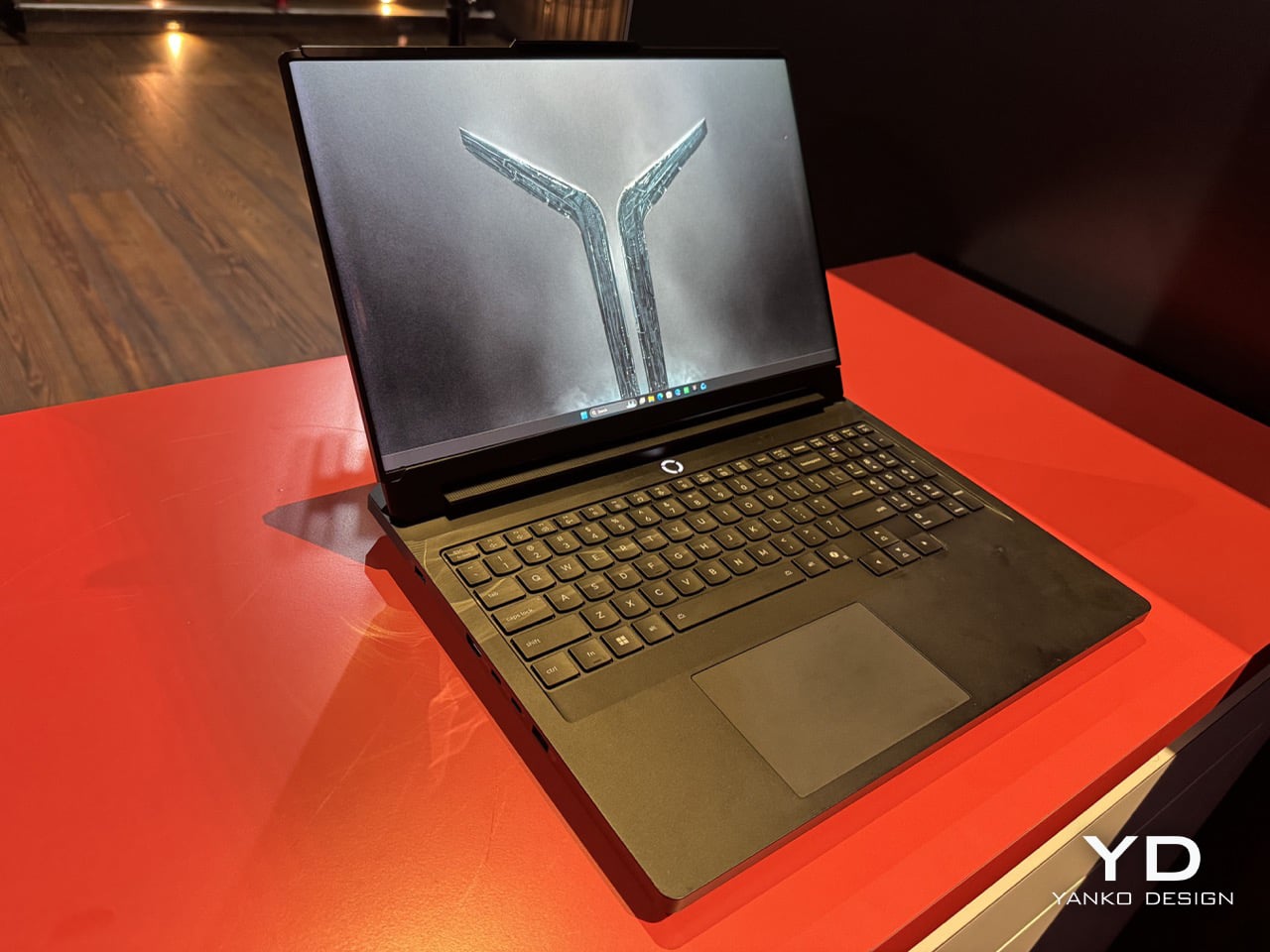
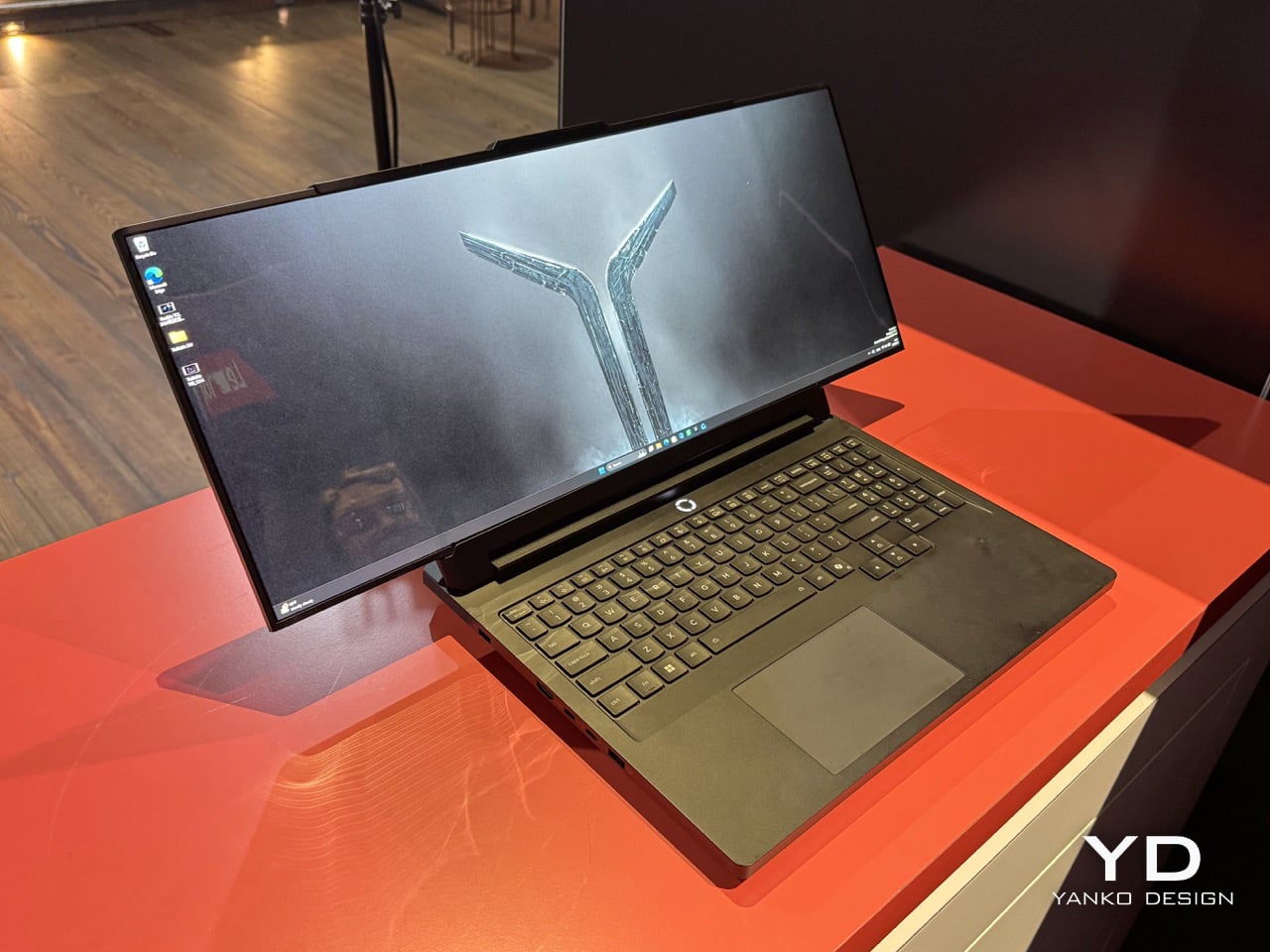
Lenovo’s Legion Pro Rollable concept solves a problem that’s annoyed traveling gamers and esports pros for years: you either carry a full-size monitor with you or accept that your laptop screen is too small for serious practice. The concept starts as a standard 16-inch gaming laptop, then physically expands horizontally to 21.5 inches and finally 23.8 inches when you need the extra width. A rollable PureSight OLED panel stretches from both ends using dual motors and a tension system designed to keep the screen taut and protected through repeated cycles, turning one device into three different training setups without packing an external display.

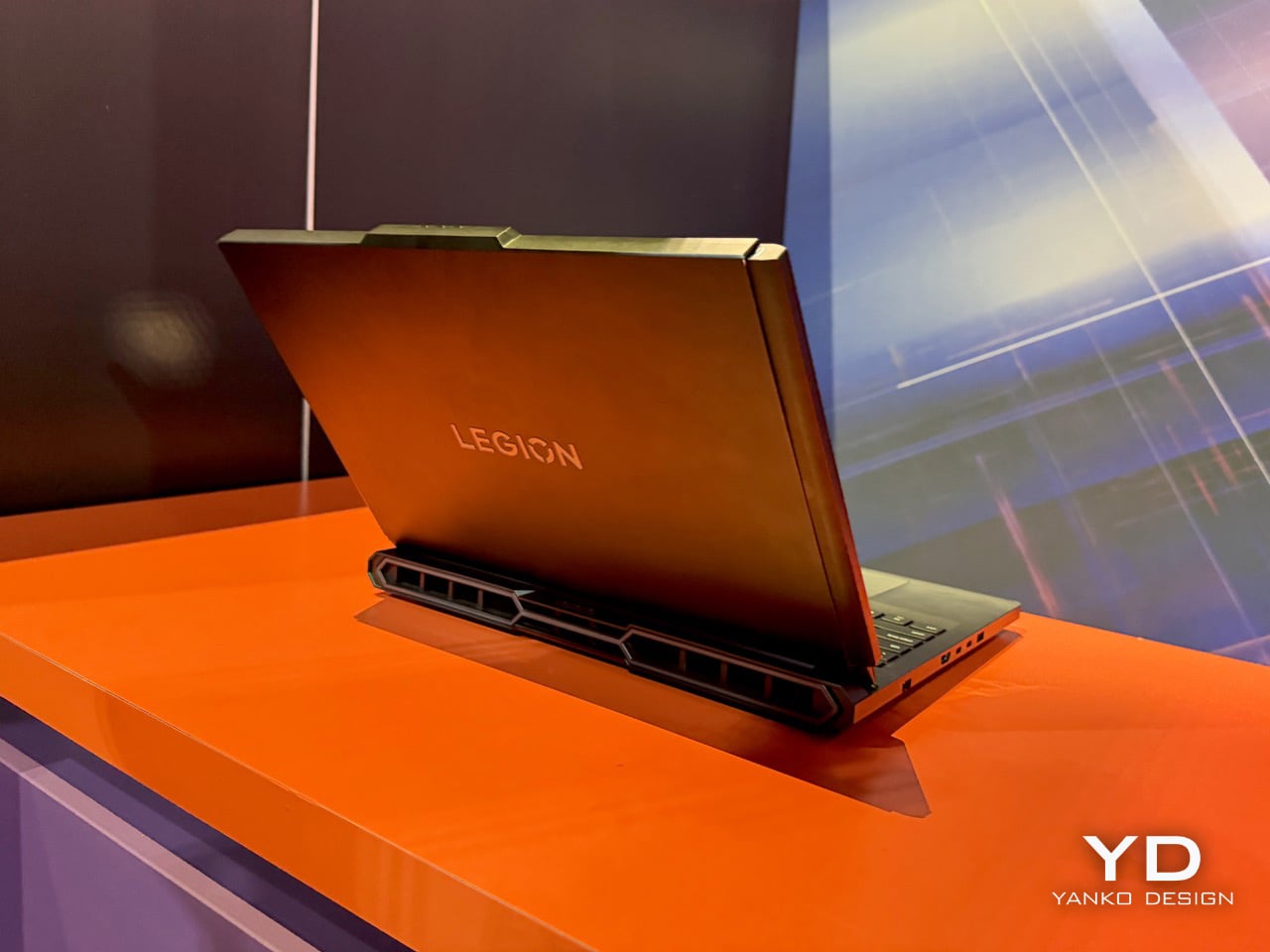
Professional esports athletes compete on 24-inch monitors at tournaments, which makes training on a 16-inch laptop screen feel like practicing free throws on a hoop that’s two feet lower than regulation. Lenovo built the concept around that reality, calling the 16-inch mode Focus Mode for precision drills, the 21.5-inch state Tactical Mode for peripheral awareness training, and the full 23.8-inch extension Arena Mode to replicate actual competition conditions. The hardware underneath is Legion Pro 7i spec with Intel Core Ultra CPUs and an RTX 5090 laptop GPU, so performance isn’t the compromise here. The rollable display is the entire point, and if it works reliably it eliminates the extra monitor from the travel checklist.

Designer: Lenovo

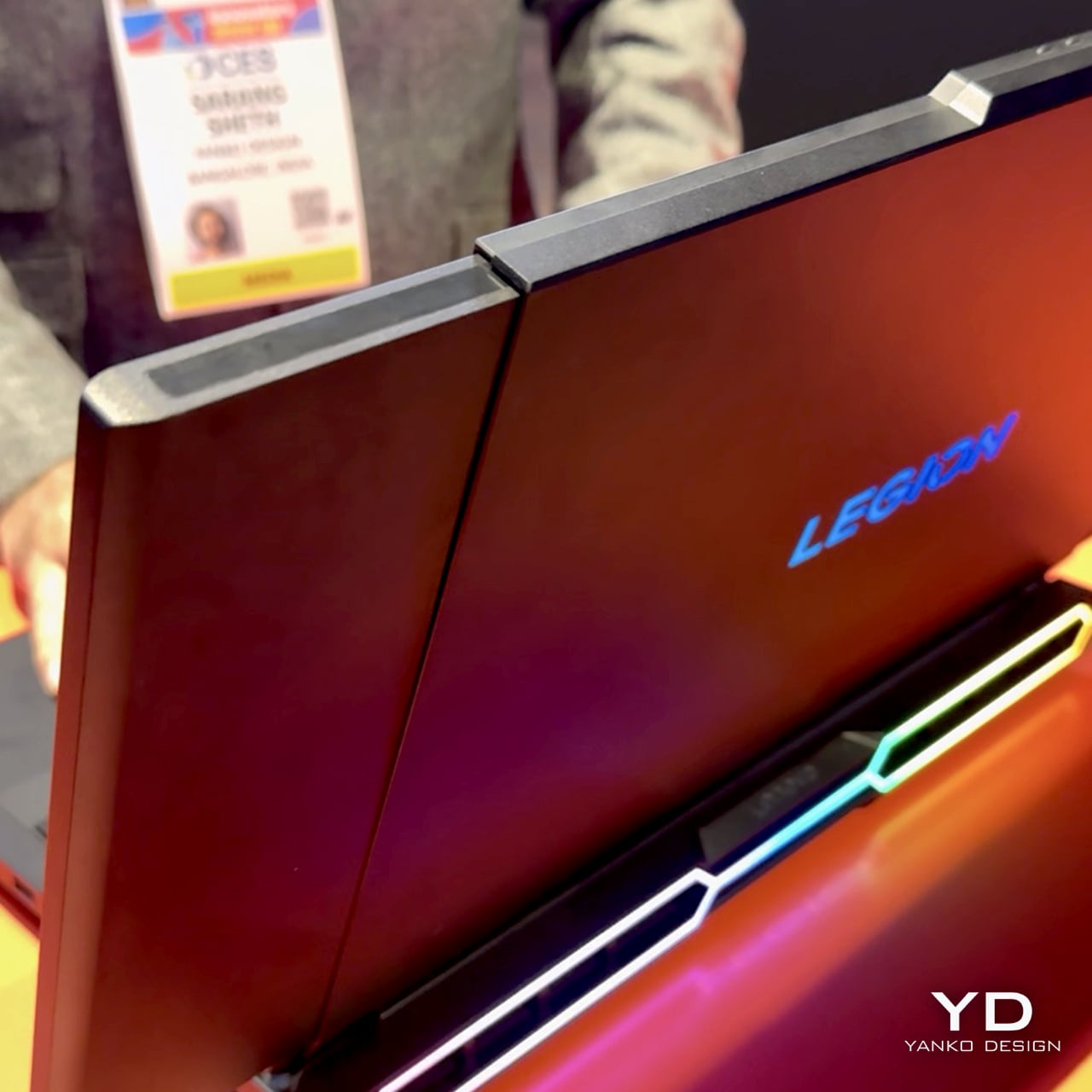
Seeing it in action on the CES floor was something else. The mechanism is surprisingly smooth, unfurling with a quiet hum that sounds more refined than experimental. Lenovo calls it a dual-motor, tension-based design, which is a sterile way of describing how it keeps the flexible OLED panel perfectly flat and taut, even at full 23.8-inch extension. They’ve apparently lined the rolling path with low-friction materials to prevent the screen from scratching itself over time. The whole thing feels solid, not like a fragile prototype you’re afraid to touch. My only complaint is that Lenovo keeps calling this a ‘concept’ even though they should easily mass-produce this thing.

The panel itself is a PureSight OLED, so the colors and contrast are exactly what you’d expect from a high-end gaming display. The real story is the aspect ratio. When it expands, it doesn’t just get bigger; it transforms into an ultra-widescreen that changes how you see the game. This is what makes it a genuine training tool rather than just a gimmick. For FPS or MOBA players, that extra horizontal space in Tactical and Arena modes is crucial for peripheral vision. It’s a purpose-built machine, not a productivity laptop with a gaming sticker. The 23.8-inch final size is a direct nod to the 24-inch class monitors that dominate the pro circuit, making this the most authentic portable training rig I’ve ever seen.

Of course, you can’t buy one. Lenovo was very clear this is a proof of concept, a way of showing off what their engineers are cooking up. It’s a statement piece for the CES showcase, a flex of R&D muscle. It’s a bit funny, really. We’re living in a world where we got a fully functional, mechanically expanding laptop screen before we got Grand Theft Auto VI. In a way that’s a great thing, because I’d honestly love to play an open-world RPG on a portable 24″ laptop. A new GTA game demands leaps and bounds in hardware too, no?

So, will we all be carrying rollable laptops in a few years? Lenovo already began selling a commercial version of its vertical rolling ThinkBook, so even though they keep calling this Legion rollable a concept, chances are it’ll see the light of day soon enough. Most tech people around me seem to agree that this format of a horizontal rollable works so much better than the vertical one. The only gripe people have is that this tech is exclusive to Lenovo’s Legion gaming line, when graphic designers, video editors and productivity gurus would benefit so much more from a rolling screen like this!

The post Lenovo’s ‘Horizontal Rollable’ Legion Pro Laptop Expands From 16 to 23.8 Inches: Hands-on at CES 2026 first appeared on Yanko Design.
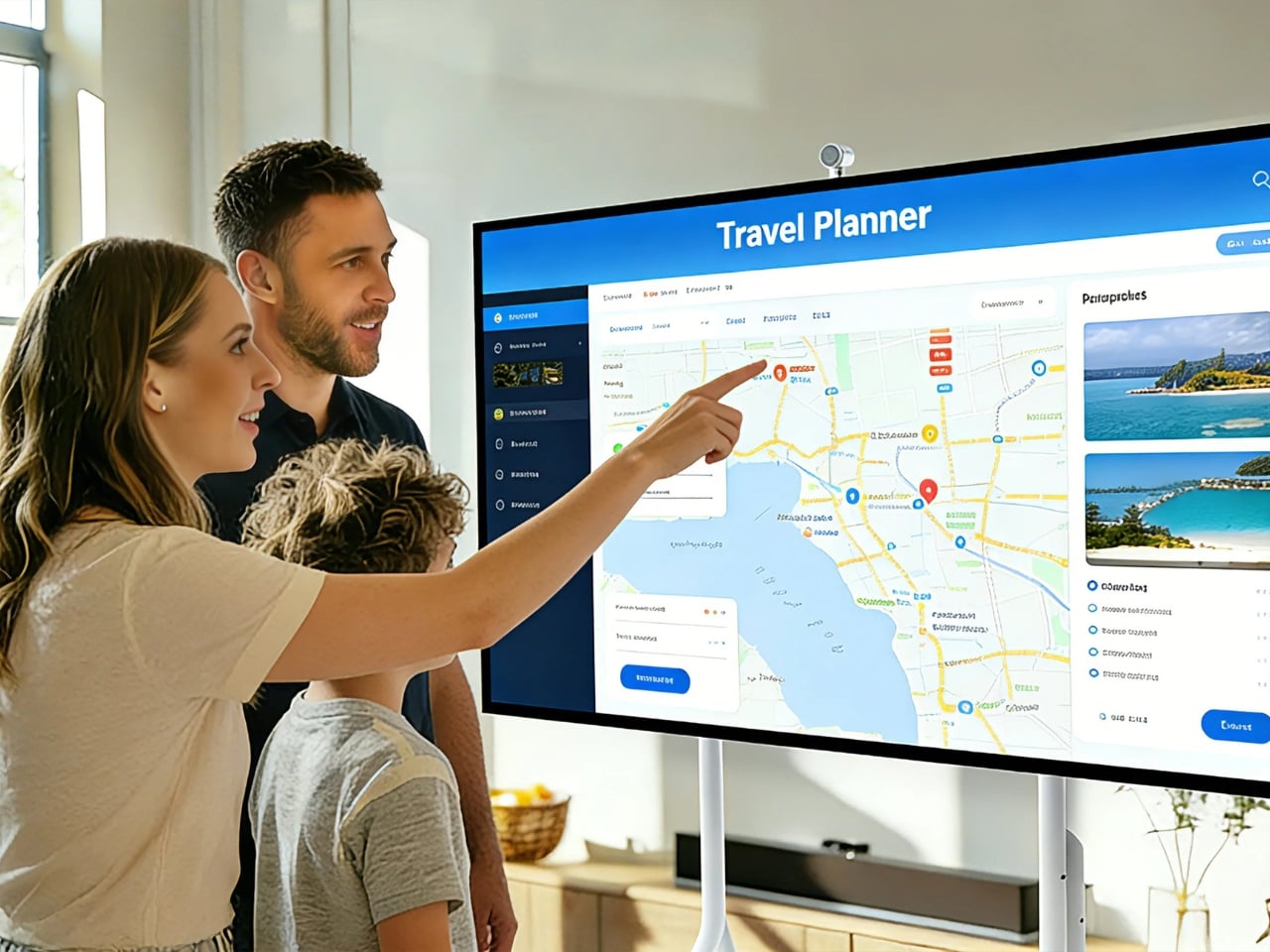
This 55-Inch Smart Calendar Has Wheels and Runs Your Entire Home

As I get older, smaller screens and fonts are becoming my enemy as my eyesight is visibly strained. I’m actually scared that someday I would need a humongous screen to do all my work and tasks, or at least something that can enlarge the font to something I can comfortably read. We’ve seen huge screens like the Amazon Echo Show 21 and the Skylight Calendar Max for those who need larger displays, but this new one from Cozyla takes the cake. Or rather, takes the screen.

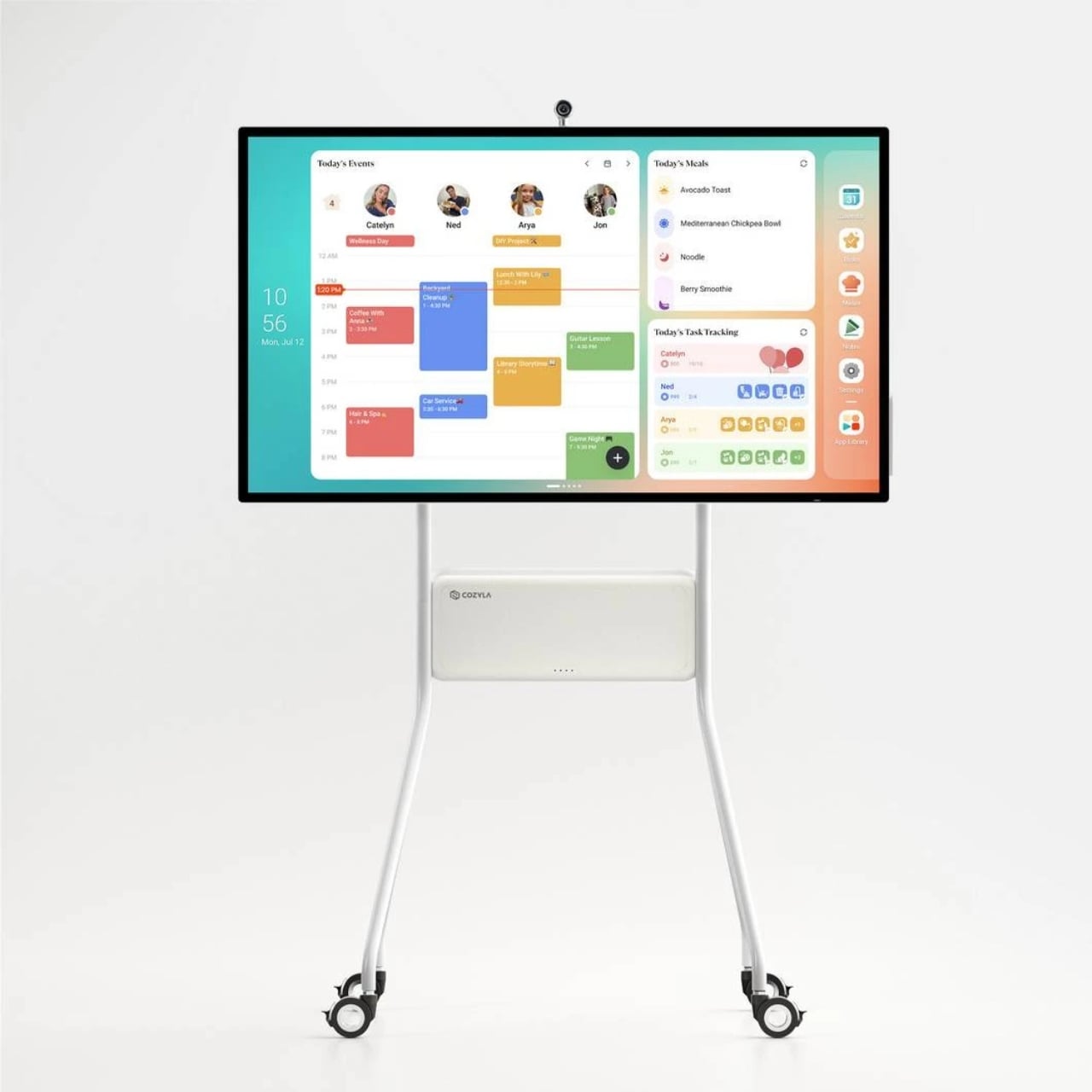
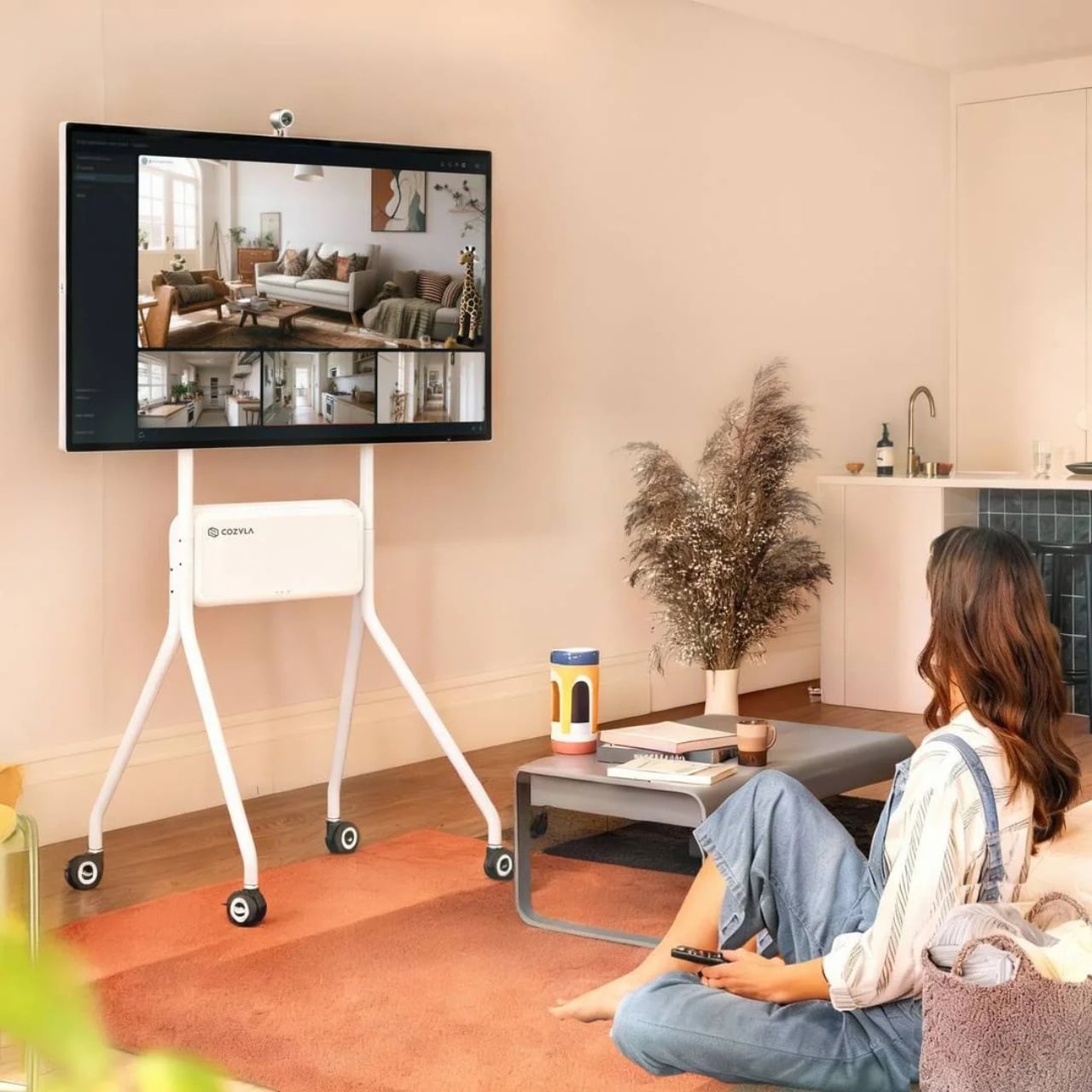
The Calendar Plus Max is a massive 55-inch 4K touchscreen that serves as a smart home command center, a calendar for your entire household, and even as a smart TV so you can watch together. Cozyla announced this at the ongoing CES 2026 and it’s considered to be the largest smart calendar display on the market right now. I don’t have a household to manage and I don’t have the space, but the idea of having this huge screen in my place seems like a dream.

Designer: Cozyla

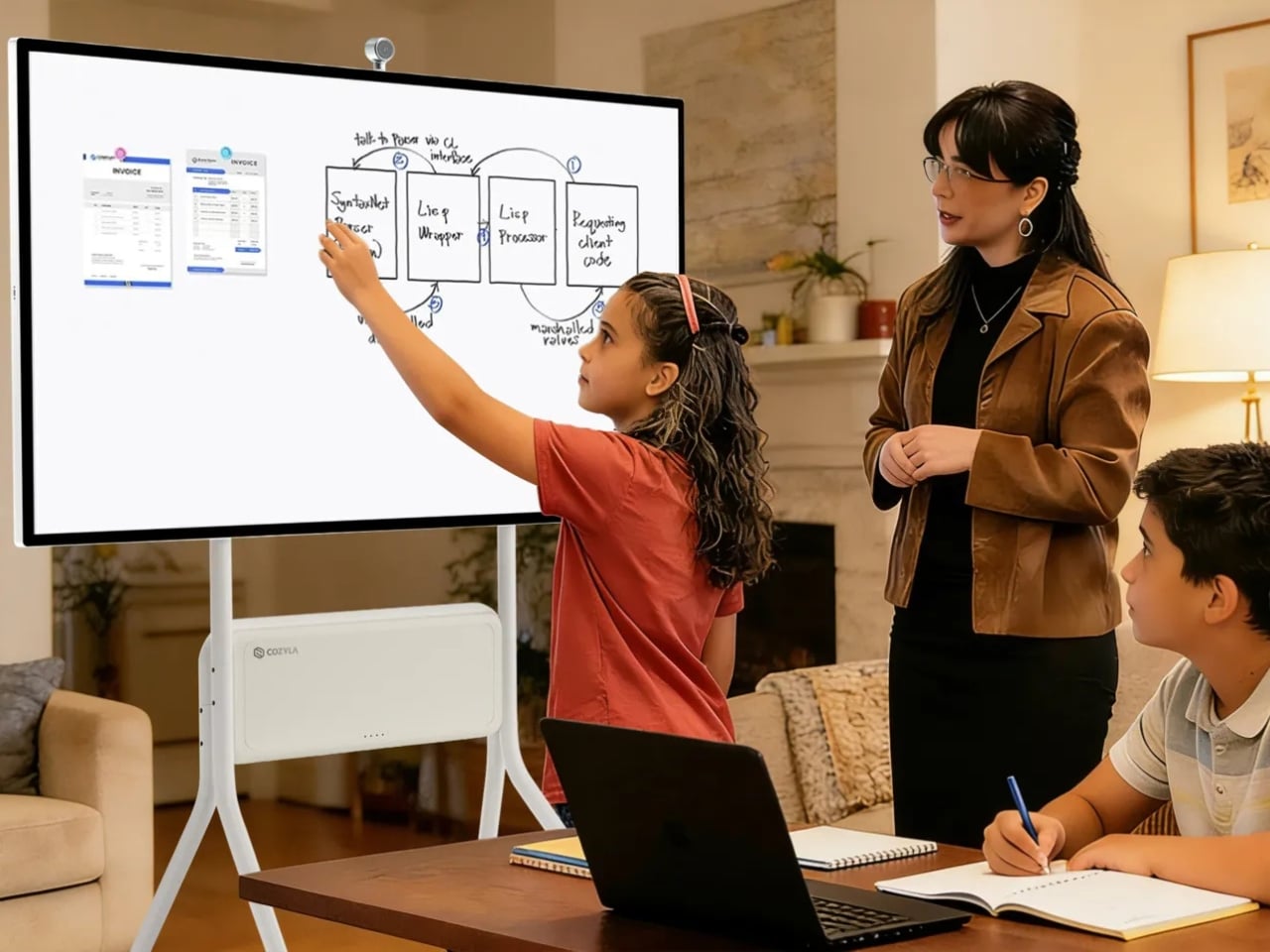
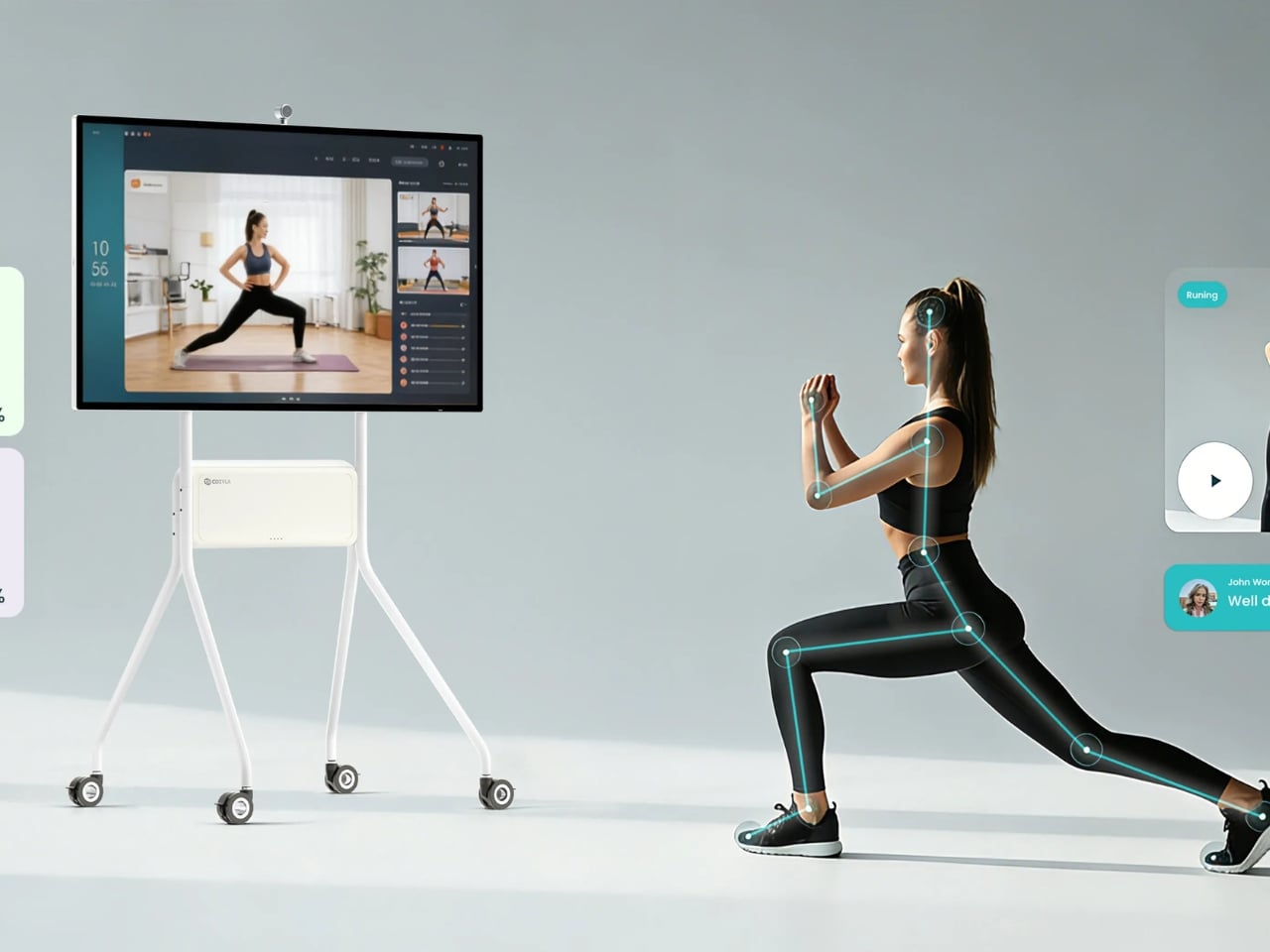
This huge display comes with a wheeled stand for portability, so you can bring it around your house wherever you need it. It’s Wi-Fi enabled, so you get seamless connectivity as well. Imagine wheeling it into the kitchen during the morning rush when everyone’s trying to figure out their day, then moving it to the living room for family planning sessions, or even into your bedroom for a movie night. The mobility factor is something most smart displays don’t offer, and it’s honestly a game-changer.

Instead of having different devices to manage your home or various sticky notes if you’re still analog, you can use this display so that everything’s in just one huge place. It has a large touchscreen, so kids, adults, and grandparents can all easily manage it without squinting or fumbling. You also get a sleek, contemporary design that makes it look like premium tech and not just a utility device. At 55 inches, it’s the same size as a standard household TV, which means it commands attention without looking out of place in a modern home.

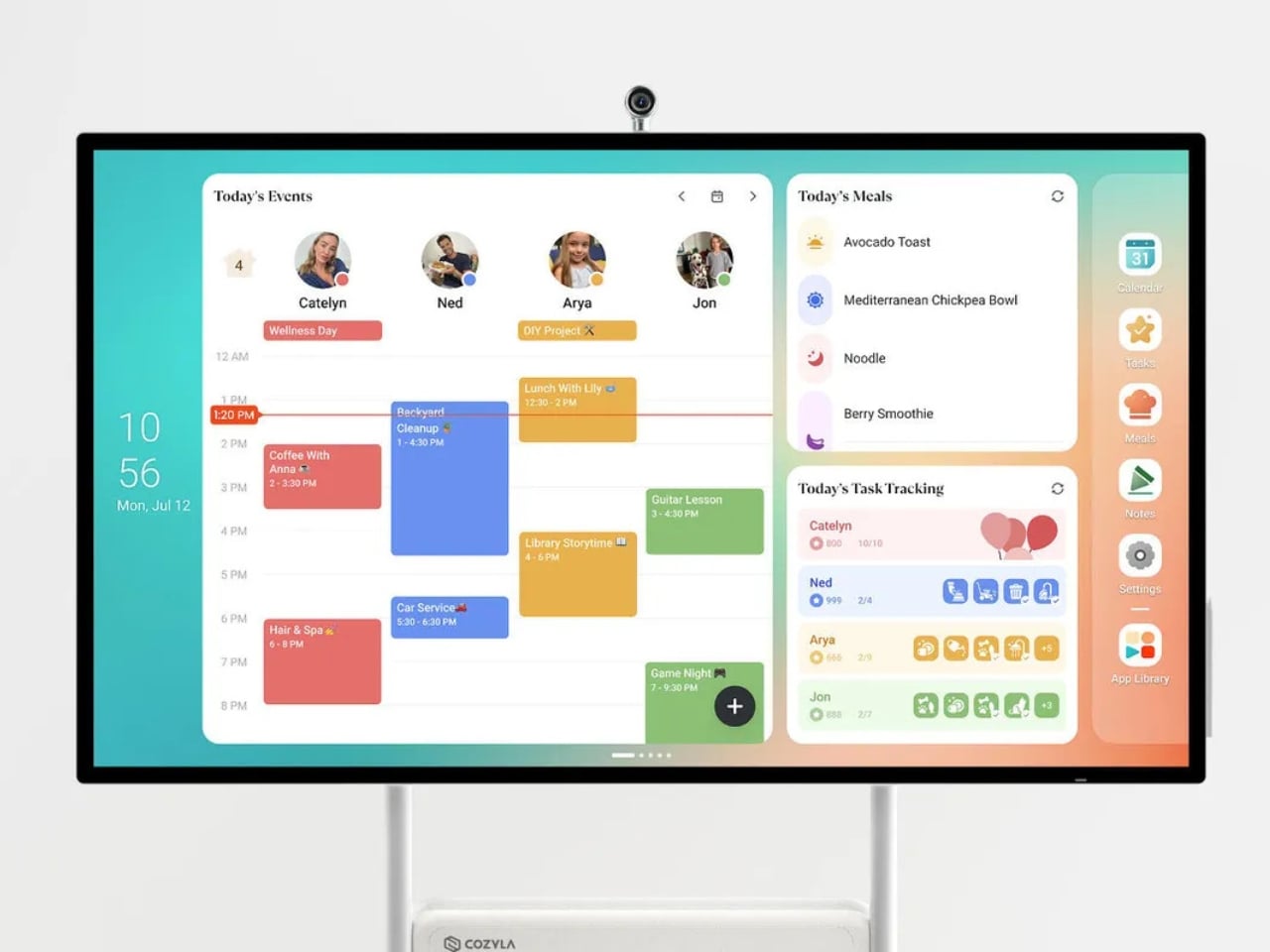
Since “calendar” is in its name, one of the main features of this device is its CalendarOS Smart System. You can create up to 8 family member profiles, and you can even personalize the color coding for each person. You can sync calendars from various services like Apple, Google, Outlook, and others, so you get one unified view instead of checking multiple apps across different devices. No more “I didn’t see that on my phone” excuses from the family. You can also create a customizable dashboard with widgets, shortcuts, and lists that make sense for your specific household needs.

As your “home mission control” device, you can add meal planning features to prep your weekly menus, create chore charts so everyone knows their responsibilities, manage to-do lists, and keep shopping lists updated in real-time. It centralizes all the tiny organizational tasks that usually get scattered across phones, refrigerator magnets, and forgotten notebook pages. Since the display runs on full Android OS, you can also use it as a smart TV for family movie nights, play YouTube videos as you cook or do chores, play games with the kids, and basically do any other thing that you use Android features and apps for.

It’s a device that can be used for both productivity and entertainment, whatever your family needs at the moment. The 4K resolution means whether you’re viewing your calendar details or watching your favorite show, everything looks crisp and clear. For those of us with aging eyes, being able to see text and images clearly from across the room is an absolute blessing. The Cozyla Calendar Plus Max represents a new category of home technology, one that acknowledges that families need centralized, visible, and accessible information hubs. It’s not trying to be another device you check occasionally; it’s meant to be the family communication center that everyone naturally gravitates toward.

While Cozyla hasn’t announced official pricing for the Max model yet, their smaller calendar displays typically range from around $165 to $400 and up, so expect this premium 55-inch version to be positioned as an investment piece. But for families drowning in scheduling chaos, or for anyone who appreciates having technology that actually simplifies life rather than complicating it, this could be worth every penny.

The post This 55-Inch Smart Calendar Has Wheels and Runs Your Entire Home first appeared on Yanko Design.

JBL unveils lifestyle oriented open-ear earbuds at CES 2026

Open-ear earbuds and headphones are trending for good reason, and JBL has kick-started its year with some exciting announcements at CES 2026. They’ve launched three different lineups of open-ear audio and fitness-focused designs. These buds and headphones are broadly spread over three product lines: the Endurance, Sense, and Soundgear CLIPS – with 5 products in total.

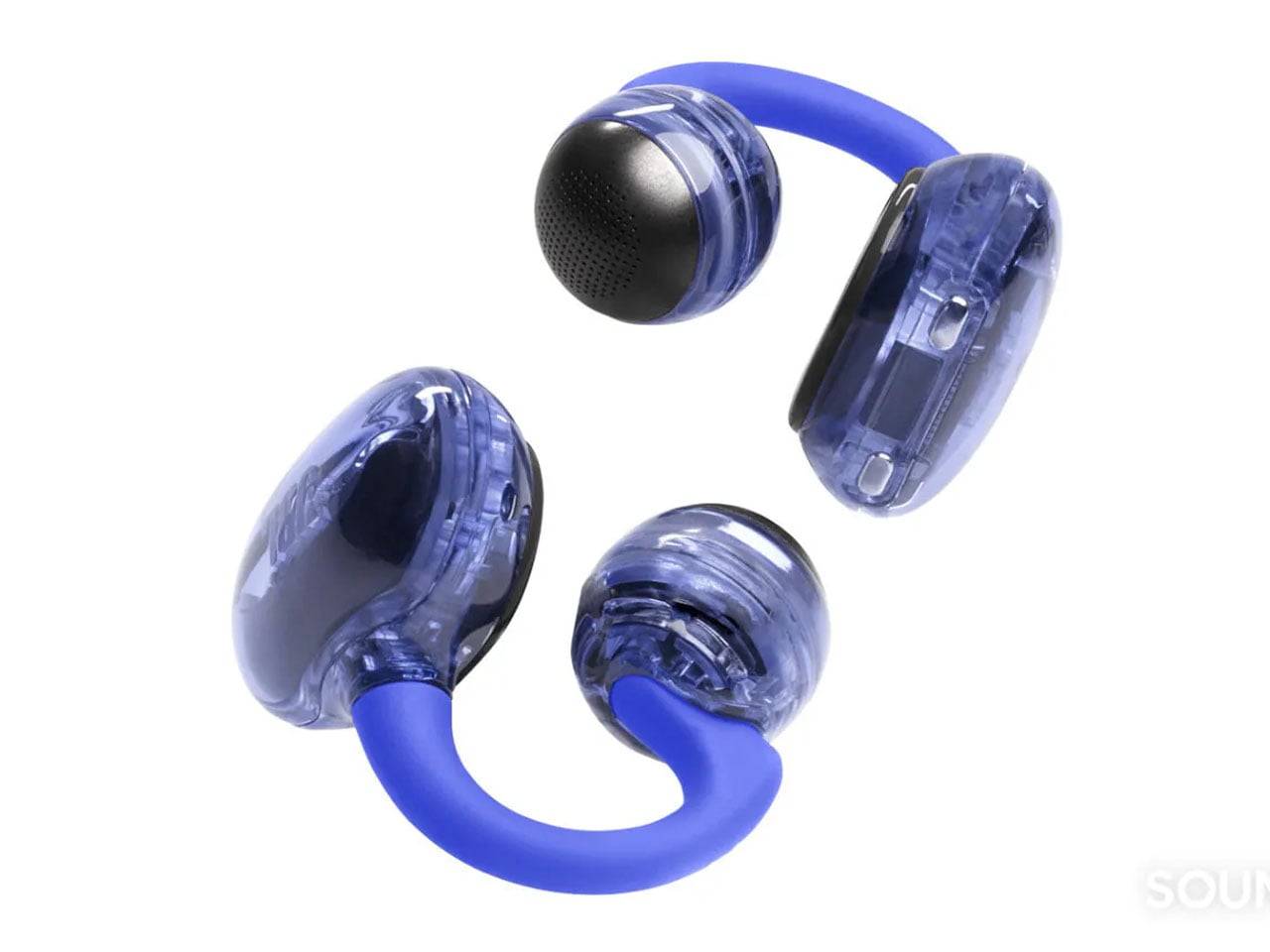
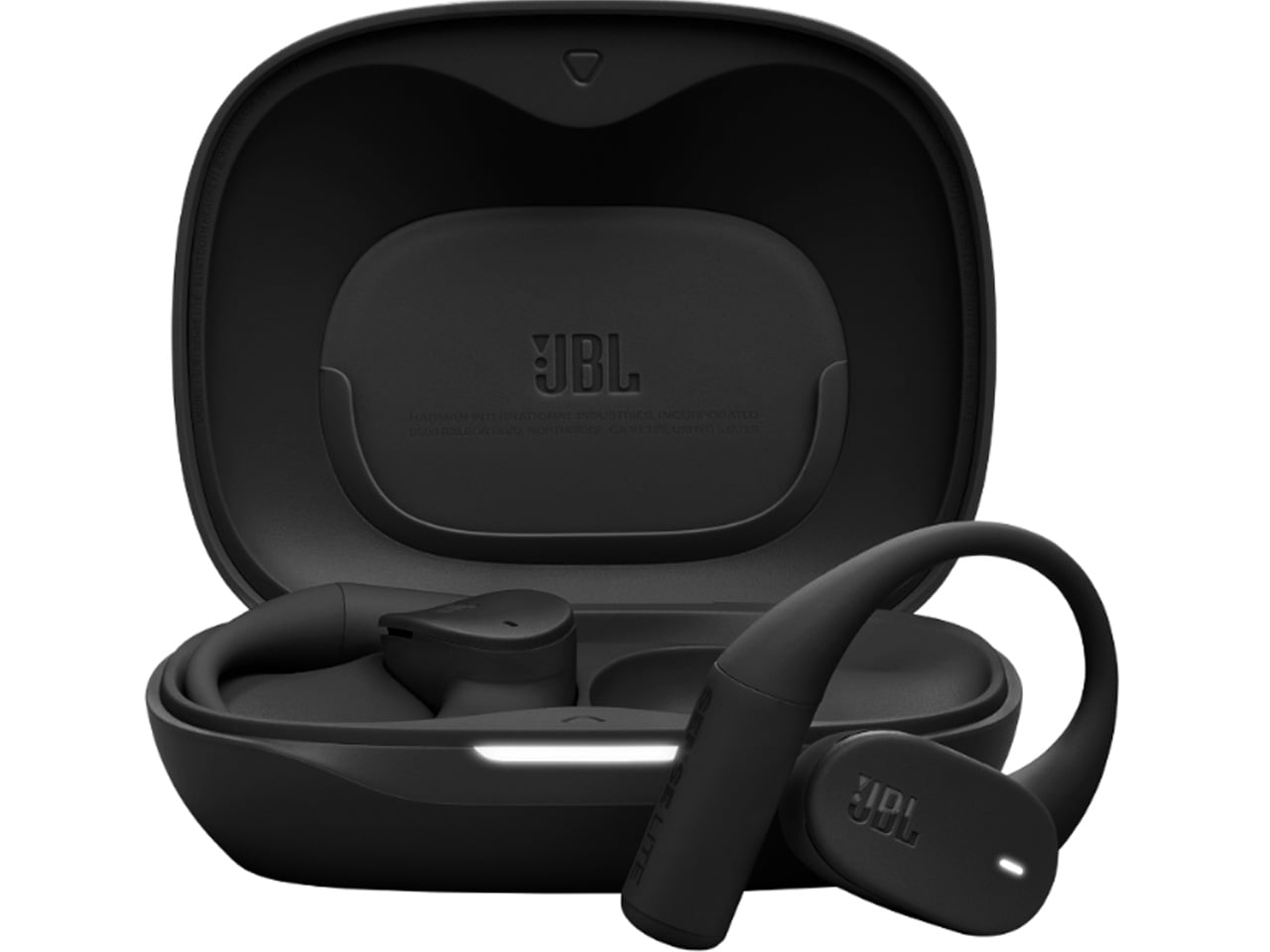
The OpenSound Series lineup is the brand’s audio-first open buds, comprising the Sense Pro and Sense Lite earbuds. They make use of air conduction technology to deliver a lively, bass-rich sound. The Soundgear CLIPS are the most fashion-forward open ears shaped like earring cuffs, something like the Shokz OpenDots One. Along with these, the Endurance Series buds are tailored for active individuals who like the comfort of long hours of listening to their tunes.

Designer: JBL

OpenSound Series

Sense Pro earbuds are the flagship open-ear headphones specifically designed for audio lovers who value the nuances of music. In conjunction with the 16.2mm drivers and the Adaptive Bass Boost technology, they deliver an enjoyable sound even though they don’t sit flush against your ear canal. Making calls with the Sense Pro is a delight even in the most crowded places, as it comes with four mics and the Voice Pickup Sensor technology for a clear calling experience. The buds have 38 hours of playtime in total with the earbuds lasting eight hours on a single charge in the case. The adjustable ear hook ensures all-day comfort for extended listening. The Sense Pro priced at $200, will come in black or white colors when released in March 2026.

The Sense Lite earbuds are the toned-down version of the flagship Pro’s with a simplified aesthetic and feature list. Most of it is the same as the big brother, only the case battery is slightly less at 24 hours. The buds are rated for IP54 water and dust resistance, meaning you don’t need to worry about the odd splashes or listening sessions in a dusty environment. For the Sense Lite, you’ll have to pay $150, and they will also come in black and white color options when finally released in March.

Soundgear CLIPS

The style-driven Soundgear CLIPS hook onto your ear and are lightweight enough for all-day comfort. Soft TPU construction and the SonicArc shape of the earbuds deliver enhanced bass without any considerable sound leakage. The four AI-assisted mics ensure the calls are crystal clear even in super noisy places. These are also IP54 water and dust resistant, with the same 32 hours total battery life as the Sense Pro. The Soundgear CLIPS will come in more peppy color options, including metallic copper, blue, purple, and white. The clip-on earbuds will be priced at $150 and will have the same March 2026 release timeline.

The post JBL unveils lifestyle oriented open-ear earbuds at CES 2026 first appeared on Yanko Design.
ASUS and GoPro Built a 128GB Laptop for Video Editors at CES 2026

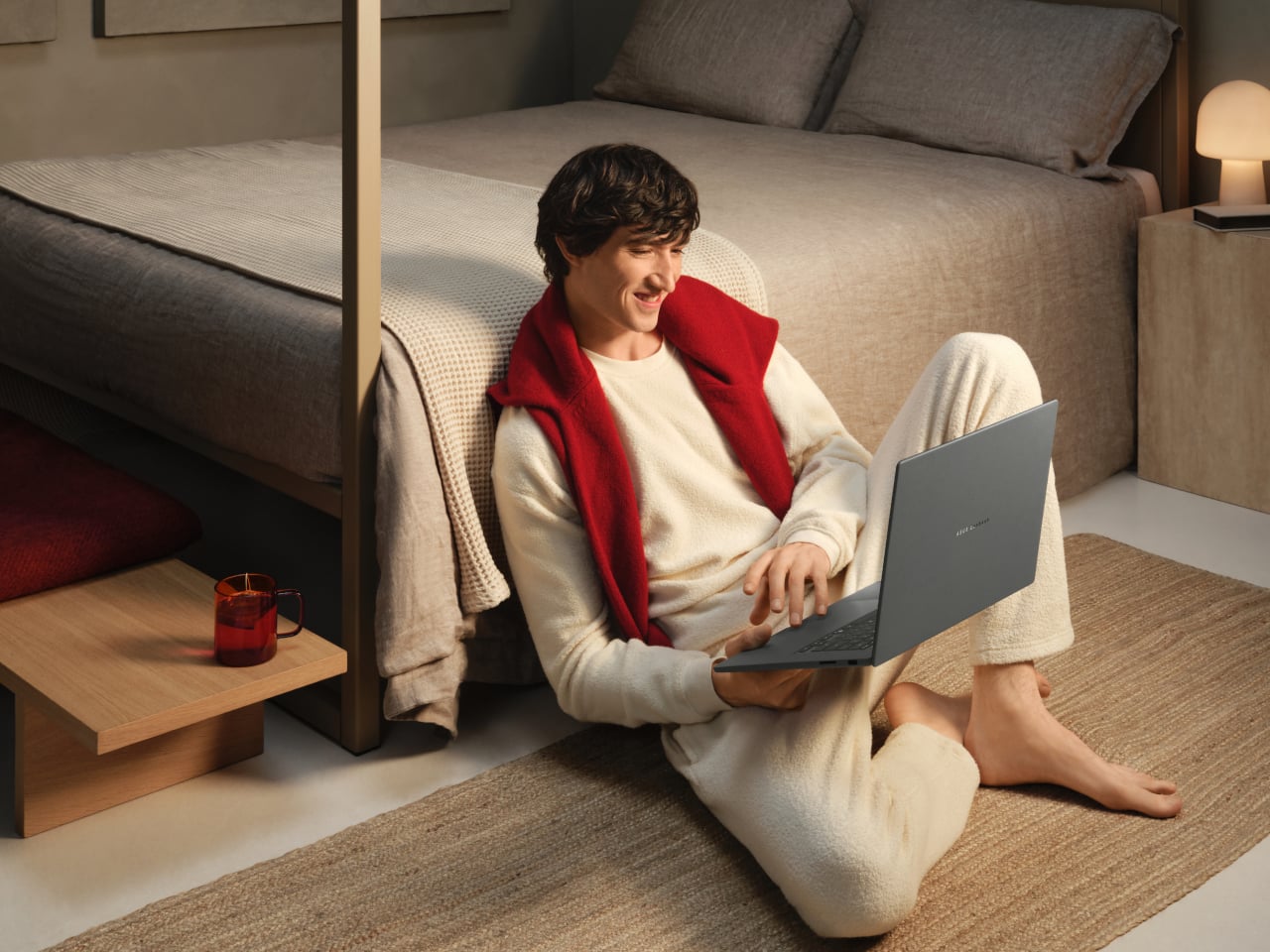
Laptops have quietly become the default creative tool for a lot of people, but the basic clamshell has not changed much in years. Copilot+ PCs, high-TOPS NPUs, and OLED panels are all becoming more common, and ASUS is using CES 2026 to ask what happens when you stop treating AI and displays as afterthoughts and start designing around them.

The updated Zenbook DUO and the ProArt GoPro Edition PX13 are the clear headliners, one stretching the laptop into a dual-screen studio, the other turning a 13-inch 2-in-1 into a mobile editing bay. Around them, the ProArt PZ14, Zenbook S16/S14, and Zenbook A16/A14 fill in different roles, from tablet-first creation to ultra-light Copilot+ travel machines, all tied together by Ceraluminum shells and Lumina OLED displays.

Designer: ASUS

ASUS Zenbook DUO (2026)

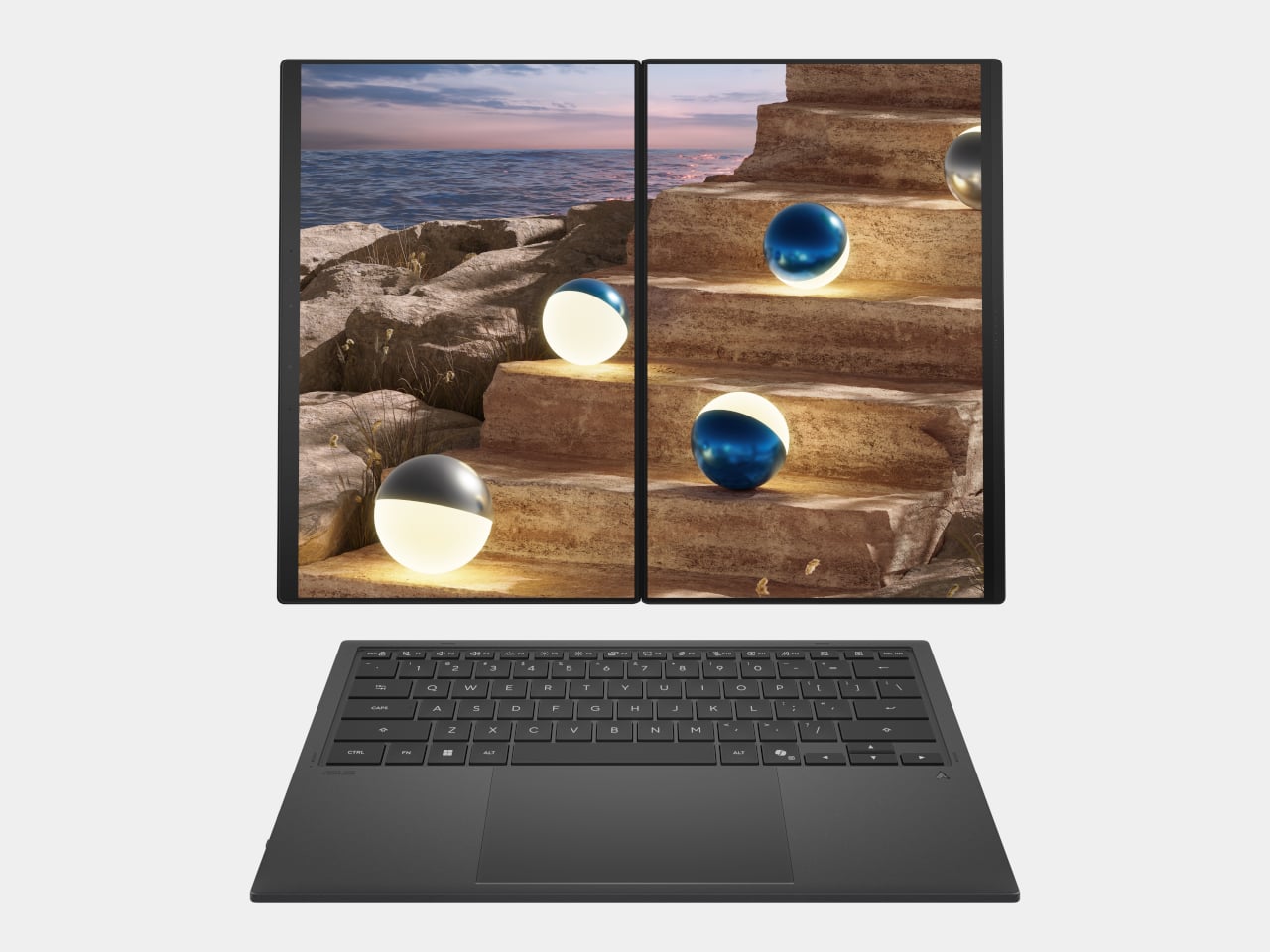
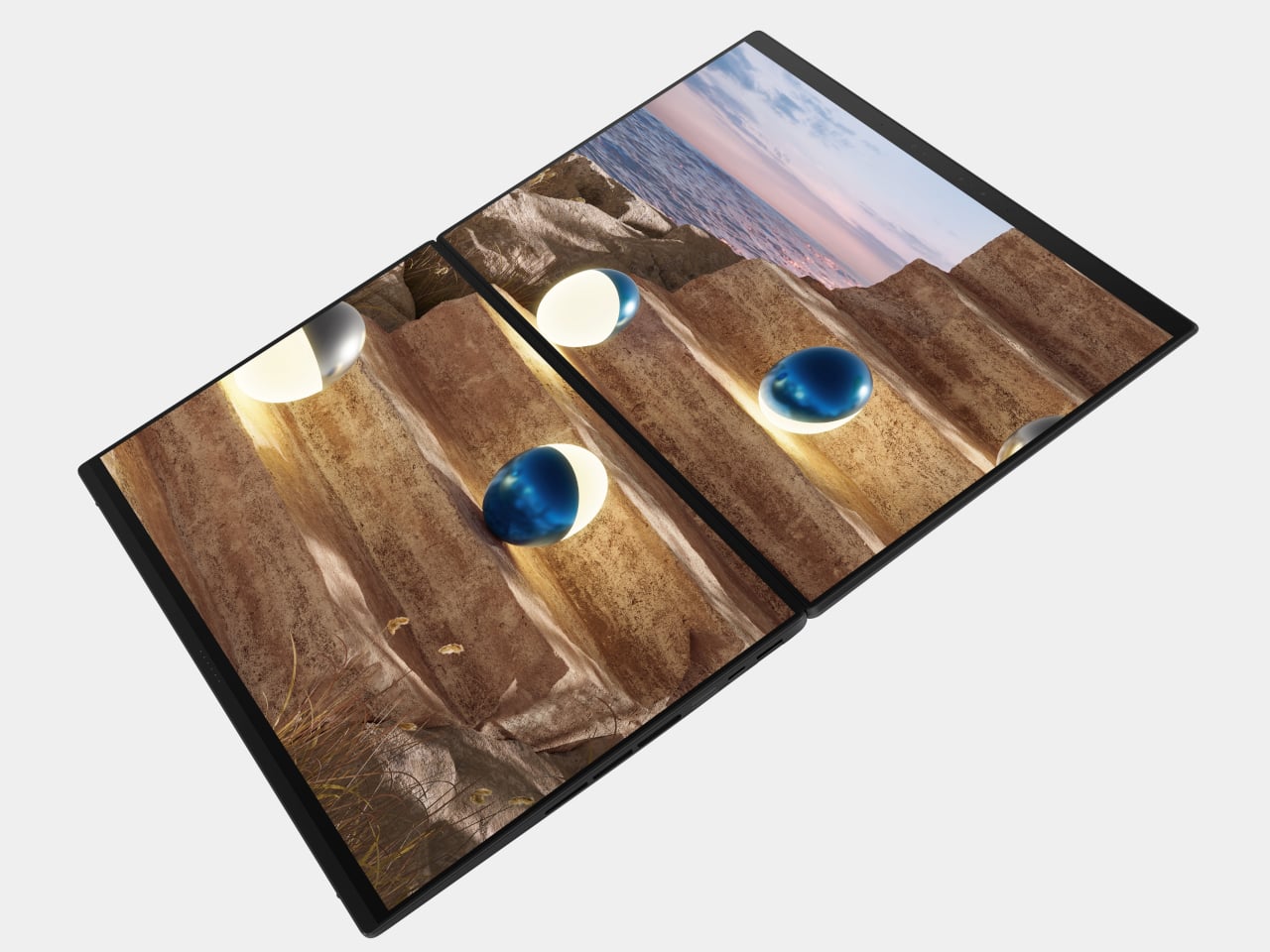
Zenbook DUO is the laptop for people who always end up plugging into a second monitor. Both panels are ASUS Lumina Pro OLED, with peak brightness around 1,000 nits, 16:10 aspect ratio, and high refresh, stacked in a way that lets a main workspace live on the top screen while timelines, chat, or reference material sit on the lower one. The new hinge design reduces the gap between screens to about 8.28 mm, making the dual-screen layout feel like a single continuous surface.

The laptop runs up to a next-gen Intel Core Ultra processor with an NPU around 50 TOPS, up to 32 GB of memory, and up to 2 TB of SSD storage, plus a dual-fan thermal solution to keep a 45 W CPU happy. A detachable keyboard connects via magnetic pogo pins or Bluetooth, so you can push it forward and treat the DUO like a tiny dual-monitor rig. Thunderbolt 4, HDMI 2.1, USB-A, and an audio jack mean you avoid living out of a dongle pouch, while six speakers with Dolby Atmos and ASUS Pen 3.0 support make it feel like a proper creator machine that just happens to fit in a 1.65 kg backpack.

ProArt GoPro Edition PX13

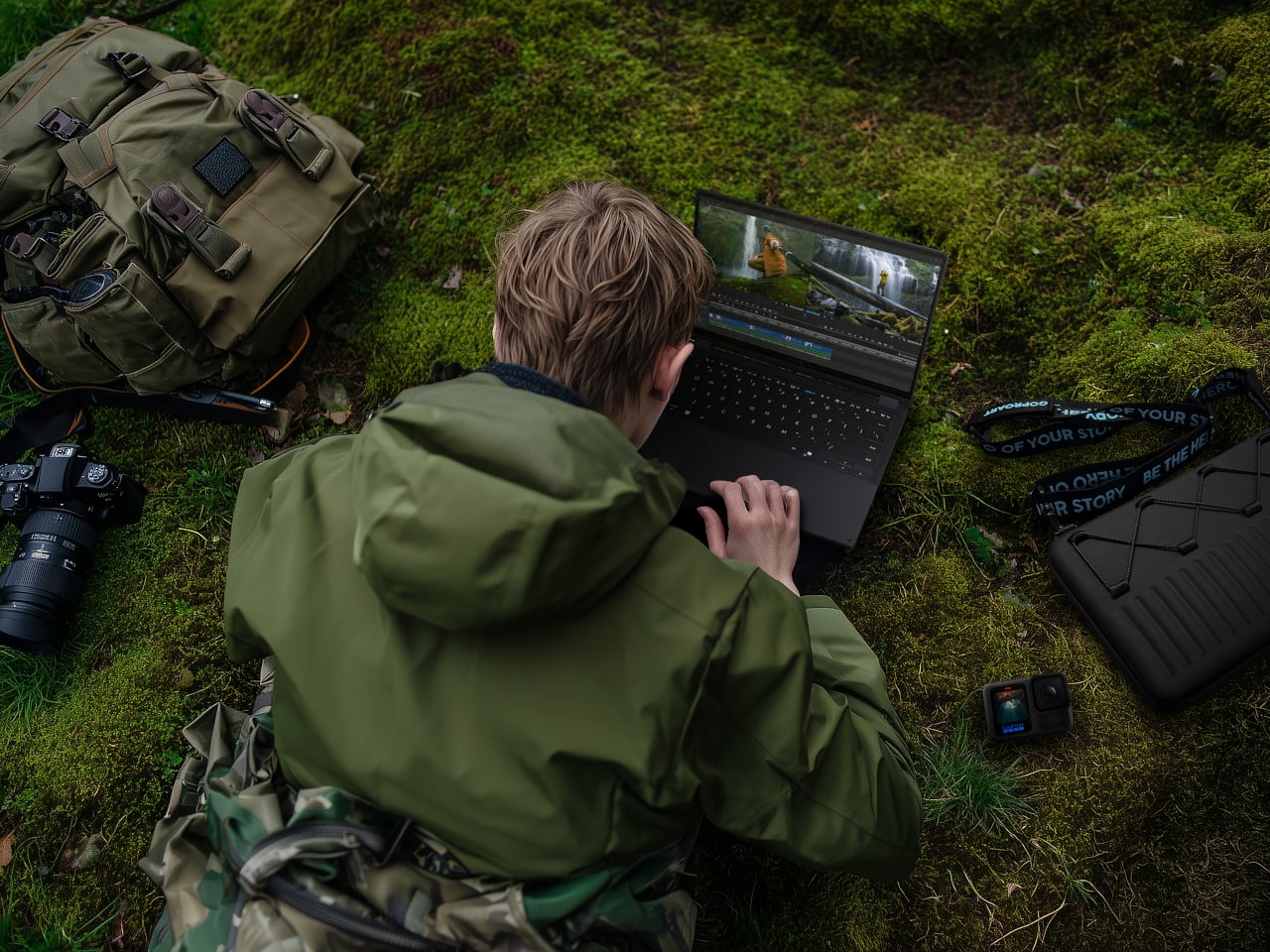
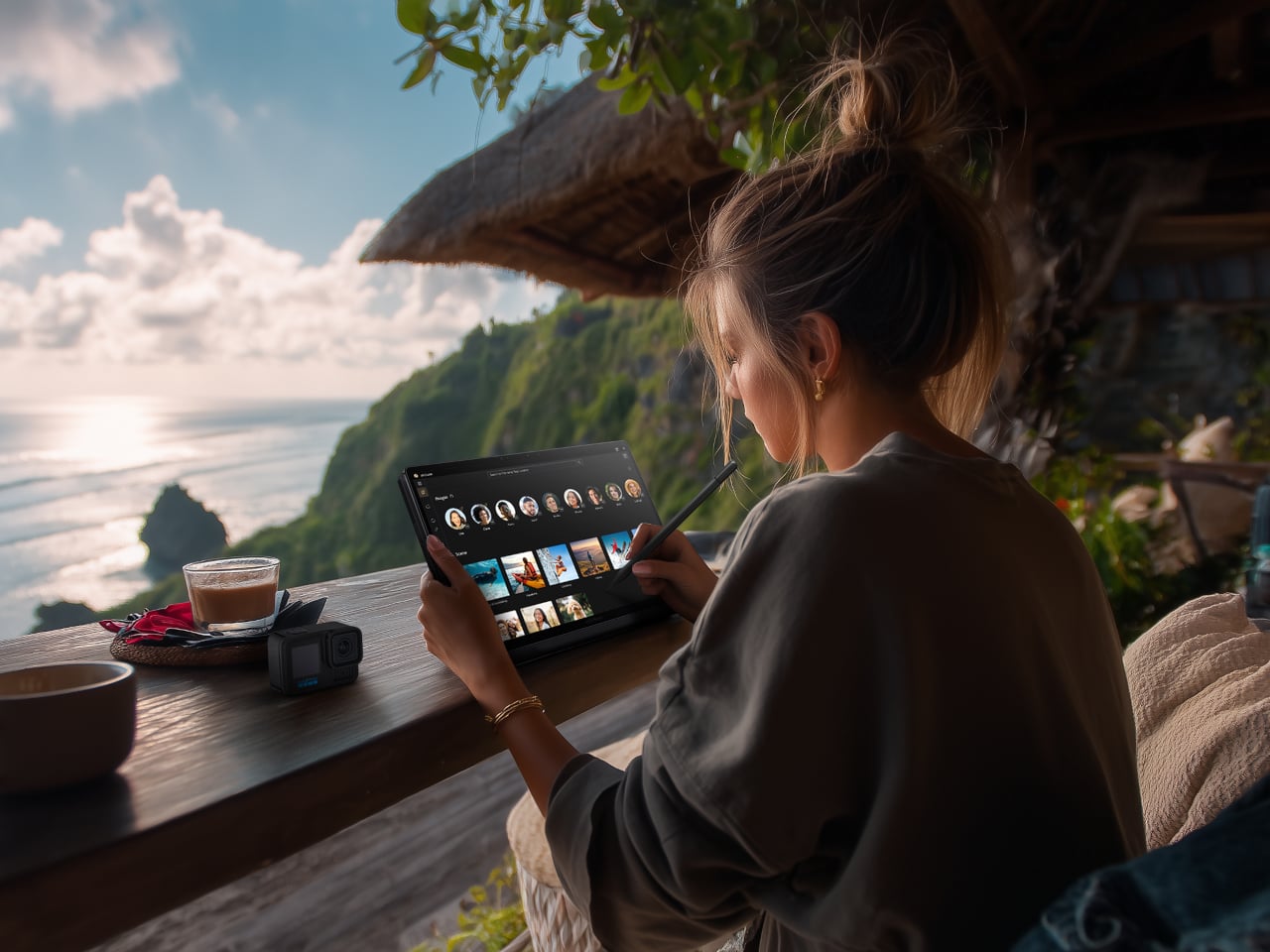
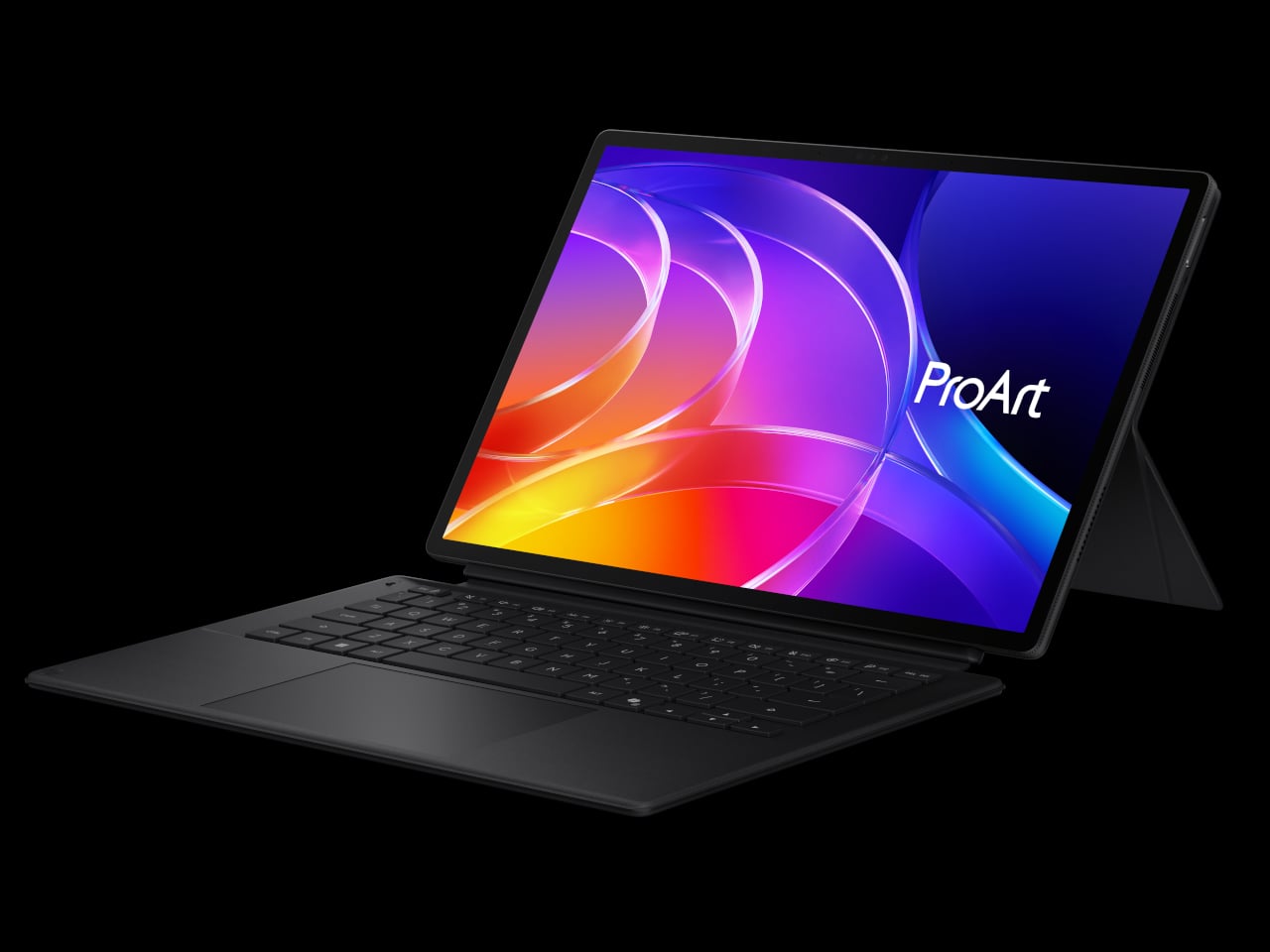
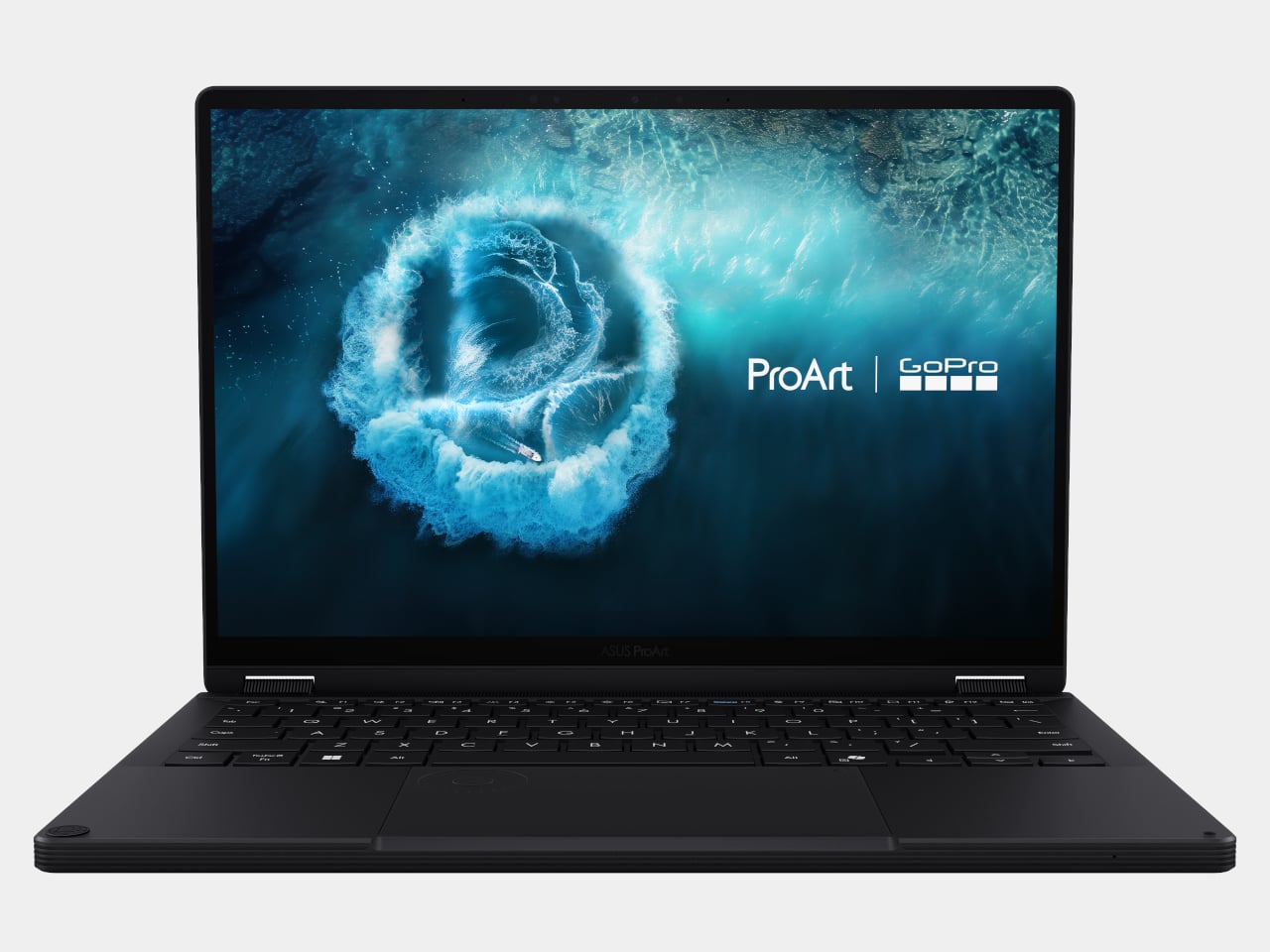
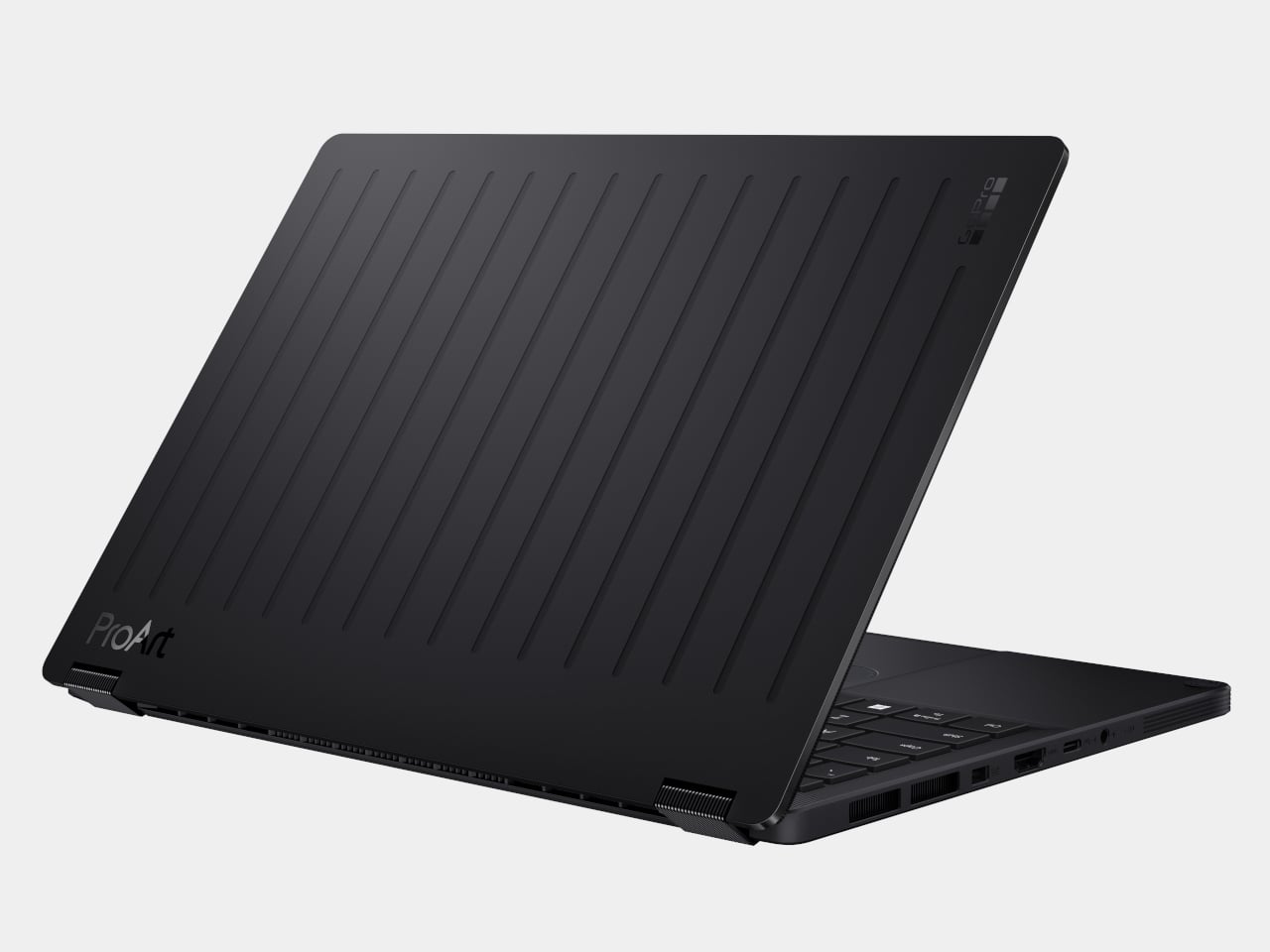
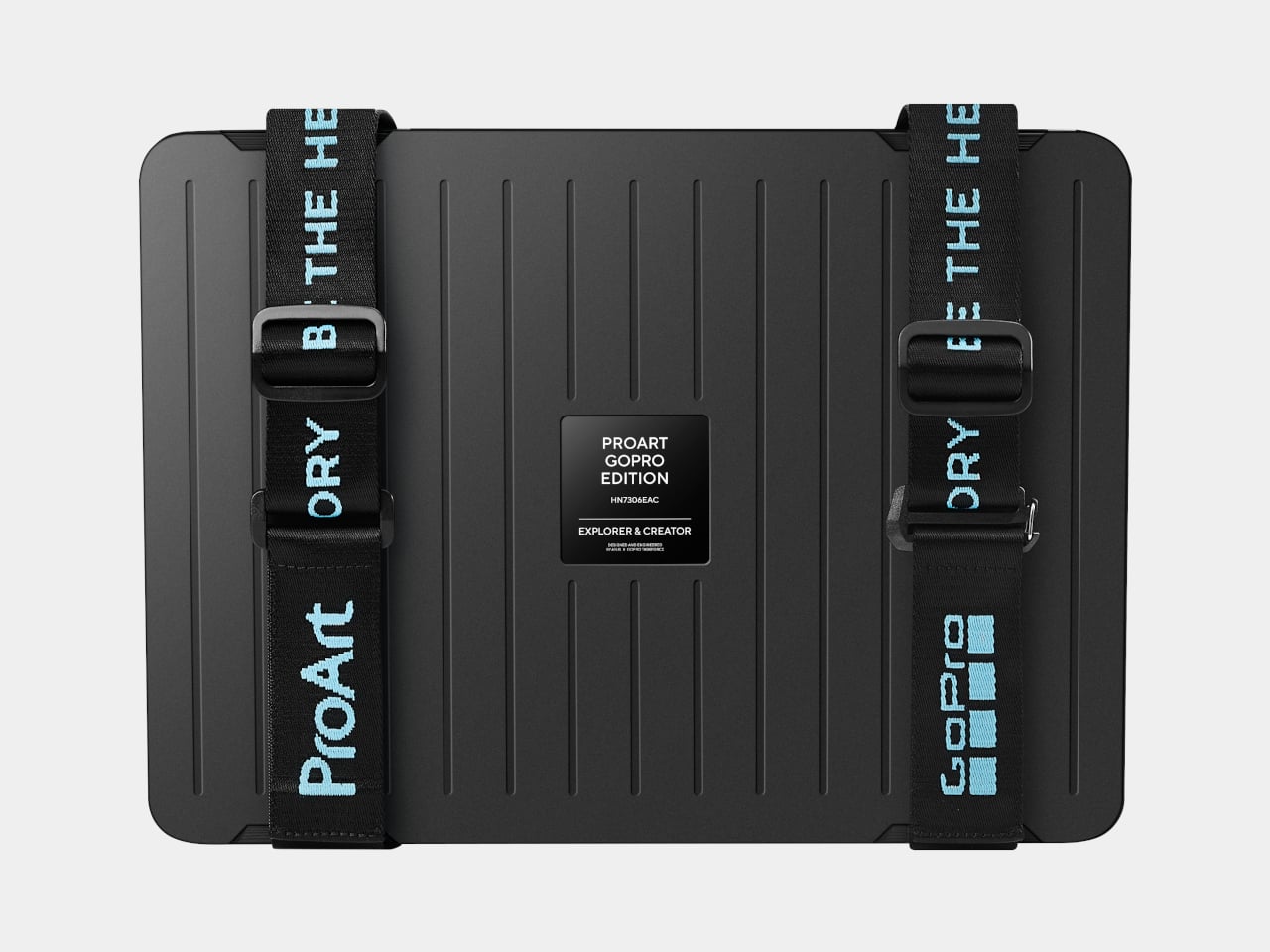
The ProArt GoPro Edition PX13 is the machine for people who think in clips and timelines. It runs up to an AMD Ryzen AI Max+ 395, with up to 128 GB of LPDDR5X onboard RAM and up to 1 TB of PCIe 4.0 SSD storage. That is a lot of headroom for 4K footage, AI-assisted editing, and background renders, and it is explicitly pitched as a “Create Anywhere” device rather than a generic 2-in-1 that dabbles in creative work.

The 13.3-inch 3K HDR Lumina OLED display, with 100 % DCI-P3 and Pantone validation, gives editors and colorists a trustworthy canvas on the go. Ports include two USB 4.0 Type-C, one USB 3.2 Type-A, HDMI 2.1, a MicroSD slot with UHS II, and an audio jack, which means you can go dongle-free with cameras and drives. ASUS DialPad, StoryCube as an AI media hub, and a dedicated GoPro hotkey make it clear this is meant to sit in the middle of a creator’s workflow, bundled with 12 months of GoPro Premium+, six months of CapCut, and three months of Adobe Creative Cloud.

ProArt PZ14

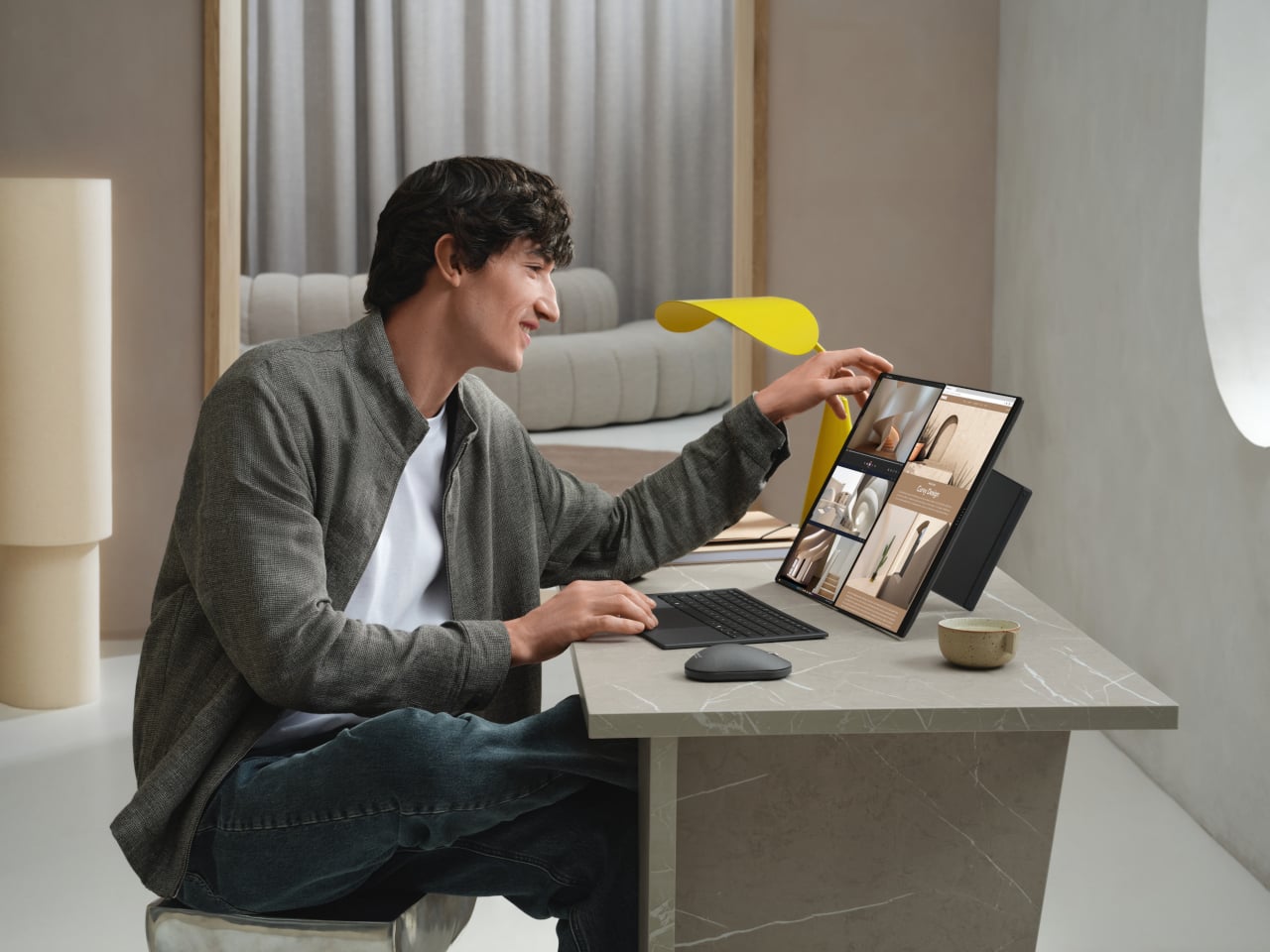
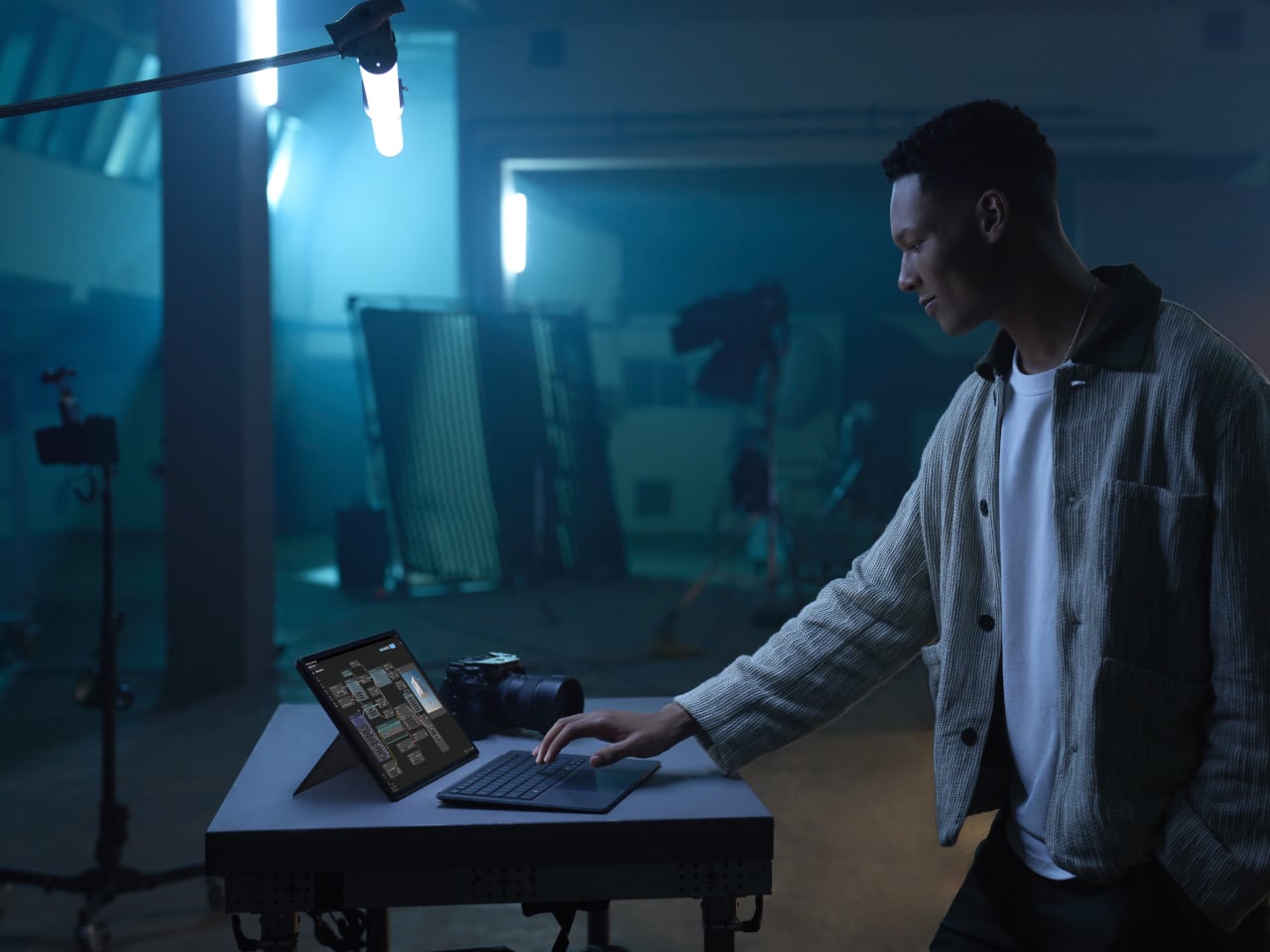
ProArt PZ14 is the tablet-first counterpart, running on Snapdragon X2 Elite with 18 cores and up to 80 TOPS of NPU performance, paired with up to 32 GB of LPDDR5X and 1 TB of PCIe 4.0 SSD storage. The 14-inch 3K 144 Hz Lumina Pro OLED display, with 100 % DCI-P3 and up to 1,000 nits, makes it a serious panel for drawing, grading, or reviewing work.

The 9 mm thickness, 0.79 kg weight, and IP52 water and dust resistance make it plausible to take the PZ14 out of the studio and onto a shoot. A Bluetooth keyboard, cover stand, ProArt mouse, and ASUS Pen 3.0 complete the kit, while dual super-linear speakers with Dolby Atmos, an 8 MP IR camera, and a 13 MP 4K rear camera round out the hardware. ProArt Creator Hub, StoryCube with GoPro integration, and MuseTree’s AI-assisted tools make it feel like a portable sketchbook and media station that can survive the field.
ASUS Zenbook S16 and S14

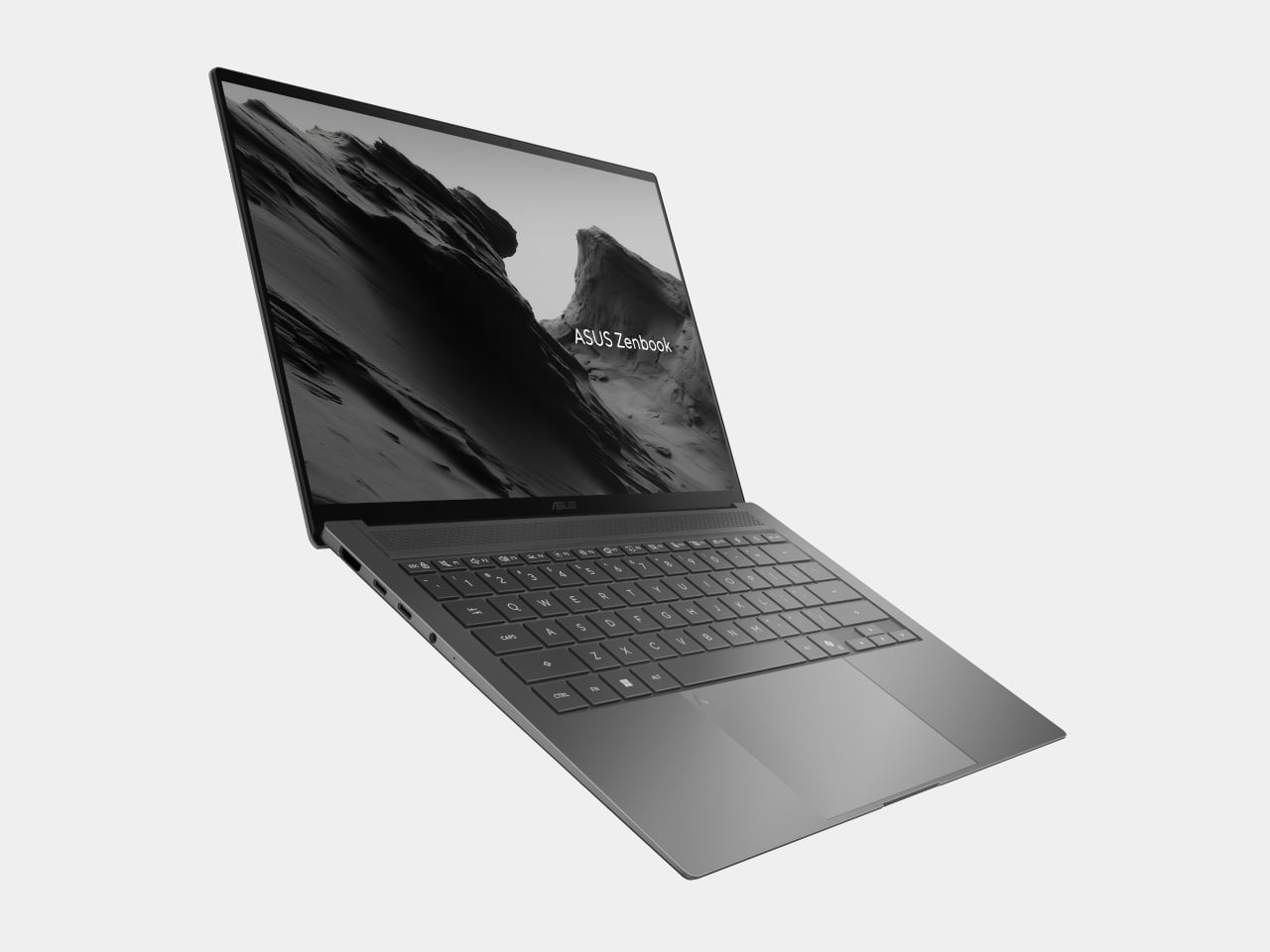
ASUS Zenbook S14

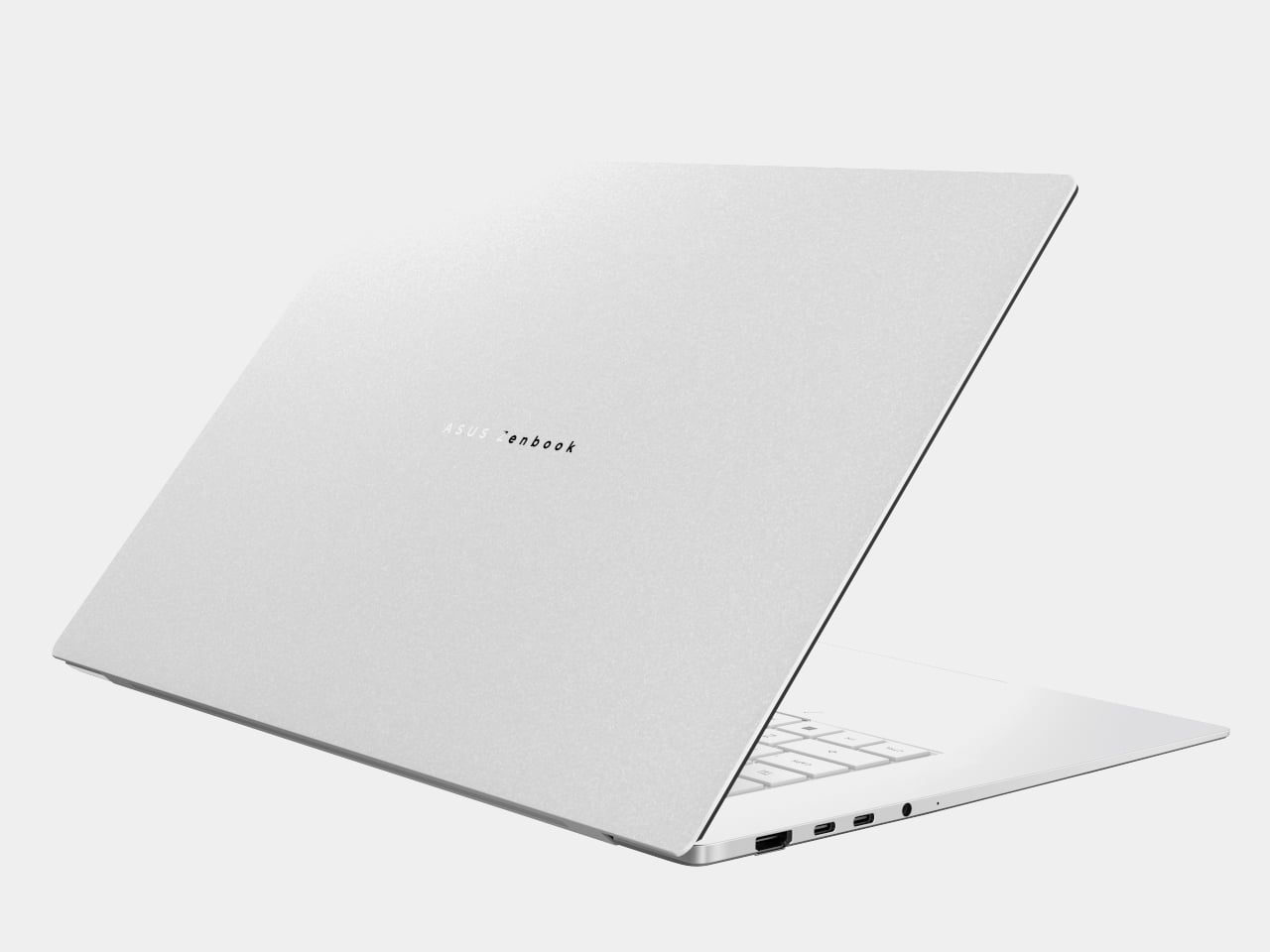
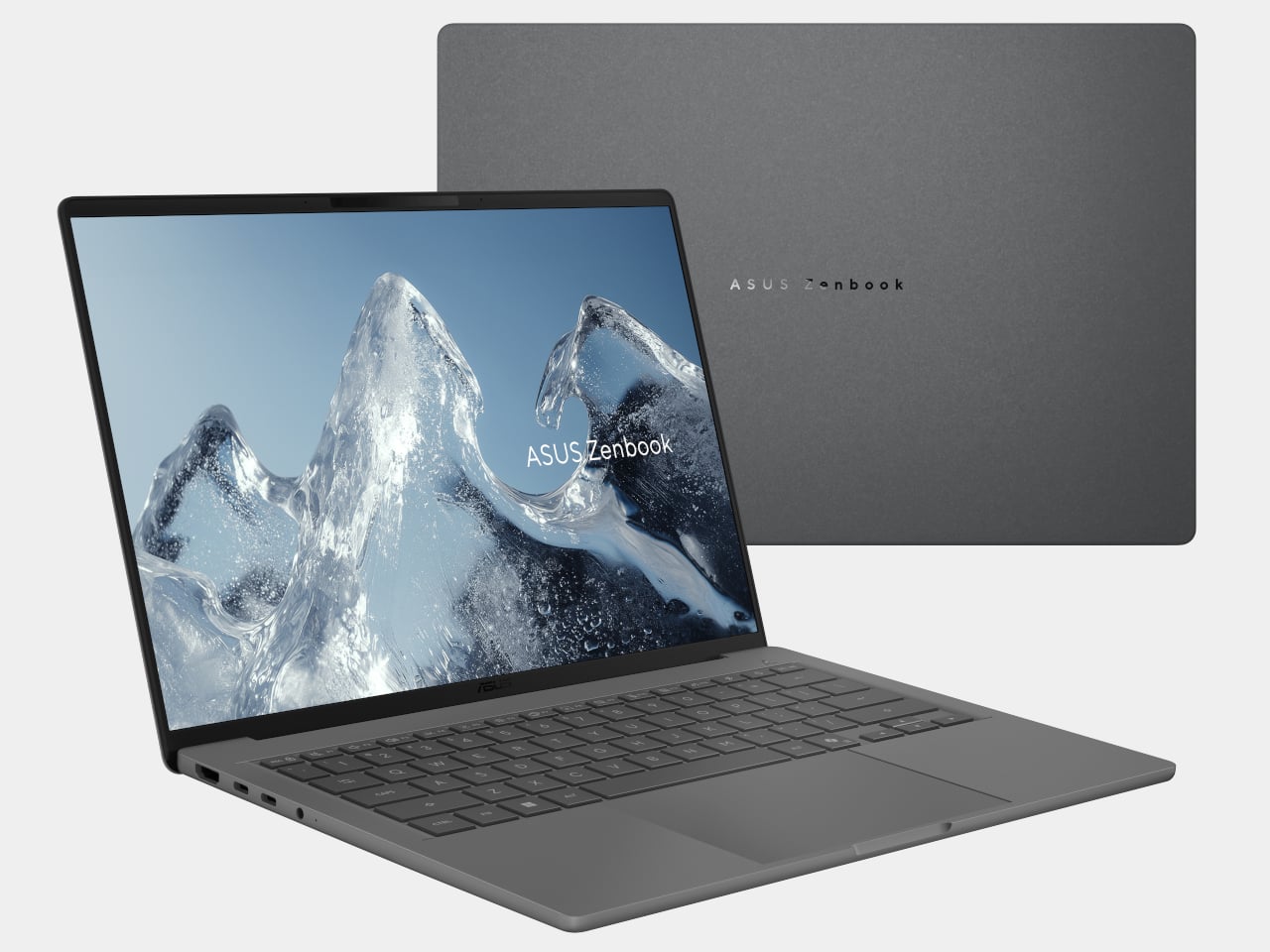
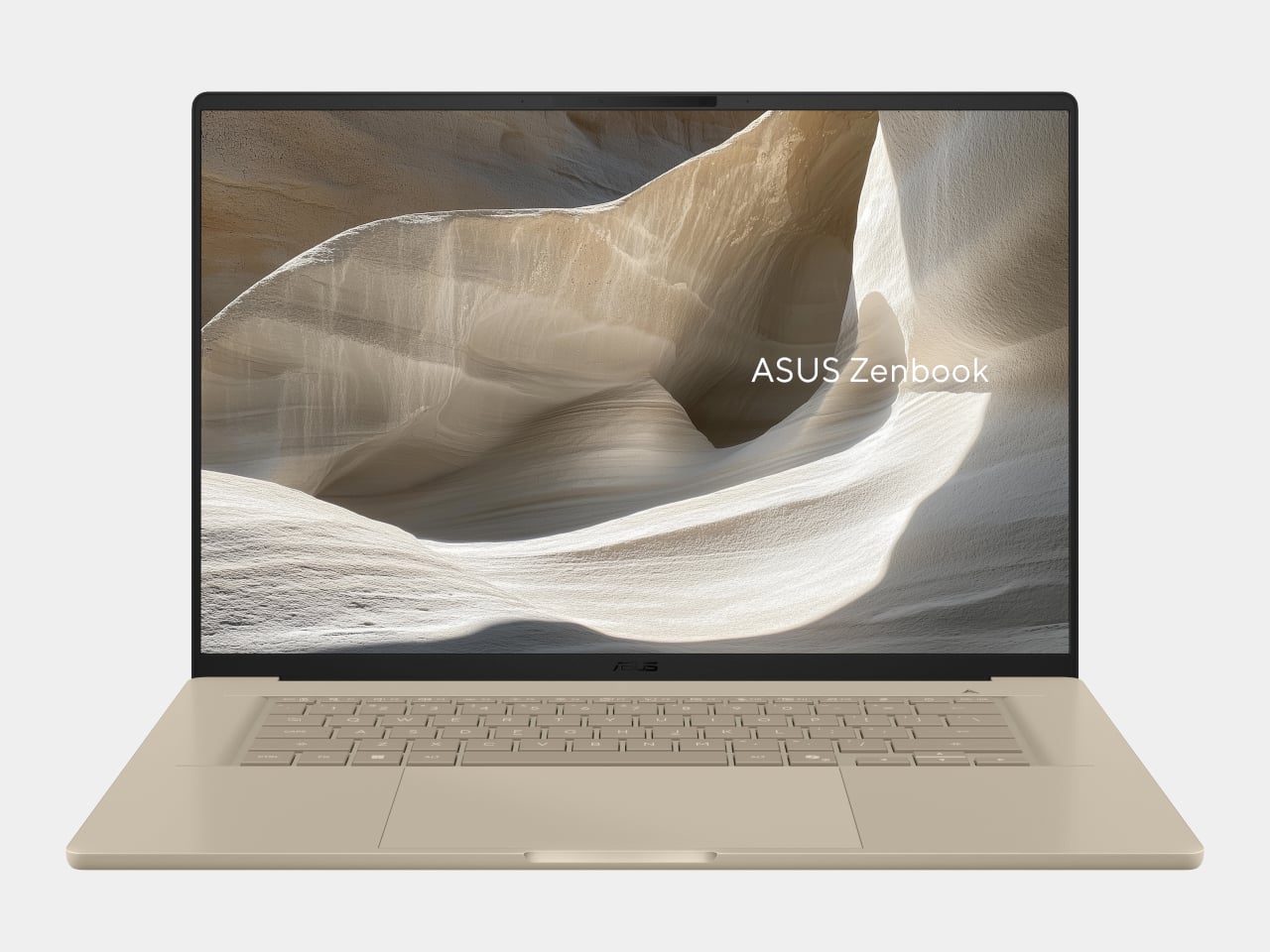
Zenbook S16 and S14 are the premium ultrabooks that bring Ceraluminum into everyday machines. The S14 runs next-gen Intel Core Ultra processors with up to 50 TOPS of NPU performance, while the S16 uses next-gen AMD Ryzen AI chips with similar NPU numbers. Both sit around 1.1 cm thick, with the S14 at about 1.2 kg and the S16 around 1.5 kg, making them thin enough to disappear into a bag.

ASUS Zenbook S16

Display options include 14-inch and 16-inch 3K OLED touch panels at 120 Hz, with peak brightness up to 1,100 nits and full DCI-P3 coverage. Four-speaker audio on the S14 and six-speaker audio on the S16, both with Dolby Atmos, plus Quiet Ambient Cooling and geometric grille vents, make them feel more like design objects than generic ultrabooks. Privacy features like Windows Passkey, Microsoft Pluton, and IR webcams, along with Copilot+ PC status, round out machines aimed at people who want a bit of flair with their AI.
ASUS Zenbook A16 and A14

ASUS Zenbook A14

Zenbook A16 and A14 are the ultra-light Copilot+ PCs that lean hardest into battery life. The A14 weighs under 1 kg, while the A16 comes in around 1.2 kg, both using Ceraluminum for the lid, keyboard frame, and bottom case. Both pack 70 Wh batteries, with ASUS claiming multi-day life and more than 28 hours of video playback on the A14, which matters when you are away from outlets for long stretches.

ASUS Zenbook A16

The A16 steps up to a 16-inch 3K 120 Hz OLED with peak brightness around 1,100 nits, powered by Snapdragon X2 Elite Extreme running up to 5.0 GHz with a 192-bit bus and 228 GB/s of bandwidth. Lightweight dual-fan thermals, high-fidelity six-speaker audio, smudge-free keycaps, and Smart Gesture touchpads make both A-series machines feel like travel companions that just happen to be Copilot+ PCs with up to 80 TOPS of NPU performance, built for people who count grams and hours equally.

ASUS at CES 2026: AI Specs That Justify New Shapes

Zenbook DUO and ProArt PX13 GoPro Edition are the clear statements, one turning dual OLEDs into a portable studio, the other turning Ryzen AI and 128 GB of RAM into a mobile editing bay. Around them, ProArt PZ14, Zenbook S16/S14, and Zenbook A16/A14 show how Ceraluminum, Lumina OLED, and high-TOPS NPUs can be tuned for different days and different bags. For Yanko Design readers, the interesting part of ASUS’s CES 2026 story is not just the raw numbers, but how those numbers are being used to justify new shapes and new ways of working that feel like a genuine break from the last decade of laptop design, where every machine looked roughly the same, and only the stickers changed.

The post ASUS and GoPro Built a 128GB Laptop for Video Editors at CES 2026 first appeared on Yanko Design.