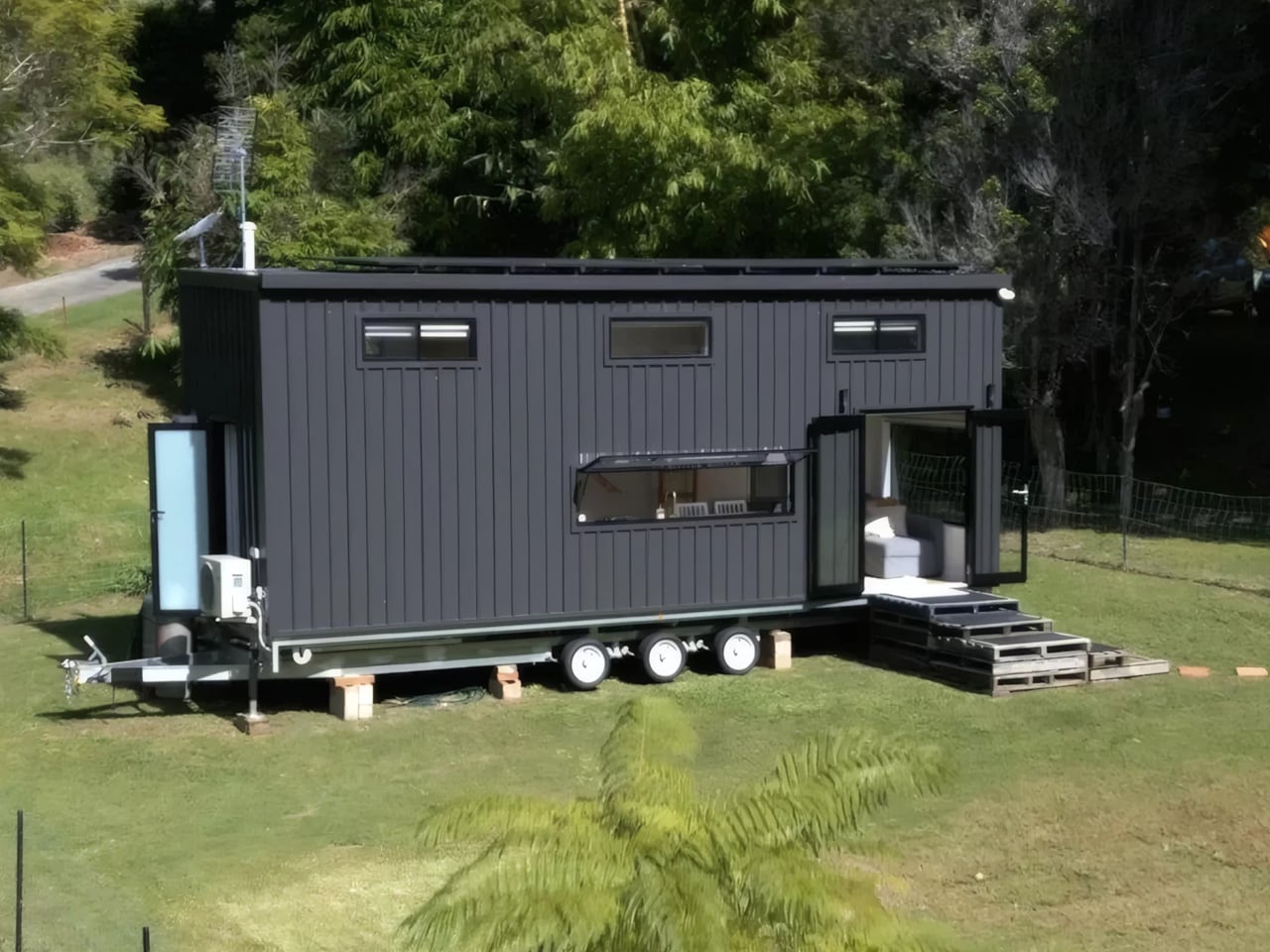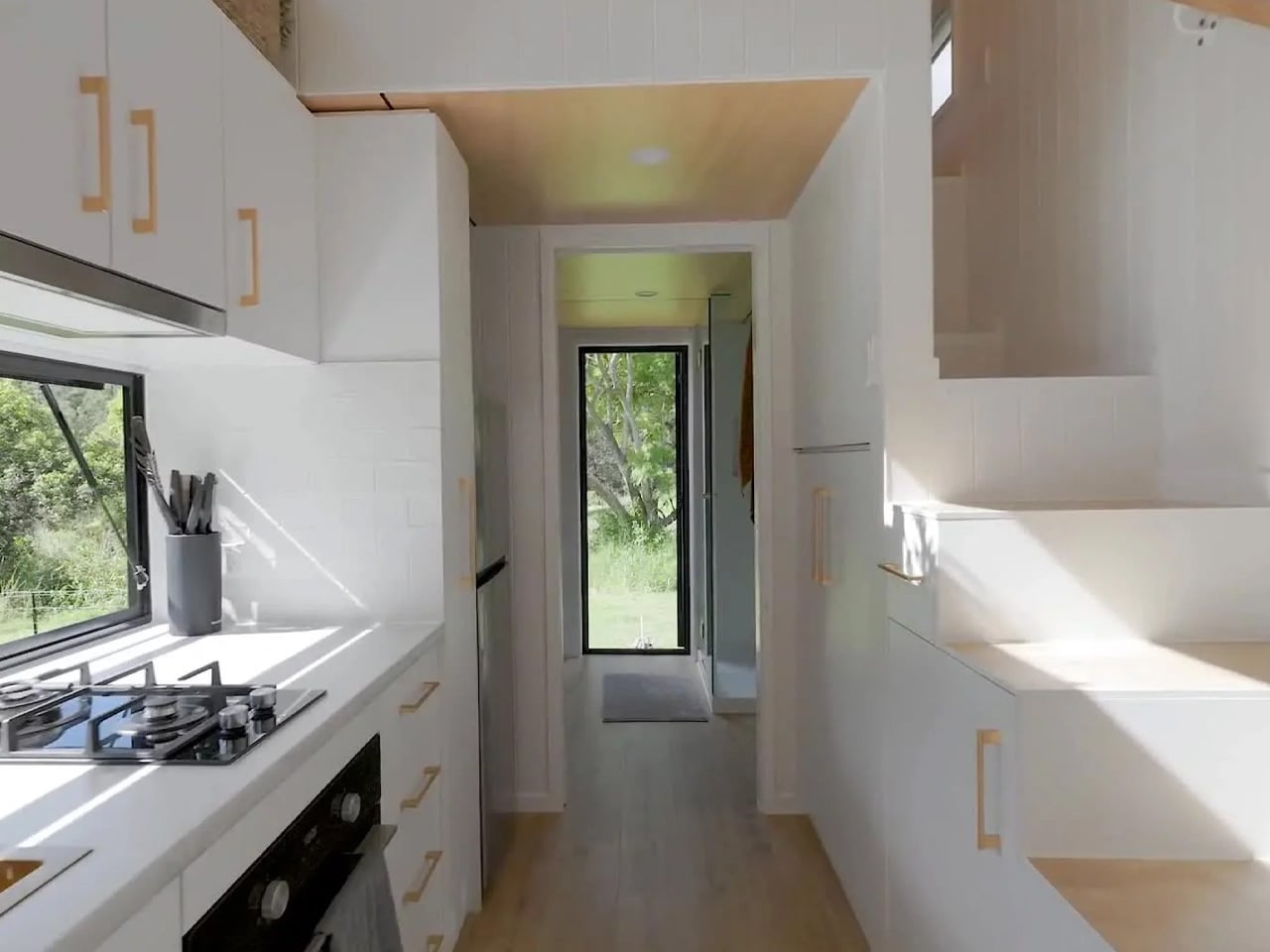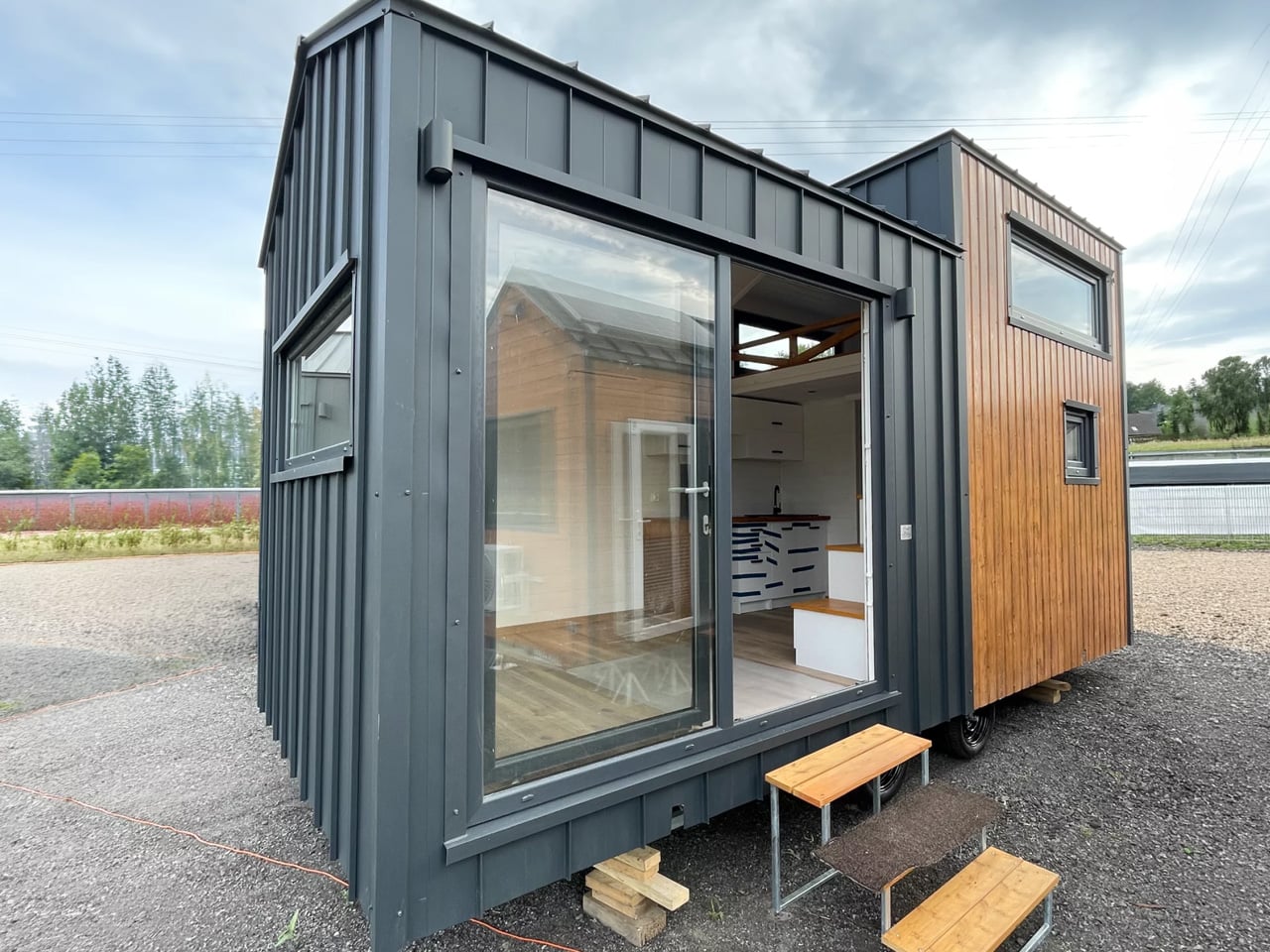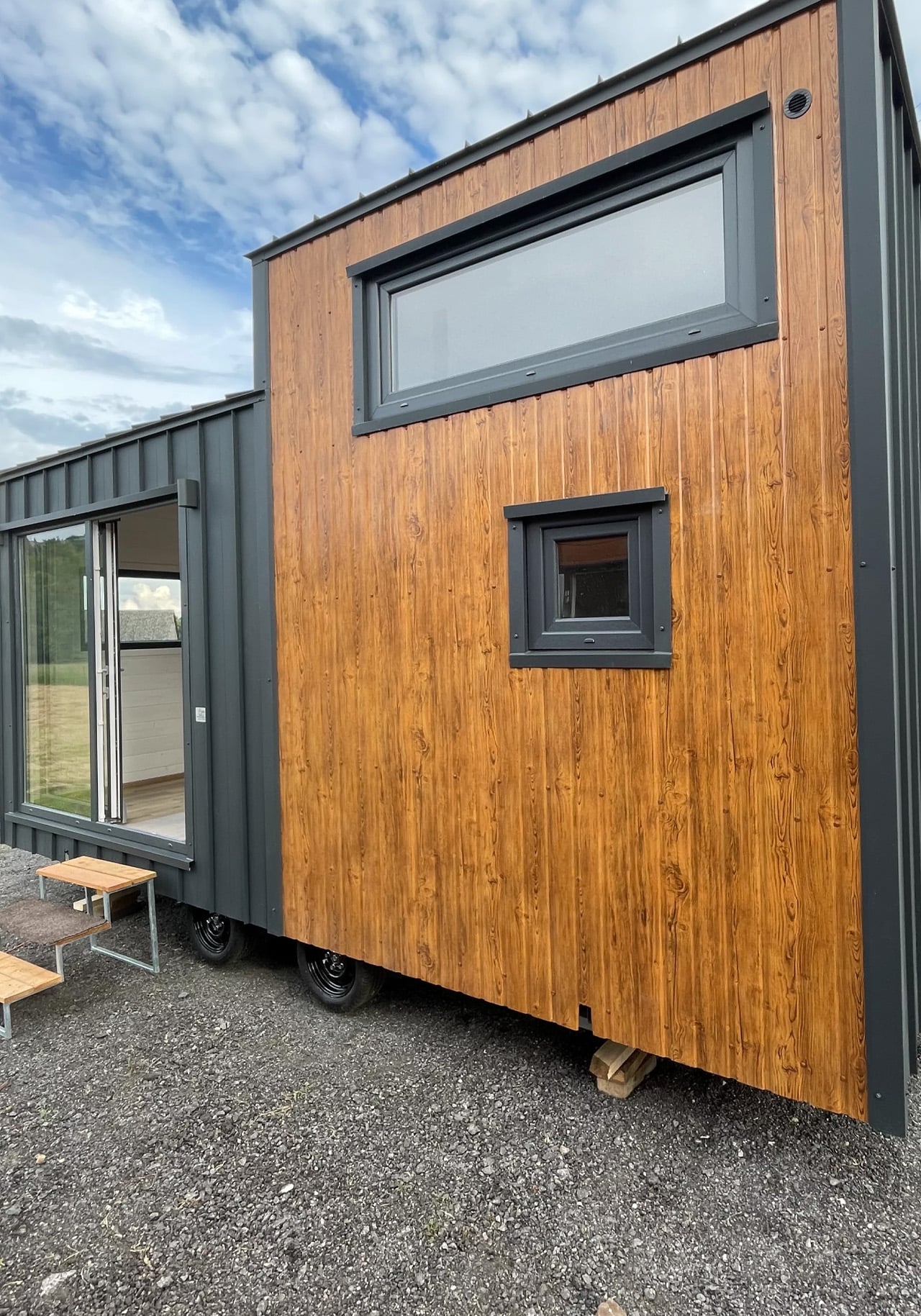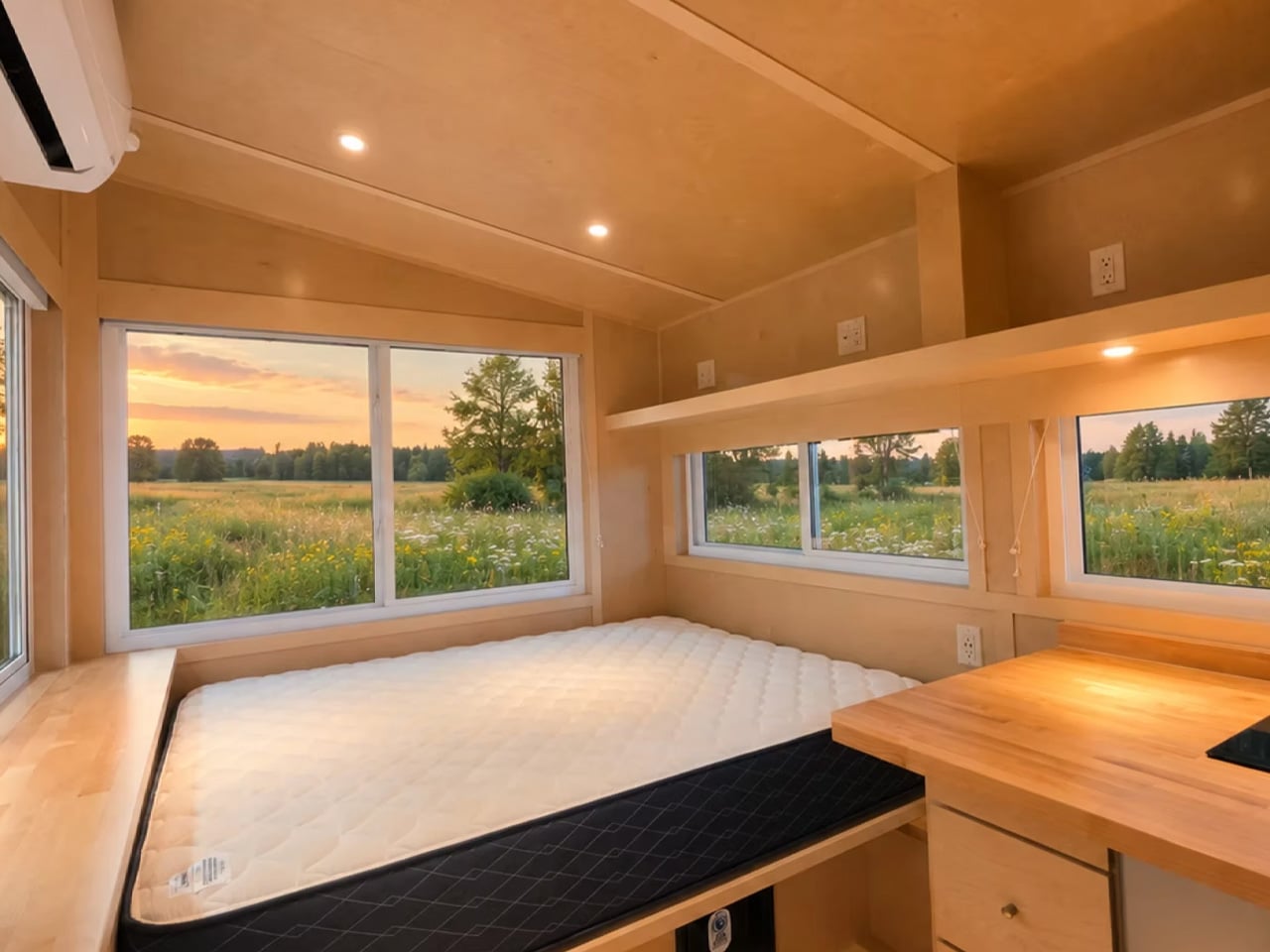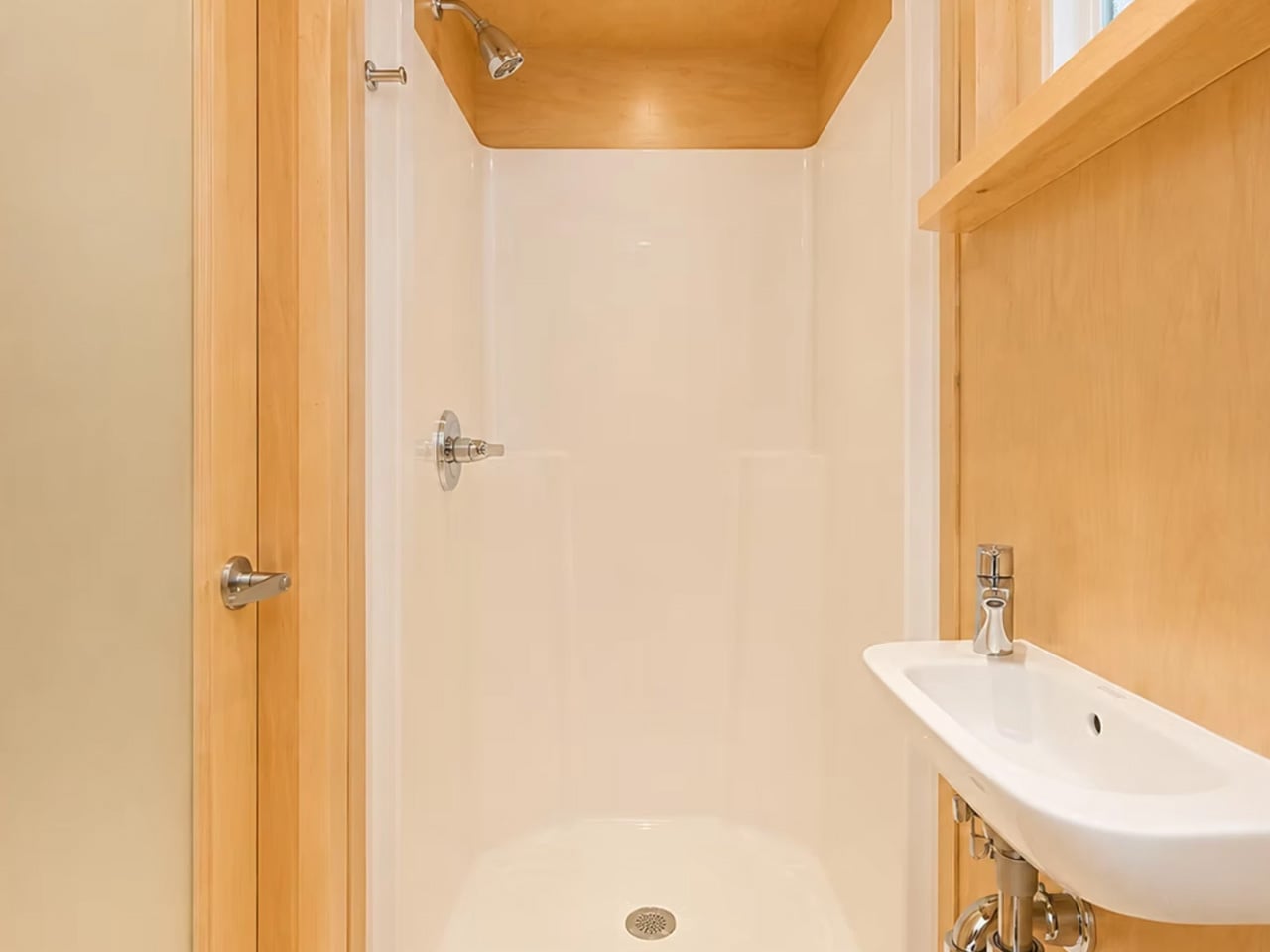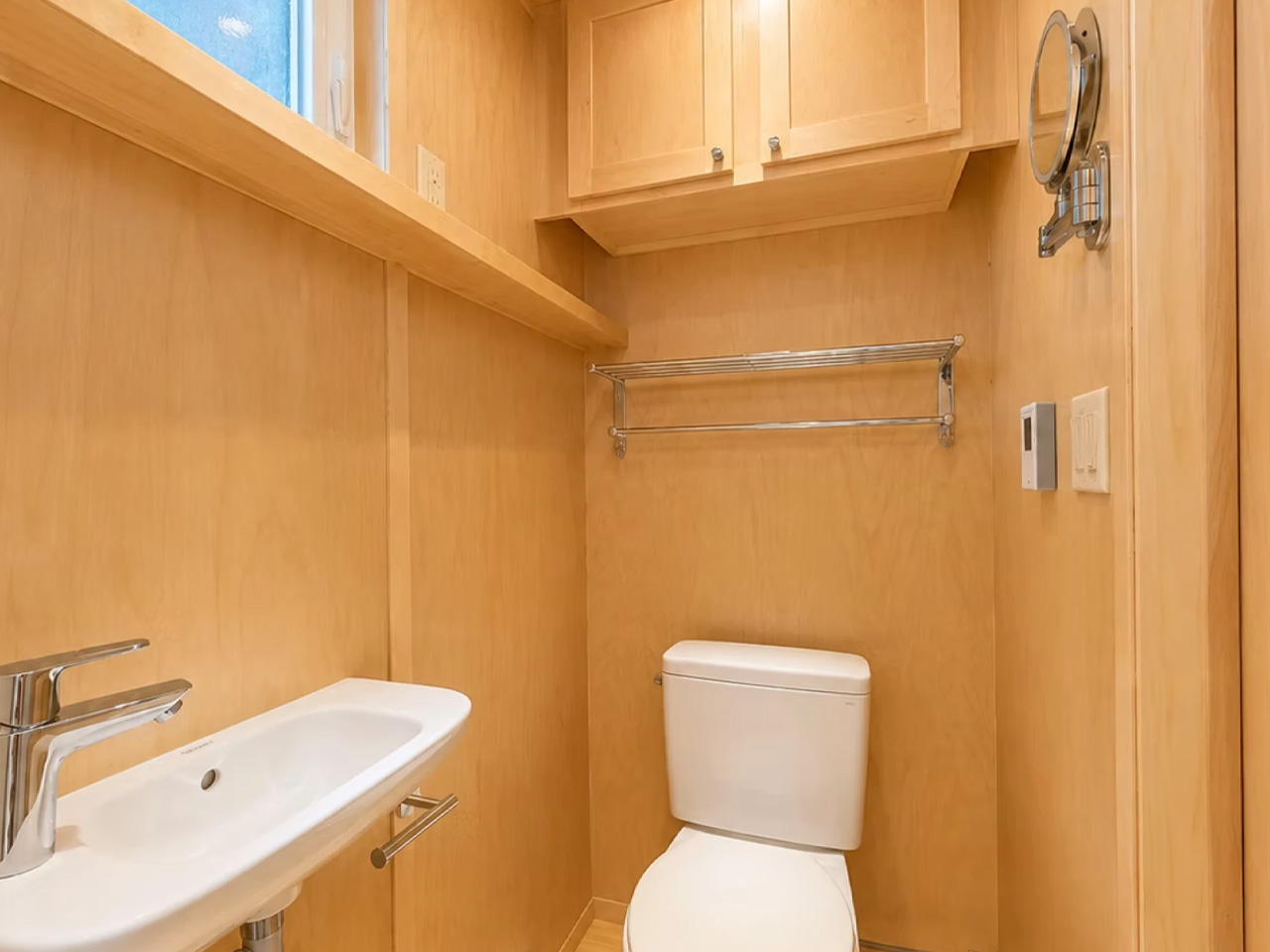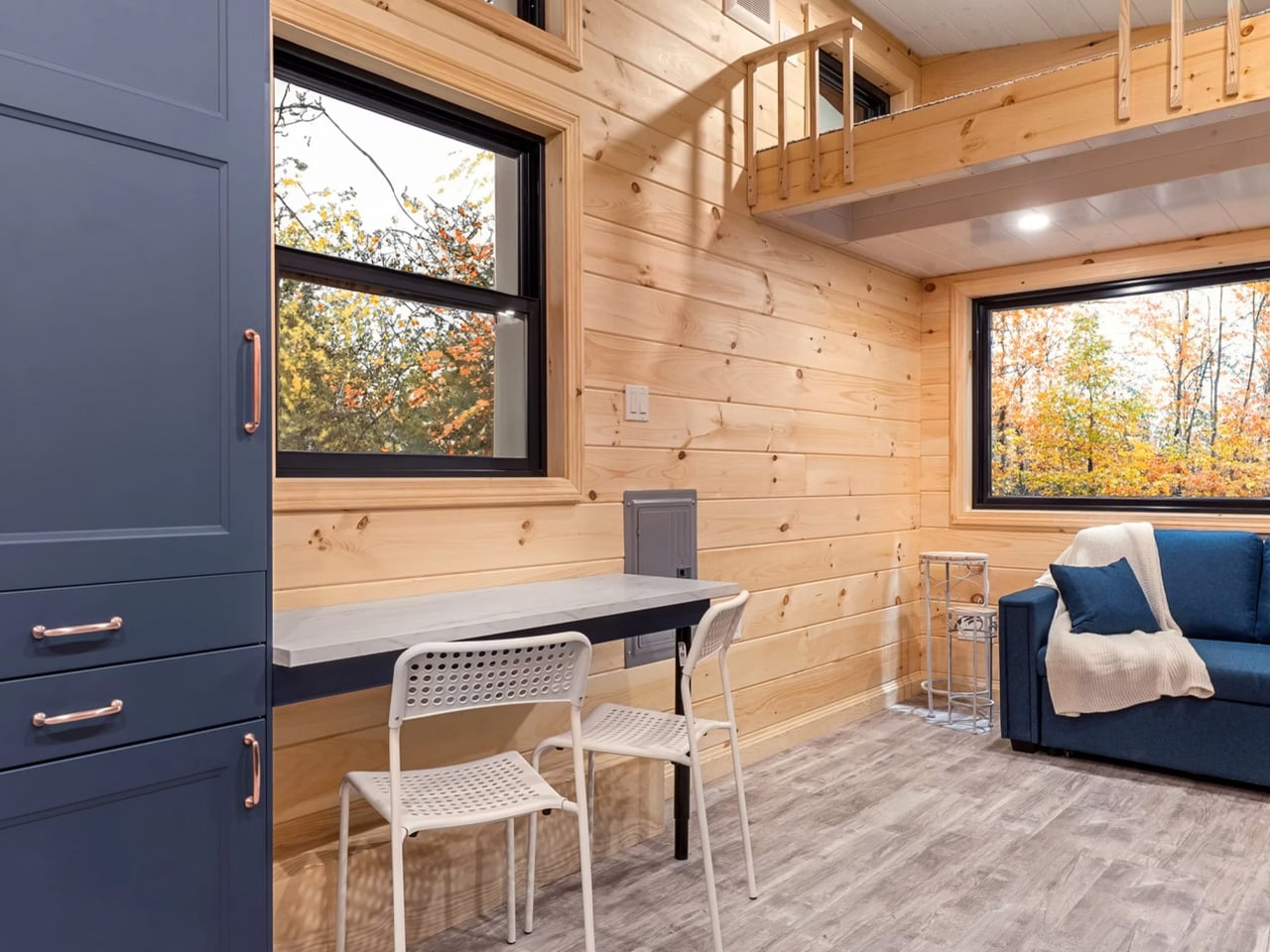
Most people plan for retirement by picking out a nice, quiet place to settle down. Ghislaine had other ideas. The retired French designer wanted to spend her golden years traveling across Europe with her cats, living completely off-grid, and answering to no one. So she commissioned Atelier Bois d’ici, a small artisanal workshop in Brittany, France, to build her the perfect mobile home.
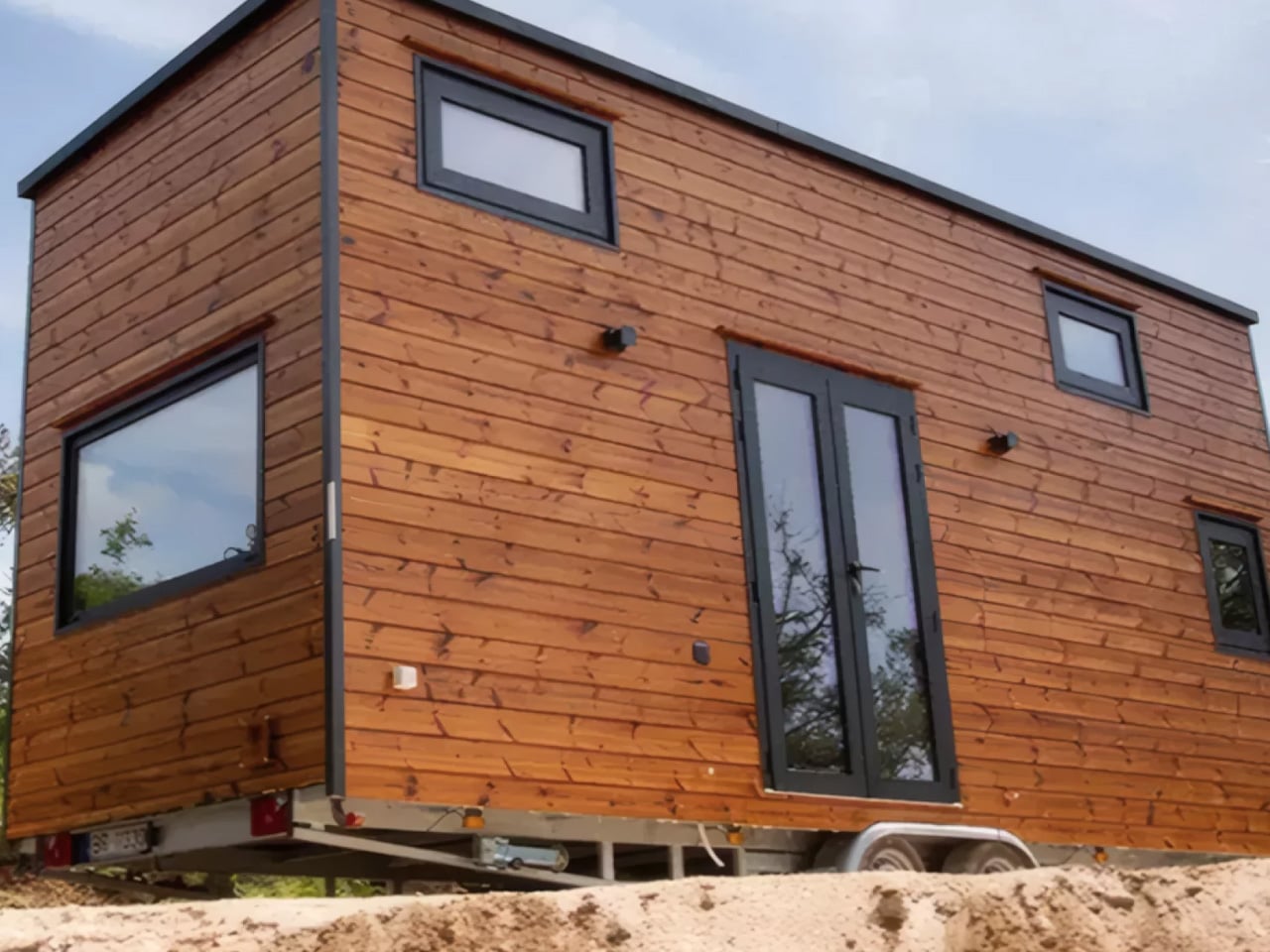
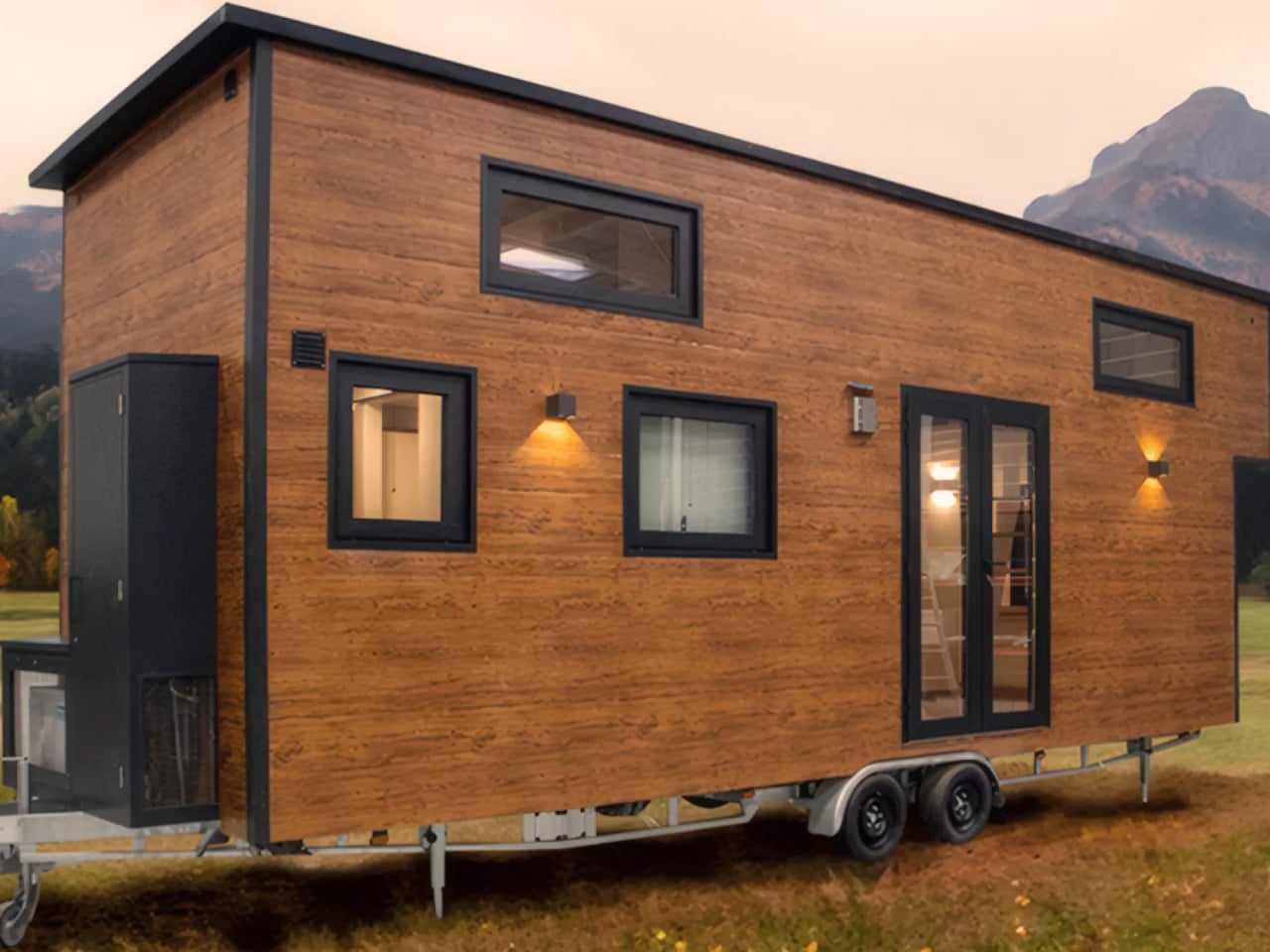
The result is Tiny Birdy, a 6-meter (20-foot) house on wheels that’s built on a double-axle trailer. At 4 meters high, it’s compact enough to navigate European roads without the hassle that comes with larger North American tiny homes, which can easily stretch to double the length. The exterior features knotty timber cladding that gives it a cabin-like warmth, with blue aluminum accents on the roof adding a playful touch. There’s even an exterior storage box for extra gear.
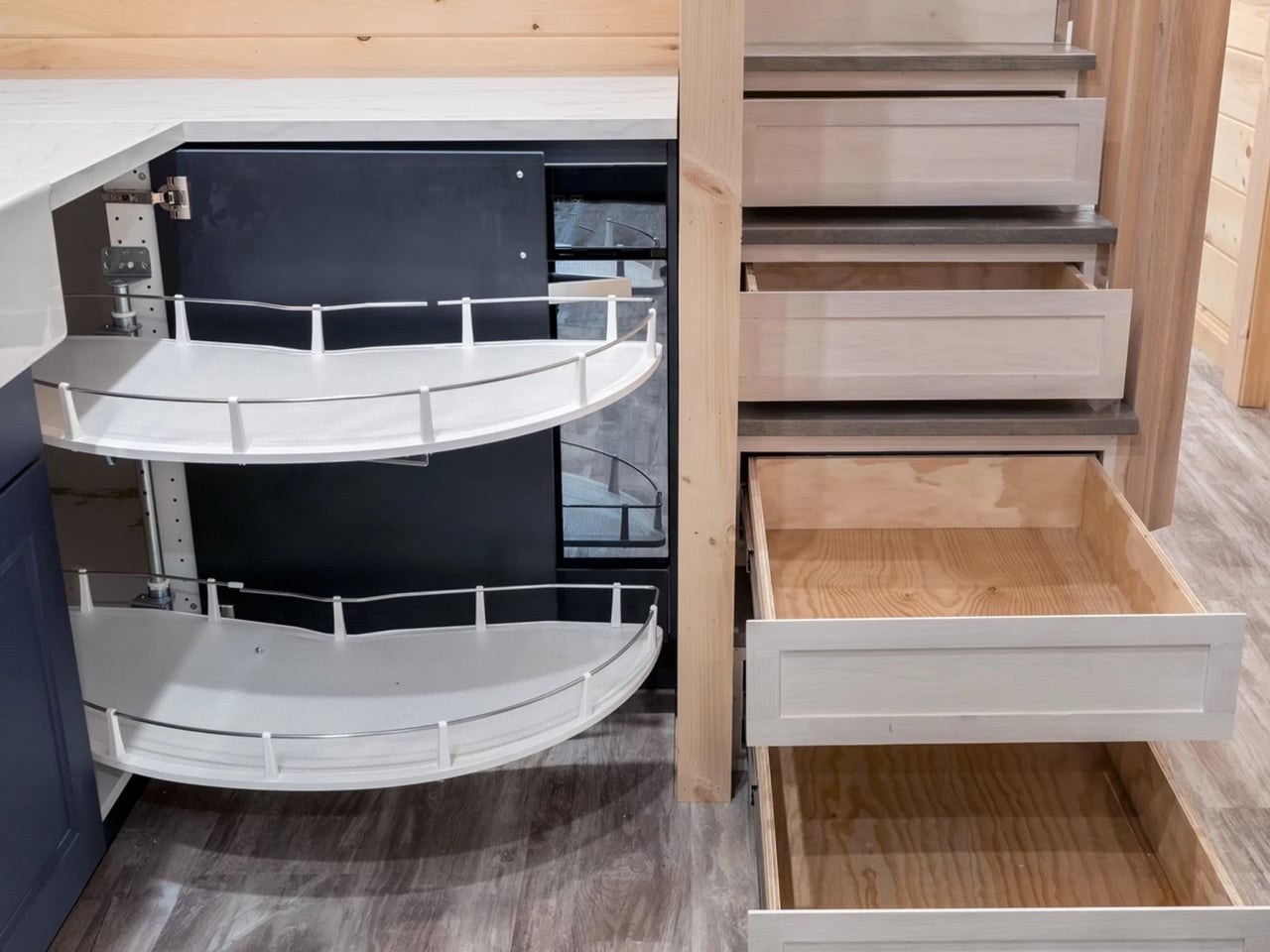
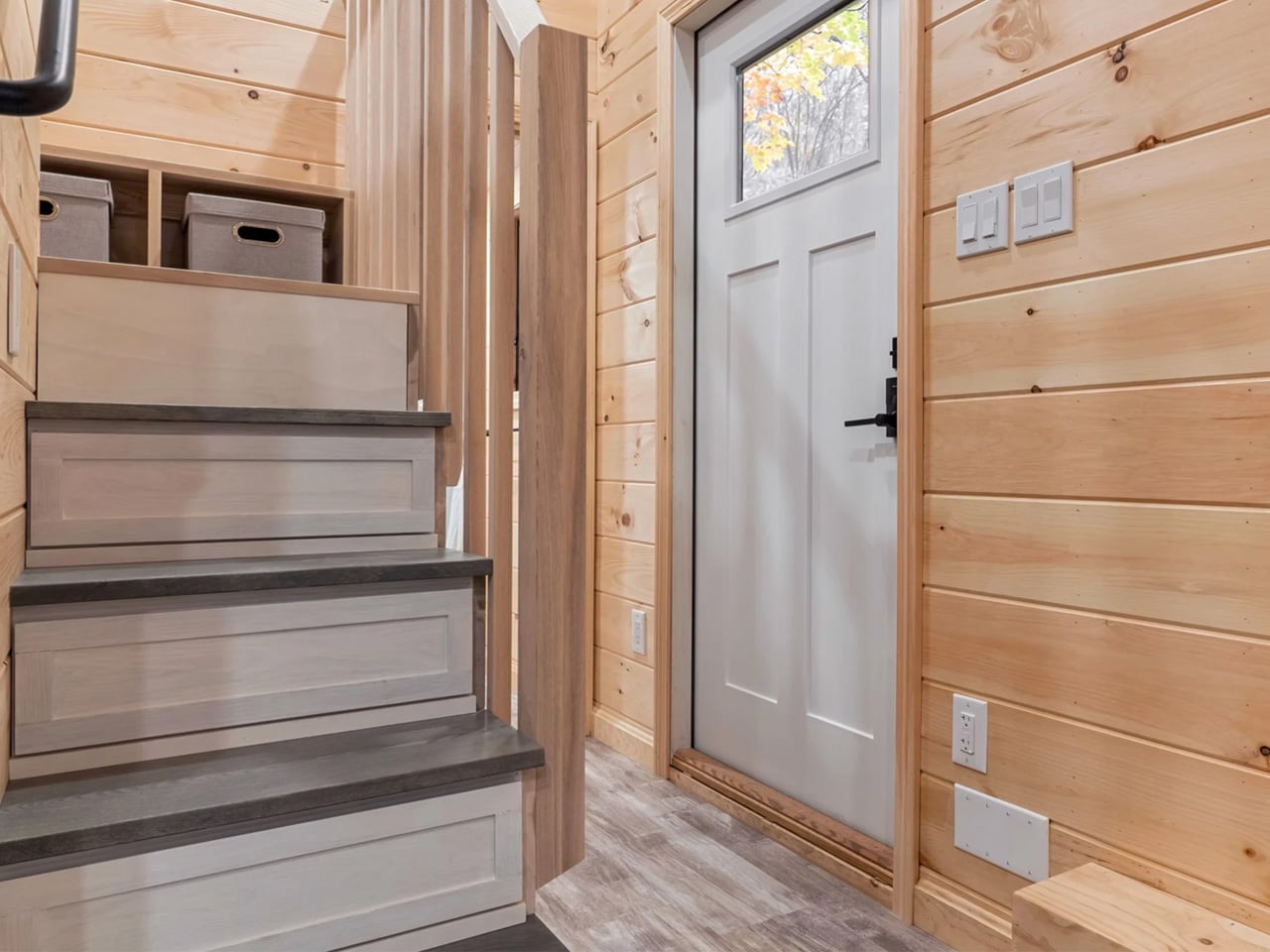
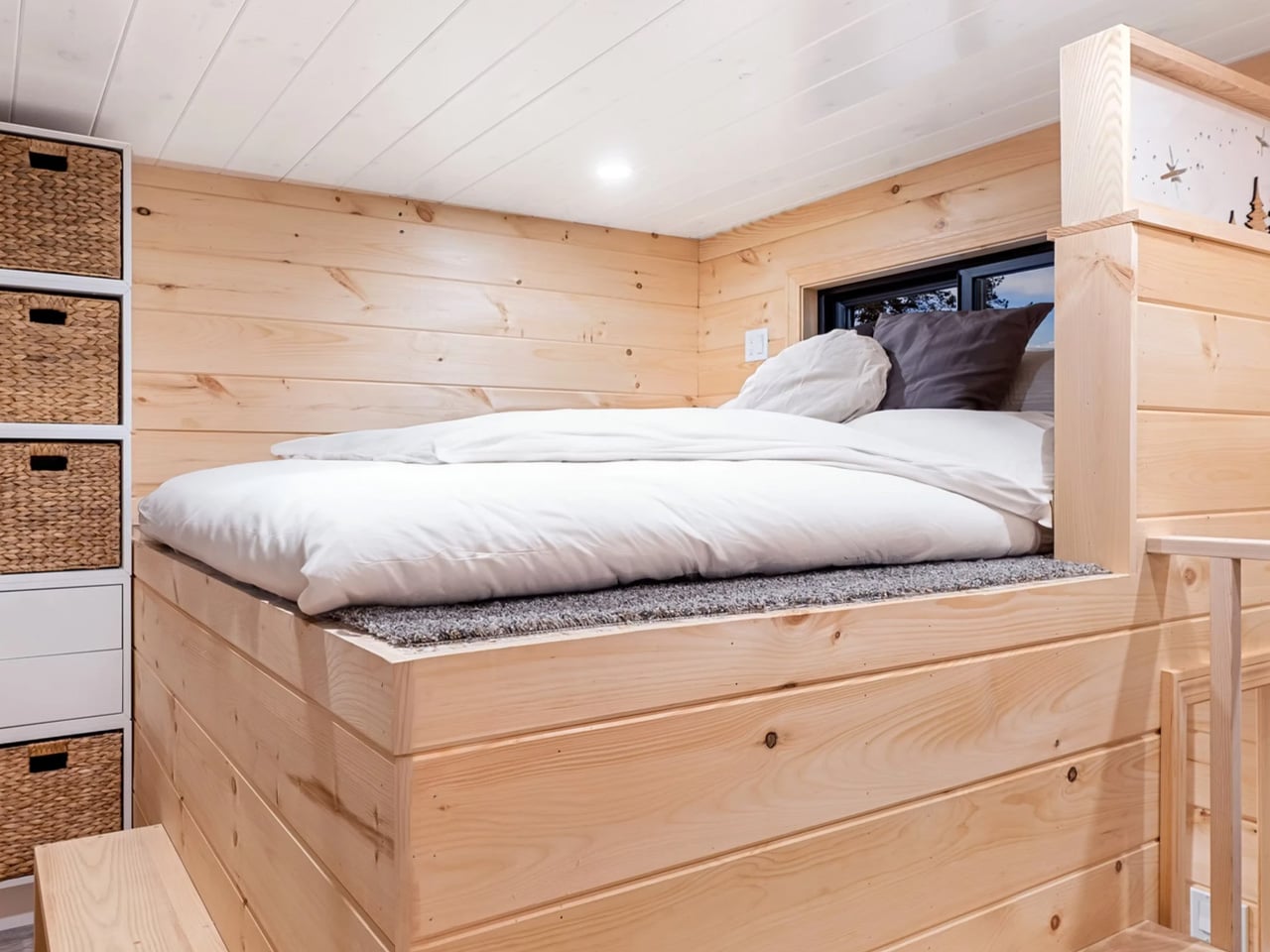
Inside, Ghislaine’s personality takes center stage. The space bursts with color, patterns, and a bohemian vibe that feels lived-in rather than designed. Wood finishes run throughout, creating continuity while the decor keeps things interesting. The layout sticks to the classic tiny house formula: a loft bedroom up top, reached by stairs that double as storage cubbies, a living area with a storage-integrated sofa, and a wood-burning stove for heat.
The kitchen comes fully loaded, proving you don’t need a massive space to cook real meals. Everything has its place, and nothing feels like an afterthought. French tiny house builders have a knack for this kind of thing—making small spaces feel intentional rather than compromised.
What makes Tiny Birdy genuinely independent is its off-grid setup. Solar panels power everything, while a water filtration system handles clean water needs. The waterless toilet eliminates plumbing complications, and a hybrid gas/electric water heater means hot showers are always available, rain or shine. These aren’t just eco-friendly choices; they’re practical ones that give Ghislaine the freedom to park wherever she wants.
Atelier Bois d’ici didn’t just build Ghislaine a tiny house. They built her a lifestyle that lets her wake up in a different village every few weeks, explore the French countryside at her own pace, and live sustainably while doing it. Tiny Birdy proves retirement doesn’t have to mean staying put.
Decluttering your home doesn’t mean emptying it. The real transformation happens when you replace bulky, single-purpose objects with designs that work harder, look better, and take up less mental space. Minimalist home decor swaps prioritize intention over accumulation, choosing pieces that blend function with form so seamlessly they feel like they’ve always belonged there. Each item earns its place not through compromise but through clarity.
These seven swaps prove that less isn’t about deprivation. It’s about choosing objects that serve multiple roles, disappear when not in use, or turn everyday rituals into moments worth noticing. From shoehorns that vanish into the background to mirrors that double as vases, each design replaces clutter with calm. Your space becomes easier to navigate, simpler to maintain, and infinitely more intentional in how it supports your daily life.
1. Invisible Shoehorn
Most shoehorns live in that awkward space between useful and ugly. They lean against walls, slide under furniture, or get tossed into closets where you can never find them when your hands are full. This shoehorn takes a different approach entirely. Its long stainless steel body handles the practical work of protecting your footwear and your lower back, while its transparent stand makes the whole thing look like a sculptural accent rather than a utilitarian tool.
The magic happens when you step back and realize you’re not looking at a shoehorn at all. The clear stand holds the polished metal at just the right angle, creating visual interest without announcing its purpose to everyone who walks past your entryway. It replaces the need for a separate decorative object while solving the chronic problem of where to put the shoehorn when you’re done with it. You get function and form occupying the same footprint.
The transparent design hides the shoehorn in plain sight, eliminating visual clutter.
The extended length means you can put on shoes without bending or straining your back.
The polished surface slides smoothly without catching on delicate socks or stockings.
What We Dislike
The transparent stand may require occasional cleaning to maintain its clarity.
Some might prefer a shorter version for travel or smaller spaces.
2. Key Holder Wakka
Keys create chaos in ways that seem disproportionate to their size. They end up on kitchen counters, buried in bags, or tossed onto random surfaces throughout your home. The Wakka Key Holder turns the simple act of putting your keys away into something you’ll actually want to do. The wooden base anchors the design with natural warmth, while the magnetic ring creates a satisfying connection that you can hear and feel.
That audible tap when metal meets magnet becomes a tiny ritual that marks your arrival home. The sound itself is calming, almost meditative, turning a forgettable action into a moment of intentional pause. The key ring works independently when you need it, and the wooden base stands alone as a sculptural element even when the keys are gone. This swap replaces messy key bowls or hooks that accumulate clutter with a singular object that does one thing exceptionally well.
The powerful neodymium magnet keeps keys secure without fumbling.
The brisk tapping sound creates a satisfying sensory experience.
Available in Silver/Maple and Silver/Walnut to match different interior styles.
What We Dislike
The magnetic system is only compatible with the included keyring design.
The wooden base requires a dedicated surface spot rather than wall mounting.
3. Penguin x MOEBE Book Stand
Books pile up in ways that make spaces feel chaotic even when everything else is tidy. Stacks lean precariously on nightstands, current reads disappear into shelves, and bookmarks slip out when you’re trying to remember your place. This bent steel stand treats books as objects worth displaying rather than just storing. It holds volumes open for reading, props single books upright for visibility, or works in pairs as bookends, depending on your needs.
The single-sheet construction means no visible fasteners or complicated assembly to wrestle with. The matte finish in stainless steel, cream, black, or Penguin orange stays visually quiet while the angled base supports different book thicknesses without wobbling or tipping. It replaces bulky bookends, flimsy wire stands, and the habit of leaving books face-down to hold your place. Your reading material gets a dedicated home that makes returning to the page feel natural.
What We Like
The versatile design works as a reading stand, display prop, or bookend.
The seamless bent steel construction creates clean lines without hardware.
Multiple color options coordinate with different interior aesthetics.
What We Dislike
The minimal footprint works best with standard book sizes.
Pairs are needed for full bookend functionality.
4. Miniature Bonfire Wood Diffuser Set
Traditional diffusers either look clinical or try too hard to blend in, taking up counter space without contributing much to the room’s atmosphere. This miniature bonfire flips that equation completely. The stainless steel construction creates a tiny sculptural fire pit that doubles as an essential oil diffuser, with miniature firewood pieces that spread fragrance as gently as an actual forest breeze. The camping aesthetic brings outdoor calm indoors without requiring commitment to literal nature decor.
The real versatility shows up when you realize the trivets transform the whole setup into a functional pocket stove. You can use it to warm small amounts of food or create an authentic camping experience right at your table. This single object replaces conventional diffusers, decorative candles, and even emergency heating elements. The rust-resistant material means it lasts, and the bundled firewood pieces with their tiny tying knots add handmade charm that mass-produced diffusers can’t match.
The rust-resistant stainless steel ensures lasting durability.
The included trivets convert the diffuser into a functional pocket stove.
The Mt. Hakusan essential oil captures authentic forest fragrance.
What We Dislike
The compact size limits oil capacity for larger rooms.
The campfire aesthetic may not suit all interior styles.
5. Lotus Clock
Wall clocks usually do one thing, and catchall dishes do another, which means you end up with both competing for wall and surface space. The Lotus Clock merges these functions into a single design that draws inspiration from nature’s problem-solving. The curved metal tray sits beneath the clock face like a lotus leaf collecting morning dew, creating a natural resting spot for keys, coins, and the small items that usually scatter across entryway tables.
The biomimetic approach makes the dual functionality feel intentional rather than forced. The wooden frame features soft rounded corners that read as approachable, while the clean white face keeps time-reading effortless even from across the room. The broad flat hands coordinate with the tray’s finish, whether you choose soft gold or gentle green, creating visual harmony between timekeeping and storage. This swap eliminates the need for separate wall clocks and entryway organizers, freeing up both vertical and horizontal real estate.
What We Like
The integrated tray provides dedicated storage for daily carry items.
The biomimetic design feels both poetic and practical.
Multiple colorway options allow personalization while maintaining minimalist aesthetics.
What We Dislike
The tray size limits what can be stored there comfortably.
Wall mounting is required, which may not work for renters.
6. ClearFrame CD Player
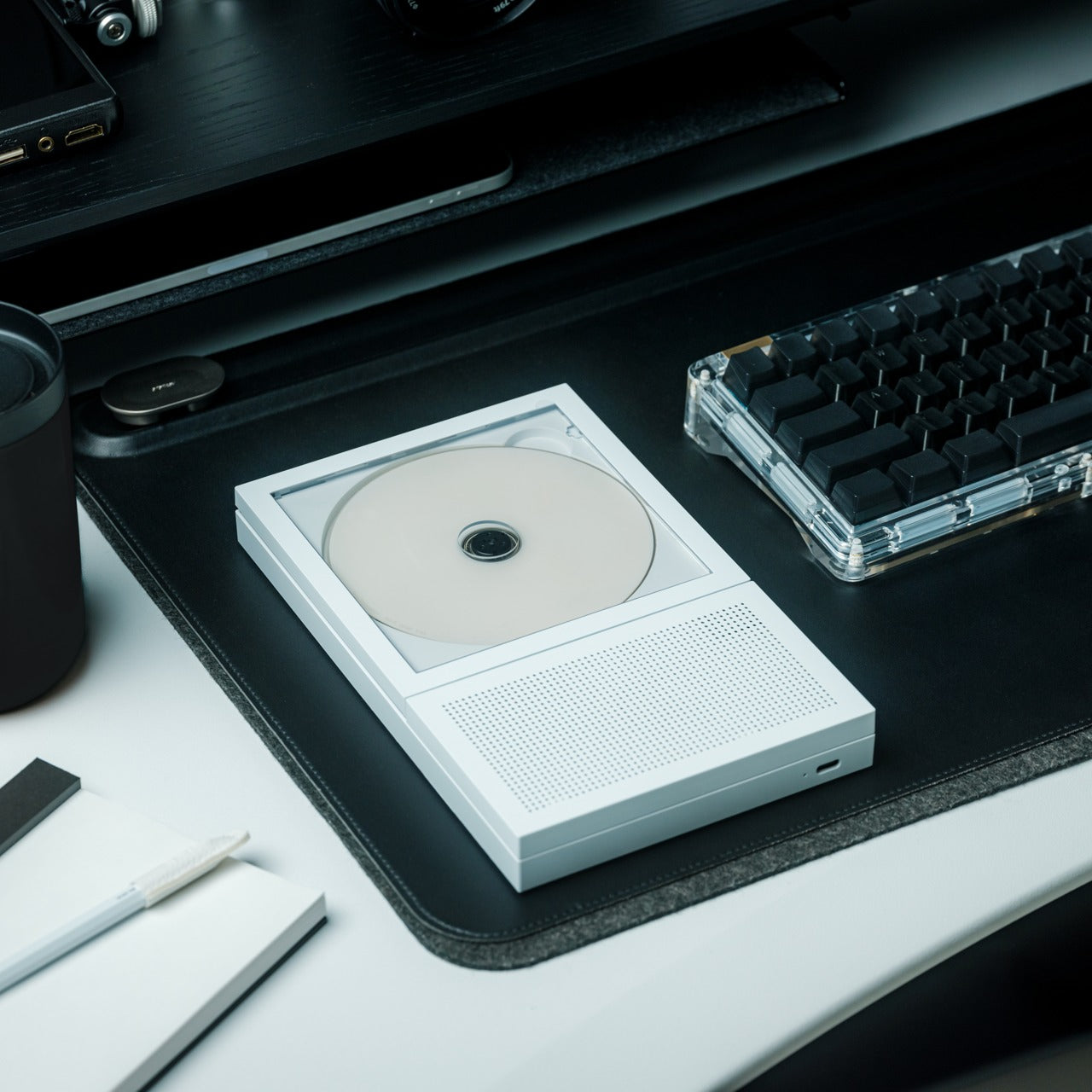
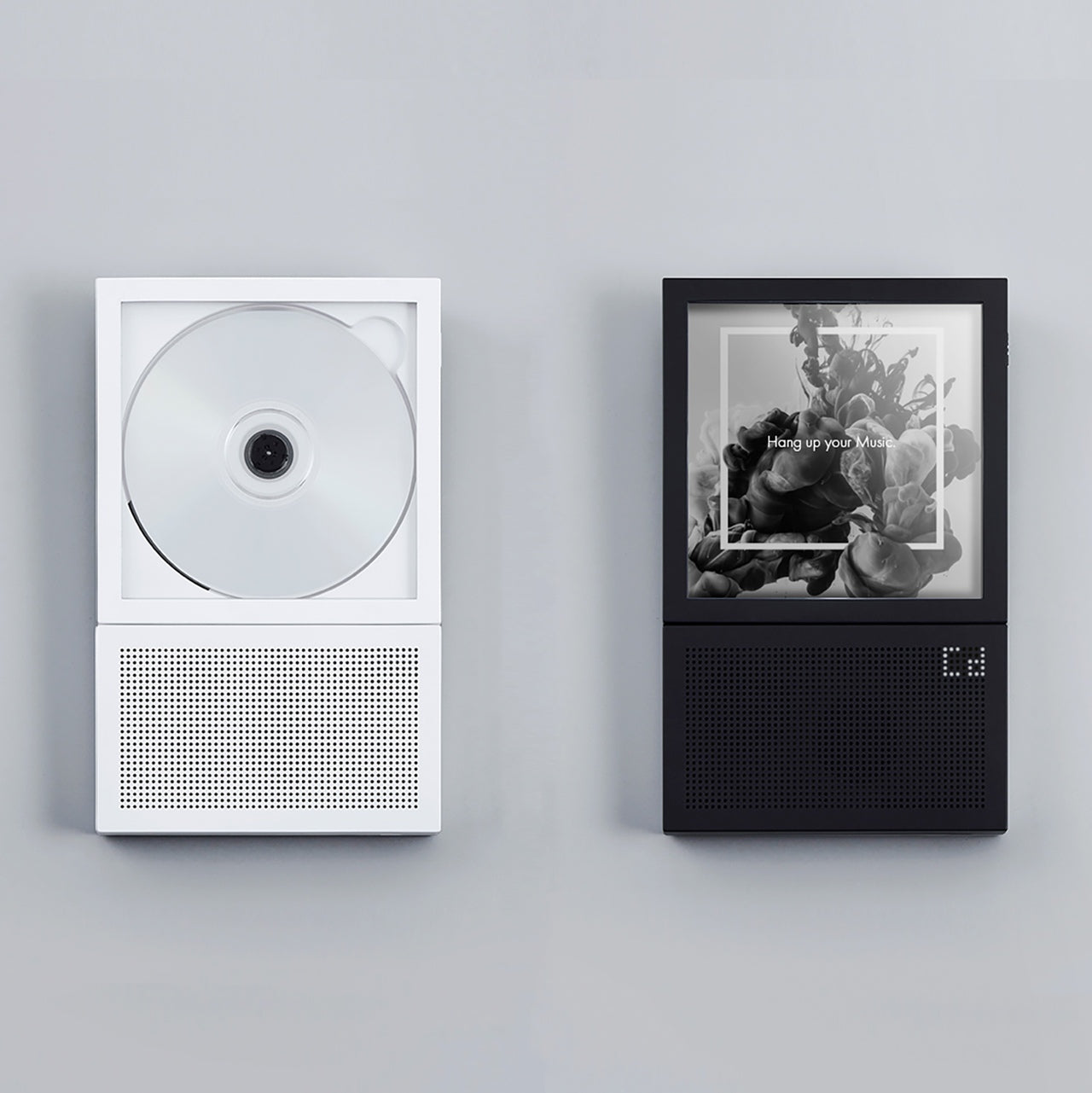
Physical media creates display challenges that streaming never will. CD collections sit in drawers or bulky towers that broadcast “clutter” even when organized. The ClearFrame CD Player reframes music as something worth exhibiting. The crystal-clear polycarbonate body turns the disc and album artwork into a miniature gallery, while the exposed black circuitry invites you to appreciate the engineering as part of the aesthetic rather than something to hide away.
The transparent design means the player becomes part of your decor, whether it’s playing or silent. Bluetooth connectivity, seven-hour battery life, and wall-mount capability give it flexibility that traditional players lack. It works on shelves, desks, or mounted as wall art, adapting to your space rather than demanding accommodation. This swap replaces both oversized stereo systems and hidden-away music players with something that celebrates physical media while taking up minimal space and maximum attention.
The transparent polycarbonate showcases both album art and internal engineering.
Bluetooth connectivity and a rechargeable battery offer placement flexibility.
Multiple mounting options adapt to different room configurations.
What We Dislike
The focus on CDs excludes vinyl collectors.
The transparent design shows dust and fingerprints more readily.
7. JewelVase Mirror Stand
Mirrors, accessory storage, and vases typically occupy separate zones in your home, each claiming surface area and visual attention. The JewelVase collapses these categories into a single polyhedron form that functions as all three. The mirror reflects light and lets you check your appearance, the structure holds rings and bracelets, and the basin accepts water for fresh flowers. Each function enhances the others rather than competing for dominance.
The bioplastic construction contains rice husks, bringing material sustainability into the minimalist equation without sacrificing durability. The unique angled shape creates visual interest that earns its spot on any desk, table, or shelf, while the reflective surface doubles whatever beauty you place in front of it. Even pouring water becomes a small meditative ritual when the mirror shows you the flower from both sides simultaneously. This swap eliminates multiple accessories, consolidating them into one elegant object that does more with less.
The multipurpose design combines a mirror, an accessory stand, and a vase.
The bioplastic material incorporates sustainable rice husk content.
The polyhedron shape creates sculptural presence without bulk.
What We Dislike
The vase capacity suits single stems rather than large arrangements.
The angled mirror may not work for full-face viewing.
Making Space by Choosing Better
These seven swaps share a common philosophy. They refuse the false choice between function and beauty, instead insisting that thoughtful design delivers both simultaneously. Each piece earns its place by doing more than one thing well, by disappearing when appropriate, or by transforming mundane tasks into moments worth savoring. Your space becomes less about what you’ve removed and more about what you’ve chosen to keep.
Decluttering through minimalist swaps creates lasting change because you’re not fighting against your needs. You’re meeting them with objects designed to take up less room, require less maintenance, and contribute more to the atmosphere you’re trying to create. The result feels lighter, not because you’re doing without, but because everything present is pulling its weight. That’s where real minimalism lives, in the space between empty and intentional.
Shared calendars scatter across phones, sticky notes live on the fridge, and whiteboards never quite get updated. Most attempts to centralize family logistics involve smart displays that look like tablets or small TVs bolted to the wall, clashing with the rest of the room. A shared calendar deserves to be visible, but not at the cost of turning your kitchen into a control room with glowing screens and exposed cables.
Skylight’s 27-inch Calendar Max is a digital calendar that starts from the wall, not the app. It is a large wall-mounted touchscreen designed to be a central family hub, but the industrial design leans toward a floating frame rather than a black rectangle. The goal is to feel like part of the decor while still being big and clear enough to see from across the room.
A typical morning means everyone glances at the calendar on the way to coffee. Color-coded events show who is doing what, lists and meal plans sit alongside the schedule, and everything syncs with the digital calendars people already use on their phones. Instead of hunting through apps or checking multiple sources, the day’s plan is just there, big enough that no one can pretend they missed soccer practice.
The display sits slightly off the wall, casting a soft shadow that changes with the light, so it reads more like a floating object than a mounted monitor. Magnetically attached frames in aluminum, wood, or plastic let you pick a look that matches your space and swap them later if the room changes, without replacing the hardware. It mostly just means the calendar feels deliberate instead of tacked on.
The mounting system uses a dedicated wall plate with cable routing, so once it is up, the calendar sits cleanly with minimal visible wiring. The packaging and installation guide are designed to make the process approachable, more like hanging a large frame than installing AV equipment. That matters when the person putting it up is more interested in family logistics than tech tinkering.
During busy hours, it behaves like a bright, legible planner. When things slow down, it can switch to a photo gallery, turning into a large digital frame that shows family pictures instead of to-dos. That shift helps it feel less like a dashboard that never sleeps and more like a living part of the wall that changes mood with the house.
Calendar Max treats shared schedules, lists, and memories as part of the architecture of daily life, not just data on screens. By paying attention to silhouette, depth, frames, and mounting, it turns a functional object into something you do not mind giving prime wall space. Smart calendars that actually look like they belong in a living room turn out to be surprisingly rare, which makes one that does feel like a meaningful shift.
Shared calendars scatter across phones, sticky notes live on the fridge, and whiteboards never quite get updated. Most attempts to centralize family logistics involve smart displays that look like tablets or small TVs bolted to the wall, clashing with the rest of the room. A shared calendar deserves to be visible, but not at the cost of turning your kitchen into a control room with glowing screens and exposed cables.
Skylight’s 27-inch Calendar Max is a digital calendar that starts from the wall, not the app. It is a large wall-mounted touchscreen designed to be a central family hub, but the industrial design leans toward a floating frame rather than a black rectangle. The goal is to feel like part of the decor while still being big and clear enough to see from across the room.
A typical morning means everyone glances at the calendar on the way to coffee. Color-coded events show who is doing what, lists and meal plans sit alongside the schedule, and everything syncs with the digital calendars people already use on their phones. Instead of hunting through apps or checking multiple sources, the day’s plan is just there, big enough that no one can pretend they missed soccer practice.
The display sits slightly off the wall, casting a soft shadow that changes with the light, so it reads more like a floating object than a mounted monitor. Magnetically attached frames in aluminum, wood, or plastic let you pick a look that matches your space and swap them later if the room changes, without replacing the hardware. It mostly just means the calendar feels deliberate instead of tacked on.
The mounting system uses a dedicated wall plate with cable routing, so once it is up, the calendar sits cleanly with minimal visible wiring. The packaging and installation guide are designed to make the process approachable, more like hanging a large frame than installing AV equipment. That matters when the person putting it up is more interested in family logistics than tech tinkering.
During busy hours, it behaves like a bright, legible planner. When things slow down, it can switch to a photo gallery, turning into a large digital frame that shows family pictures instead of to-dos. That shift helps it feel less like a dashboard that never sleeps and more like a living part of the wall that changes mood with the house.
Calendar Max treats shared schedules, lists, and memories as part of the architecture of daily life, not just data on screens. By paying attention to silhouette, depth, frames, and mounting, it turns a functional object into something you do not mind giving prime wall space. Smart calendars that actually look like they belong in a living room turn out to be surprisingly rare, which makes one that does feel like a meaningful shift.
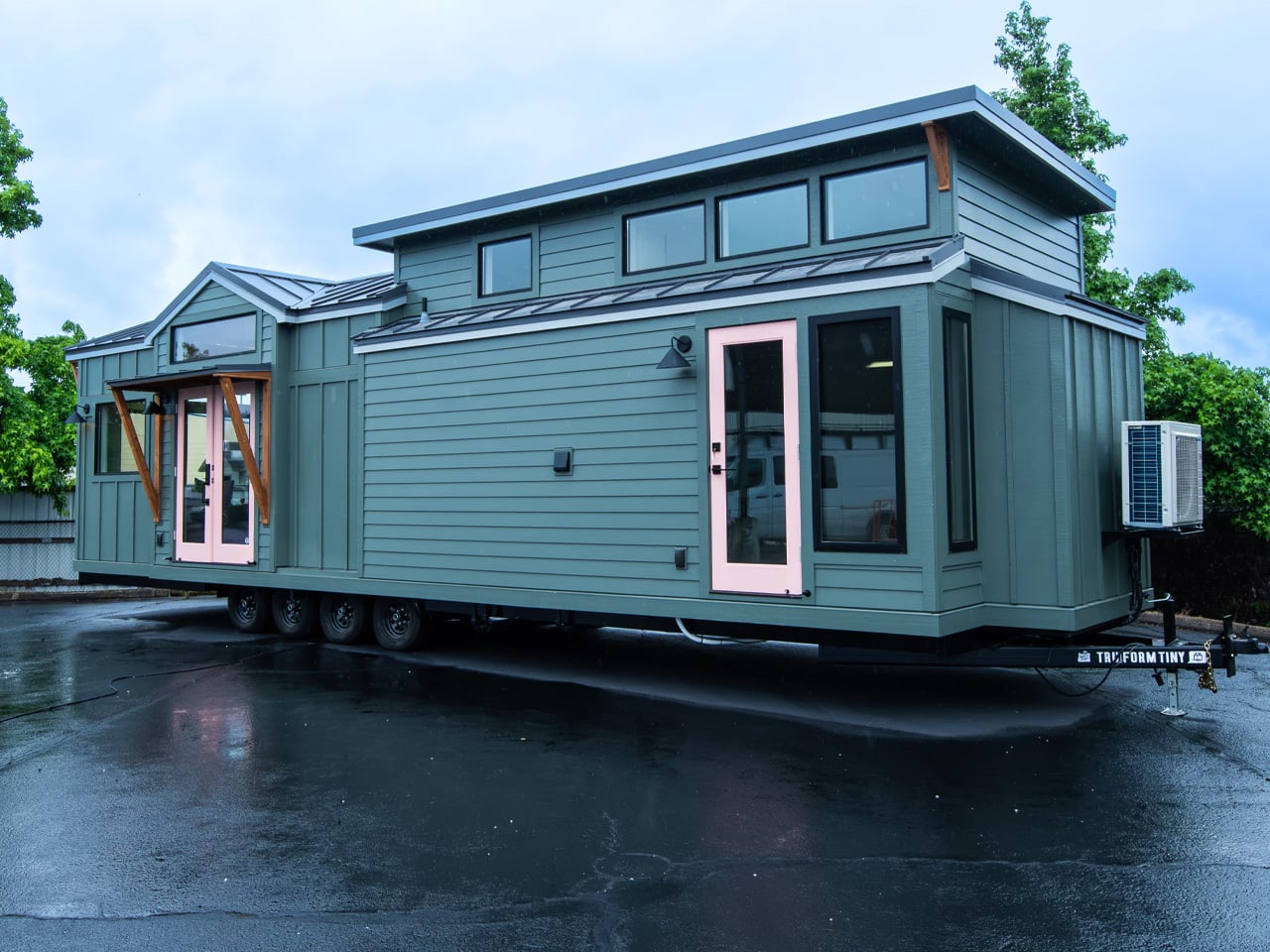
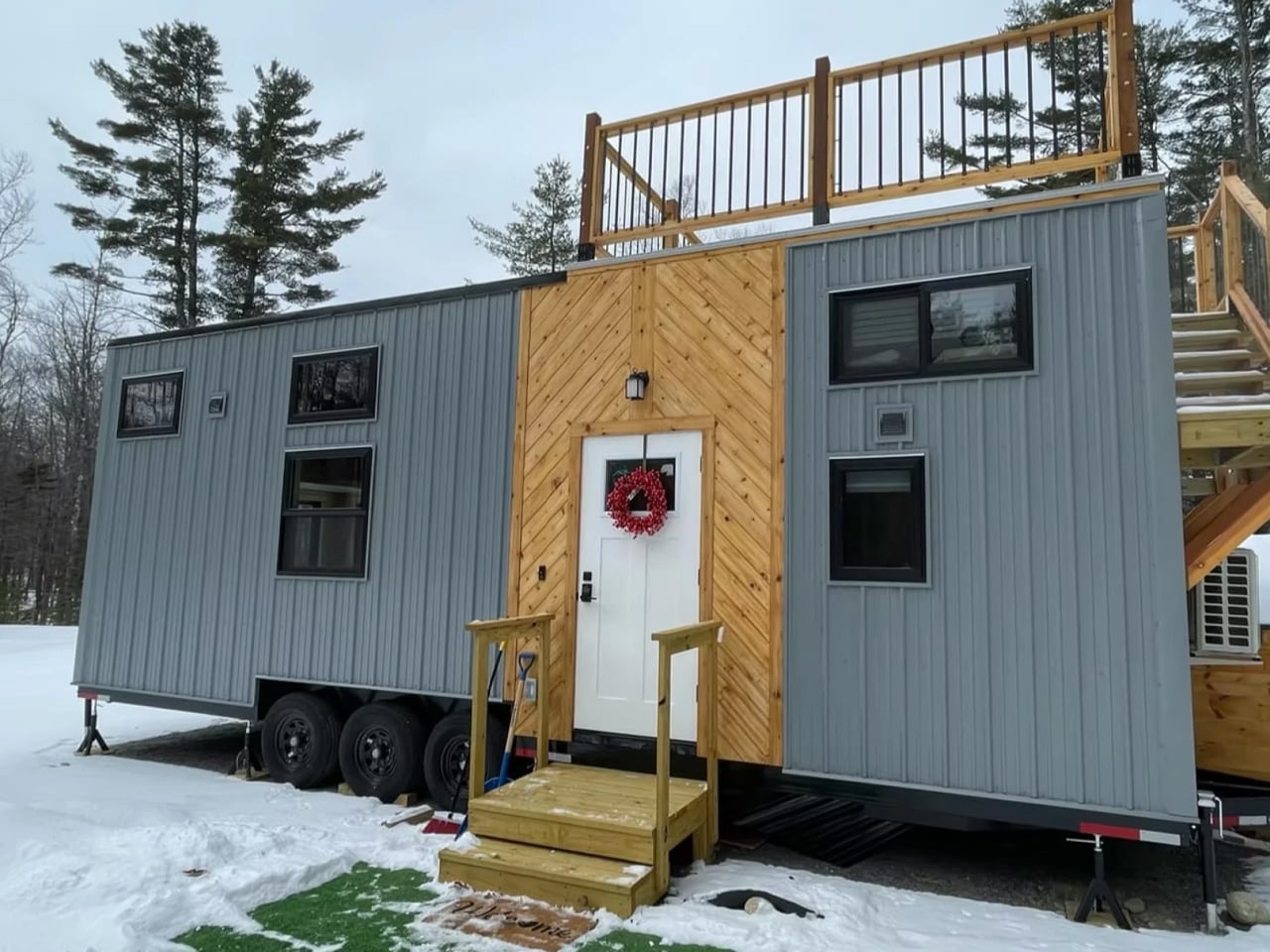
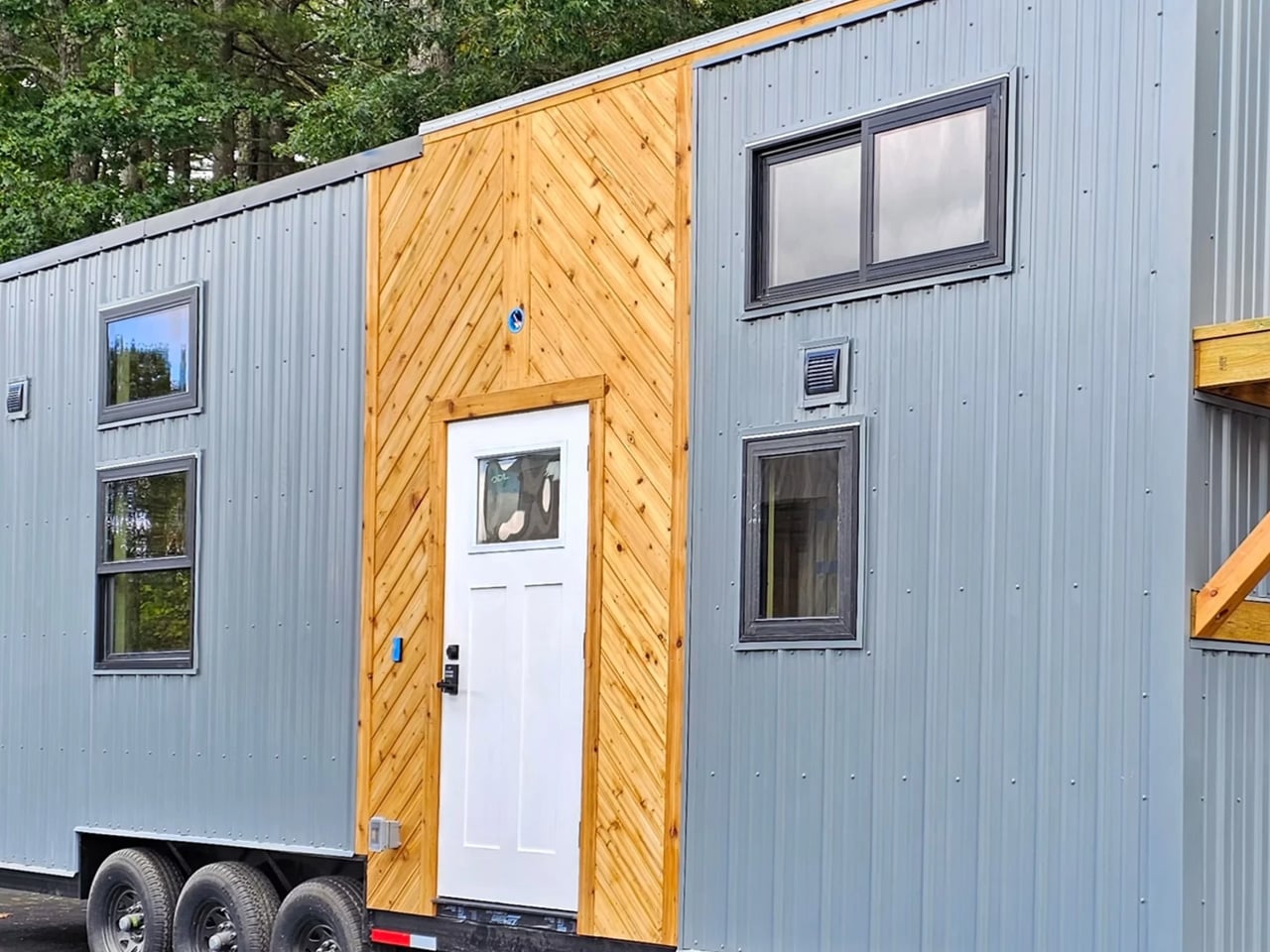
Living small is often romanticized as a sun-drenched, coastal fantasy or a nomadic life on the road, but tiny houses are increasingly proving their worth in far harsher environments. One of the latest examples is a luxurious new model from Tru Form Tiny, designed specifically to handle brutal winters without compromising on comfort or aesthetics.
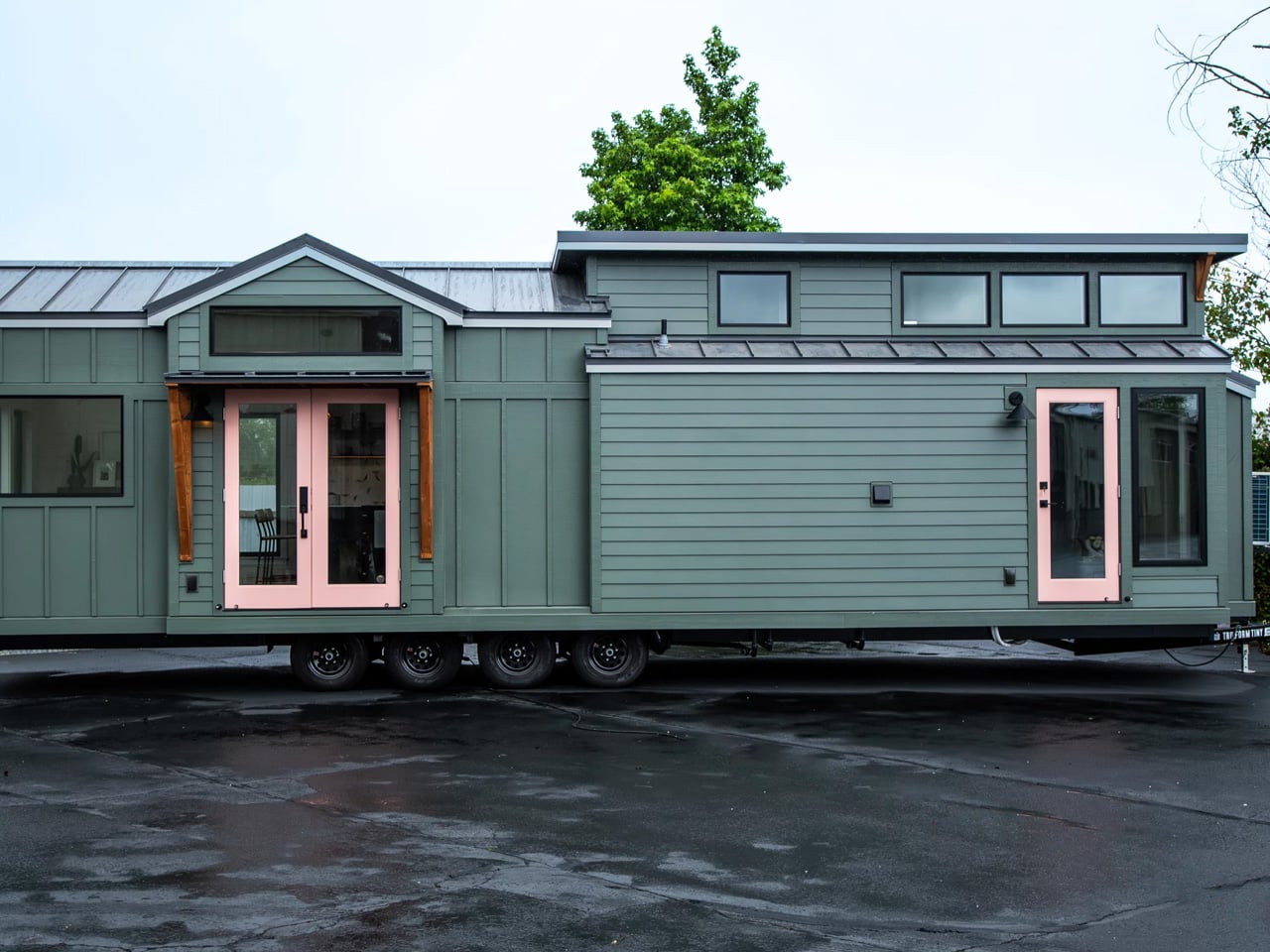
Set on a quad-axle trailer, this 36 ft (11 m) tiny house sits firmly in the full-time-living category. Its proportions feel generous rather than cramped, and the exterior treatment reinforces that impression. Vinyl siding is paired with warm cedar accents, while a standing-seam metal roof hints at durability and low maintenance. The overall look is more contemporary cabin than makeshift shelter, which feels appropriate given its intended home: the icy winters of Colorado.
Cold-climate performance was a driving force behind the design. Tru Form Tiny has wrapped the structure in high-R-value insulation and fitted energy-efficient Low-E windows to reduce heat loss and solar gain. Heating is handled by a high-efficiency mini-split system engineered for subfreezing temperatures, with a wood stove rough-in ready for those truly punishing cold snaps. A tankless hot water system and utility setup tailored for off-grid flexibility round out the resilience-focused specification, making this tiny home feel more like a compact alpine lodge than a seasonal camper.
Inside, large trifold glass doors open into a surprisingly expansive living area. The high ceiling and generous glazing create a sense of volume and light that belies the footprint. A sofa, chair, and table form a comfortable lounge zone, anchored by the mini-split for everyday climate control and the option of a wood-burning stove when the weather turns severe. It’s a space that feels equally suited to curling up with a book on a snow day or hosting a small gathering.
The kitchen continues the theme of full-size living in a small envelope. Running along one side of the home, it features a steel sink, four-burner propane stove with oven, microwave, dishwasher, and a fridge/freezer, all framed by ample counter space and cabinetry. A dining table subtly defines the transition between the kitchen and living area, reinforcing the sense of distinct yet connected zones.
On the opposite side of the house, the bathroom feels unusually generous for a tiny home. A glass-enclosed shower, composting toilet, vanity sink, and extensive storage create a practical, everyday space rather than a compromise. A separate washing machine and dryer underscore the home’s suitability for long-term, off-grid or semi-off-grid living in remote, snowy locations.
Originally planned as a main-floor feature, the bedroom was ultimately relocated to the loft to free up valuable ground-floor space. Accessed via a storage-integrated staircase, the loft offers a low-ceilinged but comfortable retreat with a double bed, entertainment center, and TV. It’s a compact sanctuary that completes a layout clearly focused on real-world livability in extreme conditions, proving that tiny houses can be both climate-resilient and quietly luxurious.
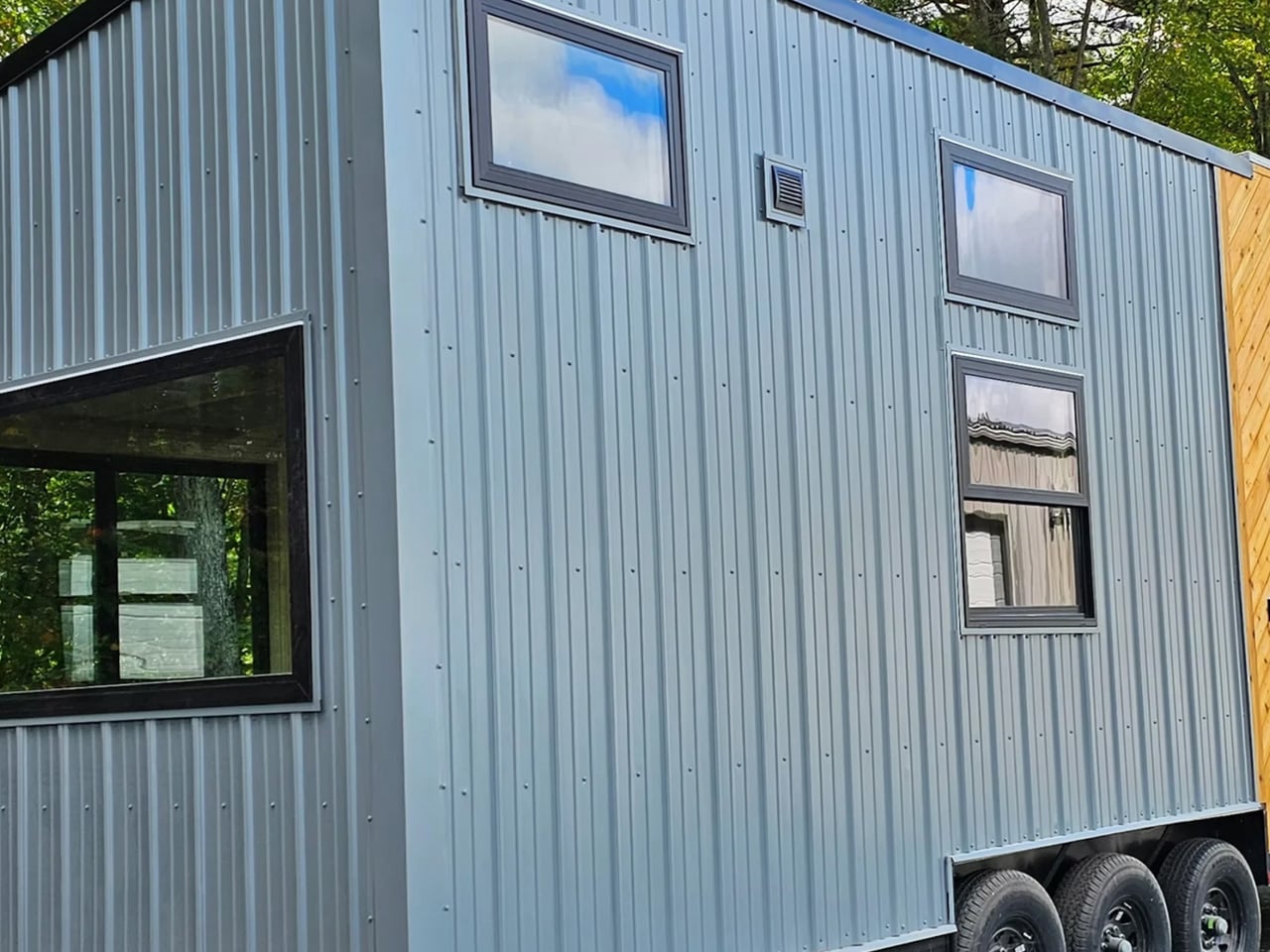
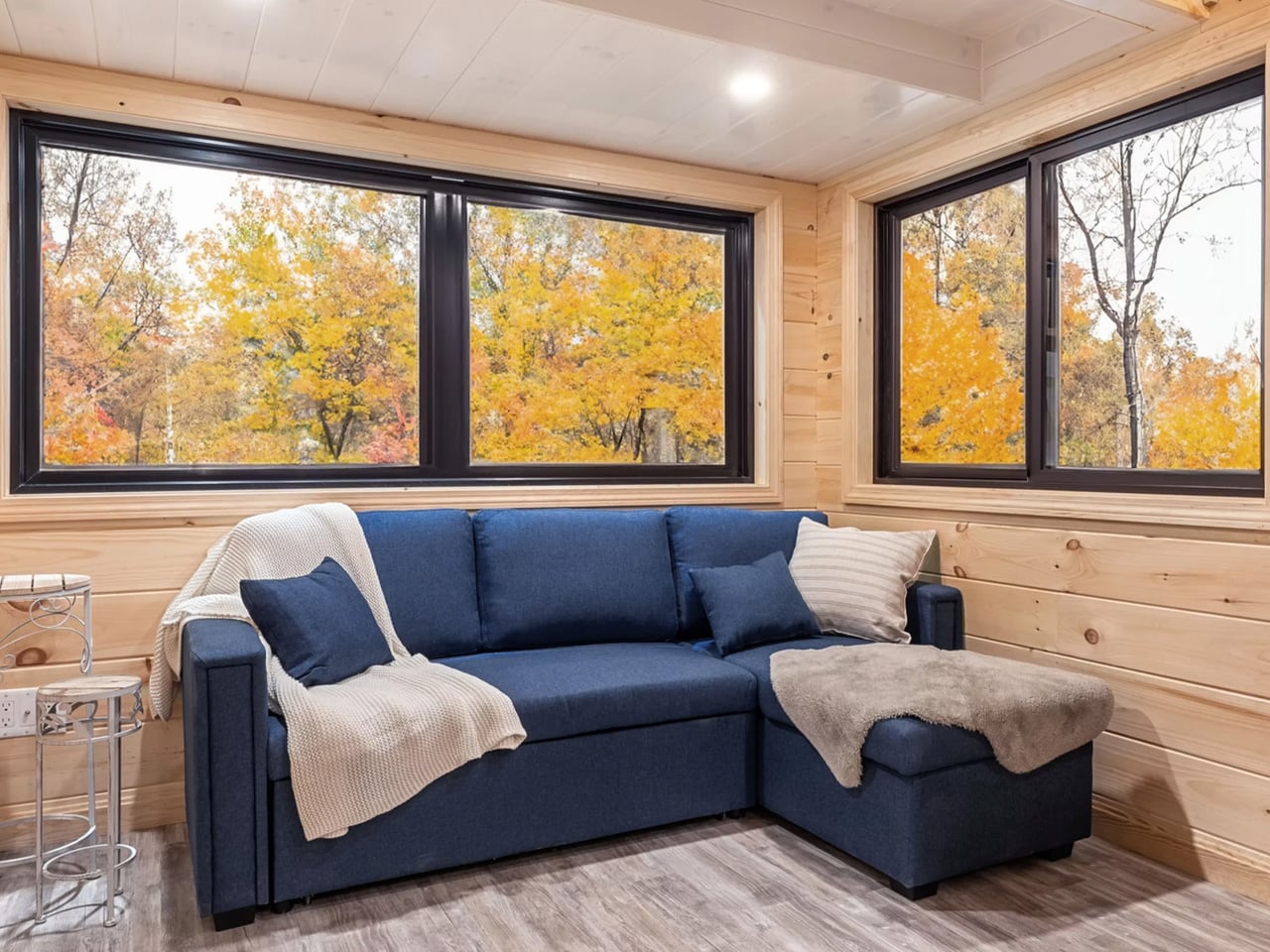
Vancouver Island’s Rewild Homes has introduced the Dove, a single-storey tiny house that breaks away from conventional dimensions to offer full-time residents a more spacious living experience. Measuring 30 feet long and 10 feet wide, the Dove sits on a triple-axle trailer and challenges the standard 8’6″ width typically seen in tiny homes. That extra width makes a remarkable difference in creating an interior that feels genuinely livable rather than cramped, positioning the Dove as a serious option for those considering permanent downsizing.
The exterior showcases a West Coast aesthetic with durable metal siding accented by cedar trim, topped with a sloping metal roof. This material choice balances longevity with visual warmth, creating a home that looks equally at home in rural settings or more developed tiny house communities. The design maintains a clean, modern profile while nodding to traditional cabin architecture, giving the Dove a timeless quality that should age well both structurally and stylistically.
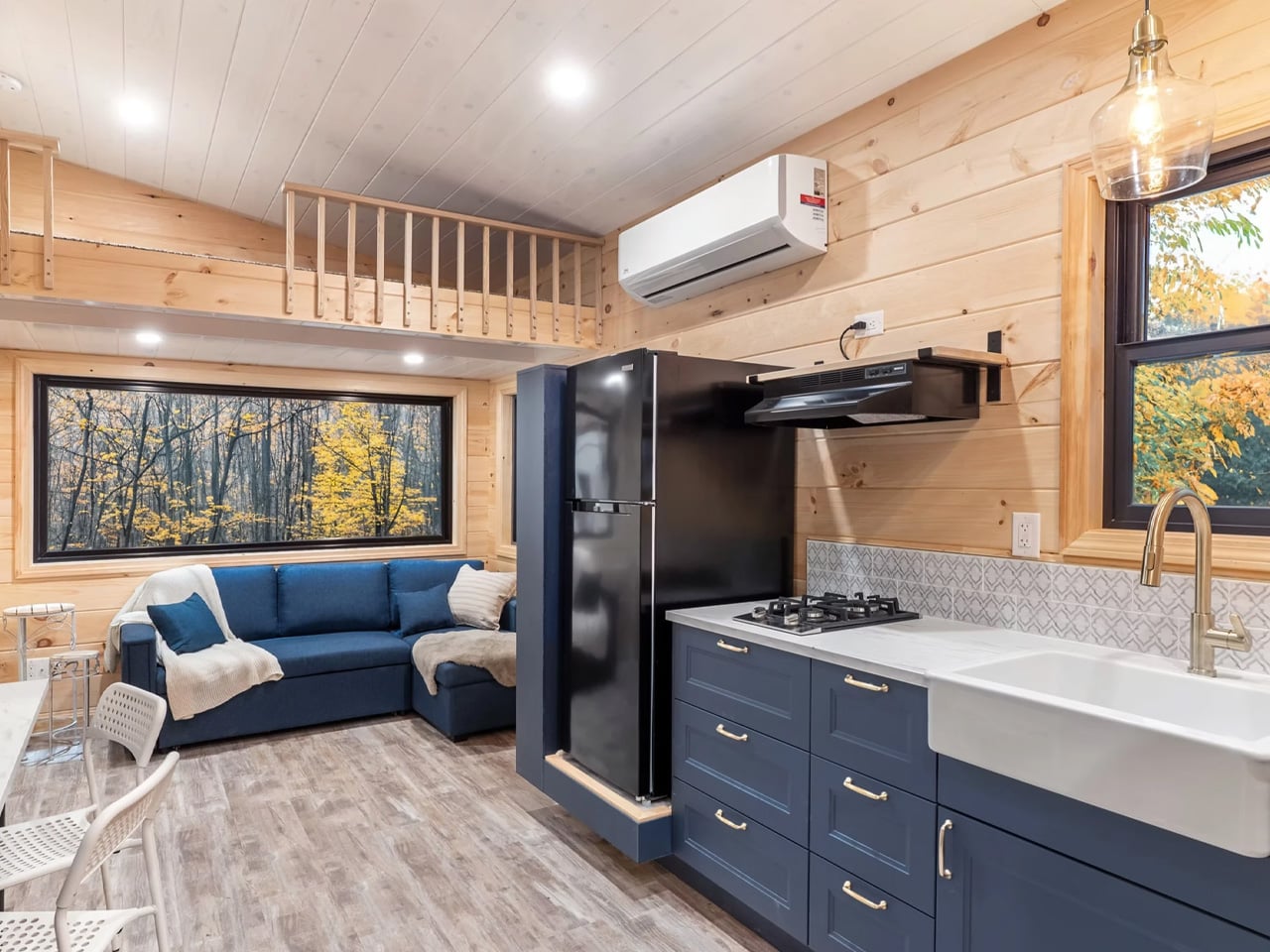
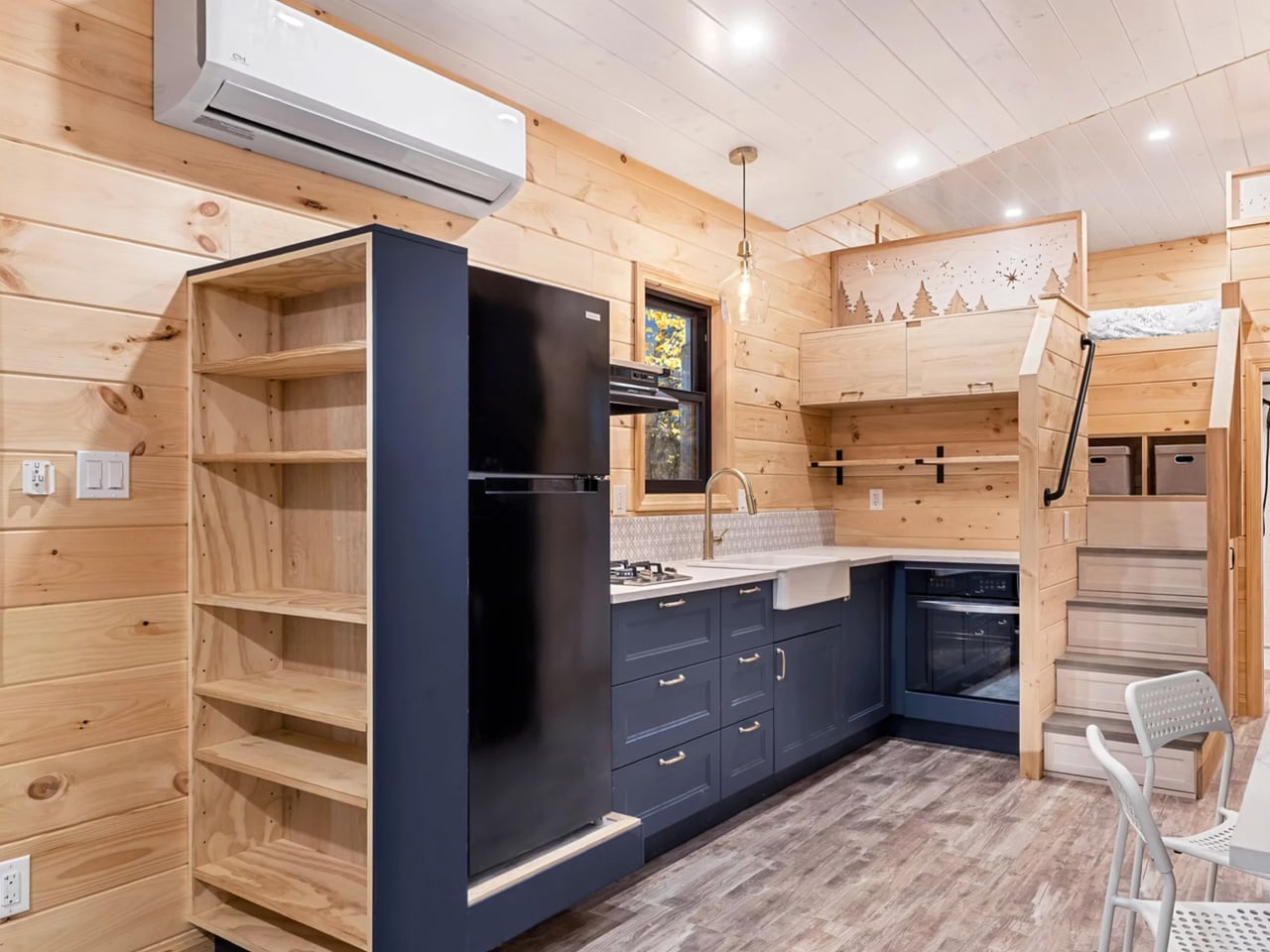
Inside, the single-floor layout eliminates the ladder-accessed lofts that many find impractical for daily living. The kitchen area features ample butcherblock counter space, including a designated eating bar that creates a proper dining zone without requiring a separate table. This setup works particularly well for the Dove’s intended capacity of two people, allowing one person to cook while the other sits comfortably nearby. The open floor plan takes full advantage of that 10-foot width, creating sightlines that make the 30-foot length feel more generous than the square footage might suggest.
The walk-through bathroom stands out as a genuine luxury in the tiny house category. A beautiful tiled shower occupies a substantial portion of the space, large enough to feel like a proper bathroom rather than an afterthought. The walk-through design connects different zones of the house while maintaining privacy, a layout choice that reflects thoughtful planning rather than simply fitting fixtures wherever they might squeeze in.
The ground-floor bedroom eliminates the need to climb to a sleeping loft each night, a feature that significantly improves accessibility and aging-in-place potential. Rewild Homes equipped the Dove with practical appliances, including a combination washer/dryer unit, a propane range, and propane on-demand water heating. These choices support off-grid capability while maintaining the conveniences most people expect from a permanent residence.
Built in Nanaimo, British Columbia, the Dove represents Rewild Homes’ commitment to quality materials and custom construction. The extra-wide frame and single-storey design create a home that accommodates full-time living without the compromises that make many tiny houses feel like temporary solutions. For couples or individuals seeking a properly scaled-down home rather than a novelty dwelling, the Dove delivers functional space within a compact footprint.
Japan has always understood what the rest of the world is only now discovering: small spaces don’t mean small lives. As tiny homes continue gaining momentum globally, Japanese designers are leading the charge with accessories that do more with less. These aren’t just space-savers. They’re thoughtfully engineered pieces that transform limitations into possibilities, proving minimalism can be both functional and beautiful.
The tiny home movement demands intelligent design. Every object must earn its place, which means multifunctionality isn’t a bonus—it’s essential. Japanese creators have mastered this philosophy through decades of living in compact urban dwellings, and now their innovations are reshaping our understanding of home essentials. From collapsible kitchen tools to multi-purpose devices, these seven accessories embody the spirit of doing more while owning less.
1. RetroWave 7-in-1 Radio
The RetroWave proves that nostalgia and practicality can coexist beautifully. This compact radio channels vintage Japanese aesthetics through its tactile tuning dial and clean lines, but beneath that retro exterior lies serious modern functionality. It streams Bluetooth audio, plays MP3 files from USB or microSD cards, tunes into FM/AM/SW broadcasts, and moonlights as a flashlight, power bank, SOS alarm, and clock. For tiny home dwellers who need every item to pull double duty, this seven-function device eliminates the need for separate gadgets cluttering precious counter space.
Emergency preparedness becomes effortless when your entertainment system doubles as survival equipment. The hand-crank charging and solar panel mean you’re never stranded without power, whether you’re off-grid by choice or circumstance. The design language speaks to Japanese minimalism while respecting analog traditions, creating something that feels equally at home on a shelf or in a bug-out bag. This isn’t about choosing between form and function—the RetroWave delivers both in a footprint smaller than most standalone speakers.
The hand-crank and solar charging eliminate battery anxiety completely
Seven genuine functions mean seven other devices you don’t need to own
Bluetooth streaming bridges analog aesthetics with contemporary listening habits
The compact size fits anywhere without announcing its emergency capabilities
What We Dislike
The retro dial might slow down precise station tuning for some users
Solar charging works best with direct sunlight, limiting indoor recharging speed
2. 8-in-1 EDC Scissors
Who decided that multitools need to be bulky? These palm-sized scissors challenge that assumption with a sleek design that conceals eight different functions. The oxidation film finish creates a handsome matte black aesthetic while adding rust resistance, making these as durable as they are compact. Scissors, knife, lid opener, can opener, cap opener, bottle opener, shell splitter, and degasser live within a 5.1-inch frame that disappears into drawers, pockets, or tiny kitchen organizers. For homes measured in square feet rather than square meters, this consolidation matters.
The genius lies not in cramming tools together but in thoughtful integration. Each function works without compromise, maintaining the precision you’d expect from dedicated implements. Japanese design philosophy shines through the restraint—there’s no unnecessary bulk, no gratuitous features. The black coating transforms utilitarian metal into something you’ll want visible on your counter rather than hidden away. When your kitchen barely fits a cutting board, having a toolbox that fits in your palm becomes genuinely liberating.
Eight tools occupy the space that one normally would
The oxidation coating adds durability while looking sophisticated
Palm-sized dimensions make storage effortless in any tiny space
The design proves multitools can be elegant, not just practical
What We Dislike
A smaller size may require more grip strength for tougher jobs
The integrated design means you can’t use two functions simultaneously
3. Iron Frying Plate
JIU eliminates the awkward dance between stovetop and table by making the pan your plate. This mill scale steel frying surface comes with a detachable wooden handle that releases with one hand, transforming cookware into servingware instantly. The 1.6mm-thick construction distributes heat beautifully while remaining light enough for comfortable handling. Rust-resistant and uncoated, it arrives ready to use straight from the box. For tiny homes where kitchen storage is measured in inches, losing the need for separate serving dishes creates genuine breathing room.
The philosophy goes deeper than saving space. Eating directly from what cooked your food connects you to the meal in ways china plates never could. The rustic appeal of seared proteins still sizzling on steel brings restaurant energy into the smallest kitchens. Japanese craftsmanship shows in the details—the stick-resistant surface that needs no chemical coatings, the balanced weight distribution, the seamless transition from flame to table. This isn’t about making do with less. It’s about recognizing that sometimes one exceptional piece beats two mediocre ones.
The detachable handle transforms the cooking vessel into a serving dish instantly
Mill scale steel develops character and improves with use over time
No chemical coatings mean healthier cooking and easier maintenance
Eliminating separate plates cuts storage needs and dishwashing time
What We Dislike
Metal retains heat longer, requiring careful handling after cooking
The uncoated surface needs proper seasoning and care to maintain performance
4. Pop-Up Book Vase Edition 4
Flowers deserve drama, and this pop-up book vase delivers it in the most space-efficient package imaginable. Crack the cover to reveal three-dimensional vase cutouts that transform flat pages into sculptural vessels. Edition 4 introduces gray, yellow, and green designs with varied shapes that offer fresh perspectives—literally, since flipping the book upside down completely changes your arrangement’s presentation. Made from natural pulp with water-resistant coating, these aren’t decorative props but functional vases. When not in use, they collapse to book thickness and slide onto shelves beside actual reading material.
The concept challenges what vases must be. Traditional ceramic versions demand dedicated storage even when empty, sitting idle between floral moments. This innovation shrinks that footprint to nearly nothing while expanding creative possibilities. Each page offers a different aesthetic, meaning one item provides three distinct looks. The whimsy feels intentionally Japanese—playful yet purposeful, artistic yet practical. For tiny homes where every object must justify its existence, a vase that disappears when not needed while offering multiple design options, becomes genuinely valuable.
Three vase designs in one item triple your decorating options
Book-flat storage means it virtually disappears between uses
The water-resistant coating makes it genuinely functional, not just decorative
Upside-down orientation adds creative flexibility to arrangements
What We Dislike
Paper construction requires gentler handling than ceramic alternatives
The pop-up mechanism may weaken with extremely frequent opening and closing
5. Obsidian Black Mini Grip Tongs
Precision matters when space is tight, and these mini tongs deliver restaurant-level control in a fraction of the size. Available in 4.9-inch and 7-inch lengths, they’re crafted from SUS821L1 stainless steel—twice as strong as standard SUS304, allowing thinner, lighter construction without sacrificing durability. The obsidian black finish elevates them beyond mere utensils into objects worth displaying. Whether plating delicate appetizers, flipping shrimp, or arranging Instagram-worthy presentations, these tongs put professional deftness into compact packages that suit tiny kitchens where every drawer inch counts.
The size proves liberating rather than limiting. Standard tongs feel cumbersome when you’re maneuvering in tight spaces or handling small portions, but these scaled-down versions match the reality of cooking for one or two in condensed quarters. The corrosion-resistant steel ensures longevity that justifies the investment, embodying the Japanese principle of buying quality once rather than cheap replacements repeatedly. Their sculptural appearance means they can hang on exposed rails without looking utilitarian—important when tiny homes often blur kitchen and living spaces into single rooms.
The compact size offers precision impossible with full-length tongs
Superior steel strength allows elegant thinness without compromising durability
The black finish looks intentional on open storage and exposed racks
Lightweight construction reduces hand fatigue during detailed plating work
What We Dislike
Shorter length means less distance from heat sources during cooking
The specialized size might not suit those who prefer standard dimensions
6. Heritage Craft Unboxing Knife
Opening packages becomes an aesthetic experience with this circular cutter carved from solid aluminum. Inspired by Paleolithic hand axes, the design reimagines ancient tools through modern machining that leaves wave-like patterns across the surface. These aren’t just decorative—they provide a secure, non-slip grip. The tapered form and striking appearance transform a mundane task tool into a desk object worth displaying prominently. For tiny homes where every visible item contributes to the overall aesthetic, this cutter earns its spot through beauty and mystery rather than hiding shamefully in drawers.
The symbolism runs deeper than surface appeal. Using metal instead of stone represents human evolution in physical form—a daily reminder that tools can be thoughtful rather than thoughtless. The raw, handcrafted quality contrasts beautifully with mass-produced plastic alternatives while taking up minimal space. Japanese design philosophy shines through the balance of form and function, creating something that inspires even during routine tasks. When you’re opening the constant stream of packages that tiny home living often requires, why not do it with something that brings joy rather than just utility?
The sculptural form justifies prominent display rather than drawer storage
Ancient inspiration creates conversation-worthy design with genuine depth
Wave patterns provide functional grip while enhancing visual appeal
Aluminum construction balances durability with comfortable weight
What We Dislike
The artistic form might feel less intuitive than traditional box cutter shapes initially
The premium design comes at a higher price than basic alternatives
7. Slim Fold Dish Rack
This collapsible dish rack shrinks from 14 inches to 1.2 inches in one second flat. The patent-pending spring mechanism makes deployment and collapse equally effortless, transforming substantial drying capacity into pocket-sized storage. Its minimalist construction provides ample ventilation and accommodates plates, utensils, and cookware of various sizes without bulk. Dishwasher-friendly and easy to clean, it works equally well in permanent tiny homes or mobile camping setups. When counter space measures in precious square inches, reclaiming 14 inches of depth the moment dishes dry becomes genuinely transformative.
The innovation addresses a persistent tiny home frustration: bulky essentials that can’t be eliminated but consume disproportionate space. Traditional dish racks squat permanently on counters, monopolizing real estate even when empty. This design respects that dishes need drying without demanding permanent territorial claims. The spring system proves Japanese engineering at its finest—sophisticated mechanism, simple operation, reliable performance. The ability to pocket the rack when collapsed opens possibilities for RV living, boat galleys, and other extreme space constraints where every item must justify not just its function but its physical footprint.
One-second deployment and collapse eliminates fussy setup procedures
The collapsed 1.2-inch profile fits virtually anywhere, including large pockets
Generous 14-inch expanded size accommodates a full meal’s worth of dishes
Dishwasher compatibility makes maintenance effortless and thorough
What We Dislike
The spring mechanism requires occasional inspection to maintain smooth operation
Lighter construction may shift under heavier cookware without stabilization
Making Space for What Matters
These seven accessories represent more than clever design. They embody a philosophy that tiny living advocates have embraced: abundance comes from quality, not quantity. Each piece eliminates multiple lesser items while adding functionality and beauty. The Japanese influence is evident not in exotic aesthetics, but in thoughtful problem-solving that respects both space and user experience. These aren’t compromises forced by limited square footage but genuinely superior solutions.
The tiny home movement continues growing because it promises freedom from excess, not deprivation. Smart accessories like these make that promise tangible. They prove small spaces can accommodate full lives when every object pulls its weight. Whether you’re downsizing deliberately or maximizing what you have, these compact essentials demonstrate that intelligent design creates spaciousness regardless of actual dimensions. The trend isn’t really about tiny homes at all. It’s about intentional living, and these seven pieces show exactly what that looks like.

Most sleep gadgets feel like they belong in a gym or a lab: chunky watches, bright screens, and apps that want you to stare at charts before bed. There is a disconnect between wanting a soft, quiet bedroom and plugging in devices that blink, buzz, and look like mini computers parked on your nightstand. Sleep tech rarely starts from the mood of the room it lives in, focusing instead on metrics and dashboards that feel clinical.
Bird.zzz is a project from Jiyoun Kim Studio and LG Labs that begins with a softly lit, cozy bedroom. It is a sleep wellness earbud paired with a dome-shaped bedside cradle that doubles as a knock-on lamp. The earbuds measure sleep via EEG and physical data, then use that analysis to deliver sound designed to improve sleep quality, all while sitting on your nightstand like a small sculpture rather than a charging puck.
The design started from the cradle, imagined as a small object on a nightstand rather than a tech dock. It works as a bedside lamp using LG’s knock-on technology; a tap on the cover turns a warm, indirect LED halo on or off. The magnet-fixed top lifts to reveal the earbuds, and the weight is tuned so it feels stable and reassuring when you reach for it half-awake in the dark.
The earbuds had a specific challenge, needing skin contact for EEG sensing while staying loose enough for comfortable sleep. The team explored numerous forms and landed on a novel S-shaped ear tip, a hybrid of open and closed designs that keeps sensors in place without pressing hard into the ear canal. It borrows benefits from both types while avoiding the pressure points that make most in-ear devices unbearable after 20 minutes.
A typical evening means placing the earbuds in the cradle, tapping the dome to turn on a soft light, then lifting the lid to put the earbuds in as you settle into bed. As you fall asleep, the system reads brain activity and physical signals, adjusting soundscapes or audio cues based on your patterns. In the morning, the earbuds go back into their dome, and the object returns to being a quiet lamp.
The project covered product, packaging, and manual design, so the experience runs from unboxing to nightly use with consistent, minimal language. The warm white LED, indirect lighting, and knock-on interaction follow calm technology principles, asking for as little attention as possible. Bird.zzz launched after CES 2023, but it looks more like a small piece of bedroom architecture than a trade show gadget you plug in reluctantly.
Bird.zzz treats sleep as an environment to design for, not just a graph to optimize. The dome cradle, the S-shaped ear tip, and the soft interactions all point toward tech that respects the bedroom as a place to wind down. For anyone wary of strapping more screens to their body at night, an earbud and lamp combo that tries to disappear into the ritual of going to bed feels like a more thoughtful direction.
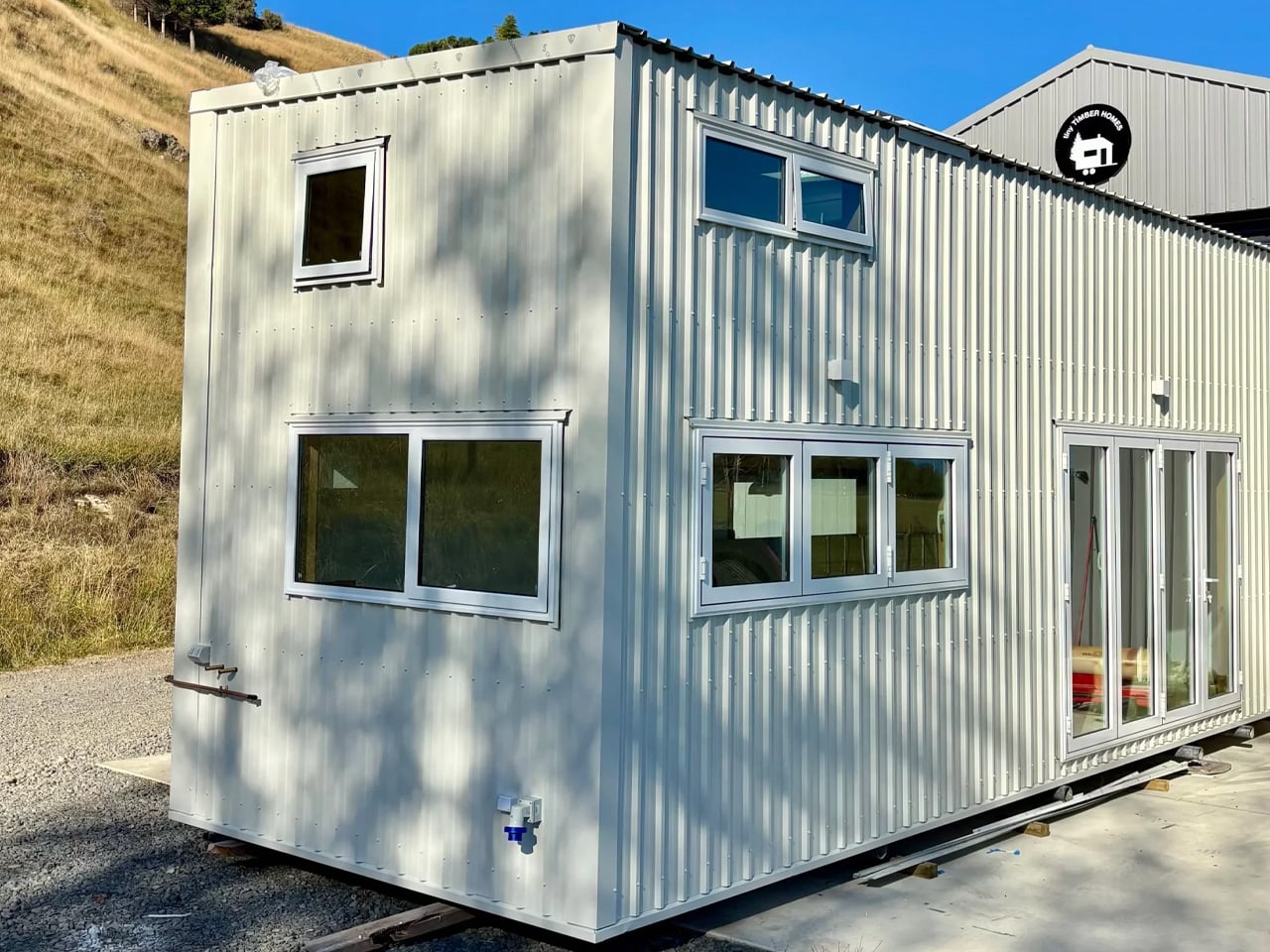
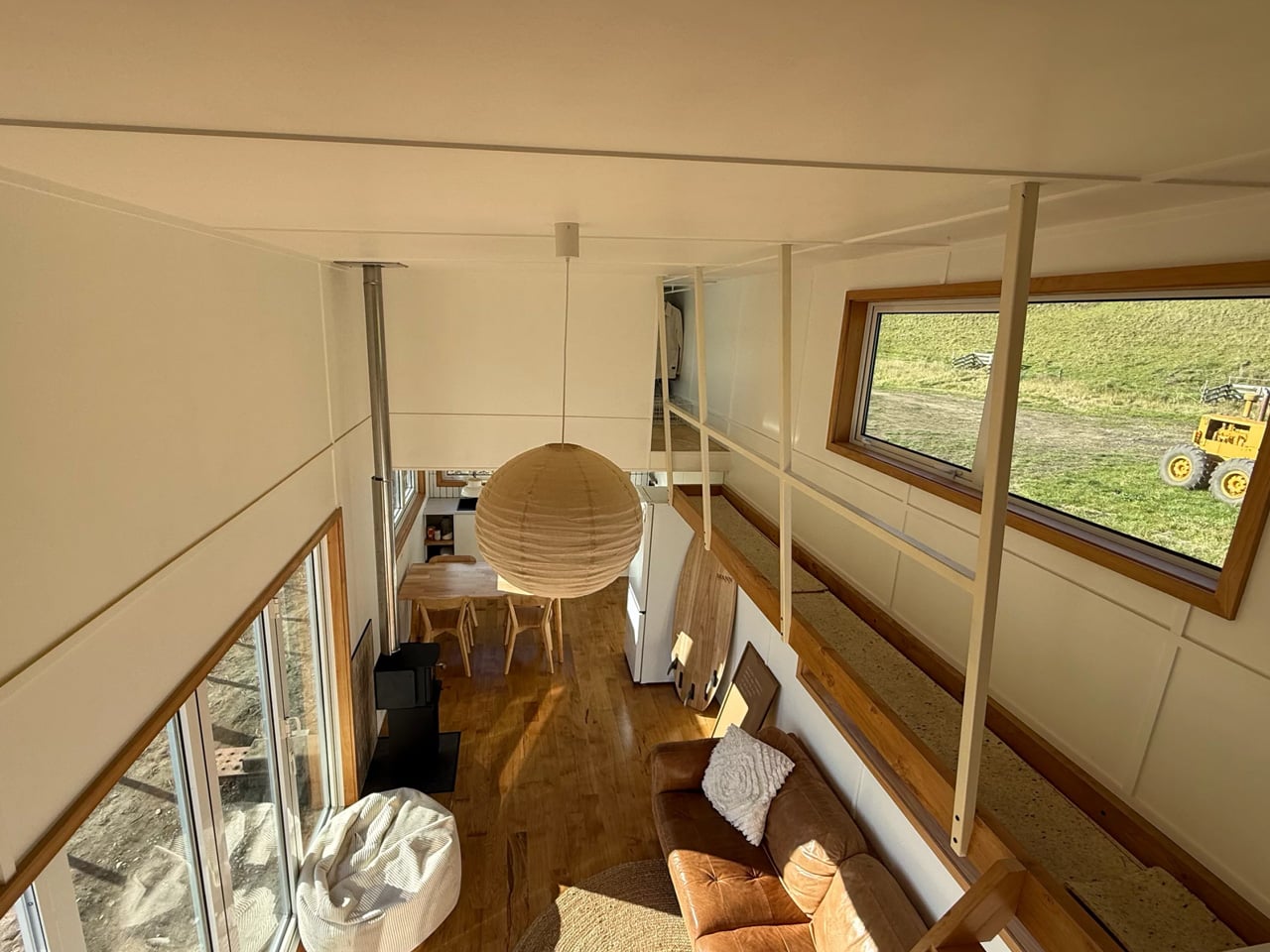
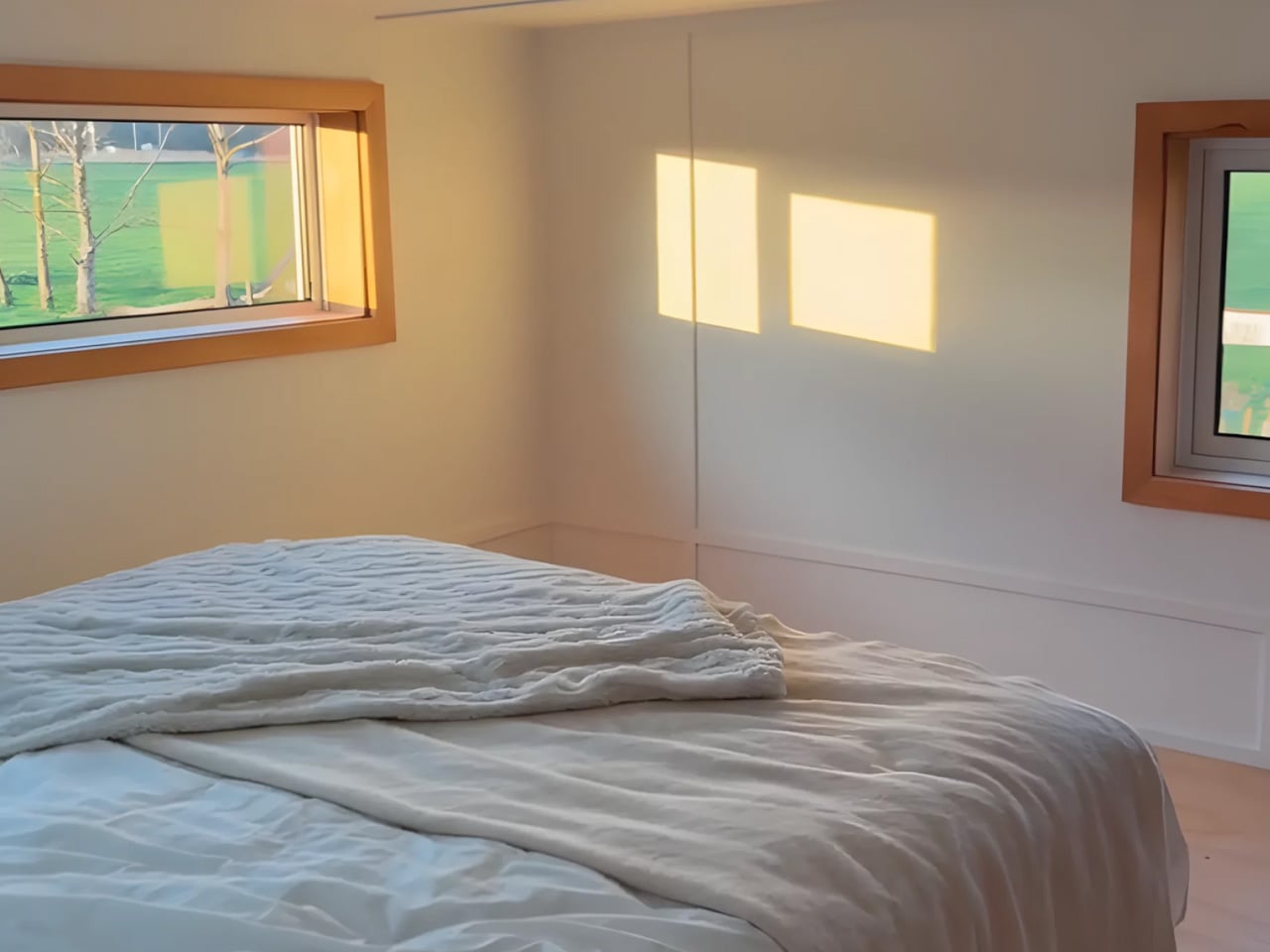
After seven years of exploring New Zealand’s open roads in an RV, a couple of travel enthusiasts decided it was time to plant roots. Their solution wasn’t a traditional house or even a typical tiny home. Working with South Base Homes and award-winning architect Chris Pyemont, they created the Bespoke Base, a 12-meter tiny house that challenges everything we think we know about compact living.
The Bespoke Base stretches 39 feet in length, placing it among the more generous tiny homes on the market. Where many tiny houses force occupants to navigate cramped quarters and vertical ladders, this design takes a different approach. The entire layout unfolds on a single level, creating an experience that feels less like downsizing and more like curating the perfect apartment. Wrapped in warm redwood cladding, the exterior hints at the thoughtful design within.
The single-story configuration means no climbing to a loft bedroom, no stooping under low ceilings, and no compromising on the fundamental comforts that make a house feel like home. For clients who spent years navigating the constraints of RV living, this accessibility was paramount. The spacious interior reads more like a compact apartment than a mobile dwelling, with room to breathe and space to truly settle in.
South Base Homes has built its reputation on creating bespoke tiny homes where luxury fittings come standard. Based in Tasman, New Zealand, the company earned recognition as the 2023 Tiny House Awards winner for Best Commercial Build. Their collaboration with Chris Pyemont brings architectural credibility to a sector often dominated by DIY builds and cookie-cutter designs. Pyemont’s expertise in coastal and high-wind zone construction ensures these homes can withstand New Zealand’s challenging weather conditions.
The Bespoke Base represents what happens when clients refuse to accept the usual tiny house trade-offs. Instead of squeezing life into a predetermined footprint, the design expands to accommodate how people actually want to live. This approach to tiny living isn’t cheap. South Base Homes’ models start at NZD 200,000, reflecting the premium materials and architectural design that go into each build. The price point positions these homes as permanent residences rather than temporary experiments in minimalism.
The Bespoke Base proves that tiny home living doesn’t require sacrificing comfort or style. For those ready to downsize without feeling diminished, it offers a compelling blueprint: thoughtful design, quality construction, and enough space to live generously within a modest footprint. The result is a home that honors both the tiny house movement’s ideals and its owners’ need for genuine, lasting comfort.
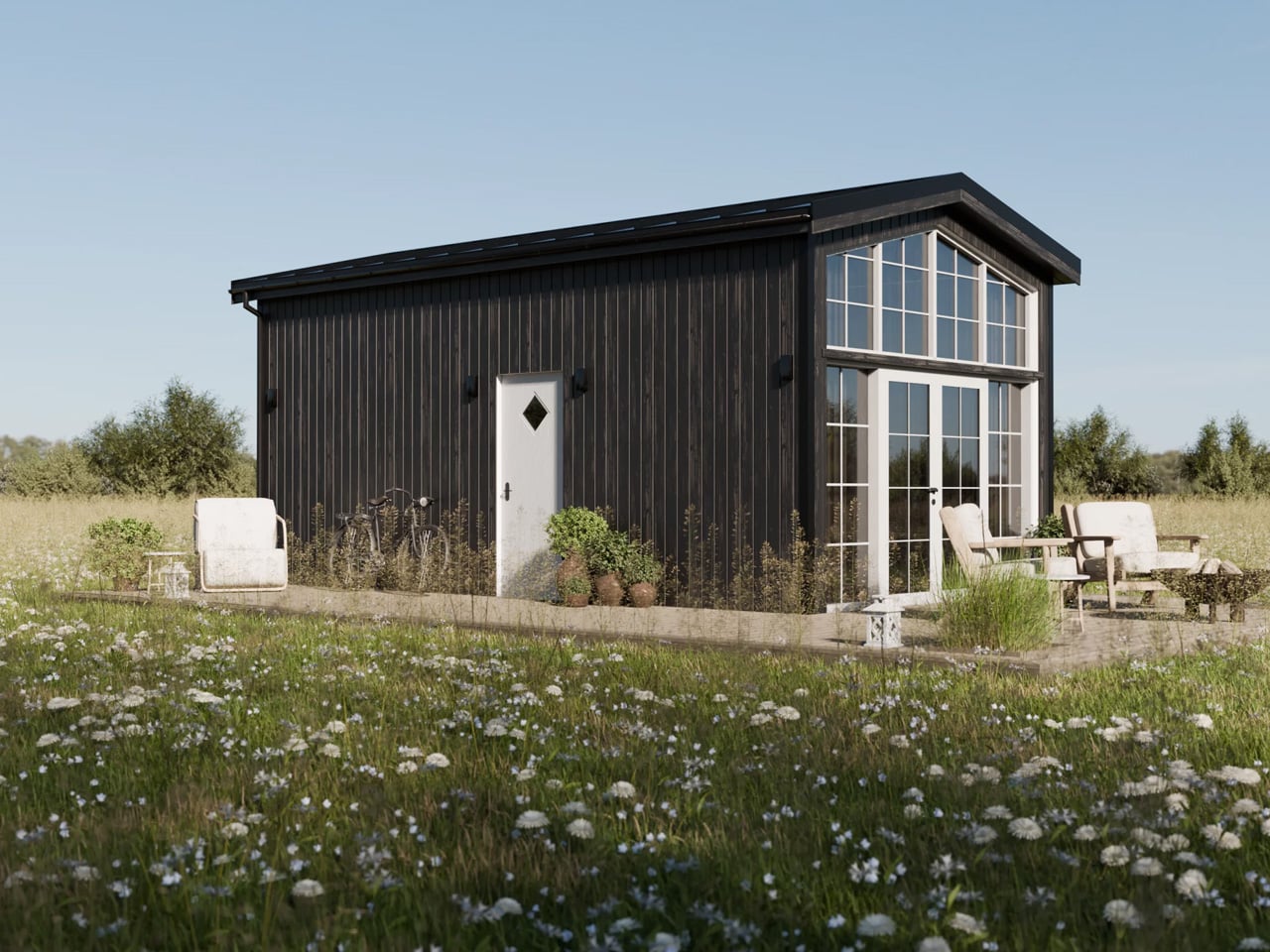
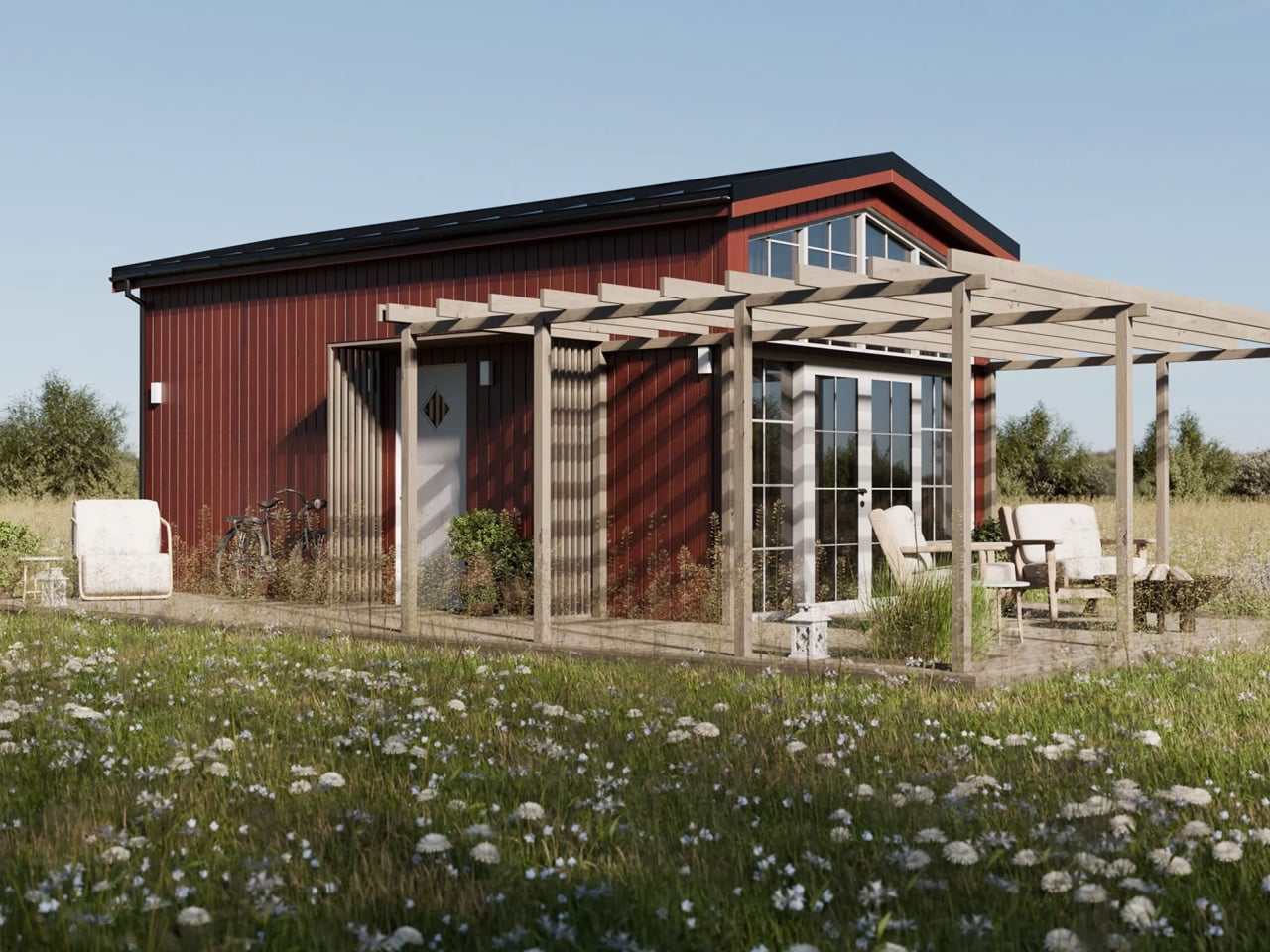
Swedish builder Vagabond Haven has unveiled Julia, a thoughtfully designed tiny home that proves downsizing doesn’t mean compromising on comfort or style. At 26 feet long and nearly 10 feet wide, this compact dwelling packs an impressive 290 square feet of living space into a layout that feels both spacious and intimate. Categorized as extra large in Vagabond Haven’s lineup, Julia represents the company’s latest innovation in creating homes that embrace the “slow life” philosophy while meeting the practical demands of modern living.
Julia’s design centers around a large open kitchen and dining area, anchored by generous glazing that floods the interior with natural light. The thoughtfully planned kitchen comes fully equipped with a sink, small fridge, oven, and induction cooktop, providing everything needed for preparing meals in a compact footprint. The dining space features a large table that can accommodate family and friends, complemented by integrated storage seating that maximizes every inch of available space. This open layout creates a welcoming atmosphere that makes the home feel larger than its modest square footage suggests.
What sets Julia apart is its clever multifunctional design that adapts to different lifestyle needs throughout the day. The home includes a dedicated mini-office space that easily transforms into a relaxation nook with a hammock, perfect for those seeking a quick escape from daily routines. This flexibility makes the space ideal for remote workers who need a professional environment that can shift into leisure mode. The sleeping arrangements showcase equally practical thinking about modern family needs, with a spacious ground-floor bedroom that benefits from generous windows continuing the light-filled aesthetic throughout the home. Above, a sleeping loft provides a cozy retreat for guests or family members, offering enough room for a comfortable night’s sleep with optional skylights for stargazing.
Perhaps Julia’s most unique feature is its net-mezzanine, an innovative design element that adds an unexpected playful dimension to the space. The interior showcases elegant plywood walls that blend rustic charm with contemporary style, a finish that adds warmth to every corner, and has become so popular it’s now available across all Vagabond Haven models. Buyers can also choose spruce for the walls, paired with laminate flooring to complete the Scandinavian aesthetic that gives the home its distinctive character. These material choices create an environment that exudes rustic chalet vibes while maintaining a clean, modern sensibility.
Built for year-round living in harsh Scandinavian conditions, Julia features robust construction designed to last generations. The home sits on a steel frame for durability, with exterior cladding options of ThermoWood or spruce siding that provide both weather resistance and timeless visual appeal. The construction includes a lightweight aluminum roof, mineral wool insulation throughout the walls, well-insulated two-pane windows, and an entrance door with tempered glass. Vagabond Haven has equipped Julia with modern sustainable features, including ceiling-mounted LED lights with dimmers, solar system capability, an energy-saving water heater, freshwater tank and pump, rainwater harvesting system, and comprehensive ventilation throughout with a recuperator for energy efficiency.
The result is a tiny home that successfully bridges the gap between solitude and community, offering a serene retreat that welcomes family and friends while maintaining the intimate character that makes tiny living so appealing. Julia demonstrates that thoughtful design can create a peaceful sanctuary where work, relaxation, and social connection coexist harmoniously in a compact footprint, making it an ideal choice for those seeking to embrace a simpler, more intentional way of living.