What if the future of artificial intelligence wasn’t just faster or smarter, but fundamentally redefined? NVIDIA’s latest breakthrough, the NVQLink, promises exactly that. By creating a high-speed bridge between quantum computers and AI supercomputers, NVIDIA has unlocked a new era of computational synergy. Imagine AI systems capable of processing vast datasets in real time, powered […]
Apple appears poised to expand its reach in the budget technology market with a rumored 2026 lineup that includes updates to its MacBook, iPhone, and iPad offerings. These devices are expected to combine affordability with performance, making Apple’s ecosystem more accessible without compromising on essential features. The new video below from Matt Talks Tech gives […]
There’s a particular kind of frustration that comes with a stubborn screw buried deep inside a chassis or tucked behind a piece of furniture. You finally wedge a ratchet into the gap, but every swing sends the screw back to where you started, undoing your progress in tiny, maddening increments. The problem isn’t skill or strength; it’s that most ratchets need too much arc to advance the fastener.
The Titaner EDC Ratchet System was built precisely for this challenge, engineered around an impressive tight 4-degree swing arc. At the heart is a tiny ratchet mechanism, just under thirty grams, that can click forward with minimal movement. In cramped spaces where you can barely tilt your hand, that tight swing means you still get crisp confirmation that the fastener is turning.
Traditional thinking says that more precision means more fragility, and more strength means more mass. Titaner’s core weighs just 29.8 grams yet uses a dual-lock gear mechanism engineered to handle serious torque. When fully engaged, it feels like every bit of effort goes straight into the screw without the mushy slop you expect from small ratchets. The core is light enough to carry every day but built to take on rusted bolts without flinching.
Direction control works through a flip-based design instead of a small thumb lever. One side of the core locks for tightening, the other releases for loosening, with engraved markers making it obvious at a glance. Flipping the core in your fingers becomes a natural gesture, and removing that fragile switch simplifies the structure while shaving off weight and potential failure points.
The modular system lets the same core adapt to very different tasks. Snap extension bars into the side ports, and it becomes a T-shaped handle for maximum leverage, letting both hands and your upper body share the load. Reconfigure into an L-shape to work around a chassis brace or wall, or keep it in a slim I-shape when you need to reach deep into a narrow opening.
Of course, controlling force at the moment of maximum torque is where the optional Gyro-Stabilizer cap comes in. It separates downward pressure from twisting motion, so your palm can press straight down while the ratchet turns freely underneath. That helps keep bits seated, reducing cam-out and stripped fasteners. For delicate work on plastics or electronics, the side port configuration gives more linear feedback, making it easier to stop at just the right tightness.
The titanium core, four extension bars, and a set of hardened S2 steel bits all nest into a small aluminum vault case. A clever magnetic structure locks each piece in place with a satisfying snap, so nothing rattles. In a bag or pocket, it feels more like a compact object than a toolbox, yet it unfolds into a capable setup when you need it.
GR5 titanium resists sweat, rain, and seawater, while M390 steel gear teeth handle repeated engagement without rounding off. The outer case is milled from 7075 aluminum, with chamfered edges and smooth surfaces that feel deliberately finished. Spin the core between your fingers, and the fine clicks of the 4-degree mechanism turn precision into something you can hear and feel, a tactile reward for the engineering underneath.
The system comes in two versions. The basic edition offers just the ratchet core with a standard interface, meant for people who already have their own bits and extensions they trust. The pro edition includes the full modular ecosystem with bars, bits, a vault case, and all the configuration options for T, L, and I shapes, turning it into a complete pocket toolkit built around a single titanium heart.
The Titaner EDC ratchet system treats turning a screw as an opportunity for thoughtful engineering and satisfying interaction. It’s built to live in a pocket, ready for the awkward angle or hidden fastener that shows up without warning, and to make those moments feel a little less like a fight and a little more like a solved puzzle with the right tool in hand.
Rupert McKelvie’s latest creation sits somewhere between architectural statement and wellness refuge. The Aquila, a mobile sauna from his Devon-based studio Out of the Valley, transforms the traditional Finnish ritual into something you can tow behind a truck. It’s taking heat therapy to lakesides, coastal cliffs, and forest clearings across the United Kingdom, proving that proper bathing culture doesn’t need permanent foundations.
Built on a double-axle trailer measuring just 3.8 meters in length, this compact structure seats six people and runs entirely off-grid. Black larch cladding covers the exterior, treated using yakisugi, the Japanese charring technique that both protects the wood and creates that striking carbonized finish. The roof folds down using a mechanical system that took multiple prototypes to get right. McKelvie admits it was the hardest part of the build, requiring constant testing to ensure the mechanism could handle repeated setup and breakdown without fail.
McKelvie started Out of the Valley six years ago after building his first timber cabin as a personal escape near Dartmoor National Park. That project sparked something bigger, evolving into a full design-build practice focused on handcrafted structures that work with natural materials rather than against them. The Aquila marks the studio’s most ambitious output so far, earning recognition this year with a longlisting at the Dezeen Awards 2025 in the Product Design category for Health, Wellbeing and Wearables. It competed against over 4,300 entries from 89 countries.
Inside, thermally modified alder lines the walls, chosen specifically because it can handle extreme temperature shifts without warping or splitting. A 16-kilowatt Narvi wood-burning stove anchors the space, delivering the kind of authentic heat that electric alternatives struggle to replicate. Solar panels power subtle LED lighting throughout, keeping the unit functional wherever it gets parked. At the rear, a panel drops down to form an entrance deck, while an integrated cold shower completes the traditional contrast bathing experience that sauna purists swear by.
The design packs in clever details without feeling overworked. Perforated storage at the hitch end holds firewood for multiple sessions. The folding roof protects everything during transport and creates visual drama when deployed. The compact footprint gets into remote locations while maintaining comfortable capacity inside, which isn’t an easy balance to strike when you’re working with trailer dimensions.
Over recent months, Out of the Valley has partnered with lifestyle brands Passenger Clothing and Canopy & Stars to tour the Lake District National Park. Another unit spent a season with Unique Homestays, giving vacation rental guests an unexpected amenity. McKelvie and his team handcraft each unit in their workshops, with a current lead time sitting at four months. Pricing is available on request, reflecting the bespoke nature of every build and options for customizations, including door orientation and heating preferences.
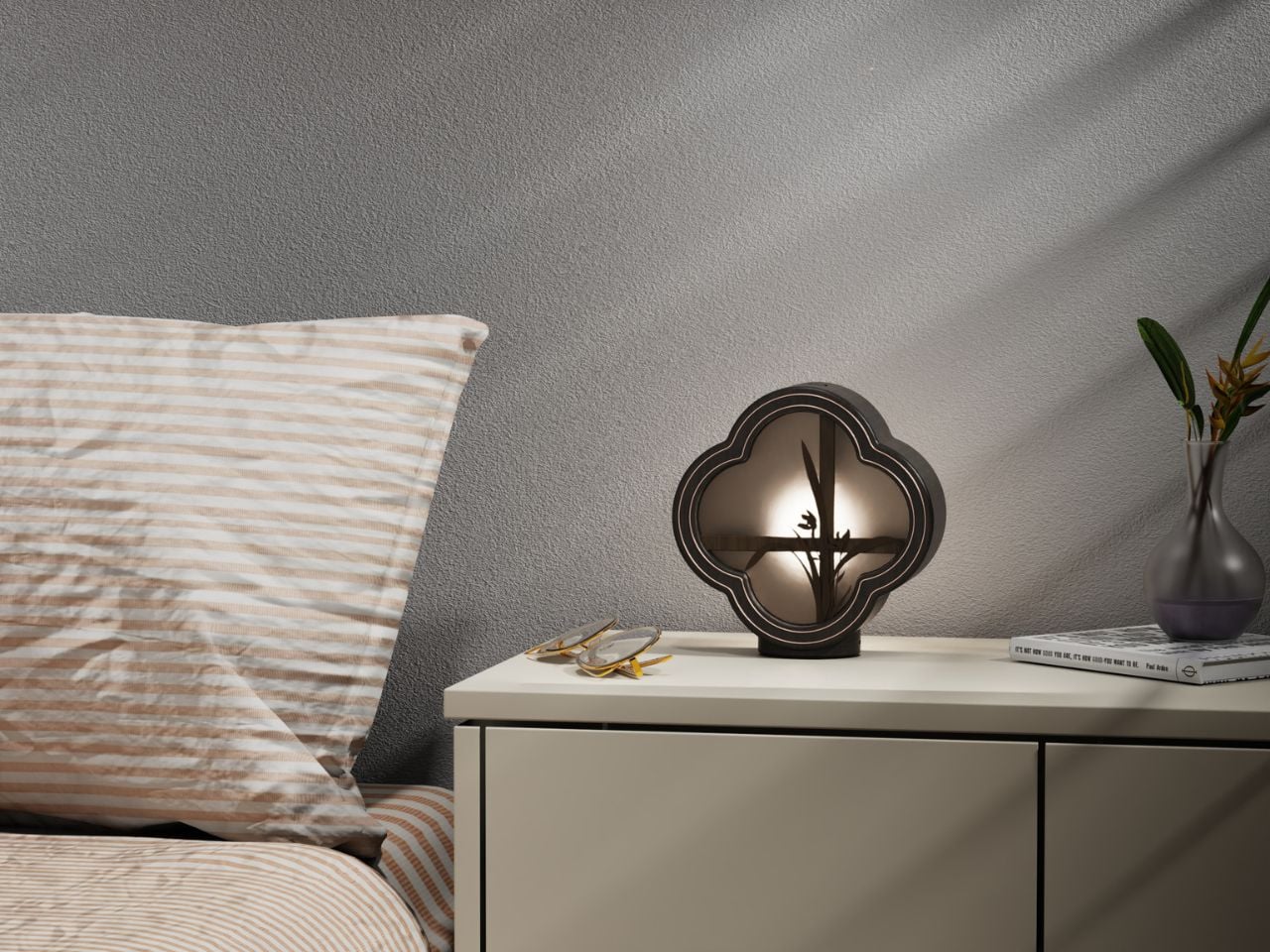
In contemporary product design, a growing interest in cultural memory, sensory ritual, and emotional well-being is shifting the way objects are conceived for domestic space. This aromatherapy piece stands as a compelling exploration of that movement, drawing from traditional Chinese aesthetics while speaking fluently to a modern lifestyle. Rather than merely referencing visual motifs, it attempts to translate centuries-old spatial philosophies into a multisensory experience.
At the heart of the design is the orchid, a motif deeply embedded in Chinese literati culture. Beyond botanical elegance, orchids in classical painting and poetry symbolize moral integrity, modesty, and quiet refinement. They are often depicted growing in mountains or hidden valleys, admired not for spectacle but for restraint. By embedding orchid elements into the interior of the object, the designer is not simply decorating; they are activating a cultural code. The orchid becomes a messenger of ideals, humility, introspection, and the pursuit of spiritual clarity, values increasingly resonant in a world overwhelmed by speed and digital noise.
Designer: Chris233
The silhouette draws inspiration from the “flower window” of traditional Chinese gardens and classical architecture. These windows, often carved in quatrefoil or geometric forms, frame selective views: a corridor leading to a bamboo grove, a sliver of sky reflected in water, or the blurred outline of stones. The design adopts a four-petal window motif, re-engraving that elegant architectural language into a compact household object. This is an intentional exercise in spatial thinking, borrowing scenery into the device. In miniature, it replicates the feeling of standing before a classical garden window, where sight, imagination, and interpretation all meet.
Materiality plays a central role. The use of wood deliberately mimics the warmth, softness, and moisture of traditional furniture and artifacts. In a design world dominated by polished metal and synthetic finishes, the choice of wood feels almost meditative. Its texture has historical memory; its scent, even before aromatherapy is added, suggests calm. It carries the tactile familiarity of objects that age with time, inviting touch, presence, and slowness.
What differentiates this product from typical aromatherapy diffusers is its philosophical approach to light. The designer uses a soft, light-transmitting structure, allowing illumination to filter through the flower window and orchid shapes. The result is a choreography of shadow, a gentle diffusion that transforms functional lighting into ambience. When fragrance begins to rise, scent interacts with this shadow play, creating a layered sensory environment. The visual quietness enhances olfactory comfort, offering a subtle ritual of healing for body and mind.
In this way, the design functions as both an object and an atmosphere. It reinvents oriental aesthetics in a distinctly contemporary voice, neither imitative nor nostalgic. It chooses not to replicate historical forms, but to reinterpret them through lifestyle relevance: how people seek serenity at home, how scent supports emotional well-being, and how small objects can shape mental space.
More broadly, this project reflects a movement in design toward cultural integration rather than symbolic quotation. It suggests that traditional Chinese culture can coexist with modern sensibilities when approached through meaning rather than ornament. The piece becomes a device of calm, introspection, and everyday spirituality, a quiet reminder that design does not need to shout to be profound. In a time when wellness routines are increasingly commodified, this aromatherapy object offers something different: a return to thoughtful ritual, poetic simplicity, and the ancient art of living with beauty.
If you haven't yet upgraded to Apple's AirPods Pro 3, you can pick up the company's latest model at a discount through a deal on Amazon right now. The AirPods Pro 3, which came out in September, are currently down to $199. That's $50 off and the best price we've seen. With the new AirPods Pro, Apple made some big improvements, including better battery life and sound quality, and introduced useful new features, such as Live Translation.
The AirPods Pro 3 are the best AirPods available today, with Apple's H2 chip, and earned a score of 90 out of 100 in Engadget's review this fall. Active noise cancellation (ANC) is one of the biggest selling points of the AirPods Pro, and Apple has made the experience even better with the AirPods Pro 3. They sport new foam-infused ear tips that create a better seal to improve passive noise isolation, and as Engadget's Billy Steele wrote in his review, "Ultra-low-noise microphones combine with advanced computational audio to silence even more background noise." In testing, they had no problem blocking out the chatter of people nearby or otherwise noisy environments.
With the AirPods Pro 3, Apple introduced heart-rate sensing, so you'll be able to see your heart rate data from the earbuds in the Fitness app and other workout apps. The AirPods Pro 3 also boast Live Translation, which you can activate via controls on the earbuds themselves. As long as you have an Apple Intelligence-capable device, you'll be able to translate in-person conversations in English, French, German, Italian, Japanese, Korean, Portuguese, Spanish and Chinese (Mandarin).
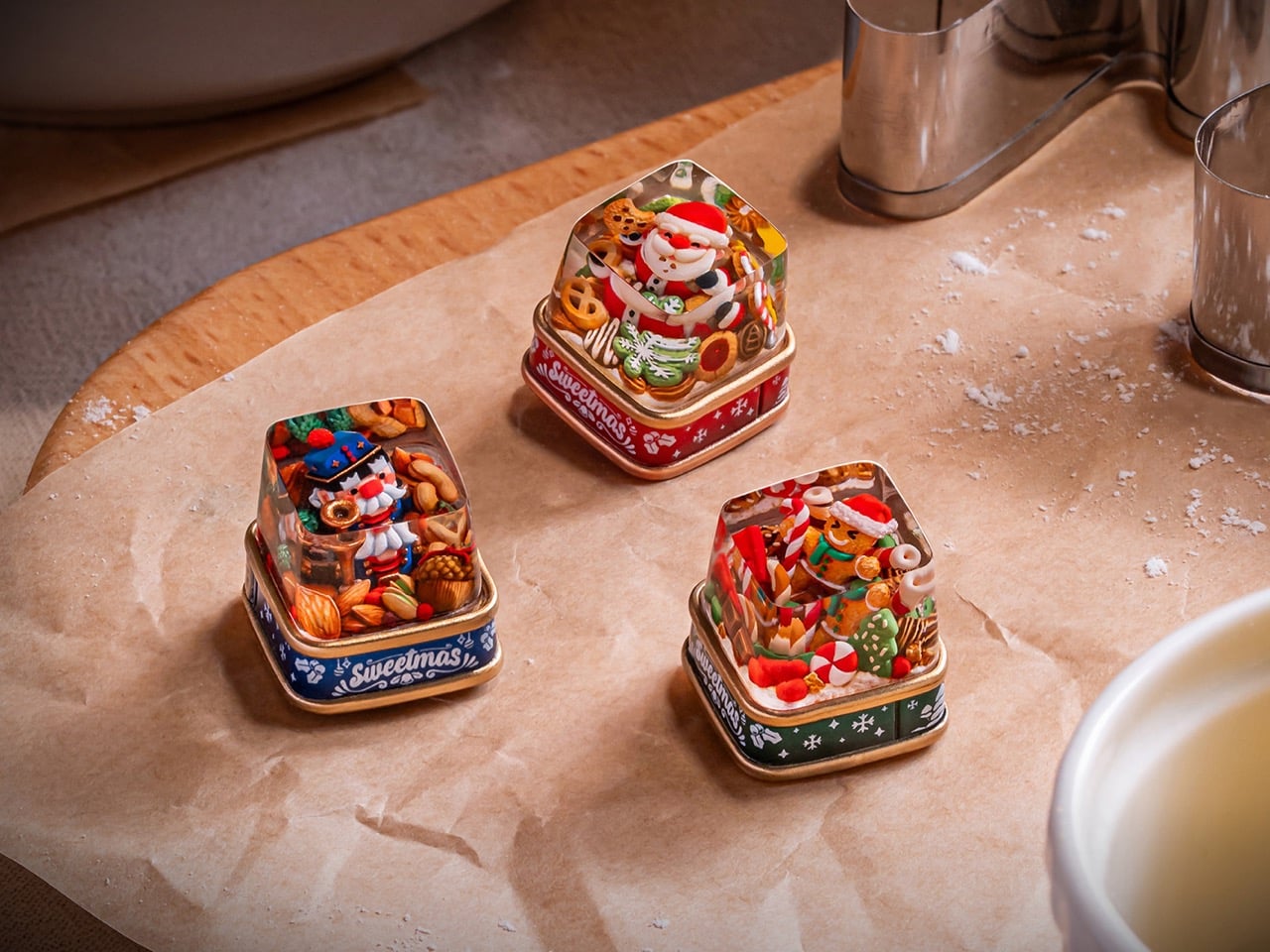
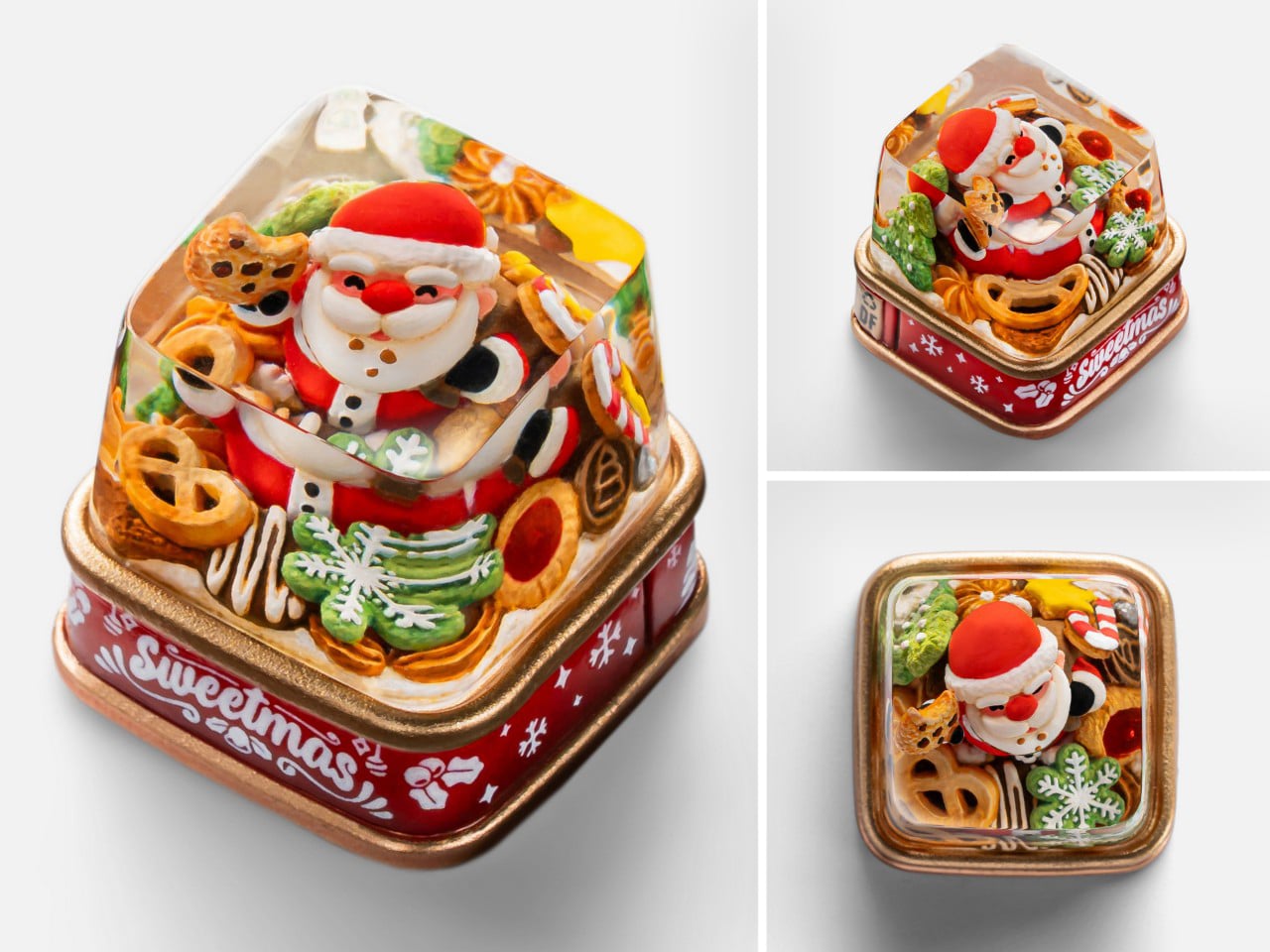
Sweetmas keycaps are what happens when a holiday cookie box collides with boutique keyboard culture. Designed by Dwarf Factory, the collection transforms the familiar 1U key into a micro stage, where a gingerbread character, a jolly Santa, or a toy soldier style nutcracker performs among piles of sweets and winter snacks.
The sculpted scenes sit under a polished resin dome, anchored to a base that looks like a miniature metal tin printed with festive graphics. It is a small gesture in physical terms, but it reshapes the way a keyboard feels on the desk, turning a technical tool into something closer to a seasonal keepsake that can live in a design conscious home.
Designer: Dwarf Factory
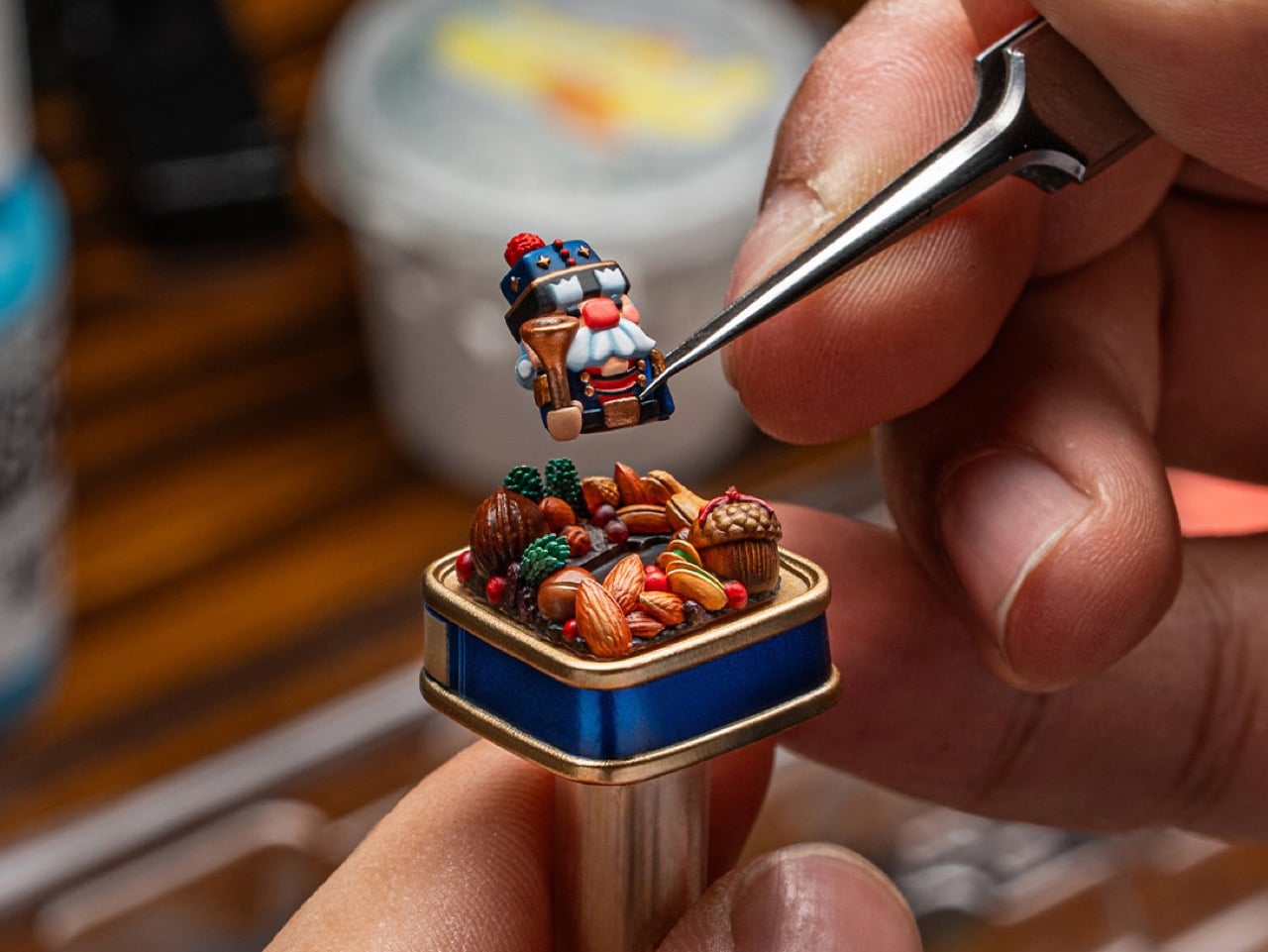
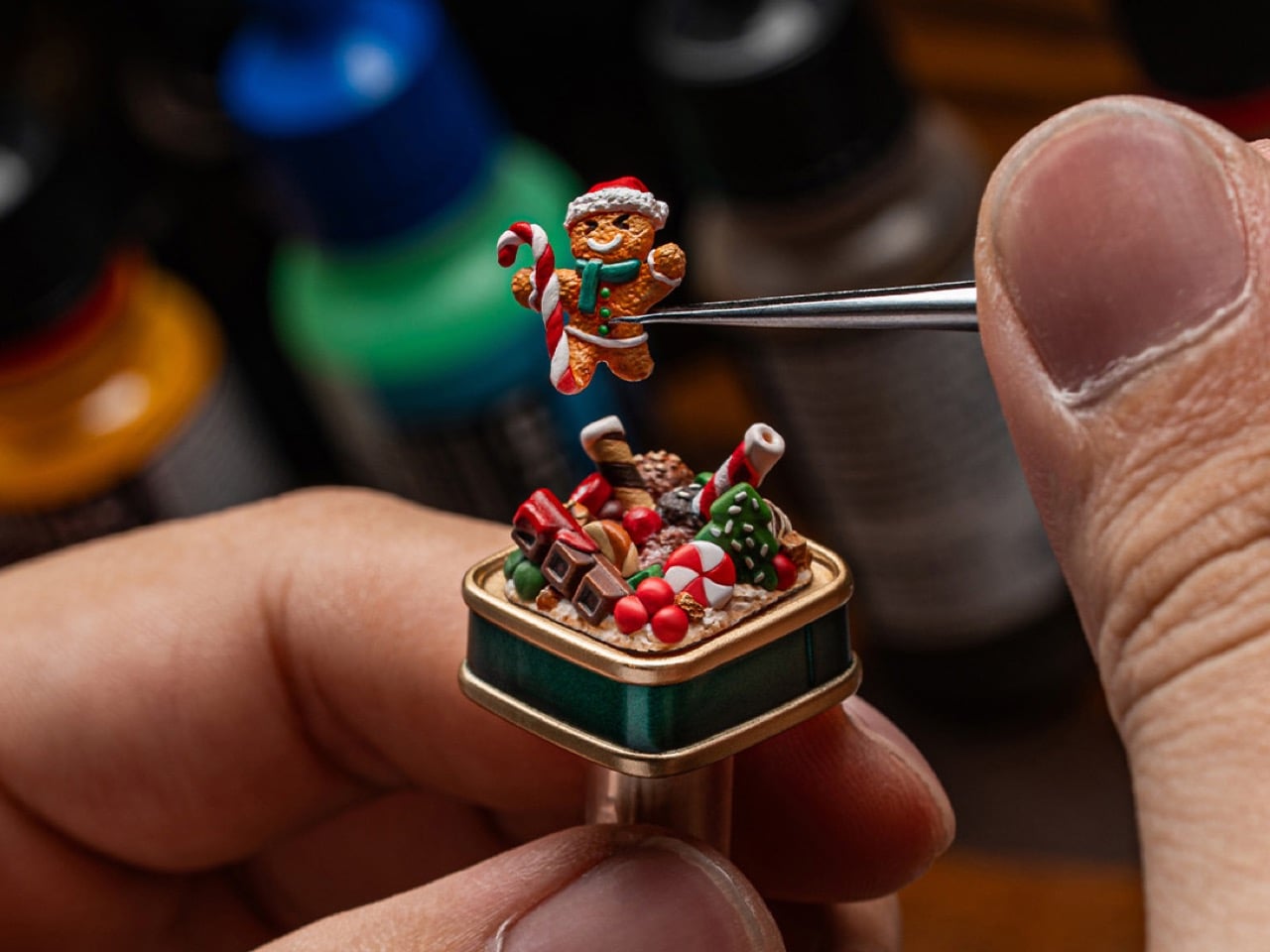
What makes these tiny worlds so compelling is the human touch behind them. Dwarf Factory does not mass produce these pieces; each keycap is the result of a meticulous artisanal process. The internal figures and their festive surroundings are first sculpted and then cast in resin. From there, artists take over, hand painting every minute detail, from the icing on a gingerbread man’s scarf to the rosy cheeks of Santa Claus. This level of dedication ensures that no two keycaps are perfectly identical, giving each one a unique character that automated manufacturing simply cannot replicate.
The Gingerbread variant, affectionately named Gingy, is a pure confectionery explosion. The cheerful gingerbread figure sits front and center, armed with a candy cane and surrounded by a landscape of sweets. There are chocolate bars, striped peppermints, and frosted Christmas tree cookies all packed into the scene. The entire diorama is housed on a base painted a festive green, with white snowflake details and the “Sweetmas” logo, perfectly capturing the feeling of a holiday candy shop that has been shrunk down to the size of a fingertip.
Next in the collection is Claus, a tribute to the man himself. This version features Santa Claus nestled in a treasure trove of baked goods. He is surrounded by an assortment of cookies, pretzels, and other holiday treats, as if caught mid-snack on his big night. The base of this keycap is a warm, inviting red, again styled like a classic cookie tin. The scene feels cozy and generous, a tiny, edible looking snapshot of Christmas Eve that brings a sense of warmth and nostalgia to the keyboard.
Rounding out the trio is Cracky, the Nutcracker. This design takes a more traditional, almost rustic approach to the holiday theme. The Nutcracker figure stands guard among a collection of almonds, walnuts, pine cones, and subtle green foliage. The base is a deep, royal blue, which gives it a more sophisticated and classic feel compared to the playful energy of the other two. It evokes the feeling of a classic Christmas ballet or a walk through a winter forest, offering a more elegant take on the Sweetmas theme.
As artisan pieces, the Sweetmas keycaps are designed to be both beautiful and functional. They are sized as standard 1U keys and feature a Cherry MX compatible stem, making them a drop in replacement for the vast majority of mechanical keyboards on the market. Their tall, sculpted profile, similar to an SA R1 key, gives them a satisfying presence on the board, perfect for an escape key or a macro pad. Released as a limited seasonal collection, these keycaps are collectible by nature, and the fact that each keycap is hand-crafted means that they command a fairly premium price at $49 bucks a pop. You’d have to absolutely make Santa’s list if you want these in your stockings for Christmas.
One does not simply spend more than 11 hours watching The Lord of the Rings trilogy in a single weekend at home when the opportunity to do so in theaters arises. As The Lord of the Rings: The Fellowship of the Ring turns 25, Fathom Entertainment and Warner Bros. announced theatrical screenings of the Peter Jackson trilogy in their extended editions, according to an exclusive report from Variety.
The re-releases will be available in DBOX presentations from January 16 to 19, complete with movements and vibrations to make you feel like you're making the journey to Mordor with Frodo and his entourage. If you prefer a traditional experience, the trilogy will be available in standard format from January 23 to 25.
Fathom Entertainment
Fathom Entertainment
For the collectors out there, the screenings will also feature limited-edition themed concession items. Fans can purchase popcorn buckets that showcase maps of Middle-earth at AMC locations, while Regal venues and other local cinemas will have buckets with designs of the One Ring. Tickets are already on sale at Fathom's website.
This article originally appeared on Engadget at https://www.engadget.com/entertainment/tv-movies/the-lord-of-the-rings-trilogy-returns-to-theaters-in-january-for-25th-anniversary-202433217.html?src=rss
Design Mindset, Yanko Design’s weekly podcast, treats the creative process as something you can actively shape rather than something that just happens to you. Each episode digs into the habits, mental models, and practical tools that move designers from tentative to decisive, from endlessly tweaking to actually shipping work. Now in its fourteenth episode, the show is starting to feel like a standing studio critique in audio form, where process and mindset get equal billing with aesthetics. Powered by KeyShot, the series keeps returning to a simple idea: when designers can see their ideas faster and more clearly, they make better choices and take bolder risks.
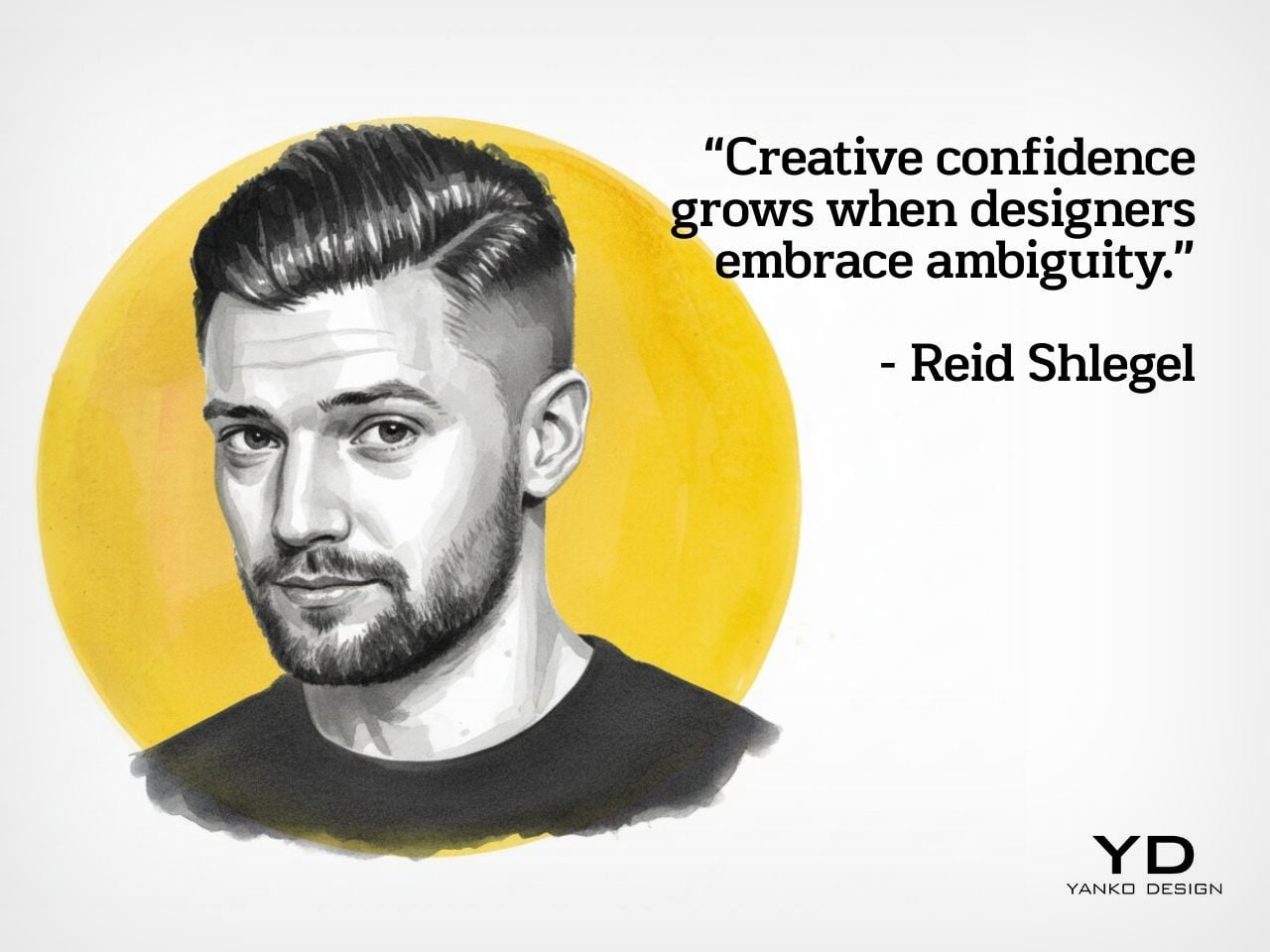
This week, host Radhika Seth speaks with Reid Schlegel, Design Director at RS.D and educator at Parsons School of Design, whose career spans consultancy work at Smart Design and collaborations with brands like OXO. Reid is fluent in everything from loose Sharpie sketches to VR, CAD, and photorealistic rendering, but what really defines his work is how he teaches others to use visualization as a confidence engine. Not the confidence to defend a final deck, but the quieter confidence to show rough, uncertain ideas early. In episode 6 of Design Mindset, he unpacks how rapid visualization, from napkin sketch to KeyShot render, can quietly become the most important skill in a modern design career.
Seeing ideas sooner, not better, builds real creative confidence
Reid starts with a pattern he sees constantly in classrooms and studios. Designers are not short on ideas, they are short on the courage to externalize them before they feel polished. He describes watching students stall out inside their own heads: “They’ll have a brilliant idea in their head but they’ll spend weeks perfecting it mentally before they ever put pen to paper or pixels to screen. By the time they finally externalize it, they’ve already talked themselves out of half the good ideas. The magic happens when you see your ideas sooner, messier, more honestly. Because creativity isn’t about having perfect ideas, it’s about having the confidence to iterate on imperfect ones.” That shift in mindset turns sketching and rendering into tools for thinking instead of tools for showing off.
Once ideas are visible, the conversation changes. A wall of fast, imperfect sketches or rough models invites questions like which direction has the most potential, which combination might unlock something new, and what should be pushed further. In professional settings, especially in consulting where Reid has spent most of his career, the ability to generate many legible options makes you a better collaborator and a more resilient designer. A high volume of rough concepts creates more material for the team to build on together, spreads risk across multiple directions, and keeps everyone less attached to any single idea. Creative confidence grows from that rhythm of trying, testing, and adjusting, not from waiting for one supposedly flawless concept.
A Batman tool belt beats a single perfect process
A lot of younger designers still believe in a clean, linear pipeline: research, sketch, model, render. Reid is quick to call that a myth. Real projects are messy, and the designers who thrive are the ones who treat their skills like a Batman tool belt. “It’s not about being good at just sketching and rendering. It’s about having a wider toolkit. I kind of use the analogy of like Batman’s tool belt, where there’s a lot of different things that need to be used at different times.” On some days, the right move is a page of thumbnails. On others, it might be a crude clay massing model, a hacked cardboard mockup from Amazon boxes, or a loose “sketch CAD” blockout. The metric is not beauty. The metric is how quickly you can get something tangible enough to react to.
Reid encourages designers to be comfortable sacrificing early quality for speed, because that is how you work through the weak ideas while the stakes are still low. He also treats switching mediums as a deliberate tactic. When a problem feels stuck in CAD, picking up a pen or building a quick physical mockup can unlock a “quick win” that restores momentum. That change of medium nudges your brain into a different mode of thinking and often reveals new angles on the same brief. Instead of obsessing over one polished workflow, Reid wants designers to ask, in each moment, which tool will get them to a useful insight fastest, then move on once that insight has been captured.
Paper sketching still feels like wizardry in a digital room
Despite his comfort with digital tools, Reid is unapologetically bullish on paper. Quick, low fidelity sketching on paper remains his go to for early ideation and for live sessions with clients. The reason is not nostalgia. It is transparency. When you sketch in front of someone, they can see the thinking appear in real time. That has a powerful effect on trust. As he puts it, “If you can do a sketch on the table in front of a client, they will look at you like you’re a wizard and you’ll instantly get their respect and they’ll trust you. If you’re the first person to show it to them, you’re like the gatekeeper that all of a sudden allowed them to level up. So quick sketching is super invaluable.”
In workshops or stakeholder reviews, a spread of loose paper sketches invites people to point, circle, and combine. The work feels approachable. No one worries about “ruining” a finished render with a suggestion. That is why Reid talks about early outputs as “sacrificial lambs.” Their job is to be tested, challenged, and discarded if needed, not to survive untouched. A handful of super polished digital images, by contrast, can freeze the room. Critique starts to feel like an attack on something that already looks finished. By keeping the fidelity low in the early stages, designers protect their own willingness to explore and their clients’ willingness to engage honestly.
From overnight renders to minutes fast feedback
The episode spends time on how rendering technology has changed the tempo of design work. Reid remembers starting out at Smart Design when rendering was slow and often an overnight task. That lag created friction. Teams hesitated to render too early because each pass cost so much time. Today, tools like KeyShot produce photorealistic versions of rough models in minutes, which means designers can use rendering as part of the exploratory phase rather than saving it for the end. When you can see a form in believable lighting and materials almost immediately, you can catch proportion issues, surface problems, or brand mismatches long before they become expensive.
Reid is careful to point out that this speed comes with a risk. When designers jump into CAD and high fidelity rendering too early, they tend to lock in too soon. Once a model has hours invested in it, it becomes harder to throw away, even if the core idea is weak. His answer is to treat early CAD and early KeyShot passes like any other sketching medium. They are temporary, disposable, and meant to be killed if they are not moving the project forward. Used in that spirit, fast rendering becomes a way to shorten feedback loops and ground decisions in visual truth, rather than a trap that turns every file into something too precious to question.
Career momentum from transparency and fast, flexible output
When Radhika asks how all of this translates into career success, Reid focuses on two themes: efficiency and openness. In consulting environments, timelines are tight and briefs evolve quickly. Designers who can flex across sketching, models, CAD, and rendering, and who can choose the right tool for each moment, simply handle more work without burning out. “It just means you’re an efficient team member. My entire career has been consulting and consulting is a rapid environment where you have to execute quickly or else you just won’t be able to keep up with the demand and the workload.” That kind of efficiency is not about cutting corners. It is about not over investing in fidelity before an idea has earned it.
On the human side, Reid urges junior designers to practice radical transparency instead of hiding their struggles. He points out that managers can usually see when someone is floundering, and that teams and clients are incentivized to help you succeed because your success is tied to the project’s outcome. Asking for help early allows leaders to design a development plan with you, rather than quietly losing confidence in your abilities. When things click, creative confidence feels, in his words, “empowering” and “warm inside.” It is the sense that your work was understood, that it resonated with the room, and that you are moving in the right direction. For a field built around solving problems and creating delight for others, that feeling is one of the most reliable rewards of the job.
Design Mindset, powered by KeyShot, returns every week with conversations like this, tracing the connection between how designers think, the tools they use, and the work they put into the world. Episode 6 with Reid Schlegel leaves you with a simple, practical challenge: see your ideas sooner, in more ways, and with less fear of being imperfect.
Those might not exactly be ads you're seeing on ChatGPT, at least according to OpenAI. Nick Turley, OpenAI's head of ChatGPT, clarified the confusion around potential ads appearing with the AI chatbot. In a post on X, Turley said "there are no live tests for ads" and that "any screenshots you've seen are either not real or not ads." The OpenAI exec's explanation comes after another post from former xAI employee Benjamin De Kraker on X that has gained traction, which featured a screenshot showing an option to shop at Target within a ChatGPT conversation.
OpenAI's Daniel McAuley responded to the post, arguing that it's not an ad but rather an example of app integration that the company announced in October. However, the company's chief research officer, Mark Chen, also replied on X that they "fell short" in this case, adding that "anything that feels like an ad needs to be handled with care."
"We’ve turned off this kind of suggestion while we improve the model’s precision," Chen wrote on X. "We’re also looking at better controls so you can dial this down or off if you don’t find it helpful."
There's still a lot of uncertainty about whether OpenAI will introduce ads to ChatGPT, but in November, someone discovered code in a beta version of the ChatGPT app on Android that made several mentions of ads. Even in Turley's post debunking the inclusion of live ads, the OpenAI exec added that "if we do pursue ads, we’ll take a thoughtful approach." Turley also posted that "people trust ChatGPT and anything we do will be designed to respect that."
This article originally appeared on Engadget at https://www.engadget.com/ai/openais-head-of-chatgpt-says-posts-appearing-to-show-in-app-ads-are-not-real-or-not-ads-190454584.html?src=rss