Modular cat furniture system helps save space in small households

People these days are adopting more and more pets, sometimes more than their homes can accommodate. Dogs might have no problems staying in outdoor doghouses, but domesticated felines tend to prefer indoor accommodations. Of course, there’s no shortage of furniture for cats, ranging from litter boxes to scratching posts to climbing trees. The problem is that the majority of them are all designed to take up space on the floor, which leaves less room for human furniture. Just like how humans realize they have plenty of unused vertical space, this cat furniture concept grows upward rather than sideways to let you comfortably accommodate one or more furry felines, even if you don’t have much space for yourself either.

Designer: Arthur Zheng (Kuang Hsu)

Vertical furniture is definitely becoming a trend as we realize how precious little floor space we actually have. Unfortunately, that’s only part of the solution, because just like floor space, the vertical situation in our homes can change as well. Unlike regular furniture, however, vertical designs often have a fixed height and configuration, preventing us from easily rearranging these pieces of furniture.

FROHZ Cat Castle is a design concept that solves both those problems with a simple modular design. The furniture system is made of five pieces that can be freely rearranged as needed. Of course, they have certain limits given their fixed shapes, but you can, in theory, combine them in many ways without permanently committing to a particular configuration.

The largest part of the modular furniture system is the cat litter box, a tall cabinet with two doors at the top, one of which has an oval opening for the cat to crawl into. A “Play/Rest” box has a slightly similar design, except it’s a simpler and smaller box designed only to be a resting spot. An even simpler version of this is an arched structure with openings at the front and the back. There’s also an L-shaped scratching “post” and a simple storage box to keep kitty toys and accessories.

Arranging these pieces is as simple as stacking them on top of each other or putting them side by side, with some connectors to keep them from easily falling apart from the cat’s movement. The open-ended design even allows for more than one piece of each type to accommodate more than one feline in the house. And should the number of pets you own increase or decrease, you can quickly add or remove modules as needed. You might even be able to challenge yourself to come up with a creative design, one that would truly make your cat feel like a king or queen in its own castle.

The post Modular cat furniture system helps save space in small households first appeared on Yanko Design.
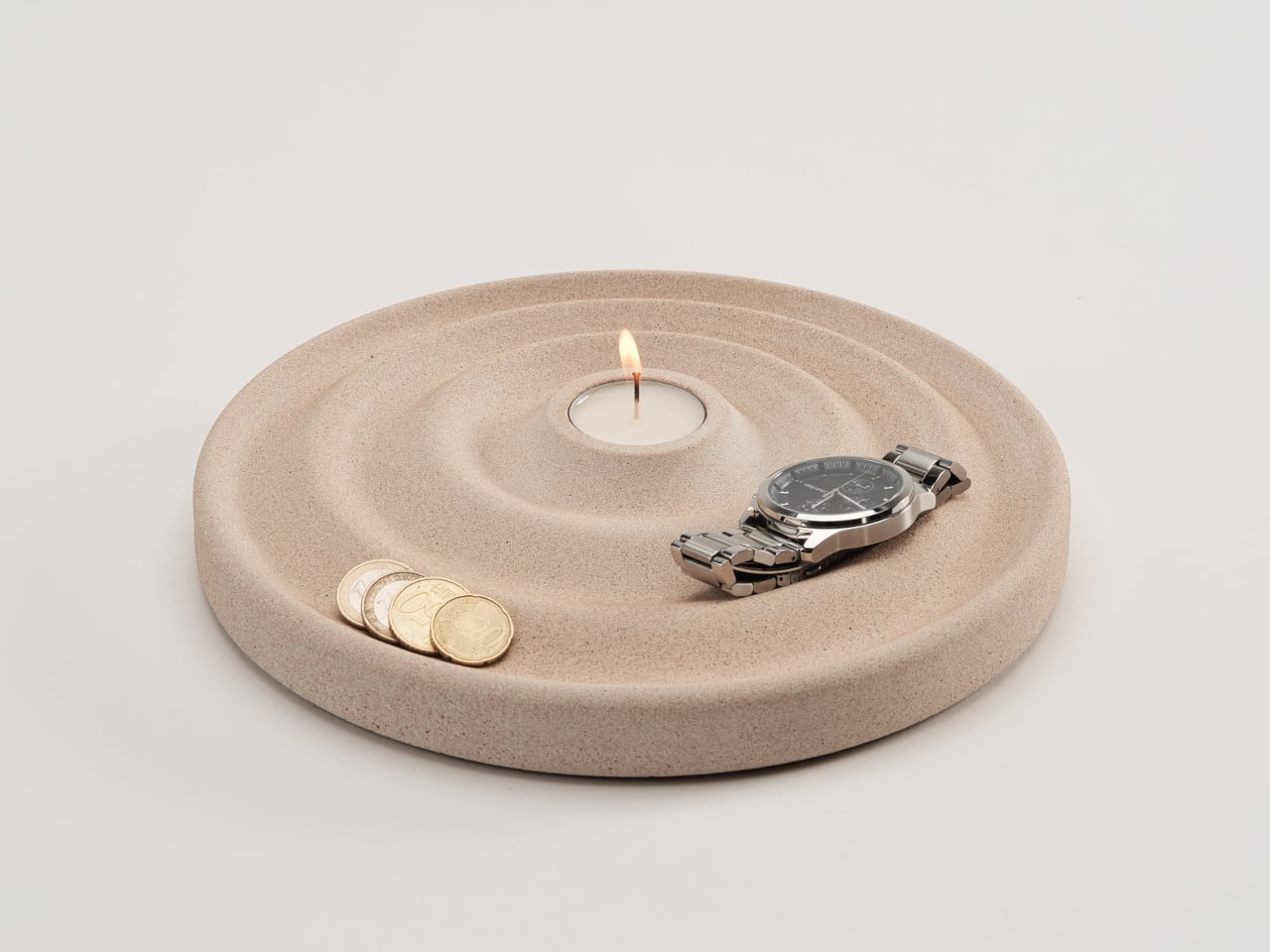
Leftover date seeds become 3D printer filaments to enable sustainable creations

3D printers revolutionized the manufacturing and design industries, enabling almost anyone to bring their ideas to life and iterate over designs quickly. Unfortunately, this flood of creativity also resulted in a surge in the use of plastic, specifically the thermoplastics used as filaments for fused deposit modeling or FDM 3D printers. Even the more sustainable PLA type of filament is only biodegradable under very specific conditions, so there is a dire need for more eco-friendly but accessible alternatives. This particular idea tries to harness and reuse the equally growing volume of food waste that we throw away, particularly fruit seeds that really serve no other purpose unless they’re planted again.

Designer: Nawa Tek

Dates are a very popular fruit, especially in Middle Eastern countries like Oman that produce and process tonnes of the fruit yearly. But like many fruits, only the flesh of dates is consumed, and the seeds or pits are simply discarded. These are biodegradable, of course, but they only decompose after a certain period of time, resulting in tonnes of garbage taking up space and potentially polluting waters as well. You can also plant some of the seeds but not all can be used this way.

Playing on the word for date pits and “repeat,” RePit is an emerging technology that puts these previously unusable food waste to better use. Rather than simply reusing the pits as they are, which could bring other complications like longevity and durability, the seeds instead becoming the foundations for a completely new material, one that can be woven into 3D printed products. In other words, what would have become garbage is ultimately transformed into art object, machine parts, and more.

In a nutshell, crushed date pits are mixed with limestone and clay to create a water-resistant composite material that is not unlike traditional Iranian “sarooj” that’s used for building houses. The composite is then transformed into filaments compatible with FDM 3D printers to create any shape imaginable, at least in theory. For a demonstration, decorative tiles were 3D printed and then fired and glazed to give them a ceramic-like appearance.

RePit is still a work in progress and it’s one of the growing number of sustainable 3D printing filaments being researched and developed today. The 3D printing industry has already expanded to support materials like metal, wood, and even chocolate, so it’s only proper that a more environment-friendly and long-lasting option is also developed, preferably one that embraces a circular economy that also reduces the waste we heap on landfills.

The post Leftover date seeds become 3D printer filaments to enable sustainable creations first appeared on Yanko Design.
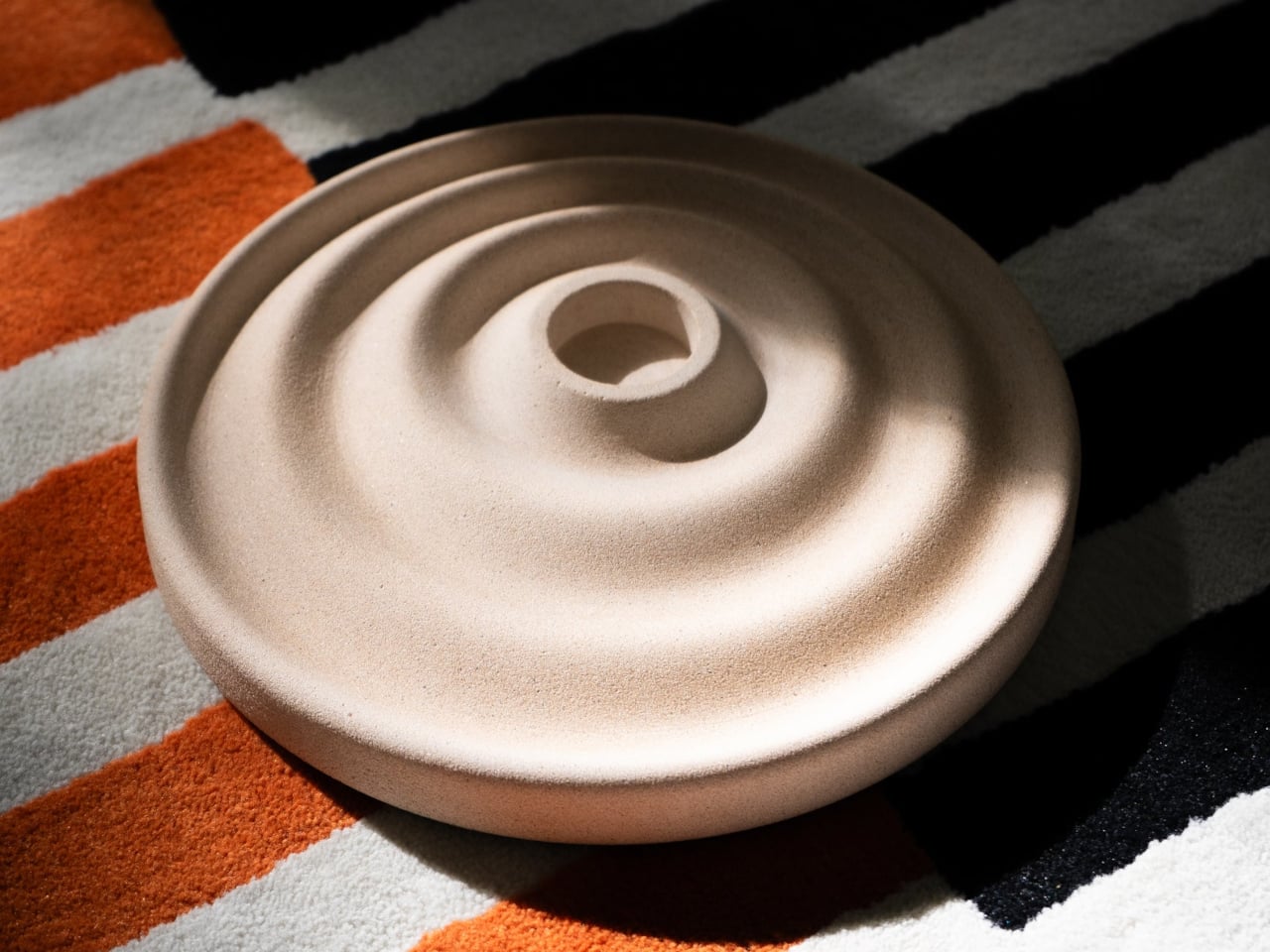
Sleek clock and wireless charger concept offers a distraction-free experience

Thanks to Apple’s adoption and improvement of the technology, wireless chargers for smartphones have grown and thrived. There are quite a number of different designs, though the majority of them have a common purpose. They make it easy to still use the phone even while charging, or at the very least see its display. That could be useful in some cases but it is Kryptonite for those who actually want to keep their phones out of sight. That’s especially true in bed when phones tempt you to scroll all the way to morning. This concept design proposes a simple yet elegant solution that keeps the phone out of sight while charging but still displays the most important information you need to see at a glance.

Designer: Ahmed Rashad

Although flat horizontal “beds” are the most common design for wireless chargers, the most popular put the phone at an angle so that you can still see the phone’s screen while charging. This position is useful for taking video calls or watching a video, and some even have special modes that show a minimalist UI like a clock. Unfortunately, this also increases the potential for distraction, or at least the temptation to reach out for your phone. You could, of course, simply charge your phone far away, but then you lose access to important and timely information like your next appointment.

This wireless charger concept suggests a solution that is simple yet also ingenious. It combines the functionality of a simple, horizontal wireless charger with a digital clock. The clincher is that the clock also displays data like the weather, today’s most important event, and your next appointment. The concept doesn’t exactly make it explicit, but this information is possibly taken from the charging phone itself, whether through NFC or Bluetooth.

The big difference here is that the wireless charger lies behind the clock, so the phone will not only be hidden from view but also difficult to reach. It puts physical and conceptual barriers that discourage instant gratification by increasing the friction and amount of effort to do that action. The design would be best used on a bedside table, ensuring that the phone is really out of reach but still charging conveniently.

The wireless charging clock also carries a striking aesthetic that will fit many minimalist motifs, including and especially Apple designs. The sleek curve gives it a rather elegant appearance, while the clean and white finish makes it stand out against most furniture colors and materials. There’s also a distinct absence of extraneous features, including buttons aside from the power and charging switches, making the accessory effortless to use.

The post Sleek clock and wireless charger concept offers a distraction-free experience first appeared on Yanko Design.
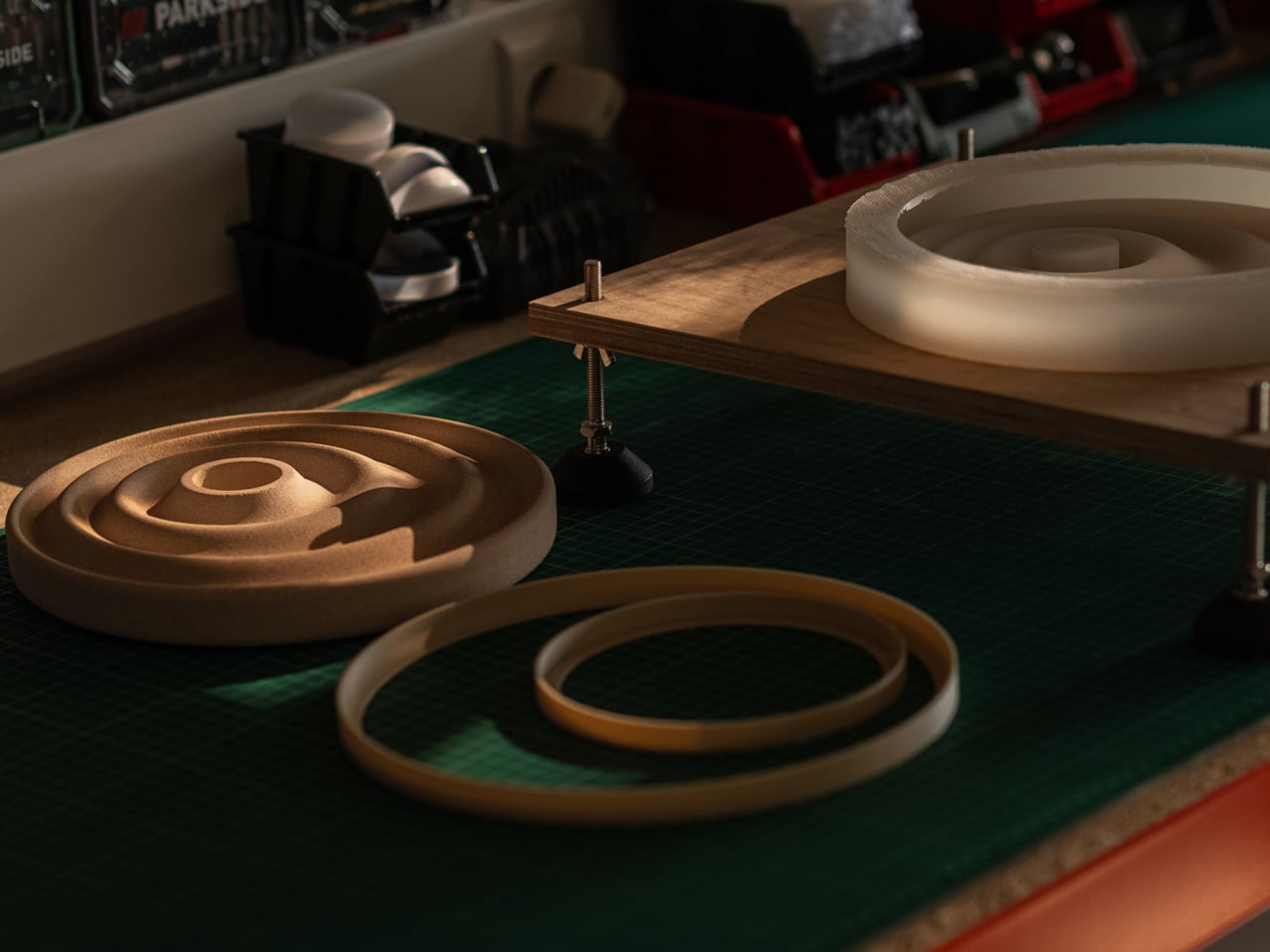
Smart ceiling fan concept takes its design cues from a customizable smartphone

Home electronics aren’t just getting smarter, their designs are also getting more sophisticated. It’s not just the usual culprits such as lamps and TVs either, as appliances with less presence like air purifiers and speakers become more conspicuous in the space they occupy. Designs vary widely from minimalist to elaborate, though most seem to use nature as a source of inspiration. In contrast, this design concept for a ceiling fan takes a page from a distance cousin in the consumer electronics market, mixing interactive functionality with minimalist aesthetics to provide a user experience that can be personalized to one’s preferences.

Designer: Eshant Kumbhakarn

Nothing’s new sub-brand appropriated the popular “CMF” acronym to indicate its heavy leaning towards a design-centric approach. By putting an emphasis not just on looks but on the color, material, and finish of the design, CMF by Nothing aims to elevate the prestige of products often simply seen as technological tools. So far, the brand’s designs have revolved around making exceptional design more accessible, which is what this ceiling fan concept tries to achieve as well.

FanPro brings that attention to detail to a smart home appliance, one that seems to be the least likely recipient of such a treatment: a ceiling fan. At the same time, however, it also offers the perfect opportunity to put into practice the design theories put forward by CMF. This design, for example, pays close attention to the engineering involved in the design process, making sure that the four blades are precisely angled at 15 degrees for optimal airflow and minimal noise.

A particularly interesting twist to this design is the full screen display on the base that can show not only information like operational modes or the time, it can even show emotions through simplified faces to give the appliance a more personal touch. All these can be controlled through a remote designed with intuitive use in mind. An easily accessed dial, for example, lets you instantly change the fan speed, while navigating menus is done through directional buttons.

The first CMF Phone garnered fame for its modular and customizable design, something that FanPro also adopts both for the fan itself as well as the remote control shell. Although it’s probably not as easy or probably safe to change the fan’s parts, it does leave the door open for more personalized experiences, even if it means just changing colors.

The post Smart ceiling fan concept takes its design cues from a customizable smartphone first appeared on Yanko Design.

Mech-inspired smartphone Doogee S200 embraces rugged design in an interesting way

Although smartphones are logically designed to be durable and reliable, their premium appearance and elegant aesthetics give these devices a seemingly delicate character. On the opposite end of the spectrum are rugged smartphones designed like tanks and look the part, giving the impression that you can only choose one or the other. There are indeed limitations when it comes to materials that give phones added protection, but with some creative thinking, you can turn that undesirable property into a key feature. That’s exactly what this curious-looking smartphone does, eschewing luxurious aesthetics for a motif that calls to mind the battle-hardened mecha or robots of science fiction. Even better, it can definitely walk the walk as well.

Designer: Doogee

Doogee is one of the remaining smartphone brands that target a niche market that prioritizes durability and longevity over flashy designs and cutting-edge features. Although its early models did exhibit tank-like appearances, it has learned to fine-tune its designs to look more sophisticated without sacrificing its biggest strengths. The Doogee S98, for example, looked like a gadget to be used by secret agents, and that design DNA resurfaces in the brand’s newest product.

Rather than trying hard to reconcile smooth curves with rugged shells, the Doogee S200 embraces sharp angles and straight lines. But rather than leaving them at that, it transforms these design elements into geometric shapes that give the phone a sci-fi vibe, like a panel or piece of a gigantic fighting robot. Of course, that design isn’t just for show, as Doogee took the opportunity to go all out on the materials to give the S200 a much-coveted IP69 and IP69K rating for protection not just against water and dust but also from humidity, sand, and more.

A design element that the Doogee S20 carried over from its predecessors is the 1.32-inch circular AMOLED display on the back, flanked by the phone’s triple camera system and an infrared lamp for improved night sensitivity. It makes the back of the phone truly look futuristic, even if the functionality it offers is just as limited as a smartwatch with a similar circular design. It really drives home the mecha motif, making it look more interesting than other tank-like rugged smartphones.

The Doogee S200 is boasted to be the first 5G phone in Doogee’s S-letter series, which is admittedly not saying much these days. The phone’s specs, as one might expect, are hardly noteworthy, starting with a mid-range MediaTek Dimensity 7050 processor. The 12GB of RAM can be boosted to 32GB by taking some space from the already meager 256GB storage. A killer feature, however, is the gigantic 10,100 mAh battery that will unfortunately be throttled by a fast but inadequate 33W charging speed. Given the $400 price tag, however, it’s not such a bad deal, especially if you’re into phones that look like props from fiction.

The post Mech-inspired smartphone Doogee S200 embraces rugged design in an interesting way first appeared on Yanko Design.

Sun-like pendant lamp is actually made from orange peel waste

We hear a lot of sustainable designs that use recycled materials, though these often involve metal, plastics, wood, or even rubber. There are plenty more things that can be recycled and reused, from textile to food waste. The latter might be biodegradable, but they still contribute to the growing mass of garbage in landfills as well as the pollution of water. Of course, some of the parts of plants and animals that we throw can’t exactly be used for other purposes, but fruit skin can apparently be transformed into interesting materials, including a leather-like cover for a gigantic glowing orange.

Designer: Alkesh Parmar

Orange skins have very little use after they’ve been peeled off. Their oils and scents can be used for fragrances, but the peels themselves are often thrown out. They will decompose over time, but before that happens, they can pile up, clog pipes, and dirty the waters if disposed incorrectly. They might seem to be insignificant in number, but, like any waste, they all add up to become pollutants.

It turns out that the skin of citrus fruits like oranges can actually be used in a different way once they start to dry. They become pliable despite their thickness, making them feel like leather. And if you sew these pieces together, you can have a hard, cloth-like material that can then be used as part of other products, like this spherical pendant lamp that, perhaps by no coincidence, looks like a gigantic orange.

APeel is the name of the patent-pending process that utilizes waste citrus peels this way. Different citrus fruit peels have different properties, and orange seems to be well suited for fabric-like purposes. This creates a lamp with a unique visual that also looks like a miniature dying sun, and the equally unique texture it provides invites onlookers to interact with the object rather than just look at it.

Being made from a biodegradable base, APeel itself can be decomposed once it reaches the end of its life. The best use for it would be fertilizer for growing fruit trees like oranges, creating a circular economy that has very little waste. It’s a process that combines craftsmanship with critical design, resulting in an eye-catching product that captures the imagination and stimulates the mind.

The post Sun-like pendant lamp is actually made from orange peel waste first appeared on Yanko Design.
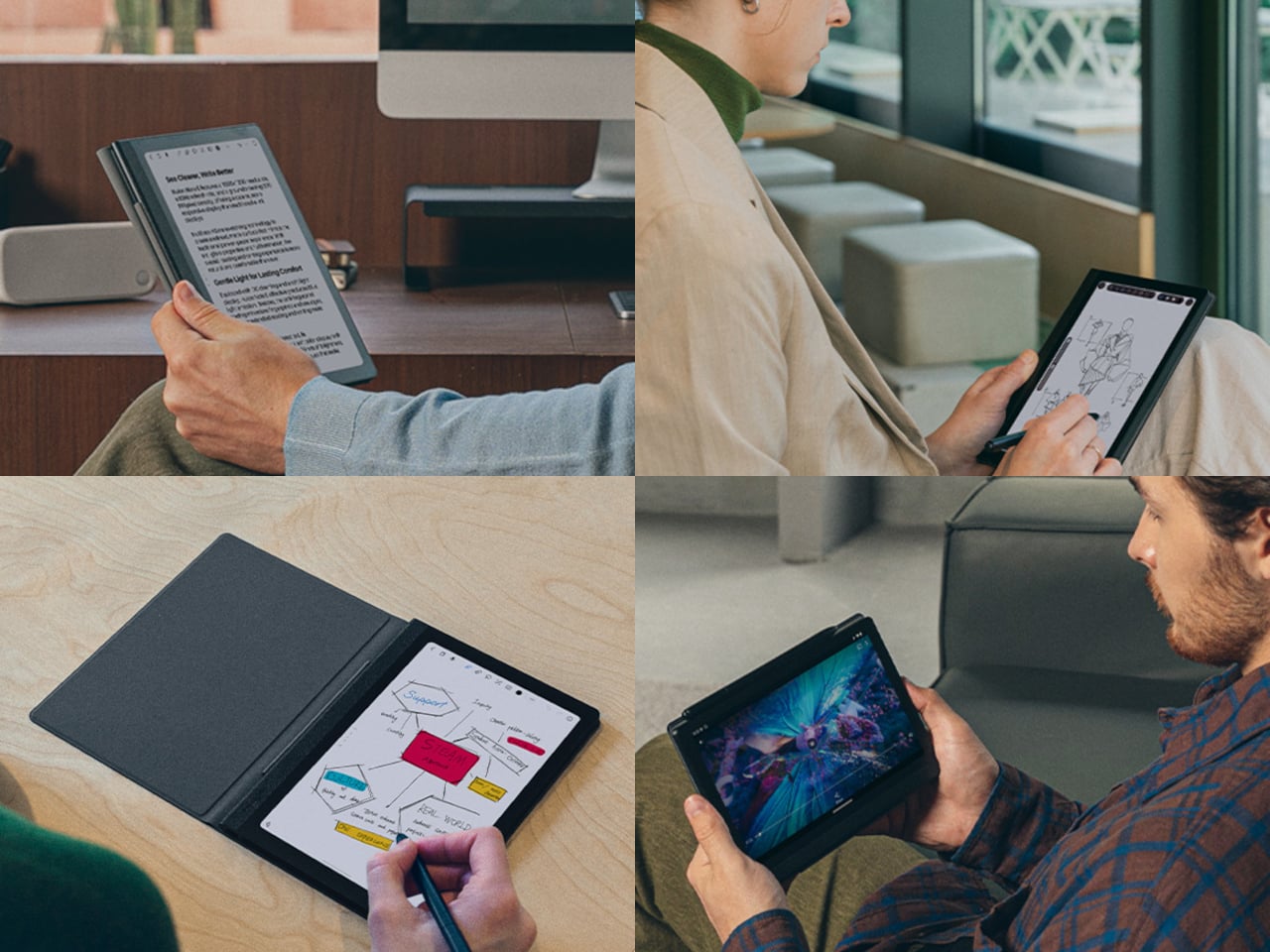
Sleek coffee machine concept has the elegance of a high-performance sports car

Gone are the days when kitchen tools and appliances were simply seen as utilitarian objects. With a greater awareness of product design, consumers have become more meticulous in picking products that do more than just serve their advertised functions. Aesthetics and tactile experiences have also become important buying considerations, especially for those who consider the kitchen as their little castle. Even something like a coffee maker can have a profound impact on the ambiance of a space, which is why this particular concept design takes inspiration from one of the most impactful brands in the automotive market.

Designer: V R Viru, Hari Krishna

When it comes to cars, Porsche is a name that is immediately associated with elegance, luxury, and performance. Its sports cars are known not just for their speed but for their regal presence on any type of road. Characterized by smooth curves and aerodynamic forms, Porsche’s design language has been the inspiration for designers across various industries outside of vehicles.

nair is a coffee machine concept that is a result of such inspiration. Most coffee maker designs gravitate toward two extremes. On the one hand, you have the typical black and silver kitchen appliance that dominates even the luxury market. On the other hand, you have vibrant and colorful models that inspire playfulness and curiosity. Somewhere in the middle is nair, embracing a spirit of dynamism and style that is more commonly seen in Porsche cars than kitchen tools.

There are very few straight lines in nair’s design, for example, preferring the smooth and gentle curves that give Porsche sports cars their aerodynamic properties. The choice of materials isn’t determined by durability alone but also by the texture and aesthetic that adds to the enjoyment of the product even when not in use. Also adhering to the brand’s minimalist design language, there is no wasted space or extraneous detail. From its handle to its interface, every part is born from meticulous attention to detail that balances functionality and form.

The result is a coffee machine that goes beyond just making coffee. It transforms the experience into something that is both visual and tactile, adding value to the object without burdening it with unnecessary features. The design concept might not make your coffee taste better, but it elevates the whole brewing experience and turns it into something more like an art form.

The post Sleek coffee machine concept has the elegance of a high-performance sports car first appeared on Yanko Design.

Cloud-inspired power strip concept wants to bring calm to your wire-tangled desk

Nothing can be more distracting or disconcerting than a mess of cables on your desk. Even if you decide to ignore them, the clutter leaves an imprint on your subconscious that can affect your mood and productivity without you knowing it. Power strips can offer some semblance of cable management, but their bland and clinical designs often leave a poor impression on people’s minds, leading to the same unconscious effect. There’s no rule that even mundane consumer electronics like these need to be uninspiring and impersonal, and this concept design tries to give the power strip a more approachable appearance that looks as soothing as fluffy clouds in the sky.

Designers: Yui Xue, Yien 子梁, Neville 初九. 冯 康奕, Huang Luo

Most power strips, even those with USB ports, are long and boxy, designed to maximize space more than anything else. While there’s definitely nothing wrong with being efficient, there’s also a multitude of ways to hit two birds with one stone. With a little creativity and inspiration from Mother Nature, one can also design a product that’s both functional and pleasing at the same time.

The Cloud Air power strip concept is an example of this design, putting the focus not just on practical functions but also aesthetics. Although not exactly soft and fluffy as a cloud, the design’s smooth curves, soft hues, and glossy finish do bring positive vibes. The power strip almost looks like it’s encased in some rubbery cushion, negating the harshness that’s often associated with these devices.

1

Cloud Air isn’t like your regular power strip either, as it functions more like a charging hub. It has three USB-C ports in front and two AC power outlets on top. Admittedly, these might not be enough for heavy computer users, but it’s sufficient for charging a few devices simultaneously. The design isn’t limited to a two-outlet configuration either, those a longer strip might defeat the purpose of having a compact and cute “cloud” on your desk.

At the end of the day, the purpose of the concept is to have a power strip you’ll actually want to see. Yes, it will have cables running out of its front and power bricks sticking at the top, but the jelly-like aesthetic of the design also balances that out. It’s not a perfect solution, but it does break the stereotype of power strips, charging hubs, and other accessories that look cold and stiff for very little reason other than tradition.

The post Cloud-inspired power strip concept wants to bring calm to your wire-tangled desk first appeared on Yanko Design.

AI-powered self-driving golf trolley can follow you around and give you tips

It’s too easy to underestimate golf as a sport, but the ability to hit a small ball with an equally small stick and have it roll into a hole miles away is no easy feat. It requires no small amount of skill, focus, and concentration, all of which could be undone by the stress of having to mind things not directly related to playing the game, such as carrying all those golf clubs. You can always hire people to carry those for you, a.k.a. caddies, but that might not always be a feasible option. We’re at an age where not just vacuum cleaners but also cars can already drive themselves, so why not have a trolley do that as well? And with some AI magic, it can even be your golf coach, too!

Designer: Futurewave, Botronics

That is the kind of liberating experience that the iXi robot golf trolley is promising. It is an extremely minimalist four-wheeled robot designed to carry your bag of golf clubs and follow you wherever you go. Although it could raise concerns about the potential loss of human employment, the self-driving robot offers players more freedom of movement and convenience without having to worry about needing someone to do that work. It allows them to simply focus on the task at hand: playing golf. It’s like having your own personal caddy, without the potential source of distraction.

Although iXi does have sensors and intelligence to follow its human owner, its AI also serves a second purpose. It can analyze the player’s swing and offer insights that could help improve their gameplay. It’s pretty much like what those golf smartwatches try to offer, but with a better view of the player’s posture and swing thanks to cameras and sensors. Maybe someday, iXi will even be able to offer the right club to use and have it ready even before the player reaches for it.

iXi’s intelligence is perhaps hidden by its extremely simple design, a platform with four wheels, a post to support a golf bag, and a handle that holds the screen controller. This design was made by choice, of course, as it makes it easy for the trolley to fold down into a compact form for easier transport. It could save you not only space but also money in the long run, without losing the peace of mind that comes with not having to carry a heavy bag of clubs on your shoulder every time you have to move to the next spot.

The post AI-powered self-driving golf trolley can follow you around and give you tips first appeared on Yanko Design.
Cyberpunk-themed power socket box concept removes a reason to hide your cables

Cable management and hiding is not only a trend; it has even become an art form. Messy cables don’t just get in the way but are also an eyesore. But what if the cables become part of the desk’s aesthetic? What if the power strip or socket box actually gave you a reason to have those charging wires out in the open? That’s the idea behind this socket box design that appeals to gamers, geeks, and gadget lovers by giving their desks a cyberpunk aesthetic. At the same time, it also makes cable management simpler by not having to hide wires and cables in the first place.
Designer: PTPC

It has become en vogue to hide power sockets and charging ports from view, whether disguising themselves as part of the desk or simply placing them behind tables. While that may be an effective way to reduce the visual mess, it also means most of these outlets are harder to reach. You shouldn’t have to sacrifice convenience for aesthetics, especially if the aesthetic you’re aiming for isn’t the kind that adheres to clean and tidy arrangements.

Trozk is a “hardcore” socket box that makes you want to actually have your wires in plain sight by embracing the popular cyberpunk theme. As the name itself implies, this genre’s design language is sometimes messy, unrefined, and even garish. You have tangled cables, neon lights, and geometric shapes in abundance, though still executed in a stylistic and intentional manner.

The socket box concept is aptly big, boxy, and flashy. On the top, you have six universal power outlets arranged in a 2×3 grid that can accommodate almost any plug type. Beside them is a square with small LED indicators and a square LCD display for information such as power input, output, and the like. Off to the side are USB ports for charging mobile devices. The concept incorporates GaN (Gallium Nitride) technology to handle the load of having 10 ports putting out power.

Like any cyberpunk-themed gadget, Trozk has RGB lighting that highlights the top surface of the box as well as the branding in front. Because of its interesting visual, the socket box is clearly designed to be shown off, even when there are cables coming out of it. That makes it easier to plug and remove chargers at will, while also giving your desk or shelf a sci-fi vibe. Of course, you’ll still have to make sure your cables don’t get tangled up, but at least now you’ll have a cyberpunk excuse for the mess.

The post Cyberpunk-themed power socket box concept removes a reason to hide your cables first appeared on Yanko Design.